
Articles | Volume 26, issue 17
https://doi.org/10.5194/acp-26-12977-2026
© Author(s) 2026. This work is distributed under
the Creative Commons Attribution 4.0 License.
the Creative Commons Attribution 4.0 License.
https://doi.org/10.5194/acp-26-12977-2026
© Author(s) 2026. This work is distributed under
the Creative Commons Attribution 4.0 License.
the Creative Commons Attribution 4.0 License.
Research article
| 
14 Sep 2026
Research article |
| 14 Sep 2026
| 14 Sep 2026
Organic vapors from Savannah and European Boreal fire emissions: insights from photochemical and dark aging experiments in a smog chamber
Deeksha Shukla
Chair of Analytical and Environmental Chemistry, University of Rostock, Rostock, Germany
currently at: Aerosol Chemistry Department, Max Planck Institute for Chemistry, Mainz, Germany
Lejish Vettikkat
Department of Technical Physics, University of Eastern Finland, Kuopio, Finland
Mika Ihalainen
Department of Environmental and Biological Sciences, University of Eastern Finland, Kuopio, Finland
Markus Somero
Department of Environmental and Biological Sciences, University of Eastern Finland, Kuopio, Finland
Hendryk Czech
CORRESPONDING AUTHOR

Chair of Analytical and Environmental Chemistry, University of Rostock, Rostock, Germany
Siegfried Schobesberger
Department of Technical Physics, University of Eastern Finland, Kuopio, Finland
Angela Buchholz
Department of Technical Physics, University of Eastern Finland, Kuopio, Finland
Iida Pullinen
Department of Technical Physics, University of Eastern Finland, Kuopio, Finland
Kerneels Jaars
Atmospheric Chemistry Research Group, Chemical Resource Beneficiation, North-West University, Potchefstroom, South Africa
Kajar Köster
Department of Environmental and Biological Sciences, University of Eastern Finland, Kuopio, Finland
Finnish Meteorological Institute, Helsinki, Finland
Pasi Yli-Pirilä
Department of Environmental and Biological Sciences, University of Eastern Finland, Kuopio, Finland
Stefan J. Siebert
Unit for Environmental Sciences and Management, North-West University, Potchefstroom, South Africa
Pieter G. van Zyl
Atmospheric Chemistry Research Group, Chemical Resource Beneficiation, North-West University, Potchefstroom, South Africa
Annele Virtanen
Department of Technical Physics, University of Eastern Finland, Kuopio, Finland
Ville Vakkari
Atmospheric Chemistry Research Group, Chemical Resource Beneficiation, North-West University, Potchefstroom, South Africa
Finnish Meteorological Institute, Helsinki, Finland
Olli Sippula
Department of Environmental and Biological Sciences, University of Eastern Finland, Kuopio, Finland
Department of Chemistry and Sustainable Technology, University of Eastern Finland, Joensuu, Finland
Ralf Zimmermann
Chair of Analytical and Environmental Chemistry, University of Rostock, Rostock, Germany
Department of Environmental and Biological Sciences, University of Eastern Finland, Kuopio, Finland
Department of Chemistry and Sustainable Technology, University of Eastern Finland, Joensuu, Finland
Related authors
Anni Hartikainen, Mika Ihalainen, Deeksha Shukla, Marius Rohkamp, Arya Mukherjee, Quanfu He, Sandra Piel, Aki Virkkula, Delun Li, Tuukka Kokkola, Seongho Jeong, Hanna Koponen, Uwe Etzien, Anusmita Das, Krista Luoma, Lukas Schwalb, Thomas Gröger, Alexandre Barth, Martin Sklorz, Thorsten Streibel, Hendryk Czech, Benedikt Gündling, Markus Kalberer, Bert Buchholz, Andreas Hupfer, Thomas Adam, Thorsten Hohaus, Johan Øvrevik, Ralf Zimmermann, and Olli Sippula
Atmos. Chem. Phys., 25, 9275–9294, https://doi.org/10.5194/acp-25-9275-2025, https://doi.org/10.5194/acp-25-9275-2025, 2025
Short summary
Short summary
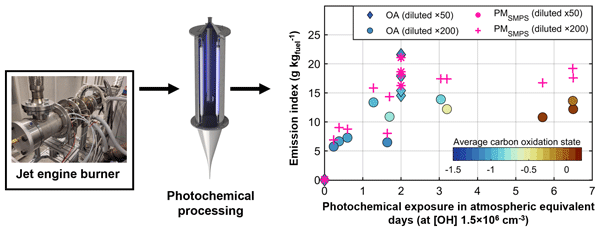
Photochemical reactions altered the properties of kerosene-operated jet engine burner exhaust emissions, which were studied in a laboratory using an oxidation flow reactor. Particle mass increased 300-fold as particles and gases became more oxidized. Light absorption increased, but the total direct radiative forcing efficiency was estimated to have shifted from positive to negative. The results highlight the importance of considering secondary aerosol formation when assessing the impacts of aviation.
Jenna DeVivo, Alexandria Stinchfield, Nirvan Bhattacharyya, Mitch Alton, Mingyi Wang, Siegfried Schobesberger, Liqing Hao, Mitchell Rogers, Alexander Vogel, Imad Zgheib, Natalie Burton, Clara Lietzke, Douglas M. Russell, Eva Sommer, Drew Gentner, Liine Heikkinen, Rainer Volkamer, Jasper Kirkby, Felipe Lopez-Hilfiker, Douglas Worsnop, Manjula Canagaratna, and Neil M. Donahue
EGUsphere, https://doi.org/10.5194/egusphere-2026-4542, https://doi.org/10.5194/egusphere-2026-4542, 2026
This preprint is open for discussion and under review for Atmospheric Chemistry and Physics (ACP).
Short summary
Short summary
The vapors driving atmospheric new particle formation are uncertain, in part because of instrumental limitations at small particle sizes. This study presents a novel coupling of a temperature-programmed desorption inlet with a bipolar mass spectrometer that has multiple types of chemical ionization used to study acid-base reactions controlling particulate evaporation.This method measures more components in atmospheric aerosol and separates reactive pathways contributing to early particle growth.
Anna-Maria Virkkala, Isabel Wargowsky, Judith Vogt, McKenzie A. Kuhn, Simran Madaan, Tiffany Windholz, Kyle A. Arndt, Gerard Rocher-Ros, Mathias Göckede, David Olefeldt, Edward A. G. Schuur, David Bastviken, Richard O'Keefe, Brendan M. Rogers, Jennifer D. Watts, Kelcy Kent, Kristoffer Aalstad, Kelly Aho, Joonatan Ala-Könni, Haley Alcock, Inge Althuizen, Christopher D. Arp, Jun Asanuma, Mika Aurela, Sivakiruthika Balathandayuthabani, Katrin Attermeyer, Alan Barr, Maialen Barret, Ochirbat Batkhishig, Christina Biasi, Mats P. Björkman, Andrew Black, Elena Blanc-Betes, Pascal Bodmer, Julia Boike, Abdullah Bolek, Frédéric Bouchard, Ingeborg Bussmann, Lea Cabrol, Eleonora Canfora, Sean Carey, Karel Castro-Morales, Namyi Chae, Andreas Christen, Torben R. Christensen, Casper T. Christiansen, Housen Chu, Graham Clark, Francois Clayer, Patrick Crill, Christopher Cunada, Scott J. Davidson, Joshua F. Dean, Sigrid Dengel, Matteo Detto, Catherine Dieleman, Florent Domine, Egor Dyukarev, Colin Edgar, Bo Elberling, Craig A. Emmerton, Eugenie Euskirchen, Grant Falvo, Thomas Friborg, Michelle Garneau, Mariasilvia Giamberini, Mikhail V. Glagolev, Miquel A. Gonzalez-Meler, Gustaf Granath, Jón Guðmundsson, Konsta Happonen, Yoshinobu Harazono, Lorna Harris, Josh Hashemi, Nicholas Hasson, Janna Heerah, Liam Heffernan, Manuel Helbig, Warren Helgason, Michal Heliasz, Greg Henry, Geert Hensgens, Tetsuya Hiyama, Beth Holmes, Macall Hock, David Holl, Jutta Holst, Thomas Holst, Gabriel Hould-Gosselin, Elyn Humphreys, Jacqueline Hung, Jussi Huotari, Hiroki Ikawa, Danil V. Ilyasov, Mamoru Ishikawa, Go Iwahana, Hiroki Iwata, Marcin Antoni Jackowicz-Korczynski, Joachim Jansen, Järvi Järveoja, Vincent E. J. Jassey, Rasmus Jensen, Katharina Jentzsch, Robert G. Jespersen, Carl-Fredrik Johannesson, Cheristy P. Jones, Anders Jonsson, Ji Young Jung, Sari Juutinen, Evan Kane, Jan Karlsson, Sergey Karsanaev, Kuno Kasak, Julia Kelly, Kasha Kempton, Marcus Klaus, George W. Kling, Natascha Kljun, Jacqueline Knutson, Hideki Kobayashi, John Kochendorfer, Kukka-Maaria Kohonen, Pasi Kolari, Mika Korkiakoski, Aino Korrensalo, Pirkko Kortelainen, Egle Koster, Kajar Koster, Ayumi Kotani, Praveena Krishnan, Juliya Kurbatova, Lars Kutzbach, Min Jung Kwon, Ethan D. Kyzivat, Jessica Lagroix, Theodore Langhorst, Elena Lapshina, Tuula Larmola, Klaus S. Larsen, Isabelle Laurion, Justin Ledman, Hanna Lee, A. Joshua Leffler, Lance Lesack, Anders Lindroth, David Lipson, Annalea Lohila, Efrén López-Blanco, Vincent L. St. Louis, Erik Lundin, Miska Luoto, Takashi Machimura, Marta Magnani, Avni Malhotra, Marja Maljanen, Ivan Mammarella, Elisa Männistö, Luca Belelli Marchesini, Phil Marsh, Pertti J. Martikainen, Maija E. Marushchak, Mikhail Mastepanov, Alex Mavrovic, Trofim Maximov, Christina Minions, Daniel F. Nadeau, Marco Montemayor, Tomoaki Morishita, Patrick Murphy, Erin Nicholls, Mats B. Nilsson, Anastasia Niyazova, Jenni Nordén, Koffi Dodji Noumonvi, Hannu Nykänen, Walter Oechel, Anne Ojala, Tomohiro Okadera, Sujan Pal, Alexey V. Panov, Tim Papakyriakou, Dario Papale, Sang-Jong Park, Frans-Jan W. Parmentier, Gilberto Pastorello, Mike Peacock, Matthias Peichl, Roman Petrov, Kyra St. Pierre, Norbert Pirk, Jessica Plein, Vilmantas Preskienis, Anatoly Prokushkin, Jukka Pumpanen, Hilary A. Rains, Niklas Rakos, Aleksi Räsänen, Helena Rautakoski, Riikka Rinnan, Janne Rinne, Adrian Rocha, Nigel Roulet, Alexandre Roy, Anna Rutgersson, Aleksandr F. Sabrekov, Torsten Sachs, Erik Sahlée, Alejandro Salazar, Henrique Oliveira Sawakuchi, Christopher Schulze, Roger Seco, Armando Sepulveda-Jauregui, Svetlana Serikova, Abbey Serrone, Hanna M. Silvennoinen, Sofie Sjogersten, June Skeeter, Jo Snöälv, Sebastian Sobek, Oliver Sonnentag, Emily H. Stanley, Maria Strack, Lena Strom, Patrick Sullivan, Ryan Sullivan, Anna Sytiuk, Torbern Tagesson, Pierre Taillardat, Julie Talbot, Suzanne E. Tank, Mario Tenuta, Irina Terenteva, Frederic Thalasso, Antoine Thiboult, Halldor Thorgeirsson, Fenix Garcia Tigreros, Margaret Torn, Amy Townsend-Small, Claire Treat, Alain Tremblay, Carlo Trotta, Eeva-Stiina Tuittila, Merritt Turetsky, Masahito Ueyama, Muhammad Umair, Aki Vähä, Lona van Delden, Maarten van Hardenbroek, Andrej Varlagin, Ruth K. Varner, Tarmo Virtanen, Elena Veretennikova, Timo Vesala, Carolina Voigt, Jorien E. Vonk, Robert Wagner, Katey Walter Anthony, Qinxue Wang, Masataka Watanabe, Hailey Webb, Jeffrey M. Welker, Andreas Westergaard-Nielsen, Sebastian Westermann, Jeffrey R. White, Christian Wille, Scott N. Williamson, Scott Zolkos, Donatella Zona, and Susan M. Natali
Earth Syst. Sci. Data, 18, 6357–6409, https://doi.org/10.5194/essd-18-6357-2026, https://doi.org/10.5194/essd-18-6357-2026, 2026
Short summary
Short summary
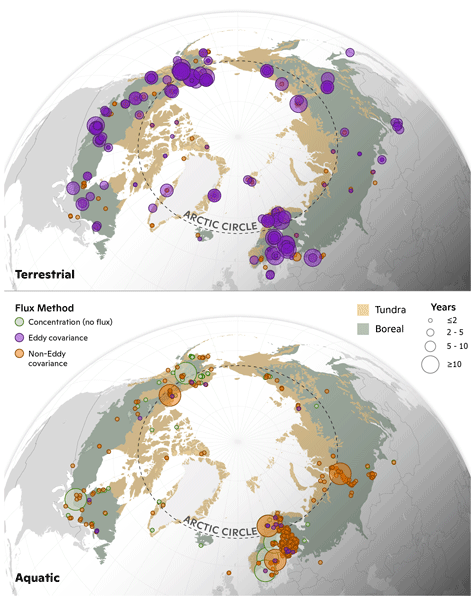
This dataset includes monthly measurements of carbon dioxide and methane exchange between land, water, and the atmosphere from over 1000 sites in Arctic and boreal regions. It combines measurements from a variety of ecosystems, including wetlands, forests, tundra, lakes, and rivers, gathered by over 260 researchers from 1984–2024. This dataset can be used to improve and reduce uncertainty in carbon budgets in order to strengthen our understanding of climate feedbacks in a warming world.
Maria Filioglou, Krista Luoma, Eija Asmi, Viet Le, Klaus Haikarainen, David Brus, Tero Mielonen, Mika Komppula, Annele Virtanen, Olli Sippula, Iida Pullinen, Angela Buchholz, Pasi Miettinen, Snehitha Kommula, Saara Peltokorpi, Liqing Hao, Kajar Köster, Annika Saarto, Sanna Pätsi, Pieter G. van Zyl, Liezl Bredenkamp, and Ville Vakkari
Atmos. Chem. Phys., 26, 11525–11542, https://doi.org/10.5194/acp-26-11525-2026, https://doi.org/10.5194/acp-26-11525-2026, 2026
Short summary
Short summary
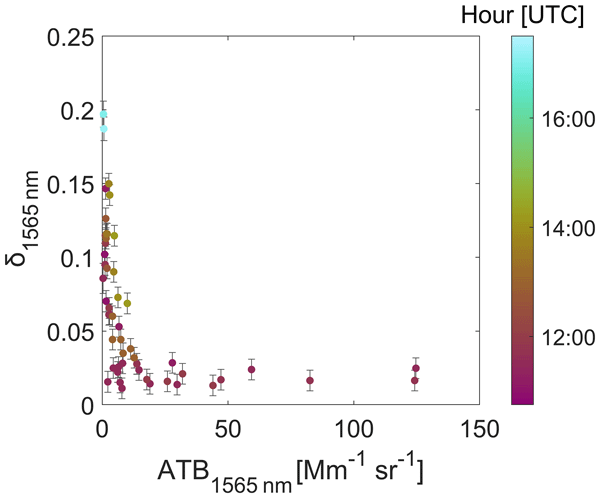
This study explores how smoke and volcanic ash particles, alter the way light is scattered in the atmosphere. By using a ground‑based HALO Doppler lidar system, we observed clear differences in the depolarization ratio, a shape-relevant optical parameter, between fresh smoke, aged smoke, and volcanic ash. These findings show that HALO Doppler lidars can help identify particle types in the air and even provide estimates of smoke mass concentrations, improving assessments of air quality.
Jonas Svensson, Ramazon Rakhmonov, Kamoliddin Nazirzoda, Abdusamad Hojiev, Tamlikho Jurabekov, Amirsho Hiyoev, Davlatjon Rahimzoda, Hizbullo Kholzoda, Muzaffar Shodmonov, David Brus, Viet Le, Krista Luoma, Adriano Lemos, Germán Perez Fogwill, Meri M. Ruppel, Outi Meinander, Johan Ström, Eija Asmi, and Antti Hyvärinen
Earth Syst. Sci. Data, 18, 5697–5712, https://doi.org/10.5194/essd-18-5697-2026, https://doi.org/10.5194/essd-18-5697-2026, 2026
Short summary
Short summary
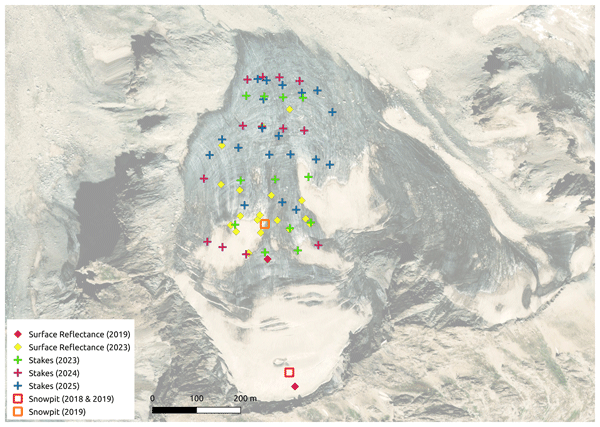
This paper presents data collected at the Zarafshon River Basin and the Hydrographic Party Glacier (GGP), Tajikistan. In annual field expeditions from 2018–2025, data has been collected on the glacier, as well as including meteorological measurements and aerosols. Presented results highlight the environmental conditions that are driving environmental change in Central Asia.
Viet Le, Ewan J. O'Connor, Maria Filioglou, and Ville Vakkari
Atmos. Meas. Tech., 19, 4923–4941, https://doi.org/10.5194/amt-19-4923-2026, https://doi.org/10.5194/amt-19-4923-2026, 2026
Short summary
Short summary
We evaluate the performance of the Vaisala CL61 ceilometer, with depolarization ratio capability at 910 nm, over a three-year period at four locations. This study examines instrument performance over time, describes methods for correcting instrument bias and presents corresponding uncertainty estimates. As these instruments are being deployed across large research networks, our findings support stable instrument performance and the generation of reliable measurements and derived products.
Aino Ovaska, Daniel Holmberg, Elio Rauth, Mansour Alghamdi, Paulo Artaxo, Eija Asmi, John Backman, Benjamin Bergmans, Matthew Boyer, Liezl Bredenkamp, Maurizio Busetto, Delano Campos De Oliveira, Juan Andrés Casquero-Vera, Darius Ceburnis, Tak Chan, Tommy Chan, Sebastien Conil, Daniele Contini, Suzanne Crumeyrolle, Valentin Duflot, Kostas Eleftheriadis, Johan Esveld, Ekaterina Ezhova, Markus Fiebig, Shahzad Gani, Olga Garmash, Francisco Gómez-Moreno, Roy M. Harrison, Andras Hoffer, Rakesh Hooda, Antti Hyvärinen, Tareq Hussein, Jorma Joutsensaari, Nikos Kalivitis, Heinz Kaminski, Jutta Kesti, Radovan Krejci, Adam Kristensson, Chongai Kuang, Markku Kulmala, Lauri Laakso, Ari Leskinen, Heikki Lihavainen, Andreas Massling, Maik Merkel, Steffen Noe, Jakub Ondracek, Noemí Perez, Jean-Eudes Petit, Tuukka Petäjä, Michael Pikridas, Christopher Pöhlker, Mira Pöhlker, Jean-Philippe Putaud, Ximeng Qi, Cristina Reche, Sergio Rodríguez, Petr Roztocil, Jean Sciare, Karine Sellegri, Dongjie Shang, Ashish Singh, Mikko Sipilä, Henrik Skov, Mar Sorribas, Tamanna Subba, Junying Sun, Peter Tunved, Ville Vakkari, Pieter G. Van Zyl, Aki Virkkula, Jens Voigtländer, Kay Weinhold, Alfred Wiedensohler, Hee-Jung Yoo, Putian Zhou, Kai Puolamäki, Tuomo Nieminen, Veli-Matti Kerminen, Victoria A. Sinclair, and Pauli Paasonen
Earth Syst. Sci. Data Discuss., https://doi.org/10.5194/essd-2026-415, https://doi.org/10.5194/essd-2026-415, 2026
Preprint under review for ESSD
Short summary
Short summary
All clouds form around aerosol particles, and their abundance influences cloud properties. In turn, clouds affect climate by changing how energy moves through the atmosphere, making them important for climate change. To better understand these interactions, we need accurate information on how many aerosol particles are in the atmosphere. Therefore, we have developed a new 21-year global dataset of particle concentrations relevant for cloud formation.
Hendrik Fuchs, Niklas Illmann, Amalia Muñoz, Mila Ródenas, Bénédicte Picquet-Varrault, M. Rami Alfarra, Cecilia Arsene, Iustinian G. Bejan, David M. Bell, Merete Bilde, Alexander Böhmländer, Mixtli Campos-Pineda, Mathieu Cazaunau, Patrice Coll, Véronique Daële, Claudia Di Biagio, Michael Flynn, Paola Formenti, Hartmut Herrmann, Kristina Höhler, Thorsten Hohaus, Matthew S. Johnson, Eija Juurola, Niku Kivekäs, Jan Kaiser, Christos Kaltsonoudis, Paolo Laj, Dario Massabò, Federico Mazzei, Gordon McFiggans, Max R. McGillen, Abdelwahid Mellouki, Peter Mettke, Ottmar Möhler, Falk Mothes, Dennis Niedermeier, Anna Novelli, Romeo I. Olariu, Spyros N. Pandis, Iulia Patroescu-Klotz, Rosa Maria Petracca Altieri, Paolo Prati, Claudiu Roman, Albert A. Ruth, Harald Saathoff, Silvio Schmalfuß, Frank Stratmann, Virginia Vernocchi, Aristeidis Voliotis, Jens Voigtländer, Annele Virtanen, Andreas Wahner, Robert Wagner, John Wenger, Sören Zorn, Peter Wiesen, and Jean-Francois Doussin
Atmos. Meas. Tech., 19, 4165–4199, https://doi.org/10.5194/amt-19-4165-2026, https://doi.org/10.5194/amt-19-4165-2026, 2026
Short summary
Short summary
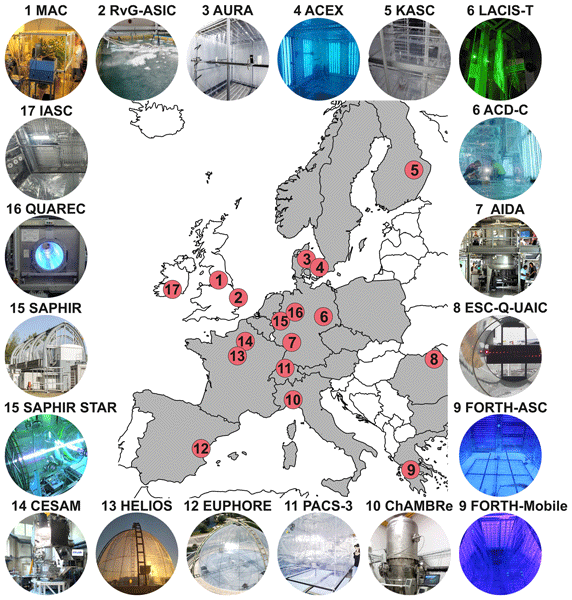
Atmospheric simulation chambers enable experiments to be conducted under controlled conditions, improving our understanding of, and ability to predict, changes in the composition of the atmosphere. This is important for assessing air quality and its effects on human health, climate, the environment, and the economy. This paper describes the chambers of the European ACTRIS research infrastructure and discusses topics and directions that can be addressed in future chamber experiments.
Elisabeth Eckenberger, Andreas Mittereder, Nadine Gawlitta, Martin Sklorz, Dieter Brüggemann, Ralf Zimmermann, and Anke Christine Nölscher
Atmos. Meas. Tech., 19, 4035–4047, https://doi.org/10.5194/amt-19-4035-2026, https://doi.org/10.5194/amt-19-4035-2026, 2026
Short summary
Short summary
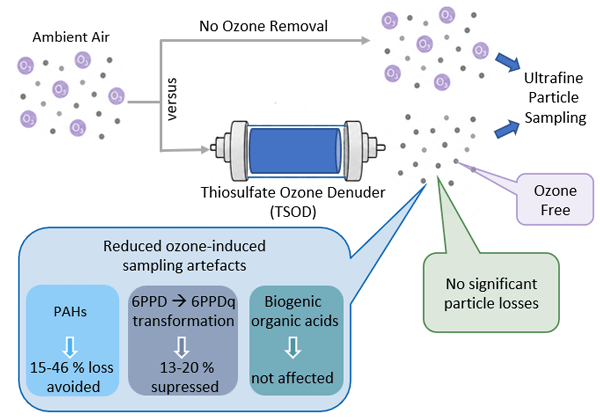
Ozone in sampling air can alter the chemical composition of collected ultrafine particles, leading to an inaccurate air quality assessment. We addressed this by developing a ceramic device coated with sodium thiosulfate that eliminates ozone before it reaches the filter. Our results show this tool effectively preserves ozone-sensitive components, such as polycyclic aromatic hydrocarbons, without particle losses. This contributes to more reliable data for air quality research.
Tamryn Hamilton, Kerneels Jaars, Pieter G. van Zyl, Mika Aurela, Marcellin Adon, Johan P. Beukes, Miroslav Josipovic, Gregor T. Feig, Markku Kulmala, Lauri Laakso, and Ville Vakkari
EGUsphere, https://doi.org/10.5194/egusphere-2026-3066, https://doi.org/10.5194/egusphere-2026-3066, 2026
Short summary
Short summary
South Africa is a global hotspot for nitrogen dioxide, yet direct surface exchange measurements are absent from Africa. Using a high-precision laser at a savanna grassland site from 2015 to 2020, we made the first landscape-scale nitrogen dioxide flux measurements on the continent. The site mainly released nitrogen dioxide, driven by summer rainfall and soil microbes. We estimated the ecosystem-scale balance point between uptake and release. Widely used models overestimate daytime deposition.
Neil M. Donahue, Victoria Hofbauer, Henning Finkenzeller, Dominik Stolzenburg, Paulus S. Bauer, Randall Chiu, Lubna Dada, Jonathan Duplissy, Xu-Cheng He, Martin Heinritzi, Christopher R. Hoyle, Andreas Kürten, Aleksandr Kvashnin, Katrianne Lehtipalo, Naser Mahfouz, Vladimir Makhmutov, Roy L. Mauldin III, Ugo Molteni, Lauriane L. J. Quéléver, Matti Rissanen, Siegfried Schobesberger, Mario Simon, Andrea C. Wagner, Mingyi Wang, Chao Yan, Penglin Ye, Ilona Riipinen, Hamish Gordon, Joachim Curtius, Armin Hansel, Imad El Haddad, Markku Kulmala, Douglas R. Worsnop, Rainer Volkamer, Paul M. Winkler, Jasper Kirkby, and Richard Flagan
Atmos. Meas. Tech., 19, 3363–3396, https://doi.org/10.5194/amt-19-3363-2026, https://doi.org/10.5194/amt-19-3363-2026, 2026
Short summary
Short summary
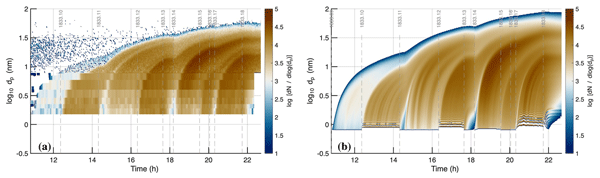
We describe accurate measurement of particle formation and growth in the CERN CLOUD (European Council for Nuclear Research Cosmics Leaving OUtdoor Droplets) chamber, using a suite of gas- and particle-phase instruments. The interconnected measurements establish high accuracy in key particle properties and critically important gas-phase sulfuric acid. This is a template for accurate calibration of similar experiments and thus accurate determination of aerosol nucleation and growth rates, which are an important source of uncertainty in climate science.
Viet Le, Konstantinos Doulgeris, Mika Komppula, John Backman, Gholamhossein Bagheri, Eberhard Bodenschatz, and David Brus
Earth Syst. Sci. Data Discuss., https://doi.org/10.5194/essd-2026-135, https://doi.org/10.5194/essd-2026-135, 2026
Preprint under review for ESSD
Short summary
Short summary
Vertical profiles and time series of aerosol particles, cloud droplets, and weather conditions were measured by the Finnish Meteorological Institute airborne payload attached to tethered balloons during the Pallas Cloud Experiment 2022 in Finland. When combined with other datasets collected during the campaign, these measurements will enable integrated analyses and offer a comprehensive view of the atmospheric conditions during the experiment.
Hugo Rubio, Ville Vakkari, Martin Kühn, and Julia Gottschall
Wind Energ. Sci. Discuss., https://doi.org/10.5194/wes-2026-50, https://doi.org/10.5194/wes-2026-50, 2026
Preprint withdrawn
Short summary
Short summary
Offshore wind farms need accurate wind data, but collecting measurements at sea is often difficult and expensive. In this study, we investigate how wind measurements from a lidar mounted on a moving ship can improve the accuracy of commonly used reanalysis datasets. Using a statistical correction method, we are able to reduce errors in wind speed estimates. This efficient approach can make offshore wind planning and resource assessment more reliable in areas where measurements are limited.
Zhen Song, Chenqi Zhang, Hongru Shen, Hao Ma, Iida Pullinen, and Defeng Zhao
Atmos. Chem. Phys., 26, 2769–2784, https://doi.org/10.5194/acp-26-2769-2026, https://doi.org/10.5194/acp-26-2769-2026, 2026
Short summary
Short summary
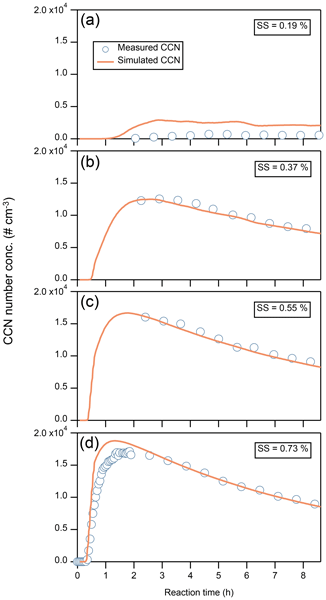
Secondary organic aerosol (SOA) can act as cloud condensation nuclei (CCN) and influence global cloud formation. This study modeled CCN and chemical composition, aerosol size and hygroscopicity (κ) of SOA using a model treating every single step. We evaluated the model ability and limitations in simulated chemical composition, κ, particle size distribution and CCN as a potential benchmark model and found that the accurate simulation of SOA size and κ is essential for reliable CCN prediction.
Sami D. Harni, Lasse Johansson, Jarkko V. Niemi, Ville Silvonen, Juan Andrés Casquero-Vera, Anu Kousa, Krista Luoma, Viet Le, David Brus, Konstantinos Doulgeris, Topi Rönkkö, Hanna E. Manninen, Tuukka Petäjä, and Hilkka Timonen
Atmos. Chem. Phys., 25, 18719–18738, https://doi.org/10.5194/acp-25-18719-2025, https://doi.org/10.5194/acp-25-18719-2025, 2025
Short summary
Short summary
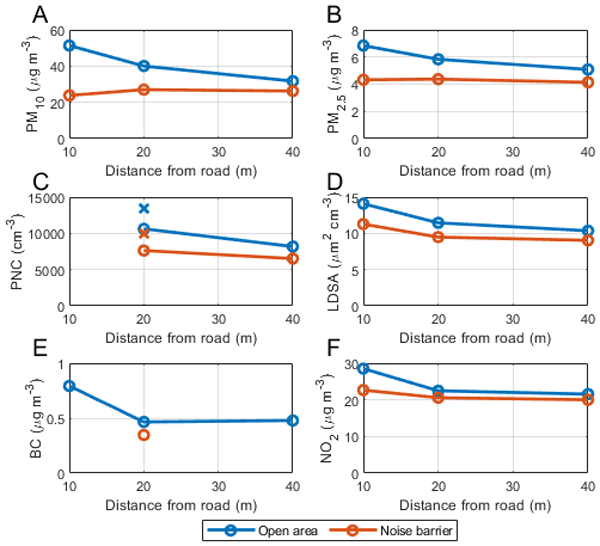
A three-month-long measurement campaign was conducted at Espoo, Finland, in spring 2023. The measurement campaign studied the effect of the noise barrier on pollutant concentration gradients on the side of a major highway. The studied pollutants included PM10, PM2.5, lung deposited surface area (LDSA), particle number concentration (PNC), NO2, and black carbon (BC). The noise barrier was found to be effective in reducing, especially the concentration of particulate pollutants.
Aino Ovaska, Elio Rauth, Daniel Holmberg, Paulo Artaxo, John Backman, Benjamin Bergmans, Don Collins, Marco Aurélio Franco, Shahzad Gani, Roy M. Harrison, Rakesh K. Hooda, Tareq Hussein, Antti-Pekka Hyvärinen, Kerneels Jaars, Adam Kristensson, Markku Kulmala, Lauri Laakso, Ari Laaksonen, Nikolaos Mihalopoulos, Colin O'Dowd, Jakub Ondracek, Tuukka Petäjä, Kristina Plauškaitė, Mira Pöhlker, Ximeng Qi, Peter Tunved, Ville Vakkari, Alfred Wiedensohler, Kai Puolamäki, Tuomo Nieminen, Veli-Matti Kerminen, Victoria A. Sinclair, and Pauli Paasonen
Aerosol Research, 3, 589–618, https://doi.org/10.5194/ar-3-589-2025, https://doi.org/10.5194/ar-3-589-2025, 2025
Short summary
Short summary
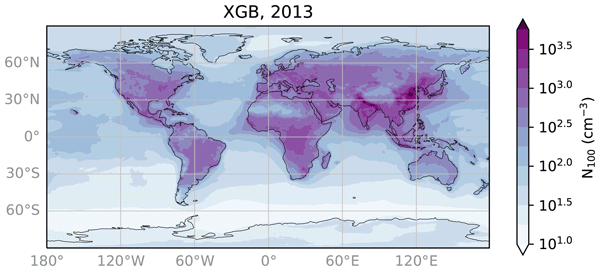
We trained machine learning models to estimate the number of aerosol particles large enough to form clouds and generated daily estimates for the entire globe. The models performed well in many continental regions but struggled in remote and marine areas. Still, this approach offers a way to quantify these particles in areas that lack direct measurements, helping us understand their influence on clouds and climate on a global scale.
Arya Mukherjee, Anni Hartikainen, Markus Somero, Viljami Luostari, Mika Ihalainen, Christopher P. Rüger, Timo Kekäläinen, Ville H. Nissinen, Luis M. F. Barreira, Hanna Koponen, Tuukka Kokkola, Delun Li, Lejish Vettikkat, Pasi Yli-Pirilä, Muhammad Shahzaib, Meri M. Ruppel, Ville Vakkari, Kerneels Jaars, Stefan J. Siebert, Angela Buchholz, Kajar Köster, Pieter G. van Zyl, Hilkka Timonen, Niko Kinnunen, Janne Jänis, Annele Virtanen, Aki Virkkula, and Olli Sippula
Atmos. Chem. Phys., 25, 16747–16774, https://doi.org/10.5194/acp-25-16747-2025, https://doi.org/10.5194/acp-25-16747-2025, 2025
Short summary
Short summary
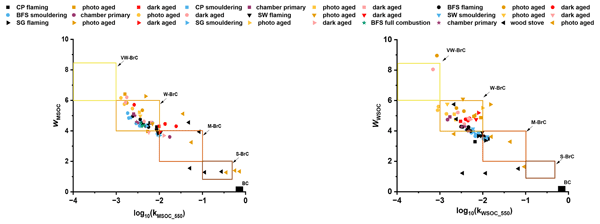
Warming climate is predicted to increase boreal and peatland fires in Northern Eurasia. Limited studies have characterized light absorbing aerosol emissions from these biomasses, thus necessitating this work. Brown carbon (BrC) emitted from laboratory-scale biomass burning had weak light absorptivities based on their complex refractive index values. A combustion temperature dependent light absorptivity continuum existed for emitted BrC. Photochemical aging decreased BrC light absorptivity.
Ioanna Tsikoudi, Eleni Marinou, Maria Tombrou, Eleni Giannakaki, Emmanouil Proestakis, Konstantinos Rizos, Ville Vakkari, Holger Baars, Annett Skupin, Ronny Engelmann, Zhenping Yin, and Vassilis Amiridis
Atmos. Chem. Phys., 25, 16491–16510, https://doi.org/10.5194/acp-25-16491-2025, https://doi.org/10.5194/acp-25-16491-2025, 2025
Short summary
Short summary
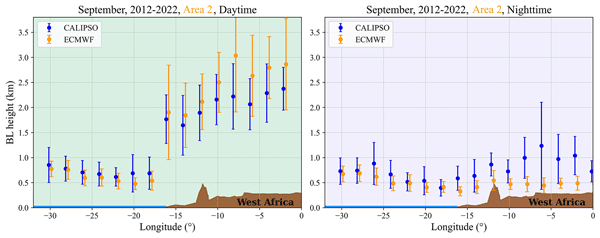
We study the characteristics of the boundary layer over three areas: the tropical Atlantic, the tropical West African continent, and near Cabo Verde using PollyXT and CALIPSO (Cloud-Aerosol Lidar and Infrared Pathfinder Satellite Observations) lidar measurements, as well as ECMWF (European Centre for Medium-Range Weather Forecasts) data. The findings underline the strengths and limitations of different observational and modeling approaches, and emphasizes on the importance of considering aerosol conditions and local meteorology when interpreting boundary layer dynamics.
Sungah Kang, Jürgen Wildt, Iida Pullinen, Luc Vereecken, Cheng Wu, Andreas Wahner, Sören R. Zorn, and Thomas F. Mentel
Atmos. Chem. Phys., 25, 15715–15740, https://doi.org/10.5194/acp-25-15715-2025, https://doi.org/10.5194/acp-25-15715-2025, 2025
Short summary
Short summary
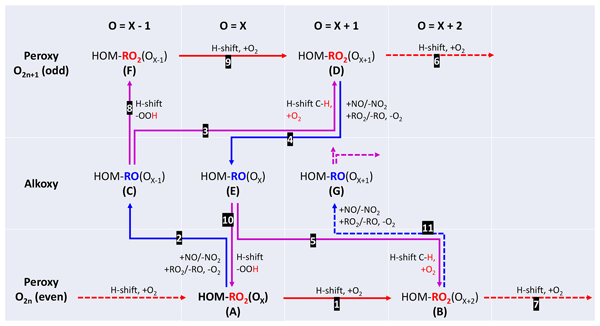
Highly oxygenated organic molecules by atmospheric oxidation of plant emitted monoterpenes are important components in secondary organic aerosol formation. Autoxidation of organic peroxy radicals is one important pathway of their formation. We show that isomerization of highly oxygenated alkoxy radicals leads to highly oxygenated peroxy radicals that continue the autoxidation chain. Alkoxy-peroxy steps may dominate the formation of highly oxygenated molecules at high nitrogen oxide levels.
Arttu Ylisirniö, Noora Hyttinen, Zijun Li, Mitchell Alton, Aki Nissinen, Iida Pullinen, Pasi Miettinen, Taina Yli-Juuti, and Siegfried Schobesberger
Atmos. Meas. Tech., 18, 6449–6464, https://doi.org/10.5194/amt-18-6449-2025, https://doi.org/10.5194/amt-18-6449-2025, 2025
Short summary
Short summary
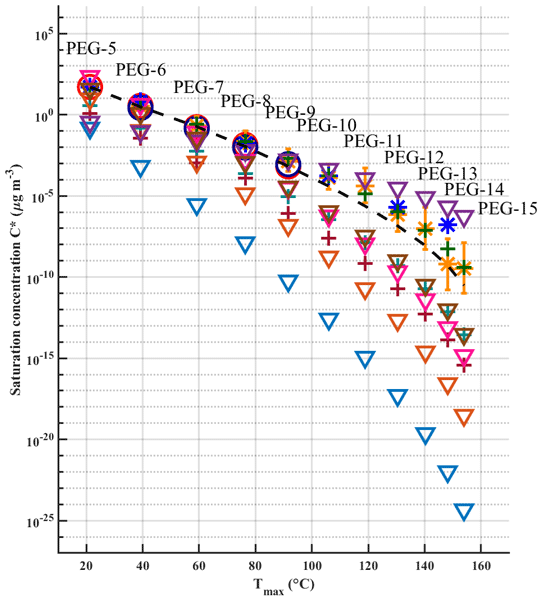
This study increases the knowledge of the low-volatility organic compounds observed in ambient aerosol particles by providing new volatility information about compounds used for calibrating volatility measurement instruments. Previously, such information was not available, and calibration of the instrument had to be extrapolated to cover the whole measurement range. Results of this study will provide the scientific community with better tools for investigating the complexity of ambient aerosols.
Sini Talvinen, Paul Kim, Emanuele Tovazzi, Eemeli Holopainen, Roxana Cremer, Thomas Kühn, Harri Kokkola, Zak Kipling, David Neubauer, João C. Teixeira, Alistair Sellar, Duncan Watson-Parris, Yang Yang, Jialei Zhu, Srinath Krishnan, Annele Virtanen, and Daniel G. Partridge
Atmos. Chem. Phys., 25, 14449–14478, https://doi.org/10.5194/acp-25-14449-2025, https://doi.org/10.5194/acp-25-14449-2025, 2025
Short summary
Short summary
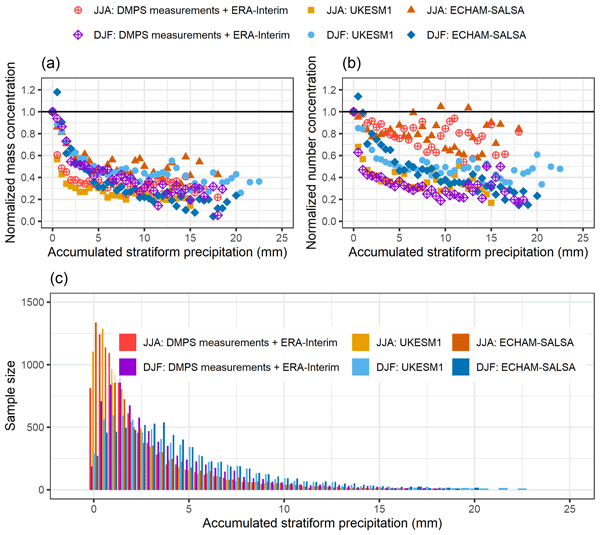
Climate models struggle to predict how clouds and aerosols interact, affecting Earth’s energy balance. This study compares models to observations to see how they describe effects of clouds and rain on aerosols. While both models show similar overall trends, seasonal differences emerged. These, however, align with differences in key variables participating in cloud formation. The study provides insights on how to improve the representation of aerosol-cloud interactions in climate models.
David Brus, Viet Le, Joel Kuula, and Konstantinos Doulgeris
Earth Syst. Sci. Data, 17, 5209–5219, https://doi.org/10.5194/essd-17-5209-2025, https://doi.org/10.5194/essd-17-5209-2025, 2025
Short summary
Short summary
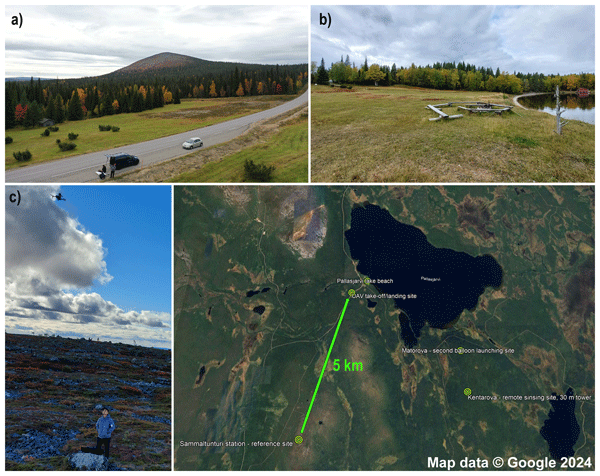
This paper provides datasets collected as part of the Pallas Cloud Experiment campaign in northern Finland during autumn of 2022. We provide an overview of a custom-built drone backpack for air quality and atmospheric state variable measurements carried on top of a consumer-grade drone (DJI Mavic 2 Pro). Moreover, we describe the flight strategies and provide an overview of the datasets obtained, including a description of the measurements against a reference for data validation.
Henri Oikarinen, Anni Hartikainen, Pauli Simonen, Miska Olin, Ukko-Ville Mäkinen, Petteri Marjanen, Laura Salo, Ville Silvonen, Sampsa Martikainen, Jussi Hoivala, Mika Ihalainen, Pasi Miettinen, Pasi Yli-Pirilä, Olli Sippula, Santtu Mikkonen, and Panu Karjalainen
Atmos. Meas. Tech., 18, 4271–4292, https://doi.org/10.5194/amt-18-4271-2025, https://doi.org/10.5194/amt-18-4271-2025, 2025
Short summary
Short summary
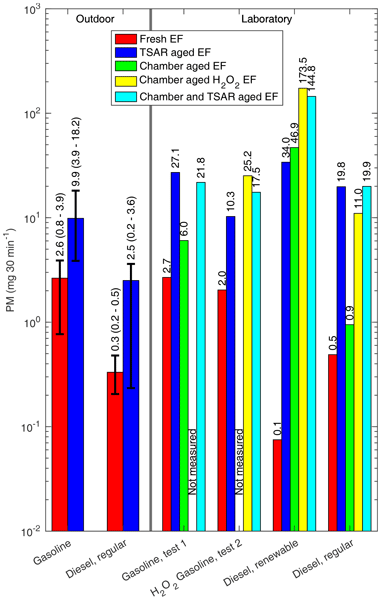
Fuel-operated auxiliary heaters are used in vehicles to provide extra heating to improve passenger comfort and vehicle functionality in cold climates. Currently heater emissions are not regulated as part of vehicle emissions, so this research was done to assess harmful gaseous and airborne particle emissions from them. Heaters were found to be major source of particles, especially when particles formed after combustion were accounted for, and large carbon monoxide emissions were also observed.
Anni Hartikainen, Mika Ihalainen, Deeksha Shukla, Marius Rohkamp, Arya Mukherjee, Quanfu He, Sandra Piel, Aki Virkkula, Delun Li, Tuukka Kokkola, Seongho Jeong, Hanna Koponen, Uwe Etzien, Anusmita Das, Krista Luoma, Lukas Schwalb, Thomas Gröger, Alexandre Barth, Martin Sklorz, Thorsten Streibel, Hendryk Czech, Benedikt Gündling, Markus Kalberer, Bert Buchholz, Andreas Hupfer, Thomas Adam, Thorsten Hohaus, Johan Øvrevik, Ralf Zimmermann, and Olli Sippula
Atmos. Chem. Phys., 25, 9275–9294, https://doi.org/10.5194/acp-25-9275-2025, https://doi.org/10.5194/acp-25-9275-2025, 2025
Short summary
Short summary
Photochemical reactions altered the properties of kerosene-operated jet engine burner exhaust emissions, which were studied in a laboratory using an oxidation flow reactor. Particle mass increased 300-fold as particles and gases became more oxidized. Light absorption increased, but the total direct radiative forcing efficiency was estimated to have shifted from positive to negative. The results highlight the importance of considering secondary aerosol formation when assessing the impacts of aviation.
John Backman, Krista Luoma, Henri Servomaa, Ville Vakkari, and David Brus
Earth Syst. Sci. Data Discuss., https://doi.org/10.5194/essd-2025-284, https://doi.org/10.5194/essd-2025-284, 2025
Revised manuscript under review for ESSD
Short summary
Short summary
This work describes the in-situ aerosol measurements at the Arctic Sammaltunturi measurement station in Pallas in northern Finland. This data paper describes the instruments and the data post processing of key aerosol particle measurements that are relevant for cloud properties. Data reported here are part of the Pallas Cloud Experiment in 2022 (PaCE2022).
Marco Schmidt, Haseeb Hakkim, Lukas Anders, Aleksandrs Kalamašņikovs, Thomas Kröger-Badge, Robert Irsig, Norbert Graf, Reinhard Kelnberger, Johannes Passig, and Ralf Zimmermann
Atmos. Meas. Tech., 18, 2425–2437, https://doi.org/10.5194/amt-18-2425-2025, https://doi.org/10.5194/amt-18-2425-2025, 2025
Short summary
Short summary
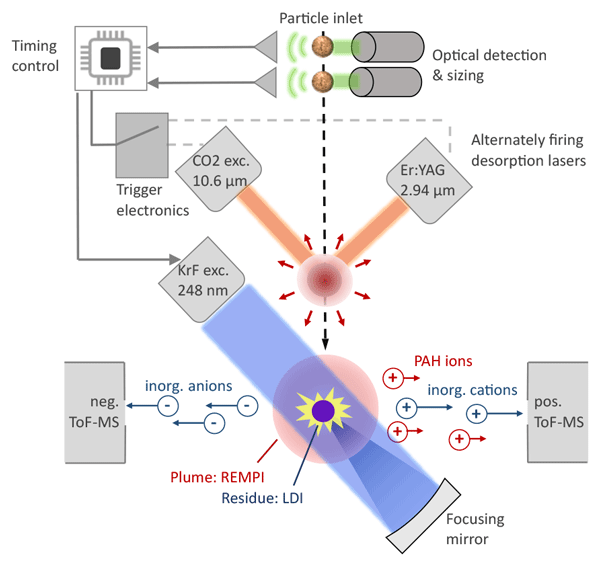
Laser desorption of individual particles prior to ionization is the key to reveal their organic composition. The CO2 lasers required are bulky and maintenance-intensive, limiting their use in the field. We have developed a compact solid-state IR laser that is easily aligned with the particle beam. Mass spectra and hit rates are similar to those of the CO2 laser. For combined characterization of organic and inorganic particle compositions, both lasers are superior to conventional single UV pulses.
Battist Utinger, Alexandre Barth, Andreas Paul, Arya Mukherjee, Steven John Campbell, Christa-Maria Müller, Mika Ihalainen, Pasi Yli-Pirilä, Miika Kortelainen, Zheng Fang, Patrick Martens, Markus Somero, Juho Louhisalmi, Thorsten Hohaus, Hendryk Czech, Olli Sippula, Yinon Rudich, Ralf Zimmermann, and Markus Kalberer
Aerosol Research, 3, 205–218, https://doi.org/10.5194/ar-3-205-2025, https://doi.org/10.5194/ar-3-205-2025, 2025
Short summary
Short summary
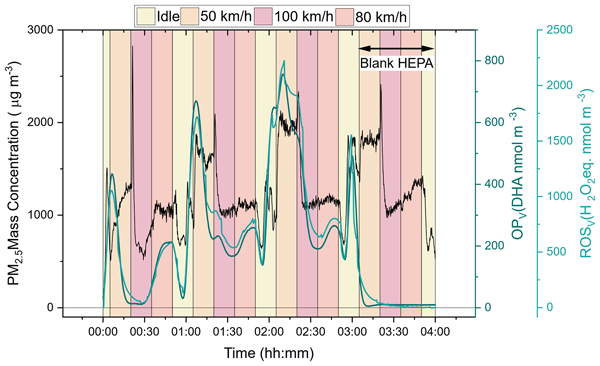
The oxidative potential (OP) of air pollution particles might be a metric explaining particle toxicity. This study quantifies the OP of fresh and aged car and wood burning emission particles and explores how the OP changes over time, using novel high-temporal-resolution instruments. We show that emissions from wood burning are more toxic than car exhaust per unit particle mass, especially as they age in the atmosphere. We also calculate emission factors for the OP, which could help to improve air pollution policies.
Viet Le, Konstantinos Matthaios Doulgeris, Mika Komppula, John Backman, Gholamhossein Bagheri, Eberhard Bodenschatz, and David Brus
Earth Syst. Sci. Data Discuss., https://doi.org/10.5194/essd-2025-148, https://doi.org/10.5194/essd-2025-148, 2025
Preprint withdrawn
Short summary
Short summary
This manuscript presents datasets collected during the Pallas Cloud Experiment in northern Finland during the autumn of 2022. We provide an overview of the payload that measured meteorological, cloud, and aerosol properties, and was deployed on tethered balloon systems across 21 flights. Additionally, we describe the datasets obtained, including details of the instruments on the payload.
Maria Filioglou, Petri Tiitta, Xiaoxia Shang, Ari Leskinen, Pasi Ahola, Sanna Pätsi, Annika Saarto, Ville Vakkari, Uula Isopahkala, and Mika Komppula
Atmos. Chem. Phys., 25, 1639–1657, https://doi.org/10.5194/acp-25-1639-2025, https://doi.org/10.5194/acp-25-1639-2025, 2025
Short summary
Short summary
Every year a vast number of people experience allergic reactions due to exposure to airborne pollen. These symptoms are concentration dependent; thus accurate information about the pollen load in the atmosphere is essential. Moreover, pollen grains and fragments of it are likely to contribute to cloud processes and suppress precipitation. Here, we estimate the concentration and cloud-relevant parameters of birch pollen in the atmosphere using observations from a PollyXT and a CL61 ceilometer.
Elisabeth Eckenberger, Andreas Mittereder, Nadine Gawlitta, Jürgen Schnelle-Kreis, Martin Sklorz, Dieter Brüggemann, Ralf Zimmermann, and Anke C. Nölscher
Aerosol Research, 3, 45–64, https://doi.org/10.5194/ar-3-45-2025, https://doi.org/10.5194/ar-3-45-2025, 2025
Short summary
Short summary
We assessed the performance of four cascade impactors for collecting and analyzing organic markers in airborne ultrafine particles (UFPs) under lab and field conditions. The cutoff was influenced by the impactor design and aerosol mixture. Two key factors caused variations in mass concentrations: the evaporation of semi-volatile compounds and the "bounce-off" of larger particles and fragments. Our findings reveal the challenges of analyzing organic marker mass concentrations in airborne UFPs.
Hagninou Elagnon Venance Donnou, Aristide Barthélémy Akpo, Money Ossohou, Claire Delon, Véronique Yoboué, Dungall Laouali, Marie Ouafo-Leumbe, Pieter Gideon Van Zyl, Ousmane Ndiaye, Eric Gardrat, Maria Dias-Alves, and Corinne Galy-Lacaux
Atmos. Chem. Phys., 24, 13151–13182, https://doi.org/10.5194/acp-24-13151-2024, https://doi.org/10.5194/acp-24-13151-2024, 2024
Short summary
Short summary
Ozone is a secondary air pollutant that is detrimental to human and plant health. A better understanding of its chemical evolution is a challenge for Africa, where it is still undersampled. Out of 14 sites examined (1995–2020), high levels of O3 are reported in southern Africa. The dominant chemical processes leading to O3 formation are identified. A decrease in O3 is observed at Katibougou (Mali) and Banizoumbou (Niger), and an increase is found at Zoétélé (Cameroon) and Skukuza (South Africa).
Zijun Li, Angela Buchholz, and Noora Hyttinen
Atmos. Chem. Phys., 24, 11717–11725, https://doi.org/10.5194/acp-24-11717-2024, https://doi.org/10.5194/acp-24-11717-2024, 2024
Short summary
Short summary
Evaluating organosulfur (OS) hygroscopicity is important for assessing aerosol–cloud climate interactions in the post-fossil-fuel future, when SO2 emissions decrease and OS compounds become increasingly important. Here a state-of-the-art quantum-chemistry-based method was used to predict the hygroscopic growth factors (HGFs) of a group of atmospherically relevant OS compounds and their mixtures with (NH4)2SO4. A good agreement was observed between their model-estimated and experimental HGFs.
Zoé Brasseur, Julia Schneider, Janne Lampilahti, Ville Vakkari, Victoria A. Sinclair, Christina J. Williamson, Carlton Xavier, Dmitri Moisseev, Markus Hartmann, Pyry Poutanen, Markus Lampimäki, Markku Kulmala, Tuukka Petäjä, Katrianne Lehtipalo, Erik S. Thomson, Kristina Höhler, Ottmar Möhler, and Jonathan Duplissy
Atmos. Chem. Phys., 24, 11305–11332, https://doi.org/10.5194/acp-24-11305-2024, https://doi.org/10.5194/acp-24-11305-2024, 2024
Short summary
Short summary
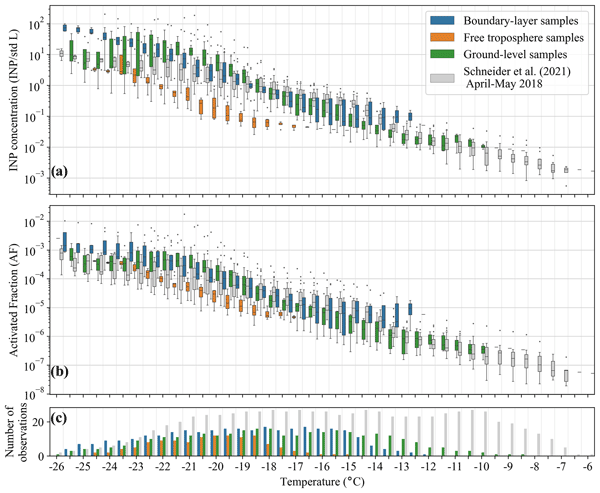
Ice-nucleating particles (INPs) strongly influence the formation of clouds by initiating the formation of ice crystals. However, very little is known about the vertical distribution of INPs in the atmosphere. Here, we present aircraft measurements of INP concentrations above the Finnish boreal forest. Results show that near-surface INPs are efficiently transported and mixed within the boundary layer and occasionally reach the free troposphere.
Romanos Foskinis, Ghislain Motos, Maria I. Gini, Olga Zografou, Kunfeng Gao, Stergios Vratolis, Konstantinos Granakis, Ville Vakkari, Kalliopi Violaki, Andreas Aktypis, Christos Kaltsonoudis, Zongbo Shi, Mika Komppula, Spyros N. Pandis, Konstantinos Eleftheriadis, Alexandros Papayannis, and Athanasios Nenes
Atmos. Chem. Phys., 24, 9827–9842, https://doi.org/10.5194/acp-24-9827-2024, https://doi.org/10.5194/acp-24-9827-2024, 2024
Short summary
Short summary
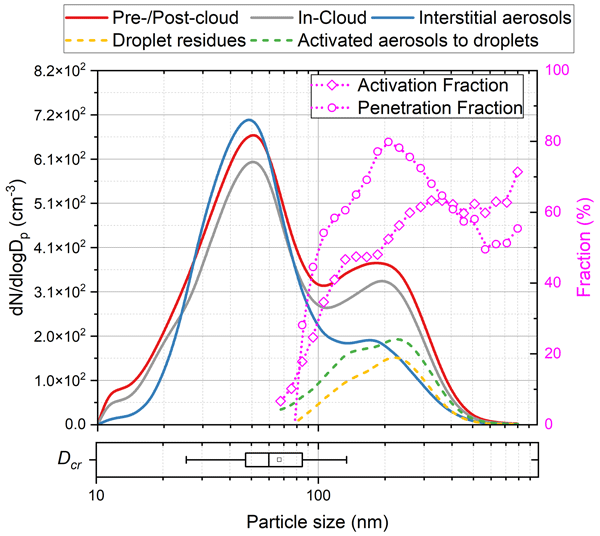
Analysis of modeling, in situ, and remote sensing measurements reveals the microphysical state of orographic clouds and their response to aerosol from the boundary layer and free troposphere. We show that cloud response to aerosol is robust, as predicted supersaturation and cloud droplet number levels agree with those determined from in-cloud measurements. The ability to determine if clouds are velocity- or aerosol-limited allows for novel model constraints and remote sensing products.
Muhammed Irfan, Thomas Kühn, Taina Yli-Juuti, Anton Laakso, Eemeli Holopainen, Douglas R. Worsnop, Annele Virtanen, and Harri Kokkola
Atmos. Chem. Phys., 24, 8489–8506, https://doi.org/10.5194/acp-24-8489-2024, https://doi.org/10.5194/acp-24-8489-2024, 2024
Short summary
Short summary
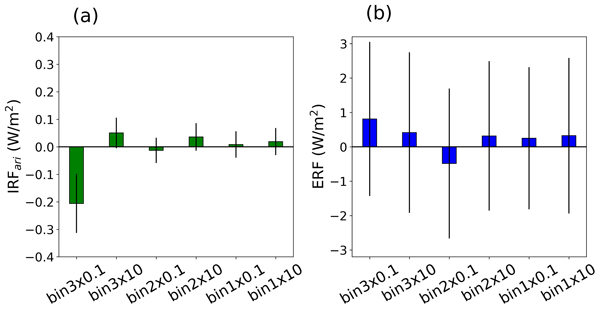
The study examines how the volatility of semi-volatile organic compounds affects secondary organic aerosol (SOA) formation and climate. Our simulations show that uncertainties in these volatilities influence aerosol mass and climate impacts. Accurate representation of these compounds in climate models is crucial for predicting global climate patterns.
Christoffer Hallgren, Jeanie A. Aird, Stefan Ivanell, Heiner Körnich, Ville Vakkari, Rebecca J. Barthelmie, Sara C. Pryor, and Erik Sahlée
Wind Energ. Sci., 9, 821–840, https://doi.org/10.5194/wes-9-821-2024, https://doi.org/10.5194/wes-9-821-2024, 2024
Short summary
Short summary
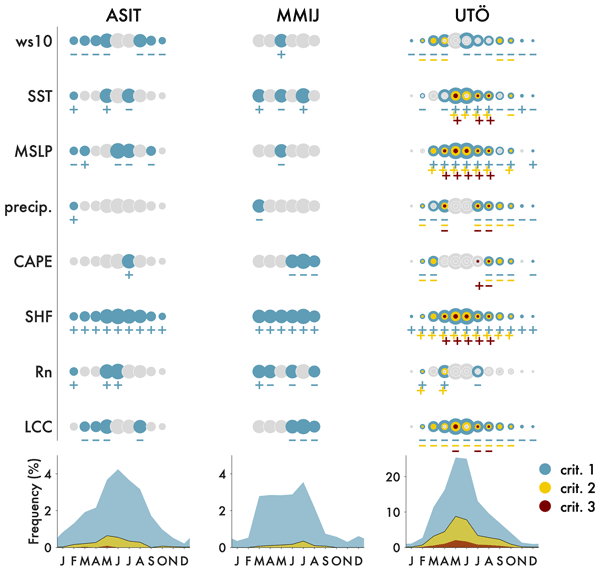
Knowing the wind speed across the rotor of a wind turbine is key in making good predictions of the power production. However, models struggle to capture both the speed and the shape of the wind profile. Using machine learning methods based on the model data, we show that the predictions can be improved drastically. The work focuses on three coastal sites, spread over the Northern Hemisphere (the Baltic Sea, the North Sea, and the US Atlantic coast) with similar results for all sites.
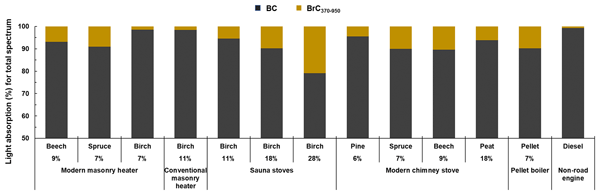
Satish Basnet, Anni Hartikainen, Aki Virkkula, Pasi Yli-Pirilä, Miika Kortelainen, Heikki Suhonen, Laura Kilpeläinen, Mika Ihalainen, Sampsa Väätäinen, Juho Louhisalmi, Markus Somero, Jarkko Tissari, Gert Jakobi, Ralf Zimmermann, Antti Kilpeläinen, and Olli Sippula
Atmos. Chem. Phys., 24, 3197–3215, https://doi.org/10.5194/acp-24-3197-2024, https://doi.org/10.5194/acp-24-3197-2024, 2024
Short summary
Short summary
Brown carbon (BrC) emissions were estimated, for residential wood combustion (RWC) from various northern European appliances, utilizing an extensive seven-wavelength aethalometer dataset and thermal–optical carbon analysis. The contribution of BrC370–950 to the absorption of visible light varied between 1 % and 21 %, and was linked with fuel moisture content and combustion efficiency. This study provides important information required for assessing the climate effects of RWC emissions.
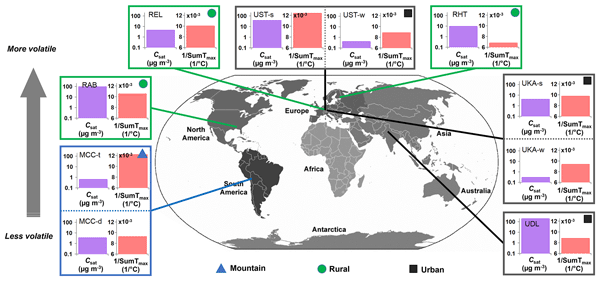
Wei Huang, Cheng Wu, Linyu Gao, Yvette Gramlich, Sophie L. Haslett, Joel Thornton, Felipe D. Lopez-Hilfiker, Ben H. Lee, Junwei Song, Harald Saathoff, Xiaoli Shen, Ramakrishna Ramisetty, Sachchida N. Tripathi, Dilip Ganguly, Feng Jiang, Magdalena Vallon, Siegfried Schobesberger, Taina Yli-Juuti, and Claudia Mohr
Atmos. Chem. Phys., 24, 2607–2624, https://doi.org/10.5194/acp-24-2607-2024, https://doi.org/10.5194/acp-24-2607-2024, 2024
Short summary
Short summary
We present distinct molecular composition and volatility of oxygenated organic aerosol particles in different rural, urban, and mountain environments. We do a comprehensive investigation of the relationship between the chemical composition and volatility of oxygenated organic aerosol particles across different systems and environments. This study provides implications for volatility descriptions of oxygenated organic aerosol particles in different model frameworks.
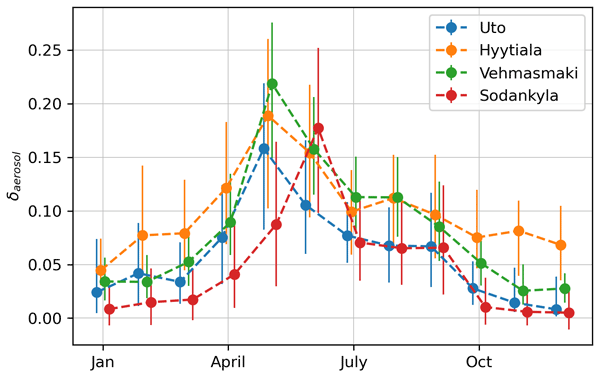
Viet Le, Hannah Lobo, Ewan J. O'Connor, and Ville Vakkari
Atmos. Meas. Tech., 17, 921–941, https://doi.org/10.5194/amt-17-921-2024, https://doi.org/10.5194/amt-17-921-2024, 2024
Short summary
Short summary
This study offers a long-term overview of aerosol particle depolarization ratio at the wavelength of 1565 nm obtained from vertical profiling measurements by Halo Doppler lidars during 4 years at four different locations across Finland. Our observations support the long-term usage of Halo Doppler lidar depolarization ratio such as the detection of aerosols that may pose a safety risk for aviation. Long-range Saharan dust transport and pollen transport are also showcased here.
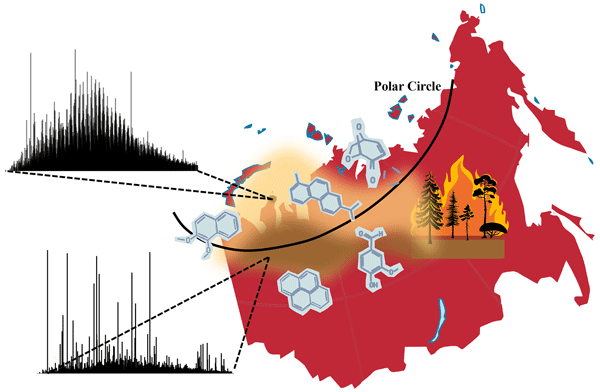
Eric Schneider, Hendryk Czech, Olga Popovicheva, Marina Chichaeva, Vasily Kobelev, Nikolay Kasimov, Tatiana Minkina, Christopher Paul Rüger, and Ralf Zimmermann
Atmos. Chem. Phys., 24, 553–576, https://doi.org/10.5194/acp-24-553-2024, https://doi.org/10.5194/acp-24-553-2024, 2024
Short summary
Short summary
This study provides insights into the complex chemical composition of long-range-transported wildfire plumes from Yakutia, which underwent different levels of atmospheric processing. With complementary mass spectrometric techniques, we improve our understanding of the chemical processes and atmospheric fate of wildfire plumes. Unprecedented high levels of carbonaceous aerosols crossed the polar circle with implications for the Arctic ecosystem and consequently climate.
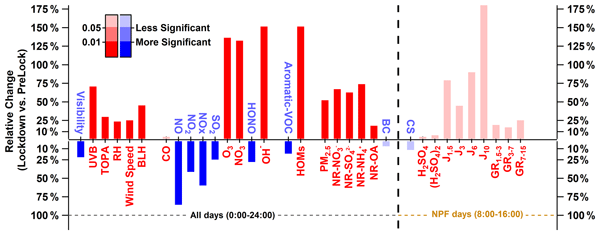
Markku Kulmala, Anna Lintunen, Hanna Lappalainen, Annele Virtanen, Chao Yan, Ekaterina Ezhova, Tuomo Nieminen, Ilona Riipinen, Risto Makkonen, Johanna Tamminen, Anu-Maija Sundström, Antti Arola, Armin Hansel, Kari Lehtinen, Timo Vesala, Tuukka Petäjä, Jaana Bäck, Tom Kokkonen, and Veli-Matti Kerminen
Atmos. Chem. Phys., 23, 14949–14971, https://doi.org/10.5194/acp-23-14949-2023, https://doi.org/10.5194/acp-23-14949-2023, 2023
Short summary
Short summary
To be able to meet global grand challenges, we need comprehensive open data with proper metadata. In this opinion paper, we describe the SMEAR (Station for Measuring Earth surface – Atmosphere Relations) concept and include several examples (cases), such as new particle formation and growth, feedback loops and the effect of COVID-19, and what has been learned from these investigations. The future needs and the potential of comprehensive observations of the environment are summarized.
Christoffer Hallgren, Heiner Körnich, Stefan Ivanell, Ville Vakkari, and Erik Sahlée
Wind Energ. Sci. Discuss., https://doi.org/10.5194/wes-2023-129, https://doi.org/10.5194/wes-2023-129, 2023
Preprint withdrawn
Short summary
Short summary
Sometimes, the wind changes direction between the bottom and top part of a wind turbine. This affects both the power production and the loads on the turbine. In this study, a climatology of pronounced changes in wind direction across the rotor is created, focusing on Scandinavia. The weather conditions responsible for these changes in wind direction are investigated and the climatology is compared to measurements from two coastal sites, indicating an underestimation by the climatology.
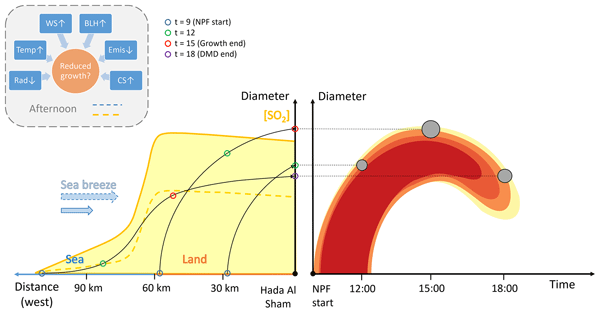
Simo Hakala, Ville Vakkari, Heikki Lihavainen, Antti-Pekka Hyvärinen, Kimmo Neitola, Jenni Kontkanen, Veli-Matti Kerminen, Markku Kulmala, Tuukka Petäjä, Tareq Hussein, Mamdouh I. Khoder, Mansour A. Alghamdi, and Pauli Paasonen
Atmos. Chem. Phys., 23, 9287–9321, https://doi.org/10.5194/acp-23-9287-2023, https://doi.org/10.5194/acp-23-9287-2023, 2023
Short summary
Short summary
Things are not always as they first seem in ambient aerosol measurements. Observations of decreasing particle sizes are often interpreted as resulting from particle evaporation. We show that such observations can counterintuitively be explained by particles that are constantly growing in size. This requires one to account for the previous movements of the observed air. Our explanation implies a larger number of larger particles, meaning more significant effects of aerosols on climate and health.
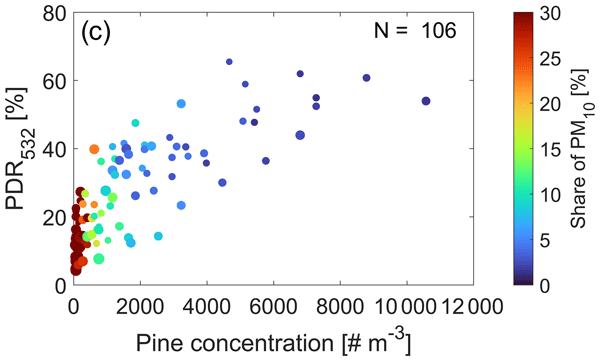
Maria Filioglou, Ari Leskinen, Ville Vakkari, Ewan O'Connor, Minttu Tuononen, Pekko Tuominen, Samuli Laukkanen, Linnea Toiviainen, Annika Saarto, Xiaoxia Shang, Petri Tiitta, and Mika Komppula
Atmos. Chem. Phys., 23, 9009–9021, https://doi.org/10.5194/acp-23-9009-2023, https://doi.org/10.5194/acp-23-9009-2023, 2023
Short summary
Short summary
Pollen impacts climate and public health, and it can be detected in the atmosphere by lidars which measure the linear particle depolarization ratio (PDR), a shape-relevant optical parameter. As aerosols also cause depolarization, surface aerosol and pollen observations were combined with measurements from ground-based lidars operating at different wavelengths to determine the optical properties of birch and pine pollen and quantify their relative contribution to the PDR.

Jonas Elm, Aladár Czitrovszky, Andreas Held, Annele Virtanen, Astrid Kiendler-Scharr, Benjamin J. Murray, Daniel McCluskey, Daniele Contini, David Broday, Eirini Goudeli, Hilkka Timonen, Joan Rosell-Llompart, Jose L. Castillo, Evangelia Diapouli, Mar Viana, Maria E. Messing, Markku Kulmala, Naděžda Zíková, and Sebastian H. Schmitt
Aerosol Research, 1, 13–16, https://doi.org/10.5194/ar-1-13-2023, https://doi.org/10.5194/ar-1-13-2023, 2023
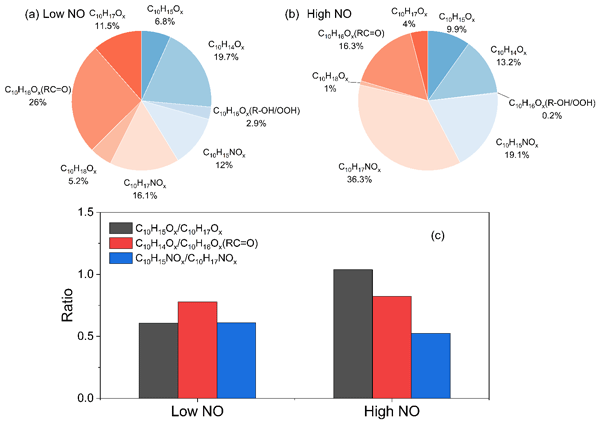
Hao Luo, Luc Vereecken, Hongru Shen, Sungah Kang, Iida Pullinen, Mattias Hallquist, Hendrik Fuchs, Andreas Wahner, Astrid Kiendler-Scharr, Thomas F. Mentel, and Defeng Zhao
Atmos. Chem. Phys., 23, 7297–7319, https://doi.org/10.5194/acp-23-7297-2023, https://doi.org/10.5194/acp-23-7297-2023, 2023
Short summary
Short summary
Oxidation of limonene, an element emitted by trees and chemical products, by OH, a daytime oxidant, forms many highly oxygenated organic molecules (HOMs), including C10-20 compounds. HOMs play an important role in new particle formation and growth. HOM formation can be explained by the chemistry of peroxy radicals. We found that a minor branching ratio initial pathway plays an unexpected, significant role. Considering this pathway enables accurate simulations of HOMs and other concentrations.
Zijun Li, Noora Hyttinen, Miika Vainikka, Olli-Pekka Tikkasalo, Siegfried Schobesberger, and Taina Yli-Juuti
Atmos. Chem. Phys., 23, 6863–6877, https://doi.org/10.5194/acp-23-6863-2023, https://doi.org/10.5194/acp-23-6863-2023, 2023
Short summary
Short summary
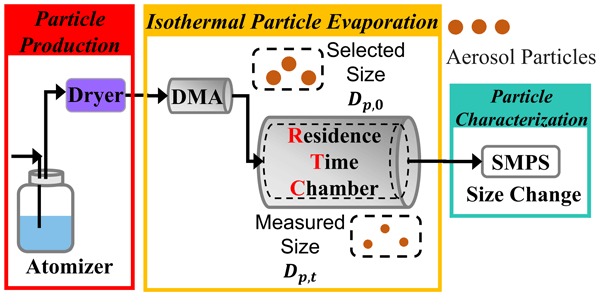
The saturation vapor pressure (psat) of low-volatility organic compounds (LVOCs) governs their partitioning between the gas and particle phases. To estimate the psat of selected LVOCs, we performed particle evaporation measurements in a residence time chamber at a temperature setting relevant to atmospheric aerosol formation and conducted state-of-the-art computational calculations. We found good agreement between the experimentally measured and model-estimated psat values for most LVOCs.
Lucía Caudillo, Mihnea Surdu, Brandon Lopez, Mingyi Wang, Markus Thoma, Steffen Bräkling, Angela Buchholz, Mario Simon, Andrea C. Wagner, Tatjana Müller, Manuel Granzin, Martin Heinritzi, Antonio Amorim, David M. Bell, Zoé Brasseur, Lubna Dada, Jonathan Duplissy, Henning Finkenzeller, Xu-Cheng He, Houssni Lamkaddam, Naser G. A. Mahfouz, Vladimir Makhmutov, Hanna E. Manninen, Guillaume Marie, Ruby Marten, Roy L. Mauldin, Bernhard Mentler, Antti Onnela, Tuukka Petäjä, Joschka Pfeifer, Maxim Philippov, Ana A. Piedehierro, Birte Rörup, Wiebke Scholz, Jiali Shen, Dominik Stolzenburg, Christian Tauber, Ping Tian, António Tomé, Nsikanabasi Silas Umo, Dongyu S. Wang, Yonghong Wang, Stefan K. Weber, André Welti, Marcel Zauner-Wieczorek, Urs Baltensperger, Richard C. Flagan, Armin Hansel, Jasper Kirkby, Markku Kulmala, Katrianne Lehtipalo, Douglas R. Worsnop, Imad El Haddad, Neil M. Donahue, Alexander L. Vogel, Andreas Kürten, and Joachim Curtius
Atmos. Chem. Phys., 23, 6613–6631, https://doi.org/10.5194/acp-23-6613-2023, https://doi.org/10.5194/acp-23-6613-2023, 2023
Short summary
Short summary
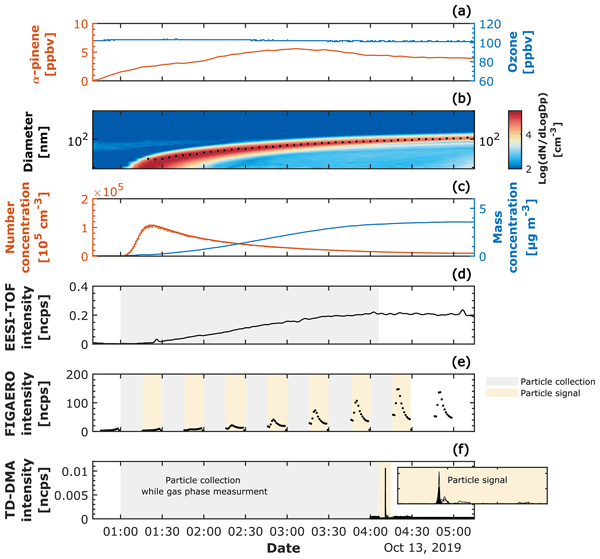
In this study, we present an intercomparison of four different techniques for measuring the chemical composition of nanoparticles. The intercomparison was performed based on the observed chemical composition, calculated volatility, and analysis of the thermograms. We found that the methods generally agree on the most important compounds that are found in the nanoparticles. However, they do see different parts of the organic spectrum. We suggest potential explanations for these differences.
Lejish Vettikkat, Pasi Miettinen, Angela Buchholz, Pekka Rantala, Hao Yu, Simon Schallhart, Tuukka Petäjä, Roger Seco, Elisa Männistö, Markku Kulmala, Eeva-Stiina Tuittila, Alex B. Guenther, and Siegfried Schobesberger
Atmos. Chem. Phys., 23, 2683–2698, https://doi.org/10.5194/acp-23-2683-2023, https://doi.org/10.5194/acp-23-2683-2023, 2023
Short summary
Short summary
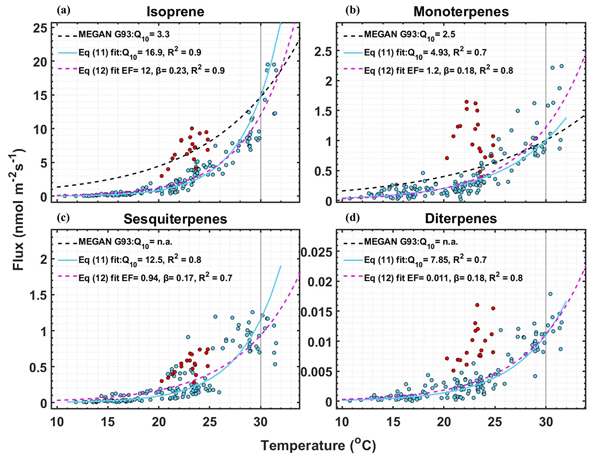
Wetlands cover a substantial fraction of the land mass in the northern latitudes, from northern Europe to Siberia and Canada. Yet, their isoprene and terpene emissions remain understudied. Here, we used a state-of-the-art measurement technique to quantify ecosystem-scale emissions from a boreal wetland during an unusually warm spring/summer. We found that the emissions from this wetland were (a) higher and (b) even more strongly dependent on temperature than commonly thought.
Konstantinos Matthaios Doulgeris, Ville Vakkari, Ewan J. O'Connor, Veli-Matti Kerminen, Heikki Lihavainen, and David Brus
Atmos. Chem. Phys., 23, 2483–2498, https://doi.org/10.5194/acp-23-2483-2023, https://doi.org/10.5194/acp-23-2483-2023, 2023
Short summary
Short summary
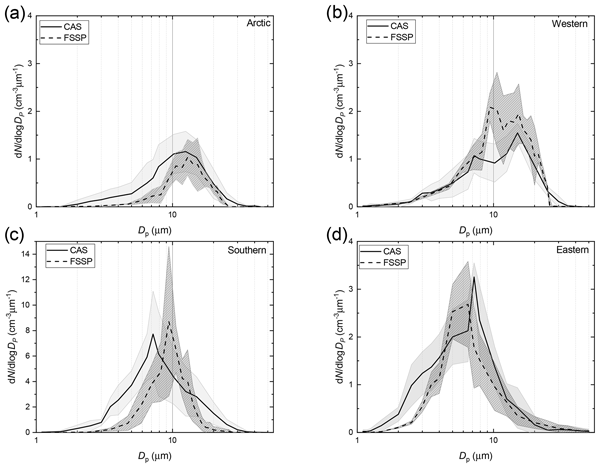
We investigated how different long-range-transported air masses can affect the microphysical properties of low-level clouds in a clean subarctic environment. A connection was revealed. Higher values of cloud droplet number concentrations were related to continental air masses, whereas the lowest values of number concentrations were related to marine air masses. These were characterized by larger cloud droplets. Clouds in all regions were sensitive to increases in cloud number concentration.
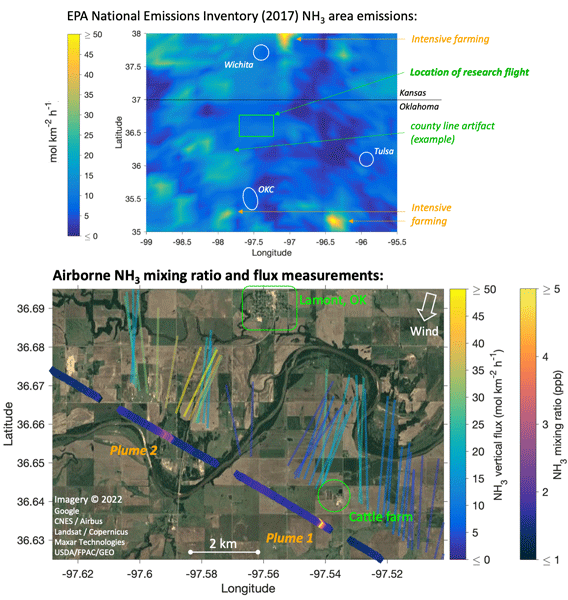
Siegfried Schobesberger, Emma L. D'Ambro, Lejish Vettikkat, Ben H. Lee, Qiaoyun Peng, David M. Bell, John E. Shilling, Manish Shrivastava, Mikhail Pekour, Jerome Fast, and Joel A. Thornton
Atmos. Meas. Tech., 16, 247–271, https://doi.org/10.5194/amt-16-247-2023, https://doi.org/10.5194/amt-16-247-2023, 2023
Short summary
Short summary
We present a new, highly sensitive technique for measuring atmospheric ammonia, an important trace gas that is emitted mainly by agriculture. We deployed the instrument on an aircraft during research flights over rural Oklahoma. Due to its fast response, we could analyze correlations with turbulent winds and calculate ammonia emissions from nearby areas at 1 to 2 km resolution. We observed high spatial variability and point sources that are not resolved in the US National Emissions Inventory.
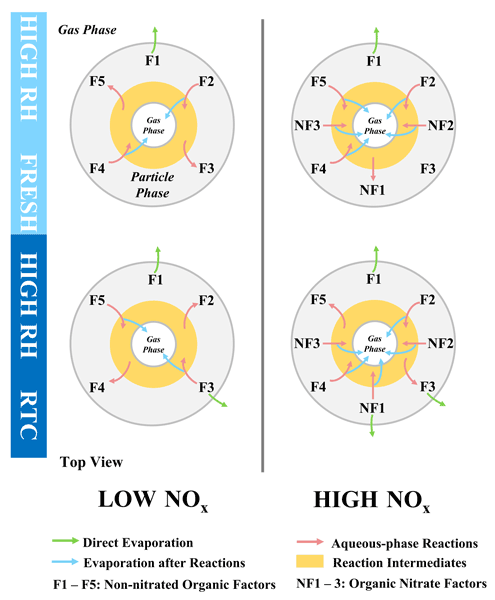
Zijun Li, Angela Buchholz, Luis M. F. Barreira, Arttu Ylisirniö, Liqing Hao, Iida Pullinen, Siegfried Schobesberger, and Annele Virtanen
Atmos. Chem. Phys., 23, 203–220, https://doi.org/10.5194/acp-23-203-2023, https://doi.org/10.5194/acp-23-203-2023, 2023
Short summary
Short summary
Interaction between NOx and biogenic emissions can be important in suburban areas. Our study showed that the addition of NOx during α-pinene SOA formation produced considerable amounts of organic nitrates and affected the composition of non-nitrated organic compounds. The compositional difference consequently altered the primary type of aqueous-phase processes during the isothermal particle evaporation.
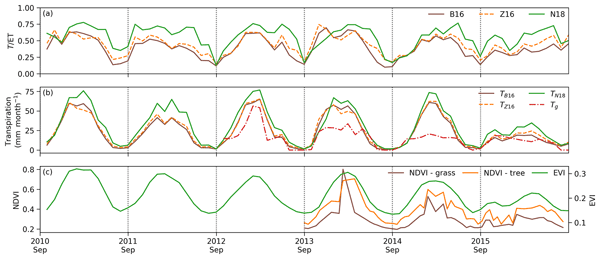
Matti Räsänen, Mika Aurela, Ville Vakkari, Johan P. Beukes, Juha-Pekka Tuovinen, Pieter G. Van Zyl, Miroslav Josipovic, Stefan J. Siebert, Tuomas Laurila, Markku Kulmala, Lauri Laakso, Janne Rinne, Ram Oren, and Gabriel Katul
Hydrol. Earth Syst. Sci., 26, 5773–5791, https://doi.org/10.5194/hess-26-5773-2022, https://doi.org/10.5194/hess-26-5773-2022, 2022
Short summary
Short summary
The productivity of semiarid grazed grasslands is linked to the variation in rainfall and transpiration. By combining carbon dioxide and water flux measurements, we show that the annual transpiration is nearly constant during wet years while grasses react quickly to dry spells and drought, which reduce transpiration. The planning of annual grazing strategies could consider the early-season rainfall frequency that was linked to the portion of annual transpiration.
Mohamed Lamine Kassamba-Diaby, Corinne Galy-Lacaux, Veronique Yoboué, Jonathan E. Hickman, Kerneels Jaars, Sylvain Gnamien, Richmond Konan, Eric Gardrat, and Siele Silué
EGUsphere, https://doi.org/10.5194/egusphere-2022-994, https://doi.org/10.5194/egusphere-2022-994, 2022
Preprint archived
Short summary
Short summary
This work presents the chemical composition of precipitation from 2018 to 2020 at three sites representative of a south-north transect in Côte d'Ivoire. It includes two urban sites (Abidjan and Korhogo) and one rural site (Lamto). Measured rain chemical content and wet deposition fluxes highlights different dominant sources contributions i.e anthropogenic sources (traffic, construction, industry) at urban sites and biomass burning at the rural site.
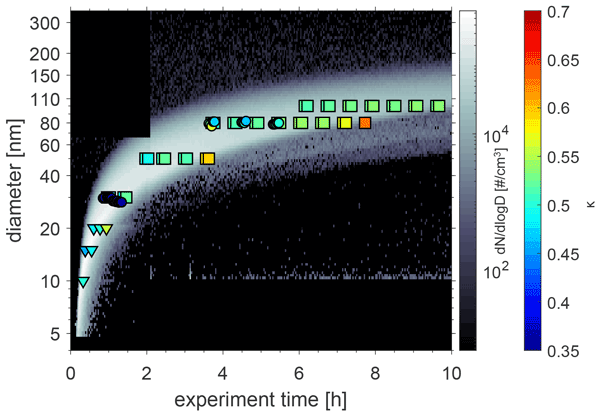
Bernadette Rosati, Sini Isokääntä, Sigurd Christiansen, Mads Mørk Jensen, Shamjad P. Moosakutty, Robin Wollesen de Jonge, Andreas Massling, Marianne Glasius, Jonas Elm, Annele Virtanen, and Merete Bilde
Atmos. Chem. Phys., 22, 13449–13466, https://doi.org/10.5194/acp-22-13449-2022, https://doi.org/10.5194/acp-22-13449-2022, 2022
Short summary
Short summary
Sulfate aerosols have a strong influence on climate. Due to the reduction in sulfur-based fossil fuels, natural sulfur emissions play an increasingly important role. Studies investigating the climate relevance of natural sulfur aerosols are scarce. We study the water uptake of such particles in the laboratory, demonstrating a high potential to take up water and form cloud droplets. During atmospheric transit, chemical processing affects the particles’ composition and thus their water uptake.
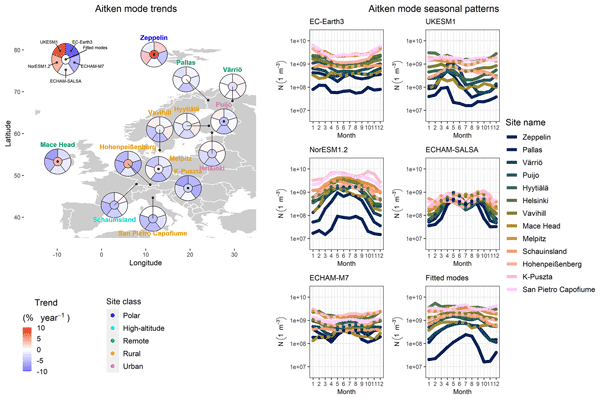
Ville Leinonen, Harri Kokkola, Taina Yli-Juuti, Tero Mielonen, Thomas Kühn, Tuomo Nieminen, Simo Heikkinen, Tuuli Miinalainen, Tommi Bergman, Ken Carslaw, Stefano Decesari, Markus Fiebig, Tareq Hussein, Niku Kivekäs, Radovan Krejci, Markku Kulmala, Ari Leskinen, Andreas Massling, Nikos Mihalopoulos, Jane P. Mulcahy, Steffen M. Noe, Twan van Noije, Fiona M. O'Connor, Colin O'Dowd, Dirk Olivie, Jakob B. Pernov, Tuukka Petäjä, Øyvind Seland, Michael Schulz, Catherine E. Scott, Henrik Skov, Erik Swietlicki, Thomas Tuch, Alfred Wiedensohler, Annele Virtanen, and Santtu Mikkonen
Atmos. Chem. Phys., 22, 12873–12905, https://doi.org/10.5194/acp-22-12873-2022, https://doi.org/10.5194/acp-22-12873-2022, 2022
Short summary
Short summary
We provide the first extensive comparison of detailed aerosol size distribution trends between in situ observations from Europe and five different earth system models. We investigated aerosol modes (nucleation, Aitken, and accumulation) separately and were able to show the differences between measured and modeled trends and especially their seasonal patterns. The differences in model results are likely due to complex effects of several processes instead of certain specific model features.
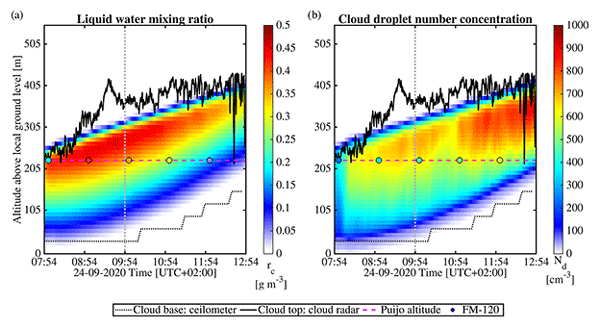
Silvia M. Calderón, Juha Tonttila, Angela Buchholz, Jorma Joutsensaari, Mika Komppula, Ari Leskinen, Liqing Hao, Dmitri Moisseev, Iida Pullinen, Petri Tiitta, Jian Xu, Annele Virtanen, Harri Kokkola, and Sami Romakkaniemi
Atmos. Chem. Phys., 22, 12417–12441, https://doi.org/10.5194/acp-22-12417-2022, https://doi.org/10.5194/acp-22-12417-2022, 2022
Short summary
Short summary
The spatial and temporal restrictions of observations and oversimplified aerosol representation in large eddy simulations (LES) limit our understanding of aerosol–stratocumulus interactions. In this closure study of in situ and remote sensing observations and outputs from UCLALES–SALSA, we have assessed the role of convective overturning and aerosol effects in two cloud events observed at the Puijo SMEAR IV station, Finland, a diurnal-high aerosol case and a nocturnal-low aerosol case.
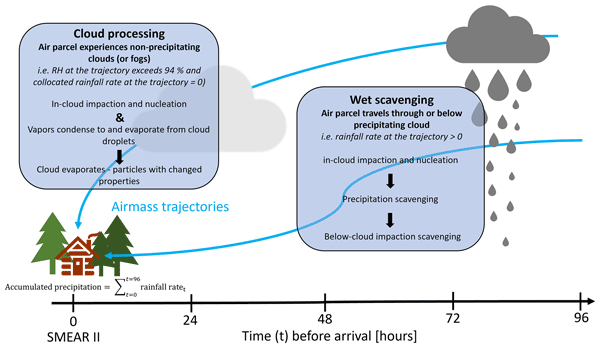
Sini Isokääntä, Paul Kim, Santtu Mikkonen, Thomas Kühn, Harri Kokkola, Taina Yli-Juuti, Liine Heikkinen, Krista Luoma, Tuukka Petäjä, Zak Kipling, Daniel Partridge, and Annele Virtanen
Atmos. Chem. Phys., 22, 11823–11843, https://doi.org/10.5194/acp-22-11823-2022, https://doi.org/10.5194/acp-22-11823-2022, 2022
Short summary
Short summary
This research employs air mass history analysis and observations to study how clouds and precipitation affect atmospheric aerosols during transport to a boreal forest site. The mass concentrations of studied chemical species showed exponential decrease as a function of accumulated rain along the air mass route. Our analysis revealed in-cloud sulfate formation, while no major changes in organic mass were seen. Most of the in-cloud-formed sulfate could be assigned to particle sizes above 200 nm.
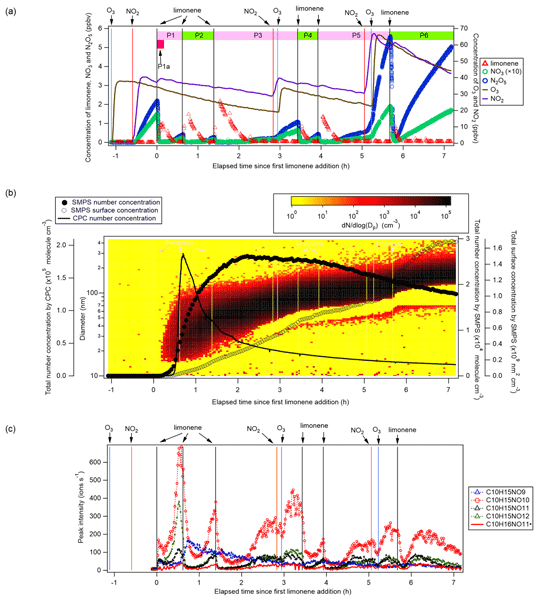
Yindong Guo, Hongru Shen, Iida Pullinen, Hao Luo, Sungah Kang, Luc Vereecken, Hendrik Fuchs, Mattias Hallquist, Ismail-Hakki Acir, Ralf Tillmann, Franz Rohrer, Jürgen Wildt, Astrid Kiendler-Scharr, Andreas Wahner, Defeng Zhao, and Thomas F. Mentel
Atmos. Chem. Phys., 22, 11323–11346, https://doi.org/10.5194/acp-22-11323-2022, https://doi.org/10.5194/acp-22-11323-2022, 2022
Short summary
Short summary
The oxidation of limonene, a common volatile emitted by trees and chemical products, by NO3, a nighttime oxidant, forms many highly oxygenated organic molecules (HOM), including C10-30 compounds. Most of the HOM are second-generation organic nitrates, in which carbonyl-substituted C10 nitrates accounted for a major fraction. Their formation can be explained by chemistry of peroxy radicals. HOM, especially low-volatile ones, play an important role in nighttime new particle formation and growth.
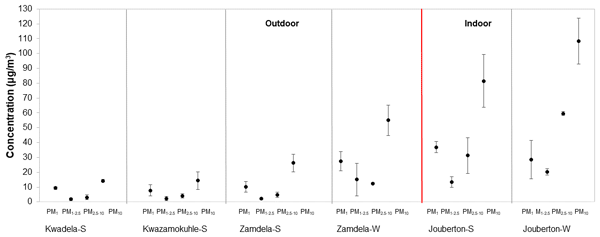
Constance K. Segakweng, Pieter G. van Zyl, Cathy Liousse, Johan P. Beukes, Jan-Stefan Swartz, Eric Gardrat, Maria Dias-Alves, Brigitte Language, Roelof P. Burger, and Stuart J. Piketh
Atmos. Chem. Phys., 22, 10291–10317, https://doi.org/10.5194/acp-22-10291-2022, https://doi.org/10.5194/acp-22-10291-2022, 2022
Short summary
Short summary
A detailed size-resolved assessment of the chemical characteristics of outdoor and indoor aerosols collected in low-income urban settlements in South Africa indicated the significance of household combustion for cooking and space heating – an important source of pollutants in the developing world – to atmospheric chemical composition. The regional impact of industrial sources in the highly industrialised and densely populated north-eastern interior of South Africa was also evident.
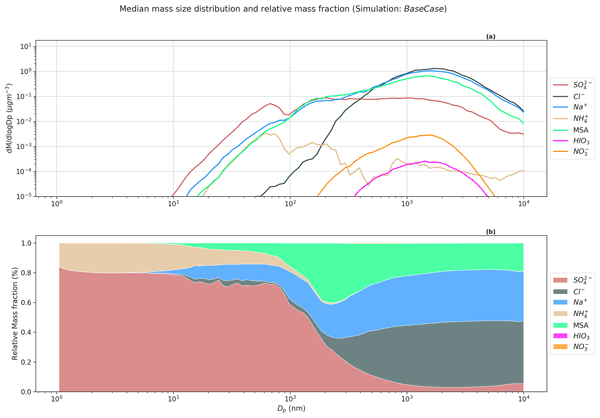
Carlton Xavier, Metin Baykara, Robin Wollesen de Jonge, Barbara Altstädter, Petri Clusius, Ville Vakkari, Roseline Thakur, Lisa Beck, Silvia Becagli, Mirko Severi, Rita Traversi, Radovan Krejci, Peter Tunved, Mauro Mazzola, Birgit Wehner, Mikko Sipilä, Markku Kulmala, Michael Boy, and Pontus Roldin
Atmos. Chem. Phys., 22, 10023–10043, https://doi.org/10.5194/acp-22-10023-2022, https://doi.org/10.5194/acp-22-10023-2022, 2022
Short summary
Short summary
The focus of this work is to study and improve our understanding of processes involved in the formation and growth of new particles in a remote Arctic marine environment. We run the 1D model ADCHEM along air mass trajectories arriving at Ny-Ålesund in May 2018. The model finds that ion-mediated H2SO4–NH3 nucleation can explain the observed new particle formation at Ny-Ålesund. The growth of particles is driven via H2SO4 condensation and formation of methane sulfonic acid in the aqueous phase.
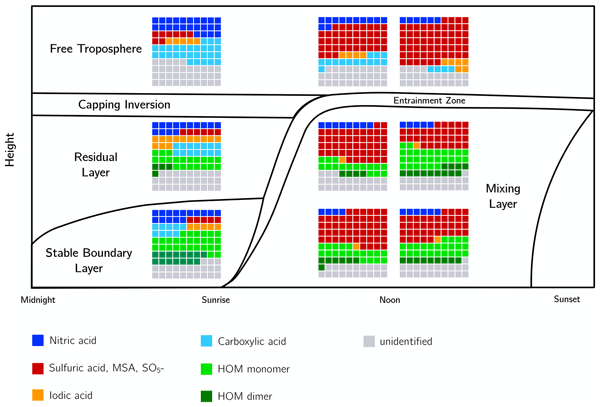
Lisa J. Beck, Siegfried Schobesberger, Heikki Junninen, Janne Lampilahti, Antti Manninen, Lubna Dada, Katri Leino, Xu-Cheng He, Iida Pullinen, Lauriane L. J. Quéléver, Anna Franck, Pyry Poutanen, Daniela Wimmer, Frans Korhonen, Mikko Sipilä, Mikael Ehn, Douglas R. Worsnop, Veli-Matti Kerminen, Tuukka Petäjä, Markku Kulmala, and Jonathan Duplissy
Atmos. Chem. Phys., 22, 8547–8577, https://doi.org/10.5194/acp-22-8547-2022, https://doi.org/10.5194/acp-22-8547-2022, 2022
Short summary
Short summary
The presented article introduces an overview of atmospheric ions and their composition above the boreal forest. We provide the results of an extensive airborne measurement campaign with an air ion mass spectrometer and particle measurements, showing their diurnal evolution within the boundary layer and free troposphere. In addition, we compare the airborne dataset with the co-located data from the ground at SMEAR II station, Finland.
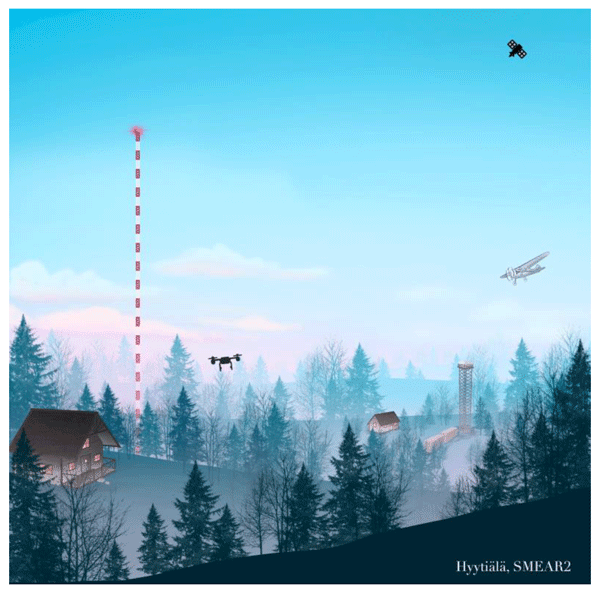
Zoé Brasseur, Dimitri Castarède, Erik S. Thomson, Michael P. Adams, Saskia Drossaart van Dusseldorp, Paavo Heikkilä, Kimmo Korhonen, Janne Lampilahti, Mikhail Paramonov, Julia Schneider, Franziska Vogel, Yusheng Wu, Jonathan P. D. Abbatt, Nina S. Atanasova, Dennis H. Bamford, Barbara Bertozzi, Matthew Boyer, David Brus, Martin I. Daily, Romy Fösig, Ellen Gute, Alexander D. Harrison, Paula Hietala, Kristina Höhler, Zamin A. Kanji, Jorma Keskinen, Larissa Lacher, Markus Lampimäki, Janne Levula, Antti Manninen, Jens Nadolny, Maija Peltola, Grace C. E. Porter, Pyry Poutanen, Ulrike Proske, Tobias Schorr, Nsikanabasi Silas Umo, János Stenszky, Annele Virtanen, Dmitri Moisseev, Markku Kulmala, Benjamin J. Murray, Tuukka Petäjä, Ottmar Möhler, and Jonathan Duplissy
Atmos. Chem. Phys., 22, 5117–5145, https://doi.org/10.5194/acp-22-5117-2022, https://doi.org/10.5194/acp-22-5117-2022, 2022
Short summary
Short summary
The present measurement report introduces the ice nucleation campaign organized in Hyytiälä, Finland, in 2018 (HyICE-2018). We provide an overview of the campaign settings, and we describe the measurement infrastructure and operating procedures used. In addition, we use results from ice nucleation instrument inter-comparison to show that the suite of these instruments deployed during the campaign reports consistent results.

Mathew Sebastian, Sobhan Kumar Kompalli, Vasudevan Anil Kumar, Sandhya Jose, S. Suresh Babu, Govindan Pandithurai, Sachchidanand Singh, Rakesh K. Hooda, Vijay K. Soni, Jeffrey R. Pierce, Ville Vakkari, Eija Asmi, Daniel M. Westervelt, Antti-Pekka Hyvärinen, and Vijay P. Kanawade
Atmos. Chem. Phys., 22, 4491–4508, https://doi.org/10.5194/acp-22-4491-2022, https://doi.org/10.5194/acp-22-4491-2022, 2022
Short summary
Short summary
Characteristics of particle number size distributions and new particle formation in six locations in India were analyzed. New particle formation occurred frequently during the pre-monsoon (spring) season and it significantly modulates the shape of the particle number size distributions. The contribution of newly formed particles to cloud condensation nuclei concentrations was ~3 times higher in urban locations than in mountain background locations.
Lisa J. Beck, Siegfried Schobesberger, Mikko Sipilä, Veli-Matti Kerminen, and Markku Kulmala
Atmos. Meas. Tech., 15, 1957–1965, https://doi.org/10.5194/amt-15-1957-2022, https://doi.org/10.5194/amt-15-1957-2022, 2022
Short summary
Short summary
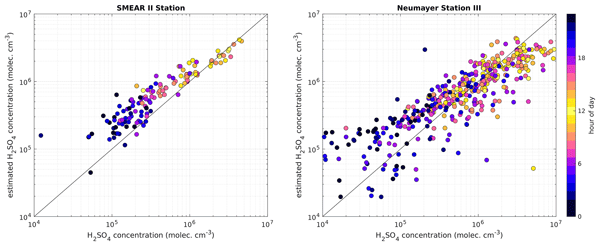
Sulfuric acid is known to be a main compound in atmospheric new particle formation. Yet, its concentration is very low, which leads to challenges in detecting it. In our study, we derive the sulfuric acid concentration from measurements of ambient ions with a mass spectrometer. Our validation shows that the theoretical approach using the bisulfate ion and its clusters with H2SO4 captures the sulfuric acid concentration very well during daytime.
Zhi-Hui Zhang, Elena Hartner, Battist Utinger, Benjamin Gfeller, Andreas Paul, Martin Sklorz, Hendryk Czech, Bin Xia Yang, Xin Yi Su, Gert Jakobi, Jürgen Orasche, Jürgen Schnelle-Kreis, Seongho Jeong, Thomas Gröger, Michal Pardo, Thorsten Hohaus, Thomas Adam, Astrid Kiendler-Scharr, Yinon Rudich, Ralf Zimmermann, and Markus Kalberer
Atmos. Chem. Phys., 22, 1793–1809, https://doi.org/10.5194/acp-22-1793-2022, https://doi.org/10.5194/acp-22-1793-2022, 2022
Short summary
Short summary
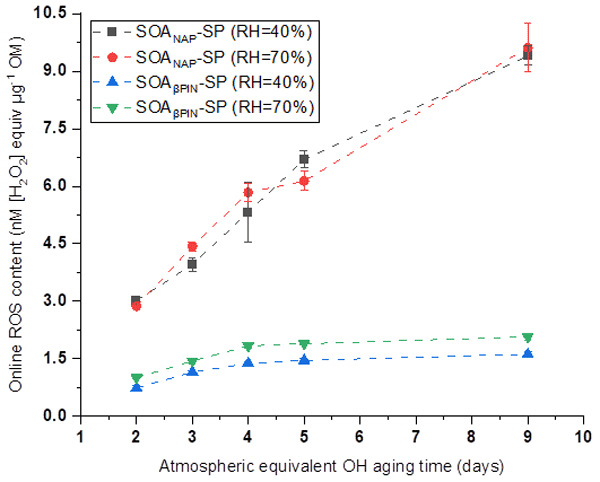
Using a novel setup, we comprehensively characterized the formation of particle-bound reactive oxygen species (ROS) in anthropogenic and biogenic secondary organic aerosols (SOAs). We found that more than 90 % of all ROS components in both SOA types have a short lifetime. Our results also show that photochemical aging promotes particle-bound ROS production and enhances the oxidative potential of the aerosols. We found consistent results between chemical-based and biological-based ROS analyses.
Kimmo Korhonen, Thomas Bjerring Kristensen, John Falk, Vilhelm B. Malmborg, Axel Eriksson, Louise Gren, Maja Novakovic, Sam Shamun, Panu Karjalainen, Lassi Markkula, Joakim Pagels, Birgitta Svenningsson, Martin Tunér, Mika Komppula, Ari Laaksonen, and Annele Virtanen
Atmos. Chem. Phys., 22, 1615–1631, https://doi.org/10.5194/acp-22-1615-2022, https://doi.org/10.5194/acp-22-1615-2022, 2022
Short summary
Short summary
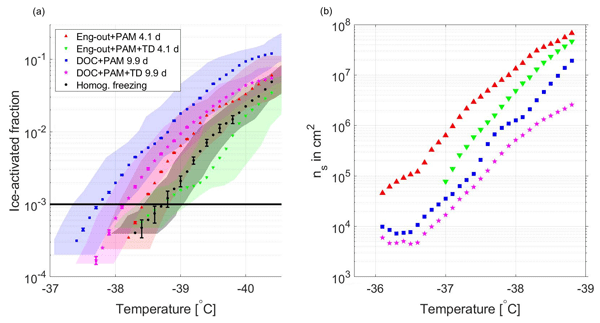
We investigated the ice-nucleating abilities of particulate emissions from a modern diesel engine using the portable ice-nuclei counter SPIN, a continuous-flow diffusion chamber instrument. Three different fuels were studied without blending, including fossil diesel and two renewable fuels, testing different emission aftertreatment systems and photochemical aging. We found that the diesel emissions were inefficient ice nuclei, and aging had no or little effect on their ice-nucleating abilities.
Johannes Passig, Julian Schade, Robert Irsig, Thomas Kröger-Badge, Hendryk Czech, Thomas Adam, Henrik Fallgren, Jana Moldanova, Martin Sklorz, Thorsten Streibel, and Ralf Zimmermann
Atmos. Chem. Phys., 22, 1495–1514, https://doi.org/10.5194/acp-22-1495-2022, https://doi.org/10.5194/acp-22-1495-2022, 2022
Short summary
Short summary
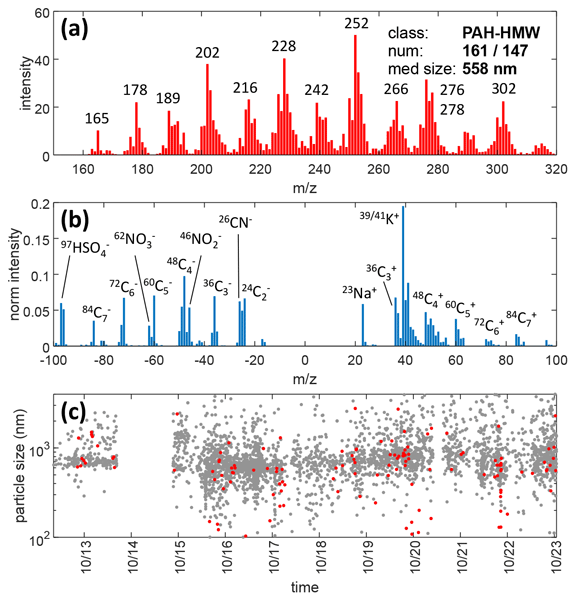
The single-particle distribution of health-relevant polycyclic aromatic hydrocarbons (PAHs) was studied at the Swedish coast in autumn. We found PAHs bound to long-range transported particles from eastern and central Europe and also from ship emissions and local sources. This is the first field study using a new technology revealing single-particle data from both inorganic components and PAHs. We discuss PAH profiles that are indicative of several sources and atmospheric aging processes.
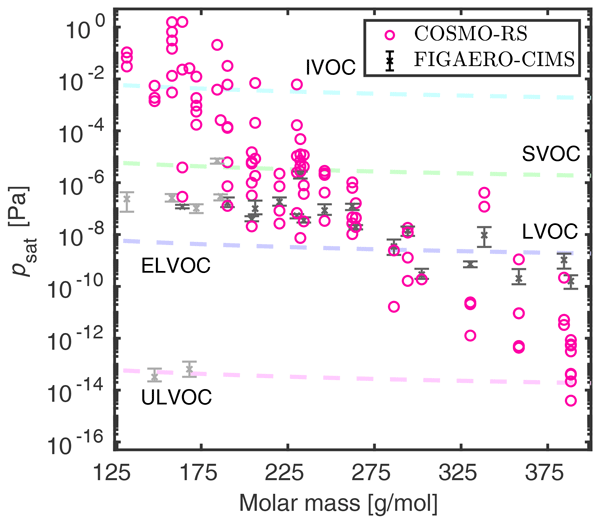
Noora Hyttinen, Iida Pullinen, Aki Nissinen, Siegfried Schobesberger, Annele Virtanen, and Taina Yli-Juuti
Atmos. Chem. Phys., 22, 1195–1208, https://doi.org/10.5194/acp-22-1195-2022, https://doi.org/10.5194/acp-22-1195-2022, 2022
Short summary
Short summary
Accurate saturation vapor pressure estimates of atmospherically relevant organic compounds are critical for modeling secondary organic aerosol (SOA) formation. We investigated vapor pressures of highly oxygenated SOA constituents using state-of-the-art computational and experimental methods. We found a good agreement between low and extremely low vapor pressures estimated using the two methods, and the smallest molecules detected in our experiment were likely products of thermal decomposition.
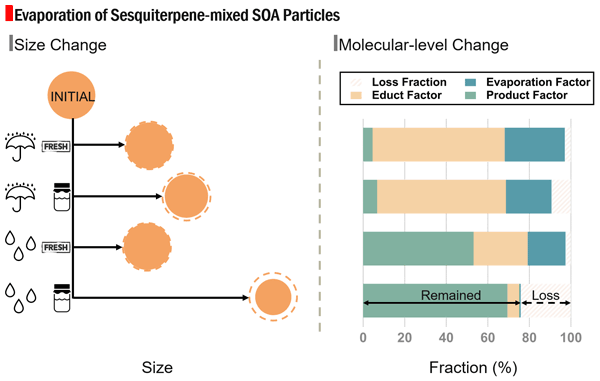
Zijun Li, Angela Buchholz, Arttu Ylisirniö, Luis Barreira, Liqing Hao, Siegfried Schobesberger, Taina Yli-Juuti, and Annele Virtanen
Atmos. Chem. Phys., 21, 18283–18302, https://doi.org/10.5194/acp-21-18283-2021, https://doi.org/10.5194/acp-21-18283-2021, 2021
Short summary
Short summary
We compared the evolution of two types of secondary organic aerosol (SOA) particles during isothermal evaporation. The sesquiterpene SOA particles demonstrated higher resilience to evaporation than α-pinene SOA particles generated under comparable conditions. In-depth analysis showed that under high-relative-humidity conditions, particulate water drove the evolution of particulate constituents by reducing the particle viscosity and initiating chemical aqueous-phase processes.
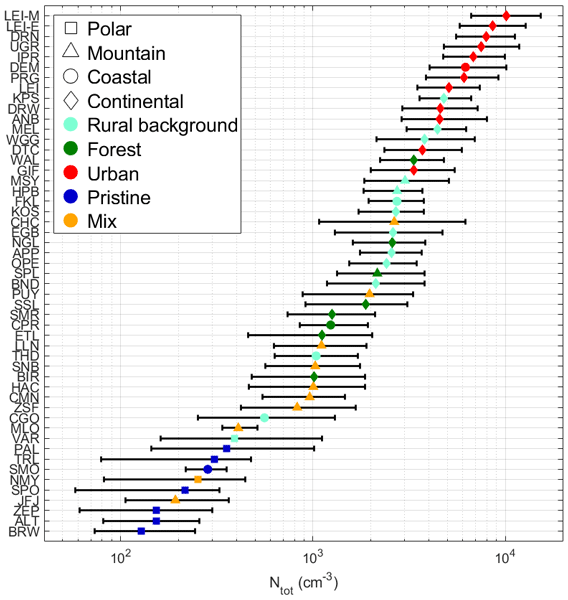
Clémence Rose, Martine Collaud Coen, Elisabeth Andrews, Yong Lin, Isaline Bossert, Cathrine Lund Myhre, Thomas Tuch, Alfred Wiedensohler, Markus Fiebig, Pasi Aalto, Andrés Alastuey, Elisabeth Alonso-Blanco, Marcos Andrade, Begoña Artíñano, Todor Arsov, Urs Baltensperger, Susanne Bastian, Olaf Bath, Johan Paul Beukes, Benjamin T. Brem, Nicolas Bukowiecki, Juan Andrés Casquero-Vera, Sébastien Conil, Konstantinos Eleftheriadis, Olivier Favez, Harald Flentje, Maria I. Gini, Francisco Javier Gómez-Moreno, Martin Gysel-Beer, Anna Gannet Hallar, Ivo Kalapov, Nikos Kalivitis, Anne Kasper-Giebl, Melita Keywood, Jeong Eun Kim, Sang-Woo Kim, Adam Kristensson, Markku Kulmala, Heikki Lihavainen, Neng-Huei Lin, Hassan Lyamani, Angela Marinoni, Sebastiao Martins Dos Santos, Olga L. Mayol-Bracero, Frank Meinhardt, Maik Merkel, Jean-Marc Metzger, Nikolaos Mihalopoulos, Jakub Ondracek, Marco Pandolfi, Noemi Pérez, Tuukka Petäjä, Jean-Eudes Petit, David Picard, Jean-Marc Pichon, Veronique Pont, Jean-Philippe Putaud, Fabienne Reisen, Karine Sellegri, Sangeeta Sharma, Gerhard Schauer, Patrick Sheridan, James Patrick Sherman, Andreas Schwerin, Ralf Sohmer, Mar Sorribas, Junying Sun, Pierre Tulet, Ville Vakkari, Pieter Gideon van Zyl, Fernando Velarde, Paolo Villani, Stergios Vratolis, Zdenek Wagner, Sheng-Hsiang Wang, Kay Weinhold, Rolf Weller, Margarita Yela, Vladimir Zdimal, and Paolo Laj
Atmos. Chem. Phys., 21, 17185–17223, https://doi.org/10.5194/acp-21-17185-2021, https://doi.org/10.5194/acp-21-17185-2021, 2021
Short summary
Short summary
Aerosol particles are a complex component of the atmospheric system the effects of which are among the most uncertain in climate change projections. Using data collected at 62 stations, this study provides the most up-to-date picture of the spatial distribution of particle number concentration and size distribution worldwide, with the aim of contributing to better representation of aerosols and their interactions with clouds in models and, therefore, better evaluation of their impact on climate.
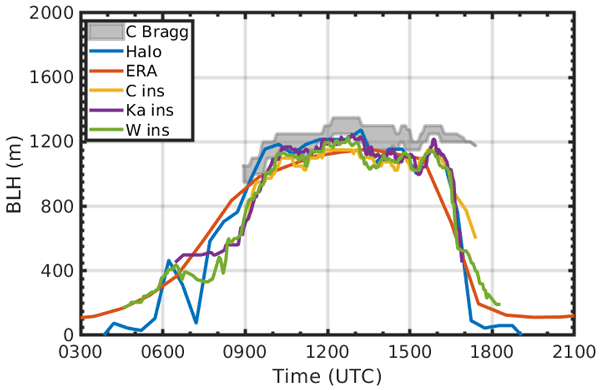
Anna Franck, Dmitri Moisseev, Ville Vakkari, Matti Leskinen, Janne Lampilahti, Veli-Matti Kerminen, and Ewan O'Connor
Atmos. Meas. Tech., 14, 7341–7353, https://doi.org/10.5194/amt-14-7341-2021, https://doi.org/10.5194/amt-14-7341-2021, 2021
Short summary
Short summary
We proposed a method to derive a convective boundary layer height, using insects in radar observations, and we investigated the consistency of these retrievals among different radar frequencies (5, 35 and 94 GHz). This method can be applied to radars at other measurement stations and serve as additional way to estimate the boundary layer height during summer. The entrainment zone was also observed by the 5 GHz radar above the boundary layer in the form of a Bragg scatter layer.
Cited articles
Ahern, A. T., Robinson, E. S., Tkacik, D. S., Saleh, R., Hatch, L. E., Barsanti, K. C., Stockwell, C. E., Yokelson, R. J., Presto, A. A., Robinson, A. L., Sullivan, R. C., and Donahue, N. M.: Production of Secondary Organic Aerosol During Aging of Biomass Burning Smoke From Fresh Fuels and Its Relationship to VOC Precursors, J. Geophys. Res.-Atmos., 124, 3583–3606, https://doi.org/10.1029/2018JD029068, 2019.
Akagi, S. K., Yokelson, R. J., Wiedinmyer, C., Alvarado, M. J., Reid, J. S., Karl, T., Crounse, J. D., and Wennberg, P. O.: Emission factors for open and domestic biomass burning for use in atmospheric models, Atmos. Chem. Phys., 11, 4039–4072, https://doi.org/10.5194/acp-11-4039-2011, 2011.
Akagi, S. K., Craven, J. S., Taylor, J. W., McMeeking, G. R., Yokelson, R. J., Burling, I. R., Urbanski, S. P., Wold, C. E., Seinfeld, J. H., Coe, H., Alvarado, M. J., and Weise, D. R.: Evolution of trace gases and particles emitted by a chaparral fire in California, Atmos. Chem. Phys., 12, 1397–1421, https://doi.org/10.5194/acp-12-1397-2012, 2012.
Akherati, A., He, Y., Coggon, M. M., Koss, A. R., Hodshire, A. L., Sekimoto, K., Warneke, C., de Gouw, J., Yee, L., Seinfeld, J. H., Onasch, T. B., Herndon, S. C., Knighton, W. B., Cappa, C. D., Kleeman, M. J., Lim, C. Y., Kroll, J. H., Pierce, J. R., and Jathar, S. H.: Oxygenated Aromatic Compounds are Important Precursors of Secondary Organic Aerosol in Biomass-Burning Emissions, Environ. Sci. Technol., 54, 8568–8579, https://doi.org/10.1021/acs.est.0c01345, 2020.
Al Ali, F., Cœur, C., Houzel, N., Genevray, P., Cazier, F., Cuisset, A., Papadimitriou, V. C., Tomas, A., and Romanias, M. N.: Products and yields for the NO3 radical initiated atmospheric degradation of 2-methylfuran (2-MF, CH3–C4H3O), Atmos. Environ., 319, 120276, https://doi.org/10.1016/j.atmosenv.2023.120276, 2024.
Allani, A., Bedjanian, Y., Papanastasiou, D. K., and Romanias, M. N.: Reaction Rate Coefficient of OH Radicals with d9-Butanol as a Function of Temperature, ACS Omega, 6, 18123–18134, https://doi.org/10.1021/acsomega.1c01942, 2021.
An, Z., Yin, R., Zhao, X., Li, X., Li, Y., Yuan, Y., Guo, J., Zhao, Y., Li, X., Li, D., Li, Y., Wang, D., Yan, C., He, K., Worsnop, D. R., Keutsch, F. N., and Jiang, J.: Molecular and seasonal characteristics of organic vapors in urban Beijing: insights from Vocus-PTR measurements, Atmos. Chem. Phys., 24, 13793–13810, https://doi.org/10.5194/acp-24-13793-2024, 2024.
Anderson, M. J.: A new method for non‐parametric multivariate analysis of variance, Austral Ecol., 26, 32–46, https://doi.org/10.1111/j.1442-9993.2001.01070.pp.x, 2001.
Anderson, M. J.: Permutational Multivariate Analysis of Variance (PERMANOVA), in: Wiley StatsRef: Statistics Reference Online, edited by: Balakrishnan, N., Colton, T., Everitt, B., Piegorsch, W., Ruggeri, F., and Teugels, J. L., John Wiley & Sons, Ltd, https://doi.org/10.1002/9781118445112.stat07841, 2017.
Andreae, M. O.: Emission of trace gases and aerosols from biomass burning – an updated assessment, Atmos. Chem. Phys., 19, 8523–8546, https://doi.org/10.5194/acp-19-8523-2019, 2019.
Atkinson, R.: Atmospheric chemistry of VOCs and NOx, Atmos. Environ., 34, 2063–2101, 2000.
Barmet, P., Dommen, J., DeCarlo, P. F., Tritscher, T., Praplan, A. P., Platt, S. M., Prévôt, A. S. H., Donahue, N. M., and Baltensperger, U.: OH clock determination by proton transfer reaction mass spectrometry at an environmental chamber, Atmos. Meas. Tech., 5, 647–656, https://doi.org/10.5194/amt-5-647-2012, 2012.
Bhattu, D., Zotter, P., Zhou, J., Stefenelli, G., Klein, F., Bertrand, A., Temime-Roussel, B., Marchand, N., Slowik, J. G., Baltensperger, U., Prévôt, A. S. H., Nussbaumer, T., El Haddad, I., and Dommen, J.: Effect of Stove Technology and Combustion Conditions on Gas and Particulate Emissions from Residential Biomass Combustion, Environ. Sci. Technol., 53, 2209–2219, https://doi.org/10.1021/acs.est.8b05020, 2019.
Boby, L. A., Schuur, E. A. G., Mack, M. C., Verbyla, D., and Johnstone, J. F.: Quantifying fire severity, carbon, and nitrogen emissions in Alaska's boreal forest, Ecol. Appl., 20, 1633–1647, https://doi.org/10.1890/08-2295.1, 2010.
Brito, J., Rizzo, L. V., Morgan, W. T., Coe, H., Johnson, B., Haywood, J., Longo, K., Freitas, S., Andreae, M. O., and Artaxo, P.: Ground-based aerosol characterization during the South American Biomass Burning Analysis (SAMBBA) field experiment, Atmos. Chem. Phys., 14, 12069–12083, https://doi.org/10.5194/acp-14-12069-2014, 2014.
Bruns, E. A., El Haddad, I., Slowik, J. G., Kilic, D., Klein, F., Baltensperger, U., and Prévôt, A. S. H.: Identification of significant precursor gases of secondary organic aerosols from residential wood combustion, Sci. Rep., 6, 27881, https://doi.org/10.1038/srep27881, 2016.
Bruns, E. A., Slowik, J. G., El Haddad, I., Kilic, D., Klein, F., Dommen, J., Temime-Roussel, B., Marchand, N., Baltensperger, U., and Prévôt, A. S. H.: Characterization of gas-phase organics using proton transfer reaction time-of-flight mass spectrometry: fresh and aged residential wood combustion emissions, Atmos. Chem. Phys., 17, 705–720, https://doi.org/10.5194/acp-17-705-2017, 2017.
Calì Quaglia, F., Meloni, D., Muscari, G., Di Iorio, T., Ciardini, V., Pace, G., Becagli, S., Di Bernardino, A., Cacciani, M., Hannigan, J. W., Ortega, I., and di Sarra, A. G.: On the Radiative Impact of Biomass-Burning Aerosols in the Arctic: The August 2017 Case Study, Remote Sens.-Basel, 14, 313, https://doi.org/10.3390/rs14020313, 2022.
Calvert, J. G., Atkinson, R., Becker, K. H., Kamens, R. M., Seinfeld, J. H., Wallington, T. J., and Yarwood, G.: The Mechanisms Of Atmospheric Oxidation Of Aromatic Hydrocarbons, Oxford University Press, New York, NY, https://doi.org/10.1093/oso/9780195146288.001.0001, 2002.
Chen, L.-W. A., Verburg, P., Shackelford, A., Zhu, D., Susfalk, R., Chow, J. C., and Watson, J. G.: Moisture effects on carbon and nitrogen emission from burning of wildland biomass, Atmos. Chem. Phys., 10, 6617–6625, https://doi.org/10.5194/acp-10-6617-2010, 2010.
Cheung, R. K. Y., Zhang, J., Wang, T., Kattner, L., Bogler, S., Puthussery, J. V., Huang, R.-J., Gysel-Beer, M., Slowik, J. G., Verma, V., Prevot, A. S. H., El Haddad, I., Bell, D. M., and Modini, R. L.: Online Measurements during Simulated Atmospheric Aging Track the Strongly Increasing Oxidative Potential of Complex Combustion Aerosols Relative to Their Primary Emissions, Environ. Sci. Technol. Lett., 12, 64–72, https://doi.org/10.1021/acs.estlett.4c00956, 2025.
Christian, T. J., Kleiss, B., Yokelson, R. J., Holzinger, R., Crutzen, P. J., Hao, W. M., Saharjo, B. H., and Ward, D. E.: Comprehensive laboratory measurements of biomass‐burning emissions: 1. Emissions from Indonesian, African, and other fuels, J. Geophys. Res.-Atmos., 108, https://doi.org/10.1029/2003JD003704, 2003.
Coggon, M. M., Lim, C. Y., Koss, A. R., Sekimoto, K., Yuan, B., Gilman, J. B., Hagan, D. H., Selimovic, V., Zarzana, K. J., Brown, S. S., Roberts, J. M., Müller, M., Yokelson, R., Wisthaler, A., Krechmer, J. E., Jimenez, J. L., Cappa, C., Kroll, J. H., de Gouw, J., and Warneke, C.: OH chemistry of non-methane organic gases (NMOGs) emitted from laboratory and ambient biomass burning smoke: evaluating the influence of furans and oxygenated aromatics on ozone and secondary NMOG formation, Atmos. Chem. Phys., 19, 14875–14899, https://doi.org/10.5194/acp-19-14875-2019, 2019.
Colmenar, I., González, S., Jiménez, E., Martín, P., Salgado, S., Cabañas, B., and Albaladejo, J.: UV absorption cross sections between 290 and 380 nm of a series of furanaldehydes: Estimation of their photolysis lifetimes, Atmos. Environ., 103, 1–6, https://doi.org/10.1016/j.atmosenv.2014.12.022, 2015.
Czech, H., Pieber, S. M., Tiitta, P., Sippula, O., Kortelainen, M., Lamberg, H., Grigonyte, J., Streibel, T., Prévôt, A. S. H., Jokiniemi, J., and Zimmermann, R.: Time-resolved analysis of primary volatile emissions and secondary aerosol formation potential from a small-scale pellet boiler, Atmos. Environ., 158, 236–245, https://doi.org/10.1016/j.atmosenv.2017.03.040, 2017.
Czech, H., Popovicheva, O., Chernov, D. G., Kozlov, A., Schneider, E., Shmargunov, V. P., Sueur, M., Rüger, C. P., Afonso, C., Uzhegov, V., Kozlov, V. S., Panchenko, M. V., and Zimmermann, R.: Wildfire plume ageing in the Photochemical Large Aerosol Chamber (PHOTO-LAC), Environ. Sci.-Proc. Imp., 26, 35–55, https://doi.org/10.1039/D3EM00280B, 2024.
Dai, J., Zhang, K., Feng, Y., Yi, X., Li, R., Xue, J., Li, Q., Shi, L., Liao, J., Yi, Y., Wang, F., Yang, L., Chen, H., Huang, L., Tan, J., Wang, Y., and Li, L.: Significant influence of oxygenated volatile organic compounds on atmospheric chemistry: a case study in a typical industrial city in China, Atmos. Chem. Phys., 25, 7467–7484, https://doi.org/10.5194/acp-25-7467-2025, 2025.
Decker, Z. C. J., Robinson, M. A., Barsanti, K. C., Bourgeois, I., Coggon, M. M., DiGangi, J. P., Diskin, G. S., Flocke, F. M., Franchin, A., Fredrickson, C. D., Gkatzelis, G. I., Hall, S. R., Halliday, H., Holmes, C. D., Huey, L. G., Lee, Y. R., Lindaas, J., Middlebrook, A. M., Montzka, D. D., Moore, R., Neuman, J. A., Nowak, J. B., Palm, B. B., Peischl, J., Piel, F., Rickly, P. S., Rollins, A. W., Ryerson, T. B., Schwantes, R. H., Sekimoto, K., Thornhill, L., Thornton, J. A., Tyndall, G. S., Ullmann, K., Van Rooy, P., Veres, P. R., Warneke, C., Washenfelder, R. A., Weinheimer, A. J., Wiggins, E., Winstead, E., Wisthaler, A., Womack, C., and Brown, S. S.: Nighttime and daytime dark oxidation chemistry in wildfire plumes: an observation and model analysis of FIREX-AQ aircraft data, Atmos. Chem. Phys., 21, 16293–16317, https://doi.org/10.5194/acp-21-16293-2021, 2021.
Dilger, M., Armant, O., Ramme, L., Mülhopt, S., Sapcariu, S. C., Schlager, C., Dilger, E., Reda, A., Orasche, J., Schnelle-Kreis, J., Conlon, T. M., Yildirim, A. Ö., Hartwig, A., Zimmermann, R., Hiller, K., Diabaté, S., Paur, H.-R., and Weiss, C.: Systems toxicology of complex wood combustion aerosol reveals gaseous carbonyl compounds as critical constituents, Environ. Int., 179, 108169, https://doi.org/10.1016/j.envint.2023.108169, 2023.
EU-JRC: Wildfires in the EU: 2022 was the second-worst year, a warning from a changing climate, https://joint- research-centre.ec.europa.eu/jrc-news-and-updates/wildfires-eu-2022-was-second-worst-year-warning-changing-climate-2023-11-22_en (last access: 8 August 2026), 2023.
Fang, Z., Li, C., He, Q., Czech, H., Gröger, T., Zeng, J., Fang, H., Xiao, S., Pardo, M., Hartner, E., Meidan, D., Wang, X., Zimmermann, R., Laskin, A., and Rudich, Y.: Secondary organic aerosols produced from photochemical oxidation of secondarily evaporated biomass burning organic gases: Chemical composition, toxicity, optical properties, and climate effect, Environ. Int., 157, 106801, https://doi.org/10.1016/j.envint.2021.106801, 2021.
Fu, Y., Li, W., Manheim, J. M., Milton, J., Kilaz, G., and Kenttämaa, H. I.: Proton Affinities of Alkanes, J. Am. Soc. Mass Spectrom., 33, 1850–1857, https://doi.org/10.1021/jasms.2c00152, 2022.
Garofalo, L. A., Pothier, M. A., Levin, E. J. T., Campos, T., Kreidenweis, S. M., and Farmer, D. K.: Emission and Evolution of Submicron Organic Aerosol in Smoke from Wildfires in the Western United States, ACS Earth Space Chem., 3, 1237–1247, https://doi.org/10.1021/acsearthspacechem.9b00125, 2019.
Gehm, C., Schnepel, K., Czech, H., Miersch, T., Ehlert, S., and Zimmermann, R.: Hyper-fast gas chromatography and single-photon ionisation time-of-flight mass spectrometry with integrated electrical modulator-based sampling for headspace and online VOC analyses, Analyst, 146, 3137–3149, https://doi.org/10.1039/D1AN00114K, 2021.
Georgopoulou, M. P., Florou, K., Matrali, A., Starida, G., Kaltsonoudis, C., Nenes, A., and Pandis, S. N.: Diurnal aging of biomass burning emissions: impacts on secondary organic aerosol formation and oxidative potential, Atmos. Chem. Phys., 25, 15835–15855, https://doi.org/10.5194/acp-25-15835-2025, 2025.
Gilman, J. B., Lerner, B. M., Kuster, W. C., Goldan, P. D., Warneke, C., Veres, P. R., Roberts, J. M., de Gouw, J. A., Burling, I. R., and Yokelson, R. J.: Biomass burning emissions and potential air quality impacts of volatile organic compounds and other trace gases from fuels common in the US, Atmos. Chem. Phys., 15, 13915–13938, https://doi.org/10.5194/acp-15-13915-2015, 2015.
Gkatzelis, G. I., Coggon, M. M., Stockwell, C. E., Hornbrook, R. S., Allen, H., Apel, E. C., Bela, M. M., Blake, D. R., Bourgeois, I., Brown, S. S., Campuzano-Jost, P., St. Clair, J. M., Crawford, J. H., Crounse, J. D., Day, D. A., DiGangi, J. P., Diskin, G. S., Fried, A., Gilman, J. B., Guo, H., Hair, J. W., Halliday, H. S., Hanisco, T. F., Hannun, R., Hills, A., Huey, L. G., Jimenez, J. L., Katich, J. M., Lamplugh, A., Lee, Y. R., Liao, J., Lindaas, J., McKeen, S. A., Mikoviny, T., Nault, B. A., Neuman, J. A., Nowak, J. B., Pagonis, D., Peischl, J., Perring, A. E., Piel, F., Rickly, P. S., Robinson, M. A., Rollins, A. W., Ryerson, T. B., Schueneman, M. K., Schwantes, R. H., Schwarz, J. P., Sekimoto, K., Selimovic, V., Shingler, T., Tanner, D. J., Tomsche, L., Vasquez, K. T., Veres, P. R., Washenfelder, R., Weibring, P., Wennberg, P. O., Wisthaler, A., Wolfe, G. M., Womack, C. C., Xu, L., Ball, K., Yokelson, R. J., and Warneke, C.: Parameterizations of US wildfire and prescribed fire emission ratios and emission factors based on FIREX-AQ aircraft measurements, Atmos. Chem. Phys., 24, 929–956, https://doi.org/10.5194/acp-24-929-2024, 2024.
Gueneron, M., Erickson, M. H., VanderSchelden, G. S., and Jobson, B. T.: PTR-MS fragmentation patterns of gasoline hydrocarbons, Int. J. Mass Spectrom., 379, 97–109, https://doi.org/10.1016/j.ijms.2015.01.001, 2015.
Han, J., Wang, S., Yeung, K., Yang, D., Gu, W., Ma, Z., Sun, J., Wang, X., Chow, C.-W., Chan, A. W. H., and Peng, H.: Proteome-wide effects of naphthalene-derived secondary organic aerosol in BEAS-2B cells are caused by short-lived unsaturated carbonyls, P. Natl. Acad. Sci. USA, 117, 25386–25395, https://doi.org/10.1073/pnas.2001378117, 2020.
Hansel, A., Jordan, A., Holzinger, R., Prazeller, P., Vogel, W., and Lindinger, W.: Proton transfer reaction mass spectrometry: on-line trace gas analysis at the ppb level, Int. J. Mass Spectrom. Ion Process., 149–150, 609–619, https://doi.org/10.1016/0168-1176(95)04294-U, 1995.
Hartikainen, A., Yli-Pirilä, P., Tiitta, P., Leskinen, A., Kortelainen, M., Orasche, J., Schnelle-Kreis, J., Lehtinen, K. E. J., Zimmermann, R., Jokiniemi, J., and Sippula, O.: Volatile Organic Compounds from Logwood Combustion: Emissions and Transformation under Dark and Photochemical Aging Conditions in a Smog Chamber, Environ. Sci. Technol., 52, 4979–4988, https://doi.org/10.1021/acs.est.7b06269, 2018.
Hartikainen, A. H., Basnet, S., Yli-Pirilä, P., Ihalainen, M., Talvinen, S., Tissari, J., Mikkonen, S., Zimmermann, R., and Sippula, O.: Resolving emission factors and formation pathways of organic gaseous compounds from residential combustion of European brown coal, Combust. Flame, 265, 113485, https://doi.org/10.1016/j.combustflame.2024.113485, 2024.
Hatch, L. E., Yokelson, R. J., Stockwell, C. E., Veres, P. R., Simpson, I. J., Blake, D. R., Orlando, J. J., and Barsanti, K. C.: Multi-instrument comparison and compilation of non-methane organic gas emissions from biomass burning and implications for smoke-derived secondary organic aerosol precursors, Atmos. Chem. Phys., 17, 1471–1489, https://doi.org/10.5194/acp-17-1471-2017, 2017.
Hayden, K. L., Li, S.-M., Liggio, J., Wheeler, M. J., Wentzell, J. J. B., Leithead, A., Brickell, P., Mittermeier, R. L., Oldham, Z., Mihele, C. M., Staebler, R. M., Moussa, S. G., Darlington, A., Wolde, M., Thompson, D., Chen, J., Griffin, D., Eckert, E., Ditto, J. C., He, M., and Gentner, D. R.: Reconciling the total carbon budget for boreal forest wildfire emissions using airborne observations, Atmos. Chem. Phys., 22, 12493–12523, https://doi.org/10.5194/acp-22-12493-2022, 2022.
He, Y., Zhao, B., Wang, S., Valorso, R., Chang, X., Yin, D., Feng, B., Camredon, M., Aumont, B., Dearden, A., Jathar, S. H., Shrivastava, M., Jiang, Z., Cappa, C. D., Yee, L. D., Seinfeld, J. H., Hao, J., and Donahue, N. M.: Formation of secondary organic aerosol from wildfire emissions enhanced by long-time ageing, Nat. Geosci., 17, 124–129, https://doi.org/10.1038/s41561-023-01355-4, 2024.
Henze, D. K., Seinfeld, J. H., Ng, N. L., Kroll, J. H., Fu, T.-M., Jacob, D. J., and Heald, C. L.: Global modeling of secondary organic aerosol formation from aromatic hydrocarbons: high- vs. low-yield pathways, Atmos. Chem. Phys., 8, 2405–2420, https://doi.org/10.5194/acp-8-2405-2008, 2008.
Hobbs, P. V., Sinha, P., Yokelson, R. J., Christian, T. J., Blake, D. R., Gao, S., Kirchstetter, T. W., Novakov, T., and Pilewskie, P.: Evolution of gases and particles from a savanna fire in South Africa, J. Geophys. Res.-Atmos., 108, https://doi.org/10.1029/2002JD002352, 2003.
Hodshire, A. L., Akherati, A., Alvarado, M. J., Brown-Steiner, B., Jathar, S. H., Jimenez, J. L., Kreidenweis, S. M., Lonsdale, C. R., Onasch, T. B., Ortega, A. M., and Pierce, J. R.: Aging Effects on Biomass Burning Aerosol Mass and Composition: A Critical Review of Field and Laboratory Studies, Environ. Sci. Technol., 53, 10007–10022, https://doi.org/10.1021/acs.est.9b02588, 2019.
Jaars, K., van Zyl, P. G., Beukes, J. P., Hellén, H., Vakkari, V., Josipovic, M., Venter, A. D., Räsänen, M., Knoetze, L., Cilliers, D. P., Siebert, S. J., Kulmala, M., Rinne, J., Guenther, A., Laakso, L., and Hakola, H.: Measurements of biogenic volatile organic compounds at a grazed savannah grassland agricultural landscape in South Africa, Atmos. Chem. Phys., 16, 15665–15688, https://doi.org/10.5194/acp-16-15665-2016, 2016.
Jaffe, D. A. and Wigder, N. L.: Ozone production from wildfires: A critical review, Atmos. Environ., 51, 1–10, https://doi.org/10.1016/j.atmosenv.2011.11.063, 2012.
Jen, C. N., Hatch, L. E., Selimovic, V., Yokelson, R. J., Weber, R., Fernandez, A. E., Kreisberg, N. M., Barsanti, K. C., and Goldstein, A. H.: Speciated and total emission factors of particulate organics from burning western US wildland fuels and their dependence on combustion efficiency, Atmos. Chem. Phys., 19, 1013–1026, https://doi.org/10.5194/acp-19-1013-2019, 2019.
Jensen, A. R., Koss, A. R., Hales, R. B., and de Gouw, J. A.: Measurements of volatile organic compounds in ambient air by gas-chromatography and real-time Vocus PTR-TOF-MS: calibrations, instrument background corrections, and introducing a PTR Data Toolkit, Atmos. Meas. Tech., 16, 5261–5285, https://doi.org/10.5194/amt-16-5261-2023, 2023.
Jin, L., Coggon, M. M., Permar, W., Juncosa Calahorrano, J. F., Palm, B. B., Gkatzelis, G. I., Robinson, M. A., Bourgeois, I., Hall, S. R., Peischl, J., Ullmann, K., Thornton, J. A., Warneke, C., Flocke, F., Fischer, E. V., Yokelson, R. J., and Hu, L.: Ozone photochemistry in fresh biomass burning smoke over the United States, Sci. Adv., 12, https://doi.org/10.1126/sciadv.ads2157, 2026.
Junninen, H., Ehn, M., Petäjä, T., Luosujärvi, L., Kotiaho, T., Kostiainen, R., Rohner, U., Gonin, M., Fuhrer, K., Kulmala, M., and Worsnop, D. R.: A high-resolution mass spectrometer to measure atmospheric ion composition, Atmos. Meas. Tech., 3, 1039–1053, https://doi.org/10.5194/amt-3-1039-2010, 2010.
Kawamura, K., Okuzawa, K., Aggarwal, S. G., Irie, H., Kanaya, Y., and Wang, Z.: Determination of gaseous and particulate carbonyls (glycolaldehyde, hydroxyacetone, glyoxal, methylglyoxal, nonanal and decanal) in the atmosphere at Mt. Tai, Atmos. Chem. Phys., 13, 5369–5380, https://doi.org/10.5194/acp-13-5369-2013, 2013.
Keywood, M., Kanakidou, M., Stohl, A., Dentener, F., Grassi, G., Meyer, C. P., Torseth, K., Edwards, D., Thompson, A. M., Lohmann, U., and Burrows, J.: Fire in the Air: Biomass Burning Impacts in a Changing Climate, Crit. Rev. Env. Sci. Tec., 43, 40–83, https://doi.org/10.1080/10643389.2011.604248, 2013.
Kodros, J. K., Papanastasiou, D. K., Paglione, M., Masiol, M., Squizzato, S., Florou, K., Skyllakou, K., Kaltsonoudis, C., Nenes, A., and Pandis, S. N.: Rapid dark aging of biomass burning as an overlooked source of oxidized organic aerosol, P. Natl. Acad. Sci. USA, 117, 33028–33033, https://doi.org/10.1073/pnas.2010365117, 2020.
Kodros, J. K., Kaltsonoudis, C., Paglione, M., Florou, K., Jorga, S., Vasilakopoulou, C., Cirtog, M., Cazaunau, M., Picquet-Varrault, B., Nenes, A., and Pandis, S. N.: Secondary aerosol formation during the dark oxidation of residential biomass burning emissions, Environmental Science: Atmospheres, 2, 1221–1236, https://doi.org/10.1039/D2EA00031H, 2022.
Kolden, C. A., Abatzoglou, J. T., Jones, M. W., and Jain, P.: Wildfires in 2023, Nature Reviews Earth & Environment, 5, 238–240, https://doi.org/10.1038/s43017-024-00544-y, 2024.
Koss, A. R., Sekimoto, K., Gilman, J. B., Selimovic, V., Coggon, M. M., Zarzana, K. J., Yuan, B., Lerner, B. M., Brown, S. S., Jimenez, J. L., Krechmer, J., Roberts, J. M., Warneke, C., Yokelson, R. J., and de Gouw, J.: Non-methane organic gas emissions from biomass burning: identification, quantification, and emission factors from PTR-ToF during the FIREX 2016 laboratory experiment, Atmos. Chem. Phys., 18, 3299–3319, https://doi.org/10.5194/acp-18-3299-2018, 2018.
Köster, K., Kohli, J., Lindberg, H., and Pumpanen, J.: Post-fire soil greenhouse gas fluxes in boreal Scots pine forests–Are they affected by surface fires with different severities?, Agr. Forest Meteorol., 349, 109954, https://doi.org/10.1016/j.agrformet.2024.109954, 2024.
Krechmer, J., Lopez-Hilfiker, F., Koss, A., Hutterli, M., Stoermer, C., Deming, B., Kimmel, J., Warneke, C., Holzinger, R., Jayne, J., Worsnop, D., Fuhrer, K., Gonin, M., and de Gouw, J.: Evaluation of a New Reagent-Ion Source and Focusing Ion–Molecule Reactor for Use in Proton-Transfer-Reaction Mass Spectrometry, Anal. Chem., 90, 12011–12018, https://doi.org/10.1021/acs.analchem.8b02641, 2018.
Kroll, J. H. and Seinfeld, J. H.: Chemistry of secondary organic aerosol: Formation and evolution of low-volatility organics in the atmosphere, Atmos. Environ., 42, 3593–3624, https://doi.org/10.1016/j.atmosenv.2008.01.003, 2008.
Kroll, J. H., Smith, J. D., Che, D. L., Kessler, S. H., Worsnop, D. R., and Wilson, K. R.: Measurement of fragmentation and functionalization pathways in the heterogeneous oxidation of oxidized organic aerosol, Phys. Chem. Chem. Phys., 11, 8005, https://doi.org/10.1039/b905289e, 2009.
Lambe, A. T., Onasch, T. B., Croasdale, D. R., Wright, J. P., Martin, A. T., Franklin, J. P., Massoli, P., Kroll, J. H., Canagaratna, M. R., Brune, W. H., Worsnop, D. R., and Davidovits, P.: Transitions from Functionalization to Fragmentation Reactions of Laboratory Secondary Organic Aerosol (SOA) Generated from the OH Oxidation of Alkane Precursors, Environ. Sci. Technol., 46, 5430–5437, https://doi.org/10.1021/es300274t, 2012.
Leskinen, A., Yli-Pirilä, P., Kuuspalo, K., Sippula, O., Jalava, P., Hirvonen, M.-R., Jokiniemi, J., Virtanen, A., Komppula, M., and Lehtinen, K. E. J.: Characterization and testing of a new environmental chamber, Atmos. Meas. Tech., 8, 2267–2278, https://doi.org/10.5194/amt-8-2267-2015, 2015.
Lewis, A. C., Carslaw, N., Marriott, P. J., Kinghorn, R. M., Morrison, P., Lee, A. L., Bartle, K. D., and Pilling, M. J.: A larger pool of ozone-forming carbon compounds in urban atmospheres, Nature, 405, 778–781, https://doi.org/10.1038/35015540, 2000.
Lewis, A. C., Evans, M. J., Hopkins, J. R., Punjabi, S., Read, K. A., Purvis, R. M., Andrews, S. J., Moller, S. J., Carpenter, L. J., Lee, J. D., Rickard, A. R., Palmer, P. I., and Parrington, M.: The influence of biomass burning on the global distribution of selected non-methane organic compounds, Atmos. Chem. Phys., 13, 851–867, https://doi.org/10.5194/acp-13-851-2013, 2013.
Li, H., Riva, M., Rantala, P., Heikkinen, L., Daellenbach, K., Krechmer, J. E., Flaud, P.-M., Worsnop, D., Kulmala, M., Villenave, E., Perraudin, E., Ehn, M., and Bianchi, F.: Terpenes and their oxidation products in the French Landes forest: insights from Vocus PTR-TOF measurements, Atmos. Chem. Phys., 20, 1941–1959, https://doi.org/10.5194/acp-20-1941-2020, 2020.
Li, H., Almeida, T. G., Luo, Y., Zhao, J., Palm, B. B., Daub, C. D., Huang, W., Mohr, C., Krechmer, J. E., Kurtén, T., and Ehn, M.: Fragmentation inside proton-transfer-reaction-based mass spectrometers limits the detection of ROOR and ROOH peroxides, Atmos. Meas. Tech., 15, 1811–1827, https://doi.org/10.5194/amt-15-1811-2022, 2022a.
Li, J., Xie, X., Li, L., Wang, X., Wang, H., Jing, S., Ying, Q., Qin, M., and Hu, J.: Fate of Oxygenated Volatile Organic Compounds in the Yangtze River Delta Region: Source Contributions and Impacts on the Atmospheric Oxidation Capacity, Environ. Sci. Technol., 56, 11212–11224, https://doi.org/10.1021/acs.est.2c00038, 2022b.
Li, K., Zhang, J., Bell, D. M., Wang, T., Lamkaddam, H., Cui, T., Qi, L., Surdu, M., Wang, D., Du, L., El Haddad, I., Slowik, J. G., and Prevot, A. S. H.: Uncovering the dominant contribution of intermediate volatility compounds in secondary organic aerosol formation from biomass-burning emissions, Natl. Sci. Rev., 11, https://doi.org/10.1093/nsr/nwae014, 2024a.
Li, R., Li, S., Jiang, X., Wu, Y., and Hu, K.: Organic Vapors from Residential Biomass Combustion: Emission Characteristics and Conversion to Secondary Organic Aerosols, Atmosphere-Basel, 15, 692, https://doi.org/10.3390/atmos15060692, 2024b.
Li, S., Liu, D., Wu, Y., Hu, K., Jiang, X., Tian, P., Sheng, J., Pan, B., and Zhao, D.: Aging effects on residential biomass burning emissions under quasi-real atmospheric conditions, Environ. Pollut., 337, 122615, https://doi.org/10.1016/j.envpol.2023.122615, 2023.
Liang, C., Wang, S., Zhao, B., Xie, J., Li, Y., Feng, B., He, Y., Hou, S., Huang, L., Qu, Q., Zhang, H., Zhu, L., Jiang, J., and Hao, J.: Secondary Organic Aerosol Formation from the Photooxidation of Aromatic Ketone Intermediate Volatile Organic Compounds, Environ. Sci. Technol., 58, 21275–21285, https://doi.org/10.1021/acs.est.4c05384, 2024.
Liang, Y., Weber, R. J., Misztal, P. K., Jen, C. N., and Goldstein, A. H.: Aging of Volatile Organic Compounds in October 2017 Northern California Wildfire Plumes, Environ. Sci. Technol., 56, 1557–1567, https://doi.org/10.1021/acs.est.1c05684, 2022a.
Liang, Y., Stamatis, C., Fortner, E. C., Wernis, R. A., Van Rooy, P., Majluf, F., Yacovitch, T. I., Daube, C., Herndon, S. C., Kreisberg, N. M., Barsanti, K. C., and Goldstein, A. H.: Emissions of organic compounds from western US wildfires and their near-fire transformations, Atmos. Chem. Phys., 22, 9877–9893, https://doi.org/10.5194/acp-22-9877-2022, 2022b.
Liu, C., Chen, T., Liu, Y., Liu, J., He, H., and Zhang, P.: Enhancement of secondary organic aerosol formation and its oxidation state by SO2 during photooxidation of 2-methoxyphenol, Atmos. Chem. Phys., 19, 2687–2700, https://doi.org/10.5194/acp-19-2687-2019, 2019.
Liu, Q., Gao, Y., Huang, W., Ling, Z., Wang, Z., and Wang, X.: Carbonyl compounds in the atmosphere: A review of abundance, source and their contributions to O3 and SOA formation, Atmos. Res., 274, 106184, https://doi.org/10.1016/j.atmosres.2022.106184, 2022.
Liu, T., Huang, D. D., Li, Z., Liu, Q., Chan, M., and Chan, C. K.: Comparison of secondary organic aerosol formation from toluene on initially wet and dry ammonium sulfate particles at moderate relative humidity, Atmos. Chem. Phys., 18, 5677–5689, https://doi.org/10.5194/acp-18-5677-2018, 2018.
Malecha, K. T. and Nizkorodov, S. A.: Photodegradation of Secondary Organic Aerosol Particles as a Source of Small, Oxygenated Volatile Organic Compounds, Environ. Sci. Technol., 50, 9990–9997, https://doi.org/10.1021/acs.est.6b02313, 2016.
Marques, M. M., Beland, F. A., Lachenmeier, D. W., Phillips, D. H., Chung, F.-L., Dorman, D. C., Elmore, S. E., Hammond, S. K., Krstev, S., Linhart, I., Long, A. S., Mandrioli, D., Ogawa, K., Pappas, J. J., Parra Morte, J. M., Talaska, G., Tang, M., Thakur, N., van Tongeren, M., Vineis, P., Grosse, Y., Benbrahim-Tallaa, L., Suonio, E., Turner, M. C., El Ghissassi, F., Middleton, D., Miranda-Filho, A., Chung, F., Liu, Y., Vega, S., Mattock, H., Schubauer-Berigan, M. K., and Guyton, K. Z.: Carcinogenicity of acrolein, crotonaldehyde, and arecoline, Lancet Oncol., 22, 19–20, https://doi.org/10.1016/S1470-2045(20)30727-0, 2021.
Mason, S. A., Field, R. J., Yokelson, R. J., Kochivar, M. A., Tinsley, M. R., Ward, D. E., and Hao, W. M.: Complex effects arising in smoke plume simulations due to inclusion of direct emissions of oxygenated organic species from biomass combustion, J. Geophys. Res.-Atmos., 106, 12527–12539, https://doi.org/10.1029/2001JD900003, 2001.
McKeen, S. A., Wotawa, G., Parrish, D. D., Holloway, J. S., Buhr, M. P., Hübler, G., Fehsenfeld, F. C., and Meagher, J. F.: Ozone production from Canadian wildfires during June and July of 1995, J. Geophys. Res.-Atmos., 107, https://doi.org/10.1029/2001JD000697, 2002.
Mukherjee, A., Hartikainen, A., Somero, M., Luostari, V., Ihalainen, M., Rüger, C. P., Kekäläinen, T., Nissinen, V. H., Barreira, L. M. F., Koponen, H., Kokkola, T., Li, D., Vettikkat, L., Yli-Pirilä, P., Shahzaib, M., Ruppel, M. M., Vakkari, V., Jaars, K., Siebert, S. J., Buchholz, A., Köster, K., van Zyl, P. G., Timonen, H., Kinnunen, N., Jänis, J., Virtanen, A., Virkkula, A., and Sippula, O.: Brown carbon emissions from laboratory combustion of Eurasian arctic-boreal and South African savanna biomass, Atmos. Chem. Phys., 25, 16747–16774, https://doi.org/10.5194/acp-25-16747-2025, 2025.
Müller, M., Anderson, B. E., Beyersdorf, A. J., Crawford, J. H., Diskin, G. S., Eichler, P., Fried, A., Keutsch, F. N., Mikoviny, T., Thornhill, K. L., Walega, J. G., Weinheimer, A. J., Yang, M., Yokelson, R. J., and Wisthaler, A.: In situ measurements and modeling of reactive trace gases in a small biomass burning plume, Atmos. Chem. Phys., 16, 3813–3824, https://doi.org/10.5194/acp-16-3813-2016, 2016.
Nguyen, D.-L., Czech, H., Pieber, S. M., Schnelle-Kreis, J., Steinbacher, M., Orasche, J., Henne, S., Popovicheva, O. B., Abbaszade, G., Engling, G., Bukowiecki, N., Nguyen, N.-A., Nguyen, X.-A., and Zimmermann, R.: Carbonaceous aerosol composition in air masses influenced by large-scale biomass burning: a case study in northwestern Vietnam, Atmos. Chem. Phys., 21, 8293–8312, https://doi.org/10.5194/acp-21-8293-2021, 2021.
Pagonis, D., Selimovic, V., Campuzano-Jost, P., Guo, H., Day, D. A., Schueneman, M. K., Nault, B. A., Coggon, M. M., DiGangi, J. P., Diskin, G. S., Fortner, E. C., Gargulinski, E. M., Gkatzelis, G. I., Hair, J. W., Herndon, S. C., Holmes, C. D., Katich, J. M., Nowak, J. B., Perring, A. E., Saide, P., Shingler, T. J., Soja, A. J., Thapa, L. H., Warneke, C., Wiggins, E. B., Wisthaler, A., Yacovitch, T. I., Yokelson, R. J., and Jimenez, J. L.: Impact of Biomass Burning Organic Aerosol Volatility on Smoke Concentrations Downwind of Fires, Environ. Sci. Technol., 57, 17011–17021, https://doi.org/10.1021/acs.est.3c05017, 2023.
Palm, B. B., Campuzano-Jost, P., Ortega, A. M., Day, D. A., Kaser, L., Jud, W., Karl, T., Hansel, A., Hunter, J. F., Cross, E. S., Kroll, J. H., Peng, Z., Brune, W. H., and Jimenez, J. L.: In situ secondary organic aerosol formation from ambient pine forest air using an oxidation flow reactor, Atmos. Chem. Phys., 16, 2943–2970, https://doi.org/10.5194/acp-16-2943-2016, 2016.
Palm, B. B., Peng, Q., Fredrickson, C. D., Lee, B. H., Garofalo, L. A., Pothier, M. A., Kreidenweis, S. M., Farmer, D. K., Pokhrel, R. P., Shen, Y., Murphy, S. M., Permar, W., Hu, L., Campos, T. L., Hall, S. R., Ullmann, K., Zhang, X., Flocke, F., Fischer, E. V., and Thornton, J. A.: Quantification of organic aerosol and brown carbon evolution in fresh wildfire plumes, P. Natl. Acad. Sci. USA, 117, 29469–29477, https://doi.org/10.1073/pnas.2012218117, 2020.
Pearson, R. K., Neuvo, Y., Astola, J., and Gabbouj, M.: Generalized Hampel Filters, EURASIP J. Adv. Sig. Pr., 2016, 87, https://doi.org/10.1186/s13634-016-0383-6, 2016.
Permar, W., Wang, Q., Selimovic, V., Wielgasz, C., Yokelson, R. J., Hornbrook, R. S., Hills, A. J., Apel, E. C., Ku, I., Zhou, Y., Sive, B. C., Sullivan, A. P., Collett, J. L., Campos, T. L., Palm, B. B., Peng, Q., Thornton, J. A., Garofalo, L. A., Farmer, D. K., Kreidenweis, S. M., Levin, E. J. T., DeMott, P. J., Flocke, F., Fischer, E. V., and Hu, L.: Emissions of Trace Organic Gases From Western U.S. Wildfires Based on WE‐CAN Aircraft Measurements, J. Geophys. Res.-Atmos., 126, https://doi.org/10.1029/2020JD033838, 2021.
Pfister, G. G., Wiedinmyer, C., and Emmons, L. K.: Impacts of the fall 2007 California wildfires on surface ozone: Integrating local observations with global model simulations, Geophys. Res. Lett., 35, https://doi.org/10.1029/2008GL034747, 2008.
Pospisilova, V., Lopez-Hilfiker, F. D., Bell, D. M., El Haddad, I., Mohr, C., Huang, W., Heikkinen, L., Xiao, M., Dommen, J., Prevot, A. S. H., Baltensperger, U., and Slowik, J. G.: On the fate of oxygenated organic molecules in atmospheric aerosol particles, Sci. Adv., 6, https://doi.org/10.1126/sciadv.aax8922, 2020.
Reinecke, T., Leiminger, M., Jordan, A., Wisthaler, A., and Müller, M.: Ultrahigh Sensitivity PTR-MS Instrument with a Well-Defined Ion Chemistry, Anal. Chem., 95, 11879–11884, https://doi.org/10.1021/acs.analchem.3c02669, 2023.
Rivera-Adorno, F. A., Tomlin, J. M., Lata, N. N., Azzarello, L., Robinson, M. A., Washenfelder, R. A., Franchin, A., Middlebrook, A. M., China, S., Brown, S. S., Young, C. J., Fraund, M., Moffet, R. C., and Laskin, A.: Chemical Imaging of Atmospheric Biomass Burning Particles from North American Wildfires, ACS ES&T Air, 2, 508–521, https://doi.org/10.1021/acsestair.4c00242, 2025.
Rogers, H. M., Ditto, J. C., and Gentner, D. R.: Evidence for impacts on surface-level air quality in the northeastern US from long-distance transport of smoke from North American fires during the Long Island Sound Tropospheric Ozone Study (LISTOS) 2018, Atmos. Chem. Phys., 20, 671–682, https://doi.org/10.5194/acp-20-671-2020, 2020.
Romanias, M. N., Coggon, M. M., Al Ali, F., Burkholder, J. B., Dagaut, P., Decker, Z., Warneke, C., Stockwell, C. E., Roberts, J. M., Tomas, A., Houzel, N., Coeur, C., and Brown, S. S.: Emissions and Atmospheric Chemistry of Furanoids from Biomass Burning: Insights from Laboratory to Atmospheric Observations, ACS Earth Space Chem., 8, 857–899, https://doi.org/10.1021/acsearthspacechem.3c00226, 2024.
San-Miguel-Ayanz, J., Durrant, T., Boca, R., Maianti, P., Libertà, G., Oom, D., Branco, A., De Rigo, D., Suarez-Moreno, M., Ferrari, D., Roglia, E., Scionti, N., Broglia, M., Onida, M., Tistan, A., and Löffler, P.: Forest fires in Europe, Middle East and North Africa 2022, Publications Office of the European Union, Luxembourg, JRC135226, https://doi.org/10.2760/348120, 2023.
Sato, K., Hatakeyama, S., and Imamura, T.: Secondary Organic Aerosol Formation during the Photooxidation of Toluene: NOx Dependence of Chemical Composition, J. Phys. Chem. A, 111, 9796–9808, https://doi.org/10.1021/jp071419f, 2007.
Schneider, E., Czech, H., Popovicheva, O., Chichaeva, M., Kobelev, V., Kasimov, N., Minkina, T., Rüger, C. P., and Zimmermann, R.: Mass spectrometric analysis of unprecedented high levels of carbonaceous aerosol particles long-range transported from wildfires in the Siberian Arctic, Atmos. Chem. Phys., 24, 553–576, https://doi.org/10.5194/acp-24-553-2024, 2024.
Sekimoto, K., Koss, A. R., Gilman, J. B., Selimovic, V., Coggon, M. M., Zarzana, K. J., Yuan, B., Lerner, B. M., Brown, S. S., Warneke, C., Yokelson, R. J., Roberts, J. M., and de Gouw, J.: High- and low-temperature pyrolysis profiles describe volatile organic compound emissions from western US wildfire fuels, Atmos. Chem. Phys., 18, 9263–9281, https://doi.org/10.5194/acp-18-9263-2018, 2018.
Shukla, D., Vettikat, L., Ihalainen, M., Somero, M., Czech, H., Schobesberger, S., Buchholz, A., Pullinen, I., Jaars, K., Köster, K., Le, V., Yli-Pirilä, P., Siebert, S. J., van Zyl, P. G., Virtanen, A., Vakkari, V., Sippula, O., and Zimmermann, R.: Data for manuscript titled “Organic vapors from Savannah and European Boreal fire emissions: Insights from photochemical and dark aging experiments in a smog chamber”, Version v1, Finnish Meteorological Institute [data set], https://doi.org/10.57707/fmi-b2share.hvdp0-qtj25, 2026.
Simon, L., Gros, V., Petit, J.-E., Truong, F., Sarda-Estève, R., Kalalian, C., Baudic, A., Marchand, C., and Favez, O.: Two years of volatile organic compound online in situ measurements at the Site Instrumental de Recherche par Télédétection Atmosphérique (Paris region, France) using proton-transfer-reaction mass spectrometry, Earth Syst. Sci. Data, 15, 1947–1968, https://doi.org/10.5194/essd-15-1947-2023, 2023.
Sinha, P., Hobbs, P. V., Yokelson, R. J., Bertschi, I. T., Blake, D. R., Simpson, I. J., Gao, S., Kirchstetter, T. W., and Novakov, T.: Emissions of trace gases and particles from savanna fires in southern Africa, J. Geophys. Res.-Atmos., 108, https://doi.org/10.1029/2002JD002325, 2003.
Sokal, R. R. and Rohlf, F. J.: THE COMPARISON OF DENDROGRAMS BY OBJECTIVE METHODS, Taxon, 11, 33–40, https://doi.org/10.2307/1217208, 1962.
Stabbert, R., Dempsey, R., Diekmann, J., Euchenhofer, C., Hagemeister, T., Haussmann, H.-J., Knorr, A., Mueller, B. P., Pospisil, P., Reininghaus, W., Roemer, E., Tewes, F. J., and Veltel, D. J.: Studies on the contributions of smoke constituents, individually and in mixtures, in a range of in vitro bioactivity assays, Toxicol. in Vitro, 42, 222–246, https://doi.org/10.1016/j.tiv.2017.04.003, 2017.
Stocker, M., Ladstädter, F., and Steiner, A. K.: Observing the climate impact of large wildfires on stratospheric temperature, Sci. Rep., 11, 22994, https://doi.org/10.1038/s41598-021-02335-7, 2021.
Stockwell, C. E., Veres, P. R., Williams, J., and Yokelson, R. J.: Characterization of biomass burning emissions from cooking fires, peat, crop residue, and other fuels with high-resolution proton-transfer-reaction time-of-flight mass spectrometry, Atmos. Chem. Phys., 15, 845–865, https://doi.org/10.5194/acp-15-845-2015, 2015.
Strollo, C. M. and Ziemann, P. J.: Products and mechanism of secondary organic aerosol formation from the reaction of 3-methylfuran with OH radicals in the presence of NOx, Atmos. Environ., 77, 534–543, https://doi.org/10.1016/j.atmosenv.2013.05.033, 2013.
Swap, R. J., Annegarn, H. J., Suttles, J. T., King, M. D., Platnick, S., Privette, J. L., and Scholes, R. J.: Africa burning: A thematic analysis of the Southern African Regional Science Initiative (SAFARI 2000), J. Geophys. Res.-Atmos., 108, https://doi.org/10.1029/2003JD003747, 2003.
Tajuelo, M., Rodríguez, D., Rodríguez, A., Escalona, A., Viteri, G., Aranda, A., and Diaz-de-Mera, Y.: Secondary organic aerosol formation from the ozonolysis and oh-photooxidation of 2,5-dimethylfuran, Atmos. Environ., 245, 118041, https://doi.org/10.1016/j.atmosenv.2020.118041, 2021.
Tiitta, P., Leskinen, A., Hao, L., Yli-Pirilä, P., Kortelainen, M., Grigonyte, J., Tissari, J., Lamberg, H., Hartikainen, A., Kuuspalo, K., Kortelainen, A.-M., Virtanen, A., Lehtinen, K. E. J., Komppula, M., Pieber, S., Prévôt, A. S. H., Onasch, T. B., Worsnop, D. R., Czech, H., Zimmermann, R., Jokiniemi, J., and Sippula, O.: Transformation of logwood combustion emissions in a smog chamber: formation of secondary organic aerosol and changes in the primary organic aerosol upon daytime and nighttime aging, Atmos. Chem. Phys., 16, 13251–13269, https://doi.org/10.5194/acp-16-13251-2016, 2016.
Tkacik, D. S., Robinson, E. S., Ahern, A., Saleh, R., Stockwell, C., Veres, P., Simpson, I. J., Meinardi, S., Blake, D. R., Yokelson, R. J., Presto, A. A., Sullivan, R. C., Donahue, N. M., and Robinson, A. L.: A dual‐chamber method for quantifying the effects of atmospheric perturbations on secondary organic aerosol formation from biomass burning emissions, J. Geophys. Res.-Atmos., 122, 6043–6058, https://doi.org/10.1002/2016JD025784, 2017.
Travis, K. R., Crawford, James. H., Soja, A. J., Gargulinski, E. M., Moore, R. H., Wiggins, E. B., Diskin, G. S., DiGangi, J. P., Nowak, J. B., Halliday, H., Yokelson, R. J., McCarty, J. L., Simpson, I. J., Blake, D. R., Meinardi, S., Hornbrook, R. S., Apel, E. C., Hills, A. J., Warneke, C., Coggon, M. M., Rollins, A. W., Gilman, J. B., Womack, C. C., Robinson, M. A., Katich, J. M., Peischl, J., Gkatzelis, G. I., Bourgeois, I., Rickly, P. S., Lamplugh, A., Dibb, J. E., Jimenez, J. L., Campuzano‐Jost, P., Day, D. A., Guo, H., Pagonis, D., Wennberg, P. O., Crounse, J. D., Xu, L., Hanisco, T. F., Wolfe, G. M., Liao, J., St. Clair, J. M., Nault, B. A., Fried, A., and Perring, A. E.: Emission Factors for Crop Residue and Prescribed Fires in the Eastern US During FIREX‐AQ, J. Geophys. Res.-Atmos., 128, https://doi.org/10.1029/2023JD039309, 2023.
Vakkari, V., Kerminen, V., Beukes, J. P., Tiitta, P., Zyl, P. G., Josipovic, M., Venter, A. D., Jaars, K., Worsnop, D. R., Kulmala, M., and Laakso, L.: Rapid changes in biomass burning aerosols by atmospheric oxidation, Geophys. Res. Lett., 41, 2644–2651, https://doi.org/10.1002/2014GL059396, 2014.
Vakkari, V., Beukes, J. P., Dal Maso, M., Aurela, M., Josipovic, M., and van Zyl, P. G.: Major secondary aerosol formation in southern African open biomass burning plumes, Nat. Geosci., 11, 580–583, https://doi.org/10.1038/s41561-018-0170-0, 2018.
Vakkari, V., Beukes, J. P., Josipovic, M., and van Zyl, P. G.: Observations of ozone formation in southern African savanna and grassland fire plumes, Atmos. Environ., 223, 117256, https://doi.org/10.1016/j.atmosenv.2019.117256, 2020.
Vakkari, V., Vettikkat, L., Kommula, S., Mukherjee, A., Hao, L., Backman, J., Buchholz, A., Gawlitta, N., Ihalainen, M., Jaars, K., Köster, K., Le, V., Miettinen, P., Nissinen, A., Czech, H., Alton, M., Passig, J., Peltokorpi, S., Piedehierro, A. A., Pullinen, I., Rosewig, E. I., Schobesberger, S., Shukla, D., Siebert, S. J., Somero, M., Virkkula, A., Welti, A., Yli‐Pirilä, P., Ylisirniö, A., Zimmermann, R., van Zyl, P. G., Virtanen, A., and Sippula, O.: Laboratory Experiments on Savannah and European Boreal Forest Fire Emissions, J. Geophys. Res.-Atmos., 131, https://doi.org/10.1029/2025JD044543, 2026.
van der Werf, G. R., Randerson, J. T., Giglio, L., van Leeuwen, T. T., Chen, Y., Rogers, B. M., Mu, M., van Marle, M. J. E., Morton, D. C., Collatz, G. J., Yokelson, R. J., and Kasibhatla, P. S.: Global fire emissions estimates during 1997–2016, Earth Syst. Sci. Data, 9, 697–720, https://doi.org/10.5194/essd-9-697-2017, 2017.
van Wees, D., van der Werf, G. R., Randerson, J. T., Rogers, B. M., Chen, Y., Veraverbeke, S., Giglio, L., and Morton, D. C.: Global biomass burning fuel consumption and emissions at 500 m spatial resolution based on the Global Fire Emissions Database (GFED), Geosci. Model Dev., 15, 8411–8437, https://doi.org/10.5194/gmd-15-8411-2022, 2022.
Wang, T., Zhang, J., Lamkaddam, H., Li, K., Cheung, K. Y., Kattner, L., Gammelsæter, E., Bauer, M., Decker , Z. C. J., Bhattu, D., Huang, R., Modini, R. L., Slowik, J. G., El Haddad, I., Prevot, A. S. H., and Bell, D. M.: Chemical characterization of organic vapors from wood, straw, cow dung, and coal burning, Atmos. Chem. Phys., 25, 2707–2724, https://doi.org/10.5194/acp-25-2707-2025, 2025.
Ward, D. E. and Radke, L. F.: Emissions measurements from vegetation fires: A comparative evaluation of methods and results, in: Fire in the Environment: The Ecological, Atmospheric, and Climatic Importance of Vegetation Fires, edited by: Crutzen, P. J. and Goldammer, J. G., John Wiley & Sons, Chichester, England, 53–76, ISBN 978-0471936046, 1993.
Warneke, C., Schwarz, J. P., Dibb, J., Kalashnikova, O., Frost, G., Al‐Saad, J., Brown, S. S., Brewer, Wm. A., Soja, A., Seidel, F. C., Washenfelder, R. A., Wiggins, E. B., Moore, R. H., Anderson, B. E., Jordan, C., Yacovitch, T. I., Herndon, S. C., Liu, S., Kuwayama, T., Jaffe, D., Johnston, N., Selimovic, V., Yokelson, R., Giles, D. M., Holben, B. N., Goloub, P., Popovici, I., Trainer, M., Kumar, A., Pierce, R. B., Fahey, D., Roberts, J., Gargulinski, E. M., Peterson, D. A., Ye, X., Thapa, L. H., Saide, P. E., Fite, C. H., Holmes, C. D., Wang, S., Coggon, M. M., Decker, Z. C. J., Stockwell, C. E., Xu, L., Gkatzelis, G., Aikin, K., Lefer, B., Kaspari, J., Griffin, D., Zeng, L., Weber, R., Hastings, M., Chai, J., Wolfe, G. M., Hanisco, T. F., Liao, J., Campuzano Jost, P., Guo, H., Jimenez, J. L., and Crawford, J.: Fire Influence on Regional to Global Environments and Air Quality (FIREX‐AQ), J. Geophys. Res.-Atmos., 128, https://doi.org/10.1029/2022JD037758, 2023.
Whitman, E., Parisien, M.-A., Thompson, D. K., and Flannigan, M. D.: Short-interval wildfire and drought overwhelm boreal forest resilience, Sci. Rep., 9, 18796, https://doi.org/10.1038/s41598-019-55036-7, 2019.
Wolfe, G. M., Hanisco, T. F., Arkinson, H. L., Blake, D. R., Wisthaler, A., Mikoviny, T., Ryerson, T. B., Pollack, I., Peischl, J., Wennberg, P. O., Crounse, J. D., St. Clair, J. M., Teng, A., Huey, L. G., Liu, X., Fried, A., Weibring, P., Richter, D., Walega, J., Hall, S. R., Ullmann, K., Jimenez, J. L., Campuzano-Jost, P., Bui, T. P., Diskin, G., Podolske, J. R., Sachse, G., and Cohen, R. C.: Photochemical evolution of the 2013 California Rim Fire: synergistic impacts of reactive hydrocarbons and enhanced oxidants, Atmos. Chem. Phys., 22, 4253–4275, https://doi.org/10.5194/acp-22-4253-2022, 2022.
Yazdani, A., Takahama, S., Kodros, J. K., Paglione, M., Masiol, M., Squizzato, S., Florou, K., Kaltsonoudis, C., Jorga, S. D., Pandis, S. N., and Nenes, A.: Chemical evolution of primary and secondary biomass burning aerosols during daytime and nighttime, Atmos. Chem. Phys., 23, 7461–7477, https://doi.org/10.5194/acp-23-7461-2023, 2023.
Yee, L. D., Kautzman, K. E., Loza, C. L., Schilling, K. A., Coggon, M. M., Chhabra, P. S., Chan, M. N., Chan, A. W. H., Hersey, S. P., Crounse, J. D., Wennberg, P. O., Flagan, R. C., and Seinfeld, J. H.: Secondary organic aerosol formation from biomass burning intermediates: phenol and methoxyphenols, Atmos. Chem. Phys., 13, 8019–8043, https://doi.org/10.5194/acp-13-8019-2013, 2013.
Yokelson, R. J., Goode, J. G., Ward, D. E., Susott, R. A., Babbitt, R. E., Wade, D. D., Bertschi, I., Griffith, D. W. T., and Hao, W. M.: Emissions of formaldehyde, acetic acid, methanol, and other trace gases from biomass fires in North Carolina measured by airborne Fourier transform infrared spectroscopy, J. Geophys. Res.-Atmos., 104, 30109–30125, https://doi.org/10.1029/1999JD900817, 1999.
Yokelson, R. J., Christian, T. J., Karl, T. G., and Guenther, A.: The tropical forest and fire emissions experiment: laboratory fire measurements and synthesis of campaign data, Atmos. Chem. Phys., 8, 3509–3527, https://doi.org/10.5194/acp-8-3509-2008, 2008.
Yuan, B., Koss, A. R., Warneke, C., Coggon, M., Sekimoto, K., and de Gouw, J. A.: Proton-Transfer-Reaction Mass Spectrometry: Applications in Atmospheric Sciences, Chem. Rev., 117, 13187–13229, https://doi.org/10.1021/acs.chemrev.7b00325, 2017a.
Yuan, Y., Zhao, X., Wang, S., and Wang, L.: Atmospheric Oxidation of Furan and Methyl-Substituted Furans Initiated by Hydroxyl Radicals, J. Phys. Chem. A, 121, 9306–9319, https://doi.org/10.1021/acs.jpca.7b09741, 2017b.
Zhang, B., Shen, Z., Yang, X., He, K., Huang, S., Wu, W., Sun, J., Xu, H., Yang, L., and Cao, J.: Primary and Secondary Emissions of Carboxylic Acids from Solid Fuel Combustion: Insight into the Source Markers and Secondary Formation Mechanism, Environ. Sci. Technol. Lett., 11, 580–585, https://doi.org/10.1021/acs.estlett.4c00339, 2024.
Zhao, B., Zhuang, Q., Shurpali, N., Köster, K., Berninger, F., and Pumpanen, J.: North American boreal forests are a large carbon source due to wildfires from 1986 to 2016, Sci. Rep., 11, 7723, https://doi.org/10.1038/s41598-021-87343-3, 2021.
Zhong, Q., Schutgens, N., Veraverbeke, S., and van der Werf, G. R.: Increasing aerosol emissions from boreal biomass burning exacerbate Arctic warming, Nat. Clim. Chang., 14, 1275–1281, https://doi.org/10.1038/s41558-024-02176-y, 2024.
Zhu, B., Huang, X.-F., Xia, S.-Y., Lin, L.-L., Cheng, Y., and He, L.-Y.: Biomass-burning emissions could significantly enhance the atmospheric oxidizing capacity in continental air pollution, Environ. Pollut., 285, 117523, https://doi.org/10.1016/j.envpol.2021.117523, 2021.
Ziemann, P. J. and Atkinson, R.: Kinetics, products, and mechanisms of secondary organic aerosol formation, Chem. Soc. Rev., 41, 6582, https://doi.org/10.1039/c2cs35122f, 2012.
Short summary
Biomass burning emits large amounts of pollutants that undergo atmospheric transformation. This study examined organic vapor emissions from three biomass fuels and their transformation under different oxidation regimes in a smog chamber by real-time mass spectrometry. OH-driven oxidation rapidly altered organic vapor composition than dark oxidation, eliminating differences in chemical vapor composition arising from fuel types or combustion conditions.
Biomass burning emits large amounts of pollutants that undergo atmospheric transformation. This...


Altmetrics
Final-revised paper
Preprint