
Articles | Volume 26, issue 11
https://doi.org/10.5194/acp-26-7967-2026
© Author(s) 2026. This work is distributed under
the Creative Commons Attribution 4.0 License.
the Creative Commons Attribution 4.0 License.
https://doi.org/10.5194/acp-26-7967-2026
© Author(s) 2026. This work is distributed under
the Creative Commons Attribution 4.0 License.
the Creative Commons Attribution 4.0 License.
Research article
| 
10 Jun 2026
Research article |
| 10 Jun 2026
| 10 Jun 2026
Dependence of CCN closure relationship with organic fraction from two airborne field campaigns over mid-latitude land and ocean
Guangxin Ai
Nanjing-Helsinki Institute in Atmospheric and Earth System Sciences, Nanjing University, Suzhou, China

School of Atmospheric Sciences, Nanjing University, Nanjing, China
Hailong Wang
Atmospheric, Climate, and Earth Sciences Division, Pacific Northwest National Laboratory, Richland, WA, USA
Atmospheric, Climate, and Earth Sciences Division, Pacific Northwest National Laboratory, Richland, WA, USA
Minghuai Wang
School of Atmospheric Sciences, Nanjing University, Nanjing, China
Institute for Climate and Global Change Research, Nanjing University, Nanjing, China
Related authors
No articles found.
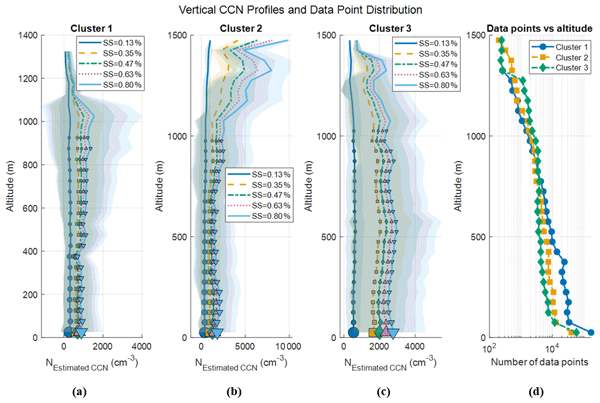
Fan Mei, Jian Wang, Israel Silber, Nurun Nahar Lata, Gregory W. Vandergrift, Jing Li, Bo Chen, Sarah D. Brooks, Michael P. Jensen, Min Deng, Damao Zhang, Darielle Dexheimer, Beat Schmid, Zezhen Cheng, and Swarup China
Atmos. Chem. Phys., 26, 13885–13908, https://doi.org/10.5194/acp-26-13885-2026, https://doi.org/10.5194/acp-26-13885-2026, 2026
Short summary
Short summary
Tethered balloon measurements from 149 flights during DOE ARM TRACER over Houston characterize vertical aerosol and CCN structure. Back-trajectory clustering identifies three air mass types – marine, mixed, and urban – with distinct profiles shaped by boundary-layer depth and coastal circulations. A case study shows mesoscale advection simultaneously transforms thermodynamic and aerosol conditions, underscoring the need to constrain meteorology before attributing cloud changes to aerosol forcing.
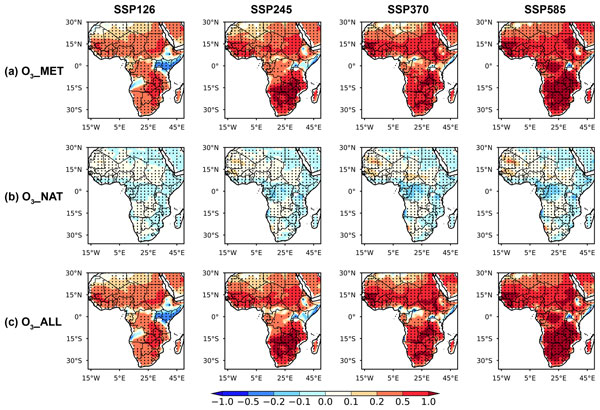
Huimin Li, Yang Yang, and Hailong Wang
Atmos. Chem. Phys., 26, 13341–13357, https://doi.org/10.5194/acp-26-13341-2026, https://doi.org/10.5194/acp-26-13341-2026, 2026
Short summary
Short summary
The O3 pollution across Africa has been exacerbating, which poses serious threats to public health. In this study, we predict future near-surface O3 concentrations with an integrated machine learning framework. This study reveals that global warming will exacerbate the health risk associated with O3 pollution. The elevated air temperatures act as primary driver of increased mortality ratios, while enhanced O3 concentrations are an additional stressor and adverse side effect of warming climate.
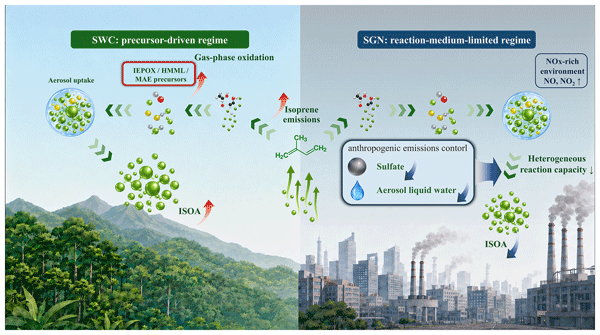
Wenxin Zhang, Man Yue, Xinyue Shao, Xinyi Dong, and Minghuai Wang
Atmos. Chem. Phys., 26, 11967–11989, https://doi.org/10.5194/acp-26-11967-2026, https://doi.org/10.5194/acp-26-11967-2026, 2026
Short summary
Short summary
Isoprene-derived secondary organic aerosol (ISOA) remains poorly represented in models, creating uncertainty in its changes and drivers. An improved model better matches observations and shows that low-NOx formation dominates. Overall ISOA changed little from 2000 to 2019 because opposite regional trends offset each other: increases in Southwest China were driven by stronger isoprene emissions, while decreases in Shaanxi–Gansu–Ningxia were driven by changes in anthropogenic emissions.
Boyang Zheng, Yannian Zhu, Yang Cao, Kang-En Huang, Jihu Liu, Yichuan Wang, Jun Shi, Yicheng Wei, Daniel Rosenfeld, Chen Zhou, and Minghuai Wang
Earth Syst. Sci. Data Discuss., https://doi.org/10.5194/essd-2026-360, https://doi.org/10.5194/essd-2026-360, 2026
Revised manuscript under review for ESSD
Short summary
Short summary
We created a global dataset of clear‑sky energy at the top of the atmosphere over the ocean that matches real satellite overpass times. Knowing how much energy the Earth reflects and emits under cloud‑free conditions helps assess how clouds influence climate. We trained a model with satellite measurements and atmospheric data to estimate clear‑sky energy fluxes at observation times. This dataset can support studies of atmospheric processes and improve comparisons between models and observations.
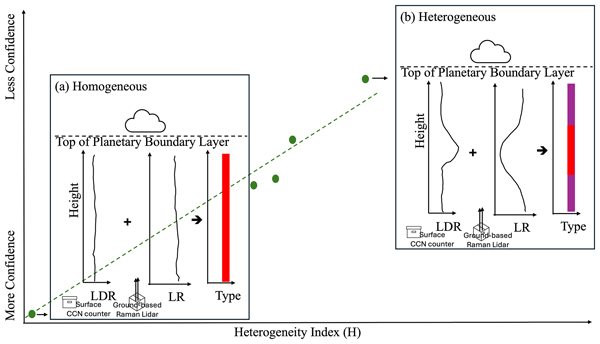
Jingjing Tian, Gourihar Kulkarni, Jennifer M. Comstock, John E. Shilling, Damao Zhang, Peng Wu, and Fan Mei
Atmos. Meas. Tech., 19, 5051–5069, https://doi.org/10.5194/amt-19-5051-2026, https://doi.org/10.5194/amt-19-5051-2026, 2026
Short summary
Short summary
Cloud condensation nuclei are tiny particles that attract water vapor and help form clouds. A ground-based lidar method can estimate their number at different heights, but assumes the aerosol type does not change with height. Comparisons with aircraft data show good agreement of this method when aerosols are well mixed, but larger errors when stacked layers occur. We also developed an index to flag these complex conditions and indicate when this estimation method is more reliable.
Yanjie Liu, Xiaocong Wang, Yimin Liu, Shuaiqi Tang, and Hao Miao
Atmos. Chem. Phys., 26, 6763–6779, https://doi.org/10.5194/acp-26-6763-2026, https://doi.org/10.5194/acp-26-6763-2026, 2026
Short summary
Short summary
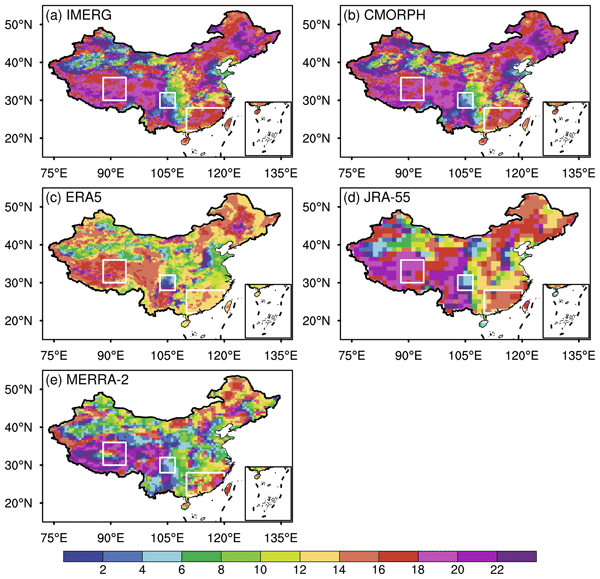
This study investigates how well operational models simulate the diurnal cycle of summer rainfall over China. Comparing three reanalyses shows all capture nocturnal precipitation peak but differ in afternoon rainfall timing: JRA‑55 and MERRA‑2 match observations better, while ERA5 exhibits a 3-hour phase advance. These differences are linked to how large-scale forcing is use in convection parameterization, underscoring the critical role of trigger on cumulus convection.
Susanne Glienke, Kevin L. Bertschinger, Fan Mei, and John E. Shilling
EGUsphere, https://doi.org/10.5194/egusphere-2026-2141, https://doi.org/10.5194/egusphere-2026-2141, 2026
Short summary
Short summary
Knowing accurate cloud droplet size distributions and droplet movement is important to understand cloud formation and lifetime. To better measure these, we developed and tested the HOLOgraphic DROPlet Sensor (HOLODROPS) with two operational configurations, which can be used for both long-term cloud measurements and for short-term droplet tracking, in conjunction with an event-camera-based Particle Imaging Velocimetry (ePIV) system for fast analysis of droplet movements.
Xinyue Shao, Yaman Liu, Xinyi Dong, Minghuai Wang, Ruochong Xu, Joel A. Thornton, Duseong S. Jo, Man Yue, Wenxiang Shen, Manish Shrivastava, Stephen R. Arnold, and Ken S. Carslaw
Atmos. Chem. Phys., 26, 6427–6448, https://doi.org/10.5194/acp-26-6427-2026, https://doi.org/10.5194/acp-26-6427-2026, 2026
Short summary
Short summary
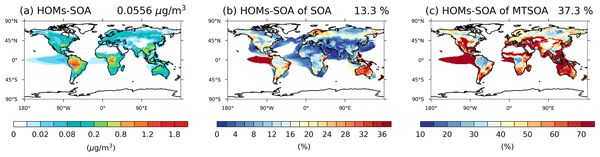
Highly Oxygenated Organic Molecules (HOMs) are key precursors of secondary organic aerosols (SOA). Incorporating the HOMs chemical mechanism into a global climate model allows for a reasonable reproduction of observed HOM characteristics. HOM-SOA constitutes a significant fraction of global SOA, and its distribution and formation pathways exhibit strong sensitivity to uncertainties in autoxidation processes and peroxy radical branching ratios.
Haruki Hirasawa, Matthew Henry, Philip J. Rasch, Robert Wood, Sarah J. Doherty, James Haywood, Alex Wong, Jean-Francois Lamarque, Ezra Brody, and Hailong Wang
Geosci. Model Dev., 19, 3257–3283, https://doi.org/10.5194/gmd-19-3257-2026, https://doi.org/10.5194/gmd-19-3257-2026, 2026
Short summary
Short summary
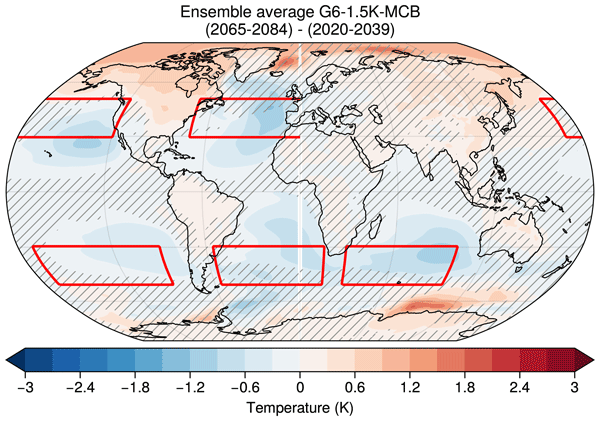
Marine cloud brightening (MCB) is a proposal to emit sea salt aerosols to make clouds more reflective and cool the climate. Here, we use three climate models to study a hypothetical future where MCB is used to maintain temperatures near 2020–2039 conditions. The simulation results indicate that using MCB in midlatitude ocean regions can keep the climate close to present day conditions. This reduces many of the negative impacts shown in previous studies, informing future modeling efforts.
Xinyue Shao, Minghuai Wang, Xinyi Dong, Yaman Liu, Stephen R. Arnold, Leighton A. Regayre, Duseong S. Jo, Wenxiang Shen, Hao Wang, Man Yue, Jingyi Wang, Wenxin Zhang, and Ken S. Carslaw
Atmos. Chem. Phys., 26, 4439–4451, https://doi.org/10.5194/acp-26-4439-2026, https://doi.org/10.5194/acp-26-4439-2026, 2026
Short summary
Short summary
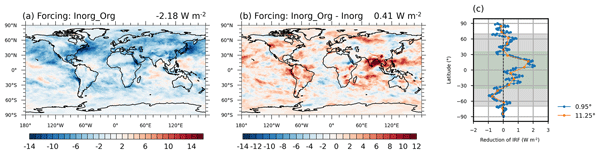
This study uses a global chemistry–climate model to investigate how new particle formation (NPF) from highly oxygenated organic molecules (HOMs) contributes to cloud condensation nuclei (CCN) in both preindustrial and present-day environments and its impact on aerosol indirect radiative forcing. The findings highlight the crucial role of biogenic emissions in climate change, providing new insights for carbon-neutral scenarios and enhancing our understanding of aerosol–cloud interactions.
Jerome D. Fast, Balwinder Singh, Oscar Diaz-Ibarra, Jeff Johnson, Chandru Dhandapani, Brian Gaudet, Taufiq Hassan, Meng Huang, Jaelyn Litzinger, James Overfelt, Kyle Pressel, Michael Schmidt, Shuaiqi Tang, Adam C. Varble, Hui Wan, Mingxuan Wu, Kai Zhang, and Po-Lun Ma
EGUsphere, https://doi.org/10.5194/egusphere-2026-1538, https://doi.org/10.5194/egusphere-2026-1538, 2026
Short summary
Short summary
We ported a prognostic representation of aerosols to C++ and integrated it into an Earth system model that runs on powerful GPU supercomputers. The code conversion approach keeps the same detailed physics as the Fortran version, was carefully tested, and results show that new code produces aerosol simulations consistent with real‑world data over the central U.S. in spring 2016. Future work will optimize the code for GPUs so to reduce the overall computational time.
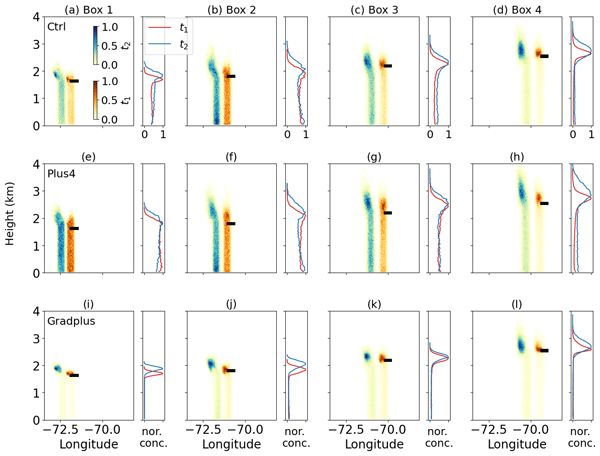
Jingyi Chen, Hailong Wang, Bo Zhang, Hongyu Liu, David Painemal, Armin Sorooshian, Sheng-Lun Tai, and Christiane Voigt
Atmos. Chem. Phys., 26, 2209–2224, https://doi.org/10.5194/acp-26-2209-2026, https://doi.org/10.5194/acp-26-2209-2026, 2026
Short summary
Short summary
NASA-validated modeling shows +4K SST (sea surface temperature) & +25 % gradients distinctly alter boundary layer dynamics, cloud physics in cold-air outbreaks. Warmer SST reduces cloud cover; increases size, elongation; hydrometeors shift to ice. Sharper Gradients boost liquid water (cold upwind); reduces ice; disrupts organization. Also, SST changes alter cloud-top properties via entrained airmass origin. Resolving ocean-atmosphere coupling in global models is essential for accurate cloud feedback projections.
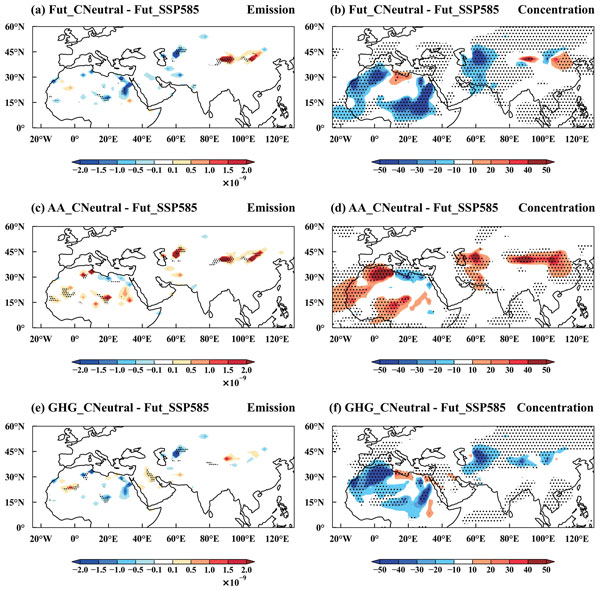
Shicheng Yan, Yang Yang, Lili Ren, Hailong Wang, Pinya Wang, Lei Chen, Jianbin Jin, and Hong Liao
Atmos. Chem. Phys., 25, 16877–16893, https://doi.org/10.5194/acp-25-16877-2025, https://doi.org/10.5194/acp-25-16877-2025, 2025
Short summary
Short summary
In this study, we assess the impact of carbon neutrality by 2060 on dust emissions in the Northern Hemisphere using the Community Earth System Model. Our findings show that reductions in greenhouse gases (GHGs) and aerosols lead to decreased dust loading compared to high fossil fuel scenarios. While aerosol reductions promote dust, GHGs decreases reduce wind speeds, suppressing dust emissions. These results suggest that carbon-neutral policies mitigate climate change and reduce dust pollution.
Naser Mahfouz, Hassan Beydoun, Johannes Mülmenstädt, Noel Keen, Adam C. Varble, Luca Bertagna, Peter Bogenschutz, Andrew Bradley, Matthew W. Christensen, T. Conrad Clevenger, Aaron Donahue, Jerome Fast, James Foucar, Jean-Christophe Golaz, Oksana Guba, Walter Hannah, Benjamin Hillman, Robert Jacob, Wuyin Lin, Po-Lun Ma, Yun Qian, Balwinder Singh, Christopher Terai, Hailong Wang, Mingxuan Wu, Kai Zhang, Andrew Gettelman, Mark Taylor, L. Ruby Leung, Peter Caldwell, and Susannah Burrows
Atmos. Chem. Phys., 25, 15105–15120, https://doi.org/10.5194/acp-25-15105-2025, https://doi.org/10.5194/acp-25-15105-2025, 2025
Short summary
Short summary
Our study assesses the aerosol effective radiative forcing in a global cloud-resolving atmosphere model at ultra-high resolution. We demonstrate that global aerosol forcing signal can be robustly reproduced across resolutions when aerosol activation processes are carefully parameterized. Further, we argue that simplified prescribed aerosol schemes will open the door for further process/mechanism studies under controlled conditions.
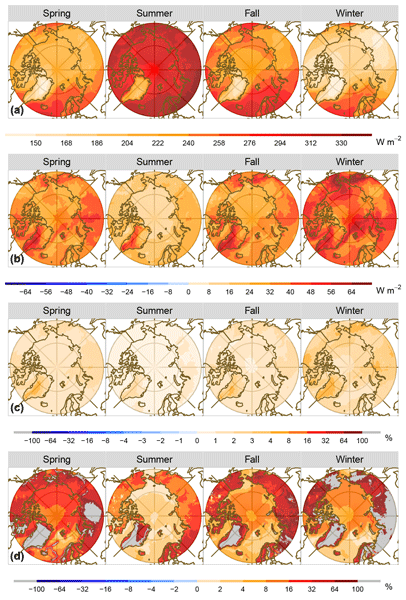
Chen Zhang, John J. Cassano, Mark W. Seefeldt, Hailong Wang, Weiming Ma, and Wen-wen Tung
The Cryosphere, 19, 4671–4699, https://doi.org/10.5194/tc-19-4671-2025, https://doi.org/10.5194/tc-19-4671-2025, 2025
Short summary
Short summary
An atmospheric river (AR) is a long, narrow corridor of moisture transport in the atmosphere. ARs are crucial for moisture and heat transport into the polar regions. Our study examines the role of ARs in the surface energy budget (SEB) in the Arctic. The results reveal distinct seasonality and land–sea–sea ice contrasts due to the impacts of ARs on the SEB. The conclusions provide greater insights into the current and future role of ARs in the Arctic climate system.
Allen Hu, Ziming Ke, Xiaohong Liu, Benjamin Wagman, Hunter Brown, Zheng Lu, Mingxuan Wu, Hailong Wang, Qi Tang, Diana Bull, Kara Peterson, and Shaocheng Xie
Atmos. Chem. Phys., 25, 12137–12157, https://doi.org/10.5194/acp-25-12137-2025, https://doi.org/10.5194/acp-25-12137-2025, 2025
Short summary
Short summary
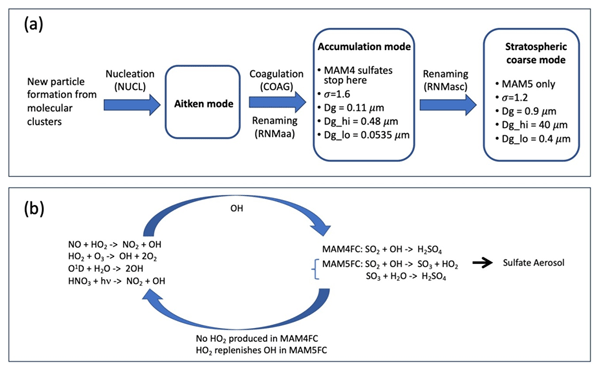
Volcanic eruptions have major effects on atmospheric temperature and can be studied as a proxy for geo-engineering. The original aerosol module in the Energy Exascale Earth System Model v2 (E3SMv2) has problems simulating volcanic aerosols. We alter the aerosol module to simulate the 1991 Pinatubo eruption and implement a more complex chemistry scheme, producing results that better agree with observations. Process analyses of the volcanic aerosols help explain how they grow in the stratosphere.
Jiyuan Gao, Yang Yang, Hailong Wang, Pinya Wang, and Hong Liao
Atmos. Chem. Phys., 25, 10949–10964, https://doi.org/10.5194/acp-25-10949-2025, https://doi.org/10.5194/acp-25-10949-2025, 2025
Short summary
Short summary
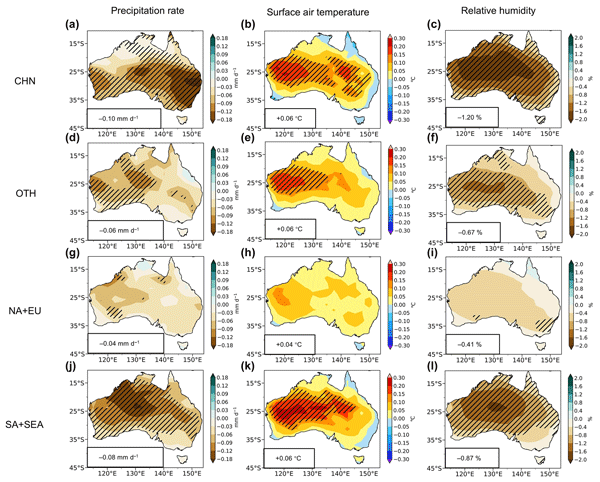
The decline in aerosols in China alters temperature and pressure gradients between the two hemispheres, which intensifies the Southern Trade Winds and causes a moisture divergence in Australia, resulting in less rainfall. Reduced surface moisture leads to more energy being converted into sensible heat instead of evaporating as latent heat, which raises near-surface temperatures in Australia. Our findings offer insights for managing drought and wildfire risks in Australia.
Mingxuan Wu, Hailong Wang, Zheng Lu, Xiaohong Liu, Huisheng Bian, David D. Cohen, Yan Feng, Mian Chin, Didier A. Hauglustaine, Vlassis A. Karydis, Marianne T. Lund, Gunnar Myhre, Andrea Pozzer, Michael Schulz, Ragnhild B. Skeie, Alexandra P. Tsimpidi, Svetlana G. Tsyro, and Shaocheng Xie
Atmos. Chem. Phys., 25, 10049–10074, https://doi.org/10.5194/acp-25-10049-2025, https://doi.org/10.5194/acp-25-10049-2025, 2025
Short summary
Short summary
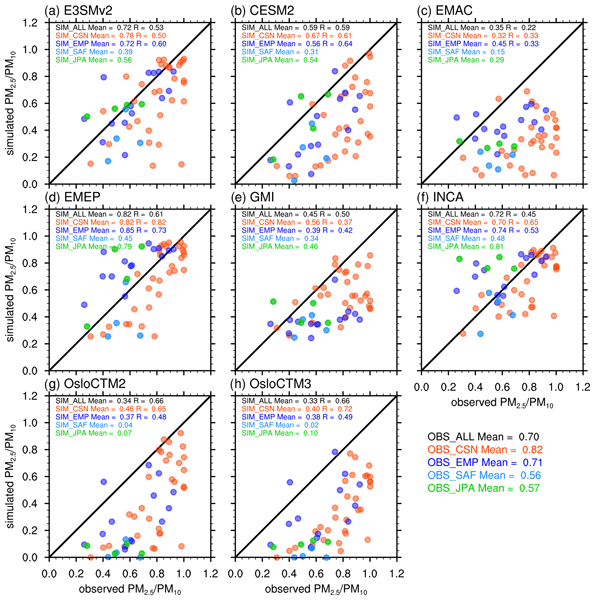
A key challenge in simulating the life cycle of nitrate aerosol in global models is accurately representing the mass size distribution of nitrate aerosol, which lacks sufficient observational constraints. We found that most global models underestimate the mass fraction of fine-mode nitrate at the surface in all regions. Our study highlights the importance of gas–aerosol partitioning parameterization and the simulation of dust and sea salt in correctly simulating the mass size distribution of nitrate.
Ziming Ke, Qi Tang, Jean-Christophe Golaz, Xiaohong Liu, and Hailong Wang
Geosci. Model Dev., 18, 4137–4153, https://doi.org/10.5194/gmd-18-4137-2025, https://doi.org/10.5194/gmd-18-4137-2025, 2025
Short summary
Short summary
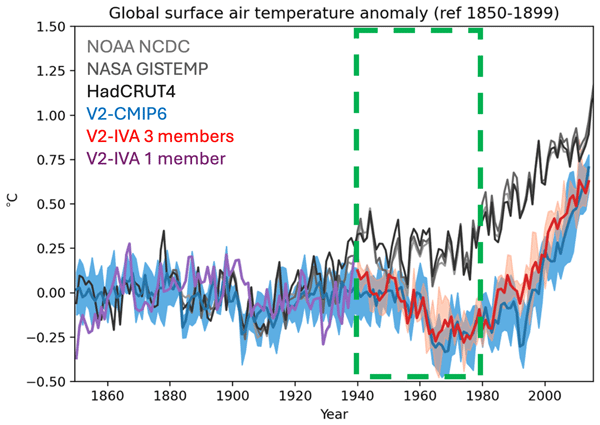
This study assesses volcanic aerosol representation in E3SM (Energy Exascale Earth System Model), showing that an emission-based approach moderately improves temperature variability and cloud responses compared to a prescribed forcing approach, yet significant bias persists.
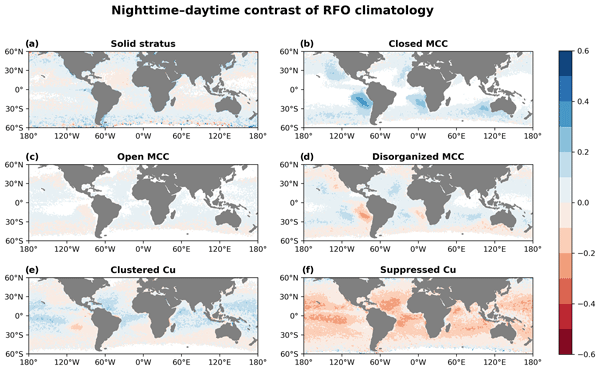
Yuanyuan Wu, Jihu Liu, Yannian Zhu, Yu Zhang, Yang Cao, Kang-En Huang, Boyang Zheng, Yichuan Wang, Yanyun Li, Quan Wang, Chen Zhou, Yuan Liang, Jianning Sun, Minghuai Wang, and Daniel Rosenfeld
Earth Syst. Sci. Data, 17, 3243–3258, https://doi.org/10.5194/essd-17-3243-2025, https://doi.org/10.5194/essd-17-3243-2025, 2025
Short summary
Short summary
Based on a deep-learning method, we established a global classification dataset of daytime and nighttime marine low-cloud mesoscale morphology. This aims to promote a comprehensive understanding of cloud dynamics and cloud–climate feedback. Closed mesoscale cellular convection (MCC) clouds occur more frequently at night, while suppressed cumulus clouds exhibit remarkable decreases. Solid stratus and MCC cloud types show clear seasonal variations.
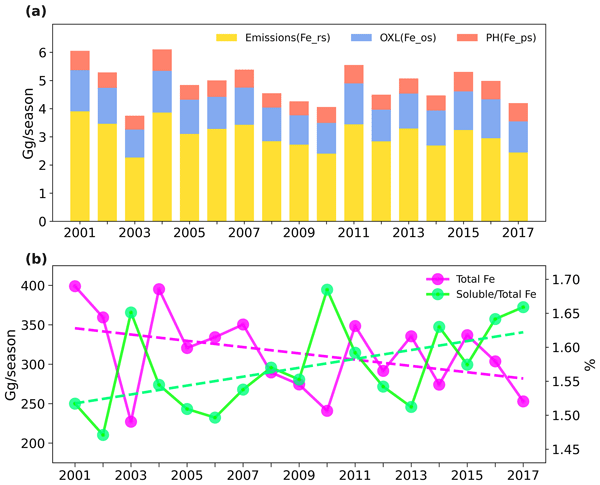
Hanzheng Zhu, Yaman Liu, Man Yue, Shihui Feng, Pingqing Fu, Kan Huang, Xinyi Dong, and Minghuai Wang
Atmos. Chem. Phys., 25, 5175–5197, https://doi.org/10.5194/acp-25-5175-2025, https://doi.org/10.5194/acp-25-5175-2025, 2025
Short summary
Short summary
Dust-soluble iron deposition from East Asia plays an important role in the marine ecology of the Northwest Pacific. Using the developed model, our findings highlight a dual trend: a decrease in the overall deposition of soluble iron from dust but an increase in the solubility of the iron itself due to the enhanced atmospheric processing. The study underscores the critical roles of both dust emission and atmospheric processing in soluble iron deposition and marine ecology.
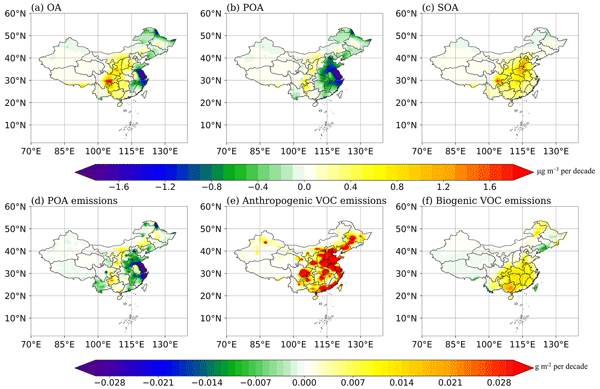
Wenxin Zhang, Yaman Liu, Man Yue, Xinyi Dong, Kan Huang, and Minghuai Wang
Atmos. Chem. Phys., 25, 3857–3872, https://doi.org/10.5194/acp-25-3857-2025, https://doi.org/10.5194/acp-25-3857-2025, 2025
Short summary
Short summary
Understanding long-term organic aerosol (OA) trends and their driving factors is important for air quality management. Our modeling revealed that OA in China increased by 5.6 % from 1990 to 2019, primarily due to a 32.3 % increase in secondary organic aerosols (SOAs) and an 8.1 % decrease in primary organic aerosols (POAs), both largely driven by changes in anthropogenic emissions. Biogenic SOA increased due to warming but showed little response to changes in anthropogenic nitrogen oxide emissions.
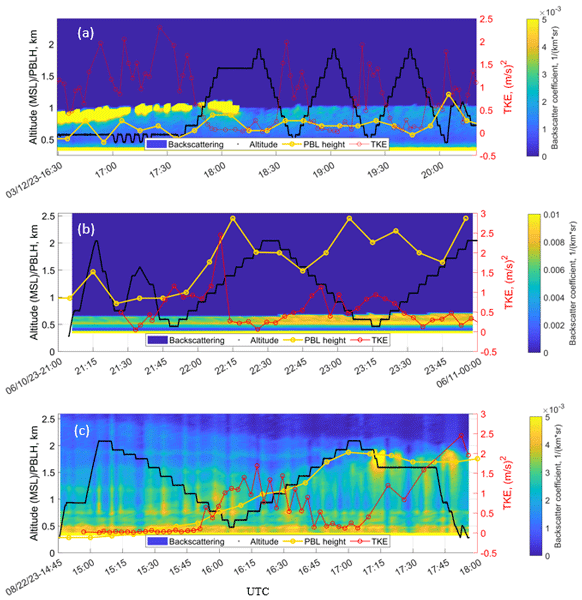
Fan Mei, Qi Zhang, Damao Zhang, Jerome D. Fast, Gourihar Kulkarni, Mikhail S. Pekour, Christopher R. Niedek, Susanne Glienke, Israel Silber, Beat Schmid, Jason M. Tomlinson, Hardeep S. Mehta, Xena Mansoura, Zezhen Cheng, Gregory W. Vandergrift, Nurun Nahar Lata, Swarup China, and Zihua Zhu
Atmos. Chem. Phys., 25, 3425–3444, https://doi.org/10.5194/acp-25-3425-2025, https://doi.org/10.5194/acp-25-3425-2025, 2025
Short summary
Short summary
This study highlights the unique capability of the ArcticShark, an uncrewed aerial system, in measuring vertically resolved atmospheric properties. Data from 32 research flights in 2023 reveal seasonal patterns and correlations with conventional measurements. The consistency and complementarity of in situ and remote sensing methods are highlighted. The study demonstrates the ArcticShark’s versatility in bridging data gaps and improving the understanding of vertical atmospheric structures.
Yang Yang, Li You, Hailong Wang, Huimin Li, Pinya Wang, and Hong Liao
EGUsphere, https://doi.org/10.5194/egusphere-2025-840, https://doi.org/10.5194/egusphere-2025-840, 2025
Preprint archived
Short summary
Short summary
This study used machine learning to predict global and regional temperature changes under carbon neutrality and high emissions from 2015 to 2100.The results show that while carbon neutrality slows long-term warming, it causes short-term warming due to the rapid decline in aerosols. In contrast, greenhouse gases dominate warming in the high-emission scenario. These findings emphasize the important role of aerosols in shaping near-term climate change under carbon-neutral pathways.
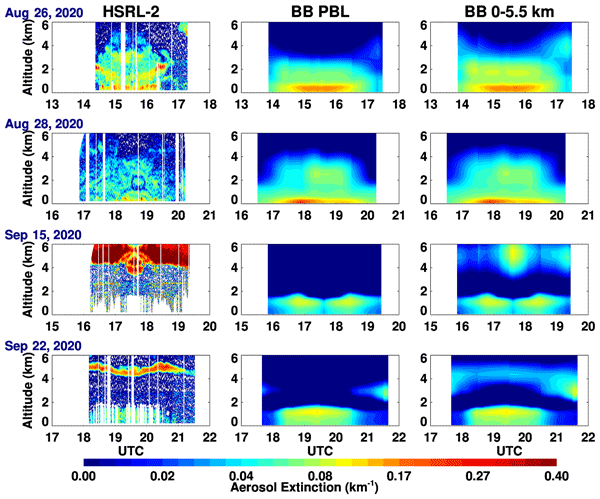
Hongyu Liu, Bo Zhang, Richard H. Moore, Luke D. Ziemba, Richard A. Ferrare, Hyundeok Choi, Armin Sorooshian, David Painemal, Hailong Wang, Michael A. Shook, Amy Jo Scarino, Johnathan W. Hair, Ewan C. Crosbie, Marta A. Fenn, Taylor J. Shingler, Chris A. Hostetler, Gao Chen, Mary M. Kleb, Gan Luo, Fangqun Yu, Mark A. Vaughan, Yongxiang Hu, Glenn S. Diskin, John B. Nowak, Joshua P. DiGangi, Yonghoon Choi, Christoph A. Keller, and Matthew S. Johnson
Atmos. Chem. Phys., 25, 2087–2121, https://doi.org/10.5194/acp-25-2087-2025, https://doi.org/10.5194/acp-25-2087-2025, 2025
Short summary
Short summary
We use the GEOS-Chem model to simulate aerosol distributions and properties over the western North Atlantic Ocean (WNAO) during the winter and summer deployments in 2020 of the NASA ACTIVATE mission. Model results are evaluated against aircraft, ground-based, and satellite observations. The improved understanding of life cycle, composition, transport pathways, and distribution of aerosols has important implications for characterizing aerosol–cloud–meteorology interactions over WNAO.
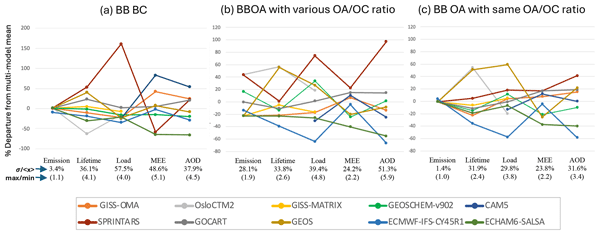
Mariya Petrenko, Ralph Kahn, Mian Chin, Susanne E. Bauer, Tommi Bergman, Huisheng Bian, Gabriele Curci, Ben Johnson, Johannes W. Kaiser, Zak Kipling, Harri Kokkola, Xiaohong Liu, Keren Mezuman, Tero Mielonen, Gunnar Myhre, Xiaohua Pan, Anna Protonotariou, Samuel Remy, Ragnhild Bieltvedt Skeie, Philip Stier, Toshihiko Takemura, Kostas Tsigaridis, Hailong Wang, Duncan Watson-Parris, and Kai Zhang
Atmos. Chem. Phys., 25, 1545–1567, https://doi.org/10.5194/acp-25-1545-2025, https://doi.org/10.5194/acp-25-1545-2025, 2025
Short summary
Short summary
We compared smoke plume simulations from 11 global models to each other and to satellite smoke amount observations aimed at constraining smoke source strength. In regions where plumes are thick and background aerosol is low, models and satellites compare well. However, the input emission inventory tends to underestimate in many places, and particle property and loss rate assumptions vary enormously among models, causing uncertainties that require systematic in situ measurements to resolve.
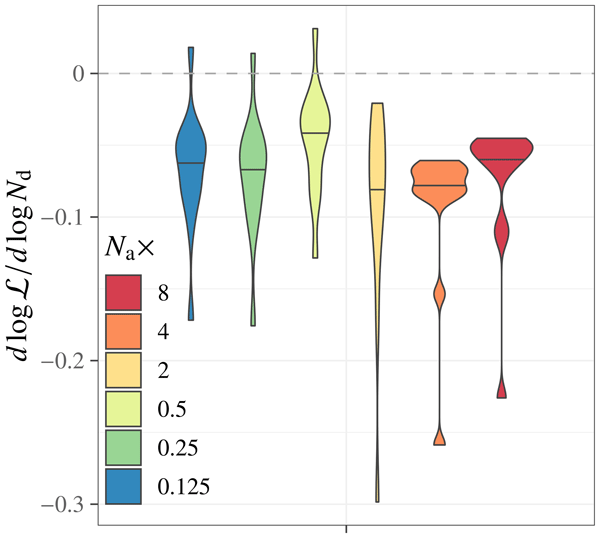
Johannes Mülmenstädt, Andrew S. Ackerman, Ann M. Fridlind, Meng Huang, Po-Lun Ma, Naser Mahfouz, Susanne E. Bauer, Susannah M. Burrows, Matthew W. Christensen, Sudhakar Dipu, Andrew Gettelman, L. Ruby Leung, Florian Tornow, Johannes Quaas, Adam C. Varble, Hailong Wang, Kai Zhang, and Youtong Zheng
Atmos. Chem. Phys., 24, 13633–13652, https://doi.org/10.5194/acp-24-13633-2024, https://doi.org/10.5194/acp-24-13633-2024, 2024
Short summary
Short summary
Stratocumulus clouds play a large role in Earth's climate by reflecting incoming solar energy back to space. Turbulence at stratocumulus cloud top mixes in dry, warm air, which can lead to cloud dissipation. This process is challenging for coarse-resolution global models to represent. We show that global models nevertheless agree well with our process understanding. Global models also think the process is less important for the climate than other lines of evidence have led us to conclude.
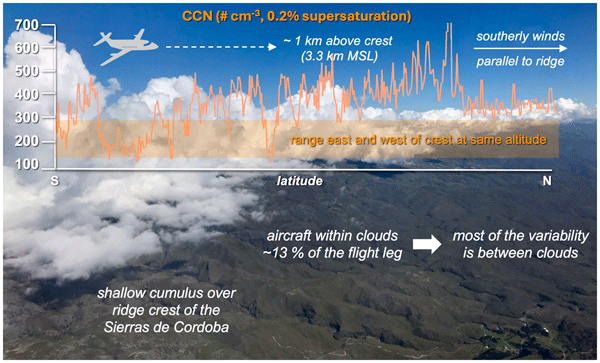
Jerome D. Fast, Adam C. Varble, Fan Mei, Mikhail Pekour, Jason Tomlinson, Alla Zelenyuk, Art J. Sedlacek III, Maria Zawadowicz, and Louisa Emmons
Atmos. Chem. Phys., 24, 13477–13502, https://doi.org/10.5194/acp-24-13477-2024, https://doi.org/10.5194/acp-24-13477-2024, 2024
Short summary
Short summary
Aerosol property measurements recently collected on the ground and by a research aircraft in central Argentina during the Cloud, Aerosol, and Complex Terrain Interactions (CACTI) campaign exhibit large spatial and temporal variability. These measurements coupled with coincident meteorological information provide a valuable data set needed to evaluate and improve model predictions of aerosols in a traditionally data-sparse region of South America.
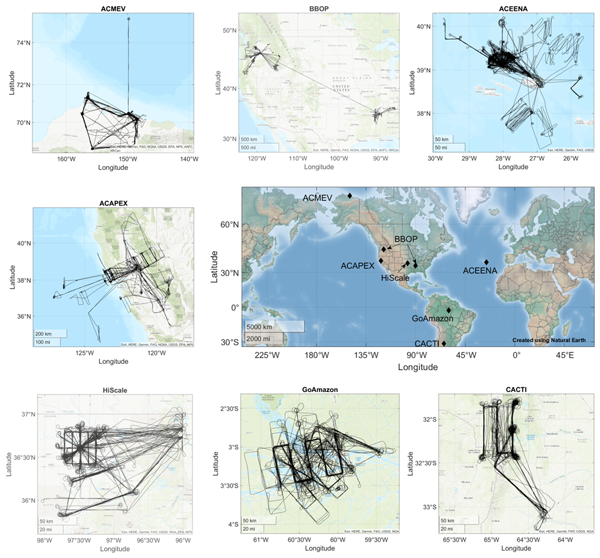
Fan Mei, Jennifer M. Comstock, Mikhail S. Pekour, Jerome D. Fast, Krista L. Gaustad, Beat Schmid, Shuaiqi Tang, Damao Zhang, John E. Shilling, Jason M. Tomlinson, Adam C. Varble, Jian Wang, L. Ruby Leung, Lawrence Kleinman, Scot Martin, Sebastien C. Biraud, Brian D. Ermold, and Kenneth W. Burk
Earth Syst. Sci. Data, 16, 5429–5448, https://doi.org/10.5194/essd-16-5429-2024, https://doi.org/10.5194/essd-16-5429-2024, 2024
Short summary
Short summary
Our study explores a comprehensive dataset from airborne field studies (2013–2018) conducted using the US Department of Energy's Gulfstream 1 (G-1). The 236 flights span diverse regions, including the Arctic, US Southern Great Plains, US West Coast, eastern North Atlantic, Amazon Basin in Brazil, and Sierras de Córdoba range in Argentina. This dataset provides unique insights into atmospheric dynamics, aerosols, and clouds and makes data available in a more accessible format.
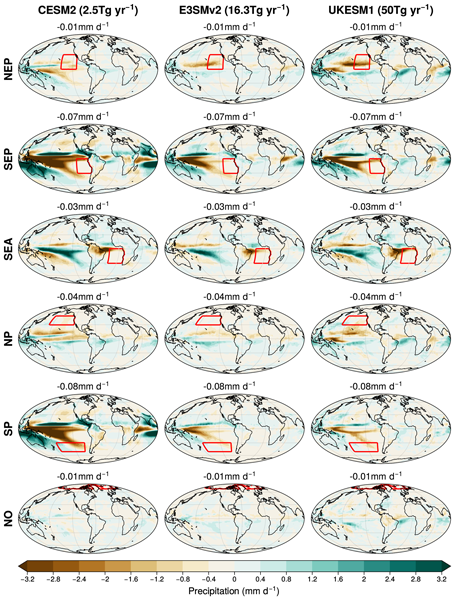
Philip J. Rasch, Haruki Hirasawa, Mingxuan Wu, Sarah J. Doherty, Robert Wood, Hailong Wang, Andy Jones, James Haywood, and Hansi Singh
Geosci. Model Dev., 17, 7963–7994, https://doi.org/10.5194/gmd-17-7963-2024, https://doi.org/10.5194/gmd-17-7963-2024, 2024
Short summary
Short summary
We introduce a protocol to compare computer climate simulations to better understand a proposed strategy intended to counter warming and climate impacts from greenhouse gas increases. This slightly changes clouds in six ocean regions to reflect more sunlight and cool the Earth. Example changes in clouds and climate are shown for three climate models. Cloud changes differ between the models, but precipitation and surface temperature changes are similar when their cooling effects are made similar.
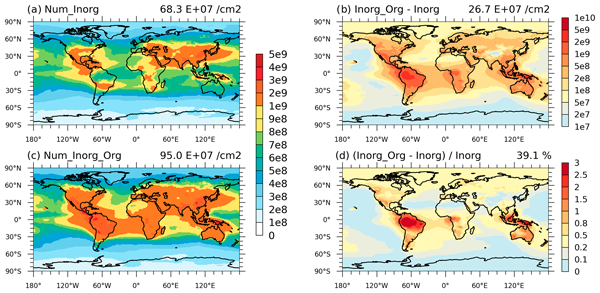
Xinyue Shao, Minghuai Wang, Xinyi Dong, Yaman Liu, Wenxiang Shen, Stephen R. Arnold, Leighton A. Regayre, Meinrat O. Andreae, Mira L. Pöhlker, Duseong S. Jo, Man Yue, and Ken S. Carslaw
Atmos. Chem. Phys., 24, 11365–11389, https://doi.org/10.5194/acp-24-11365-2024, https://doi.org/10.5194/acp-24-11365-2024, 2024
Short summary
Short summary
Highly oxygenated organic molecules (HOMs) play an important role in atmospheric new particle formation (NPF). By semi-explicitly coupling the chemical mechanism of HOMs and a comprehensive nucleation scheme in a global climate model, the updated model shows better agreement with measurements of nucleation rate, growth rate, and NPF event frequency. Our results reveal that HOM-driven NPF leads to a considerable increase in particle and cloud condensation nuclei burden globally.
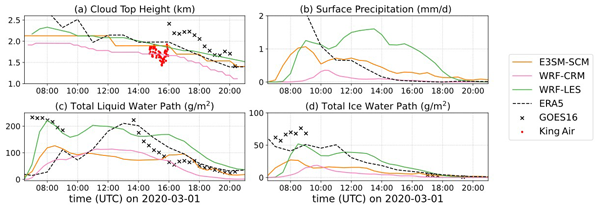
Shuaiqi Tang, Hailong Wang, Xiang-Yu Li, Jingyi Chen, Armin Sorooshian, Xubin Zeng, Ewan Crosbie, Kenneth L. Thornhill, Luke D. Ziemba, and Christiane Voigt
Atmos. Chem. Phys., 24, 10073–10092, https://doi.org/10.5194/acp-24-10073-2024, https://doi.org/10.5194/acp-24-10073-2024, 2024
Short summary
Short summary
We examined marine boundary layer clouds and their interactions with aerosols in the E3SM single-column model (SCM) for a case study. The SCM shows good agreement when simulating the clouds with high-resolution models. It reproduces the relationship between cloud droplet and aerosol particle number concentrations as produced in global models. However, the relationship between cloud liquid water and droplet number concentration is different, warranting further investigation.
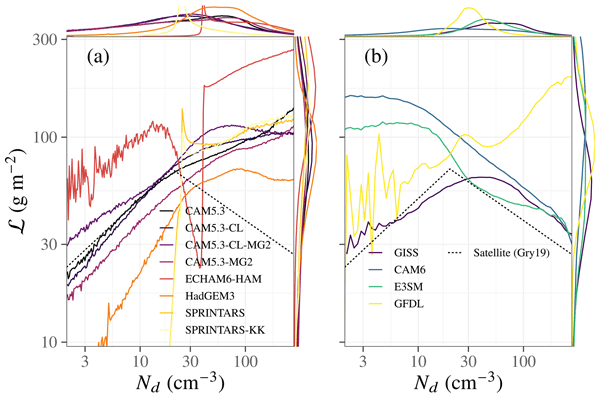
Johannes Mülmenstädt, Edward Gryspeerdt, Sudhakar Dipu, Johannes Quaas, Andrew S. Ackerman, Ann M. Fridlind, Florian Tornow, Susanne E. Bauer, Andrew Gettelman, Yi Ming, Youtong Zheng, Po-Lun Ma, Hailong Wang, Kai Zhang, Matthew W. Christensen, Adam C. Varble, L. Ruby Leung, Xiaohong Liu, David Neubauer, Daniel G. Partridge, Philip Stier, and Toshihiko Takemura
Atmos. Chem. Phys., 24, 7331–7345, https://doi.org/10.5194/acp-24-7331-2024, https://doi.org/10.5194/acp-24-7331-2024, 2024
Short summary
Short summary
Human activities release copious amounts of small particles called aerosols into the atmosphere. These particles change how much sunlight clouds reflect to space, an important human perturbation of the climate, whose magnitude is highly uncertain. We found that the latest climate models show a negative correlation but a positive causal relationship between aerosols and cloud water. This means we need to be very careful when we interpret observational studies that can only see correlation.
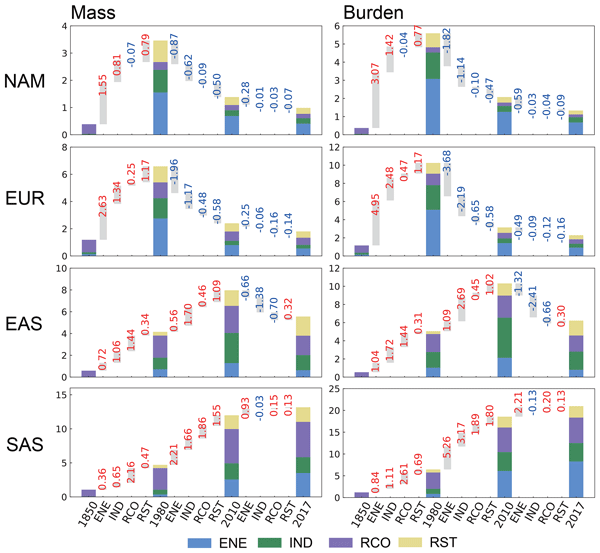
Yang Yang, Shaoxuan Mou, Hailong Wang, Pinya Wang, Baojie Li, and Hong Liao
Atmos. Chem. Phys., 24, 6509–6523, https://doi.org/10.5194/acp-24-6509-2024, https://doi.org/10.5194/acp-24-6509-2024, 2024
Short summary
Short summary
The variations in anthropogenic aerosol concentrations and source contributions and their subsequent radiative impact in major emission regions during historical periods are quantified based on an aerosol-tagging system in E3SMv1. Due to the industrial development and implementation of economic policies, sources of anthropogenic aerosols show different variations, which has important implications for pollution prevention and control measures and decision-making for global collaboration.
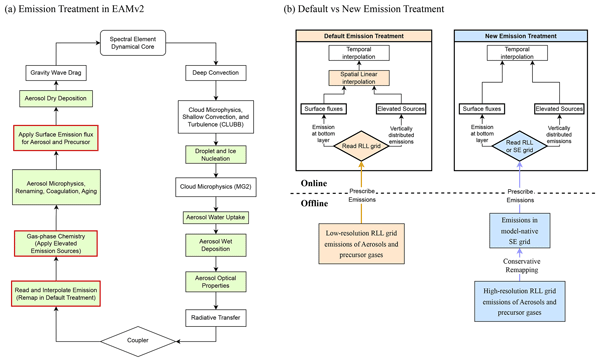
Taufiq Hassan, Kai Zhang, Jianfeng Li, Balwinder Singh, Shixuan Zhang, Hailong Wang, and Po-Lun Ma
Geosci. Model Dev., 17, 3507–3532, https://doi.org/10.5194/gmd-17-3507-2024, https://doi.org/10.5194/gmd-17-3507-2024, 2024
Short summary
Short summary
Anthropogenic aerosol emissions are an essential part of global aerosol models. Significant errors can exist from the loss of emission heterogeneity. We introduced an emission treatment that significantly improved aerosol emission heterogeneity in high-resolution model simulations, with improvements in simulated aerosol surface concentrations. The emission treatment will provide a more accurate representation of aerosol emissions and their effects on climate.
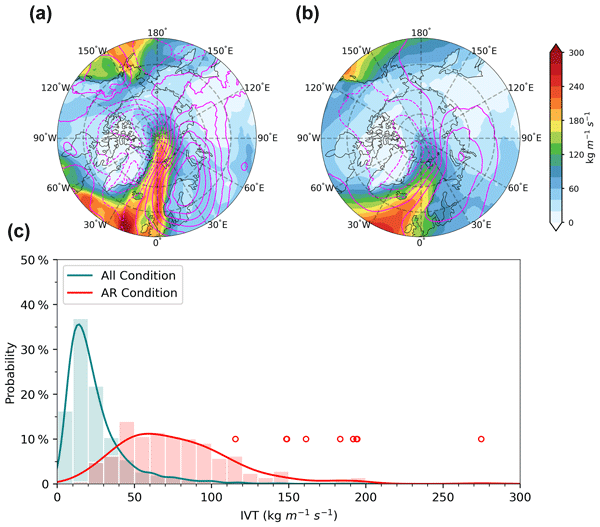
Weiming Ma, Hailong Wang, Gang Chen, Yun Qian, Ian Baxter, Yiling Huo, and Mark W. Seefeldt
Atmos. Chem. Phys., 24, 4451–4472, https://doi.org/10.5194/acp-24-4451-2024, https://doi.org/10.5194/acp-24-4451-2024, 2024
Short summary
Short summary
Extreme warming events with surface temperature going above 0°C can occur in the high-Arctic winter. Although reanalysis data show that these events were short-lived and occurred rarely during 1980–2021, they have become more frequent, stronger, and longer lasting latterly. A dipole pattern, comprising high- and low-pressure systems, is found to be the key in driving them. These findings have implications for the recent changes in sea ice, hydrological cycle, and ecosystem over the Arctic.
John T. Fasullo, Jean-Christophe Golaz, Julie M. Caron, Nan Rosenbloom, Gerald A. Meehl, Warren Strand, Sasha Glanville, Samantha Stevenson, Maria Molina, Christine A. Shields, Chengzhu Zhang, James Benedict, Hailong Wang, and Tony Bartoletti
Earth Syst. Dynam., 15, 367–386, https://doi.org/10.5194/esd-15-367-2024, https://doi.org/10.5194/esd-15-367-2024, 2024
Short summary
Short summary
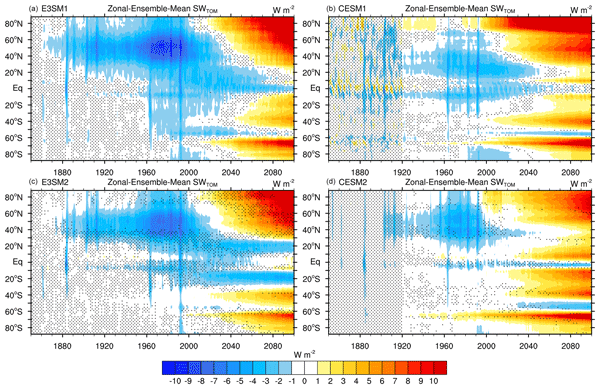
Climate model large ensembles provide a unique and invaluable means for estimating the climate response to external forcing agents and quantify contrasts in model structure. Here, an overview of the Energy Exascale Earth System Model (E3SM) version 2 large ensemble is given along with comparisons to large ensembles from E3SM version 1 and versions 1 and 2 of the Community Earth System Model. The paper provides broad and important context for users of these ensembles.
Yawen Liu, Yun Qian, Philip J. Rasch, Kai Zhang, Lai-yung Ruby Leung, Yuhang Wang, Minghuai Wang, Hailong Wang, Xin Huang, and Xiu-Qun Yang
Atmos. Chem. Phys., 24, 3115–3128, https://doi.org/10.5194/acp-24-3115-2024, https://doi.org/10.5194/acp-24-3115-2024, 2024
Short summary
Short summary
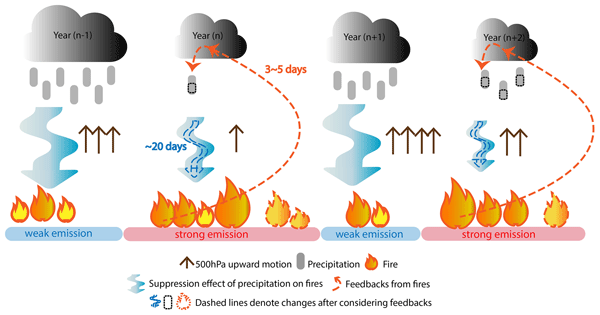
Fire management has long been a challenge. Here we report that spring-peak fire activity over southern Mexico and Central America (SMCA) has a distinct quasi-biennial signal by measuring multiple fire metrics. This signal is initially driven by quasi-biennial variability in precipitation and is further amplified by positive feedback of fire–precipitation interaction at short timescales. This work highlights the importance of fire–climate interactions in shaping fires on an interannual scale.
Hui Wan, Kai Zhang, Christopher J. Vogl, Carol S. Woodward, Richard C. Easter, Philip J. Rasch, Yan Feng, and Hailong Wang
Geosci. Model Dev., 17, 1387–1407, https://doi.org/10.5194/gmd-17-1387-2024, https://doi.org/10.5194/gmd-17-1387-2024, 2024
Short summary
Short summary
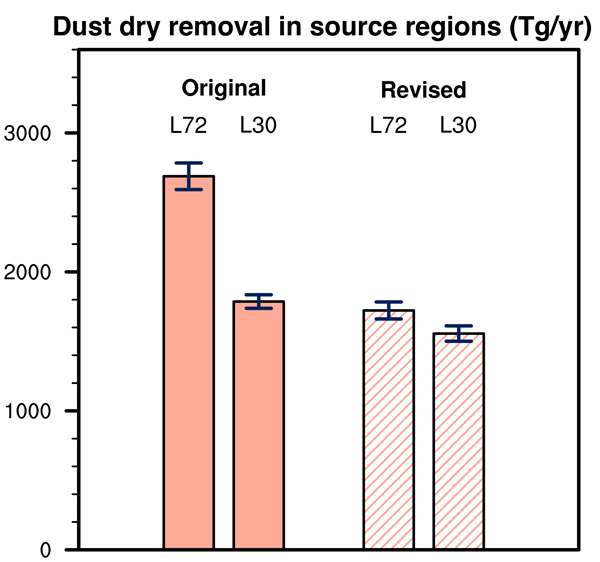
Sophisticated numerical models of the Earth's atmosphere include representations of many physical and chemical processes. In numerical simulations, these processes need to be calculated in a certain sequence. This study reveals the weaknesses of the sequence of calculations used for aerosol processes in a global atmosphere model. A revision of the sequence is proposed and its impacts on the simulated global aerosol climatology are evaluated.
Huisheng Bian, Mian Chin, Peter R. Colarco, Eric C. Apel, Donald R. Blake, Karl Froyd, Rebecca S. Hornbrook, Jose Jimenez, Pedro Campuzano Jost, Michael Lawler, Mingxu Liu, Marianne Tronstad Lund, Hitoshi Matsui, Benjamin A. Nault, Joyce E. Penner, Andrew W. Rollins, Gregory Schill, Ragnhild B. Skeie, Hailong Wang, Lu Xu, Kai Zhang, and Jialei Zhu
Atmos. Chem. Phys., 24, 1717–1741, https://doi.org/10.5194/acp-24-1717-2024, https://doi.org/10.5194/acp-24-1717-2024, 2024
Short summary
Short summary
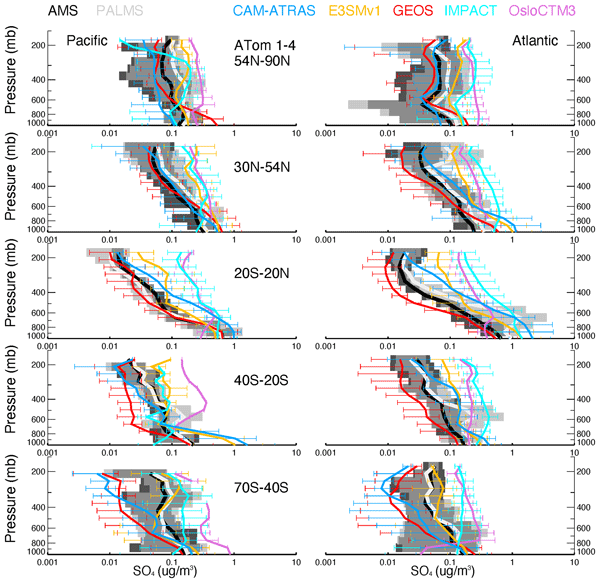
This work studies sulfur in the remote troposphere at global and seasonal scales using aircraft measurements and multi-model simulations. The goal is to understand the sulfur cycle over remote oceans, spread of model simulations, and observation–model discrepancies. Such an understanding and comparison with real observations are crucial to narrow down the uncertainties in model sulfur simulations and improve understanding of the sulfur cycle in atmospheric air quality, climate, and ecosystems.
Yang Yang, Yang Zhou, Hailong Wang, Mengyun Li, Huimin Li, Pinya Wang, Xu Yue, Ke Li, Jia Zhu, and Hong Liao
Atmos. Chem. Phys., 24, 1177–1191, https://doi.org/10.5194/acp-24-1177-2024, https://doi.org/10.5194/acp-24-1177-2024, 2024
Short summary
Short summary
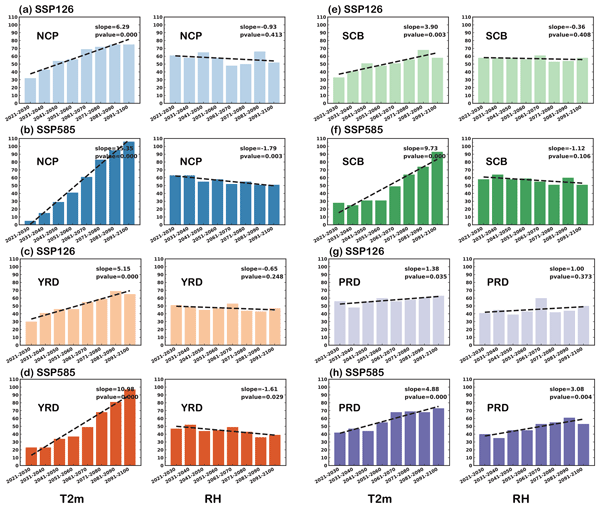
This study reveals that extreme ozone pollution over the North China Plain and Yangtze River Delta is due to the chemical production related to hot and dry conditions, and the regional transport explains the ozone pollution over the Sichuan Basin and Pearl River Delta. The frequency of meteorological conditions of the extreme ozone pollution increases from the past to the future. The sustainable scenario is the optimal path to retaining clean air in China in the future.
Yang Wang, Chanakya Bagya Ramesh, Scott E. Giangrande, Jerome Fast, Xianda Gong, Jiaoshi Zhang, Ahmet Tolga Odabasi, Marcus Vinicius Batista Oliveira, Alyssa Matthews, Fan Mei, John E. Shilling, Jason Tomlinson, Die Wang, and Jian Wang
Atmos. Chem. Phys., 23, 15671–15691, https://doi.org/10.5194/acp-23-15671-2023, https://doi.org/10.5194/acp-23-15671-2023, 2023
Short summary
Short summary
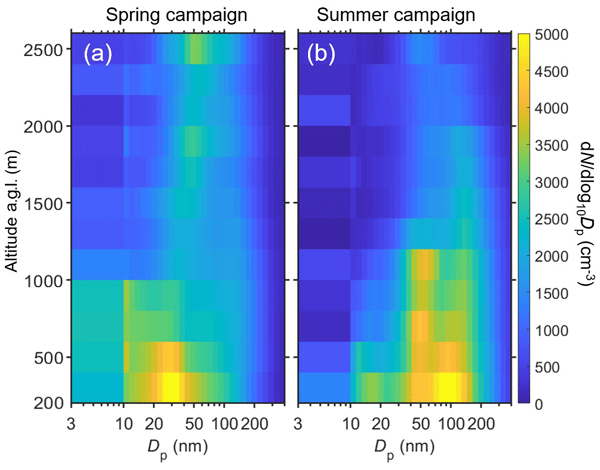
We report the vertical profiles of aerosol properties over the Southern Great Plains (SGP), a region influenced by shallow convective clouds, land–atmosphere interactions, boundary layer turbulence, and the aerosol life cycle. We examined the processes that drive the aerosol population and distribution in the lower troposphere over the SGP. This study helps improve our understanding of aerosol–cloud interactions and the model representation of aerosol processes.
Damao Zhang, Andrew M. Vogelmann, Fan Yang, Edward Luke, Pavlos Kollias, Zhien Wang, Peng Wu, William I. Gustafson Jr., Fan Mei, Susanne Glienke, Jason Tomlinson, and Neel Desai
Atmos. Meas. Tech., 16, 5827–5846, https://doi.org/10.5194/amt-16-5827-2023, https://doi.org/10.5194/amt-16-5827-2023, 2023
Short summary
Short summary
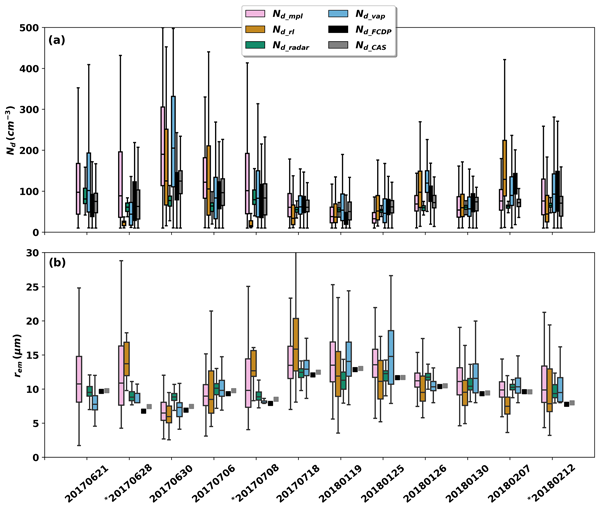
Cloud droplet number concentration can be retrieved from remote sensing measurements. Aircraft measurements are used to validate four ground-based retrievals of cloud droplet number concentration. We demonstrate that retrieved cloud droplet number concentrations align well with aircraft measurements for overcast clouds, but they may substantially differ for broken clouds. The ensemble of various retrievals can help quantify retrieval uncertainties and identify reliable retrieval scenarios.
Hamza Ahsan, Hailong Wang, Jingbo Wu, Mingxuan Wu, Steven J. Smith, Susanne Bauer, Harrison Suchyta, Dirk Olivié, Gunnar Myhre, Hitoshi Matsui, Huisheng Bian, Jean-François Lamarque, Ken Carslaw, Larry Horowitz, Leighton Regayre, Mian Chin, Michael Schulz, Ragnhild Bieltvedt Skeie, Toshihiko Takemura, and Vaishali Naik
Atmos. Chem. Phys., 23, 14779–14799, https://doi.org/10.5194/acp-23-14779-2023, https://doi.org/10.5194/acp-23-14779-2023, 2023
Short summary
Short summary
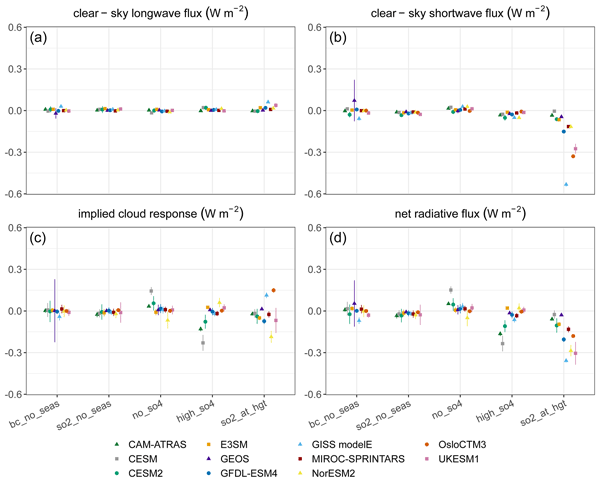
We examine the impact of the assumed effective height of SO2 injection, SO2 and BC emission seasonality, and the assumed fraction of SO2 emissions injected as SO4 on climate and chemistry model results. We find that the SO2 injection height has a large impact on surface SO2 concentrations and, in some models, radiative flux. These assumptions are a
hiddensource of inter-model variability and may be leading to bias in some climate model results.
Shuaiqi Tang, Adam C. Varble, Jerome D. Fast, Kai Zhang, Peng Wu, Xiquan Dong, Fan Mei, Mikhail Pekour, Joseph C. Hardin, and Po-Lun Ma
Geosci. Model Dev., 16, 6355–6376, https://doi.org/10.5194/gmd-16-6355-2023, https://doi.org/10.5194/gmd-16-6355-2023, 2023
Short summary
Short summary
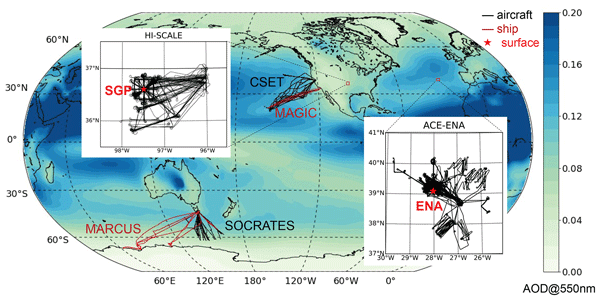
To assess the ability of Earth system model (ESM) predictions, we developed a tool called ESMAC Diags to understand how aerosols, clouds, and aerosol–cloud interactions are represented in ESMs. This paper describes its version 2 functionality. We compared the model predictions with measurements taken by planes, ships, satellites, and ground instruments over four regions across the world. Results show that this new tool can help identify model problems and guide future development of ESMs.
Adam C. Varble, Po-Lun Ma, Matthew W. Christensen, Johannes Mülmenstädt, Shuaiqi Tang, and Jerome Fast
Atmos. Chem. Phys., 23, 13523–13553, https://doi.org/10.5194/acp-23-13523-2023, https://doi.org/10.5194/acp-23-13523-2023, 2023
Short summary
Short summary
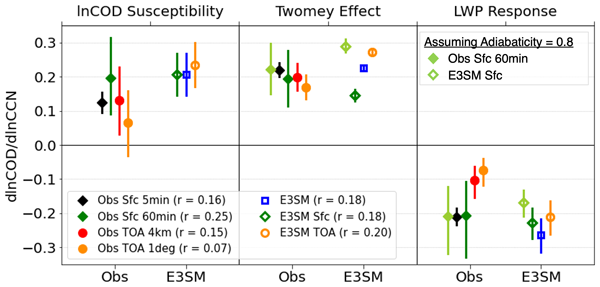
We evaluate how clouds change in response to changing atmospheric particle (aerosol) concentrations in a climate model and find that the model-predicted cloud brightness increases too much as aerosols increase because the cloud drop number increases too much. Excessive drizzle in the model mutes this difference. Many differences between observational and model estimates are explained by varying assumptions of how much liquid has been lost in clouds, which impacts the estimated cloud drop number.
Weixing Hao, Fan Mei, Susanne Hering, Steven Spielman, Beat Schmid, Jason Tomlinson, and Yang Wang
Atmos. Meas. Tech., 16, 3973–3986, https://doi.org/10.5194/amt-16-3973-2023, https://doi.org/10.5194/amt-16-3973-2023, 2023
Short summary
Short summary
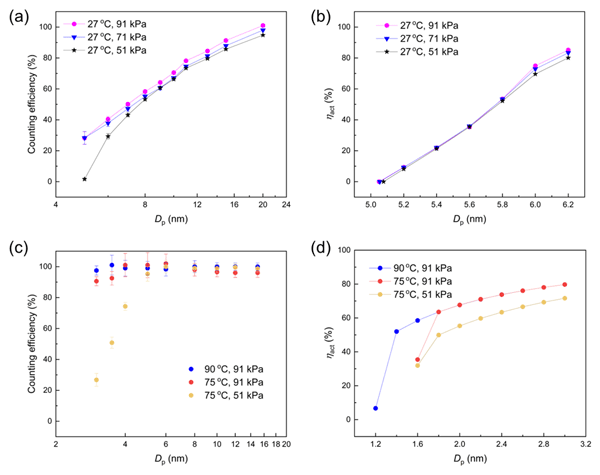
Airborne aerosol instrumentation plays a crucial role in understanding the spatial distribution of ambient aerosol particles. This study investigates a versatile water-based condensation particle counter through simulations and experiments. It provides valuable insights to improve versatile water-based condensation particle counter (vWCPC) aerosol measurement and operation for the community.
Armin Sorooshian, Mikhail D. Alexandrov, Adam D. Bell, Ryan Bennett, Grace Betito, Sharon P. Burton, Megan E. Buzanowicz, Brian Cairns, Eduard V. Chemyakin, Gao Chen, Yonghoon Choi, Brian L. Collister, Anthony L. Cook, Andrea F. Corral, Ewan C. Crosbie, Bastiaan van Diedenhoven, Joshua P. DiGangi, Glenn S. Diskin, Sanja Dmitrovic, Eva-Lou Edwards, Marta A. Fenn, Richard A. Ferrare, David van Gilst, Johnathan W. Hair, David B. Harper, Miguel Ricardo A. Hilario, Chris A. Hostetler, Nathan Jester, Michael Jones, Simon Kirschler, Mary M. Kleb, John M. Kusterer, Sean Leavor, Joseph W. Lee, Hongyu Liu, Kayla McCauley, Richard H. Moore, Joseph Nied, Anthony Notari, John B. Nowak, David Painemal, Kasey E. Phillips, Claire E. Robinson, Amy Jo Scarino, Joseph S. Schlosser, Shane T. Seaman, Chellappan Seethala, Taylor J. Shingler, Michael A. Shook, Kenneth A. Sinclair, William L. Smith Jr., Douglas A. Spangenberg, Snorre A. Stamnes, Kenneth L. Thornhill, Christiane Voigt, Holger Vömel, Andrzej P. Wasilewski, Hailong Wang, Edward L. Winstead, Kira Zeider, Xubin Zeng, Bo Zhang, Luke D. Ziemba, and Paquita Zuidema
Earth Syst. Sci. Data, 15, 3419–3472, https://doi.org/10.5194/essd-15-3419-2023, https://doi.org/10.5194/essd-15-3419-2023, 2023
Short summary
Short summary
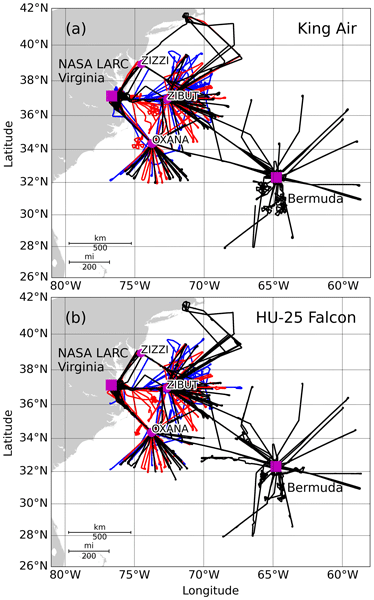
The NASA Aerosol Cloud meTeorology Interactions oVer the western ATlantic Experiment (ACTIVATE) produced a unique dataset for research into aerosol–cloud–meteorology interactions. HU-25 Falcon and King Air aircraft conducted systematic and spatially coordinated flights over the northwest Atlantic Ocean. This paper describes the ACTIVATE flight strategy, instrument and complementary dataset products, data access and usage details, and data application notes.
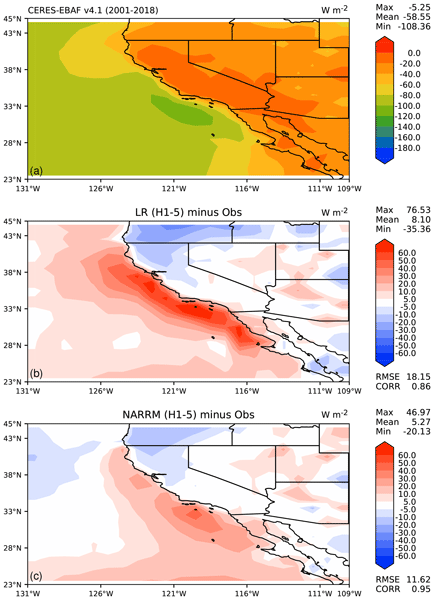
Qi Tang, Jean-Christophe Golaz, Luke P. Van Roekel, Mark A. Taylor, Wuyin Lin, Benjamin R. Hillman, Paul A. Ullrich, Andrew M. Bradley, Oksana Guba, Jonathan D. Wolfe, Tian Zhou, Kai Zhang, Xue Zheng, Yunyan Zhang, Meng Zhang, Mingxuan Wu, Hailong Wang, Cheng Tao, Balwinder Singh, Alan M. Rhoades, Yi Qin, Hong-Yi Li, Yan Feng, Yuying Zhang, Chengzhu Zhang, Charles S. Zender, Shaocheng Xie, Erika L. Roesler, Andrew F. Roberts, Azamat Mametjanov, Mathew E. Maltrud, Noel D. Keen, Robert L. Jacob, Christiane Jablonowski, Owen K. Hughes, Ryan M. Forsyth, Alan V. Di Vittorio, Peter M. Caldwell, Gautam Bisht, Renata B. McCoy, L. Ruby Leung, and David C. Bader
Geosci. Model Dev., 16, 3953–3995, https://doi.org/10.5194/gmd-16-3953-2023, https://doi.org/10.5194/gmd-16-3953-2023, 2023
Short summary
Short summary
High-resolution simulations are superior to low-resolution ones in capturing regional climate changes and climate extremes. However, uniformly reducing the grid size of a global Earth system model is too computationally expensive. We provide an overview of the fully coupled regionally refined model (RRM) of E3SMv2 and document a first-of-its-kind set of climate production simulations using RRM at an economic cost. The key to this success is our innovative hybrid time step method.
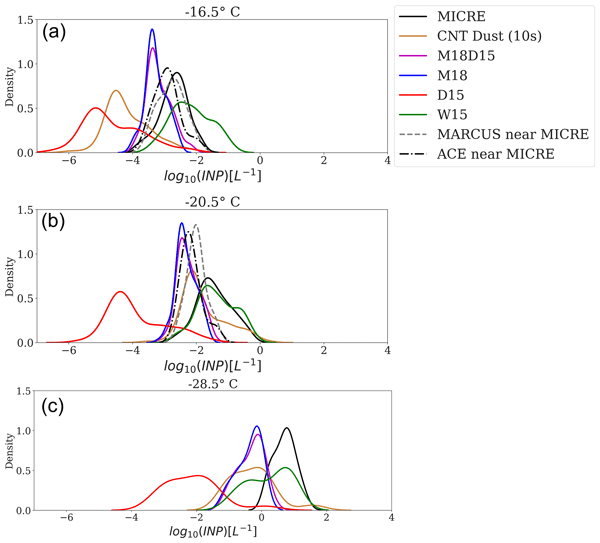
Aishwarya Raman, Thomas Hill, Paul J. DeMott, Balwinder Singh, Kai Zhang, Po-Lun Ma, Mingxuan Wu, Hailong Wang, Simon P. Alexander, and Susannah M. Burrows
Atmos. Chem. Phys., 23, 5735–5762, https://doi.org/10.5194/acp-23-5735-2023, https://doi.org/10.5194/acp-23-5735-2023, 2023
Short summary
Short summary
Ice-nucleating particles (INPs) play an important role in cloud processes and associated precipitation. Yet, INPs are not accurately represented in climate models. This study attempts to uncover these gaps by comparing model-simulated INP concentrations against field campaign measurements in the SO for an entire year, 2017–2018. Differences in INP concentrations and variability between the model and observations have major implications for modeling cloud properties in high latitudes.
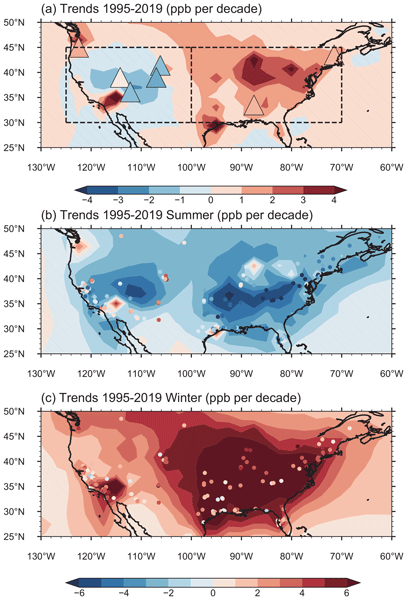
Pengwei Li, Yang Yang, Hailong Wang, Su Li, Ke Li, Pinya Wang, Baojie Li, and Hong Liao
Atmos. Chem. Phys., 23, 5403–5417, https://doi.org/10.5194/acp-23-5403-2023, https://doi.org/10.5194/acp-23-5403-2023, 2023
Short summary
Short summary
We use a novel technique that can attribute O3 to precursors to investigate O3 changes in the United States during 1995–2019. We found that the US domestic energy and surface transportation emission reductions are primarily responsible for the O3 decrease in summer. In winter, factors such as nitrogen oxide emission reduction in the context of its inhibition of ozone production, increased aviation and shipping activities, and large-scale circulation changes contribute to the O3 increases.

Francesca Gallo, Janek Uin, Kevin J. Sanchez, Richard H. Moore, Jian Wang, Robert Wood, Fan Mei, Connor Flynn, Stephen Springston, Eduardo B. Azevedo, Chongai Kuang, and Allison C. Aiken
Atmos. Chem. Phys., 23, 4221–4246, https://doi.org/10.5194/acp-23-4221-2023, https://doi.org/10.5194/acp-23-4221-2023, 2023
Short summary
Short summary
This study provides a summary statistic of multiday aerosol plume transport event influences on aerosol physical properties and the cloud condensation nuclei budget at the U.S. Department of Energy Atmospheric Radiation Measurement Facility in the eastern North Atlantic (ENA). An algorithm that integrates aerosol properties is developed and applied to identify multiday aerosol transport events. The influence of the aerosol plumes on aerosol populations at the ENA is successively assessed.
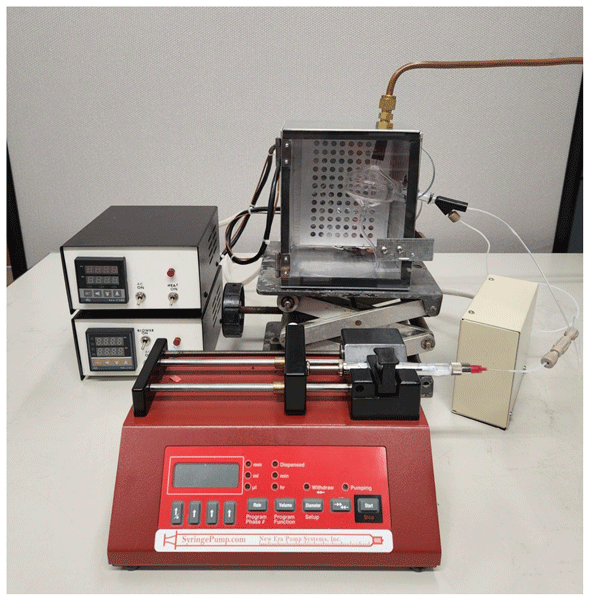
Christopher R. Niedek, Fan Mei, Maria A. Zawadowicz, Zihua Zhu, Beat Schmid, and Qi Zhang
Atmos. Meas. Tech., 16, 955–968, https://doi.org/10.5194/amt-16-955-2023, https://doi.org/10.5194/amt-16-955-2023, 2023
Short summary
Short summary
This novel micronebulization aerosol mass spectrometry (MS) technique requires a low sample volume (10 μL) and can quantify nanogram levels of organic and inorganic particulate matter (PM) components when used with 34SO4. This technique was successfully applied to PM samples collected from uncrewed atmospheric measurement platforms and provided chemical information that agrees well with real-time data from a co-located aerosol chemical speciation monitor and offline data from secondary ion MS.
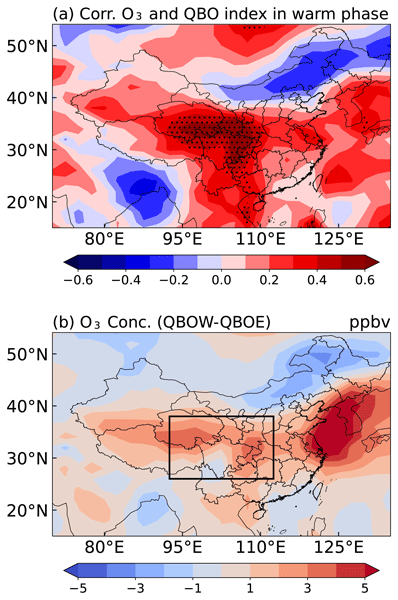
Mengyun Li, Yang Yang, Hailong Wang, Huimin Li, Pinya Wang, and Hong Liao
Atmos. Chem. Phys., 23, 1533–1544, https://doi.org/10.5194/acp-23-1533-2023, https://doi.org/10.5194/acp-23-1533-2023, 2023
Short summary
Short summary
Using the GEOS-Chem model, the impact of the quasi-biennial oscillation (QBO) on summertime tropospheric O3 in China is investigated. In the warm phases of sea surface temperature anomalies over the eastern tropical Pacific, the QBO has a significant positive correlation with near-surface O3 concentrations over central China. The QBO impacts on O3 pollution in China are mainly a result of changing vertical transport of O3.
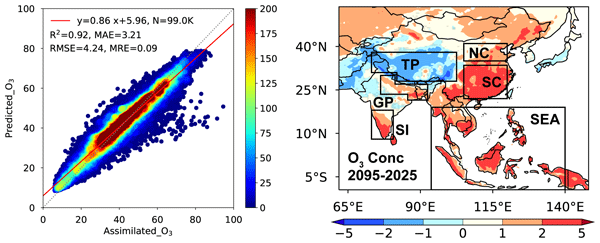
Huimin Li, Yang Yang, Jianbing Jin, Hailong Wang, Ke Li, Pinya Wang, and Hong Liao
Atmos. Chem. Phys., 23, 1131–1145, https://doi.org/10.5194/acp-23-1131-2023, https://doi.org/10.5194/acp-23-1131-2023, 2023
Short summary
Short summary
Future climate change will aggravate ozone pollution in Asia, especially in high-forcing scenarios. Ozone pollution in China will expand from North China to South China and extend into the cold season in a warmer future. The emphasis of this work is to quantify the impacts of future climate change on O3 pollution in Asia, which is of great significance for future O3 pollution mitigation strategies.
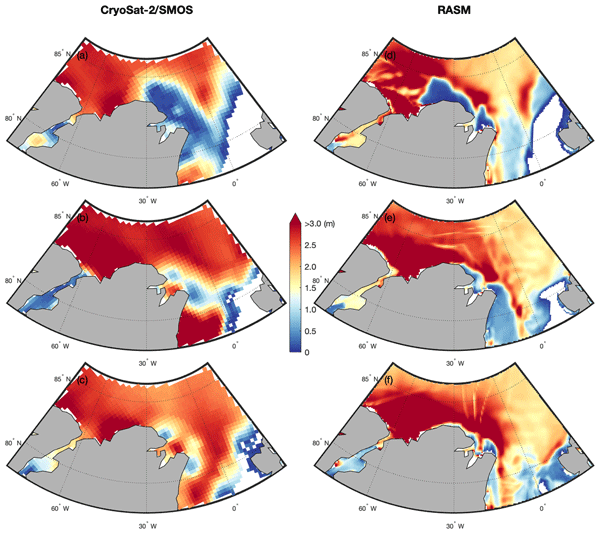
Younjoo J. Lee, Wieslaw Maslowski, John J. Cassano, Jaclyn Clement Kinney, Anthony P. Craig, Samy Kamal, Robert Osinski, Mark W. Seefeldt, Julienne Stroeve, and Hailong Wang
The Cryosphere, 17, 233–253, https://doi.org/10.5194/tc-17-233-2023, https://doi.org/10.5194/tc-17-233-2023, 2023
Short summary
Short summary
During 1979–2020, four winter polynyas occurred in December 1986 and February 2011, 2017, and 2018 north of Greenland. Instead of ice melting due to the anomalous warm air intrusion, the extreme wind forcing resulted in greater ice transport offshore. Based on the two ensemble runs, representing a 1980s thicker ice vs. a 2010s thinner ice, a dominant cause of these winter polynyas stems from internal variability of atmospheric forcing rather than from the forced response to a warming climate.
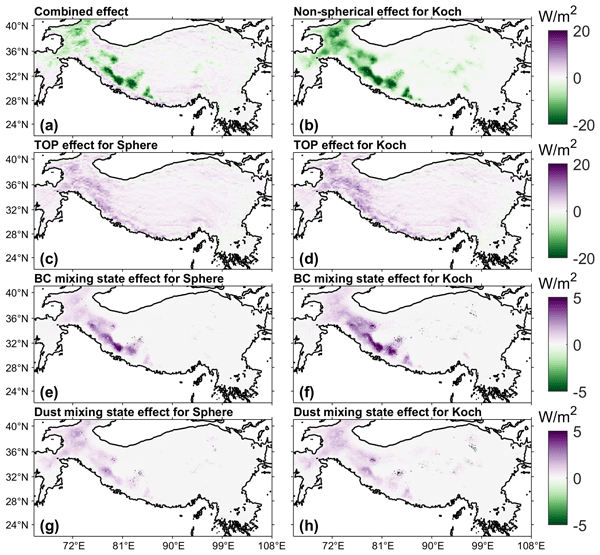
Dalei Hao, Gautam Bisht, Karl Rittger, Edward Bair, Cenlin He, Huilin Huang, Cheng Dang, Timbo Stillinger, Yu Gu, Hailong Wang, Yun Qian, and L. Ruby Leung
Geosci. Model Dev., 16, 75–94, https://doi.org/10.5194/gmd-16-75-2023, https://doi.org/10.5194/gmd-16-75-2023, 2023
Short summary
Short summary
Snow with the highest albedo of land surface plays a vital role in Earth’s surface energy budget and water cycle. This study accounts for the impacts of snow grain shape and mixing state of light-absorbing particles with snow on snow albedo in the E3SM land model. The findings advance our understanding of the role of snow grain shape and mixing state of LAP–snow in land surface processes and offer guidance for improving snow simulations and radiative forcing estimates in Earth system models.
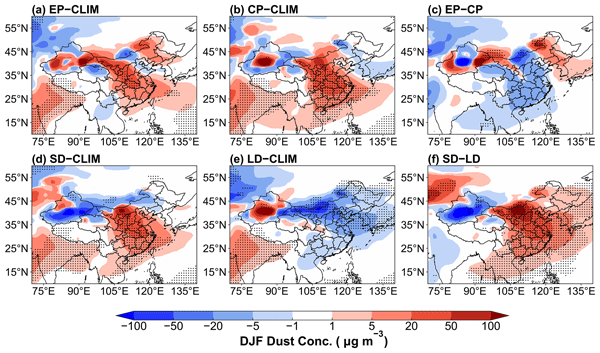
Yang Yang, Liangying Zeng, Hailong Wang, Pinya Wang, and Hong Liao
Atmos. Chem. Phys., 22, 14489–14502, https://doi.org/10.5194/acp-22-14489-2022, https://doi.org/10.5194/acp-22-14489-2022, 2022
Short summary
Short summary
Using an aerosol–climate model, dust pollution in China affected by different spatial and temporal types of El Niño are examined. Both eastern and central Pacific El Niño and short-duration El Niño increase winter dust concentrations over northern China, while long-duration El Niño decreases concentrations. Only long-duration El Niño events can significantly affect dust over China in the following spring. This study has profound implications for air pollution control and dust storm prediction.

Jerome D. Fast, David M. Bell, Gourihar Kulkarni, Jiumeng Liu, Fan Mei, Georges Saliba, John E. Shilling, Kaitlyn Suski, Jason Tomlinson, Jian Wang, Rahul Zaveri, and Alla Zelenyuk
Atmos. Chem. Phys., 22, 11217–11238, https://doi.org/10.5194/acp-22-11217-2022, https://doi.org/10.5194/acp-22-11217-2022, 2022
Short summary
Short summary
Recent aircraft measurements from the HI-SCALE campaign conducted over the Southern Great Plains (SGP) site in Oklahoma are used to quantify spatial variability of aerosol properties in terms of grid spacings typically used by weather and climate models. Surprisingly large horizontal gradients in aerosol properties were frequently observed in this rural area. This spatial variability can be used as an uncertainty range when comparing surface point measurements with model predictions.
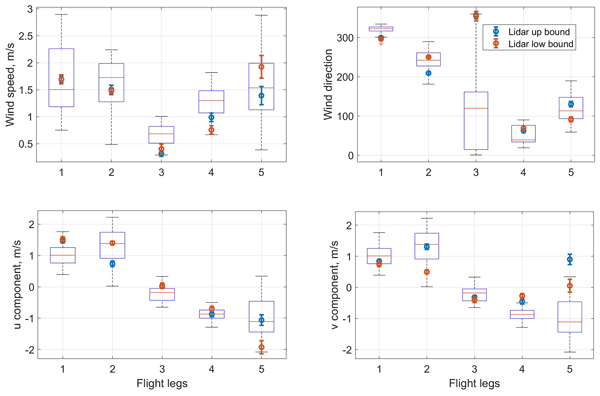
Fan Mei, Mikhail S. Pekour, Darielle Dexheimer, Gijs de Boer, RaeAnn Cook, Jason Tomlinson, Beat Schmid, Lexie A. Goldberger, Rob Newsom, and Jerome D. Fast
Earth Syst. Sci. Data, 14, 3423–3438, https://doi.org/10.5194/essd-14-3423-2022, https://doi.org/10.5194/essd-14-3423-2022, 2022
Short summary
Short summary
This work focuses on an expanding number of data sets observed using ARM TBS (133 flights) and UAS (seven flights) platforms by the Department of Energy (DOE) Atmospheric Radiation Measurement (ARM) user facility. These data streams provide new perspectives on spatial variability of atmospheric and surface parameters, helping to address critical science questions in Earth system science research, such as the aerosol–cloud interaction in the boundary layer.
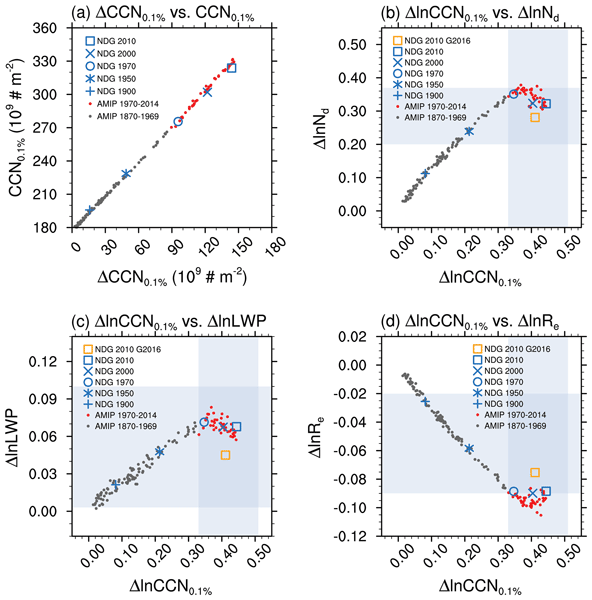
Kai Zhang, Wentao Zhang, Hui Wan, Philip J. Rasch, Steven J. Ghan, Richard C. Easter, Xiangjun Shi, Yong Wang, Hailong Wang, Po-Lun Ma, Shixuan Zhang, Jian Sun, Susannah M. Burrows, Manish Shrivastava, Balwinder Singh, Yun Qian, Xiaohong Liu, Jean-Christophe Golaz, Qi Tang, Xue Zheng, Shaocheng Xie, Wuyin Lin, Yan Feng, Minghuai Wang, Jin-Ho Yoon, and L. Ruby Leung
Atmos. Chem. Phys., 22, 9129–9160, https://doi.org/10.5194/acp-22-9129-2022, https://doi.org/10.5194/acp-22-9129-2022, 2022
Short summary
Short summary
Here we analyze the effective aerosol forcing simulated by E3SM version 1 using both century-long free-running and short nudged simulations. The aerosol forcing in E3SMv1 is relatively large compared to other models, mainly due to the large indirect aerosol effect. Aerosol-induced changes in liquid and ice cloud properties in E3SMv1 have a strong correlation. The aerosol forcing estimates in E3SMv1 are sensitive to the parameterization changes in both liquid and ice cloud processes.
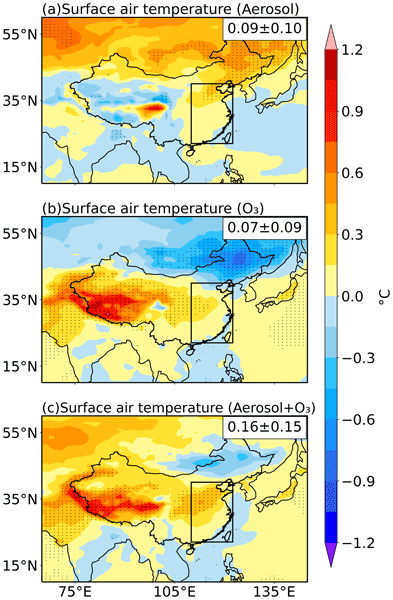
Jiyuan Gao, Yang Yang, Hailong Wang, Pinya Wang, Huimin Li, Mengyun Li, Lili Ren, Xu Yue, and Hong Liao
Atmos. Chem. Phys., 22, 7131–7142, https://doi.org/10.5194/acp-22-7131-2022, https://doi.org/10.5194/acp-22-7131-2022, 2022
Short summary
Short summary
China has been implementing a sequence of policies for clean air since the year 2013. The aerosol decline produced a 0.09 ± 0.10°C warming during 2013–2017 estimated in this study, and the increase in ozone in the lower troposphere during this time period accelerated the warming, leading to a total 0.16 ± 0.15°C temperature increase in eastern China. Residential emission reductions led to a cooling effect because of a substantial decrease in light-absorbing aerosols.
Shuaiqi Tang, Jerome D. Fast, Kai Zhang, Joseph C. Hardin, Adam C. Varble, John E. Shilling, Fan Mei, Maria A. Zawadowicz, and Po-Lun Ma
Geosci. Model Dev., 15, 4055–4076, https://doi.org/10.5194/gmd-15-4055-2022, https://doi.org/10.5194/gmd-15-4055-2022, 2022
Short summary
Short summary
We developed an Earth system model (ESM) diagnostics package to compare various types of aerosol properties simulated in ESMs with aircraft, ship, and surface measurements from six field campaigns across spatial scales. The diagnostics package is coded and organized to be flexible and modular for future extension to other field campaign datasets and adapted to higher-resolution model simulations. Future releases will include comprehensive cloud and aerosol–cloud interaction diagnostics.
Xue Zheng, Qing Li, Tian Zhou, Qi Tang, Luke P. Van Roekel, Jean-Christophe Golaz, Hailong Wang, and Philip Cameron-Smith
Geosci. Model Dev., 15, 3941–3967, https://doi.org/10.5194/gmd-15-3941-2022, https://doi.org/10.5194/gmd-15-3941-2022, 2022
Short summary
Short summary
We document the model experiments for the future climate projection by E3SMv1.0. At the highest future emission scenario, E3SMv1.0 projects a strong surface warming with rapid changes in the atmosphere, ocean, sea ice, and land runoff. Specifically, we detect a significant polar amplification and accelerated warming linked to the unmasking of the aerosol effects. The impact of greenhouse gas forcing is examined in different climate components.
Susannah M. Burrows, Richard C. Easter, Xiaohong Liu, Po-Lun Ma, Hailong Wang, Scott M. Elliott, Balwinder Singh, Kai Zhang, and Philip J. Rasch
Atmos. Chem. Phys., 22, 5223–5251, https://doi.org/10.5194/acp-22-5223-2022, https://doi.org/10.5194/acp-22-5223-2022, 2022
Short summary
Short summary
Sea spray particles are composed of a mixture of salts and organic substances from oceanic microorganisms. In prior work, our team developed an approach connecting sea spray chemistry to ocean biology, called OCEANFILMS. Here we describe its implementation within an Earth system model, E3SM. We show that simulated sea spray chemistry is consistent with observed seasonal cycles and that sunlight reflected by simulated Southern Ocean clouds increases, consistent with analysis of satellite data.
Po-Lun Ma, Bryce E. Harrop, Vincent E. Larson, Richard B. Neale, Andrew Gettelman, Hugh Morrison, Hailong Wang, Kai Zhang, Stephen A. Klein, Mark D. Zelinka, Yuying Zhang, Yun Qian, Jin-Ho Yoon, Christopher R. Jones, Meng Huang, Sheng-Lun Tai, Balwinder Singh, Peter A. Bogenschutz, Xue Zheng, Wuyin Lin, Johannes Quaas, Hélène Chepfer, Michael A. Brunke, Xubin Zeng, Johannes Mülmenstädt, Samson Hagos, Zhibo Zhang, Hua Song, Xiaohong Liu, Michael S. Pritchard, Hui Wan, Jingyu Wang, Qi Tang, Peter M. Caldwell, Jiwen Fan, Larry K. Berg, Jerome D. Fast, Mark A. Taylor, Jean-Christophe Golaz, Shaocheng Xie, Philip J. Rasch, and L. Ruby Leung
Geosci. Model Dev., 15, 2881–2916, https://doi.org/10.5194/gmd-15-2881-2022, https://doi.org/10.5194/gmd-15-2881-2022, 2022
Short summary
Short summary
An alternative set of parameters for E3SM Atmospheric Model version 1 has been developed based on a tuning strategy that focuses on clouds. When clouds in every regime are improved, other aspects of the model are also improved, even though they are not the direct targets for calibration. The recalibrated model shows a lower sensitivity to anthropogenic aerosols and surface warming, suggesting potential improvements to the simulated climate in the past and future.
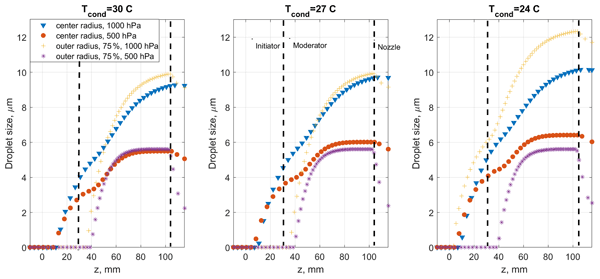
Fan Mei, Steven Spielman, Susanne Hering, Jian Wang, Mikhail S. Pekour, Gregory Lewis, Beat Schmid, Jason Tomlinson, and Maynard Havlicek
Atmos. Meas. Tech., 14, 7329–7340, https://doi.org/10.5194/amt-14-7329-2021, https://doi.org/10.5194/amt-14-7329-2021, 2021
Short summary
Short summary
This study focuses on understanding a versatile water-based condensation particle counter (vWCPC 3789) performance under various ambient pressure conditions (500–1000 hPa). A vWCPC has the advantage of avoiding health and safety concerns. However, its performance characterization under low pressure is rare but crucial for ensuring successful airborne deployment. This paper provides advanced knowledge of operating a vWCPC 3789 to capture the spatial variations of atmospheric aerosols.

Hossein Dadashazar, Majid Alipanah, Miguel Ricardo A. Hilario, Ewan Crosbie, Simon Kirschler, Hongyu Liu, Richard H. Moore, Andrew J. Peters, Amy Jo Scarino, Michael Shook, K. Lee Thornhill, Christiane Voigt, Hailong Wang, Edward Winstead, Bo Zhang, Luke Ziemba, and Armin Sorooshian
Atmos. Chem. Phys., 21, 16121–16141, https://doi.org/10.5194/acp-21-16121-2021, https://doi.org/10.5194/acp-21-16121-2021, 2021
Short summary
Short summary
This study investigates precipitation impacts on long-range transport of North American outflow over the western North Atlantic Ocean (WNAO). Results demonstrate that precipitation scavenging plays a significant role in modifying surface aerosol concentrations over the WNAO, especially in winter and spring due to large-scale scavenging processes. This study highlights how precipitation impacts surface aerosol properties with relevance for other marine regions vulnerable to continental outflow.
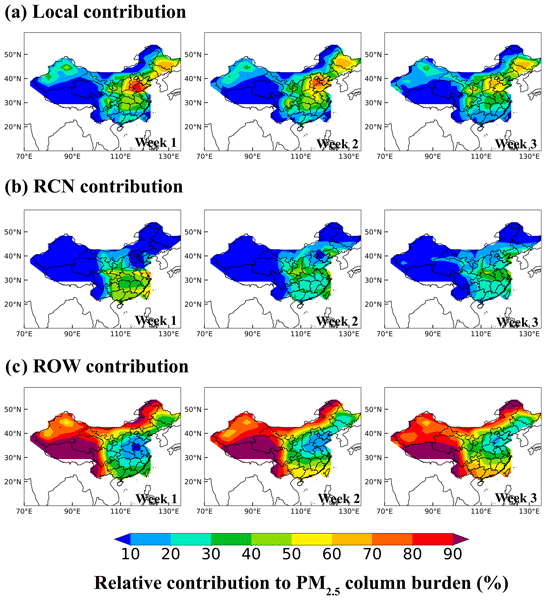
Lili Ren, Yang Yang, Hailong Wang, Pinya Wang, Lei Chen, Jia Zhu, and Hong Liao
Atmos. Chem. Phys., 21, 15431–15445, https://doi.org/10.5194/acp-21-15431-2021, https://doi.org/10.5194/acp-21-15431-2021, 2021
Short summary
Short summary
Due to the COVID-19 pandemic, human activities were strictly restricted in China. Even though anthropogenic aerosol emissions largely decreased, haze events still occurred. Our results shows that PM2.5 over the North China Plain is largely contributed by local sources. For other regions in China, PM2.5 is largely contributed from nonlocal sources. As emission reduction is a future goal, aerosol long-range transport and unfavorable meteorology are increasingly important to air quality.
Cited articles
Albrecht, B. A.: Aerosols, Cloud Microphysics, and Fractional Cloudiness, Science, 245, 1227–1230, https://doi.org/10.1126/science.245.4923.1227, 1989.
Atmospheric Radiation Measurement (ARM) User Facility: ARM Aerial Facility Merged VAP, Atmospheric Radiation Measurement User Facility [data set], https://doi.org/10.5439/1999133, 2025.
Asa-Awuku, A., Moore, R. H., Nenes, A., Bahreini, R., Holloway, J. S., Brock, C. A., Middlebrook, A. M., Ryerson, T. B., Jimenez, J. L., DeCarlo, P. F., Hecobian, A., Weber, R. J., Stickel, R., Tanner, D. J., and Huey, L. G.: Airborne cloud condensation nuclei measurements during the 2006 Texas Air Quality Study, J. Geophys. Res., 116, D11201, https://doi.org/10.1029/2010JD014874, 2011.
Bougiatioti, A., Fountoukis, C., Kalivitis, N., Pandis, S. N., Nenes, A., and Mihalopoulos, N.: Cloud condensation nuclei measurements in the marine boundary layer of the Eastern Mediterranean: CCN closure and droplet growth kinetics, Atmos. Chem. Phys., 9, 7053–7066, https://doi.org/10.5194/acp-9-7053-2009, 2009.
Broekhuizen, K., Chang, R. Y.-W., Leaitch, W. R., Li, S.-M., and Abbatt, J. P. D.: Closure between measured and modeled cloud condensation nuclei (CCN) using size-resolved aerosol compositions in downtown Toronto, Atmos. Chem. Phys., 6, 2513–2524, https://doi.org/10.5194/acp-6-2513-2006, 2006.
Cerully, K. M., Bougiatioti, A., Hite Jr., J. R., Guo, H., Xu, L., Ng, N. L., Weber, R., and Nenes, A.: On the link between hygroscopicity, volatility, and oxidation state of ambient and water-soluble aerosols in the southeastern United States, Atmos. Chem. Phys., 15, 8679–8694, https://doi.org/10.5194/acp-15-8679-2015, 2015.
Chang, R. Y.-W., Slowik, J. G., Shantz, N. C., Vlasenko, A., Liggio, J., Sjostedt, S. J., Leaitch, W. R., and Abbatt, J. P. D.: The hygroscopicity parameter (κ) of ambient organic aerosol at a field site subject to biogenic and anthropogenic influences: relationship to degree of aerosol oxidation, Atmos. Chem. Phys., 10, 5047–5064, https://doi.org/10.5194/acp-10-5047-2010, 2010.
Charlson, R. J., Schwartz, S. E., Hales, J. M., Cess, R. D., Coakley, J. A., Hansen, J. E., and Hofmann, D. J.: Climate Forcing by Anthropogenic Aerosols, Science, 255, 423–430, https://doi.org/10.1126/science.255.5043.423, 1992.
Dusek, U., Frank, G. P., Hildebrandt, L., Curtius, J., Schneider, J., Walter, S., Chand, D., Drewnick, F., Hings, S., Jung, D., Borrmann, S., and Andreae, M. O.: Size Matters More Than Chemistry for Cloud-Nucleating Ability of Aerosol Particles, Science, 312, 1375–1378, https://doi.org/10.1126/science.1125261, 2006.
Dusek, U., Frank, G. P., Curtius, J., Drewnick, F., Schneider, J., Kürten, A., Rose, D., Andreae, M. O., Borrmann, S., and Pöschl, U.: Enhanced organic mass fraction and decreased hygroscopicity of cloud condensation nuclei (CCN) during new particle formation events, Geophys. Res. Lett., 37, 2009GL040930, https://doi.org/10.1029/2009GL040930, 2010.
Facchini, M. C., Mircea, M., Fuzzi, S., and Charlson, R. J.: Cloud albedo enhancement by surface-active organic solutes in growing droplets, Nature, 401, 257–259, https://doi.org/10.1038/45758, 1999.
Fan, J., Wang, Y., Rosenfeld, D., and Liu, X.: Review of Aerosol–Cloud Interactions: Mechanisms, Significance, and Challenges, J. Atmos. Sci., 73, 4221–4252, https://doi.org/10.1175/JAS-D-16-0037.1, 2016.
Fast, J. D., Berg, L. K., Alexander, L., Bell, D., D'Ambro, E., Hubbe, J., Kuang, C., Liu, J., Long, C., Matthews, A., Mei, F., Newsom, R., Pekour, M., Pinterich, T., Schmid, B., Schobesberger, S., Shilling, J., Smith, J. N., Springston, S., Suski, K., Thornton, J. A., Tomlinson, J., Wang, J., Xiao, H., and Zelenyuk, A.: Overview of the HI-SCALE Field Campaign: A New Perspective on Shallow Convective Clouds, B. Am. Meteorol. Soc., 100, 821–840, https://doi.org/10.1175/BAMS-D-18-0030.1, 2019.
Forestieri, S. D., Staudt, S. M., Kuborn, T. M., Faber, K., Ruehl, C. R., Bertram, T. H., and Cappa, C. D.: Establishing the impact of model surfactants on cloud condensation nuclei activity of sea spray aerosol mimics, Atmos. Chem. Phys., 18, 10985–11005, https://doi.org/10.5194/acp-18-10985-2018, 2018.
Fountoukis, C. and Nenes, A.: Continued development of a cloud droplet formation parameterization for global climate models, J. Geophys. Res., 110, 2004JD005591, https://doi.org/10.1029/2004JD005591, 2005.
Gallo, F., Uin, J., Sanchez, K. J., Moore, R. H., Wang, J., Wood, R., Mei, F., Flynn, C., Springston, S., Azevedo, E. B., Kuang, C., and Aiken, A. C.: Long-range transported continental aerosol in the eastern North Atlantic: three multiday event regimes influence cloud condensation nuclei, Atmos. Chem. Phys., 23, 4221–4246, https://doi.org/10.5194/acp-23-4221-2023, 2023.
Ghan, S. J., Smith, S. J., Wang, M., Zhang, K., Pringle, K., Carslaw, K., Pierce, J., Bauer, S., and Adams, P.: A simple model of global aerosol indirect effects, J. Geophys. Res.-Atmos., 118, 6688–6707, https://doi.org/10.1002/jgrd.50567, 2013.
Gunthe, S. S., King, S. M., Rose, D., Chen, Q., Roldin, P., Farmer, D. K., Jimenez, J. L., Artaxo, P., Andreae, M. O., Martin, S. T., and Pöschl, U.: Cloud condensation nuclei in pristine tropical rainforest air of Amazonia: size-resolved measurements and modeling of atmospheric aerosol composition and CCN activity, Atmos. Chem. Phys., 9, 7551–7575, https://doi.org/10.5194/acp-9-7551-2009, 2009.
Intergovernmental Panel On Climate Change (IPCC): Climate Change 2021 – The Physical Science Basis: Working Group I Contribution to the Sixth Assessment Report of the Intergovernmental Panel on Climate Change, 1st edn., Cambridge University Press, https://doi.org/10.1017/9781009157896, 2023.
Kulkarni, G., Mei, F., Shilling, J. E., Wang, J., Reveggino, R. P., Flynn, C., Zelenyuk, A., and Fast, J.: Cloud Condensation Nuclei Closure Study Using Airborne Measurements Over the Southern Great Plains, J. Geophys. Res.-Atmos., 128, e2022JD037964, https://doi.org/10.1029/2022JD037964, 2023.
Lathem, T. L., Beyersdorf, A. J., Thornhill, K. L., Winstead, E. L., Cubison, M. J., Hecobian, A., Jimenez, J. L., Weber, R. J., Anderson, B. E., and Nenes, A.: Analysis of CCN activity of Arctic aerosol and Canadian biomass burning during summer 2008, Atmos. Chem. Phys., 13, 2735–2756, https://doi.org/10.5194/acp-13-2735-2013, 2013.
Li, J., Carlson, B. E., Yung, Y. L., Lv, D., Hansen, J., Penner, J. E., Liao, H., Ramaswamy, V., Kahn, R. A., Zhang, P., Dubovik, O., Ding, A., Lacis, A. A., Zhang, L., and Dong, Y.: Scattering and absorbing aerosols in the climate system, Nat. Rev. Earth Environ., 3, 363–379, https://doi.org/10.1038/s43017-022-00296-7, 2022.
Li, Y., Zhou, Y., Guo, W., Zhang, X., Huang, Y., He, E., Li, R., Yan, B., Wang, H., Mei, F., Liu, M., and Zhu, Z.: Molecular Imaging Reveals Two Distinct Mixing States of PM2.5 Particles Sampled in a Typical Beijing Winter Pollution Case, Environ. Sci. Technol., 57, 6273–6283, https://doi.org/10.1021/acs.est.2c08694, 2023.
Liu, J., Alexander, L., Fast, J. D., Lindenmaier, R., and Shilling, J. E.: Aerosol characteristics at the Southern Great Plains site during the HI-SCALE campaign, Atmos. Chem. Phys., 21, 5101–5116, https://doi.org/10.5194/acp-21-5101-2021, 2021.
Liu, Q., Shen, X., Li, L., Sun, J., Liu, Z., Zhu, W., Zhong, J., Zhang, Y., Hu, X., Liu, S., Che, H., and Zhang, X.: Impacts of Aerosol Chemical Composition on Cloud Condensation Nuclei (CCN) Activity during Wintertime in Beijing, China, Remote Sens., 15, 4119, https://doi.org/10.3390/rs15174119, 2023.
Liu, X., Easter, R. C., Ghan, S. J., Zaveri, R., Rasch, P., Shi, X., Lamarque, J.-F., Gettelman, A., Morrison, H., Vitt, F., Conley, A., Park, S., Neale, R., Hannay, C., Ekman, A. M. L., Hess, P., Mahowald, N., Collins, W., Iacono, M. J., Bretherton, C. S., Flanner, M. G., and Mitchell, D.: Toward a minimal representation of aerosols in climate models: description and evaluation in the Community Atmosphere Model CAM5, Geosci. Model Dev., 5, 709–739, https://doi.org/10.5194/gmd-5-709-2012, 2012.
Liu, X., Ma, P.-L., Wang, H., Tilmes, S., Singh, B., Easter, R. C., Ghan, S. J., and Rasch, P. J.: Description and evaluation of a new four-mode version of the Modal Aerosol Module (MAM4) within version 5.3 of the Community Atmosphere Model, Geosci. Model Dev., 9, 505–522, https://doi.org/10.5194/gmd-9-505-2016, 2016.
Malek, K., Gohil, K., Olonimoyo, E. A., Ferdousi-Rokib, N., Huang, Q., Pitta, K. R., Nandy, L., Voss, K. A., Raymond, T. M., Dutcher, D. D., Freedman, M. A., and Asa-Awuku, A.: Liquid–Liquid Phase Separation Can Drive Aerosol Droplet Growth in Supersaturated Regimes, ACS Environ. Au, 3, 348–360, https://doi.org/10.1021/acsenvironau.3c00015, 2023.
Marinescu, P. J., Levin, E. J. T., Collins, D., Kreidenweis, S. M., and van den Heever, S. C.: Quantifying aerosol size distributions and their temporal variability in the Southern Great Plains, USA, Atmos. Chem. Phys., 19, 11985–12006, https://doi.org/10.5194/acp-19-11985-2019, 2019.
Martin, M., Chang, R. Y.-W., Sierau, B., Sjogren, S., Swietlicki, E., Abbatt, J. P. D., Leck, C., and Lohmann, U.: Cloud condensation nuclei closure study on summer arctic aerosol, Atmos. Chem. Phys., 11, 11335–11350, https://doi.org/10.5194/acp-11-11335-2011, 2011.
Mather, J. H. and Voyles, J. W.: The Arm Climate Research Facility: A Review of Structure and Capabilities, B. Am. Meteorol. Soc., 94, 377–392, https://doi.org/10.1175/BAMS-D-11-00218.1, 2013.
McFarlane, S. A., Evans, K. F., and Ackerman, A. S.: A Bayesian algorithm for the retrieval of liquid water cloud properties from microwave radiometer and millimeter radar data, J. Geophys. Res., 107, https://doi.org/10.1029/2001JD001011, 2002.
McFiggans, G., Artaxo, P., Baltensperger, U., Coe, H., Facchini, M. C., Feingold, G., Fuzzi, S., Gysel, M., Laaksonen, A., Lohmann, U., Mentel, T. F., Murphy, D. M., O'Dowd, C. D., Snider, J. R., and Weingartner, E.: The effect of physical and chemical aerosol properties on warm cloud droplet activation, Atmos. Chem. Phys., 6, 2593–2649, https://doi.org/10.5194/acp-6-2593-2006, 2006.
Medina, J., Nenes, A., Sotiropoulou, R. P., Cottrell, L. D., Ziemba, L. D., Beckman, P. J., and Griffin, R. J.: Cloud condensation nuclei closure during the International Consortium for Atmospheric Research on Transport and Transformation 2004 campaign: Effects of size-resolved composition, J. Geophys. Res., 112, 2006JD007588, https://doi.org/10.1029/2006JD007588, 2007.
Mei, F., Setyan, A., Zhang, Q., and Wang, J.: CCN activity of organic aerosols observed downwind of urban emissions during CARES, Atmos. Chem. Phys., 13, 12155–12169, https://doi.org/10.5194/acp-13-12155-2013, 2013.
Mei, F., Comstock, J. M., Pekour, M. S., Fast, J. D., Gaustad, K. L., Schmid, B., Tang, S., Zhang, D., Shilling, J. E., Tomlinson, J. M., Varble, A. C., Wang, J., Leung, L. R., Kleinman, L., Martin, S., Biraud, S. C., Ermold, B. D., and Burk, K. W.: Atmospheric Radiation Measurement (ARM) airborne field campaign data products between 2013 and 2018, Earth Syst. Sci. Data, 16, 5429–5448, https://doi.org/10.5194/essd-16-5429-2024, 2024a.
Mei, F., Wang, H., Zhu, Z., Zhang, D., Zhang, Q., Fast, J. D., Gustafson, W. I., Li, X.-Y., Schmid, B., Niedek, C., Tomlinson, J., and Flynn, C.: Bridging New Observational Capabilities and Process-Level Simulation: Insights into Aerosol Roles in the Earth System, B. Am. Meteorol. Soc., 105, E709–E724, https://doi.org/10.1175/BAMS-D-23-0110.1, 2024b.
Meng, J. W., Yeung, M. C., Li, Y. J., Lee, B. Y. L., and Chan, C. K.: Size-resolved cloud condensation nuclei (CCN) activity and closure analysis at the HKUST Supersite in Hong Kong, Atmos. Chem. Phys., 14, 10267–10282, https://doi.org/10.5194/acp-14-10267-2014, 2014.
Moore, R. H., Bahreini, R., Brock, C. A., Froyd, K. D., Cozic, J., Holloway, J. S., Middlebrook, A. M., Murphy, D. M., and Nenes, A.: Hygroscopicity and composition of Alaskan Arctic CCN during April 2008, Atmos. Chem. Phys., 11, 11807–11825, https://doi.org/10.5194/acp-11-11807-2011, 2011.
Moore, R. H., Karydis, V. A., Capps, S. L., Lathem, T. L., and Nenes, A.: Droplet number uncertainties associated with CCN: an assessment using observations and a global model adjoint, Atmos. Chem. Phys., 13, 4235–4251, https://doi.org/10.5194/acp-13-4235-2013, 2013.
Nah, T., Yang, J., Wang, J., Sullivan, A. P., and Weber, R. J.: Fine Aerosol Acidity and Water during Summer in the Eastern North Atlantic, Atmosphere, 12, 1040, https://doi.org/10.3390/atmos12081040, 2021.
Nozière, B., Baduel, C., and Jaffrezo, J.-L.: The dynamic surface tension of atmospheric aerosol surfactants reveals new aspects of cloud activation, Nat. Commun., 5, 3335, https://doi.org/10.1038/ncomms4335, 2014.
Ovadnevaite, J., Zuend, A., Laaksonen, A., Sanchez, K. J., Roberts, G., Ceburnis, D., Decesari, S., Rinaldi, M., Hodas, N., Facchini, M. C., Seinfeld, J. H., and O' Dowd, C.: Surface tension prevails over solute effect in organic-influenced cloud droplet activation, Nature, 546, 637–641, https://doi.org/10.1038/nature22806, 2017.
Padró, L. T., Moore, R. H., Zhang, X., Rastogi, N., Weber, R. J., and Nenes, A.: Mixing state and compositional effects on CCN activity and droplet growth kinetics of size-resolved CCN in an urban environment, Atmos. Chem. Phys., 12, 10239–10255, https://doi.org/10.5194/acp-12-10239-2012, 2012.
Petters, M. D. and Kreidenweis, S. M.: A single parameter representation of hygroscopic growth and cloud condensation nucleus activity, Atmos. Chem. Phys., 7, 1961–1971, https://doi.org/10.5194/acp-7-1961-2007, 2007.
Pöschl, U.: Atmospheric Aerosols: Composition, Transformation, Climate and Health Effects, Angew. Chem. Int. Ed., 44, 7520–7540, https://doi.org/10.1002/anie.200501122, 2005.
Redemann, J. and Gao, L.: A machine learning paradigm for necessary observations to reduce uncertainties in aerosol climate forcing, Nat. Commun., 15, 8343, https://doi.org/10.1038/s41467-024-52747-y, 2024.
Ren, J., Chen, L., Liu, J., and Zhang, F.: The density of ambient black carbon retrieved by a new method: implications for cloud condensation nuclei prediction , Atmos. Chem. Phys., 23, 4327–4342, https://doi.org/10.5194/acp-23-4327-2023, 2023.
Riemer, N., West, M., Zaveri, R. A., and Easter, R. C.: Simulating the evolution of soot mixing state with a particle-resolved aerosol model, J. Geophys. Res., 114, 2008JD011073, https://doi.org/10.1029/2008JD011073, 2009.
Saliba, G., Bell, D. M., Suski, K. J., Fast, J. D., Imre, D., Kulkarni, G., Mei, F., Mülmenstädt, J. H., Pekour, M., Shilling, J. E., Tomlinson, J., Varble, A. C., Wang, J., Thornton, J. A., and Zelenyuk, A.: Aircraft measurements of single particle size and composition reveal aerosol size and mixing state dictate their activation into cloud droplets, Environ. Sci. Atmos., 3, 1352–1364, https://doi.org/10.1039/D3EA00052D, 2023.
Schmale, J., Henning, S., Decesari, S., Henzing, B., Keskinen, H., Sellegri, K., Ovadnevaite, J., Pöhlker, M. L., Brito, J., Bougiatioti, A., Kristensson, A., Kalivitis, N., Stavroulas, I., Carbone, S., Jefferson, A., Park, M., Schlag, P., Iwamoto, Y., Aalto, P., Äijälä, M., Bukowiecki, N., Ehn, M., Frank, G., Fröhlich, R., Frumau, A., Herrmann, E., Herrmann, H., Holzinger, R., Kos, G., Kulmala, M., Mihalopoulos, N., Nenes, A., O'Dowd, C., Petäjä, T., Picard, D., Pöhlker, C., Pöschl, U., Poulain, L., Prévôt, A. S. H., Swietlicki, E., Andreae, M. O., Artaxo, P., Wiedensohler, A., Ogren, J., Matsuki, A., Yum, S. S., Stratmann, F., Baltensperger, U., and Gysel, M.: Long-term cloud condensation nuclei number concentration, particle number size distribution and chemical composition measurements at regionally representative observatories, Atmos. Chem. Phys., 18, 2853–2881, https://doi.org/10.5194/acp-18-2853-2018, 2018.
Schulze, B. C., Charan, S. M., Kenseth, C. M., Kong, W., Bates, K. H., Williams, W., Metcalf, A. R., Jonsson, H. H., Woods, R., Sorooshian, A., Flagan, R. C., and Seinfeld, J. H.: Characterization of Aerosol Hygroscopicity Over the Northeast Pacific Ocean: Impacts on Prediction of CCN and Stratocumulus Cloud Droplet Number Concentrations, Earth Space Sci., 7, e2020EA001098, https://doi.org/10.1029/2020EA001098, 2020.
Snider, J. R., Guibert, S., Brenguier, J., and Putaud, J. -P.: Aerosol activation in marine stratocumulus clouds: 2. Köhler and parcel theory closure studies, J. Geophys. Res., 108, 2002JD002692, https://doi.org/10.1029/2002JD002692, 2003.
Soloff, C., Crosbie, E. C., Diskin, G. S., Gao, L., Kirschler, S., Lenhardt, E. D., Moore, R. H., Redemann, J., Shook, M. A., Tang, S., Thornhill, K. L., Voigt, C., Wang, H., Winstead, E. L., Ziemba, L. D., and Sorooshian, A.: Cloud Condensation Nuclei Behavior and Closure Assessment for the Northwest Atlantic Ocean, ACS EST Air, 2, 2388–2400, https://doi.org/10.1021/acsestair.5c00151, 2025.
Tang, S., Fast, J. D., Zhang, K., Hardin, J. C., Varble, A. C., Shilling, J. E., Mei, F., Zawadowicz, M. A., and Ma, P.-L.: Earth System Model Aerosol–Cloud Diagnostics (ESMAC Diags) package, version 1: assessing E3SM aerosol predictions using aircraft, ship, and surface measurements, Geosci. Model Dev., 15, 4055–4076, https://doi.org/10.5194/gmd-15-4055-2022, 2022.
Twomey, S.: Pollution and the planetary albedo, Atmos. Environ., 8, 1251–1256, https://doi.org/10.1016/0004-6981(74)90004-3, 1974.
Vepsäläinen, S., Calderón, S. M., Malila, J., and Prisle, N. L.: Comparison of six approaches to predicting droplet activation of surface active aerosol – Part 1: moderately surface active organics, Atmos. Chem. Phys., 22, 2669–2687, https://doi.org/10.5194/acp-22-2669-2022, 2022.
Vu, D., Gao, S., Berte, T., Kacarab, M., Yao, Q., Vafai, K., and Asa-Awuku, A.: External and internal cloud condensation nuclei (CCN) mixtures: controlled laboratory studies of varying mixing states, Atmos. Meas. Tech., 12, 4277–4289, https://doi.org/10.5194/amt-12-4277-2019, 2019.
Wang, J., Cubison, M. J., Aiken, A. C., Jimenez, J. L., and Collins, D. R.: The importance of aerosol mixing state and size-resolved composition on CCN concentration and the variation of the importance with atmospheric aging of aerosols, Atmos. Chem. Phys., 10, 7267–7283, https://doi.org/10.5194/acp-10-7267-2010, 2010.
Wang, J., Wood, R., Jensen, M. P., Chiu, J. C., Liu, Y., Lamer, K., Desai, N., Giangrande, S. E., Knopf, D. A., Kollias, P., Laskin, A., Liu, X., Lu, C., Mechem, D., Mei, F., Starzec, M., Tomlinson, J., Wang, Y., Yum, S. S., Zheng, G., Aiken, A. C., Azevedo, E. B., Blanchard, Y., China, S., Dong, X., Gallo, F., Gao, S., Ghate, V. P., Glienke, S., Goldberger, L., Hardin, J. C., Kuang, C., Luke, E. P., Matthews, A. A., Miller, M. A., Moffet, R., Pekour, M., Schmid, B., Sedlacek, A. J., Shaw, R. A., Shilling, J. E., Sullivan, A., Suski, K., Veghte, D. P., Weber, R., Wyant, M., Yeom, J., Zawadowicz, M., and Zhang, Z.: Aerosol and Cloud Experiments in the Eastern North Atlantic (ACE-ENA), B. Am. Meteorol. Soc., 103, E619–E641, https://doi.org/10.1175/BAMS-D-19-0220.1, 2022.
Wang, Y., Li, Z., Zhang, Y., Du, W., Zhang, F., Tan, H., Xu, H., Fan, T., Jin, X., Fan, X., Dong, Z., Wang, Q., and Sun, Y.: Characterization of aerosol hygroscopicity, mixing state, and CCN activity at a suburban site in the central North China Plain, Atmos. Chem. Phys., 18, 11739–11752, https://doi.org/10.5194/acp-18-11739-2018, 2018.
Wang, Y., Zheng, G., Jensen, M. P., Knopf, D. A., Laskin, A., Matthews, A. A., Mechem, D., Mei, F., Moffet, R., Sedlacek, A. J., Shilling, J. E., Springston, S., Sullivan, A., Tomlinson, J., Veghte, D., Weber, R., Wood, R., Zawadowicz, M. A., and Wang, J.: Vertical profiles of trace gas and aerosol properties over the eastern North Atlantic: variations with season and synoptic condition, Atmos. Chem. Phys., 21, 11079–11098, https://doi.org/10.5194/acp-21-11079-2021, 2021.
Wex, H., McFiggans, G., Henning, S., and Stratmann, F.: Influence of the external mixing state of atmospheric aerosol on derived CCN number concentrations, Geophys. Res. Lett., 37, 2010GL043337, https://doi.org/10.1029/2010GL043337, 2010.
Wilbourn, E. K., Lacher, L., Guerrero, C., Vepuri, H. S. K., Höhler, K., Nadolny, J., Möhler, O., and Hiranuma, N.: Measurement Report: A comparison of ice-nucleating particle and cloud condensation nuclei sources and properties during autumn at contrasting marine and terrestrial locations, EGUsphere [preprint], https://doi.org/10.5194/egusphere-2023-1456, 2023.
Xu, W., Fossum, K. N., Ovadnevaite, J., Lin, C., Huang, R.-J., O'Dowd, C., and Ceburnis, D.: The impact of aerosol size-dependent hygroscopicity and mixing state on the cloud condensation nuclei potential over the north-east Atlantic, Atmos. Chem. Phys., 21, 8655–8675, https://doi.org/10.5194/acp-21-8655-2021, 2021.
You, Y., Renbaum-Wolff, L., Carreras-Sospedra, M., Hanna, S. J., Hiranuma, N., Kamal, S., Smith, M. L., Zhang, X., Weber, R. J., Shilling, J. E., Dabdub, D., Martin, S. T., and Bertram, A. K.: Images reveal that atmospheric particles can undergo liquid–liquid phase separations, P. Natl. Acad. Sci. USA, 109, 13188–13193, https://doi.org/10.1073/pnas.1206414109, 2012.
Zawadowicz, M. A., Suski, K., Liu, J., Pekour, M., Fast, J., Mei, F., Sedlacek, A. J., Springston, S., Wang, Y., Zaveri, R. A., Wood, R., Wang, J., and Shilling, J. E.: Aircraft measurements of aerosol and trace gas chemistry in the eastern North Atlantic, Atmos. Chem. Phys., 21, 7983–8002, https://doi.org/10.5194/acp-21-7983-2021, 2021.
Zelenyuk, A., Ezell, M. J., Perraud, V., Johnson, S. N., Bruns, E. A., Yu, Y., Imre, D., Alexander, M. L., and Finlayson-Pitts, B. J.: Characterization of organic coatings on hygroscopic salt particles and their atmospheric impacts, Atmos. Environ., 44, 1209–1218, https://doi.org/10.1016/j.atmosenv.2009.11.047, 2010.
Zheng, G., Wang, Y., Aiken, A. C., Gallo, F., Jensen, M. P., Kollias, P., Kuang, C., Luke, E., Springston, S., Uin, J., Wood, R., and Wang, J.: Marine boundary layer aerosol in the eastern North Atlantic: seasonal variations and key controlling processes, Atmos. Chem. Phys., 18, 17615–17635, https://doi.org/10.5194/acp-18-17615-2018, 2018.
Zheng, G., Wang, Y., Wood, R., Jensen, M. P., Kuang, C., McCoy, I. L., Matthews, A., Mei, F., Tomlinson, J. M., Shilling, J. E., Zawadowicz, M. A., Crosbie, E., Moore, R., Ziemba, L., Andreae, M. O., and Wang, J.: New particle formation in the remote marine boundary layer, Nat. Commun., 12, 527, https://doi.org/10.1038/s41467-020-20773-1, 2021.
Zheng, X., Dong, X., Xi, B., Logan, T., and Wang, Y.: Distinctive aerosol–cloud–precipitation interactions in marine boundary layer clouds from the ACE-ENA and SOCRATES aircraft field campaigns, Atmos. Chem. Phys., 24, 10323–10347, https://doi.org/10.5194/acp-24-10323-2024, 2024.
Short summary
Tiny aerosol particles help form cloud droplets and can affect rainfall and climate, but their behavior is hard to predict. We used aircraft measurements over the ocean near the Azores and over the central United States to compare clean and polluted air. We found that particle size and chemical makeup together control how easily clouds form, and organic-rich particles often reduce droplet formation. These results can improve how weather and climate models represent clouds.
Tiny aerosol particles help form cloud droplets and can affect rainfall and climate, but their...


Altmetrics
Final-revised paper
Preprint