
Articles | Volume 26, issue 8
https://doi.org/10.5194/acp-26-5727-2026
© Author(s) 2026. This work is distributed under
the Creative Commons Attribution 4.0 License.
the Creative Commons Attribution 4.0 License.
https://doi.org/10.5194/acp-26-5727-2026
© Author(s) 2026. This work is distributed under
the Creative Commons Attribution 4.0 License.
the Creative Commons Attribution 4.0 License.
Research article
| 
27 Apr 2026
Research article |
| 27 Apr 2026
| 27 Apr 2026
Characterisation of cloud shadow transition signatures using a dense pyranometer network

Leibniz Institute for Tropospheric Research, Leipzig, Germany
Leipzig Institute for Meteorology, Leipzig University, Leipzig, Germany
Hartwig Deneke
Leibniz Institute for Tropospheric Research, Leipzig, Germany
Andreas Macke
Leibniz Institute for Tropospheric Research, Leipzig, Germany
Oscar Ritter
Leibniz Institute for Tropospheric Research, Leipzig, Germany
Jens Redemann
School of Meteorology, University of Oklahoma, Norman, OK, USA
Connor J. Flynn
School of Meteorology, University of Oklahoma, Norman, OK, USA
Abdulamid A. Fakoya
School of Meteorology, University of Oklahoma, Norman, OK, USA
Bradley F. Lamkin
School of Meteorology, University of Oklahoma, Norman, OK, USA
Emily D. Lenhardt
School of Meteorology, University of Oklahoma, Norman, OK, USA
Logan T. Mitchell
School of Meteorology, University of Oklahoma, Norman, OK, USA
Emily K. West
School of Meteorology, University of Oklahoma, Norman, OK, USA
David M. Romps
Department of Earth and Planetary Science, University of California, Berkeley, CA, USA
Rusen Öktem
Department of Earth and Planetary Science, University of California, Berkeley, CA, USA
Heike Kalesse-Los
Leipzig Institute for Meteorology, Leipzig University, Leipzig, Germany
Related authors

Johanna Roschke, Jonas Witthuhn, Marcus Klingebiel, Moritz Haarig, Andreas Foth, Anton Kötsche, and Heike Kalesse-Los
Atmos. Meas. Tech., 18, 487–508, https://doi.org/10.5194/amt-18-487-2025, https://doi.org/10.5194/amt-18-487-2025, 2025
Short summary
Short summary
We present a technique to discriminate between the Cloudnet target classification of "drizzle or rain" and sea salt aerosols that is applicable to marine Cloudnet sites. The method is crucial for investigating the occurrence of precipitation and significantly improves the Cloudnet target classification scheme for measurements over the Barbados Cloud Observatory (BCO). A first-ever analysis of the Cloudnet product including the new "haze echo" target over 2 years at the BCO is presented.
Zili He, Quentin Libois, Najda Villefranque, Hartwig Deneke, Jonas Witthuhn, and Fleur Couvreux
Atmos. Chem. Phys., 24, 11391–11408, https://doi.org/10.5194/acp-24-11391-2024, https://doi.org/10.5194/acp-24-11391-2024, 2024
Short summary
Short summary
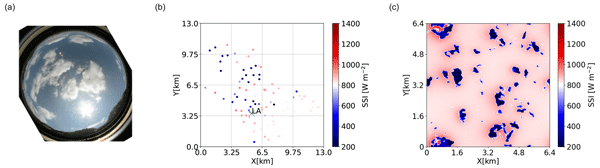
This study uses observations and simulations to analyze how cumulus clouds affect spacial solar radiation variability on the ground. Results show that the simulations reproduce the observations well and improve understanding of cloud impacts on radiation. The research also indicates that a few strategically placed sensors, capitalizing on measurement timing, can effectively measure these variations, aiding in the development of detailed weather prediction models.
James Barry, Stefanie Meilinger, Klaus Pfeilsticker, Anna Herman-Czezuch, Nicola Kimiaie, Christopher Schirrmeister, Rone Yousif, Tina Buchmann, Johannes Grabenstein, Hartwig Deneke, Jonas Witthuhn, Claudia Emde, Felix Gödde, Bernhard Mayer, Leonhard Scheck, Marion Schroedter-Homscheidt, Philipp Hofbauer, and Matthias Struck
Atmos. Meas. Tech., 16, 4975–5007, https://doi.org/10.5194/amt-16-4975-2023, https://doi.org/10.5194/amt-16-4975-2023, 2023
Short summary
Short summary
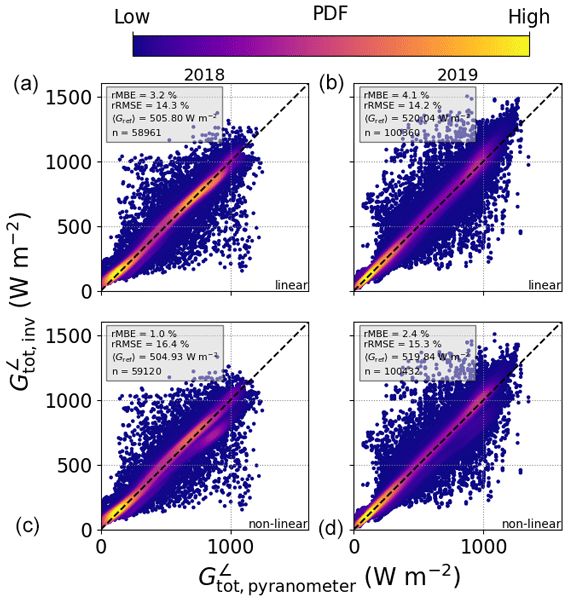
Measured power data from solar photovoltaic (PV) systems contain information about the state of the atmosphere. In this work, power data from PV systems in the Allgäu region in Germany were used to determine the solar irradiance at each location, using state-of-the-art simulation and modelling. The results were validated using concurrent measurements of the incoming solar radiation in each case. If applied on a wider scale, this algorithm could help improve weather and climate models.
Heike Kalesse-Los, Anton Kötsche, Andreas Foth, Johannes Röttenbacher, Teresa Vogl, and Jonas Witthuhn
Atmos. Meas. Tech., 16, 1683–1704, https://doi.org/10.5194/amt-16-1683-2023, https://doi.org/10.5194/amt-16-1683-2023, 2023
Short summary
Short summary
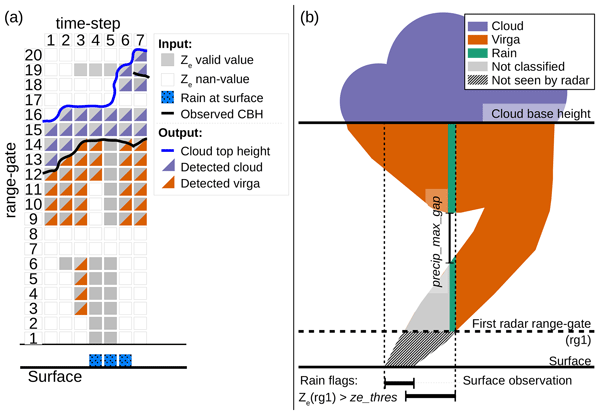
The Virga-Sniffer, a new modular open-source Python package tool to characterize full precipitation evaporation (so-called virga) from ceilometer cloud base height and vertically pointing cloud radar reflectivity time–height fields, is described. Results of its first application to RV Meteor observations during the EUREC4A field experiment in January–February 2020 are shown. About half of all detected clouds with bases below the trade inversion height were found to produce virga.
Kevin Ohneiser, Albert Ansmann, Jonas Witthuhn, Hartwig Deneke, Alexandra Chudnovsky, Gregor Walter, and Fabian Senf
Atmos. Chem. Phys., 23, 2901–2925, https://doi.org/10.5194/acp-23-2901-2023, https://doi.org/10.5194/acp-23-2901-2023, 2023
Short summary
Short summary
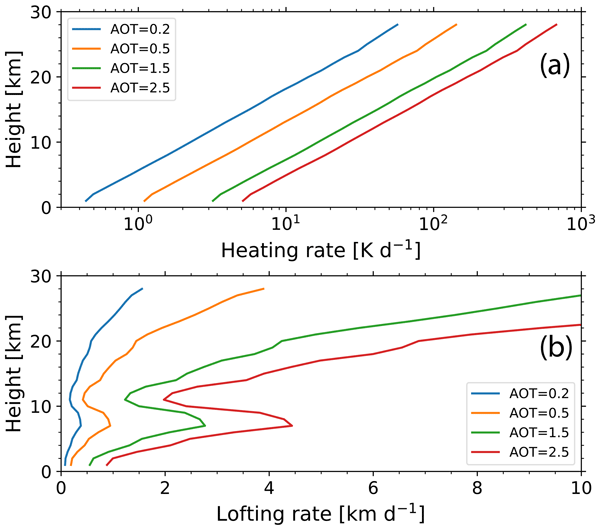
This study shows that smoke layers can reach the tropopause via the self-lofting effect within 3–7 d in the absence of pyrocumulonimbus convection if the
aerosol optical thickness is larger than approximately 2 for a longer time period. When reaching the stratosphere, wildfire smoke can sensitively influence the stratospheric composition on a hemispheric scale and thus can affect the Earth’s climate and the ozone layer.
Jonas Witthuhn, Anja Hünerbein, Florian Filipitsch, Stefan Wacker, Stefanie Meilinger, and Hartwig Deneke
Atmos. Chem. Phys., 21, 14591–14630, https://doi.org/10.5194/acp-21-14591-2021, https://doi.org/10.5194/acp-21-14591-2021, 2021
Short summary
Short summary
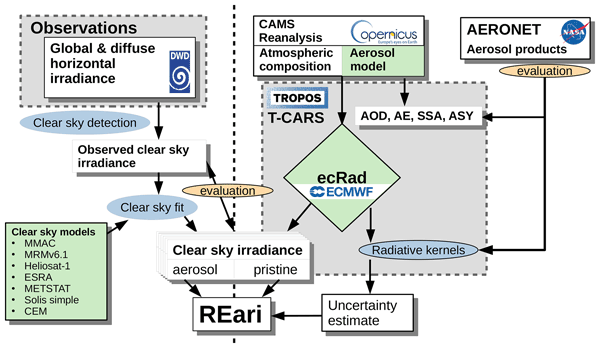
Knowledge of aerosol–radiation interactions is important for understanding the climate system and for the renewable energy sector. Here, two complementary approaches are used to assess the consistency of the underlying aerosol properties and the resulting radiative effect in clear-sky conditions over Germany in 2015. An approach based on clear-sky models and broadband irradiance observations is contrasted to the use of explicit radiative transfer simulations using CAMS reanalysis data.
Logan T. Mitchell, Connor J. Flynn, Kristina Pistone, Samuel E. LeBlanc, K. Sebastian Schmidt, Hong Chen, Paquita Zuidema, Robert Wood, and Jens Redemann
Atmos. Chem. Phys., 26, 13083–13102, https://doi.org/10.5194/acp-26-13083-2026, https://doi.org/10.5194/acp-26-13083-2026, 2026
Short summary
Short summary
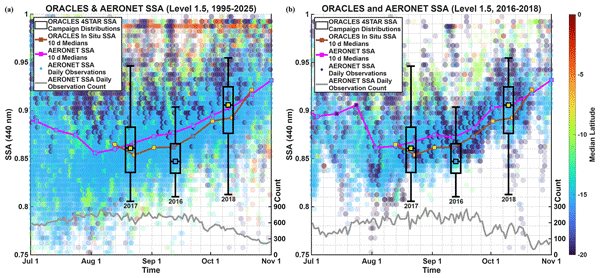
During 2016–2018, NASA conducted an airborne field campaign over the Southeast Atlantic Ocean to study biomass burning aerosols emitted from Southern African fires. We have found that aerosol absorption decreases over the course of the emission season, which is due to a compositional change within black carbon as the source fires shift southeastward, rather than an increase in brown carbon. This aerosol brightening is also noted within a 30-year aerosol climatology from ground-based stations.
Emily D. Lenhardt, Lan Gao, Siddhant Gupta, Greg M. McFarquhar, Feng Xu, Richard A. Ferrare, Chris A. Hostetler, and Jens Redemann
Atmos. Chem. Phys., 26, 11709–11732, https://doi.org/10.5194/acp-26-11709-2026, https://doi.org/10.5194/acp-26-11709-2026, 2026
Short summary
Short summary
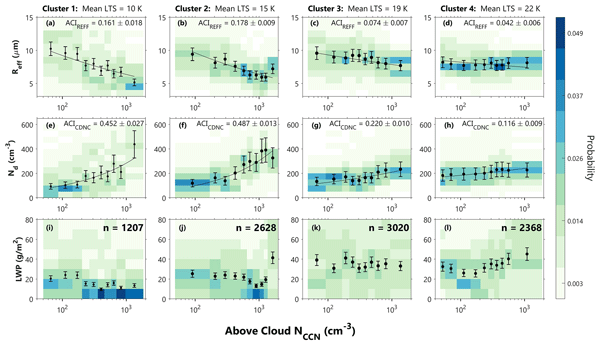
Interactions between clouds and small particles in the atmosphere can cause changes to cloud properties, such as how much of the sun's energy they reflect and whether precipitation is likely to occur. Here we use a new machine learning dataset to investigate these interactions using observations from the Southeast Atlantic. We find that smoke particles above cloud tops have a strong impact on cloud properties in stable environments. This method can also be applied to satellite data.
Anna Trosits, Andreas Foth, Allison A. Wing, Johanna Roschke, Moritz Haarig, Anton Kötsche, and Heike Kalesse-Los
EGUsphere, https://doi.org/10.5194/egusphere-2026-4385, https://doi.org/10.5194/egusphere-2026-4385, 2026
This preprint is open for discussion and under review for Atmospheric Chemistry and Physics (ACP).
Short summary
Short summary
This study shows the effect of air layers originating from the Saharan Desert on clouds over the tropical Atlantic observed during the ship-borne research campaign BOWTIE. These Saharan Air Layers (SAL) were analysed with data from several instruments providing atmospheric profiles and can be characterised by low moisture and dispersed mineral dust. The investigation suggests a suppression of vertical cloud development by the SAL, also affecting microphysical properties of the cloud.
Casey J. Wall, Adam C. Varble, Rusen Öktem, and David M. Romps
EGUsphere, https://doi.org/10.5194/egusphere-2026-3986, https://doi.org/10.5194/egusphere-2026-3986, 2026
Short summary
Short summary
The concept of warm-phase convective invigoration from aerosol-cloud interactions posits that polluted clouds form smaller and more numerous droplets than their non-polluted counterparts. This causes polluted cloud updrafts to consume moisture more readily, which ultimately leads to faster updrafts. This work develops a theoretical model of warm-phase convective invigoration and applies the model with aircraft measurements to infer how much the mechanism can invigorate cloud updrafts in nature.
Patrick C. Taylor, Armin Sorooshian, Rei Ueyama, Sebastian Schmidt, Ihab Abboud, Quincy Allison, Kevin Barry, Sebastian Becker, Holly A. Bender, Joseph R. Bennett, James B. Blair, Niklas Bohn, Linette Boisvert, Matthew D. Brown, Roelof Bruintjes, Anthony Bucholtz, Megan Buzanowicz, Brian Cairns, Filippo Calì Quaglia, Eduard Chemyakin, Bo Chen, Gao Chen, Hong Chen, Yu-Wen Chen, Zezhen Cheng, Swarup China, Dan Chirica, Yonghoon Choi, Peter Colarco, Brian Collister, Ewan Crosbie, Maurice J. Cross, Janet Daniels, Paul DeMott, Joshua P. DiGangi, Alcide Giorgio di Sarra, Glenn S. Diskin, Erica K. Dolinar, Eva-Lou Edwards, Samuel Ephraim, Nikolaos Evangeliou, Romanos Foskinis, Francesca Gallo, Lan Gao, José Luis Gómez-Amo, Daisy Gonzalez, Christine Groot Zwaaftink, Pawan Gupta, Ivan Heckman, Michael Hendrickson, Miguel Ricardo A. Hilario, Ken Hirata, Michelle Hofton, Andrew L. Holen, Ulas Im, Alia L. Khan, Ralph Kahn, Alexei V. Korolev, Sonia Kreidenweis, Thomas Krumpen, Nathan Kurtz, Leslie Lait, Bradley Lamkin, Jack Landy, Nurun Nahar Lata, Paul Lawson, Samuel LeBlanc, Sean Leavor, Jing Li, Thorsten Markus, Hal Maring, Andreas H. Massling, Camille Mavis, Flynn McGinnity, Kerry Meyer, Gabriel Mojica, Richard H. Moore, Parker Morris, Giovanni Muscari, Vikas Nataraja, Amin R. Nehrir, Athanasios Nenes, Edward P. Nowottnick, Matteo Ottaviani, Chelsea Parker, Ryan Patnaude, Michael Perez, Russell J. Perkins, Colten Peterson, Alek Petty, Stevie Phothisane, Chris Polashenski, Kerri A. Pratt, Kayla M. Preisler, John Prytherch, David Rabine, Jens Redemann, Ju-Mee Ryoo, Joseph S. Schlosser, Vanessa Selimovic, Michael A. Shook, Morgan Silverman, Henrik Skov, Alexander Smirnov, Cassidy Soloff, Amy Solomon, Snorre Stamnes, Azusa Takeishi, David R. Thompson, K. Lee Thornhill, Rachel Tilling, Michael Tjernström, Monica Tosco, Pedro C. Valdelomar, David Van Gilst, Jian Wang, Zhien Wang, Andrzej Wasilewski, Manfred Wendisch, Brent Wilder, Edward L. Winstead, Albert Wu, Peng Xian, Lauren M. Zamora, Jiaoshi Zhang, Lei Zhang, Lu Zhang, Luke Ziemba, and Paquita Zuidema
Earth Syst. Sci. Data Discuss., https://doi.org/10.5194/essd-2026-241, https://doi.org/10.5194/essd-2026-241, 2026
Preprint under review for ESSD
Short summary
Short summary
This article summarizes the data sets collected during the Arctic Radiation Cloud aerosol Sea ice Interaction eXperiment (ARCSIX), NASA's most comprehensive Arctic field campaign to date. The overarching goal was to quantify the contributions of surface, clouds, aerosol particles, and precipitation to summer sea ice melt. This paper describes the ARCSIX implementation including the flight strategy, instruments, complementary data sets, access, and usage details.
Hans Segura, Allison A. Wing, Heike Kalesse-Los, Ruben Carrasco, James H. Ruppert Jr., Anna Trosits, Louise Nuijens, Felix Ament, Daniel Blandfort, Michael M. Bell, Pierre Bosser, Delián Colón-Burgos, Geet George, Joelle Habib, Jochen Horstmann, Friedhelm Jansen, Lukas Kluft, Robert Kopte, Klas Ove Möller, Peristera Paschou, Hauke Schmidt, Michael Schlundt, Ilya Serikov, Martin Stelzner, Elizabeth J. Thompson, Werenfrid Wimmer, Marcus Dengler, and Daniel Klocke
Earth Syst. Sci. Data Discuss., https://doi.org/10.5194/essd-2026-343, https://doi.org/10.5194/essd-2026-343, 2026
Preprint under review for ESSD
Short summary
Short summary
BOWTIE (Beobachtung von Ozean und Wolken - Das Trans ITCZ Experiment) was an observational campaign occurring in summer 2024, which intensively took measurements from the upper ocean to the upper troposphere in the wettest region of the tropical Atlantic. Here, we provide an overview of the measurements and instrumentation, including remote sensing and conventional, which targeted small-scale processes under different weather regimes, from calm doldrums to gusty, precipitating events.
Christopher R. Oxford, Haihui Zhu, Maya Mehrotra, Xuan Liu, Yuxuan Ren, Maya Arnott, Isaac Abionum Adimula, Taiye Benjamin Ajibolataiye, Clement Akoshile, Omar Amador-Munoz, Araya Asfaw, Rachel Ying-Wen Chang, Sagnik Dey, Ann M. Dillner, David J. Diner, Connor J. Flynn, Diana Francis, Paterne Gahungu, Rebecca M. Garland, Michel Grutter, Sina Hasheminassab, Fahad Imam, Jhoon Kim, Kristy Langerman, Pei-Chen Lee, Puji Lestari, Po-Hsiung Lin, S. Marcela Loria-Salazar, Tesfaye Mamo, Olga L. Mayol-Bracero, Mogesh Naidoo, Narendra Nelli, Sang Seo Park, Abdus Salam, Bighnaraj Sarangi, Trailokya Saud, Robyn Schofield, Yoav Schechner, Sachchida N. Tripathi, Emily K. West, Eli Windwer, Ming-Tsang Wu, Qiang Zhang, Michael Brauer, Yinon Rudich, Jay R. Turner, and Randall V. Martin
EGUsphere, https://doi.org/10.5194/egusphere-2026-3224, https://doi.org/10.5194/egusphere-2026-3224, 2026
Short summary
Short summary
A high-sensitivity balance, controlled temperature and relative humidity chamber, and filter samples collected around the world were used to develop a mass as a function of relative humidity relationship. We subsequently measured the chemical composition of these same samples. A relationship between the chemical composition and water mass was created and used to calculate aerosol water content showing how composition and water content varies worldwide.
Johanna Roschke, Benedikt Gast, Martin Radenz, Albert Ansmann, Patric Seifert, George McCosh, and Heike Kalesse-Los
EGUsphere, https://doi.org/10.5194/egusphere-2026-718, https://doi.org/10.5194/egusphere-2026-718, 2026
Short summary
Short summary
This research introduces a new method that combines model simulations with satellite observations to attribute the influence of wildfire smoke on an airmass. By dynamically determining the height of smoke plumes, we overcome a key limitation of earlier fixed reception-height approaches. This advancement is crucial for improving our understanding of how wildfire emissions influence cloud formation and the broader Earth's climate system.
Anton Kötsche, Maximilian Maahn, Veronika Ettrichrätz, and Heike Kalesse-Los
Atmos. Chem. Phys., 26, 3277–3297, https://doi.org/10.5194/acp-26-3277-2026, https://doi.org/10.5194/acp-26-3277-2026, 2026
Short summary
Short summary
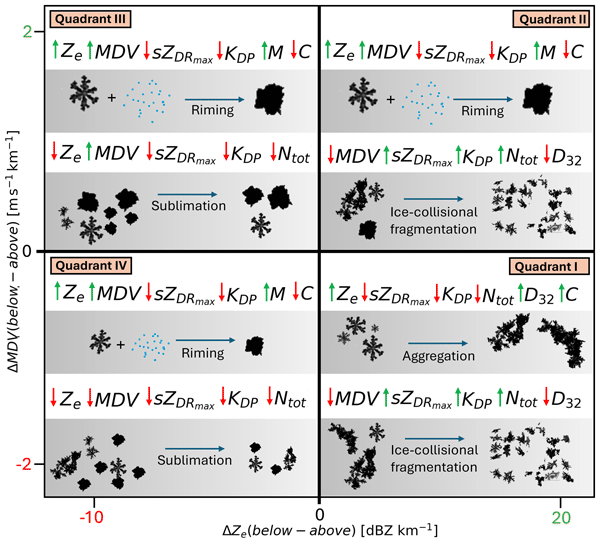
We studied how turbulence affects snowfall in the Colorado Rockies, focusing on a turbulent layer behind Gothic Mountain. Using radar and surface observations, we found turbulence enhances snow growth by causing snowflakes to stick and form extra ice via collisions. Liquid water at cold temperatures further boosts snow formation. This work shows how turbulence shapes mountain snowfall and demonstrates radar-based methods to study precipitation processes.
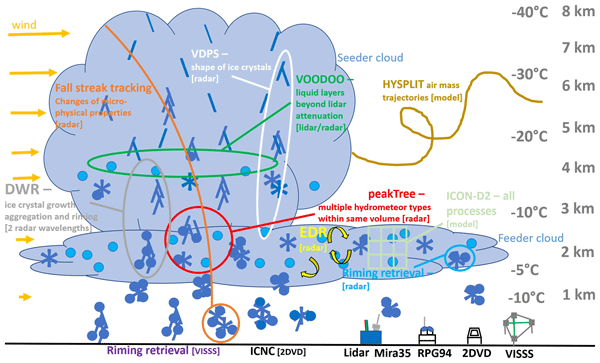
Kevin Ohneiser, Patric Seifert, Willi Schimmel, Fabian Senf, Tom Gaudek, Martin Radenz, Audrey Teisseire, Veronika Ettrichrätz, Teresa Vogl, Nina Maherndl, Nils Pfeifer, Jan Henneberger, Anna J. Miller, Nadja Omanovic, Christopher Fuchs, Huiying Zhang, Fabiola Ramelli, Robert Spirig, Anton Kötsche, Heike Kalesse-Los, Maximilian Maahn, Heather Corden, Alexis Berne, Majid Hajipour, Hannes Griesche, Julian Hofer, Ronny Engelmann, Annett Skupin, Albert Ansmann, and Holger Baars
Atmos. Chem. Phys., 25, 17363–17386, https://doi.org/10.5194/acp-25-17363-2025, https://doi.org/10.5194/acp-25-17363-2025, 2025
Short summary
Short summary
This study focuses on a seeder-feeder cloud system on 8 Jan 2024 in Eriswil, Switzerland. It is shown how the interaction of these cloud systems changes the cloud microphysical properties and the precipitation patterns. A big set of advanced remote-sensing techniques and retrieval algorithms are applied, so that a detailed view on the seeder-feeder cloud system is available. The gained knowledge can be used to improve weather models and weather forecasts.
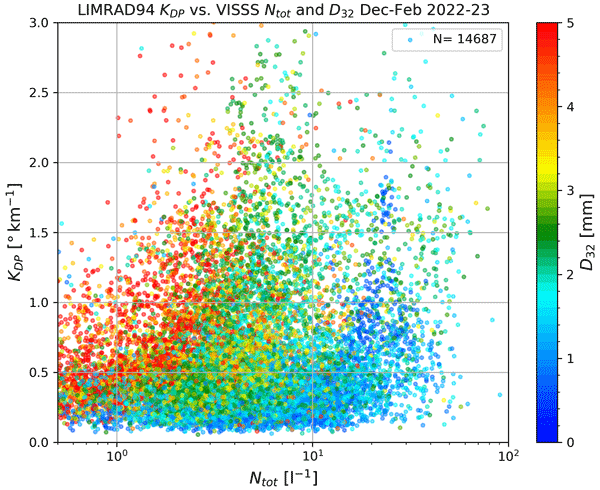
Anton Kötsche, Alexander Myagkov, Leonie von Terzi, Maximilian Maahn, Veronika Ettrichrätz, Teresa Vogl, Alexander Ryzhkov, Petar Bukovcic, Davide Ori, and Heike Kalesse-Los
Atmos. Chem. Phys., 25, 14045–14070, https://doi.org/10.5194/acp-25-14045-2025, https://doi.org/10.5194/acp-25-14045-2025, 2025
Short summary
Short summary
Our study combines radar observations of snow with snowfall camera observations on the ground to enhance our understanding of radar variables and snowfall properties. We found that values of an important radar variable (KDP) can be related to many different snow particle properties and number concentrations. We were able to constrain which particle sizes contribute to KDP by using computer models of snowflakes and showed which microphysical processes during snow formation can influence KDP.
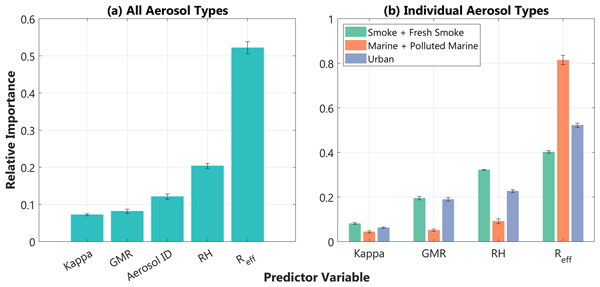
Emily Lenhardt, Lan Gao, Chris A. Hostetler, Richard A. Ferrare, Sharon P. Burton, Richard H. Moore, Luke D. Ziemba, Ewan Crosbie, Armin Sorooshian, Cassidy Soloff, and Jens Redemann
Atmos. Chem. Phys., 25, 13747–13768, https://doi.org/10.5194/acp-25-13747-2025, https://doi.org/10.5194/acp-25-13747-2025, 2025
Short summary
Short summary
Small particles that form cloud droplets greatly impact Earth's climate but are very difficult to measure. If we can measure them using satellite-based instruments, we greatly increase the amount of available data on their concentrations. In this study, we find that including information about particle size is most important to measure them accurately from such satellite-based instruments. This can inform future studies on how to obtain more accurate information about small particles.
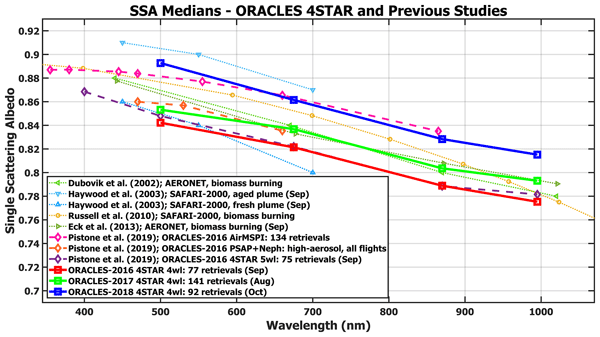
Logan T. Mitchell, Connor J. Flynn, Kristina Pistone, Samuel E. LeBlanc, K. Sebastian Schmidt, and Jens Redemann
Earth Syst. Sci. Data, 17, 5303–5313, https://doi.org/10.5194/essd-17-5303-2025, https://doi.org/10.5194/essd-17-5303-2025, 2025
Short summary
Short summary
During 2016–2018, NASA conducted an airborne field campaign over the Southeast Atlantic Ocean to study biomass burning aerosols emitted from Southern African fires. These aerosols then interact with stratocumulus clouds over the Southeast Atlantic, which is difficult for climate models to account for. Our instrument, 4STAR, determines aerosol radiative properties. A dataset was already created for 2016, but additional quality control was required to address instrument issues for 2017 and 2018.
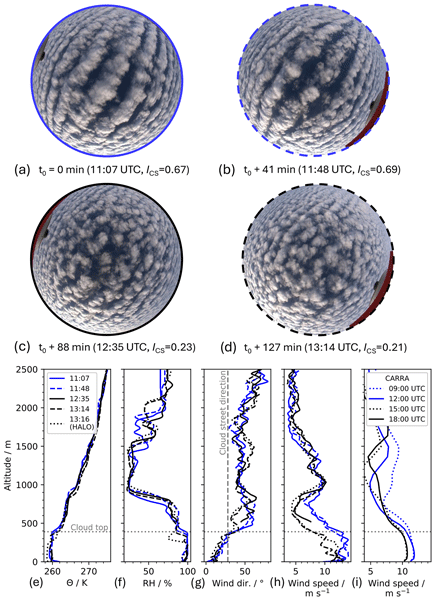
Marcus Klingebiel, André Ehrlich, Micha Gryschka, Nils Risse, Nina Maherndl, Imke Schirmacher, Sophie Rosenburg, Sabine Hörnig, Manuel Moser, Evelyn Jäkel, Michael Schäfer, Hartwig Deneke, Mario Mech, Christiane Voigt, and Manfred Wendisch
Atmos. Chem. Phys., 25, 9787–9801, https://doi.org/10.5194/acp-25-9787-2025, https://doi.org/10.5194/acp-25-9787-2025, 2025
Short summary
Short summary
Our study is using aircraft measurements from the HALO-(𝒜𝒞)³ campaign to investigate the transition from organized Arctic cloud street structures to more scattered clouds, which we call isotropic cloud patterns. We show that lower wind speeds cause this transition. In addition, we look at the changes in the cloud coverage, the height of the clouds, the cloud particles, and the radiative properties.
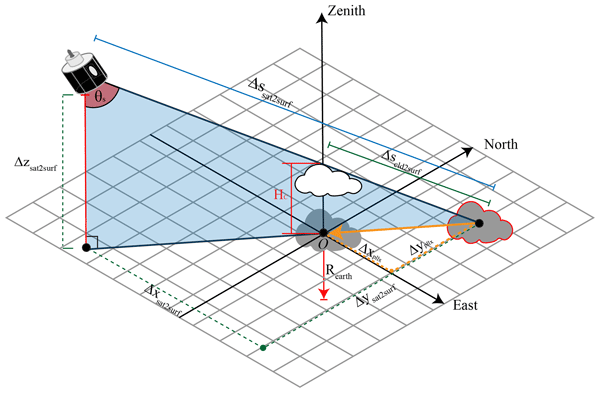
Job I. Wiltink, Hartwig Deneke, Chiel C. van Heerwaarden, and Jan Fokke Meirink
Atmos. Meas. Tech., 18, 3917–3936, https://doi.org/10.5194/amt-18-3917-2025, https://doi.org/10.5194/amt-18-3917-2025, 2025
Short summary
Short summary
Global horizontal irradiance retrievals from satellite observations are affected by spatial displacements due to parallax and cloud shadows. We assess different approaches to correct for these displacements and quantify their added value by comparison with a network of ground-based pyranometer observations. The corrections are found to become increasingly important at higher spatial resolutions and are most relevant for variable cloud types.
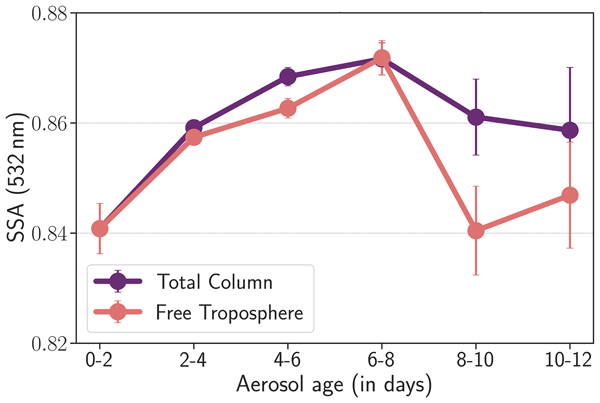
Abdulamid A. Fakoya, Jens Redemann, Pablo E. Saide, Lan Gao, Logan T. Mitchell, Calvin Howes, Amie Dobracki, Ian Chang, Gonzalo A. Ferrada, Kristina Pistone, Samuel E. Leblanc, Michal Segal-Rozenhaimer, Arthur J. Sedlacek III, Thomas Eck, Brent Holben, Pawan Gupta, Elena Lind, Paquita Zuidema, Gregory Carmichael, and Connor J. Flynn
Atmos. Chem. Phys., 25, 7879–7902, https://doi.org/10.5194/acp-25-7879-2025, https://doi.org/10.5194/acp-25-7879-2025, 2025
Short summary
Short summary
Tiny atmospheric particles from wildfire smoke impact the climate by interacting with sunlight and clouds, the extent of which is uncertain due to gaps in understanding how smoke changes over time. We developed a new method using remote sensing instruments to track how these particles evolve during atmospheric transport. Our results show that the ability of these particles to absorb sunlight increases as they travel. This discovery could help improve predictions of future climate scenarios.
Pablo Saavedra Garfias and Heike Kalesse-Los
EGUsphere, https://doi.org/10.5194/egusphere-2025-2327, https://doi.org/10.5194/egusphere-2025-2327, 2025
Short summary
Short summary
Arctic low level mixed-phase clouds were analysed from 14 years of wintertime observations from the North Slope of Alaska. We found that Arctic cloud physical properties are in correlation with changes in upwind sea ice. The cloud liquid and ice water content increases as sea ice decreases, although not at the same magnitude. Moreover, we uncovered that cloud properties have oscillation properties along the years that resemble climate indicators like El Niño Southern Oscillation among others.
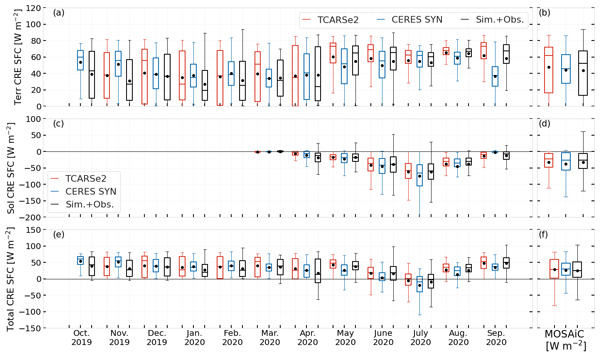
Carola Barrientos-Velasco, Christopher J. Cox, Hartwig Deneke, J. Brant Dodson, Anja Hünerbein, Matthew D. Shupe, Patrick C. Taylor, and Andreas Macke
Atmos. Chem. Phys., 25, 3929–3960, https://doi.org/10.5194/acp-25-3929-2025, https://doi.org/10.5194/acp-25-3929-2025, 2025
Short summary
Short summary
Understanding how clouds affect the climate, especially in the Arctic, is crucial. This study used data from the largest polar expedition in history, MOSAiC, and the CERES satellite to analyse the impact of clouds on radiation. Simulations showed accurate results, aligning with observations. Over the year, clouds caused the atmospheric surface system to lose 5.2 W m−² of radiative energy to space, while the surface gained 25 W m−² and the atmosphere cooled by 30.2 W m−².
Johanna Roschke, Jonas Witthuhn, Marcus Klingebiel, Moritz Haarig, Andreas Foth, Anton Kötsche, and Heike Kalesse-Los
Atmos. Meas. Tech., 18, 487–508, https://doi.org/10.5194/amt-18-487-2025, https://doi.org/10.5194/amt-18-487-2025, 2025
Short summary
Short summary
We present a technique to discriminate between the Cloudnet target classification of "drizzle or rain" and sea salt aerosols that is applicable to marine Cloudnet sites. The method is crucial for investigating the occurrence of precipitation and significantly improves the Cloudnet target classification scheme for measurements over the Barbados Cloud Observatory (BCO). A first-ever analysis of the Cloudnet product including the new "haze echo" target over 2 years at the BCO is presented.
Andreas Foth, Moritz Lochmann, Pablo Saavedra Garfias, and Heike Kalesse-Los
Atmos. Meas. Tech., 17, 7169–7181, https://doi.org/10.5194/amt-17-7169-2024, https://doi.org/10.5194/amt-17-7169-2024, 2024
Short summary
Short summary
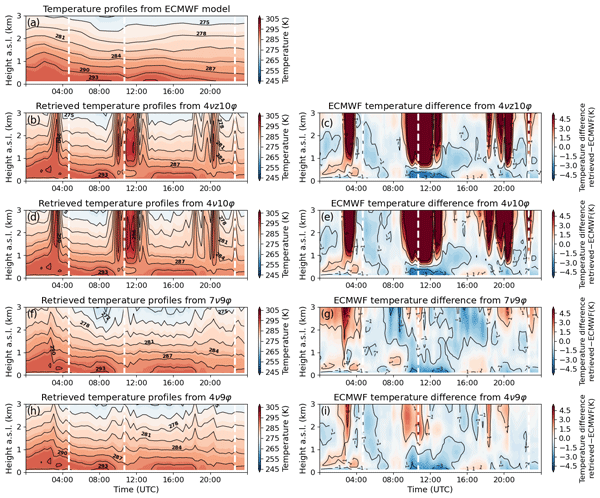
Microwave radiometers are usually not able to provide atmospheric quantities such as temperature profiles during rain. We present a method based on a selection of specific frequencies and elevation angles from microwave radiometer observations. A comparison with a numerical weather prediction model shows the presented method allows low-level temperature profiles during rain to be resolved, with rain rates of up to 2.5 mm h−1,, which was not possible before with state-of-the-art retrievals.
Teresa Vogl, Martin Radenz, Fabiola Ramelli, Rosa Gierens, and Heike Kalesse-Los
Atmos. Meas. Tech., 17, 6547–6568, https://doi.org/10.5194/amt-17-6547-2024, https://doi.org/10.5194/amt-17-6547-2024, 2024
Short summary
Short summary
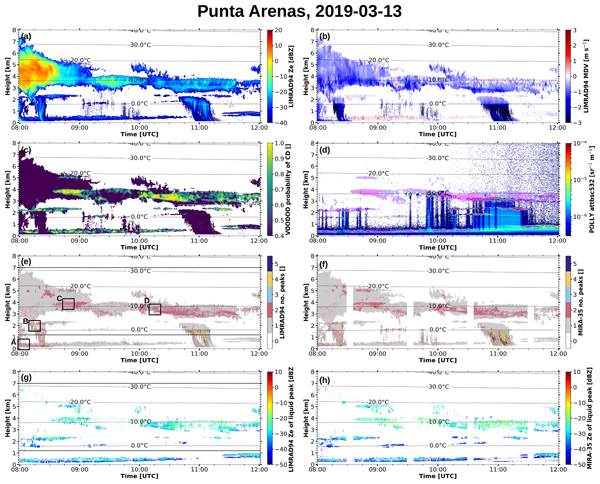
In this study, we present a toolkit of two Python algorithms to extract information from Doppler spectra measured by ground-based cloud radars. In these Doppler spectra, several peaks can be formed due to populations of droplets/ice particles with different fall velocities coexisting in the same measurement time and height. The two algorithms can detect peaks and assign them to certain particle types, such as small cloud droplets or fast-falling ice particles like graupel.
Job I. Wiltink, Hartwig Deneke, Yves-Marie Saint-Drenan, Chiel C. van Heerwaarden, and Jan Fokke Meirink
Atmos. Meas. Tech., 17, 6003–6024, https://doi.org/10.5194/amt-17-6003-2024, https://doi.org/10.5194/amt-17-6003-2024, 2024
Short summary
Short summary
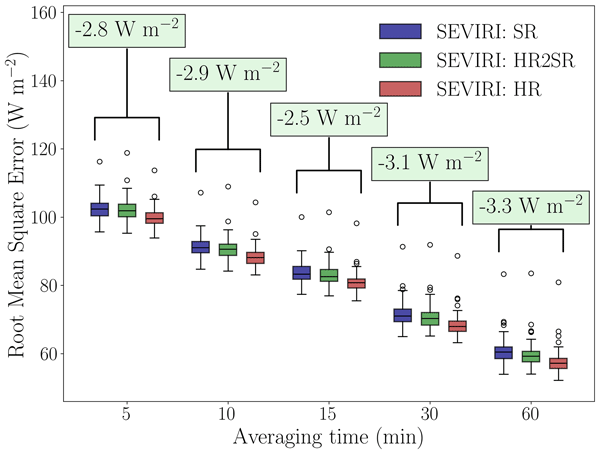
Meteosat Spinning Enhanced Visible and Infrared Imager (SEVIRI) global horizontal irradiance (GHI) retrievals are validated at standard and increased spatial resolution against a network of 99 pyranometers. GHI accuracy is strongly dependent on the cloud regime. Days with variable cloud conditions show significant accuracy improvements when retrieved at higher resolution. We highlight the benefits of dense network observations and a cloud-regime-resolved approach in validating GHI retrievals.
Zili He, Quentin Libois, Najda Villefranque, Hartwig Deneke, Jonas Witthuhn, and Fleur Couvreux
Atmos. Chem. Phys., 24, 11391–11408, https://doi.org/10.5194/acp-24-11391-2024, https://doi.org/10.5194/acp-24-11391-2024, 2024
Short summary
Short summary
This study uses observations and simulations to analyze how cumulus clouds affect spacial solar radiation variability on the ground. Results show that the simulations reproduce the observations well and improve understanding of cloud impacts on radiation. The research also indicates that a few strategically placed sensors, capitalizing on measurement timing, can effectively measure these variations, aiding in the development of detailed weather prediction models.
Evgueni Kassianov, Connor J. Flynn, James C. Barnard, Brian D. Ermold, and Jennifer M. Comstock
Atmos. Meas. Tech., 17, 4997–5013, https://doi.org/10.5194/amt-17-4997-2024, https://doi.org/10.5194/amt-17-4997-2024, 2024
Short summary
Short summary
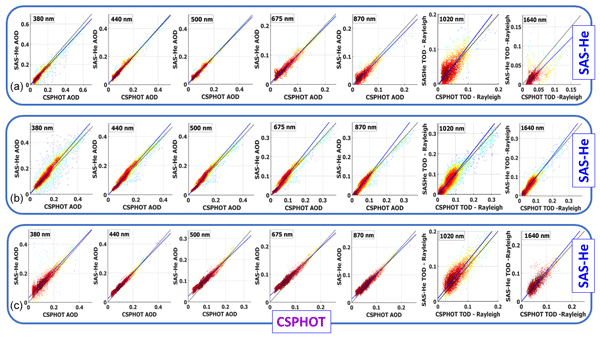
Conventional ground-based radiometers commonly measure solar radiation at a few wavelengths within a narrow spectral range. These limitations prevent improved retrievals of aerosol, cloud, and surface characteristics. To address these limitations, an advanced ground-based radiometer with expanded spectral coverage and hyperspectral capability is introduced. Its good performance is demonstrated using reference data collected over three coastal regions with diverse types of aerosols and clouds.
Kelly A. Balmes, Laura D. Riihimaki, John Wood, Connor Flynn, Adam Theisen, Michael Ritsche, Lynn Ma, Gary B. Hodges, and Christian Herrera
Atmos. Meas. Tech., 17, 3783–3807, https://doi.org/10.5194/amt-17-3783-2024, https://doi.org/10.5194/amt-17-3783-2024, 2024
Short summary
Short summary
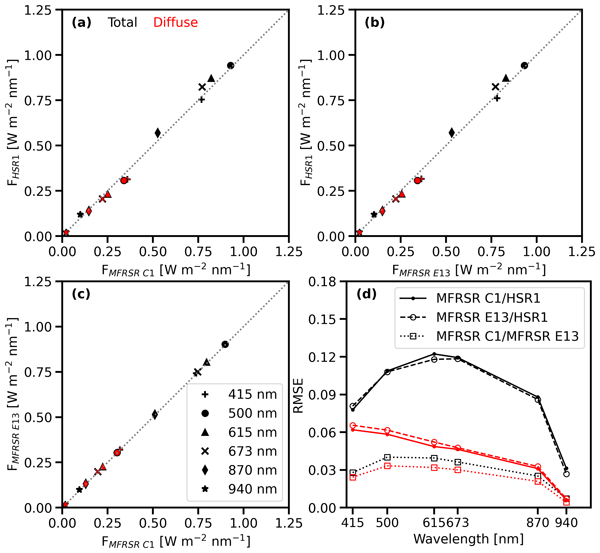
A new hyperspectral radiometer (HSR1) was deployed and evaluated in the central United States (northern Oklahoma). The HSR1 total spectral irradiance agreed well with nearby existing instruments, but the diffuse spectral irradiance was slightly smaller. The HSR1-retrieved aerosol optical depth (AOD) also agreed well with other retrieved AODs. The HSR1 performance is encouraging: new hyperspectral knowledge is possible that could inform atmospheric process understanding and weather forecasting.
Hiren T. Jethva, Omar Torres, Richard A. Ferrare, Sharon P. Burton, Anthony L. Cook, David B. Harper, Chris A. Hostetler, Jens Redemann, Vinay Kayetha, Samuel LeBlanc, Kristina Pistone, Logan Mitchell, and Connor J. Flynn
Atmos. Meas. Tech., 17, 2335–2366, https://doi.org/10.5194/amt-17-2335-2024, https://doi.org/10.5194/amt-17-2335-2024, 2024
Short summary
Short summary
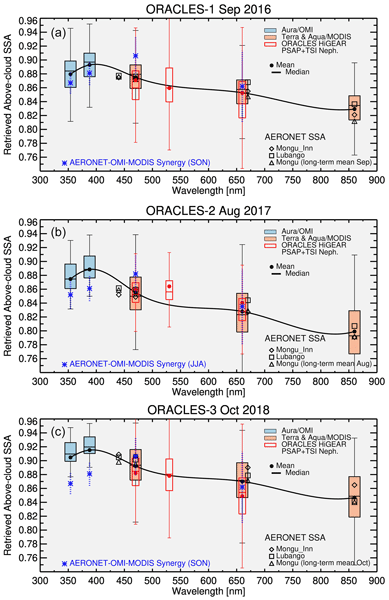
We introduce a novel synergy algorithm applied to ORALCES airborne measurements of above-cloud aerosol optical depth and UV–Vis satellite observations from OMI and MODIS to retrieve spectral aerosol single-scattering albedo of lofted layers of carbonaceous smoke aerosols over clouds. The development of the proposed aerosol–cloud algorithm implies a possible synergy of CALIOP and OMI–MODIS passive sensors to deduce a global product of AOD and SSA of absorbing aerosols above clouds.
Sabrina Schnitt, Andreas Foth, Heike Kalesse-Los, Mario Mech, Claudia Acquistapace, Friedhelm Jansen, Ulrich Löhnert, Bernhard Pospichal, Johannes Röttenbacher, Susanne Crewell, and Bjorn Stevens
Earth Syst. Sci. Data, 16, 681–700, https://doi.org/10.5194/essd-16-681-2024, https://doi.org/10.5194/essd-16-681-2024, 2024
Short summary
Short summary
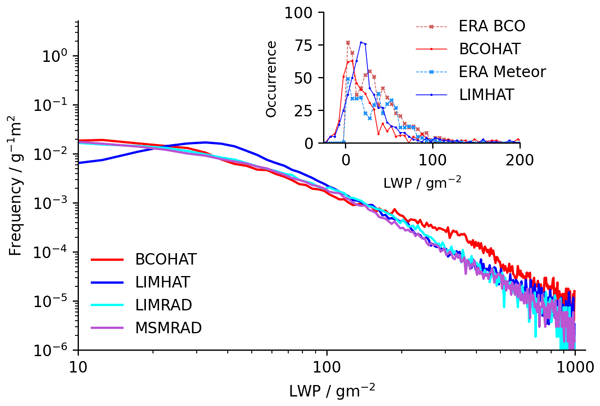
This publication describes the microwave radiometric measurements performed during the EUREC4A campaign at Barbados Cloud Observatory (BCO) and aboard RV Meteor and RV Maria S Merian. We present retrieved integrated water vapor (IWV), liquid water path (LWP), and temperature and humidity profiles as a unified, quality-controlled, multi-site data set on a 3 s temporal resolution for a core period between 19 January 2020 and 14 February 2020.
Anja Hünerbein, Sebastian Bley, Hartwig Deneke, Jan Fokke Meirink, Gerd-Jan van Zadelhoff, and Andi Walther
Atmos. Meas. Tech., 17, 261–276, https://doi.org/10.5194/amt-17-261-2024, https://doi.org/10.5194/amt-17-261-2024, 2024
Short summary
Short summary
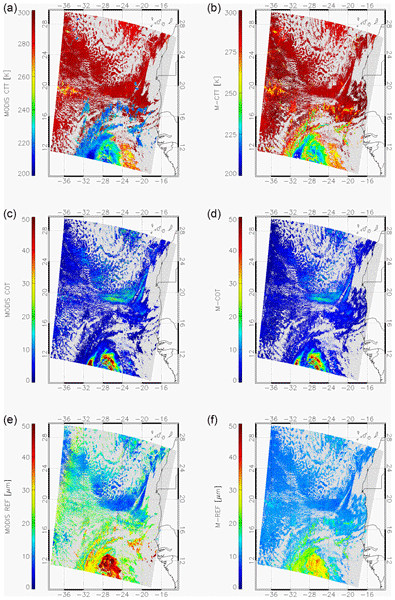
The ESA cloud, aerosol and radiation mission EarthCARE will provide active profiling and passive imaging measurements from a single satellite platform. The passive multi-spectral imager (MSI) will add information in the across-track direction. We present the cloud optical and physical properties algorithm, which combines the visible to infrared MSI channels to determine the cloud top pressure, optical thickness, particle size and water path.
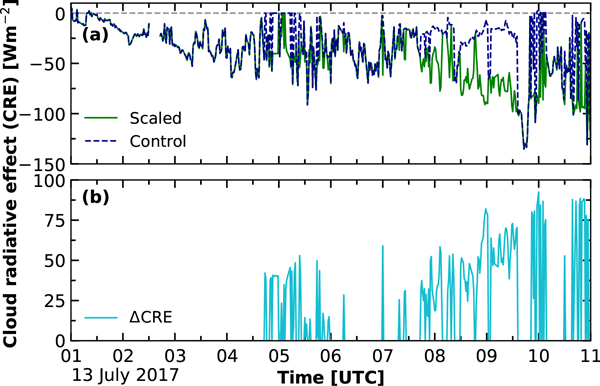
Hannes Jascha Griesche, Carola Barrientos-Velasco, Hartwig Deneke, Anja Hünerbein, Patric Seifert, and Andreas Macke
Atmos. Chem. Phys., 24, 597–612, https://doi.org/10.5194/acp-24-597-2024, https://doi.org/10.5194/acp-24-597-2024, 2024
Short summary
Short summary
The Arctic is strongly affected by climate change and the role of clouds therein is not yet completely understood. Measurements from the Arctic expedition PS106 were used to simulate radiative fluxes with and without clouds at very low altitudes (below 165 m), and their radiative effect was calculated to be 54 Wm-2. The low heights of these clouds make them hard to observe. This study shows the importance of accurate measurements and simulations of clouds and gives suggestions for improvements.
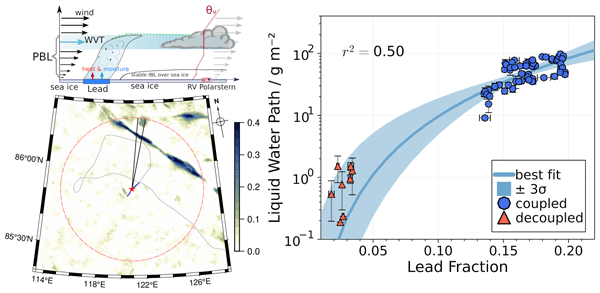
Pablo Saavedra Garfias, Heike Kalesse-Los, Luisa von Albedyll, Hannes Griesche, and Gunnar Spreen
Atmos. Chem. Phys., 23, 14521–14546, https://doi.org/10.5194/acp-23-14521-2023, https://doi.org/10.5194/acp-23-14521-2023, 2023
Short summary
Short summary
An important Arctic climate process is the release of heat fluxes from sea ice openings to the atmosphere that influence the clouds. The characterization of this process is the objective of this study. Using synergistic observations from the MOSAiC expedition, we found that single-layer cloud properties show significant differences when clouds are coupled or decoupled to the water vapour transport which is used as physical link between the upwind sea ice openings and the cloud under observation.
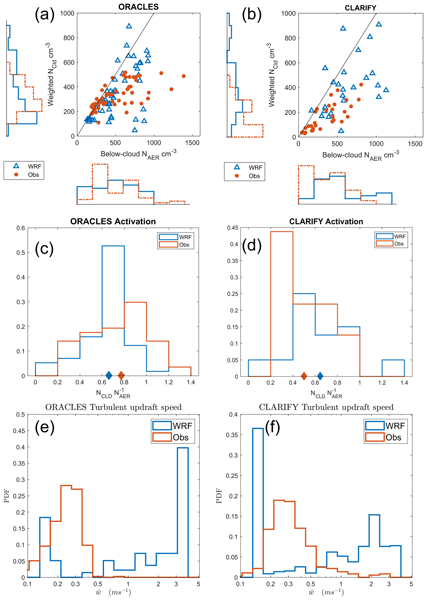
Calvin Howes, Pablo E. Saide, Hugh Coe, Amie Dobracki, Steffen Freitag, Jim M. Haywood, Steven G. Howell, Siddhant Gupta, Janek Uin, Mary Kacarab, Chongai Kuang, L. Ruby Leung, Athanasios Nenes, Greg M. McFarquhar, James Podolske, Jens Redemann, Arthur J. Sedlacek, Kenneth L. Thornhill, Jenny P. S. Wong, Robert Wood, Huihui Wu, Yang Zhang, Jianhao Zhang, and Paquita Zuidema
Atmos. Chem. Phys., 23, 13911–13940, https://doi.org/10.5194/acp-23-13911-2023, https://doi.org/10.5194/acp-23-13911-2023, 2023
Short summary
Short summary
To better understand smoke properties and its interactions with clouds, we compare the WRF-CAM5 model with observations from ORACLES, CLARIFY, and LASIC field campaigns in the southeastern Atlantic in August 2017. The model transports and mixes smoke well but does not fully capture some important processes. These include smoke chemical and physical aging over 4–12 days, smoke removal by rain, sulfate particle formation, aerosol activation into cloud droplets, and boundary layer turbulence.
James Barry, Stefanie Meilinger, Klaus Pfeilsticker, Anna Herman-Czezuch, Nicola Kimiaie, Christopher Schirrmeister, Rone Yousif, Tina Buchmann, Johannes Grabenstein, Hartwig Deneke, Jonas Witthuhn, Claudia Emde, Felix Gödde, Bernhard Mayer, Leonhard Scheck, Marion Schroedter-Homscheidt, Philipp Hofbauer, and Matthias Struck
Atmos. Meas. Tech., 16, 4975–5007, https://doi.org/10.5194/amt-16-4975-2023, https://doi.org/10.5194/amt-16-4975-2023, 2023
Short summary
Short summary
Measured power data from solar photovoltaic (PV) systems contain information about the state of the atmosphere. In this work, power data from PV systems in the Allgäu region in Germany were used to determine the solar irradiance at each location, using state-of-the-art simulation and modelling. The results were validated using concurrent measurements of the incoming solar radiation in each case. If applied on a wider scale, this algorithm could help improve weather and climate models.
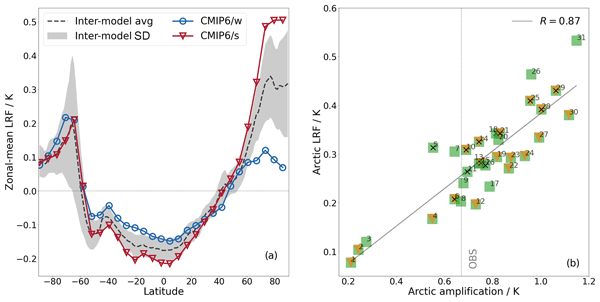
Olivia Linke, Johannes Quaas, Finja Baumer, Sebastian Becker, Jan Chylik, Sandro Dahlke, André Ehrlich, Dörthe Handorf, Christoph Jacobi, Heike Kalesse-Los, Luca Lelli, Sina Mehrdad, Roel A. J. Neggers, Johannes Riebold, Pablo Saavedra Garfias, Niklas Schnierstein, Matthew D. Shupe, Chris Smith, Gunnar Spreen, Baptiste Verneuil, Kameswara S. Vinjamuri, Marco Vountas, and Manfred Wendisch
Atmos. Chem. Phys., 23, 9963–9992, https://doi.org/10.5194/acp-23-9963-2023, https://doi.org/10.5194/acp-23-9963-2023, 2023
Short summary
Short summary
Lapse rate feedback (LRF) is a major driver of the Arctic amplification (AA) of climate change. It arises because the warming is stronger at the surface than aloft. Several processes can affect the LRF in the Arctic, such as the omnipresent temperature inversion. Here, we compare multimodel climate simulations to Arctic-based observations from a large research consortium to broaden our understanding of these processes, find synergy among them, and constrain the Arctic LRF and AA.
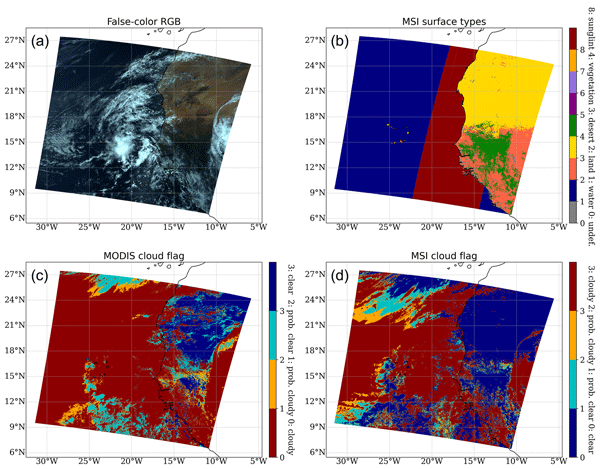
Anja Hünerbein, Sebastian Bley, Stefan Horn, Hartwig Deneke, and Andi Walther
Atmos. Meas. Tech., 16, 2821–2836, https://doi.org/10.5194/amt-16-2821-2023, https://doi.org/10.5194/amt-16-2821-2023, 2023
Short summary
Short summary
The Multi-Spectral Imager (MSI) on board the EarthCARE satellite will provide the information needed for describing the cloud and aerosol properties in the cross-track direction, complementing the measurements from the Cloud Profiling Radar, Atmospheric Lidar and Broad-Band Radiometer. The accurate discrimination between clear and cloudy pixels is an essential first step. Therefore, the cloud mask algorithm provides a cloud flag, cloud phase and cloud type product for the MSI observations.

Amie Dobracki, Paquita Zuidema, Steven G. Howell, Pablo Saide, Steffen Freitag, Allison C. Aiken, Sharon P. Burton, Arthur J. Sedlacek III, Jens Redemann, and Robert Wood
Atmos. Chem. Phys., 23, 4775–4799, https://doi.org/10.5194/acp-23-4775-2023, https://doi.org/10.5194/acp-23-4775-2023, 2023
Short summary
Short summary
Southern Africa produces approximately one-third of the world’s carbon from fires. The thick smoke layer can flow westward, interacting with the southeastern Atlantic cloud deck. The net radiative impact can alter regional circulation patterns, impacting rainfall over Africa. We find that the smoke is highly absorbing of sunlight, mostly because it contains more black carbon than smoke over the Northern Hemisphere.
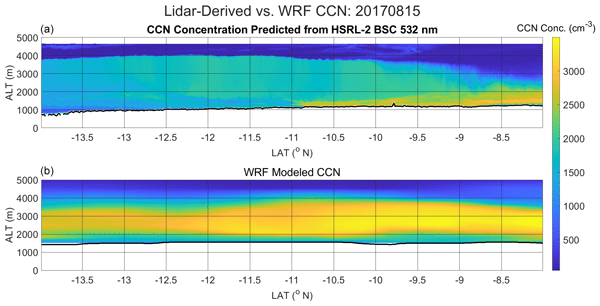
Emily D. Lenhardt, Lan Gao, Jens Redemann, Feng Xu, Sharon P. Burton, Brian Cairns, Ian Chang, Richard A. Ferrare, Chris A. Hostetler, Pablo E. Saide, Calvin Howes, Yohei Shinozuka, Snorre Stamnes, Mary Kacarab, Amie Dobracki, Jenny Wong, Steffen Freitag, and Athanasios Nenes
Atmos. Meas. Tech., 16, 2037–2054, https://doi.org/10.5194/amt-16-2037-2023, https://doi.org/10.5194/amt-16-2037-2023, 2023
Short summary
Short summary
Small atmospheric particles, such as smoke from wildfires or pollutants from human activities, impact cloud properties, and clouds have a strong influence on climate. To better understand the distributions of these particles, we develop relationships to derive their concentrations from remote sensing measurements from an instrument called a lidar. Our method is reliable for smoke particles, and similar steps can be taken to develop relationships for other particle types.
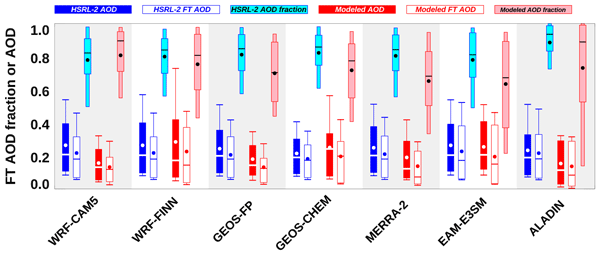
Ian Chang, Lan Gao, Connor J. Flynn, Yohei Shinozuka, Sarah J. Doherty, Michael S. Diamond, Karla M. Longo, Gonzalo A. Ferrada, Gregory R. Carmichael, Patricia Castellanos, Arlindo M. da Silva, Pablo E. Saide, Calvin Howes, Zhixin Xue, Marc Mallet, Ravi Govindaraju, Qiaoqiao Wang, Yafang Cheng, Yan Feng, Sharon P. Burton, Richard A. Ferrare, Samuel E. LeBlanc, Meloë S. Kacenelenbogen, Kristina Pistone, Michal Segal-Rozenhaimer, Kerry G. Meyer, Ju-Mee Ryoo, Leonhard Pfister, Adeyemi A. Adebiyi, Robert Wood, Paquita Zuidema, Sundar A. Christopher, and Jens Redemann
Atmos. Chem. Phys., 23, 4283–4309, https://doi.org/10.5194/acp-23-4283-2023, https://doi.org/10.5194/acp-23-4283-2023, 2023
Short summary
Short summary
Abundant aerosols are present above low-level liquid clouds over the southeastern Atlantic during late austral spring. The model simulation differences in the proportion of aerosol residing in the planetary boundary layer and in the free troposphere can greatly affect the regional aerosol radiative effects. This study examines the aerosol loading and fractional aerosol loading in the free troposphere among various models and evaluates them against measurements from the NASA ORACLES campaign.
Samuel Kwakye, Heike Kalesse-Los, Maximilian Maahn, Patric Seifert, Roel van Klink, Christian Wirth, and Johannes Quaas
Atmos. Meas. Tech. Discuss., https://doi.org/10.5194/amt-2023-69, https://doi.org/10.5194/amt-2023-69, 2023
Publication in AMT not foreseen
Short summary
Short summary
Insect numbers in the atmosphere can be calculated using polarimetric weather radar but they have to be identified and separated from other echoes, especially weather phenomena. Here, the separation is demonstrated using three machine-learning algorithms and insect count data from suction traps and the nature of radar measurements of different radar echoes is revealed. Random forest is the best separating algorithm and insect echoes radar measurements are distinct.

Francesca Gallo, Janek Uin, Kevin J. Sanchez, Richard H. Moore, Jian Wang, Robert Wood, Fan Mei, Connor Flynn, Stephen Springston, Eduardo B. Azevedo, Chongai Kuang, and Allison C. Aiken
Atmos. Chem. Phys., 23, 4221–4246, https://doi.org/10.5194/acp-23-4221-2023, https://doi.org/10.5194/acp-23-4221-2023, 2023
Short summary
Short summary
This study provides a summary statistic of multiday aerosol plume transport event influences on aerosol physical properties and the cloud condensation nuclei budget at the U.S. Department of Energy Atmospheric Radiation Measurement Facility in the eastern North Atlantic (ENA). An algorithm that integrates aerosol properties is developed and applied to identify multiday aerosol transport events. The influence of the aerosol plumes on aerosol populations at the ENA is successively assessed.
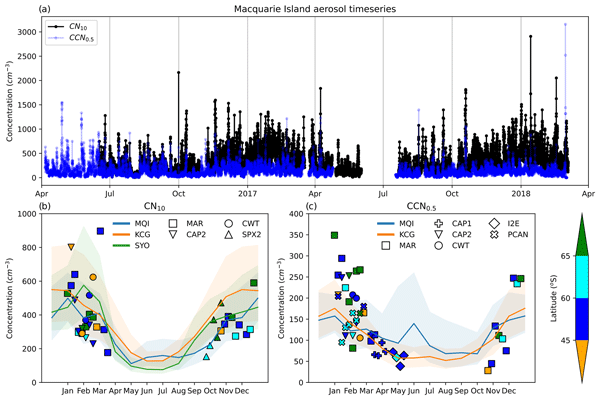
Ruhi S. Humphries, Melita D. Keywood, Jason P. Ward, James Harnwell, Simon P. Alexander, Andrew R. Klekociuk, Keiichiro Hara, Ian M. McRobert, Alain Protat, Joel Alroe, Luke T. Cravigan, Branka Miljevic, Zoran D. Ristovski, Robyn Schofield, Stephen R. Wilson, Connor J. Flynn, Gourihar R. Kulkarni, Gerald G. Mace, Greg M. McFarquhar, Scott D. Chambers, Alastair G. Williams, and Alan D. Griffiths
Atmos. Chem. Phys., 23, 3749–3777, https://doi.org/10.5194/acp-23-3749-2023, https://doi.org/10.5194/acp-23-3749-2023, 2023
Short summary
Short summary
Observations of aerosols in pristine regions are rare but are vital to constraining the natural baseline from which climate simulations are calculated. Here we present recent seasonal observations of aerosols from the Southern Ocean and contrast them with measurements from Antarctica, Australia and regionally relevant voyages. Strong seasonal cycles persist, but striking differences occur at different latitudes. This study highlights the need for more long-term observations in remote regions.
Heike Kalesse-Los, Anton Kötsche, Andreas Foth, Johannes Röttenbacher, Teresa Vogl, and Jonas Witthuhn
Atmos. Meas. Tech., 16, 1683–1704, https://doi.org/10.5194/amt-16-1683-2023, https://doi.org/10.5194/amt-16-1683-2023, 2023
Short summary
Short summary
The Virga-Sniffer, a new modular open-source Python package tool to characterize full precipitation evaporation (so-called virga) from ceilometer cloud base height and vertically pointing cloud radar reflectivity time–height fields, is described. Results of its first application to RV Meteor observations during the EUREC4A field experiment in January–February 2020 are shown. About half of all detected clouds with bases below the trade inversion height were found to produce virga.
Kevin Ohneiser, Albert Ansmann, Jonas Witthuhn, Hartwig Deneke, Alexandra Chudnovsky, Gregor Walter, and Fabian Senf
Atmos. Chem. Phys., 23, 2901–2925, https://doi.org/10.5194/acp-23-2901-2023, https://doi.org/10.5194/acp-23-2901-2023, 2023
Short summary
Short summary
This study shows that smoke layers can reach the tropopause via the self-lofting effect within 3–7 d in the absence of pyrocumulonimbus convection if the
aerosol optical thickness is larger than approximately 2 for a longer time period. When reaching the stratosphere, wildfire smoke can sensitively influence the stratospheric composition on a hemispheric scale and thus can affect the Earth’s climate and the ozone layer.
Ju-Mee Ryoo, Leonhard Pfister, Rei Ueyama, Paquita Zuidema, Robert Wood, Ian Chang, and Jens Redemann
Atmos. Chem. Phys., 22, 14209–14241, https://doi.org/10.5194/acp-22-14209-2022, https://doi.org/10.5194/acp-22-14209-2022, 2022
Short summary
Short summary
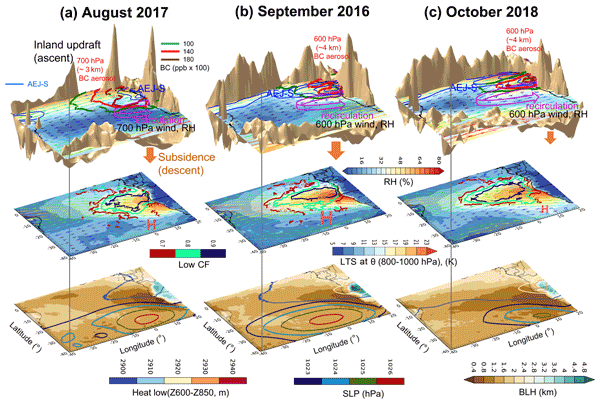
The variability in the meteorological fields during each deployment is highly modulated at a daily to synoptic timescale. This paper, along with part 1, the climatological overview paper, provides a meteorological context for interpreting the airborne measurements gathered during the three ORACLES deployments. This study supports related studies focusing on the detailed investigation of the processes controlling stratocumulus decks, aerosol lifting, transport, and their interactions.
Paul A. Barrett, Steven J. Abel, Hugh Coe, Ian Crawford, Amie Dobracki, James Haywood, Steve Howell, Anthony Jones, Justin Langridge, Greg M. McFarquhar, Graeme J. Nott, Hannah Price, Jens Redemann, Yohei Shinozuka, Kate Szpek, Jonathan W. Taylor, Robert Wood, Huihui Wu, Paquita Zuidema, Stéphane Bauguitte, Ryan Bennett, Keith Bower, Hong Chen, Sabrina Cochrane, Michael Cotterell, Nicholas Davies, David Delene, Connor Flynn, Andrew Freedman, Steffen Freitag, Siddhant Gupta, David Noone, Timothy B. Onasch, James Podolske, Michael R. Poellot, Sebastian Schmidt, Stephen Springston, Arthur J. Sedlacek III, Jamie Trembath, Alan Vance, Maria A. Zawadowicz, and Jianhao Zhang
Atmos. Meas. Tech., 15, 6329–6371, https://doi.org/10.5194/amt-15-6329-2022, https://doi.org/10.5194/amt-15-6329-2022, 2022
Short summary
Short summary
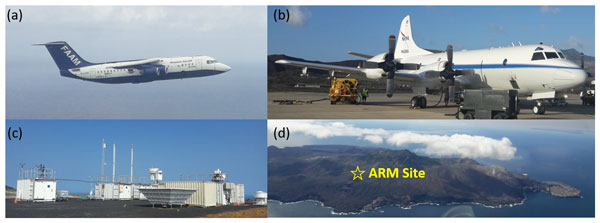
To better understand weather and climate, it is vital to go into the field and collect observations. Often measurements take place in isolation, but here we compared data from two aircraft and one ground-based site. This was done in order to understand how well measurements made on one platform compared to those made on another. Whilst this is easy to do in a controlled laboratory setting, it is more challenging in the real world, and so these comparisons are as valuable as they are rare.
Siddhant Gupta, Greg M. McFarquhar, Joseph R. O'Brien, Michael R. Poellot, David J. Delene, Ian Chang, Lan Gao, Feng Xu, and Jens Redemann
Atmos. Chem. Phys., 22, 12923–12943, https://doi.org/10.5194/acp-22-12923-2022, https://doi.org/10.5194/acp-22-12923-2022, 2022
Short summary
Short summary
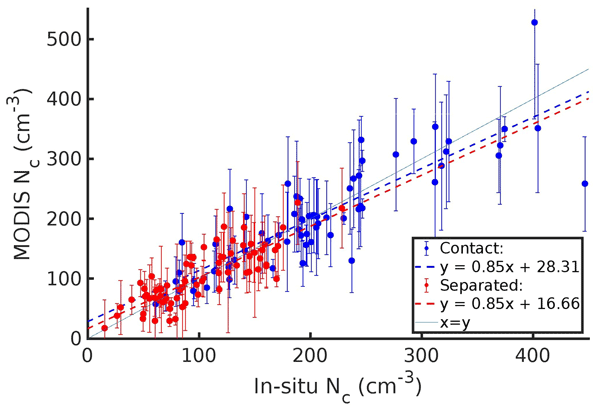
The ability of NASA’s Terra and Aqua satellites to retrieve cloud properties and estimate the changes in cloud properties due to aerosol–cloud interactions (ACI) was examined. There was good agreement between satellite retrievals and in situ measurements over the southeast Atlantic Ocean. This suggests that, combined with information on aerosol properties, satellite retrievals of cloud properties can be used to study ACI over larger domains and longer timescales in the absence of in situ data.
Willi Schimmel, Heike Kalesse-Los, Maximilian Maahn, Teresa Vogl, Andreas Foth, Pablo Saavedra Garfias, and Patric Seifert
Atmos. Meas. Tech., 15, 5343–5366, https://doi.org/10.5194/amt-15-5343-2022, https://doi.org/10.5194/amt-15-5343-2022, 2022
Short summary
Short summary
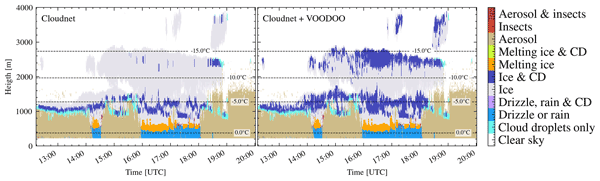
This study introduces the novel Doppler radar spectra-based machine learning approach VOODOO (reVealing supercOOled liquiD beyOnd lidar attenuatiOn). VOODOO is a powerful probability-based extension to the existing Cloudnet hydrometeor target classification, enabling the detection of liquid-bearing cloud layers beyond complete lidar attenuation via user-defined p* threshold. VOODOO performs best for (multi-layer) stratiform and deep mixed-phase clouds with liquid water path > 100 g m−2.
Samuel E. LeBlanc, Michal Segal-Rozenhaimer, Jens Redemann, Connor Flynn, Roy R. Johnson, Stephen E. Dunagan, Robert Dahlgren, Jhoon Kim, Myungje Choi, Arlindo da Silva, Patricia Castellanos, Qian Tan, Luke Ziemba, Kenneth Lee Thornhill, and Meloë Kacenelenbogen
Atmos. Chem. Phys., 22, 11275–11304, https://doi.org/10.5194/acp-22-11275-2022, https://doi.org/10.5194/acp-22-11275-2022, 2022
Short summary
Short summary
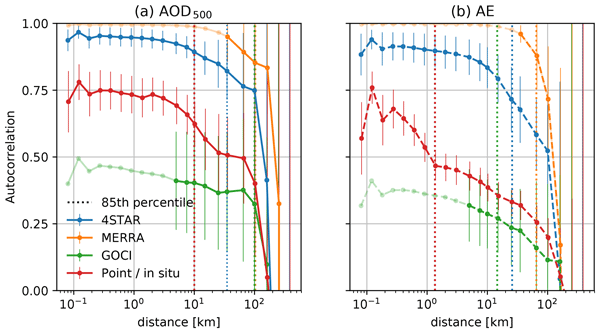
Airborne observations of atmospheric particles and pollution over Korea during a field campaign in May–June 2016 showed that the smallest atmospheric particles are present in the lowest 2 km of the atmosphere. The aerosol size is more spatially variable than optical thickness. We show this with remote sensing (4STAR), in situ (LARGE) observations, satellite measurements (GOCI), and modeled properties (MERRA-2), and it is contrary to the current understanding.
Caroline Dang, Michal Segal-Rozenhaimer, Haochi Che, Lu Zhang, Paola Formenti, Jonathan Taylor, Amie Dobracki, Sara Purdue, Pui-Shan Wong, Athanasios Nenes, Arthur Sedlacek III, Hugh Coe, Jens Redemann, Paquita Zuidema, Steven Howell, and James Haywood
Atmos. Chem. Phys., 22, 9389–9412, https://doi.org/10.5194/acp-22-9389-2022, https://doi.org/10.5194/acp-22-9389-2022, 2022
Short summary
Short summary
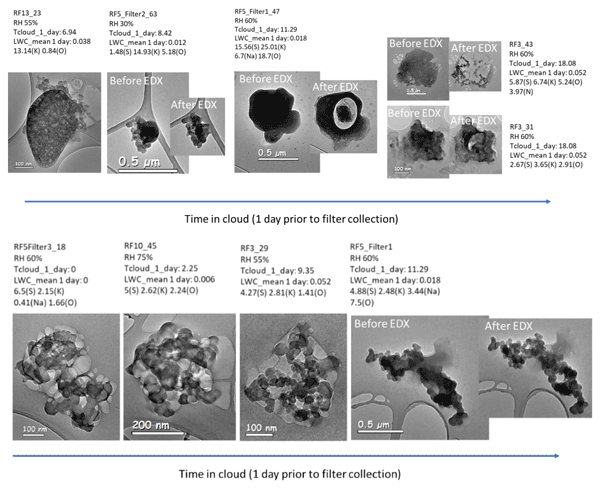
Transmission electron microscopy was used to analyze aged African smoke particles and how the smoke interacts with the marine atmosphere. We found that the volatility of organic aerosol increases with biomass burning plume age, that black carbon is often mixed with potassium salts and that the marine atmosphere can incorporate Na and Cl into smoke particles. Marine salts are more processed when mixed with smoke plumes, and there are interesting Cl-rich yet Na-absent marine particles.

Carola Barrientos-Velasco, Hartwig Deneke, Anja Hünerbein, Hannes J. Griesche, Patric Seifert, and Andreas Macke
Atmos. Chem. Phys., 22, 9313–9348, https://doi.org/10.5194/acp-22-9313-2022, https://doi.org/10.5194/acp-22-9313-2022, 2022
Short summary
Short summary
This article describes an intercomparison of radiative fluxes and cloud properties from satellite, shipborne observations, and 1D radiative transfer simulations. The analysis focuses on research for PS106 expedition aboard the German research vessel, Polarstern. The results are presented in detailed case studies, time series for the PS106 cruise and extended to the central Arctic region. The findings illustrate the main periods of agreement and discrepancies of both points of view.

Haochi Che, Michal Segal-Rozenhaimer, Lu Zhang, Caroline Dang, Paquita Zuidema, Arthur J. Sedlacek III, Xiaoye Zhang, and Connor Flynn
Atmos. Chem. Phys., 22, 8767–8785, https://doi.org/10.5194/acp-22-8767-2022, https://doi.org/10.5194/acp-22-8767-2022, 2022
Short summary
Short summary
A 17-month in situ study on Ascension Island found low single-scattering albedo and strong absorption enhancement of the marine boundary layer aerosols during biomass burnings on the African continent, along with apparent patterns of regular monthly variability. We further discuss the characteristics and drivers behind these changes and find that biomass burning conditions in Africa may be the main factor influencing the optical properties of marine boundary aerosols.
Meloë S. F. Kacenelenbogen, Qian Tan, Sharon P. Burton, Otto P. Hasekamp, Karl D. Froyd, Yohei Shinozuka, Andreas J. Beyersdorf, Luke Ziemba, Kenneth L. Thornhill, Jack E. Dibb, Taylor Shingler, Armin Sorooshian, Reed W. Espinosa, Vanderlei Martins, Jose L. Jimenez, Pedro Campuzano-Jost, Joshua P. Schwarz, Matthew S. Johnson, Jens Redemann, and Gregory L. Schuster
Atmos. Chem. Phys., 22, 3713–3742, https://doi.org/10.5194/acp-22-3713-2022, https://doi.org/10.5194/acp-22-3713-2022, 2022
Short summary
Short summary
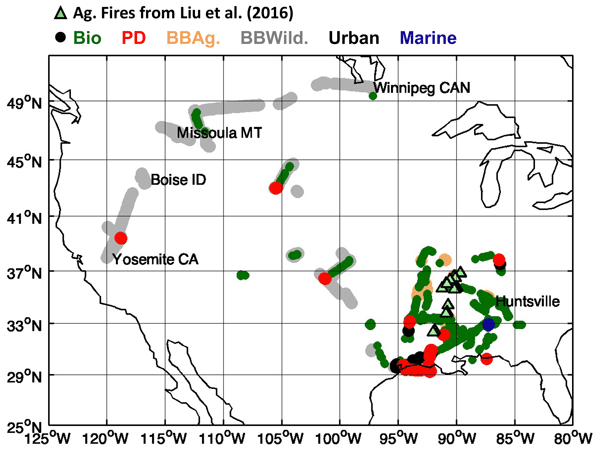
The impact of aerosols on Earth's radiation budget and human health is important and strongly depends on their composition. One desire of our scientific community is to derive the composition of the aerosol from satellite sensors. However, satellites observe aerosol optical properties (and not aerosol composition) based on remote sensing instrumentation. This study assesses how much aerosol optical properties can tell us about aerosol composition.

Teresa Vogl, Maximilian Maahn, Stefan Kneifel, Willi Schimmel, Dmitri Moisseev, and Heike Kalesse-Los
Atmos. Meas. Tech., 15, 365–381, https://doi.org/10.5194/amt-15-365-2022, https://doi.org/10.5194/amt-15-365-2022, 2022
Short summary
Short summary
We are using machine learning techniques, a type of artificial intelligence, to detect graupel formation in clouds. The measurements used as input to the machine learning framework were performed by cloud radars. Cloud radars are instruments located at the ground, emitting radiation with wavelenghts of a few millimeters vertically into the cloud and measuring the back-scattered signal. Our novel technique can be applied to different radar systems and different weather conditions.
Heike Kalesse-Los, Willi Schimmel, Edward Luke, and Patric Seifert
Atmos. Meas. Tech., 15, 279–295, https://doi.org/10.5194/amt-15-279-2022, https://doi.org/10.5194/amt-15-279-2022, 2022
Short summary
Short summary
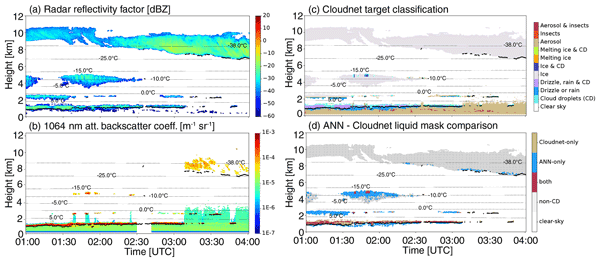
It is important to detect the vertical distribution of cloud droplets and ice in mixed-phase clouds. Here, an artificial neural network (ANN) previously developed for Arctic clouds is applied to a mid-latitudinal cloud radar data set. The performance of this technique is contrasted to the Cloudnet target classification. For thick/multi-layer clouds, the machine learning technique is better at detecting liquid than Cloudnet, but if lidar data are available Cloudnet is at least as good as the ANN.
Sabrina P. Cochrane, K. Sebastian Schmidt, Hong Chen, Peter Pilewskie, Scott Kittelman, Jens Redemann, Samuel LeBlanc, Kristina Pistone, Michal Segal Rozenhaimer, Meloë Kacenelenbogen, Yohei Shinozuka, Connor Flynn, Rich Ferrare, Sharon Burton, Chris Hostetler, Marc Mallet, and Paquita Zuidema
Atmos. Meas. Tech., 15, 61–77, https://doi.org/10.5194/amt-15-61-2022, https://doi.org/10.5194/amt-15-61-2022, 2022
Short summary
Short summary
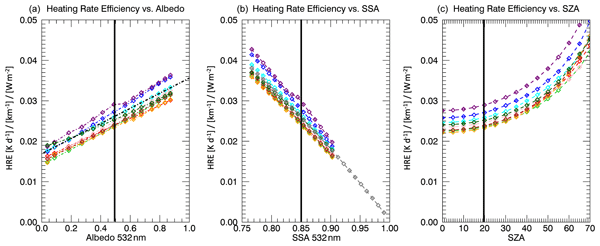
This work presents heating rates derived from aircraft observations from the 2016 and 2017 field campaigns of ORACLES (ObseRvations of Aerosols above CLouds and their intEractionS). We separate the total heating rates into aerosol and gas (primarily water vapor) absorption and explore some of the co-variability of heating rate profiles and their primary drivers, leading to the development of a new concept: the heating rate efficiency (HRE; the heating rate per unit aerosol extinction).
Amie Dobracki, Paquita Zuidema, Steve Howell, Pablo Saide, Steffen Freitag, Allison C. Aiken, Sharon P. Burton, Arthur J. Sedlacek III, Jens Redemann, and Robert Wood
Atmos. Chem. Phys. Discuss., https://doi.org/10.5194/acp-2021-1081, https://doi.org/10.5194/acp-2021-1081, 2022
Preprint withdrawn
Short summary
Short summary
The global maximum of shortwave-absorbing aerosol above cloud occurs above the southeast Atlantic, where the biomass-burning aerosol provides a distinct aerosol radiative warming of regional climate. The smoke aerosols are unusually highly absorbing of sunlight. This study seeks to understand the cause. We conclude the aerosol is already strongly absorbing at the fire emission source, but that chemical aging, through encouraging a net loss of organic aerosol, also contributes.
Sarah J. Doherty, Pablo E. Saide, Paquita Zuidema, Yohei Shinozuka, Gonzalo A. Ferrada, Hamish Gordon, Marc Mallet, Kerry Meyer, David Painemal, Steven G. Howell, Steffen Freitag, Amie Dobracki, James R. Podolske, Sharon P. Burton, Richard A. Ferrare, Calvin Howes, Pierre Nabat, Gregory R. Carmichael, Arlindo da Silva, Kristina Pistone, Ian Chang, Lan Gao, Robert Wood, and Jens Redemann
Atmos. Chem. Phys., 22, 1–46, https://doi.org/10.5194/acp-22-1-2022, https://doi.org/10.5194/acp-22-1-2022, 2022
Short summary
Short summary
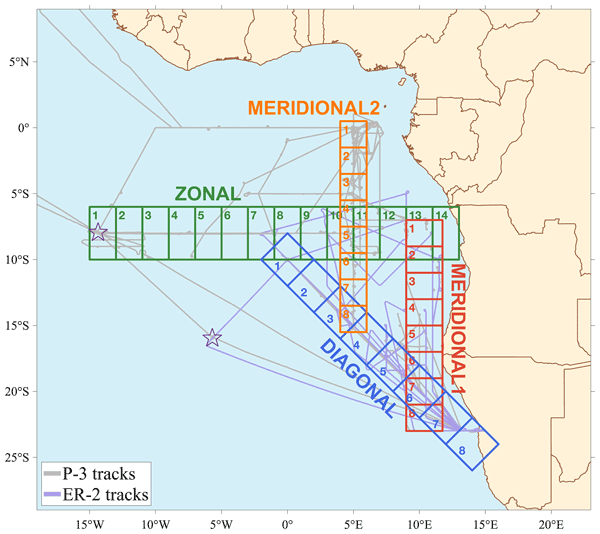
Between July and October, biomass burning smoke is advected over the southeastern Atlantic Ocean, leading to climate forcing. Model calculations of forcing by this plume vary significantly in both magnitude and sign. This paper compares aerosol and cloud properties observed during three NASA ORACLES field campaigns to the same in four models. It quantifies modeled biases in properties key to aerosol direct radiative forcing and evaluates how these biases propagate to biases in forcing.
Silke Trömel, Clemens Simmer, Ulrich Blahak, Armin Blanke, Sabine Doktorowski, Florian Ewald, Michael Frech, Mathias Gergely, Martin Hagen, Tijana Janjic, Heike Kalesse-Los, Stefan Kneifel, Christoph Knote, Jana Mendrok, Manuel Moser, Gregor Köcher, Kai Mühlbauer, Alexander Myagkov, Velibor Pejcic, Patric Seifert, Prabhakar Shrestha, Audrey Teisseire, Leonie von Terzi, Eleni Tetoni, Teresa Vogl, Christiane Voigt, Yuefei Zeng, Tobias Zinner, and Johannes Quaas
Atmos. Chem. Phys., 21, 17291–17314, https://doi.org/10.5194/acp-21-17291-2021, https://doi.org/10.5194/acp-21-17291-2021, 2021
Short summary
Short summary
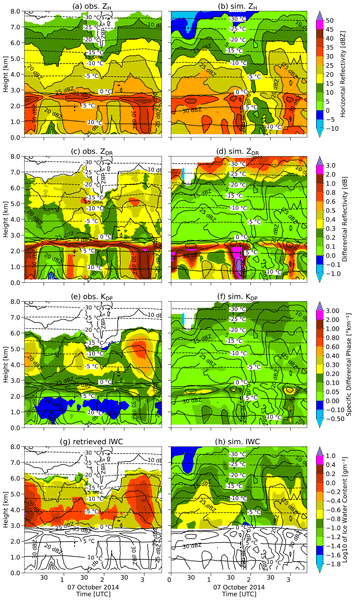
The article introduces the ACP readership to ongoing research in Germany on cloud- and precipitation-related process information inherent in polarimetric radar measurements, outlines pathways to inform atmospheric models with radar-based information, and points to remaining challenges towards an improved fusion of radar polarimetry and atmospheric modelling.
Ju-Mee Ryoo, Leonhard Pfister, Rei Ueyama, Paquita Zuidema, Robert Wood, Ian Chang, and Jens Redemann
Atmos. Chem. Phys., 21, 16689–16707, https://doi.org/10.5194/acp-21-16689-2021, https://doi.org/10.5194/acp-21-16689-2021, 2021
Short summary
Short summary
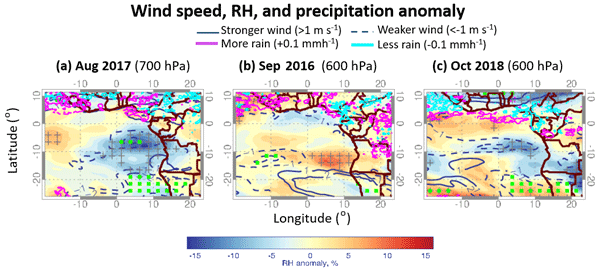
Part 1 of the meteorological overview paper highlights the anomalous meteorological characteristics during the ORACLES deployment compared to the climatological mean at monthly timescales. The upper-level wave disturbance and the associated anomalous circulation explain the weakening of AEJ-S through the reduction of the strength of the heat low over the land during August 2017. This may also help explain the anomalously low aerosol optical depth observed in the August 2017 ORACLES deployment.
Jonas Witthuhn, Anja Hünerbein, Florian Filipitsch, Stefan Wacker, Stefanie Meilinger, and Hartwig Deneke
Atmos. Chem. Phys., 21, 14591–14630, https://doi.org/10.5194/acp-21-14591-2021, https://doi.org/10.5194/acp-21-14591-2021, 2021
Short summary
Short summary
Knowledge of aerosol–radiation interactions is important for understanding the climate system and for the renewable energy sector. Here, two complementary approaches are used to assess the consistency of the underlying aerosol properties and the resulting radiative effect in clear-sky conditions over Germany in 2015. An approach based on clear-sky models and broadband irradiance observations is contrasted to the use of explicit radiative transfer simulations using CAMS reanalysis data.
Cited articles
Anderson, K. S., Hansen, C. W., Holmgren, W. F., Jensen, A. R., Mikofski, M. A., and Driesse, A.: pvlib python: 2023 project update, Journal of Open Source Software, 8, 5994, https://doi.org/10.21105/joss.05994, 2023. a
Barry, J., Böttcher, D., Pfeilsticker, K., Herman-Czezuch, A., Kimiaie, N., Meilinger, S., Schirrmeister, C., Deneke, H., Witthuhn, J., and Gödde, F.: Dynamic model of photovoltaic module temperature as a function of atmospheric conditions, Adv. Sci. Res., 17, 165–173, https://doi.org/10.5194/asr-17-165-2020, 2020. a
Barry, J., Meilinger, S., Pfeilsticker, K., Herman-Czezuch, A., Kimiaie, N., Schirrmeister, C., Yousif, R., Buchmann, T., Grabenstein, J., Deneke, H., Witthuhn, J., Emde, C., Gödde, F., Mayer, B., Scheck, L., Schroedter-Homscheidt, M., Hofbauer, P., and Struck, M.: Irradiance and cloud optical properties from solar photovoltaic systems, Atmos. Meas. Tech., 16, 4975–5007, https://doi.org/10.5194/amt-16-4975-2023, 2023. a
Berg, L. K. and Kassianov, E. I.: Temporal Variability of Fair-Weather Cumulus Statistics at the ACRF SGP Site, J. Climate, 21, 3344–3358, https://doi.org/10.1175/2007JCLI2266.1, 2008. a
Bradski, G.: The OpenCV Library, Dr. Dobb's Journal of Software Tools, GitHub [code], https://github.com/opencv (last access: 24 April 2026), 2000. a
Cadeddu, M. and Tuftedal, M.: Microwave Radiometer (MWRLOS), Atmospheric Radiation Measurement (ARM) User Facility [data set], https://doi.org/10.5439/1999490, 1993. a, b
Darko, E., Gondor, K. O., Kovács, V., and Janda, T.: Changes in the light environment: Short‐term responses of photosynthesis and metabolism in spinach, Physiol. Plantarum, 175, e13996, https://doi.org/10.1111/ppl.13996, 2023. a
Deneke, H., Barrientos-Velasco, C., Bley, S., Hünerbein, A., Lenk, S., Macke, A., Meirink, J. F., Schroedter-Homscheidt, M., Senf, F., Wang, P., Werner, F., and Witthuhn, J.: Increasing the spatial resolution of cloud property retrievals from Meteosat SEVIRI by use of its high-resolution visible channel: implementation and examples, Atmos. Meas. Tech., 14, 5107–5126, https://doi.org/10.5194/amt-14-5107-2021, 2021. a
Driemel, A., Augustine, J., Behrens, K., Colle, S., Cox, C., Cuevas-Agulló, E., Denn, F. M., Duprat, T., Fukuda, M., Grobe, H., Haeffelin, M., Hodges, G., Hyett, N., Ijima, O., Kallis, A., Knap, W., Kustov, V., Long, C. N., Longenecker, D., Lupi, A., Maturilli, M., Mimouni, M., Ntsangwane, L., Ogihara, H., Olano, X., Olefs, M., Omori, M., Passamani, L., Pereira, E. B., Schmithüsen, H., Schumacher, S., Sieger, R., Tamlyn, J., Vogt, R., Vuilleumier, L., Xia, X., Ohmura, A., and König-Langlo, G.: Baseline Surface Radiation Network (BSRN): structure and data description (1992–2017), Earth Syst. Sci. Data, 10, 1491–1501, https://doi.org/10.5194/essd-10-1491-2018, 2018. a
Durand, M., Murchie, E. H., Lindfors, A. V., Urban, O., Aphalo, P. J., and Robson, T. M.: Diffuse solar radiation and canopy photosynthesis in a changing environment, Agr. Forest Meteorol., 311, 108684, https://doi.org/10.1016/j.agrformet.2021.108684, 2021. a
Farnebäck, G.: Two-Frame Motion Estimation Based on Polynomial Expansion, in: Scandinavian Conference on Image Analysis, https://doi.org/10.1007/3-540-45103-X_50, 2003. a
Flynn, D. and Morris, V.: Total Sky Imager (TSISKYCOVER), Atmospheric Radiation Measurement (ARM) User Facility [data set], https://doi.org/10.5439/1992207, 2000. a, b
Gristey, J. J., Feingold, G., Glenn, I. B., Schmidt, K. S., and Chen, H.: On the Relationship Between Shallow Cumulus Cloud Field Properties and Surface Solar Irradiance, Geophys. Res. Lett., 47, https://doi.org/10.1029/2020GL090152, 2020. a
Gueymard, C. A.: Cloud and albedo enhancement impacts on solar irradiance using high-frequency measurements from thermopile and photodiode radiometers. Part 1: Impacts on global horizontal irradiance, Sol. Energy, 153, 755–765, https://doi.org/10.1016/j.solener.2017.05.004, 2017. a, b
He, Z., Libois, Q., Villefranque, N., Deneke, H., Witthuhn, J., and Couvreux, F.: Combining observations and simulations to investigate the small-scale variability of surface solar irradiance under continental cumulus clouds, Atmos. Chem. Phys., 24, 11391–11408, https://doi.org/10.5194/acp-24-11391-2024, 2024. a, b, c, d
Hogan, R. J., Fielding, M. D., Barker, H. W., Villefranque, N., and Schäfer, S. A. K.: Entrapment: An Important Mechanism to Explain the Shortwave 3D Radiative Effect of Clouds, J. Atmos. Sci., 2019, 48–66, https://doi.org/10.1175/JAS-D-18-0366.1, 2019. a
Hourdin, F., Mauritsen, T., Gettelman, A., Golaz, J.-C., Balaji, V., Duan, Q., Folini, D., Ji, D., Klocke, D., Qian, Y., Rauser, F., Rio, C., Tomassini, L., Watanabe, M., and Williamson, D.: The Art and Science of Climate Model Tuning, B. Am. Meteorol. Soc., 98, 589–602, https://doi.org/10.1175/BAMS-D-15-00135.1, 2017. a
Ineichen, P.: A broadband simplified version of the Solis clear sky model, Sol. Energy, 82, 758–762, https://doi.org/10.1016/j.solener.2008.02.009, 2008. a
Ineichen, P.: Validation of models that estimate the clear sky global and beam solar irradiance, Sol. Energy, 132, 332–344, https://doi.org/10.1016/j.solener.2016.03.017, 2016. a
Jakub, F. and Mayer, B.: The role of 1-D and 3-D radiative heating in the organization of shallow cumulus convection and the formation of cloud streets, Atmos. Chem. Phys., 17, 13317–13327, https://doi.org/10.5194/acp-17-13317-2017, 2017. a
Kreuwel, F. P., Mol, W. B., Vilà-Guerau De Arellano, J., and Van Heerwaarden, C. C.: Characterizing solar PV grid overvoltages by data blending advanced metering infrastructure with meteorology, Sol. Energy, 227, 312–320, https://doi.org/10.1016/j.solener.2021.09.009, 2021. a
Lappalainen, K. and Valkealahti, S.: Recognition and modelling of irradiance transitions caused by moving clouds, Sol. Energy, 112, 55–67, https://doi.org/10.1016/j.solener.2014.11.018, 2015. a, b
Lave, M., Kleissl, J., and Arias-Castro, E.: High-frequency irradiance fluctuations and geographic smoothing, Sol. Energy, 86, 2190–2199, https://doi.org/10.1016/j.solener.2011.06.031, 2012. a
Lohmann, G. M., Monahan, A. H., and Heinemann, D.: Local short-term variability in solar irradiance, Atmos. Chem. Phys., 16, 6365–6379, https://doi.org/10.5194/acp-16-6365-2016, 2016. a
Macke, A., Seifert, P., Baars, H., Barthlott, C., Beekmans, C., Behrendt, A., Bohn, B., Brueck, M., Bühl, J., Crewell, S., Damian, T., Deneke, H., Düsing, S., Foth, A., Di Girolamo, P., Hammann, E., Heinze, R., Hirsikko, A., Kalisch, J., Kalthoff, N., Kinne, S., Kohler, M., Löhnert, U., Madhavan, B. L., Maurer, V., Muppa, S. K., Schween, J., Serikov, I., Siebert, H., Simmer, C., Späth, F., Steinke, S., Träumner, K., Trömel, S., Wehner, B., Wieser, A., Wulfmeyer, V., and Xie, X.: The HD(CP)2 Observational Prototype Experiment (HOPE) – an overview, Atmos. Chem. Phys., 17, 4887–4914, https://doi.org/10.5194/acp-17-4887-2017, 2017. a, b
Madhavan, B. L., Kalisch, J., and Macke, A.: Shortwave surface radiation network for observing small-scale cloud inhomogeneity fields, Atmos. Meas. Tech., 9, 1153–1166, https://doi.org/10.5194/amt-9-1153-2016, 2016. a, b, c, d
Madhavan, B. L., Deneke, H., Witthuhn, J., and Macke, A.: Multiresolution analysis of the spatiotemporal variability in global radiation observed by a dense network of 99 pyranometers, Atmos. Chem. Phys., 17, 3317–3338, https://doi.org/10.5194/acp-17-3317-2017, 2017. a, b
Mason, E. A.: Transport Properties of Gases Obeying a Modified Buckingham (Exp-Six) Potential, J. Chem. Phys., 22, 169–186, https://doi.org/10.1063/1.1740026, 1954. a
Meyer, D., Hogan, R. J., Dueben, P. D., and Mason, S. L.: Machine Learning Emulation of 3D Cloud Radiative Effects, J. Adv. Model. Earth Sy., 14, e2021MS002550, https://doi.org/10.1029/2021MS002550, 2022. a
Mol, W., Heusinkveld, B., Mangan, M. R., Hartogensis, O., Veerman, M., and Van Heerwaarden, C.: Observed patterns of surface solar irradiance under cloudy and clear‐sky conditions, Q. J. Roy. Meteor. Soc., 150, 2338–2363, https://doi.org/10.1002/qj.4712, 2024. a, b, c
Mol, W. B., Van Stratum, B. J. H., Knap, W. H., and Van Heerwaarden, C. C.: Reconciling Observations of Solar Irradiance Variability With Cloud Size Distributions, J. Geophys. Res.-Atmos., 128, e2022JD037894, https://doi.org/10.1029/2022JD037894, 2023. a
Oktem, R. and Romps, D.: Clouds Optically Gridded by Stereo COGS product, Atmospheric Radiation Measurement (ARM) User Facility [data set], https://doi.org/10.5439/1877293, 2018. a
Omoyele, O., Hoffmann, M., Koivisto, M., Larrañeta, M., Weinand, J. M., Linßen, J., and Stolten, D.: Increasing the resolution of solar and wind time series for energy system modeling: A review, Renew. Sust. Energ. Rev., 189, 113 792, https://doi.org/10.1016/j.rser.2023.113792, 2024. a
Ranalli, J., Peerlings, E. E., and Schmidt, T.: Cloud Advection and Spatial Variability of Solar Irradiance, in: 2020 47th IEEE Photovoltaic Specialists Conference (PVSC), IEEE, Calgary, AB, Canada, ISBN 9781728161150, 37–44, https://doi.org/10.1109/PVSC45281.2020.9300700, 2020. a
Romps, D. M. and Öktem, R.: Observing Clouds in 4D with Multiview Stereophotogrammetry, B. Am. Meteorol. Soc., 99, 2575–2586, https://doi.org/10.1175/BAMS-D-18-0029.1, 2018. a
Romps, D. M. and Vogelmann, A. M.: Methods for Estimating 2D Cloud Size Distributions from 1D Observations, J. Atmos. Sci., 74, 3405–3417, https://doi.org/10.1175/JAS-D-17-0105.1, 2017. a
Schmithüsen, H., Koppe, R., Sieger, R., and König-Langlo, G.: BSRN Toolbox V2.5 – a tool to create quality checked output files from BSRN datasets and station-to-archive files, Alfred Wegener Institute, Helmholtz Centre for Polar and Marine Research, Bremerhaven, PANGAEA [data set], https://doi.org/10.1594/PANGAEA.901332, 2019. a
Schreck, S., Schroedter-Homscheidt, M., Klein, M., and Cao, K. K.: Satellite image-based generation of high frequency solar radiation time series for the assessment of solar energy systems, Meteorol. Z., 29, 377–392, https://doi.org/10.1127/metz/2020/1008, 2020. a
Schroedter-Homscheidt, M., Kosmale, M., Jung, S., and Kleissl, J.: Classifying ground-measured 1 minute temporal variability within hourly intervals for direct normal irradiances, Meteorol. Z., 27, 161–179, https://doi.org/10.1127/metz/2018/0875, 2018. a
Schroedter-Homscheidt, M., Kosmale, M., and Saint-Drenan, Y.: Classifying direct normal irradiance 1-minute temporal variability from spatial characteristics of geostationary satellite-based cloud observations, Meteorol. Z., 29, 131–145, https://doi.org/10.1127/metz/2020/0998, 2020. a
Sengupta, M. and Andreas, A.: Oahu Solar Measurement Grid (1-Year Archive): 1-Second Solar Irradiance; Oahu, Hawaii, National Laboratory of the Rockies [data set], https://doi.org/10.7799/1052451, 2010. a
Shi, Y., Sengupta, M., Xie, Y., Habte, A., Yang, J., Andreas, A., Reda, I., and Jaker, S.: Broadband Radiometer Station (BRS), Atmospheric Radiation Measurement (ARM) User Facility [data set], https://doi.org/10.5439/1550918, 2003. a, b, c
Tabar, M. R. R., Anvari, M., Lohmann, G., Heinemann, D., Wächter, M., Milan, P., Lorenz, E., and Peinke, J.: Kolmogorov spectrum of renewable wind and solar power fluctuations, Eur. Phys. J.-Spec. Top., 223, 2637–2644, https://doi.org/10.1140/epjst/e2014-02217-8, 2014. a
Tijhuis, M., Van Stratum, B. J. H., Veerman, M. A., and Van Heerwaarden, C. C.: An Efficient Parameterization for Surface Shortwave 3D Radiative Effects in Large‐Eddy Simulations of Shallow Cumulus Clouds, J. Adv. Model. Earth Sy., 15, e2022MS003262, https://doi.org/10.1029/2022MS003262, 2023. a, b
Tomson, T.: Fast dynamic processes of solar radiation, Sol. Energy, 84, 318–323, https://doi.org/10.1016/j.solener.2009.11.013, 2010. a
Verbois, H., Saint-Drenan, Y.-M., Becquet, V., Gschwind, B., and Blanc, P.: Retrieval of surface solar irradiance from satellite imagery using machine learning: pitfalls and perspectives, Atmos. Meas. Tech., 16, 4165–4181, https://doi.org/10.5194/amt-16-4165-2023, 2023. a
Villefranque, N. and Hogan, R. J.: Evidence for the 3D Radiative Effects of Boundary‐Layer Clouds From Observations of Direct and Diffuse Surface Solar Fluxes, Geophys. Res. Lett., 48, https://doi.org/10.1029/2021GL093369, 2021. a
Villefranque, N., Barker, H. W., Cole, J. N. S., and Qu, Z.: A Functionalized Monte Carlo 3D Radiative Transfer Model: Radiative Effects of Clouds Over Reflecting Surfaces, J. Adv. Model. Earth Sy., 15, e2023MS003674, https://doi.org/10.1029/2023MS003674, 2023. a
Vilà‐Guerau De Arellano, J., Hartogensis, O., Benedict, I., De Boer, H., Bosman, P. J. M., Botía, S., Cecchini, M. A., Faassen, K. A. P., González‐Armas, R., Van Diepen, K., Heusinkveld, B. G., Janssens, M., Lobos‐Roco, F., Luijkx, I. T., Machado, L. A. T., Mangan, M. R., Moene, A. F., Mol, W. B., Van Der Molen, M., Moonen, R., Ouwersloot, H. G., Park, S., Pedruzo‐Bagazgoitia, X., Röckmann, T., Adnew, G. A., Ronda, R., Sikma, M., Schulte, R., Van Stratum, B. J. H., Veerman, M. A., Van Zanten, M. C., and Van Heerwaarden, C. C.: Advancing understanding of land–atmosphere interactions by breaking discipline and scale barriers, Ann. NY Acad. Sci., 1522, 74–97, https://doi.org/10.1111/nyas.14956, 2023. a
Virtanen, P., Gommers, R., Oliphant, T. E., Haberland, M., Reddy, T., Cournapeau, D., Burovski, E., Peterson, P., Weckesser, W., Bright, J., Van Der Walt, S. J., Brett, M., Wilson, J., Millman, K. J., Mayorov, N., Nelson, A. R. J., Jones, E., Kern, R., Larson, E., Carey, C. J., Polat, I., Feng, Y., Moore, E. W., VanderPlas, J., Laxalde, D., Perktold, J., Cimrman, R., Henriksen, I., Quintero, E. A., Harris, C. R., Archibald, A. M., Ribeiro, A. H., Pedregosa, F., Van Mulbregt, P., SciPy 1.0 Contributors, Vijaykumar, A., Bardelli, A. P., Rothberg, A., Hilboll, A., Kloeckner, A., Scopatz, A., Lee, A., Rokem, A., Woods, C. N., Fulton, C., Masson, C., Häggström, C., Fitzgerald, C., Nicholson, D. A., Hagen, D. R., Pasechnik, D. V., Olivetti, E., Martin, E., Wieser, E., Silva, F., Lenders, F., Wilhelm, F., Young, G., Price, G. A., Ingold, G.-L., Allen, G. E., Lee, G. R., Audren, H., Probst, I., Dietrich, J. P., Silterra, J., Webber, J. T., Slavič, J., Nothman, J., Buchner, J., Kulick, J., Schönberger, J. L., De Miranda Cardoso, J. V., Reimer, J., Harrington, J., Rodríguez, J. L. C., Nunez-Iglesias, J., Kuczynski, J., Tritz, K., Thoma, M., Newville, M., Kümmerer, M., Bolingbroke, M., Tartre, M., Pak, M., Smith, N. J., Nowaczyk, N., Shebanov, N., Pavlyk, O., Brodtkorb, P. A., Lee, P., McGibbon, R. T., Feldbauer, R., Lewis, S., Tygier, S., Sievert, S., Vigna, S., Peterson, S., More, S., Pudlik, T., Oshima, T., Pingel, T. J., Robitaille, T. P., Spura, T., Jones, T. R., Cera, T., Leslie, T., Zito, T., Krauss, T., Upadhyay, U., Halchenko, Y. O., and Vázquez-Baeza, Y.: SciPy 1.0: fundamental algorithms for scientific computing in Python, Nat. Methods, 17, 261–272, https://doi.org/10.1038/s41592-019-0686-2, 2020. a, b, c
Wiltink, J. I., Deneke, H., Saint-Drenan, Y.-M., van Heerwaarden, C. C., and Meirink, J. F.: Validating global horizontal irradiance retrievals from Meteosat SEVIRI at increased spatial resolution against a dense network of ground-based observations, Atmos. Meas. Tech., 17, 6003–6024, https://doi.org/10.5194/amt-17-6003-2024, 2024. a
Witthuhn, J., Hünerbein, A., Filipitsch, F., Wacker, S., Meilinger, S., and Deneke, H.: Aerosol properties and aerosol–radiation interactions in clear-sky conditions over Germany, Atmos. Chem. Phys., 21, 14591–14630, https://doi.org/10.5194/acp-21-14591-2021, 2021. a
Witthuhn, J., Deneke, H., and Macke, A.: PyrNet readthedocs, PyrNet, https://pyrnet.readthedocs.io/ (last access: 6 August 2025), 2023. a
Witthuhn, J., Deneke, H., Flynn, C., Macke, A., Redemann, J., Fakoya, A. A., Lamkin, B. F., Lenhardt, E. D., Mitchell, L. T., Ritsche, M., Schatz, J., Ritter, O., Urban, J., and West, E. K.: TROPOS pyranometer network (PyrNet) observational data set collected during the S2VSR field campaign, Atmospheric Radiation Measurement (ARM) User Facility [data set], https://doi.org/10.5439/2335684, 2024. a, b
Witthuhn, J., Deneke, H., Macke, A., and Kalesse-Los, H.: Characterisation of cloud shadow transition signatures using a dense pyranometer network: Code, Notebooks and Datasets, Zenodo [code], https://doi.org/10.5281/zenodo.17482466, 2025. a
Yordanov, G. H., Saetre, T. O., and Midtgard, O.-M.: 100-millisecond Resolution for Accurate Overirradiance Measurements, IEEE J. Photovolt., 3, 1354–1360, https://doi.org/10.1109/JPHOTOV.2013.2264621, 2013. a
Zhang, D.: Cloud optical properties from MFRSR Using Min Algorithm (MFRSRCLDOD1MIN), Atmospheric Radiation Measurement (ARM) User Facility [data set], https://doi.org/10.5439/1027296, 1997. a, b
Zhang, D., Ermold, B., and Morris, V.: Ceilometer (CEIL), Atmospheric Radiation Measurement (ARM) User Facility [data set], https://doi.org/10.5439/1181954, 1996. a, b
Zhang, D., Shi, Y., and Riihimaki, L.: Cloud Type Classification (CLDTYPE), Atmospheric Radiation Measurement (ARM) User Facility [data set], https://doi.org/10.5439/1349884, 2018. a, b
Short summary
This study examines how solar irradiance changes when sunlight passes from clear sky into cloud shadows, focusing on 3‑D radiative effects of shallow cumulus clouds. Using data from a dense pyranometer network and cloud masks from cameras we found that irradiance can rise up to 20 % above clear‑sky levels near cloud edges. Key drivers include sun‑cloud geometry and microphysical cloud properties. The results highlight the need to incorporate such 3‑D effects in atmospheric models.
This study examines how solar irradiance changes when sunlight passes from clear sky into cloud...


Altmetrics
Final-revised paper
Preprint