
Articles | Volume 26, issue 6
https://doi.org/10.5194/acp-26-4359-2026
© Author(s) 2026. This work is distributed under
the Creative Commons Attribution 4.0 License.
the Creative Commons Attribution 4.0 License.
https://doi.org/10.5194/acp-26-4359-2026
© Author(s) 2026. This work is distributed under
the Creative Commons Attribution 4.0 License.
the Creative Commons Attribution 4.0 License.
Research article
| 
27 Mar 2026
Research article |
| 27 Mar 2026
| 27 Mar 2026
The lapse rate and the cold point tropopause in the Asian Summer Monsoon anticyclone

Institute of Climate and Energy Systems (ICE-4), Forschungszentrum Jülich, 52425 Jülich, Germany
Bärbel Vogel
Institute of Climate and Energy Systems (ICE-4), Forschungszentrum Jülich, 52425 Jülich, Germany
Martina Krämer
Institute of Climate and Energy Systems (ICE-4), Forschungszentrum Jülich, 52425 Jülich, Germany
Christian Rolf
Institute of Climate and Energy Systems (ICE-4), Forschungszentrum Jülich, 52425 Jülich, Germany
Nicole Spelten
Institute of Climate and Energy Systems (ICE-4), Forschungszentrum Jülich, 52425 Jülich, Germany
Fabrizio Ravegnani
National Research Council – Institute for Atmospheric Sciences and Climate (ISAC-CNR), 40129 Bologna, Italy
Related authors
Oleh Kachula, Bärbel Vogel, Gebhard Günther, Rolf Müller, and Felix Ploeger
EGUsphere, https://doi.org/10.5194/egusphere-2026-3509, https://doi.org/10.5194/egusphere-2026-3509, 2026
This preprint is open for discussion and under review for Atmospheric Chemistry and Physics (ACP).
Short summary
Short summary
Locating the boundary of the Asian summer monsoon anticyclone (ASMA) in the upper atmosphere is important for understanding how this system distributes pollutants. We show that while different methodologies generally agree on the boundary's location and shape, certain methods are preferred under specific conditions. These findings will be of broad interest to researchers studying large-scale atmospheric circulations in upper atmosphere.
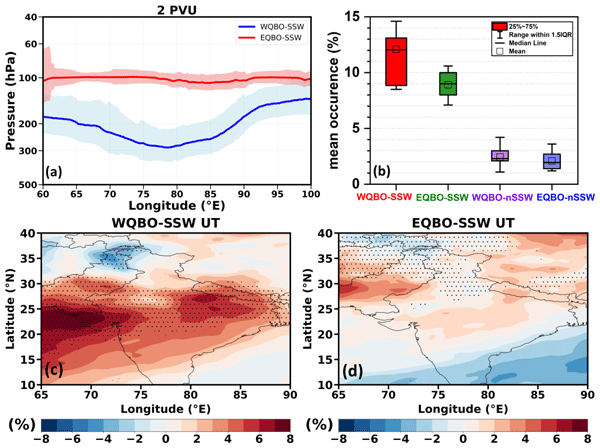
Shubhajyoti Roy, Satheesh P. R. Chandran, Suvarna Fadnavis, Vijay Sagar, Michaela I. Hegglin, Rolf Müller, and Prashant Chavan
Atmos. Chem. Phys., 26, 7047–7059, https://doi.org/10.5194/acp-26-7047-2026, https://doi.org/10.5194/acp-26-7047-2026, 2026
Short summary
Short summary
We show that stratospheric ozone intrusions associated with sudden stratospheric warming events occurring concurrent with the westerly phase of the Quasi-biennial oscillation enhance ozone in the upper troposphere and lower stratosphere over South Asia. The ozone enhancement increases ozone radiative forcing by 0.09±0.05 W m-2 over South Asia. This increase in ozone radiative forcing potentially exacerbates regional climate warming.
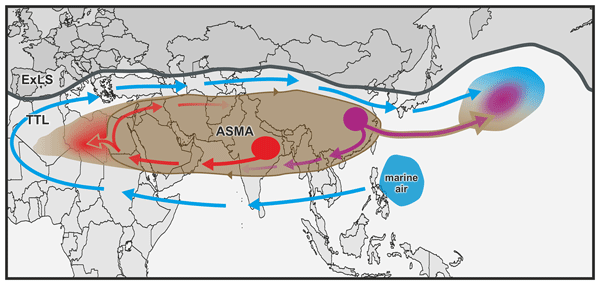
Bärbel Vogel, Valentin Lauther, Franziska Köllner, Fatih Ekinci, Christian Rolf, Johannes Strobel, Ronja van Luijt, C. Michael Volk, Stephan Borrmann, Antonis Dragoneas, Oliver Eppers, Sergej Molleker, Peter Hoor, Linda Ort, Franziska Weyland, Andreas Zahn, Jan Clemens, Gebhard Günther, Oleh Kachula, Rolf Müller, Felix Ploeger, and Martin Riese
Atmos. Chem. Phys., 26, 6283–6319, https://doi.org/10.5194/acp-26-6283-2026, https://doi.org/10.5194/acp-26-6283-2026, 2026
Short summary
Short summary
This work highlights the impact of the Asian summer monsoon on the chemical composition of the upper troposphere and lower stratosphere. Measurements of trace gases and aerosol particles uplifted by the Asian summer monsoon to higher altitudes are sparse. Here, we had the opportunity to use a whole suite of different measured trace gases and the chemical composition of aerosols, in combination with simulations, to better understand the complex transport and mixing processes in this region.
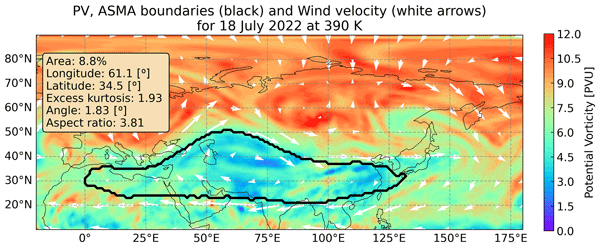
Oleh Kachula, Bärbel Vogel, Gebhard Günther, and Rolf Müller
Atmos. Chem. Phys., 25, 15171–15195, https://doi.org/10.5194/acp-25-15171-2025, https://doi.org/10.5194/acp-25-15171-2025, 2025
Short summary
Short summary
We propose a novel method to define the boundary of the Asian summer monsoon anticyclone (ASMA) and provide the inter-annual and intra-seasonal analyses based on 44 years (1980–2023) and highlight individual years – 2017, 2022 and 2023 during which aircraft campaigns StratoClim, ACCLIP and PHILEAS took place respectively. Our method shows consistent results with previous studies but also provide new information about possible bimodality of the ASMA and inter-annual decrease of the ASMA area.
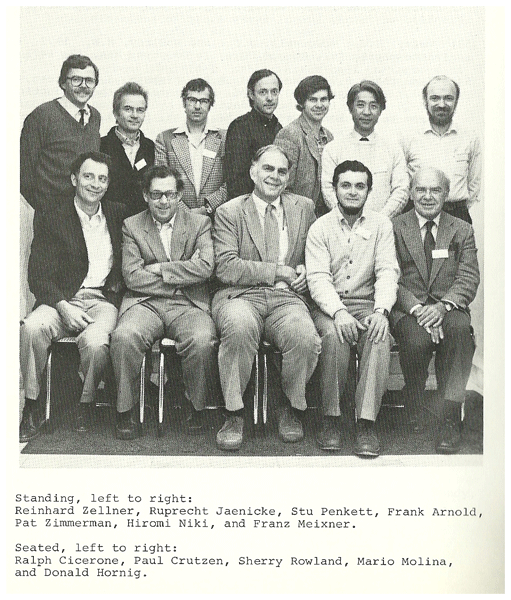
Rolf Müller, Lennart Bengtsson, John Birks, John Burrows, Ruprecht Jaenicke, and Richard S. Stolarski
Hist. Geo Space. Sci., 16, 31–40, https://doi.org/10.5194/hgss-16-31-2025, https://doi.org/10.5194/hgss-16-31-2025, 2025
Short summary
Short summary
This paper reports a few anecdotes from the life of Paul J. Crutzen that were contributed by friends and colleagues. Taken together, these anecdotes should shed some light on the person that Paul was, as this is perhaps sometimes obscured when focusing solely on his many scientific achievements.
Prashant Chavan, Suvarna Fadnavis, Anton Laakso, Jean-Paul Vernier, Simone Tilmes, and Rolf Müller
EGUsphere, https://doi.org/10.5194/egusphere-2024-3825, https://doi.org/10.5194/egusphere-2024-3825, 2025
Preprint archived
Short summary
Short summary
Our simulations with volcanoes, when compared without volcanoes, show that volcanic aerosol precursors enter the tropical stratosphere, propagating upward and enhancing sulphate aerosol and heating. This stratospheric heating caused by the volcanoes reduces the amplitude of the QBO and disrupts its phases. Since QBO also modulates tropical convection and weather, we suggest including volcanic emissions and the QBO in the weather prediction model for a better forecast.
Yiran Zhang-Liu, Rolf Müller, Jens-Uwe Grooß, Sabine Robrecht, Bärbel Vogel, Abdul Mannan Zafar, and Ralph Lehmann
Atmos. Chem. Phys., 24, 12557–12574, https://doi.org/10.5194/acp-24-12557-2024, https://doi.org/10.5194/acp-24-12557-2024, 2024
Short summary
Short summary
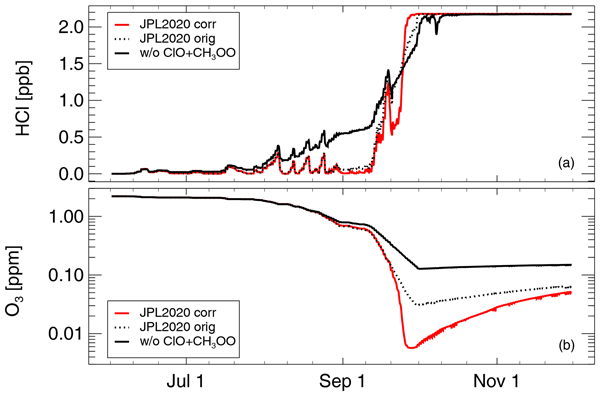
HCl null cycles in Antarctica are important for maintaining high values of ozone-destroying chlorine in Antarctic spring. These HCl null cycles are not affected by (1) using the most recent recommendations of chemical kinetics (compared to older recommendations), (2) accounting for dehydration in the Antarctic winter vortex, and (3) considering the observed (but unexplained) depletion of HCl in mid-winter in the Antarctic vortex throughout Antarctic winter.
Ling Zou, Reinhold Spang, Sabine Griessbach, Lars Hoffmann, Farahnaz Khosrawi, Rolf Müller, and Ines Tritscher
Atmos. Chem. Phys., 24, 11759–11774, https://doi.org/10.5194/acp-24-11759-2024, https://doi.org/10.5194/acp-24-11759-2024, 2024
Short summary
Short summary
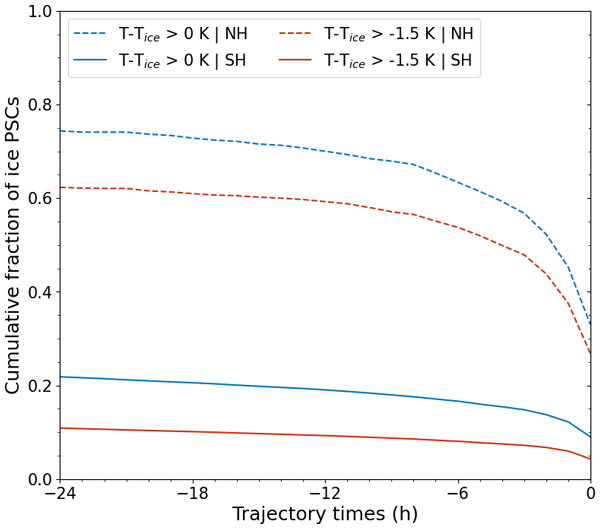
This study provided estimates of the occurrence of ice polar stratospheric clouds (PSCs) observed by the Michelson Interferometer for Passive Atmospheric Sounding (MIPAS) and their connection with temperatures above the frost point (Tice) using a Lagrangian model derived from ERA5. We found that ice PSCs above Tice with temperature fluctuations along the backward trajectory are 33 % in the Arctic and 9 % in the Antarctic. This quantitative assessment enhances our understanding of ice PSCs.
Jayanarayanan Kuttippurath, Gopalakrishna Pillai Gopikrishnan, Rolf Müller, Sophie Godin-Beekmann, and Jerome Brioude
Atmos. Chem. Phys., 24, 6743–6756, https://doi.org/10.5194/acp-24-6743-2024, https://doi.org/10.5194/acp-24-6743-2024, 2024
Short summary
Short summary
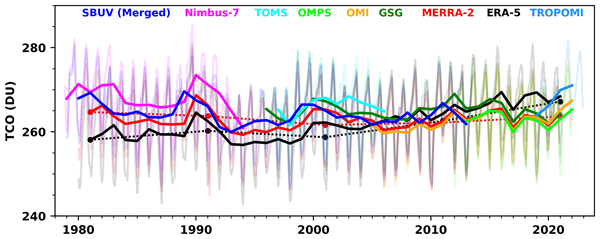
The current understanding and observational evidence do not provide any support for the possibility of an ozone hole occurring outside Antarctica today with respect to the present-day stratospheric halogen levels.
Felix Ploeger, Thomas Birner, Edward Charlesworth, Paul Konopka, and Rolf Müller
Atmos. Chem. Phys., 24, 2033–2043, https://doi.org/10.5194/acp-24-2033-2024, https://doi.org/10.5194/acp-24-2033-2024, 2024
Short summary
Short summary
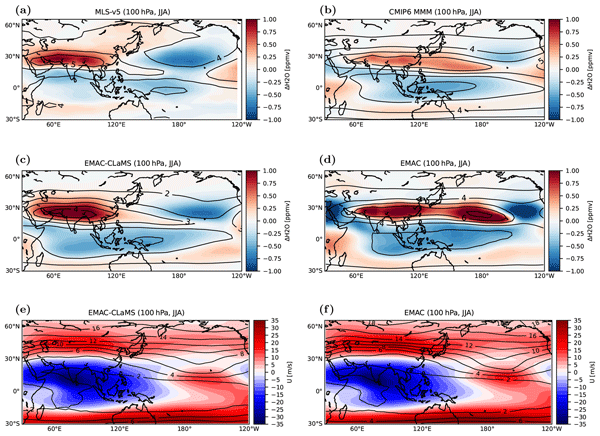
We present a novel mechanism of how regional anomalies in water vapour concentrations in the upper troposphere and lower stratosphere impact regional atmospheric circulation systems. These impacts include a displaced upper-level Asian monsoon circulation and strengthened prevailing westerlies in the Pacific region. Current climate models have biases in simulating these regional water vapour anomalies and circulation impacts, but the biases can be avoided by improving the model transport.
Reinhold Spang, Rolf Müller, and Alexandru Rap
Atmos. Chem. Phys., 24, 1213–1230, https://doi.org/10.5194/acp-24-1213-2024, https://doi.org/10.5194/acp-24-1213-2024, 2024
Short summary
Short summary
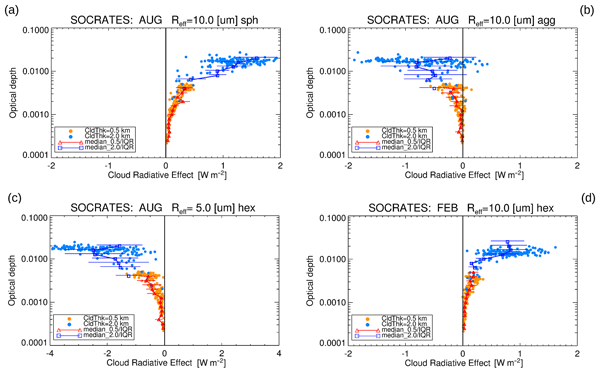
Cirrus clouds play an important role in the radiation budget of the Earth. Despite recent progress in their observation, the radiative impact of ultra-thin cirrus clouds (UTC) in the tropopause region and in the lowermost stratosphere remains poorly constrained. Sensitivity model simulations with different ice parameters provide an uncertainty range for the radiative effect of UTCs. There is a need for better observed UTCs to enable the simulation of their potentially large effect on climate.
Jan Clemens, Bärbel Vogel, Lars Hoffmann, Sabine Griessbach, Nicole Thomas, Suvarna Fadnavis, Rolf Müller, Thomas Peter, and Felix Ploeger
Atmos. Chem. Phys., 24, 763–787, https://doi.org/10.5194/acp-24-763-2024, https://doi.org/10.5194/acp-24-763-2024, 2024
Short summary
Short summary
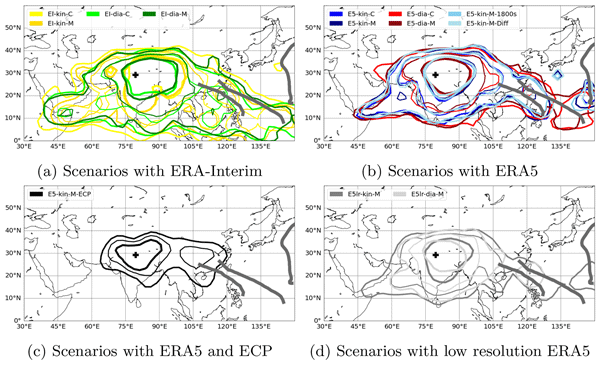
The source regions of the Asian tropopause aerosol layer (ATAL) are debated. We use balloon-borne measurements of the layer above Nainital (India) in August 2016 and atmospheric transport models to find ATAL source regions. Most air originated from the Tibetan plateau. However, the measured ATAL was stronger when more air originated from the Indo-Gangetic Plain and weaker when more air originated from the Pacific. Hence, the results indicate important anthropogenic contributions to the ATAL.
Bärbel Vogel, C. Michael Volk, Johannes Wintel, Valentin Lauther, Jan Clemens, Jens-Uwe Grooß, Gebhard Günther, Lars Hoffmann, Johannes C. Laube, Rolf Müller, Felix Ploeger, and Fred Stroh
Atmos. Chem. Phys., 24, 317–343, https://doi.org/10.5194/acp-24-317-2024, https://doi.org/10.5194/acp-24-317-2024, 2024
Short summary
Short summary
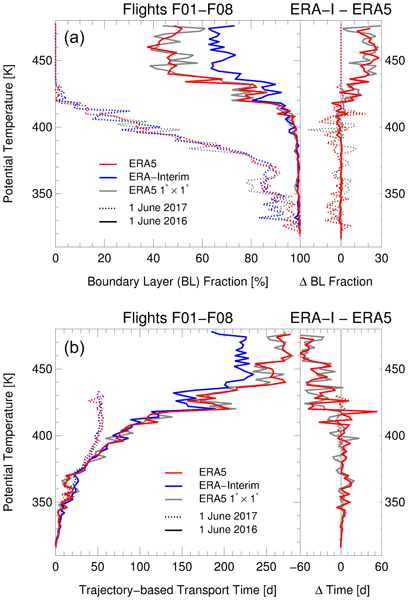
Over the Indian subcontinent, polluted air is rapidly uplifted to higher altitudes during the Asian monsoon season. We present an assessment of vertical transport in this region using different wind data provided by the European Centre for Medium-Range Weather Forecasts (ECMWF), as well as high-resolution aircraft measurements. In general, our findings confirm that the newest ECMWF reanalysis product, ERA5, yields a better representation of transport compared to the predecessor, ERA-Interim.

Rolf Müller, Ulrich Pöschl, Thomas Koop, Thomas Peter, and Ken Carslaw
Atmos. Chem. Phys., 23, 15445–15453, https://doi.org/10.5194/acp-23-15445-2023, https://doi.org/10.5194/acp-23-15445-2023, 2023
Short summary
Short summary
Paul J. Crutzen was a pioneer in atmospheric sciences and a kind-hearted, humorous person with empathy for the private lives of his colleagues and students. He made fundamental scientific contributions to a wide range of scientific topics in all parts of the atmosphere. Paul was among the founders of the journal Atmospheric Chemistry and Physics. His work will continue to be a guide for generations of scientists and environmental policymakers to come.
Suvarna Fadnavis, Bernd Heinold, T. P. Sabin, Anne Kubin, Katty Huang, Alexandru Rap, and Rolf Müller
Atmos. Chem. Phys., 23, 10439–10449, https://doi.org/10.5194/acp-23-10439-2023, https://doi.org/10.5194/acp-23-10439-2023, 2023
Short summary
Short summary
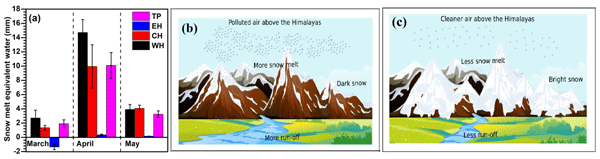
The influence of the COVID-19 lockdown on the Himalayas caused increases in snow cover and a decrease in runoff, ultimately leading to an enhanced snow water equivalent. Our findings highlight that, out of the two processes causing a retreat of Himalayan glaciers – (1) slow response to global climate change and (2) fast response to local air pollution – a policy action on the latter is more likely to be within the reach of possible policy action to help billions of people in southern Asia.
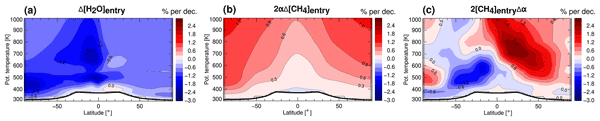
Liubov Poshyvailo-Strube, Rolf Müller, Stephan Fueglistaler, Michaela I. Hegglin, Johannes C. Laube, C. Michael Volk, and Felix Ploeger
Atmos. Chem. Phys., 22, 9895–9914, https://doi.org/10.5194/acp-22-9895-2022, https://doi.org/10.5194/acp-22-9895-2022, 2022
Short summary
Short summary
Brewer–Dobson circulation (BDC) controls the composition of the stratosphere, which in turn affects radiation and climate. As the BDC cannot be measured directly, it is necessary to infer its strength and trends indirectly. In this study, we test in the
model worlddifferent methods for estimating the mean age of air trends based on a combination of stratospheric water vapour and methane data. We also provide simple practical advice of a more reliable estimation of the mean age of air trends.
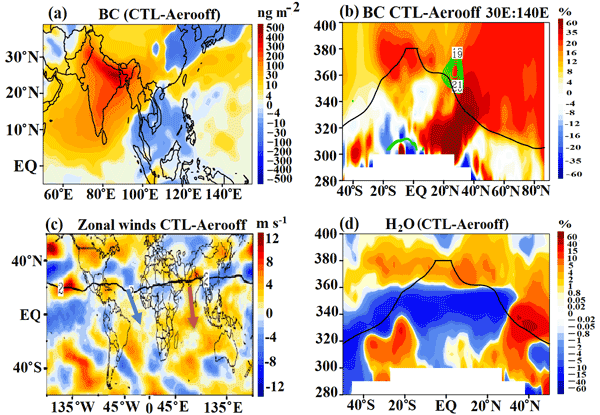
Suvarna Fadnavis, Prashant Chavan, Akash Joshi, Sunil M. Sonbawne, Asutosh Acharya, Panuganti C. S. Devara, Alexandru Rap, Felix Ploeger, and Rolf Müller
Atmos. Chem. Phys., 22, 7179–7191, https://doi.org/10.5194/acp-22-7179-2022, https://doi.org/10.5194/acp-22-7179-2022, 2022
Short summary
Short summary
We show that large amounts of anthropogenic aerosols are transported from South Asia to the northern Indian Ocean. These aerosols are then lifted into the UTLS by the ascending branch of the Hadley circulation. They are further transported to the Southern Hemisphere and downward via westerly ducts over the tropical Atlantic and Pacific. These aerosols increase tropospheric heating, resulting in an increase in water vapor, which is then transported to the UTLS.
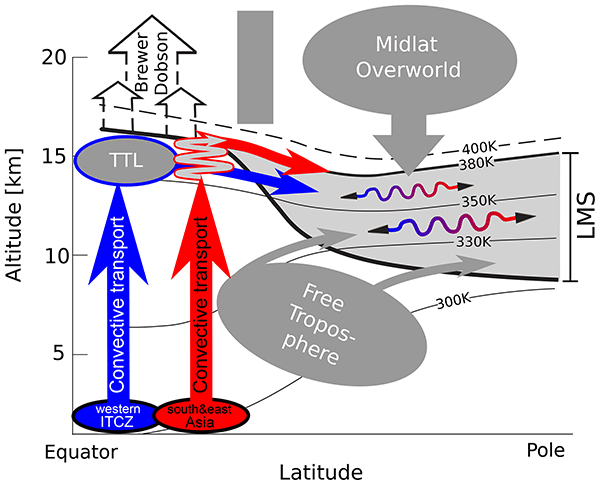
Valentin Lauther, Bärbel Vogel, Johannes Wintel, Andrea Rau, Peter Hoor, Vera Bense, Rolf Müller, and C. Michael Volk
Atmos. Chem. Phys., 22, 2049–2077, https://doi.org/10.5194/acp-22-2049-2022, https://doi.org/10.5194/acp-22-2049-2022, 2022
Short summary
Short summary
We show airborne in situ measurements of the very short-lived ozone-depleting substances CH2Cl2 and CHCl3, revealing particularly high concentrations of both species in the lower stratosphere. Back-trajectory calculations and 3D model simulations show that the air masses with high concentrations originated in the Asian boundary layer and were transported via the Asian summer monsoon. We also identify a fast transport pathway into the stratosphere via the North American monsoon and by hurricanes.
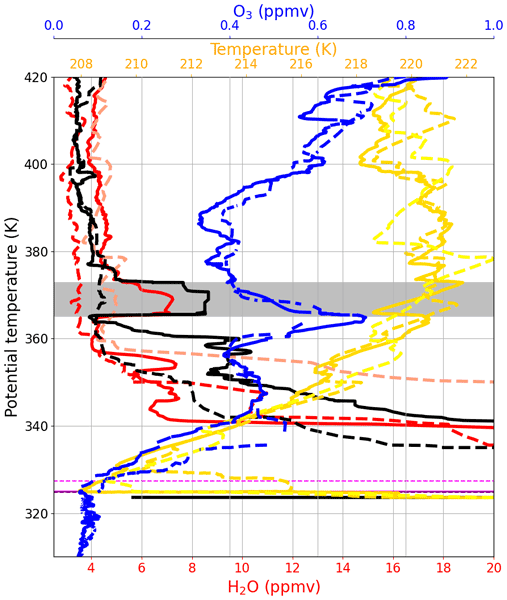
Dina Khordakova, Christian Rolf, Jens-Uwe Grooß, Rolf Müller, Paul Konopka, Andreas Wieser, Martina Krämer, and Martin Riese
Atmos. Chem. Phys., 22, 1059–1079, https://doi.org/10.5194/acp-22-1059-2022, https://doi.org/10.5194/acp-22-1059-2022, 2022
Short summary
Short summary
Extreme storms transport humidity from the troposphere to the stratosphere. Here it has a strong impact on the climate. With ongoing global warming, we expect more storms and, hence, an enhancement of this effect. A case study was performed in order to measure the impact of the direct injection of water vapor into the lower stratosphere. The measurements displayed a significant transport of water vapor into the lower stratosphere, and this was supported by satellite and reanalysis data.
Nicolas Emig, Annette Miltenberger, Heiko Bozem, Martina Krämer, Armin Afchine, Daniel Kunkel, Hans-Christoph Lachnitt, Yun Li, Philipp Reutter, Christian Rolf, Nicole Spelten, Holger Tost, and Peter Hoor
EGUsphere, https://doi.org/10.5194/egusphere-2026-4614, https://doi.org/10.5194/egusphere-2026-4614, 2026
This preprint is open for discussion and under review for Atmospheric Chemistry and Physics (ACP).
Short summary
Short summary
In this study we show mixing of ice particles across the extratropical tropopause via turbulence in the jet shear zone based on in situ measurements from the TPEx campaign over the North Sea, combined with Lagrangian model analysis. Trace gas correlations and subsaturated ice particles constrain the timing and mechanism, while backward trajectories indicate suitable turbulent conditions beforehand. This process possibly impacts the water vapour budget of the extratropical lowermost stratosphere.
Mélanie Ghysels, Luca Palchetti, Silvia Viciani, Claudio Belotti, Marco Barucci, Gwenaël Berthet, Elizabeth Asher, Emrys Hall, Alex Fritz, Armin Afchine, Christian Rolf, Thomas Kuhn, Chris Stopford, Alain Hauchecorne, Nadir Amarouche, Georges Durry, Jean-Christophe Samake, Lars E. Kalnajs, Terry Deshler, Samuele Del Bianco, and Paolo Pettinari
Earth Syst. Sci. Data Discuss., https://doi.org/10.5194/essd-2026-557, https://doi.org/10.5194/essd-2026-557, 2026
Preprint under review for ESSD
Short summary
Short summary
ATMOSFER, a CNES-supported 2024 balloon campaign in Kiruna, Sweden, prepared ESA’s FORUM mission by measuring far-infrared radiation, water vapor, clouds and aerosols in the UTLS. FIRMOS-B (balloon borne demonstrator of FORUM) showed excellent performance, while hygrometers agreed closely. The campaign observed cirrus clouds, ice crystals and stratospheric aerosol layers linked to wildfire and tropical air masses, improving climate observations and FORUM validation.
Wolfgang Woiwode, Bärbel Vogel, Valentin Lauther, Jens-Uwe Grooß, Jeremy Harrison, Sören Johansson, Jörn Ungermann, Peter Braesicke, Markus Dick, Andreas Engel, Felix Friedl-Vallon, Norbert Glatthor, Thomas Gulde, Michael Höpfner, Markus Jesswein, Jan Kaumanns, Timo Keber, Anne Kleinert, Erik Kretschmer, Guido Maucher, Tom Neubert, Hans Nordmeyer, Christof Piesch, Felix Plöger, Peter Preusse, Markus Retzlaff, Sebastian Rhode, Heinz Rongen, Georg Schardt, Tanja Schuck, Björn-Martin Sinnhuber, Johannes Strobel, Franziska Trinkl, Ronja Van Luijt, Stefan Versick, C. Michael Volk, Gerald Wetzel, Peter Hoor, and Martin Riese
EGUsphere, https://doi.org/10.5194/egusphere-2026-3271, https://doi.org/10.5194/egusphere-2026-3271, 2026
This preprint is open for discussion and under review for Atmospheric Chemistry and Physics (ACP).
Short summary
Short summary
Filaments of CH2Cl2-rich air are revealed by airborne infrared limb-imaging observations in late summer 2023 above the North Pacific, Canada and Alaska and traced back to the Asian Summer Monsoon region. Involving new spectroscopic data, high CH2Cl2 levels were retrieved in the troposphere and moderate enhancements also in air masses with characteristics of the lowermost stratosphere. Mesoscale filaments are shown to transport substantial amounts of CH2Cl2 across the North Pacific.
Georgios Dekoutsidis, Silke Groß, Florian Ewald, Martina Krämer, Christian Rolf, Andreas Schäfler, and Martin Wirth
EGUsphere, https://doi.org/10.5194/egusphere-2026-3788, https://doi.org/10.5194/egusphere-2026-3788, 2026
Short summary
Short summary
Cirrus clouds interact with radiation, but their exact effects are not well-defined and depend on their properties, formation process and the ambient conditions. We used airborne lidar and radar measurements and models in order to compare cirrus that formed in undisturbed conditions and during Warm Air intrusions (WAI). We found that WAIs cause a change in the formation and their properties. Our findings can improve the representation of cirrus in models and the estimation of their impact.
Oleh Kachula, Bärbel Vogel, Gebhard Günther, Rolf Müller, and Felix Ploeger
EGUsphere, https://doi.org/10.5194/egusphere-2026-3509, https://doi.org/10.5194/egusphere-2026-3509, 2026
This preprint is open for discussion and under review for Atmospheric Chemistry and Physics (ACP).
Short summary
Short summary
Locating the boundary of the Asian summer monsoon anticyclone (ASMA) in the upper atmosphere is important for understanding how this system distributes pollutants. We show that while different methodologies generally agree on the boundary's location and shape, certain methods are preferred under specific conditions. These findings will be of broad interest to researchers studying large-scale atmospheric circulations in upper atmosphere.
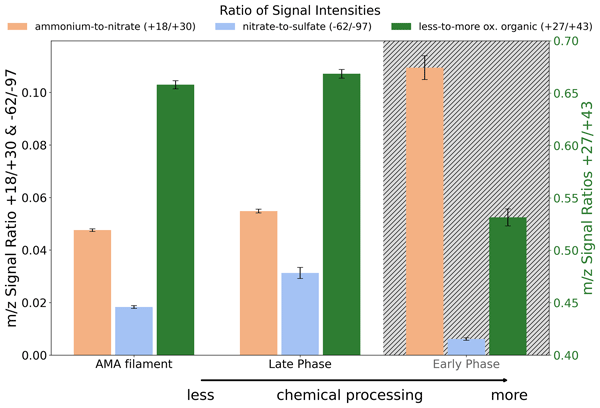
Fatih Ekinci, Oliver Eppers, Oliver Appel, Felix Ploeger, Antonis Dragoneas, Sergej Molleker, Philipp Brauner, Hans-Christoph Lachnitt, Franziska Weyland, Linda Ort, Nicolas Emig, Hans-Christian Clemen, Laura Tomsche, Martin Ebert, Peter Hoor, Bärbel Vogel, Yafang Cheng, Johannes Schneider, Stephan Borrmann, and Franziska Köllner
Atmos. Chem. Phys., 26, 10399–10421, https://doi.org/10.5194/acp-26-10399-2026, https://doi.org/10.5194/acp-26-10399-2026, 2026
Short summary
Short summary
This study shows that aerosol transported from the Asian summer monsoon region can substantially alter the background composition of the extratropical lower stratosphere. Aircraft-based measurements and model simulations reveal a strong increase of ammonium nitrate aerosol from summer to autumn 2023 caused by transport of young air masses from South and East Asia. These particles can persist for months and undergo chemical aging.
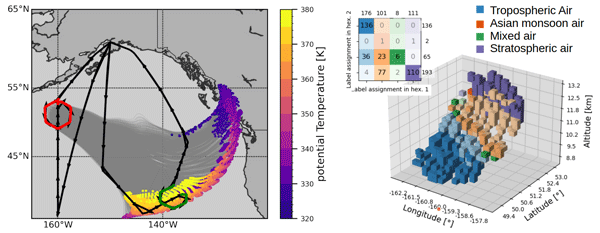
Jan Kaumanns, Jörn Ungermann, Bärbel Vogel, Sören Johansson, Erik Kretschmer, Felix Plöger, Peter Preuße, Wolfgang Woiwode, and Martin Riese
Atmos. Chem. Phys., 26, 9083–9111, https://doi.org/10.5194/acp-26-9083-2026, https://doi.org/10.5194/acp-26-9083-2026, 2026
Short summary
Short summary
During the PHILEAS aircraft campaign a self-matching experiment was conducted to study the mixing of Asian Summer monsoon air into the upper troposphere – lower stratosphere. We present the first 3-D tomographic observations of this mixing for multiple trace gas species. We use advanced clustering to identify the types of air and their transport pathways, particularly into the stratosphere. Simulations of surface-origin tracers link several of these air types to different source regions.
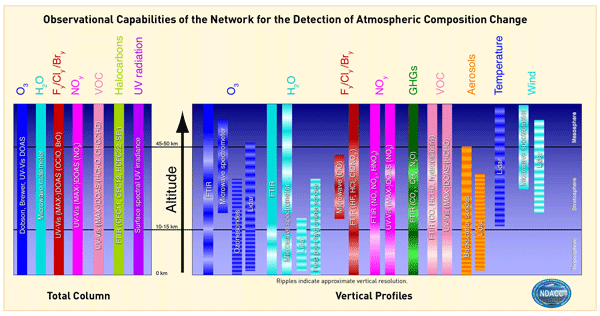
Irina Petropavlovskikh, Martine De Mazière, Anne M. Thompson, Jeannette D. Wild, James W. Hannigan, Henry B. Selkirk, Reem A. Hannun, Wolfgang Steinbrecht, Jean-Christopher Lambert, Roeland Van Malderen, Elizabeth Asher, Raul R. Cordero, Sophie Godin-Beekmann, Daan Hubert, Sergey Khaykin, Karin Kreher, Thierry Leblanc, Emmanuel Mahieu, Eliane Maillard Barras, Glen McConville, Gerald Nedoluha, Ivan Ortega, Alberto Redondas Marrero, Gunther Seckmeyer, Ryan M. Stauffer, Sarah A. Strode, Kim Strong, Takafumi Sugita, Michel Van Roozendael, Voltaire Velazco, Corinne Vigouroux, and Bärbel Vogel
Atmos. Chem. Phys., 26, 8637–8675, https://doi.org/10.5194/acp-26-8637-2026, https://doi.org/10.5194/acp-26-8637-2026, 2026
Short summary
Short summary
This introduction to the special issue "Achievements and perspectives of the Network for the Detection of Atmospheric Composition Change after 35 years of operation” provides an overview of important research findings achieved under the NDACC objectives. The future of NDACC is discussed in the light of the evolution of the scientific questions, evolving collaborations with partners and Cooperating Networks, and the current landscape of gaps in satellite and ground-based observations.
Shubhajyoti Roy, Satheesh P. R. Chandran, Suvarna Fadnavis, Vijay Sagar, Michaela I. Hegglin, Rolf Müller, and Prashant Chavan
Atmos. Chem. Phys., 26, 7047–7059, https://doi.org/10.5194/acp-26-7047-2026, https://doi.org/10.5194/acp-26-7047-2026, 2026
Short summary
Short summary
We show that stratospheric ozone intrusions associated with sudden stratospheric warming events occurring concurrent with the westerly phase of the Quasi-biennial oscillation enhance ozone in the upper troposphere and lower stratosphere over South Asia. The ozone enhancement increases ozone radiative forcing by 0.09±0.05 W m-2 over South Asia. This increase in ozone radiative forcing potentially exacerbates regional climate warming.
Kasper Juurikkala, Tomi Raatikainen, Martina Krämer, Christina J. Williamson, and Ari Laaksonen
EGUsphere, https://doi.org/10.5194/egusphere-2026-2427, https://doi.org/10.5194/egusphere-2026-2427, 2026
Short summary
Short summary
We use large-eddy simulations constrained by observations to study how mineral dust controls the evolution of cirrus clouds during dust outbreaks. Results show that sustained dusty cirrus forms only under strongly elevated dust concentrations, where ice forms mainly on dust particles. This identifies mineral dust as the key control on cirrus persistence and highlights the need to improve representation of dust-driven ice formation in weather and climate models.
Bärbel Vogel, Valentin Lauther, Franziska Köllner, Fatih Ekinci, Christian Rolf, Johannes Strobel, Ronja van Luijt, C. Michael Volk, Stephan Borrmann, Antonis Dragoneas, Oliver Eppers, Sergej Molleker, Peter Hoor, Linda Ort, Franziska Weyland, Andreas Zahn, Jan Clemens, Gebhard Günther, Oleh Kachula, Rolf Müller, Felix Ploeger, and Martin Riese
Atmos. Chem. Phys., 26, 6283–6319, https://doi.org/10.5194/acp-26-6283-2026, https://doi.org/10.5194/acp-26-6283-2026, 2026
Short summary
Short summary
This work highlights the impact of the Asian summer monsoon on the chemical composition of the upper troposphere and lower stratosphere. Measurements of trace gases and aerosol particles uplifted by the Asian summer monsoon to higher altitudes are sparse. Here, we had the opportunity to use a whole suite of different measured trace gases and the chemical composition of aerosols, in combination with simulations, to better understand the complex transport and mixing processes in this region.
Athulya Saiprakash, Martina Krämer, Christian Rolf, Patrick Konjari, Jérôme Riedi, and Odran Sourdeval
EGUsphere, https://doi.org/10.5194/egusphere-2026-2416, https://doi.org/10.5194/egusphere-2026-2416, 2026
Short summary
Short summary
To better understand how observed high ice clouds, known as cirrus, form and change, satellite images were combined with calculations that reconstruct how the air moved before the clouds formed. Case studies showed that cloud history differs with height, age, and surrounding conditions, and that small temperature changes strongly shape cloud growth. This helps reveal and characterize the mechanisms behind observed cirrus.
Athulya Saiprakash, Martina Krämer, Christian Rolf, Jérôme Riedi, and Odran Sourdeval
EGUsphere, https://doi.org/10.5194/egusphere-2026-2423, https://doi.org/10.5194/egusphere-2026-2423, 2026
Short summary
Short summary
This second part of the study tested the new method by comparing its results with satellite and aircraft observations and by examining how sensitive it is to key assumptions. The method agreed well with observations in most cases, although clouds formed over mountains remained harder to capture. It also showed which conditions and processes matter most for reconstructing how cirrus form and evolve.
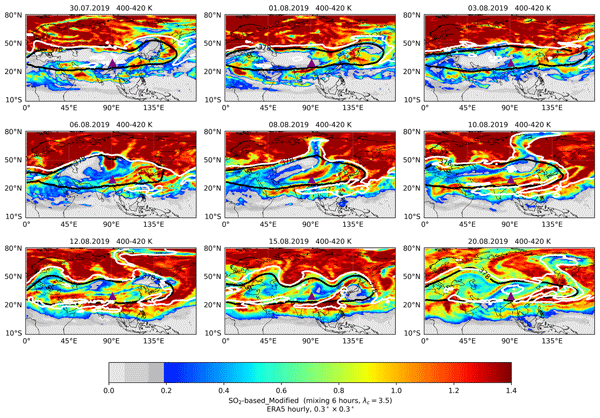
Zhen Yang, Bärbel Vogel, Felix Plöger, Zhixuan Bai, Dan Li, Sabine Griessbach, Lars Hoffmann, Frank G. Wienhold, Elizabeth Asher, Alexandre A. Baron, Katie R. Smith, Troy Thornberry, Jianchun Bian, and Michaela I. Hegglin
Atmos. Chem. Phys., 26, 4749–4769, https://doi.org/10.5194/acp-26-4749-2026, https://doi.org/10.5194/acp-26-4749-2026, 2026
Short summary
Short summary
Balloon measurements over Lhasa, China, combined with satellite guided modelling, tracked aerosol from the 2019 Raikoke eruption through the Asian summer monsoon anticyclone. We find two altitude dependent routes into the anticyclone. It partly blocks transport but also allows entry and mixing, explaining the gradual weakening of the layers. Balloon measurements over Boulder, United States, outside the anticyclone, provide an independent check outside the region.
Sylvia C. Sullivan, Aiko Voigt, Edgardo Sepúlveda Araya, Silvia Bucci, Annette Miltenberger, Meredith K. Kupinski, Christian Rolf, and Martina Krämer
Atmos. Chem. Phys., 26, 1685–1698, https://doi.org/10.5194/acp-26-1685-2026, https://doi.org/10.5194/acp-26-1685-2026, 2026
Short summary
Short summary
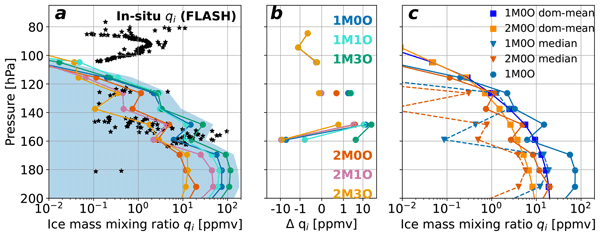
We assess the temperature, moisture, and dynamics in the upper troposphere-lower stratosphere simulated over South Asia in a high-resolution model relative to aircraft data. The lower stratosphere tends to be too warm, too dry, and too quiescent in the model, and as a result, too few ice clouds are predicted to form there. These biases could affect radiative balance and circulation in other areas also, as significant upward transport of moisture and pollutants occurs during the Asian monsoon.

Patrick Konjari, Christian Rolf, Martina Krämer, Armin Afchine, Nicole Spelten, Irene Bartolome Garcia, Annette Miltenberger, Nicolas Emig, Philipp Joppe, Johannes Schneider, Yun Li, Andreas Petzold, Heiko Bozem, and Peter Hoor
Atmos. Chem. Phys., 25, 18031–18050, https://doi.org/10.5194/acp-25-18031-2025, https://doi.org/10.5194/acp-25-18031-2025, 2025
Short summary
Short summary
We investigated how a powerful storm over southern Sweden in June 2024 transported ice particles and moist air into the normally dry stratosphere. We observed unusually high water vapor and ice levels up to 1.5 kilometers above the tropopause. Although the extra water vapor lasted only a few days to weeks, it shows how such storms can temporarily alter the upper atmosphere’s composition.
Heiko Bozem, Philipp Joppe, Yun Li, Nicolas Emig, Armin Afchine, Anna Breuninger, Joachim Curtius, Stefan Hofmann, Sadath Ismayil, Konrad Kandler, Daniel Kunkel, Arthur Kutschka, Hans-Christoph Lachnitt, Andreas Petzold, Sarah Richter, Timo Röschenthaler, Christian Rolf, Lisa Schneider, Johannes Schneider, Alexander Vogel, and Peter Hoor
Atmos. Meas. Tech., 18, 6545–6568, https://doi.org/10.5194/amt-18-6545-2025, https://doi.org/10.5194/amt-18-6545-2025, 2025
Short summary
Short summary
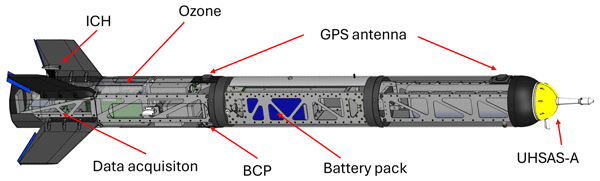
Deployed on a Learjet as a tandem measurement platform during the TPEx I (TropoPause composition gradients and mixing Experiment) campaign in June 2024, the new TPC-TOSS (TropoPause Composition Towed Sensor Shuttle) system delivers high-resolution in situ data on ozone, aerosol, and key meteorological parameters. Laboratory and in-flight tests confirmed its precision and stability. Observed gradients near the tropopause reveal active mixing and transport processes in the tropopause region.
Oleh Kachula, Bärbel Vogel, Gebhard Günther, and Rolf Müller
Atmos. Chem. Phys., 25, 15171–15195, https://doi.org/10.5194/acp-25-15171-2025, https://doi.org/10.5194/acp-25-15171-2025, 2025
Short summary
Short summary
We propose a novel method to define the boundary of the Asian summer monsoon anticyclone (ASMA) and provide the inter-annual and intra-seasonal analyses based on 44 years (1980–2023) and highlight individual years – 2017, 2022 and 2023 during which aircraft campaigns StratoClim, ACCLIP and PHILEAS took place respectively. Our method shows consistent results with previous studies but also provide new information about possible bimodality of the ASMA and inter-annual decrease of the ASMA area.
Philipp Joppe, Johannes Schneider, Jonas Wilsch, Heiko Bozem, Anna Breuninger, Joachim Curtius, Martin Ebert, Nicolas Emig, Peter Hoor, Sadath Ismayil, Konrad Kandler, Daniel Kunkel, Isabel Kurth, Hans-Christoph Lachnitt, Yun Li, Annette Miltenberger, Sarah Richter, Christian Rolf, Lisa Schneider, Cornelis Schwenk, Nicole Spelten, Alexander L. Vogel, Yafang Cheng, and Stephan Borrmann
Atmos. Chem. Phys., 25, 15077–15103, https://doi.org/10.5194/acp-25-15077-2025, https://doi.org/10.5194/acp-25-15077-2025, 2025
Short summary
Short summary
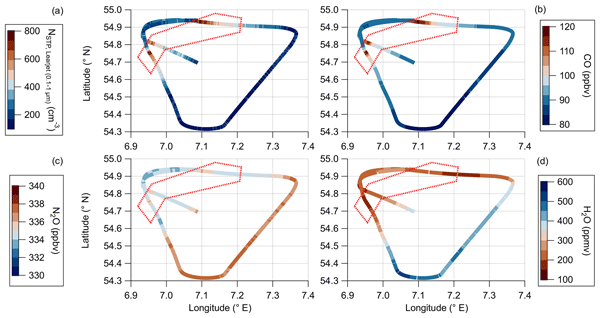
We show measurements of a filament with biomass burning influence transported by a warm conveyor belt (WCB) into the tropopause region over Europe. The pollution originates from Canadian forest fires and is transported in the lower troposphere towards Europe. The WCB transport is followed by mixing with air masses of stratospheric chemical signatures. We hypothesize that this mixing leads to a change in the vertical gradient of the potential temperature.
Martina Krämer, Nicole Spelten, Christian Rolf, and Reinhold Spang
Atmos. Chem. Phys., 25, 13563–13583, https://doi.org/10.5194/acp-25-13563-2025, https://doi.org/10.5194/acp-25-13563-2025, 2025
Short summary
Short summary
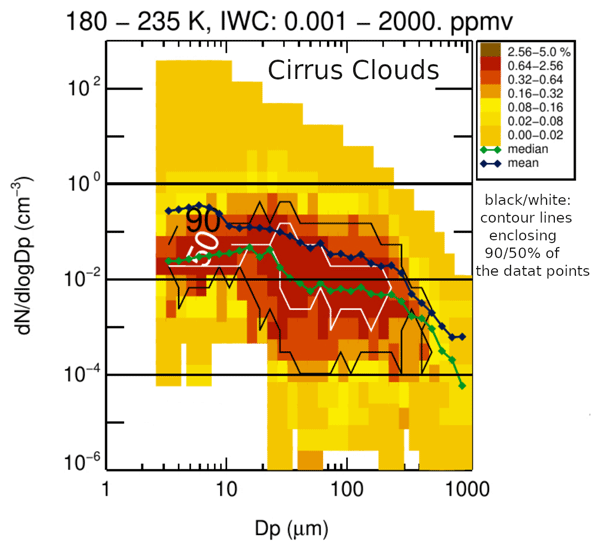
The size and number of cirrus ice crystals is one parameter influencing the still uncertain effect of cirrus clouds on climate. Here, the occurrence of ice particle sizes and concentrations with varying temperature and cloud microphysical thickness is analyzed as well as whether they formed in-situ or were transported upwards as frozen droplets from further below. The analyses are based on a large database of airborne measurements and extensive simulations.
Rolf Müller, Lennart Bengtsson, John Birks, John Burrows, Ruprecht Jaenicke, and Richard S. Stolarski
Hist. Geo Space. Sci., 16, 31–40, https://doi.org/10.5194/hgss-16-31-2025, https://doi.org/10.5194/hgss-16-31-2025, 2025
Short summary
Short summary
This paper reports a few anecdotes from the life of Paul J. Crutzen that were contributed by friends and colleagues. Taken together, these anecdotes should shed some light on the person that Paul was, as this is perhaps sometimes obscured when focusing solely on his many scientific achievements.
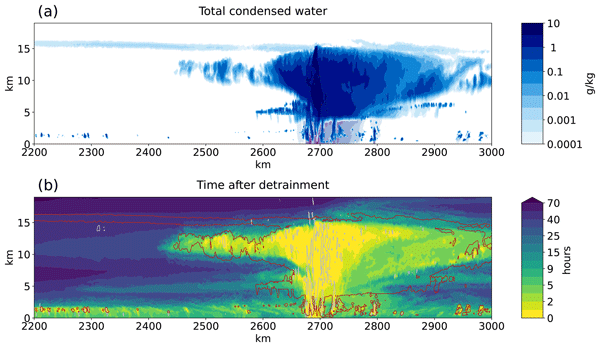
Blaž Gasparini, Rachel Atlas, Aiko Voigt, Martina Krämer, and Peter N. Blossey
Atmos. Chem. Phys., 25, 9957–9979, https://doi.org/10.5194/acp-25-9957-2025, https://doi.org/10.5194/acp-25-9957-2025, 2025
Short summary
Short summary
The evolution of tropical cirrus clouds is poorly understood, which contributes to large uncertainties in climate projections. To address this issue, we use novel tracers in a cloud-resolving model to track the life cycle of cirrus clouds. This approach provides insights into cloud formation, ice crystal evolution, and radiative effects of cirrus clouds. Additionally, we improve the model's cloud microphysics using a simple, computationally efficient approach that can be applied to other models.
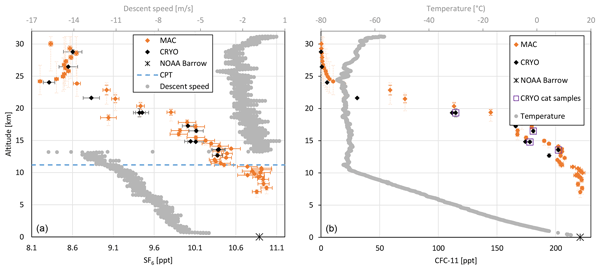
Johannes C. Laube, Tanja J. Schuck, Sophie Baartman, Huilin Chen, Markus Geldenhuys, Steven van Heuven, Timo Keber, Maria Elena Popa, Elinor Tuffnell, Florian Voet, Bärbel Vogel, Thomas Wagenhäuser, Alessandro Zanchetta, and Andreas Engel
Atmos. Meas. Tech., 18, 4087–4102, https://doi.org/10.5194/amt-18-4087-2025, https://doi.org/10.5194/amt-18-4087-2025, 2025
Short summary
Short summary
A large balloon was launched in summer 2021 in the Arctic to carry instruments for trace gas measurements up to 32 km, above the reach of aircraft. The main aims were to evaluate different techniques and atmospheric processes. We focus on halogenated greenhouse gases and ozone-depleting substances. For this, air was collected with the AirCore technique and a cryogenic air sampler and measured after the flight. A companion paper reports observations of major greenhouse gases.
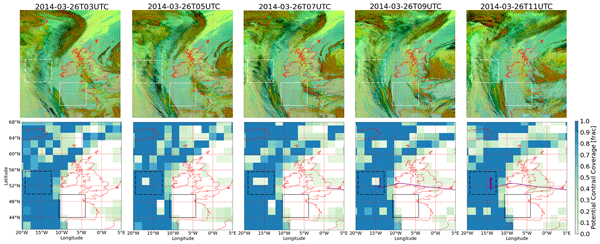
Patrick Peter, Sigrun Matthes, Christine Frömming, Patrick Jöckel, Luca Bugliaro, Andreas Giez, Martina Krämer, and Volker Grewe
Atmos. Chem. Phys., 25, 5911–5934, https://doi.org/10.5194/acp-25-5911-2025, https://doi.org/10.5194/acp-25-5911-2025, 2025
Short summary
Short summary
Our study examines how well the global climate model EMAC (ECHAM/MESSy Atmospheric Chemistry) predicts contrail formation by analysing temperature and humidity – two key factors for contrail development and persistence. The model underestimates temperature, leading to an overprediction of contrail formation and larger ice-supersaturated regions. Adjusting the model improves temperature accuracy but adds uncertainties. Better predictions of contrail formation areas can help optimise flight tracks to reduce aviation's climate effect.
Sreehari Kizhuveettil, Jordi Vila-Guerau de Arellano, Martina Krämer, Armin Afchine, Luiz A. T. Machado, Martin Zöger, and Wiebke Frey
EGUsphere, https://doi.org/10.5194/egusphere-2025-1637, https://doi.org/10.5194/egusphere-2025-1637, 2025
Preprint archived
Short summary
Short summary
Aircraft measurements are used to investigate high-altitude downdrafts in tropical deep convective clouds. The cloud water present in the downdrafts and its intensity do not show any correlation. Surprisingly, downdrafts occurred in supersaturated regions, contradicting the classical view of subsaturated downdrafts. Up- and downdrafts of similar strength show similar particle size distributions. These findings shed new light on the interplay between deep convection dynamics and microphysics.
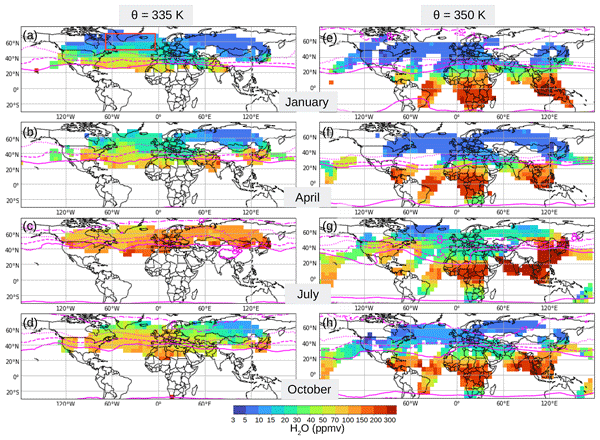
Patrick Konjari, Christian Rolf, Michaela I. Hegglin, Susanne Rohs, Yun Li, Andreas Zahn, Harald Bönisch, Philippe Nedelec, Martina Krämer, and Andreas Petzold
Atmos. Chem. Phys., 25, 4269–4289, https://doi.org/10.5194/acp-25-4269-2025, https://doi.org/10.5194/acp-25-4269-2025, 2025
Short summary
Short summary
This study introduces a new method to derive adjusted water vapor (H2O) climatologies for the upper tropopshere and lower statosphere (UT/LS) using data from 60 000 flights under the IAGOS program. Biases in the IAGOS water vapour dataset are adjusted, based on the more accurate IAGOS-CARIBIC data. The resulting highly resolved H2O climatologies will contribute to a better understanding of the H2O variability in the UT/LS and its connection to various transport and mixing processes.
Prashant Chavan, Suvarna Fadnavis, Anton Laakso, Jean-Paul Vernier, Simone Tilmes, and Rolf Müller
EGUsphere, https://doi.org/10.5194/egusphere-2024-3825, https://doi.org/10.5194/egusphere-2024-3825, 2025
Preprint archived
Short summary
Short summary
Our simulations with volcanoes, when compared without volcanoes, show that volcanic aerosol precursors enter the tropical stratosphere, propagating upward and enhancing sulphate aerosol and heating. This stratospheric heating caused by the volcanoes reduces the amplitude of the QBO and disrupts its phases. Since QBO also modulates tropical convection and weather, we suggest including volcanic emissions and the QBO in the weather prediction model for a better forecast.
Yiran Zhang-Liu, Rolf Müller, Jens-Uwe Grooß, Sabine Robrecht, Bärbel Vogel, Abdul Mannan Zafar, and Ralph Lehmann
Atmos. Chem. Phys., 24, 12557–12574, https://doi.org/10.5194/acp-24-12557-2024, https://doi.org/10.5194/acp-24-12557-2024, 2024
Short summary
Short summary
HCl null cycles in Antarctica are important for maintaining high values of ozone-destroying chlorine in Antarctic spring. These HCl null cycles are not affected by (1) using the most recent recommendations of chemical kinetics (compared to older recommendations), (2) accounting for dehydration in the Antarctic winter vortex, and (3) considering the observed (but unexplained) depletion of HCl in mid-winter in the Antarctic vortex throughout Antarctic winter.
Ling Zou, Reinhold Spang, Sabine Griessbach, Lars Hoffmann, Farahnaz Khosrawi, Rolf Müller, and Ines Tritscher
Atmos. Chem. Phys., 24, 11759–11774, https://doi.org/10.5194/acp-24-11759-2024, https://doi.org/10.5194/acp-24-11759-2024, 2024
Short summary
Short summary
This study provided estimates of the occurrence of ice polar stratospheric clouds (PSCs) observed by the Michelson Interferometer for Passive Atmospheric Sounding (MIPAS) and their connection with temperatures above the frost point (Tice) using a Lagrangian model derived from ERA5. We found that ice PSCs above Tice with temperature fluctuations along the backward trajectory are 33 % in the Arctic and 9 % in the Antarctic. This quantitative assessment enhances our understanding of ice PSCs.
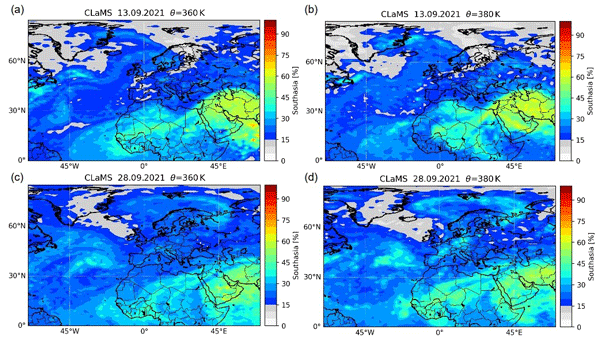
Sandra Graßl, Christoph Ritter, Ines Tritscher, and Bärbel Vogel
Atmos. Chem. Phys., 24, 7535–7557, https://doi.org/10.5194/acp-24-7535-2024, https://doi.org/10.5194/acp-24-7535-2024, 2024
Short summary
Short summary
Arctic lidar data for 1 year are compared with global modeling of aerosol tracers in the stratosphere. A trend in the aerosol backscatter can be found. These observations are further compared with a model study to investigate the aerosol origin of the observed arctic aerosol. We found a correlation with increased backscatter signal during summer and early autumn and pathways from the Southeast Asian monsoon region and remains of the Asian tropopause aerosol layer in the Arctic.
Jayanarayanan Kuttippurath, Gopalakrishna Pillai Gopikrishnan, Rolf Müller, Sophie Godin-Beekmann, and Jerome Brioude
Atmos. Chem. Phys., 24, 6743–6756, https://doi.org/10.5194/acp-24-6743-2024, https://doi.org/10.5194/acp-24-6743-2024, 2024
Short summary
Short summary
The current understanding and observational evidence do not provide any support for the possibility of an ozone hole occurring outside Antarctica today with respect to the present-day stratospheric halogen levels.
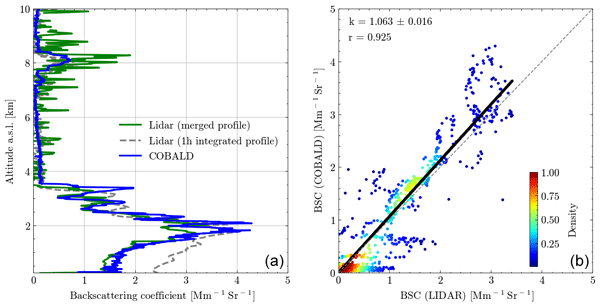
Hengheng Zhang, Christian Rolf, Ralf Tillmann, Christian Wesolek, Frank Gunther Wienhold, Thomas Leisner, and Harald Saathoff
Aerosol Research, 2, 135–151, https://doi.org/10.5194/ar-2-135-2024, https://doi.org/10.5194/ar-2-135-2024, 2024
Short summary
Short summary
Our study employs advanced tools, including scanning lidar, balloons, and UAVs, to explore aerosol particles in the atmosphere. The scanning lidar offers distinctive near-ground-level insights, enriching our comprehension of aerosol distribution from ground level to the free troposphere. This research provides valuable data for comparing remote sensing and in situ aerosol measurements, advancing our understanding of aerosol impacts on radiative transfer, clouds, and air quality.
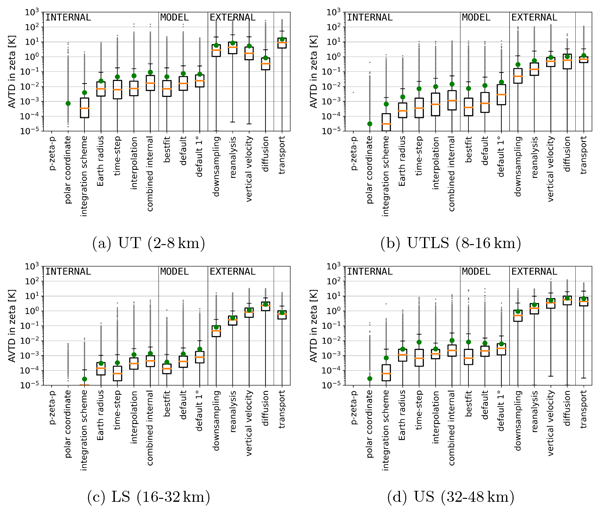
Jan Clemens, Lars Hoffmann, Bärbel Vogel, Sabine Grießbach, and Nicole Thomas
Geosci. Model Dev., 17, 4467–4493, https://doi.org/10.5194/gmd-17-4467-2024, https://doi.org/10.5194/gmd-17-4467-2024, 2024
Short summary
Short summary
Lagrangian transport models simulate the transport of air masses in the atmosphere. For example, one model (CLaMS) is well suited to calculating transport as it uses a special coordinate system and special vertical wind. However, it only runs inefficiently on modern supercomputers. Hence, we have implemented the benefits of CLaMS into a new model (MPTRAC), which is already highly efficient on modern supercomputers. Finally, in extensive tests, we showed that CLaMS and MPTRAC agree very well.
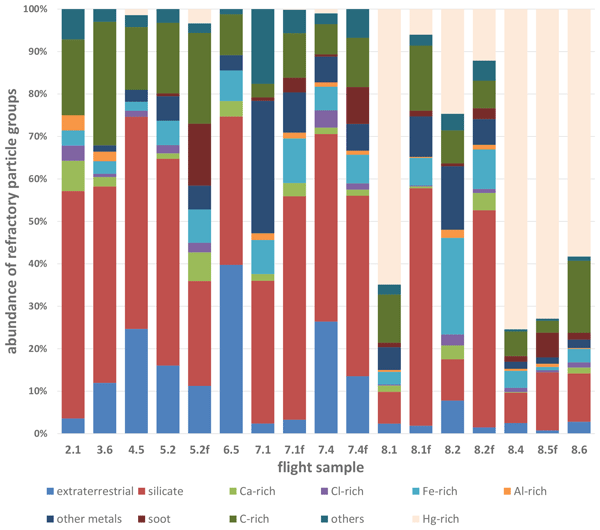
Martin Ebert, Ralf Weigel, Stephan Weinbruch, Lisa Schneider, Konrad Kandler, Stefan Lauterbach, Franziska Köllner, Felix Plöger, Gebhard Günther, Bärbel Vogel, and Stephan Borrmann
Atmos. Chem. Phys., 24, 4771–4788, https://doi.org/10.5194/acp-24-4771-2024, https://doi.org/10.5194/acp-24-4771-2024, 2024
Short summary
Short summary
Particles were collected during the flight campaign StratoClim 2017 within the Asian tropopause aerosol layer (ATAL). Refractory particles from seven different flights were characterized by scanning and transmission electron microscopy (SEM, TEM). The most abundant refractory particles are silicates and non-volatile organics. The most important sources are combustion processes at the ground and the agitation of soil material. During one flight, small cinnabar particles (HgS) were also detected.
Ella Gilbert, Jhaswantsing Purseed, Yun Li, Martina Krämer, Beatrice Altamura, and Nicolas Bellouin
EGUsphere, https://doi.org/10.5194/egusphere-2024-821, https://doi.org/10.5194/egusphere-2024-821, 2024
Preprint withdrawn
Short summary
Short summary
We use a simple experiment to explore the non-CO2 impacts of aviation on climate, which are considerably larger than the impact of the sector’s carbon emissions alone. We show that the main effect of our experiments – which intend to mimic the effect of aircraft soot emissions reaching existing high-altitude cirrus clouds – is to extend cloud lifetime, thereby enhancing their effect on climate.
Felix Ploeger, Thomas Birner, Edward Charlesworth, Paul Konopka, and Rolf Müller
Atmos. Chem. Phys., 24, 2033–2043, https://doi.org/10.5194/acp-24-2033-2024, https://doi.org/10.5194/acp-24-2033-2024, 2024
Short summary
Short summary
We present a novel mechanism of how regional anomalies in water vapour concentrations in the upper troposphere and lower stratosphere impact regional atmospheric circulation systems. These impacts include a displaced upper-level Asian monsoon circulation and strengthened prevailing westerlies in the Pacific region. Current climate models have biases in simulating these regional water vapour anomalies and circulation impacts, but the biases can be avoided by improving the model transport.
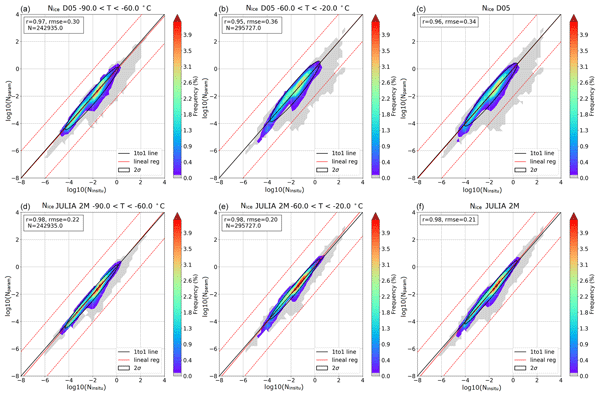
Irene Bartolomé García, Odran Sourdeval, Reinhold Spang, and Martina Krämer
Atmos. Chem. Phys., 24, 1699–1716, https://doi.org/10.5194/acp-24-1699-2024, https://doi.org/10.5194/acp-24-1699-2024, 2024
Short summary
Short summary
How many ice crystals of each size are in a cloud is a key parameter for the retrieval of cloud properties. The distribution of ice crystals is obtained from in situ measurements and used to create parameterizations that can be used when analyzing the remote-sensing data. Current parameterizations are based on data sets that do not include reliable measurements of small crystals, but in our study we use a data set that includes very small ice crystals to improve these parameterizations.
Reinhold Spang, Rolf Müller, and Alexandru Rap
Atmos. Chem. Phys., 24, 1213–1230, https://doi.org/10.5194/acp-24-1213-2024, https://doi.org/10.5194/acp-24-1213-2024, 2024
Short summary
Short summary
Cirrus clouds play an important role in the radiation budget of the Earth. Despite recent progress in their observation, the radiative impact of ultra-thin cirrus clouds (UTC) in the tropopause region and in the lowermost stratosphere remains poorly constrained. Sensitivity model simulations with different ice parameters provide an uncertainty range for the radiative effect of UTCs. There is a need for better observed UTCs to enable the simulation of their potentially large effect on climate.
Jan Clemens, Bärbel Vogel, Lars Hoffmann, Sabine Griessbach, Nicole Thomas, Suvarna Fadnavis, Rolf Müller, Thomas Peter, and Felix Ploeger
Atmos. Chem. Phys., 24, 763–787, https://doi.org/10.5194/acp-24-763-2024, https://doi.org/10.5194/acp-24-763-2024, 2024
Short summary
Short summary
The source regions of the Asian tropopause aerosol layer (ATAL) are debated. We use balloon-borne measurements of the layer above Nainital (India) in August 2016 and atmospheric transport models to find ATAL source regions. Most air originated from the Tibetan plateau. However, the measured ATAL was stronger when more air originated from the Indo-Gangetic Plain and weaker when more air originated from the Pacific. Hence, the results indicate important anthropogenic contributions to the ATAL.
Bärbel Vogel, C. Michael Volk, Johannes Wintel, Valentin Lauther, Jan Clemens, Jens-Uwe Grooß, Gebhard Günther, Lars Hoffmann, Johannes C. Laube, Rolf Müller, Felix Ploeger, and Fred Stroh
Atmos. Chem. Phys., 24, 317–343, https://doi.org/10.5194/acp-24-317-2024, https://doi.org/10.5194/acp-24-317-2024, 2024
Short summary
Short summary
Over the Indian subcontinent, polluted air is rapidly uplifted to higher altitudes during the Asian monsoon season. We present an assessment of vertical transport in this region using different wind data provided by the European Centre for Medium-Range Weather Forecasts (ECMWF), as well as high-resolution aircraft measurements. In general, our findings confirm that the newest ECMWF reanalysis product, ERA5, yields a better representation of transport compared to the predecessor, ERA-Interim.
Rolf Müller, Ulrich Pöschl, Thomas Koop, Thomas Peter, and Ken Carslaw
Atmos. Chem. Phys., 23, 15445–15453, https://doi.org/10.5194/acp-23-15445-2023, https://doi.org/10.5194/acp-23-15445-2023, 2023
Short summary
Short summary
Paul J. Crutzen was a pioneer in atmospheric sciences and a kind-hearted, humorous person with empathy for the private lives of his colleagues and students. He made fundamental scientific contributions to a wide range of scientific topics in all parts of the atmosphere. Paul was among the founders of the journal Atmospheric Chemistry and Physics. His work will continue to be a guide for generations of scientists and environmental policymakers to come.
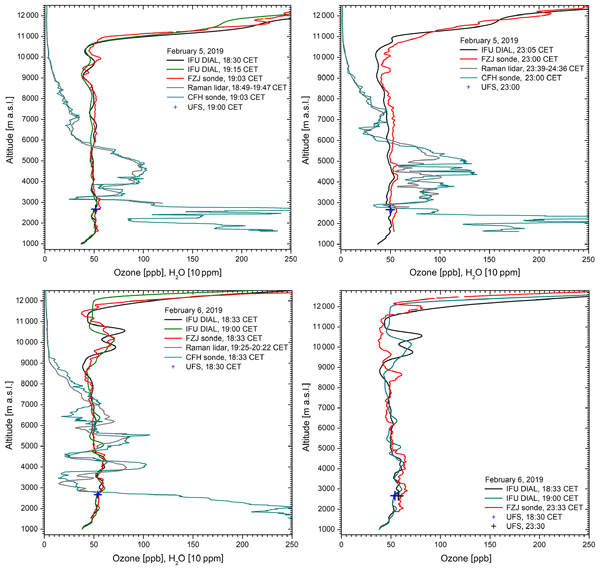
Thomas Trickl, Martin Adelwart, Dina Khordakova, Ludwig Ries, Christian Rolf, Michael Sprenger, Wolfgang Steinbrecht, and Hannes Vogelmann
Atmos. Meas. Tech., 16, 5145–5165, https://doi.org/10.5194/amt-16-5145-2023, https://doi.org/10.5194/amt-16-5145-2023, 2023
Short summary
Short summary
Tropospheric ozone have been measured for more than a century. Highly quantitative ozone measurements have been made at monitoring stations. However, deficits have been reported for vertical sounding systems. Here, we report a thorough intercomparison effort between a differential-absorption lidar system and two types of balloon-borne ozone sondes, also using ozone sensors at nearby mountain sites as references. The sondes agree very well with the lidar after offset corrections.
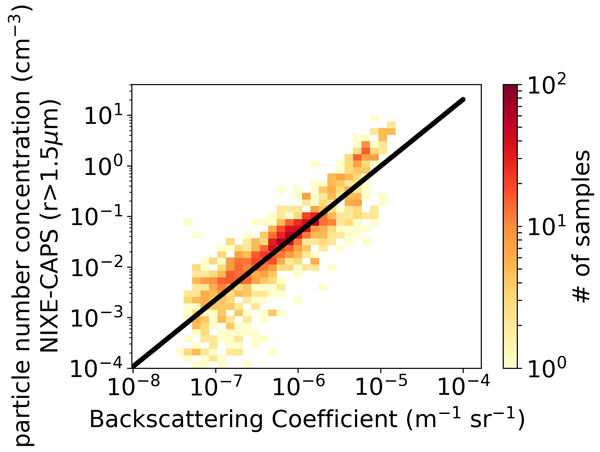
Francesco Cairo, Martina Krämer, Armin Afchine, Guido Di Donfrancesco, Luca Di Liberto, Sergey Khaykin, Lorenza Lucaferri, Valentin Mitev, Max Port, Christian Rolf, Marcel Snels, Nicole Spelten, Ralf Weigel, and Stephan Borrmann
Atmos. Meas. Tech., 16, 4899–4925, https://doi.org/10.5194/amt-16-4899-2023, https://doi.org/10.5194/amt-16-4899-2023, 2023
Short summary
Short summary
Cirrus clouds have been observed over the Himalayan region between 10 km and the tropopause at 17–18 km. Data from backscattersonde, hygrometers, and particle cloud spectrometers have been compared to assess their consistency. Empirical relationships between optical parameters accessible with remote sensing lidars and cloud microphysical parameters (such as ice water content, particle number and surface area density, and particle aspherical fraction) have been established.
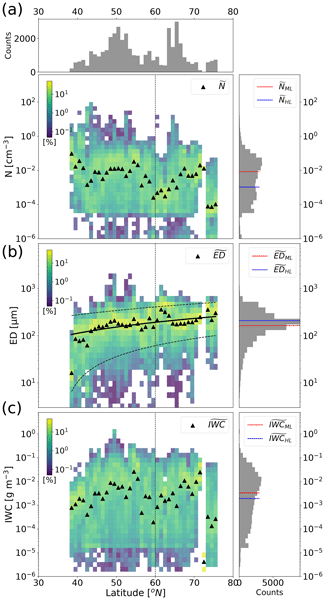
Elena De La Torre Castro, Tina Jurkat-Witschas, Armin Afchine, Volker Grewe, Valerian Hahn, Simon Kirschler, Martina Krämer, Johannes Lucke, Nicole Spelten, Heini Wernli, Martin Zöger, and Christiane Voigt
Atmos. Chem. Phys., 23, 13167–13189, https://doi.org/10.5194/acp-23-13167-2023, https://doi.org/10.5194/acp-23-13167-2023, 2023
Short summary
Short summary
In this study, we show the differences in the microphysical properties between high-latitude (HL) cirrus and mid-latitude (ML) cirrus over the Arctic, North Atlantic, and central Europe during summer. The in situ measurements are combined with backward trajectories to investigate the influence of the region on cloud formation. We show that HL cirrus are characterized by a lower concentration of larger ice crystals when compared to ML cirrus.
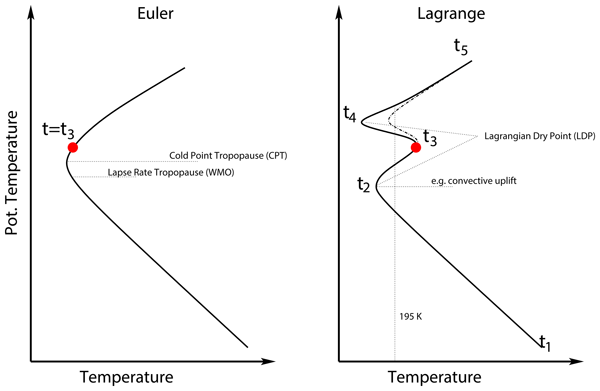
Paul Konopka, Christian Rolf, Marc von Hobe, Sergey M. Khaykin, Benjamin Clouser, Elisabeth Moyer, Fabrizio Ravegnani, Francesco D'Amato, Silvia Viciani, Nicole Spelten, Armin Afchine, Martina Krämer, Fred Stroh, and Felix Ploeger
Atmos. Chem. Phys., 23, 12935–12947, https://doi.org/10.5194/acp-23-12935-2023, https://doi.org/10.5194/acp-23-12935-2023, 2023
Short summary
Short summary
We studied water vapor in a critical region of the atmosphere, the Asian summer monsoon anticyclone, using rare in situ observations. Our study shows that extremely high water vapor values observed in the stratosphere within the Asian monsoon anticyclone still undergo significant freeze-drying and that water vapor concentrations set by the Lagrangian dry point are a better proxy for the stratospheric water vapor budget than rare observations of enhanced water mixing ratios.
Suvarna Fadnavis, Bernd Heinold, T. P. Sabin, Anne Kubin, Katty Huang, Alexandru Rap, and Rolf Müller
Atmos. Chem. Phys., 23, 10439–10449, https://doi.org/10.5194/acp-23-10439-2023, https://doi.org/10.5194/acp-23-10439-2023, 2023
Short summary
Short summary
The influence of the COVID-19 lockdown on the Himalayas caused increases in snow cover and a decrease in runoff, ultimately leading to an enhanced snow water equivalent. Our findings highlight that, out of the two processes causing a retreat of Himalayan glaciers – (1) slow response to global climate change and (2) fast response to local air pollution – a policy action on the latter is more likely to be within the reach of possible policy action to help billions of people in southern Asia.
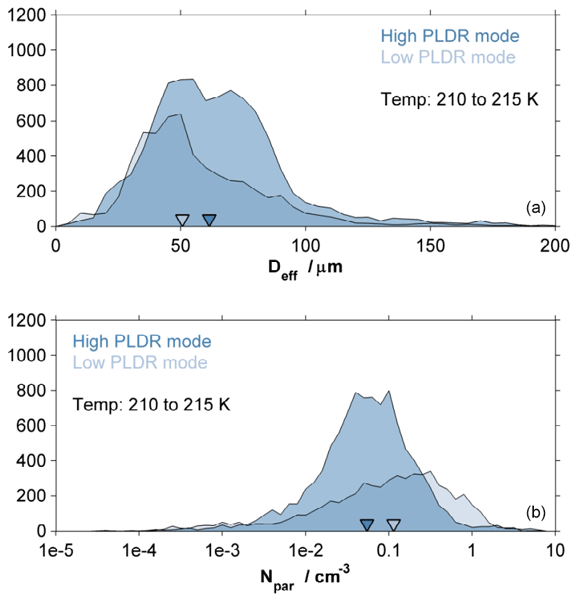
Silke Groß, Tina Jurkat-Witschas, Qiang Li, Martin Wirth, Benedikt Urbanek, Martina Krämer, Ralf Weigel, and Christiane Voigt
Atmos. Chem. Phys., 23, 8369–8381, https://doi.org/10.5194/acp-23-8369-2023, https://doi.org/10.5194/acp-23-8369-2023, 2023
Short summary
Short summary
Aviation-emitted aerosol can have an impact on cirrus clouds. We present optical and microphysical properties of mid-latitude cirrus clouds which were formed under the influence of aviation-emitted aerosol or which were formed under rather pristine conditions. We find that cirrus clouds affected by aviation-emitted aerosol show larger values of the particle linear depolarization ratio, larger mean effective ice particle diameters and decreased ice particle number concentrations.
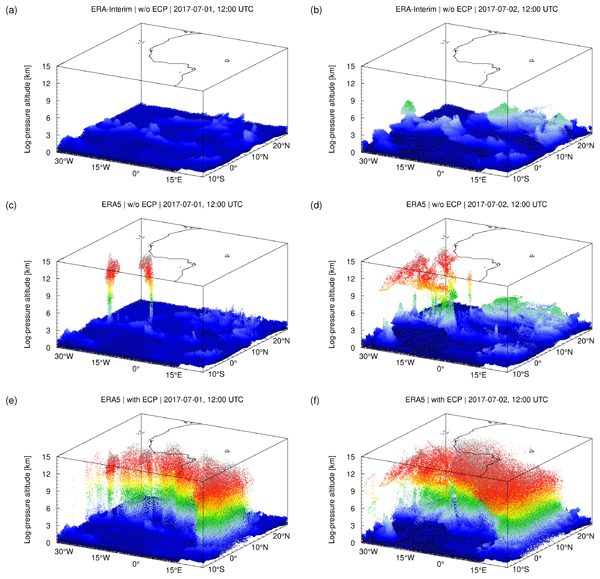
Lars Hoffmann, Paul Konopka, Jan Clemens, and Bärbel Vogel
Atmos. Chem. Phys., 23, 7589–7609, https://doi.org/10.5194/acp-23-7589-2023, https://doi.org/10.5194/acp-23-7589-2023, 2023
Short summary
Short summary
Atmospheric convection plays a key role in tracer transport in the troposphere. Global meteorological forecasts and reanalyses typically have a coarse spatiotemporal resolution that does not adequately resolve the dynamics, transport, and mixing of air associated with storm systems or deep convection. We discuss the application of the extreme convection parameterization in a Lagrangian transport model to improve simulations of tracer transport from the boundary layer into the free troposphere.
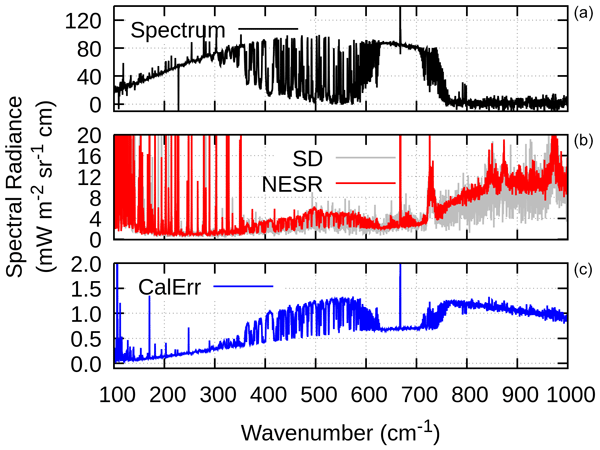
Claudio Belotti, Flavio Barbara, Marco Barucci, Giovanni Bianchini, Francesco D'Amato, Samuele Del Bianco, Gianluca Di Natale, Marco Gai, Alessio Montori, Filippo Pratesi, Markus Rettinger, Christian Rolf, Ralf Sussmann, Thomas Trickl, Silvia Viciani, Hannes Vogelmann, and Luca Palchetti
Atmos. Meas. Tech., 16, 2511–2529, https://doi.org/10.5194/amt-16-2511-2023, https://doi.org/10.5194/amt-16-2511-2023, 2023
Short summary
Short summary
FIRMOS (Far-Infrared Radiation Mobile Observation System) is a spectroradiometer measuring in the far-infrared, developed to support the preparation of the FORUM (Far-infrared Outgoing Radiation Understanding and Monitoring) satellite mission. In this paper, we describe the instrument, its data products, and the results of the comparison with a suite of observations made from a high-altitude site during a field campaign, in winter 2018–2019.
Georgios Dekoutsidis, Silke Groß, Martin Wirth, Martina Krämer, and Christian Rolf
Atmos. Chem. Phys., 23, 3103–3117, https://doi.org/10.5194/acp-23-3103-2023, https://doi.org/10.5194/acp-23-3103-2023, 2023
Short summary
Short summary
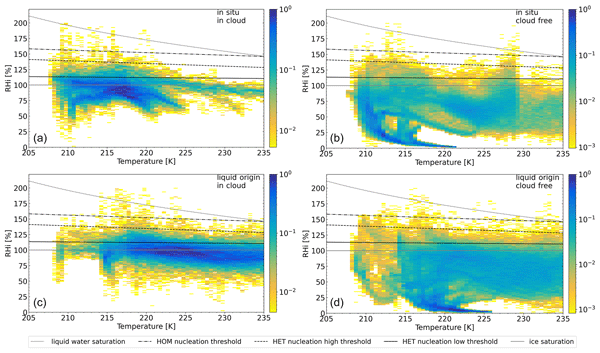
Cirrus clouds affect Earth's atmosphere, deeming our study important. Here we use water vapor measurements by lidar and study the relative humidity (RHi) within and around midlatitude cirrus clouds. We find high supersaturations in the cloud-free air and within the clouds, especially near the cloud top. We study two cloud types with different formation processes. Finally, we conclude that the shape of the distribution of RHi can be used as an indicator of different cloud evolutionary stages.
Fayçal Lamraoui, Martina Krämer, Armin Afchine, Adam B. Sokol, Sergey Khaykin, Apoorva Pandey, and Zhiming Kuang
Atmos. Chem. Phys., 23, 2393–2419, https://doi.org/10.5194/acp-23-2393-2023, https://doi.org/10.5194/acp-23-2393-2023, 2023
Short summary
Short summary
Cirrus in the tropical tropopause layer (TTL) can play a key role in vertical transport. We investigate the role of different cloud regimes and the associated ice habits in regulating the properties of the TTL. We use high-resolution numerical experiments at the scales of large-eddy simulations (LESs) and aircraft measurements. We found that LES-scale parameterizations that predict ice shape are crucial for an accurate representation of TTL cirrus and thus the associated (de)hydration process.
Yun Li, Christoph Mahnke, Susanne Rohs, Ulrich Bundke, Nicole Spelten, Georgios Dekoutsidis, Silke Groß, Christiane Voigt, Ulrich Schumann, Andreas Petzold, and Martina Krämer
Atmos. Chem. Phys., 23, 2251–2271, https://doi.org/10.5194/acp-23-2251-2023, https://doi.org/10.5194/acp-23-2251-2023, 2023
Short summary
Short summary
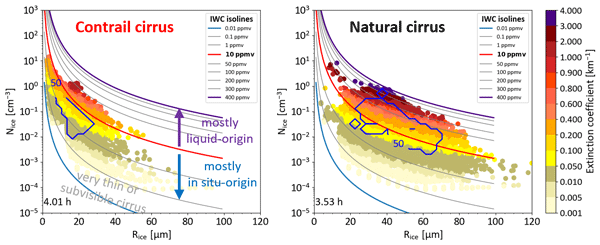
The radiative effect of aviation-induced cirrus is closely related to ambient conditions and its microphysical properties. Our study investigated the occurrence of contrail and natural cirrus measured above central Europe in spring 2014. It finds that contrail cirrus appears frequently in the pressure range 200 to 245 hPa and occurs more often in slightly ice-subsaturated environments than expected. Avoiding slightly ice-subsaturated regions by aviation might help mitigate contrail cirrus.
Andreas Marsing, Ralf Meerkötter, Romy Heller, Stefan Kaufmann, Tina Jurkat-Witschas, Martina Krämer, Christian Rolf, and Christiane Voigt
Atmos. Chem. Phys., 23, 587–609, https://doi.org/10.5194/acp-23-587-2023, https://doi.org/10.5194/acp-23-587-2023, 2023
Short summary
Short summary
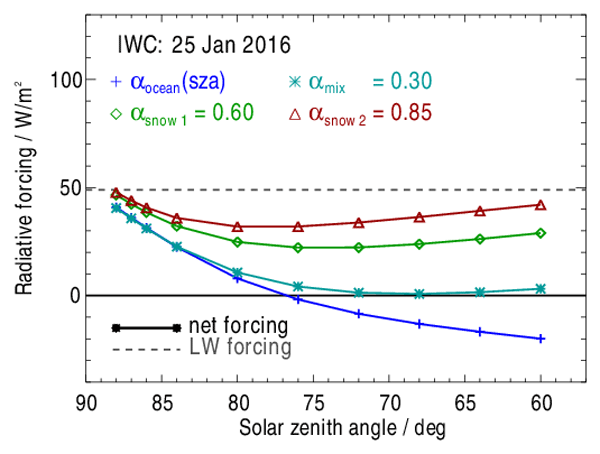
We employ highly resolved aircraft measurements of profiles of the ice water content (IWC) in Arctic cirrus clouds in winter and spring, when solar irradiation is low. Using radiation transfer calculations, we assess the cloud radiative effect over different surfaces like snow or ocean. The variability in the IWC of the clouds affects their overall radiative effect and drives internal processes. This helps understand the role of cirrus in a rapidly changing Arctic environment.
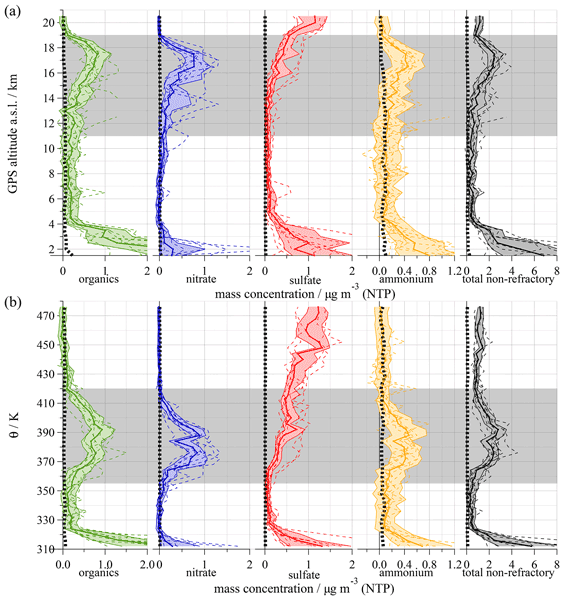
Oliver Appel, Franziska Köllner, Antonis Dragoneas, Andreas Hünig, Sergej Molleker, Hans Schlager, Christoph Mahnke, Ralf Weigel, Max Port, Christiane Schulz, Frank Drewnick, Bärbel Vogel, Fred Stroh, and Stephan Borrmann
Atmos. Chem. Phys., 22, 13607–13630, https://doi.org/10.5194/acp-22-13607-2022, https://doi.org/10.5194/acp-22-13607-2022, 2022
Short summary
Short summary
This paper clarifies the chemical composition of the Asian tropopause aerosol layer (ATAL) by means of airborne in situ aerosol mass spectrometry (AMS). Ammonium nitrate and organics are found to significantly contribute to the particle layer, while sulfate does not show a layered structure. An analysis of the single-particle mass spectra suggests that secondary particle formation and subsequent growth dominate the particle composition, rather than condensation on pre-existing primary particles.
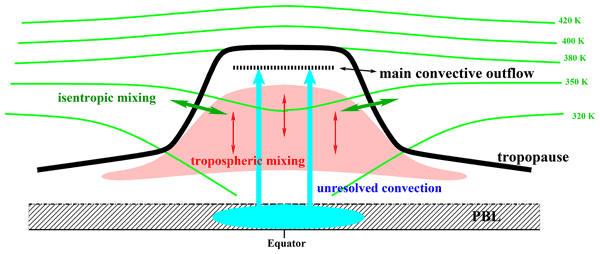
Paul Konopka, Mengchu Tao, Marc von Hobe, Lars Hoffmann, Corinna Kloss, Fabrizio Ravegnani, C. Michael Volk, Valentin Lauther, Andreas Zahn, Peter Hoor, and Felix Ploeger
Geosci. Model Dev., 15, 7471–7487, https://doi.org/10.5194/gmd-15-7471-2022, https://doi.org/10.5194/gmd-15-7471-2022, 2022
Short summary
Short summary
Pure trajectory-based transport models driven by meteorology derived from reanalysis products (ERA5) take into account only the resolved, advective part of transport. That means neither mixing processes nor unresolved subgrid-scale advective processes like convection are included. The Chemical Lagrangian Model of the Stratosphere (CLaMS) includes these processes. We show that isentropic mixing dominates unresolved transport. The second most important transport process is unresolved convection.
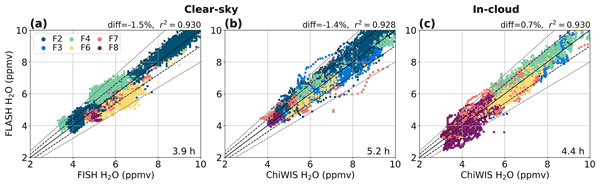
Clare E. Singer, Benjamin W. Clouser, Sergey M. Khaykin, Martina Krämer, Francesco Cairo, Thomas Peter, Alexey Lykov, Christian Rolf, Nicole Spelten, Armin Afchine, Simone Brunamonti, and Elisabeth J. Moyer
Atmos. Meas. Tech., 15, 4767–4783, https://doi.org/10.5194/amt-15-4767-2022, https://doi.org/10.5194/amt-15-4767-2022, 2022
Short summary
Short summary
In situ measurements of water vapor in the upper troposphere are necessary to study cloud formation and hydration of the stratosphere but challenging due to cold–dry conditions. We compare measurements from three water vapor instruments from the StratoClim campaign in 2017. In clear sky (clouds), point-by-point differences were <1.5±8 % (<1±8 %). This excellent agreement allows detection of fine-scale structures required to understand the impact of convection on stratospheric water vapor.
Liubov Poshyvailo-Strube, Rolf Müller, Stephan Fueglistaler, Michaela I. Hegglin, Johannes C. Laube, C. Michael Volk, and Felix Ploeger
Atmos. Chem. Phys., 22, 9895–9914, https://doi.org/10.5194/acp-22-9895-2022, https://doi.org/10.5194/acp-22-9895-2022, 2022
Short summary
Short summary
Brewer–Dobson circulation (BDC) controls the composition of the stratosphere, which in turn affects radiation and climate. As the BDC cannot be measured directly, it is necessary to infer its strength and trends indirectly. In this study, we test in the
model worlddifferent methods for estimating the mean age of air trends based on a combination of stratospheric water vapour and methane data. We also provide simple practical advice of a more reliable estimation of the mean age of air trends.
Suvarna Fadnavis, Prashant Chavan, Akash Joshi, Sunil M. Sonbawne, Asutosh Acharya, Panuganti C. S. Devara, Alexandru Rap, Felix Ploeger, and Rolf Müller
Atmos. Chem. Phys., 22, 7179–7191, https://doi.org/10.5194/acp-22-7179-2022, https://doi.org/10.5194/acp-22-7179-2022, 2022
Short summary
Short summary
We show that large amounts of anthropogenic aerosols are transported from South Asia to the northern Indian Ocean. These aerosols are then lifted into the UTLS by the ascending branch of the Hadley circulation. They are further transported to the Southern Hemisphere and downward via westerly ducts over the tropical Atlantic and Pacific. These aerosols increase tropospheric heating, resulting in an increase in water vapor, which is then transported to the UTLS.
Andreas Wieser, Andreas Güntner, Peter Dietrich, Jan Handwerker, Dina Khordakova, Uta Ködel, Martin Kohler, Hannes Mollenhauer, Bernhard Mühr, Erik Nixdorf, Marvin Reich, Christian Rolf, Martin Schrön, Claudia Schütze, and Ute Weber
Hydrol. Earth Syst. Sci. Discuss., https://doi.org/10.5194/hess-2022-131, https://doi.org/10.5194/hess-2022-131, 2022
Preprint withdrawn
Short summary
Short summary
We present an event-triggered observation concept which covers the entire process chain from heavy precipitation to flooding at the catchment scale. It combines flexible and mobile observing systems out of the fields of meteorology, hydrology and geophysics with stationary networks to capture atmospheric transport processes, heterogeneous precipitation patterns, land surface and subsurface storage processes, and runoff dynamics.
Mireia Papke Chica, Valerian Hahn, Tiziana Braeuer, Elena de la Torre Castro, Florian Ewald, Mathias Gergely, Simon Kirschler, Luca Bugliaro Goggia, Stefanie Knobloch, Martina Kraemer, Johannes Lucke, Johanna Mayer, Raphael Maerkl, Manuel Moser, Laura Tomsche, Tina Jurkat-Witschas, Martin Zoeger, Christian von Savigny, and Christiane Voigt
Atmos. Chem. Phys. Discuss., https://doi.org/10.5194/acp-2022-255, https://doi.org/10.5194/acp-2022-255, 2022
Preprint withdrawn
Short summary
Short summary
The mixed-phase temperature regime in convective clouds challenges our understanding of microphysical and radiative cloud properties. We provide a rare and unique dataset of aircraft in situ measurements in a strong mid-latitude convective system. We find that mechanisms initiating ice nucleation and growth strongly depend on temperature, relative humidity, and vertical velocity and variate within the measured system, resulting in altitude dependent changes of the cloud liquid and ice fraction.
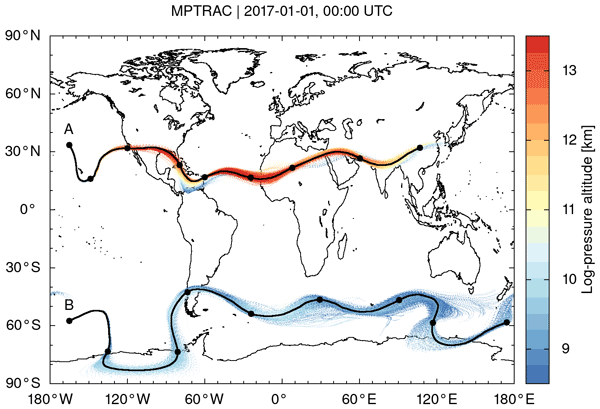
Lars Hoffmann, Paul F. Baumeister, Zhongyin Cai, Jan Clemens, Sabine Griessbach, Gebhard Günther, Yi Heng, Mingzhao Liu, Kaveh Haghighi Mood, Olaf Stein, Nicole Thomas, Bärbel Vogel, Xue Wu, and Ling Zou
Geosci. Model Dev., 15, 2731–2762, https://doi.org/10.5194/gmd-15-2731-2022, https://doi.org/10.5194/gmd-15-2731-2022, 2022
Short summary
Short summary
We describe the new version (2.2) of the Lagrangian transport model MPTRAC, which has been ported for application on GPUs. The model was verified by comparing kinematic trajectories and synthetic tracer simulations for the free troposphere and stratosphere from GPUs and CPUs. Benchmarking showed a speed-up of a factor of 16 of GPU-enabled simulations compared to CPU-only runs, indicating the great potential of applying GPUs for Lagrangian transport simulations on upcoming HPC systems.
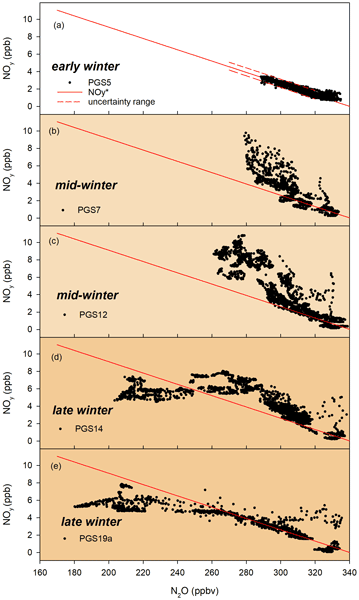
Helmut Ziereis, Peter Hoor, Jens-Uwe Grooß, Andreas Zahn, Greta Stratmann, Paul Stock, Michael Lichtenstern, Jens Krause, Vera Bense, Armin Afchine, Christian Rolf, Wolfgang Woiwode, Marleen Braun, Jörn Ungermann, Andreas Marsing, Christiane Voigt, Andreas Engel, Björn-Martin Sinnhuber, and Hermann Oelhaf
Atmos. Chem. Phys., 22, 3631–3654, https://doi.org/10.5194/acp-22-3631-2022, https://doi.org/10.5194/acp-22-3631-2022, 2022
Short summary
Short summary
Airborne observations were conducted in the lowermost Arctic stratosphere during the winter of 2015/2016. The observed distribution of reactive nitrogen shows clear indications of nitrification in mid-winter and denitrification in late winter. This was caused by the formation of polar stratospheric cloud particles, which were observed during several flights. The sedimentation and evaporation of these particles and the descent of air masses cause a redistribution of reactive nitrogen.
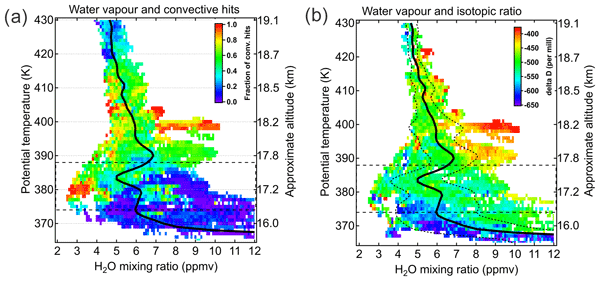
Sergey M. Khaykin, Elizabeth Moyer, Martina Krämer, Benjamin Clouser, Silvia Bucci, Bernard Legras, Alexey Lykov, Armin Afchine, Francesco Cairo, Ivan Formanyuk, Valentin Mitev, Renaud Matthey, Christian Rolf, Clare E. Singer, Nicole Spelten, Vasiliy Volkov, Vladimir Yushkov, and Fred Stroh
Atmos. Chem. Phys., 22, 3169–3189, https://doi.org/10.5194/acp-22-3169-2022, https://doi.org/10.5194/acp-22-3169-2022, 2022
Short summary
Short summary
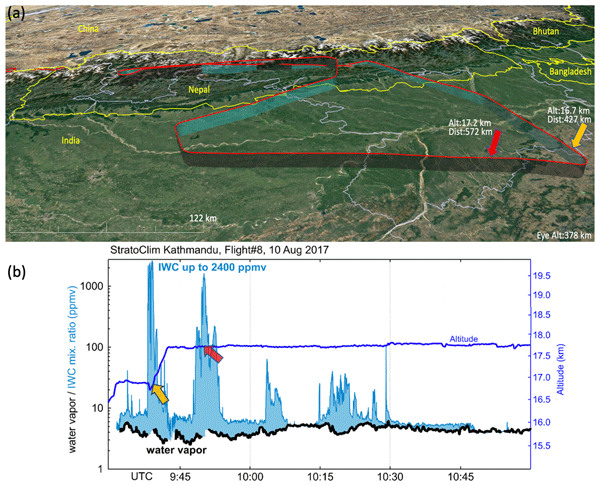
The Asian monsoon anticyclone is the key contributor to the global annual maximum in lower stratospheric water vapour. We investigate the impact of deep convection on the lower stratospheric water using a unique set of observations aboard the high-altitude M55-Geophysica aircraft deployed in Nepal in summer 2017 within the EU StratoClim project. We find that convective plumes of wet air can persist within the Asian anticyclone for weeks, thereby enhancing the occurrence of high-level clouds.
Valentin Lauther, Bärbel Vogel, Johannes Wintel, Andrea Rau, Peter Hoor, Vera Bense, Rolf Müller, and C. Michael Volk
Atmos. Chem. Phys., 22, 2049–2077, https://doi.org/10.5194/acp-22-2049-2022, https://doi.org/10.5194/acp-22-2049-2022, 2022
Short summary
Short summary
We show airborne in situ measurements of the very short-lived ozone-depleting substances CH2Cl2 and CHCl3, revealing particularly high concentrations of both species in the lower stratosphere. Back-trajectory calculations and 3D model simulations show that the air masses with high concentrations originated in the Asian boundary layer and were transported via the Asian summer monsoon. We also identify a fast transport pathway into the stratosphere via the North American monsoon and by hurricanes.
Dina Khordakova, Christian Rolf, Jens-Uwe Grooß, Rolf Müller, Paul Konopka, Andreas Wieser, Martina Krämer, and Martin Riese
Atmos. Chem. Phys., 22, 1059–1079, https://doi.org/10.5194/acp-22-1059-2022, https://doi.org/10.5194/acp-22-1059-2022, 2022
Short summary
Short summary
Extreme storms transport humidity from the troposphere to the stratosphere. Here it has a strong impact on the climate. With ongoing global warming, we expect more storms and, hence, an enhancement of this effect. A case study was performed in order to measure the impact of the direct injection of water vapor into the lower stratosphere. The measurements displayed a significant transport of water vapor into the lower stratosphere, and this was supported by satellite and reanalysis data.
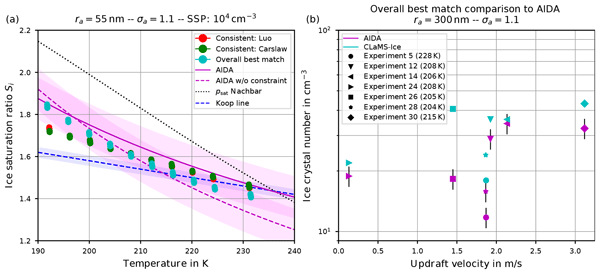
Manuel Baumgartner, Christian Rolf, Jens-Uwe Grooß, Julia Schneider, Tobias Schorr, Ottmar Möhler, Peter Spichtinger, and Martina Krämer
Atmos. Chem. Phys., 22, 65–91, https://doi.org/10.5194/acp-22-65-2022, https://doi.org/10.5194/acp-22-65-2022, 2022
Short summary
Short summary
An important mechanism for the appearance of ice particles in the upper troposphere at low temperatures is homogeneous nucleation. This process is commonly described by the
Koop line, predicting the humidity at freezing. However, laboratory measurements suggest that the freezing humidities are above the Koop line, motivating the present study to investigate the influence of different physical parameterizations on the homogeneous freezing with the help of a detailed numerical model.
Cited articles
Adcock, K. E., Fraser, P. J., Hall, B. D., Langenfelds, R. L., Lee, G., Montzka, S. A., Oram, D. E., Röckmann, T., Stroh, F., Sturges, W. T., Vogel, B., and Laube, J. C.: Aircraft-based observations of ozone-depleting substances in the upper troposphere and lower stratosphere in and above the Asian summer monsoon, J. Geophys. Res., 126, e2020JD033137, https://doi.org/10.1029/2020JD033137, 2021. a
Afchine, A., Rolf, C., Costa, A., Spelten, N., Riese, M., Buchholz, B., Ebert, V., Heller, R., Kaufmann, S., Minikin, A., Voigt, C., Zöger, M., Smith, J., Lawson, P., Lykov, A., Khaykin, S., and Krämer, M.: Ice particle sampling from aircraft – influence of the probing position on the ice water content, Atmos. Meas. Tech., 11, 4015–4031, https://doi.org/10.5194/amt-11-4015-2018, 2018. a
Appel, O., Köllner, F., Dragoneas, A., Hünig, A., Molleker, S., Schlager, H., Mahnke, C., Weigel, R., Port, M., Schulz, C., Drewnick, F., Vogel, B., Stroh, F., and Borrmann, S.: Chemical analysis of the Asian tropopause aerosol layer (ATAL) with emphasis on secondary aerosol particles using aircraft-based in situ aerosol mass spectrometry, Atmos. Chem. Phys., 22, 13607–13630, https://doi.org/10.5194/acp-22-13607-2022, 2022. a
Bauchinger, S., Engel, A., Jesswein, M., Keber, T., Bönisch, H., Obersteiner, F., Zahn, A., Emig, N., Hoor, P., Lachnitt, H.-C., Weyland, F., Ort, L., and Schuck, T. J.: The extratropical tropopause – trace gas perspective on tropopause definition choice, Atmos. Chem. Phys., 25, 14167–14186, https://doi.org/10.5194/acp-25-14167-2025, 2025. a, b
Becker, F., Vogel, B., Günther, G., Ploeger, F., Riese, M., Rosanka, S., Taraborrelli, D., Nützel, M., Jöckel, P., Brinkop, S., and Müller, R.: Upward transport of boundary layer air to altitudes of the Asian summer monsoon anticyclone in Eulerian and Lagrangian model simulations, Meteorol. Z., 34, 195–211, https://doi.org/10.1127/metz/1266, 2025. a, b
Bian, J., Pan, L. L., Paulik, L., Vömel, H., and Chen, H.: In situ water vapor and ozone measurements in Lhasa and Kunmin during the Asian summer monsoon, Geophys. Res. Lett., 39, L19808, https://doi.org/10.1029/2012GL052996, 2012. a, b, c, d
Bian, J., Li, D., Bai, Z., Li, Q., Lyu, D., and Zhou, X.: Transport of Asian surface pollutants to the global stratosphere from the Tibetan Plateau region during the Asian summer monsoon, Natl. Sci. Rev., 7, 516–533, https://doi.org/10.1093/nsr/nwaa005, 2020. a, b
Brunamonti, S., Jorge, T., Oelsner, P., Hanumanthu, S., Singh, B. B., Kumar, K. R., Sonbawne, S., Meier, S., Singh, D., Wienhold, F. G., Luo, B. P., Boettcher, M., Poltera, Y., Jauhiainen, H., Kayastha, R., Karmacharya, J., Dirksen, R., Naja, M., Rex, M., Fadnavis, S., and Peter, T.: Balloon-borne measurements of temperature, water vapor, ozone and aerosol backscatter on the southern slopes of the Himalayas during StratoClim 2016–2017, Atmos. Chem. Phys., 18, 15937–15957, https://doi.org/10.5194/acp-18-15937-2018, 2018. a, b, c
Charlesworth, E., Ploeger, F., Birner, T., Baikhadzhaev, R., Abalos, M., Abraham, L., Akiyoshi, H., Bekki, S., Dennison, F., Jöckel, P., Keeble, J., Kinnison, D., Morgenstern, O., Plummer, D., Rozanov, E., Strode, S., Zeng, G., and Riese, M.: Stratospheric water vapor affecting atmospheric circulation, Nat. Commun., 14, 3925, https://doi.org/10.1038/s41467-023-39559-2, 2023. a
Clapp, C. E., Smith, J. B., Bedka, K. M., and Anderson, J. G.: Distribution of cross-tropopause convection within the Asian monsoon region from May through October 2017, Atmos. Chem. Phys., 23, 3279–3298, https://doi.org/10.5194/acp-23-3279-2023, 2023. a, b, c
Clemens, J., Vogel, B., Hoffmann, L., Griessbach, S., Thomas, N., Fadnavis, S., Müller, R., Peter, T., and Ploeger, F.: A multi-scenario Lagrangian trajectory analysis to identify source regions of the Asian tropopause aerosol layer on the Indian subcontinent in August 2016, Atmos. Chem. Phys., 24, 763–787, https://doi.org/10.5194/acp-24-763-2024, 2024. a, b
Dethof, A., O'Neill, A., Slingo, J. M., and Smit, H. G. J.: A mechanism for moistening the lower stratosphere involving the Asian summer monsoon, Q. J. Roy. Meteor. Soc., 556, 1079–1106, 1999. a
DLR: DLR Mission: STRATOCLIM, HALO database, https://halo-db.pa.op.dlr.de/mission/101, last access: 2 March 2026. a
Emmanuel, M., Sunilkumar, S., Muhsin, M., Satheesh Chandran, P., Parameswaran, K., Kumar, B. S., Maitra, A., Satyanarayana, A., and Nagendra, N.: Effect of monsoon dynamics and deep convection on the upper troposphere lower stratosphere water vapour over Indian monsoon region, Atmos. Res., 249, 105336, https://doi.org/10.1016/j.atmosres.2020.105336, 2021. a
Ertel, H.: Methoden und Probleme der Dynamischen Meteorologie, vol. 5 of Ergebnisse der Mathematik und ihrer Grenzgebiete, Verlag von Julius Springer, Berlin, reprint, https://doi.org/10.1007/978-3-642-65431-2, 1938. a
Fadnavis, S., Sagalgile, A., Sonbawne, S., Vogel, B., Peter, T., Wienhold, F. G., Dirksen, R., Oelsner, P., and Müller, R.: Comparison of ozone sonde measurements in the upper troposphere and lower Stratosphere in Northern India with reanalysis and chemistry-climate-model data, Sci. Rep.-UK, 13, 7133, https://doi.org/10.1038/s41598-023-34330-5, 2023. a, b, c, d
Fueglistaler, S., Dessler, A. E., Dunkerton, T. J., Folkins, I., Fu, Q., and Mote, P. W.: Tropical tropopause layer, Rev. Geophys., 47, RG1004, https://doi.org/10.1029/2008RG000267, 2009. a, b
Gage, K. S. and Reid, G. C.: Longitudinal variations in tropical tropopause properties in relation to tropical convection and El Niño-southern oscillation events, J. Geophys. Res., 92, 14197–14203, 1987. a
Gao, R. S., Telg, H., McLaughlin, R. J., Ciciora, S. J., Watts, L. A., Richardson, M. S., Schwarz, J. P., Perring, A. E., Thornberry, T. D., Rollins, A. W., Markovic, M. Z., Bates, T. S., Johnson, J. E., and Fahey, D. W.: A light-weight, high-sensitivity particle spectrometer for PM2.5 aerosol measurements, Aerosol Sci. Tech., 50, 88–99, https://doi.org/10.1080/02786826.2015.1131809, 2016. a
Gottschaldt, K.-D., Schlager, H., Baumann, R., Cai, D. S., Eyring, V., Graf, P., Grewe, V., Jöckel, P., Jurkat-Witschas, T., Voigt, C., Zahn, A., and Ziereis, H.: Dynamics and composition of the Asian summer monsoon anticyclone, Atmos. Chem. Phys., 18, 5655–5675, https://doi.org/10.5194/acp-18-5655-2018, 2018. a
Hanisco, T. F., Moyer, E. J., Weinstock, E. M., Clair, J. M. S., Sayres, D. S., Smith, J. B., Lockwood, R., Anderson, J. G., Dessler, A. E., Keutsch, F. N., Spackman, J. R., Read, W. G., and Bui, T. P.: Observations of deep convective influence on stratospheric water vapor and its isotopic composition, Geophys. Res. Lett., 34, L04814, https://doi.org/10.1029/2006GL027899 2007. a, b
Hanumanthu, S., Vogel, B., Müller, R., Brunamonti, S., Fadnavis, S., Li, D., Ölsner, P., Naja, M., Singh, B. B., Kumar, K. R., Sonbawne, S., Jauhiainen, H., Vömel, H., Luo, B., Jorge, T., Wienhold, F. G., Dirkson, R., and Peter, T.: Strong day-to-day variability of the Asian Tropopause Aerosol Layer (ATAL) in August 2016 at the Himalayan foothills, Atmos. Chem. Phys., 20, 14273–14302, https://doi.org/10.5194/acp-20-14273-2020, 2020. a
Hoffmann, L. and Spang, R.: An assessment of tropopause characteristics of the ERA5 and ERA-Interim meteorological reanalyses, Atmos. Chem. Phys., 22, 4019–4046, https://doi.org/10.5194/acp-22-4019-2022, 2022. a, b, c
Höpfner, M., Ungermann, J., Borrmann, S., Wagner, R., Spang, R., Riese, M., Stiller, G., Appel, O., Batenburg, A. M., Bucci, S., Cairo, F., Dragoneas, A., Friedl-Vallon, F., Hünig, A., Johansson, S., Krasauskas, L., Legras, B., Leisner, T., Mahnke, C., Möhler, O., Molleker, S., Müller, R., Neubert, T., Orphal, J., Preusse, P., Rex, M., Saathoff, H., Stroh, F., Weigel, R., and Wohltmann, I.: Ammonium nitrate particles formed in upper troposphere from ground ammonia sources during Asian monsoons, Nat. Geosci., 12, 608–612, https://doi.org/10.1038/s41561-019-0385-8, 2019. a
Hoskins, B. J. and Rodwell, M. J.: A model of the Asian summer monsoon, I, The global scale, J. Atmos. Sci., 52, 1329–1340, 1995. a
Jeffery, P. S., Walker, K. A., Sioris, C. E., Boone, C. D., Degenstein, D., Manney, G. L., McElroy, C. T., Millán, L., Plummer, D. A., Ryan, N. J., Sheese, P. E., and Zou, J.: Water vapour and ozone in the upper troposphere–lower stratosphere: global climatologies from three Canadian limb-viewing instruments, Atmos. Chem. Phys., 22, 14709–14734, https://doi.org/10.5194/acp-22-14709-2022, 2022. a
Jensen, E. J., Pan, L. L., Honomichl, S., Diskin, G. S., Krämer, M., Spelten, N., Günther, G., Hurst, D. F., Fujiwara, M., Vömel, H., Selkirk, H. B., Suzuki, J., Schwartz, M. J., and Smith, J. B.: Assessment of observational evidence for direct convective hydration of the lower stratosphere, J. Geophys. Res., 125, e2020JD032793, https://doi.org/10.1029/2020JD032793, 2020. a
Kachula, O., Vogel, B., Günther, G., and Müller, R.: An optimization-based approach to track the Asian summer monsoon anticyclone across daily and interannual variability, Atmos. Chem. Phys., 25, 15171–15195, https://doi.org/10.5194/acp-25-15171-2025, 2025. a, b
Khaykin, S. M., Moyer, E., Krämer, M., Clouser, B., Bucci, S., Legras, B., Lykov, A., Afchine, A., Cairo, F., Formanyuk, I., Mitev, V., Matthey, R., Rolf, C., Singer, C. E., Spelten, N., Volkov, V., Yushkov, V., and Stroh, F.: Persistence of moist plumes from overshooting convection in the Asian monsoon anticyclone, Atmos. Chem. Phys., 22, 3169–3189, https://doi.org/10.5194/acp-22-3169-2022, 2022. a, b, c, d, e, f, g, h, i, j, k, l, m, n, o, p
Knollenberg, R. G., Kelly, K. K., and Wilson, J. C.: Measurements of high number densities of ice crystals in the tops of tropical cumulonimbus, J. Geophys. Res., 98, 8639–8664, 1993. a
Kohma, M. and Sato, K.: A diagnostic equation for tendency of lapse-rate-tropopause heights and its application, J. Atmos. Sci., 76, 3337–3350, https://doi.org/10.1175/JAS-D-19-0054.1, 2019. a
Konopka, P., Rolf, C., von Hobe, M., Khaykin, S. M., Clouser, B., Moyer, E., Ravegnani, F., D'Amato, F., Viciani, S., Spelten, N., Afchine, A., Krämer, M., Stroh, F., and Ploeger, F.: The dehydration carousel of stratospheric water vapor in the Asian summer monsoon anticyclone, Atmos. Chem. Phys., 23, 12935–12947, https://doi.org/10.5194/acp-23-12935-2023, 2023. a, b, c, d, e
Krämer, M., Rolf, C., Spelten, N., Afchine, A., Fahey, D., Jensen, E., Khaykin, S., Kuhn, T., Lawson, P., Lykov, A., Pan, L. L., Riese, M., Rollins, A., Stroh, F., Thornberry, T., Wolf, V., Woods, S., Spichtinger, P., Quaas, J., and Sourdeval, O.: A microphysics guide to cirrus – Part 2: Climatologies of clouds and humidity from observations, Atmos. Chem. Phys., 20, 12569–12608, https://doi.org/10.5194/acp-20-12569-2020, 2020. a, b, c, d, e, f, g, h, i
Kuang, Z. and Bretherton, C. S.: Convective influence on the heat balance of the Tropical Tropopause Layer: A cloud-resolving model study, J. Atmos. Sci., 61, 2919–2927, https://doi.org/10.1175/JAS-3306.1, 2004. a, b, c
Kunz, A., Konopka, P., Müller, R., and Pan, L. L.: Dynamical tropopause based on isentropic potential vorticity gradients, J. Geophys. Res., 116, D01110, https://doi.org/10.1029/2010JD014343, 2011. a, b
Lee, K.-O., Dauhut, T., Chaboureau, J.-P., Khaykin, S., Krämer, M., and Rolf, C.: Convective hydration in the tropical tropopause layer during the StratoClim aircraft campaign: pathway of an observed hydration patch, Atmos. Chem. Phys., 19, 11803–11820, https://doi.org/10.5194/acp-19-11803-2019, 2019. a, b, c
Li, D., Vogel, B., Müller, R., Bian, J., Günther, G., Ploeger, F., Li, Q., Zhang, J., Bai, Z., Vömel, H., and Riese, M.: Dehydration and low ozone in the tropopause layer over the Asian monsoon caused by tropical cyclones: Lagrangian transport calculations using ERA-Interim and ERA5 reanalysis data, Atmos. Chem. Phys., 20, 4133–4152, https://doi.org/10.5194/acp-20-4133-2020, 2020. a
Li, D., Bian, J., Zhang, X., Vogel, B., Müller, R., and Günther, G.: Impact of typhoon Soudelor on ozone and water vapor in the Asian monsoon anticyclone western Pacific mode, Atmos. Sci. Lett., 24, e1147, https://doi.org/10.1002/asl.1147, 2023. a
Maddox, E. M. and Mullendore, G. L.: Determination of best tropopause definition for convective transport studies, J. Atmos. Sci., 75, 3433–3446, https://doi.org/10.1175/JAS-D-18-0032.1, 2018. a, b
Manney, G. L., Santee, M. L., Lawrence, Z. D., Wargan, K., and Schwartz, M. J.: A moments view of climatology and variability of the Asian summer monsoon anticyclone, J. Climate, 34, 7821–7841, https://doi.org/10.1175/JCLI-D-20-0729.1, 2021. a
Meyer, J., Rolf, C., Schiller, C., Rohs, S., Spelten, N., Afchine, A., Zöger, M., Sitnikov, N., Thornberry, T. D., Rollins, A. W., Bozóki, Z., Tátrai, D., Ebert, V., Kühnreich, B., Mackrodt, P., Möhler, O., Saathoff, H., Rosenlof, K. H., and Krämer, M.: Two decades of water vapor measurements with the FISH fluorescence hygrometer: a review, Atmos. Chem. Phys., 15, 8521–8538, https://doi.org/10.5194/acp-15-8521-2015, 2015. a, b
Muhsin, M., Sunilkumar, S., Venkat Ratnam, M., Parameswaran, K., Krishna Murthy, B., and Emmanuel, M.: Effect of convection on the thermal structure of the troposphere and lower stratosphere including the tropical tropopause layer in the South Asian monsoon region, J. Atmos. Sol.-Terr. Phy., 169, 52–65, https://doi.org/10.1016/j.jastp.2018.01.016, 2018. a
Müller, R., Kunz, A., Hurst, D. F., Rolf, C., Krämer, M., and Riese, M.: The need for accurate long-term water vapor measurements in the upper troposphere and lower stratosphere with global coverage, Earth's Future, 4, 25–32, https://doi.org/10.1002/2015EF000321, 2016. a
Munchak, L. A. and Pan, L. L.: Separation of the lapse rate and the cold point tropopauses in the tropics and the resulting impact on cloud top-tropopause relationships, J. Geophys. Res., 119, 7963–7978, https://doi.org/10.1002/2013JD021189, 2014. a, b
Pan, L. L., Paulik, L. C., Honomichl, S. B., Munchak, L. A., Bian, J., Selkirk, H. B., and Vömel, H.: Identification of the tropical tropopause transition layer using the ozone-water vapor relationship, J. Geophys. Res., 119, 3586–3599, https://doi.org/10.1002/2013JD020558, 2014. a, b
Pan, L. L., Honomichl, S. B., Bui, T. V., Thornberry, T., Rollins, A., Hintsa, E., and Jensen, E. J.: Lapse rate or cold point: the tropical tropopause identified by in situ trace gas measurements, Geophys. Res. Lett., 45, 10756–10763, https://doi.org/10.1029/2018GL079573, 2018. a, b, c, d, e, f, g, h, i, j, k, l, m, n
Park, M., Randel, W. J., Gettleman, A., Massie, S. T., and Jiang, J. H.: Transport above the Asian summer monsoon anticyclone inferred from Aura Microwave Limb Sounder tracers, J. Geophys. Res., 112, D16309, https://doi.org/10.1029/2006JD008294, 2007. a, b, c, d
Ploeger, F., Günther, G., Konopka, P., Fueglistaler, S., Müller, R., Hoppe, C., Kunz, A., Spang, R., Grooß, J.-U., and Riese, M.: Horizontal water vapor transport in the lower stratosphere from subtropics to high latitudes during boreal summer, J. Geophys. Res., 118, 8111–8127, https://doi.org/10.1002/jgrd.50636, 2013. a
Ploeger, F., Gottschling, C., Griessbach, S., Grooß, J.-U., Guenther, G., Konopka, P., Müller, R., Riese, M., Stroh, F., Tao, M., Ungermann, J., Vogel, B., and von Hobe, M.: A potential vorticity-based determination of the transport barrier in the Asian summer monsoon anticyclone, Atmos. Chem. Phys., 15, 13145–13159, https://doi.org/10.5194/acp-15-13145-2015, 2015. a
Ploeger, F., Birner, T., Charlesworth, E., Konopka, P., and Müller, R.: Moist bias in the Pacific upper troposphere and lower stratosphere (UTLS) in climate models affects regional circulation patterns, Atmos. Chem. Phys., 24, 2033–2043, https://doi.org/10.5194/acp-24-2033-2024, 2024. a, b
Randel, W. J., Moyer, E., Park, M., Jensen, E., Bernath, P., Walker, K., and Boone, C.: Global variations of HDO and
Randel, W. J., Zhang, K., and Fu, R.: What controls stratospheric water vapor in the NH summer monsoon regions?, J. Geophys. Res., 120, 7988–8001, https://doi.org/10.1002/2015JD023622, 2015. a, b, c
Renard, J.-B., Dulac, F., Berthet, G., Lurton, T., Vignelles, D., Jégou, F., Tonnelier, T., Jeannot, M., Couté, B., Akiki, R., Verdier, N., Mallet, M., Gensdarmes, F., Charpentier, P., Mesmin, S., Duverger, V., Dupont, J.-C., Elias, T., Crenn, V., Sciare, J., Zieger, P., Salter, M., Roberts, T., Giacomoni, J., Gobbi, M., Hamonou, E., Olafsson, H., Dagsson-Waldhauserova, P., Camy-Peyret, C., Mazel, C., Décamps, T., Piringer, M., Surcin, J., and Daugeron, D.: LOAC: a small aerosol optical counter/sizer for ground-based and balloon measurements of the size distribution and nature of atmospheric particles – Part 2: First results from balloon and unmanned aerial vehicle flights, Atmos. Meas. Tech., 9, 3673–3686, https://doi.org/10.5194/amt-9-3673-2016, 2016. a
Reutter, P. and Spichtinger, P.: The frosty frontier: redefining the mid-latitude tropopause using the relative humidity over ice, Atmos. Chem. Phys., 25, 16303–16314, https://doi.org/10.5194/acp-25-16303-2025, 2025. a, b
Richard, E. C., Tuck, A. F., Aikin, K. C., Kelly, K. K., Herman, R. L., Troy, R. F., Hovde, S. J., Rosenlof, K. H., Thompson, T. L., and Ray, E. A.: High-resolution airborne profiles of CH4, O3, and water vapor near tropical Central America in late January to early February 2004, J. Geophys. Res., 111, D13304, https://doi.org/10.1029/2005JD006513, 2006. a, b, c, d, e, f
Riese, M., Hoor, P., Rolf, C., Kunkel, D., Vogel, B., Köllner, F., Pöhlker, M., Ploeger, F., Ungermann, J., Woiwode, W., Johansson, S., Bauer, R., Barmpounis, K., Borrmann, S., Brauner, P., Clemens, J., Dragoneas, A., Ekinci, F., Emig, N., Engel, A., Eppers, O., Fadnavis, S., Friedl-Vallon, F., Geldenhuys, M., Günther, G., Grooß, J.-U., Hegglin, M., Höpfner, M., Jesswein, M., Joppe, P., Kaumanns, J., Kachula, O., Keber, T., Kretschmer, E., Lachnitt, H. C., Lauther, V., Lloyd, P., Molleker, S., Müller, R., Neubert, T., Ort, L., Pöschl, U., Pöhlker, C., Rapp, M., Retzlaff, M., Rhode, S., Schneider, J., Schuck, T., Sinnhuber, B.-M., Spelten, N., Strobel, J., Tomsche, L., Turhal, K., van Luijt, R., Versick, S., Voigt, C., Volk, M. C., von Hobe, M., Zahn, A., Ziereis, H., and Zlotos, L.: Long-range transport of polluted Asian summer monsoon air to high latitudes during the PHILEAS campaign in the boreal summer 2023, B. Am. Meteorol. Soc., https://doi.org/10.1175/BAMS-D-24-0232.1, accepted, 2026. a
Robrecht, S., Vogel, B., Grooß, J.-U., Rosenlof, K., Thornberry, T., Rollins, A., Krämer, M., Christensen, L., and Müller, R.: Mechanism of ozone loss under enhanced water vapour conditions in the mid-latitude lower stratosphere in summer, Atmos. Chem. Phys., 19, 5805–5833, https://doi.org/10.5194/acp-19-5805-2019, 2019. a
Rolf, C., Afchine, A., Bozem, H., Buchholz, B., Ebert, V., Guggenmoser, T., Hoor, P., Konopka, P., Kretschmer, E., Müller, S., Schlager, H., Spelten, N., Sumińska-Ebersoldt, O., Ungermann, J., Zahn, A., and Krämer, M.: Transport of Antarctic stratospheric strongly dehydrated air into the troposphere observed during the HALO-ESMVal campaign 2012, Atmos. Chem. Phys., 15, 9143–9158, https://doi.org/10.5194/acp-15-9143-2015, 2015. a
Rollins, A. W., Thornberry, T. D., Gao, R. S., Smith, J. B., Sayres, D. S., Sargent, M. R., Schiller, C., Krämer, M., Spelten, N., Hurst, D. F., Jordan, A. F., Hall, E. G., Vömel, H., Diskin, G. S., Podolske, J. R., Christensen, L. E., Rosenlof, K. H., and Fahey, D. W.: Evaluation of UT/LS hygrometer accuracy by intercomparison during the NASA MACPEX mission, J. Geophys. Res., 119, 1915–1935, https://doi.org/10.1002/2013JD020817, 2014. a
Rosenlof, K. H., Tuck, A. F., Kelly, K. K., Russell III, J. M., and McCormick, M. P.: Hemispheric asymmetries in the water vapor and inferences about transport in the lower stratosphere, J. Geophys. Res., 102, 13213–13234, https://doi.org/10.1029/97JD00873, 1997. a
Salawitch, R. J., Smith, J. B., Selkirk, H., Wargan, K., Chipperfield, M. P., Hossaini, R., Levelt, P. F., Livesey, N. J., McBride, L. A., Millán, L. F., Moyer, E., Santee, M. L., Schoeberl, M. R., Solomon, S., Stone, K., and Worden, H. M.: The imminent data desert: The future of stratospheric monitoring in a rapidly changing world, B. Am. Meteorol. Soc., 106, E540–E563, https://doi.org/10.1175/BAMS-D-23-0281.1, 2025. a
Santee, M. L., Manney, G. L., Livesey, N. J., Schwartz, M. J., Neu, J. L., and Read, W. G.: A comprehensive overview of the climatological composition of the Asian summer monsoon anticyclone based on 10 years of Aura Microwave Limb Sounder measurements, J. Geophys. Res., 122, 5491–5514, https://doi.org/10.1002/2016JD026408, 2017. a
Schiller, C., Krämer, M., Afchine, A., Spelten, N., and Sitnikov, N.: The ice water content of Arctic, mid latitude and tropical cirrus, J. Geophys. Res., 113, D24208, https://doi.org/10.1029/2008JD010342, 2008. a
Schiller, C., Grooß, J.-U., Konopka, P., Plöger, F., Silva dos Santos, F. H., and Spelten, N.: Hydration and dehydration at the tropical tropopause, Atmos. Chem. Phys., 9, 9647–9660, https://doi.org/10.5194/acp-9-9647-2009, 2009. a, b
Shlanta, A. and Kuhn, P. M.: Ozone and water vapor injected into the stratosphere from two isolated thunderstorms, J. Appl. Meteorol. Clim., 12, 1375–1378, https://doi.org/10.1175/1520-0450(1973)012<1375:OAWVII>2.0.CO;2, 1973. a
Singer, C. E., Clouser, B. W., Khaykin, S. M., Krämer, M., Cairo, F., Peter, T., Lykov, A., Rolf, C., Spelten, N., Afchine, A., Brunamonti, S., and Moyer, E. J.: Intercomparison of upper tropospheric and lower stratospheric water vapor measurements over the Asian Summer Monsoon during the StratoClim campaign, Atmos. Meas. Tech., 15, 4767–4783, https://doi.org/10.5194/amt-15-4767-2022, 2022. a, b, c, d, e, f, g, h, i, j, k, l, m
Sitnikov, N., Yushkov, V., Afchine, A., Korshunov, L., Astakhov, V., Ulanovskii, A., Kraemer, M., Mangold, A., Schiller, C., and Ravegnani, F.: The FLASH instrument for water vapor measurements on board the high-altitude airplane, Instrum. Exp. Tech+., 50, 113–121, https://doi.org/10.1134/S0020441207010174, 2007. a
Solomon, S., Rosenlof, K., Portmann, R., Daniel, J., Davis, S., Sanford, T., and Plattner, G.-K.: Contributions of stratospheric water vapor to decadal changes in the rate of global warming, Science, 327, 1219–1223, https://doi.org/10.1126/science.1182488, 2010. a
Stefanutti, L., Sokolov, L., Balestri, S., MacKenzie, A. R., and Khattatov, V.: The M-55 Geophysica as a platform for the Airborne Polar Experiment, J. Atmos. Ocean. Tech., 16, 1303–1312, https://doi.org/10.1175/1520-0426(1999)016<1303:TMGAAP>2.0.CO;2, 1999. a, b
Sun, X., Müller, K., Palm, M., Ritter, C., Ji, D., Röpke, T. B., and Notholt, J.: Evidence of tropospheric uplift into the stratosphere via the tropical western Pacific cold trap, Atmos. Chem. Phys., 25, 6881–6902, https://doi.org/10.5194/acp-25-6881-2025, 2025. a
Tinney, E. N., Homeyer, C. R., Elizalde, L., Hurst, D. F., Thompson, A. M., Stauffer, R. M., Vömel, H., and Selkirk, H. B.: A modern approach to a stability-based definition of the tropopause, Mon. Weather Rev., 150, 3151–3174, https://doi.org/10.1175/MWR-D-22-0174.1, 2022. a
Tuck, A. F., Baumgardner, D., Chan, K. R., Dye, J. E., Elkins, J. W., Hovde, S. J., Kelly, K. K., Loewenstein, M., Margitan, J. J., May, R. D., Podolske, J. R., Proffitt, M. H., Rosenlof, K. H., Smith, W. L., Webster, C. R., and Wilson, J. C.: The Brewer-Dobson circulation in the light of high altitude in situ aircraft observation, Q. J. Roy. Meteor. Soc., 123, 1–69, 1997. a
Tuck, A. F., Hovde, S. J., Kelly, K. K., Mahoney, M. J., Proffitt, M. H., Richard, E. C., and Thompson, T. L.: Exchange between the upper tropical troposphere and the lower stratosphere studied with aircraft observations, J. Geophys. Res., 108, 4734, https://doi.org/10.1029/2003JD003399, 2003. a, b, c, d
Tuck, A. F., Hovde, S. J., Kelly, K. K., Reid, S. J., Richard, E. C., Atlas, E. L., Donnelly, S. G., Stroud, V. R., Cziczo, D. J., Murphy, D. M., Thomson, D. S., Elkins, J. W., Moore, F. L., Ray, E. A., Mahoney, M. J., and Friedl, R. R.: Horizontal variability 1–2 km below the tropical tropopause, J. Geophys. Res., 109, https://doi.org/10.1029/2003JD003942, 2004. a
Turhal, K., Plöger, F., Clemens, J., Birner, T., Weyland, F., Konopka, P., and Hoor, P.: Variability and trends in the potential vorticity (PV)-gradient dynamical tropopause, Atmos. Chem. Phys., 24, 13653–13679, https://doi.org/10.5194/acp-24-13653-2024, 2024. a, b, c
Ueyama, R., Jensen, E. J., and Pfister, L.: Convective influence on the humidity and clouds in the tropical tropopause layer during boreal Summer, J. Geophys. Res., 123, 7576–7593, https://doi.org/10.1029/2018JD028674, 2018. a, b, c
Vaughan, G. and Timmis, C.: Transport of near-tropopause air into the lower midlatitude stratosphere, Q. J. Roy. Meteor. Soc., 124, 1559–1578, 1998. a
Vogel, B., Günther, G., Müller, R., Grooß, J.-U., and Riese, M.: Impact of different Asian source regions on the composition of the Asian monsoon anticyclone and of the extratropical lowermost stratosphere, Atmos. Chem. Phys., 15, 13699–13716, https://doi.org/10.5194/acp-15-13699-2015, 2015. a
Vogel, B., Günther, G., Müller, R., Grooß, J.-U., Afchine, A., Bozem, H., Hoor, P., Krämer, M., Müller, S., Riese, M., Rolf, C., Spelten, N., Stiller, G. P., Ungermann, J., and Zahn, A.: Long-range transport pathways of tropospheric source gases originating in Asia into the northern lower stratosphere during the Asian monsoon season 2012, Atmos. Chem. Phys., 16, 15301–15325, https://doi.org/10.5194/acp-16-15301-2016, 2016. a
Vogel, B., Volk, C. M., Wintel, J., Lauther, V., Müller, R., Patra, P. K., Riese, M., Terao, Y., and Stroh, F.: Reconstructing high-resolution in-situ vertical carbon dioxide profiles in the sparsely monitored Asian monsoon region, Commun. Earth Environ., 4, 72, https://doi.org/10.1038/s43247-023-00725-5, 2023. a, b
Vogel, B., Volk, C. M., Wintel, J., Lauther, V., Clemens, J., Grooß, J.-U., Günther, G., Hoffmann, L., Laube, J. C., Müller, R., Ploeger, F., and Stroh, F.: Evaluation of vertical transport in ERA5 and ERA-Interim reanalysis using high-altitude aircraft measurements in the Asian summer monsoon 2017, Atmos. Chem. Phys., 24, 317–343, https://doi.org/10.5194/acp-24-317-2024, 2024. a, b
von Hobe, M., Ploeger, F., Konopka, P., Kloss, C., Ulanowski, A., Yushkov, V., Ravegnani, F., Volk, C. M., Pan, L. L., Honomichl, S. B., Tilmes, S., Kinnison, D. E., Garcia, R. R., and Wright, J. S.: Upward transport into and within the Asian monsoon anticyclone as inferred from StratoClim trace gas observations, Atmos. Chem. Phys., 21, 1267–1285, https://doi.org/10.5194/acp-21-1267-2021, 2021. a, b
Wang, H., Park, M., Tao, M., Peña-Ortiz, C., Plaza-Martin, N. P., Ploeger, F., and Konopka, P.: Understanding boreal summer UTLS water vapor variations in monsoon regions: a Lagrangian perspective, Atmos. Chem. Phys., 25, 14703–14718, https://doi.org/10.5194/acp-25-14703-2025, 2025. a, b, c
Wright, J. S., Fu, R., Fueglistaler, S., Liu, Y. S., and Zhang, Y.: The influence of summertime convection over Southeast Asia on water vapor in the tropical stratosphere, J. Geophys. Res., 116, D12302, https://doi.org/10.1029/2010JD015416, 2011. a
Zhang, K., Luo, T., Li, X., Cui, S., Weng, N., Huang, Y., and Wang, Y.: A novel method for detecting tropopause structures based on the bi-Gaussian function, Atmos. Chem. Phys., 24, 11157–11173, https://doi.org/10.5194/acp-24-11157-2024, 2024. a
Zöger, M., Schiller, C., and Eicke, N.: Fast in situ hygrometers: A new family of balloonborne and airborne Lyman-α photofragment fluorescence hygrometers, J. Geophys. Res., 104, 1807–1816, 1999. a
Zou, L., Hoffmann, L., Müller, R., and Spang, R.: Variability and trends of the tropical tropopause derived from a 1980–2021 multi-reanalysis assessment, Front. Earth Sci., 11, 1177502, https://doi.org/10.3389/feart.2023.1177502, 2023. a, b, c
Short summary
In the Asian summer monsoon anticyclone the lapse rate tropopause, and not the cold point, constitutes a good estimate of the upper boundary of the well mixed tropospheric air mass. For strong convection there is substantial dehydration at the cold point tropopause (in summer 2017). Above the cold point tropopause, under such conditions, neither ice particle occurrence, nor enhanced molar mixing ratios of water vapour (above ≲ 6 ppm) are observed.
In the Asian summer monsoon anticyclone the lapse rate tropopause, and not the cold point,...


Altmetrics
Final-revised paper
Preprint