
Articles | Volume 26, issue 4
https://doi.org/10.5194/acp-26-3025-2026
© Author(s) 2026. This work is distributed under
the Creative Commons Attribution 4.0 License.
the Creative Commons Attribution 4.0 License.
https://doi.org/10.5194/acp-26-3025-2026
© Author(s) 2026. This work is distributed under
the Creative Commons Attribution 4.0 License.
the Creative Commons Attribution 4.0 License.
Research article
| 
27 Feb 2026
Research article |
| 27 Feb 2026
| 27 Feb 2026
From column to surface: connecting the performance in simulating aerosol optical properties and PM2.5 concentrations in the NASA GEOSCCM
Caterina Mogno
CORRESPONDING AUTHOR

Goddard Earth Sciences Technology and Research II (GESTAR II), University of Maryland Baltimore County, Baltimore, Maryland, USA
Atmospheric Chemistry and Dynamics Lab, NASA Goddard Space Flight Center, Greenbelt, Maryland, USA
Peter R. Colarco
Atmospheric Chemistry and Dynamics Lab, NASA Goddard Space Flight Center, Greenbelt, Maryland, USA
Allison B. Collow
Goddard Earth Sciences Technology and Research II (GESTAR II), University of Maryland Baltimore County, Baltimore, Maryland, USA
Global Modeling and Assimilation Office, NASA Goddard Space Flight Center, Greenbelt, Maryland, USA
Sampa Das
Atmospheric Chemistry and Dynamics Lab, NASA Goddard Space Flight Center, Greenbelt, Maryland, USA
Earth System Science Interdisciplinary Center (ESSIC), University of Maryland, College Park, Maryland, USA
Sarah A. Strode
Atmospheric Chemistry and Dynamics Lab, NASA Goddard Space Flight Center, Greenbelt, Maryland, USA
Goddard Earth Sciences Technology and Research II (GESTAR II), Morgan State University, Baltimore, Maryland, USA
Vanessa Valenti
Science Systems and Applications, Inc., Lanham, Maryland, USA
Computational and Information Sciences and Technology Office, NASA Goddard Space Flight Center Greenbelt, Maryland, USA
now at: University of British Columbia, Vancouver, Canada
Michael E. Manyin
Atmospheric Chemistry and Dynamics Lab, NASA Goddard Space Flight Center, Greenbelt, Maryland, USA
Science Systems and Applications, Inc., Lanham, Maryland, USA
Qing Liang
Atmospheric Chemistry and Dynamics Lab, NASA Goddard Space Flight Center, Greenbelt, Maryland, USA
Luke Oman
Atmospheric Chemistry and Dynamics Lab, NASA Goddard Space Flight Center, Greenbelt, Maryland, USA
Stephen D. Steenrod
Goddard Earth Sciences Technology and Research II (GESTAR II), University of Maryland Baltimore County, Baltimore, Maryland, USA
Atmospheric Chemistry and Dynamics Lab, NASA Goddard Space Flight Center, Greenbelt, Maryland, USA
retired
K. Emma Knowland
Global Modeling and Assimilation Office, NASA Goddard Space Flight Center, Greenbelt, Maryland, USA
Goddard Earth Sciences Technology and Research II (GESTAR II), Morgan State University, Baltimore, Maryland, USA
now at: NASA Headquarters, Washington, District of Columbia, USA
Related authors
No articles found.
Dongchul Kim, Mian Chin, Hongbin Yu, Peter R. Colarco, Toshihiko Takemura, Paolo Tuccella, Paul Ginoux, Xiaohong Liu, Yang Shi, Hitoshi Matsui, Zhibo Zhang, Jianyu Zheng, Jasper F. Kok, Sophie Vandenbussche, Lieven Clarisse, Simon Whitburn, Virginie Capelle, Claudia Di Biagio, Paola Formenti, and Michael Schulz
EGUsphere, https://doi.org/10.5194/egusphere-2026-5264, https://doi.org/10.5194/egusphere-2026-5264, 2026
This preprint is open for discussion and under review for Atmospheric Chemistry and Physics (ACP).
Short summary
Short summary
The present AeroCom–AeroSat study addresses the gaps in the current state of DOD10 using satellite products, model simulations, an observation-constrained database. The analysis reveals substantial differences in DOD10 across satellite products and models, sometimes exceeding a factor of ten. Analysis with the laboratory measurements highlight the potential of combining shortwave and longwave remote sensing to advance dust compositions analysis through their distinct spectral sensitivities.
Sampa Das, Peter R. Colarco, Parker Case, Stephen Steenrod, Luke D. Oman, and Ghassan Taha
EGUsphere, https://doi.org/10.5194/egusphere-2026-5642, https://doi.org/10.5194/egusphere-2026-5642, 2026
This preprint is open for discussion and under review for Atmospheric Chemistry and Physics (ACP).
Short summary
Short summary
After the huge 2019-20 Australian wildfires, climate models struggled to predict the smoke's impact. We found that smoke particles in the high atmosphere grow much larger than the models assumed. By updating our model with the correct particle size, we now accurately match satellite observations. This is also critical because particle size controls the surface area available for chemical reactions that can damage the ozone layer, providing a better foundation for future chemical studies.
Jianyu Zheng, Hongbin Yu, Chamara Rajapakse, Mian Chin, Michael Schulz, Yves Balkanski, Susanne E. Bauer, Huisheng Bian, Peter Colarco, Dongchul Kim, Ramiro Checa-Garcia, Yevgeny Derimian, Oleg Dubovik, Paul Ginoux, Zak Kipling, Jasper F. Kok, Harri Kokkola, Philippe Le Sager, Lei Li, Marianne Tronstad Lund, Gunnar Myhre, Hitoshi Matsui, Dirk J. L. Olivie, Samuel Remy, Oyvind Seland, Qianqian Song, Toshihiko Takemura, Qian Tan, Kostas Tsigaridis, Twan van Noije, David Winker, Bin Xie, Hua Zhang, Xindan Zhang, and Zhibo Zhang
EGUsphere, https://doi.org/10.5194/egusphere-2026-4322, https://doi.org/10.5194/egusphere-2026-4322, 2026
This preprint is open for discussion and under review for Atmospheric Chemistry and Physics (ACP).
Short summary
Short summary
Winds carry vast amounts of Saharan dust across the Atlantic Ocean, influencing climate, air quality, and ocean ecosystems. Within the Aerosol Comparisons between Observations and Models (AeroCom) project, we evaluated 17 numerical models against observations. Models deposit dust too quickly, so too little reaches the Caribbean. Better simulations require emitting larger particles, treating their non-spherical shapes, and capturing processes that keep dust aloft during transport.
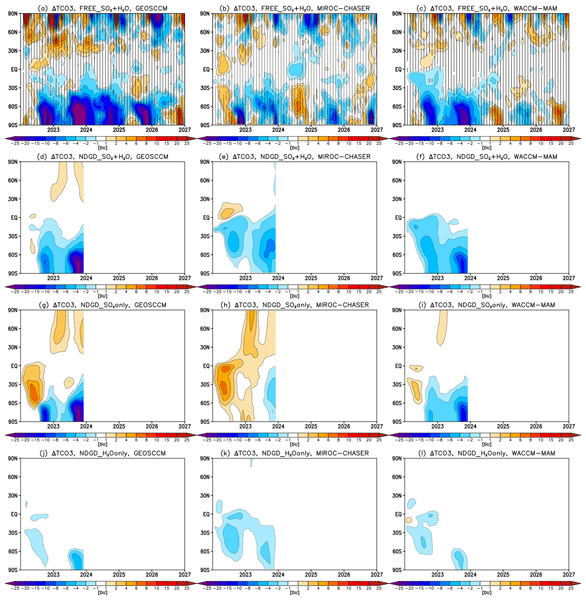
Ewa M. Bednarz, Valentina Aquila, Amy H. Butler, Peter Colarco, Eric Fleming, Freja F. Østerstrøm, David Plummer, Ilaria Quaglia, William Randel, Michelle L. Santee, Takashi Sekiya, Simone Tilmes, Xinyue Wang, Shingo Watanabe, Wandi Yu, Jun Zhang, Yunqian Zhu, and Zhihong Zhuo
Atmos. Chem. Phys., 26, 11355–11370, https://doi.org/10.5194/acp-26-11355-2026, https://doi.org/10.5194/acp-26-11355-2026, 2026
Short summary
Short summary
The 2022 Hunga eruption injected unprecedented quantities of water vapor into the stratosphere, alongside modest amounts of aerosol precursors. We assess its impacts on stratospheric ozone layer using a multi-model ensemble of chemistry-climate simulations. The results confirm the eruption's role in modulating SH (Southern Hemisphere) mid and high latitudes ozone abundances in the short term, and discuss the different chemical and dynamical processes driving those changes as well as the role of natural variability.
Patrick C. Taylor, Armin Sorooshian, Rei Ueyama, Sebastian Schmidt, Ihab Abboud, Quincy Allison, Kevin Barry, Sebastian Becker, Holly A. Bender, Joseph R. Bennett, James B. Blair, Niklas Bohn, Linette Boisvert, Matthew D. Brown, Roelof Bruintjes, Anthony Bucholtz, Megan Buzanowicz, Brian Cairns, Filippo Calì Quaglia, Eduard Chemyakin, Bo Chen, Gao Chen, Hong Chen, Yu-Wen Chen, Zezhen Cheng, Swarup China, Dan Chirica, Yonghoon Choi, Peter Colarco, Brian Collister, Ewan Crosbie, Maurice J. Cross, Janet Daniels, Paul DeMott, Joshua P. DiGangi, Alcide Giorgio di Sarra, Glenn S. Diskin, Erica K. Dolinar, Eva-Lou Edwards, Samuel Ephraim, Nikolaos Evangeliou, Romanos Foskinis, Francesca Gallo, Lan Gao, José Luis Gómez-Amo, Daisy Gonzalez, Christine Groot Zwaaftink, Pawan Gupta, Ivan Heckman, Michael Hendrickson, Miguel Ricardo A. Hilario, Ken Hirata, Michelle Hofton, Andrew L. Holen, Ulas Im, Alia L. Khan, Ralph Kahn, Alexei V. Korolev, Sonia Kreidenweis, Thomas Krumpen, Nathan Kurtz, Leslie Lait, Bradley Lamkin, Jack Landy, Nurun Nahar Lata, Paul Lawson, Samuel LeBlanc, Sean Leavor, Jing Li, Thorsten Markus, Hal Maring, Andreas H. Massling, Camille Mavis, Flynn McGinnity, Kerry Meyer, Gabriel Mojica, Richard H. Moore, Parker Morris, Giovanni Muscari, Vikas Nataraja, Amin R. Nehrir, Athanasios Nenes, Edward P. Nowottnick, Matteo Ottaviani, Chelsea Parker, Ryan Patnaude, Michael Perez, Russell J. Perkins, Colten Peterson, Alek Petty, Stevie Phothisane, Chris Polashenski, Kerri A. Pratt, Kayla M. Preisler, John Prytherch, David Rabine, Jens Redemann, Ju-Mee Ryoo, Joseph S. Schlosser, Vanessa Selimovic, Michael A. Shook, Morgan Silverman, Henrik Skov, Alexander Smirnov, Cassidy Soloff, Amy Solomon, Snorre Stamnes, Azusa Takeishi, David R. Thompson, K. Lee Thornhill, Rachel Tilling, Michael Tjernström, Monica Tosco, Pedro C. Valdelomar, David Van Gilst, Jian Wang, Zhien Wang, Andrzej Wasilewski, Manfred Wendisch, Brent Wilder, Edward L. Winstead, Albert Wu, Peng Xian, Lauren M. Zamora, Jiaoshi Zhang, Lei Zhang, Lu Zhang, Luke Ziemba, and Paquita Zuidema
Earth Syst. Sci. Data Discuss., https://doi.org/10.5194/essd-2026-241, https://doi.org/10.5194/essd-2026-241, 2026
Preprint under review for ESSD
Short summary
Short summary
This article summarizes the data sets collected during the Arctic Radiation Cloud aerosol Sea ice Interaction eXperiment (ARCSIX), NASA's most comprehensive Arctic field campaign to date. The overarching goal was to quantify the contributions of surface, clouds, aerosol particles, and precipitation to summer sea ice melt. This paper describes the ARCSIX implementation including the flight strategy, instruments, complementary data sets, access, and usage details.
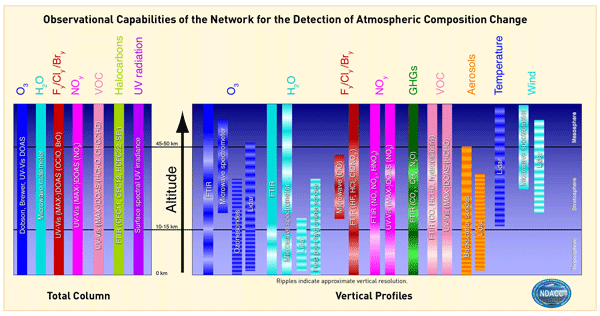
Irina Petropavlovskikh, Martine De Mazière, Anne M. Thompson, Jeannette D. Wild, James W. Hannigan, Henry B. Selkirk, Reem A. Hannun, Wolfgang Steinbrecht, Jean-Christopher Lambert, Roeland Van Malderen, Elizabeth Asher, Raul R. Cordero, Sophie Godin-Beekmann, Daan Hubert, Sergey Khaykin, Karin Kreher, Thierry Leblanc, Emmanuel Mahieu, Eliane Maillard Barras, Glen McConville, Gerald Nedoluha, Ivan Ortega, Alberto Redondas Marrero, Gunther Seckmeyer, Ryan M. Stauffer, Sarah A. Strode, Kim Strong, Takafumi Sugita, Michel Van Roozendael, Voltaire Velazco, Corinne Vigouroux, and Bärbel Vogel
Atmos. Chem. Phys., 26, 8637–8675, https://doi.org/10.5194/acp-26-8637-2026, https://doi.org/10.5194/acp-26-8637-2026, 2026
Short summary
Short summary
This introduction to the special issue "Achievements and perspectives of the Network for the Detection of Atmospheric Composition Change after 35 years of operation” provides an overview of important research findings achieved under the NDACC objectives. The future of NDACC is discussed in the light of the evolution of the scientific questions, evolving collaborations with partners and Cooperating Networks, and the current landscape of gaps in satellite and ground-based observations.
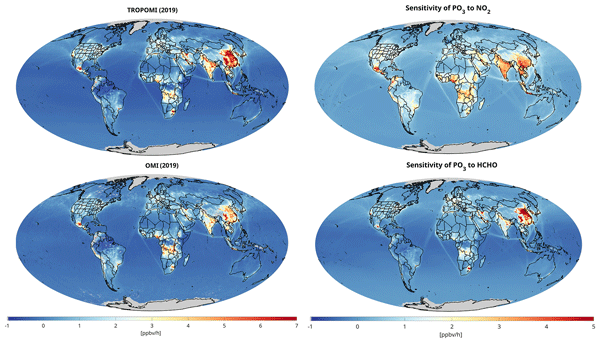
Amir H. Souri, Gonzalo González Abad, Bryan N. Duncan, and Luke D. Oman
Atmos. Chem. Phys., 26, 809–837, https://doi.org/10.5194/acp-26-809-2026, https://doi.org/10.5194/acp-26-809-2026, 2026
Short summary
Short summary
We create long-term maps of PO3 magnitudes along with their corresponding sensitivity maps. This is achieved using a deep learning parameterization method that relies on satellite data, atmospheric models, and ground-based remote sensing. Our approach provides more quantitative information than commonly used methods that depend on ratio-based indicators (such as HCHO/NO2). Additionally, our method considers light and water vapor, making it suitable for applications with GEO satellites.
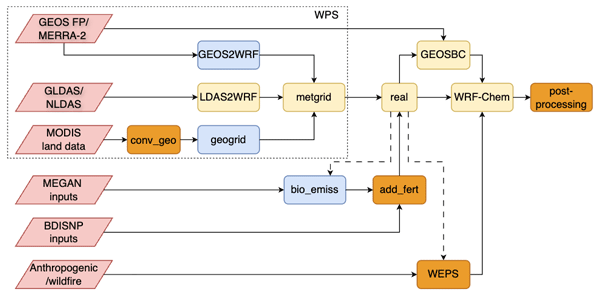
Huanxin Zhang, Jun Wang, Nathan Janechek, Cui Ge, Meng Zhou, Lorena Castro García, Tong Sha, Yanyu Wang, Weizhi Deng, Zhixin Xue, Chengzhe Li, Lakhima Chutia, Yi Wang, Sebastian Val, James L. McDuffie, Sina Hasheminassab, Scott E. Gluck, David J. Diner, Peter R. Colarco, Arlindo M. da Silva, and Jhoon Kim
Geosci. Model Dev., 18, 9061–9099, https://doi.org/10.5194/gmd-18-9061-2025, https://doi.org/10.5194/gmd-18-9061-2025, 2025
Short summary
Short summary
We present the development of the Unified Inputs (of initial and boundary conditions) for WRF (Weather Research and Forecasting)-Chem (UI-WRF-Chem) framework to support the Multi-Angle Imager for Aerosols (MAIA) satellite mission. Major updates include improving dust size distribution in the chemical boundary conditions, updating land surface properties using recent available satellite data and enhancing the representation of soil NOx emissions. We demonstrate subsequent model improvements over several of the MAIA target areas.
Claire M. Yu, Mian Chin, Qian Tan, Huisheng Bian, Peter R. Colarco, and Hongbin Yu
Atmos. Chem. Phys., 25, 14411–14434, https://doi.org/10.5194/acp-25-14411-2025, https://doi.org/10.5194/acp-25-14411-2025, 2025
Short summary
Short summary
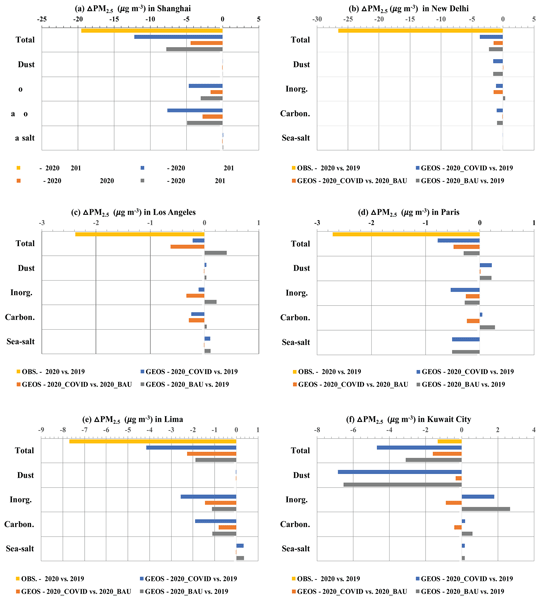
The regional lockdowns, implemented over 2020–2022 to contain the rapid spread of the COVID-19 disease, inadvertently created a natural laboratory for investigating the effect of reducing anthropogenic emissions on urban air quality in unprecedentedly large temporal and spatial scales. In this study, we analyzed multi-year surface PM2.5 data in 21 cities around the globe, complemented by a set of global aerosol modeling experiments to assess the effect of the lockdown emission reductions on PM2.5.
Zhihong Zhuo, Xinyue Wang, Yunqian Zhu, Wandi Yu, Ewa M. Bednarz, Eric Fleming, Peter R. Colarco, Shingo Watanabe, David Plummer, Georgiy Stenchikov, William Randel, Adam Bourassa, Valentina Aquila, Takashi Sekiya, Mark R. Schoeberl, Simone Tilmes, Jun Zhang, Paul J. Kushner, and Francesco S. R. Pausata
Atmos. Chem. Phys., 25, 13161–13176, https://doi.org/10.5194/acp-25-13161-2025, https://doi.org/10.5194/acp-25-13161-2025, 2025
Short summary
Short summary
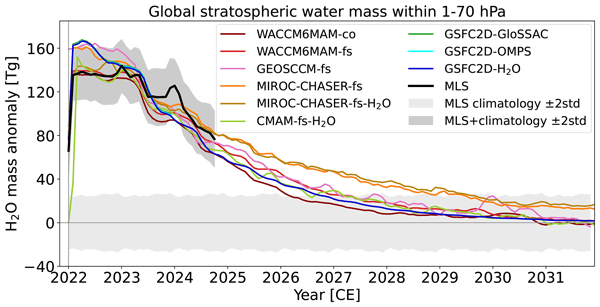
The 2022 Hunga eruption caused unprecedented stratospheric water injection, triggering unique atmospheric impacts. This study combines observations and model simulations, projecting a stratospheric water vapor anomaly lasting 4–7 years, with significant temperature variations and ozone depletion in the upper atmosphere lasting 7–10 years. These findings offer critical insights into the role of stratospheric water vapor in shaping climate and atmospheric chemistry.
Huisheng Bian, Sarah Strode, Mian Chin, Fan Li, Andrea Molad, Peter R. Colarco, and Hongbin Yu
EGUsphere, https://doi.org/10.5194/egusphere-2025-4501, https://doi.org/10.5194/egusphere-2025-4501, 2025
Preprint archived
Short summary
Short summary
We study the North Pacific westerly jet (NPWJ) using four reanalysis datasets and eight CMIP6 models. Our results show that between 1980 and 2019, the NPWJ core oscillates seasonally between north and south, weakening and shifting northward in summer and autumn. Single-forcing simulations further reveal aerosol forcing as the main driver. Incorporating interacting chemistry and time-varying ozone radiative forcing into Earth system models is crucial for simulating long-term atmospheric dynamics.
Yunqian Zhu, Hideharu Akiyoshi, Valentina Aquila, Elizabeth Asher, Ewa M. Bednarz, Slimane Bekki, Christoph Brühl, Amy H. Butler, Parker Case, Simon Chabrillat, Gabriel Chiodo, Margot Clyne, Peter R. Colarco, Sandip Dhomse, Lola Falletti, Eric Fleming, Ben Johnson, Andrin Jörimann, Mahesh Kovilakam, Gerbrand Koren, Ales Kuchar, Nicolas Lebas, Qing Liang, Cheng-Cheng Liu, Graham Mann, Michael Manyin, Marion Marchand, Olaf Morgenstern, Paul Newman, Luke D. Oman, Freja F. Østerstrøm, Yifeng Peng, David Plummer, Ilaria Quaglia, William Randel, Samuel Rémy, Takashi Sekiya, Stephen Steenrod, Timofei Sukhodolov, Simone Tilmes, Kostas Tsigaridis, Rei Ueyama, Daniele Visioni, Xinyue Wang, Shingo Watanabe, Yousuke Yamashita, Pengfei Yu, Wandi Yu, Jun Zhang, and Zhihong Zhuo
Geosci. Model Dev., 18, 5487–5512, https://doi.org/10.5194/gmd-18-5487-2025, https://doi.org/10.5194/gmd-18-5487-2025, 2025
Short summary
Short summary
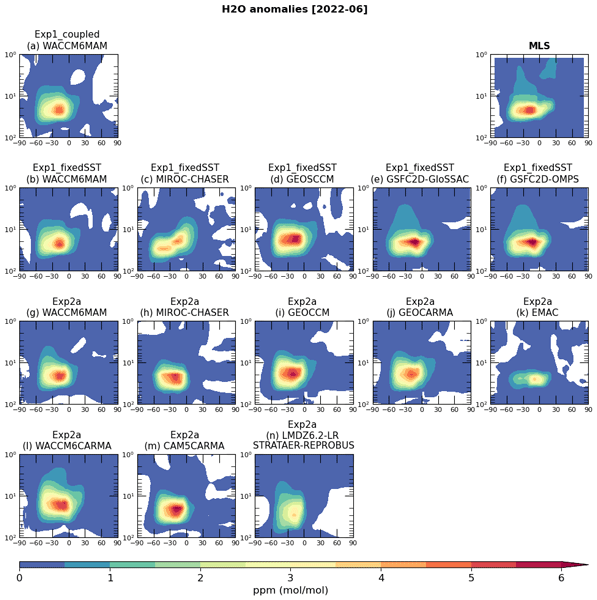
To understand the climate impact of the 2022 Hunga volcanic eruption, we developed a climate model–observation comparison project. The paper describes the protocols and models that participate in the experiments. We designed several experiments to achieve our goals of this activity: (1) to evaluate the climate model performance and (2) to understand the Earth system responses to this eruption.
Bryan N. Duncan, Daniel C. Anderson, Arlene M. Fiore, Joanna Joiner, Nickolay A. Krotkov, Can Li, Dylan B. Millet, Julie M. Nicely, Luke D. Oman, Jason M. St. Clair, Joshua D. Shutter, Amir H. Souri, Sarah A. Strode, Brad Weir, Glenn M. Wolfe, Helen M. Worden, and Qindan Zhu
Atmos. Chem. Phys., 24, 13001–13023, https://doi.org/10.5194/acp-24-13001-2024, https://doi.org/10.5194/acp-24-13001-2024, 2024
Short summary
Short summary
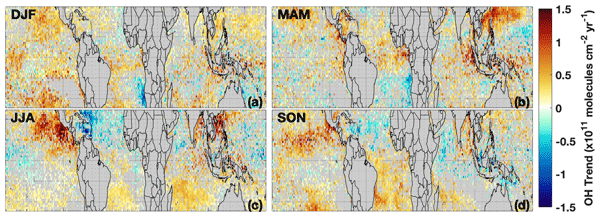
Trace gases emitted to or formed within the atmosphere may be chemically or physically removed from the atmosphere. One trace gas, the hydroxyl radical (OH), is responsible for initiating the chemical removal of many trace gases, including some greenhouse gases. Despite its importance, scientists have not been able to adequately measure OH. In this opinion piece, we discuss promising new methods to indirectly constrain OH using satellite data of trace gases that control the abundance of OH.
Yasin Elshorbany, Jerald R. Ziemke, Sarah Strode, Hervé Petetin, Kazuyuki Miyazaki, Isabelle De Smedt, Kenneth Pickering, Rodrigo J. Seguel, Helen Worden, Tamara Emmerichs, Domenico Taraborrelli, Maria Cazorla, Suvarna Fadnavis, Rebecca R. Buchholz, Benjamin Gaubert, Néstor Y. Rojas, Thiago Nogueira, Thérèse Salameh, and Min Huang
Atmos. Chem. Phys., 24, 12225–12257, https://doi.org/10.5194/acp-24-12225-2024, https://doi.org/10.5194/acp-24-12225-2024, 2024
Short summary
Short summary
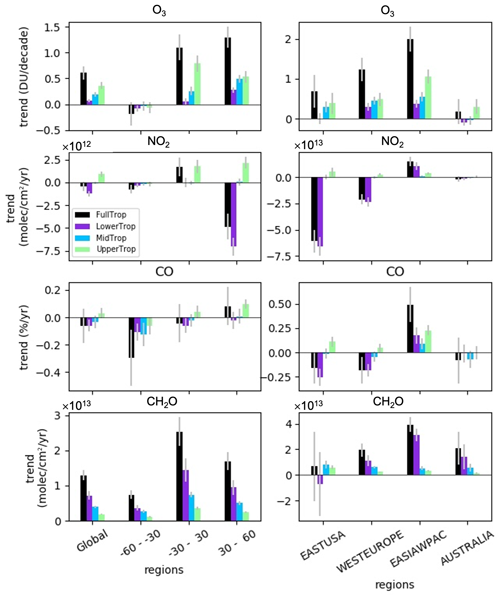
We investigated tropospheric ozone spatial variability and trends from 2005 to 2019 and related those to ozone precursors on global and regional scales. We also investigate the spatiotemporal characteristics of the ozone formation regime in relation to ozone chemical sources and sinks. Our analysis is based on remote sensing products of the tropospheric column of ozone and its precursors, nitrogen dioxide, formaldehyde, and total column CO, as well as ozonesonde data and model simulations.
Cynthia D. Nevison, Qing Liang, Paul A. Newman, Britton B. Stephens, Geoff Dutton, Xin Lan, Roisin Commane, Yenny Gonzalez, and Eric Kort
Atmos. Chem. Phys., 24, 10513–10529, https://doi.org/10.5194/acp-24-10513-2024, https://doi.org/10.5194/acp-24-10513-2024, 2024
Short summary
Short summary
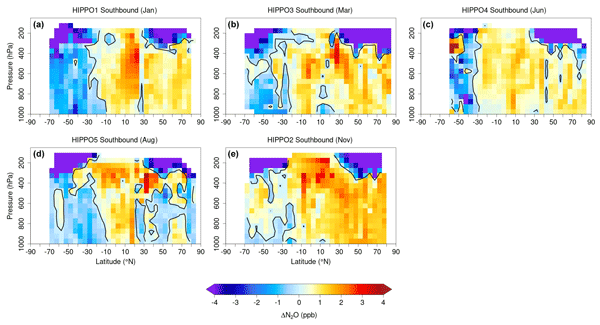
This study examines the drivers of interannual variability in tropospheric N2O. New insights are obtained from aircraft data and a chemistry–climate model that explicitly simulates stratospheric N2O. The stratosphere is found to be the dominant driver of N2O variability in the Northern Hemisphere, while both the stratosphere and El Niño cycles are important in the Southern Hemisphere. These results are consistent with known atmospheric dynamics and differences between the hemispheres.
Pinchas Nürnberg, Sarah A. Strode, and Ralf Sussmann
Atmos. Chem. Phys., 24, 10001–10012, https://doi.org/10.5194/acp-24-10001-2024, https://doi.org/10.5194/acp-24-10001-2024, 2024
Short summary
Short summary
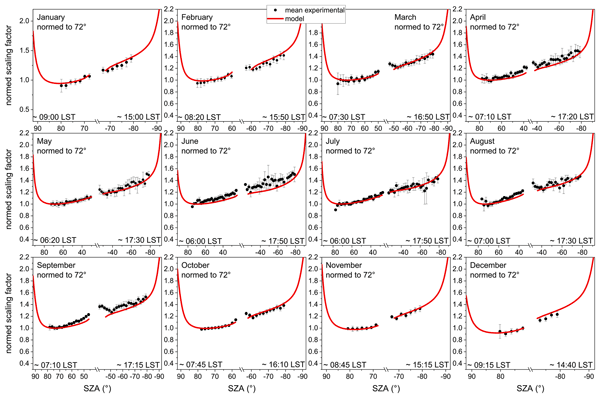
We created a set of scaling factors describing the diurnal increase in stratospheric nitrogen oxides above Zugspitze, Germany. We used these factors to validate recently published model simulation data. On the one hand, this validation enables the use of the validated data to better understand the stratospheric photochemistry. On the other hand, it can improve satellite validation, which has implications for the understanding of urban smog events and other pollution events in the troposphere.
Andrew O. Langford, Raul J. Alvarez II, Kenneth C. Aikin, Sunil Baidar, W. Alan Brewer, Steven S. Brown, Matthew M. Coggan, Patrick D. Cullis, Jessica Gilman, Georgios I. Gkatzelis, Detlev Helmig, Bryan J. Johnson, K. Emma Knowland, Rajesh Kumar, Aaron D. Lamplugh, Audra McClure-Begley, Brandi J. McCarty, Ann M. Middlebrook, Gabriele Pfister, Jeff Peischl, Irina Petropavlovskikh, Pamela S. Rickley, Andrew W. Rollins, Scott P. Sandberg, Christoph J. Senff, and Carsten Warneke
EGUsphere, https://doi.org/10.5194/egusphere-2024-1938, https://doi.org/10.5194/egusphere-2024-1938, 2024
Preprint withdrawn
Short summary
Short summary
High ozone (O3) formed by reactions of nitrogen oxides (NOx) and volatile organic compounds (VOCs) can harm human health and welfare. High O3 is usually associated with hot summer days, but under certain conditions, high O3 can also form under winter conditions. In this study, we describe a high O3 event that occurred in Colorado during the COVID-19 quarantine that was caused in part by the decrease in traffic, and in part by a shallow inversion created by descent of stratospheric air.
Amir H. Souri, Bryan N. Duncan, Sarah A. Strode, Daniel C. Anderson, Michael E. Manyin, Junhua Liu, Luke D. Oman, Zhen Zhang, and Brad Weir
Atmos. Chem. Phys., 24, 8677–8701, https://doi.org/10.5194/acp-24-8677-2024, https://doi.org/10.5194/acp-24-8677-2024, 2024
Short summary
Short summary
We explore a new method of using the wealth of information obtained from satellite observations of Aura OMI NO2, HCHO, and MERRA-2 reanalysis in NASA’s GEOS model equipped with an efficient tropospheric OH (TOH) estimator to enhance the representation of TOH spatial distribution and its long-term trends. This new framework helps us pinpoint regional inaccuracies in TOH and differentiate between established prior knowledge and newly acquired information from satellites on TOH trends.
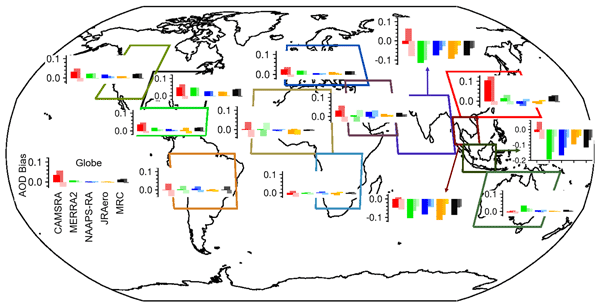
Peng Xian, Jeffrey S. Reid, Melanie Ades, Angela Benedetti, Peter R. Colarco, Arlindo da Silva, Tom F. Eck, Johannes Flemming, Edward J. Hyer, Zak Kipling, Samuel Rémy, Tsuyoshi Thomas Sekiyama, Taichu Tanaka, Keiya Yumimoto, and Jianglong Zhang
Atmos. Chem. Phys., 24, 6385–6411, https://doi.org/10.5194/acp-24-6385-2024, https://doi.org/10.5194/acp-24-6385-2024, 2024
Short summary
Short summary
The study compares and evaluates monthly AOD of four reanalyses (RA) and their consensus (i.e., ensemble mean). The basic verification characteristics of these RA versus both AERONET and MODIS retrievals are presented. The study discusses the strength of each RA and identifies regions where divergence and challenges are prominent. The RA consensus usually performs very well on a global scale in terms of how well it matches the observational data, making it a good choice for various applications.
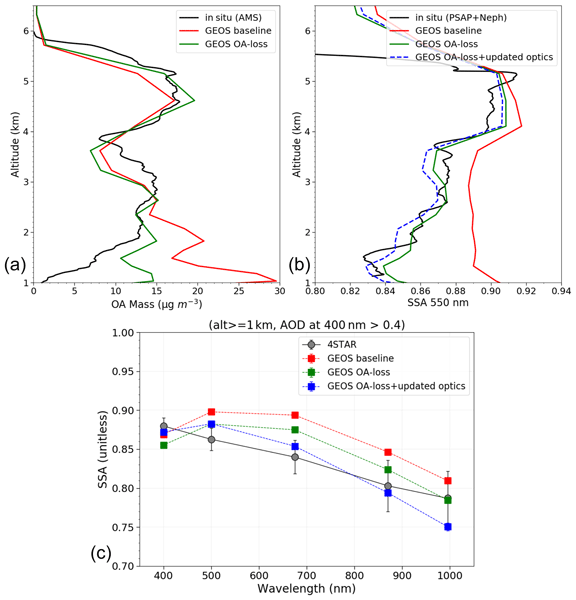
Sampa Das, Peter R. Colarco, Huisheng Bian, and Santiago Gassó
Atmos. Chem. Phys., 24, 4421–4449, https://doi.org/10.5194/acp-24-4421-2024, https://doi.org/10.5194/acp-24-4421-2024, 2024
Short summary
Short summary
The smoke aerosols emitted from vegetation burning can alter the regional energy budget via multiple pathways. We utilized detailed observations from the NASA ORACLES airborne campaign based in Namibia during September 2016 to improve the representation of smoke aerosol properties and lifetimes in our GEOS Earth system model. The improved model simulations are for the first time able to capture the observed changes in the smoke absorption during long-range plume transport.
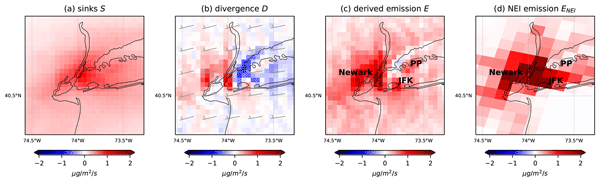
Fei Liu, Steffen Beirle, Joanna Joiner, Sungyeon Choi, Zhining Tao, K. Emma Knowland, Steven J. Smith, Daniel Q. Tong, Siqi Ma, Zachary T. Fasnacht, and Thomas Wagner
Atmos. Chem. Phys., 24, 3717–3728, https://doi.org/10.5194/acp-24-3717-2024, https://doi.org/10.5194/acp-24-3717-2024, 2024
Short summary
Short summary
Using satellite data, we developed a coupled method independent of the chemical transport model to map NOx emissions across US cities. After validating our technique with synthetic data, we charted NOx emissions from 2018–2021 in 39 cities. Our results closely matched EPA estimates but also highlighted some inconsistencies in both magnitude and spatial distribution. This research can help refine strategies for monitoring and managing air quality.
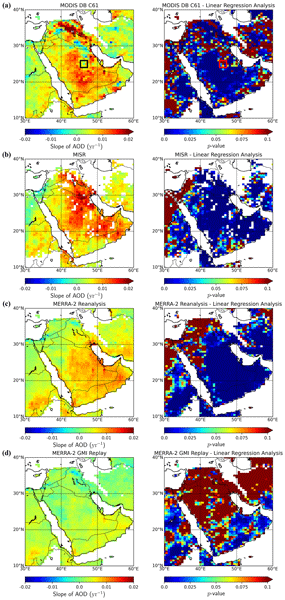
Adriana Rocha-Lima, Peter R. Colarco, Anton S. Darmenov, Edward P. Nowottnick, Arlindo M. da Silva, and Luke D. Oman
Atmos. Chem. Phys., 24, 2443–2464, https://doi.org/10.5194/acp-24-2443-2024, https://doi.org/10.5194/acp-24-2443-2024, 2024
Short summary
Short summary
Observations show an increasing aerosol optical depth trend in the Middle East between 2003–2012. We evaluate the NASA Goddard Earth Observing System (GEOS) model's ability to capture these trends and examine the meteorological and surface parameters driving dust emissions. Our results highlight the importance of data assimilation for long-term trends of atmospheric aerosols and support the hypothesis that vegetation cover loss may have contributed to increasing dust emissions in the period.
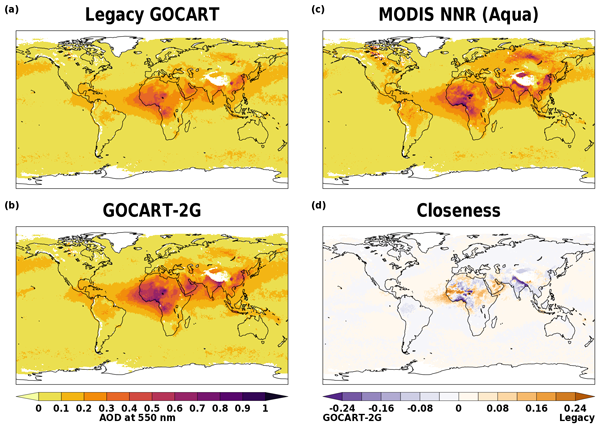
Allison B. Collow, Peter R. Colarco, Arlindo M. da Silva, Virginie Buchard, Huisheng Bian, Mian Chin, Sampa Das, Ravi Govindaraju, Dongchul Kim, and Valentina Aquila
Geosci. Model Dev., 17, 1443–1468, https://doi.org/10.5194/gmd-17-1443-2024, https://doi.org/10.5194/gmd-17-1443-2024, 2024
Short summary
Short summary
The GOCART aerosol module within the Goddard Earth Observing System recently underwent a major refactoring and update to the representation of physical processes. Code changes that were included in GOCART Second Generation (GOCART-2G) are documented, and we establish a benchmark simulation that is to be used for future development of the system. The 4-year benchmark simulation was evaluated using in situ and spaceborne measurements to develop a baseline and prioritize future development.
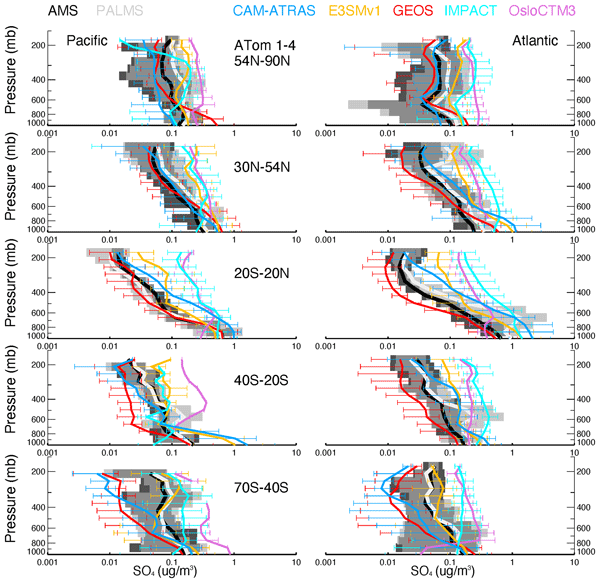
Huisheng Bian, Mian Chin, Peter R. Colarco, Eric C. Apel, Donald R. Blake, Karl Froyd, Rebecca S. Hornbrook, Jose Jimenez, Pedro Campuzano Jost, Michael Lawler, Mingxu Liu, Marianne Tronstad Lund, Hitoshi Matsui, Benjamin A. Nault, Joyce E. Penner, Andrew W. Rollins, Gregory Schill, Ragnhild B. Skeie, Hailong Wang, Lu Xu, Kai Zhang, and Jialei Zhu
Atmos. Chem. Phys., 24, 1717–1741, https://doi.org/10.5194/acp-24-1717-2024, https://doi.org/10.5194/acp-24-1717-2024, 2024
Short summary
Short summary
This work studies sulfur in the remote troposphere at global and seasonal scales using aircraft measurements and multi-model simulations. The goal is to understand the sulfur cycle over remote oceans, spread of model simulations, and observation–model discrepancies. Such an understanding and comparison with real observations are crucial to narrow down the uncertainties in model sulfur simulations and improve understanding of the sulfur cycle in atmospheric air quality, climate, and ecosystems.
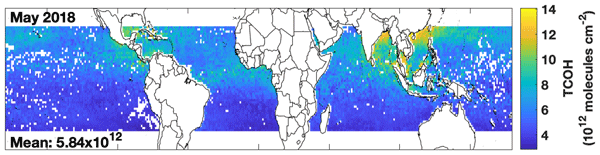
Daniel C. Anderson, Bryan N. Duncan, Julie M. Nicely, Junhua Liu, Sarah A. Strode, and Melanie B. Follette-Cook
Atmos. Chem. Phys., 23, 6319–6338, https://doi.org/10.5194/acp-23-6319-2023, https://doi.org/10.5194/acp-23-6319-2023, 2023
Short summary
Short summary
We describe a methodology that combines machine learning, satellite observations, and 3D chemical model output to infer the abundance of the hydroxyl radical (OH), a chemical that removes many trace gases from the atmosphere. The methodology successfully captures the variability of observed OH, although further observations are needed to evaluate absolute accuracy. Current satellite observations are of sufficient quality to infer OH, but retrieval validation in the remote tropics is needed.
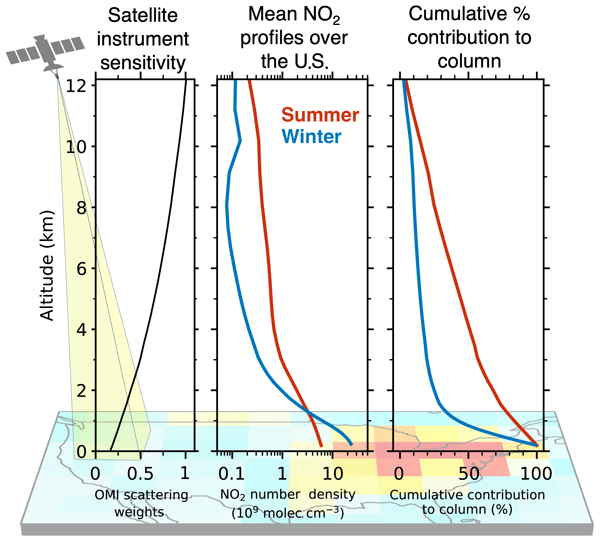
Viral Shah, Daniel J. Jacob, Ruijun Dang, Lok N. Lamsal, Sarah A. Strode, Stephen D. Steenrod, K. Folkert Boersma, Sebastian D. Eastham, Thibaud M. Fritz, Chelsea Thompson, Jeff Peischl, Ilann Bourgeois, Ilana B. Pollack, Benjamin A. Nault, Ronald C. Cohen, Pedro Campuzano-Jost, Jose L. Jimenez, Simone T. Andersen, Lucy J. Carpenter, Tomás Sherwen, and Mat J. Evans
Atmos. Chem. Phys., 23, 1227–1257, https://doi.org/10.5194/acp-23-1227-2023, https://doi.org/10.5194/acp-23-1227-2023, 2023
Short summary
Short summary
NOx in the free troposphere (above 2 km) affects global tropospheric chemistry and the retrieval and interpretation of satellite NO2 measurements. We evaluate free tropospheric NOx in global atmospheric chemistry models and find that recycling NOx from its reservoirs over the oceans is faster than that simulated in the models, resulting in increases in simulated tropospheric ozone and OH. Over the U.S., free tropospheric NO2 contributes the majority of the tropospheric NO2 column in summer.
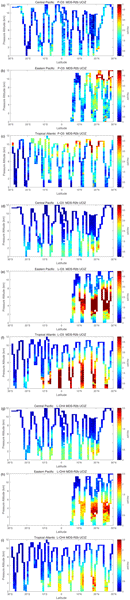
Hao Guo, Clare M. Flynn, Michael J. Prather, Sarah A. Strode, Stephen D. Steenrod, Louisa Emmons, Forrest Lacey, Jean-Francois Lamarque, Arlene M. Fiore, Gus Correa, Lee T. Murray, Glenn M. Wolfe, Jason M. St. Clair, Michelle Kim, John Crounse, Glenn Diskin, Joshua DiGangi, Bruce C. Daube, Roisin Commane, Kathryn McKain, Jeff Peischl, Thomas B. Ryerson, Chelsea Thompson, Thomas F. Hanisco, Donald Blake, Nicola J. Blake, Eric C. Apel, Rebecca S. Hornbrook, James W. Elkins, Eric J. Hintsa, Fred L. Moore, and Steven C. Wofsy
Atmos. Chem. Phys., 23, 99–117, https://doi.org/10.5194/acp-23-99-2023, https://doi.org/10.5194/acp-23-99-2023, 2023
Short summary
Short summary
We have prepared a unique and unusual result from the recent ATom aircraft mission: a measurement-based derivation of the production and loss rates of ozone and methane over the ocean basins. These are the key products of chemistry models used in assessments but have thus far lacked observational metrics. It also shows the scales of variability of atmospheric chemical rates and provides a major challenge to the atmospheric models.

Allison B. Marquardt Collow, Virginie Buchard, Peter R. Colarco, Arlindo M. da Silva, Ravi Govindaraju, Edward P. Nowottnick, Sharon Burton, Richard Ferrare, Chris Hostetler, and Luke Ziemba
Atmos. Chem. Phys., 22, 16091–16109, https://doi.org/10.5194/acp-22-16091-2022, https://doi.org/10.5194/acp-22-16091-2022, 2022
Short summary
Short summary
Biomass burning aerosol impacts aspects of the atmosphere and Earth system through radiative forcing, serving as cloud condensation nuclei, and air quality. Despite its importance, the representation of biomass burning aerosol is not always accurate in models. Field campaign observations from CAMP2Ex are used to evaluate the mass and extinction of aerosols in the GEOS model. Notable biases in the model illuminate areas of future development with GEOS and the underlying GOCART aerosol module.
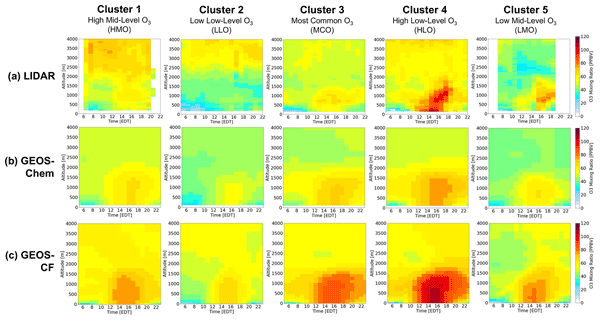
Claudia Bernier, Yuxuan Wang, Guillaume Gronoff, Timothy Berkoff, K. Emma Knowland, John T. Sullivan, Ruben Delgado, Vanessa Caicedo, and Brian Carroll
Atmos. Chem. Phys., 22, 15313–15331, https://doi.org/10.5194/acp-22-15313-2022, https://doi.org/10.5194/acp-22-15313-2022, 2022
Short summary
Short summary
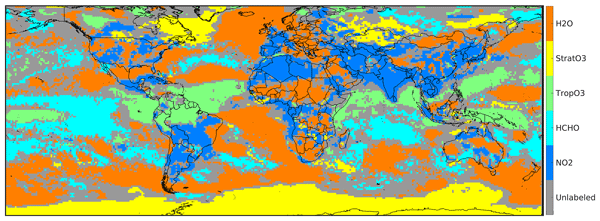
Coastal regions are susceptible to variable and high ozone which is difficult to simulate. We developed a method to characterize large datasets of multi-dimensional measurements from lidar instruments taken in coastal regions. Using the clustered ozone groups, we evaluated model performance in simulating the coastal ozone variability vertically and diurnally. The approach allowed us to pinpoint areas where the models succeed in simulating coastal ozone and areas where there are still gaps.
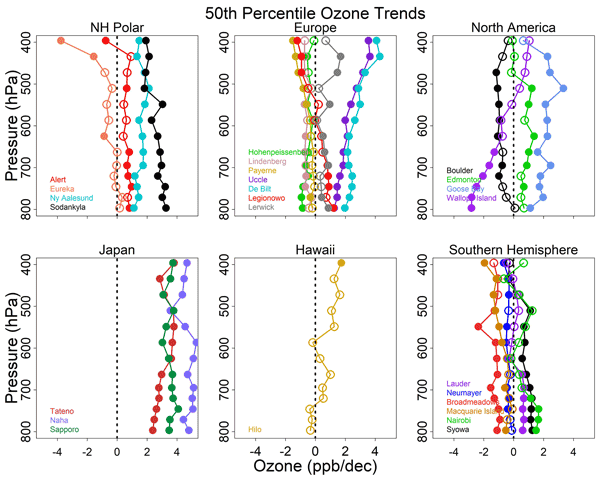
Amy Christiansen, Loretta J. Mickley, Junhua Liu, Luke D. Oman, and Lu Hu
Atmos. Chem. Phys., 22, 14751–14782, https://doi.org/10.5194/acp-22-14751-2022, https://doi.org/10.5194/acp-22-14751-2022, 2022
Short summary
Short summary
Understanding tropospheric ozone trends is crucial for accurate predictions of future air quality and climate, but drivers of trends are not well understood. We analyze global tropospheric ozone trends since 1980 using ozonesonde and surface measurements, and we evaluate two models for their ability to reproduce trends. We find observational evidence of increasing tropospheric ozone, but models underestimate these increases. This hinders our ability to estimate ozone radiative forcing.
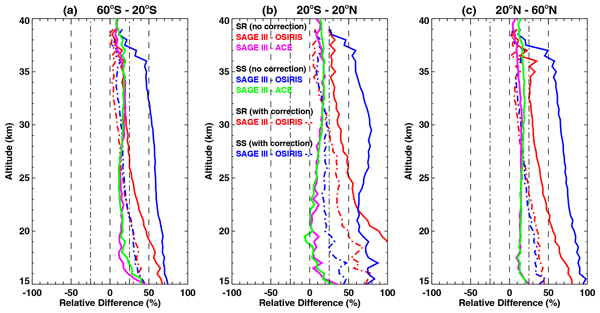
Sarah A. Strode, Ghassan Taha, Luke D. Oman, Robert Damadeo, David Flittner, Mark Schoeberl, Christopher E. Sioris, and Ryan Stauffer
Atmos. Meas. Tech., 15, 6145–6161, https://doi.org/10.5194/amt-15-6145-2022, https://doi.org/10.5194/amt-15-6145-2022, 2022
Short summary
Short summary
We use a global atmospheric chemistry model simulation to generate scaling factors that account for the daily cycle of NO2 and ozone. These factors facilitate comparisons between sunrise and sunset observations from SAGE III/ISS and observations from other instruments. We provide the scaling factors as monthly zonal means for different latitudes and altitudes. We find that applying these factors yields more consistent comparisons between observations from SAGE III/ISS and other instruments.
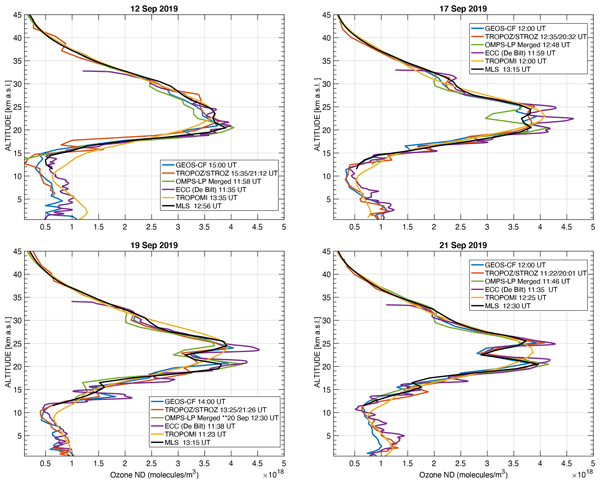
John T. Sullivan, Arnoud Apituley, Nora Mettig, Karin Kreher, K. Emma Knowland, Marc Allaart, Ankie Piters, Michel Van Roozendael, Pepijn Veefkind, Jerry R. Ziemke, Natalya Kramarova, Mark Weber, Alexei Rozanov, Laurence Twigg, Grant Sumnicht, and Thomas J. McGee
Atmos. Chem. Phys., 22, 11137–11153, https://doi.org/10.5194/acp-22-11137-2022, https://doi.org/10.5194/acp-22-11137-2022, 2022
Short summary
Short summary
A TROPOspheric Monitoring Instrument (TROPOMI) validation campaign (TROLIX-19) was held in the Netherlands in September 2019. The research presented here focuses on using ozone lidars from NASA’s Goddard Space Flight Center to better evaluate the characterization of ozone throughout TROLIX-19 as compared to balloon-borne, space-borne and ground-based passive measurements, as well as a global coupled chemistry meteorology model.
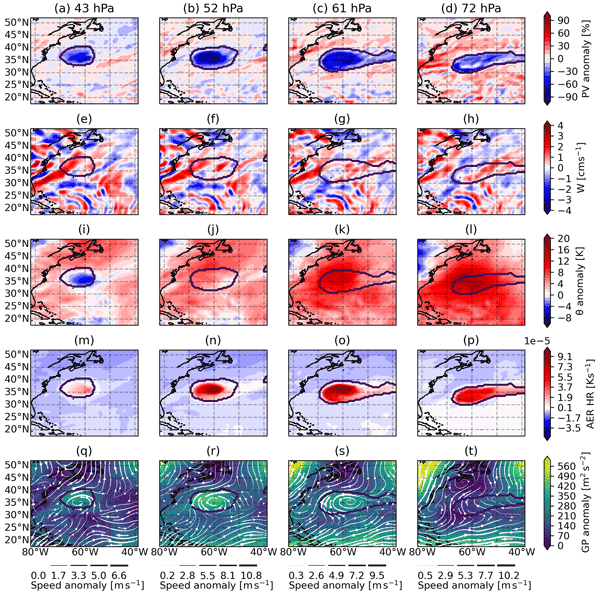
Giorgio Doglioni, Valentina Aquila, Sampa Das, Peter R. Colarco, and Dino Zardi
Atmos. Chem. Phys., 22, 11049–11064, https://doi.org/10.5194/acp-22-11049-2022, https://doi.org/10.5194/acp-22-11049-2022, 2022
Short summary
Short summary
We use a global chemistry climate model to analyze the perturbations to the stratospheric dynamics caused by an injection of carbonaceous aerosol comparable to the one caused by a series of pyrocumulonimbi that formed over British Columbia, Canada on 13 August 2017. The injection of light-absorbing aerosol in an otherwise clean lower stratosphere causes the formation of long-lasting stratospheric anticyclones at the synoptic scale.
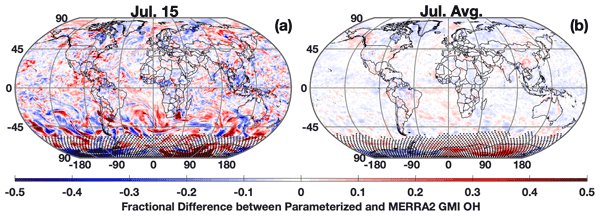
Daniel C. Anderson, Melanie B. Follette-Cook, Sarah A. Strode, Julie M. Nicely, Junhua Liu, Peter D. Ivatt, and Bryan N. Duncan
Geosci. Model Dev., 15, 6341–6358, https://doi.org/10.5194/gmd-15-6341-2022, https://doi.org/10.5194/gmd-15-6341-2022, 2022
Short summary
Short summary
The hydroxyl radical (OH) is the most important chemical in the atmosphere for removing certain pollutants, including methane, the second-most-important greenhouse gas. We present a methodology to create an easily modifiable parameterization that can calculate OH concentrations in a computationally efficient way. The parameterization, which predicts OH within 5 %, can be integrated into larger climate models to allow for calculation of the interactions between OH, methane, and other chemicals.
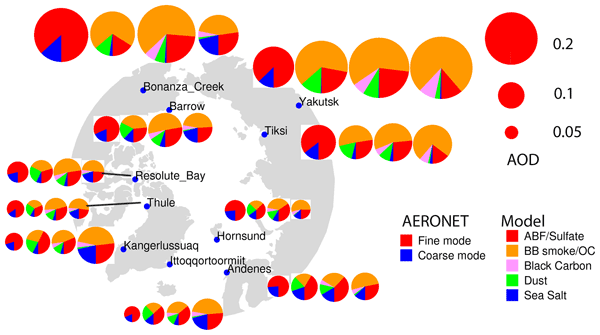
Peng Xian, Jianglong Zhang, Norm T. O'Neill, Travis D. Toth, Blake Sorenson, Peter R. Colarco, Zak Kipling, Edward J. Hyer, James R. Campbell, Jeffrey S. Reid, and Keyvan Ranjbar
Atmos. Chem. Phys., 22, 9915–9947, https://doi.org/10.5194/acp-22-9915-2022, https://doi.org/10.5194/acp-22-9915-2022, 2022
Short summary
Short summary
The study provides baseline Arctic spring and summertime aerosol optical depth climatology, trend, and extreme event statistics from 2003 to 2019 using a combination of aerosol reanalyses, remote sensing, and ground observations. Biomass burning smoke has an overwhelming contribution to black carbon (an efficient climate forcer) compared to anthropogenic sources. Burning's large interannual variability and increasing summer trend have important implications for the Arctic climate.
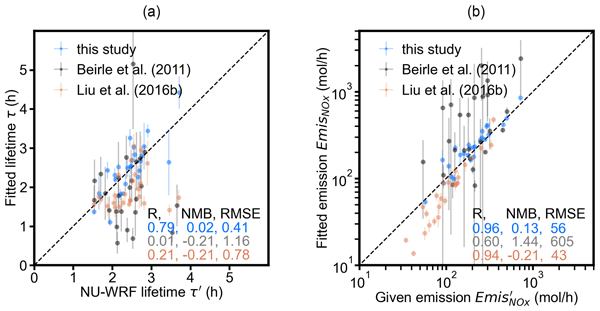
Fei Liu, Zhining Tao, Steffen Beirle, Joanna Joiner, Yasuko Yoshida, Steven J. Smith, K. Emma Knowland, and Thomas Wagner
Atmos. Chem. Phys., 22, 1333–1349, https://doi.org/10.5194/acp-22-1333-2022, https://doi.org/10.5194/acp-22-1333-2022, 2022
Short summary
Short summary
In this work, we present a novel method to infer NOx emissions and lifetimes based on tropospheric NO2 observations together with reanalysis wind fields for cities located in polluted backgrounds. We evaluate the accuracy of the method using synthetic NO2 observations derived from a high-resolution model simulation. Our work provides an estimate for uncertainties in satellite-derived emissions inferred from chemical transport model (CTM)-independent approaches.
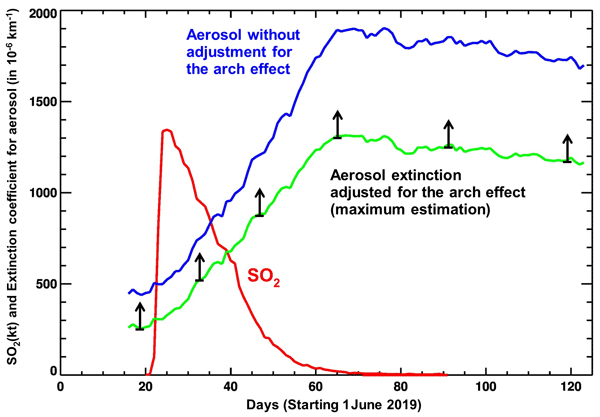
Nick Gorkavyi, Nickolay Krotkov, Can Li, Leslie Lait, Peter Colarco, Simon Carn, Matthew DeLand, Paul Newman, Mark Schoeberl, Ghassan Taha, Omar Torres, Alexander Vasilkov, and Joanna Joiner
Atmos. Meas. Tech., 14, 7545–7563, https://doi.org/10.5194/amt-14-7545-2021, https://doi.org/10.5194/amt-14-7545-2021, 2021
Short summary
Short summary
The 21 June 2019 eruption of the Raikoke volcano produced significant amounts of volcanic aerosols (sulfate and ash) and sulfur dioxide (SO2) gas that penetrated into the lower stratosphere. We showed that the amount of SO2 decreases with a characteristic period of 8–18 d and the peak of sulfate aerosol lags the initial peak of SO2 by 1.5 months. We also examined the dynamics of an unusual stratospheric coherent circular cloud of SO2 and aerosol observed from 18 July to 22 September 2019.
Cited articles
Aquila, V., Garfinkel, C. I., Newman, P. A., Oman, L. D., and Waugh, D. W.: Modifications of the quasi-biennial oscillation by a geoengineering perturbation of the stratospheric aerosol layer, Geophys. Res. Lett., 41, 1738–1744, https://doi.org/10.1002/2013GL058818, 2014.
Bharath, J., Kumar, T. V. L., Salgueiro, V., Costa, M. J., and Mall, R. K.: Aerosol characteristics in CMIP6 models' global simulations and their evaluation with the satellite measurements, Int. J. Climatol., 44, 217–236, https://doi.org/10.1002/joc.8324, 2024.
Bian, H., Chin, M., Rodriguez, J. M., Yu, H., Penner, J. E., and Strahan, S.: Sensitivity of aerosol optical thickness and aerosol direct radiative effect to relative humidity, Atmos. Chem. Phys., 9, 2375–2386, https://doi.org/10.5194/acp-9-2375-2009, 2009.
Bian, H., Chin, M., Hauglustaine, D. A., Schulz, M., Myhre, G., Bauer, S. E., Lund, M. T., Karydis, V. A., Kucsera, T. L., Pan, X., Pozzer, A., Skeie, R. B., Steenrod, S. D., Sudo, K., Tsigaridis, K., Tsimpidi, A. P., and Tsyro, S. G.: Investigation of global particulate nitrate from the AeroCom phase III experiment, Atmos. Chem. Phys., 17, 12911–12940, https://doi.org/10.5194/acp-17-12911-2017, 2017.
Bouwman, A. F., Lee, D. S., Asman, W. a. H., Dentener, F. J., Van Der Hoek, K. W., and Olivier, J. G. J.: A global high-resolution emission inventory for ammonia, Glob. Biogeochem. Cycles, 11, 561–587, https://doi.org/10.1029/97GB02266, 1997.
Burgos, M. A., Andrews, E., Titos, G., Benedetti, A., Bian, H., Buchard, V., Curci, G., Kipling, Z., Kirkevåg, A., Kokkola, H., Laakso, A., Letertre-Danczak, J., Lund, M. T., Matsui, H., Myhre, G., Randles, C., Schulz, M., van Noije, T., Zhang, K., Alados-Arboledas, L., Baltensperger, U., Jefferson, A., Sherman, J., Sun, J., Weingartner, E., and Zieger, P.: A global model–measurement evaluation of particle light scattering coefficients at elevated relative humidity, Atmos. Chem. Phys., 20, 10231–10258, https://doi.org/10.5194/acp-20-10231-2020, 2020.
Carn, S. A., Fioletov, V. E., McLinden, C. A., Li, C., and Krotkov, N. A.: A decade of global volcanic SO2 emissions measured from space, Sci. Rep., 7, 44095, https://doi.org/10.1038/srep44095, 2017.
Case, P. A., Colarco, P. R., Toon, O. B., and Newman, P. A.: Simulating the Volcanic Sulfate Aerosols From the 1991 Eruption of Cerro Hudson and Their Impact on the 1991 Ozone Hole, Geophys. Res. Lett., 51, e2023GL106619, https://doi.org/10.1029/2023GL106619, 2024.
Chin, M., Jacob, D. J., Gardner, G. M., Foreman-Fowler, M. S., Spiro, P. A., and Savoie, D. L.: A global three-dimensional model of tropospheric sulfate, J. Geophys. Res. Atmospheres, 101, 18667–18690, https://doi.org/10.1029/96JD01221, 1996.
Chin, M., Ginoux, P., Kinne, S., Torres, O., Holben, B. N., Duncan, B. N., Martin, R. V., Logan, J. A., Higurashi, A., and Nakajima, T.: Tropospheric aerosol optical thickness from the GOCART model and comparisons with satellite and Sun photometer measurements, J. Atmos. Sci., 59, 461–483, https://doi.org/10.1175/1520-0469(2002)059<0461:TAOTFT>2.0.CO;2, 2002.
Chin, M., Diehl, T., Tan, Q., Prospero, J. M., Kahn, R. A., Remer, L. A., Yu, H., Sayer, A. M., Bian, H., Geogdzhayev, I. V., Holben, B. N., Howell, S. G., Huebert, B. J., Hsu, N. C., Kim, D., Kucsera, T. L., Levy, R. C., Mishchenko, M. I., Pan, X., Quinn, P. K., Schuster, G. L., Streets, D. G., Strode, S. A., Torres, O., and Zhao, X.-P.: Multi-decadal aerosol variations from 1980 to 2009: a perspective from observations and a global model, Atmos. Chem. Phys., 14, 3657–3690, https://doi.org/10.5194/acp-14-3657-2014, 2014.
Chou, M. and Suarez, M. J.: A solar radiation parameterization for atmospheric studies, Technical Report Series on Global Modeling and Data Assimilation, http://gmao.gsfc.nasa.gov/pubs/docs/Chou136.pdf (last access: 7 May 2025), 1999.
Chou, M. and Suarez, M. J.: An efficient thermal infrared radiation parameterization for use in general circulation models,Technical Report Series on Global Modeling and Data Assimilation, https://gs6101-gmao.gsfc.nasa.gov/pubs/docs/Chou137.pdf (last access: 7 May 2025), 2001.
Colarco, P. R.: CCMI-2022: refD1 data produced by the GEOSCCM model at NASA-GSFC, NERC EDS Centre for Environmental Data Analysis [data set], https://catalogue.ceda.ac.uk/uuid/0689a7f2e0964a7b89e395ee68d7eee5 (last access: 20 February 2026), 2023.
Colarco, P., da Silva, A., Chin, M., and Diehl, T.: Online simulations of global aerosol distributions in the NASA GEOS-4 model and comparisons to satellite and ground-based aerosol optical depth, J. Geophys. Res. Atmospheres, 115, https://doi.org/10.1029/2009JD012820, 2010.
Colarco, P. R., Nowottnick, E. P., Randles, C. A., Yi, B., Yang, P., Kim, K. M., Smith, J. A., and Bardeen, C. G.: Impact of radiatively interactive dust aerosols in the NASA GEOS-5 climate model: Sensitivity to dust particle shape and refractive index, J. Geophys. Res.-Atmos., 119, 753–786, https://doi.org/10.1002/2013JD020046, 2014.
Collow, A. B., Colarco, P. R., da Silva, A. M., Buchard, V., Bian, H., Chin, M., Das, S., Govindaraju, R., Kim, D., and Aquila, V.: Benchmarking GOCART-2G in the Goddard Earth Observing System (GEOS), Geosci. Model Dev., 17, 1443–1468, https://doi.org/10.5194/gmd-17-1443-2024, 2024.
Collow, A., Buchard, V., Chin, M., Colarco, P., Darmenov, A., and da Silva, A.: Supplemental Documentation for GEOS Aerosol Products, GMAO Office Note No. 22 (Version 1.0), 8 pp., https://gmao.gsfc.nasa.gov/pubs/docs/Collow1463.pdf (last access: 7 May 2025), 2023.
Darmenov, A. and da Silva, A.: The quick fire emissions dataset (QFED) – Documentation of versions 2.1, 2.2 and 2.4, NASA/TM-2015-104606, vol. 38, NASA Global Modeling and Assimilation Office, 183 pp., https://gmao.gsfc.nasa.gov/pubs/docs/Darmenov796.pdf (last access: 7 May 2025), 2015.
Das, S., Colarco, P. R., Bian, H., and Gassó, S.: Improved simulations of biomass burning aerosol optical properties and lifetimes in the NASA GEOS Model during the ORACLES-I campaign, Atmos. Chem. Phys., 24, 4421–4449, https://doi.org/10.5194/acp-24-4421-2024, 2024.
Douglass, A. R., Stolarski, R. S., Strahan, S. E., and Connell, P. S.: Radicals and reservoirs in the GMI chemistry and transport model: Comparison to measurements, J. Geophys. Res.-Atmos., 109, D16, https://doi.org/10.1029/2004JD004632, 2004.
Duncan, B. N., Logan, J. A., Bey, I., Megretskaia, I. A., Yantosca, R. M., Novelli, P. C., Jones, N. B., and Rinsland, C. P.: Global budget of CO, 1988–1997: Source estimates and validation with a global model, J. Geophys. Res. Atmospheres, 112, https://doi.org/10.1029/2007JD008459, 2007.
Dunn, R. J. H., Willett, K. M., Ciavarella, A., and Stott, P. A.: Comparison of land surface humidity between observations and CMIP5 models, Earth Syst. Dynam., 8, 719–747, https://doi.org/10.5194/esd-8-719-2017, 2017.
Eyring, V., Shepherd, T. G., and Waugh, D. W. (Eds.): SPARC CCMVal Report on the Evaluation of Chemistry-Climate Models. V. SPARC Report No. 5, WCRP-30/2010, WMO/TD – No. 40, https://www.sparc-climate.org/publications/sparc-reports/ (last access: 7 May 2025), 2010.
Fuller, R., Landrigan, P. J., Balakrishnan, K., Bathan, G., Bose-O'Reilly, S., Brauer, M., Caravanos, J., Chiles, T., Cohen, A., Corra, L., Cropper, M., Ferraro, G., Hanna, J., Hanrahan, D., Hu, H., Hunter, D., Janata, G., Kupka, R., Lanphear, B., Lichtveld, M., Martin, K., Mustapha, A., Sanchez-Triana, E., Sandilya, K., Schaefli, L., Shaw, J., Seddon, J., Suk, W., Téllez-Rojo, M. M., and Yan, C.: Pollution and health: a progress update, Lancet Planet. Health, 6, e535–e547, https://doi.org/10.1016/S2542-5196(22)00090-0, 2022.
Gidden, M. J., Riahi, K., Smith, S. J., Fujimori, S., Luderer, G., Kriegler, E., van Vuuren, D. P., van den Berg, M., Feng, L., Klein, D., Calvin, K., Doelman, J. C., Frank, S., Fricko, O., Harmsen, M., Hasegawa, T., Havlik, P., Hilaire, J., Hoesly, R., Horing, J., Popp, A., Stehfest, E., and Takahashi, K.: Global emissions pathways under different socioeconomic scenarios for use in CMIP6: a dataset of harmonized emissions trajectories through the end of the century, Geosci. Model Dev., 12, 1443–1475, https://doi.org/10.5194/gmd-12-1443-2019, 2019.
GBD 2021 Risk Factors Collaborators: Global burden and strength of evidence for 88 risk factors in 204 countries and 811 subnational locations, 1990–2021: a systematic analysis for the Global Burden of Disease Study 2021, The Lancet, 403, 2162–2203, https://doi.org/10.1016/S0140-6736(24)00933-4, 2024.
Giles, D. M., Sinyuk, A., Sorokin, M. G., Schafer, J. S., Smirnov, A., Slutsker, I., Eck, T. F., Holben, B. N., Lewis, J. R., Campbell, J. R., Welton, E. J., Korkin, S. V., and Lyapustin, A. I.: Advancements in the Aerosol Robotic Network (AERONET) Version 3 database – automated near-real-time quality control algorithm with improved cloud screening for Sun photometer aerosol optical depth (AOD) measurements, Atmos. Meas. Tech., 12, 169–209, https://doi.org/10.5194/amt-12-169-2019, 2019.
Ginoux, P., Chin, M., Tegen, I., Prospero, J. M., Holben, B., Dubovik, O., and Lin, S.-J.: Sources and distributions of dust aerosols simulated with the GOCART model, J. Geophys. Res. Atmospheres, 106, 20255–20273, https://doi.org/10.1029/2000JD000053, 2001.
Gliß, J., Mortier, A., Schulz, M., Andrews, E., Balkanski, Y., Bauer, S. E., Benedictow, A. M. K., Bian, H., Checa-Garcia, R., Chin, M., Ginoux, P., Griesfeller, J. J., Heckel, A., Kipling, Z., Kirkevåg, A., Kokkola, H., Laj, P., Le Sager, P., Lund, M. T., Lund Myhre, C., Matsui, H., Myhre, G., Neubauer, D., van Noije, T., North, P., Olivié, D. J. L., Rémy, S., Sogacheva, L., Takemura, T., Tsigaridis, K., and Tsyro, S. G.: AeroCom phase III multi-model evaluation of the aerosol life cycle and optical properties using ground- and space-based remote sensing as well as surface in situ observations, Atmos. Chem. Phys., 21, 87–128, https://doi.org/10.5194/acp-21-87-2021, 2021.
Global Modeling and Assimilation Office (GMAO) and Atmospheric Chemistry and Dynamics Laboratory: GEOSagcm-Icarus-3_2_p9_MEM_22x, Zenodo [code], https://doi.org/10.5281/zenodo.18716695, 2026.
Gong, S. L.: A parameterization of sea-salt aerosol source function for sub- and super-micron particles, Glob. Biogeochem. Cycles, 17, https://doi.org/10.1029/2003GB002079, 2003.
Guenther, A., Karl, T., Harley, P., Wiedinmyer, C., Palmer, P. I., and Geron, C.: Estimates of global terrestrial isoprene emissions using MEGAN (Model of Emissions of Gases and Aerosols from Nature), Atmos. Chem. Phys., 6, 3181–3210, https://doi.org/10.5194/acp-6-3181-2006, 2006.
Hammer, M. S., van Donkelaar, A., Li, C., Lyapustin, A., Sayer, A. M., Hsu, N. C., Levy, R. C., Garay, M. J., Kalashnikova, O. V., Kahn, R. A., Brauer, M., Apte, J. S., Henze, D. K., Zhang, L., Zhang, Q., Ford, B., Pierce, J. R., and Martin, R. V.: Global Estimates and Long-Term Trends of Fine Particulate Matter Concentrations (1998–2018), Environ. Sci. Technol., 54, 7879–7890, https://doi.org/10.1021/acs.est.0c01764, 2020.
Hand, J. L.: IMPROVE Data User Guide 2023 (Version 2), https://vista.cira.colostate.edu/Improve/data-user-guide/ (last access: 10 November 2025), 2023.
Hand, J. L., Copeland, S. A., Chow, J., Dillner, A. M., Hyslop, N. P., Malm, W. C., Prenni, A. J., Raffuse, S. M., Schichtel, B. A., Watson, J. G., Young, D. E., and Zhang, X.: Spatial and Seasonal Patterns and Temporal Variability of Haze and its Constituents in the United States Report VI, Cooperative Institute for Research in the Atmosphere, Colorado State University, Fort Collins, CO, https://vista.cira.colostate.edu/Improve/wp-content/uploads/2023/10/FullReport_final_231005.pdf (last access: 7 May 2025), 2023.
Helfand, H. M. and Schubert, S. D.: Climatology of the simulated Great Plains low-level jet and its contribution to the continental moisture budget of the United States, J. Climate, 8, 784–806, https://doi.org/10.1175/1520-0442(1995)008<0784:COTSGP>2.0.CO;2, 1995.
Hoesly, R. M., Smith, S. J., Feng, L., Klimont, Z., Janssens-Maenhout, G., Pitkanen, T., Seibert, J. J., Vu, L., Andres, R. J., Bolt, R. M., Bond, T. C., Dawidowski, L., Kholod, N., Kurokawa, J.-I., Li, M., Liu, L., Lu, Z., Moura, M. C. P., O'Rourke, P. R., and Zhang, Q.: Historical (1750–2014) anthropogenic emissions of reactive gases and aerosols from the Community Emissions Data System (CEDS), Geosci. Model Dev., 11, 369–408, https://doi.org/10.5194/gmd-11-369-2018, 2018.
Holben, B. N., Eck, T. F., Slutsker, I., Tanré, D., Buis, J. P., Setzer, A., Vermote, E., Reagan, J. A., Kaufman, Y. J., Nakajima, T., Lavenu, F., Jankowiak, I., and Smirnov, A.: AERONET–A Federated Instrument Network and Data Archive for Aerosol Characterization, Remote Sens. Environ., 66, 1–16, https://doi.org/10.1016/S0034-4257(98)00031-5, 1998.
Hsu, N. C., Jeong, M.-J., Bettenhausen, C., Sayer, A. M., Hansell, R., Seftor, C. S., Huang, J., and Tsay, S.-C.: Enhanced Deep Blue aerosol retrieval algorithm: The second generation, J. Geophys. Res. Atmospheres, 118, 9296–9315, https://doi.org/10.1002/jgrd.50712, 2013.
IGAC/SPARC, REFD1: Proposed Chemistry-Climate Model Initiative Simulations in support of the 2022 WMO/UNEP Scientific Assessment of Ozone Depletion, https://blogs.reading.ac.uk/ccmi/files/2021/04/CCMI-2022_Scenarios_proposal_20210422.pdf (last access: 7 May 2025), 2022.
IPCC: Climate Change 2023: Synthesis Report. Contribution of Working Groups I, II and III to the Sixth Assessment Report of the Intergovernmental Panel on Climate Change, edited by: Core Writing Team, Lee, H., and Romero, J., Geneva, Switzerland, 35–115, https://doi.org/10.59327/IPCC/AR6-9789291691647, 2023.
Jaeglé, L., Quinn, P. K., Bates, T. S., Alexander, B., and Lin, J.-T.: Global distribution of sea salt aerosols: new constraints from in situ and remote sensing observations, Atmos. Chem. Phys., 11, 3137–3157, https://doi.org/10.5194/acp-11-3137-2011, 2011.
Kahn, R. A., Andrews, E., Brock, C. A., Chin, M., Feingold, G., Gettelman, A., Levy, R. C., Murphy, D. M., Nenes, A., Pierce, J. R., Popp, T., Redemann, J., Sayer, A. M., da Silva, A. M., Sogacheva, L., and Stier, P.: Reducing Aerosol Forcing Uncertainty by Combining Models With Satellite and Within-The-Atmosphere Observations: A Three-Way Street, Rev. Geophys., 61, e2022RG000796, https://doi.org/10.1029/2022RG000796, 2023.
Ke, Z., Wang, Y., Zou, Y., Song, Y., and Liu, Y.: Global wildfire plume-rise data set and parameterizations for climate model applications, J. Geophys. Res.-Atmos., 126, e2020JD033085, https://doi.org/10.1029/2020JD033085, 2021.
Kim, P. S., Jacob, D. J., Fisher, J. A., Travis, K., Yu, K., Zhu, L., Yantosca, R. M., Sulprizio, M. P., Jimenez, J. L., Campuzano-Jost, P., Froyd, K. D., Liao, J., Hair, J. W., Fenn, M. A., Butler, C. F., Wagner, N. L., Gordon, T. D., Welti, A., Wennberg, P. O., Crounse, J. D., St. Clair, J. M., Teng, A. P., Millet, D. B., Schwarz, J. P., Markovic, M. Z., and Perring, A. E.: Sources, seasonality, and trends of southeast US aerosol: an integrated analysis of surface, aircraft, and satellite observations with the GEOS-Chem chemical transport model, Atmos. Chem. Phys., 15, 10411–10433, https://doi.org/10.5194/acp-15-10411-2015, 2015.
Koffi, B., Schulz, M., Bréon, F. M., Dentener, F., Steensen, B. M., Griesfeller, J., Winker, D., Balkanski, Y., Bauer, S. E., Bellouin, N., and Berntsen, T.: Evaluation of the aerosol vertical distribution in global aerosol models through comparison against CALIOP measurements: AeroCom phase II results, J. Geophys. Res.-Atmos., 121, 7254–7283, https://doi.org/10.1002/2015JD024639, 2016.
Koster, R. D., Suarez, M. J., Ducharne, A., Stieglitz, M., and Kumar, P.: A catchment-based approach to modeling land surface processes in a general circulation model: 1. Model structure, J. Geophys. Res. Atmospheres, 105, 24809–24822, https://doi.org/10.1029/2000JD900327, 2000.
Lana, A., Bell, T. G., Simó, R., Vallina, S. M., Ballabrera-Poy, J., Kettle, A. J., Dachs, J., Bopp, L., Saltzman, E. S., Stefels, J., Johnson, J. E., and Liss, P. S.: An updated climatology of surface dimethlysulfide concentrations and emission fluxes in the global ocean, Glob. Biogeochem. Cycles, 25, https://doi.org/10.1029/2010GB003850, 2011.
Latimer, R. N. C. and Martin, R. V.: Interpretation of measured aerosol mass scattering efficiency over North America using a chemical transport model, Atmos. Chem. Phys., 19, 2635–2653, https://doi.org/10.5194/acp-19-2635-2019, 2019.
Levy, R. and Hsu, C.: MODIS Atmosphere L2 Aerosol Product, NASA MODIS Adaptive Processing System, Goddard Space Flight Center, USA [data set], https://doi.org/10.5067/MODIS/MOD04_L2.006, 2015a.
Levy, R. and Hsu, C.: MODIS Atmosphere L2 Aerosol Product, NASA MODIS Adaptive Processing System, Goddard Space Flight Center, USA [data set], https://doi.org/10.5067/MODIS/MYD04_L2.006, 2015b.
Levy, R. C., Mattoo, S., Munchak, L. A., Remer, L. A., Sayer, A. M., Patadia, F., and Hsu, N. C.: The Collection 6 MODIS aerosol products over land and ocean, Atmos. Meas. Tech., 6, 2989–3034, https://doi.org/10.5194/amt-6-2989-2013, 2013.
Li, F., Newman, P., Pawson, S., and Perlwitz, J.: Effects of Greenhouse Gas Increase and Stratospheric Ozone Depletion on Stratospheric Mean Age of Air in 1960–2010, J. Geophys. Res. Atmospheres, 123, 2098–2110, https://doi.org/10.1002/2017JD027562, 2018.
Li, J., Carlson, B. E., Yung, Y. L., Lv, D., Hansen, J., Penner, J. E., Liao, H., Ramaswamy, V., Kahn, R. A., Zhang, P., Dubovik, O., Ding, A., Lacis, A. A., Zhang, L., and Dong, Y.: Scattering and absorbing aerosols in the climate system, Nat. Rev. Earth Environ., 3, 363–379, https://doi.org/10.1038/s43017-022-00296-7, 2022.
Liss, P. S. and Merlivat, L.: Air-Sea Gas Exchange Rates: Introduction and Synthesis, in: The Role of Air-Sea Exchange in Geochemical Cycling, edited by: Buat-Ménard, P., Springer Netherlands, Dordrecht, 113–127, https://doi.org/10.1007/978-94-009-4738-2_5, 1986.
Liu, J., Strode, S. A., Liang, Q., Oman, L. D., Colarco, P. R., Fleming, E. L., Manyin, M. E., Douglass, A. R., Ziemke, J. R., Lamsal, L. N., and Li, C.: Change in Tropospheric Ozone in the Recent Decades and Its Contribution to Global Total Ozone, J. Geophys. Res. Atmospheres, 127, e2022JD037170, https://doi.org/10.1029/2022JD037170, 2022.
Lock, A. P., Brown, A. R., Bush, M. R., Martin, G. M., and Smith, R. N. B.: A new boundary layer mixing scheme. Part I: Scheme description and single-column model tests, Mon. Weather Rev., 128, 3187–3199, https://doi.org/10.1175/1520-0493(2000)128<3187:ANBLMS>2.0.CO;2, 2000.
Louis, J.-F.: A parametric model of vertical eddy fluxes in the atmosphere, Bound.-Layer Meteorol., 17, 187–202, https://doi.org/10.1007/BF00117978, 1979.
Molenar, J. V.: Analysis of the Real World Performance of the Optec NGN-2 Ambient Nephelometer, in: Visual Air Quality: Aerosols and Global Radiation Balance, Air & Waste Management Association, Pittsburgh, 243–265, 1997.
Molod, A., Takacs, L., Suarez, M., and Bacmeister, J.: Development of the GEOS-5 atmospheric general circulation model: evolution from MERRA to MERRA2, Geosci. Model Dev., 8, 1339–1356, https://doi.org/10.5194/gmd-8-1339-2015, 2015.
Moorthi, S. and Suarez, M. J.: Relaxed Arakawa-Schubert. A parameterization of moist convection for general circulation models, Mon. Weather Rev., 120, 978–1002, https://doi.org/10.1175/1520-0493(1992)120<0978:RASAPO>2.0.CO;2, 1992.
Morgenstern, O., Hegglin, M. I., Rozanov, E., O'Connor, F. M., Abraham, N. L., Akiyoshi, H., Archibald, A. T., Bekki, S., Butchart, N., Chipperfield, M. P., Deushi, M., Dhomse, S. S., Garcia, R. R., Hardiman, S. C., Horowitz, L. W., Jöckel, P., Josse, B., Kinnison, D., Lin, M., Mancini, E., Manyin, M. E., Marchand, M., Marécal, V., Michou, M., Oman, L. D., Pitari, G., Plummer, D. A., Revell, L. E., Saint-Martin, D., Schofield, R., Stenke, A., Stone, K., Sudo, K., Tanaka, T. Y., Tilmes, S., Yamashita, Y., Yoshida, K., and Zeng, G.: Review of the global models used within phase 1 of the Chemistry–Climate Model Initiative (CCMI), Geosci. Model Dev., 10, 639–671, https://doi.org/10.5194/gmd-10-639-2017, 2017.
Mortier, A., Gliß, J., Schulz, M., Aas, W., Andrews, E., Bian, H., Chin, M., Ginoux, P., Hand, J., Holben, B., Zhang, H., Kipling, Z., Kirkevåg, A., Laj, P., Lurton, T., Myhre, G., Neubauer, D., Olivié, D., von Salzen, K., Skeie, R. B., Takemura, T., and Tilmes, S.: Evaluation of climate model aerosol trends with ground-based observations over the last 2 decades – an AeroCom and CMIP6 analysis, Atmos. Chem. Phys., 20, 13355–13378, https://doi.org/10.5194/acp-20-13355-2020, 2020.
Nielsen, J. E., Pawson, S., Molod, A., Auer, B., da Silva, A. M., Douglass, A. R., Duncan, B., Liang, Q., Manyin, M., Oman, L. D., Putman, W., Strahan, S. E., and Wargan, K.: Chemical Mechanisms and Their Applications in the Goddard Earth Observing System (GEOS) Earth System Model, J. Adv. Model. Earth Syst., 9, 3019–3044, https://doi.org/10.1002/2017MS001011, 2017.
Oman, L., Waugh, D. W., Pawson, S., Stolarski, R. S., and Nielsen, J. E.: Understanding the changes of stratospheric water vapor in coupled chemistry–climate model simulations, J. Atmos. Sci., 65, 3278–3291, https://doi.org/10.1175/2008JAS2696.1, 2008.
Oman, L. D., Waugh, D. W., Kawa, S. R., Stolarski, R. S., Douglass, A. R., and Newman, P. A.: Mechanisms and feedback causing changes in upper stratospheric ozone in the 21st century, J. Geophys. Res. Atmospheres, 115, https://doi.org/10.1029/2009JD012397, 2010.
Pan, X., Ichoku, C., Chin, M., Bian, H., Darmenov, A., Colarco, P., Ellison, L., Kucsera, T., da Silva, A., Wang, J., Oda, T., and Cui, G.: Six global biomass burning emission datasets: intercomparison and application in one global aerosol model, Atmos. Chem. Phys., 20, 969–994, https://doi.org/10.5194/acp-20-969-2020, 2020.
Putman, W. M. and Lin, S.-J.: Finite-volume transport on various cubed-sphere grids, J. Comput. Phys., 227, 55–78, https://doi.org/10.1016/j.jcp.2007.07.022, 2007.
Randerson, J. T., van der Werf, G. R., Giglio, L., Collatz, G. J., and Kasibhatla, P. S.: Global Fire Emissions Database, Version 4.1 (GFEDv4), ORNL DAAC, Oak Ridge, Tennessee, USA, https://doi.org/10.3334/ORNLDAAC/1293, 2018.
Randles, C. A., da Silva, A. M., Buchard, V., Colarco, P. R., Darmenov, A., Govindaraju, R., Smirnov, A., Holben, B., Ferrare, R., Hair, J., and Shinozuka, Y.: The MERRA-2 aerosol reanalysis, 1980 onward. Part I: System description and data assimilation evaluation, J. Climate, 30, 6823–6850, https://doi.org/10.1175/JCLI-D-16-0609.1, 2017.
Rayner, N. A., Parker, D. E., Horton, E. B., Folland, C. K., Alexander, L. V., Rowell, D. P., Kent, E. C., and Kaplan, A.: Global analyses of sea surface temperature, sea ice, and night marine air temperature since the late nineteenth century, J. Geophys. Res. Atmospheres, 108, https://doi.org/10.1029/2002JD002670, 2003.
Rollins, A. W., Thornberry, T. D., Watts, L. A., Yu, P., Rosenlof, K. H., Mills, M., Baumann, E., Giorgetta, F. R., Bui, T. V., Höpfner, M., Walker, K. A., Boone, C., Bernath, P. F., Colarco, P. R., Newman, P. A., Fahey, D. W., and Gao, R. S.: The role of sulfur dioxide in stratospheric aerosol formation evaluated by using in situ measurements in the tropical lower stratosphere, Geophys. Res. Lett., 44, 4280–4286, https://doi.org/10.1002/2017GL072754, 2017.
Santanello, J. A., Dirmeyer, P. A., Ferguson, C. R., Findell, K. L., Tawfik, A. B., Berg, A., Ek, M., Gentine, P., Guillod, 5 B. P., Heerwaarden, C. van, Roundy, J., and Wulfmeyer, V.: Land–atmosphere interactions: The LoCo perspective, B. Am. Meteorol. Soc., 99, 1253–1272, https://doi.org/10.1175/BAMS-D-17-0001.1, 2018.
Strahan, S. E., Duncan, B. N., and Hoor, P.: Observationally derived transport diagnostics for the lowermost stratosphere and their application to the GMI chemistry and transport model, Atmos. Chem. Phys., 7, 2435–2445, https://doi.org/10.5194/acp-7-2435-2007, 2007.
Strode, S. A., Douglass, A. R., Ziemke, J. R., Manyin, M., Nielsen, J. E., and Oman, L. D.: A Model and Satellite-Based Analysis of the Tropospheric Ozone Distribution in Clear Versus Convectively Cloudy Conditions, J. Geophys. Res. Atmospheres, 122, 11948–11960, https://doi.org/10.1002/2017JD027015, 2017.
Strode, S. A., Ziemke, J. R., Oman, L. D., Lamsal, L. N., Olsen, M. A., and Liu, J.: Global changes in the diurnal cycle of surface ozone, Atmos. Environ., 199, 323–333, https://doi.org/10.1016/j.atmosenv.2018.11.028, 2019.
van Donkelaar, A., Martin, R. V., Li, C., and Burnett, R. T.: Regional Estimates of Chemical Composition of Fine Particulate Matter Using a Combined Geoscience-Statistical Method with Information from Satellites, Models, and Monitors, Environ. Sci. Technol., 53, 2595–2611, https://doi.org/10.1021/acs.est.8b06392, 2019.
van Donkelaar, A., Hammer, M. S., Bindle, L., Brauer, M., Brook, J. R., Garay, M. J., Hsu, N. C., Kalashnikova, O. V., Kahn, R. A., Lee, C., Levy, R. C., Lyapustin, A., Sayer, A. M., and Martin, R. V.: Monthly Global Estimates of Fine Particulate Matter and Their Uncertainty, Environ. Sci. Technol., 55, 15287–15300, https://doi.org/10.1021/acs.est.1c05309, 2021.
van Marle, M. J. E., Kloster, S., Magi, B. I., Marlon, J. R., Daniau, A.-L., Field, R. D., Arneth, A., Forrest, M., Hantson, S., Kehrwald, N. M., Knorr, W., Lasslop, G., Li, F., Mangeon, S., Yue, C., Kaiser, J. W., and van der Werf, G. R.: Historic global biomass burning emissions for CMIP6 (BB4CMIP) based on merging satellite observations with proxies and fire models (1750–2015), Geosci. Model Dev., 10, 3329–3357, https://doi.org/10.5194/gmd-10-3329-2017, 2017.
Ward, R. X., Baliaka, H. D., Schulze, B. C., Kerr, G. H., Crounse, J. D., Hasheminassab, S., Bahreini, R., Dillner, A. M., Russell, A., Ng, N. L., Wennberg, P. O., Flagan, R. C., and Seinfeld, J. H.: Poorly quantified trends in ammonium nitrate remain critical to understand future urban aerosol control strategies, Sci. Adv., 11, eadt8957, https://doi.org/10.1126/sciadv.adt8957, 2025.
WMO: Scientific Assessment of Ozone Depletion: 2022, GAW Report No. 278, 509 pp., WMO, Geneva, https://csl.noaa.gov/assessments/ozone/2022/, last access: 28 March 2025.
Xu, J.-W., Martin, R. V., van Donkelaar, A., Kim, J., Choi, M., Zhang, Q., Geng, G., Liu, Y., Ma, Z., Huang, L., Wang, Y., Chen, H., Che, H., Lin, P., and Lin, N.: Estimating ground-level PM2.5 in eastern China using aerosol optical depth determined from the GOCI satellite instrument, Atmos. Chem. Phys., 15, 13133–13144, https://doi.org/10.5194/acp-15-13133-2015, 2015.
Yu, H., Chin, M., Winker, D. M., Omar, A. H., Liu, Z., Kittaka, C., and Diehl, T.: Global view of aerosol vertical distributions from CALIPSO lidar measurements and GOCART simulations: Regional and seasonal variations, J. Geophys. Res.-Atmos., 115, D4, https://doi.org/10.1029/2009JD013364, 2010.
Zhai, S., Jacob, D. J., Brewer, J. F., Li, K., Moch, J. M., Kim, J., Lee, S., Lim, H., Lee, H. C., Kuk, S. K., Park, R. J., Jeong, J. I., Wang, X., Liu, P., Luo, G., Yu, F., Meng, J., Martin, R. V., Travis, K. R., Hair, J. W., Anderson, B. E., Dibb, J. E., Jimenez, J. L., Campuzano-Jost, P., Nault, B. A., Woo, J.-H., Kim, Y., Zhang, Q., and Liao, H.: Relating geostationary satellite measurements of aerosol optical depth (AOD) over East Asia to fine particulate matter (PM2.5): insights from the KORUS-AQ aircraft campaign and GEOS-Chem model simulations, Atmos. Chem. Phys., 21, 16775–16791, https://doi.org/10.5194/acp-21-16775-2021, 2021.
Zhong, Q., Schutgens, N., van der Werf, G. R., van Noije, T., Bauer, S. E., Tsigaridis, K., Mielonen, T., Checa-Garcia, R., Neubauer, D., Kipling, Z., Kirkevåg, A., Olivié, D. J. L., Kokkola, H., Matsui, H., Ginoux, P., Takemura, T., Le Sager, P., Rémy, S., Bian, H., and Chin, M.: Using modelled relationships and satellite observations to attribute modelled aerosol biases over biomass burning regions, Nat. Commun., 13, 5914, https://doi.org/10.1038/s41467-022-33680-4, 2022.
Zhu, H., Martin, R. V., van Donkelaar, A., Hammer, M. S., Li, C., Meng, J., Oxford, C. R., Liu, X., Li, Y., Zhang, D., Singh, I., and Lyapustin, A.: Importance of aerosol composition and aerosol vertical profiles in global spatial variation in the relationship between PM2.5 and aerosol optical depth, Atmos. Chem. Phys., 24, 11565–11584, https://doi.org/10.5194/acp-24-11565-2024, 2024.
Short summary
We investigated a climate model's ability to simulate atmospheric aerosols focusing on the relationship between mass and optical properties, by comparing predictions with observations. Our analysis revealed that model errors in aerosol scattering primarily stem from inaccurate particle mass concentrations and relative humidity, rather than flawed optical property assumptions in the model. These findings point out improvements for enhancing the accuracy for aerosols representation in our model.
We investigated a climate model's ability to simulate atmospheric aerosols focusing on the...


Altmetrics
Final-revised paper
Preprint