
Articles | Volume 26, issue 22
https://doi.org/10.5194/acp-26-16477-2026
© Author(s) 2026. This work is distributed under
the Creative Commons Attribution 4.0 License.
the Creative Commons Attribution 4.0 License.
https://doi.org/10.5194/acp-26-16477-2026
© Author(s) 2026. This work is distributed under
the Creative Commons Attribution 4.0 License.
the Creative Commons Attribution 4.0 License.
Research article
| 
19 Nov 2026
Research article |
| 19 Nov 2026
| 19 Nov 2026
Molecular composition of wintertime haze over the northern Indian Ocean suggests extensive atmospheric processing during transport
Karin Stegelius
Department of Environmental Science, Stockholm University, Stockholm, Sweden
Pauline Thompson
Department of Environmental Science, Stockholm University, Stockholm, Sweden
Pia Karbiener
Department of Environmental Science, Stockholm University, Stockholm, Sweden
now at: Department of Environmental Sciences, University of Basel, Basel, Switzerland
Piotr Markuszewski
Department of Environmental Science, Stockholm University, Stockholm, Sweden
Bolin Centre for Climate Research, Stockholm University, Stockholm, Sweden
Physical Oceanography Department, Institute of Oceanology, Polish Academy of Sciences, Sopot, Poland
Andre S. H. Prevot
PSI Center for Energy and Environmental Sciences, Paul Scherrer Institute, Villigen PSI, Villigen, Switzerland
Sachchida N. Tripathi
Department of Civil Engineering, Indian Institute of Technology Kanpur, Kanpur, India
Department of Sustainable Energy Engineering, Indian Institute of Technology Kanpur, Kanpur, India
Claudia Mohr
PSI Center for Energy and Environmental Sciences, Paul Scherrer Institute, Villigen PSI, Villigen, Switzerland
Department of Environmental Systems Science, ETH Zurich, Zürich, Switzerland
Liine Heikkinen
Department of Environmental Science, Stockholm University, Stockholm, Sweden
Bolin Centre for Climate Research, Stockholm University, Stockholm, Sweden
Krishnakant Budhavant
CORRESPONDING AUTHOR

Maldives Climate Observatory at Hanimaadhoo, Hanimaadhoo, Maldives
Divecha Centre for Climate Change, Indian Institute of Science, Bangalore, India
Sophie L. Haslett
CORRESPONDING AUTHOR
Department of Environmental Science, Stockholm University, Stockholm, Sweden
Bolin Centre for Climate Research, Stockholm University, Stockholm, Sweden
Related authors
No articles found.
Abdul Aziz Kurdieh, Yufang Hao, Arianna Tronconi, Peeyush Khare, Nhon T. T. Nguyen, Lubna Dada, David M. Bell, Jean-Luc Jaffrezo, To Thi Hien, Pamela Dominutti, Gaelle Uzu, André S. H. Prévôt, and Kaspar R. Daellenbach
Aerosol Research Discuss., https://doi.org/10.5194/ar-2026-48, https://doi.org/10.5194/ar-2026-48, 2026
Preprint under review for AR
Short summary
Short summary
We investigate the sources and seasonal variability of ambient organic aerosol in Ho Chi Minh City and identified natural and anthropogenic sources contributing to organic aerosol in Ho Chi Minh City, including solid-fuel combustion, and biogenic sources, with Solid-fuel emissions being the largest contributor. These findings highlight the importance and need of reducing combustion-related emissions through targeted controlled strategies.
Anouk Marsal, Fabrizia Cavalli, Elise Di Antonio, Stephan Houdier, Pamela Dominutti, Sophie Darfeuil, Jean-Luc Jaffrezo, Stéphane Sauvage, Jean-Philippe Putaud, Ian Mudway, Athanasios Nenes, Aikaterini Bougiatioti, Nikolaos Mihalopoulos, André S. H. Prévôt, Despina Paraskevopoulou, Ana Cvitešić Kušan, Sanja Frka, Ana Kroflič, Ajda Delić, Blanka Tariba Lovaković, Andreja Jurič, Carolina Molina, Daniele Contini, Maria Rachele Guascito, Mathilde Lintz, Davy Rousset, Hartmut Herrmann, Eduardo J. d. S. Souza, Frédéric Ledoux, Marc Fadel, Haoran Yu, Jianzhen Yu, Maria Teresa Baeza Romero, Maria Cerrato-Alvarez, Marloes van Os, Mathilde N. Delaval, Yamaris Mercedes Mena Cabrera, Nicole Trieu, Greg Evans, Nuria Galindo, Noelia Gómez-Sanchez, Hana Hlaváčková, Pavel Mikuška, Shrutika Kadam, Pourya Shahpoury, Purificación López-Mahía, Jorge Moreda-Piñeiro, Rico K. Y. Cheung, Markus Kalberer, Micol Introna, Sarah S. Steimer, Zhuoying Lin, Suzanne E. Paulson, Saima Iram, Svetlana Stevanovic, Thomas Audoux, Laurent Y. Alleman, Jianing Liu, Ting Fang, P. S. Ganesh Subramanian, Vishal Verma, Tuukka Petäjä, Xavier Querol, Gerard Hoek, Roy M. Harrison, and Gaëlle Uzu
Atmos. Meas. Tech., 19, 7607–7625, https://doi.org/10.5194/amt-19-7607-2026, https://doi.org/10.5194/amt-19-7607-2026, 2026
Short summary
Short summary
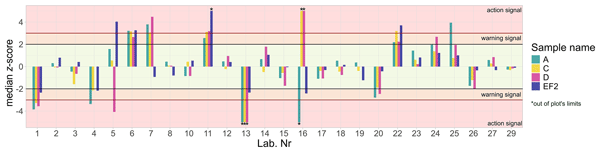
This collaborative work from 26 worldwide laboratories assessed the measurement of atmospheric particles' oxidative potential (OP) using a common protocol. OP is a metric designed to inform on particles’ harmful effects. Over half of the laboratories obtained satisfactory results, and some critical steps such as liquid handling and OP mathematical determination were identified. Recommendations for future measurements and interlaboratory comparisons are also provided.

Piotr Markuszewski, Mikołaj Mazurkiewicz, Kinga Stawiarz, Małgorzata Śmiszek, Patrycja Jutrzenka-Trzebiatowska, Luca Ferrero, Krishnakant Budhavant, Mateusz Zawadzki, Anna Waleczek, Przemysław Makuch, Douglas Nilsson, Örjan Gustafsson, and Sophie L. Haslett
Atmos. Chem. Phys., 26, 16341–16372, https://doi.org/10.5194/acp-26-16341-2026, https://doi.org/10.5194/acp-26-16341-2026, 2026
Short summary
Short summary
We investigated the occurrence and transport of microplastics in air and coastal waters around the Maldives using air and seawater sampling and particle identification. Microplastics occurred in both environments, but their size distributions and composition differed markedly. Airborne concentrations were more closely associated with polluted air transported from South Asia than with local ocean emissions, indicating that regional atmospheric transport delivers microplastics to remote islands.
Hao Ding, Alejandro Baró Pérez, Nazario Mastroianni, Almuth Neuberger, Rahul Ranjan, Fredrik Mattsson, Liine Heikkinen, Karam Mansour, Stefano Decesari, Angelo Lupi, Claudia Mohr, Paul Zieger, Ilona Riipinen, and Annica M. L. Ekman
EGUsphere, https://doi.org/10.5194/egusphere-2026-6876, https://doi.org/10.5194/egusphere-2026-6876, 2026
This preprint is open for discussion and under review for Atmospheric Chemistry and Physics (ACP).
Short summary
Short summary
Fog poses risks to human health and transportation, yet uncertainties remain in fog prediction. Our numerical simulations of a winter fog event in the Po Valley, Italy, show that water uptake and hygroscopic growth of aerosol particles significantly influence fog evolution by changing how fog interacts with radiation. Furthermore, including this effect in the simulations improves agreement with observations, particularly for fog duration and near-surface radiation.
Julian Weng, Yufang Hao, Benjamin T. Brem, Tianqu Cui, Sophie Darfeuil, Gaëlle Uzu, Jean-Luc Jaffrezo, Martin Steinbacher, Martine Collaud Coen, Thaleia Gkraikou, Konstantina Oikonomou, Jean Sciare, Claudia Mohr, Andre S. H. Prévôt, Martin Gysel-Beer, Imad El Haddad, and Patrik Winiger
EGUsphere, https://doi.org/10.5194/egusphere-2026-4141, https://doi.org/10.5194/egusphere-2026-4141, 2026
This preprint is open for discussion and under review for Atmospheric Chemistry and Physics (ACP).
Short summary
Short summary
Satellite remote-sensing backtracking and long-term in-situ chemical analysis from 2011 to 2021 at the Jungfraujoch High Altitude Research Station reveals substantial compositional variability in long-range transported Saharan dust, which reflects the combined influence of source region mineralogy and atmospheric processing. Incorporating these process-level insights into atmospheric models is essential for accurately assessing global impacts of mineral dust on ecosystems and climate.
Eva Sommer, Mattia Busato, Pedro Rato, Hannah Klebach, Nirvan Bhattacharyya, Yuanlong Huang, Didier Lombard, Bernhard Mentler, Zhensen Zheng, Theodoros Aivaliotis, João Almeida, Louis-Philippe De Menezes, Ilia Krasin, Robert Kristic, Giulio Malaguti, Pierre Minginette, Sylvain Ravat, Emiliano Urrutia, Stefan Karl Weber, Lubna Dada, Jenna De Vivo, Milin Kaniyodical Sebastian, Paap Koemets, Felix Kunkler, Wiebke Scholz, Prashant Tripathi, Jens Voigtländer, Theodoros Christoudias, Joachim Curtius, Neil Donahue, Imad El Haddad, Roberto Guida, Armin Hansel, Hartwig Harder, Xu-Cheng He, Liine Heikkinen, Heikki Junninen, Markku Kulmala, Katrianne Lehtipalo, Ottmar Möhler, Mira Pöhlker, Rainer Volkamer, Paul Martin Winkler, Richard C. Flagan, Antti Onnela, Serge Mathot, and Jasper Kirkby
EGUsphere, https://doi.org/10.5194/egusphere-2026-6281, https://doi.org/10.5194/egusphere-2026-6281, 2026
This preprint is open for discussion and under review for Atmospheric Measurement Techniques (AMT).
Short summary
Short summary
We present FLOTUS, an oxidation flow tube system developed as an extension to the CERN CLOUD chamber. FLOTUS allows us to simulate atmospheric ageing across a wide range of temperatures, oxidation conditions and gas mixtures. We characterise the flow conditions through simulations and measurements and we demonstrate the production of particles with different sizes and chemical compositions. The gases and particles can be analysed directly or transferred into the CLOUD chamber for further study.
Liine Heikkinen, Rahul Ranjan, Sini Talvinen, Niels Behr, Sara M. Blichner, Maura Dewey, Lauri R. Ahonen, Mikael Ehn, Annica M. L. Ekman, Radovan Krejci, Tuukka Petäjä, Peter Tunved, and Ilona Riipinen
EGUsphere, https://doi.org/10.5194/egusphere-2026-5082, https://doi.org/10.5194/egusphere-2026-5082, 2026
Short summary
Short summary
The impacts of clouds on atmospheric particulate matter (PM) composition are not well understood. Here, we use a new method to infer these interactions as particle number size distributions with bimodal shapes serve as markers of chemical cloud processing. Using concurrent PM composition data from a boreal forest in Finland, we find cloud chemistry to enrich PM in sulfate, but no enhanced formation of organics was observed, despite the abundance of precursors emitted by the forest.
Jenna DeVivo, Alexandria Stinchfield, Nirvan Bhattacharyya, Mitch Alton, Mingyi Wang, Siegfried Schobesberger, Liqing Hao, Mitchell Rogers, Alexander Vogel, Imad Zgheib, Natalie Burton, Clara Lietzke, Douglas M. Russell, Eva Sommer, Drew Gentner, Liine Heikkinen, Rainer Volkamer, Jasper Kirkby, Felipe Lopez-Hilfiker, Douglas Worsnop, Manjula Canagaratna, and Neil M. Donahue
EGUsphere, https://doi.org/10.5194/egusphere-2026-4542, https://doi.org/10.5194/egusphere-2026-4542, 2026
This preprint is open for discussion and under review for Atmospheric Chemistry and Physics (ACP).
Short summary
Short summary
The vapors driving atmospheric new particle formation are uncertain, in part because of instrumental limitations at small particle sizes. This study presents a novel coupling of a temperature-programmed desorption inlet with a bipolar mass spectrometer that has multiple types of chemical ionization used to study acid-base reactions controlling particulate evaporation.This method measures more components in atmospheric aerosol and separates reactive pathways contributing to early particle growth.
Almuth Neuberger, Rahul Ranjan, Hao Ding, Fredrik Mattsson, Lea Haberstock, Darrel Baumgardner, Stefano Decesari, Annica M. L. Ekman, Dagen D. Hughes, Claudia Mohr, Marco Paglione, Ilona Riipinen, Matteo Rinaldi, and Paul Zieger
Atmos. Chem. Phys., 26, 11991–12017, https://doi.org/10.5194/acp-26-11991-2026, https://doi.org/10.5194/acp-26-11991-2026, 2026
Short summary
Short summary
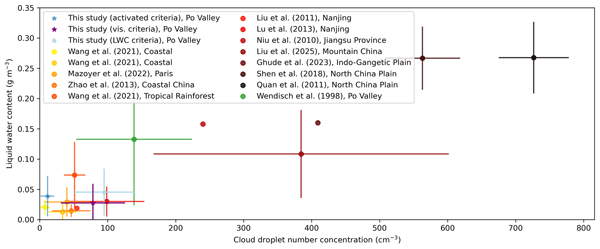
We studied how particles from air pollution that absorb water but do not yet form fog droplets influence fog and visibility in northern Italy’s Po Valley. Using detailed field observations and computer modeling, we found that these “hydrated” particles can explain many low-visibility events. Recognizing their role helps improve forecasts of fog, air quality, and climate effects in polluted regions.
Krishnakant Babanrao Budhavant, Ahmed Muslim, Joakim Romson, Sreedharan Krishnakumari Satheesh, and Örjan Gustafsson
EGUsphere, https://doi.org/10.5194/egusphere-2026-4276, https://doi.org/10.5194/egusphere-2026-4276, 2026
Short summary
Short summary
Seasonal monsoon winds transport aerosol particles across the equatorial Indian Ocean. Measurements in the Maldives show that the northeast monsoon carries polluted air from South and Southeast Asia, whereas the southwest monsoon brings cleaner marine air from the southern Indian Ocean. These observations improve our understanding of long-range pollution transport and help improve climate and air-quality models.
Feng Jiang, Jun Zhang, David M. Bell, Kun Li, Nadine Borduas-Dedekind, Andre S. H. Prevot, Hongbiao Cui, Harald Saathoff, and Thomas Leisner
Atmos. Chem. Phys., 26, 11733–11746, https://doi.org/10.5194/acp-26-11733-2026, https://doi.org/10.5194/acp-26-11733-2026, 2026
Short summary
Short summary
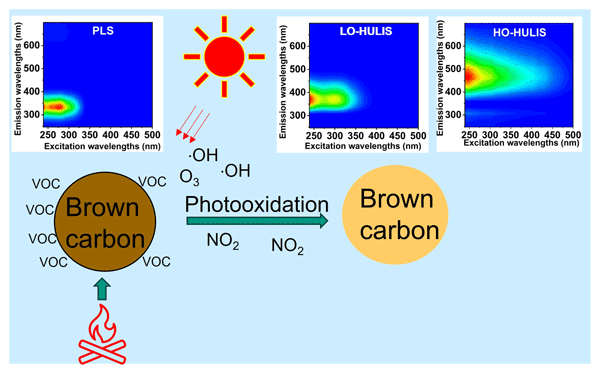
We studied chemical compositions and chromophores of brown carbon aerosol from combustion emission before and after photooxidation using an oxidative flow reactor. The chromophore and chemical composition of brown carbon were determined by excitation-emission spectroscopy and mass spectrometry. This work helps to get a better understanding of evolution process of the chromophores from primary combustion emissions during the real atmospheric transportation.
Sara M. Blichner, Theodore Khadir, Sini Talvinen, Paulo Artaxo, Liine Heikkinen, Harri Kokkola, Radovan Krejci, Muhammed Irfan, Twan van Noije, Tuukka Petäjä, Christopher Pöhlker, Øyvind Seland, Carl Svenhag, Antti Vartiainen, and Ilona Riipinen
Atmos. Chem. Phys., 26, 11281–11307, https://doi.org/10.5194/acp-26-11281-2026, https://doi.org/10.5194/acp-26-11281-2026, 2026
Short summary
Short summary
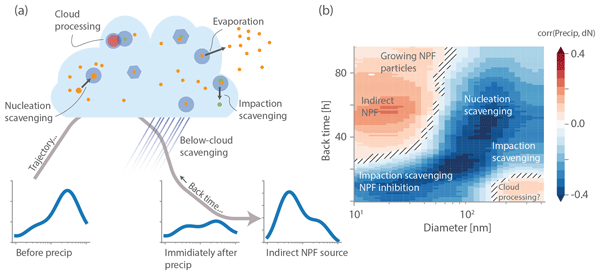
This study looks at how well climate models capture the impact of rain on particles that help form cloud droplets. Using data from three measurement stations and applying both a correlation analysis and a machine learning approach, we found that models often miss how new particles form after rain and struggle in cold environments. This matters because these particles influence cloud formation and climate.
Sneha Aggarwal, Matthew Salter, Olga Garmash, Felipe Lopez-Hilfiker, Julika Zinke, Joel A. Thornton, Timothy H. Bertram, Jian Wang, Paul Zieger, and Claudia Mohr
EGUsphere, https://doi.org/10.26434/chemrxiv.15000402/v3, https://doi.org/10.26434/chemrxiv.15000402/v3, 2026
Short summary
Short summary
Perfluoroalkyl carboxylic acids (PFCAs) are persistent global contaminants. While sea spray aerosol (SSA) formed by wave breaking is known to transport PFCAs from the ocean to the atmosphere, the focus has primarily been on particle-phase transport. Here, we present evidence that particle-bound PFCAs are subsequently converted to gas phase following SSA emission. This previously unconsidered process may cause particle-only measurements to underestimate the total atmospheric PFCA from SSA.
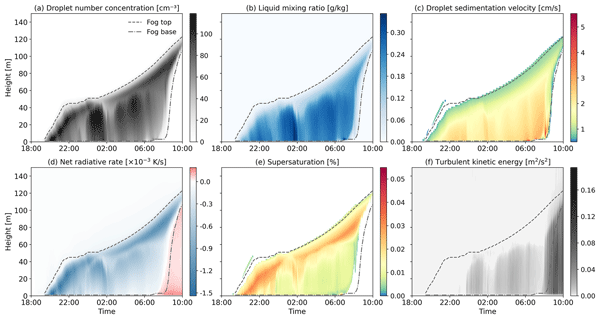
Hao Ding, Almuth Neuberger, Rahul Ranjan, Fredrik Mattsson, Liine Heikkinen, Karam Mansour, Stefano Decesari, Claudia Mohr, Alejandro Baró Pérez, Nazario Mastroianni, Paul Zieger, Ilona Riipinen, and Annica M. L. Ekman
Atmos. Chem. Phys., 26, 9721–9739, https://doi.org/10.5194/acp-26-9721-2026, https://doi.org/10.5194/acp-26-9721-2026, 2026
Short summary
Short summary
Fog poses numerous risks to society, yet it remains challenging to forecast. We use detailed numerical simulations based on fog observations in the Po Valley, Italy, to demonstrate that high concentrations of aerosol particles, as in polluted air, lead to an increase in droplet number, prolonged fog duration, and reduced visibility. The simulations also show the importance of accurately representing haze particles and the shape of the droplet size distribution for improved fog prediction.
Julian Weng, Yufang Hao, Benjamin T. Brem, Tianqu Cui, Peeyush Khare, Lubna Dada, Kaspar R. Daellenbach, Sophie Darfeuil, Gaëlle Uzu, Jean-Luc Jaffrezo, Martin Steinbacher, Stefan Reimann, Thaleia Gkraikou, Konstantina Oikonomou, Jean Sciare, Martine Collaud Coen, Claudia Mohr, Andre S. H. Prévôt, Martin Gysel-Beer, Imad El Haddad, and Patrik Winiger
EGUsphere, https://doi.org/10.5194/egusphere-2026-3660, https://doi.org/10.5194/egusphere-2026-3660, 2026
Short summary
Short summary
Long-term observations at the Jungfraujoch High Altitude Research Station show that, alongside air mass transport, sustained oxidative processing shaped by atmospheric water vapor plays a central role in driving aerosol loading and composition. Combining detailed aerosol chemical characterization with process-level insights, we provide important observational benchmarks for improving atmospheric model performance in the remote free troposphere, where uncertainties remain particularly high.
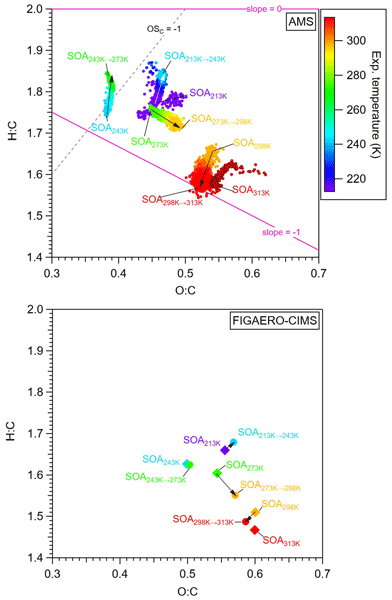
Linyu Gao, Stella E. I. Manavi, Claudia Mohr, Junwei Song, Cheng Wu, Thomas Leisner, Spyros N. Pandis, and Harald Saathoff
Atmos. Chem. Phys., 26, 8875–8892, https://doi.org/10.5194/acp-26-8875-2026, https://doi.org/10.5194/acp-26-8875-2026, 2026
Short summary
Short summary
We investigate how temperature (213–313K) affects secondary organic aerosol (SOA) particles derived from isoprene and α-pinene mixtures. Isoprene's suppression on α-pinene dimer formation varied with temperatures. Particles formed at higher temperatures are more oxidized yet more volatile than those formed at lower temperatures and then warmed. This work highlights the need to consider both temperature and biogenic vapor interaction to accurately describe SOA formation, aging, and global burden.
Ruqian Miao, Ruochong Xu, Shan Huang, Sihan Xiao, Hao Wang, Yan Zheng, Siyi Liu, Jingxian Li, Guannan Geng, Manish Shrivastava, Xu Dao, Claire Granier, Guy Brasseur, Vlassis A. Karydis, Alexandra P. Tsimpidi, Jianhui Jiang, Kaspar R. Daellenbach, Imad El Haddad, André S. H. Prévôt, and Qi Chen
EGUsphere, https://doi.org/10.5194/egusphere-2026-3160, https://doi.org/10.5194/egusphere-2026-3160, 2026
Short summary
Short summary
Primary and secondary organic aerosols (POA and SOA) have distinct climate and human health impacts. We develop an OA simulation framework resolving the full volatility spectrum of organic precursor emissions, which improves global POA and SOA characterization. Reassessing their global distributions and budgets, this study shows greater POA and SOA burdens than previous estimates and presents region-dependent OA sources and variability to guide health-oriented pollution mitigation strategies.
Christopher R. Oxford, Haihui Zhu, Maya Mehrotra, Xuan Liu, Yuxuan Ren, Maya Arnott, Isaac Abionum Adimula, Taiye Benjamin Ajibolataiye, Clement Akoshile, Omar Amador-Munoz, Araya Asfaw, Rachel Ying-Wen Chang, Sagnik Dey, Ann M. Dillner, David J. Diner, Connor J. Flynn, Diana Francis, Paterne Gahungu, Rebecca M. Garland, Michel Grutter, Sina Hasheminassab, Fahad Imam, Jhoon Kim, Kristy Langerman, Pei-Chen Lee, Puji Lestari, Po-Hsiung Lin, S. Marcela Loria-Salazar, Tesfaye Mamo, Olga L. Mayol-Bracero, Mogesh Naidoo, Narendra Nelli, Sang Seo Park, Abdus Salam, Bighnaraj Sarangi, Trailokya Saud, Robyn Schofield, Yoav Schechner, Sachchida N. Tripathi, Emily K. West, Eli Windwer, Ming-Tsang Wu, Qiang Zhang, Michael Brauer, Yinon Rudich, Jay R. Turner, and Randall V. Martin
EGUsphere, https://doi.org/10.5194/egusphere-2026-3224, https://doi.org/10.5194/egusphere-2026-3224, 2026
Short summary
Short summary
A high-sensitivity balance, controlled temperature and relative humidity chamber, and filter samples collected around the world were used to develop a mass as a function of relative humidity relationship. We subsequently measured the chemical composition of these same samples. A relationship between the chemical composition and water mass was created and used to calculate aerosol water content showing how composition and water content varies worldwide.
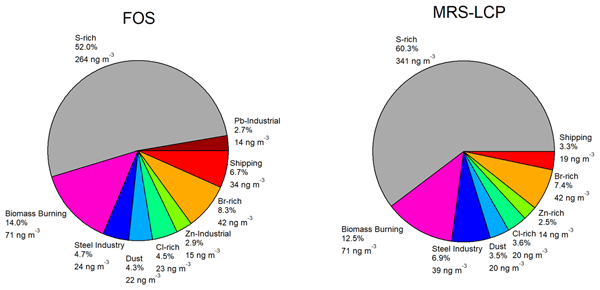
Mathilde Brezins, Benjamin Chazeau, Nicolas Marchand, Amandine Durand, Grégory Gille, Romain Bourjot, Andre S. H. Prévôt, Jean-Luc Jaffrezo, Gaëlle Uzu, and Barbara D'Anna
Aerosol Research, 4, 231–254, https://doi.org/10.5194/ar-4-231-2026, https://doi.org/10.5194/ar-4-231-2026, 2026
Short summary
Short summary
The Marseille–Fos basin faces high anthropogenic pressure from industry and maritime and road transport combined with specific weather conditions that further degrade air quality. Our study focuses on fine metallic pollution, which can penetrate deep into the lungs and cause harmful effects. Using 1 year of measurements at two sites, we identified 10 main pollution sources, half directly linked to human activities, highlighting clear risks for the environment and public health.
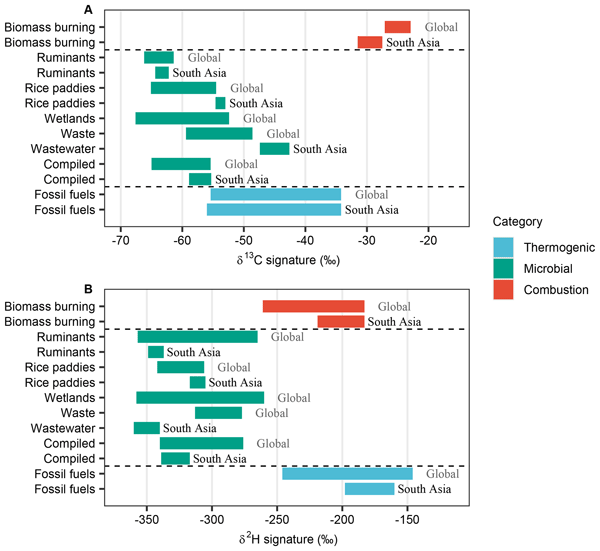
Peng Yao, Katja Belec, Henry Holmstrand, Josh Balacky, Abdus Salam, Krishnakant Budhavant, Mohanan Remani Manoj, Khaled Shaifullah Joy, Md. Alamin Hossain, Atinderpal Singh, Anil Patel, Neeraj Rastogi, Chinmay Mallik, Kirpa Ram, Gyanesh Kumar Singh, and Örjan Gustafsson
Atmos. Chem. Phys., 26, 7765–7787, https://doi.org/10.5194/acp-26-7765-2026, https://doi.org/10.5194/acp-26-7765-2026, 2026
Short summary
Short summary
Methane is a powerful greenhouse gas, but its sources remain uncertain in many regions. The isotope fingerprints of methane are diagnostic of its sources, yet their source end-members are poorly constrained for South Asia. Here we determined the methane isotope signal for major sources in South Asia and found these to differ from global averages. Improved regional-specific isotope source fingerprints will help to improve top-down assessments of methane budgets and climate mitigation strategies.
Jintu Borah, Deepali Kushwaha, Sachchida Nand Tripathi, and Rajesh M. Hegde
EGUsphere, https://doi.org/10.5194/egusphere-2026-1103, https://doi.org/10.5194/egusphere-2026-1103, 2026
Short summary
Short summary
Accurate sectoral emission forecasting is challenging due to the multi-component nature of air quality data. This work addresses the gap by combining time-series decomposition with ensemble learning to enhance predictive performance. The work proposes a sector-specific emission forecasting method that uses source-apportioned, speciated PM2.5 concentration data from three locations. The framework enables robust quantification of sectoral emissions for new incoming speciated datasets.
Sean Clarke, Henry Holmstrand, Krishnakant Budhavant, Manoj Remani, Sophie Haslett, Katerina Rodiouchkina, Ellen Kooijman, and Örjan Gustafsson
Atmos. Chem. Phys., 26, 5333–5343, https://doi.org/10.5194/acp-26-5333-2026, https://doi.org/10.5194/acp-26-5333-2026, 2026
Short summary
Short summary
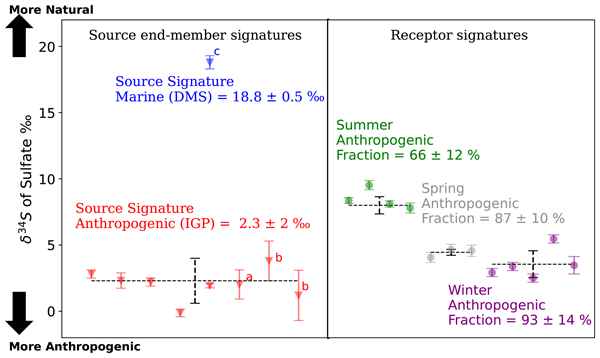
South Asia has the world's highest loadings of sulfate, scattering sunlight, altering clouds and masking greenhouse warming, yet there are large uncertainties regarding the relative contributions of natural and anthropogenic sources to the receptor atmosphere. Here we use δ34S isotopes to distinguish natural versus anthropogenic sulfate sources, revealing strong seasonal contrasts and quantifying the dominance of anthropogenic contributions.
Davender Sethi, Akanksha Lakra, Ambasht Kumar, Shoubhik Chakraborty, Himadri Sekhar Bhowmik, Vaishali Jain, and Sachchida Nand Tripathi
EGUsphere, https://doi.org/10.5194/egusphere-2026-595, https://doi.org/10.5194/egusphere-2026-595, 2026
Short summary
Short summary
Breathe easier in the world's most polluted region—the Indo-Gangetic Plain of South Asia, home to Lucknow, India! Our mobile lab zipped through neighborhoods to uncover hidden air pollution patterns. Nearby traffic and factories mix with distant haze, fueling particle growth that worsens smog—especially at night. These insights pinpoint exact hotspots, empowering smarter fixes to clear the air and safeguard families' health in fast-growing cities.
Yu Wang, Beiping Luo, Judith Kleinheins, Gang I. Chen, Liine Heikkinen, and Claudia Marcolli
Atmos. Chem. Phys., 26, 1735–1749, https://doi.org/10.5194/acp-26-1735-2026, https://doi.org/10.5194/acp-26-1735-2026, 2026
Short summary
Short summary
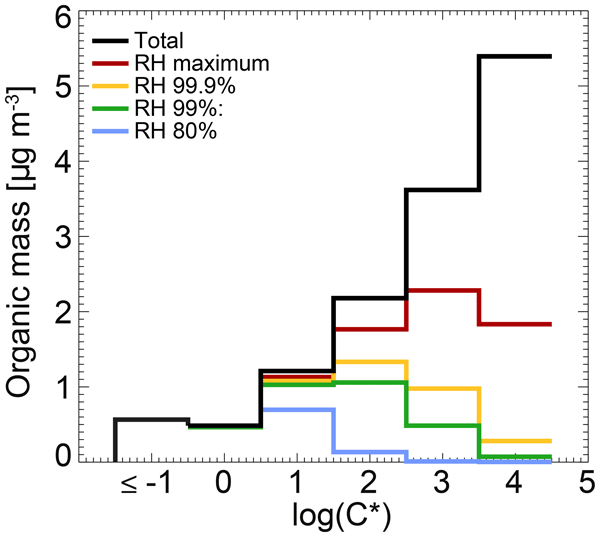
Ubiquitous semi-volatile compounds can co-condense on aerosol particles with water vapour when relative humidity increases. Simulations of cloud formation at a boreal forest site with a cloud parcel model that accounts for non-ideal organic–inorganic interactions yield an enhancement of cloud droplet number concentration from co-condensing NH3, HNO3, and organics up to 44%, with strong sensitivities to volatility distributions, aerosol size distribution, and updraft velocity.
Shoubhik Chakraborty, Sachchida Nand Tripathi, Davender Sethi, Akanksha Lakra, Ambasht Kumar, Pranjal Kumar Srivastava, Nihal Thukarama Rao, Avnish Tripathi, and Purushottam Kar
EGUsphere, https://doi.org/10.5194/egusphere-2025-5677, https://doi.org/10.5194/egusphere-2025-5677, 2025
Short summary
Short summary
This paper proposes a novel source apportionment paradigm that predicts the relative contributions of different air-pollution sources using a machine-learning framework applied to data obtained from low-cost sensor units. A key strength of this approach is its ability to support a dense network of low-cost sensor units spanning wide geographical areas and providing source apportionment results in real time, thus helping policymakers take regulatory action to curb air pollution in real time.
Rahul Ranjan, Maura Dewey, Liine Heikkinen, Lauri R. Ahonen, Krista Luoma, Paul Bowen, Tuukka Petäjä, Annica M. L. Ekman, Daniel G. Partridge, and Ilona Riipinen
Atmos. Chem. Phys., 25, 17275–17300, https://doi.org/10.5194/acp-25-17275-2025, https://doi.org/10.5194/acp-25-17275-2025, 2025
Short summary
Short summary
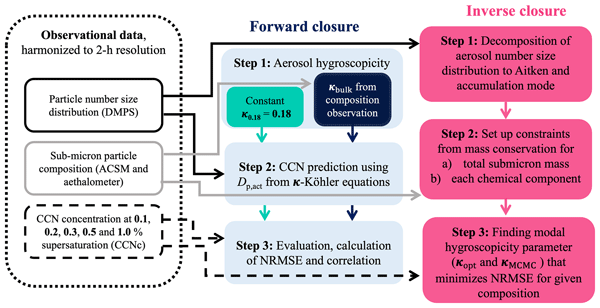
We use multi-year measurements of cloud condensation nuclei (CCN) at a boreal forest site to inversely infer size-resolved aerosol chemical composition. We find that inorganic species are more enriched in the larger end (accumulation mode) of the sub-micron aerosol population while organics often dominate the smaller end (Aitken mode). Our approach demonstrates the potential of long-term CCN measurements to infer size-resolved chemical composition of sub-micron aerosol.
Ross C. Petersen, Thomas Holst, Cheng Wu, Radovan Krejci, Jeremy K. Chan, Claudia Mohr, and Janne Rinne
Atmos. Chem. Phys., 25, 17205–17236, https://doi.org/10.5194/acp-25-17205-2025, https://doi.org/10.5194/acp-25-17205-2025, 2025
Short summary
Short summary
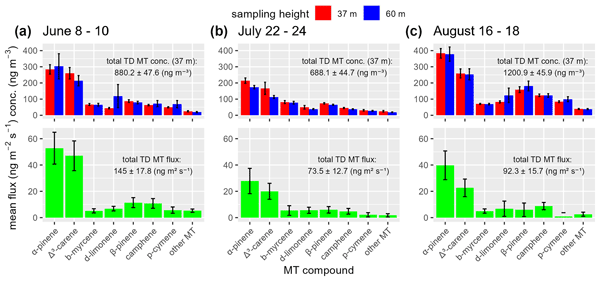
Ecosystem-scale emissions of biogenic volatile organic compounds (BVOCs) are important for atmospheric chemistry. Here we investigate boreal BVOC fluxes from a forest in central Sweden. BVOC fluxes were measured above-canopy using proton-transfer-reaction mass spectrometry, while compound-specific monoterpene (MT) fluxes were assessed using a concentration gradient method. We also evaluate the impact of chemical degradation on observed sesquiterpene (SQT) and nighttime MT fluxes.
Alfred W. Mayhew, Lauri Franzon, Kelvin H. Bates, Theo Kurtén, Felipe D. Lopez-Hilfiker, Claudia Mohr, Andrew R. Rickard, Joel A. Thornton, and Jessica D. Haskins
Atmos. Chem. Phys., 25, 17027–17046, https://doi.org/10.5194/acp-25-17027-2025, https://doi.org/10.5194/acp-25-17027-2025, 2025
Short summary
Short summary
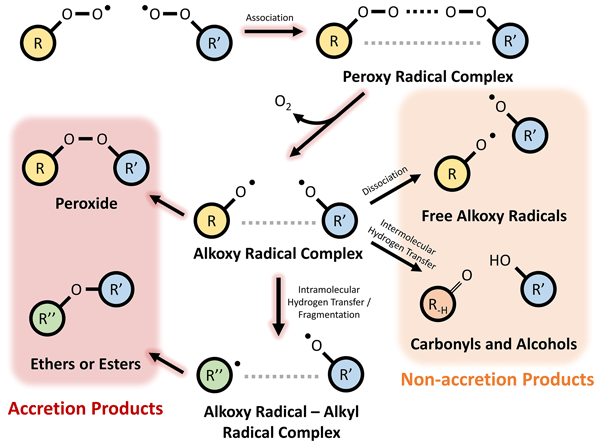
This work outlines an investigation into an understudied atmospheric chemical reaction pathway with the potential to form particulate pollution that has important impacts on air quality and climate. It suggests that this chemical pathway is responsible for a large fraction of the atmospheric particulate matter observed in tropical forested regions, but also highlights the need for further ambient and lab investigations to inform an accurate representation of this process in atmospheric models.
Laurence C. Windell, Saliou Mbengue, Petra Pokorná, Jaroslav Schwarz, André S. H. Prévôt, Manousos I. Manousakas, Stefanos Papagiannis, Jakub Ondráček, Roman Prokeš, and Vladimir Ždímal
Atmos. Meas. Tech., 18, 7021–7038, https://doi.org/10.5194/amt-18-7021-2025, https://doi.org/10.5194/amt-18-7021-2025, 2025
Short summary
Short summary
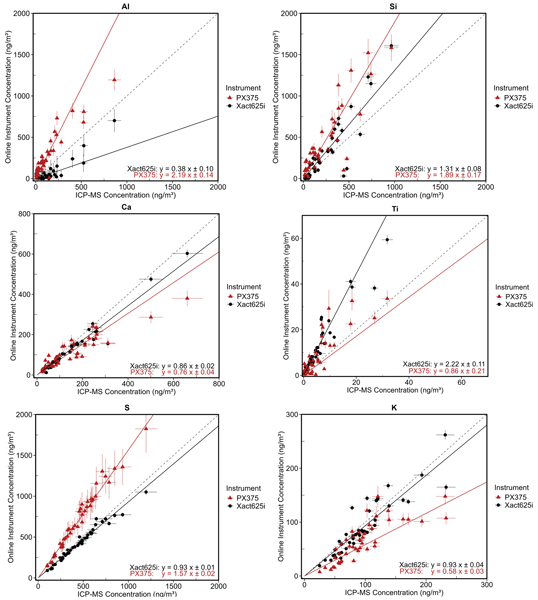
In this work, we compare the two most widely used online XRF monitors for ambient elemental analysis, the Xact625i and PX-375. We found strong correlations between the online instruments and the reference method (better so for the Xact625i), while in terms of absolute concentrations, some elements were over- and underestimated. Overall, we determined both instruments can be used as powerful tools to produce high-time resolution elemental data for use in air quality monitoring.
Ilona Ylivinkka, Helmi-Marja Keskinen, Lauri R. Ahonen, Liine Heikkinen, Pasi P. Aalto, Tuomo Nieminen, Katrianne Lehtipalo, Krista Luoma, Sujai Banerji, Juho Aalto, Janne Levula, Jutta Kesti, Ekaterina Ezhova, Markku Kulmala, and Tuukka Petäjä
Aerosol Research, 3, 503–520, https://doi.org/10.5194/ar-3-503-2025, https://doi.org/10.5194/ar-3-503-2025, 2025
Short summary
Short summary
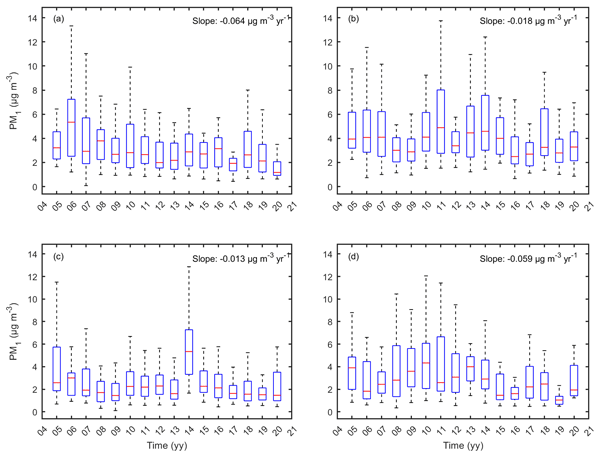
Three different particulate matter (PM) measurement techniques were compared in Finland, showing good correlation (R about 0.8). Although the measured PM concentrations were low, decreasing trends were observed in all seasons. The decrease followed the trends observed in concentrations of anthropogenic pollutants, resulting from the EU legislation to improve air quality. The highest PM concentrations were measured in summer, indicating the dominance of organic compounds to the PM mass.
Laura Cadeo, Beatrice Biffi, Benjamin Chazeau, Cristina Colombi, Rosario Cosenza, Eleonora Cuccia, Manousos-Ioannis Manousakas, Kaspar R. Daellenbach, André S. H. Prévôt, and Roberta Vecchi
Atmos. Meas. Tech., 18, 6435–6448, https://doi.org/10.5194/amt-18-6435-2025, https://doi.org/10.5194/amt-18-6435-2025, 2025
Short summary
Short summary
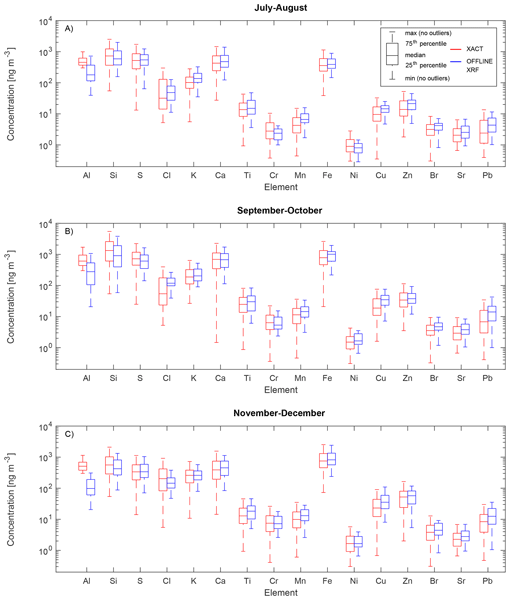
This study presents the deployment of the Xact® 625i Ambient Metals Monitor in Milan (Po Valley, Italy) and its performance in measuring particulate matter elemental composition at a high temporal resolution. Our findings demonstrate strong agreement between online and offline X-ray fluorescence analyses, underscoring the potential of advanced monitoring technologies for air quality research.
Sophie Bogler, Jun Zhang, Rico K. Y. Cheung, Kun Li, André S. H. Prévôt, Imad El Haddad, and David M. Bell
Atmos. Chem. Phys., 25, 10229–10243, https://doi.org/10.5194/acp-25-10229-2025, https://doi.org/10.5194/acp-25-10229-2025, 2025
Short summary
Short summary
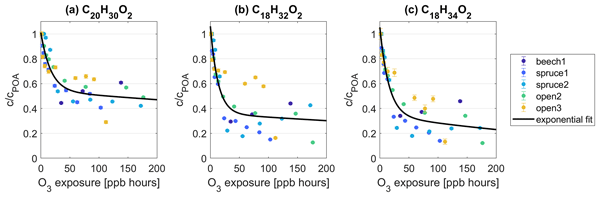
Authentic aerosols emitted from residential wood stoves and open burning processes are only slightly oxidized by ozone in the atmosphere. Under dry conditions, the reaction does not proceed to completion, while under high humidity conditions, the reactivity proceeds further. These results indicate that the reactivity with ozone is likely impacted by aerosol phase state (e.g., aerosol viscosity).
Sneha Aggarwal, Priyanka Bansal, Yuwei Wang, Spiro Jorga, Gabrielle Macgregor, Urs Rohner, Thomas Bannan, Matthew Salter, Paul Zieger, Claudia Mohr, and Felipe Lopez-Hilfiker
Atmos. Meas. Tech., 18, 4227–4247, https://doi.org/10.5194/amt-18-4227-2025, https://doi.org/10.5194/amt-18-4227-2025, 2025
Short summary
Short summary
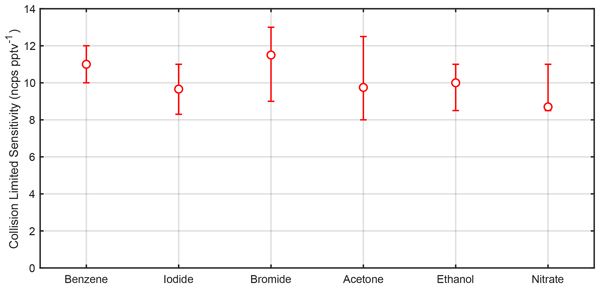
Chemical ionization mass spectrometers used for trace gas analysis can be operated under various conditions, complicating quantitative comparisons. We evaluate sensitivity dependence on a relatively few key instrument parameters and show that when these are held constant, consistent performance is achieved. We show that the maximum sensitivity of a given flow tube reactor across various reagent ion chemistries is a constant, which aids in the quantification of compounds lacking analytical standards.
Manousos I. Manousakas, Olga Zografou, Francesco Canonaco, Evangelia Diapouli, Stefanos Papagiannis, Maria Gini, Vasiliki Vasilatou, Anna Tobler, Stergios Vratolis, Jay G. Slowik, Kaspar R. Daellenbach, André S. H. Prevot, and Konstantinos Eleftheriadis
Atmos. Meas. Tech., 18, 3983–4002, https://doi.org/10.5194/amt-18-3983-2025, https://doi.org/10.5194/amt-18-3983-2025, 2025
Short summary
Short summary
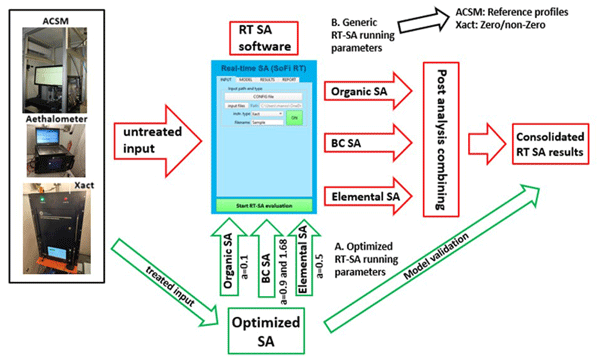
Air pollution from airborne particles is a major health and environmental concern, especially in cities. Understanding the particles' sources is key to addressing this issue, but traditional methods require time-consuming sampling, delaying action. Our study introduces a real-time monitoring system that uses advanced instruments and software to track pollution instantly. This technology allows faster, more precise pollution analysis, helping cities create targeted strategies to improve air quality.
Junke Zhang, Xinyi Fu, Chunying Chen, Yunfei Su, Siyu Liu, Luyao Chen, Yubao Chen, Gehui Wang, and Andre S. H. Prevot
Atmos. Chem. Phys., 25, 8983–9004, https://doi.org/10.5194/acp-25-8983-2025, https://doi.org/10.5194/acp-25-8983-2025, 2025
Short summary
Short summary
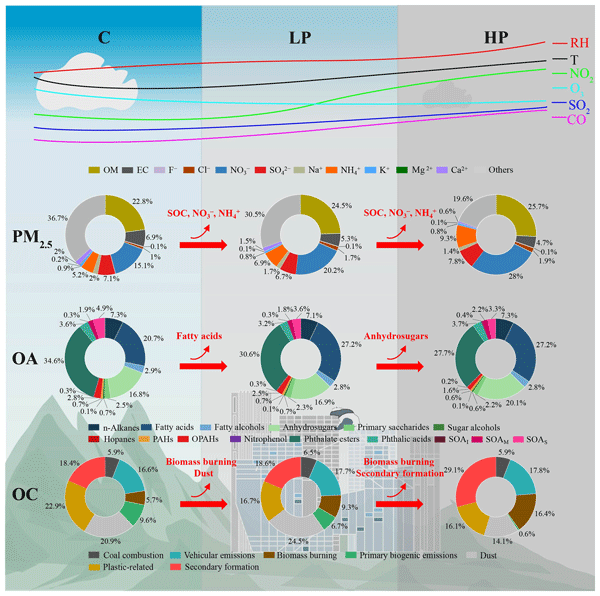
We measured (at the molecular level) the 125 organic aerosol (OA) compounds present in Chengdu in winter. OA was dominated by fatty acids, phthalate esters, and anhydrosugars, and it was deeply influenced by anthropogenic sources. As pollution worsened, secondary inorganic species and secondary organic carbon (OC) dominated the increase in PM2.5, fatty acids and anhydrosugars dominated the increase in OA, and the contributions of secondary formation and biomass burning to OC increased markedly.
Fredrik Mattsson, Almuth Neuberger, Liine Heikkinen, Yvette Gramlich, Marco Paglione, Matteo Rinaldi, Stefano Decesari, Paul Zieger, Ilona Riipinen, and Claudia Mohr
Atmos. Chem. Phys., 25, 7973–7989, https://doi.org/10.5194/acp-25-7973-2025, https://doi.org/10.5194/acp-25-7973-2025, 2025
Short summary
Short summary
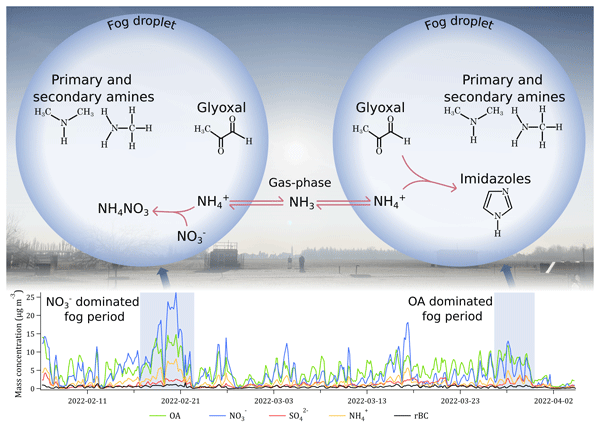
This study investigated aerosol–cloud interactions, focusing on organic nitrogen (ON) formation in the aqueous phase. Measurements were conducted in wintertime in the Po Valley, Italy, using aerosol mass spectrometry. The fog was enriched in more hygroscopic inorganic compounds and ON, containing, e.g., imidazoles. The formation of imidazole by aerosol–fog interactions could be confirmed for the first time in atmospheric observations. Findings highlight the role of fog in nitrogen aerosol formation.
Jiamao Zhou, Jiarui Wu, Xiaoli Su, Ruonan Wang, Imad EI Haddad, Xia Li, Qian Jiang, Ting Zhang, Wenting Dai, Junji Cao, Andre S. H. Prevot, Xuexi Tie, and Guohui Li
Atmos. Chem. Phys., 25, 7563–7580, https://doi.org/10.5194/acp-25-7563-2025, https://doi.org/10.5194/acp-25-7563-2025, 2025
Short summary
Short summary
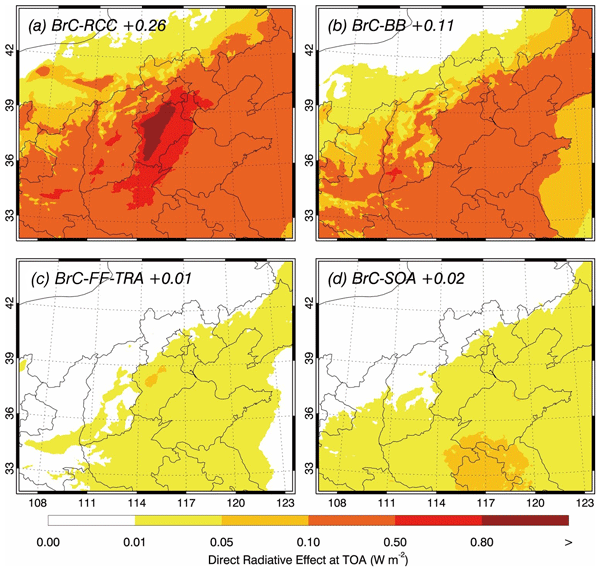
Brown carbon (BrC) is a type of airborne particle produced from various combustion sources which is light absorption. Historically, climate models have categorizing organic particles as either non-absorbing or purely reflective. Our study shows that BrC can reduce the usual cooling effect of organic particles. While BrC is often linked to biomass burning, however, BrC from fossil fuels contributes significantly to atmospheric heating.
Anderson Da Silva, Louis Marelle, Jean-Christophe Raut, Yvette Gramlich, Karolina Siegel, Sophie L. Haslett, Claudia Mohr, and Jennie L. Thomas
Atmos. Chem. Phys., 25, 5331–5354, https://doi.org/10.5194/acp-25-5331-2025, https://doi.org/10.5194/acp-25-5331-2025, 2025
Short summary
Short summary
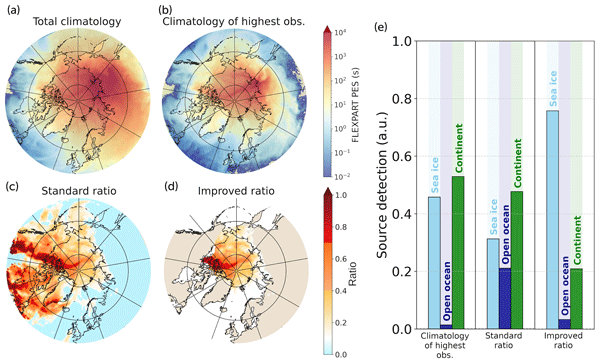
Particle sources in polar climates are unclear, affecting climate representation in models. This study introduces an evaluated method for tracking particles with backward modeling. Tests on simulated particles allowed us to show that traditional detection methods often misidentify sources. An improved method that accurately traces the origins of aerosol particles in the Arctic is presented. The study recommends using this enhanced method for better source identification of atmospheric species.
Zhenyu Zhang, Jing Li, Huizheng Che, Yueming Dong, Oleg Dubovik, Thomas Eck, Pawan Gupta, Brent Holben, Jhoon Kim, Elena Lind, Trailokya Saud, Sachchida Nand Tripathi, and Tong Ying
Atmos. Chem. Phys., 25, 4617–4637, https://doi.org/10.5194/acp-25-4617-2025, https://doi.org/10.5194/acp-25-4617-2025, 2025
Short summary
Short summary
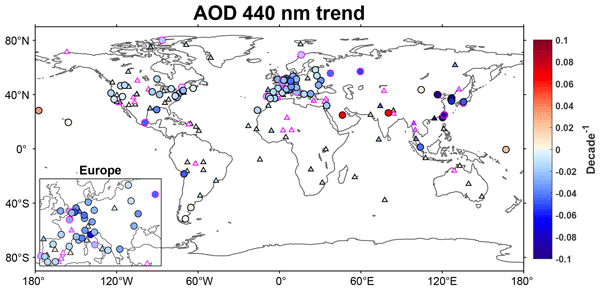
We used ground-based remote sensing data from the Aerosol Robotic Network to examine long-term trends in aerosol characteristics. We found aerosol loadings generally decreased globally, and aerosols became more scattering. These changes are closely related to variations in aerosol compositions, such as decreased anthropogenic emissions over East Asia, Europe, and North America; increased anthropogenic sources over northern India; and increased dust activity over the Arabian Peninsula.
Ashutosh K. Shukla, Sachchida N. Tripathi, Shamitaksha Talukdar, Vishnu Murari, Sreenivas Gaddamidi, Manousos-Ioannis Manousakas, Vipul Lalchandani, Kuldeep Dixit, Vinayak M. Ruge, Peeyush Khare, Mayank Kumar, Vikram Singh, Neeraj Rastogi, Suresh Tiwari, Atul K. Srivastava, Dilip Ganguly, Kaspar Rudolf Daellenbach, and André S. H. Prévôt
Atmos. Chem. Phys., 25, 3765–3784, https://doi.org/10.5194/acp-25-3765-2025, https://doi.org/10.5194/acp-25-3765-2025, 2025
Short summary
Short summary
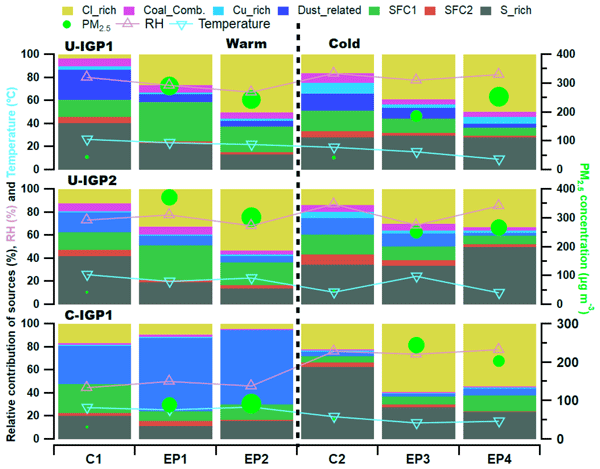
Our study delves into the elemental composition of aerosols at three sites across the Indo-Gangetic Plain (IGP), revealing distinct patterns during pollution episodes. We found significant increases in chlorine (Cl)-rich and solid fuel combustion (SFC) sources, indicating dynamic emission sources, agricultural burning impacts, and meteorological influences. Surges in Cl-rich particles during cold periods highlight their role in particle growth under high-relative-humidity conditions.
Tiantian Wang, Jun Zhang, Houssni Lamkaddam, Kun Li, Ka Yuen Cheung, Lisa Kattner, Erlend Gammelsæter, Michael Bauer, Zachary C. J. Decker, Deepika Bhattu, Rujin Huang, Rob L. Modini, Jay G. Slowik, Imad El Haddad, Andre S. H. Prevot, and David M. Bell
Atmos. Chem. Phys., 25, 2707–2724, https://doi.org/10.5194/acp-25-2707-2025, https://doi.org/10.5194/acp-25-2707-2025, 2025
Short summary
Short summary
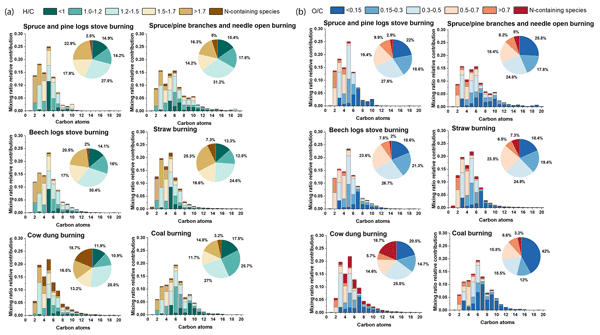
Our study analyzes real-time emissions of organic vapors from solid fuel combustion. Using the mass spectrometer, we tested various fuels, finding higher emission factors for organic vapors from wood burning. Intermediate-volatility organic compounds constituted a significant fraction of emissions in solid fuel combustion. Statistical tests identified unique potential markers. Our insights benefit air quality, climate, and health, aiding accurate emission assessments.
Hector Navarro-Barboza, Jordi Rovira, Vincenzo Obiso, Andrea Pozzer, Marta Via, Andres Alastuey, Xavier Querol, Noemi Perez, Marjan Savadkoohi, Gang Chen, Jesus Yus-Díez, Matic Ivancic, Martin Rigler, Konstantinos Eleftheriadis, Stergios Vratolis, Olga Zografou, Maria Gini, Benjamin Chazeau, Nicolas Marchand, Andre S. H. Prevot, Kaspar Dallenbach, Mikael Ehn, Krista Luoma, Tuukka Petäjä, Anna Tobler, Jaroslaw Necki, Minna Aurela, Hilkka Timonen, Jarkko Niemi, Olivier Favez, Jean-Eudes Petit, Jean-Philippe Putaud, Christoph Hueglin, Nicolas Pascal, Aurélien Chauvigné, Sébastien Conil, Marco Pandolfi, and Oriol Jorba
Atmos. Chem. Phys., 25, 2667–2694, https://doi.org/10.5194/acp-25-2667-2025, https://doi.org/10.5194/acp-25-2667-2025, 2025
Short summary
Short summary
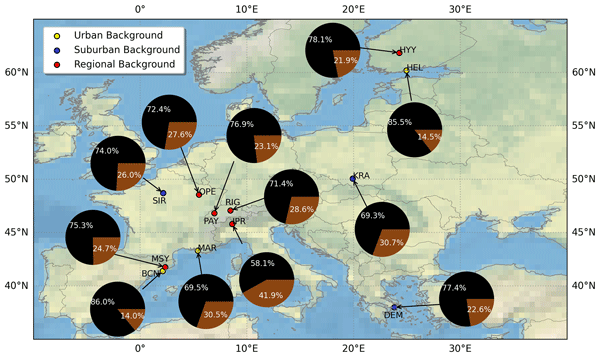
Brown carbon (BrC) absorbs ultraviolet (UV) and visible light, influencing climate. This study explores BrC's imaginary refractive index (k) using data from 12 European sites. Residential emissions are a major organic aerosol (OA) source in winter, while secondary organic aerosol (SOA) dominates in summer. Source-specific k values were derived, improving model accuracy. The findings highlight BrC's climate impact and emphasize source-specific constraints in atmospheric models.
Delaney B. Kilgour, Christopher M. Jernigan, Olga Garmash, Sneha Aggarwal, Shengqian Zhou, Claudia Mohr, Matt E. Salter, Joel A. Thornton, Jian Wang, Paul Zieger, and Timothy H. Bertram
Atmos. Chem. Phys., 25, 1931–1947, https://doi.org/10.5194/acp-25-1931-2025, https://doi.org/10.5194/acp-25-1931-2025, 2025
Short summary
Short summary
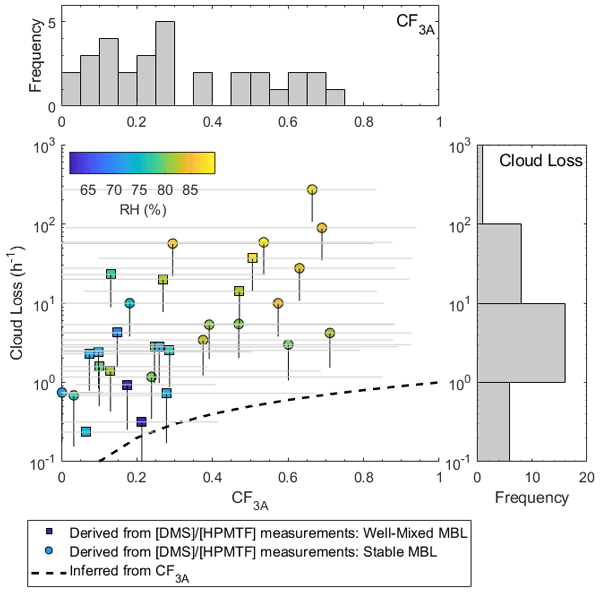
We report simultaneous measurements of dimethyl sulfide (DMS) and hydroperoxymethyl thioformate (HPMTF) in the eastern North Atlantic. We use an observationally constrained box model to show that cloud loss is the dominant sink of HPMTF in this region over 6 weeks, resulting in large reductions in DMS-derived products that contribute to aerosol formation and growth. Our findings indicate that fast cloud processing of HPMTF must be included in global models to accurately capture the sulfur cycle.
Diego Aliaga, Victoria A. Sinclair, Radovan Krejci, Marcos Andrade, Paulo Artaxo, Luis Blacutt, Runlong Cai, Samara Carbone, Yvette Gramlich, Liine Heikkinen, Dominic Heslin-Rees, Wei Huang, Veli-Matti Kerminen, Alkuin Maximilian Koenig, Markku Kulmala, Paolo Laj, Valeria Mardoñez-Balderrama, Claudia Mohr, Isabel Moreno, Pauli Paasonen, Wiebke Scholz, Karine Sellegri, Laura Ticona, Gaëlle Uzu, Fernando Velarde, Alfred Wiedensohler, Doug Worsnop, Cheng Wu, Chen Xuemeng, Qiaozhi Zha, and Federico Bianchi
Aerosol Research, 3, 15–44, https://doi.org/10.5194/ar-3-15-2025, https://doi.org/10.5194/ar-3-15-2025, 2025
Short summary
Short summary
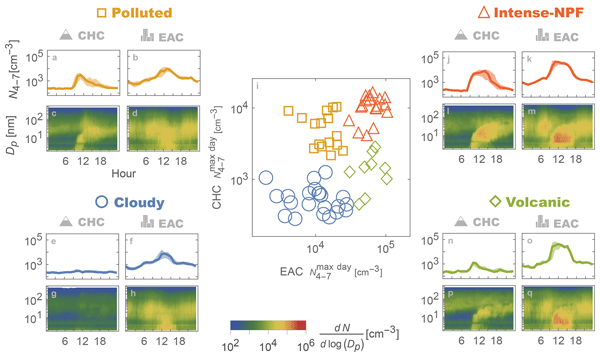
This study examines new particle formation (NPF) in the Bolivian Andes at Chacaltaya mountain (CHC) and the urban El Alto–La Paz area (EAC). Days are clustered into four categories based on NPF intensity. Differences in particle size, precursor gases, and pollution levels are found. High NPF intensities increased Aitken mode particle concentrations at both sites, while volcanic influence selectively diminished NPF intensity at CHC but not EAC. This study highlights NPF dynamics in the Andes.
Julika Zinke, Gabriel Pereira Freitas, Rachel Ann Foster, Paul Zieger, Ernst Douglas Nilsson, Piotr Markuszewski, and Matthew Edward Salter
Atmos. Chem. Phys., 24, 13413–13428, https://doi.org/10.5194/acp-24-13413-2024, https://doi.org/10.5194/acp-24-13413-2024, 2024
Short summary
Short summary
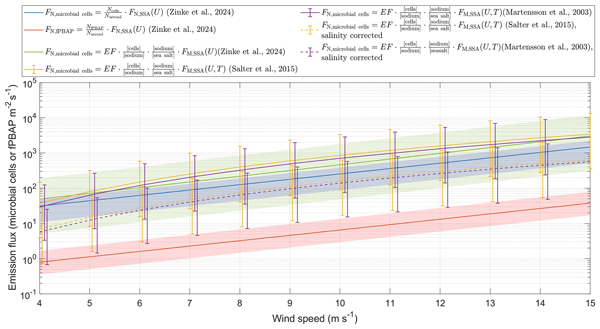
Bioaerosols, which can influence climate and human health, were studied in the Baltic Sea. In May and August 2021, we used a sea spray simulation chamber during two ship-based campaigns to collect and measure these aerosols. We found that microbes were enriched in air compared to seawater. Bacterial diversity was analysed using DNA sequencing. Our methods provided consistent estimates of microbial emission fluxes, aligning with previous studies.
Valeria Mardoñez-Balderrama, Griša Močnik, Marco Pandolfi, Robin L. Modini, Fernando Velarde, Laura Renzi, Angela Marinoni, Jean-Luc Jaffrezo, Isabel Moreno R., Diego Aliaga, Federico Bianchi, Claudia Mohr, Martin Gysel-Beer, Patrick Ginot, Radovan Krejci, Alfred Wiedensohler, Gaëlle Uzu, Marcos Andrade, and Paolo Laj
Atmos. Chem. Phys., 24, 12055–12077, https://doi.org/10.5194/acp-24-12055-2024, https://doi.org/10.5194/acp-24-12055-2024, 2024
Short summary
Short summary
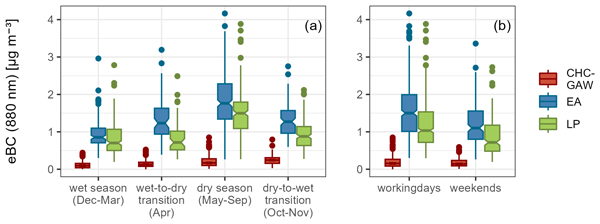
Levels of black carbon (BC) are scarcely reported in the Southern Hemisphere, especially in high-altitude conditions. This study provides insight into the concentration level, variability, and optical properties of BC in La Paz and El Alto and at the Chacaltaya Global Atmosphere Watch Station. Two methods of source apportionment of absorption were tested and compared showing traffic as the main contributor to absorption in the urban area, in addition to biomass and open waste burning.
Imad El Haddad, Danielle Vienneau, Kaspar R. Daellenbach, Robin Modini, Jay G. Slowik, Abhishek Upadhyay, Petros N. Vasilakos, David Bell, Kees de Hoogh, and Andre S. H. Prevot
Atmos. Chem. Phys., 24, 11981–12011, https://doi.org/10.5194/acp-24-11981-2024, https://doi.org/10.5194/acp-24-11981-2024, 2024
Short summary
Short summary
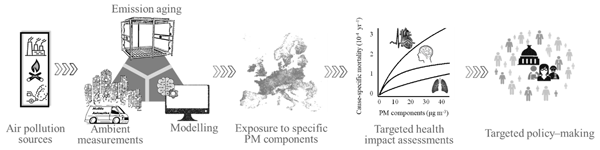
This opinion paper explores how advances in aerosol science inform our understanding of the health impacts of outdoor particulate pollution. We advocate for a shift in the way we target PM pollution, focusing on the most harmful anthropogenic emissions. We highlight key observations, modelling developments, and emission measurements needed to achieve this shift.
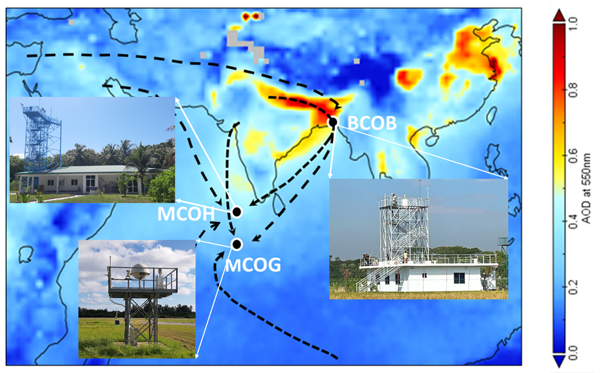
Krishnakant Budhavant, Mohanan Remani Manoj, Hari Ram Chandrika Rajendran Nair, Samuel Mwaniki Gaita, Henry Holmstrand, Abdus Salam, Ahmed Muslim, Sreedharan Krishnakumari Satheesh, and Örjan Gustafsson
Atmos. Chem. Phys., 24, 11911–11925, https://doi.org/10.5194/acp-24-11911-2024, https://doi.org/10.5194/acp-24-11911-2024, 2024
Short summary
Short summary
The South Asian Pollution Experiment 2018 used access to three strategically located receptor observatories. Observational constraints revealed opposing trends in the mass absorption cross sections of black carbon (BC MAC) and brown carbon (BrC MAC) during long-range transport. Models estimating the climate effects of BC aerosols may have underestimated the ambient BC MAC over distant receptor areas, leading to discrepancies in aerosol absorption predicted by observation-constrained models.
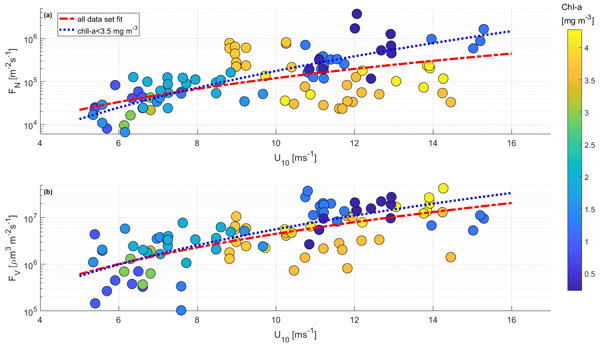
Piotr Markuszewski, E. Douglas Nilsson, Julika Zinke, E. Monica Mårtensson, Matthew Salter, Przemysław Makuch, Małgorzata Kitowska, Iwona Niedźwiecka-Wróbel, Violetta Drozdowska, Dominik Lis, Tomasz Petelski, Luca Ferrero, and Jacek Piskozub
Atmos. Chem. Phys., 24, 11227–11253, https://doi.org/10.5194/acp-24-11227-2024, https://doi.org/10.5194/acp-24-11227-2024, 2024
Short summary
Short summary
Our research provides new insights into the study of sea spray aerosol (SSA) emissions in the Baltic Sea and North Atlantic. We observed that SSA flux is suppressed during increased marine biological activity in the Baltic Sea. At the same time, the influence of wave age showed higher SSA emissions in the Baltic Sea for younger waves compared to the Atlantic Ocean. These insights underscore the complex interplay between biological activity and physical dynamics in regulating SSA emissions.
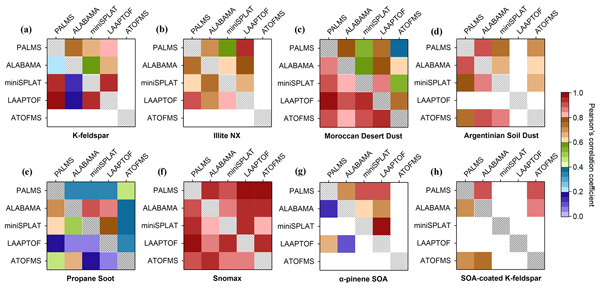
Xiaoli Shen, David M. Bell, Hugh Coe, Naruki Hiranuma, Fabian Mahrt, Nicholas A. Marsden, Claudia Mohr, Daniel M. Murphy, Harald Saathoff, Johannes Schneider, Jacqueline Wilson, Maria A. Zawadowicz, Alla Zelenyuk, Paul J. DeMott, Ottmar Möhler, and Daniel J. Cziczo
Atmos. Chem. Phys., 24, 10869–10891, https://doi.org/10.5194/acp-24-10869-2024, https://doi.org/10.5194/acp-24-10869-2024, 2024
Short summary
Short summary
Single-particle mass spectrometry (SPMS) is commonly used to measure the chemical composition and mixing state of aerosol particles. Intercomparison of SPMS instruments was conducted. All instruments reported similar size ranges and common spectral features. The instrument-specific detection efficiency was found to be more dependent on particle size than type. All differentiated secondary organic aerosol, soot, and soil dust but had difficulties differentiating among minerals and dusts.
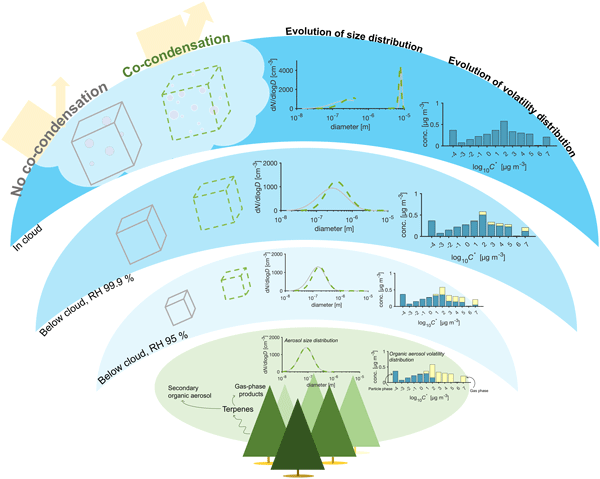
Liine Heikkinen, Daniel G. Partridge, Sara Blichner, Wei Huang, Rahul Ranjan, Paul Bowen, Emanuele Tovazzi, Tuukka Petäjä, Claudia Mohr, and Ilona Riipinen
Atmos. Chem. Phys., 24, 5117–5147, https://doi.org/10.5194/acp-24-5117-2024, https://doi.org/10.5194/acp-24-5117-2024, 2024
Short summary
Short summary
The organic vapor condensation with water vapor (co-condensation) in rising air below clouds is modeled in this work over the boreal forest because the forest air is rich in organic vapors. We show that the number of cloud droplets can increase by 20 % if considering co-condensation. The enhancements are even larger if the air contains many small, naturally produced aerosol particles. Such conditions are most frequently met in spring in the boreal forest.

Nishant Ajnoti, Hemant Gehlot, and Sachchida Nand Tripathi
Atmos. Meas. Tech., 17, 1651–1664, https://doi.org/10.5194/amt-17-1651-2024, https://doi.org/10.5194/amt-17-1651-2024, 2024
Short summary
Short summary
This research focuses on the optimal placement of hybrid instruments (sensors and monitors) to maximize satisfaction function considering population, PM2.5 concentration, budget, and other factors. Two algorithms are developed in this study: a genetic algorithm and a greedy algorithm. We tested these algorithms on various regions. The insights of this work aid in quantitative placement of air quality monitoring instruments in large cities, moving away from ad hoc approaches.
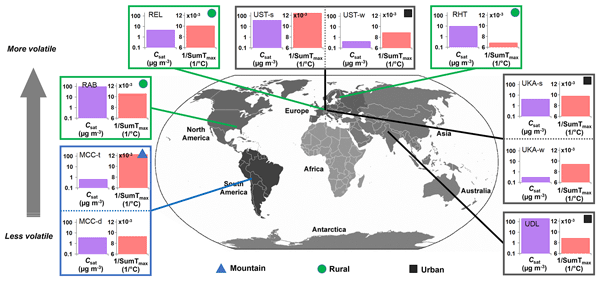
Wei Huang, Cheng Wu, Linyu Gao, Yvette Gramlich, Sophie L. Haslett, Joel Thornton, Felipe D. Lopez-Hilfiker, Ben H. Lee, Junwei Song, Harald Saathoff, Xiaoli Shen, Ramakrishna Ramisetty, Sachchida N. Tripathi, Dilip Ganguly, Feng Jiang, Magdalena Vallon, Siegfried Schobesberger, Taina Yli-Juuti, and Claudia Mohr
Atmos. Chem. Phys., 24, 2607–2624, https://doi.org/10.5194/acp-24-2607-2024, https://doi.org/10.5194/acp-24-2607-2024, 2024
Short summary
Short summary
We present distinct molecular composition and volatility of oxygenated organic aerosol particles in different rural, urban, and mountain environments. We do a comprehensive investigation of the relationship between the chemical composition and volatility of oxygenated organic aerosol particles across different systems and environments. This study provides implications for volatility descriptions of oxygenated organic aerosol particles in different model frameworks.
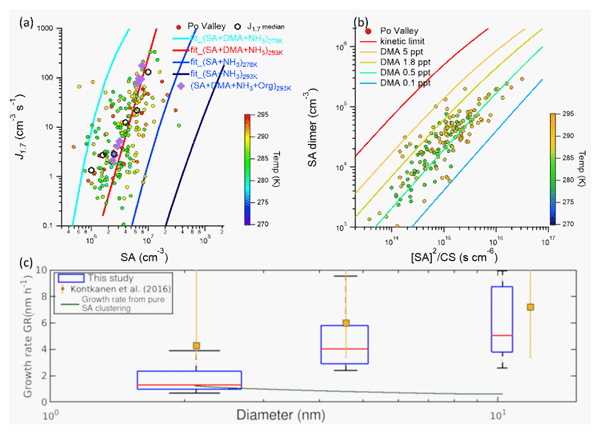
Jing Cai, Juha Sulo, Yifang Gu, Sebastian Holm, Runlong Cai, Steven Thomas, Almuth Neuberger, Fredrik Mattsson, Marco Paglione, Stefano Decesari, Matteo Rinaldi, Rujing Yin, Diego Aliaga, Wei Huang, Yuanyuan Li, Yvette Gramlich, Giancarlo Ciarelli, Lauriane Quéléver, Nina Sarnela, Katrianne Lehtipalo, Nora Zannoni, Cheng Wu, Wei Nie, Juha Kangasluoma, Claudia Mohr, Markku Kulmala, Qiaozhi Zha, Dominik Stolzenburg, and Federico Bianchi
Atmos. Chem. Phys., 24, 2423–2441, https://doi.org/10.5194/acp-24-2423-2024, https://doi.org/10.5194/acp-24-2423-2024, 2024
Short summary
Short summary
By combining field measurements, simulations and recent chamber experiments, we investigate new particle formation (NPF) and growth in the Po Valley, where both haze and frequent NPF occur. Our results show that sulfuric acid, ammonia and amines are the dominant NPF precursors there. A high NPF rate and a lower condensation sink lead to a greater survival probability for newly formed particles, highlighting the importance of gas-to-particle conversion for aerosol concentrations.
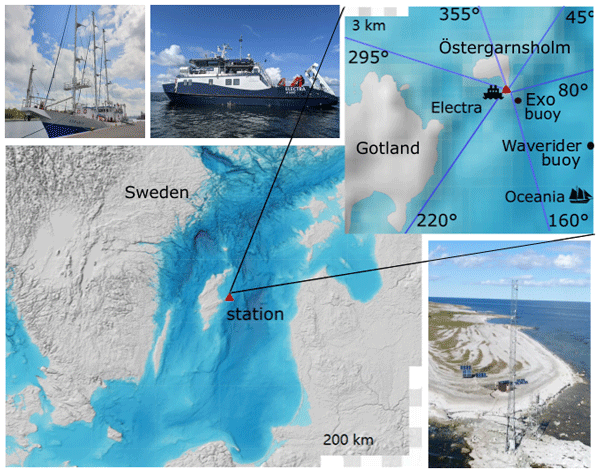
Julika Zinke, Ernst Douglas Nilsson, Piotr Markuszewski, Paul Zieger, Eva Monica Mårtensson, Anna Rutgersson, Erik Nilsson, and Matthew Edward Salter
Atmos. Chem. Phys., 24, 1895–1918, https://doi.org/10.5194/acp-24-1895-2024, https://doi.org/10.5194/acp-24-1895-2024, 2024
Short summary
Short summary
We conducted two research campaigns in the Baltic Sea, during which we combined laboratory sea spray simulation experiments with flux measurements on a nearby island. To combine these two methods, we scaled the laboratory measurements to the flux measurements using three different approaches. As a result, we derived a parameterization that is dependent on wind speed and wave state for particles with diameters 0.015–10 μm. This parameterization is applicable to low-salinity waters.
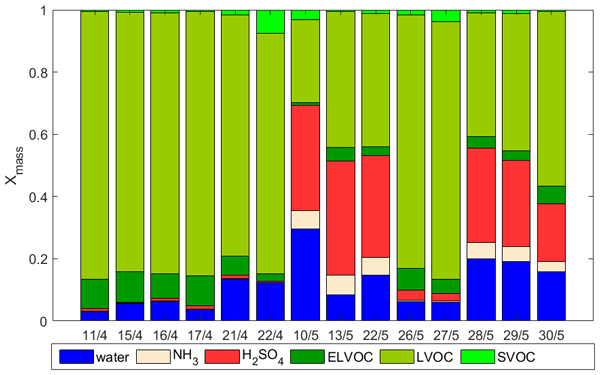
Arto Heitto, Cheng Wu, Diego Aliaga, Luis Blacutt, Xuemeng Chen, Yvette Gramlich, Liine Heikkinen, Wei Huang, Radovan Krejci, Paolo Laj, Isabel Moreno, Karine Sellegri, Fernando Velarde, Kay Weinhold, Alfred Wiedensohler, Qiaozhi Zha, Federico Bianchi, Marcos Andrade, Kari E. J. Lehtinen, Claudia Mohr, and Taina Yli-Juuti
Atmos. Chem. Phys., 24, 1315–1328, https://doi.org/10.5194/acp-24-1315-2024, https://doi.org/10.5194/acp-24-1315-2024, 2024
Short summary
Short summary
Particle growth at the Chacaltaya station in Bolivia was simulated based on measured vapor concentrations and ambient conditions. Major contributors to the simulated growth were low-volatility organic compounds (LVOCs). Also, sulfuric acid had major role when volcanic activity was occurring in the area. This study provides insight on nanoparticle growth at this high-altitude Southern Hemispheric site and hence contributes to building knowledge of early growth of atmospheric particles.
Jun Zhang, Kun Li, Tiantian Wang, Erlend Gammelsæter, Rico K. Y. Cheung, Mihnea Surdu, Sophie Bogler, Deepika Bhattu, Dongyu S. Wang, Tianqu Cui, Lu Qi, Houssni Lamkaddam, Imad El Haddad, Jay G. Slowik, Andre S. H. Prevot, and David M. Bell
Atmos. Chem. Phys., 23, 14561–14576, https://doi.org/10.5194/acp-23-14561-2023, https://doi.org/10.5194/acp-23-14561-2023, 2023
Short summary
Short summary
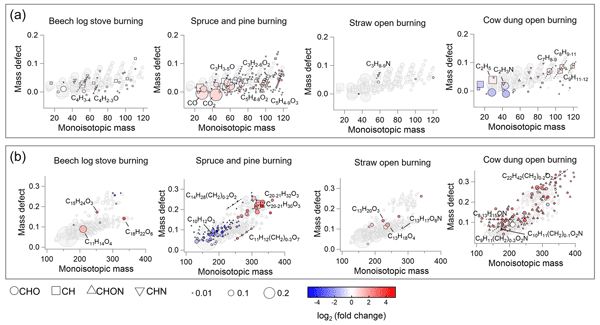
We conducted burning experiments to simulate various types of solid fuel combustion, including residential burning, wildfires, agricultural burning, cow dung, and plastic bag burning. The chemical composition of the particles was characterized using mass spectrometers, and new potential markers for different fuels were identified using statistical analysis. This work improves our understanding of emissions from solid fuel burning and offers support for refined source apportionment.
Leonard Kirago, Örjan Gustafsson, Samuel Mwaniki Gaita, Sophie L. Haslett, Michael J. Gatari, Maria Elena Popa, Thomas Röckmann, Christoph Zellweger, Martin Steinbacher, Jörg Klausen, Christian Félix, David Njiru, and August Andersson
Atmos. Chem. Phys., 23, 14349–14357, https://doi.org/10.5194/acp-23-14349-2023, https://doi.org/10.5194/acp-23-14349-2023, 2023
Short summary
Short summary
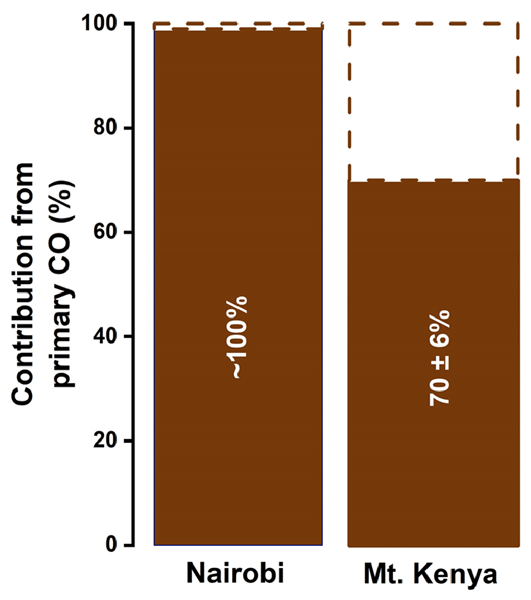
This study provides ground-observational evidence that supports earlier suggestions that savanna fires are the main emitters and modulators of carbon monoxide gas in Africa. Using isotope-based techniques, the study has shown that about two-thirds of this gas is emitted from savanna fires, while for urban areas, in this case Nairobi, primary sources approach 100 %. The latter has implications for air quality policy, suggesting primary emissions such as traffic should be targeted.
Matthias Kohl, Jos Lelieveld, Sourangsu Chowdhury, Sebastian Ehrhart, Disha Sharma, Yafang Cheng, Sachchida Nand Tripathi, Mathew Sebastian, Govindan Pandithurai, Hongli Wang, and Andrea Pozzer
Atmos. Chem. Phys., 23, 13191–13215, https://doi.org/10.5194/acp-23-13191-2023, https://doi.org/10.5194/acp-23-13191-2023, 2023
Short summary
Short summary
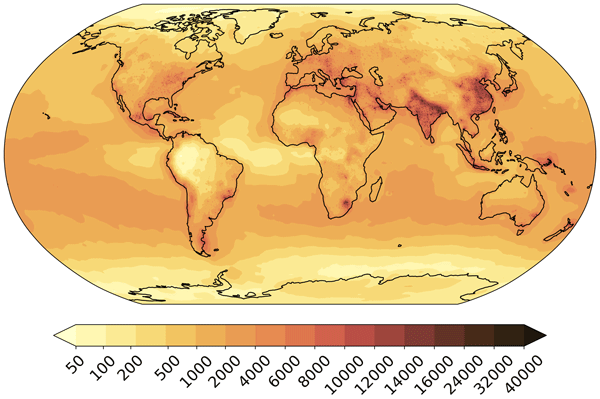
Knowledge on atmospheric ultrafine particles (UFPs) with a diameter smaller than 100 nm is crucial for public health and the hydrological cycle. We present a new global dataset of UFP concentrations at the Earth's surface derived with a comprehensive chemistry–climate model and evaluated with ground-based observations. The evaluation results are combined with high-resolution primary emissions to downscale UFP concentrations to an unprecedented horizontal resolution of 0.1° × 0.1°.
Yong Zhang, Jie Tian, Qiyuan Wang, Lu Qi, Manousos Ioannis Manousakas, Yuemei Han, Weikang Ran, Yele Sun, Huikun Liu, Renjian Zhang, Yunfei Wu, Tianqu Cui, Kaspar Rudolf Daellenbach, Jay Gates Slowik, André S. H. Prévôt, and Junji Cao
Atmos. Chem. Phys., 23, 9455–9471, https://doi.org/10.5194/acp-23-9455-2023, https://doi.org/10.5194/acp-23-9455-2023, 2023
Short summary
Short summary
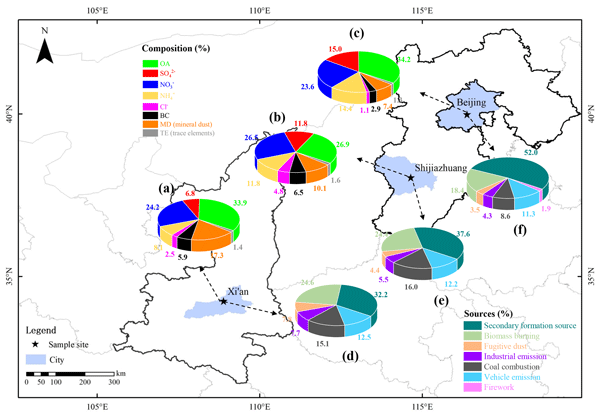
PM2.5 pollution still frequently occurs in northern China during winter, and it is necessary to figure out the causes of air pollution based on intensive real-time measurement. The findings elaborate the chemical characteristics and source contributions of PM2.5 in three pilot cities, reveal potential formation mechanisms of secondary aerosols, and highlight the importance of controlling biomass burning and inhibiting generation of secondary aerosol for air quality improvement.
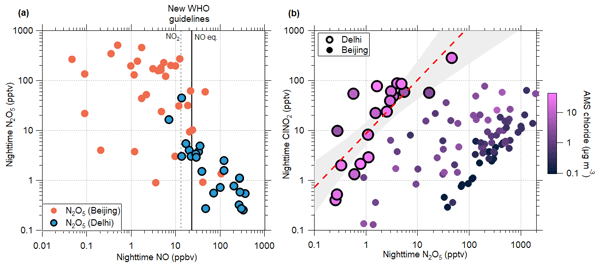
Sophie L. Haslett, David M. Bell, Varun Kumar, Jay G. Slowik, Dongyu S. Wang, Suneeti Mishra, Neeraj Rastogi, Atinderpal Singh, Dilip Ganguly, Joel Thornton, Feixue Zheng, Yuanyuan Li, Wei Nie, Yongchun Liu, Wei Ma, Chao Yan, Markku Kulmala, Kaspar R. Daellenbach, David Hadden, Urs Baltensperger, Andre S. H. Prevot, Sachchida N. Tripathi, and Claudia Mohr
Atmos. Chem. Phys., 23, 9023–9036, https://doi.org/10.5194/acp-23-9023-2023, https://doi.org/10.5194/acp-23-9023-2023, 2023
Short summary
Short summary
In Delhi, some aspects of daytime and nighttime atmospheric chemistry are inverted, and parodoxically, vehicle emissions may be limiting other forms of particle production. This is because the nighttime emissions of nitrogen oxide (NO) by traffic and biomass burning prevent some chemical processes that would otherwise create even more particles and worsen the urban haze.
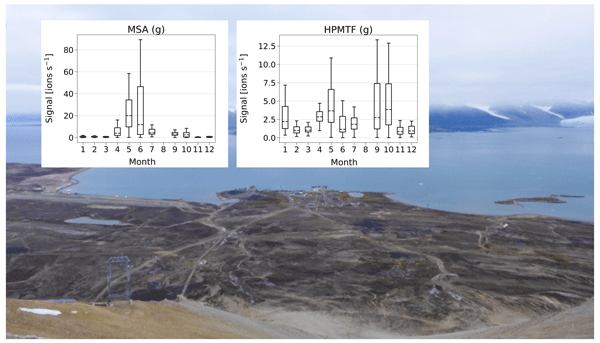
Karolina Siegel, Yvette Gramlich, Sophie L. Haslett, Gabriel Freitas, Radovan Krejci, Paul Zieger, and Claudia Mohr
Atmos. Chem. Phys., 23, 7569–7587, https://doi.org/10.5194/acp-23-7569-2023, https://doi.org/10.5194/acp-23-7569-2023, 2023
Short summary
Short summary
Hydroperoxymethyl thioformate (HPMTF) is a recently discovered oxidation product of dimethyl sulfide (DMS). We present a full year of concurrent gas- and particle-phase observations of HPMTF and other DMS oxidation products from the Arctic. We did not observe significant amounts of HPMTF in the particle phase but a good agreement between gas-phase HMPTF and methanesulfonic acid in the summer. Our study provides information about the relationship between HPMTF and other DMS oxidation products.
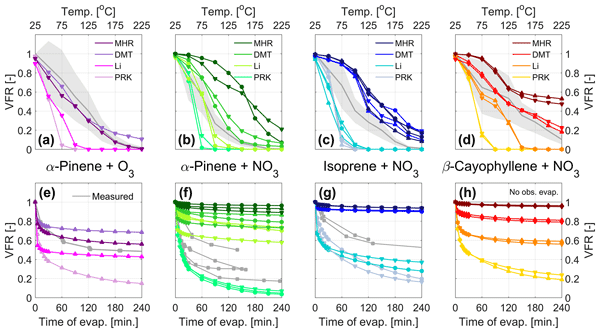
Emelie L. Graham, Cheng Wu, David M. Bell, Amelie Bertrand, Sophie L. Haslett, Urs Baltensperger, Imad El Haddad, Radovan Krejci, Ilona Riipinen, and Claudia Mohr
Atmos. Chem. Phys., 23, 7347–7362, https://doi.org/10.5194/acp-23-7347-2023, https://doi.org/10.5194/acp-23-7347-2023, 2023
Short summary
Short summary
The volatility of an aerosol particle is an important parameter for describing its atmospheric lifetime. We studied the volatility of secondary organic aerosols from nitrate-initiated oxidation of three biogenic precursors with experimental methods and model simulations. We saw higher volatility than for the corresponding ozone system, and our simulations produced variable results with different parameterizations which warrant a re-evaluation of the treatment of the nitrate functional group.
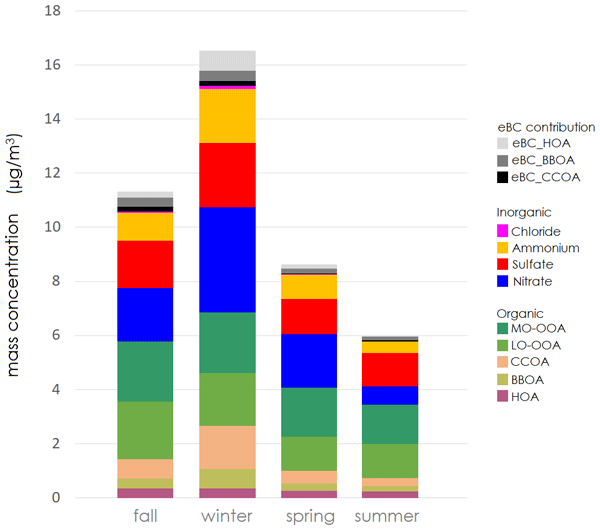
Samira Atabakhsh, Laurent Poulain, Gang Chen, Francesco Canonaco, André S. H. Prévôt, Mira Pöhlker, Alfred Wiedensohler, and Hartmut Herrmann
Atmos. Chem. Phys., 23, 6963–6988, https://doi.org/10.5194/acp-23-6963-2023, https://doi.org/10.5194/acp-23-6963-2023, 2023
Short summary
Short summary
The study focuses on the aerosol chemical variations found in the rural-background station of Melpitz based on ACSM and MAAP measurements. Source apportionment on both organic aerosol (OA) and black carbon (eBC) was performed, and source seasonality was also linked to air mass trajectories. Overall, three anthropogenic sources were identified in OA and eBC plus two additional aged OA. Our results demonstrate the influence of transported coal-combustion-related OA even during summer time.
Yvette Gramlich, Karolina Siegel, Sophie L. Haslett, Gabriel Freitas, Radovan Krejci, Paul Zieger, and Claudia Mohr
Atmos. Chem. Phys., 23, 6813–6834, https://doi.org/10.5194/acp-23-6813-2023, https://doi.org/10.5194/acp-23-6813-2023, 2023
Short summary
Short summary
In this study, we investigate the chemical composition of aerosol particles forming clouds in the Arctic. During year-long observations at a mountain site on Svalbard, we find a large contribution of naturally derived aerosol particles in the fraction forming clouds in the summer. Our observations indicate that most aerosol particles can serve as cloud seeds in this remote environment.

Qiaozhi Zha, Wei Huang, Diego Aliaga, Otso Peräkylä, Liine Heikkinen, Alkuin Maximilian Koenig, Cheng Wu, Joonas Enroth, Yvette Gramlich, Jing Cai, Samara Carbone, Armin Hansel, Tuukka Petäjä, Markku Kulmala, Douglas Worsnop, Victoria Sinclair, Radovan Krejci, Marcos Andrade, Claudia Mohr, and Federico Bianchi
Atmos. Chem. Phys., 23, 4559–4576, https://doi.org/10.5194/acp-23-4559-2023, https://doi.org/10.5194/acp-23-4559-2023, 2023
Short summary
Short summary
We investigate the chemical composition of atmospheric cluster ions from January to May 2018 at the high-altitude research station Chacaltaya (5240 m a.s.l.) in the Bolivian Andes. With state-of-the-art mass spectrometers and air mass history analysis, the measured cluster ions exhibited distinct diurnal and seasonal patterns, some of which contributed to new particle formation. Our study will improve the understanding of atmospheric ions and their role in high-altitude new particle formation.
Vaishali Jain, Nidhi Tripathi, Sachchida N. Tripathi, Mansi Gupta, Lokesh K. Sahu, Vishnu Murari, Sreenivas Gaddamidi, Ashutosh K. Shukla, and Andre S. H. Prevot
Atmos. Chem. Phys., 23, 3383–3408, https://doi.org/10.5194/acp-23-3383-2023, https://doi.org/10.5194/acp-23-3383-2023, 2023
Short summary
Short summary
This research chemically characterises 173 different NMVOCs (non-methane volatile organic compounds) measured in real time for three seasons in the city of the central Indo-Gangetic basin of India, Lucknow. Receptor modelling is used to analyse probable sources of NMVOCs and their crucial role in forming ozone and secondary organic aerosols. It is observed that vehicular emissions and solid fuel combustion are the highest contributors to the emission of primary and secondary NMVOCs.

Jing Cai, Kaspar R. Daellenbach, Cheng Wu, Yan Zheng, Feixue Zheng, Wei Du, Sophie L. Haslett, Qi Chen, Markku Kulmala, and Claudia Mohr
Atmos. Meas. Tech., 16, 1147–1165, https://doi.org/10.5194/amt-16-1147-2023, https://doi.org/10.5194/amt-16-1147-2023, 2023
Short summary
Short summary
We introduce the offline application of FIGAERO-CIMS by analyzing Teflon and quartz filter samples that were collected at a typical urban site in Beijing with the deposition time varying from 30 min to 24 h. This method provides a feasible, simple, and quantitative way to investigate the molecular composition and volatility of OA compounds by using FIGAERO-CIMS to analyze offline samples.
Wiebke Scholz, Jiali Shen, Diego Aliaga, Cheng Wu, Samara Carbone, Isabel Moreno, Qiaozhi Zha, Wei Huang, Liine Heikkinen, Jean Luc Jaffrezo, Gaelle Uzu, Eva Partoll, Markus Leiminger, Fernando Velarde, Paolo Laj, Patrick Ginot, Paolo Artaxo, Alfred Wiedensohler, Markku Kulmala, Claudia Mohr, Marcos Andrade, Victoria Sinclair, Federico Bianchi, and Armin Hansel
Atmos. Chem. Phys., 23, 895–920, https://doi.org/10.5194/acp-23-895-2023, https://doi.org/10.5194/acp-23-895-2023, 2023
Short summary
Short summary
Dimethyl sulfide (DMS), emitted from the ocean, is the most abundant biogenic sulfur emission into the atmosphere. OH radicals, among others, can oxidize DMS to sulfuric and methanesulfonic acid, which are relevant for aerosol formation. We quantified DMS and nearly all DMS oxidation products with novel mass spectrometric instruments for gas and particle phase at the high mountain station Chacaltaya (5240 m a.s.l.) in the Bolivian Andes in free tropospheric air after long-range transport.
Tingting Feng, Yingkun Wang, Weiwei Hu, Ming Zhu, Wei Song, Wei Chen, Yanyan Sang, Zheng Fang, Wei Deng, Hua Fang, Xu Yu, Cheng Wu, Bin Yuan, Shan Huang, Min Shao, Xiaofeng Huang, Lingyan He, Young Ro Lee, Lewis Gregory Huey, Francesco Canonaco, Andre S. H. Prevot, and Xinming Wang
Atmos. Chem. Phys., 23, 611–636, https://doi.org/10.5194/acp-23-611-2023, https://doi.org/10.5194/acp-23-611-2023, 2023
Short summary
Short summary
To investigate the impact of aging processes on organic aerosols (OA), we conducted a comprehensive field study at a continental remote site using an on-line mass spectrometer. The results show that OA in the Chinese outflows were strongly influenced by upwind anthropogenic emissions. The aging processes can significantly decrease the OA volatility and result in a varied viscosity of OA under different circumstances, signifying the complex physiochemical properties of OA in aged plumes.
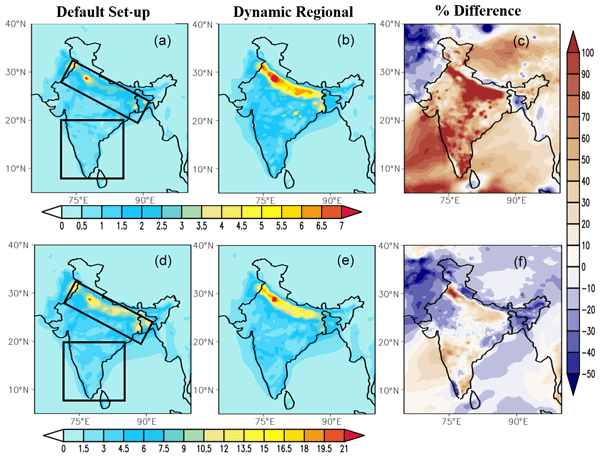
Sudipta Ghosh, Sagnik Dey, Sushant Das, Nicole Riemer, Graziano Giuliani, Dilip Ganguly, Chandra Venkataraman, Filippo Giorgi, Sachchida Nand Tripathi, Srikanthan Ramachandran, Thazhathakal Ayyappen Rajesh, Harish Gadhavi, and Atul Kumar Srivastava
Geosci. Model Dev., 16, 1–15, https://doi.org/10.5194/gmd-16-1-2023, https://doi.org/10.5194/gmd-16-1-2023, 2023
Short summary
Short summary
Accurate representation of aerosols in climate models is critical for minimizing the uncertainty in climate projections. Here, we implement region-specific emission fluxes and a more accurate scheme for carbonaceous aerosol ageing processes in a regional climate model (RegCM4) and show that it improves model performance significantly against in situ, reanalysis, and satellite data over the Indian subcontinent. We recommend improving the model performance before using them for climate studies.
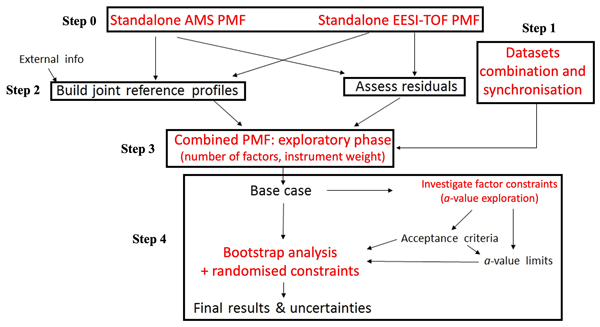
Yandong Tong, Lu Qi, Giulia Stefenelli, Dongyu Simon Wang, Francesco Canonaco, Urs Baltensperger, André Stephan Henry Prévôt, and Jay Gates Slowik
Atmos. Meas. Tech., 15, 7265–7291, https://doi.org/10.5194/amt-15-7265-2022, https://doi.org/10.5194/amt-15-7265-2022, 2022
Short summary
Short summary
We present a method for positive matrix factorisation (PMF) analysis on a single dataset that includes measurements from both EESI-TOF and AMS in Zurich, Switzerland. For the first time, we resolved and quantified secondary organic aerosol (SOA) sources. Meanwhile, we also determined the retrieved EESI-TOF factor-dependent sensitivities. This method provides a framework for exploiting semi-quantitative, high-resolution instrumentation for quantitative source apportionment.
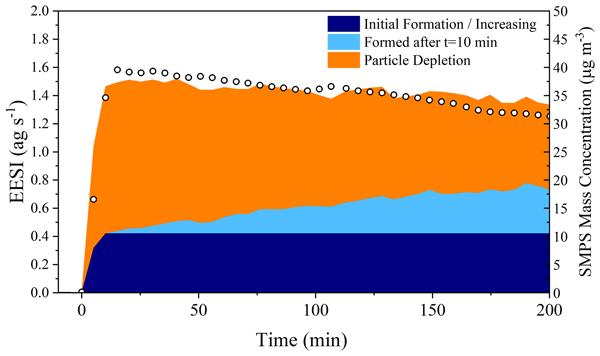
David M. Bell, Cheng Wu, Amelie Bertrand, Emelie Graham, Janne Schoonbaert, Stamatios Giannoukos, Urs Baltensperger, Andre S. H. Prevot, Ilona Riipinen, Imad El Haddad, and Claudia Mohr
Atmos. Chem. Phys., 22, 13167–13182, https://doi.org/10.5194/acp-22-13167-2022, https://doi.org/10.5194/acp-22-13167-2022, 2022
Short summary
Short summary
A series of studies designed to investigate the evolution of organic aerosol were performed in an atmospheric simulation chamber, using a common oxidant found at night (NO3). The chemical composition steadily changed from its initial composition via different chemical reactions that were taking place inside of the aerosol particle. These results show that the composition of organic aerosol steadily changes during its lifetime in the atmosphere.
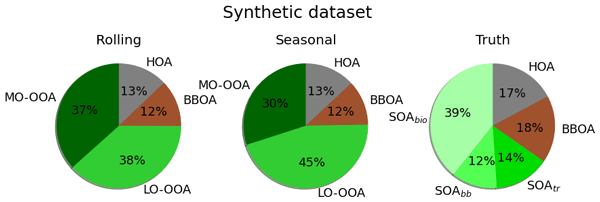
Marta Via, Gang Chen, Francesco Canonaco, Kaspar R. Daellenbach, Benjamin Chazeau, Hasna Chebaicheb, Jianhui Jiang, Hannes Keernik, Chunshui Lin, Nicolas Marchand, Cristina Marin, Colin O'Dowd, Jurgita Ovadnevaite, Jean-Eudes Petit, Michael Pikridas, Véronique Riffault, Jean Sciare, Jay G. Slowik, Leïla Simon, Jeni Vasilescu, Yunjiang Zhang, Olivier Favez, André S. H. Prévôt, Andrés Alastuey, and María Cruz Minguillón
Atmos. Meas. Tech., 15, 5479–5495, https://doi.org/10.5194/amt-15-5479-2022, https://doi.org/10.5194/amt-15-5479-2022, 2022
Short summary
Short summary
This work presents the differences resulting from two techniques (rolling and seasonal) of the positive matrix factorisation model that can be run for organic aerosol source apportionment. The current state of the art suggests that the rolling technique is more accurate, but no proof of its effectiveness has been provided yet. This paper tackles this issue in the context of a synthetic dataset and a multi-site real-world comparison.
Sini Isokääntä, Paul Kim, Santtu Mikkonen, Thomas Kühn, Harri Kokkola, Taina Yli-Juuti, Liine Heikkinen, Krista Luoma, Tuukka Petäjä, Zak Kipling, Daniel Partridge, and Annele Virtanen
Atmos. Chem. Phys., 22, 11823–11843, https://doi.org/10.5194/acp-22-11823-2022, https://doi.org/10.5194/acp-22-11823-2022, 2022
Short summary
Short summary
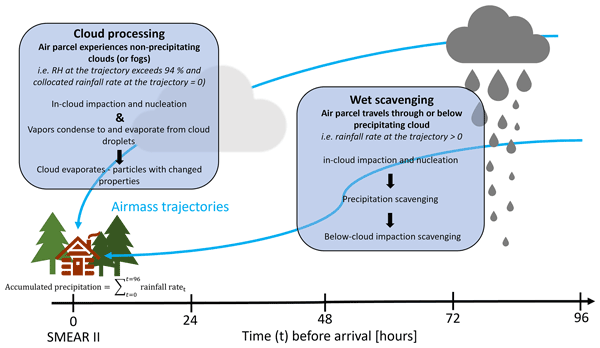
This research employs air mass history analysis and observations to study how clouds and precipitation affect atmospheric aerosols during transport to a boreal forest site. The mass concentrations of studied chemical species showed exponential decrease as a function of accumulated rain along the air mass route. Our analysis revealed in-cloud sulfate formation, while no major changes in organic mass were seen. Most of the in-cloud-formed sulfate could be assigned to particle sizes above 200 nm.
Chuan Ping Lee, Mihnea Surdu, David M. Bell, Josef Dommen, Mao Xiao, Xueqin Zhou, Andrea Baccarini, Stamatios Giannoukos, Günther Wehrle, Pascal André Schneider, Andre S. H. Prevot, Jay G. Slowik, Houssni Lamkaddam, Dongyu Wang, Urs Baltensperger, and Imad El Haddad
Atmos. Meas. Tech., 15, 3747–3760, https://doi.org/10.5194/amt-15-3747-2022, https://doi.org/10.5194/amt-15-3747-2022, 2022
Short summary
Short summary
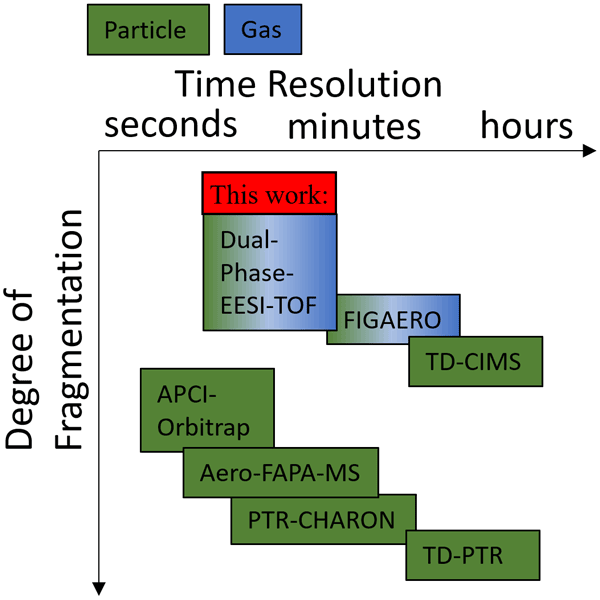
Real-time detection of both the gas and particle phase is needed to elucidate the sources and chemical reaction pathways of organic vapors and particulate matter. The Dual-EESI was developed to measure gas- and particle-phase species to provide new insights into aerosol sources or formation mechanisms. After characterizing the relative gas and particle response factors of EESI via organic aerosol uptake experiments, the Dual-EESI is more sensitive toward gas-phase analyes.

Varun Kumar, Stamatios Giannoukos, Sophie L. Haslett, Yandong Tong, Atinderpal Singh, Amelie Bertrand, Chuan Ping Lee, Dongyu S. Wang, Deepika Bhattu, Giulia Stefenelli, Jay S. Dave, Joseph V. Puthussery, Lu Qi, Pawan Vats, Pragati Rai, Roberto Casotto, Rangu Satish, Suneeti Mishra, Veronika Pospisilova, Claudia Mohr, David M. Bell, Dilip Ganguly, Vishal Verma, Neeraj Rastogi, Urs Baltensperger, Sachchida N. Tripathi, André S. H. Prévôt, and Jay G. Slowik
Atmos. Chem. Phys., 22, 7739–7761, https://doi.org/10.5194/acp-22-7739-2022, https://doi.org/10.5194/acp-22-7739-2022, 2022
Short summary
Short summary
Here we present source apportionment results from the first field deployment in Delhi of an extractive electrospray ionization time-of-flight mass spectrometer (EESI-TOF). The EESI-TOF is a recently developed instrument capable of providing uniquely detailed online chemical characterization of organic aerosol (OA), in particular the secondary OA (SOA) fraction. Here, we are able to apportion not only primary OA but also SOA to specific sources, which is performed for the first time in Delhi.
Amir Yazdani, Nikunj Dudani, Satoshi Takahama, Amelie Bertrand, André S. H. Prévôt, Imad El Haddad, and Ann M. Dillner
Atmos. Meas. Tech., 15, 2857–2874, https://doi.org/10.5194/amt-15-2857-2022, https://doi.org/10.5194/amt-15-2857-2022, 2022
Short summary
Short summary
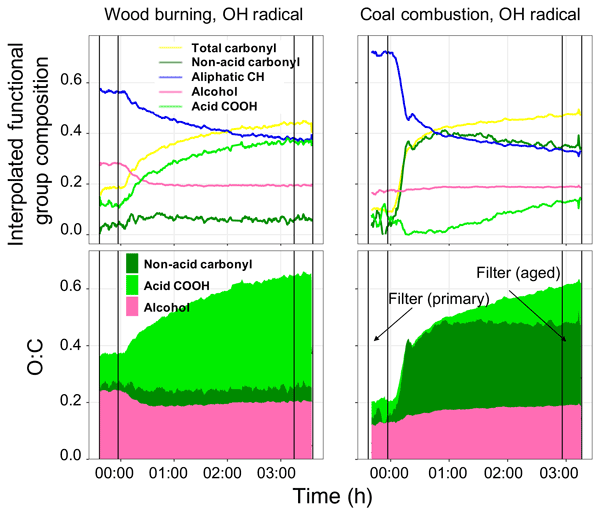
While the aerosol mass spectrometer provides high-time-resolution characterization of the overall extent of oxidation, the extensive fragmentation of molecules and specificity of the technique have posed challenges toward deeper understanding of molecular structures in aerosols. This work demonstrates how functional group information can be extracted from a suite of commonly measured mass fragments using collocated infrared spectroscopy measurements.
Linyu Gao, Junwei Song, Claudia Mohr, Wei Huang, Magdalena Vallon, Feng Jiang, Thomas Leisner, and Harald Saathoff
Atmos. Chem. Phys., 22, 6001–6020, https://doi.org/10.5194/acp-22-6001-2022, https://doi.org/10.5194/acp-22-6001-2022, 2022
Short summary
Short summary
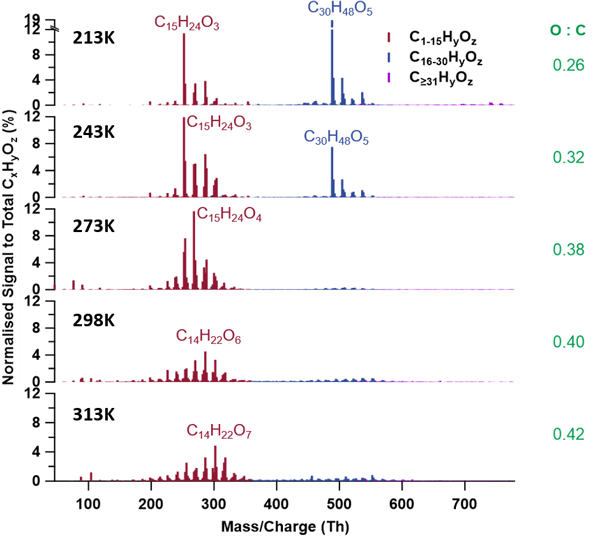
We study secondary organic aerosol (SOA) from β-caryophyllene (BCP) ozonolysis with and without nitrogen oxides over 213–313 K in the simulation chamber. The yields and the rate constants were determined at 243–313 K. Chemical compositions varied at different temperatures, indicating a strong impact on the BCP ozonolysis pathways. This work helps to better understand the SOA from BCP ozonolysis for conditions representative of the real atmosphere from the boundary layer to the upper troposphere.
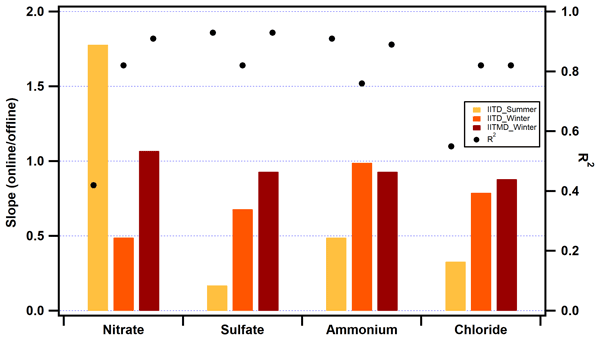
Himadri Sekhar Bhowmik, Ashutosh Shukla, Vipul Lalchandani, Jay Dave, Neeraj Rastogi, Mayank Kumar, Vikram Singh, and Sachchida Nand Tripathi
Atmos. Meas. Tech., 15, 2667–2684, https://doi.org/10.5194/amt-15-2667-2022, https://doi.org/10.5194/amt-15-2667-2022, 2022
Short summary
Short summary
This study presents comparisons between online and offline measurements of both refractory and non-refractory aerosol. This study shows differences between the measurements, related to either the limitations of the instrument (e.g., aerosol mass spectrometer only observing non-refractory aerosol) or known interferences with the technique (e.g., volatilization or reactions). The findings highlight the measurement methods' accuracy and imply the particular type of measurements needed.
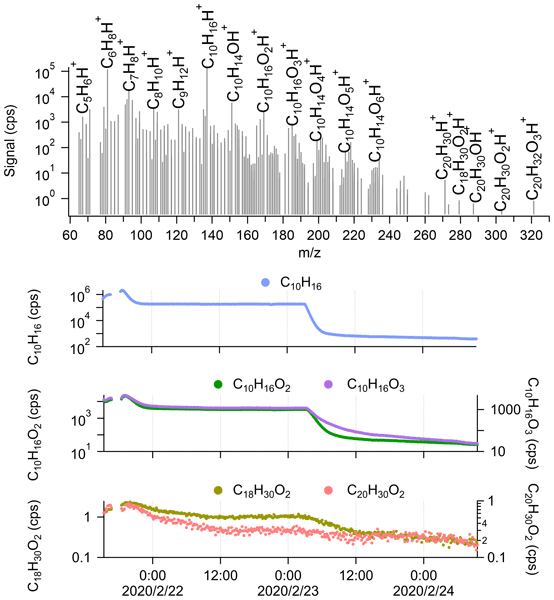
Haiyan Li, Thomas Golin Almeida, Yuanyuan Luo, Jian Zhao, Brett B. Palm, Christopher D. Daub, Wei Huang, Claudia Mohr, Jordan E. Krechmer, Theo Kurtén, and Mikael Ehn
Atmos. Meas. Tech., 15, 1811–1827, https://doi.org/10.5194/amt-15-1811-2022, https://doi.org/10.5194/amt-15-1811-2022, 2022
Short summary
Short summary
This work evaluated the potential for PTR-based mass spectrometers to detect ROOR and ROOH peroxides both experimentally and through computations. Laboratory experiments using a Vocus PTR observed only noisy signals of potential dimers during α-pinene ozonolysis and a few small signals of dimeric compounds during cyclohexene ozonolysis. Quantum chemical calculations for model ROOR and ROOH systems showed that most of these peroxides should fragment partially following protonation.
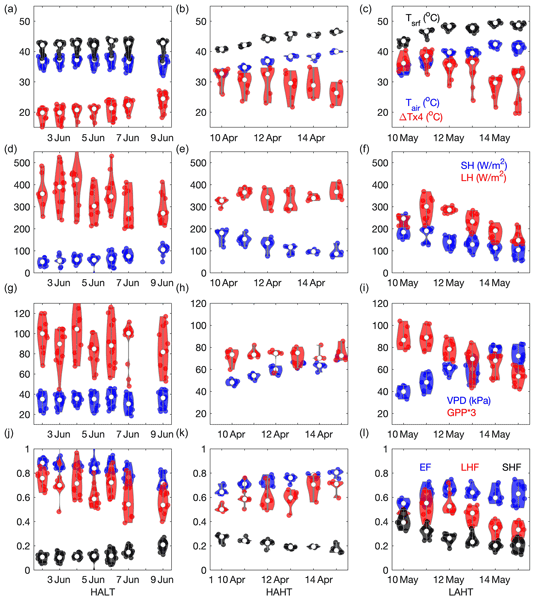
Chandan Sarangi, TC Chakraborty, Sachchidanand Tripathi, Mithun Krishnan, Ross Morrison, Jonathan Evans, and Lina M. Mercado
Atmos. Chem. Phys., 22, 3615–3629, https://doi.org/10.5194/acp-22-3615-2022, https://doi.org/10.5194/acp-22-3615-2022, 2022
Short summary
Short summary
Transpiration fluxes by vegetation are reduced under heat stress to conserve water. However, in situ observations over northern India show that the strength of the inverse association between transpiration and atmospheric vapor pressure deficit is weakening in the presence of heavy aerosol loading. This finding not only implicates the significant role of aerosols in modifying the evaporative fraction (EF) but also warrants an in-depth analysis of the aerosol–plant–temperature–EF continuum.
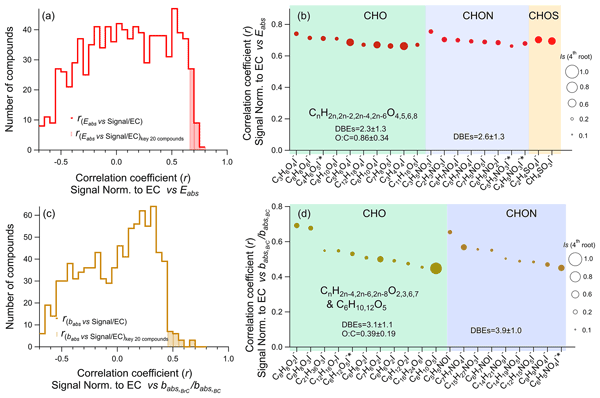
Jing Cai, Cheng Wu, Jiandong Wang, Wei Du, Feixue Zheng, Simo Hakala, Xiaolong Fan, Biwu Chu, Lei Yao, Zemin Feng, Yongchun Liu, Yele Sun, Jun Zheng, Chao Yan, Federico Bianchi, Markku Kulmala, Claudia Mohr, and Kaspar R. Daellenbach
Atmos. Chem. Phys., 22, 1251–1269, https://doi.org/10.5194/acp-22-1251-2022, https://doi.org/10.5194/acp-22-1251-2022, 2022
Short summary
Short summary
This study investigates the connection between organic aerosol (OA) molecular composition and particle absorptive properties in autumn in Beijing. We find that the molecular properties of OA compounds in different episodes influence particle light absorption properties differently: the light absorption enhancement of black carbon and light absorption coefficient of brown carbon were mostly related to more oxygenated OA (low C number and four O atoms) and aromatics/nitro-aromatics, respectively.
Cited articles
Alfarra, M. R., Prevot, A. S. H., Szidat, S., Sandradewi, J., Weimer, S., Lanz, V. A., Schreiber, D., Mohr, M., and Baltensperger, U.: Identification of the Mass Spectral Signature of Organic Aerosols from Wood Burning Emissions, Environ. Sci. Technol., 41, 5770–5777, https://doi.org/10.1021/es062289b, 2007.
Aswini, A. R., Hegde, P., Aryasree, S., Girach, I. A., and Nair, P. R.: Continental outflow of anthropogenic aerosols over Arabian Sea and Indian Ocean during wintertime: ICARB-2018 campaign, Sci. Total Environ., 712, 135214, https://doi.org/10.1016/j.scitotenv.2019.135214, 2020.
Bean, J. K. and Hildebrandt Ruiz, L.: Gas–particle partitioning and hydrolysis of organic nitrates formed from the oxidation of α-pinene in environmental chamber experiments, Atmos. Chem. Phys., 16, 2175–2184, https://doi.org/10.5194/acp-16-2175-2016, 2016.
Bharali, C., Nair, V. S., Chutia, L., and Babu, S. S.: Modeling of the Effects of Wintertime Aerosols on Boundary Layer Properties Over the Indo Gangetic Plain, J. Geophys. Res.-Atmos., 124, 4141–4157, https://doi.org/10.1029/2018JD029758, 2019.
Bikkina, P., Bikkina, S., and Kawamura, K.: Role of aerosol liquid water content on the production of dicarboxylic acids in the dust-laden air masses over the Arabian Sea: Implications for heterogeneous chemistry, Atmos. Res., 289, 106743, https://doi.org/10.1016/j.atmosres.2023.106743, 2023.
Bikkina, S., Kawamura, K., and Miyazaki, Y.: Latitudinal distributions of atmospheric dicarboxylic acids, oxocarboxylic acids, and α-dicarbonyls over the western North Pacific: Sources and formation pathways, J. Geophys. Res.-Atmos., 120, 5010–5035, https://doi.org/10.1002/2014JD022235, 2015.
Boreddy, S. K. R., Hegde, P., Aswini, A. R., and Aryasree, S.: Chemical Characteristics, Size Distributions, Molecular Composition, and Brown Carbon in South Asian Outflow to the Indian Ocean, Earth Space Sci., 8, e2020EA001615, https://doi.org/10.1029/2020EA001615, 2021.
Boris, A. J., Desyaterik, Y., and Collett, J. L.: How do components of real cloud water affect aqueous pyruvate oxidation?, Atmos. Res., 143, 95–106, https://doi.org/10.1016/j.atmosres.2014.02.004, 2014.
Brüggemann, M., Xu, R., Tilgner, A., Kwong, K. C., Mutzel, A., Poon, H. Y., Otto, T., Schaefer, T., Poulain, L., Chan, M. N., and Herrmann, H.: Organosulfates in Ambient Aerosol: State of Knowledge and Future Research Directions on Formation, Abundance, Fate, and Importance, Environ. Sci. Technol., 54, 3767–3782, https://doi.org/10.1021/acs.est.9b06751, 2020.
Buchholz, A., Ylisirniö, A., Huang, W., Mohr, C., Canagaratna, M., Worsnop, D. R., Schobesberger, S., and Virtanen, A.: Deconvolution of FIGAERO–CIMS thermal desorption profiles using positive matrix factorisation to identify chemical and physical processes during particle evaporation, Atmos. Chem. Phys., 20, 7693–7716, https://doi.org/10.5194/acp-20-7693-2020, 2020.
Budhavant, K., Bikkina, S., Andersson, A., Asmi, E., Backman, J., Kesti, J., Zahid, H., Satheesh, S. K., and Gustafsson, Ö.: Anthropogenic fine aerosols dominate the wintertime regime over the northern Indian Ocean, Tellus B, 70, 1–15, https://doi.org/10.1080/16000889.2018.1464871, 2018.
Budhavant, K., Andersson, A., Holmstrand, H., Satheesh, S. K., and Gustafsson, Ö.: Black carbon aerosols over Indian Ocean have unique source fingerprint and optical characteristics during monsoon season, P. Natl. Acad. Sci., 120, e2210005120, https://doi.org/10.1073/pnas.2210005120, 2023.
Budhavant, K., Manoj, M. R., Nair, H. R. C. R., Gaita, S. M., Holmstrand, H., Salam, A., Muslim, A., Satheesh, S. K., and Gustafsson, Ö.: Changing optical properties of black carbon and brown carbon aerosols during long-range transport from the Indo-Gangetic Plain to the equatorial Indian Ocean, Atmos. Chem. Phys., 24, 11911–11925, https://doi.org/10.5194/acp-24-11911-2024, 2024.
Canagaratna, M. R., Jayne, J. T., Ghertner, D. A., Herndon, S., Shi, Q., Jimenez, J. L., Silva, P. J., Williams, P., Lanni, T., Drewnick, F., Demerjian, K. L., Kolb, C. E., and Worsnop, D. R.: Chase Studies of Particulate Emissions from in-use New York City Vehicles, Aerosol Sci. Tech., 38, 555–573, https://doi.org/10.1080/02786820490465504, 2004.
Canagaratna, M. R., Jayne, J. T., Jimenez, J. L., Allan, J. D., Alfarra, M. R., Zhang, Q., Onasch, T. B., Drewnick, F., Coe, H., Middlebrook, A., Delia, A., Williams, L. R., Trimborn, A. M., Northway, M. J., DeCarlo, P. F., Kolb, C. E., Davidovits, P., and Worsnop, D. R.: Chemical and microphysical characterization of ambient aerosols with the aerodyne aerosol mass spectrometer, Mass Spectrom. Rev., 26, 185–222, https://doi.org/10.1002/mas.20115, 2007.
Charlson, R. J., Lovelock, J. E., Andreae, M. O., and Warren, S. G.: Oceanic phytoplankton, atmospheric sulphur, cloud albedo and climate, Nature, 326, 655–661, https://doi.org/10.1038/326655a0, 1987.
Chen, K., Mayorga, R., Raeofy, N., Lum, M., Woods, M., Bahreini, R., Zhang, H., and Lin, Y.-H.: Effects of Nitrate Radical Levels and Pre-Existing Particles on Secondary Brown Carbon Formation from Nighttime Oxidation of Furan, ACS Earth Space Chem., 6, 2709–2721, https://doi.org/10.1021/acsearthspacechem.2c00244, 2022.
Chen, Y., Xu, L., Humphry, T., Hettiyadura, A. P. S., Ovadnevaite, J., Huang, S., Poulain, L., Schroder, J. C., Campuzano-Jost, P., Jimenez, J. L., Herrmann, H., O'Dowd, C., Stone, E. A., and Ng, N. L.: Response of the Aerodyne Aerosol Mass Spectrometer to Inorganic Sulfates and Organosulfur Compounds: Applications in Field and Laboratory Measurements, Environ. Sci. Technol., 53, 5176–5186, https://doi.org/10.1021/acs.est.9b00884, 2019.
Chen, Y., Takeuchi, M., Nah, T., Xu, L., Canagaratna, M. R., Stark, H., Baumann, K., Canonaco, F., Prévôt, A. S. H., Huey, L. G., Weber, R. J., and Ng, N. L.: Chemical characterization of secondary organic aerosol at a rural site in the southeastern US: insights from simultaneous high-resolution time-of-flight aerosol mass spectrometer (HR-ToF-AMS) and FIGAERO chemical ionization mass spectrometer (CIMS) measurements, Atmos. Chem. Phys., 20, 8421–8440, https://doi.org/10.5194/acp-20-8421-2020, 2020.
Cheng, X., Li, Y. J., Zheng, Y., Liao, K., Koenig, T. K., Ge, Y., Zhu, T., Ye, C., Qiu, X., and Chen, Q.: Oxygenated organic molecules produced by low-NOx photooxidation of aromatic compounds: contributions to secondary organic aerosol and steric hindrance, Atmos. Chem. Phys., 24, 2099–2112, https://doi.org/10.5194/acp-24-2099-2024, 2024.
Chutia, L., Ojha, N., Girach, I., Pathak, B., Sahu, L. K., Sarangi, C., Flemming, J., da Silva, A., and Bhuyan, P. K.: Trends in sulfur dioxide over the Indian subcontinent during 2003–2019, Atmos. Environ., 284, 119189, https://doi.org/10.1016/j.atmosenv.2022.119189, 2022.
Clarke, S., Holmstrand, H., Budhavant, K., Remani, M., Haslett, S., Rodiouchkina, K., Kooijman, E., and Gustafsson, Ö.: Isotopic apportionment of sulfate aerosols between natural and anthropogenic sources in the outflow of South Asia, Atmos. Chem. Phys., 26, 5333–5343, https://doi.org/10.5194/acp-26-5333-2026, 2026.
Conte, L., Szopa, S., Aumont, O., Gros, V., and Bopp, L.: Sources and Sinks of Isoprene in the Global Open Ocean: Simulated Patterns and Emissions to the Atmosphere, J. Geophys. Res.-Oceans, 125, e2019JC015946, https://doi.org/10.1029/2019JC015946, 2020.
Corrigan, C. E., Ramanathan, V., and Schauer, J. J.: Impact of monsoon transitions on the physical and optical properties of aerosols, J. Geophys. Res.-Atmos., 111, https://doi.org/10.1029/2005JD006370, 2006.
Crippa, M., El Haddad, I., Slowik, J. G., DeCarlo, P. F., Mohr, C., Heringa, M. F., Chirico, R., Marchand, N., Sciare, J., Baltensperger, U., and Prévôt, A. S. H.: Identification of marine and continental aerosol sources in Paris using high resolution aerosol mass spectrometry, J. Geophys. Res.-Atmos., 118, 1950–1963, https://doi.org/10.1002/jgrd.50151, 2013.
D'Ambro, E. L., Lee, B. H., Liu, J., Shilling, J. E., Gaston, C. J., Lopez-Hilfiker, F. D., Schobesberger, S., Zaveri, R. A., Mohr, C., Lutz, A., Zhang, Z., Gold, A., Surratt, J. D., Rivera-Rios, J. C., Keutsch, F. N., and Thornton, J. A.: Molecular composition and volatility of isoprene photochemical oxidation secondary organic aerosol under low- and high-NOx conditions, Atmos. Chem. Phys., 17, 159–174, https://doi.org/10.5194/acp-17-159-2017, 2017.
Dasari, S., Andersson, A., Bikkina, S., Holmstrand, H., Budhavant, K., Satheesh, S., Asmi, E., Kesti, J., Backman, J., Salam, A., Bisht, D. S., Tiwari, S., Hameed, Z., and Gustafsson, Ö.: Photochemical degradation affects the light absorption of water-soluble brown carbon in the South Asian outflow, Sci. Adv., 5, eaau8066, https://doi.org/10.1126/sciadv.aau8066, 2019.
Dasari, S., Andersson, A., Kim, S.-W., Holmstrand, H., Budhavant, K., and Gustafsson, Ö.: Observationally Constrained Wintertime Emission Fluxes and Atmospheric Lifetime of Black Carbon in South Asia, Environ. Sci. Tech. Let., 12, 710–717, https://doi.org/10.1021/acs.estlett.5c00079, 2025.
DeCarlo, P. F., Kimmel, J. R., Trimborn, A., Northway, M. J., Jayne, J. T., Aiken, A. C., Gonin, M., Fuhrer, K., Horvath, T., Docherty, K. S., Worsnop, D. R., and Jimenez, J. L.: Field-Deployable, High-Resolution, Time-of-Flight Aerosol Mass Spectrometer, Anal. Chem., 78, 8281–8289, https://doi.org/10.1021/ac061249n, 2006.
Draxler, R. R. and Hess, G. D.: An overview of the HYSPLIT_4 modelling system for trajectories, dispersion and deposition, Aust. Meteorol. Mag., 47, 295–308, 1998.
Ervens, B., Turpin, B. J., and Weber, R. J.: Secondary organic aerosol formation in cloud droplets and aqueous particles (aqSOA): a review of laboratory, field and model studies, Atmos. Chem. Phys., 11, 11069–11102, https://doi.org/10.5194/acp-11-11069-2011, 2011.
Farmer, D. K., Matsunaga, A., Docherty, K. S., Surratt, J. D., Seinfeld, J. H., Ziemann, P. J., and Jimenez, J. L.: Response of an aerosol mass spectrometer to organonitrates and organosulfates and implications for atmospheric chemistry, P. Natl. Acad. Sci., 107, 6670–6675, https://doi.org/10.1073/pnas.0912340107, 2010.
Feingold, G. and Kreidenweis, S.: Does cloud processing of aerosol enhance droplet concentrations?, J. Geophys. Res.-Atmos., 105, 24351–24361, https://doi.org/10.1029/2000JD900369, 2000.
Fu, P. Q., Kawamura, K., Pavuluri, C. M., Swaminathan, T., and Chen, J.: Molecular characterization of urban organic aerosol in tropical India: contributions of primary emissions and secondary photooxidation, Atmos. Chem. Phys., 10, 2663–2689, https://doi.org/10.5194/acp-10-2663-2010, 2010.
Gallimore, P. J., Achakulwisut, P., Pope, F. D., Davies, J. F., Spring, D. R., and Kalberer, M.: Importance of relative humidity in the oxidative ageing of organic aerosols: case study of the ozonolysis of maleic acid aerosol, Atmos. Chem. Phys., 11, 12181–12195, https://doi.org/10.5194/acp-11-12181-2011, 2011.
Galloway, M. M., Chhabra, P. S., Chan, A. W. H., Surratt, J. D., Flagan, R. C., Seinfeld, J. H., and Keutsch, F. N.: Glyoxal uptake on ammonium sulphate seed aerosol: reaction products and reversibility of uptake under dark and irradiated conditions, Atmos. Chem. Phys., 9, 3331–3345, https://doi.org/10.5194/acp-9-3331-2009, 2009.
Ganguly, D., Ray, R., Majumdar, N., Chowdhury, C., and Jana, T. K.: Biogenic hydrogen sulphide emissions and non-sea sulfate aerosols over the Indian Sundarban mangrove forest, J. Atmos. Chem., 75, 319–333, https://doi.org/10.1007/s10874-018-9382-3, 2018.
Giglio, L., Schroeder, W., and Justice, C. O.: The collection 6 MODIS active fire detection algorithm and fire products, Remote Sens. Environ., 178, 31–41, https://doi.org/10.1016/j.rse.2016.02.054, 2016.
Granat, L., Engström, J. E., Praveen, S., and Rodhe, H.: Light absorbing material (soot) in rainwater and in aerosol particles in the Maldives, J. Geophys. Res.-Atmos., 115, https://doi.org/10.1029/2009JD013768, 2010.
Hansen, A. M. K., Kristensen, K., Nguyen, Q. T., Zare, A., Cozzi, F., Nøjgaard, J. K., Skov, H., Brandt, J., Christensen, J. H., Ström, J., Tunved, P., Krejci, R., and Glasius, M.: Organosulfates and organic acids in Arctic aerosols: speciation, annual variation and concentration levels, Atmos. Chem. Phys., 14, 7807–7823, https://doi.org/10.5194/acp-14-7807-2014, 2014.
Haslett, S. L., Bell, D. M., Kumar, V., Slowik, J. G., Wang, D. S., Mishra, S., Rastogi, N., Singh, A., Ganguly, D., Thornton, J., Zheng, F., Li, Y., Nie, W., Liu, Y., Ma, W., Yan, C., Kulmala, M., Daellenbach, K. R., Hadden, D., Baltensperger, U., Prevot, A. S. H., Tripathi, S. N., and Mohr, C.: Nighttime NO emissions strongly suppress chlorine and nitrate radical formation during the winter in Delhi, Atmos. Chem. Phys., 23, 9023–9036, https://doi.org/10.5194/acp-23-9023-2023, 2023.
Haslett, S. L., Stegelius, K., Thompson, P., Karbiener, P., Markuszewski, P., and Budhavant, K.: Chemical composition of aerosol particles observed at the Maldives Climate Observatory, Hanimaadhoo, January–February 2023, Bolin Centre Database [data set], https://doi.org/10.17043/haslett-2026-aerosol-maldives-2, 2026.
Hegde, P., Kawamura, K., Girach, I. A., and Nair, P. R.: Characterisation of water-soluble organic aerosols at a site on the southwest coast of India, J. Atmos. Chem., 73, 181–205, https://doi.org/10.1007/s10874-015-9322-4, 2016.
Hilario, M. R. A., Crosbie, E., Bañaga, P. A., Betito, G., Braun, R. A., Cambaliza, M. O., Corral, A. F., Cruz, M. T., Dibb, J. E., Lorenzo, G. R., MacDonald, A. B., Robinson, C. E., Shook, M. A., Simpas, J. B., Stahl, C., Winstead, E., Ziemba, L. D., and Sorooshian, A.: Particulate Oxalate-To-Sulfate Ratio as an Aqueous Processing Marker: Similarity Across Field Campaigns and Limitations, Geophys. Res. Lett., 48, e2021GL096520, https://doi.org/10.1029/2021GL096520, 2021.
Hodshire, A. L., Campuzano-Jost, P., Kodros, J. K., Croft, B., Nault, B. A., Schroder, J. C., Jimenez, J. L., and Pierce, J. R.: The potential role of methanesulfonic acid (MSA) in aerosol formation and growth and the associated radiative forcings, Atmos. Chem. Phys., 19, 3137–3160, https://doi.org/10.5194/acp-19-3137-2019, 2019.
Hoppel, W. A., Frick, G. M., Fitzgerald, J. W., and Larson, R. E.: Marine boundary layer measurements of new particle formation and the effects nonprecipitating clouds have on aerosol size distribution, J. Geophys. Res.-Atmos., 99, 14443–14459, https://doi.org/10.1029/94JD00797, 1994.
Hsieh, L.-Y., Kuo, S.-C., Chen, C.-L., and Tsai, Y. I.: Origin of low-molecular-weight dicarboxylic acids and their concentration and size distribution variation in suburban aerosol, Atmos. Environ., 41, 6648–6661, https://doi.org/10.1016/j.atmosenv.2007.04.014, 2007.
Jain, S., Sharma, S. K., Srivastava, M. K., Chaterjee, A., Singh, R. K., Saxena, M., and Mandal, T. K.: Source Apportionment of PM10 Over Three Tropical Urban Atmospheres at Indo-Gangetic Plain of India: An Approach Using Different Receptor Models, Arch. Environ. Con. Tox., 76, 114–128, https://doi.org/10.1007/s00244-018-0572-4, 2019.
Japar, S. M., Wallington, T. J., Andino, J. M., and Ball, J. C.: Atmospheric chemistry of gaseous diethyl sulfate, Environ. Sci. Technol., 24, 894–897, https://doi.org/10.1021/es00076a017, 1990.
Kawamura, K. and Bikkina, S.: A review of dicarboxylic acids and related compounds in atmospheric aerosols: Molecular distributions, sources and transformation, Atmos. Res., 170, 140–160, https://doi.org/10.1016/j.atmosres.2015.11.018, 2016.
Kawamura, K. and Kaplan, I. R.: Motor exhaust emissions as a primary source for dicarboxylic acids in Los Angeles ambient air, Environ. Sci. Technol., 21, 105–110, https://doi.org/10.1021/es00155a014, 1987.
Kleindienst, T. E., Jaoui, M., Lewandowski, M., Offenberg, J. H., Lewis, C. W., Bhave, P. V., and Edney, E. O.: Estimates of the contributions of biogenic and anthropogenic hydrocarbons to secondary organic aerosol at a southeastern US location, Atmos. Environ., 41, 8288–8300, https://doi.org/10.1016/j.atmosenv.2007.06.045, 2007.
Krishnan, R. and Ramanathan, V.: Evidence of surface cooling from absorbing aerosols, Geophys. Res. Lett., 29, 54-1–54-4, https://doi.org/10.1029/2002GL014687, 2002.
Kumar, V., Giannoukos, S., Haslett, S. L., Tong, Y., Singh, A., Bertrand, A., Lee, C. P., Wang, D. S., Bhattu, D., Stefenelli, G., Dave, J. S., Puthussery, J. V., Qi, L., Vats, P., Rai, P., Casotto, R., Satish, R., Mishra, S., Pospisilova, V., Mohr, C., Bell, D. M., Ganguly, D., Verma, V., Rastogi, N., Baltensperger, U., Tripathi, S. N., Prévôt, A. S. H., and Slowik, J. G.: Highly time-resolved chemical speciation and source apportionment of organic aerosol components in Delhi, India, using extractive electrospray ionization mass spectrometry, Atmos. Chem. Phys., 22, 7739–7761, https://doi.org/10.5194/acp-22-7739-2022, 2022.
Le Breton, M., Wang, Y., Hallquist, Å. M., Pathak, R. K., Zheng, J., Yang, Y., Shang, D., Glasius, M., Bannan, T. J., Liu, Q., Chan, C. K., Percival, C. J., Zhu, W., Lou, S., Topping, D., Wang, Y., Yu, J., Lu, K., Guo, S., Hu, M., and Hallquist, M.: Online gas- and particle-phase measurements of organosulfates, organosulfonates and nitrooxy organosulfates in Beijing utilizing a FIGAERO ToF-CIMS, Atmos. Chem. Phys., 18, 10355–10371, https://doi.org/10.5194/acp-18-10355-2018, 2018.
Le Breton, M., Psichoudaki, M., Hallquist, M., Watne, Å. K., Lutz, A., and Hallquist, Å. M.: Application of a FIGAERO ToF CIMS for on-line characterization of real-world fresh and aged particle emissions from buses, Aerosol Sci. Tech., 53, 244–259, https://doi.org/10.1080/02786826.2019.1566592, 2019.
Leck, C., Larsson, U., Bågander, L. E., Johansson, S., and Hajdu, S.: Dimethyl sulfide in the Baltic Sea: Annual variability in relation to biological activity, J. Geophys. Res.-Oceans, 95, 3353–3363, https://doi.org/10.1029/JC095iC03p03353, 1990.
Li, Y., Fu, T.-M., Yu, J. Z., Feng, X., Zhang, L., Chen, J., Boreddy, S. K. R., Kawamura, K., Fu, P., Yang, X., Zhu, L., and Zeng, Z.: Impacts of Chemical Degradation on the Global Budget of Atmospheric Levoglucosan and Its Use As a Biomass Burning Tracer, Environ. Sci. Technol., 55, 5525–5536, https://doi.org/10.1021/acs.est.0c07313, 2021a.
Li, Y., Zhao, J., Wang, Y., Seinfeld, J. H., and Zhang, R.: Multigeneration Production of Secondary Organic Aerosol from Toluene Photooxidation, Environ. Sci. Technol., 55, 8592–8603, https://doi.org/10.1021/acs.est.1c02026, 2021b.
Liu, S., Shilling, J. E., Song, C., Hiranuma, N., Zaveri, R. A., and Russell, L. M.: Hydrolysis of Organonitrate Functional Groups in Aerosol Particles, Aerosol Sci. Tech., 46, 1359–1369, https://doi.org/10.1080/02786826.2012.716175, 2012.
Lopez-Hilfiker, F. D., Mohr, C., Ehn, M., Rubach, F., Kleist, E., Wildt, J., Mentel, Th. F., Lutz, A., Hallquist, M., Worsnop, D., and Thornton, J. A.: A novel method for online analysis of gas and particle composition: description and evaluation of a Filter Inlet for Gases and AEROsols (FIGAERO), Atmos. Meas. Tech., 7, 983–1001, https://doi.org/10.5194/amt-7-983-2014, 2014.
Mackenzie-Rae, F. A., Wallis, H. J., Rickard, A. R., Pereira, K. L., Saunders, S. M., Wang, X., and Hamilton, J. F.: Ozonolysis of α-phellandrene – Part 2: Compositional analysis of secondary organic aerosol highlights the role of stabilised Criegee intermediates, Atmos. Chem. Phys., 18, 4673–4693, https://doi.org/10.5194/acp-18-4673-2018, 2018.
Massoli, P., Stark, H., Canagaratna, M. R., Krechmer, J. E., Xu, L., Ng, N. L., Mauldin, R. L. I., Yan, C., Kimmel, J., Misztal, P. K., Jimenez, J. L., Jayne, J. T., and Worsnop, D. R.: Ambient Measurements of Highly Oxidized Gas-Phase Molecules during the Southern Oxidant and Aerosol Study (SOAS) 2013, ACS Earth Space Chem., 2, 653–672, https://doi.org/10.1021/acsearthspacechem.8b00028, 2018.
McNeill, V. F., Woo, J. L., Kim, D. D., Schwier, A. N., Wannell, N. J., Sumner, A. J., and Barakat, J. M.: Aqueous-Phase Secondary Organic Aerosol and Organosulfate Formation in Atmospheric Aerosols: A Modeling Study, Environ. Sci. Technol., 46, 8075–8081, https://doi.org/10.1021/es3002986, 2012.
Mehra, A., Wang, Y., Krechmer, J. E., Lambe, A., Majluf, F., Morris, M. A., Priestley, M., Bannan, T. J., Bryant, D. J., Pereira, K. L., Hamilton, J. F., Rickard, A. R., Newland, M. J., Stark, H., Croteau, P., Jayne, J. T., Worsnop, D. R., Canagaratna, M. R., Wang, L., and Coe, H.: Evaluation of the chemical composition of gas- and particle-phase products of aromatic oxidation, Atmos. Chem. Phys., 20, 9783–9803, https://doi.org/10.5194/acp-20-9783-2020, 2020.
Meng, J., Wang, G., Li, J., Cheng, C., Ren, Y., Huang, Y., Cheng, Y., Cao, J., and Zhang, T.: Seasonal characteristics of oxalic acid and related SOA in the free troposphere of Mt. Hua, central China: Implications for sources and formation mechanisms, Sci. Total Environ., 493, 1088–1097, https://doi.org/10.1016/j.scitotenv.2014.04.086, 2014.
Middlebrook, A. M., Bahreini, R., Jimenez, J. L., and Canagaratna, M. R.: Evaluation of Composition-Dependent Collection Efficiencies for the Aerodyne Aerosol Mass Spectrometer using Field Data, Aerosol Sci. Tech., 46, 258–271, https://doi.org/10.1080/02786826.2011.620041, 2012.
Mishra, S., Tripathi, S. N., Kanawade, V. P., Haslett, S. L., Dada, L., Ciarelli, G., Kumar, V., Singh, A., Bhattu, D., Rastogi, N., Daellenbach, K. R., Ganguly, D., Gargava, P., Slowik, J. G., Kulmala, M., Mohr, C., El-Haddad, I., and Prevot, A. S. H.: Rapid night-time nanoparticle growth in Delhi driven by biomass-burning emissions, Nat. Geosci., 16, 224–230, https://doi.org/10.1038/s41561-023-01138-x, 2023.
Miyazaki, Y., Sawano, M., and Kawamura, K.: Low-molecular-weight hydroxyacids in marine atmospheric aerosol: evidence of a marine microbial origin, Biogeosciences, 11, 4407–4414, https://doi.org/10.5194/bg-11-4407-2014, 2014.
Nair, H. R. C. R., Budhavant, K., Manoj, M. R., Andersson, A., Satheesh, S. K., Ramanathan, V., and Gustafsson, Ö.: Aerosol demasking enhances climate warming over South Asia, npj Clim. Atmos. Sci., 6, 39, https://doi.org/10.1038/s41612-023-00367-6, 2023.
Nair, H. R. C. R., Budhavant, K., Manoj, M. R., Kirillova, E. N., Satheesh, S. K., and Gustafsson, Ö.: Roles of water-soluble aerosol coatings for the enhanced radiative absorption of black carbon over south asia and the northern indian ocean, Sci. Total Environ., 926, 171721, https://doi.org/10.1016/j.scitotenv.2024.171721, 2024.
Nakao, S., Clark, C., Tang, P., Sato, K., and Cocker III, D.: Secondary organic aerosol formation from phenolic compounds in the absence of NOx, Atmos. Chem. Phys., 11, 10649–10660, https://doi.org/10.5194/acp-11-10649-2011, 2011.
Nault, B. A., Croteau, P., Jayne, J., Williams, A., Williams, L., Worsnop, D., Katz, E. F., DeCarlo, P. F., and Canagaratna, M.: Laboratory evaluation of organic aerosol relative ionization efficiencies in the aerodyne aerosol mass spectrometer and aerosol chemical speciation monitor, Aerosol Sci. Tech., 57, 981–997, https://doi.org/10.1080/02786826.2023.2223249, 2023.
Ng, N. L., Canagaratna, M. R., Zhang, Q., Jimenez, J. L., Tian, J., Ulbrich, I. M., Kroll, J. H., Docherty, K. S., Chhabra, P. S., Bahreini, R., Murphy, S. M., Seinfeld, J. H., Hildebrandt, L., Donahue, N. M., DeCarlo, P. F., Lanz, V. A., Prévôt, A. S. H., Dinar, E., Rudich, Y., and Worsnop, D. R.: Organic aerosol components observed in Northern Hemispheric datasets from Aerosol Mass Spectrometry, Atmos. Chem. Phys., 10, 4625–4641, https://doi.org/10.5194/acp-10-4625-2010, 2010.
Ng, N. L., Canagaratna, M. R., Jimenez, J. L., Chhabra, P. S., Seinfeld, J. H., and Worsnop, D. R.: Changes in organic aerosol composition with aging inferred from aerosol mass spectra, Atmos. Chem. Phys., 11, 6465–6474, https://doi.org/10.5194/acp-11-6465-2011, 2011.
Nguyen, T. B., Bateman, A. P., Bones, D. L., Nizkorodov, S. A., Laskin, J., and Laskin, A.: High-resolution mass spectrometry analysis of secondary organic aerosol generated by ozonolysis of isoprene, Atmos. Environ., 44, 1032–1042, https://doi.org/10.1016/j.atmosenv.2009.12.019, 2010.
Nguyen, T. B., Roach, P. J., Laskin, J., Laskin, A., and Nizkorodov, S. A.: Effect of humidity on the composition of isoprene photooxidation secondary organic aerosol, Atmos. Chem. Phys., 11, 6931–6944, https://doi.org/10.5194/acp-11-6931-2011, 2011.
Novakov, T., Andreae, M. O., Gabriel, R., Kirchstetter, T. W., Mayol-Bracero, O. L., and Ramanathan, V.: Origin of carbonaceous aerosols over the tropical Indian Ocean: Biomass burning or fossil fuels?, Geophys. Res. Lett., 27, 4061–4064, https://doi.org/10.1029/2000GL011759, 2000.
Oghama, O. E., Voliotis, A., J. Bannan, T., A. Syafira, S., Hu, D., Wu, H., Gallimore, P., McFiggans, G., Coe, H., and D. Allan, J.: Variations in oxygenated and nitrogen-containing primary organic compounds based on the fuel type and burning condition in stove emissions, Environmental Science: Atmospheres, https://doi.org/10.1039/D5EA00080G, 2025.
Oh, B., Karin, P., Srilomsak, M., Chonvasin, K., Po-ngen, W., Srimanosaowapak, S., and Hanamura, K.: Characterization of biodiesels and tire derived particulate matters in morphology and nanostructure, Mater. Today-Proc., 66, 2756–2761, https://doi.org/10.1016/j.matpr.2022.06.510, 2022.
Onasch, T. B., Trimborn, A., Fortner, E. C., Jayne, J. T., Kok, G. L., Williams, L. R., Davidovits, P., and Worsnop, D. R.: Soot Particle Aerosol Mass Spectrometer: Development, Validation, and Initial Application, Aerosol Sci. Tech., 46, 804–817, https://doi.org/10.1080/02786826.2012.663948, 2012.
Papazian, S., D'Agostino, L. A., Sadiktsis, I., Froment, J., Bonnefille, B., Sdougkou, K., Xie, H., Athanassiadis, I., Budhavant, K., Dasari, S., Andersson, A., Gustafsson, Ö., and Martin, J. W.: Nontarget mass spectrometry and in silico molecular characterization of air pollution from the Indian subcontinent, Commun. Earth Environ., 3, 35, https://doi.org/10.1038/s43247-022-00365-1, 2022.
Petit, J.-E., Favez, O., Albinet, A., and Canonaco, F.: A user-friendly tool for comprehensive evaluation of the geographical origins of atmospheric pollution: Wind and trajectory analyses, Environ. Modell. Softw., 88, 183–187, https://doi.org/10.1016/j.envsoft.2016.11.022, 2017.
Praplan, A. P., Hegyi-Gaeggeler, K., Barmet, P., Pfaffenberger, L., Dommen, J., and Baltensperger, U.: Online measurements of water-soluble organic acids in the gas and aerosol phase from the photooxidation of 1,3,5-trimethylbenzene, Atmos. Chem. Phys., 14, 8665–8677, https://doi.org/10.5194/acp-14-8665-2014, 2014.
Ramachandran, S. and Rupakheti, M.: Year-round aerosol characteristics and radiative effects in the South Asian pollution outflow over a background site in the Maldives, Atmos. Environ., 240, 117813, https://doi.org/10.1016/j.atmosenv.2020.117813, 2020.
Ramana, M. V. and Ramanathan, V.: Abrupt transition from natural to anthropogenic aerosol radiative forcing: Observations at the ABC-Maldives Climate Observatory, J. Geophys. Res.-Atmos., 111, https://doi.org/10.1029/2006JD007063, 2006.
Riva, M., Healy, R. M., Flaud, P.-M., Perraudin, E., Wenger, J. C., and Villenave, E.: Gas- and Particle-Phase Products from the Chlorine-Initiated Oxidation of Polycyclic Aromatic Hydrocarbons, J. Phys. Chem. A, 119, 11170–11181, https://doi.org/10.1021/acs.jpca.5b04610, 2015.
Röhrl, A. and Lammel, G.: Determination of malic acid and other C4 dicarboxylic acids in atmospheric aerosol samples, Chemosphere, 46, 1195–1199, https://doi.org/10.1016/S0045-6535(01)00243-0, 2002.
Sáez Álvarez, P.: From maritime salvage to IMO 2020 strategy: Two actions to protect the environment, Mar. Pollut. Bull., 170, 112590, https://doi.org/10.1016/j.marpolbul.2021.112590, 2021.
Satheesh, S. K., Ramanathan, V., Li-Jones, X., Lobert, J. M., Podgorny, I. A., Prospero, J. M., Holben, B. N., and Loeb, N. G.: A model for the natural and anthropogenic aerosols over the tropical Indian Ocean derived from Indian Ocean Experiment data, J. Geophys. Res.-Atmos., 104, 27421–27440, https://doi.org/10.1029/1999JD900478, 1999.
Sato, K., Ikemori, F., Ramasamy, S., Fushimi, A., Kumagai, K., Iijima, A., and Morino, Y.: Four- and Five-Carbon Dicarboxylic Acids Present in Secondary Organic Aerosol Produced from Anthropogenic and Biogenic Volatile Organic Compounds, Atmosphere, 12, 1703, https://doi.org/10.3390/atmos12121703, 2021.
Schneider, J., Weimer, S., Drewnick, F., Borrmann, S., Helas, G., Gwaze, P., Schmid, O., Andreae, M. O., and Kirchner, U.: Mass spectrometric analysis and aerodynamic properties of various types of combustion-related aerosol particles, Int. J. Mass Spectrom., 258, 37–49, https://doi.org/10.1016/j.ijms.2006.07.008, 2006.
Schobesberger, S., D'Ambro, E. L., Lopez-Hilfiker, F. D., Mohr, C., and Thornton, J. A.: A model framework to retrieve thermodynamic and kinetic properties of organic aerosol from composition-resolved thermal desorption measurements, Atmos. Chem. Phys., 18, 14757–14785, https://doi.org/10.5194/acp-18-14757-2018, 2018.
Schwantes, R. H., Schilling, K. A., McVay, R. C., Lignell, H., Coggon, M. M., Zhang, X., Wennberg, P. O., and Seinfeld, J. H.: Formation of highly oxygenated low-volatility products from cresol oxidation, Atmos. Chem. Phys., 17, 3453–3474, https://doi.org/10.5194/acp-17-3453-2017, 2017.
Sheesley, R. J., Andersson, A., and Gustafsson, Ö.: Source characterization of organic aerosols using Monte Carlo source apportionment of PAHs at two South Asian receptor sites, Atmos. Environ., 45, 3874–3881, https://doi.org/10.1016/j.atmosenv.2011.01.031, 2011.
Siegel, K., Gramlich, Y., Haslett, S. L., Freitas, G., Krejci, R., Zieger, P., and Mohr, C.: Arctic observations of hydroperoxymethyl thioformate (HPMTF) – seasonal behavior and relationship to other oxidation products of dimethyl sulfide at the Zeppelin Observatory, Svalbard, Atmos. Chem. Phys., 23, 7569–7587, https://doi.org/10.5194/acp-23-7569-2023, 2023.
Sorooshian, A., Varutbangkul, V., Brechtel, F. J., Ervens, B., Feingold, G., Bahreini, R., Murphy, S. M., Holloway, J. S., Atlas, E. L., Buzorius, G., Jonsson, H., Flagan, R. C., and Seinfeld, J. H.: Oxalic acid in clear and cloudy atmospheres: Analysis of data from International Consortium for Atmospheric Research on Transport and Transformation 2004, J. Geophys. Res.-Atmos., 111, https://doi.org/10.1029/2005JD006880, 2006.
Souza, S. R., Vasconcellos, P. C., and Carvalho, L. R. F.: Low molecular weight carboxylic acids in an urban atmosphere: Winter measurements in São Paulo City, Brazil, Atmos. Environ., 33, 2563–2574, https://doi.org/10.1016/S1352-2310(98)00383-5, 1999.
Spencer, M. T., Holecek, J. C., Corrigan, C. E., Ramanathan, V., and Prather, K. A.: Size-resolved chemical composition of aerosol particles during a monsoonal transition period over the Indian Ocean, J. Geophys. Res.-Atmos., 113, https://doi.org/10.1029/2007JD008657, 2008.
Srinivas, B. and Sarin, M. M.: Light absorbing organic aerosols (brown carbon) over the tropical Indian Ocean: impact of biomass burning emissions, Environ. Res. Lett., 8, 044042, https://doi.org/10.1088/1748-9326/8/4/044042, 2013.
Stark, H., Yatavelli, R. L. N., Thompson, S. L., Kang, H., Krechmer, J. E., Kimmel, J. R., Palm, B. B., Hu, W., Hayes, P. L., Day, D. A., Campuzano-Jost, P., Canagaratna, M. R., Jayne, J. T., Worsnop, D. R., and Jimenez, J. L.: Impact of Thermal Decomposition on Thermal Desorption Instruments: Advantage of Thermogram Analysis for Quantifying Volatility Distributions of Organic Species, Environ. Sci. Technol., 51, 8491–8500, https://doi.org/10.1021/acs.est.7b00160, 2017.
Stein, A. F., Draxler, R. R., Rolph, G. D., Stunder, B. J. B., Cohen, M. D., and Ngan, F.: NOAA's HYSPLIT Atmospheric Transport and Dispersion Modeling System, B. Am. Meteorol. Soc., 96, 2059–2077, https://doi.org/10.1175/BAMS-D-14-00110.1, 2015.
Stone, E. A., Yang, L., Yu, L. E., and Rupakheti, M.: Characterization of organosulfates in atmospheric aerosols at Four Asian locations, Atmos. Environ., 47, 323–329, https://doi.org/10.1016/j.atmosenv.2011.10.058, 2012.
Sun, H., Liu, Y., Nie, W., Li, Y., Ge, D., Xu, T., Yin, J., Liu, C., Fu, Z., Qi, X., Liu, T., Zha, Q., Yan, C., Wang, Z., Chi, X., and Ding, A.: Unexpected Gas-Phase Formation of Glycolic Acid Sulfate in the Atmosphere, Environ. Sci. Technol., 59, 16556–16566, https://doi.org/10.1021/acs.est.5c07888, 2025.
Surratt, J. D., Chan, A. W. H., Eddingsaas, N. C., Chan, M., Loza, C. L., Kwan, A. J., Hersey, S. P., Flagan, R. C., Wennberg, P. O., and Seinfeld, J. H.: Reactive intermediates revealed in secondary organic aerosol formation from isoprene, P. Natl. Acad. Sci., 107, 6640–6645, https://doi.org/10.1073/pnas.0911114107, 2010.
Szopa, S. V., Naik, B., Adhikary, P., Artaxo, T., Berntsen, T., Collins, W. D., Fuzzi, S., Gallardo, L., Kiendler-Scharr, A., Klimont, Z., Liao, H., Unger, N., and Zanis, P.: Short-Lived Climate Forcers, in: Climate Change 2021 – The Physical Science Basis: Working Group I Contribution to the Sixth Assessment Report of the Intergovernmental Panel on Climate Change, edited by: Masson-Delmotte, V., Zhai, P., Pirani, A., Connors, S. L., Péan, C., Berger, S., Caud, N., Chen, Y., Goldfarb, L., Gomis, M. I., Huang, M., Leitzell, K., Lonnoy, E., Matthews, J. B. R., Maycock, T. K., Waterfield, T., Yelekçi, R., Yu, R., and Zhou, B., Cambridge University Press, Cambridge, United Kingdom and New York, NY, USA, 817–922, https://doi.org/10.1017/9781009157896, 2023.
Ulbrich, I. M., Canagaratna, M. R., Zhang, Q., Worsnop, D. R., and Jimenez, J. L.: Interpretation of organic components from Positive Matrix Factorization of aerosol mass spectrometric data, Atmos. Chem. Phys., 9, 2891–2918, https://doi.org/10.5194/acp-9-2891-2009, 2009.
von Glasow, R. and Crutzen, P. J.: Model study of multiphase DMS oxidation with a focus on halogens, Atmos. Chem. Phys., 4, 589–608, https://doi.org/10.5194/acp-4-589-2004, 2004.
Wang, Y., Zhao, Y., Wang, Y., Yu, J.-Z., Shao, J., Liu, P., Zhu, W., Cheng, Z., Li, Z., Yan, N., and Xiao, H.: Organosulfates in atmospheric aerosols in Shanghai, China: seasonal and interannual variability, origin, and formation mechanisms, Atmos. Chem. Phys., 21, 2959–2980, https://doi.org/10.5194/acp-21-2959-2021, 2021.
Xu, J., Tian, Y., Cheng, C., Wang, C., Lin, Q., Li, M., Wang, X., and Shi, G.: Characteristics and source apportionment of ambient single particles in Tianjin, China: The close association between oxalic acid and biomass burning, Atmos. Res., 237, 104843, https://doi.org/10.1016/j.atmosres.2020.104843, 2020.
Yao, X., Fang, M., Chan, C. K., Ho, K. F., and Lee, S. C.: Characterization of dicarboxylic acids in PM2.5 in Hong Kong, Atmos. Environ., 38, 963–970, https://doi.org/10.1016/j.atmosenv.2003.10.048, 2004.
Ye, C., Yuan, B., Lin, Y., Wang, Z., Hu, W., Li, T., Chen, W., Wu, C., Wang, C., Huang, S., Qi, J., Wang, B., Wang, C., Song, W., Wang, X., Zheng, E., Krechmer, J. E., Ye, P., Zhang, Z., Wang, X., Worsnop, D. R., and Shao, M.: Chemical characterization of oxygenated organic compounds in the gas phase and particle phase using iodide CIMS with FIGAERO in urban air, Atmos. Chem. Phys., 21, 8455–8478, https://doi.org/10.5194/acp-21-8455-2021, 2021.
Yeatman, S. G., Spokes, L. J., and Jickells, T. D.: Comparisons of coarse-mode aerosol nitrate and ammonium at two polluted coastal sites, Atmos. Environ., 35, 1321–1335, https://doi.org/10.1016/S1352-2310(00)00452-0, 2001.
Yee, L. D., Kautzman, K. E., Loza, C. L., Schilling, K. A., Coggon, M. M., Chhabra, P. S., Chan, M. N., Chan, A. W. H., Hersey, S. P., Crounse, J. D., Wennberg, P. O., Flagan, R. C., and Seinfeld, J. H.: Secondary organic aerosol formation from biomass burning intermediates: phenol and methoxyphenols, Atmos. Chem. Phys., 13, 8019–8043, https://doi.org/10.5194/acp-13-8019-2013, 2013.
Yu, J. Z., Huang, X.-F., Xu, J., and Hu, M.: When Aerosol Sulfate Goes Up, So Does Oxalate: Implication for the Formation Mechanisms of Oxalate, Environ. Sci. Technol., 39, 128–133, https://doi.org/10.1021/es049559f, 2005.
Zhang, Q., Jimenez, J. L., Worsnop, D. R., and Canagaratna, M.: A Case Study of Urban Particle Acidity and Its Influence on Secondary Organic Aerosol, Environ. Sci. Technol., 41, 3213–3219, https://doi.org/10.1021/es061812j, 2007.
Zhao, R., Mungall, E. L., Lee, A. K. Y., Aljawhary, D., and Abbatt, J. P. D.: Aqueous-phase photooxidation of levoglucosan – a mechanistic study using aerosol time-of-flight chemical ionization mass spectrometry (Aerosol ToF-CIMS), Atmos. Chem. Phys., 14, 9695–9706, https://doi.org/10.5194/acp-14-9695-2014, 2014.
Zhu, Y., Li, H., Wei, J., Ding, H., Cai, D., Zou, X., Wang, G., Wang, Q., Ding, Z., Liu, Z., Chen, J., Yun, L., Deng, C., and Huang, K.: Marine Modulation of the Formation Pathways and Sources of Organosulfates over the Coastal South China Sea, Environ. Sci. Tech. Let., 12, 739–746, https://doi.org/10.1021/acs.estlett.5c00406, 2025.
Zorn, S. R., Drewnick, F., Schott, M., Hoffmann, T., and Borrmann, S.: Characterization of the South Atlantic marine boundary layer aerosol using an aerodyne aerosol mass spectrometer, Atmos. Chem. Phys., 8, 4711–4728, https://doi.org/10.5194/acp-8-4711-2008, 2008.
Short summary
High-time-resolution observations in the Maldives indicate that submicron aerosol over the northern Indian Ocean is primarily composed of inorganic sulfate and highly oxidised organic matter, indicative of aged continental outflow. The consistent composition across various air mass origins, alongside identification of sulfur-containing organics, underscores the influence of long-range transport and sulfate-driven secondary chemistry on regional aerosol characteristics and their climate impacts.
High-time-resolution observations in the Maldives indicate that submicron aerosol over the...


Altmetrics
Final-revised paper
Preprint