
Articles | Volume 26, issue 19
https://doi.org/10.5194/acp-26-14507-2026
© Author(s) 2026. This work is distributed under
the Creative Commons Attribution 4.0 License.
the Creative Commons Attribution 4.0 License.
https://doi.org/10.5194/acp-26-14507-2026
© Author(s) 2026. This work is distributed under
the Creative Commons Attribution 4.0 License.
the Creative Commons Attribution 4.0 License.
Research article
| 
13 Oct 2026
Research article |
| 13 Oct 2026
| 13 Oct 2026
Turbulent atmospheric particle fluxes in the High Arctic: surface type dependence and variability
Theresa Mathes
CORRESPONDING AUTHOR

Chair of Environmental Chemistry and Air Research, Technische Universität Berlin, Berlin, Germany
Department of Atmospheric Microphysics, Leibniz Institute for Tropospheric Research, Leipzig, Germany
Ian Brooks
School of Earth and Environment, University of Leeds, Leeds, UK
Sonja Murto
Department of Earth Sciences, Uppsala University, Uppsala, Sweden
Department of Meteorology, Stockholm University, Stockholm, Sweden
Bolin Centre for Climate Research, Stockholm, Sweden
Michael Tjernström
Department of Meteorology, Stockholm University, Stockholm, Sweden
Bolin Centre for Climate Research, Stockholm, Sweden
Julia Kojoj
Bolin Centre for Climate Research, Stockholm, Sweden
Department of Environmental Science, Stockholm University, Stockholm, Sweden
Paul Zieger
Bolin Centre for Climate Research, Stockholm, Sweden
Department of Environmental Science, Stockholm University, Stockholm, Sweden
John Prytherch
Department of Earth Sciences, Uppsala University, Uppsala, Sweden
Birgit Wehner
Department of Atmospheric Microphysics, Leibniz Institute for Tropospheric Research, Leipzig, Germany
Andreas Held
Chair of Environmental Chemistry and Air Research, Technische Universität Berlin, Berlin, Germany
Related authors
No articles found.
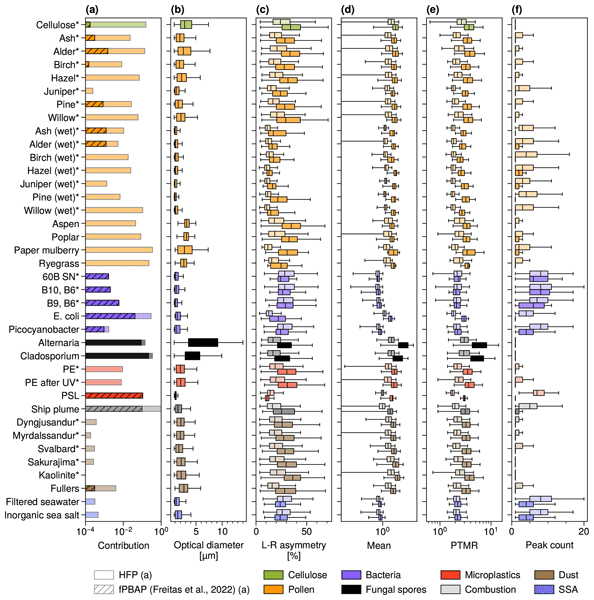
Aiden Jönsson, Jinglan Fu, Gabriel Pereira Freitas, Ian Crawford, Pavla Dagsson-Waldhauserová, Radovan Krejci, Yutaka Tobo, Karl Espen Yttri, and Paul Zieger
Atmos. Chem. Phys., 26, 13617–13643, https://doi.org/10.5194/acp-26-13617-2026, https://doi.org/10.5194/acp-26-13617-2026, 2026
Short summary
Short summary
Coarse-mode aerosols, like dust and bioaerosols, play important roles in environmental and climate processes. We measured fluorescence and morphological properties of key coarse-mode particle types, compared them with previous characterizations, and trained machine learning models with these data to classify unknown particles. This algorithm improves bioaerosol identification and successfully reproduces the annual bioaerosol cycle previously identified in a year of observations from Svalbard.
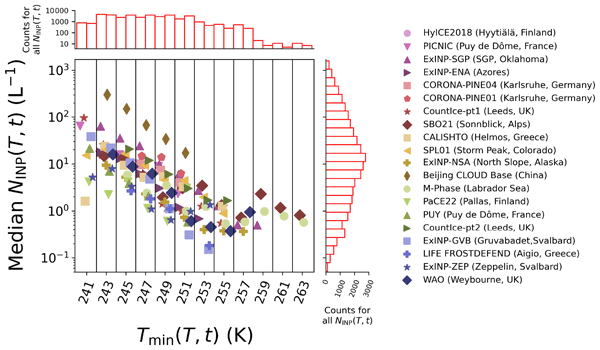
Ross J. Herbert, Larissa Lacher, Alexander Böhmländer, Mark D. Tarn, Antoine Canzi, Aidan Pantoya, Evelyn Freney, Kristina Höhler, Pia Bogert, Céline Planche, Ping Tian, Michael Adams, Sarah Barr, David Brus, Nicole Büttner, Martin Daily, Konstantinos Doulgeris, Konstantinos Eleftheriadis, Grant Forster, Romy Fösig, Dimitrios G. Georgakopoulos, Maria I. Gini, A. Gannet Hallar, Radovan Krejci, Elke Ludewig, Mauro Mazzola, Ian B. McCubbin, Athanasios Nenes, Tuukka Petäjä, Joseph Robinson, Franziska Vogel, Paul Zieger, Stephen Arnold, Kenneth S. Carslaw, Naruki Hiranuma, Ottmar Möhler, and Benjamin J. Murray
Earth Syst. Sci. Data, 18, 6465–6483, https://doi.org/10.5194/essd-18-6465-2026, https://doi.org/10.5194/essd-18-6465-2026, 2026
Short summary
Short summary
Ice formation in sub-zero clouds is influenced by airborne particles called ice-nucleating particles (INPs), whose concentrations vary substantially over short time and spatial scales. To assess the role of INPs in our climate, a comprehensive and consistent global dataset is essential. Our GloPINE model-ready dataset is a major step in this direction, comprising 36,000 measurements made using a single instrument design (PINE) over 70,000 hours of operation at 20 Northern Hemisphere sites.
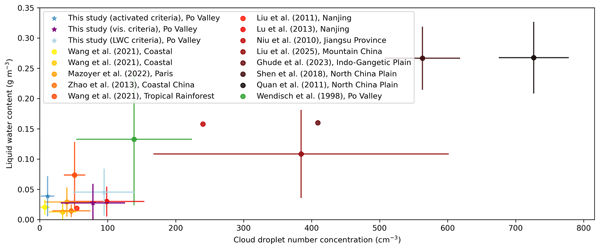
Almuth Neuberger, Rahul Ranjan, Hao Ding, Fredrik Mattsson, Lea Haberstock, Darrel Baumgardner, Stefano Decesari, Annica M. L. Ekman, Dagen D. Hughes, Claudia Mohr, Marco Paglione, Ilona Riipinen, Matteo Rinaldi, and Paul Zieger
Atmos. Chem. Phys., 26, 11991–12017, https://doi.org/10.5194/acp-26-11991-2026, https://doi.org/10.5194/acp-26-11991-2026, 2026
Short summary
Short summary
We studied how particles from air pollution that absorb water but do not yet form fog droplets influence fog and visibility in northern Italy’s Po Valley. Using detailed field observations and computer modeling, we found that these “hydrated” particles can explain many low-visibility events. Recognizing their role helps improve forecasts of fog, air quality, and climate effects in polluted regions.
Sneha Aggarwal, Matthew Salter, Olga Garmash, Felipe Lopez-Hilfiker, Julika Zinke, Joel A. Thornton, Timothy H. Bertram, Jian Wang, Paul Zieger, and Claudia Mohr
EGUsphere, https://doi.org/10.26434/chemrxiv.15000402/v3, https://doi.org/10.26434/chemrxiv.15000402/v3, 2026
Short summary
Short summary
Perfluoroalkyl carboxylic acids (PFCAs) are persistent global contaminants. While sea spray aerosol (SSA) formed by wave breaking is known to transport PFCAs from the ocean to the atmosphere, the focus has primarily been on particle-phase transport. Here, we present evidence that particle-bound PFCAs are subsequently converted to gas phase following SSA emission. This previously unconsidered process may cause particle-only measurements to underestimate the total atmospheric PFCA from SSA.
Lea Haberstock, Darrel Baumgardner, Dagen D. Hughes, Julie Legrand, Almuth Neuberger, Cuiqi Zhang, Zamin A. Kanji, Christian Maier, Ilona Riipinen, Radovan Krejci, and Paul Zieger
EGUsphere, https://doi.org/10.5194/egusphere-2026-3790, https://doi.org/10.5194/egusphere-2026-3790, 2026
This preprint is open for discussion and under review for Atmospheric Measurement Techniques (AMT).
Short summary
Short summary
Here, we present the characterization and first application of a new cloud spectrometer, the Ground-based Fog and Aerosol Spectrometer (GFAS). Besides particle number concentration and size, the GFAS also provides an indicator of particle morphology and composition. We present a new calibration routine and first laboratory and field measurements. Using the GFAS, we can show that cloud droplets are optically different compared to pure water droplets.
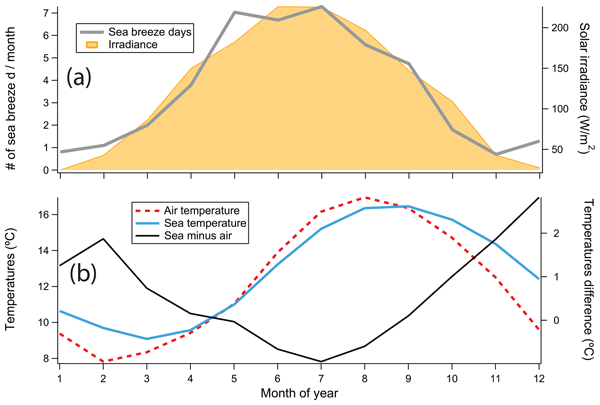
Mingxi Yang, Thomas G. Bell, Ian Brooks, Frances Hopkins, Jani Pewter, Katie Read, and Timothy J. Smyth
Atmos. Chem. Phys., 26, 10909–10926, https://doi.org/10.5194/acp-26-10909-2026, https://doi.org/10.5194/acp-26-10909-2026, 2026
Short summary
Short summary
Diurnal sea breeze events can have a strong but uncertain impact on coastal air quality. In this study, using 10 years of observations we show that sea breeze occurs mostly when the sea is cool, wind speeds low, and solar irradiance strong. Surface of gas and particulate pollutants are all higher during sea breeze events than on other days, increasing the rate of air quality regulation exceedance. This may be of concern for beach goers and for people who spend more time outdoors.
Malte Schuchard, Konrad Bärfuss, Lutz Bretschneider, Thomas Conrath, Andreas Held, Ralf Käthner, Mona Kellermann, Astrid Lampert, Theresa Mathes, Joshua Müller, Christian Pilz, Andreas Schlerf, Holger Siebert, Birgit Wehner, and Barbara Harm-Altstädter
Earth Syst. Sci. Data Discuss., https://doi.org/10.5194/essd-2026-411, https://doi.org/10.5194/essd-2026-411, 2026
Preprint under review for ESSD
Short summary
Short summary
This article combines measurements from an uncrewed aerial system, a tethered balloon system and a surface flux gradient system to study aerosol particles and meteorological parameters at the Arctic site Ny-Ålesund, Svalbard, in spring 2024. The vertical and horizontal observations from the ground to 1.3 kilometres above sea level show strong aerosol variability in correlation with specific meteorological conditions, providing a valuable basis for understanding Arctic aerosol processes.
Patrick C. Taylor, Armin Sorooshian, Rei Ueyama, Sebastian Schmidt, Ihab Abboud, Quincy Allison, Kevin Barry, Sebastian Becker, Holly A. Bender, Joseph R. Bennett, James B. Blair, Niklas Bohn, Linette Boisvert, Matthew D. Brown, Roelof Bruintjes, Anthony Bucholtz, Megan Buzanowicz, Brian Cairns, Filippo Calì Quaglia, Eduard Chemyakin, Bo Chen, Gao Chen, Hong Chen, Yu-Wen Chen, Zezhen Cheng, Swarup China, Dan Chirica, Yonghoon Choi, Peter Colarco, Brian Collister, Ewan Crosbie, Maurice J. Cross, Janet Daniels, Paul DeMott, Joshua P. DiGangi, Alcide Giorgio di Sarra, Glenn S. Diskin, Erica K. Dolinar, Eva-Lou Edwards, Samuel Ephraim, Nikolaos Evangeliou, Romanos Foskinis, Francesca Gallo, Lan Gao, José Luis Gómez-Amo, Daisy Gonzalez, Christine Groot Zwaaftink, Pawan Gupta, Ivan Heckman, Michael Hendrickson, Miguel Ricardo A. Hilario, Ken Hirata, Michelle Hofton, Andrew L. Holen, Ulas Im, Alia L. Khan, Ralph Kahn, Alexei V. Korolev, Sonia Kreidenweis, Thomas Krumpen, Nathan Kurtz, Leslie Lait, Bradley Lamkin, Jack Landy, Nurun Nahar Lata, Paul Lawson, Samuel LeBlanc, Sean Leavor, Jing Li, Thorsten Markus, Hal Maring, Andreas H. Massling, Camille Mavis, Flynn McGinnity, Kerry Meyer, Gabriel Mojica, Richard H. Moore, Parker Morris, Giovanni Muscari, Vikas Nataraja, Amin R. Nehrir, Athanasios Nenes, Edward P. Nowottnick, Matteo Ottaviani, Chelsea Parker, Ryan Patnaude, Michael Perez, Russell J. Perkins, Colten Peterson, Alek Petty, Stevie Phothisane, Chris Polashenski, Kerri A. Pratt, Kayla M. Preisler, John Prytherch, David Rabine, Jens Redemann, Ju-Mee Ryoo, Joseph S. Schlosser, Vanessa Selimovic, Michael A. Shook, Morgan Silverman, Henrik Skov, Alexander Smirnov, Cassidy Soloff, Amy Solomon, Snorre Stamnes, Azusa Takeishi, David R. Thompson, K. Lee Thornhill, Rachel Tilling, Michael Tjernström, Monica Tosco, Pedro C. Valdelomar, David Van Gilst, Jian Wang, Zhien Wang, Andrzej Wasilewski, Manfred Wendisch, Brent Wilder, Edward L. Winstead, Albert Wu, Peng Xian, Lauren M. Zamora, Jiaoshi Zhang, Lei Zhang, Lu Zhang, Luke Ziemba, and Paquita Zuidema
Earth Syst. Sci. Data Discuss., https://doi.org/10.5194/essd-2026-241, https://doi.org/10.5194/essd-2026-241, 2026
Preprint under review for ESSD
Short summary
Short summary
This article summarizes the data sets collected during the Arctic Radiation Cloud aerosol Sea ice Interaction eXperiment (ARCSIX), NASA's most comprehensive Arctic field campaign to date. The overarching goal was to quantify the contributions of surface, clouds, aerosol particles, and precipitation to summer sea ice melt. This paper describes the ARCSIX implementation including the flight strategy, instruments, complementary data sets, access, and usage details.
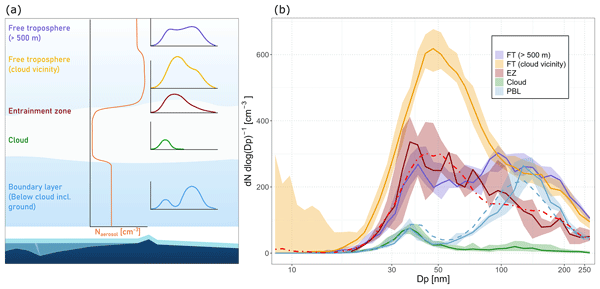
Roman Pohorsky, Heather Guy, Ian Morley Brooks, Lea Haberstock, Nicolas Fauré, Paul Zieger, Julia Kojoj, Sonja Murto, Radiance Calmer, Benjamin Heutte, Michael Lonardi, Erik Schurch Thomson, Michael Tjernström, Jessie Creamean, Athanasios Nenes, and Julia Schmale
Atmos. Chem. Phys., 26, 10331–10353, https://doi.org/10.5194/acp-26-10331-2026, https://doi.org/10.5194/acp-26-10331-2026, 2026
Short summary
Short summary
This study presents tethered-balloon observations above Arctic sea ice showing that enhanced aerosol concentrations above low-level clouds are commonly observed. A closure analysis demonstrates that entrainment of these aerosols is required to reproduce observed cloud droplet numbers. Simulations indicate that neglecting this source can bias longwave radiative forcing, highlighting the need for vertical aerosol observations and improved model representation of aerosol entrainment at cloud top.
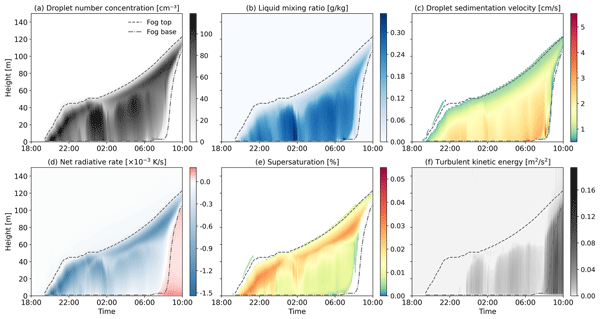
Hao Ding, Almuth Neuberger, Rahul Ranjan, Fredrik Mattsson, Liine Heikkinen, Karam Mansour, Stefano Decesari, Claudia Mohr, Alejandro Baró Pérez, Nazario Mastroianni, Paul Zieger, Ilona Riipinen, and Annica M. L. Ekman
Atmos. Chem. Phys., 26, 9721–9739, https://doi.org/10.5194/acp-26-9721-2026, https://doi.org/10.5194/acp-26-9721-2026, 2026
Short summary
Short summary
Fog poses numerous risks to society, yet it remains challenging to forecast. We use detailed numerical simulations based on fog observations in the Po Valley, Italy, to demonstrate that high concentrations of aerosol particles, as in polluted air, lead to an increase in droplet number, prolonged fog duration, and reduced visibility. The simulations also show the importance of accurately representing haze particles and the shape of the droplet size distribution for improved fog prediction.
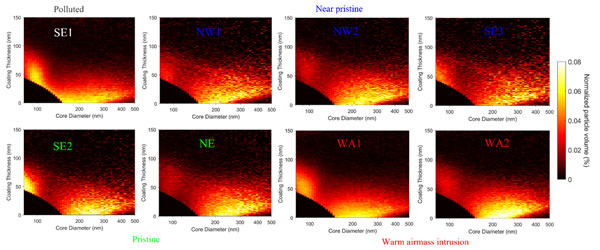
Babu Suja Arun, Thomas Müller, Mira L. Pöhlker, Andreas Held, Christopher Pöhlker, Manuela van Pinxteren, Yifan Yang, Sabine Lüchtrath, Andreas Walbröl, Janna E. Rückert, Philipp Oehlke, Maik Merkel, and Birgit Wehner
Atmos. Chem. Phys., 26, 7287–7310, https://doi.org/10.5194/acp-26-7287-2026, https://doi.org/10.5194/acp-26-7287-2026, 2026
Short summary
Short summary
Black carbon (BC) aerosols absorb solar radiation and perturb the Arctic energy budget, yet in-situ studies of their microphysical properties and mixing state in the Arctic remain scarce. Based on observations from a shipborne expedition in the Arctic Ocean, we found substantial BC concentrations and showed that warm airmass intrusions enhanced BC levels. Aged BC exhibited enhanced light absorption. These findings will help improve the representation of BC in climate models.
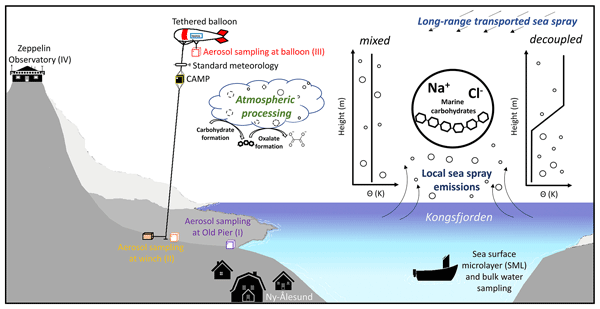
Sebastian Zeppenfeld, Jonas Schaefer, Christian Pilz, Kerstin Ebell, Moritz Zeising, Frank Stratmann, Holger Siebert, Birgit Wehner, Matthias Wietz, Astrid Bracher, and Manuela van Pinxteren
Atmos. Chem. Phys., 26, 7235–7260, https://doi.org/10.5194/acp-26-7235-2026, https://doi.org/10.5194/acp-26-7235-2026, 2026
Short summary
Short summary
Sea spray aerosol transports inorganic salts and carbohydrates from the ocean into the atmosphere. In this field study conducted in Svalbard, we found that carbohydrates reach elevated altitudes that are relevant for cloud formation and properties.
Hannah C. Frostenberg, Jessie M. Creamean, Erik S. Thomson, Heather Guy, Roman Pohorsky, Camille Mavis, Ian M. Brooks, Nicolas Fauré, Lea Haberstock, Julia Kojoj, Sonja Murto, Julia Schmale, Michael Tjernström, Paul Zieger, and Luisa Ickes
EGUsphere, https://doi.org/10.5194/egusphere-2026-2403, https://doi.org/10.5194/egusphere-2026-2403, 2026
Short summary
Short summary
Arctic low clouds containing both droplets and ice crystals strongly impact sea ice and therefore require accurate modeling. Using a high-resolution atmospheric model, we found that particle and ice concentrations, alongside ice crystal shape, strongly dictate the simulated cloud. Therefore, these specific properties should be prioritized during future Arctic observational campaigns. Furthermore, atmospheric models must be able to represent a variety of ice crystal shapes.
Shravan Deshmukh, Laurent Poulain, Birgit Wehner, Silvia Henning, Hartmut Herrmann, and Mira Pöhlker
EGUsphere, https://doi.org/10.5194/egusphere-2026-1992, https://doi.org/10.5194/egusphere-2026-1992, 2026
Short summary
Short summary
Improved representation of aerosol hygroscopicity is critical for understanding how atmospheric particles influence cloud formation, climate, air quality, and human health. This work advances understanding of aerosol hygroscopicity by connecting laboratory measurements of organic aerosol properties with ambient observations through an explainable machine learning framework.
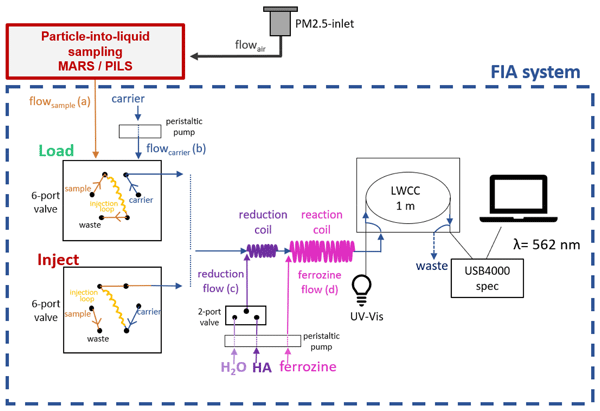
Sabine Lüchtrath, Sven Klemer, Florian Fröhlich, Darius Ceburnis, Dominik van Pinxteren, Hartmut Herrmann, Wolfgang Frenzel, and Andreas Held
Aerosol Research, 4, 81–101, https://doi.org/10.5194/ar-4-81-2026, https://doi.org/10.5194/ar-4-81-2026, 2026
Short summary
Short summary
The first online instrument for the speciation of water‑soluble iron in ambient aerosols is presented. The system combines flow injection analysis with spectrophotometric detection using a liquid waveguide capillary cell. Sensitive iron speciation will help to better describe tropospheric aqueous-phase reactions driven by soluble iron, e.g. hydroxyl radical formation through Fenton chemistry. In first measurements in Berlin, ambient water-soluble-iron concentrations reached up to 47 ng m-3.

Jan Landwehrs, Sonja Murto, Florian Gebhardt, Ella Gilbert, and Annette Rinke
Weather Clim. Dynam., 7, 341–365, https://doi.org/10.5194/wcd-7-341-2026, https://doi.org/10.5194/wcd-7-341-2026, 2026
Short summary
Short summary
This study investigates how Svalbard's mountains modulate warm and moist air mass intrusions into the central Arctic, where such events are key drivers of warm extremes. Using atmospheric modeling, air parcel trajectories and observations from the MOSAiC expedition for a case in April 2020 and a climatological analysis for springtime in 2000–2022, we show that Svalbard can alter winds, temperatures, clouds and surface energy fluxes hundreds of kilometers downstream over sea ice.
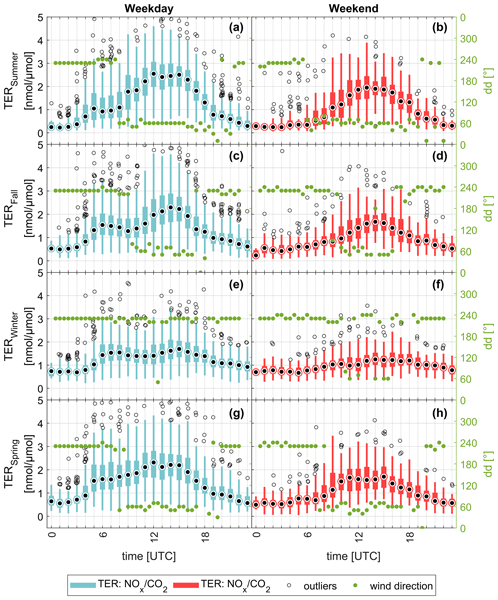
Christian Lamprecht, Martin Graus, Marcus Striednig, Michael Stichaner, Werner Jud, Andreas Held, and Thomas Karl
Atmos. Meas. Tech., 18, 5003–5016, https://doi.org/10.5194/amt-18-5003-2025, https://doi.org/10.5194/amt-18-5003-2025, 2025
Short summary
Short summary
Air pollution management requires accurate determination of emissions and emission ratios of air pollutants. In this paper, we explore a new way to resolve excess mixing ratios in turbulent plumes, which allows aggregation of unbiased ensemble averages of air pollutant ratios that can be compared with emission models. The approach is tested in an urban environment and used to resolve emission patterns of nitrogen oxides and carbon dioxide.
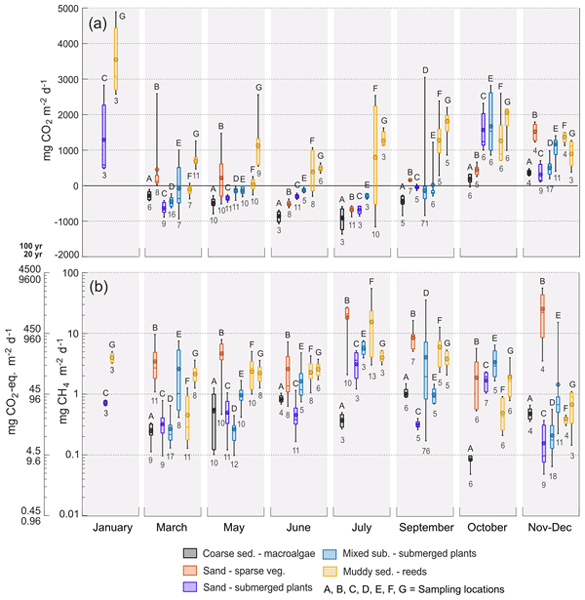
Thea Bisander, John Prytherch, and Volker Brüchert
Biogeosciences, 22, 4779–4796, https://doi.org/10.5194/bg-22-4779-2025, https://doi.org/10.5194/bg-22-4779-2025, 2025
Short summary
Short summary
Coastal waters exchange greenhouse gases with the atmosphere, but their exact contributions are not well understood. This study measured carbon dioxide and methane emissions in different Baltic Sea habitats using floating chambers. The results show that methane emissions, especially from bubbling, play a dominant role in the total exchange of many habitats. When scaled up over the Stockholm archipelago, the coastal emissions add significantly to the regional greenhouse gas budget.
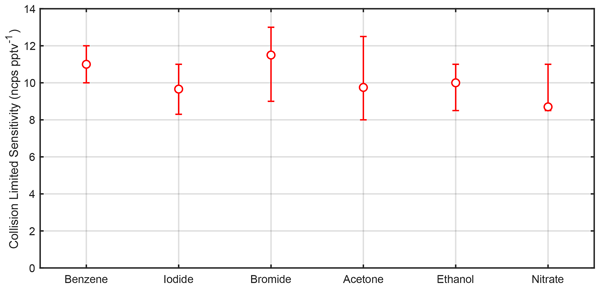
Sneha Aggarwal, Priyanka Bansal, Yuwei Wang, Spiro Jorga, Gabrielle Macgregor, Urs Rohner, Thomas Bannan, Matthew Salter, Paul Zieger, Claudia Mohr, and Felipe Lopez-Hilfiker
Atmos. Meas. Tech., 18, 4227–4247, https://doi.org/10.5194/amt-18-4227-2025, https://doi.org/10.5194/amt-18-4227-2025, 2025
Short summary
Short summary
Chemical ionization mass spectrometers used for trace gas analysis can be operated under various conditions, complicating quantitative comparisons. We evaluate sensitivity dependence on a relatively few key instrument parameters and show that when these are held constant, consistent performance is achieved. We show that the maximum sensitivity of a given flow tube reactor across various reagent ion chemistries is a constant, which aids in the quantification of compounds lacking analytical standards.
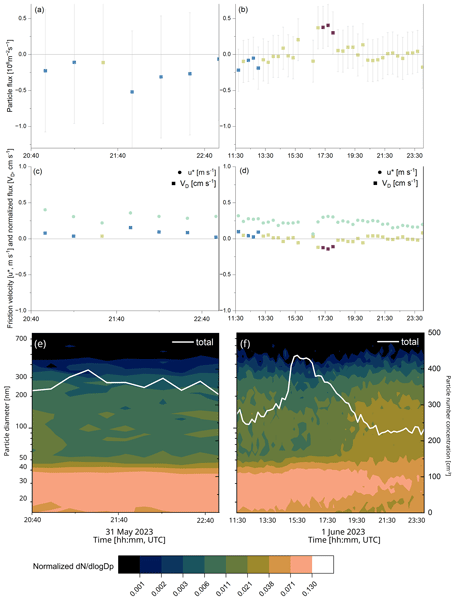
Theresa Mathes, Heather Guy, John Prytherch, Julia Kojoj, Ian Brooks, Sonja Murto, Paul Zieger, Birgit Wehner, Michael Tjernström, and Andreas Held
Atmos. Chem. Phys., 25, 8455–8474, https://doi.org/10.5194/acp-25-8455-2025, https://doi.org/10.5194/acp-25-8455-2025, 2025
Short summary
Short summary
The Arctic is warming faster than the global average and an investigation of aerosol–cloud–sea ice interactions is crucial for studying its climate system. During the ARTofMELT Expedition 2023, particle and sensible heat fluxes were measured over different surfaces. Wide lead surfaces acted as particle sources, with the strongest sensible heat fluxes, while closed ice surfaces acted as particle sinks. In this study, methods to measure these interactions are improved, enhancing our understanding of Arctic climate processes.
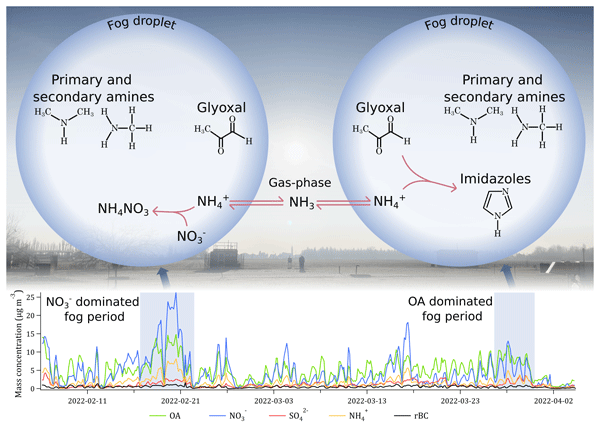
Fredrik Mattsson, Almuth Neuberger, Liine Heikkinen, Yvette Gramlich, Marco Paglione, Matteo Rinaldi, Stefano Decesari, Paul Zieger, Ilona Riipinen, and Claudia Mohr
Atmos. Chem. Phys., 25, 7973–7989, https://doi.org/10.5194/acp-25-7973-2025, https://doi.org/10.5194/acp-25-7973-2025, 2025
Short summary
Short summary
This study investigated aerosol–cloud interactions, focusing on organic nitrogen (ON) formation in the aqueous phase. Measurements were conducted in wintertime in the Po Valley, Italy, using aerosol mass spectrometry. The fog was enriched in more hygroscopic inorganic compounds and ON, containing, e.g., imidazoles. The formation of imidazole by aerosol–fog interactions could be confirmed for the first time in atmospheric observations. Findings highlight the role of fog in nitrogen aerosol formation.
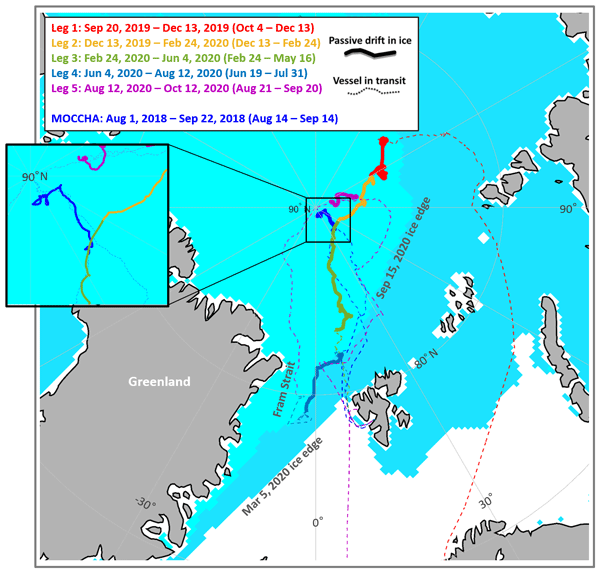
Benjamin Heutte, Nora Bergner, Hélène Angot, Jakob B. Pernov, Lubna Dada, Jessica A. Mirrielees, Ivo Beck, Andrea Baccarini, Matthew Boyer, Jessie M. Creamean, Kaspar R. Daellenbach, Imad El Haddad, Markus M. Frey, Silvia Henning, Tiia Laurila, Vaios Moschos, Tuukka Petäjä, Kerri A. Pratt, Lauriane L. J. Quéléver, Matthew D. Shupe, Paul Zieger, Tuija Jokinen, and Julia Schmale
Atmos. Chem. Phys., 25, 2207–2241, https://doi.org/10.5194/acp-25-2207-2025, https://doi.org/10.5194/acp-25-2207-2025, 2025
Short summary
Short summary
Limited aerosol measurements in the central Arctic hinder our understanding of aerosol–climate interactions in the region. Our year-long observations of aerosol physicochemical properties during the MOSAiC expedition reveal strong seasonal variations in aerosol chemical composition, where the short-term variability is heavily affected by storms in the Arctic. Local wind-generated particles are shown to be an important source of cloud seeds, especially in autumn.
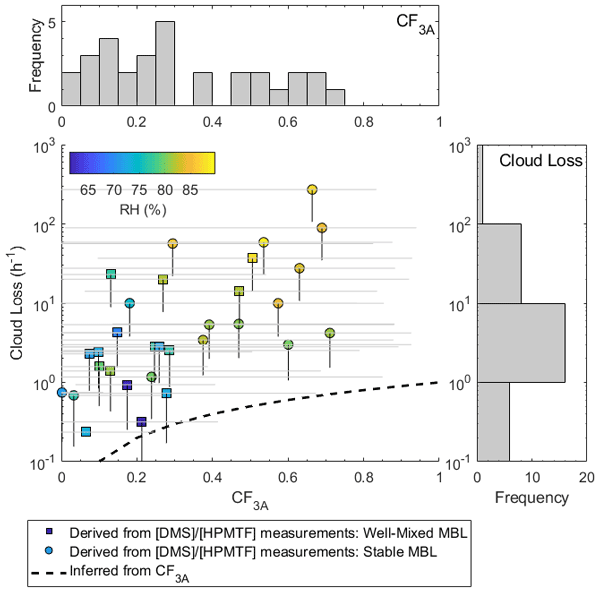
Delaney B. Kilgour, Christopher M. Jernigan, Olga Garmash, Sneha Aggarwal, Shengqian Zhou, Claudia Mohr, Matt E. Salter, Joel A. Thornton, Jian Wang, Paul Zieger, and Timothy H. Bertram
Atmos. Chem. Phys., 25, 1931–1947, https://doi.org/10.5194/acp-25-1931-2025, https://doi.org/10.5194/acp-25-1931-2025, 2025
Short summary
Short summary
We report simultaneous measurements of dimethyl sulfide (DMS) and hydroperoxymethyl thioformate (HPMTF) in the eastern North Atlantic. We use an observationally constrained box model to show that cloud loss is the dominant sink of HPMTF in this region over 6 weeks, resulting in large reductions in DMS-derived products that contribute to aerosol formation and growth. Our findings indicate that fast cloud processing of HPMTF must be included in global models to accurately capture the sulfur cycle.
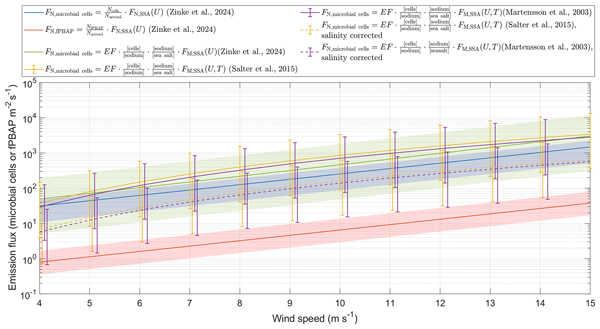
Julika Zinke, Gabriel Pereira Freitas, Rachel Ann Foster, Paul Zieger, Ernst Douglas Nilsson, Piotr Markuszewski, and Matthew Edward Salter
Atmos. Chem. Phys., 24, 13413–13428, https://doi.org/10.5194/acp-24-13413-2024, https://doi.org/10.5194/acp-24-13413-2024, 2024
Short summary
Short summary
Bioaerosols, which can influence climate and human health, were studied in the Baltic Sea. In May and August 2021, we used a sea spray simulation chamber during two ship-based campaigns to collect and measure these aerosols. We found that microbes were enriched in air compared to seawater. Bacterial diversity was analysed using DNA sequencing. Our methods provided consistent estimates of microbial emission fluxes, aligning with previous studies.
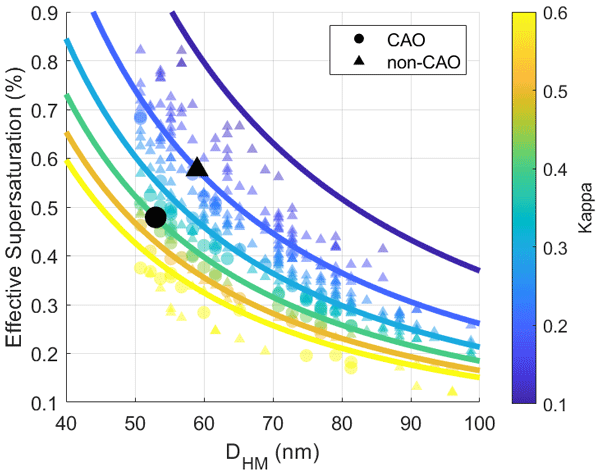
Abigail S. Williams, Jeramy L. Dedrick, Lynn M. Russell, Florian Tornow, Israel Silber, Ann M. Fridlind, Benjamin Swanson, Paul J. DeMott, Paul Zieger, and Radovan Krejci
Atmos. Chem. Phys., 24, 11791–11805, https://doi.org/10.5194/acp-24-11791-2024, https://doi.org/10.5194/acp-24-11791-2024, 2024
Short summary
Short summary
The measured aerosol size distribution modes reveal distinct properties characteristic of cold-air outbreaks in the Norwegian Arctic. We find higher sea spray number concentrations, smaller Hoppel minima, lower effective supersaturations, and accumulation-mode particle scavenging during cold-air outbreaks. These results advance our understanding of cold-air outbreak aerosol–cloud interactions in order to improve their accurate representation in models.
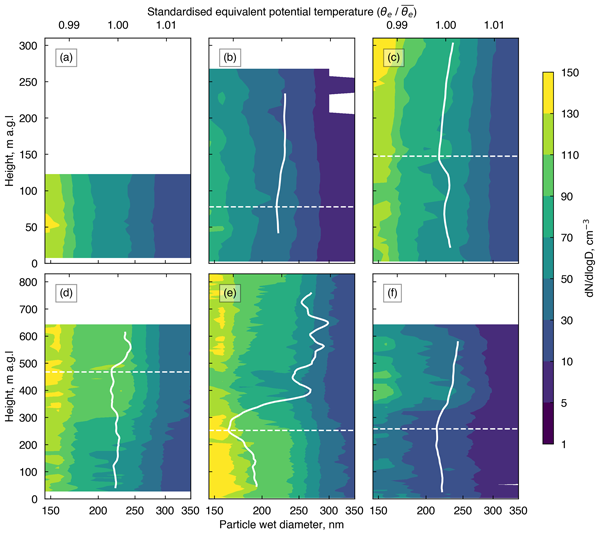
Heather Guy, Andrew S. Martin, Erik Olson, Ian M. Brooks, and Ryan R. Neely III
Atmos. Chem. Phys., 24, 11103–11114, https://doi.org/10.5194/acp-24-11103-2024, https://doi.org/10.5194/acp-24-11103-2024, 2024
Short summary
Short summary
Aerosol particles impact cloud properties which influence Greenland Ice Sheet melt. Understanding the aerosol population that interacts with clouds is important for constraining future melt. Measurements of aerosols at cloud height over Greenland are rare, and surface measurements are often used to investigate cloud–aerosol interactions. We use a tethered balloon to measure aerosols up to cloud base and show that surface measurements are often not equivalent to those just below the cloud.
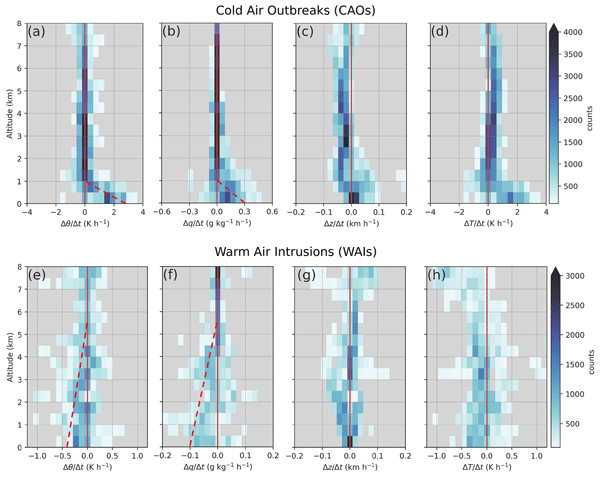
Manfred Wendisch, Susanne Crewell, André Ehrlich, Andreas Herber, Benjamin Kirbus, Christof Lüpkes, Mario Mech, Steven J. Abel, Elisa F. Akansu, Felix Ament, Clémantyne Aubry, Sebastian Becker, Stephan Borrmann, Heiko Bozem, Marlen Brückner, Hans-Christian Clemen, Sandro Dahlke, Georgios Dekoutsidis, Julien Delanoë, Elena De La Torre Castro, Henning Dorff, Regis Dupuy, Oliver Eppers, Florian Ewald, Geet George, Irina V. Gorodetskaya, Sarah Grawe, Silke Groß, Jörg Hartmann, Silvia Henning, Lutz Hirsch, Evelyn Jäkel, Philipp Joppe, Olivier Jourdan, Zsofia Jurányi, Michail Karalis, Mona Kellermann, Marcus Klingebiel, Michael Lonardi, Johannes Lucke, Anna E. Luebke, Maximilian Maahn, Nina Maherndl, Marion Maturilli, Bernhard Mayer, Johanna Mayer, Stephan Mertes, Janosch Michaelis, Michel Michalkov, Guillaume Mioche, Manuel Moser, Hanno Müller, Roel Neggers, Davide Ori, Daria Paul, Fiona M. Paulus, Christian Pilz, Felix Pithan, Mira Pöhlker, Veronika Pörtge, Maximilian Ringel, Nils Risse, Gregory C. Roberts, Sophie Rosenburg, Johannes Röttenbacher, Janna Rückert, Michael Schäfer, Jonas Schaefer, Vera Schemann, Imke Schirmacher, Jörg Schmidt, Sebastian Schmidt, Johannes Schneider, Sabrina Schnitt, Anja Schwarz, Holger Siebert, Harald Sodemann, Tim Sperzel, Gunnar Spreen, Bjorn Stevens, Frank Stratmann, Gunilla Svensson, Christian Tatzelt, Thomas Tuch, Timo Vihma, Christiane Voigt, Lea Volkmer, Andreas Walbröl, Anna Weber, Birgit Wehner, Bruno Wetzel, Martin Wirth, and Tobias Zinner
Atmos. Chem. Phys., 24, 8865–8892, https://doi.org/10.5194/acp-24-8865-2024, https://doi.org/10.5194/acp-24-8865-2024, 2024
Short summary
Short summary
The Arctic is warming faster than the rest of the globe. Warm-air intrusions (WAIs) into the Arctic may play an important role in explaining this phenomenon. Cold-air outbreaks (CAOs) out of the Arctic may link the Arctic climate changes to mid-latitude weather. In our article, we describe how to observe air mass transformations during CAOs and WAIs using three research aircraft instrumented with state-of-the-art remote-sensing and in situ measurement devices.
Eike Maximilian Esders, Christoph Georgi, Wolfgang Babel, Andreas Held, and Christoph Karl Thomas
Aerosol Research, 2, 235–243, https://doi.org/10.5194/ar-2-235-2024, https://doi.org/10.5194/ar-2-235-2024, 2024
Short summary
Short summary
Our study explores how tiny plastic particles, known as microplastics (MPs), move through the air. We focus on their journey in a wind tunnel to mimic atmospheric transport. Depending on the air speed and the height of their release, they move downwards or upwards. These results suggest that MPs behave like mineral particles and that we can expect MPs to accumulate where natural dust also accumulates in the environment, offering insights for predicting the spread and impacts of MPs.

Gabriel Pereira Freitas, Ben Kopec, Kouji Adachi, Radovan Krejci, Dominic Heslin-Rees, Karl Espen Yttri, Alun Hubbard, Jeffrey M. Welker, and Paul Zieger
Atmos. Chem. Phys., 24, 5479–5494, https://doi.org/10.5194/acp-24-5479-2024, https://doi.org/10.5194/acp-24-5479-2024, 2024
Short summary
Short summary
Bioaerosols can participate in ice formation within clouds. In the Arctic, where global warming manifests most, they may become more important as their sources prevail for longer periods of the year. We have directly measured bioaerosols within clouds for a full year at an Arctic mountain site using a novel combination of cloud particle sampling and single-particle techniques. We show that bioaerosols act as cloud seeds and may influence the presence of ice within clouds.
Claudio Crazzolara and Andreas Held
Atmos. Meas. Tech., 17, 2183–2194, https://doi.org/10.5194/amt-17-2183-2024, https://doi.org/10.5194/amt-17-2183-2024, 2024
Short summary
Short summary
Our paper describes the development of a collection device that can be used to collect airborne dust particles classified according to their size. This collection device is optimized for a special analysis method based on X-ray fluorescence so that particles can be collected from the air and analyzed with high sensitivity. This enables the determination of the content of heavy metals in the airborne particle fraction, which are of health-relevant significance.
Dominic Heslin-Rees, Peter Tunved, Johan Ström, Roxana Cremer, Paul Zieger, Ilona Riipinen, Annica M. L. Ekman, Konstantinos Eleftheriadis, and Radovan Krejci
Atmos. Chem. Phys., 24, 2059–2075, https://doi.org/10.5194/acp-24-2059-2024, https://doi.org/10.5194/acp-24-2059-2024, 2024
Short summary
Short summary
Light-absorbing atmospheric particles (e.g. black carbon – BC) exert a warming effect on the Arctic climate. We show that the amount of particle light absorption decreased from 2002 to 2023. We conclude that in addition to reductions in emissions of BC, wet removal plays a role in the long-term reduction of BC in the Arctic, given the increase in surface precipitation experienced by air masses arriving at the site. The potential impact of biomass burning events is shown to have increased.
Julika Zinke, Ernst Douglas Nilsson, Piotr Markuszewski, Paul Zieger, Eva Monica Mårtensson, Anna Rutgersson, Erik Nilsson, and Matthew Edward Salter
Atmos. Chem. Phys., 24, 1895–1918, https://doi.org/10.5194/acp-24-1895-2024, https://doi.org/10.5194/acp-24-1895-2024, 2024
Short summary
Short summary
We conducted two research campaigns in the Baltic Sea, during which we combined laboratory sea spray simulation experiments with flux measurements on a nearby island. To combine these two methods, we scaled the laboratory measurements to the flux measurements using three different approaches. As a result, we derived a parameterization that is dependent on wind speed and wave state for particles with diameters 0.015–10 μm. This parameterization is applicable to low-salinity waters.
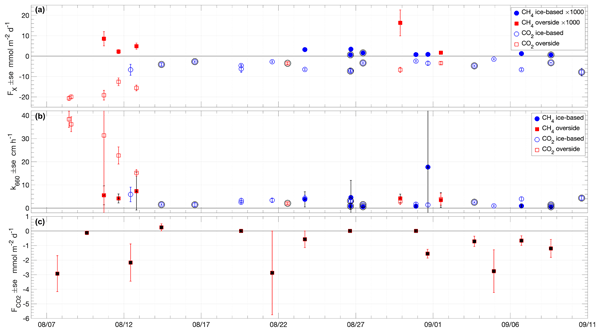
John Prytherch, Sonja Murto, Ian Brown, Adam Ulfsbo, Brett F. Thornton, Volker Brüchert, Michael Tjernström, Anna Lunde Hermansson, Amanda T. Nylund, and Lina A. Holthusen
Biogeosciences, 21, 671–688, https://doi.org/10.5194/bg-21-671-2024, https://doi.org/10.5194/bg-21-671-2024, 2024
Short summary
Short summary
We directly measured methane and carbon dioxide exchange between ocean or sea ice and the atmosphere during an icebreaker-based expedition to the central Arctic Ocean (CAO) in summer 2021. These measurements can help constrain climate models and carbon budgets. The methane measurements, the first such made in the CAO, are lower than previous estimates and imply that the CAO is an insignificant contributor to Arctic methane emission. Gas exchange rates are slower than previous estimates.
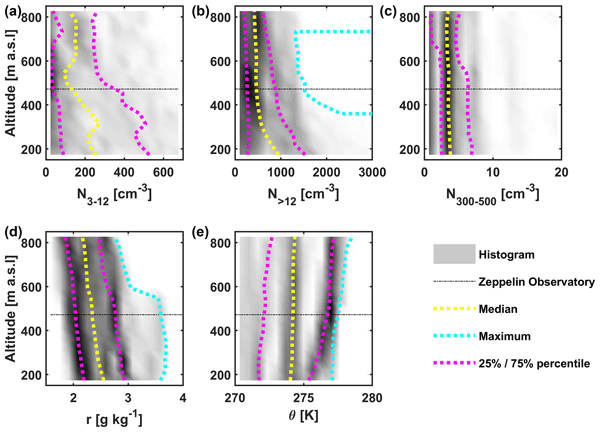
Barbara Harm-Altstädter, Konrad Bärfuss, Lutz Bretschneider, Martin Schön, Jens Bange, Ralf Käthner, Radovan Krejci, Mauro Mazzola, Kihong Park, Falk Pätzold, Alexander Peuker, Rita Traversi, Birgit Wehner, and Astrid Lampert
Aerosol Research, 1, 39–64, https://doi.org/10.5194/ar-1-39-2023, https://doi.org/10.5194/ar-1-39-2023, 2023
Short summary
Short summary
We present observations of aerosol particles and meteorological parameters in the horizontal and vertical distribution measured with uncrewed aerial systems in the Arctic. The field campaign was carried out during the snow melting season, when ultrafine aerosol particles (UFPs) with a size between 3 and 12 nm occurred frequently. A high variability of the measured UFPs was identified in the spatial scale, which was strongly associated with different atmospheric boundary layer properties.
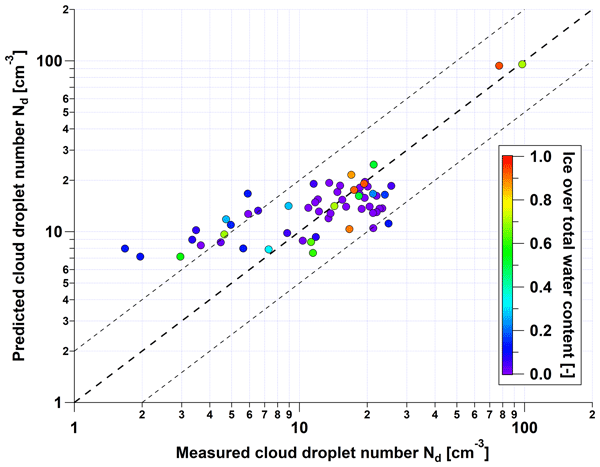
Ghislain Motos, Gabriel Freitas, Paraskevi Georgakaki, Jörg Wieder, Guangyu Li, Wenche Aas, Chris Lunder, Radovan Krejci, Julie Thérèse Pasquier, Jan Henneberger, Robert Oscar David, Christoph Ritter, Claudia Mohr, Paul Zieger, and Athanasios Nenes
Atmos. Chem. Phys., 23, 13941–13956, https://doi.org/10.5194/acp-23-13941-2023, https://doi.org/10.5194/acp-23-13941-2023, 2023
Short summary
Short summary
Low-altitude clouds play a key role in regulating the climate of the Arctic, a region that suffers from climate change more than any other on the planet. We gathered meteorological and aerosol physical and chemical data over a year and utilized them for a parameterization that help us unravel the factors driving and limiting the efficiency of cloud droplet formation. We then linked this information to the sources of aerosol found during each season and to processes of cloud glaciation.
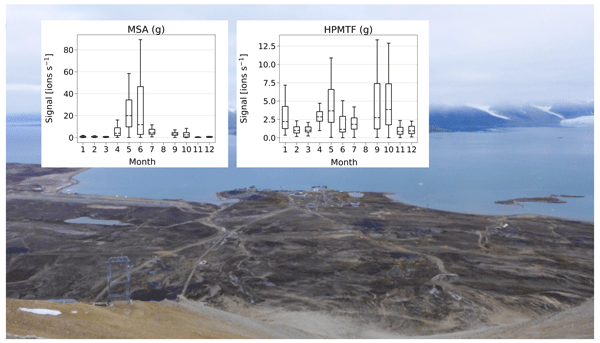
Karolina Siegel, Yvette Gramlich, Sophie L. Haslett, Gabriel Freitas, Radovan Krejci, Paul Zieger, and Claudia Mohr
Atmos. Chem. Phys., 23, 7569–7587, https://doi.org/10.5194/acp-23-7569-2023, https://doi.org/10.5194/acp-23-7569-2023, 2023
Short summary
Short summary
Hydroperoxymethyl thioformate (HPMTF) is a recently discovered oxidation product of dimethyl sulfide (DMS). We present a full year of concurrent gas- and particle-phase observations of HPMTF and other DMS oxidation products from the Arctic. We did not observe significant amounts of HPMTF in the particle phase but a good agreement between gas-phase HMPTF and methanesulfonic acid in the summer. Our study provides information about the relationship between HPMTF and other DMS oxidation products.

Jonas Elm, Aladár Czitrovszky, Andreas Held, Annele Virtanen, Astrid Kiendler-Scharr, Benjamin J. Murray, Daniel McCluskey, Daniele Contini, David Broday, Eirini Goudeli, Hilkka Timonen, Joan Rosell-Llompart, Jose L. Castillo, Evangelia Diapouli, Mar Viana, Maria E. Messing, Markku Kulmala, Naděžda Zíková, and Sebastian H. Schmitt
Aerosol Research, 1, 13–16, https://doi.org/10.5194/ar-1-13-2023, https://doi.org/10.5194/ar-1-13-2023, 2023
Yvette Gramlich, Karolina Siegel, Sophie L. Haslett, Gabriel Freitas, Radovan Krejci, Paul Zieger, and Claudia Mohr
Atmos. Chem. Phys., 23, 6813–6834, https://doi.org/10.5194/acp-23-6813-2023, https://doi.org/10.5194/acp-23-6813-2023, 2023
Short summary
Short summary
In this study, we investigate the chemical composition of aerosol particles forming clouds in the Arctic. During year-long observations at a mountain site on Svalbard, we find a large contribution of naturally derived aerosol particles in the fraction forming clouds in the summer. Our observations indicate that most aerosol particles can serve as cloud seeds in this remote environment.
Gillian Young McCusker, Jutta Vüllers, Peggy Achtert, Paul Field, Jonathan J. Day, Richard Forbes, Ruth Price, Ewan O'Connor, Michael Tjernström, John Prytherch, Ryan Neely III, and Ian M. Brooks
Atmos. Chem. Phys., 23, 4819–4847, https://doi.org/10.5194/acp-23-4819-2023, https://doi.org/10.5194/acp-23-4819-2023, 2023
Short summary
Short summary
In this study, we show that recent versions of two atmospheric models – the Unified Model and Integrated Forecasting System – overestimate Arctic cloud fraction within the lower troposphere by comparison with recent remote-sensing measurements made during the Arctic Ocean 2018 expedition. The overabundance of cloud is interlinked with the modelled thermodynamic structure, with strong negative temperature biases coincident with these overestimated cloud layers.
Ruth Price, Andrea Baccarini, Julia Schmale, Paul Zieger, Ian M. Brooks, Paul Field, and Ken S. Carslaw
Atmos. Chem. Phys., 23, 2927–2961, https://doi.org/10.5194/acp-23-2927-2023, https://doi.org/10.5194/acp-23-2927-2023, 2023
Short summary
Short summary
Arctic clouds can control how much energy is absorbed by the surface or reflected back to space. Using a computer model of the atmosphere we investigated the formation of atmospheric particles that allow cloud droplets to form. We found that particles formed aloft are transported to the lowest part of the Arctic atmosphere and that this is a key source of particles. Our results have implications for the way Arctic clouds will behave in the future as climate change continues to impact the region.
Christian Pilz, Sebastian Düsing, Birgit Wehner, Thomas Müller, Holger Siebert, Jens Voigtländer, and Michael Lonardi
Atmos. Meas. Tech., 15, 6889–6905, https://doi.org/10.5194/amt-15-6889-2022, https://doi.org/10.5194/amt-15-6889-2022, 2022
Short summary
Short summary
Tethered balloon observations are highly valuable for aerosol studies in the lowest part of the atmosphere. This study presents a newly developed platform called CAMP with four aerosol instruments for balloon-borne measurements in the Arctic. Laboratory characterizations and evaluations of the instruments and results of a first field deployment are shown. A case study highlights CAMP's capabilities and the importance of airborne aerosol studies for interpretation of ground-based observations.
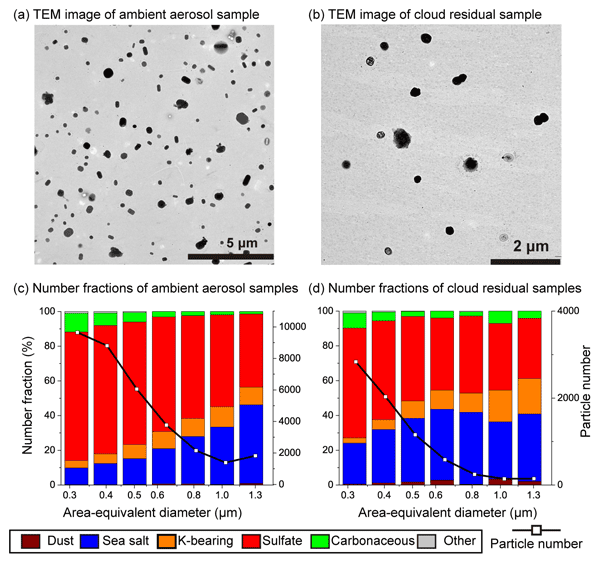
Kouji Adachi, Yutaka Tobo, Makoto Koike, Gabriel Freitas, Paul Zieger, and Radovan Krejci
Atmos. Chem. Phys., 22, 14421–14439, https://doi.org/10.5194/acp-22-14421-2022, https://doi.org/10.5194/acp-22-14421-2022, 2022
Short summary
Short summary
Ambient aerosol and cloud residual particles in the fine mode were collected at Zeppelin Observatory in Svalbard and were analyzed using transmission electron microscopy. Fractions of mineral dust and sea salt particles increased in cloud residual samples collected at ambient temperatures below 0 °C. This study highlights the variety of aerosol and cloud residual particle compositions and mixing states that influence or are influenced by aerosol–cloud interactions in Arctic low-level clouds.
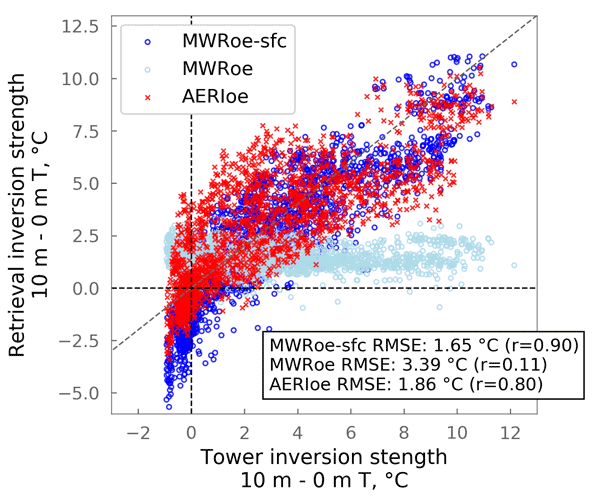
Heather Guy, David D. Turner, Von P. Walden, Ian M. Brooks, and Ryan R. Neely
Atmos. Meas. Tech., 15, 5095–5115, https://doi.org/10.5194/amt-15-5095-2022, https://doi.org/10.5194/amt-15-5095-2022, 2022
Short summary
Short summary
Fog formation is highly sensitive to near-surface temperatures and humidity profiles. Passive remote sensing instruments can provide continuous measurements of the vertical temperature and humidity profiles and liquid water content, which can improve fog forecasts. Here we compare the performance of collocated infrared and microwave remote sensing instruments and demonstrate that the infrared instrument is especially sensitive to the onset of thin radiation fog.
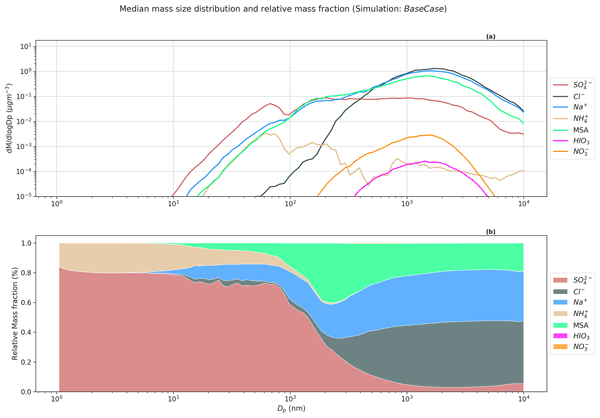
Carlton Xavier, Metin Baykara, Robin Wollesen de Jonge, Barbara Altstädter, Petri Clusius, Ville Vakkari, Roseline Thakur, Lisa Beck, Silvia Becagli, Mirko Severi, Rita Traversi, Radovan Krejci, Peter Tunved, Mauro Mazzola, Birgit Wehner, Mikko Sipilä, Markku Kulmala, Michael Boy, and Pontus Roldin
Atmos. Chem. Phys., 22, 10023–10043, https://doi.org/10.5194/acp-22-10023-2022, https://doi.org/10.5194/acp-22-10023-2022, 2022
Short summary
Short summary
The focus of this work is to study and improve our understanding of processes involved in the formation and growth of new particles in a remote Arctic marine environment. We run the 1D model ADCHEM along air mass trajectories arriving at Ny-Ålesund in May 2018. The model finds that ion-mediated H2SO4–NH3 nucleation can explain the observed new particle formation at Ny-Ålesund. The growth of particles is driven via H2SO4 condensation and formation of methane sulfonic acid in the aqueous phase.
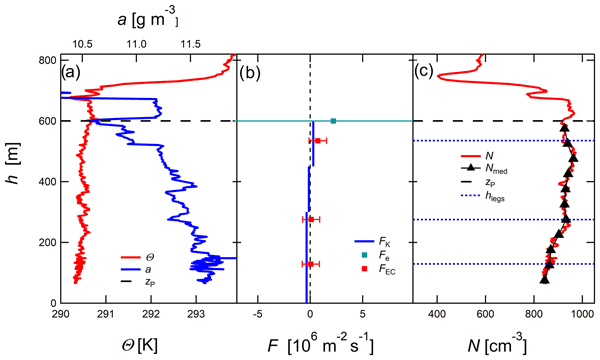
Janine Lückerath, Andreas Held, Holger Siebert, Michel Michalkow, and Birgit Wehner
Atmos. Chem. Phys., 22, 10007–10021, https://doi.org/10.5194/acp-22-10007-2022, https://doi.org/10.5194/acp-22-10007-2022, 2022
Short summary
Short summary
Three different methods were applied to estimate the vertical aerosol particle flux in the marine boundary layer (MBL) and between the MBL and free troposphere. For the first time, aerosol fluxes derived from these three methods were estimated and compared using airborne aerosol measurements using data from the ACORES field campaign in the northeastern Atlantic Ocean in July 2017. The amount of fluxes was small and directed up and down for different cases, but the methods were applicable.
Zezhen Cheng, Megan Morgenstern, Bo Zhang, Matthew Fraund, Nurun Nahar Lata, Rhenton Brimberry, Matthew A. Marcus, Lynn Mazzoleni, Paulo Fialho, Silvia Henning, Birgit Wehner, Claudio Mazzoleni, and Swarup China
Atmos. Chem. Phys., 22, 9033–9057, https://doi.org/10.5194/acp-22-9033-2022, https://doi.org/10.5194/acp-22-9033-2022, 2022
Short summary
Short summary
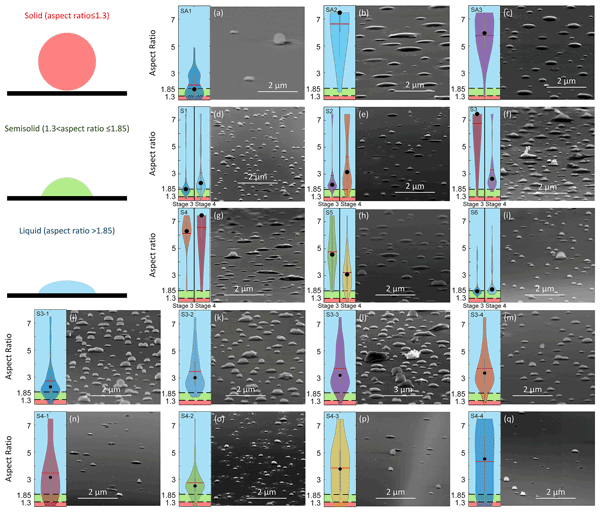
We observed a high abundance of liquid and internally mixed particles in samples collected in the North Atlantic free troposphere during summer. We also found several solid and semisolid particles for different emission sources and transport patterns. Our results suggest that considering the mixing state, emission source, and transport patterns of particles is necessary to estimate their phase state in the free troposphere, which is critical for predicting their effects on climate.
Matthias Karl, Liisa Pirjola, Tiia Grönholm, Mona Kurppa, Srinivasan Anand, Xiaole Zhang, Andreas Held, Rolf Sander, Miikka Dal Maso, David Topping, Shuai Jiang, Leena Kangas, and Jaakko Kukkonen
Geosci. Model Dev., 15, 3969–4026, https://doi.org/10.5194/gmd-15-3969-2022, https://doi.org/10.5194/gmd-15-3969-2022, 2022
Short summary
Short summary
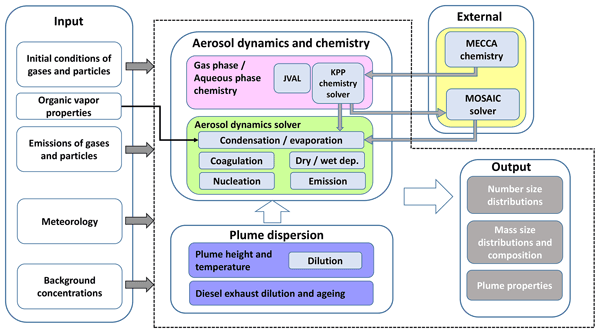
The community aerosol dynamics model MAFOR includes several advanced features: coupling with an up-to-date chemistry mechanism for volatile organic compounds, a revised Brownian coagulation kernel that takes into account the fractal geometry of soot particles, a multitude of nucleation parameterizations, size-resolved partitioning of semi-volatile inorganics, and a hybrid method for the formation of secondary organic aerosols within the framework of condensation and evaporation.
Helen Czerski, Ian M. Brooks, Steve Gunn, Robin Pascal, Adrian Matei, and Byron Blomquist
Ocean Sci., 18, 587–608, https://doi.org/10.5194/os-18-587-2022, https://doi.org/10.5194/os-18-587-2022, 2022
Short summary
Short summary
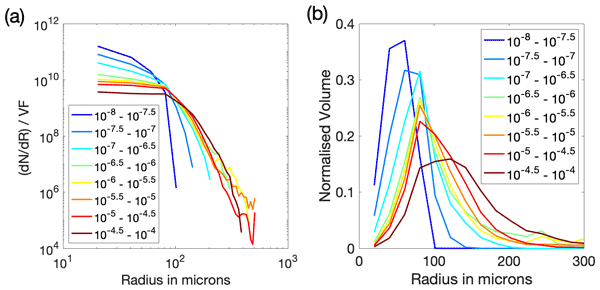
The bubbles formed by breaking waves at the ocean surface are important because they are thought to speed up the movement of gases like carbon dioxide and oxygen between the atmosphere and ocean. We collected data on the bubbles in the top few metres of the ocean which were created by storms in the North Atlantic. The focus in this paper is the bubble sizes and their position in the water. We saw that there are very predictable patterns and set out what happens to bubbles after a wave breaks.
Helen Czerski, Ian M. Brooks, Steve Gunn, Robin Pascal, Adrian Matei, and Byron Blomquist
Ocean Sci., 18, 565–586, https://doi.org/10.5194/os-18-565-2022, https://doi.org/10.5194/os-18-565-2022, 2022
Short summary
Short summary
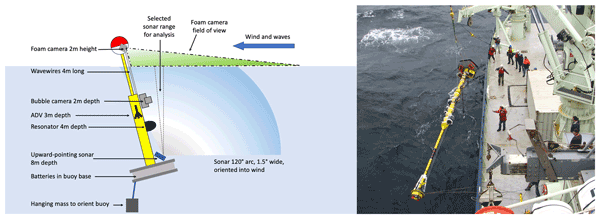
The bubbles formed by breaking waves speed up the movement of gases like carbon dioxide and oxygen between the atmosphere and the ocean. Understanding where these gases go is an important part of understanding Earth's climate. In this paper we describe measurements of the bubbles close to the ocean surface during big storms in the North Atlantic. We observed small bubbles collecting in distinctive patterns which help us to understand the contribution they make to the ocean breathing.
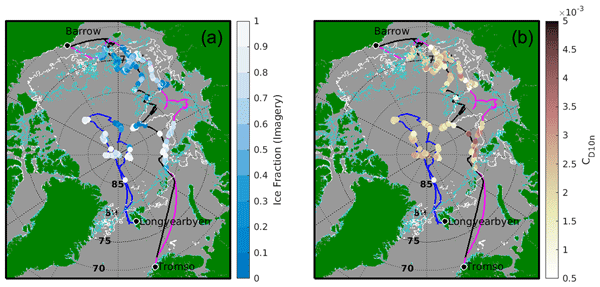
Piyush Srivastava, Ian M. Brooks, John Prytherch, Dominic J. Salisbury, Andrew D. Elvidge, Ian A. Renfrew, and Margaret J. Yelland
Atmos. Chem. Phys., 22, 4763–4778, https://doi.org/10.5194/acp-22-4763-2022, https://doi.org/10.5194/acp-22-4763-2022, 2022
Short summary
Short summary
The parameterization of surface turbulent fluxes over sea ice remains a weak point in weather forecast and climate models. Recent theoretical developments have introduced more extensive physics but these descriptions are poorly constrained due to a lack of observation data. Here we utilize a large dataset of measurements of turbulent fluxes over sea ice to tune the state-of-the-art parameterization of wind stress, and compare it with a previous scheme.
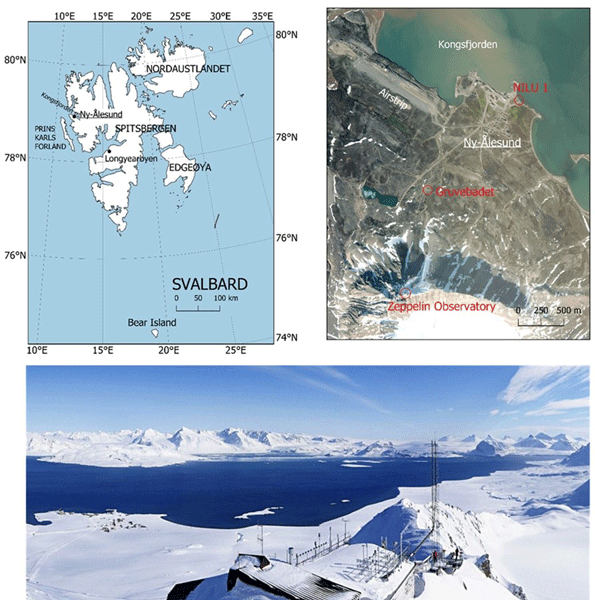
Stephen M. Platt, Øystein Hov, Torunn Berg, Knut Breivik, Sabine Eckhardt, Konstantinos Eleftheriadis, Nikolaos Evangeliou, Markus Fiebig, Rebecca Fisher, Georg Hansen, Hans-Christen Hansson, Jost Heintzenberg, Ove Hermansen, Dominic Heslin-Rees, Kim Holmén, Stephen Hudson, Roland Kallenborn, Radovan Krejci, Terje Krognes, Steinar Larssen, David Lowry, Cathrine Lund Myhre, Chris Lunder, Euan Nisbet, Pernilla B. Nizzetto, Ki-Tae Park, Christina A. Pedersen, Katrine Aspmo Pfaffhuber, Thomas Röckmann, Norbert Schmidbauer, Sverre Solberg, Andreas Stohl, Johan Ström, Tove Svendby, Peter Tunved, Kjersti Tørnkvist, Carina van der Veen, Stergios Vratolis, Young Jun Yoon, Karl Espen Yttri, Paul Zieger, Wenche Aas, and Kjetil Tørseth
Atmos. Chem. Phys., 22, 3321–3369, https://doi.org/10.5194/acp-22-3321-2022, https://doi.org/10.5194/acp-22-3321-2022, 2022
Short summary
Short summary
Here we detail the history of the Zeppelin Observatory, a unique global background site and one of only a few in the high Arctic. We present long-term time series of up to 30 years of atmospheric components and atmospheric transport phenomena. Many of these time series are important to our understanding of Arctic and global atmospheric composition change. Finally, we discuss the future of the Zeppelin Observatory and emerging areas of future research on the Arctic atmosphere.
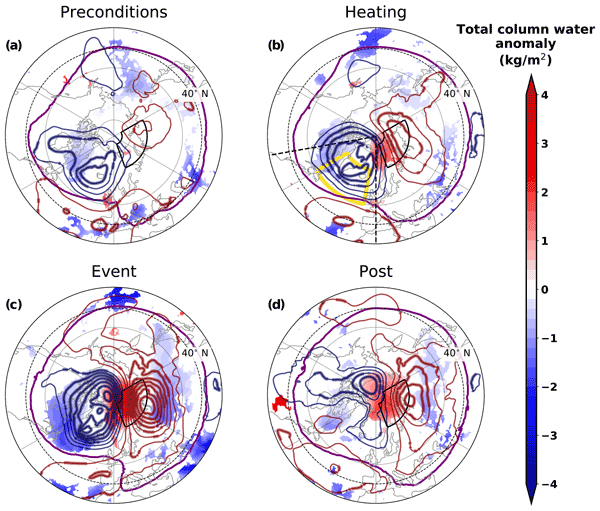
Sonja Murto, Rodrigo Caballero, Gunilla Svensson, and Lukas Papritz
Weather Clim. Dynam., 3, 21–44, https://doi.org/10.5194/wcd-3-21-2022, https://doi.org/10.5194/wcd-3-21-2022, 2022
Short summary
Short summary
This study uses reanalysis data to investigate the role of atmospheric blocking, prevailing high-pressure systems and mid-latitude cyclones in driving high-Arctic wintertime warm extreme events. These events are mainly preceded by Ural and Scandinavian blocks, which are shown to be significantly influenced and amplified by cyclones in the North Atlantic. It also highlights processes that need to be well captured in climate models for improving their representation of Arctic wintertime climate.
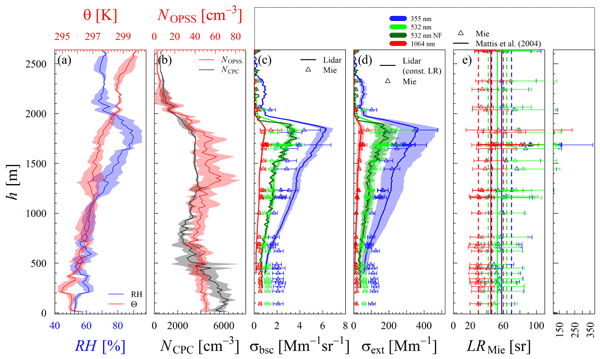
Sebastian Düsing, Albert Ansmann, Holger Baars, Joel C. Corbin, Cyrielle Denjean, Martin Gysel-Beer, Thomas Müller, Laurent Poulain, Holger Siebert, Gerald Spindler, Thomas Tuch, Birgit Wehner, and Alfred Wiedensohler
Atmos. Chem. Phys., 21, 16745–16773, https://doi.org/10.5194/acp-21-16745-2021, https://doi.org/10.5194/acp-21-16745-2021, 2021
Short summary
Short summary
The work deals with optical properties of aerosol particles in dried and atmospheric states. Based on two measurement campaigns in the rural background of central Europe, different measurement approaches were compared with each other, such as modeling based on Mie theory and direct in situ or remote sensing measurements. Among others, it was shown that the aerosol extinction-to-backscatter ratio is relative humidity dependent, and refinement with respect to the model input parameters is needed.
Sho Ohata, Tatsuhiro Mori, Yutaka Kondo, Sangeeta Sharma, Antti Hyvärinen, Elisabeth Andrews, Peter Tunved, Eija Asmi, John Backman, Henri Servomaa, Daniel Veber, Konstantinos Eleftheriadis, Stergios Vratolis, Radovan Krejci, Paul Zieger, Makoto Koike, Yugo Kanaya, Atsushi Yoshida, Nobuhiro Moteki, Yongjing Zhao, Yutaka Tobo, Junji Matsushita, and Naga Oshima
Atmos. Meas. Tech., 14, 6723–6748, https://doi.org/10.5194/amt-14-6723-2021, https://doi.org/10.5194/amt-14-6723-2021, 2021
Short summary
Short summary
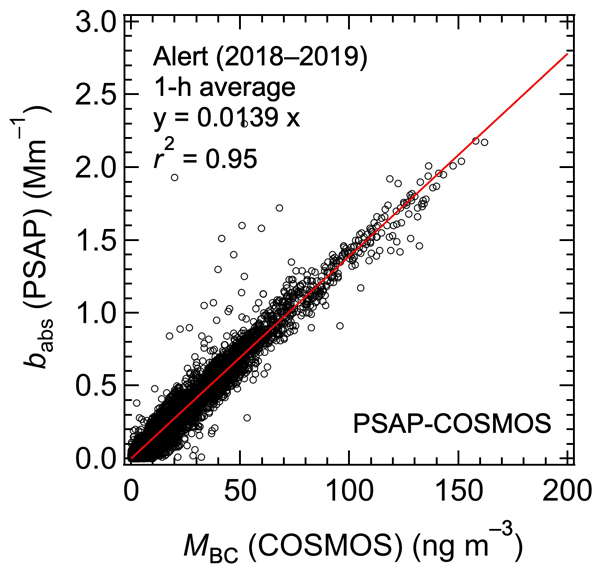
Reliable values of mass absorption cross sections (MACs) of black carbon (BC) are required to determine mass concentrations of BC at Arctic sites using different types of filter-based absorption photometers. We successfully estimated MAC values for these instruments through comparison with independent measurements of BC by a continuous soot monitoring system called COSMOS. These MAC values are consistent with each other and applicable to study spatial and temporal variation in BC in the Arctic.
Heather Guy, Ian M. Brooks, Ken S. Carslaw, Benjamin J. Murray, Von P. Walden, Matthew D. Shupe, Claire Pettersen, David D. Turner, Christopher J. Cox, William D. Neff, Ralf Bennartz, and Ryan R. Neely III
Atmos. Chem. Phys., 21, 15351–15374, https://doi.org/10.5194/acp-21-15351-2021, https://doi.org/10.5194/acp-21-15351-2021, 2021
Short summary
Short summary
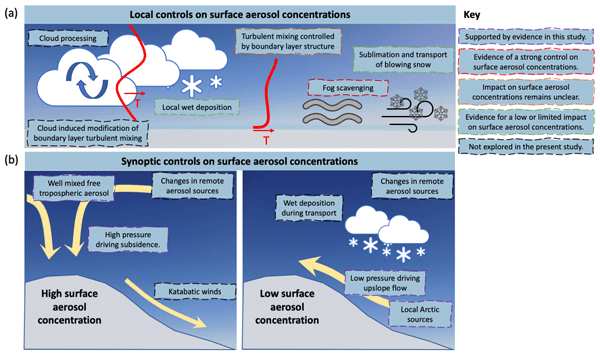
We present the first full year of surface aerosol number concentration measurements from the central Greenland Ice Sheet. Aerosol concentrations here have a distinct seasonal cycle from those at lower-altitude Arctic sites, which is driven by large-scale atmospheric circulation. Our results can be used to help understand the role aerosols might play in Greenland surface melt through the modification of cloud properties. This is crucial in a rapidly changing region where observations are sparse.
Cited articles
Albrecht, B. A.: Aerosols, cloud microphysics, and fractional cloudiness, Science, 245, 1227–1230, https://doi.org/10.1126/science.245.4923.1227, 1989. a
Anguelova, M. and Huq, P.: Characteristics of bubble clouds at various wind speeds, J. Geophys. Res., 117, 1–22, https://doi.org/10.1029/2011JC007442, 2012. a
Arctic Monitoring and Assessment Programme (Ed.): AMAP Assessment 2021: Impacts of Short-lived Climate Forcers on Arctic Climate, Air Quality, and Human Health, AMAP, Tromsø, Norway, https://www.amap.no/documents/doc/amap-assessment-2021-impacts-of-short-lived-climate-forcers-on- arctic-climate-air-quality-and-human-health/3614 (last access: 8 October 2026), 2021. a
Arganda-Carreras, I., Kaynig, V., Rueden, C., Eliceiri, K. W., Schindelin, J., Cardona, A., and Seung, H. S.: Trainable Weka Segmentation: a machine learning tool for microscopy pixel classification, Bioinformatics, 33, 2424–2426, https://doi.org/10.1093/bioinformatics/btx180, 2017. a, b
Baccarini, A., Karlsson, L., Dommen, J., Duplessis, P., Vüllers, J., Brooks, I. M., Saiz-Lopez, A., Salter, M., Tjernström, M., Baltensperger, U., Zieger, P., and Schmale, J.: Frequent new particle formation over the high Arctic pack ice by enhanced iodine emissions, Nat. Commun., 11, https://doi.org/10.1038/s41467-020-18551-0, 2020. a
Beck, I., Angot, H., Baccarini, A., Dada, L., Quéléver, L., Jokinen, T., Laurila, T., Lampimäki, M., Bukowiecki, N., Boyer, M., Gong, X., Gysel-Beer, M., Petäjä, T., Wang, J., and Schmale, J.: Automated identification of local contamination in remote atmospheric composition time series, Atmos. Meas. Tech., 15, 4195–4224, https://doi.org/10.5194/amt-15-4195-2022, 2022. a
Bullard, J. E., Baddock, M., Bradwell, T., Crusius, J., Darlington, E., Gaiero, D., Gassó, S., Gisladottir, G., Hodgkins, R., McCulloch, R., McKenna-Neuman, C., Mockford, T., Stewart, H., and Thorsteinsson, T.: High-latitude dust in the Earth system, Rev. Geophys., 54, 447–485, https://doi.org/10.1002/2016RG000518, 2016. a
Burkart, J., Willis, M. D., Bozem, H., Thomas, J. L., Law, K., Hoor, P., Aliabadi, A. A., Köllner, F., Schneider, J., Herber, A., Abbatt, J. P. D., and Leaitch, W. R.: Summertime observations of elevated levels of ultrafine particles in the high Arctic marine boundary layer, Atmos. Chem. Phys., 17, 5515–5535, https://doi.org/10.5194/acp-17-5515-2017, 2017. a
Buzorius, G., Rannik, U., Nilsson, E. D., Vesala, T., and Kulmala, M.: Analysis of measurement techniques to determine dry deposition velocities of aerosol particles with diameters less than 100 nm, J. Aerosol Sci., 34, 747–764, https://doi.org/10.1016/S0021-8502(03)00025-9, 2003. a, b, c
Carslaw, K., Lee, L., Reddington, C., Pringle, K., Rap, A., Forster, P., Mann, G., Spracklen, D., Woodhouse, M., Regayre, L., and Pierce, J.: Large contribution of natural aerosols to uncertainty in indirect forcing, Nature, 503, 67–71, https://doi.org/10.1038/nature12674, 2013. a
Chen, Q., Mirrielees, J. A., Thanekar, S., Loeb, N. A., Kirpes, R. M., Upchurch, L. M., Barget, A. J., Lata, N. N., Raso, A. R. W., McNamara, S. M., China, S., Quinn, P. K., Ault, A. P., Kennedy, A., Shepson, P. B., Fuentes, J. D., and Pratt, K. A.: Atmospheric particle abundance and sea salt aerosol observations in the springtime Arctic: a focus on blowing snow and leads, Atmos. Chem. Phys., 22, 15263–15285, https://doi.org/10.5194/acp-22-15263-2022, 2022. a, b
Chylek, P., Vogelsang, T. J., Klett, J. D., Hengartner, N., Higdon, D., Lesins, G., and Dubey, M. K.: Indirect Aerosol Effect Increases CMIP5 Models' Projected Arctic Warming, J. Climate, 29, 1417–1428, https://doi.org/10.1175/JCLI-D-15-0362.1, 2016. a
CMEMS – Copernicus Marine Service: Arctic Ocean – Sea Ice Concentration Charts – Svalbard and Greenland, https://doi.org/10.48670/moi-00128, 2023.
Cohen, J., Screen, J. A., Furtado, J. C., Barlow, M., Whittleston, D., Coumou, D., Francis, J., Dethloff, K., Entekhabi, D., Overland, J., and Jones, J.: Recent Arctic amplification and extreme mid-latitude weather, Nat. Geosci., 7, 627–637, https://doi.org/10.1038/ngeo2234, 2014. a
Contini, D., Donateo, A., Belosi, F., Grasso, F. M., Santachiara, G., and Prodi, F.: Deposition velocity of ultrafine particles measured with the Eddy–Correlation Method over the Nansen Ice Sheet (Antarctica), J. Geophys. Res.-Atmos., 115, https://doi.org/10.1029/2009JD013600, 2010. a
Cox, C. J., Walden, V. P., Rowe, P. M., and Shupe, M. D.: Humidity trends imply increased sensitivity to clouds in a warming Arctic, Nat. Commun., 6, https://doi.org/10.1038/ncomms10117, 2015. a
Creamean, J. M., Barry, K., Hill, T. C. J., Hume, C., DeMott, P. J., Shupe, M. D., Dahlke, S., Willmes, S., Schmale, J., Beck, I., Hoppe, C. J. M., Fong, A., Chamberlain, E., Bowman, J., Scharien, R., and Persson, O.: Annual cycle observations of aerosols capable of ice formation in central Arctic clouds, Nat. Commun., 13, 3537, https://doi.org/10.1038/s41467-022-31182-x, 2022. a
Dall'Osto, M., Park, J., Lee, Y., Jung, J., Kim, J.-H., Yang, E. J., Beddows, D. C. S., Harrison, R. M., Sellegri, K., Skov, H., Massling, A., and Yoon, Y. J.: Arctic Sea Ice Melting Controls Sea Spray Aerosol Production, Environ. Sci. Technol., 60, 4147–4158, https://doi.org/10.1021/acs.est.5c13886, 2026. a
de Leeuw, G., Andreas, E. L., Anguelova, M. D., Fairall, C. W., Lewis, E. R., O'Dowd, C., Schulz, M., and Schwartz, S. E.: Production flux of sea spray aerosol, Rev. Geophys., 49, https://doi.org/10.1029/2010RG000349, 2011. a
Donateo, A. and Contini, D.: Correlation of Dry Deposition Velocity and Friction Velocity over Different Surfaces for PM2.5 and Particle Number Concentrations, Adv. Meteorol., 2014, https://doi.org/10.1155/2014/760393, 2014. a, b
Donateo, A., Pappaccogli, G., Famulari, D., Mazzola, M., Scoto, F., and Decesari, S.: Characterization of size-segregated particles' turbulent flux and deposition velocity by eddy correlation method at an Arctic site, Atmos. Chem. Phys., 23, 7425–7445, https://doi.org/10.5194/acp-23-7425-2023, 2023. a, b, c, d, e, f
Donateo, A., Pappaccogli, G., Scoto, F., Busetto, M., Lovisco, F. L., Brett, N., Keller, D., Barret, B., Dieudonné, E., Pohorsky, R., Baccarini, A., Bekki, S., Raut, J.-C., Schmale, J., Law, K. S., Arnold, S. R., Fochesatto, J. G., Simpson, W. R., and Decesari, S.: Aerosol dry deposition fluxes on snow during the ALPACA campaign in Fairbanks, Alaska, Atmos. Chem. Phys., 25, 18129–18156, https://doi.org/10.5194/acp-25-18129-2025, 2025. a, b
Edson, J. B., Hinton, A. A., Prada, K. E., Hare, J. E., and Fairall, C. W.: Direct Covariance Flux Estimates from Mobile Platforms at Sea, J. Atmos. Ocean. Tech., 15, 547–562, https://doi.org/10.1175/1520-0426(1998)015<0547:DCFEFM>2.0.CO;2, 1998. a
Emerson, E. W., Hodshire, A. L., DeBolt, H. M., Bilsback, K. R., Pierce, J. R., McMeeking, G. R., and Farmer, D. K.: Revisiting particle dry deposition and its role in radiative effect estimates, P. Natl. Acad. Sci. USA, 117, 26076–26082, https://doi.org/10.1073/pnas.2014761117, 2020. a, b, c, d, e, f, g
ESDU: Characteristics of wind speed in the lower layers of the atmosphere near the ground: strong winds, Tech. rep., Engineering Sciences Data Unit, London, https://ntrl.ntis.gov/NTRL/dashboard/searchResults/titleDetail/ESDU72026B.xhtml (last access: 12 October 2026), 1972. a
Farmer, D. K., Boedicker, E. K., and DeBolt, H. M.: Dry Deposition of Atmospheric Aerosols: Approaches, Observations, and Mechanisms, Annu. Rev. Phys. Chem., 72, 375–397, https://doi.org/10.1146/annurev-physchem-090519-034936, 2021. a, b
Farmer, D. M., McNeil, C. L., and Johnson, B. D.: Evidence for the importance of bubbles in increasing air–sea gas flux, Nature, 361, 620–623, https://doi.org/10.1038/361620a0, 1993. a
Foken, T. and Mauder, M.: Micrometeorology, Springer Atmospheric Sciences, Springer International Publishing, Cham, ISBN 978-3-031-47525-2, https://doi.org/10.1007/978-3-031-47526-9, 2024. a
Frey, M. M., Norris, S. J., Brooks, I. M., Anderson, P. S., Nishimura, K., Yang, X., Jones, A. E., Nerentorp Mastromonaco, M. G., Jones, D. H., and Wolff, E. W.: First direct observation of sea salt aerosol production from blowing snow above sea ice, Atmos. Chem. Phys., 20, 2549–2578, https://doi.org/10.5194/acp-20-2549-2020, 2020. a, b
Garrett, T. J., Zhao, C., and Novelli, P. C.: Assessing the relative contributions of transport efficiency and scavenging to seasonal variability in Arctic aerosol, Tellus B, 62, 190, https://doi.org/10.1111/j.1600-0889.2010.00453.x, 2010. a
Gong, X., Zhang, J., Croft, B., Yang, X., Frey, M. M., Bergner, N., Chang, R. Y.-W., Creamean, J. M., Kuang, C., Martin, R. V., Ranjithkumar, A., Sedlacek, A. J., Uin, J., Willmes, S., Zawadowicz, M. A., Pierce, J. R., Shupe, M. D., Schmale, J., and Wang, J.: Arctic warming by abundant fine sea salt aerosols from blowing snow, Nat. Geosci., 16, 768–774, https://doi.org/10.1038/s41561-023-01254-8, 2023. a, b, c, d
Gormley, P. G. and Kennedy, M.: Diffusion from a Stream Flowing through a Cylindrical Tube, Proc. Royal Irish Academy, 163–169, https://www.jstor.org/stable/20488498?seq=1 (last access: 8 October 2026), 1949. a
Grachev, A. A., Fairall, C. W., Persson, P. O. G., Andreas, E. L., and Guest, P. S.: Stable Boundary-Layer Scaling Regimes: The Sheba Data, Bound.-Lay. Meteorol., 116, 201–235, https://doi.org/10.1007/s10546-004-2729-0, 2005. a
Grannas, A. M., Jones, A. E., Dibb, J., Ammann, M., Anastasio, C., Beine, H. J., Bergin, M., Bottenheim, J., Boxe, C. S., Carver, G., Chen, G., Crawford, J. H., Dominé, F., Frey, M. M., Guzmán, M. I., Heard, D. E., Helmig, D., Hoffmann, M. R., Honrath, R. E., Huey, L. G., Hutterli, M., Jacobi, H. W., Klán, P., Lefer, B., McConnell, J., Plane, J., Sander, R., Savarino, J., Shepson, P. B., Simpson, W. R., Sodeau, J. R., von Glasow, R., Weller, R., Wolff, E. W., and Zhu, T.: An overview of snow photochemistry: evidence, mechanisms and impacts, Atmos. Chem. Phys., 7, 4329–4373, https://doi.org/10.5194/acp-7-4329-2007, 2007. a
Grönholm, T., Launiainen, S., Ahlm, L., Mårtensson, E. M., Kulmala, M., Vesala, T., and Nilsson, E. D.: Aerosol particle dry deposition to canopy and forest floor measured by two‐layer eddy covariance system, J. Geophys. Res.-Atmos., 114, https://doi.org/10.1029/2008JD010663, 2009. a
Grönlund, A., Nilsson, D., Koponen, I. K., Virkkula, A., and Hansson, M. E.: Aerosol dry deposition measured with eddy-covariance technique at Wasa and Aboa, Dronning Maud Land, Antarctica, Ann. Glaciol., 35, 355–361, https://doi.org/10.3189/172756402781816519, 2002. a, b, c
Heintzenberg, J., Leck, C., and Tunved, P.: Potential source regions and processes of aerosol in the summer Arctic, Atmos. Chem. Phys., 15, 6487–6502, https://doi.org/10.5194/acp-15-6487-2015, 2015. a
Heutte, B., Bergner, N., Angot, H., Pernov, J. B., Dada, L., Mirrielees, J. A., Beck, I., Baccarini, A., Boyer, M., Creamean, J. M., Daellenbach, K. R., El Haddad, I., Frey, M. M., Henning, S., Laurila, T., Moschos, V., Petäjä, T., Pratt, K. A., Quéléver, L. L. J., Shupe, M. D., Zieger, P., Jokinen, T., and Schmale, J.: Observations of high-time-resolution and size-resolved aerosol chemical composition and microphysics in the central Arctic: implications for climate-relevant particle properties, Atmos. Chem. Phys., 25, 2207–2241, https://doi.org/10.5194/acp-25-2207-2025, 2025. a
Horst, T. W.: A simple formula for attenuation of eddy fluxes measured with first-order-response scalar sensors, Bound.-Lay. Meteorol., 82, 219–233, https://doi.org/10.1023/A:1000229130034, 1997. a, b
IPCC: Summary for Policymakers, in: Climate Change 2023: Synthesis Report, Contribution of Working Groups I, II and III to the Sixth Assessment Report of the Intergovernmental Panel on Climate Change, edited by: Core Writing Team, Lee, H., and Romero, J., Tech. rep., IPCC – Intergovernmental Panel on Climate Change, Geneva, Switzerland, https://doi.org/10.59327/IPCC/AR6-9789291691647.001, 2023. a
Johnson, B. D. and Wangersky, P. J.: Microbubbles: Stabilization by monolayers of adsorbed particles, J. Geophys. Res.-Oceans, 92, 14641–14647, https://doi.org/10.1029/JC092iC13p14641, 1987. a
Kanji, Z. A., Ladino, L. A., Wex, H., Boose, Y., Burkert-Kohn, M., Cziczo, D. J., and Krämer, M.: Overview of Ice Nucleating Particles, Meteorol. Monogr., 58, 1.1–1.33, https://doi.org/10.1175/AMSMONOGRAPHS-D-16-0006.1, 2017. a
Karlsson, L., Baccarini, A., Duplessis, P., Baumgardner, D., Brooks, I. M., Chang, R. Y.-W., Dada, L., Dällenbach, K. R., Heikkinen, L., Krejci, R., Leaitch, W. R., Leck, C., Partridge, D. G., Salter, M. E., Wernli, H., Wheeler, M. J., Schmale, J., and Zieger, P.: Physical and Chemical Properties of Cloud Droplet Residuals and Aerosol Particles During the Arctic Ocean 2018 Expedition, J. Geophys. Res.-Atmos., 127, e2021JD036383, https://doi.org/10.1029/2021JD036383, 2022. a
Kirpes, R. M., Bonanno, D., May, N. W., Fraund, M., Barget, A. J., Moffet, R. C., Ault, A. P., and Pratt, K. A.: Wintertime Arctic Sea Spray Aerosol Composition Controlled by Sea Ice Lead Microbiology, ACS Central Sci., 5, 1760–1767, https://doi.org/10.1021/acscentsci.9b00541, 2019. a, b
Koike, M., Takigawa, M., Morimoto, S., Adachi, K., Aizawa, T., Chandra, N., Fujita, R., Goto, D., Ishidoya, S., Ishijima, K., Ito, A., Kawai, K., Kanaya, Y., Kim, Y., Kinase, T., Kondo, Y., Machida, T., Matsui, H., Miyakawa, T., Mochida, M., Mori, T., Moteki, N., Murayama, S., Ohata, S., Oshima, N., Patra, P. K., Taketani, F., Tobo, Y., Tohjima, Y., Toyoda, S., Tsuboi, K., Rui, O. C., Yahara, K., Yamaji, K., Yoshida, A., and Zhu, C.: Studies of atmospheric climate forcers in the Arctic during the ArCS II project, Polar Sci., 45, 101216, https://doi.org/10.1016/j.polar.2025.101216, 2025. a
Korhonen, H., Carslaw, K., Spracklen, D., Ridley, D., and Ström, J.: A global model study of processes controlling aerosol size distributions in the Arctic spring and summer, J. Geophys. Res., 113, https://doi.org/10.1029/2007JD009114, 2008. a
Kulkarni, P., Baron, P. A., and Willeke, K. (Eds.): Aerosol Measurement: Principles, Techniques, and Applications, in: 3rd Edn., J. Wiley, New York, NY, ISBN 9780470387412, 2011. a
Kulmala, M., Vehkamäki, H., Petäjä, T., Dal Maso, M., Lauri, A., Kerminen, V. M., Birmili, W., and McMurry, P. H.: Formation and growth rates of ultrafine atmospheric particles: a review of observations, J. Aerosol Sci., 35, 143–176, https://doi.org/10.1016/j.jaerosci.2003.10.003, 2004. a
Lapere, R., Thomas, J. L., Marelle, L., Ekman, A. M. L., Frey, M. M., Lund, M. T., Makkonen, R., Ranjithkumar, A., Salter, M. E., Samset, B. H., Schulz, M., Sogacheva, L., Yang, X., and Zieger, P.: The Representation of Sea Salt Aerosols and Their Role in Polar Climate Within CMIP6, J. Geophys. Res.-Atmos., 128, https://doi.org/10.1029/2022JD038235, 2023. a
Lapere, R., Marelle, L., Rampal, P., Brodeau, L., Melsheimer, C., Spreen, G., and Thomas, J. L.: Modeling the contribution of leads to sea spray aerosol in the high Arctic, Atmos. Chem. Phys., 24, 12107–12132, https://doi.org/10.5194/acp-24-12107-2024, 2024. a, b
Law, K. S. and Stohl, A.: Arctic Air Pollution: Origins and Impacts, Science, 315, 1537–1540, https://doi.org/10.1126/science.1137695, 2007. a
Leck, C., Norman, M., Bigg, E. K., and Hillamo, R.: Chemical composition and sources of the high Arctic aerosol relevant for cloud formation, J. Geophys. Res.-Atmos., 107, https://doi.org/10.1029/2001JD001463, 2002. a
Li, L. and Pomeroy, J. W.: Probability of occurrence of blowing snow, J. Geophys. Res.-Atmos., 102, 21955–21964, https://doi.org/10.1029/97JD01522, 1997. a, b
LI-COR, Inc.: EddyPro Software (Version 7.0) [Computer software], https://www.licor.com/products/eddy-covariance/eddypro (last access: 8 October 2026), 2021. a
Macdonald, K. M., Sharma, S., Toom, D., Chivulescu, A., Platt, A., Elsasser, M., Huang, L., Leaitch, R., Chellman, N., McConnell, J. R., Bozem, H., Kunkel, D., Lei, Y. D., Jeong, C.-H., Abbatt, J. P. D., and Evans, G. J.: Temporally delineated sources of major chemical species in high Arctic snow, Atmos. Chem. Phys., 18, 3485–3503, https://doi.org/10.5194/acp-18-3485-2018, 2018. a
Mathes, T. and Held, A.: Particle fluxes across three surface types for the expedition ARTofMELT, PANGAEA [data set], https://doi.org/10.1594/PANGAEA.987867, 2026. a
Mathes, T., Guy, H., Prytherch, J., Kojoj, J., Brooks, I., Murto, S., Zieger, P., Wehner, B., Tjernström, M., and Held, A.: Particle flux–gradient relationships in the high Arctic: emission and deposition patterns across three surface types, Atmos. Chem. Phys., 25, 8455–8474, https://doi.org/10.5194/acp-25-8455-2025, 2025. a, b, c, d, e, f
Matsui, H. and Liu, M.: Substantial Uncertainties in Arctic Aerosol Simulations by Microphysical Processes Within the Global Climate-Aerosol Model CAM-ATRAS, J. Geophys. Res.-Atmos., 127, e2022JD036943, https://doi.org/10.1029/2022JD036943, 2022. a
Mauder, M., Cuntz, M., Drüe, C., Graf, A., Rebmann, C., Schmid, H. P., Schmidt, M., and Steinbrecher, R.: A strategy for quality and uncertainty assessment of long-term eddy-covariance measurements, Agr. Forest Meteorol., 169, 122–135, https://doi.org/10.1016/j.agrformet.2012.09.006, 2013. a
Mauritsen, T., Sedlar, J., Tjernström, M., Leck, C., Martin, M., Shupe, M., Sjogren, S., Sierau, B., Persson, P. O. G., Brooks, I. M., and Swietlicki, E.: An Arctic CCN-limited cloud-aerosol regime, Atmos. Chem. Phys., 11, 165–173, https://doi.org/10.5194/acp-11-165-2011, 2011. a
May, N. W., Quinn, P. K., McNamara, S. M., and Pratt, K. A.: Multiyear study of the dependence of sea salt aerosol on wind speed and sea ice conditions in the coastal Arctic, J. Geophys. Res.-Atmos., 121, 9208–9219, https://doi.org/10.1002/2016JD025273, 2016. a, b
Meredith, M., Sommerkorn, M., Cassotta, S., Derksen, C., Ekaykin, A., Hollowed, A., Kofinas, G., Mackintosh, A., Melbourne-Thomas, J., Muelbert, M., Ottersen, G., Pritchard, H., and Schuur, E.: Polar Regions, in: IPCC Special Report on the Ocean and Cryosphere in a Changing Climate, IPCC, https://www.ipcc.ch/site/assets/uploads/sites/3/2019/11/07_SROCC_Ch03_FINAL.pdf (last access: 8 October 2026), 2019. a
Minaee, S., Boykov, Y., Porikli, F., Plaza, A., Kehtarnavaz, N., and Terzopoulos, D.: Image Segmentation Using Deep Learning: A Survey, IEEE T. Pattern Anal. Machi. Intel., 44, 3523–3542, https://doi.org/10.1109/TPAMI.2021.3059968, 2022. a
Mirrielees, J. A., Kirpes, R. M., Costa, E. J., Porter, G. C. E., Murray, B. J., Lata, N. N., Boschi, V., China, S., Grannas, A. M., Ault, A. P., Matrai, P. A., and Pratt, K. A.: Marine aerosol generation experiments in the High Arctic during summertime, Elementa, 12, 00134, https://doi.org/10.1525/elementa.2023.00134, 2024. a
Moat, B. I., Yelland, M. J., and Brooks, I. M.: Airflow distortion at instrument sites on the ODEN during the ACSE project, National Oceanography Centre Internal Document, 17, National Oceanography Centre, Southampton, UK, 114 pp., https://nora.nerc.ac.uk/id/eprint/512508/ (last access: 9 October 2026), 2015. a
Mohan, S.: An overview of particulate dry deposition: measuring methods, deposition velocity and controlling factors, Int. J. Environ. Sci. Technol., 13, https://doi.org/10.1007/s13762-015-0898-7, 2015. a
Moncrieff, J., Clement, R., Finnigan, J., and Meyers, T.: Averaging, Detrending, and Filtering of Eddy Covariance Time Series, in: Handbook of Micrometeorology, vol. 29, Atmospheric and Oceanographic Sciences Library, edited by: Lee, X., Massman, W., and Law, B., Kluwer Academic Publishers, Dordrecht, 7–31, ISBN 978-1-4020-2264-7, https://doi.org/10.1007/1-4020-2265-4_2, 2006. a, b
Mori, T., Goto-Azuma, K., Kondo, Y., Ogawa-Tsukagawa, Y., Miura, K., Hirabayashi, M., Oshima, N., Koike, M., Kupiainen, K., Moteki, N., Ohata, S., Sinha, P., Sugiura, K., Aoki, T., Schneebeli, M., Steffen, K., Sato, A., Tsushima, A., Makarov, V., Omiya, S., Sugimoto, A., Takano, S., and Nagatsuka, N.: Black Carbon and Inorganic Aerosols in Arctic Snowpack, J. Geophys. Res.-Atmos., 124, 13325–13356, https://doi.org/10.1029/2019JD030623, 2019. a
Moschos, V., Dzepina, K., Bhattu, D., Lamkaddam, H., Casotto, R., Daellenbach, K. R., Canonaco, F., Rai, P., Aas, W., Becagli, S., Calzolai, G., Eleftheriadis, K., Moffett, C. E., Schnelle-Kreis, J., Severi, M., Sharma, S., Skov, H., Vestenius, M., Zhang, W., Hakola, H., Hellén, H., Huang, L., Jaffrezo, J.-L., Massling, A., Nøjgaard, J. K., Petäjä, T., Popovicheva, O., Sheesley, R. J., Traversi, R., Yttri, K. E., Schmale, J., Prévôt, A. S. H., Baltensperger, U., and El Haddad, I.: Equal abundance of summertime natural and wintertime anthropogenic Arctic organic aerosols, Nat. Geosci., 15, 196–202, https://doi.org/10.1038/s41561-021-00891-1, 2022. a
Mulhearn, P. J.: Distribution of microbubbles in coastal waters, J. Geophys. Res.-Oceans, 86, 6429–6434, https://doi.org/10.1029/JC086iC07p06429, 1981. a
Murto, S., Tjernström, M., Karalis, M., and Prytherch, J.: Wind, temperature, relative humidity, surface temperature and radiation from expedition ARTofMELT, Arctic Ocean, 2023. Dataset version 1, Bolin Centre Database [data set], https://doi.org/10.17043/oden-artofmelt-2023-micromet-oden-1, 2024a. a, b, c
Murto, S., Tjernström, M., Brooks, I., Guy, H., Karalis, M., Vihma, T., Urbancic, G., and Prytherch, J.: Radiosonde profiles from expedition ARTofMELT, Arctic Ocean, 2023, Bolin Centre Database [data set], https://doi.org/10.17043/oden-artofmelt-2023-radiosonde-1, 2024b. a, b
Nameirakpam, D., Singh, K., and Chanu, J.: Image Segmentation Using K-means Clustering Algorithm and Subtractive Clustering Algorithm, Proced. Comput. Sci., 54, 764–771, https://doi.org/10.1016/j.procs.2015.06.090, 2015. a
Nilsson, E., Rannik, Ü., Swietlicki, E., Leck, C., Aalto, P. P., Zhou, J., and Norman, M.: Turbulent aerosol fluxes over the Arctic Ocean: 2. Wind-driven sources from the sea, J. Geophys. Res.-Atmos., 106, https://doi.org/10.1029/2000JD900747, 2001. a, b
Norris, S. J., Brooks, I. M., de Leeuw, G., Sirevaag, A., Leck, C., Brooks, B. J., Birch, C. E., and Tjernström, M.: Measurements of bubble size spectra within leads in the Arctic summer pack ice, Ocean Sci., 7, 129–139, https://doi.org/10.5194/os-7-129-2011, 2011. a
Otsu, N.: A Threshold Selection Method from Gray-Level Histograms, IEEE T. Syst. Man Cybernet., 9, 62–66, https://doi.org/10.1109/TSMC.1979.4310076, 1979. a
Pereira Freitas, G., Adachi, K., Conen, F., Heslin-Rees, D., Krejci, R., Tobo, Y., Yttri, K. E., and Zieger, P.: Regionally sourced bioaerosols drive high-temperature ice nucleating particles in the Arctic, Nat. Commun., 14, 5997, https://doi.org/10.1038/s41467-023-41696-7, 2023. a
Pereira Freitas, G., Kojoj, J., Mavis, C., Creamean, J., Mattsson, F., Nilsson, L., Spicker Schmidt, J., Adachi, K., Šantl Temkiv, T., Ahlberg, E., Mohr, C., Riipinen, I., and Zieger, P.: A comprehensive characterisation of natural aerosol sources in the high Arctic during the onset of sea ice melt, Faraday Discuss., 258, 120–146, https://doi.org/10.1039/D4FD00162A, 2025. a, b
Petelski, T. and Piskozub, J.: Vertical coarse aerosol fluxes in the atmospheric surface layer over the North Polar Waters of the Atlantic, J. Geophys. Res.-Oceans, 111, https://doi.org/10.1029/2005JC003295, 2006. a
Pleim, J. E., Ran, L., Saylor, R. D., Willison, J., and Binkowski, F. S.: A New Aerosol Dry Deposition Model for Air Quality and Climate Modeling, J. Adv. Model. Earth Syst., 14, e2022MS003050, https://doi.org/10.1029/2022MS003050, 2022. a
Prytherch, J., Yelland, M. J., Brooks, I. M., Tupman, D. J., Pascal, R. W., Moat, B. I., and Norris, S. J.: Motion-correlated flow distortion and wave-induced biases in air–sea flux measurements from ships, Atmos. Chem. Phys., 15, 10619–10629, https://doi.org/10.5194/acp-15-10619-2015, 2015. a
Prytherch, J., Brooks, I. M., Crill, P. M., Thornton, B. F., Salisbury, D. J., Tjernström, M., Anderson, L. G., Geibel, M. C., and Humborg, C.: Direct determination of the air-sea CO2 gas transfer velocity in Arctic sea ice regions, Geophys. Res. Lett., 44, 3770–3778, https://doi.org/10.1002/2017GL073593, 2017. a
Ranjithkumar, A., Duncan, E., Yang, X., Partridge, D. G., Lachlan-Cope, T., Gong, X., Nishimura, K., and Frey, M. M.: Direct observation of Arctic Sea salt aerosol production from blowing snow and modeling over a changing sea ice environment, Elementa, 13, https://doi.org/10.1525/elementa.2024.00006, 2025. a, b, c, d
Rantanen, M., Karpechko, A. Y., Lipponen, A., Nordling, K., Hyvärinen, O., Ruosteenoja, K., Vihma, T., and Laaksonen, A.: The Arctic has warmed nearly four times faster than the globe since 1979, Commun. Earth Environ., 3, https://doi.org/10.1038/s43247-022-00498-3, 2022. a, b
Saylor, R. D., Baker, B. D., Lee, P., Tong, D., Pan, L., and Hicks, B. B.: The particle dry deposition component of total deposition from air quality models: right, wrong or uncertain?, Tellus B, 71, https://doi.org/10.1080/16000889.2018.1550324, 2019. a, b
Schindelin, J., Arganda-Carreras, I., Frise, E., Kaynig, V., Longair, M., Pietzsch, T., Preibisch, S., Rueden, C., Saalfeld, S., Schmid, B., Tinevez, J.-Y., White, D. J., Hartenstein, V., Eliceiri, K., Tomancak, P., and Cardona, A.: Fiji: an open-source platform for biological-image analysis, Nat. Meth., 9, 676–682, https://doi.org/10.1038/nmeth.2019, 2012. a
Schmale, J., Zieger, P., and Ekman, A. M. L.: Aerosols in current and future Arctic climate, Nat. Clim. Change, 11, 95–105, https://doi.org/10.1038/s41558-020-00969-5, 2021. a, b
Schmale, J., Sharma, S., Decesari, S., Pernov, J., Massling, A., Hansson, H.-C., von Salzen, K., Skov, H., Andrews, E., Quinn, P. K., Upchurch, L. M., Eleftheriadis, K., Traversi, R., Gilardoni, S., Mazzola, M., Laing, J., and Hopke, P.: Pan-Arctic seasonal cycles and long-term trends of aerosol properties from 10 observatories, Atmos. Chem. Phys., 22, 3067–3096, https://doi.org/10.5194/acp-22-3067-2022, 2022. a
Schneider, C. A., Rasband, W. S., and Eliceiri, K. W.: NIH Image to ImageJ: 25 years of image analysis, Nat. Meth., 9, 671–675, https://doi.org/10.1038/nmeth.2089, 2012. a
Scott, W. D. and Levin, Z.: Open channels in sea ice (leads) as ion sources, Science, 177, 425–426, https://doi.org/10.1126/science.177.4047.425, 1972. a, b
Serreze, M. C. and Barry, R. G.: Processes and impacts of Arctic amplification: A research synthesis, Global Planet. Change, 77, 85–96, https://doi.org/10.1016/j.gloplacha.2011.03.004, 2011. a
Shaw, G. E.: The Arctic Haze Phenomenon, B. Am. Meteorol. Soc., 76, 2403–2414, https://doi.org/10.1175/1520-0477(1995)076<2403:TAHP>2.0.CO;2, 1995. a
Simon, D. J., Hartmann, J., Schaefer, J., Zeppenfeld, S., Lüpkes, C., Hartmann, M., Wetzel, B., Heinold, B., Jurányi, Z., Schulz, A., Köhler, L., Jörss, A.-M., Herber, A., Henning, S., Pöhlker, M. L., Roberts, G. C., and Stratmann, F.: Turbulent Aerosol Fluxes From Airborne Measurements Over the Arctic Ocean, Geophys. Res. Lett., 52, e2025GL117094, https://doi.org/10.1029/2025GL117094, 2025. a, b, c
Song, C., Becagli, S., Beddows, D. C. S., Brean, J., Browse, J., Dai, Q., Dall'Osto, M., Ferracci, V., Harrison, R. M., Harris, N., Li, W., Jones, A. E., Kirchgäßner, A., Kramawijaya, A. G., Kurganskiy, A., Lupi, A., Mazzola, M., Severi, M., Traversi, R., and Shi, Z.: Understanding Sources and Drivers of Size-Resolved Aerosol in the High Arctic Islands of Svalbard Using a Receptor Model Coupled with Machine Learning, Environ. Sci. Technol., 56, 11189–11198, https://doi.org/10.1021/acs.est.1c07796, 2022. a
Sorbjan, Z. and Grachev, A. A.: An Evaluation of the Flux–Gradient Relationship in the Stable Boundary Layer, Bound.-Lay. Meteorol., 135, 385–405, https://doi.org/10.1007/s10546-010-9482-3, 2010. a
Spracklen, D. V., Carslaw, K. S., Kulmala, M., Kerminen, V., Sihto, S., Riipinen, I., Merikanto, J., Mann, G. W., Chipperfield, M. P., Wiedensohler, A., Birmili, W., and Lihavainen, H.: Contribution of particle formation to global cloud condensation nuclei concentrations, Geophys. Res. Lett., 35, 2007GL033038, https://doi.org/10.1029/2007GL033038, 2008. a
Srivastava, P., Brooks, I. M., Prytherch, J., Salisbury, D. J., Renfrew, I. A., Elvidge, A. D., and Yelland, M. J.: Turbulent Heat Fluxes over Arctic Sea Ice: Measurements and Evaluation of Recent Parameterizations, Bound.-Lay. Meteorol., 190, 46, https://doi.org/10.1007/s10546-024-00887-5, 2024. a
Stevens, R. G., Loewe, K., Dearden, C., Dimitrelos, A., Possner, A., Eirund, G. K., Raatikainen, T., Hill, A. A., Shipway, B. J., Wilkinson, J., Romakkaniemi, S., Tonttila, J., Laaksonen, A., Korhonen, H., Connolly, P., Lohmann, U., Hoose, C., Ekman, A. M. L., Carslaw, K. S., and Field, P. R.: A model intercomparison of CCN-limited tenuous clouds in the high Arctic, Atmos. Chem. Phys., 18, 11041–11071, https://doi.org/10.5194/acp-18-11041-2018, 2018. a
Swedish Polar Research Secretariat: ARTofMELT 2023, https://www.polar.se/en/expeditions/previous-expeditions/arctic/artofmelt-2023/ (last access: 8 October 2026), 2024. a
Tan, I., Sotiropoulou, G., Taylor, P. C., Zamora, L., and Wendisch, M.: A Review of the Factors Influencing Arctic Mixed-Phase Clouds: Progress and Outlook, in: Clouds and Their Climatic Impacts, AGU – American Geophysical Union, 103–132, ISBN 978-1-119-70035-7, https://doi.org/10.1002/9781119700357.ch5, 2023. a
Tjernström, M. and Zieger, P.: Expedition report Atmospheric rivers and the onset of Arctic melt, ARTofMELT, 2023 with icebreaker Oden, Swedish Polar Research Secretariat, ISBN 978-91-519-5134-8, https://www.polar.se/en/expeditions/expedition-reports (last access: 8 October 2026), 2025. a
Tjernström, M., Birch, C. E., Brooks, I. M., Shupe, M. D., Persson, P. O. G., Sedlar, J., Mauritsen, T., Leck, C., Paatero, J., Szczodrak, M., and Wheeler, C. R.: Meteorological conditions in the central Arctic summer during the Arctic Summer Cloud Ocean Study (ASCOS), Atmos. Chem. Phys., 12, 6863–6889, https://doi.org/10.5194/acp-12-6863-2012, 2012. a
Tobo, Y., Adachi, K., Kawai, K., Matsui, H., Ohata, S., Oshima, N., Kondo, Y., Hermansen, O., Uchida, M., Inoue, J., and Koike, M.: Surface warming in Svalbard may have led to increases in highly active ice-nucleating particles, Commun. Earth Environ., 5, 516, https://doi.org/10.1038/s43247-024-01677-0, 2024. a
Tunved, P., Ström, J., and Krejci, R.: Arctic aerosol life cycle: linking aerosol size distributions observed between 2000 and 2010 with air mass transport and precipitation at Zeppelin station, Ny-Ålesund, Svalbard, Atmos. Chem. Phys., 13, 3643–3660, https://doi.org/10.5194/acp-13-3643-2013, 2013. a
Twomey, S.: The Influence of Pollution on the Shortwave Albedo of Clouds, J. Atmos. Sci., 34, 1149–1152, 1977. a
Wang, A., Wei, B., Sui, J., Wang, J., Xu, N., and Hao, G.: Integrating a data-driven classifier and shape-modulated segmentation for sea-ice floe extraction, Int. J. Appl. Earth Obs. Geoinf., 128, 103726, https://doi.org/10.1016/j.jag.2024.103726, 2024. a
Wendisch, M., Macke, A., Ehrlich, A., Lüpkes, C., Mech, M., Chechin, D., Dethloff, K., Velasco, C. B., Bozem, H., Brückner, M., Clemen, H.-C., Crewell, S., Donth, T., Dupuy, R., Ebell, K., Egerer, U., Engelmann, R., Engler, C., Eppers, O., Gehrmann, M., Gong, X., Gottschalk, M., Gourbeyre, C., Griesche, H., Hartmann, J., Hartmann, M., Heinold, B., Herber, A., Herrmann, H., Heygster, G., Hoor, P., Jafariserajehlou, S., Jäkel, E., Järvinen, E., Jourdan, O., Kästner, U., Kecorius, S., Knudsen, E. M., Köllner, F., Kretzschmar, J., Lelli, L., Leroy, D., Maturilli, M., Mei, L., Mertes, S., Mioche, G., Neuber, R., Nicolaus, M., Nomokonova, T., Notholt, J., Palm, M., van Pinxteren, M., Quaas, J., Richter, P., Ruiz-Donoso, E., Schäfer, M., Schmieder, K., Schnaiter, M., Schneider, J., Schwarzenböck, A., Seifert, P., Shupe, M. D., Siebert, H., Spreen, G., Stapf, J., Stratmann, F., Vogl, T., Welti, A., Wex, H., Wiedensohler, A., Zanatta, M., and Zeppenfeld, S.: The Arctic Cloud Puzzle: Using ACLOUD/PASCAL Multiplatform Observations to Unravel the Role of Clouds and Aerosol Particles in Arctic Amplification, B. Am. Meteorol. Soc., 100, 841–871, https://doi.org/10.1175/BAMS-D-18-0072.1, 2019. a
Westergaard-Nielsen, A., Karami, M., Hansen, B. U., Westermann, S., and Elberling, B.: Contrasting temperature trends across the ice-free part of Greenland, Sci. Rep., 8, https://doi.org/10.1038/s41598-018-19992-w, 2018. a
Whaley, C. H., Mahmood, R., von Salzen, K., Winter, B., Eckhardt, S., Arnold, S., Beagley, S., Becagli, S., Chien, R.-Y., Christensen, J., Damani, S. M., Dong, X., Eleftheriadis, K., Evangeliou, N., Faluvegi, G., Flanner, M., Fu, J. S., Gauss, M., Giardi, F., Gong, W., Hjorth, J. L., Huang, L., Im, U., Kanaya, Y., Krishnan, S., Klimont, Z., Kühn, T., Langner, J., Law, K. S., Marelle, L., Massling, A., Olivié, D., Onishi, T., Oshima, N., Peng, Y., Plummer, D. A., Popovicheva, O., Pozzoli, L., Raut, J.-C., Sand, M., Saunders, L. N., Schmale, J., Sharma, S., Skeie, R. B., Skov, H., Taketani, F., Thomas, M. A., Traversi, R., Tsigaridis, K., Tsyro, S., Turnock, S., Vitale, V., Walker, K. A., Wang, M., Watson-Parris, D., and Weiss-Gibbons, T.: Model evaluation of short-lived climate forcers for the Arctic Monitoring and Assessment Programme: a multi-species, multi-model study, Atmos. Chem. Phys., 22, 5775–5828, https://doi.org/10.5194/acp-22-5775-2022, 2022. a
Wilczak, J. M., Oncley, S. P., and Stage, S. A.: Sonic Anemometer Tilt Correction Algorithms, Bound.-Lay. Meteorol., 99, 127–150, https://doi.org/10.1023/A:1018966204465, 2001. a
Willis, M. D., Leaitch, W. R., and Abbatt, J. P.: Processes Controlling the Composition and Abundance of Arctic Aerosol, Rev. Geophys., 56, 621–671, https://doi.org/10.1029/2018RG000602, 2018. a, b, c
Yang, X., Frey, M. M., Rhodes, R. H., Norris, S. J., Brooks, I. M., Anderson, P. S., Nishimura, K., Jones, A. E., and Wolff, E. W.: Sea salt aerosol production via sublimating wind-blown saline snow particles over sea ice: parameterizations and relevant microphysical mechanisms, Atmos. Chem. Phys., 19, 8407–8424, https://doi.org/10.5194/acp-19-8407-2019, 2019. a
You, Q., Cai, Z., Pepin, N., Chen, D., Ahrens, B., Jiang, Z., Wu, F., Kang, S., Zhang, R., Wu, T., Wang, P., Li, M., Zuo, Z., Gao, Y., Zhai, P., and Zhang, Y.: Warming amplification over the Arctic Pole and Third Pole: Trends, mechanisms and consequences, Earth-Sci. Rev., 217, https://doi.org/10.1016/j.earscirev.2021.103625, 2021. a
Short summary
The Arctic is warming faster than the global average, affecting key climate processes. We investigated the exchange of particles between the surface and the atmosphere in the High Arctic over a period of five weeks using eddy covariance measurements. While ice surfaces primarily act as a sink, strong winds can also cause particles to be released, a process likely linked to blowing snow. These results enhance our understanding of particle sources and facilitate more precise climate modelling.
The Arctic is warming faster than the global average, affecting key climate processes. We...


Altmetrics
Final-revised paper
Preprint