
Articles | Volume 26, issue 18
https://doi.org/10.5194/acp-26-13595-2026
© Author(s) 2026. This work is distributed under
the Creative Commons Attribution 4.0 License.
the Creative Commons Attribution 4.0 License.
https://doi.org/10.5194/acp-26-13595-2026
© Author(s) 2026. This work is distributed under
the Creative Commons Attribution 4.0 License.
the Creative Commons Attribution 4.0 License.
Research article
| Highlight paper
| 
29 Sep 2026
Research article | Highlight paper |
| 29 Sep 2026
| 29 Sep 2026
Origin of low ozone above western North America: an investigation of sources and trends
Ju-Mee Ryoo
CORRESPONDING AUTHOR

Earth Science Division, NASA Ames Research Center, Moffett Field, CA, USA
Bay Area Environmental Research Institute, Moffett Field, CA, USA
Laura T. Iraci
Earth Science Division, NASA Ames Research Center, Moffett Field, CA, USA
Yu Yan Cui
The Pennsylvania State University, State College, PA, USA
now at: Environmental Defense Fund, New York, NY, USA
Owen R. Cooper
NOAA Chemical Sciences Laboratory, Boulder, CO, USA
Matthew S. Johnson
Earth Science Division, NASA Ames Research Center, Moffett Field, CA, USA
Kai-Lan Chang
NOAA Chemical Sciences Laboratory, Boulder, CO, USA
Cooperative Institute for Research in Environmental Sciences (CIRES), University of Colorado, Boulder, CO, USA
Emma L. Yates
Earth Science Division, NASA Ames Research Center, Moffett Field, CA, USA
Bay Area Environmental Research Institute, Moffett Field, CA, USA
Valerie Thouret
Laboratoire d'Aérologie (LAERO), Université Toulouse III – Paul Sabatier, CNRS, 31400 Toulouse, France
Hanna Clark
Laboratoire d'Aérologie (LAERO), Université Toulouse III – Paul Sabatier, CNRS, 31400 Toulouse, France
Philippe Nedelec
Laboratoire d'Aérologie (LAERO), Université Toulouse III – Paul Sabatier, CNRS, 31400 Toulouse, France
Bastien Sauvage
Laboratoire d'Aérologie (LAERO), Université Toulouse III – Paul Sabatier, CNRS, 31400 Toulouse, France
Related authors
Patrick C. Taylor, Armin Sorooshian, Rei Ueyama, Sebastian Schmidt, Ihab Abboud, Quincy Allison, Kevin Barry, Sebastian Becker, Holly A. Bender, Joseph R. Bennett, James B. Blair, Niklas Bohn, Linette Boisvert, Matthew D. Brown, Roelof Bruintjes, Anthony Bucholtz, Megan Buzanowicz, Brian Cairns, Filippo Calì Quaglia, Eduard Chemyakin, Bo Chen, Gao Chen, Hong Chen, Yu-Wen Chen, Zezhen Cheng, Swarup China, Dan Chirica, Yonghoon Choi, Peter Colarco, Brian Collister, Ewan Crosbie, Maurice J. Cross, Janet Daniels, Paul DeMott, Joshua P. DiGangi, Alcide Giorgio di Sarra, Glenn S. Diskin, Erica K. Dolinar, Eva-Lou Edwards, Samuel Ephraim, Nikolaos Evangeliou, Romanos Foskinis, Francesca Gallo, Lan Gao, José Luis Gómez-Amo, Daisy Gonzalez, Christine Groot Zwaaftink, Pawan Gupta, Ivan Heckman, Michael Hendrickson, Miguel Ricardo A. Hilario, Ken Hirata, Michelle Hofton, Andrew L. Holen, Ulas Im, Alia L. Khan, Ralph Kahn, Alexei V. Korolev, Sonia Kreidenweis, Thomas Krumpen, Nathan Kurtz, Leslie Lait, Bradley Lamkin, Jack Landy, Nurun Nahar Lata, Paul Lawson, Samuel LeBlanc, Sean Leavor, Jing Li, Thorsten Markus, Hal Maring, Andreas H. Massling, Camille Mavis, Flynn McGinnity, Kerry Meyer, Gabriel Mojica, Richard H. Moore, Parker Morris, Giovanni Muscari, Vikas Nataraja, Amin R. Nehrir, Athanasios Nenes, Edward P. Nowottnick, Matteo Ottaviani, Chelsea Parker, Ryan Patnaude, Michael Perez, Russell J. Perkins, Colten Peterson, Alek Petty, Stevie Phothisane, Chris Polashenski, Kerri A. Pratt, Kayla M. Preisler, John Prytherch, David Rabine, Jens Redemann, Ju-Mee Ryoo, Joseph S. Schlosser, Vanessa Selimovic, Michael A. Shook, Morgan Silverman, Henrik Skov, Alexander Smirnov, Cassidy Soloff, Amy Solomon, Snorre Stamnes, Azusa Takeishi, David R. Thompson, K. Lee Thornhill, Rachel Tilling, Michael Tjernström, Monica Tosco, Pedro C. Valdelomar, David Van Gilst, Jian Wang, Zhien Wang, Andrzej Wasilewski, Manfred Wendisch, Brent Wilder, Edward L. Winstead, Albert Wu, Peng Xian, Lauren M. Zamora, Jiaoshi Zhang, Lei Zhang, Lu Zhang, Luke Ziemba, and Paquita Zuidema
Earth Syst. Sci. Data Discuss., https://doi.org/10.5194/essd-2026-241, https://doi.org/10.5194/essd-2026-241, 2026
Preprint under review for ESSD
Short summary
Short summary
This article summarizes the data sets collected during the Arctic Radiation Cloud aerosol Sea ice Interaction eXperiment (ARCSIX), NASA's most comprehensive Arctic field campaign to date. The overarching goal was to quantify the contributions of surface, clouds, aerosol particles, and precipitation to summer sea ice melt. This paper describes the ARCSIX implementation including the flight strategy, instruments, complementary data sets, access, and usage details.

Yu Yan Cui, Ju-Mee Ryoo, Matthew S. Johnson, Kai-Lan Chang, Emma L. Yates, Owen R. Cooper, and Laura T. Iraci
Earth Syst. Sci. Data, 17, 5903–5914, https://doi.org/10.5194/essd-17-5903-2025, https://doi.org/10.5194/essd-17-5903-2025, 2025
Short summary
Short summary
Atmospheric observations show that free tropospheric ozone has increased across the Northern Hemisphere over the past three decades. The sources driving this increase remain unclear. In this study, we developed a source-receptor relationship database combining multiplatform ozone data and advanced atmospheric transport modeling. This database can identify emission regions responsible for ozone increases and can also be used to analyze other co-observed atmospheric constituents.
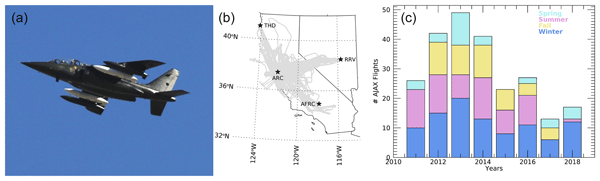
Emma L. Yates, Laura T. Iraci, Susan S. Kulawik, Ju-Mee Ryoo, Josette E. Marrero, Caroline L. Parworth, Jason M. St. Clair, Thomas F. Hanisco, Thao Paul V. Bui, Cecilia S. Chang, and Jonathan M. Dean-Day
Earth Syst. Sci. Data, 15, 2375–2389, https://doi.org/10.5194/essd-15-2375-2023, https://doi.org/10.5194/essd-15-2375-2023, 2023
Short summary
Short summary
The Alpha Jet Atmospheric eXperiment (AJAX) flew scientific flights between 2011 and 2018 providing measurements of carbon dioxide, methane, ozone, formaldehyde, water vapor and meteorological parameters over California and Nevada, USA. AJAX was a multi-year, multi-objective, multi-instrument program with a variety of sampling strategies resulting in an extensive dataset of interest to a wide variety of users. AJAX measurements have been published at https://asdc.larc.nasa.gov/project/AJAX.
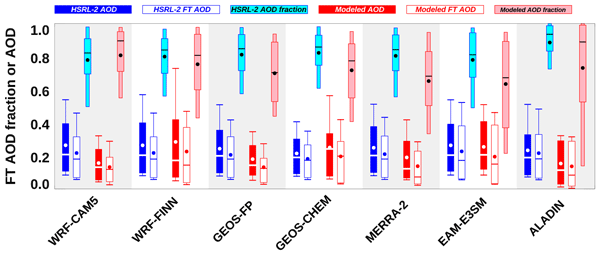
Ian Chang, Lan Gao, Connor J. Flynn, Yohei Shinozuka, Sarah J. Doherty, Michael S. Diamond, Karla M. Longo, Gonzalo A. Ferrada, Gregory R. Carmichael, Patricia Castellanos, Arlindo M. da Silva, Pablo E. Saide, Calvin Howes, Zhixin Xue, Marc Mallet, Ravi Govindaraju, Qiaoqiao Wang, Yafang Cheng, Yan Feng, Sharon P. Burton, Richard A. Ferrare, Samuel E. LeBlanc, Meloë S. Kacenelenbogen, Kristina Pistone, Michal Segal-Rozenhaimer, Kerry G. Meyer, Ju-Mee Ryoo, Leonhard Pfister, Adeyemi A. Adebiyi, Robert Wood, Paquita Zuidema, Sundar A. Christopher, and Jens Redemann
Atmos. Chem. Phys., 23, 4283–4309, https://doi.org/10.5194/acp-23-4283-2023, https://doi.org/10.5194/acp-23-4283-2023, 2023
Short summary
Short summary
Abundant aerosols are present above low-level liquid clouds over the southeastern Atlantic during late austral spring. The model simulation differences in the proportion of aerosol residing in the planetary boundary layer and in the free troposphere can greatly affect the regional aerosol radiative effects. This study examines the aerosol loading and fractional aerosol loading in the free troposphere among various models and evaluates them against measurements from the NASA ORACLES campaign.
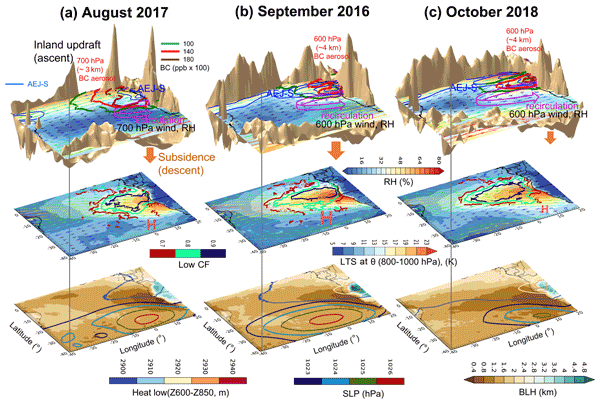
Ju-Mee Ryoo, Leonhard Pfister, Rei Ueyama, Paquita Zuidema, Robert Wood, Ian Chang, and Jens Redemann
Atmos. Chem. Phys., 22, 14209–14241, https://doi.org/10.5194/acp-22-14209-2022, https://doi.org/10.5194/acp-22-14209-2022, 2022
Short summary
Short summary
The variability in the meteorological fields during each deployment is highly modulated at a daily to synoptic timescale. This paper, along with part 1, the climatological overview paper, provides a meteorological context for interpreting the airborne measurements gathered during the three ORACLES deployments. This study supports related studies focusing on the detailed investigation of the processes controlling stratocumulus decks, aerosol lifting, transport, and their interactions.
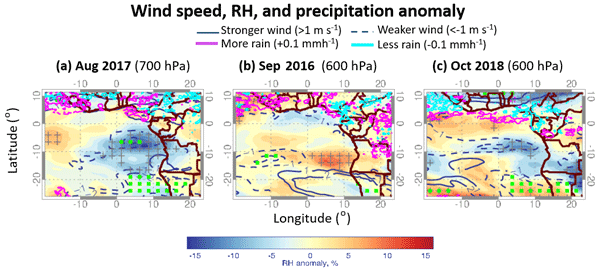
Ju-Mee Ryoo, Leonhard Pfister, Rei Ueyama, Paquita Zuidema, Robert Wood, Ian Chang, and Jens Redemann
Atmos. Chem. Phys., 21, 16689–16707, https://doi.org/10.5194/acp-21-16689-2021, https://doi.org/10.5194/acp-21-16689-2021, 2021
Short summary
Short summary
Part 1 of the meteorological overview paper highlights the anomalous meteorological characteristics during the ORACLES deployment compared to the climatological mean at monthly timescales. The upper-level wave disturbance and the associated anomalous circulation explain the weakening of AEJ-S through the reduction of the strength of the heat low over the land during August 2017. This may also help explain the anomalously low aerosol optical depth observed in the August 2017 ORACLES deployment.
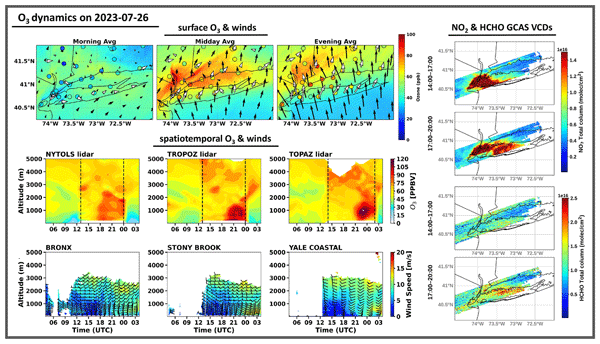
Claudia M. Bernier, Matthew S. Johnson, John Sullivan, Guillaume Gronoff, Daniel Phoenix, Fred Moshary, Raul Alvarez, Brandi McCarty, Andrew Langford, Christoph Senff, Sunil Baidar, and Laura Judd
Atmos. Chem. Phys., 26, 13795–13816, https://doi.org/10.5194/acp-26-13795-2026, https://doi.org/10.5194/acp-26-13795-2026, 2026
Short summary
Short summary
To investigate ozone pollution in a complex coastal urban environment, we combined NASA's Tropospheric Emissions: Monitoring of Pollution (TEMPO) satellite observations with aircraft, ground, and lidar measurements from the 2023 Synergistic TEMPO Air Quality Science (STAQS) campaign in the NYC–Long Island Sound region. We evaluated TEMPO's ability to capture ozone precursor variability and analyzed how meteorology and precursor transport drive day-to-day ozone changes.
Thibaut Lebourgeois, Valérie Thouret, Hannah Clark, Yasmine Bennouna, Romain Blot, Damien Boulanger, Florian Brunet, Simon Cleris, Jean-Marc Cousin, Philippe Nedelec, Julie Patuel, Pawel Wolff, and Bastien Sauvage
EGUsphere, https://doi.org/10.5194/egusphere-2026-4770, https://doi.org/10.5194/egusphere-2026-4770, 2026
This preprint is open for discussion and under review for Atmospheric Chemistry and Physics (ACP).
Short summary
Short summary
IAGOS has been measuring Ozone (O3) and Carbon Monoxide (CO) since 1994 and 2002 respectively with commercial aircraft. O3 concentrations increased significantly from 1994 to 2013 in the Northern Hemisphere. The following decade shows a more uncertain trend, with some regions even exhibiting decreases in O3 concentrations, potentially reflecting the impact of the COVID-19 pandemic. CO shows a reduction in its rate of decline over the years, until a point where changes are no longer detected.
Patrick C. Taylor, Armin Sorooshian, Rei Ueyama, Sebastian Schmidt, Ihab Abboud, Quincy Allison, Kevin Barry, Sebastian Becker, Holly A. Bender, Joseph R. Bennett, James B. Blair, Niklas Bohn, Linette Boisvert, Matthew D. Brown, Roelof Bruintjes, Anthony Bucholtz, Megan Buzanowicz, Brian Cairns, Filippo Calì Quaglia, Eduard Chemyakin, Bo Chen, Gao Chen, Hong Chen, Yu-Wen Chen, Zezhen Cheng, Swarup China, Dan Chirica, Yonghoon Choi, Peter Colarco, Brian Collister, Ewan Crosbie, Maurice J. Cross, Janet Daniels, Paul DeMott, Joshua P. DiGangi, Alcide Giorgio di Sarra, Glenn S. Diskin, Erica K. Dolinar, Eva-Lou Edwards, Samuel Ephraim, Nikolaos Evangeliou, Romanos Foskinis, Francesca Gallo, Lan Gao, José Luis Gómez-Amo, Daisy Gonzalez, Christine Groot Zwaaftink, Pawan Gupta, Ivan Heckman, Michael Hendrickson, Miguel Ricardo A. Hilario, Ken Hirata, Michelle Hofton, Andrew L. Holen, Ulas Im, Alia L. Khan, Ralph Kahn, Alexei V. Korolev, Sonia Kreidenweis, Thomas Krumpen, Nathan Kurtz, Leslie Lait, Bradley Lamkin, Jack Landy, Nurun Nahar Lata, Paul Lawson, Samuel LeBlanc, Sean Leavor, Jing Li, Thorsten Markus, Hal Maring, Andreas H. Massling, Camille Mavis, Flynn McGinnity, Kerry Meyer, Gabriel Mojica, Richard H. Moore, Parker Morris, Giovanni Muscari, Vikas Nataraja, Amin R. Nehrir, Athanasios Nenes, Edward P. Nowottnick, Matteo Ottaviani, Chelsea Parker, Ryan Patnaude, Michael Perez, Russell J. Perkins, Colten Peterson, Alek Petty, Stevie Phothisane, Chris Polashenski, Kerri A. Pratt, Kayla M. Preisler, John Prytherch, David Rabine, Jens Redemann, Ju-Mee Ryoo, Joseph S. Schlosser, Vanessa Selimovic, Michael A. Shook, Morgan Silverman, Henrik Skov, Alexander Smirnov, Cassidy Soloff, Amy Solomon, Snorre Stamnes, Azusa Takeishi, David R. Thompson, K. Lee Thornhill, Rachel Tilling, Michael Tjernström, Monica Tosco, Pedro C. Valdelomar, David Van Gilst, Jian Wang, Zhien Wang, Andrzej Wasilewski, Manfred Wendisch, Brent Wilder, Edward L. Winstead, Albert Wu, Peng Xian, Lauren M. Zamora, Jiaoshi Zhang, Lei Zhang, Lu Zhang, Luke Ziemba, and Paquita Zuidema
Earth Syst. Sci. Data Discuss., https://doi.org/10.5194/essd-2026-241, https://doi.org/10.5194/essd-2026-241, 2026
Preprint under review for ESSD
Short summary
Short summary
This article summarizes the data sets collected during the Arctic Radiation Cloud aerosol Sea ice Interaction eXperiment (ARCSIX), NASA's most comprehensive Arctic field campaign to date. The overarching goal was to quantify the contributions of surface, clouds, aerosol particles, and precipitation to summer sea ice melt. This paper describes the ARCSIX implementation including the flight strategy, instruments, complementary data sets, access, and usage details.
Herizo Narivelo, Bastien Sauvage, Klaas Folkert Boersma, Isabelle De Smedt, Isidora Anglou, Michel Van Roozendael, Eric Le Flochmoën, and Brice Barret
EGUsphere, https://doi.org/10.5194/egusphere-2026-1652, https://doi.org/10.5194/egusphere-2026-1652, 2026
Short summary
Short summary
Tropospheric ozone is a key component of air pollution; it is produced by the photochemical oxidation of volatile organic compounds in the presence of nitrogen oxides. Using satellite observations, we determine the best combination of emission inventories for biomass-burning and anthropogenic sources, we analyse the impact of the evolution of two surface emissions in tropics on tropospheric ozone and its chemical regime, using numerical simulations over the last few decades.
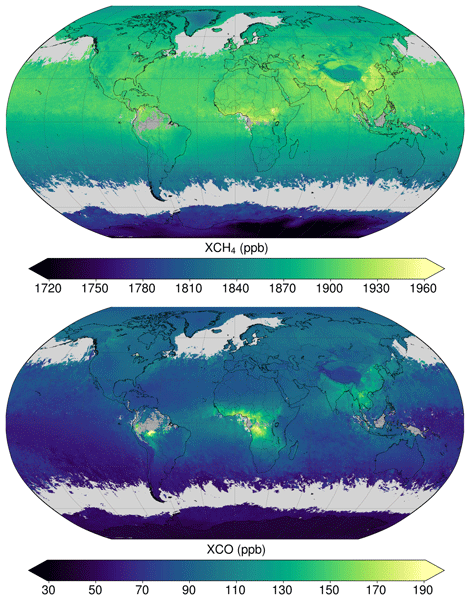
Oliver Schneising, Heinrich Bovensmann, Michael Buchwitz, Matthias Buschmann, Nicholas M. Deutscher, David W. T. Griffith, Jonas Hachmeister, Frank Hase, Laura T. Iraci, Rigel Kivi, Isamu Morino, Hirofumi Ohyama, Christof Petri, Maximilian Reuter, John Robinson, Coleen Roehl, Mahesh Kumar Sha, Kei Shiomi, Kimberly Strong, Ralf Sussmann, Yao Té, Voltaire A. Velazco, Mihalis Vrekoussis, Wei Wang, Thorsten Warneke, Damien Weidmann, Debra Wunch, Minqiang Zhou, and Hartmut Bösch
Atmos. Meas. Tech., 19, 2407–2435, https://doi.org/10.5194/amt-19-2407-2026, https://doi.org/10.5194/amt-19-2407-2026, 2026
Short summary
Short summary
We present an improved version of the TROPOMI/WFMD (TROPOspheric Monitoring Instrument/Weighting Function Modified Differential) algorithm for the simultaneous retrieval of atmospheric methane and carbon monoxide from satellite observations. The updated data product combines higher data yield with better precision and accuracy, expanding its suitability for a wider range of scientific applications. These substantial advances are mainly due to refined quality filtering, enabling more reliable identification of cloudy scenes and mitigating specific aerosol-related issues.
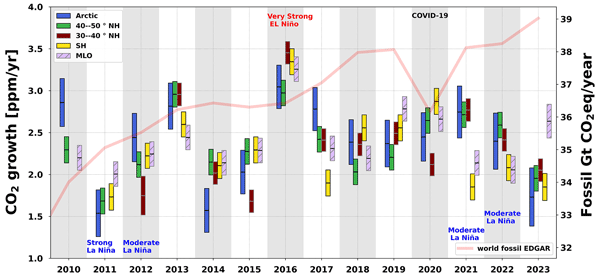
Nasrin Mostafavi Pak, Jonas Hachmeister, Markus Rettinger, Matthias Buschmann, Nicholas M. Deutscher, David W. T. Griffith, Laura T. Iraci, Xin Lan, Erin McGee, Isamu Morino, Dave Pollard, Coleen M. Roehl, Kimberly Strong, Rigel Kivi, and Paul Wennberg
Biogeosciences, 23, 1477–1495, https://doi.org/10.5194/bg-23-1477-2026, https://doi.org/10.5194/bg-23-1477-2026, 2026
Short summary
Short summary
We studied how carbon dioxide (CO2) levels change each year using long-term measurements from twelve sites worldwide. Average growth rates from 2010 to 2024 were about 2.4 ppm/year, with notable year-to-year and regional differences. Natural climate patterns influenced these changes, while temporary shifts in human emissions, such as during COVID‑19, had modest local effects. Monitoring CO2 growth across regions helps track emissions and assess mitigation efforts.
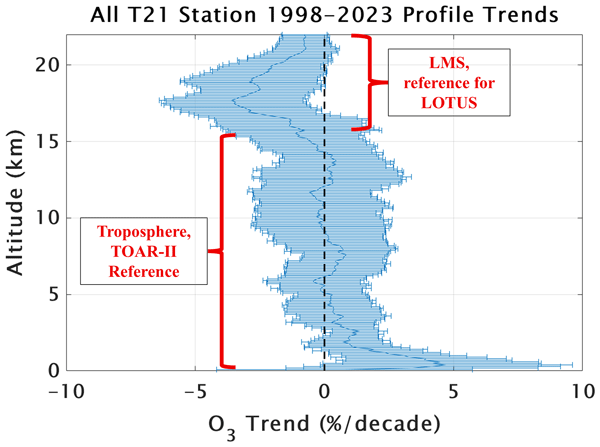
Anne M. Thompson, Ryan M. Stauffer, Debra E. Kollonige, Jerald R. Ziemke, Bryan J. Johnson, Gary A. Morris, Patrick Cullis, María Cazorla, Jorge Andres Diaz, Ankie Piters, Igor Nedeljkovic, Truus Warsodikromo, Francisco Raimundo Silva, E. Thomas Northam, Patrick Benjamin, Thumeka Mkololo, Tshidi Machinini, Christian Félix, Gonzague Romanens, Syprose Nyadida, Jérôme Brioude, Stéphanie Evan, Jean-Marc Metzger, Ambun Dindang, Yuzaimi B. Mahat, Mohan Kumar Sammathuria, Norazura Binti Zakaria, Ninong Komala, Shin-Ya Ogino, Nguyen Thi Quyen, Francis S. Mani, Miriama Vuiyasawa, David Nardini, Matthew Martinsen, Darryl T. Kuniyuki, Katrin Müller, Pawel Wolff, and Bastien Sauvage
Atmos. Chem. Phys., 25, 18475–18507, https://doi.org/10.5194/acp-25-18475-2025, https://doi.org/10.5194/acp-25-18475-2025, 2025
Short summary
Short summary
Ozone profile trends from SHADOZ sondes and IAGOS aircraft show that ozone in the tropical free troposphere (FT) is not growing fast except over equatorial SE Asia. This agrees with HEGIFTOM (Van Malderen et al., 2025), Stauffer et al. (2024) and Gaudel et al. (2024) TOAR-II papers. Other findings are as follows: (1) our trends are independent of method (QR, MLR) and (2) sample number (SN) (i.e., SHADOZ sampling is sufficient), and (3) all ground-based trends constitute the gold standard for satellite-derived trends.
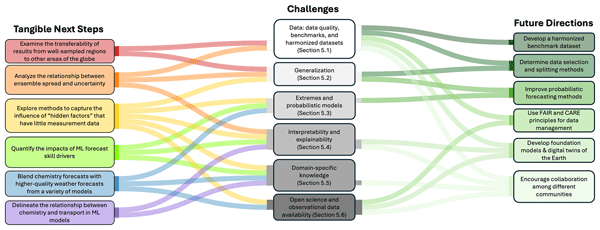
Sebastian H. M. Hickman, Makoto M. Kelp, Paul T. Griffiths, Kelsey Doerksen, Kazuyuki Miyazaki, Elyse A. Pennington, Gerbrand Koren, Fernando Iglesias-Suarez, Martin G. Schultz, Kai-Lan Chang, Owen R. Cooper, Alex Archibald, Roberto Sommariva, David Carlson, Hantao Wang, J. Jason West, and Zhenze Liu
Geosci. Model Dev., 18, 8777–8800, https://doi.org/10.5194/gmd-18-8777-2025, https://doi.org/10.5194/gmd-18-8777-2025, 2025
Short summary
Short summary
Machine learning is being more widely used across environmental and climate science. This work reviews the use of machine learning in tropospheric ozone research, focusing on three main application areas in which significant progress has been made. Common challenges in using machine learning across the three areas are highlighted, and future directions for the field are indicated.
Yu Yan Cui, Ju-Mee Ryoo, Matthew S. Johnson, Kai-Lan Chang, Emma L. Yates, Owen R. Cooper, and Laura T. Iraci
Earth Syst. Sci. Data, 17, 5903–5914, https://doi.org/10.5194/essd-17-5903-2025, https://doi.org/10.5194/essd-17-5903-2025, 2025
Short summary
Short summary
Atmospheric observations show that free tropospheric ozone has increased across the Northern Hemisphere over the past three decades. The sources driving this increase remain unclear. In this study, we developed a source-receptor relationship database combining multiplatform ozone data and advanced atmospheric transport modeling. This database can identify emission regions responsible for ozone increases and can also be used to analyze other co-observed atmospheric constituents.
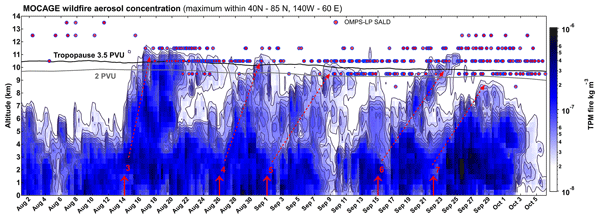
Sergey Khaykin, Slimane Bekki, Sophie Godin-Beekmann, Michael D. Fromm, Philippe Goloub, Qiaoyun Hu, Béatrice Josse, Alexandra Laeng, Mehdi Meziane, David A. Peterson, Sophie Pelletier, and Valérie Thouret
Atmos. Chem. Phys., 25, 14551–14571, https://doi.org/10.5194/acp-25-14551-2025, https://doi.org/10.5194/acp-25-14551-2025, 2025
Short summary
Short summary
In 2023, massive wildfires in Canada injected huge amounts of smoke into the atmosphere. Surprisingly, despite their intensity, the smoke did not rise very high but lingered at flight cruising altitudes, causing widespread pollution. This study shows how two different pathways lifted smoke into the lower stratosphere and reveals new insights into how wildfires affect air quality and climate, challenging what we thought we knew about fire and atmospheric impacts.
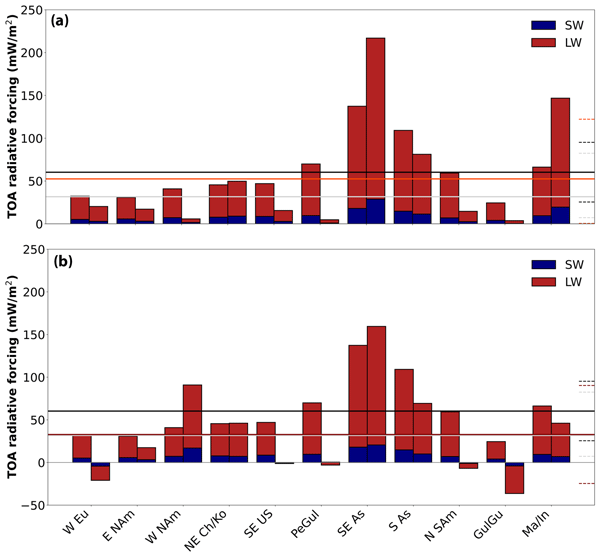
Pasquale Sellitto, Audrey Gaudel, and Bastien Sauvage
Atmos. Chem. Phys., 25, 13299–13309, https://doi.org/10.5194/acp-25-13299-2025, https://doi.org/10.5194/acp-25-13299-2025, 2025
Short summary
Short summary
Tropospheric ozone is a potent greenhouse gas: its anthropogenic levels rise contributes to climate change. We evaluate tropospheric ozone trends and climate impacts with aircraft data and a radiative model, comparing a baseline period (1994–2004) to different recent time periods (2011–2016 to 2020-2023). Tropospheric ozone levels increasing trends progressively stopped and even decreased in the upper troposphere. Correspondingly, the decadal ozone radiative forcing is progressively decreasing.
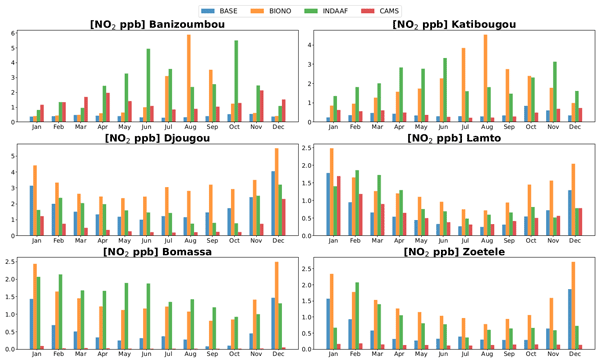
Eric Martial Yao, Fabien Solmon, Marcellin Adon, Claire Delon, Corinne Galy-Lacaux, Graziano Giuliani, Bastien Sauvage, and Véronique Yoboue
Atmos. Chem. Phys., 25, 12101–12136, https://doi.org/10.5194/acp-25-12101-2025, https://doi.org/10.5194/acp-25-12101-2025, 2025
Short summary
Short summary
As climate change and human activities intensify in Africa, understanding how air pollution, climate, and natural cycles interact is crucial. This study explores how nitrogen oxide emissions from African soils, especially in dry regions, contribute to atmospheric pollution. By using a climate-chemistry model, we show that considering these emissions improves predictions of nitrogen dioxide, nitric acid and ozone, although some discrepancies remain compared to observations.
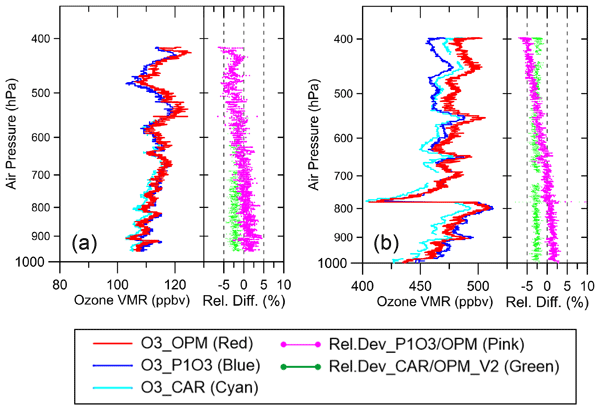
Herman G. J. Smit, Torben Galle, Romain Blot, Florian Obersteiner, Philippe Nédélec, Andreas Zahn, Jean-Marc Cousin, Ulrich Bundke, Andreas Petzold, Valerie Thouret, and Hannah Clark
Atmos. Meas. Tech., 18, 4985–5001, https://doi.org/10.5194/amt-18-4985-2025, https://doi.org/10.5194/amt-18-4985-2025, 2025
Short summary
Short summary
The two ozone instruments of IAGOS (In-service Aircraft for a Global Observation System) have been compared with the Ozone PhotoMeter (OPM) of the World Calibration Center of Ozone Sondes (WCCOS) in an atmospheric simulation chamber under realistic flight conditions of pressure, temperature, and ozone concentrations. The two IAGOS-instruments showed good agreement with the OPM within 5–6 %. The observed differences are small but systematic and reproducible during the intercomparison.
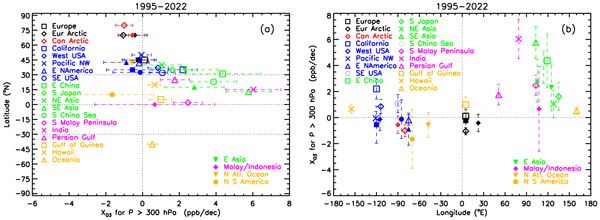
Roeland Van Malderen, Zhou Zang, Kai-Lan Chang, Robin Björklund, Owen R. Cooper, Jane Liu, Eliane Maillard Barras, Corinne Vigouroux, Irina Petropavlovskikh, Thierry Leblanc, Valérie Thouret, Pawel Wolff, Peter Effertz, Audrey Gaudel, David W. Tarasick, Herman G. J. Smit, Anne M. Thompson, Ryan M. Stauffer, Debra E. Kollonige, Deniz Poyraz, Gérard Ancellet, Marie-Renée De Backer, Matthias M. Frey, James W. Hannigan, José L. Hernandez, Bryan J. Johnson, Nicholas Jones, Rigel Kivi, Emmanuel Mahieu, Isamu Morino, Glen McConville, Katrin Müller, Isao Murata, Justus Notholt, Ankie Piters, Maxime Prignon, Richard Querel, Vincenzo Rizi, Dan Smale, Wolfgang Steinbrecht, Kimberly Strong, and Ralf Sussmann
Atmos. Chem. Phys., 25, 9905–9935, https://doi.org/10.5194/acp-25-9905-2025, https://doi.org/10.5194/acp-25-9905-2025, 2025
Short summary
Short summary
Tropospheric ozone is an important greenhouse gas and an air pollutant whose distribution and time variability are mainly governed by anthropogenic emissions and dynamics. In this paper, we assess regional trends of tropospheric ozone column amounts, based on two different approaches of merging or synthesizing ground-based observations and their trends within specific regions. Our findings clearly demonstrate regional trend differences but also consistently higher pre-COVID than post-COVID trends.
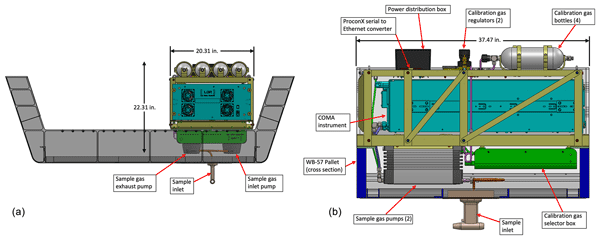
Emma L. Yates, Levi M. Golston, James R. Podolske, Laura T. Iraci, Kristen E. Okorn, Caroline Dang, Roy R. Johnson, James Eilers, Richard Kolyer, Ian Astley, and J. Brian Leen
Atmos. Meas. Tech., 18, 3973–3982, https://doi.org/10.5194/amt-18-3973-2025, https://doi.org/10.5194/amt-18-3973-2025, 2025
Short summary
Short summary
In this work, we describe the development of the Carbon monOxide Measurement from Ames (COMA) instrument for measurement of carbon monoxide (CO) and nitrous oxide (N2O) aboard NASA's WB-57 high-altitude research aircraft. We detail the modifications and testing conducted as well as details of COMA's performance during research flights for NASA’s Asian summer monsoon Chemical & CLImate Project (ACCLIP) 2022 campaign.
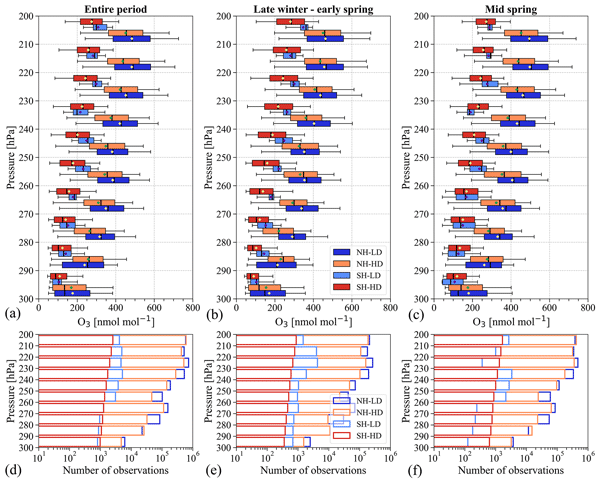
Rodrigo J. Seguel, Charlie Opazo, Yann Cohen, Owen R. Cooper, Laura Gallardo, Björn-Martin Sinnhuber, Florian Obersteiner, Andreas Zahn, Peter Hoor, Susanne Rohs, and Andreas Marsing
Atmos. Chem. Phys., 25, 8553–8573, https://doi.org/10.5194/acp-25-8553-2025, https://doi.org/10.5194/acp-25-8553-2025, 2025
Short summary
Short summary
We explored ozone differences between the Northern Hemisphere and Southern Hemispheres in the upper troposphere–lower stratosphere. We found lower ozone (with stratospheric origin) in the Southern Hemisphere, especially during years of severe ozone depletion. Sudden stratospheric warming events increased the ozone in each hemisphere, highlighting the relationship between stratospheric processes and ozone in the upper troposphere, where ozone is an important greenhouse gas.
Matthew S. Johnson, Sofia D. Hamilton, Seongeun Jeong, Yu Yan Cui, Dien Wu, Alex Turner, and Marc Fischer
Atmos. Chem. Phys., 25, 8475–8492, https://doi.org/10.5194/acp-25-8475-2025, https://doi.org/10.5194/acp-25-8475-2025, 2025
Short summary
Short summary
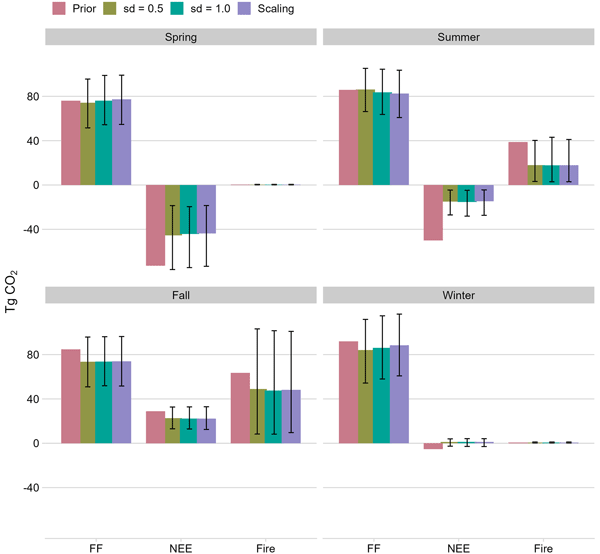
Satellites, such as NASA's Orbiting Carbon Observatory-2 and -3 (OCO-2 and OCO-3, respectively), retrieve carbon dioxide (CO2) concentrations, which provide vital information for estimating surface CO2 emissions. Here, we investigate the ability of OCO-2/3 retrievals to constrain CO2 emissions for the state of California for the major emission sectors (i.e., fossil fuels, net ecosystem exchange, and wildfire).
Xiao Lu, Yiming Liu, Jiayin Su, Xiang Weng, Tabish Ansari, Yuqiang Zhang, Guowen He, Yuqi Zhu, Haolin Wang, Ganquan Zeng, Jingyu Li, Cheng He, Shuai Li, Teerachai Amnuaylojaroen, Tim Butler, Qi Fan, Shaojia Fan, Grant L. Forster, Meng Gao, Jianlin Hu, Yugo Kanaya, Mohd Talib Latif, Keding Lu, Philippe Nédélec, Peer Nowack, Bastien Sauvage, Xiaobin Xu, Lin Zhang, Ke Li, Ja-Ho Koo, and Tatsuya Nagashima
Atmos. Chem. Phys., 25, 7991–8028, https://doi.org/10.5194/acp-25-7991-2025, https://doi.org/10.5194/acp-25-7991-2025, 2025
Short summary
Short summary
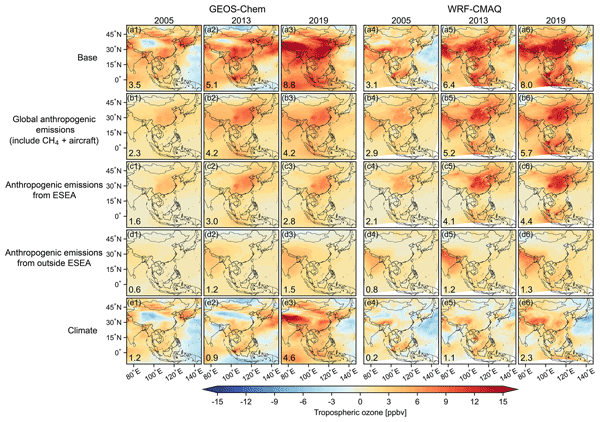
This study analyzes summertime ozone trends in East and Southeast Asia derived from a comprehensive observational database spanning from 1995 to 2019, incorporating aircraft observations, ozonesonde data, and measurements from 2500 surface sites. Multiple models are applied to attribute to changes in anthropogenic emissions and climate. The results highlight that increases in anthropogenic emissions are the primary driver of ozone increases both in the free troposphere and at the surface.
Nana Wei, Eloise A. Marais, Gongda Lu, Robert G. Ryan, and Bastien Sauvage
Atmos. Chem. Phys., 25, 7925–7940, https://doi.org/10.5194/acp-25-7925-2025, https://doi.org/10.5194/acp-25-7925-2025, 2025
Short summary
Short summary
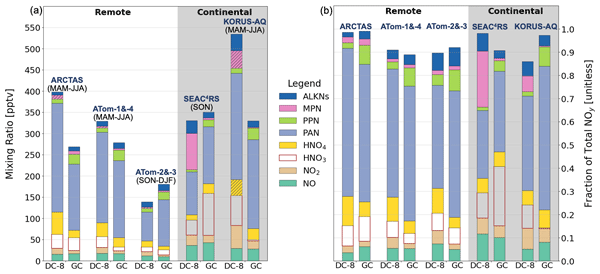
This study uses reactive nitrogen observations from NASA DC-8 research aircraft and the In-service Aircraft for a Global Observing System (IAGOS) campaigns to characterize reactive nitrogen seasonality and composition in the global upper troposphere and to diagnose the greatest knowledge gaps from comparison to a state-of-the-science model, GEOS-Chem, that need to be resolved for climate, nitrogen cycle, and air pollution assessments.
Roeland Van Malderen, Anne M. Thompson, Debra E. Kollonige, Ryan M. Stauffer, Herman G. J. Smit, Eliane Maillard Barras, Corinne Vigouroux, Irina Petropavlovskikh, Thierry Leblanc, Valérie Thouret, Pawel Wolff, Peter Effertz, David W. Tarasick, Deniz Poyraz, Gérard Ancellet, Marie-Renée De Backer, Stéphanie Evan, Victoria Flood, Matthias M. Frey, James W. Hannigan, José L. Hernandez, Marco Iarlori, Bryan J. Johnson, Nicholas Jones, Rigel Kivi, Emmanuel Mahieu, Glen McConville, Katrin Müller, Tomoo Nagahama, Justus Notholt, Ankie Piters, Natalia Prats, Richard Querel, Dan Smale, Wolfgang Steinbrecht, Kimberly Strong, and Ralf Sussmann
Atmos. Chem. Phys., 25, 7187–7225, https://doi.org/10.5194/acp-25-7187-2025, https://doi.org/10.5194/acp-25-7187-2025, 2025
Short summary
Short summary
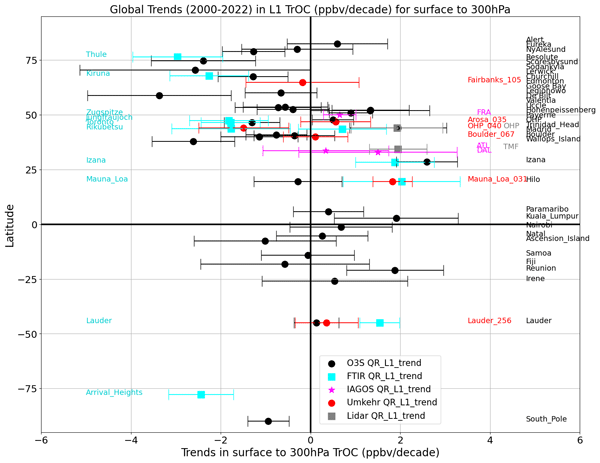
Tropospheric ozone is an important greenhouse gas and is an air pollutant. The time variability of tropospheric ozone is mainly driven by anthropogenic emissions. In this paper, we study the distribution and time variability of ozone from harmonized ground-based observations from five different measurement techniques. Our findings provide clear standard references for atmospheric models and evolving tropospheric ozone satellite data for the 2000–2022 period.
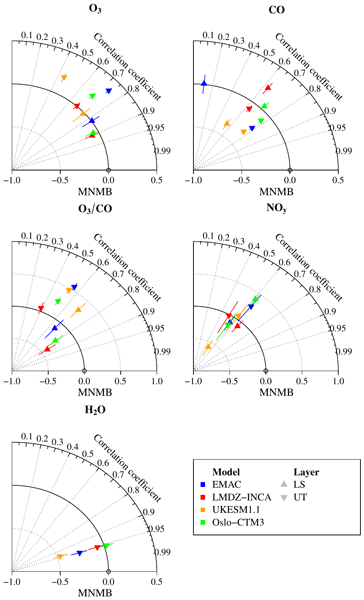
Yann Cohen, Didier Hauglustaine, Nicolas Bellouin, Marianne Tronstad Lund, Sigrun Matthes, Agnieszka Skowron, Robin Thor, Ulrich Bundke, Andreas Petzold, Susanne Rohs, Valérie Thouret, Andreas Zahn, and Helmut Ziereis
Atmos. Chem. Phys., 25, 5793–5836, https://doi.org/10.5194/acp-25-5793-2025, https://doi.org/10.5194/acp-25-5793-2025, 2025
Short summary
Short summary
The chemical composition of the atmosphere near the tropopause is a key parameter for evaluating the climate impact of subsonic aviation pollutants. This study uses in situ data collected aboard passenger aircraft to assess the ability of four chemistry–climate models to reproduce (bi-)decadal climatologies of ozone, carbon monoxide, water vapour, and reactive nitrogen in this region. The models reproduce the very distinct ozone seasonality in the upper troposphere and in the lower stratosphere well.
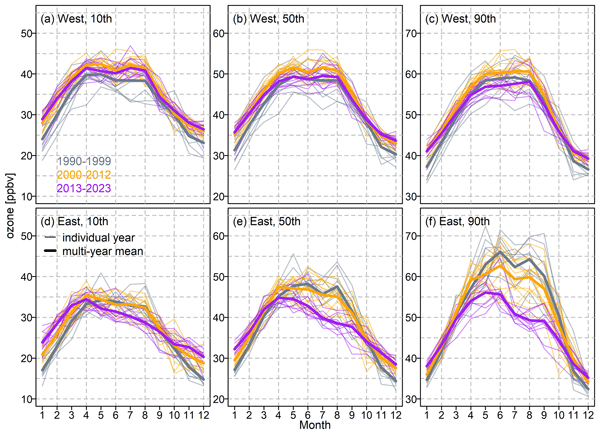
Kai-Lan Chang, Brian C. McDonald, Colin Harkins, and Owen R. Cooper
Atmos. Chem. Phys., 25, 5101–5132, https://doi.org/10.5194/acp-25-5101-2025, https://doi.org/10.5194/acp-25-5101-2025, 2025
Short summary
Short summary
Exposure to high levels of ozone can be harmful to human health. This study shows consistent and robust evidence of decreasing ozone extremes across much of the United States over the period from 1990 to 2023, previously attributed to ozone precursor emission controls. Nevertheless, we also show that the increasing heat wave frequencies are likely to contribute to additional ozone exceedances, slowing the progress of decreasing the frequency of ozone exceedances.
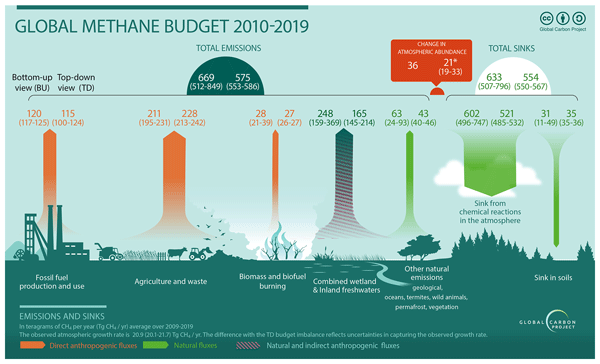
Marielle Saunois, Adrien Martinez, Benjamin Poulter, Zhen Zhang, Peter A. Raymond, Pierre Regnier, Josep G. Canadell, Robert B. Jackson, Prabir K. Patra, Philippe Bousquet, Philippe Ciais, Edward J. Dlugokencky, Xin Lan, George H. Allen, David Bastviken, David J. Beerling, Dmitry A. Belikov, Donald R. Blake, Simona Castaldi, Monica Crippa, Bridget R. Deemer, Fraser Dennison, Giuseppe Etiope, Nicola Gedney, Lena Höglund-Isaksson, Meredith A. Holgerson, Peter O. Hopcroft, Gustaf Hugelius, Akihiko Ito, Atul K. Jain, Rajesh Janardanan, Matthew S. Johnson, Thomas Kleinen, Paul B. Krummel, Ronny Lauerwald, Tingting Li, Xiangyu Liu, Kyle C. McDonald, Joe R. Melton, Jens Mühle, Jurek Müller, Fabiola Murguia-Flores, Yosuke Niwa, Sergio Noce, Shufen Pan, Robert J. Parker, Changhui Peng, Michel Ramonet, William J. Riley, Gerard Rocher-Ros, Judith A. Rosentreter, Motoki Sasakawa, Arjo Segers, Steven J. Smith, Emily H. Stanley, Joël Thanwerdas, Hanqin Tian, Aki Tsuruta, Francesco N. Tubiello, Thomas S. Weber, Guido R. van der Werf, Douglas E. J. Worthy, Yi Xi, Yukio Yoshida, Wenxin Zhang, Bo Zheng, Qing Zhu, Qiuan Zhu, and Qianlai Zhuang
Earth Syst. Sci. Data, 17, 1873–1958, https://doi.org/10.5194/essd-17-1873-2025, https://doi.org/10.5194/essd-17-1873-2025, 2025
Short summary
Short summary
Methane (CH4) is the second most important human-influenced greenhouse gas in terms of climate forcing after carbon dioxide (CO2). A consortium of multi-disciplinary scientists synthesise and update the budget of the sources and sinks of CH4. This edition benefits from important progress in estimating emissions from lakes and ponds, reservoirs, and streams and rivers. For the 2010s decade, global CH4 emissions are estimated at 575 Tg CH4 yr-1, including ~65 % from anthropogenic sources.
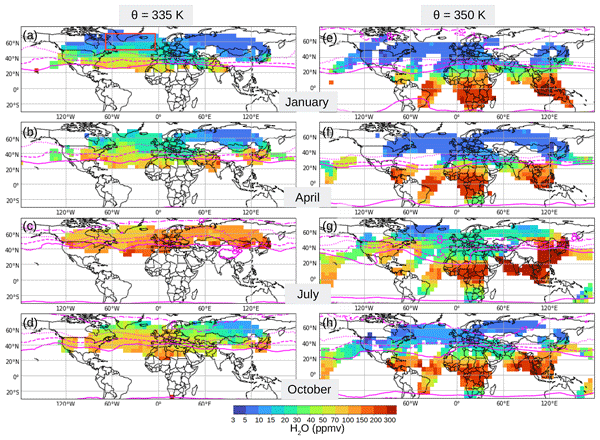
Patrick Konjari, Christian Rolf, Michaela I. Hegglin, Susanne Rohs, Yun Li, Andreas Zahn, Harald Bönisch, Philippe Nedelec, Martina Krämer, and Andreas Petzold
Atmos. Chem. Phys., 25, 4269–4289, https://doi.org/10.5194/acp-25-4269-2025, https://doi.org/10.5194/acp-25-4269-2025, 2025
Short summary
Short summary
This study introduces a new method to derive adjusted water vapor (H2O) climatologies for the upper tropopshere and lower statosphere (UT/LS) using data from 60 000 flights under the IAGOS program. Biases in the IAGOS water vapour dataset are adjusted, based on the more accurate IAGOS-CARIBIC data. The resulting highly resolved H2O climatologies will contribute to a better understanding of the H2O variability in the UT/LS and its connection to various transport and mixing processes.
Hongyu Liu, Bo Zhang, Richard H. Moore, Luke D. Ziemba, Richard A. Ferrare, Hyundeok Choi, Armin Sorooshian, David Painemal, Hailong Wang, Michael A. Shook, Amy Jo Scarino, Johnathan W. Hair, Ewan C. Crosbie, Marta A. Fenn, Taylor J. Shingler, Chris A. Hostetler, Gao Chen, Mary M. Kleb, Gan Luo, Fangqun Yu, Mark A. Vaughan, Yongxiang Hu, Glenn S. Diskin, John B. Nowak, Joshua P. DiGangi, Yonghoon Choi, Christoph A. Keller, and Matthew S. Johnson
Atmos. Chem. Phys., 25, 2087–2121, https://doi.org/10.5194/acp-25-2087-2025, https://doi.org/10.5194/acp-25-2087-2025, 2025
Short summary
Short summary
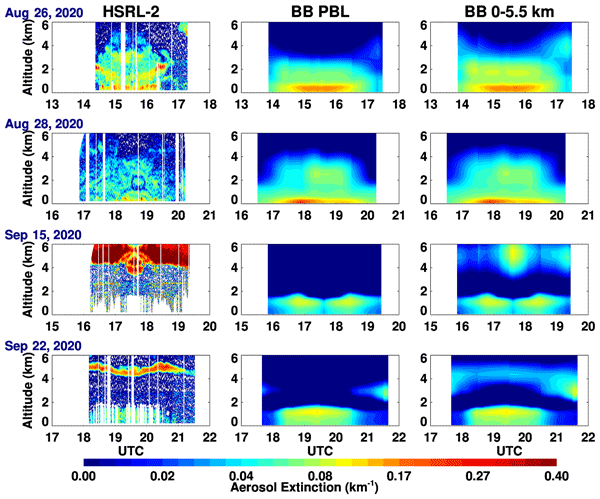
We use the GEOS-Chem model to simulate aerosol distributions and properties over the western North Atlantic Ocean (WNAO) during the winter and summer deployments in 2020 of the NASA ACTIVATE mission. Model results are evaluated against aircraft, ground-based, and satellite observations. The improved understanding of life cycle, composition, transport pathways, and distribution of aerosols has important implications for characterizing aerosol–cloud–meteorology interactions over WNAO.
Amir H. Souri, Gonzalo González Abad, Glenn M. Wolfe, Tijl Verhoelst, Corinne Vigouroux, Gaia Pinardi, Steven Compernolle, Bavo Langerock, Bryan N. Duncan, and Matthew S. Johnson
Atmos. Chem. Phys., 25, 2061–2086, https://doi.org/10.5194/acp-25-2061-2025, https://doi.org/10.5194/acp-25-2061-2025, 2025
Short summary
Short summary
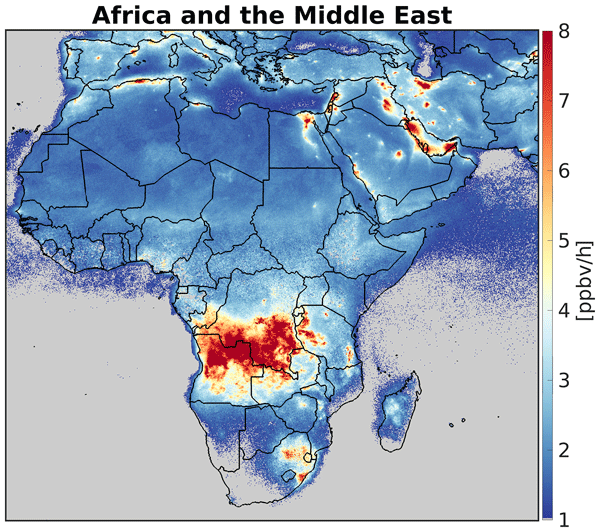
We establish a simple yet robust relationship between ozone production rates and geophysical parameters obtained from several intensive atmospheric composition campaigns. We show that satellite remote sensing data can effectively constrain these parameters, enabling us to produce the first global maps of ozone production rates with unprecedented resolution.
Brice Barret, Pierre Loicq, Eric Le Flochmoën, Yasmine Bennouna, Juliette Hadji-Lazaro, Daniel Hurtmans, and Bastien Sauvage
Atmos. Meas. Tech., 18, 129–149, https://doi.org/10.5194/amt-18-129-2025, https://doi.org/10.5194/amt-18-129-2025, 2025
Short summary
Short summary
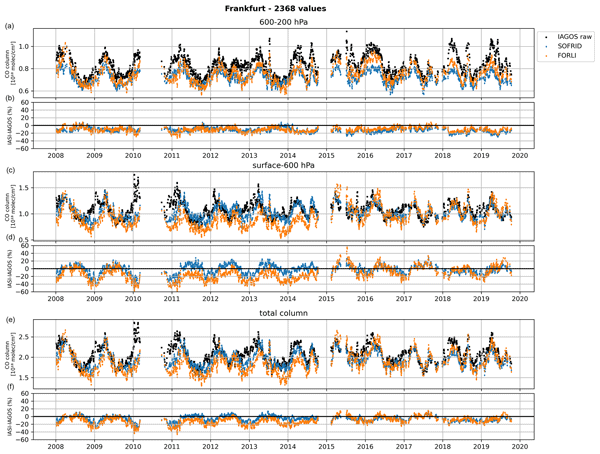
Profiles of carbon monoxide (CO) retrieved from the Infrared Atmospheric Sounding Interferometer (IASI) with the SOftware for a Fast Retrieval of IASI Data (SOFRID) and Fast Optimal Retrievals on Layers for IASI (FORLI) are validated with 8500 observations at 33 airports from the In-service Aircraft for a Global Observing System (IAGOS) for 2008–2019. IASI retrievals underestimate CO, with stronger bias in the middle to upper troposphere for SOFRID and in the lower troposphere for FORLI.
Thibaut Lebourgeois, Bastien Sauvage, Pawel Wolff, Béatrice Josse, Virginie Marécal, Yasmine Bennouna, Romain Blot, Damien Boulanger, Hannah Clark, Jean-Marc Cousin, Philippe Nedelec, and Valérie Thouret
Atmos. Chem. Phys., 24, 13975–14004, https://doi.org/10.5194/acp-24-13975-2024, https://doi.org/10.5194/acp-24-13975-2024, 2024
Short summary
Short summary
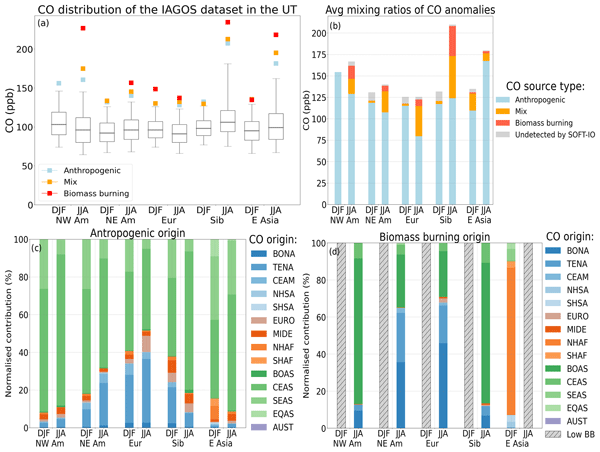
Our study examines intense-carbon-monoxide (CO) pollution events measured by commercial aircraft from the In-service Aircraft for a Global Observing System (IAGOS) research infrastructure. We combine these measurements with the SOFT-IO model to trace the origin of the observed CO. A comprehensive analysis of the geographical origin, source type, seasonal variation, and ozone levels of these pollution events is provided.
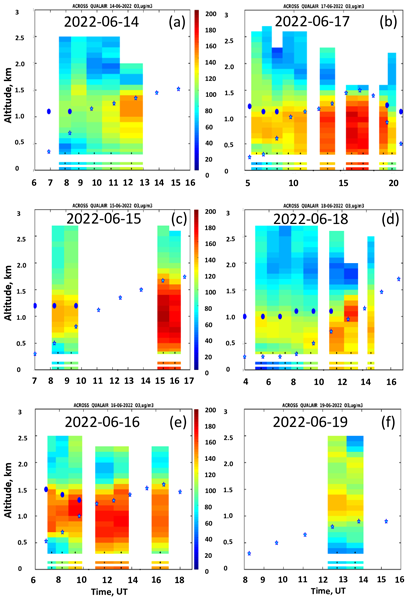
Gérard Ancellet, Camille Viatte, Anne Boynard, François Ravetta, Jacques Pelon, Cristelle Cailteau-Fischbach, Pascal Genau, Julie Capo, Axel Roy, and Philippe Nédélec
Atmos. Chem. Phys., 24, 12963–12983, https://doi.org/10.5194/acp-24-12963-2024, https://doi.org/10.5194/acp-24-12963-2024, 2024
Short summary
Short summary
Characterization of ozone pollution in urban areas benefited from a measurement campaign in summer 2022 in the Paris region. The analysis is based on 21 d of lidar and aircraft observations. The main objective is an analysis of the sensitivity of ozone pollution to the micrometeorological processes in the urban atmospheric boundary layer and the transport of regional pollution. The paper also discusses to what extent satellite observations can track observed ozone plumes.
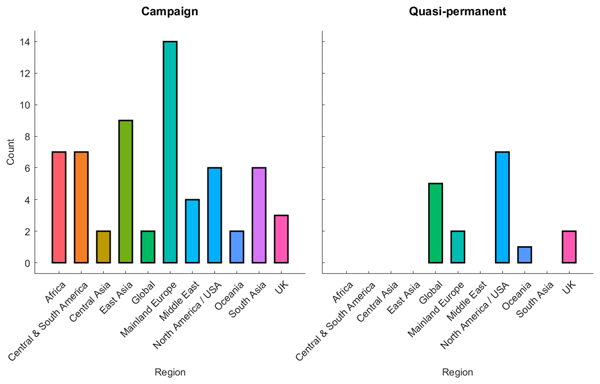
Kristen Okorn and Laura T. Iraci
Atmos. Meas. Tech., 17, 6425–6457, https://doi.org/10.5194/amt-17-6425-2024, https://doi.org/10.5194/amt-17-6425-2024, 2024
Short summary
Short summary
We reviewed 60 sensor networks and 17 related efforts (sensor review papers and data accessibility projects) to better understand the landscape of stationary low-cost gas-phase sensor networks deployed in outdoor environments worldwide. Gaps in monitoring efforts include the availability of gas-phase measurements compared to particulate matter (PM) and geographic coverage gaps (the Global South, rural areas). We conclude with a summary of cross-network unification and quality control efforts.
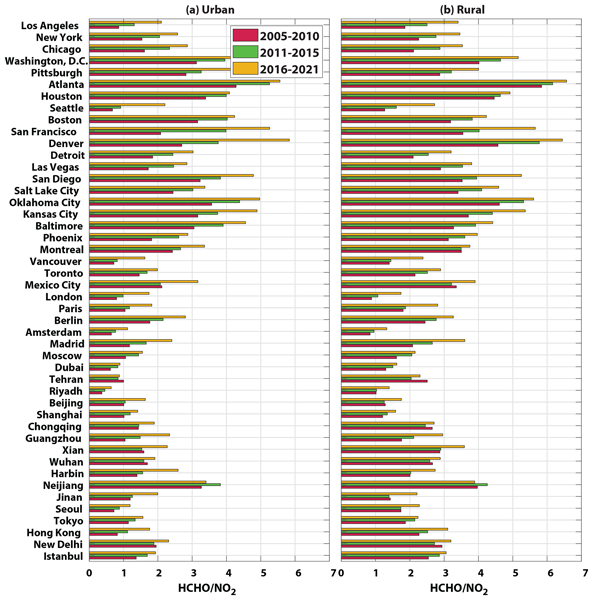
Matthew S. Johnson, Sajeev Philip, Scott Meech, Rajesh Kumar, Meytar Sorek-Hamer, Yoichi P. Shiga, and Jia Jung
Atmos. Chem. Phys., 24, 10363–10384, https://doi.org/10.5194/acp-24-10363-2024, https://doi.org/10.5194/acp-24-10363-2024, 2024
Short summary
Short summary
Satellites, like the Ozone Monitoring Instrument (OMI), retrieve proxy species of ozone (O3) formation (formaldehyde and nitrogen dioxide) and the ratios (FNRs) which can define O3 production sensitivity regimes. Here we investigate trends of OMI FNRs from 2005 to 2021, and they have increased in major cities, suggesting a transition from radical- to NOx-limited regimes. OMI also observed the impact of reduced emissions during the 2020 COVID-19 lockdown that resulted in increased FNRs.
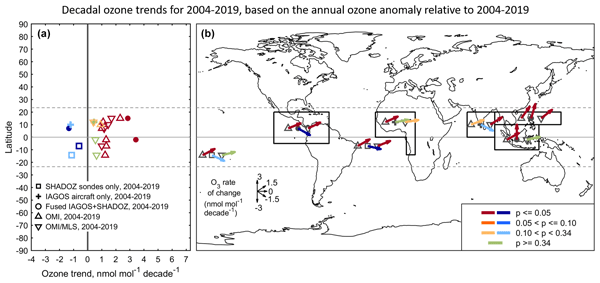
Audrey Gaudel, Ilann Bourgeois, Meng Li, Kai-Lan Chang, Jerald Ziemke, Bastien Sauvage, Ryan M. Stauffer, Anne M. Thompson, Debra E. Kollonige, Nadia Smith, Daan Hubert, Arno Keppens, Juan Cuesta, Klaus-Peter Heue, Pepijn Veefkind, Kenneth Aikin, Jeff Peischl, Chelsea R. Thompson, Thomas B. Ryerson, Gregory J. Frost, Brian C. McDonald, and Owen R. Cooper
Atmos. Chem. Phys., 24, 9975–10000, https://doi.org/10.5194/acp-24-9975-2024, https://doi.org/10.5194/acp-24-9975-2024, 2024
Short summary
Short summary
The study examines tropical tropospheric ozone changes. In situ data from 1994–2019 display increased ozone, notably over India, Southeast Asia, and Malaysia and Indonesia. Sparse in situ data limit trend detection for the 15-year period. In situ and satellite data, with limited sampling, struggle to consistently detect trends. Continuous observations are vital over the tropical Pacific Ocean, Indian Ocean, western Africa, and South Asia for accurate ozone trend estimation in these regions.
Henk Eskes, Athanasios Tsikerdekis, Melanie Ades, Mihai Alexe, Anna Carlin Benedictow, Yasmine Bennouna, Lewis Blake, Idir Bouarar, Simon Chabrillat, Richard Engelen, Quentin Errera, Johannes Flemming, Sebastien Garrigues, Jan Griesfeller, Vincent Huijnen, Luka Ilić, Antje Inness, John Kapsomenakis, Zak Kipling, Bavo Langerock, Augustin Mortier, Mark Parrington, Isabelle Pison, Mikko Pitkänen, Samuel Remy, Andreas Richter, Anja Schoenhardt, Michael Schulz, Valerie Thouret, Thorsten Warneke, Christos Zerefos, and Vincent-Henri Peuch
Atmos. Chem. Phys., 24, 9475–9514, https://doi.org/10.5194/acp-24-9475-2024, https://doi.org/10.5194/acp-24-9475-2024, 2024
Short summary
Short summary
The Copernicus Atmosphere Monitoring Service (CAMS) provides global analyses and forecasts of aerosols and trace gases in the atmosphere. On 27 June 2023 a major upgrade, Cy48R1, became operational. Comparisons with in situ, surface remote sensing, aircraft, and balloon and satellite observations show that the new CAMS system is a significant improvement. The results quantify the skill of CAMS to forecast impactful events, such as wildfires, dust storms and air pollution peaks.
Kuo-Ying Wang, Philippe Nedelec, Valerie Thouret, Hannah Clark, Andreas Wahner, and Andreas Petzold
EGUsphere, https://doi.org/10.5194/egusphere-2024-2414, https://doi.org/10.5194/egusphere-2024-2414, 2024
Preprint archived
Short summary
Short summary
We use routine in-service commercial passenger airplanes Airbus A340 and A330 to collect air pollutants in the upper troposphere. The beauty in using commercial airplanes is that these commercial airplanes, like taxi on the ground, keep flying all the time. We find that short-lived air pollutants are very sensitive to ground-level emissions. Effective regulation in ground-level emissions can help to reduce air pollution in the upper troposphere.
Kai-Lan Chang, Owen R. Cooper, Audrey Gaudel, Irina Petropavlovskikh, Peter Effertz, Gary Morris, and Brian C. McDonald
Atmos. Chem. Phys., 24, 6197–6218, https://doi.org/10.5194/acp-24-6197-2024, https://doi.org/10.5194/acp-24-6197-2024, 2024
Short summary
Short summary
A great majority of observational trend studies of free tropospheric ozone use sparsely sampled ozonesonde and aircraft measurements as reference data sets. A ubiquitous assumption is that trends are accurate and reliable so long as long-term records are available. We show that sampling bias due to sparse samples can persistently reduce the trend accuracy, and we highlight the importance of maintaining adequate frequency and continuity of observations.
Andreas Petzold, Ulrich Bundke, Anca Hienola, Paolo Laj, Cathrine Lund Myhre, Alex Vermeulen, Angeliki Adamaki, Werner Kutsch, Valerie Thouret, Damien Boulanger, Markus Fiebig, Markus Stocker, Zhiming Zhao, and Ari Asmi
Atmos. Chem. Phys., 24, 5369–5388, https://doi.org/10.5194/acp-24-5369-2024, https://doi.org/10.5194/acp-24-5369-2024, 2024
Short summary
Short summary
Easy and fast access to long-term and high-quality observational data is recognised as fundamental to environmental research and the development of climate forecasting and assessment services. We discuss the potential new directions in atmospheric sciences offered by the atmosphere-centric European research infrastructures ACTRIS, IAGOS, and ICOS, building on their capabilities for standardised provision of data through open access combined with tools and methods of data-intensive science.

Matthew S. Johnson, Alexei Rozanov, Mark Weber, Nora Mettig, John Sullivan, Michael J. Newchurch, Shi Kuang, Thierry Leblanc, Fernando Chouza, Timothy A. Berkoff, Guillaume Gronoff, Kevin B. Strawbridge, Raul J. Alvarez, Andrew O. Langford, Christoph J. Senff, Guillaume Kirgis, Brandi McCarty, and Larry Twigg
Atmos. Meas. Tech., 17, 2559–2582, https://doi.org/10.5194/amt-17-2559-2024, https://doi.org/10.5194/amt-17-2559-2024, 2024
Short summary
Short summary
Monitoring tropospheric ozone (O3), a harmful pollutant negatively impacting human health, is primarily done using ground-based measurements and ozonesondes. However, these observation types lack the coverage to fully understand tropospheric O3. Satellites can retrieve tropospheric ozone with near-daily global coverage; however, they are known to have biases and errors. This study uses ground-based lidars to validate multiple satellites' ability to observe tropospheric O3.
Meng Li, Junichi Kurokawa, Qiang Zhang, Jung-Hun Woo, Tazuko Morikawa, Satoru Chatani, Zifeng Lu, Yu Song, Guannan Geng, Hanwen Hu, Jinseok Kim, Owen R. Cooper, and Brian C. McDonald
Atmos. Chem. Phys., 24, 3925–3952, https://doi.org/10.5194/acp-24-3925-2024, https://doi.org/10.5194/acp-24-3925-2024, 2024
Short summary
Short summary
In this work, we developed MIXv2, a mosaic Asian emission inventory for 2010–2017. With high spatial (0.1°) and monthly temporal resolution, MIXv2 integrates anthropogenic and open biomass burning emissions across seven sectors following a mosaic methodology. It provides CO2 emissions data alongside nine key pollutants and three chemical mechanisms. Our publicly accessible gridded monthly emissions data can facilitate long-term atmospheric and climate model analyses.
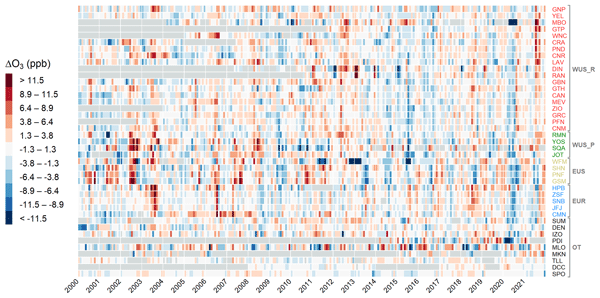
Davide Putero, Paolo Cristofanelli, Kai-Lan Chang, Gaëlle Dufour, Gregory Beachley, Cédric Couret, Peter Effertz, Daniel A. Jaffe, Dagmar Kubistin, Jason Lynch, Irina Petropavlovskikh, Melissa Puchalski, Timothy Sharac, Barkley C. Sive, Martin Steinbacher, Carlos Torres, and Owen R. Cooper
Atmos. Chem. Phys., 23, 15693–15709, https://doi.org/10.5194/acp-23-15693-2023, https://doi.org/10.5194/acp-23-15693-2023, 2023
Short summary
Short summary
We investigated the impact of societal restriction measures during the COVID-19 pandemic on surface ozone at 41 high-elevation sites worldwide. Negative ozone anomalies were observed for spring and summer 2020 for all of the regions considered. In 2021, negative anomalies continued for Europe and partially for the eastern US, while western US sites showed positive anomalies due to wildfires. IASI satellite data and the Carbon Monitor supported emission reductions as a cause of the anomalies.
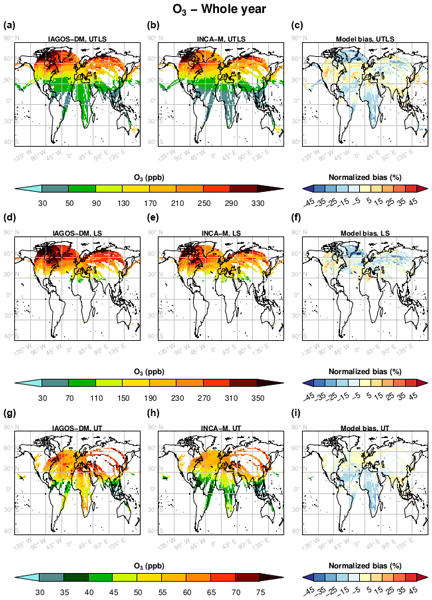
Yann Cohen, Didier Hauglustaine, Bastien Sauvage, Susanne Rohs, Patrick Konjari, Ulrich Bundke, Andreas Petzold, Valérie Thouret, Andreas Zahn, and Helmut Ziereis
Atmos. Chem. Phys., 23, 14973–15009, https://doi.org/10.5194/acp-23-14973-2023, https://doi.org/10.5194/acp-23-14973-2023, 2023
Short summary
Short summary
The upper troposphere–lower stratosphere (UTLS) is a key region regarding the lower atmospheric composition. This study consists of a comprehensive evaluation of an up-to-date chemistry–climate model in this layer, using regular in situ measurements based on passenger aircraft. For this purpose, a specific software (Interpol-IAGOS) has been updated and made publicly available. The model reproduces the carbon monoxide peaks due to biomass burning over the continental tropics particularly well.
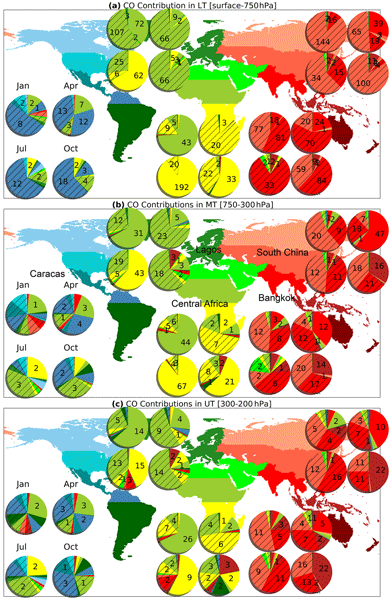
Maria Tsivlidou, Bastien Sauvage, Yasmine Bennouna, Romain Blot, Damien Boulanger, Hannah Clark, Eric Le Flochmoën, Philippe Nédélec, Valérie Thouret, Pawel Wolff, and Brice Barret
Atmos. Chem. Phys., 23, 14039–14063, https://doi.org/10.5194/acp-23-14039-2023, https://doi.org/10.5194/acp-23-14039-2023, 2023
Short summary
Short summary
The tropics are a region where the ozone increase has been most apparent since 1980 and where observations are sparse. Using aircraft, satellite, and model data, we document the characteristics of tropospheric ozone and CO over the whole tropics for the last 2 decades. We explore the origin of the observed CO anomalies and investigate transport processes driving the tropical CO and O3 distribution. Our study highlights the importance of anthropogenic emissions, mostly over the northern tropics.
Emma L. Yates, Laura T. Iraci, Susan S. Kulawik, Ju-Mee Ryoo, Josette E. Marrero, Caroline L. Parworth, Jason M. St. Clair, Thomas F. Hanisco, Thao Paul V. Bui, Cecilia S. Chang, and Jonathan M. Dean-Day
Earth Syst. Sci. Data, 15, 2375–2389, https://doi.org/10.5194/essd-15-2375-2023, https://doi.org/10.5194/essd-15-2375-2023, 2023
Short summary
Short summary
The Alpha Jet Atmospheric eXperiment (AJAX) flew scientific flights between 2011 and 2018 providing measurements of carbon dioxide, methane, ozone, formaldehyde, water vapor and meteorological parameters over California and Nevada, USA. AJAX was a multi-year, multi-objective, multi-instrument program with a variety of sampling strategies resulting in an extensive dataset of interest to a wide variety of users. AJAX measurements have been published at https://asdc.larc.nasa.gov/project/AJAX.
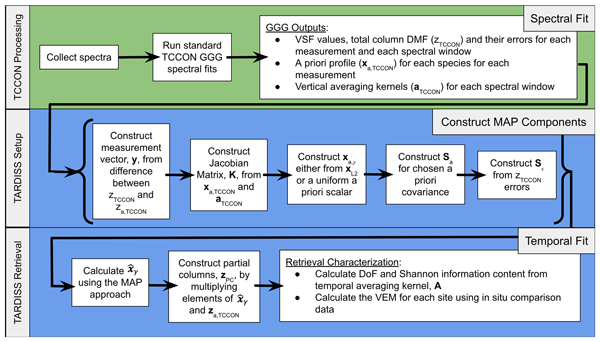
Harrison A. Parker, Joshua L. Laughner, Geoffrey C. Toon, Debra Wunch, Coleen M. Roehl, Laura T. Iraci, James R. Podolske, Kathryn McKain, Bianca C. Baier, and Paul O. Wennberg
Atmos. Meas. Tech., 16, 2601–2625, https://doi.org/10.5194/amt-16-2601-2023, https://doi.org/10.5194/amt-16-2601-2023, 2023
Short summary
Short summary
We describe a retrieval algorithm for determining limited information about the vertical distribution of carbon monoxide (CO) and carbon dioxide (CO2) from total column observations from ground-based observations. Our retrieved partial column values compare well with integrated in situ data. The average error for our retrieval is 1.51 ppb (~ 2 %) for CO and 5.09 ppm (~ 1.25 %) for CO2. We anticipate that this approach will find broad application for use in carbon cycle science.
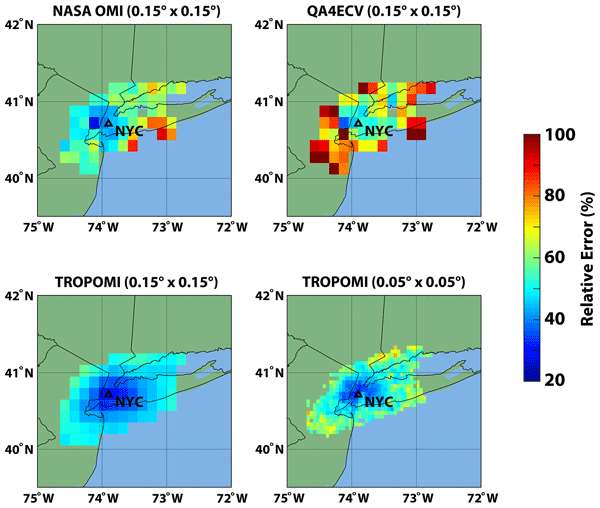
Matthew S. Johnson, Amir H. Souri, Sajeev Philip, Rajesh Kumar, Aaron Naeger, Jeffrey Geddes, Laura Judd, Scott Janz, Heesung Chong, and John Sullivan
Atmos. Meas. Tech., 16, 2431–2454, https://doi.org/10.5194/amt-16-2431-2023, https://doi.org/10.5194/amt-16-2431-2023, 2023
Short summary
Short summary
Satellites provide vital information for studying the processes controlling ozone formation. Based on the abundance of particular gases in the atmosphere, ozone formation is sensitive to specific human-induced and natural emission sources. However, errors and biases in satellite retrievals hinder this data source’s application for studying ozone formation sensitivity. We conducted a thorough statistical evaluation of two commonly applied satellites for investigating ozone formation sensitivity.
Ian Chang, Lan Gao, Connor J. Flynn, Yohei Shinozuka, Sarah J. Doherty, Michael S. Diamond, Karla M. Longo, Gonzalo A. Ferrada, Gregory R. Carmichael, Patricia Castellanos, Arlindo M. da Silva, Pablo E. Saide, Calvin Howes, Zhixin Xue, Marc Mallet, Ravi Govindaraju, Qiaoqiao Wang, Yafang Cheng, Yan Feng, Sharon P. Burton, Richard A. Ferrare, Samuel E. LeBlanc, Meloë S. Kacenelenbogen, Kristina Pistone, Michal Segal-Rozenhaimer, Kerry G. Meyer, Ju-Mee Ryoo, Leonhard Pfister, Adeyemi A. Adebiyi, Robert Wood, Paquita Zuidema, Sundar A. Christopher, and Jens Redemann
Atmos. Chem. Phys., 23, 4283–4309, https://doi.org/10.5194/acp-23-4283-2023, https://doi.org/10.5194/acp-23-4283-2023, 2023
Short summary
Short summary
Abundant aerosols are present above low-level liquid clouds over the southeastern Atlantic during late austral spring. The model simulation differences in the proportion of aerosol residing in the planetary boundary layer and in the free troposphere can greatly affect the regional aerosol radiative effects. This study examines the aerosol loading and fractional aerosol loading in the free troposphere among various models and evaluates them against measurements from the NASA ORACLES campaign.
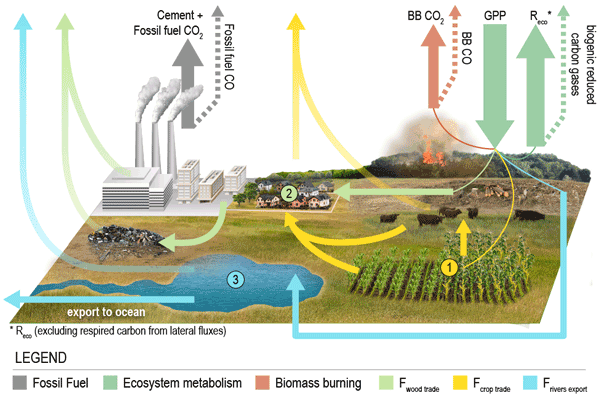
Brendan Byrne, David F. Baker, Sourish Basu, Michael Bertolacci, Kevin W. Bowman, Dustin Carroll, Abhishek Chatterjee, Frédéric Chevallier, Philippe Ciais, Noel Cressie, David Crisp, Sean Crowell, Feng Deng, Zhu Deng, Nicholas M. Deutscher, Manvendra K. Dubey, Sha Feng, Omaira E. García, David W. T. Griffith, Benedikt Herkommer, Lei Hu, Andrew R. Jacobson, Rajesh Janardanan, Sujong Jeong, Matthew S. Johnson, Dylan B. A. Jones, Rigel Kivi, Junjie Liu, Zhiqiang Liu, Shamil Maksyutov, John B. Miller, Scot M. Miller, Isamu Morino, Justus Notholt, Tomohiro Oda, Christopher W. O'Dell, Young-Suk Oh, Hirofumi Ohyama, Prabir K. Patra, Hélène Peiro, Christof Petri, Sajeev Philip, David F. Pollard, Benjamin Poulter, Marine Remaud, Andrew Schuh, Mahesh K. Sha, Kei Shiomi, Kimberly Strong, Colm Sweeney, Yao Té, Hanqin Tian, Voltaire A. Velazco, Mihalis Vrekoussis, Thorsten Warneke, John R. Worden, Debra Wunch, Yuanzhi Yao, Jeongmin Yun, Andrew Zammit-Mangion, and Ning Zeng
Earth Syst. Sci. Data, 15, 963–1004, https://doi.org/10.5194/essd-15-963-2023, https://doi.org/10.5194/essd-15-963-2023, 2023
Short summary
Short summary
Changes in the carbon stocks of terrestrial ecosystems result in emissions and removals of CO2. These can be driven by anthropogenic activities (e.g., deforestation), natural processes (e.g., fires) or in response to rising CO2 (e.g., CO2 fertilization). This paper describes a dataset of CO2 emissions and removals derived from atmospheric CO2 observations. This pilot dataset informs current capabilities and future developments towards top-down monitoring and verification systems.
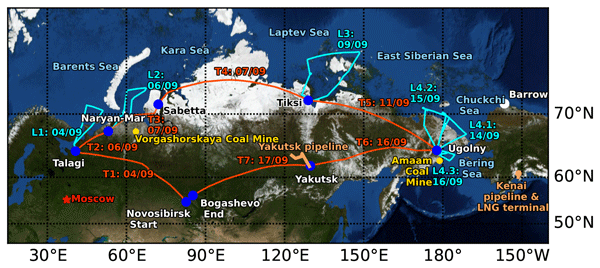
Clément Narbaud, Jean-Daniel Paris, Sophie Wittig, Antoine Berchet, Marielle Saunois, Philippe Nédélec, Boris D. Belan, Mikhail Y. Arshinov, Sergei B. Belan, Denis Davydov, Alexander Fofonov, and Artem Kozlov
Atmos. Chem. Phys., 23, 2293–2314, https://doi.org/10.5194/acp-23-2293-2023, https://doi.org/10.5194/acp-23-2293-2023, 2023
Short summary
Short summary
We measured CH4 and CO2 from aircraft over the Russian Arctic. Analyzing our data with the Lagrangian model FLEXPART, we find a sharp east–west gradient in atmospheric composition. Western Siberia is influenced by strong wetland CH4 emissions, deep CO2 gradient from biospheric uptake, and long-range transport from Europe and North America. Eastern flights document less variability. Over the Arctic Ocean, we find a small influence from marine CH4 emissions compatible with reasonable inventories.
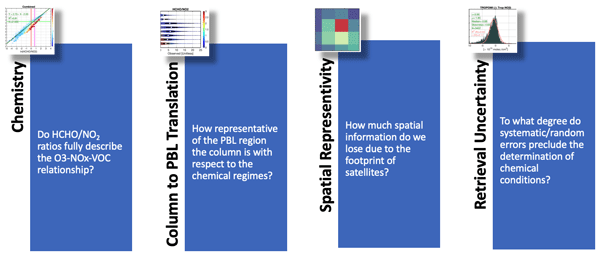
Amir H. Souri, Matthew S. Johnson, Glenn M. Wolfe, James H. Crawford, Alan Fried, Armin Wisthaler, William H. Brune, Donald R. Blake, Andrew J. Weinheimer, Tijl Verhoelst, Steven Compernolle, Gaia Pinardi, Corinne Vigouroux, Bavo Langerock, Sungyeon Choi, Lok Lamsal, Lei Zhu, Shuai Sun, Ronald C. Cohen, Kyung-Eun Min, Changmin Cho, Sajeev Philip, Xiong Liu, and Kelly Chance
Atmos. Chem. Phys., 23, 1963–1986, https://doi.org/10.5194/acp-23-1963-2023, https://doi.org/10.5194/acp-23-1963-2023, 2023
Short summary
Short summary
We have rigorously characterized different sources of error in satellite-based HCHO / NO2 tropospheric columns, a widely used metric for diagnosing near-surface ozone sensitivity. Specifically, the errors were categorized/quantified into (i) an inherent chemistry error, (ii) the decoupled relationship between columns and the near-surface concentration, (iii) the spatial representativeness error of ground satellite pixels, and (iv) the satellite retrieval errors.

Antje Inness, Ilse Aben, Melanie Ades, Tobias Borsdorff, Johannes Flemming, Luke Jones, Jochen Landgraf, Bavo Langerock, Philippe Nedelec, Mark Parrington, and Roberto Ribas
Atmos. Chem. Phys., 22, 14355–14376, https://doi.org/10.5194/acp-22-14355-2022, https://doi.org/10.5194/acp-22-14355-2022, 2022
Short summary
Short summary
The Copernicus Atmosphere Monitoring Service (CAMS) provides daily global air quality forecasts to users worldwide. One of the species of interest is carbon monoxide (CO), an important trace gas in the atmosphere with anthropogenic and natural sources, produced by incomplete combustion, for example, by wildfires. This paper looks at how well CAMS can model CO in the atmosphere and shows that the fields can be improved when blending CO data from the TROPOMI instrument with the CAMS model.
Ju-Mee Ryoo, Leonhard Pfister, Rei Ueyama, Paquita Zuidema, Robert Wood, Ian Chang, and Jens Redemann
Atmos. Chem. Phys., 22, 14209–14241, https://doi.org/10.5194/acp-22-14209-2022, https://doi.org/10.5194/acp-22-14209-2022, 2022
Short summary
Short summary
The variability in the meteorological fields during each deployment is highly modulated at a daily to synoptic timescale. This paper, along with part 1, the climatological overview paper, provides a meteorological context for interpreting the airborne measurements gathered during the three ORACLES deployments. This study supports related studies focusing on the detailed investigation of the processes controlling stratocumulus decks, aerosol lifting, transport, and their interactions.
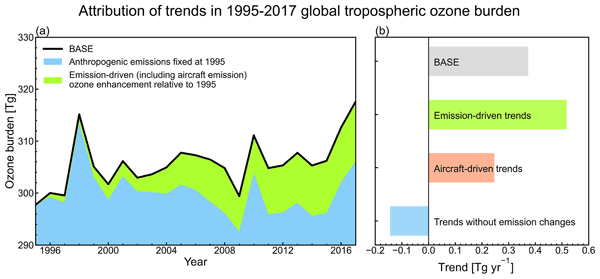
Haolin Wang, Xiao Lu, Daniel J. Jacob, Owen R. Cooper, Kai-Lan Chang, Ke Li, Meng Gao, Yiming Liu, Bosi Sheng, Kai Wu, Tongwen Wu, Jie Zhang, Bastien Sauvage, Philippe Nédélec, Romain Blot, and Shaojia Fan
Atmos. Chem. Phys., 22, 13753–13782, https://doi.org/10.5194/acp-22-13753-2022, https://doi.org/10.5194/acp-22-13753-2022, 2022
Short summary
Short summary
We report significant global tropospheric ozone increases in 1995–2017 based on extensive aircraft and ozonesonde observations. Using GEOS-Chem (Goddard Earth Observing System chemistry model) multi-decadal global simulations, we find that changes in global anthropogenic emissions, in particular the rapid increases in aircraft emissions, contribute significantly to the increases in tropospheric ozone and resulting radiative impact.
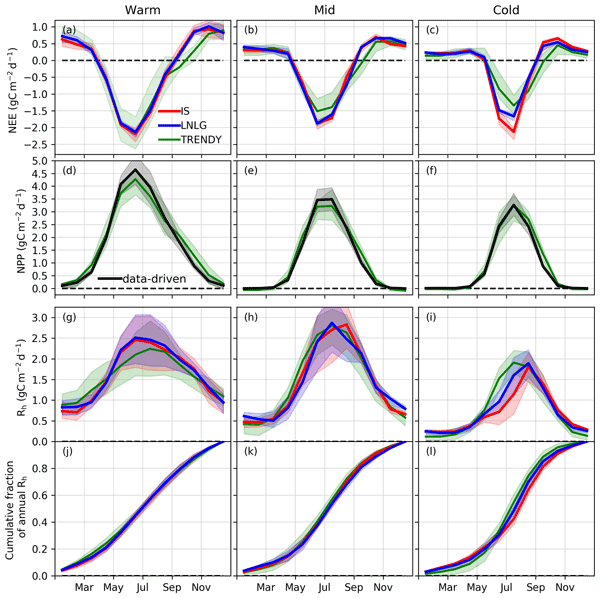
Brendan Byrne, Junjie Liu, Yonghong Yi, Abhishek Chatterjee, Sourish Basu, Rui Cheng, Russell Doughty, Frédéric Chevallier, Kevin W. Bowman, Nicholas C. Parazoo, David Crisp, Xing Li, Jingfeng Xiao, Stephen Sitch, Bertrand Guenet, Feng Deng, Matthew S. Johnson, Sajeev Philip, Patrick C. McGuire, and Charles E. Miller
Biogeosciences, 19, 4779–4799, https://doi.org/10.5194/bg-19-4779-2022, https://doi.org/10.5194/bg-19-4779-2022, 2022
Short summary
Short summary
Plants draw CO2 from the atmosphere during the growing season, while respiration releases CO2 to the atmosphere throughout the year, driving seasonal variations in atmospheric CO2 that can be observed by satellites, such as the Orbiting Carbon Observatory 2 (OCO-2). Using OCO-2 XCO2 data and space-based constraints on plant growth, we show that permafrost-rich northeast Eurasia has a strong seasonal release of CO2 during the autumn, hinting at an unexpectedly large respiration signal from soils.
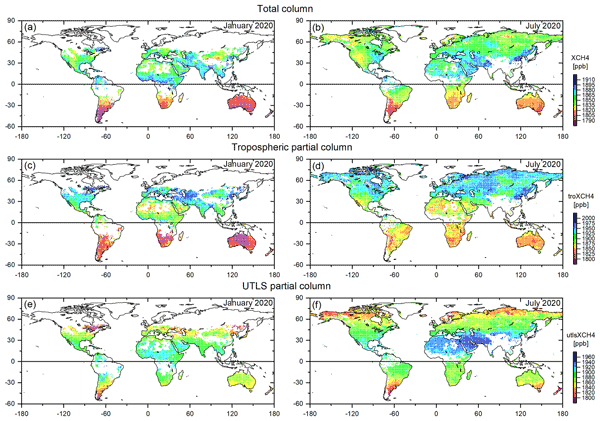
Matthias Schneider, Benjamin Ertl, Qiansi Tu, Christopher J. Diekmann, Farahnaz Khosrawi, Amelie N. Röhling, Frank Hase, Darko Dubravica, Omaira E. García, Eliezer Sepúlveda, Tobias Borsdorff, Jochen Landgraf, Alba Lorente, André Butz, Huilin Chen, Rigel Kivi, Thomas Laemmel, Michel Ramonet, Cyril Crevoisier, Jérome Pernin, Martin Steinbacher, Frank Meinhardt, Kimberly Strong, Debra Wunch, Thorsten Warneke, Coleen Roehl, Paul O. Wennberg, Isamu Morino, Laura T. Iraci, Kei Shiomi, Nicholas M. Deutscher, David W. T. Griffith, Voltaire A. Velazco, and David F. Pollard
Atmos. Meas. Tech., 15, 4339–4371, https://doi.org/10.5194/amt-15-4339-2022, https://doi.org/10.5194/amt-15-4339-2022, 2022
Short summary
Short summary
We present a computationally very efficient method for the synergetic use of level 2 remote-sensing data products. We apply the method to IASI vertical profile and TROPOMI total column space-borne methane observations and thus gain sensitivity for the tropospheric methane partial columns, which is not achievable by the individual use of TROPOMI and IASI. These synergetic effects are evaluated theoretically and empirically by inter-comparisons to independent references of TCCON, AirCore, and GAW.
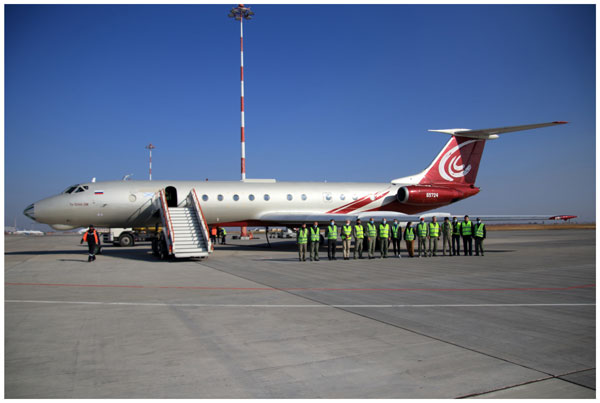
Boris D. Belan, Gerard Ancellet, Irina S. Andreeva, Pavel N. Antokhin, Viktoria G. Arshinova, Mikhail Y. Arshinov, Yurii S. Balin, Vladimir E. Barsuk, Sergei B. Belan, Dmitry G. Chernov, Denis K. Davydov, Alexander V. Fofonov, Georgii A. Ivlev, Sergei N. Kotel'nikov, Alexander S. Kozlov, Artem V. Kozlov, Katharine Law, Andrey V. Mikhal'chishin, Igor A. Moseikin, Sergei V. Nasonov, Philippe Nédélec, Olesya V. Okhlopkova, Sergei E. Ol'kin, Mikhail V. Panchenko, Jean-Daniel Paris, Iogannes E. Penner, Igor V. Ptashnik, Tatyana M. Rasskazchikova, Irina K. Reznikova, Oleg A. Romanovskii, Alexander S. Safatov, Denis E. Savkin, Denis V. Simonenkov, Tatyana K. Sklyadneva, Gennadii N. Tolmachev, Semyon V. Yakovlev, and Polina N. Zenkova
Atmos. Meas. Tech., 15, 3941–3967, https://doi.org/10.5194/amt-15-3941-2022, https://doi.org/10.5194/amt-15-3941-2022, 2022
Short summary
Short summary
The change of the global climate is most pronounced in the Arctic, where the air temperature increases faster than the global average. This is associated with an increase in the concentration of greenhouse gases in the atmosphere. It is important to study how the air composition in the Arctic changes in the changing climate. Thus this integrated experiment was carried out to measure the composition of the troposphere in the Russian sector of the Arctic from on board the aircraft laboratory.
Dimitris Akritidis, Andrea Pozzer, Johannes Flemming, Antje Inness, Philippe Nédélec, and Prodromos Zanis
Atmos. Chem. Phys., 22, 6275–6289, https://doi.org/10.5194/acp-22-6275-2022, https://doi.org/10.5194/acp-22-6275-2022, 2022
Short summary
Short summary
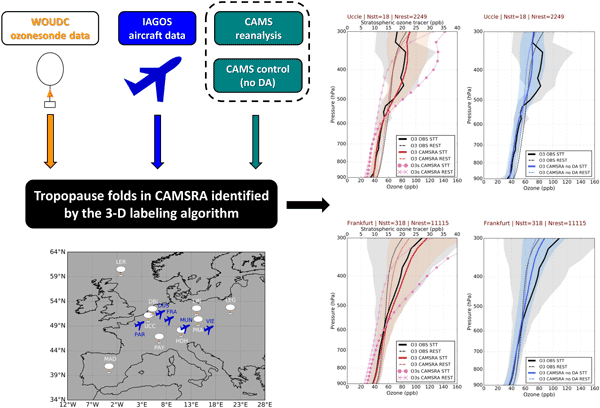
We perform a process-oriented evaluation of Copernicus Atmosphere Monitoring Service (CAMS) reanalysis (CAMSRA) O3 over Europe using WOUDC (World Ozone and Ultraviolet Radiation Data Centre) ozonesondes and IAGOS (In-service Aircraft for a Global Observing System) aircraft measurements. Chemical data assimilation assists CAMSRA to reproduce the observed O3 increases in the troposphere during the examined folding events, but it mostly results in O3 overestimation in the upper troposphere.
Meloë S. F. Kacenelenbogen, Qian Tan, Sharon P. Burton, Otto P. Hasekamp, Karl D. Froyd, Yohei Shinozuka, Andreas J. Beyersdorf, Luke Ziemba, Kenneth L. Thornhill, Jack E. Dibb, Taylor Shingler, Armin Sorooshian, Reed W. Espinosa, Vanderlei Martins, Jose L. Jimenez, Pedro Campuzano-Jost, Joshua P. Schwarz, Matthew S. Johnson, Jens Redemann, and Gregory L. Schuster
Atmos. Chem. Phys., 22, 3713–3742, https://doi.org/10.5194/acp-22-3713-2022, https://doi.org/10.5194/acp-22-3713-2022, 2022
Short summary
Short summary
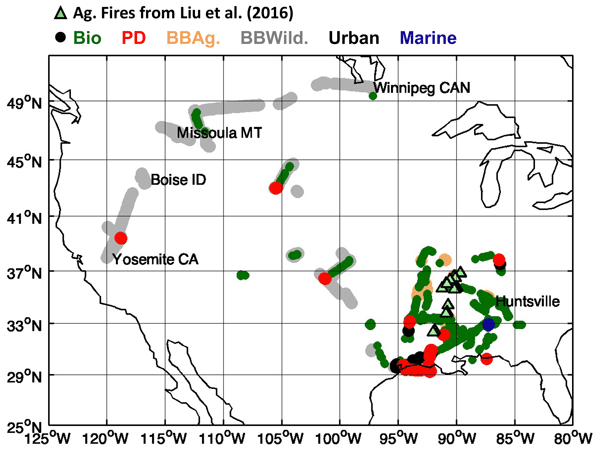
The impact of aerosols on Earth's radiation budget and human health is important and strongly depends on their composition. One desire of our scientific community is to derive the composition of the aerosol from satellite sensors. However, satellites observe aerosol optical properties (and not aerosol composition) based on remote sensing instrumentation. This study assesses how much aerosol optical properties can tell us about aerosol composition.
Graciela B. Raga, Darrel Baumgardner, Blanca Rios, Yanet Díaz-Esteban, Alejandro Jaramillo, Martin Gallagher, Bastien Sauvage, Pawel Wolff, and Gary Lloyd
Atmos. Chem. Phys., 22, 2269–2292, https://doi.org/10.5194/acp-22-2269-2022, https://doi.org/10.5194/acp-22-2269-2022, 2022
Short summary
Short summary
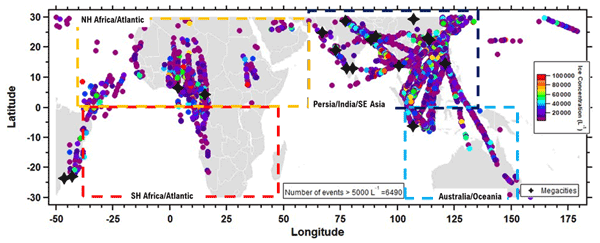
The In-Service Aircraft for a Global Observing System (IAGOS) is a small fleet of commercial aircraft that carry a suite of meteorological, gas, aerosol, and cloud sensors and have been measuring worldwide for almost 9 years, since late 2011. Extreme ice events (EIEs) have been identified from the IAGOS cloud measurements and linked to surface emissions for biomass and fossil fuel consumption. The results reported here are highly relevant for climate change and flight operations forecasting.
Thomas E. Taylor, Christopher W. O'Dell, David Crisp, Akhiko Kuze, Hannakaisa Lindqvist, Paul O. Wennberg, Abhishek Chatterjee, Michael Gunson, Annmarie Eldering, Brendan Fisher, Matthäus Kiel, Robert R. Nelson, Aronne Merrelli, Greg Osterman, Frédéric Chevallier, Paul I. Palmer, Liang Feng, Nicholas M. Deutscher, Manvendra K. Dubey, Dietrich G. Feist, Omaira E. García, David W. T. Griffith, Frank Hase, Laura T. Iraci, Rigel Kivi, Cheng Liu, Martine De Mazière, Isamu Morino, Justus Notholt, Young-Suk Oh, Hirofumi Ohyama, David F. Pollard, Markus Rettinger, Matthias Schneider, Coleen M. Roehl, Mahesh Kumar Sha, Kei Shiomi, Kimberly Strong, Ralf Sussmann, Yao Té, Voltaire A. Velazco, Mihalis Vrekoussis, Thorsten Warneke, and Debra Wunch
Earth Syst. Sci. Data, 14, 325–360, https://doi.org/10.5194/essd-14-325-2022, https://doi.org/10.5194/essd-14-325-2022, 2022
Short summary
Short summary
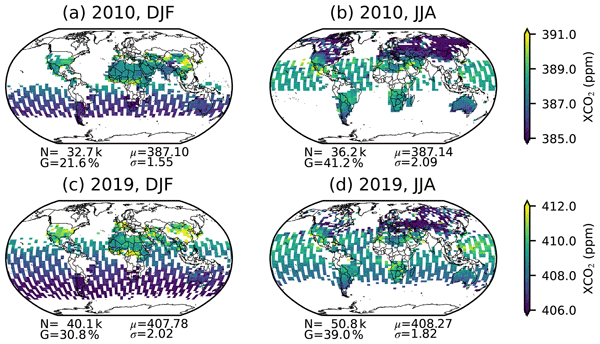
We provide an analysis of an 11-year record of atmospheric carbon dioxide (CO2) concentrations derived using an optimal estimation retrieval algorithm on measurements made by the GOSAT satellite. The new product (version 9) shows improvement over the previous version (v7.3) as evaluated against independent estimates of CO2 from ground-based sensors and atmospheric inversion systems. We also compare the new GOSAT CO2 values to collocated estimates from NASA's Orbiting Carbon Observatory-2.
Hélène Peiro, Sean Crowell, Andrew Schuh, David F. Baker, Chris O'Dell, Andrew R. Jacobson, Frédéric Chevallier, Junjie Liu, Annmarie Eldering, David Crisp, Feng Deng, Brad Weir, Sourish Basu, Matthew S. Johnson, Sajeev Philip, and Ian Baker
Atmos. Chem. Phys., 22, 1097–1130, https://doi.org/10.5194/acp-22-1097-2022, https://doi.org/10.5194/acp-22-1097-2022, 2022
Short summary
Short summary
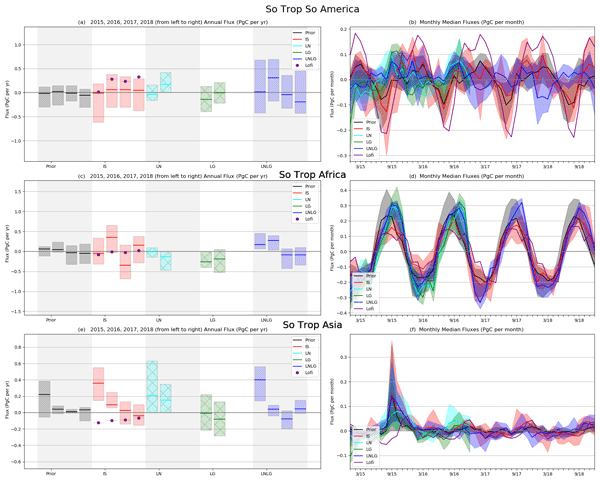
Satellite CO2 observations are constantly improved. We study an ensemble of different atmospheric models (inversions) from 2015 to 2018 using separate ground-based data or two versions of the OCO-2 satellite. Our study aims to determine if different satellite data corrections can yield different estimates of carbon cycle flux. A difference in the carbon budget between the two versions is found over tropical Africa, which seems to show the impact of corrections applied in satellite data.
Amir H. Souri, Kelly Chance, Kang Sun, Xiong Liu, and Matthew S. Johnson
Atmos. Meas. Tech., 15, 41–59, https://doi.org/10.5194/amt-15-41-2022, https://doi.org/10.5194/amt-15-41-2022, 2022
Short summary
Short summary
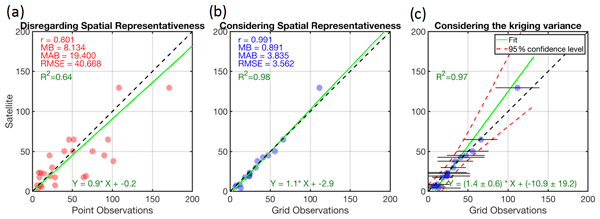
The central component of satellite and model validation is pointwise measurements. A point is an element of space, whereas satellite (model) pixels represent an averaged area. These two datasets are inherently different. We leveraged some geostatistical tools to transform discrete points to gridded data with quantified uncertainty, comparable to satellite footprint (and response functions). This in part alleviated some complications concerning point–pixel comparisons.
Ju-Mee Ryoo, Leonhard Pfister, Rei Ueyama, Paquita Zuidema, Robert Wood, Ian Chang, and Jens Redemann
Atmos. Chem. Phys., 21, 16689–16707, https://doi.org/10.5194/acp-21-16689-2021, https://doi.org/10.5194/acp-21-16689-2021, 2021
Short summary
Short summary
Part 1 of the meteorological overview paper highlights the anomalous meteorological characteristics during the ORACLES deployment compared to the climatological mean at monthly timescales. The upper-level wave disturbance and the associated anomalous circulation explain the weakening of AEJ-S through the reduction of the strength of the heat low over the land during August 2017. This may also help explain the anomalously low aerosol optical depth observed in the August 2017 ORACLES deployment.
Hannah Clark, Yasmine Bennouna, Maria Tsivlidou, Pawel Wolff, Bastien Sauvage, Brice Barret, Eric Le Flochmoën, Romain Blot, Damien Boulanger, Jean-Marc Cousin, Philippe Nédélec, Andreas Petzold, and Valérie Thouret
Atmos. Chem. Phys., 21, 16237–16256, https://doi.org/10.5194/acp-21-16237-2021, https://doi.org/10.5194/acp-21-16237-2021, 2021
Short summary
Short summary
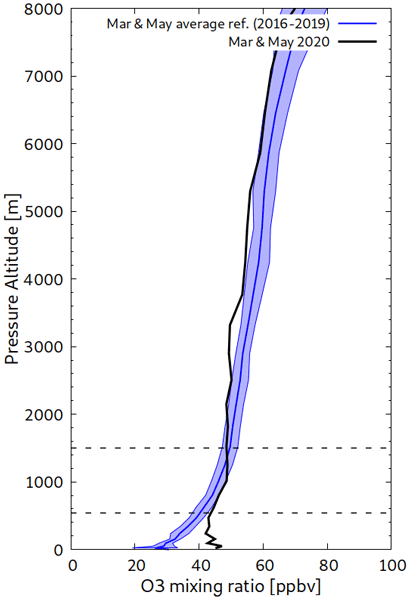
We examined 27 years of IAGOS (In-service Aircraft for a Global Observing System) profiles at Frankfurt to see if there were unusual features during the spring of 2020 related to COVID-19 lockdowns in Europe. Increased ozone near the surface was partly linked to the reduction in emissions. Carbon monoxide decreased near the surface, but the impact of the lockdowns was offset by polluted air masses from elsewhere. There were small reductions in ozone and carbon monoxide in the free troposphere.

Gaëlle Dufour, Didier Hauglustaine, Yunjiang Zhang, Maxim Eremenko, Yann Cohen, Audrey Gaudel, Guillaume Siour, Mathieu Lachatre, Axel Bense, Bertrand Bessagnet, Juan Cuesta, Jerry Ziemke, Valérie Thouret, and Bo Zheng
Atmos. Chem. Phys., 21, 16001–16025, https://doi.org/10.5194/acp-21-16001-2021, https://doi.org/10.5194/acp-21-16001-2021, 2021
Short summary
Short summary
The IASI observations and the LMDZ-OR-INCA model simulations show negative ozone trends in the Central East China region in the lower free (3–6 km column) and the upper free (6–9 km column) troposphere. Sensitivity studies from the model show that the Chinese anthropogenic emissions contribute to more than 50 % in the trend. The reduction in NOx emissions that has occurred since 2013 in China seems to lead to a decrease in ozone in the free troposphere, contrary to the increase at the surface.
Cited articles
Ansari, T., Nalam, A., Lupaşcu, A., Hinz, C., Grasse, S., and Butler, T.: Explaining trends and changing seasonal cycles of surface ozone in North America and Europe over the 2000–2018 period: a global modelling study with NOx and VOC tagging, Atmos. Chem. Phys., 25, 16833–16876, https://doi.org/10.5194/acp-25-16833-2025, 2025.
Archibald, A. T., Neu, J. L., Elshorbany, Y., Cooper, O. R., Young, P. J., Akiyoshi, H., Cox, R. A., Coyle, M., Derwent, R., Deushi, M., Finco, A., Frost, G. J., Galbally, I. E., Gerosa, G., Granier, C., Griffiths, P. T., Hossaini, R., Hu, L., Jöckel, P., Josse, B., Lin, M. Y., Mertens, M., Morgenstern, O., Naja, M., Naik, V., Oltmans, S., Plummer, D. A., Revell, L. E., Saiz-Lopez, P., Saxena, P., Shin, Y. M., Shahid, I., Shallcross, D., Tilmes, S., Trickl, T., Wallington, T. J., Wang, T., Worden, H. M., and Zeng, G.: Tropospheric Ozone Assessment Report: A critical review of changes in the tropospheric ozone burden and budget from 1850 to 2100, Elem. Sci. Anth., 8, 1, https://doi.org/10.1525/elementa.2020.034, 2020.
Asman, W. A. H., Lawrence, M. G., Brenninkmeijer, C. A. M., Crutzen, P. J., Cuijpers, J. W. M., and Nédélec, P.: Rarity of upper-tropospheric low O3 mixing ratio events during MOZAIC flights, Atmos. Chem. Phys., 3, 1541–1549, https://doi.org/10.5194/acp-3-1541-2003, 2003.
Bak, J., Kim, J., Koo, H., Pan, L. L., Ryoo, M., Newman, P. A., Franchin, A., Liu, X., Abad, G. G., Lee, J., Jeon, W., and Kim, H.: An Integrated Analysis of Ozone and Carbon Monoxide Over the Western Pacific Using Satellite and Aircraft Measurements During the ACCLIP Summer Campaign 2022, J. Geophys. Res.-Atmos., 130, e2024JD042771, https://doi.org/10.1029/2024JD042771, 2025.
Barnes, E. A. and Fiore, A. M.: Surface ozone variability and the jet position: Implications for projecting future air quality, Geophys. Res. Lett., 40, 2839–2844, https://doi.org/10.1002/grl.50411, 2013.
Boulanger, D., Thouret, V., and Petzold, A.: In-service Aircraft for a Global Observing System (IAGOS) Data Portal , IAGOS [data set], https://doi.org/10.25326/20, 2022.
Brauer, M., Freedman, G., Frostad, J., van Donkelaar, A., Martin, R. V., Dentener, F., van Dingenen, R., Estep, K., Amini, H., Apte, J. S., Balakrishnan, K., Barregard, L., Broday, D., Feigin, V., Ghosh, S., Hopke, P. K., Knibbs, L. D., Kokubo, Y., Liu, Y., Ma, S., Morawska, L., Sangrador, J. L., Shaddick, G., Anderson, H. R., Vos, T., Forouzanfar, M. H., Burnett, R. T., and Cohen, A.: Ambient Air Pollution Exposure Estimation for the Global Burden of Disease 2013, Environ. Sci. Technol., 50, 79–88, https://doi.org/10.1021/acs.est.5b03709, 2016.
Chandra, S., Ziemke, J. R., Min, W., and Read, W. G.: Effects of 1997–1998 El Niño on tropospheric ozone and water vapor, Geophys. Res. Lett., 25, 3867–3870, 1998.
Chang, K.-L., Cooper, O. R., Gaudel, A., Petropavlovskikh, I., and Thouret, V.: Statistical regularization for trend detection: an integrated approach for detecting long-term trends from sparse tropospheric ozone profiles, Atmos. Chem. Phys., 20, 9915–9938, https://doi.org/10.5194/acp-20-9915-2020, 2020.
Chang, K.-L., Cooper, O. R., Gaudel, A., Allaart, G., Ancellet, G., Clark, H., Godin-Beekmann, S., Leblanc, T., Van Malderen, R., Nédélec, P., Petropavlovskikh, I., Steinbrecht, W., Stübi, R., Tarasick, D. W., and Torres, C.: Impact of the COVID-19 economic downturn on tropospheric ozone trends: an uncertainty weighted data synthesis for quantifying regional anomalies above western North America and Europe, AGU Advances, 3, e2021AV000542, https://doi.org/10.1029/2021AV000542, 2022.
Chang, K.-L., Cooper, O. R., Rodriguez, G., Iraci, L. T., Yates, E. L., Johnson, M. S., and West, J. J.: Diverging ozone trends above western North America: Boundary layer decreases versus free tropospheric increases, J. Geophys. Res.-Atmos., 128, e2022JD038090, https://doi.org/10.1029/2022JD038090, 2023a.
Chang, K.-L., Schultz, M. G., Koren, G., and Selke, N.: Guidance note on best statistical practices for TOAR analyses, arXiv [preprint], https://doi.org/10.48550/arXiv.2304.14236, 2023b.
Chang, K.-L., Cooper, O. R., Gaudel, A., Petropavlovskikh, I., Effertz, P., Morris, G., and McDonald, B. C.: Technical note: Challenges in detecting free tropospheric ozone trends in a sparsely sampled environment, Atmos. Chem. Phys., 24, 6197–6218, https://doi.org/10.5194/acp-24-6197-2024, 2024.
Chang, K.-L., McDonald, B. C., Harkins, C., and Cooper, O. R.: Surface ozone trend variability across the United States and the impact of heat waves (1990–2023), Atmos. Chem. Phys., 25, 5101–5132, https://doi.org/10.5194/acp-25-5101-2025, 2025.
Chen, Y.-C.: A Tutorial on Kernel Density Estimation and Recent Advances, Biostatistics & Epidemiology, 1, 161–187, https://doi.org/10.1080/24709360.2017.1396742, 2017.
Cohen, Y., Petetin, H., Thouret, V., Marécal, V., Josse, B., Clark, H., Sauvage, B., Fontaine, A., Athier, G., Blot, R., Boulanger, D., Cousin, J.-M., and Nédélec, P.: Climatology and long-term evolution of ozone and carbon monoxide in the upper troposphere–lower stratosphere (UTLS) at northern midlatitudes, as seen by IAGOS from 1995 to 2013, Atmos. Chem. Phys., 18, 5415–5453, https://doi.org/10.5194/acp-18-5415-2018, 2018.
Colombi, N. K., Jacob, D. J., Yang, L. H., Zhai, S., Shah, V., Grange, S. K., Yantosca, R. M., Kim, S., and Liao, H.: Why is ozone in South Korea and the Seoul metropolitan area so high and increasing?, Atmos. Chem. Phys., 23, 4031–4044, https://doi.org/10.5194/acp-23-4031-2023, 2023.
Cooper, M. J., Martin, R. V., Livesey, N. J., Degenstein, D. A., and Walker, K. A.: Analysis of satellite remote sensing observations of low ozone events in the tropical upper troposphere and links with convection, Geophys. Res. Lett., 40, 3761–3765, https://doi.org/10.1002/grl.50698, 2013.
Cooper, O. R., Forster, C., Parrish, D., Dunlea, E., Hübler, G., Fehsenfeld, F., Holloway, J., Oltmans, S., Johnson, B., Wimmers, A., and Horowitz, L.: On the life-cycle of a stratospheric intrusion and its dispersion into polluted warm conveyor belts, J. Geophys. Res., 109, D23S09, https://doi.org/10.1029/2003JD004006, 2004.
Cooper, O. R., Parrish, D. D., Stohl, A., Trainer, M., Nédélec, P., Thouret, V., Cammas, J. P., Oltmans, S. J., Johnson, B. J., Tarasick, D., Leblanc, T., McDermid, I. S., Jaffe, D., Gao, R., Stith, J., Ryerson, T., Aikin, K., Campos, T., Weinheimer, A., and Avery, M. A.: Increasing springtime ozone mixing ratios in the free troposphere over western North America, Nature, 463, 344–348, https://doi.org/10.1038/nature08708, 2010.
Cooper, O. R., Parrish, D. D., Ziemke, J., Balashov, N. V., Cupeiro, M., Galbally, I. E., Gilge, S., Horowitz, L., Jensen, N. R., Lamarque, J.-F., Naik, V., Oltmans, S. J., Schwab, J., Shindell, D. T., Thompson, A. M., Thouret, V., Wang, Y., and Zbinden, R. M.: Global distribution and trends of tropospheric ozone: An observation-based review, Elem. Sci. Anth., 2, 000029, https://doi.org/10.12952/journal.elementa.000029, 2014.
Cooper, O. R., Schultz, M. G., Schröder, S., Chang, K.-L., Gaudel, A., Carbajal Benítez, G., Cuevas, E., Fröhlich, M., Galbally, I. E., Kubistin, D., Lu, X., McClure-Begley, A., Molloy, S., Nédélec, P., O'Brien, J., Oltmans, S. J., Petropavlovskikh, I., Ries, L., Senik, I., Sjöberg, K., Solberg, S., Spain, T. G., Spangl, W., Steinbacher, M., Tarasick, D., Thouret, V., and Xu, X.: Multi-decadal surface ozone trends at globally distributed remote locations, Elem. Sci. Anth., 8, 23, https://doi.org/10.1525/elementa.420, 2020.
Cooper, O. R., Ziemke, J. R., and Chang, K.-L.: Tropospheric Ozone [in “State of the Climate in 2023”], B. Am. Meteorol. Soc., 105, S94–S96, https://doi.org/10.1175/BAMS-D-24-0116.1, 2024.
Cui, Y. Y., Ryoo, J.-M., Johnson, M. S., Chang, K.-L., Yates, E. L., Cooper, O. R., and Iraci, L. T.: Global source–receptor-relationship database for integrated tropospheric ozone observations from multiplatform datasets in western North America during 1994–2021, [data set], https://doi.org/10.5067/ASDC/WNA-BackTraj, 2025.
Cui, Y. Y., Ryoo, J.-M., Johnson, M. S., Chang, K.-L., Yates, E. L., Cooper, O. R., and Iraci, L. T.: Global source–receptor-relationship database for integrated tropospheric ozone observations from multiplatform datasets in western North America during 1994–2021, Earth Syst. Sci. Data, 17, 5903–5914, https://doi.org/10.5194/essd-17-5903-2025, 2025.
Davies, W. E., Vaughan, G., and O'Connor, F. M.: Observation of near-zero ozone concentrations in the upper troposphere at mid-latitudes, Geophys. Res. Lett., 25, 1173–1176, 1998.
Elshorbany, Y., Ziemke, J. R., Strode, S., Petetin, H., Miyazaki, K., De Smedt, I., Pickering, K., Seguel, R. J., Worden, H., Emmerichs, T., Taraborrelli, D., Cazorla, M., Fadnavis, S., Buchholz, R. R., Gaubert, B., Rojas, N. Y., Nogueira, T., Salameh, T., and Huang, M.: Tropospheric ozone precursors: global and regional distributions, trends, and variability, Atmos. Chem. Phys., 24, 12225–12257, https://doi.org/10.5194/acp-24-12225-2024, 2024.
Eastham, S. D., Chossière, G. P., Speth, R. L., Jacob, D. J., and Barrett, S. R. H.: Global impacts of aviation on air quality evaluated at high resolution, Atmos. Chem. Phys., 24, 2687–2703, https://doi.org/10.5194/acp-24-2687-2024, 2024.
Environment and Climate Change Canada: Canadian ozonesonde network, World Ozone and Ultraviolet Radiation Data Centre (WOUDC), https://hegiftom.meteo.be/datasets/ozonesondes (last access: 15 September 2026), 2022.
Fiore, A. M., West, J. J., Horowitz, L. W., Naik, V., and Schwarzkopf, M. D.: Characterizing the tropospheric ozone response to methane emission controls and the benefits to climate and air quality, J. Geophys. Res., 113, D08307, https://doi.org/10.1029/2007JD009162, 2008.
Fiore, A. M., Hancock, S. E., Lamarque, J.-F., Correa, G. P., Chang, K.-L., Ru, M., Cooper, O. R., Gaudel, A., Polvani, L. M., Sauvage, B., and Ziemke, J. R.: Understanding recent tropospheric ozone trends in the context of large internal variability: A new perspective from chemistry-climate model ensembles, Environ. Res. Climate, 1, 025008, https://doi.org/10.1088/2752-5295/ac9cc2, 2022.
Fleming, Z. L., Doherty, R. M., von Schneidemesser, E., Malley, C. S., Cooper, O. R., Pinto, J. P., Colette, A., Xu, X., Simpson, D., Schultz, M. G., Lefohn, A. S., Hamad, S., Moolla, R., Solberg, S., and Feng, Z.: Tropospheric Ozone Assessment Report: Present-day ozone distribution and trends relevant to human health, Elem. Sci. Anth., 6, 12, https://doi.org/10.1525/elementa.273, 2018.
Froidevaux, L., Kinnison, D. E., Gaubert, B., Schwartz, M. J., Livesey, N. J., Read, W. G., Bardeen, C. G., Ziemke, J. R., and Fuller, R. A.: Tropical upper-tropospheric trends in ozone and carbon monoxide (2005–2020): observational and model results, Atmos. Chem. Phys., 25, 597–624, https://doi.org/10.5194/acp-25-597-2025, 2025.
Gaudel, A., Cooper, O. R., Chang, K.-L., Bourgeois, I., Ziemke, J. R., Strode, S. A., Oman, L. D., Sellitto, P., Nédélec, P., Blot, R., Thouret, V., and Granier, C.: Aircraft observations since the 1990s reveal increases of tropospheric ozone at multiple locations across the Northern Hemisphere, Sci. Adv., 6, eaba8272, https://doi.org/10.1126/sciadv.aba8272, 2020.
Gaudel, A., Bourgeois, I., Li, M., Chang, K.-L., Ziemke, J., Sauvage, B., Stauffer, R. M., Thompson, A. M., Kollonige, D. E., Smith, N., Hubert, D., Keppens, A., Cuesta, J., Heue, K.-P., Veefkind, P., Aikin, K., Peischl, J., Thompson, C. R., Ryerson, T. B., Frost, G. J., McDonald, B. C., and Cooper, O. R.: Tropical tropospheric ozone distribution and trends from in situ and satellite data, Atmos. Chem. Phys., 24, 9975–10000, https://doi.org/10.5194/acp-24-9975-2024, 2024.
Gelaro, R., McCarty, W., Suárez, M. J., Todling, R., Molod, A.,Takacs, L., Randles, C. A., Darmenov, A., Bosilovich, M. G., Reichle, R., Wargan, K., Coy, L., Cullather, R., Draper, C., Akella, S., Buchard, V., Conaty, A., da Silva, A. M., Gu, W., Kim, G.-K., Koster, R., Lucchesi, R., Merkova, D., Nielsen, J. E., Partyka, G., Pawson, S., Putman, W., Rienecker, M., Schubert, S. D., Sienkiewicz, M., and Zhao, B.: The Modern-Era Retrospective Analysis for Research and Applications, Version 2 (MERRA-2), J. Climate, 30, 5419–5454, https://doi.org/10.1175/JCLI-D-16-0758.1, 2017.
Grant, W. B., Browell, E. V., Butler, C. F., Fenn, M. A., Clayton, M. B., Hannan, J. R., Fuelberg, H. E., Blake, D. R., Blake, N. J., Gregory, G. L., Heikes, B. G., Sachse, G. W., Singh, H. B., Snow, J., and Talbot, R. W.: A case study of transport of tropical marine boundary layer and lower tropospheric air masses to the northern midlatitude upper troposphere, J. Geophys. Res., 105, 3757–3769, 2000.
Gressent, A., Sauvage, B., Defer, E., Pätz, H. W., Thomas, K., Holle, R., Cammas, J.-P., Nédélec, P., Boulanger, D., Thouret, V., and Volz-Thomas, A.: Lightning NOx influence on large-scale NOy and O3 plumes observed over the northern mid-latitudes, Tellus B, 66, 25544, https://doi.org/10.3402/tellusb.v66.25544, 2014.
Gulev, S. K., Thorne, P. W., Ahn, J., Dentener, F. J., Domingues, C. M., Gerland, S., Gong, D., Kaufman, D. S., Nnamchi, H. C., Quaas, J., Rivera, J. A., Sathyendranath, S., Smith, S. L., Trewin, B., von Schuckmann, K., and Vose, R. S.: Changing State of the Climate System, in: Climate Change 2021: The Physical Science Basis. Contribution of Working Group I to the Sixth Assessment Report of the Intergovernmental Panel on Climate Change, edited by: Masson-Delmotte, V., Zhai, P., Pirani, A., Connors, S. L., Péan, C., Berger, S., Caud, N., Chen, Y., Goldfarb, L., Gomis, M. I., Huang, M., Leitzell, K., Lonnoy, E., Matthews, J. B. R., Maycock, T. K., Waterfield, T., Yelekçi, O., Yu, R., and Zhou, B., Cambridge University Press, Cambridge, UK and New York, NY, USA, 287–422, https://doi.org/10.1017/9781009157896.004, 2021.
He, J., Naik, V., and Horowitz, L. W.: Interpreting changes in global methane budget in a chemistry-climate model constrained with methane and isotopic observations, AGU Advances, 7, e2025AV001822. https://doi.org/10.1029/2025AV001822, 2026.
Hersbach, H., Bell, B., Berrisford, P., Hirahara, S., Horányi, A., Muñoz-Sabater, J., Nicolas, J., Peubey, C., Radu, R., Schepers, D., Simmons, A., Soci, C., Abdalla, S., Abellan, X., Balsamo, G., Bechtold, P., Biavati, G., Bidlot, J., Bonavita, M., De Chiara, G., Dahlgren, P., Dee, D., Diamantakis, M., Dragani, R., Flemming, J., Forbes, R., Fuentes, M., Geer, A., Haimberger, L., Healy, S., Hogan, R. J., Hólm, E., Janisková, M., Keeley, S., Laloyaux, P., Lopez, P., Lupu, C., Radnoti, G., de Rosnay, P., Rozum, I., Vamborg, F., Villaume, S., and Thépaut, J.-N.: The ERA5 global reanalysis, Q. J. Roy. Meteor. Soc., 146, 1999–2049, https://doi.org/10.1002/qj.3803, 2020.
Hoesly, R. M., Smith, S. J., Feng, L., Klimont, Z., Janssens-Maenhout, G., Pitkanen, T., Seibert, J. J., Vu, L., Andres, R. J., Bolt, R. M., Bond, T. C., Dawidowski, L., Kholod, N., Kurokawa, J.-I., Li, M., Liu, L., Lu, Z., Moura, M. C. P., O'Rourke, P. R., and Zhang, Q.: Historical (1750–2014) anthropogenic emissions of reactive gases and aerosols from the Community Emissions Data System (CEDS), Geosci. Model Dev., 11, 369–408, https://doi.org/10.5194/gmd-11-369-2018, 2018.
Iraci, L. and Yates, E.: Alpha Jet Atmospheric eXperiment, NASA Langley Atmospheric Science Data Center Distributed Active Archive Center [data set], https://doi.org/10.5067/ASDC/AJAX_O3, 2021.
Jacob, D. J., Logan, J. A., and Murti, P. P.: Effect of rising Asian emissions on surface ozone in the United States, Geophys. Res. Lett., 26, 2175–2178, https://doi.org/10.1029/1999GL900450, 1999.
Jaffe, D. A., Cooper, O. R., Fiore, A. M., Henderson, B. H., Tonnesen, G. S., Russell, A. G., Henze, D. K., Langford, A. O., Lin, M., and Moore, T.: Scientific assessment of background ozone over the U. S.: Implications for air quality management, Elem. Sci. Anth., 6, 56, https://doi.org/10.1525/elementa.309, 2018.
Jeong, Y., Kim, S.-W., Kim, J., Shin, D., Kim, J., Park, J.-H., and An, S.-I.: Influence of ENSO on tropospheric ozone variability in East Asia, J. Geophys. Res.-Atmos., 128, e2023JD038604, https://doi.org/10.1029/2023JD038604, 2023.
Johnson, M. S., Strawbridge, K., Knowland, K. E., Keller, C., and Travis, M.: Long-range transport of Siberian biomass burning emissions to North America during FIREX-AQ, Atmos. Environ., 252, 118241, https://doi.org/10.1016/j.atmosenv.2021.118241, 2021.
Kerr, G. H., Waugh, D. W., and Miller, S. M.: Jet stream-surface tracer relationships: Mechanism and sensitivity to source region, Geophys. Res. Lett., 48, e2020GL090714, https://doi.org/10.1029/2020GL090714, 2021.
Kurokawa, J. and Ohara, T.: Long-term historical trends in air pollutant emissions in Asia: Regional Emission inventory in ASia (REAS) version 3, Atmos. Chem. Phys., 20, 12761–12793, https://doi.org/10.5194/acp-20-12761-2020, 2020.
Lacis, A., Hansen, J., Lee, P., Mitchell, T., and Lebedeff, S.: Greenhouse effect of trace gases, 1970–1980, Geophys. Res. Lett., 8, 1035–1038, https://doi.org/10.1029/GL008i010p01035, 1981.
Lahoz, W. A., and Schneider, P.: Data assimilation: making sense of Earth Observation, Front. Environ. Sci., 2, 16, https://doi.org/10.3389/fenvs.2014.00016, 2014.
Li, M., Kurokawa, J., Zhang, Q., Woo, J.-H., Morikawa, T., Chatani, S., Lu, Z., Song, Y., Geng, G., Hu, H., Kim, J., Cooper, O. R., and McDonald, B. C.: MIXv2: a long-term mosaic emission inventory for Asia (2010–2017), Atmos. Chem. Phys., 24, 3925–3952, https://doi.org/10.5194/acp-24-3925-2024, 2024.
Li, P., Yang, Y., Wang, H., Li, S., Li, K., Wang, P., Li, B., and Liao, H.: Source attribution of near-surface ozone trends in the United States during 1995–2019, Atmos. Chem. Phys., 23, 5403–5417, https://doi.org/10.5194/acp-23-5403-2023, 2023a.
Li, S., Yang, Y., Wang, H., Li, P., Li, K., Ren, L., Wang, P., Li, B., Mao, Y., and Liao, H.: Rapid increase in tropospheric ozone over Southeast Asia attributed to changes in precursor emission source regions and sectors, Atmos. Environ., 305, 119776, https://doi.org/10.1016/j.atmosenv.2023.119776, 2023b.
Lin, M., Horowitz, L. W., Oltmans, S. J., Fiore, A. M., and Fan, S.: Tropospheric ozone trends at Mauna Loa Observatory tied to decadal climate variability, Nat. Geosci., 7, 136–143, https://doi.org/10.1038/ngeo2066, 2014.
Lin, M., Fiore, A. M., Horowitz, L. W., Langford, A. O., Oltmans, S. J., Tarasick, D., and Rieder, H. E.: Climate variability modulates western US ozone air quality in spring via deep stratospheric intrusions, Nat. Commun., 6, 7105, https://doi.org/10.1038/ncomms8105, 2015.
Lin, M., Horowitz, L. W., Payton, R., Fiore, A. M., and Tonnesen, G.: US surface ozone trends and extremes from 1980 to 2014: quantifying the roles of rising Asian emissions, domestic controls, wildfires, and climate, Atmos. Chem. Phys., 17, 2943–2970, https://doi.org/10.5194/acp-17-2943-2017, 2017.
Liu, J., Strode, S. A., Liang, Q., Oman, L. D., Colarco, P. R., Fleming, E. L., Manyin, M. E., Douglass, A. R., Ziemke, J. R., Lamsal, L. N., and Li, C.: Change in tropospheric ozone in the recent decades and its contribution to global total ozone, J. Geophys. Res.-Atmos., 127, e2022JD037170, https://doi.org/10.1029/2022JD037170, 2022.
Liu, J., Cohen, J. B., He, Q., Tiwari, P., and Qin, K.: Accounting for NOx emissions from biomass burning and urbanization doubles existing inventories over South, Southeast and East Asia, Commun. Earth Environ., 5, 255, https://doi.org/10.1038/s43247-024-01424-5, 2024.
Logan, J. A.: An analysis of ozonesonde data for the troposphere: Recommendations for testing 3-D models and development of a gridded climatology for tropospheric ozone, J. Geophys. Res., 104, 16115–16149, 1999.
Luhar, A. K., Woodhouse, M. T., and Galbally, I. E.: A revised global ozone dry deposition estimate based on a new two-layer parameterisation for air–sea exchange and the multi-year MACC composition reanalysis, Atmos. Chem. Phys., 18, 4329–4348, https://doi.org/10.5194/acp-18-4329-2018, 2018.
Malashock, D. A., DeLang, M. N., Jacob, S. B., Serre, M. L., West, J. J., Chang, K.-L., Cooper, O. R., and Anenberg, S. C.: Estimates of ozone concentrations and attributable mortality in urban, peri-urban and rural areas worldwide in 2019, Environ. Res. Lett., 17, 054023, https://doi.org/10.1088/1748-9326/ac66f3, 2022.
McDuffie, E. E., Smith, S. J., O'Rourke, P., Tibrewal, K., Venkataraman, C., Marais, E. A., Zheng, B., Crippa, M., Brauer, M., and Martin, R. V.: A global anthropogenic emission inventory of atmospheric pollutants from sector- and fuel-specific sources (1970–2017): an application of the Community Emissions Data System (CEDS), Earth Syst. Sci. Data, 12, 3413–3442, https://doi.org/10.5194/essd-12-3413-2020, 2020.
Mills, G., Pleijel, H., Malley, C. S., Sinha, B., Cooper, O. R., Schultz, M. G., Neufeld, H. S., Simpson, D., Sharps, K., Feng, Z., Gerosa, G., Harmens, H., Kobayashi, K., Saxena, P., Paoletti, E., Sinha, V., and Xu, X.: Tropospheric Ozone Assessment Report: Present-day tropospheric ozone distribution and trends relevant to vegetation, Elem. Sci. Anth., 6, 47, https://doi.org/10.1525/elementa.302, 2018.
Miyazaki, K., Bowman, K., Sekiya, T., Eskes, H., Boersma, F., Worden, H., Livesey, N., Payne, V. H., Sudo, K., Kanaya, Y., Takigawa, M., and Ogochi, K.: Chemical Reanalysis Products, NASA Atmospheric Science Data Center (ASDC) [data set], https://doi.org/10.25966/9qgv-fe81, 2019a.
Miyazaki, K., Sekiya, T., Fu, D., Bowman, K., Kulawik, S., Sudo, K., Walker, T., Kanaya, Y., Takigawa, M., Ogochi, K., Eskes, H., Boersma, K. F., Thompson, A. M., Gaubert, B., Barre, J., and Emmons, L. K.: Balance of Emission and Dynamical Controls on Ozone During the Korea-United States Air Quality Campaign From Multiconstituent Satellite Data Assimilation, J. Geophys. Res.-Atmos., 124, 387–413, 2019b.
Miyazaki, K., Bowman, K., Sekiya, T., Eskes, H., Boersma, F., Worden, H., Livesey, N., Payne, V. H., Sudo, K., Kanaya, Y., Takigawa, M., and Ogochi, K.: Updated tropospheric chemistry reanalysis and emission estimates, TCR-2, for 2005–2018, Earth Syst. Sci. Data, 12, 2223–2259, https://doi.org/10.5194/essd-12-2223-2020, 2020.
NASA Jet Propulsion Laboratory: Table Mountain atmospheric lidar data, Network for the Detection of Atmospheric Composition Change (NDACC), https://www-air.larc.nasa.gov/missions/ndacc/ (last access: 15 September 2026), 2022.
Nisbet, E. G., Dlugokencky, E. J., Manning, M. R., Lowry, D., Fisher, R. E., France, J. L., Michel, S. E., Miller, J. B., White, J. W. C., Vaughn, B., Bousquet, P., Pyle, J. A., Warwick, N. J., Cain, M., Brownlow, R., Zazzeri, G., Lanoisellé, M., Manning, A. C., Gloor, E., Worthy, D. E. J., Brunke, E.-G., Labuschagne, C., Wolff, E. W., and Ganesan, A. L.: Rising atmospheric methane: 2007–2014 growth and isotopic shift, Global Biogeochem. Cy., 30, 1356–1370, https://doi.org/10.1002/2016GB005406, 2016.
Nisbet, E. G., Manning, M. R., Dlugokencky, E. J., Fisher, R. E., Lowry, D., Michel, S. E., Myhre, C. L., Platt, S. M., Allen, G., Bousquet, P., Brownlow, R., Cain, M., France, J. L., Hermansen, O., Hossaini, R., Jones, A. E., Levin, I., Manning, A. C., Myhre, G., Pyle, J. A., Vaughn, B. H., Warwick, N. J., and White, J. W. C.: Very strong atmospheric methane growth in the 4 years 2014–2017: Implications for the Paris Agreement, Global Biogeochem. Cy., 33, 318–342, https://doi.org/10.1029/2018GB006009, 2019.
NOAA Global Monitoring Laboratory (GML): Homogenized ozonesonde data archive, https://gml.noaa.gov/ozwv/ozsondes/ (last access: 15 September 2026), 2022.
Oman, L. D., Ziemke, J. R., Douglass, A. R., Waugh, D. W., Lang, C., Rodriguez, J. M., and Nielsen, J. E.: The response of tropical tropospheric ozone to ENSO, Geophys. Res. Lett., 38, L13802, https://doi.org/10.1029/2011GL047865, 2011.
Oman, L. D., Douglass, A. R., Ziemke, J. R., Rodriguez, J. M., Waugh, D. W., and Nielsen, J. E.: The ozone response to ENSO in Aura satellite measurements and a chemistry-climate simulation, J. Geophys. Res.-Atmos., 118, 965–976, https://doi.org/10.1029/2012JD018546, 2013.
Pisso, I., Sollum, E., Grythe, H., Kristiansen, N. I., Cassiani, M., Eckhardt, S., Arnold, D., Morton, D., Thompson, R. L., Groot Zwaaftink, C. D., Evangeliou, N., Sodemann, H., Haimberger, L., Henne, S., Brunner, D., Burkhart, J. F., Fouilloux, A., Brioude, J., Philipp, A., Seibert, P., and Stohl, A.: The Lagrangian particle dispersion model FLEXPART version 10.4, Geosci. Model Dev., 12, 4955–4997, https://doi.org/10.5194/gmd-12-4955-2019, 2019.
Prime, N., Smith, S. J., Ahsan, H., Hoesly, R. M., Mott, A., O'Rourke, P. R., McDuffie, E. E., Crippa, M., Klimont, Z., McDonald, B., Wang, S., Nicholson, M. B., and Feng, L.: CEDS Version 2021-04-21 Aircraft Emissions Fix, Zenodo [data set], https://doi.org/10.5281/zenodo.7846185, 2023.
Prinn, R. G.: Toward an improved global network for determination of tropospheric ozone climatology and trends, J. Atmos. Chem., 6, 281–298, https://doi.org/10.1007/BF00053861, 1988.
Putero, D., Cristofanelli, P., Chang, K.-L., Dufour, G., Beachley, G., Couret, C., Effertz, P., Jaffe, D. A., Kubistin, D., Lynch, J., Petropavlovskikh, I., Puchalski, M., Sharac, T., Sive, B. C., Steinbacher, M., Torres, C., and Cooper, O. R.: Fingerprints of the COVID-19 economic downturn and recovery on ozone anomalies at high-elevation sites in North America and western Europe, Atmos. Chem. Phys., 23, 15693–15709, https://doi.org/10.5194/acp-23-15693-2023, 2023.
Ramaswamy, V., Chanin, M.-L., Angell, J., Barnett, J., Gaffen, D., Gelman, M., Keckhut, P., Koshelkov, Y., Labitzke, K., Lin, J.-J. R., O'Neill, A., Nash, J., Randel, W., Rood, R., Shine, K., Shiotani, M., and Swinbank, R.: Stratospheric temperature trends: Observations and model simulations, Rev. Geophys., 39, 71–122, 2001.
Rotman, D. A., Tannahill, J. R., Kinnison, D. E., Connell, P. S., Bergmann, D., Proctor, D., Rodriguez, J. M., Lin, S. J., Rood, R. B., Prather, M. J., Rasch, P. J., Considine, D. B., Ramaroson, R., and Kawa, S. R.: Global Modeling Initiative assessment model: Model description, integration, and testing of the transport shell, J. Geophys. Res., 106, 1669–1691, https://doi.org/10.1029/2000JD900463, 2001.
Ryoo, J.-M., Johnson, M. S., Iraci, L. T., Yates, E. L., and Gore, W.: Investigating sources of ozone over California using AJAX airborne measurements and models: assessing the long-range transport, Atmos. Environ., 155, 53–67, https://doi.org/10.1016/j.atmosenv.2017.02.008, 2017.
Samphutthanont, R., Crawford, J. H., Pawarmart, I., ]Wisthaler, A., Swift, S. J. Piel, F., Wojnowski, W., Jimenez, J. L., Campuzano-Jost, P., Yun, S.,Symonds, G., Day,D. A., DiGangi, J. P., Diskin, G. S., Crounse, J. D., Ball, K.,Wennberg,P. O., Lee, M., Gil, J., and Choochuay, C.: A multi-platform validation of biomass burning emissions: Integrating ground, airborne, and satellite data to quantify regional haze health impacts in Thailand, Environ. Pollut., 405, 128576, https://doi.org/10.1016/j.envpol.2026.128576, 2026.
Saunois, M., Emmons, L., Lamarque, J.-F., Tilmes, S., Wespes, C., Thouret, V., and Schultz, M.: Impact of sampling frequency in the analysis of tropospheric ozone observations, Atmos. Chem. Phys., 12, 6757–6773, https://doi.org/10.5194/acp-12-6757-2012, 2012.
Smith, S. J., Zhou, Y., Kyle, P., Wang, H., and Yu, H.: A Community Emissions Data System (CEDS) for Historical Emissions, in: 2015 International Emission Inventory Conference: Air Quality Challenges: Tackling the Changing Face of Emissions, 13–16 April 2015, San Diego, California, US EPA, Washington, D.C., PNNL-SA-109670, 2015.
Strode, S. A., Rodriguez, J. M., Logan, J. A., Cooper, O. R., Witte, J. C., Lamsal, L. N., Damon, M., Van Aartsen, B., Steenrod, S. D., and Strahan, S. E.: Trends and variability in surface ozone over the United States, J. Geophys. Res.-Atmos., 120, 9020–9042, https://doi.org/10.1002/2014JD022784, 2015.
Strode, S. A., Worden, H. M., Damon, M., Douglass, A. R., Duncan, B. N., Emmons, L. K., Lamarque, J.-F., Manyin, M., Oman, L. D., Rodriguez, J. M., Strahan, S. E., and Tilmes, S.: Interpreting space-based trends in carbon monoxide with multiple models, Atmos. Chem. Phys., 16, 7285–7294, https://doi.org/10.5194/acp-16-7285-2016, 2016.
Szopa, S., Naik, V., Adhikary, B., Artaxo, P., Berntsen, T., Collins, W. D., Fuzzi, S., Gallardo, L., Kiendler-Scharr, A., Klimont, Z., Liao, H., Unger, N., and Zanis, P.: Short-Lived Climate Forcers, in: Climate Change 2021: The Physical Science Basis. Contribution of Working Group I to the Sixth Assessment Report of the Intergovernmental Panel on Climate Change, edited by: Masson-Delmotte, V., Zhai, P., Pirani, A., Connors, S. L., Péan, C., Berger, S., Caud, N., Chen, Y., Goldfarb, L., Gomis, M. I., Huang, M., Leitzell, K., Lonnoy, E., Matthews, J. B. R., Maycock, T. K., Waterfield, T., Yelekçi, O., Yu, R., and Zhou, B., Cambridge University Press, Cambridge, UK and New York, NY, USA, 817–922, https://doi.org/10.1017/9781009157896.008, 2021.
Tarasick, D., Galbally, I. E., Cooper, O. R., Schultz, M. G., Ancellet, G., Leblanc, T., Wallington, T. J., Ziemke, J., Liu, X., Steinbacher, M., Staehelin, J., Vigouroux, C., Hannigan, J. W., García, O., Foret, G., Zanis, P., Weatherhead, E., Petropavlovskikh, I., Worden, H., Osman, M., Liu, J., Chang, K.-L., Gaudel, A., Lin, M., Granados-Muñoz, M., Thompson, A. M., Oltmans, S. J., Cuesta, J., Dufour, G., Thouret, V., Hassler, B., Trickl, T., and Neu, J. L.: Tropospheric Ozone Assessment Report: Tropospheric ozone from 1877 to 2016, observed levels, trends and uncertainties, Elem. Sci. Anth., 7, 39, https://doi.org/10.1525/elementa.376, 2019.
Thompson, A. M., Stauffer, R. M., Boyle, T. P., Kollonige, D. E., Miyazaki, K., Tzortziou, M., Herman, J. R., Abuhassan, N., Jordan, C. E., and Lamb, B. T.: Comparison of Near-Surface NO2 Pollution With Pandora Total Column NO2 During the Korea-United States Ocean Color (KORUS OC) Campaign, J. Geophys. Res.-Atmos., 124, 13560–13575, https://doi.org/10.1029/2019JD030765, 2019.
Thorp, T., Arnold, S. R., Pope, R. J., Spracklen, D. V., Conibear, L., Knote, C., Arshinov, M., Belan, B., Asmi, E., Laurila, T., Skorokhod, A. I., Nieminen, T., and Petäjä, T.: Late-spring and summertime tropospheric ozone and NO2 in western Siberia and the Russian Arctic: regional model evaluation and sensitivities, Atmos. Chem. Phys., 21, 4677–4697, https://doi.org/10.5194/acp-21-4677-2021, 2021.
Tong, D., Pan, L., Chen, W., Lamsal, L., Lee, P., Tang, Y., Kim, H., Kondragunta, S., and Stajner, I.: Impact of the 2008 Global Recession on air quality over the United States: Implications for surface ozone levels from changes in NOx emissions, Geophys. Res. Lett., 43, 9280–9288, https://doi.org/10.1002/2016GL069885, 2016.
U.S. Environmental Protection Agency (EPA): Integrated Science Assessment for Ozone and Related Photochemical Oxidants, EPA/600/R-20/012, 2020.
U.S. Environmental Protection Agency (EPA): Policy Assessment for the Reconsideration of the Ozone National Ambient Air Quality Standards, External Review Draft Version 2, EPA-452/P-23-002, 2023.
Van Malderen, R., Zang, Z., Chang, K.-L., Björklund, R., Cooper, O. R., Liu, J., Maillard Barras, E., Vigouroux, C., Petropavlovskikh, I., Leblanc, T., Thouret, V., Wolff, P., Effertz, P., Gaudel, A., Tarasick, D. W., Smit, H. G. J., Thompson, A. M., Stauffer, R. M., Kollonige, D. E., Poyraz, D., Ancellet, G., De Backer, M.-R., Frey, M. M., Hannigan, J. W., Hernandez, J. L., Johnson, B. J., Jones, N., Kivi, R., Mahieu, E., Morino, I., McConville, G., Müller, K., Murata, I., Notholt, J., Piters, A., Prignon, M., Querel, R., Rizi, V., Smale, D., Steinbrecht, W., Strong, K., and Sussmann, R.: Ground-based tropospheric ozone measurements: regional tropospheric ozone column trends from the TOAR-II/HEGIFTOM homogenized datasets, Atmos. Chem. Phys., 25, 9905–9935, https://doi.org/10.5194/acp-25-9905-2025, 2025.
Verstraeten, W. W., Neu, J. L., Williams, J. E., Bowman, K. W., Worden, J. R., and Boersma, K. F.: Rapid increases in tropospheric ozone production and export from China, Nat. Geosci. 8: 690–695, https://doi.org/10.1038/ngeo2493, 2015.
Wang, H., Lu, X., Jacob, D. J., Cooper, O. R., Chang, K.-L., Li, K., Gao, M., Liu, Y., Sheng, B., Wu, K., Wu, T., Zhang, J., Sauvage, B., Nédélec, P., Blot, R., and Fan, S.: Global tropospheric ozone trends, attributions, and radiative impacts in 1995–2017: an integrated analysis using aircraft (IAGOS) observations, ozonesonde, and multi-decadal chemical model simulations, Atmos. Chem. Phys., 22, 13753–13782, https://doi.org/10.5194/acp-22-13753-2022, 2022a.
Wang, T., Dai, J., Lam, K. S., Nan Poon, C., and Brasseur, G. P.: Twenty-five years of lower tropospheric ozone observations in tropical East Asia: The influence of emissions and weather patterns, Geophys. Res. Lett., 46, 11463–11470, https://doi.org/10.1029/2019GL084459, 2019.
Wang, X., Fu, T.-M., Zhang, L., Lu, X., Liu, X., Amnuaylojaroen, T., Latif, M. T., Ma, Y., Zhang, L., Feng, X., Zhu, L., Shen, H., and Yang, X: Rapidly Changing Emissions Drove Substantial Surface and Tropospheric Ozone Increases Over Southeast Asia, Geophys. Res. Lett., 49, e2022GL100223, https://doi.org/10.1029/2022GL100223, 2022b.
Wasserstein, R. L., Schirm, A. L., and Lazar, N. A.: Moving to a world beyond p<0.05, Am. Stat., 73, 1–29, https://doi.org/10.1080/00031305.2019.1583913, 2019.
WHO: WHO global air quality guidelines. Particulate matter (PM2.5 and PM10), ozone, nitrogen dioxide, sulfur dioxide and carbon monoxide, World Health Organization, Geneva, 2021.
Xue, L., Ding, A., Cooper, O., Huang, X., Wang, W., Zhou, D., Wu, Z., McClure-Begley, A., Petropavlovskikh, I., Andreae, M. O., and Fu, C.: ENSO and Southeast Asian biomass burning modulate subtropical trans-Pacific ozone transport, Natl. Sci. Rev., 8, nwaa132, https://doi.org/10.1093/nsr/nwaa132, 2021.
Yates, E. L., Iraci, L. T., Kulawik, S. S., Ryoo, J.-M., Marrero, J. E., Parworth, C. L., St. Clair, J. M., Hanisco, T. F., Bui, T. P. V., Chang, C. S., and Dean-Day, J. M.: An extensive database of airborne trace gas and meteorological observations from the Alpha Jet Atmospheric eXperiment (AJAX), Earth Syst. Sci. Data, 15, 2375–2389, https://doi.org/10.5194/essd-15-2375-2023, 2023.
Zhang, L., Jacob, D. J., Boersma, K. F., Jaffe, D. A., Olson, J. R., Bowman, K. W., Worden, J. R., Thompson, A. M., Avery, M. A., Cohen, R. C., Dibb, J. E., Flock, F. M., Fuelberg, H. E., Huey, L. G., McMillan, W. W., Singh, H. B., and Weinheimer, A. J.: Transpacific transport of ozone pollution and the effect of recent Asian emission increases on air quality in North America: an integrated analysis using satellite, aircraft, ozonesonde, and surface observations, Atmos. Chem. Phys., 8, 6117–6136, https://doi.org/10.5194/acp-8-6117-2008, 2008.
Zhang, Y., Cooper, O. R., Gaudel, A., Thompson, A. M., Nédélec, P., Ogino, S.-Y., and West, J. J.: Tropospheric ozone change from 1980 to 2010 dominated by equatorward redistribution of emissions, Nat. Geosci., 9, 875–879, https://doi.org/10.1038/ngeo2827, 2016.
Zhao, Y., Saunois, M., Bousquet, P., Lin, X., Berchet, A., Hegglin, M. I., Canadell, J. G., Jackson, R. B., Deushi, M., Jöckel, P., Kinnison, D., Kirner, O., Strode, S., Tilmes, S., Dlugokencky, E. J., and Zheng, B.: On the role of trend and variability in the hydroxyl radical (OH) in the global methane budget, Atmos. Chem. Phys., 20, 13011–13022, https://doi.org/10.5194/acp-20-13011-2020, 2020.
Ziemke, J. R., Douglass, A. R., Oman, L. D., Strahan, S. E., and Duncan, B. N.: Tropospheric ozone variability in the tropics from ENSO to MJO and shorter timescales, Atmos. Chem. Phys., 15, 8037–8049, https://doi.org/10.5194/acp-15-8037-2015, 2015.
Ziemke, J. R., Oman, L. D., Strode, S. A., Douglass, A. R., Olsen, M. A., McPeters, R. D., Bhartia, P. K., Froidevaux, L., Labow, G. J., Witte, J. C., Thompson, A. M., Haffner, D. P., Kramarova, N. A., Frith, S. M., Huang, L.-K., Jaross, G. R., Seftor, C. J., Deland, M. T., and Taylor, S. L.: Trends in global tropospheric ozone inferred from a composite record of TOMS/OMI/MLS/OMPS satellite measurements and the MERRA-2 GMI simulation, Atmos. Chem. Phys., 19, 3257–3269, https://doi.org/10.5194/acp-19-3257-2019, 2019.
Editorial statement
Ryoo et al. used a combination of modeling and observations to investigate trends driving background ozone over Western North America, specifically the lower tail (e.g., observations below the 33rd percentile) of the O3 concentrations, in the free troposphere. Using the combination of models and observations, the authors found that changing emissions patterns have influenced this lower percentile of observations. A combination of lowering NOx emissions in Western North America and increasing surface emissions from shipping and Southeast Asia has led to the increasing O3 concentrations. Further, they investigate the upper troposphere/lower stratosphere and find that there is an increasing influence from high-altitude sources, specifically transport across the Pacific, as well as increasing aircraft emissions. Overall, the study provides a narrative about the global influence towards background O3.
Ryoo et al. used a combination of modeling and observations to investigate trends driving...
Short summary
Background ozone over Western North America is increasing despite local emission reductions, driven by intensifying transport from Southeast Asia, expanded global shipping, and rising aircraft emissions in the upper troposphere-lower stratosphere (UTLS). By analyzing the ozone 'lower tail' (<33rd percentile), this study identifies growing remote influences and shifting trans-Pacific transport patterns that are fundamentally altering the region's background atmospheric state.
Background ozone over Western North America is increasing despite local emission reductions,...


Altmetrics
Final-revised paper
Preprint