
Articles | Volume 25, issue 23
https://doi.org/10.5194/acp-25-17819-2025
© Author(s) 2025. This work is distributed under
the Creative Commons Attribution 4.0 License.
the Creative Commons Attribution 4.0 License.
https://doi.org/10.5194/acp-25-17819-2025
© Author(s) 2025. This work is distributed under
the Creative Commons Attribution 4.0 License.
the Creative Commons Attribution 4.0 License.
Research article
| 
08 Dec 2025
Research article |
| 08 Dec 2025
| 08 Dec 2025
Exploring ozone–climate interactions in idealized CMIP6 DECK experiments

Institute for Atmospheric and Climate Science, ETH Zurich, Zurich, Switzerland
Lunar & Planetary Laboratory/Department of Planetary Sciences, University of Arizona, Tucson, AZ, USA
Institute for Atmospheric and Climate Science, ETH Zurich, Zurich, Switzerland
Instituto de Geociencias (IGEO), CSIC-UCM, Madrid, Spain
Blanca Ayarzagüena
Facultad de CC Fisicas, Universidad Complutense de Madrid, Madrid, Spain
William T. Ball
Delft University of Technology (TU Delft), Delft, the Netherlands
deceased
Mohamadou Diallo
Institute of Climate and Energy Systems – Stratosphere (ICE-4), Forschungszentrum Jülich, Jülich, Germany
Birgit Hassler
Deutsches Zentrum für Luft- und Raumfahrt, Institut für Physik der Atmosphäre, Oberpfaffenhofen, Germany
James Keeble
Lancaster Environment Center, Lancaster University, Lancaster, UK
Peer Nowack
Institute of Theoretical Informatics & Institute of Meteorology and Climate Research (IMKASF), Karlsruhe Institute of Technology (KIT), Karlsruhe, Germany
Clara Orbe
NASA Goddard Institute for Space Studies, New York, NY, USA
Sandro Vattioni
Institute for Atmospheric and Climate Science, ETH Zurich, Zurich, Switzerland
Physikalisch-Meteorologisches Observatorium Davos and World Radiation Center, Davos, Switzerland
Timofei Sukhodolov
Physikalisch-Meteorologisches Observatorium Davos and World Radiation Center, Davos, Switzerland
Related authors
No articles found.
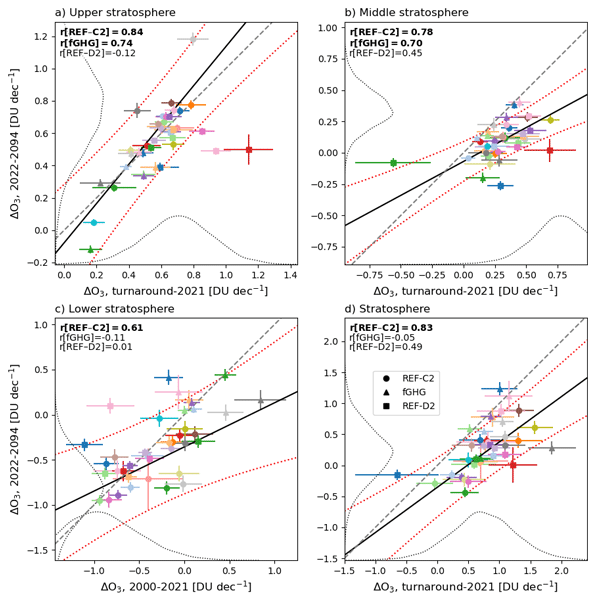
Sean M. Davis, William T. Ball, Yue Jia, Gabriel Chiodo, Justin A. Alsing, James Keeble, Hideharu Akiyoshi, Carlo Arosio, Ewa M. Bednarz, Andreas Chrysanthou, Melanie Coldewey-Egbers, Robert Damadeo, Sandip Dhomse, Mohamadou A. Diallo, Simone Dietmuller, Roland Eichinger, Stacey Frith, Birgit Hassler, Michaela I. Hegglin, Daan Hubert, Patrick Jöckel, Béatrice Josse, Natalya Kramarova, Diego Loyola, Eliane Maillard Barras, Marion Marchand, Olaf Morgenstern, David Plummer, Robert W. Portmann, Karen H. Rosenlof, Alexei Rozanov, Viktoria F. Sofieva, Johannes Staehelin, Timofei Sukhodolov, Kleareti Tourpali, Ronald J. Van der A, H. J. Ray Wang, Krzysztof Wargan, Shingo Watanabe, Mark Weber, Jeannette D. Wild, Yousuke Yamashita, and Jerry Ziemke
Atmos. Chem. Phys., 26, 13817–13843, https://doi.org/10.5194/acp-26-13817-2026, https://doi.org/10.5194/acp-26-13817-2026, 2026
Short summary
Short summary
This study investigates tropical ozone changes in models and satellite observations to determine how well they agree and whether observations can constrain model projections. At some levels, satellite records disagree significantly on the magnitude of ozone changes. While early and late 21st century trends are correlated across models, suggesting a potential emergent constraint, the spread in observations means they are unable to provide guidance on the credibility of model projections.
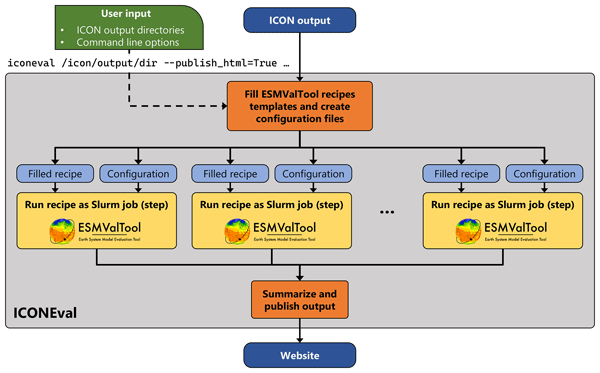
Axel Lauer, Manuel Schlund, Lisa Bock, Birgit Hassler, Gunnar Behrens, Bettina Gier, Lukas Lindenlaub, Stephan Lorenz, Jan-Hendrik Malles, Wolfgang A. Müller, Trang van Pham, Katja Weigel, Guang Zeng, and Veronika Eyring
Geosci. Model Dev., 19, 8731–8754, https://doi.org/10.5194/gmd-19-8731-2026, https://doi.org/10.5194/gmd-19-8731-2026, 2026
Short summary
Short summary
ICONEval is a new framework to facilitate researchers to continuously monitor and check their climate models during the development phase. It builds on the ESMValTool software package to run tests verifying that the results are plausible, follow physical laws, and that the model has sufficient skill in reproducing the observed climate. An important aim is to make it easier to spot model errors early, for example when implementing new model components that use machine learning.
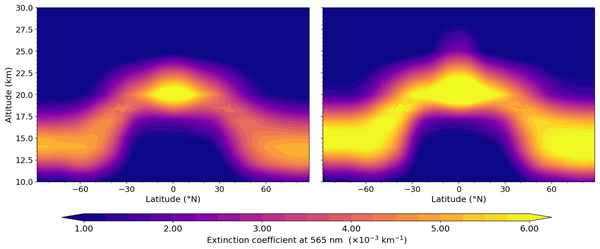
Anna Lange, John Andrew Dykema, Sandro Vattioni, Ulrike Niemeier, Alexei Rozanov, and Christian von Savigny
Atmos. Chem. Phys., 26, 13055–13067, https://doi.org/10.5194/acp-26-13055-2026, https://doi.org/10.5194/acp-26-13055-2026, 2026
Short summary
Short summary
This study addresses the question of whether it is possible to detect the continuous injection of 5 Tg yr-1 of alumina or calcite into the stratosphere using satellite solar occultation instruments. The research shows that it is possible to detect these injections of solid particles into the stratosphere and that they can also be distinguished from natural variability, considering the assumptions made.

Daniele Visioni, Alan Robock, Alistair Duffey, Matthew Henry, Haruki Hirasawa, Walker Raymond Lee, Cindy Wang, Kelsey Roberts, Shingo Watanabe, Michelle Simões Reboita, Masahiro Sugiyama, Ben Kravitz, Jim Haywood, Simone Tilmes, Frédéric K. Bonou, Jack Chen, Timofei Sukhodolov, Sandro Vattioni, Andrin Jörimann, Diego Villanueva, Ryan Vella, Paul Farron, Ewa Bednarz, Ulrike Niemeier, Colleen Golja, and Juan A. Añel
Geosci. Model Dev., 19, 8469–8499, https://doi.org/10.5194/gmd-19-8469-2026, https://doi.org/10.5194/gmd-19-8469-2026, 2026
Short summary
Short summary
The Geoengineering Model Intercomparison Project is a coordinated international model intercomparison effort aiming to provide robust experimental protocols for simulations of various Solar Radiation Modification (SRM) methods. In this manuscript, we describe a list of novel experiments decided by the community, to be run by climate models to better understand sources of uncertainty in SRM. We also show and discuss some preliminary results from a few climate models.
Kexiang Feng, Jian Rao, Chaim I. Garfinkel, Amy H. Butler, Blanca Ayarzagüena, and Xiaoqi Zhang
EGUsphere, https://doi.org/10.5194/egusphere-2026-4971, https://doi.org/10.5194/egusphere-2026-4971, 2026
This preprint is open for discussion and under review for Weather and Climate Dynamics (WCD).
Short summary
Short summary
Sudden stratospheric warmings can influence weather at the Earth's surface, but the role of the upper atmosphere remains unclear. Using forecast models with different upper-atmosphere conditions, we find that the upper atmosphere actively affects the evolution of these events and their surface impacts. This highlights the importance of better representing the upper atmosphere to improve forecasts of sudden stratospheric warmings and their impacts.
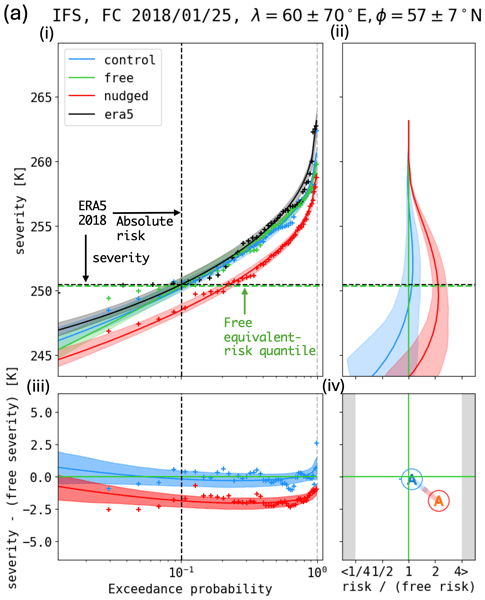
William J. M. Seviour, Justin Finkel, Philip Rupp, Regan Mudhar, Amy H. Butler, Chaim I. Garfinkel, Peter Hitchcock, Blanca Ayarzagüena, Dong-Chan Hong, Yu-Kyung Hyun, Hera Kim, Eun-Pa Lim, Daniel De Maeseneire, Gabriele Messori, Gerbrand Koren, Michael Sigmond, Isla R. Simpson, and Seok-Woo Son
Weather Clim. Dynam., 7, 1405–1423, https://doi.org/10.5194/wcd-7-1405-2026, https://doi.org/10.5194/wcd-7-1405-2026, 2026
Short summary
Short summary
Variability of the stratospheric polar vortex is thought to play a role in driving weather extremes, but quantifying this role for a given event has proved challenging. Using a new set of perturbed subseasonal forecast experiments from 7 modelling centres, we determine the stratospheric contribution to the risk and severity of three recent extreme weather events. The forecast-based methodology that we develop is applicable to understanding a range of other drivers of weather extremes.
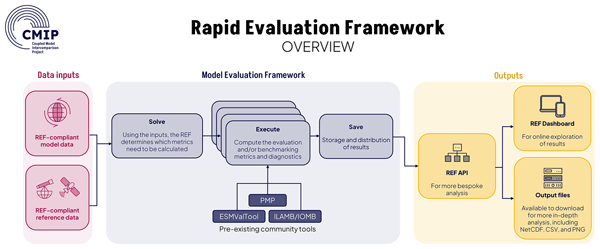
Forrest M. Hoffman, Birgit Hassler, Ranjini Swaminathan, Jared Lewis, Bouwe Andela, Nathan Collier, Dóra Hegedűs, Jiwoo Lee, Charlotte Pascoe, Mika Pflüger, Martina Stockhause, Paul Ullrich, Min Xu, Lisa Bock, Felicity Chun, Bettina K. Gier, Douglas I. Kelley, Axel Lauer, Julien Lenhardt, Manuel Schlund, Mohanan G. Sreeush, Katja Weigel, Ed Blockley, Rebecca Beadling, Romain Beucher, Demiso D. Dugassa, Valerio Lembo, Jianhua Lu, Swen Brands, Jerry Tjiputra, Elizaveta Malinina, Brian Medeiros, Enrico Scoccimarro, Jeremy Walton, Phil Kershaw, André Lanfer Marquez, Malcolm J. Roberts, Eleanor O'Rourke, Beth Dingley, Briony Turner, Helene Hewitt, and John P. Dunne
Geosci. Model Dev., 19, 7415–7455, https://doi.org/10.5194/gmd-19-7415-2026, https://doi.org/10.5194/gmd-19-7415-2026, 2026
Short summary
Short summary
The Rapid Evaluation Framework (REF) is a community-driven platform for benchmarking and performance assessment of Earth system models. Built upon four disparate community evaluation tools, the REF is designed to provide model-data comparisons for the Assessment Fast Track for the Seventh Phase of the Coupled Model Intercomparison Project. The REF will be run at the Earth System Grid Federation to enable model devleopers and scientists to quickly identify model biases and performance issues.
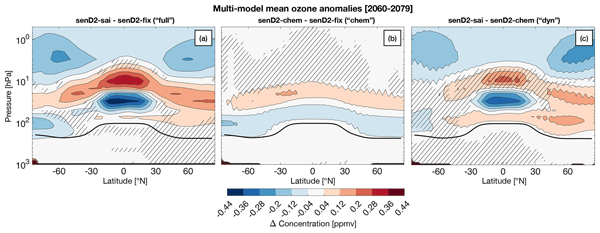
Andrin Jörimann, Timofei Sukhodolov, Simone Tilmes, David Plummer, Shingo Watanabe, Hideharu Akiyoshi, Gabriel Chiodo, Daniele Visioni, Sandro Vattioni, Eugene Rozanov, Ewa Monika Bednarz, Béatrice Josse, Yousuke Yamashita, and Thomas Peter
Atmos. Chem. Phys., 26, 11207–11234, https://doi.org/10.5194/acp-26-11207-2026, https://doi.org/10.5194/acp-26-11207-2026, 2026
Short summary
Short summary
We study a future scenario where artificial stratospheric aerosol injections counter medium climate change, to understand possible negative side effects like ozone depletion. The injected aerosol layer is implemented uniformly in five climate models, which eliminates some uncertainty from model-specific aerosol evolution. The models agree well on where and how key thermodynamical (heating, circulation) and chemical processes change, however, the strength of the changes varies considerably.
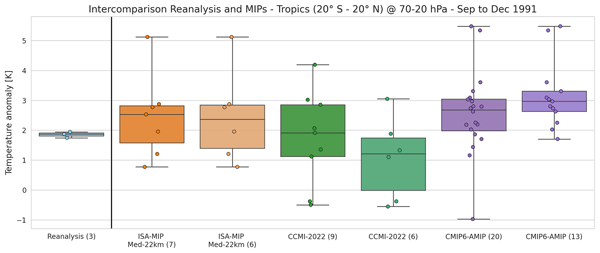
Katharina Perny, Timofei Sukhodolov, Ales Kuchar, Pavle Arsenovic, Bernadette Rosati, Christoph Brühl, Sandip S. Dhomse, Andrin Jörimann, Anton Laakso, Graham Mann, Ulrike Niemeier, Giovanni Pitari, Ilaria Quaglia, Takashi Sekiya, Kengo Sudo, Claudia Timmreck, Simone Tilmes, Daniele Visioni, and Harald E. Rieder
Atmos. Chem. Phys., 26, 10997–11025, https://doi.org/10.5194/acp-26-10997-2026, https://doi.org/10.5194/acp-26-10997-2026, 2026
Short summary
Short summary
Major volcanic eruptions, such as the one of Mt. Pinatubo in 1991, can inject large amounts of sulfur dioxide into the stratosphere. The resulting aerosol cloud affects stratospheric temperature and thereby middle atmospheric dynamics and chemistry. Here we investigate similarities and differences across an ensemble of climate models in reproducing the stratospheric temperature signal following the Mt. Pinatubo eruption.
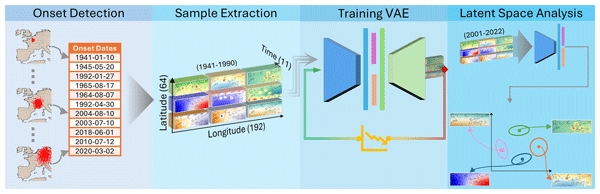
Aytaç Paçal, Birgit Hassler, Katja Weigel, Miguel-Ángel Fernández-Torres, Gustau Camps-Valls, and Veronika Eyring
Earth Syst. Dynam., 17, 955–986, https://doi.org/10.5194/esd-17-955-2026, https://doi.org/10.5194/esd-17-955-2026, 2026
Short summary
Short summary
Heatwaves are among the deadliest natural hazards, yet their evolving atmospheric drivers remain unclear. We apply an unsupervised machine learning model to reanalysis data to identify multivariate heatwave patterns over Europe. The model captures seasonally distinct regimes and reveals significant shifts between historical and recent events across all seasons, highlighting changes in heatwave dynamics over time.
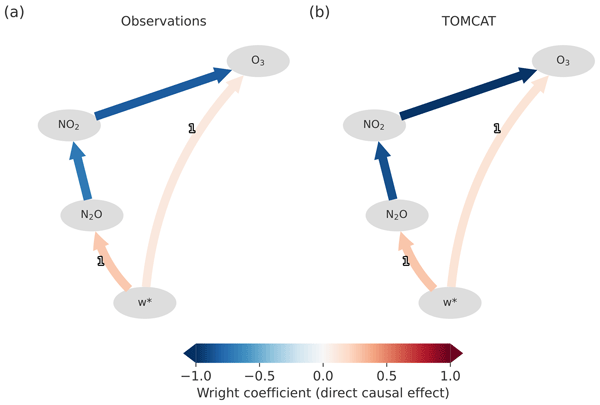
Evgenia Galytska, Birgit Hassler, Carlo Arosio, Martyn P. Chipperfield, Sandip S. Dhomse, Kimberlee Dubé, Wuhu Feng, Fernando Iglesias-Suarez, and Jakob Runge
Atmos. Chem. Phys., 26, 8185–8209, https://doi.org/10.5194/acp-26-8185-2026, https://doi.org/10.5194/acp-26-8185-2026, 2026
Short summary
Short summary
We explore how chemical and dynamical processes shape ozone in the tropical middle stratosphere using satellite data and a chemistry-transport model. We apply a framework to identify cause–effect relationships and estimate their strength. For 2004-2021 monthly data, we detect an indirect pathway controlling ozone variability, with effects increasing after two–three months. We further assess how different wind regimes influence this pathway.
Dong-Chan Hong, Seok-Woo Son, Blanca Ayarzagüena, Amy H. Butler, Chaim I. Garfinkel, Peter Hitchcock, Yu-Kyung Hyun, and Jiankai Zhang
EGUsphere, https://doi.org/10.5194/egusphere-2026-2798, https://doi.org/10.5194/egusphere-2026-2798, 2026
Short summary
Short summary
This study investigates how Sudden Stratospheric Warming (SSW) influences surface climate. By comparing multi-model simulations, we isolated and quantified the role of SSWs. Results reveal that poleward mass transport during SSWs induces high pressure over the Arctic, driving changes in extratropical circulations. While SSWs alter the troposphere, chaotic internal weather variability can amplify or suppress their influence, explaining the differing surface impacts following SSWs.
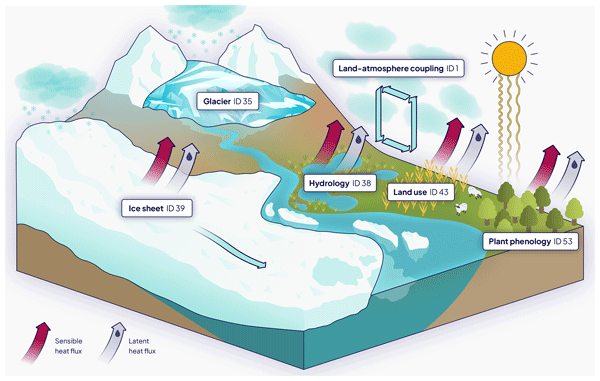
Yue Li, Gang Tang, Eleanor O'Rourke, Samar Minallah, Martim Mas e Braga, Sophie Nowicki, Robin S. Smith, David M. Lawrence, George C. Hurtt, Daniele Peano, Gesa Meyer, Birgit Hassler, Jiafu Mao, Yongkang Xue, and Martin Juckes
Geosci. Model Dev., 19, 3129–3155, https://doi.org/10.5194/gmd-19-3129-2026, https://doi.org/10.5194/gmd-19-3129-2026, 2026
Short summary
Short summary
Land and Land Ice Theme Opportunities describe a list that contains 25 variable groups with 716 variables, which are potentially available to the broad scientific audience for performing analysis in land–atmosphere coupling, hydrological processes and freshwater systems, glacier and ice sheet mass balance and their influence on the sea levels, land use, and plant phenology.
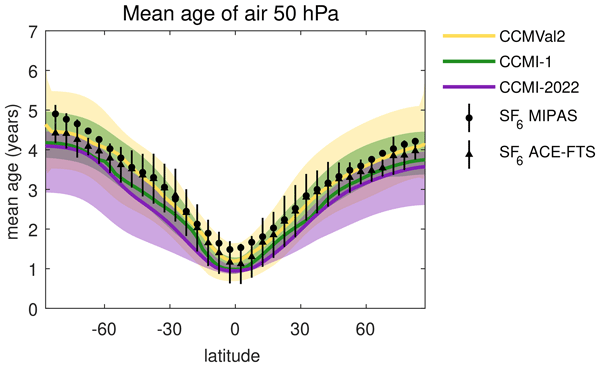
Marta Abalos, Thomas Birner, Andreas Chrysanthou, Sean Davis, Alvaro de la Cámara, Sandip Dhomse, Hella Garny, Michaela I. Hegglin, Daan Hubert, Oksana Ivaniha, James Keeble, Marianna Linz, Daniele Minganti, Jessica Neu, David Plummer, Laura Saunders, Kasturi Shah, Gabriele Stiller, Kleareti Tourpali, Darryn Waugh, Nathan Luke Abraham, Hideharu Akiyoshi, Martyn P. Chipperfield, Patrick Jöckel, Béatrice Josse, Marion Marchand, Patrick Martineau, Olaf Morgenstern, Timofei Sukhodolov, Shingo Watanabe, and Yousuke Yamashita
Atmos. Chem. Phys., 26, 5249–5291, https://doi.org/10.5194/acp-26-5249-2026, https://doi.org/10.5194/acp-26-5249-2026, 2026
Short summary
Short summary
Accurate representation of stratospheric transport in Chemistry-Climate Models is essential for reliable climate projections. This study evaluates three generations of models using observational data and reanalyses, identifying persistent biases and their potential causes. Some biases persist or even worsen in newer models. These findings highlight key limitations and inform efforts to improve models and advance understanding through process-based studies and enhanced observations.
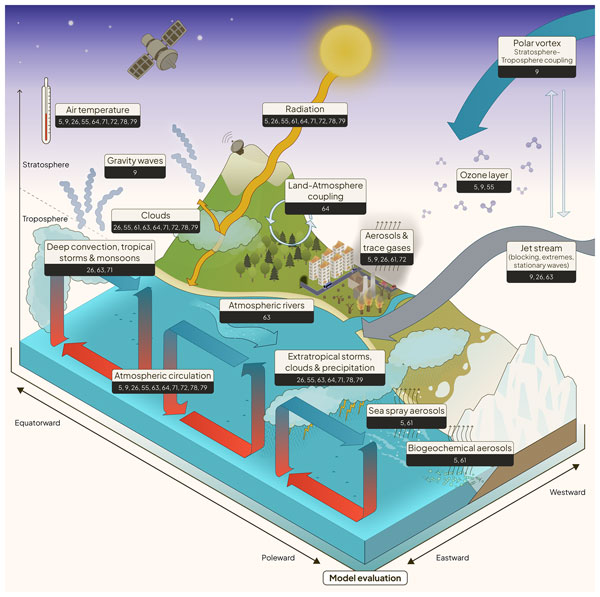
Beth Dingley, James A. Anstey, Marta Abalos, Carsten Abraham, Tommi Bergman, Lisa Bock, Sonya Fiddes, Birgit Hassler, Ryan J. Kramer, Fei Luo, Fiona M. O'Connor, Petr Šácha, Isla R. Simpson, Laura J. Wilcox, and Mark D. Zelinka
Geosci. Model Dev., 19, 2945–2984, https://doi.org/10.5194/gmd-19-2945-2026, https://doi.org/10.5194/gmd-19-2945-2026, 2026
Short summary
Short summary
This manuscript defines as a list of variables and scientific opportunities which are requested from the Coupled Model Intercomparison Project Phase 7 (CMIP7) Assessment Fast Track to address open atmospheric science questions. The list reflects the output of a large public community engagement effort, coordinated across autumn 2025 through to summer 2025.
Mara Y. McPartland, Tomas Lovato, Charles Koven, Jamie D. Wilson, Briony Turner, Colleen M. Petrik, José Licón-Saláiz, Fang Li, Fanny Lhardy, Jaclyn Clement Kinney, Michio Kawamiya, Birgit Hassler, Nathan P. Gillett, Cheikh Modou Noreyni Fall, Christopher Danek, Chris M. Brierley, Ana Bastos, and Oliver Andrews
Geosci. Model Dev., 19, 2849–2880, https://doi.org/10.5194/gmd-19-2849-2026, https://doi.org/10.5194/gmd-19-2849-2026, 2026
Short summary
Short summary
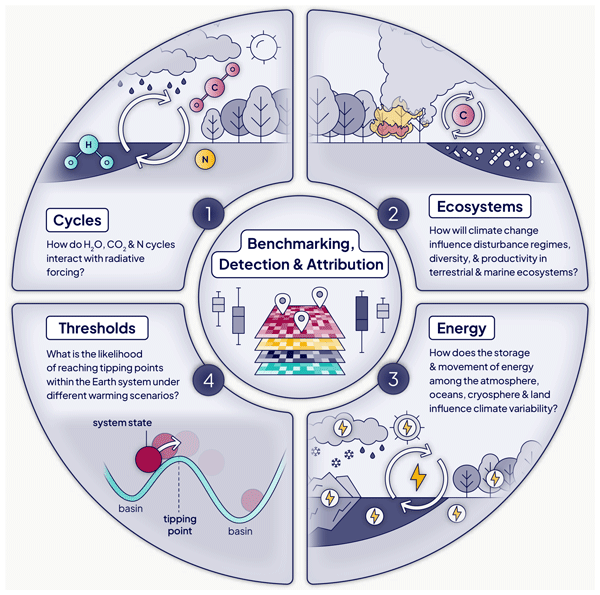
The Coupled Model Intercomparison Project (CMIP) is an international consortium of climate modeling groups that produce coordinated experiments in order to evaluate human influence on the climate and test knowledge of Earth systems. This paper describes the data requested for Earth systems research in CMIP7. We detail the request for model output of the carbon cycle, the flows of energy among the atmosphere, land and the oceans, and interactions between these and the global climate.
Paulo Ceppi, Sarah Wilson Kemsley, Hendrik Andersen, Timothy Andrews, Ryan J. Kramer, Peer Nowack, Casey J. Wall, and Mark D. Zelinka
Atmos. Chem. Phys., 26, 4153–4171, https://doi.org/10.5194/acp-26-4153-2026, https://doi.org/10.5194/acp-26-4153-2026, 2026
Short summary
Short summary
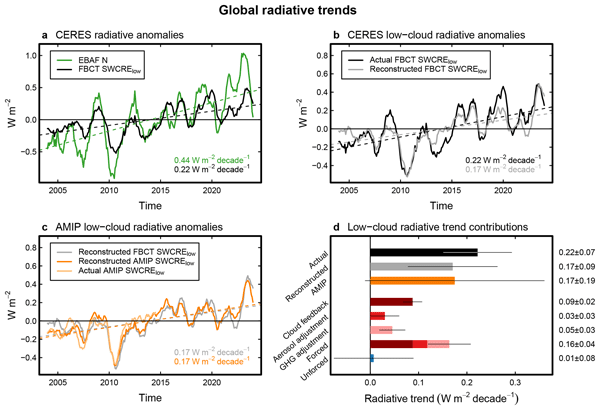
Recent decades have seen a marked decrease in global low-level cloud cover, leading to more sunlight heating the Earth. This trend is poorly understood, raising the concern that clouds may amplify global warming more than previously thought. We show that the cloud decrease is mostly caused by human forcing on climate, and that it agrees with previous estimates of how clouds respond to decreasing aerosol pollution, increasing greenhouse gas concentration, and their effects on global temperature.
Blanca Ayarzagüena, Amy H. Butler, Peter Hitchcock, Chaim I. Garfinkel, Zac D. Lawrence, Wuhan Ning, Philip Rupp, Zheng Wu, Hilla Afargan-Gerstman, Natalia Calvo, Alvaro de la Cámara, Martin Jucker, Gerbrand Koren, Daniel De Maeseneire, Gloria L. Manney, Marisol Osman, Masakazu Taguchi, Cory Barton, Dong-Chan Hong, Yu-Kyung Hyun, Hera Kim, Jeff Knight, Piero Malguzzi, Daniele Mastrangelo, Jiyoung Oh, Inna Polichtchouk, Jadwiga H. Richter, Isla R. Simpson, Seok-Woo Son, Damien Specq, and Tim Stockdale
Weather Clim. Dynam., 7, 411–437, https://doi.org/10.5194/wcd-7-411-2026, https://doi.org/10.5194/wcd-7-411-2026, 2026
Short summary
Short summary
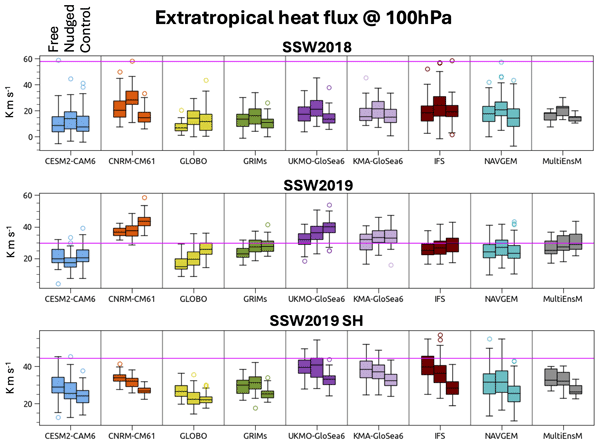
Sudden Stratospheric Warmings (SSWs) are known to follow a sustained wave dissipation in the stratosphere, which depends on both the tropospheric and stratospheric states. However, the relative role of each state is still unclear. Using a new set of subseasonal to seasonal forecasts, we show that the stratospheric state does not drastically affect the precursors of three recent SSWs, but modulates the stratospheric wave activity, with impacts depending on SSW features.
Ales Kuchar, Matthias Stocker, Alistair Bell, Bruno Lehner, Jessica Kult-Herdin, Gabriel Chiodo, Timofei Sukhodolov, Eugene Rozanov, Gunter Stober, and Harald E. Rieder
EGUsphere, https://doi.org/10.5194/egusphere-2026-406, https://doi.org/10.5194/egusphere-2026-406, 2026
Short summary
Short summary
We investigated why the Northern Hemisphere winter polar vortex became unusually strong in the winter of 2024/2025. Using satellite and reanalysis datasets, and model simulations, we found that extra water erupted high in the atmosphere by the 2022 Hunga Tonga eruption led to cooling of polar latitudes of the upper atmosphere, helping the winds aloft intensify. This link suggests such volcanic eruptions can shape winters in the upper atmosphere for several years.
Dillon Elsbury, Federico Serva, Julie M. Caron, Seung-Yoon Back, Clara Orbe, Jadwiga H. Richter, James A. Anstey, Neal Butchart, Chih-Chieh Chen, Javier García-Serrano, Anne Glanville, Yoshio Kawatani, Tobias Kerzenmacher, Francois Lott, Hiroaki Naoe, Scott Osprey, Froila M. Palmeiro, Seok-Woo Son, Masakazu Taguchi, Stefan Versick, Shingo Watanabe, and Kohei Yoshida
Weather Clim. Dynam., 7, 317–339, https://doi.org/10.5194/wcd-7-317-2026, https://doi.org/10.5194/wcd-7-317-2026, 2026
Short summary
Short summary
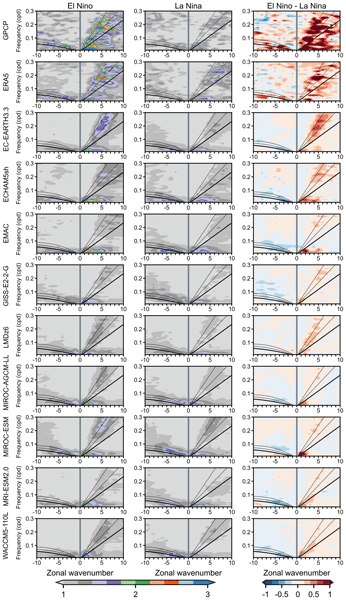
We used climate models to test how constant El Niño and La Niña ocean conditions shape the Madden-Julian Oscillation during northern winter. El Niño made this weather pattern move faster, while La Niña slowed it down. The Quasi-Biennial Oscillation, a repeating wind pattern high in the atmosphere, had little effect. This shows that long-lasting ocean conditions mainly drive the changes we found.
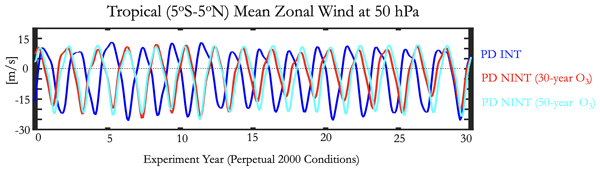
Clara Orbe, Alison Ming, Gabriel Chiodo, Michael Prather, Mohamadou Diallo, Qi Tang, Andreas Chrysanthou, Hiroaki Naoe, Xin Zhou, Irina Thaler, Dillon Elsbury, Ewa Bednarz, Jonathon S. Wright, Aaron Match, Shingo Watanabe, James Anstey, Tobias Kerzenmacher, Stefan Versick, Marion Marchand, Feng Li, and James Keeble
Geosci. Model Dev., 19, 773–794, https://doi.org/10.5194/gmd-19-773-2026, https://doi.org/10.5194/gmd-19-773-2026, 2026
Short summary
Short summary
The quasi-biennial oscillation (QBO) is the main source of wind fluctuations in the tropical stratosphere, which can couple to surface climate. However, models do a poor job of simulating the QBO in the lower stratosphere, for reasons that remain unclear. One possibility is that models do not completely represent how ozone influences the QBO-associated wind variations. Here we propose a multi-model framework for assessing how ozone influences the QBO in recent past and future climates.
William J. Collins, John S. Daniel, Martyn P. Chipperfield, Martin Cussac, Makoto Deushi, Gregory Faluvegi, Paul Griffiths, Øivind Hodnebrog, Larry W. Horowitz, James Keeble, Douglas Kinnison, Vaishali Naik, Fiona M. O'Connor, Drew Shindell, Simone Tilmes, Kostas Tsigaridis, Zihao Wang, and James Weber
EGUsphere, https://doi.org/10.5194/egusphere-2025-6033, https://doi.org/10.5194/egusphere-2025-6033, 2026
Short summary
Short summary
Ozone depleting substances (ODSs) are also greenhouse gases that cause global warming. However, their destruction of ozone contributes a global cooling. We have used results from climate models that include atmospheric chemistry and found that the cooling effect of the ozone depletion diagnosed in the models was larger than that calculated using a standard method. We find that some ODSs have a net cooling effect whereas for others the warming effect is significantly reduced.
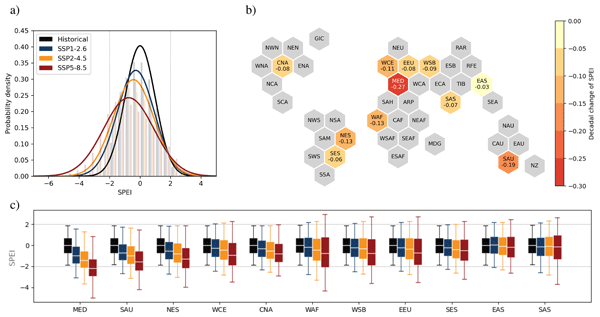
Lukas Lindenlaub, Katja Weigel, Birgit Hassler, Colin Jones, and Veronika Eyring
Earth Syst. Dynam., 17, 81–105, https://doi.org/10.5194/esd-17-81-2026, https://doi.org/10.5194/esd-17-81-2026, 2026
Short summary
Short summary
This study explores changes in drought characteristic based on projections by 18 different Earth system models. Their performance is evaluated by comparing historical simulations to observation based reanalysis. The analysis of a standardized drought index under different future scenarios revealed that the harvest area that is projected to experience extreme drought conditions towards the end of this century ranges from 10 % to 40 % depending on the emission scenario.
Laura A. Mansfield, Peer J. Nowack, Edmund M. Ryan, Oliver Wild, and Apostolos Voulgarakis
EGUsphere, https://doi.org/10.5194/egusphere-2025-6046, https://doi.org/10.5194/egusphere-2025-6046, 2025
Short summary
Short summary
We present a fast machine learning emulator that predicts how Earth’s surface temperature reacts within the first five years to changes in greenhouse gases and aerosol pollutants. It is trained on carefully designed simulations from a complex climate model, but can be run much faster. Our emulator can be used to show where the climate is most sensitive to different emissions and can help explore many possible future paths, making it easier to assess the climate effects of policy choices.
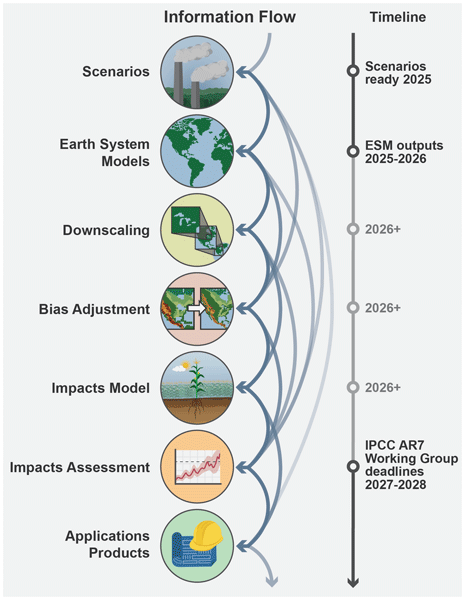
Alex C. Ruane, Charlotte L. Pascoe, Claas Teichmann, David J. Brayshaw, Carlo Buontempo, Ibrahima Diouf, Jesus Fernandez, Paula L. M. Gonzalez, Birgit Hassler, Vanessa Hernaman, Ulas Im, Doroteaciro Iovino, Martin Juckes, Iréne L. Lake, Timothy Lam, Xiaomao Lin, Jiafu Mao, Negin Nazarian, Sylvie Parey, Indrani Roy, Wan-Ling Tseng, Briony Turner, Andrew Wiebe, Lei Zhao, and Damaris Zurell
Geosci. Model Dev., 18, 9497–9540, https://doi.org/10.5194/gmd-18-9497-2025, https://doi.org/10.5194/gmd-18-9497-2025, 2025
Short summary
Short summary
This paper describes how the Coupled Model Intercomparison Project organized its 7th phase (CMIP7) to encourage the production of Earth system model outputs relevant for impacts and adaptation. Community engagement identified 13 opportunities for application across human and natural systems, 60 variable groups and 539 unique variables. We also show how simulations can more efficiently meet applications needs by targeting appropriate resolution, time slices, experiments and variable groups.
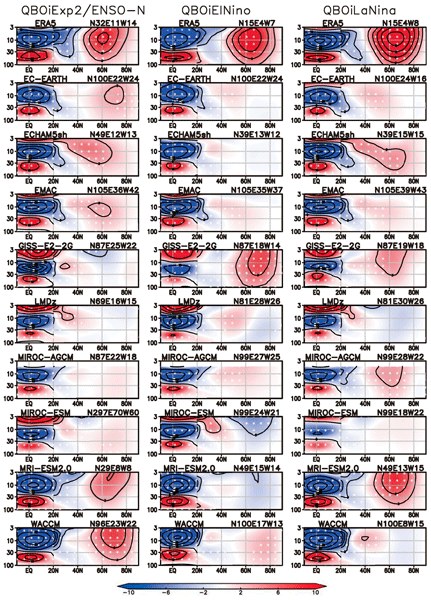
Hiroaki Naoe, Jorge L. García-Franco, Chang-Hyun Park, Mario Rodrigo, Froila M. Palmeiro, Federico Serva, Masakazu Taguchi, Kohei Yoshida, James A. Anstey, Javier García-Serrano, Seok-Woo Son, Yoshio Kawatani, Neal Butchart, Kevin Hamilton, Chih-Chieh Chen, Anne Glanville, Tobias Kerzenmacher, François Lott, Clara Orbe, Scott Osprey, Mijeong Park, Jadwiga H. Richter, Stefan Versick, and Shingo Watanabe
Weather Clim. Dynam., 6, 1419–1442, https://doi.org/10.5194/wcd-6-1419-2025, https://doi.org/10.5194/wcd-6-1419-2025, 2025
Short summary
Short summary
Links between the stratospheric Quasi-Biennial Oscillation (QBO) and atmospheric circulations in the tropics, subtropics, and polar regions, as well as their modulation by the El Nino–Southern Oscillation, are examined through model experiments. The QBO–polar vortex connection is reproduced by a multi-model ensemble at about half the observed amplitude. Weak performance of QBO signals in these regions is likely due to unrealistically weak QBO amplitudes in the lower stratosphere.
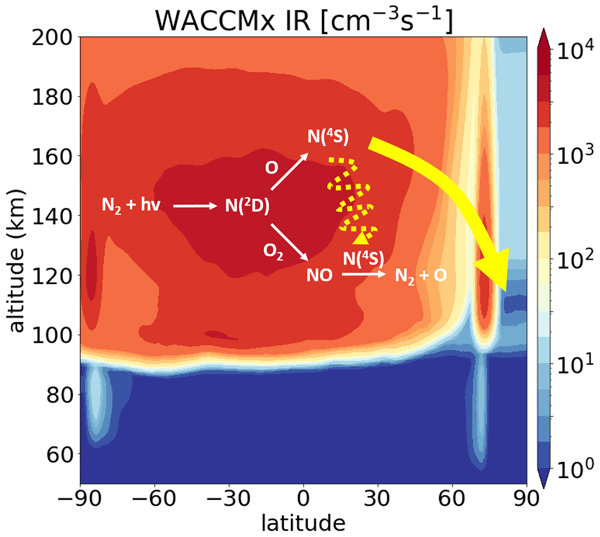
Miriam Sinnhuber, Christina Arras, Stefan Bender, Bernd Funke, Hanli Liu, Daniel R. Marsh, Thomas Reddmann, Eugene Rozanov, Timofei Sukhodolov, Monika E. Szelag, and Jan Maik Wissing
Atmos. Chem. Phys., 25, 14719–14734, https://doi.org/10.5194/acp-25-14719-2025, https://doi.org/10.5194/acp-25-14719-2025, 2025
Short summary
Short summary
Nitric oxide in the upper atmosphere varies with solar activity. Observations show that this starts a chain of processes affecting the ozone layer and climate system. This is often underestimated in models. We compare five models which show large differences in simulated NO. Analysis of these discrepancies identify two processes which interact with each other: the balance between atomic and molecular oxygen in the thermosphere, and a poleward - downward transport in the winter thermosphere.
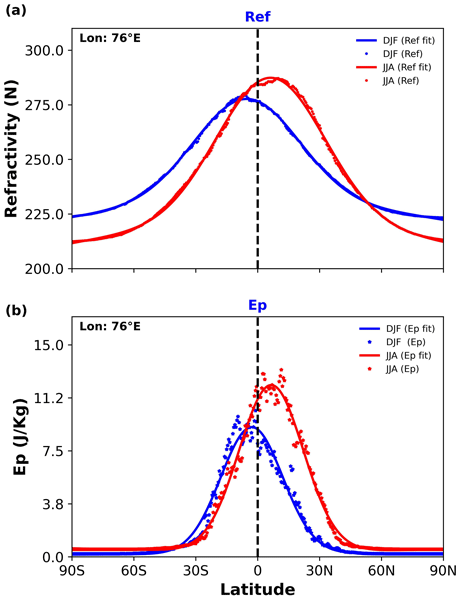
Toyese Tunde Ayorinde, Cristiano Max Wrasse, Hisao Takahashi, Luiz Fernando Sapucci, Mohamadou A. Diallo, Cosme Alexandre Oliveira Barros Figueiredo, Diego Barros, Ligia Alves da Silva, Patrick Essien, and Anderson Vestena Bilibio
Atmos. Chem. Phys., 25, 12357–12378, https://doi.org/10.5194/acp-25-12357-2025, https://doi.org/10.5194/acp-25-12357-2025, 2025
Short summary
Short summary
We studied how the Intertropical Convergence Zone (ITCZ) interacts with atmospheric gravity waves high in the sky and how global climate patterns like El Niño affect them. Using RO, ERA5, and NCEP reanalysis data, we found that the ITCZ shifts with season but stays strong year-round, influencing weather and energy flow. Our findings show how climate patterns shape weather systems and help predict changes, improving understanding of the atmosphere and its effects on global climate.
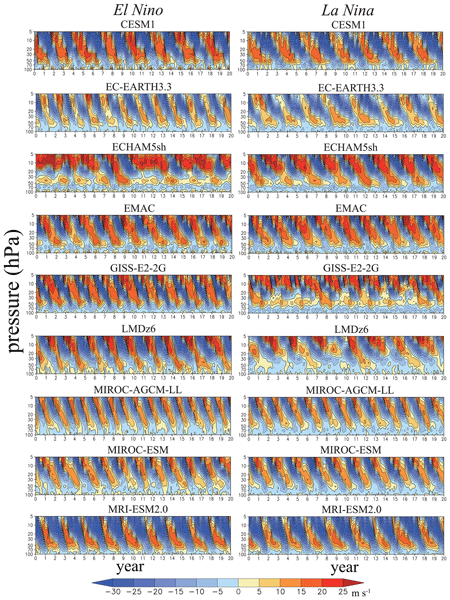
Yoshio Kawatani, Kevin Hamilton, Shingo Watanabe, Masakazu Taguchi, Federico Serva, James A. Anstey, Jadwiga H. Richter, Neal Butchart, Clara Orbe, Scott M. Osprey, Hiroaki Naoe, Dillon Elsbury, Chih-Chieh Chen, Javier García-Serrano, Anne Glanville, Tobias Kerzenmacher, François Lott, Froila M. Palmeiro, Mijeong Park, Stefan Versick, and Kohei Yoshida
Weather Clim. Dynam., 6, 1045–1073, https://doi.org/10.5194/wcd-6-1045-2025, https://doi.org/10.5194/wcd-6-1045-2025, 2025
Short summary
Short summary
The Quasi-Biennial Oscillation (QBO) of the tropical stratospheric mean winds has been relatively steady over the 7 decades it has been observed, but there are always cycle-to-cycle variations. This study used several global atmospheric models to investigate systematic modulation of the QBO by the El Niño/La Niña cycle. All models simulated shorter periods during El Niño, in agreement with observations. By contrast, the models disagreed even on the sign of the El Niño effect on QBO amplitude.
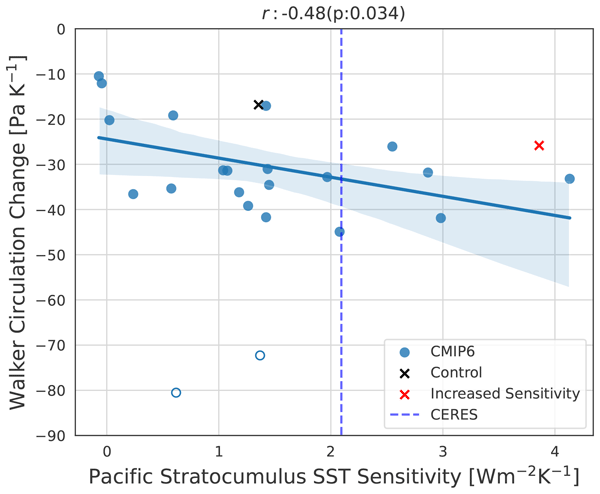
Philipp Breul, Paulo Ceppi, and Peer Nowack
Atmos. Chem. Phys., 25, 11991–12005, https://doi.org/10.5194/acp-25-11991-2025, https://doi.org/10.5194/acp-25-11991-2025, 2025
Short summary
Short summary
We explore how Pacific low-level clouds influence projections of regional climate change by adjusting a climate model to enhance low-cloud response to surface temperatures. We find significant changes in projected warming patterns and circulation changes under increased CO2 conditions. Our findings are supported by similar relationships across state-of-the-art climate models. These results highlight the importance of accurately representing clouds for predicting regional climate change impacts.
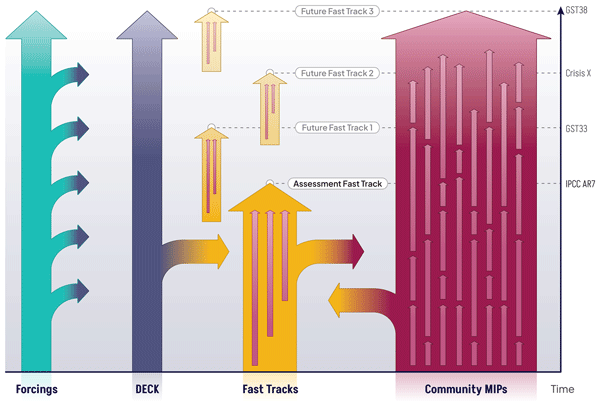
John P. Dunne, Helene T. Hewitt, Julie M. Arblaster, Frédéric Bonou, Olivier Boucher, Tereza Cavazos, Beth Dingley, Paul J. Durack, Birgit Hassler, Martin Juckes, Tomoki Miyakawa, Matt Mizielinski, Vaishali Naik, Zebedee Nicholls, Eleanor O'Rourke, Robert Pincus, Benjamin M. Sanderson, Isla R. Simpson, and Karl E. Taylor
Geosci. Model Dev., 18, 6671–6700, https://doi.org/10.5194/gmd-18-6671-2025, https://doi.org/10.5194/gmd-18-6671-2025, 2025
Short summary
Short summary
The seventh phase of the Coupled Model Intercomparison Project (CMIP7) coordinates efforts to answer key and timely climate science questions and facilitate delivery of relevant multi-model simulations for prediction and projection; characterization, attribution, and process understanding; and vulnerability, impact, and adaptation analysis. Key to the CMIP7 design are the mandatory Diagnostic, Evaluation and Characterization of Klima and optional Assessment Fast Track experiments.

Andrin Jörimann, Timofei Sukhodolov, Beiping Luo, Gabriel Chiodo, Graham Mann, and Thomas Peter
Geosci. Model Dev., 18, 6023–6041, https://doi.org/10.5194/gmd-18-6023-2025, https://doi.org/10.5194/gmd-18-6023-2025, 2025
Short summary
Short summary
Aerosol particles in the stratosphere affect our climate. Climate models therefore need an accurate description of their properties and evolution. Satellites measure how strongly aerosol particles extinguish light passing through the stratosphere. We describe a method to use such aerosol extinction data to retrieve the number and sizes of the aerosol particles and calculate their optical effects. The resulting data sets for models are validated against ground-based and balloon observations.
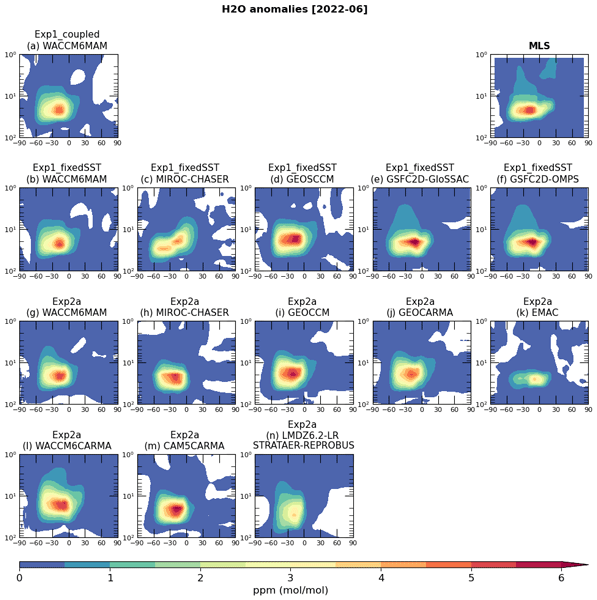
Yunqian Zhu, Hideharu Akiyoshi, Valentina Aquila, Elizabeth Asher, Ewa M. Bednarz, Slimane Bekki, Christoph Brühl, Amy H. Butler, Parker Case, Simon Chabrillat, Gabriel Chiodo, Margot Clyne, Peter R. Colarco, Sandip Dhomse, Lola Falletti, Eric Fleming, Ben Johnson, Andrin Jörimann, Mahesh Kovilakam, Gerbrand Koren, Ales Kuchar, Nicolas Lebas, Qing Liang, Cheng-Cheng Liu, Graham Mann, Michael Manyin, Marion Marchand, Olaf Morgenstern, Paul Newman, Luke D. Oman, Freja F. Østerstrøm, Yifeng Peng, David Plummer, Ilaria Quaglia, William Randel, Samuel Rémy, Takashi Sekiya, Stephen Steenrod, Timofei Sukhodolov, Simone Tilmes, Kostas Tsigaridis, Rei Ueyama, Daniele Visioni, Xinyue Wang, Shingo Watanabe, Yousuke Yamashita, Pengfei Yu, Wandi Yu, Jun Zhang, and Zhihong Zhuo
Geosci. Model Dev., 18, 5487–5512, https://doi.org/10.5194/gmd-18-5487-2025, https://doi.org/10.5194/gmd-18-5487-2025, 2025
Short summary
Short summary
To understand the climate impact of the 2022 Hunga volcanic eruption, we developed a climate model–observation comparison project. The paper describes the protocols and models that participate in the experiments. We designed several experiments to achieve our goals of this activity: (1) to evaluate the climate model performance and (2) to understand the Earth system responses to this eruption.
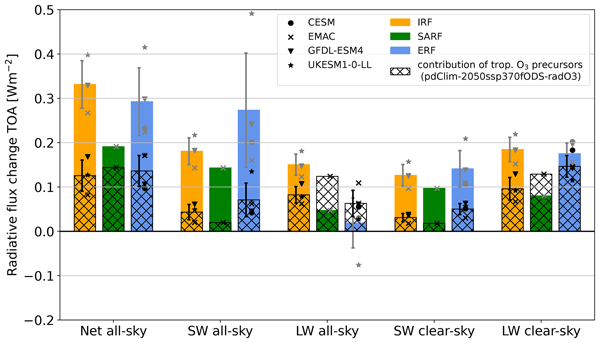
William J. Collins, Fiona M. O'Connor, Rachael E. Byrom, Øivind Hodnebrog, Patrick Jöckel, Mariano Mertens, Gunnar Myhre, Matthias Nützel, Dirk Olivié, Ragnhild Bieltvedt Skeie, Laura Stecher, Larry W. Horowitz, Vaishali Naik, Gregory Faluvegi, Ulas Im, Lee T. Murray, Drew Shindell, Kostas Tsigaridis, Nathan Luke Abraham, and James Keeble
Atmos. Chem. Phys., 25, 9031–9060, https://doi.org/10.5194/acp-25-9031-2025, https://doi.org/10.5194/acp-25-9031-2025, 2025
Short summary
Short summary
We used 7 climate models that include atmospheric chemistry and find that in a scenario with weak controls on air quality, the warming effects (over 2015 to 2050) of decreases in ozone-depleting substances and increases in air quality pollutants are approximately equal and would make ozone the second highest contributor to warming over this period. We find that for stratospheric ozone recovery, the standard measure of climate effects underestimates a more comprehensive measure.
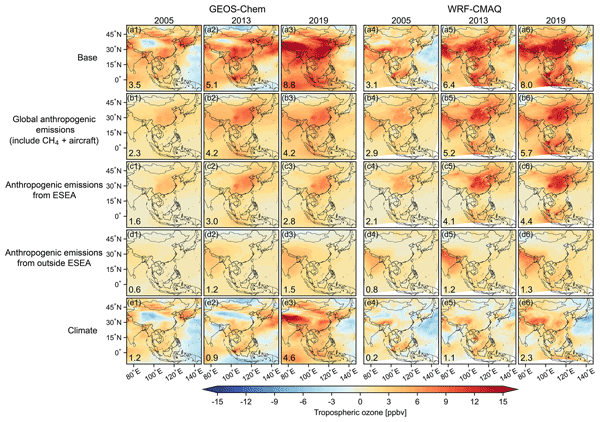
Xiao Lu, Yiming Liu, Jiayin Su, Xiang Weng, Tabish Ansari, Yuqiang Zhang, Guowen He, Yuqi Zhu, Haolin Wang, Ganquan Zeng, Jingyu Li, Cheng He, Shuai Li, Teerachai Amnuaylojaroen, Tim Butler, Qi Fan, Shaojia Fan, Grant L. Forster, Meng Gao, Jianlin Hu, Yugo Kanaya, Mohd Talib Latif, Keding Lu, Philippe Nédélec, Peer Nowack, Bastien Sauvage, Xiaobin Xu, Lin Zhang, Ke Li, Ja-Ho Koo, and Tatsuya Nagashima
Atmos. Chem. Phys., 25, 7991–8028, https://doi.org/10.5194/acp-25-7991-2025, https://doi.org/10.5194/acp-25-7991-2025, 2025
Short summary
Short summary
This study analyzes summertime ozone trends in East and Southeast Asia derived from a comprehensive observational database spanning from 1995 to 2019, incorporating aircraft observations, ozonesonde data, and measurements from 2500 surface sites. Multiple models are applied to attribute to changes in anthropogenic emissions and climate. The results highlight that increases in anthropogenic emissions are the primary driver of ozone increases both in the free troposphere and at the surface.
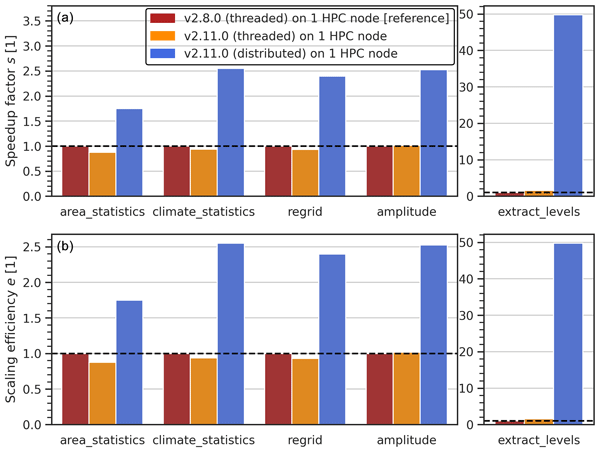
Manuel Schlund, Bouwe Andela, Jörg Benke, Ruth Comer, Birgit Hassler, Emma Hogan, Peter Kalverla, Axel Lauer, Bill Little, Saskia Loosveldt Tomas, Francesco Nattino, Patrick Peglar, Valeriu Predoi, Stef Smeets, Stephen Worsley, Martin Yeo, and Klaus Zimmermann
Geosci. Model Dev., 18, 4009–4021, https://doi.org/10.5194/gmd-18-4009-2025, https://doi.org/10.5194/gmd-18-4009-2025, 2025
Short summary
Short summary
The Earth System Model Evaluation Tool (ESMValTool) is a community diagnostics and performance metrics tool for the evaluation of Earth system models. Here, we describe recent significant improvements of ESMValTool’s computational efficiency including parallel, out-of-core, and distributed computing. Evaluations with the enhanced version of ESMValTool are faster, use less computational resources, and can handle input data larger than the available memory.
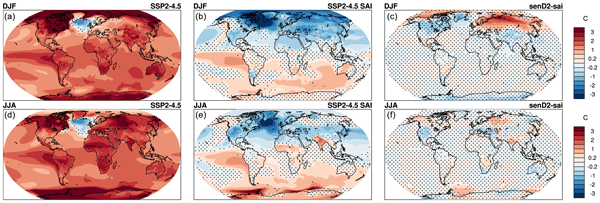
Simone Tilmes, Ewa M. Bednarz, Andrin Jörimann, Daniele Visioni, Douglas E. Kinnison, Gabriel Chiodo, and David Plummer
Atmos. Chem. Phys., 25, 6001–6023, https://doi.org/10.5194/acp-25-6001-2025, https://doi.org/10.5194/acp-25-6001-2025, 2025
Short summary
Short summary
In this paper, we describe the details of a new multi-model intercomparison experiment to assess the effects of Stratospheric Aerosol Intervention (SAI) on stratospheric chemistry and dynamics and, therefore, ozone. Second, we discuss the advantages and differences of the more constrained experiment compared to fully interactive model experiments. This way, we advance the process-level understanding of the drivers of SAI-induced atmospheric responses.
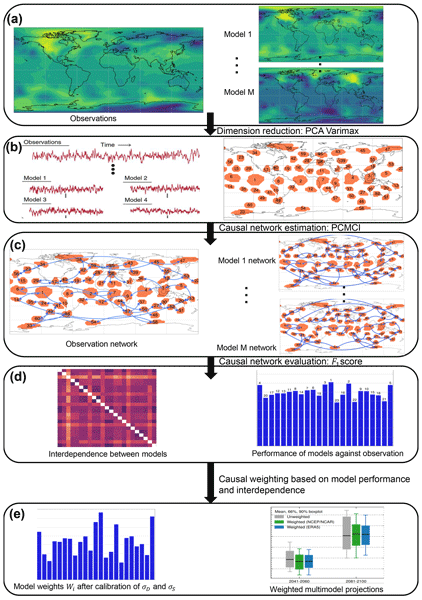
Kevin Debeire, Lisa Bock, Peer Nowack, Jakob Runge, and Veronika Eyring
Earth Syst. Dynam., 16, 607–630, https://doi.org/10.5194/esd-16-607-2025, https://doi.org/10.5194/esd-16-607-2025, 2025
Short summary
Short summary
Projecting future precipitation is essential for preparing for climate change, but current climate models still have large uncertainties, especially over land. This study presents a new method to improve precipitation projections by identifying which models best capture key climate patterns. By giving more weight to models that better represent these patterns, our approach leads to more reliable future precipitation projections over land.
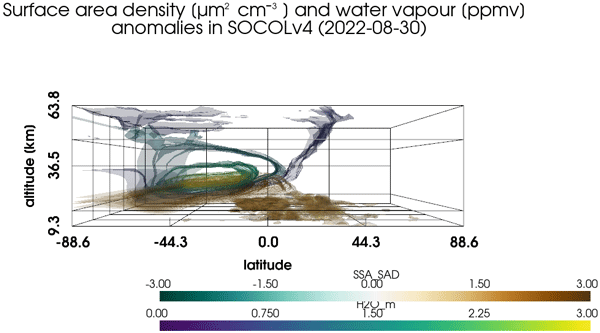
Ales Kuchar, Timofei Sukhodolov, Gabriel Chiodo, Andrin Jörimann, Jessica Kult-Herdin, Eugene Rozanov, and Harald H. Rieder
Atmos. Chem. Phys., 25, 3623–3634, https://doi.org/10.5194/acp-25-3623-2025, https://doi.org/10.5194/acp-25-3623-2025, 2025
Short summary
Short summary
In January 2022, the Hunga Tonga–Hunga Ha'apai (HTHH) volcano erupted, sending massive amounts of water vapour into the atmosphere. This event had a significant impact on stratospheric and lower-mesospheric chemical composition. Two years later, stratospheric conditions were disturbed during so-called sudden stratospheric warmings. Here we simulate a novel pathway by which this water-rich eruption may have contributed to conditions during these events and consequently impacted the surface climate.
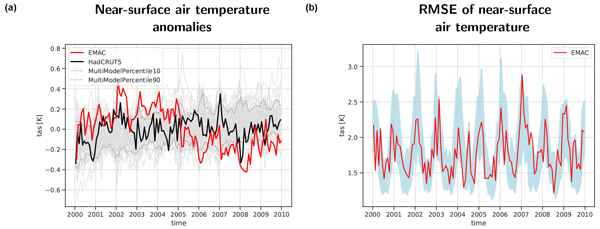
Axel Lauer, Lisa Bock, Birgit Hassler, Patrick Jöckel, Lukas Ruhe, and Manuel Schlund
Geosci. Model Dev., 18, 1169–1188, https://doi.org/10.5194/gmd-18-1169-2025, https://doi.org/10.5194/gmd-18-1169-2025, 2025
Short summary
Short summary
Earth system models are important tools to improve our understanding of current climate and to project climate change. Thus, it is crucial to understand possible shortcomings in the models. New features of the ESMValTool software package allow one to compare and visualize a model's performance with respect to reproducing observations in the context of other climate models in an easy and user-friendly way. We aim to help model developers assess and monitor climate simulations more efficiently.
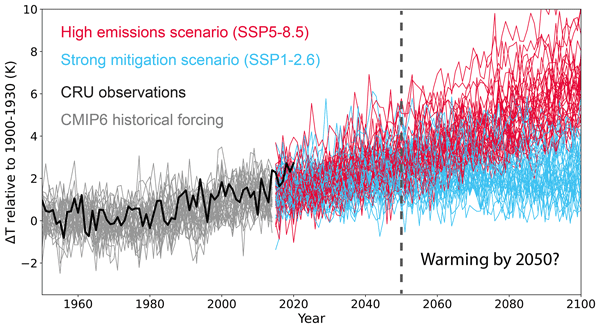
Peer Nowack and Duncan Watson-Parris
Atmos. Chem. Phys., 25, 2365–2384, https://doi.org/10.5194/acp-25-2365-2025, https://doi.org/10.5194/acp-25-2365-2025, 2025
Short summary
Short summary
In our article, we review uncertainties in global climate change projections and current methods using Earth observations as constraints, which is crucial for climate risk assessments and for informing society. We then discuss how machine learning can advance the field, discussing recent work that provides potentially stronger and more robust links between observed data and future climate projections. We further discuss the challenges of applying machine learning to climate science.
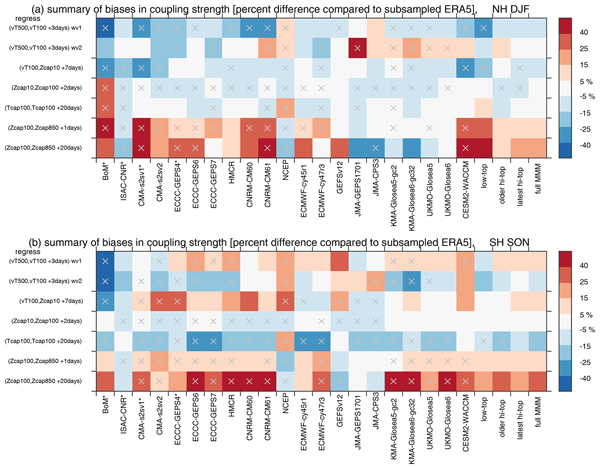
Chaim I. Garfinkel, Zachary D. Lawrence, Amy H. Butler, Etienne Dunn-Sigouin, Irene Erner, Alexey Y. Karpechko, Gerbrand Koren, Marta Abalos, Blanca Ayarzagüena, David Barriopedro, Natalia Calvo, Alvaro de la Cámara, Andrew Charlton-Perez, Judah Cohen, Daniela I. V. Domeisen, Javier García-Serrano, Neil P. Hindley, Martin Jucker, Hera Kim, Robert W. Lee, Simon H. Lee, Marisol Osman, Froila M. Palmeiro, Inna Polichtchouk, Jian Rao, Jadwiga H. Richter, Chen Schwartz, Seok-Woo Son, Masakazu Taguchi, Nicholas L. Tyrrell, Corwin J. Wright, and Rachel W.-Y. Wu
Weather Clim. Dynam., 6, 171–195, https://doi.org/10.5194/wcd-6-171-2025, https://doi.org/10.5194/wcd-6-171-2025, 2025
Short summary
Short summary
Variability in the extratropical stratosphere and troposphere is coupled, and because of the longer timescales characteristic of the stratosphere, this allows for a window of opportunity for surface prediction. This paper assesses whether models used for operational prediction capture these coupling processes accurately. We find that most processes are too weak; however downward coupling from the lower stratosphere to the near surface is too strong.
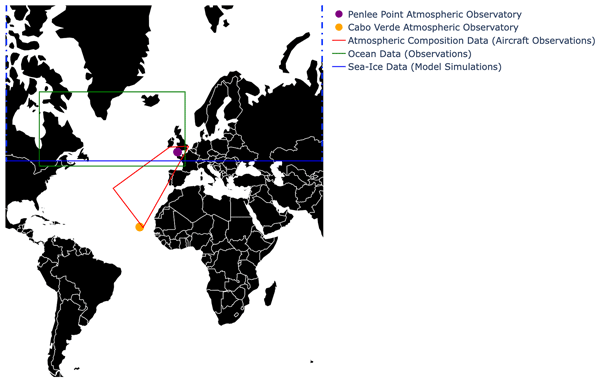
Alex T. Archibald, Bablu Sinha, Maria R. Russo, Emily Matthews, Freya A. Squires, N. Luke Abraham, Stephane J.-B. Bauguitte, Thomas J. Bannan, Thomas G. Bell, David Berry, Lucy J. Carpenter, Hugh Coe, Andrew Coward, Peter Edwards, Daniel Feltham, Dwayne Heard, Jim Hopkins, James Keeble, Elizabeth C. Kent, Brian A. King, Isobel R. Lawrence, James Lee, Claire R. Macintosh, Alex Megann, Bengamin I. Moat, Katie Read, Chris Reed, Malcolm J. Roberts, Reinhard Schiemann, David Schroeder, Timothy J. Smyth, Loren Temple, Navaneeth Thamban, Lisa Whalley, Simon Williams, Huihui Wu, and Mingxi Yang
Earth Syst. Sci. Data, 17, 135–164, https://doi.org/10.5194/essd-17-135-2025, https://doi.org/10.5194/essd-17-135-2025, 2025
Short summary
Short summary
Here, we present an overview of the data generated as part of the North Atlantic Climate System Integrated Study (ACSIS) programme that are available through dedicated repositories at the Centre for Environmental Data Analysis (CEDA; www.ceda.ac.uk) and the British Oceanographic Data Centre (BODC; bodc.ac.uk). The datasets described here cover the North Atlantic Ocean, the atmosphere above (it including its composition), and Arctic sea ice.
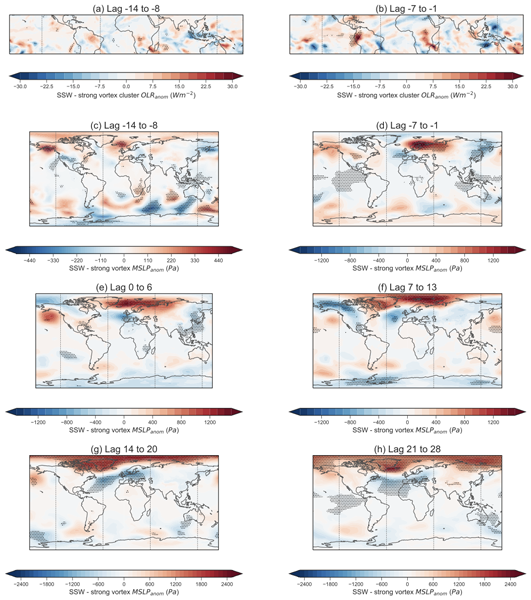
Rachel W.-Y. Wu, Gabriel Chiodo, Inna Polichtchouk, and Daniela I. V. Domeisen
Atmos. Chem. Phys., 24, 12259–12275, https://doi.org/10.5194/acp-24-12259-2024, https://doi.org/10.5194/acp-24-12259-2024, 2024
Short summary
Short summary
Strong variations in the strength of the stratospheric polar vortex can profoundly affect surface weather extremes; therefore, accurately predicting the stratosphere can improve surface weather forecasts. The research reveals how uncertainty in the stratosphere is linked to the troposphere. The findings suggest that refining models to better represent the identified sources and impact regions in the troposphere is likely to improve the prediction of the stratosphere and its surface impacts.
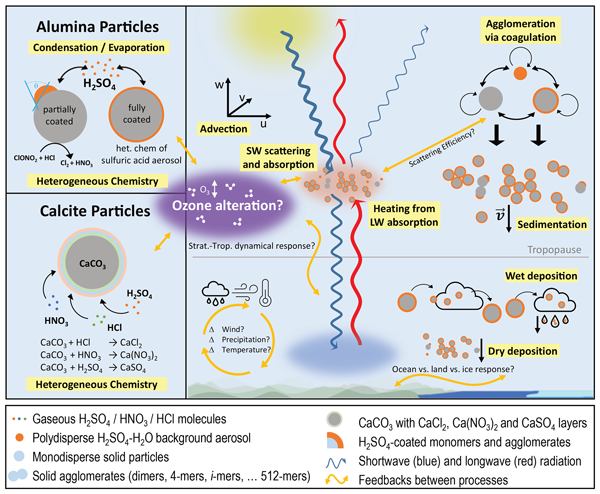
Sandro Vattioni, Rahel Weber, Aryeh Feinberg, Andrea Stenke, John A. Dykema, Beiping Luo, Georgios A. Kelesidis, Christian A. Bruun, Timofei Sukhodolov, Frank N. Keutsch, Thomas Peter, and Gabriel Chiodo
Geosci. Model Dev., 17, 7767–7793, https://doi.org/10.5194/gmd-17-7767-2024, https://doi.org/10.5194/gmd-17-7767-2024, 2024
Short summary
Short summary
We quantified impacts and efficiency of stratospheric solar climate intervention via solid particle injection. Microphysical interactions of solid particles with the sulfur cycle were interactively coupled to the heterogeneous chemistry scheme and the radiative transfer code of an aerosol–chemistry–climate model. Compared to injection of SO2 we only find a stronger cooling efficiency for solid particles when normalizing to the aerosol load but not when normalizing to the injection rate.
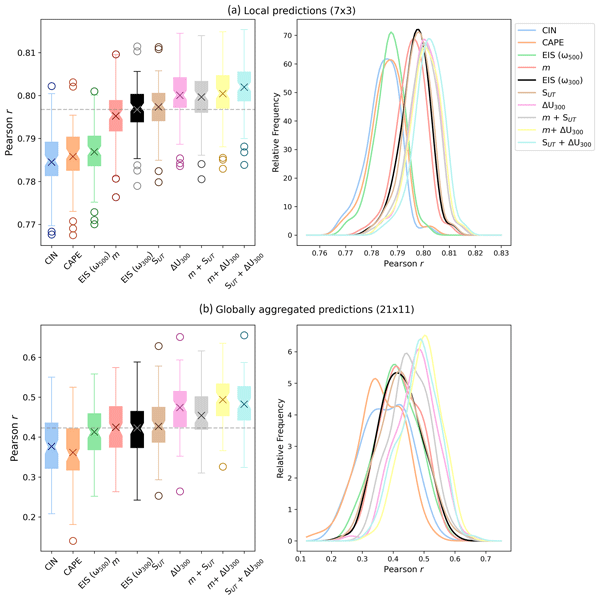
Sarah Wilson Kemsley, Paulo Ceppi, Hendrik Andersen, Jan Cermak, Philip Stier, and Peer Nowack
Atmos. Chem. Phys., 24, 8295–8316, https://doi.org/10.5194/acp-24-8295-2024, https://doi.org/10.5194/acp-24-8295-2024, 2024
Short summary
Short summary
Aiming to inform parameter selection for future observational constraint analyses, we incorporate five candidate meteorological drivers specifically targeting high clouds into a cloud controlling factor framework within a range of spatial domain sizes. We find a discrepancy between optimal domain size for predicting locally and globally aggregated cloud radiative anomalies and identify upper-tropospheric static stability as an important high-cloud controlling factor.
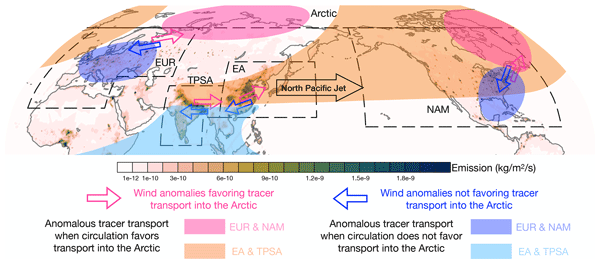
Cheng Zheng, Yutian Wu, Mingfang Ting, and Clara Orbe
Atmos. Chem. Phys., 24, 6965–6985, https://doi.org/10.5194/acp-24-6965-2024, https://doi.org/10.5194/acp-24-6965-2024, 2024
Short summary
Short summary
Trace gases and aerosols in the Arctic, which typically originate from midlatitude and tropical emission regions, modulate the Arctic climate via their radiative and chemistry impacts. Thus, long-range transport of these substances is important for understanding the current and the future change of Arctic climate. By employing chemistry–climate models, we explore how year-to-year variations in the atmospheric circulation modulate atmospheric long-range transport into the Arctic.
Sandro Vattioni, Andrea Stenke, Beiping Luo, Gabriel Chiodo, Timofei Sukhodolov, Elia Wunderlin, and Thomas Peter
Geosci. Model Dev., 17, 4181–4197, https://doi.org/10.5194/gmd-17-4181-2024, https://doi.org/10.5194/gmd-17-4181-2024, 2024
Short summary
Short summary
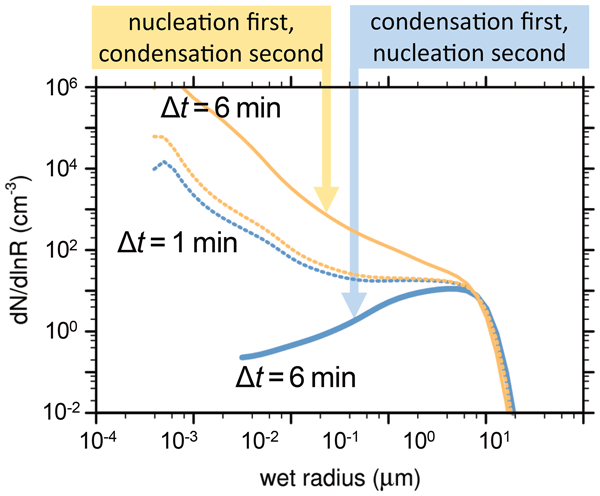
We investigate the sensitivity of aerosol size distributions in the presence of strong SO2 injections for climate interventions or after volcanic eruptions to the call sequence and frequency of the routines for nucleation and condensation in sectional aerosol models with operator splitting. Using the aerosol–chemistry–climate model SOCOL-AERv2, we show that the radiative and chemical outputs are sensitive to these settings at high H2SO4 supersaturations and how to obtain reliable results.

Christina V. Brodowsky, Timofei Sukhodolov, Gabriel Chiodo, Valentina Aquila, Slimane Bekki, Sandip S. Dhomse, Michael Höpfner, Anton Laakso, Graham W. Mann, Ulrike Niemeier, Giovanni Pitari, Ilaria Quaglia, Eugene Rozanov, Anja Schmidt, Takashi Sekiya, Simone Tilmes, Claudia Timmreck, Sandro Vattioni, Daniele Visioni, Pengfei Yu, Yunqian Zhu, and Thomas Peter
Atmos. Chem. Phys., 24, 5513–5548, https://doi.org/10.5194/acp-24-5513-2024, https://doi.org/10.5194/acp-24-5513-2024, 2024
Short summary
Short summary
The aerosol layer is an essential part of the climate system. We characterize the sulfur budget in a volcanically quiescent (background) setting, with a special focus on the sulfate aerosol layer using, for the first time, a multi-model approach. The aim is to identify weak points in the representation of the atmospheric sulfur budget in an intercomparison of nine state-of-the-art coupled global circulation models.
Tiehan Zhou, Kevin J. DallaSanta, Clara Orbe, David H. Rind, Jeffrey A. Jonas, Larissa Nazarenko, Gavin A. Schmidt, and Gary Russell
Atmos. Chem. Phys., 24, 509–532, https://doi.org/10.5194/acp-24-509-2024, https://doi.org/10.5194/acp-24-509-2024, 2024
Short summary
Short summary
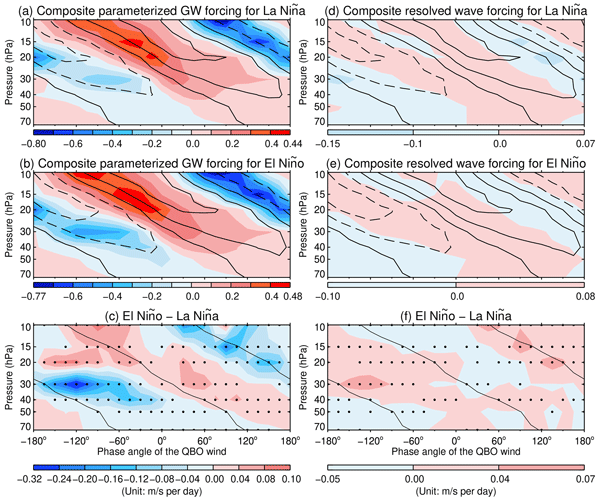
The El Niño–Southern Oscillation (ENSO) tends to speed up and slow down the phase speed of the Quasi-Biennial Oscillation (QBO) during El Niño and La Niña, respectively. The ENSO modulation of the QBO does not show up in the climate models with parameterized but temporally constant gravity wave sources. We show that the GISS E2.2 models can capture the observed ENSO modulation of the QBO period with a horizontal resolution of 2° by 2.5° and its gravity wave sources parameterized interactively.
Yaowei Li, Corey Pedersen, John Dykema, Jean-Paul Vernier, Sandro Vattioni, Amit Kumar Pandit, Andrea Stenke, Elizabeth Asher, Troy Thornberry, Michael A. Todt, Thao Paul Bui, Jonathan Dean-Day, and Frank N. Keutsch
Atmos. Chem. Phys., 23, 15351–15364, https://doi.org/10.5194/acp-23-15351-2023, https://doi.org/10.5194/acp-23-15351-2023, 2023
Short summary
Short summary
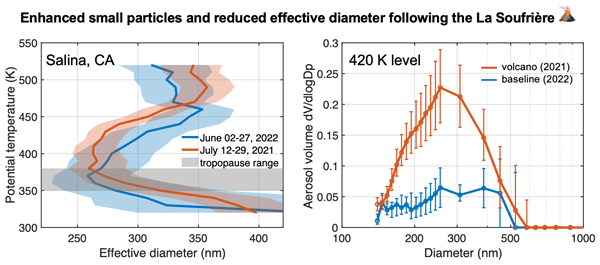
In 2021, the eruption of La Soufrière released sulfur dioxide into the stratosphere, resulting in a spread of volcanic aerosol over the Northern Hemisphere. We conducted extensive aircraft and balloon-borne measurements after that, revealing enhanced particle concentration and altered size distribution due to the eruption. The eruption's impact on ozone depletion was minimal, contributing ~0.6 %, and its global radiative forcing effect was modest, mainly affecting tropical and midlatitude areas.
Nicola J. Warwick, Alex T. Archibald, Paul T. Griffiths, James Keeble, Fiona M. O'Connor, John A. Pyle, and Keith P. Shine
Atmos. Chem. Phys., 23, 13451–13467, https://doi.org/10.5194/acp-23-13451-2023, https://doi.org/10.5194/acp-23-13451-2023, 2023
Short summary
Short summary
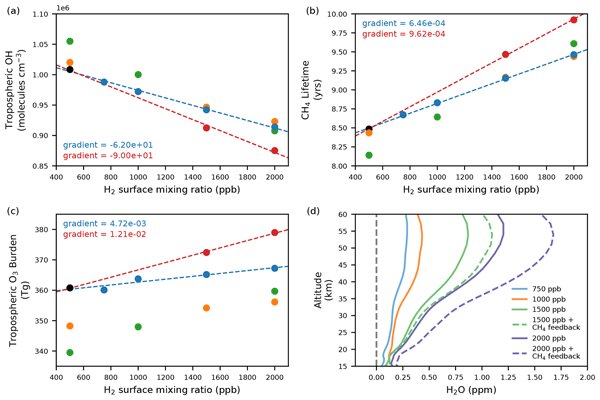
A chemistry–climate model has been used to explore the atmospheric response to changes in emissions of hydrogen and other species associated with a shift from fossil fuel to hydrogen use. Leakage of hydrogen results in indirect global warming, offsetting greenhouse gas emission reductions from reduced fossil fuel use. To maximise the benefit of hydrogen as an energy source, hydrogen leakage and emissions of methane, carbon monoxide and nitrogen oxides should be minimised.
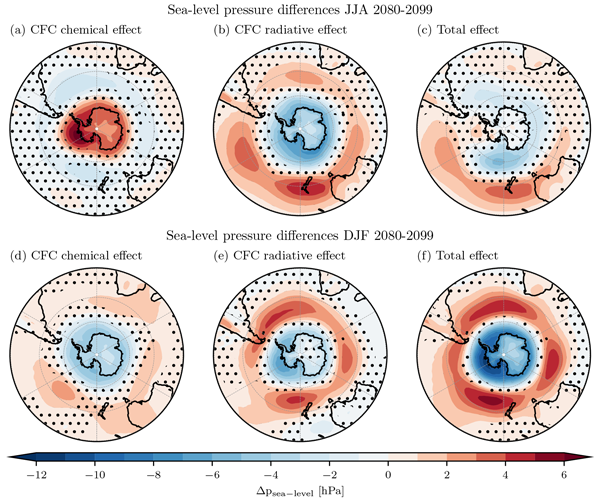
Franziska Zilker, Timofei Sukhodolov, Gabriel Chiodo, Marina Friedel, Tatiana Egorova, Eugene Rozanov, Jan Sedlacek, Svenja Seeber, and Thomas Peter
Atmos. Chem. Phys., 23, 13387–13411, https://doi.org/10.5194/acp-23-13387-2023, https://doi.org/10.5194/acp-23-13387-2023, 2023
Short summary
Short summary
The Montreal Protocol (MP) has successfully reduced the Antarctic ozone hole by banning chlorofluorocarbons (CFCs) that destroy the ozone layer. Moreover, CFCs are strong greenhouse gases (GHGs) that would have strengthened global warming. In this study, we investigate the surface weather and climate in a world without the MP at the end of the 21st century, disentangling ozone-mediated and GHG impacts of CFCs. Overall, we avoided 1.7 K global surface warming and a poleward shift in storm tracks.
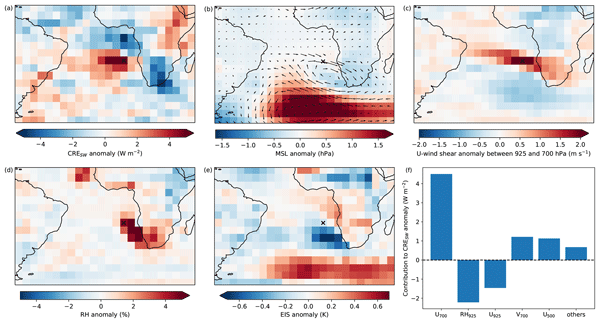
Hendrik Andersen, Jan Cermak, Alyson Douglas, Timothy A. Myers, Peer Nowack, Philip Stier, Casey J. Wall, and Sarah Wilson Kemsley
Atmos. Chem. Phys., 23, 10775–10794, https://doi.org/10.5194/acp-23-10775-2023, https://doi.org/10.5194/acp-23-10775-2023, 2023
Short summary
Short summary
This study uses an observation-based cloud-controlling factor framework to study near-global sensitivities of cloud radiative effects to a large number of meteorological and aerosol controls. We present near-global sensitivity patterns to selected thermodynamic, dynamic, and aerosol factors and discuss the physical mechanisms underlying the derived sensitivities. Our study hopes to guide future analyses aimed at constraining cloud feedbacks and aerosol–cloud interactions.
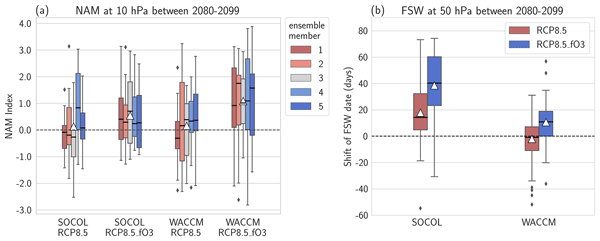
Gabriel Chiodo, Marina Friedel, Svenja Seeber, Daniela Domeisen, Andrea Stenke, Timofei Sukhodolov, and Franziska Zilker
Atmos. Chem. Phys., 23, 10451–10472, https://doi.org/10.5194/acp-23-10451-2023, https://doi.org/10.5194/acp-23-10451-2023, 2023
Short summary
Short summary
Stratospheric ozone protects the biosphere from harmful UV radiation. Anthropogenic activity has led to a reduction in the ozone layer in the recent past, but thanks to the implementation of the Montreal Protocol, the ozone layer is projected to recover. In this study, we show that projected future changes in Arctic ozone abundances during springtime will influence stratospheric climate and thereby actively modulate large-scale circulation changes in the Northern Hemisphere.
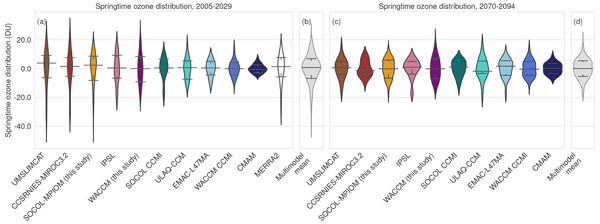
Marina Friedel, Gabriel Chiodo, Timofei Sukhodolov, James Keeble, Thomas Peter, Svenja Seeber, Andrea Stenke, Hideharu Akiyoshi, Eugene Rozanov, David Plummer, Patrick Jöckel, Guang Zeng, Olaf Morgenstern, and Béatrice Josse
Atmos. Chem. Phys., 23, 10235–10254, https://doi.org/10.5194/acp-23-10235-2023, https://doi.org/10.5194/acp-23-10235-2023, 2023
Short summary
Short summary
Previously, it has been suggested that springtime Arctic ozone depletion might worsen in the coming decades due to climate change, which might counteract the effect of reduced ozone-depleting substances. Here, we show with different chemistry–climate models that springtime Arctic ozone depletion will likely decrease in the future. Further, we explain why models show a large spread in the projected development of Arctic ozone depletion and use the model spread to constrain future projections.
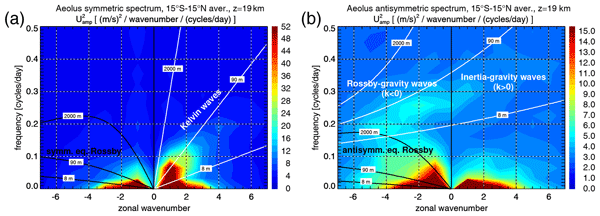
Manfred Ern, Mohamadou A. Diallo, Dina Khordakova, Isabell Krisch, Peter Preusse, Oliver Reitebuch, Jörn Ungermann, and Martin Riese
Atmos. Chem. Phys., 23, 9549–9583, https://doi.org/10.5194/acp-23-9549-2023, https://doi.org/10.5194/acp-23-9549-2023, 2023
Short summary
Short summary
Quasi-biennial oscillation (QBO) of the stratospheric tropical winds is an important mode of climate variability but is not well reproduced in free-running climate models. We use the novel global wind observations by the Aeolus satellite and radiosondes to show that the QBO is captured well in three modern reanalyses (ERA-5, JRA-55, and MERRA-2). Good agreement is also found also between Aeolus and reanalyses for large-scale tropical wave modes in the upper troposphere and lower stratosphere.
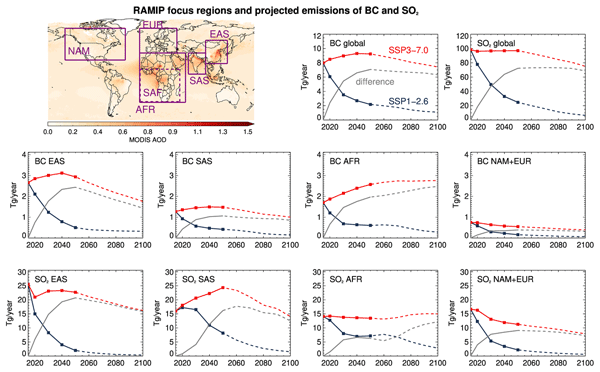
Laura J. Wilcox, Robert J. Allen, Bjørn H. Samset, Massimo A. Bollasina, Paul T. Griffiths, James Keeble, Marianne T. Lund, Risto Makkonen, Joonas Merikanto, Declan O'Donnell, David J. Paynter, Geeta G. Persad, Steven T. Rumbold, Toshihiko Takemura, Kostas Tsigaridis, Sabine Undorf, and Daniel M. Westervelt
Geosci. Model Dev., 16, 4451–4479, https://doi.org/10.5194/gmd-16-4451-2023, https://doi.org/10.5194/gmd-16-4451-2023, 2023
Short summary
Short summary
Changes in anthropogenic aerosol emissions have strongly contributed to global and regional climate change. However, the size of these regional impacts and the way they arise are still uncertain. With large changes in aerosol emissions a possibility over the next few decades, it is important to better quantify the potential role of aerosol in future regional climate change. The Regional Aerosol Model Intercomparison Project will deliver experiments designed to facilitate this.

Maria Rosa Russo, Brian John Kerridge, Nathan Luke Abraham, James Keeble, Barry Graham Latter, Richard Siddans, James Weber, Paul Thomas Griffiths, John Adrian Pyle, and Alexander Thomas Archibald
Atmos. Chem. Phys., 23, 6169–6196, https://doi.org/10.5194/acp-23-6169-2023, https://doi.org/10.5194/acp-23-6169-2023, 2023
Short summary
Short summary
Tropospheric ozone is an important component of the Earth system as it can affect both climate and air quality. In this work we use observed tropospheric ozone derived from satellite observations and compare it to tropospheric ozone from model simulations. Our aim is to investigate recent changes (2005–2018) in tropospheric ozone in the North Atlantic region and to understand what factors are driving such changes.
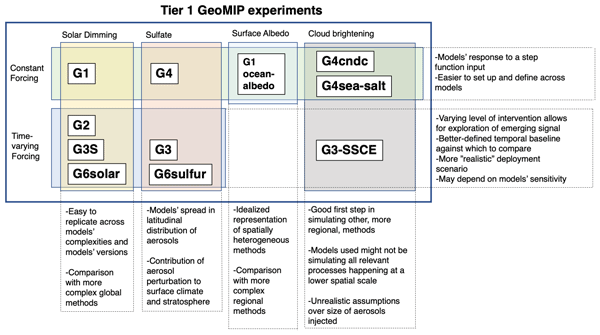
Daniele Visioni, Ben Kravitz, Alan Robock, Simone Tilmes, Jim Haywood, Olivier Boucher, Mark Lawrence, Peter Irvine, Ulrike Niemeier, Lili Xia, Gabriel Chiodo, Chris Lennard, Shingo Watanabe, John C. Moore, and Helene Muri
Atmos. Chem. Phys., 23, 5149–5176, https://doi.org/10.5194/acp-23-5149-2023, https://doi.org/10.5194/acp-23-5149-2023, 2023
Short summary
Short summary
Geoengineering indicates methods aiming to reduce the temperature of the planet by means of reflecting back a part of the incoming radiation before it reaches the surface or allowing more of the planetary radiation to escape into space. It aims to produce modelling experiments that are easy to reproduce and compare with different climate models, in order to understand the potential impacts of these techniques. Here we assess its past successes and failures and talk about its future.

Tatiana Egorova, Jan Sedlacek, Timofei Sukhodolov, Arseniy Karagodin-Doyennel, Franziska Zilker, and Eugene Rozanov
Atmos. Chem. Phys., 23, 5135–5147, https://doi.org/10.5194/acp-23-5135-2023, https://doi.org/10.5194/acp-23-5135-2023, 2023
Short summary
Short summary
This paper describes the climate and atmosphere benefits of the Montreal Protocol, simulated with the state-of-the-art Earth system model SOCOLv4.0. We have added to and confirmed the previous studies by showing that without the Montreal Protocol by the end of the 21st century there would be a dramatic reduction in the ozone layer as well as substantial perturbation of the essential climate variables in the troposphere caused by the warming from increasing ozone-depleting substances.
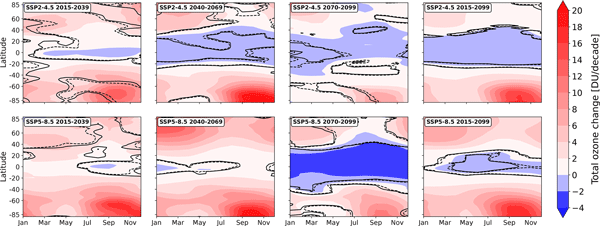
Arseniy Karagodin-Doyennel, Eugene Rozanov, Timofei Sukhodolov, Tatiana Egorova, Jan Sedlacek, and Thomas Peter
Atmos. Chem. Phys., 23, 4801–4817, https://doi.org/10.5194/acp-23-4801-2023, https://doi.org/10.5194/acp-23-4801-2023, 2023
Short summary
Short summary
The future ozone evolution in SOCOLv4 simulations under SSP2-4.5 and SSP5-8.5 scenarios has been assessed for the period 2015–2099 and subperiods using the DLM approach. The SOCOLv4 projects a decline in tropospheric ozone in the 2030s in SSP2-4.5 and in the 2060s in SSP5-8.5. The stratospheric ozone increase is ~3 times higher in SSP5-8.5, confirming the important role of GHGs in ozone evolution. We also showed that tropospheric ozone strongly impacts the total column in the tropics.
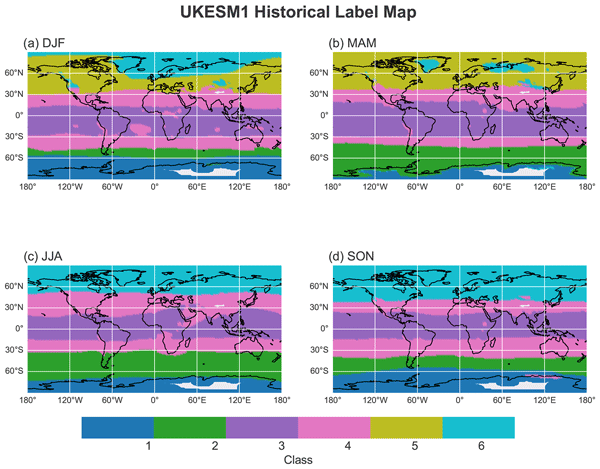
Fouzia Fahrin, Daniel C. Jones, Yan Wu, James Keeble, and Alexander T. Archibald
Atmos. Chem. Phys., 23, 3609–3627, https://doi.org/10.5194/acp-23-3609-2023, https://doi.org/10.5194/acp-23-3609-2023, 2023
Short summary
Short summary
We use a machine learning technique called Gaussian mixture modeling (GMM) to classify vertical ozone profiles into groups based on how the ozone concentration changes with pressure. Even though the GMM algorithm was not provided with spatial information, the classes are geographically coherent. We also detect signatures of tropical broadening in UKESM1 future climate scenarios. GMM may be useful for understanding ozone structures in modeled and observed datasets.
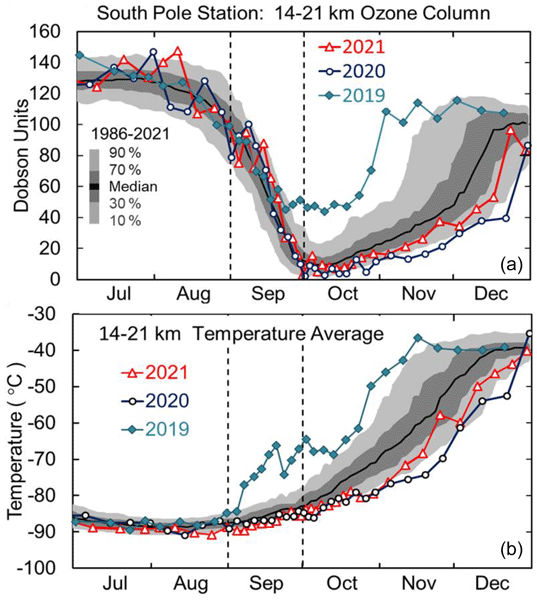
Bryan J. Johnson, Patrick Cullis, John Booth, Irina Petropavlovskikh, Glen McConville, Birgit Hassler, Gary A. Morris, Chance Sterling, and Samuel Oltmans
Atmos. Chem. Phys., 23, 3133–3146, https://doi.org/10.5194/acp-23-3133-2023, https://doi.org/10.5194/acp-23-3133-2023, 2023
Short summary
Short summary
In 1986, soon after the discovery of the Antarctic ozone hole, NOAA began year-round ozonesonde observations at South Pole Station to measure vertical profiles of ozone and temperature from the surface to 35 km. Balloon-borne ozonesondes launched at this unique site allow for tracking all phases of the yearly springtime ozone hole beginning in late winter and after sunrise, when rapid ozone depletion begins over the South Pole throughout the month of September.
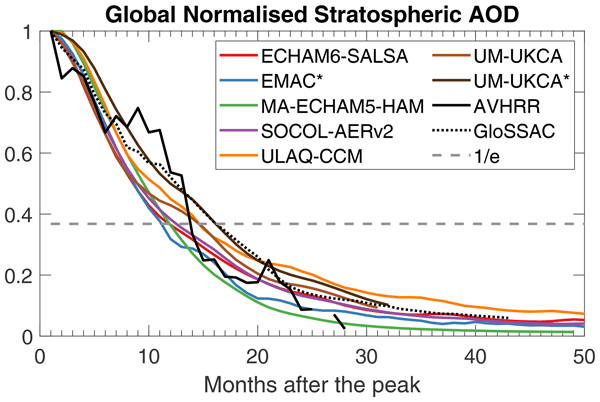
Ilaria Quaglia, Claudia Timmreck, Ulrike Niemeier, Daniele Visioni, Giovanni Pitari, Christina Brodowsky, Christoph Brühl, Sandip S. Dhomse, Henning Franke, Anton Laakso, Graham W. Mann, Eugene Rozanov, and Timofei Sukhodolov
Atmos. Chem. Phys., 23, 921–948, https://doi.org/10.5194/acp-23-921-2023, https://doi.org/10.5194/acp-23-921-2023, 2023
Short summary
Short summary
The last very large explosive volcanic eruption we have measurements for is the eruption of Mt. Pinatubo in 1991. It is therefore often used as a benchmark for climate models' ability to reproduce these kinds of events. Here, we compare available measurements with the results from multiple experiments conducted with climate models interactively simulating the aerosol cloud formation.
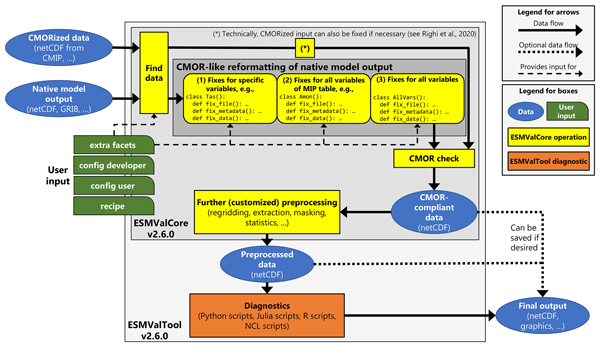
Manuel Schlund, Birgit Hassler, Axel Lauer, Bouwe Andela, Patrick Jöckel, Rémi Kazeroni, Saskia Loosveldt Tomas, Brian Medeiros, Valeriu Predoi, Stéphane Sénési, Jérôme Servonnat, Tobias Stacke, Javier Vegas-Regidor, Klaus Zimmermann, and Veronika Eyring
Geosci. Model Dev., 16, 315–333, https://doi.org/10.5194/gmd-16-315-2023, https://doi.org/10.5194/gmd-16-315-2023, 2023
Short summary
Short summary
The Earth System Model Evaluation Tool (ESMValTool) is a community diagnostics and performance metrics tool for routine evaluation of Earth system models. Originally, ESMValTool was designed to process reformatted output provided by large model intercomparison projects like the Coupled Model Intercomparison Project (CMIP). Here, we describe a new extension of ESMValTool that allows for reading and processing native climate model output, i.e., data that have not been reformatted before.

Arseniy Karagodin-Doyennel, Eugene Rozanov, Timofei Sukhodolov, Tatiana Egorova, Jan Sedlacek, William Ball, and Thomas Peter
Atmos. Chem. Phys., 22, 15333–15350, https://doi.org/10.5194/acp-22-15333-2022, https://doi.org/10.5194/acp-22-15333-2022, 2022
Short summary
Short summary
Applying the dynamic linear model, we confirm near-global ozone recovery (55°N–55°S) in the mesosphere, upper and middle stratosphere, and a steady increase in the troposphere. We also show that modern chemistry–climate models (CCMs) like SOCOLv4 may reproduce the observed trend distribution of lower stratospheric ozone, despite exhibiting a lower magnitude and statistical significance. The obtained ozone trend pattern in SOCOLv4 is generally consistent with observations and reanalysis datasets.
Mohamadou A. Diallo, Felix Ploeger, Michaela I. Hegglin, Manfred Ern, Jens-Uwe Grooß, Sergey Khaykin, and Martin Riese
Atmos. Chem. Phys., 22, 14303–14321, https://doi.org/10.5194/acp-22-14303-2022, https://doi.org/10.5194/acp-22-14303-2022, 2022
Short summary
Short summary
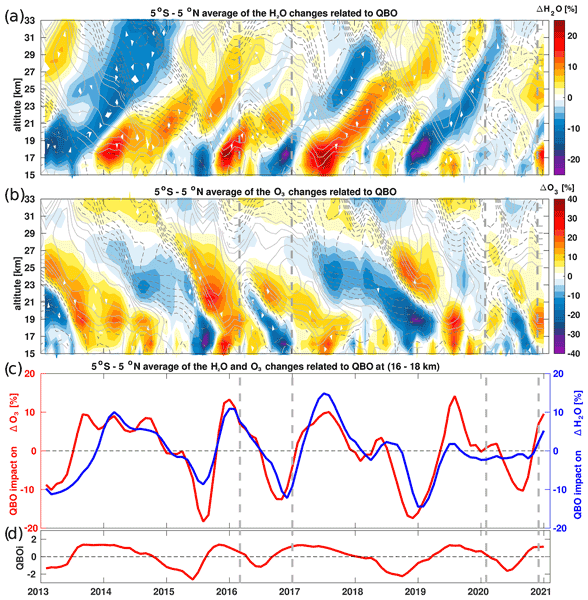
The quasi-biennial oacillation disruption events in both 2016 and 2020 decreased lower-stratospheric water vapour and ozone. Differences in the strength and depth of the anomalous lower-stratospheric circulation and ozone are due to differences in tropical upwelling and cold-point temperature induced by lower-stratospheric planetary and gravity wave breaking. The differences in water vapour are due to higher cold-point temperature in 2020 induced by Australian wildfire.
Marina Friedel, Gabriel Chiodo, Andrea Stenke, Daniela I. V. Domeisen, and Thomas Peter
Atmos. Chem. Phys., 22, 13997–14017, https://doi.org/10.5194/acp-22-13997-2022, https://doi.org/10.5194/acp-22-13997-2022, 2022
Short summary
Short summary
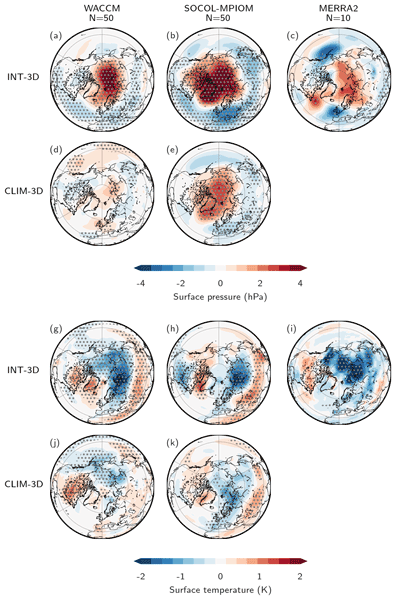
In spring, winds the Arctic stratosphere change direction – an event called final stratospheric warming (FSW). Here, we examine whether the interannual variability in Arctic stratospheric ozone impacts the timing of the FSW. We find that Arctic ozone shifts the FSW to earlier and later dates in years with high and low ozone via the absorption of UV light. The modulation of the FSW by ozone has consequences for surface climate in ozone-rich years, which may result in better seasonal predictions.
Nora Bergner, Marina Friedel, Daniela I. V. Domeisen, Darryn Waugh, and Gabriel Chiodo
Atmos. Chem. Phys., 22, 13915–13934, https://doi.org/10.5194/acp-22-13915-2022, https://doi.org/10.5194/acp-22-13915-2022, 2022
Short summary
Short summary
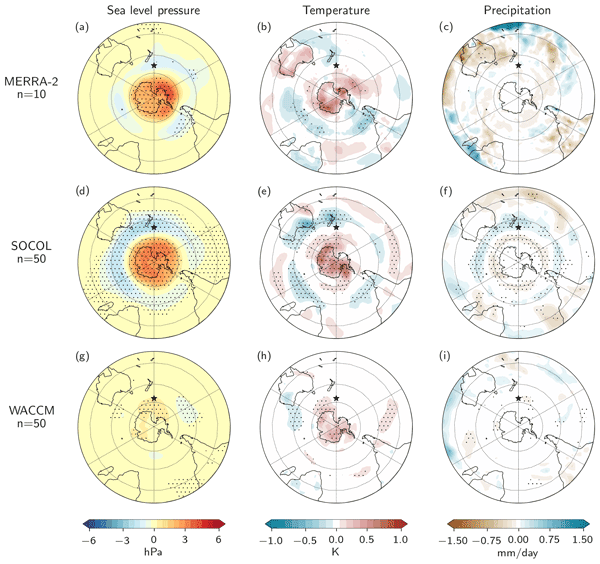
Polar vortex extremes, particularly situations with an unusually weak cyclonic circulation in the stratosphere, can influence the surface climate in the spring–summer time in the Southern Hemisphere. Using chemistry-climate models and observations, we evaluate the robustness of the surface impacts. While models capture the general surface response, they do not show the observed climate patterns in midlatitude regions, which we trace back to biases in the models' circulations.
Flossie Brown, Gerd A. Folberth, Stephen Sitch, Susanne Bauer, Marijn Bauters, Pascal Boeckx, Alexander W. Cheesman, Makoto Deushi, Inês Dos Santos Vieira, Corinne Galy-Lacaux, James Haywood, James Keeble, Lina M. Mercado, Fiona M. O'Connor, Naga Oshima, Kostas Tsigaridis, and Hans Verbeeck
Atmos. Chem. Phys., 22, 12331–12352, https://doi.org/10.5194/acp-22-12331-2022, https://doi.org/10.5194/acp-22-12331-2022, 2022
Short summary
Short summary
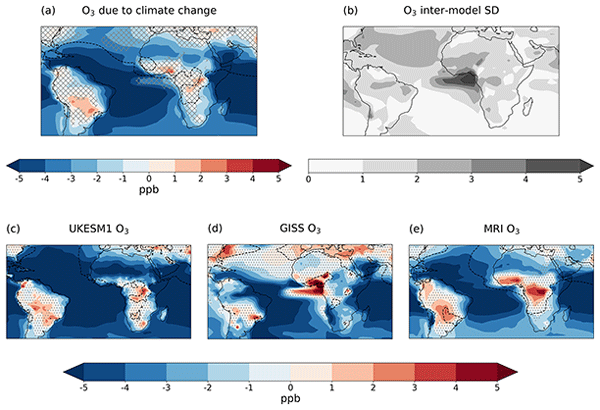
Surface ozone can decrease plant productivity and impair human health. In this study, we evaluate the change in surface ozone due to climate change over South America and Africa using Earth system models. We find that if the climate were to change according to the worst-case scenario used here, models predict that forested areas in biomass burning locations and urban populations will be at increasing risk of ozone exposure, but other areas will experience a climate benefit.
Zachary D. Lawrence, Marta Abalos, Blanca Ayarzagüena, David Barriopedro, Amy H. Butler, Natalia Calvo, Alvaro de la Cámara, Andrew Charlton-Perez, Daniela I. V. Domeisen, Etienne Dunn-Sigouin, Javier García-Serrano, Chaim I. Garfinkel, Neil P. Hindley, Liwei Jia, Martin Jucker, Alexey Y. Karpechko, Hera Kim, Andrea L. Lang, Simon H. Lee, Pu Lin, Marisol Osman, Froila M. Palmeiro, Judith Perlwitz, Inna Polichtchouk, Jadwiga H. Richter, Chen Schwartz, Seok-Woo Son, Irene Erner, Masakazu Taguchi, Nicholas L. Tyrrell, Corwin J. Wright, and Rachel W.-Y. Wu
Weather Clim. Dynam., 3, 977–1001, https://doi.org/10.5194/wcd-3-977-2022, https://doi.org/10.5194/wcd-3-977-2022, 2022
Short summary
Short summary
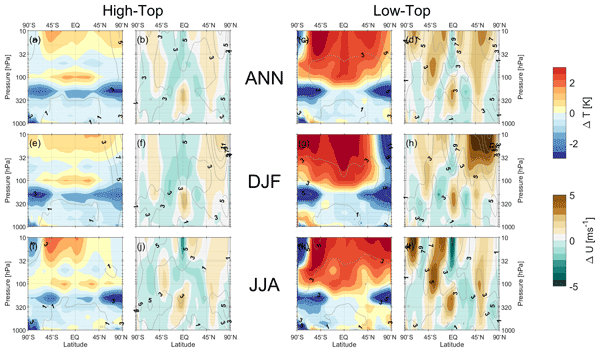
Forecast models that are used to predict weather often struggle to represent the Earth’s stratosphere. This may impact their ability to predict surface weather weeks in advance, on subseasonal-to-seasonal (S2S) timescales. We use data from many S2S forecast systems to characterize and compare the stratospheric biases present in such forecast models. These models have many similar stratospheric biases, but they tend to be worse in systems with low model tops located within the stratosphere.
Xiang Weng, Grant L. Forster, and Peer Nowack
Atmos. Chem. Phys., 22, 8385–8402, https://doi.org/10.5194/acp-22-8385-2022, https://doi.org/10.5194/acp-22-8385-2022, 2022
Short summary
Short summary
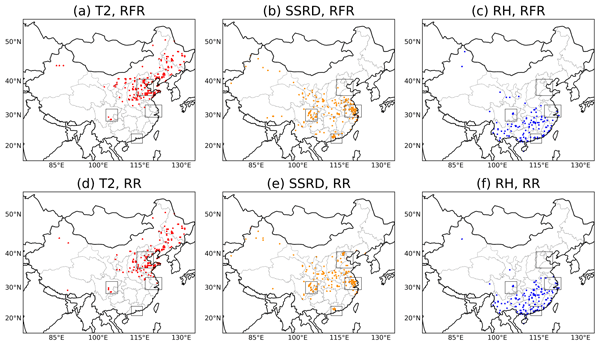
We use machine learning to quantify the meteorological drivers behind surface ozone variations in China between 2015 and 2019. Our novel approaches show improved performance when compared to previous analysis methods. We highlight that nonlinearity in driver relationships and the impacts of large-scale meteorological phenomena are key to understanding ozone pollution. Moreover, we find that almost half of the observed ozone trend between 2015 and 2019 might have been driven by meteorology.
Irina Mironova, Miriam Sinnhuber, Galina Bazilevskaya, Mark Clilverd, Bernd Funke, Vladimir Makhmutov, Eugene Rozanov, Michelle L. Santee, Timofei Sukhodolov, and Thomas Ulich
Atmos. Chem. Phys., 22, 6703–6716, https://doi.org/10.5194/acp-22-6703-2022, https://doi.org/10.5194/acp-22-6703-2022, 2022
Short summary
Short summary
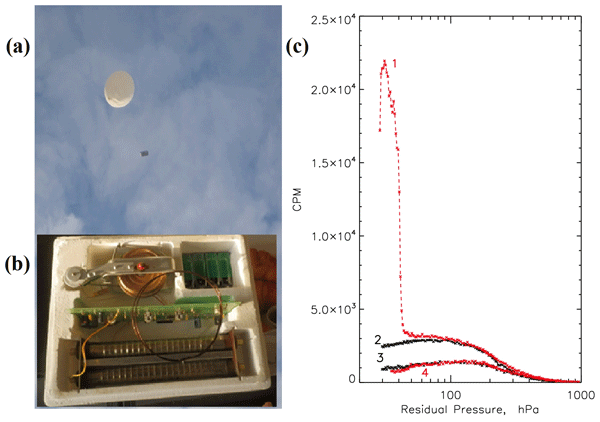
From balloon measurements, we detected unprecedented, extremely powerful, electron precipitation over the middle latitudes. The robustness of this event is confirmed by satellite observations of electron fluxes and chemical composition, as well as by ground-based observations of the radio signal propagation. The applied chemistry–climate model shows the almost complete destruction of ozone in the mesosphere over the region where high-energy electrons were observed.
Debra K. Weisenstein, Daniele Visioni, Henning Franke, Ulrike Niemeier, Sandro Vattioni, Gabriel Chiodo, Thomas Peter, and David W. Keith
Atmos. Chem. Phys., 22, 2955–2973, https://doi.org/10.5194/acp-22-2955-2022, https://doi.org/10.5194/acp-22-2955-2022, 2022
Short summary
Short summary
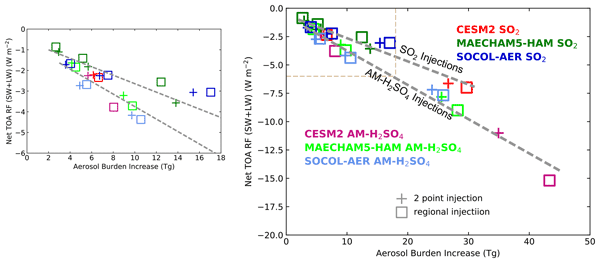
This paper explores a potential method of geoengineering that could be used to slow the rate of change of climate over decadal scales. We use three climate models to explore how injections of accumulation-mode sulfuric acid aerosol change the large-scale stratospheric particle size distribution and radiative forcing response for the chosen scenarios. Radiative forcing per unit sulfur injected and relative to the change in aerosol burden is larger with particulate than with SO2 injections.
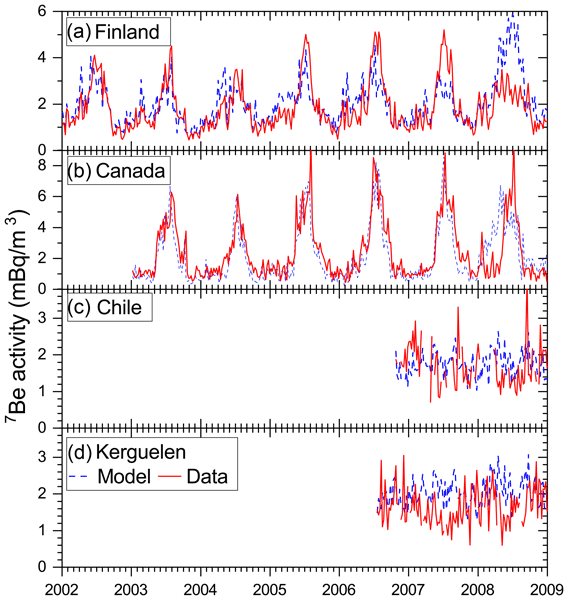
Kseniia Golubenko, Eugene Rozanov, Gennady Kovaltsov, Ari-Pekka Leppänen, Timofei Sukhodolov, and Ilya Usoskin
Geosci. Model Dev., 14, 7605–7620, https://doi.org/10.5194/gmd-14-7605-2021, https://doi.org/10.5194/gmd-14-7605-2021, 2021
Short summary
Short summary
A new full 3-D time-dependent model, based on SOCOL-AERv2, of beryllium atmospheric production, transport, and deposition has been developed and validated using directly measured data. The model is recommended to be used in studies related to, e.g., atmospheric dynamical patterns, extreme solar particle storms, long-term solar activity reconstruction from cosmogenic proxy data, and solar–terrestrial relations.
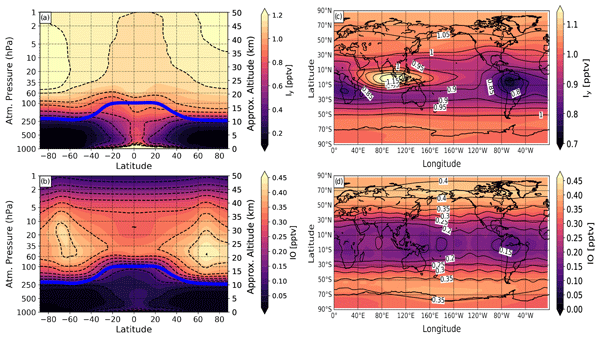
Arseniy Karagodin-Doyennel, Eugene Rozanov, Timofei Sukhodolov, Tatiana Egorova, Alfonso Saiz-Lopez, Carlos A. Cuevas, Rafael P. Fernandez, Tomás Sherwen, Rainer Volkamer, Theodore K. Koenig, Tanguy Giroud, and Thomas Peter
Geosci. Model Dev., 14, 6623–6645, https://doi.org/10.5194/gmd-14-6623-2021, https://doi.org/10.5194/gmd-14-6623-2021, 2021
Short summary
Short summary
Here, we present the iodine chemistry module in the SOCOL-AERv2 model. The obtained iodine distribution demonstrated a good agreement when validated against other simulations and available observations. We also estimated the iodine influence on ozone in the case of present-day iodine emissions, the sensitivity of ozone to doubled iodine emissions, and when considering only organic or inorganic iodine sources. The new model can be used as a tool for further studies of iodine effects on ozone.
Cited articles
Abalos, M., Orbe, C., Kinnison, D. E., Plummer, D., Oman, L. D., Jöckel, P., Morgenstern, O., Garcia, R. R., Zeng, G., Stone, K. A., and Dameris, M.: Future trends in stratosphere-to-troposphere transport in CCMI models, Atmos. Chem. Phys., 20, 6883–6901, https://doi.org/10.5194/acp-20-6883-2020, 2020. a
Abalos, M., Calvo, N., Benito-Barca, S., Garny, H., Hardiman, S. C., Lin, P., Andrews, M. B., Butchart, N., Garcia, R., Orbe, C., Saint-Martin, D., Watanabe, S., and Yoshida, K.: The Brewer–Dobson circulation in CMIP6, Atmos. Chem. Phys., 21, 13571–13591, https://doi.org/10.5194/acp-21-13571-2021, 2021. a, b, c
Andrews, D. G., Holton, J. R., and Leovy, C. B. (Eds.): Chapter 3 – Basic Dynamics, in: Middle Atmosphere Dynamics, International Geophysics, vol. 40, Academic Press, 113–149, https://doi.org/10.1016/B978-0-12-058575-5.50008-6, 1987. a
Andrews, T., Gregory, J. M., Webb, M. J., and Taylor, K. E.: Forcing, feedbacks and climate sensitivity in CMIP5 coupled atmosphere-ocean climate models, Geophysical Research Letters, 39, https://doi.org/10.1029/2012GL051607, 2012. a
Ayarzagüena, B., Charlton-Perez, A. J., Butler, A. H., Hitchcock, P., Simpson, I. R., Polvani, L. M., Butchart, N., Gerber, E. P., Gray, L., Hassler, B., Lin, P., Lott, F., Manzini, E., Mizuta, R., Orbe, C., Osprey, S., Saint-Martin, D., Sigmond, M., Taguchi, M., Volodin, E. M., and Watanabe, S.: Uncertainty in the Response of Sudden Stratospheric Warmings and Stratosphere-Troposphere Coupling to Quadrupled CO2 Concentrations in CMIP6 Models, Journal of Geophysical Research: Atmospheres, 125, e2019JD032345, https://doi.org/10.1029/2019JD032345, 2020. a, b
Banerjee, A., Archibald, A. T., Maycock, A. C., Telford, P., Abraham, N. L., Yang, X., Braesicke, P., and Pyle, J. A.: Lightning NOx, a key chemistry–climate interaction: impacts of future climate change and consequences for tropospheric oxidising capacity, Atmos. Chem. Phys., 14, 9871–9881, https://doi.org/10.5194/acp-14-9871-2014, 2014. a
Banerjee, A., Chiodo, G., Previdi, M., Ponater, M., Conley, A. J., and Polvani, L. M.: Stratospheric water vapor: an important climate feedback, Climate Dynamics, 53, 1697–1710, https://doi.org/10.1007/s00382-019-04721-4, 2019. a
Barnett, J. J., Houghton, J. T., and Pyle, J. A.: The temperature dependence of the ozone concentration near the stratopause, Quarterly Journal of the Royal Meteorological Society, 101, 245–257, https://doi.org/10.1002/qj.49710142808, 1975. a
Brasseur, G. and Solomon, S.: Aeronomy of the Middle Atmosphere: Chemistry and Physics of the Stratosphere and Mesosphere, https://doi.org/10.1007/1-4020-3824-0, 2005. a, b
Butchart, N.: The Brewer–Dobson circulation, Reviews of Geophysics, 52, 157–184, https://doi.org/10.1002/2013RG000448, 2014. a, b
Butler, A. H., Daniel, J. S., Portmann, R. W., Ravishankara, A. R., Young, P. J., Fahey, D. W., and Rosenlof, K. H.: Diverse policy implications for future ozone and surface UV in a changing climate, Environmental Research Letters, 11, https://doi.org/10.1088/1748-9326/11/6/064017, 2016. a
Charlton, A. J. and Polvani, L. M.: A New Look at Stratospheric Sudden Warmings. Part I: Climatology and Modeling Benchmarks, Journal of Climate, 20, 449–469, https://doi.org/10.1175/JCLI3996.1, 2007. a
Checa-Garcia, R., Hegglin, M. I., Kinnison, D., Plummer, D. A., and Shine, K. P.: Historical Tropospheric and Stratospheric Ozone Radiative Forcing Using the CMIP6 Database, Geophysical Research Letters, 45, 3264–3273, https://doi.org/10.1002/2017GL076770, 2018. a
Chiodo, G. and Polvani, L. M.: Reduction of climate sensitivity to solar forcing due to stratospheric ozone feedback, Journal of Climate, 29, 4651–4663, https://doi.org/10.1175/JCLI-D-15-0721.1, 2016. a, b
Chiodo, G. and Polvani, L. M.: Reduced Southern Hemispheric circulation response to quadrupled CO2 due to stratospheric ozone feedback, Geophysical Research Letters, 44, 465–474, https://doi.org/10.1002/2016GL071011, 2017. a, b
Chiodo, G. and Polvani, L. M.: New Insights on the Radiative Impacts of Ozone-Depleting Substances, Geophysical Research Letters, 49, e2021GL096783, https://doi.org/10.1029/2021GL096783, 2022. a
Chiodo, G., Friedel, M., Seeber, S., Domeisen, D., Stenke, A., Sukhodolov, T., and Zilker, F.: The influence of future changes in springtime Arctic ozone on stratospheric and surface climate, Atmos. Chem. Phys., 23, 10451–10472, https://doi.org/10.5194/acp-23-10451-2023, 2023. a
Chrysanthou, A., Maycock, A. C., and Chipperfield, M. P.: Decomposing the response of the stratospheric Brewer–Dobson circulation to an abrupt quadrupling in CO2, Weather Clim. Dynam., 1, 155–174, https://doi.org/10.5194/wcd-1-155-2020, 2020. a, b
Conley, A. J., Lamarque, J.-F., Vitt, F., Collins, W. D., and Kiehl, J.: PORT, a CESM tool for the diagnosis of radiative forcing, Geosci. Model Dev., 6, 469–476, https://doi.org/10.5194/gmd-6-469-2013, 2013. a
Dütsch, H., Bader, J., and Staehelin, J.: Separation of Solar Effects on Ozone from Anthropogenically Produced Trends, Journal of Geomagnetism and Geoelectricity, 43, 657–665, https://doi.org/10.5636/jgg.43.Supplement2_657, 1991. a
Egorova, T., Rozanov, E., Zubov, V. A., and Karol, I.: Model for investigating ozone trends (MEZON), Izvestiya – Atmospheric and Ocean Physics, 39, 277–292, 2003. a
Eyring, V., Bony, S., Meehl, G. A., Senior, C. A., Stevens, B., Stouffer, R. J., and Taylor, K. E.: Overview of the Coupled Model Intercomparison Project Phase 6 (CMIP6) experimental design and organization, Geosci. Model Dev., 9, 1937–1958, https://doi.org/10.5194/gmd-9-1937-2016, 2016. a, b
Fels, S. B., Mahlman, J. D., Schwarzkopf, M. D., and Sinclair, R. W.: Stratospheric Sensitivity to Perturbations in Ozone and Carbon Dioxide: Radiative and Dynamical Response, Journal of Atmospheric Sciences, 37, 2265–2297, https://doi.org/10.1175/1520-0469(1980)037<2265:SSTPIO>2.0.CO;2, 1980. a
Flynn, C. M. and Mauritsen, T.: On the climate sensitivity and historical warming evolution in recent coupled model ensembles, Atmos. Chem. Phys., 20, 7829–7842, https://doi.org/10.5194/acp-20-7829-2020, 2020. a
Friedel, M., Chiodo, G., Stenke, A., Domeisen, D. I. V., Fueglistaler, S., Anet, J. G., and Peter, T.: Springtime arctic ozone depletion forces northern hemisphere climate anomalies, Nature Geoscience, 15, 541–547, https://doi.org/10.1038/s41561-022-00974-7, 2022. a
Gerber, E. P. and Manzini, E.: The Dynamics and Variability Model Intercomparison Project (DynVarMIP) for CMIP6: assessing the stratosphere–troposphere system, Geosci. Model Dev., 9, 3413–3425, https://doi.org/10.5194/gmd-9-3413-2016, 2016. a
Gregory, J. and Webb, M.: Tropospheric Adjustment Induces a Cloud Component in CO2 Forcing, Journal of Climate, 21, 58–71, https://doi.org/10.1175/2007JCLI1834.1, 2008. a
Haase, S. and Matthes, K.: The importance of interactive chemistry for stratosphere–troposphere coupling, Atmos. Chem. Phys., 19, 3417–3432, https://doi.org/10.5194/acp-19-3417-2019, 2019. a
Haigh, J. D. and Pyle, J. A.: Ozone perturbation experiments in a two-dimensional circulation model, Quarterly Journal of the Royal Meteorological Society, 108, 551–574, https://doi.org/10.1002/qj.49710845705, 1982. a, b
Hardiman, S. C., Andrews, M. B., Andrews, T., Bushell, A. C., Dunstone, N. J., Dyson, H., Jones, G. S., Knight, J. R., Neininger, E., O'Connor, F. M., Ridley, J. K., Ringer, M. A., Scaife, A. A., Senior, C. A., and Wood, R. A.: The Impact of Prescribed Ozone in Climate Projections Run With HadGEM3-GC3.1, Journal of Advances in Modeling Earth Systems, 11, 3443–3453, https://doi.org/10.1029/2019MS001714, 2019. a, b, c
Hegglin, M. I. and Shepherd, T. G.: Large climate-induced changes in ultraviolet index and stratosphere-to-troposphere ozone flux, Nature Geoscience, 2, 687–691, https://doi.org/10.1038/ngeo604, 2009. a
Hufnagl, L., Eichinger, R., Garny, H., Birner, T., Kuchař, A., Jöckel, P., and Graf, P.: Stratospheric Ozone Changes Damp the CO2-Induced Acceleration of the Brewer–Dobson Circulation, Journal of Climate, 36, 3305–3320, https://doi.org/10.1175/JCLI-D-22-0512.1, 2023. a
Iglesias-Suarez, F., Kinnison, D. E., Rap, A., Maycock, A. C., Wild, O., and Young, P. J.: Key drivers of ozone change and its radiative forcing over the 21st century, Atmos. Chem. Phys., 18, 6121–6139, https://doi.org/10.5194/acp-18-6121-2018, 2018. a
Jonsson, A. I., de Grandpré, J., Fomichev, V. I., McConnell, J. C., and Beagley, S. R.: Doubled CO2-induced cooling in the middle atmosphere: Photochemical analysis of the ozone radiative feedback, Journal of Geophysical Research D: Atmospheres, 109, 1–18, https://doi.org/10.1029/2004JD005093, 2004. a, b
Jucks, K. W. and Salawitch, R. J.: Future Changes in Upper Stratospheric Ozone, in: Atmospheric Science Across the Stratopause, Geophysical Monograph Series, 241–255, https://doi.org/10.1029/GM123p0241, 2000. a
Jungclaus, J. H., Fischer, N., Haak, H., Lohmann, K., Marotzke, J., Matei, D., Mikolajewicz, U., Notz, D., and von Storch, J. S.: Characteristics of the ocean simulations in the Max Planck Institute Ocean Model (MPIOM) the ocean component of the MPI-Earth system model, Journal of Advances in Modeling Earth Systems, 5, 422–446, https://doi.org/10.1002/jame.20023, 2013. a
Karpechko, A. Y., Afargan-Gerstman, H., Butler, A. H., Domeisen, D. I. V., Kretschmer, M., Lawrence, Z., Manzini, E., Sigmond, M., Simpson, I. R., and Wu, Z.: Northern Hemisphere Stratosphere-Troposphere Circulation Change in CMIP6 Models: 1. Inter-Model Spread and Scenario Sensitivity, Journal of Geophysical Research: Atmospheres, 127, e2022JD036992, https://doi.org/10.1029/2022JD036992, 2022. a, b
Karpechko, A. Y., Wu, Z., Simpson, I. R., Kretschmer, M., Afargan-Gerstman, H., Butler, A. H., Domeisen, D. I. V., Garny, H., Lawrence, Z., Manzini, E., and Sigmond, M.: Northern Hemisphere Stratosphere-Troposphere Circulation Change in CMIP6 Models: 2. Mechanisms and Sources of the Spread, Journal of Geophysical Research: Atmospheres, 129, e2024JD040823, https://doi.org/10.1029/2024JD040823, 2024. a
Keeble, J., Bednarz, E. M., Banerjee, A., Abraham, N. L., Harris, N. R. P., Maycock, A. C., and Pyle, J. A.: Diagnosing the radiative and chemical contributions to future changes in tropical column ozone with the UM-UKCA chemistry–climate model, Atmos. Chem. Phys., 17, 13801–13818, https://doi.org/10.5194/acp-17-13801-2017, 2017. a
Keeble, J., Hassler, B., Banerjee, A., Checa-Garcia, R., Chiodo, G., Davis, S., Eyring, V., Griffiths, P. T., Morgenstern, O., Nowack, P., Zeng, G., Zhang, J., Bodeker, G., Burrows, S., Cameron-Smith, P., Cugnet, D., Danek, C., Deushi, M., Horowitz, L. W., Kubin, A., Li, L., Lohmann, G., Michou, M., Mills, M. J., Nabat, P., Olivié, D., Park, S., Seland, Ø., Stoll, J., Wieners, K.-H., and Wu, T.: Evaluating stratospheric ozone and water vapour changes in CMIP6 models from 1850 to 2100, Atmos. Chem. Phys., 21, 5015–5061, https://doi.org/10.5194/acp-21-5015-2021, 2021. a, b, c, d
Kelley, M., Schmidt, G. A., Nazarenko, L. S., Bauer, S. E., Ruedy, R., Russell, G. L., Ackerman, A. S., Aleinov, I., Bauer, M., Bleck, R., Canuto, V., Cesana, G., Cheng, Y., Clune, T. L., Cook, B. I., Cruz, C. A., Del Genio, A. D., Elsaesser, G. S., Faluvegi, G., Kiang, N. Y., Kim, D., Lacis, A. A., Leboissetier, A., LeGrande, A. N., Lo, K. K., Marshall, J., Matthews, E. E., McDermid, S., Mezuman, K., Miller, R. L., Murray, L. T., Oinas, V., Orbe, C., García-Pando, C. P., Perlwitz, J. P., Puma, M. J., Rind, D., Romanou, A., Shindell, D. T., Sun, S., Tausnev, N., Tsigaridis, K., Tselioudis, G., Weng, E., Wu, J., and Yao, M.-S.: GISS-E2.1: Configurations and Climatology, Journal of Advances in Modeling Earth Systems, 12, e2019MS002025, https://doi.org/10.1029/2019MS002025, 2020. a, b
Kult-Herdin, J., Sukhodolov, T., Chiodo, G., Checa-Garcia, R., and Rieder, H. E.: The impact of different CO2 and ODS levels on the mean state and variability of the springtime Arctic stratosphere, Environmental Research Letters, 18, https://doi.org/10.1088/1748-9326/acb0e6, 2023. a, b
Li, F. and Newman, P. A.: Prescribing stratospheric chemistry overestimates southern hemisphere climate change during austral spring in response to quadrupled CO2, Climate Dynamics, 61, 1105–1122, https://doi.org/10.1007/s00382-022-06588-4, 2023. a
London, J.: Radiative energy sources and sink in the stratosphere and mesosphere, in: Proceeding of the NATO Advanced Study Institute on Atmospheric Ozone: Its Variation and Human Influences, 1980. a
Marsh, D. R., Mills, M. J., Kinnison, D. E., Lamarque, J.-F., Calvo, N., and Polvani, L. M.: Climate Change from 1850 to 2005 Simulated in CESM1(WACCM), Journal of Climate, 26, 7372–7391, https://doi.org/10.1175/JCLI-D-12-00558.1, 2013. a
Marsh, D. R., Lamarque, J. F., Conley, A. J., and Polvani, L. M.: Stratospheric ozone chemistry feedbacks are not critical for the determination of climate sensitivity in CESM1(WACCM), Geophysical Research Letters, 43, 3928–3934, https://doi.org/10.1002/2016GL068344, 2016. a, b, c, d
Match, A. and Gerber, E. P.: Tropospheric Expansion Under Global Warming Reduces Tropical Lower Stratospheric Ozone, Geophysical Research Letters, 49, https://doi.org/10.1029/2022GL099463, 2022. a
Mauritsen, T., Bader, J., Becker, T., Behrens, J., Bittner, M., Brokopf, R., Brovkin, V., Claussen, M., Crueger, T., Esch, M., Fast, I., Fiedler, S., Fläschner, D., Gayler, V., Giorgetta, M., Goll, D. S., Haak, H., Hagemann, S., Hedemann, C., Hohenegger, C., Ilyina, T., Jahns, T., Jimenéz-de-la Cuesta, D., Jungclaus, J., Kleinen, T., Kloster, S., Kracher, D., Kinne, S., Kleberg, D., Lasslop, G., Kornblueh, L., Marotzke, J., Matei, D., Meraner, K., Mikolajewicz, U., Modali, K., Möbis, B., Müller, W. A., Nabel, J. E., Nam, C. C., Notz, D., Nyawira, S. S., Paulsen, H., Peters, K., Pincus, R., Pohlmann, H., Pongratz, J., Popp, M., Raddatz, T. J., Rast, S., Redler, R., Reick, C. H., Rohrschneider, T., Schemann, V., Schmidt, H., Schnur, R., Schulzweida, U., Six, K. D., Stein, L., Stemmler, I., Stevens, B., von Storch, J. S., Tian, F., Voigt, A., Vrese, P., Wieners, K. H., Wilkenskjeld, S., Winkler, A., and Roeckner, E.: Developments in the MPI-M Earth System Model version 1.2 (MPI-ESM1.2) and Its Response to Increasing CO2, Journal of Advances in Modeling Earth Systems, 11, 998–1038, https://doi.org/10.1029/2018MS001400, 2019. a
McLandress, C., Shepherd, T. G., Scinocca, J. F., Plummer, D. A., Sigmond, M., Jonsson, A. I., and Reader, M. C.: Separating the Dynamical Effects of Climate Change and Ozone Depletion. Part II: Southern Hemisphere Troposphere, Journal of Climate, 24, 1850–1868, https://doi.org/10.1175/2010JCLI3958.1, 2011. a
Meul, S., Langematz, U., Oberländer, S., Garny, H., and Jöckel, P.: Chemical contribution to future tropical ozone change in the lower stratosphere, Atmos. Chem. Phys., 14, 2959–2971, https://doi.org/10.5194/acp-14-2959-2014, 2014. a
Meul, S., Oberländer-Hayn, S., Abalichin, J., and Langematz, U.: Nonlinear response of modelled stratospheric ozone to changes in greenhouse gases and ozone depleting substances in the recent past, Atmos. Chem. Phys., 15, 6897–6911, https://doi.org/10.5194/acp-15-6897-2015, 2015. a
Morgenstern, O.: The Southern Annular Mode in 6th Coupled Model Intercomparison Project Models, Journal of Geophysical Research: Atmospheres, 126, e2020JD034161, https://doi.org/10.1029/2020JD034161, 2021. a
Morgenstern, O., Stone, K. A., Schofield, R., Akiyoshi, H., Yamashita, Y., Kinnison, D. E., Garcia, R. R., Sudo, K., Plummer, D. A., Scinocca, J., Oman, L. D., Manyin, M. E., Zeng, G., Rozanov, E., Stenke, A., Revell, L. E., Pitari, G., Mancini, E., Di Genova, G., Visioni, D., Dhomse, S. S., and Chipperfield, M. P.: Ozone sensitivity to varying greenhouse gases and ozone-depleting substances in CCMI-1 simulations, Atmos. Chem. Phys., 18, 1091–1114, https://doi.org/10.5194/acp-18-1091-2018, 2018. a, b
Morgenstern, O., Kinnison, D. E., Mills, M., Michou, M., Horowitz, L. W., Lin, P., Deushi, M., Yoshida, K., O'Connor, F. M., Tang, Y., Abraham, N. L., Keeble, J., Dennison, F., Rozanov, E., Egorova, T., Sukhodolov, T., and Zeng, G.: Comparison of Arctic and Antarctic Stratospheric Climates in Chemistry Versus No-Chemistry Climate Models, Journal of Geophysical Research: Atmospheres, 127, https://doi.org/10.1029/2022JD037123, 2022. a, b
Muthers, S., Anet, J. G., Stenke, A., Raible, C. C., Rozanov, E., Brönnimann, S., Peter, T., Arfeuille, F. X., Shapiro, A. I., Beer, J., Steinhilber, F., Brugnara, Y., and Schmutz, W.: The coupled atmosphere–chemistry–ocean model SOCOL-MPIOM, Geosci. Model Dev., 7, 2157–2179, https://doi.org/10.5194/gmd-7-2157-2014, 2014. a, b, c, d, e
Muthers, S., Arfeuille, F., Raible, C. C., and Rozanov, E.: The impacts of volcanic aerosol on stratospheric ozone and the Northern Hemisphere polar vortex: separating radiative-dynamical changes from direct effects due to enhanced aerosol heterogeneous chemistry, Atmos. Chem. Phys., 15, 11461–11476, https://doi.org/10.5194/acp-15-11461-2015, 2015. a
Muthers, S., Raible, C. C., Rozanov, E., and Stocker, T. F.: Response of the AMOC to reduced solar radiation – the modulating role of atmospheric chemistry, Earth Syst. Dynam., 7, 877–892, https://doi.org/10.5194/esd-7-877-2016, 2016. a, b, c
Nowack, P., Ceppi, P., Davis, S. M., Chiodo, G., Ball, W., Diallo, M. A., Hassler, B., Jia, Y., Keeble, J., and Joshi, M.: Response of stratospheric water vapour to warming constrained by satellite observations, Nature Geoscience, 16, 577–583, https://doi.org/10.1038/s41561-023-01183-6, 2023. a
Nowack, P. J., Luke Abraham, N., Maycock, A. C., Braesicke, P., Gregory, J. M., Joshi, M. M., Osprey, A., and Pyle, J. A.: A large ozone-circulation feedback and its implications for global warming assessments, Nature Climate Change, 5, 41–45, https://doi.org/10.1038/nclimate2451, 2015. a, b, c, d, e, f, g, h
Nowack, P. J., Braesicke, P., Luke Abraham, N., and Pyle, J. A.: On the role of ozone feedback in the ENSO amplitude response under global warming, Geophysical Research Letters, 44, 3858–3866, https://doi.org/10.1002/2016GL072418, 2017. a, b
Oman, L. D., Plummer, D. A., Waugh, D. W., Austin, J., Scinocca, J. F., Douglass, A. R., Salawitch, R. J., Canty, T., Akiyoshi, H., Bekki, S., Braesicke, P., Butchart, N., Chipperfield, M. P., Cugnet, D., Dhomse, S., Eyring, V., Frith, S., Hardiman, S. C., Kinnison, D. E., Lamarque, J.-F., Mancini, E., Marchand, M., Michou, M., Morgenstern, O., Nakamura, T., Nielsen, J. E., Olivié, D., Pitari, G., Pyle, J., Rozanov, E., Shepherd, T. G., Shibata, K., Stolarski, R. S., Teyssèdre, H., Tian, W., Yamashita, Y., and Ziemke, J. R.: Multimodel assessment of the factors driving stratospheric ozone evolution over the 21st century, Journal of Geophysical Research: Atmospheres, 115, https://doi.org/10.1029/2010JD014362, 2010. a, b, c, d
Orbe, C., Rind, D., Jonas, J., Nazarenko, L., Faluvegi, G., Murray, L. T., Shindell, D. T., Tsigaridis, K., Zhou, T., Kelley, M., and Schmidt, G. A.: GISS Model E2.2: A Climate Model Optimized for the Middle Atmosphere – 2. Validation of Large-Scale Transport and Evaluation of Climate Response, Journal of Geophysical Research: Atmospheres, 125, e2020JD033151, https://doi.org/10.1029/2020JD033151, 2020. a, b
Orbe, C., Rind, D., Waugh, D. W., Jonas, J., Zhang, X., Chiodo, G., Nazarenko, L., and Schmidt, G. A.: Coupled Stratospheric Ozone and Atlantic Meridional Overturning Circulation Feedbacks on the Northern Hemisphere Midlatitude Jet Response to 4×CO2, Journal of Climate, 37, 2897–2917, https://doi.org/10.1175/JCLI-D-23-0119.1, 2024. a, b, c
Ramaswamy, V., Boucher, O., Haigh, J., Hauglustaine, D., Haywood, J., Myhre, G., Nkajima, T., Shi, G. Y., and Solomon, S.: Climate Change 2001: The Scientific Basis, in: Contribution of Working Group I to the Third Assessment Report of the Intergovernmental Panel on Climate Change (IPCC), Cambridge University Press, 350–416, ISBN 0521 01495 6, 2001. a
Revell, L. E., Bodeker, G. E., Huck, P. E., Williamson, B. E., and Rozanov, E.: The sensitivity of stratospheric ozone changes through the 21st century to N2O and CH4, Atmos. Chem. Phys., 12, 11309–11317, https://doi.org/10.5194/acp-12-11309-2012, 2012. a
Revell, L. E., Tummon, F., Stenke, A., Sukhodolov, T., Coulon, A., Rozanov, E., Garny, H., Grewe, V., and Peter, T.: Drivers of the tropospheric ozone budget throughout the 21st century under the medium-high climate scenario RCP 6.0, Atmos. Chem. Phys., 15, 5887–5902, https://doi.org/10.5194/acp-15-5887-2015, 2015. a
Rind, D., Orbe, C., Jonas, J., Nazarenko, L., Zhou, T., Kelley, M., Lacis, A., Shindell, D., Faluvegi, G., Romanou, A., Russell, G., Tausnev, N., Bauer, M., and Schmidt, G.: GISS Model E2.2: A Climate Model Optimized for the Middle Atmosphere–Model Structure, Climatology, Variability, and Climate Sensitivity, Journal of Geophysical Research: Atmospheres, 125, e2019JD032204, https://doi.org/10.1029/2019JD032204, 2020. a
Seinfeld, J. H., Pandis, S. N., and Noone, K. J.: Atmospheric Chemistry and Physics: From Air Pollution to Climate Change, Physics Today, 51, 88–90, 1998. a
Sheng, J.-X., Weisenstein, D. K., Luo, B.-P., Rozanov, E., Stenke, A., Anet, J., Bingemer, H., and Peter, T.: Global atmospheric sulfur budget under volcanically quiescent conditions: Aerosol-chemistry-climate model predictions and validation, Journal of Geophysical Research: Atmospheres, 120, 256–276, https://doi.org/10.1002/2014JD021985, 2015. a
Shepherd, T. G.: Dynamics, stratospheric ozone, and climate change, Atmosphere-Ocean, 46, 117–138, https://doi.org/10.3137/ao.460106, 2008. a, b, c
Sukhodolov, T., Egorova, T., Stenke, A., Ball, W. T., Brodowsky, C., Chiodo, G., Feinberg, A., Friedel, M., Karagodin-Doyennel, A., Peter, T., Sedlacek, J., Vattioni, S., and Rozanov, E.: Atmosphere–ocean–aerosol–chemistry–climate model SOCOLv4.0: description and evaluation, Geosci. Model Dev., 14, 5525–5560, https://doi.org/10.5194/gmd-14-5525-2021, 2021. a
Wang, J., Chiodo, G., Ayarzagüena, B., William, T. B., Diallo, M., Hassler, B., Keeble, J., Nowack, P., Orbe, C., Vattioni, S., and Sukhodolov, T.: Data and script for research paper: Exploring Ozone-climate Interactions in Idealized CMIP6 DECK Experiments [data set], Zenodo, https://doi.org/10.5281/zenodo.15684002, 2025. a
Wang, M. and Fu, Q.: Changes in Stratosphere-Troposphere Exchange of Air Mass and Ozone Concentration in CCMI Models From 1960 to 2099, Journal of Geophysical Research: Atmospheres, 128, e2023JD038487, https://doi.org/10.1029/2023JD038487, 2023. a
Zubov, V., Rozanov, E., Egorova, T., Karol, I., and Schmutz, W.: Role of external factors in the evolution of the ozone layer and stratospheric circulation in 21st century, Atmos. Chem. Phys., 13, 4697–4706, https://doi.org/10.5194/acp-13-4697-2013, 2013. a
Short summary
We analyzed the ozone response under elevated CO2 using the data from CMIP6 DECK experiments. We then examined the relations between ozone response and changes in temperature and circulation to identify the drivers of ozone change. The climate feedback of ozone is investigated through offline calculations and by comparing models with and without interactive chemistry. We find that ozone–climate interactions are important for Earth system models and thus should be considered in future model development.
We analyzed the ozone response under elevated CO2 using the data from CMIP6 DECK experiments. We...


Altmetrics
Final-revised paper
Preprint