
Articles | Volume 26, issue 12
https://doi.org/10.5194/acp-26-8809-2026
© Author(s) 2026. This work is distributed under
the Creative Commons Attribution 4.0 License.
the Creative Commons Attribution 4.0 License.
https://doi.org/10.5194/acp-26-8809-2026
© Author(s) 2026. This work is distributed under
the Creative Commons Attribution 4.0 License.
the Creative Commons Attribution 4.0 License.
Research article
| 
24 Jun 2026
Research article |
| 24 Jun 2026
| 24 Jun 2026
Reassessment of the glyoxal-to-formaldehyde ratio RGF as a proxy for VOC source identification
Simon Bittner
CORRESPONDING AUTHOR

Institute of Environmental Physics (IUP), University of Bremen, Bremen, Germany
Andreas Richter
Institute of Environmental Physics (IUP), University of Bremen, Bremen, Germany
Bianca Zilker
Institute of Environmental Physics (IUP), University of Bremen, Bremen, Germany
Sebastian Donner
Max Planck Institute for Chemistry, Mainz, Germany
Thomas Wagner
Max Planck Institute for Chemistry, Mainz, Germany
Alexandros Panagiotis Poulidis
Institute of Environmental Physics (IUP), University of Bremen, Bremen, Germany
Leonardo Alvarado
German Aerospace Center (DLR), Earth Observation Center (EOC), Wessling, Germany
Mihalis Vrekoussis
Institute of Environmental Physics (IUP), University of Bremen, Bremen, Germany
Center of Marine Environmental Sciences (MARUM), University of Bremen, Bremen, Germany
Climate and Atmosphere Research Center (CARE-C), The Cyprus Institute, Nicosia, Cyprus
Related authors
No articles found.
Nikos Gialesakis, Friedemann Reum, Nikos Daskalakis, Ioanna Evangelou, Aikaterini Bougiatioti, Marios Mermigkas, Maria Gkini, Nikolaos Mihalopoulos, Dimitrios Balis, Konstantinos Eleftheriadis, Mihalis Vrekoussis, and Maria Kanakidou
EGUsphere, https://doi.org/10.5194/egusphere-2026-4307, https://doi.org/10.5194/egusphere-2026-4307, 2026
This preprint is open for discussion and under review for Atmospheric Chemistry and Physics (ACP).
Short summary
Short summary
We use ground-based CO2 measurements from urban background, regional background and high-altitude stations, together with satellite-derived column-averaged CO2 observations, in a regional atmospheric inversion modelling framework to optimize CO2 emissions over Greece. We demonstrate the capability of this framework to improve CO2 emission estimates, while noting that expanded observational coverage would be needed for strong emission constraints, especially near the major CO2 sources.
Alexander Polle, Lukas Grosch, Alexandros Panagiotis Poulidis, Mihalis Vrekoussis, and Thorsten Warneke
EGUsphere, https://doi.org/10.5194/egusphere-2026-5393, https://doi.org/10.5194/egusphere-2026-5393, 2026
This preprint is open for discussion and under review for Atmospheric Measurement Techniques (AMT).
Short summary
Short summary
We estimated horizontal wind from the hover tilt of a DJI Air 3S without adding a wind sensor. Across 50 near-surface sessions, a model trained against a nearby wind sensor had errors of 0.32 metres per second for speed and 7.0 degrees for direction. A calibration-flight method was less accurate overall, but gave similar speed accuracy in the six strongest-wind sessions and required no wind sensor during deployment. Other aircraft, heights, and sustained stronger winds remain to be tested.
Carolina Díaz-Vecino, Jonathan Lemus, Allan Fries, Riccardo Simionato, Simon Thivet, Simona Scollo, Francesco Amadio, Laura Pioli, Alexandros Panagiotis Poulidis, Valentin Freret-Lorgeril, and Costanza Bonadonna
EGUsphere, https://doi.org/10.5194/egusphere-2026-4051, https://doi.org/10.5194/egusphere-2026-4051, 2026
This preprint is open for discussion and under review for Natural Hazards and Earth System Sciences (NHESS).
Short summary
Short summary
Ash fingers can form beneath volcanic clouds and transport volcanic ash differently from individual particles, yet their influence on ash dispersal remains poorly understood. Using field observations, ash samples, and simulations from the 23 July 2024 eruption of Mount Etna, this study shows that particle shape strongly controls ash transport and deposition, highlighting limitations in current volcanic ash forecasting models.
Leonardo M. A. Alvarado, Sora Seo, Adrian Doicu, Andreas Richter, and Diego Loyola
EGUsphere, https://doi.org/10.5194/egusphere-2026-4360, https://doi.org/10.5194/egusphere-2026-4360, 2026
This preprint is open for discussion and under review for Atmospheric Measurement Techniques (AMT).
Short summary
Short summary
Chlorine dioxide reveals the chemistry that destroys ozone in the upper atmosphere, but it is hard to measure from space, especially in the dim light of polar winter. We built a new method to analyse satellite measurements that separates the true signal from instrument noise and gives a trustworthy uncertainty for every observation, without extra corrections. It matches an existing product while being more reliable, supporting operational European monitoring and future missions for other gases.
Santiago Parraguez Cerda, Johann Rasmus Nüß, Nikos Daskalakis, Arjo Segers, Oliver Schneising, Mihalis Vrekoussis, and Maria Kanakidou
EGUsphere, https://doi.org/10.5194/egusphere-2026-3458, https://doi.org/10.5194/egusphere-2026-3458, 2026
Short summary
Short summary
Our study presents a parametric method for adaptive observation weighting in global CH4 emission inversions, using the spatial and temporal distribution of satellite observations. The approach reduces grid-cell weight variability by ∼20 %, improving the balance of observational influence, especially in remote regions, without added computational cost, and easily applicable to multiple datasets. Global 2019 inversions with TMVar yield consistent posterior emissions and good agreement with TCCON.
Robert J. Parker, Michael P. Cartwright, Dan Orr, Lakshmi N. Bharathan, Neil Humpage, Alex J. Webb, Peter Somkuti, Hartmut Boesch, Antonio Di Noia, Hiroshi Suto, Matthias Buschmann, Nicholas M. Deutscher, David W. T. Griffith, Frank Hase, Rigel Kivi, Erin McGee, Isamu Morino, Hirofumi Ohyama, Christof Petri, John Robinson, Coleen M. Roehl, Mahesh Kumar Sha, Kei Shiomi, Kimberly Strong, Ralf Sussmann, Yao Té, Voltaire A. Velazco, Mihalis Vrekoussis, Wei Wang, Thorsten Warneke, Damien Weidmann, Debra Wunch, and Minqiang Zhou
Earth Syst. Sci. Data Discuss., https://doi.org/10.5194/essd-2026-625, https://doi.org/10.5194/essd-2026-625, 2026
Preprint under review for ESSD
Short summary
Short summary
Methane is a powerful greenhouse gas and its concentration in the atmosphere is rising rapidly. We present a new record of atmospheric methane measured from space by the Japanese GOSAT-2 satellite, covering 2019 to 2025. The measurements are processed identically to those from its predecessor GOSAT and checked against ground-based instruments around the world. Together the two satellites provide a continuous 17-year record that helps track where methane comes from and how quickly it is changing.
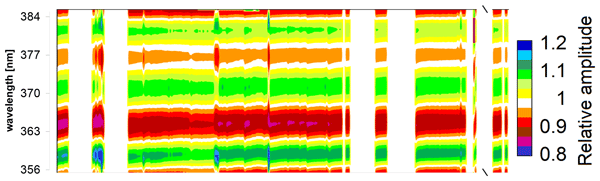
Thomas Wagner, Steffen Beirle, Sebastian Donner, Carl-Fredrik Enell, Myojeong Gu, Bianca Lauster, Ulrich Platt, Janis Pukite, Uwe Raffalski, and Steffen Ziegler
Atmos. Meas. Tech., 19, 4065–4097, https://doi.org/10.5194/amt-19-4065-2026, https://doi.org/10.5194/amt-19-4065-2026, 2026
Short summary
Short summary
The characterisation of spectroscopic properties of Differential Optical Absorption Spectroscopy (DOAS) instruments is important for accurate trace gas retrievals. In this study, we evaluate and extend existing methods for the determination of such properties using high-resolution solar spectra. These methods can be applied to routine observations in the field. Our results and developed techniques are especially important for trend analyses from long-term measurements.
Erna Frins, Thomas Wagner, Nicolás Casaballe, Sebastian Donner, and Steffen Ziegler
EGUsphere, https://doi.org/10.5194/egusphere-2026-2556, https://doi.org/10.5194/egusphere-2026-2556, 2026
This preprint is open for discussion and under review for Atmospheric Measurement Techniques (AMT).
Short summary
Short summary
We use a hyperspectral camera to show that the absorptions of the oxygen dimer can be well determined from the measured spectra. The retrieved oxygen dimer images together with calibrated radiances are used to determine atmospheric profiles of the aerosol extinction and cloud properties. We also exploit the advantage of the 2D imaging capabilities: the unambiguous distinction between clear and cloudy parts within the recorded image.
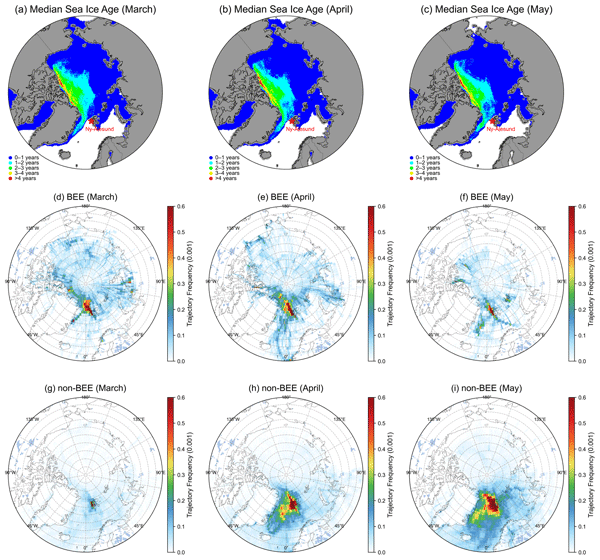
Qidi Li, Yuhan Luo, Xin Yang, Bianca Zilker, Andreas Richter, Ke Dou, Haijin Zhou, Kai Zhan, Fuqi Si, and Wenqing Liu
Atmos. Chem. Phys., 26, 6165–6196, https://doi.org/10.5194/acp-26-6165-2026, https://doi.org/10.5194/acp-26-6165-2026, 2026
Short summary
Short summary
We investigated why reactive bromine increases in the Arctic atmosphere during spring. Using observations in Ny-Ålesund and modeling. We found that BrO increases are strongly linked to airborne particles and bromine emissions from snow over sea ice. Both snow over first-year and multi-year sea ice contribute comparably. These processes are enhanced by strong winds and drive depletion of surface ozone and mercury.
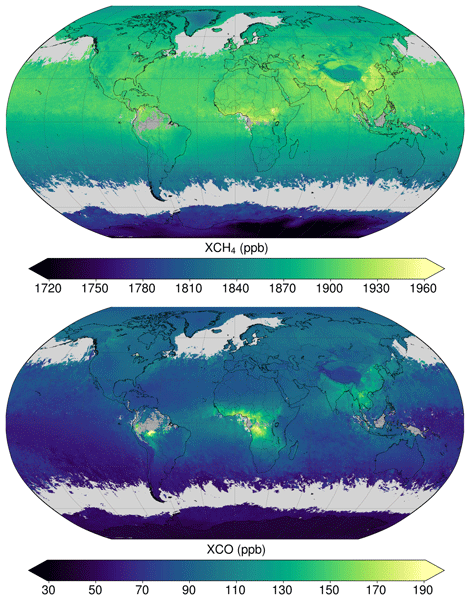
Oliver Schneising, Heinrich Bovensmann, Michael Buchwitz, Matthias Buschmann, Nicholas M. Deutscher, David W. T. Griffith, Jonas Hachmeister, Frank Hase, Laura T. Iraci, Rigel Kivi, Isamu Morino, Hirofumi Ohyama, Christof Petri, Maximilian Reuter, John Robinson, Coleen Roehl, Mahesh Kumar Sha, Kei Shiomi, Kimberly Strong, Ralf Sussmann, Yao Té, Voltaire A. Velazco, Mihalis Vrekoussis, Wei Wang, Thorsten Warneke, Damien Weidmann, Debra Wunch, Minqiang Zhou, and Hartmut Bösch
Atmos. Meas. Tech., 19, 2407–2435, https://doi.org/10.5194/amt-19-2407-2026, https://doi.org/10.5194/amt-19-2407-2026, 2026
Short summary
Short summary
We present an improved version of the TROPOMI/WFMD (TROPOspheric Monitoring Instrument/Weighting Function Modified Differential) algorithm for the simultaneous retrieval of atmospheric methane and carbon monoxide from satellite observations. The updated data product combines higher data yield with better precision and accuracy, expanding its suitability for a wider range of scientific applications. These substantial advances are mainly due to refined quality filtering, enabling more reliable identification of cloudy scenes and mitigating specific aerosol-related issues.
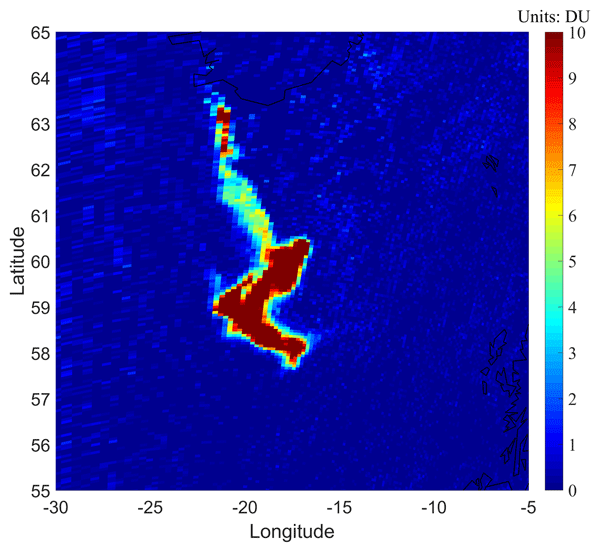
Huanhuan Yan, Andreas Richter, Xingying Zhang, Anja Schönhardt, Thomas Visarius, Qian Wang, Lu Zhang, Yichen Li, Chao Yu, and Weihe Wang
Atmos. Meas. Tech., 19, 2279–2311, https://doi.org/10.5194/amt-19-2279-2026, https://doi.org/10.5194/amt-19-2279-2026, 2026
Short summary
Short summary
The Ozone Monitoring Suite (OMS) launched in August 2023 is a new Chinese hyperspectral UV-VIS (Ultraviolet-Visible) instrument. This study used the OMS measurements and Differential Optical Absorption Spectroscopy (DOAS) inversion to for the first time retrieve global SO2 columns from OMS. The results show that the OMS SO2 retrievals exhibit good stability over clean oceanic regions, successfully capture volcanic SO2 plumes, and effectively detect the elevated SO2 columns from anthropogenic emissions.
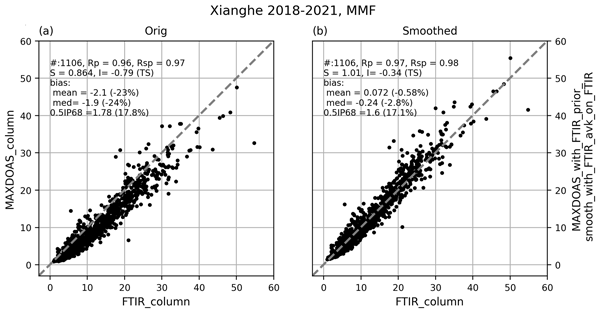
Gaia Pinardi, Martina M. Friedrich, Corinne Vigouroux, Bavo Langerock, Isabelle De Smedt, Caroline Fayt, Christian Hermans, Steffen Beirle, Thomas Wagner, Minqiang Zhou, Ting Wang, Pucai Wang, Martine De Mazière, and Michel Van Roozendael
Atmos. Meas. Tech., 19, 1259–1291, https://doi.org/10.5194/amt-19-1259-2026, https://doi.org/10.5194/amt-19-1259-2026, 2026
Short summary
Short summary
We evaluate ground-based remote-sensing measurements of formaldehyde from three techniques at a suburban site in China. A systematic −20 % bias in Multi-AXis Differential Optical Absorption Spectroscopy compared to direct-sun ultraviolet and infrared data is linked to limited sensitivity above a few kilometers and simplified vertical profiles assumptions. Using model-based priors and accounting for vertical sensitivity removes these differences, improving consistency for satellite validation.
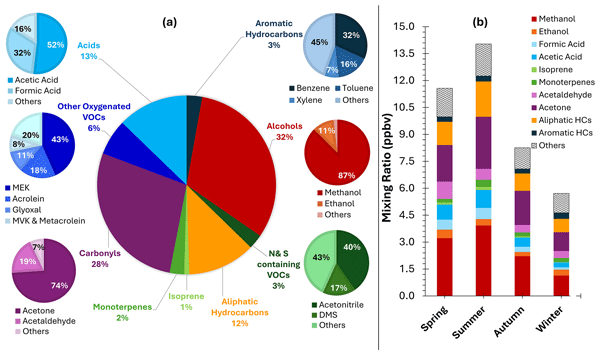
Anchal Garg, Maximilien Desservettaz, Aliki Christodoulou, Theodoros Christoudias, Vijay Punjaji Kanawade, Chrysanthos Savvides, Mihalis Vrekoussis, Shahid Naqui, Tuija Jokinen, Joseph Byron, Jonathan Williams, Nikos Mihalopoulos, Eleni Liakakou, Jean Sciare, and Efstratios Bourtsoukidis
Atmos. Chem. Phys., 26, 2597–2622, https://doi.org/10.5194/acp-26-2597-2026, https://doi.org/10.5194/acp-26-2597-2026, 2026
Short summary
Short summary
This study reports multi-year (2022–2024) measurements of 76 volatile organic compounds (VOCs) at a rural site in Cyprus. Oxygenated VOCs were the most abundant and showed strong daytime increases due to sunlight-driven chemistry. Air-mass analysis showed that transport from Middle East strongly influenced aromatic VOC levels. Climate–chemistry modeling underestimated most VOCs, highlighting gaps in current emission and chemical processes.
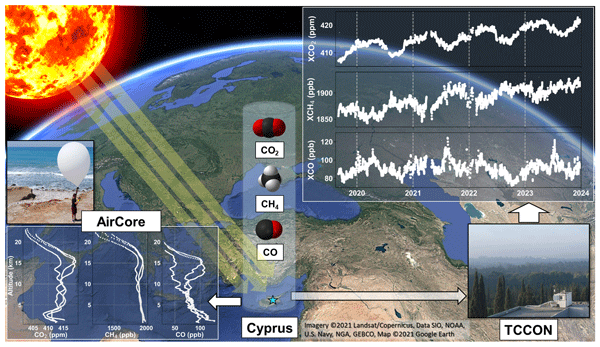
Constantina Rousogenous, Christof Petri, Pierre-Yves Quéhé, Thomas Laemmel, Joshua L. Laughner, Maximilien Desservettaz, Michael Pikridas, Michel Ramonet, Efstratios Bourtsoukidis, Matthias Buschmann, Justus Notholt, Thorsten Warneke, Jean-Daniel Paris, Jean Sciare, and Mihalis Vrekoussis
Atmos. Meas. Tech., 19, 565–581, https://doi.org/10.5194/amt-19-565-2026, https://doi.org/10.5194/amt-19-565-2026, 2026
Short summary
Short summary
The Eastern Mediterranean and Middle East is a greenhouse gas emission hotspot but lacks atmospheric monitoring. Our study introduces the first Total Carbon Column Observing Network site in this region, in Cyprus, providing high-precision columnar measurement of key greenhouse gases. This new dataset enhances global climate monitoring efforts, supports the validation of satellites, will help assess regional emission trends, filling a critical observational gap in this climate-sensitive region.
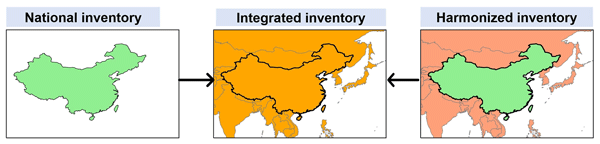
Yijuan Zhang, Guy Brasseur, Maria Kanakidou, Claire Granier, Nikos Daskalakis, Alexandros Panagiotis Poulidis, Kun Qu, and Mihalis Vrekoussis
Geosci. Model Dev., 19, 217–237, https://doi.org/10.5194/gmd-19-217-2026, https://doi.org/10.5194/gmd-19-217-2026, 2026
Short summary
Short summary
A new inventory of anthropogenic emissions, the China INtegrated Emission Inventory (CINEI), was developed in this study to better represent emission sectors, chemical speciation and spatiotemporal variations in China. Compared to simulations driven by global inventories, CINEI demonstrated better numerical modeling performance in ozone and its precursors (nitrogen dioxide and carbon monoxide). This study provides valuable insights for designing ozone mitigation strategies.
Kun Qu, Xuesong Wang, Yu Yan, Xipeng Jin, Ling-Yan He, Xiao-Feng Huang, Xuhui Cai, Jin Shen, Zimu Peng, Teng Xiao, Mihalis Vrekoussis, Maria Kanakidou, Guy P. Brasseur, Nikos Daskalakis, Limin Zeng, and Yuanhang Zhang
Atmos. Chem. Phys., 25, 16983–17007, https://doi.org/10.5194/acp-25-16983-2025, https://doi.org/10.5194/acp-25-16983-2025, 2025
Short summary
Short summary
Persistent cold-season PM2.5 pollution in a South China region during 2015–2017 was studied to assess the roles of drastic meteorological and emission changes. We found that meteorological variations, induced by a transition from El Niño to La Niña, were the main cause of persistent pollution, as stronger northerly winds enhanced pollutant transport into the region. In contrast, the effect of rapid emission reductions was limited. Recommendations for air quality improvement were also proposed.
Stefanie Falk, Luca Reißig, Bianca Zilker, Andreas Richter, and Björn-Martin Sinnhuber
Atmos. Chem. Phys., 25, 15653–15682, https://doi.org/10.5194/acp-25-15653-2025, https://doi.org/10.5194/acp-25-15653-2025, 2025
Short summary
Short summary
Ozone depletion events (ODEs) and bromine explosions in the Arctic were studied for 2019/20. Our model underestimated boundary layer height and showed warm biases, affecting ODE simulation. Updates improved coastal ozone agreement but failed to capture strong ODEs. Bromine monoxide (BrO) was overestimated at the surface yet underestimated in columns. Long-term data show declining strong ODEs since 2008, suggesting additional climate-driven factors beyond sea ice age.
Andrew Gerald Barr, Jochen Landgraf, Mari Martinez-Velarte, Mihalis Vrekoussis, Ralf Sussmann, Isamu Morino, Kimberly Strong, Minqiang Zhou, Voltaire A. Velazco, Hirofumi Ohyama, Thorsten Warneke, Frank Hase, and Tobias Borsdorff
Atmos. Meas. Tech., 18, 6093–6123, https://doi.org/10.5194/amt-18-6093-2025, https://doi.org/10.5194/amt-18-6093-2025, 2025
Short summary
Short summary
The Greenhouse Gases Observing Satellite-2 (GOSAT-2) is a satellite dedicated to measuring concentrations of greenhouse gases from space. Since its launch, the increase of CH4 and CO2 concentrations in the atmosphere is clear. The datasets obtained from GOSAT-2 are used in the Copernicus atmospheric services to monitor the climate, in light of the Paris Agreement. Here we present robust datasets of these gases from GOSAT-2, including a novel machine learning approach to data quality filtering.
Miriam Latsch, Andreas Richter, John P. Burrows, and Hartmut Bösch
Atmos. Meas. Tech., 18, 4373–4395, https://doi.org/10.5194/amt-18-4373-2025, https://doi.org/10.5194/amt-18-4373-2025, 2025
Short summary
Short summary
This study presents our advanced methods to qualitatively detect ship-related nitrogen dioxide (NO2) signals in TROPOMI satellite data. By applying filtering techniques, we identify numerous global shipping routes, including previously undetected ones, as well as emissions from offshore platforms. Additionally, we compare the filtered satellite data with high-pass-filtered CAMS global model data to estimate the differences between observed and modeled NO2 emissions.
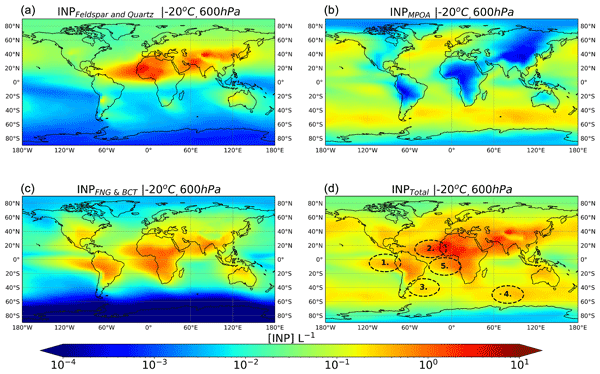
Marios Chatziparaschos, Stelios Myriokefalitakis, Nikos Kalivitis, Nikos Daskalakis, Athanasios Nenes, María Gonçalves Ageitos, Montserrat Costa-Surós, Carlos Pérez García-Pando, Mihalis Vrekoussis, and Maria Kanakidou
Atmos. Chem. Phys., 25, 9085–9111, https://doi.org/10.5194/acp-25-9085-2025, https://doi.org/10.5194/acp-25-9085-2025, 2025
Short summary
Short summary
We show distinct seasonal and geographical patterns in the contributions of mineral dust, marine aerosol, and terrestrial biological particles to ice-nucleating particle (INP) concentrations that lead to atmospheric ice formation, a major source of uncertainty in climate projections. Bioaerosols are the major source of INPs at high temperatures, while mineral dust influences the global INP population at lower temperatures. These particles can satisfactorily reproduce INPs in a climate model.
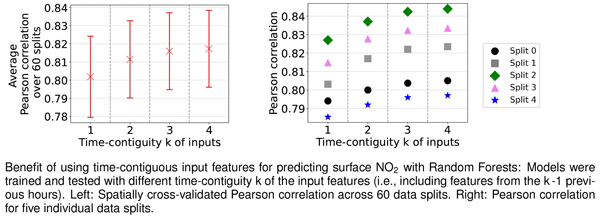
Janek Gödeke, Andreas Richter, Kezia Lange, Peter Maaß, Hyunkee Hong, Hanlim Lee, and Junsung Park
Atmos. Meas. Tech., 18, 3747–3779, https://doi.org/10.5194/amt-18-3747-2025, https://doi.org/10.5194/amt-18-3747-2025, 2025
Short summary
Short summary
The Korean Geostationary Environmental Monitoring Spectrometer (GEMS) monitors trace gases over Asia, e.g., NO2. GEMS provides hourly data, improving the time resolution compared to the daily overpasses by other satellites. For the prediction of hourly surface NO2 over South Korea from GEMS observations and meteorological data, this study shows that machine learning models benefit from this higher time resolution. This is achieved by using observations from previous hours as additional inputs.
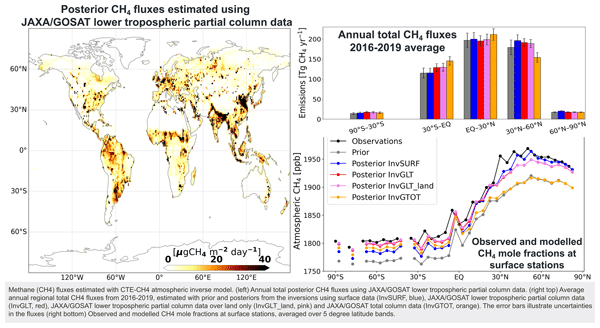
Aki Tsuruta, Akihiko Kuze, Kei Shiomi, Fumie Kataoka, Nobuhiro Kikuchi, Tuula Aalto, Leif Backman, Ella Kivimäki, Maria K. Tenkanen, Kathryn McKain, Omaira E. García, Frank Hase, Rigel Kivi, Isamu Morino, Hirofumi Ohyama, David F. Pollard, Mahesh K. Sha, Kimberly Strong, Ralf Sussmann, Yao Te, Voltaire A. Velazco, Mihalis Vrekoussis, Thorsten Warneke, Minqiang Zhou, and Hiroshi Suto
Atmos. Chem. Phys., 25, 7829–7862, https://doi.org/10.5194/acp-25-7829-2025, https://doi.org/10.5194/acp-25-7829-2025, 2025
Short summary
Short summary
Satellite data bring invaluable information about greenhouse gas emissions globally. We found that a new type of data from the Greenhouse Gas Observing Satellite (GOSAT), which contains information about methane in the lowest layer of Earth's atmosphere, could provide reliable estimates of recent methane emissions when combined with atmospheric modelling. Therefore, the use of such data is encouraged to improve emission quantification methods and advance our understanding of methane cycles.
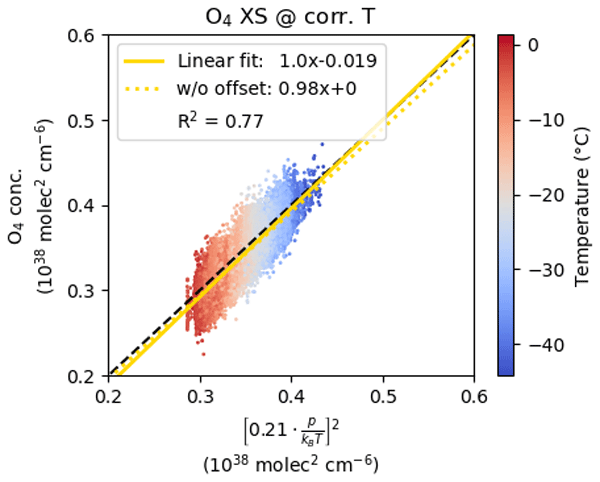
Bianca Lauster, Udo Frieß, Jan-Marcus Nasse, Ulrich Platt, and Thomas Wagner
Atmos. Meas. Tech., 18, 3393–3405, https://doi.org/10.5194/amt-18-3393-2025, https://doi.org/10.5194/amt-18-3393-2025, 2025
Short summary
Short summary
Remote sensing measurements of scattered sunlight use the atmospheric absorption of O2–O2 (or O4) to derive cloud and aerosol properties. However, inconsistencies between measurements and radiative transfer simulations were found recently, and, so far, there has been no consensus on how to deal with these appropriately. In this study, long-term long-path differential optical absorption spectroscopy (LP-DOAS) observations were analysed and very good agreement with laboratory measurements was found.

Johann Rasmus Nüß, Nikos Daskalakis, Fabian Günther Piwowarczyk, Angelos Gkouvousis, Oliver Schneising, Michael Buchwitz, Maria Kanakidou, Maarten C. Krol, and Mihalis Vrekoussis
Geosci. Model Dev., 18, 2861–2890, https://doi.org/10.5194/gmd-18-2861-2025, https://doi.org/10.5194/gmd-18-2861-2025, 2025
Short summary
Short summary
We estimate carbon monoxide emissions through inverse modeling, an approach where measurements of tracers in the atmosphere are fed to a model to calculate backwards in time (inverse) where the tracers came from. We introduce measurements from a new satellite instrument and show that, in most places globally, these on their own sufficiently constrain the emissions. This alleviates the need for additional datasets, which could shorten the delay for future carbon monoxide source estimates.
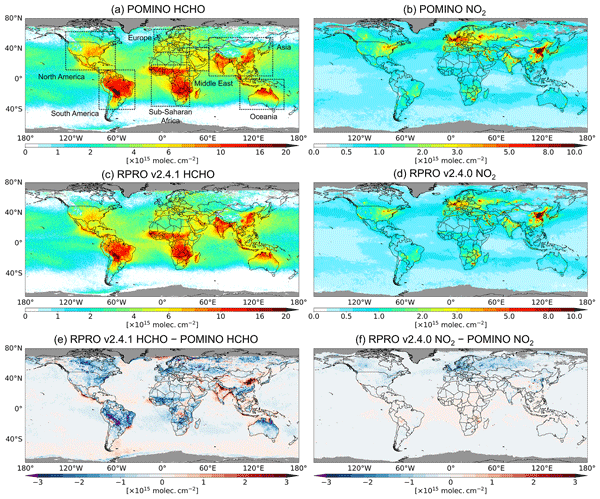
Yuhang Zhang, Huan Yu, Isabelle De Smedt, Jintai Lin, Nicolas Theys, Michel Van Roozendael, Gaia Pinardi, Steven Compernolle, Ruijing Ni, Fangxuan Ren, Sijie Wang, Lulu Chen, Jos Van Geffen, Mengyao Liu, Alexander M. Cede, Martin Tiefengraber, Alexis Merlaud, Martina M. Friedrich, Andreas Richter, Ankie Piters, Vinod Kumar, Vinayak Sinha, Thomas Wagner, Yongjoo Choi, Hisahiro Takashima, Yugo Kanaya, Hitoshi Irie, Robert Spurr, Wenfu Sun, and Lorenzo Fabris
Atmos. Meas. Tech., 18, 1561–1589, https://doi.org/10.5194/amt-18-1561-2025, https://doi.org/10.5194/amt-18-1561-2025, 2025
Short summary
Short summary
We developed an advanced algorithm for global retrieval of TROPOspheric Monitoring Instrument (TROPOMI) HCHO and NO2 vertical column densities with much improved consistency. Sensitivity tests demonstrate the complexity and nonlinear interactions of auxiliary parameters in the air mass factor calculation. An improved agreement is found with measurements from a global ground-based instrument network. The scientific retrieval provides a useful source of information for studies combining HCHO and NO2.
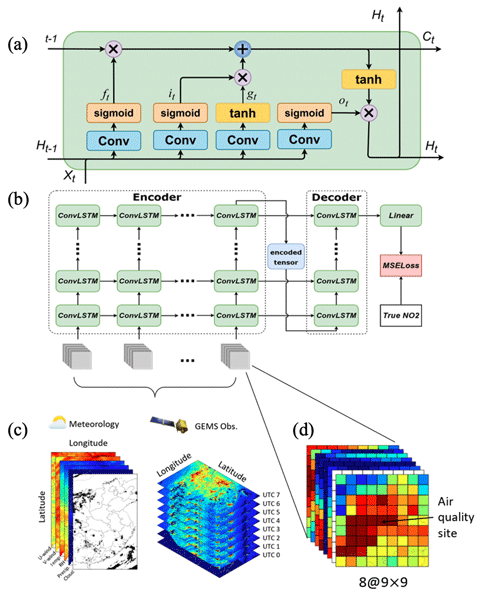
Chengxin Zhang, Xinhan Niu, Hongyu Wu, Zhipeng Ding, Ka Lok Chan, Jhoon Kim, Thomas Wagner, and Cheng Liu
Atmos. Chem. Phys., 25, 759–770, https://doi.org/10.5194/acp-25-759-2025, https://doi.org/10.5194/acp-25-759-2025, 2025
Short summary
Short summary
This research utilizes hourly air pollution observations from the world’s first geostationary satellite to develop a spatiotemporal neural network model for full-coverage surface NO2 pollution prediction over the next 24 hours, achieving outstanding forecasting performance and efficacy. These results highlight the profound impact of geostationary satellite observations in advancing air quality forecasting models, thereby contributing to future models for health exposure to air pollution.
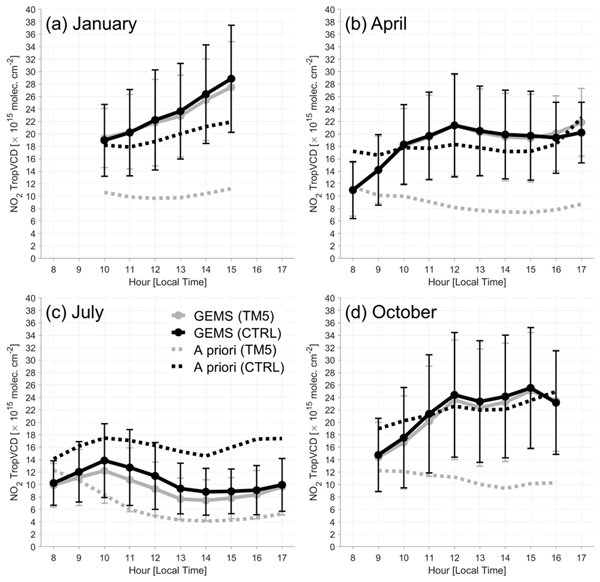
Seunghwan Seo, Si-Wan Kim, Kyoung-Min Kim, Andreas Richter, Kezia Lange, John P. Burrows, Junsung Park, Hyunkee Hong, Hanlim Lee, Ukkyo Jeong, Jung-Hun Woo, and Jhoon Kim
Atmos. Meas. Tech., 18, 115–128, https://doi.org/10.5194/amt-18-115-2025, https://doi.org/10.5194/amt-18-115-2025, 2025
Short summary
Short summary
Over the Seoul metropolitan area, tropospheric NO2 vertical column densities from the Geostationary Environment Monitoring Spectrometer show distinct seasonal features. Also, varying a priori data have substantial impacts on the observed NO2 columns. The a priori data from different chemical transport models resulted in differences of up to −18.3 %. Notably, diurnal patterns of observed NO2 columns are similar for all datasets, although their a priori data exhibit contrasting diurnal patterns.
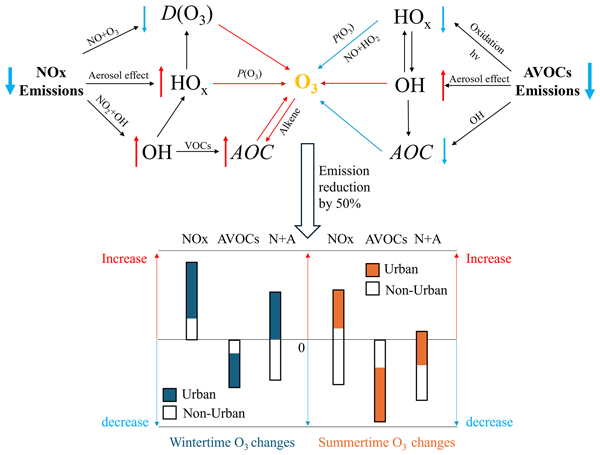
Jianing Dai, Guy P. Brasseur, Mihalis Vrekoussis, Maria Kanakidou, Kun Qu, Yijuan Zhang, Hongliang Zhang, and Tao Wang
Atmos. Chem. Phys., 24, 12943–12962, https://doi.org/10.5194/acp-24-12943-2024, https://doi.org/10.5194/acp-24-12943-2024, 2024
Short summary
Short summary
This paper employs a regional chemical transport model to quantify the sensitivity of air pollutants and photochemical parameters to specified emission reductions in China for representative winter and summer conditions. The study provides insights into further air quality control in China with reduced primary emissions.
Leon Kuhn, Steffen Beirle, Sergey Osipov, Andrea Pozzer, and Thomas Wagner
Atmos. Meas. Tech., 17, 6485–6516, https://doi.org/10.5194/amt-17-6485-2024, https://doi.org/10.5194/amt-17-6485-2024, 2024
Short summary
Short summary
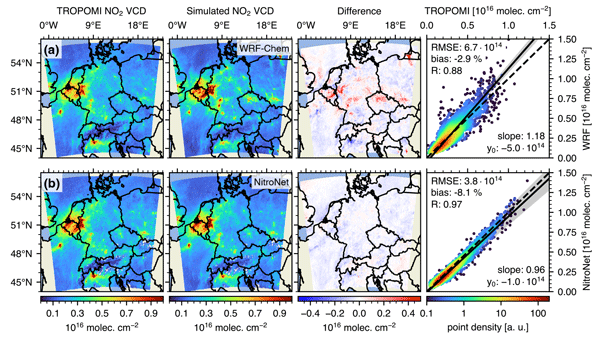
This paper presents a new machine learning model that allows us to compute NO2 concentration profiles from satellite observations. A neural network was trained on synthetic data from the regional chemistry and transport model WRF-Chem. This is the first model of its kind. We present a thorough model validation study, covering various seasons and regions of the world.
Kezia Lange, Andreas Richter, Tim Bösch, Bianca Zilker, Miriam Latsch, Lisa K. Behrens, Chisom M. Okafor, Hartmut Bösch, John P. Burrows, Alexis Merlaud, Gaia Pinardi, Caroline Fayt, Martina M. Friedrich, Ermioni Dimitropoulou, Michel Van Roozendael, Steffen Ziegler, Simona Ripperger-Lukosiunaite, Leon Kuhn, Bianca Lauster, Thomas Wagner, Hyunkee Hong, Donghee Kim, Lim-Seok Chang, Kangho Bae, Chang-Keun Song, Jong-Uk Park, and Hanlim Lee
Atmos. Meas. Tech., 17, 6315–6344, https://doi.org/10.5194/amt-17-6315-2024, https://doi.org/10.5194/amt-17-6315-2024, 2024
Short summary
Short summary
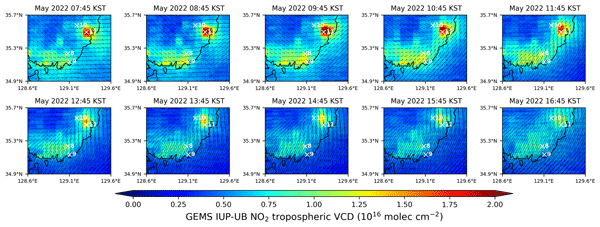
Instruments for air quality observations on geostationary satellites provide multiple observations per day and allow for the analysis of the diurnal variation of important air pollutants such as nitrogen dioxide (NO2) over large areas. The South Korean instrument GEMS, launched in February 2020, is the first instrument in geostationary orbit and covers a large part of Asia. Our investigations show the observed diurnal evolution of NO2 at different measurement sites.
Tim Trent, Marc Schröder, Shu-Peng Ho, Steffen Beirle, Ralf Bennartz, Eva Borbas, Christian Borger, Helene Brogniez, Xavier Calbet, Elisa Castelli, Gilbert P. Compo, Wesley Ebisuzaki, Ulrike Falk, Frank Fell, John Forsythe, Hans Hersbach, Misako Kachi, Shinya Kobayashi, Robert E. Kursinski, Diego Loyola, Zhengzao Luo, Johannes K. Nielsen, Enzo Papandrea, Laurence Picon, Rene Preusker, Anthony Reale, Lei Shi, Laura Slivinski, Joao Teixeira, Tom Vonder Haar, and Thomas Wagner
Atmos. Chem. Phys., 24, 9667–9695, https://doi.org/10.5194/acp-24-9667-2024, https://doi.org/10.5194/acp-24-9667-2024, 2024
Short summary
Short summary
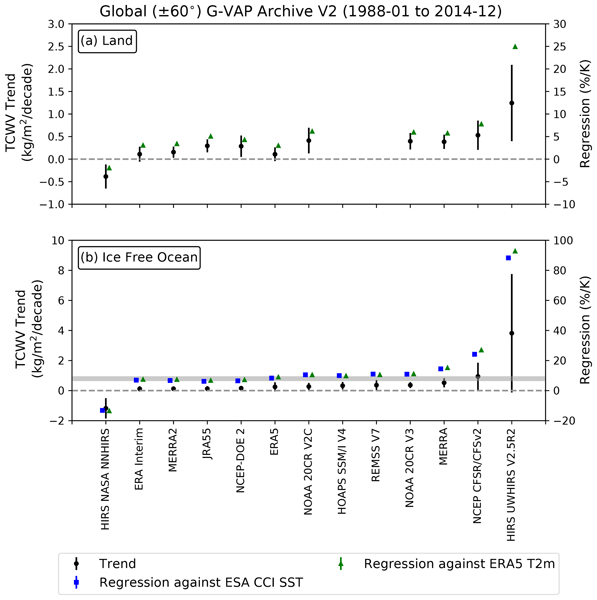
In a warmer future, water vapour will spend more time in the atmosphere, changing global rainfall patterns. In this study, we analysed the performance of 28 water vapour records between 1988 and 2014. We find sensitivity to surface warming generally outside expected ranges, attributed to breakpoints in individual record trends and differing representations of climate variability. The implication is that longer records are required for high confidence in assessing climate trends.
Henk Eskes, Athanasios Tsikerdekis, Melanie Ades, Mihai Alexe, Anna Carlin Benedictow, Yasmine Bennouna, Lewis Blake, Idir Bouarar, Simon Chabrillat, Richard Engelen, Quentin Errera, Johannes Flemming, Sebastien Garrigues, Jan Griesfeller, Vincent Huijnen, Luka Ilić, Antje Inness, John Kapsomenakis, Zak Kipling, Bavo Langerock, Augustin Mortier, Mark Parrington, Isabelle Pison, Mikko Pitkänen, Samuel Remy, Andreas Richter, Anja Schoenhardt, Michael Schulz, Valerie Thouret, Thorsten Warneke, Christos Zerefos, and Vincent-Henri Peuch
Atmos. Chem. Phys., 24, 9475–9514, https://doi.org/10.5194/acp-24-9475-2024, https://doi.org/10.5194/acp-24-9475-2024, 2024
Short summary
Short summary
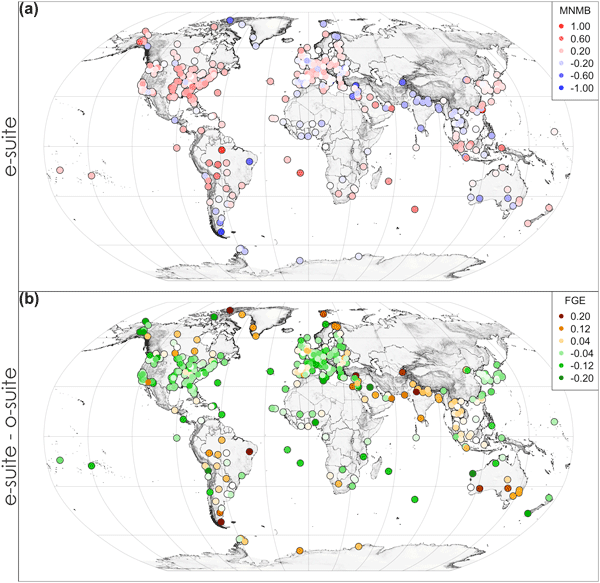
The Copernicus Atmosphere Monitoring Service (CAMS) provides global analyses and forecasts of aerosols and trace gases in the atmosphere. On 27 June 2023 a major upgrade, Cy48R1, became operational. Comparisons with in situ, surface remote sensing, aircraft, and balloon and satellite observations show that the new CAMS system is a significant improvement. The results quantify the skill of CAMS to forecast impactful events, such as wildfires, dust storms and air pollution peaks.
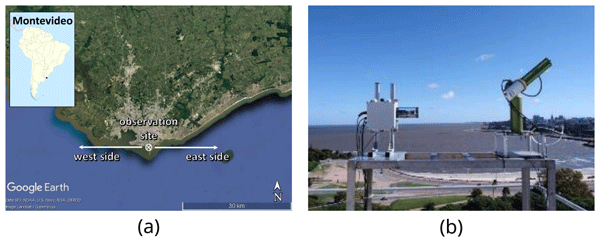
Matías Osorio, Alejandro Agesta, Tim Bösch, Nicolás Casaballe, Andreas Richter, Leonardo M. A. Alvarado, and Erna Frins
Atmos. Chem. Phys., 24, 7447–7465, https://doi.org/10.5194/acp-24-7447-2024, https://doi.org/10.5194/acp-24-7447-2024, 2024
Short summary
Short summary
This study concerns the detection and quantification of long-transport emissions of a biomass burning event, which represents a major source of air pollutants, due to the release of large amounts of aerosols and chemical species into the atmosphere. The quantification was done using ground-based observations (which play an important role in assessing the abundance of trace gases and aerosols) over Montevideo (Uruguay) and using satellite observations.
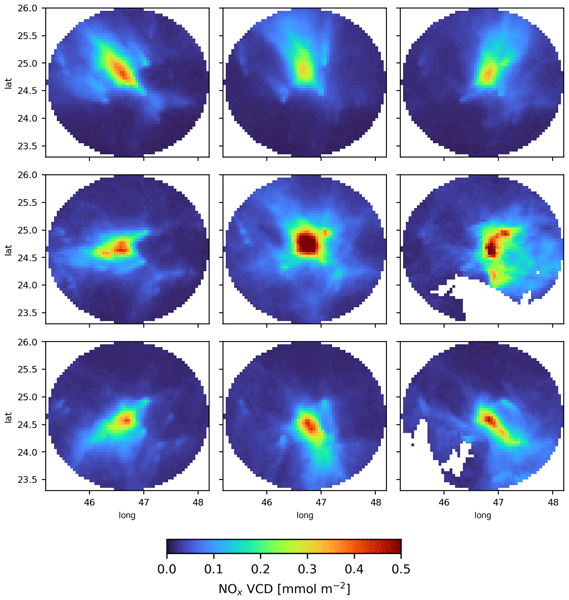
Steffen Beirle and Thomas Wagner
Atmos. Meas. Tech., 17, 3439–3453, https://doi.org/10.5194/amt-17-3439-2024, https://doi.org/10.5194/amt-17-3439-2024, 2024
Short summary
Short summary
We present a new method for estimating emissions and lifetimes for nitrogen oxides emitted from large cities by using satellite NO2 observations combined with wind fields. The estimate is based on the simultaneous evaluation of the downwind plumes for opposing wind directions. This allows us to derive seasonal mean emissions and lifetimes for 100 cities around the globe.
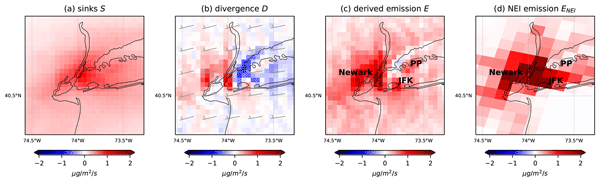
Fei Liu, Steffen Beirle, Joanna Joiner, Sungyeon Choi, Zhining Tao, K. Emma Knowland, Steven J. Smith, Daniel Q. Tong, Siqi Ma, Zachary T. Fasnacht, and Thomas Wagner
Atmos. Chem. Phys., 24, 3717–3728, https://doi.org/10.5194/acp-24-3717-2024, https://doi.org/10.5194/acp-24-3717-2024, 2024
Short summary
Short summary
Using satellite data, we developed a coupled method independent of the chemical transport model to map NOx emissions across US cities. After validating our technique with synthetic data, we charted NOx emissions from 2018–2021 in 39 cities. Our results closely matched EPA estimates but also highlighted some inconsistencies in both magnitude and spatial distribution. This research can help refine strategies for monitoring and managing air quality.
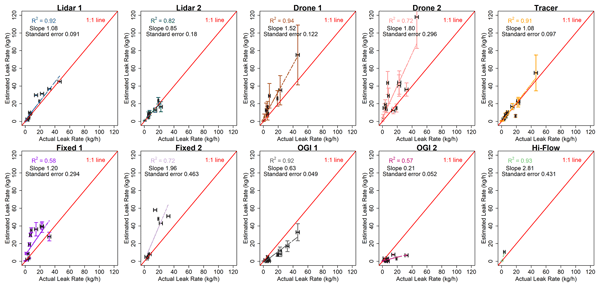
Yunsong Liu, Jean-Daniel Paris, Gregoire Broquet, Violeta Bescós Roy, Tania Meixus Fernandez, Rasmus Andersen, Andrés Russu Berlanga, Emil Christensen, Yann Courtois, Sebastian Dominok, Corentin Dussenne, Travis Eckert, Andrew Finlayson, Aurora Fernández de la Fuente, Catlin Gunn, Ram Hashmonay, Juliano Grigoleto Hayashi, Jonathan Helmore, Soeren Honsel, Fabrizio Innocenti, Matti Irjala, Torgrim Log, Cristina Lopez, Francisco Cortés Martínez, Jonathan Martinez, Adrien Massardier, Helle Gottschalk Nygaard, Paula Agregan Reboredo, Elodie Rousset, Axel Scherello, Matthias Ulbricht, Damien Weidmann, Oliver Williams, Nigel Yarrow, Murès Zarea, Robert Ziegler, Jean Sciare, Mihalis Vrekoussis, and Philippe Bousquet
Atmos. Meas. Tech., 17, 1633–1649, https://doi.org/10.5194/amt-17-1633-2024, https://doi.org/10.5194/amt-17-1633-2024, 2024
Short summary
Short summary
We investigated the performance of 10 methane emission quantification techniques in a blind controlled-release experiment at an inerted natural gas compressor station. We reported their respective strengths, weaknesses, and potential complementarity depending on the emission rates and atmospheric conditions. Additionally, we assess the dependence of emission quantification performance on key parameters such as wind speed, deployment constraints, and measurement duration.
Adrien Deroubaix, Marco Vountas, Benjamin Gaubert, Maria Dolores Andrés Hernández, Stephan Borrmann, Guy Brasseur, Bruna Holanda, Yugo Kanaya, Katharina Kaiser, Flora Kluge, Ovid Oktavian Krüger, Inga Labuhn, Michael Lichtenstern, Klaus Pfeilsticker, Mira Pöhlker, Hans Schlager, Johannes Schneider, Guillaume Siour, Basudev Swain, Paolo Tuccella, Kameswara S. Vinjamuri, Mihalis Vrekoussis, Benjamin Weyland, and John P. Burrows
EGUsphere, https://doi.org/10.5194/egusphere-2024-516, https://doi.org/10.5194/egusphere-2024-516, 2024
Preprint archived
Short summary
Short summary
This study assesses atmospheric composition using air quality models during aircraft campaigns in Europe and Asia, focusing on carbonaceous aerosols and trace gases. While carbon monoxide is well modeled, other pollutants have moderate to weak agreement with observations. Wind speed modeling is reliable for identifying pollution plumes, where models tend to overestimate concentrations. This highlights challenges in accurately modeling aerosol and trace gas composition, particularly in cities.
Adrien Deroubaix, Marco Vountas, Benjamin Gaubert, Maria Dolores Andrés Hernández, Stephan Borrmann, Guy Brasseur, Bruna Holanda, Yugo Kanaya, Katharina Kaiser, Flora Kluge, Ovid Oktavian Krüger, Inga Labuhn, Michael Lichtenstern, Klaus Pfeilsticker, Mira Pöhlker, Hans Schlager, Johannes Schneider, Guillaume Siour, Basudev Swain, Paolo Tuccella, Kameswara S. Vinjamuri, Mihalis Vrekoussis, Benjamin Weyland, and John P. Burrows
EGUsphere, https://doi.org/10.5194/egusphere-2024-521, https://doi.org/10.5194/egusphere-2024-521, 2024
Preprint archived
Short summary
Short summary
This study explores the proportional relationships between carbonaceous aerosols (black and organic carbon) and trace gases using airborne measurements from two campaigns in Europe and East Asia. Differences between regions were found, but air quality models struggled to reproduce them accurately. We show that these proportional relationships can help to constrain models and can be used to infer aerosol concentrations from satellite observations of trace gases, especially in urban areas.
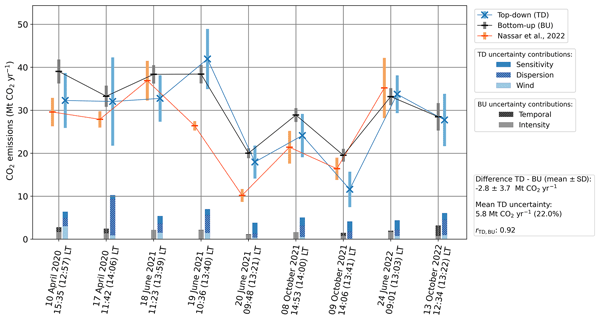
Blanca Fuentes Andrade, Michael Buchwitz, Maximilian Reuter, Heinrich Bovensmann, Andreas Richter, Hartmut Boesch, and John P. Burrows
Atmos. Meas. Tech., 17, 1145–1173, https://doi.org/10.5194/amt-17-1145-2024, https://doi.org/10.5194/amt-17-1145-2024, 2024
Short summary
Short summary
We developed a method to estimate CO2 emissions from localized sources, such as power plants, using satellite data and applied it to estimate CO2 emissions from the Bełchatów Power Station (Poland). As the detection of CO2 emission plumes from satellite data is difficult, we used observations of co-emitted NO2 to constrain the emission plume region. Our results agree with CO2 emission estimations based on the power-plant-generated power and emission factors.
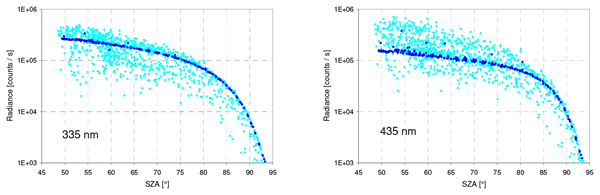
Thomas Wagner and Jānis Puķīte
Atmos. Meas. Tech., 17, 277–297, https://doi.org/10.5194/amt-17-277-2024, https://doi.org/10.5194/amt-17-277-2024, 2024
Short summary
Short summary
We present a radiance calibration method based on the comparison of measurements and radiative transfer simulations of the zenith-scattered sun radiance during twilight. Cloud-free conditions are required. The method can be applied to measurements in the filed, and no laboratory measurements are required. The accuracy is estimated to range from about 4 % at 340 nm to about 10 % at 700 nm.
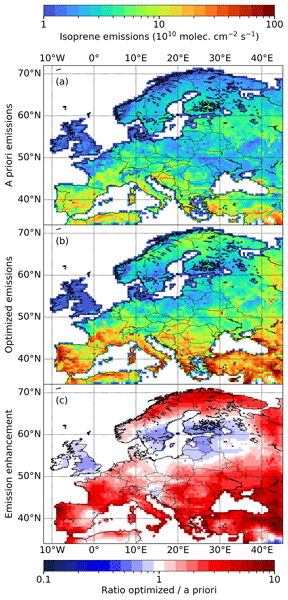
Glenn-Michael Oomen, Jean-François Müller, Trissevgeni Stavrakou, Isabelle De Smedt, Thomas Blumenstock, Rigel Kivi, Maria Makarova, Mathias Palm, Amelie Röhling, Yao Té, Corinne Vigouroux, Martina M. Friedrich, Udo Frieß, François Hendrick, Alexis Merlaud, Ankie Piters, Andreas Richter, Michel Van Roozendael, and Thomas Wagner
Atmos. Chem. Phys., 24, 449–474, https://doi.org/10.5194/acp-24-449-2024, https://doi.org/10.5194/acp-24-449-2024, 2024
Short summary
Short summary
Natural emissions from vegetation have a profound impact on air quality for their role in the formation of harmful tropospheric ozone and organic aerosols, yet these emissions are highly uncertain. In this study, we quantify emissions of organic gases over Europe using high-quality satellite measurements of formaldehyde. These satellite observations suggest that emissions from vegetation are much higher than predicted by models, especially in southern Europe.
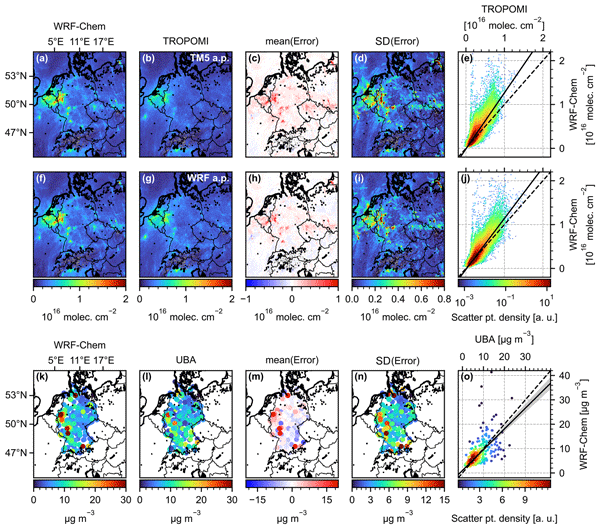
Leon Kuhn, Steffen Beirle, Vinod Kumar, Sergey Osipov, Andrea Pozzer, Tim Bösch, Rajesh Kumar, and Thomas Wagner
Atmos. Chem. Phys., 24, 185–217, https://doi.org/10.5194/acp-24-185-2024, https://doi.org/10.5194/acp-24-185-2024, 2024
Short summary
Short summary
NO₂ is an important air pollutant. It was observed that the WRF-Chem model shows significant deviations in NO₂ abundance when compared to measurements. We use a 1-month simulation over central Europe to show that these deviations can be mostly resolved by reparameterization of the vertical mixing routine. In order to validate our results, they are compared to in situ, satellite, and MAX-DOAS measurements.
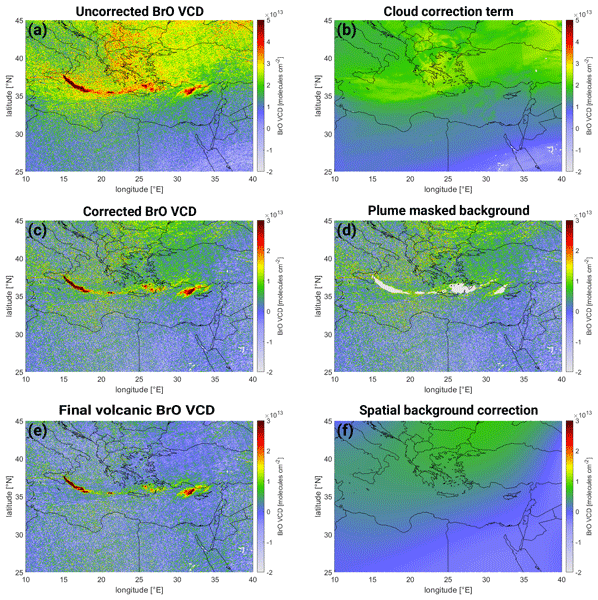
Simon Warnach, Holger Sihler, Christian Borger, Nicole Bobrowski, Steffen Beirle, Ulrich Platt, and Thomas Wagner
Atmos. Meas. Tech., 16, 5537–5573, https://doi.org/10.5194/amt-16-5537-2023, https://doi.org/10.5194/amt-16-5537-2023, 2023
Short summary
Short summary
BrO inside volcanic gas plumes but can be used in combination with SO2 to characterize the volcanic property and its activity state. High-quality satellite observations can provide a global inventory of this important quantity. This paper investigates how to accurately detect BrO inside volcanic plumes from the satellite UV spectrum. A sophisticated novel non-volcanic background correction scheme is presented, and systematic errors including cross-interference with formaldehyde are minimized.
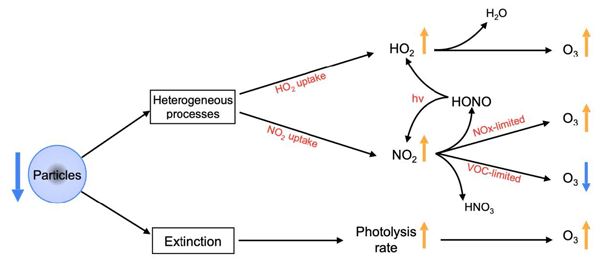
Jianing Dai, Guy P. Brasseur, Mihalis Vrekoussis, Maria Kanakidou, Kun Qu, Yijuan Zhang, Hongliang Zhang, and Tao Wang
Atmos. Chem. Phys., 23, 14127–14158, https://doi.org/10.5194/acp-23-14127-2023, https://doi.org/10.5194/acp-23-14127-2023, 2023
Short summary
Short summary
In this study, we used a regional chemical transport model to characterize the different parameters of atmospheric oxidative capacity in recent chemical environments in China. These parameters include the production and destruction rates of ozone and other oxidants, the ozone production efficiency, the OH reactivity, and the length of the reaction chain responsible for the formation of ozone and ROx. They are also affected by the aerosol burden in the atmosphere.
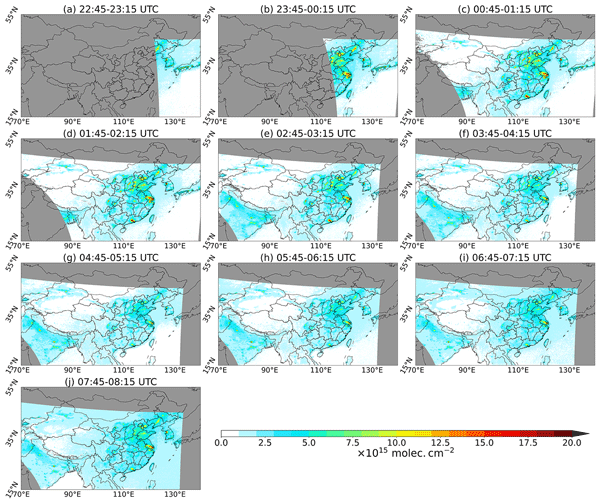
Yuhang Zhang, Jintai Lin, Jhoon Kim, Hanlim Lee, Junsung Park, Hyunkee Hong, Michel Van Roozendael, Francois Hendrick, Ting Wang, Pucai Wang, Qin He, Kai Qin, Yongjoo Choi, Yugo Kanaya, Jin Xu, Pinhua Xie, Xin Tian, Sanbao Zhang, Shanshan Wang, Siyang Cheng, Xinghong Cheng, Jianzhong Ma, Thomas Wagner, Robert Spurr, Lulu Chen, Hao Kong, and Mengyao Liu
Atmos. Meas. Tech., 16, 4643–4665, https://doi.org/10.5194/amt-16-4643-2023, https://doi.org/10.5194/amt-16-4643-2023, 2023
Short summary
Short summary
Our tropospheric NO2 vertical column density product with high spatiotemporal resolution is based on the Geostationary Environment Monitoring Spectrometer (GEMS) and named POMINO–GEMS. Strong hotspot signals and NO2 diurnal variations are clearly seen. Validations with multiple satellite products and ground-based, mobile car and surface measurements exhibit the overall great performance of the POMINO–GEMS product, indicating its capability for application in environmental studies.
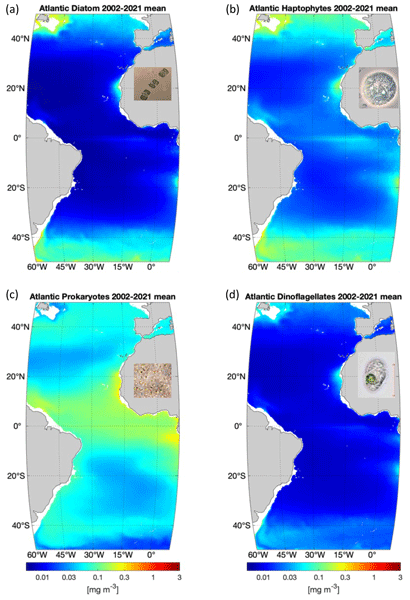
Hongyan Xi, Marine Bretagnon, Svetlana N. Losa, Vanda Brotas, Mara Gomes, Ilka Peeken, Leonardo M. A. Alvarado, Antoine Mangin, and Astrid Bracher
State Planet, 1-osr7, 5, https://doi.org/10.5194/sp-1-osr7-5-2023, https://doi.org/10.5194/sp-1-osr7-5-2023, 2023
Short summary
Short summary
Continuous monitoring of phytoplankton groups using satellite data is crucial for understanding global ocean phytoplankton variability on different scales in both space and time. This study focuses on four important phytoplankton groups in the Atlantic Ocean to investigate their trend, anomaly and phenological characteristics both over the whole region and at subscales. This study paves the way to promote potentially important ocean monitoring indicators to help sustain the ocean health.
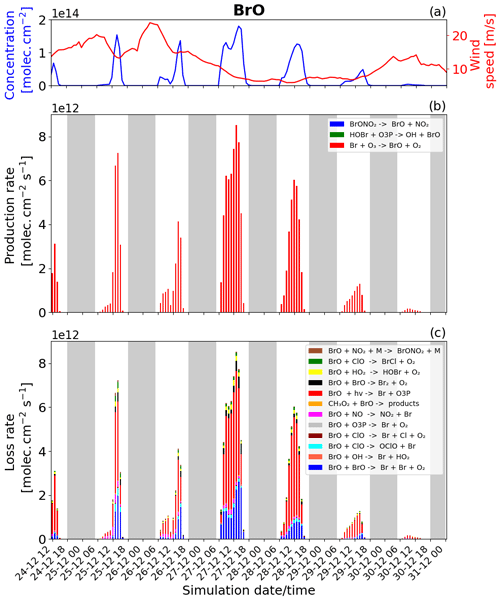
Herizo Narivelo, Paul David Hamer, Virginie Marécal, Luke Surl, Tjarda Roberts, Sophie Pelletier, Béatrice Josse, Jonathan Guth, Mickaël Bacles, Simon Warnach, Thomas Wagner, Stefano Corradini, Giuseppe Salerno, and Lorenzo Guerrieri
Atmos. Chem. Phys., 23, 10533–10561, https://doi.org/10.5194/acp-23-10533-2023, https://doi.org/10.5194/acp-23-10533-2023, 2023
Short summary
Short summary
Volcanic emissions emit large quantities of gases and primary aerosols that can play an important role in atmospheric chemistry. We present a study of the fate of volcanic bromine emissions from the eruption of Mount Etna around Christmas 2018. Using a numerical model and satellite observations, we analyse the impact of the volcanic plume and how it modifies the composition of the air over the whole Mediterranean basin, in particular on tropospheric ozone through the bromine-explosion cycle.
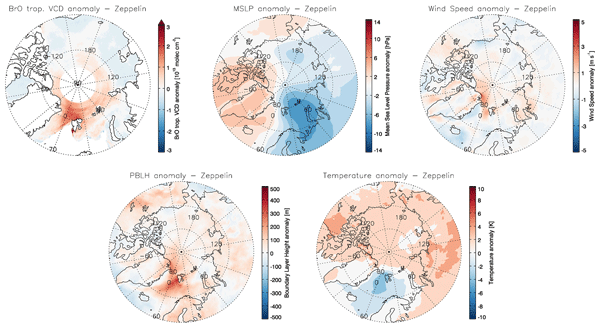
Bianca Zilker, Andreas Richter, Anne-Marlene Blechschmidt, Peter von der Gathen, Ilias Bougoudis, Sora Seo, Tim Bösch, and John Philip Burrows
Atmos. Chem. Phys., 23, 9787–9814, https://doi.org/10.5194/acp-23-9787-2023, https://doi.org/10.5194/acp-23-9787-2023, 2023
Short summary
Short summary
During Arctic spring, near-surface ozone is depleted by bromine released from salty sea ice and/or snow-covered areas under certain meteorological conditions. To study this ozone depletion and the prevailing meteorological conditions, two ozone data sets from Ny-Ålesund, Svalbard, have been evaluated. We found that during ozone depletion events lower pressure over the Barents Sea and higher pressure in the Icelandic Low area led to a transport of cold polar air from the north to Ny-Ålesund.
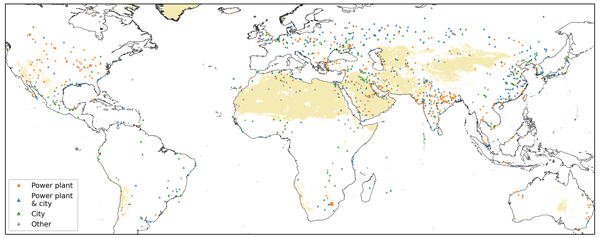
Steffen Beirle, Christian Borger, Adrian Jost, and Thomas Wagner
Earth Syst. Sci. Data, 15, 3051–3073, https://doi.org/10.5194/essd-15-3051-2023, https://doi.org/10.5194/essd-15-3051-2023, 2023
Short summary
Short summary
We present a catalog of nitrogen oxide emissions from point sources (like power plants or metal smelters) based on satellite observations of NO2 combined with meteorological wind fields.
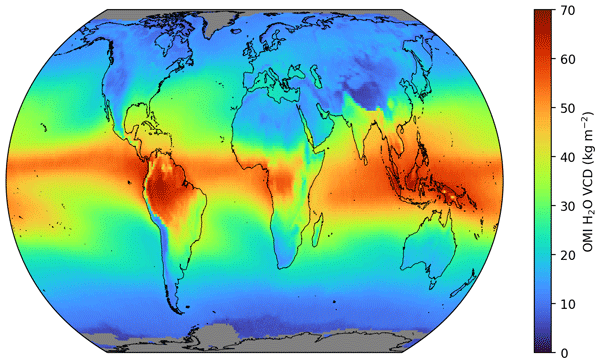
Christian Borger, Steffen Beirle, and Thomas Wagner
Earth Syst. Sci. Data, 15, 3023–3049, https://doi.org/10.5194/essd-15-3023-2023, https://doi.org/10.5194/essd-15-3023-2023, 2023
Short summary
Short summary
This study presents a long-term data set of monthly mean total column water vapour (TCWV) based on measurements of the Ozone Monitoring Instrument (OMI) covering the time range from January 2005 to December 2020. We describe how the TCWV values are retrieved from UV–Vis satellite spectra and demonstrate that the OMI TCWV data set is in good agreement with various different reference data sets. Moreover, we also show that it fulfills typical stability requirements for climate data records.
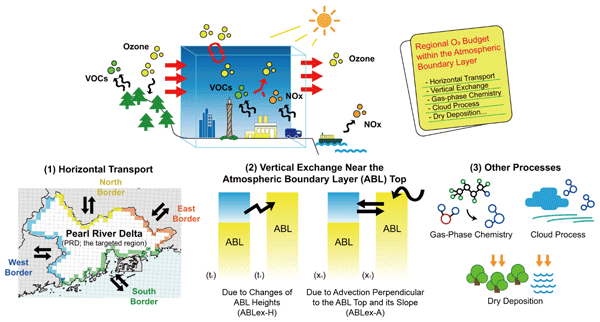
Kun Qu, Xuesong Wang, Xuhui Cai, Yu Yan, Xipeng Jin, Mihalis Vrekoussis, Maria Kanakidou, Guy P. Brasseur, Jin Shen, Teng Xiao, Limin Zeng, and Yuanhang Zhang
Atmos. Chem. Phys., 23, 7653–7671, https://doi.org/10.5194/acp-23-7653-2023, https://doi.org/10.5194/acp-23-7653-2023, 2023
Short summary
Short summary
Basic understandings of ozone processes, especially transport and chemistry, are essential to support ozone pollution control, but studies often have different views on their relative importance. We developed a method to quantify their contributions in the ozone mass and concentration budgets based on the WRF-CMAQ model. Results in a polluted region highlight the differences between two budgets. For future studies, two budgets are both needed to fully understand the effects of ozone processes.
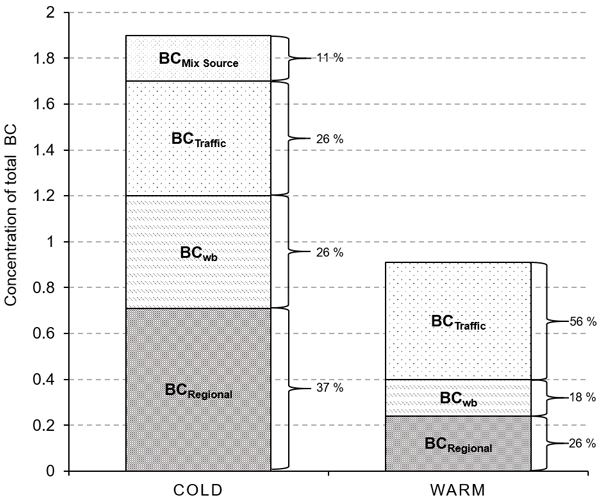
Aliki Christodoulou, Iasonas Stavroulas, Mihalis Vrekoussis, Maximillien Desservettaz, Michael Pikridas, Elie Bimenyimana, Jonilda Kushta, Matic Ivančič, Martin Rigler, Philippe Goloub, Konstantina Oikonomou, Roland Sarda-Estève, Chrysanthos Savvides, Charbel Afif, Nikos Mihalopoulos, Stéphane Sauvage, and Jean Sciare
Atmos. Chem. Phys., 23, 6431–6456, https://doi.org/10.5194/acp-23-6431-2023, https://doi.org/10.5194/acp-23-6431-2023, 2023
Short summary
Short summary
Our study presents, for the first time, a detailed source identification of aerosols at an urban background site in Cyprus (eastern Mediterranean), a region strongly impacted by climate change and air pollution. Here, we identify an unexpected high contribution of long-range transported pollution from fossil fuel sources in the Middle East, highlighting an urgent need to further characterize these fast-growing emissions and their impacts on regional atmospheric composition, climate, and health.
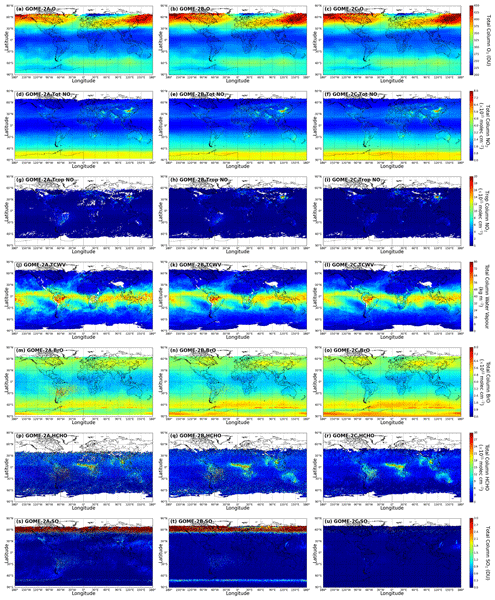
Ka Lok Chan, Pieter Valks, Klaus-Peter Heue, Ronny Lutz, Pascal Hedelt, Diego Loyola, Gaia Pinardi, Michel Van Roozendael, François Hendrick, Thomas Wagner, Vinod Kumar, Alkis Bais, Ankie Piters, Hitoshi Irie, Hisahiro Takashima, Yugo Kanaya, Yongjoo Choi, Kihong Park, Jihyo Chong, Alexander Cede, Udo Frieß, Andreas Richter, Jianzhong Ma, Nuria Benavent, Robert Holla, Oleg Postylyakov, Claudia Rivera Cárdenas, and Mark Wenig
Earth Syst. Sci. Data, 15, 1831–1870, https://doi.org/10.5194/essd-15-1831-2023, https://doi.org/10.5194/essd-15-1831-2023, 2023
Short summary
Short summary
This paper presents the theoretical basis as well as verification and validation of the Global Ozone Monitoring Experiment-2 (GOME-2) daily and monthly level-3 products.
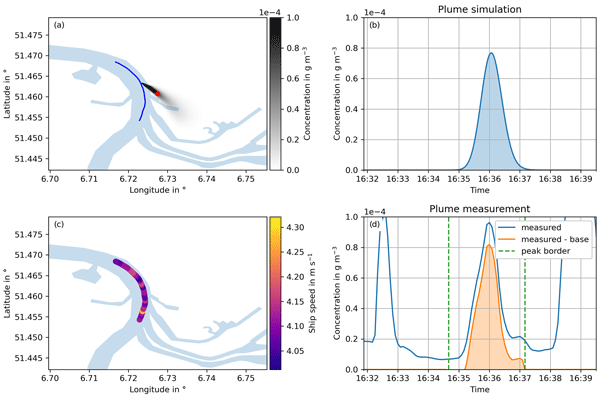
Kai Krause, Folkard Wittrock, Andreas Richter, Dieter Busch, Anton Bergen, John P. Burrows, Steffen Freitag, and Olesia Halbherr
Atmos. Meas. Tech., 16, 1767–1787, https://doi.org/10.5194/amt-16-1767-2023, https://doi.org/10.5194/amt-16-1767-2023, 2023
Short summary
Short summary
Inland shipping is an important source of nitrogen oxides (NOx). The amount of emitted NOx depends on the characteristics of the individual vessels and the traffic density. Ship emissions are often characterised by the amount of emitted NOx per unit of burnt fuel, and further knowledge about fuel consumption is needed to quantify the total emissions caused by ship traffic. In this study, a new approach to derive absolute emission rates (in g s−1) from onshore measurements is presented.
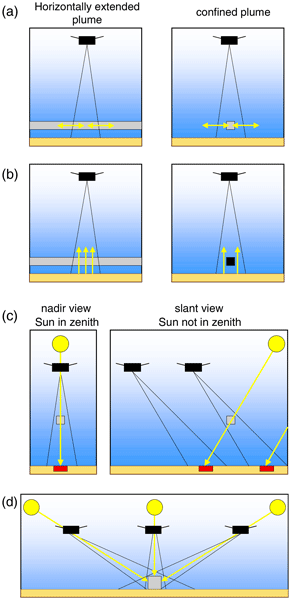
Thomas Wagner, Simon Warnach, Steffen Beirle, Nicole Bobrowski, Adrian Jost, Janis Puķīte, and Nicolas Theys
Atmos. Meas. Tech., 16, 1609–1662, https://doi.org/10.5194/amt-16-1609-2023, https://doi.org/10.5194/amt-16-1609-2023, 2023
Short summary
Short summary
We investigate 3D effects of volcanic plumes on the retrieval results of satellite and ground-based UV–Vis observations. With its small ground pixels of 3.5 x 5.5 km², the TROPOMI instrument can detect much smaller volcanic plumes than previous instruments. At the same time, 3D effects become important. The effect of horizontal photon paths especially can lead to a strong underestimation of the derived plume contents of up to > 50 %, which can be further increased for strong absorbers like SO2.
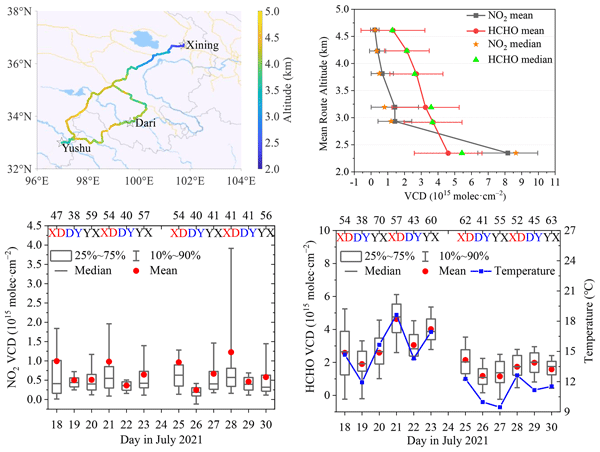
Siyang Cheng, Xinghong Cheng, Jianzhong Ma, Xiangde Xu, Wenqian Zhang, Jinguang Lv, Gang Bai, Bing Chen, Siying Ma, Steffen Ziegler, Sebastian Donner, and Thomas Wagner
Atmos. Chem. Phys., 23, 3655–3677, https://doi.org/10.5194/acp-23-3655-2023, https://doi.org/10.5194/acp-23-3655-2023, 2023
Short summary
Short summary
We made mobile MAX-DOAS measurements in the background atmosphere over the Tibetan Plateau in summer 2021. We retrieved the tropospheric NO2 and HCHO vertical column densities (VCDs) along extended driving routes and found a decreasing trend of the VCDs with altitude. Elevated NO2 VCDs along the driving routes could be attributed to enhanced traffic emissions from the towns crossed. The spatio-temporal distribution of the HCHO VCDs correlated strongly with the surface temperature.
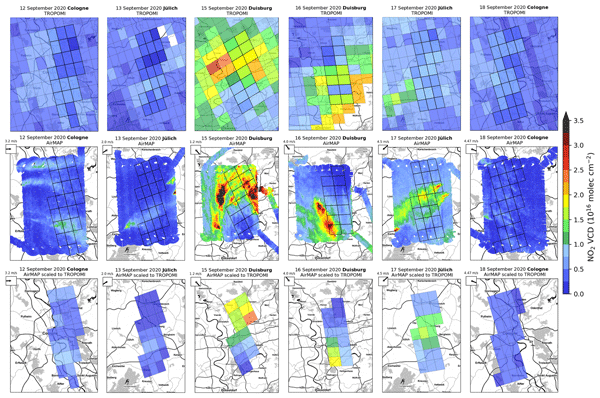
Kezia Lange, Andreas Richter, Anja Schönhardt, Andreas C. Meier, Tim Bösch, André Seyler, Kai Krause, Lisa K. Behrens, Folkard Wittrock, Alexis Merlaud, Frederik Tack, Caroline Fayt, Martina M. Friedrich, Ermioni Dimitropoulou, Michel Van Roozendael, Vinod Kumar, Sebastian Donner, Steffen Dörner, Bianca Lauster, Maria Razi, Christian Borger, Katharina Uhlmannsiek, Thomas Wagner, Thomas Ruhtz, Henk Eskes, Birger Bohn, Daniel Santana Diaz, Nader Abuhassan, Dirk Schüttemeyer, and John P. Burrows
Atmos. Meas. Tech., 16, 1357–1389, https://doi.org/10.5194/amt-16-1357-2023, https://doi.org/10.5194/amt-16-1357-2023, 2023
Short summary
Short summary
We present airborne imaging DOAS and ground-based stationary and car DOAS measurements conducted during the S5P-VAL-DE-Ruhr campaign in the Rhine-Ruhr region. The measurements are used to validate spaceborne NO2 data products from the Sentinel-5 Precursor TROPOspheric Monitoring Instrument (TROPOMI). Auxiliary data of the TROPOMI NO2 retrieval, such as spatially higher resolved a priori NO2 vertical profiles, surface reflectivity, and cloud treatment are investigated to evaluate their impact.
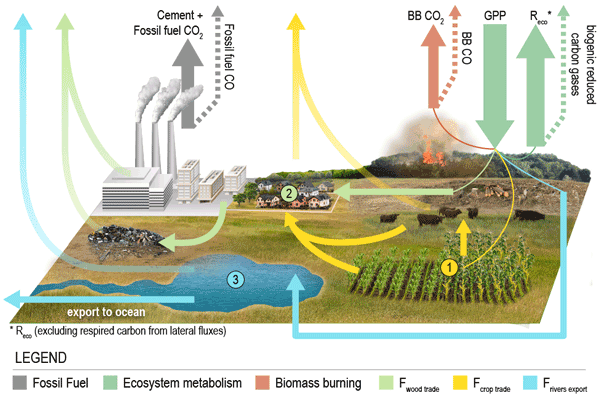
Brendan Byrne, David F. Baker, Sourish Basu, Michael Bertolacci, Kevin W. Bowman, Dustin Carroll, Abhishek Chatterjee, Frédéric Chevallier, Philippe Ciais, Noel Cressie, David Crisp, Sean Crowell, Feng Deng, Zhu Deng, Nicholas M. Deutscher, Manvendra K. Dubey, Sha Feng, Omaira E. García, David W. T. Griffith, Benedikt Herkommer, Lei Hu, Andrew R. Jacobson, Rajesh Janardanan, Sujong Jeong, Matthew S. Johnson, Dylan B. A. Jones, Rigel Kivi, Junjie Liu, Zhiqiang Liu, Shamil Maksyutov, John B. Miller, Scot M. Miller, Isamu Morino, Justus Notholt, Tomohiro Oda, Christopher W. O'Dell, Young-Suk Oh, Hirofumi Ohyama, Prabir K. Patra, Hélène Peiro, Christof Petri, Sajeev Philip, David F. Pollard, Benjamin Poulter, Marine Remaud, Andrew Schuh, Mahesh K. Sha, Kei Shiomi, Kimberly Strong, Colm Sweeney, Yao Té, Hanqin Tian, Voltaire A. Velazco, Mihalis Vrekoussis, Thorsten Warneke, John R. Worden, Debra Wunch, Yuanzhi Yao, Jeongmin Yun, Andrew Zammit-Mangion, and Ning Zeng
Earth Syst. Sci. Data, 15, 963–1004, https://doi.org/10.5194/essd-15-963-2023, https://doi.org/10.5194/essd-15-963-2023, 2023
Short summary
Short summary
Changes in the carbon stocks of terrestrial ecosystems result in emissions and removals of CO2. These can be driven by anthropogenic activities (e.g., deforestation), natural processes (e.g., fires) or in response to rising CO2 (e.g., CO2 fertilization). This paper describes a dataset of CO2 emissions and removals derived from atmospheric CO2 observations. This pilot dataset informs current capabilities and future developments towards top-down monitoring and verification systems.
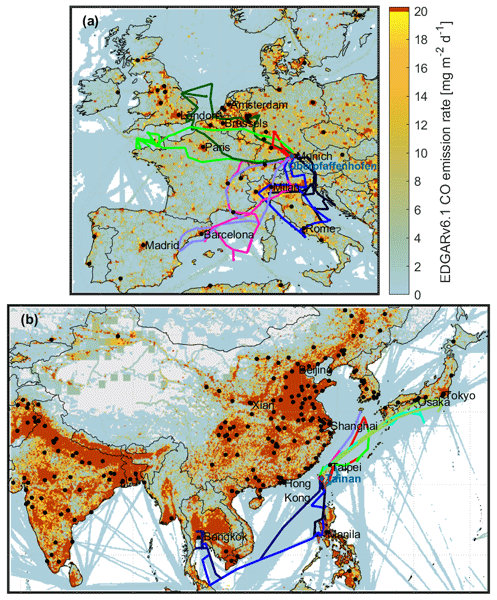
Eric Förster, Harald Bönisch, Marco Neumaier, Florian Obersteiner, Andreas Zahn, Andreas Hilboll, Anna B. Kalisz Hedegaard, Nikos Daskalakis, Alexandros Panagiotis Poulidis, Mihalis Vrekoussis, Michael Lichtenstern, and Peter Braesicke
Atmos. Chem. Phys., 23, 1893–1918, https://doi.org/10.5194/acp-23-1893-2023, https://doi.org/10.5194/acp-23-1893-2023, 2023
Short summary
Short summary
The airborne megacity campaign EMeRGe provided an unprecedented amount of trace gas measurements. We combine measured volatile organic compounds (VOCs) with trajectory-modelled emission uptakes to identify potential source regions of pollution. We also characterise the chemical fingerprints (e.g. biomass burning and anthropogenic signatures) of the probed air masses to corroborate the contributing source regions. Our approach is the first large-scale study of VOCs originating from megacities.
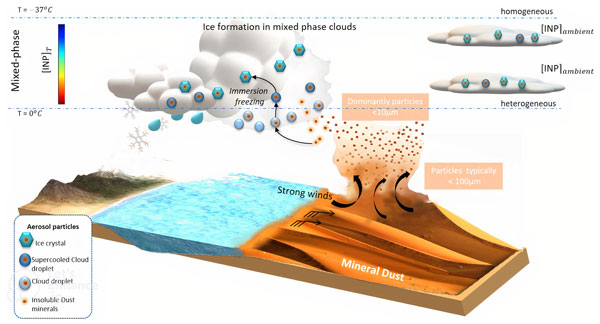
Marios Chatziparaschos, Nikos Daskalakis, Stelios Myriokefalitakis, Nikos Kalivitis, Athanasios Nenes, María Gonçalves Ageitos, Montserrat Costa-Surós, Carlos Pérez García-Pando, Medea Zanoli, Mihalis Vrekoussis, and Maria Kanakidou
Atmos. Chem. Phys., 23, 1785–1801, https://doi.org/10.5194/acp-23-1785-2023, https://doi.org/10.5194/acp-23-1785-2023, 2023
Short summary
Short summary
Ice formation is enabled by ice-nucleating particles (INP) at higher temperatures than homogeneous formation and can profoundly affect the properties of clouds. Our global model results show that K-feldspar is the most important contributor to INP concentrations globally, affecting mid-level mixed-phase clouds. However, quartz can significantly contribute and dominates the lowest and the highest altitudes of dust-derived INP, affecting mainly low-level and high-level mixed-phase clouds.
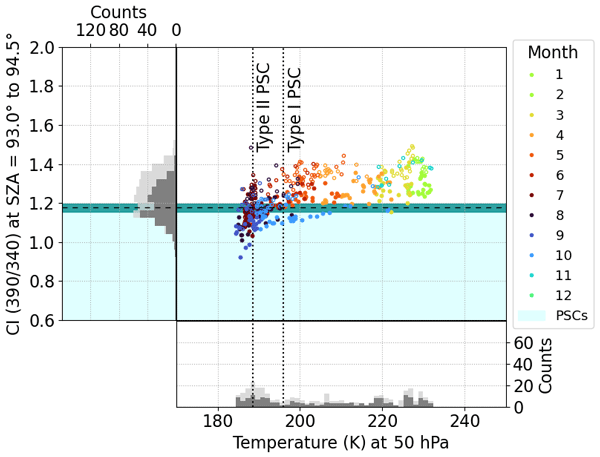
Bianca Lauster, Steffen Dörner, Carl-Fredrik Enell, Udo Frieß, Myojeong Gu, Janis Puķīte, Uwe Raffalski, and Thomas Wagner
Atmos. Chem. Phys., 22, 15925–15942, https://doi.org/10.5194/acp-22-15925-2022, https://doi.org/10.5194/acp-22-15925-2022, 2022
Short summary
Short summary
Polar stratospheric clouds (PSCs) are an important component in ozone chemistry. Here, we use two differential optical absorption spectroscopy (DOAS) instruments in the Antarctic and Arctic to investigate the occurrence of PSCs based on the colour index, i.e. the colour of the zenith sky. Additionally using radiative transfer simulations, the variability and the seasonal cycle of PSC occurrence are analysed and an unexpectedly high signal during spring suggests the influence of volcanic aerosol.
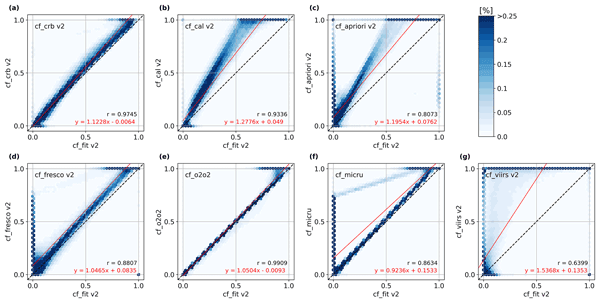
Miriam Latsch, Andreas Richter, Henk Eskes, Maarten Sneep, Ping Wang, Pepijn Veefkind, Ronny Lutz, Diego Loyola, Athina Argyrouli, Pieter Valks, Thomas Wagner, Holger Sihler, Michel van Roozendael, Nicolas Theys, Huan Yu, Richard Siddans, and John P. Burrows
Atmos. Meas. Tech., 15, 6257–6283, https://doi.org/10.5194/amt-15-6257-2022, https://doi.org/10.5194/amt-15-6257-2022, 2022
Short summary
Short summary
The article investigates different S5P TROPOMI cloud retrieval algorithms for tropospheric trace gas retrievals. The cloud products show differences primarily over snow and ice and for scenes under sun glint. Some issues regarding across-track dependence are found for the cloud fractions as well as for the cloud heights.
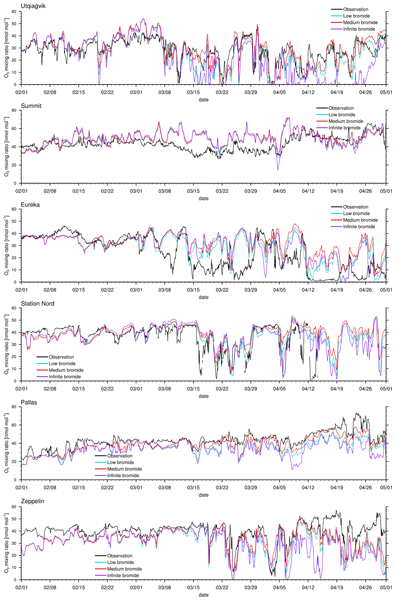
Maximilian Herrmann, Moritz Schöne, Christian Borger, Simon Warnach, Thomas Wagner, Ulrich Platt, and Eva Gutheil
Atmos. Chem. Phys., 22, 13495–13526, https://doi.org/10.5194/acp-22-13495-2022, https://doi.org/10.5194/acp-22-13495-2022, 2022
Short summary
Short summary
Ozone depletion events (ODEs) are a common occurrence in the boundary layer during Arctic spring. Ozone is depleted by bromine species in an autocatalytic reaction cycle. Previous modeling studies assumed an infinite bromine source at the ground. An alternative emission scheme is presented in which a finite amount of bromide in the snow is tracked over time. The Weather Research and Forecasting model coupled with Chemistry (WRF-Chem) is used to study ODEs in the Arctic from February to May 2019.

Christian Borger, Steffen Beirle, and Thomas Wagner
Atmos. Chem. Phys., 22, 10603–10621, https://doi.org/10.5194/acp-22-10603-2022, https://doi.org/10.5194/acp-22-10603-2022, 2022
Short summary
Short summary
In this study, we analyse trends of total column water vapour (TCWV) using multiple years of satellite observations and find, on the global average, an increase in the TCWV amount by about 0.21 % per year. Further investigations of the hydrological cycle reveal that the assumption of temporally invariant relative humidity is not always fulfilled and that the response of the global water vapour turnover time to global warming is 2 to 3 times higher than previously reported values.
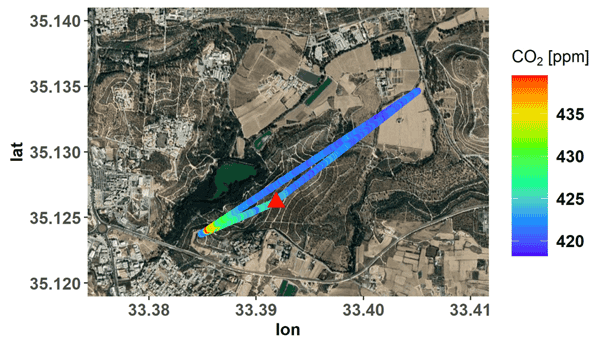
Yunsong Liu, Jean-Daniel Paris, Mihalis Vrekoussis, Panayiota Antoniou, Christos Constantinides, Maximilien Desservettaz, Christos Keleshis, Olivier Laurent, Andreas Leonidou, Carole Philippon, Panagiotis Vouterakos, Pierre-Yves Quéhé, Philippe Bousquet, and Jean Sciare
Atmos. Meas. Tech., 15, 4431–4442, https://doi.org/10.5194/amt-15-4431-2022, https://doi.org/10.5194/amt-15-4431-2022, 2022
Short summary
Short summary
This paper details laboratory-based and field developments of a cost-effective and compacted UAV CO2 sensor system to address the challenge of measuring CO2 with sufficient precision and acquisition frequency. We assess its performance extensively through laboratory and field tests and provide a case study in an urban area (Nicosia, Cyprus). We therefore expect that this portable system will be widely used for measuring CO2 emission and distribution in natural or urban environments.
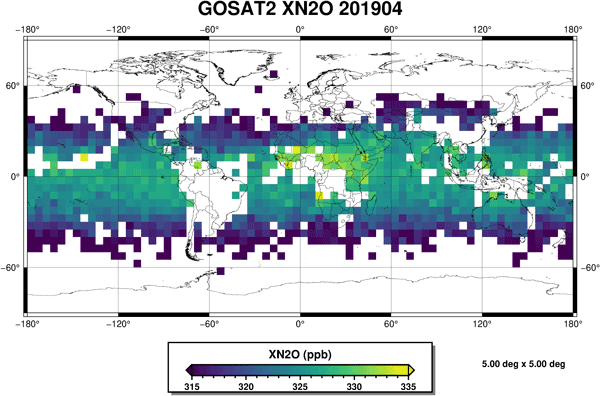
Stefan Noël, Maximilian Reuter, Michael Buchwitz, Jakob Borchardt, Michael Hilker, Oliver Schneising, Heinrich Bovensmann, John P. Burrows, Antonio Di Noia, Robert J. Parker, Hiroshi Suto, Yukio Yoshida, Matthias Buschmann, Nicholas M. Deutscher, Dietrich G. Feist, David W. T. Griffith, Frank Hase, Rigel Kivi, Cheng Liu, Isamu Morino, Justus Notholt, Young-Suk Oh, Hirofumi Ohyama, Christof Petri, David F. Pollard, Markus Rettinger, Coleen Roehl, Constantina Rousogenous, Mahesh Kumar Sha, Kei Shiomi, Kimberly Strong, Ralf Sussmann, Yao Té, Voltaire A. Velazco, Mihalis Vrekoussis, and Thorsten Warneke
Atmos. Meas. Tech., 15, 3401–3437, https://doi.org/10.5194/amt-15-3401-2022, https://doi.org/10.5194/amt-15-3401-2022, 2022
Short summary
Short summary
We present a new version (v3) of the GOSAT and GOSAT-2 FOCAL products.
In addition to an increased number of XCO2 data, v3 also includes products for XCH4 (full-physics and proxy), XH2O and the relative ratio of HDO to H2O (δD). For GOSAT-2, we also present first XCO and XN2O results. All FOCAL data products show reasonable spatial distribution and temporal variations and agree well with TCCON. Global XN2O maps show a gradient from the tropics to higher latitudes on the order of 15 ppb.
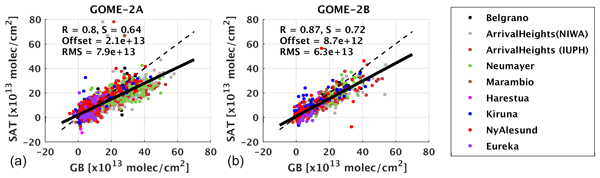
Gaia Pinardi, Michel Van Roozendael, François Hendrick, Andreas Richter, Pieter Valks, Ramina Alwarda, Kristof Bognar, Udo Frieß, José Granville, Myojeong Gu, Paul Johnston, Cristina Prados-Roman, Richard Querel, Kimberly Strong, Thomas Wagner, Folkard Wittrock, and Margarita Yela Gonzalez
Atmos. Meas. Tech., 15, 3439–3463, https://doi.org/10.5194/amt-15-3439-2022, https://doi.org/10.5194/amt-15-3439-2022, 2022
Short summary
Short summary
We report on the GOME-2A and GOME-2B OClO dataset (2007 to 2016, from the EUMETSAT's AC SAF) validation using data from nine NDACC zenith-scattered-light DOAS (ZSL-DOAS) instruments distributed in both the Arctic and Antarctic. Specific sensitivity tests are performed on the ground-based data to estimate the impact of the different OClO DOAS analysis settings and their typical errors. Good agreement is found for both the inter-annual variability and the overall OClO seasonal behavior.
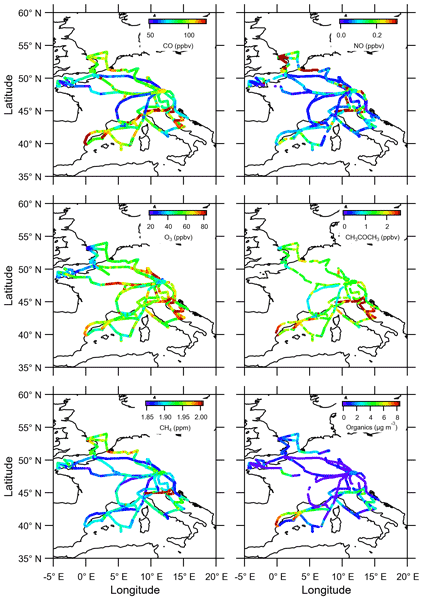
M. Dolores Andrés Hernández, Andreas Hilboll, Helmut Ziereis, Eric Förster, Ovid O. Krüger, Katharina Kaiser, Johannes Schneider, Francesca Barnaba, Mihalis Vrekoussis, Jörg Schmidt, Heidi Huntrieser, Anne-Marlene Blechschmidt, Midhun George, Vladyslav Nenakhov, Theresa Harlass, Bruna A. Holanda, Jennifer Wolf, Lisa Eirenschmalz, Marc Krebsbach, Mira L. Pöhlker, Anna B. Kalisz Hedegaard, Linlu Mei, Klaus Pfeilsticker, Yangzhuoran Liu, Ralf Koppmann, Hans Schlager, Birger Bohn, Ulrich Schumann, Andreas Richter, Benjamin Schreiner, Daniel Sauer, Robert Baumann, Mariano Mertens, Patrick Jöckel, Markus Kilian, Greta Stratmann, Christopher Pöhlker, Monica Campanelli, Marco Pandolfi, Michael Sicard, José L. Gómez-Amo, Manuel Pujadas, Katja Bigge, Flora Kluge, Anja Schwarz, Nikos Daskalakis, David Walter, Andreas Zahn, Ulrich Pöschl, Harald Bönisch, Stephan Borrmann, Ulrich Platt, and John P. Burrows
Atmos. Chem. Phys., 22, 5877–5924, https://doi.org/10.5194/acp-22-5877-2022, https://doi.org/10.5194/acp-22-5877-2022, 2022
Short summary
Short summary
EMeRGe provides a unique set of in situ and remote sensing airborne measurements of trace gases and aerosol particles along selected flight routes in the lower troposphere over Europe. The interpretation uses also complementary collocated ground-based and satellite measurements. The collected data help to improve the current understanding of the complex spatial distribution of trace gases and aerosol particles resulting from mixing, transport, and transformation of pollution plumes over Europe.
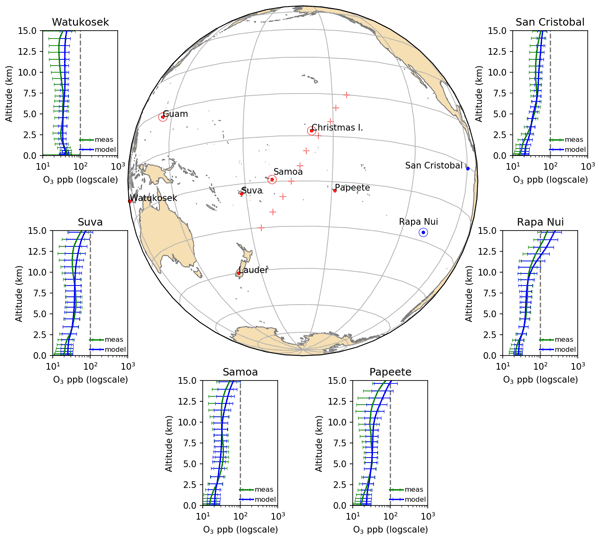
Nikos Daskalakis, Laura Gallardo, Maria Kanakidou, Johann Rasmus Nüß, Camilo Menares, Roberto Rondanelli, Anne M. Thompson, and Mihalis Vrekoussis
Atmos. Chem. Phys., 22, 4075–4099, https://doi.org/10.5194/acp-22-4075-2022, https://doi.org/10.5194/acp-22-4075-2022, 2022
Short summary
Short summary
Forest fires emit carbon monoxide (CO) that can be transported into the atmosphere far from the sources and reacts to produce ozone (O3) that affects climate, ecosystems and health. O3 is also produced in the stratosphere and can be transported downwards. Using a global numerical model, we found that forest fires can affect CO and O3 even in the South Pacific, the most pristine region of the global ocean, but transport from the stratosphere is a more important O3 source than fires in the region.
Gerrit Kuhlmann, Ka Lok Chan, Sebastian Donner, Ying Zhu, Marc Schwaerzel, Steffen Dörner, Jia Chen, Andreas Hueni, Duc Hai Nguyen, Alexander Damm, Annette Schütt, Florian Dietrich, Dominik Brunner, Cheng Liu, Brigitte Buchmann, Thomas Wagner, and Mark Wenig
Atmos. Meas. Tech., 15, 1609–1629, https://doi.org/10.5194/amt-15-1609-2022, https://doi.org/10.5194/amt-15-1609-2022, 2022
Short summary
Short summary
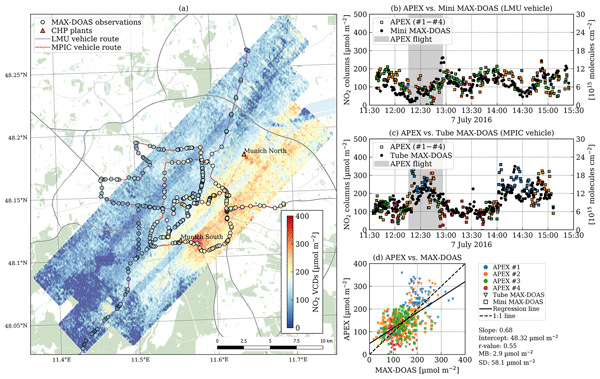
Nitrogen dioxide (NO2) is an air pollutant whose concentration often exceeds air quality guideline values, especially in urban areas. To map the spatial distribution of NO2 in Munich, we conducted the Munich NO2 Imaging Campaign (MuNIC), where NO2 was measured with stationary, mobile, and airborne in situ and remote sensing instruments. The campaign provides a unique dataset that has been used to compare the different instruments and to study the spatial variability of NO2 and its sources.
Leon Kuhn, Jonas Kuhn, Thomas Wagner, and Ulrich Platt
Atmos. Meas. Tech., 15, 1395–1414, https://doi.org/10.5194/amt-15-1395-2022, https://doi.org/10.5194/amt-15-1395-2022, 2022
Short summary
Short summary
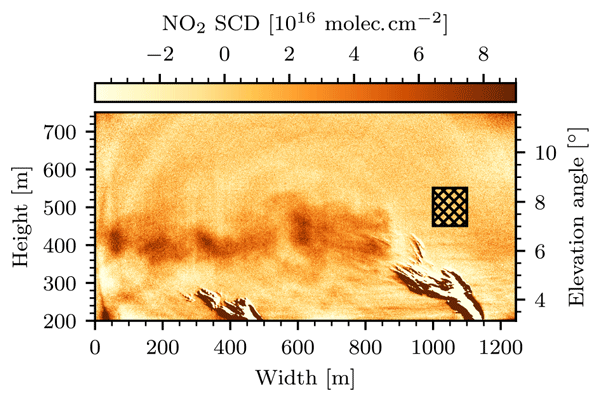
We present a novel instrument for imaging measurements of NO2 with high spatiotemporal resolution based on gas correlation spectroscopy, called the GCS NO2 camera. The instrument works by placing two gas cells (cuvettes) in front of two photosensor arrays, one filled with air and one filled with a high concentration of NO2, acting as a non-dispersive spectral filter. NO2 images are then generated on the basis of the signal ratio of the two channels in the spectral region of 430–445 nm.
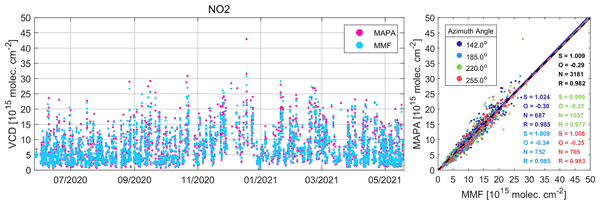
Dimitris Karagkiozidis, Martina Michaela Friedrich, Steffen Beirle, Alkiviadis Bais, François Hendrick, Kalliopi Artemis Voudouri, Ilias Fountoulakis, Angelos Karanikolas, Paraskevi Tzoumaka, Michel Van Roozendael, Dimitris Balis, and Thomas Wagner
Atmos. Meas. Tech., 15, 1269–1301, https://doi.org/10.5194/amt-15-1269-2022, https://doi.org/10.5194/amt-15-1269-2022, 2022
Short summary
Short summary
In this study we focus on the retrieval of aerosol, NO2, and HCHO vertical profiles from multi-axis differential optical absorption spectroscopy (MAX-DOAS) observations for the first time over Thessaloniki, Greece. We use two independent inversion algorithms for the profile retrievals. We evaluate their performance, we intercompare their results, and we validate their products with ancillary data, measured by other co-located reference instruments.

Kezia Lange, Andreas Richter, and John P. Burrows
Atmos. Chem. Phys., 22, 2745–2767, https://doi.org/10.5194/acp-22-2745-2022, https://doi.org/10.5194/acp-22-2745-2022, 2022
Short summary
Short summary
In this study, we investigated short time variability of NOx emissions and lifetimes on a global scale. We combined 2 years of satellite Sentinel-5P TROPOMI tropospheric NO2 column data with wind data. Fifty NOx sources distributed around the world are analyzed. The retrieved emissions show a clear seasonal dependence. NOx lifetime shows a latitudinal dependence but only a week seasonal dependence. NOx emissions show a clear weekly pattern which in contrast is not visible for NOx lifetimes.
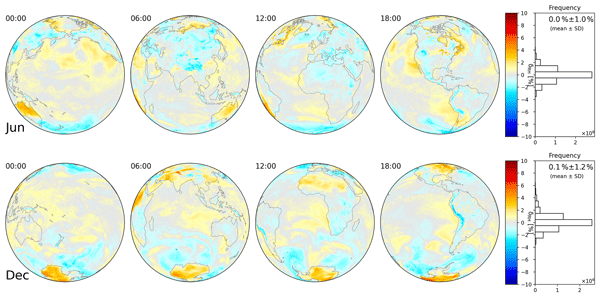
Steffen Beirle, Christian Borger, Steffen Dörner, Vinod Kumar, and Thomas Wagner
Atmos. Meas. Tech., 15, 987–1006, https://doi.org/10.5194/amt-15-987-2022, https://doi.org/10.5194/amt-15-987-2022, 2022
Short summary
Short summary
We present a formalism that relates the vertical column density (VCD) of the oxygen collision complex O4 to surface values of temperature and pressure, based on physical laws. In addition, we propose an empirical modification which also accounts for surface relative humidity (RH). This allows for simple and quick but still accurate calculation of the O4 VCD without the need for constructing full vertical profiles, which is expected to be useful in particular for MAX-DOAS applications.
M. A. Soppa, D. A. Dinh, B. Silva, F. Steinmetz, L. Alvarado, and A. Bracher
Int. Arch. Photogramm. Remote Sens. Spatial Inf. Sci., XLVI-1-W1-2021, 69–72, https://doi.org/10.5194/isprs-archives-XLVI-1-W1-2021-69-2022, https://doi.org/10.5194/isprs-archives-XLVI-1-W1-2021-69-2022, 2022
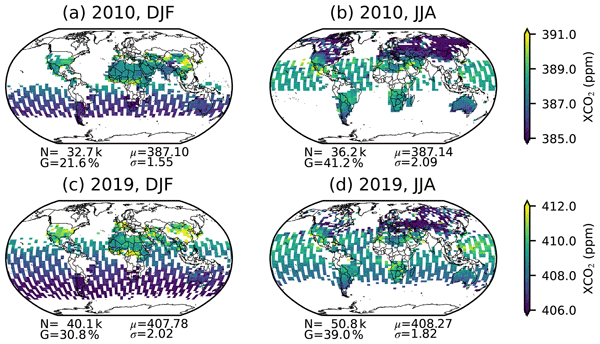
Thomas E. Taylor, Christopher W. O'Dell, David Crisp, Akhiko Kuze, Hannakaisa Lindqvist, Paul O. Wennberg, Abhishek Chatterjee, Michael Gunson, Annmarie Eldering, Brendan Fisher, Matthäus Kiel, Robert R. Nelson, Aronne Merrelli, Greg Osterman, Frédéric Chevallier, Paul I. Palmer, Liang Feng, Nicholas M. Deutscher, Manvendra K. Dubey, Dietrich G. Feist, Omaira E. García, David W. T. Griffith, Frank Hase, Laura T. Iraci, Rigel Kivi, Cheng Liu, Martine De Mazière, Isamu Morino, Justus Notholt, Young-Suk Oh, Hirofumi Ohyama, David F. Pollard, Markus Rettinger, Matthias Schneider, Coleen M. Roehl, Mahesh Kumar Sha, Kei Shiomi, Kimberly Strong, Ralf Sussmann, Yao Té, Voltaire A. Velazco, Mihalis Vrekoussis, Thorsten Warneke, and Debra Wunch
Earth Syst. Sci. Data, 14, 325–360, https://doi.org/10.5194/essd-14-325-2022, https://doi.org/10.5194/essd-14-325-2022, 2022
Short summary
Short summary
We provide an analysis of an 11-year record of atmospheric carbon dioxide (CO2) concentrations derived using an optimal estimation retrieval algorithm on measurements made by the GOSAT satellite. The new product (version 9) shows improvement over the previous version (v7.3) as evaluated against independent estimates of CO2 from ground-based sensors and atmospheric inversion systems. We also compare the new GOSAT CO2 values to collocated estimates from NASA's Orbiting Carbon Observatory-2.
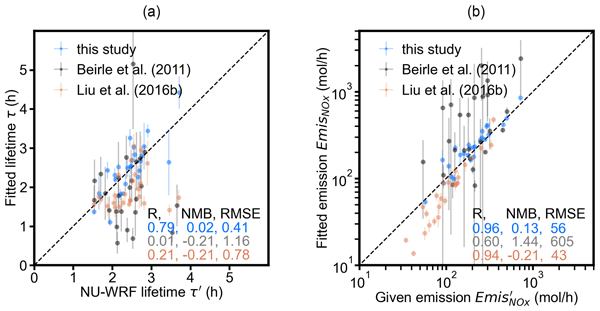
Fei Liu, Zhining Tao, Steffen Beirle, Joanna Joiner, Yasuko Yoshida, Steven J. Smith, K. Emma Knowland, and Thomas Wagner
Atmos. Chem. Phys., 22, 1333–1349, https://doi.org/10.5194/acp-22-1333-2022, https://doi.org/10.5194/acp-22-1333-2022, 2022
Short summary
Short summary
In this work, we present a novel method to infer NOx emissions and lifetimes based on tropospheric NO2 observations together with reanalysis wind fields for cities located in polluted backgrounds. We evaluate the accuracy of the method using synthetic NO2 observations derived from a high-resolution model simulation. Our work provides an estimate for uncertainties in satellite-derived emissions inferred from chemical transport model (CTM)-independent approaches.
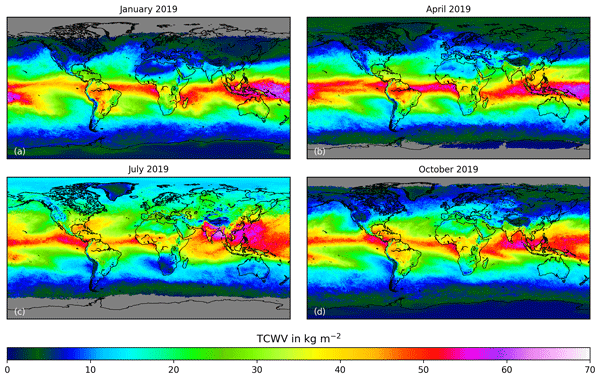
Tobias Küchler, Stefan Noël, Heinrich Bovensmann, John Philip Burrows, Thomas Wagner, Christian Borger, Tobias Borsdorff, and Andreas Schneider
Atmos. Meas. Tech., 15, 297–320, https://doi.org/10.5194/amt-15-297-2022, https://doi.org/10.5194/amt-15-297-2022, 2022
Short summary
Short summary
We applied the air-mass-corrected differential optical absorption spectroscopy (AMC-DOAS) method to derive total column water vapour (TCWV) from Sentinel-5P measurements and compared it to independent data sets. The correlation coefficients of typically more than 0.9 and the small deviations up to 2.5 kg m−2 reveal good agreement between our data product and other TCWV data sets. In particular for the different Sentinel-5P water vapour products, the deviations are around 1 kg m−2.
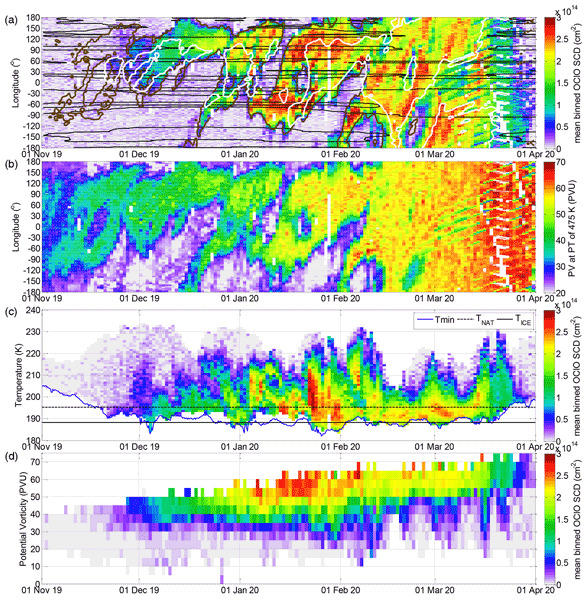
Jānis Puķīte, Christian Borger, Steffen Dörner, Myojeong Gu, and Thomas Wagner
Atmos. Chem. Phys., 22, 245–272, https://doi.org/10.5194/acp-22-245-2022, https://doi.org/10.5194/acp-22-245-2022, 2022
Short summary
Short summary
Chlorine dioxide (OClO) is an indicator for chlorine activation. New OClO data by TROPOMI (S5P) are interpreted in a meteorological context and related to CALIOP PSC observations. We report very high OClO levels for the northern hemispheric winter 2019/20 with an extraordinarily long period with a stable polar vortex. A minor stratospheric warming in the Southern Hemisphere was also observed in September 2019, where usual OClO values rapidly deactivated 1–2 weeks earlier.
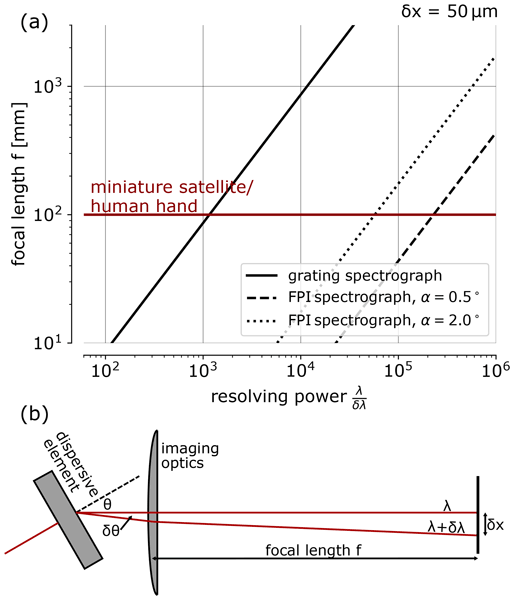
Jonas Kuhn, Nicole Bobrowski, Thomas Wagner, and Ulrich Platt
Atmos. Meas. Tech., 14, 7873–7892, https://doi.org/10.5194/amt-14-7873-2021, https://doi.org/10.5194/amt-14-7873-2021, 2021
Short summary
Short summary
We propose spectrograph implementations using Fabry–Pérot interferometers for atmospheric trace gas remote sensing. Compared with widely used grating spectrographs, we find substantial light throughput and mobility advantages for high resolving powers. Besides lowering detection limits and increasing the spatial and temporal resolution of many atmospheric trace gas measurements, this approach might enable remote sensing of further important gases such as tropospheric OH radicals.
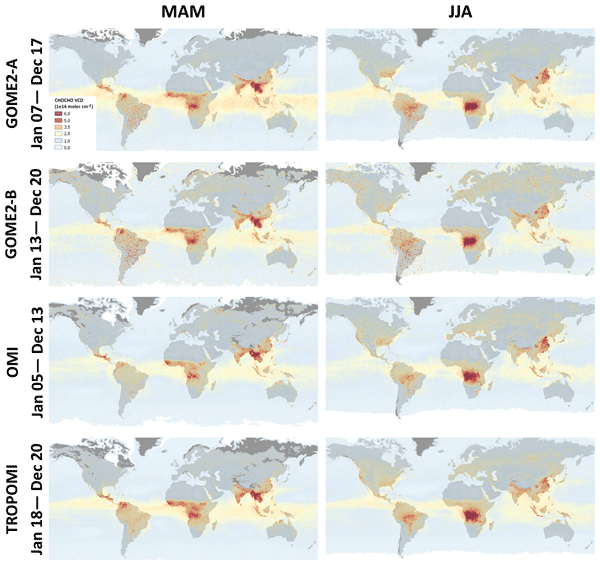
Christophe Lerot, François Hendrick, Michel Van Roozendael, Leonardo M. A. Alvarado, Andreas Richter, Isabelle De Smedt, Nicolas Theys, Jonas Vlietinck, Huan Yu, Jeroen Van Gent, Trissevgeni Stavrakou, Jean-François Müller, Pieter Valks, Diego Loyola, Hitoshi Irie, Vinod Kumar, Thomas Wagner, Stefan F. Schreier, Vinayak Sinha, Ting Wang, Pucai Wang, and Christian Retscher
Atmos. Meas. Tech., 14, 7775–7807, https://doi.org/10.5194/amt-14-7775-2021, https://doi.org/10.5194/amt-14-7775-2021, 2021
Short summary
Short summary
Global measurements of glyoxal tropospheric columns from the satellite instrument TROPOMI are presented. Such measurements can contribute to the estimation of atmospheric emissions of volatile organic compounds. This new glyoxal product has been fully characterized with a comprehensive error budget, with comparison with other satellite data sets as well as with validation based on independent ground-based remote sensing glyoxal observations.
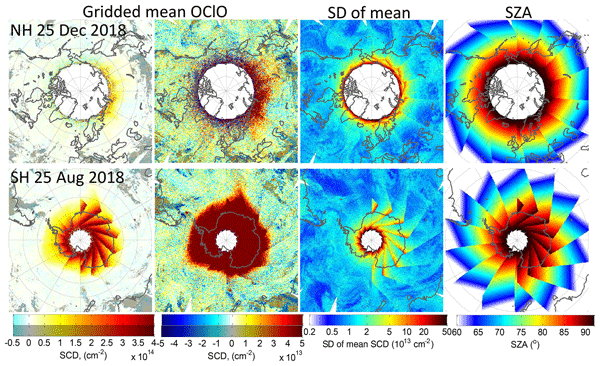
Jānis Puķīte, Christian Borger, Steffen Dörner, Myojeong Gu, Udo Frieß, Andreas Carlos Meier, Carl-Fredrik Enell, Uwe Raffalski, Andreas Richter, and Thomas Wagner
Atmos. Meas. Tech., 14, 7595–7625, https://doi.org/10.5194/amt-14-7595-2021, https://doi.org/10.5194/amt-14-7595-2021, 2021
Short summary
Short summary
Chlorine dioxide (OClO) is used as an indicator for chlorine activation. We present a new differential optical absorption spectroscopy retrieval algorithm for OClO from measurements of TROPOMI on the Sentinel-5P satellite. To achieve a substantially improved accuracy for the weak absorber OClO, we consider several additional fit parameters accounting for various higher-order spectral effects. The retrieved OClO slant column densities are compared with ground-based zenith sky measurements.
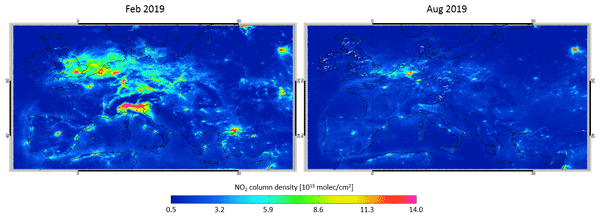
Song Liu, Pieter Valks, Gaia Pinardi, Jian Xu, Ka Lok Chan, Athina Argyrouli, Ronny Lutz, Steffen Beirle, Ehsan Khorsandi, Frank Baier, Vincent Huijnen, Alkiviadis Bais, Sebastian Donner, Steffen Dörner, Myrto Gratsea, François Hendrick, Dimitris Karagkiozidis, Kezia Lange, Ankie J. M. Piters, Julia Remmers, Andreas Richter, Michel Van Roozendael, Thomas Wagner, Mark Wenig, and Diego G. Loyola
Atmos. Meas. Tech., 14, 7297–7327, https://doi.org/10.5194/amt-14-7297-2021, https://doi.org/10.5194/amt-14-7297-2021, 2021
Short summary
Short summary
In this work, an improved tropospheric NO2 retrieval algorithm from TROPOMI measurements over Europe is presented. The stratospheric estimation is implemented with correction for the dependency of the stratospheric NO2 on the viewing geometry. The AMF calculation is implemented using improved surface albedo, a priori NO2 profiles, and cloud correction. The improved tropospheric NO2 data show good correlations with ground-based MAX-DOAS measurements.
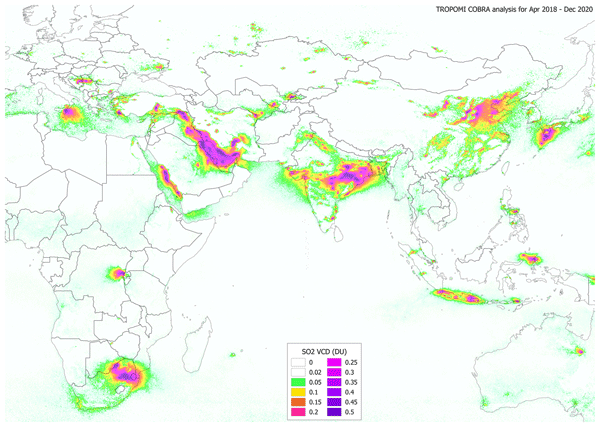
Nicolas Theys, Vitali Fioletov, Can Li, Isabelle De Smedt, Christophe Lerot, Chris McLinden, Nickolay Krotkov, Debora Griffin, Lieven Clarisse, Pascal Hedelt, Diego Loyola, Thomas Wagner, Vinod Kumar, Antje Innes, Roberto Ribas, François Hendrick, Jonas Vlietinck, Hugues Brenot, and Michel Van Roozendael
Atmos. Chem. Phys., 21, 16727–16744, https://doi.org/10.5194/acp-21-16727-2021, https://doi.org/10.5194/acp-21-16727-2021, 2021
Short summary
Short summary
We present a new algorithm to retrieve sulfur dioxide from space UV measurements. We apply the technique to high-resolution TROPOMI measurements and demonstrate the high sensitivity of the approach to weak SO2 emissions worldwide with an unprecedented limit of detection of 8 kt yr−1. This result has broad implications for atmospheric science studies dealing with improving emission inventories and identifying and quantifying missing sources, in the context of air quality and climate.
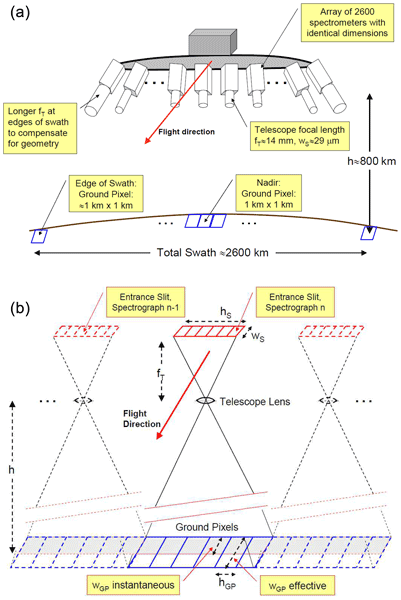
Ulrich Platt, Thomas Wagner, Jonas Kuhn, and Thomas Leisner
Atmos. Meas. Tech., 14, 6867–6883, https://doi.org/10.5194/amt-14-6867-2021, https://doi.org/10.5194/amt-14-6867-2021, 2021
Short summary
Short summary
Absorption spectroscopy of scattered sunlight is extremely useful for the analysis of atmospheric trace gas distributions. A central parameter for the achievable sensitivity of spectroscopic instruments is the light throughput, which can be enhanced in a number of ways. We present new ideas and considerations of how instruments could be optimized. Particular emphasis is on arrays of massively parallel instruments. Such arrays can reduce the size and weight of instruments by orders of magnitude.
Cited articles
Alvarado, L. M. A., Richter, A., Vrekoussis, M., Hilboll, A., Kalisz Hedegaard, A. B., Schneising, O., and Burrows, J. P.: Unexpected long-range transport of glyoxal and formaldehyde observed from the Copernicus Sentinel-5 Precursor satellite during the 2018 Canadian wildfires, Atmos. Chem. Phys., 20, 2057–2072, https://doi.org/10.5194/acp-20-2057-2020, 2020. a
Andreae, M. O. and Merlet, P.: Emission of trace gases and aerosols from biomass burning, Global Biogeochem. Cy., 15, 955–966, https://doi.org/10.1029/2000gb001382, 2001. a
Andreae, M. O., Acevedo, O. C., Araùjo, A., Artaxo, P., Barbosa, C. G. G., Barbosa, H. M. J., Brito, J., Carbone, S., Chi, X., Cintra, B. B. L., da Silva, N. F., Dias, N. L., Dias-Júnior, C. Q., Ditas, F., Ditz, R., Godoi, A. F. L., Godoi, R. H. M., Heimann, M., Hoffmann, T., Kesselmeier, J., Könemann, T., Krüger, M. L., Lavric, J. V., Manzi, A. O., Lopes, A. P., Martins, D. L., Mikhailov, E. F., Moran-Zuloaga, D., Nelson, B. W., Nölscher, A. C., Santos Nogueira, D., Piedade, M. T. F., Pöhlker, C., Pöschl, U., Quesada, C. A., Rizzo, L. V., Ro, C.-U., Ruckteschler, N., Sá, L. D. A., de Oliveira Sá, M., Sales, C. B., dos Santos, R. M. N., Saturno, J., Schöngart, J., Sörgel, M., de Souza, C. M., de Souza, R. A. F., Su, H., Targhetta, N., Tóta, J., Trebs, I., Trumbore, S., van Eijck, A., Walter, D., Wang, Z., Weber, B., Williams, J., Winderlich, J., Wittmann, F., Wolff, S., and Yáñez-Serrano, A. M.: The Amazon Tall Tower Observatory (ATTO): overview of pilot measurements on ecosystem ecology, meteorology, trace gases, and aerosols, Atmos. Chem. Phys., 15, 10723–10776, https://doi.org/10.5194/acp-15-10723-2015, 2015. a
Beirle, S., Platt, U., Wenig, M., and Wagner, T.: Weekly cycle of NO2 by GOME measurements: a signature of anthropogenic sources, Atmos. Chem. Phys., 3, 2225–2232, https://doi.org/10.5194/acp-3-2225-2003, 2003. a
Bell, M. L., McDermott, A., Zeger, S. L., Samet, J. M., and Dominici, F.: Ozone and Short-term Mortality in 95 US Urban Communities, 1987-2000, JAMA, 292, 2372–2378, https://doi.org/10.1001/jama.292.19.2372, 2004. a
Bello, J., Vallet, P., Perot, T., Balandier, P., Seigner, V., Perret, S., Couteau, C., and Korboulewsky, N.: How do mixing tree species and stand density affect seasonal radial growth during drought events?, Forest Ecol. Manag., 432, 436–445, https://doi.org/10.1016/j.foreco.2018.09.044, 2019. a
Berg, F., Novelli, A., Dubus, R., Hofzumahaus, A., Holland, F., Wahner, A., and Fuchs, H.: Temperature-dependent rate coefficients for the reactions of OH radicals with selected alkanes, aromatic compounds, and monoterpenes, Atmos. Chem. Phys., 24, 13715–13731, https://doi.org/10.5194/acp-24-13715-2024, 2024. a
Bourtsoukidis, E., Pozzer, A., Williams, J., Makowski, D., Peñuelas, J., Matthaios, V. N., Lazoglou, G., Yañez-Serrano, A. M., Lelieveld, J., Ciais, P., Vrekoussis, M., Daskalakis, N., and Sciare, J.: High temperature sensitivity of monoterpene emissions from global vegetation, Communications Earth & Environment, 5, https://doi.org/10.1038/s43247-023-01175-9, 2024. a, b
Castro-Melgar, I., Tsagkou, A., Zacharopoulou, M., Basiou, E., Athinelis, I., Katris, E.-A., Kalavrezou, I.-E., and Parcharidis, I.: Wildfires During Early Summer in Greece (2024): Burn Severity and Land Use Dynamics Through Sentinel-2 Data, Forests, 16, 268, https://doi.org/10.3390/f16020268, 2025. a
Chen, Y., Liu, C., Su, W., Hu, Q., Zhang, C., Liu, H., and Yin, H.: Identification of volatile organic compound emissions from anthropogenic and biogenic sources based on satellite observation of formaldehyde and glyoxal, Sci. Total Environ., 859, 159997, https://doi.org/10.1016/j.scitotenv.2022.159997, 2023. a, b, c, d
Chan Miller, C., Gonzalez Abad, G., Wang, H., Liu, X., Kurosu, T., Jacob, D. J., and Chance, K.: Glyoxal retrieval from the Ozone Monitoring Instrument, Atmos. Meas. Tech., 7, 3891–3907, https://doi.org/10.5194/amt-7-3891-2014, 2014. a, b
Chan Miller, C., Jacob, D. J., González Abad, G., and Chance, K.: Hotspot of glyoxal over the Pearl River delta seen from the OMI satellite instrument: implications for emissions of aromatic hydrocarbons, Atmos. Chem. Phys., 16, 4631–4639, https://doi.org/10.5194/acp-16-4631-2016, 2016. a, b, c
Chan Miller, C., Jacob, D. J., Marais, E. A., Yu, K., Travis, K. R., Kim, P. S., Fisher, J. A., Zhu, L., Wolfe, G. M., Hanisco, T. F., Keutsch, F. N., Kaiser, J., Min, K.-E., Brown, S. S., Washenfelder, R. A., González Abad, G., and Chance, K.: Glyoxal yield from isoprene oxidation and relation to formaldehyde: chemical mechanism, constraints from SENEX aircraft observations, and interpretation of OMI satellite data, Atmos. Chem. Phys., 17, 8725–8738, https://doi.org/10.5194/acp-17-8725-2017, 2017. a
Crameri, F., Shephard, G. E., and Heron, P. J.: The misuse of colour in science communication, Nat. Commun., 11, https://doi.org/10.1038/s41467-020-19160-7, 2020. a
Delacre, M., Lakens, D., and Leys, C.: Why Psychologists Should by Default Use Welch's t-test Instead of Student's t-test, International Review of Social Psychology, 30, 92–101, https://doi.org/10.5334/irsp.82, 2017. a
Delacre, M., Leys, C., Mora, Y. L., and Lakens, D.: Taking Parametric Assumptions Seriously: Arguments for the Use of Welch’s F-test instead of the Classical F-test in One-Way ANOVA, International Review of Social Psychology, 32, 13, https://doi.org/10.5334/irsp.198, 2019. a
Derwent, R. G., Jenkin, M. E., Utembe, S. R., Shallcross, D. E., Murrells, T. P., and Passant, N. R.: Secondary organic aerosol formation from a large number of reactive man-made organic compounds, Sci. Total Environ., 408, 3374–3381, https://doi.org/10.1016/j.scitotenv.2010.04.013, 2010. a
De Smedt, I., Pinardi, G., Vigouroux, C., Compernolle, S., Bais, A., Benavent, N., Boersma, F., Chan, K.-L., Donner, S., Eichmann, K.-U., Hedelt, P., Hendrick, F., Irie, H., Kumar, V., Lambert, J.-C., Langerock, B., Lerot, C., Liu, C., Loyola, D., Piters, A., Richter, A., Rivera Cárdenas, C., Romahn, F., Ryan, R. G., Sinha, V., Theys, N., Vlietinck, J., Wagner, T., Wang, T., Yu, H., and Van Roozendael, M.: Comparative assessment of TROPOMI and OMI formaldehyde observations and validation against MAX-DOAS network column measurements, Atmos. Chem. Phys., 21, 12561–12593, https://doi.org/10.5194/acp-21-12561-2021, 2021. a, b
Dienhart, D., Crowley, J. N., Bourtsoukidis, E., Edtbauer, A., Eger, P. G., Ernle, L., Harder, H., Hottmann, B., Martinez, M., Parchatka, U., Paris, J.-D., Pfannerstill, E. Y., Rohloff, R., Schuladen, J., Stönner, C., Tadic, I., Tauer, S., Wang, N., Williams, J., Lelieveld, J., and Fischer, H.: Measurement report: Observation-based formaldehyde production rates and their relation to OH reactivity around the Arabian Peninsula, Atmos. Chem. Phys., 21, 17373–17388, https://doi.org/10.5194/acp-21-17373-2021, 2021. a
DiGangi, J. P., Henry, S. B., Kammrath, A., Boyle, E. S., Kaser, L., Schnitzhofer, R., Graus, M., Turnipseed, A., Park, J.-H., Weber, R. J., Hornbrook, R. S., Cantrell, C. A., Maudlin III, R. L., Kim, S., Nakashima, Y., Wolfe, G. M., Kajii, Y., Apel, E. C., Goldstein, A. H., Guenther, A., Karl, T., Hansel, A., and Keutsch, F. N.: Observations of glyoxal and formaldehyde as metrics for the anthropogenic impact on rural photochemistry, Atmos. Chem. Phys., 12, 9529–9543, https://doi.org/10.5194/acp-12-9529-2012, 2012. a, b, c, d, e, f, g, h, i
Ehhalt, D., Prather, M., Dentener, F., Derwent, R., Dlugokencky, E., Holland, E., Isaksen, I., Katima, J., Kirchhoff, V., Matson, P., Midgley, P., and Wang, M.: Atmospheric Chemistry and Greenhouse Gases. In: Climate Change 2001: The Scientific Basis. Contribution of Working Group I to the Third Assessment Report of the Intergovernmental Panel on Climate Change, edited by: Houghton, J. T., Ding, Y., Griggs, D. J., Noguer, M., van der Linden, P. J., Dai, X., Maskell, K., Johnson, C. A., Cambridge University Press, ISBN 0521807670, 2001. a
European Environment Agency: Harm to human health from air pollution in Europe: burden of disease status, Briefing no. 21/2024, https://doi.org/10.2800/3950756, 2024. a
Finkenzeller, H. and Volkamer, R.: O2–O2 CIA in the gas phase: Cross-section of weak bands, and continuum absorption between 297–500 nm, J. Quant. Spectrosc. Ra., 279, 108063, https://doi.org/10.1016/j.jqsrt.2021.108063, 2022. a
Fortems-Cheiney, A., Chevallier, F., Pison, I., Bousquet, P., Saunois, M., Szopa, S., Cressot, C., Kurosu, T. P., Chance, K., and Fried, A.: The formaldehyde budget as seen by a global-scale multi-constraint and multi-species inversion system, Atmos. Chem. Phys., 12, 6699–6721, https://doi.org/10.5194/acp-12-6699-2012, 2012. a
Franco, B., Marais, E. A., Bovy, B., Bader, W., Lejeune, B., Roland, G., Servais, C., and Mahieu, E.: Diurnal cycle and multi-decadal trend of formaldehyde in the remote atmosphere near 46° N, Atmos. Chem. Phys., 16, 4171–4189, https://doi.org/10.5194/acp-16-4171-2016, 2016. a
Games, P. A. and Howell, J. F.: Pairwise Multiple Comparison Procedures with Unequal N's and/or Variances: A Monte Carlo Study, J. Educ. Stat., 1, 113–125, https://doi.org/10.3102/10769986001002113, 1976. a
Gilman, J. B., Lerner, B. M., Kuster, W. C., Goldan, P. D., Warneke, C., Veres, P. R., Roberts, J. M., de Gouw, J. A., Burling, I. R., and Yokelson, R. J.: Biomass burning emissions and potential air quality impacts of volatile organic compounds and other trace gases from fuels common in the US, Atmos. Chem. Phys., 15, 13915–13938, https://doi.org/10.5194/acp-15-13915-2015, 2015. a
Goldstein, A. H. and Galbally, I. E.: Known and Unexplored Organic Constituents in the Earth’s Atmosphere, Environ. Sci. Technol., 41, 1514–1521, https://doi.org/10.1021/es072476p, 2007. a
Granier, C., Darras, S., Denier van der Gon, H., Doubalova, J., Elguindi, N., Galle, B., Gauss, M., Guevara, M., Jalkanen, J.-P., Kuenen, J., Liousse, C., Quack, B., Simpson, D., and Sindelarova, K.: The Copernicus Atmosphere Monitoring Service global and regional emissions (April 2019 version), Copernicus Atmosphere Monitoring Service (CAMS), https://doi.org/10.24380/D0BN-KX16, 2019. a, b
Gratsea, M., Vrekoussis, M., Richter, A., Wittrock, F., Schönhardt, A., Burrows, J., Kazadzis, S., Mihalopoulos, N., and Gerasopoulos, E.: Slant column MAX-DOAS measurements of nitrogen dioxide, formaldehyde, glyoxal and oxygen dimer in the urban environment of Athens, Atmos. Environ., 135, 118–131, https://doi.org/10.1016/j.atmosenv.2016.03.048, 2016. a, b, c, d
Guenther, A., Hewitt, C. N., Erickson, D., Fall, R., Geron, C., Graedel, T., Harley, P., Klinger, L., Lerdau, M., Mckay, W. A., Pierce, T., Scholes, B., Steinbrecher, R., Tallamraju, R., Taylor, J., and Zimmerman, P.: A global model of natural volatile organic compound emissions, J. Geophys. Res.-Atmos., 100, 8873–8892, https://doi.org/10.1029/94jd02950, 1995. a
Guenther, A. B., Zimmerman, P. R., Harley, P. C., Monson, R. K., and Fall, R.: Isoprene and monoterpene emission rate variability: Model evaluations and sensitivity analyses, J. Geophys. Res.-Atmos., 98, 12609–12617, https://doi.org/10.1029/93jd00527, 1993. a
Guenther, A. B., Jiang, X., Heald, C. L., Sakulyanontvittaya, T., Duhl, T., Emmons, L. K., and Wang, X.: The Model of Emissions of Gases and Aerosols from Nature version 2.1 (MEGAN2.1): an extended and updated framework for modeling biogenic emissions, Geosci. Model Dev., 5, 1471–1492, https://doi.org/10.5194/gmd-5-1471-2012, 2012. a
Guo, Y., Wang, S., Zhu, J., Zhang, R., Gao, S., Saiz-Lopez, A., and Zhou, B.: Atmospheric formaldehyde, glyoxal and their relations to ozone pollution under low- and high-NOx regimes in summertime Shanghai, China, Atmos. Res., 258, 105635, https://doi.org/10.1016/j.atmosres.2021.105635, 2021. a
Haagen-Smit, A. J.: Chemistry and Physiology of Los Angeles Smog, Industrial & Engineering Chemistry, 44, 1342–1346, https://doi.org/10.1021/ie50510a045, 1952. a
Hallquist, M., Wenger, J. C., Baltensperger, U., Rudich, Y., Simpson, D., Claeys, M., Dommen, J., Donahue, N. M., George, C., Goldstein, A. H., Hamilton, J. F., Herrmann, H., Hoffmann, T., Iinuma, Y., Jang, M., Jenkin, M. E., Jimenez, J. L., Kiendler-Scharr, A., Maenhaut, W., McFiggans, G., Mentel, Th. F., Monod, A., Prévôt, A. S. H., Seinfeld, J. H., Surratt, J. D., Szmigielski, R., and Wildt, J.: The formation, properties and impact of secondary organic aerosol: current and emerging issues, Atmos. Chem. Phys., 9, 5155–5236, https://doi.org/10.5194/acp-9-5155-2009, 2009. a
Heijmans, R.: When does the expectation of a ratio equal the ratio of expectations?, Stat. Pap., 40, 107–115, https://doi.org/10.1007/bf02927114, 1999. a
Hersbach, H., Bell, B., Berrisford, P., Biavati, G., Horányi, A., Muñoz Sabater, J., Nicolas, J., Peubey, C., Radu, R., Rozum, I., Schepers, D., Simmons, A., Soci, C., Dee, D., and Thépaut, J.-N.: ERA5 hourly data on single levels from 1940 to present, Copernicus Climate Change Service (C3S) Climate Data Store (CDS) [data set], https://doi.org/10.24381/cds.adbb2d47, 2023. a, b
Hong, Q., Xing, J., Xing, C., Yang, B., Su, W., Chen, Y., Zhang, C., Zhu, Y., and Liu, C.: Investigating vertical distributions and photochemical indications of formaldehyde, glyoxal, and NO2 from MAX-DOAS observations in four typical cities of China, Sci. Total Environ., 954, 176447, https://doi.org/10.1016/j.scitotenv.2024.176447, 2024. a, b, c, d
Hönninger, G., von Friedeburg, C., and Platt, U.: Multi axis differential optical absorption spectroscopy (MAX-DOAS), Atmos. Chem. Phys., 4, 231–254, https://doi.org/10.5194/acp-4-231-2004, 2004. a, b
Institut national de la statistique et des études économiques: Populations de référence 2022 – Commune d'Orléans (45234), https://www.insee.fr/fr/statistiques/8288323?geo=COM-45234 (last access: 10 March 2026), 2024. a
Institut national de la statistique et des études économiques: Dossier complet – Commune de Traînou (45327), https://www.insee.fr/fr/statistiques/2011101?geo=COM-45327 (last access: 10 March 2026), 2025. a
Instituto Brasileiro de Geografia e Estatística: Panorama Censo 2022 – Manaus, https://censo2022.ibge.gov.br/panorama/ (last access: 10 March 2026), 2022. a
Irie, H., Takashima, H., Kanaya, Y., Boersma, K. F., Gast, L., Wittrock, F., Brunner, D., Zhou, Y., and Van Roozendael, M.: Eight-component retrievals from ground-based MAX-DOAS observations, Atmos. Meas. Tech., 4, 1027–1044, https://doi.org/10.5194/amt-4-1027-2011, 2011. a
Kaiser, J., Wolfe, G. M., Min, K. E., Brown, S. S., Miller, C. C., Jacob, D. J., deGouw, J. A., Graus, M., Hanisco, T. F., Holloway, J., Peischl, J., Pollack, I. B., Ryerson, T. B., Warneke, C., Washenfelder, R. A., and Keutsch, F. N.: Reassessing the ratio of glyoxal to formaldehyde as an indicator of hydrocarbon precursor speciation, Atmos. Chem. Phys., 15, 7571–7583, https://doi.org/10.5194/acp-15-7571-2015, 2015. a
Kassomenos, P., Kotroni, V., and Kallos, G.: Analysis of climatological and air quality observations from Greater Athens Area, Atmos. Environ., 29, 3671–3688, https://doi.org/10.1016/1352-2310(94)00358-r, 1995. a
Kim, M.-J., Baek, K.-M., Heo, J.-B., Cheong, J.-P., and Baek, S.-O.: Concentrations, health risks, and sources of hazardous air pollutants in Seoul-Incheon, a megacity area in Korea, Air Qual. Atmos. Hlth., 14, 873–893, https://doi.org/10.1007/s11869-021-00986-z, 2021. a, b
Kluge, F., Hüneke, T., Knecht, M., Lichtenstern, M., Rotermund, M., Schlager, H., Schreiner, B., and Pfeilsticker, K.: Profiling of formaldehyde, glyoxal, methylglyoxal, and CO over the Amazon: normalized excess mixing ratios and related emission factors in biomass burning plumes, Atmos. Chem. Phys., 20, 12363–12389, https://doi.org/10.5194/acp-20-12363-2020, 2020. a
Lagouvardos, K., Kotroni, V., Giannaros, T. M., and Dafis, S.: Meteorological Conditions Conducive to the Rapid Spread of the Deadly Wildfire in Eastern Attica, Greece, B. Am. Meteorol. Soc., 100, 2137–2145, https://doi.org/10.1175/bams-d-18-0231.1, 2019. a
Lange, K., Richter, A., Bösch, T., Zilker, B., Latsch, M., Behrens, L. K., Okafor, C. M., Bösch, H., Burrows, J. P., Merlaud, A., Pinardi, G., Fayt, C., Friedrich, M. M., Dimitropoulou, E., Van Roozendael, M., Ziegler, S., Ripperger-Lukosiunaite, S., Kuhn, L., Lauster, B., Wagner, T., Hong, H., Kim, D., Chang, L.-S., Bae, K., Song, C.-K., Park, J.-U., and Lee, H.: Validation of GEMS tropospheric NO2 columns and their diurnal variation with ground-based DOAS measurements, Atmos. Meas. Tech., 17, 6315–6344, https://doi.org/10.5194/amt-17-6315-2024, 2024. a
Laothawornkitkul, J., Taylor, J. E., Paul, N. D., and Hewitt, C. N.: Biogenic volatile organic compounds in the Earth system, New Phytol., 183, 27–51, https://doi.org/10.1111/j.1469-8137.2009.02859.x, 2009. a
Lee, M., Heikes, B. G., and Jacob, D. J.: Enhancements of hydroperoxides and formaldehyde in biomass burning impacted air and their effect on atmospheric oxidant cycles, J. Geophys. Res.-Atmos., 103, 13201–13212, https://doi.org/10.1029/98jd00578, 1998. a
Lelieveld, J., Evans, J. S., Fnais, M., Giannadaki, D., and Pozzer, A.: The contribution of outdoor air pollution sources to premature mortality on a global scale, Nature, 525, 367–371, https://doi.org/10.1038/nature15371, 2015. a
Lerot, C., Hendrick, F., Van Roozendael, M., Alvarado, L. M. A., Richter, A., De Smedt, I., Theys, N., Vlietinck, J., Yu, H., Van Gent, J., Stavrakou, T., Müller, J.-F., Valks, P., Loyola, D., Irie, H., Kumar, V., Wagner, T., Schreier, S. F., Sinha, V., Wang, T., Wang, P., and Retscher, C.: Glyoxal tropospheric column retrievals from TROPOMI – multi-satellite intercomparison and ground-based validation, Atmos. Meas. Tech., 14, 7775–7807, https://doi.org/10.5194/amt-14-7775-2021, 2021. a, b
Lerot, C., Müller, J.-F., Theys, N., De Smedt, I., Stavrakou, T., and Van Roozendael, M.: Satellite Evidence for Glyoxal Depletion in Elevated Fire Plumes, Geophys. Res. Lett., 50, e2022GL102195, https://doi.org/10.1029/2022GL102195, 2023. a
Li, X., Rohrer, F., Brauers, T., Hofzumahaus, A., Lu, K., Shao, M., Zhang, Y. H., and Wahner, A.: Modeling of HCHO and CHOCHO at a semi-rural site in southern China during the PRIDE-PRD2006 campaign, Atmos. Chem. Phys., 14, 12291–12305, https://doi.org/10.5194/acp-14-12291-2014, 2014. a
Li, X., Zhu, L., De Smedt, I., Sun, W., Chen, Y., Shu, L., Wang, D., Liu, S., Pu, D., Li, J., Zuo, X., Fu, W., Li, Y., Zhang, P., Yan, Z., Fu, T.-M., Shen, H., Wang, C., Ye, J., and Yang, X.: Global Temperature Dependency of Biogenic HCHO Columns Observed From Space: Interpretation of TROPOMI Results Using GEOS-Chem Model, J. Geophys. Res.-Atmos., 129, e2024JD041784, https://doi.org/10.1029/2024JD041784, 2024. a
Liaskoni, M., Huszár, P., Bartík, L., Prieto Perez, A. P., Karlický, J., and Šindelářová, K.: The long-term impact of biogenic volatile organic compound emissions on urban ozone patterns over central Europe: contributions from urban and rural vegetation, Atmos. Chem. Phys., 24, 13541–13569, https://doi.org/10.5194/acp-24-13541-2024, 2024. a
Liu, M. and Matsui, H.: Secondary Organic Aerosol Formation Regulates Cloud Condensation Nuclei in the Global Remote Troposphere, Geophys. Res. Lett., 49, e2022GL100543, https://doi.org/10.1029/2022GL100543, 2022. a
MacDonald, S. M., Oetjen, H., Mahajan, A. S., Whalley, L. K., Edwards, P. M., Heard, D. E., Jones, C. E., and Plane, J. M. C.: DOAS measurements of formaldehyde and glyoxal above a south-east Asian tropical rainforest, Atmos. Chem. Phys., 12, 5949–5962, https://doi.org/10.5194/acp-12-5949-2012, 2012. a
Mavroidis, I. and Ilia, M.: Trends of NOx, NO2 and O3 concentrations at three different types of air quality monitoring stations in Athens, Greece, Atmos. Environ., 63, 135–147, https://doi.org/10.1016/j.atmosenv.2012.09.030, 2012. a
McDuffie, E. E., Smith, S. J., O'Rourke, P., Tibrewal, K., Venkataraman, C., Marais, E. A., Zheng, B., Crippa, M., Brauer, M., and Martin, R. V.: A global anthropogenic emission inventory of atmospheric pollutants from sector- and fuel-specific sources (1970–2017): an application of the Community Emissions Data System (CEDS), Earth Syst. Sci. Data, 12, 3413–3442, https://doi.org/10.5194/essd-12-3413-2020, 2020. a
Myriokefalitakis, S., Vrekoussis, M., Tsigaridis, K., Wittrock, F., Richter, A., Brühl, C., Volkamer, R., Burrows, J. P., and Kanakidou, M.: The influence of natural and anthropogenic secondary sources on the glyoxal global distribution, Atmos. Chem. Phys., 8, 4965–4981, https://doi.org/10.5194/acp-8-4965-2008, 2008. a, b
Nelson, P. F., Tibbett, A. R., and Day, S. J.: Effects of vehicle type and fuel quality on real world toxic emissions from diesel vehicles, Atmos. Environ., 42, 5291–5303, https://doi.org/10.1016/j.atmosenv.2008.02.049, 2008. a
Nguyen, H. T., Kim, K.-H., and Park, C.: Long-term trend of NO2 in major urban areas of Korea and possible consequences for health, Atmos. Environ., 106, 347–357, https://doi.org/10.1016/j.atmosenv.2015.02.003, 2015. a
Nishino, N., Arey, J., and Atkinson, R.: Formation Yields of Glyoxal and Methylglyoxal from the Gas-Phase OH Radical-Initiated Reactions of Toluene, Xylenes, and Trimethylbenzenes as a Function of NO2 Concentration, J. Phys. Chem. A, 114, 10140–10147, https://doi.org/10.1021/jp105112h, 2010. a
Nussbaumer, C. M., Crowley, J. N., Schuladen, J., Williams, J., Hafermann, S., Reiffs, A., Axinte, R., Harder, H., Ernest, C., Novelli, A., Sala, K., Martinez, M., Mallik, C., Tomsche, L., Plass-Dülmer, C., Bohn, B., Lelieveld, J., and Fischer, H.: Measurement report: Photochemical production and loss rates of formaldehyde and ozone across Europe, Atmos. Chem. Phys., 21, 18413–18432, https://doi.org/10.5194/acp-21-18413-2021, 2021. a
Paris, E., Carnevale, M., Vincenti, B., Palma, A., Guerriero, E., Borello, D., and Gallucci, F.: Evaluation of VOCs Emitted from Biomass Combustion in a Small CHP Plant: Difference between Dry and Wet Poplar Woodchips, Molecules, 27, 955, https://doi.org/10.3390/molecules27030955, 2022. a
Pinardi, G., Van Roozendael, M., Abuhassan, N., Adams, C., Cede, A., Clémer, K., Fayt, C., Frieß, U., Gil, M., Herman, J., Hermans, C., Hendrick, F., Irie, H., Merlaud, A., Navarro Comas, M., Peters, E., Piters, A. J. M., Puentedura, O., Richter, A., Schönhardt, A., Shaiganfar, R., Spinei, E., Strong, K., Takashima, H., Vrekoussis, M., Wagner, T., Wittrock, F., and Yilmaz, S.: MAX-DOAS formaldehyde slant column measurements during CINDI: intercomparison and analysis improvement, Atmos. Meas. Tech., 6, 167–185, https://doi.org/10.5194/amt-6-167-2013, 2013. a, b, c
Pisso, I., Sollum, E., Grythe, H., Kristiansen, N. I., Cassiani, M., Eckhardt, S., Arnold, D., Morton, D., Thompson, R. L., Groot Zwaaftink, C. D., Evangeliou, N., Sodemann, H., Haimberger, L., Henne, S., Brunner, D., Burkhart, J. F., Fouilloux, A., Brioude, J., Philipp, A., Seibert, P., and Stohl, A.: The Lagrangian particle dispersion model FLEXPART version 10.4, Geosci. Model Dev., 12, 4955–4997, https://doi.org/10.5194/gmd-12-4955-2019, 2019. a
Platt, U. and Stutz, J.: Differential Optical Absorption Spectroscopy: Principles and Applications, Springer Berlin Heidelberg, Berlin, Heidelberg, https://doi.org/10.1007/978-3-540-75776-4_6, ISBN 978-3-540-21193-8, 2008. a, b
Poulidis, A. P. and Takemi, T.: A 1998–2013 climatology of Kyushu, Japan: seasonal variations of stability and rainfall, Int. J. Climatol., 37, 1843–1858, https://doi.org/10.1002/joc.4817, 2016. a
Pusede, S. E., Gentner, D. R., Wooldridge, P. J., Browne, E. C., Rollins, A. W., Min, K.-E., Russell, A. R., Thomas, J., Zhang, L., Brune, W. H., Henry, S. B., DiGangi, J. P., Keutsch, F. N., Harrold, S. A., Thornton, J. A., Beaver, M. R., St. Clair, J. M., Wennberg, P. O., Sanders, J., Ren, X., VandenBoer, T. C., Markovic, M. Z., Guha, A., Weber, R., Goldstein, A. H., and Cohen, R. C.: On the temperature dependence of organic reactivity, nitrogen oxides, ozone production, and the impact of emission controls in San Joaquin Valley, California, Atmos. Chem. Phys., 14, 3373–3395, https://doi.org/10.5194/acp-14-3373-201, 2014. a
Ramonet, M., Lopez, M., and Delmotte, M.: ICOS ATC NRT CO2 growing time series from Trainou (50.0 m), ICOS RI [data set], https://hdl.handle.net/11676/bP05gr9ZOJVKz7aARFR0lb7f (last access: 10 March 2026), 2025. a
Rawat, P., Naja, M., Rajwar, M. C., Irie, H., Lerot, C., Kumar, M., and Lal, S.: Long-term observations of NO2, SO2, HCHO, and CHOCHO over the Himalayan foothills: Insights from MAX-DOAS, TROPOMI, and GOME-2, Atmos. Environ., 336, 120746, https://doi.org/10.1016/j.atmosenv.2024.120746, 2024. a, b, c, d, e
Roscoe, H. K., Van Roozendael, M., Fayt, C., du Piesanie, A., Abuhassan, N., Adams, C., Akrami, M., Cede, A., Chong, J., Clémer, K., Friess, U., Gil Ojeda, M., Goutail, F., Graves, R., Griesfeller, A., Grossmann, K., Hemerijckx, G., Hendrick, F., Herman, J., Hermans, C., Irie, H., Johnston, P. V., Kanaya, Y., Kreher, K., Leigh, R., Merlaud, A., Mount, G. H., Navarro, M., Oetjen, H., Pazmino, A., Perez-Camacho, M., Peters, E., Pinardi, G., Puentedura, O., Richter, A., Schönhardt, A., Shaiganfar, R., Spinei, E., Strong, K., Takashima, H., Vlemmix, T., Vrekoussis, M., Wagner, T., Wittrock, F., Yela, M., Yilmaz, S., Boersma, F., Hains, J., Kroon, M., Piters, A., and Kim, Y. J.: Intercomparison of slant column measurements of NO2 and O4 by MAX-DOAS and zenith-sky UV and visible spectrometers, Atmos. Meas. Tech., 3, 1629–1646, https://doi.org/10.5194/amt-3-1629-2010, 2010. a
Seo, S., Kim, S.-W., Kim, K.-M., Lamsal, L. N., and Jin, H.: Reductions in NO2 concentrations in Seoul, South Korea detected from space and ground-based monitors prior to and during the COVID-19 pandemic, Environmental Research Communications, 3, 051005, https://doi.org/10.1088/2515-7620/abed92, 2021. a
Seyler, A., Wittrock, F., Kattner, L., Mathieu-Üffing, B., Peters, E., Richter, A., Schmolke, S., and Burrows, J. P.: Monitoring shipping emissions in the German Bight using MAX-DOAS measurements, Atmos. Chem. Phys., 17, 10997–11023, https://doi.org/10.5194/acp-17-10997-2017, 2017. a, b
Silva, S. J., Heald, C. L., and Li, M.: Space-Based Constraints on Terrestrial Glyoxal Production, J. Geophys. Res.-Atmos., 123, 13583–13594, https://doi.org/10.1029/2018JD029311, 2018. a, b
Sindelarova, K., Markova, J., Simpson, D., Huszar, P., Karlicky, J., Darras, S., and Granier, C.: High-resolution biogenic global emission inventory for the time period 2000–2019 for air quality modelling, Earth Syst. Sci. Data, 14, 251–270, https://doi.org/10.5194/essd-14-251-2022, 2022. a
Sinreich, R., Merten, A., Molina, L., and Volkamer, R.: Parameterizing radiative transfer to convert MAX-DOAS dSCDs into near-surface box-averaged mixing ratios, Atmos. Meas. Tech., 6, 1521–1532, https://doi.org/10.5194/amt-6-1521-2013, 2013. a
Soulie, A., Granier, C., Darras, S., Zilbermann, N., Doumbia, T., Guevara, M., Jalkanen, J.-P., Keita, S., Liousse, C., Crippa, M., Guizzardi, D., Hoesly, R., and Smith, S. J.: Global anthropogenic emissions (CAMS-GLOB-ANT) for the Copernicus Atmosphere Monitoring Service simulations of air quality forecasts and reanalyses, Earth Syst. Sci. Data, 16, 2261–2279, https://doi.org/10.5194/essd-16-2261-2024, 2024. a
Stavrakou, T., Müller, J.-F., De Smedt, I., Van Roozendael, M., Kanakidou, M., Vrekoussis, M., Wittrock, F., Richter, A., and Burrows, J. P.: The continental source of glyoxal estimated by the synergistic use of spaceborne measurements and inverse modelling, Atmos. Chem. Phys., 9, 8431–8446, https://doi.org/10.5194/acp-9-8431-2009, 2009a. a, b, c
Stavrakou, T., Müller, J.-F., De Smedt, I., Van Roozendael, M., van der Werf, G. R., Giglio, L., and Guenther, A.: Evaluating the performance of pyrogenic and biogenic emission inventories against one decade of space-based formaldehyde columns, Atmos. Chem. Phys., 9, 1037–1060, https://doi.org/10.5194/acp-9-1037-2009, 2009b. a, b
Turner, M. C., Jerrett, M., Pope, C. A., Krewski, D., Gapstur, S. M., Diver, W. R., Beckerman, B. S., Marshall, J. D., Su, J., Crouse, D. L., and Burnett, R. T.: Long-Term Ozone Exposure and Mortality in a Large Prospective Study, Am. J. Resp. Crit. Care, 193, 1134–1142, https://doi.org/10.1164/rccm.201508-1633oc, 2016. a
Volkamer, R., Martini, F. S., Molina, L. T., Salcedo, D., Jimenez, J. L., and Molina, M. J.: A missing sink for gas-phase glyoxal in Mexico City: Formation of secondary organic aerosol, Geophys. Res. Lett., 34, https://doi.org/10.1029/2007gl030752, 2007. a
Wang, H., Li, Y., Liu, Y., Lu, X., Zhang, Y., Fan, Q., Shen, C., Lai, S., Zhou, Y., Zhang, T., and Yue, D.: Underappreciated contributions of biogenic volatile organic compounds from urban green spaces to ozone pollution, Atmos. Chem. Phys., 25, 5233–5250, https://doi.org/10.5194/acp-25-5233-2025, 2025. a
Welch, B. L.: The generalization of 'Student's' problem when several different population variances are involved, Biometrika, 34, 28–35, https://doi.org/10.1093/biomet/34.1-2.28, 1947. a
Welch, B. L.: On the comparison of several mean values: an alternative approach, Biometrika, 38, 330–336, https://doi.org/10.2307/2332579, 1951. a
Wittrock, F., Oetjen, H., Richter, A., Fietkau, S., Medeke, T., Rozanov, A., and Burrows, J. P.: MAX-DOAS measurements of atmospheric trace gases in Ny-Ålesund - Radiative transfer studies and their application, Atmos. Chem. Phys., 4, 955–966, https://doi.org/10.5194/acp-4-955-2004, 2004. a
Wittrock, F., Richter, A., Oetjen, H., Burrows, J. P., Kanakidou, M., Myriokefalitakis, S., Volkamer, R., Beirle, S., Platt, U., and Wagner, T.: Simultaneous global observations of glyoxal and formaldehyde from space, Geophys. Res. Lett., 33, https://doi.org/10.1029/2006gl026310, 2006. a
Xing, C., Liu, C., Hu, Q., Fu, Q., Lin, H., Wang, S., Su, W., Wang, W., Javed, Z., and Liu, J.: Identifying the wintertime sources of volatile organic compounds (VOCs) from MAX-DOAS measured formaldehyde and glyoxal in Chongqing, southwest China, Sci. Total Environ., 715, 136258, https://doi.org/10.1016/j.scitotenv.2019.136258, 2020. a, b, c
Xing, J., Hong, Q., Yang, B., Xing, C., Yang, S., Mao, M., Su, W., Chen, Y., and Zhang, C.: Source identification of volatile organic compounds precursors from glyoxal and secondary formaldehyde utilizing MAX-DOAS observations in guangzhou, China, Atmos. Res., 325, 108256, https://doi.org/10.1016/j.atmosres.2025.108256, 2025. a, b, c, d
Zarzana, K. J., Min, K.-E., Washenfelder, R. A., Kaiser, J., Krawiec-Thayer, M., Peischl, J., Neuman, J. A., Nowak, J. B., Wagner, N. L., Dubè, W. P., St. Clair, J. M., Wolfe, G. M., Hanisco, T. F., Keutsch, F. N., Ryerson, T. B., and Brown, S. S.: Emissions of Glyoxal and Other Carbonyl Compounds from Agricultural Biomass Burning Plumes Sampled by Aircraft, Environmental Science & Technology, 51, 11761–11770, https://doi.org/10.1021/acs.est.7b03517, 2017. a, b
Zarzana, K. J., Selimovic, V., Koss, A. R., Sekimoto, K., Coggon, M. M., Yuan, B., Dubé, W. P., Yokelson, R. J., Warneke, C., de Gouw, J. A., Roberts, J. M., and Brown, S. S.: Primary emissions of glyoxal and methylglyoxal from laboratory measurements of open biomass burning, Atmos. Chem. Phys., 18, 15451–15470, https://doi.org/10.5194/acp-18-15451-2018, 2018. a
Zhang, B., Qiao, L., Han, H., Xie, W., and Li, L.: Variations in VOCs Emissions and Their O3 and SOA Formation Potential among Different Ages of Plant Foliage, Toxics, 11, 645, https://doi.org/10.3390/toxics11080645, 2023. a
Zheng, G., Kuang, C., Uin, J., Watson, T., and Wang, J.: Large contribution of organics to condensational growth and formation of cloud condensation nuclei (CCN) in the remote marine boundary layer, Atmos. Chem. Phys., 20, 12515–12525, https://doi.org/10.5194/acp-20-12515-2020, 2020. a
Short summary
Knowing where air pollutants come from helps assess their impact on human health and climate. One proposed tool is the ratio of two trace gases, glyoxal and formaldehyde, measured from the ground at four sites. This ratio was found to be lower at natural and higher at human-influenced sites, and to vary systematically over the day, season, and with temperature. These patterns suggest that our current understanding of this ratio remains incomplete, limiting its reliable use as a source indicator.
Knowing where air pollutants come from helps assess their impact on human health and climate....


Altmetrics
Final-revised paper
Preprint