
Articles | Volume 26, issue 10
https://doi.org/10.5194/acp-26-7047-2026
© Author(s) 2026. This work is distributed under
the Creative Commons Attribution 4.0 License.
the Creative Commons Attribution 4.0 License.
Special issue:
https://doi.org/10.5194/acp-26-7047-2026
© Author(s) 2026. This work is distributed under
the Creative Commons Attribution 4.0 License.
the Creative Commons Attribution 4.0 License.
Research article
| 
22 May 2026
Research article |
| 22 May 2026
| 22 May 2026
Large ozone enhancement over South Asia triggered by sudden stratospheric warming under westerly QBO phase: implications on ozone radiative forcing
Shubhajyoti Roy
Centre for Climate Change Research, Indian Institute of Tropical Meteorology, Ministry Of Earth Sciences, Pune, India
Department of Atmospheric and Space Sciences, Savitribai Phule Pune University, Pune, India
Satheesh P. R. Chandran
Centre for Climate Change Research, Indian Institute of Tropical Meteorology, Ministry Of Earth Sciences, Pune, India

Centre for Climate Change Research, Indian Institute of Tropical Meteorology, Ministry Of Earth Sciences, Pune, India
Vijay Sagar
Centre for Climate Change Research, Indian Institute of Tropical Meteorology, Ministry Of Earth Sciences, Pune, India
Michaela I. Hegglin
Institute of Energy and Climate Systems: Stratosphere (ICE-4), Forschungszentrum Jülich, Jülich, Germany
Institute for Atmospheric and Environmental Research, University of Wuppertal, Wuppertal, Germany
Department of Meteorology, University of Reading, Reading, United Kingdom
Rolf Müller
Institute of Energy and Climate Systems: Stratosphere (ICE-4), Forschungszentrum Jülich, Jülich, Germany
Prashant Chavan
Centre for Climate Change Research, Indian Institute of Tropical Meteorology, Ministry Of Earth Sciences, Pune, India
Related authors
No articles found.
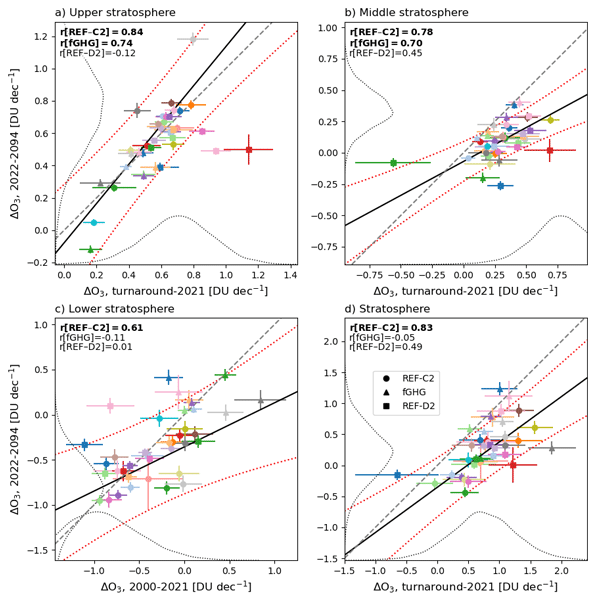
Sean M. Davis, William T. Ball, Yue Jia, Gabriel Chiodo, Justin A. Alsing, James Keeble, Hideharu Akiyoshi, Carlo Arosio, Ewa M. Bednarz, Andreas Chrysanthou, Melanie Coldewey-Egbers, Robert Damadeo, Sandip Dhomse, Mohamadou A. Diallo, Simone Dietmuller, Roland Eichinger, Stacey Frith, Birgit Hassler, Michaela I. Hegglin, Daan Hubert, Patrick Jöckel, Béatrice Josse, Natalya Kramarova, Diego Loyola, Eliane Maillard Barras, Marion Marchand, Olaf Morgenstern, David Plummer, Robert W. Portmann, Karen H. Rosenlof, Alexei Rozanov, Viktoria F. Sofieva, Johannes Staehelin, Timofei Sukhodolov, Kleareti Tourpali, Ronald J. Van der A, H. J. Ray Wang, Krzysztof Wargan, Shingo Watanabe, Mark Weber, Jeannette D. Wild, Yousuke Yamashita, and Jerry Ziemke
Atmos. Chem. Phys., 26, 13817–13843, https://doi.org/10.5194/acp-26-13817-2026, https://doi.org/10.5194/acp-26-13817-2026, 2026
Short summary
Short summary
This study investigates tropical ozone changes in models and satellite observations to determine how well they agree and whether observations can constrain model projections. At some levels, satellite records disagree significantly on the magnitude of ozone changes. While early and late 21st century trends are correlated across models, suggesting a potential emergent constraint, the spread in observations means they are unable to provide guidance on the credibility of model projections.
Florian Voet, Felix Ploeger, Johannes C. Laube, Laura N. Saunders, Patrick E. Sheese, Attahir Mainika, Peter Preusse, Jens-Uwe Grooß, Kaley A. Walker, Susann Tegtmeier, and Michaela Imelda Hegglin
EGUsphere, https://doi.org/10.5194/egusphere-2026-4647, https://doi.org/10.5194/egusphere-2026-4647, 2026
This preprint is open for discussion and under review for Atmospheric Chemistry and Physics (ACP).
Short summary
Short summary
We developed a better way to estimate how long air remains in the upper atmosphere, because satellite estimates can be too noisy to show long-term changes. Using measurements of several gases from a satellite, we found that combining them cuts uncertainty by about half and gives estimates with about 0.3 years of average uncertainty. Results for 2004–2021 show older air in the Northern Hemisphere and younger air in the tropics and Southern Hemisphere, suggesting slower circulation in the north.
Sandhya Singh, Ashish Soni, Shivdas Bankar, Ritesh Kumar, Rohit Srivastava, Sreerag Athirpankandi, Rajani Kanta Mishra, Jitender Singh, Gaddamidi Sreenivas, Amey Datye, Yogesh Tiwari, Suvarna Fadnavis, Thara Prabhakaran, and Anoop Sharad Mahajan
EGUsphere, https://doi.org/10.5194/egusphere-2026-3546, https://doi.org/10.5194/egusphere-2026-3546, 2026
Short summary
Short summary
The Southern Ocean helps regulate Earth’s climate, but cloud formation in this region is poorly understood due to limited measurements. We collected the first continuous Cloud Condensation Nuclei (CCN) observations from the tropics to coastal Antarctica in the Indian Sector of the Southern Ocean. We show that sea spray was not the main source; however, CCN increased when air passed over biologically productive waters, showing marine life strongly influences cloud-forming particles.
Jan Kaumanns, Florian Voet, Felix Ploeger, Peter Preuße, Jörn Ungermann, and Michaela Imelda Hegglin
EGUsphere, https://doi.org/10.5194/egusphere-2026-4183, https://doi.org/10.5194/egusphere-2026-4183, 2026
Short summary
Short summary
Age-of-Air (AoA) denotes the time an air parcel has spent inside the stratosphere and is an important diagnostic quantity for the Brewer Dobson Circulation (BDC). We present a novel approach using neural networks to accurately and robustly derive AoA from inert chemical species with considerable measurement noise even far beyond the training domain. We also present an alternative view of AoA by using autoencoders to derive a model-independent proxy quantity for it and validate its robustness.
Oleh Kachula, Bärbel Vogel, Gebhard Günther, Rolf Müller, and Felix Ploeger
EGUsphere, https://doi.org/10.5194/egusphere-2026-3509, https://doi.org/10.5194/egusphere-2026-3509, 2026
This preprint is open for discussion and under review for Atmospheric Chemistry and Physics (ACP).
Short summary
Short summary
Locating the boundary of the Asian summer monsoon anticyclone (ASMA) in the upper atmosphere is important for understanding how this system distributes pollutants. We show that while different methodologies generally agree on the boundary's location and shape, certain methods are preferred under specific conditions. These findings will be of broad interest to researchers studying large-scale atmospheric circulations in upper atmosphere.
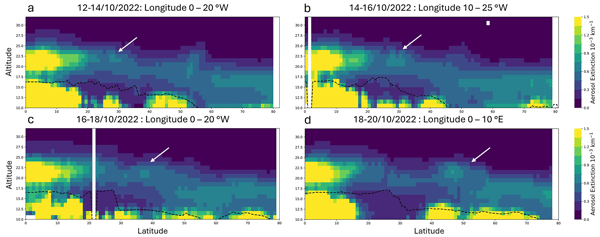
Corinna Kloss, Gwenaël Berthet, Pasquale Sellitto, Irene Bartolome Garcia, Emmanuel Briaud, Rubel Chandra Das, Stéphane Chevrier, Nicolas Dumelié, Lilian Joly, Thomas Lecas, Pauline Marbach, Felix Ploeger, Jean-Baptiste Renard, Jean-Paul Vernier, Frank G. Wienhold, and Michaela I. Hegglin
Atmos. Chem. Phys., 26, 8981–8997, https://doi.org/10.5194/acp-26-8981-2026, https://doi.org/10.5194/acp-26-8981-2026, 2026
Short summary
Short summary
In October 2022, we detected volcanic particles in the stratosphere over France, linked to the January 2022 Hunga eruption in the South Pacific. Found between 17 and 23 km altitude, they were traced back to the tropics using trajectory simulations and satellite data. Their optical properties matched those in the Southern Hemisphere. The particles spread across the Northern Hemisphere, reflecting sunlight and slightly cooling the surface – a small but non-negligible effect.
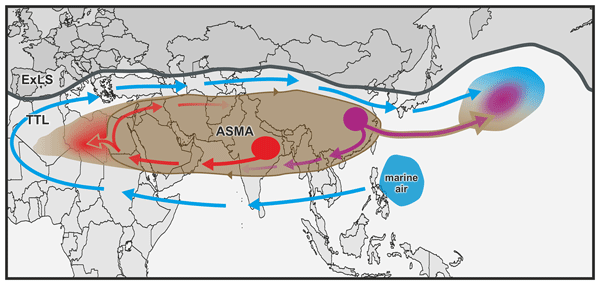
Bärbel Vogel, Valentin Lauther, Franziska Köllner, Fatih Ekinci, Christian Rolf, Johannes Strobel, Ronja van Luijt, C. Michael Volk, Stephan Borrmann, Antonis Dragoneas, Oliver Eppers, Sergej Molleker, Peter Hoor, Linda Ort, Franziska Weyland, Andreas Zahn, Jan Clemens, Gebhard Günther, Oleh Kachula, Rolf Müller, Felix Ploeger, and Martin Riese
Atmos. Chem. Phys., 26, 6283–6319, https://doi.org/10.5194/acp-26-6283-2026, https://doi.org/10.5194/acp-26-6283-2026, 2026
Short summary
Short summary
This work highlights the impact of the Asian summer monsoon on the chemical composition of the upper troposphere and lower stratosphere. Measurements of trace gases and aerosol particles uplifted by the Asian summer monsoon to higher altitudes are sparse. Here, we had the opportunity to use a whole suite of different measured trace gases and the chemical composition of aerosols, in combination with simulations, to better understand the complex transport and mixing processes in this region.
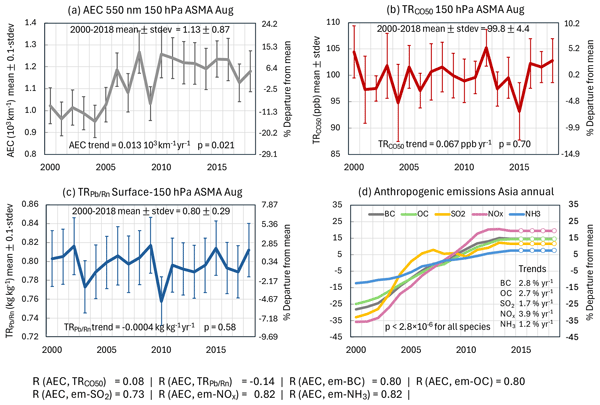
Mian Chin, Jonathon S. Wright, Huisheng Bian, Qian Tan, Xiaohua Pan, Toshihiko Takemura, Hitoshi Matsui, Kostas Tsigaridis, Susanne Bauer, Paul Ginoux, Yiran Peng, Zengyuan Guo, Suvarna Fadnavis, Anton Laakso, John P. Burrows, Ghassan Taha, Jayanta Kar, Alexei Rozanov, Carlo Arosio, Landon Rieger, and Adam Bourassa
Atmos. Chem. Phys., 26, 6035–6059, https://doi.org/10.5194/acp-26-6035-2026, https://doi.org/10.5194/acp-26-6035-2026, 2026
Short summary
Short summary
Aerosols in the upper troposphere influence weather and climate. The Asian summer monsoon efficiently transports surface pollutants upward, shaping aerosol amounts and variability in the upper troposphere. Using multiple global models, this study finds a summertime increase in upper-tropospheric aerosols at 1.2 % per year from 2000 to 2018 over Asia, consistent with rising pollutant emissions in Asia, while year-to-year changes are mainly driven by climate variability affecting monsoon dynamics.
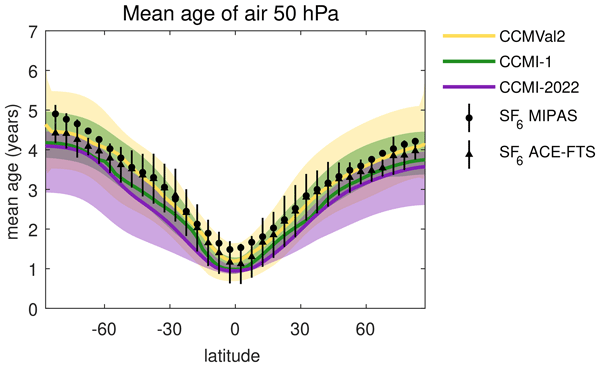
Marta Abalos, Thomas Birner, Andreas Chrysanthou, Sean Davis, Alvaro de la Cámara, Sandip Dhomse, Hella Garny, Michaela I. Hegglin, Daan Hubert, Oksana Ivaniha, James Keeble, Marianna Linz, Daniele Minganti, Jessica Neu, David Plummer, Laura Saunders, Kasturi Shah, Gabriele Stiller, Kleareti Tourpali, Darryn Waugh, Nathan Luke Abraham, Hideharu Akiyoshi, Martyn P. Chipperfield, Patrick Jöckel, Béatrice Josse, Marion Marchand, Patrick Martineau, Olaf Morgenstern, Timofei Sukhodolov, Shingo Watanabe, and Yousuke Yamashita
Atmos. Chem. Phys., 26, 5249–5291, https://doi.org/10.5194/acp-26-5249-2026, https://doi.org/10.5194/acp-26-5249-2026, 2026
Short summary
Short summary
Accurate representation of stratospheric transport in Chemistry-Climate Models is essential for reliable climate projections. This study evaluates three generations of models using observational data and reanalyses, identifying persistent biases and their potential causes. Some biases persist or even worsen in newer models. These findings highlight key limitations and inform efforts to improve models and advance understanding through process-based studies and enhanced observations.
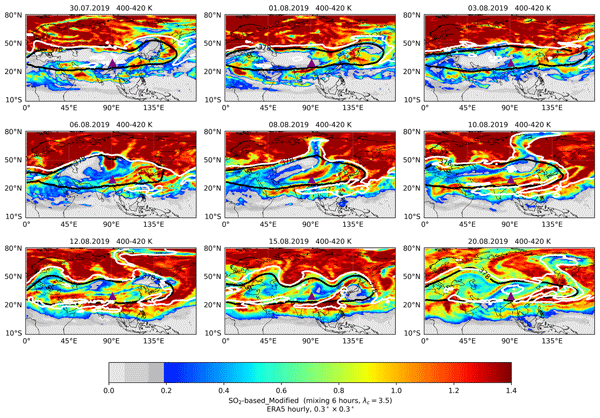
Zhen Yang, Bärbel Vogel, Felix Plöger, Zhixuan Bai, Dan Li, Sabine Griessbach, Lars Hoffmann, Frank G. Wienhold, Elizabeth Asher, Alexandre A. Baron, Katie R. Smith, Troy Thornberry, Jianchun Bian, and Michaela I. Hegglin
Atmos. Chem. Phys., 26, 4749–4769, https://doi.org/10.5194/acp-26-4749-2026, https://doi.org/10.5194/acp-26-4749-2026, 2026
Short summary
Short summary
Balloon measurements over Lhasa, China, combined with satellite guided modelling, tracked aerosol from the 2019 Raikoke eruption through the Asian summer monsoon anticyclone. We find two altitude dependent routes into the anticyclone. It partly blocks transport but also allows entry and mixing, explaining the gradual weakening of the layers. Balloon measurements over Boulder, United States, outside the anticyclone, provide an independent check outside the region.
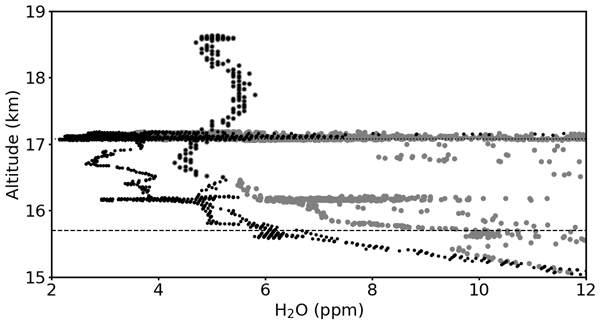
Rolf Müller, Bärbel Vogel, Martina Krämer, Christian Rolf, Nicole Spelten, and Fabrizio Ravegnani
Atmos. Chem. Phys., 26, 4359–4376, https://doi.org/10.5194/acp-26-4359-2026, https://doi.org/10.5194/acp-26-4359-2026, 2026
Short summary
Short summary
In the Asian summer monsoon anticyclone the lapse rate tropopause, and not the cold point, constitutes a good estimate of the upper boundary of the well mixed tropospheric air mass. For strong convection there is substantial dehydration at the cold point tropopause (in summer 2017). Above the cold point tropopause, under such conditions, neither ice particle occurrence, nor enhanced molar mixing ratios of water vapour (above ≲ 6 ppm) are observed.

Liliana Guidetti, Erika Brattich, Simone Ceccherini, Michaela I. Hegglin, Piera Raspollini, Cecilia Tirelli, Nicola Zoppetti, and Ugo Cortesi
Atmos. Meas. Tech., 19, 167–184, https://doi.org/10.5194/amt-19-167-2026, https://doi.org/10.5194/amt-19-167-2026, 2026
Short summary
Short summary
The Complete Data Fusion algorithm is applied to observations from the Michelson Interferometer for Passive Atmospheric Sounding and the Infrared Atmospheric Sounding Interferometer to generate and validate a new ozone dataset against ozone soundings across multiple latitudes. The fusion propagates stratospheric limb information into the troposphere. The dataset shows increased information content and lower uncertainty, improving the study of stratosphere–troposphere ozone intrusions.
Hazel Vernier, Demilson Quintao, Bruno Biazon, Eduardo Landulfo, Giovanni Souza, Amanda Santos, Fabio Lopes, Alex Mendes, José da Matta, Pinheiro Damaris, Benoit Grosslin, Maria Paulete, Maria de Fátima Andrade, Neeraj Rastogi, Akhil Raj, Hongyu Liu, Mahesh Kovilakam, Suvarna Fadnavis, Frank Wienhold, Mathieu Colombier, Chris Boone, Gwenael Berthet, Nicolas Dumelie, Lilian Joly, and Jean-Paul Vernier
EGUsphere, https://doi.org/10.5194/egusphere-2025-6226, https://doi.org/10.5194/egusphere-2025-6226, 2026
Preprint archived
Short summary
Short summary
This paper shows unique balloon measurements from Brazil within the Hunga volcanic plume eight months after the eruption. The chemical analysis of samples collected reveal new insights on volcanic aerosol composition and suggest the presence of marine aerosols.

Paul Konopka, Felix Ploeger, Francesco D'Amato, Teresa Campos, Marc von Hobe, Shawn B. Honomichl, Peter Hoor, Laura L. Pan, Michelle L. Santee, Silvia Viciani, Kaley A. Walker, and Michaela I. Hegglin
Atmos. Chem. Phys., 25, 17973–17996, https://doi.org/10.5194/acp-25-17973-2025, https://doi.org/10.5194/acp-25-17973-2025, 2025
Short summary
Short summary
We present an improved version of the Chemical Lagrangian Model of the Stratosphere (CLaMS-3.0), which better represents transport from the lower atmosphere to the upper troposphere and lower stratosphere. By refining grid resolution and improving convection representation, the model more accurately simulates carbon monoxide transport. Comparisons with satellite and in situ observations highlight its ability to capture seasonal variations and improve our understanding of atmospheric transport.
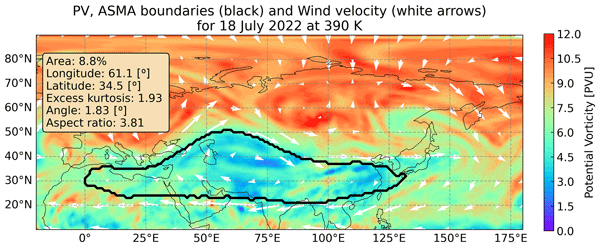
Oleh Kachula, Bärbel Vogel, Gebhard Günther, and Rolf Müller
Atmos. Chem. Phys., 25, 15171–15195, https://doi.org/10.5194/acp-25-15171-2025, https://doi.org/10.5194/acp-25-15171-2025, 2025
Short summary
Short summary
We propose a novel method to define the boundary of the Asian summer monsoon anticyclone (ASMA) and provide the inter-annual and intra-seasonal analyses based on 44 years (1980–2023) and highlight individual years – 2017, 2022 and 2023 during which aircraft campaigns StratoClim, ACCLIP and PHILEAS took place respectively. Our method shows consistent results with previous studies but also provide new information about possible bimodality of the ASMA and inter-annual decrease of the ASMA area.
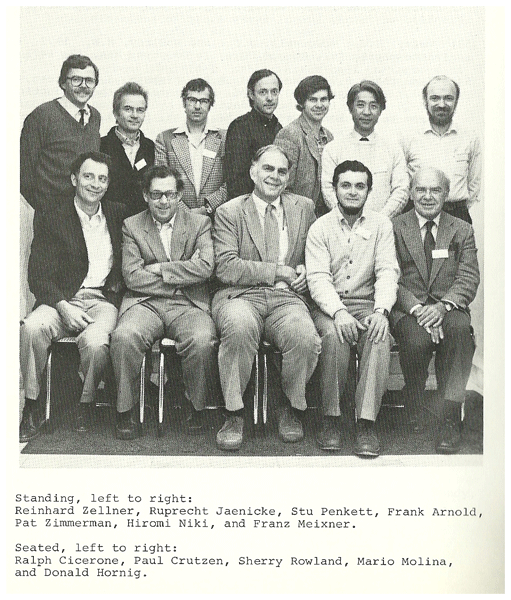
Rolf Müller, Lennart Bengtsson, John Birks, John Burrows, Ruprecht Jaenicke, and Richard S. Stolarski
Hist. Geo Space. Sci., 16, 31–40, https://doi.org/10.5194/hgss-16-31-2025, https://doi.org/10.5194/hgss-16-31-2025, 2025
Short summary
Short summary
This paper reports a few anecdotes from the life of Paul J. Crutzen that were contributed by friends and colleagues. Taken together, these anecdotes should shed some light on the person that Paul was, as this is perhaps sometimes obscured when focusing solely on his many scientific achievements.
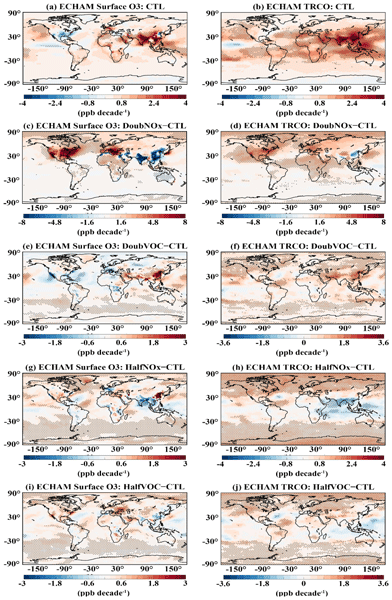
Suvarna Fadnavis, Yasin Elshorbany, Jerald Ziemke, Brice Barret, Alexandru Rap, P. R. Satheesh Chandran, Richard J. Pope, Vijay Sagar, Domenico Taraborrelli, Eric Le Flochmoen, Juan Cuesta, Catherine Wespes, Folkert Boersma, Isolde Glissenaar, Isabelle De Smedt, Michel Van Roozendael, Hervé Petetin, and Isidora Anglou
Atmos. Chem. Phys., 25, 8229–8254, https://doi.org/10.5194/acp-25-8229-2025, https://doi.org/10.5194/acp-25-8229-2025, 2025
Short summary
Short summary
Satellites and model simulations show enhancement in tropospheric ozone, which is highly impacted by human-produced nitrous oxides compared to volatile organic compounds. The increased amount of ozone enhances ozone radiative forcing. The ozone enhancement and associated radiative forcing are the highest over South and East Asia. The emissions of nitrous oxides show a higher influence on shifting ozone photochemical regimes than volatile organic compounds.
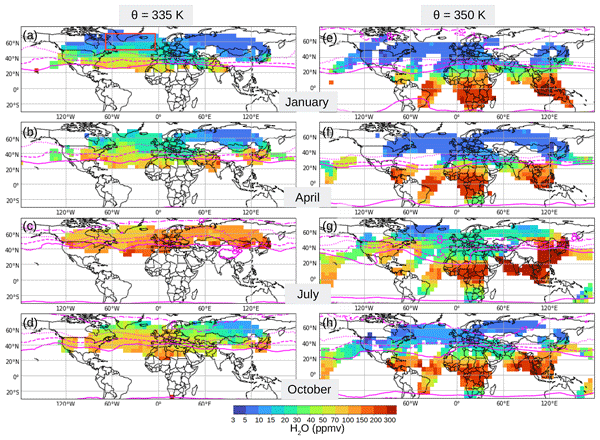
Patrick Konjari, Christian Rolf, Michaela I. Hegglin, Susanne Rohs, Yun Li, Andreas Zahn, Harald Bönisch, Philippe Nedelec, Martina Krämer, and Andreas Petzold
Atmos. Chem. Phys., 25, 4269–4289, https://doi.org/10.5194/acp-25-4269-2025, https://doi.org/10.5194/acp-25-4269-2025, 2025
Short summary
Short summary
This study introduces a new method to derive adjusted water vapor (H2O) climatologies for the upper tropopshere and lower statosphere (UT/LS) using data from 60 000 flights under the IAGOS program. Biases in the IAGOS water vapour dataset are adjusted, based on the more accurate IAGOS-CARIBIC data. The resulting highly resolved H2O climatologies will contribute to a better understanding of the H2O variability in the UT/LS and its connection to various transport and mixing processes.
Hazel Vernier, Demilson Quintão, Bruno Biazon, Eduardo Landulfo, Giovanni Souza, V. Amanda Santos, J. S. Fabio Lopes, C. P. Alex Mendes, A. S. José da Matta, K. Pinheiro Damaris, Benoit Grosslin, P. M. P. Maria Jorge, Maria de Fátima Andrade, Neeraj Rastogi, Akhil Raj, Hongyu Liu, Mahesh Kovilakam, Suvarna Fadnavis, Frank G. Wienhold, Mathieu Colombier, D. Chris Boone, Gwenael Berthet, Nicolas Dumelie, Lilian Joly, and Jean-Paul Vernier
EGUsphere, https://doi.org/10.5194/egusphere-2025-924, https://doi.org/10.5194/egusphere-2025-924, 2025
Preprint withdrawn
Short summary
Short summary
The eruption of Hunga Tonga-Hunga Ha'apai injected large amounts of water vapor and sea salt into the stratosphere, altering traditional views of volcanic aerosols. Using balloon-borne samplers, we collected aerosol samples and found high levels of sea salt and calcium, suggesting sulfate depletion due to gypsum formation. These findings highlight the need to consider sea salt in climate models to better predict volcanic impacts on the atmosphere and climate.
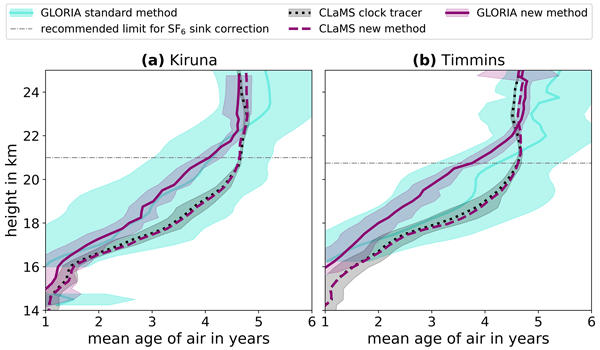
Florian Voet, Felix Ploeger, Johannes Laube, Peter Preusse, Paul Konopka, Jens-Uwe Grooß, Jörn Ungermann, Björn-Martin Sinnhuber, Michael Höpfner, Bernd Funke, Gerald Wetzel, Sören Johansson, Gabriele Stiller, Eric Ray, and Michaela I. Hegglin
Atmos. Chem. Phys., 25, 3541–3565, https://doi.org/10.5194/acp-25-3541-2025, https://doi.org/10.5194/acp-25-3541-2025, 2025
Short summary
Short summary
This study refines estimates of the stratospheric “age of air”, a measure of how long air circulates in the stratosphere. By analyzing correlations between trace gases measurable by satellites, the research introduces a method that reduces uncertainties and detects small-scale atmospheric features. This improved understanding of stratospheric circulation is crucial for better climate models and predictions, enhancing our ability to assess the impacts of climate change on the atmosphere.
Ziming Wang, Luca Bugliaro, Klaus Gierens, Michaela I. Hegglin, Susanne Rohs, Andreas Petzold, Stefan Kaufmann, and Christiane Voigt
Atmos. Chem. Phys., 25, 2845–2861, https://doi.org/10.5194/acp-25-2845-2025, https://doi.org/10.5194/acp-25-2845-2025, 2025
Short summary
Short summary
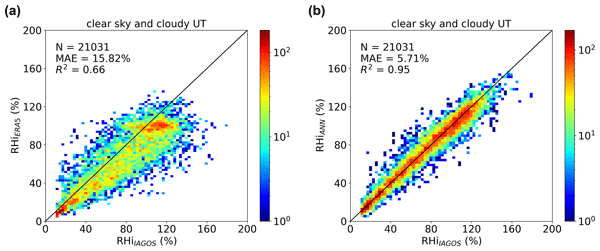
Upper-tropospheric relative humidity bias in the ERA5 weather model is corrected by 10 % by an artificial neural network using aircraft in-service humidity data and thermodynamic and dynamical variables. The improved skills of the weather model will advance cirrus research, weather forecasts, and measures for contrail reduction.
Dioumacor Faye, Felipe M. de Andrade, Roberto Suárez-Moreno, Dahirou Wane, Michaela I. Hegglin, Abdou L. Dieng, François Kaly, Redouane Lguensat, and Amadou T. Gaye
EGUsphere, https://doi.org/10.5194/egusphere-2024-4040, https://doi.org/10.5194/egusphere-2024-4040, 2025
Preprint archived
Short summary
Short summary
This study evaluates machine learning (ML) methods to improve subseasonal-to-seasonal (S2S) rainfall forecasts in Senegal during the West African monsoon. Using high-resolution precipitation data and atmospheric-oceanic reanalysis, we show that ML models like ridge regression outperform traditional climate models. These methods enhance prediction accuracy and efficiency, offering valuable tools for climate risk management and water resource planning.
Prashant Chavan, Suvarna Fadnavis, Anton Laakso, Jean-Paul Vernier, Simone Tilmes, and Rolf Müller
EGUsphere, https://doi.org/10.5194/egusphere-2024-3825, https://doi.org/10.5194/egusphere-2024-3825, 2025
Preprint archived
Short summary
Short summary
Our simulations with volcanoes, when compared without volcanoes, show that volcanic aerosol precursors enter the tropical stratosphere, propagating upward and enhancing sulphate aerosol and heating. This stratospheric heating caused by the volcanoes reduces the amplitude of the QBO and disrupts its phases. Since QBO also modulates tropical convection and weather, we suggest including volcanic emissions and the QBO in the weather prediction model for a better forecast.
Xiaodan Ma, Jianping Huang, Michaela I. Hegglin, Patrick Jöckel, and Tianliang Zhao
Atmos. Chem. Phys., 25, 943–958, https://doi.org/10.5194/acp-25-943-2025, https://doi.org/10.5194/acp-25-943-2025, 2025
Short summary
Short summary
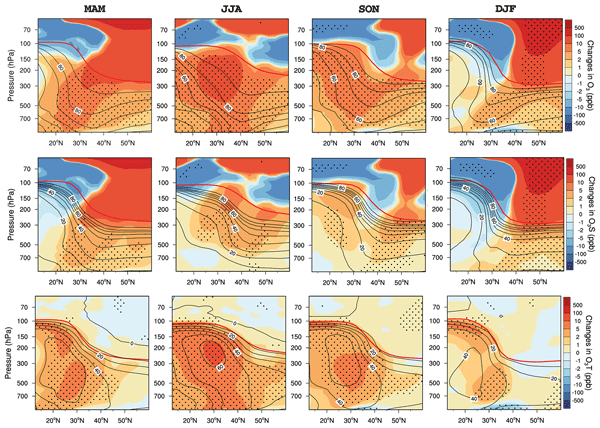
Our research explored changes in ozone levels in the northwest Pacific region over 30 years, revealing a significant increase in the middle-to-upper troposphere, especially during spring and summer. This rise is influenced by both stratospheric and tropospheric sources, which affect climate and air quality in East Asia. This work underscores the need for continued study to understand underlying mechanisms.
Yiran Zhang-Liu, Rolf Müller, Jens-Uwe Grooß, Sabine Robrecht, Bärbel Vogel, Abdul Mannan Zafar, and Ralph Lehmann
Atmos. Chem. Phys., 24, 12557–12574, https://doi.org/10.5194/acp-24-12557-2024, https://doi.org/10.5194/acp-24-12557-2024, 2024
Short summary
Short summary
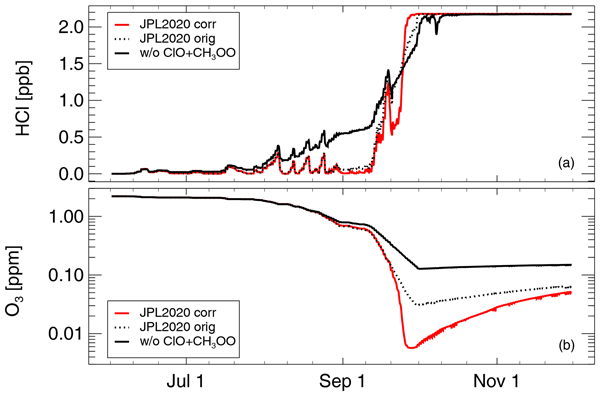
HCl null cycles in Antarctica are important for maintaining high values of ozone-destroying chlorine in Antarctic spring. These HCl null cycles are not affected by (1) using the most recent recommendations of chemical kinetics (compared to older recommendations), (2) accounting for dehydration in the Antarctic winter vortex, and (3) considering the observed (but unexplained) depletion of HCl in mid-winter in the Antarctic vortex throughout Antarctic winter.
Yasin Elshorbany, Jerald R. Ziemke, Sarah Strode, Hervé Petetin, Kazuyuki Miyazaki, Isabelle De Smedt, Kenneth Pickering, Rodrigo J. Seguel, Helen Worden, Tamara Emmerichs, Domenico Taraborrelli, Maria Cazorla, Suvarna Fadnavis, Rebecca R. Buchholz, Benjamin Gaubert, Néstor Y. Rojas, Thiago Nogueira, Thérèse Salameh, and Min Huang
Atmos. Chem. Phys., 24, 12225–12257, https://doi.org/10.5194/acp-24-12225-2024, https://doi.org/10.5194/acp-24-12225-2024, 2024
Short summary
Short summary
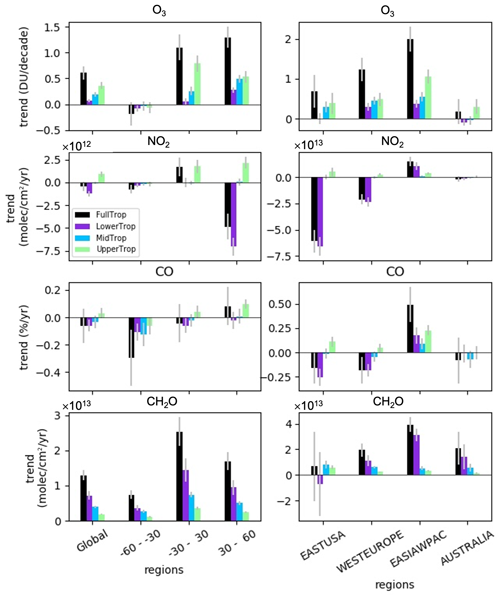
We investigated tropospheric ozone spatial variability and trends from 2005 to 2019 and related those to ozone precursors on global and regional scales. We also investigate the spatiotemporal characteristics of the ozone formation regime in relation to ozone chemical sources and sinks. Our analysis is based on remote sensing products of the tropospheric column of ozone and its precursors, nitrogen dioxide, formaldehyde, and total column CO, as well as ozonesonde data and model simulations.
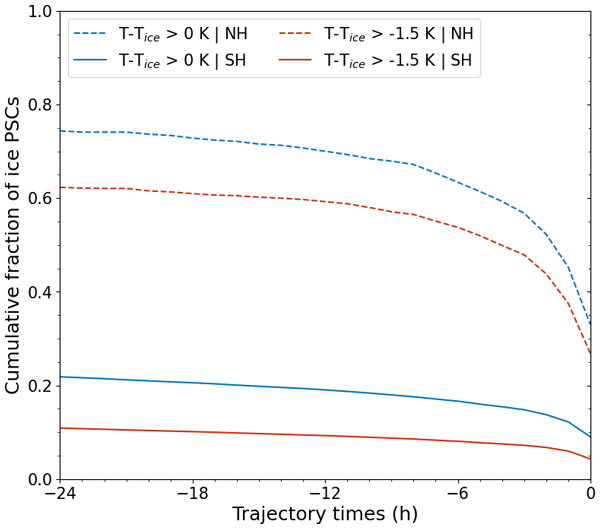
Ling Zou, Reinhold Spang, Sabine Griessbach, Lars Hoffmann, Farahnaz Khosrawi, Rolf Müller, and Ines Tritscher
Atmos. Chem. Phys., 24, 11759–11774, https://doi.org/10.5194/acp-24-11759-2024, https://doi.org/10.5194/acp-24-11759-2024, 2024
Short summary
Short summary
This study provided estimates of the occurrence of ice polar stratospheric clouds (PSCs) observed by the Michelson Interferometer for Passive Atmospheric Sounding (MIPAS) and their connection with temperatures above the frost point (Tice) using a Lagrangian model derived from ERA5. We found that ice PSCs above Tice with temperature fluctuations along the backward trajectory are 33 % in the Arctic and 9 % in the Antarctic. This quantitative assessment enhances our understanding of ice PSCs.
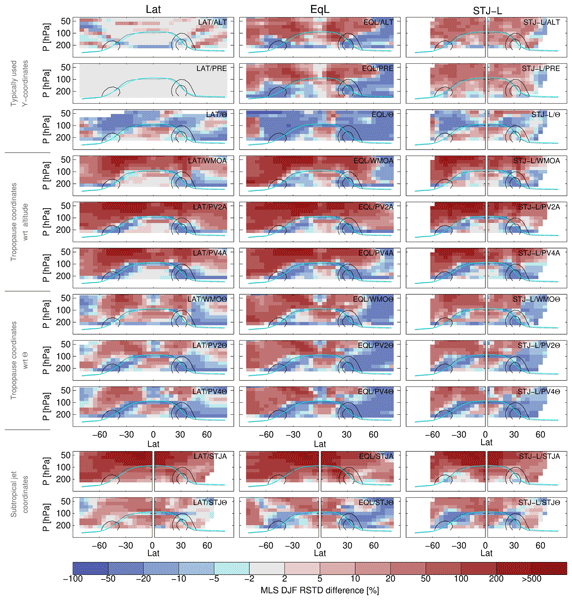
Luis F. Millán, Peter Hoor, Michaela I. Hegglin, Gloria L. Manney, Harald Boenisch, Paul Jeffery, Daniel Kunkel, Irina Petropavlovskikh, Hao Ye, Thierry Leblanc, and Kaley Walker
Atmos. Chem. Phys., 24, 7927–7959, https://doi.org/10.5194/acp-24-7927-2024, https://doi.org/10.5194/acp-24-7927-2024, 2024
Short summary
Short summary
In the Observed Composition Trends And Variability in the UTLS (OCTAV-UTLS) Stratosphere-troposphere Processes And their Role in Climate (SPARC) activity, we have mapped multiplatform ozone datasets into coordinate systems to systematically evaluate the influence of these coordinates on binned climatological variability. This effort unifies the work of studies that focused on individual coordinate system variability. Our goal was to create the most comprehensive assessment of this topic.
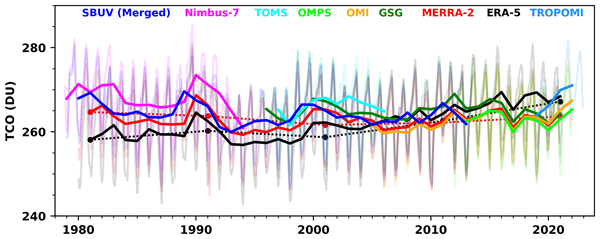
Jayanarayanan Kuttippurath, Gopalakrishna Pillai Gopikrishnan, Rolf Müller, Sophie Godin-Beekmann, and Jerome Brioude
Atmos. Chem. Phys., 24, 6743–6756, https://doi.org/10.5194/acp-24-6743-2024, https://doi.org/10.5194/acp-24-6743-2024, 2024
Short summary
Short summary
The current understanding and observational evidence do not provide any support for the possibility of an ozone hole occurring outside Antarctica today with respect to the present-day stratospheric halogen levels.
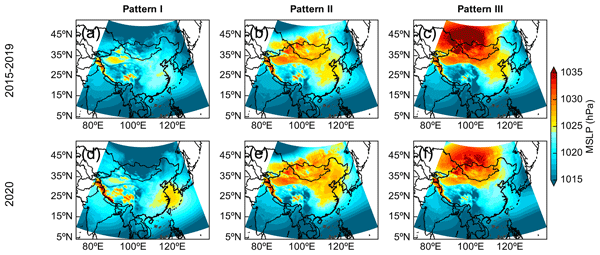
Fuzhen Shen, Michaela I. Hegglin, and Yue Yuan
Atmos. Chem. Phys., 24, 6539–6553, https://doi.org/10.5194/acp-24-6539-2024, https://doi.org/10.5194/acp-24-6539-2024, 2024
Short summary
Short summary
We attempt to use a novel structural self-organising map and machine learning models to identify a weather system and quantify the importance of each meteorological factor in driving the unexpected PM2.5 and O3 changes under the specific weather system during the COVID-19 lockdown in China. The result highlights that temperature under the double-centre high-pressure system plays the most crucial role in abnormal events.
Felix Ploeger, Thomas Birner, Edward Charlesworth, Paul Konopka, and Rolf Müller
Atmos. Chem. Phys., 24, 2033–2043, https://doi.org/10.5194/acp-24-2033-2024, https://doi.org/10.5194/acp-24-2033-2024, 2024
Short summary
Short summary
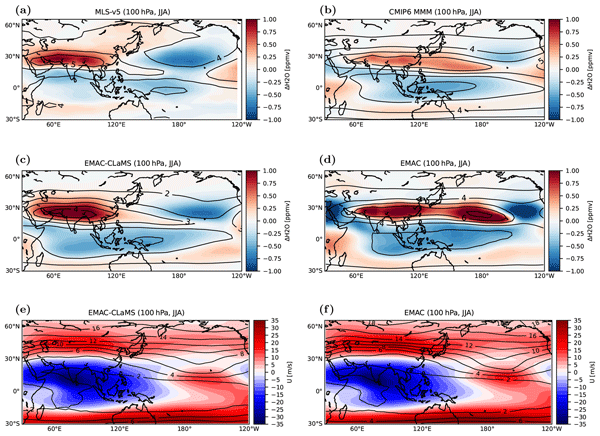
We present a novel mechanism of how regional anomalies in water vapour concentrations in the upper troposphere and lower stratosphere impact regional atmospheric circulation systems. These impacts include a displaced upper-level Asian monsoon circulation and strengthened prevailing westerlies in the Pacific region. Current climate models have biases in simulating these regional water vapour anomalies and circulation impacts, but the biases can be avoided by improving the model transport.
Reinhold Spang, Rolf Müller, and Alexandru Rap
Atmos. Chem. Phys., 24, 1213–1230, https://doi.org/10.5194/acp-24-1213-2024, https://doi.org/10.5194/acp-24-1213-2024, 2024
Short summary
Short summary
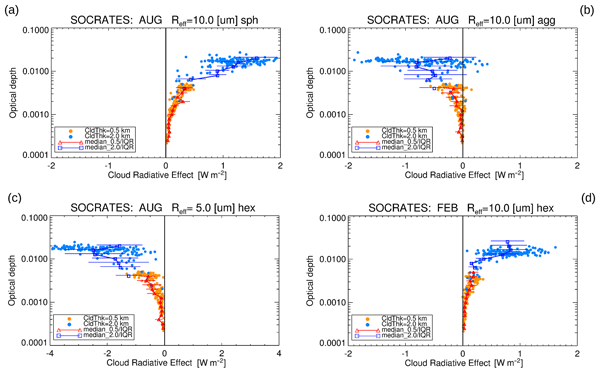
Cirrus clouds play an important role in the radiation budget of the Earth. Despite recent progress in their observation, the radiative impact of ultra-thin cirrus clouds (UTC) in the tropopause region and in the lowermost stratosphere remains poorly constrained. Sensitivity model simulations with different ice parameters provide an uncertainty range for the radiative effect of UTCs. There is a need for better observed UTCs to enable the simulation of their potentially large effect on climate.
Jan Clemens, Bärbel Vogel, Lars Hoffmann, Sabine Griessbach, Nicole Thomas, Suvarna Fadnavis, Rolf Müller, Thomas Peter, and Felix Ploeger
Atmos. Chem. Phys., 24, 763–787, https://doi.org/10.5194/acp-24-763-2024, https://doi.org/10.5194/acp-24-763-2024, 2024
Short summary
Short summary
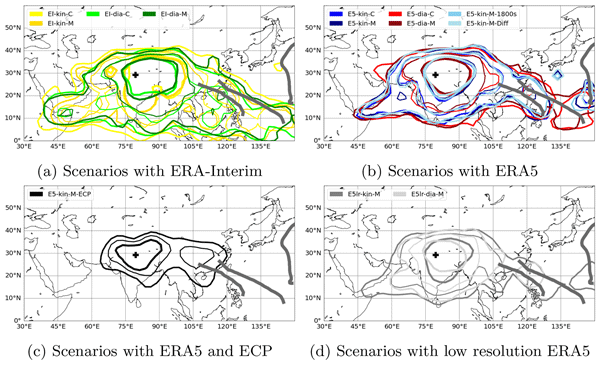
The source regions of the Asian tropopause aerosol layer (ATAL) are debated. We use balloon-borne measurements of the layer above Nainital (India) in August 2016 and atmospheric transport models to find ATAL source regions. Most air originated from the Tibetan plateau. However, the measured ATAL was stronger when more air originated from the Indo-Gangetic Plain and weaker when more air originated from the Pacific. Hence, the results indicate important anthropogenic contributions to the ATAL.
Bärbel Vogel, C. Michael Volk, Johannes Wintel, Valentin Lauther, Jan Clemens, Jens-Uwe Grooß, Gebhard Günther, Lars Hoffmann, Johannes C. Laube, Rolf Müller, Felix Ploeger, and Fred Stroh
Atmos. Chem. Phys., 24, 317–343, https://doi.org/10.5194/acp-24-317-2024, https://doi.org/10.5194/acp-24-317-2024, 2024
Short summary
Short summary
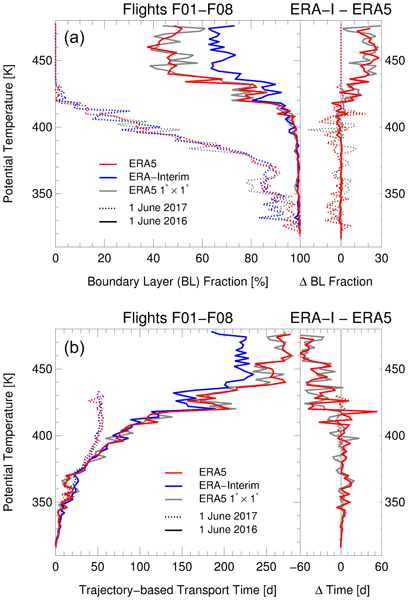
Over the Indian subcontinent, polluted air is rapidly uplifted to higher altitudes during the Asian monsoon season. We present an assessment of vertical transport in this region using different wind data provided by the European Centre for Medium-Range Weather Forecasts (ECMWF), as well as high-resolution aircraft measurements. In general, our findings confirm that the newest ECMWF reanalysis product, ERA5, yields a better representation of transport compared to the predecessor, ERA-Interim.

Rolf Müller, Ulrich Pöschl, Thomas Koop, Thomas Peter, and Ken Carslaw
Atmos. Chem. Phys., 23, 15445–15453, https://doi.org/10.5194/acp-23-15445-2023, https://doi.org/10.5194/acp-23-15445-2023, 2023
Short summary
Short summary
Paul J. Crutzen was a pioneer in atmospheric sciences and a kind-hearted, humorous person with empathy for the private lives of his colleagues and students. He made fundamental scientific contributions to a wide range of scientific topics in all parts of the atmosphere. Paul was among the founders of the journal Atmospheric Chemistry and Physics. His work will continue to be a guide for generations of scientists and environmental policymakers to come.
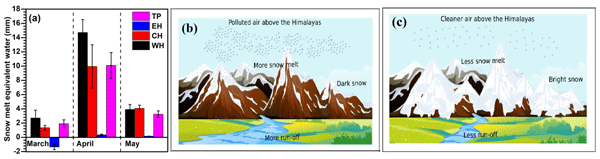
Suvarna Fadnavis, Bernd Heinold, T. P. Sabin, Anne Kubin, Katty Huang, Alexandru Rap, and Rolf Müller
Atmos. Chem. Phys., 23, 10439–10449, https://doi.org/10.5194/acp-23-10439-2023, https://doi.org/10.5194/acp-23-10439-2023, 2023
Short summary
Short summary
The influence of the COVID-19 lockdown on the Himalayas caused increases in snow cover and a decrease in runoff, ultimately leading to an enhanced snow water equivalent. Our findings highlight that, out of the two processes causing a retreat of Himalayan glaciers – (1) slow response to global climate change and (2) fast response to local air pollution – a policy action on the latter is more likely to be within the reach of possible policy action to help billions of people in southern Asia.
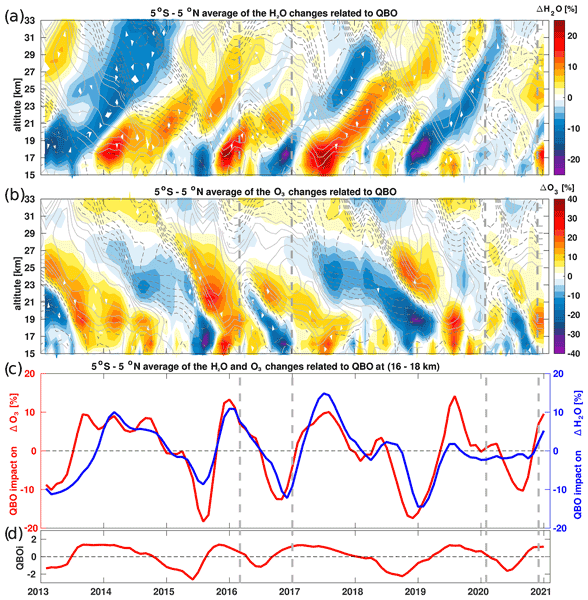
Mohamadou A. Diallo, Felix Ploeger, Michaela I. Hegglin, Manfred Ern, Jens-Uwe Grooß, Sergey Khaykin, and Martin Riese
Atmos. Chem. Phys., 22, 14303–14321, https://doi.org/10.5194/acp-22-14303-2022, https://doi.org/10.5194/acp-22-14303-2022, 2022
Short summary
Short summary
The quasi-biennial oacillation disruption events in both 2016 and 2020 decreased lower-stratospheric water vapour and ozone. Differences in the strength and depth of the anomalous lower-stratospheric circulation and ozone are due to differences in tropical upwelling and cold-point temperature induced by lower-stratospheric planetary and gravity wave breaking. The differences in water vapour are due to higher cold-point temperature in 2020 induced by Australian wildfire.
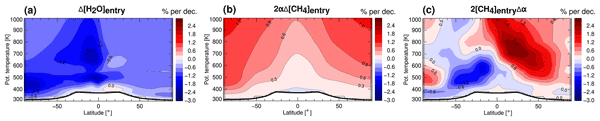
Liubov Poshyvailo-Strube, Rolf Müller, Stephan Fueglistaler, Michaela I. Hegglin, Johannes C. Laube, C. Michael Volk, and Felix Ploeger
Atmos. Chem. Phys., 22, 9895–9914, https://doi.org/10.5194/acp-22-9895-2022, https://doi.org/10.5194/acp-22-9895-2022, 2022
Short summary
Short summary
Brewer–Dobson circulation (BDC) controls the composition of the stratosphere, which in turn affects radiation and climate. As the BDC cannot be measured directly, it is necessary to infer its strength and trends indirectly. In this study, we test in the
model worlddifferent methods for estimating the mean age of air trends based on a combination of stratospheric water vapour and methane data. We also provide simple practical advice of a more reliable estimation of the mean age of air trends.
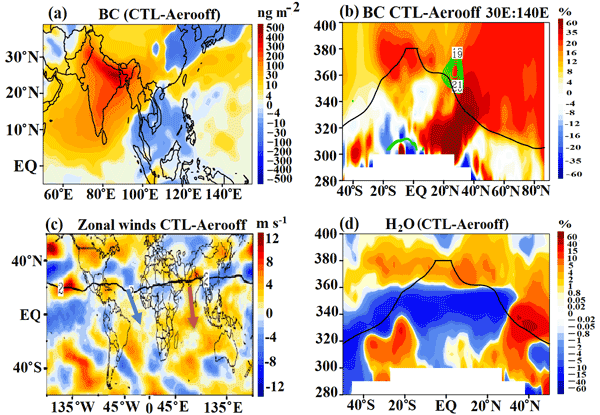
Suvarna Fadnavis, Prashant Chavan, Akash Joshi, Sunil M. Sonbawne, Asutosh Acharya, Panuganti C. S. Devara, Alexandru Rap, Felix Ploeger, and Rolf Müller
Atmos. Chem. Phys., 22, 7179–7191, https://doi.org/10.5194/acp-22-7179-2022, https://doi.org/10.5194/acp-22-7179-2022, 2022
Short summary
Short summary
We show that large amounts of anthropogenic aerosols are transported from South Asia to the northern Indian Ocean. These aerosols are then lifted into the UTLS by the ascending branch of the Hadley circulation. They are further transported to the Southern Hemisphere and downward via westerly ducts over the tropical Atlantic and Pacific. These aerosols increase tropospheric heating, resulting in an increase in water vapor, which is then transported to the UTLS.
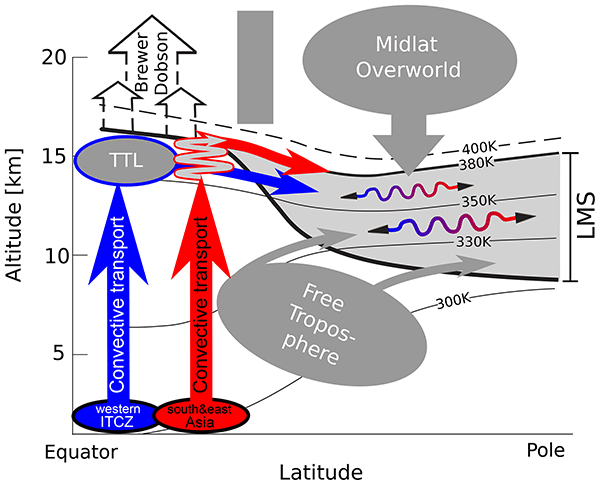
Valentin Lauther, Bärbel Vogel, Johannes Wintel, Andrea Rau, Peter Hoor, Vera Bense, Rolf Müller, and C. Michael Volk
Atmos. Chem. Phys., 22, 2049–2077, https://doi.org/10.5194/acp-22-2049-2022, https://doi.org/10.5194/acp-22-2049-2022, 2022
Short summary
Short summary
We show airborne in situ measurements of the very short-lived ozone-depleting substances CH2Cl2 and CHCl3, revealing particularly high concentrations of both species in the lower stratosphere. Back-trajectory calculations and 3D model simulations show that the air masses with high concentrations originated in the Asian boundary layer and were transported via the Asian summer monsoon. We also identify a fast transport pathway into the stratosphere via the North American monsoon and by hurricanes.
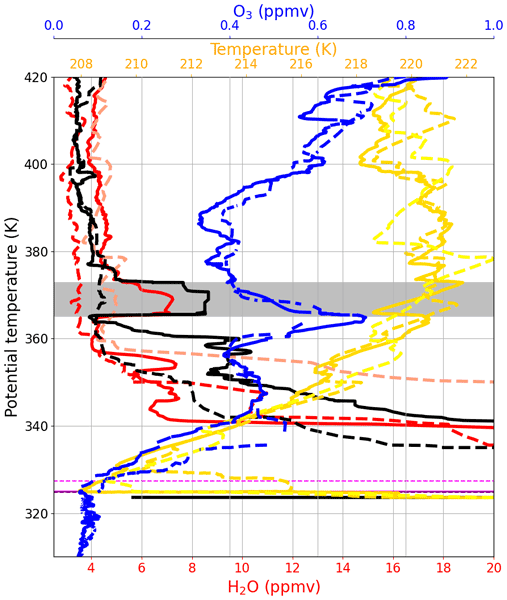
Dina Khordakova, Christian Rolf, Jens-Uwe Grooß, Rolf Müller, Paul Konopka, Andreas Wieser, Martina Krämer, and Martin Riese
Atmos. Chem. Phys., 22, 1059–1079, https://doi.org/10.5194/acp-22-1059-2022, https://doi.org/10.5194/acp-22-1059-2022, 2022
Short summary
Short summary
Extreme storms transport humidity from the troposphere to the stratosphere. Here it has a strong impact on the climate. With ongoing global warming, we expect more storms and, hence, an enhancement of this effect. A case study was performed in order to measure the impact of the direct injection of water vapor into the lower stratosphere. The measurements displayed a significant transport of water vapor into the lower stratosphere, and this was supported by satellite and reanalysis data.
Cited articles
Albers, J. R., Kiladis, G. N., Birner, T., and Dias, J.: Tropical upper-tropospheric potential vorticity intrusions during sudden stratospheric warmings, J. Atmos. Sci., 73, 2361–2384, https://doi.org/10.1175/jas-d-15-0238.1, 2016.
Baldwin, M. P. and Dunkerton, T. J.: Stratospheric harbingers of anomalous weather regimes, Science, 294, 581–584, https://doi.org/10.1126/science.1063315, 2001.
Baldwin, M. P., Domeisen, D. I. V., Hegglin, M. I., Garny, H., Garfinkel, C. I., Langematz, U., Charlton-Perez, A. J., Butchart, N., Gerber, E. P., Birner, T., Butler, A. H., Ayarzagüena, B., and Pedatella, N. M.: Sudden Stratospheric Warmings, Rev. Geophys., 59, https://doi.org/10.1029/2020rg000708, 2021.
Butler, A. H., Seidel, D. J., Hardiman, S. C., Butchart, N., Birner, T., and Match, A.: Defining sudden stratospheric warmings, B. Am. Meteorol. Soc., 96, 1913–1928, https://doi.org/10.1175/bams-d-13-00173.1, 2015.
Butler, A. H., Lillo, S. P., Long, C. S., Lee, S. H., and Lawrence, Z. D.: Differences between the 2018 and 2019 stratospheric polar vortex split events, Q. J. Roy. Meteor. Soc., 146, 3503–3521, https://doi.org/10.1002/qj.3858, 2020.
Charlton, A. J. and Polvani, L. M.: A new look at stratospheric sudden warmings. part I: Climatology and modeling benchmarks, J. Climate, 20, 449–469, https://doi.org/10.1175/jcli3996.1, 2007.
Charlton-Perez, A. J., Polvani, L. M., Austin, J., and Li, F.: The frequency and dynamics of stratospheric sudden warmings in the 21st century, J. Geophys. Res.-Atmos., 113, https://doi.org/10.1029/2007jd009571, 2008.
Collimore, C. C., Huesmann, A., Martin, D. W., Hitchman, M. H., and Waliser, D. E.: On The Relationship between the QBO and Tropical Deep Convection, J. Climate, 16, 2552–2568, https://doi.org/10.1175/1520-0442(2003)016<2552:otrbtq>2.0.co;2, 2003.
Dai, Y., Hitchcock, P., Mahowald, N. M., Domeisen, D. I., Hamilton, D. S., Li, L., Marticorena, B., Kanakidou, M., Mihalopoulos, N., and Aboagye-Okyere, A.: Stratospheric impacts on dust transport and air pollution in West Africa and the Eastern Mediterranean, Nat. Commun., 13, https://doi.org/10.1038/s41467-022-35403-1, 2022.
Dewan, S. and Lakhani, A.: Tropospheric ozone and its natural precursors impacted by climatic changes in emission and dynamics, Front. Environ. Sci., 10, https://doi.org/10.3389/fenvs.2022.1007942, 2022.
Domeisen, D. I. and Butler, A. H.: Stratospheric drivers of extreme events at the Earth's surface, Commun. Earth Environ., 1, https://doi.org/10.1038/s43247-020-00060-z, 2020.
Fadnavis, S., Chakraborty, T., and Beig, G.: Seasonal stratospheric intrusion of ozone in the upper troposphere over India, Ann. Geophys., 28, 2149–2159, https://doi.org/10.5194/angeo-28-2149-2010, 2010.
Fadnavis, S., Wienhold, F. G., Müller, R., Oelsner, P., Vogel, B., Naja, M., Sonbawne, S., Dirksen, R., Sagalgile, A., and Peter, T.: Comparison of ozonesonde measurements in the upper troposphere and lower Stratosphere in Northern India with reanalysis and chemistry-climate-model data, Sci. Rep., 13, https://doi.org/10.1038/s41598-023-34330-5, 2023.
Feng, Z., Agathokleous, E., Yue, X., Oksanen, E., Paoletti, E., Sase, H., Gandin, A., Koike, T., Calatayud, V., Yuan, X., Liu, X., De Marco, A., Jolivet, Y., Kontunen-Soppela, S., Hoshika, Y., Saji, H., Li, P., Li, Z., Watanabe, M., and Kobayashi, K.: Emerging challenges of ozone impacts on Asian plants: Actions are needed to protect ecosystem health, Ecosystem Health and Sustainability, 7, https://doi.org/10.1080/20964129.2021.1911602, 2021.
Fleming, Z. L., Doherty, R. M., von Schneidemesser, E., Malley, C. S., Cooper, O. R., Pinto, J. P., Colette, A., Xu, X., Simpson, D., Schultz, M. G., Lefohn, A. S., Hamad, S., Moolla, R., Solberg, S., and Feng, Z.: Tropospheric Ozone Assessment Report: Present-day ozone distribution and trends relevant to human health, Elementa: Science of the Anthropocene, 6, https://doi.org/10.1525/elementa.273, 2018.
Hall, R. J., Mitchell, D. M., Seviour, W. J., and Wright, C. J.: Tracking the stratosphere-to-surface impact of sudden stratospheric warmings, J. Geophys. Res.-Atmos., 126, https://doi.org/10.1029/2020jd033881, 2021.
Hardiman, S. C., Butchart, N., Hinton, T. J., Gray, L. J., and Osprey, S. M.: The Effect of a Well-Resolved Stratosphere on Surface Climate: Differences between CMIP5 Simulations with High and Low Top Versions of the Met Office Climate Model, J. Climate, 25, 7083–7099, https://doi.org/10.1175/jcli-d-11-00579.1, 2012.
Hersbach, H., Bell, B., Berrisford, P., Hirahara, S., Horányi, A., Muñoz-Sabater, J., Nicolas, J., Peubey, C., Radu, R., Schepers, D., Simmons, A., Soci, C., Abdalla, S., Abellan, X., Balsamo, G., Bechtold, P., Biavati, G., Bidlot, J., Bonavita, M., De Chiara, G., Dahlgren, P., Dee, D., Diamantakis, M., Dragani, R., Flemming, J., Forbes, R., Fuentes, M., Geer, A., Haimberger, L., Healy, S., Hogan, R. J., Hólm, E., Janisková, M., Keeley, S., Laloyaux, P., Lopez, P., Lupu, C., Radnoti, G., de Rosnay, P., Rozum, I., Vamborg, F., Villaume, S., and Thépaut, J.: The ERA5 global reanalysis, Q. J. Roy. Meteor. Soc., 146, 1999–2049, https://doi.org/10.1002/qj.3803, 2020.
Hersbach, H., Bell, B., Berrisford, P., Biavati, G., Horányi, A., Muñoz Sabater, J., Nicolas, J., Peubey, C., Radu, R., Rozum, I., Schepers, D., Simmons, A., Soci, C., Dee, D., and Thépaut, J.-N.: ERA5 hourly data on pressure levels from 1940 to present, Copernicus Climate Change Service (C3S) Climate Data Store (CDS) [data set], https://doi.org/10.24381/cds.bd0915c6, 2023.
Hitchman, M. H. and Huesmann, A. S.: A Seasonal Climatology of Rossby Wave Breaking in the 320–2000-K Layer, J. Atmos. Sci., 64, 1922–1940, https://doi.org/10.1175/jas3927.1, 2007.
Hitchman, M. H., Tegtmeier, S., Yoden, S., Haynes, P. H., and Kumar, V.: An Observational History of the Direct Influence of the Stratospheric Quasi-biennial Oscillation on the Tropical and Subtropical Upper Troposphere and Lower Stratosphere, J. Meteorol. Soc. Jpn. Ser. II, 99, 239–267, https://doi.org/10.2151/jmsj.2021-012, 2021.
Hoffmann, L. and Spang, R.: An assessment of tropopause characteristics of the ERA5 and ERA-Interim meteorological reanalyses, Atmos. Chem. Phys., 22, 4019–4046, https://doi.org/10.5194/acp-22-4019-2022, 2022.
Holton, J. R., Haynes, P. H., McIntyre, M. E., Douglass, A. R., Rood, R. B., and Pfister, L.: Stratosphere-Troposphere exchange, Rev. Geophys., 33, 403–439, https://doi.org/10.1029/95rg02097, 1995.
Homeyer, C. R. and Bowman, K. P.: Rossby Wave Breaking and Transport between the Tropics and Extratropics above the Subtropical Jet, J. Atmos. Sci., 70, 607–626, https://doi.org/10.1175/jas-d-12-0198.1, 2013.
Hoskins, B. J. and Ambrizzi, T.: Rossby Wave Propagation on a Realistic Longitudinally Varying Flow, J. Atmos. Sci., 50, 1661–1671, https://doi.org/10.1175/1520-0469(1993)050<1661:rwpoar>2.0.co;2, 1993.
Iglesias-Suarez, F., Kinnison, D. E., Rap, A., Maycock, A. C., Wild, O., and Young, P. J.: Key drivers of ozone change and its radiative forcing over the 21st century, Atmos. Chem. Phys., 18, 6121–6139, https://doi.org/10.5194/acp-18-6121-2018, 2018.
Kidston, J., Scaife, A. A., Hardiman, S. C., Mitchell, D. M., Butchart, N., Baldwin, M. P., and Gray, L. J.: Stratospheric influence on tropospheric jet streams, storm tracks and Surface Weather, Nat. Geosci., 8, 433–440, https://doi.org/10.1038/ngeo2424, 2015.
Knowland, K. E., Ott, L. E., Duncan, B. N., and Wargan, K.: Stratospheric intrusion-influenced ozone air quality exceedances investigated in the NASA Merra-2 Reanalysis, Geophys. Res. Lett., 44, https://doi.org/10.1002/2017gl074532, 2017.
Kumar, V., Dhaka, S. K., Reddy, K. K., Gupta, A., Prasad, S. B. S., Panwar, V., Singh, N., Ho, S.-P., and Takahashi, M.: Impact of quasi-biennial oscillation on the inter-annual variability of the tropopause height and temperature in the tropics: A study using COSMIC/FORMOSAT-3 observations, Atmos. Res., 139, 62–70, https://doi.org/10.1016/j.atmosres.2013.12.014, 2014.
Kumar, K. N., Sharma, S. K., Naja, M., and Phanikumar, D. V.: A Rossby wave breaking-induced enhancement in the tropospheric ozone over the Central Himalayan region, Atmos. Environ., 224, 117356, https://doi.org/10.1016/j.atmosenv.2020.117356, 2020.
Kunz, A., Konopka, P., Müller, R., and Pan, L. L.: Dynamical tropopause based on isentropic potential vorticity gradients, J. Geophys. Res., 116, https://doi.org/10.1029/2010jd014343, 2011.
Li, H., Fan, Y., Li, Q., Ji, X., Zhang, J., and Sheng, B.: The Gravity Wave Activity during Two Recent QBO Disruptions Revealed by U.S. High-Resolution Radiosonde Data, Remote Sensing, 15, 472, https://doi.org/10.3390/rs15020472, 2023.
Li, Y., Xia, Y., Xie, F., and Yan, Y.: Influence of stratosphere-troposphere exchange on long-term trends of surface ozone in CMIP6, Atmos. Res., 297, 107086, https://doi.org/10.1016/j.atmosres.2023.107086, 2024.
Lin, Y., Jiang, F., Zhao, J., Zhu, G., He, X., Ma, X., Li, S., Sabel, C. E., and Wang, H.: Impacts of O3 on premature mortality and crop yield loss across China, Atmos. Environ., 194, 41–47, https://doi.org/10.1016/j.atmosenv.2018.09.024, 2018.
Liu, Y., Liu, C. X., Wang, H. P., Tie, X. X., Gao, S. T., Kinnison, D., and Brasseur, G.: Atmospheric tracers during the 2003–2004 stratospheric warming event and impact of ozone intrusions in the troposphere, Atmos. Chem. Phys., 9, 2157–2170, https://doi.org/10.5194/acp-9-2157-2009, 2009.
Lü, Z., Li, F., Orsolini, Y. J., Gao, Y., and He, S.: Understanding of European cold extremes, sudden stratospheric warming, and siberian snow accumulation in the winter of 2017/18, J. Climate, 33, 527–545, https://doi.org/10.1175/jcli-d-18-0861.1, 2020.
Ma, X., Huang, J., Hegglin, M. I., Jöckel, P., and Zhao, T.: Causes of growing middle-to-upper tropospheric ozone over the northwest Pacific region, Atmos. Chem. Phys., 25, 943–958, https://doi.org/10.5194/acp-25-943-2025, 2025.
Myhre, G. and Stordal, F.: Role of spatial and temporal variations in the computation of radiative forcing and GWP, J. Geophys. Res.-Atmos., 102, 11181–11200, https://doi.org/10.1029/97jd00148, 1997.
Myhre, G., Shine, K. P., Rädel, G., Gauss, M., Isaksen, I. S. A., Tang, Q., Prather, M. J., Williams, J. E., van Velthoven, P., Dessens, O., Koffi, B., Szopa, S., Hoor, P., Grewe, V., Borken-Kleefeld, J., Berntsen, T. K., and Fuglestvedt, J. S.: Radiative forcing due to changes in ozone and methane caused by the transport sector, Atmos. Environ., 45, 387–394, https://doi.org/10.1016/j.atmosenv.2010.10.001, 2011.
Naujokat, B.: An update of the observed quasi-biennial oscillation of the stratospheric winds over the Tropics, J. Atmos. Sci., 43, 1873–1877, https://doi.org/10.1175/1520-0469(1986)043<1873:AUOTOQ>2.0.CO;2, 1986.
Nowack, P. J., Luke Abraham, N., Maycock, A. C., Braesicke, P., Gregory, J. M., Joshi, M. M., Osprey, A., and Pyle, J. A.: A large ozone-circulation feedback and its implications for global warming assessments, Nat. Clim. Change, 5, 41–45, https://doi.org/10.1038/nclimate2451, 2014.
Park, C., Choi, J., Son, S., and Lim, Y.: Quasi-biennial oscillation-related surface air temperature change over the western North Pacific in late winter, Int. J. Climatol., 42, 4351–4359, https://doi.org/10.1002/joc.7470, 2021.
Remya, R., Manoj, M. G., Rakesh, V., Mohanakumar, K., and Sivan, C.: Influence of high latitude sudden stratospheric warming on tropical weather: Observations from a 205 MHz stratosphere troposphere radar and surface meteorological parameters, Earth Space Sci., 8, https://doi.org/10.1029/2020ea001418, 2021.
Roy, C., Ravishankara, A. R., Newman, P. A., David, L. M., Fadnavis, S., Rathod, S. D., Lait, L., Krishnan, R., Clark, H., and Sauvage, B.: Estimation of stratospheric intrusions during Indian Cyclones, J. Geophys. Res.-Atmos., 128, https://doi.org/10.1029/2022jd037519, 2023.
Roy, S., P R, S. C., Fadnavis, S., Kumar Sagar, V., Hegglin, M., Müller, R., and Chavan, P.: Large Ozone Enhancement over South Asia Triggered by Sudden Stratospheric Warming under Westerly QBO phase: Implications on Ozone Radiative Forcing, Zenodo [code], https://doi.org/10.5281/zenodo.17639489, 2025.
Scaife, A. A., Baldwin, M. P., Butler, A. H., Charlton-Perez, A. J., Domeisen, D. I. V., Garfinkel, C. I., Hardiman, S. C., Haynes, P., Karpechko, A. Y., Lim, E.-P., Noguchi, S., Perlwitz, J., Polvani, L., Richter, J. H., Scinocca, J., Sigmond, M., Shepherd, T. G., Son, S.-W., and Thompson, D. W. J.: Long-range prediction and the stratosphere, Atmos. Chem. Phys., 22, 2601–2623, https://doi.org/10.5194/acp-22-2601-2022, 2022.
Schimanke, S., Spangehl, T., Huebener, H., and Cubasch, U.: Variability and trends of major stratospheric warmings in simulations under constant and increasing GHG concentrations, Clim. Dynam., 40, 1733–1747, https://doi.org/10.1007/s00382-012-1530-x, 2012.
Shell, K. M., Kiehl, J. T., and Shields, C. A.: Using the radiative kernel technique to calculate climate feedbacks in NCAR's community atmospheric model, J. Climate, 21, 2269–2282, https://doi.org/10.1175/2007jcli2044.1, 2008.
Shi, Y., Evtushevsky, O., Milinevsky, G., Wang, X., Klekociuk, A., Han, W., Grytsai, A., Wang, Y., Wang, L., Novosyadlyj, B., and Andrienko, Y.: Impact of the 2018 major sudden stratospheric warming on weather over the midlatitude regions of Eastern Europe and East Asia, Atmos. Res., 297, 107112, https://doi.org/10.1016/j.atmosres.2023.107112, 2023.
Sigmond, M., Scinocca, J. F., Kharin, V. V., and Shepherd, T. G.: Enhanced seasonal forecast skill following stratospheric sudden warmings, Nat. Geosci., 6, 98–102, https://doi.org/10.1038/ngeo1698, 2013.
Skeie, R. B., Myhre, G., Hodnebrog, Ø., Cameron-Smith, P. J., Deushi, M., Hegglin, M. I., Horowitz, L. W., Kramer, R. J., Michou, M., Mills, M. J., Olivié, D. J., Connor, F. M., Paynter, D., Samset, B. H., Sellar, A., Shindell, D., Takemura, T., Tilmes, S., and Wu, T.: Historical total ozone radiative forcing derived from CMIP6 simulations, npj Clim. Atmos. Sci., 3, https://doi.org/10.1038/s41612-020-00131-0, 2020.
SPARC Reanalysis Intercomparison Project (S-RIP): Final Report, edited by: Fujiwara, M., Manney, G. L., Gray, L. J., and Wright, J. S., SPARC Report No. 10, WCRP-17/2020, https://doi.org/10.17874/800dee57d13, 2022.
Sprenger, M., Croci Maspoli, M., and Wernli, H.: Tropopause folds and cross-Tropopause Exchange: A global investigation based upon ECMWF analyses for the time period March 2000 to February 2001, J. Geophys. Res.-Atmos., 108, https://doi.org/10.1029/2002jd002587, 2003.
Sprenger, M., Wernli, H., and Bourqui, M.: Stratosphere–troposphere exchange and its relation to potential vorticity streamers and cutoffs near the extratropical tropopause, J. Atmos. Sci., 64, 1587–1602, https://doi.org/10.1175/jas3911.1, 2007.
Stamnes, K., Tsay, S.-C., Wiscombe, W., and Jayaweera, K.: Numerically stable algorithm for discrete-ordinate-method radiative transfer in multiple scattering and emitting layered media, Appl. Opt., 27, 2502, https://doi.org/10.1364/ao.27.002502, 1988.
Wang, H., Lu, X., Jacob, D. J., Cooper, O. R., Chang, K.-L., Li, K., Gao, M., Liu, Y., Sheng, B., Wu, K., Wu, T., Zhang, J., Sauvage, B., Nédélec, P., Blot, R., and Fan, S.: Global tropospheric ozone trends, attributions, and radiative impacts in 1995–2017: an integrated analysis using aircraft (IAGOS) observations, ozonesonde, and multi-decadal chemical model simulations, Atmos. Chem. Phys., 22, 13753–13782, https://doi.org/10.5194/acp-22-13753-2022, 2022.
Wang, M. and Fu, Q.: Stratosphere-troposphere exchange of Air Masses and ozone concentrations based on reanalyses and observations, J. Geophys. Res.-Atmos., 126, https://doi.org/10.1029/2021jd035159, 2021.
Waugh, D. W. and Polvani, L. M.: Climatology of intrusions into the tropical upper troposphere, Geophys. Res. Lett., 27, 3857–3860, https://doi.org/10.1029/2000gl012250, 2000.
White, I. P., Lu, H., and Mitchell, N. J.: Seasonal evolution of the QBO-induced wave forcing and circulation anomalies in the northern winter stratosphere, J. Geophys. Res.-Atmos., 121, 10411–10431, https://doi.org/10.1002/2015jd024507, 2016.
Williams, R. S., Hegglin, M. I., Kerridge, B. J., Jöckel, P., Latter, B. G., and Plummer, D. A.: Characterising the seasonal and geographical variability in tropospheric ozone, stratospheric influence and recent changes, Atmos. Chem. Phys., 19, 3589–3620, https://doi.org/10.5194/acp-19-3589-2019, 2019.
Williams, R. S., Hegglin, M. I., Jöckel, P., Garny, H., and Shine, K. P.: Air quality and radiative impacts of downward-propagating sudden stratospheric warmings (SSWs), Atmos. Chem. Phys., 24, 1389–1413, https://doi.org/10.5194/acp-24-1389-2024, 2024.
World Meteorological Organization (WMO): Meteorology – A three dimensional science: Second session of the Commission for Aerology, WMO Bulletin, IV, 134–138, 1957.
Xia, Y., Huang, Y., and Hu, Y.: On the climate impacts of upper tropospheric and lower stratospheric ozone, J. Geophys. Res.-Atmos., 123, 730–739, https://doi.org/10.1002/2017jd027398, 2018.
Xia, Y., Xie, F., and Lu, X.: Enhancement of Arctic surface ozone during the 2020–2021 winter associated with the sudden stratospheric warming, Environ. Res. Lett., 18, 024003, https://doi.org/10.1088/1748-9326/acaee0, 2023.
Xie, J., Hu, J., Xu, H., Liu, S., and He, H.: Dynamic diagnosis of stratospheric sudden warming event in the boreal winter of 2018 and its possible impact on weather over North America, Atmosphere, 11, 438, https://doi.org/10.3390/atmos11050438, 2020.
Ziemke, J. R., Chandra, S., and Bhartia, P. K.: “cloud slicing”: A new technique to derive upper tropospheric ozone from satellite measurements, J. Geophys. Res.-Atmos., 106, 9853–9867, https://doi.org/10.1029/2000jd900768, 2001.
Short summary
We show that stratospheric ozone intrusions associated with sudden stratospheric warming events occurring concurrent with the westerly phase of the Quasi-biennial oscillation enhance ozone in the upper troposphere and lower stratosphere over South Asia. The ozone enhancement increases ozone radiative forcing by 0.09±0.05 W m-2 over South Asia. This increase in ozone radiative forcing potentially exacerbates regional climate warming.
We show that stratospheric ozone intrusions associated with sudden stratospheric warming events...


Altmetrics
Final-revised paper
Preprint