
Articles | Volume 26, issue 10
https://doi.org/10.5194/acp-26-6741-2026
© Author(s) 2026. This work is distributed under
the Creative Commons Attribution 4.0 License.
the Creative Commons Attribution 4.0 License.
https://doi.org/10.5194/acp-26-6741-2026
© Author(s) 2026. This work is distributed under
the Creative Commons Attribution 4.0 License.
the Creative Commons Attribution 4.0 License.
Research article
| 
19 May 2026
Research article |
| 19 May 2026
| 19 May 2026
Long-term trace gas and black carbon measurements at the high-altitude station Mount Kenya: tropical atmospheric variability and the influence of African emissions

Empa, Swiss Federal Laboratories for Materials Science and Technology, Dübendorf, Switzerland
Benjamin T. Brem
PSI Center for Energy and Environmental Sciences, Villigen PSI, Switzerland
Nicolas Bukowiecki
Atmospheric Sciences, Department of Environmental Sciences, University of Basel, Basel, Switzerland
Stephan Henne
Empa, Swiss Federal Laboratories for Materials Science and Technology, Dübendorf, Switzerland
Jörg Klausen
Federal Office of Meteorology and Climatology MeteoSwiss, Zurich, Switzerland
Mathew Mutuku
Kenya Meteorological Department, Nairobi, Kenya
David Njiru
Kenya Meteorological Department, Nairobi, Kenya
Patricia Nying'uro
Kenya Meteorological Department, Nairobi, Kenya
Christoph Zellweger
Empa, Swiss Federal Laboratories for Materials Science and Technology, Dübendorf, Switzerland
Martin Steinbacher
CORRESPONDING AUTHOR
Empa, Swiss Federal Laboratories for Materials Science and Technology, Dübendorf, Switzerland
Related authors
Klemens Hocke, Wenyue Wang, Leonie Bernet, Alistair Bell, and Christian Mätzler
EGUsphere, https://doi.org/10.5194/egusphere-2026-989, https://doi.org/10.5194/egusphere-2026-989, 2026
Preprint archived
Short summary
Short summary
We analyse observations of the tropospheric water radiometer (TROWARA) which monitored integrated water vapour (IWV) above Bern from 1995 to 2025. The relative IWV increase is 5.1 %/decade. Evaluation of coincident IWV data from ERA5 (reanalysis of European Centre for Medium-Range Weather Forecasts) gives a trend of 3.7 %/decade. The positive IWV trends are possibly due to the warming climate in Switzerland over the past decades.
Luce Creman, Stuart K. Grange, Pascal Rubli, Andrea Fischer, Dominik Brunner, Christoph Hueglin, Lukas Emmenegger, and Leonie Bernet
Atmos. Meas. Tech., 19, 1441–1463, https://doi.org/10.5194/amt-19-1441-2026, https://doi.org/10.5194/amt-19-1441-2026, 2026
Short summary
Short summary
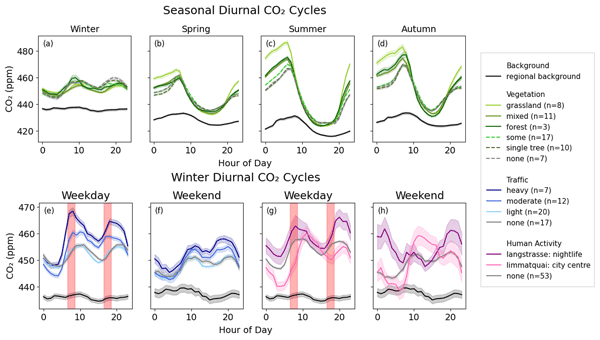
ZiCOS-L is a network of low-cost sensors in Zurich (Switzerland) to monitor carbon dioxide (CO2) concentrations. After correcting for drift and checking the sensor performance, we found that local factors like traffic, public events and vegetation affect CO2 levels. Even though the sensors have higher uncertainties than other sensors, the lower cost allows for a denser network with detailed insights into CO2 levels across the city, helping cities track emissions and support climate action plans.
Dominik Brunner, Ivo Suter, Leonie Bernet, Lionel Constantin, Stuart K. Grange, Pascal Rubli, Junwei Li, Jia Chen, Alessandro Bigi, and Lukas Emmenegger
Atmos. Chem. Phys., 25, 14387–14410, https://doi.org/10.5194/acp-25-14387-2025, https://doi.org/10.5194/acp-25-14387-2025, 2025
Short summary
Short summary
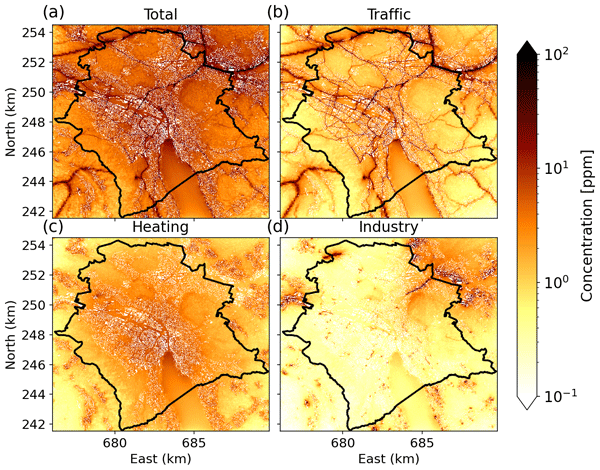
To support the city of Zurich in tracking its path to net-zero greenhouse gas emissions planned to be reached by 2040, a CO2 emission monitoring system was established. The system combines a dense network of CO2 sensors with a high-resolution atmospheric transport model GRAMM/GRAL. This study presents the setup of the model together with its numerous inputs and evaluates its performance in comparison with observations from the CO2 sensor network.
Leonie Bernet, Tove Svendby, Georg Hansen, Yvan Orsolini, Arne Dahlback, Florence Goutail, Andrea Pazmiño, Boyan Petkov, and Arve Kylling
Atmos. Chem. Phys., 23, 4165–4184, https://doi.org/10.5194/acp-23-4165-2023, https://doi.org/10.5194/acp-23-4165-2023, 2023
Short summary
Short summary
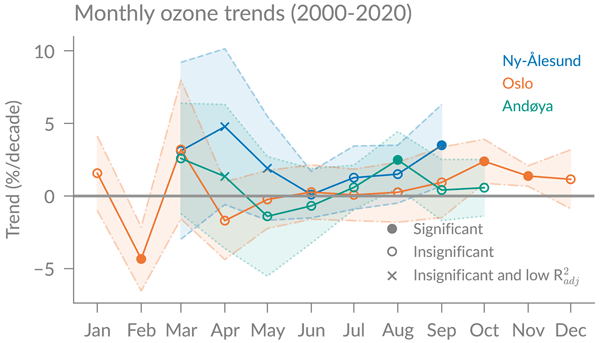
After the severe destruction of the ozone layer, the amount of ozone in the stratosphere is expected to increase again. At northern high latitudes, however, such a recovery has not been detected yet. To assess ozone changes in that region, we analyse the amount of ozone above specific locations (total ozone) measured at three stations in Norway. We found that total ozone increases significantly at two Arctic stations, which may be an indication of ozone recovery at northern high latitudes.
Bernard Grobety, Philippe Favreau, Juanita Rausch, David Jaramillo-Vogel, Martin Steinbacher, and Christoph Neururer
Aerosol Research, 4, 485–500, https://doi.org/10.5194/ar-4-485-2026, https://doi.org/10.5194/ar-4-485-2026, 2026
Short summary
Short summary
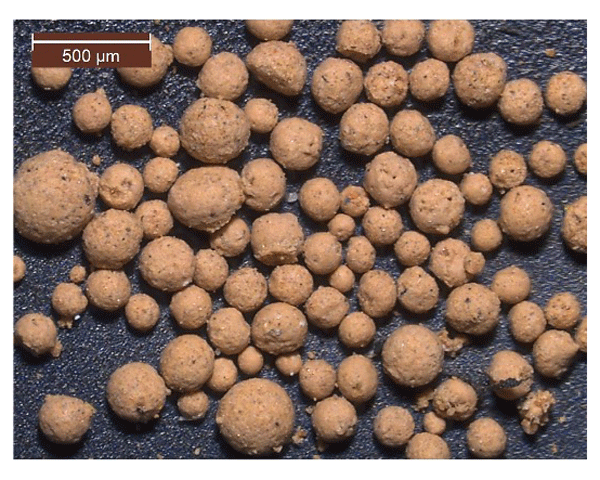
The iberulite fall was, to our knowledge, the first reported in central Europe. What was special was that the fall was observed in situ and that the meteorological conditions during the fall are well known. The meteorology and the particle size distribution inside the iberulites strongly corroborate below-cloud scavenging as a probable formation mechanism. The discovery of further iberulites Saharan dust event (SDE) samples collected since suggests that iberulites are common but overlooked by other researchers.
Cuiqi Zhang, Xiaoli Shen, Justin Jacquot, Larissa Lacher, Selvakumar Vishnupriya, Benjamin T. Brem, Robin L. Modini, Nora Nowak, Michael Sprenger, Martin Steinbacher, Stephan Henne, Martine Collaud Coen, Franz Conen, Kristina Höhler, Ottmar Möhler, Martin Gysel-Beer, Daniel J. Cziczo, and Zamin A. Kanji
EGUsphere, https://doi.org/10.5194/egusphere-2026-5645, https://doi.org/10.5194/egusphere-2026-5645, 2026
This preprint is open for discussion and under review for Atmospheric Chemistry and Physics (ACP).
Short summary
Short summary
Clouds play a key role in weather and climate, but the particles that trigger cloud ice formation are difficult to identify directly. By simulating clouds in a cloud chamber and particle measurements at a mountain station, we found that mineral dust was the main trigger of cloud ice formation. Dust from local construction and transported from higher atmospheric layers both contributed. The study shows that both human activities and atmospheric processes can influence cloud formation.
Paolo Cristofanelli, Francesca Marcucci, Claudia Roberta Calidonna, Francescopiero Calzolari, Felice Dipace, Simonetta Montaguti, Fabrizio Roccato, Maurizio Busetto, Angela Marinoni, Davide Putero, Laura Renzi, Pamela Trisolino, Marco Zanatta, and Christoph Zellweger
EGUsphere, https://doi.org/10.5194/egusphere-2026-5833, https://doi.org/10.5194/egusphere-2026-5833, 2026
This preprint is open for discussion and under review for Atmospheric Measurement Techniques (AMT).
Short summary
Short summary
We compared six years of carbon dioxide and methane measurements from two nearby laboratories at the high mountain station on Mount Cimone, Italy. Both recorded similar long-term and seasonal changes, but hourly readings often differed beyond limits recommended by WMO. Sampling location, data selection and moisture removal contributed to these differences; human presence may also have played a role. Standardization of sampling and procedures can make greenhouse gas measurements more consistent.
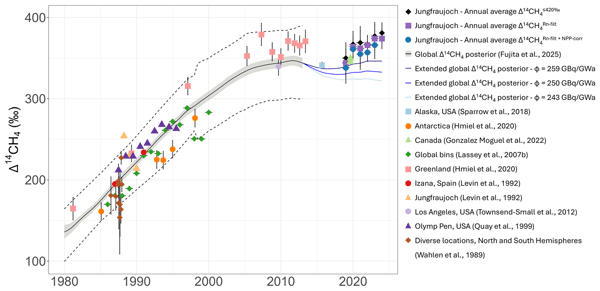
Thomas Laemmel, Dylan Geissbühler, Stephan Henne, Ryo Fujita, Heather Graven, Christophe Espic, Matthias Bantle, Negar Haghipour, Franz Conen, Dominik Brunner, Martin Steinbacher, Giulia Zazzeri, Samuel Hammer, Markus Leuenberger, and Sönke Szidat
Atmos. Chem. Phys., 26, 12019–12036, https://doi.org/10.5194/acp-26-12019-2026, https://doi.org/10.5194/acp-26-12019-2026, 2026
Short summary
Short summary
Carbon dioxide and methane are the two main anthropogenic greenhouse gases responsible for current climate change. Beside the measurement of their atmospheric concentration, the analysis of the abundance of their isotope carbon-14 (14C) gives hints about their origin, either biogenic or fossil. Here we present six years of atmospheric 14CH4 and 14CO2 measurements at a high-elevation alpine site in Switzerland (Jungfraujoch) and discuss the observed trends in both local and global views.
Arlett Díaz-Zurita, Simone Brunamonti, Alexander Haefele, Martine Collaud Coen, Giovanni Martucci, Benjamin Tobias Brem, Martin Gysel-Beer, Hassan Lyamani, Gloria Titos, Daniel Pérez-Ramírez, Christoph Hüglin, Lucas Alados-Arboledas, Alejandro Keller, Frank Gunther Wienhold, Maxime Hervo, and Francisco Navas-Guzmán
EGUsphere, https://doi.org/10.5194/egusphere-2026-4361, https://doi.org/10.5194/egusphere-2026-4361, 2026
Short summary
Short summary
This study provides a unique framework for assessing aerosol hygroscopicity by combining Raman lidar observations with vertically resolved in situ measurements from the balloon-borne Compact Backscatter Aerosol Detector coupled with Vaisala RS41 radiosondes and ground-based tandem nephelometers. The three approaches showed good agreement. Raman lidar identified more than 200 hygroscopic aerosol layers, constituting one of the largest datasets available for statistical investigations.
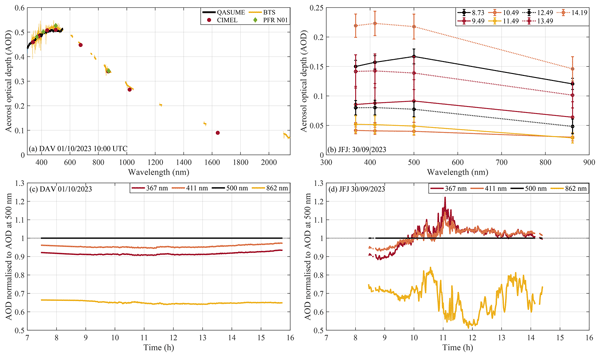
Akriti Masoom, Stelios Kazadzis, Robin Lewis Modini, Martin Gysel-Beer, Julian Gröbner, Martine Collaud Coen, Francisco Navas-Guzman, Natalia Kouremeti, Benjamin Tobias Brem, Nora Kristina Nowak, Giovanni Martucci, and Maxime Hervo
Atmos. Chem. Phys., 26, 10801–10834, https://doi.org/10.5194/acp-26-10801-2026, https://doi.org/10.5194/acp-26-10801-2026, 2026
Short summary
Short summary
This article aims at providing details on the spectral aerosol properties observed during 2023 Canadian wildfire plume transport and exploring the synergism between remote sensing and in situ measurements for investigating the cause of the occurrence of the observations of spectral aerosol properties.
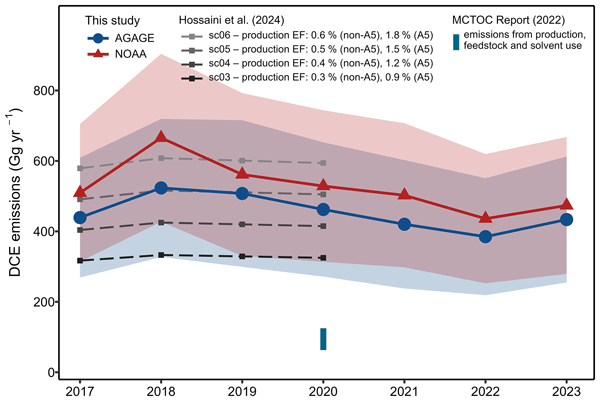
Joseph R. Pitt, Dominique Rust, Anita Ganesan, Luke M. Western, Martin K. Vollmer, Jens Mühle, Tobias Bühlmann, Christina M. Harth, Stephen A. Montzka, Brad D. Hall, Isaac J. Vimont, Alistair J. Manning, Alison L. Redington, Stephan Henne, Daniela B. Melo, Saurabh Annadate, Lionel Constantin, Brendan M. Murphy, Matthew Rigby, Dickon Young, Simon O'Doherty, Angelina Wenger, Chris R. Lunder, Ove Hermansen, Thomas Wagenhäuser, Andreas Engel, Jgor Arduini, Michela Maione, Jaegeun Yun, Blagoj Mitrevski, Paul B. Krummel, Paul J. Fraser, Jooil Kim, Ray H. J. Wang, Tae Siek Rhee, Peter K. Salameh, T. Gerard Spain, Stefan Reimann, Ronald G. Prinn, Ray F. Weiss, and Kieran M. Stanley
Atmos. Chem. Phys., 26, 10167–10195, https://doi.org/10.5194/acp-26-10167-2026, https://doi.org/10.5194/acp-26-10167-2026, 2026
Short summary
Short summary
1,2‑Dichloroethane (DCE) can contribute to the depletion of the stratospheric ozone layer. Whether DCE reaches the stratosphere depends on where and when it is emitted. We present the ongoing measurements of DCE from the Advanced Global Atmospheric Gases Experiment (AGAGE) and National Oceanic and Atmospheric Administration (NOAA) global monitoring networks. For the period 2017–2023, our modelled average global emissions based on these observations align with another study, while regional estimates differ. This suggests remaining uncertainty in the geographical distribution of emissions.
Julian Weng, Yufang Hao, Benjamin T. Brem, Tianqu Cui, Peeyush Khare, Lubna Dada, Kaspar R. Daellenbach, Sophie Darfeuil, Gaëlle Uzu, Jean-Luc Jaffrezo, Martin Steinbacher, Stefan Reimann, Thaleia Gkraikou, Konstantina Oikonomou, Jean Sciare, Martine Collaud Coen, Claudia Mohr, Andre S. H. Prévôt, Martin Gysel-Beer, Imad El Haddad, and Patrik Winiger
EGUsphere, https://doi.org/10.5194/egusphere-2026-3660, https://doi.org/10.5194/egusphere-2026-3660, 2026
Short summary
Short summary
Long-term observations at the Jungfraujoch High Altitude Research Station show that, alongside air mass transport, sustained oxidative processing shaped by atmospheric water vapor plays a central role in driving aerosol loading and composition. Combining detailed aerosol chemical characterization with process-level insights, we provide important observational benchmarks for improving atmospheric model performance in the remote free troposphere, where uncertainties remain particularly high.
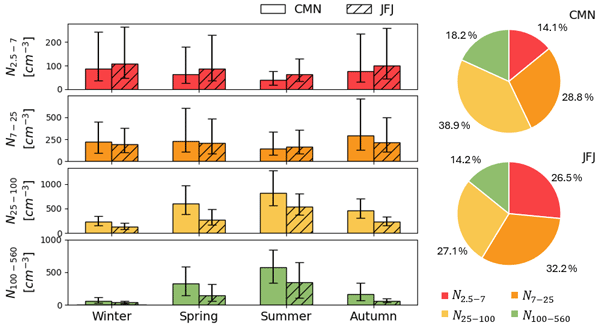
Martina Mazzini, Diego Aliaga, Janne Lamphilati, Martin Gysel-Beer, Benjamin Tobias Brem, Robin Lewis Modini, Dominic Heslin-Rees, Tareq Hussein, Marco Zanatta, Paolo Cristofanelli, Federico Bianchi, Markku Kulmala, and Angela Marinoni
Atmos. Chem. Phys., 26, 8893–8912, https://doi.org/10.5194/acp-26-8893-2026, https://doi.org/10.5194/acp-26-8893-2026, 2026
Short summary
Short summary
This study investigates particle number size distribution at two high-altitude European stations to better understand the mechanisms driving new particle formation (NPF) in the free troposphere. Interestingly, despite a consistently higher background of freshly nucleated particles at Jungfraujoch, NPF events were more frequent and intense at Monte Cimone, which also shows higher formation and growth rates, likely due to the proximity of the polluted planetary boundary layer from the Po Valley.
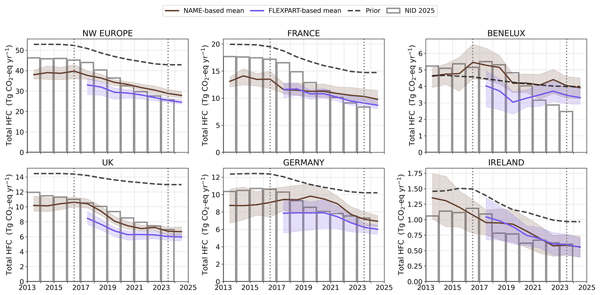
Hélène De Longueville, Daniela B. Melo, Alison L. Redington, Alice Ramsden, Alexandre Danjou, Peter Andrews, Joseph Pitt, Brendan Murphy, Lionel Constantin, Kieran M. Stanley, Simon O'Doherty, Angelina Wenger, Dickon Young, Andreas Engel, Tanja Schuck, Katharina Meixner, Thomas Wagenhaeuser, Fides Gad, Martin K. Vollmer, Stefan Reimann, Michela Maoine, Jgor Arduini, Chris Lunder, Norbert Schmidtbauer, László Haszpra, Mihály Molnár, Arnoud Frumau, Cedric Couret, Matthew Rigby, Stephan Henne, Alistair Manning, and Anita L. Ganesan
Atmos. Chem. Phys., 26, 7647–7675, https://doi.org/10.5194/acp-26-7647-2026, https://doi.org/10.5194/acp-26-7647-2026, 2026
Short summary
Short summary
This study estimates emissions of hydrofluorocarbons, potent greenhouse gases, in north-western Europe using atmospheric observations and atmospheric modelling. The estimates are compared with nationally reported emissions submitted to the United Nations. Overall, our results are consistent with reported values, although differences are found for some gases and countries. The findings indicate that emissions in north-western Europe are declining, reflecting the effects of climate regulations.
Kunfeng Gao, Romanos Foskinis, Marilena Gidarakou, Kalliopi Violaki, Guangyu Li, Benjamin Tobias Brem, Sophie Erb, Bernard Clot, Marie-José Graber, Branko Sikoparjja, Predrag Matavulj, Dusan Licina, Cuiqi Zhang, Benoît Crouzy, Alexandros Papayannis, Zamin A. Kanji, and Athanasios Nenes
EGUsphere, https://doi.org/10.5194/egusphere-2026-2699, https://doi.org/10.5194/egusphere-2026-2699, 2026
Short summary
Short summary
This study identified bioaerosols (>85%) as the dominant source for ice nucleating particles in mixed-phase clouds at a semi-rural site in central Europe, using a combination of in-situ, remote sensing and airmass modelling analysis. We developed a bioaerosol-aware ice nucleating particle parameterization that outperformed existing dust-only schemes across multiple field datasets. These findings improve representation of bioaerosol–cloud interactions and reduce uncertainty in climate feedback.
Liang Feng, Paul I. Palmer, Haolin Wang, Robert Parker, Hartmut Boesch, Sébastien C. Biraud, Łukasz Chmura, Emanuel Gloor, László Haszpra, Elena Kozlova, Euan G. Nisbet, Steffen M. Noe, Thomas Röckmann, Rodrigo Augusto Ferreira de Souza, and Martin Steinbacher
EGUsphere, https://doi.org/10.5194/egusphere-2026-2662, https://doi.org/10.5194/egusphere-2026-2662, 2026
Short summary
Short summary
This study examines the relative roles of emissions and oxidation in recent rapid methane growth. Using an ensemble Kalman filter, we quantify global methane sources and sinks for 2018–2024. Emission changes dominate the increase, except in 2020 when a COVID‑19‑related OH decline strongly affected sinks. Atmospheric photochemistry—including OH and CH₄ variability and temperature‑dependent oxidation—also significantly shapes the methane budget.
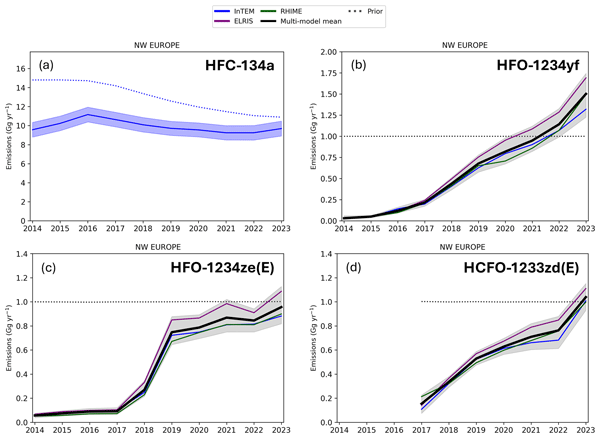
Martin K. Vollmer, Joseph R. Pitt, Dickon Young, Stephan Henne, Blagoj Mitrevski, Jens Mühle, Anita Ganesan, Jgor Arduini, Alistair J. Manning, Thomas Wagenhäuser, Alison L. Redington, Daniela B. Melo, Brendan Murphy, Ray Gluckmann, Kieran M. Stanley, Paul B. Krummel, Chris R. Lunder, Jaegeun Yun, Dominique Rust, Angelina Wenger, Myriam Guillevic, Jooil Kim, Ray H. J. Wang, Tae Siek Rhee, Lionel Constantin, Arnoud Frumau, Christina M. Harth, Peter K. Salameh, Ove Hermansen, Matthew Rigby, Luke M. Western, Andreas Engel, Simon O'Doherty, Sunyoung Park, Michela Maione, Paul J. Fraser, Ronald G. Prinn, Ray F. Weiss, and Stefan Reimann
Atmos. Chem. Phys., 26, 6993–7012, https://doi.org/10.5194/acp-26-6993-2026, https://doi.org/10.5194/acp-26-6993-2026, 2026
Short summary
Short summary
Halogenated olefins (HFOs) are newly emerging compounds in the atmosphere. They are in reach of the definition of PFAS (Per- and polyfluoroalkyl substances) and some decay to the eternal chemical trifluoroacetate (TFA). We provide atmospheric measurements of three HFOs from the large Advanced Global Atmospheric Gases Experiment (AGAGE) network and estimate emissions for Northwest Europe for the first time. We find a quasi-ubiquitous presence in the atmosphere and rapidly increasing emissions.
Jacoline van Es, Juan Bettinelli, Jia Chen, Carina van der Veen, Stephan Henne, and Thomas Röckmann
EGUsphere, https://doi.org/10.5194/egusphere-2026-1813, https://doi.org/10.5194/egusphere-2026-1813, 2026
Short summary
Short summary
The increase in atmospheric methane needs to be reversed to mitigate ongoing global warming. To design effective mitigation strategies at the local/regional level, we need to know what the main sources in different regions. We show that in Hamburg, Germany, biogenic sources are the main contributor to local emissions, with additional contributions from waste and fossil CH4 sources. An unexpected source is the Elbe River, with spiking emissions at low tide when the river banks are exposed.
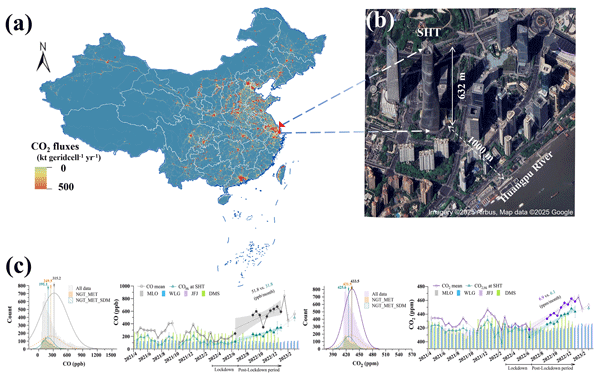
Shuang Fu, Xuemei Qing, Kunpeng Zang, Yi Lin, Shuo Liu, Yuanyuan Chen, Bingjiang Chen, Wei Gao, Martin Steinbacher, and Shuangxi Fang
Atmos. Chem. Phys., 26, 5477–5496, https://doi.org/10.5194/acp-26-5477-2026, https://doi.org/10.5194/acp-26-5477-2026, 2026
Short summary
Short summary
Urban carbon dynamics are critical for climate action, yet remote background monitoring often misses key details. This study utilized the unique vantage point of the 632-m Shanghai Tower to investigate carbon dioxide and carbon monoxide dynamics directly above the urban core. Our research confirms such elevated observations can effectively track metropolitan-scale footprint, revealing fossil fuels as the dominant source (85%) of excess carbon dioxide and supporting targeted reduction measures.
Klemens Hocke, Wenyue Wang, Leonie Bernet, Alistair Bell, and Christian Mätzler
EGUsphere, https://doi.org/10.5194/egusphere-2026-989, https://doi.org/10.5194/egusphere-2026-989, 2026
Preprint archived
Short summary
Short summary
We analyse observations of the tropospheric water radiometer (TROWARA) which monitored integrated water vapour (IWV) above Bern from 1995 to 2025. The relative IWV increase is 5.1 %/decade. Evaluation of coincident IWV data from ERA5 (reanalysis of European Centre for Medium-Range Weather Forecasts) gives a trend of 3.7 %/decade. The positive IWV trends are possibly due to the warming climate in Switzerland over the past decades.
Luce Creman, Stuart K. Grange, Pascal Rubli, Andrea Fischer, Dominik Brunner, Christoph Hueglin, Lukas Emmenegger, and Leonie Bernet
Atmos. Meas. Tech., 19, 1441–1463, https://doi.org/10.5194/amt-19-1441-2026, https://doi.org/10.5194/amt-19-1441-2026, 2026
Short summary
Short summary
ZiCOS-L is a network of low-cost sensors in Zurich (Switzerland) to monitor carbon dioxide (CO2) concentrations. After correcting for drift and checking the sensor performance, we found that local factors like traffic, public events and vegetation affect CO2 levels. Even though the sensors have higher uncertainties than other sensors, the lower cost allows for a denser network with detailed insights into CO2 levels across the city, helping cities track emissions and support climate action plans.
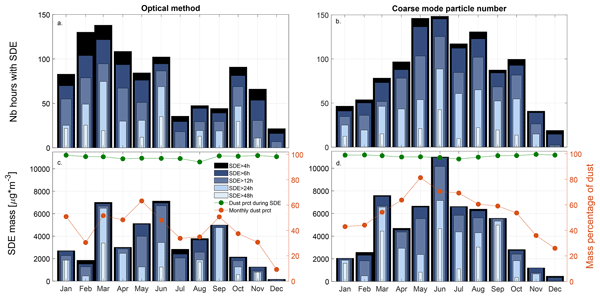
Martine Collaud Coen, Benjamin Tobias Brem, Martin Gysel-Beer, Robin Modini, Stephan Henne, Martin Steinbacher, Davide Putero, Maria I. Gini, and Kostantinos Eleftheriadis
Atmos. Chem. Phys., 26, 1623–1645, https://doi.org/10.5194/acp-26-1623-2026, https://doi.org/10.5194/acp-26-1623-2026, 2026
Short summary
Short summary
Saharan dust (SD) is transported over long distances by large-scale atmospheric circulation, reaching the Jungfraujoch high-altitude station 30 to 150 times per year. This study analyses the influence of instrument types on the SD detection using the single scattering albedo spectral dependence. This optical method is then compared to those based on size distribution and back-trajectories. The 23-year climatology of dust frequency and mass as well as the source sensitivity are also examined.
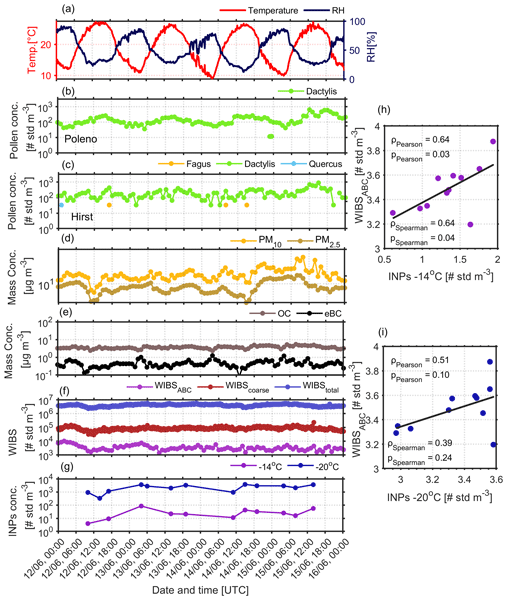
Marilena Gidarakou, Alexandros Papayannis, Kunfeng Gao, Panagiotis Gidarakos, Benoît Crouzy, Romanos Foskinis, Sophie Erb, Benjamin T. Brem, Cuiqi Zhang, Gian Lieberherr, Martine Collaud Coen, Branko Sikoparija, Zamin A. Kanji, Bernard Clot, Bertrand Calpini, Eugenia Giagka, and Athanasios Nenes
Atmos. Chem. Phys., 26, 923–945, https://doi.org/10.5194/acp-26-923-2026, https://doi.org/10.5194/acp-26-923-2026, 2026
Short summary
Short summary
Vertical profiles of pollen and biomass burning particles were obtained at a semi-rural site at the MeteoSwiss station near Payerne (Switzerland) using a novel multi-channel elastic-fluorescence lidar system combined with in situ measurements during the spring 2023 wildfires and pollination season during the PERICLES (PayernE lidaR and Insitu detection of fluorescent bioaerosol and dust partiCLES and their cloud impacts) campaign.
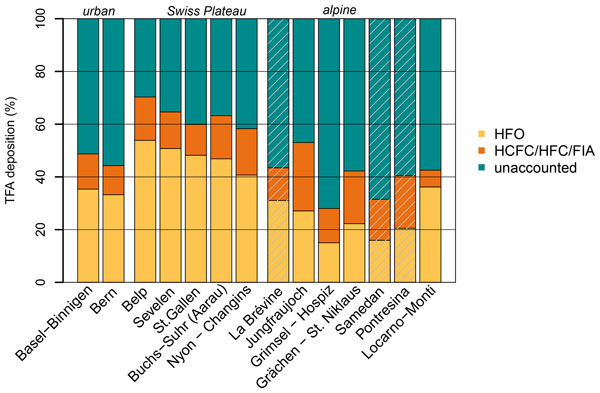
Stephan Henne, Florian R. Storck, Henry Wöhrnschimmel, Markus Leuenberger, Martin K. Vollmer, and Stefan Reimann
Atmos. Chem. Phys., 25, 18157–18186, https://doi.org/10.5194/acp-25-18157-2025, https://doi.org/10.5194/acp-25-18157-2025, 2025
Short summary
Short summary
We observed the persistent, man-made trifluoroacetate (TFA) in precipitation and surface waters. Atmospheric simulations attributed TFA to precursor gases in the atmosphere. Although recently increasing concentrations could be followed, gaps in the budget indicate limited understanding of the atmospheric degradation of widely used fluorocarbons. Without additional regulation, environmental TFA concentrations are expected to rise strongly, necessitating continued monitoring and risk assessment.
Sina Voshtani, Dylan B. A. Jones, Debra Wunch, Drew C. Pendergrass, Paul O. Wennberg, David F. Pollard, Isamu Morino, Hirofumi Ohyama, Nicholas M. Deutscher, Frank Hase, Ralf Sussmann, Damien Weidmann, Rigel Kivi, Omaira García, Yao Té, Jack Chen, Kerry Anderson, Robin Stevens, Shobha Kondragunta, Aihua Zhu, Douglas Worthy, Senen Racki, Kathryn McKain, Maria V. Makarova, Nicholas Jones, Emmanuel Mahieu, Andrea Cadena-Caicedo, Paolo Cristofanelli, Casper Labuschagne, Elena Kozlova, Thomas Seitz, Martin Steinbacher, Reza Mahdi, and Isao Murata
Atmos. Chem. Phys., 25, 15527–15565, https://doi.org/10.5194/acp-25-15527-2025, https://doi.org/10.5194/acp-25-15527-2025, 2025
Short summary
Short summary
We assess the complementarity of the greater temporal coverage provided by ground-based remote sensing data with the spatial coverage of satellite observations when these data are used together to quantify CO emissions from extreme wildfires in 2023. Our results reveal that the commonly used biomass burning emission inventories significantly underestimate the fire emissions and emphasize the importance of the ground-based remote sensing data in reducing uncertainties in the estimated emissions.
Dominik Brunner, Ivo Suter, Leonie Bernet, Lionel Constantin, Stuart K. Grange, Pascal Rubli, Junwei Li, Jia Chen, Alessandro Bigi, and Lukas Emmenegger
Atmos. Chem. Phys., 25, 14387–14410, https://doi.org/10.5194/acp-25-14387-2025, https://doi.org/10.5194/acp-25-14387-2025, 2025
Short summary
Short summary
To support the city of Zurich in tracking its path to net-zero greenhouse gas emissions planned to be reached by 2040, a CO2 emission monitoring system was established. The system combines a dense network of CO2 sensors with a high-resolution atmospheric transport model GRAMM/GRAL. This study presents the setup of the model together with its numerous inputs and evaluates its performance in comparison with observations from the CO2 sensor network.
Yuri Brugnara, Martin Steinbacher, Simone Baffelli, and Lukas Emmenegger
Atmos. Chem. Phys., 25, 14221–14236, https://doi.org/10.5194/acp-25-14221-2025, https://doi.org/10.5194/acp-25-14221-2025, 2025
Short summary
Short summary
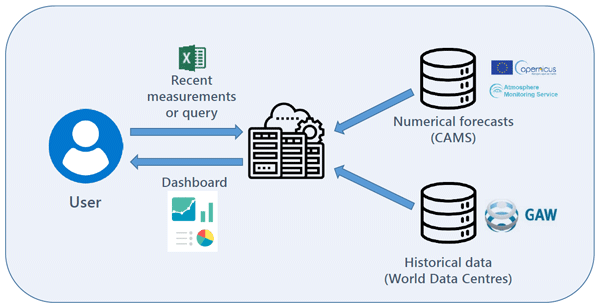
GAW-QC (Global Atmosphere Watch-Quality Control) is an interactive dashboard for the quality control of in-situ atmospheric composition measurements made at stations taking part in the Global Atmosphere Watch network. Even though it is mainly targeted at station operators who want to analyze recent, not yet published measurements, it allows anybody to verify the quality of already published measurements using various anomaly detection algorithms as well as visual comparisons.
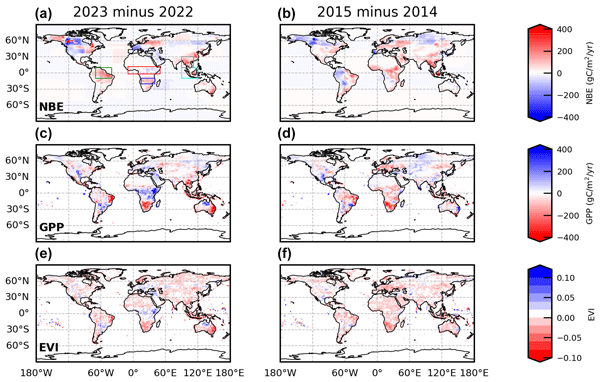
Liang Feng, Paul I. Palmer, Luke Smallman, Jingfeng Xiao, Paolo Cristofanelli, Ove Hermansen, John Lee, Casper Labuschagne, Simonetta Montaguti, Steffen M. Noe, Stephen M. Platt, Xinrong Ren, Martin Steinbacher, and Irène Xueref-Remy
Atmos. Chem. Phys., 25, 13053–13076, https://doi.org/10.5194/acp-25-13053-2025, https://doi.org/10.5194/acp-25-13053-2025, 2025
Short summary
Short summary
The year 2023 saw unexpectedly large global atmospheric CO2 growth. Satellite data reveal a role for increased tropical emissions. Larger emissions over eastern Brazil can be explained by warmer temperatures, which has led to exceptional drought, while hydrological changes play more of a role in emission increases elsewhere in the tropics. Broadly, we find that this situation continues into 2024.
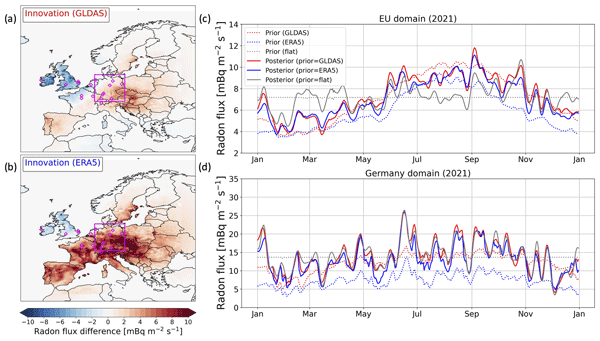
Fabian Maier, Eva Falge, Maksym Gachkivskyi, Stephan Henne, Ute Karstens, Dafina Kikaj, Ingeborg Levin, Alistair Manning, Christian Rödenbeck, and Christoph Gerbig
Atmos. Chem. Phys., 25, 12779–12809, https://doi.org/10.5194/acp-25-12779-2025, https://doi.org/10.5194/acp-25-12779-2025, 2025
Short summary
Short summary
The radioactive noble gas radon (222Rn) is a suitable natural tracer for atmospheric transport and mixing processes that can be used to validate and calibrate atmospheric transport models. However, this requires accurate estimates of the 222Rn flux from the soil into the atmosphere. In our study, we evaluate the reliability of process-based 222Rn flux maps for Europe using a 222Rn inversion. Our inversion results can give some indications on how to improve the process-based 222Rn flux maps.
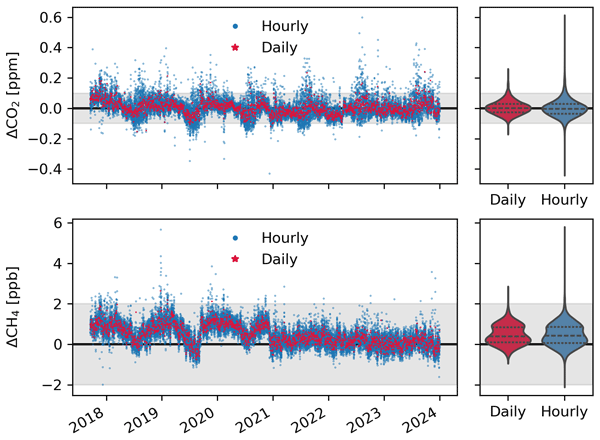
Antti Laitinen, Hermanni Aaltonen, Christoph Zellweger, Aki Tsuruta, Tuula Aalto, and Juha Hatakka
Atmos. Meas. Tech., 18, 3109–3133, https://doi.org/10.5194/amt-18-3109-2025, https://doi.org/10.5194/amt-18-3109-2025, 2025
Short summary
Short summary
This paper presents long-term observations of atmospheric CO2 and CH4 mole fractions and a comparison of two permanent and two mobile measurement systems located in Northern Finland. Furthermore, the observed mole fractions are compared against the mean marine boundary layer product for the Northern Hemisphere. The comparisons of all the systems show good agreement in relation to the World Meteorological Organization/Global Atmosphere Watch network compatibility goal limits for CO2 and CH4.
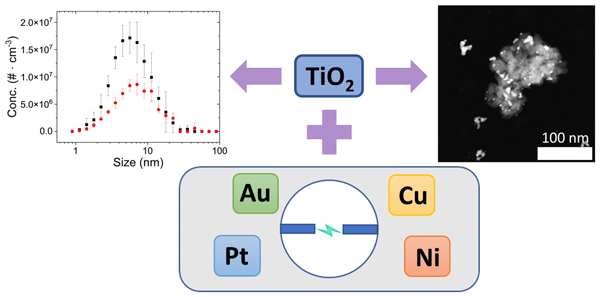
Benjamin Gfeller, Mariia Becker, Adrian D. Aebi, Nicolas Bukowiecki, Marcus Wyss, and Markus Kalberer
Aerosol Research, 3, 351–369, https://doi.org/10.5194/ar-3-351-2025, https://doi.org/10.5194/ar-3-351-2025, 2025
Short summary
Short summary
Metal nanoparticles (Au, Pt, Cu and Ni) were generated in the aerosol phase using spark ablation and analysed for size, shape and number concentration. Particles as small as 1 nm and up to > 60 nm show shapes from fully spherical to fractal-like as characterized by electron microscopy. Furthermore, the metal particles were mixed with TiO2 nanoparticles, and the number and size of metal particles coating the TiO2 were determined.
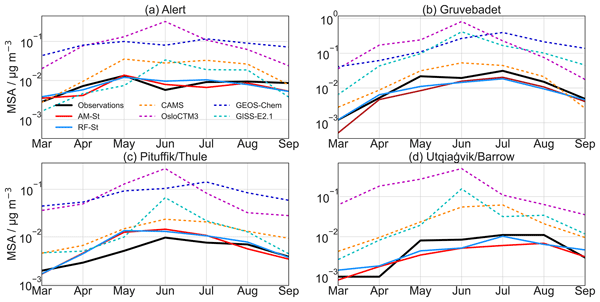
Jakob Boyd Pernov, William H. Aeberhard, Michele Volpi, Eliza Harris, Benjamin Hohermuth, Sakiko Ishino, Ragnhild B. Skeie, Stephan Henne, Ulas Im, Patricia K. Quinn, Lucia M. Upchurch, and Julia Schmale
Atmos. Chem. Phys., 25, 6497–6537, https://doi.org/10.5194/acp-25-6497-2025, https://doi.org/10.5194/acp-25-6497-2025, 2025
Short summary
Short summary
Particulate methanesulfonic acid (MSAp) is vital for the Arctic climate system. Numerical models struggle to reproduce the MSAp seasonal cycle. We evaluate three numerical models and one reanalysis product’s ability to simulate MSAp. We develop data-driven models for MSAp at four Arctic stations. The data-driven models outperform the numerical models and reanalysis product and identified precursor source-, chemical-processing-, and removal-related features as being important for modeling MSAp.
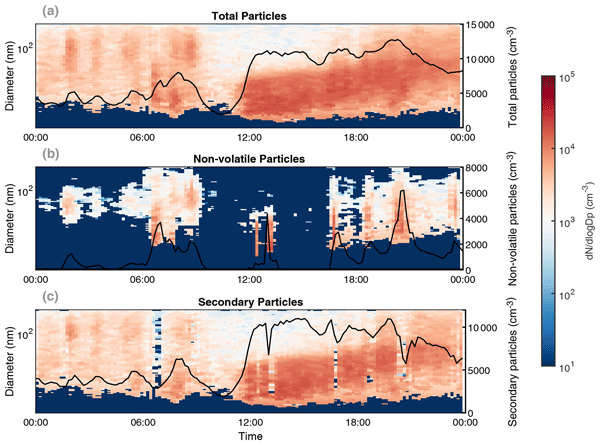
Lubna Dada, Benjamin T. Brem, Lidia-Marta Amarandi-Netedu, Martine Collaud Coen, Nikolaos Evangeliou, Christoph Hueglin, Nora Nowak, Robin Modini, Martin Steinbacher, and Martin Gysel-Beer
Aerosol Research, 3, 315–336, https://doi.org/10.5194/ar-3-315-2025, https://doi.org/10.5194/ar-3-315-2025, 2025
Short summary
Short summary
We investigated the sources of ultrafine particles (UFPs) in Payerne, Switzerland, highlighting the significant role of secondary processes in elevating UFP concentrations to levels comparable to urban areas. As the first study in rural midland Switzerland to analyze new particle formation events and secondary contributions, it offers key insights for air quality regulation and the role of agriculture in Switzerland and central Europe.
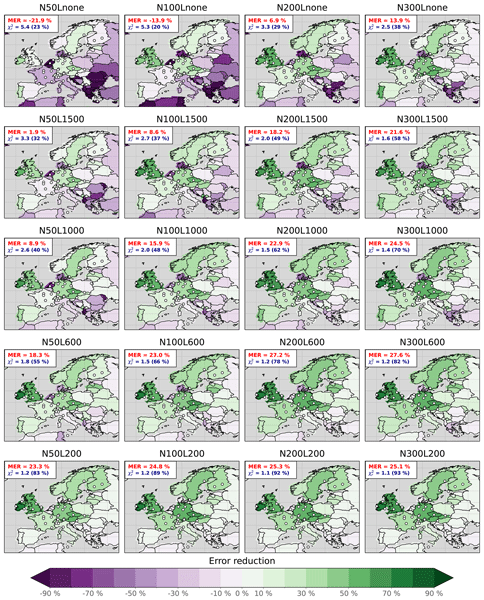
Joël Thanwerdas, Antoine Berchet, Lionel Constantin, Aki Tsuruta, Michael Steiner, Friedemann Reum, Stephan Henne, and Dominik Brunner
Geosci. Model Dev., 18, 1505–1544, https://doi.org/10.5194/gmd-18-1505-2025, https://doi.org/10.5194/gmd-18-1505-2025, 2025
Short summary
Short summary
The Community Inversion Framework (CIF) brings together methods for estimating greenhouse gas fluxes from atmospheric observations. The initial ensemble method implemented in CIF was found to be incomplete and could hardly be compared to other ensemble methods employed in the inversion community. In this paper, we present and evaluate a new implementation of the ensemble mode, building upon the initial developments.
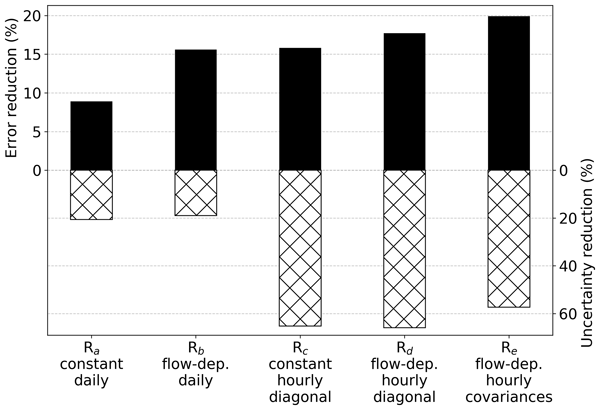
Michael Steiner, Luca Cantarello, Stephan Henne, and Dominik Brunner
Atmos. Chem. Phys., 24, 12447–12463, https://doi.org/10.5194/acp-24-12447-2024, https://doi.org/10.5194/acp-24-12447-2024, 2024
Short summary
Short summary
Atmospheric greenhouse gas inversions have great potential to independently check reported bottom-up emissions; however they are subject to large uncertainties. It is paramount to address and reduce the largest source of uncertainty, which stems from the representation of atmospheric transport in the models. In this study, we show that the use of a temporally varying flow-dependent atmospheric transport uncertainty can enhance the accuracy of emission estimation in an idealized experiment.
Lucie Bakels, Daria Tatsii, Anne Tipka, Rona Thompson, Marina Dütsch, Michael Blaschek, Petra Seibert, Katharina Baier, Silvia Bucci, Massimo Cassiani, Sabine Eckhardt, Christine Groot Zwaaftink, Stephan Henne, Pirmin Kaufmann, Vincent Lechner, Christian Maurer, Marie D. Mulder, Ignacio Pisso, Andreas Plach, Rakesh Subramanian, Martin Vojta, and Andreas Stohl
Geosci. Model Dev., 17, 7595–7627, https://doi.org/10.5194/gmd-17-7595-2024, https://doi.org/10.5194/gmd-17-7595-2024, 2024
Short summary
Short summary
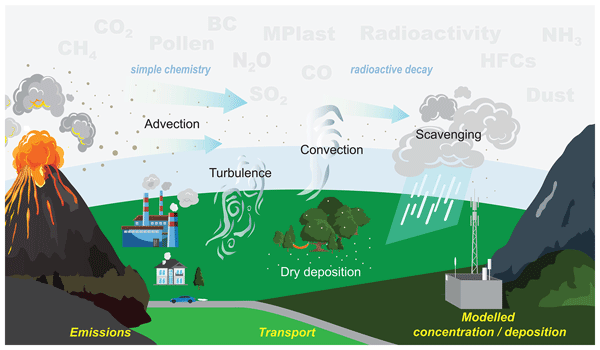
Computer models are essential for improving our understanding of how gases and particles move in the atmosphere. We present an update of the atmospheric transport model FLEXPART. FLEXPART 11 is more accurate due to a reduced number of interpolations and a new scheme for wet deposition. It can simulate non-spherical aerosols and includes linear chemical reactions. It is parallelised using OpenMP and includes new user options. A new user manual details how to use FLEXPART 11.
Dene Bowdalo, Sara Basart, Marc Guevara, Oriol Jorba, Carlos Pérez García-Pando, Monica Jaimes Palomera, Olivia Rivera Hernandez, Melissa Puchalski, David Gay, Jörg Klausen, Sergio Moreno, Stoyka Netcheva, and Oksana Tarasova
Earth Syst. Sci. Data, 16, 4417–4495, https://doi.org/10.5194/essd-16-4417-2024, https://doi.org/10.5194/essd-16-4417-2024, 2024
Short summary
Short summary
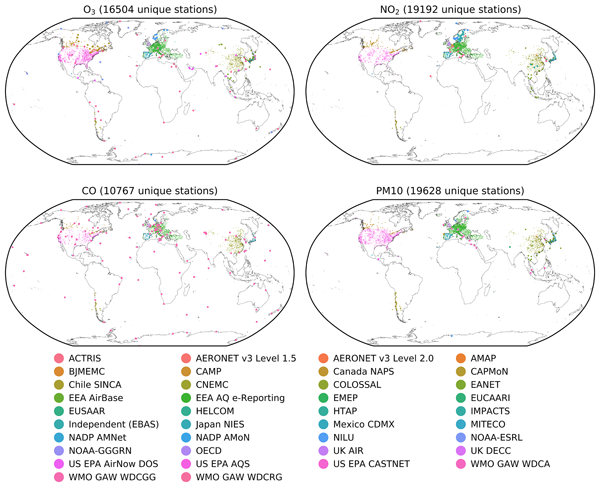
GHOST (Globally Harmonised Observations in Space and Time) represents one of the biggest collections of harmonised measurements of atmospheric composition at the surface. In total, 7 275 148 646 measurements from 1970 to 2023, from 227 different components, and from 38 reporting networks are compiled, parsed, and standardised. Components processed include gaseous species, total and speciated particulate matter, and aerosol optical properties.
Timothy A. Sipkens, Joel C. Corbin, Brett Smith, Stéphanie Gagné, Prem Lobo, Benjamin T. Brem, Mark P. Johnson, and Gregory J. Smallwood
Atmos. Meas. Tech., 17, 4291–4302, https://doi.org/10.5194/amt-17-4291-2024, https://doi.org/10.5194/amt-17-4291-2024, 2024
Short summary
Short summary
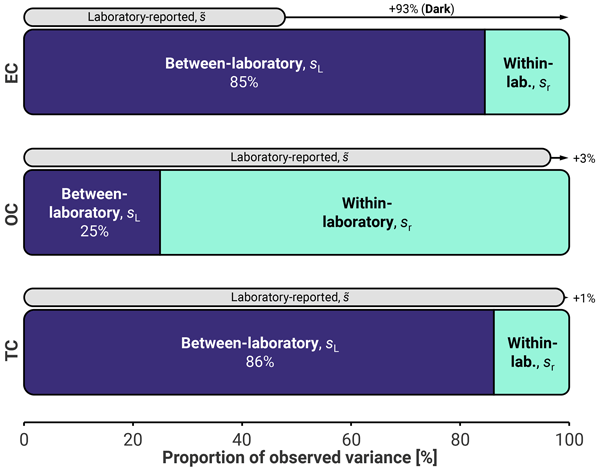
Carbonaceous particles, such as soot, contribute to climate forcing, air pollution, and human health impacts. Thermal–optical analysis is a calibration standard used to measure these particles, but significant differences have been observed in the measurements across identical instruments. We report on the reproducibility of these measurements for aircraft emissions, which range from 8.0 % of the nominal value for organic carbon to 17 % for elemental carbon.
Michael Steiner, Wouter Peters, Ingrid Luijkx, Stephan Henne, Huilin Chen, Samuel Hammer, and Dominik Brunner
Atmos. Chem. Phys., 24, 2759–2782, https://doi.org/10.5194/acp-24-2759-2024, https://doi.org/10.5194/acp-24-2759-2024, 2024
Short summary
Short summary
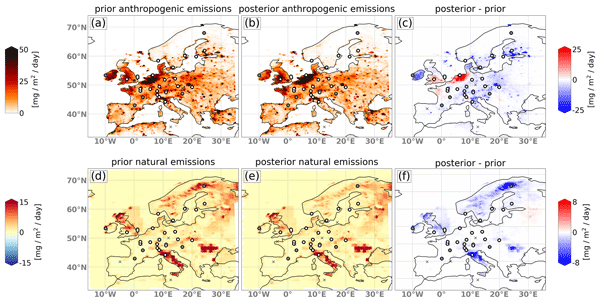
The Paris Agreement increased interest in estimating greenhouse gas (GHG) emissions of individual countries, but top-down emission estimation is not yet considered policy-relevant. It is therefore paramount to reduce large errors and to build systems that are based on the newest atmospheric transport models. In this study, we present the first application of ICON-ART in the inverse modeling of GHG fluxes with an ensemble Kalman filter and present our results for European CH4 emissions.
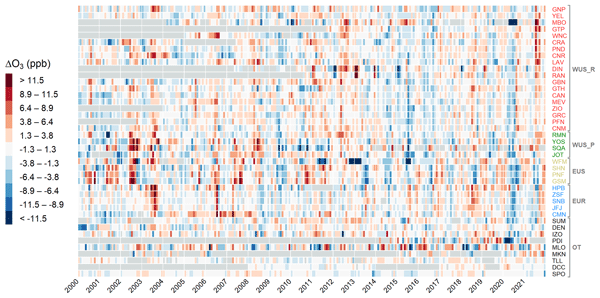
Davide Putero, Paolo Cristofanelli, Kai-Lan Chang, Gaëlle Dufour, Gregory Beachley, Cédric Couret, Peter Effertz, Daniel A. Jaffe, Dagmar Kubistin, Jason Lynch, Irina Petropavlovskikh, Melissa Puchalski, Timothy Sharac, Barkley C. Sive, Martin Steinbacher, Carlos Torres, and Owen R. Cooper
Atmos. Chem. Phys., 23, 15693–15709, https://doi.org/10.5194/acp-23-15693-2023, https://doi.org/10.5194/acp-23-15693-2023, 2023
Short summary
Short summary
We investigated the impact of societal restriction measures during the COVID-19 pandemic on surface ozone at 41 high-elevation sites worldwide. Negative ozone anomalies were observed for spring and summer 2020 for all of the regions considered. In 2021, negative anomalies continued for Europe and partially for the eastern US, while western US sites showed positive anomalies due to wildfires. IASI satellite data and the Carbon Monitor supported emission reductions as a cause of the anomalies.
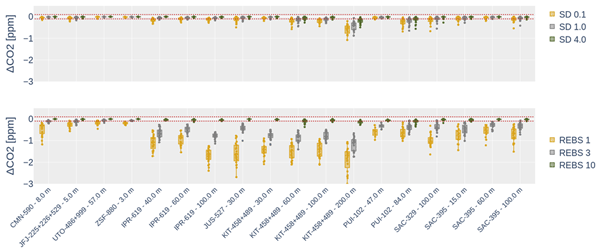
Paolo Cristofanelli, Cosimo Fratticioli, Lynn Hazan, Mali Chariot, Cedric Couret, Orestis Gazetas, Dagmar Kubistin, Antti Laitinen, Ari Leskinen, Tuomas Laurila, Matthias Lindauer, Giovanni Manca, Michel Ramonet, Pamela Trisolino, and Martin Steinbacher
Atmos. Meas. Tech., 16, 5977–5994, https://doi.org/10.5194/amt-16-5977-2023, https://doi.org/10.5194/amt-16-5977-2023, 2023
Short summary
Short summary
We investigated the application of two automatic methods for detecting spikes due to local emissions in greenhouse gas (GHG) observations at a subset of sites from the ICOS Atmosphere network. We analysed the sensitivity to the spike frequency of using different methods and settings. We documented the impact of the de-spiking on different temporal aggregations (i.e. hourly, monthly and seasonal averages) of CO2, CH4 and CO 1 min time series.
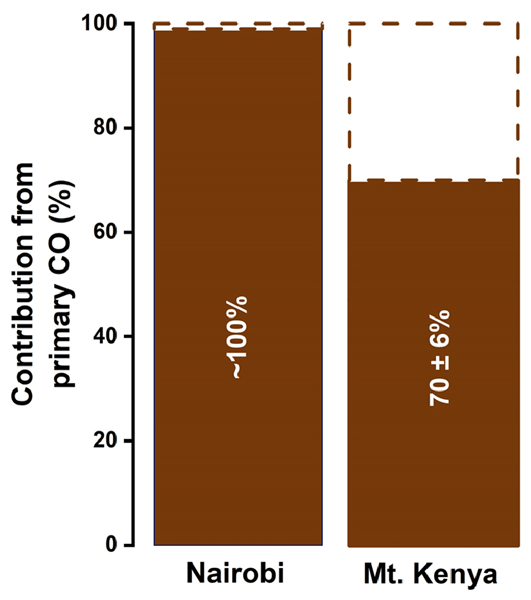
Leonard Kirago, Örjan Gustafsson, Samuel Mwaniki Gaita, Sophie L. Haslett, Michael J. Gatari, Maria Elena Popa, Thomas Röckmann, Christoph Zellweger, Martin Steinbacher, Jörg Klausen, Christian Félix, David Njiru, and August Andersson
Atmos. Chem. Phys., 23, 14349–14357, https://doi.org/10.5194/acp-23-14349-2023, https://doi.org/10.5194/acp-23-14349-2023, 2023
Short summary
Short summary
This study provides ground-observational evidence that supports earlier suggestions that savanna fires are the main emitters and modulators of carbon monoxide gas in Africa. Using isotope-based techniques, the study has shown that about two-thirds of this gas is emitted from savanna fires, while for urban areas, in this case Nairobi, primary sources approach 100 %. The latter has implications for air quality policy, suggesting primary emissions such as traffic should be targeted.
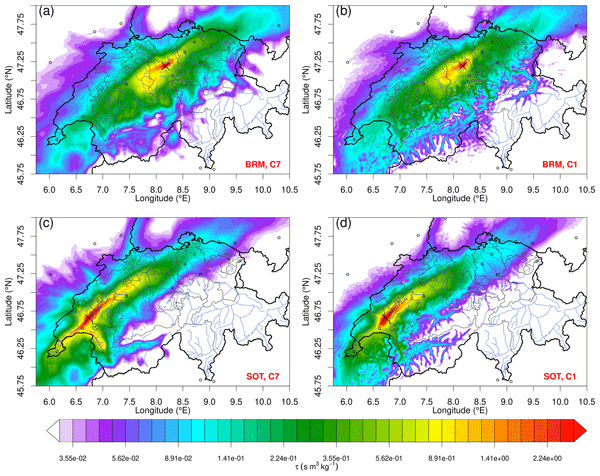
Ioannis Katharopoulos, Dominique Rust, Martin K. Vollmer, Dominik Brunner, Stefan Reimann, Simon J. O'Doherty, Dickon Young, Kieran M. Stanley, Tanja Schuck, Jgor Arduini, Lukas Emmenegger, and Stephan Henne
Atmos. Chem. Phys., 23, 14159–14186, https://doi.org/10.5194/acp-23-14159-2023, https://doi.org/10.5194/acp-23-14159-2023, 2023
Short summary
Short summary
The effectiveness of climate change mitigation needs to be scrutinized by monitoring greenhouse gas (GHG) emissions. Countries report their emissions to the UN in a bottom-up manner. By combining atmospheric observations and transport models someone can independently validate emission estimates in a top-down fashion. We report Swiss emissions of synthetic GHGs based on kilometer-scale transport and inverse modeling, highlighting the role of appropriate resolution in complex terrain.
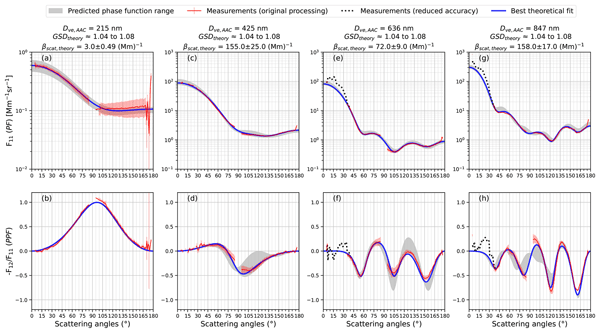
Alireza Moallemi, Robin L. Modini, Benjamin T. Brem, Barbara Bertozzi, Philippe Giaccari, and Martin Gysel-Beer
Atmos. Meas. Tech., 16, 3653–3678, https://doi.org/10.5194/amt-16-3653-2023, https://doi.org/10.5194/amt-16-3653-2023, 2023
Short summary
Short summary
Polarimetric data, i.e., the angular and polarization dependence of light scattering by aerosols, contain ample information on optical and microphysical properties. Retrieval of these properties is a central approach in aerosol remote sensing. We present a description, calibration, validation, and a first application of a new benchtop polar nephelometer, which provides in situ polarimetric measurements of an aerosol. Such data facilitate agreement between retrieval results and independent data.
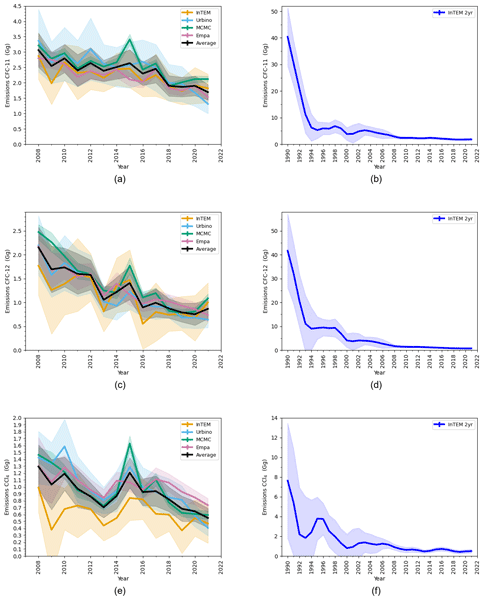
Alison L. Redington, Alistair J. Manning, Stephan Henne, Francesco Graziosi, Luke M. Western, Jgor Arduini, Anita L. Ganesan, Christina M. Harth, Michela Maione, Jens Mühle, Simon O'Doherty, Joseph Pitt, Stefan Reimann, Matthew Rigby, Peter K. Salameh, Peter G. Simmonds, T. Gerard Spain, Kieran Stanley, Martin K. Vollmer, Ray F. Weiss, and Dickon Young
Atmos. Chem. Phys., 23, 7383–7398, https://doi.org/10.5194/acp-23-7383-2023, https://doi.org/10.5194/acp-23-7383-2023, 2023
Short summary
Short summary
Chlorofluorocarbons (CFCs) were used in Europe pre-1990, damaging the stratospheric ozone layer. Legislation has controlled production and use, and global emissions have decreased sharply. The global rate of decline in CFC-11 recently slowed and was partly attributed to illegal emission in eastern China. This study concludes that emissions of CFC-11 in western Europe have not contributed to the unexplained part of the global increase in CFC-11 observed in the last decade.
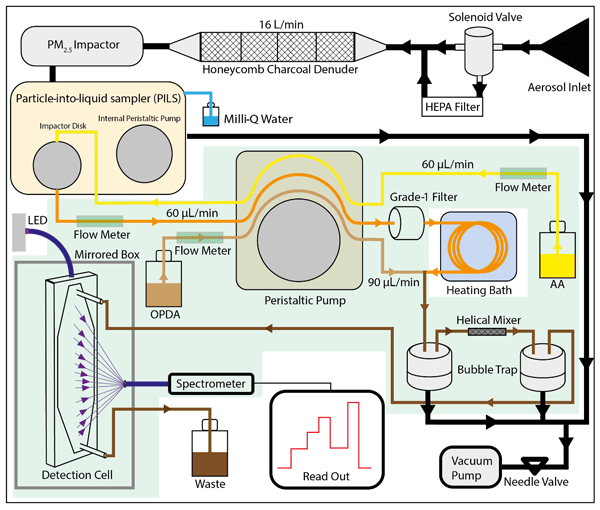
Battist Utinger, Steven John Campbell, Nicolas Bukowiecki, Alexandre Barth, Benjamin Gfeller, Ray Freshwater, Hans-Rudolf Rüegg, and Markus Kalberer
Atmos. Meas. Tech., 16, 2641–2654, https://doi.org/10.5194/amt-16-2641-2023, https://doi.org/10.5194/amt-16-2641-2023, 2023
Short summary
Short summary
Exposure to atmospheric aerosols can lead to adverse health effect, but particle components responsible for this are unknown. Redox-active compounds, some with very short lifetimes, are considered to be a toxic class of compounds in particles. We developed the first online field instrument to quantify short-lived and stable redox-active compounds with a physiological assay based on ascorbic acid and a high time resolution and detection limits to allow measurements at unpolluted locations.
Leonie Bernet, Tove Svendby, Georg Hansen, Yvan Orsolini, Arne Dahlback, Florence Goutail, Andrea Pazmiño, Boyan Petkov, and Arve Kylling
Atmos. Chem. Phys., 23, 4165–4184, https://doi.org/10.5194/acp-23-4165-2023, https://doi.org/10.5194/acp-23-4165-2023, 2023
Short summary
Short summary
After the severe destruction of the ozone layer, the amount of ozone in the stratosphere is expected to increase again. At northern high latitudes, however, such a recovery has not been detected yet. To assess ozone changes in that region, we analyse the amount of ozone above specific locations (total ozone) measured at three stations in Norway. We found that total ozone increases significantly at two Arctic stations, which may be an indication of ozone recovery at northern high latitudes.
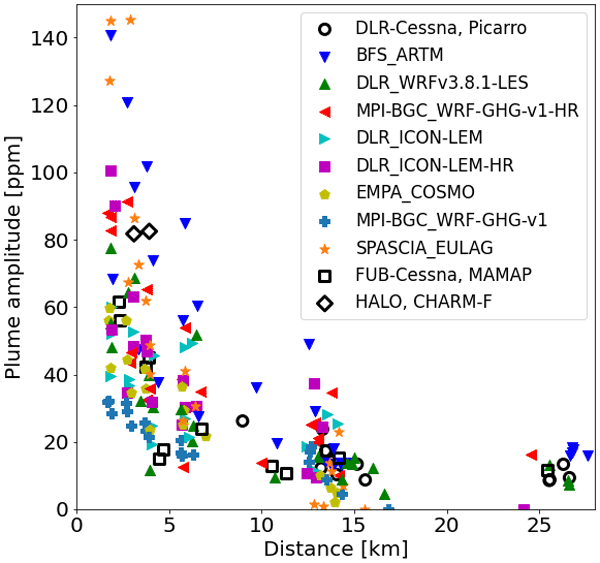
Dominik Brunner, Gerrit Kuhlmann, Stephan Henne, Erik Koene, Bastian Kern, Sebastian Wolff, Christiane Voigt, Patrick Jöckel, Christoph Kiemle, Anke Roiger, Alina Fiehn, Sven Krautwurst, Konstantin Gerilowski, Heinrich Bovensmann, Jakob Borchardt, Michal Galkowski, Christoph Gerbig, Julia Marshall, Andrzej Klonecki, Pascal Prunet, Robert Hanfland, Margit Pattantyús-Ábrahám, Andrzej Wyszogrodzki, and Andreas Fix
Atmos. Chem. Phys., 23, 2699–2728, https://doi.org/10.5194/acp-23-2699-2023, https://doi.org/10.5194/acp-23-2699-2023, 2023
Short summary
Short summary
We evaluated six atmospheric transport models for their capability to simulate the CO2 plumes from two of the largest power plants in Europe by comparing the models against aircraft observations collected during the CoMet (Carbon Dioxide and Methane Mission) campaign in 2018. The study analyzed how realistically such plumes can be simulated at different model resolutions and how well the planned European satellite mission CO2M will be able to quantify emissions from power plants.
Peter Bergamaschi, Arjo Segers, Dominik Brunner, Jean-Matthieu Haussaire, Stephan Henne, Michel Ramonet, Tim Arnold, Tobias Biermann, Huilin Chen, Sebastien Conil, Marc Delmotte, Grant Forster, Arnoud Frumau, Dagmar Kubistin, Xin Lan, Markus Leuenberger, Matthias Lindauer, Morgan Lopez, Giovanni Manca, Jennifer Müller-Williams, Simon O'Doherty, Bert Scheeren, Martin Steinbacher, Pamela Trisolino, Gabriela Vítková, and Camille Yver Kwok
Atmos. Chem. Phys., 22, 13243–13268, https://doi.org/10.5194/acp-22-13243-2022, https://doi.org/10.5194/acp-22-13243-2022, 2022
Short summary
Short summary
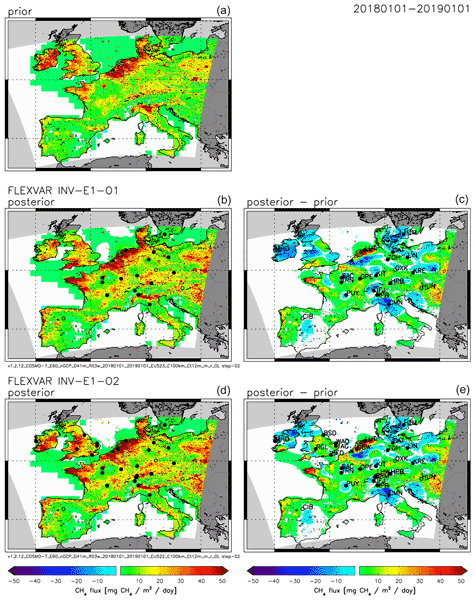
We present a novel high-resolution inverse modelling system, "FLEXVAR", and its application for the inverse modelling of European CH4 emissions in 2018. The new system combines a high spatial resolution of 7 km x 7 km with a variational data assimilation technique, which allows CH4 emissions to be optimized from individual model grid cells. The high resolution allows the observations to be better reproduced, while the derived emissions show overall good consistency with two existing models.
Simone M. Pieber, Béla Tuzson, Stephan Henne, Ute Karstens, Christoph Gerbig, Frank-Thomas Koch, Dominik Brunner, Martin Steinbacher, and Lukas Emmenegger
Atmos. Chem. Phys., 22, 10721–10749, https://doi.org/10.5194/acp-22-10721-2022, https://doi.org/10.5194/acp-22-10721-2022, 2022
Short summary
Short summary
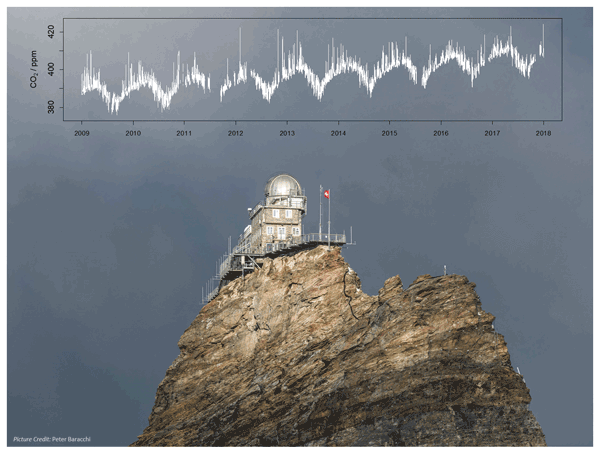
Understanding regional greenhouse gas emissions into the atmosphere is a prerequisite to mitigate climate change. In this study, we investigated the regional contributions of carbon dioxide (CO2) at the location of the high Alpine observatory Jungfraujoch (JFJ, Switzerland, 3580 m a.s.l.). To this purpose, we combined receptor-oriented atmospheric transport simulations for CO2 concentration in the period 2009–2017 with stable carbon isotope (δ13C–CO2) information.
Matthias Schneider, Benjamin Ertl, Qiansi Tu, Christopher J. Diekmann, Farahnaz Khosrawi, Amelie N. Röhling, Frank Hase, Darko Dubravica, Omaira E. García, Eliezer Sepúlveda, Tobias Borsdorff, Jochen Landgraf, Alba Lorente, André Butz, Huilin Chen, Rigel Kivi, Thomas Laemmel, Michel Ramonet, Cyril Crevoisier, Jérome Pernin, Martin Steinbacher, Frank Meinhardt, Kimberly Strong, Debra Wunch, Thorsten Warneke, Coleen Roehl, Paul O. Wennberg, Isamu Morino, Laura T. Iraci, Kei Shiomi, Nicholas M. Deutscher, David W. T. Griffith, Voltaire A. Velazco, and David F. Pollard
Atmos. Meas. Tech., 15, 4339–4371, https://doi.org/10.5194/amt-15-4339-2022, https://doi.org/10.5194/amt-15-4339-2022, 2022
Short summary
Short summary
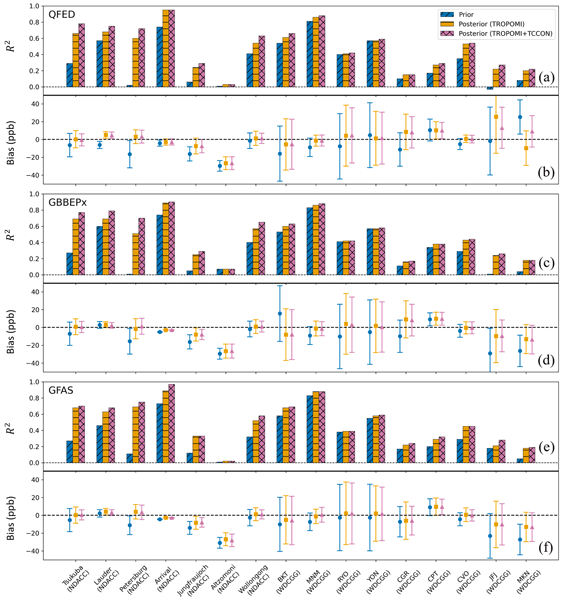
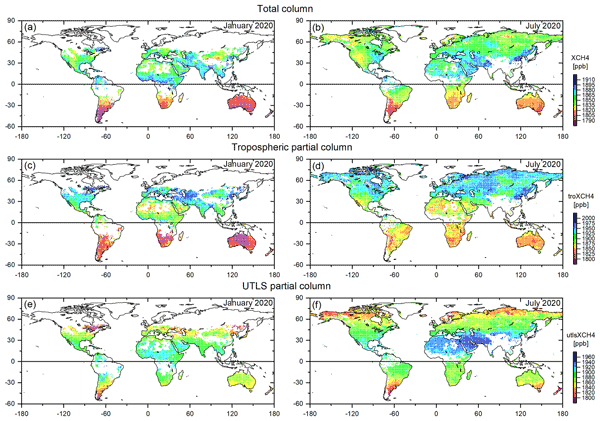
We present a computationally very efficient method for the synergetic use of level 2 remote-sensing data products. We apply the method to IASI vertical profile and TROPOMI total column space-borne methane observations and thus gain sensitivity for the tropospheric methane partial columns, which is not achievable by the individual use of TROPOMI and IASI. These synergetic effects are evaluated theoretically and empirically by inter-comparisons to independent references of TCCON, AirCore, and GAW.
Luke M. Western, Alison L. Redington, Alistair J. Manning, Cathy M. Trudinger, Lei Hu, Stephan Henne, Xuekun Fang, Lambert J. M. Kuijpers, Christina Theodoridi, David S. Godwin, Jgor Arduini, Bronwyn Dunse, Andreas Engel, Paul J. Fraser, Christina M. Harth, Paul B. Krummel, Michela Maione, Jens Mühle, Simon O'Doherty, Hyeri Park, Sunyoung Park, Stefan Reimann, Peter K. Salameh, Daniel Say, Roland Schmidt, Tanja Schuck, Carolina Siso, Kieran M. Stanley, Isaac Vimont, Martin K. Vollmer, Dickon Young, Ronald G. Prinn, Ray F. Weiss, Stephen A. Montzka, and Matthew Rigby
Atmos. Chem. Phys., 22, 9601–9616, https://doi.org/10.5194/acp-22-9601-2022, https://doi.org/10.5194/acp-22-9601-2022, 2022
Short summary
Short summary
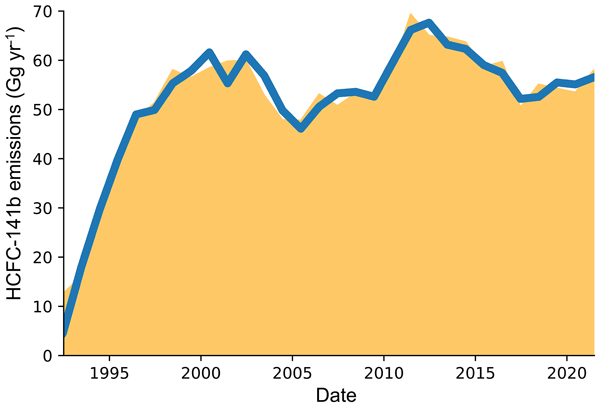
The production of ozone-destroying gases is being phased out. Even though production of one of the main ozone-depleting gases, called HCFC-141b, has been declining for many years, the amount that is being released to the atmosphere has been increasing since 2017. We do not know for sure why this is. A possible explanation is that HCFC-141b that was used to make insulating foams many years ago is only now escaping to the atmosphere, or a large part of its production is not being reported.
Ivo Beck, Hélène Angot, Andrea Baccarini, Lubna Dada, Lauriane Quéléver, Tuija Jokinen, Tiia Laurila, Markus Lampimäki, Nicolas Bukowiecki, Matthew Boyer, Xianda Gong, Martin Gysel-Beer, Tuukka Petäjä, Jian Wang, and Julia Schmale
Atmos. Meas. Tech., 15, 4195–4224, https://doi.org/10.5194/amt-15-4195-2022, https://doi.org/10.5194/amt-15-4195-2022, 2022
Short summary
Short summary
We present the pollution detection algorithm (PDA), a new method to identify local primary pollution in remote atmospheric aerosol and trace gas time series. The PDA identifies periods of contaminated data and relies only on the target dataset itself; i.e., it is independent of ancillary data such as meteorological variables. The parameters of all pollution identification steps are adjustable so that the PDA can be tuned to different locations and situations. It is available as open-access code.
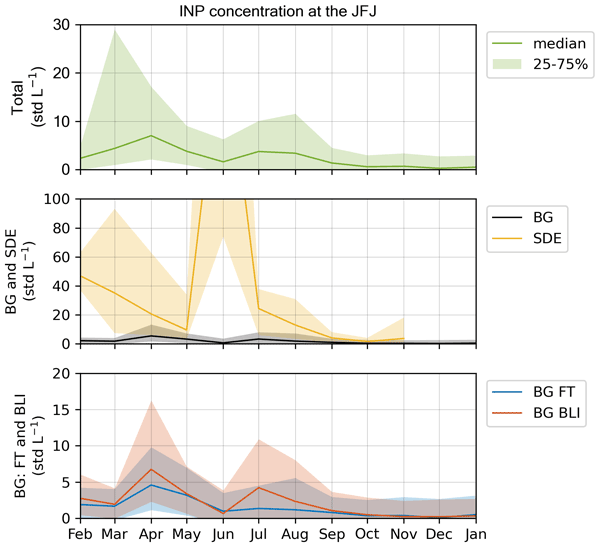
Cyril Brunner, Benjamin T. Brem, Martine Collaud Coen, Franz Conen, Martin Steinbacher, Martin Gysel-Beer, and Zamin A. Kanji
Atmos. Chem. Phys., 22, 7557–7573, https://doi.org/10.5194/acp-22-7557-2022, https://doi.org/10.5194/acp-22-7557-2022, 2022
Short summary
Short summary
Microscopic particles called ice-nucleating particles (INPs) are essential for ice crystals to form in clouds. INPs are a tiny proportion of atmospheric aerosol, and their abundance is poorly constrained. We study how the concentration of INPs changes diurnally and seasonally at a mountaintop station in central Europe. Unsurprisingly, a diurnal cycle is only found when considering air masses that have had lower-altitude ground contact. The highest INP concentrations occur in spring.
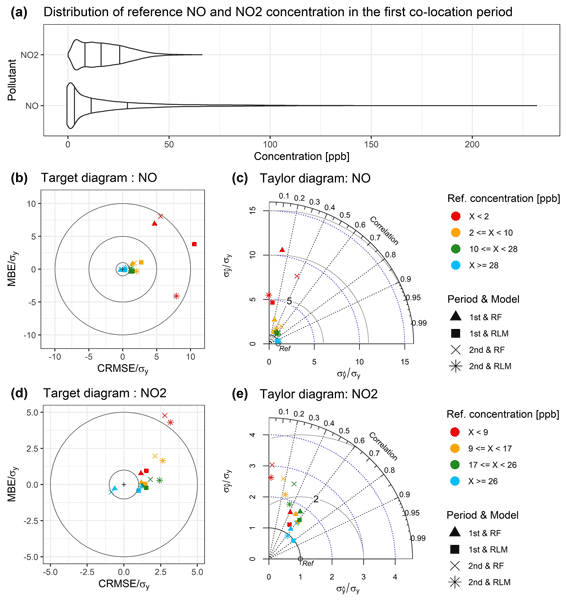
Horim Kim, Michael Müller, Stephan Henne, and Christoph Hüglin
Atmos. Meas. Tech., 15, 2979–2992, https://doi.org/10.5194/amt-15-2979-2022, https://doi.org/10.5194/amt-15-2979-2022, 2022
Short summary
Short summary
In this study, the performance of electrochemical sensors for NO and NO2 for measuring air quality was determined over a longer operating period. The performance of NO sensors remained reliable for more than 18 months. However, the NO2 sensors showed decreasing performance over time. During deployment, we found that the NO2 sensors can distinguish general pollution levels, but they proved unsuitable for accurate measurements due to significant biases.
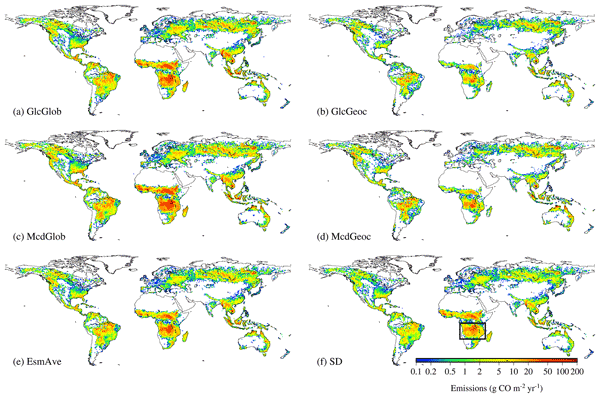
Makoto Saito, Tomohiro Shiraishi, Ryuichi Hirata, Yosuke Niwa, Kazuyuki Saito, Martin Steinbacher, Doug Worthy, and Tsuneo Matsunaga
Biogeosciences, 19, 2059–2078, https://doi.org/10.5194/bg-19-2059-2022, https://doi.org/10.5194/bg-19-2059-2022, 2022
Short summary
Short summary
This study tested combinations of two sources of AGB data and two sources of LCC data and used the same burned area satellite data to estimate BB CO emissions. Our analysis showed large discrepancies in annual mean CO emissions and explicit differences in the simulated CO concentrations among the BB emissions estimates. This study has confirmed that BB emissions estimates are sensitive to the land surface information on which they are based.
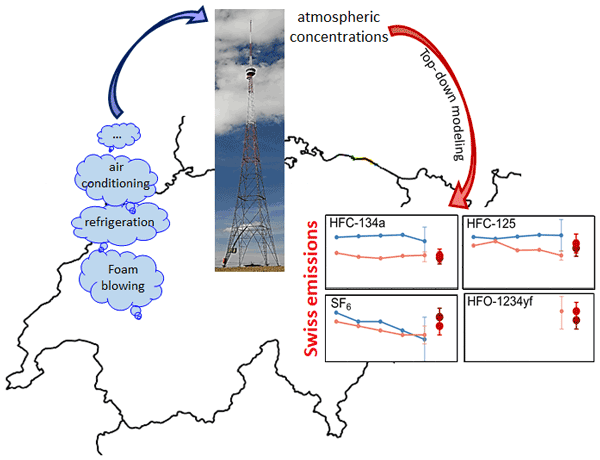
Dominique Rust, Ioannis Katharopoulos, Martin K. Vollmer, Stephan Henne, Simon O'Doherty, Daniel Say, Lukas Emmenegger, Renato Zenobi, and Stefan Reimann
Atmos. Chem. Phys., 22, 2447–2466, https://doi.org/10.5194/acp-22-2447-2022, https://doi.org/10.5194/acp-22-2447-2022, 2022
Short summary
Short summary
Artificial halocarbons contribute to ozone layer depletion and to global warming. We measured the atmospheric concentrations of halocarbons at the Beromünster tower, modelled the Swiss emissions, and compared the results to the internationally reported Swiss emissions inventory. For most of the halocarbons, we found good agreement, whereas one refrigerant might be overestimated in the inventory. In addition, we present first emission estimates of the newest types of halocarbons.
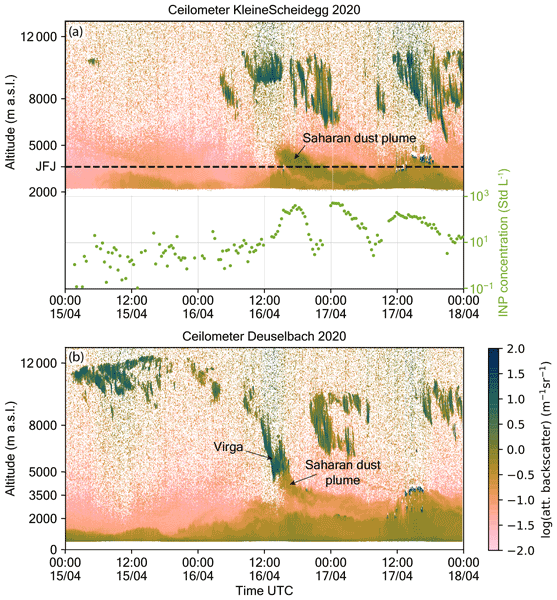
Cyril Brunner, Benjamin T. Brem, Martine Collaud Coen, Franz Conen, Maxime Hervo, Stephan Henne, Martin Steinbacher, Martin Gysel-Beer, and Zamin A. Kanji
Atmos. Chem. Phys., 21, 18029–18053, https://doi.org/10.5194/acp-21-18029-2021, https://doi.org/10.5194/acp-21-18029-2021, 2021
Short summary
Short summary
Special microscopic particles called ice-nucleating particles (INPs) are essential for ice crystals to form in the atmosphere. INPs are sparse and their atmospheric concentration and properties are not well understood. Mineral dust particles make up a significant fraction of INPs but how much remains unknown. Here, we address this knowledge gap by studying periods when mineral particles are present in large quantities at a mountaintop station in central Europe.
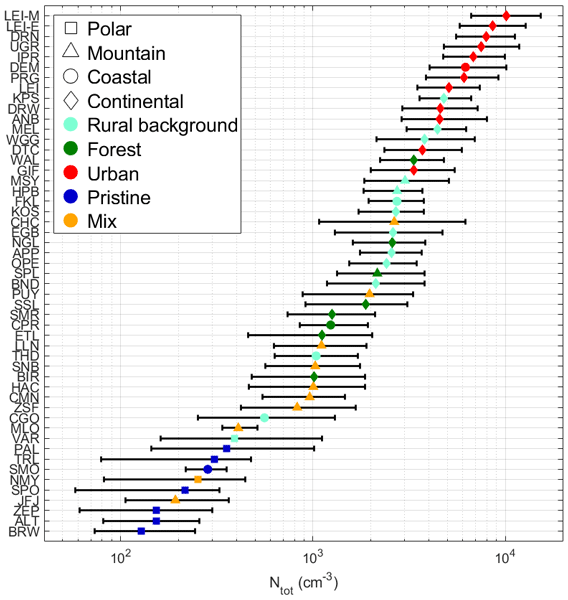
Clémence Rose, Martine Collaud Coen, Elisabeth Andrews, Yong Lin, Isaline Bossert, Cathrine Lund Myhre, Thomas Tuch, Alfred Wiedensohler, Markus Fiebig, Pasi Aalto, Andrés Alastuey, Elisabeth Alonso-Blanco, Marcos Andrade, Begoña Artíñano, Todor Arsov, Urs Baltensperger, Susanne Bastian, Olaf Bath, Johan Paul Beukes, Benjamin T. Brem, Nicolas Bukowiecki, Juan Andrés Casquero-Vera, Sébastien Conil, Konstantinos Eleftheriadis, Olivier Favez, Harald Flentje, Maria I. Gini, Francisco Javier Gómez-Moreno, Martin Gysel-Beer, Anna Gannet Hallar, Ivo Kalapov, Nikos Kalivitis, Anne Kasper-Giebl, Melita Keywood, Jeong Eun Kim, Sang-Woo Kim, Adam Kristensson, Markku Kulmala, Heikki Lihavainen, Neng-Huei Lin, Hassan Lyamani, Angela Marinoni, Sebastiao Martins Dos Santos, Olga L. Mayol-Bracero, Frank Meinhardt, Maik Merkel, Jean-Marc Metzger, Nikolaos Mihalopoulos, Jakub Ondracek, Marco Pandolfi, Noemi Pérez, Tuukka Petäjä, Jean-Eudes Petit, David Picard, Jean-Marc Pichon, Veronique Pont, Jean-Philippe Putaud, Fabienne Reisen, Karine Sellegri, Sangeeta Sharma, Gerhard Schauer, Patrick Sheridan, James Patrick Sherman, Andreas Schwerin, Ralf Sohmer, Mar Sorribas, Junying Sun, Pierre Tulet, Ville Vakkari, Pieter Gideon van Zyl, Fernando Velarde, Paolo Villani, Stergios Vratolis, Zdenek Wagner, Sheng-Hsiang Wang, Kay Weinhold, Rolf Weller, Margarita Yela, Vladimir Zdimal, and Paolo Laj
Atmos. Chem. Phys., 21, 17185–17223, https://doi.org/10.5194/acp-21-17185-2021, https://doi.org/10.5194/acp-21-17185-2021, 2021
Short summary
Short summary
Aerosol particles are a complex component of the atmospheric system the effects of which are among the most uncertain in climate change projections. Using data collected at 62 stations, this study provides the most up-to-date picture of the spatial distribution of particle number concentration and size distribution worldwide, with the aim of contributing to better representation of aerosols and their interactions with clouds in models and, therefore, better evaluation of their impact on climate.
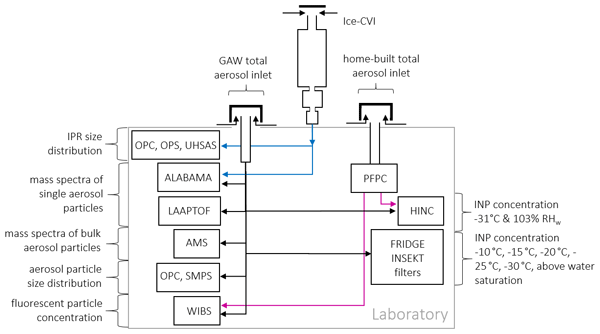
Larissa Lacher, Hans-Christian Clemen, Xiaoli Shen, Stephan Mertes, Martin Gysel-Beer, Alireza Moallemi, Martin Steinbacher, Stephan Henne, Harald Saathoff, Ottmar Möhler, Kristina Höhler, Thea Schiebel, Daniel Weber, Jann Schrod, Johannes Schneider, and Zamin A. Kanji
Atmos. Chem. Phys., 21, 16925–16953, https://doi.org/10.5194/acp-21-16925-2021, https://doi.org/10.5194/acp-21-16925-2021, 2021
Short summary
Short summary
We investigate ice-nucleating particle properties at Jungfraujoch during the 2017 joint INUIT/CLACE field campaign, to improve the knowledge about those rare particles in a cloud-relevant environment. By quantifying ice-nucleating particles in parallel to single-particle mass spectrometry measurements, we find that mineral dust and aged sea spray particles are potential candidates for ice-nucleating particles. Our findings are supported by ice residual analysis and source region modeling.
Cited articles
Alberti, K., Thornton, J. M., Turnbach, H. M., and Adler, C.: The Mountains Uncovered Series: Intercomparable Maps and Statistics for 100 Selected Global Mountain Ranges (v1.0) (v1.0), Zenodo, https://doi.org/10.5281/zenodo.8010166, 2023. a
Bakels, L., Tatsii, D., Tipka, A., Thompson, R., Dütsch, M., Blaschek, M., Seibert, P., Baier, K., Bucci, S., Cassiani, M., Eckhardt, S., Groot Zwaaftink, C., Henne, S., Kaufmann, P., Lechner, V., Maurer, C., Mulder, M. D., Pisso, I., Plach, A., Subramanian, R., Vojta, M., and Stohl, A.: FLEXPART version 11: improved accuracy, efficiency, and flexibility, Geosci. Model Dev., 17, 7595–7627, https://doi.org/10.5194/gmd-17-7595-2024, 2024. a
Bloom, A. A., Bowman, K. W., Lee, M., Turner, A. J., Schroeder, R., Worden, J. R., Weidner, R., McDonald, K. C., and Jacob, D. J.: A global wetland methane emissions and uncertainty dataset for atmospheric chemical transport models (WetCHARTs version 1.0), Geosci. Model Dev., 10, 2141–2156, https://doi.org/10.5194/gmd-10-2141-2017, 2017. a
Bloom, A. A., Bowman, K. W., Lee, M., Turner, A. J., Schroeder, R., Worden, J. R., Weidner, R. J., Mcdonald, K. C., and Jacob, D. J.: CMS: Global 0.5-deg Wetland Methane Emissions and Uncertainty (WetCHARTs v1.3.3), ORNL DAAC, https://doi.org/10.3334/ORNLDAAC/2346, 2024. a, b
Bond, T. C., Doherty, S. J., Fahey, D. W., Forster, P. M., Berntsen, T., DeAngelo, B. J., Flanner, M. G., Ghan, S., Kärcher, B., Koch, D., Kinne, S., Kondo, Y., Quinn, P. K., Sarofim, M. C., Schultz, M. G., Schulz, M., Venkataraman, C., Zhang, H., Zhang, S., Bellouin, N., Guttikunda, S. K., Hopke, P. K., Jacobson, M. Z., Kaiser, J. W., Klimont, Z., Lohmann, U., Schwarz, J. P., Shindell, D., Storelvmo, T., Warren, S. G., and Zender, C. S.: Bounding the role of black carbon in the climate system: A scientific assessment, J. Geophys. Res.-Atmos., 118, 5380–5552, https://doi.org/10.1002/jgrd.50171, 2013. a, b
Brunner, D., Henne, S., Keller, C. A., Reimann, S., Vollmer, M. K., O'Doherty, S., and Maione, M.: An extended Kalman-filter for regional scale inverse emission estimation, Atmos. Chem. Phys., 12, 3455–3478, https://doi.org/10.5194/acp-12-3455-2012, 2012. a
Bukosa, B., Mikaloff-Fletcher, S., Brailsford, G., Smale, D., Keller, E. D., Baisden, W. T., Kirschbaum, M. U. F., Giltrap, D. L., Liáng, L., Moore, S., Moss, R., Nichol, S., Turnbull, J., Geddes, A., Kennett, D., Hidy, D., Barcza, Z., Schipper, L. A., Wall, A. M., Nakaoka, S.-I., Mukai, H., and Brandon, A.: Inverse modelling of New Zealand's carbon dioxide balance estimates a larger than expected carbon sink, Atmos. Chem. Phys., 25, 6445–6473, https://doi.org/10.5194/acp-25-6445-2025, 2025. a
Callewaert, S., Brioude, J., Langerock, B., Duflot, V., Fonteyn, D., Müller, J.-F., Metzger, J.-M., Hermans, C., Kumps, N., Ramonet, M., Lopez, M., Mahieu, E., and De Mazière, M.: Analysis of CO2, CH4, and CO surface and column concentrations observed at Réunion Island by assessing WRF-Chem simulations, Atmos. Chem. Phys., 22, 7763–7792, https://doi.org/10.5194/acp-22-7763-2022, 2022. a, b, c, d, e, f
CAMS: Atmosphere Data Store, Copernicus Atmosphere Monitoring Service, https://ads.atmosphere.copernicus.eu (last access: 13 May 2026), 2025. a
Constantin, L., Brunner, D., Thanwerdas, J., Keller, C., Steiner, M., and Koene, E.: Emiproc: A Python package for emission inventory processing, Journal of Open Source Software, 10, 7509, https://doi.org/10.21105/joss.07509, 2025. a
Cooper, O. R., Schultz, M. G., Schröder, S., Chang, K.-L., Gaudel, A., Benítez, G. C., Cuevas, E., Fröhlich, M., Galbally, I. E., Molloy, S., Kubistin, D., Lu, X., McClure-Begley, A., Nédélec, P., O'Brien, J., Oltmans, S. J., Petropavlovskikh, I., Ries, L., Senik, I., Sjöberg, K., Solberg, S., Spain, G. T., Spangl, W., Steinbacher, M., Tarasick, D., Thouret, V., and Xu, X.: Multi-decadal surface ozone trends at globally distributed remote locations, Elem. Sci. Anth., 8, 23, https://doi.org/10.1525/elementa.420, 2020. a
Copernicus Atmosphere Monitoring Service (CAMS): CAMS global inversion-optimised greenhouse gas fluxes and concentrations, Copernicus Atmosphere Monitoring Service (CAMS) Atmosphere Data Store [data set], https://doi.org/10.24381/ed2851d2, 2020a. a, b, c
Copernicus Atmosphere Monitoring Service (CAMS): CAMS global reanalysis (EAC4), Copernicus Atmosphere Monitoring Service (CAMS) Atmosphere Data Store [data set], https://doi.org/10.24381/d58bbf47, 2020b. a
Copernicus Atmosphere Monitoring Service (CAMS): CAMS global biomass burning emissions based on fire radiative power (GFAS), Copernicus Atmosphere Monitoring Service (CAMS) Atmosphere Data Store [data set], https://doi.org/10.24381/a05253c7, 2022. a
Crameri, F.: Scientific colour maps, Zenodo [code], https://doi.org/10.5281/zenodo.8409685, 2023. a
Crippa, M., Guizzardi, D., Pagani, F., Banja, M., Muntean, M., Schaaf, E., Monforti-Ferrario, F., Becker, W. E., Quadrelli, R., Risquez, M. A., Taghavi-Moharamli, P., Köykkä, J., Grassi, G., Rossi, S., Melo, J., Oom, D., Branco, A., San-Miguel, J., Manca, G., Pisoni, E., Vignati, E., and Pekar, F.: GHG emissions of all world countries, JRC/IEA Report JRC138862, Publications Office of the European Union, Luxembourg, JRC138862, https://doi.org/10.2760/4002897, 2024a. a
Crippa, M., Guizzardi, D., Pagani, F., Schiavina, M., Melchiorri, M., Pisoni, E., Graziosi, F., Muntean, M., Maes, J., Dijkstra, L., Van Damme, M., Clarisse, L., and Coheur, P.: Insights into the spatial distribution of global, national, and subnational greenhouse gas emissions in the Emissions Database for Global Atmospheric Research (EDGAR v8.0), Earth Syst. Sci. Data, 16, 2811–2830, https://doi.org/10.5194/essd-16-2811-2024, 2024b. a, b
Cristofanelli, P., Trisolino, P., Calzolari, F., Busetto, M., Calidonna, C. R., Amendola, S., Arduini, J., Fratticioli, C., Hundal, R. A., Maione, M., Marcucci, F., Marinoni, A., Montaguti, S., Renzi, L., Roccato, F., Bonasoni, P., and Putero, D.: Influence of wildfire emissions to carbon dioxide (CO2) observed at the Mt. Cimone station (Italy, 2165 m a.s.l.): A multi-year investigation, Atmos. Environ., 330, 120577, https://doi.org/10.1016/j.atmosenv.2024.120577, 2024. a, b
De Mazière, M., Thompson, A. M., Kurylo, M. J., Wild, J. D., Bernhard, G., Blumenstock, T., Braathen, G. O., Hannigan, J. W., Lambert, J.-C., Leblanc, T., McGee, T. J., Nedoluha, G., Petropavlovskikh, I., Seckmeyer, G., Simon, P. C., Steinbrecht, W., and Strahan, S. E.: The Network for the Detection of Atmospheric Composition Change (NDACC): history, status and perspectives, Atmos. Chem. Phys., 18, 4935–4964, https://doi.org/10.5194/acp-18-4935-2018, 2018. a
DeWitt, H. L., Gasore, J., Rupakheti, M., Potter, K. E., Prinn, R. G., Ndikubwimana, J. D. D., Nkusi, J., and Safari, B.: Seasonal and diurnal variability in O3, black carbon, and CO measured at the Rwanda Climate Observatory , Atmos. Chem. Phys., 19, 2063–2078, https://doi.org/10.5194/acp-19-2063-2019, 2019. a, b, c, d, e
Dong, B., Peng, S., Liu, G., Pu, T., Gerlein-Safdi, C., Prigent, C., and Lin, X.: Underestimation of Methane Emissions From the Sudd Wetland: Unraveling the Impact of Wetland Extent Dynamics, Geophys. Res. Lett., 51, e2024GL110690, https://doi.org/10.1029/2024GL110690, 2024. a
EDGAR: EDGAR (Emissions Database for Global Atmospheric Research) Community GHG Database, a collaboration between the European Commission, Joint Research Centre (JRC), the International Energy Agency (IEA), and comprising IEA-EDGAR CO2, EDGAR CH4, EDGAR N2O, EDGAR F-GASES version 2024, European Commission, JRC (Datasets), https://edgar.jrc.ec.europa.eu/dataset_ghg2024 (last access: 13 May 2026), 2025. a
EDGAR v8.1: Global Air Pollutant Emissions, European Commission, https://edgar.jrc.ec.europa.eu/dataset_ap81#sources (last access: 13 May 2026), 2025. a
Gatari, M. J. and Boman, J.: Black carbon and total carbon measurements at urban and rural sites in Kenya, East Africa, Atmos. Environ., 37, 1149–1154, https://doi.org/10.1016/S1352-2310(02)01001-4, 2003. a
Hart, N. C. G., Washington, R., and Maidment, R. I.: Deep Convection over Africa: Annual Cycle, ENSO, and Trends in the Hotspots, J. Climate, 32, https://doi.org/10.1175/JCLI-D-19-0274.1, 2019. a, b
Henne, S., Junkermann, W., Kariuki, J. M., Aseyo, J., and Klausen, J.: Mount Kenya Global Atmosphere Watch Station (MKN): Installation and Meteorological Characterization, J. Appl. Meteorol. Clim., 47, 2946–2962, https://doi.org/10.1175/2008JAMC1834.1, 2008a. a, b, c, d
Henne, S., Klausen, J., Junkermann, W., Kariuki, J. M., Aseyo, J. O., and Buchmann, B.: Representativeness and climatology of carbon monoxide and ozone at the global GAW station Mt. Kenya in equatorial Africa, Atmos. Chem. Phys., 8, 3119–3139, https://doi.org/10.5194/acp-8-3119-2008, 2008b. a, b, c, d, e, f, g, h, i, j, k
Henne, S., Brunner, D., Oney, B., Leuenberger, M., Eugster, W., Bamberger, I., Meinhardt, F., Steinbacher, M., and Emmenegger, L.: Validation of the Swiss methane emission inventory by atmospheric observations and inverse modelling, Atmos. Chem. Phys., 16, 3683–3710, https://doi.org/10.5194/acp-16-3683-2016, 2016. a, b, c
Hu, Y., Li, D., and Liu, J.: Abrupt seasonal variation of the ITCZ and the Hadley circulation, Geophys. Res. Lett., 34, 2007GL030950, https://doi.org/10.1029/2007GL030950, 2007. a
Janssens-Maenhout, G., Crippa, M., Guizzardi, D., Muntean, M., Schaaf, E., Dentener, F., Bergamaschi, P., Pagliari, V., Olivier, J. G. J., Peters, J. A. H. W., van Aardenne, J. A., Monni, S., Doering, U., Petrescu, A. M. R., Solazzo, E., and Oreggioni, G. D.: EDGAR v4.3.2 Global Atlas of the three major greenhouse gas emissions for the period 1970–2012, Earth Syst. Sci. Data, 11, 959–1002, https://doi.org/10.5194/essd-11-959-2019, 2019. a, b
Kaiser, J. W., Heil, A., Andreae, M. O., Benedetti, A., Chubarova, N., Jones, L., Morcrette, J.-J., Razinger, M., Schultz, M. G., Suttie, M., and van der Werf, G. R.: Biomass burning emissions estimated with a global fire assimilation system based on observed fire radiative power, Biogeosciences, 9, 527–554, https://doi.org/10.5194/bg-9-527-2012, 2012. a
Khamala, G. W., Odhiambo, J. O., and Makokha, J. W.: Seasonal Variability in Aerosol Microphysical Properties over Selected Rural, Urban and Maritime Sites in Kenya, OALib, 05, 1–20, https://doi.org/10.4236/oalib.1104821, 2018. a
Kirago, L., Gustafsson, Ö., Gaita, S. M., Haslett, S. L., deWitt, H. L., Gasore, J., Potter, K. E., Prinn, R. G., Rupakheti, M., Ndikubwimana, J. D. D., Safari, B., and Andersson, A.: Atmospheric Black Carbon Loadings and Sources over Eastern Sub-Saharan Africa Are Governed by the Regional Savanna Fires, Environ. Sci. Technol., 56, 15460–15469, https://doi.org/10.1021/acs.est.2c05837, 2022. a
Kirago, L., Gustafsson, Ö., Gaita, S. M., Haslett, S. L., Gatari, M. J., Popa, M. E., Röckmann, T., Zellweger, C., Steinbacher, M., Klausen, J., Félix, C., Njiru, D., and Andersson, A.: Sources and long-term variability of carbon monoxide at Mount Kenya and in Nairobi, Atmos. Chem. Phys., 23, 14349–14357, https://doi.org/10.5194/acp-23-14349-2023, 2023. a, b, c
Labuschagne, C., Kuyper, B., Brunke, E.-G., Mokolo, T., van der Spuy, D., Martin, L., Mbambalala, E., Parker, B., Khan, M. A. H., Davies-Coleman, M. T., Shallcross, D. E., and Joubert, W.: A review of four decades of atmospheric trace gas measurements at Cape Point, South Africa, T. Roy. Soc. S. Afr., 73, 113–132, https://doi.org/10.1080/0035919X.2018.1477854, 2018. a
Lam, N. L., Chen, Y., Weyant, C., Venkataraman, C., Sadavarte, P., Johnson, M. A., Smith, K. R., Brem, B. T., Arineitwe, J., Ellis, J. E., and Bond, T. C.: Household Light Makes Global Heat: High Black Carbon Emissions From Kerosene Wick Lamps, Environ. Sci. Technol., 46, 13531–13538, https://doi.org/10.1021/es302697h, 2012. a
Lan, X., Petron, G., Baugh, K., Crotwell, A. M., Crotwell, M. J., DeVogel, S., Madronich, M., Mauss, J., Mefford, T., Moglia, E., Morris, S., Mund, J. W., Searle, A., Thoning, K. W., Wolter, S., and Miller, J.: Atmospheric Carbon Dioxide Dry Air Mole Fractions from the NOAA GML Global Greenhouse Gas Reference Network, Carbon Cycle Cooperative Global Air Sampling Network: 1967–Present, https://doi.org/10.15138/wkgj-f215, 2025. a
Lashkari, H. and Jafari, M.: Annual displacement and appropriate index to determine ITCZ position in East Africa and the Indian Ocean regions, Meteorol. Atmos. Phys., 133, 1111–1126, https://doi.org/10.1007/s00703-021-00797-y, 2021. a, b
Makokha, J. W., Odhiambo, J. O., and Godfrey, J. S.: Trend Analysis of Aerosol Optical Depth and Angström Exponent Anomaly over East Africa, Atmos. Clim. Sci., 07, 588–603, https://doi.org/10.4236/acs.2017.74043, 2017. a
Montzka, S. A., Butler, J. H., Elkins, J. W., Thompson, T. M., Clarke, A. D., and Lock, L. T.: Present and future trends in the atmospheric burden of ozone-depleting halogens, Nature, 398, 690–694, https://doi.org/10.1038/19499, 1999. a
Morgan, E. J., Lavrič, J. V., Seifert, T., Chicoine, T., Day, A., Gomez, J., Logan, R., Sack, J., Shuuya, T., Uushona, E. G., Vincent, K., Schultz, U., Brunke, E.-G., Labuschagne, C., Thompson, R. L., Schmidt, S., Manning, A. C., and Heimann, M.: Continuous measurements of greenhouse gases and atmospheric oxygen at the Namib Desert Atmospheric Observatory, Atmos. Meas. Tech., 8, 2233–2250, https://doi.org/10.5194/amt-8-2233-2015, 2015. a
Müller, T. and Fiebig, M.: ACTRIS In Situ Aerosol: Guidelines for Manual QC of AE33 absorption photometer data, Tech. rep., https://www.actris-ecac.eu/pluginAppObj/pluginAppObj_225_189/2021-09-14_ACTRIS_AE33_v1.pdf (last access: 13 May 2026), 2021. a
Nicholson, S. E.: Climate and climatic variability of rainfall over eastern Africa, Rev. Geophys., 55, 590–635, https://doi.org/10.1002/2016RG000544, 2017. a
Nicholson, S. E.: The ITCZ and the Seasonal Cycle over Equatorial Africa, B. Am. Meteorol. Soc., 99, 337–348, https://doi.org/10.1175/BAMS-D-16-0287.1, 2018. a
Niwa, Y., Tohjima, Y., Terao, Y., Saeki, T., Ito, A., Umezawa, T., Yamada, K., Sasakawa, M., Machida, T., Nakaoka, S.-I., Nara, H., Tanimoto, H., Mukai, H., Yoshida, Y., Morimoto, S., Takatsuji, S., Tsuboi, K., Sawa, Y., Matsueda, H., Ishijima, K., Fujita, R., Goto, D., Lan, X., Schuldt, K., Heliasz, M., Biermann, T., Chmura, L., Necki, J., Xueref-Remy, I., and Sferlazzo, D.: Multi-observational estimation of regional and sectoral emission contributions to the persistent high growth rate of atmospheric CH4 for 2020–2022, Atmos. Chem. Phys., 25, 6757–6785, https://doi.org/10.5194/acp-25-6757-2025, 2025. a
NOAA: Trends in CO2, CH4, N2O, SF6, NOAA, Global Monitoring Laboratory, https://gml.noaa.gov/ccgg/trends/ (last access: 13 May 2026), 2025. a
Nying'uro, P., Kimutai, J., and Kiptum, C.: State of the climate Kenya 2023, Tech. rep., KMD, https://meteo.go.ke/documents/802/SoC_Kenya_2023_1.pdf (last access: 13 May 2026), 2024. a
Ogren, J. A. and Charlson, R. J.: Elemental carbon in the atmosphere: cycle and lifetime, Tellus B, 35B, 241–254, https://doi.org/10.1111/j.1600-0889.1983.tb00027.x, 1983. a
Palmer, P. I., Wainwright, C. M., Dong, B., Maidment, R. I., Wheeler, K. G., Gedney, N., Hickman, J. E., Madani, N., Folwell, S. S., Abdo, G., Allan, R. P., Black, E. C. L., Feng, L., Gudoshava, M., Haines, K., Huntingford, C., Kilavi, M., Lunt, M. F., Shaaban, A., and Turner, A. G.: Drivers and impacts of Eastern African rainfall variability, Nat. Rev. Earth Environ., 4, 254–270, https://doi.org/10.1038/s43017-023-00397-x, 2023. a
Patel, A., Mallik, C., Chandra, N., Patra, P. K., and Steinbacher, M.: Revisiting regional and seasonal variations in decadal carbon monoxide variability: Global reversal of growth rate, Sci. Total Environ., 909, 168476, https://doi.org/10.1016/j.scitotenv.2023.168476, 2024. a, b
Peng, Q., Xie, S.-P., Passalacqua, G. A., Miyamoto, A., and Deser, C.: The 2023 extreme coastal El Niño: Atmospheric and air-sea coupling mechanisms, Sci. Adv., 10, https://doi.org/10.1126/sciadv.adk8646, 2024. a
Pickers, P. A. and Manning, A. C.: Investigating bias in the application of curve fitting programs to atmospheric time series, Atmos. Meas. Tech., 8, 1469–1489, https://doi.org/10.5194/amt-8-1469-2015, 2015. a
Rigby, M., Prinn, R., Fraser, P., Simmonds, P., Langenfelds, R., Huang, J., Cunnold, D., Steele, L., Krummel, P., Weiss, R., Doherty, Salameh, P., Wang, H., Harth, C., Mühle, J., and Porter, L.: Renewed growth of atmospheric methane, Geophys. Res. Lett, 35, L22805, https://doi.org/10.1029/2008GL036037, 2008. a
Saboya, E., Manning, A. J., Levy, P., Stanley, K. M., Pitt, J., Young, D., Say, D., Grant, A., Arnold, T., Rennick, C., Tomlinson, S. J., Carnell, E. J., Artioli, Y., Stavert, A., Spain, T. G., O'Doherty, S., Rigby, M., and Ganesan, A. L.: Combining Top-Down and Bottom-Up Approaches to Evaluate Recent Trends and Seasonal Patterns in UK N2O Emissions, J. Geophys. Res.-Atmos., 129, e2024JD040785, https://doi.org/10.1029/2024JD040785, 2024. a
Saunois, M., Martinez, A., Poulter, B., Zhang, Z., Raymond, P. A., Regnier, P., Canadell, J. G., Jackson, R. B., Patra, P. K., Bousquet, P., Ciais, P., Dlugokencky, E. J., Lan, X., Allen, G. H., Bastviken, D., Beerling, D. J., Belikov, D. A., Blake, D. R., Castaldi, S., Crippa, M., Deemer, B. R., Dennison, F., Etiope, G., Gedney, N., Höglund-Isaksson, L., Holgerson, M. A., Hopcroft, P. O., Hugelius, G., Ito, A., Jain, A. K., Janardanan, R., Johnson, M. S., Kleinen, T., Krummel, P. B., Lauerwald, R., Li, T., Liu, X., McDonald, K. C., Melton, J. R., Mühle, J., Müller, J., Murguia-Flores, F., Niwa, Y., Noce, S., Pan, S., Parker, R. J., Peng, C., Ramonet, M., Riley, W. J., Rocher-Ros, G., Rosentreter, J. A., Sasakawa, M., Segers, A., Smith, S. J., Stanley, E. H., Thanwerdas, J., Tian, H., Tsuruta, A., Tubiello, F. N., Weber, T. S., van der Werf, G. R., Worthy, D. E. J., Xi, Y., Yoshida, Y., Zhang, W., Zheng, B., Zhu, Q., Zhu, Q., and Zhuang, Q.: Global Methane Budget 2000–2020, Earth Syst. Sci. Data, 17, 1873–1958, https://doi.org/10.5194/essd-17-1873-2025, 2025. a
Segers, A. and Nanni, R.: Contribution to documentation of products and services as provided within the scope of this contract – 2023 – Part CH4, Tech. rep., https://atmosphere.copernicus.eu/sites/default/files/2024-01/CAMS255_2021SC1_D55.5.2.1-2023-PartCH4_Contribution_to_documentation_of_products_and_services__v1.pdf (last access: 13 May 2026), 2023. a
Stohl, A., Forster, C., Frank, A., Seibert, P., and Wotawa, G.: Technical note: The Lagrangian particle dispersion model FLEXPART version 6.2, Atmos. Chem. Phys., 5, 2461–2474, https://doi.org/10.5194/acp-5-2461-2005, 2005. a
Thompson, A. M., Stauffer, R. M., Kollonige, D. E., Ziemke, J. R., Johnson, B. J., Morris, G. A., Cullis, P., Cazorla, M., Diaz, J. A., Piters, A., Nedeljkovic, I., Warsodikromo, T., Raimundo Silva, F., Northam, E. T., Benjamin, P., Mkololo, T., Machinini, T., Félix, C., Romanens, G., Nyadida, S., Brioude, J., Evan, S., Metzger, J.-M., Dindang, A., Mahat, Y. B., Sammathuria, M. K., Zakaria, N. B., Komala, N., Ogino, S.-Y., Quyen, N. T., Mani, F. S., Vuiyasawa, M., Nardini, D., Martinsen, M., Kuniyuki, D. T., Müller, K., Wolff, P., and Sauvage, B.: Tropical tropospheric ozone trends (1998 to 2023): new perspectives from SHADOZ, IAGOS and OMI/MLS observations, Atmos. Chem. Phys., 25, 18475–18507, https://doi.org/10.5194/acp-25-18475-2025, 2025. a, b, c
Thoning, K. W., Tans, P. P., and Komhyr, W. D.: Atmospheric carbon dioxide at Mauna Loa Observatory: 2. Analysis of the NOAA GMCC data, 1974–1985, J. Geophys. Res.-Atmos., 94, 8549–8565, https://doi.org/10.1029/JD094iD06p08549, 1989. a
Tiemoko, D. T., Yoroba, F., Kouassi, K. B., Diawara, A., Kouadio, K., Bouo, F.-X. D. B., Yapo, A. L. M., Kouman, A., and Ramonet, M.: CO2, CH4, and CO Emission Sources and Their Characteristics in the Lamto Ecological Reserve (Côte d'Ivoire), Atmosphere, 14, 1533, https://doi.org/10.3390/atmos14101533, 2023. a, b
Tiemoko, T. D., Ramonet, M., Yoroba, F., Kouassi, K. B., Kouadio, K., Kazan, V., Kaiser, C., Truong, F., Vuillemin, C., Delmotte, M., Wastine, B., and Ciais, P.: Analysis of the temporal variability of CO2, CH4 and CO concentrations at Lamto, West Africa, Tellus B, 73, 1863707, https://doi.org/10.1080/16000889.2020.1863707, 2021. a, b, c
Van Malderen, R., Thompson, A. M., Kollonige, D. E., Stauffer, R. M., Smit, H. G. J., Maillard Barras, E., Vigouroux, C., Petropavlovskikh, I., Leblanc, T., Thouret, V., Wolff, P., Effertz, P., Tarasick, D. W., Poyraz, D., Ancellet, G., De Backer, M.-R., Evan, S., Flood, V., Frey, M. M., Hannigan, J. W., Hernandez, J. L., Iarlori, M., Johnson, B. J., Jones, N., Kivi, R., Mahieu, E., McConville, G., Müller, K., Nagahama, T., Notholt, J., Piters, A., Prats, N., Querel, R., Smale, D., Steinbrecht, W., Strong, K., and Sussmann, R.: Global ground-based tropospheric ozone measurements: reference data and individual site trends (2000–2022) from the TOAR-II/HEGIFTOM project, Atmos. Chem. Phys., 25, 7187–7225, https://doi.org/10.5194/acp-25-7187-2025, 2025. a, b
Vignati, E., Karl, M., Krol, M., Wilson, J., Stier, P., and Cavalli, F.: Sources of uncertainties in modelling black carbon at the global scale, Atmos. Chem. Phys., 10, 2595–2611, https://doi.org/10.5194/acp-10-2595-2010, 2010. a
Wainwright, C. M., Marsham, J. H., Keane, R. J., Rowell, D. P., Finney, D. L., Black, E., and Allan, R. P.: “Eastern African Paradox”' rainfall decline due to shorter not less intense Long Rains, npj Clim. Atmos. Sci., 2, 34, https://doi.org/10.1038/s41612-019-0091-7, 2019. a
Weingartner, E., Saathoff, H., Schnaiter, M., Streit, N., Bitnar, B., and Baltensperger, U.: Absorption of light by soot particles: determination of the absorption coefficient by means of aethalometers, J. Aerosol Sci., 34, 1445–1463, https://doi.org/10.1016/S0021-8502(03)00359-8, 2003. a
Western, L. M., Rigby, M., Mühle, J., Krummel, P. B., Lunder, C. R., O'Doherty, S., Reimann, S., Vollmer, M. K., Young, D., Adam, B., Fraser, P. J., Ganesan, A. L., Harth, C. M., Hermansen, O., Kim, J., Langenfelds, R. L., Loh, Z. M., Mitrevski, B., Pitt, J. R., Salameh, P. K., Schmidt, R., Stanley, K., Stavert, A. R., Wang, H.-J., Weiss, R. F., and Prinn, R. G.: Global emissions and abundances of chemically and radiatively important trace gases from the AGAGE network, Earth Syst. Sci. Data, 17, 6557–6582, https://doi.org/10.5194/essd-17-6557-2025, 2025. a
World Meteorological Organization (WMO): The Global Atmosphere Watch programme: 25 years of global coordinated atmospheric composition observations and analyses, Tech. Rep. WMO-No. 1143, World Meteorological Organization, Geneva, Switzerland, https://library.wmo.int/idurl/4/41628 (last access: 13 May 2026), 2014. a
World Meteorological Organization (WMO): WMO Greenhouse Gas Bulletin 2025: The State of Greenhouse Gases in the Atmosphere Based on Global Observations through 2024, Tech. Rep. Bulletin no. 21, World Meteorological Organization, Geneva, Switzerland, https://library.wmo.int/idurl/4/69654 (last access: 13 May 2026), 2025. a, b
Zanatta, M., Gysel, M., Bukowiecki, N., Müller, T., Weingartner, E., Areskoug, H., Fiebig, M., Yttri, K., Mihalopoulos, N., Kouvarakis, G., Beddows, D., Harrison, R., Cavalli, F., Putaud, J., Spindler, G., Wiedensohler, A., Alastuey, A., Pandolfi, M., Sellegri, K., Swietlicki, E., Jaffrezo, J., Baltensperger, U., and Laj, P.: A European aerosol phenomenology-5: Climatology of black carbon optical properties at 9 regional background sites across Europe, Atmos. Environ., 145, 346–364, https://doi.org/10.1016/j.atmosenv.2016.09.035, 2016. a, b
Zhang, L., Jin, L., Zhao, T., Yin, Y., Zhu, B., Shan, Y., Guo, X., Tan, C., Gao, J., and Wang, H.: Diurnal variation of surface ozone in mountainous areas: Case study of Mt. Huang, East China, Sci. Total Environ., 538, 583–590, https://doi.org/10.1016/j.scitotenv.2015.08.096, 2015. a
Zotter, P., Herich, H., Gysel, M., El-Haddad, I., Zhang, Y., Močnik, G., Hüglin, C., Baltensperger, U., Szidat, S., and Prévôt, A. S. H.: Evaluation of the absorption Ångström exponents for traffic and wood burning in the Aethalometer-based source apportionment using radiocarbon measurements of ambient aerosol, Atmos. Chem. Phys., 17, 4229–4249, https://doi.org/10.5194/acp-17-4229-2017, 2017. a
Short summary
Long-term atmospheric measurements are crucial to understanding climate change but remain scarce across Africa. We monitored atmospheric species at Mt. Kenya from 2020 to 2024. Our data reveal equatorial seasonal and daily variability and show that models miss local patterns. Emissions at Mt. Kenya mainly come from households, industry, and agriculture, though with large uncertainties. These findings stress the need for more ground stations to improve climate models and emission estimates.
Long-term atmospheric measurements are crucial to understanding climate change but remain scarce...


Altmetrics
Final-revised paper
Preprint