
Articles | Volume 25, issue 24
https://doi.org/10.5194/acp-25-18675-2025
© Author(s) 2025. This work is distributed under
the Creative Commons Attribution 4.0 License.
the Creative Commons Attribution 4.0 License.
https://doi.org/10.5194/acp-25-18675-2025
© Author(s) 2025. This work is distributed under
the Creative Commons Attribution 4.0 License.
the Creative Commons Attribution 4.0 License.
Research article
| 
22 Dec 2025
Research article |
| 22 Dec 2025
| 22 Dec 2025
High resolution air quality simulation in the Himalayan valleys, a case study in Bhutan
Bertrand Bessagnet
CORRESPONDING AUTHOR

Laboratoire de Météorologie Dynamique (LMD)/IPSL, Ecole Polytechnique, Institut Polytechnique de Paris, ENS, Université PSL, Sorbonne Université, CNRS, Route de Saclay, 91128 Palaiseau, France
Narayan Thapa
International Centre for Integrated Mountain Development (ICIMOD), Kathmandu, Nepal
Dikra Prasad Bajgai
International Centre for Integrated Mountain Development (ICIMOD), Kathmandu, Nepal
Ravi Sahu
International Centre for Integrated Mountain Development (ICIMOD), Kathmandu, Nepal
Arshini Saikia
International Centre for Integrated Mountain Development (ICIMOD), Kathmandu, Nepal
Arineh Cholakian
Laboratoire de Météorologie Dynamique (LMD)/IPSL, Ecole Polytechnique, Institut Polytechnique de Paris, ENS, Université PSL, Sorbonne Université, CNRS, Route de Saclay, 91128 Palaiseau, France
Laurent Menut
Laboratoire de Météorologie Dynamique (LMD)/IPSL, Ecole Polytechnique, Institut Polytechnique de Paris, ENS, Université PSL, Sorbonne Université, CNRS, Route de Saclay, 91128 Palaiseau, France
Guillaume Siour
Univ. Paris Est Creteil and Université Paris Cité, CNRS, LISA, 94010 Créteil, France
Tenzin Wangchuk
Jigme Singye Wangchuck School of Law, Paro, Bhutan
Monica Crippa
European Commission, Joint Research Centre, Ispra, Italy
Kamala Gurung
International Centre for Integrated Mountain Development (ICIMOD), Kathmandu, Nepal
Related authors
Philippe Thunis, Jeroen Kuenen, Enrico Pisoni, Bertrand Bessagnet, Manjola Banja, Lech Gawuc, Karol Szymankiewicz, Diego Guizardi, Monica Crippa, Susana Lopez-Aparicio, Marc Guevara, Alexander De Meij, Sabine Schindlbacher, and Alain Clappier
Geosci. Model Dev., 17, 3631–3643, https://doi.org/10.5194/gmd-17-3631-2024, https://doi.org/10.5194/gmd-17-3631-2024, 2024
Short summary
Short summary
An ensemble emission inventory is created with the aim of monitoring the status and progress made with the development of EU-wide inventories. This emission ensemble serves as a common benchmark for the screening and allows for the comparison of more than two inventories at a time. Because the emission “truth” is unknown, the approach does not tell which inventory is the closest to reality, but it identifies inconsistencies that require special attention.
Laurent Menut, Bertrand Bessagnet, Arineh Cholakian, Guillaume Siour, Sylvain Mailler, and Romain Pennel
Geosci. Model Dev., 17, 3645–3665, https://doi.org/10.5194/gmd-17-3645-2024, https://doi.org/10.5194/gmd-17-3645-2024, 2024
Short summary
Short summary
This study is about the modelling of the atmospheric composition in Europe during the summer of 2022, when massive wildfires were observed. It is a sensitivity study dedicated to the relative impacts of two modelling processes that are able to modify the meteorology used for the calculation of the atmospheric chemistry and transport of pollutants.
Alexander de Meij, Cornelis Cuvelier, Philippe Thunis, Enrico Pisoni, and Bertrand Bessagnet
Geosci. Model Dev., 17, 587–606, https://doi.org/10.5194/gmd-17-587-2024, https://doi.org/10.5194/gmd-17-587-2024, 2024
Short summary
Short summary
In our study the robustness of the model responses to emission reductions in the EU is assessed when the emission data are changed. Our findings are particularly important to better understand the uncertainties associated to the emission inventories and how these uncertainties impact the level of accuracy of the resulting air quality modelling, which is a key for designing air quality plans. Also crucial is the choice of indicator to avoid misleading interpretations of the results.
Laurent Menut, Arineh Cholakian, Guillaume Siour, Rémy Lapere, Romain Pennel, Sylvain Mailler, and Bertrand Bessagnet
Atmos. Chem. Phys., 23, 7281–7296, https://doi.org/10.5194/acp-23-7281-2023, https://doi.org/10.5194/acp-23-7281-2023, 2023
Short summary
Short summary
This study is about the wildfires occurring in France during the summer 2022. We study the forest fires that took place in the Landes during the summer of 2022. We show the direct impact of these fires on the air quality, especially downstream of the smoke plume towards the Paris region. We quantify the impact of these fires on the pollutants peak concentrations and the possible exceedance of thresholds.
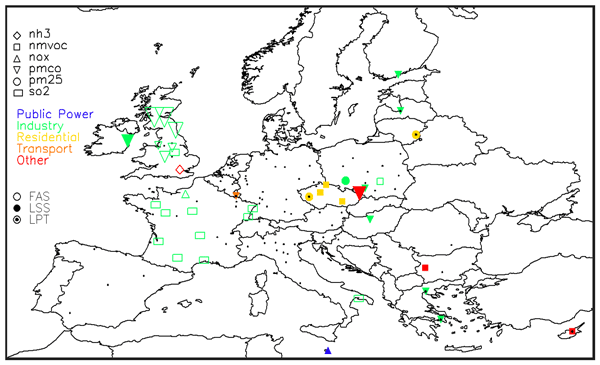
Philippe Thunis, Alain Clappier, Enrico Pisoni, Bertrand Bessagnet, Jeroen Kuenen, Marc Guevara, and Susana Lopez-Aparicio
Geosci. Model Dev., 15, 5271–5286, https://doi.org/10.5194/gmd-15-5271-2022, https://doi.org/10.5194/gmd-15-5271-2022, 2022
Short summary
Short summary
In this work, we propose a screening method to improve the quality of emission inventories, which are responsible for large uncertainties in air-quality modeling. The first step of screening consists of keeping only emission contributions that are relevant enough. In a second step, the method identifies large differences that provide evidence of methodological divergence or errors. We used the approach to compare two versions of the CAMS-REG European-scale inventory over 150 European cities.
Svetlana Tsyro, Wenche Aas, Augustin Colette, Camilla Andersson, Bertrand Bessagnet, Giancarlo Ciarelli, Florian Couvidat, Kees Cuvelier, Astrid Manders, Kathleen Mar, Mihaela Mircea, Noelia Otero, Maria-Teresa Pay, Valentin Raffort, Yelva Roustan, Mark R. Theobald, Marta G. Vivanco, Hilde Fagerli, Peter Wind, Gino Briganti, Andrea Cappelletti, Massimo D'Isidoro, and Mario Adani
Atmos. Chem. Phys., 22, 7207–7257, https://doi.org/10.5194/acp-22-7207-2022, https://doi.org/10.5194/acp-22-7207-2022, 2022
Short summary
Short summary
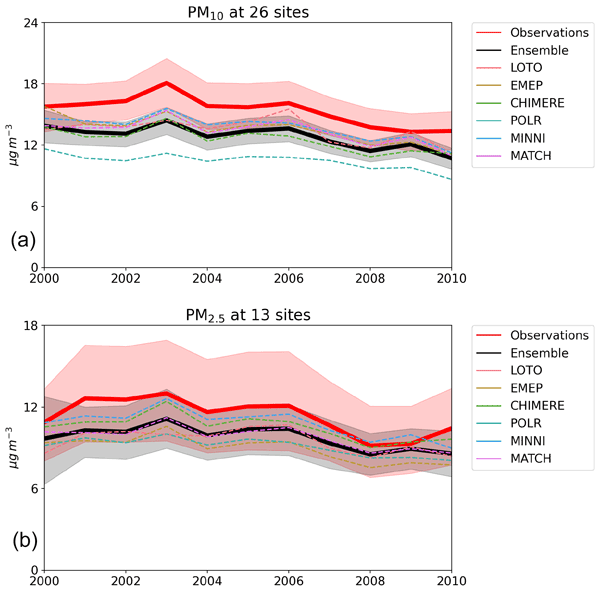
Particulate matter (PM) air pollution causes adverse health effects. In Europe, the emissions caused by anthropogenic activities have been reduced in the last decades. To assess the efficiency of emission reductions in improving air quality, we have studied the evolution of PM pollution in Europe. Simulations with six air quality models and observational data indicate a decrease in PM concentrations by 10 % to 30 % across Europe from 2000 to 2010, which is mainly a result of emission reductions.
Juan Cuesta, Lorenzo Costantino, Matthias Beekmann, Guillaume Siour, Laurent Menut, Bertrand Bessagnet, Tony C. Landi, Gaëlle Dufour, and Maxim Eremenko
Atmos. Chem. Phys., 22, 4471–4489, https://doi.org/10.5194/acp-22-4471-2022, https://doi.org/10.5194/acp-22-4471-2022, 2022
Short summary
Short summary
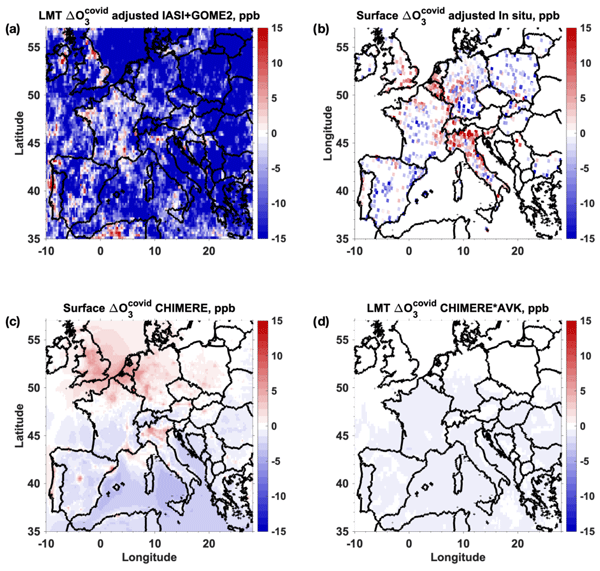
We present the first comprehensive study integrating satellite observations of near-surface ozone pollution, surface in situ measurements, and a chemistry-transport model for quantifying the role of anthropogenic emission reductions during the COVID-19 lockdown in spring 2020. It confirms the occurrence of a net enhancement of ozone in central Europe and a reduction elsewhere, except for some hotspots, linked with the reduction of precursor emissions from Europe and the Northern Hemisphere.
Philippe Thunis, Alain Clappier, Alexander de Meij, Enrico Pisoni, Bertrand Bessagnet, and Leonor Tarrason
Atmos. Chem. Phys., 21, 18195–18212, https://doi.org/10.5194/acp-21-18195-2021, https://doi.org/10.5194/acp-21-18195-2021, 2021
Short summary
Short summary
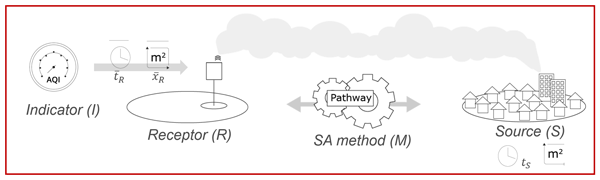
Air pollution's origin in cities is still a point of discussion, and approaches to assess the city's responsibility for its pollution are not harmonized and thus not comparable, resulting in sometimes contradicting interpretations. We show that methodological choices can easily lead to differences of a factor of 2 in terms of responsibility outcome and stress that methodological choices and assumptions most often lead to a systematic and important underestimation of the city's responsibility.
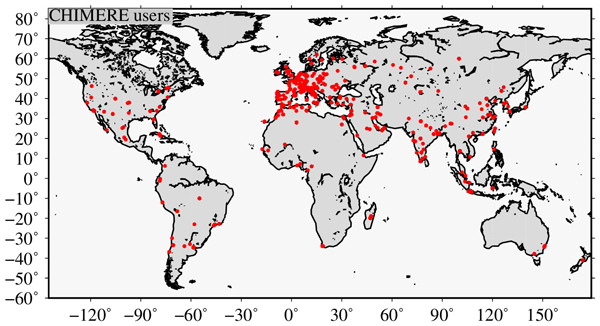
Laurent Menut, Bertrand Bessagnet, Régis Briant, Arineh Cholakian, Florian Couvidat, Sylvain Mailler, Romain Pennel, Guillaume Siour, Paolo Tuccella, Solène Turquety, and Myrto Valari
Geosci. Model Dev., 14, 6781–6811, https://doi.org/10.5194/gmd-14-6781-2021, https://doi.org/10.5194/gmd-14-6781-2021, 2021
Short summary
Short summary
The CHIMERE chemistry-transport model is presented in its new version, V2020r1. Many changes are proposed compared to the previous version. These include online modeling, new parameterizations for aerosols, new emissions schemes, a new parameter file format, the subgrid-scale variability of urban concentrations and new transport schemes.

Gaëlle Dufour, Didier Hauglustaine, Yunjiang Zhang, Maxim Eremenko, Yann Cohen, Audrey Gaudel, Guillaume Siour, Mathieu Lachatre, Axel Bense, Bertrand Bessagnet, Juan Cuesta, Jerry Ziemke, Valérie Thouret, and Bo Zheng
Atmos. Chem. Phys., 21, 16001–16025, https://doi.org/10.5194/acp-21-16001-2021, https://doi.org/10.5194/acp-21-16001-2021, 2021
Short summary
Short summary
The IASI observations and the LMDZ-OR-INCA model simulations show negative ozone trends in the Central East China region in the lower free (3–6 km column) and the upper free (6–9 km column) troposphere. Sensitivity studies from the model show that the Chinese anthropogenic emissions contribute to more than 50 % in the trend. The reduction in NOx emissions that has occurred since 2013 in China seems to lead to a decrease in ozone in the free troposphere, contrary to the increase at the surface.
Alejandra Velazquez-Garcia, Chenjie Yu, Sarah Tinorua, Hichem Bouzidi, Eleonora Aruffo, Piero Di Carlo, Peter DeCarlo, Benjamin A. Nault, Thierry Bourrianne, Kevin Tu, Edouard Pangui, Diana L. Pereira, Mathieu Cazaunau, Ludovico Di Antonio, Guillaume Siour, Matthias Beekmann, Astrid Bauville, Christopher Cantrell, Paola Formenti, Vincent Michoud, and Cyrielle Denjean
EGUsphere, https://doi.org/10.5194/egusphere-2026-4423, https://doi.org/10.5194/egusphere-2026-4423, 2026
Short summary
Short summary
As city air pollution travels downwind, its climate impact evolves. Using a research aircraft, we tracked the Paris pollution plume and found that sunlight rapidly transforms urban emissions, forming secondary organic particles that absorb more sunlight within six hours. These findings show that urban pollution changes chemically during transport, providing key constraints to improve future climate models.
Simone Rossi, Clement Bourgoin, Joana Melo, Guido Ceccherini, Sandro Federici, Monica Crippa, Frederic Achard, René Colditz, Francesco N. Tubiello, Greet Janssens-Maenhout, and Giacomo Grassi
Earth Syst. Sci. Data Discuss., https://doi.org/10.5194/essd-2026-454, https://doi.org/10.5194/essd-2026-454, 2026
Preprint under review for ESSD
Short summary
Short summary
This study adds an important component to the EDGAR Emissions Database by developing a globally consistent dataset of forest-related carbon emissions and removals using satellite data and UN-compliant methods. Results confirm that forests absorb more carbon than deforestation emits but this sink shrinks as wood harvesting rises. The dataset serves as a benchmark for national greenhouse gas inventories and provides critical reference information for areas where official reporting is limited.
Chenjie Yu, Ludovico Di Antonio, Peter F. DeCarlo, Benjamin A. Nault, Alejandra Velazquez-Garcia, Eleonora Aruffo, Piero Di Carlo, Cyrielle Denjean, Sarah Tinorua, Thierry Bourrianne, Diana L. Pereira, Kevin Tu, Edouard Pangui, Mathieu Cazaunau, Astrid Bauville, Noël Grand, Antonin Bergé, Claudia Di Biagio, Aline Gratien, Matthias Beekmann, Guillaume Siour, Gilles Foret, Barbara D'Anna, Julien Kammer, Huihui Wu, Christopher Cantrell, Paola Formenti, and Vincent Michoud
EGUsphere, https://doi.org/10.5194/egusphere-2026-3147, https://doi.org/10.5194/egusphere-2026-3147, 2026
Short summary
Short summary
This study used coordinated airborne and ground-based measurements in Paris and its downwind regions to quantify the effects of 2–6 h of urban plume aging on aerosol properties. Aging enhanced secondary organic aerosol production and PM1 mass and shifted optical properties toward higher SSA, higher real and lower imaginary refractive indices, and stronger brown carbon absorption. These results highlight the need to account for aerosol aging in atmospheric models and remote-sensing retrievals.
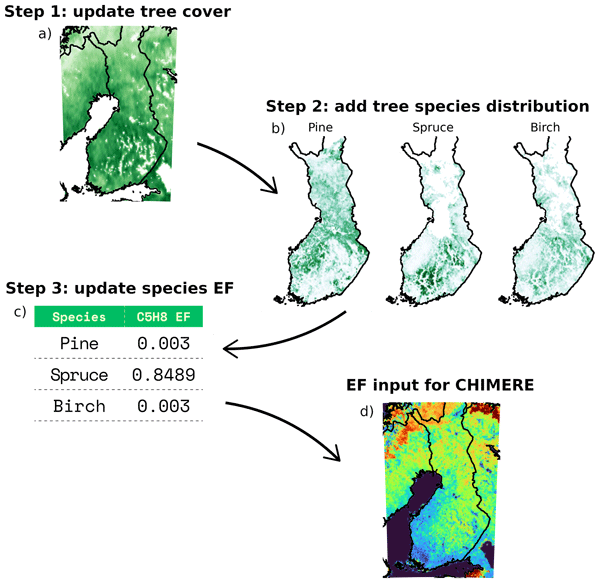
Manuel Bettineschi, Arineh Cholakian, Victoria Sinclair, Katerina Sindelarova, Arnaud P. Praplan, Steven J. Thomas, Tuukka Petäjä, Federico Bianchi, and Giancarlo Ciarelli
Atmos. Chem. Phys., 26, 8067–8088, https://doi.org/10.5194/acp-26-8067-2026, https://doi.org/10.5194/acp-26-8067-2026, 2026
Short summary
Short summary
We studied how forests in Finland release natural gases that affect air quality and climate. Existing models strongly overestimated these emissions because they used overly simple forest descriptions. By adding detailed information on tree species, we greatly improved agreement with real measurements. This means more realistic estimates of particle formation in the air. Our results show that accurate forest data are essential for reliable climate and air quality predictions.
Jinkyul Choi, Kazuyuki Miyazaki, Takashi Sekiya, Jinhyeok Yu, Shin-Ya Ogino, Henk Eskes, Pieter Rijdijk, Ryan Bennett, Anke Roiger, Leon Knez, Glenn S. Diskin, Jason A. Miech, Joshua P. DiGangi, Yonghoon Choi, Alessandro Franchin, Changmin Cho, Eric C. Apel, Louisa K. Emmons, Nattamon Maneenoi, Jason M. St. Clair, Reem A. Hannun, Glenn M. Wolfe, Erin Delaria, Abby Sebol, Donald R. Blake, Monica Crippa, Rachel M. Hoesly, Steven J. Smith, Jung-Hun Woo, Le Kuai, and Ronald Macatangay
EGUsphere, https://doi.org/10.5194/egusphere-2026-2380, https://doi.org/10.5194/egusphere-2026-2380, 2026
Short summary
Short summary
Asia produces half of the world's air pollution, yet emission estimates from different sources disagree widely. We assimilated satellite observations of six pollutant species to correct both concentrations and emissions. Aircraft measurements from a 2024 NASA campaign across four Asian countries confirmed the improvements. Our results reveal underreported emissions in some countries, overestimated vegetation emissions, unresolved fire estimates, and weather control on cross-border pollution.
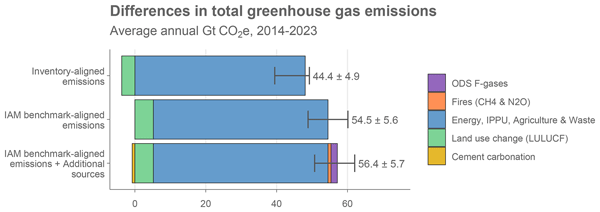
William F. Lamb, Robbie M. Andrew, Matthew Jones, Zebedee Nicholls, Glen P. Peters, Chris Smith, Marielle Saunois, Giacomo Grassi, Julia Pongratz, Steven J. Smith, Francesco N. Tubiello, Monica Crippa, Matthew Gidden, Pierre Friedlingstein, Jan Minx, and Piers M. Forster
Earth Syst. Sci. Data, 18, 2549–2572, https://doi.org/10.5194/essd-18-2549-2026, https://doi.org/10.5194/essd-18-2549-2026, 2026
Short summary
Short summary
This study explores why global greenhouse gas (GHG) emissions estimates vary. Key reasons include different coverage of gases and sectors, varying definitions of anthropogenic land use change emissions, and the Paris Agreement not covering all emission sources. The study highlights three main ways emissions data is reported, each with different objectives and resulting in varying global emission totals. It emphasizes the need for transparency in choosing datasets and setting assessment scopes.
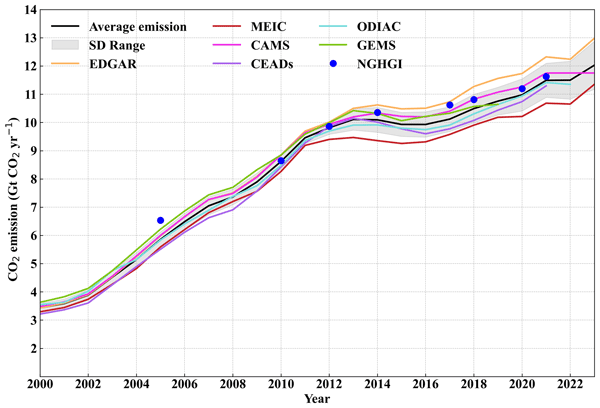
Huirong Yang, Kai Wu, Huizhong Shen, Greet Janssens-Maenhout, Monica Crippa, Diego Guizzardi, and Minqiang Zhou
Atmos. Chem. Phys., 25, 18111–18127, https://doi.org/10.5194/acp-25-18111-2025, https://doi.org/10.5194/acp-25-18111-2025, 2025
Short summary
Short summary
We compare six major anthropogenic CO2 emission inventories in China during the period 2000–2023 to assess emission trends and uncertainties. National emissions show a clear three‑phase pattern, with uncertainties below 5 % (1σ) at the national scale but much higher at the provincial level (10–50 %, 1σ). High-emission regions often have the largest uncertainties. Our findings support more accurate emission estimates and the verification emission reduction policies.
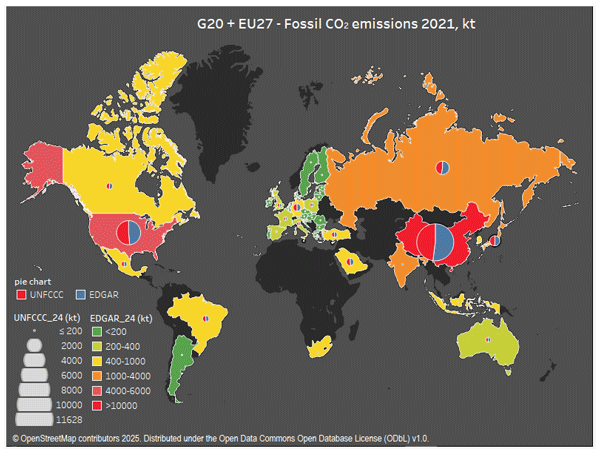
Manjola Banja, Monica Crippa, Diego Guizzardi, Marilena Muntean, Federico Pagani, and Enrico Pisoni
Earth Syst. Sci. Data, 17, 6461–6486, https://doi.org/10.5194/essd-17-6461-2025, https://doi.org/10.5194/essd-17-6461-2025, 2025
Short summary
Short summary
Global efforts to decrease emissions rely on inventories that differ widely in scope and methodology. Alongside national inventories, independent databases provide yearly globally consistent emission inventories. Comparing independent inventories with countries submissions provides clear and consistent track of the real progress. Improvement of emissions inventories, reporting timelines, and statistical systems are essential to ensure reliable and comparable data.
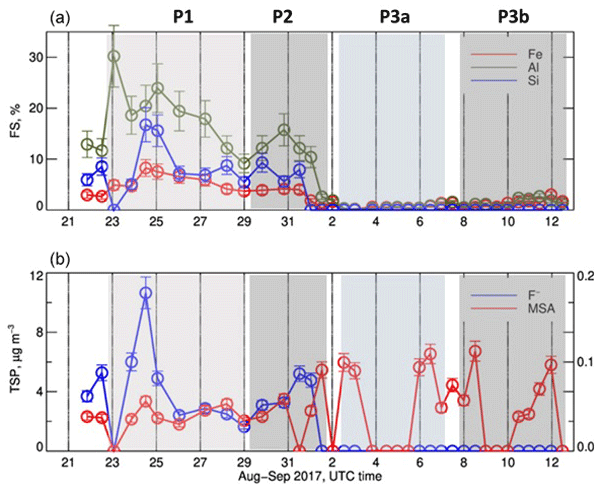
Paola Formenti, Chiara Giorio, Karine Desboeufs, Alexander Zherebker, Marco Gaetani, Clarissa Baldo, Gautier Landrot, Simona Montebello, Servanne Chevaillier, Sylvain Triquet, Guillaume Siour, Claudia Di Biagio, Francesco Battaglia, Jean-François Doussin, Anais Feron, Andreas Namwoonde, and Stuart John Piketh
Atmos. Chem. Phys., 25, 16127–16145, https://doi.org/10.5194/acp-25-16127-2025, https://doi.org/10.5194/acp-25-16127-2025, 2025
Short summary
Short summary
The elemental composition and solubility of several metals, including iron, at a coastal site in Namibia in August–September 2017, indicate that natural and anthropogenic dust had different solubility depending on mineralogy but mostly on the processing by fluoride ions from marine emissions, pointing to the complexity of atmospheric--oceanic interactions in this region of the world influenced by the Benguela current and significant aerosol load.
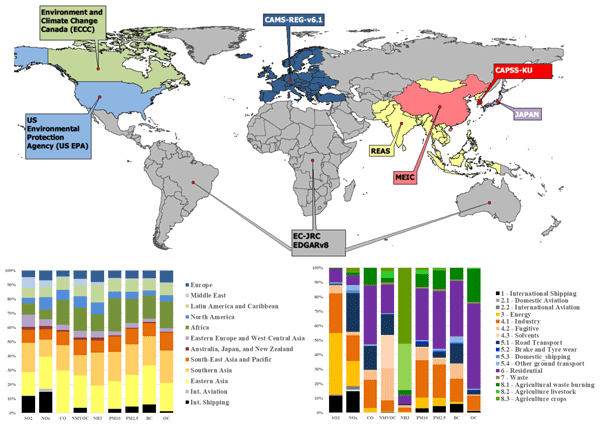
Diego Guizzardi, Monica Crippa, Tim Butler, Terry Keating, Rosa Wu, Jacek Kaminski, Jeroen Kuenen, Junichi Kurokawa, Satoru Chatani, Tazuko Morikawa, George Pouliot, Jacinthe Racine, Michael D. Moran, Zbigniew Klimont, Patrick M. Manseau, Rabab Mashayekhi, Barron H. Henderson, Steven J. Smith, Rachel Hoesly, Marilena Muntean, Manjola Banja, Edwin Schaaf, Federico Pagani, Jung-Hun Woo, Jinseok Kim, Enrico Pisoni, Junhua Zhang, David Niemi, Mourad Sassi, Annie Duhamel, Tabish Ansari, Kristen Foley, Guannan Geng, Yifei Chen, and Qiang Zhang
Earth Syst. Sci. Data, 17, 5915–5950, https://doi.org/10.5194/essd-17-5915-2025, https://doi.org/10.5194/essd-17-5915-2025, 2025
Short summary
Short summary
The global air pollution emission mosaic HTAP_v3.2 is the state-of-the-art inventory to address the evolution of a set of policy-relevant pollutants over the past 2 decades. The mosaic is made harmonising and blending seven regional inventories, gapfilled with the most recent release of the Emissions Database for Global Atmospheric Research. By incorporating the best available local information, the HTAP_v3.2 emission mosaic can be used for policy-relevant studies at regional and global level.
Rimal Abeed, Audrey Fortems-Cheiney, Grégoire Broquet, Robin Plauchu, Isabelle Pison, Antoine Berchet, Elise Potier, Bo Zheng, Gaëlle Dufour, Adriana Coman, Dilek Savas, Guillaume Siour, Henk Eskes, Beatriz Revilla-Romero, Antony Delavois, and Philippe Ciais
EGUsphere, https://doi.org/10.5194/egusphere-2025-3329, https://doi.org/10.5194/egusphere-2025-3329, 2025
Preprint archived
Short summary
Short summary
We investigate changes in air pollution from nitrogen oxides NOx (=NO+NO2) across Eastern China from 2019 to 2021, using a satellite-based modelling approach. Our results show a drop in pollution in 2020 in most provinces, and along the China-Mongolia-Russia Economic Corridor. The analysis also captures emission variations during the Lunar New Year. By estimating emissions at the provincial level, the study provides insights into how major events and policy measures influence local air quality.
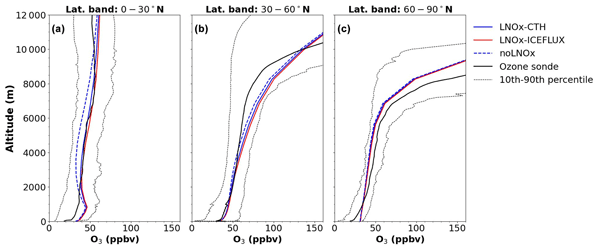
Sanhita Ghosh, Arineh Cholakian, Sylvain Mailler, and Laurent Menut
Atmos. Chem. Phys., 25, 6273–6297, https://doi.org/10.5194/acp-25-6273-2025, https://doi.org/10.5194/acp-25-6273-2025, 2025
Short summary
Short summary
In this study, we evaluate the present state of modelling lightning flashes over the Northern Hemisphere, using the classical CTH (cloud-top height) scheme and the ICEFLUX scheme with the CHIMERE model. Our study provides a comprehensive 3D comparison of model outputs to assess the robustness and applicability of these schemes. An improvement in O3 distribution in the tropical free troposphere is observed due to inclusion of LNOx (nitrogen oxide emissions from lightning) in the model. Inclusion of LNOx also reduces the lifetime of trace gas CH4.
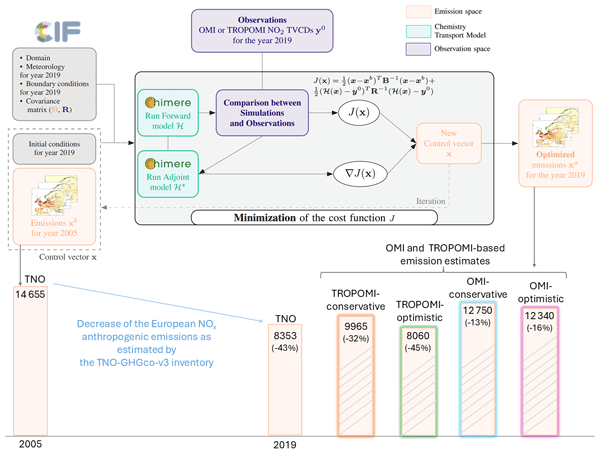
Audrey Fortems-Cheiney, Grégoire Broquet, Elise Potier, Antoine Berchet, Isabelle Pison, Adrien Martinez, Robin Plauchu, Rimal Abeed, Aurélien Sicsik-Paré, Gaelle Dufour, Adriana Coman, Dilek Savas, Guillaume Siour, Henk Eskes, Hugo A. C. Denier van der Gon, and Stijn N. C. Dellaert
Atmos. Chem. Phys., 25, 6047–6068, https://doi.org/10.5194/acp-25-6047-2025, https://doi.org/10.5194/acp-25-6047-2025, 2025
Short summary
Short summary
This study assesses the potential of the Ozone Monitoring Instrument (OMI) and the TROPOspheric Monitoring Instrument (TROPOMI) satellite observations to inform about the decrease in anthropogenic emissions of nitrogen oxides (NOx) in 2019 compared with 2005 at regional to national scales in Europe. Both the OMI and TROPOMI inversions show decreases in European NOx anthropogenic emission budgets in 2019 compared to 2005 but with different magnitudes.
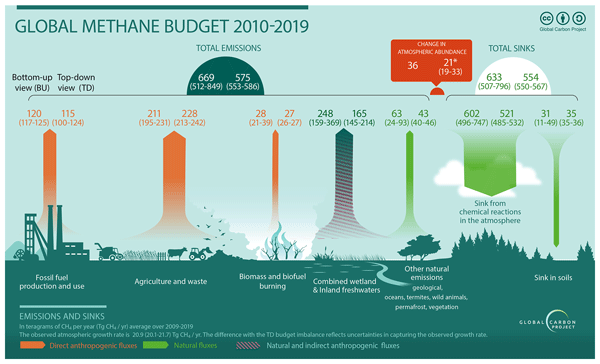
Marielle Saunois, Adrien Martinez, Benjamin Poulter, Zhen Zhang, Peter A. Raymond, Pierre Regnier, Josep G. Canadell, Robert B. Jackson, Prabir K. Patra, Philippe Bousquet, Philippe Ciais, Edward J. Dlugokencky, Xin Lan, George H. Allen, David Bastviken, David J. Beerling, Dmitry A. Belikov, Donald R. Blake, Simona Castaldi, Monica Crippa, Bridget R. Deemer, Fraser Dennison, Giuseppe Etiope, Nicola Gedney, Lena Höglund-Isaksson, Meredith A. Holgerson, Peter O. Hopcroft, Gustaf Hugelius, Akihiko Ito, Atul K. Jain, Rajesh Janardanan, Matthew S. Johnson, Thomas Kleinen, Paul B. Krummel, Ronny Lauerwald, Tingting Li, Xiangyu Liu, Kyle C. McDonald, Joe R. Melton, Jens Mühle, Jurek Müller, Fabiola Murguia-Flores, Yosuke Niwa, Sergio Noce, Shufen Pan, Robert J. Parker, Changhui Peng, Michel Ramonet, William J. Riley, Gerard Rocher-Ros, Judith A. Rosentreter, Motoki Sasakawa, Arjo Segers, Steven J. Smith, Emily H. Stanley, Joël Thanwerdas, Hanqin Tian, Aki Tsuruta, Francesco N. Tubiello, Thomas S. Weber, Guido R. van der Werf, Douglas E. J. Worthy, Yi Xi, Yukio Yoshida, Wenxin Zhang, Bo Zheng, Qing Zhu, Qiuan Zhu, and Qianlai Zhuang
Earth Syst. Sci. Data, 17, 1873–1958, https://doi.org/10.5194/essd-17-1873-2025, https://doi.org/10.5194/essd-17-1873-2025, 2025
Short summary
Short summary
Methane (CH4) is the second most important human-influenced greenhouse gas in terms of climate forcing after carbon dioxide (CO2). A consortium of multi-disciplinary scientists synthesise and update the budget of the sources and sinks of CH4. This edition benefits from important progress in estimating emissions from lakes and ponds, reservoirs, and streams and rivers. For the 2010s decade, global CH4 emissions are estimated at 575 Tg CH4 yr-1, including ~65 % from anthropogenic sources.
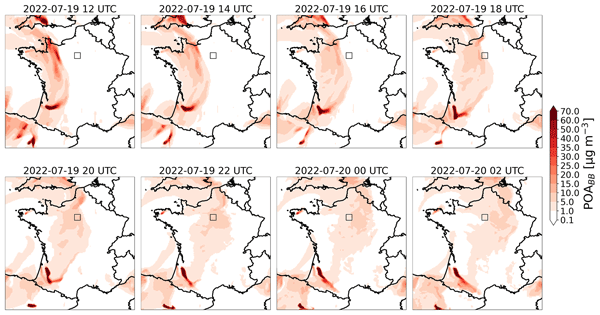
Ludovico Di Antonio, Matthias Beekmann, Guillaume Siour, Vincent Michoud, Christopher Cantrell, Astrid Bauville, Antonin Bergé, Mathieu Cazaunau, Servanne Chevaillier, Manuela Cirtog, Joel F. de Brito, Paola Formenti, Cecile Gaimoz, Olivier Garret, Aline Gratien, Valérie Gros, Martial Haeffelin, Lelia N. Hawkins, Simone Kotthaus, Gael Noyalet, Diana L. Pereira, Jean-Eudes Petit, Eva Drew Pronovost, Véronique Riffault, Chenjie Yu, Gilles Foret, Jean-François Doussin, and Claudia Di Biagio
Atmos. Chem. Phys., 25, 4803–4831, https://doi.org/10.5194/acp-25-4803-2025, https://doi.org/10.5194/acp-25-4803-2025, 2025
Short summary
Short summary
The summer of 2022 has been considered a proxy for future climate scenarios due to its hot and dry conditions. In this paper, we use the measurements from the Atmospheric Chemistry of the Suburban Forest (ACROSS) campaign, conducted in the Paris area in June–July 2022, along with observations from existing networks, to evaluate a 3D chemistry transport model (WRF–CHIMERE) simulation. Results are shown to be satisfactory, allowing us to explain the gas and aerosol variability at the campaign sites.
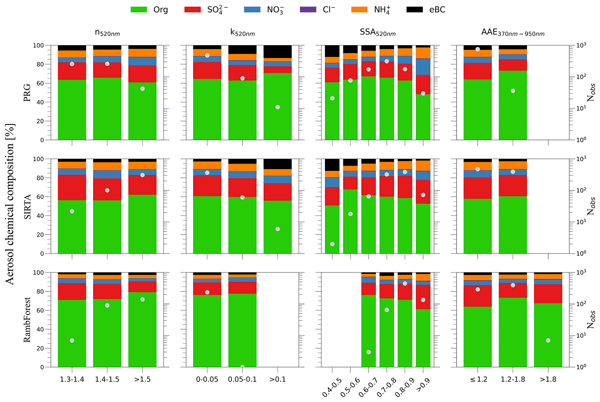
Ludovico Di Antonio, Claudia Di Biagio, Paola Formenti, Aline Gratien, Vincent Michoud, Christopher Cantrell, Astrid Bauville, Antonin Bergé, Mathieu Cazaunau, Servanne Chevaillier, Manuela Cirtog, Patrice Coll, Barbara D'Anna, Joel F. de Brito, David O. De Haan, Juliette R. Dignum, Shravan Deshmukh, Olivier Favez, Pierre-Marie Flaud, Cecile Gaimoz, Lelia N. Hawkins, Julien Kammer, Brigitte Language, Franck Maisonneuve, Griša Močnik, Emilie Perraudin, Jean-Eudes Petit, Prodip Acharja, Laurent Poulain, Pauline Pouyes, Eva Drew Pronovost, Véronique Riffault, Kanuri I. Roundtree, Marwa Shahin, Guillaume Siour, Eric Villenave, Pascal Zapf, Gilles Foret, Jean-François Doussin, and Matthias Beekmann
Atmos. Chem. Phys., 25, 3161–3189, https://doi.org/10.5194/acp-25-3161-2025, https://doi.org/10.5194/acp-25-3161-2025, 2025
Short summary
Short summary
The spectral complex refractive index (CRI) and single scattering albedo were retrieved from submicron aerosol measurements at three sites within the greater Paris area during the ACROSS field campaign (June–July 2022). Measurements revealed urban emission impact on surrounding areas. CRI full period averages at 520 nm were 1.41 – 0.037i (urban), 1.52 – 0.038i (peri-urban), and 1.50 – 0.025i (rural). Organic aerosols dominated the aerosol mass and contributed up to 22 % of absorption at 370 nm.
Léo Clauzel, Sandrine Anquetin, Christophe Lavaysse, Gilles Bergametti, Christel Bouet, Guillaume Siour, Rémy Lapere, Béatrice Marticorena, and Jennie Thomas
Atmos. Chem. Phys., 25, 997–1021, https://doi.org/10.5194/acp-25-997-2025, https://doi.org/10.5194/acp-25-997-2025, 2025
Short summary
Short summary
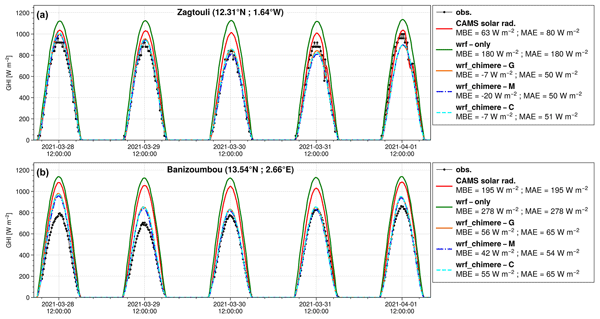
Solar energy production in West Africa is set to rise and needs accurate solar radiation estimates which are affected by desert dust. This work analyses a March 2021 dust event using a modelling strategy incorporating desert dust. Results show that considering desert dust cuts errors in solar radiation estimates by 75 % and reduces surface solar radiation by 18 %. This highlights the importance of incorporating dust aerosols into solar forecasting for better accuracy.
Jorge E. Pachón, Mariel A. Opazo, Pablo Lichtig, Nicolas Huneeus, Idir Bouarar, Guy Brasseur, Cathy W. Y. Li, Johannes Flemming, Laurent Menut, Camilo Menares, Laura Gallardo, Michael Gauss, Mikhail Sofiev, Rostislav Kouznetsov, Julia Palamarchuk, Andreas Uppstu, Laura Dawidowski, Nestor Y. Rojas, María de Fátima Andrade, Mario E. Gavidia-Calderón, Alejandro H. Delgado Peralta, and Daniel Schuch
Geosci. Model Dev., 17, 7467–7512, https://doi.org/10.5194/gmd-17-7467-2024, https://doi.org/10.5194/gmd-17-7467-2024, 2024
Short summary
Short summary
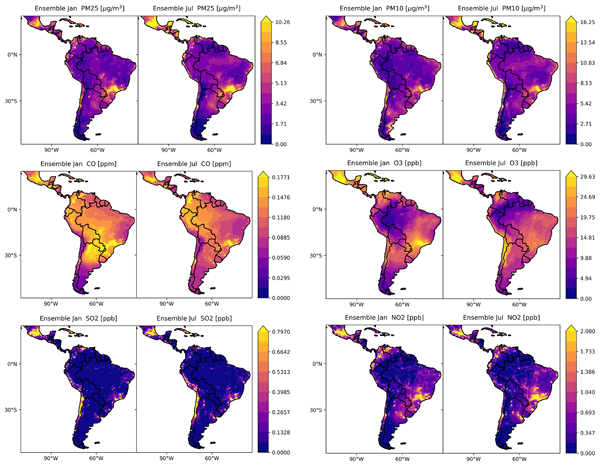
Latin America (LAC) has some of the most populated urban areas in the world, with high levels of air pollution. Air quality management in LAC has been traditionally focused on surveillance and building emission inventories. This study performed the first intercomparison and model evaluation in LAC, with interesting and insightful findings for the region. A multiscale modeling ensemble chain was assembled as a first step towards an air quality forecasting system.
Matthieu Vida, Gilles Foret, Guillaume Siour, Florian Couvidat, Olivier Favez, Gaelle Uzu, Arineh Cholakian, Sébastien Conil, Matthias Beekmann, and Jean-Luc Jaffrezo
Atmos. Chem. Phys., 24, 10601–10615, https://doi.org/10.5194/acp-24-10601-2024, https://doi.org/10.5194/acp-24-10601-2024, 2024
Short summary
Short summary
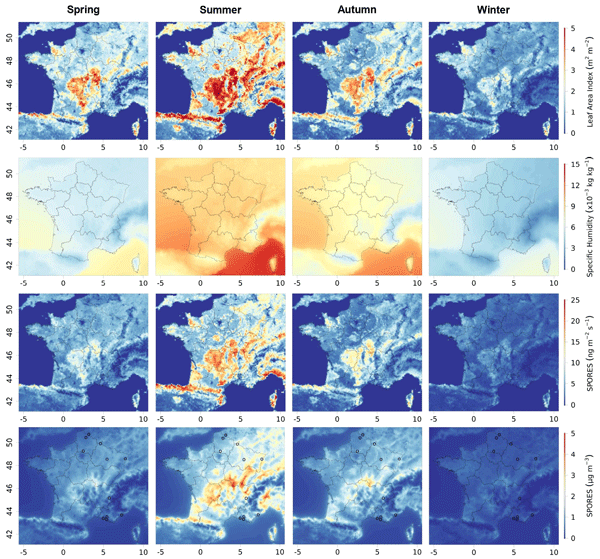
We simulate 2 years of atmospheric fungal spores over France and use observations of polyols and primary biogenic factors from positive matrix factorisation. The representation of emissions taking into account a proxy for vegetation surface and specific humidity enables us to reproduce very accurately the seasonal cycle of fungal spores. Furthermore, we estimate that fungal spores can account for 20 % of PM10 and 40 % of the organic fraction of PM10 over vegetated areas in summer.
Sylvain Mailler, Sotirios Mallios, Arineh Cholakian, Vassilis Amiridis, Laurent Menut, and Romain Pennel
Geosci. Model Dev., 17, 5641–5655, https://doi.org/10.5194/gmd-17-5641-2024, https://doi.org/10.5194/gmd-17-5641-2024, 2024
Short summary
Short summary
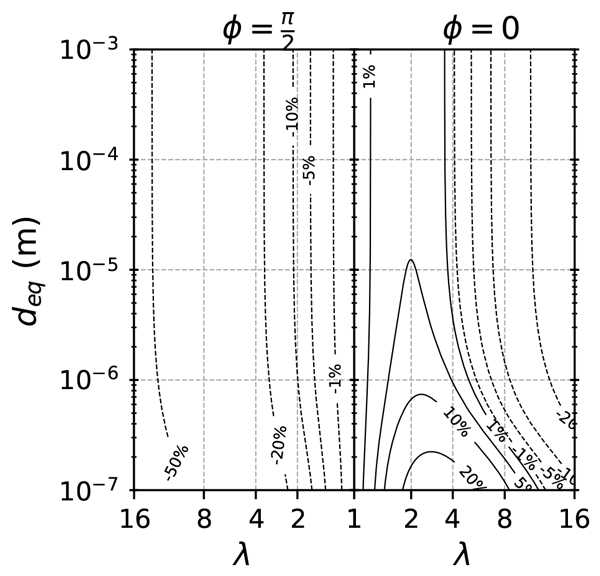
We propose two explicit expressions to calculate the settling speed of solid atmospheric particles with prolate spheroidal shapes. The first formulation is based on theoretical arguments only, while the second one is based on computational fluid dynamics calculations. We show that the first method is suitable for virtually all atmospheric aerosols, provided their shape can be adequately described as a prolate spheroid, and we provide an implementation of the first method in AerSett v2.0.2.
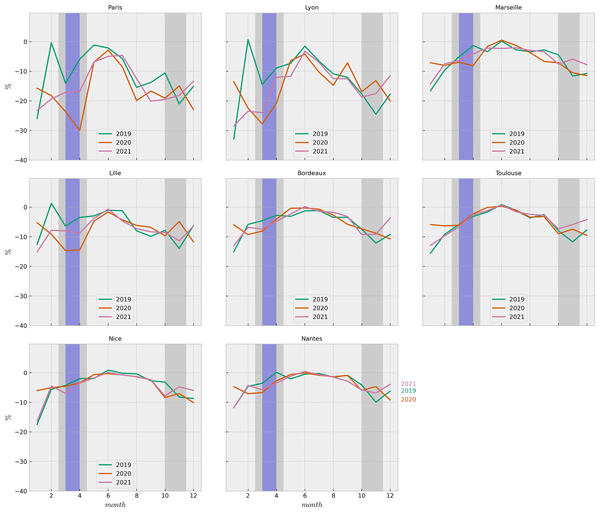
Robin Plauchu, Audrey Fortems-Cheiney, Grégoire Broquet, Isabelle Pison, Antoine Berchet, Elise Potier, Gaëlle Dufour, Adriana Coman, Dilek Savas, Guillaume Siour, and Henk Eskes
Atmos. Chem. Phys., 24, 8139–8163, https://doi.org/10.5194/acp-24-8139-2024, https://doi.org/10.5194/acp-24-8139-2024, 2024
Short summary
Short summary
This study uses the Community Inversion Framework and CHIMERE model to assess the potential of TROPOMI-S5P PAL NO2 tropospheric column data to estimate NOx emissions in France (2019–2021). Results show a 3 % decrease in average emissions compared to the 2016 CAMS-REG/INS, lower than the 14 % decrease from CITEPA. The study highlights challenges in capturing emission anomalies due to limited data coverage and error levels but shows promise for local inventory improvements.
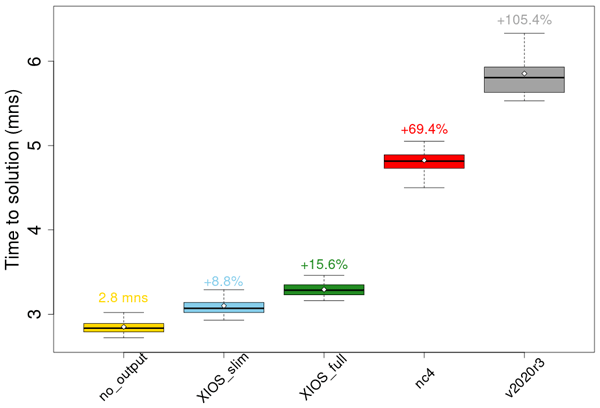
Laurent Menut, Arineh Cholakian, Romain Pennel, Guillaume Siour, Sylvain Mailler, Myrto Valari, Lya Lugon, and Yann Meurdesoif
Geosci. Model Dev., 17, 5431–5457, https://doi.org/10.5194/gmd-17-5431-2024, https://doi.org/10.5194/gmd-17-5431-2024, 2024
Short summary
Short summary
A new version of the CHIMERE model is presented. This version contains both computational and physico-chemical changes. The computational changes make it easy to choose the variables to be extracted as a result, including values of maximum sub-hourly concentrations. Performance tests show that the model is 1.5 to 2 times faster than the previous version for the same setup. Processes such as turbulence, transport schemes and dry deposition have been modified and updated.
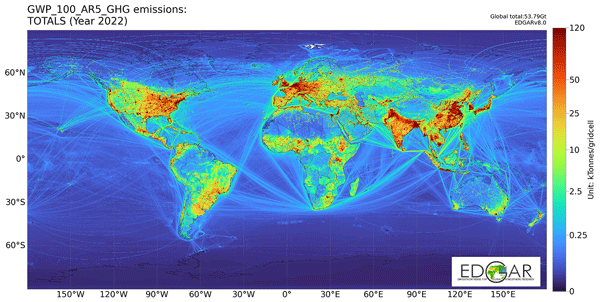
Monica Crippa, Diego Guizzardi, Federico Pagani, Marcello Schiavina, Michele Melchiorri, Enrico Pisoni, Francesco Graziosi, Marilena Muntean, Joachim Maes, Lewis Dijkstra, Martin Van Damme, Lieven Clarisse, and Pierre Coheur
Earth Syst. Sci. Data, 16, 2811–2830, https://doi.org/10.5194/essd-16-2811-2024, https://doi.org/10.5194/essd-16-2811-2024, 2024
Short summary
Short summary
Knowing where emissions occur is essential for planning effective emission reduction measures and atmospheric modelling. Disaggregating national emissions over high-resolution grids requires spatial proxies that contain information on the location of different emission sources. This work incorporates state-of-the-art spatial information to improve the spatial representation of global emissions with the Emissions Database for Global Atmospheric Research (EDGAR).
Philippe Thunis, Jeroen Kuenen, Enrico Pisoni, Bertrand Bessagnet, Manjola Banja, Lech Gawuc, Karol Szymankiewicz, Diego Guizardi, Monica Crippa, Susana Lopez-Aparicio, Marc Guevara, Alexander De Meij, Sabine Schindlbacher, and Alain Clappier
Geosci. Model Dev., 17, 3631–3643, https://doi.org/10.5194/gmd-17-3631-2024, https://doi.org/10.5194/gmd-17-3631-2024, 2024
Short summary
Short summary
An ensemble emission inventory is created with the aim of monitoring the status and progress made with the development of EU-wide inventories. This emission ensemble serves as a common benchmark for the screening and allows for the comparison of more than two inventories at a time. Because the emission “truth” is unknown, the approach does not tell which inventory is the closest to reality, but it identifies inconsistencies that require special attention.
Laurent Menut, Bertrand Bessagnet, Arineh Cholakian, Guillaume Siour, Sylvain Mailler, and Romain Pennel
Geosci. Model Dev., 17, 3645–3665, https://doi.org/10.5194/gmd-17-3645-2024, https://doi.org/10.5194/gmd-17-3645-2024, 2024
Short summary
Short summary
This study is about the modelling of the atmospheric composition in Europe during the summer of 2022, when massive wildfires were observed. It is a sensitivity study dedicated to the relative impacts of two modelling processes that are able to modify the meteorology used for the calculation of the atmospheric chemistry and transport of pollutants.
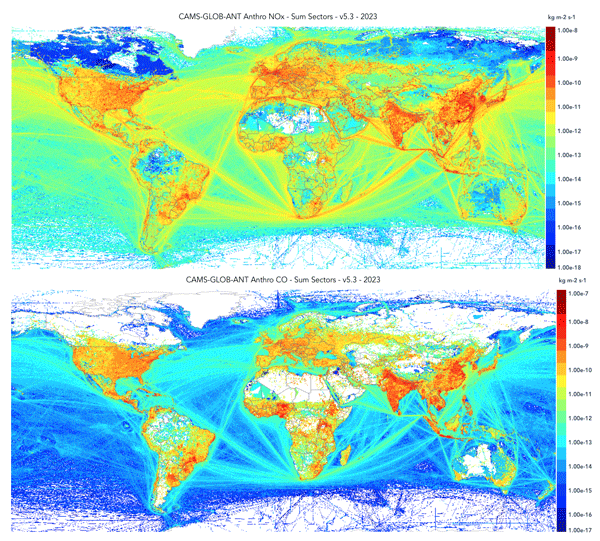
Antonin Soulie, Claire Granier, Sabine Darras, Nicolas Zilbermann, Thierno Doumbia, Marc Guevara, Jukka-Pekka Jalkanen, Sekou Keita, Cathy Liousse, Monica Crippa, Diego Guizzardi, Rachel Hoesly, and Steven J. Smith
Earth Syst. Sci. Data, 16, 2261–2279, https://doi.org/10.5194/essd-16-2261-2024, https://doi.org/10.5194/essd-16-2261-2024, 2024
Short summary
Short summary
Anthropogenic emissions are the result of transportation, power generation, industrial, residential and commercial activities as well as waste treatment and agriculture practices. This work describes the new CAMS-GLOB-ANT gridded inventory of 2000–2023 anthropogenic emissions of air pollutants and greenhouse gases. The methodology to generate the emissions is explained and the datasets are analysed and compared with publicly available global and regional inventories for selected world regions.
Adrien Deroubaix, Marco Vountas, Benjamin Gaubert, Maria Dolores Andrés Hernández, Stephan Borrmann, Guy Brasseur, Bruna Holanda, Yugo Kanaya, Katharina Kaiser, Flora Kluge, Ovid Oktavian Krüger, Inga Labuhn, Michael Lichtenstern, Klaus Pfeilsticker, Mira Pöhlker, Hans Schlager, Johannes Schneider, Guillaume Siour, Basudev Swain, Paolo Tuccella, Kameswara S. Vinjamuri, Mihalis Vrekoussis, Benjamin Weyland, and John P. Burrows
EGUsphere, https://doi.org/10.5194/egusphere-2024-516, https://doi.org/10.5194/egusphere-2024-516, 2024
Preprint archived
Short summary
Short summary
This study assesses atmospheric composition using air quality models during aircraft campaigns in Europe and Asia, focusing on carbonaceous aerosols and trace gases. While carbon monoxide is well modeled, other pollutants have moderate to weak agreement with observations. Wind speed modeling is reliable for identifying pollution plumes, where models tend to overestimate concentrations. This highlights challenges in accurately modeling aerosol and trace gas composition, particularly in cities.
Adrien Deroubaix, Marco Vountas, Benjamin Gaubert, Maria Dolores Andrés Hernández, Stephan Borrmann, Guy Brasseur, Bruna Holanda, Yugo Kanaya, Katharina Kaiser, Flora Kluge, Ovid Oktavian Krüger, Inga Labuhn, Michael Lichtenstern, Klaus Pfeilsticker, Mira Pöhlker, Hans Schlager, Johannes Schneider, Guillaume Siour, Basudev Swain, Paolo Tuccella, Kameswara S. Vinjamuri, Mihalis Vrekoussis, Benjamin Weyland, and John P. Burrows
EGUsphere, https://doi.org/10.5194/egusphere-2024-521, https://doi.org/10.5194/egusphere-2024-521, 2024
Preprint archived
Short summary
Short summary
This study explores the proportional relationships between carbonaceous aerosols (black and organic carbon) and trace gases using airborne measurements from two campaigns in Europe and East Asia. Differences between regions were found, but air quality models struggled to reproduce them accurately. We show that these proportional relationships can help to constrain models and can be used to infer aerosol concentrations from satellite observations of trace gases, especially in urban areas.
Alexander de Meij, Cornelis Cuvelier, Philippe Thunis, Enrico Pisoni, and Bertrand Bessagnet
Geosci. Model Dev., 17, 587–606, https://doi.org/10.5194/gmd-17-587-2024, https://doi.org/10.5194/gmd-17-587-2024, 2024
Short summary
Short summary
In our study the robustness of the model responses to emission reductions in the EU is assessed when the emission data are changed. Our findings are particularly important to better understand the uncertainties associated to the emission inventories and how these uncertainties impact the level of accuracy of the resulting air quality modelling, which is a key for designing air quality plans. Also crucial is the choice of indicator to avoid misleading interpretations of the results.
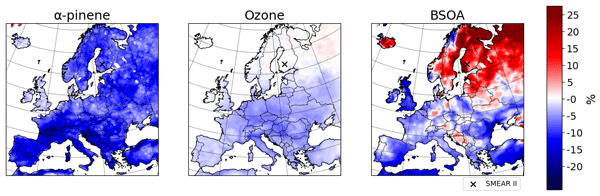
Giancarlo Ciarelli, Sara Tahvonen, Arineh Cholakian, Manuel Bettineschi, Bruno Vitali, Tuukka Petäjä, and Federico Bianchi
Geosci. Model Dev., 17, 545–565, https://doi.org/10.5194/gmd-17-545-2024, https://doi.org/10.5194/gmd-17-545-2024, 2024
Short summary
Short summary
The terrestrial ecosystem releases large quantities of biogenic gases in the Earth's Atmosphere. These gases can effectively be converted into so-called biogenic aerosol particles and, eventually, affect the Earth's climate. Climate prediction varies greatly depending on how these processes are represented in model simulations. In this study, we present a detailed model evaluation analysis aimed at understanding the main source of uncertainty in predicting the formation of biogenic aerosols.
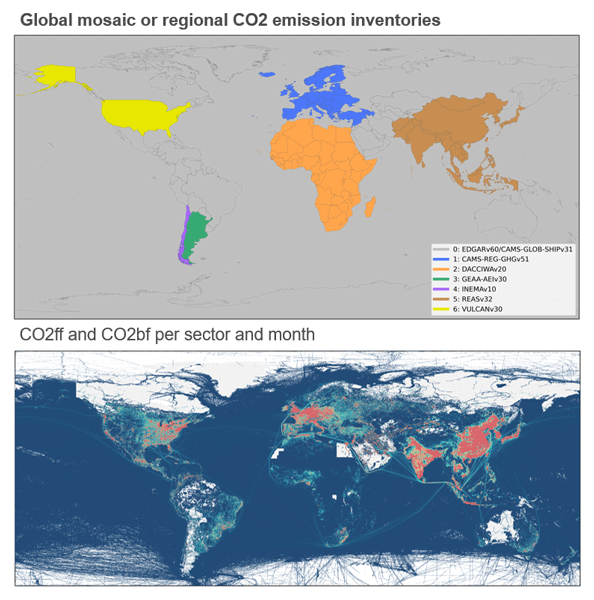
Ruben Urraca, Greet Janssens-Maenhout, Nicolás Álamos, Lucas Berna-Peña, Monica Crippa, Sabine Darras, Stijn Dellaert, Hugo Denier van der Gon, Mark Dowell, Nadine Gobron, Claire Granier, Giacomo Grassi, Marc Guevara, Diego Guizzardi, Kevin Gurney, Nicolás Huneeus, Sekou Keita, Jeroen Kuenen, Ana Lopez-Noreña, Enrique Puliafito, Geoffrey Roest, Simone Rossi, Antonin Soulie, and Antoon Visschedijk
Earth Syst. Sci. Data, 16, 501–523, https://doi.org/10.5194/essd-16-501-2024, https://doi.org/10.5194/essd-16-501-2024, 2024
Short summary
Short summary
CoCO2-MOSAIC 1.0 is a global mosaic of regional bottom-up inventories providing gridded (0.1×0.1) monthly emissions of anthropogenic CO2. Regional inventories include country-specific information and finer spatial resolution than global inventories. CoCO2-MOSAIC provides harmonized access to these datasets and can be considered as a regionally accepted reference to assess the quality of global inventories, as done in the current paper.
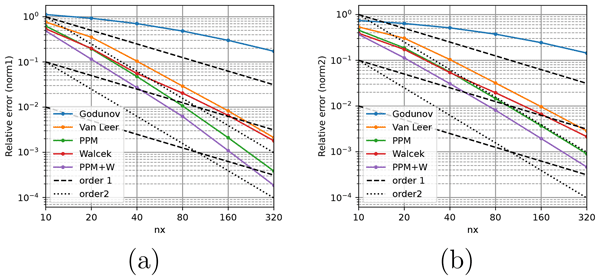
Sylvain Mailler, Romain Pennel, Laurent Menut, and Arineh Cholakian
Geosci. Model Dev., 16, 7509–7526, https://doi.org/10.5194/gmd-16-7509-2023, https://doi.org/10.5194/gmd-16-7509-2023, 2023
Short summary
Short summary
We show that a new advection scheme named PPM + W (piecewise parabolic method + Walcek) offers geoscientific modellers an alternative, high-performance scheme designed for Cartesian-grid advection, with improved performance over the classical PPM scheme. The computational cost of PPM + W is not higher than that of PPM. With improved accuracy and controlled computational cost, this new scheme may find applications in chemistry-transport models, ocean models or atmospheric circulation models.
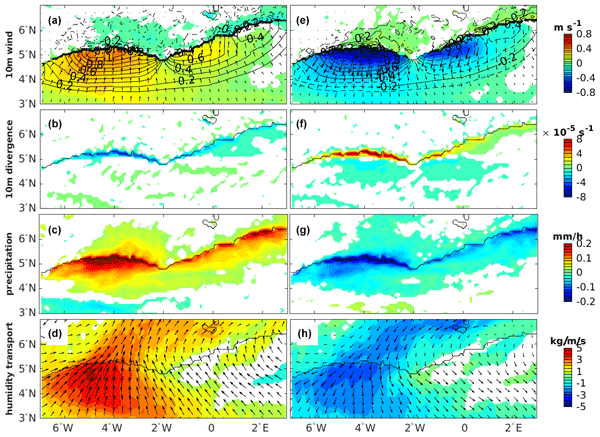
Gaëlle de Coëtlogon, Adrien Deroubaix, Cyrille Flamant, Laurent Menut, and Marco Gaetani
Atmos. Chem. Phys., 23, 15507–15521, https://doi.org/10.5194/acp-23-15507-2023, https://doi.org/10.5194/acp-23-15507-2023, 2023
Short summary
Short summary
Using a numerical atmospheric model, we found that cooling sea surface temperatures along the southern coast of West Africa in July cause the “little dry season”. This effect reduces humidity and pollutant transport inland, potentially enhancing West Africa's synoptic and seasonal forecasting.
Ludovico Di Antonio, Claudia Di Biagio, Gilles Foret, Paola Formenti, Guillaume Siour, Jean-François Doussin, and Matthias Beekmann
Atmos. Chem. Phys., 23, 12455–12475, https://doi.org/10.5194/acp-23-12455-2023, https://doi.org/10.5194/acp-23-12455-2023, 2023
Short summary
Short summary
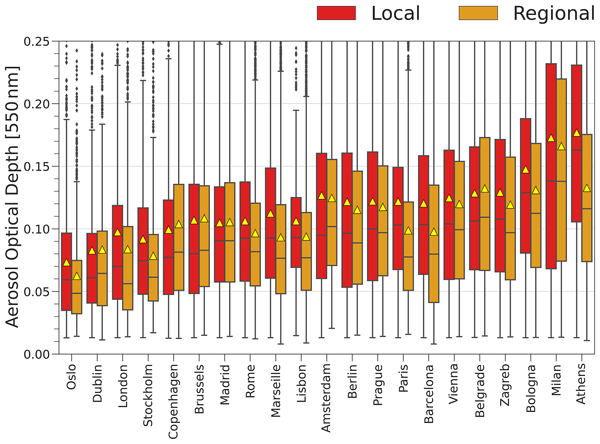
Long-term (2000–2021) 1 km resolution satellite data have been used to investigate the climatological aerosol optical depth (AOD) variability and trends at different scales in Europe. Average enhancements of the local-to-regional AOD ratio at 550 nm of 57 %, 55 %, 39 % and 32 % are found for large metropolitan areas such as Barcelona, Lisbon, Paris and Athens, respectively, suggesting a non-negligible enhancement of the aerosol burden through local emissions.
Matthew J. McGrath, Ana Maria Roxana Petrescu, Philippe Peylin, Robbie M. Andrew, Bradley Matthews, Frank Dentener, Juraj Balkovič, Vladislav Bastrikov, Meike Becker, Gregoire Broquet, Philippe Ciais, Audrey Fortems-Cheiney, Raphael Ganzenmüller, Giacomo Grassi, Ian Harris, Matthew Jones, Jürgen Knauer, Matthias Kuhnert, Guillaume Monteil, Saqr Munassar, Paul I. Palmer, Glen P. Peters, Chunjing Qiu, Mart-Jan Schelhaas, Oksana Tarasova, Matteo Vizzarri, Karina Winkler, Gianpaolo Balsamo, Antoine Berchet, Peter Briggs, Patrick Brockmann, Frédéric Chevallier, Giulia Conchedda, Monica Crippa, Stijn N. C. Dellaert, Hugo A. C. Denier van der Gon, Sara Filipek, Pierre Friedlingstein, Richard Fuchs, Michael Gauss, Christoph Gerbig, Diego Guizzardi, Dirk Günther, Richard A. Houghton, Greet Janssens-Maenhout, Ronny Lauerwald, Bas Lerink, Ingrid T. Luijkx, Géraud Moulas, Marilena Muntean, Gert-Jan Nabuurs, Aurélie Paquirissamy, Lucia Perugini, Wouter Peters, Roberto Pilli, Julia Pongratz, Pierre Regnier, Marko Scholze, Yusuf Serengil, Pete Smith, Efisio Solazzo, Rona L. Thompson, Francesco N. Tubiello, Timo Vesala, and Sophia Walther
Earth Syst. Sci. Data, 15, 4295–4370, https://doi.org/10.5194/essd-15-4295-2023, https://doi.org/10.5194/essd-15-4295-2023, 2023
Short summary
Short summary
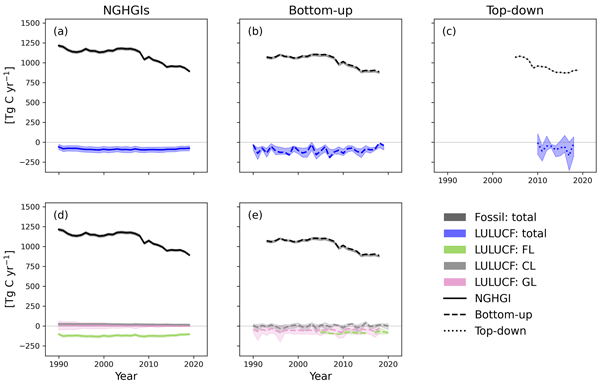
Accurate estimation of fluxes of carbon dioxide from the land surface is essential for understanding future impacts of greenhouse gas emissions on the climate system. A wide variety of methods currently exist to estimate these sources and sinks. We are continuing work to develop annual comparisons of these diverse methods in order to clarify what they all actually calculate and to resolve apparent disagreement, in addition to highlighting opportunities for increased understanding.
Laurent Menut
Geosci. Model Dev., 16, 4265–4281, https://doi.org/10.5194/gmd-16-4265-2023, https://doi.org/10.5194/gmd-16-4265-2023, 2023
Short summary
Short summary
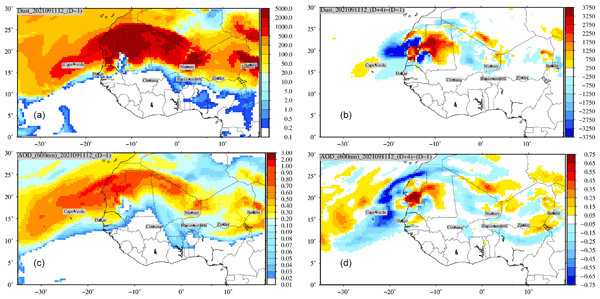
This study analyzes forecasts that were made in 2021 to help trigger measurements during the CADDIWA experiment. The WRF and CHIMERE models were run each day, and the first goal is to quantify the variability of the forecast as a function of forecast leads and forecast location. The possibility of using the different leads as an ensemble is also tested. For some locations, the correlation scores are better with this approach. This could be tested on operational forecast chains in the future.
Laurent Menut, Arineh Cholakian, Guillaume Siour, Rémy Lapere, Romain Pennel, Sylvain Mailler, and Bertrand Bessagnet
Atmos. Chem. Phys., 23, 7281–7296, https://doi.org/10.5194/acp-23-7281-2023, https://doi.org/10.5194/acp-23-7281-2023, 2023
Short summary
Short summary
This study is about the wildfires occurring in France during the summer 2022. We study the forest fires that took place in the Landes during the summer of 2022. We show the direct impact of these fires on the air quality, especially downstream of the smoke plume towards the Paris region. We quantify the impact of these fires on the pollutants peak concentrations and the possible exceedance of thresholds.
Monica Crippa, Diego Guizzardi, Tim Butler, Terry Keating, Rosa Wu, Jacek Kaminski, Jeroen Kuenen, Junichi Kurokawa, Satoru Chatani, Tazuko Morikawa, George Pouliot, Jacinthe Racine, Michael D. Moran, Zbigniew Klimont, Patrick M. Manseau, Rabab Mashayekhi, Barron H. Henderson, Steven J. Smith, Harrison Suchyta, Marilena Muntean, Efisio Solazzo, Manjola Banja, Edwin Schaaf, Federico Pagani, Jung-Hun Woo, Jinseok Kim, Fabio Monforti-Ferrario, Enrico Pisoni, Junhua Zhang, David Niemi, Mourad Sassi, Tabish Ansari, and Kristen Foley
Earth Syst. Sci. Data, 15, 2667–2694, https://doi.org/10.5194/essd-15-2667-2023, https://doi.org/10.5194/essd-15-2667-2023, 2023
Short summary
Short summary
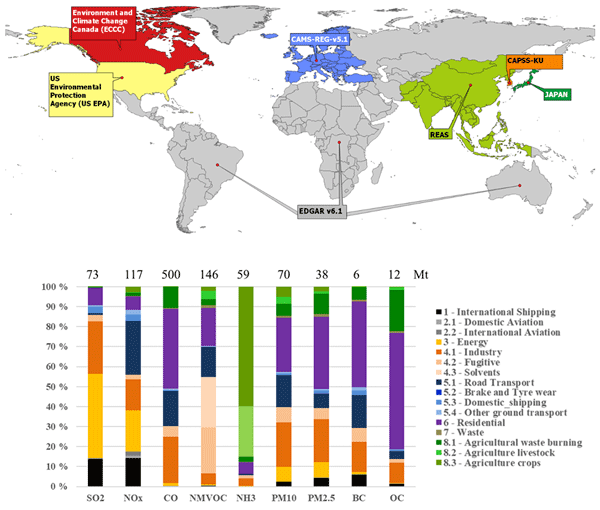
This study responds to the global and regional atmospheric modelling community's need for a mosaic of air pollutant emissions with global coverage, long time series, spatially distributed data at a high time resolution, and a high sectoral resolution in order to enhance the understanding of transboundary air pollution. The mosaic approach to integrating official regional emission inventories with a global inventory based on a consistent methodology ensures policy-relevant results.
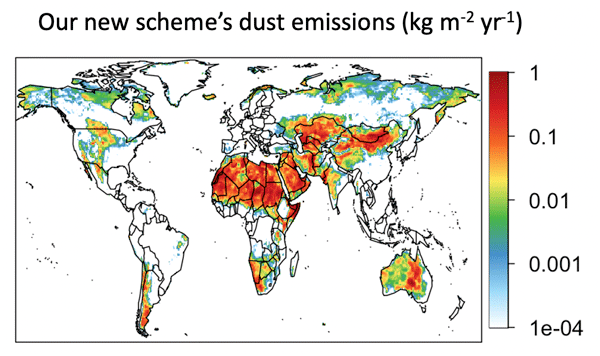
Danny M. Leung, Jasper F. Kok, Longlei Li, Gregory S. Okin, Catherine Prigent, Martina Klose, Carlos Pérez García-Pando, Laurent Menut, Natalie M. Mahowald, David M. Lawrence, and Marcelo Chamecki
Atmos. Chem. Phys., 23, 6487–6523, https://doi.org/10.5194/acp-23-6487-2023, https://doi.org/10.5194/acp-23-6487-2023, 2023
Short summary
Short summary
Desert dust modeling is important for understanding climate change, as dust regulates the atmosphere's greenhouse effect and radiation. This study formulates and proposes a more physical and realistic desert dust emission scheme for global and regional climate models. By considering more aeolian processes in our emission scheme, our simulations match better against dust observations than existing schemes. We believe this work is vital in improving dust representation in climate models.

Arineh Cholakian, Matthias Beekmann, Guillaume Siour, Isabelle Coll, Manuela Cirtog, Elena Ormeño, Pierre-Marie Flaud, Emilie Perraudin, and Eric Villenave
Atmos. Chem. Phys., 23, 3679–3706, https://doi.org/10.5194/acp-23-3679-2023, https://doi.org/10.5194/acp-23-3679-2023, 2023
Short summary
Short summary
This article revolves around the simulation of biogenic secondary organic aerosols in the Landes forest (southwestern France). Several sensitivity cases involving biogenic emission factors, land cover data, anthropogenic emissions, and physical or meteorological parameters were performed and each compared to measurements both in the forest canopy and around the forest. The chemistry behind the formation of these aerosols and their production and transport in the forest canopy is discussed.
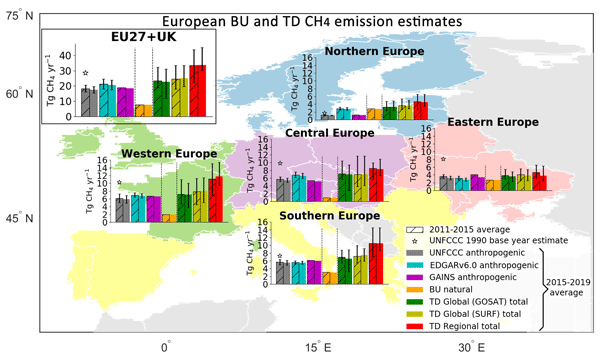
Ana Maria Roxana Petrescu, Chunjing Qiu, Matthew J. McGrath, Philippe Peylin, Glen P. Peters, Philippe Ciais, Rona L. Thompson, Aki Tsuruta, Dominik Brunner, Matthias Kuhnert, Bradley Matthews, Paul I. Palmer, Oksana Tarasova, Pierre Regnier, Ronny Lauerwald, David Bastviken, Lena Höglund-Isaksson, Wilfried Winiwarter, Giuseppe Etiope, Tuula Aalto, Gianpaolo Balsamo, Vladislav Bastrikov, Antoine Berchet, Patrick Brockmann, Giancarlo Ciotoli, Giulia Conchedda, Monica Crippa, Frank Dentener, Christine D. Groot Zwaaftink, Diego Guizzardi, Dirk Günther, Jean-Matthieu Haussaire, Sander Houweling, Greet Janssens-Maenhout, Massaer Kouyate, Adrian Leip, Antti Leppänen, Emanuele Lugato, Manon Maisonnier, Alistair J. Manning, Tiina Markkanen, Joe McNorton, Marilena Muntean, Gabriel D. Oreggioni, Prabir K. Patra, Lucia Perugini, Isabelle Pison, Maarit T. Raivonen, Marielle Saunois, Arjo J. Segers, Pete Smith, Efisio Solazzo, Hanqin Tian, Francesco N. Tubiello, Timo Vesala, Guido R. van der Werf, Chris Wilson, and Sönke Zaehle
Earth Syst. Sci. Data, 15, 1197–1268, https://doi.org/10.5194/essd-15-1197-2023, https://doi.org/10.5194/essd-15-1197-2023, 2023
Short summary
Short summary
This study updates the state-of-the-art scientific overview of CH4 and N2O emissions in the EU27 and UK in Petrescu et al. (2021a). Yearly updates are needed to improve the different respective approaches and to inform on the development of formal verification systems. It integrates the most recent emission inventories, process-based model and regional/global inversions, comparing them with UNFCCC national GHG inventories, in support to policy to facilitate real-time verification procedures.
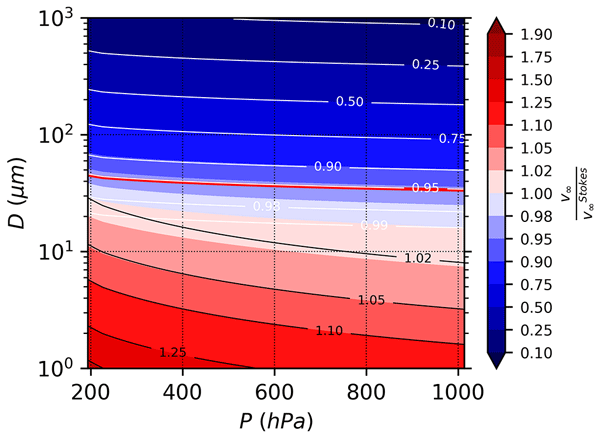
Sylvain Mailler, Laurent Menut, Arineh Cholakian, and Romain Pennel
Geosci. Model Dev., 16, 1119–1127, https://doi.org/10.5194/gmd-16-1119-2023, https://doi.org/10.5194/gmd-16-1119-2023, 2023
Short summary
Short summary
Large or even
giantparticles of mineral dust exist in the atmosphere but, so far, solving an non-linear equation was needed to calculate the speed at which they fall in the atmosphere. The model we present, AerSett v1.0 (AERosol SETTling version 1.0), provides a new and simple way of calculating their free-fall velocity in the atmosphere, which will be useful to anyone trying to understand and represent adequately the transport of giant dust particles by the wind.

Rémy Lapere, Nicolás Huneeus, Sylvain Mailler, Laurent Menut, and Florian Couvidat
Atmos. Chem. Phys., 23, 1749–1768, https://doi.org/10.5194/acp-23-1749-2023, https://doi.org/10.5194/acp-23-1749-2023, 2023
Short summary
Short summary
Glaciers in the Andes of central Chile are shrinking rapidly in response to global warming. This melting is accelerated by the deposition of opaque particles onto snow and ice. In this work, model simulations quantify typical deposition rates of soot on glaciers in summer and winter months and show that the contribution of emissions from Santiago is not as high as anticipated. Additionally, the combination of regional- and local-scale meteorology explains the seasonality in deposition.
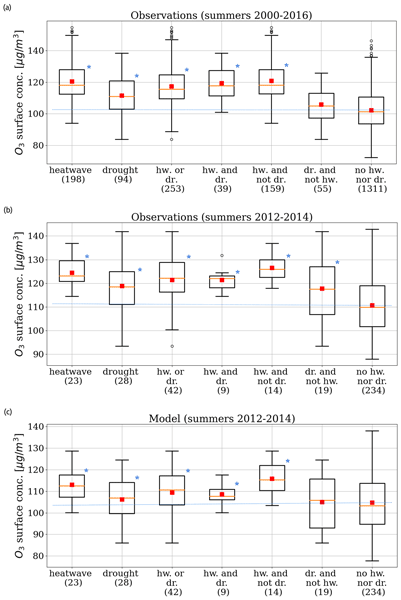
Antoine Guion, Solène Turquety, Arineh Cholakian, Jan Polcher, Antoine Ehret, and Juliette Lathière
Atmos. Chem. Phys., 23, 1043–1071, https://doi.org/10.5194/acp-23-1043-2023, https://doi.org/10.5194/acp-23-1043-2023, 2023
Short summary
Short summary
At high concentrations, tropospheric ozone (O3) deteriorates air quality. Weather conditions are key to understanding the variability in O3 concentration, especially during extremes. We suggest that identifying the presence of combined heatwaves is essential to the study of droughts in canopy–troposphere interactions and O3 concentration. Even so, they are associated, on average, with an increase in O3, partly explained by an increase in precursor emissions and a decrease in dry deposition.

Mathieu Lachatre, Sylvain Mailler, Laurent Menut, Arineh Cholakian, Pasquale Sellitto, Guillaume Siour, Henda Guermazi, Giuseppe Salerno, and Salvatore Giammanco
Atmos. Chem. Phys., 22, 13861–13879, https://doi.org/10.5194/acp-22-13861-2022, https://doi.org/10.5194/acp-22-13861-2022, 2022
Short summary
Short summary
In this study, we have evaluated the predominance of various pathways of volcanic SO2 conversion to sulfates in the upper troposphere. We show that the main conversion pathway was gaseous oxidation by OH, although the liquid pathways were expected to be predominant. These results are interesting with respect to a better understanding of sulfate formation in the middle and upper troposphere and are an important component to help evaluate particulate matter radiative forcing.
Philippe Thunis, Alain Clappier, Enrico Pisoni, Bertrand Bessagnet, Jeroen Kuenen, Marc Guevara, and Susana Lopez-Aparicio
Geosci. Model Dev., 15, 5271–5286, https://doi.org/10.5194/gmd-15-5271-2022, https://doi.org/10.5194/gmd-15-5271-2022, 2022
Short summary
Short summary
In this work, we propose a screening method to improve the quality of emission inventories, which are responsible for large uncertainties in air-quality modeling. The first step of screening consists of keeping only emission contributions that are relevant enough. In a second step, the method identifies large differences that provide evidence of methodological divergence or errors. We used the approach to compare two versions of the CAMS-REG European-scale inventory over 150 European cities.
Svetlana Tsyro, Wenche Aas, Augustin Colette, Camilla Andersson, Bertrand Bessagnet, Giancarlo Ciarelli, Florian Couvidat, Kees Cuvelier, Astrid Manders, Kathleen Mar, Mihaela Mircea, Noelia Otero, Maria-Teresa Pay, Valentin Raffort, Yelva Roustan, Mark R. Theobald, Marta G. Vivanco, Hilde Fagerli, Peter Wind, Gino Briganti, Andrea Cappelletti, Massimo D'Isidoro, and Mario Adani
Atmos. Chem. Phys., 22, 7207–7257, https://doi.org/10.5194/acp-22-7207-2022, https://doi.org/10.5194/acp-22-7207-2022, 2022
Short summary
Short summary
Particulate matter (PM) air pollution causes adverse health effects. In Europe, the emissions caused by anthropogenic activities have been reduced in the last decades. To assess the efficiency of emission reductions in improving air quality, we have studied the evolution of PM pollution in Europe. Simulations with six air quality models and observational data indicate a decrease in PM concentrations by 10 % to 30 % across Europe from 2000 to 2010, which is mainly a result of emission reductions.
Juan Cuesta, Lorenzo Costantino, Matthias Beekmann, Guillaume Siour, Laurent Menut, Bertrand Bessagnet, Tony C. Landi, Gaëlle Dufour, and Maxim Eremenko
Atmos. Chem. Phys., 22, 4471–4489, https://doi.org/10.5194/acp-22-4471-2022, https://doi.org/10.5194/acp-22-4471-2022, 2022
Short summary
Short summary
We present the first comprehensive study integrating satellite observations of near-surface ozone pollution, surface in situ measurements, and a chemistry-transport model for quantifying the role of anthropogenic emission reductions during the COVID-19 lockdown in spring 2020. It confirms the occurrence of a net enhancement of ozone in central Europe and a reduction elsewhere, except for some hotspots, linked with the reduction of precursor emissions from Europe and the Northern Hemisphere.
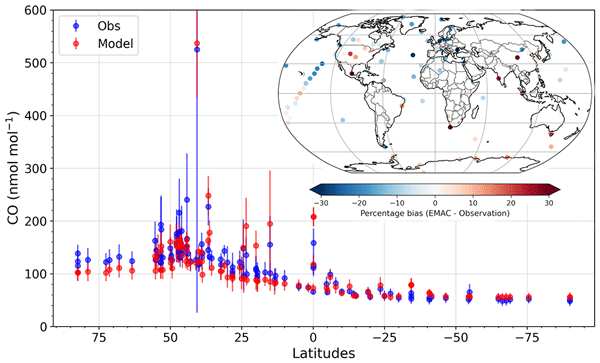
Andrea Pozzer, Simon F. Reifenberg, Vinod Kumar, Bruno Franco, Matthias Kohl, Domenico Taraborrelli, Sergey Gromov, Sebastian Ehrhart, Patrick Jöckel, Rolf Sander, Veronica Fall, Simon Rosanka, Vlassis Karydis, Dimitris Akritidis, Tamara Emmerichs, Monica Crippa, Diego Guizzardi, Johannes W. Kaiser, Lieven Clarisse, Astrid Kiendler-Scharr, Holger Tost, and Alexandra Tsimpidi
Geosci. Model Dev., 15, 2673–2710, https://doi.org/10.5194/gmd-15-2673-2022, https://doi.org/10.5194/gmd-15-2673-2022, 2022
Short summary
Short summary
A newly developed setup of the chemistry general circulation model EMAC (ECHAM5/MESSy for Atmospheric Chemistry) is evaluated here. A comprehensive organic degradation mechanism is used and coupled with a volatility base model.
The results show that the model reproduces most of the tracers and aerosols satisfactorily but shows discrepancies for oxygenated organic gases. It is also shown that this model configuration can be used for further research in atmospheric chemistry.
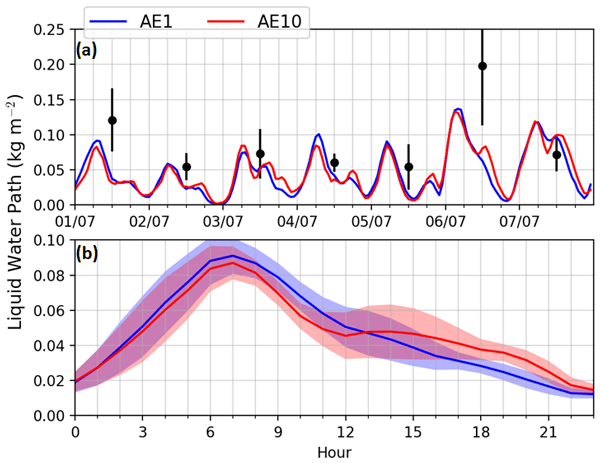
Adrien Deroubaix, Laurent Menut, Cyrille Flamant, Peter Knippertz, Andreas H. Fink, Anneke Batenburg, Joel Brito, Cyrielle Denjean, Cheikh Dione, Régis Dupuy, Valerian Hahn, Norbert Kalthoff, Fabienne Lohou, Alfons Schwarzenboeck, Guillaume Siour, Paolo Tuccella, and Christiane Voigt
Atmos. Chem. Phys., 22, 3251–3273, https://doi.org/10.5194/acp-22-3251-2022, https://doi.org/10.5194/acp-22-3251-2022, 2022
Short summary
Short summary
During the summer monsoon in West Africa, pollutants emitted in urbanized areas modify cloud cover and precipitation patterns. We analyze these patterns with the WRF-CHIMERE model, integrating the effects of aerosols on meteorology, based on the numerous observations provided by the Dynamics-Aerosol-Climate-Interactions campaign. This study adds evidence to recent findings that increased pollution levels in West Africa delay the breakup time of low-level clouds and reduce precipitation.
Philippe Thunis, Alain Clappier, Alexander de Meij, Enrico Pisoni, Bertrand Bessagnet, and Leonor Tarrason
Atmos. Chem. Phys., 21, 18195–18212, https://doi.org/10.5194/acp-21-18195-2021, https://doi.org/10.5194/acp-21-18195-2021, 2021
Short summary
Short summary
Air pollution's origin in cities is still a point of discussion, and approaches to assess the city's responsibility for its pollution are not harmonized and thus not comparable, resulting in sometimes contradicting interpretations. We show that methodological choices can easily lead to differences of a factor of 2 in terms of responsibility outcome and stress that methodological choices and assumptions most often lead to a systematic and important underestimation of the city's responsibility.
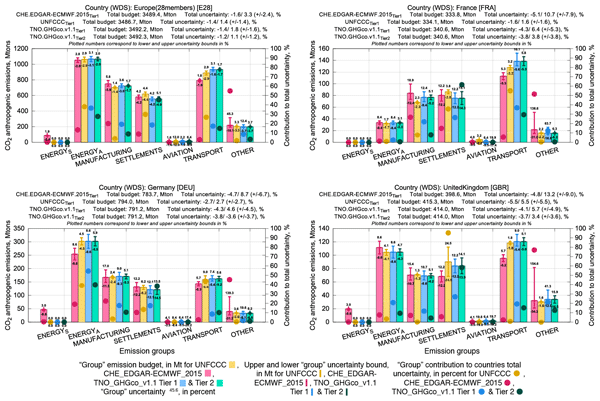
Margarita Choulga, Greet Janssens-Maenhout, Ingrid Super, Efisio Solazzo, Anna Agusti-Panareda, Gianpaolo Balsamo, Nicolas Bousserez, Monica Crippa, Hugo Denier van der Gon, Richard Engelen, Diego Guizzardi, Jeroen Kuenen, Joe McNorton, Gabriel Oreggioni, and Antoon Visschedijk
Earth Syst. Sci. Data, 13, 5311–5335, https://doi.org/10.5194/essd-13-5311-2021, https://doi.org/10.5194/essd-13-5311-2021, 2021
Short summary
Short summary
People worry that growing man-made carbon dioxide (CO2) concentrations lead to climate change. Global models, use of observations, and datasets can help us better understand behaviour of CO2. Here a tool to compute uncertainty in man-made CO2 sources per country per year and month is presented. An example of all sources separated into seven groups (intensive and average energy, industry, humans, ground and air transport, others) is presented. Results will be used to predict CO2 concentrations.
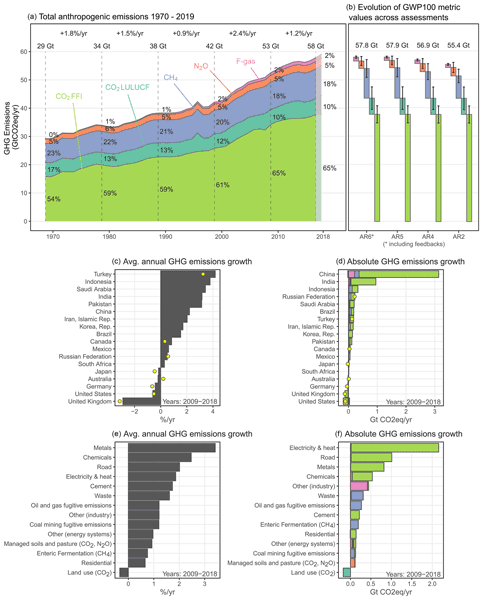
Jan C. Minx, William F. Lamb, Robbie M. Andrew, Josep G. Canadell, Monica Crippa, Niklas Döbbeling, Piers M. Forster, Diego Guizzardi, Jos Olivier, Glen P. Peters, Julia Pongratz, Andy Reisinger, Matthew Rigby, Marielle Saunois, Steven J. Smith, Efisio Solazzo, and Hanqin Tian
Earth Syst. Sci. Data, 13, 5213–5252, https://doi.org/10.5194/essd-13-5213-2021, https://doi.org/10.5194/essd-13-5213-2021, 2021
Short summary
Short summary
We provide a synthetic dataset on anthropogenic greenhouse gas (GHG) emissions for 1970–2018 with a fast-track extension to 2019. We show that GHG emissions continued to rise across all gases and sectors. Annual average GHG emissions growth slowed, but absolute decadal increases have never been higher in human history. We identify a number of data gaps and data quality issues in global inventories and highlight their importance for monitoring progress towards international climate goals.
Laurent Menut, Bertrand Bessagnet, Régis Briant, Arineh Cholakian, Florian Couvidat, Sylvain Mailler, Romain Pennel, Guillaume Siour, Paolo Tuccella, Solène Turquety, and Myrto Valari
Geosci. Model Dev., 14, 6781–6811, https://doi.org/10.5194/gmd-14-6781-2021, https://doi.org/10.5194/gmd-14-6781-2021, 2021
Short summary
Short summary
The CHIMERE chemistry-transport model is presented in its new version, V2020r1. Many changes are proposed compared to the previous version. These include online modeling, new parameterizations for aerosols, new emissions schemes, a new parameter file format, the subgrid-scale variability of urban concentrations and new transport schemes.
Gaëlle Dufour, Didier Hauglustaine, Yunjiang Zhang, Maxim Eremenko, Yann Cohen, Audrey Gaudel, Guillaume Siour, Mathieu Lachatre, Axel Bense, Bertrand Bessagnet, Juan Cuesta, Jerry Ziemke, Valérie Thouret, and Bo Zheng
Atmos. Chem. Phys., 21, 16001–16025, https://doi.org/10.5194/acp-21-16001-2021, https://doi.org/10.5194/acp-21-16001-2021, 2021
Short summary
Short summary
The IASI observations and the LMDZ-OR-INCA model simulations show negative ozone trends in the Central East China region in the lower free (3–6 km column) and the upper free (6–9 km column) troposphere. Sensitivity studies from the model show that the Chinese anthropogenic emissions contribute to more than 50 % in the trend. The reduction in NOx emissions that has occurred since 2013 in China seems to lead to a decrease in ozone in the free troposphere, contrary to the increase at the surface.
Cited articles
Amato, F., Karanasiou, A., Moreno, T., Alastuey, A., Orza, J., Lumbreras, J., Borge, R., Boldo, E., Linares, C., and Querol, X.: Emission factors from road dust resuspension in a Mediterranean freeway, Atmos. Environ., 61, 580–587, https://doi.org/10.1016/j.atmosenv.2012.07.065, 2012. a
Argyropoulou, G. A., Florou, K., and Pandis, S. N.: Continuous chemical characterization of ultrafine particulate matter (PM0.1), Atmos. Meas. Tech., 18, 4969–4983, https://doi.org/10.5194/amt-18-4969-2025, 2025. a
Beachley, G. M., Fenn, M. E., Du, E., de Vries, W., Bauters, M., Bell, M. D., Kulshrestha, U. C., Schmitz, A., and Walker, J. T.: Chapter 2 - Monitoring nitrogen deposition in global forests, in: Atmospheric Nitrogen Deposition to Global Forests, edited by: Du, E. and de Vries, W., Academic Press, 17–38, ISBN 978-0-323-91140-5, https://doi.org/10.1016/B978-0-323-91140-5.00019-1, 2024. a
Bessagnet, B.: Impact of wildfires in Bhutan, Zenodo [video], https://doi.org/10.5281/zenodo.16526751, 2025. a
Bessagnet, B., Pirovano, G., Mircea, M., Cuvelier, C., Aulinger, A., Calori, G., Ciarelli, G., Manders, A., Stern, R., Tsyro, S., García Vivanco, M., Thunis, P., Pay, M.-T., Colette, A., Couvidat, F., Meleux, F., Rouïl, L., Ung, A., Aksoyoglu, S., Baldasano, J. M., Bieser, J., Briganti, G., Cappelletti, A., D'Isidoro, M., Finardi, S., Kranenburg, R., Silibello, C., Carnevale, C., Aas, W., Dupont, J.-C., Fagerli, H., Gonzalez, L., Menut, L., Prévôt, A. S. H., Roberts, P., and White, L.: Presentation of the EURODELTA III intercomparison exercise – evaluation of the chemistry transport models' performance on criteria pollutants and joint analysis with meteorology, Atmos. Chem. Phys., 16, 12667–12701, https://doi.org/10.5194/acp-16-12667-2016, 2016. a
Bessagnet, B., Menut, L., Lapere, R., Couvidat, F., Jaffrezo, J.-L., Mailler, S., Favez, O., Pennel, R., and Siour, G.: High Resolution Chemistry Transport Modeling with the On-Line CHIMERE-WRF Model over the French Alps – Analysis of a Feedback of Surface Particulate Matter Concentrations on Mountain Meteorology, Atmosphere, 11, 565, https://doi.org/10.3390/atmos11060565, 2020. a, b, c, d
Bessagnet, B., Beauchamp, M., Menut, L., Fablet, R., Pisoni, E., and Thunis, P.: Deep learning techniques applied to super-resolution chemistry transport modeling for operational uses, Environmental Research Communications, 3, 085001, https://doi.org/10.1088/2515-7620/ac17f7, 2021. a
Bessagnet, B., Pisoni, E., De Meij, A., Létinois, L., and Thunis, P.: A simple and fast method to downscale chemistry transport model output fields from the regional to the urban/district scale, Environ. Modell. Softw., 164, 105692, https://doi.org/10.1016/j.envsoft.2023.105692, 2023. a
Bhagowati, B. and Ahamad, K. U.: A review on lake eutrophication dynamics and recent developments in lake modeling, Ecohydrology & Hydrobiology, 19, 155–166, https://doi.org/10.1016/j.ecohyd.2018.03.002, 2019. a
Bhattarai, H., Zhang, Y.-L., Pavuluri, C. M., Wan, X., Wu, G., Li, P., Cao, F., Zhang, W., Wang, Y., Kang, S., Ram, K., Kawamura, K., Ji, Z., Widory, D., and Cong, Z.: Nitrogen Speciation and Isotopic Composition of Aerosols Collected at Himalayan Forest (3326 m a.s.l.): Seasonality, Sources, and Implications, Environ. Sci. Technol., 53, 12247–12256, https://doi.org/10.1021/acs.est.9b03999, 2019. a
Bhattu, D., Tripathi, S. N., Bhowmik, H. S., Moschos, V., Lee, C. P., Rauber, M., Salazar, G., Abbaszade, G., Cui, T., Slowik, J. G., Vats, P., Mishra, S., Lalchandani, V., Satish, R., Rai, P., Casotto, R., Tobler, A., Kumar, V., Hao, Y., Qi, L., Khare, P., Manousakas, M. I., Wang, Q., Han, Y., Tian, J., Darfeuil, S., Minguillon, M. C., Hueglin, C., Conil, S., Rastogi, N., Srivastava, A. K., Ganguly, D., Bjelic, S., Canonaco, F., Schnelle-Kreis, J., Dominutti, P. A., Jaffrezo, J.-L., Szidat, S., Chen, Y., Cao, J., Baltensperger, U., Uzu, G., Daellenbach, K. R., El Haddad, I., and Prévôt, A. S. H.: Local incomplete combustion emissions define the PM2.5 oxidative potential in Northern India, Nat. Commun., 15, 3517, https://doi.org/10.1038/s41467-024-47785-5, 2024. a
Bieser, J., Aulinger, A., Matthias, V., Quante, M., and Denier van der Gon, H.: Vertical emission profiles for Europe based on plume rise calculations, Environ. Pollut., 159, 2935–2946, https://doi.org/10.1016/j.envpol.2011.04.030, 2011. a
Copernicus Atmosphere Monitoring Service: CAMS global biomass burning emissions based on fire radiative power (GFAS), Copernicus Atmosphere Monitoring Service (CAMS) Atmosphere Data Store [data set], https://doi.org/10.24381/a05253c7, 2022. a
Chandel, A. S., Sarangi, C., Rittger, K., Hooda, R. K., and Hyvärinen, A.-P.: In Situ Characterization of Dust Storms and Their Snow-Darkening Effect Over Himalayas, J. Geophys. Res.-Atmos., 130, e2024JD041874, https://doi.org/10.1029/2024JD041874, 2025. a
Chelluboyina, G. S., Kapoor, T. S., and Chakrabarty, R. K.: Dark brown carbon from wildfires: a potent snow radiative forcing agent?, npj Climate and Atmospheric Science, 7, 200, https://doi.org/10.1038/s41612-024-00738-7, 2024. a
Ciarelli, G., Cholakian, A., Bettineschi, M., Vitali, B., Bessagnet, B., Sinclair, V. A., Mikkola, J., El Haddad, I., Zardi, D., Marinoni, A., Bigi, A., Tuccella, P., Bäck, J., Gordon, H., Nieminen, T., Kulmala, M., Worsnop, D., and Bianchi, F.: The impact of the Himalayan aerosol factory: results from high resolution numerical modelling of pure biogenic nucleation over the Himalayan valleys, Faraday Discuss., 258, 76–93, https://doi.org/10.1039/D4FD00171K, 2025. a
Colette, A., Bessagnet, B., Meleux, F., Terrenoire, E., and Rouïl, L.: Frontiers in air quality modelling, Geosci. Model Dev., 7, 203–210, https://doi.org/10.5194/gmd-7-203-2014, 2014. a
Crippa, M., Guizzardi, D., Pagani, F., Schiavina, M., Melchiorri, M., Pisoni, E., Graziosi, F., Muntean, M., Maes, J., Dijkstra, L., Van Damme, M., Clarisse, L., and Coheur, P.: Insights into the spatial distribution of global, national, and subnational greenhouse gas emissions in the Emissions Database for Global Atmospheric Research (EDGAR v8.0), Earth Syst. Sci. Data, 16, 2811–2830, https://doi.org/10.5194/essd-16-2811-2024, 2024. a, b
Das, B., Sujakhu, H., Sitaula, S., Sheela, K., Prajapati, M., Hall, J., Hodgson, J. R., Maharjan, B., and Byanju, R. M.: Assessment of brick kiln’s air pollutants impact on human health in industrial areas of Kathmandu Valley, Nepal, Atmos. Pollut. Res., 102808, https://doi.org/10.1016/j.apr.2025.102808, 2025. a
Denier van der Gon, H. A. C., Bergström, R., Fountoukis, C., Johansson, C., Pandis, S. N., Simpson, D., and Visschedijk, A. J. H.: Particulate emissions from residential wood combustion in Europe – revised estimates and an evaluation, Atmos. Chem. Phys., 15, 6503–6519, https://doi.org/10.5194/acp-15-6503-2015, 2015. a
EEA: EMEP/EEA air pollutant emission inventory guidebook 2023, https://www.eea.europa.eu/en/analysis/publications/emep-eea-guidebook-2023 (last access: 11 December 2025), 2023. a
Ellis, C. J., Steadman, C. E., Vieno, M., Chatterjee, S., Jones, M. R., Negi, S., Pandey, B. P., Rai, H., Tshering, D., Weerakoon, G., Wolseley, P., Reay, D., Sharma, S., and Sutton, M.: Estimating nitrogen risk to Himalayan forests using thresholds for lichen bioindicators, Biol. Conserv., 265, 109401, https://doi.org/10.1016/j.biocon.2021.109401, 2022. a, b
Felix, J. D., Berner, A., Wetherbee, G. A., Murphy, S. F., and Heindel, R. C.: Nitrogen isotopes indicate vehicle emissions and biomass burning dominate ambient ammonia across Colorado's Front Range urban corridor, Environ. Pollut., 316, 120537, https://doi.org/10.1016/j.envpol.2022.120537, 2023. a
Gao, Y., Kou, W., Cheng, W., Guo, X., Qu, B., Wu, Y., Zhang, S., Liao, H., Chen, D., Leung, L. R., Wild, O., Zhang, J., Lin, G., Su, H., Cheng, Y., Pöschl, U., Pozzer, A., Zhang, L., Lamarque, J.-F., Guenther, A. B., Brasseur, G., Liu, Z., Lu, H., Li, C., Zhao, B., Wang, S., Huang, X., Pan, J., Liu, G., Liu, X., Lin, H., Zhao, Y., Zhao, C., Meng, J., Yao, X., Gao, H., and Wu, L.: Reducing Long-Standing Surface Ozone Overestimation in Earth System Modeling by High-Resolution Simulation and Dry Deposition Improvement, J. Adv. Model. Earth Sy., 17, e2023MS004192, https://doi.org/10.1029/2023MS004192, 2025. a
Guenther, A. B., Jiang, X., Heald, C. L., Sakulyanontvittaya, T., Duhl, T., Emmons, L. K., and Wang, X.: The Model of Emissions of Gases and Aerosols from Nature version 2.1 (MEGAN2.1): an extended and updated framework for modeling biogenic emissions, Geosci. Model Dev., 5, 1471–1492, https://doi.org/10.5194/gmd-5-1471-2012, 2012. a
Guizzardi, D., Crippa, M., Butler, T., Keating, T., Wu, R., Kaminski, J., Kuenen, J., Kurokawa, J., Chatani, S., Morikawa, T., Pouliot, G., Racine, J., Moran, M. D., Klimont, Z., Manseau, P. M., Mashayekhi, R., Henderson, B. H., Smith, S. J., Hoesly, R., Muntean, M., Banja, M., Schaaf, E., Pagani, F., Woo, J.-H., Kim, J., Pisoni, E., Zhang, J., Niemi, D., Sassi, M., Duhamel, A., Ansari, T., Foley, K., Geng, G., Chen, Y., and Zhang, Q.: The HTAP_v3.2 emission mosaic: merging regional and global monthly emissions (2000–2020) to support air quality modelling and policies, Earth Syst. Sci. Data, 17, 5915–5950, https://doi.org/10.5194/essd-17-5915-2025, 2025. a
Gul, C., Mahapatra, P. S., Kang, S., Singh, P. K., Wu, X., He, C., Kumar, R., Rai, M., Xu, Y., and Puppala, S. P.: Black carbon concentration in the central Himalayas: Impact on glacier melt and potential source contribution, Environ. Pollut., 275, 116544, https://doi.org/10.1016/j.envpol.2021.116544, 2021. a
Gul, C., He, C., Kang, S., Xu, Y., Wu, X., Koch, I., Barker, J., Kumar, R., Ullah, R., Faisal, S., and Puppala, S. P.: Measured black carbon deposition over the central Himalayan glaciers: Concentrations in surface snow and impact on snow albedo reduction, Atmos. Pollut. Res., 15, 102203, https://doi.org/10.1016/j.apr.2024.102203, 2024. a
Hassan, M. A., Mehmood, T., Liu, J., Luo, X., Li, X., Tanveer, M., Faheem, M., Shakoor, A., Dar, A. A., and Abid, M.: A review of particulate pollution over Himalaya region: Characteristics and salient factors contributing ambient PM pollution, Atmos. Environ., 294, 119472, https://doi.org/10.1016/j.atmosenv.2022.119472, 2023. a
Hauglustaine, D. A., Balkanski, Y., and Schulz, M.: A global model simulation of present and future nitrate aerosols and their direct radiative forcing of climate, Atmos. Chem. Phys., 14, 11031–11063, https://doi.org/10.5194/acp-14-11031-2014, 2014. a
ICIMOD and World Bank: The Thimphu Outcome, https://lib.icimod.org/records/tpn8m-tcg54 (last access: 11 December 2025), 2024. a
Kaiser, J. W., Heil, A., Andreae, M. O., Benedetti, A., Chubarova, N., Jones, L., Morcrette, J.-J., Razinger, M., Schultz, M. G., Suttie, M., and van der Werf, G. R.: Biomass burning emissions estimated with a global fire assimilation system based on observed fire radiative power, Biogeosciences, 9, 527–554, https://doi.org/10.5194/bg-9-527-2012, 2012. a
Kalnay, E., Kanamitsu, M., Kistler, R., Collins, W., Deaven, D., Gandin, L., Iredell, M., Saha, S., White, G., Woollen, J., Zhu, Y., Chelliah, M., Ebisuzaki, W., Higgins, W., Janowiak, J., Mo, K. C., Ropelewski, C., Wang, J., Leetmaa, A., Reynolds, R., Jenne, R., and Joseph, D.: The NCEP/NCAR 40-Year Reanalysis Project, B. Am. Meteorol. Soc., 77, 437–472, https://doi.org/10.1175/1520-0477(1996)077<0437:TNYRP>2.0.CO;2, 1996. a
Kang, S., Zhang, Y., Qian, Y., and Wang, H.: A review of black carbon in snow and ice and its impact on the cryosphere, Earth-Sci. Rev., 210, 103346, https://doi.org/10.1016/j.earscirev.2020.103346, 2020. a, b
Karthik, V., Vijay Bhaskar, B., Ramachandran, S., and Gertler, A. W.: Quantification of organic carbon and black carbon emissions, distribution, and carbon variation in diverse vegetative ecosystems across India, Environ. Pollut., 309, 119790, https://doi.org/10.1016/j.envpol.2022.119790, 2022. a
Khumsaeng, T. and Kanabkaew, T.: Measurement of Indoor Air Pollution in Bhutanese Households during Winter: An Implication of Different Fuel Uses, Sustainability, 13, 9601, https://doi.org/10.3390/su13179601, 2021. a
Kumari, S., Radhadevi, L., Gujre, N., Rao, N., and Bandaru, M.: Assessing the impact of forest fires on air quality in Northeast India, Environmental Science: Atmospheres, 5, 82–93, https://doi.org/10.1039/d4ea00107a, 2024. a, b
Lapere, R., Menut, L., Mailler, S., and Huneeus, N.: Seasonal variation in atmospheric pollutants transport in central Chile: dynamics and consequences, Atmos. Chem. Phys., 21, 6431–6454, https://doi.org/10.5194/acp-21-6431-2021, 2021. a
Lapere, R., Huneeus, N., Mailler, S., Menut, L., and Couvidat, F.: Meteorological export and deposition fluxes of black carbon on glaciers of the central Chilean Andes, Atmos. Chem. Phys., 23, 1749–1768, https://doi.org/10.5194/acp-23-1749-2023, 2023. a
Li, C., Bosch, C., Kang, S., Andersson, A., Chen, P., Zhang, Q., Cong, Z., Chen, B., Qin, D., and Gustafsson, O.: Sources of black carbon to the Himalayan–Tibetan Plateau glaciers, Nat. Commun., 7, 12574, https://doi.org/10.1038/ncomms12574, 2016. a
Li, C., Kang, S., Yan, F., Zhang, C., Yang, J., and He, C.: Importance of precipitation and dust storms in regulating black carbon deposition on remote Himalayan glaciers, Environ. Pollut., 318, 120885, https://doi.org/10.1016/j.envpol.2022.120885, 2023. a
Li, Y., Kang, S., Zhang, X., Chen, J., Schmale, J., Li, X., Zhang, Y., Niu, H., Li, Z., Qin, X., He, X., Yang, W., Zhang, G., Wang, S., Shao, L., and Tian, L.: Black carbon and dust in the Third Pole glaciers: Revaluated concentrations, mass absorption cross-sections and contributions to glacier ablation, Sci. Total Environ., 789, 147746, https://doi.org/10.1016/j.scitotenv.2021.147746, 2021. a
Liu, X., Zheng, M., Liu, Y., Jin, Y., Liu, J., Zhang, B., Yang, X., Wu, Y., Zhang, T., Xiang, Y., Liu, B., and Yan, C.: Intercomparison of equivalent black carbon (eBC) and elemental carbon (EC) concentrations with three-year continuous measurement in Beijing, China, Environ. Res., 209, 112791, https://doi.org/10.1016/j.envres.2022.112791, 2022. a
Mehra, M., Panday, A. K., Puppala, S. P., Sapkota, V., Adhikary, B., Pokheral, C. P., and Ram, K.: Impact of local and regional emission sources on air quality in foothills of the Himalaya during spring 2016: An observation, satellite and modeling perspective, Atmos. Environ., 216, 116897, https://doi.org/10.1016/j.atmosenv.2019.116897, 2019. a
Menut, L., Flamant, C., Turquety, S., Deroubaix, A., Chazette, P., and Meynadier, R.: Impact of biomass burning on pollutant surface concentrations in megacities of the Gulf of Guinea, Atmos. Chem. Phys., 18, 2687–2707, https://doi.org/10.5194/acp-18-2687-2018, 2018. a
Menut, L., Bessagnet, B., Siour, G., Mailler, S., Pennel, R., and Cholakian, A.: Impact of lockdown measures to combat Covid-19 on air quality over western Europe, Sci. Total Environ., 741, 140426, https://doi.org/10.1016/j.scitotenv.2020.140426, 2020. a
Menut, L., Siour, G., Bessagnet, B., Cholakian, A., Pennel, R., and Mailler, S.: Impact of Wildfires on Mineral Dust Emissions in Europe, J. Geophys. Res.-Atmos., 127, e2022JD037395, https://doi.org/10.1029/2022JD037395, 2022. a
Menut, L., Cholakian, A., Siour, G., Lapere, R., Pennel, R., Mailler, S., and Bessagnet, B.: Impact of Landes forest fires on air quality in France during the 2022 summer, Atmos. Chem. Phys., 23, 7281–7296, https://doi.org/10.5194/acp-23-7281-2023, 2023. a
Menut, L., Cholakian, A., Pennel, R., Siour, G., Mailler, S., Valari, M., Lugon, L., and Meurdesoif, Y.: The CHIMERE chemistry-transport model v2023r1, Geosci. Model Dev., 17, 5431–5457, https://doi.org/10.5194/gmd-17-5431-2024, 2024a. a
Menut, L., Cholakian, A., Pennel, R., Siour, G., Mailler, S., Valari, M., Lugon, L., and Meurdesoif, Y.: chimere_v2023r1, Zenodo [code], https://doi.org/10.5281/zenodo.10907951, 2024b. a
Mikkola, J., Sinclair, V. A., Bister, M., and Bianchi, F.: Daytime along-valley winds in the Himalayas as simulated by the Weather Research and Forecasting (WRF) model, Atmos. Chem. Phys., 23, 821–842, https://doi.org/10.5194/acp-23-821-2023, 2023. a
NASA VIIRS Land Science Team: VIIRS (NOAA-20/JPSS-1) I Band 375 m Active Fire Product NRT (Vector data), NASA [data set], https://doi.org/10.5067/FIRMS/VIIRS/VJ114IMGT_NRT.002, 2020. a
OpenStreetMap contributors: OpenStreetMap, OpenStreetMap Foundation, https://www.openstreetmap.org (last access: 11 December 2025), 2024. a
Pachón, J. E., Opazo, M. A., Lichtig, P., Huneeus, N., Bouarar, I., Brasseur, G., Li, C. W. Y., Flemming, J., Menut, L., Menares, C., Gallardo, L., Gauss, M., Sofiev, M., Kouznetsov, R., Palamarchuk, J., Uppstu, A., Dawidowski, L., Rojas, N. Y., Andrade, M. D. F., Gavidia-Calderón, M. E., Delgado Peralta, A. H., and Schuch, D.: Air quality modeling intercomparison and multiscale ensemble chain for Latin America, Geosci. Model Dev., 17, 7467–7512, https://doi.org/10.5194/gmd-17-7467-2024, 2024. a
Pai, S. J., Heald, C. L., and Murphy, J. G.: Exploring the Global Importance of Atmospheric Ammonia Oxidation, ACS Earth and Space Chemistry, 5, 1674–1685, https://doi.org/10.1021/acsearthspacechem.1c00021, 2021. a
Panda, U., Dey, S., Sharma, A., Singh, A., Reyes-Villegas, E., Darbyshire, E., Carbone, S., Das, T., Allan, J., McFiggans, G., Ravikrishna, R., Coe, H., Liu, P., and Gunthe, S. S.: Exploring the chemical composition and processes of submicron aerosols in Delhi using aerosol chemical speciation monitor driven factor analysis, Scientific Reports, 15, 14383, https://doi.org/10.1038/s41598-025-99245-9, 2025. a
Pesaresi, M., Schiavina, M., Politis, P., Freire, S., Krasnodębska, K., Uhl, J. H., Carioli, A., Corbane, C., Dijkstra, L., Florio, P., Friedrich, H. K., Gao, J., Leyk, S., Lu, L., Maffenini, L., Mari-Rivero, I., Melchiorri, M., Syrris, V., Van Den Hoek, J., and Kemper, T.: Advances on the Global Human Settlement Layer by joint assessment of Earth Observation and population survey data, Int. J. Digit. Earth, 17, 2390454, https://doi.org/10.1080/17538947.2024.2390454, 2024. a
Philip, S., Martin, R., Pierce, J., Jimenez, J., Zhang, Q., Canagaratna, M., Spracklen, D., Nowlan, C., Lamsal, L., Cooper, M., and Krotkov, N.: Spatially and seasonally resolved estimate of the ratio of organic mass to organic carbon, Atmos. Environ., 87, 34–40, https://doi.org/10.1016/j.atmosenv.2013.11.065, 2014. a
Pisoni, E., Zauli-Sajani, S., Belis, C. A., Khomenko, S., Thunis, P., Motta, C., Van Dingenen, R., Bessagnet, B., Monforti-Ferrario, F., Maes, J., and Feyen, L.: High resolution assessment of air quality and health in Europe under different climate mitigation scenarios, Nat. Commun., 16, 5134, https://doi.org/10.1038/s41467-025-60449-2, 2025. a
Potter, E. R., Orr, A., Willis, I. C., Bannister, D., and Salerno, F.: Dynamical Drivers of the Local Wind Regime in a Himalayan Valley, J. Geophys. Res.-Atmos., 123, 13186–13202, https://doi.org/10.1029/2018JD029427, 2018. a
Pratali, L., Marinoni, A., Cogo, A., Ujka, K., Gilardoni, S., Bernardi, E., Bonasoni, P., Bruno, R. M., Bastiani, L., Vuillermoz, E., Sdringola, P., and Fuzzi, S.: Indoor air pollution exposure effects on lung and cardiovascular health in the High Himalayas, Nepal: An observational study, Eur. J. Intern. Med., 61, 81–87, https://doi.org/10.1016/j.ejim.2018.10.023, 2019. a
Romshoo, B., Bhat, M. A., and Habib, G.: Black carbon in contrasting environments in India: Temporal variability, source apportionment and radiative forcing, Atmos. Environ., 302, 119734, https://doi.org/10.1016/j.atmosenv.2023.119734, 2023. a
Réveillet, M., Dumont, M., Gascoin, S., Lafaysse, M., Nabat, P., Ribes, A., Nheili, R., Tuzet, F., Ménégoz, M., Morin, S., Picard, G., and Ginoux, P.: Black carbon and dust alter the response of mountain snow cover under climate change, Nat. Commun., 13, 5279, https://doi.org/10.1038/s41467-022-32501-y, 2022. a
Santra, S., Verma, S., Patel, S., Boucher, O., and Roxy, M. K.: Aerosols drive monsoon rainfall spatial modulations over the Indian subcontinent: anthropogenic and dust aerosols impact, mechanism, and control, EGUsphere [preprint], https://doi.org/10.5194/egusphere-2025-2302, 2025. a
Sarangi, C., Qian, Y., Rittger, K., Ruby Leung, L., Chand, D., Bormann, K. J., and Painter, T. H.: Dust dominates high-altitude snow darkening and melt over high-mountain Asia, Nat. Clim. Change, 10, 1045–1051, https://doi.org/10.1038/s41558-020-00909-3, 2020. a, b
Schaap, M., Cuvelier, C., Hendriks, C., Bessagnet, B., Baldasano, J., Colette, A., Thunis, P., Karam, D., Fagerli, H., Graff, A., Kranenburg, R., Nyiri, A., Pay, M., Rouïl, L., Schulz, M., Simpson, D., Stern, R., Terrenoire, E., and Wind, P.: Performance of European chemistry transport models as function of horizontal resolution, Atmos. Environ., 112, 90–105, https://doi.org/10.1016/j.atmosenv.2015.04.003, 2015. a
Sgpearse, Li, S., Clyne, StasJ, CoreCode, Daves, J., Hallock, K., Eroglu, O., Poplawski, O., and Lacroix, R.: NCAR/VAPOR: Vapor 3.8.1, Zenodo [code], https://doi.org/10.5281/zenodo.7779648, 2023. a
Shabbir, M., Saeed, T., Saleem, A., Bhave, P., Bergin, M., and Khokhar, M. F.: A paradigm shift: Low-cost sensors for effective air quality monitoring and management in developing countries, Environ. Int., 200, 109521, https://doi.org/10.1016/j.envint.2025.109521, 2025. a
Sharma, G. P., Sapkota, R. P., Mool, E., Gurung, T., and Maskey Byanju, R.: Status of Air Pollution over the Last Three Decades in Thimphu City, Bhutan, Journal of Institute of Science and Technology, 26, 119–127, https://doi.org/10.3126/jist.v26i1.37839, 2021. a
Sharma, S., Sharma, R., Sahu, S. K., and Kota, S. H.: Transboundary sources dominated PM2.5 in Thimphu, Bhutan, Int. J. Environ. Sci. Te., 19, 5649–5658, https://doi.org/10.1007/s13762-021-03505-w, 2022. a
Singh, J., Singh, N., Ojha, N., Dimri, A., and Singh, R. S.: Impacts of different boundary layer parameterization schemes on simulation of meteorology over Himalaya, Atmos. Res., 298, 107154, https://doi.org/10.1016/j.atmosres.2023.107154, 2024. a
Singh, P. K., Adhikary, B., Chen, X., Kang, S., Poudel, S. P., Tashi, T., Goswami, A., and Puppala, S. P.: Variability of ambient black carbon concentration in the Central Himalaya and its assessment over the Hindu Kush Himalayan region, Sci. Total Environ., 858, 160137, https://doi.org/10.1016/j.scitotenv.2022.160137, 2023. a
Singh, V., Biswal, A., Kesarkar, A. P., Mor, S., and Ravindra, K.: Science of the Total Environment High resolution vehicular PM10 emissions over megacity Delhi: Relative contributions of exhaust and non-exhaust sources, Sci. Total Environ., 699, 134273, https://doi.org/10.1016/j.scitotenv.2019.134273, 2020. a, b
Skamarock, W., Klemp, J., Dudhia, J., Gill, D., Barker, D., Wang, W., Huang, X.-Y., and Duda, M.: A Description of the Advanced Research WRF Version 3, University Corporation for Atmospheric Research, NCAR Technical Note, NCAR/TN–475+STR, https://doi.org/10.5065/D68S4MVH, 2008. a
Smaran, M. and Vinoj, V.: Evaluation of Background Black Carbon Concentration in India, Aerosol Air Qual. Res., 24, 230300, https://doi.org/10.4209/aaqr.230300, 2024. a
Sofiev, M., Ermakova, T., and Vankevich, R.: Evaluation of the smoke-injection height from wild-land fires using remote-sensing data, Atmos. Chem. Phys., 12, 1995–2006, https://doi.org/10.5194/acp-12-1995-2012, 2012. a
Tahir, R., Imran, M. S., Minhas, S., Sabahat, N., Ilyas, S. H. W., and Gadi, H. R.: Brick Kiln Detection and Localization using Deep Learning Techniques, in: 2021 International Conference on Artificial Intelligence (ICAI), IEEE, Islamabad, Pakistan, 37–43, ISBN 9781665432931, https://doi.org/10.1109/ICAI52203.2021.9445267, 2021. a
Terrenoire, E., Bessagnet, B., Rouïl, L., Tognet, F., Pirovano, G., Létinois, L., Beauchamp, M., Colette, A., Thunis, P., Amann, M., and Menut, L.: High-resolution air quality simulation over Europe with the chemistry transport model CHIMERE, Geosci. Model Dev., 8, 21–42, https://doi.org/10.5194/gmd-8-21-2015, 2015. a, b
Thunis, P., Clappier, A., Pisoni, E., Bessagnet, B., Kuenen, J., Guevara, M., and Lopez-Aparicio, S.: A multi-pollutant and multi-sectorial approach to screening the consistency of emission inventories, Geosci. Model Dev., 15, 5271–5286, https://doi.org/10.5194/gmd-15-5271-2022, 2022. a
UNEP and ACAP: EANET, https://www.eanet.asia/ (last access: 11 December 2025), 2025. a
Unnikrishnan, A. and Reddy, C. S.: Characterizing Distribution of Forest Fires in Myanmar Using Earth Observations and Spatial Statistics Tool, J. Indian Soc. Remote, 48, 227–234, https://doi.org/10.1007/s12524-019-01072-9, 2020. a
Valari, M. and Menut, L.: Does an Increase in Air Quality Models’ Resolution Bring Surface Ozone Concentrations Closer to Reality?, J. Atmos. Ocean. Tech., 25, 1955–1968, https://doi.org/10.1175/2008JTECHA1123.1, 2008. a
Vautard, R., Bessagnet, B., Chin, M., and Menut, L.: On the contribution of natural Aeolian sources to particulate matter concentrations in Europe: Testing hypotheses with a modelling approach, Atmos. Environ., 39, 3291–3303, https://doi.org/10.1016/j.atmosenv.2005.01.051, 2005. a, b
Vilà-Vilardell, L., Keeton, W. S., Thom, D., Gyeltshen, C., Tshering, K., and Gratzer, G.: Climate change effects on wildfire hazards in the wildland-urban-interface – Blue pine forests of Bhutan, Forest Ecol. Manag., 461, 117927, https://doi.org/10.1016/j.foreco.2020.117927, 2020. a
Vivanco, M., Bessagnet, B., Cuvelier, C., Theobald, M., Tsyro, S., Pirovano, G., Aulinger, A., Bieser, J., Calori, G., Ciarelli, G., Manders, A., Mircea, M., Aksoyoglu, S., Briganti, G., Cappelletti, A., Colette, A., Couvidat, F., D'Isidoro, M., Kranenburg, R., Meleux, F., Menut, L., Pay, M., Rouïl, L., Silibello, C., Thunis, P., and Ung, A.: Joint analysis of deposition fluxes and atmospheric concentrations of inorganic nitrogen and sulphur compounds predicted by six chemistry transport models in the frame of the EURODELTAIII project, Atmos. Environ., 151, 152–175, https://doi.org/10.1016/j.atmosenv.2016.11.042, 2017. a
Wang, C., Tian, L., Cai, Z., Shao, L., and Huang, J.: A Century Ammonium Record Retrieved From the Central Tibetan Plateau, J. Geophys. Res.-Atmos., 128, e2022JD038037, https://doi.org/10.1029/2022JD038037, 2023. a
Wang, J., Wang, J., Zhang, Y., Liu, T., Chi, X., Huang, X., Ge, D., Lai, S., Zhu, C., Wang, L., Zha, Q., Qi, X., Nie, W., Fu, C., and Ding, A.: Impacts of elevated anthropogenic emissions on physicochemical characteristics of black-carbon-containing particles over the Tibetan Plateau, Atmos. Chem. Phys., 24, 11063–11080, https://doi.org/10.5194/acp-24-11063-2024, 2024. a
Wangchuk, T., Mazaheri, M., Clifford, S., Dudzinska, M. R., He, C., Buonanno, G., and Morawska, L.: Children's personal exposure to air pollution in rural villages in Bhutan, Environ. Res., 140, 691–698, https://doi.org/10.1016/j.envres.2015.06.006, 2015. a
Wangchuk, T., He, C., Knibbs, L. D., Mazaheri, M., and Morawska, L.: A pilot study of traditional indoor biomass cooking and heating in rural Bhutan: gas and particle concentrations and emission rates, Indoor Air, 27, 160–168, https://doi.org/10.1111/ina.12291, 2017. a
Wesely, M.: Parameterization of surface resistances to gaseous dry deposition in regional-scale numerical models, Atmos. Environ., 23, 1293–1304, https://doi.org/10.1016/0004-6981(89)90153-4, 1989. a
WHO: WHO global air quality guidelines: particulate matter (PM2.5 and PM10), ozone, nitrogen dioxide, sulfur dioxide and carbon monoxide, Tech. rep., World Health Organization, Geneva, https://apps.who.int/iris/handle/10665/345329 (last access: 11 December 2025), 2021. a
WHO: Overview of methods to assess population exposure to ambient air pollution, Geneva, ISBN 978-92-4-007349-4, https://www.who.int/publications/i/item/9789240073494 (last access: 11 December 2025), 2023. a
Xu, R. T., Pan, S. F., Chen, J., Chen, G. S., Yang, J., Dangal, S. R. S., Shepard, J. P., and Tian, H. Q.: Half-Century Ammonia Emissions From Agricultural Systems in Southern Asia: Magnitude, Spatiotemporal Patterns, and Implications for Human Health, GeoHealth, 2, 40–53, https://doi.org/10.1002/2017GH000098, 2018. a
Yang, X., Zhang, T., Qin, D., Qin, X., and Yang, Y.: Observational Study of Surface Wind Regime on the North Slope of Mount Qomolangma (Mount Everest), Arct. Antarct. Alp. Res., 47, 807–817, https://doi.org/10.1657/AAAR00C-13-132, 2015. a
Yangzom, P., Uddin, S. M. N., and Gupta, M. K.: Assessment of Fine (PM2.5) Concentration from Incense Burning in the Residential Homes of Thimphu City: A Scoping Study in Bhutan, Springer Nature Switzerland, Cham, 259–281, https://doi.org/10.1007/978-3-031-72740-5_12, ISBN 9783031727399, 2024. a
Zhang, Z., Cheng, Y., Liang, L., and Liu, J.: The Measurement of Atmospheric Black Carbon: A Review, Toxics, 11, 975, https://doi.org/10.3390/toxics11120975, 2023. a
Short summary
This study highlights the use of numerical tools at very high resolution to support the Air Quality monitoring strategy in the Himalayan valley which suffer from Air Pollution. For the first time ever, a high resolution simulation is performed in Bhutan showing the high PM2.5 concentrations within the valleys and potential contaminations up to the glaciers enhancing climate related risks.
This study highlights the use of numerical tools at very high resolution to support the Air...


Altmetrics
Final-revised paper
Preprint