Articles | Volume 25, issue 23
https://doi.org/10.5194/acp-25-17907-2025
© Author(s) 2025. This work is distributed under
the Creative Commons Attribution 4.0 License.

https://doi.org/10.5194/acp-25-17907-2025
© Author(s) 2025. This work is distributed under
the Creative Commons Attribution 4.0 License.
Decadal changes in atmospheric ammonia and dry deposition across China inferred from space-ground measurements and model simulations
Fan Sun
College of Ecology and Environment, Joint Center for sustainable Forestry in Southern China, Nanjing Forestry University, Nanjing 210037, China
Yale-NUIST Center on Atmospheric Environment, Collaborative Innovation Center on Forecast and Evaluation of Meteorological Disasters (CIC-FEMD), Nanjing University of Information Science & Technology, Nanjing, 210044, China
Yu Cui
College of Ecology and Environment, Joint Center for sustainable Forestry in Southern China, Nanjing Forestry University, Nanjing 210037, China
Yale-NUIST Center on Atmospheric Environment, Collaborative Innovation Center on Forecast and Evaluation of Meteorological Disasters (CIC-FEMD), Nanjing University of Information Science & Technology, Nanjing, 210044, China
Jiayin Su
School of Atmospheric Sciences, Sun Yat-sen University, Zhuhai, 519082, China
Mark W. Shephard
Environment and Climate Change Canada (ECCC), Toronto, Ontario, M3H 5T4, Canada
Shailesh K. Kharol
Environment and Climate Change Canada (ECCC), Toronto, Ontario, M3H 5T4, Canada
AtmoAnalytics Inc., Brampton, Ontario, L6S 6L2, Canada
Yifan Zhang
College of Ecology and Environment, Joint Center for sustainable Forestry in Southern China, Nanjing Forestry University, Nanjing 210037, China
Yale-NUIST Center on Atmospheric Environment, Collaborative Innovation Center on Forecast and Evaluation of Meteorological Disasters (CIC-FEMD), Nanjing University of Information Science & Technology, Nanjing, 210044, China
Xuejing Shi
College of Ecology and Environment, Joint Center for sustainable Forestry in Southern China, Nanjing Forestry University, Nanjing 210037, China
Yale-NUIST Center on Atmospheric Environment, Collaborative Innovation Center on Forecast and Evaluation of Meteorological Disasters (CIC-FEMD), Nanjing University of Information Science & Technology, Nanjing, 210044, China
Junqing Zhang
College of Ecology and Environment, Joint Center for sustainable Forestry in Southern China, Nanjing Forestry University, Nanjing 210037, China
Yale-NUIST Center on Atmospheric Environment, Collaborative Innovation Center on Forecast and Evaluation of Meteorological Disasters (CIC-FEMD), Nanjing University of Information Science & Technology, Nanjing, 210044, China
Huili Liu
College of Ecology and Environment, Joint Center for sustainable Forestry in Southern China, Nanjing Forestry University, Nanjing 210037, China
Yale-NUIST Center on Atmospheric Environment, Collaborative Innovation Center on Forecast and Evaluation of Meteorological Disasters (CIC-FEMD), Nanjing University of Information Science & Technology, Nanjing, 210044, China
Qitao Xiao
Key Laboratory of Lake and Watershed Science for Water Security, Nanjing Institute of Geography and Limnology, Chinese Academy of Sciences, Nanjing, China
School of Atmospheric Sciences, Sun Yat-sen University, Zhuhai, 519082, China
Zhao-Cheng Zeng
School of Earth and Space Sciences, Peking University, Beijing 100871, China
Timothy J. Griffis
Department of Soil, Water, and Climate, University of Minnesota-Twin Cities, Minneapolis, MN, USA
Cheng Hu
CORRESPONDING AUTHOR
College of Ecology and Environment, Joint Center for sustainable Forestry in Southern China, Nanjing Forestry University, Nanjing 210037, China
Yale-NUIST Center on Atmospheric Environment, Collaborative Innovation Center on Forecast and Evaluation of Meteorological Disasters (CIC-FEMD), Nanjing University of Information Science & Technology, Nanjing, 210044, China
Related authors
No articles found.
Haolin Wang, William Maslanka, Paul I. Palmer, Martin J. Wooster, Haofan Wang, Fei Yao, Liang Feng, Kai Wu, Xiao Lu, and Shaojia Fan
Atmos. Chem. Phys., 25, 17501–17526, https://doi.org/10.5194/acp-25-17501-2025, https://doi.org/10.5194/acp-25-17501-2025, 2025
Short summary
Short summary
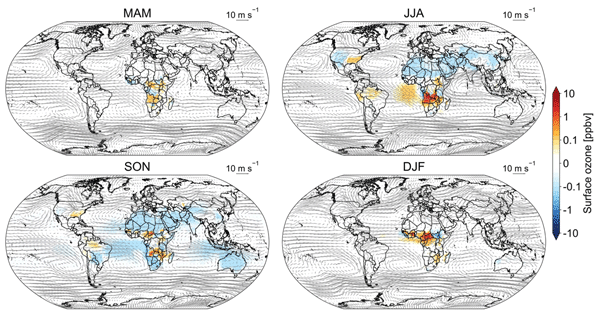
We examine the impact of diurnally varying African biomass burning (BB) emissions on tropospheric ozone using GEOS-Chem simulations with a high-resolution satellite-derived emission inventory. Compared to coarser temporal resolutions, incorporating diurnal variations leads to significant changes in surface ozone and atmospheric oxidation capacity. Our findings highlight the importance of accurately representing BB emission timing in chemical transport models to improve ozone predictions.
Mengya Sheng, Runyi Zhou, Jiancong Hua, Shan Han, Lin Zhang, Wei Wang, Ruijun Dang, Hansen Cao, Zichong Chen, Yixuan Gu, Mingxu Liu, Lu Lee, Chengli Qi, Changpei Han, Mark W. Shephard, Nadir Guendouz, Camille Viatte, Lieven Clarisse, Martin Van Damme, Cathy Clerbaux, and Zhao-Cheng Zeng
EGUsphere, https://doi.org/10.5194/egusphere-2025-5699, https://doi.org/10.5194/egusphere-2025-5699, 2025
This preprint is open for discussion and under review for Atmospheric Chemistry and Physics (ACP).
Short summary
Short summary
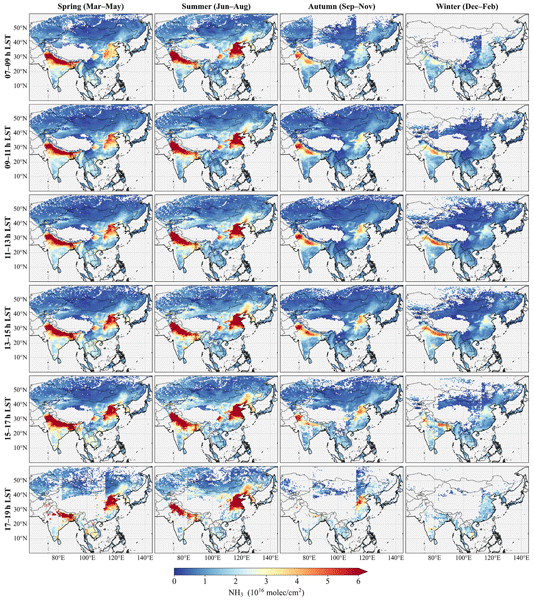
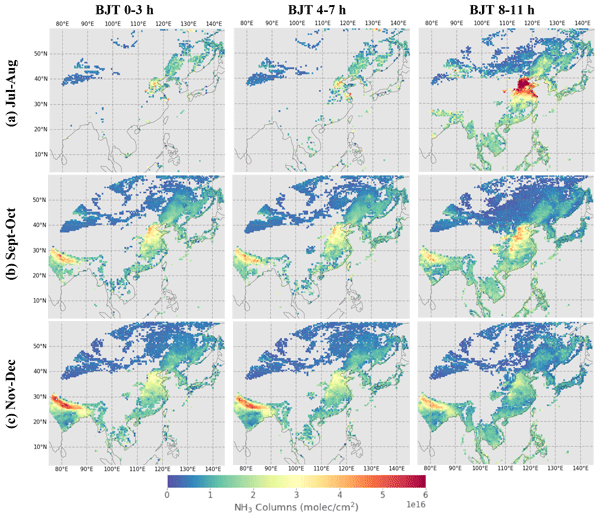
Geostationary observations of NH3 provide an unprecedented opportunity to monitor spatial and temporal variations in emissions and their evolution throughout the day. Using 3 years of observations from FY-4B/GIIRS over East Asia, we demonstrated the enhanced capability of geostationary observations to identify emission sources and capture daytime variations associated with agricultural activities. This shows the potential of future geostationary satellites for monitoring air quality globally.
Jingyu Li, Haolin Wang, Qi Fan, and Xiao Lu
Atmos. Chem. Phys., 25, 12983–13006, https://doi.org/10.5194/acp-25-12983-2025, https://doi.org/10.5194/acp-25-12983-2025, 2025
Short summary
Short summary
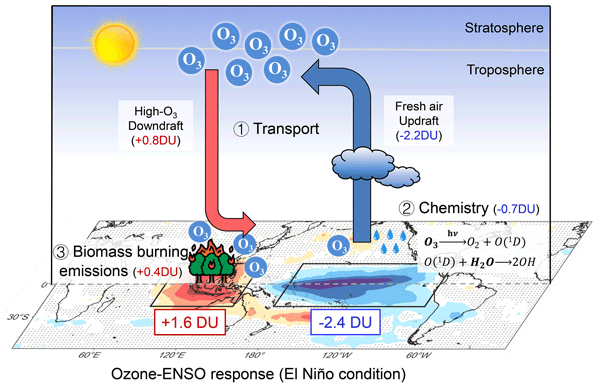
We use multiple global chemical models to quantify processes contributing to the ozone response to ENSO (El Niño–Southern Oscillation). We find that changes in transport patterns are the dominant factor in the overall ozone–ENSO responses, with the opposing effects of chemical depletion and increased biomass burning on ozone largely offsetting each other. Models consistently project an increase in tropical ozone–ENSO response associated with strengthening anomalous circulation and more abundant water vapor with global warming.
Ke Li, Rong Tan, Wenhao Qiao, Taegyung Lee, Yufen Wang, Danyuting Zhang, Minglong Tang, Wenqing Zhao, Yixuan Gu, Shaojia Fan, Jinqiang Zhang, Xiaopu Lyu, Likun Xue, Jianming Xu, Zhiqiang Ma, Mohd Talib Latif, Teerachai Amnuaylojaroen, Junsu Gil, Mee-Hye Lee, Juseon Bak, Joowan Kim, Hong Liao, Yugo Kanaya, Xiao Lu, Tatsuya Nagashima, and Ja-Ho Koo
Atmos. Chem. Phys., 25, 11575–11596, https://doi.org/10.5194/acp-25-11575-2025, https://doi.org/10.5194/acp-25-11575-2025, 2025
Short summary
Short summary
East Asia and Southeast Asia have been identified as a global hot spot, with the fastest ozone increase. This paper presents the most comprehensive observational review of ozone distributions and evolution over East Asia and Southeast Asia across different spatiotemporal scales in the past two decades, which will have important implications for assessing ozone impacts on public health and crop yields and for developing future ozone control strategies.
Michael Sitwell, Mark W. Shephard, and Shailesh K. Kharol
EGUsphere, https://doi.org/10.5194/egusphere-2025-4034, https://doi.org/10.5194/egusphere-2025-4034, 2025
This preprint is open for discussion and under review for Geoscientific Model Development (GMD).
Short summary
Short summary
Bidirectional flux models give a unified model for emission and dry deposition, but few studies have been conducted in which satellite observations are used to refine the parameters in these models. A new bidirectional flux model for ammonia was developed that was designed specifically for use with satellite observations. Ammonia satellite observations were used to refine bidirectional flux model parameters, which improved the agreement of the model with ammonia surface observations.
Ruize Sun, Xiao Lu, Haipeng Lin, Tongwen Wu, Xingpei Ye, Lu Shen, Xuan Wang, Haolin Wang, Jingyu Li, Ni Lu, Jiayin Su, Jie Zhang, Fang Zhang, Xiaoge Xin, Xiong Liu, and Lin Zhang
EGUsphere, https://doi.org/10.5194/egusphere-2025-3829, https://doi.org/10.5194/egusphere-2025-3829, 2025
This preprint is open for discussion and under review for Geoscientific Model Development (GMD).
Short summary
Short summary
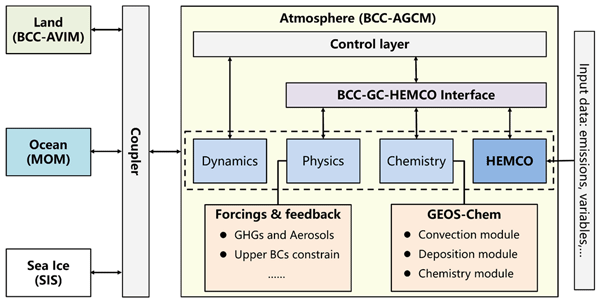
We present the development of a global chemistry-climate coupled model BCC-GEOS-Chem v2.0, with improved representation of comprehensive troposphere-stratosphere chemistry and new capability to account for radiative-cloud feedbacks from short-lived climate forcers. The development of the BCC-GEOS-Chem v2.0 provides a powerful tool to study climate-chemistry interactions and for future projection of global atmospheric chemistry and regional air quality.
Xiao Lu, Yiming Liu, Jiayin Su, Xiang Weng, Tabish Ansari, Yuqiang Zhang, Guowen He, Yuqi Zhu, Haolin Wang, Ganquan Zeng, Jingyu Li, Cheng He, Shuai Li, Teerachai Amnuaylojaroen, Tim Butler, Qi Fan, Shaojia Fan, Grant L. Forster, Meng Gao, Jianlin Hu, Yugo Kanaya, Mohd Talib Latif, Keding Lu, Philippe Nédélec, Peer Nowack, Bastien Sauvage, Xiaobin Xu, Lin Zhang, Ke Li, Ja-Ho Koo, and Tatsuya Nagashima
Atmos. Chem. Phys., 25, 7991–8028, https://doi.org/10.5194/acp-25-7991-2025, https://doi.org/10.5194/acp-25-7991-2025, 2025
Short summary
Short summary
This study analyzes summertime ozone trends in East and Southeast Asia derived from a comprehensive observational database spanning from 1995 to 2019, incorporating aircraft observations, ozonesonde data, and measurements from 2500 surface sites. Multiple models are applied to attribute to changes in anthropogenic emissions and climate. The results highlight that increases in anthropogenic emissions are the primary driver of ozone increases both in the free troposphere and at the surface.
Zhenda Sun, Hao Yin, Zhongfeng Pan, Chongyang Li, Xiao Lu, Ke Liu, Youwen Sun, and Cheng Liu
Atmos. Chem. Phys., 25, 6823–6842, https://doi.org/10.5194/acp-25-6823-2025, https://doi.org/10.5194/acp-25-6823-2025, 2025
Short summary
Short summary
This study investigates the variability and driving forces of transboundary CO transport flux over the Tibetan Plateau from May 2018 to April 2024. During this period, external CO influx increased by 2.86 Tg yr-1, while internal efflux slightly declined by 1.70 Tg yr-1. The rising influx in recent years is likely linked to the rapid increase in CO concentrations from South Asia.
Haofan Wang, Yuejin Li, Yiming Liu, Xiao Lu, Yang Zhang, Qi Fan, Chong Shen, Senchao Lai, Yan Zhou, Tao Zhang, and Dingli Yue
Atmos. Chem. Phys., 25, 5233–5250, https://doi.org/10.5194/acp-25-5233-2025, https://doi.org/10.5194/acp-25-5233-2025, 2025
Short summary
Short summary
This study explores how urban green spaces (UGSs) in Guangzhou influence ozone levels. By using advanced models, we found that natural emissions from these areas can significantly affect air quality. Our results suggest that the design and planning of UGSs should not only consider aesthetics and social factors but also their environmental impacts on air quality.
Debora Griffin, Colin Hempel, Chris McLinden, Shailesh Kumar Kharol, Colin Lee, Andre Fogal, Christopher Sioris, Mark Shephard, and Yuan You
EGUsphere, https://doi.org/10.5194/egusphere-2025-1681, https://doi.org/10.5194/egusphere-2025-1681, 2025
Short summary
Short summary
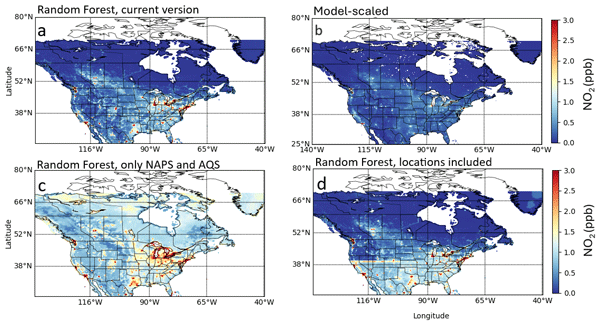
Surface NO2 concentrations are obtained across North America using satellite data and machine learning, and compared to traditional approaches to determine surface NO2 from satellite observations.
Paul A. Makar, Philip Cheung, Christian Hogrefe, Ayodeji Akingunola, Ummugulsum Alyuz, Jesse O. Bash, Michael D. Bell, Roberto Bellasio, Roberto Bianconi, Tim Butler, Hazel Cathcart, Olivia E. Clifton, Alma Hodzic, Ioannis Kioutsioukis, Richard Kranenburg, Aurelia Lupascu, Jason A. Lynch, Kester Momoh, Juan L. Perez-Camanyo, Jonathan Pleim, Young-Hee Ryu, Roberto San Jose, Donna Schwede, Thomas Scheuschner, Mark W. Shephard, Ranjeet S. Sokhi, and Stefano Galmarini
Atmos. Chem. Phys., 25, 3049–3107, https://doi.org/10.5194/acp-25-3049-2025, https://doi.org/10.5194/acp-25-3049-2025, 2025
Short summary
Short summary
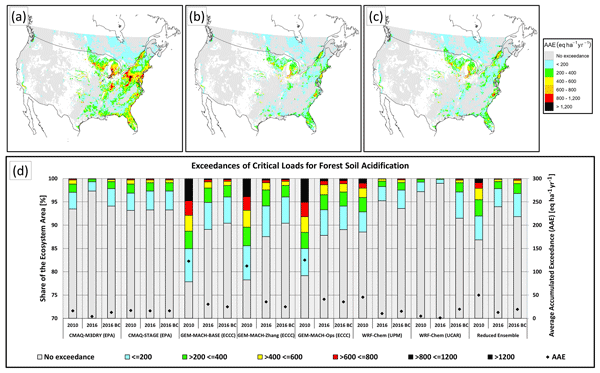
The large range of sulfur and nitrogen deposition estimates from air quality models results in a large range of predicted impacts. We used models and deposition diagnostics to identify the processes controlling atmospheric sulfur and nitrogen deposition variability. Controlling factors included the uptake of gases and aerosols by hydrometeors, aerosol inorganic chemistry, particle dry deposition, ammonia bidirectional fluxes, gas deposition via plant cuticles and soil, and land use data.
Shuai Li, Haolin Wang, and Xiao Lu
Atmos. Chem. Phys., 25, 2725–2743, https://doi.org/10.5194/acp-25-2725-2025, https://doi.org/10.5194/acp-25-2725-2025, 2025
Short summary
Short summary
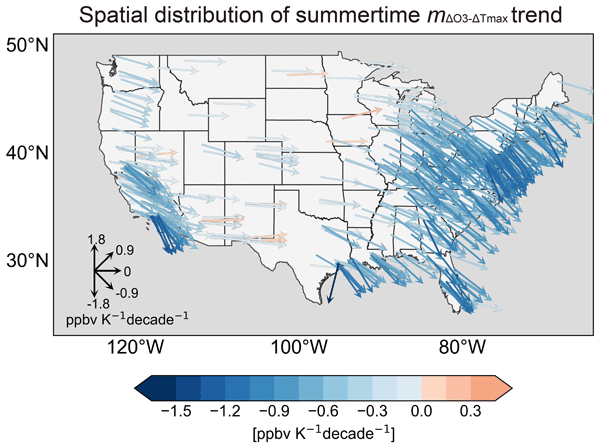
Summertime ozone–temperature sensitivity has decreased by 50 % from 3.0 ppbv per K in 1990 to 1.5 ppb per K in 2021 in the US. GEOS-Chem simulations show that anthropogenic nitrogen oxide emission reduction is the dominant driver of ozone–temperature sensitivity decline by influencing both temperature direct and temperature indirect processes. Reduced ozone–temperature sensitivity has decreased ozone enhancement from low to high temperatures by an average of 6.8 ppbv across the US.
Zhu Ran, Yanan Hu, Yuanzhe Li, Xiaoya Gao, Can Ye, Shuai Li, Xiao Lu, Yongming Luo, Sasho Gligorovski, and Jiangping Liu
Atmos. Chem. Phys., 24, 11943–11954, https://doi.org/10.5194/acp-24-11943-2024, https://doi.org/10.5194/acp-24-11943-2024, 2024
Short summary
Short summary
We report enhanced formation of nitrous acid (HONO) and NOx (NO + NO2) triggered by iron ions during photolysis of neonicotinoid insecticides at the air–water interface. This novel previously overlooked source of atmospheric HONO and NOx may be an important contribution to the global nitrogen cycle and affects atmospheric oxidizing capacity and climate change.
Yinguo Qiu, Jiaying Long, Cong Ma, Juhua Luo, and Qitao Xiao
Int. Arch. Photogramm. Remote Sens. Spatial Inf. Sci., XLVIII-4-2024, 681–688, https://doi.org/10.5194/isprs-archives-XLVIII-4-2024-681-2024, https://doi.org/10.5194/isprs-archives-XLVIII-4-2024-681-2024, 2024
Siting Li, Yiming Liu, Yuqi Zhu, Yinbao Jin, Yingying Hong, Ao Shen, Yifei Xu, Haofan Wang, Haichao Wang, Xiao Lu, Shaojia Fan, and Qi Fan
Atmos. Chem. Phys., 24, 11521–11544, https://doi.org/10.5194/acp-24-11521-2024, https://doi.org/10.5194/acp-24-11521-2024, 2024
Short summary
Short summary
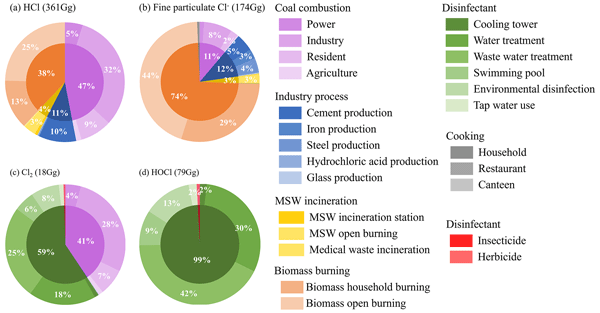
This study establishes an inventory of anthropogenic chlorine emissions in China in 2019 with expanded species (HCl, Cl-, Cl2, HOCl) and sources (41 specific sources). The inventory is validated by a modeling study against the observations. This study enhances the understanding of anthropogenic chlorine emissions in the atmosphere, identifies key sources, and provides scientific support for pollution control and climate change.
Jieying Ding, Ronald van der A, Henk Eskes, Enrico Dammers, Mark Shephard, Roy Wichink Kruit, Marc Guevara, and Leonor Tarrason
Atmos. Chem. Phys., 24, 10583–10599, https://doi.org/10.5194/acp-24-10583-2024, https://doi.org/10.5194/acp-24-10583-2024, 2024
Short summary
Short summary
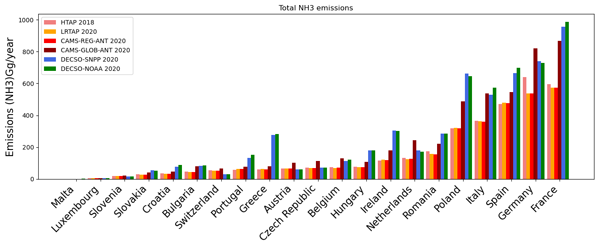
Here we applied the existing Daily Emissions Constrained by Satellite Observations (DECSO) inversion algorithm to NH3 observations from the CrIS satellite instrument to estimate NH3 emissions. As NH3 in the atmosphere is influenced by NOx, we implemented DECSO to estimate NOx and NH3 emissions simultaneously. The emissions are derived over Europe for 2020 at a spatial resolution of 0.2° using daily observations from CrIS and TROPOMI. Results are compared to bottom-up emission inventories.
Zhonghua He, Ling Gao, Miao Liang, and Zhao-Cheng Zeng
Atmos. Meas. Tech., 17, 2937–2956, https://doi.org/10.5194/amt-17-2937-2024, https://doi.org/10.5194/amt-17-2937-2024, 2024
Short summary
Short summary
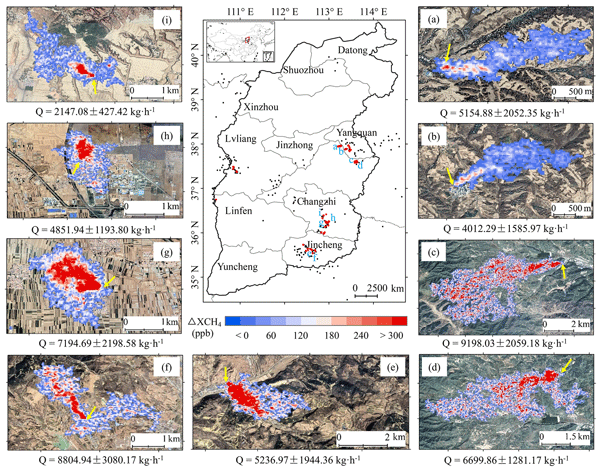
Using Gaofen-5B satellite data, this study detected 93 methane plume events from 32 coal mines in Shanxi, China, with emission rates spanning from 761.78 ± 185.00 to 12729.12 ± 4658.13 kg h-1, showing significant variability among sources. This study highlights Gaofen-5B’s capacity for monitoring large methane point sources, offering valuable support in reducing greenhouse gas emissions.
Hannah Nesser, Daniel J. Jacob, Joannes D. Maasakkers, Alba Lorente, Zichong Chen, Xiao Lu, Lu Shen, Zhen Qu, Melissa P. Sulprizio, Margaux Winter, Shuang Ma, A. Anthony Bloom, John R. Worden, Robert N. Stavins, and Cynthia A. Randles
Atmos. Chem. Phys., 24, 5069–5091, https://doi.org/10.5194/acp-24-5069-2024, https://doi.org/10.5194/acp-24-5069-2024, 2024
Short summary
Short summary
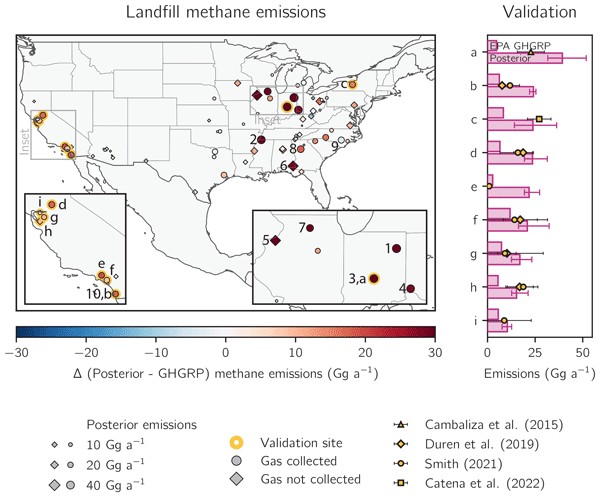
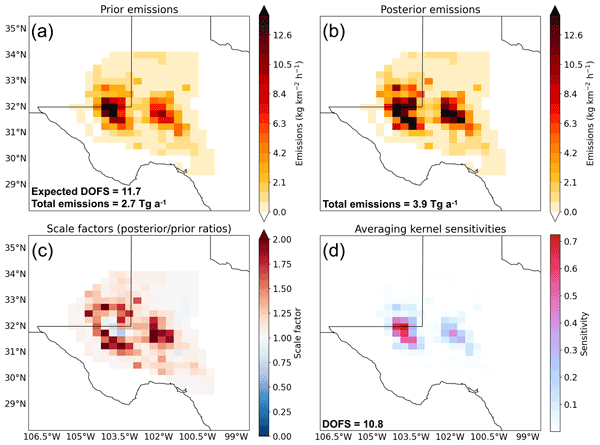
We quantify 2019 methane emissions in the contiguous US (CONUS) at a ≈ 25 km × 25 km resolution using satellite methane observations. We find a 13 % upward correction to the 2023 US Environmental Protection Agency (EPA) Greenhouse Gas Emissions Inventory (GHGI) for 2019, with large corrections to individual states, urban areas, and landfills. This may present a challenge for US climate policies and goals, many of which target significant reductions in methane emissions.
Yiming Wang, Haolin Wang, Yujie Qin, Xinqi Xu, Guowen He, Nanxi Liu, Shengjie Miao, Xiao Lu, Haichao Wang, and Shaojia Fan
Atmos. Chem. Phys., 24, 2267–2285, https://doi.org/10.5194/acp-24-2267-2024, https://doi.org/10.5194/acp-24-2267-2024, 2024
Short summary
Short summary
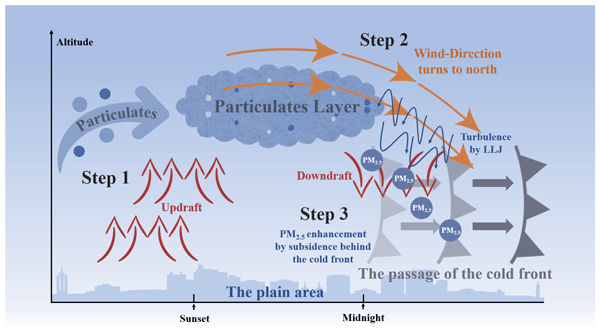
We conducted a vertical measurement of winter PM2.5 using a mobile multi-lidar system in four cities. Combined with the surface PM2.5 data, the ERA5 reanalysis data, and GEOS-Chem simulations during Dec 2018–Feb 2019, we found that transport nocturnal PM2.5 enhancement by subsidence (T-NPES) events widely occurred with high frequencies in plains regions in eastern China but happened less often in basin regions like Xi’an and Chengdu. We propose a conceptual model of the T-NPES events.
Yinbao Jin, Yiming Liu, Xiao Lu, Xiaoyang Chen, Ao Shen, Haofan Wang, Yinping Cui, Yifei Xu, Siting Li, Jian Liu, Ming Zhang, Yingying Ma, and Qi Fan
Atmos. Chem. Phys., 24, 367–395, https://doi.org/10.5194/acp-24-367-2024, https://doi.org/10.5194/acp-24-367-2024, 2024
Short summary
Short summary
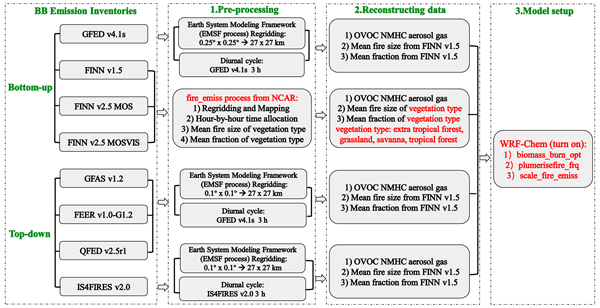
This study aims to address these issues by evaluating eight independent biomass burning (BB) emission inventories (GFED, FINN1.5, FINN2.5 MOS, FINN2.5 MOSVIS, GFAS, FEER, QFED, and IS4FIRES) using the WRF-Chem model and analyzing their impact on aerosol optical properties (AOPs) and direct radiative forcing (DRF) during wildfire events in peninsular Southeast Asia (PSEA) that occurred in March 2019.
Karen E. Cady-Pereira, Xuehui Guo, Rui Wang, April B. Leytem, Chase Calkins, Elizabeth Berry, Kang Sun, Markus Müller, Armin Wisthaler, Vivienne H. Payne, Mark W. Shephard, Mark A. Zondlo, and Valentin Kantchev
Atmos. Meas. Tech., 17, 15–36, https://doi.org/10.5194/amt-17-15-2024, https://doi.org/10.5194/amt-17-15-2024, 2024
Short summary
Short summary
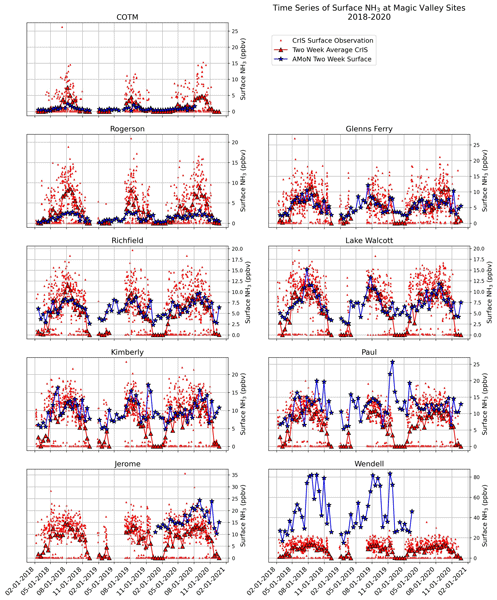
Ammonia is a significant precursor of PM2.5 particles and thus contributes to poor air quality in many regions. Furthermore, ammonia concentrations are rising due to the increase of large-scale, intensive agricultural activities. Here we evaluate satellite measurements of ammonia against aircraft and surface network data, and show that there are differences in magnitude, but the satellite data are spatially and temporally well correlated with the in situ data.
Zhipeng Qu, David P. Donovan, Howard W. Barker, Jason N. S. Cole, Mark W. Shephard, and Vincent Huijnen
Atmos. Meas. Tech., 16, 4927–4946, https://doi.org/10.5194/amt-16-4927-2023, https://doi.org/10.5194/amt-16-4927-2023, 2023
Short summary
Short summary
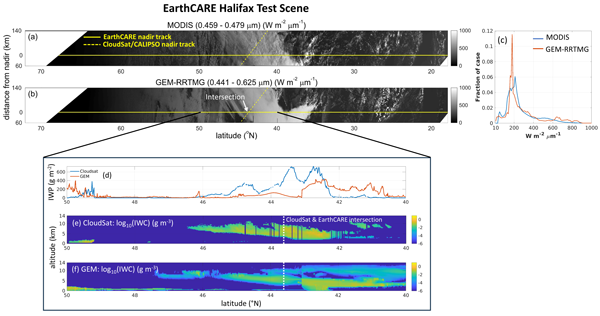
The EarthCARE satellite mission Level 2 algorithm development requires realistic 3D cloud and aerosol scenes along the satellite orbits. One of the best ways to produce these scenes is to use a high-resolution numerical weather prediction model to simulate atmospheric conditions at 250 m horizontal resolution. This paper describes the production and validation of three EarthCARE test scenes.
Guowen He, Cheng He, Haofan Wang, Xiao Lu, Chenglei Pei, Xiaonuan Qiu, Chenxi Liu, Yiming Wang, Nanxi Liu, Jinpu Zhang, Lei Lei, Yiming Liu, Haichao Wang, Tao Deng, Qi Fan, and Shaojia Fan
Atmos. Chem. Phys., 23, 13107–13124, https://doi.org/10.5194/acp-23-13107-2023, https://doi.org/10.5194/acp-23-13107-2023, 2023
Short summary
Short summary
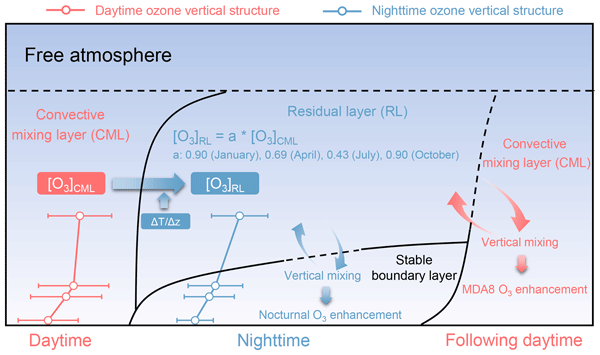
We analyze nighttime ozone in the lower boundary layer (up to 500 m) from the 2017–2019 measurements at the Canton Tower and the WRF-CMAQ model. We identify a strong ability of the residual layer to store daytime ozone in the convective mixing layer, investigate the chemical and meteorological factors controlling nighttime ozone in the residual layer, and quantify the contribution of nighttime ozone in the residual layer to both the nighttime and the following day’s surface ozone air quality.
Jason N. S. Cole, Howard W. Barker, Zhipeng Qu, Najda Villefranque, and Mark W. Shephard
Atmos. Meas. Tech., 16, 4271–4288, https://doi.org/10.5194/amt-16-4271-2023, https://doi.org/10.5194/amt-16-4271-2023, 2023
Short summary
Short summary
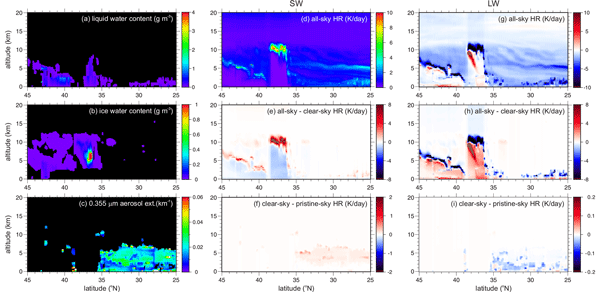
Measurements from the EarthCARE satellite mission will be used to retrieve profiles of cloud and aerosol properties. These retrievals are combined with auxiliary information about surface properties and atmospheric state, e.g., temperature and water vapor. This information allows computation of 1D and 3D solar and thermal radiative transfer for small domains, which are compared with coincident radiometer observations to continually assess EarthCARE retrievals.
Zhao-Cheng Zeng, Lu Lee, Chengli Qi, Lieven Clarisse, and Martin Van Damme
Atmos. Meas. Tech., 16, 3693–3713, https://doi.org/10.5194/amt-16-3693-2023, https://doi.org/10.5194/amt-16-3693-2023, 2023
Short summary
Short summary
This study presents an NH3 retrieval algorithm based on the optimal estimation method for the Geostationary Interferometric Infrared Sounder (GIIRS) on board China’s FengYun-4B satellite (FY-4B/GIIRS). Retrieval results demonstrate the capability of FY-4B/GIIRS in capturing the diurnal NH3 changes in East Asia. This operational geostationary observation by FY-4B/GIIRS represents an important advancement over the twice-per-day observations provided by current low-Earth-orbit (LEO) instruments.
Haofan Wang, Jiaxin Qiu, Yiming Liu, Qi Fan, Xiao Lu, Yang Zhang, Kai Wu, Ao Shen, Yifei Xu, Yinbao Jin, Yuqi Zhu, Jiayin Sun, and Haolin Wang
EGUsphere, https://doi.org/10.5194/egusphere-2023-1309, https://doi.org/10.5194/egusphere-2023-1309, 2023
Preprint withdrawn
Short summary
Short summary
This tool improves existing methods by providing temporal and species allocation modules and enabling emission file generation in advance for any time period. The tool is also capable of vertical plane distribution for high altitude emissions and accurately tracks road-related emissions, an area overlooked by other tools. It utilizes 50 % of the CPU capacity for efficient parallel processing during allocation.
Hejun Hu, Haichao Wang, Keding Lu, Jie Wang, Zelong Zheng, Xuezhen Xu, Tianyu Zhai, Xiaorui Chen, Xiao Lu, Wenxing Fu, Xin Li, Limin Zeng, Min Hu, Yuanhang Zhang, and Shaojia Fan
Atmos. Chem. Phys., 23, 8211–8223, https://doi.org/10.5194/acp-23-8211-2023, https://doi.org/10.5194/acp-23-8211-2023, 2023
Short summary
Short summary
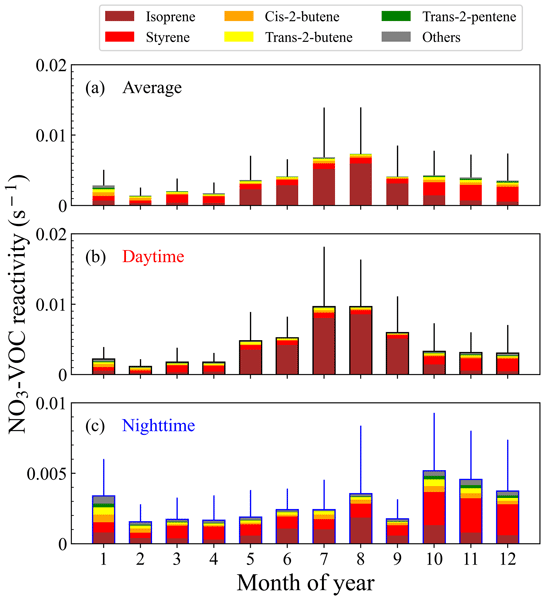
Nitrate radical chemistry is critical to the degradation of volatile organic compounds (VOCs) and secondary organic aerosol formation. This work investigated the level, seasonal variation, and trend of nitrate radical reactivity towards volatile organic compounds (kNO3) in Beijing. We show the key role of isoprene and styrene in regulating seasonal variation in kNO3 and rebuild a long-term record of kNO3 based on the reported VOC measurements.
Daniel J. Varon, Daniel J. Jacob, Benjamin Hmiel, Ritesh Gautam, David R. Lyon, Mark Omara, Melissa Sulprizio, Lu Shen, Drew Pendergrass, Hannah Nesser, Zhen Qu, Zachary R. Barkley, Natasha L. Miles, Scott J. Richardson, Kenneth J. Davis, Sudhanshu Pandey, Xiao Lu, Alba Lorente, Tobias Borsdorff, Joannes D. Maasakkers, and Ilse Aben
Atmos. Chem. Phys., 23, 7503–7520, https://doi.org/10.5194/acp-23-7503-2023, https://doi.org/10.5194/acp-23-7503-2023, 2023
Short summary
Short summary
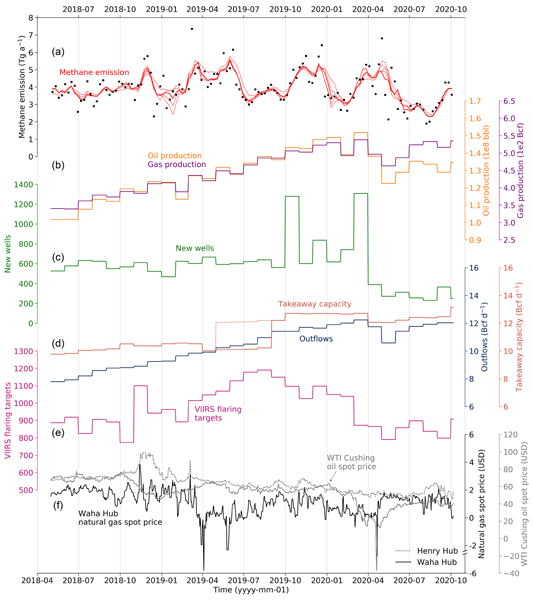
We use TROPOMI satellite observations to quantify weekly methane emissions from the US Permian oil and gas basin from May 2018 to October 2020. We find that Permian emissions are highly variable, with diverse economic and activity drivers. The most important drivers during our study period were new well development and natural gas price. Permian methane intensity averaged 4.6 % and decreased by 1 % per year.
Zhao-Cheng Zeng, Lu Lee, and Chengli Qi
Atmos. Meas. Tech., 16, 3059–3083, https://doi.org/10.5194/amt-16-3059-2023, https://doi.org/10.5194/amt-16-3059-2023, 2023
Short summary
Short summary
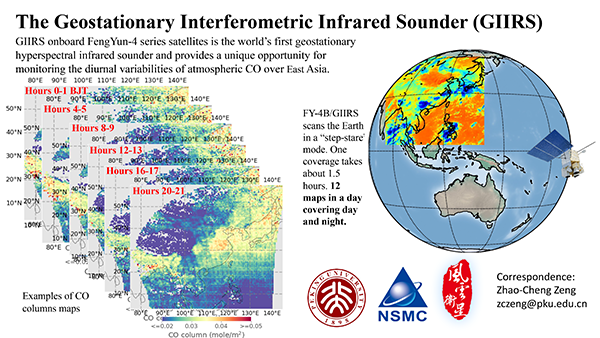
Observations from geostationary orbit provide contiguous coverage with a high temporal resolution, representing an important advancement over current low-Earth-orbit instruments. Using measurements from GIIRS on board China's FengYun satellite, the world’s first geostationary hyperspectral infrared sounder, we showed the first results of diurnal CO in eastern Asia from a geostationary orbit, which will have great potential in improving local and global air quality and climate research.
Zichong Chen, Daniel J. Jacob, Ritesh Gautam, Mark Omara, Robert N. Stavins, Robert C. Stowe, Hannah Nesser, Melissa P. Sulprizio, Alba Lorente, Daniel J. Varon, Xiao Lu, Lu Shen, Zhen Qu, Drew C. Pendergrass, and Sarah Hancock
Atmos. Chem. Phys., 23, 5945–5967, https://doi.org/10.5194/acp-23-5945-2023, https://doi.org/10.5194/acp-23-5945-2023, 2023
Short summary
Short summary
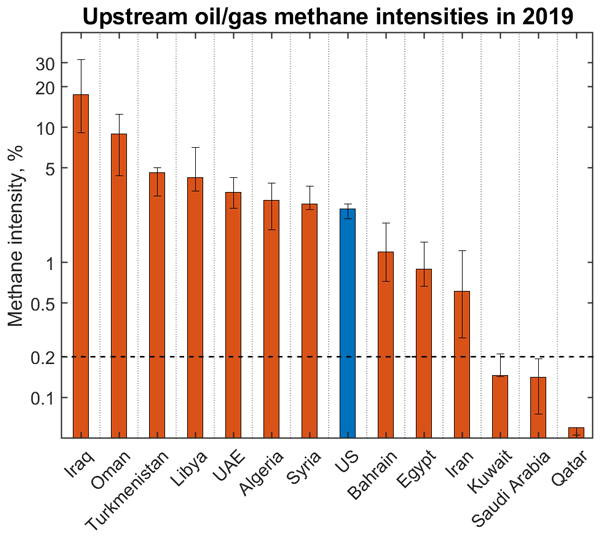
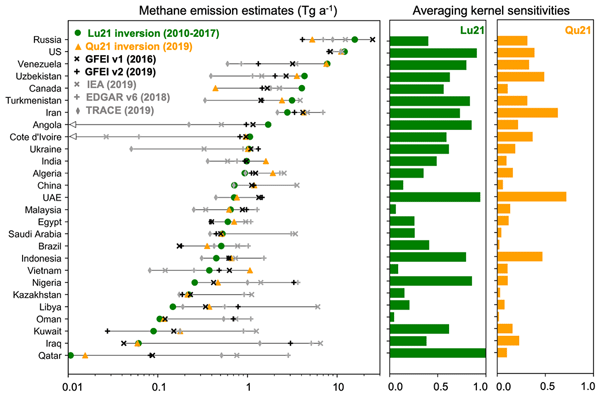
We quantify methane emissions from individual countries in the Middle East and North Africa by inverse analysis of 2019 TROPOMI satellite observations of atmospheric methane. We show that the ability to simply relate oil/gas emissions to activity metrics is compromised by stochastic nature of local infrastructure and management practices. We find that the industry target for oil/gas methane intensity is achievable through associated gas capture, modern infrastructure, and centralized operations.
Zhipeng Qu, Howard W. Barker, Jason N. S. Cole, and Mark W. Shephard
Atmos. Meas. Tech., 16, 2319–2331, https://doi.org/10.5194/amt-16-2319-2023, https://doi.org/10.5194/amt-16-2319-2023, 2023
Short summary
Short summary
This paper describes EarthCARE’s L2 product ACM-3D. It includes the scene construction algorithm (SCA) used to produce the indexes for reconstructing 3D atmospheric scene based on satellite nadir retrievals. It also provides the information about the buffer zone sizes of 3D assessment domains and the ranking scores for selecting the best 3D assessment domains. These output variables are needed to run 3D radiative transfer models for the radiative closure assessment of EarthCARE’s L2 retrievals.
Cheng Hu, Junqing Zhang, Bing Qi, Rongguang Du, Xiaofei Xu, Haoyu Xiong, Huili Liu, Xinyue Ai, Yiyi Peng, and Wei Xiao
Atmos. Chem. Phys., 23, 4501–4520, https://doi.org/10.5194/acp-23-4501-2023, https://doi.org/10.5194/acp-23-4501-2023, 2023
Short summary
Short summary
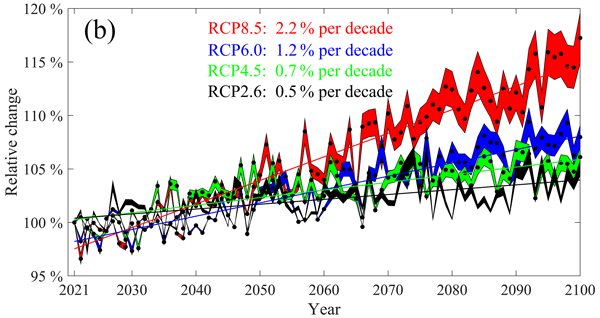
We build the first city-scale tower-based atmospheric CH4 concentration observation network in China. The a priori total annual anthropogenic CH4 emissions and emissions from waste treatment were overestimated by 36.0 % and 47.1 %, respectively, in Hangzhou. Global warming will largely enhance the CH4 emission factor of waste treatment, which will increase by 17.6 %, 9.6 %, 5.6 % and 4.0 % for Representative Concentration Pathway (RCP) 8.5, RCP6.0, RCP4.5 and RCP2.6, respectively, by 2100.
Cheng He, Xiao Lu, Haolin Wang, Haichao Wang, Yan Li, Guowen He, Yuanping He, Yurun Wang, Youlang Zhang, Yiming Liu, Qi Fan, and Shaojia Fan
Atmos. Chem. Phys., 22, 15243–15261, https://doi.org/10.5194/acp-22-15243-2022, https://doi.org/10.5194/acp-22-15243-2022, 2022
Short summary
Short summary
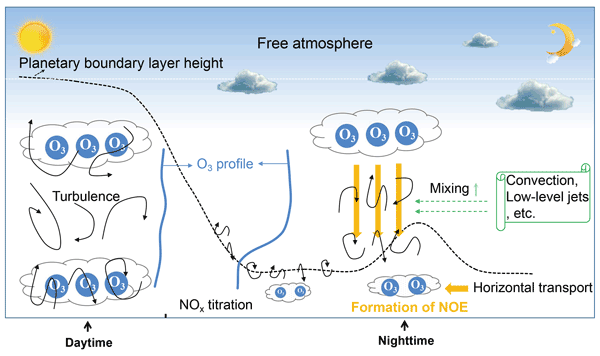
We report that nocturnal ozone enhancement (NOE) events are observed at a high annual frequency of 41 % over 800 sites in China in 2014–2019 (about 50 % higher than that over Europe or the US). High daytime ozone provides a rich ozone source in the nighttime residual layer, determining the overall high frequency of NOE events in China, and enhanced atmospheric mixing then triggers NOE events by allowing the ozone-rich air in the residual layer to be mixed into the nighttime boundary layer.
Haolin Wang, Xiao Lu, Daniel J. Jacob, Owen R. Cooper, Kai-Lan Chang, Ke Li, Meng Gao, Yiming Liu, Bosi Sheng, Kai Wu, Tongwen Wu, Jie Zhang, Bastien Sauvage, Philippe Nédélec, Romain Blot, and Shaojia Fan
Atmos. Chem. Phys., 22, 13753–13782, https://doi.org/10.5194/acp-22-13753-2022, https://doi.org/10.5194/acp-22-13753-2022, 2022
Short summary
Short summary
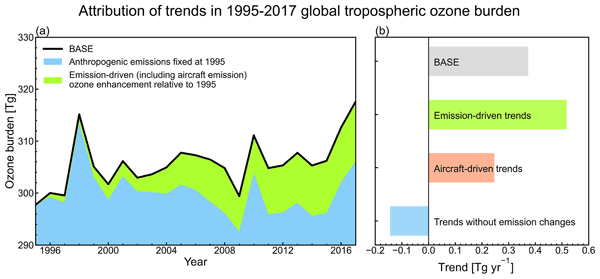
We report significant global tropospheric ozone increases in 1995–2017 based on extensive aircraft and ozonesonde observations. Using GEOS-Chem (Goddard Earth Observing System chemistry model) multi-decadal global simulations, we find that changes in global anthropogenic emissions, in particular the rapid increases in aircraft emissions, contribute significantly to the increases in tropospheric ozone and resulting radiative impact.
Lu Shen, Ritesh Gautam, Mark Omara, Daniel Zavala-Araiza, Joannes D. Maasakkers, Tia R. Scarpelli, Alba Lorente, David Lyon, Jianxiong Sheng, Daniel J. Varon, Hannah Nesser, Zhen Qu, Xiao Lu, Melissa P. Sulprizio, Steven P. Hamburg, and Daniel J. Jacob
Atmos. Chem. Phys., 22, 11203–11215, https://doi.org/10.5194/acp-22-11203-2022, https://doi.org/10.5194/acp-22-11203-2022, 2022
Short summary
Short summary
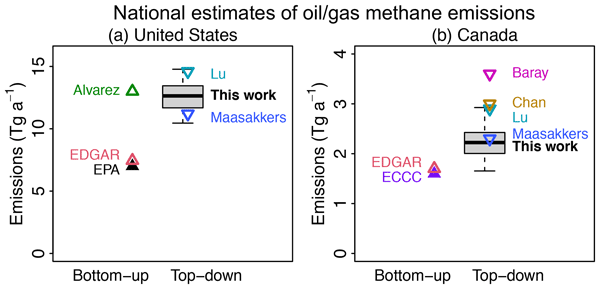
We use 22 months of TROPOMI satellite observations to quantity methane emissions from the oil (O) and natural gas (G) sector in the US and Canada at the scale of both individual basins as well as country-wide aggregates. We find that O/G-related methane emissions are underestimated in these inventories by 80 % for the US and 40 % for Canada, and 70 % of the underestimate in the US is from five O/G basins, including Permian, Haynesville, Anadarko, Eagle Ford, and Barnett.
Zichong Chen, Daniel J. Jacob, Hannah Nesser, Melissa P. Sulprizio, Alba Lorente, Daniel J. Varon, Xiao Lu, Lu Shen, Zhen Qu, Elise Penn, and Xueying Yu
Atmos. Chem. Phys., 22, 10809–10826, https://doi.org/10.5194/acp-22-10809-2022, https://doi.org/10.5194/acp-22-10809-2022, 2022
Short summary
Short summary
We quantify methane emissions in China and contributions from different sectors by inverse analysis of 2019 TROPOMI satellite observations of atmospheric methane. We find that anthropogenic methane emissions for China are underestimated in the national inventory. Our estimate of emissions indicates a small life-cycle loss rate, implying net climate benefits from the current
coal-to-gasenergy transition in China. However, this small loss rate can be misleading given China's high gas imports.
Daniel J. Varon, Daniel J. Jacob, Melissa Sulprizio, Lucas A. Estrada, William B. Downs, Lu Shen, Sarah E. Hancock, Hannah Nesser, Zhen Qu, Elise Penn, Zichong Chen, Xiao Lu, Alba Lorente, Ashutosh Tewari, and Cynthia A. Randles
Geosci. Model Dev., 15, 5787–5805, https://doi.org/10.5194/gmd-15-5787-2022, https://doi.org/10.5194/gmd-15-5787-2022, 2022
Short summary
Short summary
Reducing atmospheric methane emissions is critical to slow near-term climate change. Globally surveying satellite instruments like the TROPOspheric Monitoring Instrument (TROPOMI) have unique capabilities for monitoring atmospheric methane around the world. Here we present a user-friendly cloud-computing tool that enables researchers and stakeholders to quantify methane emissions across user-selected regions of interest using TROPOMI satellite observations.
Chenhong Zhou, Fan Wang, Yike Guo, Cheng Liu, Dongsheng Ji, Yuesi Wang, Xiaobin Xu, Xiao Lu, Yan Wang, Gregory Carmichael, and Meng Gao
Earth Syst. Sci. Data Discuss., https://doi.org/10.5194/essd-2022-187, https://doi.org/10.5194/essd-2022-187, 2022
Manuscript not accepted for further review
Short summary
Short summary
We develop an eXtreme Gradient Boosting (XGBoost) model integrating high-resolution meteorological data, satellite retrievals of trace gases, etc. to provide reconstructed daily ground-level O3 over 2005–2021 in China. It can facilitate climatological, ecological, and health research. The dataset is freely available at Zenodo (https://zenodo.org/record/6507706#.Yo8hKujP13g; Zhou, 2022).
Michael Sitwell, Mark W. Shephard, Yves Rochon, Karen Cady-Pereira, and Enrico Dammers
Atmos. Chem. Phys., 22, 6595–6624, https://doi.org/10.5194/acp-22-6595-2022, https://doi.org/10.5194/acp-22-6595-2022, 2022
Short summary
Short summary
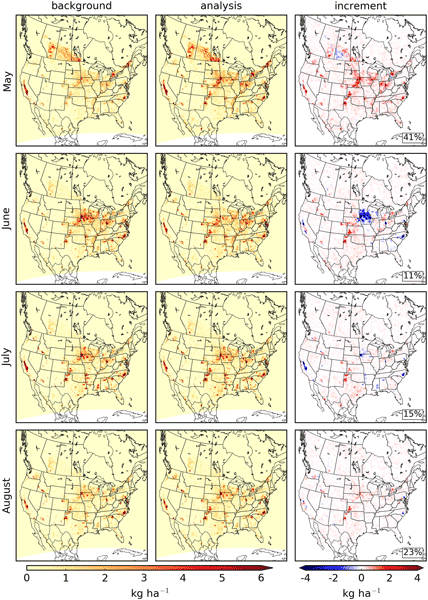
Observations of ammonia made using the satellite-borne CrIS instrument were used to improve the ammonia emissions used in the GEM-MACH model. These observations were used to refine estimates of the monthly mean ammonia emissions over North America for May to August 2016. The updated ammonia emissions reduced biases of GEM-MACH surface ammonia fields with surface observations and showed some improvements in the forecasting of species involved in inorganic particulate matter formation.
Licheng Liu, Shaoming Xu, Jinyun Tang, Kaiyu Guan, Timothy J. Griffis, Matthew D. Erickson, Alexander L. Frie, Xiaowei Jia, Taegon Kim, Lee T. Miller, Bin Peng, Shaowei Wu, Yufeng Yang, Wang Zhou, Vipin Kumar, and Zhenong Jin
Geosci. Model Dev., 15, 2839–2858, https://doi.org/10.5194/gmd-15-2839-2022, https://doi.org/10.5194/gmd-15-2839-2022, 2022
Short summary
Short summary
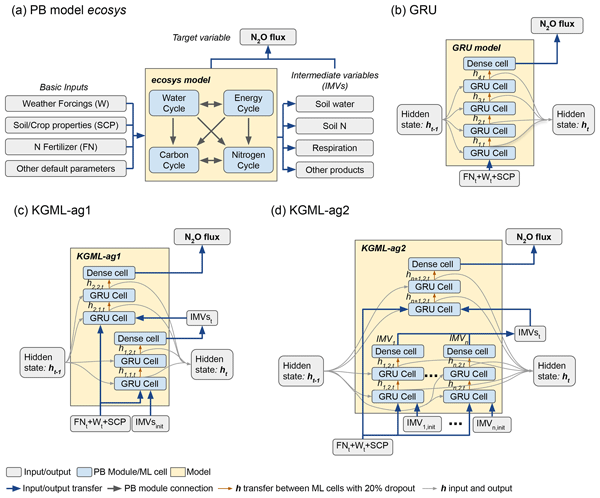
By incorporating the domain knowledge into a machine learning model, KGML-ag overcomes the well-known limitations of process-based models due to insufficient representations and constraints, and unlocks the “black box” of machine learning models. Therefore, KGML-ag can outperform existing approaches on capturing the hot moment and complex dynamics of N2O flux. This study will be a critical reference for the new generation of modeling paradigm for biogeochemistry and other geoscience processes.
Vijay Natraj, Ming Luo, Jean-Francois Blavier, Vivienne H. Payne, Derek J. Posselt, Stanley P. Sander, Zhao-Cheng Zeng, Jessica L. Neu, Denis Tremblay, Longtao Wu, Jacola A. Roman, Yen-Hung Wu, and Leonard I. Dorsky
Atmos. Meas. Tech., 15, 1251–1267, https://doi.org/10.5194/amt-15-1251-2022, https://doi.org/10.5194/amt-15-1251-2022, 2022
Short summary
Short summary
High-fidelity monitoring and forecast of air quality and the hydrological cycle require understanding the vertical distribution of temperature, humidity, and trace gases at high spatiotemporal resolution. We describe a new instrument concept, called the JPL GEO-IR Sounder, that would provide this information for the first time from a single instrument platform. Simulations demonstrate the benefits of combining measurements from multiple wavelengths for this purpose from geostationary orbit.
Tia R. Scarpelli, Daniel J. Jacob, Shayna Grossman, Xiao Lu, Zhen Qu, Melissa P. Sulprizio, Yuzhong Zhang, Frances Reuland, Deborah Gordon, and John R. Worden
Atmos. Chem. Phys., 22, 3235–3249, https://doi.org/10.5194/acp-22-3235-2022, https://doi.org/10.5194/acp-22-3235-2022, 2022
Short summary
Short summary
We present a spatially explicit version of the national inventories of oil, gas, and coal methane emissions as submitted by individual countries to the United Nations Framework Convention on Climate Change (UNFCCC) in 2021. We then use atmospheric modeling to compare our inventory emissions to atmospheric methane observations with the goal of identifying potential under- and overestimates of oil–gas methane emissions in the national inventories.
Dianyi Li, Drew Shindell, Dian Ding, Xiao Lu, Lin Zhang, and Yuqiang Zhang
Atmos. Chem. Phys., 22, 2625–2638, https://doi.org/10.5194/acp-22-2625-2022, https://doi.org/10.5194/acp-22-2625-2022, 2022
Short summary
Short summary
In this study, we applied chemical transport model simulation with the latest annual anthropogenic emission inventory to study the long-term trend of ozone-induced crop production losses from 2010 to 2017 in China. We find that overall the ozone-induced crop production loss in China is significant and the annual average economic losses for wheat, rice, maize, and soybean in China are USD 9.55 billion, USD 8.53 billion, USD 2.23 billion, and USD 1.16 billion respectively, over the 8 years.
Haiyue Tan, Lin Zhang, Xiao Lu, Yuanhong Zhao, Bo Yao, Robert J. Parker, and Hartmut Boesch
Atmos. Chem. Phys., 22, 1229–1249, https://doi.org/10.5194/acp-22-1229-2022, https://doi.org/10.5194/acp-22-1229-2022, 2022
Short summary
Short summary
Methane is the second most important anthropogenic greenhouse gas. Understanding methane emissions and concentration growth over China in the past decade is important to support its mitigation. This study analyzes the contributions of methane emissions from different regions and sources over the globe to methane changes over China in 2007–2018. Our results show strong international transport influences and emphasize the need of intensive methane measurements covering eastern China.
Shelley van der Graaf, Enrico Dammers, Arjo Segers, Richard Kranenburg, Martijn Schaap, Mark W. Shephard, and Jan Willem Erisman
Atmos. Chem. Phys., 22, 951–972, https://doi.org/10.5194/acp-22-951-2022, https://doi.org/10.5194/acp-22-951-2022, 2022
Short summary
Short summary
CrIS NH3 satellite observations are assimilated into the LOTOS-EUROS model using two different methods. In the first method the data are used to fit spatially varying NH3 emission time factors. In the second method a local ensemble transform Kalman filter is used. Compared to in situ observations, combining both methods led to the most significant improvements in the modeled concentrations and deposition, illustrating the usefulness of CrIS NH3 to improve the spatiotemporal distribution of NH3.
Xiao Lu, Daniel J. Jacob, Haolin Wang, Joannes D. Maasakkers, Yuzhong Zhang, Tia R. Scarpelli, Lu Shen, Zhen Qu, Melissa P. Sulprizio, Hannah Nesser, A. Anthony Bloom, Shuang Ma, John R. Worden, Shaojia Fan, Robert J. Parker, Hartmut Boesch, Ritesh Gautam, Deborah Gordon, Michael D. Moran, Frances Reuland, Claudia A. Octaviano Villasana, and Arlyn Andrews
Atmos. Chem. Phys., 22, 395–418, https://doi.org/10.5194/acp-22-395-2022, https://doi.org/10.5194/acp-22-395-2022, 2022
Short summary
Short summary
We evaluate methane emissions and trends for 2010–2017 in the gridded national emission inventories for the United States, Canada, and Mexico by inversion of in situ and satellite methane observations. We find that anthropogenic methane emissions for all three countries are underestimated in the national inventories, largely driven by oil emissions. Anthropogenic methane emissions in the US peak in 2014, in contrast to the report of a steadily decreasing trend over 2010–2017 from the US EPA.
Siraput Jongaramrungruang, Georgios Matheou, Andrew K. Thorpe, Zhao-Cheng Zeng, and Christian Frankenberg
Atmos. Meas. Tech., 14, 7999–8017, https://doi.org/10.5194/amt-14-7999-2021, https://doi.org/10.5194/amt-14-7999-2021, 2021
Short summary
Short summary
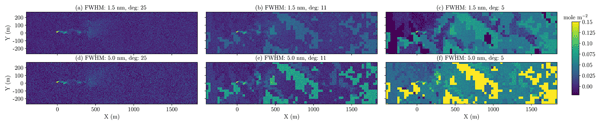
This study shows how precision error and bias in column methane retrieval change with different instrument specifications and the impact of spectrally complex surface albedos on retrievals. We show how surface interferences can be mitigated with an optimal spectral resolution and a higher polynomial degree in a retrieval process. The findings can inform future satellite instrument designs to have robust observations capable of separating real CH4 plume enhancements from surface interferences.
Youwen Sun, Hao Yin, Xiao Lu, Justus Notholt, Mathias Palm, Cheng Liu, Yuan Tian, and Bo Zheng
Atmos. Chem. Phys., 21, 18589–18608, https://doi.org/10.5194/acp-21-18589-2021, https://doi.org/10.5194/acp-21-18589-2021, 2021
Short summary
Short summary
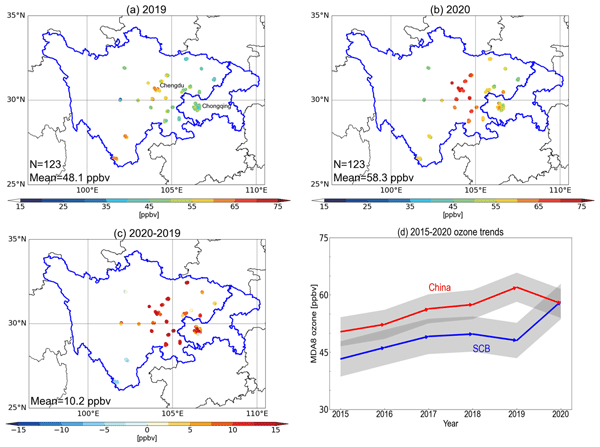
This study uses high-resolution nested-grid GEOS-Chem simulation, the eXtreme Gradient Boosting (XGBoost) machine learning method, and the exposure–response relationship to determine the drivers and evaluate the health risks of the unexpected surface O3 enhancements over the Sichuan Basin in 2020. These unexpected O3 enhancements were induced by meteorological anomalies and caused dramatically high health risks.
Zhao-Cheng Zeng, Vijay Natraj, Feng Xu, Sihe Chen, Fang-Ying Gong, Thomas J. Pongetti, Keeyoon Sung, Geoffrey Toon, Stanley P. Sander, and Yuk L. Yung
Atmos. Meas. Tech., 14, 6483–6507, https://doi.org/10.5194/amt-14-6483-2021, https://doi.org/10.5194/amt-14-6483-2021, 2021
Short summary
Short summary
Large carbon source regions such as megacities are also typically associated with heavy aerosol loading, which introduces uncertainties in the retrieval of greenhouse gases from reflected and scattered sunlight measurements. In this study, we developed a full physics algorithm to retrieve greenhouse gases in the presence of aerosols and demonstrated its performance by retrieving CO2 and CH4 columns from remote sensing measurements in the Los Angeles megacity.
Zhen Qu, Daniel J. Jacob, Lu Shen, Xiao Lu, Yuzhong Zhang, Tia R. Scarpelli, Hannah Nesser, Melissa P. Sulprizio, Joannes D. Maasakkers, A. Anthony Bloom, John R. Worden, Robert J. Parker, and Alba L. Delgado
Atmos. Chem. Phys., 21, 14159–14175, https://doi.org/10.5194/acp-21-14159-2021, https://doi.org/10.5194/acp-21-14159-2021, 2021
Short summary
Short summary
The recent launch of TROPOMI offers an unprecedented opportunity to quantify the methane budget from a top-down perspective. We use TROPOMI and the more mature GOSAT methane observations to estimate methane emissions and get consistent global budgets. However, TROPOMI shows biases over regions where surface albedo is small and provides less information for the coarse-resolution inversion due to the larger error correlations and spatial variations in the number of observations.
Youwen Sun, Hao Yin, Cheng Liu, Emmanuel Mahieu, Justus Notholt, Yao Té, Xiao Lu, Mathias Palm, Wei Wang, Changgong Shan, Qihou Hu, Min Qin, Yuan Tian, and Bo Zheng
Atmos. Chem. Phys., 21, 11759–11779, https://doi.org/10.5194/acp-21-11759-2021, https://doi.org/10.5194/acp-21-11759-2021, 2021
Short summary
Short summary
The variability, sources, and transport of ethane (C2H6) over eastern China from 2015 to 2020 were studied using ground-based Fourier transform infrared (FTIR) spectroscopy and GEOS-Chem simulations. C2H6 variability is driven by both meteorological and emission factors. The reduction in C2H6 in recent years over eastern China points to air quality improvement in China.
Meng Gao, Yang Yang, Hong Liao, Bin Zhu, Yuxuan Zhang, Zirui Liu, Xiao Lu, Chen Wang, Qiming Zhou, Yuesi Wang, Qiang Zhang, Gregory R. Carmichael, and Jianlin Hu
Atmos. Chem. Phys., 21, 11405–11421, https://doi.org/10.5194/acp-21-11405-2021, https://doi.org/10.5194/acp-21-11405-2021, 2021
Short summary
Short summary
Light absorption and radiative forcing of black carbon (BC) is influenced by both BC itself and its interactions with other aerosol chemical compositions. In this study, we used the online coupled WRF-Chem model to examine how emission control measures during the Asian-Pacific Economic Cooperation (APEC) conference affect the mixing state and light absorption of BC and the associated implications for BC-PBL interactions.
Cheng Hu, Jiaping Xu, Cheng Liu, Yan Chen, Dong Yang, Wenjing Huang, Lichen Deng, Shoudong Liu, Timothy J. Griffis, and Xuhui Lee
Atmos. Chem. Phys., 21, 10015–10037, https://doi.org/10.5194/acp-21-10015-2021, https://doi.org/10.5194/acp-21-10015-2021, 2021
Short summary
Short summary
Seventy percent of global CO2 emissions were emitted from urban landscapes. The Yangtze River delta (YRD) ranks as one of the most densely populated regions in the world and is an anthropogenic CO2 hotspot. Besides anthropogenic factors, natural ecosystems and croplands act as significant CO2 sinks and sources. Independent quantification of the fossil and cement CO2 emission and assessment of their impact on atmospheric δ13C-CO2 have potential to improve our understanding of urban CO2 cycling.
Youwen Sun, Hao Yin, Yuan Cheng, Qianggong Zhang, Bo Zheng, Justus Notholt, Xiao Lu, Cheng Liu, Yuan Tian, and Jianguo Liu
Atmos. Chem. Phys., 21, 9201–9222, https://doi.org/10.5194/acp-21-9201-2021, https://doi.org/10.5194/acp-21-9201-2021, 2021
Short summary
Short summary
We quantified the variability, source, and transport of urban CO over the Himalayas and Tibetan Plateau (HTP) by using measurement, model simulation, and the analysis of meteorological fields. Urban CO over the HTP is dominated by anthropogenic and biomass burning emissions from local, South Asia and East Asia, and oxidation sources. The decreasing trends in surface CO since 2015 in most cities over the HTP are attributed to the reduction in local and transported CO emissions in recent years.
Youwen Sun, Hao Yin, Cheng Liu, Lin Zhang, Yuan Cheng, Mathias Palm, Justus Notholt, Xiao Lu, Corinne Vigouroux, Bo Zheng, Wei Wang, Nicholas Jones, Changong Shan, Min Qin, Yuan Tian, Qihou Hu, Fanhao Meng, and Jianguo Liu
Atmos. Chem. Phys., 21, 6365–6387, https://doi.org/10.5194/acp-21-6365-2021, https://doi.org/10.5194/acp-21-6365-2021, 2021
Short summary
Short summary
This study mapped the drivers of HCHO variability from 2015 to 2019 over eastern China. Hydroxyl (OH) radical production rates from HCHO photolysis were evaluated. The relative contributions of emitted and photochemical sources to the observed HCHO abundance were analyzed. Contributions of various emission sources and geographical regions to the observed HCHO summertime enhancements were determined.
Xiao Lu, Daniel J. Jacob, Yuzhong Zhang, Joannes D. Maasakkers, Melissa P. Sulprizio, Lu Shen, Zhen Qu, Tia R. Scarpelli, Hannah Nesser, Robert M. Yantosca, Jianxiong Sheng, Arlyn Andrews, Robert J. Parker, Hartmut Boesch, A. Anthony Bloom, and Shuang Ma
Atmos. Chem. Phys., 21, 4637–4657, https://doi.org/10.5194/acp-21-4637-2021, https://doi.org/10.5194/acp-21-4637-2021, 2021
Short summary
Short summary
We use an analytical solution to the Bayesian inverse problem to quantitatively compare and combine the information from satellite and in situ observations, and to estimate global methane budget and their trends over the 2010–2017 period. We find that satellite and in situ observations are to a large extent complementary in the inversion for estimating global methane budget, and reveal consistent corrections of regional anthropogenic and wetland methane emissions relative to the prior inventory.
Nikolaos Evangeliou, Yves Balkanski, Sabine Eckhardt, Anne Cozic, Martin Van Damme, Pierre-François Coheur, Lieven Clarisse, Mark W. Shephard, Karen E. Cady-Pereira, and Didier Hauglustaine
Atmos. Chem. Phys., 21, 4431–4451, https://doi.org/10.5194/acp-21-4431-2021, https://doi.org/10.5194/acp-21-4431-2021, 2021
Short summary
Short summary
Ammonia, a substance that has played a key role in sustaining life, has been increasing in the atmosphere, affecting climate and humans. Understanding the reasons for this increase is important for the beneficial use of ammonia. The evolution of satellite products gives us the opportunity to calculate ammonia emissions easier. We calculated global ammonia emissions over the last 10 years, incorporated them into a chemistry model and recorded notable improvement in reproducing observations.
Joannes D. Maasakkers, Daniel J. Jacob, Melissa P. Sulprizio, Tia R. Scarpelli, Hannah Nesser, Jianxiong Sheng, Yuzhong Zhang, Xiao Lu, A. Anthony Bloom, Kevin W. Bowman, John R. Worden, and Robert J. Parker
Atmos. Chem. Phys., 21, 4339–4356, https://doi.org/10.5194/acp-21-4339-2021, https://doi.org/10.5194/acp-21-4339-2021, 2021
Short summary
Short summary
We use 2010–2015 GOSAT satellite observations of atmospheric methane over North America in a high-resolution inversion to estimate methane emissions. We find general consistency with the gridded EPA inventory but higher oil and gas production emissions, with oil production emissions twice as large as in the latest EPA Greenhouse Gas Inventory. We find lower wetland emissions than predicted by WetCHARTs and a small increasing trend in the eastern US, apparently related to unconventional oil/gas.
Yuzhong Zhang, Daniel J. Jacob, Xiao Lu, Joannes D. Maasakkers, Tia R. Scarpelli, Jian-Xiong Sheng, Lu Shen, Zhen Qu, Melissa P. Sulprizio, Jinfeng Chang, A. Anthony Bloom, Shuang Ma, John Worden, Robert J. Parker, and Hartmut Boesch
Atmos. Chem. Phys., 21, 3643–3666, https://doi.org/10.5194/acp-21-3643-2021, https://doi.org/10.5194/acp-21-3643-2021, 2021
Short summary
Short summary
We use 2010–2018 satellite observations of atmospheric methane to interpret the factors controlling atmospheric methane and its accelerating increase during the period. The 2010–2018 increase in global methane emissions is driven by tropical and boreal wetlands and tropical livestock (South Asia, Africa, Brazil), with an insignificant positive trend in emissions from the fossil fuel sector. The peak methane growth rates in 2014–2015 are also contributed by low OH and high fire emissions.
Zhongjing Jiang, Jing Li, Xiao Lu, Cheng Gong, Lin Zhang, and Hong Liao
Atmos. Chem. Phys., 21, 2601–2613, https://doi.org/10.5194/acp-21-2601-2021, https://doi.org/10.5194/acp-21-2601-2021, 2021
Short summary
Short summary
This study demonstrates that the intensity of the western Pacific subtropical high (WPSH), a major synoptic pattern in the northern Pacific during summer, can induce a dipole change in surface ozone pollution over eastern China. Ozone concentration increases in the north and decreases in the south during the strong WPSH phase, and vice versa. The change in chemical processes associated with the WPSH change plays a decisive role, whereas the natural emission of ozone precursors accounts for ~ 30 %.
Xueying Yu, Dylan B. Millet, Kelley C. Wells, Daven K. Henze, Hansen Cao, Timothy J. Griffis, Eric A. Kort, Genevieve Plant, Malte J. Deventer, Randall K. Kolka, D. Tyler Roman, Kenneth J. Davis, Ankur R. Desai, Bianca C. Baier, Kathryn McKain, Alan C. Czarnetzki, and A. Anthony Bloom
Atmos. Chem. Phys., 21, 951–971, https://doi.org/10.5194/acp-21-951-2021, https://doi.org/10.5194/acp-21-951-2021, 2021
Short summary
Short summary
Methane concentrations have doubled since 1750. The US Upper Midwest is a key region contributing to such trends, but sources are poorly understood. We collected and analyzed aircraft data to resolve spatial and timing biases in wetland and livestock emission estimates and uncover errors in inventory treatment of manure management. We highlight the importance of intensive agriculture for the regional and US methane budgets and the potential for methane mitigation through improved management.
Yunxia Huang, Vijay Natraj, Zhao-Cheng Zeng, Pushkar Kopparla, and Yuk L. Yung
Atmos. Meas. Tech., 13, 6755–6769, https://doi.org/10.5194/amt-13-6755-2020, https://doi.org/10.5194/amt-13-6755-2020, 2020
Short summary
Short summary
As a greenhouse gas with strong global warming potential, atmospheric methane emissions have attracted a great deal of attention. However, accurate assessment of these emissions is challenging in the presence of atmospheric particulates called aerosols. We quantify the aerosol impact on methane quantification from airborne measurements using two techniques, one that has traditionally been used by the imaging spectroscopy community and the other commonly employed in trace gas remote sensing.
Cited articles
Ai, X., Hu, C., Yang, Y., Zhang, L., Liu, H., Zhang, J., Chen, X., Bai, G., and Xiao, W.: Quantification of Central and Eastern China's atmospheric CH4 enhancement changes and its contributions based on machine learning approach, journal of environmental sciences, 138, 236–248, https://doi.org/10.1016/j.jes.2023.03.010, 2024.
Asadi, M. and McPhedran, K. N.: Greenhouse gas emission estimation from municipal wastewater using a hybrid approach of generative adversarial network and data-driven modelling, Science of The Total Environment, 800, 149508, https://doi.org/10.1016/j.scitotenv.2021.149508, 2021.
Beer, R., Shephard, M. W., Kulawik, S. S., Clough, S. A., Eldering, A., Bowman, K. W., Sander, S. P., Fisher, B. M., Payne, V. H., Luo, M., Osterman, G. B., and Worden, J. R.: First Satellite Observations of Lower Tropospheric Ammonia and Methanol, Geophysical Research Letters, 35, https://doi.org/10.1029/2008GL033642, 2008.
Behera, S. N., Sharma, M., Aneja, V. P., and Balasubramanian, R.: Ammonia in the atmosphere: a review on emission sources, atmospheric chemistry and deposition on terrestrial bodies, Environmental Science and Pollution Research, 20, 8092–8131, https://doi.org/10.1007/s11356-013-2051-9, 2013.
Beusen, A. H. W., Bouwman, A. F., Heuberger, P. S. C., Van Drecht, G., and Van Der Hoek, K. W.: Bottom-up uncertainty estimates of global ammonia emissions from global agricultural production systems, Atmospheric Environment, 42, 6067–6077, https://doi.org/10.1016/j.atmosenv.2008.03.044, 2008.
Cao, C., Lee, X., Liu, S., Schultz, N., Xiao, W., Zhang, M., and Zhao, L.: Urban heat islands in China enhanced by haze pollution, Nature Communications, 7, 12509, https://doi.org/10.1038/ncomms12509, 2016.
Chang, Y., Gao, Y., Lu, Y., Qiao, L., Kuang, Y., Cheng, K., Wu, Y., Lou, S., Jing, S., Wang, H., and Huang, C.: Discovery of a Potent Source of Gaseous Amines in Urban China, Environ. Sci. Technol. Lett., 8, 725–731, https://doi.org/10.1021/acs.estlett.1c00229, 2021.
Chen, J., Cheng, M., Krol, M., De Vries, W., Zhu, Q., Liu, X., Zhang, F., and Xu, W.: Trends in anthropogenic ammonia emissions in China since 1980: A review of approaches and estimations, Front. Environ. Sci., 11, 1133753, https://doi.org/10.3389/fenvs.2023.1133753, 2023a.
Chen, P., Xiao, X., Wang, Q.: High-resolution characteristics of NH3 emission from 2010 to 2020 in China based on satellite observation, Environmental Science, 43, 2673–2682, https://doi.org/10.19674/j.cnki.issn1000-6923.20230131.002, 2023b.
Chen, Y., Shen, H., Kaiser, J., Hu, Y., Capps, S. L., Zhao, S., Hakami, A., Shih, J.-S., Pavur, G. K., Turner, M. D., Henze, D. K., Resler, J., Nenes, A., Napelenok, S. L., Bash, J. O., Fahey, K. M., Carmichael, G. R., Chai, T., Clarisse, L., Coheur, P.-F., Van Damme, M., and Russell, A. G.: High-resolution hybrid inversion of IASI ammonia columns to constrain US ammonia emissions using the CMAQ adjoint model, Atmos. Chem. Phys., 21, 2067–2082, https://doi.org/10.5194/acp-21-2067-2021, 2021.
Clarisse, L., Clerbaux, C., Dentener, F., Hurtmans, D., and Coheur, P.-F.: Global ammonia distribution derived from infrared satellite observations, Nature Geosci., 2, 479–483, https://doi.org/10.1038/ngeo551, 2009.
Crippa, M., Janssens-Maenhout, G., Guizzardi, D., Van Dingenen, R., and Dentener, F.: Contribution and uncertainty of sectorial and regional emissions to regional and global PM2.5 health impacts, Atmos. Chem. Phys., 19, 5165–5186, https://doi.org/10.5194/acp-19-5165-2019, 2019.
Crippa, M., Guizzardi, D., Pagani, F., Schiavina, M., Melchiorri, M., Pisoni, E., Graziosi, F., Muntean, M., Maes, J., Dijkstra, L., Van Damme, M., Clarisse, L., and Coheur, P.: Insights into the spatial distribution of global, national, and subnational greenhouse gas emissions in the Emissions Database for Global Atmospheric Research (EDGAR v8.0), Earth Syst. Sci. Data, 16, 2811–2830, https://doi.org/10.5194/essd-16-2811-2024, 2024.
Dong, J., Li, B., Li, Y., Zhou, R., Gan, C., Zhao, Y., Liu, R., Yang, Y., Wang, T., and Liao, H.: Atmospheric ammonia in China: Long-term spatiotemporal variation, urban-rural gradient, and influencing factors, Science of The Total Environment, 883, 163733, https://doi.org/10.1016/j.scitotenv.2023.163733, 2023.
Eastham, S. D., Weisenstein, D. K., and Barrett, S. R.: Development and evaluation of the unified tropospheric–stratospheric chemistry extension (UCX) for the global chemistry-transport model GEOS-Chem, Atmospheric Environment, 89, 52–63, https://doi.org/10.1016/j.atmosenv.2014.02.001, 2014.
Erisman, J. W., Sutton, M. A., Galloway, J., Klimont, Z., and Winiwarter, W.: How a century of ammonia synthesis changed the world, Nature Geoscience, 1, 636–639, https://doi.org/10.1038/ngeo325, 2008.
Evangeliou, N., Balkanski, Y., Eckhardt, S., Cozic, A., Van Damme, M., Coheur, P.-F., Clarisse, L., Shephard, M. W., Cady-Pereira, K. E., and Hauglustaine, D.: 10-year satellite-constrained fluxes of ammonia improve performance of chemistry transport models, Atmos. Chem. Phys., 21, 4431–4451, https://doi.org/10.5194/acp-21-4431-2021, 2021.
Flechard, C. R., Nemitz, E., Smith, R. I., Fowler, D., Vermeulen, A. T., Bleeker, A., Erisman, J. W., Simpson, D., Zhang, L., Tang, Y. S., and Sutton, M. A.: Dry deposition of reactive nitrogen to European ecosystems: a comparison of inferential models across the NitroEurope network, Atmos. Chem. Phys., 11, 2703–2728, https://doi.org/10.5194/acp-11-2703-2011, 2011.
Fu, X., Wang, S., Xing, J., Zhang, X., Wang, T., and Hao, J.: Increasing Ammonia Concentrations Reduce the Effectiveness of Particle Pollution Control Achieved via SO2 and NOx Emissions Reduction in East China, Environ. Sci. Technol. Lett., 4, 221–227, https://doi.org/10.1021/acs.estlett.7b00143, 2017.
Goldberg, D. L., Anenberg, S. C., Lu, Z., Streets, D. G., Lamsal, L. N., McDuffie, E. E., and Smith, S. J.: Urban NOx emissions around the world declined faster than anticipated between 2005 and 2019, Environmental Research Letters, 16, 115004, https://doi.org/10.1088/1748-9326/ac2c34, 2021.
Griffis, T. J., Hu, C., Baker, J. M., Wood, J. D., Millet, D. B., Erickson, M., Yu, Z., Deventer, M. J., Winker, C., and Chen, Z.: Tall Tower Ammonia Observations and Emission Estimates in the U.S. Midwest, Journal of Geophysical Research: Biogeosciences, 124, 3432–3447, https://doi.org/10.1029/2019JG005172, 2019.
Hauglustaine, D. A., Balkanski, Y., and Schulz, M.: A global model simulation of present and future nitrate aerosols and their direct radiative forcing of climate, Atmos. Chem. Phys., 14, 11031–11063, https://doi.org/10.5194/acp-14-11031-2014, 2014.
He, K., Yang, F., Ma, Y., Zhang, Q., Yao, X., Chan, C. K., Cadle, S., Chan, T., and Mulawa, P.: The characteristics of PM2.5 in Beijing, China, Atmospheric Environment, 35, 4959–4970, https://doi.org/10.1016/S1352-2310(01)00301-6, 2001.
Hernández, D. L., Vallano, D. M., Zavaleta, E. S., Tzankova, Z., Pasari, J. R., Weiss, S., Selmants, P. C., and Morozumi, C.: Nitrogen pollution is linked to US listed species declines, BioScience, 66, 213–222, https://doi.org/10.1093/biosci/biw003, 2016.
Hersbach, H., Bell, B., Berrisford, P., Biavati, G., Horányi, A., Muñoz Sabater, J., Nicolas, J., Peubey, C., Radu, R., Rozum, I., Schepers, D., Simmons, A., Soci, C., Dee, D., and Thépaut, J.-N.: ERA5 hourly data on single levels from 1940 to present, Copernicus Climate Change Service (C3S) Climate Data Store (CDS) [data set], https://doi.org/10.24381/cds.adbb2d47, 2023.
Hoesly, R. M., Smith, S. J., Feng, L., Klimont, Z., Janssens-Maenhout, G., Pitkanen, T., Seibert, J. J., Vu, L., Andres, R. J., Bolt, R. M., Bond, T. C., Dawidowski, L., Kholod, N., Kurokawa, J.-I., Li, M., Liu, L., Lu, Z., Moura, M. C. P., O'Rourke, P. R., and Zhang, Q.: Historical (1750–2014) anthropogenic emissions of reactive gases and aerosols from the Community Emissions Data System (CEDS), Geosci. Model Dev., 11, 369–408, https://doi.org/10.5194/gmd-11-369-2018, 2018.
Hu, C., Wang, Y., Wang, W., Liu, S., Piao, M., Xiao, W., and Lee, X.: Trends in evaporation of a large subtropical lake, Theor. Appl. Climatol., 129, 159–170, https://doi.org/10.1007/s00704-016-1768-z, 2017.
Hu, C., Griffis, T. J., Baker, J. M., Wood, J. D., Millet, D. B., Yu, Z., and Lee, X.: Modeling the Sources and Transport Processes During Extreme Ammonia Episodes in the U.S. Corn Belt, Journal of Geophysical Research: Atmospheres, 125, e2019JD031207, https://doi.org/10.1029/2019JD031207, 2020.
Hu, C., Griffis, T. J., Frie, A., Baker, J. M., Wood, J. D., Millet, D. B., Yu, Z., Yu, X., and Czarnetzki, A. C.: A Multiyear Constraint on Ammonia Emissions and Deposition Within the US Corn Belt, Geophysical Research Letters, 48, e2020GL090865, https://doi.org/10.1029/2020GL090865, 2021.
Jia, Y., Yu, G., Gao, Y., He, N., Wang, Q., Jiao, C., and Zuo, Y.: Global inorganic nitrogen dry deposition inferred from ground- and space-based measurements, Sci. Rep., 6, 19810, https://doi.org/10.1038/srep19810, 2016.
Kang, Y., Liu, M., Song, Y., Huang, X., Yao, H., Cai, X., Zhang, H., Kang, L., Liu, X., Yan, X., He, H., Zhang, Q., Shao, M., and Zhu, T.: High-resolution ammonia emissions inventories in China from 1980 to 2012, Atmos. Chem. Phys., 16, 2043–2058, https://doi.org/10.5194/acp-16-2043-2016, 2016.
Kharol, S. K., Shephard, M. W., McLinden, C. A., Zhang, L., Sioris, C. E., O'Brien, J. M., Vet, R., Cady-Pereira, K. E., Hare, E., Siemons, J., and Krotkov, N. A.: Dry Deposition of Reactive Nitrogen From Satellite Observations of Ammonia and Nitrogen Dioxide Over North America, Geophysical Research Letters, 45, 1157–1166, https://doi.org/10.1002/2017GL075832, 2018.
Lei, K., Tang, X., Wang, Z., Zhu, J., Li, J., Wu, H., Wu, Q., Chen, H., Zhu, L., Wang, W., Liu, B., Wang, Q., Chen, D., Pan, Y., Li, J., Wu, L. and Gregory C.: Inversed Emission Inventory for Chinese Air Quality (CAQIEI) version 1.0[DS/OL], V2, Science Data Bank [data set], https://doi.org/10.57760/sciencedb.13151, 2024.
Lei, M., Cheng, T., Li, X., Shi, S., Zuo, X., Guo, H., and Wu, Y.: Atmospheric ammonia point source detection technique at regional scale using high resolution satellite imagery and deep learning, Atmospheric Research, 257, 105587, https://doi.org/10.1016/j.atmosres.2021.105587, 2021.
Liao, W., Liu, M., Huang, X., Wang, T., Xu, Z., Shang, F., Song, Y., Cai, X., Zhang, H., Kang, L., and Zhu, T.: Estimation for ammonia emissions at county level in China from 2013 to 2018, Sci. China Earth Sci., 65, 1116–1127, https://doi.org/10.1007/s11430-021-9897-3, 2022.
Liu, C., Huang, J., Hu, C., Cao, C., Yue, K., Fang, X., Zhu, R., and Lee, X.: Sensitivity of surface downward longwave radiation to aerosol optical depth over the Lake Taihu region, China, Atmos. Res., 305, 107444, https://doi.org/10.1016/j.atmosres.2024.107444, 2024a.
Liu, H., Hu, C., Xiao, Q., Zhang, J., Sun, F., Shi, X., Chen, X., Yang, Y., and Xiao, W.: Analysis of anthropogenic CO2 emission uncertainty and influencing factors at city scale in Yangtze River Delta region: One of the world's largest emission hotspots, Atmos. Pollut. Res., 15, 102281, https://doi.org/10.1016/j.apr.2024.102281, 2024b.
Liu, L., Zhang, X., Xu, W., Liu, X., Lu, X., Wang, S., Zhang, W., and Zhao, L.: Ground Ammonia Concentrations over China Derived from Satellite and Atmospheric Transport Modeling, Remote Sens., 9, 467, https://doi.org/10.3390/rs9050467, 2017a.
Liu, L., Zhang, X., Xu, W., Liu, X., Li, Y., Lu, X., Zhang, Y., and Zhang, W.: Temporal characteristics of atmospheric ammonia and nitrogen dioxide over China based on emission data, satellite observations and atmospheric transport modeling since 1980, Atmos. Chem. Phys., 17, 9365–9378, https://doi.org/10.5194/acp-17-9365-2017, 2017b.
Liu, L., Zhang, X., Wong, A. Y. H., Xu, W., Liu, X., Li, Y., Mi, H., Lu, X., Zhao, L., Wang, Z., Wu, X., and Wei, J.: Estimating global surface ammonia concentrations inferred from satellite retrievals, Atmos. Chem. Phys., 19, 12051–12066, https://doi.org/10.5194/acp-19-12051-2019, 2019a.
Liu, L., Zhang, X., Xu, W., Liu, X., Wei, J., Wang, Z., and Yang, Y.: Global estimates of dry ammonia deposition inferred from space-measurements, Science of The Total Environment, 730, 139189, https://doi.org/10.1016/j.scitotenv.2020.139189, 2020a.
Liu, L., Zhang, X., Xu, W., Liu, X., Lu, X., Wei, J., Li, Y., Yang, Y., Wang, Z., and Wong, A. Y. H.: Reviewing global estimates of surface reactive nitrogen concentration and deposition using satellite retrievals, Atmos. Chem. Phys., 20, 8641–8658, https://doi.org/10.5194/acp-20-8641-2020, 2020b.
Liu, L., Wen, Z., Liu, S., Zhang, X., and Liu, X.: Decline in atmospheric nitrogen deposition in China between 2010 and 2020, Nat. Geosci., 17, 733–736, https://doi.org/10.1038/s41561-024-01484-4, 2024c.
Liu, M., Huang, X., Song, Y., Xu, T., Wang, S., Wu, Z., Hu, M., Zhang, L., Zhang, Q., Pan, Y., Liu, X., and Zhu, T.: Rapid SO2 emission reductions significantly increase tropospheric ammonia concentrations over the North China Plain, Atmos. Chem. Phys., 18, 17933–17943, https://doi.org/10.5194/acp-18-17933-2018, 2018.
Liu, M., Huang, X., Song, Y., Tang, J., Cao, J., Zhang, X., Zhang, Q., Wang, S., Xu, T., Kang, L., Cai, X., Zhang, H., Yang, F., Wang, H., Yu, J. Z., Lau, A. K. H., He, L., Huang, X., Duan, L., Ding, A., Xue, L., Gao, J., Liu, B., and Zhu, T.: Ammonia emission control in China would mitigate haze pollution and nitrogen deposition, but worsen acid rain, Proc. Natl. Acad. Sci. USA, 116, 7760–7765, https://doi.org/10.1073/pnas.1814880116, 2019b.
Liu, S., Xu, H., Wang, J., Ding, J., Liu, P., Yang, Y., and Liu, L.: Evidence for global increases in urban ammonia pollution and their drivers, Science of The Total Environment, 955, 176846, https://doi.org/10.1016/j.scitotenv.2024.176846, 2024d.
Lu, X., Zhang, L., Wu, T., Long, M. S., Wang, J., Jacob, D. J., Zhang, F., Zhang, J., Eastham, S. D., Hu, L., Zhu, L., Liu, X., and Wei, M.: Development of the global atmospheric chemistry general circulation model BCC-GEOS-Chem v1.0: model description and evaluation, Geosci. Model Dev., 13, 3817–3838, https://doi.org/10.5194/gmd-13-3817-2020, 2020.
Lu, X., Liu, Y., Su, J., Weng, X., Ansari, T., Zhang, Y., He, G., Zhu, Y., Wang, H., Zeng, G., Li, J., He, C., Li, S., Amnuaylojaroen, T., Butler, T., Fan, Q., Fan, S., Forster, G. L., Gao, M., Hu, J., Kanaya, Y., Latif, M. T., Lu, K., Nédélec, P., Nowack, P., Sauvage, B., Xu, X., Zhang, L., Li, K., Koo, J.-H., and Nagashima, T.: Tropospheric ozone trends and attributions over East and Southeast Asia in 1995–2019: an integrated assessment using statistical methods, machine learning models, and multiple chemical transport models, Atmos. Chem. Phys., 25, 7991–8028, https://doi.org/10.5194/acp-25-7991-2025, 2025.
Luo, Y., Ye, X., Chuai, X., Yu, X., Xu, Y., Li, S., Wang, T., and Xiang, A.: Spatiotemporal patterns and carbon balance of non-grain cultivation across China: coupling coordination analysis and multi-objective optimization, Environ. Dev. Sustain., https://doi.org/10.1007/s10668-025-06776-2, 2025.
Luo, Z., Zhang, Y., Chen, W., Van Damme, M., Coheur, P.-F., and Clarisse, L.: Estimating global ammonia (NH3) emissions based on IASI observations from 2008 to 2018, Atmos. Chem. Phys., 22, 10375–10388, https://doi.org/10.5194/acp-22-10375-2022, 2022.
Lutsch, E., Strong, K., Jones, D. B. A., Ortega, I., Hannigan, J. W., Dammers, E., Shephard, M. W., Morris, E., Murphy, K., Evans, M. J., Parrington, M., Whitburn, S., Van Damme, M., Clarisse, L., Coheur, P., Clerbaux, C., Croft, B., Martin, R. V., Pierce, J. R., and Fisher, J. A.: Unprecedented Atmospheric Ammonia Concentrations Detected in the High Arctic From the 2017 Canadian Wildfires, J. Geophys. Res. Atmospheres, 124, 8178–8202, https://doi.org/10.1029/2019JD030419, 2019.
Ma, S.: High-resolution assessment of ammonia emissions in China: Inventories, driving forces and mitigation, Atmospheric Environment, 229, 117458, https://doi.org/10.1016/j.atmosenv.2020.117458, 2020.
Manisha, K., Singh, I., and Chettry, V.: Investigating and analyzing the causality amid tourism, environment, economy, energy consumption, and carbon emissions using Toda–Yamamoto approach for Himachal Pradesh, India, Environ. Dev. Sustain., 27, 8731–8766, https://doi.org/10.1007/s10668-023-04252-3, 2023.
Na, K., Song, C., Switzer, C., and Cocker, D. R.: Effect of Ammonia on Secondary Organic Aerosol Formation from α-Pinene Ozonolysis in Dry and Humid Conditions, Environ. Sci. Technol., 41, 6096–6102, https://doi.org/10.1021/es061956y, 2007.
Paulot, F., Jacob, D. J., Pinder, R. W., Bash, J. O., Travis, K., and Henze, D. K.: Ammonia emissions in the United States, European Union, and China derived by high-resolution inversion of ammonium wet deposition data: Interpretation with a new agricultural emissions inventory (MASAGE_NH3), Journal of Geophysical Research: Atmospheres, 119, 4343–4364, https://doi.org/10.1002/2013JD021130, 2014.
Phillips, S. B., Aneja, V. P., Kang, D., and Arya, S. P.: Modelling and analysis of the atmospheric nitrogen deposition in North Carolina, International Journal of Global Environmental Issues, 6, 231, https://doi.org/10.1504/IJGENVI.2006.010156, 2006.
Pinder, R. W., Adams, P. J., and Pandis, S. N.: Ammonia Emission Controls as a Cost-Effective Strategy for Reducing Atmospheric Particulate Matter in the Eastern United States, Environ. Sci. Technol., 41, 380–386, https://doi.org/10.1021/es060379a, 2007.
Pinder, R. W., Gilliland, A. B., and Dennis, R. L.: Environmental impact of atmospheric NH3 emissions under present and future conditions in the eastern United States, Geophysical Research Letters, 35, 2008GL033732, https://doi.org/10.1029/2008GL033732, 2008.
Santamouris, M.: Energy and climate in the urban built environment, Routledge, https://doi.org/10.4324/9781315073774, 2013.
Shao, S.-C., Chang, Y.-H., Cao, F., Ling, Y.-Q., Fan, M.-Y., Xie, F., Hong, Y.-H., and Zhang, Y.-L.: High-frequency evolution of urban atmospheric ammonia and ammonium and its gas-to-particle conversion mechanism in Nanjing City, Huan Jing ke Xue = Huanjing Kexue, 40, 4355–4363, https://doi.org/10.13227/j.hjkx.201904050, 2019.
Shephard, M. W. and Cady-Pereira, K. E.: Cross-track Infrared Sounder (CrIS) satellite observations of tropospheric ammonia, Atmos. Meas. Tech., 8, 1323–1336, https://doi.org/10.5194/amt-8-1323-2015, 2015.
Shephard, M. W., Cady-Pereira, K. E., Luo, M., Henze, D. K., Pinder, R. W., Walker, J. T., Rinsland, C. P., Bash, J. O., Zhu, L., Payne, V. H., and Clarisse, L.: TES ammonia retrieval strategy and global observations of the spatial and seasonal variability of ammonia, Atmos. Chem. Phys., 11, 10743–10763, https://doi.org/10.5194/acp-11-10743-2011, 2011.
Shephard, M. W., Dammers, E., Cady-Pereira, K. E., Kharol, S. K., Thompson, J., Gainariu-Matz, Y., Zhang, J., McLinden, C. A., Kovachik, A., Moran, M., Bittman, S., Sioris, C. E., Griffin, D., Alvarado, M. J., Lonsdale, C., Savic-Jovcic, V., and Zheng, Q.: Ammonia measurements from space with the Cross-track Infrared Sounder: characteristics and applications, Atmos. Chem. Phys., 20, 2277–2302, https://doi.org/10.5194/acp-20-2277-2020, 2020.
Shephard, M. W., Kharol, S. K., Dammers, E., Sioris, C. E., Bell, A., Jansen, R., Caron, J., Snel, R., Palombo, E., and Cady-Pereira, K. E.: Infrared Satellite Detection Limits for Monitoring Atmospheric Ammonia, IEEE Journal of Selected Topics in Applied Earth Observations and Remote Sensing, https://doi.org/10.1109/JSTARS.2025.3557240, 2025.
Someya, Y., Imasu, R., Shiomi, K., and Saitoh, N.: Atmospheric ammonia retrieval from the TANSO-FTS/GOSAT thermal infrared sounder, Atmos. Meas. Tech., 13, 309–321, https://doi.org/10.5194/amt-13-309-2020, 2020.
Song, X.: Study on the present situation and countermeasures of agricultural sustainable development in Huang-Huai-Hai Plain, Agricultural Science, 7, 74–76, https://doi.org/10.12238/as.v7i5.2493, 2024.
Van Damme, M., Clarisse, L., Whitburn, S., Hadji-Lazaro, J., Hurtmans, D., Clerbaux, C., and Coheur, P.-F.: Industrial and agricultural ammonia point sources exposed, Nature, 564, 99–103, https://doi.org/10.1038/s41586-018-0747-1, 2018.
Van Damme, M., Clarisse, L., Franco, B., Sutton, M. A., Erisman, J. W., Kruit, R. W., Van Zanten, M., Whitburn, S., Hadji-Lazaro, J., and Hurtmans, D.: Global, regional and national trends of atmospheric ammonia derived from a decadal (2008–2018) satellite record, Environmental Research Letters, 16, 055017, https://doi.org/10.1088/1748-9326/abd5e0, 2021.
van der Graaf, S. C., Dammers, E., Schaap, M., and Erisman, J. W.: Technical note: How are NH3 dry deposition estimates affected by combining the LOTOS-EUROS model with IASI-NH3 satellite observations?, Atmos. Chem. Phys., 18, 13173–13196, https://doi.org/10.5194/acp-18-13173-2018, 2018.
van der Graaf, S., Dammers, E., Segers, A., Kranenburg, R., Schaap, M., Shephard, M. W., and Erisman, J. W.: Data assimilation of CrIS NH3 satellite observations for improving spatiotemporal NH3 distributions in LOTOS-EUROS, Atmos. Chem. Phys., 22, 951–972, https://doi.org/10.5194/acp-22-951-2022, 2022.
Wang, R., Pan, D., Guo, X., Sun, K., Clarisse, L., Van Damme, M., Coheur, P.-F., Clerbaux, C., Puchalski, M., and Zondlo, M. A.: Bridging the spatial gaps of the Ammonia Monitoring Network using satellite ammonia measurements, Atmos. Chem. Phys., 23, 13217–13234, https://doi.org/10.5194/acp-23-13217-2023, 2023.
Warner, J. X., Dickerson, R. R., Wei, Z., Strow, L. L., Wang, Y., and Liang, Q.: Increased atmospheric ammonia over the world's major agricultural areas detected from space, Geophysical Research Letters, 44, 2875–2884, https://doi.org/10.1002/2016GL072305, 2017.
White, E., Shephard, M. W., Cady-Pereira, K. E., Kharol, S. K., Ford, S., Dammers, E., Chow, E., Thiessen, N., Tobin, D., Quinn, G., O'Brien, J., and Bash, J.: Accounting for Non-Detects: Application to Satellite Ammonia Observations, Remote Sens (Basel), 15, 2610, https://doi.org/10.3390/rs15102610, 2023.
Wu, Y., Gu, B., Erisman, J. W., Reis, S., Fang, Y., Lu, X., and Zhang, X.: PM2.5 pollution is substantially affected by ammonia emissions in China, Environmental Pollution, 218, 86–94, https://doi.org/10.1016/j.envpol.2016.08.027, 2016.
Xi, Y., Zhu, J., Zhang, Q., Dai, G., He, N., and Wang, Q.: Hysteresis response of wet nitrate deposition to emission reduction in Chinese terrestrial ecosystems, Atmospheric Environment, 260, 118555, https://doi.org/10.1016/j.atmosenv.2021.118555, 2021.
Xu, W., Luo, X. S., Pan, Y. P., Zhang, L., Tang, A. H., Shen, J. L., Zhang, Y., Li, K. H., Wu, Q. H., Yang, D. W., Zhang, Y. Y., Xue, J., Li, W. Q., Li, Q. Q., Tang, L., Lu, S. H., Liang, T., Tong, Y. A., Liu, P., Zhang, Q., Xiong, Z. Q., Shi, X. J., Wu, L. H., Shi, W. Q., Tian, K., Zhong, X. H., Shi, K., Tang, Q. Y., Zhang, L. J., Huang, J. L., He, C. E., Kuang, F. H., Zhu, B., Liu, H., Jin, X., Xin, Y. J., Shi, X. K., Du, E. Z., Dore, A. J., Tang, S., Collett Jr., J. L., Goulding, K., Sun, Y. X., Ren, J., Zhang, F. S., and Liu, X. J.: Quantifying atmospheric nitrogen deposition through a nationwide monitoring network across China, Atmos. Chem. Phys., 15, 12345–12360, https://doi.org/10.5194/acp-15-12345-2015, 2015.
Xu, W., Liu, X., Liu, L., Dore, A. J., Tang, A., Lu, L., Wu, Q., Zhang, Y., Hao, T., Pan, Y., Chen, J., and Zhang, F.: Impact of emission controls on air quality in Beijing during APEC 2014: Implications from water-soluble ions and carbonaceous aerosol in PM2.5 and their precursors, Atmospheric Environment, 210, 241–252, https://doi.org/10.1016/j.atmosenv.2019.04.050, 2019a.
Xu, W., Zhang, L., and Liu, X.: A database of atmospheric nitrogen concentration and deposition from the nationwide monitoring network in China, Scientific Data, 6, 51, https://doi.org/10.1038/s41597-019-0061-2, 2019b.
Yang, J. and Huang, X.: The 30 m annual land cover dataset and its dynamics in China from 1990 to 2019, Earth Syst. Sci. Data, 13, 3907–3925, https://doi.org/10.5194/essd-13-3907-2021, 2021.
Zavyalov, V., Esplin, M., Scott, D., Esplin, B., Bingham, G., Hoffman, E., Lietzke, C., Predina, J., Frain, R., Suwinski, L., Han, Y., Major, C., Graham, B., and Phillips, L.: Noise performance of the CrIS instrument, J. Geophys. Res. Atmospheres, 118, https://doi.org/10.1002/2013JD020457, 2013.
Zeng, Z.-C., Lee, L., Qi, C., Clarisse, L., and Van Damme, M.: Optimal estimation retrieval of tropospheric ammonia from the Geostationary Interferometric Infrared Sounder on board FengYun-4B, Atmos. Meas. Tech., 16, 3693–3713, https://doi.org/10.5194/amt-16-3693-2023, 2023.
Zhan, X., Adalibieke, W., Cui, X., Winiwarter, W., Reis, S., Zhang, L., Bai, Z., Wang, Q., Huang, W., and Zhou, F.: Improved Estimates of Ammonia Emissions from Global Croplands, Environ. Sci. Technol., 55, 1329–1338, https://doi.org/10.1021/acs.est.0c05149, 2021.
Zhang, J., Ji, D., Hu, C., Griffis, T. J., Xiao, Q., Ai, X., Liu, H., Shi, X., Sun, F., Qi, B., and Xiao, W.: Multiple-model based simulation of urban atmospheric methane concentration and the attributions to its seasonal variations: A case study in Hangzhou megacity, China, Environmental Pollution, 361, 124781, https://doi.org/10.1016/j.envpol.2024.124781, 2024.
Zhang, L., Jacob, D. J., Knipping, E. M., Kumar, N., Munger, J. W., Carouge, C. C., van Donkelaar, A., Wang, Y. X., and Chen, D.: Nitrogen deposition to the United States: distribution, sources, and processes, Atmos. Chem. Phys., 12, 4539–4554, https://doi.org/10.5194/acp-12-4539-2012, 2012.
Zhang, X., Wu, Y., Liu, X., Reis, S., Jin, J., Dragosits, U., Van Damme, M., Clarisse, L., Whitburn, S., Coheur, P.-F., and Gu, B.: Ammonia Emissions May Be Substantially Underestimated in China, Environ. Sci. Technol., 51, 12089–12096, https://doi.org/10.1021/acs.est.7b02171, 2017.
Zhang, X., Gu, B., van Grinsven, H., Lam, S. K., Liang, X., Bai, M., and Chen, D.: Societal benefits of halving agricultural ammonia emissions in China far exceed the abatement costs, Nat. Commun., 11, 4357, https://doi.org/10.1038/s41467-020-18196-z, 2020.
Zheng, B., Tong, D., Li, M., Liu, F., Hong, C., Geng, G., Li, H., Li, X., Peng, L., Qi, J., Yan, L., Zhang, Y., Zhao, H., Zheng, Y., He, K., and Zhang, Q.: Trends in China's anthropogenic emissions since 2010 as the consequence of clean air actions, Atmos. Chem. Phys., 18, 14095–14111, https://doi.org/10.5194/acp-18-14095-2018, 2018.
Zhu, L., Henze, D. K., Bash, J. O., Cady-Pereira, K. E., Shephard, M. W., Luo, M., and Capps, S. L.: Sources and Impacts of Atmospheric NH3: Current Understanding and Frontiers for Modeling, Measurements, and Remote Sensing in North America, Curr. Pollution Rep., 1, 95–116, https://doi.org/10.1007/s40726-015-0010-4, 2015.
Short summary
This study used satellite data and models to track ammonia concentration and dry deposition across China from 2013 to 2023. Ammonia levels rose sharply, especially in urban and farming regions, with the North China Plain showing the highest values. Human activity was the main driver of change. These findings highlight growing environmental risks and provide key insights for managing air quality and nitrogen pollution in one of the world's major emission hotspots.
This study used satellite data and models to track ammonia concentration and dry deposition...
Altmetrics
Final-revised paper
Preprint