
Articles | Volume 26, issue 10
https://doi.org/10.5194/acp-26-6781-2026
© Author(s) 2026. This work is distributed under
the Creative Commons Attribution 4.0 License.
the Creative Commons Attribution 4.0 License.
https://doi.org/10.5194/acp-26-6781-2026
© Author(s) 2026. This work is distributed under
the Creative Commons Attribution 4.0 License.
the Creative Commons Attribution 4.0 License.
Research article
| 
19 May 2026
Research article |
| 19 May 2026
| 19 May 2026
Future volcanic eruptions may delay the recovery of lower stratospheric ozone over Antarctica and Southern Hemisphere mid-latitudes

Department of Mathematics and Statistics, University of Exeter, Exeter, UK
Nathan Luke Abraham
National Centre for Atmospheric Science, Cambridge, UK
Yusuf Hamied Department of Chemistry, University of Cambridge, Cambridge, UK
Thomas J. Aubry
Department of Earth Sciences, University of Oxford, Oxford, UK
Department of Earth and Environmental Sciences, University of Exeter, Penryn, UK
Ben Johnson
Met Office, Exeter, UK
Hella Garny
German Aerospace Center (DLR), Institute of Atmospheric Physics (IPA), Oberpfaffenhofen, Germany
Susan Solomon
Department of Earth, Atmospheric and Planetary Sciences, Massachusetts Institute of Technology, Cambridge, MA, USA
Anja Schmidt
German Aerospace Center (DLR), Institute of Atmospheric Physics (IPA), Oberpfaffenhofen, Germany
Meteorological Institute, Ludwig-Maximilian University Munich, Munich, Germany
Related authors
Man Mei Chim, Dominik Stiller, Elisa Ziegler, Thomas J. Aubry, Lucas Boissel, Sébastien Guillet, Brennan Rodgers, Matthew Toohey, Christine Pohl, and Alexei Rozanov
EGUsphere, https://doi.org/10.5194/egusphere-2026-4193, https://doi.org/10.5194/egusphere-2026-4193, 2026
Short summary
Short summary
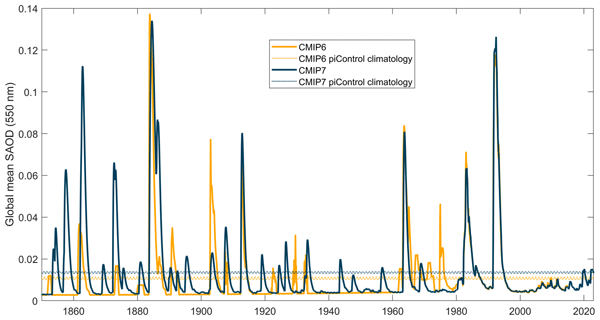
Stratospheric aerosols from explosive volcanic eruptions are a major climate forcer. We compare the stratospheric aerosol forcing for the next phase of coordinated climate model experiments (CMIP7) against complementary datasets, such as observations of lunar eclipses, stellar extinction, and from satellites. We highlight the potential value of combining observational constraints from complementary datasets with the extensive CMIP7 volcanic emission inventory to refine future forcing data.
Thomas J. Aubry, Matthew Toohey, Sujan Khanal, Man Mei Chim, Magali Verkerk, Ben Johnson, Anja Schmidt, Mahesh Kovilakam, Michael Sigl, Zebedee Nicholls, Larry Thomason, Vaishali Naik, Landon Rieger, Dominik Stiller, Elisa Ziegler, Paul Durack, and Isabel H. Smith
Geosci. Model Dev., 19, 3725–3756, https://doi.org/10.5194/gmd-19-3725-2026, https://doi.org/10.5194/gmd-19-3725-2026, 2026
Short summary
Short summary
Climate forcings, such as solar radiation or anthropogenic greenhouse gases, are required to run global climate model simulations. Stratospheric aerosols, which mostly originate from large volcanic eruptions, are a key natural forcing. In this paper, we document the stratospheric aerosol forcing dataset that will feed the next generation (CMIP7) of climate models. Our dataset is very different from its predecessor (CMIP6), which might affect simulations of the 1850–2021 climate.
Thomas J. Aubry, Michael Sigl, Matthew Toohey, Man Mei Chim, Magali Verkerk, Anja Schmidt, and Simon A. Carn
EGUsphere, https://doi.org/10.5194/egusphere-2026-546, https://doi.org/10.5194/egusphere-2026-546, 2026
Short summary
Short summary
We document the historical (1750–2023) volcanic sulfur dioxide emission dataset created for phase 7 of the Coupled Model Intercomparison Project, which is a set of coordinated climate model experiments run by modelling center worldwide. Our dataset underpins the stratospheric aerosol optical property dataset which will be used as input by most climate models. However, models with interactive stratospheric aerosol capability can directly input our emission dataset to run CMIP7 experiments.
Rob Wilson, Ignacio Mundo, Lauren Marshall, Emily Reid, Michael Sigl, Anja Schmidt, Claudia Timmreck, Shih-Wei Fang, Rory Abernethy, Valerie Daux, and Ricardo Villalba
EGUsphere, https://doi.org/10.5194/egusphere-2026-4785, https://doi.org/10.5194/egusphere-2026-4785, 2026
This preprint is open for discussion and under review for Climate of the Past (CP).
Short summary
Short summary
We use tree rings from southern South America to reconstruct summer temperatures back to 1382, providing the first long-term Southern Hemisphere record that clearly captures volcanic cooling. Our results, supported by climate models, show that major tropical eruptions caused substantial cooling in northern Patagonia, but little cooling in Tasmania and New Zealand. The study highlights the importance of tree-ring density measurements for understanding past volcanic impacts on climate.
Man Mei Chim, Dominik Stiller, Elisa Ziegler, Thomas J. Aubry, Lucas Boissel, Sébastien Guillet, Brennan Rodgers, Matthew Toohey, Christine Pohl, and Alexei Rozanov
EGUsphere, https://doi.org/10.5194/egusphere-2026-4193, https://doi.org/10.5194/egusphere-2026-4193, 2026
Short summary
Short summary
Stratospheric aerosols from explosive volcanic eruptions are a major climate forcer. We compare the stratospheric aerosol forcing for the next phase of coordinated climate model experiments (CMIP7) against complementary datasets, such as observations of lunar eclipses, stellar extinction, and from satellites. We highlight the potential value of combining observational constraints from complementary datasets with the extensive CMIP7 volcanic emission inventory to refine future forcing data.
Kane Stone, Candice Chen, Susan Solomon, Luke M. Western, Paul B. Krummel, Gabrielle Pétron, Jens Mühle, and Simon O'Doherty
Atmos. Chem. Phys., 26, 10241–10253, https://doi.org/10.5194/acp-26-10241-2026, https://doi.org/10.5194/acp-26-10241-2026, 2026
Short summary
Short summary
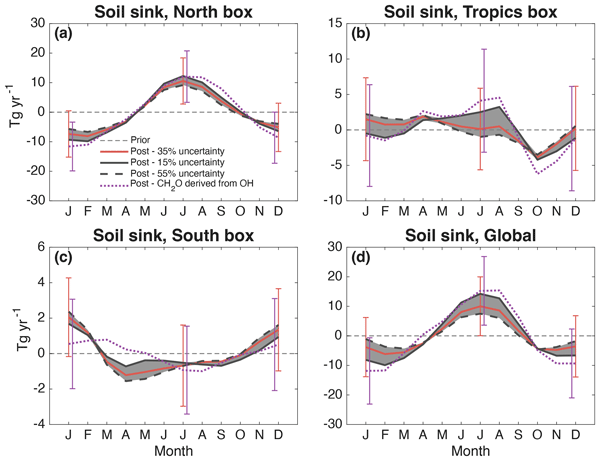
There is growing interest in hydrogens impact on atmospheric chemistry and climate. Here, the seasonality of hydrogen oxidation and loss to microbial activity in soils are investigated using information from the hydrofluorocarbon, HFC-152a. A large seasonal range of the soil sink, over twice that of hydroxyl loss, is seen in the Northern latitudes peaking in the late summer, while the Southern latitudes show a much lower range. This will be useful for validating model hydrogen cycles.
Jan-Steffen Fischer, Stefanos Fasoulas, Matthias Nützel, and Anja Schmidt
EGUsphere, https://doi.org/10.5194/egusphere-2026-3050, https://doi.org/10.5194/egusphere-2026-3050, 2026
This preprint is open for discussion and under review for Geoscientific Model Development (GMD).
Short summary
Short summary
For the calculation of emission inventories of rocket launches we developed the Launch Emission Assessment Tool (LEAT). LEAT is the first open-source emission calculation tool for rocket launch emissions that calculates individual launches and their emissions depending on the launch vehicle and trajectory. LEAT enables the therefore user to develop own trajectory and emission inventories as a basis for estimating the (global) effects of rocket launch emissions.
Sheena Loeffel, Philip Rupp, Selina Kiefer, Joaquim G. Pinto, Thomas Birner, and Hella Garny
Weather Clim. Dynam., 7, 895–913, https://doi.org/10.5194/wcd-7-895-2026, https://doi.org/10.5194/wcd-7-895-2026, 2026
Short summary
Short summary
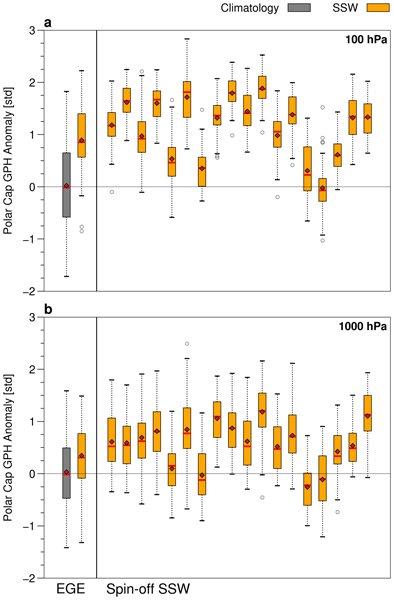
We use a dedicated simulation setup to shed light on the question whether, and why, some sudden stratospheric warming events are more likely than others to develop a surface response. We find that the propensity for downward coupling is unique to each event, and that from day one, the chance of a lower-stratospheric response can be predicted – a key step toward anticipating the surface response, moving beyond 'random' surface outcomes to quantified likelihoods of the ensuing surface response.
Martin R. Willett, Melissa E. Brooks, Andrew Bushell, Paul Earnshaw, Charline Marzin, Samantha Smith, Lorenzo Tomassini, Nathan Luke Abraham, Martin Best, John M. Edwards, Kalli Furtado, Catherine Hardacre, Alan J. Hewitt, Ben Johnson, Adrian Lock, Jane P. Mulcahy, James Manners, Alistair Sellar, Peter Sheridan, Warren Tennant, Kwinten Van Weverberg, Vidya Varma, and Michael Whitall
EGUsphere, https://doi.org/10.5194/egusphere-2026-2425, https://doi.org/10.5194/egusphere-2026-2425, 2026
Short summary
Short summary
Global Atmosphere and Land (GAL) configurations of the Unified Model (UM) and JULES are developed for use in any global atmospheric modelling application. We describe the latest version, GAL9. We compare GAL9 with its predecessor and show that it gives improved forecasts of weather and climate. GAL9 has been used for weather forecasts in the UK from early 2026 and it will be used to study the Earth's climate.
Josh Smith, Matthew Henry, Masaru Yoshioka, Ben Johnson, and Jim Haywood
EGUsphere, https://doi.org/10.5194/egusphere-2026-2654, https://doi.org/10.5194/egusphere-2026-2654, 2026
Short summary
Short summary
In 2020, new international rules cut sulphur in shipping fuels by roughly eighty percent, removing particles that had been brightening clouds over the oceans and reflecting sunlight. Using a climate model, we tested how this loss of cooling has been calculated and found that recent studies have
likely underestimated the resulting warming by a factor of two to four. This means cleaner shipping fuels may be contributing more to recent global warming than previously recognised.
likely underestimated the resulting warming by a factor of two to four. This means cleaner shipping fuels may be contributing more to recent global warming than previously recognised.
Elizabeth Quaye, Ben T. Johnson, James M. Haywood, Guido R. van der Werf, Roland Vernooij, Stephen A. Sitch, and Tom Eames
Atmos. Chem. Phys., 26, 6629–6654, https://doi.org/10.5194/acp-26-6629-2026, https://doi.org/10.5194/acp-26-6629-2026, 2026
Short summary
Short summary
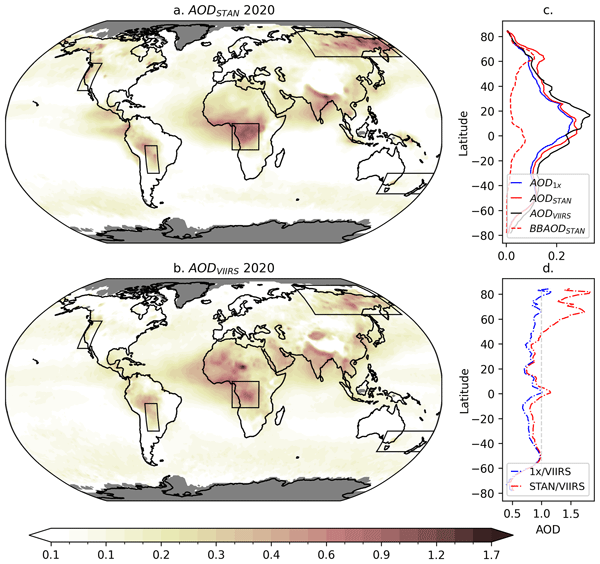
We find aerosol optical depths in a global climate model are overestimated during extreme wildfire events if emissions are scaled up by a factor of two, typically applied to improve simulated aerosol on seasonal–annual timescales. We propose a technique where a variable scaling factor is determined by fuel consumption, improving correlation in five fire-affected areas. We explore the impact of this change on aerosol radiative effects, during extreme events and on broader space and time scales.
Eliza K. Duncan, George Jordan, Paul Kim, James M. Haywood, Duncan Watson-Parris, Ben Johnson, Alistair Sellar, Zak Kipling, João Teixeira, Florent Malavelle, and Daniel G. Partridge
EGUsphere, https://doi.org/10.5194/egusphere-2026-1043, https://doi.org/10.5194/egusphere-2026-1043, 2026
Short summary
Short summary
The 2014–15 Holuhraun eruption offers a natural experiment to assess how well climate models can capture the changes in aerosol associated with the plume. We investigate the aerosol lifecycle during transport to identify key differences in climate models' representation of aerosol processes, which could affect the models’ ability to capture changes in cloud properties. Our study highlights the importance of the representation of boundary layer nucleation processes in climate models.
Thomas J. Aubry, Matthew Toohey, Sujan Khanal, Man Mei Chim, Magali Verkerk, Ben Johnson, Anja Schmidt, Mahesh Kovilakam, Michael Sigl, Zebedee Nicholls, Larry Thomason, Vaishali Naik, Landon Rieger, Dominik Stiller, Elisa Ziegler, Paul Durack, and Isabel H. Smith
Geosci. Model Dev., 19, 3725–3756, https://doi.org/10.5194/gmd-19-3725-2026, https://doi.org/10.5194/gmd-19-3725-2026, 2026
Short summary
Short summary
Climate forcings, such as solar radiation or anthropogenic greenhouse gases, are required to run global climate model simulations. Stratospheric aerosols, which mostly originate from large volcanic eruptions, are a key natural forcing. In this paper, we document the stratospheric aerosol forcing dataset that will feed the next generation (CMIP7) of climate models. Our dataset is very different from its predecessor (CMIP6), which might affect simulations of the 1850–2021 climate.
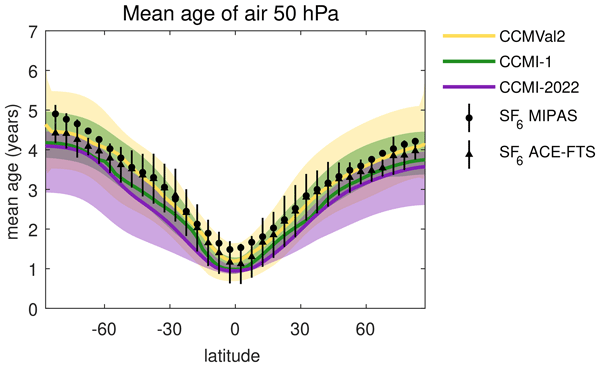
Marta Abalos, Thomas Birner, Andreas Chrysanthou, Sean Davis, Alvaro de la Cámara, Sandip Dhomse, Hella Garny, Michaela I. Hegglin, Daan Hubert, Oksana Ivaniha, James Keeble, Marianna Linz, Daniele Minganti, Jessica Neu, David Plummer, Laura Saunders, Kasturi Shah, Gabriele Stiller, Kleareti Tourpali, Darryn Waugh, Nathan Luke Abraham, Hideharu Akiyoshi, Martyn P. Chipperfield, Patrick Jöckel, Béatrice Josse, Marion Marchand, Patrick Martineau, Olaf Morgenstern, Timofei Sukhodolov, Shingo Watanabe, and Yousuke Yamashita
Atmos. Chem. Phys., 26, 5249–5291, https://doi.org/10.5194/acp-26-5249-2026, https://doi.org/10.5194/acp-26-5249-2026, 2026
Short summary
Short summary
Accurate representation of stratospheric transport in Chemistry-Climate Models is essential for reliable climate projections. This study evaluates three generations of models using observational data and reanalyses, identifying persistent biases and their potential causes. Some biases persist or even worsen in newer models. These findings highlight key limitations and inform efforts to improve models and advance understanding through process-based studies and enhanced observations.
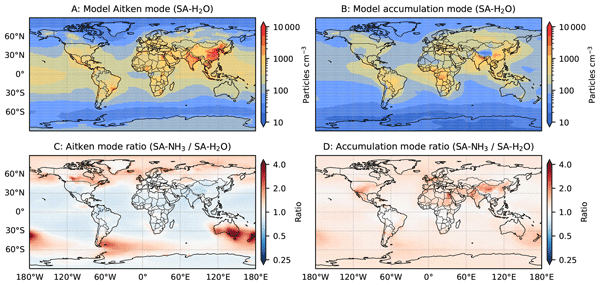
Xu-Cheng He, Nathan Luke Abraham, Han Ding, Maria R. Russo, Daniel P. Grosvenor, Yao Ge, Xuemei Wang, Anthony C. Jones, Pedro Campuzano-Jost, Benjamin Nault, Agnieszka Kupc, Donald Blake, Jose L. Jimenez, Christina J. Williamson, James Weber, Alexander T. Archibald, and Hamish Gordon
Atmos. Chem. Phys., 26, 3805–3851, https://doi.org/10.5194/acp-26-3805-2026, https://doi.org/10.5194/acp-26-3805-2026, 2026
Short summary
Short summary
Aerosols affect clouds and climate. However, current climate models still struggle to simulate them accurately. We used aircraft data from a global mission to evaluate how well the UK Earth System Model represents aerosols and their precursors. Our results show that the model misses key formation processes in clean ocean regions, suggesting that future improvements should focus on better representing how aerosols form naturally in the atmosphere.
Isabelle Sangha, Nathan Luke Abraham, Andrew Orr, Hua Lu, Michael C. Pitts, Lamont R. Poole, and Michael Weimer
EGUsphere, https://doi.org/10.5194/egusphere-2026-128, https://doi.org/10.5194/egusphere-2026-128, 2026
Short summary
Short summary
The UK Earth System Model is updated with an improved polar stratospheric cloud scheme. The performance of the scheme is evaluated against satellite data. While the observed wave ice still fails to form in the model, the scheme improves its ability to represent different polar stratospheric cloud types and their variations. This brings the model closer to satellite observations and highlights the need for further development to capture the polar stratospheric cloud formation in mountain waves.
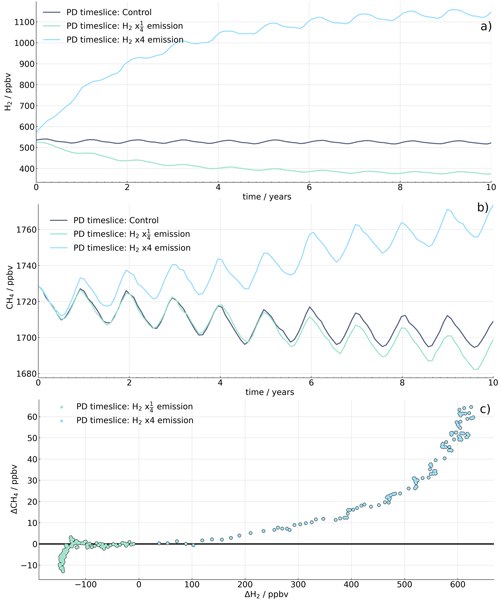
Megan A. J. Brown, Nicola J. Warwick, Nathan Luke Abraham, Paul T. Griffiths, Steve T. Rumbold, Gerd A. Folberth, Fiona M. O'Connor, Hannah Bryant, and Alex T. Archibald
Geosci. Model Dev., 19, 1537–1557, https://doi.org/10.5194/gmd-19-1537-2026, https://doi.org/10.5194/gmd-19-1537-2026, 2026
Short summary
Short summary
Hydrogen (H2) is an indirect greenhouse gas by increasing methane (CH4) lifetime. Interaction between H2 and CH4 is important for hydrogen’s global warming potential (GWP). Global models do not represent this interaction well; H2 or CH4 are prescribed at the surface. We implement an interactive H2 scheme into a global model coupled with interactive CH4. We simulate scenarios demonstrating its capability, improving model performance and more accurately representing H2-CH4 interaction.
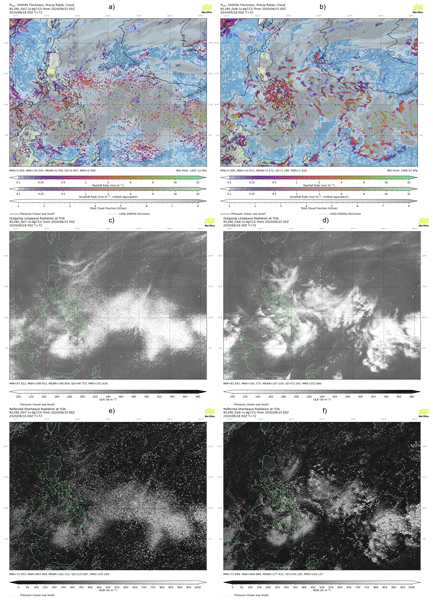
Martin Willett, Melissa Brooks, Andrew Bushell, Paul Earnshaw, Samantha Smith, Lorenzo Tomassini, Martin Best, Ian Boutle, Jennifer Brooke, John M. Edwards, Andrew D. Elvidge, Kalli Furtado, Catherine Hardacre, Andrew J. Hartley, Alan J. Hewitt, Ben Johnson, Adrian Lock, Andy Malcolm, Jane Mulcahy, Eike Müller, Ian A. Renfrew, Heather Rumbold, Gabriel G. Rooney, Alistair Sellar, Masashi Ujiie, Annelize van Niekerk, Andy Wiltshire, and Michael Whitall
Geosci. Model Dev., 19, 1473–1517, https://doi.org/10.5194/gmd-19-1473-2026, https://doi.org/10.5194/gmd-19-1473-2026, 2026
Short summary
Short summary
Global Atmosphere (GA) configurations of the Unified Model (UM) and Global Land (GL) configurations of Joint UK Land Environment Simulator (JULES) are developed for use in any global atmospheric modelling application. We describe a recent iteration of these configurations, GA8GL9, which includes improvements to the representation of convection and other physical processes. GA8GL9 is used for operational weather prediction in the UK and forms the basis for the next GA and GL configuration.
Thomas J. Aubry, Michael Sigl, Matthew Toohey, Man Mei Chim, Magali Verkerk, Anja Schmidt, and Simon A. Carn
EGUsphere, https://doi.org/10.5194/egusphere-2026-546, https://doi.org/10.5194/egusphere-2026-546, 2026
Short summary
Short summary
We document the historical (1750–2023) volcanic sulfur dioxide emission dataset created for phase 7 of the Coupled Model Intercomparison Project, which is a set of coordinated climate model experiments run by modelling center worldwide. Our dataset underpins the stratospheric aerosol optical property dataset which will be used as input by most climate models. However, models with interactive stratospheric aerosol capability can directly input our emission dataset to run CMIP7 experiments.
Rachel C. W. Whitty, Evgenia Ilyinskaya, Melissa A. Pfeffer, Ragnar H. Thrastarson, Þorsteinn Johannsson, Sara Barsotti, Tjarda J. Roberts, Guðni M. Gilbert, Tryggvi Hjörvar, Anja Schmidt, Daniela Fecht, and Grétar G. Sæmundsson
Atmos. Chem. Phys., 26, 313–347, https://doi.org/10.5194/acp-26-313-2026, https://doi.org/10.5194/acp-26-313-2026, 2026
Short summary
Short summary
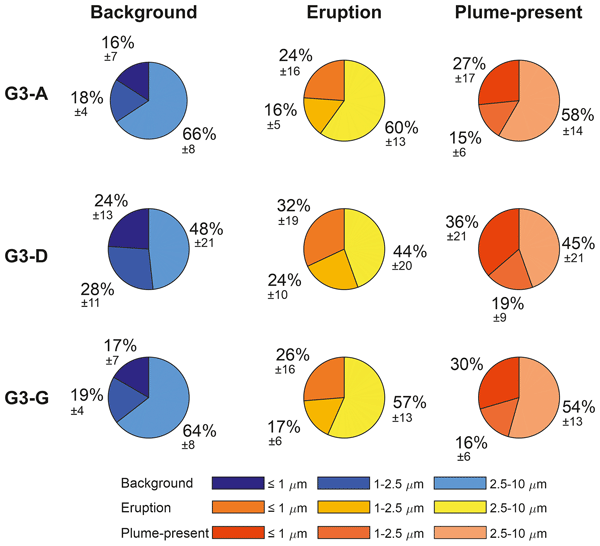
We studied air pollution caused by volcanic emissions, a poorly understood hazard in populated areas. We present a large dataset of high-quality measurements of sulfur dioxide gas and fine aerosol particulate matter collected during ongoing series of eruptions in Iceland. We revealed rapid, localized changes in pollutant concentrations at ground level, with implications for assessing population exposure during volcanic eruptions.
Monica Sharma, Mattia Righi, Johannes Hendricks, Anja Schmidt, Daniel Sauer, and Volker Grewe
Geosci. Model Dev., 18, 8485–8510, https://doi.org/10.5194/gmd-18-8485-2025, https://doi.org/10.5194/gmd-18-8485-2025, 2025
Short summary
Short summary
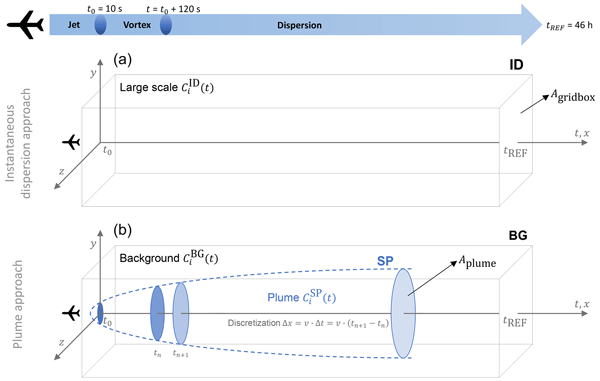
A plume model is developed to simulate aerosol microphysics in a dispersing aircraft plume, including interactions between ice crystals and aerosols in vortex regime. Compared to an instantaneous dispersion approach, the plume approach estimates 15 % lower aviation aerosol number concentrations, due to more efficient coagulation at plume scale. The model is sensitive to background conditions and initialization parameters, such as ice crystal number concentration and fuel sulfur content.
Natalie G. Ratcliffe, Claire L. Ryder, Nicolas Bellouin, Anthony Jones, Ben Johnson, Stephanie Woodward, Lisa-Maria Wieland, Josef Gasteiger, and Bernadett Weinzierl
EGUsphere, https://doi.org/10.5194/egusphere-2025-5143, https://doi.org/10.5194/egusphere-2025-5143, 2025
Short summary
Short summary
Observations show large dust particles travel much further than expected, which is not replicated in weather and climate models. We use a climate model to understand which processes dominantly impact large particle transport, and find that modelled large particle transport agrees with observations best after reducing the particle gravitational settling by ~ 80 %. We prove the presence of processes not represented accurately or at all in the model which act on large particles in the real-world.
Frederik Harzer, Hella Garny, Felix Ploeger, J. Moritz Menken, and Thomas Birner
Atmos. Chem. Phys., 25, 14909–14921, https://doi.org/10.5194/acp-25-14909-2025, https://doi.org/10.5194/acp-25-14909-2025, 2025
Short summary
Short summary
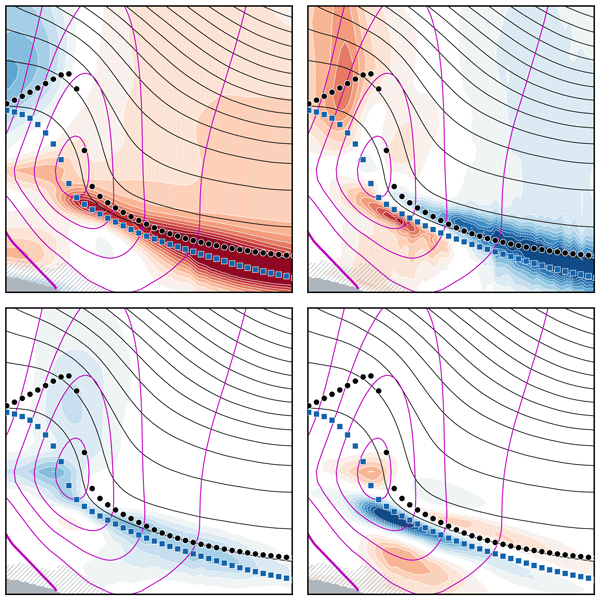
We study ozone transport in the extratropical lowermost stratosphere using potential temperature as vertical coordinate, thereby distinguishing adiabatic and diabatic processes. We find that on top of known dominant transport processes (quasi-horizontal mixing, slow diabatic descent) vertical mixing plays an important role near the tropopause. Our findings are relevant for understanding ozone's role in climate including its imprint on tropospheric ozone via stratosphere-troposphere air exchange.
George Jordan, Florent Malavelle, Jim Haywood, Ying Chen, Ben Johnson, Daniel Partridge, Amy Peace, Eliza Duncan, Duncan Watson-Parris, David Neubauer, Anton Laakso, Martine Michou, and Pierre Nabat
Atmos. Chem. Phys., 25, 13393–13428, https://doi.org/10.5194/acp-25-13393-2025, https://doi.org/10.5194/acp-25-13393-2025, 2025
Short summary
Short summary
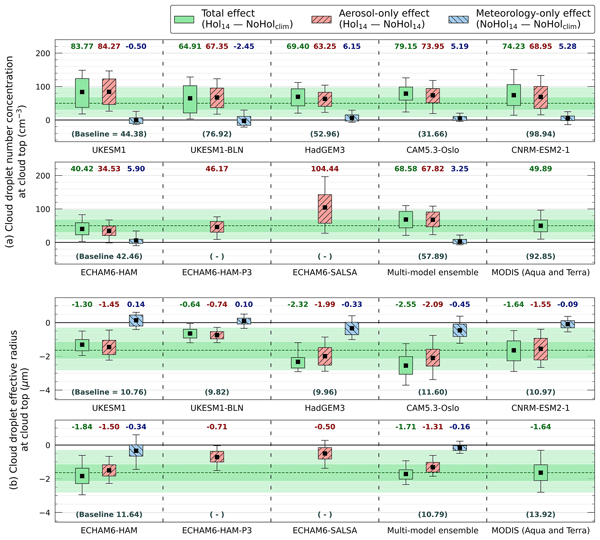
The 2014–15 Holuhraun eruption created a vast aerosol plume that acted as a natural experiment to assess how well climate models capture changes in cloud properties due to increased aerosol. We find that climate models represent the observed shift to smaller, more numerous cloud droplets well. However, climate models diverge in their aerosol-induced changes to large-scale cloud properties, particularly cloud liquid water content. Our study shows that Holuhraun had a cooling effect on the Earth.
Magali Verkerk, Thomas J. Aubry, Chris Smith, Peter O. Hopcroft, Michael Sigl, Jessica E. Tierney, Kevin Anchukaitis, Matthew Osman, Anja Schmidt, and Matthew Toohey
Clim. Past, 21, 1755–1778, https://doi.org/10.5194/cp-21-1755-2025, https://doi.org/10.5194/cp-21-1755-2025, 2025
Short summary
Short summary
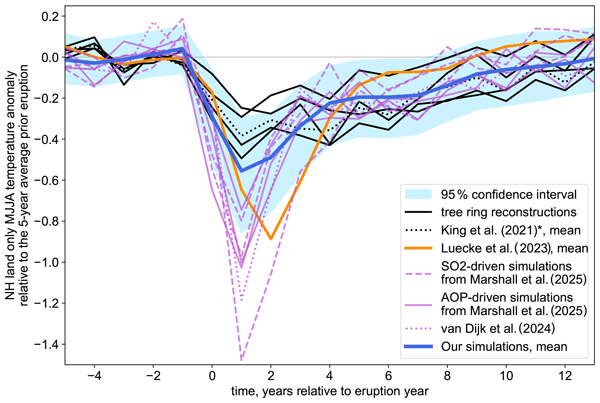
Large volcanic eruptions can trigger global cooling, affecting human societies. Using ice-core records and simple climate model to simulate volcanic effect over the last 8500 years, we show that volcanic eruptions cool the climate by 0.12 °C on average. By comparing model results with temperature recorded by tree rings over the last 1000 years, we demonstrate that our models can predict the large-scale cooling caused by volcanic eruptions and can be used in cases of large eruptions in the future.
Paul A. Nicknish, Kane Stone, Susan Solomon, and Simon A. Carn
Atmos. Chem. Phys., 25, 11535–11555, https://doi.org/10.5194/acp-25-11535-2025, https://doi.org/10.5194/acp-25-11535-2025, 2025
Short summary
Short summary
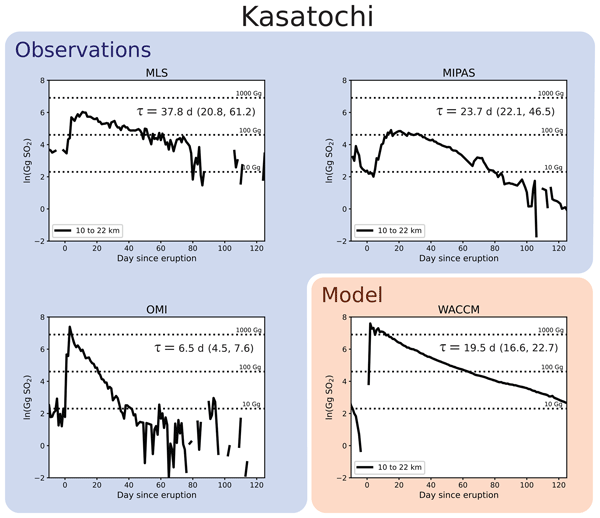
Large volcanic eruptions can inject teragrams of sulfur dioxide (SO2) into the stratosphere, influencing stratospheric chemistry and Earth's climate. This work calculates decay timescales of volcanic gas-phase SO2 in the stratosphere using data from three satellite products. SO2 decay timescales vary significantly between the different products, and this uncertainty limits our ability to attribute an observed SO2 decay following an eruption to a specific chemical process.
Yunqian Zhu, Hideharu Akiyoshi, Valentina Aquila, Elizabeth Asher, Ewa M. Bednarz, Slimane Bekki, Christoph Brühl, Amy H. Butler, Parker Case, Simon Chabrillat, Gabriel Chiodo, Margot Clyne, Peter R. Colarco, Sandip Dhomse, Lola Falletti, Eric Fleming, Ben Johnson, Andrin Jörimann, Mahesh Kovilakam, Gerbrand Koren, Ales Kuchar, Nicolas Lebas, Qing Liang, Cheng-Cheng Liu, Graham Mann, Michael Manyin, Marion Marchand, Olaf Morgenstern, Paul Newman, Luke D. Oman, Freja F. Østerstrøm, Yifeng Peng, David Plummer, Ilaria Quaglia, William Randel, Samuel Rémy, Takashi Sekiya, Stephen Steenrod, Timofei Sukhodolov, Simone Tilmes, Kostas Tsigaridis, Rei Ueyama, Daniele Visioni, Xinyue Wang, Shingo Watanabe, Yousuke Yamashita, Pengfei Yu, Wandi Yu, Jun Zhang, and Zhihong Zhuo
Geosci. Model Dev., 18, 5487–5512, https://doi.org/10.5194/gmd-18-5487-2025, https://doi.org/10.5194/gmd-18-5487-2025, 2025
Short summary
Short summary
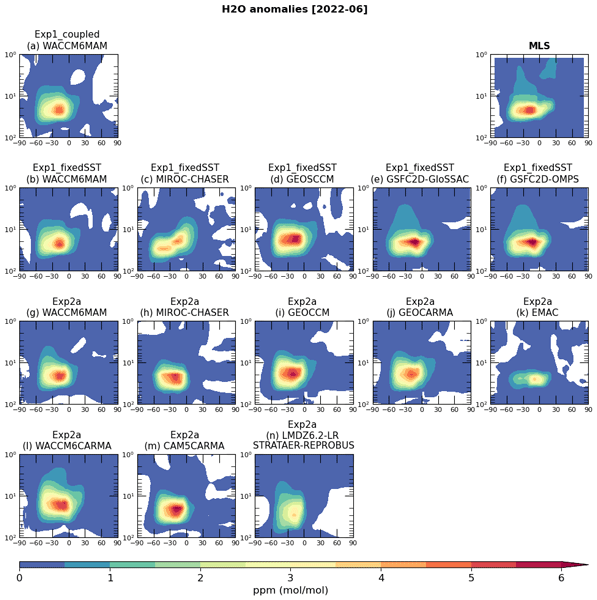
To understand the climate impact of the 2022 Hunga volcanic eruption, we developed a climate model–observation comparison project. The paper describes the protocols and models that participate in the experiments. We designed several experiments to achieve our goals of this activity: (1) to evaluate the climate model performance and (2) to understand the Earth system responses to this eruption.
William J. Collins, Fiona M. O'Connor, Rachael E. Byrom, Øivind Hodnebrog, Patrick Jöckel, Mariano Mertens, Gunnar Myhre, Matthias Nützel, Dirk Olivié, Ragnhild Bieltvedt Skeie, Laura Stecher, Larry W. Horowitz, Vaishali Naik, Gregory Faluvegi, Ulas Im, Lee T. Murray, Drew Shindell, Kostas Tsigaridis, Nathan Luke Abraham, and James Keeble
Atmos. Chem. Phys., 25, 9031–9060, https://doi.org/10.5194/acp-25-9031-2025, https://doi.org/10.5194/acp-25-9031-2025, 2025
Short summary
Short summary
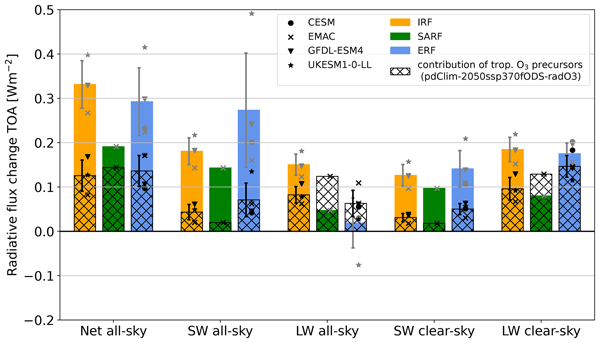
We used 7 climate models that include atmospheric chemistry and find that in a scenario with weak controls on air quality, the warming effects (over 2015 to 2050) of decreases in ozone-depleting substances and increases in air quality pollutants are approximately equal and would make ozone the second highest contributor to warming over this period. We find that for stratospheric ozone recovery, the standard measure of climate effects underestimates a more comprehensive measure.
Kane Stone, Susan Solomon, Pengfei Yu, Daniel M. Murphy, Douglas Kinnison, and Jian Guan
Atmos. Chem. Phys., 25, 7683–7697, https://doi.org/10.5194/acp-25-7683-2025, https://doi.org/10.5194/acp-25-7683-2025, 2025
Short summary
Short summary
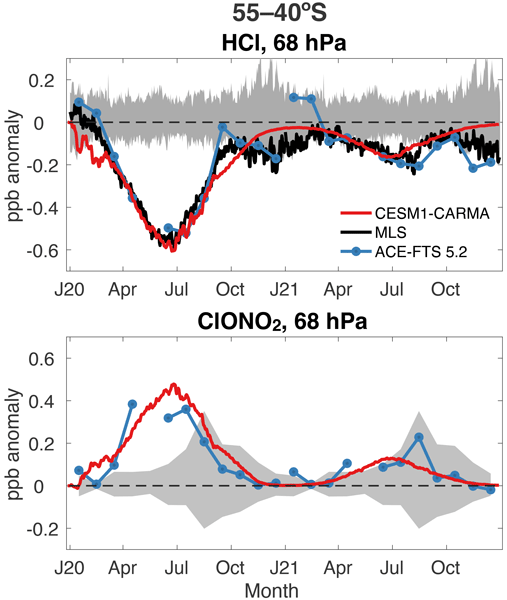
The Australian 2019–2020 wildfires injected a substantial amount of smoke into the upper atmosphere, causing unusual chemical reactions that altered the chemical makeup of the upper atmosphere. This led to ozone depletion in the Southern Hemisphere midlatitudes that likely did not fully recover until 2 years after the initial event due to the persistent chemical effects of the smoke.
Laura N. Saunders, Kaley A. Walker, Gabriele P. Stiller, Thomas von Clarmann, Florian Haenel, Hella Garny, Harald Bönisch, Chris D. Boone, Ariana E. Castillo, Andreas Engel, Johannes C. Laube, Marianna Linz, Felix Ploeger, David A. Plummer, Eric A. Ray, and Patrick E. Sheese
Atmos. Chem. Phys., 25, 4185–4209, https://doi.org/10.5194/acp-25-4185-2025, https://doi.org/10.5194/acp-25-4185-2025, 2025
Short summary
Short summary
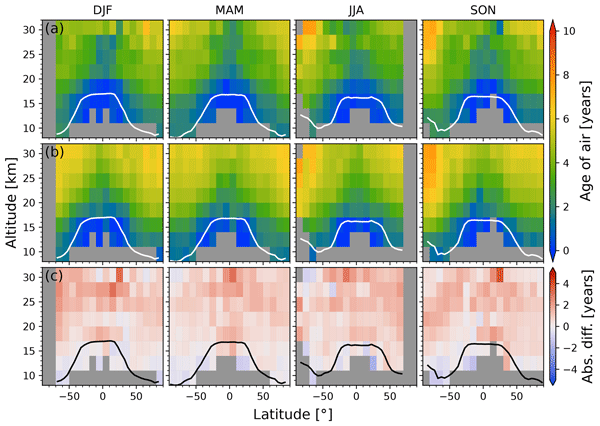
We present a 17-year stratospheric age-of-air dataset derived from ACE-FTS satellite measurements of sulfur hexafluoride. This is the longest continuous, global, and vertically resolved age of air time series available to date. In this paper, we show that this dataset agrees well with age-of-air datasets based on measurements from other instruments. We also present trends in the midlatitude lower stratosphere that indicate changes in the global circulation that are predicted by climate models.
Mariya Petrenko, Ralph Kahn, Mian Chin, Susanne E. Bauer, Tommi Bergman, Huisheng Bian, Gabriele Curci, Ben Johnson, Johannes W. Kaiser, Zak Kipling, Harri Kokkola, Xiaohong Liu, Keren Mezuman, Tero Mielonen, Gunnar Myhre, Xiaohua Pan, Anna Protonotariou, Samuel Remy, Ragnhild Bieltvedt Skeie, Philip Stier, Toshihiko Takemura, Kostas Tsigaridis, Hailong Wang, Duncan Watson-Parris, and Kai Zhang
Atmos. Chem. Phys., 25, 1545–1567, https://doi.org/10.5194/acp-25-1545-2025, https://doi.org/10.5194/acp-25-1545-2025, 2025
Short summary
Short summary
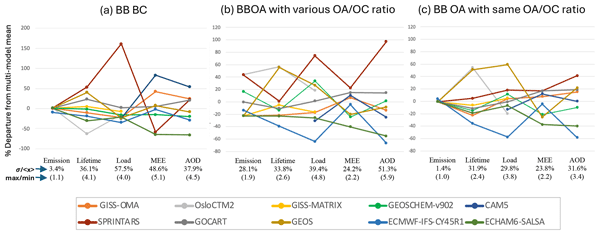
We compared smoke plume simulations from 11 global models to each other and to satellite smoke amount observations aimed at constraining smoke source strength. In regions where plumes are thick and background aerosol is low, models and satellites compare well. However, the input emission inventory tends to underestimate in many places, and particle property and loss rate assumptions vary enormously among models, causing uncertainties that require systematic in situ measurements to resolve.

Lauren R. Marshall, Anja Schmidt, Andrew P. Schurer, Nathan Luke Abraham, Lucie J. Lücke, Rob Wilson, Kevin J. Anchukaitis, Gabriele C. Hegerl, Ben Johnson, Bette L. Otto-Bliesner, Esther C. Brady, Myriam Khodri, and Kohei Yoshida
Clim. Past, 21, 161–184, https://doi.org/10.5194/cp-21-161-2025, https://doi.org/10.5194/cp-21-161-2025, 2025
Short summary
Short summary
Large volcanic eruptions have caused temperature deviations over the past 1000 years; however, climate model results and reconstructions of surface cooling using tree rings do not match. We explore this mismatch using the latest models and find a better match to tree-ring reconstructions for some eruptions. Our results show that the way in which eruptions are simulated in models matters for the comparison to tree-rings, particularly regarding the spatial spread of volcanic aerosol.
Alex T. Archibald, Bablu Sinha, Maria R. Russo, Emily Matthews, Freya A. Squires, N. Luke Abraham, Stephane J.-B. Bauguitte, Thomas J. Bannan, Thomas G. Bell, David Berry, Lucy J. Carpenter, Hugh Coe, Andrew Coward, Peter Edwards, Daniel Feltham, Dwayne Heard, Jim Hopkins, James Keeble, Elizabeth C. Kent, Brian A. King, Isobel R. Lawrence, James Lee, Claire R. Macintosh, Alex Megann, Bengamin I. Moat, Katie Read, Chris Reed, Malcolm J. Roberts, Reinhard Schiemann, David Schroeder, Timothy J. Smyth, Loren Temple, Navaneeth Thamban, Lisa Whalley, Simon Williams, Huihui Wu, and Mingxi Yang
Earth Syst. Sci. Data, 17, 135–164, https://doi.org/10.5194/essd-17-135-2025, https://doi.org/10.5194/essd-17-135-2025, 2025
Short summary
Short summary
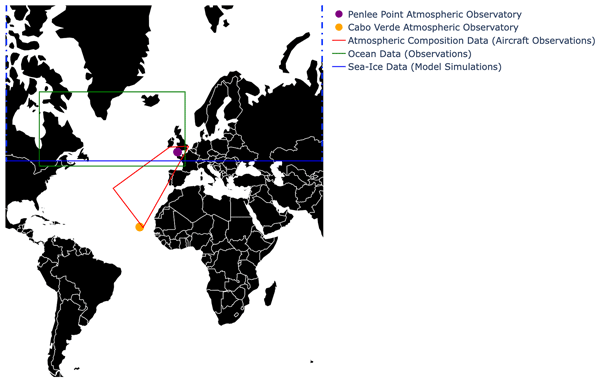
Here, we present an overview of the data generated as part of the North Atlantic Climate System Integrated Study (ACSIS) programme that are available through dedicated repositories at the Centre for Environmental Data Analysis (CEDA; www.ceda.ac.uk) and the British Oceanographic Data Centre (BODC; bodc.ac.uk). The datasets described here cover the North Atlantic Ocean, the atmosphere above (it including its composition), and Arctic sea ice.
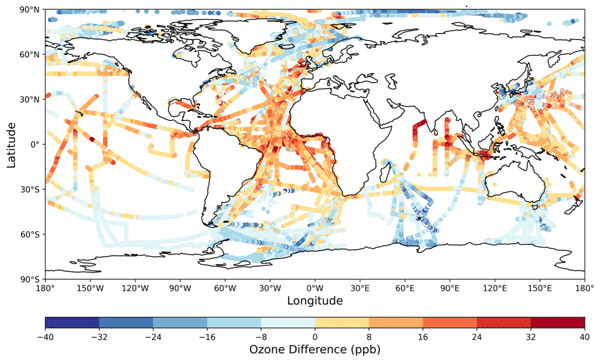
Maria R. Russo, Sadie L. Bartholomew, David Hassell, Alex M. Mason, Erica Neininger, A. James Perman, David A. J. Sproson, Duncan Watson-Parris, and Nathan Luke Abraham
Geosci. Model Dev., 18, 181–191, https://doi.org/10.5194/gmd-18-181-2025, https://doi.org/10.5194/gmd-18-181-2025, 2025
Short summary
Short summary
Observational data and modelling capabilities have expanded in recent years, but there are still barriers preventing these two data sources from being used in synergy. Proper comparison requires generating, storing, and handling a large amount of data. This work describes the first step in the development of a new set of software tools, the VISION toolkit, which can enable the easy and efficient integration of observational and model data required for model evaluation.
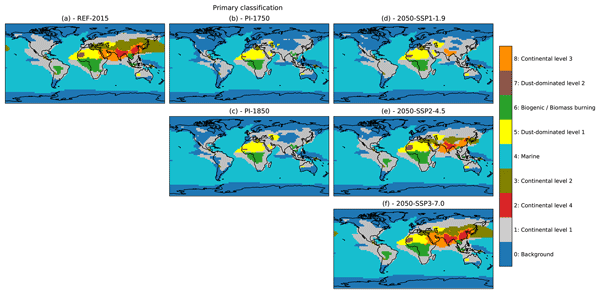
Jingmin Li, Mattia Righi, Johannes Hendricks, Christof G. Beer, Ulrike Burkhardt, and Anja Schmidt
Atmos. Chem. Phys., 24, 12727–12747, https://doi.org/10.5194/acp-24-12727-2024, https://doi.org/10.5194/acp-24-12727-2024, 2024
Short summary
Short summary
Aiming to understand underlying patterns and trends in aerosols, we characterize the spatial patterns and long-term evolution of lower tropospheric aerosols by clustering multiple aerosol properties from preindustrial times to the year 2050 under three Shared
Socioeconomic Pathway scenarios. The results provide a clear and condensed picture of the spatial extent and distribution of aerosols for different time periods and emission scenarios.
Socioeconomic Pathway scenarios. The results provide a clear and condensed picture of the spatial extent and distribution of aerosols for different time periods and emission scenarios.
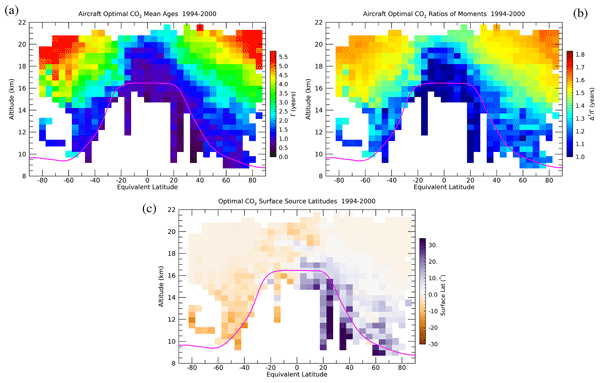
Eric A. Ray, Fred L. Moore, Hella Garny, Eric J. Hintsa, Bradley D. Hall, Geoff S. Dutton, David Nance, James W. Elkins, Steven C. Wofsy, Jasna Pittman, Bruce Daube, Bianca C. Baier, Jianghanyang Li, and Colm Sweeney
Atmos. Chem. Phys., 24, 12425–12445, https://doi.org/10.5194/acp-24-12425-2024, https://doi.org/10.5194/acp-24-12425-2024, 2024
Short summary
Short summary
In this study we describe new techniques to derive age of air from multiple simultaneous measurements of long-lived trace gases in order to improve the fidelity of the age-of-air estimates and to be able to compare age of air from measurements taken from different instruments, platforms and decades. This technique also allows new transport information to be obtained from the measurements such as the primary source latitude that can also be compared to models.
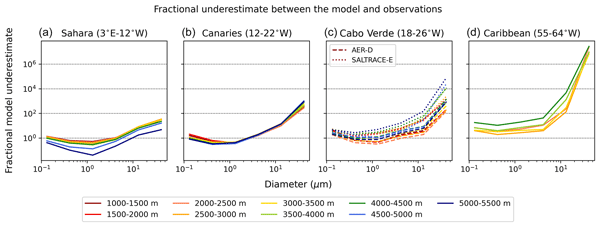
Natalie G. Ratcliffe, Claire L. Ryder, Nicolas Bellouin, Stephanie Woodward, Anthony Jones, Ben Johnson, Lisa-Maria Wieland, Maximilian Dollner, Josef Gasteiger, and Bernadett Weinzierl
Atmos. Chem. Phys., 24, 12161–12181, https://doi.org/10.5194/acp-24-12161-2024, https://doi.org/10.5194/acp-24-12161-2024, 2024
Short summary
Short summary
Large mineral dust particles are more abundant in the atmosphere than expected and have different impacts on the environment than small particles, which are better represented in climate models. We use aircraft measurements to assess a climate model representation of large-dust transport. We find that the model underestimates the amount of large dust at all stages of transport and that fast removal of the large particles increases this underestimation with distance from the Sahara.
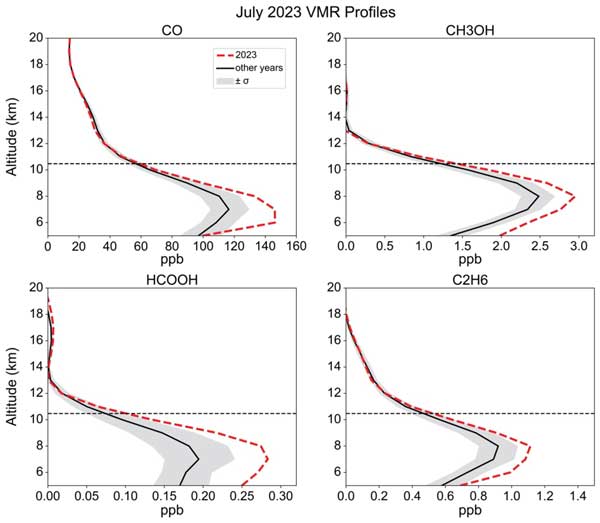
Selena Zhang, Susan Solomon, Chris D. Boone, and Ghassan Taha
Atmos. Chem. Phys., 24, 11727–11736, https://doi.org/10.5194/acp-24-11727-2024, https://doi.org/10.5194/acp-24-11727-2024, 2024
Short summary
Short summary
This paper investigates the vertical impacts of the anomalous 2023 Canadian wildfire season using multiple satellite instruments. Our results highlight that despite a record-breaking area burned, only a small amount of smoke managed to enter the stratosphere. This shows that the conditions for deep convection were rarely met in the 2023 wildfire season, suggesting that even a massive area burned is not necessarily an indicator of stratospheric perturbations.
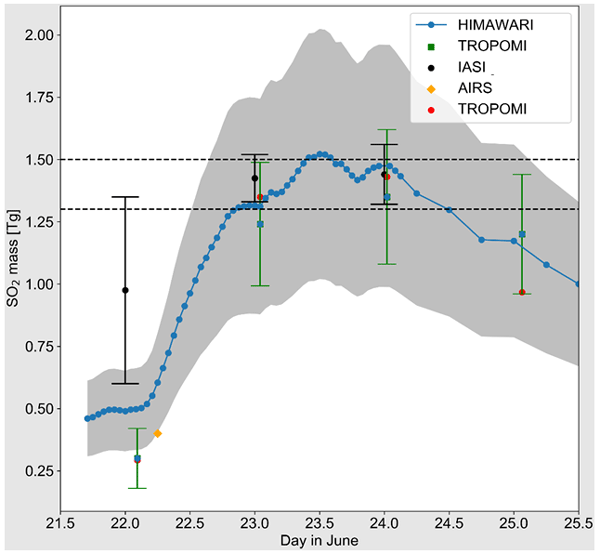
Jean-Paul Vernier, Thomas J. Aubry, Claudia Timmreck, Anja Schmidt, Lieven Clarisse, Fred Prata, Nicolas Theys, Andrew T. Prata, Graham Mann, Hyundeok Choi, Simon Carn, Richard Rigby, Susan C. Loughlin, and John A. Stevenson
Atmos. Chem. Phys., 24, 5765–5782, https://doi.org/10.5194/acp-24-5765-2024, https://doi.org/10.5194/acp-24-5765-2024, 2024
Short summary
Short summary
The 2019 Raikoke eruption (Kamchatka, Russia) generated one of the largest emissions of particles and gases into the stratosphere since the 1991 Mt. Pinatubo eruption. The Volcano Response (VolRes) initiative, an international effort, provided a platform for the community to share information about this eruption and assess its climate impact. The eruption led to a minor global surface cooling of 0.02 °C in 2020 which is negligible relative to warming induced by human greenhouse gas emissions.

Christina V. Brodowsky, Timofei Sukhodolov, Gabriel Chiodo, Valentina Aquila, Slimane Bekki, Sandip S. Dhomse, Michael Höpfner, Anton Laakso, Graham W. Mann, Ulrike Niemeier, Giovanni Pitari, Ilaria Quaglia, Eugene Rozanov, Anja Schmidt, Takashi Sekiya, Simone Tilmes, Claudia Timmreck, Sandro Vattioni, Daniele Visioni, Pengfei Yu, Yunqian Zhu, and Thomas Peter
Atmos. Chem. Phys., 24, 5513–5548, https://doi.org/10.5194/acp-24-5513-2024, https://doi.org/10.5194/acp-24-5513-2024, 2024
Short summary
Short summary
The aerosol layer is an essential part of the climate system. We characterize the sulfur budget in a volcanically quiescent (background) setting, with a special focus on the sulfate aerosol layer using, for the first time, a multi-model approach. The aim is to identify weak points in the representation of the atmospheric sulfur budget in an intercomparison of nine state-of-the-art coupled global circulation models.
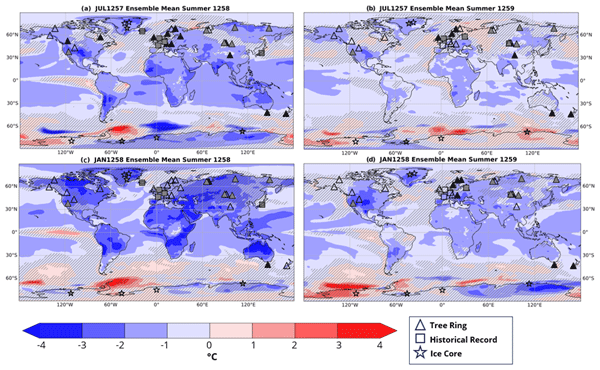
Laura Wainman, Lauren R. Marshall, and Anja Schmidt
Clim. Past, 20, 951–968, https://doi.org/10.5194/cp-20-951-2024, https://doi.org/10.5194/cp-20-951-2024, 2024
Short summary
Short summary
The Mt Samalas eruption had global-scale impacts on climate and has been linked to historical events throughout latter half of the 13th century. Using model simulations and multi-proxy data, we constrain the year and season of the eruption to summer 1257 and investigate the regional-scale variability in surface cooling following the eruption. We also evaluate our model-to-proxy comparison framework and discuss current limitations of the approach.
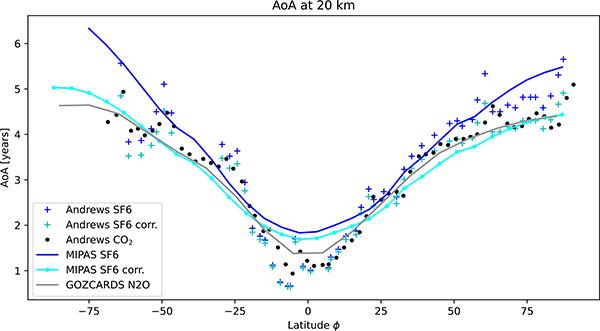
Hella Garny, Roland Eichinger, Johannes C. Laube, Eric A. Ray, Gabriele P. Stiller, Harald Bönisch, Laura Saunders, and Marianna Linz
Atmos. Chem. Phys., 24, 4193–4215, https://doi.org/10.5194/acp-24-4193-2024, https://doi.org/10.5194/acp-24-4193-2024, 2024
Short summary
Short summary
Transport circulation in the stratosphere is important for the distribution of tracers, but its strength is hard to measure. Mean transport times can be inferred from observations of trace gases with certain properties, such as sulfur hexafluoride (SF6). However, this gas has a chemical sink in the high atmosphere, which can lead to substantial biases in inferred transport times. In this paper we present a method to correct mean transport times derived from SF6 for the effects of chemical sinks.
Ryan S. Williams, Michaela I. Hegglin, Patrick Jöckel, Hella Garny, and Keith P. Shine
Atmos. Chem. Phys., 24, 1389–1413, https://doi.org/10.5194/acp-24-1389-2024, https://doi.org/10.5194/acp-24-1389-2024, 2024
Short summary
Short summary
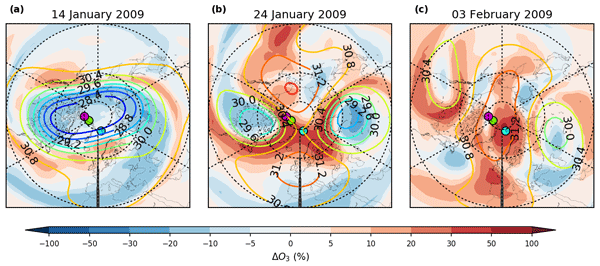
During winter, a brief but abrupt reversal of the mean stratospheric westerly flow (~30 km high) around the Arctic occurs ~6 times a decade. Using a chemistry–climate model, about half of these events are shown to induce large anomalies in Arctic ozone (>25 %) and water vapour (>±25 %) around ~8–12 km altitude for up to 2–3 months, important for weather forecasting. We also calculate a doubling to trebling of the risk in breaches of mid-latitude surface air quality (ozone) standards (~60 ppbv).
Ben A. Cala, Scott Archer-Nicholls, James Weber, N. Luke Abraham, Paul T. Griffiths, Lorrie Jacob, Y. Matthew Shin, Laura E. Revell, Matthew Woodhouse, and Alexander T. Archibald
Atmos. Chem. Phys., 23, 14735–14760, https://doi.org/10.5194/acp-23-14735-2023, https://doi.org/10.5194/acp-23-14735-2023, 2023
Short summary
Short summary
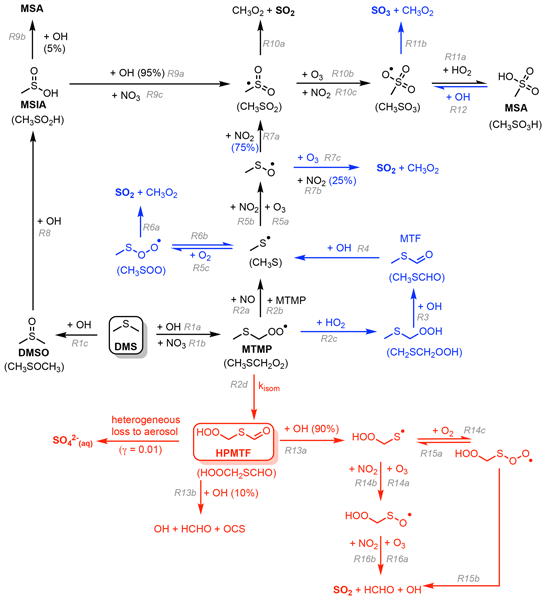
Dimethyl sulfide (DMS) is an important trace gas emitted from the ocean recognised as setting the sulfate aerosol background, but its oxidation is complex. As a result representation in chemistry-climate models is greatly simplified. We develop and compare a new mechanism to existing mechanisms via a series of global and box model experiments. Our studies show our updated DMS scheme is a significant improvement but significant variance exists between mechanisms.
Ewa M. Bednarz, Ryan Hossaini, N. Luke Abraham, and Martyn P. Chipperfield
Geosci. Model Dev., 16, 6187–6209, https://doi.org/10.5194/gmd-16-6187-2023, https://doi.org/10.5194/gmd-16-6187-2023, 2023
Short summary
Short summary
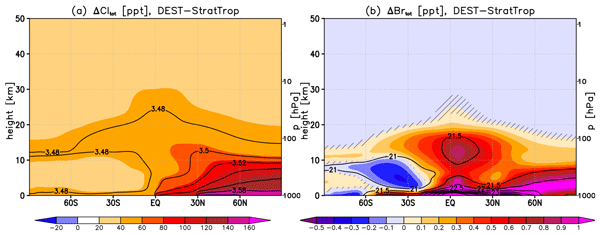
Development and performance of the new DEST chemistry scheme of UM–UKCA is described. The scheme extends the standard StratTrop scheme by including important updates to the halogen chemistry, thus allowing process-oriented studies of stratospheric ozone depletion and recovery, including impacts from both controlled long-lived ozone-depleting substances and emerging issues around uncontrolled, very short-lived substances. It will thus aid studies in support of future ozone assessment reports.
Roland Eichinger, Sebastian Rhode, Hella Garny, Peter Preusse, Petr Pisoft, Aleš Kuchař, Patrick Jöckel, Astrid Kerkweg, and Bastian Kern
Geosci. Model Dev., 16, 5561–5583, https://doi.org/10.5194/gmd-16-5561-2023, https://doi.org/10.5194/gmd-16-5561-2023, 2023
Short summary
Short summary
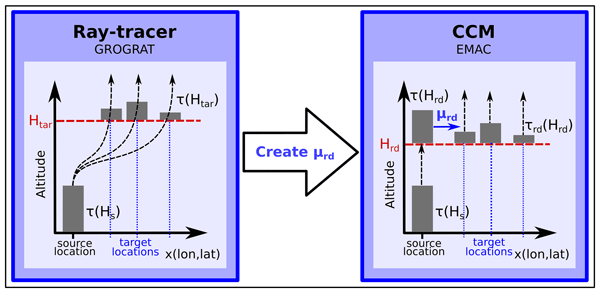
The columnar approach of gravity wave (GW) schemes results in dynamical model biases, but parallel decomposition makes horizontal GW propagation computationally unfeasible. In the global model EMAC, we approximate it by GW redistribution at one altitude using tailor-made redistribution maps generated with a ray tracer. More spread-out GW drag helps reconcile the model with observations and close the 60°S GW gap. Polar vortex dynamics are improved, enhancing climate model credibility.
Frederik Harzer, Hella Garny, Felix Ploeger, Harald Bönisch, Peter Hoor, and Thomas Birner
Atmos. Chem. Phys., 23, 10661–10675, https://doi.org/10.5194/acp-23-10661-2023, https://doi.org/10.5194/acp-23-10661-2023, 2023
Short summary
Short summary
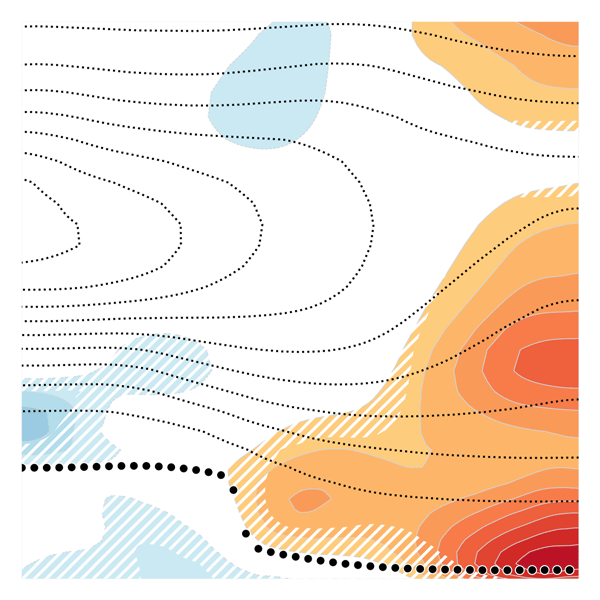
We study the statistical relation between year-by-year fluctuations in winter-mean ozone and the strength of the stratospheric polar vortex. In the latitude–pressure plane, regression analysis shows that anomalously weak polar vortex years are associated with three pronounced local ozone maxima over the polar cap relative to the winter climatology. These response maxima primarily reflect the non-trivial combination of different ozone transport processes with varying relative contributions.
Jian Guan, Susan Solomon, Sasha Madronich, and Douglas Kinnison
Atmos. Chem. Phys., 23, 10413–10422, https://doi.org/10.5194/acp-23-10413-2023, https://doi.org/10.5194/acp-23-10413-2023, 2023
Short summary
Short summary
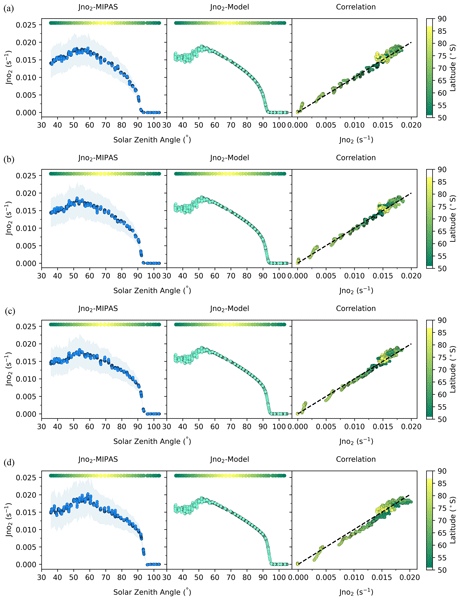
This paper provides a novel method to obtain a global and accurate photodissociation coefficient for NO2 (J(NO2)) based on satellite data, and the results are shown to be consistent with model results. The J(NO2) value decreases as the solar zenith angle increases and has a weak altitude dependence. A key finding is that the satellite-derived J(NO2) increases in the polar regions, in good agreement with model predictions, due to the effects of ice and snow on surface albedo.
Chenwei Fang, Jim M. Haywood, Ju Liang, Ben T. Johnson, Ying Chen, and Bin Zhu
Atmos. Chem. Phys., 23, 8341–8368, https://doi.org/10.5194/acp-23-8341-2023, https://doi.org/10.5194/acp-23-8341-2023, 2023
Short summary
Short summary
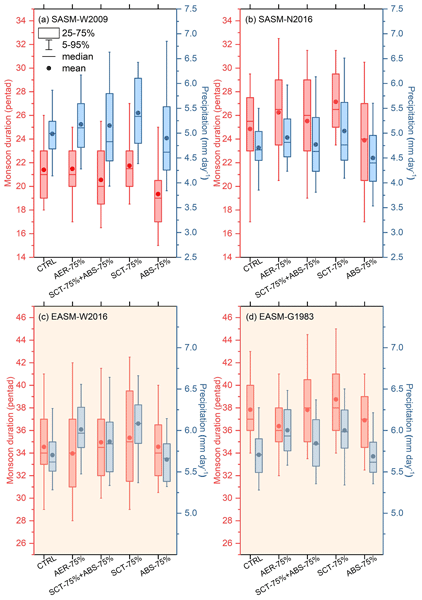
The responses of Asian summer monsoon duration and intensity to air pollution mitigation are identified given the net-zero future. We show that reducing scattering aerosols makes the rainy season longer and stronger across South Asia and East Asia but that absorbing aerosol reduction has the opposite effect. Our results hint at distinct monsoon responses to emission controls that target different aerosols.
Michael Weimer, Douglas E. Kinnison, Catherine Wilka, and Susan Solomon
Atmos. Chem. Phys., 23, 6849–6861, https://doi.org/10.5194/acp-23-6849-2023, https://doi.org/10.5194/acp-23-6849-2023, 2023
Short summary
Short summary
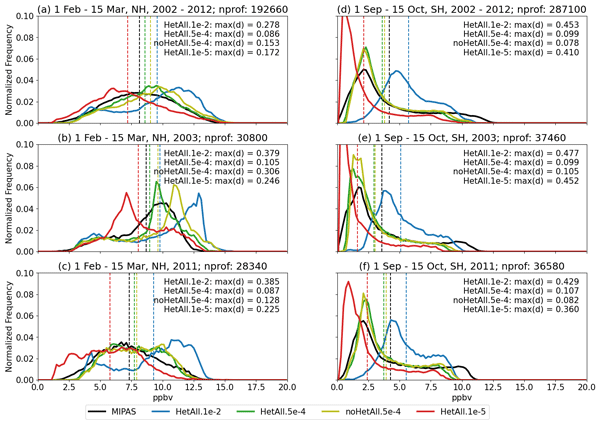
We investigate the influence of the number density of nitric acid trihydrate (NAT) particles on associated trace gases in the lower stratosphere using data from a satellite, ozonesondes and simulations by a community chemistry climate model. By comparing probability density functions between observations and the model, we find that the standard NAT number density should be reduced for future simulations with the model.

Maria Rosa Russo, Brian John Kerridge, Nathan Luke Abraham, James Keeble, Barry Graham Latter, Richard Siddans, James Weber, Paul Thomas Griffiths, John Adrian Pyle, and Alexander Thomas Archibald
Atmos. Chem. Phys., 23, 6169–6196, https://doi.org/10.5194/acp-23-6169-2023, https://doi.org/10.5194/acp-23-6169-2023, 2023
Short summary
Short summary
Tropospheric ozone is an important component of the Earth system as it can affect both climate and air quality. In this work we use observed tropospheric ozone derived from satellite observations and compare it to tropospheric ozone from model simulations. Our aim is to investigate recent changes (2005–2018) in tropospheric ozone in the North Atlantic region and to understand what factors are driving such changes.
Scott Archer-Nicholls, Rachel Allen, Nathan L. Abraham, Paul T. Griffiths, and Alex T. Archibald
Atmos. Chem. Phys., 23, 5801–5813, https://doi.org/10.5194/acp-23-5801-2023, https://doi.org/10.5194/acp-23-5801-2023, 2023
Short summary
Short summary
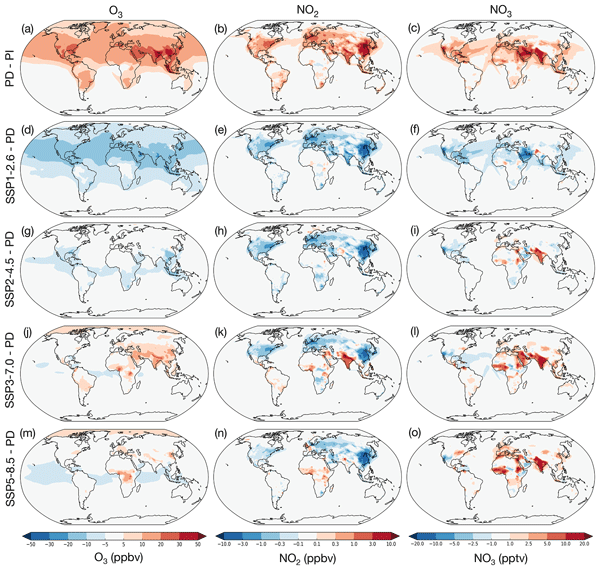
The nitrate radical is a major oxidant at nighttime, but much less is known about it than about the other oxidants ozone and OH. We use Earth system model calculations to show how the nitrate radical has changed in abundance from 1850–2014 and to 2100 under a range of different climate and emission scenarios. Depending on the emissions and climate scenario, significant increases are projected with implications for the oxidation of volatile organic compounds and the formation of fine aerosol.

Flossie Brown, Lauren Marshall, Peter H. Haynes, Rolando R. Garcia, Thomas Birner, and Anja Schmidt
Atmos. Chem. Phys., 23, 5335–5353, https://doi.org/10.5194/acp-23-5335-2023, https://doi.org/10.5194/acp-23-5335-2023, 2023
Short summary
Short summary
Large-magnitude volcanic eruptions have the potential to alter large-scale circulation patterns, such as the quasi-biennial oscillation (QBO). The QBO is an oscillation of the tropical stratospheric zonal winds between easterly and westerly directions. Using a climate model, we show that large-magnitude eruptions can delay the progression of the QBO, with a much longer delay when the shear is easterly than when it is westerly. Such delays may affect weather and transport of atmospheric gases.
Matthias Nützel, Sabine Brinkop, Martin Dameris, Hella Garny, Patrick Jöckel, Laura L. Pan, and Mijeong Park
Atmos. Chem. Phys., 22, 15659–15683, https://doi.org/10.5194/acp-22-15659-2022, https://doi.org/10.5194/acp-22-15659-2022, 2022
Short summary
Short summary
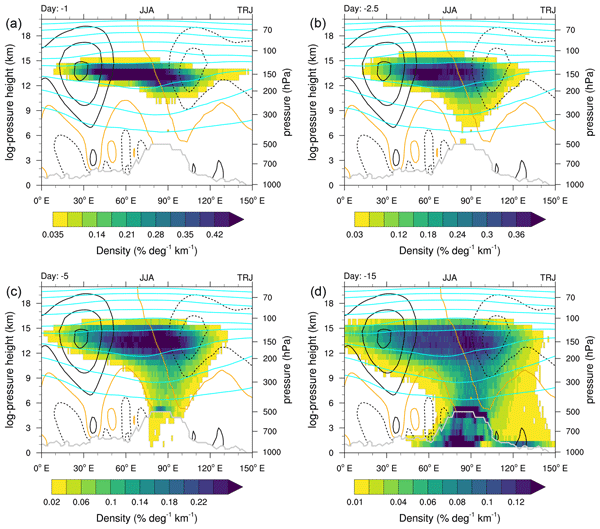
During the Asian summer monsoon season, a large high-pressure system is present at levels close to the tropopause above Asia. We analyse how air masses are transported from surface levels to this high-pressure system, which shows distinct features from the surrounding air masses. To this end, we employ multiannual data from two complementary models that allow us to analyse the climatology as well as the interannual and intraseasonal variability of these transport pathways.
Megan Jeramaz Lickley, John S. Daniel, Eric L. Fleming, Stefan Reimann, and Susan Solomon
Atmos. Chem. Phys., 22, 11125–11136, https://doi.org/10.5194/acp-22-11125-2022, https://doi.org/10.5194/acp-22-11125-2022, 2022
Short summary
Short summary
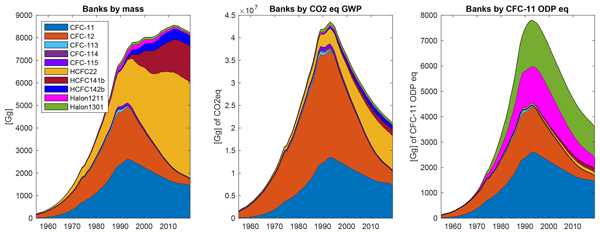
Halocarbons contained in equipment continue to be emitted after production has ceased. These
banksmust be carefully accounted for in evaluating compliance with the Montreal Protocol. We extend a Bayesian model to the suite of regulated chemicals subject to banking. We find that banks are substantially larger than previous estimates, and we identify banks by chemical and equipment type whose future emissions will contribute to global warming and delay ozone-hole recovery if left unrecovered.
Qirui Zhong, Nick Schutgens, Guido van der Werf, Twan van Noije, Kostas Tsigaridis, Susanne E. Bauer, Tero Mielonen, Alf Kirkevåg, Øyvind Seland, Harri Kokkola, Ramiro Checa-Garcia, David Neubauer, Zak Kipling, Hitoshi Matsui, Paul Ginoux, Toshihiko Takemura, Philippe Le Sager, Samuel Rémy, Huisheng Bian, Mian Chin, Kai Zhang, Jialei Zhu, Svetlana G. Tsyro, Gabriele Curci, Anna Protonotariou, Ben Johnson, Joyce E. Penner, Nicolas Bellouin, Ragnhild B. Skeie, and Gunnar Myhre
Atmos. Chem. Phys., 22, 11009–11032, https://doi.org/10.5194/acp-22-11009-2022, https://doi.org/10.5194/acp-22-11009-2022, 2022
Short summary
Short summary
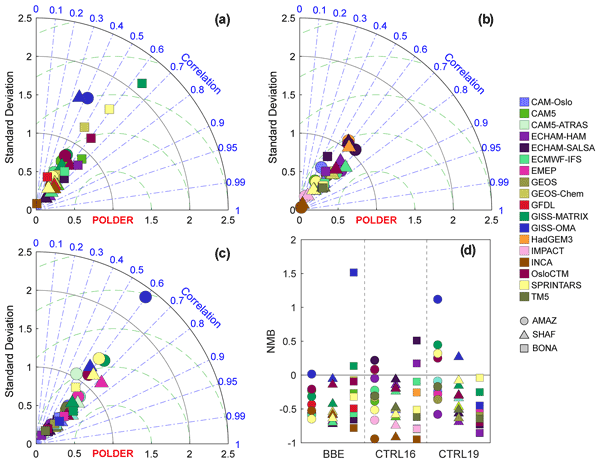
Aerosol optical depth (AOD) errors for biomass burning aerosol (BBA) are evaluated in 18 global models against satellite datasets. Notwithstanding biases in satellite products, they allow model evaluations. We observe large and diverse model biases due to errors in BBA. Further interpretations of AOD diversities suggest large biases exist in key processes for BBA which require better constraining. These results can contribute to further model improvement and development.
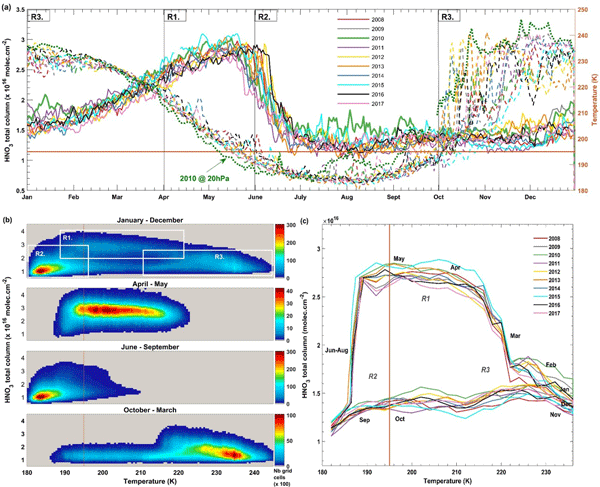
Catherine Wespes, Gaetane Ronsmans, Lieven Clarisse, Susan Solomon, Daniel Hurtmans, Cathy Clerbaux, and Pierre-François Coheur
Atmos. Chem. Phys., 22, 10993–11007, https://doi.org/10.5194/acp-22-10993-2022, https://doi.org/10.5194/acp-22-10993-2022, 2022
Short summary
Short summary
The first 10-year data record (2008–2017) of HNO3 total columns measured by the IASI-A/MetOp infrared sounder is exploited to monitor the relationship between the temperature decrease and the HNO3 loss observed each year in the Antarctic stratosphere during the polar night. We verify the recurrence of specific regimes in the cycle of IASI HNO3 and identify the day and the 50 hPa temperature (
drop temperature) corresponding to the onset of denitrification in Antarctic winter for each year.
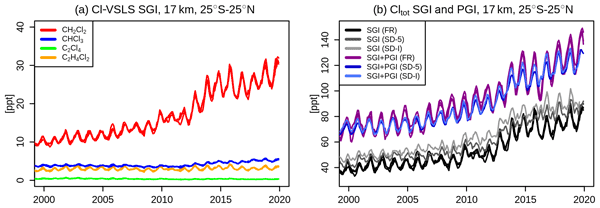
Ewa M. Bednarz, Ryan Hossaini, Martyn P. Chipperfield, N. Luke Abraham, and Peter Braesicke
Atmos. Chem. Phys., 22, 10657–10676, https://doi.org/10.5194/acp-22-10657-2022, https://doi.org/10.5194/acp-22-10657-2022, 2022
Short summary
Short summary
Atmospheric impacts of chlorinated very short-lived substances (Cl-VSLS) over the first two decades of the 21st century are assessed using the UM-UKCA chemistry–climate model. Stratospheric input of Cl from Cl-VSLS is estimated at ~130 ppt in 2019. The use of model set-up with constrained meteorology significantly increases the abundance of Cl-VSLS in the lower stratosphere relative to the free-running set-up. The growth in Cl-VSLS emissions significantly impacted recent HCl and COCl2 trends.
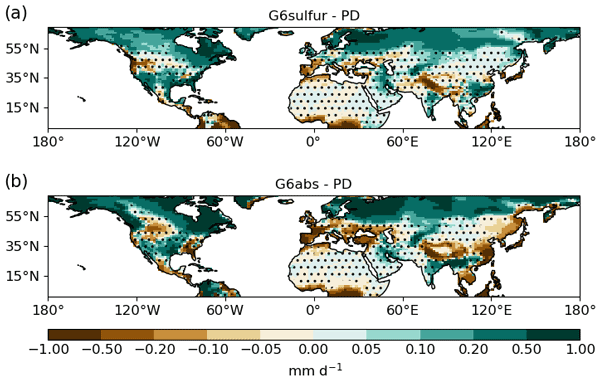
Jim M. Haywood, Andy Jones, Ben T. Johnson, and William McFarlane Smith
Atmos. Chem. Phys., 22, 6135–6150, https://doi.org/10.5194/acp-22-6135-2022, https://doi.org/10.5194/acp-22-6135-2022, 2022
Short summary
Short summary
Simulations are presented investigating the influence of moderately absorbing aerosol in the stratosphere to combat the impacts of climate change. A number of detrimental impacts are noted compared to sulfate aerosol, including (i) reduced cooling efficiency, (ii) increased deficits in global precipitation, (iii) delays in the recovery of the stratospheric ozone hole, and (iv) disruption of the stratospheric circulation and the wintertime storm tracks that impact European precipitation.
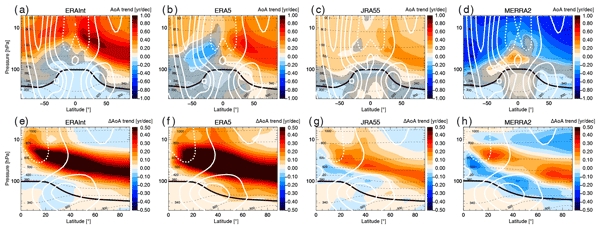
Felix Ploeger and Hella Garny
Atmos. Chem. Phys., 22, 5559–5576, https://doi.org/10.5194/acp-22-5559-2022, https://doi.org/10.5194/acp-22-5559-2022, 2022
Short summary
Short summary
We investigate hemispheric asymmetries in stratospheric circulation changes in the last 2 decades in model simulations and atmospheric observations. We find that observed trace gas changes can be explained by a structural circulation change related to a deepening circulation in the Northern Hemisphere relative to the Southern Hemisphere. As this asymmetric signal is small compared to internal variability observed circulation trends over the recent past are not in contradiction to climate models.
Davide Zanchettin, Claudia Timmreck, Myriam Khodri, Anja Schmidt, Matthew Toohey, Manabu Abe, Slimane Bekki, Jason Cole, Shih-Wei Fang, Wuhu Feng, Gabriele Hegerl, Ben Johnson, Nicolas Lebas, Allegra N. LeGrande, Graham W. Mann, Lauren Marshall, Landon Rieger, Alan Robock, Sara Rubinetti, Kostas Tsigaridis, and Helen Weierbach
Geosci. Model Dev., 15, 2265–2292, https://doi.org/10.5194/gmd-15-2265-2022, https://doi.org/10.5194/gmd-15-2265-2022, 2022
Short summary
Short summary
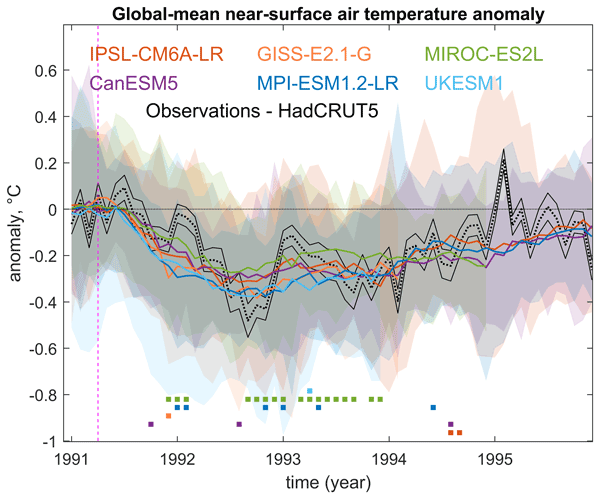
This paper provides metadata and first analyses of the volc-pinatubo-full experiment of CMIP6-VolMIP. Results from six Earth system models reveal significant differences in radiative flux anomalies that trace back to different implementations of volcanic forcing. Surface responses are in contrast overall consistent across models, reflecting the large spread due to internal variability. A second phase of VolMIP shall consider both aspects toward improved protocol for volc-pinatubo-full.

Sheena Loeffel, Roland Eichinger, Hella Garny, Thomas Reddmann, Frauke Fritsch, Stefan Versick, Gabriele Stiller, and Florian Haenel
Atmos. Chem. Phys., 22, 1175–1193, https://doi.org/10.5194/acp-22-1175-2022, https://doi.org/10.5194/acp-22-1175-2022, 2022
Short summary
Short summary
SF6-derived trends of stratospheric AoA from observations and model simulations disagree in sign. SF6 experiences chemical degradation, which we explicitly integrate in a global climate model. In our simulations, the AoA trend changes sign when SF6 sinks are considered; thus, the process has the potential to reconcile simulated with observed AoA trends. We show that the positive AoA trend is due to the SF6 sinks themselves and provide a first approach for a correction to account for SF6 loss.
Anthony C. Jones, Adrian Hill, Samuel Remy, N. Luke Abraham, Mohit Dalvi, Catherine Hardacre, Alan J. Hewitt, Ben Johnson, Jane P. Mulcahy, and Steven T. Turnock
Atmos. Chem. Phys., 21, 15901–15927, https://doi.org/10.5194/acp-21-15901-2021, https://doi.org/10.5194/acp-21-15901-2021, 2021
Short summary
Short summary
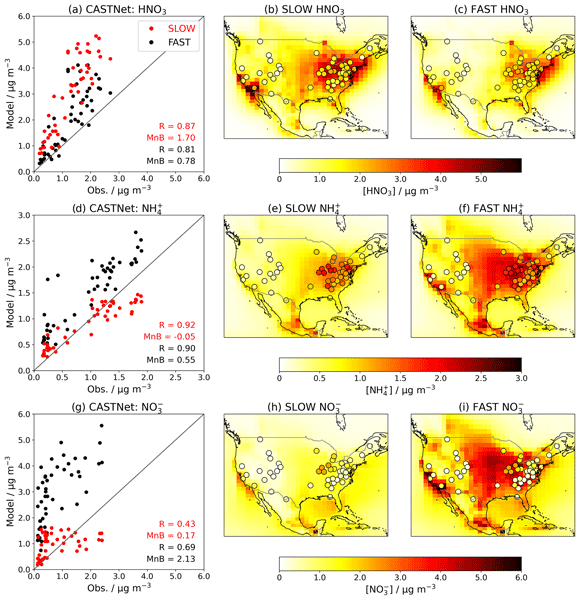
Ammonium nitrate is hard to model because it forms and evaporates rapidly. One approach is to relate its equilibrium concentration to temperature, humidity, and the amount of nitric acid and ammonia gases. Using this approach, we limit the rate at which equilibrium is reached using various condensation rates in a climate model. We show that ammonium nitrate concentrations are highly sensitive to the condensation rate. Our results will help improve the representation of nitrate in climate models.
Catherine Wilka, Susan Solomon, Doug Kinnison, and David Tarasick
Atmos. Chem. Phys., 21, 15771–15781, https://doi.org/10.5194/acp-21-15771-2021, https://doi.org/10.5194/acp-21-15771-2021, 2021
Short summary
Short summary
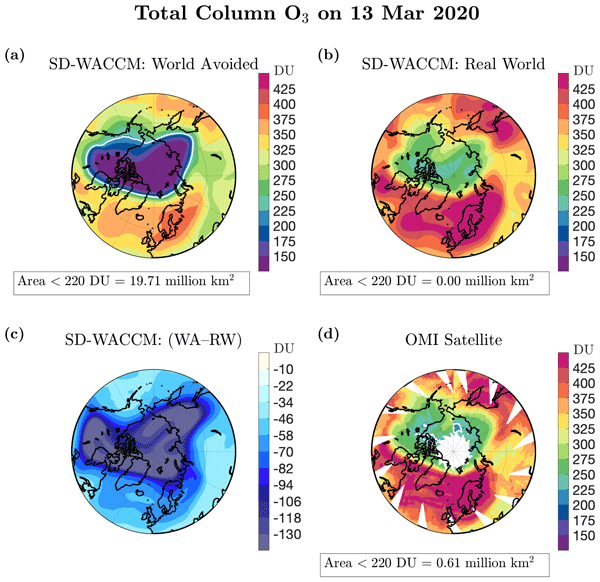
We use satellite and balloon measurements to evaluate modeled ozone loss seen in the unusually cold Arctic of 2020 in the real world and compare it to simulations of a world avoided. We show that extensive denitrification in 2020 provides an important test case for stratospheric model process representations. If the Montreal Protocol had not banned ozone-depleting substances, an Arctic ozone hole would have emerged for the first time in spring 2020 that is comparable to those in the Antarctic.
Cited articles
Aubry, T. J., Jellinek, A. M., Degruyter, W., Bonadonna, C., Radić, V., Clyne, M., and Quainoo, A.: Impact of global warming on the rise of volcanic plumes and implications for future volcanic aerosol forcing, J. Geophys. Res.-Atmos., 121, https://doi.org/10.1002/2016JD025405, 2016.
Bednarz, E. M., Hossaini, R., Chipperfield, M. P., Abraham, N. L., and Braesicke, P.: Atmospheric impacts of chlorinated very short-lived substances over the recent past – Part 1: Stratospheric chlorine budget and the role of transport, Atmos. Chem. Phys., 22, 10657–10676, https://doi.org/10.5194/acp-22-10657-2022, 2022.
Bethke, I., Outten, S., Otterå, O. H., Hawkins, E., Wagner, S., Sigl, M., and Thorne, P.: Potential volcanic impacts on future climate variability, Nat. Clim. Change, 7, 799–805, https://doi.org/10.1038/nclimate3394, 2017.
Bobrowski, N., Hönninger, G., Galle, B., and Platt, U.: Detection of bromine monoxide in a volcanic plume, Nature, 423, 273–276, https://doi.org/10.1038/nature01625, 2003.
Bodeker, G. E. and Kremser, S.: Indicators of Antarctic ozone depletion: 1979 to 2019, Atmos. Chem. Phys., 21, 5289–5300, https://doi.org/10.5194/acp-21-5289-2021, 2021.
Brenna, H., Kutterolf, S., Mills, M. J., and Krüger, K.: The potential impacts of a sulfur- and halogen-rich supereruption such as Los Chocoyos on the atmosphere and climate, Atmos. Chem. Phys., 20, 6521–6539, https://doi.org/10.5194/acp-20-6521-2020, 2020.
Copernicus Atmosphere Monitoring Service (CAMS): Large and persistent 2023 ozone hole closes, https://atmosphere.copernicus.eu/large-and-persistent-2023-ozone-hole-closes#:~:text=The 2023 ozone hole completed,longest-lived observed to date. (last access: 10 April 2026), 2023.
Carn, S.: Multi-Satellite Volcanic Sulfur Dioxide L4 Long-Term Global Database V4, Goddard Earth Science Data and Information Services Center (GES DISC) [data set], Greenbelt, MD, USA, https://doi.org/10.5067/MEASURES/SO2/DATA405, 2021.
Carn, S. A., Clarisse, L., and Prata, A. J.: Multi-decadal satellite measurements of global volcanic degassing, J. Volcanol. Geoth. Res., 311, 99–134, https://doi.org/10.1016/j.jvolgeores.2016.01.002, 2016.
Chim, M. M.: Research data supporting “Future volcanic eruptions may delay the recovery of lower stratospheric ozone over Antarctica and Southern Hemisphere mid-latitudes”, Zenodo [data set], https://doi.org/10.5281/zenodo.15838168, 2025.
Chim, M. M., Aubry, T. J., Abraham, N. L., Marshall, L., Mulcahy, J., Walton, J., and Schmidt, A.: Climate Projections Very Likely Underestimate Future Volcanic Forcing and Its Climatic Effects, Geophys. Res. Lett., 50, e2023GL103743, https://doi.org/10.1029/2023GL103743, 2023.
Chipperfield, M. P. and Bekki, S.: Opinion: Stratospheric ozone – depletion, recovery and new challenges, Atmos. Chem. Phys., 24, 2783–2802, https://doi.org/10.5194/acp-24-2783-2024, 2024.
De Laat, A. T. J., Stein Zweers, D. C., Boers, R., and Tuinder, O. N. E.: A solar escalator: Observational evidence of the self‐lifting of smoke and aerosols by absorption of solar radiation in the February 2009 Australian Black Saturday plume, J. Geophys. Res., 117, 2011JD017016, https://doi.org/10.1029/2011JD017016, 2012.
Dhomse, S. S. and Chipperfield, M. P.: Using machine learning to construct TOMCAT model and occultation measurement-based stratospheric methane (TCOM-CH4) and nitrous oxide (TCOM-N2O) profile data sets, Earth Syst. Sci. Data, 15, 5105–5120, https://doi.org/10.5194/essd-15-5105-2023, 2023.
Dhomse, S. S., Emmerson, K. M., Mann, G. W., Bellouin, N., Carslaw, K. S., Chipperfield, M. P., Hommel, R., Abraham, N. L., Telford, P., Braesicke, P., Dalvi, M., Johnson, C. E., O'Connor, F., Morgenstern, O., Pyle, J. A., Deshler, T., Zawodny, J. M., and Thomason, L. W.: Aerosol microphysics simulations of the Mt. Pinatubo eruption with the UM-UKCA composition-climate model, Atmos. Chem. Phys., 14, 11221–11246, https://doi.org/10.5194/acp-14-11221-2014, 2014.
Dhomse, S. S., Arosio, C., Feng, W., Rozanov, A., Weber, M., and Chipperfield, M. P.: ML-TOMCAT: machine-learning-based satellite-corrected global stratospheric ozone profile data set from a chemical transport model, Earth Syst. Sci. Data, 13, 5711–5729, https://doi.org/10.5194/essd-13-5711-2021, 2021.
Dhomse, S. S., Kinnison, D., Chipperfield, M. P., Salawitch, R. J., Cionni, I., Hegglin, M. I., Abraham, N. L., Akiyoshi, H., Archibald, A. T., Bednarz, E. M., Bekki, S., Braesicke, P., Butchart, N., Dameris, M., Deushi, M., Frith, S., Hardiman, S. C., Hassler, B., Horowitz, L. W., Hu, R.-M., Jöckel, P., Josse, B., Kirner, O., Kremser, S., Langematz, U., Lewis, J., Marchand, M., Lin, M., Mancini, E., Marécal, V., Michou, M., Morgenstern, O., O'Connor, F. M., Oman, L., Pitari, G., Plummer, D. A., Pyle, J. A., Revell, L. E., Rozanov, E., Schofield, R., Stenke, A., Stone, K., Sudo, K., Tilmes, S., Visioni, D., Yamashita, Y., and Zeng, G.: Estimates of ozone return dates from Chemistry-Climate Model Initiative simulations, Atmos. Chem. Phys., 18, 8409–8438, https://doi.org/10.5194/acp-18-8409-2018, 2018.
Dorf, M., Butz, A., Camy-Peyret, C., Chipperfield, M. P., Kritten, L., and Pfeilsticker, K.: Bromine in the tropical troposphere and stratosphere as derived from balloon-borne BrO observations, Atmos. Chem. Phys., 8, 7265–7271, https://doi.org/10.5194/acp-8-7265-2008, 2008.
Evan, S., Brioude, J., Rosenlof, K. H., Gao, R.-S., Portmann, R. W., Zhu, Y., Volkamer, R., Lee, C. F., Metzger, J.-M., Lamy, K., Walter, P., Alvarez, S. L., Flynn, J. H., Asher, E., Todt, M., Davis, S. M., Thornberry, T., Vömel, H., Wienhold, F. G., Stauffer, R. M., Millán, L., Santee, M. L., Froidevaux, L., and Read, W. G.: Rapid ozone depletion after humidification of the stratosphere by the Hunga Tonga Eruption, Science, 382, eadg2551, https://doi.org/10.1126/science.adg2551, 2023.
Eyring, V., Arblaster, J. M., Cionni, I., Sedláček, J., Perlwitz, J., Young, P. J., Bekki, S., Bergmann, D., Cameron-Smith, P., Collins, W. J., Faluvegi, G., Gottschaldt, K. -D., Horowitz, L. W., Kinnison, D. E., Lamarque, J.-F., Marsh, D. R., Saint-Martin, D., Shindell, D. T., Sudo, K., Szopa, S., and Watanabe, S.: Long-term ozone changes and associated climate impacts in CMIP5 simulations, J. Geophys. Res.-Atmos., 118, 5029–5060, https://doi.org/10.1002/jgrd.50316, 2013.
Fahey, D. W., Kawa, S. R., Woodbridge, E. L., Tin, P., Wilson, J. C., Jonsson, H. H., Dye, J. E., Baumgardner, D., Borrmann, S., Toohey, D. W., Avallone, L. M., Proffitt, M. H., Margitan, J., Loewenstein, M., Podolske, J. R., Salawitch, R. J., Wofsy, S. C., Ko, M. K. W., Anderson, D. E., Schoeber, M. R., and Chan, K. R.: In situ measurements constraining the role of sulphate aerosols in mid-latitude ozone depletion, Nature, 363, 509–514, https://doi.org/10.1038/363509a0, 1993.
Fleming, E. L., Newman, P. A., Liang, Q., and Oman, L. D.: Stratospheric Temperature and Ozone Impacts of the Hunga Tonga-Hunga Ha'apai Water Vapor Injection, J. Geophys. Res.-Atmos., 129, e2023JD039298, https://doi.org/10.1029/2023JD039298, 2024.
Hall, R. J., Mitchell, D. M., Seviour, W. J. M., and Wright, C. J.: Persistent Model Biases in the CMIP6 Representation of Stratospheric Polar Vortex Variability, J. Geophys. Res.-Atmos., 126, e2021JD034759, https://doi.org/10.1029/2021JD034759, 2021.
Ivy, D. J., Solomon, S., Kinnison, D., Mills, M. J., Schmidt, A., and Neely, R. R.: The influence of the Calbuco eruption on the 2015 Antarctic ozone hole in a fully coupled chemistry-climate model, Geophys. Res. Lett., 44, 2556–2561, https://doi.org/10.1002/2016GL071925, 2017.
Keeble, J., Hassler, B., Banerjee, A., Checa-Garcia, R., Chiodo, G., Davis, S., Eyring, V., Griffiths, P. T., Morgenstern, O., Nowack, P., Zeng, G., Zhang, J., Bodeker, G., Burrows, S., Cameron-Smith, P., Cugnet, D., Danek, C., Deushi, M., Horowitz, L. W., Kubin, A., Li, L., Lohmann, G., Michou, M., Mills, M. J., Nabat, P., Olivié, D., Park, S., Seland, Ø., Stoll, J., Wieners, K.-H., and Wu, T.: Evaluating stratospheric ozone and water vapour changes in CMIP6 models from 1850 to 2100, Atmos. Chem. Phys., 21, 5015–5061, https://doi.org/10.5194/acp-21-5015-2021, 2021.
Klobas, E. J., Wilmouth, D. M., Weisenstein, D. K., Anderson, J. G., and Salawitch, R. J.: Ozone depletion following future volcanic eruptions, Geophys. Res. Lett., 44, 7490–7499, https://doi.org/10.1002/2017GL073972, 2017.
Kovilakam, M., Thomason, L. W., Ernest, N., Rieger, L., Bourassa, A., and Millán, L.: The Global Space-based Stratospheric Aerosol Climatology (version 2.0): 1979–2018, Earth Syst. Sci. Data, 12, 2607–2634, https://doi.org/10.5194/essd-12-2607-2020, 2020.
Laube, J. C., Engel, A., Bönisch, H., Möbius, T., Worton, D. R., Sturges, W. T., Grunow, K., and Schmidt, U.: Contribution of very short-lived organic substances to stratospheric chlorine and bromine in the tropics – a case study, Atmos. Chem. Phys., 8, 7325–7334, https://doi.org/10.5194/acp-8-7325-2008, 2008.
Lee, A. M., Jones, R. L., Kilbane-Dawe, I., and Pyle, J. A.: Diagnosing ozone loss in the extratropical lower stratosphere, J. Geophys. Res., 107, https://doi.org/10.1029/2001JD000538, 2002.
Mastin, L. G.: A user-friendly one-dimensional model for wet volcanic plumes, Geochem. Geophy. Geosy., 8, 2006GC001455, https://doi.org/10.1029/2006GC001455, 2007.
Mastin, L. G.: Testing the accuracy of a 1-D volcanic plume model in estimating mass eruption rate, J. Geophys. Res.-Atmos., 119, 2474–2495, https://doi.org/10.1002/2013JD020604, 2014.
Meinshausen, M., Nicholls, Z. R. J., Lewis, J., Gidden, M. J., Vogel, E., Freund, M., Beyerle, U., Gessner, C., Nauels, A., Bauer, N., Canadell, J. G., Daniel, J. S., John, A., Krummel, P. B., Luderer, G., Meinshausen, N., Montzka, S. A., Rayner, P. J., Reimann, S., Smith, S. J., van den Berg, M., Velders, G. J. M., Vollmer, M. K., and Wang, R. H. J.: The shared socio-economic pathway (SSP) greenhouse gas concentrations and their extensions to 2500, Geosci. Model Dev., 13, 3571–3605, https://doi.org/10.5194/gmd-13-3571-2020, 2020.
Mills, M. J., Schmidt, A., Easter, R., Solomon, S., Kinnison, D. E., Ghan, S. J., Neely, R. R., Marsh, D. R., Conley, A., Bardeen, C. G., and Gettelman, A.: Global volcanic aerosol properties derived from emissions, 1990–2014, using CESM1 (WACCM), J. Geophys. Res.-Atmos., 121, 2332–2348, https://doi.org/10.1002/2015JD024290, 2016.
Ming, A., Winton, V. H. L., Keeble, J., Abraham, N. L., Dalvi, M. C., Griffiths, P., Caillon, N., Jones, A. E., Mulvaney, R., Savarino, J., Frey, M. M., and Yang, X.: Stratospheric Ozone Changes From Explosive Tropical Volcanoes: Modeling and Ice Core Constraints, J. Geophys. Res.-Atmos., 125, e2019JD032290, https://doi.org/10.1029/2019JD032290, 2020.
Mulcahy, J. P., Jones, C. G., Rumbold, S. T., Kuhlbrodt, T., Dittus, A. J., Blockley, E. W., Yool, A., Walton, J., Hardacre, C., Andrews, T., Bodas-Salcedo, A., Stringer, M., de Mora, L., Harris, P., Hill, R., Kelley, D., Robertson, E., and Tang, Y.: UKESM1.1: development and evaluation of an updated configuration of the UK Earth System Model, Geosci. Model Dev., 16, 1569–1600, https://doi.org/10.5194/gmd-16-1569-2023, 2023.
Naik, V., Horowitz, L. W., Daniel Schwarzkopf, M., and Lin, M.: Impact of volcanic aerosols on stratospheric ozone recovery, J. Geophys. Res.-Atmos., 122, 9515–9528, https://doi.org/10.1002/2016JD025808, 2017.
NASA Ozone Watch, https://ozonewatch.gsfc.nasa.gov/meteorology/SH.html (last access: 10 April 2026), 2024.
O'Neill, B. C., Tebaldi, C., van Vuuren, D. P., Eyring, V., Friedlingstein, P., Hurtt, G., Knutti, R., Kriegler, E., Lamarque, J.-F., Lowe, J., Meehl, G. A., Moss, R., Riahi, K., and Sanderson, B. M.: The Scenario Model Intercomparison Project (ScenarioMIP) for CMIP6, Geosci. Model Dev., 9, 3461–3482, https://doi.org/10.5194/gmd-9-3461-2016, 2016.
Pyle, D. M. and Mather, T. A.: Halogens in igneous processes and their fluxes to the atmosphere and oceans from volcanic activity: A review, Chem. Geol., 263, 110–121, https://doi.org/10.1016/j.chemgeo.2008.11.013, 2009.
Sala, S., Bönisch, H., Keber, T., Oram, D. E., Mills, G., and Engel, A.: Deriving an atmospheric budget of total organic bromine using airborne in situ measurements from the western Pacific area during SHIVA, Atmos. Chem. Phys., 14, 6903–6923, https://doi.org/10.5194/acp-14-6903-2014, 2014.
Santee, M. L., Manney, G. L., Lambert, A., Millán, L. F., Livesey, N. J., Pitts, M. C., Froidevaux, L., Read, W. G., and Fuller, R. A.: The Influence of Stratospheric Hydration From the Hunga Eruption on Chemical Processing in the 2023 Antarctic Vortex, J. Geophys. Res.-Atmos., 129, e2023JD040687, https://doi.org/10.1029/2023JD040687, 2024.
Sellar, A. A., Jones, C. G., Mulcahy, J. P., Tang, Y., Yool, A., Wiltshire, A., O'Connor, F. M., Stringer, M., Hill, R., Palmieri, J., Woodward, S., De Mora, L., Kuhlbrodt, T., Rumbold, S. T., Kelley, D. I., Ellis, R., Johnson, C. E., Walton, J., Abraham, N. L., Andrews, M. B., Andrews, T., Archibald, A. T., Berthou, S., Burke, E., Blockley, E., Carslaw, K., Dalvi, M., Edwards, J., Folberth, G. A., Gedney, N., Griffiths, P. T., Harper, A. B., Hendry, M. A., Hewitt, A. J., Johnson, B., Jones, A., Jones, C. D., Keeble, J., Liddicoat, S., Morgenstern, O., Parker, R. J., Predoi, V., Robertson, E., Siahaan, A., Smith, R. S., Swaminathan, R., Woodhouse, M. T., Zeng, G., and Zerroukat, M.: UKESM1: Description and Evaluation of the U.K. Earth System Model, J. Adv. Model Earth Sy., 11, 4513–4558, https://doi.org/10.1029/2019MS001739, 2019.
Sigl, M., Toohey, M., McConnell, J. R., Cole-Dai, J., and Severi, M.: Volcanic stratospheric sulfur injections and aerosol optical depth during the Holocene (past 11 500 years) from a bipolar ice-core array, Earth Syst. Sci. Data, 14, 3167–3196, https://doi.org/10.5194/essd-14-3167-2022, 2022.
Solomon, S., Ivy, D. J., Kinnison, D., Mills, M. J., Neely, R. R., and Schmidt, A.: Emergence of healing in the Antarctic ozone layer, Science, 353, 269–274, https://doi.org/10.1126/science.aae0061, 2016.
Solomon, S., Dube, K., Stone, K., Yu, P., Kinnison, D., Toon, O. B., Strahan, S. E., Rosenlof, K. H., Portmann, R., Davis, S., Randel, W., Bernath, P., Boone, C., Bardeen, C. G., Bourassa, A., Zawada, D., and Degenstein, D.: On the stratospheric chemistry of midlatitude wildfire smoke, P. Natl. Acad. Sci. USA, 119, e2117325119, https://doi.org/10.1073/pnas.2117325119, 2022.
Staunton-Sykes, J., Aubry, T. J., Shin, Y. M., Weber, J., Marshall, L. R., Luke Abraham, N., Archibald, A., and Schmidt, A.: Co-emission of volcanic sulfur and halogens amplifies volcanic effective radiative forcing, Atmos. Chem. Phys., 21, 9009–9029, https://doi.org/10.5194/acp-21-9009-2021, 2021.
Stone, K. A., Solomon, S., Kinnison, D. E., and Mills, M. J.: On Recent Large Antarctic Ozone Holes and Ozone Recovery Metrics, Geophys. Res. Lett., 48, e2021GL095232, https://doi.org/10.1029/2021GL095232, 2021.
Sturges, W. T., Oram, D. E., Carpenter, L. J., Penkett, S. A., and Engel, A.: Bromoform as a source of stratospheric bromine, Geophys. Res. Lett., 27, 2081–2084, https://doi.org/10.1029/2000GL011444, 2000.
Villamayor, J., Iglesias-Suarez, F., Cuevas, C. A., Fernandez, R. P., Li, Q., Abalos, M., Hossaini, R., Chipperfield, M. P., Kinnison, D. E., Tilmes, S., Lamarque, J.-F., and Saiz-Lopez, A.: Very short-lived halogens amplify ozone depletion trends in the tropical lower stratosphere, Nat. Clim. Change, 13, 554–560, https://doi.org/10.1038/s41558-023-01671-y, 2023.
Wales, P. A., Salawitch, R. J., Nicely, J. M., Anderson, D. C., Canty, T. P., Baidar, S., Dix, B., Koenig, T. K., Volkamer, R., Chen, D., Huey, L. G., Tanner, D. J., Cuevas, C. A., Fernandez, R. P., Kinnison, D. E., Lamarque, J., Saiz‐Lopez, A., Atlas, E. L., Hall, S. R., Navarro, M. A., Pan, L. L., Schauffler, S. M., Stell, M., Tilmes, S., Ullmann, K., Weinheimer, A. J., Akiyoshi, H., Chipperfield, M. P., Deushi, M., Dhomse, S. S., Feng, W., Graf, P., Hossaini, R., Jöckel, P., Mancini, E., Michou, M., Morgenstern, O., Oman, L. D., Pitari, G., Plummer, D. A., Revell, L. E., Rozanov, E., Saint‐Martin, D., Schofield, R., Stenke, A., Stone, K. A., Visioni, D., Yamashita, Y., and Zeng, G.: Stratospheric Injection of Brominated Very Short‐Lived Substances: Aircraft Observations in the Western Pacific and Representation in Global Models, J. Geophys. Res.-Atmos., 123, 5690–5719, https://doi.org/10.1029/2017JD027978, 2018.
WMO: Scientific assessment of ozone depletion: Global Ozone Research and Monitoring Project – GAW Report no. 278, World Meteorological Organization, Geneva, Switzerland, ISBN: 978-9914-733-97-6, 2022.
Yu, P., Davis, S. M., Toon, O. B., Portmann, R. W., Bardeen, C. G., Barnes, J. E., Telg, H., Maloney, C., and Rosenlof, K. H.: Persistent Stratospheric Warming Due to 2019–2020 Australian Wildfire Smoke, Geophys. Res. Lett., 48, e2021GL092609, https://doi.org/10.1029/2021GL092609, 2021.
Zhou, X., Dhomse, S. S., Feng, W., Mann, G., Heddell, S., Pumphrey, H., Kerridge, B. J., Latter, B., Siddans, R., Ventress, L., Querel, R., Smale, P., Asher, E., Hall, E. G., Bekki, S., and Chipperfield, M. P.: Antarctic Vortex Dehydration in 2023 as a Substantial Removal Pathway for Hunga Tonga-Hunga Ha'apai Water Vapor, Geophys. Res. Lett., 51, e2023GL107630, https://doi.org/10.1029/2023GL107630, 2024.
Zhu, Y., Toon, O. B., Kinnison, D., Harvey, V. L., Mills, M. J., Bardeen, C. G., Pitts, M., Bègue, N., Renard, J., Berthet, G., and Jégou, F.: Stratospheric Aerosols, Polar Stratospheric Clouds, and Polar Ozone Depletion After the Mount Calbuco Eruption in 2015, J. Geophys. Res.-Atmos., 123, https://doi.org/10.1029/2018JD028974, 2018.
Zhu, Y., Bardeen, C. G., Tilmes, S., Mills, M. J., Wang, X., Harvey, V. L., Taha, G., Kinnison, D., Portmann, R. W., Yu, P., Rosenlof, K. H., Avery, M., Kloss, C., Li, C., Glanville, A. S., Millán, L., Deshler, T., Krotkov, N., and Toon, O. B.: Perturbations in stratospheric aerosol evolution due to the water-rich plume of the 2022 Hunga-Tonga eruption, Communications Earth & Environment, 3, 248, https://doi.org/10.1038/s43247-022-00580-w, 2022.
Zhuo, Z., Wang, X., Zhu, Y., Yu, W., Bednarz, E. M., Fleming, E., Colarco, P. R., Watanabe, S., Plummer, D., Stenchikov, G., Randel, W., Bourassa, A., Aquila, V., Sekiya, T., Schoeberl, M. R., Tilmes, S., Zhang, J., Kushner, P. J., and Pausata, F. S. R.: Comparing multi-model ensemble simulations with observations and decadal projections of upper atmospheric variations following the Hunga eruption, Atmos. Chem. Phys., 25, 13161–13176, https://doi.org/10.5194/acp-25-13161-2025, 2025.
Short summary
Sulfate aerosols from explosive eruptions can provide surfaces for chemical reactions destroying ozone. Assessing the effects of volcanic sulfate aerosols is crucial for understanding future ozone recovery. We find sporadic eruptions can induce a small delay in stratospheric ozone recovery by a few years over Antarctica and Southern Hemisphere mid-latitudes. Our results highlight the importance to continuously monitor atmospheric composition and processes to understand changes in ozone recovery.
Sulfate aerosols from explosive eruptions can provide surfaces for chemical reactions destroying...


Altmetrics
Final-revised paper
Preprint