
Articles | Volume 26, issue 7
https://doi.org/10.5194/acp-26-5169-2026
© Author(s) 2026. This work is distributed under
the Creative Commons Attribution 4.0 License.
the Creative Commons Attribution 4.0 License.
https://doi.org/10.5194/acp-26-5169-2026
© Author(s) 2026. This work is distributed under
the Creative Commons Attribution 4.0 License.
the Creative Commons Attribution 4.0 License.
Research article
| 
17 Apr 2026
Research article |
| 17 Apr 2026
| 17 Apr 2026
Distinct drivers of recent seasonal precipitation increase over Central Asia: roles of anthropogenic aerosols and greenhouse gases
Jianing Guo
State Key Laboratory of Loess Science, Institute of Earth Environment, Chinese Academy of Sciences, Xi'an, China
University of Chinese Academy of Sciences, Beijing, China

State Key Laboratory of Loess Science, Institute of Earth Environment, Chinese Academy of Sciences, Xi'an, China
Gunnar Myhre
CICERO – Center for International Climate Research, Oslo, Norway
Drew Shindell
Nicholas School of the Environment, Duke University, Durham, NC, USA
Alf Kirkevåg
Norwegian Meteorological Institute, Oslo, Norway
Trond Iversen
Norwegian Meteorological Institute, Oslo, Norway
Department of Geosciences, University of Oslo, Oslo, Norway
Apostolos Voulgarakis
Department of Physics, Imperial College London, South Kensington Campus, London, UK
School of Environmental Engineering, Technical University of Crete, Chania, Crete, Greece
Toshihiko Takemura
Climate Change Science Section, Kyushu University, Fukuoka, Japan
Ke Shang
School of Civil Aviation, Xihang University, Xi'an, China
Xinzhou Li
State Key Laboratory of Loess Science, Institute of Earth Environment, Chinese Academy of Sciences, Xi'an, China
Zhengguo Shi
State Key Laboratory of Loess Science, Institute of Earth Environment, Chinese Academy of Sciences, Xi'an, China
Yangang Liu
Environmental and Climate Sciences Department, Brookhaven National Laboratory, Upton, NY, USA
Xiaodong Liu
State Key Laboratory of Loess Science, Institute of Earth Environment, Chinese Academy of Sciences, Xi'an, China
University of Chinese Academy of Sciences, Beijing, China
Hong Yan
State Key Laboratory of Loess Science, Institute of Earth Environment, Chinese Academy of Sciences, Xi'an, China
Related authors
He Fu, Jianing Guo, Chenguang Deng, Heng Liu, Jie Wu, Zhengguo Shi, Cailing Wang, and Xiaoning Xie
Geosci. Model Dev. Discuss., https://doi.org/10.5194/gmd-2023-158, https://doi.org/10.5194/gmd-2023-158, 2023
Preprint withdrawn
Short summary
Short summary
A Residual in Residual Dense Block based network model (RRDBNet) is designed for statistical downscaling of precipitation in the middle reaches of the Yellow River. RRDBNet has a good performance on precipitation simulations, well reproducing the spatial-temporal characteristics of high-resolution precipitation. RRDBNet has substantial improvements in extreme precipitation compared with generalized linear regression model and two deep learning-based models.
Chrysanthi Elpida Zervaki, Manolis Grillakis, and Apostolos Voulgarakis
EGUsphere, https://doi.org/10.5194/egusphere-2026-4576, https://doi.org/10.5194/egusphere-2026-4576, 2026
This preprint is open for discussion and under review for Natural Hazards and Earth System Sciences (NHESS).
Short summary
Short summary
This study compares burned area estimates from satellite MODIS MCD64A1 with Hellenic Fire Service records for 2002–2023. Results show strong overall agreement, though satellites overestimate burned areas by 41% overall, which drops to 12% for natural land covers due to cropland burning detections in specific regions. Satellites also underdetect small fires, proving that combining satellite data with ground records is vital for effective fire management.
Dongchul Kim, Mian Chin, Hongbin Yu, Peter R. Colarco, Toshihiko Takemura, Paolo Tuccella, Paul Ginoux, Xiaohong Liu, Yang Shi, Hitoshi Matsui, Zhibo Zhang, Jianyu Zheng, Jasper F. Kok, Sophie Vandenbussche, Lieven Clarisse, Simon Whitburn, Virginie Capelle, Claudia Di Biagio, Paola Formenti, and Michael Schulz
EGUsphere, https://doi.org/10.5194/egusphere-2026-5264, https://doi.org/10.5194/egusphere-2026-5264, 2026
This preprint is open for discussion and under review for Atmospheric Chemistry and Physics (ACP).
Short summary
Short summary
The present AeroCom–AeroSat study addresses the gaps in the current state of DOD10 using satellite products, model simulations, an observation-constrained database. The analysis reveals substantial differences in DOD10 across satellite products and models, sometimes exceeding a factor of ten. Analysis with the laboratory measurements highlight the potential of combining shortwave and longwave remote sensing to advance dust compositions analysis through their distinct spectral sensitivities.
Jianyu Zheng, Hongbin Yu, Chamara Rajapakse, Mian Chin, Michael Schulz, Yves Balkanski, Susanne E. Bauer, Huisheng Bian, Peter Colarco, Dongchul Kim, Ramiro Checa-Garcia, Yevgeny Derimian, Oleg Dubovik, Paul Ginoux, Zak Kipling, Jasper F. Kok, Harri Kokkola, Philippe Le Sager, Lei Li, Marianne Tronstad Lund, Gunnar Myhre, Hitoshi Matsui, Dirk J. L. Olivie, Samuel Remy, Oyvind Seland, Qianqian Song, Toshihiko Takemura, Qian Tan, Kostas Tsigaridis, Twan van Noije, David Winker, Bin Xie, Hua Zhang, Xindan Zhang, and Zhibo Zhang
EGUsphere, https://doi.org/10.5194/egusphere-2026-4322, https://doi.org/10.5194/egusphere-2026-4322, 2026
This preprint is open for discussion and under review for Atmospheric Chemistry and Physics (ACP).
Short summary
Short summary
Winds carry vast amounts of Saharan dust across the Atlantic Ocean, influencing climate, air quality, and ocean ecosystems. Within the Aerosol Comparisons between Observations and Models (AeroCom) project, we evaluated 17 numerical models against observations. Models deposit dust too quickly, so too little reaches the Caribbean. Better simulations require emitting larger particles, treating their non-spherical shapes, and capturing processes that keep dust aloft during transport.
Ragnhild Bieltvedt Skeie, Terje K. Berntsen, Ada Gjermundsen, Ragnar Bang Huseby, Gunnar Myhre, Dirk Olivié, and Trude Storelvmo
EGUsphere, https://doi.org/10.5194/egusphere-2026-4634, https://doi.org/10.5194/egusphere-2026-4634, 2026
This preprint is open for discussion and under review for Earth System Dynamics (ESD).
Short summary
Short summary
Climate sensitivity is a key quantity in climate science. We tested an observation-based method for estimating climate sensitivity by replacing observations with historical climate model simulations. Estimates varied substantially among simulations of the same model where only the initial conditions differed. Since the historical climate is only one realization of the Earth’s climate, this highlights that natural variability is an important source of uncertainty in observation-based estimates.
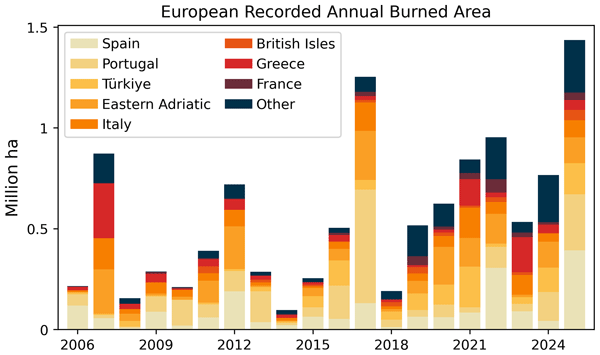
Theodore R. Keeping, Mariam Zachariah, Olivia Haas, Manolis Grillakis, Clair Barnes, Gareth D. Clay, Bikem Ekberzade, Orjeta Jaupaj, Andreia Ribeiro, Ricardo Trigo, Apostolos Voulgarakis, and Friederike E. L. Otto
Nat. Hazards Earth Syst. Sci., 26, 3761–3813, https://doi.org/10.5194/nhess-26-3761-2026, https://doi.org/10.5194/nhess-26-3761-2026, 2026
Short summary
Short summary
2025 broke wildfire records across European regions. For five regions, we identify the weather, vegetation and management conditions that drove these extreme fires. We found the change in the likelihood and intensity of similar driving “fire weather”, from before human-caused warming to present, and from now to a likely future climate. Summer drought and hot, dry and windy conditions have shifted rapidly, with 2025’s conditions no longer rare in some regions despite devastating fires.
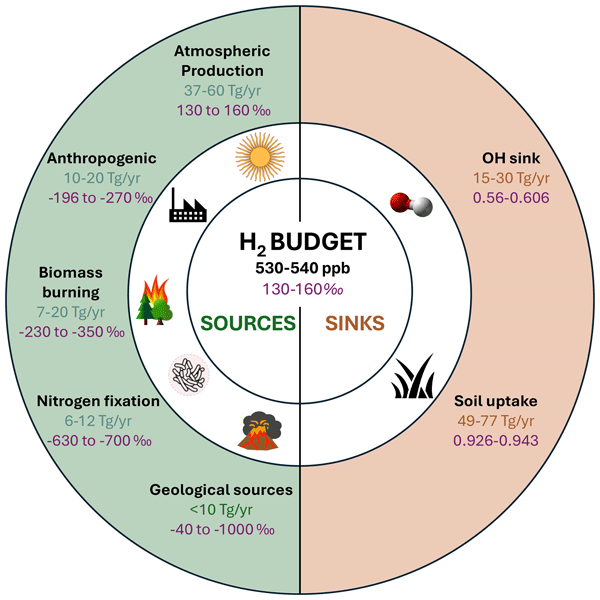
Srinath Krishnan, Ragnhild Bieltvedt Skeie, Øivind Hodnebrog, Gunnar Myhre, Maria Sand, Marit Sandstad, Hannah Bryant, Didier A. Hauglustaine, Fabien Paulot, Michael Prather, and David Stevenson
Atmos. Chem. Phys., 26, 9509–9539, https://doi.org/10.5194/acp-26-9509-2026, https://doi.org/10.5194/acp-26-9509-2026, 2026
Short summary
Short summary
Hydrogen (H2) is an indirect greenhouse gas that can affect climate through chemical reactions in the atmosphere. To better understand this impact, it is important to constrain the sources and sinks of hydrogen. Using a suite of three-dimensional and one-dimensional models, we find that atmospheric production of hydrogen is 37–60 Tg/yr and that the geological source of H2 is much smaller than suggested. More field and isotopic measurements are needed to improve these estimates.

João C. M. Teixeira, Chantelle Burton, Douglas I. Kelley, Gerd A. Folberth, Fiona M. O'Connor, Richard A. Betts, and Apostolos Voulgarakis
Earth Syst. Dynam., 17, 739–767, https://doi.org/10.5194/esd-17-739-2026, https://doi.org/10.5194/esd-17-739-2026, 2026
Short summary
Short summary
Burned area has declined globally since the late 1990s, especially in tropical savannas, yet many climate models miss this trend because they poorly represent human fire use and suppression. We tested whether adding a simple link to human development improves a fire model. This reduced large regional errors and better captured downward trends in several areas, though it increased global underestimation and reduced variability. Human influence is key, but simple assumptions have trade-offs.
Rafaila-Nikola Mourgela, Iulian-Alin Rosu, and Apostolos Voulgarakis
EGUsphere, https://doi.org/10.5194/egusphere-2026-3239, https://doi.org/10.5194/egusphere-2026-3239, 2026
Short summary
Short summary
This study investigates the global radiative and climate impacts of present-day wildfire emissions. Using EC-Earth3 and CMIP6 emissions, we performed atmosphere-only and ocean-atmosphere coupled simulations to study the local and remote impacts. Our results show a net negative radiative effect dominated by aerosol-cloud interactions. The climate response is mainly driven by the slow ocean-mediated response, producing global cooling and strong regional precipitation changes.
Bosi Sheng, Massimo A. Bollasina, Alexandre S. Gagnon, Laura J. Wilcox, Thomas P. S. Reynolds, Christopher T. S. Beckett, Haolin Wang, Qingxiang Li, Pierre Nabat, Robert J. Allen, Bjørn H. Samset, Joonas Merikanto, Geeta G. Persad, Toshihiko Takemura, Kostas Tsigaridis, Sharar Ahmadi, Maxwell T. Elling, Knut von Salzen, Daniel M. Westervelt, Naga Oshima, and Tsuyoshi Koshiro
EGUsphere, https://doi.org/10.5194/egusphere-2026-2198, https://doi.org/10.5194/egusphere-2026-2198, 2026
Short summary
Short summary
Observational records indicate that austral summer rainfall over southern Africa experienced substantial wetting during the late 20th century, followed by pronounced drying over the past two decades. We show that East Asian sulphate aerosol emissions played a key role in shaping these rainfall trends. These findings have important implications for reducing uncertainties in regional rainfall projections and for understanding their links to ecosystem changes.
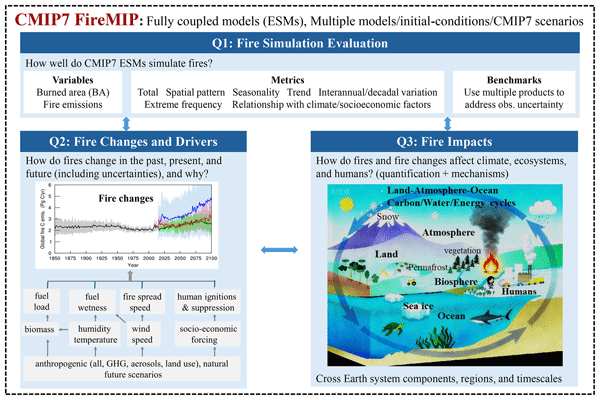
Fang Li, David M. Lawrence, Brendan M. Rogers, Chantelle Burton, Huilin Huang, Yiquan Jiang, Johannes W. Kaiser, Matthew Kasoar, Hanna Lee, Ruby Leung, Lars Nieradzik, Aihui Wang, Daniel S. Ward, Ligeer Ce, Yangchun Li, Zhongda Lin, Apostolos Voulgarakis, and Yongkang Xue
Geosci. Model Dev., 19, 3989–4007, https://doi.org/10.5194/gmd-19-3989-2026, https://doi.org/10.5194/gmd-19-3989-2026, 2026
Short summary
Short summary
Extreme fire events are increasing, and fires are projected to rise across most regions, posing growing risks to ecosystems and society. As a key Earth system process, fire is now modeled in most Earth System Models (ESMs). FireMIP (Fire Modeling Intercomparison Project) within CMIP7 will evaluate fire simulations in state‑of‑the‑art ESMs, project future fire changes, and provide quantitative, process‑based understanding of fire's role in the Earth system.
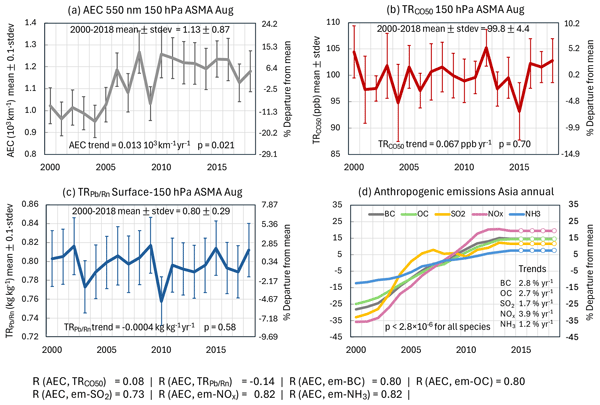
Mian Chin, Jonathon S. Wright, Huisheng Bian, Qian Tan, Xiaohua Pan, Toshihiko Takemura, Hitoshi Matsui, Kostas Tsigaridis, Susanne Bauer, Paul Ginoux, Yiran Peng, Zengyuan Guo, Suvarna Fadnavis, Anton Laakso, John P. Burrows, Ghassan Taha, Jayanta Kar, Alexei Rozanov, Carlo Arosio, Landon Rieger, and Adam Bourassa
Atmos. Chem. Phys., 26, 6035–6059, https://doi.org/10.5194/acp-26-6035-2026, https://doi.org/10.5194/acp-26-6035-2026, 2026
Short summary
Short summary
Aerosols in the upper troposphere influence weather and climate. The Asian summer monsoon efficiently transports surface pollutants upward, shaping aerosol amounts and variability in the upper troposphere. Using multiple global models, this study finds a summertime increase in upper-tropospheric aerosols at 1.2 % per year from 2000 to 2018 over Asia, consistent with rising pollutant emissions in Asia, while year-to-year changes are mainly driven by climate variability affecting monsoon dynamics.
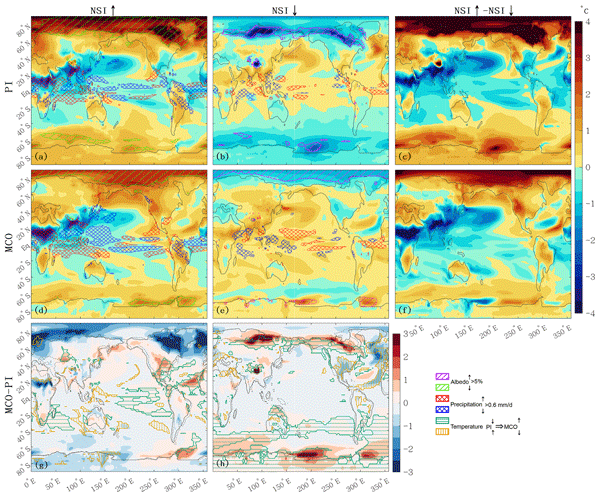
Yurui Zhang, Jilin Wei, Zhen Li, Nan Dai, Weipeng Zheng, Qiuzhen Yin, Agatha M. de Boer, Zhengguo Shi, and Lixia Zhang
Clim. Past, 22, 879–889, https://doi.org/10.5194/cp-22-879-2026, https://doi.org/10.5194/cp-22-879-2026, 2026
Short summary
Short summary
This study examines how the warm Miocene (~23–5 Ma) climate responded to orbital changes compared with modern day. Simulations show weaker Miocene temperature responses with distinct spatial patterns. High latitudes were less sensitive due to weaker albedo feedback, while tropical Africa cooled more strongly from an enhanced water cycle. The Southern Ocean warmed under low insolation as winter sea ice shrank. These findings highlight how background climate states shape orbital climate responses.
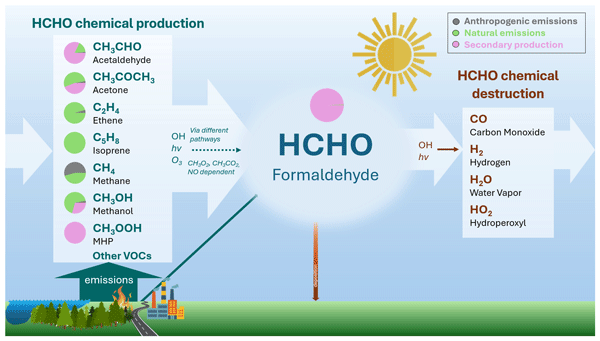
Gunnar Myhre, Øivind Hodnebrog, Srinath Krishnan, Maria Sand, Marit Sandstad, Ragnhild B. Skeie, Lieven Clarisse, Bruno Franco, Dylan B. Millet, Kelley C. Wells, Alexander Archibald, Hannah N. Bryant, Alex T. Chaudhri, David S. Stevenson, Didier Hauglustaine, Michael Prather, J. Christopher Kaiser, Dirk J. L. Olivie, Michael Schulz, Oliver Wild, Ye Wang, Thérèse Salameh, Jason E. Williams, Philippe Le Sager, Fabien Paulot, Kostas Tsigaridis, and Haley E. Plaas
Geosci. Model Dev., 19, 2577–2591, https://doi.org/10.5194/gmd-19-2577-2026, https://doi.org/10.5194/gmd-19-2577-2026, 2026
Short summary
Short summary
Volatile organic compounds (VOCs) affect air quality and climate, but their behavior in the atmosphere is still uncertain. We launched a global research effort to compare how different models represent these compounds and to improve their accuracy. By analyzing model results alongside observations and satellite data, we aim to better understand the atmospheric composition of these compounds.
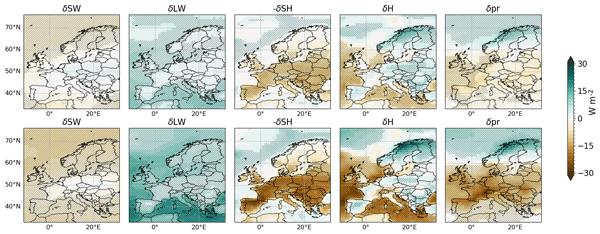
Birthe Marie Steensen, Gunnar Myhre, Rachael Byrom, Ada Gjermundsen, Caroline Jouan, and Camilla Weum Stjern
Atmos. Chem. Phys., 26, 2041–2054, https://doi.org/10.5194/acp-26-2041-2026, https://doi.org/10.5194/acp-26-2041-2026, 2026
Short summary
Short summary
In this study we analyze summer precipitation within a regional atmospheric budget framework over Europe. We identify the terms with the largest uncertainties for current change and future projections that cause the large spread in precipitation change, as sensible heat and dry static energy flux divergence in Earth System models. However, the Earth System models show consistent agreement that there will be an increase in drying over continental Europe with global warming.
William J. Collins, John S. Daniel, Martyn P. Chipperfield, Martin Cussac, Makoto Deushi, Gregory Faluvegi, Paul Griffiths, Øivind Hodnebrog, Larry W. Horowitz, James Keeble, Douglas Kinnison, Vaishali Naik, Fiona M. O'Connor, Drew Shindell, Simone Tilmes, Kostas Tsigaridis, Zihao Wang, and James Weber
EGUsphere, https://doi.org/10.5194/egusphere-2025-6033, https://doi.org/10.5194/egusphere-2025-6033, 2026
Short summary
Short summary
Ozone depleting substances (ODSs) are also greenhouse gases that cause global warming. However, their destruction of ozone contributes a global cooling. We have used results from climate models that include atmospheric chemistry and found that the cooling effect of the ozone depletion diagnosed in the models was larger than that calculated using a standard method. We find that some ODSs have a net cooling effect whereas for others the warming effect is significantly reduced.
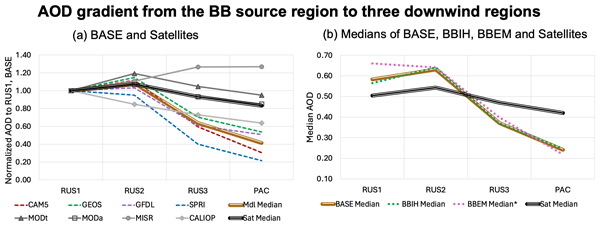
Xiaohua Pan, Mian Chin, Ralph A. Kahn, Hitoshi Matsui, Toshihiko Takemura, Meiyun Lin, Yuanyu Xie, Dongchul Kim, and Maria Val Martin
Atmos. Chem. Phys., 26, 171–196, https://doi.org/10.5194/acp-26-171-2026, https://doi.org/10.5194/acp-26-171-2026, 2026
Short summary
Short summary
Wildfire smoke can travel far from its source, affecting air quality far from the fire itself. This study looks at how two key factors – how much smoke is emitted & how high it rises – affect how smoke spreads. Using data from a major 2008 Siberian wildfire, four models were tested. Results show that models often inject smoke too low & remove it too quickly, missing high-altitude smoke seen by satellites. Better estimates of smoke height and removal are crucial to improve air quality forecasts.
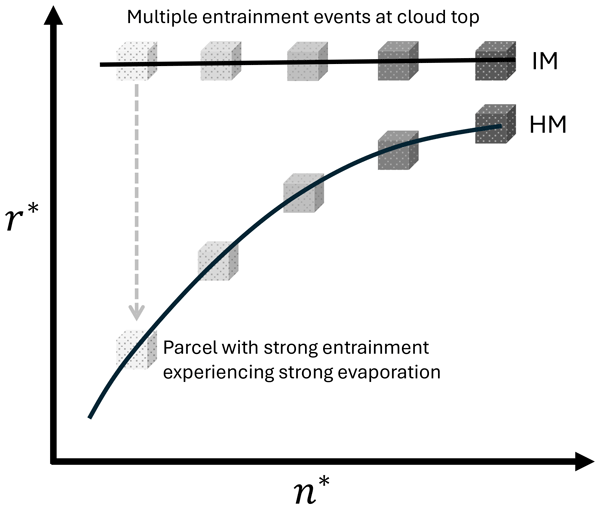
Zeen Zhu, Fan Yang, Steven Krueger, and Yangang Liu
Atmos. Chem. Phys., 25, 18461–18474, https://doi.org/10.5194/acp-25-18461-2025, https://doi.org/10.5194/acp-25-18461-2025, 2025
Short summary
Short summary
To better understand cloud behavior, we used model simulation to study how the air mix in clouds. Our results show that the pattern of mixing seen from aircraft measurements may not reflect the true mixing process happening inside clouds. This result suggests that care is needed when using aircraft data to study the cloud mixing process and that new ways of observing clouds could offer clearer insights.
Laura A. Mansfield, Peer J. Nowack, Edmund M. Ryan, Oliver Wild, and Apostolos Voulgarakis
EGUsphere, https://doi.org/10.5194/egusphere-2025-6046, https://doi.org/10.5194/egusphere-2025-6046, 2025
Short summary
Short summary
We present a fast machine learning emulator that predicts how Earth’s surface temperature reacts within the first five years to changes in greenhouse gases and aerosol pollutants. It is trained on carefully designed simulations from a complex climate model, but can be run much faster. Our emulator can be used to show where the climate is most sensitive to different emissions and can help explore many possible future paths, making it easier to assess the climate effects of policy choices.
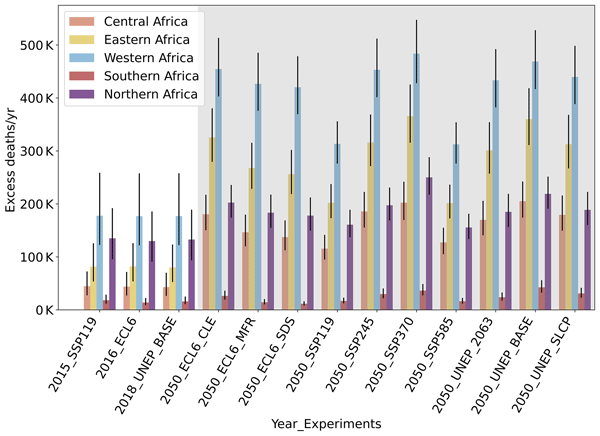
Joe Adabouk Amooli, Marianne T. Lund, Sourangsu Chowdhury, Gunnar Myhre, Ane N. Johansen, Bjørn H. Samset, and Daniel M. Westervelt
Atmos. Chem. Phys., 25, 11611–11632, https://doi.org/10.5194/acp-25-11611-2025, https://doi.org/10.5194/acp-25-11611-2025, 2025
Short summary
Short summary
We analyze various projections of African aerosol emissions and their potential impacts on climate and public health. We find that future emissions vary widely across emission projections, with differences in sectoral emission distributions. Using the Oslo chemical transport model, we show that air pollution exposure in some regions of Africa could increase significantly by 2050, increasing pollution-related deaths, with most scenarios projecting aerosol-induced warming over sub-Saharan Africa.
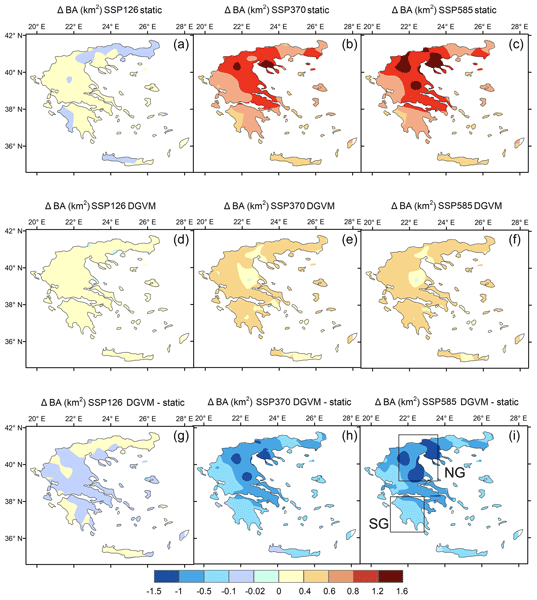
Anastasios Rovithakis, Eleanor Burke, Chantelle Burton, Matthew Kasoar, Manolis G. Grillakis, Konstantinos D. Seiradakis, and Apostolos Voulgarakis
Nat. Hazards Earth Syst. Sci., 25, 3185–3200, https://doi.org/10.5194/nhess-25-3185-2025, https://doi.org/10.5194/nhess-25-3185-2025, 2025
Short summary
Short summary
We used a land surface computer model to forecast how climate change will impact wildfires in Greece. Our results show a significant increase in future burnt area due to hotter, drier climate. Allowing vegetation to change with the climate lessens this increase overall, since fire is no longer igniting in areas already burnt, and it even led to projected decreases in the agricultural areas in the north of the country.
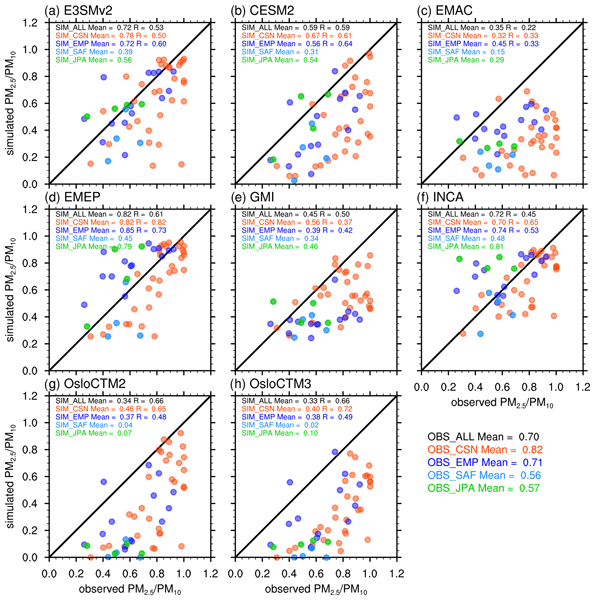
Mingxuan Wu, Hailong Wang, Zheng Lu, Xiaohong Liu, Huisheng Bian, David D. Cohen, Yan Feng, Mian Chin, Didier A. Hauglustaine, Vlassis A. Karydis, Marianne T. Lund, Gunnar Myhre, Andrea Pozzer, Michael Schulz, Ragnhild B. Skeie, Alexandra P. Tsimpidi, Svetlana G. Tsyro, and Shaocheng Xie
Atmos. Chem. Phys., 25, 10049–10074, https://doi.org/10.5194/acp-25-10049-2025, https://doi.org/10.5194/acp-25-10049-2025, 2025
Short summary
Short summary
A key challenge in simulating the life cycle of nitrate aerosol in global models is accurately representing the mass size distribution of nitrate aerosol, which lacks sufficient observational constraints. We found that most global models underestimate the mass fraction of fine-mode nitrate at the surface in all regions. Our study highlights the importance of gas–aerosol partitioning parameterization and the simulation of dust and sea salt in correctly simulating the mass size distribution of nitrate.
William J. Collins, Fiona M. O'Connor, Rachael E. Byrom, Øivind Hodnebrog, Patrick Jöckel, Mariano Mertens, Gunnar Myhre, Matthias Nützel, Dirk Olivié, Ragnhild Bieltvedt Skeie, Laura Stecher, Larry W. Horowitz, Vaishali Naik, Gregory Faluvegi, Ulas Im, Lee T. Murray, Drew Shindell, Kostas Tsigaridis, Nathan Luke Abraham, and James Keeble
Atmos. Chem. Phys., 25, 9031–9060, https://doi.org/10.5194/acp-25-9031-2025, https://doi.org/10.5194/acp-25-9031-2025, 2025
Short summary
Short summary
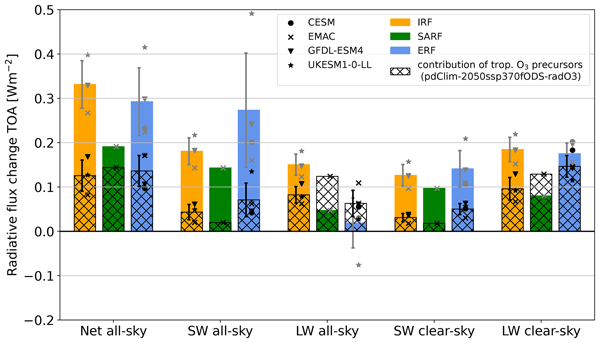
We used 7 climate models that include atmospheric chemistry and find that in a scenario with weak controls on air quality, the warming effects (over 2015 to 2050) of decreases in ozone-depleting substances and increases in air quality pollutants are approximately equal and would make ozone the second highest contributor to warming over this period. We find that for stratospheric ozone recovery, the standard measure of climate effects underestimates a more comprehensive measure.
Oliver Perkins, Olivia Haas, Matthew Kasoar, Apostolos Voulgarakis, and James D. A. Millington
EGUsphere, https://doi.org/10.5194/egusphere-2025-3728, https://doi.org/10.5194/egusphere-2025-3728, 2025
Short summary
Short summary
Humans impact fire indirectly through climate change, but also directly through land use and different fire management strategies. We compare two recently-developed models of global burned area with very different assumptions about the role of direct human impacts on fire. We contrast their future projections and explore the implications of differences between them for climate change adaptation and fire science more broadly.
Hu Yang, Xiaoxu Shi, Xulong Wang, Qingsong Liu, Yi Zhong, Xiaodong Liu, Youbin Sun, Yanjun Cai, Fei Liu, Gerrit Lohmann, Martin Werner, Zhimin Jian, Tainã M. L. Pinho, Hai Cheng, Lijuan Lu, Jiping Liu, Chao-Yuan Yang, Qinghua Yang, Yongyun Hu, Xing Cheng, Jingyu Zhang, and Dake Chen
Clim. Past, 21, 1263–1279, https://doi.org/10.5194/cp-21-1263-2025, https://doi.org/10.5194/cp-21-1263-2025, 2025
Short summary
Short summary
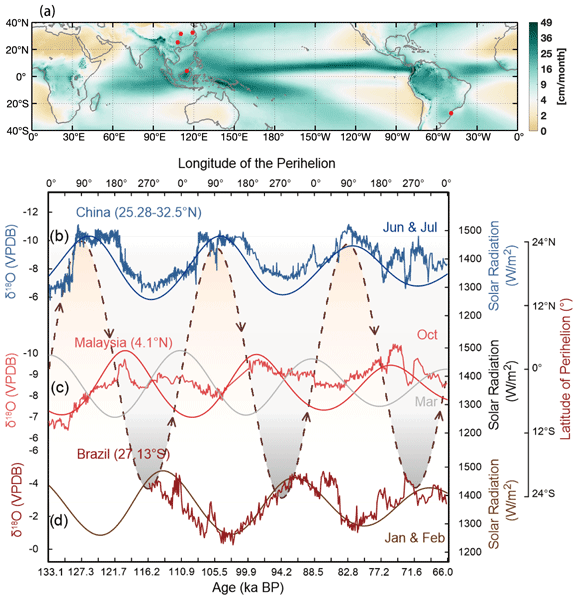
For 1 century, the hemispheric summer insolation is proposed as a key pacemaker of astronomical climate change. However, an increasing number of geologic records reveal that the low-latitude hydrological cycle shows asynchronous precessional evolutions that are very often out of phase with the summer insolation. Here, we propose that the astronomically driven low-latitude hydrological cycle is not paced by summer insolation but by shifting perihelion.
Rachael E. Byrom, Gunnar Myhre, Øivind Hodnebrog, Dirk Olivié, and Michael Schulz
Atmos. Chem. Phys., 25, 5683–5693, https://doi.org/10.5194/acp-25-5683-2025, https://doi.org/10.5194/acp-25-5683-2025, 2025
Short summary
Short summary
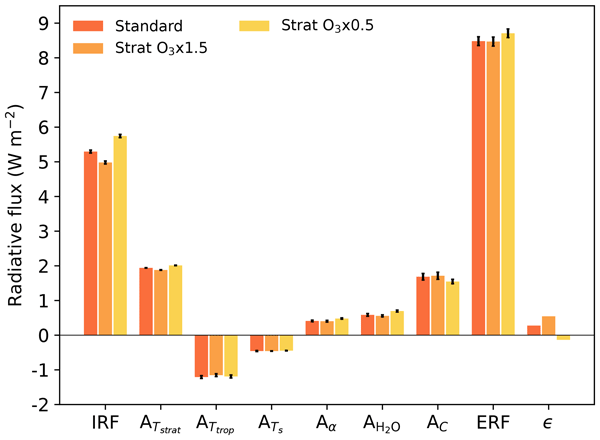
Addressing the cause of model spread in CO2 effective radiative forcing (ERF) is important for reducing uncertainty in climate change. We investigate stratospheric O3 as a driver of this spread by altering its concentration by 50 % and analysing the impact on CO2 forcing. Our experiments show a significant effect on stratospheric temperature that impacts instantaneous radiative forcing, primarily due to the influence on longwave emission. However, the impact on ERF is minimal.
Ragnhild Bieltvedt Skeie, Marit Sandstad, Srinath Krishnan, Gunnar Myhre, and Maria Sand
Atmos. Chem. Phys., 25, 4929–4942, https://doi.org/10.5194/acp-25-4929-2025, https://doi.org/10.5194/acp-25-4929-2025, 2025
Short summary
Short summary
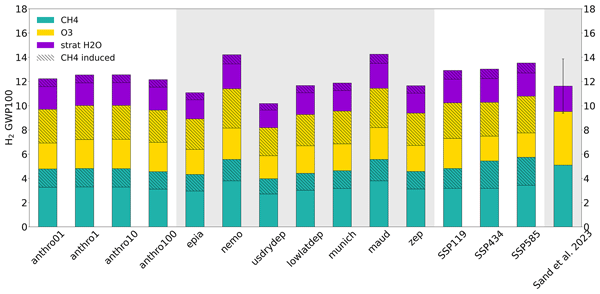
Hydrogen leakages can alter the amount of climate gases in the atmosphere and hence have a climate impact. In this study we investigate, using an atmospheric chemistry model, how this indirect climate effect differs with different amounts of leakages and with where the hydrogen leaks and if this effect changes in the future. The effect is largest for emissions far from areas where hydrogen is removed from the atmosphere by the soil, but these are not relevant locations for a future hydrogen economy.
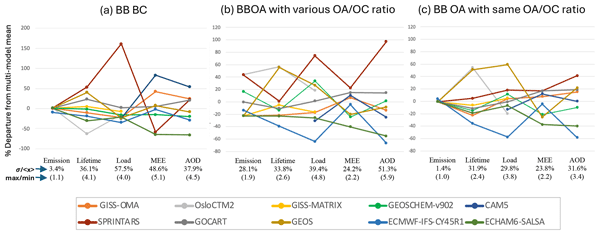
Mariya Petrenko, Ralph Kahn, Mian Chin, Susanne E. Bauer, Tommi Bergman, Huisheng Bian, Gabriele Curci, Ben Johnson, Johannes W. Kaiser, Zak Kipling, Harri Kokkola, Xiaohong Liu, Keren Mezuman, Tero Mielonen, Gunnar Myhre, Xiaohua Pan, Anna Protonotariou, Samuel Remy, Ragnhild Bieltvedt Skeie, Philip Stier, Toshihiko Takemura, Kostas Tsigaridis, Hailong Wang, Duncan Watson-Parris, and Kai Zhang
Atmos. Chem. Phys., 25, 1545–1567, https://doi.org/10.5194/acp-25-1545-2025, https://doi.org/10.5194/acp-25-1545-2025, 2025
Short summary
Short summary
We compared smoke plume simulations from 11 global models to each other and to satellite smoke amount observations aimed at constraining smoke source strength. In regions where plumes are thick and background aerosol is low, models and satellites compare well. However, the input emission inventory tends to underestimate in many places, and particle property and loss rate assumptions vary enormously among models, causing uncertainties that require systematic in situ measurements to resolve.
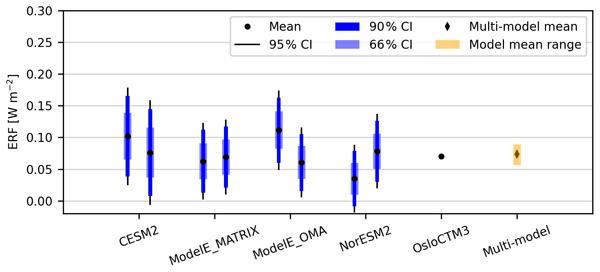
Ragnhild Bieltvedt Skeie, Rachael Byrom, Øivind Hodnebrog, Caroline Jouan, and Gunnar Myhre
Atmos. Chem. Phys., 24, 13361–13370, https://doi.org/10.5194/acp-24-13361-2024, https://doi.org/10.5194/acp-24-13361-2024, 2024
Short summary
Short summary
In 2020, new regulations by the International Maritime Organization regarding sulfur emissions came into force, reducing emissions of SO2 from the shipping sector by approximately 80 %. In this study, we use multiple models to calculate how much the Earth energy balance changed due to the emission reduction or the so-called effective radiative forcing. The calculated effective radiative forcing is weak, comparable to the effect of the increase in CO2 over the last 2 to 3 years.
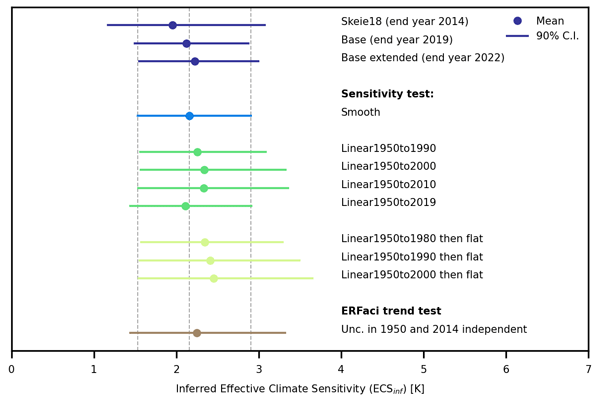
Ragnhild Bieltvedt Skeie, Magne Aldrin, Terje K. Berntsen, Marit Holden, Ragnar Bang Huseby, Gunnar Myhre, and Trude Storelvmo
Earth Syst. Dynam., 15, 1435–1458, https://doi.org/10.5194/esd-15-1435-2024, https://doi.org/10.5194/esd-15-1435-2024, 2024
Short summary
Short summary
Climate sensitivity and aerosol forcing are central quantities in climate science that are uncertain and contribute to the spread in climate projections. To constrain them, we use observations of temperature and ocean heat content as well as prior knowledge of radiative forcings over the industrialized period. The estimates are sensitive to how aerosol cooling evolved over the latter part of the 20th century, and a strong aerosol forcing trend in the 1960s–1970s is not supported by our analysis.
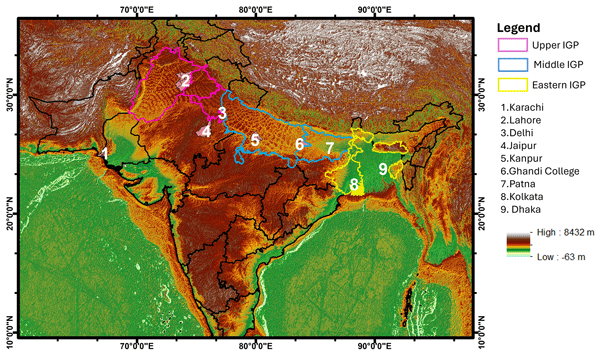
Nabia Gulistan, Khan Alam, and Yangang Liu
Atmos. Chem. Phys., 24, 11333–11349, https://doi.org/10.5194/acp-24-11333-2024, https://doi.org/10.5194/acp-24-11333-2024, 2024
Short summary
Short summary
This study looks at the influence of aerosol and meteorology on precipitating and non-precipitating clouds over the Indo-Gangetic Plain (IGP). A major finding of this study was that the high loading of aerosols led to a high occurrence of precipitating clouds under unstable conditions in summer. The study has the potential to open a new avenue for the scientific community to further explore and understand the complications of aerosol–cloud–precipitation over the complex topography of the IGP.
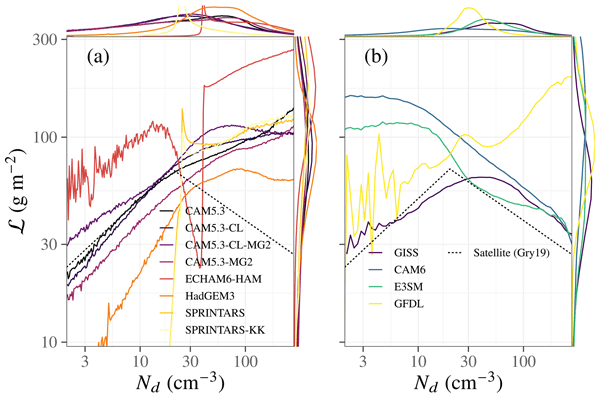
Johannes Mülmenstädt, Edward Gryspeerdt, Sudhakar Dipu, Johannes Quaas, Andrew S. Ackerman, Ann M. Fridlind, Florian Tornow, Susanne E. Bauer, Andrew Gettelman, Yi Ming, Youtong Zheng, Po-Lun Ma, Hailong Wang, Kai Zhang, Matthew W. Christensen, Adam C. Varble, L. Ruby Leung, Xiaohong Liu, David Neubauer, Daniel G. Partridge, Philip Stier, and Toshihiko Takemura
Atmos. Chem. Phys., 24, 7331–7345, https://doi.org/10.5194/acp-24-7331-2024, https://doi.org/10.5194/acp-24-7331-2024, 2024
Short summary
Short summary
Human activities release copious amounts of small particles called aerosols into the atmosphere. These particles change how much sunlight clouds reflect to space, an important human perturbation of the climate, whose magnitude is highly uncertain. We found that the latest climate models show a negative correlation but a positive causal relationship between aerosols and cloud water. This means we need to be very careful when we interpret observational studies that can only see correlation.
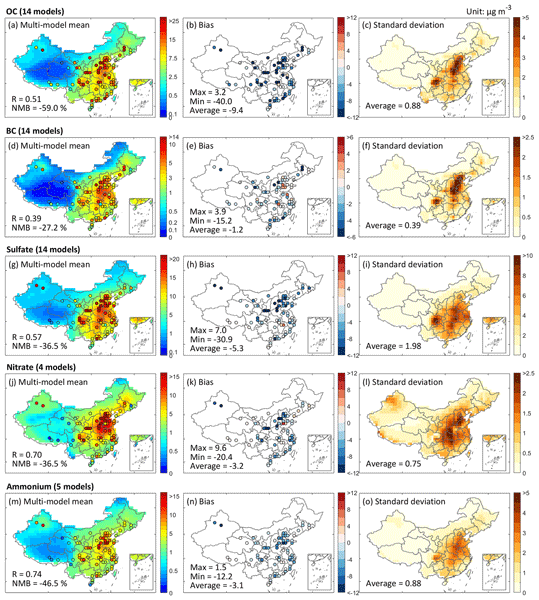
Fangxuan Ren, Jintai Lin, Chenghao Xu, Jamiu A. Adeniran, Jingxu Wang, Randall V. Martin, Aaron van Donkelaar, Melanie S. Hammer, Larry W. Horowitz, Steven T. Turnock, Naga Oshima, Jie Zhang, Susanne Bauer, Kostas Tsigaridis, Øyvind Seland, Pierre Nabat, David Neubauer, Gary Strand, Twan van Noije, Philippe Le Sager, and Toshihiko Takemura
Geosci. Model Dev., 17, 4821–4836, https://doi.org/10.5194/gmd-17-4821-2024, https://doi.org/10.5194/gmd-17-4821-2024, 2024
Short summary
Short summary
We evaluate the performance of 14 CMIP6 ESMs in simulating total PM2.5 and its 5 components over China during 2000–2014. PM2.5 and its components are underestimated in almost all models, except that black carbon (BC) and sulfate are overestimated in two models, respectively. The underestimation is the largest for organic carbon (OC) and the smallest for BC. Models reproduce the observed spatial pattern for OC, sulfate, nitrate and ammonium well, yet the agreement is poorer for BC.
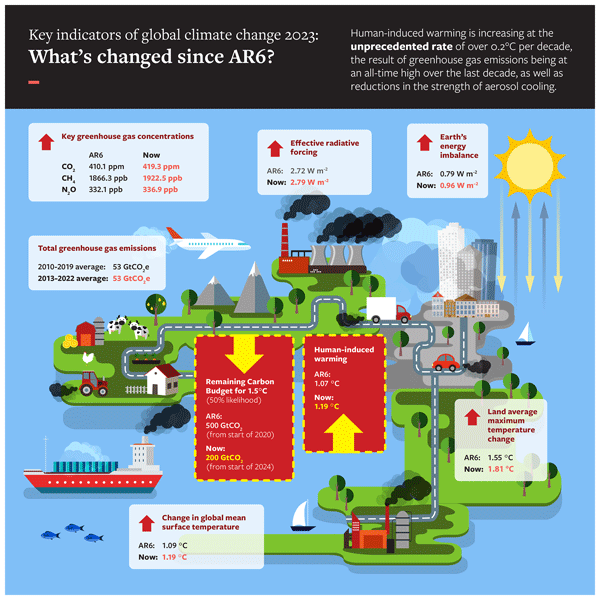
Piers M. Forster, Chris Smith, Tristram Walsh, William F. Lamb, Robin Lamboll, Bradley Hall, Mathias Hauser, Aurélien Ribes, Debbie Rosen, Nathan P. Gillett, Matthew D. Palmer, Joeri Rogelj, Karina von Schuckmann, Blair Trewin, Myles Allen, Robbie Andrew, Richard A. Betts, Alex Borger, Tim Boyer, Jiddu A. Broersma, Carlo Buontempo, Samantha Burgess, Chiara Cagnazzo, Lijing Cheng, Pierre Friedlingstein, Andrew Gettelman, Johannes Gütschow, Masayoshi Ishii, Stuart Jenkins, Xin Lan, Colin Morice, Jens Mühle, Christopher Kadow, John Kennedy, Rachel E. Killick, Paul B. Krummel, Jan C. Minx, Gunnar Myhre, Vaishali Naik, Glen P. Peters, Anna Pirani, Julia Pongratz, Carl-Friedrich Schleussner, Sonia I. Seneviratne, Sophie Szopa, Peter Thorne, Mahesh V. M. Kovilakam, Elisa Majamäki, Jukka-Pekka Jalkanen, Margreet van Marle, Rachel M. Hoesly, Robert Rohde, Dominik Schumacher, Guido van der Werf, Russell Vose, Kirsten Zickfeld, Xuebin Zhang, Valérie Masson-Delmotte, and Panmao Zhai
Earth Syst. Sci. Data, 16, 2625–2658, https://doi.org/10.5194/essd-16-2625-2024, https://doi.org/10.5194/essd-16-2625-2024, 2024
Short summary
Short summary
This paper tracks some key indicators of global warming through time, from 1850 through to the end of 2023. It is designed to give an authoritative estimate of global warming to date and its causes. We find that in 2023, global warming reached 1.3 °C and is increasing at over 0.2 °C per decade. This is caused by all-time-high greenhouse gas emissions.
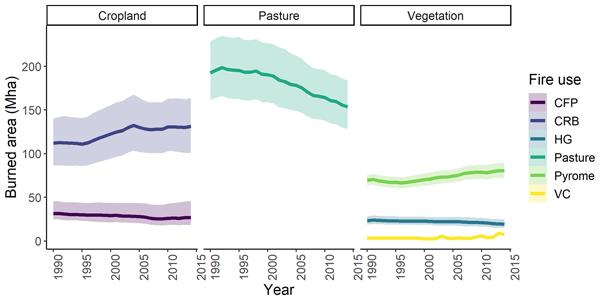
Oliver Perkins, Matthew Kasoar, Apostolos Voulgarakis, Cathy Smith, Jay Mistry, and James D. A. Millington
Geosci. Model Dev., 17, 3993–4016, https://doi.org/10.5194/gmd-17-3993-2024, https://doi.org/10.5194/gmd-17-3993-2024, 2024
Short summary
Short summary
Wildfire is often presented in the media as a danger to human life. Yet globally, millions of people’s livelihoods depend on using fire as a tool. So, patterns of fire emerge from interactions between humans, land use, and climate. This complexity means scientists cannot yet reliably say how fire will be impacted by climate change. So, we developed a new model that represents globally how people use and manage fire. The model reveals the extent and diversity of how humans live with and use fire.
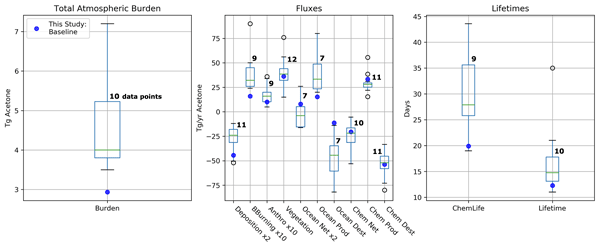
Alexandra Rivera, Kostas Tsigaridis, Gregory Faluvegi, and Drew Shindell
Geosci. Model Dev., 17, 3487–3505, https://doi.org/10.5194/gmd-17-3487-2024, https://doi.org/10.5194/gmd-17-3487-2024, 2024
Short summary
Short summary
This paper describes and evaluates an improvement to the representation of acetone in the GISS ModelE2.1 Earth system model. We simulate acetone's concentration and transport across the atmosphere as well as its dependence on chemistry, the ocean, and various global emissions. Comparisons of our model’s estimates to past modeling studies and field measurements have shown encouraging results. Ultimately, this paper contributes to a broader understanding of acetone's role in the atmosphere.
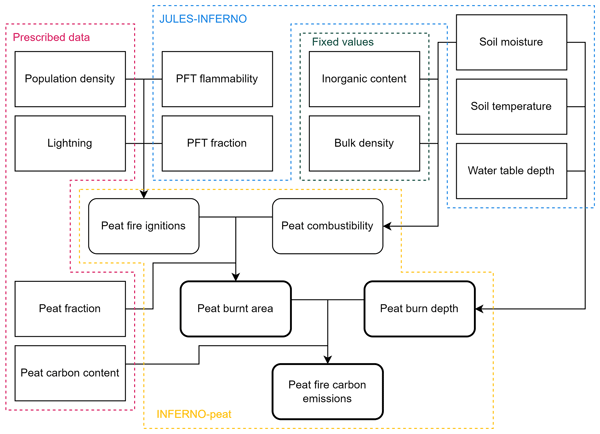
Katie R. Blackford, Matthew Kasoar, Chantelle Burton, Eleanor Burke, Iain Colin Prentice, and Apostolos Voulgarakis
Geosci. Model Dev., 17, 3063–3079, https://doi.org/10.5194/gmd-17-3063-2024, https://doi.org/10.5194/gmd-17-3063-2024, 2024
Short summary
Short summary
Peatlands are globally important stores of carbon which are being increasingly threatened by wildfires with knock-on effects on the climate system. Here we introduce a novel peat fire parameterization in the northern high latitudes to the INFERNO global fire model. Representing peat fires increases annual burnt area across the high latitudes, alongside improvements in how we capture year-to-year variation in burning and emissions.
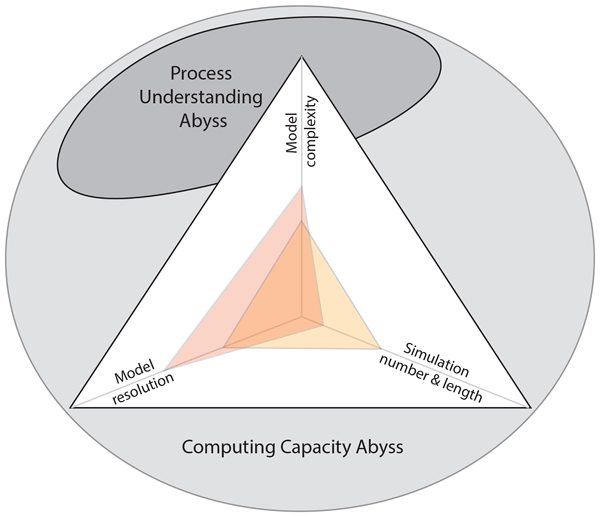
Stephanie Fiedler, Vaishali Naik, Fiona M. O'Connor, Christopher J. Smith, Paul Griffiths, Ryan J. Kramer, Toshihiko Takemura, Robert J. Allen, Ulas Im, Matthew Kasoar, Angshuman Modak, Steven Turnock, Apostolos Voulgarakis, Duncan Watson-Parris, Daniel M. Westervelt, Laura J. Wilcox, Alcide Zhao, William J. Collins, Michael Schulz, Gunnar Myhre, and Piers M. Forster
Geosci. Model Dev., 17, 2387–2417, https://doi.org/10.5194/gmd-17-2387-2024, https://doi.org/10.5194/gmd-17-2387-2024, 2024
Short summary
Short summary
Climate scientists want to better understand modern climate change. Thus, climate model experiments are performed and compared. The results of climate model experiments differ, as assessed in the latest Intergovernmental Panel on Climate Change (IPCC) assessment report. This article gives insights into the challenges and outlines opportunities for further improving the understanding of climate change. It is based on views of a group of experts in atmospheric composition–climate interactions.
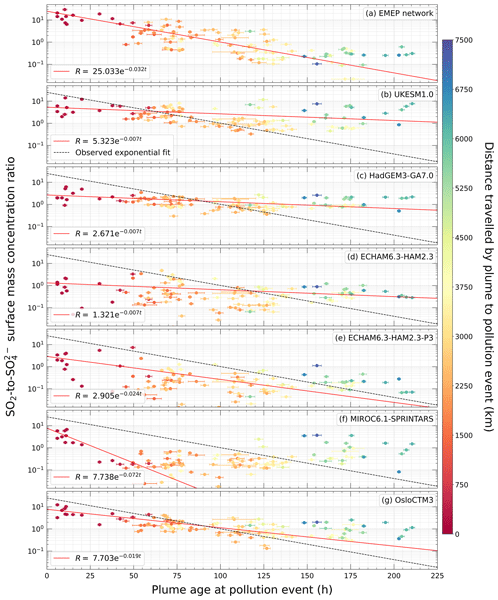
George Jordan, Florent Malavelle, Ying Chen, Amy Peace, Eliza Duncan, Daniel G. Partridge, Paul Kim, Duncan Watson-Parris, Toshihiko Takemura, David Neubauer, Gunnar Myhre, Ragnhild Skeie, Anton Laakso, and James Haywood
Atmos. Chem. Phys., 24, 1939–1960, https://doi.org/10.5194/acp-24-1939-2024, https://doi.org/10.5194/acp-24-1939-2024, 2024
Short summary
Short summary
The 2014–15 Holuhraun eruption caused a huge aerosol plume in an otherwise unpolluted region, providing a chance to study how aerosol alters cloud properties. This two-part study uses observations and models to quantify this relationship’s impact on the Earth’s energy budget. Part 1 suggests the models capture the observed spatial and chemical evolution of the plume, yet no model plume is exact. Understanding these differences is key for Part 2, where changes to cloud properties are explored.
Daisuke Goto, Tatsuya Seiki, Kentaroh Suzuki, Hisashi Yashiro, and Toshihiko Takemura
Geosci. Model Dev., 17, 651–684, https://doi.org/10.5194/gmd-17-651-2024, https://doi.org/10.5194/gmd-17-651-2024, 2024
Short summary
Short summary
Global climate models with coarse grid sizes include uncertainties about the processes in aerosol–cloud–precipitation interactions. To reduce these uncertainties, here we performed numerical simulations using a new version of our global aerosol transport model with a finer grid size over a longer period than in our previous study. As a result, we found that the cloud microphysics module influences the aerosol distributions through both aerosol wet deposition and aerosol–cloud interactions.
Christopher D. Wells, Matthew Kasoar, Majid Ezzati, and Apostolos Voulgarakis
Atmos. Chem. Phys., 24, 1025–1039, https://doi.org/10.5194/acp-24-1025-2024, https://doi.org/10.5194/acp-24-1025-2024, 2024
Short summary
Short summary
Human-driven emissions of air pollutants, mostly caused by burning fossil fuels, impact both the climate and human health. Millions of deaths each year are caused by air pollution globally, and the future trends are uncertain. Here, we use a global climate model to study the effect of African pollutant emissions on surface level air pollution, and resultant impacts on human health, in several future emission scenarios. We find much lower health impacts under cleaner, lower-emission futures.
Hamza Ahsan, Hailong Wang, Jingbo Wu, Mingxuan Wu, Steven J. Smith, Susanne Bauer, Harrison Suchyta, Dirk Olivié, Gunnar Myhre, Hitoshi Matsui, Huisheng Bian, Jean-François Lamarque, Ken Carslaw, Larry Horowitz, Leighton Regayre, Mian Chin, Michael Schulz, Ragnhild Bieltvedt Skeie, Toshihiko Takemura, and Vaishali Naik
Atmos. Chem. Phys., 23, 14779–14799, https://doi.org/10.5194/acp-23-14779-2023, https://doi.org/10.5194/acp-23-14779-2023, 2023
Short summary
Short summary
We examine the impact of the assumed effective height of SO2 injection, SO2 and BC emission seasonality, and the assumed fraction of SO2 emissions injected as SO4 on climate and chemistry model results. We find that the SO2 injection height has a large impact on surface SO2 concentrations and, in some models, radiative flux. These assumptions are a
hiddensource of inter-model variability and may be leading to bias in some climate model results.
Joao Carlos Martins Teixeira, Chantelle Burton, Douglas I. Kelly, Gerd A. Folberth, Fiona M. O'Connor, Richard A. Betts, and Apostolos Voulgarakis
Biogeosciences Discuss., https://doi.org/10.5194/bg-2023-136, https://doi.org/10.5194/bg-2023-136, 2023
Revised manuscript not accepted
Short summary
Short summary
Representing socio-economic impacts on fires is crucial to underpin the confidence in global fire models. Introducing these into INFERNO, reduces biases and improves the modelled burnt area (BA) trends when compared to observations. Including socio-economic factors in the representation of fires in Earth System Models is important for realistically simulating BA, quantifying trends in the recent past, and for understanding the main drivers of those at regional scales.
He Fu, Jianing Guo, Chenguang Deng, Heng Liu, Jie Wu, Zhengguo Shi, Cailing Wang, and Xiaoning Xie
Geosci. Model Dev. Discuss., https://doi.org/10.5194/gmd-2023-158, https://doi.org/10.5194/gmd-2023-158, 2023
Preprint withdrawn
Short summary
Short summary
A Residual in Residual Dense Block based network model (RRDBNet) is designed for statistical downscaling of precipitation in the middle reaches of the Yellow River. RRDBNet has a good performance on precipitation simulations, well reproducing the spatial-temporal characteristics of high-resolution precipitation. RRDBNet has substantial improvements in extreme precipitation compared with generalized linear regression model and two deep learning-based models.
Laura J. Wilcox, Robert J. Allen, Bjørn H. Samset, Massimo A. Bollasina, Paul T. Griffiths, James Keeble, Marianne T. Lund, Risto Makkonen, Joonas Merikanto, Declan O'Donnell, David J. Paynter, Geeta G. Persad, Steven T. Rumbold, Toshihiko Takemura, Kostas Tsigaridis, Sabine Undorf, and Daniel M. Westervelt
Geosci. Model Dev., 16, 4451–4479, https://doi.org/10.5194/gmd-16-4451-2023, https://doi.org/10.5194/gmd-16-4451-2023, 2023
Short summary
Short summary
Changes in anthropogenic aerosol emissions have strongly contributed to global and regional climate change. However, the size of these regional impacts and the way they arise are still uncertain. With large changes in aerosol emissions a possibility over the next few decades, it is important to better quantify the potential role of aerosol in future regional climate change. The Regional Aerosol Model Intercomparison Project will deliver experiments designed to facilitate this.
Marianne Tronstad Lund, Gunnar Myhre, Ragnhild Bieltvedt Skeie, Bjørn Hallvard Samset, and Zbigniew Klimont
Atmos. Chem. Phys., 23, 6647–6662, https://doi.org/10.5194/acp-23-6647-2023, https://doi.org/10.5194/acp-23-6647-2023, 2023
Short summary
Short summary
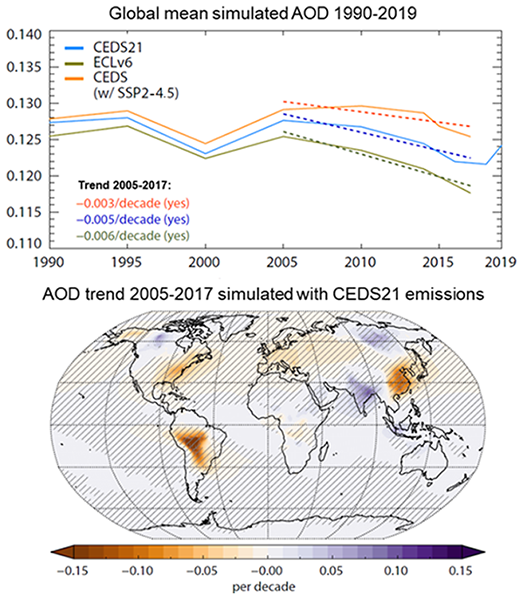
Here we show that differences, in magnitude and trend, between recent global anthropogenic emission inventories have a notable influence on simulated regional abundances of anthropogenic aerosol over the 1990–2019 period. This, in turn, affects estimates of radiative forcing. Our findings form a basis for comparing existing and upcoming studies on anthropogenic aerosols using different emission inventories.

Christopher D. Wells, Matthew Kasoar, Nicolas Bellouin, and Apostolos Voulgarakis
Atmos. Chem. Phys., 23, 3575–3593, https://doi.org/10.5194/acp-23-3575-2023, https://doi.org/10.5194/acp-23-3575-2023, 2023
Short summary
Short summary
The climate is altered by greenhouse gases and air pollutant particles, and such emissions are likely to change drastically in the future over Africa. Air pollutants do not travel far, so their climate effect depends on where they are emitted. This study uses a climate model to find the climate impacts of future African pollutant emissions being either high or low. The particles absorb and scatter sunlight, causing the ground nearby to be cooler, but elsewhere the increased heat causes warming.
Johannes Quaas, Hailing Jia, Chris Smith, Anna Lea Albright, Wenche Aas, Nicolas Bellouin, Olivier Boucher, Marie Doutriaux-Boucher, Piers M. Forster, Daniel Grosvenor, Stuart Jenkins, Zbigniew Klimont, Norman G. Loeb, Xiaoyan Ma, Vaishali Naik, Fabien Paulot, Philip Stier, Martin Wild, Gunnar Myhre, and Michael Schulz
Atmos. Chem. Phys., 22, 12221–12239, https://doi.org/10.5194/acp-22-12221-2022, https://doi.org/10.5194/acp-22-12221-2022, 2022
Short summary
Short summary
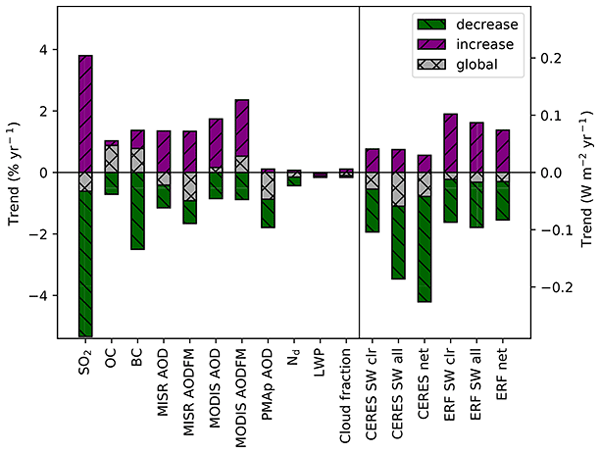
Pollution particles cool climate and offset part of the global warming. However, they are washed out by rain and thus their effect responds quickly to changes in emissions. We show multiple datasets to demonstrate that aerosol emissions and their concentrations declined in many regions influenced by human emissions, as did the effects on clouds. Consequently, the cooling impact on the Earth energy budget became smaller. This change in trend implies a relative warming.
Petri Räisänen, Joonas Merikanto, Risto Makkonen, Mikko Savolahti, Alf Kirkevåg, Maria Sand, Øyvind Seland, and Antti-Ilari Partanen
Atmos. Chem. Phys., 22, 11579–11602, https://doi.org/10.5194/acp-22-11579-2022, https://doi.org/10.5194/acp-22-11579-2022, 2022
Short summary
Short summary
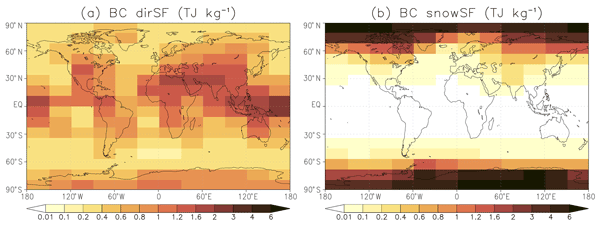
A climate model is used to evaluate how the radiative forcing (RF) associated with black carbon (BC) emissions depends on the latitude, longitude, and seasonality of emissions. It is found that both the direct RF (BC absorption of solar radiation in air) and snow RF (BC absorption in snow/ice) depend strongly on the emission region and season. The results suggest that, for a given mass of BC emitted, climatic impacts are likely to be largest for high-latitude emissions due to the large snow RF.
Qirui Zhong, Nick Schutgens, Guido van der Werf, Twan van Noije, Kostas Tsigaridis, Susanne E. Bauer, Tero Mielonen, Alf Kirkevåg, Øyvind Seland, Harri Kokkola, Ramiro Checa-Garcia, David Neubauer, Zak Kipling, Hitoshi Matsui, Paul Ginoux, Toshihiko Takemura, Philippe Le Sager, Samuel Rémy, Huisheng Bian, Mian Chin, Kai Zhang, Jialei Zhu, Svetlana G. Tsyro, Gabriele Curci, Anna Protonotariou, Ben Johnson, Joyce E. Penner, Nicolas Bellouin, Ragnhild B. Skeie, and Gunnar Myhre
Atmos. Chem. Phys., 22, 11009–11032, https://doi.org/10.5194/acp-22-11009-2022, https://doi.org/10.5194/acp-22-11009-2022, 2022
Short summary
Short summary
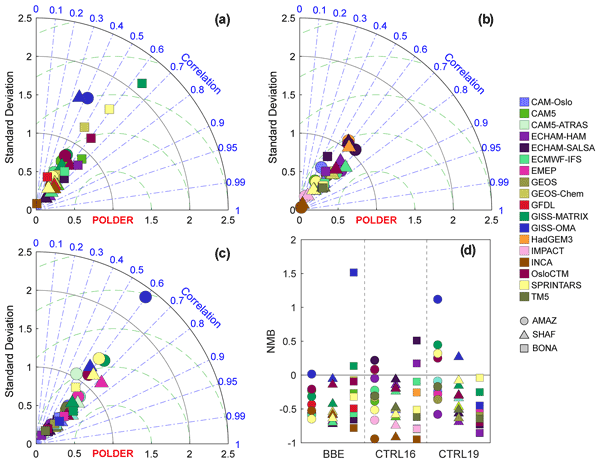
Aerosol optical depth (AOD) errors for biomass burning aerosol (BBA) are evaluated in 18 global models against satellite datasets. Notwithstanding biases in satellite products, they allow model evaluations. We observe large and diverse model biases due to errors in BBA. Further interpretations of AOD diversities suggest large biases exist in key processes for BBA which require better constraining. These results can contribute to further model improvement and development.
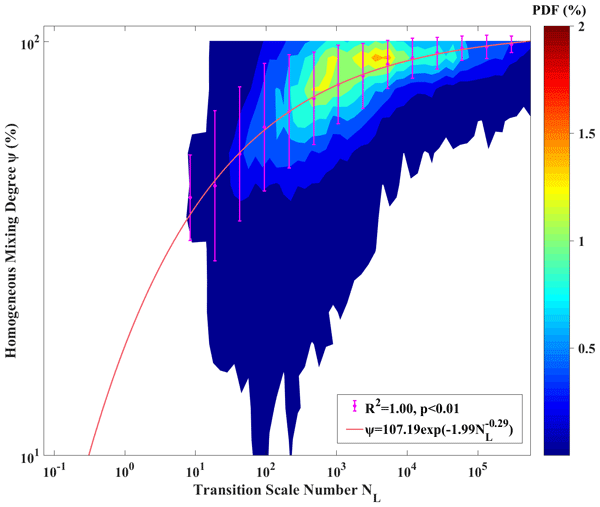
Xiaoqi Xu, Chunsong Lu, Yangang Liu, Shi Luo, Xin Zhou, Satoshi Endo, Lei Zhu, and Yuan Wang
Atmos. Chem. Phys., 22, 5459–5475, https://doi.org/10.5194/acp-22-5459-2022, https://doi.org/10.5194/acp-22-5459-2022, 2022
Short summary
Short summary
A new entrainment–mixing parameterization which can be directly implemented in microphysics schemes without requiring the relative humidity of the entrained air is proposed based on the explicit mixing parcel model. The parameterization is implemented in the two-moment microphysics scheme and exhibits different effects on different types of clouds and even on different stages of stratocumulus clouds, which are affected by turbulent dissipation rate and aerosol concentration.
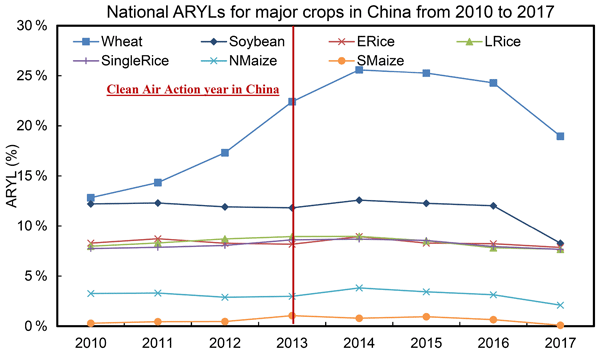
Dianyi Li, Drew Shindell, Dian Ding, Xiao Lu, Lin Zhang, and Yuqiang Zhang
Atmos. Chem. Phys., 22, 2625–2638, https://doi.org/10.5194/acp-22-2625-2022, https://doi.org/10.5194/acp-22-2625-2022, 2022
Short summary
Short summary
In this study, we applied chemical transport model simulation with the latest annual anthropogenic emission inventory to study the long-term trend of ozone-induced crop production losses from 2010 to 2017 in China. We find that overall the ozone-induced crop production loss in China is significant and the annual average economic losses for wheat, rice, maize, and soybean in China are USD 9.55 billion, USD 8.53 billion, USD 2.23 billion, and USD 1.16 billion respectively, over the 8 years.
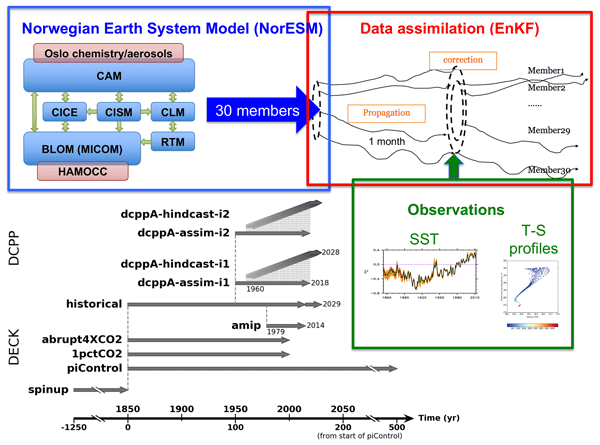
Ingo Bethke, Yiguo Wang, François Counillon, Noel Keenlyside, Madlen Kimmritz, Filippa Fransner, Annette Samuelsen, Helene Langehaug, Lea Svendsen, Ping-Gin Chiu, Leilane Passos, Mats Bentsen, Chuncheng Guo, Alok Gupta, Jerry Tjiputra, Alf Kirkevåg, Dirk Olivié, Øyvind Seland, Julie Solsvik Vågane, Yuanchao Fan, and Tor Eldevik
Geosci. Model Dev., 14, 7073–7116, https://doi.org/10.5194/gmd-14-7073-2021, https://doi.org/10.5194/gmd-14-7073-2021, 2021
Short summary
Short summary
The Norwegian Climate Prediction Model version 1 (NorCPM1) is a new research tool for performing climate reanalyses and seasonal-to-decadal climate predictions. It adds data assimilation capability to the Norwegian Earth System Model version 1 (NorESM1) and has contributed output to the Decadal Climate Prediction Project (DCPP) as part of the sixth Coupled Model Intercomparison Project (CMIP6). We describe the system and evaluate its baseline, reanalysis and prediction performance.
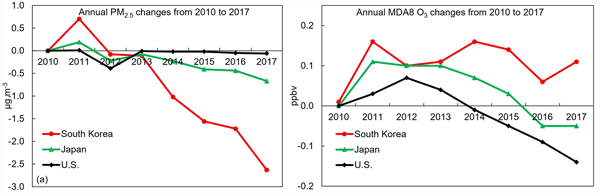
Yuqiang Zhang, Drew Shindell, Karl Seltzer, Lu Shen, Jean-Francois Lamarque, Qiang Zhang, Bo Zheng, Jia Xing, Zhe Jiang, and Lei Zhang
Atmos. Chem. Phys., 21, 16051–16065, https://doi.org/10.5194/acp-21-16051-2021, https://doi.org/10.5194/acp-21-16051-2021, 2021
Short summary
Short summary
In this study, we use a global chemical transport model to simulate the effects on global air quality and human health due to emission changes in China from 2010 to 2017. By performing sensitivity analysis, we found that the air pollution control policies not only decrease the air pollutant concentration but also bring significant co-benefits in air quality to downwind regions. The benefits for the improved air pollution are dominated by PM2.5.
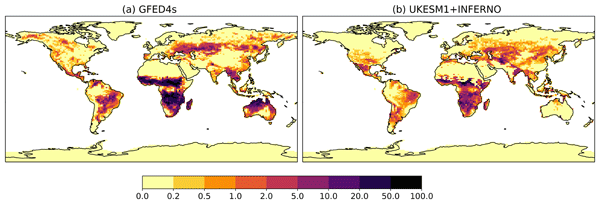
João C. Teixeira, Gerd A. Folberth, Fiona M. O'Connor, Nadine Unger, and Apostolos Voulgarakis
Geosci. Model Dev., 14, 6515–6539, https://doi.org/10.5194/gmd-14-6515-2021, https://doi.org/10.5194/gmd-14-6515-2021, 2021
Short summary
Short summary
Fire constitutes a key process in the Earth system, being driven by climate as well as affecting climate. However, studies on the effects of fires on atmospheric composition and climate have been limited to date. This work implements and assesses the coupling of an interactive fire model with atmospheric composition, comparing it to an offline approach. This approach shows good performance at a global scale. However, regional-scale limitations lead to a bias in modelling fire emissions.
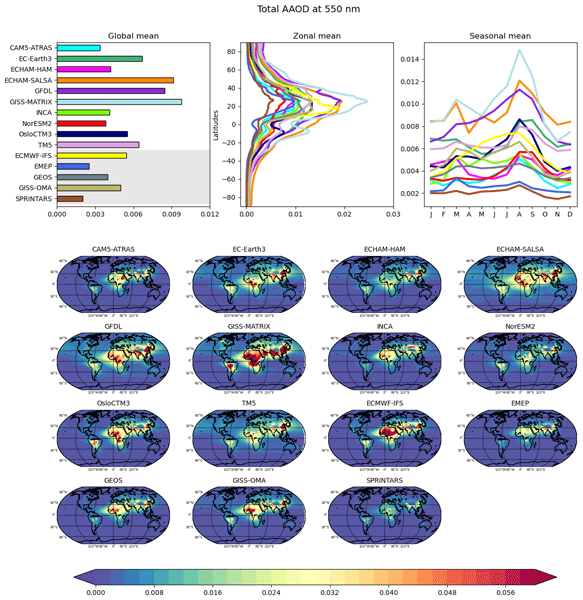
Maria Sand, Bjørn H. Samset, Gunnar Myhre, Jonas Gliß, Susanne E. Bauer, Huisheng Bian, Mian Chin, Ramiro Checa-Garcia, Paul Ginoux, Zak Kipling, Alf Kirkevåg, Harri Kokkola, Philippe Le Sager, Marianne T. Lund, Hitoshi Matsui, Twan van Noije, Dirk J. L. Olivié, Samuel Remy, Michael Schulz, Philip Stier, Camilla W. Stjern, Toshihiko Takemura, Kostas Tsigaridis, Svetlana G. Tsyro, and Duncan Watson-Parris
Atmos. Chem. Phys., 21, 15929–15947, https://doi.org/10.5194/acp-21-15929-2021, https://doi.org/10.5194/acp-21-15929-2021, 2021
Short summary
Short summary
Absorption of shortwave radiation by aerosols can modify precipitation and clouds but is poorly constrained in models. A total of 15 different aerosol models from AeroCom phase III have reported total aerosol absorption, and for the first time, 11 of these models have reported in a consistent experiment the contributions to absorption from black carbon, dust, and organic aerosol. Here, we document the model diversity in aerosol absorption.
Cited articles
Adler, R. F., Huffman, G. J., Chang, A., Ferraro, R., Xie, P.-P., Janowiak, J., Rudolf, B., Schneider, U., Curtis, S., Bolvin, D., Gruber, A., Susskind, J., Arkin, P., and Nelkin, E.: The version-2 global precipitation climatology project (GPCP) monthly precipitation analysis (1979–present), J. Hydrometeorol., 4, 1147–1167, https://doi.org/10.1175/1525-7541(2003)004<1147:TVGPCP>2.0.CO;2, 2003.
Adler, R. F., Sapiano, M. R. P., Huffman, G. J., Wang, J.-J., Gu, G., Bolvin, D., Chiu, L., Schneider, U., Becker, A., Nelkin, E., Xie, P., Ferraro, R., and Shin, D.-B.: The Global Precipitation Climatology Project (GPCP) monthly analysis (new version 2.3) and a review of 2017 global precipitation, Atmosphere, 9, 138, https://doi.org/10.3390/atmos9040138, 2018.
Ali, M. A., Bilal, M., Wang, Y., Qiu, Z., Nichol, J. E., de Leeuw, G., Ke, S., Mhawish, A., Almazroui, M., Mazhar, U., Habtemicheal, B. A., and Islam, M. N.: Evaluation and comparison of CMIP6 models and MERRA-2 reanalysis AOD against satellite observations from 2000 to 2014 over China, Geosci. Front., 13, 101325, https://doi.org/10.1016/j.gsf.2021.101325, 2022.
Allen, M. and Ingram, W.: Constraints on future changes in climate and the hydrologic cycle, Nature, 419, 224–232, https://doi.org/10.1038/nature01092, 2002.
Allen, R. J., Norris, J. R., and Wild, M.: Evaluation of multidecadal variability in CMIP5 surface solar radiation and inferred underestimation of aerosol direct effects over Europe, China, Japan, and India, J. Geophys. Res.-Atmos., 118, 6311–6336, https://doi.org/10.1002/jgrd.50426, 2013.
Andrews, T., Boucher, O., Fläschner, D., Kasoar, M., Kharin, V. V., Kirkevåg, A., Lamarque, J.-F., Myhre, G., Mülmenstädt, J., Oliviè, D. J. L., Samset, B. H., Sandstad, M., Shawki, D., Shindell, D., Stier, P., Takemura, T., Voulgarakis, A., and Watson-Parris, D.: Precipitation Driver Response Model Intercomparison Project data sets 2013–2021, World Data Center for Climate (WDCC) at DKR [data set], https://doi.org/10.26050/WDCC/PDRMIP_2012-2021, 2021.
Bellouin, N., Davies, W., Shine, K. P., Quaas, J., Mülmenstädt, J., Forster, P. M., Smith, C., Lee, L., Regayre, L., Brasseur, G., Sudarchikova, N., Bouarar, I., Boucher, O., and Myhre, G.: Radiative forcing of climate change from the Copernicus reanalysis of atmospheric composition, Earth Syst. Sci. Data, 12, 1649–1677, https://doi.org/10.5194/essd-12-1649-2020, 2020.
Bond, T. C., Doherty, S. J., Fahey, D. W., Forster, P. M., Berntsen, T., DeAngelo, B. J., Flanner, M. G., Ghan, S., Kärcher, B., Koch, D., Kinne, S., Kondo, Y., Quinn, P. K., Sarofim, M. C., Schultz, M. G., Schulz, M., Venkataraman, C., Zhang, H., Zhang, S., Bellouin, N., Guttikunda, S. K., Hopke, P. K., Jacobson, M. Z., Kaiser, J. W., Klimont, Z., Lohmann, U., Schwarz, J. P., Shindell, D., Storelvmo, T., Warren, S. G., and Zender, C. S.: Bounding the role of black carbon in the climate system: A scientific assessment, J. Geophys. Res.-Atmos., 118, 5380–5552, https://doi.org/10.1002/jgrd.50171, 2013.
Booth, B. B. B., Dunstone, N. J., Halloran, P. R., Andrews, T., and Bellouin, N.: Aerosols implicated as a prime driver of twentieth-century North Atlantic climate variability, Nature, 485, 534, https://doi.org/10.1038/nature10946, 2012.
Boucher, O., Randall, D., Artaxo, P., Bretherton, C., Feingold, G., Forster, P., Kerminen, V.-M., Kondo, Y., Liao, H., Lohmann, U., Rasch, P., Satheesh, S. K., Sherwood, S., Stevens, B., and Zhang, X. Y.: Clouds and aerosols, in: Climate Change 2013: The Physical Science Basis. Contribution of Working Group I to the Fifth Assessment Report of the Intergovernmental Panel on Climate Change, edited by: Stocker, T. F., Qin, D., Plattner, G.-K., Tignor, M., Allen, S. K., Boschung, J., Nauels, A., Xia, Y., Bex, V., and Midgley, P. M., Cambridge University Press, 571–657, https://doi.org/10.1017/CBO9781107415324.016, 2013.
Chen, F., Huang, W., Jin, L., Chen, J., and Wang, J.: Spatiotemporal precipitation variations in the arid Central Asia in the context of global warming, Sci. China Earth Sci., 54, 1812–1821, https://doi.org/10.1007/s11430-011-4333-8, 2011.
Cherian, R. and Quaas, J.: Trends in AOD, clouds, and cloud radiative effects in satellite data and CMIP5 and CMIP6 model simulations over aerosol source regions, Geophys. Res. Lett., 47, e2020GL087132, https://doi.org/10.1029/2020GL087132, 2020.
Deng, J., Dai, A., and Xu, H.: Nonlinear climate responses to increasing CO2 and anthropogenic aerosols simulated by CESM1, J. Climate, 33, 281–301, https://doi.org/10.1175/JCLI-D-19-0195.1, 2020.
Dong, B., Sutton, R. T., Shaffrey, L., and Harvey, B.: Recent decadal weakening of the summer Eurasian westerly jet attributable to anthropogenic aerosol emissions, Nat. Commun., 13, 1148, https://doi.org/10.1038/s41467-022-28816-5, 2022.
Eyring, V., Bony, S., Meehl, G. A., Senior, C. A., Stevens, B., Stouffer, R. J., and Taylor, K. E.: Overview of the Coupled Model Intercomparison Project Phase 6 (CMIP6) experimental design and organization, Geosci. Model Dev., 9, 1937–1958, https://doi.org/10.5194/gmd-9-1937-2016, 2016.
Fallah, B., Russo, E., Menz, C., Hoffmann, P., Didovets, I., and Hattermann, F. F.: Anthropogenic influence on extreme temperature and precipitation in Central Asia, Sci. Rep., 13, 6854, https://doi.org/10.1038/s41598-023-33921-6, 2023.
Fan, T., Liu, X., Wu, C., Zhang, Q., Zhao, C., Yang, X., and Li, Y.: Comparison of the Anthropogenic Emission Inventory for CMIP6 Models with a Country-Level Inventory over China and the Simulations of the Aerosol Properties, Adv. Atmos. Sci., 39, 80–96, https://doi.org/10.1007/s00376-021-1119-6, 2022.
Forster, P. M., Richardson, T., Maycock, A. C., Smith, C. J., Samset, B. H., Myhre, G., Andrews, T., Pincus, R., and Schulz, M.: Recommendations for diagnosing effective radiative forcing from climate models for CMIP6, J. Geophys. Res.-Atmos., 121, 12460–12475, https://doi.org/10.1002/2016JD025320, 2016.
Gerlitz, L., Vorogushyn, S., Apel, H., Gafurov, A., Unger-Shayesteh, K., and Merz, B.: A statistically based seasonal precipitation forecast model with automatic predictor selection and its application to central and south Asia, Hydrol. Earth Syst. Sci., 20, 4605–4623, https://doi.org/10.5194/hess-20-4605-2016, 2016.
Gessner, U., Naeimi, V., Klein, I., Kuenzer, C., Klein, D., and Dech, S.: The relationship between precipitation anomalies and satellite-derived vegetation activity in Central Asia, Global Planet. Change, 110, 74–87, https://doi.org/10.1016/j.gloplacha.2012.09.007, 2013.
Gillett, N. P., Stone, D. A., Stott, P. A., Nozawa, T., Karpechko, A. Y., Hegerl, G. C., Wehner, M. F., and Jones, P. D.: Attribution of polar warming to human influence, Nat. Geosci., 1, 750–754, https://doi.org/10.1038/ngeo338, 2008.
Gillett, N. P., Shiogama, H., Funke, B., Hegerl, G., Knutti, R., Matthes, K., Santer, B. D., Stone, D., and Tebaldi, C.: The Detection and Attribution Model Intercomparison Project (DAMIP v1.0) contribution to CMIP6, Geosci. Model Dev., 9, 3685–3697, https://doi.org/10.5194/gmd-9-3685-2016, 2016.
Guinaldo, T., Cassou, C., Sallée, J. B., and Liné, A.: Internal variability effect doped by climate change drove the 2023 marine heat extreme in the North Atlantic, Commun. Earth Environ., 6, 291, https://doi.org/10.1038/s43247-025-02197-1, 2025.
Guo, J., Xie, X., Myhre, G., Shindell, D., Kirkevåg, A., Iversen, T., Samset, B. H., Shi, Z., Li, X., Sun, H., Liu, X., and Liu, Y.: Increased Asian sulfate aerosol emissions remarkably enhance Sahel summer precipitation, Earth Future, 12, e2024EF004745, https://doi.org/10.1029/2024EF004745, 2024.
Hansen, J., Sato, M., Ruedy, R., Nazarenko, L., Lacis, A., Schmidt, G. A., Russell, G., Aleinov, I., Bauer, M., Bauer, S., Bell, N., Cairns, B., Canuto, V., Chandler, M., Cheng, Y., Del Genio, A., Faluvegi, G., Fleming, E., Friend, A., Hall, T., Jackman, C., Kelley, M., Kiang, N., Koch, D., Lean, J., Lerner, J., Lo, K., Menon, S., Miller, R., Minnis, P., Novakov, T., Oinas, V., Perlwitz, J., Perlwitz, J., Rind, D., Romanou, A., Shindell, D., Stone, P., Sun, S., Tausnev, N., Thresher, D., Wielicki, B., Wong, T., Yao, M., and Zhang, S.: Efficacy of climate forcings, J. Geophys. Res.-Atmos., 110, D18104, https://doi.org/10.1029/2005JD005776, 2005.
Harris, I., Osborn, T. J., Jones, P., and Lister, D.: Version 4 of the CRU TS monthly high-resolution gridded multivariate climate dataset, Sci. Data, 7, 109, https://doi.org/10.1038/s41597-020-0453-3, 2020.
Held, I. M. and Soden, B. J.: Robust responses of the hydrological cycle to global warming, J. Climate, 19, 5686–5699, https://doi.org/10.1175/JCLI3990.1, 2006.
Herbert, R., Wilcox, L. J., Joshi, M., Highwood, E., and Frame, D.: Nonlinear response of Asian summer monsoon precipitation to emission reductions in South and East Asia, Environ. Res. Lett., 17, 014005, https://doi.org/10.1088/1748-9326/ac3b19, 2021.
Hersbach, H., Bell, B., Berrisford, P., Hirahara, S., Horányi, A., Muñoz-Sabater, J., Nicolas, J., Peubey, C., Radu, R., Schepers, D., Simmons, A., Soci, C., Abdalla, S., Abellan, X., Balsamo, G., Bechtold, P., Biavati, G., Bidlot, J., Bonavita, M., De Chiara, G., Dahlgren, P., Dee, D., Diamantakis, M., Dragani, R., Flemming, J., Forbes, R., Fuentes, M., Geer, A., Haimberger, L., Healy, S., Hogan, R. J., Hólm, E., Janisková, M., Keeley, S., Laloyaux, P., Lopez, P., Lupu, C., Radnoti, G., de Rosnay, P., Rozum, I., Vamborg, F., Villaume, S., and Thépaut, J.-N.: The ERA5 global reanalysis, Q. J. Roy. Meteor. Soc., 146, 1999–2049, https://doi.org/10.1002/qj.3803, 2020.
Hu, Z., Zhang, C., Hu, Q., and Tian, H.: Temperature changes in Central Asia from 1979 to 2011 based on multiple datasets, J. Climate, 27, 1143–1167, https://doi.org/10.1175/JCLI-D-13-00064.1, 2014.
Hu, Z., Zhou, Q., Chen, X., Qian, C., Wang, S., and Li, J.: Variations and changes of annual precipitation in Central Asia over the last century, Int. J. Climatol., 37, 157–170, https://doi.org/10.1002/joc.4988, 2017.
Huang, A., Zhou, Y., Zhang, Y., Huang, D., Zhao, Y., and Wu, H.: Changes of the annual precipitation over central Asia in the twenty-first century projected by multimodels of CMIP5, J. Climate, 27, 6627–6546, https://doi.org/10.1175/JCLI-D-14-00070.1, 2014.
Huang, W., Chen, F., Feng, S., Chen, J., and Zhang, X.: Interannual precipitation variations in the mid-latitude Asia and their association with large-scale atmospheric circulation, Chinese Sci. Bull., 58, 3962–3968, https://doi.org/10.1007/s11434-013-5970-4, 2013.
Jaisankar, B., Tumuluru, V. L. K., and Anandan, N. R.: Spatio-temporal correspondence of aerosol optical depth between CMIP6 simulations and MODIS retrievals over India, Environ. Sci. Pollut. Res., 31, 16899–16914, https://doi.org/10.1007/s11356-024-32314-0, 2024.
Jia, H., Ma, X., Yu, F., and Quaas, J.: Significant underestimation of radiative forcing by aerosol-cloud interactions derived from satellite-based methods, Nat. Commun., 12, 3649, https://doi.org/10.1038/s41467-021-23888-1, 2021.
Jiang, J., Zhou, T., Chen, X., and Zhang, L.: Future changes in precipitation over Central Asia based on CMIP6 projections, Environ. Res. Lett., 15, 054009, https://iopscience.iop.org/article/10.1088/1748-9326/ab7d03 (last access: 10 April 2026), 2020.
Jiang, J., Zhou, T., Chen, X., and Wu, B.: Central Asian precipitation shaped by the tropical Pacific decadal variability and the Atlantic multidecadal variability, J. Climate, 34, 7541–7553, https://doi.org/10.1175/JCLI-D-20-0905.1, 2021.
Kjellsson, J.: Weakening of the global atmospheric circulation with global warming, Clim. Dynam., 45, 975–988, https://doi.org/10.1007/s00382-014-2337-8, 2015.
Kraaijenbrink, P. D. A., Stigter, E. E., Yao, T., and Immerzeel, W. W.: Climate change decisive for Asia's snow meltwater supply, Nat. Clim. Change, 11, 591–597, https://doi.org/10.1038/s41558-021-01074-x, 2021.
Li, B., Chen, Y., Chen, Z., Xiong, H., and Lian, L.: Why does precipitation in northwest China show a significant increasing trend from 1960 to 2010?, Atmos. Res., 167, 275–284, https://doi.org/10.1016/j.atmosres.2015.08.017, 2016.
Li, X., Liu, Y., Wang, M., Jiang, Y., and Dong, X.: Assessment of the Coupled Model Intercomparison Project phase 6 (CMIP6) Model performance in simulating the spatial-temporal variation of aerosol optical depth over Eastern Central China, Atmos. Res., 261, 105747, https://doi.org/10.1016/j.atmosres.2021.105747, 2021.
Lioubimtseva, E. and Henebry, G. M.: Climate and environmental change in arid Central Asia: Impacts, vulnerability, and adaptations, J. Arid Environ., 73, 963–977, https://doi.org/10.1016/j.jaridenv.2009.04.022, 2009.
Liu, L., Shawki, D., Voulgarakis, A., Kasoar, M., Samset, B. H., Myhre, G., Forster, P. M., Hodnebrog, Ø., Sillmann, J., Aalbergsjø, S. G., Boucher, O., Faluvegi, G., Iversen, T., Kirkevåg, A., Lamarque, J.-F., Olivié, D., Richardson, T., Shindell, D., and Takemura, T.: A PDRMIP multimodel study on the impacts of regional aerosol forcings on global and regional precipitation, J. Climate, 31, 4429–4447, https://doi.org/10.1175/JCLI-D-17-0439.1, 2018.
Liu, Z., Huang, J., Xiao, X., and Tong, X.: The capability of CMIP6 models on seasonal precipitation extremes over Central Asia, Atmos. Res., 278, 106364, https://doi.org/10.1016/j.atmosres.2022.106364, 2022.
Lu, Z., Zhang, Q., and Streets, D. G.: Sulfur dioxide and primary carbonaceous aerosol emissions in China and India, 1996–2010, Atmos. Chem. Phys., 11, 9839–9864, https://doi.org/10.5194/acp-11-9839-2011, 2011.
Lund, M. T., Myhre, G., and Samset, B. H.: Anthropogenic aerosol forcing under the Shared Socioeconomic Pathways, Atmos. Chem. Phys., 19, 13827–13839, https://doi.org/10.5194/acp-19-13827-2019, 2019.
Ma, Q., Zhang, J., Game, A. T., Chang, Y., and Li, S.: Spatiotemporal variability of summer precipitation and precipitation extremes and associated large-scale mechanisms in Central Asia during 1979–2018, J. Hydrol. , 8, 100061, https://doi.org/10.1016/j.hydroa.2020.100061, 2020.
Myhre, G., Shindell, D., Bréon, F.-M., Collins, W., Fuglestvedt, J., Huang, J., Koch, D., Lamarque, J.-F., Lee, D., Mendoza, B., Nakajima, T., Robock, A., Stephens, G., Takemura, T., and Zhang, H.: Anthropogenic and Natural Radiative Forcing, in: Climate Change 2013: The Physical Science Basis. Contribution of Working Group I to the Fifth Assessment Report of the Intergovernmental Panel on Climate Change, edited by: Stocker, T. F., Qin, D., Plattner, G.-K., Tignor, M., Allen, S. K., Boschung, J., Nauels, A., Xia, Y., Bex, V., and Midgley, P. M., Cambridge University Press, 659–740, https://doi.org/10.1017/CBO9781107415324.018, 2013.
Myhre, G., Forster, P. M., Samset, B. H., Hodnebrog, Ø., Sillmann, J., Aalbergsjø, S. G., Andrews, T., Boucher, O., Faluvegi, G., Fläschner, D., Kasoar, M., Kharin, V., Kirkevåg, A., Lamarque, J.-F., Olivié, D., Richardson, T. B., Shindell, D., Shine, K. P., Stjern, C. W., Takemura, T., Voulgarakis, A., and Zwiers, F.: PDRMIP: A precipitation driver and response model intercomparison project—Protocol and preliminary results, B. Am. Meteorol. Soc., 98, 1185–1198, https://doi.org/10.1175/BAMS-D-16-0019.1, 2017.
Myhre, G., Samset, B., Forster, P. M., Hodnebrog, Ø., Sandstad, M., Mohr, C. W., Sillmann, J., Stjern, C. W., Andrews, T., Boucher, O., Faluvegi, G., Iversen, T., Lamarque, J.-F., Kasoar, M., Kirkevåg, A., Kramer, R., Liu, L., Mülmenstädt, J., Olivié, D.,a Quas, J., Richardson, T. B., Shawki, D., Shindell, D., Smith, C., Stier, P., Tang, T., Takemura, T., Voulgarakis, A., and Watson-Parris, D.: Scientific data from precipitation driver response model intercomparison project, Sci. Data, 9, 123, https://doi.org/10.1038/s41597-022-01194-9, 2022.
O'Neill, B. C., Tebaldi, C., van Vuuren, D. P., Eyring, V., Friedlingstein, P., Hurtt, G., Knutti, R., Kriegler, E., Lamarque, J.-F., Lowe, J., Meehl, G. A., Moss, R., Riahi, K., and Sanderson, B. M.: The Scenario Model Intercomparison Project (ScenarioMIP) for CMIP6, Geosci. Model Dev., 9, 3461–3482, https://doi.org/10.5194/gmd-9-3461-2016, 2016.
O'Neill, B. C., Kriegler, E., Ebi, K. L., Kemp-Benedict, E., Riahi, K., Rothman, D. S., van Ruijven, B. J., van Vuuren, D. P., Birkmann, J., Kok, K., Levy, M., and Solecki, W.: The roads ahead: Narratives for shared socioeconomic pathways describing world futures in the 21st century, Global Environ. Chang., 42, 169–180, https://doi.org/10.1016/j.gloenvcha.2015.01.004, 2017.
O'Reilly, C. H., Woollings, T., Zanna, L., and Weisheimer, A.: Projections of northern hemisphere extratropical climate underestimate internal variability and associated uncertainty, Commun. Earth Environ., 2, 194, https://doi.org/10.1038/s43247-021-00268-7, 2021.
Ohara, T., Akimoto, H., Kurokawa, J., Horii, N., Yamaji, K., Yan, X., and Hayasaka, T.: An Asian emission inventory of anthropogenic emission sources for the period 1980–2020, Atmos. Chem. Phys., 7, 4419–4444, https://doi.org/10.5194/acp-7-4419-2007, 2007.
Oki, T. and Kanae, S.: Global hydrological cycles and world water resources, Science, 313, 1068–1072, https://doi.org/10.1126/science.1128845, 2006.
Peng, D. and Zhou, T.: Why was the arid and semiarid northwest China getting wetter in the recent decades?, J. Geophys. Res.-Atmos., 122, 9060–9075, https://doi.org/10.1002/2016JD026424, 2017.
Peng, D., Zhou, T., Zhang, L., and Wu, B.: Human contribution to the increasing summer precipitation in Central Asia from 1961 to 2013, J. Climate, 31, 8005–8021, https://doi.org/10.1175/JCLI-D-17-0843.1, 2018.
Qian, Y., Yasunari, T. J., Doherty, S. J., Flanner, M. G., Lau, W. K. M., Ming, J., Wang, H., Wang, M., Warren, S. G., and Zhang, R.: Light-absorbing Particles in Snow and Ice: Measurement and Modeling of Climatic and Hydrological Impact, Adv. Atmos. Sci., 32, 64–91, https://doi.org/10.1007/s00376-014-0010-0, 2015.
Ramanathan, V. and Carmichael, G.: Global and regional climate changes due to black carbon, Nat. Geosci., 1, 221–227, https://doi.org/10.1038/ngeo156, 2008.
Rao, S., Klimont, Z., Smith, S. J., Van Dingenen, R., Dentener, F., Bouwman, L., Riahi, K., Amann, M., Bodirsky, B. L., van Vuuren, D. P., Aleluia Reis, L., Calvin, K., Drouet, L., Fricko, O., Fujimori, S., Gernaat, D., Havlik, P., Harmsen, M., Hasegawa, T., Heyes, C., Hilaire, J., Luderer, G., Masui, T., Stehfest, E., Strefler, J., van der Sluis, S., and Tavoni, M.: Future air pollution in the Shared Socio-economic Pathways, Global Environ. Chang., 42, 346–358, https://doi.org/10.1016/j.gloenvcha.2016.05.012, 2017.
Reyer, C. P. O., Otto, I. M., Adams, S., Albrecht, T., Baarsch, F., Cartsburg, M., Coumou, D., Eden, A., Ludi, E., Marcus, R., Mengel, M., Mosello, B., Robinson, A., Schleussner, C.-F., Serdeczny, O., and Stagl, J.: Climate change impacts in Central Asia and their implications for development, Reg. Environ. Change, 17, 1639–1650, https://doi.org/10.1007/s10113-015-0893-z, 2017.
Rotstayn, L. D. and Lohmann, U.: Tropical rainfall trends and the indirect aerosol effect, J. Climate, 15, 2103–2116, https://doi.org/10.1175/1520-0442(2002)015<2103:TRTATI>2.0.CO;2, 2002.
Samset, B. H., Lund, M. T., Bollasina, M., Myhre, G., and Wilcox, L.: Emerging Asian aerosol patterns, Nat. Geosci., 12, 582–584, https://doi.org/10.1038/s41561-019-0424-5, 2019.
Sanap, S. D., Ayantika, D. C., Pandithurai, G., and Niranjan, K.: Assessment of the aerosol distribution over Indian subcontinent in CMIP5 models, Atmos. Environ., 87, 123–137, https://doi.org/10.1016/j.atmosenv.2014.01.017, 2014.
Schneider, U., Becker, A., Finger, P., Rustemeier, E., and Ziese, M.: GPCC full data monthly product version 2020 at 0.25°: Monthly land-surface precipitation from rain-gauges built on GTS-based and historical data, GPCC, https://doi.org/10.5676/DWD_GPCC/FD_M_V2020_025, 2020.
Seager, R., Naik, N., and Vecchi, G. A.: Thermodynamic and dynamic mechanisms for large-scale changes in the hydrological cycle in response to global warming, J. Climate, 23, 4651–4668, https://doi.org/10.1175/2010JCLI3655.1, 2010.
Shawki, D., Voulgarakis, A., Chakraborty, A., Kasoar, M., and Srinivasan, J.: The South Asian monsoon response to remote aerosols: Global and regional mechanisms, J. Geophys. Res.-Atmos., 123, 11585–11602, https://doi.org/10.1029/2018JD028623, 2018.
Shi, Z., Xie, X., Li, X., Yang, L., Xie, X., Lei, J., Sha, Y., and Liu, X.: Snow-darkening versus direct radiative effects of mineral dust aerosol on the Indian summer monsoon onset: role of temperature change over dust sources, Atmos. Chem. Phys., 19, 1605–1622, https://doi.org/10.5194/acp-19-1605-2019, 2019.
Shindell, D. and Faluvegi, G.: Climate response to regional radiative forcing during the twentieth century, Nat. Geosci., 2, 294–300, https://doi.org/10.1038/ngeo473, 2009.
Shindell, D. T., Miller, R. L., Schmidt, G. A., and Pandolfo, L.: Simulation of recent northern winter climate trends by greenhouse-gas forcing, Nature, 399, 452–455, https://doi.org/10.1038/20905, 1999.
Shindell, D. T., Voulgarakis, A., Faluvegi, G., and Milly, G.: Precipitation response to regional radiative forcing, Atmos. Chem. Phys., 12, 6969–6982, https://doi.org/10.5194/acp-12-6969-2012, 2012.
Smith, C. J., Kramer, R. J., Myhre, G., Alterskjær, K., Collins, W., Sima, A., Boucher, O., Dufresne, J.-L., Nabat, P., Michou, M., Yukimoto, S., Cole, J., Paynter, D., Shiogama, H., O'Connor, F. M., Robertson, E., Wiltshire, A., Andrews, T., Hannay, C., Miller, R., Nazarenko, L., Kirkevåg, A., Olivié, D., Fiedler, S., Lewinschal, A., Mackallah, C., Dix, M., Pincus, R., and Forster, P. M.: Effective radiative forcing and adjustments in CMIP6 models, Atmos. Chem. Phys., 20, 9591–9618, https://doi.org/10.5194/acp-20-9591-2020, 2020.
Stjern, C. W., Samset, B. H., Myhre, G., Forster, P. M., Hodnebrog, Ø., Andrews, T., Boucher, O., Faluvegi, G., Iversen, T., Kasoar, M., Kharin, V., Kirkevåg, A., Lamarque, J.-F., Olivié, D., Richardson, T., Shawki, D., Shindell, D., Smith, C. J., Takemura, T., and Voulgarakis, A.: Rapid adjustments cause weak surface temperature response to increased black carbon concentrations, J. Geophys. Res.-Atmos., 122, 11462–11481, https://doi.org/10.1002/2017JD027326, 2017.
Turnock, S. T., Allen, R. J., Andrews, M., Bauer, S. E., Deushi, M., Emmons, L., Good, P., Horowitz, L., John, J. G., Michou, M., Nabat, P., Naik, V., Neubauer, D., O'Connor, F. M., Olivié, D., Oshima, N., Schulz, M., Sellar, A., Shim, S., Takemura, T., Tilmes, S., Tsigaridis, K., Wu, T., and Zhang, J.: Historical and future changes in air pollutants from CMIP6 models, Atmos. Chem. Phys., 20, 14547–14579, https://doi.org/10.5194/acp-20-14547-2020, 2020.
Undorf, S., Polson, D., Bollasina, M. A., Ming, Y., Schurer, A., and Hegerl, G. C.: Detectable impact of local and remote anthropogenic aerosols on the 20th century changes of West African and South Asian monsoon precipitation, J. Geophys. Res.-Atmos., 123, 4871–4889, https://doi.org/10.1029/2017JD027711, 2018.
Vose, R. S., Arndt, D., Banzon, V. F., Easterling, D. R., Gleason, B., Huang, B., Kearns, E., Lawrimore, J. H., Menne, M. J., Peterson, T. C., Reynolds, R. W., Smith, T. M., Williams Jr., C. N., and Wuertz, D. B.: NOAA's Merged Land-Ocean Surface Temperature Analysis, B. Am. Meteorol. Soc., 93, 1677–1685, https://doi.org/10.1175/BAMS-D-11-00241.1, 2012.
Wang, Y., Zhou, B., Qin, D., Wu, J., Gao, R., and Song, L.: Changes in mean and extreme temperature and precipitation over the arid region of northwestern China: observation and projection, Adv. Atmos. Sci., 34, 289–305, https://doi.org/10.1007/s00376-016-6160-5, 2017.
Wang, Z., Lin, L., Xu, Y., Che, H., Zhang, X., Zhang, H., Dong, W., Wang, C., Gui, K., and Xie, B.: Incorrect Asian aerosols affecting the attribution and projection of regional climate change in CMIP6 models, npj Clim. Atmos. Sci., 4, 2, https://doi.org/10.1038/s41612-020-00159-2, 2021.
Wei, W., Zhang, R., Wen, M., and Yang, S.: Relationship between the Asian westerly jet stream and summer rainfall over central Asia and North China: Roles of the Indian monsoon and the South Asian high, J. Climate, 30, 537–552, https://doi.org/10.1175/JCLI-D-15-0814.1, 2017.
Westervelt, D. M., Conley, A. J., Fiore, A. M., Lamarque, J.-F., Shindell, D. T., Previdi, M., Mascioli, N. R., Faluvegi, G., Correa, G., and Horowitz, L. W.: Connecting regional aerosol emissions reductions to local and remote precipitation responses, Atmos. Chem. Phys., 18, 12461–12475, https://doi.org/10.5194/acp-18-12461-2018, 2018.
Wilcox, L. J., Liu, Z., Samset, B. H., Hawkins, E., Lund, M. T., Nordling, K., Undorf, S., Bollasina, M., Ekman, A. M. L., Krishnan, S., Merikanto, J., and Turner, A. G.: Accelerated increases in global and Asian summer monsoon precipitation from future aerosol reductions, Atmos. Chem. Phys., 20, 11955–11977, https://doi.org/10.5194/acp-20-11955-2020, 2020.
Wu, M., Zhou, T., Li, C., Li, H., Chen, X., Wu, B., Zhang, W., and Zhang, L.: A very likely weakening of Pacific Walker Circulation in constrained near-future projections, Nat. Commun., 12, 6502, https://doi.org/10.1038/s41467-021-26693-y, 2021.
Xie, X., Duan, A., Shi, Z., Li, X., Sun, H., Liu, X., Cheng, X., Zhao, T., Che, H., and Liu, Y.: Modulation of springtime surface sensible heating over the Tibetan Plateau on the interannual variability of East Asian dust cycle, Atmos. Chem. Phys., 20, 11143–11159, https://doi.org/10.5194/acp-20-11143-2020, 2020a.
Xie, X., Myhre, G., Liu, X., Li, X., Shi, Z., Wang, H., Kirkevåg, A., Lamarque, J.-F., Shindell, D., Takemura, T., and Liu, Y.: Distinct responses of Asian summer monsoon to black carbon aerosols and greenhouse gases, Atmos. Chem. Phys., 20, 11823–11839, https://doi.org/10.5194/acp-20-11823-2020, 2020b.
Xie, X., Myhre, G., Shindell, D., Faluvegi, G., Takemura, T., Voulgarakis, A., Shi, Z., Li, X., Xie, X., Liu, H., Liu, X., and Liu, Y.: Anthropogenic sulfate aerosol pollution in South and East Asia induces increased summer precipitation over arid Central Asia, Commun. Earth Environ., 3, 328, https://doi.org/10.1038/s43247-022-00660-x, 2022.
Xue, J., Xie, X., and Liu, X.: Differing responses of precipitation in Northern Hemisphere mid-latitudes to increased black carbon aerosols and carbon dioxide, Environ. Res., 210, 112938, https://doi.org/10.1016/j.envres.2022.112938, 2022.
Yang, H., Xu, G., Mao, H., and Wang, Y.: Spatiotemporal variation in precipitation and water vapor transport over Central Asia in winter and summer under global warming, Front. Earth Sci., 8, 297, https://doi.org/10.3389/feart.2020.00297, 2020.
Yao, M., Tang, H., and Huang, G.: Inter-model uncertainty in projecting precipitation changes over central Asia under global warming, Geophys. Res. Lett., 51, e2024GL111989, https://doi.org/10.1029/2024GL111989, 2024.
Yao, M., Tang, H., and Huang, G.: Roles of external forcing and internal variability in winter precipitation changes over Central Asia, Earth Future, 13, e2025EF006064, https://doi.org/10.1029/2025EF006064, 2025.
Yu, X., Zhao, Y., Ma, X., Yao, J., and Li, H.: Projected changes in the annual cycle of precipitation over central Asia by CMIP5 models, Int. J. Climatol., 38, 5589–5604, https://doi.org/10.1002/joc.5765, 2018.
Zhang, J., Wang, S., He, Y., Ren, Y., and Huang, J.: Contribution of the precipitation-recycling process to the wetting trend in Xinjiang, China, J. Geophys. Res.-Atmos., 127, e2021JD036407, https://doi.org/10.1029/2021JD036407, 2022.
Zhao, Y., Wang, M., Huang, A., Li, H., Huo, W., and Yang, Q.: Relationships between the West Asian subtropical westerly jet and summer precipitation in northern Xinjiang, Theor. Appl. Climatol., 116, 403–411, https://doi.org/10.1007/s00704-013-0948-3, 2014.
Zheng, B., Tong, D., Li, M., Liu, F., Hong, C., Geng, G., Li, H., Li, X., Peng, L., Qi, J., Yan, L., Zhang, Y., Zhao, H., Zheng, Y., He, K., and Zhang, Q.: Trends in China's anthropogenic emissions since 2010 as the consequence of clean air actions, Atmos. Chem. Phys., 18, 14095–14111, https://doi.org/10.5194/acp-18-14095-2018, 2018.
Zhong, J., Zhang, X., Zhang, D., Wang, D., Guo, L., Peng, H., Huang, X., Wang, Z., Lei, Y., Lu, Y., Qu, C., Zhang, X., and Miao, C.: Plausible global emissions scenario for 2 °C aligned with China's net-zero pathway, Nat. Commun., 16, 8102, https://doi.org/10.1038/s41467-025-62983-5, 2025.
Zhou, S., Huang, P., Wang, L., Hu, K., Huang, G., and Hu, P.: Robust changes in global subtropical circulation under greenhouse warming, Nat. Commun., 15, 96, https://doi.org/10.1038/s41467-023-44244-5, 2024.
Short summary
Central Asia has grown wetter in recent decades, but the drivers differ by season. We analyzed observations and climate model experiments to understand these changes and their future. Our analysis reveals that greenhouse gases from human activities drive winter wetting, whereas aerosol from Asia urbanization and industrialization enhances summer precipitation. As future reductions in air pollution, the region may experience drier summers and create new risks for regional water resources.
Central Asia has grown wetter in recent decades, but the drivers differ by season. We analyzed...


Altmetrics
Final-revised paper
Preprint