
Articles | Volume 26, issue 6
https://doi.org/10.5194/acp-26-4509-2026
© Author(s) 2026. This work is distributed under
the Creative Commons Attribution 4.0 License.
the Creative Commons Attribution 4.0 License.
https://doi.org/10.5194/acp-26-4509-2026
© Author(s) 2026. This work is distributed under
the Creative Commons Attribution 4.0 License.
the Creative Commons Attribution 4.0 License.
Research article
| 
02 Apr 2026
Research article |
| 02 Apr 2026
| 02 Apr 2026
Inferring drivers of tropical isoprene: competing effects of emissions and chemistry
James Young Suk Yoon
Department of Atmospheric and Climate Science, University of Washington, Seattle, WA 98195, USA
Kelley C. Wells
Department of Soil, Water and Climate, University of Minnesota, Minneapolis, MN 55455, USA
Dylan B. Millet
Department of Soil, Water and Climate, University of Minnesota, Minneapolis, MN 55455, USA
Christian Frankenberg
Division of Geological and Planetary Sciences, California Institute of Technology, Pasadena, CA 91125, USA
Jet Propulsion Laboratory, California Institute of Technology, Pasadena, CA 91125, USA
Suniti Sanghavi
Jet Propulsion Laboratory, California Institute of Technology, Pasadena, CA 91125, USA
Abigail L. S. Swann
Department of Atmospheric and Climate Science, University of Washington, Seattle, WA 98195, USA
Department of Biology, University of Washington, Seattle, WA 98195, USA
Joel A. Thornton
Department of Atmospheric and Climate Science, University of Washington, Seattle, WA 98195, USA

Department of Atmospheric and Climate Science, University of Washington, Seattle, WA 98195, USA
Related authors
No articles found.
Daniel Cusworth, Daniel Varon, Dylan Jervis, Jason McKeever, Alexander Turner, Christian Frankenberg, John Worden, Andrew Thorpe, Jay Fahlen, Sudhanshu Pandey, Joannes Maasakkers, Ilse Aben, Annmarie Eldering, Riley Duren, Bradley Conrad, Tia Scarpelli, Daniel Bon, Mackenzie Huffman, Itziar Irakulis-Loitxate, Luis Guanter, Jason Schroeder, Benjamin Hmiel, Evan Sherwin, Sean Crowell, Eric Kort, Adam Brandt, Frances Reuland, Maryann Sargent, James East, and Daniel Jacob
EGUsphere, https://doi.org/10.5194/egusphere-2026-6060, https://doi.org/10.5194/egusphere-2026-6060, 2026
This preprint is open for discussion and under review for Atmospheric Chemistry and Physics (ACP).
Short summary
Short summary
In this review, we summarize the current and anticipated state of satellite remote sensing for point sources. In particular, we are provide and update to the fleet of point source imaging satellites, summarize the nuance around data availability and revisit, detail data processing pipelines and validation procedures, describe how to benchmark detection performance, and finally, describe demonstrated use-cases for satellite point source observations.
Charles Koven, Benjamin M. Sanderson, Abigail L. S. Swann, Victor Brovkin, John Dunne, Rosie A. Fisher, Tomohiro Hajima, Chris D. Jones, Spencer K. Liddicoat, Anastasia Romanou, Roland Séférian, Norman J. Steinert, Jerry Tjiputra, Tilo Ziehn, Tatiana Ilyina, Nancy Y. Kiang, David M. Lawrence, Peter Lawrence, Hongmei Li, Jorg Schwinger, and Lori T. Sentman
EGUsphere, https://doi.org/10.5194/egusphere-2026-5381, https://doi.org/10.5194/egusphere-2026-5381, 2026
This preprint is open for discussion and under review for Earth System Dynamics (ESD).
Short summary
Short summary
We use a set of climate models to ask how aspects of climate beyond global mean temperatures would differ if we first emit, and then remove, a given amount of CO2, compared to a case where the CO2 hadn't been emitted. We show that precipitation increases, and that land cools relative to the ocean. Models disagree on many of the finer-scale regional changes, but they do agree that many of the regional changes that occur under positive and then negative emissions also occur under zero emissions.
Megan S. Claflin, Felipe Lopez-Hilfiker, Urs Rohner, Vasyl Yatsyna, Brian M. Lerner, Joel Thornton, Douglas Worsnop, Manjula Canagaratna, and John Jayne
EGUsphere, https://doi.org/10.5194/egusphere-2026-6002, https://doi.org/10.5194/egusphere-2026-6002, 2026
This preprint is open for discussion and under review for Atmospheric Measurement Techniques (AMT).
Short summary
Short summary
Measurement of volatile organic compounds in diverse environments is important to understand changing emissions and their impact on health and climate. We present a measurement system that is compact, low power, and provides both high-time resolution and molecularly resolved data. This system enables simpler deployment, operation, and analysis while providing a path toward meaningful measurements at long-term monitoring sites, on mobile platforms, and in locations where resources are limited.
Yitong Yao, Vincent Humphrey, Alexandra G. Konings, Jeffrey D. Wood, Yujie Wang, Ke Liu, Dien Wu, and Christian Frankenberg
EGUsphere, https://doi.org/10.5194/egusphere-2026-4858, https://doi.org/10.5194/egusphere-2026-4858, 2026
This preprint is open for discussion and under review for Geoscientific Model Development (GMD).
Short summary
Short summary
This study presents the first information-content analysis of mono-band and dual-band VOD observations for jointly retrieving vegetation water content, canopy temperature, and vegetation structure using an electromagnetic model, Bayesian inversion, and observing system simulation experiments. Our findings establish a new framework for interpreting VOD dynamics and provide practical guidance for the design of future multi-frequency microwave missions and retrieval algorithms.
Yuwei Zhao, Andrew Hallward-Driemeier, Luke D. Schiferl, Trey Maddaleno, Michael P. Vermeuel, Dylan B. Millet, Delphine Farmer, and Róisín Commane
Atmos. Chem. Phys., 26, 12911–12924, https://doi.org/10.5194/acp-26-12911-2026, https://doi.org/10.5194/acp-26-12911-2026, 2026
Short summary
Short summary
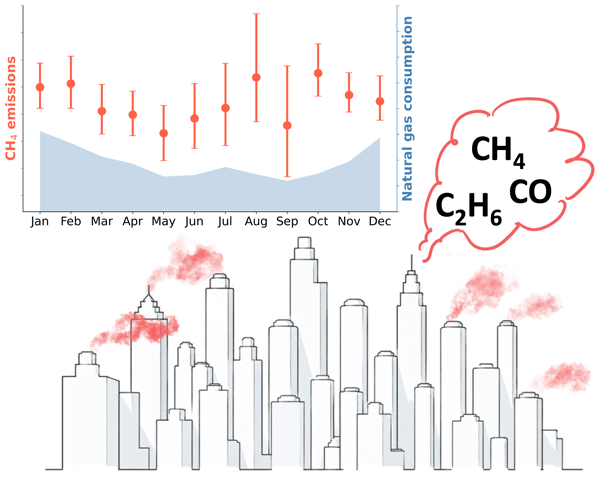
Reducing methane emissions offers a near-term climate mitigation opportunity. Cities contain large and often underestimated methane sources. In New York City, methane emissions peak during heating and cooling seasons, with natural gas as a dominant source. Emissions track gas consumption and show significant incomplete combustion signatures. We estimate a 1.7 % loss rate, ~300M USD/year in wasted gas, highlighting mechanisms of inefficient natural gas combustion as a future mitigation focus.
Abigail L. S. Swann, Charles D. Koven, Cristian Proistosecu, Rosie A. Fisher, Benjamin M. Sanderson, Victor Brovkin, Tomohiro Hajima, Chris D. Jones, Nancy Y. Kiang, David M. Lawrence, Spencer Liddicoat, Hannah Liddy, Anastasia Romanou, Roland Séférian, Lori T. Sentman, Norman J. Steinert, Jerry Tjiputra, and Tilo Ziehn
Earth Syst. Dynam., 17, 1237–1275, https://doi.org/10.5194/esd-17-1237-2026, https://doi.org/10.5194/esd-17-1237-2026, 2026
Short summary
Short summary
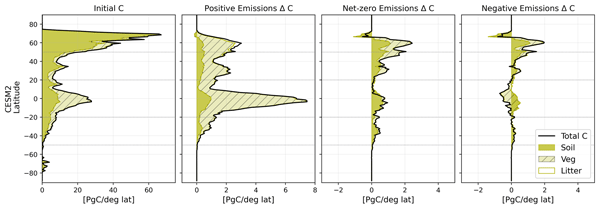
We analyzed simulations from Earth system models (ESM) with a constant rate of emissions, zero emissions, and negative emissions of CO2 to quantify the response of land carbon sinks. We found that under positive emissions vegetation in the tropics gained carbon. Under zero emissions and negative emissions most ESMs lost carbon from vegetation in the tropics but gained carbon in mid- and high-latitudes, mostly in soils. Our findings imply that tropical carbon is vulnerable under zero emissions.
Xin Chen, Dylan B. Millet, Glenn M. Wolfe, Erin R. Delaria, M. Julian Deventer, Markus Müller, Arne Schiller, Kenneth Lee Thornhill, and Armin Wisthaler
Atmos. Meas. Tech., 19, 5353–5372, https://doi.org/10.5194/amt-19-5353-2026, https://doi.org/10.5194/amt-19-5353-2026, 2026
Short summary
Short summary
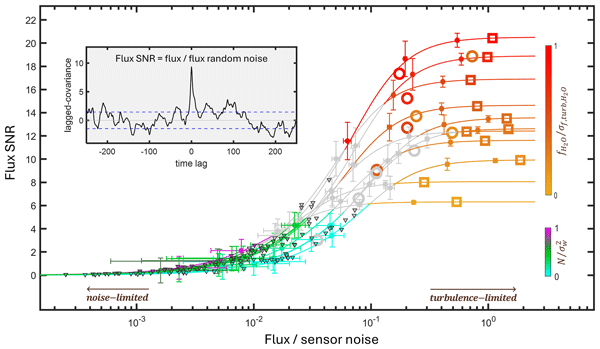
Air-sea exchange is a major uncertainty source for many volatile organic compounds (VOCs). Aircraft-based eddy covariance can be used to quantify these fluxes over large regions but such applications have been limited. We used observations over the Atlantic to characterize VOC fluxes and elucidate the drivers of measurement error. Results show how sensor noise and turbulent variability interact to determine flux detectability, and define instrumental priorities for future use of this technique.

Yitong Yao, Yujie Wang, Yi Yin, Jeffrey D. Wood, and Christian Frankenberg
Biogeosciences, 23, 5461–5475, https://doi.org/10.5194/bg-23-5461-2026, https://doi.org/10.5194/bg-23-5461-2026, 2026
Short summary
Short summary
Droughts can leave lasting "scars" that slow down recovery long after the rain returns. In this study, we found that models assuming plants recover immediately after drought performed poorly, while those allowing only partial recovery matched real observations much better. Accounting for these delayed recovery processes will make land surface models more accurate in predicting carbon and water cycles under future droughts.
Sneha Aggarwal, Matthew Salter, Olga Garmash, Felipe Lopez-Hilfiker, Julika Zinke, Joel A. Thornton, Timothy H. Bertram, Jian Wang, Paul Zieger, and Claudia Mohr
EGUsphere, https://doi.org/10.26434/chemrxiv.15000402/v3, https://doi.org/10.26434/chemrxiv.15000402/v3, 2026
Short summary
Short summary
Perfluoroalkyl carboxylic acids (PFCAs) are persistent global contaminants. While sea spray aerosol (SSA) formed by wave breaking is known to transport PFCAs from the ocean to the atmosphere, the focus has primarily been on particle-phase transport. Here, we present evidence that particle-bound PFCAs are subsequently converted to gas phase following SSA emission. This previously unconsidered process may cause particle-only measurements to underestimate the total atmospheric PFCA from SSA.
Sarah E. Hancock, Daniel J. Jacob, Rodrigo Jimenez, Andrés Ardila, Luis Morales-Rincon, Néstor Rojas, Lucas A. Estrada, Nicholas Balasus, James D. East, Melissa P. Sulprizio, Xiaolin Wang, James L. France, Lauren Potyk, Elise Penn, Zichong Chen, Daniel J. Varon, Christian Frankenberg, Marci Baranski, Andreea Calcan, and Robert J. Parker
Atmos. Chem. Phys., 26, 10455–10476, https://doi.org/10.5194/acp-26-10455-2026, https://doi.org/10.5194/acp-26-10455-2026, 2026
Short summary
Short summary
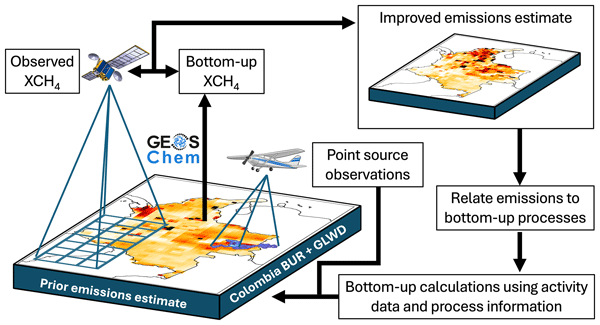
We combined satellite observations with detailed national data to improve estimates of Colombia’s methane emissions. Our results show that total methane emissions are higher than reported, with the biggest differences from fossil fuels. This approach demonstrates how satellite data can make national greenhouse gas reporting more accurate and transparent under the Paris Agreement.
Thomas Plewa, André Butz, Christian Frankenberg, Andrew K. Thorpe, and Julia Marshall
EGUsphere, https://doi.org/10.5194/egusphere-2026-2572, https://doi.org/10.5194/egusphere-2026-2572, 2026
Short summary
Short summary
In this paper, we present an improved deep learning method to estimate emissions of methane plumes from 2-D imagery. We present a new neural network architecture that provides insight into the wind speed used for the emission estimation and apply it to synthetic data that were used in previous studies. Our analysis illustrates that the performance increases by around 40% compared to the previous version, and that external wind speed data can be used to verify and improve the model's predictions.
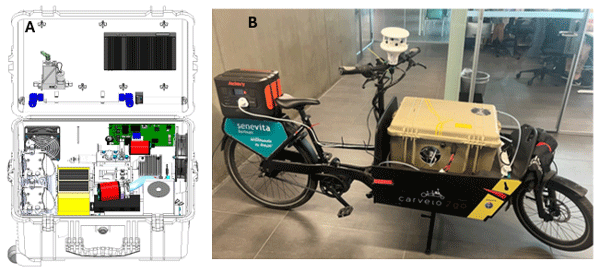
Austin D. Dobrecevich, Felipe Lopez-Hilfiker, Chris J. Wright, Urs Rohner, and Joel A. Thornton
Atmos. Meas. Tech., 19, 3481–3490, https://doi.org/10.5194/amt-19-3481-2026, https://doi.org/10.5194/amt-19-3481-2026, 2026
Short summary
Short summary
A portable mass spectrometer has been developed to sensitively measure key environmental pollutants at high temporal resolution. Its low power consumption and compact design enable battery-powered operation and deployment in challenging settings such as light aircraft, tall towers, and remote, off-grid locations, providing new insight into atmospheric chemical variability with high spatial and temporal accuracy.
Benjamin M. Sanderson, Marit Sandstad, Alejandro Romero-Prieto, Stuart Jenkins, Charles Koven, Glen Peters, Roland Séfèrian, Andrew H. MacDougall, Ashwin Seshadri, Victor Brovkin, John Dunne, Abigail L. S. Swann, Torben Koenigk, Rosie A. Fisher, David Hohn, Tatiana Ilyina, Chris D. Jones, Hongmei Li, Peter Lawrence, Spencer Liddicoat, Nadine Mengis, Anastasia Romanou, Lori T. Sentman, Chris Smith, Norman J. Steinert, Jerry Tjiputra, and Tilo Ziehn
EGUsphere, https://doi.org/10.5194/egusphere-2026-1875, https://doi.org/10.5194/egusphere-2026-1875, 2026
Short summary
Short summary
When humanity stops emitting carbon dioxide, will temperatures keep rising, stabilize, or fall? Our study reveals in most models, temperatures remain nearly stable, but this hides a balance between the warming in response to radiation imbalance, and the cooling due to uptake of carbon in the land and ocean. Understanding this balance helps refine how much more CO2 we can safely emit.
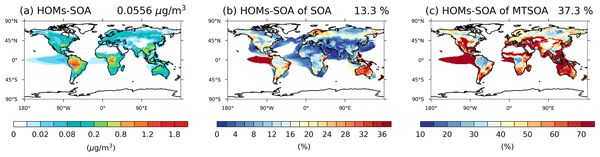
Xinyue Shao, Yaman Liu, Xinyi Dong, Minghuai Wang, Ruochong Xu, Joel A. Thornton, Duseong S. Jo, Man Yue, Wenxiang Shen, Manish Shrivastava, Stephen R. Arnold, and Ken S. Carslaw
Atmos. Chem. Phys., 26, 6427–6448, https://doi.org/10.5194/acp-26-6427-2026, https://doi.org/10.5194/acp-26-6427-2026, 2026
Short summary
Short summary
Highly Oxygenated Organic Molecules (HOMs) are key precursors of secondary organic aerosols (SOA). Incorporating the HOMs chemical mechanism into a global climate model allows for a reasonable reproduction of observed HOM characteristics. HOM-SOA constitutes a significant fraction of global SOA, and its distribution and formation pathways exhibit strong sensitivity to uncertainties in autoxidation processes and peroxy radical branching ratios.
Julieta F. Juncosa Calahorrano, Dylan B. Millet, Kelley C. Wells, Chengyuan Hu, Jared F. Brewer, Vivienne H. Payne, Wade Permar, Lu Hu, Amy P. Sullivan, I.-Ting Ku, Emily V. Fischer, Vanessa Selimovic, Kanako Sekimoto, Aaron Lamplugh, Georgios Gkatzelis, Jessica B. Gilman, Matthew Coggon, and Carsten Warneke
EGUsphere, https://doi.org/10.5194/egusphere-2026-1669, https://doi.org/10.5194/egusphere-2026-1669, 2026
Short summary
Short summary
We use thermal infrared satellite observations to study trace gases emitted by fires. We observe large enhancements in smoke and strong relationships among key species. These relationships are consistent with aircraft observations but show greater variability than models predict. This variability is linked to pyrolysis temperatures within fires. Our results show satellite data can improve understanding of fire processes and help refine emission parameterizations in models.
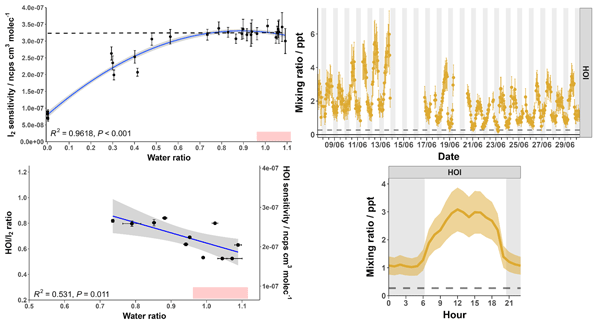
Lewis Marden, Marvin D. Shaw, Stephen J. Andrews, Maya Zmajkovic, Phil Rund, Becky Alexander, Joel Thornton, Andrew Peters, Peter Karadakov, and Lucy J. Carpenter
Atmos. Meas. Tech., 19, 2715–2735, https://doi.org/10.5194/amt-19-2715-2026, https://doi.org/10.5194/amt-19-2715-2026, 2026
Short summary
Short summary
Hypoiodous acid (HOI) and molecular iodine (I2) are the dominant precursors of reactive gaseous iodine, which plays an important role in the atmospheric oxidative capacity and in aerosol formation. However, difficulties in the quantification of HOI and I2 mean that very few measurements are available. This work describes a novel calibration method for HOI and reports the detection of HOI and I2 in the marine boundary layer using Br- chemical ionisation mass spectrometry.
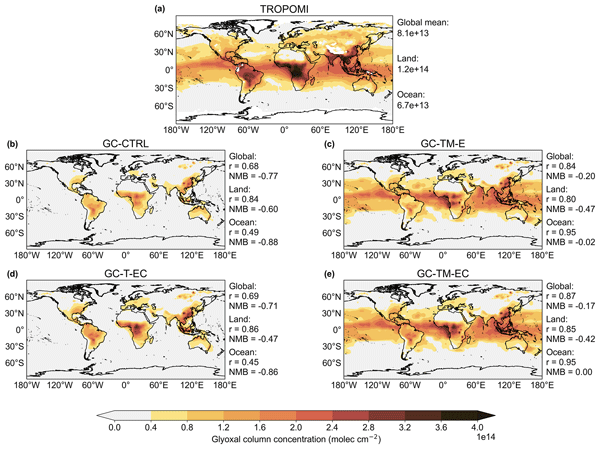
Aoxing Zhang, Tzung-May Fu, Yuhang Wang, Enyu Xiong, Wenlu Wu, Yumin Li, Lei Zhu, Wei Tao, Kelley C. Wells, Dylan B. Millet, Zhe Wang, Bin Yuan, Min Shao, Christophe Lerot, Thomas Danckaert, Ruixiong Zhang, and Kelvin H. Bates
Atmos. Chem. Phys., 26, 5123–5150, https://doi.org/10.5194/acp-26-5123-2026, https://doi.org/10.5194/acp-26-5123-2026, 2026
Short summary
Short summary
Glyoxal, a product of volatile organic compound oxidation, influences atmospheric oxidation and aerosol formation but is underestimated in models. By improving emissions, chemistry, and marine sources in GEOS-Chem, we better reproduce observed glyoxal over land and ocean, which strengthens global oxidation capacity and aerosol formation. The results highlight glyoxal's role as a proxy of atmospheric oxidation, and emphasize the needs of accurately representing glyoxal chemistry.
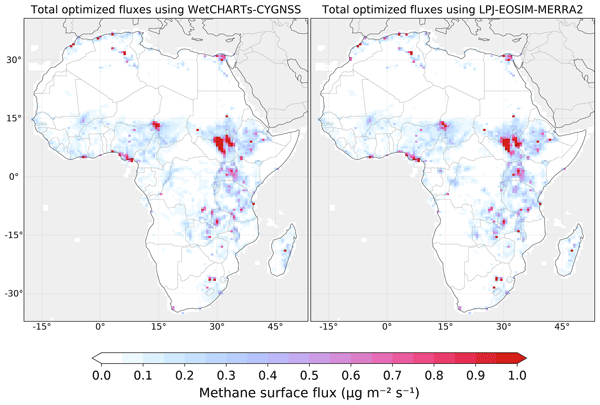
Nicholas Balasus, Daniel J. Jacob, A. Anthony Bloom, James D. East, Lucas A. Estrada, Sarah E. Hancock, Megan He, Todd A. Mooring, Alexander J. Turner, and John R. Worden
Atmos. Chem. Phys., 26, 4601–4617, https://doi.org/10.5194/acp-26-4601-2026, https://doi.org/10.5194/acp-26-4601-2026, 2026
Short summary
Short summary
We use satellite observations of methane to determine the amount of methane coming from Africa and relate this to the physical processes responsible, with relevance for climate change given methane's potency as a greenhouse gas. We find that the amount of methane coming from Africa has increased by a third across 2019–2024, driven primarily by steady increases in emissions from livestock, in addition to irregular surges from wetlands.
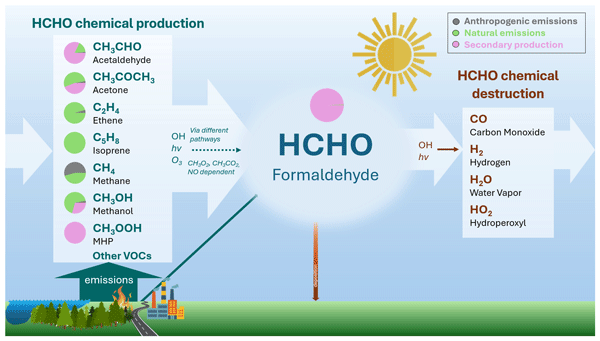
Gunnar Myhre, Øivind Hodnebrog, Srinath Krishnan, Maria Sand, Marit Sandstad, Ragnhild B. Skeie, Lieven Clarisse, Bruno Franco, Dylan B. Millet, Kelley C. Wells, Alexander Archibald, Hannah N. Bryant, Alex T. Chaudhri, David S. Stevenson, Didier Hauglustaine, Michael Prather, J. Christopher Kaiser, Dirk J. L. Olivie, Michael Schulz, Oliver Wild, Ye Wang, Thérèse Salameh, Jason E. Williams, Philippe Le Sager, Fabien Paulot, Kostas Tsigaridis, and Haley E. Plaas
Geosci. Model Dev., 19, 2577–2591, https://doi.org/10.5194/gmd-19-2577-2026, https://doi.org/10.5194/gmd-19-2577-2026, 2026
Short summary
Short summary
Volatile organic compounds (VOCs) affect air quality and climate, but their behavior in the atmosphere is still uncertain. We launched a global research effort to compare how different models represent these compounds and to improve their accuracy. By analyzing model results alongside observations and satellite data, we aim to better understand the atmospheric composition of these compounds.
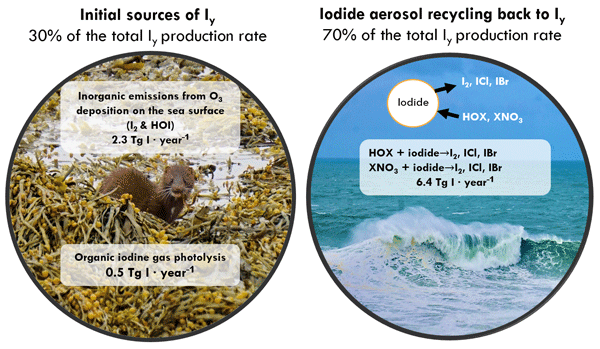
Allison R. Moon, Leyang Liu, Xuan Wang, Yuk-Chun Chan, Alyson Fritzmann, Ryan Pound, Amy Lees, Lewis Marden, Mat Evans, Lucy J. Carpenter, Jochen Stutz, Joel A. Thornton, Gordon Novak, Andrew Rollins, Gregory P. Schill, Xu-Cheng He, Henning Finkenzeller, Mago Reza, Rainer Volkamer, Kelvin H. Bates, Alfonso Saiz-Lopez, Anoop S. Mahajan, and Becky Alexander
Atmos. Chem. Phys., 26, 2353–2389, https://doi.org/10.5194/acp-26-2353-2026, https://doi.org/10.5194/acp-26-2353-2026, 2026
Short summary
Short summary
Global chemical transport models previously treated aerosols as a sink for reactive iodine (Iy); however, aerosol iodide is also a source of Iy via heterogeneous reactions involving hypohalous acids and halogen nitrates. We implemented this chemistry into GEOS-Chem, in addition to explicitly representing three aerosol iodine types: soluble organic iodine (SOI), iodide, and iodate. We found that aerosol recycling of iodide to form Iy is more than twice as fast as the other Iy sources combined.

Nikhil Dadheech and Alexander J. Turner
Atmos. Chem. Phys., 26, 427–441, https://doi.org/10.5194/acp-26-427-2026, https://doi.org/10.5194/acp-26-427-2026, 2026
Short summary
Short summary
We developed a generalized emulator of atmospheric transport (FootNet v3) trained over the United States, enabling the emulation of both surface & column-averaged footprints at kilometer-scale resolution. We demonstrate that FootNet v3 generalizes to previously unseen regions and meteorological conditions, enabling accurate out-of-sample simulation of atmospheric transport. Flux inversion case studies show that FootNet matches or exceeds the performance of full-physics models in unseen regions.
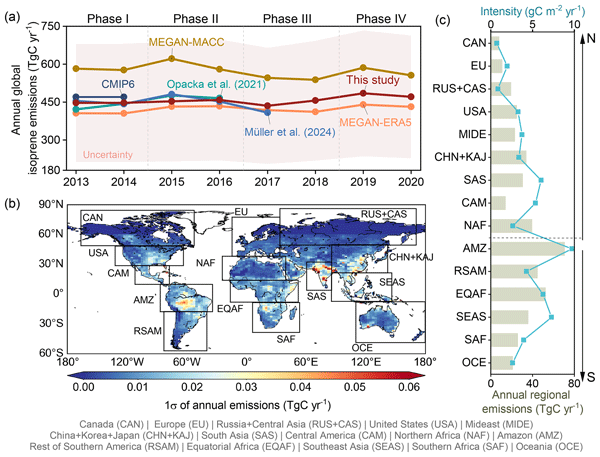
Hui Li, Philippe Ciais, Pramod Kumar, Didier A. Hauglustaine, Frédéric Chevallier, Grégoire Broquet, Dylan B. Millet, Kelley C. Wells, Jinghui Lian, and Bo Zheng
Earth Syst. Sci. Data, 17, 7035–7054, https://doi.org/10.5194/essd-17-7035-2025, https://doi.org/10.5194/essd-17-7035-2025, 2025
Short summary
Short summary
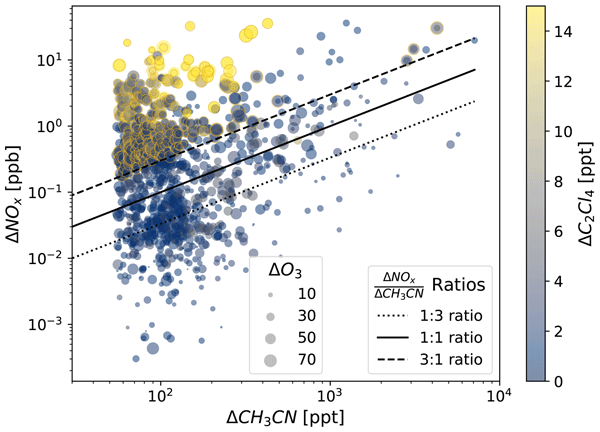
We present the first global, multi-year maps of monthly isoprene emissions (2013–2020) derived from satellite isoprene observations, averaging 456 TgC yr-1. The dataset reveals two emission peaks linked to 2015–2016 El Niño and 2019–2020 extreme heat events, driven mainly by tropical regions such as the Amazon. It highlights the region-specific sensitivity of biogenic isoprene emissions to temperature anomalies, providing new insights into their roles in air quality and climate feedbacks.
Joseph O. Palmo, Colette L. Heald, Donald R. Blake, Ilann Bourgeois, Matthew Coggon, Jeff Collett, Frank Flocke, Alan Fried, Georgios Gkatzelis, Samuel Hall, Lu Hu, Jose L. Jimenez, Pedro Campuzano-Jost, I-Ting Ku, Benjamin Nault, Brett Palm, Jeff Peischl, Ilana Pollack, Amy Sullivan, Joel Thornton, Carsten Warneke, Armin Wisthaler, and Lu Xu
Atmos. Chem. Phys., 25, 17107–17124, https://doi.org/10.5194/acp-25-17107-2025, https://doi.org/10.5194/acp-25-17107-2025, 2025
Short summary
Short summary
This study investigates ozone production within wildfire smoke plumes as they age, using both aircraft observations and models. We find that the chemical environment and resulting ozone production within smoke changes as plumes evolve, with implications for climate and public health.
Alfred W. Mayhew, Lauri Franzon, Kelvin H. Bates, Theo Kurtén, Felipe D. Lopez-Hilfiker, Claudia Mohr, Andrew R. Rickard, Joel A. Thornton, and Jessica D. Haskins
Atmos. Chem. Phys., 25, 17027–17046, https://doi.org/10.5194/acp-25-17027-2025, https://doi.org/10.5194/acp-25-17027-2025, 2025
Short summary
Short summary
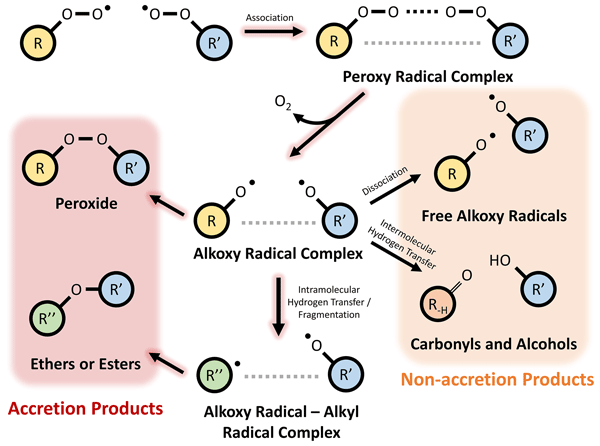
This work outlines an investigation into an understudied atmospheric chemical reaction pathway with the potential to form particulate pollution that has important impacts on air quality and climate. It suggests that this chemical pathway is responsible for a large fraction of the atmospheric particulate matter observed in tropical forested regions, but also highlights the need for further ambient and lab investigations to inform an accurate representation of this process in atmospheric models.
Phil Rund, Ben H. Lee, Siddharth Iyer, Gordon A. Novak, Jake T. Vallow, and Joel A. Thornton
Atmos. Meas. Tech., 18, 6979–6995, https://doi.org/10.5194/amt-18-6979-2025, https://doi.org/10.5194/amt-18-6979-2025, 2025
Short summary
Short summary
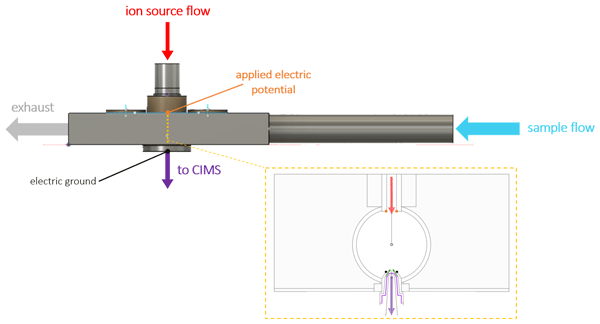
We introduce a custom-built chamber (known as an IMR) for use with a Chemical Ionization Mass Spectrometry (CIMS) gas measurement instrument. The IMR shows large improvements compared to previous designs in reducing non-real signal in the instrument, reducing uncertainties for trace gas studies in the laboratory and the field. We characterize this new IMR and demonstrate its use in analyzing air masses of unknown composition during a field campaign, reporting concentrations of important gases.
Victor Brovkin, Benjamin M. Sanderson, Noel G. Brizuela, Tomohiro Hajima, Tatiana Ilyina, Chris D. Jones, Charles Koven, David Lawrence, Peter Lawrence, Hongmei Li, Spencer Liddcoat, Anastasia Romanou, Roland Séférian, Lori T. Sentman, Abigail L. S. Swann, Jerry Tjiputra, Tilo Ziehn, and Alexander J. Winkler
Earth Syst. Dynam., 16, 2021–2034, https://doi.org/10.5194/esd-16-2021-2025, https://doi.org/10.5194/esd-16-2021-2025, 2025
Short summary
Short summary
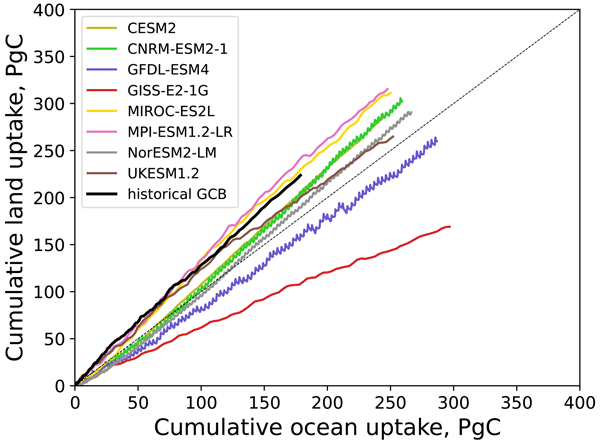
Idealized experiments with Earth system models provide a basis for understanding the response of the carbon cycle to emissions. We show that most models exhibit a quasi-linear relationship between cumulative carbon uptake on land and in the ocean and hypothesize that this relationship does not depend on emission pathways. We reduce the coupled system to only one differential equation, which represents a powerful simplification of the Earth system dynamics as a function of fossil fuel emissions.
Eric J. Mei, Gregory J. Hakim, Max Taniguchi-King, Dominik Stiller, and Alexander J. Turner
Atmos. Chem. Phys., 25, 15033–15045, https://doi.org/10.5194/acp-25-15033-2025, https://doi.org/10.5194/acp-25-15033-2025, 2025
Short summary
Short summary
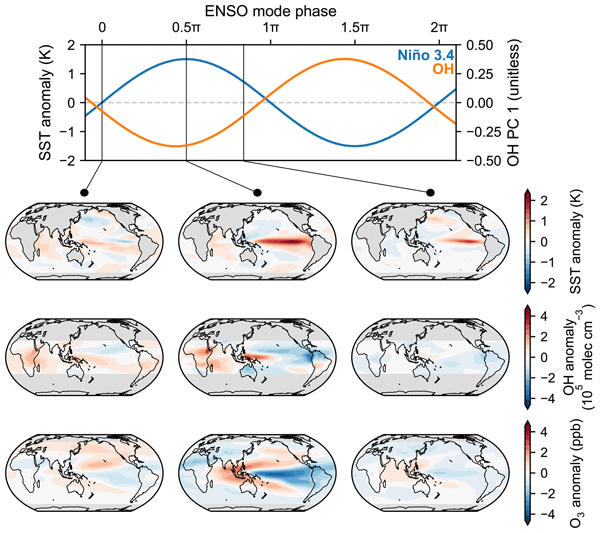
Chemistry-climate models are used to investigate how physical climate influences the composition of the atmosphere but are slow and expensive to run. We train a linear inverse model that can replicate the behavior of chemistry-climate models at low computational cost. It captures how large-scale climate features like El Niño affect atmospheric composition and can make accurate forecasts up to a year ahead. This model enables fast hypothesis testing and estimates of past atmospheric composition.
Benjamin M. Sanderson, Victor Brovkin, Rosie A. Fisher, David Hohn, Tatiana Ilyina, Chris D. Jones, Torben Koenigk, Charles Koven, Hongmei Li, David M. Lawrence, Peter Lawrence, Spencer Liddicoat, Andrew H. MacDougall, Nadine Mengis, Zebedee Nicholls, Eleanor O'Rourke, Anastasia Romanou, Marit Sandstad, Jörg Schwinger, Roland Séférian, Lori T. Sentman, Isla R. Simpson, Chris Smith, Norman J. Steinert, Abigail L. S. Swann, Jerry Tjiputra, and Tilo Ziehn
Geosci. Model Dev., 18, 5699–5724, https://doi.org/10.5194/gmd-18-5699-2025, https://doi.org/10.5194/gmd-18-5699-2025, 2025
Short summary
Short summary
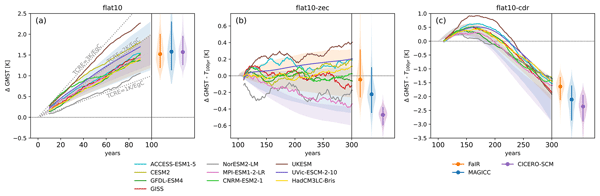
This study investigates how climate models warm in response to simplified carbon emissions trajectories, refining the understanding of climate reversibility and commitment. Metrics are defined for warming response to cumulative emissions and for the cessation of emissions or ramp-down to net-zero and net-negative levels. Results indicate that previous concentration-driven experiments may have overstated the Zero Emissions Commitment due to emissions rates exceeding historical levels.
Carley D. Fredrickson, Scott J. Janz, Lok N. Lamsal, Ursula A. Jongebloed, Joshua L. Laughner, and Joel A. Thornton
Atmos. Meas. Tech., 18, 3669–3689, https://doi.org/10.5194/amt-18-3669-2025, https://doi.org/10.5194/amt-18-3669-2025, 2025
Short summary
Short summary
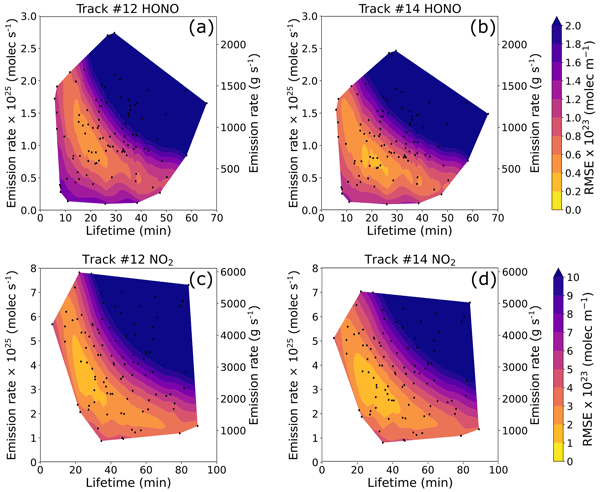
We present an analysis of high-resolution remote sensing measurements of nitrogen-containing trace gases emitted by wildfires. The measurements were made using an instrument on the NASA ER-2 aircraft in the summer of 2019. We find that time-resolved fire intensity is critical to quantify trace gas emissions over a fire's entire lifespan. These findings have implications for improving air pollution forecasts downwind of wildfires using computer models of atmospheric chemistry and meteorology.
Matthew S. Johnson, Sofia D. Hamilton, Seongeun Jeong, Yu Yan Cui, Dien Wu, Alex Turner, and Marc Fischer
Atmos. Chem. Phys., 25, 8475–8492, https://doi.org/10.5194/acp-25-8475-2025, https://doi.org/10.5194/acp-25-8475-2025, 2025
Short summary
Short summary
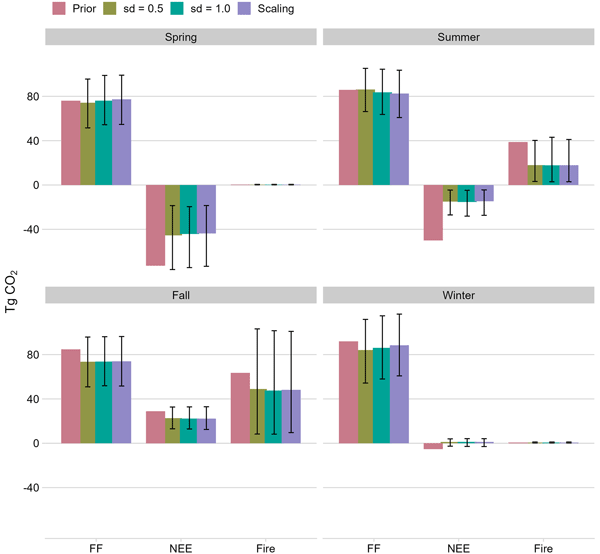
Satellites, such as NASA's Orbiting Carbon Observatory-2 and -3 (OCO-2 and OCO-3, respectively), retrieve carbon dioxide (CO2) concentrations, which provide vital information for estimating surface CO2 emissions. Here, we investigate the ability of OCO-2/3 retrievals to constrain CO2 emissions for the state of California for the major emission sectors (i.e., fossil fuels, net ecosystem exchange, and wildfire).
Nikhil Dadheech, Tai-Long He, and Alexander J. Turner
Atmos. Chem. Phys., 25, 5159–5174, https://doi.org/10.5194/acp-25-5159-2025, https://doi.org/10.5194/acp-25-5159-2025, 2025
Short summary
Short summary
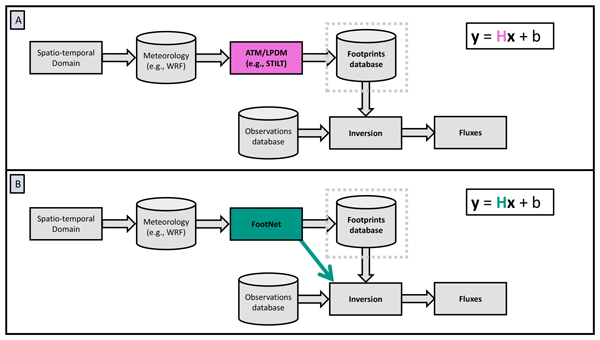
We developed an efficient GHG (greenhouse gas) flux inversion framework using a machine-learning emulator (FootNet) as a surrogate for an atmospheric transport model, resulting in a 650 × speedup. Paradoxically, the flux inversion using the ML (machine-learning) model outperforms the full-physics model in our case study. We attribute this to the ML model mitigating transport errors in the GHG flux inversion.
Tai-Long He, Nikhil Dadheech, Tammy M. Thompson, and Alexander J. Turner
Geosci. Model Dev., 18, 1661–1671, https://doi.org/10.5194/gmd-18-1661-2025, https://doi.org/10.5194/gmd-18-1661-2025, 2025
Short summary
Short summary
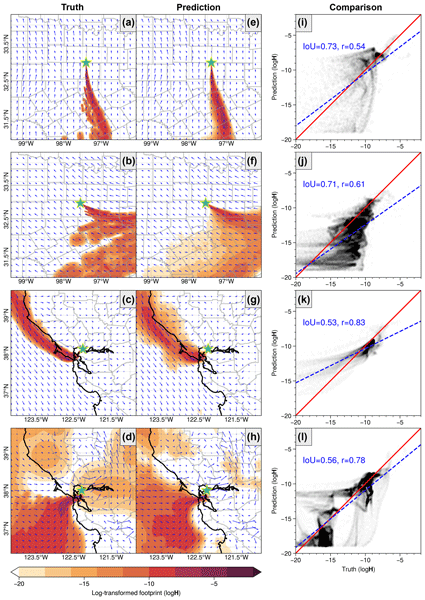
It is computationally expensive to infer greenhouse gas (GHG) emissions using atmospheric observations. This is partly due to the detailed model used to represent atmospheric transport. We demonstrate how a machine learning (ML) model can be used to simulate high-resolution atmospheric transport. This type of ML model will help estimate GHG emissions using dense observations, which are becoming increasingly common with the proliferation of urban monitoring networks and geostationary satellites.
Chris J. Wright, Joel A. Thornton, Lyatt Jaeglé, Yang Cao, Yannian Zhu, Jihu Liu, Randall Jones II, Robert Holzworth, Daniel Rosenfeld, Robert Wood, Peter Blossey, and Daehyun Kim
Atmos. Chem. Phys., 25, 2937–2946, https://doi.org/10.5194/acp-25-2937-2025, https://doi.org/10.5194/acp-25-2937-2025, 2025
Short summary
Short summary
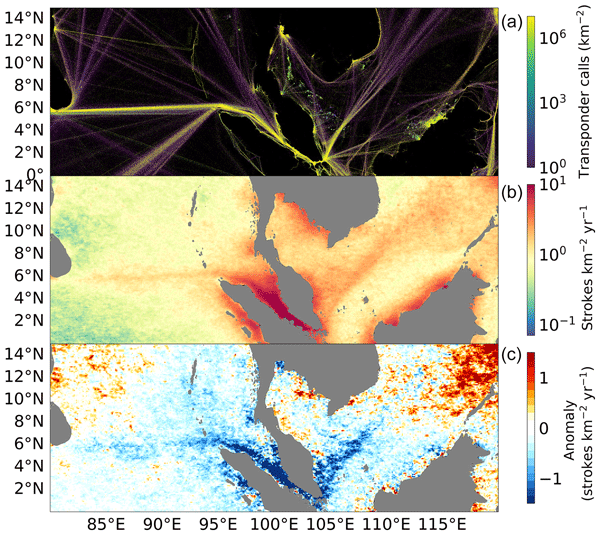
Aerosol particles influence clouds, which exert a large forcing on solar radiation and freshwater. To better understand the mechanisms by which aerosol influences thunderstorms, we look at the two busiest shipping lanes in the world, where recent regulations have reduced sulfur emissions by nearly an order of magnitude. We find that the reduction in emissions has been accompanied by a dramatic decrease in both lightning and the number of droplets in clouds over the shipping lanes.
Beata Opacka, Trissevgeni Stavrakou, Jean-François Müller, Isabelle De Smedt, Jos van Geffen, Eloise A. Marais, Rebekah P. Horner, Dylan B. Millet, Kelly C. Wells, and Alex B. Guenther
Atmos. Chem. Phys., 25, 2863–2894, https://doi.org/10.5194/acp-25-2863-2025, https://doi.org/10.5194/acp-25-2863-2025, 2025
Short summary
Short summary
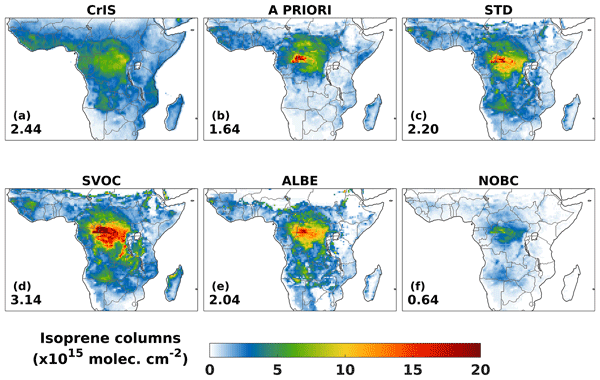
Vegetation releases biogenic volatile organic compounds, while soils and lightning contribute to the natural emissions of nitrogen oxides into the atmosphere. These gases interact in complex ways. Using satellite data and models, we developed a new method to simultaneously optimize these natural emissions over Africa in 2019. Our approach resulted in an increase in natural emissions, supported by independent data indicating that current estimates are underestimated.
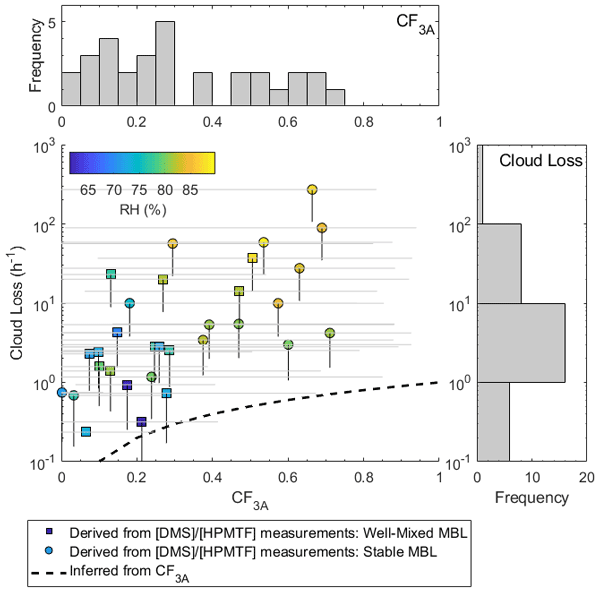
Delaney B. Kilgour, Christopher M. Jernigan, Olga Garmash, Sneha Aggarwal, Shengqian Zhou, Claudia Mohr, Matt E. Salter, Joel A. Thornton, Jian Wang, Paul Zieger, and Timothy H. Bertram
Atmos. Chem. Phys., 25, 1931–1947, https://doi.org/10.5194/acp-25-1931-2025, https://doi.org/10.5194/acp-25-1931-2025, 2025
Short summary
Short summary
We report simultaneous measurements of dimethyl sulfide (DMS) and hydroperoxymethyl thioformate (HPMTF) in the eastern North Atlantic. We use an observationally constrained box model to show that cloud loss is the dominant sink of HPMTF in this region over 6 weeks, resulting in large reductions in DMS-derived products that contribute to aerosol formation and growth. Our findings indicate that fast cloud processing of HPMTF must be included in global models to accurately capture the sulfur cycle.
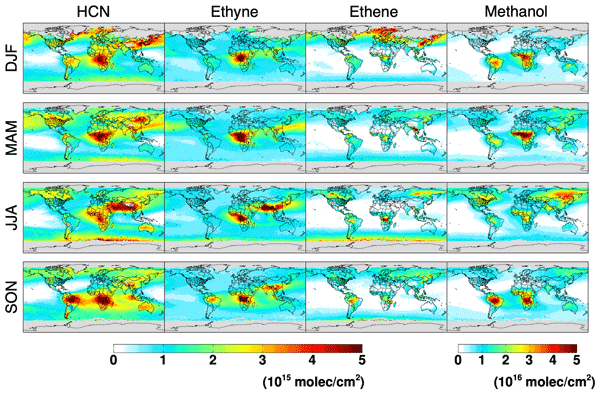
Kelley C. Wells, Dylan B. Millet, Jared F. Brewer, Vivienne H. Payne, Karen E. Cady-Pereira, Rick Pernak, Susan Kulawik, Corinne Vigouroux, Nicholas Jones, Emmanuel Mahieu, Maria Makarova, Tomoo Nagahama, Ivan Ortega, Mathias Palm, Kimberly Strong, Matthias Schneider, Dan Smale, Ralf Sussmann, and Minqiang Zhou
Atmos. Meas. Tech., 18, 695–716, https://doi.org/10.5194/amt-18-695-2025, https://doi.org/10.5194/amt-18-695-2025, 2025
Short summary
Short summary
Atmospheric volatile organic compounds (VOCs) affect both air quality and climate. Satellite measurements can help us to assess and predict their global impacts. We present new decadal (2012–2023) measurements of four key VOCs – methanol, ethene, ethyne, and hydrogen cyanide (HCN) – from the Cross-track Infrared Sounder. The measurements reflect emissions from major forests, wildfires, and industry and provide new information to advance understanding of these sources and their changes over time.
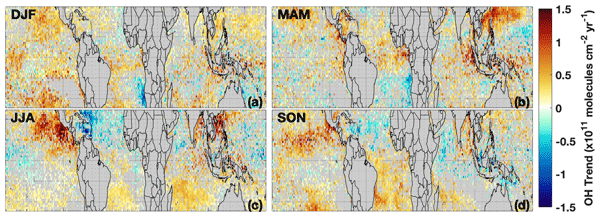
Bryan N. Duncan, Daniel C. Anderson, Arlene M. Fiore, Joanna Joiner, Nickolay A. Krotkov, Can Li, Dylan B. Millet, Julie M. Nicely, Luke D. Oman, Jason M. St. Clair, Joshua D. Shutter, Amir H. Souri, Sarah A. Strode, Brad Weir, Glenn M. Wolfe, Helen M. Worden, and Qindan Zhu
Atmos. Chem. Phys., 24, 13001–13023, https://doi.org/10.5194/acp-24-13001-2024, https://doi.org/10.5194/acp-24-13001-2024, 2024
Short summary
Short summary
Trace gases emitted to or formed within the atmosphere may be chemically or physically removed from the atmosphere. One trace gas, the hydroxyl radical (OH), is responsible for initiating the chemical removal of many trace gases, including some greenhouse gases. Despite its importance, scientists have not been able to adequately measure OH. In this opinion piece, we discuss promising new methods to indirectly constrain OH using satellite data of trace gases that control the abundance of OH.
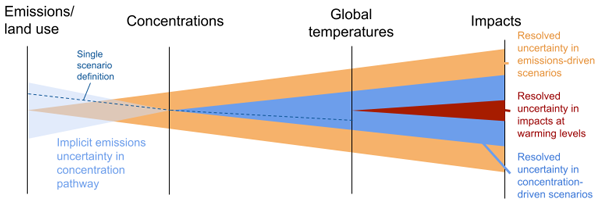
Benjamin M. Sanderson, Ben B. B. Booth, John Dunne, Veronika Eyring, Rosie A. Fisher, Pierre Friedlingstein, Matthew J. Gidden, Tomohiro Hajima, Chris D. Jones, Colin G. Jones, Andrew King, Charles D. Koven, David M. Lawrence, Jason Lowe, Nadine Mengis, Glen P. Peters, Joeri Rogelj, Chris Smith, Abigail C. Snyder, Isla R. Simpson, Abigail L. S. Swann, Claudia Tebaldi, Tatiana Ilyina, Carl-Friedrich Schleussner, Roland Séférian, Bjørn H. Samset, Detlef van Vuuren, and Sönke Zaehle
Geosci. Model Dev., 17, 8141–8172, https://doi.org/10.5194/gmd-17-8141-2024, https://doi.org/10.5194/gmd-17-8141-2024, 2024
Short summary
Short summary
We discuss how, in order to provide more relevant guidance for climate policy, coordinated climate experiments should adopt a greater focus on simulations where Earth system models are provided with carbon emissions from fossil fuels together with land use change instructions, rather than past approaches that have largely focused on experiments with prescribed atmospheric carbon dioxide concentrations. We discuss how these goals might be achieved in coordinated climate modeling experiments.
Matthieu Riva, Veronika Pospisilova, Carla Frege, Sebastien Perrier, Priyanka Bansal, Spiro Jorga, Patrick Sturm, Joel A. Thornton, Urs Rohner, and Felipe Lopez-Hilfiker
Atmos. Meas. Tech., 17, 5887–5901, https://doi.org/10.5194/amt-17-5887-2024, https://doi.org/10.5194/amt-17-5887-2024, 2024
Short summary
Short summary
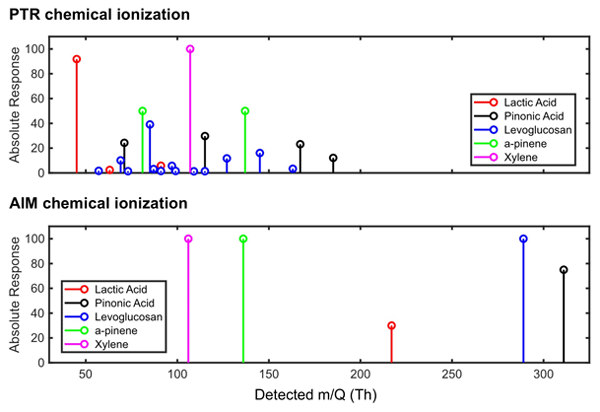
We present a newly designed reduced-pressure chemical ionization reactor for detection of gas-phase organic and inorganic species. The system operates through the combined use of vacuum ultraviolet ionization and photosensitizers to generate numerous adduct ionization schemes. As a result, it offers the ability to simultaneously measure a wide variety of organic and inorganic species in terms of compound volatility and functionality, while being largely independent of changes in sample humidity.
James A. King, James Weber, Peter Lawrence, Stephanie Roe, Abigail L. S. Swann, and Maria Val Martin
Biogeosciences, 21, 3883–3902, https://doi.org/10.5194/bg-21-3883-2024, https://doi.org/10.5194/bg-21-3883-2024, 2024
Short summary
Short summary
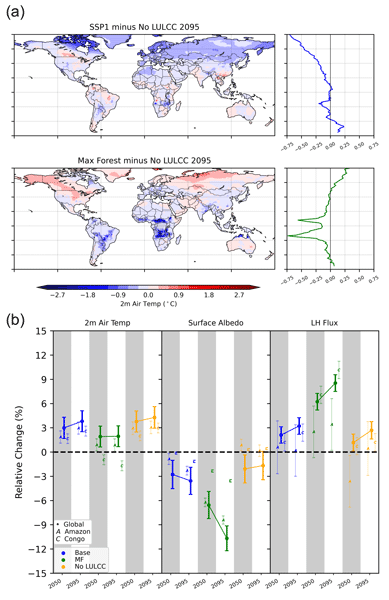
Tackling climate change by adding, restoring, or enhancing forests is gaining global support. However, it is important to investigate the broader implications of this. We used a computer model of the Earth to investigate a future where tree cover expanded as much as possible. We found that some tropical areas were cooler because of trees pumping water into the atmosphere, but this also led to soil and rivers drying. This is important because it might be harder to maintain forests as a result.
Yitong Yao, Philippe Ciais, Emilie Joetzjer, Wei Li, Lei Zhu, Yujie Wang, Christian Frankenberg, and Nicolas Viovy
Earth Syst. Dynam., 15, 763–778, https://doi.org/10.5194/esd-15-763-2024, https://doi.org/10.5194/esd-15-763-2024, 2024
Short summary
Short summary
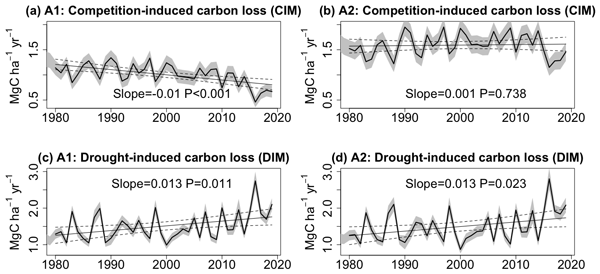
Elevated CO2 concentration (eCO2) is critical for shaping the future path of forest carbon uptake, while uncertainties remain about concurrent carbon loss. Here, we found that eCO2 might amplify competition-induced carbon loss, while the extent of drought-induced carbon loss hinges on the balance between heightened biomass density and water-saving benefits. This is the first time that such carbon loss responses to ongoing climate change have been quantified separately over the Amazon rainforest.

Hanqin Tian, Naiqing Pan, Rona L. Thompson, Josep G. Canadell, Parvadha Suntharalingam, Pierre Regnier, Eric A. Davidson, Michael Prather, Philippe Ciais, Marilena Muntean, Shufen Pan, Wilfried Winiwarter, Sönke Zaehle, Feng Zhou, Robert B. Jackson, Hermann W. Bange, Sarah Berthet, Zihao Bian, Daniele Bianchi, Alexander F. Bouwman, Erik T. Buitenhuis, Geoffrey Dutton, Minpeng Hu, Akihiko Ito, Atul K. Jain, Aurich Jeltsch-Thömmes, Fortunat Joos, Sian Kou-Giesbrecht, Paul B. Krummel, Xin Lan, Angela Landolfi, Ronny Lauerwald, Ya Li, Chaoqun Lu, Taylor Maavara, Manfredi Manizza, Dylan B. Millet, Jens Mühle, Prabir K. Patra, Glen P. Peters, Xiaoyu Qin, Peter Raymond, Laure Resplandy, Judith A. Rosentreter, Hao Shi, Qing Sun, Daniele Tonina, Francesco N. Tubiello, Guido R. van der Werf, Nicolas Vuichard, Junjie Wang, Kelley C. Wells, Luke M. Western, Chris Wilson, Jia Yang, Yuanzhi Yao, Yongfa You, and Qing Zhu
Earth Syst. Sci. Data, 16, 2543–2604, https://doi.org/10.5194/essd-16-2543-2024, https://doi.org/10.5194/essd-16-2543-2024, 2024
Short summary
Short summary
Atmospheric concentrations of nitrous oxide (N2O), a greenhouse gas 273 times more potent than carbon dioxide, have increased by 25 % since the preindustrial period, with the highest observed growth rate in 2020 and 2021. This rapid growth rate has primarily been due to a 40 % increase in anthropogenic emissions since 1980. Observed atmospheric N2O concentrations in recent years have exceeded the worst-case climate scenario, underscoring the importance of reducing anthropogenic N2O emissions.
Chuanyang Shen, Xiaoyan Yang, Joel Thornton, John Shilling, Chenyang Bi, Gabriel Isaacman-VanWertz, and Haofei Zhang
Atmos. Chem. Phys., 24, 6153–6175, https://doi.org/10.5194/acp-24-6153-2024, https://doi.org/10.5194/acp-24-6153-2024, 2024
Short summary
Short summary
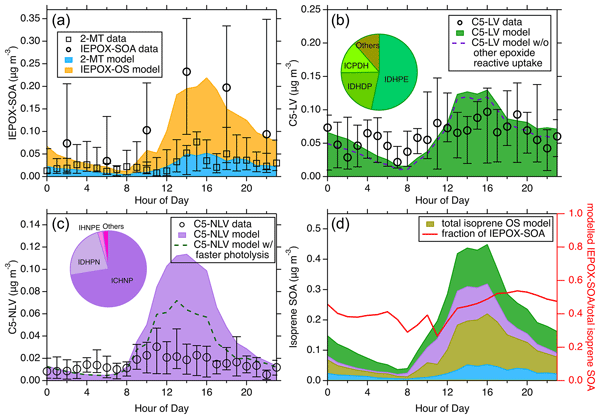
In this work, a condensed multiphase isoprene oxidation mechanism was developed to simulate isoprene SOA formation from chamber and field studies. Our results show that the measured isoprene SOA mass concentrations can be reasonably reproduced. The simulation results indicate that multifunctional low-volatility products contribute significantly to total isoprene SOA. Our findings emphasize that the pathways to produce these low-volatility species should be considered in models.
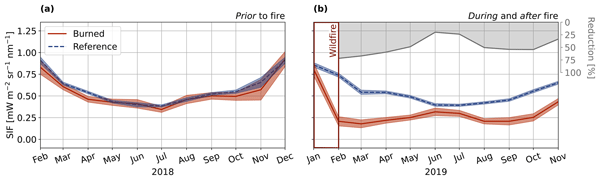
Juliëtte C. S. Anema, Klaas Folkert Boersma, Piet Stammes, Gerbrand Koren, William Woodgate, Philipp Köhler, Christian Frankenberg, and Jacqui Stol
Biogeosciences, 21, 2297–2311, https://doi.org/10.5194/bg-21-2297-2024, https://doi.org/10.5194/bg-21-2297-2024, 2024
Short summary
Short summary
To keep the Paris agreement goals within reach, negative emissions are necessary. They can be achieved with mitigation techniques, such as reforestation, which remove CO2 from the atmosphere. While governments have pinned their hopes on them, there is not yet a good set of tools to objectively determine whether negative emissions do what they promise. Here we show how satellite measurements of plant fluorescence are useful in detecting carbon uptake due to reforestation and vegetation regrowth.
Russell Doughty, Yujie Wang, Jennifer Johnson, Nicholas Parazoo, Troy Magney, Zoe Pierrat, Xiangming Xiao, Luis Guanter, Philipp Köhler, Christian Frankenberg, Peter Somkuti, Shuang Ma, Yuanwei Qin, Sean Crowell, and Berrien Moore III
EGUsphere, https://doi.org/10.22541/essoar.168167172.20799710/v1, https://doi.org/10.22541/essoar.168167172.20799710/v1, 2024
Preprint archived
Short summary
Short summary
Here we present a novel model of global photosynthesis, ChloFluo, which uses spaceborne chlorophyll fluorescence to estimate the amount of photosynthetically active radiation absorbed by chlorophyll. Potential uses of our model are to advance our understanding of the timing and magnitude of photosynthesis, its effect on atmospheric carbon dioxide fluxes, and vegetation response to climate events and change.
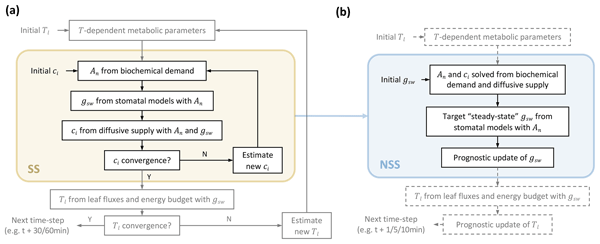
Ke Liu, Yujie Wang, Troy S. Magney, and Christian Frankenberg
Biogeosciences, 21, 1501–1516, https://doi.org/10.5194/bg-21-1501-2024, https://doi.org/10.5194/bg-21-1501-2024, 2024
Short summary
Short summary
Stomata are pores on leaves that regulate gas exchange between plants and the atmosphere. Existing land models unrealistically assume stomata can jump between steady states when the environment changes. We implemented dynamic modeling to predict gradual stomatal responses at different scales. Results suggested that considering this effect on plant behavior patterns in diurnal cycles was important. Our framework also simplified simulations and can contribute to further efficiency improvements.
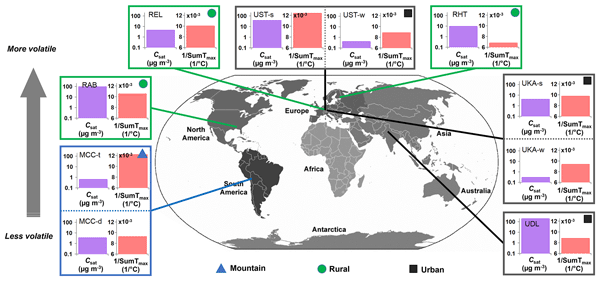
Wei Huang, Cheng Wu, Linyu Gao, Yvette Gramlich, Sophie L. Haslett, Joel Thornton, Felipe D. Lopez-Hilfiker, Ben H. Lee, Junwei Song, Harald Saathoff, Xiaoli Shen, Ramakrishna Ramisetty, Sachchida N. Tripathi, Dilip Ganguly, Feng Jiang, Magdalena Vallon, Siegfried Schobesberger, Taina Yli-Juuti, and Claudia Mohr
Atmos. Chem. Phys., 24, 2607–2624, https://doi.org/10.5194/acp-24-2607-2024, https://doi.org/10.5194/acp-24-2607-2024, 2024
Short summary
Short summary
We present distinct molecular composition and volatility of oxygenated organic aerosol particles in different rural, urban, and mountain environments. We do a comprehensive investigation of the relationship between the chemical composition and volatility of oxygenated organic aerosol particles across different systems and environments. This study provides implications for volatility descriptions of oxygenated organic aerosol particles in different model frameworks.
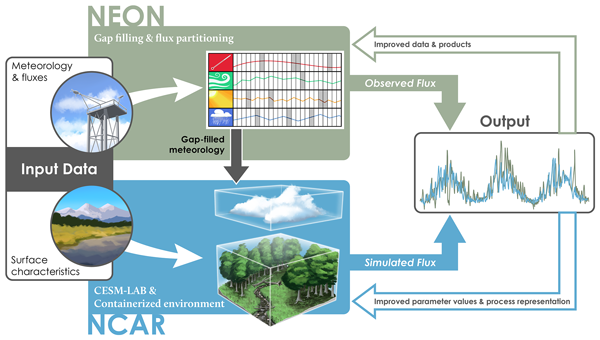
Danica L. Lombardozzi, William R. Wieder, Negin Sobhani, Gordon B. Bonan, David Durden, Dawn Lenz, Michael SanClements, Samantha Weintraub-Leff, Edward Ayres, Christopher R. Florian, Kyla Dahlin, Sanjiv Kumar, Abigail L. S. Swann, Claire M. Zarakas, Charles Vardeman, and Valerio Pascucci
Geosci. Model Dev., 16, 5979–6000, https://doi.org/10.5194/gmd-16-5979-2023, https://doi.org/10.5194/gmd-16-5979-2023, 2023
Short summary
Short summary
We present a novel cyberinfrastructure system that uses National Ecological Observatory Network measurements to run Community Terrestrial System Model point simulations in a containerized system. The simple interface and tutorials expand access to data and models used in Earth system research by removing technical barriers and facilitating research, educational opportunities, and community engagement. The NCAR–NEON system enables convergence of climate and ecological sciences.
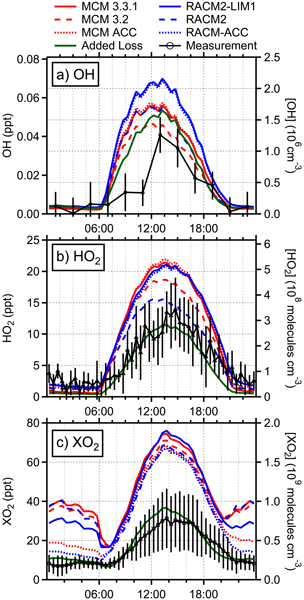
Brandon Bottorff, Michelle M. Lew, Youngjun Woo, Pamela Rickly, Matthew D. Rollings, Benjamin Deming, Daniel C. Anderson, Ezra Wood, Hariprasad D. Alwe, Dylan B. Millet, Andrew Weinheimer, Geoff Tyndall, John Ortega, Sebastien Dusanter, Thierry Leonardis, James Flynn, Matt Erickson, Sergio Alvarez, Jean C. Rivera-Rios, Joshua D. Shutter, Frank Keutsch, Detlev Helmig, Wei Wang, Hannah M. Allen, Johnathan H. Slade, Paul B. Shepson, Steven Bertman, and Philip S. Stevens
Atmos. Chem. Phys., 23, 10287–10311, https://doi.org/10.5194/acp-23-10287-2023, https://doi.org/10.5194/acp-23-10287-2023, 2023
Short summary
Short summary
The hydroxyl (OH), hydroperoxy (HO2), and organic peroxy (RO2) radicals play important roles in atmospheric chemistry and have significant air quality implications. Here, we compare measurements of OH, HO2, and total peroxy radicals (XO2) made in a remote forest in Michigan, USA, to predictions from a series of chemical models. Lower measured radical concentrations suggest that the models may be missing an important radical sink and overestimating the rate of ozone production in this forest.
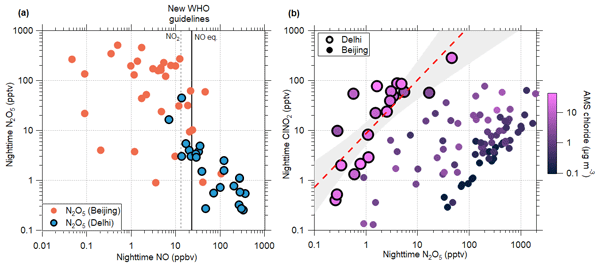
Sophie L. Haslett, David M. Bell, Varun Kumar, Jay G. Slowik, Dongyu S. Wang, Suneeti Mishra, Neeraj Rastogi, Atinderpal Singh, Dilip Ganguly, Joel Thornton, Feixue Zheng, Yuanyuan Li, Wei Nie, Yongchun Liu, Wei Ma, Chao Yan, Markku Kulmala, Kaspar R. Daellenbach, David Hadden, Urs Baltensperger, Andre S. H. Prevot, Sachchida N. Tripathi, and Claudia Mohr
Atmos. Chem. Phys., 23, 9023–9036, https://doi.org/10.5194/acp-23-9023-2023, https://doi.org/10.5194/acp-23-9023-2023, 2023
Short summary
Short summary
In Delhi, some aspects of daytime and nighttime atmospheric chemistry are inverted, and parodoxically, vehicle emissions may be limiting other forms of particle production. This is because the nighttime emissions of nitrogen oxide (NO) by traffic and biomass burning prevent some chemical processes that would otherwise create even more particles and worsen the urban haze.
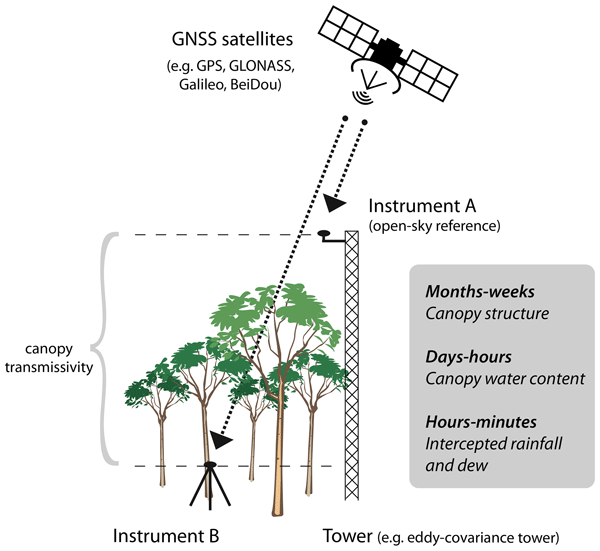
Vincent Humphrey and Christian Frankenberg
Biogeosciences, 20, 1789–1811, https://doi.org/10.5194/bg-20-1789-2023, https://doi.org/10.5194/bg-20-1789-2023, 2023
Short summary
Short summary
Microwave satellites can be used to monitor how vegetation biomass changes over time or how droughts affect the world's forests. However, such satellite data are still difficult to validate and interpret because of a lack of comparable field observations. Here, we present a remote sensing technique that uses the Global Navigation Satellite System (GNSS) as a makeshift radar, making it possible to observe canopy transmissivity at any existing environmental research site in a cost-efficient way.
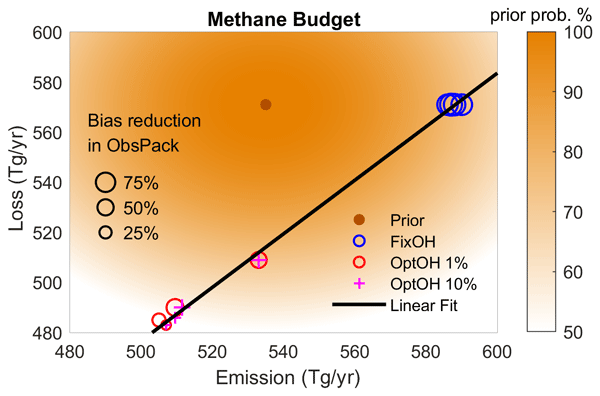
Xueying Yu, Dylan B. Millet, Daven K. Henze, Alexander J. Turner, Alba Lorente Delgado, A. Anthony Bloom, and Jianxiong Sheng
Atmos. Chem. Phys., 23, 3325–3346, https://doi.org/10.5194/acp-23-3325-2023, https://doi.org/10.5194/acp-23-3325-2023, 2023
Short summary
Short summary
We combine satellite measurements with a novel downscaling method to map global methane emissions at 0.1°×0.1° resolution. These fine-scale emission estimates reveal unreported emission hotspots and shed light on the roles of agriculture, wetlands, and fossil fuels for regional methane budgets. The satellite-derived emissions point in particular to missing fossil fuel emissions in the Middle East and to a large emission underestimate in South Asia that appears to be tied to monsoon rainfall.
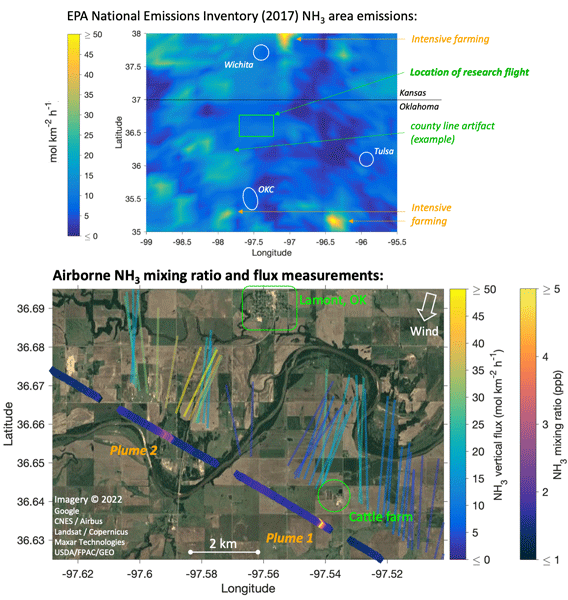
Siegfried Schobesberger, Emma L. D'Ambro, Lejish Vettikkat, Ben H. Lee, Qiaoyun Peng, David M. Bell, John E. Shilling, Manish Shrivastava, Mikhail Pekour, Jerome Fast, and Joel A. Thornton
Atmos. Meas. Tech., 16, 247–271, https://doi.org/10.5194/amt-16-247-2023, https://doi.org/10.5194/amt-16-247-2023, 2023
Short summary
Short summary
We present a new, highly sensitive technique for measuring atmospheric ammonia, an important trace gas that is emitted mainly by agriculture. We deployed the instrument on an aircraft during research flights over rural Oklahoma. Due to its fast response, we could analyze correlations with turbulent winds and calculate ammonia emissions from nearby areas at 1 to 2 km resolution. We observed high spatial variability and point sources that are not resolved in the US National Emissions Inventory.
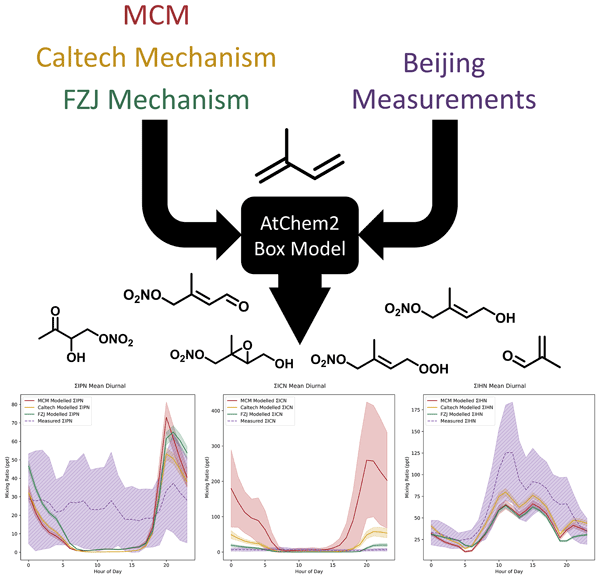
Alfred W. Mayhew, Ben H. Lee, Joel A. Thornton, Thomas J. Bannan, James Brean, James R. Hopkins, James D. Lee, Beth S. Nelson, Carl Percival, Andrew R. Rickard, Marvin D. Shaw, Peter M. Edwards, and Jaqueline F. Hamilton
Atmos. Chem. Phys., 22, 14783–14798, https://doi.org/10.5194/acp-22-14783-2022, https://doi.org/10.5194/acp-22-14783-2022, 2022
Short summary
Short summary
Isoprene nitrates are chemical species commonly found in the atmosphere that are important for their impacts on air quality and climate. This paper compares 3 different representations of the chemistry of isoprene nitrates in computational models highlighting cases where the choice of chemistry included has significant impacts on the concentration and composition of the modelled nitrates. Calibration of mass spectrometers is also shown to be an important factor when analysing isoprene nitrates.
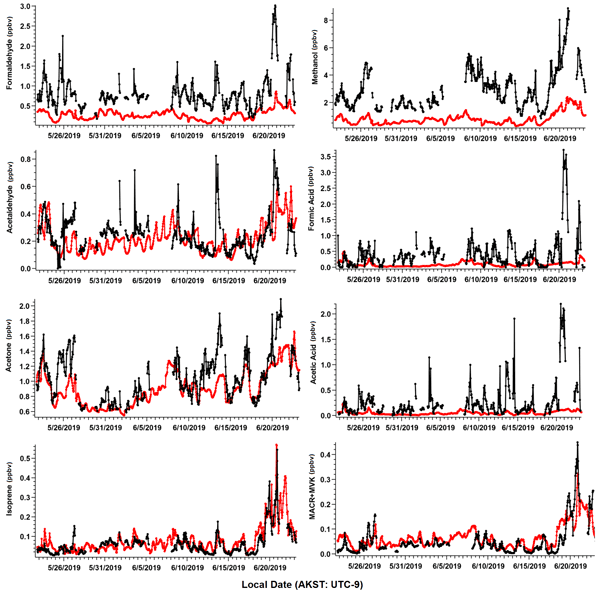
Vanessa Selimovic, Damien Ketcherside, Sreelekha Chaliyakunnel, Catherine Wielgasz, Wade Permar, Hélène Angot, Dylan B. Millet, Alan Fried, Detlev Helmig, and Lu Hu
Atmos. Chem. Phys., 22, 14037–14058, https://doi.org/10.5194/acp-22-14037-2022, https://doi.org/10.5194/acp-22-14037-2022, 2022
Short summary
Short summary
Arctic warming has led to an increase in plants that emit gases in response to stress, but how these gases affect regional chemistry is largely unknown due to lack of observational data. Here we present the most comprehensive gas-phase measurements for this area to date and compare them to predictions from a global transport model. We report 78 gas-phase species and investigate their importance to atmospheric chemistry in the area, with broader implications for similar plant types.

Yujie Wang and Christian Frankenberg
Biogeosciences, 19, 4705–4714, https://doi.org/10.5194/bg-19-4705-2022, https://doi.org/10.5194/bg-19-4705-2022, 2022
Short summary
Short summary
Plant hydraulics is often misrepresented in topical research. We highlight the commonly seen ambiguities and/or mistakes, with equations and figures to help visualize the potential biases. We recommend careful thinking when using or modifying existing plant hydraulic terms, methods, and models.
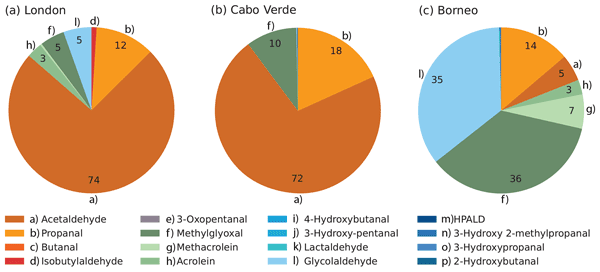
Maria Paula Pérez-Peña, Jenny A. Fisher, Dylan B. Millet, Hisashi Yashiro, Ray L. Langenfelds, Paul B. Krummel, and Scott H. Kable
Atmos. Chem. Phys., 22, 12367–12386, https://doi.org/10.5194/acp-22-12367-2022, https://doi.org/10.5194/acp-22-12367-2022, 2022
Short summary
Short summary
We used two atmospheric models to test the implications of previously unexplored aldehyde photochemistry on the atmospheric levels of molecular hydrogen (H2). We showed that the new photochemistry from aldehydes produces more H2 over densely forested areas. Compared to the rest of the world, it is over these forested regions where the produced H2 is more likely to be removed. The results highlight that other processes that contribute to atmospheric H2 levels should be studied further.
Yujie Wang and Christian Frankenberg
Biogeosciences Discuss., https://doi.org/10.5194/bg-2022-172, https://doi.org/10.5194/bg-2022-172, 2022
Revised manuscript not accepted
Short summary
Short summary
Leaf light absorption coefficient is often not measured along with leaf gas exchange, but assumed to be constant. This potentially causes biases in estimated photosynthetic capacity and modeled photosynthetic rates. We explored how leaf light absorption features and light source may impact the photosynthesis modeling, and found that the biases are dependent of model assumptions. Researchers need to be more cautious with these inaccurate assumptions in photosynthesis models.
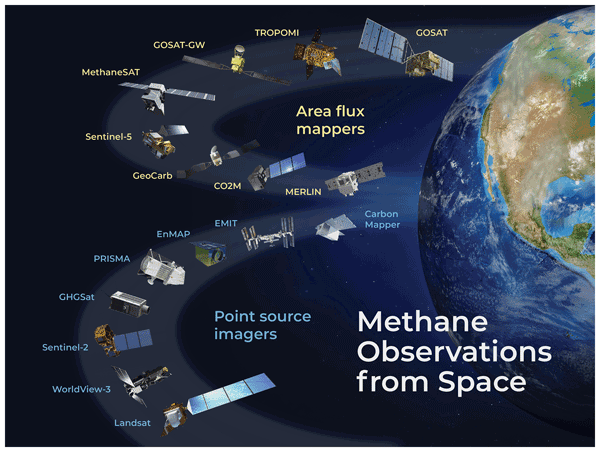
Daniel J. Jacob, Daniel J. Varon, Daniel H. Cusworth, Philip E. Dennison, Christian Frankenberg, Ritesh Gautam, Luis Guanter, John Kelley, Jason McKeever, Lesley E. Ott, Benjamin Poulter, Zhen Qu, Andrew K. Thorpe, John R. Worden, and Riley M. Duren
Atmos. Chem. Phys., 22, 9617–9646, https://doi.org/10.5194/acp-22-9617-2022, https://doi.org/10.5194/acp-22-9617-2022, 2022
Short summary
Short summary
We review the capability of satellite observations of atmospheric methane to quantify methane emissions on all scales. We cover retrieval methods, precision requirements, inverse methods for inferring emissions, source detection thresholds, and observations of system completeness. We show that current instruments already enable quantification of regional and national emissions including contributions from large point sources. Coverage and resolution will increase significantly in coming years.

Ruochong Xu, Joel A. Thornton, Ben H. Lee, Yanxu Zhang, Lyatt Jaeglé, Felipe D. Lopez-Hilfiker, Pekka Rantala, and Tuukka Petäjä
Atmos. Chem. Phys., 22, 5477–5494, https://doi.org/10.5194/acp-22-5477-2022, https://doi.org/10.5194/acp-22-5477-2022, 2022
Short summary
Short summary
Monoterpenes are emitted into the atmosphere by vegetation and by the use of certain consumer products. Reactions of monoterpenes in the atmosphere lead to low-volatility products that condense to grow particulate matter or participate in new particle formation and, thus, affect air quality and climate. We use a model of atmospheric chemistry and transport to evaluate the global-scale importance of recent updates to our understanding of monoterpene chemistry in particle formation and growth.
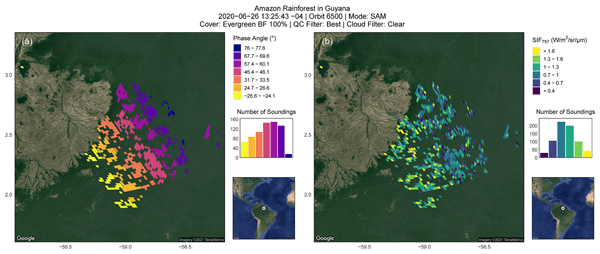
Russell Doughty, Thomas P. Kurosu, Nicholas Parazoo, Philipp Köhler, Yujie Wang, Ying Sun, and Christian Frankenberg
Earth Syst. Sci. Data, 14, 1513–1529, https://doi.org/10.5194/essd-14-1513-2022, https://doi.org/10.5194/essd-14-1513-2022, 2022
Short summary
Short summary
We describe and compare solar-induced chlorophyll fluorescence data produced by NASA from the Greenhouse Gases Observing Satellite (GOSAT) and the Orbiting Carbon Observatory-2 (OCO-2) and OCO-3 platforms.
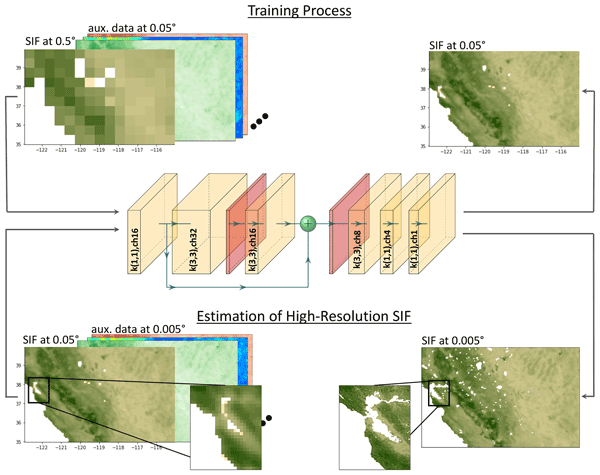
Johannes Gensheimer, Alexander J. Turner, Philipp Köhler, Christian Frankenberg, and Jia Chen
Biogeosciences, 19, 1777–1793, https://doi.org/10.5194/bg-19-1777-2022, https://doi.org/10.5194/bg-19-1777-2022, 2022
Short summary
Short summary
We develop a convolutional neural network, named SIFnet, that increases the spatial resolution of SIF from TROPOMI by a factor of 10 to a spatial resolution of 0.005°. SIFnet utilizes coarse SIF observations, together with a broad range of high-resolution auxiliary data. The insights gained from interpretable machine learning techniques allow us to make quantitative claims about the relationships between SIF and other common parameters related to photosynthesis.
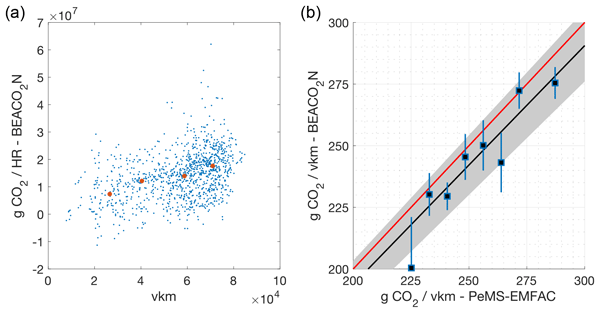
Helen L. Fitzmaurice, Alexander J. Turner, Jinsol Kim, Katherine Chan, Erin R. Delaria, Catherine Newman, Paul Wooldridge, and Ronald C. Cohen
Atmos. Chem. Phys., 22, 3891–3900, https://doi.org/10.5194/acp-22-3891-2022, https://doi.org/10.5194/acp-22-3891-2022, 2022
Short summary
Short summary
On-road emissions are thought to vary widely from existing predictions, as the effects of the age of the vehicle fleet, the performance of emission control systems, and variations in speed are difficult to assess under ambient driving conditions. We present an observational approach to characterize on-road emissions and show that the method is consistent with other approaches to within ~ 3 %.
Rupert Holzinger, Oliver Eppers, Kouji Adachi, Heiko Bozem, Markus Hartmann, Andreas Herber, Makoto Koike, Dylan B. Millet, Nobuhiro Moteki, Sho Ohata, Frank Stratmann, and Atsushi Yoshida
Atmos. Chem. Phys. Discuss., https://doi.org/10.5194/acp-2022-95, https://doi.org/10.5194/acp-2022-95, 2022
Revised manuscript not accepted
Short summary
Short summary
In spring 2018 the research aircraft Polar 5 conducted flights in the Arctic atmosphere. The flight operation was from Station Nord in Greenland, 1700 km north of the Arctic Circle (81°43'N, 17°47'W). Using a mass spectrometer we measured more than 100 organic compounds in the air. We found a clear signature of natural organic compounds that are transported from forests to the high Arctic. These compounds have the potential to change the cloud cover and energy budget of the Arctic region.
Arto Heitto, Kari Lehtinen, Tuukka Petäjä, Felipe Lopez-Hilfiker, Joel A. Thornton, Markku Kulmala, and Taina Yli-Juuti
Atmos. Chem. Phys., 22, 155–171, https://doi.org/10.5194/acp-22-155-2022, https://doi.org/10.5194/acp-22-155-2022, 2022
Short summary
Short summary
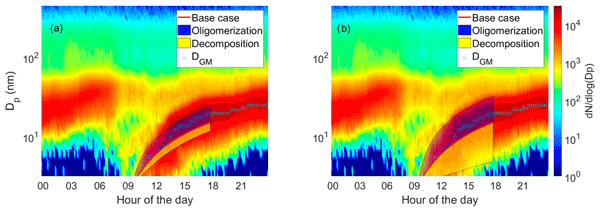
For atmospheric aerosol particles to take part in cloud formation, they need to be at least a few tens of nanometers in diameter. By using a particle condensation model, we investigated how two types of chemical reactions, oligomerization and decomposition, of organic molecules inside the particle may affect the growth of secondary aerosol particles to these sizes. We show that the effect is potentially significant, which highlights the importance of increasing understanding of these processes.
Yujie Wang and Christian Frankenberg
Biogeosciences, 19, 29–45, https://doi.org/10.5194/bg-19-29-2022, https://doi.org/10.5194/bg-19-29-2022, 2022
Short summary
Short summary
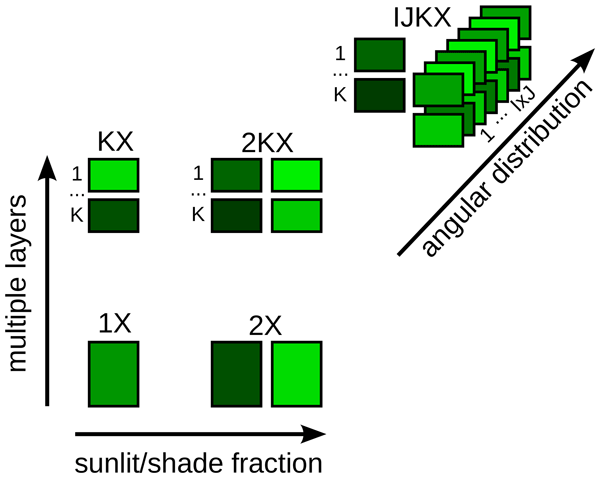
Modeling vegetation canopy is important in predicting whether the land remains a carbon sink to mitigate climate change in the near future. Vegetation canopy model complexity, however, impacts the model-predicted carbon and water fluxes as well as canopy fluorescence, even if the same suite of model inputs is used. Given the biases caused by canopy model complexity, we recommend not misusing parameters inverted using different models or assumptions.

Alexander J. Turner, Philipp Köhler, Troy S. Magney, Christian Frankenberg, Inez Fung, and Ronald C. Cohen
Biogeosciences, 18, 6579–6588, https://doi.org/10.5194/bg-18-6579-2021, https://doi.org/10.5194/bg-18-6579-2021, 2021
Short summary
Short summary
This work builds a high-resolution estimate (500 m) of gross primary productivity (GPP) over the US using satellite measurements of solar-induced chlorophyll fluorescence (SIF) from the TROPOspheric Monitoring Instrument (TROPOMI) between 2018 and 2020. We identify ecosystem-specific scaling factors for estimating gross primary productivity (GPP) from TROPOMI SIF. Extreme precipitation events drive four regional GPP anomalies that account for 28 % of year-to-year GPP differences across the US.
Xueying Yu, Dylan B. Millet, and Daven K. Henze
Geosci. Model Dev., 14, 7775–7793, https://doi.org/10.5194/gmd-14-7775-2021, https://doi.org/10.5194/gmd-14-7775-2021, 2021
Short summary
Short summary
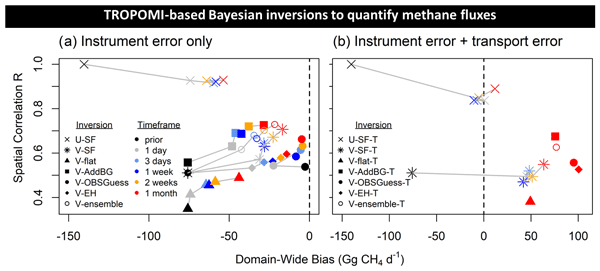
We conduct observing system simulation experiments to test how well inverse analyses of high-resolution satellite data from sensors such as TROPOMI can quantify methane emissions. Inversions can improve monthly flux estimates at 25 km even with a spatially biased prior or model transport errors, but results are strongly degraded when both are present. We further evaluate a set of alternate formalisms to overcome limitations of the widely used scale factor approach that arise for missing sources.
Siraput Jongaramrungruang, Georgios Matheou, Andrew K. Thorpe, Zhao-Cheng Zeng, and Christian Frankenberg
Atmos. Meas. Tech., 14, 7999–8017, https://doi.org/10.5194/amt-14-7999-2021, https://doi.org/10.5194/amt-14-7999-2021, 2021
Short summary
Short summary
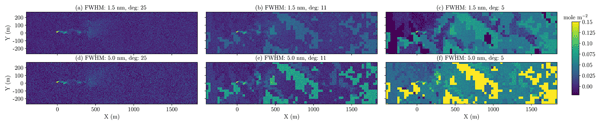
This study shows how precision error and bias in column methane retrieval change with different instrument specifications and the impact of spectrally complex surface albedos on retrievals. We show how surface interferences can be mitigated with an optimal spectral resolution and a higher polynomial degree in a retrieval process. The findings can inform future satellite instrument designs to have robust observations capable of separating real CH4 plume enhancements from surface interferences.
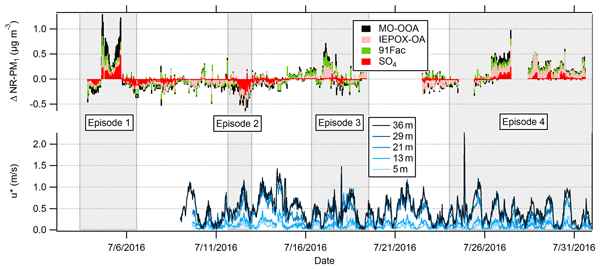
Alexander A. T. Bui, Henry W. Wallace, Sarah Kavassalis, Hariprasad D. Alwe, James H. Flynn, Matt H. Erickson, Sergio Alvarez, Dylan B. Millet, Allison L. Steiner, and Robert J. Griffin
Atmos. Chem. Phys., 21, 17031–17050, https://doi.org/10.5194/acp-21-17031-2021, https://doi.org/10.5194/acp-21-17031-2021, 2021
Short summary
Short summary
Differences in atmospheric species above and below a forest canopy provide insight into the relative importance of local mixing, long-range transport, and chemical processes in determining vertical gradients in atmospheric particles in a forested environment. This helps in understanding the flux of climate-relevant material out of the forest to the atmosphere. We studied this in a remote forest using vertically resolved measurements of gases and particles.
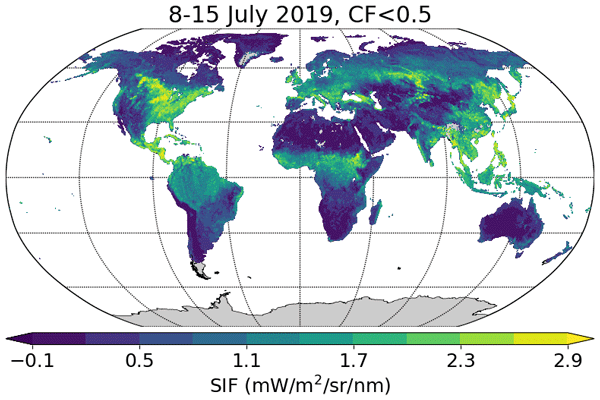
Luis Guanter, Cédric Bacour, Andreas Schneider, Ilse Aben, Tim A. van Kempen, Fabienne Maignan, Christian Retscher, Philipp Köhler, Christian Frankenberg, Joanna Joiner, and Yongguang Zhang
Earth Syst. Sci. Data, 13, 5423–5440, https://doi.org/10.5194/essd-13-5423-2021, https://doi.org/10.5194/essd-13-5423-2021, 2021
Short summary
Short summary
Sun-induced chlorophyll fluorescence (SIF) is an electromagnetic signal emitted by plants in the red and far-red parts of the spectrum. It has a functional link to photosynthesis and can be measured by satellite instruments, which makes it an important variable for the remote monitoring of the photosynthetic activity of vegetation ecosystems around the world. In this contribution we present a SIF dataset derived from the new Sentinel-5P TROPOMI missions.
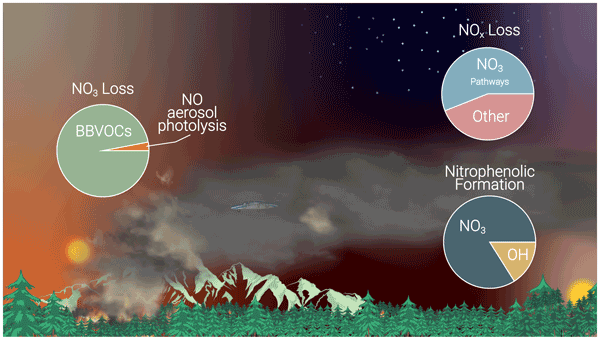
Zachary C. J. Decker, Michael A. Robinson, Kelley C. Barsanti, Ilann Bourgeois, Matthew M. Coggon, Joshua P. DiGangi, Glenn S. Diskin, Frank M. Flocke, Alessandro Franchin, Carley D. Fredrickson, Georgios I. Gkatzelis, Samuel R. Hall, Hannah Halliday, Christopher D. Holmes, L. Gregory Huey, Young Ro Lee, Jakob Lindaas, Ann M. Middlebrook, Denise D. Montzka, Richard Moore, J. Andrew Neuman, John B. Nowak, Brett B. Palm, Jeff Peischl, Felix Piel, Pamela S. Rickly, Andrew W. Rollins, Thomas B. Ryerson, Rebecca H. Schwantes, Kanako Sekimoto, Lee Thornhill, Joel A. Thornton, Geoffrey S. Tyndall, Kirk Ullmann, Paul Van Rooy, Patrick R. Veres, Carsten Warneke, Rebecca A. Washenfelder, Andrew J. Weinheimer, Elizabeth Wiggins, Edward Winstead, Armin Wisthaler, Caroline Womack, and Steven S. Brown
Atmos. Chem. Phys., 21, 16293–16317, https://doi.org/10.5194/acp-21-16293-2021, https://doi.org/10.5194/acp-21-16293-2021, 2021
Short summary
Short summary
To understand air quality impacts from wildfires, we need an accurate picture of how wildfire smoke changes chemically both day and night as sunlight changes the chemistry of smoke. We present a chemical analysis of wildfire smoke as it changes from midday through the night. We use aircraft observations from the FIREX-AQ field campaign with a chemical box model. We find that even under sunlight typical
nighttimechemistry thrives and controls the fate of key smoke plume chemical processes.

Yujie Wang, Philipp Köhler, Liyin He, Russell Doughty, Renato K. Braghiere, Jeffrey D. Wood, and Christian Frankenberg
Geosci. Model Dev., 14, 6741–6763, https://doi.org/10.5194/gmd-14-6741-2021, https://doi.org/10.5194/gmd-14-6741-2021, 2021
Short summary
Short summary
We present the first step in testing a new land model as part of a new Earth system model. Our model links plant hydraulics, stomatal optimization theory, and a comprehensive canopy radiation scheme. We compared model-predicted carbon and water fluxes to flux tower observations and model-predicted sun-induced chlorophyll fluorescence to satellite retrievals. Our model quantitatively predicted the carbon and water fluxes as well as the canopy fluorescence yield.
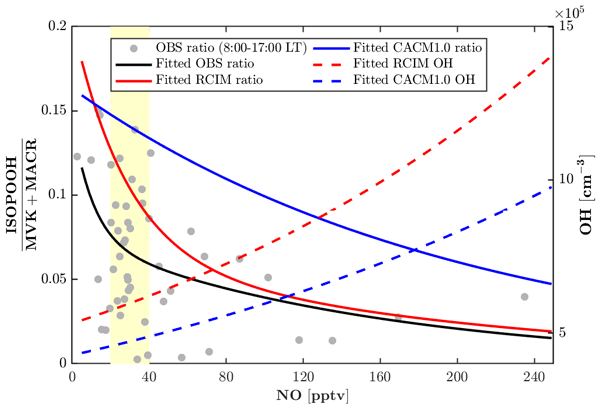
Dandan Wei, Hariprasad D. Alwe, Dylan B. Millet, Brandon Bottorff, Michelle Lew, Philip S. Stevens, Joshua D. Shutter, Joshua L. Cox, Frank N. Keutsch, Qianwen Shi, Sarah C. Kavassalis, Jennifer G. Murphy, Krystal T. Vasquez, Hannah M. Allen, Eric Praske, John D. Crounse, Paul O. Wennberg, Paul B. Shepson, Alexander A. T. Bui, Henry W. Wallace, Robert J. Griffin, Nathaniel W. May, Megan Connor, Jonathan H. Slade, Kerri A. Pratt, Ezra C. Wood, Mathew Rollings, Benjamin L. Deming, Daniel C. Anderson, and Allison L. Steiner
Geosci. Model Dev., 14, 6309–6329, https://doi.org/10.5194/gmd-14-6309-2021, https://doi.org/10.5194/gmd-14-6309-2021, 2021
Short summary
Short summary
Over the past decade, understanding of isoprene oxidation has improved, and proper representation of isoprene oxidation and isoprene-derived SOA (iSOA) formation in canopy–chemistry models is now recognized to be important for an accurate understanding of forest–atmosphere exchange. The updated FORCAsT version 2.0 improves the estimation of some isoprene oxidation products and is one of the few canopy models currently capable of simulating SOA formation from monoterpenes and isoprene.
Cited articles
Anderson, L. D., Dix, B., Schnell, J., Yokelson, R., Veefkind, J. P., Ahmadov, R., and de Gouw, J.: Analyzing the Impact of Evolving Combustion Conditions on the Composition of Wildfire Emissions Using Satellite Data, Geophys. Res. Lett., 50, e2023GL105811, https://doi.org/10.1029/2023GL105811, 2023. a, b
Bamberger, I., Ruehr, N. K., Schmitt, M., Gast, A., Wohlfahrt, G., and Arneth, A.: Isoprene emission and photosynthesis during heatwaves and drought in black locust, Biogeosciences, 14, 3649–3667, https://doi.org/10.5194/bg-14-3649-2017, 2017. a
Barkley, M. P., Smedt, I. D., Van Roozendael, M., Kurosu, T. P., Chance, K., Arneth, A., Hagberg, D., Guenther, A., Paulot, F., Marais, E., and Mao, J.: Top-down isoprene emissions over tropical South America inferred from SCIAMACHY and OMI formaldehyde columns, J. Geophys. Res.-Atmos., 118, 6849–6868, https://doi.org/10.1002/jgrd.50552, 2013. a
Brauer, C. S., Blake, T. A., Guenther, A. B., Sharpe, S. W., Sams, R. L., and Johnson, T. J.: Quantitative infrared absorption cross sections of isoprene for atmospheric measurements, Atmos. Meas. Tech., 7, 3839–3847, https://doi.org/10.5194/amt-7-3839-2014, 2014. a, b, c
Carrión, O., Gibson, L., Elias, D. M. O., McNamara, N. P., van Alen, T. A., Op den Camp, H. J. M., Supramaniam, C. V., McGenity, T. J., and Murrell, J. C.: Diversity of isoprene-degrading bacteria in phyllosphere and soil communities from a high isoprene-emitting environment: a Malaysian oil palm plantation, Microbiome, 8, 81, https://doi.org/10.1186/s40168-020-00860-7, 2020. a, b
Chance, K.: OMI/Aura Formaldehyde (HCHO) Total Column Daily L3 Weighted Mean Global 0.1deg Lat/Lon Grid, GES DISC – Goddard Earth Sciences Data and Information Services Center, https://doi.org/10.5067/Aura/OMI/DATA3010, 2014. a, b
Chen, G., Veldkamp, E., Damris, M., Irawan, B., Tjoa, A., and Corre, M. D.: Large contribution of soil N2O emission to the global warming potential of a large-scale oil palm plantation despite changing from conventional to reduced management practices, Biogeosciences, 21, 513–529, https://doi.org/10.5194/bg-21-513-2024, 2024. a
Cheng, Y., Le, Y., Yidi, X., Hui, L., Arthur, P. C., Kasturi, K., and Gong, P.: Mapping oil palm plantation expansion in Malaysia over the past decade (2007–2016) using ALOS-1/2 PALSAR-1/2 data, Int. J. Remote Sens., 40, 7389–7408, https://doi.org/10.1080/01431161.2019.1580824, 2019. a
Choi, J., Henze, D. K., Wells, K. C., and Millet, D. B.: Joint Inversion of Satellite-Based Isoprene and Formaldehyde Observations to Constrain Emissions of Nonmethane Volatile Organic Compounds, J. Geophys. Res.-Atmos., 130, e2024JD042070, https://doi.org/10.1029/2024JD042070, 2025. a, b
Christiansen, A., Mickley, L. J., and Hu, L.: Constraining long-term NOx emissions over the United States and Europe using nitrate wet deposition monitoring networks, Atmos. Chem. Phys., 24, 4569–4589, https://doi.org/10.5194/acp-24-4569-2024, 2024. a
Coggon, M. M., Lim, C. Y., Koss, A. R., Sekimoto, K., Yuan, B., Gilman, J. B., Hagan, D. H., Selimovic, V., Zarzana, K. J., Brown, S. S., Roberts, J. M., Müller, M., Yokelson, R., Wisthaler, A., Krechmer, J. E., Jimenez, J. L., Cappa, C., Kroll, J. H., de Gouw, J., and Warneke, C.: OH chemistry of non-methane organic gases (NMOGs) emitted from laboratory and ambient biomass burning smoke: evaluating the influence of furans and oxygenated aromatics on ozone and secondary NMOG formation, Atmos. Chem. Phys., 19, 14875–14899, https://doi.org/10.5194/acp-19-14875-2019, 2019. a
Curtius, J., Heinritzi, M., Beck, L. J., Pöhlker, M. L., Tripathi, N., Krumm, B. E., Holzbeck, P., Nussbaumer, C. M., Hernández Pardo, L., Klimach, T., Barmpounis, K., Andersen, S. T., Bardakov, R., Bohn, B., Cecchini, M. A., Chaboureau, J.-P., Dauhut, T., Dienhart, D., Dörich, R., Edtbauer, A., Giez, A., Hartmann, A., Holanda, B. A., Joppe, P., Kaiser, K., Keber, T., Klebach, H., Krüger, O. O., Kürten, A., Mallaun, C., Marno, D., Martinez, M., Monteiro, C., Nelson, C., Ort, L., Raj, S. S., Richter, S., Ringsdorf, A., Rocha, F., Simon, M., Sreekumar, S., Tsokankunku, A., Unfer, G. R., Valenti, I. D., Wang, N., Zahn, A., Zauner-Wieczorek, M., Albrecht, R. I., Andreae, M. O., Artaxo, P., Crowley, J. N., Fischer, H., Harder, H., Herdies, D. L., Machado, L. A. T., Pöhlker, C., Pöschl, U., Possner, A., Pozzer, A., Schneider, J., Williams, J., and Lelieveld, J.: Isoprene nitrates drive new particle formation in Amazon's upper troposphere, Nature, 636, 124–130, https://doi.org/10.1038/s41586-024-08192-4, 2024. a, b
Danylo, O., Pirker, J., Lemoine, G., Ceccherini, G., See, L., McCallum, I., Hadi, Kraxner, F., Achard, F., and Fritz, S.: A map of the extent and year of detection of oil palm plantations in Indonesia, Malaysia and Thailand, Sci. Data, 8, 96, https://doi.org/10.1038/s41597-021-00867-1, 2021. a, b, c, d
Delaria, E. R. and Cohen, R. C.: Measurements of Atmosphere-Biosphere Exchange of Oxidized Nitrogen and Implications for the Chemistry of Atmospheric NOx, Acc. Chem. Res., 56, 1720–1730, https://doi.org/10.1021/acs.accounts.3c00090, 2023. a
Do, N. T. N., Sudo, K., Ito, A., Emmons, L. K., Naik, V., Tsigaridis, K., Seland, Ø., Folberth, G. A., and Kelley, D. I.: Historical trends and controlling factors of isoprene emissions in CMIP6 Earth system models, Geosci. Model Dev., 18, 2079–2109, https://doi.org/10.5194/gmd-18-2079-2025, 2025. a, b
Lee, J. D., Squires, F. A., Sherwen, T., Wilde, S. E., Cliff, S. J., Carpenter, L. J., Hopkins, J. R., Bauguitte, S. J., Reed, C., Barker, P., Allen, G., Bannan, T. J., Matthews, E., Mehra, A., Percival, C., Heard, D. E., Whalley, L. K., Ronnie, G. V., Seldon, S., Ingham, T., Keller, C. A., Knowland, K. E., Nisbet, E. G., and Andrews, S.: Ozone production and precursor emission from wildfires in Africa, Environmental Science: Atmospheres, 1, 524–542, https://doi.org/10.1039/D1EA00041A, 2021. a
Fischer, E. V., Jacob, D. J., Yantosca, R. M., Sulprizio, M. P., Millet, D. B., Mao, J., Paulot, F., Singh, H. B., Roiger, A., Ries, L., Talbot, R. W., Dzepina, K., and Pandey Deolal, S.: Atmospheric peroxyacetyl nitrate (PAN): a global budget and source attribution, Atmos. Chem. Phys., 14, 2679–2698, https://doi.org/10.5194/acp-14-2679-2014, 2014. a
Fredrickson, C. D., Theys, N., and Thornton, J. A.: Satellite Evidence of HONO/NO2 Increase With Fire Radiative Power, Geophys. Res. Lett., 50, e2023GL103836, https://doi.org/10.1029/2023GL103836, 2023. a, b
Fu, D., Di Girolamo, L., Rauber, R. M., McFarquhar, G. M., Nesbitt, S. W., Loveridge, J., Hong, Y., van Diedenhoven, B., Cairns, B., Alexandrov, M. D., Lawson, P., Woods, S., Tanelli, S., Schmidt, S., Hostetler, C., and Scarino, A. J.: An evaluation of the liquid cloud droplet effective radius derived from MODIS, airborne remote sensing, and in situ measurements from CAMP2Ex, Atmos. Chem. Phys., 22, 8259–8285, https://doi.org/10.5194/acp-22-8259-2022, 2022. a
Geron, C., Harley, P., and Guenther, A.: Isoprene emission capacity for US tree species, Atmos. Environ., 35, 3341–3352, https://doi.org/10.1016/S1352-2310(00)00407-6, 2001. a
Global Modeling and Assimilation Office (GMAO): MERRA-2 tavgM_2d_flx_Nx: 2d, Monthly mean, Time-Averaged, Single-Level, Assimilation, Surface Flux Diagnostics V5.12.4, GES DISC – Goddard Earth Sciences Data and Information Services Center, [code], https://doi.org/10.5067/0JRLVL8YV2Y4, 2015. a
Gu, D., Guenther, A. B., Shilling, J. E., Yu, H., Huang, M., Zhao, C., Yang, Q., Martin, S. T., Artaxo, P., Kim, S., Seco, R., Stavrakou, T., Longo, K. M., Tóta, J., de Souza, R. A. F., Vega, O., Liu, Y., Shrivastava, M., Alves, E. G., Santos, F. C., Leng, G., and Hu, Z.: Airborne observations reveal elevational gradient in tropical forest isoprene emissions, Nat. Commun., 8, 15541, https://doi.org/10.1038/ncomms15541, 2017. a
Guenther, A., Karl, T., Harley, P., Wiedinmyer, C., Palmer, P. I., and Geron, C.: Estimates of global terrestrial isoprene emissions using MEGAN (Model of Emissions of Gases and Aerosols from Nature), Atmos. Chem. Phys., 6, 3181–3210, https://doi.org/10.5194/acp-6-3181-2006, 2006. a, b
Guenther, A. B., Jiang, X., Heald, C. L., Sakulyanontvittaya, T., Duhl, T., Emmons, L. K., and Wang, X.: The Model of Emissions of Gases and Aerosols from Nature version 2.1 (MEGAN2.1): an extended and updated framework for modeling biogenic emissions, Geosci. Model Dev., 5, 1471–1492, https://doi.org/10.5194/gmd-5-1471-2012, 2012. a, b
Hassler, E., Corre, M. D., Kurniawan, S., and Veldkamp, E.: Soil nitrogen oxide fluxes from lowland forests converted to smallholder rubber and oil palm plantations in Sumatra, Indonesia, Biogeosciences, 14, 2781–2798, https://doi.org/10.5194/bg-14-2781-2017, 2017. a
Hewitt, C. N., MacKenzie, A. R., Di Carlo, P., Di Marco, C. F., Dorsey, J. R., Evans, M., Fowler, D., Gallagher, M. W., Hopkins, J. R., Jones, C. E., Langford, B., Lee, J. D., Lewis, A. C., Lim, S. F., McQuaid, J., Misztal, P., Moller, S. J., Monks, P. S., Nemitz, E., Oram, D. E., Owen, S. M., Phillips, G. J., Pugh, T. A. M., Pyle, J. A., Reeves, C. E., Ryder, J., Siong, J., Skiba, U., and Stewart, D. J.: Nitrogen management is essential to prevent tropical oil palm plantations from causing ground-level ozone pollution, P. Natl. Acad. Sci. USA, 106, 18447–18451, https://doi.org/10.1073/pnas.0907541106, 2009. a, b
Hudman, R. C., Moore, N. E., Mebust, A. K., Martin, R. V., Russell, A. R., Valin, L. C., and Cohen, R. C.: Steps towards a mechanistic model of global soil nitric oxide emissions: implementation and space based-constraints, Atmos. Chem. Phys., 12, 7779–7795, https://doi.org/10.5194/acp-12-7779-2012, 2012. a, b, c
Jaeglé, L., Martin, R. V., Chance, K., Steinberger, L., Kurosu, T. P., Jacob, D. J., Modi, A. I., Yoboué, V., Sigha-Nkamdjou, L., and Galy-Lacaux, C.: Satellite mapping of rain-induced nitric oxide emissions from soils, J. Geophys. Res.-Atmos., 109, https://doi.org/10.1029/2004JD004787, 2004. a, b
Jeong, D., Seco, R., Emmons, L., Schwantes, R., Liu, Y., McKinney, K. A., Martin, S. T., Keutsch, F. N., Gu, D., Guenther, A. B., Vega, O., Tota, J., Souza, R. A. F., Springston, S. R., Watson, T. B., and Kim, S.: Reconciling Observed and Predicted Tropical Rainforest OH Concentrations, J. Geophys. Res.-Atmos., 127, e2020JD032901, https://doi.org/10.1029/2020JD032901, 2022. a
Jeyaram, R., Sanghavi, S., and Frankenberg, C.: vSmartMOM.jl: an Open-Source Julia Package for Atmospheric Radiative Transfer and Remote Sensing Tools, Journal of Open Source Software, 7, 4575, https://doi.org/10.21105/joss.04575, 2022. a, b
Jin, L., Permar, W., Selimovic, V., Ketcherside, D., Yokelson, R. J., Hornbrook, R. S., Apel, E. C., Ku, I.-T., Collett Jr., J. L., Sullivan, A. P., Jaffe, D. A., Pierce, J. R., Fried, A., Coggon, M. M., Gkatzelis, G. I., Warneke, C., Fischer, E. V., and Hu, L.: Constraining emissions of volatile organic compounds from western US wildfires with WE-CAN and FIREX-AQ airborne observations, Atmos. Chem. Phys., 23, 5969–5991, https://doi.org/10.5194/acp-23-5969-2023, 2023. a
Jin, X., Zhu, Q., and Cohen, R. C.: Direct estimates of biomass burning NOx emissions and lifetimes using daily observations from TROPOMI, Atmos. Chem. Phys., 21, 15569–15587, https://doi.org/10.5194/acp-21-15569-2021, 2021. a
June, T., Meijide, A., Stiegler, C., Kusuma, A. P., and Knohl, A.: The influence of surface roughness and turbulence on heat fluxes from an oil palm plantation in Jambi, Indonesia, IOP Conf. Ser.: Earth Environ. Sci., 149, 012048, https://doi.org/10.1088/1755-1315/149/1/012048, 2018. a
Kiladis, G. N., Dias, J., Straub, K. H., Wheeler, M. C., Tulich, S. N., Kikuchi, K., Weickmann, K. M., and Ventrice, M. J.: A Comparison of OLR and Circulation-Based Indices for Tracking the MJO, Mon. Weather Rev., 142, 1697–1715, https://doi.org/10.1175/MWR-D-13-00301.1, 2014. a
Kroll, J. H., Ng, N. L., Murphy, S. M., Flagan, R. C., and Seinfeld, J. H.: Secondary Organic Aerosol Formation from Isoprene Photooxidation, Environ. Sci. Technol., 40, 1869–1877, https://doi.org/10.1021/es0524301, 2006. a
Laughner, J. L., Neu, J. L., Schimel, D., Wennberg, P. O., Barsanti, K., Bowman, K. W., Chatterjee, A., Croes, B. E., Fitzmaurice, H. L., Henze, D. K., Kim, J., Kort, E. A., Liu, Z., Miyazaki, K., Turner, A. J., Anenberg, S., Avise, J., Cao, H., Crisp, D., de Gouw, J., Eldering, A., Fyfe, J. C., Goldberg, D. L., Gurney, K. R., Hasheminassab, S., Hopkins, F., Ivey, C. E., Jones, D. B. A., Liu, J., Lovenduski, N. S., Martin, R. V., McKinley, G. A., Ott, L., Poulter, B., Ru, M., Sander, S. P., Swart, N., Yung, Y. L., and Zeng, Z.-C.: Societal shifts due to COVID-19 reveal large-scale complexities and feedbacks between atmospheric chemistry and climate change, P. Natl. Acad. Sci. USA, 118, e2109481118, https://doi.org/10.1073/pnas.2109481118, 2021. a
Lee, B. H., Munger, J. W., Wofsy, S. C., Rizzo, L. V., Yoon, J. Y. S., Turner, A. J., Thornton, J. A., and Swann, A. L. S.: Sensitive Response of Atmospheric Oxidative Capacity to the Uncertainty in the Emissions of Nitric Oxide (NO) From Soils in Amazonia, Geophys. Res. Lett., 51, e2023GL107214, https://doi.org/10.1029/2023GL107214, 2024. a, b
Li, H., Ciais, P., Kumar, P., Hauglustaine, D. A., Chevallier, F., Broquet, G., Millet, D. B., Wells, K. C., Lian, J., and Zheng, B.: Global biogenic isoprene emissions 2013–2020 inferred from satellite isoprene observations, Earth Syst. Sci. Data, 17, 7035–7054, https://doi.org/10.5194/essd-17-7035-2025, 2025. a
Li, H., Ciais, P., Kumar, P., Broquet, G., Chevallier, F., Hauglustaine, D. A., Millet, D. B., Wells, K. C., Lian, J., Bourtsoukidis, E., Zhang, K., and Zheng, B.: Contrasting Biogenic Isoprene Emission Responses to La Niña and El Niño Driven by Temperature: Insights from HCHO-Based Global Inversion, Environ. Sci. Technol., https://doi.org/10.1021/acs.est.5c12927, 2026. a
Link, M. F., Pothier, M. A., Vermeuel, M. P., Riches, M., Millet, D. B., and Farmer, D. K.: In-Canopy Chemistry, Emissions, Deposition, and Surface Reactivity Compete to Drive Bidirectional Forest-Atmosphere Exchange of VOC Oxidation Products, ACS EST Air, 1, 305–315, https://doi.org/10.1021/acsestair.3c00074, 2024. a
Liu, Y., Brito, J., Dorris, M. R., Rivera-Rios, J. C., Seco, R., Bates, K. H., Artaxo, P., Duvoisin, S., Keutsch, F. N., Kim, S., Goldstein, A. H., Guenther, A. B., Manzi, A. O., Souza, R. A. F., Springston, S. R., Watson, T. B., McKinney, K. A., and Martin, S. T.: Isoprene photochemistry over the Amazon rainforest, P. Natl. Acad. Sci. USA, 113, 6125–6130, https://doi.org/10.1073/pnas.1524136113, 2016. a
Makar, P. A., Staebler, R. M., Akingunola, A., Zhang, J., McLinden, C., Kharol, S. K., Pabla, B., Cheung, P., and Zheng, Q.: The effects of forest canopy shading and turbulence on boundary layer ozone, Nat. Commun., 8, 15243, https://doi.org/10.1038/ncomms15243, 2017. a
Marais, E. A., Jacob, D. J., Kurosu, T. P., Chance, K., Murphy, J. G., Reeves, C., Mills, G., Casadio, S., Millet, D. B., Barkley, M. P., Paulot, F., and Mao, J.: Isoprene emissions in Africa inferred from OMI observations of formaldehyde columns, Atmos. Chem. Phys., 12, 6219–6235, https://doi.org/10.5194/acp-12-6219-2012, 2012. a
Marais, E. A., Jacob, D. J., Guenther, A., Chance, K., Kurosu, T. P., Murphy, J. G., Reeves, C. E., and Pye, H. O. T.: Improved model of isoprene emissions in Africa using Ozone Monitoring Instrument (OMI) satellite observations of formaldehyde: implications for oxidants and particulate matter, Atmos. Chem. Phys., 14, 7693–7703, https://doi.org/10.5194/acp-14-7693-2014, 2014. a
Marais, E. A., Van Damme, M., Clarisse, L., Wiedinmyer, C., Murphy, K., and van der Werf, G. R.: Subtropical southern Africa fire emissions of nitrogen oxides and ammonia obtained with satellite observations and GEOS-Chem, Environ. Sci. Atmos., 5, 906–920, https://doi.org/10.1039/d5ea00041f, 2025. a
Marufu, L., Dentener, F., Lelieveld, J., Andreae, M. O., and Helas, G.: Photochemistry of the African troposphere: Influence of biomass-burning emissions, J. Geophys. Res.-Atmos., 105, 14513–14530, https://doi.org/10.1029/1999JD901055, 2000. a
Mebust, A. K. and Cohen, R. C.: Observations of a seasonal cycle in NOx emissions from fires in African woody savannas, Geophys. Res. Lett., 40, 1451–1455, https://doi.org/10.1002/grl.50343, 2013. a
Millet, D. B., Baasandorj, M., Hu, L., Mitroo, D., Turner, J., and Williams, B. J.: Nighttime Chemistry and Morning Isoprene Can Drive Urban Ozone Downwind of a Major Deciduous Forest, Environ. Sci. Technol., 50, 4335–4342, https://doi.org/10.1021/acs.est.5b06367, 2016. a
Murphy, D. J., Goggin, K., and Paterson, R. R. M.: Oil palm in the 2020s and beyond: challenges and solutions, CABI Agriculture and Bioscience, 2, 39, https://doi.org/10.1186/s43170-021-00058-3, 2021. a
Murray, L. T., Jacob, D. J., Logan, J. A., Hudman, R. C., and Koshak, W. J.: Optimized regional and interannual variability of lightning in a global chemical transport model constrained by LIS/OTD satellite data, J. Geophys. Res.-Atmos., 117, https://doi.org/10.1029/2012JD017934, 2012. a
Murray, L. T., Fiore, A. M., Shindell, D. T., Naik, V., and Horowitz, L. W.: Large uncertainties in global hydroxyl projections tied to fate of reactive nitrogen and carbon, P. Natl. Acad. Sci. USA, 118, e2115204118, https://doi.org/10.1073/pnas.2115204118, 2021. a
Niinemets, Ü and Sun, Z.: How light, temperature, and measurement and growth [CO2] interactively control isoprene emission in hybrid aspen, J. Exp. Bot., 66, 841–851, https://doi.org/10.1093/jxb/eru443, 2015. a
Opacka, B., Stavrakou, T., Müller, J.-F., De Smedt, I., van Geffen, J., Marais, E. A., Horner, R. P., Millet, D. B., Wells, K. C., and Guenther, A. B.: Natural emissions of VOC and NOx over Africa constrained by TROPOMI HCHO and NO2 data using the MAGRITTEv1.1 model, Atmos. Chem. Phys., 25, 2863–2894, https://doi.org/10.5194/acp-25-2863-2025, 2025. a, b
Palmer, P. I., Marvin, M. R., Siddans, R., Kerridge, B. J., and Moore, D. P.: Nocturnal survival of isoprene linked to formation of upper tropospheric organic aerosol, Science, 375, 562–566, https://doi.org/10.1126/science.abg4506, 2022. a
Paulot, F., Crounse, J. D., Kjaergaard, H. G., Kürten, A., St. Clair, J. M., Seinfeld, J. H., and Wennberg, P. O.: Unexpected Epoxide Formation in the Gas-Phase Photooxidation of Isoprene, Science, 325, 730–733, https://doi.org/10.1126/science.1172910, 2009. a
Peatman, S. C., Schwendike, J., Birch, C. E., Marsham, J. H., Matthews, A. J., and Yang, G.-Y.: A Local-to-Large Scale View of Maritime Continent Rainfall: Control by ENSO, MJO, and Equatorial Waves, J. Climate, 34, 8933–8953, https://doi.org/10.1175/JCLI-D-21-0263.1, 2021. a
Peng, Q., Palm, B. B., Melander, K. E., Lee, B. H., Hall, S. R., Ullmann, K., Campos, T., Weinheimer, A. J., Apel, E. C., Hornbrook, R. S., Hills, A. J., Montzka, D. D., Flocke, F., Hu, L., Permar, W., Wielgasz, C., Lindaas, J., Pollack, I. B., Fischer, E. V., Bertram, T. H., and Thornton, J. A.: HONO Emissions from Western U.S. Wildfires Provide Dominant Radical Source in Fresh Wildfire Smoke, Environ. Sci. Technol., 54, 5954–5963, https://doi.org/10.1021/acs.est.0c00126, 2020. a
Pilewskie, J. A. and L'Ecuyer, T. S.: The Global Nature of Early-Afternoon and Late-Night Convection Through the Eyes of the A-Train, J. Geophys. Res.-Atmos., 127, e2022JD036438, https://doi.org/10.1029/2022JD036438, 2022. a
Randerson, J., Van Der Werf, G., Giglio, L., Collatz, G., and Kasibhatla, P.: Global Fire Emissions Database, Version 4.1 (GFEDv4), ORNL Distributed Active Archive Center, https://doi.org/10.3334/ORNLDAAC/1293, 2017. a, b
Real, E., Orlandi, E., Law, K. S., Fierli, F., Josset, D., Cairo, F., Schlager, H., Borrmann, S., Kunkel, D., Volk, C. M., McQuaid, J. B., Stewart, D. J., Lee, J., Lewis, A. C., Hopkins, J. R., Ravegnani, F., Ulanovski, A., and Liousse, C.: Cross-hemispheric transport of central African biomass burning pollutants: implications for downwind ozone production, Atmos. Chem. Phys., 10, 3027–3046, https://doi.org/10.5194/acp-10-3027-2010, 2010. a
Rigby, M., Montzka, S. A., Prinn, R. G., White, J. W. C., Young, D., O'Doherty, S., Lunt, M. F., Ganesan, A. L., Manning, A. J., Simmonds, P. G., Salameh, P. K., Harth, C. M., Mühle, J., Weiss, R. F., Fraser, P. J., Steele, L. P., Krummel, P. B., McCulloch, A., and Park, S.: Role of atmospheric oxidation in recent methane growth, P. Natl. Acad. Sci. USA, 114, 5373–5377, https://doi.org/10.1073/pnas.1616426114, 2017. a
Rowe, P. M., Fergoda, M., and Neshyba, S.: Temperature-Dependent Optical Properties of Liquid Water From 240 to 298 K, J. Geophys. Res.-Atmos., 125, e2020JD032624, https://doi.org/10.1029/2020JD032624, 2020. a
Sanghavi, S., Davis, A. B., and Eldering, A.: vSmartMOM: A vector matrix operator method-based radiative transfer model linearized with respect to aerosol properties, J. Quant. Spectrosc. Ra., 133, 412–433, https://doi.org/10.1016/j.jqsrt.2013.09.004, 2014. a, b
Sanghavi, S. V., Martonchik, J. V., Davis, A. B., and Diner, D. J.: Linearization of a scalar matrix operator method radiative transfer model with respect to aerosol and surface properties, J. Quant. Spectrosc. Ra., 116, 1–16, https://doi.org/10.1016/j.jqsrt.2012.10.021, 2013. a
Sha, T., Ma, X., Zhang, H., Janechek, N., Wang, Y., Wang, Y., Castro García, L., Jenerette, G. D., and Wang, J.: Impacts of Soil NOx Emission on O3 Air Quality in Rural California, Environ. Sci. Technol., 55, 7113–7122, https://doi.org/10.1021/acs.est.0c06834, 2021. a
Sharkey, T. D., Wiberley, A. E., and Donohue, A. R.: Isoprene Emission from Plants: Why and How, Ann. Bot., 101, 5–18, https://doi.org/10.1093/aob/mcm240, 2008. a
Sharpe, S. W., Johnson, T. J., Sams, R. L., Chu, P. M., Rhoderick, G. C., and Johnson, P. A.: Gas-Phase Databases for Quantitative Infrared Spectroscopy, Appl. Spectrosc., 58, 1452–1461, https://doi.org/10.1366/0003702042641281, 2004. a
Shen, J., Russell, D. M., DeVivo, J., Kunkler, F., Baalbaki, R., Mentler, B., Scholz, W., Yu, W., Caudillo-Plath, L., Sommer, E., Ahongshangbam, E., Alfaouri, D., Almeida, J., Amorim, A., Beck, L. J., Beckmann, H., Berntheusel, M., Bhattacharyya, N., Canagaratna, M. R., Chassaing, A., Cruz-Simbron, R., Dada, L., Duplissy, J., Gordon, H., Granzin, M., Große Schute, L., Heinritzi, M., Iyer, S., Klebach, H., Krüger, T., Kürten, A., Lampimäki, M., Liu, L., Lopez, B., Martinez, M., Morawiec, A., Onnela, A., Peltola, M., Rato, P., Reza, M., Richter, S., Rörup, B., Sebastian, M. K., Simon, M., Surdu, M., Tamme, K., Thakur, R. C., Tomé, A., Tong, Y., Top, J., Umo, N. S., Unfer, G., Vettikkat, L., Weissbacher, J., Xenofontos, C., Yang, B., Zauner-Wieczorek, M., Zhang, J., Zheng, Z., Baltensperger, U., Christoudias, T., Flagan, R. C., El Haddad, I., Junninen, H., Möhler, O., Riipinen, I., Rohner, U., Schobesberger, S., Volkamer, R., Winkler, P. M., Hansel, A., Lehtipalo, K., Donahue, N. M., Lelieveld, J., Harder, H., Kulmala, M., Worsnop, D. R., Kirkby, J., Curtius, J., and He, X.-C.: New particle formation from isoprene under upper-tropospheric conditions, Nature, 636, 115–123, https://doi.org/10.1038/s41586-024-08196-0, 2024. a, b
Shutter, J. D., Millet, D. B., Wells, K. C., Payne, V. H., Nowlan, C. R., and Abad, G. G.: Interannual changes in atmospheric oxidation over forests determined from space, Sci. Adv., 10, eadn1115, https://doi.org/10.1126/sciadv.adn1115, 2024. a, b, c, d
Silva, S. J., Heald, C. L., Geddes, J. A., Austin, K. G., Kasibhatla, P. S., and Marlier, M. E.: Impacts of current and projected oil palm plantation expansion on air quality over Southeast Asia, Atmos. Chem. Phys., 16, 10621–10635, https://doi.org/10.5194/acp-16-10621-2016, 2016. a, b
Song, W., Liu, X.-Y., Hu, C.-C., Chen, G.-Y., Liu, X.-J., Walters, W. W., Michalski, G., and Liu, C.-Q.: Important contributions of non-fossil fuel nitrogen oxides emissions, Nat. Commun., 12, 243, https://doi.org/10.1038/s41467-020-20356-0, 2021. a
Stavrakou, T., Müller, J.-F., Bauwens, M., De Smedt, I., Van Roozendael, M., Guenther, A., Wild, M., and Xia, X.: Isoprene emissions over Asia 1979–2012: impact of climate and land-use changes, Atmos. Chem. Phys., 14, 4587–4605, https://doi.org/10.5194/acp-14-4587-2014, 2014. a
Stavrakou, T., Müller, J.-F., Bauwens, M., De Smedt, I., Van Roozendael, M., De Mazière, M., Vigouroux, C., Hendrick, F., George, M., Clerbaux, C., Coheur, P.-F., and Guenther, A.: How consistent are top-down hydrocarbon emissions based on formaldehyde observations from GOME-2 and OMI?, Atmos. Chem. Phys., 15, 11861–11884, https://doi.org/10.5194/acp-15-11861-2015, 2015. a
Stiegler, C., Koebsch, F., Ali, A. A., June, T., Veldkamp, E., Corre, M. D., Koks, J., Tjoa, A., and Knohl, A.: Temporal variation in nitrous oxide (N2O) fluxes from an oil palm plantation in Indonesia: An ecosystem-scale analysis, GCB Bioenergy, 15, 1221–1239, https://doi.org/10.1111/gcbb.13088, 2023. a, b
Sun, S., Palmer, P. I., Siddans, R., Kerridge, B. J., Ventress, L., Edtbauer, A., Ringsdorf, A., Pfannerstill, E. Y., and Williams, J.: Seasonal isoprene emission estimates over tropical South America inferred from satellite observations of isoprene, Atmos. Chem. Phys., 25, 15801–15818, https://doi.org/10.5194/acp-25-15801-2025, 2025. a
Surratt, J. D., Chan, A. W. H., Eddingsaas, N. C., Chan, M., Loza, C. L., Kwan, A. J., Hersey, S. P., Flagan, R. C., Wennberg, P. O., and Seinfeld, J. H.: Reactive intermediates revealed in secondary organic aerosol formation from isoprene, P. Natl. Acad. Sci. USA, 107, 6640–6645, https://doi.org/10.1073/pnas.0911114107, 2010. a
The International GEOS-Chem User Community: GEOS-Chem Classic 14.5.3, Zenodo, https://doi.org/10.5281/zenodo.12809895, 2024. a
Turner, A. J., Frankenberg, C., Wennberg, P. O., and Jacob, D. J.: Ambiguity in the causes for decadal trends in atmospheric methane and hydroxyl, P. Natl. Acad. Sci. USA, 114, 5367–5372, https://doi.org/10.1073/pnas.1616020114, 2017. a
Vasquez, K. T., Crounse, J. D., Schulze, B. C., Bates, K. H., Teng, A. P., Xu, L., Allen, H. M., and Wennberg, P. O.: Rapid hydrolysis of tertiary isoprene nitrate efficiently removes NOx from the atmosphere, P. Natl. Acad. Sci. USA, 117, 33011–33016, https://doi.org/10.1073/pnas.2017442117, 2020. a
Velikova, V., Várkonyi, Z., Szabó, M., Maslenkova, L., Nogues, I., Kovács, L., Peeva, V., Busheva, M., Garab, G., Sharkey, T. D., and Loreto, F.: Increased Thermostability of Thylakoid Membranes in Isoprene-Emitting Leaves Probed with Three Biophysical Techniques, Plant Physiol., 157, 905–916, https://doi.org/10.1104/pp.111.182519, 2011. a
Vella, R., Pozzer, A., Forrest, M., Lelieveld, J., Hickler, T., and Tost, H.: Changes in biogenic volatile organic compound emissions in response to the El Niño–Southern Oscillation, Biogeosciences, 20, 4391–4412, https://doi.org/10.5194/bg-20-4391-2023, 2023. a, b, c, d
Vermeuel, M. P., Millet, D. B., Farmer, D. K., Pothier, M. A., Link, M. F., Riches, M., Williams, S., and Garofalo, L. A.: Closing the Reactive Carbon Flux Budget: Observations From Dual Mass Spectrometers Over a Coniferous Forest, J. Geophys. Res.-Atmos., 128, e2023JD038753, https://doi.org/10.1029/2023JD038753, 2023. a
Vermeuel, M. P., Millet, D. B., Farmer, D. K., Ganzeveld, L. N., Visser, A. J., Alwe, H. D., Bertram, T. H., Cleary, P. A., Desai, A. R., Helmig, D., Kavassalis, S. C., Link, M. F., Pothier, M. A., Riches, M., Wang, W., and Williams, S.: A Vertically Resolved Canopy Improves Chemical Transport Model Predictions of Ozone Deposition to North Temperate Forests, J. Geophys. Res.-Atmos., 129, e2024JD042092, https://doi.org/10.1029/2024JD042092, 2024. a
Virts, K. S., Wallace, J. M., Hutchins, M. L., and Holzworth, R. H.: Diurnal Lightning Variability over the Maritime Continent: Impact of Low-Level Winds, Cloudiness, and the MJO, J. Atmos. Sci., https://doi.org/10.1175/JAS-D-13-021.1, 2013. a
Wells, K. C., Millet, D. B., Payne, V. H., Deventer, M. J., Bates, K. H., de Gouw, J. A., Graus, M., Warneke, C., Wisthaler, A., and Fuentes, J. D.: Satellite isoprene retrievals constrain emissions and atmospheric oxidation, Nature, 585, 225–233, https://doi.org/10.1038/s41586-020-2664-3, 2020. a, b, c, d
Wells, K. C., Millet, D. B., Payne, V. H., Vigouroux, C., Aquino, C. a. B., De Mazière, M., de Gouw, J. A., Graus, M., Kurosu, T., Warneke, C., and Wisthaler, A.: Next-Generation Isoprene Measurements From Space: Detecting Daily Variability at High Resolution, J. Geophys. Res.-Atmos., 127, e2021JD036181, https://doi.org/10.1029/2021JD036181, 2022. a, b, c, d, e, f, g, h
Wells, K. C., Millet, D. B., Brewer, J. F., Payne, V. H., Cady-Pereira, K. E., Pernak, R., Kulawik, S., Vigouroux, C., Jones, N., Mahieu, E., Makarova, M., Nagahama, T., Ortega, I., Palm, M., Strong, K., Schneider, M., Smale, D., Sussmann, R., and Zhou, M.: Global decadal measurements of methanol, ethene, ethyne, and HCN from the Cross-track Infrared Sounder, Atmos. Meas. Tech., 18, 695–716, https://doi.org/10.5194/amt-18-695-2025, 2025. a
Wennberg, P. O., Bates, K. H., Crounse, J. D., Dodson, L. G., McVay, R. C., Mertens, L. A., Nguyen, T. B., Praske, E., Schwantes, R. H., Smarte, M. D., St Clair, J. M., Teng, A. P., Zhang, X., and Seinfeld, J. H.: Gas-Phase Reactions of Isoprene and Its Major Oxidation Products, Chem. Rev., 118, 3337–3390, https://doi.org/10.1021/acs.chemrev.7b00439, 2018. a
Whitburn, S., Van Damme, M., Clarisse, L., Bauduin, S., Heald, C. L., Hadji-Lazaro, J., Hurtmans, D., Zondlo, M. A., Clerbaux, C., and Coheur, P.-F.: A flexible and robust neural network IASI-NH3 retrieval algorithm, J. Geophys. Res.-Atmos., 121, 6581–6599, https://doi.org/10.1002/2016JD024828, 2016. a, b
Wolfe, G. M., Kaiser, J., Hanisco, T. F., Keutsch, F. N., de Gouw, J. A., Gilman, J. B., Graus, M., Hatch, C. D., Holloway, J., Horowitz, L. W., Lee, B. H., Lerner, B. M., Lopez-Hilifiker, F., Mao, J., Marvin, M. R., Peischl, J., Pollack, I. B., Roberts, J. M., Ryerson, T. B., Thornton, J. A., Veres, P. R., and Warneke, C.: Formaldehyde production from isoprene oxidation across NOx regimes, Atmos. Chem. Phys., 16, 2597–2610, https://doi.org/10.5194/acp-16-2597-2016, 2016. a
Yoon, J.: Data from “Inferring drivers of tropical isoprene: competing effects of emissions and chemistry”, Zenodo [data set], https://doi.org/10.5281/zenodo.17556135, 2025. a
Yoon, J., Wells, K. C., Millet, D. B., Swann, A. L., Thornton, J., and Turner, A. J.: Data from: Impacts of interannual isoprene variations on methane lifetimes and trends, Zenodo [data set], https://doi.org/10.5281/zenodo.14020788, 2025a. a
Yoon, J. Y. S., Wells, K. C., Millet, D. B., Swann, A. L. S., Thornton, J., and Turner, A. J.: Impacts of Interannual Isoprene Variations on Methane Lifetimes and Trends, Geophys. Res. Lett., 52, e2025GL114712, https://doi.org/10.1029/2025GL114712, 2025b. a, b, c, d
Yoon, J., Jeyaram, R., Sanghavi, S., and Frankenberg, C.: vSmartMOM with Isoprene Absorption (v1.0.1), Zenodo [code], https://doi.org/10.5281/zenodo.19340865, 2026. a
Zheng, B., Chevallier, F., Ciais, P., Yin, Y., and Wang, Y.: On the Role of the Flaming to Smoldering Transition in the Seasonal Cycle of African Fire Emissions, Geophys. Res. Lett., 45, 11998–12007, https://doi.org/10.1029/2018GL079092, 2018. a
Zheng, Y., Unger, N., Tadić, J. M., Seco, R., Guenther, A. B., Barkley, M. P., Potosnak, M. J., Murray, L. T., Michalak, A. M., Qiu, X., Kim, S., Karl, T., Gu, L., and Pallardy, S. G.: Drought impacts on photosynthesis, isoprene emission and atmospheric formaldehyde in a mid-latitude forest, Atmos. Environ., 167, 190–201, https://doi.org/10.1016/j.atmosenv.2017.08.017, 2017. a
Short summary
Isoprene is a molecule emitted by trees that is oxidized in the atmosphere within hours. Much of the isoprene globally is emitted in the remote tropics, where we have few direct observations of isoprene. Here, we use new satellite retrievals of isoprene to infer drivers of tropical isoprene variability. Across three regions, isoprene column variability is controlled by different factors, namely changes in isoprene emissions or changes in natural nitrogen oxide sources, like soils and fires.
Isoprene is a molecule emitted by trees that is oxidized in the atmosphere within hours. Much of...


Altmetrics
Final-revised paper
Preprint