
Articles | Volume 26, issue 1
https://doi.org/10.5194/acp-26-391-2026
© Author(s) 2026. This work is distributed under
the Creative Commons Attribution 4.0 License.
the Creative Commons Attribution 4.0 License.
https://doi.org/10.5194/acp-26-391-2026
© Author(s) 2026. This work is distributed under
the Creative Commons Attribution 4.0 License.
the Creative Commons Attribution 4.0 License.
Research article
| 
08 Jan 2026
Research article |
| 08 Jan 2026
| 08 Jan 2026
Atmospheric lifetime of sulphur hexafluoride (SF6) and five other trace gases in the BASCOE model driven by three reanalyses
Sarah Vervalcke
CORRESPONDING AUTHOR

Royal Belgian Institute for Space Aeronomy (BIRA-IASB), Brussels, Belgium
Quentin Errera
CORRESPONDING AUTHOR
Royal Belgian Institute for Space Aeronomy (BIRA-IASB), Brussels, Belgium
Roland Eichinger
Institut für Physik der Atmosphäre, Deutsches Zentrum für Luft- und Raumfahrt (DLR), Oberpfaffenhofen, Germany
Thomas Reddmann
Institute for Meteorology and Climate Research, Karlsruhe Institute of Technology (KIT), Karlsruhe, Germany
Simon Chabrillat
Royal Belgian Institute for Space Aeronomy (BIRA-IASB), Brussels, Belgium
Marc Op de beeck
Royal Belgian Institute for Space Aeronomy (BIRA-IASB), Brussels, Belgium
Gabriele Stiller
Institute for Meteorology and Climate Research, Karlsruhe Institute of Technology (KIT), Karlsruhe, Germany
Emmanuel Mahieu
Institute of Astrophysics and Geophysics, Université de Liège (ULg), Liège, Belgium
Related authors
Daniele Minganti, Simon Chabrillat, Sean Davis, Quentin Errera, Marc Op de beeck, Eric Ray, Sarah Vervalcke, Krzysztof Wargan, and Catherine Wespes
EGUsphere, https://doi.org/10.5194/egusphere-2026-3449, https://doi.org/10.5194/egusphere-2026-3449, 2026
Short summary
Short summary
In early 2019, an unusual increase of nitrous oxide concentrations occurred in the northern lower stratosphere (around 20 km). We show that unprecedented circulation pattern rapidly moved nitrous oxide from the tropical region to the northern mid-latitudes. This work reveals how stratospheric mid-latitudes can respond to special wind conditions in the Tropics and subtropics. Such extreme event helps improving our understanding of future changes of stratospheric transport in a warming climate.
Pasquale Sellitto, Mona Kosary, Michael Höpfner, Bernd Funke, Alex Hoffmann, Jörn Ungermann, Quentin Errera, Simone Tilmes, and Björn-Martin Sinnhuber
Atmos. Meas. Tech., 19, 6379–6393, https://doi.org/10.5194/amt-19-6379-2026, https://doi.org/10.5194/amt-19-6379-2026, 2026
Short summary
Short summary
To counterbalance human-caused global warming, highly controversial geoengineering techniques, based on stratospheric aerosol injection (SAI), have been proposed as a complement to climate change mitigation. Possible unilateral SAI deployments or tests are a risk. We show that existing satellite instruments do not have the capability to detect unilateral SAI experiments and we propose a future satellite technique, infrared limb emission sounding, that can provide this missing capability.
Florentin Hiault, Emmanuel Mahieu, Pierre-Henri Lefebvre, Martyn P. Chipperfield, Zihao Wang, Martin K. Vollmer, Jeremy J. Harrison, and Diana Roos
EGUsphere, https://doi.org/10.5194/egusphere-2026-5290, https://doi.org/10.5194/egusphere-2026-5290, 2026
This preprint is open for discussion and under review for Atmospheric Chemistry and Physics (ACP).
Short summary
Short summary
We derived a multi-decadal record of a potent greenhouse gas that is unintentionally released during the production of another industrial chemical. Using infrared measurements collected in the Swiss Alps from 1986 to 2024, we found that the amount of this gas in the atmosphere continued to increase despite efforts to reduce emissions. Comparisons with independent measurements confirmed the reliability of the method and the need for continued long-term monitoring.
Sean M. Davis, William T. Ball, Yue Jia, Gabriel Chiodo, Justin A. Alsing, James Keeble, Hideharu Akiyoshi, Carlo Arosio, Ewa M. Bednarz, Andreas Chrysanthou, Melanie Coldewey-Egbers, Robert Damadeo, Sandip Dhomse, Mohamadou A. Diallo, Simone Dietmuller, Roland Eichinger, Stacey Frith, Birgit Hassler, Michaela I. Hegglin, Daan Hubert, Patrick Jöckel, Béatrice Josse, Natalya Kramarova, Diego Loyola, Eliane Maillard Barras, Marion Marchand, Olaf Morgenstern, David Plummer, Robert W. Portmann, Karen H. Rosenlof, Alexei Rozanov, Viktoria F. Sofieva, Johannes Staehelin, Timofei Sukhodolov, Kleareti Tourpali, Ronald J. Van der A, H. J. Ray Wang, Krzysztof Wargan, Shingo Watanabe, Mark Weber, Jeannette D. Wild, Yousuke Yamashita, and Jerry Ziemke
Atmos. Chem. Phys., 26, 13817–13843, https://doi.org/10.5194/acp-26-13817-2026, https://doi.org/10.5194/acp-26-13817-2026, 2026
Short summary
Short summary
This study investigates tropical ozone changes in models and satellite observations to determine how well they agree and whether observations can constrain model projections. At some levels, satellite records disagree significantly on the magnitude of ozone changes. While early and late 21st century trends are correlated across models, suggesting a potential emergent constraint, the spread in observations means they are unable to provide guidance on the credibility of model projections.
Bernd Funke, Michael Höpfner, Stefan Bender, Quentin Errera, Udo Grabowski, Alex Hoffmann, Han-Li Liu, Nick M. Pedatella, Piera Raspollini, Jörn Ungermann, and Björn-Martin Sinnhuber
EGUsphere, https://doi.org/10.5194/egusphere-2026-3881, https://doi.org/10.5194/egusphere-2026-3881, 2026
This preprint is open for discussion and under review for Atmospheric Measurement Techniques (AMT).
Short summary
Short summary
We introduce two performance modeling tools, the Linear Performance Estimator (LPE) and the Fast L2 Simulator (FL2S), developed for CAIRT, a proposed ESA Earth Explorer mission. CAIRT aims to observe the middle atmosphere using an Imaging Fourier Transform Spectrometer. LPE quantifies spatial resolution and tomographic retrieval uncertainties, while FL2S generates synthetic data products that mimic the retrieval chain. Together, they demonstrate CAIRT's ability to meet scientific requirements.
Mona Kosary, Pasquale Sellitto, Michael Höpfner, Bernd Funke, Alex Hoffmann, Jörn Ungermann, Quentin Errera, Simone Tilmes, and Björn-Martin Sinnhuber
EGUsphere, https://doi.org/10.5194/egusphere-2026-4654, https://doi.org/10.5194/egusphere-2026-4654, 2026
Short summary
Short summary
We investigated whether future satellites could track changes in the ozone layer if reflective particles were deliberately added high in the atmosphere to cool the planet. Using climate model simulations, we created virtual satellite measurements and compared them with the original data. The method captured the key changes, especially stronger ozone loss and delayed recovery over Antarctica, while showing low artificial distortion. This suggests such satellites could provide important oversight.
Laura N. Saunders, Kaley A. Walker, Gabriele P. Stiller, Piera Raspollini, Luis F. Millán, Marco Gai, Chris D. Boone, John Gille, Norbert Glatthor, Armin Kleinboehl, Anne Kleinert, Alyn Lambert, Donal Murtaugh, Patrick E. Sheese, Geoffrey C. Toon, and Gerald Wetzel
EGUsphere, https://doi.org/10.5194/egusphere-2026-4651, https://doi.org/10.5194/egusphere-2026-4651, 2026
Short summary
Short summary
We present a comprehensive evaluation of nitrous oxide (N2O) measurements taken during the 2002–2024 period from five limb-viewing satellite instruments: ACE-FTS, HIRDLS, MIPAS, Aura-MLS, and SMR. Coincident measurements are compared between satellite instruments and with independent reference data from balloon-borne instruments. We show that ACE-FTS, MIPAS, and SMR constitute an excellent 23-year record of N2O measurements that could be used to create an ESA-funded merged dataset in future.
Roland Eichinger, Katrin Dahlmann, Volker Grewe, Benedict Enderle, Sven Maertens, Shravana Kumar, Christian Weder, Wolfgang Grimme, Leon Müller, Malte Niklaß, and Hannes Bruder
J. Env. Com. Air Transp. Sys. Discuss., https://doi.org/10.5194/jecats-2026-15, https://doi.org/10.5194/jecats-2026-15, 2026
Preprint under review for JECATS
Short summary
Short summary
Sustainable aviation fuels (SAFs) reduce the climate effect of contrail-induced cirrus cloudiness (CiC). We assess the climate-optimal SAF distribution for flights departing from Copenhagen Airport in 2030. We determine the potential climate benefit of 6 % available SAF by allocating it to flights with climatologically largest CiC climate effect to fuel use ratio. Targeted SAF use can here increase the CO2e benefit by 60 kt and enhance the CiC share in climate benefit from 20 % to almost 50 %.
Gabriele P. Stiller, Thomas von Clarmann, Stefan Bender, Bernd Funke, Maya García-Comas, Norbert Glatthor, Udo Grabowski, Sylvia Kellmann, Michael Kiefer, Alexandra Laeng, Andrea Linden, and Manuel López-Puertas
EGUsphere, https://doi.org/10.5194/egusphere-2026-4116, https://doi.org/10.5194/egusphere-2026-4116, 2026
Short summary
Short summary
We present the global distributions of the trace gases HNO3, ClONO2, HNO4, N2O5, and NOy, the total reactive nitrogen (constructed from [HNO3] + [ClONO2] + [HNO4] + 2x[N2O5] + [NO] + [NO2]), all derived from the latest spectral version, V8.03, of MIPAS/Envisat spectra. The data set covers the period of July 2002 to April 2012, with global day and night coverage from 6 to 60 km altitude. An additional data product, made for immediate comparison to atmospheric model simulations, is also presented.
Louis Mirallie, Eliane Maillard Barras, Caroline Jonas, Corinne Vigouroux, Roeland Van Malderen, Irina Petropavlovskikh, Sophie Godin-Beekmann, Thierry Leblanc, Wolfgang Steinbrecht, Antoine Vadès, Rolf Ruefenacht, Alexander Haefele, Gunter Stober, Peter Effertz, Julian Gröbner, Gerard Ancellet, María Cazorla, Petra Duff, Matthias M. Frey, Michael Gill, James W. Hannigan, Nicholas Jones, Rigel Kivi, Raphael Köhler, Bogumil Kois, Debra E. Kollonige, Emmanuel Mahieu, Glen McConville, Johan Mellqvist, Gary Morris, Isao Murata, Tomoo Nagahama, Gerald E. Nedoluha, Shin-Ya Ogino, Richard Querel, Ryan M. Stauffer, Wolfgang Stremme, Kimberly Strong, Ralf Sussmann, Anne M. Thompson, and Yana Virolainen
Atmos. Chem. Phys., 26, 10303–10330, https://doi.org/10.5194/acp-26-10303-2026, https://doi.org/10.5194/acp-26-10303-2026, 2026
Short summary
Short summary
We present regional Bayesian composites of ground-based ozone partial column records. Defining coherent regions using a CAMS (Copernicus Atmosphere Monitoring Service) representativeness study, we merge five instrument types using the BASIC (Ball et al., 2017) algorithm, reducing trend uncertainties by 9.4 % compared to a weighted mean. Results confirm upper stratospheric recovery, predominantly negative middle stratospheric trends, while lower stratospheric trends remain mostly non-significant.
Daniele Minganti, Simon Chabrillat, Sean Davis, Quentin Errera, Marc Op de beeck, Eric Ray, Sarah Vervalcke, Krzysztof Wargan, and Catherine Wespes
EGUsphere, https://doi.org/10.5194/egusphere-2026-3449, https://doi.org/10.5194/egusphere-2026-3449, 2026
Short summary
Short summary
In early 2019, an unusual increase of nitrous oxide concentrations occurred in the northern lower stratosphere (around 20 km). We show that unprecedented circulation pattern rapidly moved nitrous oxide from the tropical region to the northern mid-latitudes. This work reveals how stratospheric mid-latitudes can respond to special wind conditions in the Tropics and subtropics. Such extreme event helps improving our understanding of future changes of stratospheric transport in a warming climate.
Irina Petropavlovskikh, Martine De Mazière, Anne M. Thompson, Jeannette D. Wild, James W. Hannigan, Henry B. Selkirk, Reem A. Hannun, Wolfgang Steinbrecht, Jean-Christopher Lambert, Roeland Van Malderen, Elizabeth Asher, Raul R. Cordero, Sophie Godin-Beekmann, Daan Hubert, Sergey Khaykin, Karin Kreher, Thierry Leblanc, Emmanuel Mahieu, Eliane Maillard Barras, Glen McConville, Gerald Nedoluha, Ivan Ortega, Alberto Redondas Marrero, Gunther Seckmeyer, Ryan M. Stauffer, Sarah A. Strode, Kim Strong, Takafumi Sugita, Michel Van Roozendael, Voltaire Velazco, Corinne Vigouroux, and Bärbel Vogel
Atmos. Chem. Phys., 26, 8637–8675, https://doi.org/10.5194/acp-26-8637-2026, https://doi.org/10.5194/acp-26-8637-2026, 2026
Short summary
Short summary
This introduction to the special issue "Achievements and perspectives of the Network for the Detection of Atmospheric Composition Change after 35 years of operation” provides an overview of important research findings achieved under the NDACC objectives. The future of NDACC is discussed in the light of the evolution of the scientific questions, evolving collaborations with partners and Cooperating Networks, and the current landscape of gaps in satellite and ground-based observations.
Beatriz Herrera, Enrico Dammers, Martine De Maziere, Omaira Garcia, Michel Grutter, James W. Hannigan, Dylan B. A. Jones, Nicholas Jones, Emmanuel Mahieu, Maria Makarova, Kazuyuki Miyazaki, Isamu Morino, Isao Murata, Ivan Ortega, Mathias Palm, Anatoly Poverovskii, Takashi Sekiya, Dan Smale, Hannah Sill, Wolfgang Stremme, Ralf Sussmann, Geoffrey Toon, Corinne Vigouroux, Wei Wang, Tyler Wizenberg, and Kimberly Strong
EGUsphere, https://doi.org/10.5194/egusphere-2026-3138, https://doi.org/10.5194/egusphere-2026-3138, 2026
Short summary
Short summary
This work investigates how atmospheric ammonia changes over time using long-term observations and simulations at locations around the world. While its main sources are related to agriculture, wildfires, vehicles, and volcanoes also contribute. The results show that ammonia levels vary strongly during the day and across seasons, and are rising at most locations. These findings improve our understanding of air pollution and its impacts.
Caroline Jonas, Corinne Vigouroux, Bavo Langerock, Robin Björklund, Anne Boynard, Thomas Carlund, Martine De Mazière, Peter Effertz, Quentin Errera, Matthias M. Frey, José Granville, James W. Hannigan, Arno Keppens, Nis Jepsen, Rigel Kivi, Norrie Lyall, Mathias Palm, Maxime Prignon, Viktoria F. Sofieva, Kimberly Strong, Tove Svendby, David Tarasick, Laura Thölix, Roeland Van Malderen, Yana Virolainen, Sibylle von Löwis, and Xiaoyi Zhao
Atmos. Chem. Phys., 26, 8089–8124, https://doi.org/10.5194/acp-26-8089-2026, https://doi.org/10.5194/acp-26-8089-2026, 2026
Short summary
Short summary
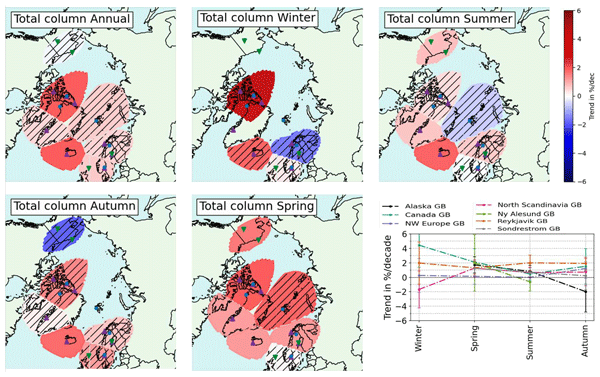
We study the evolution of ozone in the Arctic over the 2000–2024 period in the stratosphere (about 10 to 50 km) to assess the expected recovery of the ozone layer following the diminution of ozone-depleting substances. We merge ground-based data sets within spatially coherent regions to reduce uncertainties and we obtain positive trends for the total column everywhere in the Arctic and for the middle and upper stratosphere over Canada, but no significant trends in the lower stratosphere.
Monika E. Szelag, Viktoria F. Sofieva, Edward Malina, Pekka T. Verronen, Michelle L. Santee, Manuel López-Puertas, Bernd Funke, Gabriele Stiller, Alexandra Laeng, Kaley A. Walker, Patrick E. Sheese, Mark E. Hervig, and Benjamin T. Marshall
Atmos. Chem. Phys., 26, 7503–7522, https://doi.org/10.5194/acp-26-7503-2026, https://doi.org/10.5194/acp-26-7503-2026, 2026
Short summary
Short summary
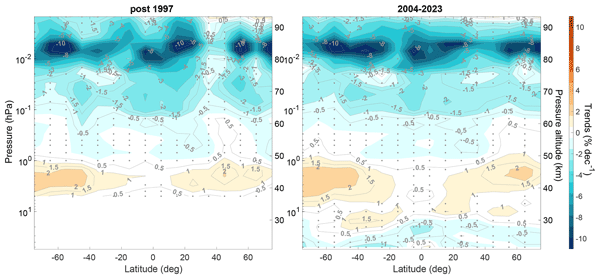
We present a new global dataset of ozone profiles in the mesosphere and lower thermosphere, created by combining several satellite measurements covering more than three decades. Our results show that ozone is recovering in the stratosphere but decreasing in the mesosphere, with the strongest declines near the mesopause. This dataset provides a valuable resource for investigating long-term changes, improving model performance, and addressing an observational gap in the upper atmosphere.
Viktoria F. Sofieva, Monika E. Szelag, Natalya A. Kramarova, Robert Damadeo, Wolfgang Steinbrecht, Irina Petropavlovskikh, Corinne Vigouroux, Eliane Maillard Barras, Daniel Zawada, Kleareti Tourpali, Stacey M. Frith, Jeannette D. Wild, Sean M. Davis, Carlo Arosio, Mark Weber, Alexei Rozanov, Brian Auffarth, Lucien Froidevaux, Ryan Fuller, Doug Degenstein, Kimberlee Dube, Peter Effertz, Thierry Leblanc, Gérard Ancellet, Sophie Godin-Beekmann, Glen McConville, Richard Querel, Dan Smale, Marie-Renee DeBacker, Emmanuel Mahieu, and Ralf Sussmann
Atmos. Chem. Phys., 26, 7387–7405, https://doi.org/10.5194/acp-26-7387-2026, https://doi.org/10.5194/acp-26-7387-2026, 2026
Short summary
Short summary
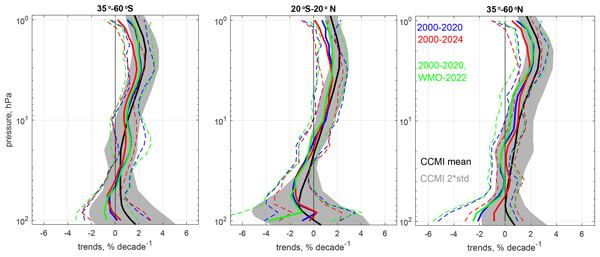
We present an updated evaluation of stratospheric ozone profile trends in the 60°S–60°N latitude range using long-term ground-based and satellite climate data records, as well as simulations by chemistry-climate models. Analyses confirm the statistically significant positive ozone trends in the upper stratosphere of ~1–3 % decade-1. The trends are close to zero in the middle stratosphere, and mostly negative in the lower stratosphere, but they are not statistically significant.
Hannes Bruder, Robin N. Thor, Malte Niklaß, Katrin Dahlmann, Roland Eichinger, Florian Linke, Volker Grewe, Sigrun Matthes, and Simon Unterstrasser
Geosci. Model Dev., 19, 3551–3567, https://doi.org/10.5194/gmd-19-3551-2026, https://doi.org/10.5194/gmd-19-3551-2026, 2026
Short summary
Short summary
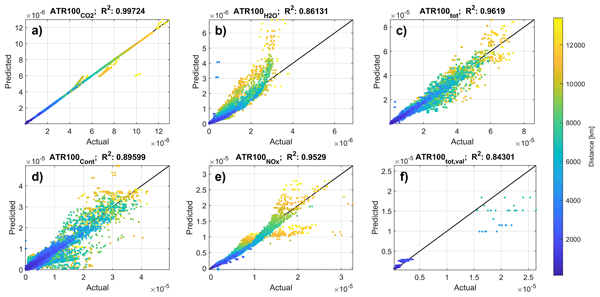
We develop an easy-to-use tool to estimate the per-flight climate effect of CO2 and non-CO2 emissions, based only on aircraft size as well as origin and destination airports. The implemented model results from a comparison of Multiple and Symbolic Regression approaches and exhibits a mean relative error of 21 % with respect to climate response model results. The simplified method is designed for climate footprint assessment and covers jet-powered passenger aircraft with over 20 seats.
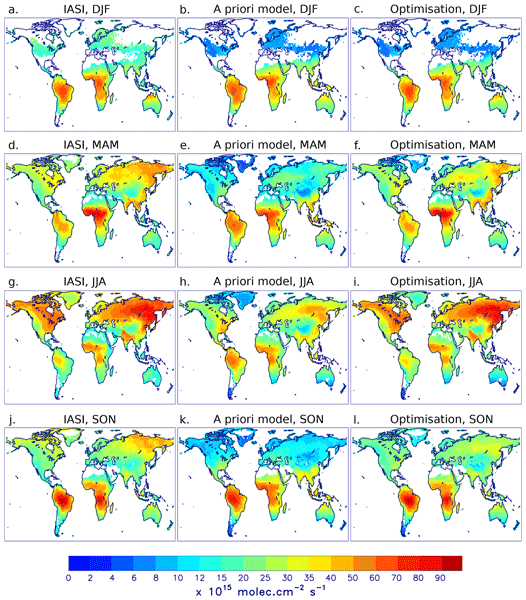
Jean-François Müller, Trissevgeni Stavrakou, Bruno Franco, Lieven Clarisse, Crist Amelynck, Niels Schoon, Bert W. D. Verreyken, Beata Opacka, Corinne Vigouroux, Alex B. Guenther, Emmanuel Mahieu, Maria Makarova, and Kimberly Strong
Atmos. Chem. Phys., 26, 5375–5406, https://doi.org/10.5194/acp-26-5375-2026, https://doi.org/10.5194/acp-26-5375-2026, 2026
Short summary
Short summary
We use an atmospheric model and aircraft measurements to evaluate methanol measurements from satellite sensors. The spaceborne data are found to be too low over source regions. Next, we use the model and the bias-corrected satellite data to derive improved terrestrial emissions of methanol between 2008 and 2019, and we evaluate the results against aircraft and ground-based measurements. This work shows that biogenic emissions of methanol might be ~ 60 % larger than previously estimated.
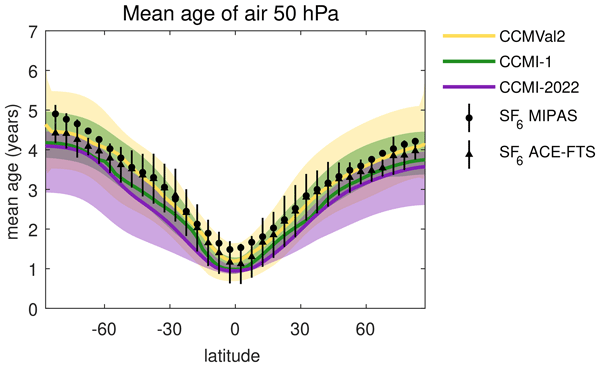
Marta Abalos, Thomas Birner, Andreas Chrysanthou, Sean Davis, Alvaro de la Cámara, Sandip Dhomse, Hella Garny, Michaela I. Hegglin, Daan Hubert, Oksana Ivaniha, James Keeble, Marianna Linz, Daniele Minganti, Jessica Neu, David Plummer, Laura Saunders, Kasturi Shah, Gabriele Stiller, Kleareti Tourpali, Darryn Waugh, Nathan Luke Abraham, Hideharu Akiyoshi, Martyn P. Chipperfield, Patrick Jöckel, Béatrice Josse, Marion Marchand, Patrick Martineau, Olaf Morgenstern, Timofei Sukhodolov, Shingo Watanabe, and Yousuke Yamashita
Atmos. Chem. Phys., 26, 5249–5291, https://doi.org/10.5194/acp-26-5249-2026, https://doi.org/10.5194/acp-26-5249-2026, 2026
Short summary
Short summary
Accurate representation of stratospheric transport in Chemistry-Climate Models is essential for reliable climate projections. This study evaluates three generations of models using observational data and reanalyses, identifying persistent biases and their potential causes. Some biases persist or even worsen in newer models. These findings highlight key limitations and inform efforts to improve models and advance understanding through process-based studies and enhanced observations.
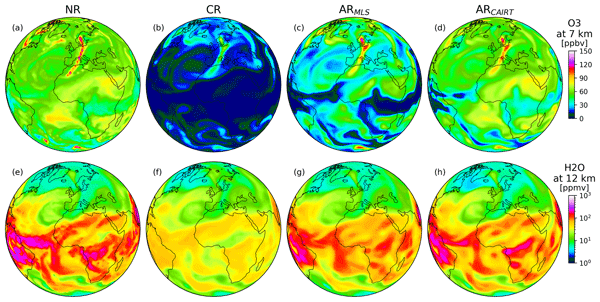
Quentin Errera, Marc Op de beeck, Stefan Bender, Johannes Flemming, Bernd Funke, Alex Hoffmann, Michael Höpfner, Nathaniel Livesey, Gabriele Poli, Didier Pieroux, Piera Raspollini, and Björn-Martin Sinnhuber
Atmos. Meas. Tech., 19, 2601–2620, https://doi.org/10.5194/amt-19-2601-2026, https://doi.org/10.5194/amt-19-2601-2026, 2026
Short summary
Short summary
The Changing Atmosphere Infra-Red Tomography Explorer (CAIRT) is a satellite mission concept developed to observe, among other, the gradient of ozone and water vapour in the upper troposphere and lower stratosphere where these species have their largest radiative impact. By simulating CAIRT observations and measuring their constrain on an atmospheric model using data assimilation, this study shows that CAIRT specifications are adequate to fulfil this objective.
Ariana Elena Castillo, Marianna Linz, Eric Ray, Laura N. Saunders, Kaley A. Walker, Gabriele P. Stiller, Todd A. Mooring, and Stephen Bourguet
EGUsphere, https://doi.org/10.5194/egusphere-2026-1236, https://doi.org/10.5194/egusphere-2026-1236, 2026
Short summary
Short summary
In the stratosphere, transport strongly impacts the distribution of long-lived trace gases, and age of air is a measure of transport times in the stratosphere. We present two datasets that capture the structure and seasonality of stratospheric transport in both hemispheres: (1) latitude-varying empirical relationships of tracers to calculate a (2) 7-year timeseries of age of air. We lay groundwork for a multidecade timeseries of age to understand long-term transport in a warming climate.
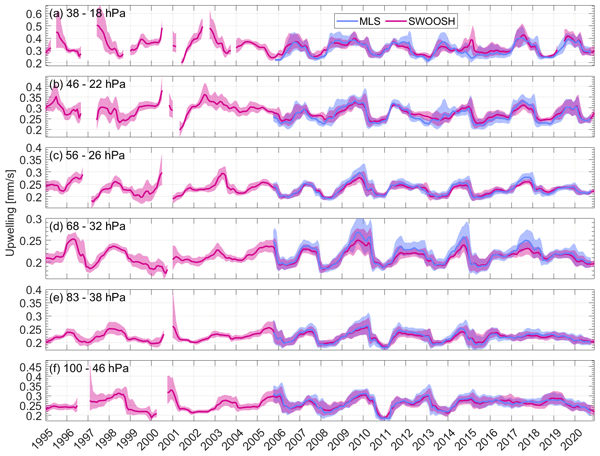
Meghan Brehon, Susann Tegtmeier, Adam Bourassa, Sean M. Davis, Udo Grabowski, Tobias Kerzenmacher, and Gabriele Stiller
Atmos. Chem. Phys., 26, 3743–3764, https://doi.org/10.5194/acp-26-3743-2026, https://doi.org/10.5194/acp-26-3743-2026, 2026
Short summary
Short summary
We used observations of water vapour to estimate vertical transport rates in the tropical stratosphere for 1995-2020 and analyze stratospheric variability. Our results find good agreement between our observation-based estimates and reanalysis upwelling and reveal that the variability is mainly driven by the Quasi-Biennial Oscillation (QBO) and El Niño Southern Oscillation (ENSO) with a clear signal in the upwelling time series coinciding with the recent QBO disruptions of 2015/16 and 2019/20.
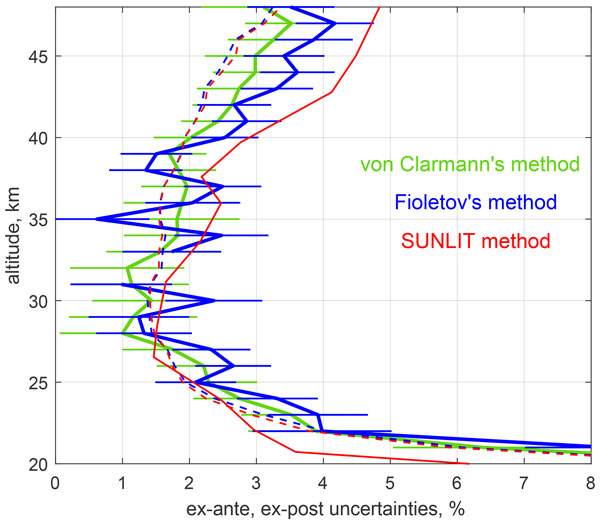
Viktoria F. Sofieva, Alexandra Laeng, Thomas von Clarmann, Gabriele Stiller, Michael Kiefer, Johanna Tamminen, Alexey Rozanov, Carlo Arosio, Nathaniel Livesey, Robert Damadeo, Patrick Sheese, Kaley A. Walker, Doug Degenstein, Daniel Zawada, Natalya A. Kramarova, and Arno Keppens
Atmos. Meas. Tech., 19, 1837–1852, https://doi.org/10.5194/amt-19-1837-2026, https://doi.org/10.5194/amt-19-1837-2026, 2026
Short summary
Short summary
For satellite measurements of atmospheric composition, the random uncertainty estimates provided by retrieval algorithms might be imperfect due to various approximations used in the retrievals or presence of unknown error sources. This paper presents an overview of the methods used for validation of random uncertainty estimates. All methods discussed in this study are categorized, and assumptions and limitations of each method are discussed.
Tobias Spiegl, Ulrike Langematz, Wenjuan Huo, Jürgen Kröger, Thomas Reddmann, Franziska Kappenberger, Sebastian Wahl, Maryam Ramezani Ziarani, Holger Pohlmann, and Miriam Sinnhuber
EGUsphere, https://doi.org/10.5194/egusphere-2026-126, https://doi.org/10.5194/egusphere-2026-126, 2026
Short summary
Short summary
The SOLCHECK project studied how fluctuations in the Sun’s energy output affect weather and climate. Strong solar storms deplete ozone and raise ultraviolet irradiance, the impact of the 11-year solar cycle depends on stratospheric dynamics, and long-term Grand Solar Minima leave fingerprints in past and future climate states. The large model ensemble explored in SOLCHECK helped to separate the various solar effects from human-driven change and improved our understanding of climate feedbacks.
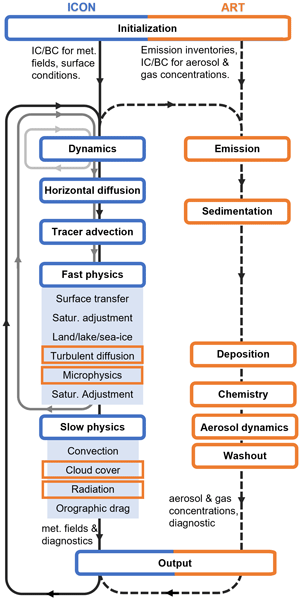
Gholam Ali Hoshyaripour, Andreas Baer, Sascha Bierbauer, Julia Bruckert, Dominik Brunner, Jochen Förstner, Arash Hamzehloo, Valentin Hanft, Corina Keller, Martina Klose, Pankaj Kumar, Patrick Ludwig, Enrico Metzner, Lisa Muth, Andreas Pauling, Nikolas Porz, Maryam Ramezani Ziarani, Thomas Reddmann, Luca Reißig, Roland Ruhnke, Khompat Satitkovitchai, Axel Seifert, Miriam Sinnhuber, Michael Steiner, Stefan Versick, Heike Vogel, Michael Weimer, Sven Werchner, and Corinna Hoose
Geosci. Model Dev., 19, 1645–1681, https://doi.org/10.5194/gmd-19-1645-2026, https://doi.org/10.5194/gmd-19-1645-2026, 2026
Short summary
Short summary
This paper presents recent advances in ICON-ART, a modeling system that simulates atmospheric composition – such as gases and particles – and their interactions with weather and climate. By integrating updated chemistry, emissions, and aerosol processes, ICON-ART enables detailed, scale-spanning simulations. It supports both scientific research and operational forecasts, contributing to improved air quality, weather and climate predictions.
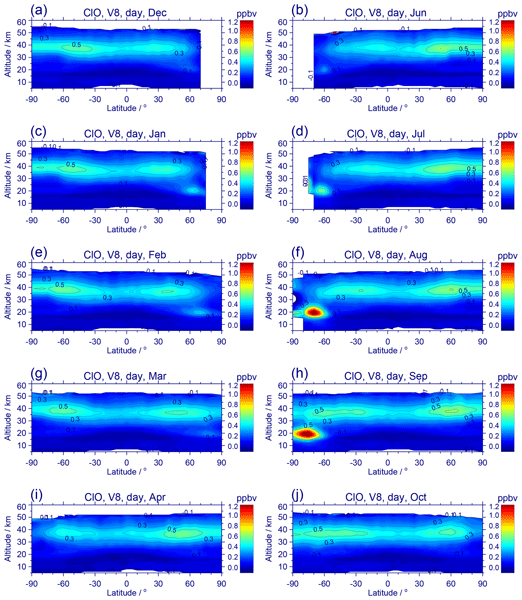
Norbert Glatthor, Thomas von Clarmann, Udo Grabowski, Sylvia Kellmann, Michael Kiefer, Alexandra Laeng, Andrea Linden, Gabriele P. Stiller, Bernd Funke, Maya García-Comas, Manuel López-Puertas, Oliver Kirner, and Michelle L. Santee
Atmos. Meas. Tech., 19, 629–657, https://doi.org/10.5194/amt-19-629-2026, https://doi.org/10.5194/amt-19-629-2026, 2026
Short summary
Short summary
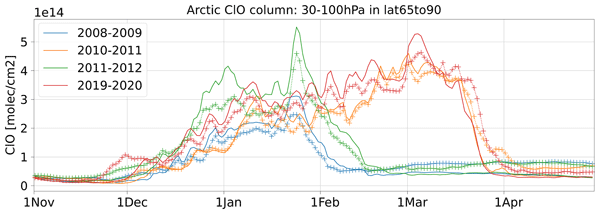
We present a global climatology of Michelson Interferometer for Passive Atmospheric Sounding (MIPAS) version 8 chlorine monoxide (ClO), retrieved from spaceborne observations between 2002 and 2012. Due to an improved retrieval setup, the high bias and poor vertical resolution of upper stratospheric ClO, which had affected the previous V5 data set, has been removed. Comparisons with ClO observations of the Microwave Limb Sounder generally show good agreement. Differences can be explained by simulations with an atmospheric chemistry model.
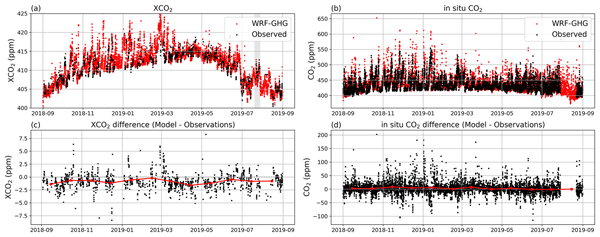
Sieglinde Callewaert, Minqiang Zhou, Bavo Langerock, Pucai Wang, Ting Wang, Emmanuel Mahieu, and Martine De Mazière
Atmos. Chem. Phys., 26, 899–921, https://doi.org/10.5194/acp-26-899-2026, https://doi.org/10.5194/acp-26-899-2026, 2026
Short summary
Short summary
We investigated changes in carbon dioxide levels at a suburban site in China using ground-based measurements, remote sensing, and an atmospheric model. The model matched many observed patterns but showed nighttime and background errors. We identified the main human and natural sources and sinks, offering insights to improve future greenhouse gas monitoring and climate modelling.
Simon Chabrillat, Samuel Rémy, Quentin Errera, Vincent Huijnen, Christine Bingen, Jonas Debosscher, François Hendrick, Swen Metzger, Adrien Mora, Daniele Minganti, Marc Op de beek, Léa Reisenfeld, Jason E. Williams, Henk Eskes, and Johannes Flemming
Geosci. Model Dev., 18, 8973–9014, https://doi.org/10.5194/gmd-18-8973-2025, https://doi.org/10.5194/gmd-18-8973-2025, 2025
Short summary
Short summary
We document the forecasts of the composition of the stratosphere by the Copernicus Atmosphere Monitoring Service. The model's predictions are compared with satellite measurements over a recent period, during polar ozone depletion events, and after the Mount Pinatubo volcanic eruption. The system performs well for sulfate aerosols, ozone and several other key gases but not as well for several nitrogen-containing gases. Chemical processes in aerosols and polar clouds should be improved.
Sina Voshtani, Dylan B. A. Jones, Debra Wunch, Drew C. Pendergrass, Paul O. Wennberg, David F. Pollard, Isamu Morino, Hirofumi Ohyama, Nicholas M. Deutscher, Frank Hase, Ralf Sussmann, Damien Weidmann, Rigel Kivi, Omaira García, Yao Té, Jack Chen, Kerry Anderson, Robin Stevens, Shobha Kondragunta, Aihua Zhu, Douglas Worthy, Senen Racki, Kathryn McKain, Maria V. Makarova, Nicholas Jones, Emmanuel Mahieu, Andrea Cadena-Caicedo, Paolo Cristofanelli, Casper Labuschagne, Elena Kozlova, Thomas Seitz, Martin Steinbacher, Reza Mahdi, and Isao Murata
Atmos. Chem. Phys., 25, 15527–15565, https://doi.org/10.5194/acp-25-15527-2025, https://doi.org/10.5194/acp-25-15527-2025, 2025
Short summary
Short summary
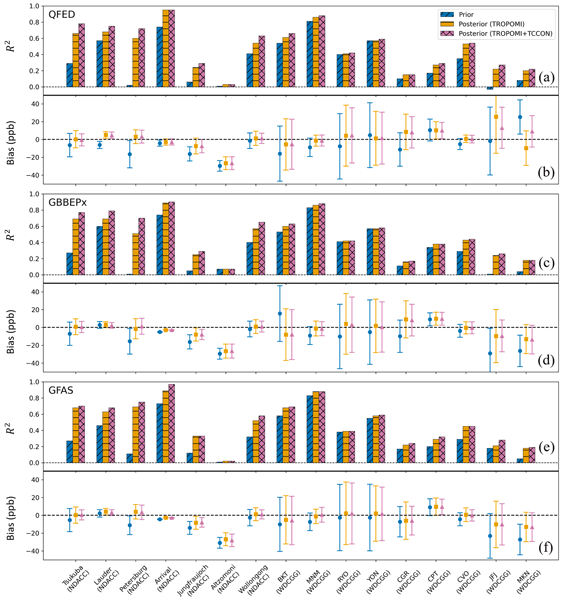
We assess the complementarity of the greater temporal coverage provided by ground-based remote sensing data with the spatial coverage of satellite observations when these data are used together to quantify CO emissions from extreme wildfires in 2023. Our results reveal that the commonly used biomass burning emission inventories significantly underestimate the fire emissions and emphasize the importance of the ground-based remote sensing data in reducing uncertainties in the estimated emissions.
Miriam Sinnhuber, Christina Arras, Stefan Bender, Bernd Funke, Hanli Liu, Daniel R. Marsh, Thomas Reddmann, Eugene Rozanov, Timofei Sukhodolov, Monika E. Szelag, and Jan Maik Wissing
Atmos. Chem. Phys., 25, 14719–14734, https://doi.org/10.5194/acp-25-14719-2025, https://doi.org/10.5194/acp-25-14719-2025, 2025
Short summary
Short summary
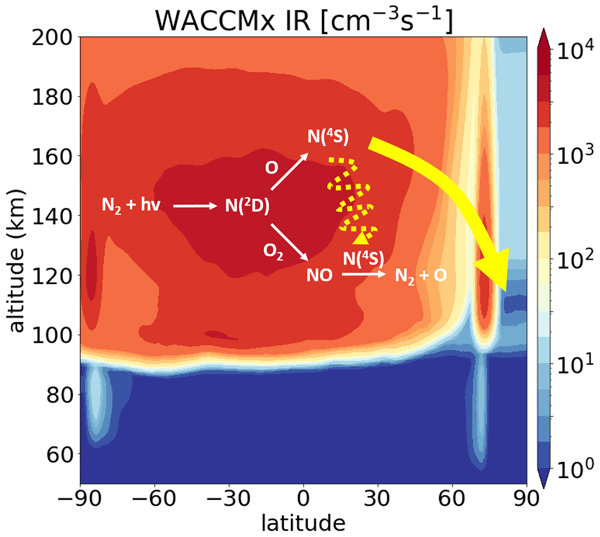
Nitric oxide in the upper atmosphere varies with solar activity. Observations show that this starts a chain of processes affecting the ozone layer and climate system. This is often underestimated in models. We compare five models which show large differences in simulated NO. Analysis of these discrepancies identify two processes which interact with each other: the balance between atomic and molecular oxygen in the thermosphere, and a poleward - downward transport in the winter thermosphere.
Maryam Ramezani Ziarani, Miriam Sinnhuber, Thomas Reddmann, Bernd Funke, Stefan Bender, and Michael Prather
Geosci. Model Dev., 18, 7891–7905, https://doi.org/10.5194/gmd-18-7891-2025, https://doi.org/10.5194/gmd-18-7891-2025, 2025
Short summary
Short summary
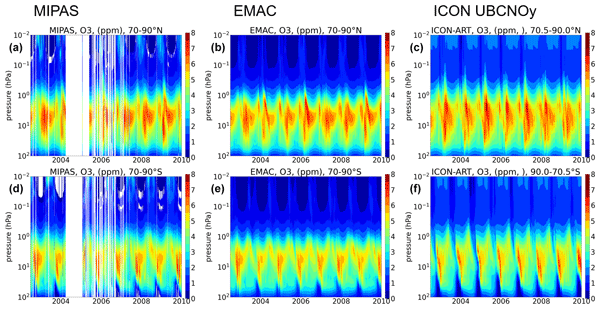
Our study aims to present a new method for incorporating top-down solar forcing into stratospheric ozone relying on linearized ozone scheme. The addition of geomagnetic forcing led to significant ozone losses in the polar upper stratosphere of both hemispheres due to the catalytic cycles involving NOy. In addition to the particle precipitation effect, accounting for solar UV variability in the ICON-ART model leads to the changes in ozone in the tropical stratosphere.
Roeland Van Malderen, Zhou Zang, Kai-Lan Chang, Robin Björklund, Owen R. Cooper, Jane Liu, Eliane Maillard Barras, Corinne Vigouroux, Irina Petropavlovskikh, Thierry Leblanc, Valérie Thouret, Pawel Wolff, Peter Effertz, Audrey Gaudel, David W. Tarasick, Herman G. J. Smit, Anne M. Thompson, Ryan M. Stauffer, Debra E. Kollonige, Deniz Poyraz, Gérard Ancellet, Marie-Renée De Backer, Matthias M. Frey, James W. Hannigan, José L. Hernandez, Bryan J. Johnson, Nicholas Jones, Rigel Kivi, Emmanuel Mahieu, Isamu Morino, Glen McConville, Katrin Müller, Isao Murata, Justus Notholt, Ankie Piters, Maxime Prignon, Richard Querel, Vincenzo Rizi, Dan Smale, Wolfgang Steinbrecht, Kimberly Strong, and Ralf Sussmann
Atmos. Chem. Phys., 25, 9905–9935, https://doi.org/10.5194/acp-25-9905-2025, https://doi.org/10.5194/acp-25-9905-2025, 2025
Short summary
Short summary
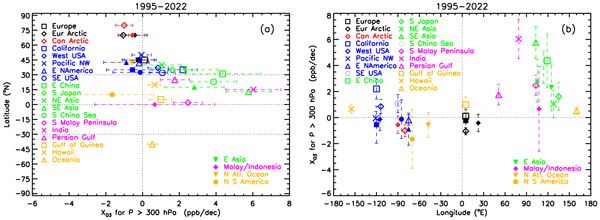
Tropospheric ozone is an important greenhouse gas and an air pollutant whose distribution and time variability are mainly governed by anthropogenic emissions and dynamics. In this paper, we assess regional trends of tropospheric ozone column amounts, based on two different approaches of merging or synthesizing ground-based observations and their trends within specific regions. Our findings clearly demonstrate regional trend differences but also consistently higher pre-COVID than post-COVID trends.
Yunqian Zhu, Hideharu Akiyoshi, Valentina Aquila, Elizabeth Asher, Ewa M. Bednarz, Slimane Bekki, Christoph Brühl, Amy H. Butler, Parker Case, Simon Chabrillat, Gabriel Chiodo, Margot Clyne, Peter R. Colarco, Sandip Dhomse, Lola Falletti, Eric Fleming, Ben Johnson, Andrin Jörimann, Mahesh Kovilakam, Gerbrand Koren, Ales Kuchar, Nicolas Lebas, Qing Liang, Cheng-Cheng Liu, Graham Mann, Michael Manyin, Marion Marchand, Olaf Morgenstern, Paul Newman, Luke D. Oman, Freja F. Østerstrøm, Yifeng Peng, David Plummer, Ilaria Quaglia, William Randel, Samuel Rémy, Takashi Sekiya, Stephen Steenrod, Timofei Sukhodolov, Simone Tilmes, Kostas Tsigaridis, Rei Ueyama, Daniele Visioni, Xinyue Wang, Shingo Watanabe, Yousuke Yamashita, Pengfei Yu, Wandi Yu, Jun Zhang, and Zhihong Zhuo
Geosci. Model Dev., 18, 5487–5512, https://doi.org/10.5194/gmd-18-5487-2025, https://doi.org/10.5194/gmd-18-5487-2025, 2025
Short summary
Short summary
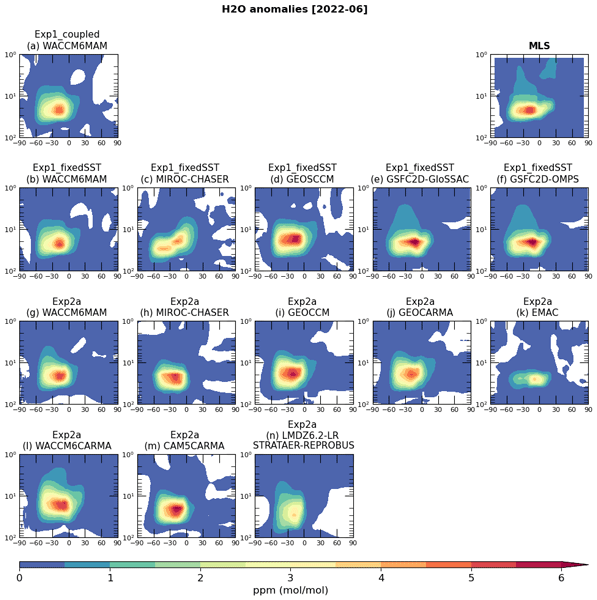
To understand the climate impact of the 2022 Hunga volcanic eruption, we developed a climate model–observation comparison project. The paper describes the protocols and models that participate in the experiments. We designed several experiments to achieve our goals of this activity: (1) to evaluate the climate model performance and (2) to understand the Earth system responses to this eruption.
Sieglinde Callewaert, Minqiang Zhou, Bavo Langerock, Pucai Wang, Ting Wang, Emmanuel Mahieu, and Martine De Mazière
Atmos. Chem. Phys., 25, 9519–9544, https://doi.org/10.5194/acp-25-9519-2025, https://doi.org/10.5194/acp-25-9519-2025, 2025
Short summary
Short summary
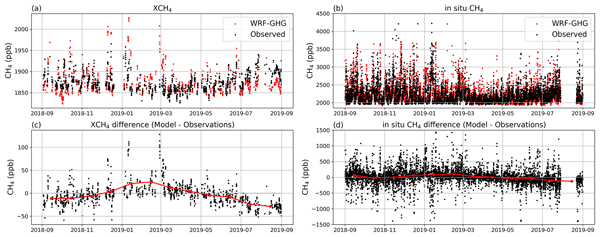
We used an atmospheric transport model and satellite data to study CH4 observations in Xianghe, China. Our study shows the key source sectors that influence the concentrations and their respective importance. Furthermore, meteorological factors such as wind direction are discussed. This research highlights the challenges in accurately simulating these kinds of measurements and helps us to better understand CH4 variability in the region.
Roeland Van Malderen, Anne M. Thompson, Debra E. Kollonige, Ryan M. Stauffer, Herman G. J. Smit, Eliane Maillard Barras, Corinne Vigouroux, Irina Petropavlovskikh, Thierry Leblanc, Valérie Thouret, Pawel Wolff, Peter Effertz, David W. Tarasick, Deniz Poyraz, Gérard Ancellet, Marie-Renée De Backer, Stéphanie Evan, Victoria Flood, Matthias M. Frey, James W. Hannigan, José L. Hernandez, Marco Iarlori, Bryan J. Johnson, Nicholas Jones, Rigel Kivi, Emmanuel Mahieu, Glen McConville, Katrin Müller, Tomoo Nagahama, Justus Notholt, Ankie Piters, Natalia Prats, Richard Querel, Dan Smale, Wolfgang Steinbrecht, Kimberly Strong, and Ralf Sussmann
Atmos. Chem. Phys., 25, 7187–7225, https://doi.org/10.5194/acp-25-7187-2025, https://doi.org/10.5194/acp-25-7187-2025, 2025
Short summary
Short summary
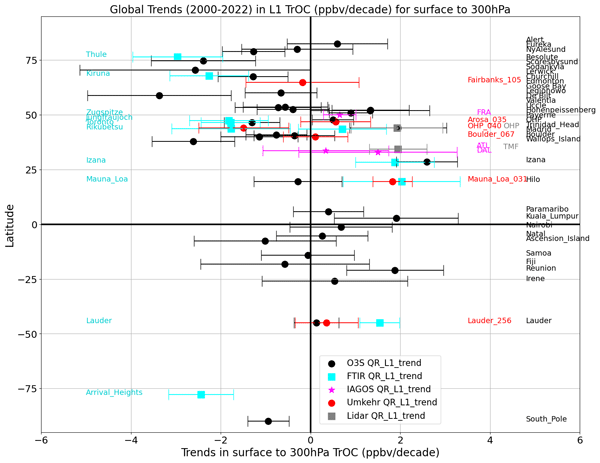
Tropospheric ozone is an important greenhouse gas and is an air pollutant. The time variability of tropospheric ozone is mainly driven by anthropogenic emissions. In this paper, we study the distribution and time variability of ozone from harmonized ground-based observations from five different measurement techniques. Our findings provide clear standard references for atmospheric models and evolving tropospheric ozone satellite data for the 2000–2022 period.
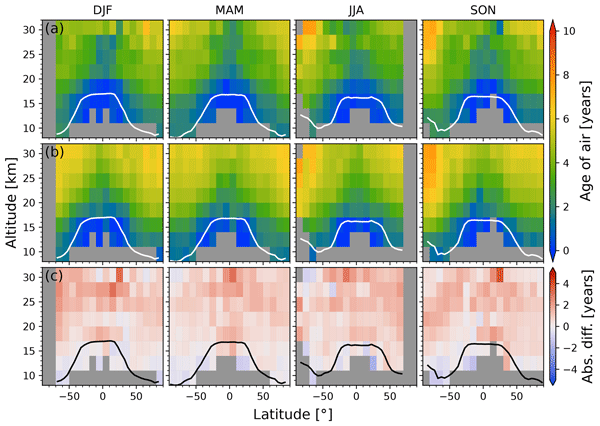
Laura N. Saunders, Kaley A. Walker, Gabriele P. Stiller, Thomas von Clarmann, Florian Haenel, Hella Garny, Harald Bönisch, Chris D. Boone, Ariana E. Castillo, Andreas Engel, Johannes C. Laube, Marianna Linz, Felix Ploeger, David A. Plummer, Eric A. Ray, and Patrick E. Sheese
Atmos. Chem. Phys., 25, 4185–4209, https://doi.org/10.5194/acp-25-4185-2025, https://doi.org/10.5194/acp-25-4185-2025, 2025
Short summary
Short summary
We present a 17-year stratospheric age-of-air dataset derived from ACE-FTS satellite measurements of sulfur hexafluoride. This is the longest continuous, global, and vertically resolved age of air time series available to date. In this paper, we show that this dataset agrees well with age-of-air datasets based on measurements from other instruments. We also present trends in the midlatitude lower stratosphere that indicate changes in the global circulation that are predicted by climate models.
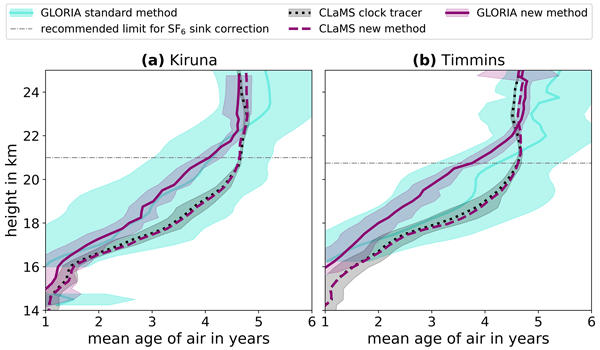
Florian Voet, Felix Ploeger, Johannes Laube, Peter Preusse, Paul Konopka, Jens-Uwe Grooß, Jörn Ungermann, Björn-Martin Sinnhuber, Michael Höpfner, Bernd Funke, Gerald Wetzel, Sören Johansson, Gabriele Stiller, Eric Ray, and Michaela I. Hegglin
Atmos. Chem. Phys., 25, 3541–3565, https://doi.org/10.5194/acp-25-3541-2025, https://doi.org/10.5194/acp-25-3541-2025, 2025
Short summary
Short summary
This study refines estimates of the stratospheric “age of air”, a measure of how long air circulates in the stratosphere. By analyzing correlations between trace gases measurable by satellites, the research introduces a method that reduces uncertainties and detects small-scale atmospheric features. This improved understanding of stratospheric circulation is crucial for better climate models and predictions, enhancing our ability to assess the impacts of climate change on the atmosphere.
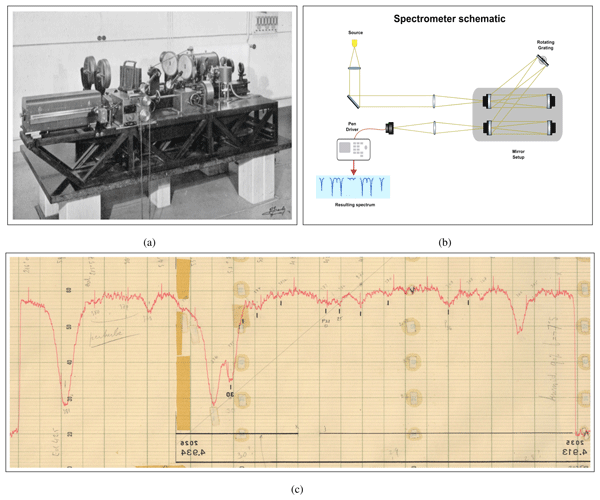
Jamal Makkor, Mathias Palm, Matthias Buschmann, Emmanuel Mahieu, Martyn P. Chipperfield, and Justus Notholt
Atmos. Meas. Tech., 18, 1105–1114, https://doi.org/10.5194/amt-18-1105-2025, https://doi.org/10.5194/amt-18-1105-2025, 2025
Short summary
Short summary
During the years 1950 and 1951, Marcel Migeotte took regular solar measurements in the form of paper rolls at the Jungfraujoch site. These historical spectra proved to be valuable for atmospheric research and needed to be saved for posterity. Therefore, a digitization method which used image-processing techniques was developed to extract them from the historical paper rolls. This allowed them to be saved in a machine-readable format that is easily accessible to the scientific community.
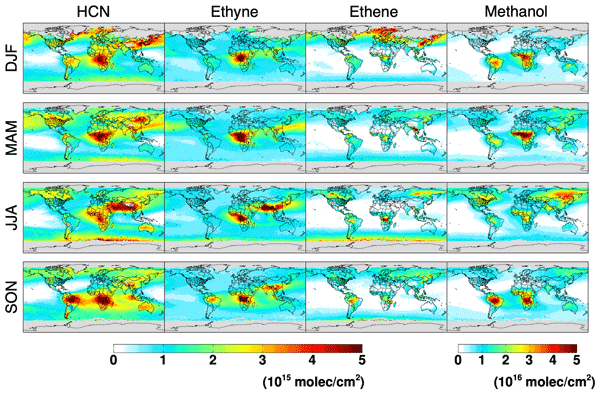
Kelley C. Wells, Dylan B. Millet, Jared F. Brewer, Vivienne H. Payne, Karen E. Cady-Pereira, Rick Pernak, Susan Kulawik, Corinne Vigouroux, Nicholas Jones, Emmanuel Mahieu, Maria Makarova, Tomoo Nagahama, Ivan Ortega, Mathias Palm, Kimberly Strong, Matthias Schneider, Dan Smale, Ralf Sussmann, and Minqiang Zhou
Atmos. Meas. Tech., 18, 695–716, https://doi.org/10.5194/amt-18-695-2025, https://doi.org/10.5194/amt-18-695-2025, 2025
Short summary
Short summary
Atmospheric volatile organic compounds (VOCs) affect both air quality and climate. Satellite measurements can help us to assess and predict their global impacts. We present new decadal (2012–2023) measurements of four key VOCs – methanol, ethene, ethyne, and hydrogen cyanide (HCN) – from the Cross-track Infrared Sounder. The measurements reflect emissions from major forests, wildfires, and industry and provide new information to advance understanding of these sources and their changes over time.
Norbert Glatthor, Gabriele P. Stiller, Thomas von Clarmann, Bernd Funke, Sylvia Kellmann, and Andrea Linden
Atmos. Chem. Phys., 25, 1175–1208, https://doi.org/10.5194/acp-25-1175-2025, https://doi.org/10.5194/acp-25-1175-2025, 2025
Short summary
Short summary
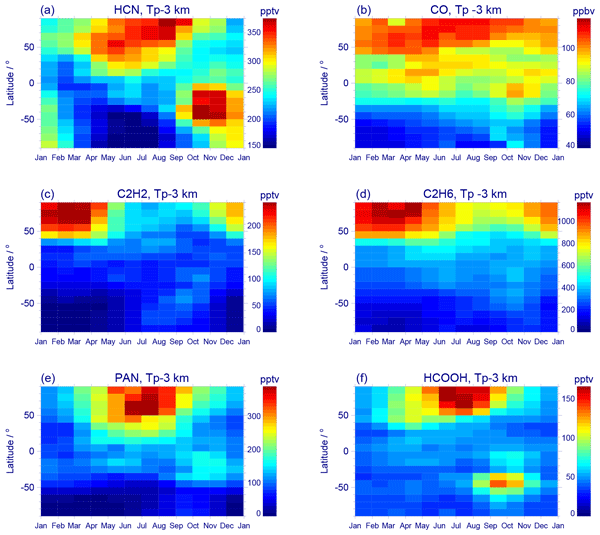
We present global upper-tropospheric distributions of the pollutants HCN, CO, C2H2, C2H6, PAN, and HCOOH, observed between 2002 and 2012 by the Michelson Interferometer for Passive Atmospheric Sounding (MIPAS) on the Environmental Satellite (Envisat). By comparing the spatial distributions of their volume mixing ratios and by global correlation and regression analyses, we draw conclusions on their sources, such as biomass burning, anthropogenic sources, and biogenic release.
Henk Eskes, Athanasios Tsikerdekis, Melanie Ades, Mihai Alexe, Anna Carlin Benedictow, Yasmine Bennouna, Lewis Blake, Idir Bouarar, Simon Chabrillat, Richard Engelen, Quentin Errera, Johannes Flemming, Sebastien Garrigues, Jan Griesfeller, Vincent Huijnen, Luka Ilić, Antje Inness, John Kapsomenakis, Zak Kipling, Bavo Langerock, Augustin Mortier, Mark Parrington, Isabelle Pison, Mikko Pitkänen, Samuel Remy, Andreas Richter, Anja Schoenhardt, Michael Schulz, Valerie Thouret, Thorsten Warneke, Christos Zerefos, and Vincent-Henri Peuch
Atmos. Chem. Phys., 24, 9475–9514, https://doi.org/10.5194/acp-24-9475-2024, https://doi.org/10.5194/acp-24-9475-2024, 2024
Short summary
Short summary
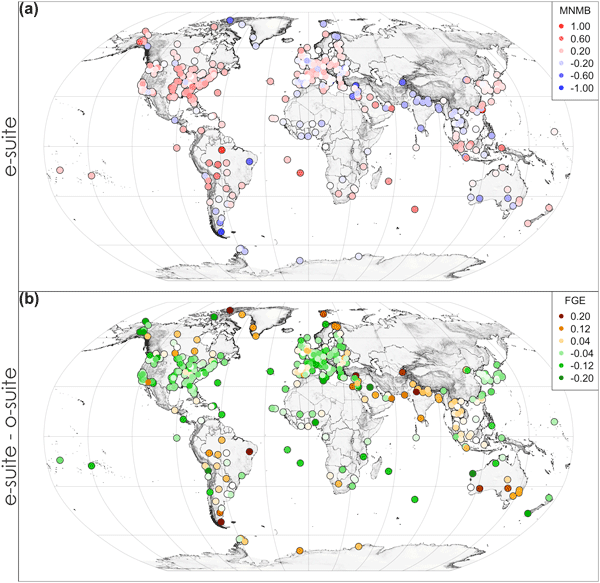
The Copernicus Atmosphere Monitoring Service (CAMS) provides global analyses and forecasts of aerosols and trace gases in the atmosphere. On 27 June 2023 a major upgrade, Cy48R1, became operational. Comparisons with in situ, surface remote sensing, aircraft, and balloon and satellite observations show that the new CAMS system is a significant improvement. The results quantify the skill of CAMS to forecast impactful events, such as wildfires, dust storms and air pollution peaks.
Ales Kuchar, Maurice Öhlert, Roland Eichinger, and Christoph Jacobi
Weather Clim. Dynam., 5, 895–912, https://doi.org/10.5194/wcd-5-895-2024, https://doi.org/10.5194/wcd-5-895-2024, 2024
Short summary
Short summary
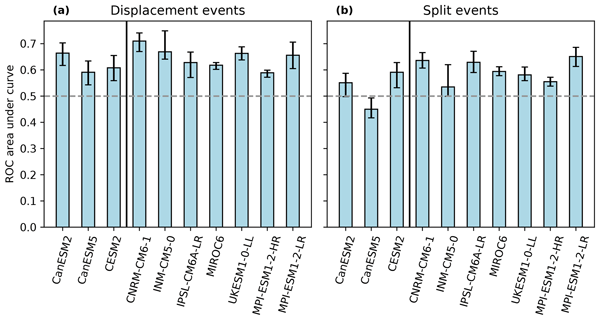
Exploring the polar vortex's impact on climate, the study evaluates model simulations against the ERA5 reanalysis data. Revelations about model discrepancies in simulating disruptive stratospheric warmings and vortex behavior highlight the need for refined model simulations of past climate. By enhancing our understanding of these dynamics, the research contributes to more reliable climate projections of the polar vortex with the impact on surface climate.
Karen De Los Ríos, Paulina Ordoñez, Gabriele P. Stiller, Piera Raspollini, Marco Gai, Kaley A. Walker, Cristina Peña-Ortiz, and Luis Acosta
Atmos. Meas. Tech., 17, 3401–3418, https://doi.org/10.5194/amt-17-3401-2024, https://doi.org/10.5194/amt-17-3401-2024, 2024
Short summary
Short summary
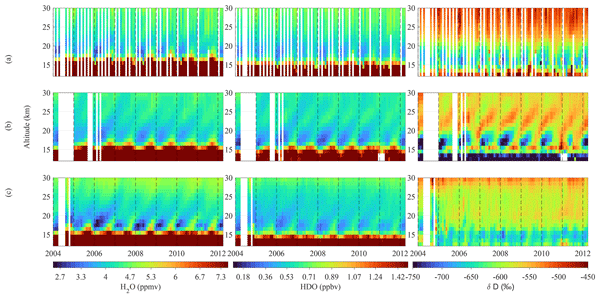
This study examines newer versions of H2O and HDO retrievals from Envisat/MIPAS and SCISAT/ACE-FTS. Results reveal a better agreement in stratospheric H2O profiles than in HDO profiles. The H2O tape recorder signal is consistent across databases, but δD tape recorder composites show differences that impact the interpretation of water vapour transport. These findings enhance the need for intercomparisons to refine our insights.

Norbert Glatthor, Thomas von Clarmann, Bernd Funke, Maya García-Comas, Udo Grabowski, Michael Höpfner, Sylvia Kellmann, Michael Kiefer, Alexandra Laeng, Andrea Linden, Manuel López-Puertas, and Gabriele P. Stiller
Atmos. Meas. Tech., 17, 2849–2871, https://doi.org/10.5194/amt-17-2849-2024, https://doi.org/10.5194/amt-17-2849-2024, 2024
Short summary
Short summary
We present global atmospheric methane (CH4) and nitrous oxide (N2O) distributions retrieved from measurements of the MIPAS instrument on board the Environmental Satellite (Envisat) during 2002 to 2012. Monitoring of these gases is of scientific interest because both of them are strong greenhouse gases. We analyze the latest, improved version of calibrated MIPAS measurements. Further, we apply a new retrieval scheme leading to an improved CH4 and N2O data product .
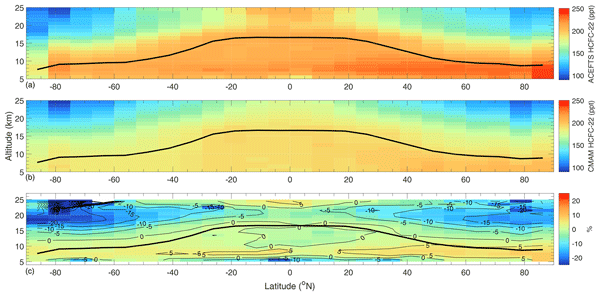
Felicia Kolonjari, Patrick E. Sheese, Kaley A. Walker, Chris D. Boone, David A. Plummer, Andreas Engel, Stephen A. Montzka, David E. Oram, Tanja Schuck, Gabriele P. Stiller, and Geoffrey C. Toon
Atmos. Meas. Tech., 17, 2429–2449, https://doi.org/10.5194/amt-17-2429-2024, https://doi.org/10.5194/amt-17-2429-2024, 2024
Short summary
Short summary
The Canadian Atmospheric Chemistry Experiment Fourier transform spectrometer (ACE-FTS) satellite instrument is currently providing the only vertically resolved chlorodifluoromethane (HCFC-22) measurements from space. This study assesses the most current ACE-FTS HCFC-22 data product in the upper troposphere and lower stratosphere, as well as modelled HCFC-22 from a 39-year run of the Canadian Middle Atmosphere Model (CMAM39) in the same region.
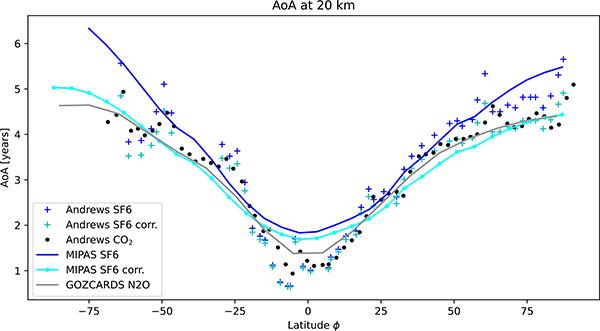
Hella Garny, Roland Eichinger, Johannes C. Laube, Eric A. Ray, Gabriele P. Stiller, Harald Bönisch, Laura Saunders, and Marianna Linz
Atmos. Chem. Phys., 24, 4193–4215, https://doi.org/10.5194/acp-24-4193-2024, https://doi.org/10.5194/acp-24-4193-2024, 2024
Short summary
Short summary
Transport circulation in the stratosphere is important for the distribution of tracers, but its strength is hard to measure. Mean transport times can be inferred from observations of trace gases with certain properties, such as sulfur hexafluoride (SF6). However, this gas has a chemical sink in the high atmosphere, which can lead to substantial biases in inferred transport times. In this paper we present a method to correct mean transport times derived from SF6 for the effects of chemical sinks.
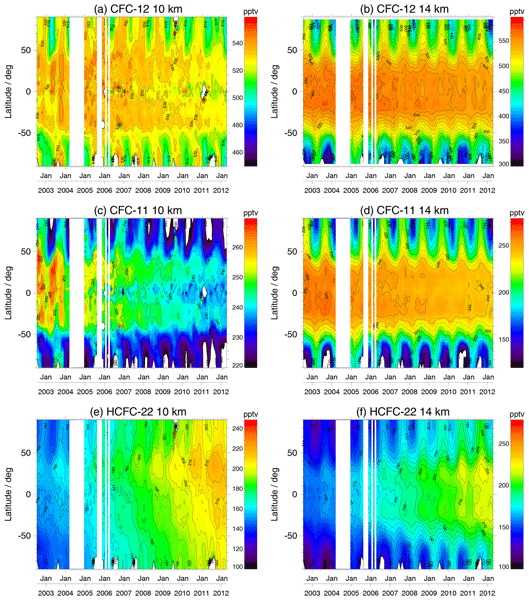
Gabriele P. Stiller, Thomas von Clarmann, Norbert Glatthor, Udo Grabowski, Sylvia Kellmann, Michael Kiefer, Alexandra Laeng, Andrea Linden, Bernd Funke, Maya García-Comas, and Manuel López-Puertas
Atmos. Meas. Tech., 17, 1759–1789, https://doi.org/10.5194/amt-17-1759-2024, https://doi.org/10.5194/amt-17-1759-2024, 2024
Short summary
Short summary
CFC-11, CFC-12, and HCFC-22 contribute to the depletion of ozone and are potent greenhouse gases. They have been banned by the Montreal protocol. With MIPAS on Envisat the atmospheric composition could be observed between 2002 and 2012. We present here the retrieval of their atmospheric distributions for the final data version 8. We characterise the derived data by their error budget and their spatial resolution. An additional representation for direct comparison to models is also provided.
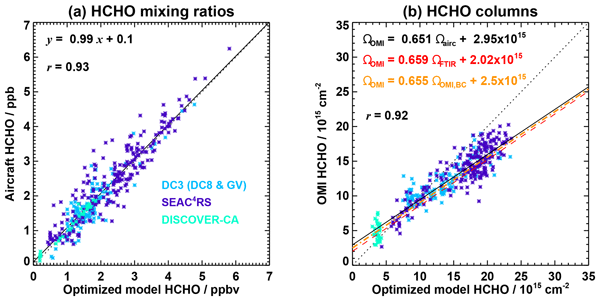
Jean-François Müller, Trissevgeni Stavrakou, Glenn-Michael Oomen, Beata Opacka, Isabelle De Smedt, Alex Guenther, Corinne Vigouroux, Bavo Langerock, Carlos Augusto Bauer Aquino, Michel Grutter, James Hannigan, Frank Hase, Rigel Kivi, Erik Lutsch, Emmanuel Mahieu, Maria Makarova, Jean-Marc Metzger, Isamu Morino, Isao Murata, Tomoo Nagahama, Justus Notholt, Ivan Ortega, Mathias Palm, Amelie Röhling, Wolfgang Stremme, Kimberly Strong, Ralf Sussmann, Yao Té, and Alan Fried
Atmos. Chem. Phys., 24, 2207–2237, https://doi.org/10.5194/acp-24-2207-2024, https://doi.org/10.5194/acp-24-2207-2024, 2024
Short summary
Short summary
Formaldehyde observations from satellites can be used to constrain the emissions of volatile organic compounds, but those observations have biases. Using an atmospheric model, aircraft and ground-based remote sensing data, we quantify these biases, propose a correction to the data, and assess the consequence of this correction for the evaluation of emissions.
Manuel López-Puertas, Maya García-Comas, Bernd Funke, Thomas von Clarmann, Norbert Glatthor, Udo Grabowski, Sylvia Kellmann, Michael Kiefer, Alexandra Laeng, Andrea Linden, and Gabriele P. Stiller
Atmos. Meas. Tech., 16, 5609–5645, https://doi.org/10.5194/amt-16-5609-2023, https://doi.org/10.5194/amt-16-5609-2023, 2023
Short summary
Short summary
This paper describes a new version (V8) of ozone data from MIPAS middle-atmosphere spectra. The dataset comprises high-quality ozone profiles from 20 to 100 km, with pole-to-pole latitude coverage for the day- and nighttime, spanning 2005 until 2012. An exhaustive treatment of errors has been performed. Compared to other satellite instruments, MIPAS ozone shows a positive bias of 5 %–8 % below 70 km. In the upper mesosphere, this new version agrees much better than previous ones (within 10 %).
Sieglinde Callewaert, Minqiang Zhou, Bavo Langerock, Pucai Wang, Ting Wang, Emmanuel Mahieu, and Martine De Mazière
EGUsphere, https://doi.org/10.5194/egusphere-2023-2103, https://doi.org/10.5194/egusphere-2023-2103, 2023
Preprint archived
Short summary
Short summary
We used an atmospheric transport model and satellite data to study greenhouse gas observations at Xianghe, China. Our study shows the key source sectors that influence the concentrations and their respective importance. Furthermore, meteorological factors such as wind direction are discussed. This research highlights the challenges in accurately simulating these kind of measurements and helps us to better understand greenhouse gas variability in the region.
Maya García-Comas, Bernd Funke, Manuel López-Puertas, Norbert Glatthor, Udo Grabowski, Sylvia Kellmann, Michael Kiefer, Andrea Linden, Belén Martínez-Mondéjar, Gabriele P. Stiller, and Thomas von Clarmann
Atmos. Meas. Tech., 16, 5357–5386, https://doi.org/10.5194/amt-16-5357-2023, https://doi.org/10.5194/amt-16-5357-2023, 2023
Short summary
Short summary
We have released version 8 of MIPAS IMK–IAA temperatures and pointing information retrieved from MIPAS Middle and Upper Atmosphere mode version 8.03 calibrated spectra, covering 20–115 km altitude. We considered non-local thermodynamic equilibrium emission explicitly for each limb scan, essential to retrieve accurate temperatures above the mid-mesosphere. Comparisons of this temperature dataset with SABER measurements show excellent agreement, improving those of previous MIPAS versions.
Rodriguez Yombo Phaka, Alexis Merlaud, Gaia Pinardi, Martina M. Friedrich, Michel Van Roozendael, Jean-François Müller, Trissevgeni Stavrakou, Isabelle De Smedt, François Hendrick, Ermioni Dimitropoulou, Richard Bopili Mbotia Lepiba, Edmond Phuku Phuati, Buenimio Lomami Djibi, Lars Jacobs, Caroline Fayt, Jean-Pierre Mbungu Tsumbu, and Emmanuel Mahieu
Atmos. Meas. Tech., 16, 5029–5050, https://doi.org/10.5194/amt-16-5029-2023, https://doi.org/10.5194/amt-16-5029-2023, 2023
Short summary
Short summary
We present air quality measurements in Kinshasa, Democratic Republic of the Congo, performed with a newly developed instrument which was installed on a roof of the University of Kinshasa in November 2019. The instrument records spectra of the scattered sunlight, from which we derive the abundances of nitrogen dioxide and formaldehyde, two important pollutants. We compare our ground-based measurements with those of the TROPOspheric Monitoring Instrument (TROPOMI).
Monali Borthakur, Miriam Sinnhuber, Alexandra Laeng, Thomas Reddmann, Peter Braesicke, Gabriele Stiller, Thomas von Clarmann, Bernd Funke, Ilya Usoskin, Jan Maik Wissing, and Olesya Yakovchuk
Atmos. Chem. Phys., 23, 12985–13013, https://doi.org/10.5194/acp-23-12985-2023, https://doi.org/10.5194/acp-23-12985-2023, 2023
Short summary
Short summary
Reduced ozone levels resulting from ozone depletion mean more exposure to UV radiation, which has various effects on human health. We analysed solar events to see what influence it has on the chemistry of Earth's atmosphere and how this atmospheric chemistry change can affect the ozone. To do this, we used an atmospheric model considering only chemistry and compared it with satellite data. The focus was mainly on the contribution of chlorine, and we found about 10 %–20 % ozone loss due to that.
Michael Kiefer, Dale F. Hurst, Gabriele P. Stiller, Stefan Lossow, Holger Vömel, John Anderson, Faiza Azam, Jean-Loup Bertaux, Laurent Blanot, Klaus Bramstedt, John P. Burrows, Robert Damadeo, Bianca Maria Dinelli, Patrick Eriksson, Maya García-Comas, John C. Gille, Mark Hervig, Yasuko Kasai, Farahnaz Khosrawi, Donal Murtagh, Gerald E. Nedoluha, Stefan Noël, Piera Raspollini, William G. Read, Karen H. Rosenlof, Alexei Rozanov, Christopher E. Sioris, Takafumi Sugita, Thomas von Clarmann, Kaley A. Walker, and Katja Weigel
Atmos. Meas. Tech., 16, 4589–4642, https://doi.org/10.5194/amt-16-4589-2023, https://doi.org/10.5194/amt-16-4589-2023, 2023
Short summary
Short summary
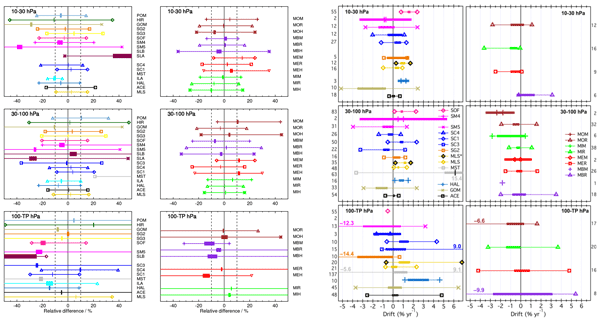
We quantify biases and drifts (and their uncertainties) between the stratospheric water vapor measurement records of 15 satellite-based instruments (SATs, with 31 different retrievals) and balloon-borne frost point hygrometers (FPs) launched at 27 globally distributed stations. These comparisons of measurements during the period 2000–2016 are made using robust, consistent statistical methods. With some exceptions, the biases and drifts determined for most SAT–FP pairs are < 10 % and < 1 % yr−1.
Roland Eichinger, Sebastian Rhode, Hella Garny, Peter Preusse, Petr Pisoft, Aleš Kuchař, Patrick Jöckel, Astrid Kerkweg, and Bastian Kern
Geosci. Model Dev., 16, 5561–5583, https://doi.org/10.5194/gmd-16-5561-2023, https://doi.org/10.5194/gmd-16-5561-2023, 2023
Short summary
Short summary
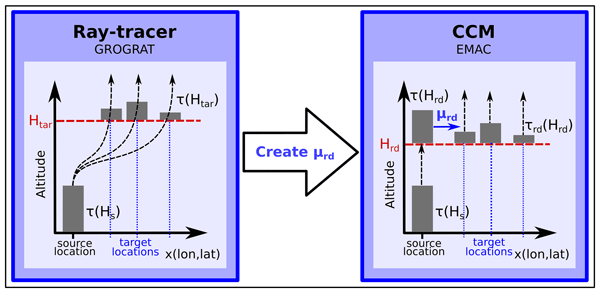
The columnar approach of gravity wave (GW) schemes results in dynamical model biases, but parallel decomposition makes horizontal GW propagation computationally unfeasible. In the global model EMAC, we approximate it by GW redistribution at one altitude using tailor-made redistribution maps generated with a ray tracer. More spread-out GW drag helps reconcile the model with observations and close the 60°S GW gap. Polar vortex dynamics are improved, enhancing climate model credibility.
Eric Sauvageat, Klemens Hocke, Eliane Maillard Barras, Shengyi Hou, Quentin Errera, Alexander Haefele, and Axel Murk
Atmos. Chem. Phys., 23, 7321–7345, https://doi.org/10.5194/acp-23-7321-2023, https://doi.org/10.5194/acp-23-7321-2023, 2023
Short summary
Short summary
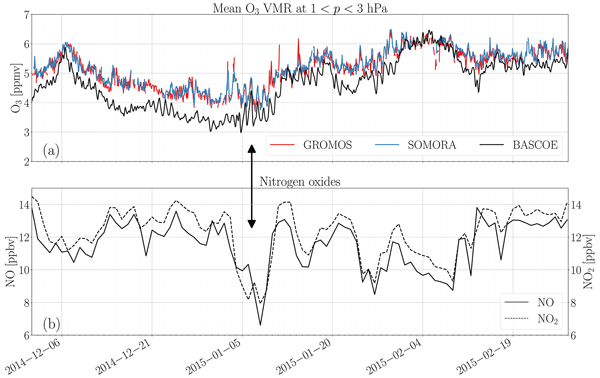
In Switzerland, two microwave radiometers can measure continuous ozone profiles in the middle atmosphere. From these instruments, we can study the diurnal variation of ozone, which is difficult to observe otherwise. It is valuable to validate the model simulations of diurnal variations in this region. We present results obtained during the last decade and compare them against various models. For the first time, we also show that the winter diurnal variations have some short-term fluctuations.
Thomas Reddmann, Miriam Sinnhuber, Jan Maik Wissing, Olesya Yakovchuk, and Ilya Usoskin
Atmos. Chem. Phys., 23, 6989–7000, https://doi.org/10.5194/acp-23-6989-2023, https://doi.org/10.5194/acp-23-6989-2023, 2023
Short summary
Short summary
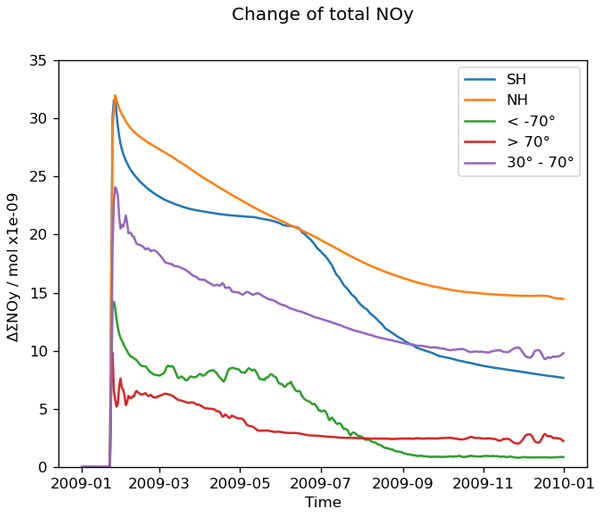
Recent analyses of isotopic records of ice cores and sediments have shown that very strong explosions may occur on the Sun, perhaps about one such explosion every 1000 years. Such explosions pose a real threat to humankind. It is therefore of great interest to study the impact of such explosions on Earth. We analyzed how the explosions would affect the chemistry of the middle atmosphere and show that the related ozone loss is not dramatic and that the atmosphere will recover within 1 year.
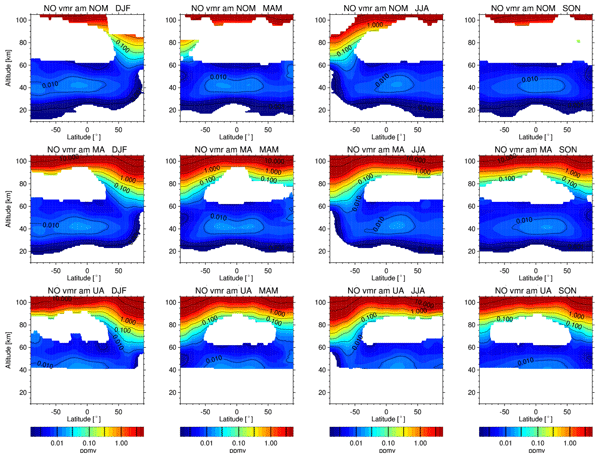
Bernd Funke, Maya García-Comas, Norbert Glatthor, Udo Grabowski, Sylvia Kellmann, Michael Kiefer, Andrea Linden, Manuel López-Puertas, Gabriele P. Stiller, and Thomas von Clarmann
Atmos. Meas. Tech., 16, 2167–2196, https://doi.org/10.5194/amt-16-2167-2023, https://doi.org/10.5194/amt-16-2167-2023, 2023
Short summary
Short summary
New global nitric oxide (NO) volume-mixing-ratio and lower-thermospheric temperature data products, retrieved from Michelson Interferometer for Passive Atmospheric Sounding (MIPAS) spectra with the IMK-IAA MIPAS data processor, have been released. The dataset covers the entire Envisat mission lifetime and includes retrieval results from all MIPAS observation modes. The data are based on ESA version 8 calibration and were processed using an improved retrieval approach.
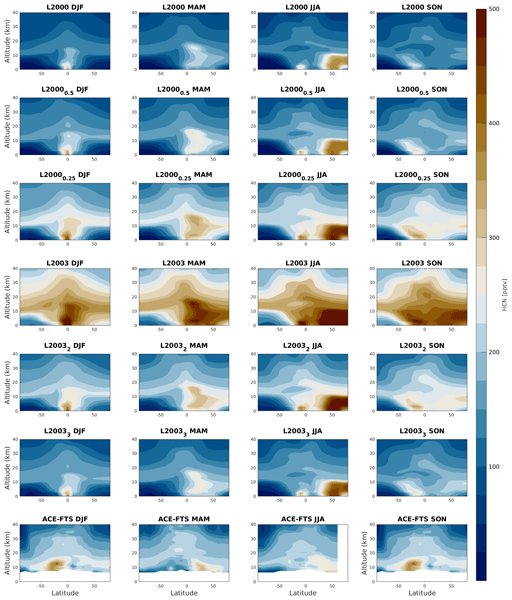
Antonio G. Bruno, Jeremy J. Harrison, Martyn P. Chipperfield, David P. Moore, Richard J. Pope, Christopher Wilson, Emmanuel Mahieu, and Justus Notholt
Atmos. Chem. Phys., 23, 4849–4861, https://doi.org/10.5194/acp-23-4849-2023, https://doi.org/10.5194/acp-23-4849-2023, 2023
Short summary
Short summary
A 3-D chemical transport model, TOMCAT; satellite data; and ground-based observations have been used to investigate hydrogen cyanide (HCN) variability. We found that the oxidation by O(1D) drives the HCN loss in the middle stratosphere and the currently JPL-recommended OH reaction rate overestimates HCN atmospheric loss. We also evaluated two different ocean uptake schemes. We found them to be unrealistic, and we need to scale these schemes to obtain good agreement with HCN observations.
Michael Kiefer, Thomas von Clarmann, Bernd Funke, Maya García-Comas, Norbert Glatthor, Udo Grabowski, Michael Höpfner, Sylvia Kellmann, Alexandra Laeng, Andrea Linden, Manuel López-Puertas, and Gabriele P. Stiller
Atmos. Meas. Tech., 16, 1443–1460, https://doi.org/10.5194/amt-16-1443-2023, https://doi.org/10.5194/amt-16-1443-2023, 2023
Short summary
Short summary
A new ozone data set, derived from radiation measurements of the space-borne instrument MIPAS, is presented. It consists of more than 2 million single ozone profiles from 2002–2012, covering virtually all latitudes and altitudes between 5 and 70 km. Progress in data calibration and processing methods allowed for significant improvement of the data quality, compared to previous data versions. Hence, the data set will help to better understand e.g. the time evolution of ozone in the stratosphere.
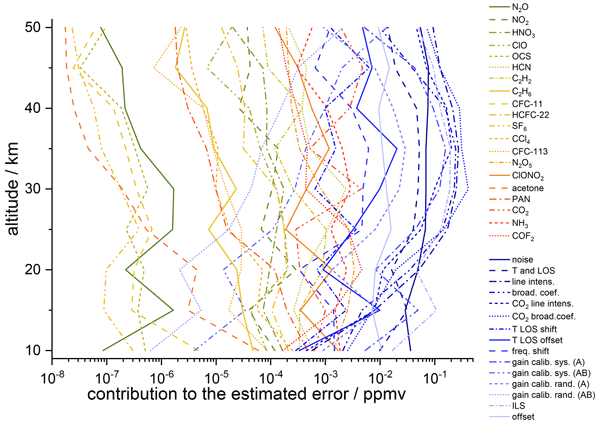
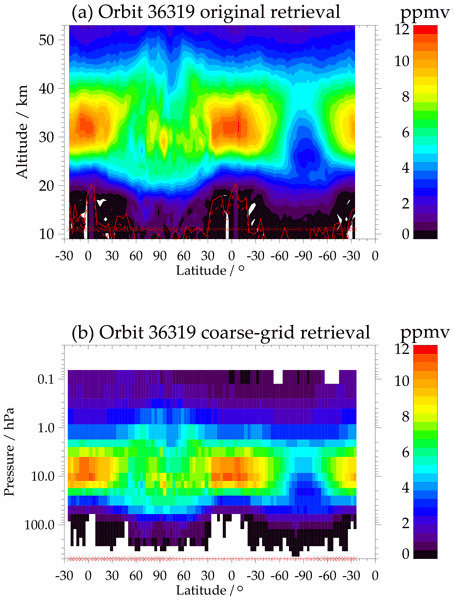
Thomas von Clarmann, Norbert Glatthor, Udo Grabowski, Bernd Funke, Michael Kiefer, Anne Kleinert, Gabriele P. Stiller, Andrea Linden, and Sylvia Kellmann
Atmos. Meas. Tech., 15, 6991–7018, https://doi.org/10.5194/amt-15-6991-2022, https://doi.org/10.5194/amt-15-6991-2022, 2022
Short summary
Short summary
Errors of profiles of temperature and mixing ratios retrieved from spectra recorded with the Michelson Interferometer for Passive Atmospheric Sounding are estimated. All known and quantified sources of uncertainty are considered. Some ongoing uncertaities contribute to both the random and to the systematic errors. In some cases, one source of uncertainty propagates onto the error budget via multiple pathways. Problems arise when the correlations of errors to be propagated are unknown.
Xiangyu Zeng, Wei Wang, Cheng Liu, Changgong Shan, Yu Xie, Peng Wu, Qianqian Zhu, Minqiang Zhou, Martine De Mazière, Emmanuel Mahieu, Irene Pardo Cantos, Jamal Makkor, and Alexander Polyakov
Atmos. Meas. Tech., 15, 6739–6754, https://doi.org/10.5194/amt-15-6739-2022, https://doi.org/10.5194/amt-15-6739-2022, 2022
Short summary
Short summary
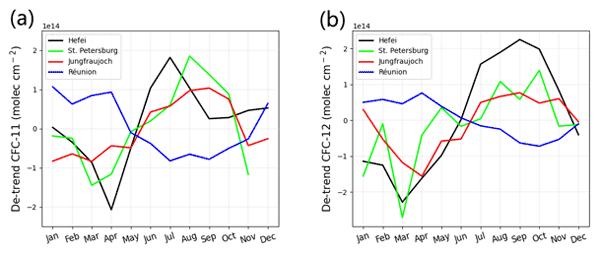
CFC-11 and CFC-12, which are classified as ozone-depleting substances, also have high global warming potentials. This paper describes obtaining the CFC-11 and CFC-12 total columns from the solar spectra based on ground-based Fourier transform infrared spectroscopy at Hefei, China. The seasonal variation and annual trend of the two gases are analyzed, and then the data are compared with other independent datasets.
Klaus-Peter Heue, Diego Loyola, Fabian Romahn, Walter Zimmer, Simon Chabrillat, Quentin Errera, Jerry Ziemke, and Natalya Kramarova
Atmos. Meas. Tech., 15, 5563–5579, https://doi.org/10.5194/amt-15-5563-2022, https://doi.org/10.5194/amt-15-5563-2022, 2022
Short summary
Short summary
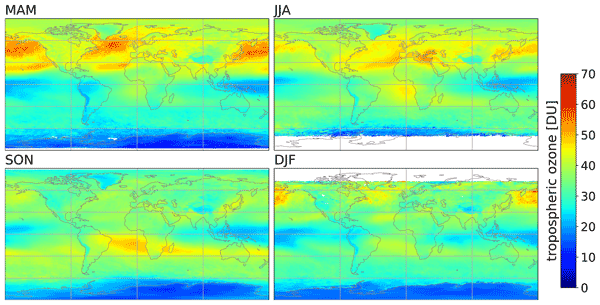
To retrieve tropospheric ozone column information, we subtract stratospheric column data of BASCOE from TROPOMI/S5P total ozone columns.
The new S5P-BASCOE data agree well with existing tropospheric data like OMPS-MERRA-2. The data are also compared to ozone soundings.
The tropospheric ozone columns show the expected temporal and spatial patterns. We will also apply the algorithm to future UV nadir missions like Sentinel 4 or 5 or to recent and ongoing missions like GOME_2 or OMI.
Sophie Godin-Beekmann, Niramson Azouz, Viktoria F. Sofieva, Daan Hubert, Irina Petropavlovskikh, Peter Effertz, Gérard Ancellet, Doug A. Degenstein, Daniel Zawada, Lucien Froidevaux, Stacey Frith, Jeannette Wild, Sean Davis, Wolfgang Steinbrecht, Thierry Leblanc, Richard Querel, Kleareti Tourpali, Robert Damadeo, Eliane Maillard Barras, René Stübi, Corinne Vigouroux, Carlo Arosio, Gerald Nedoluha, Ian Boyd, Roeland Van Malderen, Emmanuel Mahieu, Dan Smale, and Ralf Sussmann
Atmos. Chem. Phys., 22, 11657–11673, https://doi.org/10.5194/acp-22-11657-2022, https://doi.org/10.5194/acp-22-11657-2022, 2022
Short summary
Short summary
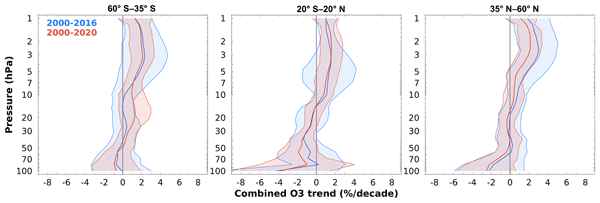
An updated evaluation up to 2020 of stratospheric ozone profile long-term trends at extrapolar latitudes based on satellite and ground-based records is presented. Ozone increase in the upper stratosphere is confirmed, with significant trends at most latitudes. In this altitude region, a very good agreement is found with trends derived from chemistry–climate model simulations. Observed and modelled trends diverge in the lower stratosphere, but the differences are non-significant.
Vincent Huijnen, Philippe Le Sager, Marcus O. Köhler, Glenn Carver, Samuel Rémy, Johannes Flemming, Simon Chabrillat, Quentin Errera, and Twan van Noije
Geosci. Model Dev., 15, 6221–6241, https://doi.org/10.5194/gmd-15-6221-2022, https://doi.org/10.5194/gmd-15-6221-2022, 2022
Short summary
Short summary
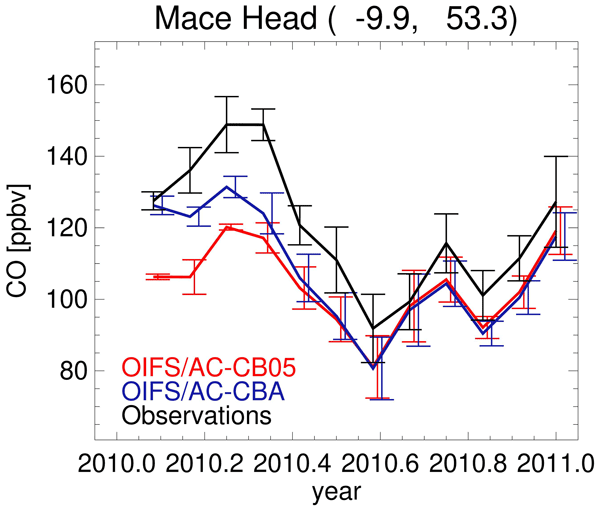
We report on the first implementation of atmospheric chemistry and aerosol as part of the OpenIFS model, based on the CAMS global model. We give an overview of the model and evaluate two reference model configurations, with and without the stratospheric chemistry extension, against a variety of observational datasets. This OpenIFS version with atmospheric composition components is open to the scientific user community under a standard OpenIFS license.
Ales Kuchar, Petr Sacha, Roland Eichinger, Christoph Jacobi, Petr Pisoft, and Harald Rieder
EGUsphere, https://doi.org/10.5194/egusphere-2022-474, https://doi.org/10.5194/egusphere-2022-474, 2022
Preprint archived
Short summary
Short summary
We focus on the impact of small-scale orographic gravity waves (OGWs) above the Himalayas. The interaction of GWs with the large-scale circulation in the stratosphere is not still well understood and can have implications on climate projections. We use a chemistry-climate model to show that these strong OGW events are associated with anomalously increased upward planetary-scale waves and in turn affect the circumpolar circulation and have the potential to alter ozone variability as well.
Sieglinde Callewaert, Jérôme Brioude, Bavo Langerock, Valentin Duflot, Dominique Fonteyn, Jean-François Müller, Jean-Marc Metzger, Christian Hermans, Nicolas Kumps, Michel Ramonet, Morgan Lopez, Emmanuel Mahieu, and Martine De Mazière
Atmos. Chem. Phys., 22, 7763–7792, https://doi.org/10.5194/acp-22-7763-2022, https://doi.org/10.5194/acp-22-7763-2022, 2022
Short summary
Short summary
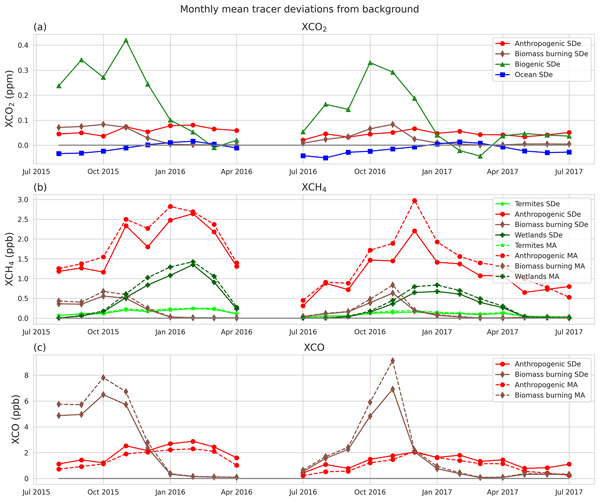
A regional atmospheric transport model is used to analyze the factors contributing to CO2, CH4, and CO observations at Réunion Island. We show that the surface observations are dominated by local fluxes and dynamical processes, while the column data are influenced by larger-scale mechanisms such as biomass burning plumes. The model is able to capture the measured time series well; however, the results are highly dependent on accurate boundary conditions and high-resolution emission inventories.
William G. Read, Gabriele Stiller, Stefan Lossow, Michael Kiefer, Farahnaz Khosrawi, Dale Hurst, Holger Vömel, Karen Rosenlof, Bianca M. Dinelli, Piera Raspollini, Gerald E. Nedoluha, John C. Gille, Yasuko Kasai, Patrick Eriksson, Christopher E. Sioris, Kaley A. Walker, Katja Weigel, John P. Burrows, and Alexei Rozanov
Atmos. Meas. Tech., 15, 3377–3400, https://doi.org/10.5194/amt-15-3377-2022, https://doi.org/10.5194/amt-15-3377-2022, 2022
Short summary
Short summary
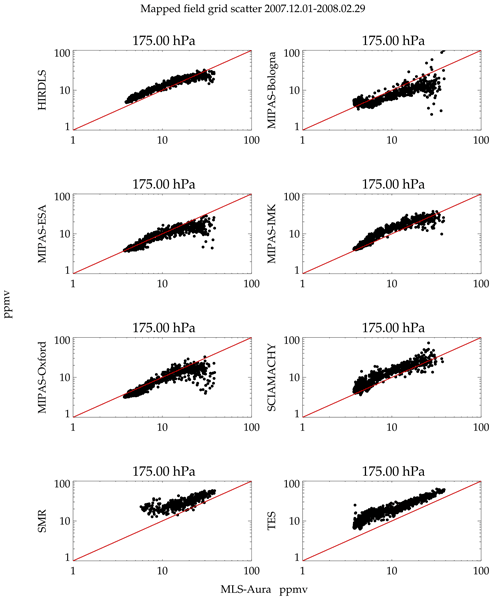
This paper attempts to provide an assessment of the accuracy of 21 satellite-based instruments that remotely measure atmospheric humidity in the upper troposphere of the Earth's atmosphere. The instruments made their measurements from 1984 to the present time; however, most of these instruments began operations after 2000, and only a few are still operational. The objective of this study is to quantify the accuracy of each satellite humidity data set.

Alexandra Laeng, Thomas von Clarmann, Quentin Errera, Udo Grabowski, and Shawn Honomichl
Atmos. Meas. Tech., 15, 2407–2416, https://doi.org/10.5194/amt-15-2407-2022, https://doi.org/10.5194/amt-15-2407-2022, 2022
Short summary
Short summary
In validation exercises, a universal excuse used to explain the residual discrepancy between the data is the natural atmospheric variability due to imperfect co-locations. This work is the first attempt to quantify this atmospheric variability for a large sample of atmospheric constituents and to provide the user with a tool to substract the natural atmospheric variability portion from the residual variability.

Sheena Loeffel, Roland Eichinger, Hella Garny, Thomas Reddmann, Frauke Fritsch, Stefan Versick, Gabriele Stiller, and Florian Haenel
Atmos. Chem. Phys., 22, 1175–1193, https://doi.org/10.5194/acp-22-1175-2022, https://doi.org/10.5194/acp-22-1175-2022, 2022
Short summary
Short summary
SF6-derived trends of stratospheric AoA from observations and model simulations disagree in sign. SF6 experiences chemical degradation, which we explicitly integrate in a global climate model. In our simulations, the AoA trend changes sign when SF6 sinks are considered; thus, the process has the potential to reconcile simulated with observed AoA trends. We show that the positive AoA trend is due to the SF6 sinks themselves and provide a first approach for a correction to account for SF6 loss.
Michael Höpfner, Oliver Kirner, Gerald Wetzel, Björn-Martin Sinnhuber, Florian Haenel, Sören Johansson, Johannes Orphal, Roland Ruhnke, Gabriele Stiller, and Thomas von Clarmann
Atmos. Chem. Phys., 21, 18433–18464, https://doi.org/10.5194/acp-21-18433-2021, https://doi.org/10.5194/acp-21-18433-2021, 2021
Short summary
Short summary
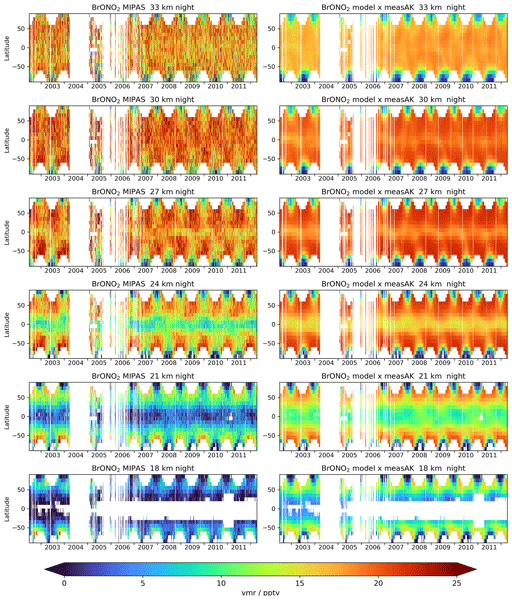
BrONO2 is an important reservoir gas for inorganic stratospheric bromine linked to the chemical cycles of stratospheric ozone depletion. Presently infrared limb sounding is the only way to measure BrONO2 in the atmosphere. We provide global distributions of BrONO2 derived from MIPAS observations 2002–2012. Comparisons with EMAC atmospheric modelling show an overall agreement and enable us to derive an independent estimate of stratospheric bromine of 21.2±1.4pptv based on the BrONO2 measurements.
Cited articles
Abalos, M., Calvo, N., Benito-Barca, S., Garny, H., Hardiman, S. C., Lin, P., Andrews, M. B., Butchart, N., Garcia, R., Orbe, C., Saint-Martin, D., Watanabe, S., and Yoshida, K.: The Brewer–Dobson circulation in CMIP6, Atmos. Chem. Phys., 21, 13571–13591, https://doi.org/10.5194/acp-21-13571-2021, 2021. a
ACE-FTS: Level-2 Data, Version 5.3, https://uwaterloo.ca/atmospheric-chemistry-experiment/ (last access: 5 January 2026), 2025. a
Austin, J. and Li, F.: On the relationship between the strength of the Brewer–Dobson circulation and the age of stratospheric air, Geophys. Res. Lett., 33, https://doi.org/10.1029/2006GL026867, 2006. a
Avallone, L. M. and Prather, M. J.: Tracer-tracer correlations: Three-dimensional model simulations and comparisons to observations, J. Geophys. Res.-Atmos., 102, 19233–19246, https://doi.org/10.1029/97JD01123, 1997. a
Bernath, P. F., McElroy, C. T., Abrams, M. C., Boone, C. D., Butler, M., Camy-Peyret, C., Carleer, M., Clerbaux, C., Coheur, P.-F., Colin, R., De Cola, P., De Mazière, M., Drummond, J. R., Dufour, D., Evans, W. F. J., Fast, H., Fussen, D., Gilbert, K., Jennings, D. E., Llewellyn, E. J., Lowe, R. P., Mahieu, E., McConnell, J. C., McHugh, M., McLeod, S. D., Michaud, R., Midwinter, C., Nassar, R., Nichitiu, F., Nowlan, C., Rinsland, C. P., Rochon, Y. J., Rowlands, N., Semeniuk, K., Simon, P., Skelton, R., Sloan, J. J., Soucy, M.-A., Strong, K., Tremblay, P., Turnbull, D., Walker, K. A., Walkty, I., Wardle, D. A., Wehrle, V., Zander, R., and Zou, J.: Atmospheric chemistry experiment (ACE): mission overview, Geophys. Res. Lett., 32, https://doi.org/10.1029/2005GL022386, 2005. a, b
Brasseur, G. P. and Solomon, S.: Aeronomy of the Middle Atmosphere, https://doi.org/10.1007/1-4020-3824-0_2, 2005. a, b, c
Brewer, A.: Evidence for a world circulation provided by the measurements of helium and water vapour distribution in the stratosphere, Q. J. Roy. Meteor. Soc., 75, 351–363, https://doi.org/10.1002/qj.49707532603, 1949. a
Burkholder, J., Sander, S., Abbatt, J., Barker, J., Huie, R., Kolb, C., Kurylo, M., Orkin, V., Wilmouth, D., and Wine, P.: Chemical kinetics and photochemical data for use in atmospheric studies: evaluation number 18, Tech. rep., Jet Propulsion Laboratory, National Aeronautics and Space, Pasadena, CA, https://jpldataeval.jpl.nasa.gov/ (last access: 5 January 2026), 2015. a
Butchart, N.: The Brewer–Dobson circulation, Rev. Geophys., 52, 157–184, https://doi.org/10.1002/2013RG000448, 2014. a
Butchart, N., Scaife, A. A., Bourqui, M., Grandpré, J., Hare, S. H., Kettleborough, J., Langematz, U., Manzini, E., Sassi, F., Shibata, K., Shindell, D., and Sigmond, M.: Simulations of anthropogenic change in the strength of the Brewer–Dobson circulation, Clim. Dynam., 27, 727–741, https://doi.org/10.1007/s00382-006-0162-4, 2006. a
Chabrillat, S., Vigouroux, C., Christophe, Y., Engel, A., Errera, Q., Minganti, D., Monge-Sanz, B. M., Segers, A., and Mahieu, E.: Comparison of mean age of air in five reanalyses using the BASCOE transport model, Atmos. Chem. Phys., 18, 14715–14735, https://doi.org/10.5194/acp-18-14715-2018, 2018. a, b, c
Damian, V., Sandu, A., Damian, M., Potra, F., and Carmichael, G. R.: The kinetic preprocessor KPP-a software environment for solving chemical kinetics, Comput. Chem. Eng., 26, 1567–1579, https://doi.org/10.1016/S0098-1354(02)00128-X, 2002. a
Datskos, P. G., Carter, J. G., and Christophorou, L. G.: Photodetachment of SF6, Chem. Phys. Lett., 239, 38–43, https://doi.org/10.1016/0009-2614(95)00417-3, 1995. a, b
de la Paz, M., Velo, A., Steinfeldt, R., and Pérez, F. F.: The Unaccounted Oceanic Sink of Anthropogenic Nitrous Oxide and Its Relationship With Anthropogenic Carbon Dioxide, 39, https://doi.org/10.1029/2024gb008417, 2025. a
Dietmüller, S., Eichinger, R., Garny, H., Birner, T., Boenisch, H., Pitari, G., Mancini, E., Visioni, D., Stenke, A., Revell, L., Rozanov, E., Plummer, D. A., Scinocca, J., Jöckel, P., Oman, L., Deushi, M., Kiyotaka, S., Kinnison, D. E., Garcia, R., Morgenstern, O., Zeng, G., Stone, K. A., and Schofield, R.: Quantifying the effect of mixing on the mean age of air in CCMVal-2 and CCMI-1 models, Atmos. Chem. Phys., 18, 6699–6720, https://doi.org/10.5194/acp-18-6699-2018, 2018. a
Dobson, G. M. B.: Origin and distribution of the polyatomic molecules in the atmosphere, Proceedings of the Royal Society of London. Series A. Mathematical and Physical Sciences, 236, 187–193, https://doi.org/10.1098/rspa.1956.0127, 1956. a
Dobson, G. M. B., Kimball, H., and Kidson, E.: Observations of the amount of ozone in the earth's atmosphere, and its relation to other geophysical conditions – Part IV, Proc. R. Soc. London A, 129, 411–433, https://doi.org/10.1098/rspa.1930.0165, 1930. a
Eichinger, R., Dietmüller, S., Garny, H., Šácha, P., Birner, T., Bönisch, H., Pitari, G., Visioni, D., Stenke, A., Rozanov, E., Revell, L., Plummer, D. A., Jöckel, P., Oman, L., Deushi, M., Kinnison, D. E., Garcia, R., Morgenstern, O., Zeng, G., Stone, K. A., and Schofield, R.: The influence of mixing on the stratospheric age of air changes in the 21st century, Atmos. Chem. Phys., 19, 921–940, https://doi.org/10.5194/acp-19-921-2019, 2019. a
Errera, Q., Daerden, F., Chabrillat, S., Lambert, J. C., Lahoz, W. A., Viscardy, S., Bonjean, S., and Fonteyn, D.: 4D-Var assimilation of MIPAS chemical observations: ozone and nitrogen dioxide analyses, Atmos. Chem. Phys., 8, 6169–6187, https://doi.org/10.5194/acp-8-6169-2008, 2008. a
Errera, Q., Chabrillat, S., Christophe, Y., Debosscher, J., Hubert, D., Lahoz, W., Santee, M. L., Shiotani, M., Skachko, S., von Clarmann, T., and Walker, K.: Technical note: Reanalysis of Aura MLS chemical observations, Atmos. Chem. Phys., 19, 13647–13679, https://doi.org/10.5194/acp-19-13647-2019, 2019. a
Fischer, H., Birk, M., Blom, C., Carli, B., Carlotti, M., von Clarmann, T., Delbouille, L., Dudhia, A., Ehhalt, D., Endemann, M., Flaud, J. M., Gessner, R., Kleinert, A., Koopman, R., Langen, J., López-Puertas, M., Mosner, P., Nett, H., Oelhaf, H., Perron, G., Remedios, J., Ridolfi, M., Stiller, G., and Zander, R.: MIPAS: an instrument for atmospheric and climate research, Atmos. Chem. Phys., 8, 2151–2188, https://doi.org/10.5194/acp-8-2151-2008, 2008. a, b
Fleming, E. L., George, C., Heard, D. E., Jackman, C. H., Kurylo, M. J., Mellouki, W., Orkin, V. L., Swartz, W. H., Wallington, T. J., Wine, P. H., and Burkholder, J. B.: The impact of current CH4 and N2O atmospheric loss process uncertainties on calculated ozone abundances and trends, J. Geophys. Res., 120, 5267–5293, https://doi.org/10.1002/2014JD022067, 2015. a
Garny, H., Birner, T., Bönisch, H., and Bunzel, F.: The effects of mixing on age of air, 119, 7015–7034, https://doi.org/10.1002/2013jd021417, 2014. a
Garny, H., Eichinger, R., Laube, J. C., Ray, E. A., Stiller, G. P., Bönisch, H., Saunders, L., and Linz, M.: Correction of stratospheric age of air (AoA) derived from sulfur hexafluoride (SF6) for the effect of chemical sinks, Atmos. Chem. Phys., 24, 4193–4215, https://doi.org/10.5194/acp-24-4193-2024, 2024a. a
Garny, H., Ploeger, F., Abalos, M., Bönisch, H., Castillo, A. E., von Clarmann, T., Diallo, M., Engel, A., Laube, J. C., Linz, M., Neu, J. L., Podglajen, A., Ray, E., Rivoire, L., Saunders, L. N., Stiller, G., Voet, F., Wagenhäuser, T., and Walker, K. A.: Age of stratospheric air: Progress on processes, observations, and long-term trends, Rev. Geophys., 62, e2023RG000832, https://doi.org/10.1029/2023RG000832, 2024b. a, b, c
Gelaro, R., McCarty, W., Suárez, M. J., Todling, R., Molod, A., Takacs, L., Randles, C. A., Darmenov, A. and Bosilovich, M. G. and Reichle, R. and Wargan, K., Coy, L., Cullather, R., Draper, C., Akella, S., Buchard, V., Conaty, A., da Silva, A. M., Gu, W., Kim, G.-K., Koster, R., Lucchesi, R., Merkova, D., Nielsen, J. E. and Partyka, G. and Pawson, S. and Putman, W., Rienecker, M., Schubert, S. D., Sienkiewicz, M., and Zhao, B.: The modern-era retrospective analysis for research and applications, version 2 (MERRA-2), Journal of Climate, 30, 5419–5454, https://doi.org/10.1175/JCLI-D-16-0758.1, 2017. a, b
Gidden, M. J., Riahi, K., Smith, S. J., Fujimori, S., Luderer, G., Kriegler, E., van Vuuren, D. P., van den Berg, M., Feng, L., Klein, D., Calvin, K., Doelman, J. C., Frank, S., Fricko, O., Harmsen, M., Hasegawa, T., Havlik, P., Hilaire, J., Hoesly, R., Horing, J., Popp, A., Stehfest, E., and Takahashi, K.: Global emissions pathways under different socioeconomic scenarios for use in CMIP6: a dataset of harmonized emissions trajectories through the end of the century, Geosci. Model Dev., 12, 1443–1475, https://doi.org/10.5194/gmd-12-1443-2019, 2019. a
Hall, T. M. and Plumb, R. A.: Age as a diagnostic of stratospheric transport, J. Geophys. Res., 99, 1059–1070, https://doi.org/10.1029/93JD03192, 1994. a
Hardiman, S. C., Butchart, N., and Calvo, N.: The morphology of the Brewer–Dobson circulation and its response to climate change in CMIP5 simulations: Morphology of the Brewer–Dobson Circulation, 140, 1958–1965, https://doi.org/10.1002/qj.2258, 2013. a
Harnisch, J., Borchers, R., Fabian, P., and Maiss, M.: Cf4 and the age of mesospheric and polar vortex air, Geophys. Res. Lett., 26, 295–298, https://doi.org/10.1029/1998GL900307, 1999. a
Hersbach, H., Bell, D., Berrisford, P., Hirahara, S., Horányi, A., Muñoz‐Sabater, J., Nicolas, J., Peubey, C., Radu, R., Schepers, D., Simmons, A., Soci, C., Abdalla, S., Abellan, X., Balsamo, G., Bechtold, P., Biavati, G., Bidlot, J., Bonavita, M., De Chiara, G., Dahlgren, P., Dee, D., Diamantakis, M., Dragani, R., Flemming, J., Forbes, R., Fuentes, M., Geer, A., Haimberger, L., Healy, S., Hogan, R. J., Hólm, E., Janisková, M., Keeley, S., Laloyaux, P., Lopez, P., Lupu, C., Radnoti, G., de Rosnay, P., Rozum, I., Vamborg, F., Villaume, S., and Thépaut, J.-N.: The ERA5 global reanalysis, Q. J. Roy. Meteor. Soc., 146, 1999–2049, https://doi.org/10.1002/qj.3803, 2020. a, b
Ingólfsson, O., Illenberger, E., and Schmidt, W.-F.: Photodetachment from anions in a drift at 337 nm cell. Application to SF, Int. J. Mass Spectrom., 139, 103–110, https://doi.org/10.1016/0168-1176(94)90020-5, 1994. a, b
Kanakidou, M., Dentener, F. J., and Crutzen, P. J.: A global three-dimensional study of the fate of HCFCs and HFC-134a in the troposphere, J. Geophys. Res.-Atmos., 100, 18781–18801, https://doi.org/10.1029/95JD01919, 1995. a
Ko, M. K., Sze, N. D., Wang, W.-C., Shia, G., Goldman, A., Murcray, F. J., Murcray, D. G., and Rinsland, C. P.: Atmospheric sulfur hexafluoride: Sources, sinks and greenhouse warming, J. Geophys. Res.-Atmos., 98, 10499–10507, https://doi.org/10.1029/93JD00228, 1993. a
Kolonjari, F., Sheese, P. E., Walker, K. A., Boone, C. D., Plummer, D. A., Engel, A., Montzka, S. A., Oram, D. E., Schuck, T., Stiller, G. P., and Toon, G. C.: Validation of Atmospheric Chemistry Experiment Fourier Transform Spectrometer (ACE-FTS) chlorodifluoromethane (HCFC-22) in the upper troposphere and lower stratosphere, Atmos. Meas. Tech., 17, 2429–2449, https://doi.org/10.5194/amt-17-2429-2024, 2024. a, b
Kosaka, Y., Kobayashi, S., Harada, Y., Kobayashi, C., Naoe, H., Yoshimoto, K., Harada, M., Goto, N., Chiba, J., Miyaoka, K., Sekiguchi, R., Deushi, M., Kamahori, H., Nakaegawa, T., Tanaka, T. Y., Tokuhiro, T., Sato, Y., Matsushita, Y., and Onogi, K.: The JRA-3Q reanalysis, Journal of the Meteorological Society of Japan. Ser. II, 102, 49–109, https://doi.org/10.2151/jmsj.2024-004, 2024. a, b
Kouznetsov, R., Sofiev, M., Vira, J., and Stiller, G.: Simulating age of air and the distribution of SF6 in the stratosphere with the SILAM model, Atmos. Chem. Phys., 20, 5837–5859, https://doi.org/10.5194/acp-20-5837-2020, 2020. a, b
Kovács, T., Feng, W., Totterdill, A., Plane, J. M. C., Dhomse, S., Gómez-Martín, J. C., Stiller, G. P., Haenel, F. J., Smith, C., Forster, P. M., García, R. R., Marsh, D. R., and Chipperfield, M. P.: Determination of the atmospheric lifetime and global warming potential of sulfur hexafluoride using a three-dimensional model, Atmos. Chem. Phys., 17, 883–898, https://doi.org/10.5194/acp-17-883-2017, 2017. a
Krey, P., Lagomarsino, R., and Toonkel, L.: Gaseous halogens in the atmosphere in 1975, J. Geophys. Res., 82, 1753–1766, https://doi.org/10.1029/JC082i012p01753, 1977. a
Laeng, A., Plieninger, J., von Clarmann, T., Grabowski, U., Stiller, G., Eckert, E., Glatthor, N., Haenel, F., Kellmann, S., Kiefer, M., Linden, A., Lossow, S., Deaver, L., Engel, A., Hervig, M., Levin, I., McHugh, M., Noël, S., Toon, G., and Walker, K.: Validation of MIPAS IMK/IAA methane profiles, Atmos. Meas. Tech., 8, 5251–5261, https://doi.org/10.5194/amt-8-5251-2015, 2015. a
Li, Q., Fernandez, R. P., Hossaini, R., Iglesias-Suarez, F., Cuevas, C. A., Apel, E. C., Kinnison, D. E., Lamarque, J.-F., and Saiz-Lopez, A.: Reactive halogens increase the global methane lifetime and radiative forcing in the 21st century, Nat. Commun., 13, 2768, https://doi.org/10.1038/s41467-022-30456-8, 2022. a
Lin, S.-J. and Rood, R. B.: Multidimensional flux-form semi-Lagrangian transport schemes, Monthly Weather Review, 124, 2046–2070, https://doi.org/10.1175/1520-0493(1996)124<2046:MFFSLT>2.0.CO;2, 1996. a
Loeffel, S., Eichinger, R., Garny, H., Reddmann, T., Fritsch, F., Versick, S., Stiller, G., and Haenel, F.: The impact of sulfur hexafluoride (SF6) sinks on age of air climatologies and trends, Atmos. Chem. Phys., 22, 1175–1193, https://doi.org/10.5194/acp-22-1175-2022, 2022. a, b, c, d, e, f, g, h, i
Meinshausen, M., Vogel, E., Nauels, A., Lorbacher, K., Meinshausen, N., Etheridge, D. M., Fraser, P. J., Montzka, S. A., Rayner, P. J., Trudinger, C. M., Krummel, P. B., Beyerle, U., Canadell, J. G., Daniel, J. S., Enting, I. G., Law, R. M., Lunder, C. R., O'Doherty, S., Prinn, R. G., Reimann, S., Rubino, M., Velders, G. J. M., Vollmer, M. K., Wang, R. H. J., and Weiss, R.: Historical greenhouse gas concentrations for climate modelling (CMIP6), Geosci. Model Dev., 10, 2057–2116, https://doi.org/10.5194/gmd-10-2057-2017, 2017. a
Miller, T. M., Miller, A. E. S., Paulson, J. F., and Liu, X.: Thermal electron attachment to SF4 and SF6, 100, 8841–8848, https://doi.org/10.1063/1.466738, 1994. a
Minschwaner, K., Hoffmann, L., Brown, A., Riese, M., Müller, R., and Bernath, P. F.: Stratospheric loss and atmospheric lifetimes of CFC-11 and CFC-12 derived from satellite observations, Atmos. Chem. Phys., 13, 4253–4263, https://doi.org/10.5194/acp-13-4253-2013, 2013. a, b, c
MIPAS: Level-2 Data, Version 8, https://www.imk-asf.kit.edu/english/308.php (last access: 5 January 2026), 2019. a
Moore, D. P. and Remedios, J. J.: Growth rates of stratospheric HCFC-22, Atmos. Chem. Phys., 8, 73–82, https://doi.org/10.5194/acp-8-73-2008, 2008. a, b
Morris, R. A., Miller, T. M., Viggiano, A. A., Paulson, J. F., Solomon, S., and Reid, G.: Effects of electron and ion reactions on atmospheric lifetimes of fully fiuorinated compounds, https://doi.org/10.1029/94JD02399, 1995. a, b
Patra, P. K., Lal, S., Subbaraya, B. H., Jackman, C. H., and Rajaratnam, P.: Observed vertical profile of sulphur hexafluoride (SF6) and its atmospheric applications, Journal of Geophysical Research Atmospheres, 102, 8855–8859, 1997. a
Ploeger, F., Diallo, M., Charlesworth, E., Konopka, P., Legras, B., Laube, J. C., Grooß, J.-U., Günther, G., Engel, A., and Riese, M.: The stratospheric Brewer–Dobson circulation inferred from age of air in the ERA5 reanalysis, Atmos. Chem. Phys., 21, 8393–8412, https://doi.org/10.5194/acp-21-8393-2021, 2021. a
Plumb, R. A. and Ko, M. K. W.: Interrelationships between mixing ratios of long-lived stratospheric constituents, 97, 10145–10156, https://doi.org/10.1029/92jd00450, 1992. a
Prather, M. J., Froidevaux, L., and Livesey, N. J.: Observed changes in stratospheric circulation: decreasing lifetime of N2O, 2005–2021, Atmos. Chem. Phys., 23, 843–849, https://doi.org/10.5194/acp-23-843-2023, 2023. a, b
Prignon, M.: Stratospheric circulation changes: investigations using multidecadal observations and simulations of inorganic fluorine, Ph. D. thesis, ULiège – Université de Liège, Eprint: https://orbi.uliege.be/2268/260555, 2021. a
Prignon, M., Chabrillat, S., Friedrich, M., Smale, D., Strahan, S. E., Bernath, P. F., Chipperfield, M. P., Dhomse, S. S., Feng, W., Minganti, D., Servais, C., and Mahieu, E.: Stratospheric fluorine as a tracer of circulation changes: Comparison between infrared remote-sensing observations and simulations with five modern reanalyses, J. Geophys. Res.-Atmos., 126, e2021JD034995, https://doi.org/10.1029/2021jd034995, 2021. a
Ravishankara, A. R., Solomon, S., Turnipseed, A. A., and Warren, R. F.: Atmospheric Lifetimes of Long-Lived Halogenated Species, 194–199, https://doi.org/10.1126/science.259.5092.194, 1993. a, b
Ray, E. A., Moore, F. L., Elkins, J. W., Rosenlof, K. H., Laube, J. C., Röckmann, T., Marsh, D. R., and Andrews, A. E.: Quantification of the SF6 lifetime based on mesospheric loss measured in the stratospheric polar vortex, J. Geophys. Res., 122, 4626–4638, https://doi.org/10.1002/2016JD026198, 2017. a
Reed, R. J.: The present status of the 26 month oscillation, B. Am. Meteorol. Soc., 46, 374–387, 1965. a
Richter, J. H. and Garcia, R. R.: On the forcing of the Mesospheric Semi-Annual Oscillation in the Whole Atmosphere Community Climate Model, 33, https://doi.org/10.1029/2005gl024378, 2006. a
Shangguan, M. and Wang, W.: Analysis of temperature Semi-Annual Oscillations (SAO) in the middle atmosphere, Remote Sensing, 15, 857, https://doi.org/10.3390/rs15030857, 2023. a, b
Sheese, P. E., Walker, K. A., Boone, C. D., Bernath, P. F., Froidevaux, L., Funke, B., Raspollini, P., and von Clarmann, T.: ACE-FTS ozone, water vapour, nitrous oxide, nitric acid, and carbon monoxide profile comparisons with MIPAS and MLS, J. Quant. Spectrosc. Radiat. Transfer, 186, 63–80, https://doi.org/10.1016/j.jqsrt.2016.06.026, 2017. a
SPARC: SPARC Report on the Lifetimes of Stratospheric Ozone-Depleting Substances, Their Replacements, and Related Species. edited by: Ko, M. K. W., Newman, P. A., Reimann, S., and Strahan, S. E., SPARC Report No. 6, WCRP-15/2013, https://www.sparc-climate.org/publications/sparc-reports/ (last access: 5 January 2026), 2013. a, b
SPARC: The SPARC Data Initiative: Assessment of stratospheric trace gas and aerosol climatologies from satellite limb sounders, Tech. Rep. 8, SPARC, wCRP-5/2017, https://www.sparc-climate.org/publications/sparc-reports/ (last access: 5 January 2026), https://doi.org/10.3929/ethz-a-010863911, 2017. a, b, c, d, e
SPARC: SPARC Reanalysis Intercomparison Project (S-RIP) Final Report, Tech. Rep. 10, SPARC, https://doi.org/10.17874/800dee57d13, 2022. a, b, c, d
Spivakovsky, C. M., Logan, J. A., Montzka, S. A., Balkanski, Y. J., Foreman‐Fowler, M., Jones, D. B. A., Horowitz, L. W., Fusco, A. C., Brenninkmeijer, C. A. M., Prather, M. J., Wofsy, S. C., and McElroy, M. B.: Three-dimensional climatological distribution of tropospheric OH: Update and evaluation, J. Geophys. Res.-Atmos., 105, 8931–8980, https://doi.org/10.1029/1999JD901006, 2000. a
Strahan, S. E. and Polansky, B. C.: Meteorological implementation issues in chemistry and transport models, Atmos. Chem. Phys., 6, 2895–2910, https://doi.org/10.5194/acp-6-2895-2006, 2006. a
Totterdill, A., Kovács, T., Martín, J. C. G., Feng, W., and Plane, J. M.: Mesospheric Removal of Very Long-Lived Greenhouse Gases SF6 and CFC-115 by Metal Reactions, Lyman-α Photolysis, and Electron Attachment, J. Phys. Chem. A, 119, 2016–2025, https://doi.org/10.1021/jp5123344, 2015. a, b, c
Vervalcke, S.: BASCOE CTM simulations driven by ERA5, MERRA2 and JRA-3Q monthly zonal means, Zenodo [data set], https://doi.org/10.5281/zenodo.17751040, 2025. a
Voet, F., Ploeger, F., Laube, J., Preusse, P., Konopka, P., Grooß, J.-U., Ungermann, J., Sinnhuber, B.-M., Höpfner, M., Funke, B., Wetzel, G., Johansson, S., Stiller, G., Ray, E., and Hegglin, M. I.: On the estimation of stratospheric age of air from correlations of multiple trace gases, Atmos. Chem. Phys., 25, 3541–3565, https://doi.org/10.5194/acp-25-3541-2025, 2025. a, b
Volk, C. M., Elkins, J. W., Fahey, D. W., Dutton, G. S., Gilligan, J. M., Loewenstein, M., Podolske, J. R., Chan, K. R., and Gunson, M. R.: Evaluation of source gas lifetimes from stratospheric observations, Journal of Geophysical Research Atmospheres, 102, 25543–25564, https://doi.org/10.1029/97jd02215, 1997. a, b
Wang, Y., Huang, D., Liu, J., Zhang, Y., and Zeng, L.: Alternative Environmentally Friendly Insulating Gases for SF6, Processes, 7, https://doi.org/10.3390/pr7040216, 2019. a
Short summary
This study presents three simulations of atmospheric chemistry with the Belgian Assimilation System for Chemical Observations chemistry transport model, driven by different meteorological data sets. Newly implemented SF6 chemistry enables stratospheric transport studies. Results agree with satellite observations. The derived lifetimes of six trace gases agree with the literature, but SF6 shows larger sensitivity to the choice of meteorology. The lifetime of SF6 ranges from 1900 to 2600 years.
This study presents three simulations of atmospheric chemistry with the Belgian Assimilation...


Altmetrics
Final-revised paper
Preprint