
Articles | Volume 26, issue 19
https://doi.org/10.5194/acp-26-14277-2026
© Author(s) 2026. This work is distributed under
the Creative Commons Attribution 4.0 License.
the Creative Commons Attribution 4.0 License.
https://doi.org/10.5194/acp-26-14277-2026
© Author(s) 2026. This work is distributed under
the Creative Commons Attribution 4.0 License.
the Creative Commons Attribution 4.0 License.
Research article
| 
12 Oct 2026
Research article |
| 12 Oct 2026
| 12 Oct 2026
Characterizing lightning NOx production in the Ebro Valley with meteosat 12 LI and LMA observations
Francisco J. Pérez-Invernón
CORRESPONDING AUTHOR

Solar System Department, Instituto de Astrofísica de Andalucía (IAA), CSIC, PO Box 3004, 18080 Granada, Spain
Francisco J. Gordillo-Vázquez
Solar System Department, Instituto de Astrofísica de Andalucía (IAA), CSIC, PO Box 3004, 18080 Granada, Spain
Oscar van der Velde
Lightning Research Group, Polytechnic University of Catalonia, Terrassa, Spain
Joan Montanyà
Lightning Research Group, Polytechnic University of Catalonia, Terrassa, Spain
Jesús Alberto López Trujillo
Lightning Research Group, Polytechnic University of Catalonia, Terrassa, Spain
Nicolau Pineda
Meteorological Service of Catalonia, Barcelona, Spain
Diego Loyola
Deutsches Zentrum für Luft- und Raumfahrt, Methodik der Fernerkundung, Wessling, Germany
Deutsches Zentrum für Luft- und Raumfahrt, Methodik der Fernerkundung, Wessling, Germany
Christoph Knote
Chair of Model-Based Environmental Exposure Science, Faculty of Medicine, University of Augsburg, Augsburg, Germany
Alexandre O. Fierro
Metocean Team, I&E Engineering, BP Exploration and Operating Company, Ltd., Sunbury, UK
Heidi Huntrieser
Deutsches Zentrum für Luft- und Raumfahrt, Institut für Physik der Atmosphäre, Oberpfaffenhofen, Germany
Related authors
Francisco J. Pérez-Invernón, Francisco J. Gordillo-Vázquez, Heidi Huntrieser, Patrick Jöckel, and Eric J. Bucsela
Atmos. Chem. Phys., 25, 5557–5575, https://doi.org/10.5194/acp-25-5557-2025, https://doi.org/10.5194/acp-25-5557-2025, 2025
Short summary
Short summary
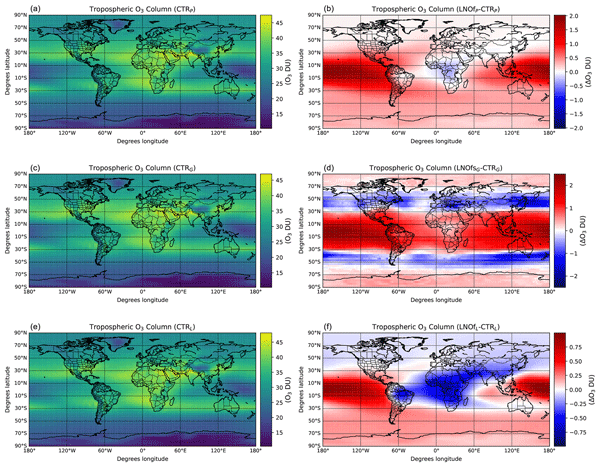
Lightning plays a significant role in tropospheric chemistry by producing substantial amounts of nitrogen oxides. According to recent estimates, thunderstorms that produce a higher lightning frequency rate also produce less nitrogen oxide per flash. We implemented the dependency of nitrogen oxide production per flash on lightning flash frequency in a chemical atmospheric model.
Sergio Soler, Francisco J. Gordillo-Vázquez, Francisco J. Pérez-Invernón, Patrick Jöckel, Torsten Neubert, Olivier Chanrion, Victor Reglero, and Nikolai Østgaard
Atmos. Chem. Phys., 24, 10225–10243, https://doi.org/10.5194/acp-24-10225-2024, https://doi.org/10.5194/acp-24-10225-2024, 2024
Short summary
Short summary
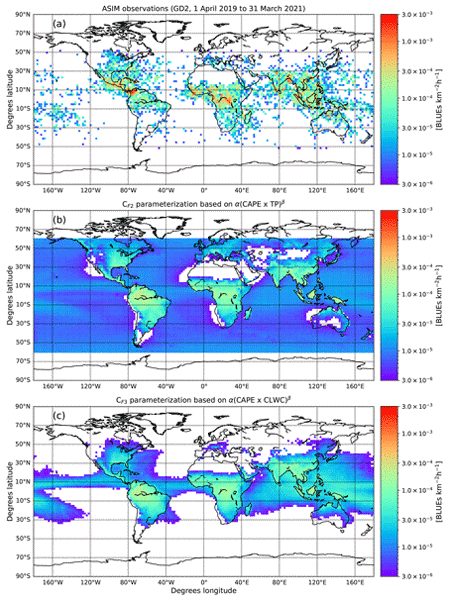
Sudden local ozone (O3) enhancements have been reported in different regions of the world since the 1970s. While the hot channel of lightning strokes directly produce significant amounts of nitrogen oxide, no direct emission of O3 is expected. Corona discharges in convective active regions could explain local O3 increases, which remains unexplained. We present the first mathematical functions that relate the global annual frequency of in-cloud coronas with four sets of meteorological variables.
Francisco J. Pérez-Invernón, Francisco J. Gordillo-Vázquez, Alejandro Malagón-Romero, and Patrick Jöckel
Atmos. Chem. Phys., 24, 3577–3592, https://doi.org/10.5194/acp-24-3577-2024, https://doi.org/10.5194/acp-24-3577-2024, 2024
Short summary
Short summary
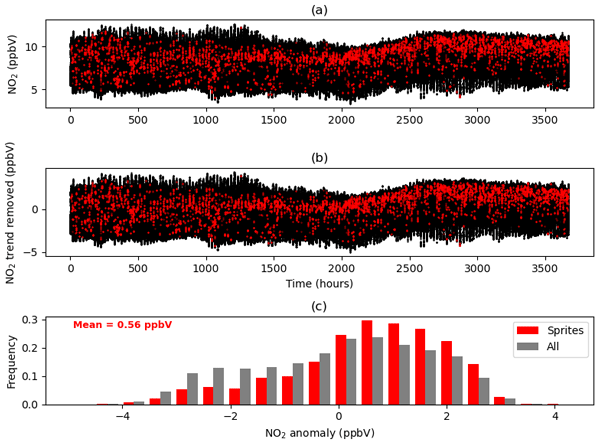
Sprites are electrical discharges that occur in the upper atmosphere. Recent modelling and observational data suggest that they may have a measurable impact on atmospheric chemistry. We incorporate both the occurrence rate of sprites and their production of chemical species into a chemistry–climate model. While our results indicate that sprites have a minimal global influence on atmospheric chemistry, they underscore their noteworthy importance at a regional scale.
Jose V. Moris, Pedro Álvarez-Álvarez, Marco Conedera, Annalie Dorph, Thomas D. Hessilt, Hugh G. P. Hunt, Renata Libonati, Lucas S. Menezes, Mortimer M. Müller, Francisco J. Pérez-Invernón, Gianni B. Pezzatti, Nicolau Pineda, Rebecca C. Scholten, Sander Veraverbeke, B. Mike Wotton, and Davide Ascoli
Earth Syst. Sci. Data, 15, 1151–1163, https://doi.org/10.5194/essd-15-1151-2023, https://doi.org/10.5194/essd-15-1151-2023, 2023
Short summary
Short summary
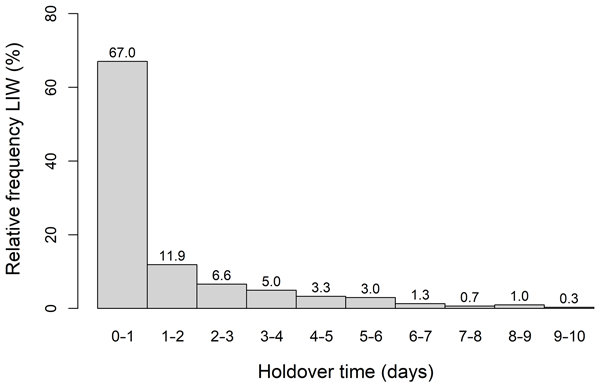
This work describes a database on holdover times of lightning-ignited wildfires (LIWs). Holdover time is defined as the time between lightning-induced fire ignition and fire detection. The database contains 42 datasets built with data on more than 152 375 LIWs from 13 countries in five continents from 1921 to 2020. This database is the first freely-available, harmonized and ready-to-use global source of holdover time data, which may be used to investigate LIWs and model the holdover phenomenon.
Francisco J. Pérez-Invernón, Heidi Huntrieser, Thilo Erbertseder, Diego Loyola, Pieter Valks, Song Liu, Dale J. Allen, Kenneth E. Pickering, Eric J. Bucsela, Patrick Jöckel, Jos van Geffen, Henk Eskes, Sergio Soler, Francisco J. Gordillo-Vázquez, and Jeff Lapierre
Atmos. Meas. Tech., 15, 3329–3351, https://doi.org/10.5194/amt-15-3329-2022, https://doi.org/10.5194/amt-15-3329-2022, 2022
Short summary
Short summary
Lightning, one of the major sources of nitrogen oxides in the atmosphere, contributes to the tropospheric concentration of ozone and to the oxidizing capacity of the atmosphere. In this work, we contribute to improving the estimation of lightning-produced nitrogen oxides in the Ebro Valley and the Pyrenees by using two different TROPOMI products and comparing the results.
Francisco J. Pérez-Invernón, Heidi Huntrieser, Patrick Jöckel, and Francisco J. Gordillo-Vázquez
Geosci. Model Dev., 15, 1545–1565, https://doi.org/10.5194/gmd-15-1545-2022, https://doi.org/10.5194/gmd-15-1545-2022, 2022
Short summary
Short summary
This study reports the first parameterization of long-continuing-current lightning in a climate model. Long-continuing-current lightning is proposed to be the main precursor of lightning-ignited wildfires and sprites, a type of transient luminous event taking place in the mesosphere. This parameterization can significantly contribute to improving the implementation of wildfires in climate models.
Francisco J. Pérez-Invernón, Heidi Huntrieser, Sergio Soler, Francisco J. Gordillo-Vázquez, Nicolau Pineda, Javier Navarro-González, Víctor Reglero, Joan Montanyà, Oscar van der Velde, and Nikos Koutsias
Atmos. Chem. Phys., 21, 17529–17557, https://doi.org/10.5194/acp-21-17529-2021, https://doi.org/10.5194/acp-21-17529-2021, 2021
Short summary
Short summary
Lightning-ignited fires tend to occur in remote areas and can spread significantly before suppression. Long continuing current (LCC) lightning, preferably taking place in dry thunderstorms, is believed to be the main precursor of lightning-ignited fires. We analyze fire databases of lightning-ignited fires in the Mediterranean basin and report the shared meteorological conditions of fire- and LCC-lightning-producing thunderstorms. These results can be useful to improve fire forecasting methods.
Franjo Vukovic, Joan Montanya, Marcelo Arcanjo, and Bozidar Filipovic-Grcic
EGUsphere, https://doi.org/10.5194/egusphere-2026-4653, https://doi.org/10.5194/egusphere-2026-4653, 2026
This preprint is open for discussion and under review for Atmospheric Measurement Techniques (AMT).
Short summary
Short summary
We used current measurements from an instrumented wind turbine in Croatia, with ground-based lightning location data, to evaluate the satellite lightning imager performance. The imager detected about three-quarters of all strikes, performing best for flashes with return-stroke pulses and slightly better at night. Low-intensity continuing currents, though harder to detect, were still captured, unlike with conventional ground-based networks, showing its value for risk assessment.
Sean M. Davis, William T. Ball, Yue Jia, Gabriel Chiodo, Justin A. Alsing, James Keeble, Hideharu Akiyoshi, Carlo Arosio, Ewa M. Bednarz, Andreas Chrysanthou, Melanie Coldewey-Egbers, Robert Damadeo, Sandip Dhomse, Mohamadou A. Diallo, Simone Dietmuller, Roland Eichinger, Stacey Frith, Birgit Hassler, Michaela I. Hegglin, Daan Hubert, Patrick Jöckel, Béatrice Josse, Natalya Kramarova, Diego Loyola, Eliane Maillard Barras, Marion Marchand, Olaf Morgenstern, David Plummer, Robert W. Portmann, Karen H. Rosenlof, Alexei Rozanov, Viktoria F. Sofieva, Johannes Staehelin, Timofei Sukhodolov, Kleareti Tourpali, Ronald J. Van der A, H. J. Ray Wang, Krzysztof Wargan, Shingo Watanabe, Mark Weber, Jeannette D. Wild, Yousuke Yamashita, and Jerry Ziemke
Atmos. Chem. Phys., 26, 13817–13843, https://doi.org/10.5194/acp-26-13817-2026, https://doi.org/10.5194/acp-26-13817-2026, 2026
Short summary
Short summary
This study investigates tropical ozone changes in models and satellite observations to determine how well they agree and whether observations can constrain model projections. At some levels, satellite records disagree significantly on the magnitude of ozone changes. While early and late 21st century trends are correlated across models, suggesting a potential emergent constraint, the spread in observations means they are unable to provide guidance on the credibility of model projections.
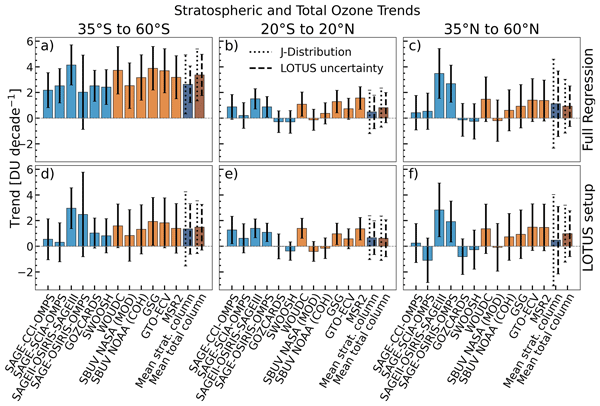
Brian Auffarth, Mark Weber, Alexei Rozanov, Carlo Arosio, John P. Burrows, Melanie Coldewey-Egbers, Sean M. Davis, Doug Degenstein, Kimberlee Dubé, Stacey M. Frith, Lucien Froidevaux, Diego Loyola, Vitali E. Fioletov, Viktoria Sofieva, Ronald van der A, and Jeannette D. Wild
Atmos. Chem. Phys., 26, 13359–13386, https://doi.org/10.5194/acp-26-13359-2026, https://doi.org/10.5194/acp-26-13359-2026, 2026
Short summary
Short summary
This study examines the trends of stratospheric and total ozone between 2000 and 2024, using long-term satellite datasets. Our results show positive trends in the upper stratosphere and a strong ozone recovery in the Southern Hemisphere, while changes in lower altitudes remain mostly small. The total and stratospheric trends show very similar results, indicating that tropospheric ozone contributes little to total column changes, while the stratospheric column is the dominant driver.
Leonardo M. A. Alvarado, Sora Seo, Adrian Doicu, Andreas Richter, and Diego Loyola
EGUsphere, https://doi.org/10.5194/egusphere-2026-4360, https://doi.org/10.5194/egusphere-2026-4360, 2026
This preprint is open for discussion and under review for Atmospheric Measurement Techniques (AMT).
Short summary
Short summary
Chlorine dioxide reveals the chemistry that destroys ozone in the upper atmosphere, but it is hard to measure from space, especially in the dim light of polar winter. We built a new method to analyse satellite measurements that separates the true signal from instrument noise and gives a trustworthy uncertainty for every observation, without extra corrections. It matches an existing product while being more reliable, supporting operational European monitoring and future missions for other gases.
Qinzeng Li, Jiyao Xu, Wei Yuan, Angel An, Shengyang Gu, Oscar A. van der Velde, Yajun Zhu, and Xiaolong Wei
EGUsphere, https://doi.org/10.5194/egusphere-2026-4160, https://doi.org/10.5194/egusphere-2026-4160, 2026
This preprint is open for discussion and under review for Atmospheric Chemistry and Physics (ACP).
Short summary
Short summary
On 19 May 2022, a powerful thunderstorm outbreak south of the Himalayas produced both unusual high-altitude lightning and large atmospheric waves. Using satellite and ground-based observations, we tracked the waves over distances exceeding 3000 kilometers. Some waves observed at the highest altitudes were likely generated by the breakdown of earlier waves. The results show how severe storms can affect atmospheric regions far above the weather systems that create them.
Hongrui Gao, Qin He, Kai Qin, Jhoon Kim, Diego Loyola, Pravash Tiwari, Lingxiao Lu, and Jason Blake Cohen
Earth Syst. Sci. Data Discuss., https://doi.org/10.5194/essd-2026-443, https://doi.org/10.5194/essd-2026-443, 2026
Revised manuscript accepted for ESSD
Short summary
Short summary
There are always gaps in satellite records of air pollution because of factors such as clouds and operating conditions. We used a physics-aware deep learning method, producing a gapless 0.05° hourly dataset of tropospheric nitrogen dioxide over Asian pollution hotspots from 2019 to 2024. The dataset can capture sub-daily changes, revealing how traffic, industry, and clean-air policies shaped pollution, supporting health and environment studies.
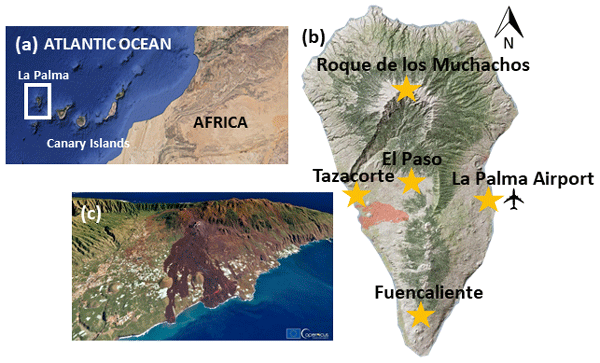
África Barreto, Francisco Quirós, Omaira E. García, Jorge Pereda-de-Pablo, Daniel González-Fernández, Andrés Bedoya-Velásquez, Michael Sicard, Carmen Córdoba-Jabonero, Marco Iarlori, Vincenzo Rizi, Nickolay Krotkov, Simon Carn, Reijo Roininen, Antonio J. Molina-Arias, A. Fernando Almansa, Óscar Álvarez-Losada, Carla Aramo, Juan José Bustos, Romain Ceolato, Adolfo Comerón, Alicia Felpeto, Rosa D. García, Pablo González-Sicilia, Yenny González, Pascal Hedelt, Miguel Hernández, María-Ángeles López-Cayuela, Diego Loyola, Stavros Meletlidis, Constantino Muñoz-Porcar, Ermanno Pietropaolo, Ramón Ramos, Alejandro Rodríguez-Gómez, Roberto Román, Pedro M. Romero-Campos, Martin Stuefer, Carlos Toledano, and Ellsworth J. Welton
Atmos. Meas. Tech., 19, 1385–1406, https://doi.org/10.5194/amt-19-1385-2026, https://doi.org/10.5194/amt-19-1385-2026, 2026
Short summary
Short summary
This manuscript describes the instrumental coverage deployed during the Tajogaite eruption (19 September–25 December 2021) by the Instituto Geográfico Nacional (IGN), the Spanish State Meteorological Agency (AEMET), and other Spanish members of ACTRIS (Aerosol, Clouds and Trace Gases Research Infrastructure) to monitor its atmospheric impact. Two complementary methods provide consistent plume height data for future operational surveillance.

Robert J. D. Spurr, Matt Christi, Nickolay A. Krotkov, Won-Ei Choi, Simon Carn, Can Li, Natalya Kramarova, David Haffner, Eun-Su Yang, Nick Gorkavyi, Alexander Vasilkov, Krzysztof Wargan, Omar Torres, Diego Loyola, Serena Di Pede, J. Pepijn Veefkind, Parker Case, Thomas Schroeder, and Pawan K. Bhartia
Atmos. Meas. Tech., 19, 993–1021, https://doi.org/10.5194/amt-19-993-2026, https://doi.org/10.5194/amt-19-993-2026, 2026
Short summary
Short summary
The submarine eruption of the Hunga volcano released water vapor and sulfur dioxide directly into the stratosphere. The sulfur dioxide formed sulfuric acid aerosols leading to increased scattering of solar ultraviolet radiation (UV), interfering with satellite ozone retrievals. We present a new satellite technique for deriving the amount and height of Hunga aerosols from UV measurements, revealing an unusually low sulfuric acid concentration due to the water-rich conditions in the fresh plume.
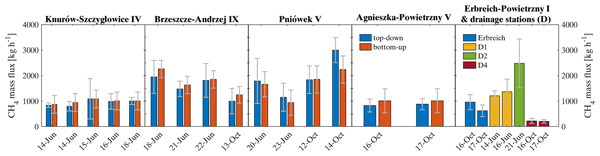
Eric Förster, Heidi Huntrieser, Michael Lichtenstern, Falk Pätzold, Lutz Bretschneider, Andreas Schlerf, Sven Bollmann, Astrid Lampert, Jarosław Nęcki, Paweł Jagoda, Justyna Swolkień, Dominika Pasternak, Robert A. Field, and Anke Roiger
Atmos. Meas. Tech., 18, 7153–7176, https://doi.org/10.5194/amt-18-7153-2025, https://doi.org/10.5194/amt-18-7153-2025, 2025
Short summary
Short summary
We introduce a helicopter-borne mass balance approach, utilizing the HELiPOD platform, to accurately quantify methane (CH4) emissions from coal mining activities. The comparison of our top-down mass flux estimates (up to 3000 kg h−1) against those from bottom-up in-mine CH4 safety sensors revealed very good agreement. This approach also has a great potential in quantifying emission source strengths (down to 20 kg h−1) from a wide range of other CH4 emitters (e.g. landfills, oil & gas industry).
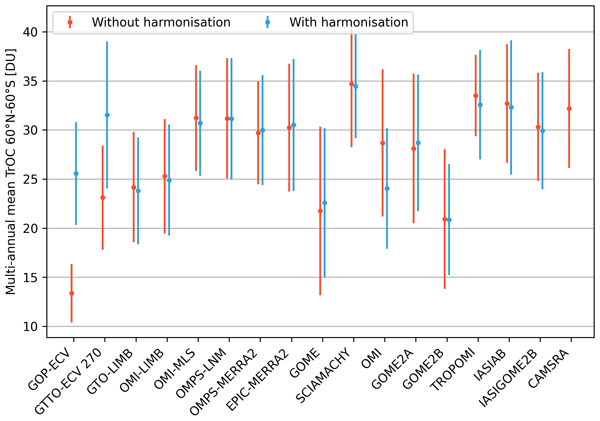
Arno Keppens, Daan Hubert, José Granville, Oindrila Nath, Jean-Christopher Lambert, Catherine Wespes, Pierre-François Coheur, Cathy Clerbaux, Anne Boynard, Richard Siddans, Barry Latter, Brian Kerridge, Serena Di Pede, Pepijn Veefkind, Juan Cuesta, Gaelle Dufour, Klaus-Peter Heue, Melanie Coldewey-Egbers, Diego Loyola, Andrea Orfanoz-Cheuquelaf, Swathi Maratt Satheesan, Kai-Uwe Eichmann, Alexei Rozanov, Viktoria F. Sofieva, Jerald R. Ziemke, Antje Inness, Roeland Van Malderen, and Lars Hoffmann
Atmos. Meas. Tech., 18, 6893–6916, https://doi.org/10.5194/amt-18-6893-2025, https://doi.org/10.5194/amt-18-6893-2025, 2025
Short summary
Short summary
The first Tropospheric Ozone Assessment Report (TOAR) encountered discrepancies between several satellite sensors’ estimates of the distribution and change of ozone in the free troposphere. Therefore, contributing to the second TOAR, we harmonise as much as possible the observational perspective of sixteen tropospheric ozone products from satellites. This only partially accounts for the observed discrepancies, with a reduction of 10–40 % of the inter-product dispersion upon harmonisation.
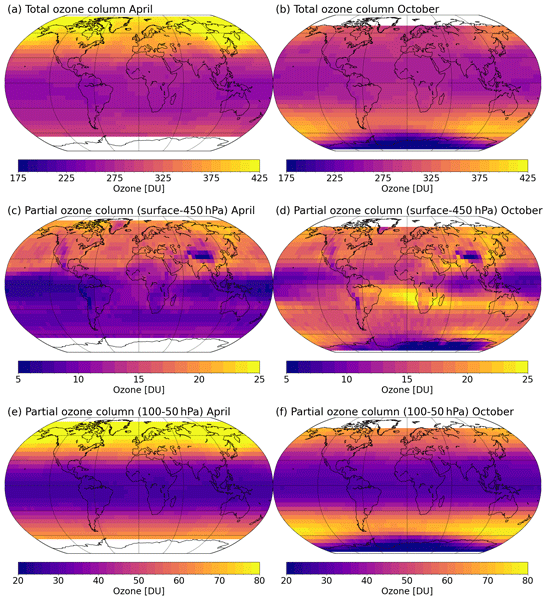
Melanie Coldewey-Egbers, Diego G. Loyola R., Barry Latter, Richard Siddans, Brian Kerridge, Daan Hubert, Michel van Roozendael, and Michael Eisinger
Atmos. Meas. Tech., 18, 5485–5505, https://doi.org/10.5194/amt-18-5485-2025, https://doi.org/10.5194/amt-18-5485-2025, 2025
Short summary
Short summary
The Global Ozone Monitoring Experiment (GOME)-type Ozone Profile Essential Climate Variable (GOP-ECV) data record provides monthly mean ozone profiles with global coverage from 1995 to 2021 at a spatial resolution of 5° × 5°. Measurements from five nadir-viewing satellite sensors are first harmonized and then merged into a coherent record. The long-term stability of the data record is further improved through scaling the profiles using the GOME-type Total Ozone Essential Climate Variable (GTO-ECV) data record as a reference.
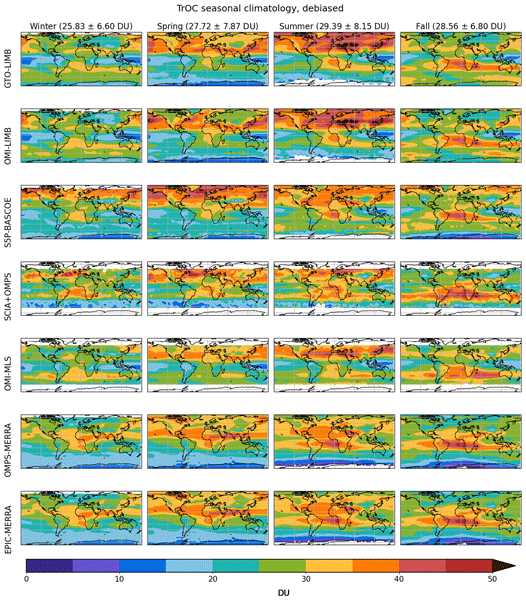
Carlo Arosio, Viktoria Sofieva, Andrea Orfanoz-Cheuquelaf, Alexei Rozanov, Klaus-Peter Heue, Diego Loyola, Edward Malina, Ryan M. Stauffer, David Tarasick, Roeland Van Malderen, Jerry R. Ziemke, and Mark Weber
Atmos. Meas. Tech., 18, 3247–3265, https://doi.org/10.5194/amt-18-3247-2025, https://doi.org/10.5194/amt-18-3247-2025, 2025
Short summary
Short summary
Tropospheric ozone affects air quality and climate, being a pollutant and a greenhouse gas. We analyze satellite data of tropospheric ozone columns obtained by combining two types of observations: one providing stratospheric and the other total ozone. We compare common climatological features and study the influence of the tropopause (troposphere to stratosphere boundary) on the results. We also examine trends over the last 20 years and compare satellite data with ozonesondes to identify drifts.
Francisco J. Pérez-Invernón, Francisco J. Gordillo-Vázquez, Heidi Huntrieser, Patrick Jöckel, and Eric J. Bucsela
Atmos. Chem. Phys., 25, 5557–5575, https://doi.org/10.5194/acp-25-5557-2025, https://doi.org/10.5194/acp-25-5557-2025, 2025
Short summary
Short summary
Lightning plays a significant role in tropospheric chemistry by producing substantial amounts of nitrogen oxides. According to recent estimates, thunderstorms that produce a higher lightning frequency rate also produce less nitrogen oxide per flash. We implemented the dependency of nitrogen oxide production per flash on lightning flash frequency in a chemical atmospheric model.
Cynthia H. Whaley, Tim Butler, Jose A. Adame, Rupal Ambulkar, Steve R. Arnold, Rebecca R. Buchholz, Benjamin Gaubert, Douglas S. Hamilton, Min Huang, Hayley Hung, Johannes W. Kaiser, Jacek W. Kaminski, Christoph Knote, Gerbrand Koren, Jean-Luc Kouassi, Meiyun Lin, Tianjia Liu, Jianmin Ma, Kasemsan Manomaiphiboon, Elisa Bergas Masso, Jessica L. McCarty, Mariano Mertens, Mark Parrington, Helene Peiro, Pallavi Saxena, Saurabh Sonwani, Vanisa Surapipith, Damaris Y. T. Tan, Wenfu Tang, Veerachai Tanpipat, Kostas Tsigaridis, Christine Wiedinmyer, Oliver Wild, Yuanyu Xie, and Paquita Zuidema
Geosci. Model Dev., 18, 3265–3309, https://doi.org/10.5194/gmd-18-3265-2025, https://doi.org/10.5194/gmd-18-3265-2025, 2025
Short summary
Short summary
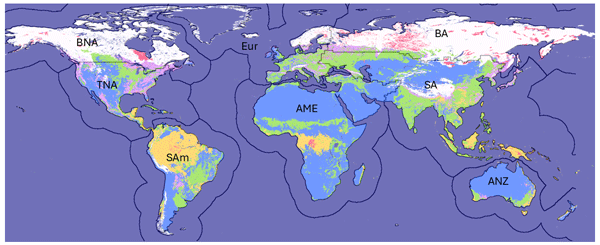
The multi-model experiment design of the HTAP3 Fires project takes a multi-pollutant approach to improving our understanding of transboundary transport of wildland fire and agricultural burning emissions and their impacts. The experiments are designed with the goal of answering science policy questions related to fires. The options for the multi-model approach, including inputs, outputs, and model setup, are discussed, and the official recommendations for the project are presented.
Pascal Hedelt, Jens Reichardt, Felix Lauermann, Benjamin Weiß, Nicolas Theys, Alberto Redondas, Africa Barreto, Omaira Garcia, and Diego Loyola
Atmos. Chem. Phys., 25, 1253–1272, https://doi.org/10.5194/acp-25-1253-2025, https://doi.org/10.5194/acp-25-1253-2025, 2025
Short summary
Short summary
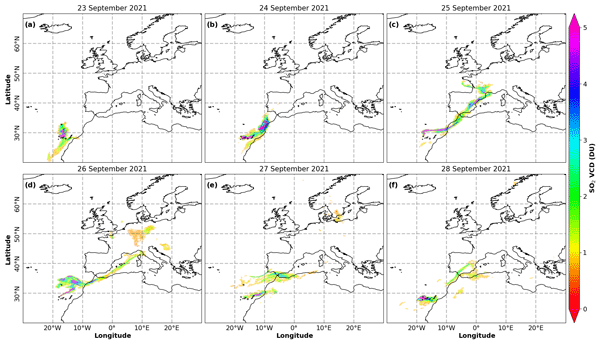
The 2021 volcanic eruption of Tajogaite on La Palma is investigated using ground-based and satellite measurements. In addition, the atmospheric transport of the volcanic cloud towards Europe is studied in detail. The amount of SO2 released during the eruption and the height of the volcanic plume are in excellent agreement among the different measurements. Furthermore, volcanic aerosol microphysical properties could be retrieved using a new retrieval approach based on lidar measurements.
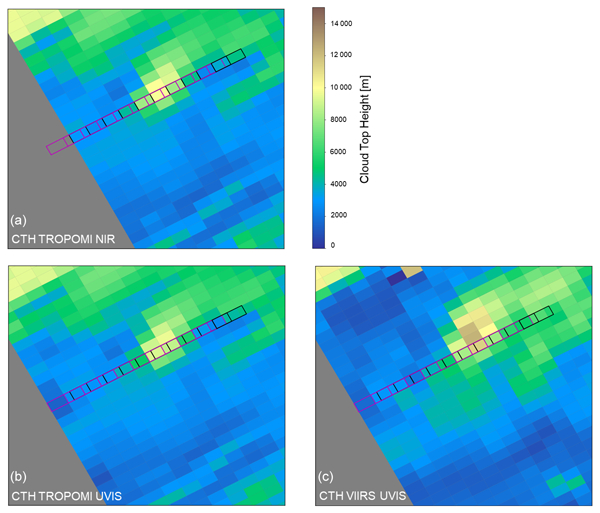
Athina Argyrouli, Diego Loyola, Fabian Romahn, Ronny Lutz, Víctor Molina García, Pascal Hedelt, Klaus-Peter Heue, and Richard Siddans
Atmos. Meas. Tech., 17, 6345–6367, https://doi.org/10.5194/amt-17-6345-2024, https://doi.org/10.5194/amt-17-6345-2024, 2024
Short summary
Short summary
This paper describes a new treatment of the spatial misregistration of cloud properties for Sentinel-5 Precursor, when the footprints of different spectral bands are not perfectly aligned. The methodology exploits synergies between spectrometers and imagers, like TROPOMI and VIIRS. The largest improvements have been identified for heterogeneous scenes at cloud edges. This approach is generic and can also be applied to future Sentinel-4 and Sentinel-5 instruments.
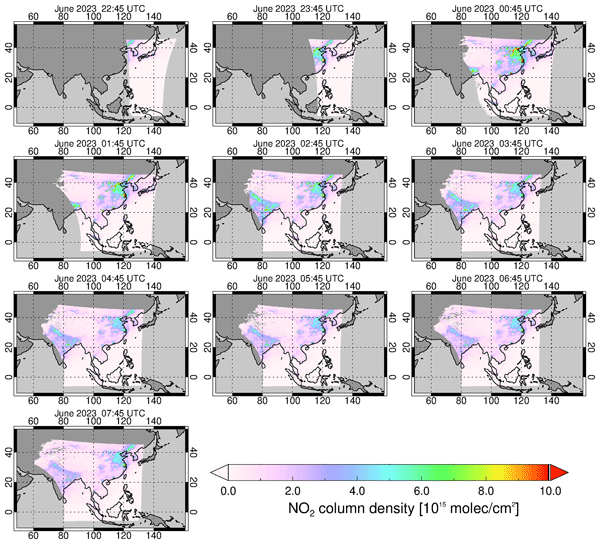
Sora Seo, Pieter Valks, Ronny Lutz, Klaus-Peter Heue, Pascal Hedelt, Víctor Molina García, Diego Loyola, Hanlim Lee, and Jhoon Kim
Atmos. Meas. Tech., 17, 6163–6191, https://doi.org/10.5194/amt-17-6163-2024, https://doi.org/10.5194/amt-17-6163-2024, 2024
Short summary
Short summary
In this study, we developed an advanced retrieval algorithm for tropospheric NO2 columns from geostationary satellite spectrometers and applied it to GEMS measurements. The DLR GEMS NO2 retrieval algorithm follows the heritage from previous and existing algorithms, but improved approaches are applied to reflect the specific features of geostationary satellites. The DLR GEMS NO2 retrievals demonstrate a good capability for monitoring diurnal variability with a high spatial resolution.
Sergio Soler, Francisco J. Gordillo-Vázquez, Francisco J. Pérez-Invernón, Patrick Jöckel, Torsten Neubert, Olivier Chanrion, Victor Reglero, and Nikolai Østgaard
Atmos. Chem. Phys., 24, 10225–10243, https://doi.org/10.5194/acp-24-10225-2024, https://doi.org/10.5194/acp-24-10225-2024, 2024
Short summary
Short summary
Sudden local ozone (O3) enhancements have been reported in different regions of the world since the 1970s. While the hot channel of lightning strokes directly produce significant amounts of nitrogen oxide, no direct emission of O3 is expected. Corona discharges in convective active regions could explain local O3 increases, which remains unexplained. We present the first mathematical functions that relate the global annual frequency of in-cloud coronas with four sets of meteorological variables.
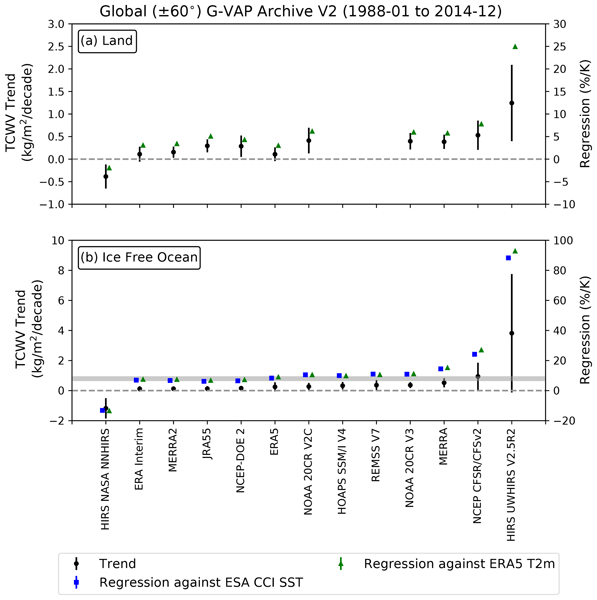
Tim Trent, Marc Schröder, Shu-Peng Ho, Steffen Beirle, Ralf Bennartz, Eva Borbas, Christian Borger, Helene Brogniez, Xavier Calbet, Elisa Castelli, Gilbert P. Compo, Wesley Ebisuzaki, Ulrike Falk, Frank Fell, John Forsythe, Hans Hersbach, Misako Kachi, Shinya Kobayashi, Robert E. Kursinski, Diego Loyola, Zhengzao Luo, Johannes K. Nielsen, Enzo Papandrea, Laurence Picon, Rene Preusker, Anthony Reale, Lei Shi, Laura Slivinski, Joao Teixeira, Tom Vonder Haar, and Thomas Wagner
Atmos. Chem. Phys., 24, 9667–9695, https://doi.org/10.5194/acp-24-9667-2024, https://doi.org/10.5194/acp-24-9667-2024, 2024
Short summary
Short summary
In a warmer future, water vapour will spend more time in the atmosphere, changing global rainfall patterns. In this study, we analysed the performance of 28 water vapour records between 1988 and 2014. We find sensitivity to surface warming generally outside expected ranges, attributed to breakpoints in individual record trends and differing representations of climate variability. The implication is that longer records are required for high confidence in assessing climate trends.
Francisco J. Pérez-Invernón, Francisco J. Gordillo-Vázquez, Alejandro Malagón-Romero, and Patrick Jöckel
Atmos. Chem. Phys., 24, 3577–3592, https://doi.org/10.5194/acp-24-3577-2024, https://doi.org/10.5194/acp-24-3577-2024, 2024
Short summary
Short summary
Sprites are electrical discharges that occur in the upper atmosphere. Recent modelling and observational data suggest that they may have a measurable impact on atmospheric chemistry. We incorporate both the occurrence rate of sprites and their production of chemical species into a chemistry–climate model. While our results indicate that sprites have a minimal global influence on atmospheric chemistry, they underscore their noteworthy importance at a regional scale.
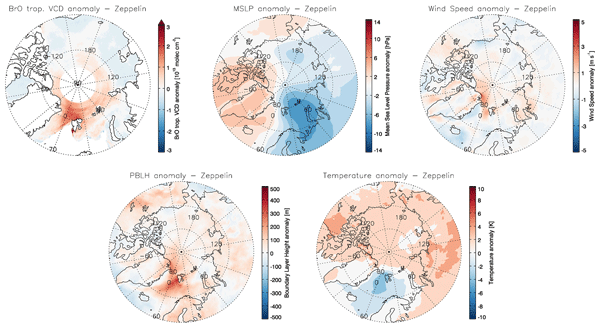
Bianca Zilker, Andreas Richter, Anne-Marlene Blechschmidt, Peter von der Gathen, Ilias Bougoudis, Sora Seo, Tim Bösch, and John Philip Burrows
Atmos. Chem. Phys., 23, 9787–9814, https://doi.org/10.5194/acp-23-9787-2023, https://doi.org/10.5194/acp-23-9787-2023, 2023
Short summary
Short summary
During Arctic spring, near-surface ozone is depleted by bromine released from salty sea ice and/or snow-covered areas under certain meteorological conditions. To study this ozone depletion and the prevailing meteorological conditions, two ozone data sets from Ny-Ålesund, Svalbard, have been evaluated. We found that during ozone depletion events lower pressure over the Barents Sea and higher pressure in the Icelandic Low area led to a transport of cold polar air from the north to Ny-Ålesund.
Bin Zhou and Christoph Knote
Nat. Hazards Earth Syst. Sci. Discuss., https://doi.org/10.5194/nhess-2023-111, https://doi.org/10.5194/nhess-2023-111, 2023
Publication in NHESS not foreseen
Short summary
Short summary
This study estimates the loss of life caused by wildfires in the eastern and central Mediterranean basin in summer 2021. We used a computer model to simulate concentrations of air pollutants emitted from wildfires and estimated the resulting excess human deaths based on the most relevant evidence from literature. We found that wildfire-caused air pollution accounted for several hundred excess deaths. We estimate the effects of ozone to exceed those of particles created by wildfires.
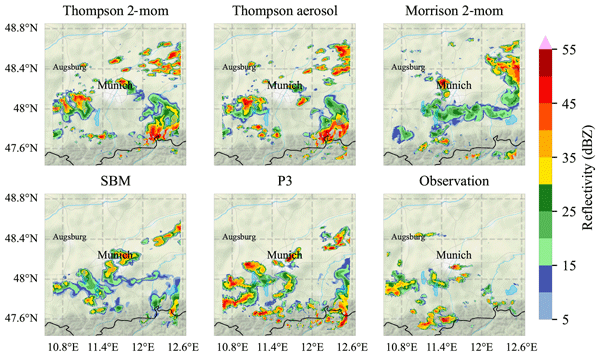
Gregor Köcher, Tobias Zinner, and Christoph Knote
Atmos. Chem. Phys., 23, 6255–6269, https://doi.org/10.5194/acp-23-6255-2023, https://doi.org/10.5194/acp-23-6255-2023, 2023
Short summary
Short summary
Polarimetric radar observations of 30 d of convective precipitation events are used to statistically analyze 5 state-of-the-art microphysics schemes of varying complexity. The frequency and area of simulated heavy-precipitation events are in some cases significantly different from those observed, depending on the microphysics scheme. Analysis of simulated particle size distributions and reflectivities shows that some schemes have problems reproducing the correct particle size distributions.
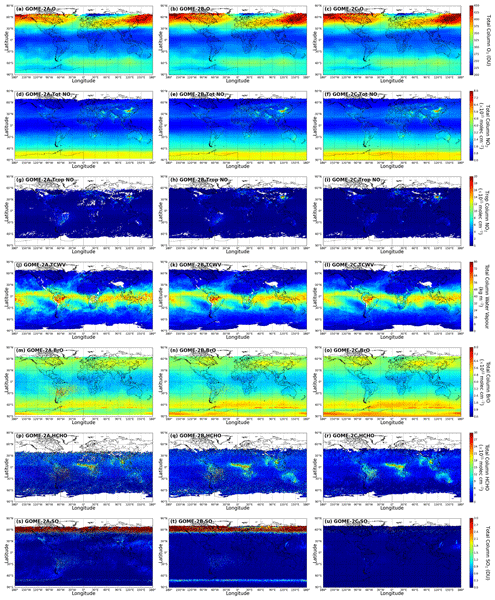
Ka Lok Chan, Pieter Valks, Klaus-Peter Heue, Ronny Lutz, Pascal Hedelt, Diego Loyola, Gaia Pinardi, Michel Van Roozendael, François Hendrick, Thomas Wagner, Vinod Kumar, Alkis Bais, Ankie Piters, Hitoshi Irie, Hisahiro Takashima, Yugo Kanaya, Yongjoo Choi, Kihong Park, Jihyo Chong, Alexander Cede, Udo Frieß, Andreas Richter, Jianzhong Ma, Nuria Benavent, Robert Holla, Oleg Postylyakov, Claudia Rivera Cárdenas, and Mark Wenig
Earth Syst. Sci. Data, 15, 1831–1870, https://doi.org/10.5194/essd-15-1831-2023, https://doi.org/10.5194/essd-15-1831-2023, 2023
Short summary
Short summary
This paper presents the theoretical basis as well as verification and validation of the Global Ozone Monitoring Experiment-2 (GOME-2) daily and monthly level-3 products.
Jose V. Moris, Pedro Álvarez-Álvarez, Marco Conedera, Annalie Dorph, Thomas D. Hessilt, Hugh G. P. Hunt, Renata Libonati, Lucas S. Menezes, Mortimer M. Müller, Francisco J. Pérez-Invernón, Gianni B. Pezzatti, Nicolau Pineda, Rebecca C. Scholten, Sander Veraverbeke, B. Mike Wotton, and Davide Ascoli
Earth Syst. Sci. Data, 15, 1151–1163, https://doi.org/10.5194/essd-15-1151-2023, https://doi.org/10.5194/essd-15-1151-2023, 2023
Short summary
Short summary
This work describes a database on holdover times of lightning-ignited wildfires (LIWs). Holdover time is defined as the time between lightning-induced fire ignition and fire detection. The database contains 42 datasets built with data on more than 152 375 LIWs from 13 countries in five continents from 1921 to 2020. This database is the first freely-available, harmonized and ready-to-use global source of holdover time data, which may be used to investigate LIWs and model the holdover phenomenon.

Katerina Garane, Ka Lok Chan, Maria-Elissavet Koukouli, Diego Loyola, and Dimitris Balis
Atmos. Meas. Tech., 16, 57–74, https://doi.org/10.5194/amt-16-57-2023, https://doi.org/10.5194/amt-16-57-2023, 2023
Short summary
Short summary
In this work, 2.5 years of TROPOMI/S5P Total Column Water Vapor (TCWV) observations retrieved from the blue wavelength band are validated against co-located precipitable water measurements from NASA AERONET, which uses Cimel Sun photometers globally. Overall, the TCWV product agrees well on a global scale with the ground-based dataset (Pearson correl. coefficient 0.909) and has a mean relative bias of −2.7 ± 4.9 % with respect to the AERONET observations for moderate albedo and cloudiness.
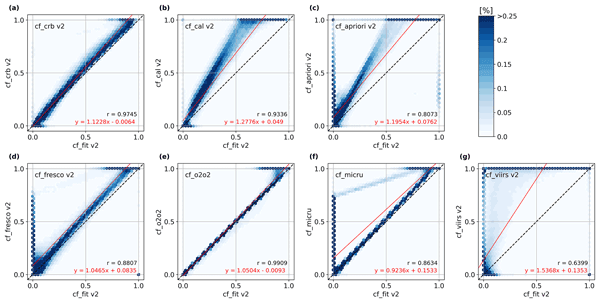
Miriam Latsch, Andreas Richter, Henk Eskes, Maarten Sneep, Ping Wang, Pepijn Veefkind, Ronny Lutz, Diego Loyola, Athina Argyrouli, Pieter Valks, Thomas Wagner, Holger Sihler, Michel van Roozendael, Nicolas Theys, Huan Yu, Richard Siddans, and John P. Burrows
Atmos. Meas. Tech., 15, 6257–6283, https://doi.org/10.5194/amt-15-6257-2022, https://doi.org/10.5194/amt-15-6257-2022, 2022
Short summary
Short summary
The article investigates different S5P TROPOMI cloud retrieval algorithms for tropospheric trace gas retrievals. The cloud products show differences primarily over snow and ice and for scenes under sun glint. Some issues regarding across-track dependence are found for the cloud fractions as well as for the cloud heights.
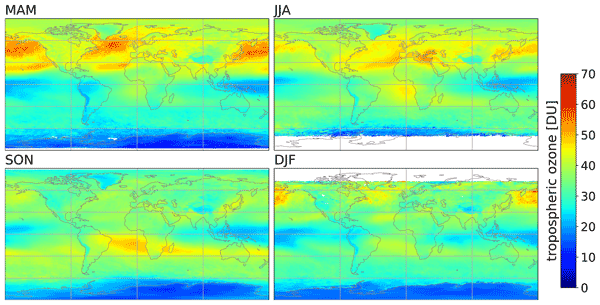
Klaus-Peter Heue, Diego Loyola, Fabian Romahn, Walter Zimmer, Simon Chabrillat, Quentin Errera, Jerry Ziemke, and Natalya Kramarova
Atmos. Meas. Tech., 15, 5563–5579, https://doi.org/10.5194/amt-15-5563-2022, https://doi.org/10.5194/amt-15-5563-2022, 2022
Short summary
Short summary
To retrieve tropospheric ozone column information, we subtract stratospheric column data of BASCOE from TROPOMI/S5P total ozone columns.
The new S5P-BASCOE data agree well with existing tropospheric data like OMPS-MERRA-2. The data are also compared to ozone soundings.
The tropospheric ozone columns show the expected temporal and spatial patterns. We will also apply the algorithm to future UV nadir missions like Sentinel 4 or 5 or to recent and ongoing missions like GOME_2 or OMI.
Pieternel F. Levelt, Deborah C. Stein Zweers, Ilse Aben, Maite Bauwens, Tobias Borsdorff, Isabelle De Smedt, Henk J. Eskes, Christophe Lerot, Diego G. Loyola, Fabian Romahn, Trissevgeni Stavrakou, Nicolas Theys, Michel Van Roozendael, J. Pepijn Veefkind, and Tijl Verhoelst
Atmos. Chem. Phys., 22, 10319–10351, https://doi.org/10.5194/acp-22-10319-2022, https://doi.org/10.5194/acp-22-10319-2022, 2022
Short summary
Short summary
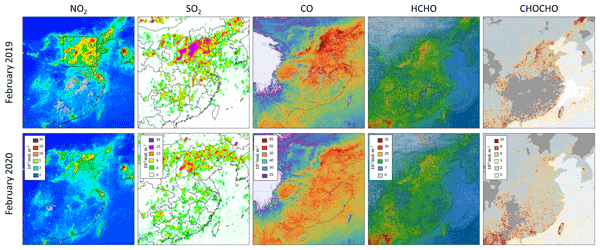
Using the COVID-19 lockdown periods as an example, we show how Sentinel-5P/TROPOMI trace gas data (NO2, SO2, CO, HCHO and CHOCHO) can be used to understand impacts on air quality for regions and cities around the globe. We also provide information for both experienced and inexperienced users about how we created the data using state-of-the-art algorithms, where to get the data, methods taking meteorological and seasonal variability into consideration, and insights for future studies.
Francisco J. Pérez-Invernón, Heidi Huntrieser, Thilo Erbertseder, Diego Loyola, Pieter Valks, Song Liu, Dale J. Allen, Kenneth E. Pickering, Eric J. Bucsela, Patrick Jöckel, Jos van Geffen, Henk Eskes, Sergio Soler, Francisco J. Gordillo-Vázquez, and Jeff Lapierre
Atmos. Meas. Tech., 15, 3329–3351, https://doi.org/10.5194/amt-15-3329-2022, https://doi.org/10.5194/amt-15-3329-2022, 2022
Short summary
Short summary
Lightning, one of the major sources of nitrogen oxides in the atmosphere, contributes to the tropospheric concentration of ozone and to the oxidizing capacity of the atmosphere. In this work, we contribute to improving the estimation of lightning-produced nitrogen oxides in the Ebro Valley and the Pyrenees by using two different TROPOMI products and comparing the results.
Nicolau Pineda, Juan Carlos Peña, Xavier Soler, Montse Aran, and Núria Pérez-Zanón
Adv. Sci. Res., 19, 39–49, https://doi.org/10.5194/asr-19-39-2022, https://doi.org/10.5194/asr-19-39-2022, 2022
Short summary
Short summary
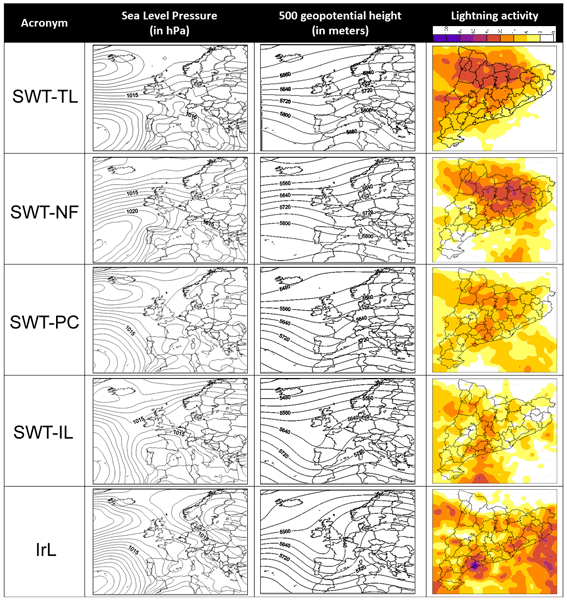
Wildfire origins can be related to human activity or to natural phenomena, like lightning. Under favourable environmental conditions, lightning ignitions can develop into a fire. In the present study, we analyse the kind of weather that favours wildfires ignited by lightning in Catalonia. We have found that most fires occur under three types of weather. These results help to improve our understanding of lightning fires and are of great assistance to wildfire management agencies.
Melanie Coldewey-Egbers, Diego G. Loyola, Christophe Lerot, and Michel Van Roozendael
Atmos. Chem. Phys., 22, 6861–6878, https://doi.org/10.5194/acp-22-6861-2022, https://doi.org/10.5194/acp-22-6861-2022, 2022
Short summary
Short summary
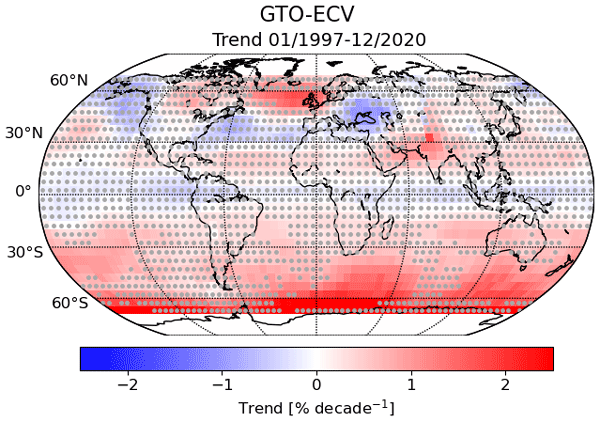
Monitoring the long-term evolution of ozone and the evaluation of trends is essential to assess the efficacy of the Montreal Protocol and its amendments. The first signs of recovery as a consequence of decreasing amounts of ozone-depleting substances have been reported, but the impact needs to be investigated in more detail. In the Southern Hemisphere significant positive trends were found, but in the Northern Hemisphere the expected increase is still not yet visible.

Mark Weber, Carlo Arosio, Melanie Coldewey-Egbers, Vitali E. Fioletov, Stacey M. Frith, Jeannette D. Wild, Kleareti Tourpali, John P. Burrows, and Diego Loyola
Atmos. Chem. Phys., 22, 6843–6859, https://doi.org/10.5194/acp-22-6843-2022, https://doi.org/10.5194/acp-22-6843-2022, 2022
Short summary
Short summary
Long-term trends in column ozone have been determined from five merged total ozone datasets spanning the period 1978–2020. We show that ozone recovery due to the decline in stratospheric halogens after the 1990s (as regulated by the Montreal Protocol) is evident outside the tropical region and amounts to half a percent per decade. The ozone recovery in the Northern Hemisphere is however compensated for by the negative long-term trend contribution from atmospheric dynamics since the year 2000.
Andreas Luther, Julian Kostinek, Ralph Kleinschek, Sara Defratyka, Mila Stanisavljević, Andreas Forstmaier, Alexandru Dandocsi, Leon Scheidweiler, Darko Dubravica, Norman Wildmann, Frank Hase, Matthias M. Frey, Jia Chen, Florian Dietrich, Jarosław Nȩcki, Justyna Swolkień, Christoph Knote, Sanam N. Vardag, Anke Roiger, and André Butz
Atmos. Chem. Phys., 22, 5859–5876, https://doi.org/10.5194/acp-22-5859-2022, https://doi.org/10.5194/acp-22-5859-2022, 2022
Short summary
Short summary
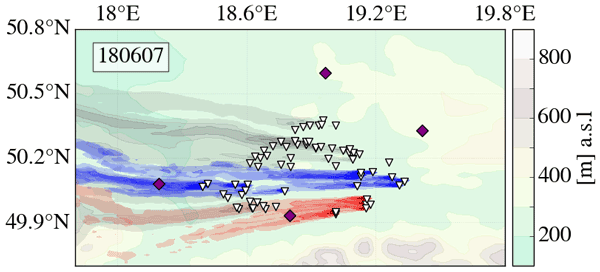
Coal mining is an extensive source of anthropogenic methane emissions. In order to reduce and mitigate methane emissions, it is important to know how much and where the methane is emitted. We estimated coal mining methane emissions in Poland based on atmospheric methane measurements and particle dispersion modeling. In general, our emission estimates suggest higher emissions than expected by previous annual emission reports.
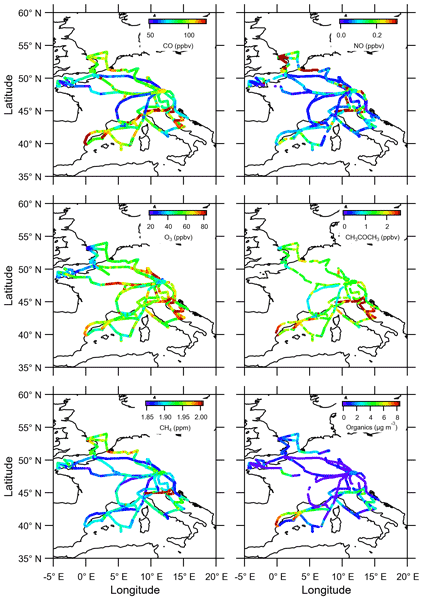
M. Dolores Andrés Hernández, Andreas Hilboll, Helmut Ziereis, Eric Förster, Ovid O. Krüger, Katharina Kaiser, Johannes Schneider, Francesca Barnaba, Mihalis Vrekoussis, Jörg Schmidt, Heidi Huntrieser, Anne-Marlene Blechschmidt, Midhun George, Vladyslav Nenakhov, Theresa Harlass, Bruna A. Holanda, Jennifer Wolf, Lisa Eirenschmalz, Marc Krebsbach, Mira L. Pöhlker, Anna B. Kalisz Hedegaard, Linlu Mei, Klaus Pfeilsticker, Yangzhuoran Liu, Ralf Koppmann, Hans Schlager, Birger Bohn, Ulrich Schumann, Andreas Richter, Benjamin Schreiner, Daniel Sauer, Robert Baumann, Mariano Mertens, Patrick Jöckel, Markus Kilian, Greta Stratmann, Christopher Pöhlker, Monica Campanelli, Marco Pandolfi, Michael Sicard, José L. Gómez-Amo, Manuel Pujadas, Katja Bigge, Flora Kluge, Anja Schwarz, Nikos Daskalakis, David Walter, Andreas Zahn, Ulrich Pöschl, Harald Bönisch, Stephan Borrmann, Ulrich Platt, and John P. Burrows
Atmos. Chem. Phys., 22, 5877–5924, https://doi.org/10.5194/acp-22-5877-2022, https://doi.org/10.5194/acp-22-5877-2022, 2022
Short summary
Short summary
EMeRGe provides a unique set of in situ and remote sensing airborne measurements of trace gases and aerosol particles along selected flight routes in the lower troposphere over Europe. The interpretation uses also complementary collocated ground-based and satellite measurements. The collected data help to improve the current understanding of the complex spatial distribution of trace gases and aerosol particles resulting from mixing, transport, and transformation of pollution plumes over Europe.
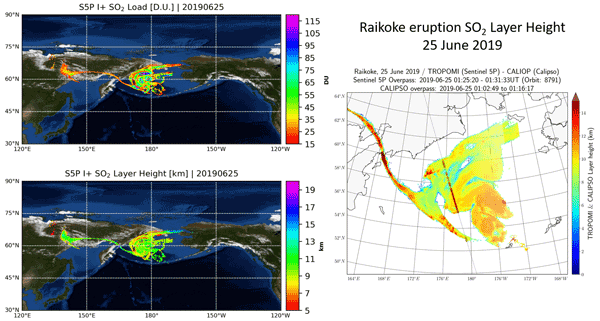
Maria-Elissavet Koukouli, Konstantinos Michailidis, Pascal Hedelt, Isabelle A. Taylor, Antje Inness, Lieven Clarisse, Dimitris Balis, Dmitry Efremenko, Diego Loyola, Roy G. Grainger, and Christian Retscher
Atmos. Chem. Phys., 22, 5665–5683, https://doi.org/10.5194/acp-22-5665-2022, https://doi.org/10.5194/acp-22-5665-2022, 2022
Short summary
Short summary
Volcanic eruptions eject large amounts of ash and trace gases into the atmosphere. The use of space-borne instruments enables the global monitoring of volcanic SO2 emissions in an economical and risk-free manner. The main aim of this paper is to present its extensive verification, accomplished within the ESA S5P+I: SO2LH project, over major recent volcanic eruptions, against collocated space-borne measurements, as well as assess its impact on the forecasts provided by CAMS.
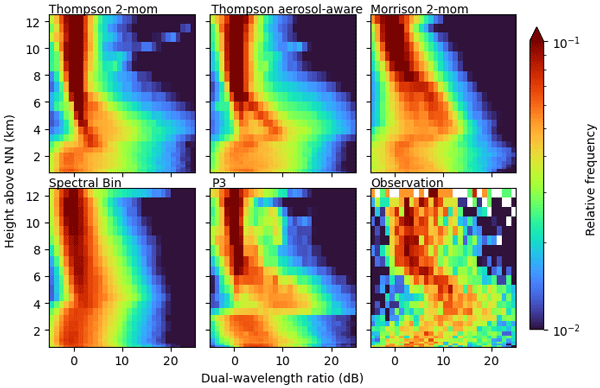
Gregor Köcher, Tobias Zinner, Christoph Knote, Eleni Tetoni, Florian Ewald, and Martin Hagen
Atmos. Meas. Tech., 15, 1033–1054, https://doi.org/10.5194/amt-15-1033-2022, https://doi.org/10.5194/amt-15-1033-2022, 2022
Short summary
Short summary
We present a setup for systematic characterization of differences between numerical weather models and radar observations for convective weather situations. Radar observations providing dual-wavelength and polarimetric variables to infer information about hydrometeor shapes and sizes are compared against simulations using microphysics schemes of varying complexity. Differences are found in ice and liquid phase, pointing towards issues of some schemes in reproducing particle size distributions.
Francisco J. Pérez-Invernón, Heidi Huntrieser, Patrick Jöckel, and Francisco J. Gordillo-Vázquez
Geosci. Model Dev., 15, 1545–1565, https://doi.org/10.5194/gmd-15-1545-2022, https://doi.org/10.5194/gmd-15-1545-2022, 2022
Short summary
Short summary
This study reports the first parameterization of long-continuing-current lightning in a climate model. Long-continuing-current lightning is proposed to be the main precursor of lightning-ignited wildfires and sprites, a type of transient luminous event taking place in the mesosphere. This parameterization can significantly contribute to improving the implementation of wildfires in climate models.
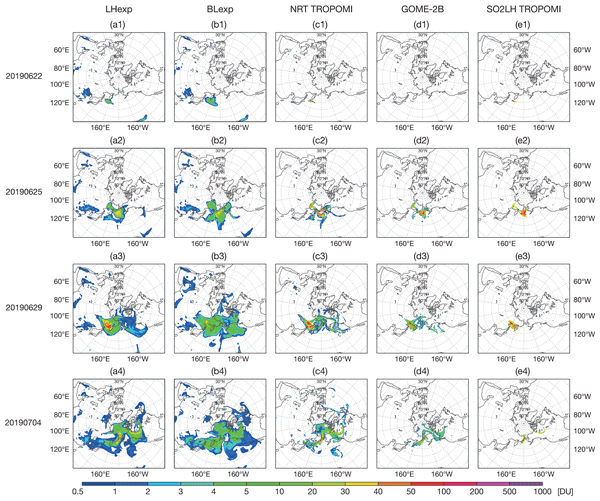
Antje Inness, Melanie Ades, Dimitris Balis, Dmitry Efremenko, Johannes Flemming, Pascal Hedelt, Maria-Elissavet Koukouli, Diego Loyola, and Roberto Ribas
Geosci. Model Dev., 15, 971–994, https://doi.org/10.5194/gmd-15-971-2022, https://doi.org/10.5194/gmd-15-971-2022, 2022
Short summary
Short summary
This paper describes the way that the Copernicus Atmosphere Monitoring Service (CAMS) produces forecasts of volcanic SO2. These forecasts are provided routinely every day. They are created by blending SO2 data from satellite instruments (TROPOMI and GOME-2) with the CAMS model. We show that the quality of the CAMS SO2 forecasts can be improved if additional information about the height of volcanic plumes is provided in the satellite data.
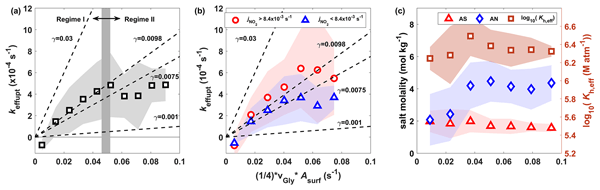
Dongwook Kim, Changmin Cho, Seokhan Jeong, Soojin Lee, Benjamin A. Nault, Pedro Campuzano-Jost, Douglas A. Day, Jason C. Schroder, Jose L. Jimenez, Rainer Volkamer, Donald R. Blake, Armin Wisthaler, Alan Fried, Joshua P. DiGangi, Glenn S. Diskin, Sally E. Pusede, Samuel R. Hall, Kirk Ullmann, L. Gregory Huey, David J. Tanner, Jack Dibb, Christoph J. Knote, and Kyung-Eun Min
Atmos. Chem. Phys., 22, 805–821, https://doi.org/10.5194/acp-22-805-2022, https://doi.org/10.5194/acp-22-805-2022, 2022
Short summary
Short summary
CHOCHO was simulated using a 0-D box model constrained by measurements during the KORUS-AQ mission. CHOCHO concentration was high in large cities, aromatics being the most important precursors. Loss path to aerosol was the highest sink, contributing to ~ 20 % of secondary organic aerosol formation. Our work highlights that simple CHOCHO surface uptake approach is valid only for low aerosol conditions and more work is required to understand CHOCHO solubility in high-aerosol conditions.
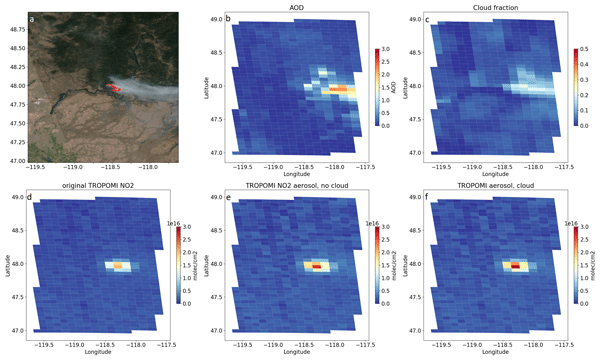
Debora Griffin, Chris A. McLinden, Enrico Dammers, Cristen Adams, Chelsea E. Stockwell, Carsten Warneke, Ilann Bourgeois, Jeff Peischl, Thomas B. Ryerson, Kyle J. Zarzana, Jake P. Rowe, Rainer Volkamer, Christoph Knote, Natalie Kille, Theodore K. Koenig, Christopher F. Lee, Drew Rollins, Pamela S. Rickly, Jack Chen, Lukas Fehr, Adam Bourassa, Doug Degenstein, Katherine Hayden, Cristian Mihele, Sumi N. Wren, John Liggio, Ayodeji Akingunola, and Paul Makar
Atmos. Meas. Tech., 14, 7929–7957, https://doi.org/10.5194/amt-14-7929-2021, https://doi.org/10.5194/amt-14-7929-2021, 2021
Short summary
Short summary
Satellite-derived NOx emissions from biomass burning are estimated with TROPOMI observations. Two common emission estimation methods are applied, and sensitivity tests with model output were performed to determine the accuracy of these methods. The effect of smoke aerosols on TROPOMI NO2 columns is estimated and compared to aircraft observations from four different aircraft campaigns measuring biomass burning plumes in 2018 and 2019 in North America.
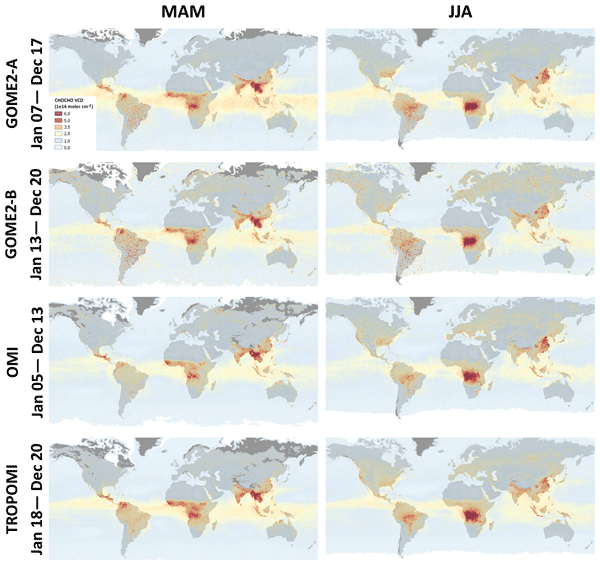
Christophe Lerot, François Hendrick, Michel Van Roozendael, Leonardo M. A. Alvarado, Andreas Richter, Isabelle De Smedt, Nicolas Theys, Jonas Vlietinck, Huan Yu, Jeroen Van Gent, Trissevgeni Stavrakou, Jean-François Müller, Pieter Valks, Diego Loyola, Hitoshi Irie, Vinod Kumar, Thomas Wagner, Stefan F. Schreier, Vinayak Sinha, Ting Wang, Pucai Wang, and Christian Retscher
Atmos. Meas. Tech., 14, 7775–7807, https://doi.org/10.5194/amt-14-7775-2021, https://doi.org/10.5194/amt-14-7775-2021, 2021
Short summary
Short summary
Global measurements of glyoxal tropospheric columns from the satellite instrument TROPOMI are presented. Such measurements can contribute to the estimation of atmospheric emissions of volatile organic compounds. This new glyoxal product has been fully characterized with a comprehensive error budget, with comparison with other satellite data sets as well as with validation based on independent ground-based remote sensing glyoxal observations.
Francisco J. Pérez-Invernón, Heidi Huntrieser, Sergio Soler, Francisco J. Gordillo-Vázquez, Nicolau Pineda, Javier Navarro-González, Víctor Reglero, Joan Montanyà, Oscar van der Velde, and Nikos Koutsias
Atmos. Chem. Phys., 21, 17529–17557, https://doi.org/10.5194/acp-21-17529-2021, https://doi.org/10.5194/acp-21-17529-2021, 2021
Short summary
Short summary
Lightning-ignited fires tend to occur in remote areas and can spread significantly before suppression. Long continuing current (LCC) lightning, preferably taking place in dry thunderstorms, is believed to be the main precursor of lightning-ignited fires. We analyze fire databases of lightning-ignited fires in the Mediterranean basin and report the shared meteorological conditions of fire- and LCC-lightning-producing thunderstorms. These results can be useful to improve fire forecasting methods.
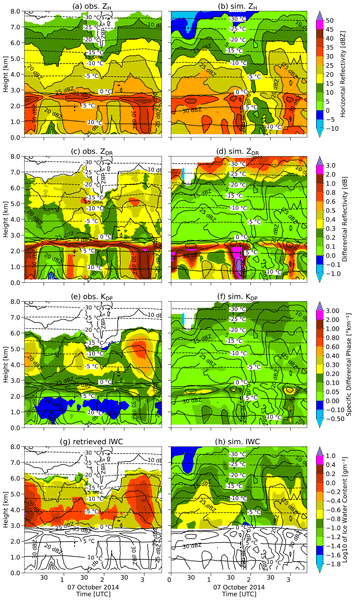
Silke Trömel, Clemens Simmer, Ulrich Blahak, Armin Blanke, Sabine Doktorowski, Florian Ewald, Michael Frech, Mathias Gergely, Martin Hagen, Tijana Janjic, Heike Kalesse-Los, Stefan Kneifel, Christoph Knote, Jana Mendrok, Manuel Moser, Gregor Köcher, Kai Mühlbauer, Alexander Myagkov, Velibor Pejcic, Patric Seifert, Prabhakar Shrestha, Audrey Teisseire, Leonie von Terzi, Eleni Tetoni, Teresa Vogl, Christiane Voigt, Yuefei Zeng, Tobias Zinner, and Johannes Quaas
Atmos. Chem. Phys., 21, 17291–17314, https://doi.org/10.5194/acp-21-17291-2021, https://doi.org/10.5194/acp-21-17291-2021, 2021
Short summary
Short summary
The article introduces the ACP readership to ongoing research in Germany on cloud- and precipitation-related process information inherent in polarimetric radar measurements, outlines pathways to inform atmospheric models with radar-based information, and points to remaining challenges towards an improved fusion of radar polarimetry and atmospheric modelling.
Daan Hubert, Klaus-Peter Heue, Jean-Christopher Lambert, Tijl Verhoelst, Marc Allaart, Steven Compernolle, Patrick D. Cullis, Angelika Dehn, Christian Félix, Bryan J. Johnson, Arno Keppens, Debra E. Kollonige, Christophe Lerot, Diego Loyola, Matakite Maata, Sukarni Mitro, Maznorizan Mohamad, Ankie Piters, Fabian Romahn, Henry B. Selkirk, Francisco R. da Silva, Ryan M. Stauffer, Anne M. Thompson, J. Pepijn Veefkind, Holger Vömel, Jacquelyn C. Witte, and Claus Zehner
Atmos. Meas. Tech., 14, 7405–7433, https://doi.org/10.5194/amt-14-7405-2021, https://doi.org/10.5194/amt-14-7405-2021, 2021
Short summary
Short summary
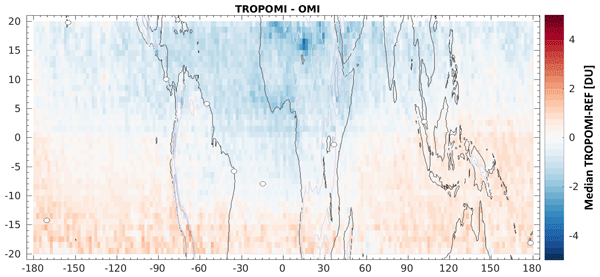
We assess the first 2 years of TROPOMI tropical tropospheric ozone column data. Comparisons to reference measurements by ozonesonde and satellite sensors show that TROPOMI bias (−0.1 to +2.3 DU) and precision (1.5 to 2.5 DU) meet mission requirements. Potential causes of bias and its spatio-temporal structure are discussed, as well as ways to identify sampling errors. Our analysis of known geophysical patterns demonstrates the improved performance of TROPOMI with respect to its predecessors.
Song Liu, Pieter Valks, Gaia Pinardi, Jian Xu, Ka Lok Chan, Athina Argyrouli, Ronny Lutz, Steffen Beirle, Ehsan Khorsandi, Frank Baier, Vincent Huijnen, Alkiviadis Bais, Sebastian Donner, Steffen Dörner, Myrto Gratsea, François Hendrick, Dimitris Karagkiozidis, Kezia Lange, Ankie J. M. Piters, Julia Remmers, Andreas Richter, Michel Van Roozendael, Thomas Wagner, Mark Wenig, and Diego G. Loyola
Atmos. Meas. Tech., 14, 7297–7327, https://doi.org/10.5194/amt-14-7297-2021, https://doi.org/10.5194/amt-14-7297-2021, 2021
Short summary
Short summary
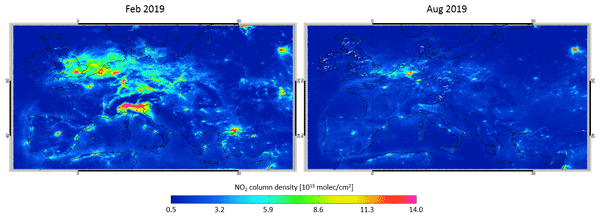
In this work, an improved tropospheric NO2 retrieval algorithm from TROPOMI measurements over Europe is presented. The stratospheric estimation is implemented with correction for the dependency of the stratospheric NO2 on the viewing geometry. The AMF calculation is implemented using improved surface albedo, a priori NO2 profiles, and cloud correction. The improved tropospheric NO2 data show good correlations with ground-based MAX-DOAS measurements.
Nicolas Theys, Vitali Fioletov, Can Li, Isabelle De Smedt, Christophe Lerot, Chris McLinden, Nickolay Krotkov, Debora Griffin, Lieven Clarisse, Pascal Hedelt, Diego Loyola, Thomas Wagner, Vinod Kumar, Antje Innes, Roberto Ribas, François Hendrick, Jonas Vlietinck, Hugues Brenot, and Michel Van Roozendael
Atmos. Chem. Phys., 21, 16727–16744, https://doi.org/10.5194/acp-21-16727-2021, https://doi.org/10.5194/acp-21-16727-2021, 2021
Short summary
Short summary
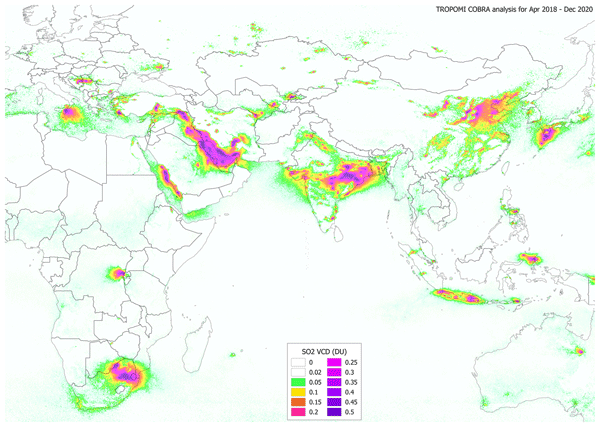
We present a new algorithm to retrieve sulfur dioxide from space UV measurements. We apply the technique to high-resolution TROPOMI measurements and demonstrate the high sensitivity of the approach to weak SO2 emissions worldwide with an unprecedented limit of detection of 8 kt yr−1. This result has broad implications for atmospheric science studies dealing with improving emission inventories and identifying and quantifying missing sources, in the context of air quality and climate.
Cited articles
Allen, D., Pickering, K. E., Bucsela, E., Van Geffen, J., Lapierre, J., Koshak, W., and Eskes, H.: Observations of Lightning NOx Production From Tropospheric Monitoring Instrument Case Studies Over the United States, J. Geophys. Res.-Atmos., 126, e2020JD034174, https://doi.org/10.1029/2020JD034174, 2021a. a, b, c, d, e, f, g, h, i, j, k, l, m, n, o, p, q
Allen, D. J. and Pickering, K. E.: Evaluation of lightning flash rate parameterizations for use in a global chemical transport model, J. Geophys. Res.-Atmos., 107, ACH–15, https://doi.org/10.1029/2002JD002066, 2002. a
Allen, D. J., Pickering, K. E., Bucsela, E., Krotkov, N., and Holzworth, R.: Lightning NOx production in the tropics as determined using OMI NO2 retrievals and WWLLN stroke data, J. Geophys. Res.-Atmos., 124, 13498–13518, https://doi.org/10.1029/2018JD029824, 2019. a, b
Allen, D. J., Pickering, K. E., Lamsal, L., Mach, D. M., Quick, M. G., Lapierre, J., Janz, S., Koshak, W., Kowalewski, M., and Blakeslee, R.: Observations of Lightning NOx Production From GOES R Post Launch Test Field Campaign Flights, J. Geophys. Res.-Atmos., 126, e33769, https://doi.org/10.1029/2020JD033769, 2021b. a, b
Barth, M. C., Cantrell, C. A., Brune, W. H., et al.: The deep convective clouds and chemistry (DC3) field campaign, B. Am. Meteor. Soc., 96, 1281–1309, https://doi.org/10.1175/BAMS-D-13-00290.1, 2015. a
Beirle, S., Salzmann, M., Lawrence, M. G., and Wagner, T.: Sensitivity of satellite observations for freshly produced lightning NOx, Atmos. Chem. Phys., 9, 1077–1094, https://doi.org/10.5194/acp-9-1077-2009, 2009. a
Beirle, S., Huntrieser, H., and Wagner, T.: Direct satellite observation of lightning-produced NOx, Atmos. Chem. Phys., 10, 10965–10986, https://doi.org/10.5194/acp-10-10965-2010, 2010. a
Bližňák, V. and Sokol, Z.: First validation of the Lightning Imager aboard Meteosat Third Generation satellite with Earth Networks Total Lightning Network, Int. J. Appl. Earth Obs., 147, 105205, https://doi.org/10.1016/j.jag.2026.105205, 2026. a, b
Boccippio, D. J., Cummins, K. L., Christian, H. J., and Goodman, S. J.: Combined satellite-and surface-based estimation of the intracloud–cloud-to-ground lightning ratio over the continental United States, Mon. Weather Rev., 129, 108–122, https://doi.org/10.1175/1520-0493(2001)129<0108:CSASBE>2.0.CO;2, 2001. a
Bozóki, T., Mlynarczyk, J., Prácser, E., Kulak, A., Sátori, G., Füllekrug, M., and Williams, E.: Modeling the global electromagnetic resonance field produced by lightning discharges with a continuing current, J. Geophys. Res.-Atmos., 130, e2025JD043989, https://doi.org/10.1029/2025JD043989, 2025. a
Brasseur, G. P., Hauglustaine, D., Walters, S., Rasch, P., Müller, J.-F., Granier, C., and Tie, X.: MOZART, a global chemical transport model for ozone and related chemical tracers: 1. Model description, J. Geophys. Res.-Atmos., 103, 28265–28289, https://doi.org/10.1029/98JD02397, 1998. a
Bruning, E. C. and MacGorman, D. R.: Theory and observations of controls on lightning flash size spectra, J. Atmos. Sci., 70, 4012–4029, https://doi.org/10.1175/JAS-D-12-0289.1, 2013. a
Bruning, E. C. and Thomas, R. J.: Lightning channel length and flash energy determined from moments of the flash area distribution, J. Geophys. Res.-Atmos., 120, 8925–8940, https://doi.org/10.1002/2015JD023766, 2015. a, b
Buchholz, R., Emmons, L., Tilmes, S., and Team, T.: CESM2. 1/CAM-chem instantaneous output for boundary conditions, UCAR/NCAR-Atmospheric chemistry observations and modeling Laboratory [data set], 10, https://doi.org/10.5065/NMP7-EP60, 2019. a, b
Bucsela, E. J., Krotkov, N. A., Celarier, E. A., Lamsal, L. N., Swartz, W. H., Bhartia, P. K., Boersma, K. F., Veefkind, J. P., Gleason, J. F., and Pickering, K. E.: A new stratospheric and tropospheric NO2 retrieval algorithm for nadir-viewing satellite instruments: applications to OMI, Atmos. Meas. Tech., 6, 2607–2626, https://doi.org/10.5194/amt-6-2607-2013, 2013. a, b, c, d, e
Bucsela, E., Pickering, K., Allen, D., Loyola, D., Eskes, H., Veefkind, P., van Geffen, J., Koshak, W., and Krotkov, N.: Improved Lightning NOx Production Estimates Using TROPOMI and GLM Data, AGU Fall Meeting 2021, New Orleans, LA, 13–17 December 2021, A24E–07, https://studio.m-anage.com/agu/fm21/meetingapp.cgi/Paper/983228 (last access: 5 October 2026), 2021. a
Camino-Faillace, P. A., Gordillo-Vázquez, F., Pérez-Invernón, F. J., Montanyà, J., Młynarczyk, J., Neubert, T., Chanrion, O., and Østgaard, N.: Optical and radio characterization of continuing current lightning with ASIM, GLM and ELF sensors, Atmos. Res., 108578, https://doi.org/10.1016/j.atmosres.2025.108578, 2026. a, b, c
Chin, M., Rood, R. B., Lin, S.-J., Müller, J.-F., and Thompson, A. M.: Atmospheric sulfur cycle simulated in the global model GOCART: Model description and global properties, J. Geophys. Res.-Atmos., 105, 24671–24687, https://doi.org/10.1029/2000JD900384, 2000. a
Chou, M.-D. and Suarez, M. J.: A solar radiation parameterization for atmospheric studies, Tech. rep., NASA Technical Report Series on Global Modeling and Data Assimilation, NASA/TM-1999-104606, Vol. 15, https://ntrs.nasa.gov/citations/19990060930 (last access: 5 October 2026), 2026. a
Chronis, T., Lang, T., Koshak, W., Blakeslee, R., Christian, H., McCaul, E., and Bailey, J.: Diurnal characteristics of lightning flashes detected over the São Paulo lightning mapping array, J. Geophys. Res.-Atmos., 120, 11–799, https://doi.org/10.1002/2015JD023960, 2015. a, b
Cummins, K. L., Murphy, M. J., Bardo, E. A., Hiscox, W. L., Pyle, R. B., and Pifer, A. E.: A combined TOA/MDF technology upgrade of the U.S. National Lightning Detection Network, J. Geophys. Res., 103, 9035, https://doi.org/10.1029/98JD00153, 1998. a, b
Dahlmann, K., Grewe, V., Ponater, M., and Matthes, S.: Quantifying the contributions of individual NOx sources to the trend in ozone radiative forcing, Atmos. Environ., 45, 2860–2868, https://doi.org/10.1016/j.atmosenv.2011.02.071, 2011. a
Dang, R., Jacob, D. J., He, M., Clifton, O. E., Li, K., and Liao, H.: Lightning Source of Nitrogen Oxides (NOx) Inferred From Geostationary Satellites: Global Implications for Oxidant Chemistry, Geophys. Res. Lett., 53, e2026GL124557, https://doi.org/10.1029/2026GL124557, 2026. a
Ding, Z., Zhu, Y., Lapierre, J., DiGangi, E., Ringhausen, J., Lauria, P. B., Saba, M. M., Rakov, V. A., Abbasi, R. U., da Silva, D. R., and da Silva, T. P.: Continuing current seen above and below the cloud: Comparing observations from GLM and high-speed video cameras, Geophys. Res. Lett., 51, e2024GL110099, https://doi.org/10.1029/2024GL110099, 2024. a, b
Dobber, M. and Grandell, J.: Meteosat Third Generation (MTG) Lightning Imager (LI) instrument performance and calibration from user perspective, in: The Characterization and Radiometric Calibration for Remote Sensing Annual Meeting (CALCON 2014), Logan, UT, USA, https://digitalcommons.usu.edu/calcon/CALCON2014/All2014Content/13/ (last access: 5 October 2026), 2014. a, b, c
Ek, M., Mitchell, K., Lin, Y., Rogers, E., Grunmann, P., Koren, V., Gayno, G., and Tarpley, J.: Implementation of Noah land surface model advances in the National Centers for Environmental Prediction operational mesoscale Eta model, J. Geophys. Res.-Atmos., 108, https://doi.org/10.1029/2002JD003296, 2003. a
Enno, S.-E., Viticchie, B., Navia, D., and Grandell, J.: Meteosat-12 Lightning Imager: first year of observations and the main performance characteristics, 12th European Conference on Severe Storms, Utrecht, The Netherlands, 17–21 Nov 2025, ECSS2025-152, https://doi.org/10.5194/ecss2025-152, 2025. a, b, c, d
EUMETSAT: LI Lightning Flashes – MTG – 0 degree (Version 1.0), https://data.eumetsat.int/product/EO:EUM:DAT:0691 (last access: 5 October 2026), 2024a. a
EUMETSAT: LI Lightning Flashes – MTG – 0 degree (Version 1.0), https://data.eumetsat.int/product/EO:EUM:DAT:0782 (last access: 5 October 2026), 2024b. a
Fairman, S. I. and Bitzer, P. M.: The detection of continuing current in lightning using the geostationary lightning mapper, J. Geophys. Res.-Atmos., 127, e2020JD033451, https://doi.org/10.1029/2020JD033451, 2022. a, b
Fehr, T., Höller, H., and Huntrieser, H.: Model study on production and transport of lightning-produced NOx in a EULINOX supercell storm, J. Geophys. Res.-Atmos., 109, https://doi.org/10.1029/2003JD003935, 2004. a
Fierro, A. O., Mansell, E. R., Ziegler, C. L., and MacGorman, D. R.: Application of a lightning data assimilation technique in the WRF-ARW model at cloud-resolving scales for the tornado outbreak of 24 May 2011, Mon. Weather Rev., 140, 2609–2627, https://doi.org/10.1175/MWR-D-11-00299.1, 2012. a
Fuchs, B. R., Bruning, E. C., Rutledge, S. A., Carey, L. D., Krehbiel, P. R., and Rison, W.: Climatological analyses of LMA data with an open-source lightning flash-clustering algorithm, J. Geophys. Res.-Atmos., 121, 8625–8648, https://doi.org/10.1002/2015JD024663, 2016. a
Gedik, E., Mansouri, E., Kohlmann, H., Schulz, W., and Rubinstein, M.: Performance Evaluation of Meteosat Third Generation Lightning Imager in Detecting Lightning Discharges, in: 2025 International Symposium on Lightning Protection (XVIII SIPDA), IEEE, 1–5, https://doi.org/10.1109/SIPDA68639.2025.11296657, 2025. a, b
Gordillo-Vázquez, F. J., Pérez-Invernón, F. J., Huntrieser, H., and Smith, A. K.: Comparison of Six Lightning Parameterizations in CAM5 and the Impact on Global Atmospheric Chemistry, Earth Space Sci., 6, 2317–2346, https://doi.org/10.1029/2019EA000873, 2019. a, b
Grell, G. A. and Dévényi, D.: A generalized approach to parameterizing convection combining ensemble and data assimilation techniques, Geophys. Res. Lett., 29, 38-1, https://doi.org/10.1029/2002GL015311, 2002. a
Grell, G. A., Peckham, S. E., Schmitz, R., McKeen, S. A., Frost, G., Skamarock, W. C., and Eder, B.: Fully coupled “online” chemistry within the WRF model, Atmos. Environ., 39, 6957–6975, https://doi.org/10.1016/j.atmosenv.2005.04.027, 2005. a, b
Guenther, A. B., Jiang, X., Heald, C. L., Sakulyanontvittaya, T., Duhl, T., Emmons, L. K., and Wang, X.: The Model of Emissions of Gases and Aerosols from Nature version 2.1 (MEGAN2.1): an extended and updated framework for modeling biogenic emissions, Geosci. Model Dev., 5, 1471–1492, https://doi.org/10.5194/gmd-5-1471-2012, 2012. a
Holmlund, K., Grandell, J., Schmetz, J., Stuhlmann, R., Bojkov, B., Munro, R., Lekouara, M., Coppens, D., Viticchie, B., August, T., Theodore, B., Watts, P., Dobber, M., Fowler, G., Bojinski, S., Schmid, A., Salonen, K., Tjemkes, S., Aminou, D., and Blythe, P.: Meteosat Third Generation (MTG): Continuation and innovation of observations from geostationary orbit, B. Am. Meteor. Soc., 102, E990–E1015, https://doi.org/10.1175/BAMS-D-19-0304.1, 2021. a, b, c, d, e
Hong, S.-Y. and Lim, J.-O. J.: The WRF single-moment 6-class microphysics scheme (WSM6), Asia-Pac. J. Atmos. Sci., 42, 129–151, 2006. a
Hu, X.-M., Klein, P. M., and Xue, M.: Evaluation of the updated YSU planetary boundary layer scheme within WRF for wind resource and air quality assessments, J. Geophys. Res.-Atmos., 118, 10–490, https://doi.org/10.1002/jgrd.50823, 2013. a
Huntrieser, H., Feigl, C., Schlager, H., Schröder, F., Gerbig, C., Van Velthoven, P., Flatøy, F., Théry, C., Petzold, A., Höller, H., and Schumann, U.: Airborne measurements of NOx, tracer species, and small particles during the European Lightning Nitrogen Oxides Experiment, J. Geophys. Res.-Atmos., 107, ACH–5, https://doi.org/10.1029/2000JD000209, 2002. a, b
Huntrieser, H., Schumann, U., Schlager, H., Höller, H., Giez, A., Betz, H.-D., Brunner, D., Forster, C., Pinto Jr., O., and Calheiros, R.: Lightning activity in Brazilian thunderstorms during TROCCINOX: implications for NOx production, Atmos. Chem. Phys., 8, 921–953, https://doi.org/10.5194/acp-8-921-2008, 2008. a, b
International Electrotechnical Commission: Lightning density – Methods for calculation using lightning location systems (LLS), https://cdn.standards.iteh.ai/samples/102016/9d0f88cdd88140a7859de60428d43d74/IEC-62858-2019.pdf (last access: 5 October 2026), 2019. a
Janjić, Z. I.: The step-mountain eta coordinate model: Further developments of the convection, viscous sublayer, and turbulence closure schemes, Mon. Weather Rev., 122, 927–945, https://doi.org/10.1175/1520-0493(1994)122<0927:TSMECM>2.0.CO;2, 1994. a
Janssens-Maenhout, G., Crippa, M., Guizzardi, D., Dentener, F., Muntean, M., Pouliot, G., Keating, T., Zhang, Q., Kurokawa, J., Wankmüller, R., Denier van der Gon, H., Kuenen, J. J. P., Klimont, Z., Frost, G., Darras, S., Koffi, B., and Li, M.: HTAP_v2.2: a mosaic of regional and global emission grid maps for 2008 and 2010 to study hemispheric transport of air pollution, Atmos. Chem. Phys., 15, 11411–11432, https://doi.org/10.5194/acp-15-11411-2015, 2015. a
Jenkins, J. M., Brune, W. H., and Miller, D. O.: Electrical discharges produce prodigious amounts of hydroxyl and hydroperoxyl radicals, J. Geophys. Res.-Atmos., 126, e2021JD034557, https://doi.org/10.1029/2021JD034557, 2021. a
Jöckel, P., Tost, H., Pozzer, A., Kunze, M., Kirner, O., Brenninkmeijer, C. A. M., Brinkop, S., Cai, D. S., Dyroff, C., Eckstein, J., Frank, F., Garny, H., Gottschaldt, K.-D., Graf, P., Grewe, V., Kerkweg, A., Kern, B., Matthes, S., Mertens, M., Meul, S., Neumaier, M., Nützel, M., Oberländer-Hayn, S., Ruhnke, R., Runde, T., Sander, R., Scharffe, D., and Zahn, A.: Earth System Chemistry integrated Modelling (ESCiMo) with the Modular Earth Submodel System (MESSy) version 2.51, Geosci. Model Dev., 9, 1153–1200, https://doi.org/10.5194/gmd-9-1153-2016, 2016. a
Lapierre, J. L., Laughner, J. L., Geddes, J. A., Koshak, W. J., Cohen, R. C., and Pusede, S. E.: Observing US regional variability in lightning NO2 production rates, J. Geophys. Res.-Atmos., 125, e2019JD031362, https://doi.org/10.1029/2019JD031362, 2020. a
Laughner, J. L. and Cohen, R. C.: Quantification of the effect of modeled lightning NO2 on UV–visible air mass factors, Atmos. Meas. Tech., 10, 4403–4419, https://doi.org/10.5194/amt-10-4403-2017, 2017. a, b, c
Lindfors, A. V., Kujanpää, J., Kalakoski, N., Heikkilä, A., Lakkala, K., Mielonen, T., Sneep, M., Krotkov, N. A., Arola, A., and Tamminen, J.: The TROPOMI surface UV algorithm, Atmos. Meas. Tech., 11, 997–1008, https://doi.org/10.5194/amt-11-997-2018, 2018. a
Liu, S., Valks, P., Pinardi, G., Xu, J., Chan, K. L., Argyrouli, A., Lutz, R., Beirle, S., Khorsandi, E., Baier, F., Huijnen, V., Bais, A., Donner, S., Dörner, S., Gratsea, M., Hendrick, F., Karagkiozidis, D., Lange, K., Piters, A. J. M., Remmers, J., Richter, A., Van Roozendael, M., Wagner, T., Wenig, M., and Loyola, D. G.: An improved TROPOMI tropospheric NO2 research product over Europe, Atmos. Meas. Tech., 14, 7297–7327, https://doi.org/10.5194/amt-14-7297-2021, 2021. a, b, c
Loyola, D. G., Gimeno García, S., Lutz, R., Argyrouli, A., Romahn, F., Spurr, R. J. D., Pedergnana, M., Doicu, A., Molina García, V., and Schüssler, O.: The operational cloud retrieval algorithms from TROPOMI on board Sentinel-5 Precursor, Atmos. Meas. Tech., 11, 409–427, https://doi.org/10.5194/amt-11-409-2018, 2018. a, b, c
Luhar, A. K., Galbally, I. E., Woodhouse, M. T., and Abraham, N. L.: Assessing and improving cloud-height-based parameterisations of global lightning flash rate, and their impact on lightning-produced NOx and tropospheric composition in a chemistry–climate model, Atmos. Chem. Phys., 21, 7053–7082, https://doi.org/10.5194/acp-21-7053-2021, 2021. a
Luque, A., Gordillo-Vázquez, F. J., Li, D., Malagón-Romero, A., Pérez-Invernón, F. J., Schmalzried, A., Soler, S., Chanrion, O., Heumesser, M., Neubert, T., Reglero, V., and Østgaard, N.: Modeling lightning observations from space-based platforms (CloudScat.jl 1.0), Geosci. Model Dev., 13, 5549–5566, https://doi.org/10.5194/gmd-13-5549-2020, 2020. a
Marchenko, S. V., Carr, J. L., Chong, H., Houck, J. C., Liu, X., Flittner, D. E., Joiner, J., Baker, B. D., Lasnik, J. K., and Nicks, D. K.: TEMPO at night: Lightning flashes and on-orbit instrument performance, Earth Space Sci., 12, e2025EA004513, https://doi.org/10.1029/2025EA004513, 2025. a
Mlawer, E. J., Taubman, S. J., Brown, P. D., Iacono, M. J., and Clough, S. A.: Radiative transfer for inhomogeneous atmospheres: RRTM, a validated correlated-k model for the longwave, J. Geophys. Res.-Atmos., 102, 16663–16682, https://doi.org/10.1029/97JD00237, 1997. a
Montanyà, J., Pineda, N., March, V., Illa, A., Romero, D., and Solà, G.: Experimental evaluation of the Catalan lightning detection network, in: 19th international lightning detection conference, Tucson, https://www.researchgate.net/profile/Nicolau-Pineda/publication/255570445 (last access: 5 October 2026), 2006. a
Montanyà, J., Van der Velde, O. A., March, V., Romero, D., Solà, G., and Pineda, N.: High-speed video of lightning and X-ray pulses during the 2009–2010 observation campaigns in northeastern Spain, Atmos. Res., 117, 91–98, https://doi.org/10.1016/j.atmosres.2011.09.013, 2012. a
Montanyà, J., van der Velde, O., Solà, G., Fabró, F., Romero, D., Pineda, N., and Argemí, O.: Lightning flash properties derived from Lightning Mapping Array data, in: 2014 International Conference on Lightning Protection (ICLP), IEEE, 974–978, https://doi.org/10.1109/ICLP.2014.6973264, 2014. a
Montanyà, J., López, J. A., Morales Rodriguez, C. A., van der Velde, O. A., Fabró, F., Pineda, N., Navarro-González, J., Reglero, V., Neubert, T., Chanrion, O., Goodman, S. J., Østgaard, N., Ladino-Rincon, A., Romero, D., Solà, G., Horta, R., and Freijó, M.: A Simultaneous Observation of Lightning by ASIM, Colombia-Lightning Mapping Array, GLM, and ISS-LIS, J. Geophys. Res.-Atmos., 126, e2020JD033735, https://doi.org/10.1029/2020JD033735, 2021. a
Montanya, J., Van Der Velde, O., López Trujillo, J. A., Pineda, N., Romero, D., Sola, G., Defer, E., Soula, S., Bruning, E. C., Viticchiè, B., Enno, S.-E., Grandell, J., Gordillo-Vazquez, F. J., Perez-Invernon, F. J., Neubert, T., Chanrion, O., Ostgaard, N., and Victor, R.: MTG Lightning Imager performance during the first days of public data with the Ebro Lightning Mapping Array and the ASIM instrument on the ISS, in: AGU Fall Meeting Abstracts, 2024, AE32A–01, https://ui.adsabs.harvard.edu/abs/2024AGUFMAE32A..01M/abstract (last access: 5 October 2026), 2024. a, b
Murphy, M. J. and Nag, A.: Cloud lightning performance and climatology of the US based on the upgraded US National Lightning Detection Network, in: Seventh Conf. on the Meteorological Applications of Lightning Data, https://ams.confex.com/ams/95Annual/webprogram/Manuscript/Paper262391/AMS2015_MALD_8.2_murphy.pdf (last access: 5 October 2026), 2015. a
Murray, L. T., Jacob, D. J., Logan, J. A., Hudman, R. C., and Koshak, W. J.: Optimized regional and interannual variability of lightning in a global chemical transport model constrained by LIS/OTD satellite data, J. Geophys. Res.-Atmos., 117, https://doi.org/10.1029/2012JD017934, 2012. a, b
National Center for Atmospheric Research (NCAR): WRF-Chem, Atmospheric Chemistry Observations & Modeling, University Corporation for Atmospheric Research, https://www2.acom.ucar.edu/wrf-chem (last access: 5 October 2026), 2021. a
National Center for Atmospheric Research (NCAR): Whole Atmosphere Community Climate Model (WACCM) Model Output, [data set], d313006, https://doi.org/10.5065/G643-Z138, 2024. a
National Centers for Environmental Prediction: NCEP GDAS/FNL 0.25 Degree Global Tropospheric Analyses and Forecast Grids, dataset: ds083.3, https://doi.org/10.5065/D65Q4T4Z, 2015. a
National Centers for Environmental Prediction/National Weather Service/NOAA/U.S. Department of Commerce: NCEP FNL Operational Model Global Tropospheric Analyses, continuing from July 1999, NSF National Center for Atmospheric Research [data set], https://doi.org/10.5065/D6M043C6, 2000. a
Nault, B. A., Laughner, J. L., Wooldridge, P. J., Crounse, J. D., Dibb, J., Diskin, G., Peischl, J., Podolske, J. R., Pollack, I. B., Ryerson, T. B., Scheuer, E., Wennberg, P. O., and Cohen, R. C.: Lightning NOx Emissions: Reconciling Measured and Modeled Estimates With Updated NOx Chemistry, Geophys. Res. Lett., 44, 9479–9488, https://doi.org/10.1002/2017GL074436, 2017GL074436, 2017. a
Noh, Y., Cheon, W., Hong, S., and Raasch, S.: Improvement of the K-profile model for the planetary boundary layer based on large eddy simulation data, Bound.-Lay. Meteorol., 107, 401–427, https://doi.org/10.1023/A:1022146015946, 2003. a
Ott, L. E., Pickering, K. E., Stenchikov, G. L., Allen, D. J., DeCaria, A. J., Ridley, B., Lin, R.-F., Lang, S., and Tao, W.-K.: Production of lightning NOx and its vertical distribution calculated from three-dimensional cloud-scale chemical transport model simulations, J. Geophys. Res.-Atmos., 115, https://doi.org/10.1029/2009JD011880, 2010. a
Pérez-Invernón, F. J.: High-resolution atmospheric simulations using a modified WRF-Chem v4.3: Lightning effects on air quality in the Ebro Valley – Lightning nudging towards MTG-LI, Zenodo [data set], https://doi.org/10.5281/zenodo.20065621, 2026a. a
Pérez-Invernón, F. J.: High-resolution atmospheric simulations using a modified WRF-Chem v4.3: Lightning effects on air quality in the Ebro Valley – Lightning nudging towards MTG-LI scaled to XCALMA, Zenodo [data set], https://doi.org/10.5281/zenodo.19588416, 2026b. a
Pérez-Invernón, F. J., Huntrieser, H., Erbertseder, T., Loyola, D., Valks, P., Liu, S., Allen, D. J., Pickering, K. E., Bucsela, E. J., Jöckel, P., van Geffen, J., Eskes, H., Soler, S., Gordillo-Vázquez, F. J., and Lapierre, J.: Quantification of lightning-produced NOx over the Pyrenees and the Ebro Valley by using different TROPOMI-NO2 and cloud research products, Atmos. Meas. Tech., 15, 3329–3351, https://doi.org/10.5194/amt-15-3329-2022, 2022. a, b, c, d, e, f, g, h, i, j, k, l, m, n, o, p, q, r, s, t, u, v
Pérez-Invernón, F. J., Gordillo-Vázquez, F. J., Huntrieser, H., and Jöckel, P.: Variation of lightning-ignited wildfire patterns under climate change, Nat. Commun., 14, 739, https://doi.org/10.1038/s41467-023-36500-5, 2023a. a
Pérez-Invernón, F. J., Gordillo-Vázquez, F. J., van der Velde, O., Montanyá, J., López Trujillo, J. A., Pineda, N., Huntrieser, H., Valks, P., Loyola, D., Seo, S., and Erbertseder, T.: Lightning-Produced Nitrogen Oxides Per Flash Length Obtained by Using TROPOMI Observations and the Ebro Lightning Mapping Array, Geophys. Res. Lett., 50, e2023GL104699, https://doi.org/10.1029/2023GL104699, 2023b. a, b, c, d, e, f, g, h, i, j, k, l, m, n, o, p, q, r, s, t, u, v, w, x, y
Pérez-Invernón, F. J., Gordillo-Vázquez, F. J., Huntrieser, H., Jöckel, P., and Bucsela, E. J.: Sensitivity of climate–chemistry model simulated atmospheric composition to the application of an inverse relationship between NOx emission and lightning flash frequency, Atmos. Chem. Phys., 25, 5557–5575, https://doi.org/10.5194/acp-25-5557-2025, 2025a. a, b
Pérez-Invernón, F. J., Ripoll, J.-F., Gordillo-Vázquez, F. J., Luque, A., Camino-Faillace, P. A., Li, D., Neubert, T., Chanrion, O., and Østgaard, N.: A comprehensive analysis of optical emissions, production of NOx, HOx, and other chemical species by lightning, J. Geophys. Res.-Atmos., 130, e2025JD043972, https://doi.org/10.1029/2025JD043972, 2025b. a, b
Pickering, K. E., Wang, Y., Tao, W.-K., Price, C., and Müller, J.-F.: Vertical distributions of lightning NOx for use in regional and global chemical transport models, J. Geophys. Res.-Atmos., 103, 31203–31216, https://doi.org/10.1029/98JD02651, 1998. a
Pickering, K. E., Bucsela, E., Allen, D., Ring, A., Holzworth, R., and Krotkov, N.: Estimates of lightning NOx production based on OMI NO2 observations over the Gulf of Mexico, J. Geophys. Res.-Atmos., 121, 8668–8691, https://doi.org/10.1002/2015JD024179, 2016. a, b
Pickering, K. E., Li, Y., Cummings, K. A., Barth, M. C., Allen, D. J., Bruning, E. C., and Pollack, I. B.: Lightning NOx in the 29–30 May 2012 Deep Convective Clouds and Chemistry (DC3) Severe Storm and Its Downwind Chemical Consequences, J. Geophys. Res.-Atmos., 129, e2023JD039439, https://doi.org/10.1029/2023JD039439, 2024. a, b
Pickering, K. E., Allen, D. J., and Huntrieser, H.: The role of lightning in atmospheric chemistry, J. Geophys. Res.-Atmos., 131, e2026JD046484, https://doi.org/10.1029/2026JD046484, 2026. a, b, c
Pineda, N. and Montanyà, J.: Lightning detection in Spain: the particular case of Catalonia, Lightning: Principles, Instruments and Applications: Review of Modern Lightning Research, 161–185, https://doi.org/10.1007/978-1-4020-9079-0, 2009. a
Pineda, N., Esteban, P., Trapero, L., Soler, X., and Beck, C.: Circulation types related to lightning activity over Catalonia and the Principality of Andorra, Phys. Chem. Earth, 35, 469–476, https://doi.org/10.1016/j.pce.2009.12.009, 2010. a
Pineda, N., Balagué, M., Fabró, F., Montanyà, J., van der Velde, O., Rodríguez, O., López, J. A., and Romero, D.: Validation of the MTG-LI with a Lightning Mapping Array (LMA): Evaluating Flash Rates within Intense Convective Storms, in: Proceedings of the 2025 EUMETSAT Meteorological Satellite Conference, Lyon, France, https://program-eumetsat2025.kuoni-congress.info/presentation/ (last access: 5 October 2026), 2025. a, b, c
Price, C., Penner, J., and Prather, M.: NOx from lightning: 1. Global distribution based on lightning physics, J. Geophys. Res., 102, 5929, https://doi.org/10.1029/96JD03504, 1997. a, b, c
Rahman, M., Cooray, V., Rakov, V. A., Uman, M., Liyanage, P., DeCarlo, B., Jerauld, J., and Olsen III, R.: Measurements of NOx produced by rocket-triggered lightning, Geophys. Res. Lett., 34, https://doi.org/10.1029/2006GL027956, 2007. a, b, c
Ringhausen, J., Bitzer, P., Koshak, W., and Mecikalski, J.: Classification of GLM flashes using random forests, Earth Space Sci., 8, e2021EA001861, https://doi.org/10.1029/2021EA001861, 2021. a
Ripoll, J.-F., Zinn, J., Jeffery, C. A., and Colestock, P. L.: On the dynamics of hot air plasmas related to lightning discharges: 1. Gas dynamics, J. Geophys. Res.-Atmos., 119, 9196–9217, https://doi.org/10.1002/2013JD020068, 2014. a
Rison, W., Thomas, R. J., Krehbiel, P. R., Hamlin, T., and Harlin, J.: A GPS-based three-dimensional lightning mapping system: Initial observations in central New Mexico, Geophys. Res. Lett., 26, 3573, https://doi.org/10.1029/1999GL010856, 1999. a, b
Rodriguez, O., van der Velde, O., Fabró, F., Pineda, N., Balagué, M., and Montanyà, J.: Severe storm signatures in three-dimensional lightning data (LMA): isolated lightning on the overshooting cloud tops, Tech. rep., Copernicus Meetings, https://doi.org/10.5194/ecss2025-109, 2025. a, b, c
Roncancio, J., Montanyà, J., López, J., Urbani, M., and van der Velde, O.: Investigation of GLM detections of negative continuing currents observed by high-speed video and narrow-band 777 nm photometer, Electr. Power Syst. Res., 239, 111250, https://doi.org/10.1016/j.epsr.2024.111250, 2025. a, b
San Segundo, H., López, J. A., Pineda, N., Altube, P., and Montanya, J.: Sensitivity analysis of lightning stroke-to-flash grouping criteria, Atmos. Res., 242, 105023, https://doi.org/10.1016/j.atmosres.2020.105023, 2020. a
Schulz, W., Cummins, K., Diendorfer, G., and Dorninger, M.: Cloud-to-ground lightning in Austria: A 10-year study using data from a lightning location system, J. Geophys. Res.-Atmos., 110, https://doi.org/10.1029/2004JD005332, 2005. a
Schulz, W., Diendorfer, G., Pedeboy, S., and Poelman, D. R.: The European lightning location system EUCLID – Part 1: Performance analysis and validation, Nat. Hazards Earth Syst. Sci., 16, 595–605, https://doi.org/10.5194/nhess-16-595-2016, 2016. a
Seiler, M., Pickering, K., Allen, D., Bucsela, E., and Huntrieser, H.: Evaluation of satellite-based lightning NOx columns using in-cloud aircraft measurements, J. Geophys. Res.-Atmos., 130, e2024JD043253, https://doi.org/10.1029/2024JD043253, 2025. a, b, c
Skamarock, W. C., Dye, J. E., Defer, E., Barth, M., Stith, J. L., Ridley, B. A., and Baumann, K.: Observational- and modeling-based budget of lightning-produced NOx in a continental thunderstorm, J. Geophys. Res.-Atmos., 108, 4305, https://doi.org/10.1029/2002JD002163, 2003. a
Skamarock, W. C., Klemp, J. B., Dudhia, J., Gill, D. O., Liu, Z., Berner, J., Wang, W., Powers, J. G., Duda, M. G., Barker, D. M., Duda, M. G., Huang, X.-Y., Wang, W., and Powers, J. G.: A description of the advanced research WRF version 4, NCAR tech. note ncar/tn-556+ str, 145, http://pfigshare-u-files.s3.amazonaws.com/14057147/WRF_TechNote_Jan2019.pdf (last access: 5 October 2026), 2019. a
Stark, M., Harrison, J., and Anastasi, C.: Formation of nitrogen oxides by electrical discharges and implications for atmospheric lightning, J. Geophys. Res.-Atmos., 101, 6963–6969, https://doi.org/10.1029/95JD03008, 1996. a
Stith, J., Dye, J., Ridley, B., Laroche, P., Defer, E., Baumann, K., Hübler, G., Zerr, R., and Venticinque, M.: NO signatures from lightning flashes, J. Geophys. Res.-Atmos., 104, 16081–16089, https://doi.org/10.1029/1999JD900174, 1999. a, b
Tost, H., Jöckel, P., and Lelieveld, J.: Lightning and convection parameterisations – uncertainties in global modelling, Atmos. Chem. Phys., 7, 4553–4568, https://doi.org/10.5194/acp-7-4553-2007, 2007. a
Van Der Velde, O., Montanya, J., López, J. A., Romero, D., and Pineda, N.: eLMA: The 2023 Upgrade of the Ebro 3D Lightning Mapping Array and UV-Intensified High-Speed Camera System, in: AGU Fall Meeting Abstracts, 2023, AE11B–2419, https://ui.adsabs.harvard.edu/abs/2023AGUFMAE11B2419V/abstract (last access: 5 October 2026), 2023. a, b, c
van der Velde, O., Romero, D., López, J., Montanyà, J., Pineda, N., and Fabró, F.: New visualization and analysis tools for 3D Lightning Mapping Array data, EMS Annual Meeting 2024, Barcelona, Spain, 1–6 Sep 2024, EMS2024-978, https://doi.org/10.5194/ems2024-978, 2024. a, b
van der Velde, O. A. and Montanyà, J.: Asymmetries in bidirectional leader development of lightning flashes, J. Geophys. Res.-Atmos., 118, 13–504, https://doi.org/10.1002/2013JD020257, 2013. a, b, c
van Geffen, J., Eskes, H., Compernolle, S., Pinardi, G., Verhoelst, T., Lambert, J.-C., Sneep, M., ter Linden, M., Ludewig, A., Boersma, K. F., and Veefkind, J. P.: Sentinel-5P TROPOMI NO2 retrieval: impact of version v2.2 improvements and comparisons with OMI and ground-based data, Atmos. Meas. Tech., 15, 2037–2060, https://doi.org/10.5194/amt-15-2037-2022, 2022. a
Veefkind, J., Aben, I., McMullan, K., Förster, H., De Vries, J., Otter, G., Claas, J., Eskes, H., De Haan, J., Kleipool, Q., van Weele, M., Hasekamp, O., Hoogeveen, R., Landgraf, J., Snel, R., Tol, P., Ingmann, P., Voors, R., Kruizinga, B., Vink, R., Visser, H., and Levelt, P. F.: TROPOMI on the ESA Sentinel-5 Precursor: A GMES mission for global observations of the atmospheric composition for climate, air quality and ozone layer applications, Remote Sens. Environ., 120, 70–83, https://doi.org/10.1016/j.rse.2011.09.027, 2012. a
Visualization & Analysis Systems Technologies: Geoscience Community Analysis Toolkit: WRF-Python, https://doi.org/10.5065/D6W094P1, 2017. a
Wang, X., Zhang, Y., Bozóki, T., Liang, R., Xie, X., Zhao, S., Wang, R., Zhao, Y., and Sun, S.: Contributions of lightning to long-term trends and inter-annual variability in global atmospheric chemistry constrained by Schumann resonance observations, Atmos. Chem. Phys., 25, 8929–8942, https://doi.org/10.5194/acp-25-8929-2025, 2025. a, b
Wang, Y., DeSilva, A., Goldenbaum, G., and Dickerson, R.: Nitric oxide production by simulated lightning: Dependence on current, energy, and pressure, J. Geophys. Res.-Atmos., 103, 19149–19159, https://doi.org/10.1029/98JD01356, 1998. a, b
Wemhoner, J., da Silva, C. L., Leal, A. F., Bandara, S., Pantuso, J. G., and Sonnenfeld, R. G.: Near-infrared atomic oxygen photometry of lightning, J. Geophys. Res.-Atmos., 130, e2024JD042256, https://doi.org/10.1029/2024JD042256, 2025. a, b, c
Wiedinmyer, C., Akagi, S. K., Yokelson, R. J., Emmons, L. K., Al-Saadi, J. A., Orlando, J. J., and Soja, A. J.: The Fire INventory from NCAR (FINN): a high resolution global model to estimate the emissions from open burning, Geosci. Model Dev., 4, 625–641, https://doi.org/10.5194/gmd-4-625-2011, 2011. a
World Meteorological Organization: Meteorology – A Three-Dimensional Science: Second Session of the Commission for Aerology, Tech. Rep. WMO Technical Note No. 8, World Meteorological Organization, Geneva, Switzerland, https://library.wmo.int/index.php?lvl=notice_display&id=1260 (last access: 6 July 2026), 1957. a
Wu, S., Mickley, L. J., Jacob, D. J., Logan, J. A., Yantosca, R. M., and Rind, D.: Why are there large differences between models in global budgets of tropospheric ozone?, J. Geophys. Res.-Atmos., 112, https://doi.org/10.1029/2006JD007801, 2007. a
Zel'dovich, Y. B.: The Oxidation of Nitrogen in Combustion Explosions, Acta Physicochimica U.S.S.R., 21, 577–628, 1946. a
Zhang, X., Yin, Y., van der A, R., Eskes, H., van Geffen, J., Li, Y., Kuang, X., Lapierre, J. L., Chen, K., Zhen, Z., Hu, J., He, C., Chen, J., Shi, R., Zhang, J., Ye, X., and Chen, H.: Influence of convection on the upper-tropospheric O3 and NOx budget in southeastern China, Atmos. Chem. Phys., 22, 5925–5942, https://doi.org/10.5194/acp-22-5925-2022, 2022. a
Zoogman, P., Liu, X., Suleiman, R., et al.: Tropospheric emissions: Monitoring of pollution (TEMPO), J. Quant. Spectrosc. Ra., 186, 17–39, https://doi.org/10.1016/j.jqsrt.2016.05.008, 2017. a
Short summary
Lightning is a major source of atmospheric pollutants. This study uses advanced satellite and ground-based data to show how lightning characteristics, such as length, brightness, and duration, affect the production of these pollutants in storms over Spain’s Ebro Valley.
Lightning is a major source of atmospheric pollutants. This study uses advanced satellite and...


Altmetrics
Final-revised paper
Preprint