
Articles | Volume 26, issue 16
https://doi.org/10.5194/acp-26-11943-2026
© Author(s) 2026. This work is distributed under
the Creative Commons Attribution 4.0 License.
the Creative Commons Attribution 4.0 License.
https://doi.org/10.5194/acp-26-11943-2026
© Author(s) 2026. This work is distributed under
the Creative Commons Attribution 4.0 License.
the Creative Commons Attribution 4.0 License.
Research article
| 
21 Aug 2026
Research article |
| 21 Aug 2026
| 21 Aug 2026
Precursor dynamical factors in the local lower atmosphere of warm-sector heavy rainfall over South China: evidence from wind profiler radar observations
Wanju Li
College of Oceanic and Atmospheric Sciences, Ocean University of China, Qingdao, China
Guangzhou Institute of Tropical and Marine Meteorology, China Meteorological Administration, Guangzhou, China
Lifang Sheng
College of Oceanic and Atmospheric Sciences, Ocean University of China, Qingdao, China
Xueyan Bi
Guangzhou Institute of Tropical and Marine Meteorology, China Meteorological Administration, Guangzhou, China
Zehao Huang
State Key Laboratory of Climate System Prediction and Risk Management, School of Atmospheric Physics, Nanjing University of Information Science and Technology, Nanjing 210044, China
State Key Laboratory of Climate System Prediction and Risk Management, School of Atmospheric Physics, Nanjing University of Information Science and Technology, Nanjing 210044, China
Shiqi Xiao
School of Atmospheric Sciences and Key Laboratory of Tropical Atmosphere-Ocean System, Ministry of Education, Sun Yat-Sen University, Zhuhai, China
Chao Liu
State Key Laboratory of Climate System Prediction and Risk Management, School of Atmospheric Physics, Nanjing University of Information Science and Technology, Nanjing 210044, China
Yang Yang
State Key Laboratory of Climate System Prediction and Risk Management, School of Atmospheric Physics, Nanjing University of Information Science and Technology, Nanjing 210044, China
Jiandong Wang
State Key Laboratory of Climate System Prediction and Risk Management, School of Atmospheric Physics, Nanjing University of Information Science and Technology, Nanjing 210044, China
Yuanjian Yang
CORRESPONDING AUTHOR

State Key Laboratory of Climate System Prediction and Risk Management, School of Atmospheric Physics, Nanjing University of Information Science and Technology, Nanjing 210044, China
Simone Lolli
CNR-IMAA, Contrada S. Loja, 85050 Tito Scalo (PZ), Italy
Related authors
Xinyan Li, Yuanjian Yang, Jiaqin Mi, Xueyan Bi, You Zhao, Zehao Huang, Chao Liu, Lian Zong, and Wanju Li
Atmos. Meas. Tech., 14, 7007–7023, https://doi.org/10.5194/amt-14-7007-2021, https://doi.org/10.5194/amt-14-7007-2021, 2021
Short summary
Short summary
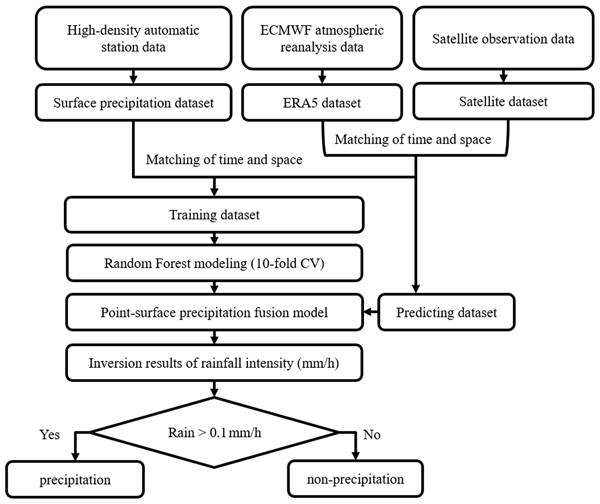
A random forest (RF) model framework for Fengyun-4A (FY-4A) daytime and nighttime quantitative precipitation estimation (QPE) is established using FY-4A multi-band spectral information, cloud parameters, high-density precipitation observations and physical quantities from reanalysis data. The RF model of FY-4A QPE has a high accuracy in estimating precipitation at the heavy-rain level or below, which has advantages for quantitative estimation of summer precipitation over East Asia in future.
Yiqian Ni, Yang Yang, Hailong Wang, Yang Yu, Pinya Wang, and Hong Liao
EGUsphere, https://doi.org/10.5194/egusphere-2026-6197, https://doi.org/10.5194/egusphere-2026-6197, 2026
This preprint is open for discussion and under review for Atmospheric Chemistry and Physics (ACP).
Short summary
Short summary
Marine cloud brightening is proposed to curb warming, yet its air quality impacts remain unclear. Using climate and chemistry simulations, we studied its effects on regional surface ozone. Ozone responses varied sharply with falling over China, nearly unchanged over Europe, and rising slightly over the United States. These variations show MCB’s air quality impacts cannot be inferred only from global cooling and must be considered in its environmental assessment.
Wenjie Zhang, Mengxi Qu, Ranhao Sun, Jiarui Zhao, Guicai Ning, Aziz Inamov, Zokhid Mamatkulov, Di Zhou, Bakhtiyor Pulatov, and Yuanjian Yang
Atmos. Meas. Tech., 19, 6535–6552, https://doi.org/10.5194/amt-19-6535-2026, https://doi.org/10.5194/amt-19-6535-2026, 2026
Short summary
Short summary
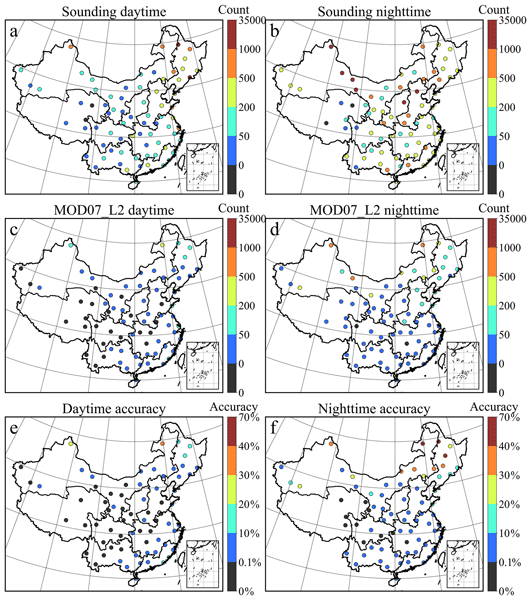
MOD07_L2 lacks full validation across China. Using 18-year sounding data (74 stations), we evaluated its temperature accuracy, lower tropospheric stability (LTS), and inversion (TIL) detection. Nighttime accuracy exceeds daytime; upper layers outperform lower. Negative biases exist at 850/920 hPa, especially daytime. LTS is better by day (r=0.74) than night (r=0.57). TIL detection is low (6.6% day, 13.1% night). This guides MOD07_L2 use in related fields.
Guicai Ning, Jiayi Xing, Tianliang Zhao, Shigong Wang, Yuanjian Yang, and Xiangde Xu
EGUsphere, https://doi.org/10.5194/egusphere-2026-5585, https://doi.org/10.5194/egusphere-2026-5585, 2026
This preprint is open for discussion and under review for Atmospheric Chemistry and Physics (ACP).
Short summary
Short summary
Local atmospheric circulations are frequent and diverse over plateau-basin regions, yet their vertical structures remain unclear. Here, we develop and apply a physical-constrained framework to identify terrain-driven circulations over the Tibetan Plateau-Sichuan Basin and quantify their intensity, spatial extent, and central height. Three typical local circulations including one-cell, two-cell, and three-cell circulations are detected, which become more frequent while spatial extent shrinks.
Wei Hu, Jason Blake Cohen, Lingxiao Lu, Bo Zheng, Pravash Tiwari, Simone Lolli, Andrea Garzelli, Jun Li, and Kai Qin
EGUsphere, https://doi.org/10.5194/egusphere-2026-4468, https://doi.org/10.5194/egusphere-2026-4468, 2026
This preprint is open for discussion and under review for Atmospheric Chemistry and Physics (ACP).
Short summary
Short summary
This study presents a perturbation experiment to investigate the impact of satellite data uncertainty which are not fully removed using a fast and physically-based divergence operator. The shape of the uncertainty distribution governs error propagation and thus effects the stability of derived fluxes. Coal-based emissions sources are reliably captured. These results provide a practical, uncertainty‑aware filter for satellite‑derived methane emissions.
Antonio Mazza, Benedetto De Rosa, Ilaria Gandolfi, Emilio Lapenna, Simone Lolli, Fabrizio Marra, Lucia Mona, Ermann Ripepi, Marco Rosoldi, Gemine Vivone, and Giuseppe D'Amico
EGUsphere, https://doi.org/10.5194/egusphere-2026-4448, https://doi.org/10.5194/egusphere-2026-4448, 2026
This preprint is open for discussion and under review for Atmospheric Measurement Techniques (AMT).
Short summary
Short summary
We developed and tested a new method to estimate the height of the atmospheric boundary layer, the lowest part of the atmosphere where pollutants and heat are mixed. We applied it to three widely used ceiometers and compared the results with radiosonde observations. The method produced reliable estimates and can be used with existing observation networks, supporting improved monitoring of air quality and atmospheric processes.
Huimin Li, Yang Yang, and Hailong Wang
Atmos. Chem. Phys., 26, 13341–13357, https://doi.org/10.5194/acp-26-13341-2026, https://doi.org/10.5194/acp-26-13341-2026, 2026
Short summary
Short summary
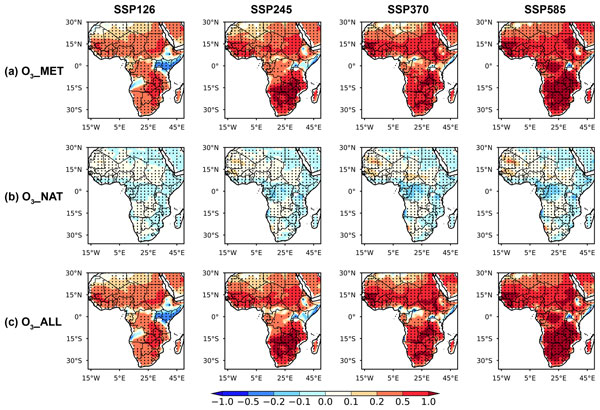
The O3 pollution across Africa has been exacerbating, which poses serious threats to public health. In this study, we predict future near-surface O3 concentrations with an integrated machine learning framework. This study reveals that global warming will exacerbate the health risk associated with O3 pollution. The elevated air temperatures act as primary driver of increased mortality ratios, while enhanced O3 concentrations are an additional stressor and adverse side effect of warming climate.
Carina I. Argañaraz, Andreu Salcedo-Bosch, Simone Lolli, and Gabriele Curci
Atmos. Meas. Tech., 19, 5697–5715, https://doi.org/10.5194/amt-19-5697-2026, https://doi.org/10.5194/amt-19-5697-2026, 2026
Short summary
Short summary
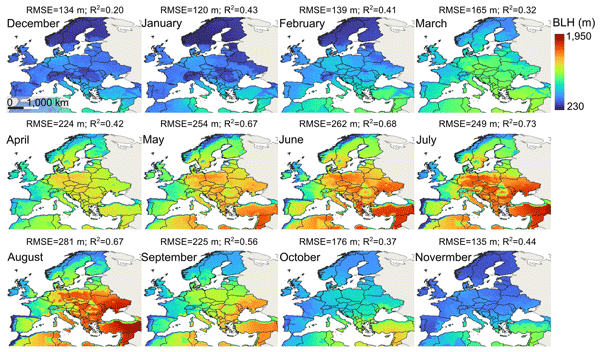
In this study, maps of the planetary boundary layer over Europe were generated by integrating multiple data sources. The results show higher accuracy compared with the widely used ERA5 reanalysis. The proposed regression kriging method performed well in estimating the height of the boundary layer at 12:00 UTC, and to a lesser extent at 00:00 UTC.
Mengyun Li, Yang Yang, Pinya Wang, Ke Li, and Hong Liao
EGUsphere, https://doi.org/10.5194/egusphere-2026-1839, https://doi.org/10.5194/egusphere-2026-1839, 2026
Short summary
Short summary
Background ozone, the portion of surface ozone remaining after removing local emissions, accounts for about 90 % of total ozone in China. Under SSP1-1.9, global emission cuts reduce transboundary ozone and lower the background baseline in China. Under SSP5-8.5, warmer conditions amplify natural sources and raise background ozone. These contrasting responses of background ozone critically affect total ozone, public health, and radiative forcing.
Jiawei Yan, Lu Zhang, Yizhou Xu, Xinfeng Ling, Weiwei Ding, Yubin Li, Yuan Wang, and Yuanjian Yang
EGUsphere, https://doi.org/10.5194/egusphere-2026-3201, https://doi.org/10.5194/egusphere-2026-3201, 2026
Short summary
Short summary
Paddy fields play an important role in greenhouse gas budgets and carbon cycling. Based on in-situ observation, we found that under calm nighttime conditions, weak turbulent mixing renders carbon dioxide and methane accumulate near the surface, whereas short bursts of turbulence rapidly disperse them upward. This transport processes cannot be fully described by conventional physical framework due to the influence of submeso motions. The understanding is helpful to improve the relevant models.
Eui-Jong Kang, Byung-Ju Sohn, Hwan-Jin Song, Wonho Kim, and Chao Liu
Earth Syst. Sci. Data Discuss., https://doi.org/10.5194/essd-2026-471, https://doi.org/10.5194/essd-2026-471, 2026
Preprint under review for ESSD
Short summary
Short summary
This study provides a new winter Arctic sea-ice dataset of penetration-aware emission properties from satellite microwave observations for 2012–2025. It offers physically interpretable information on how snow-covered sea ice emits microwave radiation, helping to describe the Arctic sea-ice environment as a multivariate geophysical system. The dataset can serve as reusable geophysical information for characterizing sea-ice variability and supporting remote sensing and modelling applications.
Fu Luo, Yuanjian Yang, Ting Sun, Zuofang Zheng, Xueyan Bi, Guoyu Ren, and Simone Lolli
EGUsphere, https://doi.org/10.5194/egusphere-2026-3392, https://doi.org/10.5194/egusphere-2026-3392, 2026
Short summary
Short summary
Cities are hotter than surrounding countryside, and heatwaves intensify this contrast. How combined warming reshapes air above different urban areas remains unclear. Using a high-resolution model, we examined two 2020 heatwaves over Guangzhou, China, finding extra warming strongest above densely built neighbourhoods and weakest over open low-rise areas. Dense areas retain heat overnight, adding to next-day warming and showing how urban form shapes extreme heat from surface to lower atmosphere.
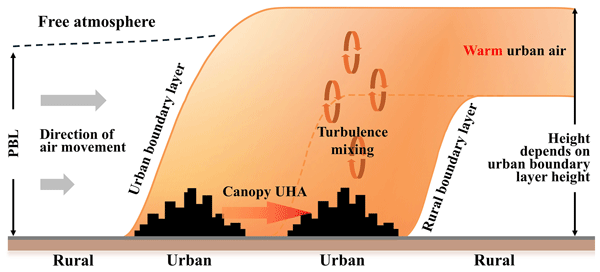
Jiesheng Xue, Yuanjian Yang, Guoyu Ren, and Simone Lolli
Atmos. Chem. Phys., 26, 11543–11560, https://doi.org/10.5194/acp-26-11543-2026, https://doi.org/10.5194/acp-26-11543-2026, 2026
Short summary
Short summary
With the reduction in inter-city distances, the wind carries heat downstream to neighboring cities. Focusing on the urban agglomeration area in China, we demonstrate the spatiotemporal variations of this heat transfer process, the moderating influence of meteorological factors, and quantify its effect on the intensity of the urban heat island in downstream cities. The results highlight the necessity of considering inter-city heat interactions in thermal risk management.
Jing Cai, Yongchun Liu, Feixue Zheng, Dian Ding, Wei Du, Liang Yuan, Yingjie Zou, Lazong Suolang, Rongxiang Lu, Wanwei Li, Chao Liu, Xiaolong Fan, Qiaozhi Zha, Mengxiao Luan, and Jiandong Wang
EGUsphere, https://doi.org/10.5194/egusphere-2026-4106, https://doi.org/10.5194/egusphere-2026-4106, 2026
Short summary
Short summary
Characterizing organic aerosol (OA) molecular composition, sources and toxicity in the North China Plain remains difficult. Through comprehensive online and offline measurements in Weifang, a representative medium-sized city, we identify combustion-derived OA with a moderate oxidation state as the key drivers of oxidative potential (OP). These insights are critical for health risk assessments amidst the region’s ongoing reduction in particulate mass due to emission controls.
Pan Zhao, Jingyi Chen, Yang Yang, Yue Jia, and Yang Yu
EGUsphere, https://doi.org/10.5194/egusphere-2026-3025, https://doi.org/10.5194/egusphere-2026-3025, 2026
Short summary
Short summary
Marine cloud brightening (MCB) aims to cool climate by spraying sea-salt aerosols to brighten marine clouds, but whether aerosols can reach clouds efficiently remains uncertain. Using large-eddy simulations with Lagrangian particle tracking, we show that turbulent transport strongly depends on cloud conditions and model resolution. High-liquid-water periods favor stronger transport, while higher-resolution simulations better capture turbulence and cloud droplet activation.
Yuxuan Qi, Wenshuai Li, Wen Qu, Haizhou Zhang, Wenqing Zhu, Jinhui Shi, Daizhou Zhang, Yanjing Zhang, Lifang Sheng, Wencai Wang, Yunhui Zhao, Yuanyuan Ma, Danyang Ren, Guanru Wu, Xinfeng Wang, Xiaohong Yao, and Yang Zhou
Atmos. Chem. Phys., 26, 7721–7740, https://doi.org/10.5194/acp-26-7721-2026, https://doi.org/10.5194/acp-26-7721-2026, 2026
Short summary
Short summary
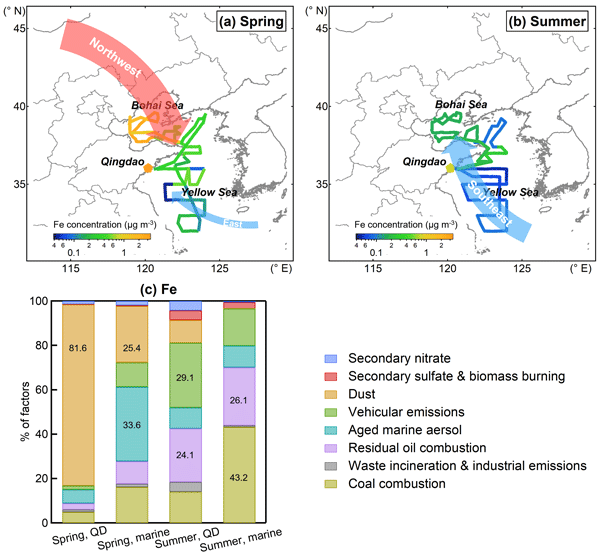
To better constrain poorly resolved trace-element sources across the land-sea gradient, we applied a refined source apportionment to PM2.5 collected in Qingdao and adjacent seas in 2018. It showed that spring Fe, Mn and Cr were mainly dust-derived, although some dust aged and mixed into marine aerosol offshore. In summer, coal combustion enriched marine Zn, Pb, As and Cd, while residual oil combustion increased Fe and Mn, highlighting strong anthropogenic control on marine aerosols.
Yunhua Chang, Tianhao Ding, Haifeng Yu, Yuanjian Yang, Liang Zhu, Xiaozheng Liu, and Wen Tan
Atmos. Meas. Tech., 19, 1515–1528, https://doi.org/10.5194/amt-19-1515-2026, https://doi.org/10.5194/amt-19-1515-2026, 2026
Short summary
Short summary
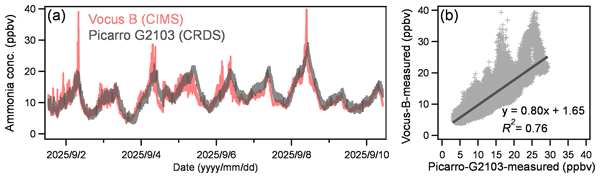
We validate a novel chemical ionization mass spectrometer for simultaneous measurements of volatile organic and inorganic compounds. A field comparison with a Cavity Ring-Down Spectroscopy analyzer for NH3 validated its accuracy and superior time resolution for capturing transient pollution peaks. Versatility is demonstrated across three key applications: stationary urban monitoring, mobile source mapping, and industrial process control.
Daihao Yu, Qiuwei Xia, Saifen Yu, Yixiang Chen, Keyi Xu, Haobin Han, Jianjun Guo, Kexin Guo, Jiadong Hu, Zhen Zhang, Jing Cai, Yuanjian Yang, and Haiyun Xia
EGUsphere, https://doi.org/10.5194/egusphere-2025-6470, https://doi.org/10.5194/egusphere-2025-6470, 2026
Short summary
Short summary
Industrial parks are critical nodes in the global carbon cycle. This study combines high-resolution lidar observations and the WRF-GHG model to examine CO2 accumulation and dispersion in a semi-enclosed bay. Distinct diurnal patterns emerge: nighttime accumulation and daytime dispersion driven by terrain, atmospheric stability and sea breezes. WRF-GHG captures temporal trends, but it underestimates CO2 levels, indicating limitations in emission inventories and terrain-wind interactions.
Yuanjian Yang, Chenjie Qian, Minxuan Zhang, Chenchao Zhan, Zhenxin Liu, Pak Wai Chan, Xueyan Bi, Meng Gao, and Simone Lolli
Atmos. Meas. Tech., 19, 1345–1363, https://doi.org/10.5194/amt-19-1345-2026, https://doi.org/10.5194/amt-19-1345-2026, 2026
Short summary
Short summary
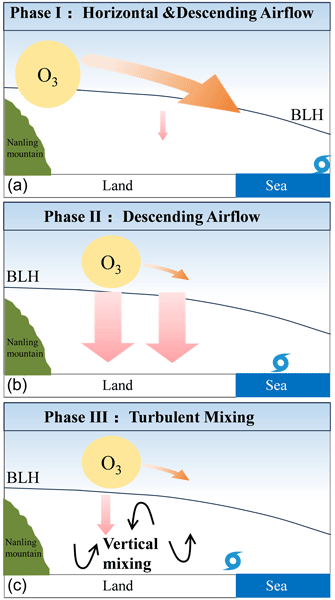
Up to ~ 40 % of ozone pollution in the Greater Bay Area of China is related to tropical cyclones. The O3 pollution was found to be transported from inland areas to coastal areas. The transport process can be roughly divided into three phases: downdraft control, horizontal transport, and vertical mixing.
Bo Zheng, Jason Blake Cohen, Lingxiao Lu, Wei Hu, Pravash Tiwari, Simone Lolli, Andrea Garzelli, Hui Su, and Kai Qin
Atmos. Chem. Phys., 26, 1931–1946, https://doi.org/10.5194/acp-26-1931-2026, https://doi.org/10.5194/acp-26-1931-2026, 2026
Short summary
Short summary
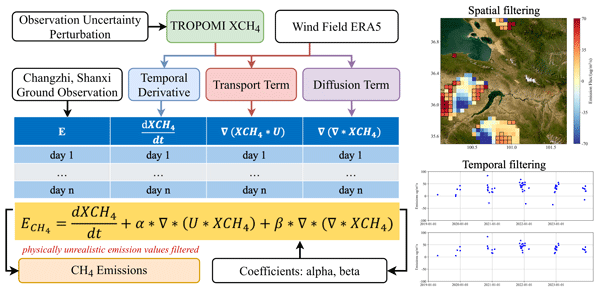
This study provides TROPOMI (TROPOspheric Monitoring Instrument) with a new methane emission estimation method that can accurately identify emission sources. Our results generate non-negative emission datasets using objective selection and filtering methods. The results include lower minimum emission thresholds for all power grids and fewer false positives. The new method provides more robust emission quantification in the face of data uncertainty, going beyond traditional plume identification and background subtraction.
Simone Lolli, Erica K. Dolinar, Jasper R. Lewis, Andreu Salcedo-Bosch, James R. Campbell, and Ellsworth J. Welton
Atmos. Chem. Phys., 26, 411–426, https://doi.org/10.5194/acp-26-411-2026, https://doi.org/10.5194/acp-26-411-2026, 2026
Short summary
Short summary
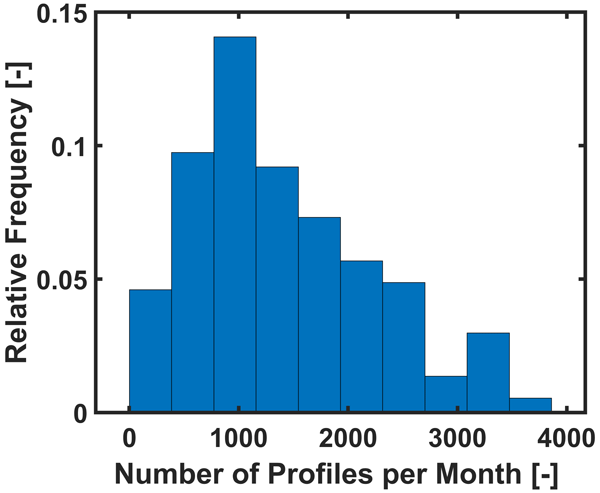
Over the past twenty years, continuous lidar observations at NASA's Goddard Space Flight Center have assessed the radiative impact of cirrus clouds on the Earth–atmosphere system. Findings show these clouds increasingly trap heat as surface reflectivity drops with less snow and ice, contributing to local warming. Continued cirrus monitoring is crucial to refine climate forecasts and support effective climate action.
Jialu Xu, Yingjie Zhang, Yuying Wang, Xing Yan, Bin Zhu, Chunsong Lu, Yuanjian Yang, Yele Sun, Junhui Zhang, Xiaofan Zuo, Zhanghanshu Han, and Rui Zhang
Atmos. Chem. Phys., 25, 18599–18616, https://doi.org/10.5194/acp-25-18599-2025, https://doi.org/10.5194/acp-25-18599-2025, 2025
Short summary
Short summary
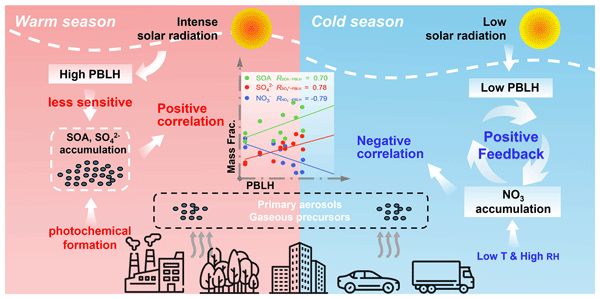
We conducted a year-long study in Nanjing to explore how the height of the atmospheric boundary layer affects fine particle pollution. We found that low boundary layers in winter trap pollutants like nitrate and primary particles, while higher layers in summer help form secondary pollutants like sulfate and organic aerosols. These findings show that boundary layer dynamics are key to understanding and managing seasonal air pollution.
Junhui Zhang, Yuying Wang, Jialu Xu, Xiaofan Zuo, Chunsong Lu, Bin Zhu, Yuanjian Yang, Xing Yan, and Yele Sun
Atmos. Chem. Phys., 25, 17413–17428, https://doi.org/10.5194/acp-25-17413-2025, https://doi.org/10.5194/acp-25-17413-2025, 2025
Short summary
Short summary
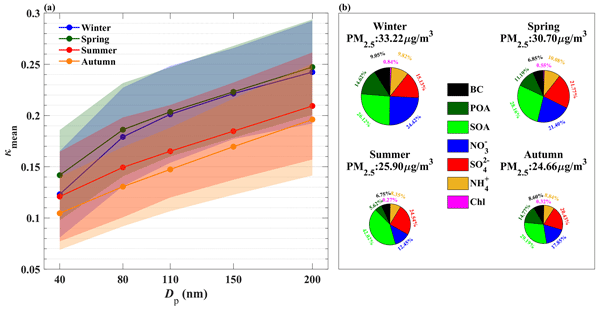
We conducted a year-long study in Nanjing to understand how tiny airborne particles take up water, which affects air quality and climate. We found that particle water uptake varies by season and size, with lower values in summer due to more organic materials. Local pollution mainly influences smaller particles, while larger ones are shaped by air mass transport. These findings help improve climate models and support better air pollution control in fast-growing cities.

Tao Shi, Yuanjian Yang, Ping Qi, and Simone Lolli
Atmos. Chem. Phys., 25, 17069–17090, https://doi.org/10.5194/acp-25-17069-2025, https://doi.org/10.5194/acp-25-17069-2025, 2025
Short summary
Short summary
Using Beijing’s Fifth Ring Road, the team combined data and models. Heatwave results: canopy heat island was 91.3 % stronger day/52.7 % night. Day heat relied on building coverage, night on sky visibility. Tall buildings block sun by day, trap heat at night. Night ventilation cools, day winds spread heat. Urban design must consider day-night cycles to fight extreme heat, guiding risk reduction.
Shicheng Yan, Yang Yang, Lili Ren, Hailong Wang, Pinya Wang, Lei Chen, Jianbin Jin, and Hong Liao
Atmos. Chem. Phys., 25, 16877–16893, https://doi.org/10.5194/acp-25-16877-2025, https://doi.org/10.5194/acp-25-16877-2025, 2025
Short summary
Short summary
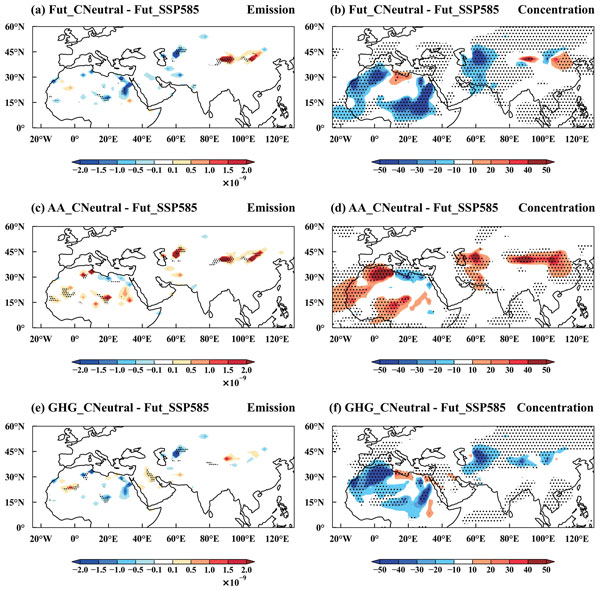
In this study, we assess the impact of carbon neutrality by 2060 on dust emissions in the Northern Hemisphere using the Community Earth System Model. Our findings show that reductions in greenhouse gases (GHGs) and aerosols lead to decreased dust loading compared to high fossil fuel scenarios. While aerosol reductions promote dust, GHGs decreases reduce wind speeds, suppressing dust emissions. These results suggest that carbon-neutral policies mitigate climate change and reduce dust pollution.
Chong Luo, Yongbo Zhou, Yubao Liu, Wei Han, Bin Yao, and Chao Liu
EGUsphere, https://doi.org/10.5194/egusphere-2025-4553, https://doi.org/10.5194/egusphere-2025-4553, 2025
Short summary
Short summary
We developed a new technique to assimilate satellite visible reflectance. By testing our technique on a heavy rainfall event, we found that it significantly reduces errors in cloud water estimates and enhances light precipitation forecasts. This data assimilation also better improved thin clouds. This advancement helps increase the accuracy of weather predictions in situations where clouds and rain play a major role.
Sini Talvinen, Paul Kim, Emanuele Tovazzi, Eemeli Holopainen, Roxana Cremer, Thomas Kühn, Harri Kokkola, Zak Kipling, David Neubauer, João C. Teixeira, Alistair Sellar, Duncan Watson-Parris, Yang Yang, Jialei Zhu, Srinath Krishnan, Annele Virtanen, and Daniel G. Partridge
Atmos. Chem. Phys., 25, 14449–14478, https://doi.org/10.5194/acp-25-14449-2025, https://doi.org/10.5194/acp-25-14449-2025, 2025
Short summary
Short summary
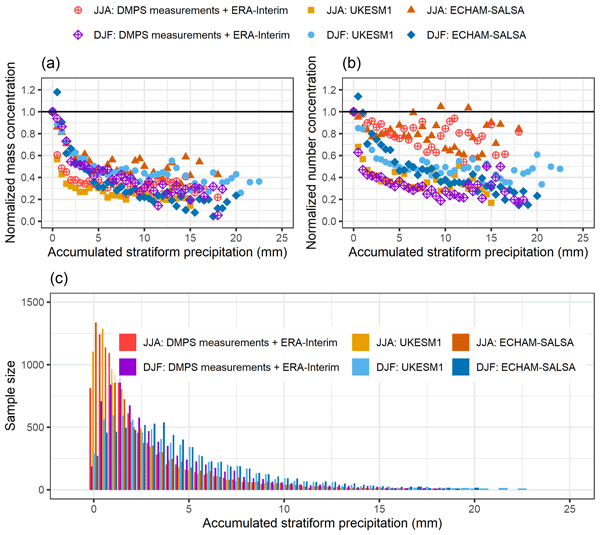
Climate models struggle to predict how clouds and aerosols interact, affecting Earth’s energy balance. This study compares models to observations to see how they describe effects of clouds and rain on aerosols. While both models show similar overall trends, seasonal differences emerged. These, however, align with differences in key variables participating in cloud formation. The study provides insights on how to improve the representation of aerosol-cloud interactions in climate models.
Xiadong An, Wen Chen, Tianjiao Ma, and Lifang Sheng
Atmos. Chem. Phys., 25, 13343–13357, https://doi.org/10.5194/acp-25-13343-2025, https://doi.org/10.5194/acp-25-13343-2025, 2025
Short summary
Short summary
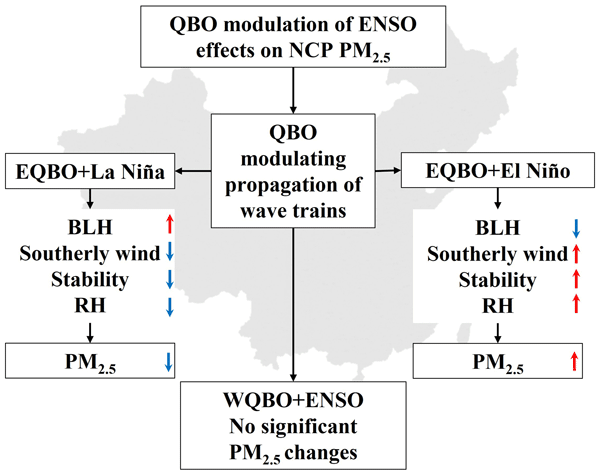
Air pollution in the North China Plain is tends to be influenced by El Niño-Southern Oscillation (ENSO) and stratospheric Quasi-Biennial Oscillation (QBO). During El Niño and easterly QBO, pollution rises, while La Niña and easterly QBO improve air quality through changes in atmospheric circulation and weather conditions.
Jiyuan Gao, Yang Yang, Hailong Wang, Pinya Wang, and Hong Liao
Atmos. Chem. Phys., 25, 10949–10964, https://doi.org/10.5194/acp-25-10949-2025, https://doi.org/10.5194/acp-25-10949-2025, 2025
Short summary
Short summary
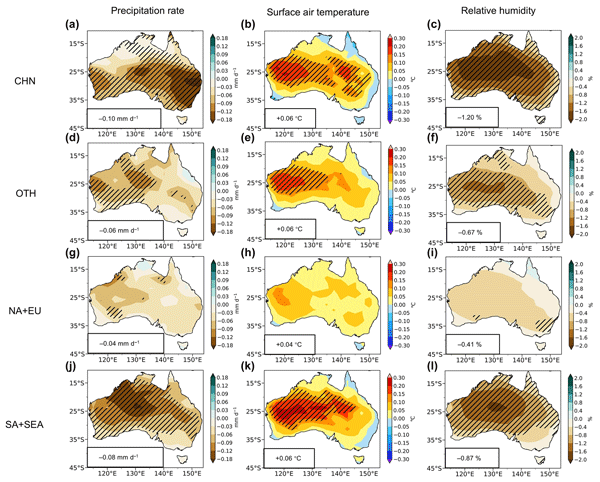
The decline in aerosols in China alters temperature and pressure gradients between the two hemispheres, which intensifies the Southern Trade Winds and causes a moisture divergence in Australia, resulting in less rainfall. Reduced surface moisture leads to more energy being converted into sensible heat instead of evaporating as latent heat, which raises near-surface temperatures in Australia. Our findings offer insights for managing drought and wildfire risks in Australia.
Tao Shi, Yuanjian Yang, Gaopeng Lu, Zuofang Zheng, Yucheng Zi, Ye Tian, Lei Liu, and Simone Lolli
Atmos. Chem. Phys., 25, 9219–9234, https://doi.org/10.5194/acp-25-9219-2025, https://doi.org/10.5194/acp-25-9219-2025, 2025
Short summary
Short summary
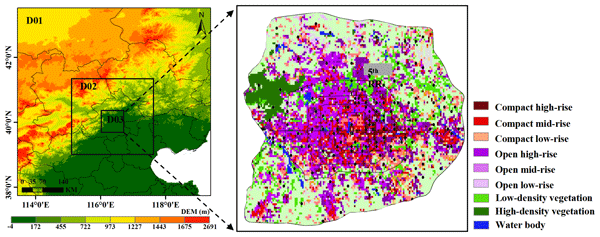
The city significantly influences thunderstorm and lightning activity, yet the potential mechanisms remain largely unexplored. Our study has revealed that both city size and building density play pivotal roles in modulating thunderstorm and lightning activity. This research not only deepens our understanding of urban meteorology but also lays an important foundation for developing accurate and targeted urban thunderstorm risk prediction models.
Xi Chen, Ke Li, Ting Yang, Xipeng Jin, Lei Chen, Yang Yang, Shuman Zhao, Bo Hu, Bin Zhu, Zifa Wang, and Hong Liao
Atmos. Chem. Phys., 25, 9151–9168, https://doi.org/10.5194/acp-25-9151-2025, https://doi.org/10.5194/acp-25-9151-2025, 2025
Short summary
Short summary
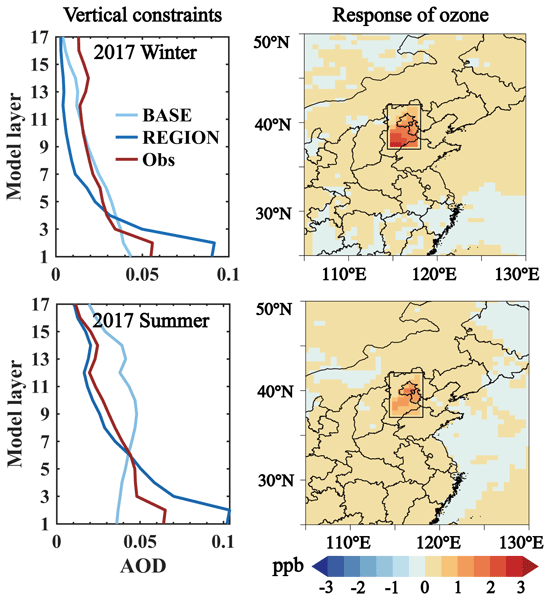
Aerosol vertical distribution that plays a crucial role in aerosol–photolysis interaction (API) remains underrepresented in chemical models. We integrated lidar and radiosonde observations to constrain the simulated aerosol profiles over North China and quantified the photochemical responses. The increased photolysis rates in the lower layers led to increased ozone and accounted for a 36 %–56 % reduction in API effects, resulting in enhanced atmospheric oxidizing capacity and aerosol formation.
Tao Shi, Yuanjian Yang, Lian Zong, Min Guo, Ping Qi, and Simone Lolli
Atmos. Chem. Phys., 25, 4989–5007, https://doi.org/10.5194/acp-25-4989-2025, https://doi.org/10.5194/acp-25-4989-2025, 2025
Short summary
Short summary
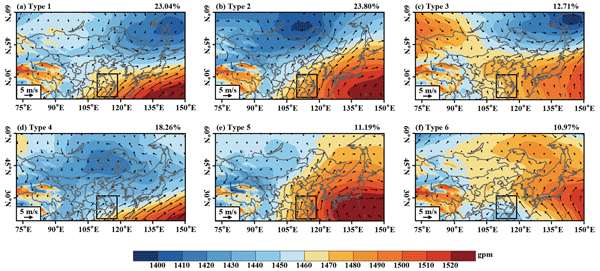
Our study explored the daily temperature patterns in urban areas of the Yangtze River Delta, focusing on how weather and human activities impact these patterns. We found that temperatures were higher at night, and weather patterns had a bigger impact during the day, while human activities mattered more at night. This helps us understand and address urban overheating.
Tianwen Wei, Mengya Wang, Kenan Wu, Jinlong Yuan, Haiyun Xia, and Simone Lolli
Atmos. Meas. Tech., 18, 1841–1857, https://doi.org/10.5194/amt-18-1841-2025, https://doi.org/10.5194/amt-18-1841-2025, 2025
Short summary
Short summary
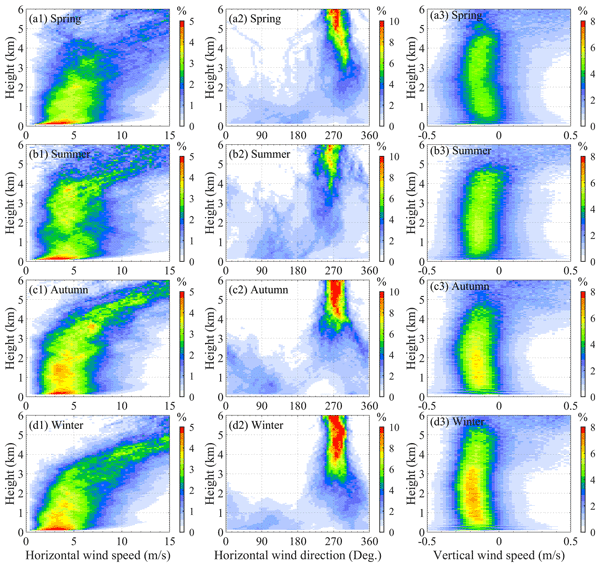
This study analyzes three years of wind lidar measurements to explore the dynamics of the urban planetary boundary layer in Hefei, China. Results reveal that nocturnal low-level jets are most frequent in spring and intensify in summer, significantly enhancing turbulence and shear near the surface, particularly at night. Additionally, cloud cover raises the mixing layer height by approximately 100 m at night due to the greenhouse effect but reduces it by up to 200 m in the afternoon.
Yufen Wang, Ke Li, Xi Chen, Zhenjiang Yang, Minglong Tang, Pascoal M. D. Campos, Yang Yang, Xu Yue, and Hong Liao
Atmos. Chem. Phys., 25, 4455–4475, https://doi.org/10.5194/acp-25-4455-2025, https://doi.org/10.5194/acp-25-4455-2025, 2025
Short summary
Short summary
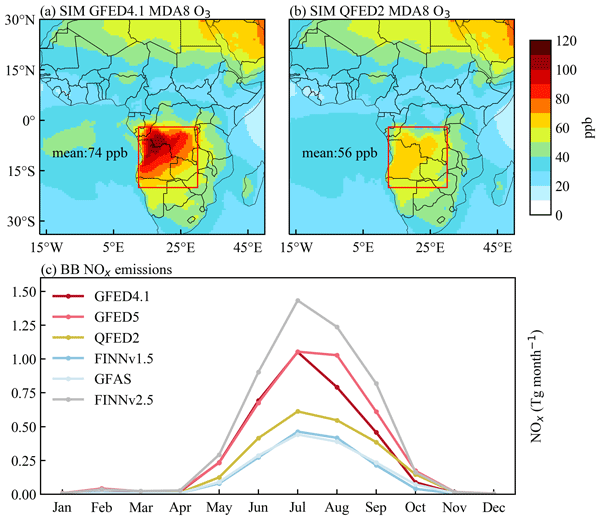
The impacts of biomass burning and anthropogenic emissions on high tropospheric ozone levels are not well studied in southern Africa. We combined model simulations with recent observations at the surface and from space to quantify tropospheric ozone and its drivers in southern Africa. Our work focuses on the impact of emissions from different sources at different spatial scales, contributing to a comprehensive understanding of air pollution drivers and their uncertainties in southern Africa.
Jianyu Lin, Tie Dai, Lifang Sheng, Weihang Zhang, Shangfei Hai, and Yawen Kong
Geosci. Model Dev., 18, 2231–2248, https://doi.org/10.5194/gmd-18-2231-2025, https://doi.org/10.5194/gmd-18-2231-2025, 2025
Short summary
Short summary
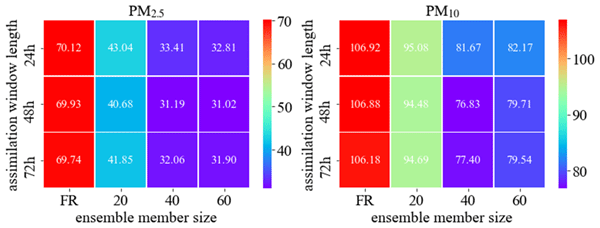
The effectiveness of this assimilation system and its sensitivity to the ensemble member size and length of the assimilation window are investigated. This study advances our understanding of the selection of basic parameters in the four-dimensional local ensemble transform Kalman filter assimilation system and the performance of ensemble simulation in a particulate-matter-polluted environment.
Ling Kang, Hong Liao, Ke Li, Xu Yue, Yang Yang, and Ye Wang
Atmos. Chem. Phys., 25, 3603–3621, https://doi.org/10.5194/acp-25-3603-2025, https://doi.org/10.5194/acp-25-3603-2025, 2025
Short summary
Short summary
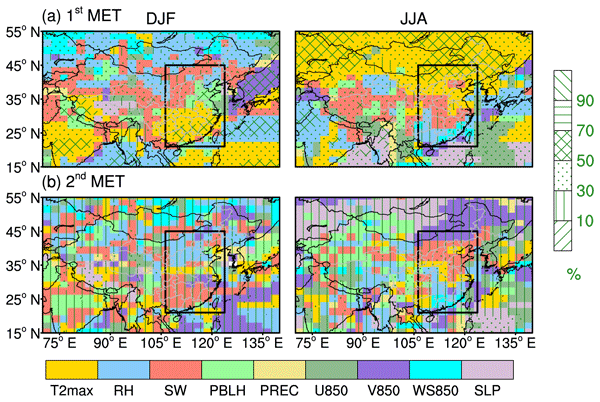
Using the model of Global Change and Air Pollution version 2.0, climate change over 2010–2045 under a carbon neutrality scenario is simulated to increase summertime maximum daily 8 h average ozone (O3) levels in eastern China, the North China Plain, and the Yangtze River Delta by 2.3, 4.7, and 3.0 ppbv, respectively. Temperature, radiation, and relative humidity are the key meteorological parameters and net chemical production is the key process in climate-driven O3 increases in eastern China.
Yang Yang, Li You, Hailong Wang, Huimin Li, Pinya Wang, and Hong Liao
EGUsphere, https://doi.org/10.5194/egusphere-2025-840, https://doi.org/10.5194/egusphere-2025-840, 2025
Preprint archived
Short summary
Short summary
This study used machine learning to predict global and regional temperature changes under carbon neutrality and high emissions from 2015 to 2100.The results show that while carbon neutrality slows long-term warming, it causes short-term warming due to the rapid decline in aerosols. In contrast, greenhouse gases dominate warming in the high-emission scenario. These findings emphasize the important role of aerosols in shaping near-term climate change under carbon-neutral pathways.
Zeyuan Tian, Jiandong Wang, Jiaping Wang, Chao Liu, Jia Xing, Jinbo Wang, Zhouyang Zhang, Yuzhi Jin, Sunan Shen, Bin Wang, Wei Nie, Xin Huang, and Aijun Ding
Atmos. Meas. Tech., 18, 1149–1162, https://doi.org/10.5194/amt-18-1149-2025, https://doi.org/10.5194/amt-18-1149-2025, 2025
Short summary
Short summary
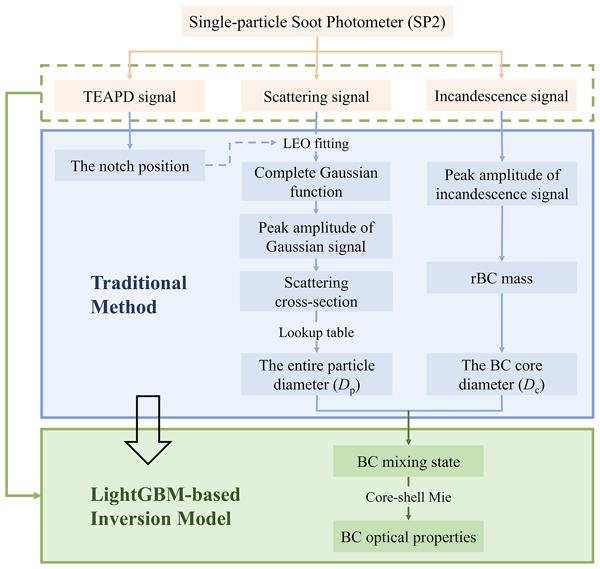
The radiative effect of black carbon (BC) is substantially modulated by its mixing state, which is challenging to derive physically with a single-particle soot photometer. This study establishes a machine-learning-based inversion model which can accurately and efficiently acquire the BC mixing state. Compared to the widely used leading-edge-only method, our model utilizes a broader scattering signal coverage to more accurately capture diverse particle characteristics.
Yuzhi Jin, Jiandong Wang, Chao Liu, David C. Wong, Golam Sarwar, Kathleen M. Fahey, Shang Wu, Jiaping Wang, Jing Cai, Zeyuan Tian, Zhouyang Zhang, Jia Xing, Aijun Ding, and Shuxiao Wang
Atmos. Chem. Phys., 25, 2613–2630, https://doi.org/10.5194/acp-25-2613-2025, https://doi.org/10.5194/acp-25-2613-2025, 2025
Short summary
Short summary
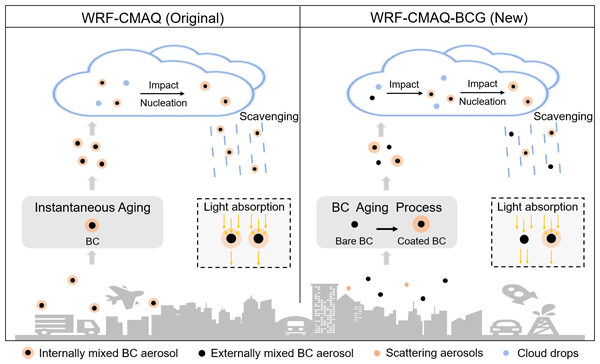
Black carbon (BC) affects climate and the environment, and its aging process alters its properties. Current models, like WRF-CMAQ, lack full accounting for it. We developed the WRF-CMAQ-BCG model to better represent BC aging by introducing bare and coated BC species and their conversion. The WRF-CMAQ-BCG model introduces the capability to simulate BC mixing states and bare and coated BC wet deposition, and it improves the accuracy of BC mass concentration and aerosol optics.
Zhouyang Zhang, Jiandong Wang, Jiaping Wang, Nicole Riemer, Chao Liu, Yuzhi Jin, Zeyuan Tian, Jing Cai, Yueyue Cheng, Ganzhen Chen, Bin Wang, Shuxiao Wang, and Aijun Ding
Atmos. Chem. Phys., 25, 1869–1881, https://doi.org/10.5194/acp-25-1869-2025, https://doi.org/10.5194/acp-25-1869-2025, 2025
Short summary
Short summary
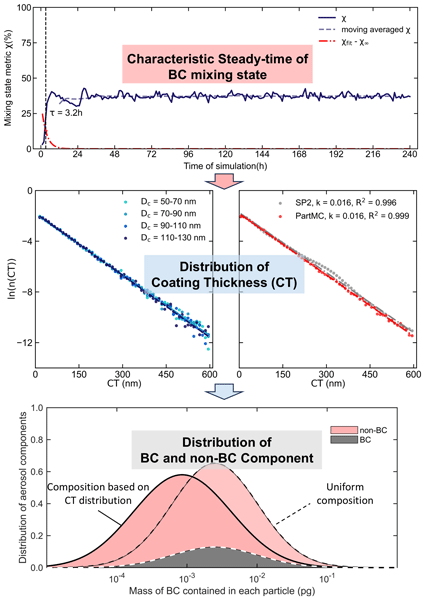
Black carbon (BC) exerts notable warming effects. We use a particle-resolved model to investigate the long-term behavior of the BC mixing state, revealing its compositions, coating thickness distribution, and optical properties all stabilize with a characteristic time of less than 1 d. This study can effectively simplify the description of the BC mixing state, which facilitates the precise assessment of the optical properties of BC aerosols in global and chemical transport models.
Fengjiao Chen, Yuanjian Yang, Lu Yu, Yang Li, Weiguang Liu, Yan Liu, and Simone Lolli
Atmos. Chem. Phys., 25, 1587–1601, https://doi.org/10.5194/acp-25-1587-2025, https://doi.org/10.5194/acp-25-1587-2025, 2025
Short summary
Short summary
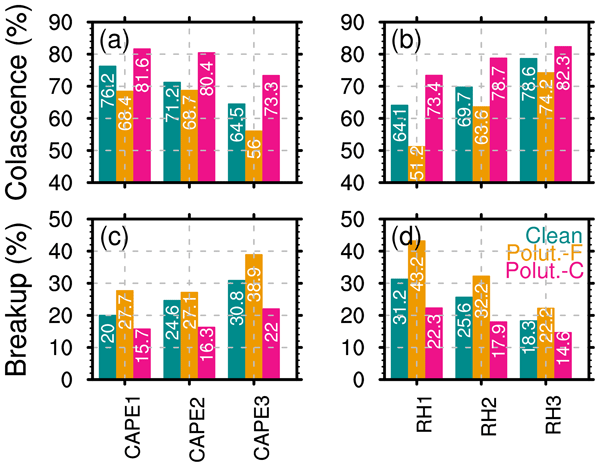
The microphysical mechanisms of precipitation responsible for the varied impacts of aerosol particles on shallow precipitation remain unclear. This study reveals that coarse aerosol particles invigorate shallow rainfall through enhanced coalescence processes, whereas fine aerosol particles suppress shallow rainfall through intensified microphysical breaks. These impacts are independent of thermodynamic environments but are more significant in low-humidity conditions.
He Huang, Quan Wang, Chao Liu, and Chen Zhou
Atmos. Meas. Tech., 17, 7129–7141, https://doi.org/10.5194/amt-17-7129-2024, https://doi.org/10.5194/amt-17-7129-2024, 2024
Short summary
Short summary
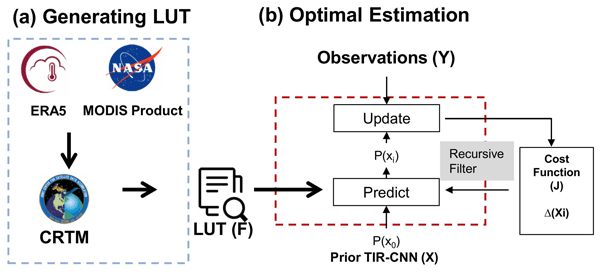
This study introduces a cloud property retrieval method which integrates traditional radiative transfer simulations with a machine learning method. Retrievals from a machine learning algorithm are used to provide a priori states, and a radiative transfer model is used to create lookup tables for later iteration processes. The new method combines the advantages of traditional and machine learning algorithms, and it is applicable to both daytime and nighttime conditions.
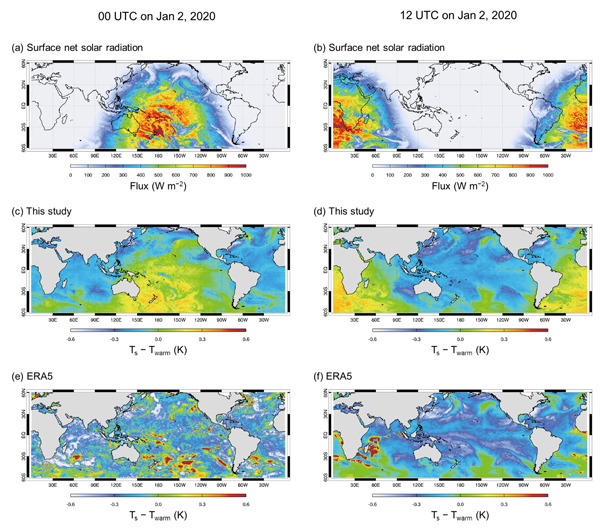
Eui-Jong Kang, Byung-Ju Sohn, Sang-Woo Kim, Wonho Kim, Young-Cheol Kwon, Seung-Bum Kim, Hyoung-Wook Chun, and Chao Liu
Geosci. Model Dev., 17, 8553–8568, https://doi.org/10.5194/gmd-17-8553-2024, https://doi.org/10.5194/gmd-17-8553-2024, 2024
Short summary
Short summary
Sea surface temperature (SST) is vital in climate, weather, and ocean sciences because it influences air–sea interactions. Errors in the ECMWF model's scheme for predicting ocean skin temperature prompted a revision of the ocean mixed layer model. Validation against infrared measurements and buoys showed a good correlation with minimal deviations. The revised model accurately simulates SST variations and aligns with solar radiation distributions, showing promise for weather and climate models.
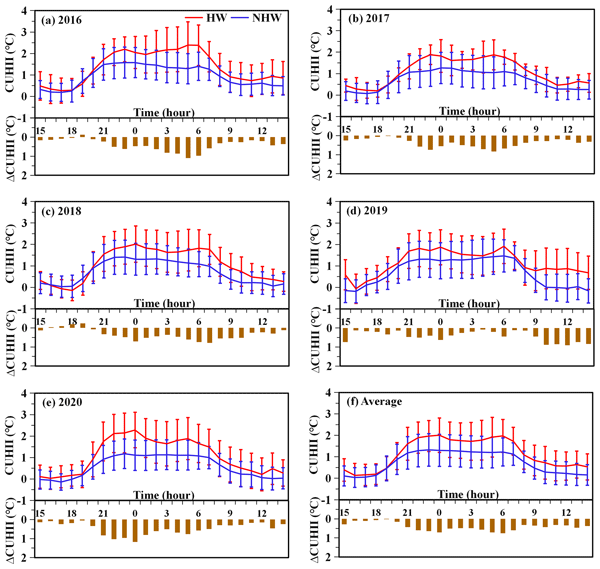
Tao Shi, Yuanjian Yang, Ping Qi, and Simone Lolli
Atmos. Chem. Phys., 24, 12807–12822, https://doi.org/10.5194/acp-24-12807-2024, https://doi.org/10.5194/acp-24-12807-2024, 2024
Short summary
Short summary
This paper explored the formation mechanisms of the amplified canopy urban heat island intensity (ΔCUHII) during heat wave (HW) periods in the megacity of Beijing from the perspectives of mountain–valley breeze and urban morphology. During the mountain breeze phase, high-rise buildings with lower sky view factors (SVFs) had a pronounced effect on the ΔCUHII. During the valley breeze phase, high-rise buildings exerted a dual influence on the ΔCUHII.
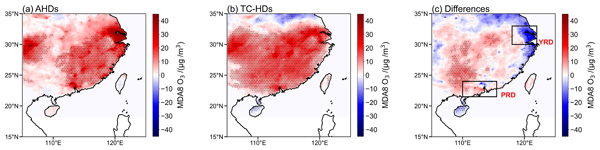
Cuini Qi, Pinya Wang, Yang Yang, Huimin Li, Hui Zhang, Lili Ren, Xipeng Jin, Chenchao Zhan, Jianping Tang, and Hong Liao
Atmos. Chem. Phys., 24, 11775–11789, https://doi.org/10.5194/acp-24-11775-2024, https://doi.org/10.5194/acp-24-11775-2024, 2024
Short summary
Short summary
We investigate extremely hot weather impacts on surface ozone over the southeastern coast of China with and without tropical cyclones. Compared to hot days alone, ozone concentration decreased notably in the Yangtze River Delta (YRD) but increased in the Pearl River Delta (PRD) during tropical cyclones and hot days. The YRD benefited from strong and clean sea winds aiding ozone elimination. In contrast, the PRD experienced strong northeasterly winds that potentially transport ozone pollution.
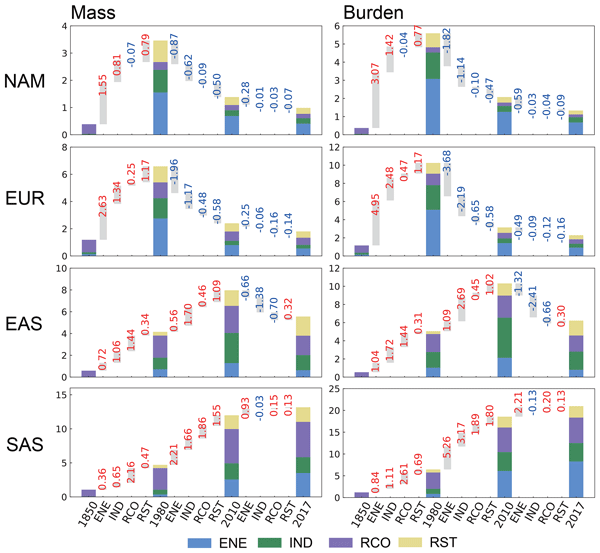
Yang Yang, Shaoxuan Mou, Hailong Wang, Pinya Wang, Baojie Li, and Hong Liao
Atmos. Chem. Phys., 24, 6509–6523, https://doi.org/10.5194/acp-24-6509-2024, https://doi.org/10.5194/acp-24-6509-2024, 2024
Short summary
Short summary
The variations in anthropogenic aerosol concentrations and source contributions and their subsequent radiative impact in major emission regions during historical periods are quantified based on an aerosol-tagging system in E3SMv1. Due to the industrial development and implementation of economic policies, sources of anthropogenic aerosols show different variations, which has important implications for pollution prevention and control measures and decision-making for global collaboration.
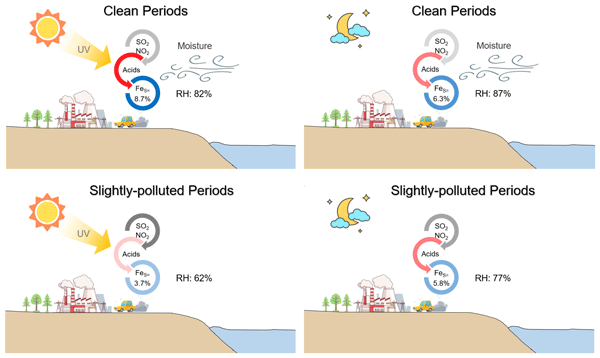
Wenshuai Li, Yuxuan Qi, Yingchen Liu, Guanru Wu, Yanjing Zhang, Jinhui Shi, Wenjun Qu, Lifang Sheng, Wencai Wang, Daizhou Zhang, and Yang Zhou
Atmos. Chem. Phys., 24, 6495–6508, https://doi.org/10.5194/acp-24-6495-2024, https://doi.org/10.5194/acp-24-6495-2024, 2024
Short summary
Short summary
Aerosol particles from mainland can transport to oceans and deposit, providing soluble Fe and affecting phytoplankton growth. Thus, we studied the dissolution process of aerosol Fe and found that photochemistry played a key role in promoting Fe dissolution in clean conditions. RH-dependent reactions were more influential in slightly polluted conditions. These results highlight the distinct roles of two weather-related parameters (radiation and RH) in influencing geochemical cycles related to Fe.
Chaman Gul, Shichang Kang, Yuanjian Yang, Xinlei Ge, and Dong Guo
EGUsphere, https://doi.org/10.5194/egusphere-2024-1144, https://doi.org/10.5194/egusphere-2024-1144, 2024
Preprint archived
Short summary
Short summary
Long-term variations in upper atmospheric temperature and water vapor in the selected domains of time and space are presented. The temperature during the past two decades showed a cooling trend and water vapor showed an increasing trend and had an inverse relation with temperature in selected domains of space and time. Seasonal temperature variations are distinct, with a summer minimum and a winter maximum. Our results can be an early warning indication for future climate change.
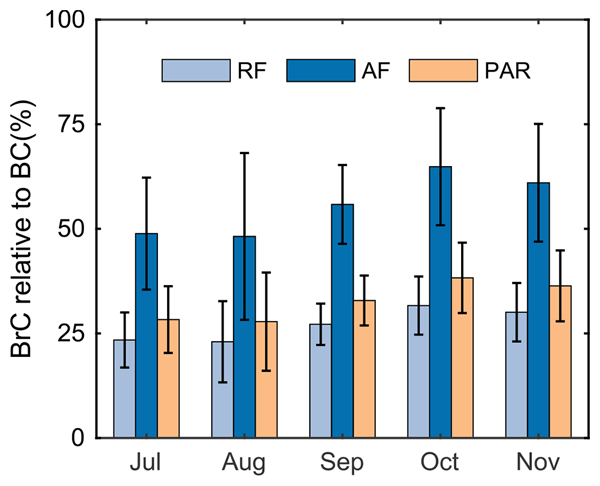
Yueyue Cheng, Chao Liu, Jiandong Wang, Jiaping Wang, Zhouyang Zhang, Li Chen, Dafeng Ge, Caijun Zhu, Jinbo Wang, and Aijun Ding
Atmos. Chem. Phys., 24, 3065–3078, https://doi.org/10.5194/acp-24-3065-2024, https://doi.org/10.5194/acp-24-3065-2024, 2024
Short summary
Short summary
Brown carbon (BrC), a light-absorbing aerosol, plays a pivotal role in influencing global climate. However, assessing BrC radiative effects remains challenging because the required observational data are hardly accessible. Here we develop a new BrC radiative effect estimation method combining conventional observations and numerical models. Our findings reveal that BrC absorbs up to a third of the sunlight at 370 nm that black carbon does, highlighting its importance in aerosol radiative effects.
He Huang, Quan Wang, Chao Liu, and Chen Zhou
Atmos. Meas. Tech. Discuss., https://doi.org/10.5194/amt-2024-36, https://doi.org/10.5194/amt-2024-36, 2024
Preprint withdrawn
Short summary
Short summary
This study introduces a cloud property retrieval method which integrates traditional radiative transfer simulations with a machine-learning method. Retrievals from a machine learning algorithm are used to provide initial guesses, and a radiative transfer model is used to create radiance lookup tables for later iteration processes. The new method combines the advantages of traditional and machine learning algorithms, and is applicable both daytime and nighttime conditions.
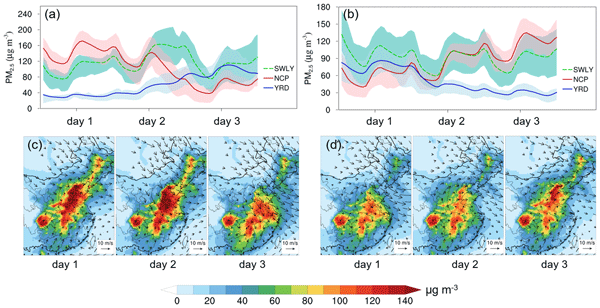
Feifan Yan, Hang Su, Yafang Cheng, Rujin Huang, Hong Liao, Ting Yang, Yuanyuan Zhu, Shaoqing Zhang, Lifang Sheng, Wenbin Kou, Xinran Zeng, Shengnan Xiang, Xiaohong Yao, Huiwang Gao, and Yang Gao
Atmos. Chem. Phys., 24, 2365–2376, https://doi.org/10.5194/acp-24-2365-2024, https://doi.org/10.5194/acp-24-2365-2024, 2024
Short summary
Short summary
PM2.5 pollution is a major air quality issue deteriorating human health, and previous studies mostly focus on regions like the North China Plain and Yangtze River Delta. However, the characteristics of PM2.5 concentrations between these two regions are studied less often. Focusing on the transport corridor region, we identify an interesting seesaw transport phenomenon with stagnant weather conditions, conducive to PM2.5 accumulation over this region, resulting in large health effects.
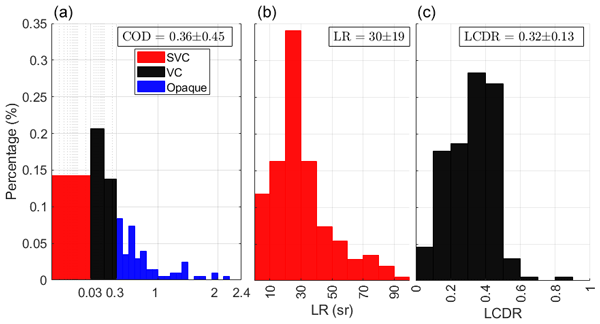
Cristina Gil-Díaz, Michäel Sicard, Adolfo Comerón, Daniel Camilo Fortunato dos Santos Oliveira, Constantino Muñoz-Porcar, Alejandro Rodríguez-Gómez, Jasper R. Lewis, Ellsworth J. Welton, and Simone Lolli
Atmos. Meas. Tech., 17, 1197–1216, https://doi.org/10.5194/amt-17-1197-2024, https://doi.org/10.5194/amt-17-1197-2024, 2024
Short summary
Short summary
In this paper, a statistical study of cirrus geometrical and optical properties based on 4 years of continuous ground-based lidar measurements with the Barcelona (Spain) Micro Pulse Lidar (MPL) is analysed. The cloud optical depth, effective column lidar ratio and linear cloud depolarisation ratio have been calculated by a new approach to the two-way transmittance method, which is valid for both ground-based and spaceborne lidar systems. Their associated errors are also provided.
Yang Yang, Yang Zhou, Hailong Wang, Mengyun Li, Huimin Li, Pinya Wang, Xu Yue, Ke Li, Jia Zhu, and Hong Liao
Atmos. Chem. Phys., 24, 1177–1191, https://doi.org/10.5194/acp-24-1177-2024, https://doi.org/10.5194/acp-24-1177-2024, 2024
Short summary
Short summary
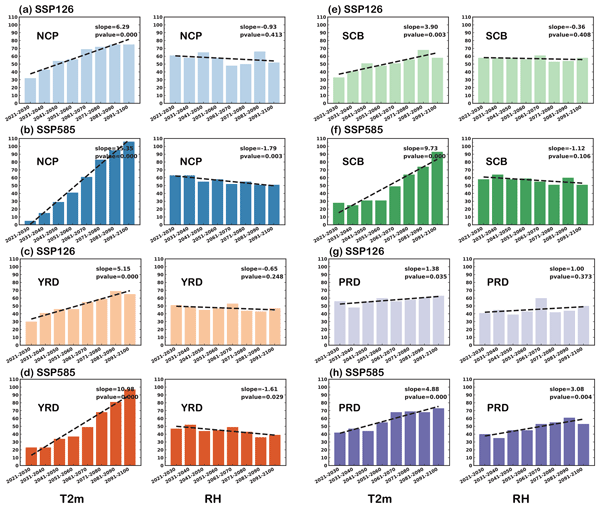
This study reveals that extreme ozone pollution over the North China Plain and Yangtze River Delta is due to the chemical production related to hot and dry conditions, and the regional transport explains the ozone pollution over the Sichuan Basin and Pearl River Delta. The frequency of meteorological conditions of the extreme ozone pollution increases from the past to the future. The sustainable scenario is the optimal path to retaining clean air in China in the future.
Simone Lolli, Michaël Sicard, Francesco Amato, Adolfo Comeron, Cristina Gíl-Diaz, Tony C. Landi, Constantino Munoz-Porcar, Daniel Oliveira, Federico Dios Otin, Francesc Rocadenbosch, Alejandro Rodriguez-Gomez, Andrés Alastuey, Xavier Querol, and Cristina Reche
Atmos. Chem. Phys., 23, 12887–12906, https://doi.org/10.5194/acp-23-12887-2023, https://doi.org/10.5194/acp-23-12887-2023, 2023
Short summary
Short summary
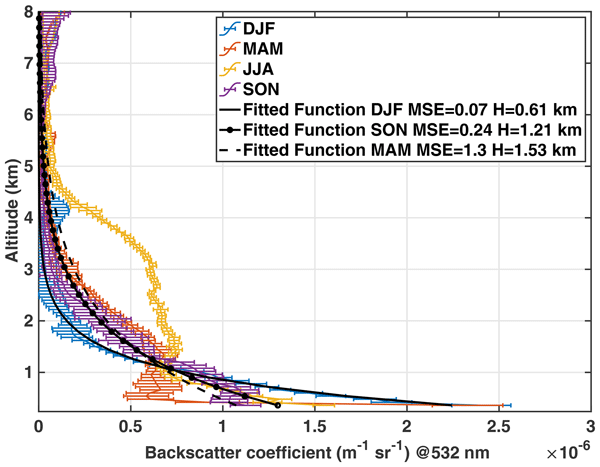
We evaluated the long-term trends and seasonal variability of the vertically resolved aerosol properties over the past 17 years in Barcelona. Results shows that air quality is improved, with a consistent drop in PM concentrations at the surface, as well as the column aerosol optical depth. The results also show that natural dust outbreaks are more likely in summer, with aerosols reaching an altitude of 5 km, while in winter, aerosols decay as an exponential with a scale height of 600 m.
Chupeng Zhang, Shangfei Hai, Yang Gao, Yuhang Wang, Shaoqing Zhang, Lifang Sheng, Bin Zhao, Shuxiao Wang, Jingkun Jiang, Xin Huang, Xiaojing Shen, Junying Sun, Aura Lupascu, Manish Shrivastava, Jerome D. Fast, Wenxuan Cheng, Xiuwen Guo, Ming Chu, Nan Ma, Juan Hong, Qiaoqiao Wang, Xiaohong Yao, and Huiwang Gao
Atmos. Chem. Phys., 23, 10713–10730, https://doi.org/10.5194/acp-23-10713-2023, https://doi.org/10.5194/acp-23-10713-2023, 2023
Short summary
Short summary
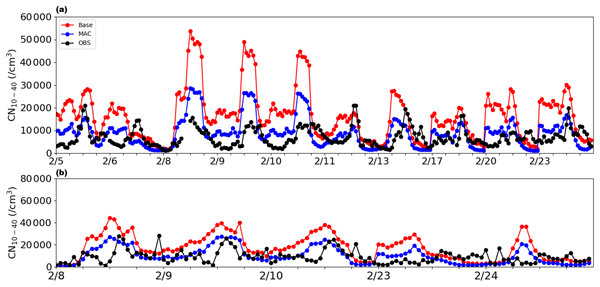
New particle formation is an important source of atmospheric particles, exerting critical influences on global climate. Numerical models are vital tools to understanding atmospheric particle evolution, which, however, suffer from large biases in simulating particle numbers. Here we improve the model chemical processes governing particle sizes and compositions. The improved model reveals substantial contributions of newly formed particles to climate through effects on cloud condensation nuclei.
Yuan Wang, Qiangqiang Yuan, Tongwen Li, Yuanjian Yang, Siqin Zhou, and Liangpei Zhang
Earth Syst. Sci. Data, 15, 3597–3622, https://doi.org/10.5194/essd-15-3597-2023, https://doi.org/10.5194/essd-15-3597-2023, 2023
Short summary
Short summary
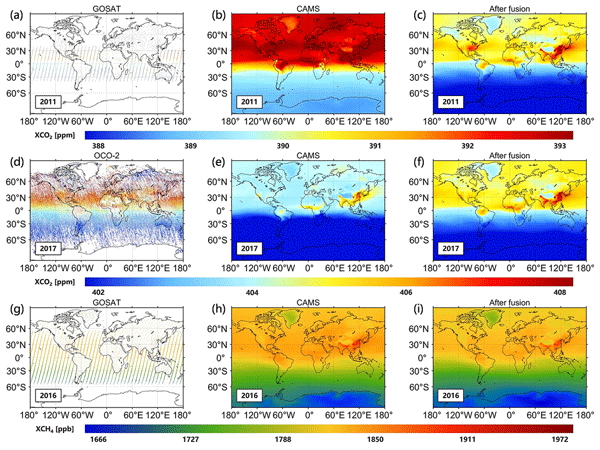
We propose a novel spatiotemporally self-supervised fusion method to establish long-term daily seamless global XCO2 and XCH4 products. Results show that the proposed method achieves a satisfactory accuracy that distinctly exceeds that of CAMS-EGG4 and is superior or close to those of GOSAT and OCO-2. In particular, our fusion method can effectively correct the large biases in CAMS-EGG4 due to the issues from assimilation data, such as the unadjusted anthropogenic emission for COVID-19.
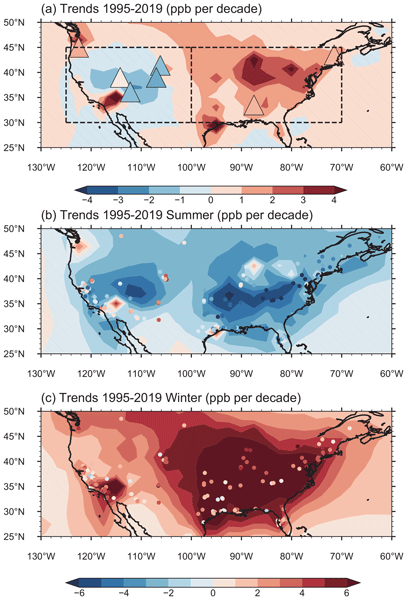
Pengwei Li, Yang Yang, Hailong Wang, Su Li, Ke Li, Pinya Wang, Baojie Li, and Hong Liao
Atmos. Chem. Phys., 23, 5403–5417, https://doi.org/10.5194/acp-23-5403-2023, https://doi.org/10.5194/acp-23-5403-2023, 2023
Short summary
Short summary
We use a novel technique that can attribute O3 to precursors to investigate O3 changes in the United States during 1995–2019. We found that the US domestic energy and surface transportation emission reductions are primarily responsible for the O3 decrease in summer. In winter, factors such as nitrogen oxide emission reduction in the context of its inhibition of ozone production, increased aviation and shipping activities, and large-scale circulation changes contribute to the O3 increases.
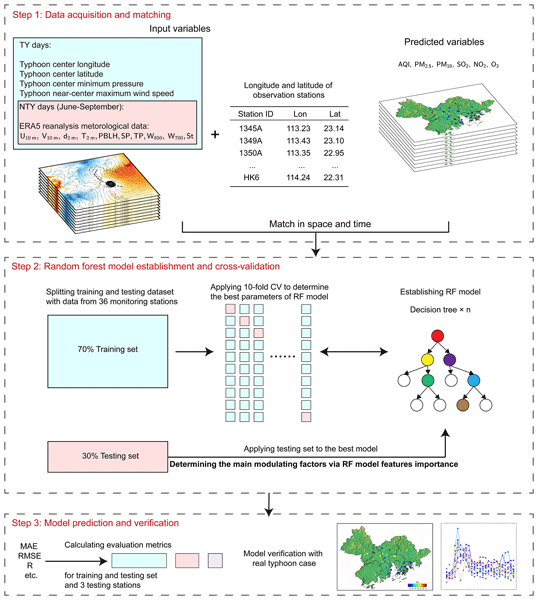
Yilin Chen, Yuanjian Yang, and Meng Gao
Atmos. Meas. Tech., 16, 1279–1294, https://doi.org/10.5194/amt-16-1279-2023, https://doi.org/10.5194/amt-16-1279-2023, 2023
Short summary
Short summary
The Guangdong–Hong Kong–Macao Greater Bay Area suffers from summertime air pollution events related to typhoons. The present study leverages machine learning to predict typhoon-associated air quality over the area. The model evaluation shows that the model performs excellently. Moreover, the change in meteorological drivers of air quality on typhoon days and non-typhoon days suggests that air pollution control strategies should have different focuses on typhoon days and non-typhoon days.
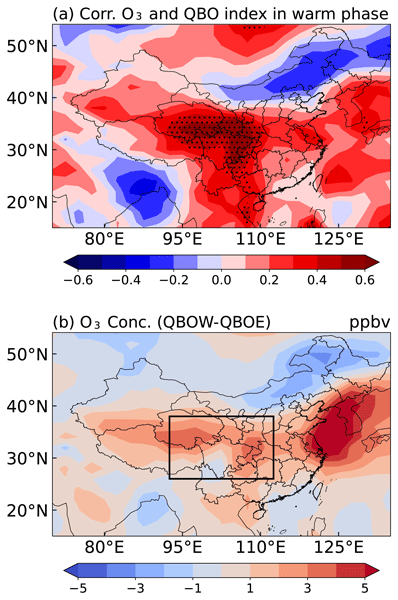
Mengyun Li, Yang Yang, Hailong Wang, Huimin Li, Pinya Wang, and Hong Liao
Atmos. Chem. Phys., 23, 1533–1544, https://doi.org/10.5194/acp-23-1533-2023, https://doi.org/10.5194/acp-23-1533-2023, 2023
Short summary
Short summary
Using the GEOS-Chem model, the impact of the quasi-biennial oscillation (QBO) on summertime tropospheric O3 in China is investigated. In the warm phases of sea surface temperature anomalies over the eastern tropical Pacific, the QBO has a significant positive correlation with near-surface O3 concentrations over central China. The QBO impacts on O3 pollution in China are mainly a result of changing vertical transport of O3.
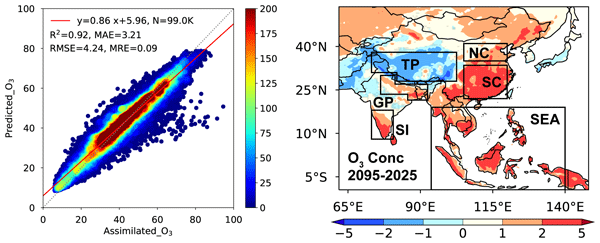
Huimin Li, Yang Yang, Jianbing Jin, Hailong Wang, Ke Li, Pinya Wang, and Hong Liao
Atmos. Chem. Phys., 23, 1131–1145, https://doi.org/10.5194/acp-23-1131-2023, https://doi.org/10.5194/acp-23-1131-2023, 2023
Short summary
Short summary
Future climate change will aggravate ozone pollution in Asia, especially in high-forcing scenarios. Ozone pollution in China will expand from North China to South China and extend into the cold season in a warmer future. The emphasis of this work is to quantify the impacts of future climate change on O3 pollution in Asia, which is of great significance for future O3 pollution mitigation strategies.
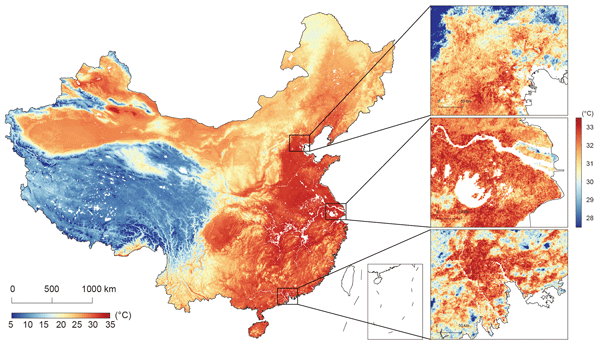
Hui Zhang, Ming Luo, Yongquan Zhao, Lijie Lin, Erjia Ge, Yuanjian Yang, Guicai Ning, Jing Cong, Zhaoliang Zeng, Ke Gui, Jing Li, Ting On Chan, Xiang Li, Sijia Wu, Peng Wang, and Xiaoyu Wang
Earth Syst. Sci. Data, 15, 359–381, https://doi.org/10.5194/essd-15-359-2023, https://doi.org/10.5194/essd-15-359-2023, 2023
Short summary
Short summary
We generate the first monthly high-resolution (1 km) human thermal index collection (HiTIC-Monthly) in China over 2003–2020, in which 12 human-perceived temperature indices are generated by LightGBM. The HiTIC-Monthly dataset has a high accuracy (R2 = 0.996, RMSE = 0.693 °C, MAE = 0.512 °C) and describes explicit spatial variations for fine-scale studies. It is freely available at https://zenodo.org/record/6895533 and https://data.tpdc.ac.cn/disallow/036e67b7-7a3a-4229-956f-40b8cd11871d.

Huibin Dai, Hong Liao, Ke Li, Xu Yue, Yang Yang, Jia Zhu, Jianbing Jin, Baojie Li, and Xingwen Jiang
Atmos. Chem. Phys., 23, 23–39, https://doi.org/10.5194/acp-23-23-2023, https://doi.org/10.5194/acp-23-23-2023, 2023
Short summary
Short summary
We apply the 3-D global chemical transport model (GEOS-Chem) to simulate co-polluted days by O3 and PM2.5 (O3–PM2.5PDs) in Beijing–Tianjin–Hebei in 2013–2020 and investigate the chemical and physical characteristics of O3–PM2.5PDs by composited analyses of such days that are captured by both the observations and the model. We report for the first time the unique features in vertical distributions of aerosols during O3–PM2.5PDs and the physical and chemical characteristics of O3–PM2.5PDs.
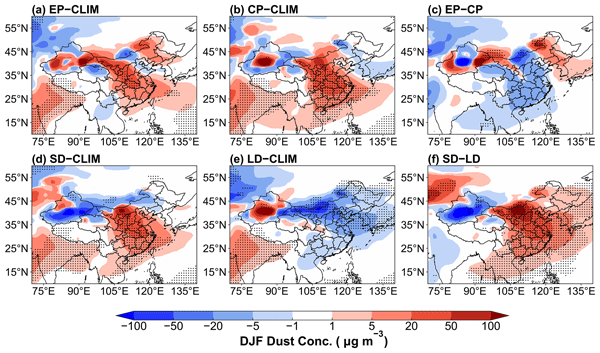
Yang Yang, Liangying Zeng, Hailong Wang, Pinya Wang, and Hong Liao
Atmos. Chem. Phys., 22, 14489–14502, https://doi.org/10.5194/acp-22-14489-2022, https://doi.org/10.5194/acp-22-14489-2022, 2022
Short summary
Short summary
Using an aerosol–climate model, dust pollution in China affected by different spatial and temporal types of El Niño are examined. Both eastern and central Pacific El Niño and short-duration El Niño increase winter dust concentrations over northern China, while long-duration El Niño decreases concentrations. Only long-duration El Niño events can significantly affect dust over China in the following spring. This study has profound implications for air pollution control and dust storm prediction.
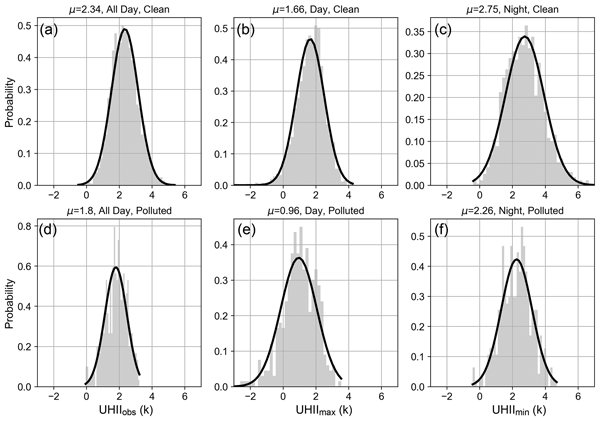
Fan Wang, Gregory R. Carmichael, Jing Wang, Bin Chen, Bo Huang, Yuguo Li, Yuanjian Yang, and Meng Gao
Atmos. Chem. Phys., 22, 13341–13353, https://doi.org/10.5194/acp-22-13341-2022, https://doi.org/10.5194/acp-22-13341-2022, 2022
Short summary
Short summary
Unprecedented urbanization in China has led to serious urban heat island (UHI) issues, exerting intense heat stress on urban residents. We find diverse influences of aerosol pollution on urban heat island intensity (UHII) under different circulations. Our results also highlight the role of black carbon in aggravating UHI, especially during nighttime. It could thus be targeted for cooperative management of heat islands and aerosol pollution.
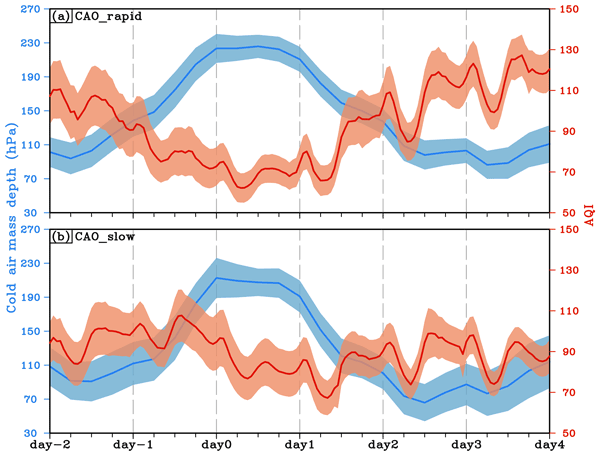
Qian Liu, Guixing Chen, Lifang Sheng, and Toshiki Iwasaki
Atmos. Chem. Phys., 22, 13371–13388, https://doi.org/10.5194/acp-22-13371-2022, https://doi.org/10.5194/acp-22-13371-2022, 2022
Short summary
Short summary
Air pollution can be cleaned up quickly by a cold air outbreak (CAO) but reappears after a CAO. By quantifying the CAO properties, we find the coldness and depth of the cold air mass are key factors affecting the rapid (slow) reappearance of air pollution through modulating the atmospheric boundary layer height and stability. We also find that the spatial pattern of CAO in high-latitude Eurasia a few days ahead can be recognized as a precursor for the reappearance of air pollution.
Chenguang Tian, Xu Yue, Jun Zhu, Hong Liao, Yang Yang, Yadong Lei, Xinyi Zhou, Hao Zhou, Yimian Ma, and Yang Cao
Atmos. Chem. Phys., 22, 12353–12366, https://doi.org/10.5194/acp-22-12353-2022, https://doi.org/10.5194/acp-22-12353-2022, 2022
Short summary
Short summary
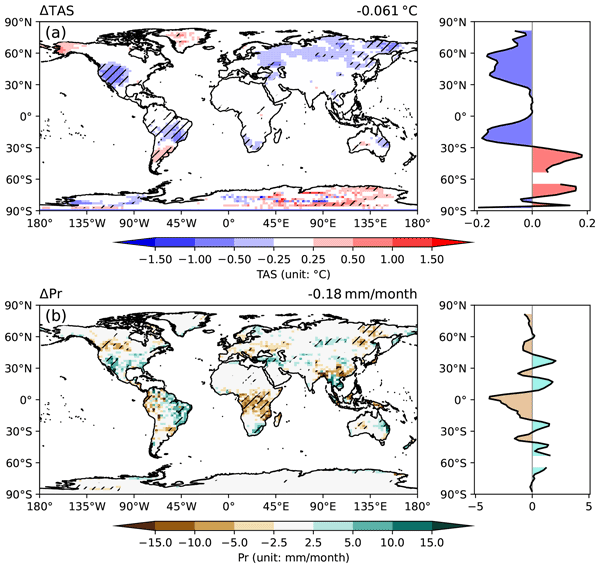
We quantify the impacts of fire aerosols on climate through direct, indirect, and albedo effects. In atmosphere-only simulations, we find global fire aerosols cause surface cooling and rainfall inhibition over many land regions. These fast atmospheric perturbations further lead to a reduction in regional leaf area index and lightning activities. By considering the feedback of fire aerosols on humidity, lightning, and leaf area index, we predict a slight reduction in fire emissions.
Zexia Duan, Zhiqiu Gao, Qing Xu, Shaohui Zhou, Kai Qin, and Yuanjian Yang
Earth Syst. Sci. Data, 14, 4153–4169, https://doi.org/10.5194/essd-14-4153-2022, https://doi.org/10.5194/essd-14-4153-2022, 2022
Short summary
Short summary
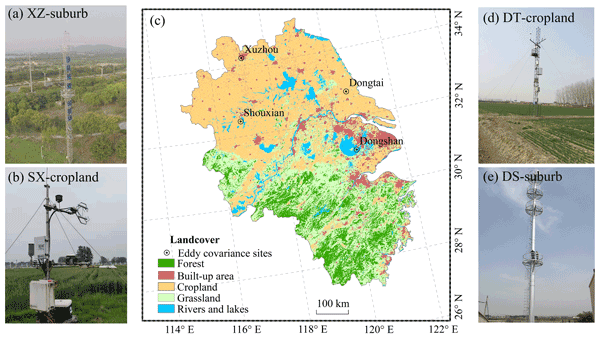
Land–atmosphere interactions over the Yangtze River Delta (YRD) in China are becoming more varied and complex, as the area is experiencing rapid land use changes. In this paper, we describe a dataset of microclimate and eddy covariance variables at four sites in the YRD. This dataset has potential use cases in multiple research fields, such as boundary layer parametrization schemes, evaluation of remote sensing algorithms, and development of climate models in typical East Asian monsoon regions.
Jiyuan Gao, Yang Yang, Hailong Wang, Pinya Wang, Huimin Li, Mengyun Li, Lili Ren, Xu Yue, and Hong Liao
Atmos. Chem. Phys., 22, 7131–7142, https://doi.org/10.5194/acp-22-7131-2022, https://doi.org/10.5194/acp-22-7131-2022, 2022
Short summary
Short summary
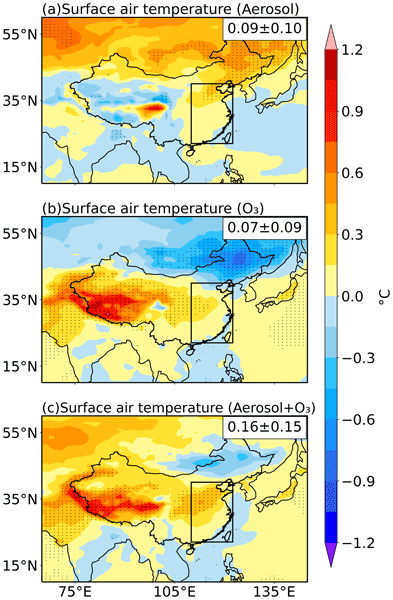
China has been implementing a sequence of policies for clean air since the year 2013. The aerosol decline produced a 0.09 ± 0.10°C warming during 2013–2017 estimated in this study, and the increase in ozone in the lower troposphere during this time period accelerated the warming, leading to a total 0.16 ± 0.15°C temperature increase in eastern China. Residential emission reductions led to a cooling effect because of a substantial decrease in light-absorbing aerosols.
Lian Zong, Yuanjian Yang, Haiyun Xia, Meng Gao, Zhaobin Sun, Zuofang Zheng, Xianxiang Li, Guicai Ning, Yubin Li, and Simone Lolli
Atmos. Chem. Phys., 22, 6523–6538, https://doi.org/10.5194/acp-22-6523-2022, https://doi.org/10.5194/acp-22-6523-2022, 2022
Short summary
Short summary
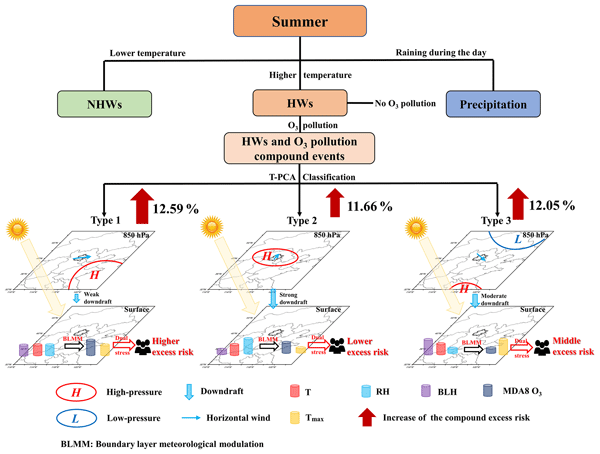
Heatwaves (HWs) paired with higher ozone (O3) concentration at surface level pose a serious threat to human health. Taking Beijing as an example, three unfavorable synoptic weather patterns were identified to dominate the compound HW and O3 pollution events. Under the synergistic stress of HWs and O3 pollution, public mortality risk increased, and synoptic patterns and urbanization enhanced the compound risk of events in Beijing by 33.09 % and 18.95 %, respectively.
Xiadong An, Wen Chen, Peng Hu, Shangfeng Chen, and Lifang Sheng
Atmos. Chem. Phys., 22, 6507–6521, https://doi.org/10.5194/acp-22-6507-2022, https://doi.org/10.5194/acp-22-6507-2022, 2022
Short summary
Short summary
The intraseasonal NAAA usually establishes quickly on day −3 with a life span of 8 days. Further results revealed that the probability of regional PM2.5 pollution related to the NAAA for at least 2 days in the NCP is 80% in NDJ period 2000–2021. Particularly, air quality in the NCP tends to deteriorate on day 2 prior to the peak day of the NAAA and reaches a peak on day −1 with a life cycle of 4 days. The corresponding meteorological conditions support these conclusions.
You Zhao, Chao Liu, Di Di, Ziqiang Ma, and Shihao Tang
Atmos. Meas. Tech., 15, 2791–2805, https://doi.org/10.5194/amt-15-2791-2022, https://doi.org/10.5194/amt-15-2791-2022, 2022
Short summary
Short summary
A typhoon is a high-impact atmospheric phenomenon that causes most significant socioeconomic damage, and its precipitation observation is always needed for typhoon characteristics and disaster prevention. This study developed a typhoon precipitation fusion method to combine observations from satellite radiometers, rain gauges and reanalysis to provide much improved typhoon precipitation datasets.
Jiandong Wang, Jia Xing, Shuxiao Wang, Rohit Mathur, Jiaping Wang, Yuqiang Zhang, Chao Liu, Jonathan Pleim, Dian Ding, Xing Chang, Jingkun Jiang, Peng Zhao, Shovan Kumar Sahu, Yuzhi Jin, David C. Wong, and Jiming Hao
Atmos. Chem. Phys., 22, 5147–5156, https://doi.org/10.5194/acp-22-5147-2022, https://doi.org/10.5194/acp-22-5147-2022, 2022
Short summary
Short summary
Aerosols reduce surface solar radiation and change the photolysis rate and planetary boundary layer stability. In this study, the online coupled meteorological and chemistry model was used to explore the detailed pathway of how aerosol direct effects affect secondary inorganic aerosol. The effects through the dynamics pathway act as an equally or even more important route compared with the photolysis pathway in affecting secondary aerosol concentration in both summer and winter.
Pinya Wang, Yang Yang, Huimin Li, Lei Chen, Ruijun Dang, Daokai Xue, Baojie Li, Jianping Tang, L. Ruby Leung, and Hong Liao
Atmos. Chem. Phys., 22, 4705–4719, https://doi.org/10.5194/acp-22-4705-2022, https://doi.org/10.5194/acp-22-4705-2022, 2022
Short summary
Short summary
China is now suffering from both severe ozone (O3) pollution and heat events. We highlight that North China Plain is the hot spot of the co-occurrences of extremes in O3 and high temperatures in China. Such coupled extremes exhibit an increasing trend during 2014–2019 and will continue to increase until the middle of this century. And the coupled extremes impose more severe health impacts to human than O3 pollution occurring alone because of elevated O3 levels and temperatures.
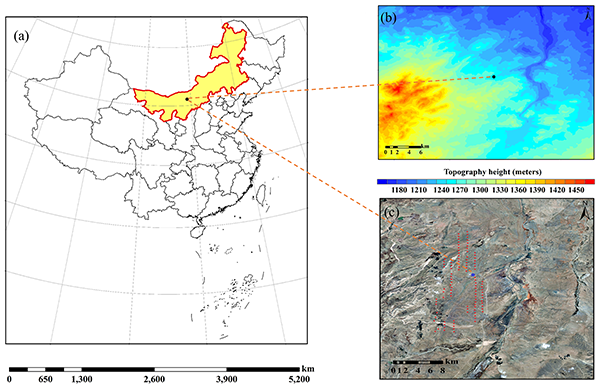
Shaohui Zhou, Yuanjian Yang, Zhiqiu Gao, Xingya Xi, Zexia Duan, and Yubin Li
Atmos. Meas. Tech., 15, 757–773, https://doi.org/10.5194/amt-15-757-2022, https://doi.org/10.5194/amt-15-757-2022, 2022
Short summary
Short summary
Our research has determined the possible relationship between Weibull natural wind mesoscale parameter c and shape factor k with height under the conditions of a desert steppe terrain in northern China, which has great potential in wind power generation. We have gained an enhanced understanding of the seasonal changes in the surface roughness of the desert grassland and the changes in the incoming wind direction.
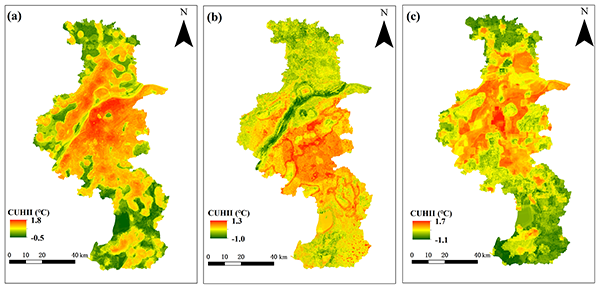
Shihan Chen, Yuanjian Yang, Fei Deng, Yanhao Zhang, Duanyang Liu, Chao Liu, and Zhiqiu Gao
Atmos. Meas. Tech., 15, 735–756, https://doi.org/10.5194/amt-15-735-2022, https://doi.org/10.5194/amt-15-735-2022, 2022
Short summary
Short summary
This paper proposes a method for evaluating canopy UHI intensity (CUHII) at high resolution by using remote sensing data and machine learning with a random forest (RF) model. The spatial distribution of CUHII was evaluated at 30 m resolution based on the output of the RF model. The present RF model framework for real-time monitoring and assessment of high-resolution CUHII provides scientific support for studying the changes and causes of CUHII.
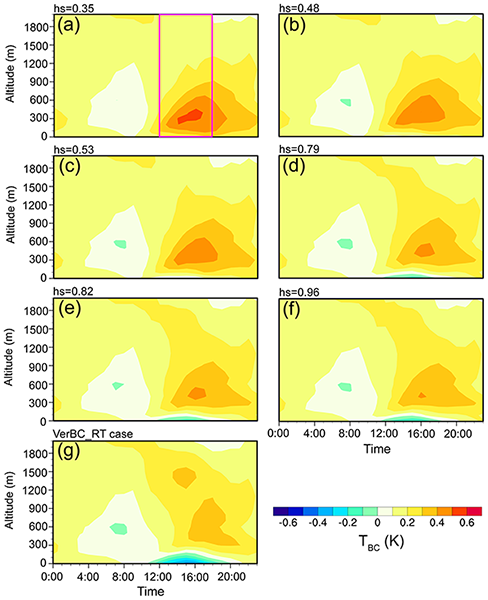
Donglin Chen, Hong Liao, Yang Yang, Lei Chen, Delong Zhao, and Deping Ding
Atmos. Chem. Phys., 22, 1825–1844, https://doi.org/10.5194/acp-22-1825-2022, https://doi.org/10.5194/acp-22-1825-2022, 2022
Short summary
Short summary
The black carbon (BC) vertical profile plays a critical role in BC–meteorology interaction, which also influences PM2.5 concentrations. More BC mass was assigned into high altitudes (above 1000 m) in the model, which resulted in a stronger cooling effect near the surface, a larger temperature inversion below 421 m, more reductions in PBLH, and a larger increase in near-surface PM2.5 in the daytime caused by the direct radiative effect of BC.
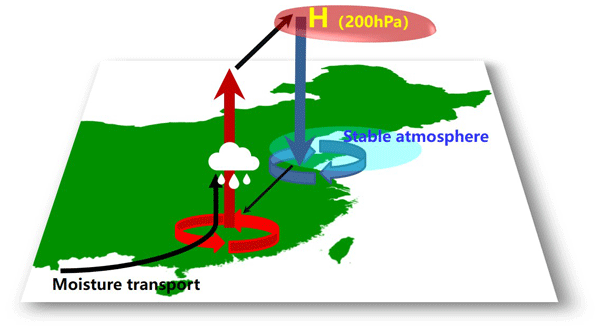
Xiadong An, Lifang Sheng, Chun Li, Wen Chen, Yulian Tang, and Jingliang Huangfu
Atmos. Chem. Phys., 22, 725–738, https://doi.org/10.5194/acp-22-725-2022, https://doi.org/10.5194/acp-22-725-2022, 2022
Short summary
Short summary
The North China Plain (NCP) suffered many periods of haze in winter during 1985–2015, related to the rainfall-induced diabatic heating over southern China. The haze over the NCP is modulated by an anomalous anticyclone caused by the Rossby wave and a north–south circulation (NSC) induced mainly by diabatic heating. As a Rossby wave source, rainfall-induced diabatic heating supports waves and finally strengthens the anticyclone over the NCP. These changes favor haze over the NCP.
Xinyan Li, Yuanjian Yang, Jiaqin Mi, Xueyan Bi, You Zhao, Zehao Huang, Chao Liu, Lian Zong, and Wanju Li
Atmos. Meas. Tech., 14, 7007–7023, https://doi.org/10.5194/amt-14-7007-2021, https://doi.org/10.5194/amt-14-7007-2021, 2021
Short summary
Short summary
A random forest (RF) model framework for Fengyun-4A (FY-4A) daytime and nighttime quantitative precipitation estimation (QPE) is established using FY-4A multi-band spectral information, cloud parameters, high-density precipitation observations and physical quantities from reanalysis data. The RF model of FY-4A QPE has a high accuracy in estimating precipitation at the heavy-rain level or below, which has advantages for quantitative estimation of summer precipitation over East Asia in future.
Baojie Li, Lei Chen, Weishou Shen, Jianbing Jin, Teng Wang, Pinya Wang, Yang Yang, and Hong Liao
Atmos. Chem. Phys., 21, 15883–15900, https://doi.org/10.5194/acp-21-15883-2021, https://doi.org/10.5194/acp-21-15883-2021, 2021
Short summary
Short summary
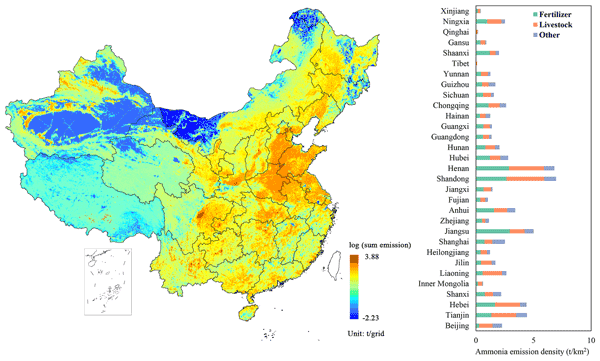
This study focused on improving fertilizer-application-related NH3 emission inventories. We comprehensively evaluated the dates and times of fertilizer application to the major crops in China, improved the spatial allocation methods for NH3 emissions from croplands with different rice types, and established a NH3 emission inventory for mainland China in 2016. The inventory showed a higher level of accuracy than other inventories based on evaluation using the WRF-Chem and observation data.
Cited articles
Bellamy, J. C.: Objective calculations of divergence, vertical velocity and vorticity, B. Am. Meteorol. Soc., 30, 45–49, https://doi.org/10.1175/1520-0477-30.2.45, 1949.
Chen, T. and Zhang, D.-L.: A 7-Year Climatology of Warm-Sector Heavy Rainfall over South China during the Pre-Summer Months, Atmosphere, 12, 914, https://doi.org/10.3390/atmos12070914, 2021.
Chen, Y., Chen, T., Wang, L., Li, S., and Xu, J.: A review of the warm-sector rainstorms in China, Torrential Rain and Disasters, 38, 483–493, https://doi.org/10.3969/j.issn.1004-9045.2019.05.010, 2019 (in Chinese).
Demuzere, M., Kittner, J., Martilli, A., Mills, G., Moede, C., Stewart, I. D., van Vliet, J., and Bechtel, B.: A global map of local climate zones to support earth system modelling and urban-scale environmental science, Earth Syst. Sci. Data, 14, 3835–3873, https://doi.org/10.5194/essd-14-3835-2022, 2022a.
Demuzere, M., Kittner, J., Martilli, A., Mills, G., Moede, C., Stewart, I. D., van Vliet, J., and Bechtel, B.: Global map of Local Climate Zones (2.0.0), Zenodo [data set], https://doi.org/10.5281/zenodo.7324909, 2022b.
Ding, Y. H.: Monsoons over China, Kluwer Academic Publishers, Dordrecht, the Netherlands, 419 pp., https://doi.org/10.1007/978-94-015-8302-2, 1994.
Du, Y. and Chen, G.: Heavy rainfall associated with double low-level jets over southern China. Part I: Ensemble-based analysis, Mon. Weather Rev., 146, 3827–3844, https://doi.org/10.1175/MWR-D-18-0101.1, 2018.
Du, Y., Zhang, Q., Ying, Y., and Yang, Y.: Characteristics of Low-level Jets in Shanghai during the 2008–2009 Warm Seasons as Inferred from Wind Profiler Radar Data, J. Meteor. Soc. Jpn., 90, 891–903, https://doi.org/10.2151/jmsj.2012-603, 2012.
Du, Y., Chen, G., Han, B., Mai, C., Bai, L., and Li, M.: Convection Initiation and Growth at the Coast of South China. Part I: Effect of the Marine Boundary Layer Jet, Mon. Weather Rev., 148, 3847–3869, https://doi.org/10.1175/MWR-D-20-0089.1, 2020a.
Du, Y., Chen, G., Han, B., Bai, L., and Li, M.: Convection initiation and growth at the coast of South China. Part II: Effects of the terrain, coastline, and cold pools, Mon. Weather Rev., 148, 3871–3892, https://doi.org/10.1175/MWR-D-20-0090.1, 2020b.
Gao, Z., Zhu, J., Guo, Y., Luo, N., Fu, Y., and Wang, T.: Impact of Land Surface Processes on a Record-Breaking Rainfall Event on May 06–07, 2017, in Guangzhou, China, J. Geophys. Res.-Atmos., 126, e2020JD032997, https://doi.org/10.1029/2020JD032997, 2021.
Heo, B., Jacoby-Koaly, S., Kim, K., Campistron, B., Benech, B., and Jung, E.: Use of the Doppler Spectral Width to Improve the Estimation of the Convective Boundary Layer Height from UHF Wind Profiler Observations, J. Atmos. Ocean. Tech., 20, 408–424, https://doi.org/10.1175/1520-0426(2003)020<0408:UOTDSW>2.0.CO;2, 2003.
Hersbach, H., Bell, B., Berrisford, P., Biavati, G., Horányi, A., Muñoz Sabater, J., Nicolas, J., Peubey, C., Radu, R., Rozum, I., Schepers, D., Simmons, A., Soci, C., Dee, D., and Thépaut, J.-N.: ERA5 hourly data on pressure levels from 1940 to present, Copernicus Climate Change Service (C3S) Climate Data Store (CDS) [data set], https://doi.org/10.24381/cds.bd0915c6, 2023a.
Hersbach, H., Bell, B., Berrisford, P., Biavati, G., Horányi, A., Muñoz Sabater, J., Nicolas, J., Peubey, C., Radu, R., Rozum, I., Schepers, D., Simmons, A., Soci, C., Dee, D., and Thépaut, J.-N.: ERA5 hourly data on single levels from 1940 to present, Copernicus Climate Change Service (C3S) Climate Data Store (CDS) [data set], https://doi.org/10.24381/cds.adbb2d47, 2023b.
Higgins, R. W., Yao, Y., Yarosh, E. S., Janowiak, J. E., and Mo, K. C.: Influence of the Great Plains low-level jet on summertime precipitation and moisture transport over the central United States, J. Climate, 10, 481–507, https://doi.org/10.1175/1520-0442(1997)010<0481:IOTGPL>2.0.CO;2, 1997.
Huang, S. S.: Heavy Rainfall over Southern China in the Pre-Summer Rainy Season, Guangdong Science and Technology Press, Guangzhou, 244 pp., China Unified Book Number 13182.129, 1986 (in Chinese).
Huang, Y., Liu, Y., Liu, Y., Li, H., and Knievel, J. C.: Mechanisms for a Record-Breaking Rainfall in the Coastal Metropolitan City of Guangzhou, China: Observation Analysis and Nested Very Large Eddy Simulation With the WRF Model, J. Geophys. Res.-Atmos., 124, 1370–1391, https://doi.org/10.1029/2018JD029668, 2019.
Kotthaus, S., Bravo-Aranda, J. A., Collaud Coen, M., Guerrero-Rascado, J. L., Costa, M. J., Cimini, D., O'Connor, E. J., Hervo, M., Alados-Arboledas, L., Jiménez-Portaz, M., Mona, L., Ruffieux, D., Illingworth, A., and Haeffelin, M.: Atmospheric boundary layer height from ground-based remote sensing: a review of capabilities and limitations, Atmos. Meas. Tech., 16, 433–479, https://doi.org/10.5194/amt-16-433-2023, 2023.
Li, C., Zhang, X., Guo, J., Yu, Q., and Zhang, Y.: Decadal variation and trend of boundary layer height and possible contributing factors in China, Agr. Forest Meteorol., 347, 109910, https://doi.org/10.1016/j.agrformet.2024.109910, 2024a.
Li, N., Guo, J., Wu, M., Zhang, F., Guo, X., Sun, Y., Zhang, Z., Liang, H., and Chen, T.: Low-Level Jet and Its Effect on the Onset of Summertime Nocturnal Rainfall in Beijing, Geophys. Res. Lett., 51, e2024GL110840, https://doi.org/10.1029/2024GL110840, 2024b.
Liang, Z. and Gao, S.: Organized Warm-Sector Rainfall in the Coastal Region of South China in an Anticyclone Synoptic Situation: Observational Analysis, J. Meteorol. Res., 35, 460–477, https://doi.org/10.1007/s13351-021-0157-4, 2021.
Liu, B., Guo, J., Gong, W., Shi, L., Zhang, Y., and Ma, Y.: Characteristics and performance of wind profiles as observed by the radar wind profiler network of China, Atmos. Meas. Tech., 13, 4589–4600, https://doi.org/10.5194/amt-13-4589-2020, 2020.
Liu, R., Sun, J., and Chen, B.: Selection and Classification of Warm-Sector Heavy Rainfall Events over South China, Chinese J. Atmos. Sci., 43, 119–130, https://doi.org/10.3878/j.issn.1006-9895.1803.17245, 2019 (in Chinese).
Liu, S. Y., Zheng, Y. G., and Tao, Z. Y.: The analysis of the relationship between pulse of LLJ and heavy rain using wind profiler data, J. Trop. Meteor., 19, 285–290, https://doi.org/10.3969/j.issn.1004-4965.2003.03.008, 2003 (in Chinese).
Lolli, S., Delaval, A., Loth, C., Garnier, A., and Flamant, P. H.: 0.355-micrometer direct detection wind lidar under testing during a field campaign in consideration of ESA's ADM-Aeolus mission, Atmos. Meas. Tech., 6, 3349–3358, https://doi.org/10.5194/amt-6-3349-2013, 2013.
Luo, Y., Zhang, R., Wan, Q., Wang, B., Wong, W. K., Hu, Z., Jou, B. J.-D., Lin, Y., Johnson, R. H., Chang, C.-P., Zhu, Y., Zhang, X., Wang, H., Xia, R., Ma, J., Zhang, D.-L., Gao, M., Zhang, Y., Liu, X., Chen, Y., Huang, H., Bao, X., Ruan, Z., Cui, Z., Meng, Z., Sun, J., Wu, M., Wang, H., Peng, X., Qian, W., Zhao, K., and Xiao, Y.: The Southern China Monsoon Rainfall Experiment (SCMREX), B. Am. Meteorol. Soc., 98, 999–1013, https://doi.org/10.1175/BAMS-D-15-00235.1, 2017.
Ning, G., Luo, M., Bi, X., Liu, Z., Zhang, H., Huang, M., Huang, X., Yang, Y., and Wu, S.: Large-scale moisture transport and local-scale convection patterns associated with warm-sector heavy rainfall over South China, Atmos. Res., 285, 106637, https://doi.org/10.1016/j.atmosres.2023.106637, 2023.
Pu, Y., Hu, S., Luo, Y., Liu, X., Hu, L., Ye, L., Li, H., Xia, F., and Gao, L.: Multiscale Perspectives on an Extreme Warm-Sector Rainfall Event over Coastal South China, Remote Sens., 14, 3110, https://doi.org/10.3390/rs14133110, 2022.
Seibert, P., Beyrich, F., Gryning, S.-E., Joffre, S., Rasmussen, A., and Tercier, P.: Review and intercomparison of operational methods for the determination of the mixing height, Atmos. Environ., 34, 1001–1027, https://doi.org/10.1016/S1352-2310(99)00349-0, 2000.
Stensrud, D. J.: Importance of low-level jets to climate: A review, J. Climate, 9, 1698–1711, https://doi.org/10.1175/1520-0442(1996)009<1698:IOLLJT>2.0.CO;2, 1996.
Stewart, I. D. and Oke, T. R.: Local Climate Zones for Urban Temperature Studies, B. Am. Meteorol. Soc., 93, 1879–1900, https://doi.org/10.1175/BAMS-D-11-00019.1, 2012.
Sun, J., Zhang, Y., Liu, R., Fu, S., and Tian, F.: A Review of Research on Warm-Sector Heavy Rainfall in China, Adv. Atmos. Sci., 36, 1299–1307, https://doi.org/10.1007/s00376-019-9021-1, 2019.
Trier, S. B., Davis, C. A., Ahijevych, D. A., Weisman, M. L., and Bryan, G. H.: Mechanisms supporting long-lived episodes of propagating nocturnal convection within a 7-day WRF model simulation, J. Atmos. Sci., 63, 2437–2461, https://doi.org/10.1175/JAS3768.1, 2006.
Wang, C., Chen, X., and Zhao, K.: Extreme local mesoscale convective systems over the South China coast during the warm season, Q. J. Roy. Meteor. Soc., 151, e4959, https://doi.org/10.1002/qj.4959, 2025.
Wang, H., Luo, Y., and Jou, B. J.-D.: Initiation, maintenance, and properties of convection in an extreme rainfall event during SCMREX: Observational analysis, J. Geophys. Res.-Atmos., 119, 13206–13232, https://doi.org/10.1002/2014JD022339, 2014.
Wu, N., Zhuang, X., Min, J., and Meng, Z.: Practical and intrinsic predictability of a warm-sector torrential rainfall event in the South China monsoon region, J. Geophys. Res.-Atmos., 125, e2019JD031313, https://doi.org/10.1029/2019JD031313, 2020.
Wu, Y., Guo, J., Chen, T., and Chen, A.: Forecasting Precipitation from Radar Wind Profiler Mesonet and Reanalysis Using the Random Forest Algorithm, Remote Sens., 15, 1635, https://doi.org/10.3390/rs15061635, 2023.
Xian, T., Guo, J., Zhao, R., Guo, X., Li, N., Sun, Y., Zhang, Z., Su, T., and Li, Z.: Impact of Urbanization on Mesoscale Convective Systems: Insights From a Radar Wind Profiler Mesonet, Theoretical Analyses, and Model Simulations, J. Geophys. Res.-Atmos., 129, e2024JD042294, https://doi.org/10.1029/2024JD042294, 2024.
Zeng, W., Chen, G., Du, Y., and Wen, Z.: Diurnal variations of low-level winds and precipitation response to large-scale circulations during a heavy rainfall event, Mon. Weather Rev., 147, 3981–4004, https://doi.org/10.1175/MWR-D-19-0131.1, 2019.
Zhang, L., Ma, X., Zhu, S., Guo, Z., Zhi, X., and Chen, C.: Analyses and applications of the precursor signals of a kind of warm sector heavy rainfall over the coast of Guangdong, China, Atmos. Res., 280, 106425, https://doi.org/10.1016/j.atmosres.2022.106425, 2022a.
Zhang, M. and Meng, Z.: Warm-sector heavy rainfall in southern China and its WRF simulation evaluation: A low-level-jet perspective, Mon. Weather Rev., 147, 4461–4480, https://doi.org/10.1175/MWR-D-19-0110.1, 2019.
Zhang, M., Rasmussen, K. L., Meng, Z., and Huang, Y.: Impacts of Coastal Terrain on Warm-Sector Heavy-Rain-Producing MCSs in Southern China, Mon. Weather Rev., 150, 603–624, https://doi.org/10.1175/MWR-D-21-0190.1, 2022b.
Zhong, S. and Chen, Z.: The Impacts of Atmospheric Moisture Transportation on Warm Sector Torrential Rains over South China, Atmosphere, 8, 116, https://doi.org/10.3390/atmos8070116, 2017.
Zhou, X., Cheng, Z., Li, H., and Hu, D.: Comparison between the Roles of Low-Level Jets in Two Heavy Rainfall Events over South China, J. Meteorol. Res., 36, 326–341, https://doi.org/10.1007/s13351-022-1159-6, 2022.
Short summary
Heavy rain in South China often strikes suddenly far from weather fronts and is hard to forecast. Using five years of radar wind data and rainfall records from Guangdong, we studied 226 events and found warning signs one to four hours before onset that differ by region. In the west, strengthening low-level winds drive the rain; in the Pearl River Delta, friction reshapes the surface wind; in the east, warm surface air stores energy that fuels the storm.
Heavy rain in South China often strikes suddenly far from weather fronts and is hard to...


Altmetrics
Final-revised paper
Preprint