
Articles | Volume 26, issue 11
https://doi.org/10.5194/acp-26-7917-2026
© Author(s) 2026. This work is distributed under
the Creative Commons Attribution 4.0 License.
the Creative Commons Attribution 4.0 License.
https://doi.org/10.5194/acp-26-7917-2026
© Author(s) 2026. This work is distributed under
the Creative Commons Attribution 4.0 License.
the Creative Commons Attribution 4.0 License.
Research article
| 
10 Jun 2026
Research article |
| 10 Jun 2026
| 10 Jun 2026
Exploring the processes of liquid water path sensitivity to aerosol-cloud interactions using output from a high-resolution large-eddy simulation
Sudhakar Dipu
CORRESPONDING AUTHOR

Institute for Meteorology, Universität Leipzig, Leipzig, Germany
Johannes Mülmenstädt
Institute for Meteorology, Universität Leipzig, Leipzig, Germany
now at: Pacific Northwest National Laboratory, Richland, USA
Johannes Quaas
Institute for Meteorology, Universität Leipzig, Leipzig, Germany
Related authors
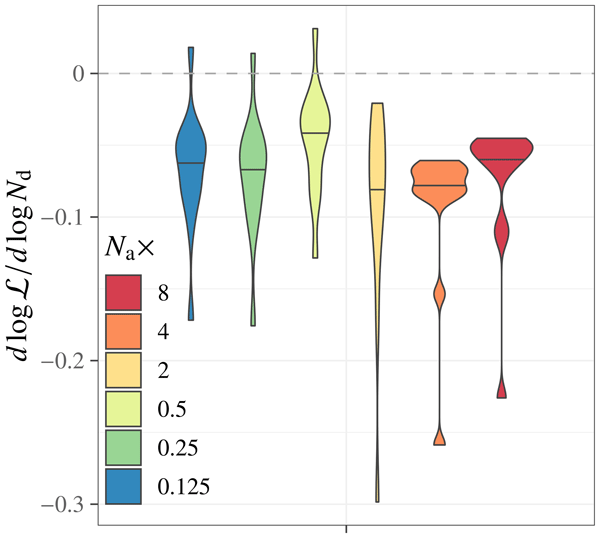
Johannes Mülmenstädt, Andrew S. Ackerman, Ann M. Fridlind, Meng Huang, Po-Lun Ma, Naser Mahfouz, Susanne E. Bauer, Susannah M. Burrows, Matthew W. Christensen, Sudhakar Dipu, Andrew Gettelman, L. Ruby Leung, Florian Tornow, Johannes Quaas, Adam C. Varble, Hailong Wang, Kai Zhang, and Youtong Zheng
Atmos. Chem. Phys., 24, 13633–13652, https://doi.org/10.5194/acp-24-13633-2024, https://doi.org/10.5194/acp-24-13633-2024, 2024
Short summary
Short summary
Stratocumulus clouds play a large role in Earth's climate by reflecting incoming solar energy back to space. Turbulence at stratocumulus cloud top mixes in dry, warm air, which can lead to cloud dissipation. This process is challenging for coarse-resolution global models to represent. We show that global models nevertheless agree well with our process understanding. Global models also think the process is less important for the climate than other lines of evidence have led us to conclude.
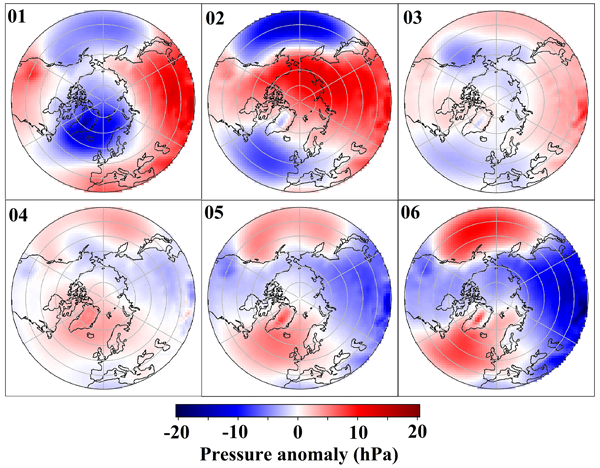
Sina Mehrdad, Dörthe Handorf, Ines Höschel, Khalil Karami, Johannes Quaas, Sudhakar Dipu, and Christoph Jacobi
Weather Clim. Dynam., 5, 1223–1268, https://doi.org/10.5194/wcd-5-1223-2024, https://doi.org/10.5194/wcd-5-1223-2024, 2024
Short summary
Short summary
This study introduces a novel deep learning (DL) approach to analyze how regional radiative forcing in Europe impacts the Arctic climate. By integrating atmospheric poleward energy transport with DL-based clustering of atmospheric patterns and attributing anomalies to specific clusters, our method reveals crucial, nuanced interactions within the climate system, enhancing our understanding of intricate climate dynamics.
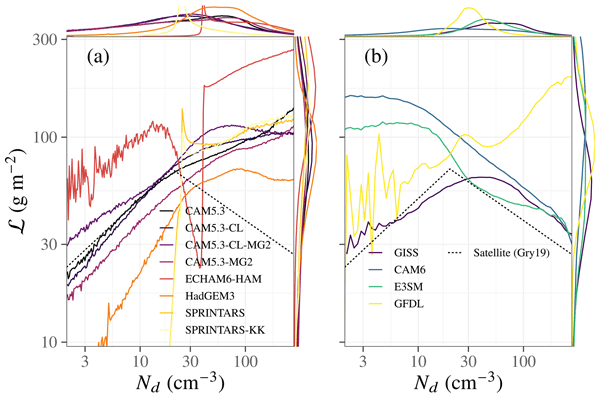
Johannes Mülmenstädt, Edward Gryspeerdt, Sudhakar Dipu, Johannes Quaas, Andrew S. Ackerman, Ann M. Fridlind, Florian Tornow, Susanne E. Bauer, Andrew Gettelman, Yi Ming, Youtong Zheng, Po-Lun Ma, Hailong Wang, Kai Zhang, Matthew W. Christensen, Adam C. Varble, L. Ruby Leung, Xiaohong Liu, David Neubauer, Daniel G. Partridge, Philip Stier, and Toshihiko Takemura
Atmos. Chem. Phys., 24, 7331–7345, https://doi.org/10.5194/acp-24-7331-2024, https://doi.org/10.5194/acp-24-7331-2024, 2024
Short summary
Short summary
Human activities release copious amounts of small particles called aerosols into the atmosphere. These particles change how much sunlight clouds reflect to space, an important human perturbation of the climate, whose magnitude is highly uncertain. We found that the latest climate models show a negative correlation but a positive causal relationship between aerosols and cloud water. This means we need to be very careful when we interpret observational studies that can only see correlation.
McKenna Stanford, Naser Mahfouz, Johannes Muelmenstaedt, August Mikkelsen, and Susannah Burrows
EGUsphere, https://doi.org/10.5194/egusphere-2026-4488, https://doi.org/10.5194/egusphere-2026-4488, 2026
Short summary
Short summary
A key challenge in calibrating climate models is equifinality, where models get the right answer for the wrong reasons. We show that matching Earth's energy balance alone is insufficient to constrain the radiative response to aerosol-cloud interactions. Constraining the cloud state helps but is fragile under large uncertainty. The most robust approach targets the physical processes forming clouds and rain, establishing that we must validate not just what a model produces, but how it produces it.
Andrew Geiss, Johannes Mülmenstädt, Adam C. Varble, Matthew W. Christensen, and Heng Xiao
EGUsphere, https://doi.org/10.5194/egusphere-2026-4426, https://doi.org/10.5194/egusphere-2026-4426, 2026
Short summary
Short summary
Cloud droplet and liquid water concentrations change in response to atmospheric aerosols, affecting cloud brightness, lifetime, and ultimately the Earth's climate. This study examines how the relationship between droplet number and liquid water concentrations varies by cloud type. We find that cloud type can be used to explain most variance in liquid water between satellite-observed cloud scenes, but the influence of droplet concentration on water content is largely independent of cloud type.
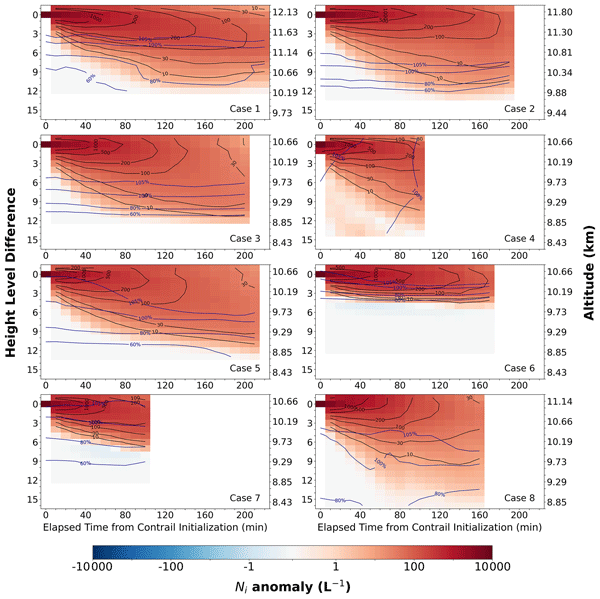
Sajedeh Marjani, Sina Mehrdad, and Johannes Quaas
Atmos. Chem. Phys., 26, 10695–10725, https://doi.org/10.5194/acp-26-10695-2026, https://doi.org/10.5194/acp-26-10695-2026, 2026
Short summary
Short summary
A large part of aviation's climate impact comes from persistent contrails, not just carbon dioxide. This study examined how they evolve under different ice-supersaturated conditions, usually with background clouds. Using high-resolution simulations, we found that contrail growth depends on both the thickness of the supersaturated layer and available water vapor. Contrails can alter surrounding clouds and contribute to warming. Simple thresholds are not enough to predict their impact.
Hailing Jia, David Neubauer, Yusuf Bhatti, Duncan Watson-Parris, Philip Stier, Johannes Quaas, Daniel Partridge, Ardit Arifi, Anne Kubin, Athanasios Nenes, Muhammed Irfan, Ulas Im, Carl Svenhag, Nick Schutgens, Bastiaan van Diedenhoven, Sylvaine Ferrachat, Ulrike Lohmann, Ina Tegen, Alice Henkes, Guangliang Fu, and Otto Hasekamp
EGUsphere, https://doi.org/10.5194/egusphere-2026-3275, https://doi.org/10.5194/egusphere-2026-3275, 2026
Short summary
Short summary
Tiny aerosol particles affect Earth’s climate by interacting with clouds and sunlight, but their impact remains uncertain. Combining climate model simulations and emulators, we explored millions of model variants across different aerosol and cloud settings to identify the causes of the uncertainty. We found that aerosol emissions and cloud convection are key contributors. Our work suggests that better integration of existing observations could help reduce these uncertainties in the future.
Sophie Wynn, Duncan Watson-Parris, Brandon M. Duran, and Johannes Mülmenstädt
EGUsphere, https://doi.org/10.5194/egusphere-2026-2811, https://doi.org/10.5194/egusphere-2026-2811, 2026
Short summary
Short summary
Climate models use uncertain parameters to represent aerosol–cloud processes. To identify which parameters are most important, commonly scientists a multitude of simulations where these parameters are varied uniformly. We show that restricting our analysis to simulations matching the base cloud state gives a different and more meaningful answer about which parameters drive the forcing related to aerosol-cloud interactions.
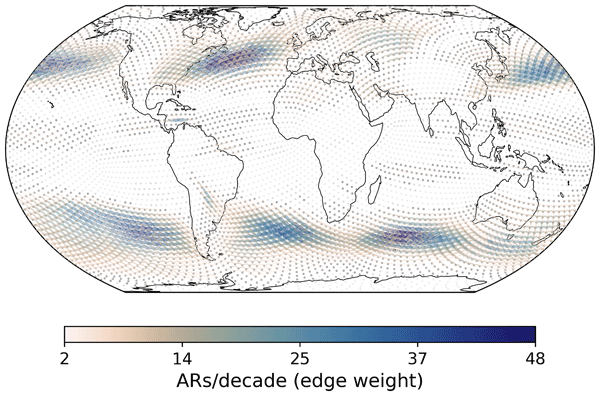
Tobias Braun, Sara M. Vallejo-Bernal, Norbert Marwan, Juergen Kurths, Johannes Quaas, Albert Díaz-Guilera, Luis Gimeno, and Miguel D. Mahecha
Earth Syst. Dynam., 17, 695–716, https://doi.org/10.5194/esd-17-695-2026, https://doi.org/10.5194/esd-17-695-2026, 2026
Short summary
Short summary
Atmospheric rivers (ARs) move vast amounts of water through the atmosphere and often cause weather extremes, yet they are usually studied as regional events. Using 84 years of mapped AR trajectories, we reveal the global "roadmap" of ARs, a transport network of high-activity hubs, sparse atmospheric highways & hierarchical basins. Our approach shows how water vapor is systematically channelled through an atmospheric transport network, offering new ways to study changes in the global water cycle.
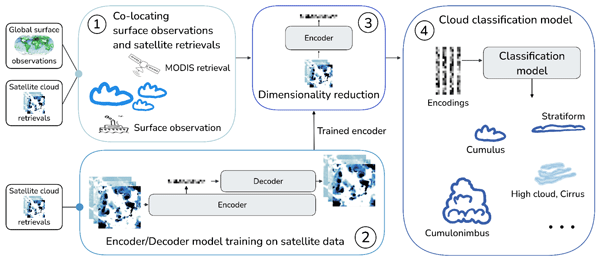
Julien Lenhardt, Johannes Quaas, Dino Sejdinovic, and Daniel Klocke
Atmos. Chem. Phys., 26, 5447–5475, https://doi.org/10.5194/acp-26-5447-2026, https://doi.org/10.5194/acp-26-5447-2026, 2026
Short summary
Short summary
Clouds come in various shapes and sizes and constitute a fundamental element of the Earth's climate system. Different cloud types show variable impacts on climate change. We present a new cloud type classification method called CloudViT (Cloud Vision Transformer) relying on spatial patterns of cloud properties obtained from satellite data using machine learning. We can thus help understanding the effects of different cloud types on climate change.
Yannick Emanuel Anders, Karoline Block, Mira Pöhlker, and Johannes Quaas
EGUsphere, https://doi.org/10.5194/egusphere-2026-1404, https://doi.org/10.5194/egusphere-2026-1404, 2026
Short summary
Short summary
Particles in the atmosphere can trigger the formation of cloud droplets, affecting cloud properties and climate. This study evaluates a new global dataset of these particles with measurements from 25 sites around the world. The variability in time and space and their conditional formation behaviour is analysed. The authors identify systematic biases and introduce a simple correction based on observations that greatly improves the dataset’s accuracy.
Johannes Mülmenstädt and Po-Lun Ma
EGUsphere, https://doi.org/10.5194/egusphere-2026-748, https://doi.org/10.5194/egusphere-2026-748, 2026
Short summary
Short summary
Aerosols emitted by human activities change the planetary energy budget by, among other mechanisms, changing how much liquid water is contained in clouds and thus their reflectance. Different lines of evidence (observations and models) disagree on the sign of the liquid water change even though they agree on the sign of the correlation between aerosols and liquid water in present-day internal variability. We show one way that observations can constrain models to resolve this disagreement.
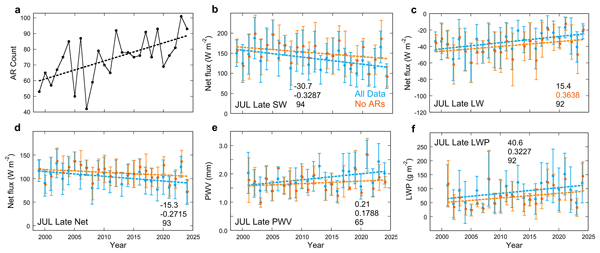
Dan Lubin, Xun Zou, Johannes Mülmenstädt, Andrew Vogelmann, Maria Cadeddu, and Damao Zhang
Atmos. Chem. Phys., 26, 295–311, https://doi.org/10.5194/acp-26-295-2026, https://doi.org/10.5194/acp-26-295-2026, 2026
Short summary
Short summary
The US Department of Energy Atmospheric Radiation Measurement (ARM) North Slope of Alaska Facility has measured solar and atmospheric infrared radiation, and cloud properties, for the past 25 years. Statistically significant trends are emerging, including increasing infrared radiation due to a warming atmosphere, and decreasing solar radiation due to increasing liquid water content in clouds. These trends are influenced by large-scale atmospheric circulation patterns and by atmospheric rivers.
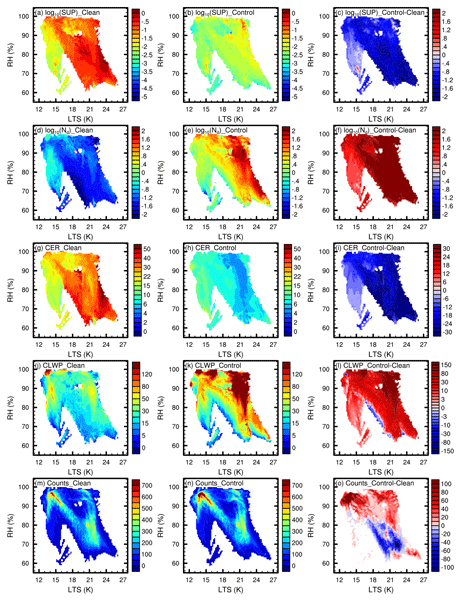
Jianqi Zhao, Xiaoyan Ma, Johannes Quaas, and Tong Yang
Atmos. Chem. Phys., 25, 17701–17723, https://doi.org/10.5194/acp-25-17701-2025, https://doi.org/10.5194/acp-25-17701-2025, 2025
Short summary
Short summary
We use the chemistry version of the Weather Research and Forecasting model coupled with spectral bin microphysics to investigate how meteorological conditions impact aerosol–cloud interactions (ACI) under different pollution regimes. Our findings highlight the changes in aerosol effects on clouds and precipitation under varying thermodynamic conditions, as well as the sensitivity of ACI to meteorological conditions under different pollution regimes, which help to clarify the mechanisms behind the nonlinear variation of ACI with environmental conditions.
Naser Mahfouz, Hassan Beydoun, Johannes Mülmenstädt, Noel Keen, Adam C. Varble, Luca Bertagna, Peter Bogenschutz, Andrew Bradley, Matthew W. Christensen, T. Conrad Clevenger, Aaron Donahue, Jerome Fast, James Foucar, Jean-Christophe Golaz, Oksana Guba, Walter Hannah, Benjamin Hillman, Robert Jacob, Wuyin Lin, Po-Lun Ma, Yun Qian, Balwinder Singh, Christopher Terai, Hailong Wang, Mingxuan Wu, Kai Zhang, Andrew Gettelman, Mark Taylor, L. Ruby Leung, Peter Caldwell, and Susannah Burrows
Atmos. Chem. Phys., 25, 15105–15120, https://doi.org/10.5194/acp-25-15105-2025, https://doi.org/10.5194/acp-25-15105-2025, 2025
Short summary
Short summary
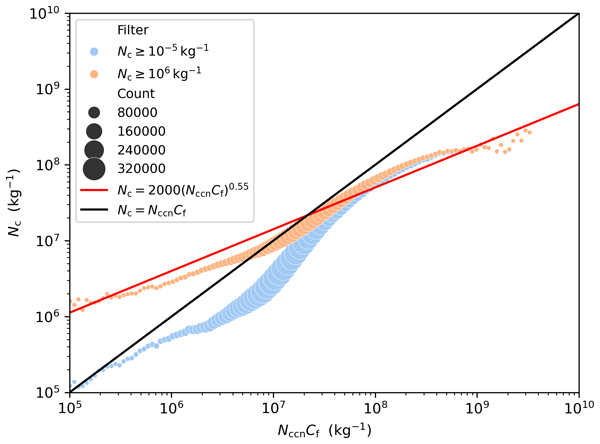
Our study assesses the aerosol effective radiative forcing in a global cloud-resolving atmosphere model at ultra-high resolution. We demonstrate that global aerosol forcing signal can be robustly reproduced across resolutions when aerosol activation processes are carefully parameterized. Further, we argue that simplified prescribed aerosol schemes will open the door for further process/mechanism studies under controlled conditions.
Charlotte Lange and Johannes Quaas
Atmos. Chem. Phys., 25, 10337–10359, https://doi.org/10.5194/acp-25-10337-2025, https://doi.org/10.5194/acp-25-10337-2025, 2025
Short summary
Short summary
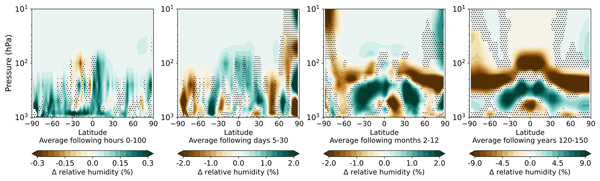
We studied how the Earth’s climate system adjusts to sudden changes in the energy budget by analysing data of four climate models, which simulated a 4 % reduction in incoming solar energy. We found rapid cooling of the atmosphere and shifts in cloud cover and atmospheric circulation patterns like land–sea circulation. Our research helps to better understand cloud adjustments, which are a major source of uncertainty in climate models. This can improve future climate predictions.
Goutam Choudhury, Karoline Block, Mahnoosh Haghighatnasab, Johannes Quaas, Tom Goren, and Matthias Tesche
Atmos. Chem. Phys., 25, 3841–3856, https://doi.org/10.5194/acp-25-3841-2025, https://doi.org/10.5194/acp-25-3841-2025, 2025
Short summary
Short summary
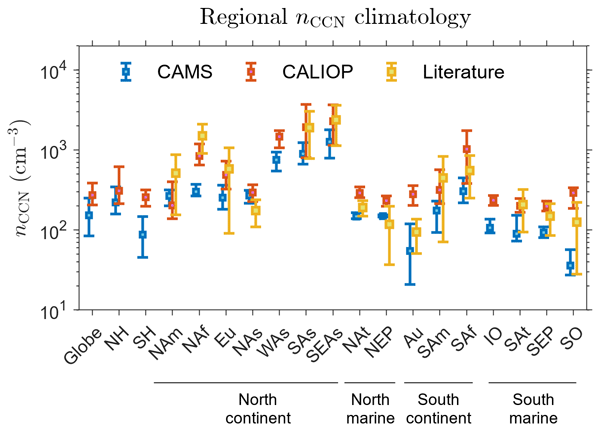
Aerosol particles in the atmosphere increase cloud reflectivity, thereby cooling the Earth. Accurate global measurements of these particles are crucial for estimating this cooling effect. This study compares and harmonizes two newly developed global aerosol datasets, offering insights for their future use and refinement. We identify pristine oceans as a significant source of uncertainty in the datasets and, therefore, in quantifying the role of aerosols in Earth's climate.
Johannes Mülmenstädt, Andrew S. Ackerman, Ann M. Fridlind, Meng Huang, Po-Lun Ma, Naser Mahfouz, Susanne E. Bauer, Susannah M. Burrows, Matthew W. Christensen, Sudhakar Dipu, Andrew Gettelman, L. Ruby Leung, Florian Tornow, Johannes Quaas, Adam C. Varble, Hailong Wang, Kai Zhang, and Youtong Zheng
Atmos. Chem. Phys., 24, 13633–13652, https://doi.org/10.5194/acp-24-13633-2024, https://doi.org/10.5194/acp-24-13633-2024, 2024
Short summary
Short summary
Stratocumulus clouds play a large role in Earth's climate by reflecting incoming solar energy back to space. Turbulence at stratocumulus cloud top mixes in dry, warm air, which can lead to cloud dissipation. This process is challenging for coarse-resolution global models to represent. We show that global models nevertheless agree well with our process understanding. Global models also think the process is less important for the climate than other lines of evidence have led us to conclude.
Jianqi Zhao, Xiaoyan Ma, and Johannes Quaas
EGUsphere, https://doi.org/10.5194/egusphere-2024-3662, https://doi.org/10.5194/egusphere-2024-3662, 2024
Preprint archived
Short summary
Short summary
We conduct a comparative analysis of aerosol-cloud responses in liquid-phase clouds under different aerosol and meteorological conditions based on simulations using the WRF-Chem-SBM model. Our findings highlight the different effects of aerosols on clouds and precipitation, as well as variations in the roles of aerosol and meteorological factors influencing aerosol-cloud interactions, in different environment.
Iris Papakonstantinou-Presvelou and Johannes Quaas
EGUsphere, https://doi.org/10.5194/egusphere-2024-3293, https://doi.org/10.5194/egusphere-2024-3293, 2024
Preprint archived
Short summary
Short summary
As the Arctic warms and the sea ice retreats, more open ocean is exposed, changing how aerosols impact clouds. Our previous 10-year satellite analysis found higher ice crystal numbers over sea ice than over ocean. Using model simulations and aircraft observations we identify here two factors as potential causes at colder temperatures; ice nucleating particles over sea ice and blowing snow. With further sea ice loss, these processes may weaken, leading to fewer ice particles in the future.
Sina Mehrdad, Dörthe Handorf, Ines Höschel, Khalil Karami, Johannes Quaas, Sudhakar Dipu, and Christoph Jacobi
Weather Clim. Dynam., 5, 1223–1268, https://doi.org/10.5194/wcd-5-1223-2024, https://doi.org/10.5194/wcd-5-1223-2024, 2024
Short summary
Short summary
This study introduces a novel deep learning (DL) approach to analyze how regional radiative forcing in Europe impacts the Arctic climate. By integrating atmospheric poleward energy transport with DL-based clustering of atmospheric patterns and attributing anomalies to specific clusters, our method reveals crucial, nuanced interactions within the climate system, enhancing our understanding of intricate climate dynamics.
Julien Lenhardt, Johannes Quaas, and Dino Sejdinovic
Atmos. Meas. Tech., 17, 5655–5677, https://doi.org/10.5194/amt-17-5655-2024, https://doi.org/10.5194/amt-17-5655-2024, 2024
Short summary
Short summary
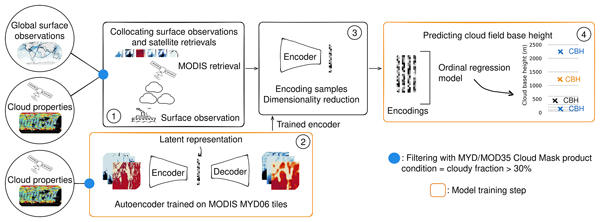
Clouds play a key role in the regulation of the Earth's climate. Aspects like the height of their base are of essential interest to quantify their radiative effects but remain difficult to derive from satellite data. In this study, we combine observations from the surface and satellite retrievals of cloud properties to build a robust and accurate method to retrieve the cloud base height, based on a computer vision model and ordinal regression.
Jianqi Zhao, Xiaoyan Ma, Johannes Quaas, and Hailing Jia
Atmos. Chem. Phys., 24, 9101–9118, https://doi.org/10.5194/acp-24-9101-2024, https://doi.org/10.5194/acp-24-9101-2024, 2024
Short summary
Short summary
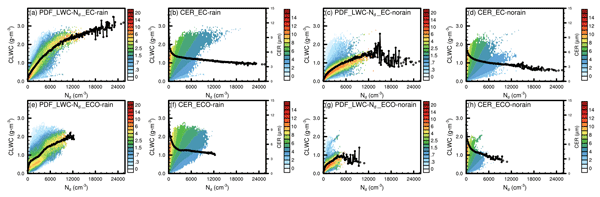
We explore aerosol–cloud interactions in liquid-phase clouds over eastern China and its adjacent ocean in winter based on the WRF-Chem–SBM model, which couples a spectral-bin microphysics scheme and an online aerosol module. Our study highlights the differences in aerosol–cloud interactions between land and ocean and between precipitation clouds and non-precipitation clouds, and it differentiates and quantifies their underlying mechanisms.
Johannes Mülmenstädt, Edward Gryspeerdt, Sudhakar Dipu, Johannes Quaas, Andrew S. Ackerman, Ann M. Fridlind, Florian Tornow, Susanne E. Bauer, Andrew Gettelman, Yi Ming, Youtong Zheng, Po-Lun Ma, Hailong Wang, Kai Zhang, Matthew W. Christensen, Adam C. Varble, L. Ruby Leung, Xiaohong Liu, David Neubauer, Daniel G. Partridge, Philip Stier, and Toshihiko Takemura
Atmos. Chem. Phys., 24, 7331–7345, https://doi.org/10.5194/acp-24-7331-2024, https://doi.org/10.5194/acp-24-7331-2024, 2024
Short summary
Short summary
Human activities release copious amounts of small particles called aerosols into the atmosphere. These particles change how much sunlight clouds reflect to space, an important human perturbation of the climate, whose magnitude is highly uncertain. We found that the latest climate models show a negative correlation but a positive causal relationship between aerosols and cloud water. This means we need to be very careful when we interpret observational studies that can only see correlation.
Naser Mahfouz, Johannes Mülmenstädt, and Susannah Burrows
Atmos. Chem. Phys., 24, 7253–7260, https://doi.org/10.5194/acp-24-7253-2024, https://doi.org/10.5194/acp-24-7253-2024, 2024
Short summary
Short summary
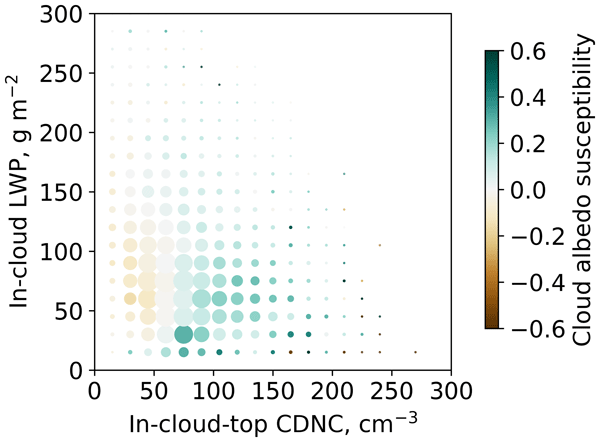
Climate models are our primary tool to probe past, present, and future climate states unlike the more recent observation record. By constructing a hypothetical model configuration, we show that present-day correlations are insufficient to predict a persistent uncertainty in climate projection (how much sun because clouds will reflect in a changing climate). We hope our result will contribute to the scholarly conversation on better utilizing observations to constrain climate uncertainties.
Charlotte M. Beall, Po-Lun Ma, Matthew W. Christensen, Johannes Mülmenstädt, Adam Varble, Kentaroh Suzuki, and Takuro Michibata
Atmos. Chem. Phys., 24, 5287–5302, https://doi.org/10.5194/acp-24-5287-2024, https://doi.org/10.5194/acp-24-5287-2024, 2024
Short summary
Short summary
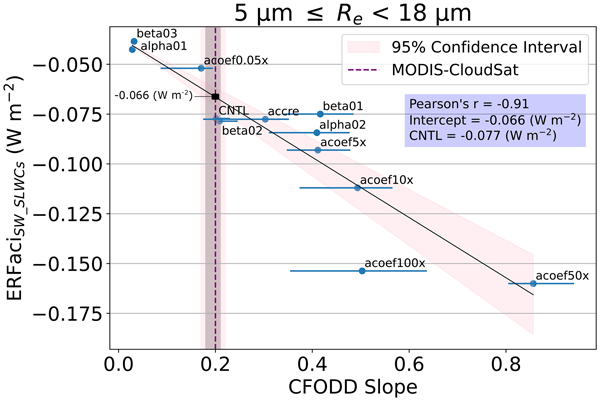
Single-layer warm liquid clouds cover nearly one-third of the Earth's surface, and uncertainties regarding the impact of aerosols on their radiative properties pose a significant challenge to climate prediction. Here, we demonstrate how satellite observations can be used to constrain Earth system model estimates of the radiative forcing from the interactions of aerosols with clouds due to warm rain processes.
Bjorn Stevens, Stefan Adami, Tariq Ali, Hartwig Anzt, Zafer Aslan, Sabine Attinger, Jaana Bäck, Johanna Baehr, Peter Bauer, Natacha Bernier, Bob Bishop, Hendryk Bockelmann, Sandrine Bony, Guy Brasseur, David N. Bresch, Sean Breyer, Gilbert Brunet, Pier Luigi Buttigieg, Junji Cao, Christelle Castet, Yafang Cheng, Ayantika Dey Choudhury, Deborah Coen, Susanne Crewell, Atish Dabholkar, Qing Dai, Francisco Doblas-Reyes, Dale Durran, Ayoub El Gaidi, Charlie Ewen, Eleftheria Exarchou, Veronika Eyring, Florencia Falkinhoff, David Farrell, Piers M. Forster, Ariane Frassoni, Claudia Frauen, Oliver Fuhrer, Shahzad Gani, Edwin Gerber, Debra Goldfarb, Jens Grieger, Nicolas Gruber, Wilco Hazeleger, Rolf Herken, Chris Hewitt, Torsten Hoefler, Huang-Hsiung Hsu, Daniela Jacob, Alexandra Jahn, Christian Jakob, Thomas Jung, Christopher Kadow, In-Sik Kang, Sarah Kang, Karthik Kashinath, Katharina Kleinen-von Königslöw, Daniel Klocke, Uta Kloenne, Milan Klöwer, Chihiro Kodama, Stefan Kollet, Tobias Kölling, Jenni Kontkanen, Steve Kopp, Michal Koran, Markku Kulmala, Hanna Lappalainen, Fakhria Latifi, Bryan Lawrence, June Yi Lee, Quentin Lejeun, Christian Lessig, Chao Li, Thomas Lippert, Jürg Luterbacher, Pekka Manninen, Jochem Marotzke, Satoshi Matsouoka, Charlotte Merchant, Peter Messmer, Gero Michel, Kristel Michielsen, Tomoki Miyakawa, Jens Müller, Ramsha Munir, Sandeep Narayanasetti, Ousmane Ndiaye, Carlos Nobre, Achim Oberg, Riko Oki, Tuba Özkan-Haller, Tim Palmer, Stan Posey, Andreas Prein, Odessa Primus, Mike Pritchard, Julie Pullen, Dian Putrasahan, Johannes Quaas, Krishnan Raghavan, Venkatachalam Ramaswamy, Markus Rapp, Florian Rauser, Markus Reichstein, Aromar Revi, Sonakshi Saluja, Masaki Satoh, Vera Schemann, Sebastian Schemm, Christina Schnadt Poberaj, Thomas Schulthess, Cath Senior, Jagadish Shukla, Manmeet Singh, Julia Slingo, Adam Sobel, Silvina Solman, Jenna Spitzer, Philip Stier, Thomas Stocker, Sarah Strock, Hang Su, Petteri Taalas, John Taylor, Susann Tegtmeier, Georg Teutsch, Adrian Tompkins, Uwe Ulbrich, Pier-Luigi Vidale, Chien-Ming Wu, Hao Xu, Najibullah Zaki, Laure Zanna, Tianjun Zhou, and Florian Ziemen
Earth Syst. Sci. Data, 16, 2113–2122, https://doi.org/10.5194/essd-16-2113-2024, https://doi.org/10.5194/essd-16-2113-2024, 2024
Short summary
Short summary
To manage Earth in the Anthropocene, new tools, new institutions, and new forms of international cooperation will be required. Earth Virtualization Engines is proposed as an international federation of centers of excellence to empower all people to respond to the immense and urgent challenges posed by climate change.
Sabine Doktorowski, Jan Kretzschmar, Johannes Quaas, Marc Salzmann, and Odran Sourdeval
Geosci. Model Dev., 17, 3099–3110, https://doi.org/10.5194/gmd-17-3099-2024, https://doi.org/10.5194/gmd-17-3099-2024, 2024
Short summary
Short summary
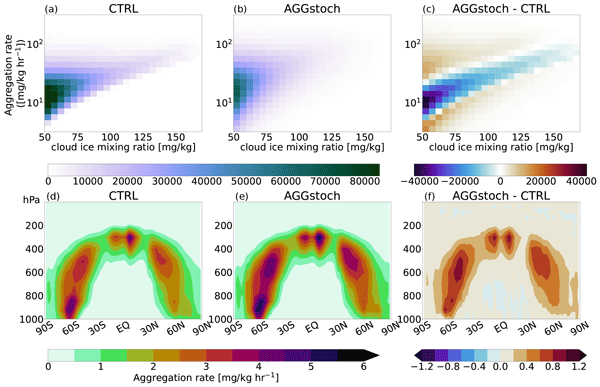
Especially over the midlatitudes, precipitation is mainly formed via the ice phase. In this study we focus on the initial snow formation process in the ICON-AES, the aggregation process. We use a stochastical approach for the aggregation parameterization and investigate the influence in the ICON-AES. Therefore, a distribution function of cloud ice is created, which is evaluated with satellite data. The new approach leads to cloud ice loss and an improvement in the process rate bias.
Karoline Block, Mahnoosh Haghighatnasab, Daniel G. Partridge, Philip Stier, and Johannes Quaas
Earth Syst. Sci. Data, 16, 443–470, https://doi.org/10.5194/essd-16-443-2024, https://doi.org/10.5194/essd-16-443-2024, 2024
Short summary
Short summary
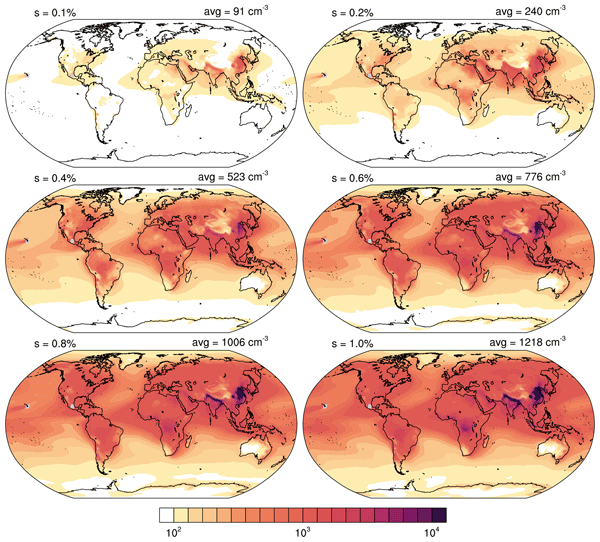
Aerosols being able to act as condensation nuclei for cloud droplets (CCNs) are a key element in cloud formation but very difficult to determine. In this study we present a new global vertically resolved CCN dataset for various humidity conditions and aerosols. It is obtained using an atmospheric model (CAMS reanalysis) that is fed by satellite observations of light extinction (AOD). We investigate and evaluate the abundance of CCNs in the atmosphere and their temporal and spatial occurrence.
Adam C. Varble, Po-Lun Ma, Matthew W. Christensen, Johannes Mülmenstädt, Shuaiqi Tang, and Jerome Fast
Atmos. Chem. Phys., 23, 13523–13553, https://doi.org/10.5194/acp-23-13523-2023, https://doi.org/10.5194/acp-23-13523-2023, 2023
Short summary
Short summary
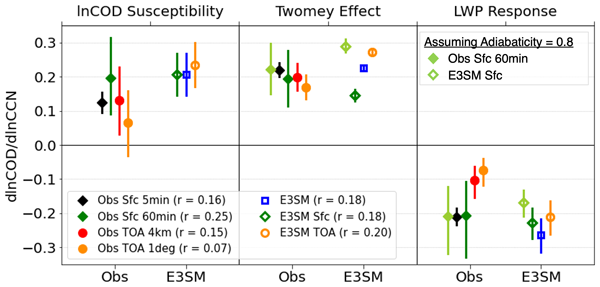
We evaluate how clouds change in response to changing atmospheric particle (aerosol) concentrations in a climate model and find that the model-predicted cloud brightness increases too much as aerosols increase because the cloud drop number increases too much. Excessive drizzle in the model mutes this difference. Many differences between observational and model estimates are explained by varying assumptions of how much liquid has been lost in clouds, which impacts the estimated cloud drop number.
Olivia Linke, Johannes Quaas, Finja Baumer, Sebastian Becker, Jan Chylik, Sandro Dahlke, André Ehrlich, Dörthe Handorf, Christoph Jacobi, Heike Kalesse-Los, Luca Lelli, Sina Mehrdad, Roel A. J. Neggers, Johannes Riebold, Pablo Saavedra Garfias, Niklas Schnierstein, Matthew D. Shupe, Chris Smith, Gunnar Spreen, Baptiste Verneuil, Kameswara S. Vinjamuri, Marco Vountas, and Manfred Wendisch
Atmos. Chem. Phys., 23, 9963–9992, https://doi.org/10.5194/acp-23-9963-2023, https://doi.org/10.5194/acp-23-9963-2023, 2023
Short summary
Short summary
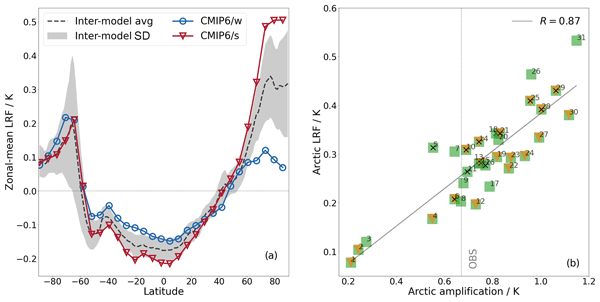
Lapse rate feedback (LRF) is a major driver of the Arctic amplification (AA) of climate change. It arises because the warming is stronger at the surface than aloft. Several processes can affect the LRF in the Arctic, such as the omnipresent temperature inversion. Here, we compare multimodel climate simulations to Arctic-based observations from a large research consortium to broaden our understanding of these processes, find synergy among them, and constrain the Arctic LRF and AA.
McKenna W. Stanford, Ann M. Fridlind, Israel Silber, Andrew S. Ackerman, Greg Cesana, Johannes Mülmenstädt, Alain Protat, Simon Alexander, and Adrian McDonald
Atmos. Chem. Phys., 23, 9037–9069, https://doi.org/10.5194/acp-23-9037-2023, https://doi.org/10.5194/acp-23-9037-2023, 2023
Short summary
Short summary
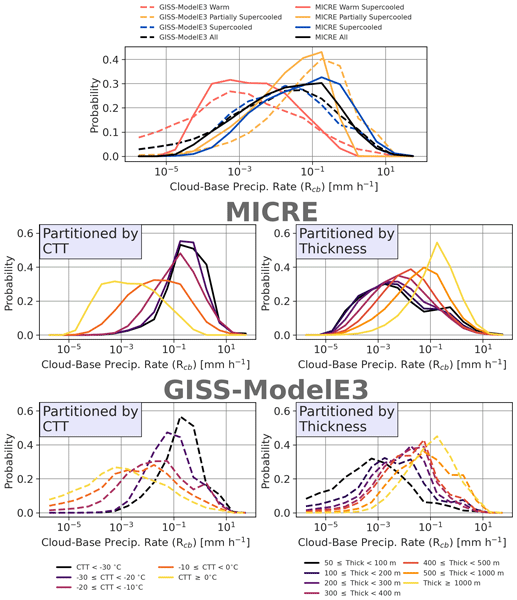
Clouds play an important role in the Earth’s climate system as they modulate the amount of radiation that either reaches the surface or is reflected back to space. This study demonstrates an approach to robustly evaluate surface-based observations against a large-scale model. We find that the large-scale model precipitates too infrequently relative to observations, contrary to literature documentation suggesting otherwise based on satellite measurements.
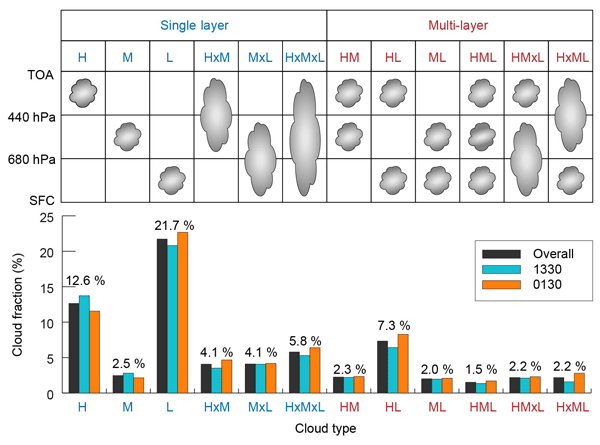
Hao Luo, Johannes Quaas, and Yong Han
Atmos. Chem. Phys., 23, 8169–8186, https://doi.org/10.5194/acp-23-8169-2023, https://doi.org/10.5194/acp-23-8169-2023, 2023
Short summary
Short summary
Clouds exhibit a wide range of vertical structures with varying microphysical and radiative properties. We show a global survey of spatial distribution, vertical extent and radiative effect of various classified cloud vertical structures using joint satellite observations from the new CCCM datasets during 2007–2010. Moreover, the long-term trends in CVSs are investigated based on different CMIP6 future scenarios to capture the cloud variations with different, increasing anthropogenic forcings.
Samuel Kwakye, Heike Kalesse-Los, Maximilian Maahn, Patric Seifert, Roel van Klink, Christian Wirth, and Johannes Quaas
Atmos. Meas. Tech. Discuss., https://doi.org/10.5194/amt-2023-69, https://doi.org/10.5194/amt-2023-69, 2023
Publication in AMT not foreseen
Short summary
Short summary
Insect numbers in the atmosphere can be calculated using polarimetric weather radar but they have to be identified and separated from other echoes, especially weather phenomena. Here, the separation is demonstrated using three machine-learning algorithms and insect count data from suction traps and the nature of radar measurements of different radar echoes is revealed. Random forest is the best separating algorithm and insect echoes radar measurements are distinct.
Jianqi Zhao, Xiaoyan Ma, Johannes Quaas, and Hailing Jia
EGUsphere, https://doi.org/10.5194/egusphere-2023-331, https://doi.org/10.5194/egusphere-2023-331, 2023
Preprint archived
Short summary
Short summary
We improve the ability of WRF-Chem model to simulate aerosol-cloud physical and chemical processes by coupling a spectral-bin cloud microphysics scheme and online aerosol module, and consequently explore the aerosol-cloud interactions over eastern China and its adjacent ocean in boreal winter. Our study highlights the differences in aerosol-cloud interactions between land and ocean, precipitation clouds and non-precipitation clouds, and differentiates and quantifies their underlying mechanisms.

Matthew W. Christensen, Po-Lun Ma, Peng Wu, Adam C. Varble, Johannes Mülmenstädt, and Jerome D. Fast
Atmos. Chem. Phys., 23, 2789–2812, https://doi.org/10.5194/acp-23-2789-2023, https://doi.org/10.5194/acp-23-2789-2023, 2023
Short summary
Short summary
An increase in aerosol concentration (tiny airborne particles) is shown to suppress rainfall and increase the abundance of droplets in clouds passing over Graciosa Island in the Azores. Cloud drops remain affected by aerosol for several days across thousands of kilometers in satellite data. Simulations from an Earth system model show good agreement, but differences in the amount of cloud water and its extent remain despite modifications to model parameters that control the warm-rain process.
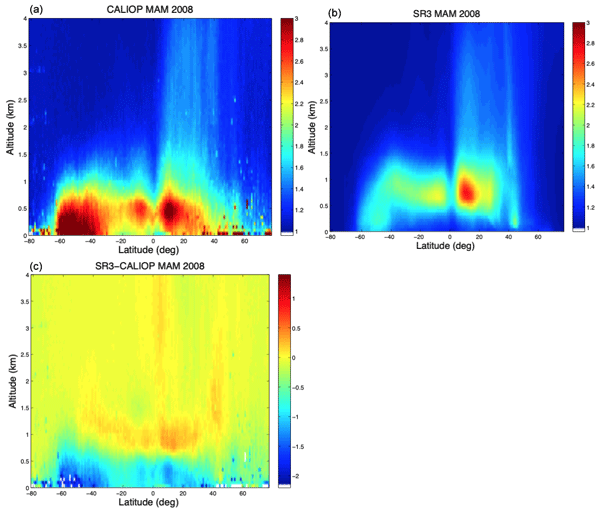
Marine Bonazzola, Hélène Chepfer, Po-Lun Ma, Johannes Quaas, David M. Winker, Artem Feofilov, and Nick Schutgens
Geosci. Model Dev., 16, 1359–1377, https://doi.org/10.5194/gmd-16-1359-2023, https://doi.org/10.5194/gmd-16-1359-2023, 2023
Short summary
Short summary
Aerosol has a large impact on climate. Using a lidar aerosol simulator ensures consistent comparisons between modeled and observed aerosol. We present a lidar aerosol simulator that applies a cloud masking and an aerosol detection threshold. We estimate the lidar signals that would be observed at 532 nm by the Cloud-Aerosol Lidar with Orthogonal Polarization overflying the atmosphere predicted by a climate model. Our comparison at the seasonal timescale shows a discrepancy in the Southern Ocean.
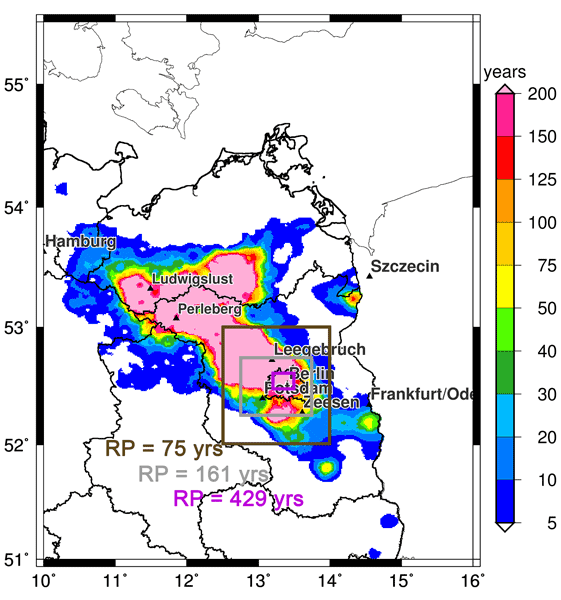
Alberto Caldas-Alvarez, Markus Augenstein, Georgy Ayzel, Klemens Barfus, Ribu Cherian, Lisa Dillenardt, Felix Fauer, Hendrik Feldmann, Maik Heistermann, Alexia Karwat, Frank Kaspar, Heidi Kreibich, Etor Emanuel Lucio-Eceiza, Edmund P. Meredith, Susanna Mohr, Deborah Niermann, Stephan Pfahl, Florian Ruff, Henning W. Rust, Lukas Schoppa, Thomas Schwitalla, Stella Steidl, Annegret H. Thieken, Jordis S. Tradowsky, Volker Wulfmeyer, and Johannes Quaas
Nat. Hazards Earth Syst. Sci., 22, 3701–3724, https://doi.org/10.5194/nhess-22-3701-2022, https://doi.org/10.5194/nhess-22-3701-2022, 2022
Short summary
Short summary
In a warming climate, extreme precipitation events are becoming more frequent. To advance our knowledge on such phenomena, we present a multidisciplinary analysis of a selected case study that took place on 29 June 2017 in the Berlin metropolitan area. Our analysis provides evidence of the extremeness of the case from the atmospheric and the impacts perspectives as well as new insights on the physical mechanisms of the event at the meteorological and climate scales.
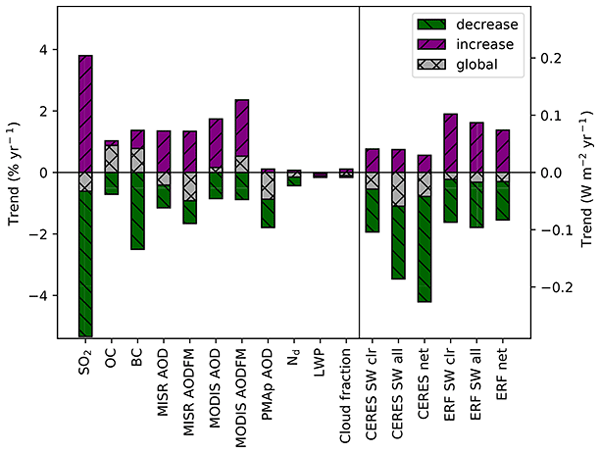
Johannes Quaas, Hailing Jia, Chris Smith, Anna Lea Albright, Wenche Aas, Nicolas Bellouin, Olivier Boucher, Marie Doutriaux-Boucher, Piers M. Forster, Daniel Grosvenor, Stuart Jenkins, Zbigniew Klimont, Norman G. Loeb, Xiaoyan Ma, Vaishali Naik, Fabien Paulot, Philip Stier, Martin Wild, Gunnar Myhre, and Michael Schulz
Atmos. Chem. Phys., 22, 12221–12239, https://doi.org/10.5194/acp-22-12221-2022, https://doi.org/10.5194/acp-22-12221-2022, 2022
Short summary
Short summary
Pollution particles cool climate and offset part of the global warming. However, they are washed out by rain and thus their effect responds quickly to changes in emissions. We show multiple datasets to demonstrate that aerosol emissions and their concentrations declined in many regions influenced by human emissions, as did the effects on clouds. Consequently, the cooling impact on the Earth energy budget became smaller. This change in trend implies a relative warming.
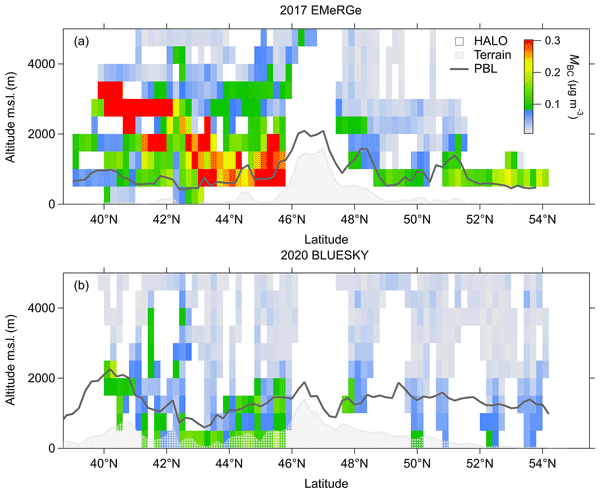
Ovid O. Krüger, Bruna A. Holanda, Sourangsu Chowdhury, Andrea Pozzer, David Walter, Christopher Pöhlker, Maria Dolores Andrés Hernández, John P. Burrows, Christiane Voigt, Jos Lelieveld, Johannes Quaas, Ulrich Pöschl, and Mira L. Pöhlker
Atmos. Chem. Phys., 22, 8683–8699, https://doi.org/10.5194/acp-22-8683-2022, https://doi.org/10.5194/acp-22-8683-2022, 2022
Short summary
Short summary
The abrupt reduction in human activities during the first COVID-19 lockdown created unprecedented atmospheric conditions. We took the opportunity to quantify changes in black carbon (BC) as a major anthropogenic air pollutant. Therefore, we measured BC on board a research aircraft over Europe during the lockdown and compared the results to measurements from 2017. With model simulations we account for different weather conditions and find a lockdown-related decrease in BC of 41 %.
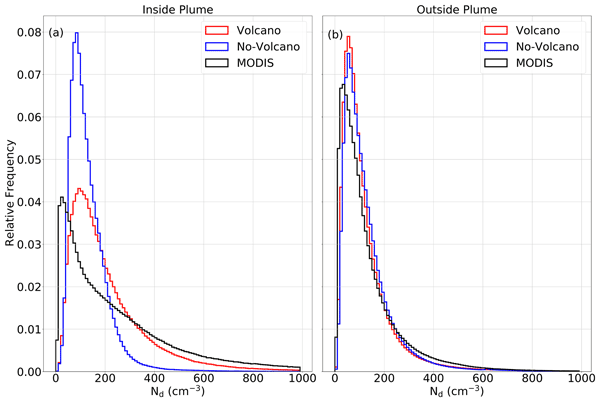
Mahnoosh Haghighatnasab, Jan Kretzschmar, Karoline Block, and Johannes Quaas
Atmos. Chem. Phys., 22, 8457–8472, https://doi.org/10.5194/acp-22-8457-2022, https://doi.org/10.5194/acp-22-8457-2022, 2022
Short summary
Short summary
The impact of aerosols emitted by the Holuhraun volcanic eruption on liquid clouds was assessed from a pair of cloud-system-resolving simulations along with satellite retrievals. Inside and outside the plume were compared in terms of their statistical distributions. Analyses indicated enhancement for cloud droplet number concentration inside the volcano plume in model simulations and satellite retrievals, while there was on average a small effect on both liquid water path and cloud fraction.
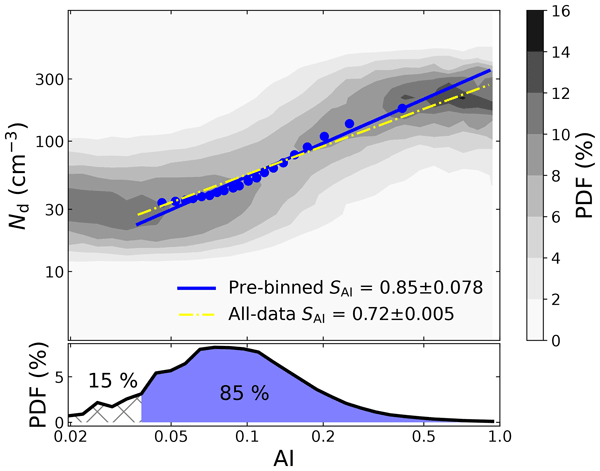
Hailing Jia, Johannes Quaas, Edward Gryspeerdt, Christoph Böhm, and Odran Sourdeval
Atmos. Chem. Phys., 22, 7353–7372, https://doi.org/10.5194/acp-22-7353-2022, https://doi.org/10.5194/acp-22-7353-2022, 2022
Short summary
Short summary
Aerosol–cloud interaction is the most uncertain component of the anthropogenic forcing of the climate. By combining satellite and reanalysis data, we show that the strength of the Twomey effect (S) increases remarkably with vertical velocity. Both the confounding effect of aerosol–precipitation interaction and the lack of vertical co-location between aerosol and cloud are found to overestimate S, whereas the retrieval biases in aerosol and cloud appear to underestimate S.
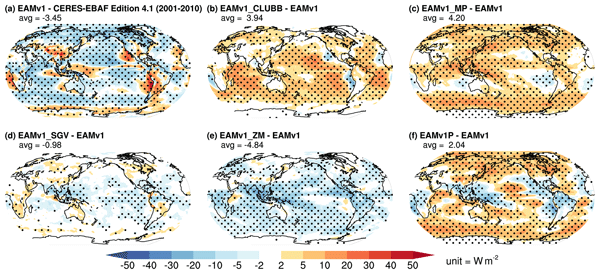
Po-Lun Ma, Bryce E. Harrop, Vincent E. Larson, Richard B. Neale, Andrew Gettelman, Hugh Morrison, Hailong Wang, Kai Zhang, Stephen A. Klein, Mark D. Zelinka, Yuying Zhang, Yun Qian, Jin-Ho Yoon, Christopher R. Jones, Meng Huang, Sheng-Lun Tai, Balwinder Singh, Peter A. Bogenschutz, Xue Zheng, Wuyin Lin, Johannes Quaas, Hélène Chepfer, Michael A. Brunke, Xubin Zeng, Johannes Mülmenstädt, Samson Hagos, Zhibo Zhang, Hua Song, Xiaohong Liu, Michael S. Pritchard, Hui Wan, Jingyu Wang, Qi Tang, Peter M. Caldwell, Jiwen Fan, Larry K. Berg, Jerome D. Fast, Mark A. Taylor, Jean-Christophe Golaz, Shaocheng Xie, Philip J. Rasch, and L. Ruby Leung
Geosci. Model Dev., 15, 2881–2916, https://doi.org/10.5194/gmd-15-2881-2022, https://doi.org/10.5194/gmd-15-2881-2022, 2022
Short summary
Short summary
An alternative set of parameters for E3SM Atmospheric Model version 1 has been developed based on a tuning strategy that focuses on clouds. When clouds in every regime are improved, other aspects of the model are also improved, even though they are not the direct targets for calibration. The recalibrated model shows a lower sensitivity to anthropogenic aerosols and surface warming, suggesting potential improvements to the simulated climate in the past and future.

Matthew W. Christensen, Andrew Gettelman, Jan Cermak, Guy Dagan, Michael Diamond, Alyson Douglas, Graham Feingold, Franziska Glassmeier, Tom Goren, Daniel P. Grosvenor, Edward Gryspeerdt, Ralph Kahn, Zhanqing Li, Po-Lun Ma, Florent Malavelle, Isabel L. McCoy, Daniel T. McCoy, Greg McFarquhar, Johannes Mülmenstädt, Sandip Pal, Anna Possner, Adam Povey, Johannes Quaas, Daniel Rosenfeld, Anja Schmidt, Roland Schrödner, Armin Sorooshian, Philip Stier, Velle Toll, Duncan Watson-Parris, Robert Wood, Mingxi Yang, and Tianle Yuan
Atmos. Chem. Phys., 22, 641–674, https://doi.org/10.5194/acp-22-641-2022, https://doi.org/10.5194/acp-22-641-2022, 2022
Short summary
Short summary
Trace gases and aerosols (tiny airborne particles) are released from a variety of point sources around the globe. Examples include volcanoes, industrial chimneys, forest fires, and ship stacks. These sources provide opportunistic experiments with which to quantify the role of aerosols in modifying cloud properties. We review the current state of understanding on the influence of aerosol on climate built from the wide range of natural and anthropogenic laboratories investigated in recent decades.
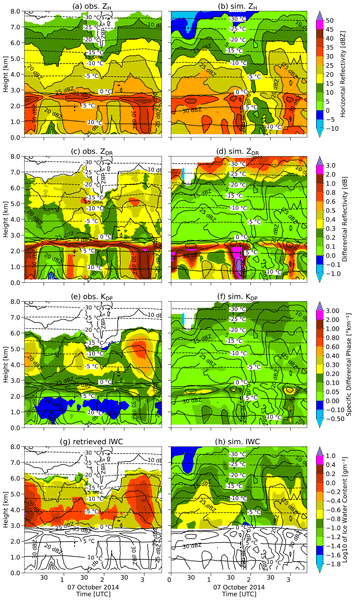
Silke Trömel, Clemens Simmer, Ulrich Blahak, Armin Blanke, Sabine Doktorowski, Florian Ewald, Michael Frech, Mathias Gergely, Martin Hagen, Tijana Janjic, Heike Kalesse-Los, Stefan Kneifel, Christoph Knote, Jana Mendrok, Manuel Moser, Gregor Köcher, Kai Mühlbauer, Alexander Myagkov, Velibor Pejcic, Patric Seifert, Prabhakar Shrestha, Audrey Teisseire, Leonie von Terzi, Eleni Tetoni, Teresa Vogl, Christiane Voigt, Yuefei Zeng, Tobias Zinner, and Johannes Quaas
Atmos. Chem. Phys., 21, 17291–17314, https://doi.org/10.5194/acp-21-17291-2021, https://doi.org/10.5194/acp-21-17291-2021, 2021
Short summary
Short summary
The article introduces the ACP readership to ongoing research in Germany on cloud- and precipitation-related process information inherent in polarimetric radar measurements, outlines pathways to inform atmospheric models with radar-based information, and points to remaining challenges towards an improved fusion of radar polarimetry and atmospheric modelling.
Cited articles
Ackerman, A. S., Toon, O. B., Taylor, J. P., Johnson, D. W., Hobbs, P. V., and Ferek, R. J.: Effects of Aerosols on Cloud Albedo: Evaluation of Twomey’s Parameterization of Cloud Susceptibility Using Measurements of Ship Tracks, J. Atmos. Sci., 57, 2684–2695, https://doi.org/10.1175/1520-0469(2000)057<2684:EOAOCA>2.0.CO;2, 2000. a
Ackerman, A. S., Kirkpatrick, M. P., Stevens, D. E., and Toon, O. B.: The impact of humidity above stratiform clouds on indirect aerosol climate forcing, Nature, 432, 1014–1017, https://doi.org/10.1038/nature03174, 2004. a, b, c
Albrecht, B. A.: Aerosols, Cloud Microphysics, and Fractional Cloudiness, Science, 245, 1227–1230, https://doi.org/10.1126/science.245.4923.1227, 1989. a, b, c
Arola, A., Lipponen, A., Kolmonen, P., Virtanen, T. H., Bellouin, N., Grosvenor, D. P., Gryspeerdt, E., Quaas, J., and Kokkola, H.: Aerosol effects on clouds are concealed by natural cloud heterogeneity and satellite retrieval errors, Nat. Commun., 13, 7357, https://doi.org/10.1038/s41467-022-34948-5, 2022. a
Baldauf, M., Seifert, A., Förstner, J., Majewski, D., Raschendorfer, M., and Reinhardt, T.: Operational Convective-Scale Numerical Weather Prediction with the COSMO Model: Description and Sensitivities, Mon. Weather Rev., 139, 3887–3905, https://doi.org/10.1175/MWR-D-10-05013.1, 2011. a
Bellouin, N., Quaas, J., Gryspeerdt, E., Kinne, S., Stier, P., Watson-Parris, D., Boucher, O., Carslaw, K., Christensen, M., Daniau, A.-L., Dufresne, J.-L., Feingold, G., Fiedler, S., Forster, P., Gettelman, A., Haywood, J. M., Lohmann, U., Malavelle, F., Mauritsen, T., McCoy, D., Myhre, G., Mülmenstädt, J., Neubauer, D., Possner, A., Rugenstein, M., Sato, Y., Schulz, M., Schwartz, S. E., Sourdeval, O., Storelvmo, T., Toll, V., Winker, D., and Stevens, B.: Bounding global aerosol radiative forcing of climate change, Rev. Geophys., 58, e2019RG000 660, https://doi.org/10.1029/2019RG000660, 2020. a, b
Bolton, D.: The Computation of Equivalent Potential Temperature, Mon. Weather Rev., 108, 1046–1053, https://doi.org/10.1175/1520-0493(1980)108<1046:TCOEPT>2.0.CO;2, 1980. a
Bretherton, C. S., Blossey, P. N., and Uchida, J.: Cloud droplet sedimentation, entrainment efficiency, and subtropical stratocumulus albedo, Geophys. Res. Lett., 34, https://doi.org/10.1029/2006GL027648, 2007. a
Charlson, R. J., Schwartz, S. E., Hales, J. M., Cess, R. D., Coakley, J. A., Hansen, J. E., and Hofmann, D. J.: Climate Forcing by Anthropogenic Aerosols, Science, 255, 423–430, https://doi.org/10.1126/science.255.5043.423, 1992. a
Christensen, M. W., Jones, W. K., and Stier, P.: Aerosols enhance cloud lifetime and brightness along the stratus-to-cumulus transition, Proc. Natl. Acad. Sci. USA, 117, 17591–17598, https://doi.org/10.1073/pnas.1921231117, 2020. a
Christensen, M. W., Gettelman, A., Cermak, J., Dagan, G., Diamond, M., Douglas, A., Feingold, G., Glassmeier, F., Goren, T., Grosvenor, D. P., Gryspeerdt, E., Kahn, R., Li, Z., Ma, P.-L., Malavelle, F., McCoy, I. L., McCoy, D. T., McFarquhar, G., Mülmenstädt, J., Pal, S., Possner, A., Povey, A., Quaas, J., Rosenfeld, D., Schmidt, A., Schrödner, R., Sorooshian, A., Stier, P., Toll, V., Watson-Parris, D., Wood, R., Yang, M., and Yuan, T.: Opportunistic experiments to constrain aerosol effective radiative forcing, Atmos. Chem. Phys., 22, 641–674, https://doi.org/10.5194/acp-22-641-2022, 2022. a
Costa-Surós, M., Sourdeval, O., Acquistapace, C., Baars, H., Carbajal Henken, C., Genz, C., Hesemann, J., Jimenez, C., König, M., Kretzschmar, J., Madenach, N., Meyer, C. I., Schrödner, R., Seifert, P., Senf, F., Brueck, M., Cioni, G., Engels, J. F., Fieg, K., Gorges, K., Heinze, R., Siligam, P. K., Burkhardt, U., Crewell, S., Hoose, C., Seifert, A., Tegen, I., and Quaas, J.: Detection and attribution of aerosol–cloud interactions in large-domain large-eddy simulations with the ICOsahedral Non-hydrostatic model, Atmos. Chem. Phys., 20, 5657–5678, https://doi.org/10.5194/acp-20-5657-2020, 2020. a, b, c, d, e, f, g
Dipankar, A., Stevens, B., Heinze, R., Moseley, C., Zn̈gl, G., Giorgetta, M., and Brdar, S.: Large eddy simulation using the general circulation model ICON, J. Adv. Model. Earth Syst., 7, 963–986, https://doi.org/10.1002/2015MS000431, 2015. a, b, c
Dipu, S., Schwarz, M., Ekman, A. M. L., Gryspeerdt, E., Goren, T., Sourdeval, O., Mülmenstädt, J., and Quaas, J.: Exploring Satellite-Derived Relationships between Cloud Droplet Number Concentration and Liquid Water Path Using a Large-Domain Large-Eddy Simulation, Tellus B, https://doi.org/10.16993/tellusb.27, 2022. a, b, c, d, e, f
Fons, E., Runge, J., Neubauer, D., and Lohmann, U.: Stratocumulus adjustments to aerosol perturbations disentangled with a causal approach, npj Clim. Atmos. Sci., 6, 130, https://doi.org/10.1038/s41612-023-00452-w, 2023. a, b
Forster, P., Storelvmo, T., Armour, K., Collins, W., Dufresne, J. L., Frame, D., Lunt, D., Mauritsen, T., Palmer, M., Watanabe, M., Wild, M., and Zhang, H.: The Earth's Energy Budget, Climate Feedbacks, and Climate Sensitivity. In Climate Change 2021: The Physical Science Basis. Contribution of Working Group I to the Sixth Assessment Report of the Intergovernmental Panel on Climate Change, edited by: Masson-Delmotte, V., et al., Cambridge University Press, Cambridge, United Kingdom and New York, NY, USA, 923–1054, https://doi.org/10.1017/9781009157896.009, 2021. a
Forster, P. M., Forster, H. I., Evans, M. J., Gidden, M. J., Jones, C. D., Keller, C. A., Lamboll, R. D., Quéré, C. L., Rogelj, J., Rosen, D., Schleussner, C.-F., Richardson, T. B., Smith, C. J., and Turnock, S. T.: Current and future global climate impacts resulting from COVID-19, Nat. Clim. Chang., 10, 913–919, https://doi.org/10.1038/s41558-020-0883-0, 2020. a
Genz, C., Schrödner, R., Heinold, B., Henning, S., Baars, H., Spindler, G., and Tegen, I.: Estimation of cloud condensation nuclei number concentrations and comparison to in situ and lidar observations during the HOPE experiments, Atmos. Chem. Phys., 20, 8787–8806, https://doi.org/10.5194/acp-20-8787-2020, 2020. a
Goren, T., Choudhury, G., Kretzschmar, J., and McCoy, I.: Co-variability drives the inverted-V sensitivity between liquid water path and droplet concentrations, Atmos. Chem. Phys., 25, 3413–3423, https://doi.org/10.5194/acp-25-3413-2025, 2025. a
Grosvenor, D. P., Sourdeval, O., Zuidema, P., Ackerman, A., Alexandrov, M. D., Bennartz, R., Boers, R., Cairns, B., Chiu, J. C., Christensen, M., Deneke, H., Diamond, M., Feingold, G., Fridlind, A., Hünerbein, A., Knist, C., Kollias, P., Marshak, A., McCoy, D., Merk, D., Painemal, D., Rausch, J., Rosenfeld, D., Russchenberg, H., Seifert, P., Sinclair, K., Stier, P., van Diedenhoven, B., Wendisch, M., Werner, F., Wood, R., Zhang, Z., and Quaas, J.: Remote Sensing of Droplet Number Concentration in Warm Clouds: A Review of the Current State of Knowledge and Perspectives, Rev. Geophys., 56, 409–453, https://doi.org/10.1029/2017RG000593, 2018. a
Gryspeerdt, E., Quaas, J., and Bellouin, N.: Constraining the aerosol influence on cloud fraction, J. Geophys. Res. Atmos., 121, 3566–3583, https://doi.org/10.1002/2015JD023744, 2016. a
Gryspeerdt, E., Mülmenstädt, J., Gettelman, A., Malavelle, F. F., Morrison, H., Neubauer, D., Partridge, D. G., Stier, P., Takemura, T., Wang, H., Wang, M., and Zhang, K.: Surprising similarities in model and observational aerosol radiative forcing estimates, Atmos. Chem. Phys., 20, 613–623, https://doi.org/10.5194/acp-20-613-2020, 2020. a
Gryspeerdt, E., Goren, T., and Smith, T. W. P.: Observing the timescales of aerosol–cloud interactions in snapshot satellite images, Atmos. Chem. Phys., 21, 6093–6109, https://doi.org/10.5194/acp-21-6093-2021, 2021. a
Heinze, R., Dipankar, A., Henken, C. C., Moseley, C., Sourdeval, O., Trömel, S., Xie, X., Adamidis, P., Ament, F., Baars, H., Barthlott, C., Behrendt, A., Blahak, U., Bley, S., Brdar, S., Brueck, M., Crewell, S., Deneke, H., Di Girolamo, P., Evaristo, R., Fischer, J., Frank, C., Friederichs, P., Göcke, T., Gorges, K., Hande, L., Hanke, M., Hansen, A., Hege, H.-C., Hoose, C., Jahns, T., Kalthoff, N., Klocke, D., Kneifel, S., Knippertz, P., Kuhn, A., van Laar, T., Macke, A., Maurer, V., Mayer, B., Meyer, C. I., Muppa, S. K., Neggers, R. A. J., Orlandi, E., Pantillon, F., Pospichal, B., Röber, N., Scheck, L., Seifert, A., Seifert, P., Senf, F., Siligam, P., Simmer, C., Steinke, S., Stevens, B., Wapler, K., Weniger, M., Wulfmeyer, V., Zängl, G., Zhang, D., and Quaas, J.: Large-eddy simulations over Germany using ICON: a comprehensive evaluation, Q. J. R. Meteorol. Soc., 143, 69–100, https://doi.org/10.1002/qj.2947, 2017. a, b, c, d, e
Hill, A. A., Feingold, G., and Jiang, H.: The Influence of Entrainment and Mixing Assumption on Aerosol–Cloud Interactions in Marine Stratocumulus, J. Atmos. Sci., 66, 1450–1464, https://doi.org/10.1175/2008JAS2909.1, 2009. a
Keshtgar, B., Voigt, A., Hoose, C., Riemer, M., and Mayer, B.: Cloud-radiative impact on the dynamics and predictability of an idealized extratropical cyclone, Weather Clim. Dynam., 4, 115–132, https://doi.org/10.5194/wcd-4-115-2023, 2023. a
Kogan, Y. L. and Martin, W. J.: Parameterization of Bulk Condensation in Numerical Cloud Models, J. Atmos. Sci., 51, 1728–1739, https://doi.org/10.1175/1520-0469(1994)051<1728:POBCIN>2.0.CO;2, 1994. a
Lee, S. S., Penner, J. E., and Saleeby, S. M.: Aerosol effects on liquid-water path of thin stratocumulus clouds, J. Geophys. Res. Atmos., 114, https://doi.org/10.1029/2008JD010513, 2009. a
Lilly, D. K.: On the numerical simulation of buoyant convection, Tellus, 14, 148–172, https://doi.org/10.1111/j.2153-3490.1962.tb00128.x, 1962. a
Löhnert, U., Schween, J. H., Acquistapace, C., Ebell, K., Maahn, M., Barrera-Verdejo, M., Hirsikko, A., Bohn, B., Knaps, A., O’Connor, E., Simmer, C., Wahner, A., and Crewell, S.: JOYCE: Jülich Observatory for Cloud Evolution, Bull. Amer. Meteor. Soc., 96, 1157–1174, https://doi.org/10.1175/BAMS-D-14-00105.1, 2015. a
Madhavan, B. L., Kalisch, J., and Macke, A.: Shortwave surface radiation network for observing small-scale cloud inhomogeneity fields, Atmos. Meas. Tech., 9, 1153–1166, https://doi.org/10.5194/amt-9-1153-2016, 2016. a
Malavelle, F. F., Haywood, J. M., Jones, A., Gettelman, A., Clarisse, L., Bauduin, S., Allan, R. P., Karset, I. H. H., Kristjánsson, J. E., Oreopoulos, L., Cho, N., Lee, D., Bellouin, N., Boucher, O., Grosvenor, D. P., Carslaw, K. S., Dhomse, S., Mann, G. W., Schmidt, A., Coe, H., Hartley, M. E., Dalvi, M., Hill, A. A., Johnson, B. T., Johnson, C. E., Knight, J. R., O'Connor, F. M., Partridge, D. G., Stier, P., Myhre, G., Platnick, S., Stephens, G. L., Takahashi, H., and Thordarson, T.: Strong constraints on aerosol–cloud interactions from volcanic eruptions, Nature, 546, 485–491, https://doi.org/10.1038/nature22974, 2017. a
Mülmenstädt, J. and Feingold, G.: The Radiative Forcing of Aerosol-Cloud Interactions in Liquid Clouds: Wrestling and Embracing Uncertainty, Curr. Clim. Chang. Rep., 4, 23–40, https://doi.org/10.1007/s40641-018-0089-y, 2018. a, b
Mülmenstädt, J., Gryspeerdt, E., Dipu, S., Quaas, J., Ackerman, A. S., Fridlind, A. M., Tornow, F., Bauer, S. E., Gettelman, A., Ming, Y., Zheng, Y., Ma, P.-L., Wang, H., Zhang, K., Christensen, M. W., Varble, A. C., Leung, L. R., Liu, X., Neubauer, D., Partridge, D. G., Stier, P., and Takemura, T.: General circulation models simulate negative liquid water path–droplet number correlations, but anthropogenic aerosols still increase simulated liquid water path, Atmos. Chem. Phys., 24, 7331–7345, https://doi.org/10.5194/acp-24-7331-2024, 2024a. a
Mülmenstädt, J., Gryspeerdt, E., Dipu, S., Quaas, J., Ackerman, A. S., Fridlind, A. M., Tornow, F., Bauer, S. E., Gettelman, A., Ming, Y., Zheng, Y., Ma, P.-L., Wang, H., Zhang, K., Christensen, M. W., Varble, A. C., Leung, L. R., Liu, X., Neubauer, D., Partridge, D. G., Stier, P., and Takemura, T.: General circulation models simulate negative liquid water path–droplet number correlations, but anthropogenic aerosols still increase simulated liquid water path, Atmos. Chem. Phys., 24, 7331–7345, https://doi.org/10.5194/acp-24-7331-2024, 2024b. a
Possner, A., Eastman, R., Bender, F., and Glassmeier, F.: Deconvolution of boundary layer depth and aerosol constraints on cloud water path in subtropical stratocumulus decks, Atmos. Chem. Phys., 20, 3609–3621, https://doi.org/10.5194/acp-20-3609-2020, 2020. a, b
Quaas, J., Boucher, O., Bellouin, N., and Kinne, S.: Satellite-based estimate of the direct and indirect aerosol climate forcing, J. Geophys. Res. Atmos., 113, https://doi.org/10.1029/2007JD008962, 2008. a
Quaas, J., Arola, A., Cairns, B., Christensen, M., Deneke, H., Ekman, A. M. L., Feingold, G., Fridlind, A., Gryspeerdt, E., Hasekamp, O., Li, Z., Lipponen, A., Ma, P.-L., Mülmenstädt, J., Nenes, A., Penner, J. E., Rosenfeld, D., Schrödner, R., Sinclair, K., Sourdeval, O., Stier, P., Tesche, M., van Diedenhoven, B., and Wendisch, M.: Constraining the Twomey effect from satellite observations: issues and perspectives, Atmos. Chem. Phys., 20, 15079–15099, https://doi.org/10.5194/acp-20-15079-2020, 2020a. a
Quaas, J., Arola, A., Cairns, B., Christensen, M., Deneke, H., Ekman, A. M. L., Feingold, G., Fridlind, A., Gryspeerdt, E., Hasekamp, O., Li, Z., Lipponen, A., Ma, P.-L., Mülmenstädt, J., Nenes, A., Penner, J. E., Rosenfeld, D., Schrödner, R., Sinclair, K., Sourdeval, O., Stier, P., Tesche, M., van Diedenhoven, B., and Wendisch, M.: Constraining the Twomey effect from satellite observations: issues and perspectives, Atmos. Chem. Phys., 20, 15079–15099, https://doi.org/10.5194/acp-20-15079-2020, 2020. a
Quaas, J., Andrews, T., Bellouin, N., Block, K., Boucher, O., Ceppi, P., Dagan, G., Doktorowski, S., Eichholz, H. M., Forster, P., Goren, T., Gryspeerdt, E., Hodnebrog, Ø., Jia, H., Kramer, R., Lange, C., Maycock, A. C., Mülmenstädt, J., Myhre, G., O’Connor, F. M., Pincus, R., Samset, B. H., Senf, F., Shine, K. P., Smith, C., Stjern, C. W., Takemura, T., Toll, V., and Wall, C. J.: Adjustments to Climate Perturbations–Mechanisms, Implications, Observational Constraints, AGU Advances, 5, e2023AV001144, https://doi.org/10.1029/2023AV001144, 2024. a
Seifert, A. and Beheng, K. D.: A two-moment cloud microphysics parameterization for mixed-phase clouds. Part 1: Model description, Meteorol. Atmos. Phys., 92, 45–66, https://doi.org/10.1007/s00703-005-0112-4, 2006. a, b
Smalley, K. M., Lebsock, M. D., and Eastman, R.: Diurnal Patterns in the Observed Cloud Liquid Water Path Response to Droplet Number Perturbations, Geophys. Res. Lett., 51, e2023GL107323, https://doi.org/10.1029/2023GL107323, 2024. a
Smith, S. J., van Aardenne, J., Klimont, Z., Andres, R. J., Volke, A., and Delgado Arias, S.: Anthropogenic sulfur dioxide emissions: 1850–2005, Atmos. Chem. Phys., 11, 1101–1116, https://doi.org/10.5194/acp-11-1101-2011, 2011. a
Toledo, F., Haeffelin, M., Wærsted, E., and Dupont, J.-C.: A new conceptual model for adiabatic fog, Atmos. Chem. Phys., 21, 13099–13117, https://doi.org/10.5194/acp-21-13099-2021, 2021. a
Toll, V., Christensen, M., Quaas, J., and Bellouin, N.: Weak average liquid-cloud-water response to anthropogenic aerosols, Nature, 572, 51–55, https://doi.org/10.1038/s41586-019-1423-9, 2019. a
Twomey, S.: Pollution and the planetary albedo, Atmos. Environ., 8, 1251–1256, https://doi.org/10.1016/0004-6981(74)90004-3, 1974. a
Wang, H., Rasch, P. J., and Feingold, G.: Manipulating marine stratocumulus cloud amount and albedo: a process-modelling study of aerosol-cloud-precipitation interactions in response to injection of cloud condensation nuclei, Atmos. Chem. Phys., 11, 4237–4249, https://doi.org/10.5194/acp-11-4237-2011, 2011. a
Wang, S., Wang, Q., and Feingold, G.: Turbulence, Condensation, and Liquid Water Transport in Numerically Simulated Nonprecipitating Stratocumulus Clouds, J. Atmos. Sci., 60, 262–278, https://doi.org/10.1175/1520-0469(2003)060<0262:TCALWT>2.0.CO;2, 2003. a
Williams, A. S. and Igel, A. L.: Cloud Top Radiative Cooling Rate Drives Non-Precipitating Stratiform Cloud Responses to Aerosol Concentration, Geophys. Res. Lett., 48, e2021GL094740, https://doi.org/10.1029/2021GL094740, 2021. a
Wolke, R., Knoth, O., Hellmuth, O., Schröder, W., and Renner, E.: The parallel model system LM-MUSCAT for chemistry-transport simulations: Coupling scheme, parallelization and applications, in: Parallel Computing, edited by Joubert, G., Nagel, W., Peters, F., and Walter, W., vol. 13 of Advances in Parallel Computing, pp. 363–369, North-Holland, https://doi.org/10.1016/S0927-5452(04)80048-0, 2004. a
Wolke, R., Schröder, W., Schrödner, R., and Renner, E.: Influence of grid resolution and meteorological forcing on simulated European air quality: A sensitivity study with the modeling system COSMO–MUSCAT, Atmos. Environ., 53, 110–130, https://doi.org/10.1016/j.atmosenv.2012.02.085, 2012. a
Wood, R.: Stratocumulus Clouds, Mon. Weather Rev., 140, 2373–2423, https://doi.org/10.1175/MWR-D-11-00121.1, 2012. a
Yanai, M., Esbensen, S., and Chu, J.-H.: Determination of Bulk Properties of Tropical Cloud Clusters from Large-Scale Heat and Moisture Budgets, J. Atmos. Sci., 30, 611–627, https://doi.org/10.1175/1520-0469(1973)030<0611:DOBPOT>2.0.CO;2, 1973. a
Zängl, G., Reinert, D., Rípodas, P., and Baldauf, M.: The ICON (ICOsahedral Non-hydrostatic) modelling framework of DWD and MPI-M: Description of the non-hydrostatic dynamical core, Q. J. R. Meteorol. Soc., 141, 563–579, https://doi.org/10.1002/qj.2378, 2015. a
Zhang, J., Zhou, X., Goren, T., and Feingold, G.: Albedo susceptibility of northeastern Pacific stratocumulus: the role of covarying meteorological conditions, Atmos. Chem. Phys., 22, 861–880, https://doi.org/10.5194/acp-22-861-2022, 2022. a
Short summary
High-resolution Large-Eddy Simulations (LES) are used to examine how aerosols affect liquid water path (LWP) sensitivity in non-precipitating liquid clouds. Two cases, 1985 (high aerosol) and 2013 (low aerosol), show a non-linear Nd–LWP relationship with a shift from positive to negative sensitivity at higher Nd under high aerosol loading. Enhanced cloud-top entrainment, evaporation, and heating drive this shift, highlighting aerosol impact on cloud microphysics and thermodynamics.
High-resolution Large-Eddy Simulations (LES) are used to examine how aerosols affect liquid...


Altmetrics
Final-revised paper
Preprint