
Articles | Volume 26, issue 7
https://doi.org/10.5194/acp-26-4901-2026
© Author(s) 2026. This work is distributed under
the Creative Commons Attribution 4.0 License.
the Creative Commons Attribution 4.0 License.
https://doi.org/10.5194/acp-26-4901-2026
© Author(s) 2026. This work is distributed under
the Creative Commons Attribution 4.0 License.
the Creative Commons Attribution 4.0 License.
Research article
| 
14 Apr 2026
Research article |
| 14 Apr 2026
| 14 Apr 2026
Impact of primary oxygenated volatile organic compounds on ozone formation in the Yangtze River Delta region
Xun Li
Jiangsu Key Laboratory of Atmospheric Environment Monitoring and Pollution Control, Collaborative Innovation Center of Atmospheric Environment and Equipment Technology, School of Environmental Science and Engineering, Nanjing University of Information Science & Technology, Nanjing 210044, China
Xuan Li
Jiangsu Key Laboratory of Atmospheric Environment Monitoring and Pollution Control, Collaborative Innovation Center of Atmospheric Environment and Equipment Technology, School of Environmental Science and Engineering, Nanjing University of Information Science & Technology, Nanjing 210044, China
Rusha Yan
State Environmental Protection Key Laboratory of Formation and Prevention of Urban Air Pollution Complex, Shanghai Academy of Environmental Sciences, Shanghai 200233, China
Yaqin Gao
State Environmental Protection Key Laboratory of Formation and Prevention of Urban Air Pollution Complex, Shanghai Academy of Environmental Sciences, Shanghai 200233, China
Kangjia Gong
Jiangsu Key Laboratory of Atmospheric Environment Monitoring and Pollution Control, Collaborative Innovation Center of Atmospheric Environment and Equipment Technology, School of Environmental Science and Engineering, Nanjing University of Information Science & Technology, Nanjing 210044, China
Hongli Wang
State Environmental Protection Key Laboratory of Formation and Prevention of Urban Air Pollution Complex, Shanghai Academy of Environmental Sciences, Shanghai 200233, China
Momei Qin
Jiangsu Key Laboratory of Atmospheric Environment Monitoring and Pollution Control, Collaborative Innovation Center of Atmospheric Environment and Equipment Technology, School of Environmental Science and Engineering, Nanjing University of Information Science & Technology, Nanjing 210044, China
Jianlin Hu
Jiangsu Key Laboratory of Atmospheric Environment Monitoring and Pollution Control, Collaborative Innovation Center of Atmospheric Environment and Equipment Technology, School of Environmental Science and Engineering, Nanjing University of Information Science & Technology, Nanjing 210044, China

Jiangsu Key Laboratory of Atmospheric Environment Monitoring and Pollution Control, Collaborative Innovation Center of Atmospheric Environment and Equipment Technology, School of Environmental Science and Engineering, Nanjing University of Information Science & Technology, Nanjing 210044, China
Related authors
No articles found.
Qiongqiong Wang, Zhongliang Huang, Zongjun Li, Shuihui Zhu, Liping Qiao, Min Zhou, Dandan Huang, Hongli Wang, Qingyan Fu, Kezheng Liao, and Jian Zhen Yu
EGUsphere, https://doi.org/10.5194/egusphere-2026-4766, https://doi.org/10.5194/egusphere-2026-4766, 2026
Short summary
Short summary
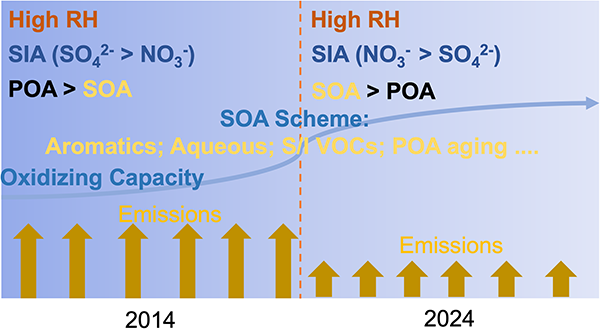
Brown carbon (BrC) is a poorly understood carbonaceous aerosol component that significantly affects climate and air quality. We examined the sources and secondary formation of BrC based on long-term field measurements of bihourly BrC and a suite of organic and elemental tracers in urban Shanghai. Seasonal contrast of source contributions and complexity of secondary formation and evolution was observed. This study offers a scientific basis for BrC mitigation and urban air quality improvement.
Chunshui Lin, Ru-Jin Huang, Jing Duan, Jing Qu, Jiahua Liu, Yi Liu, Yan Luo, Wei Huang, Wei Xu, Yanan Zhan, Zhitao Liu, Sihan Liu, Qingshuang Zhang, Quan Liu, Zirui Liu, Shengrong Lou, Huinan Yang, Dan Dan Huang, Cheng Huang, and Hongli Wang
Atmos. Chem. Phys., 26, 2635–2647, https://doi.org/10.5194/acp-26-2635-2026, https://doi.org/10.5194/acp-26-2635-2026, 2026
Short summary
Short summary
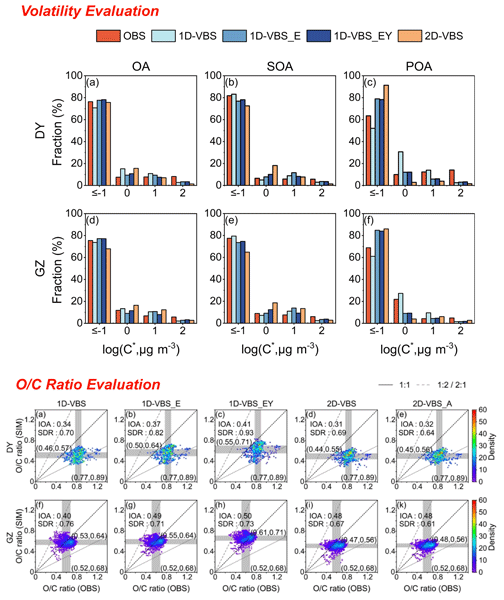
Since China's 2013 Clean Air Act cut PM2.5 by over half, winter haze in the North China Plain persists partly due to secondary organic aerosols now dominating primary organic aerosol, requiring urgent regional cooperation to address model-underestimated chemical transformations and cross-border pollution.
Yu Li, Momei Qin, Weiwei Hu, Bin Zhao, Ying Li, Havala O. T. Pye, Jingyi Li, Linghan Zeng, Song Guo, Min Hu, and Jianlin Hu
Atmos. Chem. Phys., 26, 1001–1020, https://doi.org/10.5194/acp-26-1001-2026, https://doi.org/10.5194/acp-26-1001-2026, 2026
Short summary
Short summary
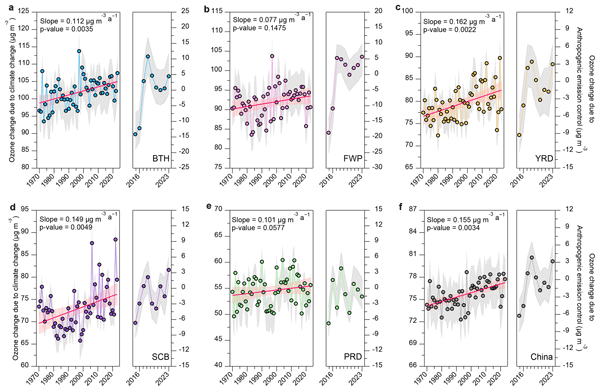
We evaluated how well a widely used air quality model simulates key properties of organic particles in the atmosphere, such as volatility and oxygen content, which influence how particles age, spread, and affect both air quality and climate. Using observations in eastern China, we found the model underestimated particle mass and misrepresented their properties. Our results highlight the need for improved emissions and chemical treatments to better predict air quality and climate impacts.
Jie Fang, Yunjiang Zhang, Didier Hauglustaine, Bo Zheng, Ming Wang, Jingyi Li, Yong Sun, Haiwei Li, Junfeng Wang, Yun Wu, Bin Yuan, Mindong Chen, and Xinlei Ge
Atmos. Chem. Phys., 26, 851–867, https://doi.org/10.5194/acp-26-851-2026, https://doi.org/10.5194/acp-26-851-2026, 2026
Short summary
Short summary
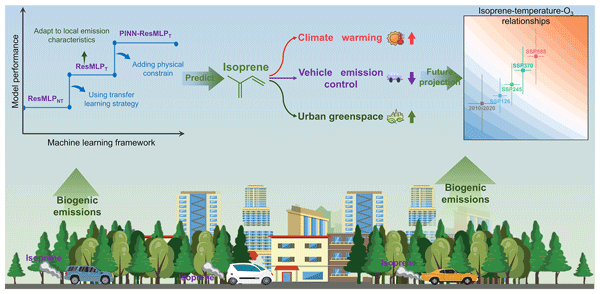
Surface ozone pollution is a pressing global challenge driven by human activities and a warming climate. Using nationwide observations (2013–2023) across China together with satellite data, we developed a new machine learning approach to decouple the impacts of emission controls and weather changes. Our results show that while emission reductions improved ozone in some regions, climate change is increasingly offsetting these gains, underscoring the need for joint air quality and climate actions.
Song Liu, Xiaopu Lyu, Fumo Yang, Zongbo Shi, Xin Huang, Tengyu Liu, Hongli Wang, Mei Li, Jian Gao, Nan Chen, Guoliang Shi, Yu Zou, Chenglei Pei, Chengxu Tong, Xinyi Liu, Li Zhou, Alex B. Guenther, and Nan Wang
Atmos. Chem. Phys., 26, 635–646, https://doi.org/10.5194/acp-26-635-2026, https://doi.org/10.5194/acp-26-635-2026, 2026
Short summary
Short summary
We studied the invisible gas isoprene, which trees and vehicles release into the air and which can worsen urban smog. Using advanced computer learning trained on measurements from many cities, we uncovered how temperature, sunlight, and city greening shape isoprene levels. Comparing Hong Kong and London, we found climate warming boosts isoprene and future ozone pollution, but strong cuts in anthropogenic emission could limit this impact.
Huilin Hu, Yunyi Liang, Ting Li, Yongliang She, Yao Wang, Ting Yang, Min Zhou, Ziyue Li, Chenxi Li, Huayun Xiao, Jianlin Hu, Jingyi Li, and Yue Zhao
Atmos. Chem. Phys., 25, 17889–17906, https://doi.org/10.5194/acp-25-17889-2025, https://doi.org/10.5194/acp-25-17889-2025, 2025
Short summary
Short summary
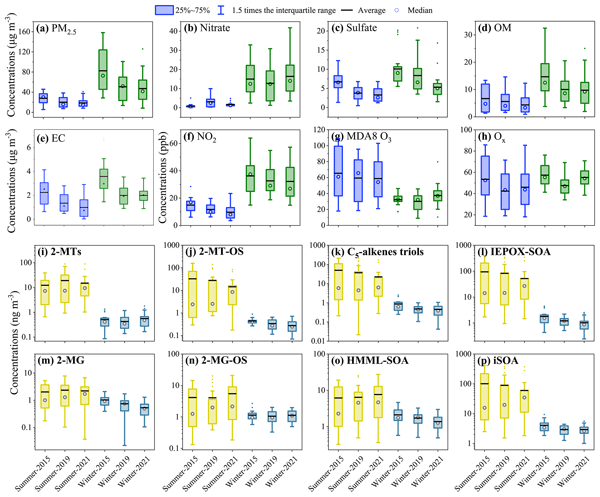
Isoprene-derived secondary organic aerosol (iSOA) is a major type of biogenic SOA in the atmosphere, yet its response to long-term anthropogenic emission reductions remains poorly understood. Here, combing field observations and model simulations, we characterized the abundance, trend, and underlying drivers of iSOA in Shanghai, China during 2015–2021, which will advance our understandings of the formation and impacts of biogenic SOA under rapidly evolving emission scenarios in urban regions.
Jianjiong Mao, Lei Jiang, Zhicheng Feng, Jingyi Li, Yanhong Zhu, Momei Qin, Song Guo, Min Hu, and Jianlin Hu
Geosci. Model Dev., 18, 8423–8438, https://doi.org/10.5194/gmd-18-8423-2025, https://doi.org/10.5194/gmd-18-8423-2025, 2025
Short summary
Short summary
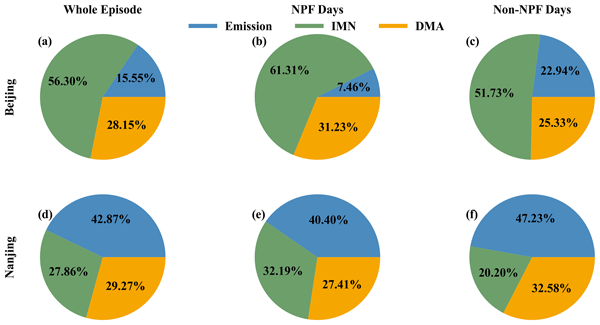
Tiny air particles impact air quality and climate change. Our study improved their prediction in eastern cities by modeling two key formation processes: ions + sulfuric acid + ammonia (daytime) and sulfuric acid + dimethylamine (morning/evening). This improved model increases predictions by 36–84 % in Beijing and Nanjing. These advancements enable better demonstrate how these chemical processes significantly influence China eastern cities' particulate pollution.
Hanrui Lang, Yunjiang Zhang, Sheng Zhong, Yongcai Rao, Minfeng Zhou, Jian Qiu, Jingyi Li, Diwen Liu, Florian Couvidat, Olivier Favez, Didier Hauglustaine, and Xinlei Ge
Atmos. Chem. Phys., 25, 10587–10601, https://doi.org/10.5194/acp-25-10587-2025, https://doi.org/10.5194/acp-25-10587-2025, 2025
Short summary
Short summary
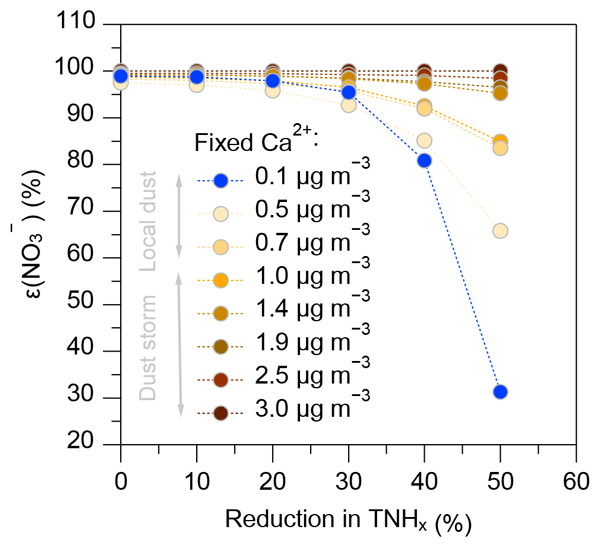
This study investigates how dust pollution influences particulate nitrate formation. We found that dust pollution could reduce the effectiveness of ammonia emission controls by altering aerosol chemistry. Using field observations and modeling, we showed that dust particles affect nitrate distribution between gas and particle phases. Our findings highlight the need for pollution control strategies that consider both human emissions and dust sources for better urban air quality management.
Xu Yu, Min Zhou, Shuhui Zhu, Liping Qiao, Jinjian Li, Yingge Ma, Zijing Zhang, Kezheng Liao, Hongli Wang, and Jian Zhen Yu
Atmos. Chem. Phys., 25, 9061–9074, https://doi.org/10.5194/acp-25-9061-2025, https://doi.org/10.5194/acp-25-9061-2025, 2025
Short summary
Short summary
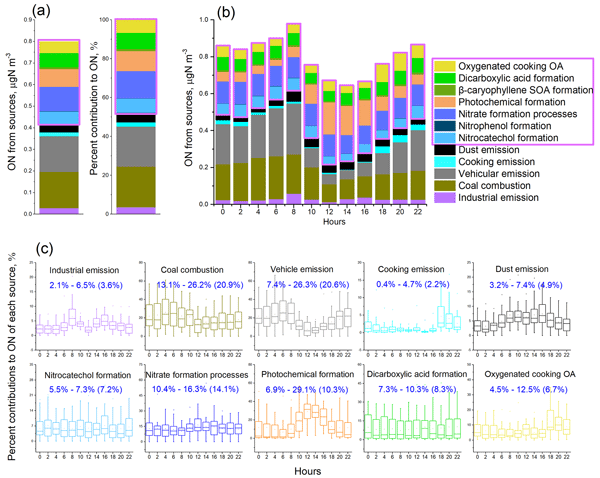
Online measurements of bulk aerosol organic nitrogen (ON), in conjunction with a comprehensive array of source markers, have revealed five emission sources and five potentially significant formation processes of nitrogenous organic aerosols. This study provides a first quantitative source analysis of ON aerosol and valuable observational evidence of secondary ON aerosol formation through NH3 and NOx chemistries.
Xiao Lu, Yiming Liu, Jiayin Su, Xiang Weng, Tabish Ansari, Yuqiang Zhang, Guowen He, Yuqi Zhu, Haolin Wang, Ganquan Zeng, Jingyu Li, Cheng He, Shuai Li, Teerachai Amnuaylojaroen, Tim Butler, Qi Fan, Shaojia Fan, Grant L. Forster, Meng Gao, Jianlin Hu, Yugo Kanaya, Mohd Talib Latif, Keding Lu, Philippe Nédélec, Peer Nowack, Bastien Sauvage, Xiaobin Xu, Lin Zhang, Ke Li, Ja-Ho Koo, and Tatsuya Nagashima
Atmos. Chem. Phys., 25, 7991–8028, https://doi.org/10.5194/acp-25-7991-2025, https://doi.org/10.5194/acp-25-7991-2025, 2025
Short summary
Short summary
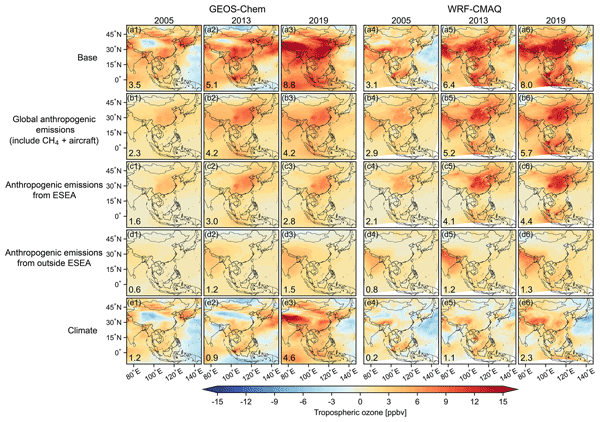
This study analyzes summertime ozone trends in East and Southeast Asia derived from a comprehensive observational database spanning from 1995 to 2019, incorporating aircraft observations, ozonesonde data, and measurements from 2500 surface sites. Multiple models are applied to attribute to changes in anthropogenic emissions and climate. The results highlight that increases in anthropogenic emissions are the primary driver of ozone increases both in the free troposphere and at the surface.
Qianying Liu, Dan Dan Huang, Andrew T. Lambe, Shengrong Lou, Lulu Zeng, Yuhang Wu, Congyan Huang, Shikang Tao, Xi Cheng, Qi Chen, Ka In Hoi, Hongli Wang, Kai Meng Mok, Cheng Huang, and Yong Jie Li
Atmos. Meas. Tech., 18, 2509–2521, https://doi.org/10.5194/amt-18-2509-2025, https://doi.org/10.5194/amt-18-2509-2025, 2025
Short summary
Short summary
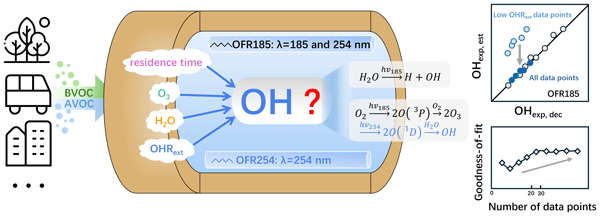
We evaluate the applicability of empirical equations to estimate OH exposure (OHexp) in an oxidative flow reactor (OFR). The fitting parameters obtained within a narrow range of conditions can generally be extended to estimate the OHexp for wide ranges of conditions in the OFR, except for external OH reactivity, which requires new fitting. At least 20–30 data points from SO2 or CO decay with varying conditions are required to fit a set of empirical parameters that can accurately estimate OHexp.
Haifeng Yu, Yunhua Chang, Lin Cheng, Yusen Duan, and Jianlin Hu
Atmos. Chem. Phys., 25, 5355–5369, https://doi.org/10.5194/acp-25-5355-2025, https://doi.org/10.5194/acp-25-5355-2025, 2025
Short summary
Short summary
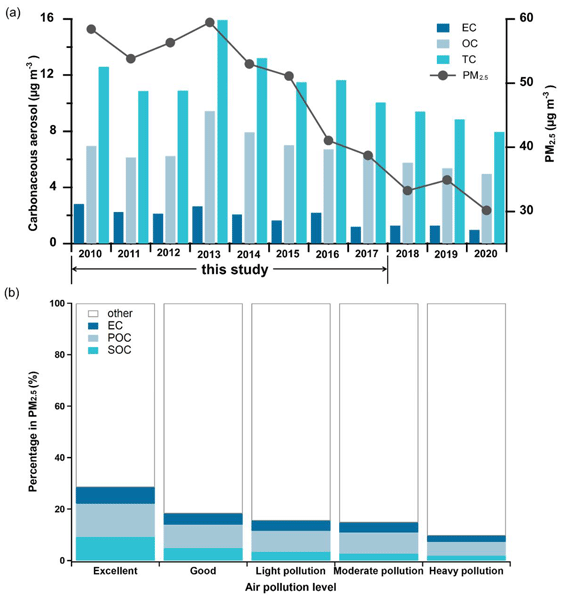
This study presents long-term measurements and comprehensive analysis of carbonaceous aerosols in fine particles in Shanghai. We further estimated primary and secondary carbon levels, examining their temporal variations on interannual, monthly, seasonal, and diurnal scales. Through rigorous statistical analysis and correlation studies with meteorological parameters and pollutant concentrations, the origins, formation mechanisms, and spatial distribution patterns of secondary organic carbon were elucidated.
Bin Luo, Yuqiang Zhang, Tao Tang, Hongliang Zhang, Jianlin Hu, Jiangshan Mu, Wenxing Wang, and Likun Xue
Atmos. Chem. Phys., 25, 4767–4783, https://doi.org/10.5194/acp-25-4767-2025, https://doi.org/10.5194/acp-25-4767-2025, 2025
Short summary
Short summary
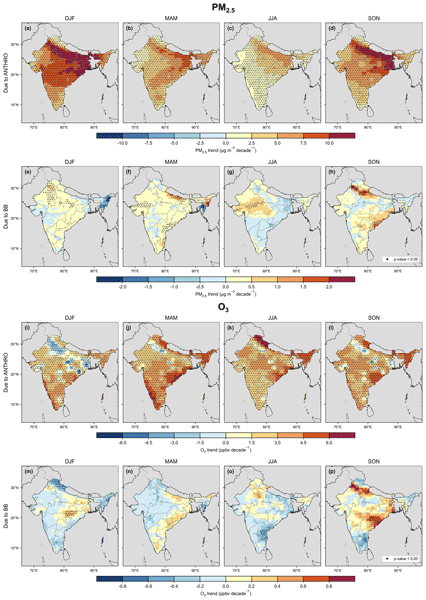
India is facing a severe air pollution crisis that poses significant health risks, particularly from PM2.5 and O3. Our study reveals rising levels of both pollutants from 1995 to 2014, leading to increased premature mortality. While anthropogenic emissions play a significant role, biomass burning also impacts air quality, in particular seasons and regions in India. This study underscores the urgent need for localized policies to protect public health amid escalating environmental challenges.
Fan Zhang, Binyu Xiao, Zeyu Liu, Yan Zhang, Chongguo Tian, Rui Li, Can Wu, Yali Lei, Si Zhang, Xinyi Wan, Yubao Chen, Yong Han, Min Cui, Cheng Huang, Hongli Wang, Yingjun Chen, and Gehui Wang
Atmos. Chem. Phys., 24, 8999–9017, https://doi.org/10.5194/acp-24-8999-2024, https://doi.org/10.5194/acp-24-8999-2024, 2024
Short summary
Short summary
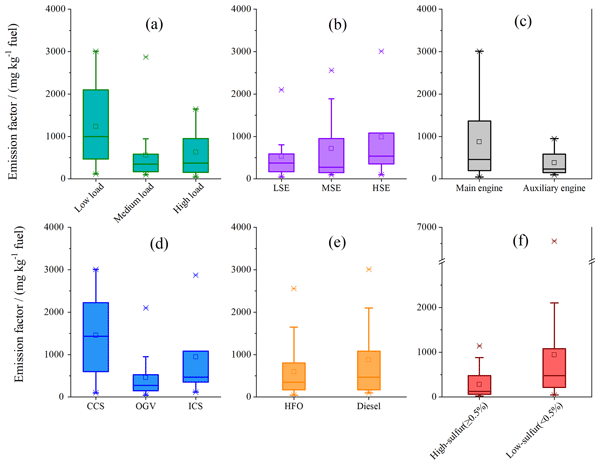
Mandatory use of low-sulfur fuel due to global sulfur limit regulations means large uncertainties in volatile organic compound (VOC) emissions. On-board tests of VOCs from nine cargo ships in China were carried out. Results showed that switching from heavy-fuel oil to diesel increased emission factor VOCs by 48 % on average, enhancing O3 and the secondary organic aerosol formation potential. Thus, implementing a global ultra-low-sulfur oil policy needs to be optimized in the near future.
Fei Ye, Jingyi Li, Yaqin Gao, Hongli Wang, Jingyu An, Cheng Huang, Song Guo, Keding Lu, Kangjia Gong, Haowen Zhang, Momei Qin, and Jianlin Hu
Atmos. Chem. Phys., 24, 7467–7479, https://doi.org/10.5194/acp-24-7467-2024, https://doi.org/10.5194/acp-24-7467-2024, 2024
Short summary
Short summary
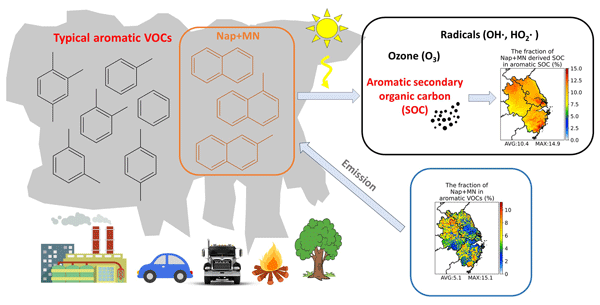
Naphthalene (Nap) and methylnaphthalene (MN) are key precursors of secondary organic aerosol (SOA), yet their sources and sinks are often inadequately represented in air quality models. In this study, we incorporated detailed emissions, gas-phase chemistry, and SOA parameterization of Nap and MN into CMAQ to address this issue. The findings revealed remarkably high SOA formation potentials for these compounds despite their low emissions in the Yangtze River Delta region during summer.
Wenjie Wang, Bin Yuan, Hang Su, Yafang Cheng, Jipeng Qi, Sihang Wang, Wei Song, Xinming Wang, Chaoyang Xue, Chaoqun Ma, Fengxia Bao, Hongli Wang, Shengrong Lou, and Min Shao
Atmos. Chem. Phys., 24, 4017–4027, https://doi.org/10.5194/acp-24-4017-2024, https://doi.org/10.5194/acp-24-4017-2024, 2024
Short summary
Short summary
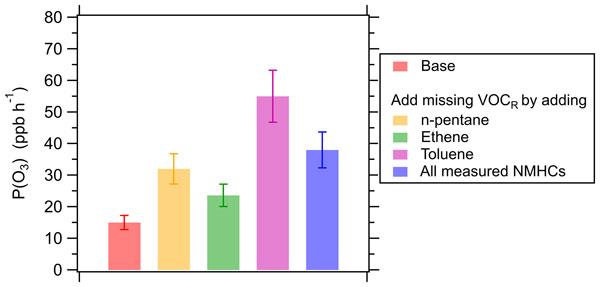
This study investigates the important role of unmeasured volatile organic compounds (VOCs) in ozone formation. Based on results in a megacity of China, we show that unmeasured VOCs can contribute significantly to ozone fomation and also influence the determination of ozone control strategy. Our results show that these unmeasured VOCs are mainly from human sources.
Yongliang She, Jingyi Li, Xiaopu Lyu, Hai Guo, Momei Qin, Xiaodong Xie, Kangjia Gong, Fei Ye, Jianjiong Mao, Lin Huang, and Jianlin Hu
Atmos. Chem. Phys., 24, 219–233, https://doi.org/10.5194/acp-24-219-2024, https://doi.org/10.5194/acp-24-219-2024, 2024
Short summary
Short summary
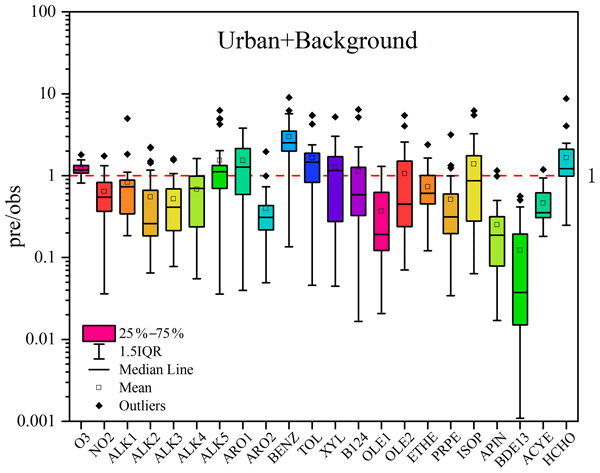
In this study, we use multi-site volatile organic compound (VOC) measurements to evaluate the CMAQ-model-predicted VOCs and assess the impacts of VOC bias on O3 simulation. Our results demonstrate that current modeling setups and emission inventories are likely to underpredict VOC concentrations, and this underprediction of VOCs contributes to lower O3 predictions in China.
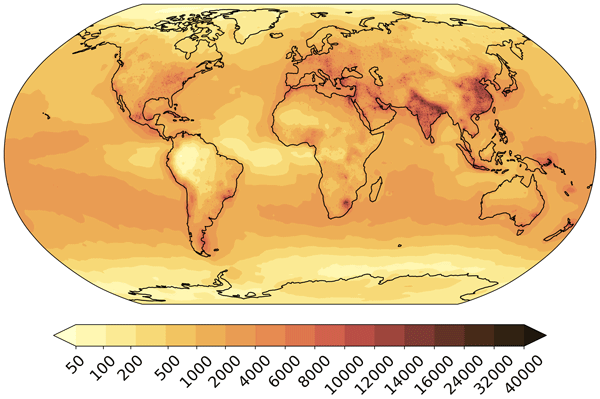
Matthias Kohl, Jos Lelieveld, Sourangsu Chowdhury, Sebastian Ehrhart, Disha Sharma, Yafang Cheng, Sachchida Nand Tripathi, Mathew Sebastian, Govindan Pandithurai, Hongli Wang, and Andrea Pozzer
Atmos. Chem. Phys., 23, 13191–13215, https://doi.org/10.5194/acp-23-13191-2023, https://doi.org/10.5194/acp-23-13191-2023, 2023
Short summary
Short summary
Knowledge on atmospheric ultrafine particles (UFPs) with a diameter smaller than 100 nm is crucial for public health and the hydrological cycle. We present a new global dataset of UFP concentrations at the Earth's surface derived with a comprehensive chemistry–climate model and evaluated with ground-based observations. The evaluation results are combined with high-resolution primary emissions to downscale UFP concentrations to an unprecedented horizontal resolution of 0.1° × 0.1°.
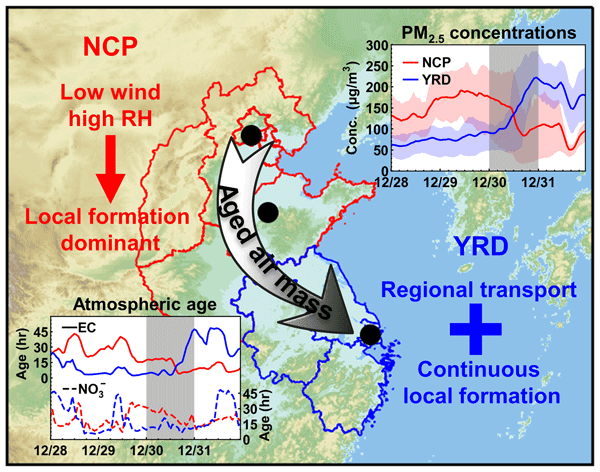
Xiaodong Xie, Jianlin Hu, Momei Qin, Song Guo, Min Hu, Dongsheng Ji, Hongli Wang, Shengrong Lou, Cheng Huang, Chong Liu, Hongliang Zhang, Qi Ying, Hong Liao, and Yuanhang Zhang
Atmos. Chem. Phys., 23, 10563–10578, https://doi.org/10.5194/acp-23-10563-2023, https://doi.org/10.5194/acp-23-10563-2023, 2023
Short summary
Short summary
The atmospheric age of particles reflects how long particles have been formed and suspended in the atmosphere, which is closely associated with the evolution processes of particles. An analysis of the atmospheric age of PM2.5 provides a unique perspective on the evolution processes of different PM2.5 components. The results also shed lights on how to design effective emission control actions under unfavorable meteorological conditions.
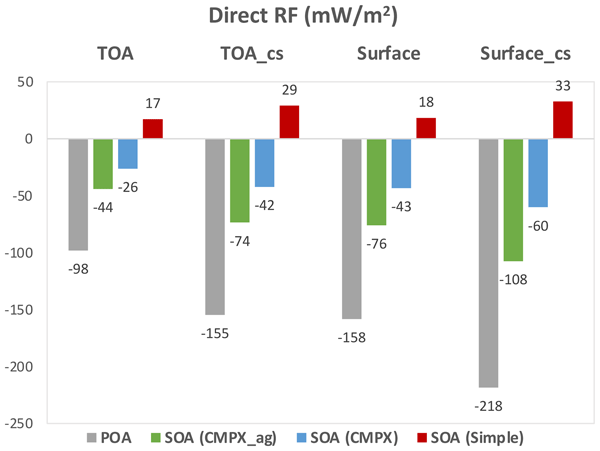
Yiqi Zheng, Larry W. Horowitz, Raymond Menzel, David J. Paynter, Vaishali Naik, Jingyi Li, and Jingqiu Mao
Atmos. Chem. Phys., 23, 8993–9007, https://doi.org/10.5194/acp-23-8993-2023, https://doi.org/10.5194/acp-23-8993-2023, 2023
Short summary
Short summary
Biogenic secondary organic aerosols (SOAs) account for a large fraction of fine aerosol at the global scale. Using long-term measurements and a climate model, we investigate anthropogenic impacts on biogenic SOA at both decadal and centennial timescales. Results show that despite reductions in biogenic precursor emissions, SOA has been strongly amplified by anthropogenic emissions since the preindustrial era and exerts a cooling radiative forcing.
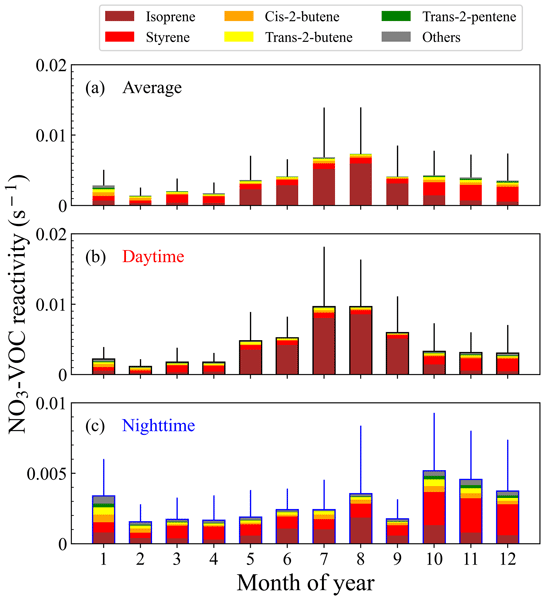
Hejun Hu, Haichao Wang, Keding Lu, Jie Wang, Zelong Zheng, Xuezhen Xu, Tianyu Zhai, Xiaorui Chen, Xiao Lu, Wenxing Fu, Xin Li, Limin Zeng, Min Hu, Yuanhang Zhang, and Shaojia Fan
Atmos. Chem. Phys., 23, 8211–8223, https://doi.org/10.5194/acp-23-8211-2023, https://doi.org/10.5194/acp-23-8211-2023, 2023
Short summary
Short summary
Nitrate radical chemistry is critical to the degradation of volatile organic compounds (VOCs) and secondary organic aerosol formation. This work investigated the level, seasonal variation, and trend of nitrate radical reactivity towards volatile organic compounds (kNO3) in Beijing. We show the key role of isoprene and styrene in regulating seasonal variation in kNO3 and rebuild a long-term record of kNO3 based on the reported VOC measurements.
Shuhui Zhu, Min Zhou, Liping Qiao, Dan Dan Huang, Qiongqiong Wang, Shan Wang, Yaqin Gao, Shengao Jing, Qian Wang, Hongli Wang, Changhong Chen, Cheng Huang, and Jian Zhen Yu
Atmos. Chem. Phys., 23, 7551–7568, https://doi.org/10.5194/acp-23-7551-2023, https://doi.org/10.5194/acp-23-7551-2023, 2023
Short summary
Short summary
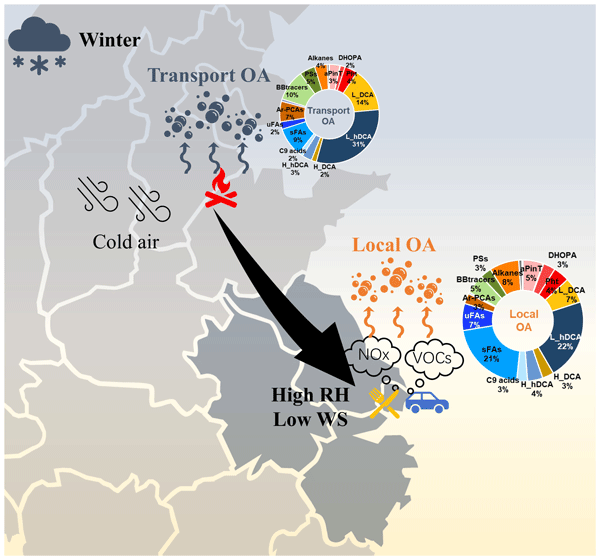
Organic aerosol (OA) is increasingly important in urban PM2.5 pollution as inorganic ions are becoming lower. We investigated the chemical characteristics of OA during nine episodes in Shanghai. The availability of bi-hourly measured molecular markers revealed that the control of local urban sources such as vehicular and cooking emissions lessened the severity of local episodes. Regional control of precursors and biomass burning would reduce PM2.5 episodes influenced by regional transport.
Yaqin Gao, Hongli Wang, Lingling Yuan, Shengao Jing, Bin Yuan, Guofeng Shen, Liang Zhu, Abigail Koss, Yingjie Li, Qian Wang, Dan Dan Huang, Shuhui Zhu, Shikang Tao, Shengrong Lou, and Cheng Huang
Atmos. Chem. Phys., 23, 6633–6646, https://doi.org/10.5194/acp-23-6633-2023, https://doi.org/10.5194/acp-23-6633-2023, 2023
Short summary
Short summary
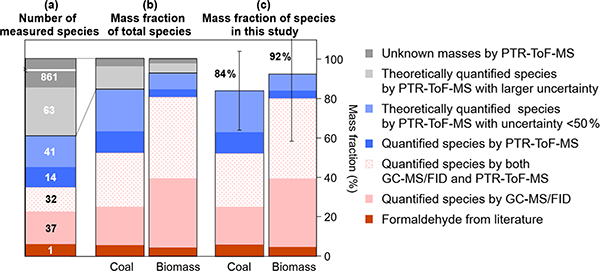
A near-complete speciation of reactive organic gases from residential combustion was developed to get more insights into their atmospheric effects. Oxygenated species, higher hydrocarbons and nitrogen-containing species played larger roles in these emissions compared with common hydrocarbons. Based on the near-complete speciation, these emissions were largely underestimated, leading to more underestimation of their hydroxyl radical reactivity and secondary organic aerosol formation potential.
Lizi Tang, Min Hu, Dongjie Shang, Xin Fang, Jianjiong Mao, Wanyun Xu, Jiacheng Zhou, Weixiong Zhao, Yaru Wang, Chong Zhang, Yingjie Zhang, Jianlin Hu, Limin Zeng, Chunxiang Ye, Song Guo, and Zhijun Wu
Atmos. Chem. Phys., 23, 4343–4359, https://doi.org/10.5194/acp-23-4343-2023, https://doi.org/10.5194/acp-23-4343-2023, 2023
Short summary
Short summary
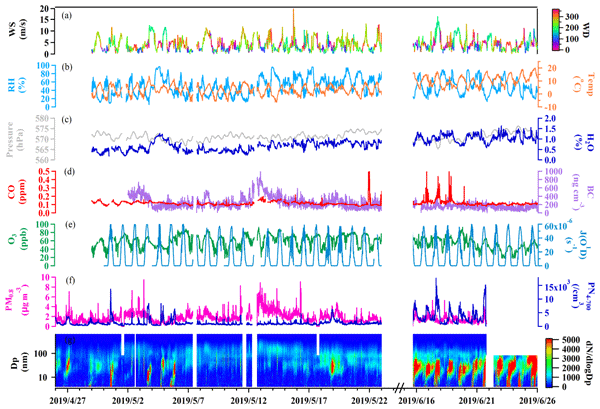
There was an evident distinction in the frequency of new particle formation (NPF) events at Nam Co station on the Tibetan Plateau: 15 % in pre-monsoon season and 80 % in monsoon season. The frequent NPF events in monsoon season resulted from the higher frequency of southerly air masses, which brought the organic precursors to participate in the NPF process. It increased the amount of aerosol and CCN compared with those in pre-monsoon season, which may markedly affect earth's radiation balance.
Yiqun Lu, Yingge Ma, Dan Dan Huang, Shengrong Lou, Sheng'ao Jing, Yaqin Gao, Hongli Wang, Yanjun Zhang, Hui Chen, Yunhua Chang, Naiqiang Yan, Jianmin Chen, Christian George, Matthieu Riva, and Cheng Huang
Atmos. Chem. Phys., 23, 3233–3245, https://doi.org/10.5194/acp-23-3233-2023, https://doi.org/10.5194/acp-23-3233-2023, 2023
Short summary
Short summary
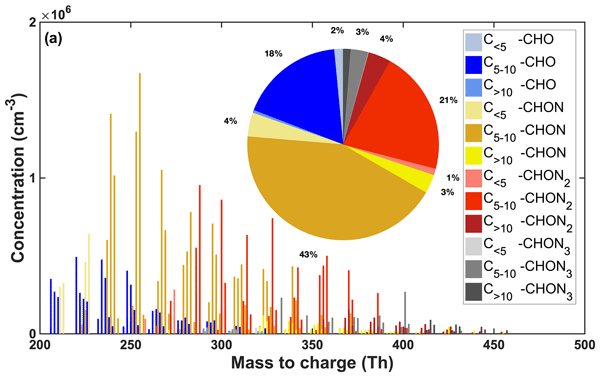
N-containing oxygenated organic molecules have been identified as important precursors of aerosol particles. We used an ultra-high-resolution mass spectrometer coupled with an online sample inlet to accurately measure their molecular composition, concentration level and variation patterns. We show their formation process and influencing factors in a Chinese megacity involving various volatile organic compound precursors and atmospheric oxidants, and we highlight the influence of PM2.5 episodes.
Jingyu An, Cheng Huang, Dandan Huang, Momei Qin, Huan Liu, Rusha Yan, Liping Qiao, Min Zhou, Yingjie Li, Shuhui Zhu, Qian Wang, and Hongli Wang
Atmos. Chem. Phys., 23, 323–344, https://doi.org/10.5194/acp-23-323-2023, https://doi.org/10.5194/acp-23-323-2023, 2023
Short summary
Short summary
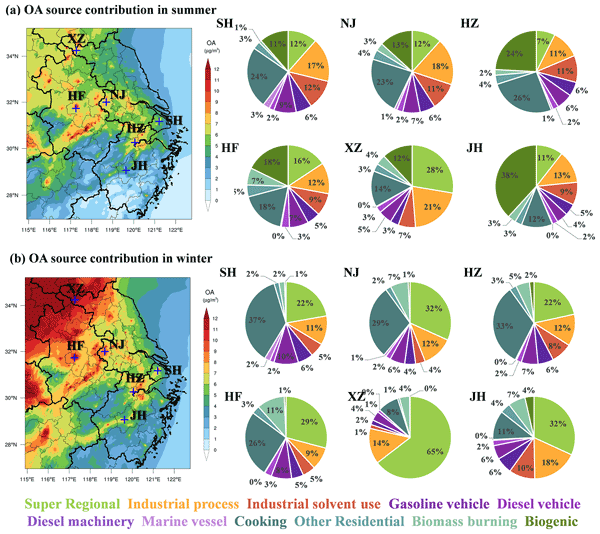
This paper aims to build up an approach to establish a high-resolution emission inventory of intermediate-volatility and semi-volatile organic compounds in city-scale and detailed source categories and incorporate it into the CMAQ model. We believe this approach can be widely applied to improve the simulation of secondary organic aerosol and its source contributions.
Yarong Peng, Hongli Wang, Yaqin Gao, Shengao Jing, Shuhui Zhu, Dandan Huang, Peizhi Hao, Shengrong Lou, Tiantao Cheng, Cheng Huang, and Xuan Zhang
Atmos. Meas. Tech., 16, 15–28, https://doi.org/10.5194/amt-16-15-2023, https://doi.org/10.5194/amt-16-15-2023, 2023
Short summary
Short summary
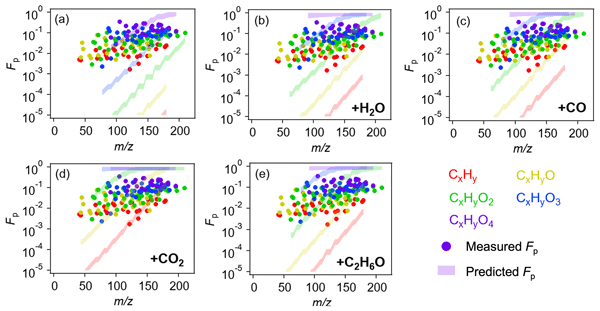
This work examined the phase partitioning behaviors of organic compounds at hourly resolution in ambient conditions with the use of the CHemical Analysis of aeRosols ONline (CHARON) inlet coupled to a proton-transfer-reaction time-of-flight mass spectrometer (PTR-ToF-MS). Properly accounting for the neutral losses of small moieties during the molecular feature extraction from PTR mass spectra could significantly reduce uncertainties associated with the gas–particle partitioning measurements.
Xun Li, Momei Qin, Lin Li, Kangjia Gong, Huizhong Shen, Jingyi Li, and Jianlin Hu
Atmos. Chem. Phys., 22, 14799–14811, https://doi.org/10.5194/acp-22-14799-2022, https://doi.org/10.5194/acp-22-14799-2022, 2022
Short summary
Short summary
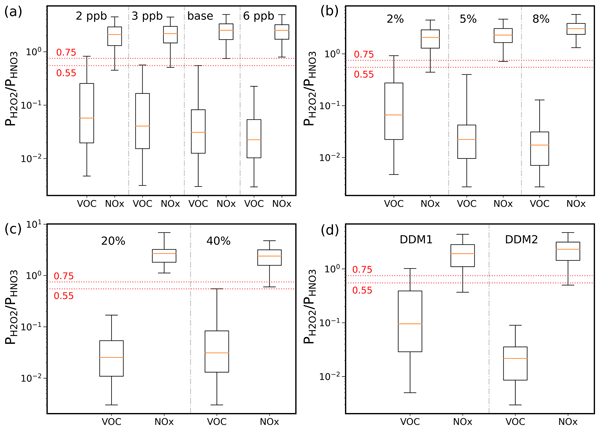
Photochemical indicators have been widely used to predict O3–NOx–VOC sensitivity with given thresholds. Here we assessed the effectiveness of four indicators with a case study in the Yangtze River Delta, China. The overall performance was good, while some indicators showed inconsistencies with the O3 isopleths. The methodology used to determine the thresholds may produce uncertainties. These results would improve our understanding of the use of photochemical indicators in policy implications.
Min Zhou, Guangjie Zheng, Hongli Wang, Liping Qiao, Shuhui Zhu, DanDan Huang, Jingyu An, Shengrong Lou, Shikang Tao, Qian Wang, Rusha Yan, Yingge Ma, Changhong Chen, Yafang Cheng, Hang Su, and Cheng Huang
Atmos. Chem. Phys., 22, 13833–13844, https://doi.org/10.5194/acp-22-13833-2022, https://doi.org/10.5194/acp-22-13833-2022, 2022
Short summary
Short summary
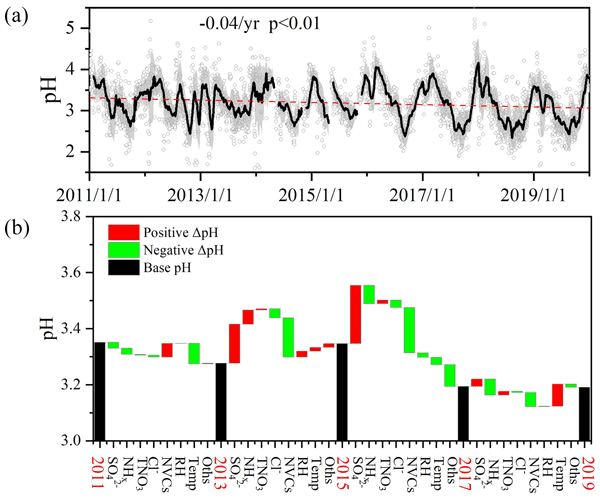
The trend of aerosol pH and its drivers is crucial in understanding the multiphase formation pathways of aerosols. We reported the first trend analysis of aerosol pH from 2011 to 2019 in eastern China. Although significant variations of aerosol compositions were observed from 2011 to 2019, the aerosol pH estimated by model only slightly declined by 0.24. Our work shows that the opposite effects of SO42− and non-volatile cation changes play key roles in determining the moderate pH trend.
Jinjin Sun, Momei Qin, Xiaodong Xie, Wenxing Fu, Yang Qin, Li Sheng, Lin Li, Jingyi Li, Ishaq Dimeji Sulaymon, Lei Jiang, Lin Huang, Xingna Yu, and Jianlin Hu
Atmos. Chem. Phys., 22, 12629–12646, https://doi.org/10.5194/acp-22-12629-2022, https://doi.org/10.5194/acp-22-12629-2022, 2022
Short summary
Short summary
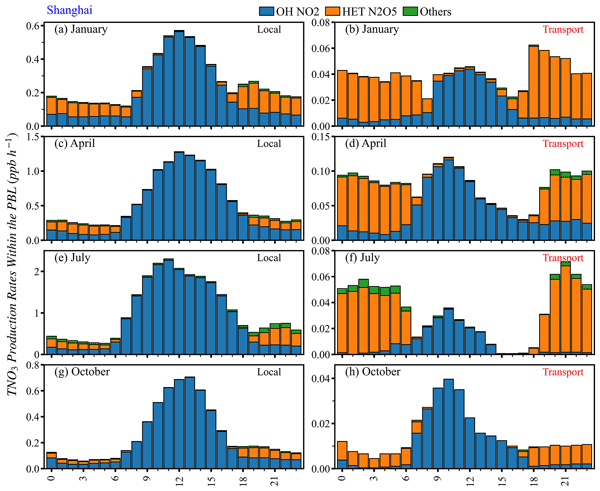
NO3- has become the dominant and the least reduced chemical component of fine particulate matter in China. NO3- formation is mostly in the NH3-rich regime in the Yangtze River Delta (YRD). OH + NO2 contributes 60 %–83 % of the TNO3 production rates, and the N2O5 heterogeneous pathway contributes 10 %–36 %. The N2O5 heterogeneous pathway becomes more important in cold seasons. Local emissions and regional transportation contribute 50 %–62 % and 38 %–50 % to YRD NO3- concentrations, respectively.
Sihang Wang, Bin Yuan, Caihong Wu, Chaomin Wang, Tiange Li, Xianjun He, Yibo Huangfu, Jipeng Qi, Xiao-Bing Li, Qing'e Sha, Manni Zhu, Shengrong Lou, Hongli Wang, Thomas Karl, Martin Graus, Zibing Yuan, and Min Shao
Atmos. Chem. Phys., 22, 9703–9720, https://doi.org/10.5194/acp-22-9703-2022, https://doi.org/10.5194/acp-22-9703-2022, 2022
Short summary
Short summary
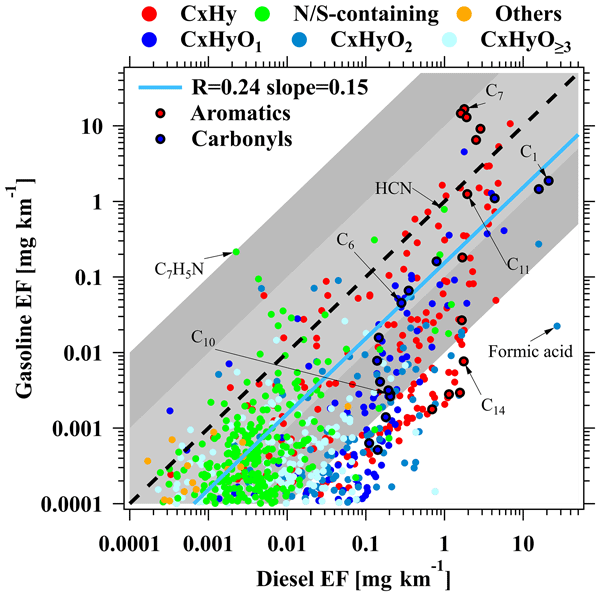
Volatile organic compound (VOC) emissions from vehicles are measured using online mass spectrometers. Differences between gasoline and diesel vehicles are observed with higher emission factors of most oxygenated VOCs (OVOCs) and heavier aromatics from diesel vehicles. A higher aromatics / toluene ratio could provide good indicators to distinguish emissions from both vehicle types. We show that OVOCs account for significant contributions to VOC emissions from vehicles, especially diesel vehicles.
Wenjie Wang, David D. Parrish, Siwen Wang, Fengxia Bao, Ruijing Ni, Xin Li, Suding Yang, Hongli Wang, Yafang Cheng, and Hang Su
Atmos. Chem. Phys., 22, 8935–8949, https://doi.org/10.5194/acp-22-8935-2022, https://doi.org/10.5194/acp-22-8935-2022, 2022
Short summary
Short summary
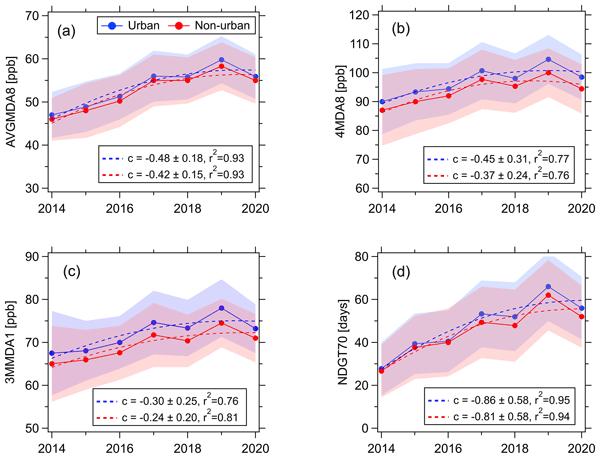
Tropospheric ozone is an air pollutant that is detrimental to human health, vegetation and ecosystem productivity. A comprehensive characterisation of the spatial and temporal distribution of tropospheric ozone is critical to our understanding of these issues. Here we summarise this distribution over China from the available observational records to the extent possible. This study provides insights into efficient future ozone control strategies in China.
Shijie Cui, Dan Dan Huang, Yangzhou Wu, Junfeng Wang, Fuzhen Shen, Jiukun Xian, Yunjiang Zhang, Hongli Wang, Cheng Huang, Hong Liao, and Xinlei Ge
Atmos. Chem. Phys., 22, 8073–8096, https://doi.org/10.5194/acp-22-8073-2022, https://doi.org/10.5194/acp-22-8073-2022, 2022
Short summary
Short summary
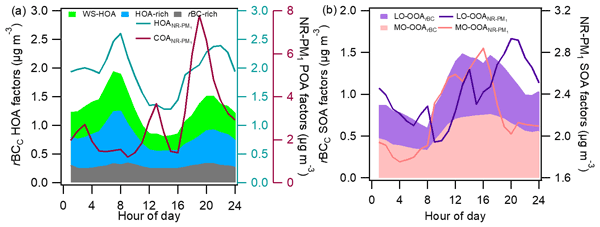
Refractory black carbon (rBC) aerosols are important to air quality and climate change. rBC can mix with many other species, which can significantly change its properties and impacts. We used a specific set of techniques to exclusively characterize rBC-containing (rBCc) particles in Shanghai. We elucidated their composition, sources and size distributions and factors that affect their properties. Our findings are very valuable for advancing the understanding of BC and controlling BC pollution.
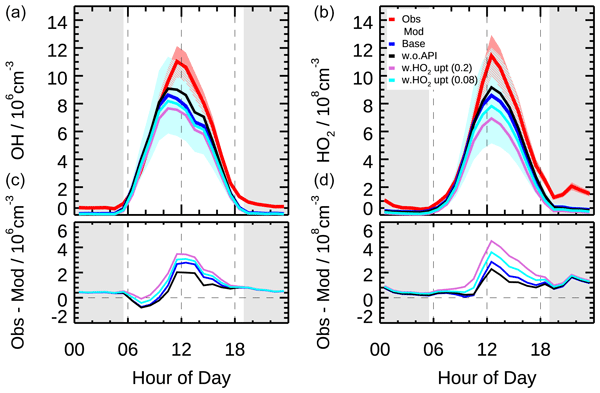
Xuefei Ma, Zhaofeng Tan, Keding Lu, Xinping Yang, Xiaorui Chen, Haichao Wang, Shiyi Chen, Xin Fang, Shule Li, Xin Li, Jingwei Liu, Ying Liu, Shengrong Lou, Wanyi Qiu, Hongli Wang, Limin Zeng, and Yuanhang Zhang
Atmos. Chem. Phys., 22, 7005–7028, https://doi.org/10.5194/acp-22-7005-2022, https://doi.org/10.5194/acp-22-7005-2022, 2022
Short summary
Short summary
This paper presents the first OH and HO2 radical observations made in the Yangtze River Delta in China, and strong oxidation capacity is discovered based on direct measurements. The impacts of new OH regeneration mechanisms, monoterpene oxidation, and HO2 uptake processes are examined and discussed. The sources and the factors to sustain such strong oxidation are the key to understanding the ozone pollution formed in this area.
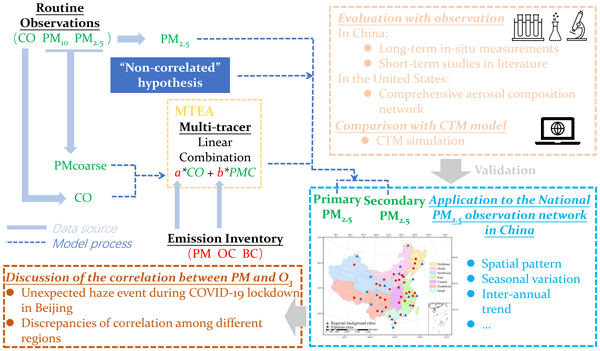
Haoran Zhang, Nan Li, Keqin Tang, Hong Liao, Chong Shi, Cheng Huang, Hongli Wang, Song Guo, Min Hu, Xinlei Ge, Mindong Chen, Zhenxin Liu, Huan Yu, and Jianlin Hu
Atmos. Chem. Phys., 22, 5495–5514, https://doi.org/10.5194/acp-22-5495-2022, https://doi.org/10.5194/acp-22-5495-2022, 2022
Short summary
Short summary
We developed a new algorithm with low economic/technique costs to identify primary and secondary components of PM2.5. Our model was shown to be reliable by comparison with different observation datasets. We systematically explored the patterns and changes in the secondary PM2.5 pollution in China at large spatial and time scales. We believe that this method is a promising tool for efficiently estimating primary and secondary PM2.5, and has huge potential for future PM mitigation.
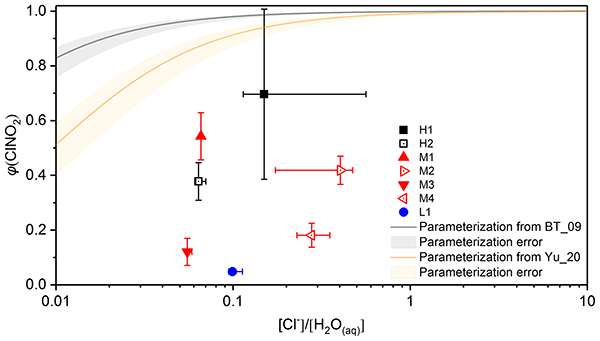
Haichao Wang, Chao Peng, Xuan Wang, Shengrong Lou, Keding Lu, Guicheng Gan, Xiaohong Jia, Xiaorui Chen, Jun Chen, Hongli Wang, Shaojia Fan, Xinming Wang, and Mingjin Tang
Atmos. Chem. Phys., 22, 1845–1859, https://doi.org/10.5194/acp-22-1845-2022, https://doi.org/10.5194/acp-22-1845-2022, 2022
Short summary
Short summary
Via combining laboratory and modeling work, we found that heterogeneous reaction of N2O5 with saline mineral dust aerosol could be an important source of tropospheric ClNO2 in inland regions.
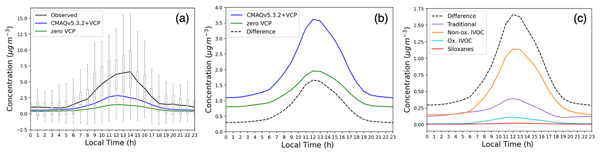
Elyse A. Pennington, Karl M. Seltzer, Benjamin N. Murphy, Momei Qin, John H. Seinfeld, and Havala O. T. Pye
Atmos. Chem. Phys., 21, 18247–18261, https://doi.org/10.5194/acp-21-18247-2021, https://doi.org/10.5194/acp-21-18247-2021, 2021
Short summary
Short summary
Volatile chemical products (VCPs) are commonly used consumer and industrial items that contribute to the formation of atmospheric aerosol. We implemented the emissions and chemistry of VCPs in a regional-scale model and compared predictions with measurements made in Los Angeles. Our results reduced model bias and suggest that VCPs may contribute up to half of anthropogenic secondary organic aerosol in Los Angeles and are an important source of human-influenced particular matter in urban areas.
Ruqian Miao, Qi Chen, Manish Shrivastava, Youfan Chen, Lin Zhang, Jianlin Hu, Yan Zheng, and Keren Liao
Atmos. Chem. Phys., 21, 16183–16201, https://doi.org/10.5194/acp-21-16183-2021, https://doi.org/10.5194/acp-21-16183-2021, 2021
Short summary
Short summary
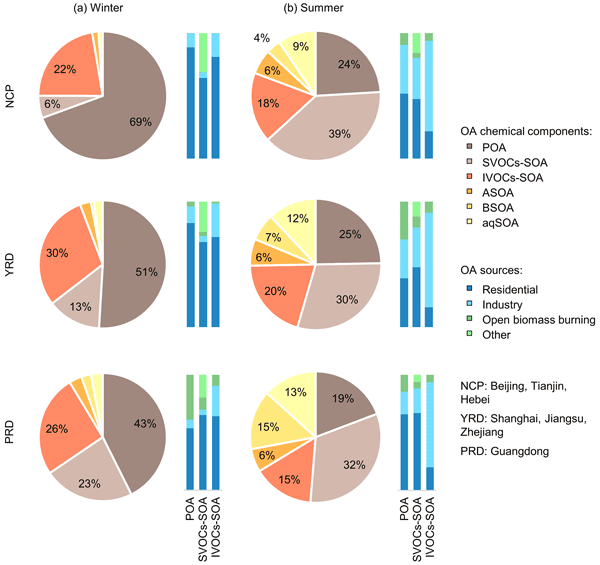
We apply process-based and observation-constrained schemes to simulate organic aerosol in China and conduct comprehensive model–observation comparisons. The results show that anthropogenic semivolatile and intermediate-volatility organic compounds (SVOCs and IVOCs) are the main sources of secondary organic aerosol (SOA) in polluted regions, for which the residential sector is perhaps the predominant contributor. The hydroxyl radical level is also important for SOA modeling in polluted regions.
Cited articles
An, J., Huang, Y., Huang, C., Wang, X., Yan, R., Wang, Q., Wang, H., Jing, S., Zhang, Y., Liu, Y., Chen, Y., Xu, C., Qiao, L., Zhou, M., Zhu, S., Hu, Q., Lu, J., and Chen, C.: Emission inventory of air pollutants and chemical speciation for specific anthropogenic sources based on local measurements in the Yangtze River Delta region, China, Atmos. Chem. Phys., 21, 2003–2025, https://doi.org/10.5194/acp-21-2003-2021, 2021.
Babaei-Gharehbagh, A., Taylor, R., Pratap, V., Na, S., Carlton, A. G., and Hennigan, C. J.: Effects of Inorganic Salts on the Gas-Aqueous Partitioning of Formic Acid and Acetic Acid, ACS Earth Space Chem., 9, 2705–2714, https://doi.org/10.1021/acsearthspacechem.5c00225, 2025.
Cliff, S. J., Lewis, A. C., Shaw, M. D., Lee, J. D., Flynn, M., Andrews, S. J., Hopkins, J. R., Purvis, R. M., and Yeoman, A. M.: Unreported VOC Emissions from Road Transport Including from Electric Vehicles, Environ. Sci. Technol., 57, 8026–8034, https://doi.org/10.1021/acs.est.3c00845, 2023.
Coggon, M. M., Gkatzelis, G. I., McDonald, B. C., Gilman, J. B., Schwantes, R. H., Abuhassan, N., Aikin, K. C., Arend, M. F., Berkoff, T. A., Brown, S. S., Campos, T. L., Dickerson, R. R., Gronoff, G., Hurley, J. F., Isaacman-VanWertz, G., Koss, A. R., Li, M., McKeen, S. A., Moshary, F., Peischl, J., Pospisilova, V., Ren, X., Wilson, A., Wu, Y., Trainer, M., and Warneke, C.: Volatile chemical product emissions enhance ozone and modulate urban chemistry, P. Natl. Acad. Sci. USA, 118, e2026653118, https://doi.org/10.1073/pnas.2026653118, 2021.
Cope, J. D., Abellar, K. A., Bates, K. H., Fu, X., and Nguyen, T. B.: Aqueous Photochemistry of 2-Methyltetrol and Erythritol as Sources of Formic Acid and Acetic Acid in the Atmosphere, ACS Earth Space Chem., 5, 1265–1277, https://doi.org/10.1021/acsearthspacechem.1c00107, 2021.
Du, C., Wang, H., Gao, Y., Yan, R., Jing, S. a., Zhou, M., Wang, Q., Lou, S., Huang, C., Huang, D. D., Shang, Y., and An, J.: Processes Driving Diurnal and Seasonal Variations of Formaldehyde in an Urban Environment, ACS Earth Space Chem., 9, 1174–1184, https://doi.org/10.1021/acsearthspacechem.5c00020, 2025.
Franco, B., Blumenstock, T., Cho, C., Clarisse, L., Clerbaux, C., Coheur, P. F., De Mazière, M., De Smedt, I., Dorn, H. P., Emmerichs, T., Fuchs, H., Gkatzelis, G., Griffith, D. W. T., Gromov, S., Hannigan, J. W., Hase, F., Hohaus, T., Jones, N., Kerkweg, A., Kiendler-Scharr, A., Lutsch, E., Mahieu, E., Novelli, A., Ortega, I., Paton-Walsh, C., Pommier, M., Pozzer, A., Reimer, D., Rosanka, S., Sander, R., Schneider, M., Strong, K., Tillmann, R., Van Roozendael, M., Vereecken, L., Vigouroux, C., Wahner, A., and Taraborrelli, D.: Ubiquitous atmospheric production of organic acids mediated by cloud droplets, Nature, 593, 233–237, https://doi.org/10.1038/s41586-021-03462-x, 2021.
Gao, Y., Wang, H., Yuan, L., Jing, S., Yuan, B., Shen, G., Zhu, L., Koss, A., Li, Y., Wang, Q., Huang, D. D., Zhu, S., Tao, S., Lou, S., and Huang, C.: Measurement report: Underestimated reactive organic gases from residential combustion – insights from a near-complete speciation, Atmos. Chem. Phys., 23, 6633–6646, https://doi.org/10.5194/acp-23-6633-2023, 2023.
Gao, Y. Q., Wang, H. L., Liu, Y., Zhang, X., Jing, S. A., Peng, Y. R., Huang, D. D., Li, X., Chen, S. Y., Lou, S. R., Li, Y. J., and Huang, C.: Unexpected High Contribution of Residential Biomass Burning to Non-Methane Organic Gases (NMOGs) in the Yangtze River Delta Region of China, J. Geophys. Res.-Atmos., 127, 14, https://doi.org/10.1029/2021jd035050, 2022.
Geng, G., Liu, Y., Liu, Y., Liu, S., Cheng, J., Yan, L., Wu, N., Hu, H., Tong, D., Zheng, B., Yin, Z., He, K., and Zhang, Q.: Efficacy of China's clean air actions to tackle PM2.5 pollution between 2013 and 2020, Nat. Geosci., 17, 987–994, https://doi.org/10.1038/s41561-024-01540-z, 2024.
Gkatzelis, G. I., Papanastasiou, D. K., Karydis, V. A., Hohaus, T., Liu, Y., Schmitt, S. H., Schlag, P., Fuchs, H., Novelli, A., Chen, Q., Cheng, X., Broch, S., Dong, H., Holland, F., Li, X., Liu, Y., Ma, X., Reimer, D., Rohrer, F., Shao, M., Tan, Z., Taraborrelli, D., Tillmann, R., Wang, H., Wang, Y., Wu, Y., Wu, Z., Zeng, L., Zheng, J., Hu, M., Lu, K., Hofzumahaus, A., Zhang, Y., Wahner, A., and Kiendler-Scharr, A.: Uptake of Water-soluble Gas-phase Oxidation Products Drives Organic Particulate Pollution in Beijing, Geophys. Res. Lett., 48, e2020GL091351, https://doi.org/10.1029/2020GL091351, 2021.
Hatch, L. E., Yokelson, R. J., Stockwell, C. E., Veres, P. R., Simpson, I. J., Blake, D. R., Orlando, J. J., and Barsanti, K. C.: Multi-instrument comparison and compilation of non-methane organic gas emissions from biomass burning and implications for smoke-derived secondary organic aerosol precursors, Atmos. Chem. Phys., 17, 1471–1489, https://doi.org/10.5194/acp-17-1471-2017, 2017.
He, M., Ditto, J. C., Gardner, L., Machesky, J., Hass-Mitchell, T. N., Chen, C., Khare, P., Sahin, B., Fortner, J. D., Plata, D. L., Drollette, B. D., Hayden, K. L., Wentzell, J. J. B., Mittermeier, R. L., Leithead, A., Lee, P., Darlington, A., Wren, S. N., Zhang, J., Wolde, M., Moussa, S. G., Li, S.-M., Liggio, J., and Gentner, D. R.: Total organic carbon measurements reveal major gaps in petrochemical emissions reporting, Science, 383, 426–432, https://doi.org/10.1126/science.adj6233, 2024.
Hu, B. Y., Chen, G. J., Chen, J. S., Xu, L. L., Fan, X. L., Hong, Y. W., Li, M. R., Lin, Z. Y., Huang, M. Q., Zhang, F. W., and Wang, H.: The effect of nitrous acid (HONO) on ozone formation during pollution episodes in southeastern China: Results from model improvement and mechanism insights, Sci. Total Environ., 891, 13, https://doi.org/10.1016/j.scitotenv.2023.164477, 2023.
Hu, J., Chen, J., Ying, Q., and Zhang, H.: One-year simulation of ozone and particulate matter in China using WRF/CMAQ modeling system, Atmos. Chem. Phys., 16, 10333–10350, https://doi.org/10.5194/acp-16-10333-2016, 2016.
Hu, L., Millet, D. B., Kim, S. Y., Wells, K. C., Griffis, T. J., Fischer, E. V., Helmig, D., Hueber, J., and Curtis, A. J.: North American acetone sources determined from tall tower measurements and inverse modeling, Atmos. Chem. Phys., 13, 3379–3392, https://doi.org/10.5194/acp-13-3379-2013, 2013.
Hu, L., Chen, L., Lin, W., Yao, L., Feng, Y., Zhao, J., Wu, W., Zheng, C., and Gao, X.: Quantifying Real-Time VOC Emissions of Typical Sources in the Chemical Industrial Park Using Multiplexed Online Mass Spectrometry, Environ. Sci. Technol., 59, 22784–22795, https://doi.org/10.1021/acs.est.5c11270, 2025.
Huang, D. D., Hu, Q., He, X., Huang, R.-J., Ding, X., Ma, Y., Feng, X., Jing, S. a., Li, Y., Lu, J., Gao, Y., Chang, Y., Shi, X., Qian, C., Yan, C., Lou, S., Wang, H., and Huang, C.: Obscured Contribution of Oxygenated Intermediate-Volatility Organic Compounds to Secondary Organic Aerosol Formation from Gasoline Vehicle Emissions, Environ. Sci. Technol., 58, 10652–10663, https://doi.org/10.1021/acs.est.3c08536, 2024.
Huang, X.-F., Zhang, B., Xia, S.-Y., Han, Y., Wang, C., Yu, G.-H., and Feng, N.: Sources of oxygenated volatile organic compounds (OVOCs) in urban atmospheres in North and South China, Environ. Pollut., 261, 114152, https://doi.org/10.1016/j.envpol.2020.114152, 2020.
Jiang, Y., Xia, M., Wang, Z., Zheng, P., Chen, Y., and Wang, T.: Photochemical ageing of aerosols contributes significantly to the production of atmospheric formic acid, Atmos. Chem. Phys., 23, 14813–14828, https://doi.org/10.5194/acp-23-14813-2023, 2023.
Kampf, C. J., Waxman, E. M., Slowik, J. G., Dommen, J., Pfaffenberger, L., Praplan, A. P., Prévôt, A. S. H., Baltensperger, U., Hoffmann, T., and Volkamer, R.: Effective Henry's Law Partitioning and the Salting Constant of Glyoxal in Aerosols Containing Sulfate, Environ. Sci. Technol., 47, 4236–4244, https://doi.org/10.1021/es400083d, 2013.
Koss, A. R., Sekimoto, K., Gilman, J. B., Selimovic, V., Coggon, M. M., Zarzana, K. J., Yuan, B., Lerner, B. M., Brown, S. S., Jimenez, J. L., Krechmer, J., Roberts, J. M., Warneke, C., Yokelson, R. J., and de Gouw, J.: Non-methane organic gas emissions from biomass burning: identification, quantification, and emission factors from PTR-ToF during the FIREX 2016 laboratory experiment, Atmos. Chem. Phys., 18, 3299–3319, https://doi.org/10.5194/acp-18-3299-2018, 2018.
Kurokawa, J. and Ohara, T.: Long-term historical trends in air pollutant emissions in Asia: Regional Emission inventory in ASia (REAS) version 3, Atmos. Chem. Phys., 20, 12761–12793, https://doi.org/10.5194/acp-20-12761-2020, 2020.
Li, J. Y., Xie, X. D., Li, L., Wang, X. Y., Wang, H. L., Jing, S. A., Ying, Q., Qin, M. M., and Hu, J. L.: Fate of Oxygenated Volatile Organic Compounds in the Yangtze River Delta Region: Source Contributions and Impacts on the Atmospheric Oxidation Capacity, Environ. Sci. Technol., 56, 11212–11224, https://doi.org/10.1021/acs.est.2c00038, 2022a.
Li, X., Qin, M., Li, L., Gong, K., Shen, H., Li, J., and Hu, J.: Examining the implications of photochemical indicators for O3–NOx–VOC sensitivity and control strategies: a case study in the Yangtze River Delta (YRD), China, Atmos. Chem. Phys., 22, 14799–14811, https://doi.org/10.5194/acp-22-14799-2022, 2022b.
Liang, W. and Yang, X.: Indoor formaldehyde in real buildings: Emission source identification, overall emission rate estimation, concentration increase and decay patterns, Build Environ., 69, 114–120, https://doi.org/10.1016/j.buildenv.2013.08.009, 2013.
Lim, Y. B., Tan, Y., and Turpin, B. J.: Chemical insights, explicit chemistry, and yields of secondary organic aerosol from OH radical oxidation of methylglyoxal and glyoxal in the aqueous phase, Atmos. Chem. Phys., 13, 8651–8667, https://doi.org/10.5194/acp-13-8651-2013, 2013.
Lin, Z., Xu, L., Yang, C., Chen, G., Ji, X., Li, L., Zhang, K., Hong, Y., Li, M., Fan, X., Hu, B., Zhang, F., and Chen, J.: Trends of peroxyacetyl nitrate and its impact on ozone over 2018–2022 in urban atmosphere, npj Clim. Atmos. Sci., 7, 192, https://doi.org/10.1038/s41612-024-00746-7, 2024.
Liu, Y., Wang, H., Jing, S., Peng, Y., Gao, Y., Yan, R., Wang, Q., Lou, S., Cheng, T., and Huang, C.: Strong regional transport of volatile organic compounds (VOCs) during wintertime in Shanghai megacity of China, Atmos. Environ., 244, 117940, https://doi.org/10.1016/j.atmosenv.2020.117940, 2021.
Liu, Y., Zhou, M., Zhao, M., Jing, S., Wang, H., Lu, K., and Shen, H.: Determination of Urban Formaldehyde Emission Ratios in the Shanghai Megacity, Environ. Sci. Technol., 57, 16489–16499, https://doi.org/10.1021/acs.est.3c06428, 2023.
Liu, Y., Yuan, B., Li, X., Shao, M., Lu, S., Li, Y., Chang, C.-C., Wang, Z., Hu, W., Huang, X., He, L., Zeng, L., Hu, M., and Zhu, T.: Impact of pollution controls in Beijing on atmospheric oxygenated volatile organic compounds (OVOCs) during the 2008 Olympic Games: observation and modeling implications, Atmos. Chem. Phys., 15, 3045–3062, https://doi.org/10.5194/acp-15-3045-2015, 2015.
Liu, Y., Wang, H., Jing, S., Gao, Y., Peng, Y., Lou, S., Cheng, T., Tao, S., Li, L., Li, Y., Huang, D., Wang, Q., and An, J.: Characteristics and sources of volatile organic compounds (VOCs) in Shanghai during summer: Implications of regional transport, Atmos. Environ., 215, 116902, https://doi.org/10.1016/j.atmosenv.2019.116902, 2019.
Luecken, D. J., Napelenok, S. L., Strum, M., Scheffe, R., and Phillips, S.: Sensitivity of Ambient Atmospheric Formaldehyde and Ozone to Precursor Species and Source Types Across the United States, Environ. Sci. Technol., 52, 4668–4675, https://doi.org/10.1021/acs.est.7b05509, 2018.
Lyu, X., Li, H., Lee, S.-C., Xiong, E., Guo, H., Wang, T., and de Gouw, J.: Significant Biogenic Source of Oxygenated Volatile Organic Compounds and the Impacts on Photochemistry at a Regional Background Site in South China, Environ. Sci. Technol., 58, 20081–20090, https://doi.org/10.1021/acs.est.4c05656, 2024.
Ma, M., Gao, Y., Ding, A., Su, H., Liao, H., Wang, S., Wang, X., Zhao, B., Zhang, S., Fu, P., Guenther, A. B., Wang, M., Li, S., Chu, B., Yao, X., and Gao, H.: Development and Assessment of a High-Resolution Biogenic Emission Inventory from Urban Green Spaces in China, Environ. Sci. Technol., 56, 175–184, https://doi.org/10.1021/acs.est.1c06170, 2022.
Maison, A., Lugon, L., Park, S. J., Baudic, A., Cantrell, C., Couvidat, F., D'Anna, B., Di Biagio, C., Gratien, A., Gros, V., Kalalian, C., Kammer, J., Michoud, V., Petit, J. E., Shahin, M., Simon, L., Valari, M., Vigneron, J., Tuzet, A., and Sartelet, K.: Significant impact of urban tree biogenic emissions on air quality estimated by a bottom-up inventory and chemistry transport modeling, Atmos. Chem. Phys., 24, 6011-6046, https://doi.org/10.5194/acp-24-6011-2024, 2024.
Malecha, K. T. and Nizkorodov, S. A.: Photodegradation of Secondary Organic Aerosol Particles as a Source of Small, Oxygenated Volatile Organic Compounds, Environ. Sci. Technol., 50, 9990–9997, https://doi.org/10.1021/acs.est.6b02313, 2016.
Mao, J., Li, L., Li, J., Sulaymon, I. D., Xiong, K., Wang, K., Zhu, J., Chen, G., Ye, F., Zhang, N., Qin, Y., Qin, M., and Hu, J.: Evaluation of Long-Term Modeling Fine Particulate Matter and Ozone in China During 2013–2019, Front. Environ. Sci., 10, https://doi.org/10.3389/fenvs.2022.872249, 2022.
Marvin, M. R., Wolfe, G. M., Salawitch, R. J., Canty, T. P., Roberts, S. J., Travis, K. R., Aikin, K. C., de Gouw, J. A., Graus, M., Hanisco, T. F., Holloway, J. S., Hübler, G., Kaiser, J., Keutsch, F. N., Peischl, J., Pollack, I. B., Roberts, J. M., Ryerson, T. B., Veres, P. R., and Warneke, C.: Impact of evolving isoprene mechanisms on simulated formaldehyde: An inter-comparison supported by in situ observations from SENEX, Atmos. Environ., 164, 325–336, https://doi.org/10.1016/j.atmosenv.2017.05.049, 2017.
McDonald, B. C., de Gouw, J. A., Gilman, J. B., Jathar, S. H., Akherati, A., Cappa, C. D., Jimenez, J. L., Lee-Taylor, J., Hayes, P. L., McKeen, S. A., Cui, Y. Y., Kim, S.-W., Gentner, D. R., Isaacman-VanWertz, G., Goldstein, A. H., Harley, R. A., Frost, G. J., Roberts, J. M., Ryerson, T. B., and Trainer, M.: Volatile chemical products emerging as largest petrochemical source of urban organic emissions, Science, 359, 760–764, https://doi.org/10.1126/science.aaq0524, 2018.
Millet, D. B., Baasandorj, M., Farmer, D. K., Thornton, J. A., Baumann, K., Brophy, P., Chaliyakunnel, S., de Gouw, J. A., Graus, M., Hu, L., Koss, A., Lee, B. H., Lopez-Hilfiker, F. D., Neuman, J. A., Paulot, F., Peischl, J., Pollack, I. B., Ryerson, T. B., Warneke, C., Williams, B. J., and Xu, J.: A large and ubiquitous source of atmospheric formic acid, Atmos. Chem. Phys., 15, 6283–6304, https://doi.org/10.5194/acp-15-6283-2015, 2015.
Ministry of Ecology and Environment, P. R. of China: Technical Guidelines for Compiling an Integrated Emission Inventory of Air Pollutants and Greenhouse Gases, https://www.mee.gov.cn/xxgk2018/xxgk/xxgk06/202401/t20240130_1065242.html?keywords=, 30 January 2024.
Mo, Z., Shao, M., and Lu, S.: Compilation of a source profile database for hydrocarbon and OVOC emissions in China, Atmos. Environ., 143, 209–217, https://doi.org/10.1016/j.atmosenv.2016.08.025, 2016.
Mo, Z., Cui, R., Yuan, B., Cai, H., McDonald, B. C., Li, M., Zheng, J., and Shao, M.: A mass-balance-based emission inventory of non-methane volatile organic compounds (NMVOCs) for solvent use in China, Atmos. Chem. Phys., 21, 13655–13666, https://doi.org/10.5194/acp-21-13655-2021, 2021.
Niu, Z., Kong, S., Zheng, H., Yan, Q., Liu, J., Feng, Y., Wu, J., Zheng, S., Zeng, X., Yao, L., Zhang, Y., Fan, Z., Cheng, Y., Liu, X., Wu, F., Qin, S., Yan, Y., Ding, F., Liu, W., Zhu, K., Liu, D., and Qi, S.: Temperature dependence of source profiles for volatile organic compounds from typical volatile emission sources, Sci. Total Environ., 751, 141741, https://doi.org/10.1016/j.scitotenv.2020.141741, 2021.
Niu, Z., Kong, S., Zheng, H., Hu, Y., Zheng, S., Cheng, Y., Yao, L., Liu, W., Ding, F., Liu, X., and Qi, S.: Differences in compositions and effects of VOCs from vehicle emission detected using various methods, Environ. Pollut., 333, 122077, https://doi.org/10.1016/j.envpol.2023.122077, 2023.
Ou, J., Zheng, J., Li, R., Huang, X., Zhong, Z., Zhong, L., and Lin, H.: Speciated OVOC and VOC emission inventories and their implications for reactivity-based ozone control strategy in the Pearl River Delta region, China, Sci. Total Environ., 530–531, 393–402, https://doi.org/10.1016/j.scitotenv.2015.05.062, 2015.
Pagonis, D., Sekimoto, K., and de Gouw, J.: A Library of Proton-Transfer Reactions of H3O+ Ions Used for Trace Gas Detection, J. Am. Soc. Mass Sp., 30, 1330–1335, https://doi.org/10.1007/s13361-019-02209-3, 2019.
Permar, W., Wang, Q., Selimovic, V., Wielgasz, C., Yokelson, R. J., Hornbrook, R. S., Hills, A. J., Apel, E. C., Ku, I.-T., Zhou, Y., Sive, B. C., Sullivan, A. P., Collett Jr, J. L., Campos, T. L., Palm, B. B., Peng, Q., Thornton, J. A., Garofalo, L. A., Farmer, D. K., Kreidenweis, S. M., Levin, E. J. T., DeMott, P. J., Flocke, F., Fischer, E. V., and Hu, L.: Emissions of Trace Organic Gases From Western U.S. Wildfires Based on WE-CAN Aircraft Measurements, J. Geophys. Res.-Atmos., 126, e2020JD033838, https://doi.org/10.1029/2020JD033838, 2021.
Permar, W., Wielgasz, C., Jin, L., Chen, X., Coggon, M. M., Garofalo, L. A., Gkatzelis, G. I., Ketcherside, D., Millet, D. B., Palm, B. B., Peng, Q., Robinson, M. A., Thornton, J. A., Veres, P., Warneke, C., Yokelson, R. J., Fischer, E. V., and Hu, L.: Assessing formic and acetic acid emissions and chemistry in western U.S. wildfire smoke: implications for atmospheric modeling, Environ. Sci. Atmos., 3, 1620–1641, https://doi.org/10.1039/D3EA00098B, 2023.
Pfannerstill, E. Y., Arata, C., Zhu, Q., Schulze, B. C., Woods, R., Harkins, C., Schwantes, R. H., McDonald, B. C., Seinfeld, J. H., Bucholtz, A., Cohen, R. C., and Goldstein, A. H.: Comparison between Spatially Resolved Airborne Flux Measurements and Emission Inventories of Volatile Organic Compounds in Los Angeles, Environ. Sci. Technol., 57, 15533–15545, https://doi.org/10.1021/acs.est.3c03162, 2023.
Pusede, S. E., Gentner, D. R., Wooldridge, P. J., Browne, E. C., Rollins, A. W., Min, K.-E., Russell, A. R., Thomas, J., Zhang, L., Brune, W. H., Henry, S. B., DiGangi, J. P., Keutsch, F. N., Harrold, S. A., Thornton, J. A., Beaver, M. R., St. Clair, J. M., Wennberg, P. O., Sanders, J., Ren, X., VandenBoer, T. C., Markovic, M. Z., Guha, A., Weber, R., Goldstein, A. H., and Cohen, R. C.: On the temperature dependence of organic reactivity, nitrogen oxides, ozone production, and the impact of emission controls in San Joaquin Valley, California, Atmos. Chem. Phys., 14, 3373–3395, https://doi.org/10.5194/acp-14-3373-2014, 2014.
Qu, H., Wang, Y., Zhang, R., Liu, X., Huey, L. G., Sjostedt, S., Zeng, L., Lu, K., Wu, Y., Shao, M., Hu, M., Tan, Z., Fuchs, H., Broch, S., Wahner, A., Zhu, T., and Zhang, Y.: Chemical Production of Oxygenated Volatile Organic Compounds Strongly Enhances Boundary-Layer Oxidation Chemistry and Ozone Production, Environ. Sci. Technol., 55, 13718–13727, https://doi.org/10.1021/acs.est.1c04489, 2021.
Sekimoto, K., Li, S.-M., Yuan, B., Koss, A., Coggon, M., Warneke, C., and de Gouw, J.: Calculation of the sensitivity of proton-transfer-reaction mass spectrometry (PTR-MS) for organic trace gases using molecular properties, Int. J. Mass Spectrom., 421, 71–94, https://doi.org/10.1016/j.ijms.2017.04.006, 2017.
Shen, H., Huang, L., Zhao, Y., Zhao, M., Yang, Y., Li, H., Wu, H., and Chen, Z.: High Yields of Formic Acid and Acetic Acid during Multi-generational Oxidation of Toluene, EGUsphere [preprint], https://doi.org/10.5194/egusphere-2026-234, 2026.
Smith, S. J., McDuffie, E. E., and Charles, M.: Opinion: Coordinated development of emission inventories for climate forcers and air pollutants, Atmos. Chem. Phys., 22, 13201–13218, https://doi.org/10.5194/acp-22-13201-2022, 2022.
Stockwell, C. E., Coggon, M. M., Gkatzelis, G. I., Ortega, J., McDonald, B. C., Peischl, J., Aikin, K., Gilman, J. B., Trainer, M., and Warneke, C.: Volatile organic compound emissions from solvent- and water-borne coatings – compositional differences and tracer compound identifications, Atmos. Chem. Phys., 21, 6005–6022, https://doi.org/10.5194/acp-21-6005-2021, 2021.
Sui, X., Zhou, Y., Zhang, F., Chen, J., Zhu, Z., and Yu, X.-Y.: Deciphering the aqueous chemistry of glyoxal oxidation with hydrogen peroxide using molecular imaging, Phys. Chem. Chem. Phys., 19, 20357–20366, https://doi.org/10.1039/C7CP02071F, 2017.
Tan, Z., Lu, K., Hofzumahaus, A., Fuchs, H., Bohn, B., Holland, F., Liu, Y., Rohrer, F., Shao, M., Sun, K., Wu, Y., Zeng, L., Zhang, Y., Zou, Q., Kiendler-Scharr, A., Wahner, A., and Zhang, Y.: Experimental budgets of OH, HO2, and RO2 radicals and implications for ozone formation in the Pearl River Delta in China 2014, Atmos. Chem. Phys., 19, 7129–7150, https://doi.org/10.5194/acp-19-7129-2019, 2019a.
Tan, Z., Lu, K., Jiang, M., Su, R., Wang, H., Lou, S., Fu, Q., Zhai, C., Tan, Q., Yue, D., Chen, D., Wang, Z., Xie, S., Zeng, L., and Zhang, Y.: Daytime atmospheric oxidation capacity in four Chinese megacities during the photochemically polluted season: a case study based on box model simulation, Atmos. Chem. Phys., 19, 3493–3513, https://doi.org/10.5194/acp-19-3493-2019, 2019b.
Tanzer-Gruener, R., Rajan, P. E., Dugan, L. D., Bier, M. E., Robinson, A. L., and Presto, A. A.: Watching Paint Dry: Organic Vapor Emissions from Architectural Coatings and their Impact on Secondary Organic Aerosol Formation, Environ. Sci. Technol., 56, 11236–11245, https://doi.org/10.1021/acs.est.2c02478, 2022.
US EPA Office of Research and Development: CMAQ (5.2), Zenodo [code], https://doi.org/10.5281/zenodo.1167892, 2017.
Wang, H., He, Q., Kong, H., Qin, K., Zheng, B., Lin, J., and Zhao, Y.: Declining short-term emission control opportunity for major events in Chinese cities, Nat. Cities, 2, 434–446, https://doi.org/10.1038/s44284-025-00233-x, 2025.
Wang, J., Zhang, Y., Zhao, W., Wu, Z., Luo, S., Zhang, H., Zhou, H., Song, W., Zhang, W., and Wang, X.: Observationally Constrained Modeling of Peroxy Radical During an Ozone Episode in the Pearl River Delta Region, China, J. Geophys. Res.-Atmos., 128, e2022JD038279, https://doi.org/10.1029/2022JD038279, 2023.
Wang, S., Yuan, B., Wu, C., Wang, C., Li, T., He, X., Huangfu, Y., Qi, J., Li, X.-B., Sha, Q., Zhu, M., Lou, S., Wang, H., Karl, T., Graus, M., Yuan, Z., and Shao, M.: Oxygenated volatile organic compounds (VOCs) as significant but varied contributors to VOC emissions from vehicles, Atmos. Chem. Phys., 22, 9703–9720, https://doi.org/10.5194/acp-22-9703-2022, 2022a.
Wang, S., Yuan, B., He, X., Cui, R., Song, X., Chen, Y., Wu, C., Wang, C., Huangfu, Y., Li, X.-B., Wang, B., and Shao, M.: Emission characteristics of reactive organic gases (ROGs) from industrial volatile chemical products (VCPs) in the Pearl River Delta (PRD), China, Atmos. Chem. Phys., 24, 7101–7121, https://doi.org/10.5194/acp-24-7101-2024, 2024a.
Wang, W., Yuan, B., Peng, Y., Su, H., Cheng, Y., Yang, S., Wu, C., Qi, J., Bao, F., Huangfu, Y., Wang, C., Ye, C., Wang, Z., Wang, B., Wang, X., Song, W., Hu, W., Cheng, P., Zhu, M., Zheng, J., and Shao, M.: Direct observations indicate photodegradable oxygenated volatile organic compounds (OVOCs) as larger contributors to radicals and ozone production in the atmosphere, Atmos. Chem. Phys., 22, 4117–4128, https://doi.org/10.5194/acp-22-4117-2022, 2022b.
Wang, Y., Huang, J., Zhao, B., Du, Y., Huang, L., Lai, D., Su, Q., Manomaiphiboon, K., and Li, L.: Full-Volatility Reactive Organic Carbon Emissions from Volatile Chemical Products in Mainland China, ACS ES&T Air, 1, 1541–1553, https://doi.org/10.1021/acsestair.4c00116, 2024b.
Waxman, E. M., Elm, J., Kurtén, T., Mikkelsen, K. V., Ziemann, P. J., and Volkamer, R.: Glyoxal and Methylglyoxal Setschenow Salting Constants in Sulfate, Nitrate, and Chloride Solutions: Measurements and Gibbs Energies, Environ. Sci. Technol., 49, 11500–11508, https://doi.org/10.1021/acs.est.5b02782, 2015.
Wiedinmyer, C., Kimura, Y., McDonald-Buller, E. C., Emmons, L. K., Buchholz, R. R., Tang, W., Seto, K., Joseph, M. B., Barsanti, K. C., Carlton, A. G., and Yokelson, R.: The Fire Inventory from NCAR version 2.5: an updated global fire emissions model for climate and chemistry applications, Geosci. Model Dev., 16, 3873–3891, https://doi.org/10.5194/gmd-16-3873-2023, 2023.
Wu, C., Wang, C., Wang, S., Wang, W., Yuan, B., Qi, J., Wang, B., Wang, H., Wang, C., Song, W., Wang, X., Hu, W., Lou, S., Ye, C., Peng, Y., Wang, Z., Huangfu, Y., Xie, Y., Zhu, M., Zheng, J., Wang, X., Jiang, B., Zhang, Z., and Shao, M.: Measurement report: Important contributions of oxygenated compounds to emissions and chemistry of volatile organic compounds in urban air, Atmos. Chem. Phys., 20, 14769–14785, https://doi.org/10.5194/acp-20-14769-2020, 2020.
Xing, C., Liu, C., Lin, J., Tan, W., and Liu, T.: VOCs hyperspectral imaging: A new insight into evaluate emissions and the corresponding health risk from industries, J. Hazard. Mater., 461, 132573, https://doi.org/10.1016/j.jhazmat.2023.132573, 2024.
Xue, L., Gu, R., Wang, T., Wang, X., Saunders, S., Blake, D., Louie, P. K. K., Luk, C. W. Y., Simpson, I., Xu, Z., Wang, Z., Gao, Y., Lee, S., Mellouki, A., and Wang, W.: Oxidative capacity and radical chemistry in the polluted atmosphere of Hong Kong and Pearl River Delta region: analysis of a severe photochemical smog episode, Atmos. Chem. Phys., 16, 9891–9903, https://doi.org/10.5194/acp-16-9891-2016, 2016.
Yang, X., Xue, L., Wang, T., Wang, X., Gao, J., Lee, S., Blake, D. R., Chai, F., and Wang, W.: Observations and Explicit Modeling of Summertime Carbonyl Formation in Beijing: Identification of Key Precursor Species and Their Impact on Atmospheric Oxidation Chemistry, J. Geophys. Res.-Atmos., 123, 1426–1440, https://doi.org/10.1002/2017jd027403, 2018.
Yang, X., Lu, K., Ma, X., Gao, Y., Tan, Z., Wang, H., Chen, X., Li, X., Huang, X., He, L., Tang, M., Zhu, B., Chen, S., Dong, H., Zeng, L., and Zhang, Y.: Radical chemistry in the Pearl River Delta: observations and modeling of OH and HO2 radicals in Shenzhen in 2018, Atmos. Chem. Phys., 22, 12525–12542, https://doi.org/10.5194/acp-22-12525-2022, 2022.
Yang, X., Zhang, G., Pan, G., Fan, G. L., Zhang, H. Y., Ge, X., and Du, M. Y.: Significant contribution of carbonyls to atmospheric oxidation capacity (AOC) during the winter haze pollution over North China Plain, J. Environ. Sci., 139, 377–388, https://doi.org/10.1016/j.jes.2023.06.004, 2024.
Yu, G., Bayer, A. R., Galloway, M. M., Korshavn, K. J., Fry, C. G., and Keutsch, F. N.: Glyoxal in Aqueous Ammonium Sulfate Solutions: Products, Kinetics and Hydration Effects, Environ. Sci. Technol., 45, 6336–6342, https://doi.org/10.1021/es200989n, 2011.
Yuan, B., Veres, P. R., Warneke, C., Roberts, J. M., Gilman, J. B., Koss, A., Edwards, P. M., Graus, M., Kuster, W. C., Li, S.-M., Wild, R. J., Brown, S. S., Dubé, W. P., Lerner, B. M., Williams, E. J., Johnson, J. E., Quinn, P. K., Bates, T. S., Lefer, B., Hayes, P. L., Jimenez, J. L., Weber, R. J., Zamora, R., Ervens, B., Millet, D. B., Rappenglück, B., and de Gouw, J. A.: Investigation of secondary formation of formic acid: urban environment vs. oil and gas producing region, Atmos. Chem. Phys., 15, 1975–1993, https://doi.org/10.5194/acp-15-1975-2015, 2015.
Zeng, L., Fan, G.-J., Lyu, X., Guo, H., Wang, J.-L., and Yao, D.: Atmospheric fate of peroxyacetyl nitrate in suburban Hong Kong and its impact on local ozone pollution, Environ. Pollut., 252, 1910–1919, https://doi.org/10.1016/j.envpol.2019.06.004, 2019.
Zhang, G., Mu, Y., Zhou, L., Zhang, C., Zhang, Y., Liu, J., Fang, S., and Yao, B.: Summertime distributions of peroxyacetyl nitrate (PAN) and peroxypropionyl nitrate (PPN) in Beijing: Understanding the sources and major sink of PAN, Atmos. Environ., 103, 289–296, https://doi.org/10.1016/j.atmosenv.2014.12.035, 2015.
Zhang, R., Gen, M., Fu, T.-M., and Chan, C. K.: Production of Formate via Oxidation of Glyoxal Promoted by Particulate Nitrate Photolysis, Environ. Sci. Technol., 55, 5711–5720, https://doi.org/10.1021/acs.est.0c08199, 2021.
Short summary
An updated emission inventory, incorporating source-specific OVOC (Oxygenated volatile organic compound) profiles derived from measurements and the literature, is applied in an air quality model to improve OVOC simulations in a heavily polluted region. A substantial fraction of key OVOCs originates from anthropogenic sources and enhances hydroperoxyl radical production, thereby contributing to ozone formation. The results highlight the importance of accurately representing OVOC emissions in models to support ozone control strategies.
An updated emission inventory, incorporating source-specific OVOC (Oxygenated volatile organic...


Altmetrics
Final-revised paper
Preprint