
Articles | Volume 26, issue 3
https://doi.org/10.5194/acp-26-1993-2026
© Author(s) 2026. This work is distributed under
the Creative Commons Attribution 4.0 License.
the Creative Commons Attribution 4.0 License.
https://doi.org/10.5194/acp-26-1993-2026
© Author(s) 2026. This work is distributed under
the Creative Commons Attribution 4.0 License.
the Creative Commons Attribution 4.0 License.
Research article
| 
09 Feb 2026
Research article |
| 09 Feb 2026
| 09 Feb 2026
Saharan and Arabian dust optical properties registered by sun photometry during A-LIFE field experiment in Cyprus

Grupo de Óptica Atmosférica, Laboratory for Disruptive Interdisciplinary Science (LaDIS), Universidad de Valladolid, Paseo Belén 7, Valladolid, Spain
Carlos Toledano
Grupo de Óptica Atmosférica, Laboratory for Disruptive Interdisciplinary Science (LaDIS), Universidad de Valladolid, Paseo Belén 7, Valladolid, Spain
Abel Calle
Grupo de Óptica Atmosférica, Laboratory for Disruptive Interdisciplinary Science (LaDIS), Universidad de Valladolid, Paseo Belén 7, Valladolid, Spain
Roberto Román
Grupo de Óptica Atmosférica, Laboratory for Disruptive Interdisciplinary Science (LaDIS), Universidad de Valladolid, Paseo Belén 7, Valladolid, Spain
Marcos Herreras-Giralda
GRASP SAS, Remote Sensing Developments, 59260 Lezennes, France
Ramiro González
Grupo de Óptica Atmosférica, Laboratory for Disruptive Interdisciplinary Science (LaDIS), Universidad de Valladolid, Paseo Belén 7, Valladolid, Spain
Sara Herrero-Anta
Grupo de Óptica Atmosférica, Laboratory for Disruptive Interdisciplinary Science (LaDIS), Universidad de Valladolid, Paseo Belén 7, Valladolid, Spain
Daniel González-Fernández
Grupo de Óptica Atmosférica, Laboratory for Disruptive Interdisciplinary Science (LaDIS), Universidad de Valladolid, Paseo Belén 7, Valladolid, Spain
Celia Herrero-del Barrio
Grupo de Óptica Atmosférica, Laboratory for Disruptive Interdisciplinary Science (LaDIS), Universidad de Valladolid, Paseo Belén 7, Valladolid, Spain
Argyro Nisantzi
Eratosthenes Centre of Excellence, Limassol, 3012, Cyprus
Department of Civil Engineering and Geomatic, Cyprus University of Technology, Limassol, 3036, Cyprus
Rodanthi E. Mamouri
Eratosthenes Centre of Excellence, Limassol, 3012, Cyprus
Department of Civil Engineering and Geomatic, Cyprus University of Technology, Limassol, 3036, Cyprus
Silke Groß
Deutsches Zentrum für Luft- und Raumfahrt (DLR), Oberpfaffenhofen, Germany
Victoria E. Cachorro
Grupo de Óptica Atmosférica, Laboratory for Disruptive Interdisciplinary Science (LaDIS), Universidad de Valladolid, Paseo Belén 7, Valladolid, Spain
Ángel M. de Frutos
Grupo de Óptica Atmosférica, Laboratory for Disruptive Interdisciplinary Science (LaDIS), Universidad de Valladolid, Paseo Belén 7, Valladolid, Spain
Bernadett Weinzierl
Aerosol Physics and Environmental Physics, Universität Wien, Vienna, Austria
Related authors
Celia Herrero del Barrio, Roberto Román, Sara Herrero-Anta, Daniel González-Fernández, Rogelio Carracedo, Ramiro González, Javier Gatón, Bruno Longarela, Juan Carlos Antuña-Sánchez, David Mateos, Carlos Toledano, Abel Calle, Victoria Cachorro, and Ángel de Frutos
Atmos. Meas. Tech., 19, 5785–5814, https://doi.org/10.5194/amt-19-5785-2026, https://doi.org/10.5194/amt-19-5785-2026, 2026
Short summary
Short summary
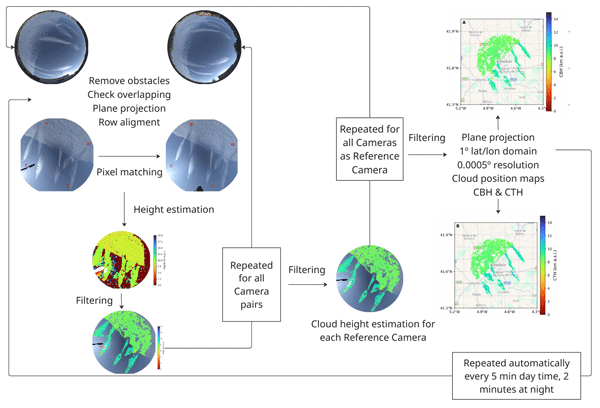
This work presents an automated method to create cloud height maps in near real time using a network of 20 ground-based sky cameras in Valladolid, Spain. By comparing simultaneous images from different locations, the system estimates cloud base and top heights every few minutes over a large area with 50 m resolution. The results agree well with satellite and ceilometer measurements, showing that low-cost camera networks can improve continuous cloud monitoring for weather and climate studies.
Victoria E. Cachorro, Juan Carlos Antuña-Marrero, Abel Calle, Roberto Román, David Mateos, Carlos Toledano, Juan Carlos Antuña-Sánchez, Ramiro González, Manuel Antón, Javier Vaquero-Martínez, Angel M. de Frutos Baraja, and Javier Pacheco
EGUsphere, https://doi.org/10.5194/egusphere-2026-2374, https://doi.org/10.5194/egusphere-2026-2374, 2026
This preprint is open for discussion and under review for Annales Geophysicae (ANGEO).
Short summary
Short summary
Observations of the Arctic integrated water vapor (IWV) from sun photometers (SP) are in general dryer than the ones from GNSS. High correlations between IWV from SP and IWV from GNSS at all sites, show the good agreement between both techniques. Moist bias of hourly IWV magnitudes from ERA5 and MERRA-2 reanalyses respect to GNSS, radiosonde, SP, show that current and future state-of-the-art reanalyses require improvements to match the range of variability of these IWV observation techniques.
Sara Herrero-Anta, Sabine Eckhardt, Nikolaos Evangeliou, Stefania Gilardoni, Sandra Graßl, Dominic Heslin-Rees, Stelios Kazadzis, Natalia Kouremeti, Radovan Krejci, David Mateos, Mauro Mazzola, Christoph Ritter, Roberto Román, Kerstin Stebel, and Tymon Zielinski
Atmos. Chem. Phys., 26, 1435–1457, https://doi.org/10.5194/acp-26-1435-2026, https://doi.org/10.5194/acp-26-1435-2026, 2026
Short summary
Short summary
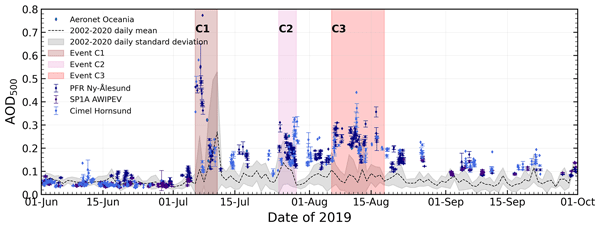
In summer 2019, unusually high aerosol concentrations were measured in the Arctic, extending through the troposphere and stratosphere up to 16 km. Using multiple instruments and models, aerosol particles were linked to wildfires, volcanic eruptions, and anthropogenic pollution. The aerosol consisted of spherical, fine-mode, weakly absorbing particles, which significantly reduced direct solar radiation. This combined approach improves understanding of Arctic aerosol events and climate processes.
Roberto Román, Daniel González-Fernández, Juan Carlos Antuña-Sánchez, Celia Herrero del Barrio, Sara Herrero-Anta, África Barreto, Victoria E. Cachorro, Lionel Doppler, Ramiro González, Christoph Ritter, David Mateos, Natalia Kouremeti, Gustavo Copes, Abel Calle, María José Granados-Muñoz, Carlos Toledano, and Ángel M. de Frutos
Atmos. Meas. Tech., 18, 2847–2875, https://doi.org/10.5194/amt-18-2847-2025, https://doi.org/10.5194/amt-18-2847-2025, 2025
Short summary
Short summary
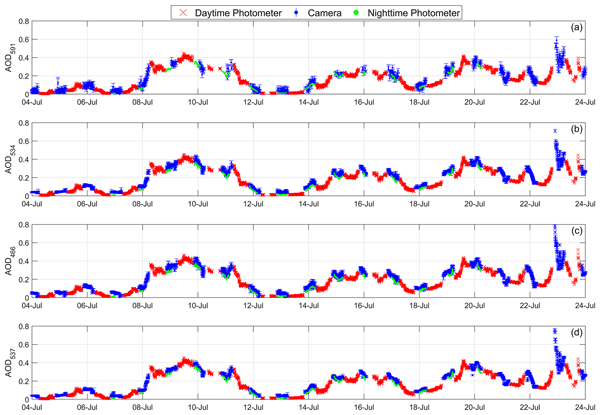
This paper presents a novel technique to extract starlight signals from all-sky images and retrieve aerosol optical depth (AOD). It is validated against lunar photometry, showing a strong correlation between data series. This innovative approach will expand nocturnal AOD measurements to more locations, as all-sky cameras are a simpler and more cost-effective alternative to stellar and lunar photometers.
Silke Groß, Volker Freudenthaler, Moritz Haarig, Albert Ansmann, Carlos Toledano, David Mateos, Petra Seibert, Rodanthi-Elisavet Mamouri, Argyro Nisantzi, Josef Gasteiger, Maximilian Dollner, Anne Tipka, Manuel Schöberl, Marilena Teri, and Bernadett Weinzierl
Atmos. Chem. Phys., 25, 3191–3211, https://doi.org/10.5194/acp-25-3191-2025, https://doi.org/10.5194/acp-25-3191-2025, 2025
Short summary
Short summary
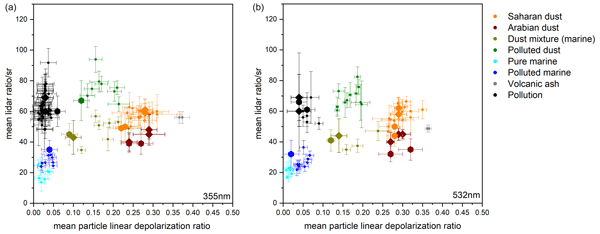
Aerosols contribute to the largest uncertainties in climate change predictions. The eastern Mediterranean is a hotspot for aerosols with natural and anthropogenic contributions. We present lidar measurements performed during A-LIFE (Absorbing aerosol layers in a changing climate: aging, lifetime and dynamics) to characterize aerosols and aerosol mixtures. We extend current lidar classification and separation schemes and compare them to classification schemes using different methods.
Celia Herrero del Barrio, Roberto Román, Ramiro González, Alberto Cazorla, Marcos Herreras-Giralda, Juan Carlos Antuña-Sánchez, Francisco Molero, Francisco Navas-Guzmán, Antonio Serrano, María Ángeles Obregón, Yolanda Sola, Marco Pandolfi, Sara Herrero-Anta, Daniel González-Fernández, Jorge Muñiz-Rosado, David Mateos, Abel Calle, Carlos Toledano, Victoria Eugenia Cachorro, and Ángel Máximo de Frutos
EGUsphere, https://doi.org/10.5194/egusphere-2024-581, https://doi.org/10.5194/egusphere-2024-581, 2024
Preprint withdrawn
Short summary
Short summary
Introducing CAECENET, a novel system that combines sun-sky photometer and ceilometer data, enabling the continuous monitoring and automatic retrieval of both vertical and columnar aerosol properties in near real-time. A case study on a Saharan dust outbreak illustrates it's efficacy in tracking aerosol events. Additionally, the analysis of Canadian wildfires' long-range transport is presented, showing it's utility in monitoring event propagation, aerosol concentration, and optical properties.
Sara Herrero-Anta, Roberto Román, David Mateos, Ramiro González, Juan Carlos Antuña-Sánchez, Marcos Herreras-Giralda, Antonio Fernando Almansa, Daniel González-Fernández, Celia Herrero del Barrio, Carlos Toledano, Victoria E. Cachorro, and Ángel M. de Frutos
Atmos. Meas. Tech., 16, 4423–4443, https://doi.org/10.5194/amt-16-4423-2023, https://doi.org/10.5194/amt-16-4423-2023, 2023
Short summary
Short summary
This paper shows the potential of a simple radiometer like the ZEN-R52 as a possible alternative for aerosol property retrieval in remote areas. A calibration method based on radiative transfer simulations together with an inversion methodology using the GRASP code is proposed here. The results demonstrate that this methodology is useful for the retrieval of aerosol extensive properties like aerosol optical depth (AOD) and aerosol volume concentration for total, fine and coarse modes.
Roberto Román, Juan C. Antuña-Sánchez, Victoria E. Cachorro, Carlos Toledano, Benjamín Torres, David Mateos, David Fuertes, César López, Ramiro González, Tatyana Lapionok, Marcos Herreras-Giralda, Oleg Dubovik, and Ángel M. de Frutos
Atmos. Meas. Tech., 15, 407–433, https://doi.org/10.5194/amt-15-407-2022, https://doi.org/10.5194/amt-15-407-2022, 2022
Short summary
Short summary
An all-sky camera is used to obtain the relative sky radiance, and this radiance is used as input in an inversion code to obtain aerosol properties. This paper is really interesting because it pushes forward the use and capability of sky cameras for more advanced science purposes. Enhanced aerosol properties can be retrieved with accuracy using only an all-sky camera, but synergy with other instruments providing aerosol optical depth could even increase the power of these low-cost instruments.
Konstantin Krüger, Martin Wirth, Athena Augusta Floutsi, David Patrick Donovan, Gerd-Jan van Zadelhoff, and Silke Martha Groß
Atmos. Meas. Tech., 19, 5923–5950, https://doi.org/10.5194/amt-19-5923-2026, https://doi.org/10.5194/amt-19-5923-2026, 2026
Short summary
Short summary
Cloud properties from three ATLID Level 2 products (A-TC, A-FM, A-CTH) of the EarthCARE satellite mission are validated using independent airborne lidar observations collected during satellite underflights in the tropics and extratropics. The products reliably represent cloud pixel distribution and cloud top height; though ice cloud pixels and cloud top height are slightly overestimated. Comparison with a more recent baseline shows improvements, supporting their use for cloud property studies.
Celia Herrero del Barrio, Roberto Román, Sara Herrero-Anta, Daniel González-Fernández, Rogelio Carracedo, Ramiro González, Javier Gatón, Bruno Longarela, Juan Carlos Antuña-Sánchez, David Mateos, Carlos Toledano, Abel Calle, Victoria Cachorro, and Ángel de Frutos
Atmos. Meas. Tech., 19, 5785–5814, https://doi.org/10.5194/amt-19-5785-2026, https://doi.org/10.5194/amt-19-5785-2026, 2026
Short summary
Short summary
This work presents an automated method to create cloud height maps in near real time using a network of 20 ground-based sky cameras in Valladolid, Spain. By comparing simultaneous images from different locations, the system estimates cloud base and top heights every few minutes over a large area with 50 m resolution. The results agree well with satellite and ceilometer measurements, showing that low-cost camera networks can improve continuous cloud monitoring for weather and climate studies.
Georgia Charalampous, Konstantinos Fragkos, Ilias Fountoulakis, Kyriakoula Papachristopoulou, Anna Moustaka, Franco Marenco, Yevgeny Derimian, Argyro Nisantzi, Rodanthi-Elisavet Mamouri, Diofantos Hadjimitsis, and Stelios Kazadzis
Atmos. Meas. Tech., 19, 5753–5783, https://doi.org/10.5194/amt-19-5753-2026, https://doi.org/10.5194/amt-19-5753-2026, 2026
Short summary
Short summary
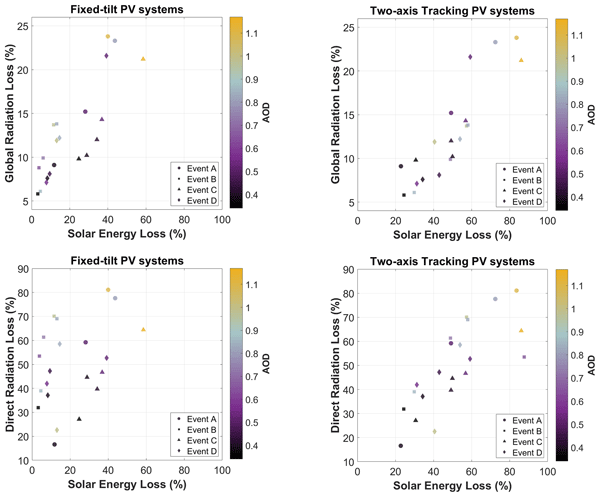
This study analyses seven years of dust events over Cyprus to identify their origin and quantify their impact on surface solar radiation. Most events originated from the Sahara. Dust reduces surface solar radiation, leading to surface cooling, while also causing atmospheric heating and cooling at the top of the atmosphere. Surface reductions in solar radiation reach about 5 %–15 % on average, with effects mainly controlled by dust amount.
Dimitra Kouklaki, Georgia Charalampous, Anna Moustaka, Alkistis Papetta, Celia Herrero del Barrio, Rizos-Theodoros Chadoulis, S. Yeşer Aslanoğlu, Sara Herrero-Anta, Michail Mytilinaios, Nikolaos Papadimitriou, Katerina Anyfanti, Christos Spyrou, Daniela Meloni, Konstantinos Fragkos, Yevgeny Derimian, Tatiana Di Iorio, Rodanthi-Elisavet Mamouri, Vassilis Amiridis, Stavros Solomos, Stelios Kazadzis, and Ilias Fountoulakis
Atmos. Meas. Tech., 19, 5633–5657, https://doi.org/10.5194/amt-19-5633-2026, https://doi.org/10.5194/amt-19-5633-2026, 2026
Short summary
Short summary
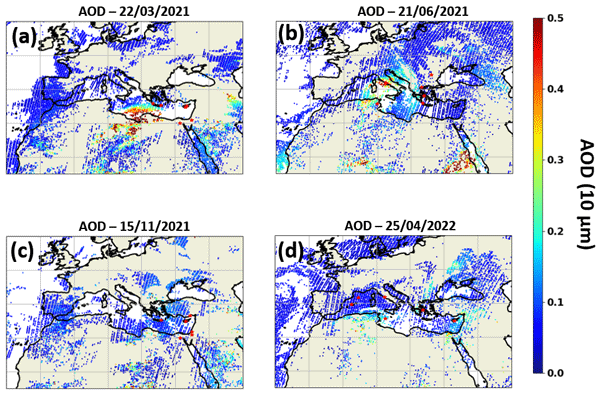
In the present study we investigated how aerosols, and specifically dust, affect solar radiation and energy production by investigating several dust events across multiple sites in the Mediterranean Basin between 2021 and 2022 through ground-based observations and model simulations. The results revealed that dust can significantly attenuate solar radiation and, therefore, lead to considerable losses in solar power generation, specifically in the case of solar tracking systems.
Alkistis Papetta, Celia Herrero del Barrio, S. Yeşer Aslanoğlu, Rizos-Theodoros Chadoulis, Georgia Charalampous, Sara Herrero-Anta, Dimitra Kouklaki, Michail Mytilinaios, Anna Moustaka, Emmanouil Proestakis, Vassilis Amiridis, Christos Spyrou, Antonis Gkikas, Michael Pikridas, Maria Kezoudi, Franco Marenco, Jean Sciare, Sophie Vandenbussche, Stavros Solomos, Stelios Kazadzis, and Ilias Fountoulakis
Atmos. Chem. Phys., 26, 12395–12434, https://doi.org/10.5194/acp-26-12395-2026, https://doi.org/10.5194/acp-26-12395-2026, 2026
Short summary
Short summary
We studied four major dust events from the Sahara and the Middle East over the Mediterranean. Saharan dust events exhibited coarser and more scattering particles, while Middle Eastern dust was finer and mixed with pollution. Differences in absorption could not be explained by mineralogy and are attributed to mixing.
Georgios Dekoutsidis, Silke Groß, Florian Ewald, Martina Krämer, Christian Rolf, Andreas Schäfler, and Martin Wirth
EGUsphere, https://doi.org/10.5194/egusphere-2026-3788, https://doi.org/10.5194/egusphere-2026-3788, 2026
This preprint is open for discussion and under review for Atmospheric Chemistry and Physics (ACP).
Short summary
Short summary
Cirrus clouds interact with radiation, but their exact effects are not well-defined and depend on their properties, formation process and the ambient conditions. We used airborne lidar and radar measurements and models in order to compare cirrus that formed in undisturbed conditions and during Warm Air intrusions (WAI). We found that WAIs cause a change in the formation and their properties. Our findings can improve the representation of cirrus in models and the estimation of their impact.
Jorge Muñiz-Rosado, Alberto Cazorla, Eric Sauvageat, Alexander Haefele, Celia Herrero del Barrio, Ramiro González, Roberto Román, Pedro Luis Molina-Molero, Arlett Díaz-Zurita, Víctor Manuel Naval-Hernández, Onel Rodríguez-Navarro, María José Granados-Muñoz, Juan Antonio Bravo-Aranda, Milagros Herrera, Daniel Pérez-Ramírez, Lionel Doppler, Lucas Alados-Arboledas, and Francisco Navas-Guzmán
Atmos. Chem. Phys., 26, 10255–10285, https://doi.org/10.5194/acp-26-10255-2026, https://doi.org/10.5194/acp-26-10255-2026, 2026
Short summary
Short summary
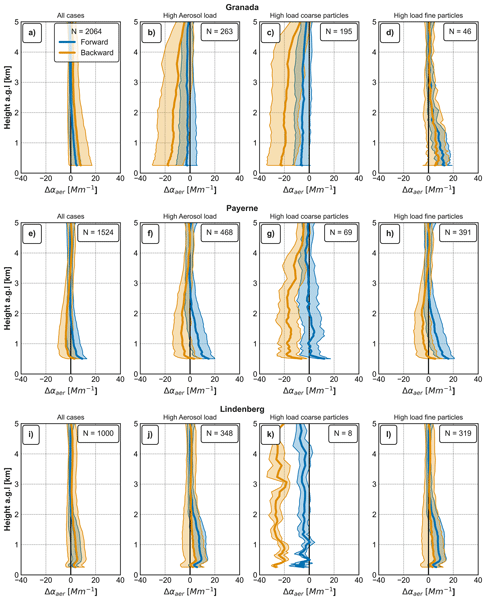
Ceilometers can track dust and pollution particles in the atmosphere, but their measurements need validation. This study statistically compared two processing methods against thousands of measurements from sun-tracking instruments and balloon soundings at three European sites over two years. One method, using an independent calibration procedure, proved more accurate across all conditions, cutting uncertainties by around half. This supports its wider use for air quality monitoring.
Silke Groß, Florian Ewald, Bjorn Stevens, Martin Wirth, Georgios Dekoutsidis, André Ehrlich, Dimitra Kouklaki, Konstantin Krüger, Sophie Rosenburg, Lea Volkmer, Jonas von Bismark, Lutz Hirsch, Anna E. Luebke, Eleni Marinou, Bernhard Mayer, Montserrat Pinol Sole, Manfred Wendisch, Julia Windmiller, Vassilis Amiridis, Rob Koopman, Takuji Kubota, and Markus Rapp
Atmos. Meas. Tech., 19, 3933–3959, https://doi.org/10.5194/amt-19-3933-2026, https://doi.org/10.5194/amt-19-3933-2026, 2026
Short summary
Short summary
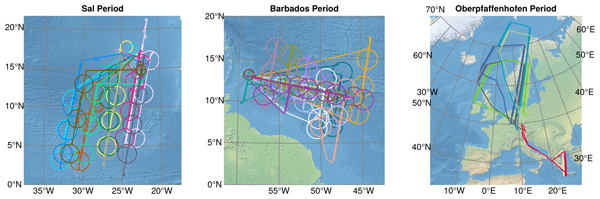
In May 2024 the joint European Space Agency (ESA) and the Japan Aerospace Exploration Agency (JAXA) mission EarthCARE was launched. A similar payload as on the satellite was set up on the German research aircraft HALO, and deployed during an extensive measurement campaign to validated the satellite. We present our instrumentation, the measurements, and its potential for the validation of EarthCARE. We show first validation results and assessments of the EarthCARE data quality.
Albert Ansmann, Julian Hofer, Rodanthi-Elisavet Mamouri, Moritz Haarig, Holger Baars, and Ulla Wandinger
Atmos. Meas. Tech., 19, 3801–3830, https://doi.org/10.5194/amt-19-3801-2026, https://doi.org/10.5194/amt-19-3801-2026, 2026
Short summary
Short summary
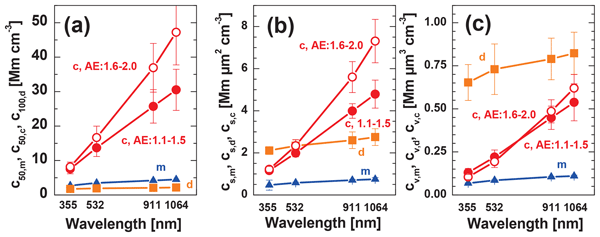
Updated lidar and ceilometer conversion factors are presented. The conversion factors allow us to calculate microphyscial properties from measurned optical properties. One of the main goals is to support 355 nm space lidar observations.
Maria Kezoudi, Alkistis Papetta, Konrad Kandler, Claire L. Ryder, Andreas Leonidou, Christos Keleshis, Chris Stopford, Troy Thornberry, Rodanthi-Elisavet Mamouri, Jean Sciare, and Franco Marenco
Atmos. Chem. Phys., 26, 7361–7385, https://doi.org/10.5194/acp-26-7361-2026, https://doi.org/10.5194/acp-26-7361-2026, 2026
Short summary
Short summary
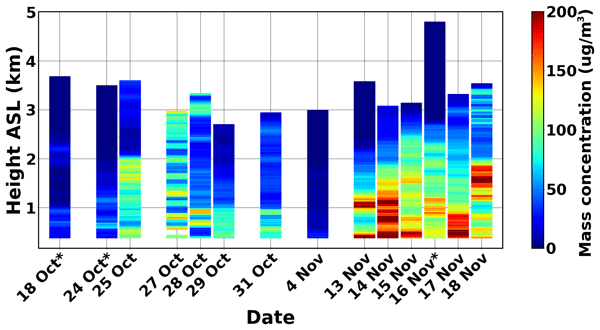
This study demonstrates a cost-efficient methodology using Uncrewed Aerial Systems for quantitative characterization of airborne dust. It enables high-resolution vertical profiling of microphysical properties of dust layers from the Middle East and North Africa over Cyprus, improving understanding of regional dust transport, source-dependent variability, and impacts on air quality, radiation, and climate.
Mahshad Soleimanpour, Torsten Seelig, Silke Groß, and Matthias Tesche
Atmos. Meas. Tech., 19, 3291–3308, https://doi.org/10.5194/amt-19-3291-2026, https://doi.org/10.5194/amt-19-3291-2026, 2026
Short summary
Short summary
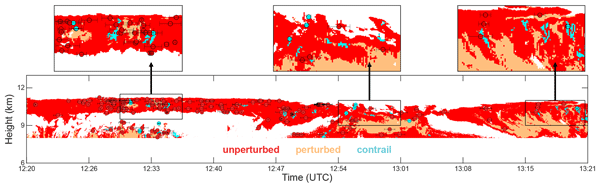
Aviation affects the climate not only through carbon dioxide emissions but also by producing contrails that can alter the properties of natural cirrus clouds and influence the Earth's energy balance. In this study, we used detailed airborne laser measurements to detect contrails forming inside these clouds. We developed an automated method to identify and measure them, showing where they occur and providing a reliable way to monitor their climate impact without requiring flight data.
Victoria E. Cachorro, Juan Carlos Antuña-Marrero, Abel Calle, Roberto Román, David Mateos, Carlos Toledano, Juan Carlos Antuña-Sánchez, Ramiro González, Manuel Antón, Javier Vaquero-Martínez, Angel M. de Frutos Baraja, and Javier Pacheco
EGUsphere, https://doi.org/10.5194/egusphere-2026-2374, https://doi.org/10.5194/egusphere-2026-2374, 2026
This preprint is open for discussion and under review for Annales Geophysicae (ANGEO).
Short summary
Short summary
Observations of the Arctic integrated water vapor (IWV) from sun photometers (SP) are in general dryer than the ones from GNSS. High correlations between IWV from SP and IWV from GNSS at all sites, show the good agreement between both techniques. Moist bias of hourly IWV magnitudes from ERA5 and MERRA-2 reanalyses respect to GNSS, radiosonde, SP, show that current and future state-of-the-art reanalyses require improvements to match the range of variability of these IWV observation techniques.
Rosa D. García, África Barreto, Victoria E. Cachorro, Pablo González-Sicilia, Sergio Léon-Luis, Ayoze Álvarez-Hernández, Juan José Bustos, Ramón Ramos, Fernando Almansa, Óscar Álvarez-Losada, Yenny González, Pedro Pablo Rivas, and Carlos Javier Torres
Atmos. Meas. Tech., 19, 3151–3167, https://doi.org/10.5194/amt-19-3151-2026, https://doi.org/10.5194/amt-19-3151-2026, 2026
Short summary
Short summary
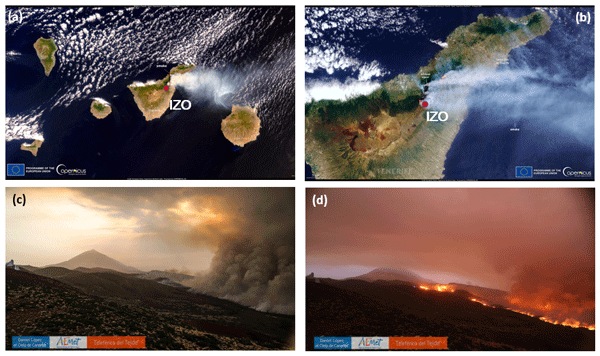
This study presents a unique near-source observational analysis of the spectral radiative effects of extreme biomass-burning aerosols during the August 2023 wildfire on Tenerife (Canary Islands, Spain). The exceptional proximity of the wildfire to the Izaña Observatory (2400 m a.s.l.) enabled a rare characterisation of aerosol optical properties, spectral solar irradiance, and surface radiative forcing under free-tropospheric conditions.
Maximilian Dollner, Josef Gasteiger, Konrad Kandler, Manuel Schöberl, Sudharaj Aryasree, Benjamin Witschas, and Bernadett Weinzierl
EGUsphere, https://doi.org/10.5194/egusphere-2026-531, https://doi.org/10.5194/egusphere-2026-531, 2026
Short summary
Short summary
During the A-LIFE campaign in the Eastern Mediterranean, a research aircraft observed clouds in a Saharan dust layer using in situ and remote sensing measurements. With new analysis tools for improved particle sizing and liquid water content measurements, this study assesses two different aerosol-cloud interaction processes: heterogeneous ice nucleation on super-micron dust particles at the cloud top, and small-scale activation of mineral dust particles to liquid droplets within the cloud.
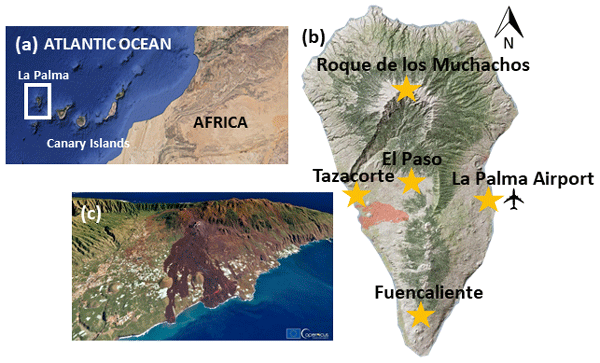
África Barreto, Francisco Quirós, Omaira E. García, Jorge Pereda-de-Pablo, Daniel González-Fernández, Andrés Bedoya-Velásquez, Michael Sicard, Carmen Córdoba-Jabonero, Marco Iarlori, Vincenzo Rizi, Nickolay Krotkov, Simon Carn, Reijo Roininen, Antonio J. Molina-Arias, A. Fernando Almansa, Óscar Álvarez-Losada, Carla Aramo, Juan José Bustos, Romain Ceolato, Adolfo Comerón, Alicia Felpeto, Rosa D. García, Pablo González-Sicilia, Yenny González, Pascal Hedelt, Miguel Hernández, María-Ángeles López-Cayuela, Diego Loyola, Stavros Meletlidis, Constantino Muñoz-Porcar, Ermanno Pietropaolo, Ramón Ramos, Alejandro Rodríguez-Gómez, Roberto Román, Pedro M. Romero-Campos, Martin Stuefer, Carlos Toledano, and Ellsworth J. Welton
Atmos. Meas. Tech., 19, 1385–1406, https://doi.org/10.5194/amt-19-1385-2026, https://doi.org/10.5194/amt-19-1385-2026, 2026
Short summary
Short summary
This manuscript describes the instrumental coverage deployed during the Tajogaite eruption (19 September–25 December 2021) by the Instituto Geográfico Nacional (IGN), the Spanish State Meteorological Agency (AEMET), and other Spanish members of ACTRIS (Aerosol, Clouds and Trace Gases Research Infrastructure) to monitor its atmospheric impact. Two complementary methods provide consistent plume height data for future operational surveillance.
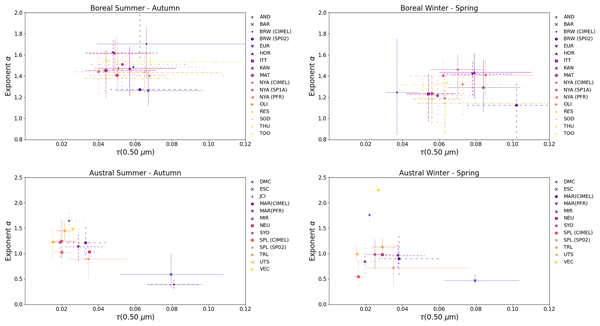
Simone Pulimeno, Angelo Lupi, Vito Vitale, Claudia Frangipani, Carlos Toledano, Stelios Kazadzis, Natalia Kouremeti, Christoph Ritter, Sandra Graßl, Kerstin Stebel, Vitali Fioletov, Ihab Abboud, Sandra Blindheim, Lynn Ma, Norm O'Neill, Piotr Sobolewski, Pawan Gupta, Elena Lind, Thomas F. Eck, Antti Hyvärinen, Veijo Aaltonen, Rigel Kivi, Janae Csavina, Dmitry Kabanov, Sergey M. Sakerin, Olga R. Sidorova, Robert S. Stone, Hagen Telg, Laura Riihimaki, Raul R. Cordero, Martin Radenz, Ronny Engelmann, Michel Van Roozendal, Anatoli Chaikovsky, Philippe Goloub, Junji Hisamitsu, and Mauro Mazzola
Atmos. Chem. Phys., 26, 1809–1846, https://doi.org/10.5194/acp-26-1809-2026, https://doi.org/10.5194/acp-26-1809-2026, 2026
Short summary
Short summary
This study analyzed aerosols optical properties over the Arctic and Antarctic to measure them even during long periods of darkness. It found that pollution in the Arctic is decreasing, likely due to European emission regulations, while wildfires are becoming a more important source of particles. In Antarctica, particle levels are higher near the coast than inland, and vary by season. These results help us better understand how air pollution and climate are changing at the Earth’s poles.
Sara Herrero-Anta, Sabine Eckhardt, Nikolaos Evangeliou, Stefania Gilardoni, Sandra Graßl, Dominic Heslin-Rees, Stelios Kazadzis, Natalia Kouremeti, Radovan Krejci, David Mateos, Mauro Mazzola, Christoph Ritter, Roberto Román, Kerstin Stebel, and Tymon Zielinski
Atmos. Chem. Phys., 26, 1435–1457, https://doi.org/10.5194/acp-26-1435-2026, https://doi.org/10.5194/acp-26-1435-2026, 2026
Short summary
Short summary
In summer 2019, unusually high aerosol concentrations were measured in the Arctic, extending through the troposphere and stratosphere up to 16 km. Using multiple instruments and models, aerosol particles were linked to wildfires, volcanic eruptions, and anthropogenic pollution. The aerosol consisted of spherical, fine-mode, weakly absorbing particles, which significantly reduced direct solar radiation. This combined approach improves understanding of Arctic aerosol events and climate processes.
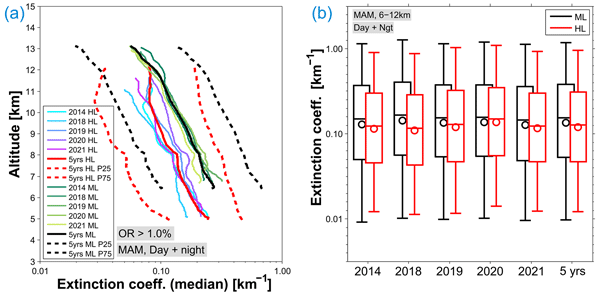
Qiang Li and Silke Groß
Atmos. Chem. Phys., 25, 16657–16677, https://doi.org/10.5194/acp-25-16657-2025, https://doi.org/10.5194/acp-25-16657-2025, 2025
Short summary
Short summary
This study presents the cirrus occurrence and optical properties at high- and midlatitudes using the satellite lidar measurements. The results indicate the differences in cirrus occurrence and optical properties across latitudes. Besides seasonality, the cirrus extinction and depolarization show a consistent decrease with increasing latitude. The potential causes are discussed and it turns out that aerosol particles show much larger concentrations at midlatitudes than at high-latitudes.
Natalie G. Ratcliffe, Claire L. Ryder, Nicolas Bellouin, Anthony Jones, Ben Johnson, Stephanie Woodward, Lisa-Maria Wieland, Josef Gasteiger, and Bernadett Weinzierl
EGUsphere, https://doi.org/10.5194/egusphere-2025-5143, https://doi.org/10.5194/egusphere-2025-5143, 2025
Short summary
Short summary
Observations show large dust particles travel much further than expected, which is not replicated in weather and climate models. We use a climate model to understand which processes dominantly impact large particle transport, and find that modelled large particle transport agrees with observations best after reducing the particle gravitational settling by ~ 80 %. We prove the presence of processes not represented accurately or at all in the model which act on large particles in the real-world.
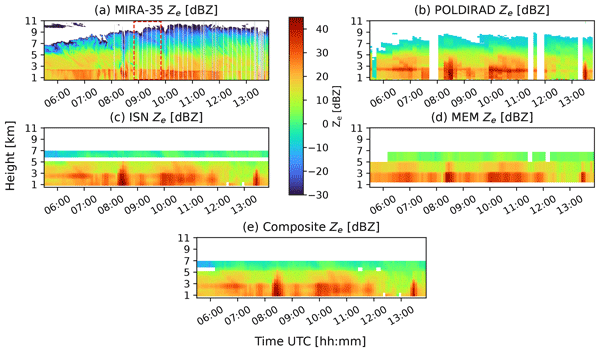
Christian Heske, Florian Ewald, and Silke Groß
Atmos. Meas. Tech., 18, 5177–5198, https://doi.org/10.5194/amt-18-5177-2025, https://doi.org/10.5194/amt-18-5177-2025, 2025
Short summary
Short summary
This study proposes a new technique to augment polarimetric radar measurements of the national German operational radar network with vertically looking cloud radars. The method is tested in two different case studies by comparison to dedicated scanning radars revealing promising results. Future usage of the method is motivated by analyzing the coverage of the operational radar network finding advantageous locations with good radar coverage.
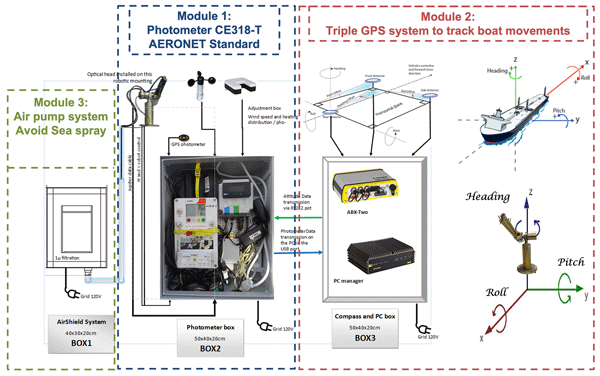
Benjamin Torres, Luc Blarel, Philippe Goloub, Gaël Dubois, Maria Fernanda Sanchez-Barrero, Ioana Elisabeta Popovici, Fabrice Maupin, Elena Lind, Alexander Smirnov, Ilya Slutsker, Julien Chimot, Ramiro González, Michaël Sicard, Jean Marc Metzger, and Pierre Tulet
Atmos. Meas. Tech., 18, 4809–4838, https://doi.org/10.5194/amt-18-4809-2025, https://doi.org/10.5194/amt-18-4809-2025, 2025
Short summary
Short summary
This study shows that it is possible to automatically monitor atmospheric aerosols from research vessels using automated instruments, following the same standards as AERONET (AErosol RObotic NETwork) land-based stations. By collecting 3 years of data in the Indian Ocean, we demonstrate that high-quality measurements can be made, even on a moving platform. These results open new possibilities for observing aerosols over the ocean and improving satellite data and climate studies.
Hossein Panahifar, Maria Poutli, George Kotsias, Argyro Nisantzi, Silas Michaelides, Diofantos Hadjimitsis, Patric Seifert, Albert Ansmann, and Rodanthi-Elisavet Mamouri
Int. Arch. Photogramm. Remote Sens. Spatial Inf. Sci., XLVIII-G-2025, 1153–1158, https://doi.org/10.5194/isprs-archives-XLVIII-G-2025-1153-2025, https://doi.org/10.5194/isprs-archives-XLVIII-G-2025-1153-2025, 2025
Roberto Román, Daniel González-Fernández, Juan Carlos Antuña-Sánchez, Celia Herrero del Barrio, Sara Herrero-Anta, África Barreto, Victoria E. Cachorro, Lionel Doppler, Ramiro González, Christoph Ritter, David Mateos, Natalia Kouremeti, Gustavo Copes, Abel Calle, María José Granados-Muñoz, Carlos Toledano, and Ángel M. de Frutos
Atmos. Meas. Tech., 18, 2847–2875, https://doi.org/10.5194/amt-18-2847-2025, https://doi.org/10.5194/amt-18-2847-2025, 2025
Short summary
Short summary
This paper presents a novel technique to extract starlight signals from all-sky images and retrieve aerosol optical depth (AOD). It is validated against lunar photometry, showing a strong correlation between data series. This innovative approach will expand nocturnal AOD measurements to more locations, as all-sky cameras are a simpler and more cost-effective alternative to stellar and lunar photometers.
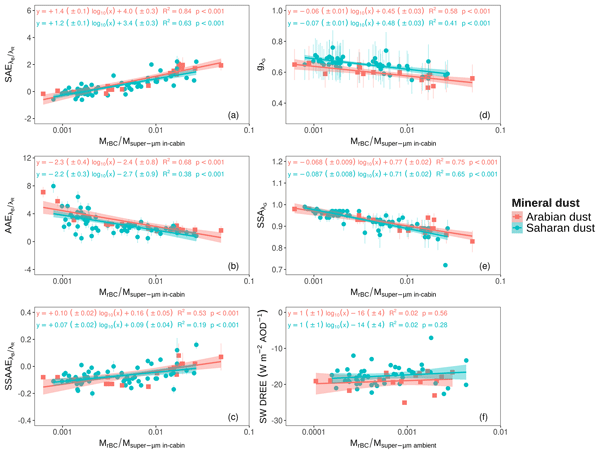
Marilena Teri, Josef Gasteiger, Katharina Heimerl, Maximilian Dollner, Manuel Schöberl, Petra Seibert, Anne Tipka, Thomas Müller, Sudharaj Aryasree, Konrad Kandler, and Bernadett Weinzierl
Atmos. Chem. Phys., 25, 6633–6662, https://doi.org/10.5194/acp-25-6633-2025, https://doi.org/10.5194/acp-25-6633-2025, 2025
Short summary
Short summary
The A-LIFE aircraft field experiment was carried out in the eastern Mediterranean in 2017. Using A-LIFE data, we studied the change in mineral dust optical properties due to mixing with anthropogenic aerosols. We found that increasing pollution affects dust optical properties, which has implications for identifying dust events and understanding their climate effects. We also show that optical properties of Saharan and Arabian dust are similar when comparing cases with equal pollution content.
Silke Groß, Volker Freudenthaler, Moritz Haarig, Albert Ansmann, Carlos Toledano, David Mateos, Petra Seibert, Rodanthi-Elisavet Mamouri, Argyro Nisantzi, Josef Gasteiger, Maximilian Dollner, Anne Tipka, Manuel Schöberl, Marilena Teri, and Bernadett Weinzierl
Atmos. Chem. Phys., 25, 3191–3211, https://doi.org/10.5194/acp-25-3191-2025, https://doi.org/10.5194/acp-25-3191-2025, 2025
Short summary
Short summary
Aerosols contribute to the largest uncertainties in climate change predictions. The eastern Mediterranean is a hotspot for aerosols with natural and anthropogenic contributions. We present lidar measurements performed during A-LIFE (Absorbing aerosol layers in a changing climate: aging, lifetime and dynamics) to characterize aerosols and aerosol mixtures. We extend current lidar classification and separation schemes and compare them to classification schemes using different methods.
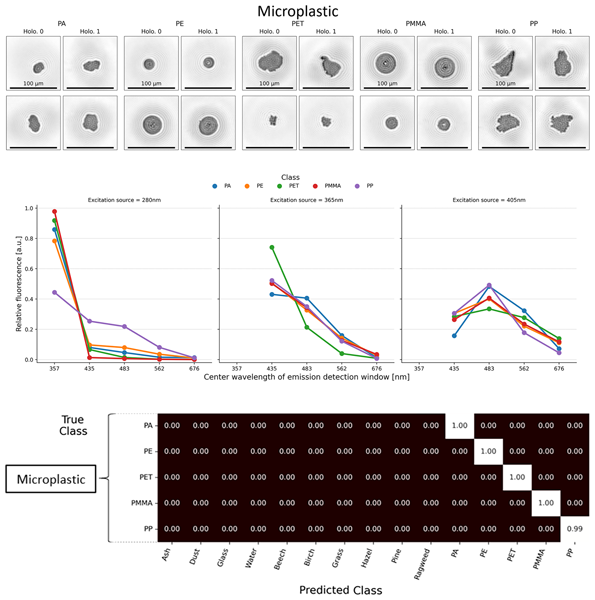
Nicholas D. Beres, Julia Burkart, Elias Graf, Yanick Zeder, Lea Ann Dailey, and Bernadett Weinzierl
Atmos. Meas. Tech., 17, 6945–6964, https://doi.org/10.5194/amt-17-6945-2024, https://doi.org/10.5194/amt-17-6945-2024, 2024
Short summary
Short summary
We tested a method to identify airborne microplastics (MPs), merging imaging, fluorescence, and machine learning of single particles. We examined whether combining imaging and fluorescence data enhances classification accuracy compared to using each method separately and tested these methods with other particle types. The tested MPs have distinct fluorescence, and a combined imaging and fluorescence method improves their detection, making meaningful progress in monitoring MPs in the atmosphere.
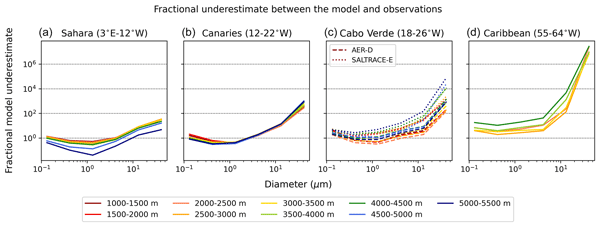
Natalie G. Ratcliffe, Claire L. Ryder, Nicolas Bellouin, Stephanie Woodward, Anthony Jones, Ben Johnson, Lisa-Maria Wieland, Maximilian Dollner, Josef Gasteiger, and Bernadett Weinzierl
Atmos. Chem. Phys., 24, 12161–12181, https://doi.org/10.5194/acp-24-12161-2024, https://doi.org/10.5194/acp-24-12161-2024, 2024
Short summary
Short summary
Large mineral dust particles are more abundant in the atmosphere than expected and have different impacts on the environment than small particles, which are better represented in climate models. We use aircraft measurements to assess a climate model representation of large-dust transport. We find that the model underestimates the amount of large dust at all stages of transport and that fast removal of the large particles increases this underestimation with distance from the Sahara.
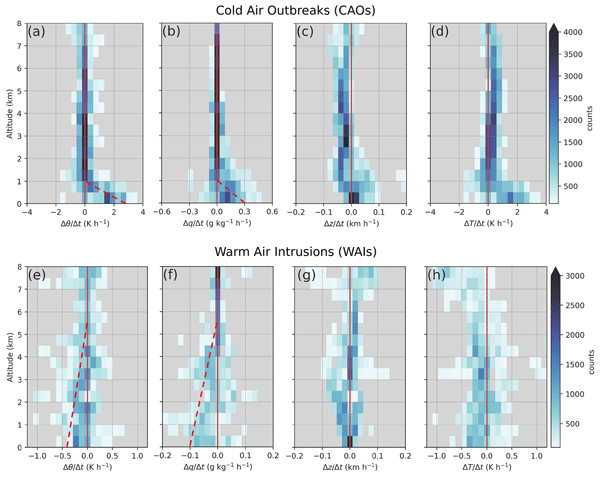
Manfred Wendisch, Susanne Crewell, André Ehrlich, Andreas Herber, Benjamin Kirbus, Christof Lüpkes, Mario Mech, Steven J. Abel, Elisa F. Akansu, Felix Ament, Clémantyne Aubry, Sebastian Becker, Stephan Borrmann, Heiko Bozem, Marlen Brückner, Hans-Christian Clemen, Sandro Dahlke, Georgios Dekoutsidis, Julien Delanoë, Elena De La Torre Castro, Henning Dorff, Regis Dupuy, Oliver Eppers, Florian Ewald, Geet George, Irina V. Gorodetskaya, Sarah Grawe, Silke Groß, Jörg Hartmann, Silvia Henning, Lutz Hirsch, Evelyn Jäkel, Philipp Joppe, Olivier Jourdan, Zsofia Jurányi, Michail Karalis, Mona Kellermann, Marcus Klingebiel, Michael Lonardi, Johannes Lucke, Anna E. Luebke, Maximilian Maahn, Nina Maherndl, Marion Maturilli, Bernhard Mayer, Johanna Mayer, Stephan Mertes, Janosch Michaelis, Michel Michalkov, Guillaume Mioche, Manuel Moser, Hanno Müller, Roel Neggers, Davide Ori, Daria Paul, Fiona M. Paulus, Christian Pilz, Felix Pithan, Mira Pöhlker, Veronika Pörtge, Maximilian Ringel, Nils Risse, Gregory C. Roberts, Sophie Rosenburg, Johannes Röttenbacher, Janna Rückert, Michael Schäfer, Jonas Schaefer, Vera Schemann, Imke Schirmacher, Jörg Schmidt, Sebastian Schmidt, Johannes Schneider, Sabrina Schnitt, Anja Schwarz, Holger Siebert, Harald Sodemann, Tim Sperzel, Gunnar Spreen, Bjorn Stevens, Frank Stratmann, Gunilla Svensson, Christian Tatzelt, Thomas Tuch, Timo Vihma, Christiane Voigt, Lea Volkmer, Andreas Walbröl, Anna Weber, Birgit Wehner, Bruno Wetzel, Martin Wirth, and Tobias Zinner
Atmos. Chem. Phys., 24, 8865–8892, https://doi.org/10.5194/acp-24-8865-2024, https://doi.org/10.5194/acp-24-8865-2024, 2024
Short summary
Short summary
The Arctic is warming faster than the rest of the globe. Warm-air intrusions (WAIs) into the Arctic may play an important role in explaining this phenomenon. Cold-air outbreaks (CAOs) out of the Arctic may link the Arctic climate changes to mid-latitude weather. In our article, we describe how to observe air mass transformations during CAOs and WAIs using three research aircraft instrumented with state-of-the-art remote-sensing and in situ measurement devices.
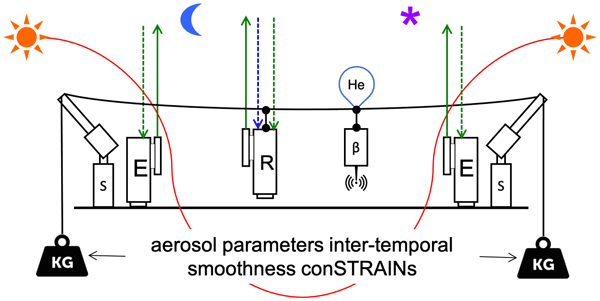
Anton Lopatin, Oleg Dubovik, Georgiy Stenchikov, Ellsworth J. Welton, Illia Shevchenko, David Fuertes, Marcos Herreras-Giralda, Tatsiana Lapyonok, and Alexander Smirnov
Atmos. Meas. Tech., 17, 4445–4470, https://doi.org/10.5194/amt-17-4445-2024, https://doi.org/10.5194/amt-17-4445-2024, 2024
Short summary
Short summary
We compare aerosol properties over the King Abdullah University of Science and Technology campus using Generalized Retrieval of Aerosol and Surface Properties (GRASP) and the Micro-Pulse Lidar Network (MPLNET). We focus on the impact of different aerosol retrieval assumptions on daytime and nighttime retrievals and analyze seasonal variability in aerosol properties, aiding in understanding aerosol behavior and improving retrieval. Our work has implications for climate and public health.
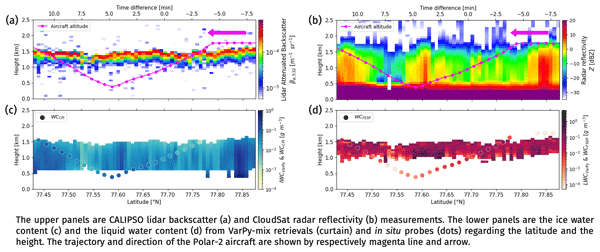
Clémantyne Aubry, Julien Delanoë, Silke Groß, Florian Ewald, Frédéric Tridon, Olivier Jourdan, and Guillaume Mioche
Atmos. Meas. Tech., 17, 3863–3881, https://doi.org/10.5194/amt-17-3863-2024, https://doi.org/10.5194/amt-17-3863-2024, 2024
Short summary
Short summary
Radar–lidar synergy is used to retrieve ice, supercooled water and mixed-phase cloud properties, making the most of the radar sensitivity to ice crystals and the lidar sensitivity to supercooled droplets. A first analysis of the output of the algorithm run on the satellite data is compared with in situ data during an airborne Arctic field campaign, giving a mean percent error of 49 % for liquid water content and 75 % for ice water content.

Georgios Dekoutsidis, Martin Wirth, and Silke Groß
Atmos. Chem. Phys., 24, 5971–5987, https://doi.org/10.5194/acp-24-5971-2024, https://doi.org/10.5194/acp-24-5971-2024, 2024
Short summary
Short summary
For decades the earth's temperature has been rising. The Arctic regions are warming faster. Cirrus clouds can contribute to this phenomenon. During warm-air intrusions, air masses are transported into the Arctic from the mid-latitudes. The HALO-(AC)3 campaign took place to measure cirrus during intrusion events and under normal conditions. We study the two cloud types based on these measurements and find differences in their geometry, relative humidity distribution and vertical structure.
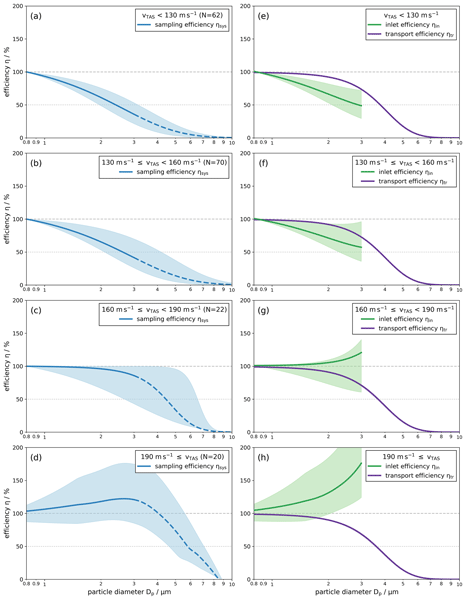
Manuel Schöberl, Maximilian Dollner, Josef Gasteiger, Petra Seibert, Anne Tipka, and Bernadett Weinzierl
Atmos. Meas. Tech., 17, 2761–2776, https://doi.org/10.5194/amt-17-2761-2024, https://doi.org/10.5194/amt-17-2761-2024, 2024
Short summary
Short summary
Transporting a representative aerosol sample to instrumentation inside a research aircraft remains a challenge due to losses or enhancements of particles in the aerosol sampling system. Here, we present sampling efficiencies and the cutoff diameter for the DLR Falcon aerosol sampling system as a function of true airspeed by comparing the in-cabin and the out-cabin particle number size distributions observed during the A-LIFE aircraft mission.
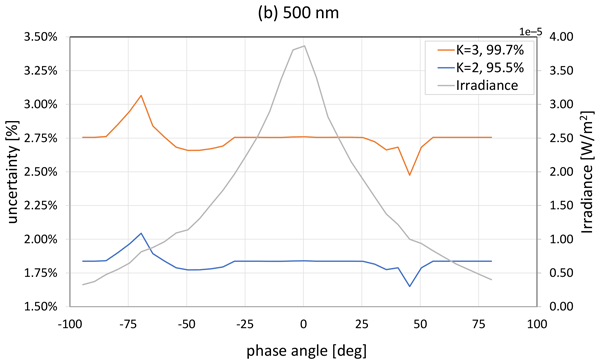
Carlos Toledano, Sarah Taylor, África Barreto, Stefan Adriaensen, Alberto Berjón, Agnieszka Bialek, Ramiro González, Emma Woolliams, and Marc Bouvet
Atmos. Chem. Phys., 24, 3649–3671, https://doi.org/10.5194/acp-24-3649-2024, https://doi.org/10.5194/acp-24-3649-2024, 2024
Short summary
Short summary
The calibration of Earth observation sensors is key to ensuring the continuity of long-term and global climate records. Satellite sensors, calibrated prior to launch, are susceptible to degradation in space. The Moon provides a stable calibration reference; however, its illumination depends on the Sun–Earth–Moon geometry and must be modelled. A new lunar irradiance model is presented, built upon observations over 5 years at a high-altitude observatory and a rigorous calibration and validation.
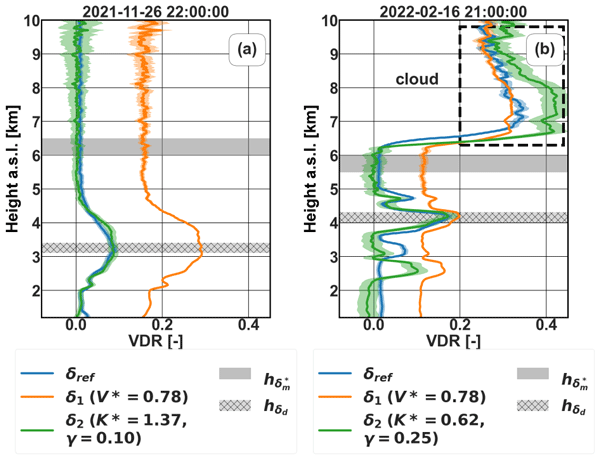
Alkistis Papetta, Franco Marenco, Maria Kezoudi, Rodanthi-Elisavet Mamouri, Argyro Nisantzi, Holger Baars, Ioana Elisabeta Popovici, Philippe Goloub, Stéphane Victori, and Jean Sciare
Atmos. Meas. Tech., 17, 1721–1738, https://doi.org/10.5194/amt-17-1721-2024, https://doi.org/10.5194/amt-17-1721-2024, 2024
Short summary
Short summary
We propose a method to determine depolarization parameters using observations from a reference instrument at a nearby location, needed for systems where a priori knowledge of cross-talk parameters is not available. It uses three-parameter equations to compare VDR between two co-located lidars at dust and molecular layers. It can be applied retrospectively to existing data acquired during campaigns. Its application to Cimel CE376 corrected VDR bias at high- and low-depolarizing layers.
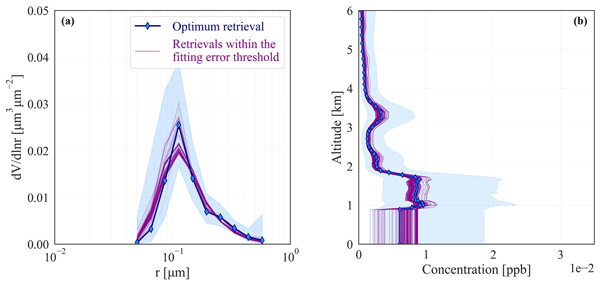
Celia Herrero del Barrio, Roberto Román, Ramiro González, Alberto Cazorla, Marcos Herreras-Giralda, Juan Carlos Antuña-Sánchez, Francisco Molero, Francisco Navas-Guzmán, Antonio Serrano, María Ángeles Obregón, Yolanda Sola, Marco Pandolfi, Sara Herrero-Anta, Daniel González-Fernández, Jorge Muñiz-Rosado, David Mateos, Abel Calle, Carlos Toledano, Victoria Eugenia Cachorro, and Ángel Máximo de Frutos
EGUsphere, https://doi.org/10.5194/egusphere-2024-581, https://doi.org/10.5194/egusphere-2024-581, 2024
Preprint withdrawn
Short summary
Short summary
Introducing CAECENET, a novel system that combines sun-sky photometer and ceilometer data, enabling the continuous monitoring and automatic retrieval of both vertical and columnar aerosol properties in near real-time. A case study on a Saharan dust outbreak illustrates it's efficacy in tracking aerosol events. Additionally, the analysis of Canadian wildfires' long-range transport is presented, showing it's utility in monitoring event propagation, aerosol concentration, and optical properties.
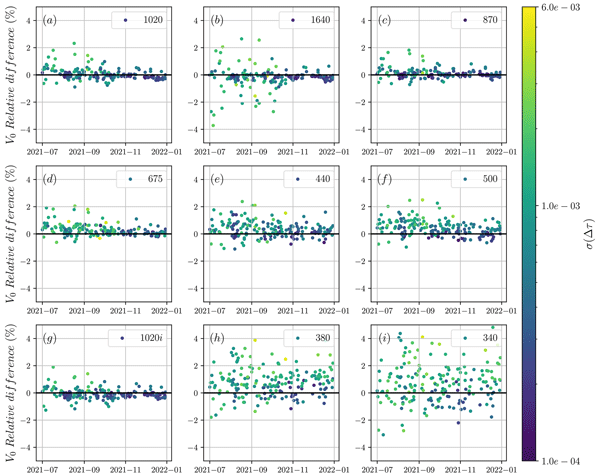
Antonio Fernando Almansa, África Barreto, Natalia Kouremeti, Ramiro González, Akriti Masoom, Carlos Toledano, Julian Gröbner, Rosa Delia García, Yenny González, Stelios Kazadzis, Stéphane Victori, Óscar Álvarez, Fabrice Maupin, Virgilio Carreño, Victoria Eugenia Cachorro, and Emilio Cuevas
Atmos. Meas. Tech., 17, 659–675, https://doi.org/10.5194/amt-17-659-2024, https://doi.org/10.5194/amt-17-659-2024, 2024
Short summary
Short summary
This paper applies sun photometer synergies to improve calibration transference between different sun photometers and also enhance their quality assurance and quality control. We have validated this technique using different instrumentation, the WMO-GAW and NASA-AERONET references, under different aerosol regimes using the standard Langley calibration method as a reference.
Alexandra Tsekeri, Anna Gialitaki, Marco Di Paolantonio, Davide Dionisi, Gian Luigi Liberti, Alnilam Fernandes, Artur Szkop, Aleksander Pietruczuk, Daniel Pérez-Ramírez, Maria J. Granados Muñoz, Juan Luis Guerrero-Rascado, Lucas Alados-Arboledas, Diego Bermejo Pantaleón, Juan Antonio Bravo-Aranda, Anna Kampouri, Eleni Marinou, Vassilis Amiridis, Michael Sicard, Adolfo Comerón, Constantino Muñoz-Porcar, Alejandro Rodríguez-Gómez, Salvatore Romano, Maria Rita Perrone, Xiaoxia Shang, Mika Komppula, Rodanthi-Elisavet Mamouri, Argyro Nisantzi, Diofantos Hadjimitsis, Francisco Navas-Guzmán, Alexander Haefele, Dominika Szczepanik, Artur Tomczak, Iwona S. Stachlewska, Livio Belegante, Doina Nicolae, Kalliopi Artemis Voudouri, Dimitris Balis, Athena A. Floutsi, Holger Baars, Linda Miladi, Nicolas Pascal, Oleg Dubovik, and Anton Lopatin
Atmos. Meas. Tech., 16, 6025–6050, https://doi.org/10.5194/amt-16-6025-2023, https://doi.org/10.5194/amt-16-6025-2023, 2023
Short summary
Short summary
EARLINET/ACTRIS organized an intensive observational campaign in May 2020, with the objective of monitoring the atmospheric state over Europe during the COVID-19 lockdown and relaxation period. The work presented herein focuses on deriving a common methodology for applying a synergistic retrieval that utilizes the network's ground-based passive and active remote sensing measurements and deriving the aerosols from anthropogenic activities over Europe.
Rodanthi-Elisavet Mamouri, Albert Ansmann, Kevin Ohneiser, Daniel A. Knopf, Argyro Nisantzi, Johannes Bühl, Ronny Engelmann, Annett Skupin, Patric Seifert, Holger Baars, Dragos Ene, Ulla Wandinger, and Diofantos Hadjimitsis
Atmos. Chem. Phys., 23, 14097–14114, https://doi.org/10.5194/acp-23-14097-2023, https://doi.org/10.5194/acp-23-14097-2023, 2023
Short summary
Short summary
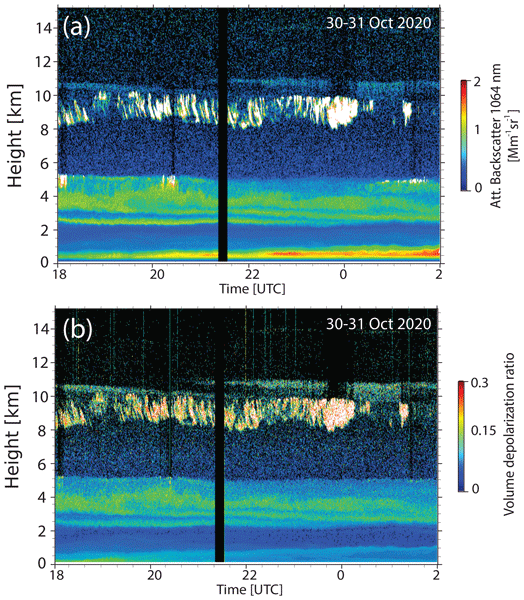
For the first time, rather clear evidence is found that wildfire smoke particles can trigger strong cirrus formation. This finding is of importance because intensive and large wildfires may occur increasingly often in the future as climate change proceeds. Based on lidar observations in Cyprus in autumn 2020, we provide detailed insight into the cirrus formation at the tropopause in the presence of aged wildfire smoke (here, 8–9 day old Californian wildfire smoke).
Óscar Alvárez, África Barreto, Omaira E. García, Frank Hase, Rosa D. García, Julian Gröbner, Sergio F. León-Luis, Eliezer Sepúlveda, Virgilio Carreño, Antonio Alcántara, Ramón Ramos, A. Fernando Almansa, Stelios Kazadzis, Noémie Taquet, Carlos Toledano, and Emilio Cuevas
Atmos. Meas. Tech., 16, 4861–4884, https://doi.org/10.5194/amt-16-4861-2023, https://doi.org/10.5194/amt-16-4861-2023, 2023
Short summary
Short summary
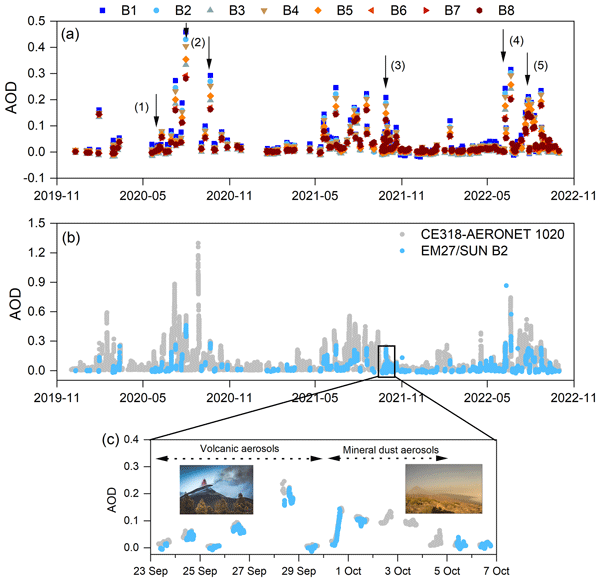
In this work, we have extended the capabilities of a portable Fourier transform infrared (FTIR) instrument, which was originally designed to provide high-quality greenhouse gas monitoring within COCCON (COllaborative Carbon Column Observing Network). The extension allows the spectrometer to now also provide coincidentally column-integrated aerosol information. This addition of a reference instrument to a global network will be utilised to enhance our understanding of atmospheric chemistry.
Sara Herrero-Anta, Roberto Román, David Mateos, Ramiro González, Juan Carlos Antuña-Sánchez, Marcos Herreras-Giralda, Antonio Fernando Almansa, Daniel González-Fernández, Celia Herrero del Barrio, Carlos Toledano, Victoria E. Cachorro, and Ángel M. de Frutos
Atmos. Meas. Tech., 16, 4423–4443, https://doi.org/10.5194/amt-16-4423-2023, https://doi.org/10.5194/amt-16-4423-2023, 2023
Short summary
Short summary
This paper shows the potential of a simple radiometer like the ZEN-R52 as a possible alternative for aerosol property retrieval in remote areas. A calibration method based on radiative transfer simulations together with an inversion methodology using the GRASP code is proposed here. The results demonstrate that this methodology is useful for the retrieval of aerosol extensive properties like aerosol optical depth (AOD) and aerosol volume concentration for total, fine and coarse modes.
Paulus S. Bauer, Dorian Spät, Martina Eisenhut, Andreas Gattringer, and Bernadett Weinzierl
Atmos. Meas. Tech., 16, 4445–4460, https://doi.org/10.5194/amt-16-4445-2023, https://doi.org/10.5194/amt-16-4445-2023, 2023
Short summary
Short summary
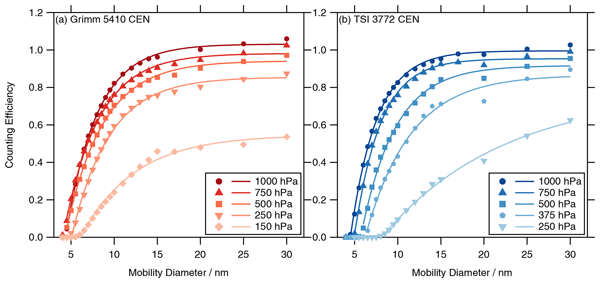
Particle number concentration is one of the most important parameters to quantify an aerosol. Aerosol number concentration in the nanometer range is commonly measured with condensation particle counters (CPCs). A CEN technical specification harmonizes the CPC specifications. However, it is not specified for low-pressure conditions as on high mountains or on airplanes. Here, we present the pressure-dependent performance of two different models of CEN CPCs, the Grimm 5410 CEN and the TSI 3772 CEN.
Silke Groß, Tina Jurkat-Witschas, Qiang Li, Martin Wirth, Benedikt Urbanek, Martina Krämer, Ralf Weigel, and Christiane Voigt
Atmos. Chem. Phys., 23, 8369–8381, https://doi.org/10.5194/acp-23-8369-2023, https://doi.org/10.5194/acp-23-8369-2023, 2023
Short summary
Short summary
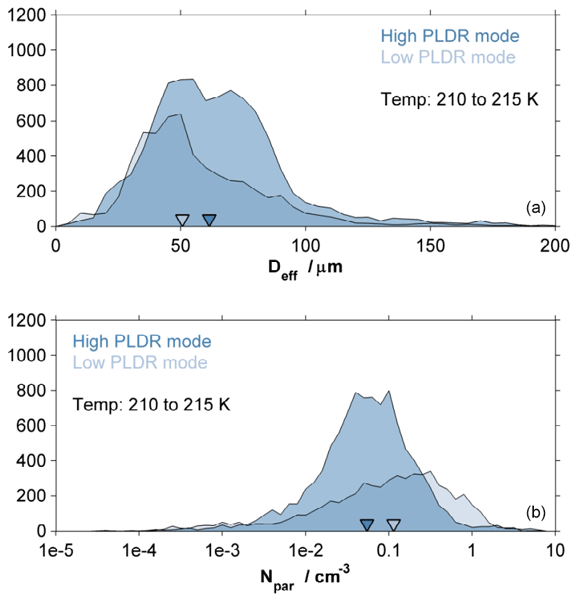
Aviation-emitted aerosol can have an impact on cirrus clouds. We present optical and microphysical properties of mid-latitude cirrus clouds which were formed under the influence of aviation-emitted aerosol or which were formed under rather pristine conditions. We find that cirrus clouds affected by aviation-emitted aerosol show larger values of the particle linear depolarization ratio, larger mean effective ice particle diameters and decreased ice particle number concentrations.
Theano Drosoglou, Ioannis-Panagiotis Raptis, Massimo Valeri, Stefano Casadio, Francesca Barnaba, Marcos Herreras-Giralda, Anton Lopatin, Oleg Dubovik, Gabriele Brizzi, Fabrizio Niro, Monica Campanelli, and Stelios Kazadzis
Atmos. Meas. Tech., 16, 2989–3014, https://doi.org/10.5194/amt-16-2989-2023, https://doi.org/10.5194/amt-16-2989-2023, 2023
Short summary
Short summary
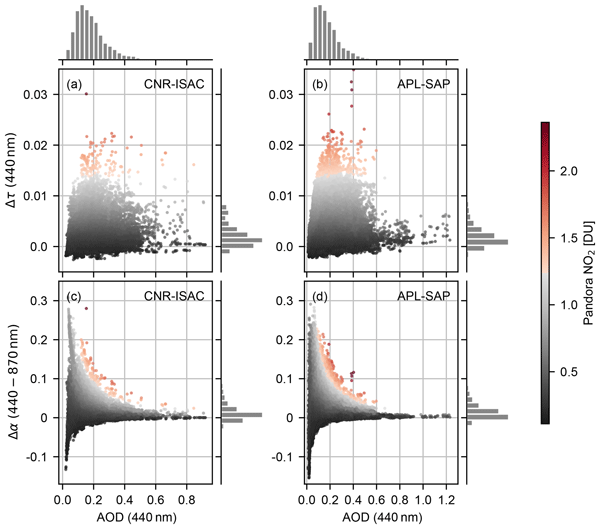
Aerosol optical properties derived from sun photometers depend on the optical depth of trace gases absorbing solar radiation at specific spectral ranges. Various networks use satellite-based climatologies to account for this or neglect their effect. In this work, we evaluate the effect of NO2 absorption in aerosol retrievals from AERONET and SKYNET over two stations in Rome, Italy, with relatively high NO2 spatiotemporal variations, using NO2 data from the Pandora network and the TROPOMI sensor.
Athena Augusta Floutsi, Holger Baars, Ronny Engelmann, Dietrich Althausen, Albert Ansmann, Stephanie Bohlmann, Birgit Heese, Julian Hofer, Thomas Kanitz, Moritz Haarig, Kevin Ohneiser, Martin Radenz, Patric Seifert, Annett Skupin, Zhenping Yin, Sabur F. Abdullaev, Mika Komppula, Maria Filioglou, Elina Giannakaki, Iwona S. Stachlewska, Lucja Janicka, Daniele Bortoli, Eleni Marinou, Vassilis Amiridis, Anna Gialitaki, Rodanthi-Elisavet Mamouri, Boris Barja, and Ulla Wandinger
Atmos. Meas. Tech., 16, 2353–2379, https://doi.org/10.5194/amt-16-2353-2023, https://doi.org/10.5194/amt-16-2353-2023, 2023
Short summary
Short summary
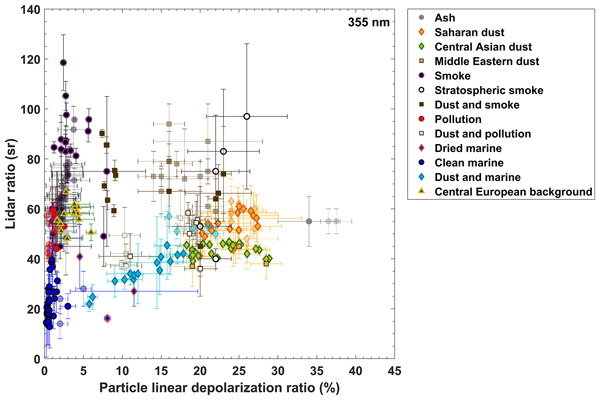
DeLiAn is a collection of lidar-derived aerosol intensive optical properties for several aerosol types, namely the particle linear depolarization ratio, the extinction-to-backscatter ratio (lidar ratio) and the Ångström exponent. The data collection is based on globally distributed, long-term, ground-based, multiwavelength, Raman and polarization lidar measurements and currently covers two wavelengths, 355 and 532 nm, for 13 aerosol categories ranging from basic aerosol types to mixtures.
Georgios Dekoutsidis, Silke Groß, Martin Wirth, Martina Krämer, and Christian Rolf
Atmos. Chem. Phys., 23, 3103–3117, https://doi.org/10.5194/acp-23-3103-2023, https://doi.org/10.5194/acp-23-3103-2023, 2023
Short summary
Short summary
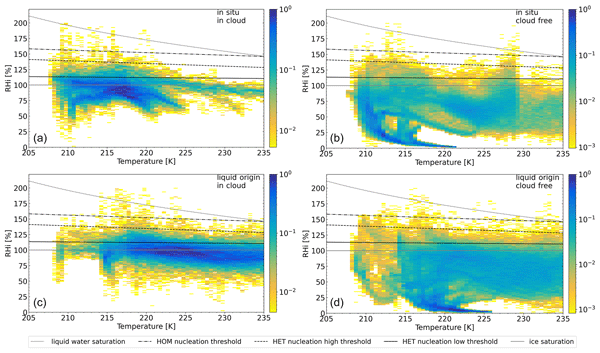
Cirrus clouds affect Earth's atmosphere, deeming our study important. Here we use water vapor measurements by lidar and study the relative humidity (RHi) within and around midlatitude cirrus clouds. We find high supersaturations in the cloud-free air and within the clouds, especially near the cloud top. We study two cloud types with different formation processes. Finally, we conclude that the shape of the distribution of RHi can be used as an indicator of different cloud evolutionary stages.
Yun Li, Christoph Mahnke, Susanne Rohs, Ulrich Bundke, Nicole Spelten, Georgios Dekoutsidis, Silke Groß, Christiane Voigt, Ulrich Schumann, Andreas Petzold, and Martina Krämer
Atmos. Chem. Phys., 23, 2251–2271, https://doi.org/10.5194/acp-23-2251-2023, https://doi.org/10.5194/acp-23-2251-2023, 2023
Short summary
Short summary
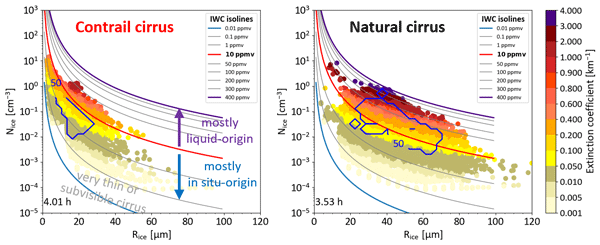
The radiative effect of aviation-induced cirrus is closely related to ambient conditions and its microphysical properties. Our study investigated the occurrence of contrail and natural cirrus measured above central Europe in spring 2014. It finds that contrail cirrus appears frequently in the pressure range 200 to 245 hPa and occurs more often in slightly ice-subsaturated environments than expected. Avoiding slightly ice-subsaturated regions by aviation might help mitigate contrail cirrus.
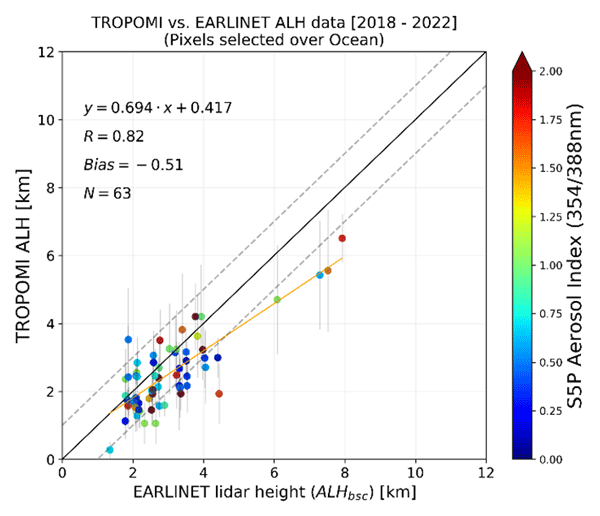
Konstantinos Michailidis, Maria-Elissavet Koukouli, Dimitris Balis, J. Pepijn Veefkind, Martin de Graaf, Lucia Mona, Nikolaos Papagianopoulos, Gesolmina Pappalardo, Ioanna Tsikoudi, Vassilis Amiridis, Eleni Marinou, Anna Gialitaki, Rodanthi-Elisavet Mamouri, Argyro Nisantzi, Daniele Bortoli, Maria João Costa, Vanda Salgueiro, Alexandros Papayannis, Maria Mylonaki, Lucas Alados-Arboledas, Salvatore Romano, Maria Rita Perrone, and Holger Baars
Atmos. Chem. Phys., 23, 1919–1940, https://doi.org/10.5194/acp-23-1919-2023, https://doi.org/10.5194/acp-23-1919-2023, 2023
Short summary
Short summary
Comparisons with ground-based correlative lidar measurements constitute a key component in the validation of satellite aerosol products. This paper presents the validation of the TROPOMI aerosol layer height (ALH) product, using archived quality assured ground-based data from lidar stations that belong to the EARLINET network. Comparisons between the TROPOMI ALH and co-located EARLINET measurements show good agreement over the ocean.
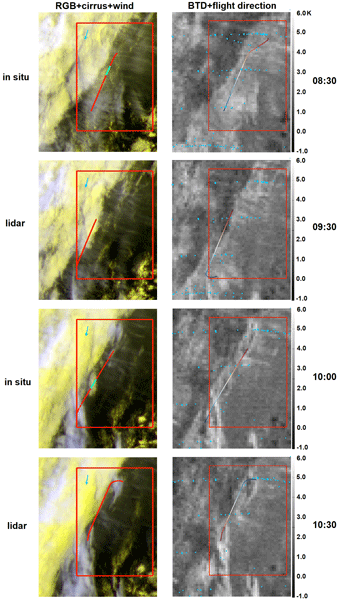
Ziming Wang, Luca Bugliaro, Tina Jurkat-Witschas, Romy Heller, Ulrike Burkhardt, Helmut Ziereis, Georgios Dekoutsidis, Martin Wirth, Silke Groß, Simon Kirschler, Stefan Kaufmann, and Christiane Voigt
Atmos. Chem. Phys., 23, 1941–1961, https://doi.org/10.5194/acp-23-1941-2023, https://doi.org/10.5194/acp-23-1941-2023, 2023
Short summary
Short summary
Differences in the microphysical properties of contrail cirrus and natural cirrus in a contrail outbreak situation during the ML-CIRRUS campaign over the North Atlantic flight corridor can be observed from in situ measurements. The cirrus radiative effect in the area of the outbreak, derived from satellite observation-based radiative transfer modeling, is warming in the early morning and cooling during the day.
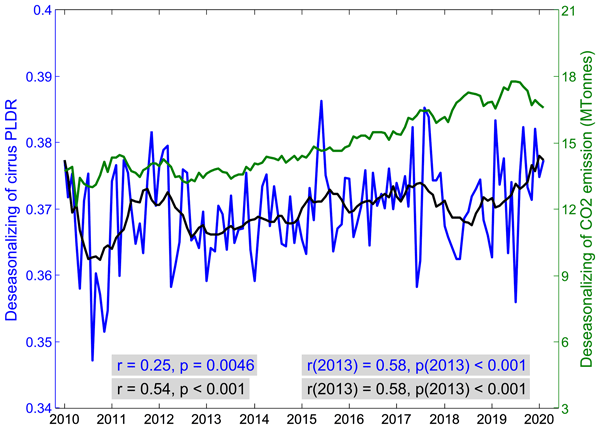
Qiang Li and Silke Groß
Atmos. Chem. Phys., 22, 15963–15980, https://doi.org/10.5194/acp-22-15963-2022, https://doi.org/10.5194/acp-22-15963-2022, 2022
Short summary
Short summary
The IPCC report identified that cirrus clouds have a significant impact on the radiation balance comparable to the CO2 effects, which, however, is still hard to parameterize. The current study investigates the possible impact of aviation on cirrus properties based on the analysis of 10-year lidar measurements of CALIPSO. The results reveal that there is a significant positive trend in cirrus depolarization ratio in the last 10 years before COVID-19, which is strongly correlated with aviation.
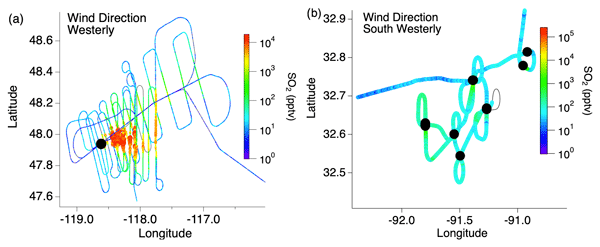
Pamela S. Rickly, Hongyu Guo, Pedro Campuzano-Jost, Jose L. Jimenez, Glenn M. Wolfe, Ryan Bennett, Ilann Bourgeois, John D. Crounse, Jack E. Dibb, Joshua P. DiGangi, Glenn S. Diskin, Maximilian Dollner, Emily M. Gargulinski, Samuel R. Hall, Hannah S. Halliday, Thomas F. Hanisco, Reem A. Hannun, Jin Liao, Richard Moore, Benjamin A. Nault, John B. Nowak, Jeff Peischl, Claire E. Robinson, Thomas Ryerson, Kevin J. Sanchez, Manuel Schöberl, Amber J. Soja, Jason M. St. Clair, Kenneth L. Thornhill, Kirk Ullmann, Paul O. Wennberg, Bernadett Weinzierl, Elizabeth B. Wiggins, Edward L. Winstead, and Andrew W. Rollins
Atmos. Chem. Phys., 22, 15603–15620, https://doi.org/10.5194/acp-22-15603-2022, https://doi.org/10.5194/acp-22-15603-2022, 2022
Short summary
Short summary
Biomass burning sulfur dioxide (SO2) emission factors range from 0.27–1.1 g kg-1 C. Biomass burning SO2 can quickly form sulfate and organosulfur, but these pathways are dependent on liquid water content and pH. Hydroxymethanesulfonate (HMS) appears to be directly emitted from some fire sources but is not the sole contributor to the organosulfur signal. It is shown that HMS and organosulfur chemistry may be an important S(IV) reservoir with the fate dependent on the surrounding conditions.
Juan-Carlos Antuña-Marrero, Graham W. Mann, John Barnes, Abel Calle, Sandip S. Dhomse, Victoria E. Cachorro-Revilla, Terry Deshler, Li Zhengyao, Nimmi Sharma, and Louis Elterman
Earth Syst. Sci. Data Discuss., https://doi.org/10.5194/essd-2022-272, https://doi.org/10.5194/essd-2022-272, 2022
Revised manuscript not accepted
Short summary
Short summary
Tropospheric and stratospheric aerosol extinction profiles observations from a searchlight at New Mexico, US, were rescued and re-calibrated. Spanning between December 1963 and 1964, they measured the volcanic aerosols from the 1963 Agung eruption. Contemporary and state of the art information were used in the re-calibration. A unique and until the present forgotten/ignored dataset, it contributes current observational and modelling research on the impact of major volcanic eruptions on climate.
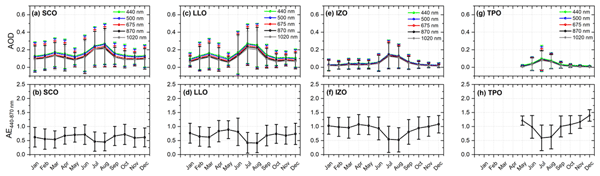
África Barreto, Rosa D. García, Carmen Guirado-Fuentes, Emilio Cuevas, A. Fernando Almansa, Celia Milford, Carlos Toledano, Francisco J. Expósito, Juan P. Díaz, and Sergio F. León-Luis
Atmos. Chem. Phys., 22, 11105–11124, https://doi.org/10.5194/acp-22-11105-2022, https://doi.org/10.5194/acp-22-11105-2022, 2022
Short summary
Short summary
A comprehensive characterization of atmospheric aerosols in the subtropical eastern North Atlantic has been carried out in this paper using long-term ground AERONET photometric observations over the period 2005–2020 from a unique network made up of four stations strategically located from sea level to 3555 m height on the island of Tenerife. This is a region that can be considered a key location to study the seasonal dependence of dust transport from the Sahel-Sahara.
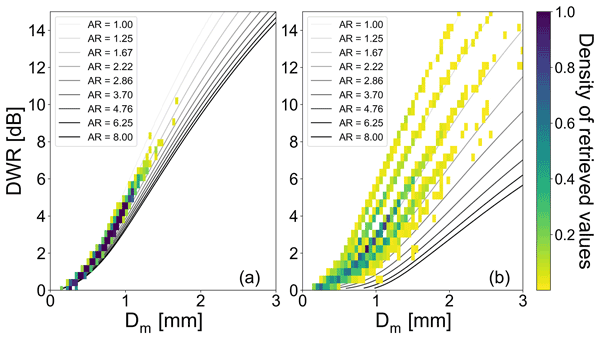
Eleni Tetoni, Florian Ewald, Martin Hagen, Gregor Köcher, Tobias Zinner, and Silke Groß
Atmos. Meas. Tech., 15, 3969–3999, https://doi.org/10.5194/amt-15-3969-2022, https://doi.org/10.5194/amt-15-3969-2022, 2022
Short summary
Short summary
We use the C-band POLDIRAD and the Ka-band MIRA-35 to perform snowfall dual-wavelength polarimetric radar measurements. We develop an ice microphysics retrieval for mass, apparent shape, and median size of the particle size distribution by comparing observations to T-matrix ice spheroid simulations while varying the mass–size relationship. We furthermore show how the polarimetric measurements from POLDIRAD help to narrow down ambiguities between ice particle shape and size.
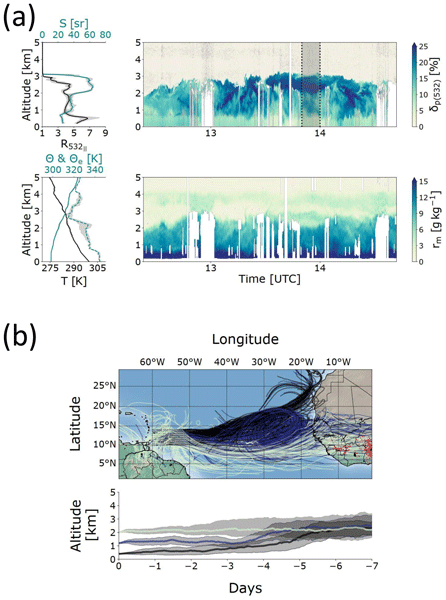
Manuel Gutleben, Silke Groß, Christian Heske, and Martin Wirth
Atmos. Chem. Phys., 22, 7319–7330, https://doi.org/10.5194/acp-22-7319-2022, https://doi.org/10.5194/acp-22-7319-2022, 2022
Short summary
Short summary
The main transportation route of Saharan mineral dust particles leads over the subtropical Atlantic Ocean and is subject to a seasonal variation. This study investigates the characteristics of wintertime transatlantic dust transport towards the Caribbean by means of airborne lidar measurements. It is found that dust particles are transported at low atmospheric altitudes (<3.5 km) embedded in a relatively moist mixture with two other particle types, namely marine and biomass-burning particles.
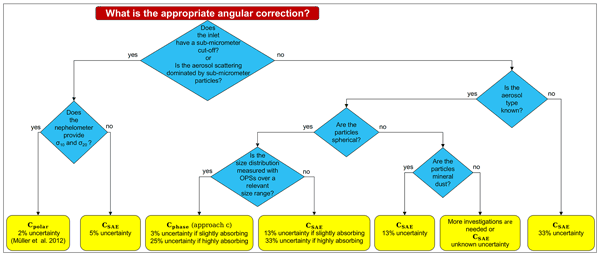
Marilena Teri, Thomas Müller, Josef Gasteiger, Sara Valentini, Helmuth Horvath, Roberta Vecchi, Paulus Bauer, Adrian Walser, and Bernadett Weinzierl
Atmos. Meas. Tech., 15, 3161–3187, https://doi.org/10.5194/amt-15-3161-2022, https://doi.org/10.5194/amt-15-3161-2022, 2022
Short summary
Short summary
We performed an extensive closure study including laboratory and simulated experiments to evaluate various angular corrections for the Aurora 4000 polar nephelometer, focusing on irregularly shaped aerosols such as mineral dust. We describe the impact of particle size, refractive index, and shape on the determination of the particle scattering coefficient and propose a guideline to establish the most appropriate angular correction depending on the aerosol type and the investigated size range.
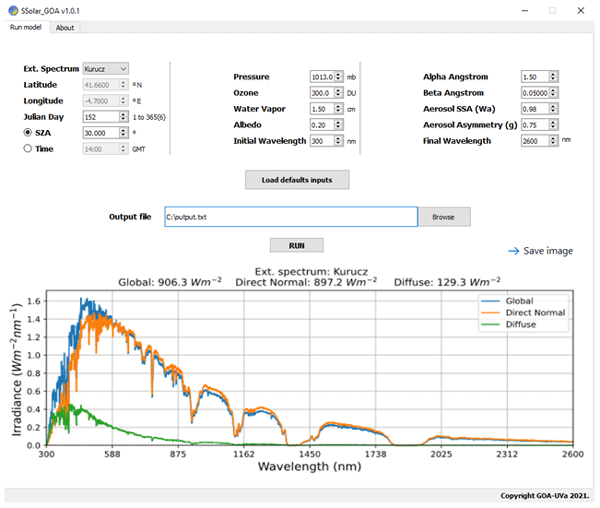
Victoria Eugenia Cachorro, Juan Carlos Antuña-Sanchez, and Ángel Máximo de Frutos
Geosci. Model Dev., 15, 1689–1712, https://doi.org/10.5194/gmd-15-1689-2022, https://doi.org/10.5194/gmd-15-1689-2022, 2022
Short summary
Short summary
This work describes the features of a simple, fast, accurate, and physically based spectral radiative transfer model (SSolar-GOA) in the solar wavelength range under clear skies. The model is intended for a wide community of users for many different applications, was designed to be easily replicated, and has sufficient accuracy. The validation of the model was carried out through extensive comparison with simulated spectra from the LibRadtran and with direct and global spectral measurements.
Roberto Román, Juan C. Antuña-Sánchez, Victoria E. Cachorro, Carlos Toledano, Benjamín Torres, David Mateos, David Fuertes, César López, Ramiro González, Tatyana Lapionok, Marcos Herreras-Giralda, Oleg Dubovik, and Ángel M. de Frutos
Atmos. Meas. Tech., 15, 407–433, https://doi.org/10.5194/amt-15-407-2022, https://doi.org/10.5194/amt-15-407-2022, 2022
Short summary
Short summary
An all-sky camera is used to obtain the relative sky radiance, and this radiance is used as input in an inversion code to obtain aerosol properties. This paper is really interesting because it pushes forward the use and capability of sky cameras for more advanced science purposes. Enhanced aerosol properties can be retrieved with accuracy using only an all-sky camera, but synergy with other instruments providing aerosol optical depth could even increase the power of these low-cost instruments.
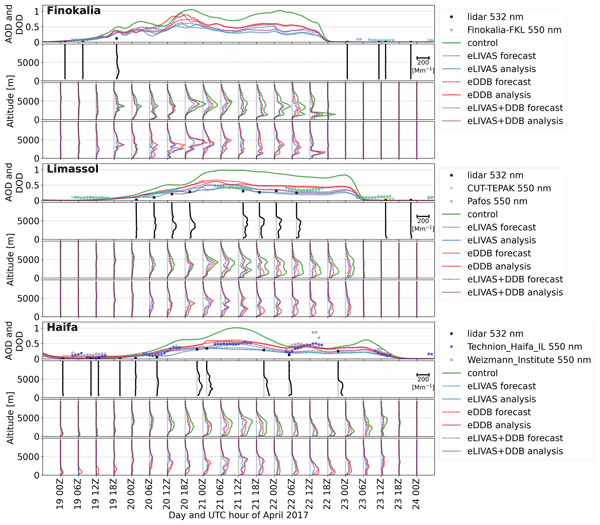
Jerónimo Escribano, Enza Di Tomaso, Oriol Jorba, Martina Klose, Maria Gonçalves Ageitos, Francesca Macchia, Vassilis Amiridis, Holger Baars, Eleni Marinou, Emmanouil Proestakis, Claudia Urbanneck, Dietrich Althausen, Johannes Bühl, Rodanthi-Elisavet Mamouri, and Carlos Pérez García-Pando
Atmos. Chem. Phys., 22, 535–560, https://doi.org/10.5194/acp-22-535-2022, https://doi.org/10.5194/acp-22-535-2022, 2022
Short summary
Short summary
We explore the benefits and consistency in adding lidar dust observations in a dust optical depth assimilation. We show that adding lidar data to a dust optical depth assimilation has valuable benefits and the dust analysis improves. We discuss the impact of the narrow satellite footprint of the lidar dust observations on the assimilation.
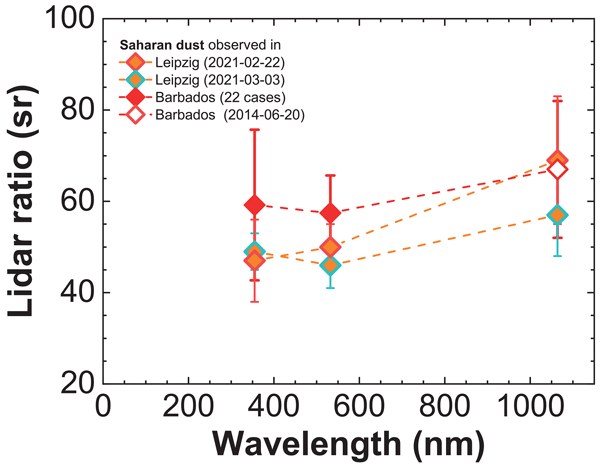
Moritz Haarig, Albert Ansmann, Ronny Engelmann, Holger Baars, Carlos Toledano, Benjamin Torres, Dietrich Althausen, Martin Radenz, and Ulla Wandinger
Atmos. Chem. Phys., 22, 355–369, https://doi.org/10.5194/acp-22-355-2022, https://doi.org/10.5194/acp-22-355-2022, 2022
Short summary
Short summary
The irregular shape of dust particles makes it difficult to treat them correctly in optical models. Atmospheric measurements of dust optical properties are therefore of great importance. The present study increases the space of observed parameters from 355 and 532 nm towards 1064 nm, which is of special importance for large dust particles. The lidar ratio influenced by mineralogy and the depolarization ratio influenced by shape are measured for the first time at all three wavelengths.
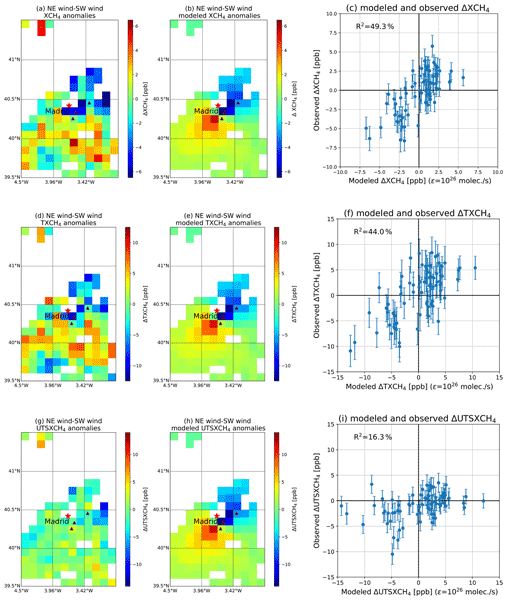
Qiansi Tu, Frank Hase, Matthias Schneider, Omaira García, Thomas Blumenstock, Tobias Borsdorff, Matthias Frey, Farahnaz Khosrawi, Alba Lorente, Carlos Alberti, Juan J. Bustos, André Butz, Virgilio Carreño, Emilio Cuevas, Roger Curcoll, Christopher J. Diekmann, Darko Dubravica, Benjamin Ertl, Carme Estruch, Sergio Fabián León-Luis, Carlos Marrero, Josep-Anton Morgui, Ramón Ramos, Christian Scharun, Carsten Schneider, Eliezer Sepúlveda, Carlos Toledano, and Carlos Torres
Atmos. Chem. Phys., 22, 295–317, https://doi.org/10.5194/acp-22-295-2022, https://doi.org/10.5194/acp-22-295-2022, 2022
Short summary
Short summary
We use different methane ground- and space-based remote sensing data sets for investigating the emission strength of three waste disposal sites close to Madrid. We present a method that uses wind-assigned anomalies for deriving emission strengths from satellite data and estimate their uncertainty to 9–14 %. The emission strengths estimated from the remote sensing data sets are significantly larger than the values published in the official register.
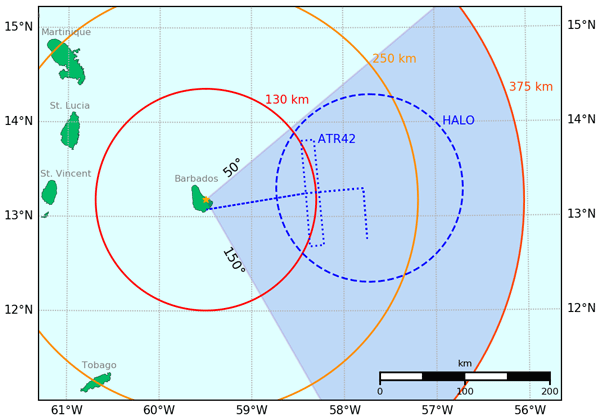
Martin Hagen, Florian Ewald, Silke Groß, Lothar Oswald, David A. Farrell, Marvin Forde, Manuel Gutleben, Johann Heumos, Jens Reimann, Eleni Tetoni, Gregor Köcher, Eleni Marinou, Christoph Kiemle, Qiang Li, Rebecca Chewitt-Lucas, Alton Daley, Delando Grant, and Kashawn Hall
Earth Syst. Sci. Data, 13, 5899–5914, https://doi.org/10.5194/essd-13-5899-2021, https://doi.org/10.5194/essd-13-5899-2021, 2021
Short summary
Short summary
The German polarimetric weather radar Poldirad was deployed for the international campaign EUREC4A on Barbados. The focus was monitoring clouds and precipitation in the trade wind region east of Barbados. Observations were with a temporal sequence of 5 min and a maximum range of 375 km. Examples of mesoscale precipitation patterns, rain rate accumulation, diurnal cycle, and vertical distribution show the potential for further studies on the life cycle of precipitating shallow cumulus clouds.
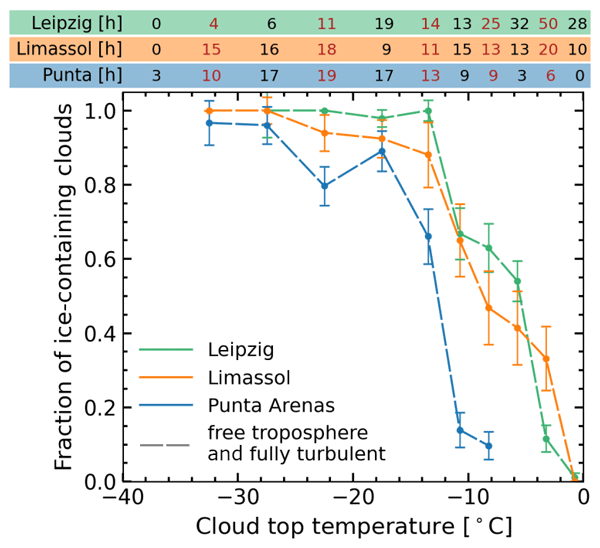
Martin Radenz, Johannes Bühl, Patric Seifert, Holger Baars, Ronny Engelmann, Boris Barja González, Rodanthi-Elisabeth Mamouri, Félix Zamorano, and Albert Ansmann
Atmos. Chem. Phys., 21, 17969–17994, https://doi.org/10.5194/acp-21-17969-2021, https://doi.org/10.5194/acp-21-17969-2021, 2021
Short summary
Short summary
This study brings together long-term ground-based remote-sensing observations of mixed-phase clouds at three key locations of aerosol–cloud interactions in the Northern and Southern Hemisphere midlatitudes. The findings contribute several new aspects on the nature of the excess of supercooled liquid clouds in the Southern Hemisphere, such as a long-term lidar-based estimate of ice-nucleating particle profiles as well as the effects of boundary layer coupling and gravity waves on ice formation.
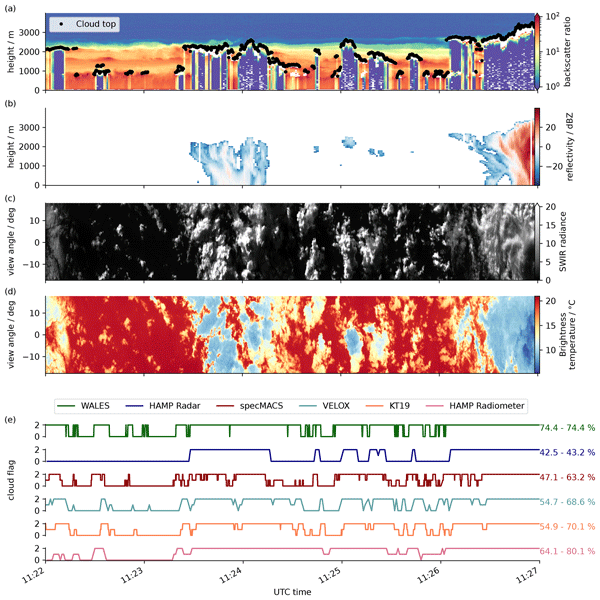
Heike Konow, Florian Ewald, Geet George, Marek Jacob, Marcus Klingebiel, Tobias Kölling, Anna E. Luebke, Theresa Mieslinger, Veronika Pörtge, Jule Radtke, Michael Schäfer, Hauke Schulz, Raphaela Vogel, Martin Wirth, Sandrine Bony, Susanne Crewell, André Ehrlich, Linda Forster, Andreas Giez, Felix Gödde, Silke Groß, Manuel Gutleben, Martin Hagen, Lutz Hirsch, Friedhelm Jansen, Theresa Lang, Bernhard Mayer, Mario Mech, Marc Prange, Sabrina Schnitt, Jessica Vial, Andreas Walbröl, Manfred Wendisch, Kevin Wolf, Tobias Zinner, Martin Zöger, Felix Ament, and Bjorn Stevens
Earth Syst. Sci. Data, 13, 5545–5563, https://doi.org/10.5194/essd-13-5545-2021, https://doi.org/10.5194/essd-13-5545-2021, 2021
Short summary
Short summary
The German research aircraft HALO took part in the research campaign EUREC4A in January and February 2020. The focus area was the tropical Atlantic east of the island of Barbados. We describe the characteristics of the 15 research flights, provide auxiliary information, derive combined cloud mask products from all instruments that observe clouds on board the aircraft, and provide code examples that help new users of the data to get started.
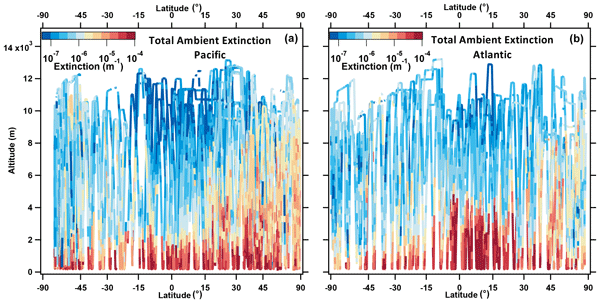
Charles A. Brock, Karl D. Froyd, Maximilian Dollner, Christina J. Williamson, Gregory Schill, Daniel M. Murphy, Nicholas J. Wagner, Agnieszka Kupc, Jose L. Jimenez, Pedro Campuzano-Jost, Benjamin A. Nault, Jason C. Schroder, Douglas A. Day, Derek J. Price, Bernadett Weinzierl, Joshua P. Schwarz, Joseph M. Katich, Siyuan Wang, Linghan Zeng, Rodney Weber, Jack Dibb, Eric Scheuer, Glenn S. Diskin, Joshua P. DiGangi, ThaoPaul Bui, Jonathan M. Dean-Day, Chelsea R. Thompson, Jeff Peischl, Thomas B. Ryerson, Ilann Bourgeois, Bruce C. Daube, Róisín Commane, and Steven C. Wofsy
Atmos. Chem. Phys., 21, 15023–15063, https://doi.org/10.5194/acp-21-15023-2021, https://doi.org/10.5194/acp-21-15023-2021, 2021
Short summary
Short summary
The Atmospheric Tomography Mission was an airborne study that mapped the chemical composition of the remote atmosphere. From this, we developed a comprehensive description of aerosol properties that provides a unique, global-scale dataset against which models can be compared. The data show the polluted nature of the remote atmosphere in the Northern Hemisphere and quantify the contributions of sea salt, dust, soot, biomass burning particles, and pollution particles to the haziness of the sky.
Qiang Li and Silke Groß
Atmos. Chem. Phys., 21, 14573–14590, https://doi.org/10.5194/acp-21-14573-2021, https://doi.org/10.5194/acp-21-14573-2021, 2021
Short summary
Short summary
Aircraft emit exhaust gases and particles directly into the atmosphere, which may contribute to climate change. We present a significant reduction in the occurrence rate and particle linear depolarization ratio of cirrus clouds based on the analysis of measurements with the Cloud-Aerosol Lidar and Infrared Pathfinder Satellite Observation (CALIPSO) satellite during COVID-19 when air traffic was significantly reduced. The findings imply that these clouds formed with less influence from aviation.
Cited articles
Ackerman, A. S., Toon, O. B., Stevens, D. E., Heymsfield, A. J., Ramanathan, V., and Welton, E. J.: Reduction of tropical cloudiness by soot, Science, 288, 1042–1047, https://doi.org/10.1126/science.288.5468.1042, 2000.
Alizadeh-Choobari, O., Sturman, A., and Zawar-Reza, P.: A global satellite view of the seasonal distribution of mineral dust and its correlation with atmospheric circulation, Dyn. Atmos. Oceans, 68, 20–34, https://doi.org/10.1016/j.dynatmoce.2014.07.002, 2014.
Altaratz, O., Koren, I., Remer, L. A., and Hirsh, E.: Review: Cloud invigoration by aerosols – Coupling between microphysics and dynamics, Atmos. Res., 140–141, 38–60, https://doi.org/10.1016/j.atmosres.2014.01.009, 2014.
Ansmann, A., Mamouri, R.-E., Hofer, J., Baars, H., Althausen, D., and Abdullaev, S. F.: Dust mass, cloud condensation nuclei, and ice-nucleating particle profiling with polarization lidar: updated POLIPHON conversion factors from global AERONET analysis, Atmos. Meas. Tech., 12, 4849–4865, https://doi.org/10.5194/amt-12-4849-2019, 2019.
Bond, T. C.: Spectral Dependence of Visible Light Absorption by Carbonaceous Particles Emitted from Coal Combustion, Geophys. Res. Lett., 28, 4075–4078, 2001.
Burgos, M. A., Mateos, D., Cachorro, C., Toledano, C., and de Frutos, A. M.: Aerosol properties of mineral dust and its mixtures in a regional background of north-central Iberian Peninsula, Science of the Total Environment, 572, 1005–1019, https://doi.org/10.1016/j.scitotenv.2016.08.001, 2016.
Cachorro, V. E., Toledano, C., Antón, M., Berjón, A., de Frutos, A., Vilaplana, J. M., Arola, A., and Krotkov, N. A.: Comparison of UV irradiances from Aura/Ozone Monitoring Instrument (OMI) with Brewer measurements at El Arenosillo (Spain) – Part 2: Analysis of site aerosol influence, Atmos. Chem. Phys., 10, 11867–11880, https://doi.org/10.5194/acp-10-11867-2010, 2010.
Cachorro, V. E., Burgos, M. A., Mateos, D., Toledano, C., Bennouna, Y., Torres, B., de Frutos, Á. M., and Herguedas, Á.: Inventory of African desert dust events in the north-central Iberian Peninsula in 2003–2014 based on sun-photometer–AERONET and particulate-mass–EMEP data, Atmos. Chem. Phys., 16, 8227–8248, https://doi.org/10.5194/acp-16-8227-2016, 2016.
Castellanos, P., Colarco, P., Espinosa, W. R., Guzewich, S. D., Levy, R. C., Miller, R. L., Chin, M., Kahn, R. A., Kemppinen, O., Moosmüller, H., Nowottnick, E. P., Rocha-Lima, A., Smith, M. D., Yorks, J. E., and Yu, H.: Mineral dust optical properties for remote sensing and global modeling: A review, Rem. Sens. Environ., 303, 113982, https://doi.org/10.1016/j.rse.2023.113982, 2024.
Claquin, T., Schulz, M., Balkanski, Y., and Boucher, O.: Uncertainties in assessing radiative forcing by mineral dust, Tellus, 50B, 491–505, 1998.
Di Biagio, C., Formenti, P., Balkanski, Y., Caponi, L., Cazaunau, M., Pangui, E., Journet, E., Nowak, S., Andreae, M. O., Kandler, K., Saeed, T., Piketh, S., Seibert, D., Williams, E., and Doussin, J.-F.: Complex refractive indices and single-scattering albedo of global dust aerosols in the shortwave spectrum and relationship to size and iron content, Atmos. Chem. Phys., 19, 15503–15531, https://doi.org/10.5194/acp-19-15503-2019, 2019.
Dubovik, O. and King, M. D.: A flexible inversion algorithm for retrieval of aerosol optical properties from Sun and sky radiance measurements, J. Geophys. Res.-Atmos., 105, 20673–20696, https://doi.org/10.1029/2000JD900282, 2000.
Dubovik, O., Holben, B., Eck, T. F., Smirnov, A., Kaufman, Y. J., King, M. D., Tanre, D., and Slutsker, I.: Variability of absorption and optical properties of key aerosol types observed in worldwide locations, J. Atmos. Sci., 59, 590–608, 2002.
Dubovik, O., Sinyuk, A., Lapyonok, T., Holben, B. N., Mishchenko, M., Yang, P., Eck, T. F., Volten, H., Munoz, O., Veihelmann, B., van der Zande, W. J., Leon, J. F., Sorokin, M., and Slutsker, I.: Application of spheroid models to account for aerosol particle nonsphericity in remote sensing of desert dust, J. Geophys. Res.-Atmos., 111, 2156–2202, https://doi.org/10.1029/2005JD006619, 2006.
Eck, T. F., Holben, B. N., Sinyuk, A., Pinker, R. T., Goloub, P., Chen, H,. Chatenet, B., Li, Z., Singh, R. P., Tripathi, S. N., Reid, J. S., Giles, D. M., Dubovik, O., O'Neill, N. T., Smirnov, A., Wang, P., and Xia, X.: Climatological aspects of the optical properties of fine/coarse mode aerosol mixtures, J. Geophys. Res., 115, D19205, https://doi.org/10.1029/2010JD014002, 2010.
Euphrasie-Clotilde, L., Plocoste, T., Feuillard, T., Velasco-Merino, C., Mateos, D., Toledano, C., Brute, F. N., Bassette, C. and Gobinddass, M.: Assessment of a new detection threshold for PM10 concentrations linked to African dust events in the Caribbean Basin, Atmos. Env., 224, 117354, https://doi.org/10.1016/j.atmosenv.2020.117354, 2020.
Euphrasie-Clotilde, L., Plocoste, T., Brute, F.-N., Velasco-Merino, C., Mateos, D., and Toledano, C.: Identification of Aerosols' Optical Properties in the Caribbean Area Using Ascending Hierarchical Clustering Analysis, Sustainability, 17, 177, https://doi.org/10.3390/su17010177, 2025.
Fernández, A. J., Molero, F., Salvador, P., Revuelta, A., Becerril-Valle, M., Gómez-Moreno, F. J., Artíñano, B., and Pujadas, M.: Aerosol optical, microphysical and radiative forcing properties during variable intensity African dust events in the Iberian Peninsula, Atmos. Res., 196, 129–141, https://doi.org/10.1016/j.atmosres.2017.06.019, 2017.
Fraser, R. S., Kaufman, Y. J., and Mahoney, R. L.: Satellite measurements of aerosol mass and transport, Atmos. Environ., 18, 2577–2584, 1984.
Giles, D. M., Holben, B. N., Eck, T. F., Sinyuk, A., Smirnov, A., Slutsker, I., Dickerson, R. R., Thompson, A. M., and Schafer, J. S.: An analysis of AERONET aerosol absorption properties and classifications representative of aerosol source regions, J. Geophys. Res., 117, D17203, https://doi.org/10.1029/2012JD018127, 2012.
Giles, D. M., Sinyuk, A., Sorokin, M. G., Schafer, J. S., Smirnov, A., Slutsker, I., Eck, T. F., Holben, B. N., Lewis, J. R., Campbell, J. R., Welton, E. J., Korkin, S. V., and Lyapustin, A. I.: Advancements in the Aerosol Robotic Network (AERONET) Version 3 database – automated near-real-time quality control algorithm with improved cloud screening for Sun photometer aerosol optical depth (AOD) measurements, Atmos. Meas. Tech., 12, 169–209, https://doi.org/10.5194/amt-12-169-2019, 2019.
Goudie, A. S. and Middleton, N. J.: Saharan dust storms: nature and consequences, Earth-Science Reviews, 56, 179–204, 2001.
Groß, S., Freudenthaler, V., Schepanski, K., Toledano, C., Schäfler, A., Ansmann, A., and Weinzierl, B.: Optical properties of long-range transported Saharan dust over Barbados as measured by dual-wavelength depolarization Raman lidar measurements, Atmos. Chem. Phys., 15, 11067–11080, https://doi.org/10.5194/acp-15-11067-2015, 2015.
Groß, S., Gasteiger, J., Freudenthaler, V., Müller, T., Sauer, D., Toledano, C., and Ansmann, A.: Saharan dust contribution to the Caribbean summertime boundary layer – a lidar study during SALTRACE, Atmos. Chem. Phys., 16, 11535–11546, https://doi.org/10.5194/acp-16-11535-2016, 2016.
Groß, S., Freudenthaler, V., Haarig, M., Ansmann, A., Toledano, C., Mateos, D., Seibert, P., Mamouri, R.-E., Nisantzi, A., Gasteiger, J., Dollner, M., Tipka, A., Schöberl, M., Teri, M., and Weinzierl, B.: Characterization of aerosol over the eastern Mediterranean by polarization-sensitive Raman lidar measurements during A-LIFE – aerosol type classification and type separation, Atmos. Chem. Phys., 25, 3191–3211, https://doi.org/10.5194/acp-25-3191-2025, 2025.
Haarig, M., Ansmann, A., Althausen, D., Klepel, A., Groß, S., Freudenthaler, V., Toledano, C., Mamouri, R.-E., Farrell, D. A., Prescod, D. A., Marinou, E., Burton, S. P., Gasteiger, J., Engelmann, R., and Baars, H.: Triple-wavelength depolarization-ratio profiling of Saharan dust over Barbados during SALTRACE in 2013 and 2014, Atmos. Chem. Phys., 17, 10767–10794, https://doi.org/10.5194/acp-17-10767-2017, 2017.
Holben, B. N., Eck, T. F., Slutsker, I., Tanré, D., Buis, J. P., Setzer, A., Vermote, E., Reagan, J. A., Kaufman, Y. J., Nakajima, T., Lavenu, F., Jankowiak, I., and Smirnov, A.: AERONET – a federated instrument network and data archive for aerosol characterization, Remote Sens. Environ., 66, 1–16, 1998.
Huang, J. P., Lin, B., Minnis, P., Wang, T. H., Wang, X., Hu, Y. X., Yi, Y. H., and Ayres, J. K.: Satellite-based assessment of possible dust aerosols semidirect effect on cloud water path over East Asia, Geophys. Res. Lett., 33, L19802, https://doi.org/10.1029/2006GL026561, 2006.
Kandler, K., Schneiders, K., Ebert, M., Hartmann, M., Weinbruch, S., Prass, M., and Pöhlker, C.: Composition and mixing state of atmospheric aerosols determined by electron microscopy: method development and application to aged Saharan dust deposition in the Caribbean boundary layer, Atmos. Chem. Phys., 18, 13429–13455, https://doi.org/10.5194/acp-18-13429-2018, 2018.
Kim, D., Chin, M., Yu, H., Eck, T. F., Sinyuk, A., Smirnov, A., and Holben, B. N.: Dust optical properties over North Africa and Arabian Peninsula derived from the AERONET dataset, Atmos. Chem. Phys., 11, 10733–10741, https://doi.org/10.5194/acp-11-10733-2011, 2011.
Klingmüller, K., Pozzer, A., Metzger, S., Stenchikov, G. L., and Lelieveld, J.: Aerosol optical depth trend over the Middle East, Atmos. Chem. Phys., 16, 5063–5073, https://doi.org/10.5194/acp-16-5063-2016, 2016.
Knippertz, P. and Stuut, J.-B. W.: Mineral Dust a Key Player in the Earth System, Springer Dordrecht, https://doi.org/10.1007/978-94-017-8978-3, 2014.
Kok, J. F., Adebiyi, A. A., Albani, S., Balkanski, Y., Checa-Garcia, R., Chin, M., Colarco, P. R., Hamilton, D. S., Huang, Y., Ito, A., Klose, M., Leung, D. M., Li, L., Mahowald, N. M., Miller, R. L., Obiso, V., Pérez García-Pando, C., Rocha-Lima, A., Wan, J. S., and Whicker, C. A.: Improved representation of the global dust cycle using observational constraints on dust properties and abundance, Atmos. Chem. Phys., 21, 8127–8167, https://doi.org/10.5194/acp-21-8127-2021, 2021.
Kokhanovsky, A. A., Prikhach, A. S., Katsev, I. L., and Zege, E. P.: Determination of particulate matter vertical columns using satellite observations, Atmos. Meas. Tech., 2, 327–335, https://doi.org/10.5194/amt-2-327-2009, 2009.
Kristensen, T. B., Müller, T., Kandler, K., Benker, N., Hartmann, M., Prospero, J. M., Wiedensohler, A., and Stratmann, F.: Properties of cloud condensation nuclei (CCN) in the trade wind marine boundary layer of the western North Atlantic, Atmos. Chem. Phys., 16, 2675–2688, https://doi.org/10.5194/acp-16-2675-2016, 2016.
Kubilay, N., Cokacar, T., and Oguz, T.: Optical properties of mineral dust outbreaks over the northeastern Mediterranean, J. Geophys. Res., 108, 4666, https://doi.org/10.1029/2003JD003798, 2003.
Lewis, K., Arnott, W. P., Moosmuller, H., and Wold, C. E.: Strong spectral variation of biomass smoke light absorption and single scattering albedo observed with a novel dual-wavelength photoacoustic instrument, J. Geophys. Res., 113, D16203, https://doi.org/10.1029/2007JD009699, 2008.
Li, J., Liu, C., Yin, Y., and Kumar, K. R.: Numerical investigation on the Ångström Exponent of black carbon aerosols, J. Geophys. Res., 121, 3506–3518, https://doi.org/10.1002/2015JD024718, 2016.
Liao, H. and Seinfeld, J. H.: Effect of clouds on direct aerosol radiative forcing of climate, J. Geophys. Res. 103, 3781–3788, https://doi.org/10.1029/97JD03455, 1998.
Liu, C., Chung, C. E., Yin, Y., and Schnaiter, M.: The absorption Ångström exponent of black carbon: from numerical aspects, Atmos. Chem. Phys., 18, 6259–6273, https://doi.org/10.5194/acp-18-6259-2018, 2018.
Mallet, M., Dubovik, O., Nabat, P., Dulac, F., Kahn, R., Sciare, J., Paronis, D., and Léon, J. F.: Absorption properties of Mediterranean aerosols obtained from multi-year ground-based remote sensing observations, Atmos. Chem. Phys., 13, 9195–9210, https://doi.org/10.5194/acp-13-9195-2013, 2013.
Mateos, D., Antón, M., Toledano, C., Cachorro, V. E., Alados-Arboledas, L., Sorribas, M., Costa, M. J., and Baldasano, J. M.: Aerosol radiative effects in the ultraviolet, visible, and near-infrared spectral ranges using long-term aerosol data series over the Iberian Peninsula, Atmos. Chem. Phys., 14, 13497–13514, https://doi.org/10.5194/acp-14-13497-2014, 2014.
Mateos, D., Cachorro, V. E., Velasco-Merino, C., O'Neill, N. T., Burgos, M. A., Gonzalez, R., Toledano, C., Herreras, M., Calle, A., and de Frutos, A. M.: Comparison of three different methodologies for the identification of high atmospheric turbidity episodes, Atmos. Res., 237, 104835, https://doi.org/10.1016/j.atmosres.2019.104835, 2020.
Meloni, D., di Sarra, A., Pace, G., and Monteleone, F.: Aerosol optical properties at Lampedusa (Central Mediterranean). 2. Determination of single scattering albedo at two wavelengths for different aerosol types, Atmos. Chem. Phys., 6, 715–727, https://doi.org/10.5194/acp-6-715-2006, 2006.
Mogo, S., López, J. F., Cachorro, V. E., de Frutos, A., Zocca, R., Barroso, A., Mateos, D., and Conceiçao, E.: Comparison between the optical properties of aerosols in the fine and coarse fractions over Valladolid, Spain, Environ. Sci.: Processes Impacts, 19, 123–133, https://doi.org/10.1039/C6EM00629A, 2017.
Myhre, G. and Stordal, F.: Global sensitivity experiments of the radiative forcing due to mineral aerosols, J. Geophys. Res., 106, 18193–18204, 2001.
Notaro, M., Alkolibi, F., Fadda, E., and Bakhrjy, F.: Trajectory analysis of Saudi Arabian dust storms, Geophys. Res., 118 pp., 6028–6043, https://doi.org/10.1002/jgrd.50346, 2013.
Prats, N., Cachorro, V. E., Sorribas, M., Mogo, S., Berjón, A., Toledano, C., de Frutos, A. M., de la Rosa, J., Laulainen, N., and de la Morena, B. A.: Columnar aerosol properties during “El Arenosillo 2004 summer campaign”, Atmos. Environ., 42, 2643–2653, https://doi.org/10.1016/j.atmosenv.2007.07.041, 2008.
Prats, N., Cachorro, V. E., Berjón, A., Toledano, C., and De Frutos, A. M.: Column-integrated aerosol microphysical properties from AERONET Sun photometer over southwestern Spain, Atmos. Chem. Phys., 11, 12535–12547, https://doi.org/10.5194/acp-11-12535-2011, 2011.
Prospero, J. M. and Mayol-Bracero O. L.: Understanding the transport and impact of African dust on the Caribbean Basin, B. Am. Meteorol. Soc., 94, 1329–1337, https://doi.org/10.1175/BAMS-D-12-00142.1, 2013.
Prospero, J. M., Collard, F.-X., Molinié, J., and Jeannot, A.: Characterizing the annual cycle of African dust transport to the Caribbean Basin and South America and its impact on the environment and air quality, Global Biogeochem. Cycles, 29, 757–773, https://doi.org/10.1002/2013GB004802, 2014.
Russell, P. B., Bergstrom, R. W., Shinozuka, Y., Clarke, A. D., DeCarlo, P. F., Jimenez, J. L., Livingston, J. M., Redemann, J., Dubovik, O., and Strawa, A.: Absorption Angstrom Exponent in AERONET and related data as an indicator of aerosol composition, Atmos. Chem. Phys., 10, 1155–1169, https://doi.org/10.5194/acp-10-1155-2010, 2010.
Scarnato, B. V., Vahidinia, S., Richard, D. T., and Kirchstetter, T. W.: Effects of internal mixing and aggregate morphology on optical properties of black carbon using a discrete dipole approximation model, Atmos. Chem. Phys., 13, 5089–5101, https://doi.org/10.5194/acp-13-5089-2013, 2013.
Schuster, G. L., Dubovik, O., and Holben, B. N.: Angstrom exponent and bimodal aerosol size distributions, J. Geophys. Res., 111, D07207, https://doi.org/10.1029/2005JD006328, 2006.
Sokolik, I. N. and Toon, O. B.: Incorporation of Mineralogical Composition into Models of the Radiative Properties of Mineral Aerosol from UV to IR Wavelengths, J. Geophys. Res., 104, 9423–9444, https://doi.org/10.1029/1998JD200048, 1999.
Stein, A. F., Draxler, R. R., Rolph, G. D., Stunder, B. J. B., Cohen, M. D., and Ngan, F.: NOAA's HYSPLIT atmospheric transport and dispersion modeling system, Bull. Amer. Meteor. Soc., 96, 2059–2077, https://doi.org/10.1016/S1352-2310(98)00184-8, 2015.
Stohl, A., Hittenberger, M., and Wotawa, G.: Validation of the lagrangian particle dispersion model FLEXPART against largescale tracer experiment data, Atmos. Environ., 32, 24, https://doi.org/10.1016/S1352-2310(98)00184-8, 1998.
Su, L. and Toon, O. B.: Saharan and Asian dust: similarities and differences determined by CALIPSO, AERONET, and a coupled climate-aerosol microphysical model, Atmos. Chem. Phys., 11, 3263–3280, https://doi.org/10.5194/acp-11-3263-2011, 2011.
Tegen, I. and Schepanski, K.: The global distribution of mineral dust, IOP Conf. Ser. Earth Environ. Sci., 7, 12001, https://doi.org/10.1088/1755-1307/7/1/012001, 2009.
Teri, M., Gasteiger, J., Heimerl, K., Dollner, M., Schöberl, M., Seibert, P., Tipka, A., Müller, T., Aryasree, S., Kandler, K., and Weinzierl, B.: Pollution affects Arabian and Saharan dust optical properties in the eastern Mediterranean, Atmos. Chem. Phys., 25, 6633–6662, https://doi.org/10.5194/acp-25-6633-2025, 2025.
Toledano, C., Wiegner, M., Garhammer, M., Seefeldner, M., Gasteiger, J., Müller, D., and Koepke, P.: Spectral aerosol optical depth characterization of desert dust during SAMUM 2006, Tellus, 61B, 216–228, 2009.
Toledano, C., Wiegner, M., Groß, S., Freudenthaler, V., Gasteiger, J., Müller, D., Müller, T., Schladitz, A., Weinzierl, B., Torres, B., and O'Neill, N. T.: Optical properties of aerosol mixtures derived from sun-sky radiometry during SAMUM-2, Tellus B, 63, 635–648, 2011.
Toledano, C., Cachorro, V. E., Gausa, M., Stebel, K., Aaltonen, V., Berjón, A., Ortiz de Galisteo, J. P., de Frutos, A. M., Bennouna, Y., Blindheim, S., Myhre, C. L., Zibordi, G., Wehrli, C., Kratzer, S., Hakansson, B., Carlund, T., de Leeuw, G., Herber, A., and Torres, B.: Overview of sun photometer measurements of aerosol properties in Scandinavia and Svalbard, Atmos. Env., 52, 18–28, https://doi.org/10.1016/j.atmosenv.2011.10.022, 2012.
Valenzuela, A., Olmo, F. J., Lyamani, H., Antón, M., Quirantes, A., and Alados-Arboledas, L.: Aerosol radiative forcing during African desert dust events (2005–2010) over Southeastern Spain, Atmos. Chem. Phys., 12, 10331–10351, https://doi.org/10.5194/acp-12-10331-2012, 2012.
Velasco-Merino, C., Mateos, D., Toledano, C., Prospero, J. M., Molinie, J., Euphrasie-Clotilde, L., González, R., Cachorro, V. E., Calle, A., and de Frutos, A. M.: Impact of long-range transport over the Atlantic Ocean on Saharan dust optical and microphysical properties based on AERONET data, Atmos. Chem. Phys., 18, 9411–9424, https://doi.org/10.5194/acp-18-9411-2018, 2018.
Short summary
A field experiment deployed in Cyprus included two sun photometers of Aerosol Robotic Network in two different sites. Mineral dust was predominant during the experiment, with Saharan and Arabian dust showing distinct optical properties, in particular, the Angstrom Exponent in the near-infrarred range and Volume Efficiency factor. Both magnitudes can served as a reliable proxy for mineral dust typing. No significant black carbon presence was detected.
A field experiment deployed in Cyprus included two sun photometers of Aerosol Robotic Network in...


Altmetrics
Final-revised paper
Preprint