
Articles | Volume 26, issue 14
https://doi.org/10.5194/acp-26-10423-2026
© Author(s) 2026. This work is distributed under
the Creative Commons Attribution 4.0 License.
the Creative Commons Attribution 4.0 License.
https://doi.org/10.5194/acp-26-10423-2026
© Author(s) 2026. This work is distributed under
the Creative Commons Attribution 4.0 License.
the Creative Commons Attribution 4.0 License.
Research article
| 
24 Jul 2026
Research article |
| 24 Jul 2026
| 24 Jul 2026
Assessment of the differences in European CH4 emission estimates from three TROPOMI products
Aurélien Sicsik-Paré
CORRESPONDING AUTHOR

Laboratoire des Sciences du Climat et de l'Environnement, LSCE/IPSL, CEA-CNRS-UVSQ, Université Paris-Saclay, 91191 Gif-sur-Yvette, France
Audrey Fortems-Cheiney
Laboratoire des Sciences du Climat et de l'Environnement, LSCE/IPSL, CEA-CNRS-UVSQ, Université Paris-Saclay, 91191 Gif-sur-Yvette, France
now at: Science Partners, Quai de Jemmapes, 75010 Paris, France
Isabelle Pison
Laboratoire des Sciences du Climat et de l'Environnement, LSCE/IPSL, CEA-CNRS-UVSQ, Université Paris-Saclay, 91191 Gif-sur-Yvette, France
Grégoire Broquet
Laboratoire des Sciences du Climat et de l'Environnement, LSCE/IPSL, CEA-CNRS-UVSQ, Université Paris-Saclay, 91191 Gif-sur-Yvette, France
Alvin Opler
Laboratoire des Sciences du Climat et de l'Environnement, LSCE/IPSL, CEA-CNRS-UVSQ, Université Paris-Saclay, 91191 Gif-sur-Yvette, France
Elise Potier
Laboratoire des Sciences du Climat et de l'Environnement, LSCE/IPSL, CEA-CNRS-UVSQ, Université Paris-Saclay, 91191 Gif-sur-Yvette, France
now at: Science Partners, Quai de Jemmapes, 75010 Paris, France
Adrien Martinez
Laboratoire des Sciences du Climat et de l'Environnement, LSCE/IPSL, CEA-CNRS-UVSQ, Université Paris-Saclay, 91191 Gif-sur-Yvette, France
Oliver Schneising
Institute of Environmental Physics (IUP), University of Bremen FB1, Bremen, Germany
Michael Buchwitz
Institute of Environmental Physics (IUP), University of Bremen FB1, Bremen, Germany
Joannes D. Maasakkers
SRON Netherlands Institute for Space Research, 2333 CA Leiden, the Netherlands
Tobias Borsdorff
SRON Netherlands Institute for Space Research, 2333 CA Leiden, the Netherlands
Antoine Berchet
Laboratoire des Sciences du Climat et de l'Environnement, LSCE/IPSL, CEA-CNRS-UVSQ, Université Paris-Saclay, 91191 Gif-sur-Yvette, France
Related authors
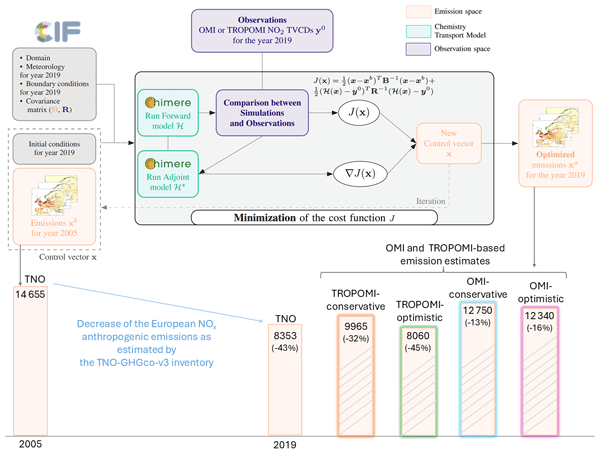
Audrey Fortems-Cheiney, Grégoire Broquet, Elise Potier, Antoine Berchet, Isabelle Pison, Adrien Martinez, Robin Plauchu, Rimal Abeed, Aurélien Sicsik-Paré, Gaelle Dufour, Adriana Coman, Dilek Savas, Guillaume Siour, Henk Eskes, Hugo A. C. Denier van der Gon, and Stijn N. C. Dellaert
Atmos. Chem. Phys., 25, 6047–6068, https://doi.org/10.5194/acp-25-6047-2025, https://doi.org/10.5194/acp-25-6047-2025, 2025
Short summary
Short summary
This study assesses the potential of the Ozone Monitoring Instrument (OMI) and the TROPOspheric Monitoring Instrument (TROPOMI) satellite observations to inform about the decrease in anthropogenic emissions of nitrogen oxides (NOx) in 2019 compared with 2005 at regional to national scales in Europe. Both the OMI and TROPOMI inversions show decreases in European NOx anthropogenic emission budgets in 2019 compared to 2005 but with different magnitudes.
Félix Langot, Cyril Crevoisier, Thomas Lauvaux, Antoine Berchet, Sophie Luise Wittig, Charbel Abdallah, Anke Roiger, Klaus-Dirk Gottschaldt, and Alina Fiehn
EGUsphere, https://doi.org/10.5194/egusphere-2026-5620, https://doi.org/10.5194/egusphere-2026-5620, 2026
This preprint is open for discussion and under review for Atmospheric Chemistry and Physics (ACP).
Short summary
Short summary
Wetlands in the far north are a major source of methane, a powerful greenhouse gas, but how much they release is poorly known. We flew an aircraft over northern Sweden, targeting known emission hotspots, and worked backwards from the methane measured in the air to estimate emissions on the ground. Models get the average right over these hotspots, but release methane steadily where real wetlands emit in bursts. Capturing that rhythm is what will let us track this source as the climate warms.
Fenjuan Wang, Shamil Maksyutov, Rajesh Janardanan, Dmitry A. Belikov, Prabir K. Patra, Ruosi Liang, Yuzhong Zhang, Ge Ren, Hong Lin, Nicole Montenegro, Antoine Berchet, Marielle Saunois, Adrien Martinez, Sara Hyvärinen, Aki Tsuruta, Samuel Takele Kenea, Miao Liang, Xin Lan, Yukio Terao, M. Kawser Ahmed, Manish Naja, Akihiko Ito, Isamu Morino, Yukio Yoshida, Yu Someya, Tazu Saeki, and Tsuneo Matsunaga
Earth Syst. Sci. Data Discuss., https://doi.org/10.5194/essd-2026-420, https://doi.org/10.5194/essd-2026-420, 2026
Preprint under review for ESSD
Short summary
Short summary
Methane is a potent greenhouse gas driving climate change, yet Asian emissions remain highly uncertain. We conducted the first Methane Inversion inter-Comparison for Asia (MICA) combining seven models to estimate methane across Asia from 2010 to 2021 using satellite and ground data. We found that emissions are generally lower than prior inventories, though some countries underreport. This study provides a comprehensive, transparent dataset to quantify regional methane budgets across Asia.
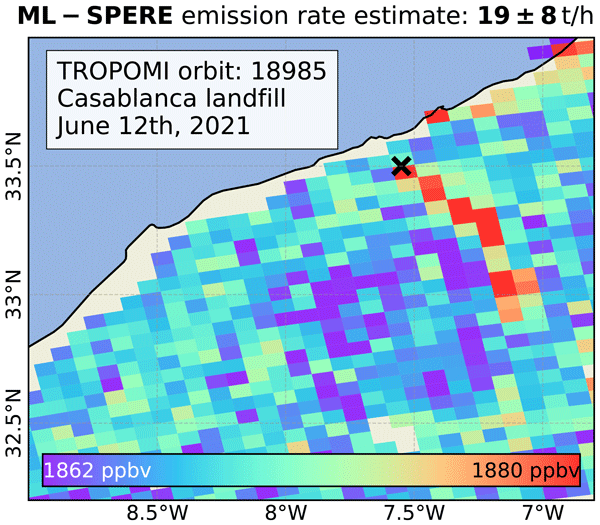
Clayton Roberts, Joannes D. Maasakkers, Tobias A. de Jong, Berend J. Schuit, Shubham Sharma, Theo Huegens, Anne-Wil van den Berg, Sander Houweling, and Ilse Aben
Atmos. Meas. Tech., 19, 5659–5682, https://doi.org/10.5194/amt-19-5659-2026, https://doi.org/10.5194/amt-19-5659-2026, 2026
Short summary
Short summary
Methane is a powerful greenhouse gas, and cutting its emissions can slow climate change in the near term. We have created ML-SPERE, a new machine-learning based method that uses TROPOMI observations and weather data to better estimate emission rates for large methane plumes. It has proved more accurate than the Integrated Mass Enhancement (IME) method when tested on simulated satellite observations. When applied to real TROPOMI plumes, ML-SPERE produces estimates that agree with other methods.
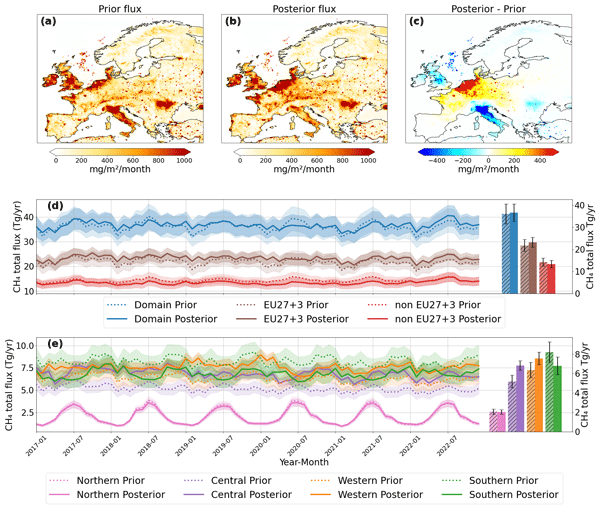
Anteneh Getachew Mengistu, Aki Tsuruta, Antoine Berchet, Rona Thompson, Maria Tenkanen, Hannakaisa Lindqvist, Tiina Markkanen, Antti Leppänen, Antti Laitinen, Adrien Martinez, Audrey Fortems-Cheiney, Lena Höglund-Isaksson, and Tuula Aalto
Atmos. Chem. Phys., 26, 12295–12327, https://doi.org/10.5194/acp-26-12295-2026, https://doi.org/10.5194/acp-26-12295-2026, 2026
Short summary
Short summary
Our manuscript presents a six-year, high-resolution inversion of European methane emissions using the Community Inversion Framework and FLEXPART. Leveraging an expanded in situ network, we reconcile inventories with observations, reveal regional biases, refine European methane budgets, and highlight the dominance of agricultural emissions. Results provide policy-relevant insights for mitigation and inventory verification.
Daniel A. Potts, Harjinder Sembhi, Matthieu Dogniaux, Joannes D. Maasakkers, Berend J. Schuit, Dirk Schuettemeyer, Timon Hummel, Rocio Barrio Guillo, Oliver Schneising, Luis Guanter, and Ilse Aben
EGUsphere, https://doi.org/10.5194/egusphere-2026-3797, https://doi.org/10.5194/egusphere-2026-3797, 2026
This preprint is open for discussion and under review for Atmospheric Chemistry and Physics (ACP).
Short summary
Short summary
Routine monitoring of industrial emissions is vital to understand the location, frequency, and intensity of methane emissions. We used satellite and aircraft measurements to understand methane emissions from Madrid across various scales and sectors. Using a range of methods, we identify a clear gap between top-down and bottom-up approaches, discuss challenges associated with satellite interpretation, connect emissions to on-site practices, and make recommendations towards operational use.
Santiago Parraguez Cerda, Johann Rasmus Nüß, Nikos Daskalakis, Arjo Segers, Oliver Schneising, Mihalis Vrekoussis, and Maria Kanakidou
EGUsphere, https://doi.org/10.5194/egusphere-2026-3458, https://doi.org/10.5194/egusphere-2026-3458, 2026
This preprint is open for discussion and under review for Geoscientific Model Development (GMD).
Short summary
Short summary
Our study presents a parametric method for adaptive observation weighting in global CH4 emission inversions, using the spatial and temporal distribution of satellite observations. The approach reduces grid-cell weight variability by ∼20 %, improving the balance of observational influence, especially in remote regions, without added computational cost, and easily applicable to multiple datasets. Global 2019 inversions with TMVar yield consistent posterior emissions and good agreement with TCCON.
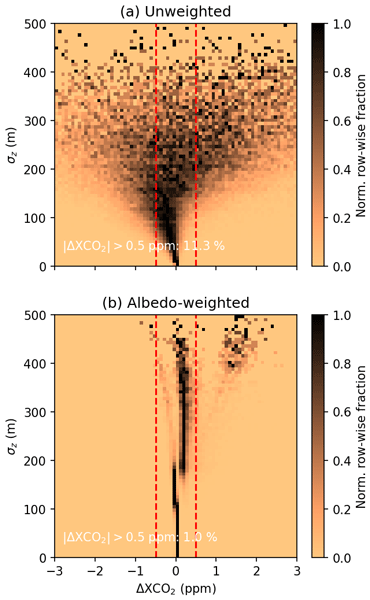
Michael Weimer, Maximilian Reuter, Michael Hilker, Stefan Noël, Michael Buchwitz, Yasjka Meijer, Rüdiger Lang, Julia Marshall, Heinrich Bovensmann, John P. Burrows, and Hartmut Bösch
Atmos. Meas. Tech., 19, 5425–5455, https://doi.org/10.5194/amt-19-5425-2026, https://doi.org/10.5194/amt-19-5425-2026, 2026
Short summary
Short summary
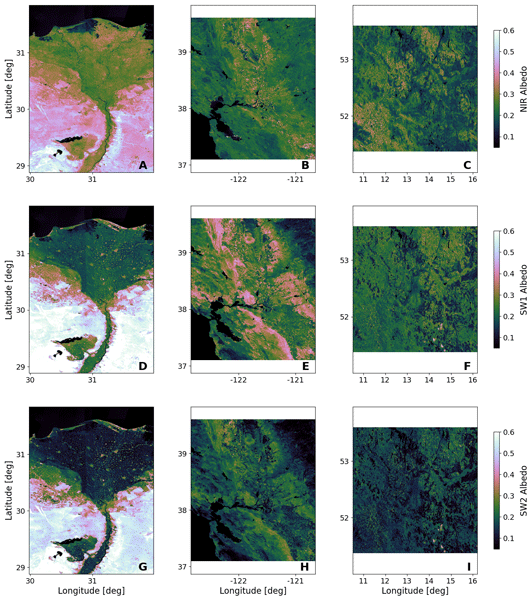
Greenhouse gas column measurements from space using reflected sunlight have to make assumptions about the Earth's surface elevation. Usually, it assumed that the elevation representing the satellite's spatial sample is the unweighted average of high-resolution surface elevation data. We find and show with many examples that the surface elevation should be weighted by the surface reflectance in the respective wavelength bands. This improves errors in the retrieval of trace gases.
Mari C. Martinez-Velarte, Jochen Landgraf, Ben Veihelmann, Bernd Sierk, and Tobias Borsdorff
Atmos. Meas. Tech., 19, 4703–4720, https://doi.org/10.5194/amt-19-4703-2026, https://doi.org/10.5194/amt-19-4703-2026, 2026
Short summary
Short summary
Launched in August 2025, Sentinel-5 provides daily CH4 and CO retrievals and is sensitive to CO2. Its shortwave-infrared (SWIR) mercury-cadmium-telluride (MCT) detectors exhibit persistence effects causing scene-dependent biases. This study quantifies these biases for CH4, CO, CO2, and the CH4/CO2 proxy using RemoTeC over regions with high radiance variability. Typical biases are small (<0.34 %), but outliers reach 1.59–4.01 %. Targeted post-filtering can reduce outliers and meet mission performance.
Tobias Borsdorff, Maarten Krol, Pepijn Veefkind, and Jochen Landgraf
Atmos. Meas. Tech., 19, 4617–4636, https://doi.org/10.5194/amt-19-4617-2026, https://doi.org/10.5194/amt-19-4617-2026, 2026
Short summary
Short summary
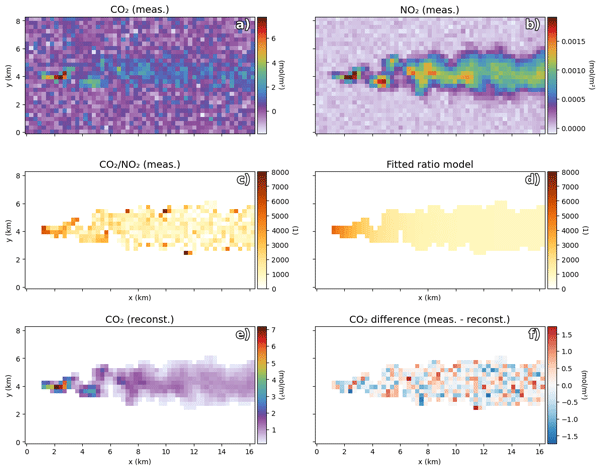
Industrial facilities release carbon dioxide and nitrogen dioxide. The Twin Anthropogenic Greenhouse Gas Observers (TANGO) mission, launching in 2028, will monitor both gases from ten thousand facilities per year using two satellites. We studied whether combining both improves carbon dioxide emission estimates and reveals plume chemistry. While this produces cleaner carbon dioxide images, precision does not improve as noise is redistributed not eliminated. Their ratio captures how nitrogen oxide converts to nitrogen dioxide within plumes.
Rakesh Subramanian, Rona L. Thompson, Martin Vojta, Oliver Schneising, and Andreas Stohl
Atmos. Chem. Phys., 26, 9757–9777, https://doi.org/10.5194/acp-26-9757-2026, https://doi.org/10.5194/acp-26-9757-2026, 2026
Short summary
Short summary
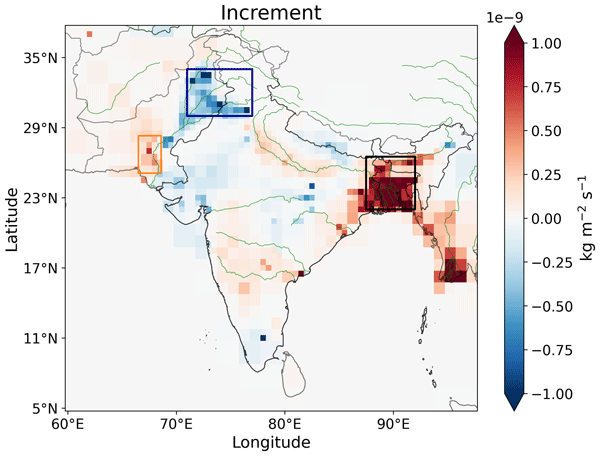
We used satellite observations and atmospheric models to understand methane emissions over South Asia, a region with large uncertainties. The study finds that the total emissions are moderately higher than previously thought, with important spatial and seasonal differences, especially in areas affected by monsoon rainfall and seasonal flooding. The results highlight the influence of rainfall, wetlands, and agriculture on CH₄ emissions and show the need for seasonally resolved emission estimates.

Xin Zhang, Joannes D. Maasakkers, Tobias A. de Jong, Paul Tol, Frances Reuland, Adam R. Brandt, Eric A. Kort, Taylor J. Adams, and Ilse Aben
Geosci. Model Dev., 19, 5979–6000, https://doi.org/10.5194/gmd-19-5979-2026, https://doi.org/10.5194/gmd-19-5979-2026, 2026
Short summary
Short summary
Reducing emissions of greenhouse gases such as methane and carbon dioxide is essential for addressing climate change. We developed HyperGas, an open tool that uses hyperspectral satellite images to retrieve and detect greenhouse gas plumes. It helps scientists locate emission sources, estimate their strength, and examine uncertainties through an easy workflow and visual app. Our goal is to make tracking human-made emissions more accurate and accessible, supporting better climate monitoring.
Emeline Tapin, Antoine Berchet, Adrien Martinez, Malika Menoud, Joël Thanwerdas, Xin Lan, Edward Malina, Daniele Gasbarra, and Marielle Saunois
Earth Syst. Sci. Data, 18, 4793–4832, https://doi.org/10.5194/essd-18-4793-2026, https://doi.org/10.5194/essd-18-4793-2026, 2026
Short summary
Short summary
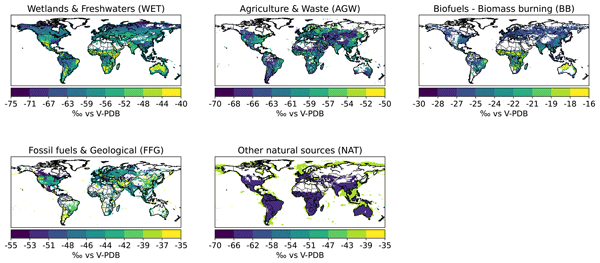
We present global δ¹³C-CH₄ source signature maps (1998–2022) at 1°×1° resolution for five emission sectors and 11 sub-sectors, with quantified uncertainties. Sensitivity experiments with an atmospheric transport model assess how uncertainties in emissions, isotopic signatures, OH sinks, and kinetic isotope effects influence atmospheric δ¹³C-CH₄ and CH₄, providing guidance for isotopic inversions.
John Worden, Sudhanshu Pandey, Hannah Nesser, Kevin Bowman, Colin Harkins, Congmeng Lyu, Joannes D. Maasakkers, Deborah Gordon, Daniel Jacob, Lucas Estrada, Daniel J. Varon, James D. East, Lauren Schmeisser, and Zhen Qu
Atmos. Chem. Phys., 26, 8855–8873, https://doi.org/10.5194/acp-26-8855-2026, https://doi.org/10.5194/acp-26-8855-2026, 2026
Short summary
Short summary
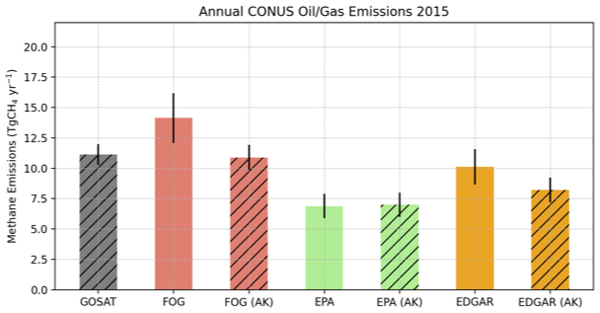
To support methane reduction, we compared three widely used maps of methane emissions in the United States with estimates derived from a methane-measuring satellite from 2012 to 2020. The satellite indicates higher emissions from oil and gas production and from livestock in several regions, while other sources were harder to pin down. Neither approach shows a clear change over time. The results point to where better measurements can most improve emissions reporting and guide mitigation.
Mengze Li, Robert B. Jackson, Marielle Saunois, Philippe Ciais, Ben Poulter, Josep G. Canadell, Prabir K. Patra, Hanqin Tian, Zhen Zhang, Etienne Fluet-Chouinard, Zutao Ouyang, Ting Zhang, David J. Beerling, Dmitry A. Belikov, Philippe Bousquet, Danilo Custodio, Naveen Chandra, Xinyu Dou, Nicola Gedney, Peter O. Hopcroft, Alison M. Hoyt, Kazuhito Ichii, Akihito Ito, Atul K. Jain, Katherine Jensen, Fortunat Joos, Thomas Kleinen, Masayuki Kondo, Fa Li, Tingting Li, Xiangyu Liu, Shamil Maksyutov, Avni Malhotra, Adrien Martinez, Kyle McDonald, Joe R. Melton, Jurek Müller, Yosuke Niwa, Shufen Pan, Shushi Peng, Changhui Peng, Zhangcai Qin, Peter Raymond, William Riley, Arjo Segers, Rona L. Thompson, Aki Tsuruta, Yi Xi, Kunxiaojia Yuan, Wenxin Zhang, Bo Zheng, Qing Zhu, Qiuan Zhu, and Qianlai Zhuang
Earth Syst. Sci. Data, 18, 3507–3524, https://doi.org/10.5194/essd-18-3507-2026, https://doi.org/10.5194/essd-18-3507-2026, 2026
Short summary
Short summary
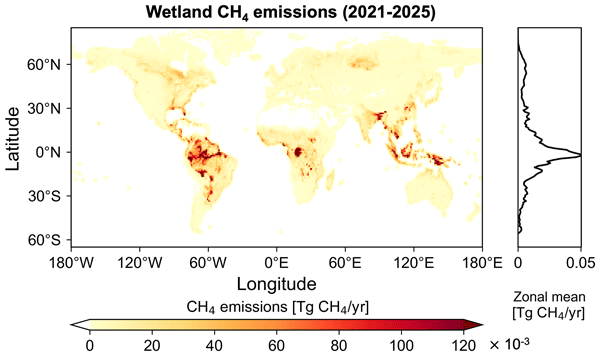
We proposed a framework that combines machine-learning and climate data to predict global natural vegetated wetland methane emissions for 2000–2025. We found that although total global emissions remained stable in the post-2020s, Northern Hemisphere emissions surged whilst tropical emissions fell. This approach allows us to rapidly monitor emissions and provides early warnings for climate impacts.
Oliver Schneising, Heinrich Bovensmann, Michael Buchwitz, Matthias Buschmann, Nicholas M. Deutscher, David W. T. Griffith, Jonas Hachmeister, Frank Hase, Laura T. Iraci, Rigel Kivi, Isamu Morino, Hirofumi Ohyama, Christof Petri, Maximilian Reuter, John Robinson, Coleen Roehl, Mahesh Kumar Sha, Kei Shiomi, Kimberly Strong, Ralf Sussmann, Yao Té, Voltaire A. Velazco, Mihalis Vrekoussis, Wei Wang, Thorsten Warneke, Damien Weidmann, Debra Wunch, Minqiang Zhou, and Hartmut Bösch
Atmos. Meas. Tech., 19, 2407–2435, https://doi.org/10.5194/amt-19-2407-2026, https://doi.org/10.5194/amt-19-2407-2026, 2026
Short summary
Short summary
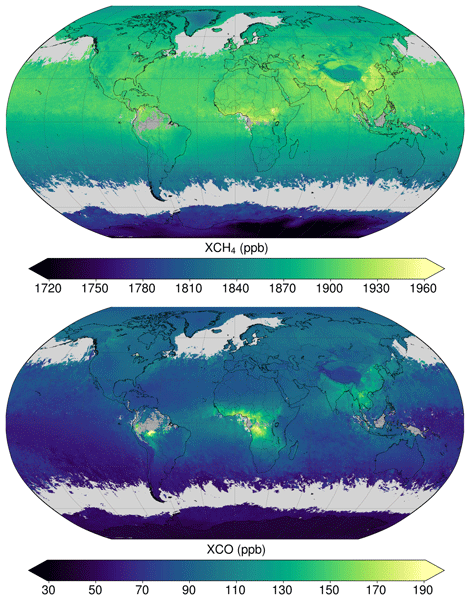
We present an improved version of the TROPOMI/WFMD (TROPOspheric Monitoring Instrument/Weighting Function Modified Differential) algorithm for the simultaneous retrieval of atmospheric methane and carbon monoxide from satellite observations. The updated data product combines higher data yield with better precision and accuracy, expanding its suitability for a wider range of scientific applications. These substantial advances are mainly due to refined quality filtering, enabling more reliable identification of cloudy scenes and mitigating specific aerosol-related issues.
Thara Anna Mathew, Dhanyalekshmi Pillai, Jithin Sukumaran, Monish Vijay Deshpande, Michael Buchwitz, Oliver Schneising, Vishnu Thilakan, Aparnna Ravi, Sanjid Backer Kanakkassery, Advaith J. Vinod, Sivarajan Sijikumar, Imran A. Girach, and S. Suresh Babu
Atmos. Chem. Phys., 26, 4453–4477, https://doi.org/10.5194/acp-26-4453-2026, https://doi.org/10.5194/acp-26-4453-2026, 2026
Short summary
Short summary
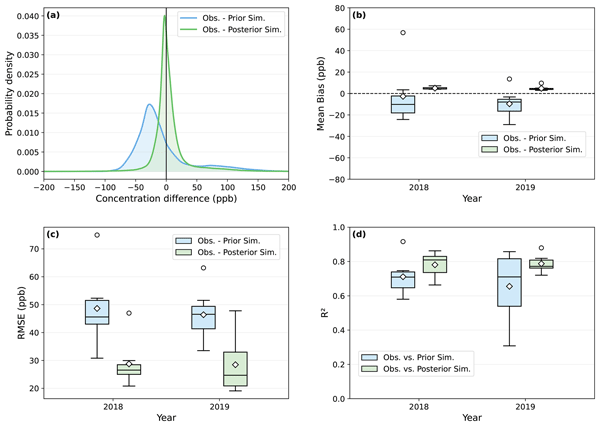
India poses a significant methane emission burden, but limited observations challenge accurate national estimations. This study combines satellite retrievals, ground measurements, and models to improve India’s 2018–2019 methane budget. Derived emissions are higher than national reports but lower than global inventories. The findings highlight the potential of satellite instruments to report emissions accurately. Expanded methane monitoring is vital for meeting climate change mitigation targets.
Kanwal Shahzadi, Matthias Schneider, Nga Ying Lo, Frank Hase, Jörg Meyer, Ugur Cayoglu, Tobias Borsdorff, and Mari C. Martinez-Velarte
Earth Syst. Sci. Data, 18, 2153–2177, https://doi.org/10.5194/essd-18-2153-2026, https://doi.org/10.5194/essd-18-2153-2026, 2026
Short summary
Short summary
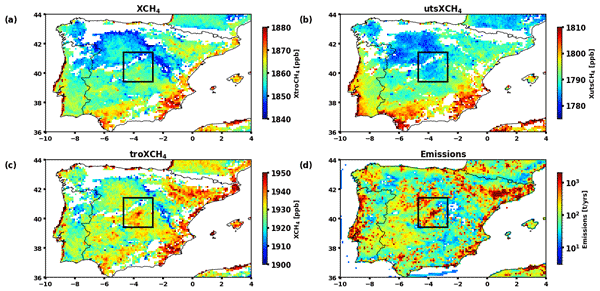
We merge TROPOMI and IASI L2 methane data from January 2018 to June 2021 on a global scale. The data merging yields total column-averaged and upper tropospheric/stratospheric partial column-averaged mole fractions (already provided by the individual data sets). In addition, it outputs tropospheric partial column-averaged mole fractions (not provided by any of the two individual data sets). We briefly document their increased potential for quantifying near-surface methane emissions.
Srijana Lama, Joannes D. Maasakkers, Xin Zhang, Marianne Girard, Swarna Dutt, Suyash Nandgaonkar, Daniel J. Varon, Melissa P. Sulprizio, Lucas A. Estrada, Nicholas Balasus, Robert J. Parker, Yukio Terao, and Ilse Aben
EGUsphere, https://doi.org/10.5194/egusphere-2025-6528, https://doi.org/10.5194/egusphere-2025-6528, 2026
Short summary
Short summary
Methane is the second most important anthropogenic greenhouse gas in terms of radiative forcing, with a global warming potential 27–30 times that of CO2 over a 100-year timescale. Effective mitigation requires a detailed understanding of the spatial distribution and magnitude of emissions. Here, we quantify India’s 2021 methane emissions at a resolution of up to 0.25° × 0.3125° using TROPOMI observations within the Bayesian Integrated Methane Inversion framework.
Eleftherios Ioannidis, Antoon Meesters, Michael Steiner, Dominik Brunner, Friedemann Reum, Isabelle Pison, Antoine Berchet, Rona Thompson, Espen Sollum, Frank-Thomas Koch, Christoph Gerbig, Fenjuan Wang, Shamil Maksyutov, Aki Tsuruta, Maria Tenkanen, Tuula Aalto, Guillaume Monteil, Hong Lin, Ge Ren, Marko Scholze, and Sander Houweling
Earth Syst. Sci. Data, 18, 167–198, https://doi.org/10.5194/essd-18-167-2026, https://doi.org/10.5194/essd-18-167-2026, 2026
Short summary
Short summary
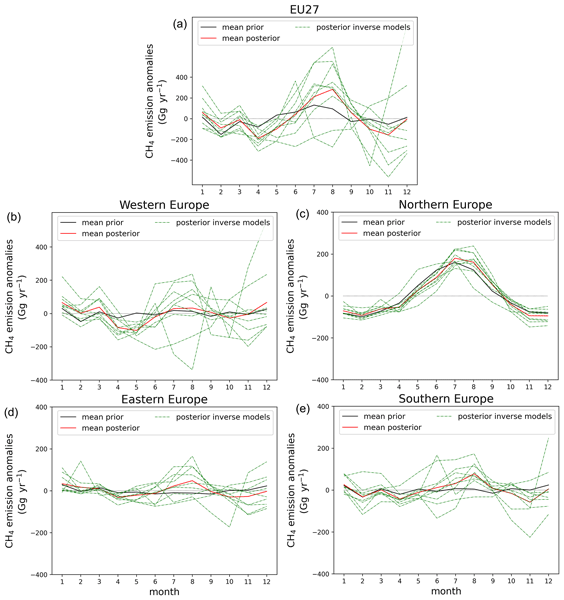
This paper describes a detailed study on CH4 European emissions, using different methodologies (9 total inverse models). The study spans over 15 years and provides detailed information on European CH4 emission trends and seasonality, using in-situ data, including Integrated Carbon Observation System (ICOS) network. Our results highlight the importance of improving details in the inversion setup, such as the treatment of lateral boundary conditions to narrow the uncertainty ranges further.
Nicole Montenegro, Antoine Berchet, Adrien Martinez, Joël Thanwerdas, Phillipe Bousquet, Isabelle Pison, and Marielle Saunois
EGUsphere, https://doi.org/10.5194/egusphere-2025-5923, https://doi.org/10.5194/egusphere-2025-5923, 2025
Short summary
Short summary
Top-down CH₄ flux estimates face substantial uncertainties arising from observational coverage, data and prior errors, and atmospheric transport. In this study, we use Observing System Simulation Experiments (OSSEs) to determine the capability of current observing systems to retrieve surface fluxes of CH₄ and to quantify the magnitude of their associated uncertainties. In situ data provide the strongest constraint, while combined systems inversions further enhance performance.
Hui Li, Philippe Ciais, Pramod Kumar, Didier A. Hauglustaine, Frédéric Chevallier, Grégoire Broquet, Dylan B. Millet, Kelley C. Wells, Jinghui Lian, and Bo Zheng
Earth Syst. Sci. Data, 17, 7035–7054, https://doi.org/10.5194/essd-17-7035-2025, https://doi.org/10.5194/essd-17-7035-2025, 2025
Short summary
Short summary
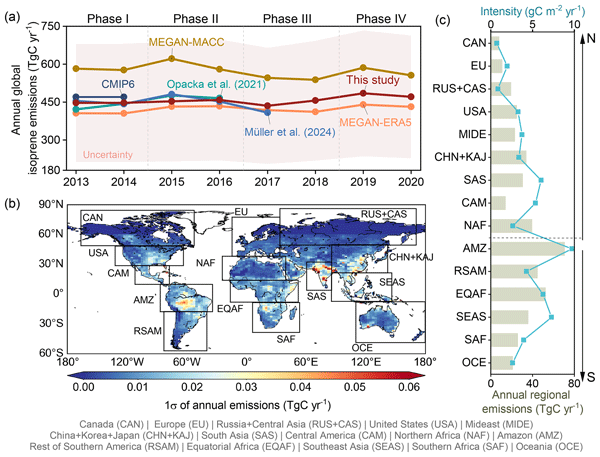
We present the first global, multi-year maps of monthly isoprene emissions (2013–2020) derived from satellite isoprene observations, averaging 456 TgC yr-1. The dataset reveals two emission peaks linked to 2015–2016 El Niño and 2019–2020 extreme heat events, driven mainly by tropical regions such as the Amazon. It highlights the region-specific sensitivity of biogenic isoprene emissions to temperature anomalies, providing new insights into their roles in air quality and climate feedbacks.
Hannah Nesser, Kevin W. Bowman, Matthew D. Thill, Daniel J. Varon, Cynthia A. Randles, Ashutosh Tewari, Felipe J. Cardoso-Saldaña, Emily Reidy, Joannes D. Maasakkers, and Daniel J. Jacob
Geosci. Model Dev., 18, 9279–9291, https://doi.org/10.5194/gmd-18-9279-2025, https://doi.org/10.5194/gmd-18-9279-2025, 2025
Short summary
Short summary
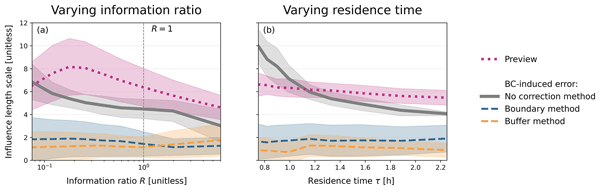
Regional analyses of atmospheric trace gases can improve knowledge of fluxes at high resolution but rely on specified boundary conditions (BCs) at the domain edges. Biases in the often-uncertain BCs propagate to the inferred fluxes. We develop a framework to explain how errors in the BCs influence the optimized fluxes, derive two metrics to estimate this influence, and compare two methods to correct for the biases. We demonstrate correcting BCs directly is more effective at reducing bias.
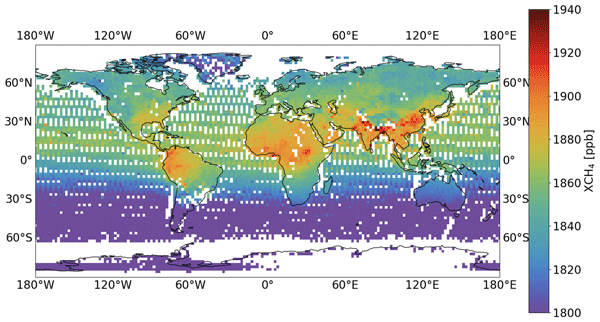
Andrew Gerald Barr, Jochen Landgraf, Mari Martinez-Velarte, Mihalis Vrekoussis, Ralf Sussmann, Isamu Morino, Kimberly Strong, Minqiang Zhou, Voltaire A. Velazco, Hirofumi Ohyama, Thorsten Warneke, Frank Hase, and Tobias Borsdorff
Atmos. Meas. Tech., 18, 6093–6123, https://doi.org/10.5194/amt-18-6093-2025, https://doi.org/10.5194/amt-18-6093-2025, 2025
Short summary
Short summary
The Greenhouse Gases Observing Satellite-2 (GOSAT-2) is a satellite dedicated to measuring concentrations of greenhouse gases from space. Since its launch, the increase of CH4 and CO2 concentrations in the atmosphere is clear. The datasets obtained from GOSAT-2 are used in the Copernicus atmospheric services to monitor the climate, in light of the Paris Agreement. Here we present robust datasets of these gases from GOSAT-2, including a novel machine learning approach to data quality filtering.
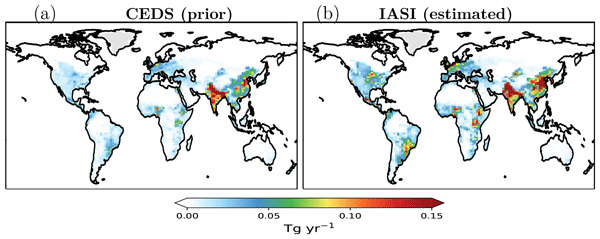
Pramod Kumar, Grégoire Broquet, Didier Hauglustaine, Maureen Beaudor, Lieven Clarisse, Martin Van Damme, Pierre Coheur, Anne Cozic, Bo Zheng, Beatriz Revilla Romero, Antony Delavois, and Philippe Ciais
Atmos. Chem. Phys., 25, 12379–12407, https://doi.org/10.5194/acp-25-12379-2025, https://doi.org/10.5194/acp-25-12379-2025, 2025
Short summary
Short summary
Global maps of the NH3 emissions over 2019–2022 are derived using IASI NH3 spaceborne observations, the LMDZ-INCA chemistry transport model at 1.27°×2.5° resolution, and the mass-balance approach. The average global NH3 emissions over the period are ~97 Tg NH3 yr-1, which is significantly higher than three reference inventories. The analysis provides confidence in the seasonal variability and regional budgets and provides new insights into NH3 emissions at global and regional scales.
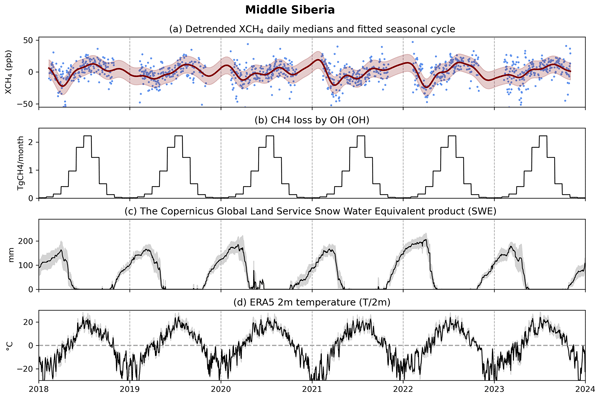
Ella Kivimäki, Maria Tenkanen, Tuula Aalto, Michael Buchwitz, Kari Luojus, Jouni Pulliainen, Kimmo Rautiainen, Oliver Schneising, Anu-Maija Sundström, Johanna Tamminen, Aki Tsuruta, and Hannakaisa Lindqvist
Biogeosciences, 22, 5193–5230, https://doi.org/10.5194/bg-22-5193-2025, https://doi.org/10.5194/bg-22-5193-2025, 2025
Short summary
Short summary
We study how environmental variables influencing natural methane fluxes explain the seasonal variability in satellite-observed methane in Northern Hemisphere high-latitude wetland areas. Using two atmospheric model set-ups, we assess consistency with satellite data. Methane loss through reaction with hydroxyl radicals and links with snow cover, temperature, and snowmelt had the strongest influence. Our study highlights the value of satellite observations for understanding large-scale wetland emissions.
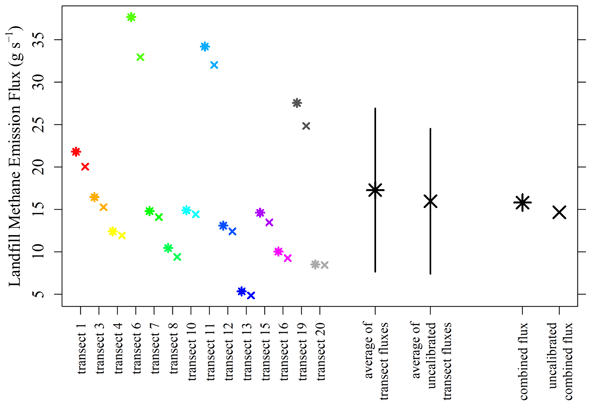
Adil Shah, Olivier Laurent, Pramod Kumar, Grégoire Broquet, Loïc Loigerot, Timothé Depelchin, Mathis Lozano, Camille Yver Kwok, Carole Philippon, Clément Romand, Elisa Allegrini, Matthieu Trombetti, and Philippe Ciais
Atmos. Meas. Tech., 18, 3425–3451, https://doi.org/10.5194/amt-18-3425-2025, https://doi.org/10.5194/amt-18-3425-2025, 2025
Short summary
Short summary
Acetylene mole fraction measurements from the Picarro G2203 were characterised. Abnormal sensor behaviour was observed in wet conditions. A dry linear calibration was derived, although this was invalid below 1.2 ppb due to unstable measurements. The instrument was used to measure acetylene as a methane tracer at a landfill site. Fluxes were derived from 14 downwind transects using both raw and calibrated acetylene mole fraction, with raw measurements resulting in 8 % flux underestimation.
Michael Weimer, Michael Hilker, Stefan Noël, Max Reuter, Michael Buchwitz, Blanca Fuentes Andrade, Rüdiger Lang, Bernd Sierk, Yasjka Meijer, Heinrich Bovensmann, John P. Burrows, and Hartmut Bösch
Atmos. Meas. Tech., 18, 3321–3340, https://doi.org/10.5194/amt-18-3321-2025, https://doi.org/10.5194/amt-18-3321-2025, 2025
Short summary
Short summary
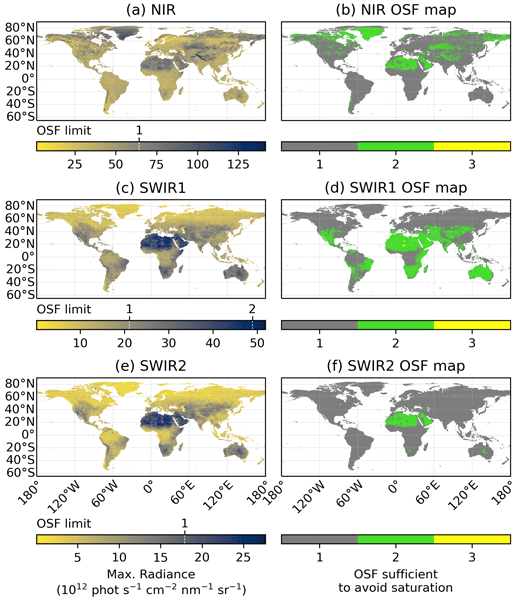
Optical detectors have a maximum signal (saturation). Exceedance means that the measurement has to be discarded. We investigate where saturation will occur for the future European satellite mission dedicated to CO2 monitoring (CO2M) and strategies to avoid saturation. Saturation impacts coverage and precision, both of which are important for estimation of local CO2 emissions. We find that taking two pictures per sampling should be sufficient to avoid saturation for CO2M, with some impact on CO2 precision.
Rimal Abeed, Audrey Fortems-Cheiney, Grégoire Broquet, Robin Plauchu, Isabelle Pison, Antoine Berchet, Elise Potier, Bo Zheng, Gaëlle Dufour, Adriana Coman, Dilek Savas, Guillaume Siour, Henk Eskes, Beatriz Revilla-Romero, Antony Delavois, and Philippe Ciais
EGUsphere, https://doi.org/10.5194/egusphere-2025-3329, https://doi.org/10.5194/egusphere-2025-3329, 2025
Preprint archived
Short summary
Short summary
We investigate changes in air pollution from nitrogen oxides NOx (=NO+NO2) across Eastern China from 2019 to 2021, using a satellite-based modelling approach. Our results show a drop in pollution in 2020 in most provinces, and along the China-Mongolia-Russia Economic Corridor. The analysis also captures emission variations during the Lunar New Year. By estimating emissions at the provincial level, the study provides insights into how major events and policy measures influence local air quality.
Antoine Berchet, Isabelle Pison, Camille Huselstein, Clément Narbaud, Marine Remaud, Sauveur Belviso, Camille Abadie, and Fabienne Maignan
Atmos. Chem. Phys., 25, 7499–7525, https://doi.org/10.5194/acp-25-7499-2025, https://doi.org/10.5194/acp-25-7499-2025, 2025
Short summary
Short summary
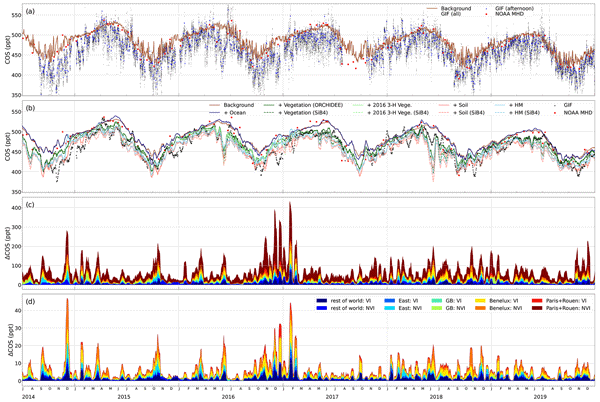
We use the measurements of atmospheric carbonyl sulfide (COS) concentrations at the monitoring site of Gif-sur-Yvette (in the Paris region) from August 2014 to December 2019, combined with existing knowledge on COS fluxes in the atmosphere and a transport model, to gain insight into COS fluxes, either natural, such as oceanic emissions or vegetation and soil fluxes, or anthropogenic, from industrial activities and power generation.
Audrey Fortems-Cheiney, Grégoire Broquet, Elise Potier, Antoine Berchet, Isabelle Pison, Adrien Martinez, Robin Plauchu, Rimal Abeed, Aurélien Sicsik-Paré, Gaelle Dufour, Adriana Coman, Dilek Savas, Guillaume Siour, Henk Eskes, Hugo A. C. Denier van der Gon, and Stijn N. C. Dellaert
Atmos. Chem. Phys., 25, 6047–6068, https://doi.org/10.5194/acp-25-6047-2025, https://doi.org/10.5194/acp-25-6047-2025, 2025
Short summary
Short summary
This study assesses the potential of the Ozone Monitoring Instrument (OMI) and the TROPOspheric Monitoring Instrument (TROPOMI) satellite observations to inform about the decrease in anthropogenic emissions of nitrogen oxides (NOx) in 2019 compared with 2005 at regional to national scales in Europe. Both the OMI and TROPOMI inversions show decreases in European NOx anthropogenic emission budgets in 2019 compared to 2005 but with different magnitudes.
Joffrey Dumont Le Brazidec, Pierre Vanderbecken, Alban Farchi, Grégoire Broquet, Gerrit Kuhlmann, and Marc Bocquet
Geosci. Model Dev., 18, 3607–3622, https://doi.org/10.5194/gmd-18-3607-2025, https://doi.org/10.5194/gmd-18-3607-2025, 2025
Short summary
Short summary
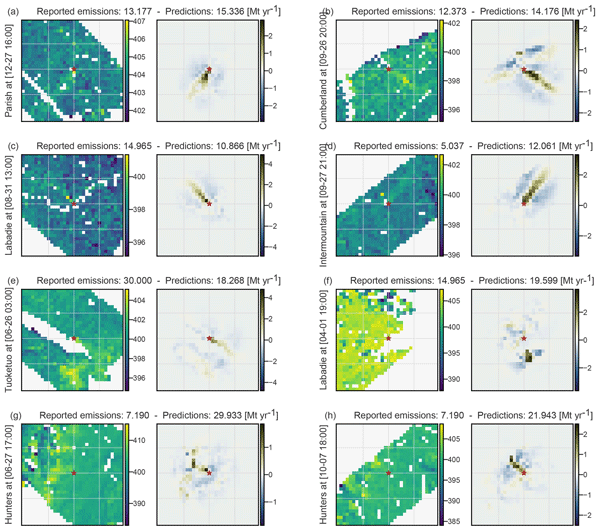
We developed a deep learning method to estimate CO2 emissions from power plants using satellite images. Trained and validated on simulated data, our model accurately predicts emissions despite challenges like cloud cover. When applied to real OCO3 satellite images, the results closely match reported emissions. This study shows that neural networks trained on simulations can effectively analyse real satellite data, offering a new way to monitor CO2 emissions from space.
Lucas A. Estrada, Daniel J. Varon, Melissa Sulprizio, Hannah Nesser, Zichong Chen, Nicholas Balasus, Sarah E. Hancock, Megan He, James D. East, Todd A. Mooring, Alexander Oort Alonso, Joannes D. Maasakkers, Ilse Aben, Sabour Baray, Kevin W. Bowman, John R. Worden, Felipe J. Cardoso-Saldaña, Emily Reidy, and Daniel J. Jacob
Geosci. Model Dev., 18, 3311–3330, https://doi.org/10.5194/gmd-18-3311-2025, https://doi.org/10.5194/gmd-18-3311-2025, 2025
Short summary
Short summary
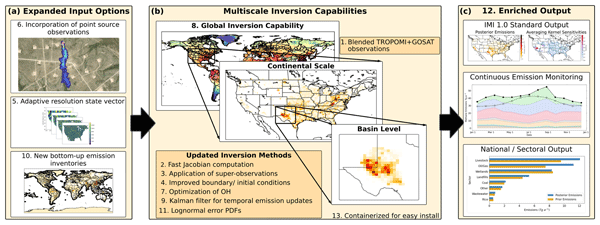
Reducing emissions of methane, a powerful greenhouse gas, is a top policy concern for mitigating anthropogenic climate change. The Integrated Methane Inversion (IMI) is an advanced, cloud-based software that translates satellite observations into actionable emissions data. Here we present IMI version 2.0 with vastly expanded capabilities. These updates enable a wider range of scientific and stakeholder applications from individual basin to global scales with continuous emissions monitoring.

Johann Rasmus Nüß, Nikos Daskalakis, Fabian Günther Piwowarczyk, Angelos Gkouvousis, Oliver Schneising, Michael Buchwitz, Maria Kanakidou, Maarten C. Krol, and Mihalis Vrekoussis
Geosci. Model Dev., 18, 2861–2890, https://doi.org/10.5194/gmd-18-2861-2025, https://doi.org/10.5194/gmd-18-2861-2025, 2025
Short summary
Short summary
We estimate carbon monoxide emissions through inverse modeling, an approach where measurements of tracers in the atmosphere are fed to a model to calculate backwards in time (inverse) where the tracers came from. We introduce measurements from a new satellite instrument and show that, in most places globally, these on their own sufficiently constrain the emissions. This alleviates the need for additional datasets, which could shorten the delay for future carbon monoxide source estimates.
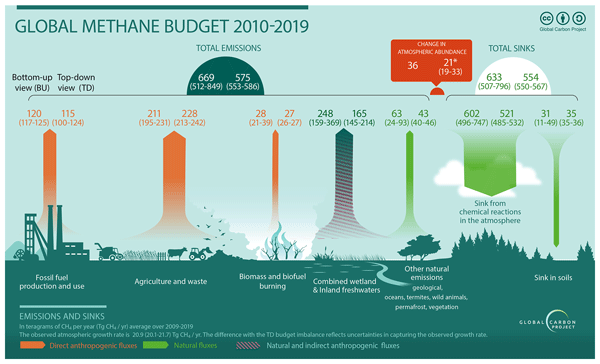
Marielle Saunois, Adrien Martinez, Benjamin Poulter, Zhen Zhang, Peter A. Raymond, Pierre Regnier, Josep G. Canadell, Robert B. Jackson, Prabir K. Patra, Philippe Bousquet, Philippe Ciais, Edward J. Dlugokencky, Xin Lan, George H. Allen, David Bastviken, David J. Beerling, Dmitry A. Belikov, Donald R. Blake, Simona Castaldi, Monica Crippa, Bridget R. Deemer, Fraser Dennison, Giuseppe Etiope, Nicola Gedney, Lena Höglund-Isaksson, Meredith A. Holgerson, Peter O. Hopcroft, Gustaf Hugelius, Akihiko Ito, Atul K. Jain, Rajesh Janardanan, Matthew S. Johnson, Thomas Kleinen, Paul B. Krummel, Ronny Lauerwald, Tingting Li, Xiangyu Liu, Kyle C. McDonald, Joe R. Melton, Jens Mühle, Jurek Müller, Fabiola Murguia-Flores, Yosuke Niwa, Sergio Noce, Shufen Pan, Robert J. Parker, Changhui Peng, Michel Ramonet, William J. Riley, Gerard Rocher-Ros, Judith A. Rosentreter, Motoki Sasakawa, Arjo Segers, Steven J. Smith, Emily H. Stanley, Joël Thanwerdas, Hanqin Tian, Aki Tsuruta, Francesco N. Tubiello, Thomas S. Weber, Guido R. van der Werf, Douglas E. J. Worthy, Yi Xi, Yukio Yoshida, Wenxin Zhang, Bo Zheng, Qing Zhu, Qiuan Zhu, and Qianlai Zhuang
Earth Syst. Sci. Data, 17, 1873–1958, https://doi.org/10.5194/essd-17-1873-2025, https://doi.org/10.5194/essd-17-1873-2025, 2025
Short summary
Short summary
Methane (CH4) is the second most important human-influenced greenhouse gas in terms of climate forcing after carbon dioxide (CO2). A consortium of multi-disciplinary scientists synthesise and update the budget of the sources and sinks of CH4. This edition benefits from important progress in estimating emissions from lakes and ponds, reservoirs, and streams and rivers. For the 2010s decade, global CH4 emissions are estimated at 575 Tg CH4 yr-1, including ~65 % from anthropogenic sources.
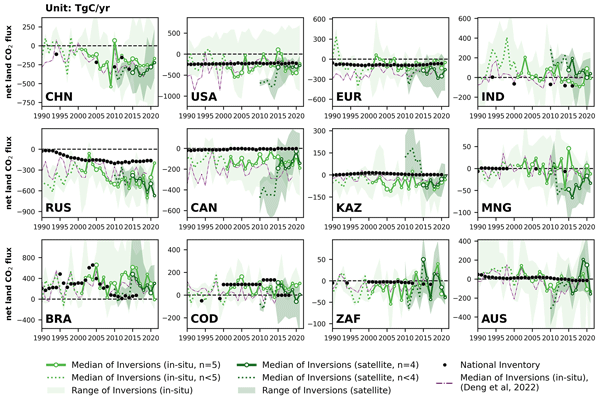
Zhu Deng, Philippe Ciais, Liting Hu, Adrien Martinez, Marielle Saunois, Rona L. Thompson, Kushal Tibrewal, Wouter Peters, Brendan Byrne, Giacomo Grassi, Paul I. Palmer, Ingrid T. Luijkx, Zhu Liu, Junjie Liu, Xuekun Fang, Tengjiao Wang, Hanqin Tian, Katsumasa Tanaka, Ana Bastos, Stephen Sitch, Benjamin Poulter, Clément Albergel, Aki Tsuruta, Shamil Maksyutov, Rajesh Janardanan, Yosuke Niwa, Bo Zheng, Joël Thanwerdas, Dmitry Belikov, Arjo Segers, and Frédéric Chevallier
Earth Syst. Sci. Data, 17, 1121–1152, https://doi.org/10.5194/essd-17-1121-2025, https://doi.org/10.5194/essd-17-1121-2025, 2025
Short summary
Short summary
This study reconciles national greenhouse gas (GHG) inventories with updated atmospheric inversion results to evaluate discrepancies for three principal GHG fluxes at the national level. Compared to our previous study, new satellite-based CO2 inversions were included and an updated mask of managed lands was used, improving agreement for Brazil and Canada. The proposed methodology can be regularly applied as a check to assess the gap between top-down inversions and bottom-up inventories.
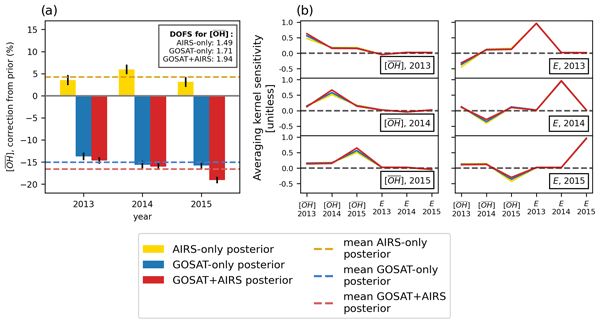
Elise Penn, Daniel J. Jacob, Zichong Chen, James D. East, Melissa P. Sulprizio, Lori Bruhwiler, Joannes D. Maasakkers, Hannah Nesser, Zhen Qu, Yuzhong Zhang, and John Worden
Atmos. Chem. Phys., 25, 2947–2965, https://doi.org/10.5194/acp-25-2947-2025, https://doi.org/10.5194/acp-25-2947-2025, 2025
Short summary
Short summary
The hydroxyl radical (OH) destroys many air pollutants, including methane. Global-mean OH cannot be directly measured, and thus it is inferred with the methyl chloroform (MCF) proxy. MCF is decreasing, and a replacement is needed. We use satellite observations of methane in two spectral ranges as a proxy for OH. We find shortwave infrared observations can characterize yearly OH and its seasonality but not the latitudinal distribution. Thermal infrared observations add little information.
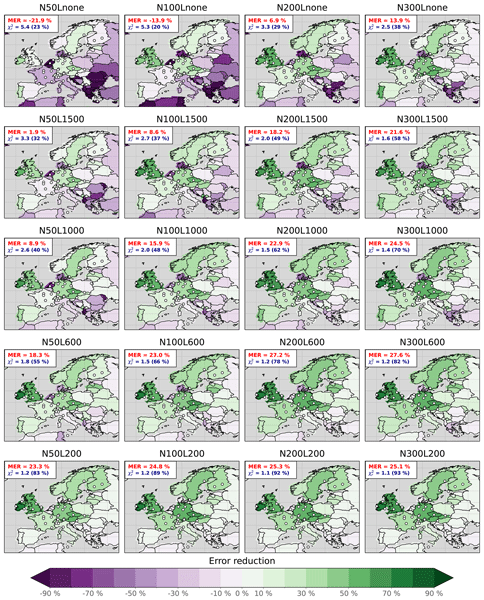
Joël Thanwerdas, Antoine Berchet, Lionel Constantin, Aki Tsuruta, Michael Steiner, Friedemann Reum, Stephan Henne, and Dominik Brunner
Geosci. Model Dev., 18, 1505–1544, https://doi.org/10.5194/gmd-18-1505-2025, https://doi.org/10.5194/gmd-18-1505-2025, 2025
Short summary
Short summary
The Community Inversion Framework (CIF) brings together methods for estimating greenhouse gas fluxes from atmospheric observations. The initial ensemble method implemented in CIF was found to be incomplete and could hardly be compared to other ensemble methods employed in the inversion community. In this paper, we present and evaluate a new implementation of the ensemble mode, building upon the initial developments.
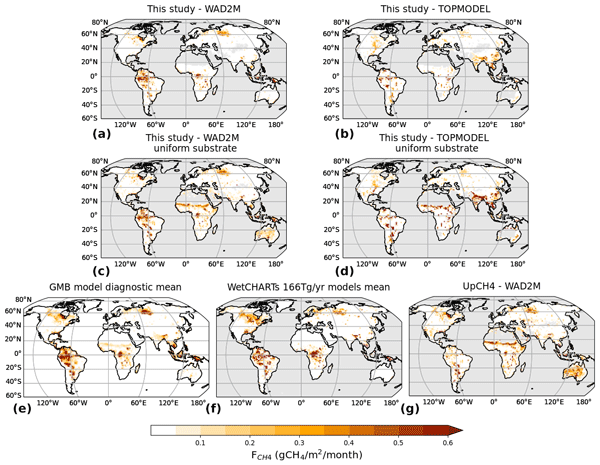
Juliette Bernard, Elodie Salmon, Marielle Saunois, Shushi Peng, Penélope Serrano-Ortiz, Antoine Berchet, Palingamoorthy Gnanamoorthy, Joachim Jansen, and Philippe Ciais
Geosci. Model Dev., 18, 863–883, https://doi.org/10.5194/gmd-18-863-2025, https://doi.org/10.5194/gmd-18-863-2025, 2025
Short summary
Short summary
Despite their importance, uncertainties remain in the evaluation of the drivers of temporal variability of methane emissions from wetlands on a global scale. Here, a simplified global model is developed, taking advantage of advances in remote-sensing data and in situ observations. The model reproduces the large spatial and temporal patterns of emissions, albeit with limitations in the tropics due to data scarcity. This model, while simple, can provide valuable insights into sensitivity analyses.
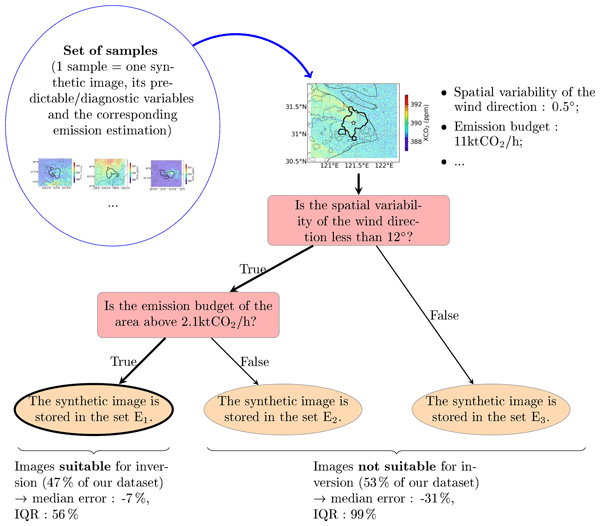
Alexandre Danjou, Grégoire Broquet, Andrew Schuh, François-Marie Bréon, and Thomas Lauvaux
Atmos. Meas. Tech., 18, 533–554, https://doi.org/10.5194/amt-18-533-2025, https://doi.org/10.5194/amt-18-533-2025, 2025
Short summary
Short summary
We study the capacity of XCO2 spaceborne imagery to estimate urban CO2 emissions with synthetic data. We define automatic and standard methods and objective criteria for image selection. The wind variability and urban emission budget guide the emission estimation error. Images with low wind variability and high urban emissions account for 47 % of images and give a bias in the emission estimation of −7 % and a spread of 56 %. Other images give a bias of −31 % and a spread of 99 %.
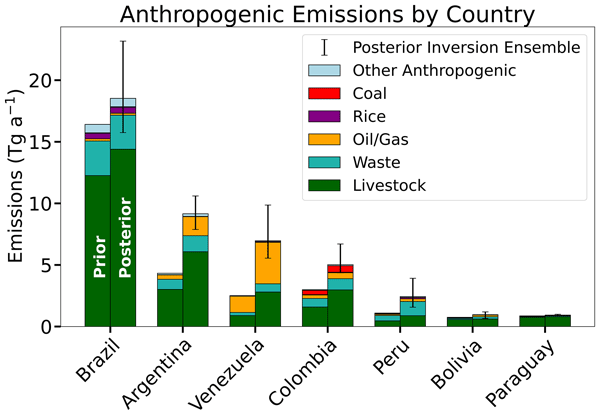
Sarah E. Hancock, Daniel J. Jacob, Zichong Chen, Hannah Nesser, Aaron Davitt, Daniel J. Varon, Melissa P. Sulprizio, Nicholas Balasus, Lucas A. Estrada, María Cazorla, Laura Dawidowski, Sebastián Diez, James D. East, Elise Penn, Cynthia A. Randles, John Worden, Ilse Aben, Robert J. Parker, and Joannes D. Maasakkers
Atmos. Chem. Phys., 25, 797–817, https://doi.org/10.5194/acp-25-797-2025, https://doi.org/10.5194/acp-25-797-2025, 2025
Short summary
Short summary
We quantify 2021 methane emissions in South America at up to 25 km × 25 km resolution using satellite methane observations. We find a 55 % upward adjustment to anthropogenic emission inventories, including those reported to the UN Framework Convention on Climate Change under the Paris Agreement. Our estimates match inventories for Brazil, Bolivia, and Paraguay but are much higher for other countries. Livestock emissions (65 % of anthropogenic emissions) show the largest discrepancies.
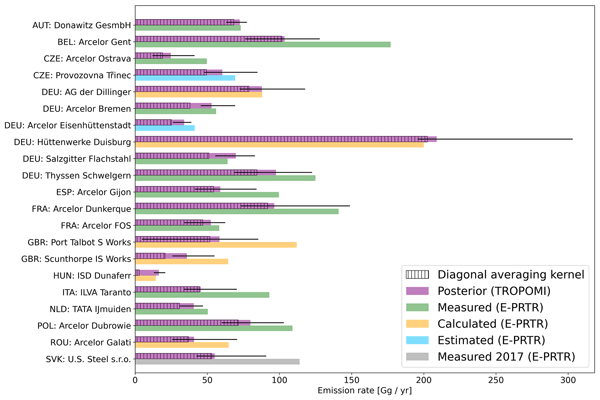
Gijs Leguijt, Joannes D. Maasakkers, Hugo A. C. Denier van der Gon, Arjo J. Segers, Tobias Borsdorff, Ivar R. van der Velde, and Ilse Aben
Atmos. Chem. Phys., 25, 555–574, https://doi.org/10.5194/acp-25-555-2025, https://doi.org/10.5194/acp-25-555-2025, 2025
Short summary
Short summary
The production of steel coincides with large emissions of greenhouse gases and air pollutants including carbon monoxide. European facilities are required to report their emissions, which are estimated using a variety of methods. We evaluate these estimates using carbon monoxide concentrations measured via satellite. We find generally good agreement between our values and those reported but also identify some uncertainties, showing that satellites can provide insights into these emissions.
Maximilian Reuter, Michael Hilker, Stefan Noël, Antonio Di Noia, Michael Weimer, Oliver Schneising, Michael Buchwitz, Heinrich Bovensmann, John P. Burrows, Hartmut Bösch, and Ruediger Lang
Atmos. Meas. Tech., 18, 241–264, https://doi.org/10.5194/amt-18-241-2025, https://doi.org/10.5194/amt-18-241-2025, 2025
Short summary
Short summary
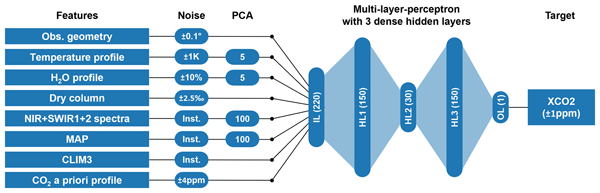
Carbon dioxide (CO2) and methane (CH4) are the main anthropogenic greenhouse gases. The European Copernicus CO2 monitoring satellite mission CO2M will provide measurements of their atmospheric concentrations, but the accuracy requirements are demanding and conventional retrieval methods computationally expensive. We present a new retrieval algorithm based on artificial neural networks that has the potential to meet the stringent requirements of the CO2M mission with minimal computational effort.
Jinghui Lian, Olivier Laurent, Mali Chariot, Luc Lienhardt, Michel Ramonet, Hervé Utard, Thomas Lauvaux, François-Marie Bréon, Grégoire Broquet, Karina Cucchi, Laurent Millair, and Philippe Ciais
Atmos. Meas. Tech., 17, 5821–5839, https://doi.org/10.5194/amt-17-5821-2024, https://doi.org/10.5194/amt-17-5821-2024, 2024
Short summary
Short summary
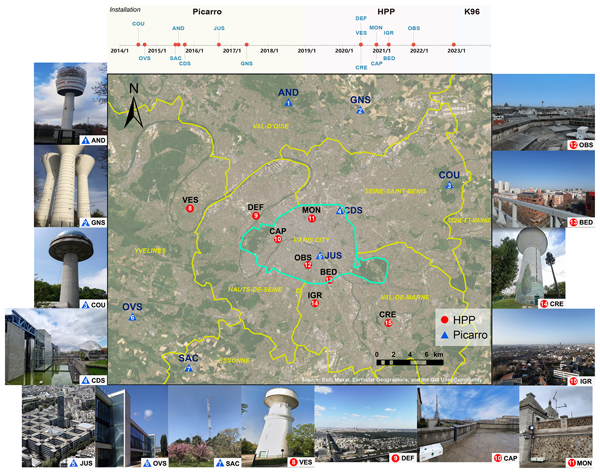
We have designed and deployed a mid-cost medium-precision CO2 sensor monitoring network in Paris since July 2020. The data are automatically calibrated by a newly implemented data processing system. The accuracies of the mid-cost instruments vary from 1.0 to 2.4 ppm for hourly afternoon measurements. Our model–data analyses highlight prospects for integrating mid-cost instrument data with high-precision measurements to improve fine-scale CO2 emission quantification in urban areas.
Ana Maria Roxana Petrescu, Glen P. Peters, Richard Engelen, Sander Houweling, Dominik Brunner, Aki Tsuruta, Bradley Matthews, Prabir K. Patra, Dmitry Belikov, Rona L. Thompson, Lena Höglund-Isaksson, Wenxin Zhang, Arjo J. Segers, Giuseppe Etiope, Giancarlo Ciotoli, Philippe Peylin, Frédéric Chevallier, Tuula Aalto, Robbie M. Andrew, David Bastviken, Antoine Berchet, Grégoire Broquet, Giulia Conchedda, Stijn N. C. Dellaert, Hugo Denier van der Gon, Johannes Gütschow, Jean-Matthieu Haussaire, Ronny Lauerwald, Tiina Markkanen, Jacob C. A. van Peet, Isabelle Pison, Pierre Regnier, Espen Solum, Marko Scholze, Maria Tenkanen, Francesco N. Tubiello, Guido R. van der Werf, and John R. Worden
Earth Syst. Sci. Data, 16, 4325–4350, https://doi.org/10.5194/essd-16-4325-2024, https://doi.org/10.5194/essd-16-4325-2024, 2024
Short summary
Short summary
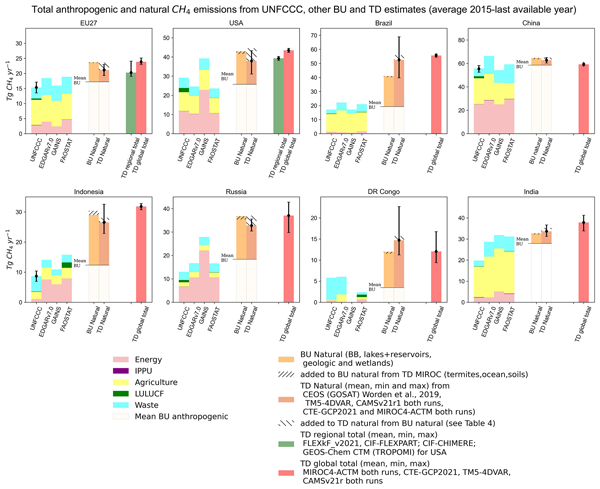
This study provides an overview of data availability from observation- and inventory-based CH4 emission estimates. It systematically compares them and provides recommendations for robust comparisons, aiming to steadily engage more parties in using observational methods to complement their UNFCCC submissions. Anticipating improvements in atmospheric modelling and observations, future developments need to resolve knowledge gaps in both approaches and to better quantify remaining uncertainty.
Steffen Vanselow, Oliver Schneising, Michael Buchwitz, Maximilian Reuter, Heinrich Bovensmann, Hartmut Boesch, and John P. Burrows
Atmos. Chem. Phys., 24, 10441–10473, https://doi.org/10.5194/acp-24-10441-2024, https://doi.org/10.5194/acp-24-10441-2024, 2024
Short summary
Short summary
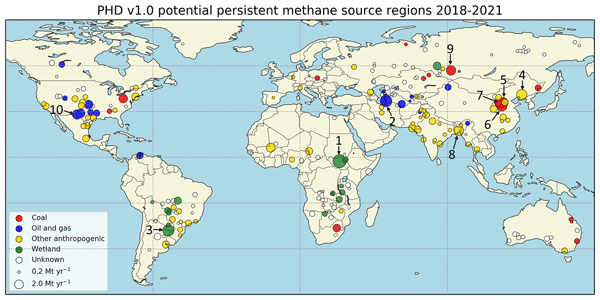
We developed an algorithm to automatically detect persistent methane source regions, to quantify their emissions and to determine their source types, by analyzing TROPOMI data from 2018–2021. The over 200 globally detected natural and anthropogenic source regions include small-scale point sources such as individual coal mines and larger-scale source regions such as wetlands and large oil and gas fields.
Henk Eskes, Athanasios Tsikerdekis, Melanie Ades, Mihai Alexe, Anna Carlin Benedictow, Yasmine Bennouna, Lewis Blake, Idir Bouarar, Simon Chabrillat, Richard Engelen, Quentin Errera, Johannes Flemming, Sebastien Garrigues, Jan Griesfeller, Vincent Huijnen, Luka Ilić, Antje Inness, John Kapsomenakis, Zak Kipling, Bavo Langerock, Augustin Mortier, Mark Parrington, Isabelle Pison, Mikko Pitkänen, Samuel Remy, Andreas Richter, Anja Schoenhardt, Michael Schulz, Valerie Thouret, Thorsten Warneke, Christos Zerefos, and Vincent-Henri Peuch
Atmos. Chem. Phys., 24, 9475–9514, https://doi.org/10.5194/acp-24-9475-2024, https://doi.org/10.5194/acp-24-9475-2024, 2024
Short summary
Short summary
The Copernicus Atmosphere Monitoring Service (CAMS) provides global analyses and forecasts of aerosols and trace gases in the atmosphere. On 27 June 2023 a major upgrade, Cy48R1, became operational. Comparisons with in situ, surface remote sensing, aircraft, and balloon and satellite observations show that the new CAMS system is a significant improvement. The results quantify the skill of CAMS to forecast impactful events, such as wildfires, dust storms and air pollution peaks.
Robin Plauchu, Audrey Fortems-Cheiney, Grégoire Broquet, Isabelle Pison, Antoine Berchet, Elise Potier, Gaëlle Dufour, Adriana Coman, Dilek Savas, Guillaume Siour, and Henk Eskes
Atmos. Chem. Phys., 24, 8139–8163, https://doi.org/10.5194/acp-24-8139-2024, https://doi.org/10.5194/acp-24-8139-2024, 2024
Short summary
Short summary
This study uses the Community Inversion Framework and CHIMERE model to assess the potential of TROPOMI-S5P PAL NO2 tropospheric column data to estimate NOx emissions in France (2019–2021). Results show a 3 % decrease in average emissions compared to the 2016 CAMS-REG/INS, lower than the 14 % decrease from CITEPA. The study highlights challenges in capturing emission anomalies due to limited data coverage and error levels but shows promise for local inventory improvements.
Rodrigo Rivera-Martinez, Pramod Kumar, Olivier Laurent, Gregoire Broquet, Christopher Caldow, Ford Cropley, Diego Santaren, Adil Shah, Cécile Mallet, Michel Ramonet, Leonard Rivier, Catherine Juery, Olivier Duclaux, Caroline Bouchet, Elisa Allegrini, Hervé Utard, and Philippe Ciais
Atmos. Meas. Tech., 17, 4257–4290, https://doi.org/10.5194/amt-17-4257-2024, https://doi.org/10.5194/amt-17-4257-2024, 2024
Short summary
Short summary
We explore the use of metal oxide semiconductors (MOSs) as a low-cost alternative for detecting and measuring CH4 emissions from industrial facilities. MOSs were exposed to several controlled releases to test their accuracy in detecting and quantifying emissions. Two reconstruction models were compared, and emission estimates were computed using a Gaussian dispersion model. Findings show that MOSs can provide accurate emission estimates with a 25 % emission rate error and a 9.5 m location error.
Oliver Schneising, Michael Buchwitz, Maximilian Reuter, Michael Weimer, Heinrich Bovensmann, John P. Burrows, and Hartmut Bösch
Atmos. Chem. Phys., 24, 7609–7621, https://doi.org/10.5194/acp-24-7609-2024, https://doi.org/10.5194/acp-24-7609-2024, 2024
Short summary
Short summary
Large quantities of CO and CO2 are emitted during conventional steel production. As satellite-based estimates of CO2 emissions at the facility level are challenging, co-emitted CO can indicate the carbon footprint of steel plants. We estimate CO emissions for German steelworks and use CO2 emissions from emissions trading data to derive a sector-specific CO/CO2 emission ratio for the steel industry; it is a prerequisite to use CO as a proxy for CO2 emissions from similar steel production sites.
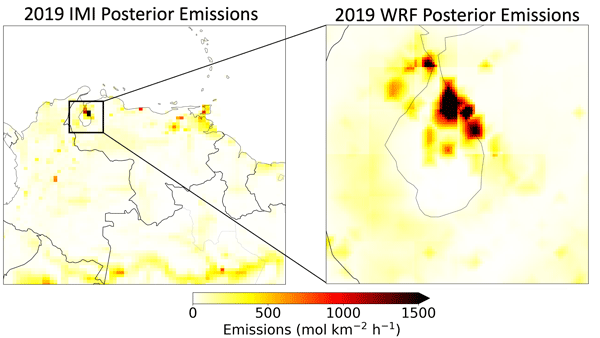
Brian Nathan, Joannes D. Maasakkers, Stijn Naus, Ritesh Gautam, Mark Omara, Daniel J. Varon, Melissa P. Sulprizio, Lucas A. Estrada, Alba Lorente, Tobias Borsdorff, Robert J. Parker, and Ilse Aben
Atmos. Chem. Phys., 24, 6845–6863, https://doi.org/10.5194/acp-24-6845-2024, https://doi.org/10.5194/acp-24-6845-2024, 2024
Short summary
Short summary
Venezuela's Lake Maracaibo region is notoriously hard to observe from space and features intensive oil exploitation, although production has strongly decreased in recent years. We estimate methane emissions using 2018–2020 TROPOMI satellite observations with national and regional transport models. Despite the production decrease, we find relatively constant emissions from Lake Maracaibo between 2018 and 2020, indicating that there could be large emissions from abandoned infrastructure.
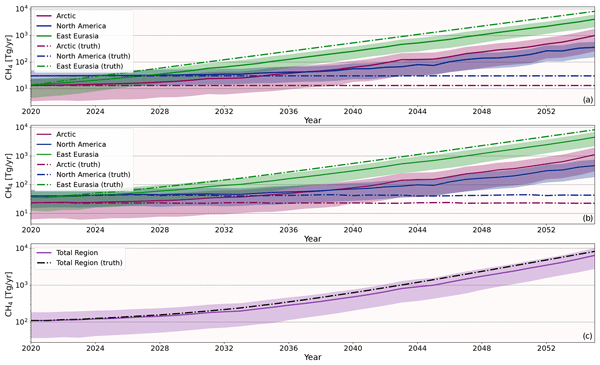
Sophie Wittig, Antoine Berchet, Isabelle Pison, Marielle Saunois, and Jean-Daniel Paris
Atmos. Chem. Phys., 24, 6359–6373, https://doi.org/10.5194/acp-24-6359-2024, https://doi.org/10.5194/acp-24-6359-2024, 2024
Short summary
Short summary
The aim of this work is to analyse how accurately a methane bomb event could be detected with the current and a hypothetically extended stationary observation network in the Arctic. For this, we incorporate synthetically modelled possible future CH4 concentrations based on plausible emission scenarios into an inverse modelling framework. We analyse how well the increase is detected in different Arctic regions and evaluate the impact of additional observation sites in this respect.
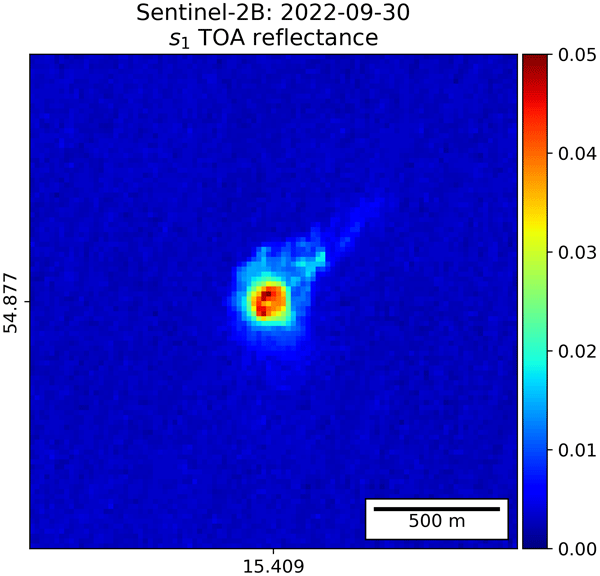
Matthieu Dogniaux, Joannes D. Maasakkers, Daniel J. Varon, and Ilse Aben
Atmos. Meas. Tech., 17, 2777–2787, https://doi.org/10.5194/amt-17-2777-2024, https://doi.org/10.5194/amt-17-2777-2024, 2024
Short summary
Short summary
We analyze Landsat 8 (L8) and Sentinel-2B (S-2B) observations of the 2022 Nord Stream 2 methane leak and show how challenging this case is for usual data analysis methods. We provide customized calibrations for this Nord Stream 2 case and assess that no firm conclusion can be drawn from L8 or S-2B single overpasses. However, if we opportunistically assume that L8 and S-2B results are independent, we find an averaged L8 and S-2B combined methane leak rate of 502 ± 464 t h−1.
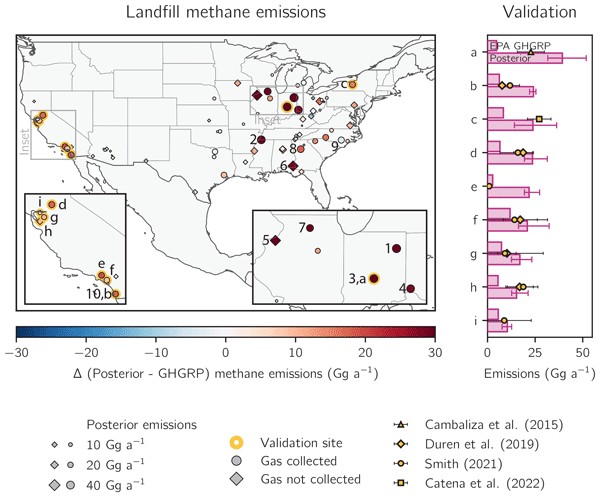
Hannah Nesser, Daniel J. Jacob, Joannes D. Maasakkers, Alba Lorente, Zichong Chen, Xiao Lu, Lu Shen, Zhen Qu, Melissa P. Sulprizio, Margaux Winter, Shuang Ma, A. Anthony Bloom, John R. Worden, Robert N. Stavins, and Cynthia A. Randles
Atmos. Chem. Phys., 24, 5069–5091, https://doi.org/10.5194/acp-24-5069-2024, https://doi.org/10.5194/acp-24-5069-2024, 2024
Short summary
Short summary
We quantify 2019 methane emissions in the contiguous US (CONUS) at a ≈ 25 km × 25 km resolution using satellite methane observations. We find a 13 % upward correction to the 2023 US Environmental Protection Agency (EPA) Greenhouse Gas Emissions Inventory (GHGI) for 2019, with large corrections to individual states, urban areas, and landfills. This may present a challenge for US climate policies and goals, many of which target significant reductions in methane emissions.
Audrey Fortems-Cheiney, Gregoire Broquet, Elise Potier, Robin Plauchu, Antoine Berchet, Isabelle Pison, Hugo Denier van der Gon, and Stijn Dellaert
Atmos. Chem. Phys., 24, 4635–4649, https://doi.org/10.5194/acp-24-4635-2024, https://doi.org/10.5194/acp-24-4635-2024, 2024
Short summary
Short summary
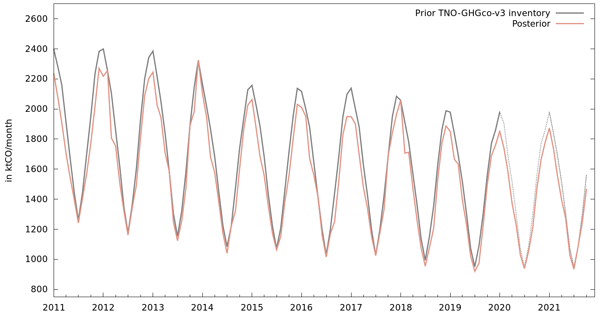
We have estimated the carbon monixide (CO) European emissions from satellite observations of the MOPITT instrument at the relatively high resolution of 0.5° for a period of over 10 years from 2011 to 2021. The analysis of the inversion results reveals the challenges associated with the inversion of CO emissions at the regional scale over Europe.
Stefan Noël, Michael Buchwitz, Michael Hilker, Maximilian Reuter, Michael Weimer, Heinrich Bovensmann, John P. Burrows, Hartmut Bösch, and Ruediger Lang
Atmos. Meas. Tech., 17, 2317–2334, https://doi.org/10.5194/amt-17-2317-2024, https://doi.org/10.5194/amt-17-2317-2024, 2024
Short summary
Short summary
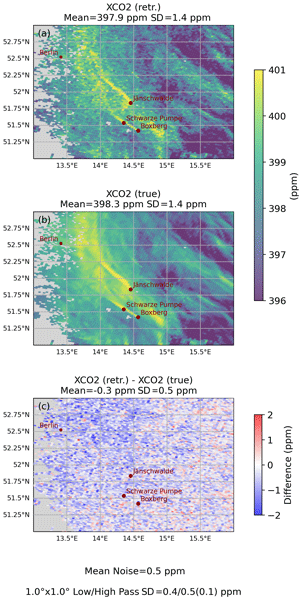
FOCAL-CO2M is one of the three operational retrieval algorithms which will be used to derive XCO2 and XCH4 from measurements of the forthcoming European CO2M mission. We present results of applications of FOCAL-CO2M to simulated spectra, from which confidence is gained that the algorithm is able to fulfil the challenging requirements on systematic errors for the CO2M mission (spatio-temporal bias ≤ 0.5 ppm for XCO2 and ≤ 5 ppb for XCH4).
Yunsong Liu, Jean-Daniel Paris, Gregoire Broquet, Violeta Bescós Roy, Tania Meixus Fernandez, Rasmus Andersen, Andrés Russu Berlanga, Emil Christensen, Yann Courtois, Sebastian Dominok, Corentin Dussenne, Travis Eckert, Andrew Finlayson, Aurora Fernández de la Fuente, Catlin Gunn, Ram Hashmonay, Juliano Grigoleto Hayashi, Jonathan Helmore, Soeren Honsel, Fabrizio Innocenti, Matti Irjala, Torgrim Log, Cristina Lopez, Francisco Cortés Martínez, Jonathan Martinez, Adrien Massardier, Helle Gottschalk Nygaard, Paula Agregan Reboredo, Elodie Rousset, Axel Scherello, Matthias Ulbricht, Damien Weidmann, Oliver Williams, Nigel Yarrow, Murès Zarea, Robert Ziegler, Jean Sciare, Mihalis Vrekoussis, and Philippe Bousquet
Atmos. Meas. Tech., 17, 1633–1649, https://doi.org/10.5194/amt-17-1633-2024, https://doi.org/10.5194/amt-17-1633-2024, 2024
Short summary
Short summary
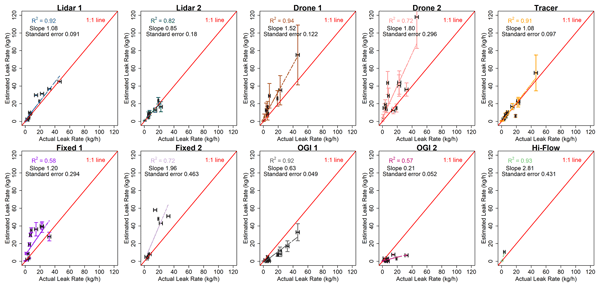
We investigated the performance of 10 methane emission quantification techniques in a blind controlled-release experiment at an inerted natural gas compressor station. We reported their respective strengths, weaknesses, and potential complementarity depending on the emission rates and atmospheric conditions. Additionally, we assess the dependence of emission quantification performance on key parameters such as wind speed, deployment constraints, and measurement duration.
Joffrey Dumont Le Brazidec, Pierre Vanderbecken, Alban Farchi, Grégoire Broquet, Gerrit Kuhlmann, and Marc Bocquet
Geosci. Model Dev., 17, 1995–2014, https://doi.org/10.5194/gmd-17-1995-2024, https://doi.org/10.5194/gmd-17-1995-2024, 2024
Short summary
Short summary
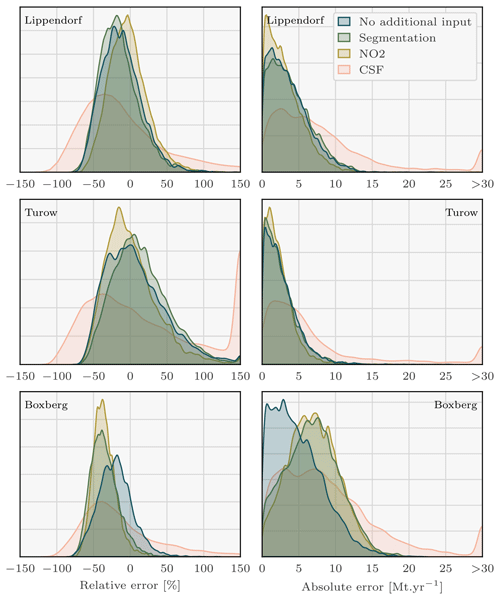
Our research presents an innovative approach to estimating power plant CO2 emissions from satellite images of the corresponding plumes such as those from the forthcoming CO2M satellite constellation. The exploitation of these images is challenging due to noise and meteorological uncertainties. To overcome these obstacles, we use a deep learning neural network trained on simulated CO2 images. Our method outperforms alternatives, providing a positive perspective for the analysis of CO2M images.
Pramod Kumar, Christopher Caldow, Grégoire Broquet, Adil Shah, Olivier Laurent, Camille Yver-Kwok, Sebastien Ars, Sara Defratyka, Susan Warao Gichuki, Luc Lienhardt, Mathis Lozano, Jean-Daniel Paris, Felix Vogel, Caroline Bouchet, Elisa Allegrini, Robert Kelly, Catherine Juery, and Philippe Ciais
Atmos. Meas. Tech., 17, 1229–1250, https://doi.org/10.5194/amt-17-1229-2024, https://doi.org/10.5194/amt-17-1229-2024, 2024
Short summary
Short summary
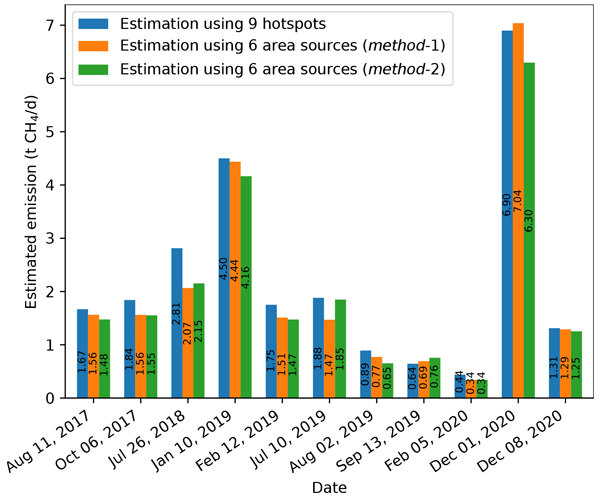
This study presents a series of mobile measurement campaigns to monitor the CH4 emissions from an active landfill. These measurements are processed using a Gaussian plume model and atmospheric inversion techniques to quantify the landfill CH4 emissions. The methane emission estimates range between ~0.4 and ~7 t CH4 per day, and their variations are analyzed. The robustness of the estimates is assessed depending on the distance of the measurements from the potential sources in the landfill.
Joël Thanwerdas, Marielle Saunois, Antoine Berchet, Isabelle Pison, and Philippe Bousquet
Atmos. Chem. Phys., 24, 2129–2167, https://doi.org/10.5194/acp-24-2129-2024, https://doi.org/10.5194/acp-24-2129-2024, 2024
Short summary
Short summary
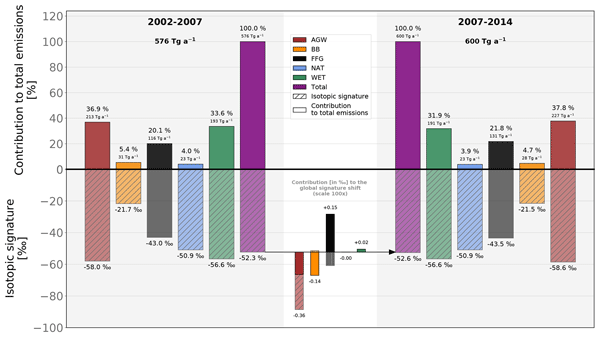
We investigate the causes of the renewed growth of atmospheric methane (CH4) after 2007 using inverse modeling. We use the additional information provided by observations of CH4 isotopic compositions to better differentiate between the emission categories. Accounting for the large uncertainties in source signatures, our results suggest that the post-2007 increase in atmospheric CH4 was caused by similar increases in emissions from (1) fossil fuels and (2) agriculture and waste.
Blanca Fuentes Andrade, Michael Buchwitz, Maximilian Reuter, Heinrich Bovensmann, Andreas Richter, Hartmut Boesch, and John P. Burrows
Atmos. Meas. Tech., 17, 1145–1173, https://doi.org/10.5194/amt-17-1145-2024, https://doi.org/10.5194/amt-17-1145-2024, 2024
Short summary
Short summary
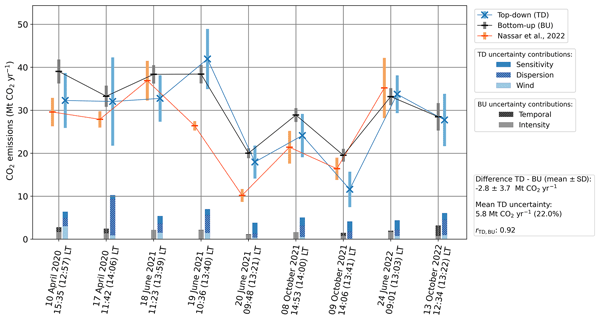
We developed a method to estimate CO2 emissions from localized sources, such as power plants, using satellite data and applied it to estimate CO2 emissions from the Bełchatów Power Station (Poland). As the detection of CO2 emission plumes from satellite data is difficult, we used observations of co-emitted NO2 to constrain the emission plume region. Our results agree with CO2 emission estimations based on the power-plant-generated power and emission factors.
Jonas Hachmeister, Oliver Schneising, Michael Buchwitz, John P. Burrows, Justus Notholt, and Matthias Buschmann
Atmos. Chem. Phys., 24, 577–595, https://doi.org/10.5194/acp-24-577-2024, https://doi.org/10.5194/acp-24-577-2024, 2024
Short summary
Short summary
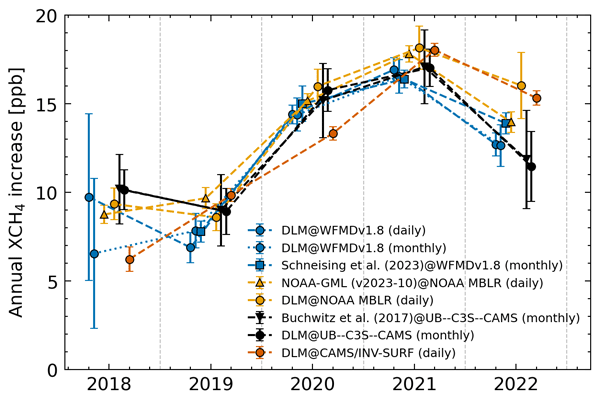
We quantified changes in atmospheric methane concentrations using satellite data and a dynamic linear model approach. We calculated global annual methane increases for the years 2019–2022, which are in good agreement with other sources. For zonal methane growth rates, we identified strong inter-hemispheric differences in 2019 and 2022. For 2022, we could attribute decreases in the global growth rate to the Northern Hemisphere, possibly related to a reduction in anthropogenic emissions.
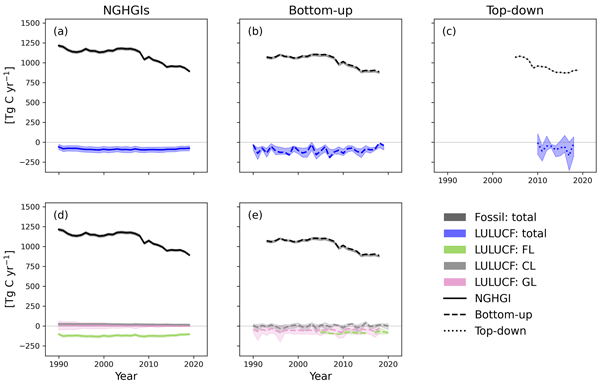
Matthew J. McGrath, Ana Maria Roxana Petrescu, Philippe Peylin, Robbie M. Andrew, Bradley Matthews, Frank Dentener, Juraj Balkovič, Vladislav Bastrikov, Meike Becker, Gregoire Broquet, Philippe Ciais, Audrey Fortems-Cheiney, Raphael Ganzenmüller, Giacomo Grassi, Ian Harris, Matthew Jones, Jürgen Knauer, Matthias Kuhnert, Guillaume Monteil, Saqr Munassar, Paul I. Palmer, Glen P. Peters, Chunjing Qiu, Mart-Jan Schelhaas, Oksana Tarasova, Matteo Vizzarri, Karina Winkler, Gianpaolo Balsamo, Antoine Berchet, Peter Briggs, Patrick Brockmann, Frédéric Chevallier, Giulia Conchedda, Monica Crippa, Stijn N. C. Dellaert, Hugo A. C. Denier van der Gon, Sara Filipek, Pierre Friedlingstein, Richard Fuchs, Michael Gauss, Christoph Gerbig, Diego Guizzardi, Dirk Günther, Richard A. Houghton, Greet Janssens-Maenhout, Ronny Lauerwald, Bas Lerink, Ingrid T. Luijkx, Géraud Moulas, Marilena Muntean, Gert-Jan Nabuurs, Aurélie Paquirissamy, Lucia Perugini, Wouter Peters, Roberto Pilli, Julia Pongratz, Pierre Regnier, Marko Scholze, Yusuf Serengil, Pete Smith, Efisio Solazzo, Rona L. Thompson, Francesco N. Tubiello, Timo Vesala, and Sophia Walther
Earth Syst. Sci. Data, 15, 4295–4370, https://doi.org/10.5194/essd-15-4295-2023, https://doi.org/10.5194/essd-15-4295-2023, 2023
Short summary
Short summary
Accurate estimation of fluxes of carbon dioxide from the land surface is essential for understanding future impacts of greenhouse gas emissions on the climate system. A wide variety of methods currently exist to estimate these sources and sinks. We are continuing work to develop annual comparisons of these diverse methods in order to clarify what they all actually calculate and to resolve apparent disagreement, in addition to highlighting opportunities for increased understanding.
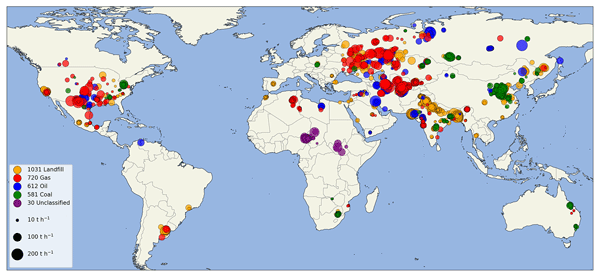
Berend J. Schuit, Joannes D. Maasakkers, Pieter Bijl, Gourav Mahapatra, Anne-Wil van den Berg, Sudhanshu Pandey, Alba Lorente, Tobias Borsdorff, Sander Houweling, Daniel J. Varon, Jason McKeever, Dylan Jervis, Marianne Girard, Itziar Irakulis-Loitxate, Javier Gorroño, Luis Guanter, Daniel H. Cusworth, and Ilse Aben
Atmos. Chem. Phys., 23, 9071–9098, https://doi.org/10.5194/acp-23-9071-2023, https://doi.org/10.5194/acp-23-9071-2023, 2023
Short summary
Short summary
Using two machine learning models, which were trained on TROPOMI methane satellite data, we detect 2974 methane plumes, so-called super-emitters, in 2021. We detect methane emissions globally related to urban areas or landfills, coal mining, and oil and gas production. Using our monitoring system, we identify 94 regions with frequent emissions. For 12 locations, we target high-resolution satellite instruments to enlarge and identify the exact infrastructure responsible for the emissions.
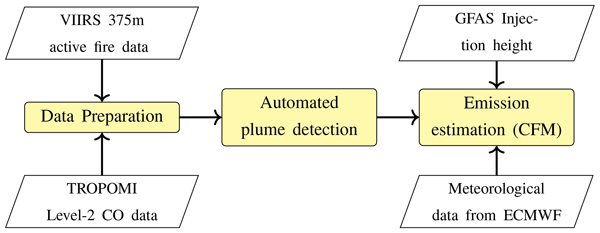
Manu Goudar, Juliëtte C. S. Anema, Rajesh Kumar, Tobias Borsdorff, and Jochen Landgraf
Geosci. Model Dev., 16, 4835–4852, https://doi.org/10.5194/gmd-16-4835-2023, https://doi.org/10.5194/gmd-16-4835-2023, 2023
Short summary
Short summary
A framework was developed to automatically detect plumes and compute emission estimates with cross-sectional flux method (CFM) for biomass burning events in TROPOMI CO datasets using Visible Infrared Imaging Radiometer Suite active fire data. The emissions were more reliable when changing plume height in downwind direction was used instead of constant injection height. The CFM had uncertainty even when the meteorological conditions were accurate; thus there is a need for better inversion models.
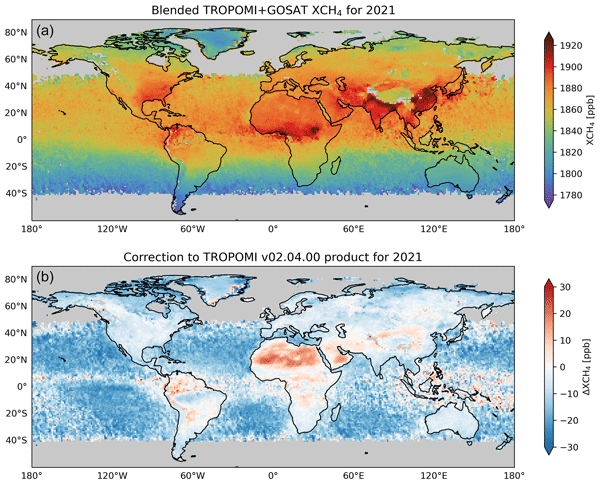
Nicholas Balasus, Daniel J. Jacob, Alba Lorente, Joannes D. Maasakkers, Robert J. Parker, Hartmut Boesch, Zichong Chen, Makoto M. Kelp, Hannah Nesser, and Daniel J. Varon
Atmos. Meas. Tech., 16, 3787–3807, https://doi.org/10.5194/amt-16-3787-2023, https://doi.org/10.5194/amt-16-3787-2023, 2023
Short summary
Short summary
We use machine learning to remove biases in TROPOMI satellite observations of atmospheric methane, with GOSAT observations serving as a reference. We find that the TROPOMI biases relative to GOSAT are related to the presence of aerosols and clouds, the surface brightness, and the specific detector that makes the observation aboard TROPOMI. The resulting blended TROPOMI+GOSAT product is more reliable for quantifying methane emissions.
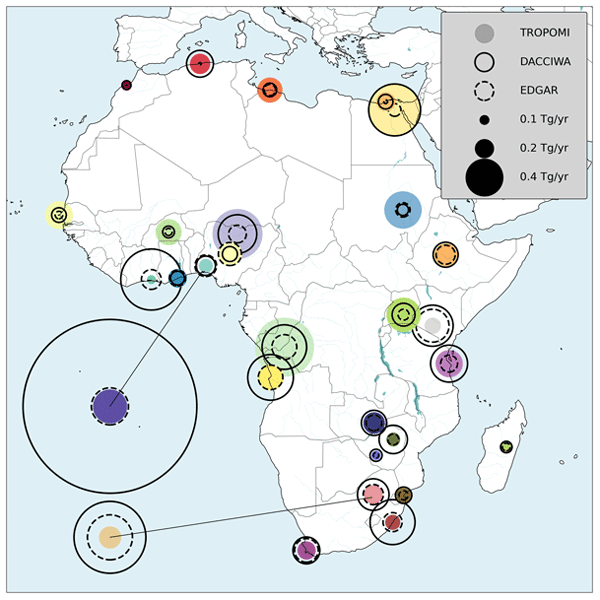
Gijs Leguijt, Joannes D. Maasakkers, Hugo A. C. Denier van der Gon, Arjo J. Segers, Tobias Borsdorff, and Ilse Aben
Atmos. Chem. Phys., 23, 8899–8919, https://doi.org/10.5194/acp-23-8899-2023, https://doi.org/10.5194/acp-23-8899-2023, 2023
Short summary
Short summary
We present a fast method to evaluate carbon monoxide emissions from cities in Africa. Carbon monoxide is important for climate change in an indirect way, as it is linked to ozone, methane, and carbon dioxide. Our measurements are made with a satellite that sees the entire globe every single day. This means that we can check from space whether the current knowledge of emission rates is up to date. We make the comparison and show that the emission rates in northern Africa are underestimated.
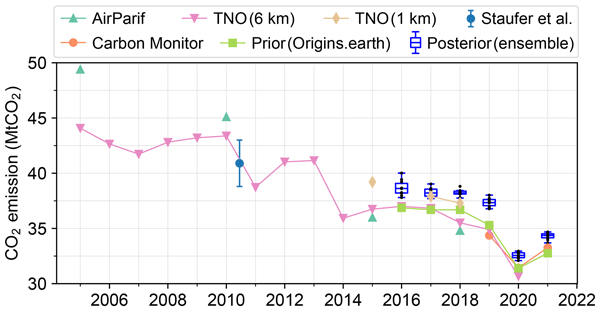
Jinghui Lian, Thomas Lauvaux, Hervé Utard, François-Marie Bréon, Grégoire Broquet, Michel Ramonet, Olivier Laurent, Ivonne Albarus, Mali Chariot, Simone Kotthaus, Martial Haeffelin, Olivier Sanchez, Olivier Perrussel, Hugo Anne Denier van der Gon, Stijn Nicolaas Camiel Dellaert, and Philippe Ciais
Atmos. Chem. Phys., 23, 8823–8835, https://doi.org/10.5194/acp-23-8823-2023, https://doi.org/10.5194/acp-23-8823-2023, 2023
Short summary
Short summary
This study quantifies urban CO2 emissions via an atmospheric inversion for the Paris metropolitan area over a 6-year period from 2016 to 2021. Results show a long-term decreasing trend of about 2 % ± 0.6 % per year in the annual CO2 emissions over Paris. We conclude that our current capacity can deliver near-real-time CO2 emission estimates at the city scale in under a month, and the results agree within 10 % with independent estimates from multiple city-scale inventories.
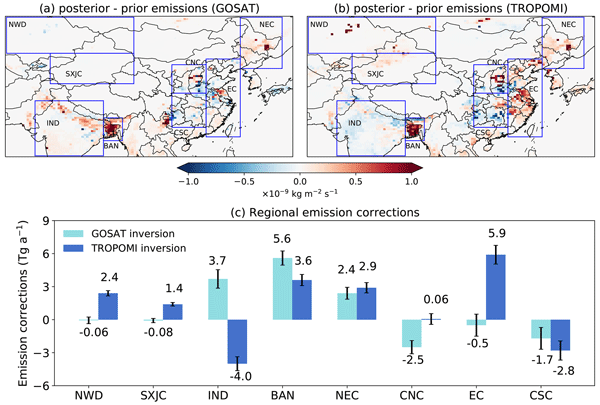
Ruosi Liang, Yuzhong Zhang, Wei Chen, Peixuan Zhang, Jingran Liu, Cuihong Chen, Huiqin Mao, Guofeng Shen, Zhen Qu, Zichong Chen, Minqiang Zhou, Pucai Wang, Robert J. Parker, Hartmut Boesch, Alba Lorente, Joannes D. Maasakkers, and Ilse Aben
Atmos. Chem. Phys., 23, 8039–8057, https://doi.org/10.5194/acp-23-8039-2023, https://doi.org/10.5194/acp-23-8039-2023, 2023
Short summary
Short summary
We compare and evaluate East Asian methane emissions inferred from different satellite observations (GOSAT and TROPOMI). The results show discrepancies over northern India and eastern China. Independent ground-based observations are more consistent with TROPOMI-derived emissions in northern India and GOSAT-derived emissions in eastern China.
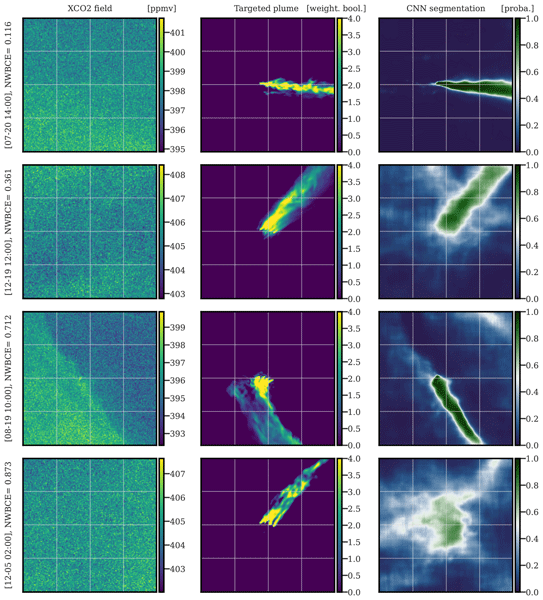
Joffrey Dumont Le Brazidec, Pierre Vanderbecken, Alban Farchi, Marc Bocquet, Jinghui Lian, Grégoire Broquet, Gerrit Kuhlmann, Alexandre Danjou, and Thomas Lauvaux
Geosci. Model Dev., 16, 3997–4016, https://doi.org/10.5194/gmd-16-3997-2023, https://doi.org/10.5194/gmd-16-3997-2023, 2023
Short summary
Short summary
Monitoring of CO2 emissions is key to the development of reduction policies. Local emissions, from cities or power plants, may be estimated from CO2 plumes detected in satellite images. CO2 plumes generally have a weak signal and are partially concealed by highly variable background concentrations and instrument errors, which hampers their detection. To address this problem, we propose and apply deep learning methods to detect the contour of a plume in simulated CO2 satellite images.
Daniel J. Varon, Daniel J. Jacob, Benjamin Hmiel, Ritesh Gautam, David R. Lyon, Mark Omara, Melissa Sulprizio, Lu Shen, Drew Pendergrass, Hannah Nesser, Zhen Qu, Zachary R. Barkley, Natasha L. Miles, Scott J. Richardson, Kenneth J. Davis, Sudhanshu Pandey, Xiao Lu, Alba Lorente, Tobias Borsdorff, Joannes D. Maasakkers, and Ilse Aben
Atmos. Chem. Phys., 23, 7503–7520, https://doi.org/10.5194/acp-23-7503-2023, https://doi.org/10.5194/acp-23-7503-2023, 2023
Short summary
Short summary
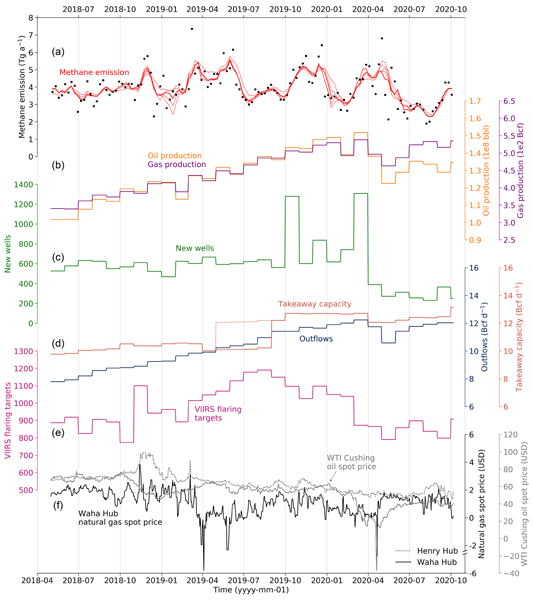
We use TROPOMI satellite observations to quantify weekly methane emissions from the US Permian oil and gas basin from May 2018 to October 2020. We find that Permian emissions are highly variable, with diverse economic and activity drivers. The most important drivers during our study period were new well development and natural gas price. Permian methane intensity averaged 4.6 % and decreased by 1 % per year.
Adil Shah, Olivier Laurent, Luc Lienhardt, Grégoire Broquet, Rodrigo Rivera Martinez, Elisa Allegrini, and Philippe Ciais
Atmos. Meas. Tech., 16, 3391–3419, https://doi.org/10.5194/amt-16-3391-2023, https://doi.org/10.5194/amt-16-3391-2023, 2023
Short summary
Short summary
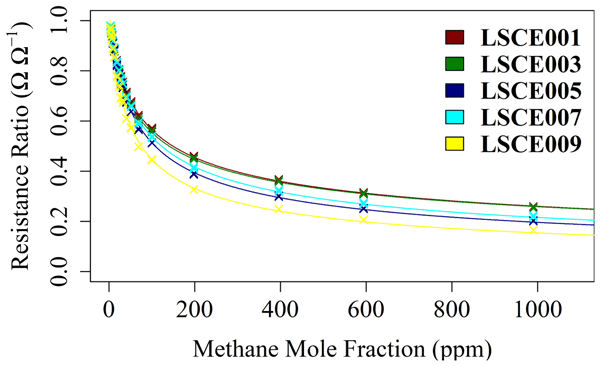
As methane (CH4) contributes to global warming, more CH4 measurements are required to better characterise source emissions. Hence, we tested a cheap CH4 sensor for 338 d of landfill sampling. We derived an excellent CH4 response model in a stable environment. However, different types of air with the same CH4 level had diverse sensor responses. We characterised temperature and water vapour response but could not replicate field sampling. Thus, other species may cause sensor interactions.
Tobias Borsdorff, Teresa Campos, Natalie Kille, Kyle J. Zarzana, Rainer Volkamer, and Jochen Landgraf
Atmos. Meas. Tech., 16, 3027–3038, https://doi.org/10.5194/amt-16-3027-2023, https://doi.org/10.5194/amt-16-3027-2023, 2023
Short summary
Short summary
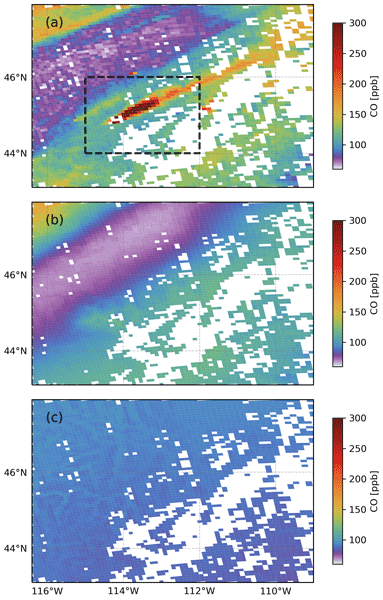
ECMWF plans to assimilate TROPOMI CO with their CAMS-IFS model. This will constrain the total column and the vertical CO distribution of the model. To show this, we combine individual TROPOMI CO column retrievals with different vertical sensitivities and obtain a vertical CO concentration profile. We test the approach on three CO pollution events in comparison with CAMS-IFS simulations that do not assimilate TROPOMI CO data and in situ airborne measurements of the BB-FLUX campaign.
Sophie Wittig, Antoine Berchet, Isabelle Pison, Marielle Saunois, Joël Thanwerdas, Adrien Martinez, Jean-Daniel Paris, Toshinobu Machida, Motoki Sasakawa, Douglas E. J. Worthy, Xin Lan, Rona L. Thompson, Espen Sollum, and Mikhail Arshinov
Atmos. Chem. Phys., 23, 6457–6485, https://doi.org/10.5194/acp-23-6457-2023, https://doi.org/10.5194/acp-23-6457-2023, 2023
Short summary
Short summary
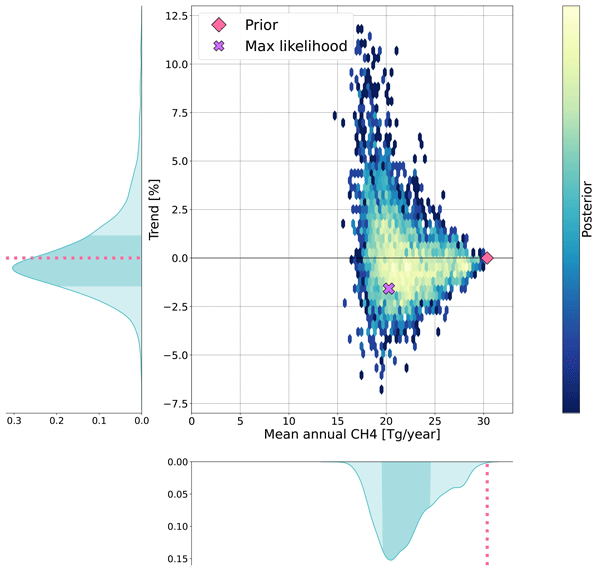
Here, an inverse modelling approach is applied to estimate CH4 sources and sinks in the Arctic from 2008 to 2019. We study the magnitude, seasonal patterns and trends from different sources during recent years. We also assess how the current observation network helps to constrain fluxes. We find that constraints are only significant for North America and, to a lesser extent, West Siberia, where the observation network is relatively dense. We find no clear trend over the period of inversion.
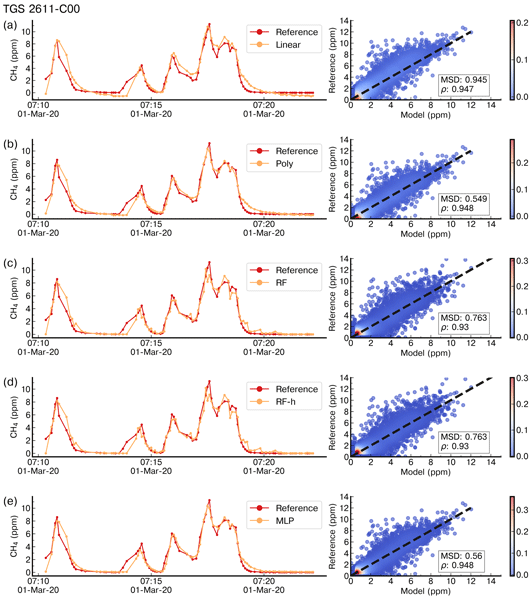
Rodrigo Andres Rivera Martinez, Diego Santaren, Olivier Laurent, Gregoire Broquet, Ford Cropley, Cécile Mallet, Michel Ramonet, Adil Shah, Leonard Rivier, Caroline Bouchet, Catherine Juery, Olivier Duclaux, and Philippe Ciais
Atmos. Meas. Tech., 16, 2209–2235, https://doi.org/10.5194/amt-16-2209-2023, https://doi.org/10.5194/amt-16-2209-2023, 2023
Short summary
Short summary
A network of low-cost sensors is a good alternative to improve the detection of fugitive CH4 emissions. We present the results of four tests conducted with two types of Figaro sensors that were assembled on four chambers in a laboratory experiment: a comparison of five models to reconstruct the CH4 signal, a strategy to reduce the training set size, a detection of age effects in the sensors and a test of the capability to transfer a model between chambers for the same type of sensor.
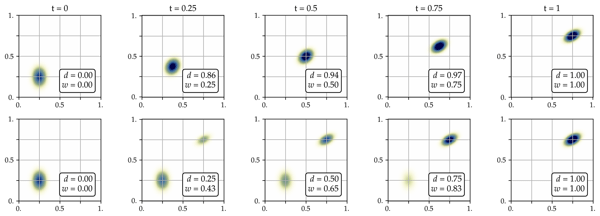
Pierre J. Vanderbecken, Joffrey Dumont Le Brazidec, Alban Farchi, Marc Bocquet, Yelva Roustan, Élise Potier, and Grégoire Broquet
Atmos. Meas. Tech., 16, 1745–1766, https://doi.org/10.5194/amt-16-1745-2023, https://doi.org/10.5194/amt-16-1745-2023, 2023
Short summary
Short summary
Instruments dedicated to monitoring atmospheric gaseous compounds from space will provide images of urban-scale plumes. We discuss here the use of new metrics to compare observed plumes with model predictions that will be less sensitive to meteorology uncertainties. We have evaluated our metrics on diverse plumes and shown that by eliminating some aspects of the discrepancies, they are indeed less sensitive to meteorological variations.
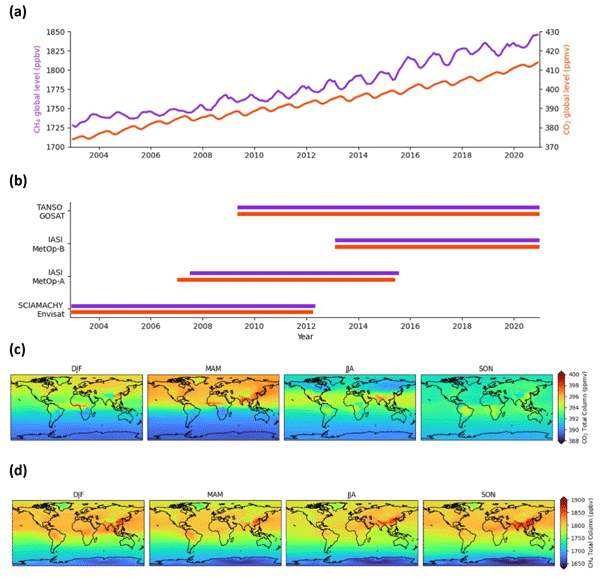
Anna Agustí-Panareda, Jérôme Barré, Sébastien Massart, Antje Inness, Ilse Aben, Melanie Ades, Bianca C. Baier, Gianpaolo Balsamo, Tobias Borsdorff, Nicolas Bousserez, Souhail Boussetta, Michael Buchwitz, Luca Cantarello, Cyril Crevoisier, Richard Engelen, Henk Eskes, Johannes Flemming, Sébastien Garrigues, Otto Hasekamp, Vincent Huijnen, Luke Jones, Zak Kipling, Bavo Langerock, Joe McNorton, Nicolas Meilhac, Stefan Noël, Mark Parrington, Vincent-Henri Peuch, Michel Ramonet, Miha Razinger, Maximilian Reuter, Roberto Ribas, Martin Suttie, Colm Sweeney, Jérôme Tarniewicz, and Lianghai Wu
Atmos. Chem. Phys., 23, 3829–3859, https://doi.org/10.5194/acp-23-3829-2023, https://doi.org/10.5194/acp-23-3829-2023, 2023
Short summary
Short summary
We present a global dataset of atmospheric CO2 and CH4, the two most important human-made greenhouse gases, which covers almost 2 decades (2003–2020). It is produced by combining satellite data of CO2 and CH4 with a weather and air composition prediction model, and it has been carefully evaluated against independent observations to ensure validity and point out deficiencies to the user. This dataset can be used for scientific studies in the field of climate change and the global carbon cycle.
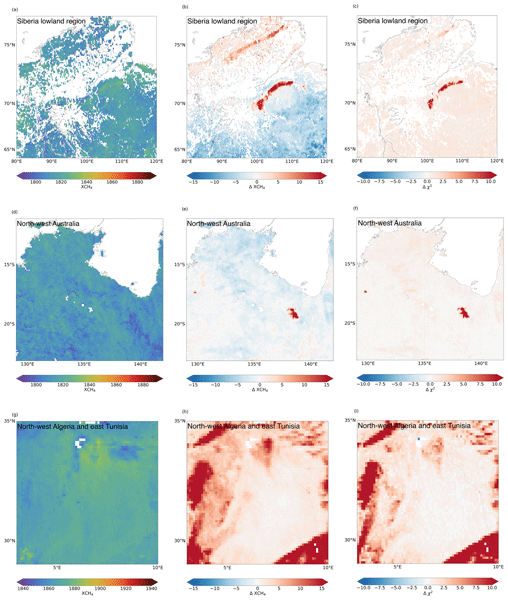
Alba Lorente, Tobias Borsdorff, Mari C. Martinez-Velarte, and Jochen Landgraf
Atmos. Meas. Tech., 16, 1597–1608, https://doi.org/10.5194/amt-16-1597-2023, https://doi.org/10.5194/amt-16-1597-2023, 2023
Short summary
Short summary
In the TROPOMI methane data, there are few false methane anomalies that can be misinterpreted as enhancements caused by strong emission sources. These artefacts are caused by features of the underlying surfaces that are not well characterized in the retrieval algorithm. Here we improve the representation of the surface reflectance dependency with wavelength in the forward model, removing the artificial localized CH4 enhancements found in several locations like Siberia, Australia and Algeria.
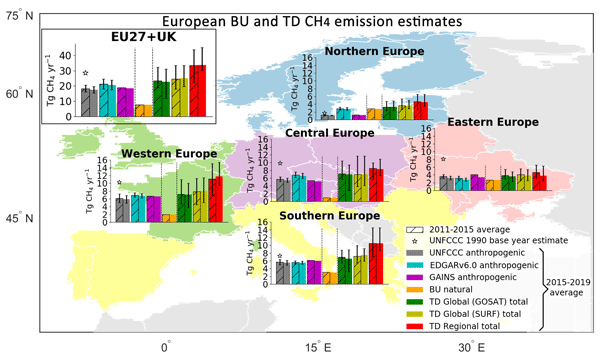
Ana Maria Roxana Petrescu, Chunjing Qiu, Matthew J. McGrath, Philippe Peylin, Glen P. Peters, Philippe Ciais, Rona L. Thompson, Aki Tsuruta, Dominik Brunner, Matthias Kuhnert, Bradley Matthews, Paul I. Palmer, Oksana Tarasova, Pierre Regnier, Ronny Lauerwald, David Bastviken, Lena Höglund-Isaksson, Wilfried Winiwarter, Giuseppe Etiope, Tuula Aalto, Gianpaolo Balsamo, Vladislav Bastrikov, Antoine Berchet, Patrick Brockmann, Giancarlo Ciotoli, Giulia Conchedda, Monica Crippa, Frank Dentener, Christine D. Groot Zwaaftink, Diego Guizzardi, Dirk Günther, Jean-Matthieu Haussaire, Sander Houweling, Greet Janssens-Maenhout, Massaer Kouyate, Adrian Leip, Antti Leppänen, Emanuele Lugato, Manon Maisonnier, Alistair J. Manning, Tiina Markkanen, Joe McNorton, Marilena Muntean, Gabriel D. Oreggioni, Prabir K. Patra, Lucia Perugini, Isabelle Pison, Maarit T. Raivonen, Marielle Saunois, Arjo J. Segers, Pete Smith, Efisio Solazzo, Hanqin Tian, Francesco N. Tubiello, Timo Vesala, Guido R. van der Werf, Chris Wilson, and Sönke Zaehle
Earth Syst. Sci. Data, 15, 1197–1268, https://doi.org/10.5194/essd-15-1197-2023, https://doi.org/10.5194/essd-15-1197-2023, 2023
Short summary
Short summary
This study updates the state-of-the-art scientific overview of CH4 and N2O emissions in the EU27 and UK in Petrescu et al. (2021a). Yearly updates are needed to improve the different respective approaches and to inform on the development of formal verification systems. It integrates the most recent emission inventories, process-based model and regional/global inversions, comparing them with UNFCCC national GHG inventories, in support to policy to facilitate real-time verification procedures.
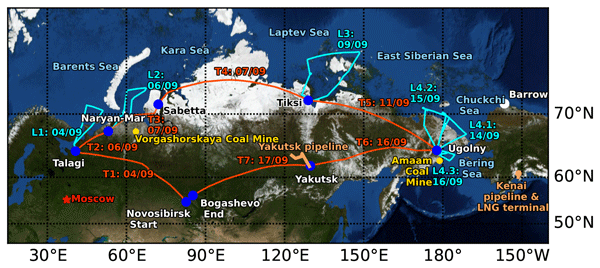
Clément Narbaud, Jean-Daniel Paris, Sophie Wittig, Antoine Berchet, Marielle Saunois, Philippe Nédélec, Boris D. Belan, Mikhail Y. Arshinov, Sergei B. Belan, Denis Davydov, Alexander Fofonov, and Artem Kozlov
Atmos. Chem. Phys., 23, 2293–2314, https://doi.org/10.5194/acp-23-2293-2023, https://doi.org/10.5194/acp-23-2293-2023, 2023
Short summary
Short summary
We measured CH4 and CO2 from aircraft over the Russian Arctic. Analyzing our data with the Lagrangian model FLEXPART, we find a sharp east–west gradient in atmospheric composition. Western Siberia is influenced by strong wetland CH4 emissions, deep CO2 gradient from biospheric uptake, and long-range transport from Europe and North America. Eastern flights document less variability. Over the Arctic Ocean, we find a small influence from marine CH4 emissions compatible with reasonable inventories.
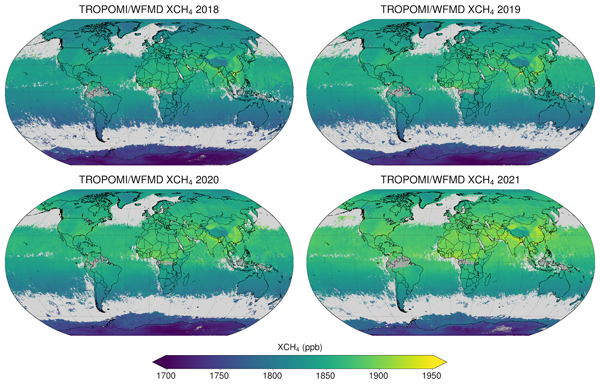
Oliver Schneising, Michael Buchwitz, Jonas Hachmeister, Steffen Vanselow, Maximilian Reuter, Matthias Buschmann, Heinrich Bovensmann, and John P. Burrows
Atmos. Meas. Tech., 16, 669–694, https://doi.org/10.5194/amt-16-669-2023, https://doi.org/10.5194/amt-16-669-2023, 2023
Short summary
Short summary
Methane and carbon monoxide are important constituents of the atmosphere in the context of climate change and air pollution. We present the latest advances in the TROPOMI/WFMD algorithm to simultaneously retrieve atmospheric methane and carbon monoxide abundances from space. The changes in the latest product version are described in detail, and the resulting improvements are demonstrated. An overview of the products is provided including a discussion of annual increases and validation results.
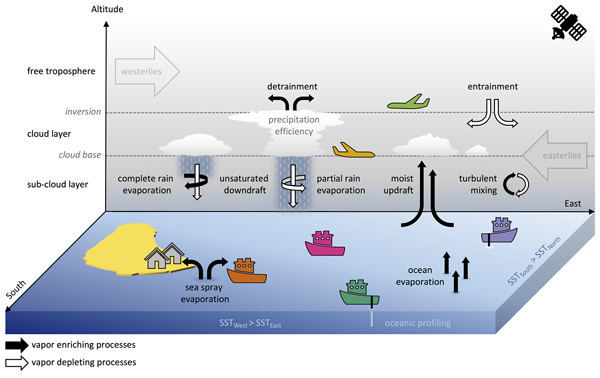
Adriana Bailey, Franziska Aemisegger, Leonie Villiger, Sebastian A. Los, Gilles Reverdin, Estefanía Quiñones Meléndez, Claudia Acquistapace, Dariusz B. Baranowski, Tobias Böck, Sandrine Bony, Tobias Bordsdorff, Derek Coffman, Simon P. de Szoeke, Christopher J. Diekmann, Marina Dütsch, Benjamin Ertl, Joseph Galewsky, Dean Henze, Przemyslaw Makuch, David Noone, Patricia K. Quinn, Michael Rösch, Andreas Schneider, Matthias Schneider, Sabrina Speich, Bjorn Stevens, and Elizabeth J. Thompson
Earth Syst. Sci. Data, 15, 465–495, https://doi.org/10.5194/essd-15-465-2023, https://doi.org/10.5194/essd-15-465-2023, 2023
Short summary
Short summary
One of the novel ways EUREC4A set out to investigate trade wind clouds and their coupling to the large-scale circulation was through an extensive network of isotopic measurements in water vapor, precipitation, and seawater. Samples were taken from the island of Barbados, from aboard two aircraft, and from aboard four ships. This paper describes the full collection of EUREC4A isotopic in situ data and guides readers to complementary remotely sensed water vapor isotope ratios.
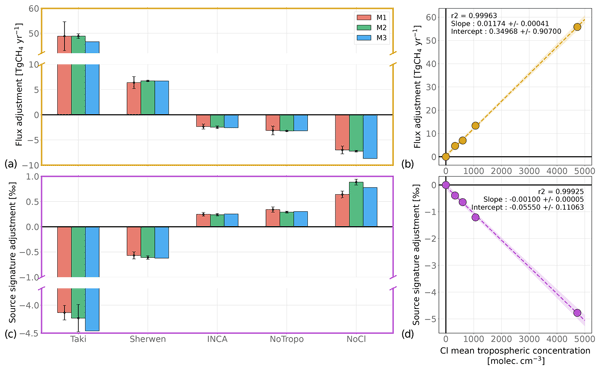
Joël Thanwerdas, Marielle Saunois, Isabelle Pison, Didier Hauglustaine, Antoine Berchet, Bianca Baier, Colm Sweeney, and Philippe Bousquet
Atmos. Chem. Phys., 22, 15489–15508, https://doi.org/10.5194/acp-22-15489-2022, https://doi.org/10.5194/acp-22-15489-2022, 2022
Short summary
Short summary
Atmospheric methane (CH4) concentrations have been rising since 2007, resulting from an imbalance between CH4 sources and sinks. The CH4 budget is generally estimated through top-down approaches using CH4 and δ13C(CH4) observations as constraints. The oxidation by chlorine (Cl) contributes little to the total oxidation of CH4 but strongly influences δ13C(CH4). Here, we compare multiple recent Cl fields and quantify the influence of Cl concentrations on CH4, δ13C(CH4), and CH4 budget estimates.
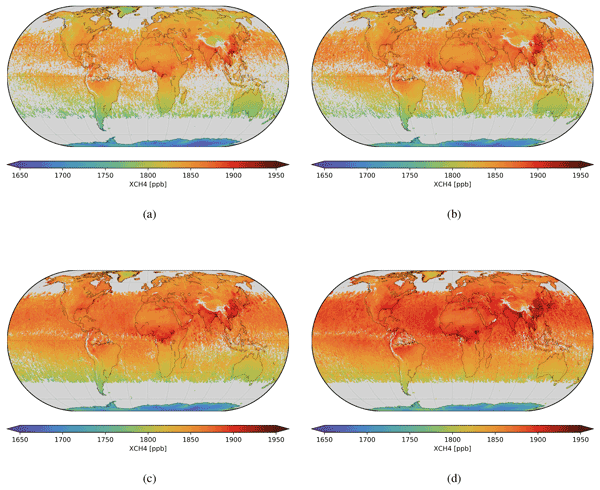
Alba Lorente, Tobias Borsdorff, Mari C. Martinez-Velarte, Andre Butz, Otto P. Hasekamp, Lianghai Wu, and Jochen Landgraf
Atmos. Meas. Tech., 15, 6585–6603, https://doi.org/10.5194/amt-15-6585-2022, https://doi.org/10.5194/amt-15-6585-2022, 2022
Short summary
Short summary
The TROPOspheric Monitoring Instrument (TROPOMI) performs observations over ocean in every orbit, enhancing the monitoring capabilities of methane from space. In the sun glint geometry the mirror-like reflection at the water surface provides a signal that is high enough to retrieve methane with high accuracy and precision. We present 4 years of methane concentrations over the ocean, and we assess its quality. We also show the importance of ocean observations to quantify total CH4 emissions.

Antje Inness, Ilse Aben, Melanie Ades, Tobias Borsdorff, Johannes Flemming, Luke Jones, Jochen Landgraf, Bavo Langerock, Philippe Nedelec, Mark Parrington, and Roberto Ribas
Atmos. Chem. Phys., 22, 14355–14376, https://doi.org/10.5194/acp-22-14355-2022, https://doi.org/10.5194/acp-22-14355-2022, 2022
Short summary
Short summary
The Copernicus Atmosphere Monitoring Service (CAMS) provides daily global air quality forecasts to users worldwide. One of the species of interest is carbon monoxide (CO), an important trace gas in the atmosphere with anthropogenic and natural sources, produced by incomplete combustion, for example, by wildfires. This paper looks at how well CAMS can model CO in the atmosphere and shows that the fields can be improved when blending CO data from the TROPOMI instrument with the CAMS model.
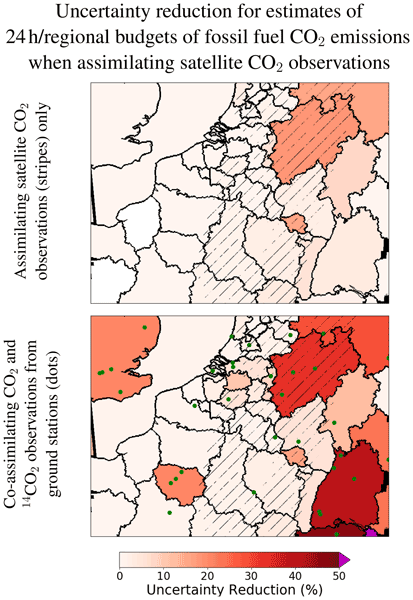
Elise Potier, Grégoire Broquet, Yilong Wang, Diego Santaren, Antoine Berchet, Isabelle Pison, Julia Marshall, Philippe Ciais, François-Marie Bréon, and Frédéric Chevallier
Atmos. Meas. Tech., 15, 5261–5288, https://doi.org/10.5194/amt-15-5261-2022, https://doi.org/10.5194/amt-15-5261-2022, 2022
Short summary
Short summary
Atmospheric inversion at local–regional scales over Europe and pseudo-data assimilation are used to evaluate how CO2 and 14CO2 ground-based measurement networks could complement satellite CO2 imagers to monitor fossil fuel (FF) CO2 emissions. This combination significantly improves precision in the FF emission estimates in areas with a dense network but does not strongly support the separation of the FF from the biogenic signals or the spatio-temporal extrapolation of the satellite information.
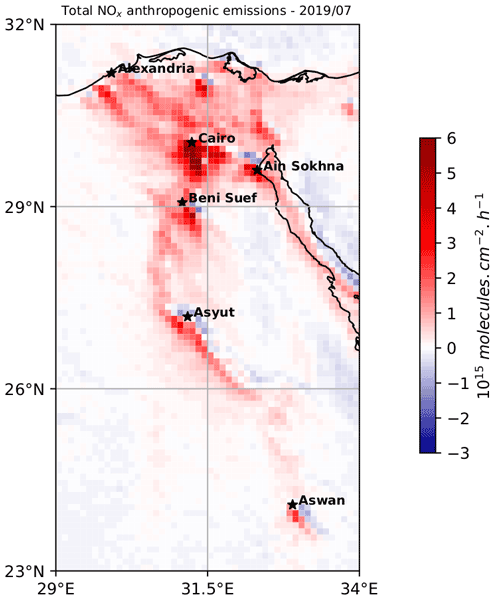
Anthony Rey-Pommier, Frédéric Chevallier, Philippe Ciais, Grégoire Broquet, Theodoros Christoudias, Jonilda Kushta, Didier Hauglustaine, and Jean Sciare
Atmos. Chem. Phys., 22, 11505–11527, https://doi.org/10.5194/acp-22-11505-2022, https://doi.org/10.5194/acp-22-11505-2022, 2022
Short summary
Short summary
Emission inventories for air pollutants can be uncertain in developing countries. In order to overcome these uncertainties, we model nitrogen oxide emissions in Egypt using satellite retrievals. We detect a weekly cycle reflecting Egyptian social norms, an annual cycle consistent with electricity consumption and an activity drop due to the COVID-19 pandemic. However, discrepancies with inventories remain high, illustrating the needs for additional data to improve the potential of our method.
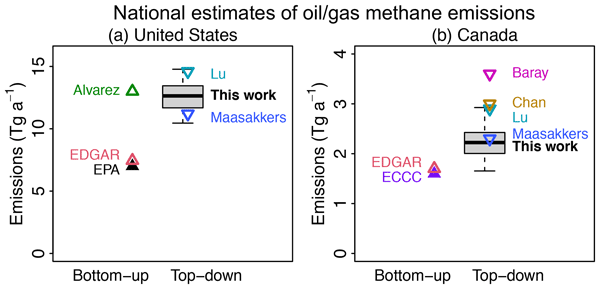
Lu Shen, Ritesh Gautam, Mark Omara, Daniel Zavala-Araiza, Joannes D. Maasakkers, Tia R. Scarpelli, Alba Lorente, David Lyon, Jianxiong Sheng, Daniel J. Varon, Hannah Nesser, Zhen Qu, Xiao Lu, Melissa P. Sulprizio, Steven P. Hamburg, and Daniel J. Jacob
Atmos. Chem. Phys., 22, 11203–11215, https://doi.org/10.5194/acp-22-11203-2022, https://doi.org/10.5194/acp-22-11203-2022, 2022
Short summary
Short summary
We use 22 months of TROPOMI satellite observations to quantity methane emissions from the oil (O) and natural gas (G) sector in the US and Canada at the scale of both individual basins as well as country-wide aggregates. We find that O/G-related methane emissions are underestimated in these inventories by 80 % for the US and 40 % for Canada, and 70 % of the underestimate in the US is from five O/G basins, including Permian, Haynesville, Anadarko, Eagle Ford, and Barnett.
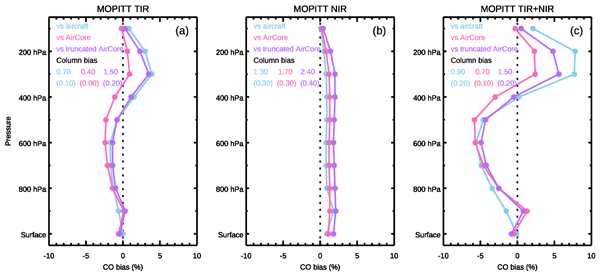
Sara Martínez-Alonso, Merritt N. Deeter, Bianca C. Baier, Kathryn McKain, Helen Worden, Tobias Borsdorff, Colm Sweeney, and Ilse Aben
Atmos. Meas. Tech., 15, 4751–4765, https://doi.org/10.5194/amt-15-4751-2022, https://doi.org/10.5194/amt-15-4751-2022, 2022
Short summary
Short summary
AirCore is a novel balloon sampling system that can measure, among others, vertical profiles of carbon monoxide (CO) from 25–30 km of altitude to near the surface. Our analyses of AirCore and satellite CO data show that AirCore profiles are suited for satellite data validation, the use of shorter aircraft vertical profiles in satellite validation results in small errors (1–3 percent points) mostly at 300 hPa and above, and the error introduced by clouds in TROPOMI land data is small (1–2 %).
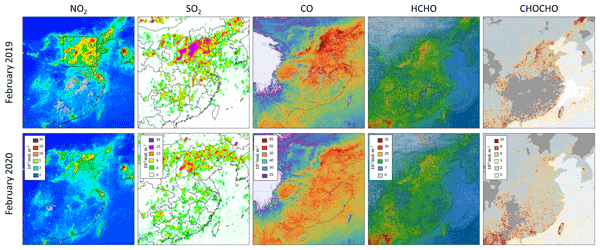
Pieternel F. Levelt, Deborah C. Stein Zweers, Ilse Aben, Maite Bauwens, Tobias Borsdorff, Isabelle De Smedt, Henk J. Eskes, Christophe Lerot, Diego G. Loyola, Fabian Romahn, Trissevgeni Stavrakou, Nicolas Theys, Michel Van Roozendael, J. Pepijn Veefkind, and Tijl Verhoelst
Atmos. Chem. Phys., 22, 10319–10351, https://doi.org/10.5194/acp-22-10319-2022, https://doi.org/10.5194/acp-22-10319-2022, 2022
Short summary
Short summary
Using the COVID-19 lockdown periods as an example, we show how Sentinel-5P/TROPOMI trace gas data (NO2, SO2, CO, HCHO and CHOCHO) can be used to understand impacts on air quality for regions and cities around the globe. We also provide information for both experienced and inexperienced users about how we created the data using state-of-the-art algorithms, where to get the data, methods taking meteorological and seasonal variability into consideration, and insights for future studies.
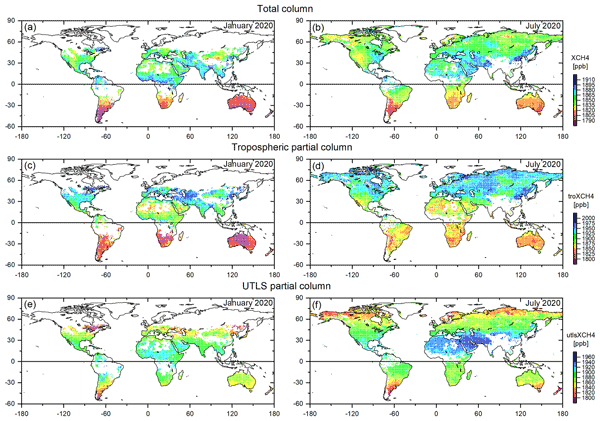
Matthias Schneider, Benjamin Ertl, Qiansi Tu, Christopher J. Diekmann, Farahnaz Khosrawi, Amelie N. Röhling, Frank Hase, Darko Dubravica, Omaira E. García, Eliezer Sepúlveda, Tobias Borsdorff, Jochen Landgraf, Alba Lorente, André Butz, Huilin Chen, Rigel Kivi, Thomas Laemmel, Michel Ramonet, Cyril Crevoisier, Jérome Pernin, Martin Steinbacher, Frank Meinhardt, Kimberly Strong, Debra Wunch, Thorsten Warneke, Coleen Roehl, Paul O. Wennberg, Isamu Morino, Laura T. Iraci, Kei Shiomi, Nicholas M. Deutscher, David W. T. Griffith, Voltaire A. Velazco, and David F. Pollard
Atmos. Meas. Tech., 15, 4339–4371, https://doi.org/10.5194/amt-15-4339-2022, https://doi.org/10.5194/amt-15-4339-2022, 2022
Short summary
Short summary
We present a computationally very efficient method for the synergetic use of level 2 remote-sensing data products. We apply the method to IASI vertical profile and TROPOMI total column space-borne methane observations and thus gain sensitivity for the tropospheric methane partial columns, which is not achievable by the individual use of TROPOMI and IASI. These synergetic effects are evaluated theoretically and empirically by inter-comparisons to independent references of TCCON, AirCore, and GAW.
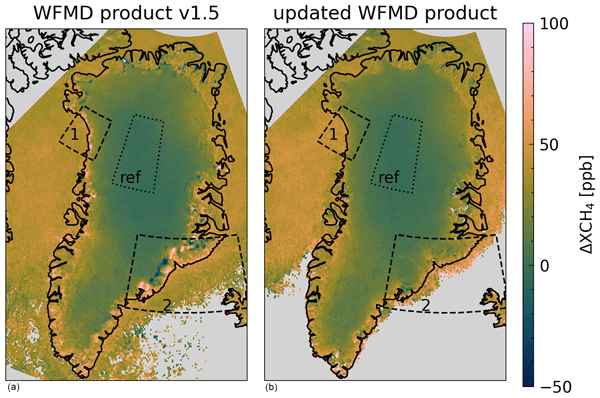
Jonas Hachmeister, Oliver Schneising, Michael Buchwitz, Alba Lorente, Tobias Borsdorff, John P. Burrows, Justus Notholt, and Matthias Buschmann
Atmos. Meas. Tech., 15, 4063–4074, https://doi.org/10.5194/amt-15-4063-2022, https://doi.org/10.5194/amt-15-4063-2022, 2022
Short summary
Short summary
Sentinel-5P trace gas retrievals rely on elevation data in their calculations. Outdated or inaccurate data can lead to significant errors in e.g. dry-air mole fractions of methane (XCH4). We show that the use of inadequate elevation data leads to strong XCH4 anomalies in Greenland. Similar problems can be expected for other regions with inaccurate elevation data. However, we expect these to be more localized. We show that updating elevation data used in the retrieval solves this issue.

Joël Thanwerdas, Marielle Saunois, Antoine Berchet, Isabelle Pison, Bruce H. Vaughn, Sylvia Englund Michel, and Philippe Bousquet
Geosci. Model Dev., 15, 4831–4851, https://doi.org/10.5194/gmd-15-4831-2022, https://doi.org/10.5194/gmd-15-4831-2022, 2022
Short summary
Short summary
Estimating CH4 sources by exploiting observations within an inverse modeling framework is a powerful approach. Here, a new system designed to assimilate δ13C(CH4) observations together with CH4 observations is presented. By optimizing both the emissions and associated source signatures of multiple emission categories, this new system can efficiently differentiate the co-located emission categories and provide estimates of CH4 sources that are consistent with isotopic data.
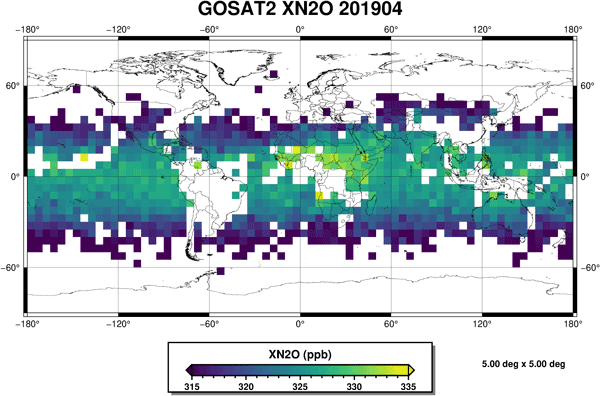
Stefan Noël, Maximilian Reuter, Michael Buchwitz, Jakob Borchardt, Michael Hilker, Oliver Schneising, Heinrich Bovensmann, John P. Burrows, Antonio Di Noia, Robert J. Parker, Hiroshi Suto, Yukio Yoshida, Matthias Buschmann, Nicholas M. Deutscher, Dietrich G. Feist, David W. T. Griffith, Frank Hase, Rigel Kivi, Cheng Liu, Isamu Morino, Justus Notholt, Young-Suk Oh, Hirofumi Ohyama, Christof Petri, David F. Pollard, Markus Rettinger, Coleen Roehl, Constantina Rousogenous, Mahesh Kumar Sha, Kei Shiomi, Kimberly Strong, Ralf Sussmann, Yao Té, Voltaire A. Velazco, Mihalis Vrekoussis, and Thorsten Warneke
Atmos. Meas. Tech., 15, 3401–3437, https://doi.org/10.5194/amt-15-3401-2022, https://doi.org/10.5194/amt-15-3401-2022, 2022
Short summary
Short summary
We present a new version (v3) of the GOSAT and GOSAT-2 FOCAL products.
In addition to an increased number of XCO2 data, v3 also includes products for XCH4 (full-physics and proxy), XH2O and the relative ratio of HDO to H2O (δD). For GOSAT-2, we also present first XCO and XN2O results. All FOCAL data products show reasonable spatial distribution and temporal variations and agree well with TCCON. Global XN2O maps show a gradient from the tropics to higher latitudes on the order of 15 ppb.
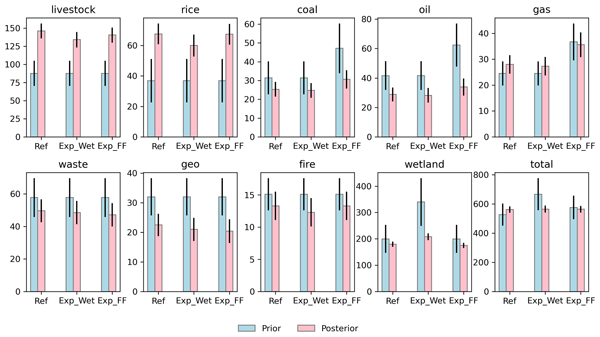
John R. Worden, Daniel H. Cusworth, Zhen Qu, Yi Yin, Yuzhong Zhang, A. Anthony Bloom, Shuang Ma, Brendan K. Byrne, Tia Scarpelli, Joannes D. Maasakkers, David Crisp, Riley Duren, and Daniel J. Jacob
Atmos. Chem. Phys., 22, 6811–6841, https://doi.org/10.5194/acp-22-6811-2022, https://doi.org/10.5194/acp-22-6811-2022, 2022
Short summary
Short summary
This paper is intended to accomplish two goals: 1) describe a new algorithm by which remotely sensed measurements of methane or other tracers can be used to not just quantify methane fluxes, but also attribute these fluxes to specific sources and regions and characterize their uncertainties, and 2) use this new algorithm to provide methane emissions by sector and country in support of the global stock take.
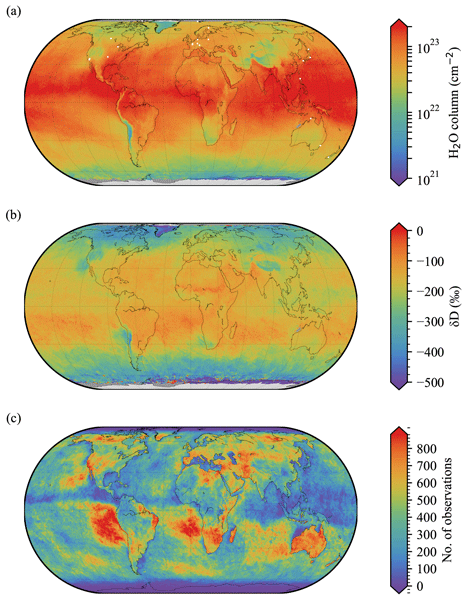
Andreas Schneider, Tobias Borsdorff, Joost aan de Brugh, Alba Lorente, Franziska Aemisegger, David Noone, Dean Henze, Rigel Kivi, and Jochen Landgraf
Atmos. Meas. Tech., 15, 2251–2275, https://doi.org/10.5194/amt-15-2251-2022, https://doi.org/10.5194/amt-15-2251-2022, 2022
Short summary
Short summary
This paper presents an extended H₂O/HDO total column dataset from short-wave infrared measurements by TROPOMI including cloudy and clear-sky scenes. Coverage is tremendously increased compared to previous TROPOMI HDO datasets. The new dataset is validated against recent ground-based FTIR measurements from TCCON and against aircraft measurements over the ocean. The use of the new dataset is demonstrated with a case study of a cold air outbreak in January 2020.
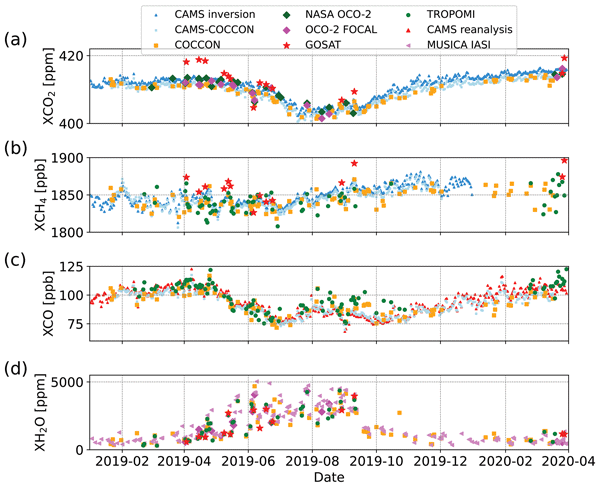
Carlos Alberti, Qiansi Tu, Frank Hase, Maria V. Makarova, Konstantin Gribanov, Stefani C. Foka, Vyacheslav Zakharov, Thomas Blumenstock, Michael Buchwitz, Christopher Diekmann, Benjamin Ertl, Matthias M. Frey, Hamud Kh. Imhasin, Dmitry V. Ionov, Farahnaz Khosrawi, Sergey I. Osipov, Maximilian Reuter, Matthias Schneider, and Thorsten Warneke
Atmos. Meas. Tech., 15, 2199–2229, https://doi.org/10.5194/amt-15-2199-2022, https://doi.org/10.5194/amt-15-2199-2022, 2022
Short summary
Short summary
Satellite and ground-based observations at high latitudes are much sparser than at low or mid latitudes, which makes direct coincident comparisons between remote-sensing observations more difficult. Therefore, a method of scaling continuous CAMS model data to the ground-based observations is developed and used for creating virtual COCCON observations. These adjusted CAMS data are then used for satellite inter-comparison, showing good agreement in both Peterhof and Yekaterinburg cities.
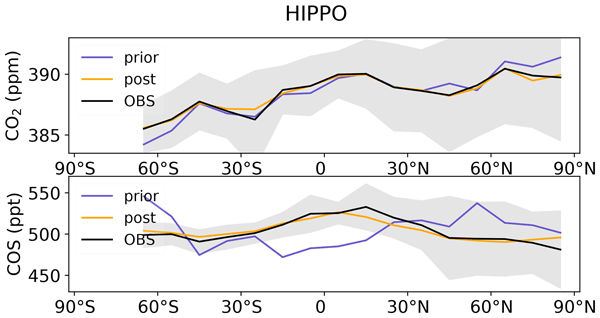
Marine Remaud, Frédéric Chevallier, Fabienne Maignan, Sauveur Belviso, Antoine Berchet, Alexandra Parouffe, Camille Abadie, Cédric Bacour, Sinikka Lennartz, and Philippe Peylin
Atmos. Chem. Phys., 22, 2525–2552, https://doi.org/10.5194/acp-22-2525-2022, https://doi.org/10.5194/acp-22-2525-2022, 2022
Short summary
Short summary
Carbonyl sulfide (COS) has been recognized as a promising indicator of the plant gross primary production (GPP). Here, we assimilate both COS and CO2 measurements into an atmospheric transport model to obtain information on GPP, plant respiration and COS budget. A possible scenario for the period 2008–2019 leads to a global COS biospheric sink of 800 GgS yr−1 and higher oceanic emissions between 400 and 600 GgS yr−1.
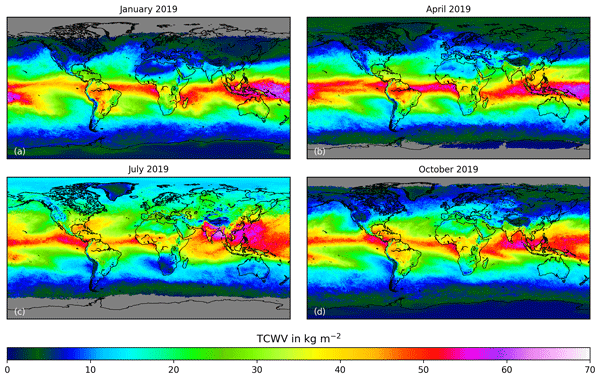
Tobias Küchler, Stefan Noël, Heinrich Bovensmann, John Philip Burrows, Thomas Wagner, Christian Borger, Tobias Borsdorff, and Andreas Schneider
Atmos. Meas. Tech., 15, 297–320, https://doi.org/10.5194/amt-15-297-2022, https://doi.org/10.5194/amt-15-297-2022, 2022
Short summary
Short summary
We applied the air-mass-corrected differential optical absorption spectroscopy (AMC-DOAS) method to derive total column water vapour (TCWV) from Sentinel-5P measurements and compared it to independent data sets. The correlation coefficients of typically more than 0.9 and the small deviations up to 2.5 kg m−2 reveal good agreement between our data product and other TCWV data sets. In particular for the different Sentinel-5P water vapour products, the deviations are around 1 kg m−2.

Xiao Lu, Daniel J. Jacob, Haolin Wang, Joannes D. Maasakkers, Yuzhong Zhang, Tia R. Scarpelli, Lu Shen, Zhen Qu, Melissa P. Sulprizio, Hannah Nesser, A. Anthony Bloom, Shuang Ma, John R. Worden, Shaojia Fan, Robert J. Parker, Hartmut Boesch, Ritesh Gautam, Deborah Gordon, Michael D. Moran, Frances Reuland, Claudia A. Octaviano Villasana, and Arlyn Andrews
Atmos. Chem. Phys., 22, 395–418, https://doi.org/10.5194/acp-22-395-2022, https://doi.org/10.5194/acp-22-395-2022, 2022
Short summary
Short summary
We evaluate methane emissions and trends for 2010–2017 in the gridded national emission inventories for the United States, Canada, and Mexico by inversion of in situ and satellite methane observations. We find that anthropogenic methane emissions for all three countries are underestimated in the national inventories, largely driven by oil emissions. Anthropogenic methane emissions in the US peak in 2014, in contrast to the report of a steadily decreasing trend over 2010–2017 from the US EPA.
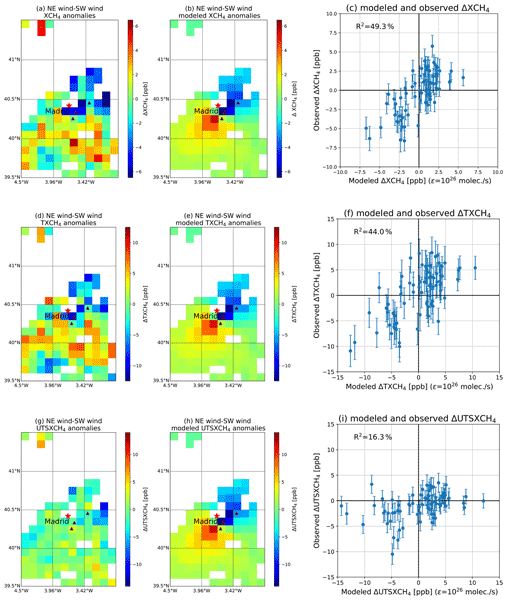
Qiansi Tu, Frank Hase, Matthias Schneider, Omaira García, Thomas Blumenstock, Tobias Borsdorff, Matthias Frey, Farahnaz Khosrawi, Alba Lorente, Carlos Alberti, Juan J. Bustos, André Butz, Virgilio Carreño, Emilio Cuevas, Roger Curcoll, Christopher J. Diekmann, Darko Dubravica, Benjamin Ertl, Carme Estruch, Sergio Fabián León-Luis, Carlos Marrero, Josep-Anton Morgui, Ramón Ramos, Christian Scharun, Carsten Schneider, Eliezer Sepúlveda, Carlos Toledano, and Carlos Torres
Atmos. Chem. Phys., 22, 295–317, https://doi.org/10.5194/acp-22-295-2022, https://doi.org/10.5194/acp-22-295-2022, 2022
Short summary
Short summary
We use different methane ground- and space-based remote sensing data sets for investigating the emission strength of three waste disposal sites close to Madrid. We present a method that uses wind-assigned anomalies for deriving emission strengths from satellite data and estimate their uncertainty to 9–14 %. The emission strengths estimated from the remote sensing data sets are significantly larger than the values published in the official register.
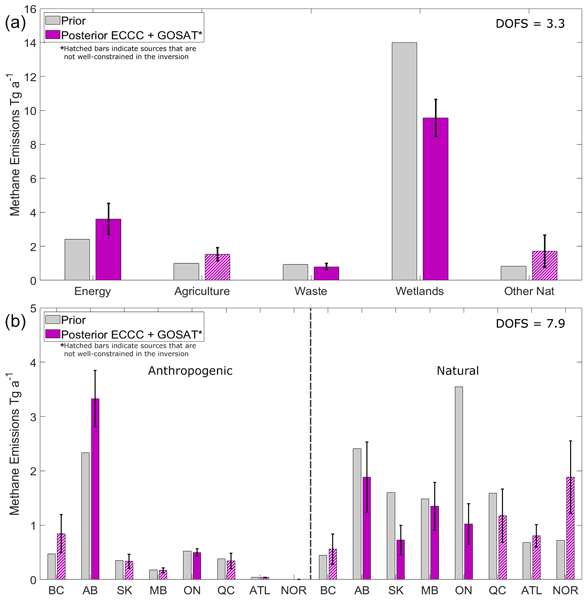
Sabour Baray, Daniel J. Jacob, Joannes D. Maasakkers, Jian-Xiong Sheng, Melissa P. Sulprizio, Dylan B. A. Jones, A. Anthony Bloom, and Robert McLaren
Atmos. Chem. Phys., 21, 18101–18121, https://doi.org/10.5194/acp-21-18101-2021, https://doi.org/10.5194/acp-21-18101-2021, 2021
Short summary
Short summary
We use 2010–2015 surface and satellite observations to disentangle methane from anthropogenic and natural sources in Canada. Using a chemical transport model (GEOS-Chem), the mismatch between modelled and observed methane concentrations can be used to infer emissions according to Bayesian statistics. Compared to prior knowledge, we show higher anthropogenic emissions attributed to energy and/or agriculture in Western Canada and lower natural emissions from Boreal wetlands.
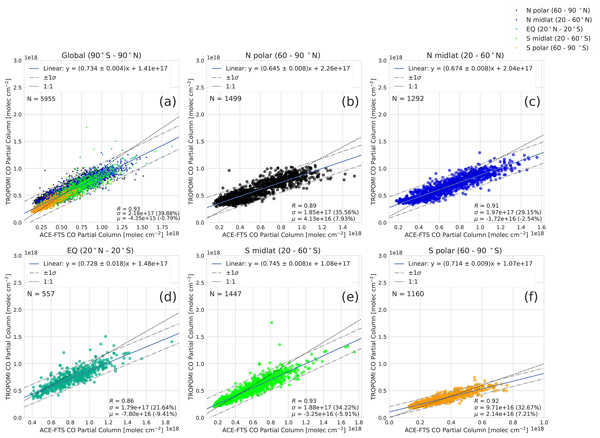
Tyler Wizenberg, Kimberly Strong, Kaley Walker, Erik Lutsch, Tobias Borsdorff, and Jochen Landgraf
Atmos. Meas. Tech., 14, 7707–7728, https://doi.org/10.5194/amt-14-7707-2021, https://doi.org/10.5194/amt-14-7707-2021, 2021
Short summary
Short summary
CO is an important atmospheric gas that influences both air quality and the climate. Here, we compare CO measurements from TROPOMI with those from ACE-FTS and an Arctic ground-based FTS at Eureka, Nunavut, to further characterize the accuracy of TROPOMI measurements. CO columns from the instruments agree well but show larger differences at high latitudes. Despite this, the results fall within the TROPOMI accuracy target, indicating good data quality at high latitudes.
Cited articles
Agustí-Panareda, A., Barré, J., Massart, S., Inness, A., Aben, I., Ades, M., Baier, B. C., Balsamo, G., Borsdorff, T., Bousserez, N., Boussetta, S., Buchwitz, M., Cantarello, L., Crevoisier, C., Engelen, R., Eskes, H., Flemming, J., Garrigues, S., Hasekamp, O., Huijnen, V., Jones, L., Kipling, Z., Langerock, B., McNorton, J., Meilhac, N., Noël, S., Parrington, M., Peuch, V.-H., Ramonet, M., Razinger, M., Reuter, M., Ribas, R., Suttie, M., Sweeney, C., Tarniewicz, J., and Wu, L.: Technical note: The CAMS greenhouse gas reanalysis from 2003 to 2020, Atmos. Chem. Phys., 23, 3829–3859, https://doi.org/10.5194/acp-23-3829-2023, 2023. a
Alexe, M., Bergamaschi, P., Segers, A., Detmers, R., Butz, A., Hasekamp, O., Guerlet, S., Parker, R., Boesch, H., Frankenberg, C., Scheepmaker, R. A., Dlugokencky, E., Sweeney, C., Wofsy, S. C., and Kort, E. A.: Inverse modelling of CH4 emissions for 2010–2011 using different satellite retrieval products from GOSAT and SCIAMACHY, Atmos. Chem. Phys., 15, 113–133, https://doi.org/10.5194/acp-15-113-2015, 2015. a
Apituley, A., Pedergnana, M., Sneep, M., Veefkind, J., Loyola, D., Hasekamp, O., A., L., Borsdorff, T., Martinez Velarte, M., and Mandal, S.: Sentinel-5 precursor/TROPOMI Level 2 Product User Manual Methane, Tech. rep., https://sentiwiki.copernicus.eu/__attachments/a_046c3abe4195 dd4adb791aef506b27270ed4a9080ae56ead0282f38c503a44e7/ SRON-S5P-LEV2-MA-001 - Sentinel-5P Level 2 Product User Manual Methane 2025-2.9.1.pdf (last access: 22 July 2026), 2025. a, b, c
Balasus, N., Jacob, D. J., Lorente, A., Maasakkers, J. D., Parker, R. J., Boesch, H., Chen, Z., Kelp, M. M., Nesser, H., and Varon, D. J.: A blended TROPOMI+GOSAT satellite data product for atmospheric methane using machine learning to correct retrieval biases, Atmos. Meas. Tech., 16, 3787–3807, https://doi.org/10.5194/amt-16-3787-2023, 2023. a, b, c, d, e, f, g, h, i, j, k, l, m, n, o, p
Barré, J., Aben, I., Agustí-Panareda, A., Balsamo, G., Bousserez, N., Dueben, P., Engelen, R., Inness, A., Lorente, A., McNorton, J., Peuch, V.-H., Radnoti, G., and Ribas, R.: Systematic detection of local CH4 anomalies by combining satellite measurements with high-resolution forecasts, Atmos. Chem. Phys., 21, 5117–5136, https://doi.org/10.5194/acp-21-5117-2021, 2021. a
Berchet, A., Sollum, E., Thompson, R. L., Pison, I., Thanwerdas, J., Broquet, G., Chevallier, F., Aalto, T., Berchet, A., Bergamaschi, P., Brunner, D., Engelen, R., Fortems-Cheiney, A., Gerbig, C., Groot Zwaaftink, C. D., Haussaire, J.-M., Henne, S., Houweling, S., Karstens, U., Kutsch, W. L., Luijkx, I. T., Monteil, G., Palmer, P. I., van Peet, J. C. A., Peters, W., Peylin, P., Potier, E., Rödenbeck, C., Saunois, M., Scholze, M., Tsuruta, A., and Zhao, Y.: The Community Inversion Framework v1.0: a unified system for atmospheric inversion studies, Geosci. Model Dev., 14, 5331–5354, https://doi.org/10.5194/gmd-14-5331-2021, 2021. a, b, c
Bergamaschi, P., Corazza, M., Karstens, U., Athanassiadou, M., Thompson, R. L., Pison, I., Manning, A. J., Bousquet, P., Segers, A., Vermeulen, A. T., Janssens-Maenhout, G., Schmidt, M., Ramonet, M., Meinhardt, F., Aalto, T., Haszpra, L., Moncrieff, J., Popa, M. E., Lowry, D., Steinbacher, M., Jordan, A., O'Doherty, S., Piacentino, S., and Dlugokencky, E.: Top-down estimates of European CH4 and N2O emissions based on four different inverse models, Atmos. Chem. Phys., 15, 715–736, https://doi.org/10.5194/acp-15-715-2015, 2015. a
Bergamaschi, P., Segers, A., Brunner, D., Haussaire, J.-M., Henne, S., Ramonet, M., Arnold, T., Biermann, T., Chen, H., Conil, S., Delmotte, M., Forster, G., Frumau, A., Kubistin, D., Lan, X., Leuenberger, M., Lindauer, M., Lopez, M., Manca, G., Müller-Williams, J., O'Doherty, S., Scheeren, B., Steinbacher, M., Trisolino, P., Vítková, G., and Yver Kwok, C.: High-resolution inverse modelling of European CH4 emissions using the novel FLEXPART-COSMO TM5 4DVAR inverse modelling system, Atmos. Chem. Phys., 22, 13243–13268, https://doi.org/10.5194/acp-22-13243-2022, 2022. a
Borsdorff, T., aan de Brugh, J., Schneider, A., Lorente, A., Birk, M., Wagner, G., Kivi, R., Hase, F., Feist, D. G., Sussmann, R., Rettinger, M., Wunch, D., Warneke, T., and Landgraf, J.: Improving the TROPOMI CO data product: update of the spectroscopic database and destriping of single orbits, Atmos. Meas. Tech., 12, 5443–5455, https://doi.org/10.5194/amt-12-5443-2019, 2019. a, b
Bovensmann, H., Burrows, J. P., Buchwitz, M., Frerick, J., Noël, S., Rozanov, V. V., Chance, K. V., and Goede, A. P. H.: SCIAMACHY: Mission Objectives and Measurement Modes, J. Atmos. Sci., 56, 127–150, https://doi.org/10.1175/1520-0469(1999)056<0127:SMOAMM>2.0.CO;2, 1999. a
Brasseur, G. and Jacob, D.: Modeling of Atmospheric Chemistry, Cambridge University Press, ISBN 978-1-108-21095-9, 2017. a
Breiman, L.: Random Forests, Mach. Learn., 45, 5–32, https://doi.org/10.1023/A:1010933404324, 2001. a
Broquet, G., Chevallier, F., Rayner, P., Aulagnier, C., Pison, I., Ramonet, M., Schmidt, M., Vermeulen, A. T., and Ciais, P.: A European summertime CO2 biogenic flux inversion at mesoscale from continuous in situ mixing ratio measurements, J. Geophys. Res.-Atmos., 116, https://doi.org/10.1029/2011JD016202, 2011. a
Buchwitz, M., Reuter, M., Schneising, O., Boesch, H., Guerlet, S., Dils, B., Aben, I., Armante, R., Bergamaschi, P., Blumenstock, T., Bovensmann, H., Brunner, D., Buchmann, B., Burrows, J. P., Butz, A., Chédin, A., Chevallier, F., Crevoisier, C. D., Deutscher, N. M., Frankenberg, C., Hase, F., Hasekamp, O. P., Heymann, J., Kaminski, T. , Laeng, A., Lichtenberg, G., De Mazière, M., Noël, S., Notholt, J., Orphal, J., Popp, C., Parker, R., Scholze, M., Sussmann, R., Stiller, G. P., Warneke, T., Zehner, C., Bril, A., Crisp, D., Griffith, D. W. T., Kuze, A., O'Dell, C., Oshchepkov, S., Sherlock, V., Suto, H., Wennberg, P., Wunch, D., Yokota, T., and Yoshida, Y.: The Greenhouse Gas Climate Change Initiative (GHG-CCI): Comparison and quality assessment of near-surface-sensitive satellite-derived CO2 and CH4 global data sets, Remote Sens. Environ., 162, 344–362, https://doi.org/10.1016/j.rse.2013.04.024, 2015. a
Butz, A., Galli, A., Hasekamp, O., Landgraf, J., Tol, P., and Aben, I.: TROPOMI aboard Sentinel-5 Precursor: Prospective performance of CH4 retrievals for aerosol and cirrus loaded atmospheres, Remote Sens. Environ., 120, 267–276, https://doi.org/10.1016/j.rse.2011.05.030, 2012. a
Chen, T. and Guestrin, C.: XGBoost: A Scalable Tree Boosting System, in: Proceedings of the 22nd ACM SIGKDD International Conference on Knowledge Discovery and Data Mining, KDD '16, Association for Computing Machinery, ISBN 978-1-4503-4232-2, 785–794, https://doi.org/10.1145/2939672.2939785, 2016. a
Chen, Z., Jacob, D. J., Nesser, H., Sulprizio, M. P., Lorente, A., Varon, D. J., Lu, X., Shen, L., Qu, Z., Penn, E., and Yu, X.: Methane emissions from China: a high-resolution inversion of TROPOMI satellite observations, Atmos. Chem. Phys., 22, 10809–10826, https://doi.org/10.5194/acp-22-10809-2022, 2022. a
Chen, Z., Jacob, D. J., Gautam, R., Omara, M., Stavins, R. N., Stowe, R. C., Nesser, H., Sulprizio, M. P., Lorente, A., Varon, D. J., Lu, X., Shen, L., Qu, Z., Pendergrass, D. C., and Hancock, S.: Satellite quantification of methane emissions and oil–gas methane intensities from individual countries in the Middle East and North Africa: implications for climate action, Atmos. Chem. Phys., 23, 5945–5967, https://doi.org/10.5194/acp-23-5945-2023, 2023. a
Cressot, C., Chevallier, F., Bousquet, P., Crevoisier, C., Dlugokencky, E. J., Fortems-Cheiney, A., Frankenberg, C., Parker, R., Pison, I., Scheepmaker, R. A., Montzka, S. A., Krummel, P. B., Steele, L. P., and Langenfelds, R. L.: On the consistency between global and regional methane emissions inferred from SCIAMACHY, TANSO-FTS, IASI and surface measurements, Atmos. Chem. Phys., 14, 577–592, https://doi.org/10.5194/acp-14-577-2014, 2014. a
Crippa, M., Guizzardi, D., Schaaf, E., Monforti-Ferrario, F., Quadrelli, R., Risquez Martin, A., Rossi, S., Vignati, E., Muntean, M., Brandao De Melo, J., Oom, D., Pagani, F., Banja, M., Taghavi-Moharamli, P., Köykkä, J., Grassi, G., Branco, A., and San-Miguel, J.: GHG emissions of all world countries – 2023, Publications Office of the European Union, https://doi.org/10.2760/953322, 2023. a
Dils, B., Zhou, M., Camy-Peyret, C., De Mazière, M., Kangah, Y., Langerock, B., Prunet, P., Serio, C., Siddans, R., and Kerridge, B.: Independent validation of IASI/MetOp-A LMD and RAL CH4 products using CAMS model, in situ profiles, and ground-based FTIR measurements, Atmos. Meas. Tech., 17, 5491–5524, https://doi.org/10.5194/amt-17-5491-2024, 2024. a
East, J. D., Jacob, D. J., Jervis, D., Balasus, N., Estrada, L. A., Hancock, S. E., Sulprizio, M. P., Thomas, J., Wang, X., Chen, Z., Varon, D. J., and Worden, J. R.: Worldwide Inference of National Methane Emissions by Inversion of Satellite Observations with UNFCCC Prior Estimates, Nat. Commun., 16, 11004, https://doi.org/10.1038/s41467-025-67122-8, 2025. a
Etiope, G., Ciotoli, G., Schwietzke, S., and Schoell, M.: Gridded maps of geological methane emissions and their isotopic signature, Earth Syst. Sci. Data, 11, 1–22, https://doi.org/10.5194/essd-11-1-2019, 2019. a
European Space Agency: Sentinel-5P Calibration and Validation Plan for the Operational Phase, Tech. Rep. ESA-EOPG-CSCOP-PL-0073, https://sentinels.copernicus.eu/documents/247904/2474724/Sentinel-5P-Calibration-and-Validation-Plan.pdf (last access: 22 July 2026), 2017. a
Forster, P., Storelvmo, T., Armour, K., Collins, W., Dufresne, J.-L., Frame, D., Lunt, D., Mauritsen, T., Palmer, M., Watanabe, M., Wild, M., and Zhang, H.: The Earth’s energy budget, climate feedbacks, and climate sensitivity, in: Climate Change 2021: The Physical Science Basis. Contribution of Working Group I to the Sixth Assessment Report of the Intergovernmental Panel on Climate Change, Cambridge University Press, 923-1054, https://doi.org/10.1017/9781009157896.009, 2021. a
Fortems-Cheiney, A., Pison, I., Broquet, G., Dufour, G., Berchet, A., Potier, E., Coman, A., Siour, G., and Costantino, L.: Variational regional inverse modeling of reactive species emissions with PYVAR-CHIMERE-v2019, Geosci. Model Dev., 14, 2939–2957, https://doi.org/10.5194/gmd-14-2939-2021, 2021. a, b
Gilbert, J. and Lemaréchal, C.: Some numerical experiments with variable storage quasi Newton algorithms, Math. Program., 45, 407–435, https://doi.org/10.1007/BF01589113, 1989. a
Hancock, S. E., Jacob, D. J., Chen, Z., Nesser, H., Davitt, A., Varon, D. J., Sulprizio, M. P., Balasus, N., Estrada, L. A., Cazorla, M., Dawidowski, L., Diez, S., East, J. D., Penn, E., Randles, C. A., Worden, J., Aben, I., Parker, R. J., and Maasakkers, J. D.: Satellite quantification of methane emissions from South American countries: a high-resolution inversion of TROPOMI and GOSAT observations, Atmos. Chem. Phys., 25, 797–817, https://doi.org/10.5194/acp-25-797-2025, 2025. a, b
Hasekamp, O., Lorente, A., Hu, H., Butz, A., aan de Brugh, J., and Landgraf, J.: Algorithm Theoretical Basis Document for Sentinel-5 Precursor Methane Retrieval, SRON Netherlands Institute for Space Research, Tech. rep., https://sentinels.copernicus.eu/documents/247904/2476257/Sentinel-5P-TROPOMI-ATBD-Methane-retrieval.pdf (last access: 22 July 2026), 2022. a, b, c
Hu, H., Hasekamp, O., Butz, A., Galli, A., Landgraf, J., Aan de Brugh, J., Borsdorff, T., Scheepmaker, R., and Aben, I.: The operational methane retrieval algorithm for TROPOMI, Atmos. Meas. Tech., 9, 5423–5440, https://doi.org/10.5194/amt-9-5423-2016, 2016. a
Ide, K., Ghil, M., and Lorenc, A.: Unified Notation for Data Assimilation: Operational, Sequential and Variational, J. Meteorol. Soc. Jpn., 75, 181–189, 1997. a
Ioannidis, E., Meesters, A., Steiner, M., Brunner, D., Reum, F., Pison, I., Berchet, A., Thompson, R., Sollum, E., Koch, F.-T., Gerbig, C., Wang, F., Maksyutov, S., Tsuruta, A., Tenkanen, M., Aalto, T., Monteil, G., Lin, H., Ren, G., Scholze, M., and Houweling, S.: An inter-comparison of inverse models for estimating European CH4 emissions, Earth Syst. Sci. Data, 18, 167–198, https://doi.org/10.5194/essd-18-167-2026, 2026. a
IPCC: Climate Change 2021 – The Physical Science Basis: Working Group I Contribution to the Sixth Assessment Report of the Intergovernmental Panel on Climate Change, Tech. rep., IPCC, ISBN 978-1-107-41532-4, https://www.ipcc.ch/report/ar6/wg1/#FullReport/ (last access: 22 July 2026), 2021. a
Jacob, D. J., Varon, D. J., Cusworth, D. H., Dennison, P. E., Frankenberg, C., Gautam, R., Guanter, L., Kelley, J., McKeever, J., Ott, L. E., Poulter, B., Qu, Z., Thorpe, A. K., Worden, J. R., and Duren, R. M.: Quantifying methane emissions from the global scale down to point sources using satellite observations of atmospheric methane, Atmos. Chem. Phys., 22, 9617–9646, https://doi.org/10.5194/acp-22-9617-2022, 2022. a, b
Karlsson, K.-G., Riihelä, A., Trentmann, J., Stengel, M., Solodovnik, I., Meirink, J. F., Devasthale, A., Jääskeläinen, E., Kallio-Myers, V., Eliasson, S., Benas, N., Johansson, E., Stein, D., Finkensieper, S., Håkansson, N., Akkermans, T., Clerbaux, N., Selbach, N., Marc, S., and Hollmann, R.: CLARA-A3: CM SAF cLoud, Albedo and surface RAdiation dataset from AVHRR data – Edition 3, Satellite Application Facility on Climate Monitoring, https://doi.org/10.5676/EUM_SAF_CM/CLARA_AVHRR/V003, 2023. a
Ke, G., Meng, Q., Finley, T., Wang, T., Chen, W., Ma, W., Ye, Q., and Liu, T.-Y.: LightGBM: a highly efficient gradient boosting decision tree, in: Proceedings of the 31st International Conference on Neural Information Processing Systems, NIPS'17, Curran Associates Inc., 3149–3157, ISBN 9781510860964, 2017. a
Kuhlmann, G., Stavropoulou, F., Schwietzke, S., Zavala-Araiza, D., Thorpe, A., Hueni, A., Emmenegger, L., Calcan, A., Röckmann, T., and Brunner, D.: Evidence of successful methane mitigation in one of Europe's most important oil production region, Atmos. Chem. Phys., 25, 5371–5385, https://doi.org/10.5194/acp-25-5371-2025, 2025. a
Lahoz, W. A. and Schneider, P.: Data assimilation: making sense of Earth Observation, Frontiers in Environmental Science, 2, https://doi.org/10.3389/fenvs.2014.00016, 2014. a
Landgraf, J., Lorente, A., Borsdorff, T., Mandal, S., Langerock, B., and Sha, M.: ATM-MPC Mission Performance Cluster Methane [L2__CH4___] Readme, Tech. rep., https://sentiwiki.copernicus.eu/__attachments/a_53ae38bf63218 fe4472f53a689f6f0ea547f 934c488fae1596cd960e0e8e6b3c/S5P-MPC-SRON-PRF-CH4 - Sentinel-5P Methane Product Readme File 2025 - 2.9.pdf?cb=90528354ce87097845883d07293f74b5 (last access: 22 July 2026), 2025. a, b, c
Laughner, J. L., Toon, G. C., Mendonca, J., Petri, C., Roche, S., Wunch, D., Blavier, J.-F., Griffith, D. W. T., Heikkinen, P., Keeling, R. F., Kiel, M., Kivi, R., Roehl, C. M., Stephens, B. B., Baier, B. C., Chen, H., Choi, Y., Deutscher, N. M., DiGangi, J. P., Gross, J., Herkommer, B., Jeseck, P., Laemmel, T., Lan, X., McGee, E., McKain, K., Miller, J., Morino, I., Notholt, J., Ohyama, H., Pollard, D. F., Rettinger, M., Riris, H., Rousogenous, C., Sha, M. K., Shiomi, K., Strong, K., Sussmann, R., Té, Y., Velazco, V. A., Wofsy, S. C., Zhou, M., and Wennberg, P. O.: The Total Carbon Column Observing Network's GGG2020 data version, Earth Syst. Sci. Data, 16, 2197–2260, https://doi.org/10.5194/essd-16-2197-2024, 2024. a
Lauvaux, T., Giron, C., Mazzolini, M., d'Aspremont, A., Duren, R., Cusworth, D., Shindell, D., and Ciais, P.: Global assessment of oil and gas methane ultra-emitters, Science, 375, 557–561, https://doi.org/10.1126/science.abj4351, 2022. a
Lauvernet, C., Brankart, J.-M., Castruccio, F., Broquet, G., Brasseur, P., and Verron, J.: A Truncated Gaussian Filter for Data Assimilation with Inequality Constraints: Application to the Hydrostatic Stability Condition in Ocean Models, Ocean Model., 27, 1–17, https://doi.org/10.1016/j.ocemod.2008.10.007, 2009. a
Liang, R., Zhang, Y., Chen, W., Zhang, P., Liu, J., Chen, C., Mao, H., Shen, G., Qu, Z., Chen, Z., Zhou, M., Wang, P., Parker, R. J., Boesch, H., Lorente, A., Maasakkers, J. D., and Aben, I.: East Asian methane emissions inferred from high-resolution inversions of GOSAT and TROPOMI observations: a comparative and evaluative analysis, Atmos. Chem. Phys., 23, 8039–8057, https://doi.org/10.5194/acp-23-8039-2023, 2023. a
Lindqvist, H., Kivimäki, E., Häkkilä, T., Tsuruta, A., Schneising, O., Buchwitz, M., Lorente, A., Martinez Velarte, M., Borsdorff, T., Alberti, C., Backman, L., Buschmann, M., Chen, H., Dubravica, D., Hase, F., Heikkinen, P., Karppinen, T., Kivi, R., McGee, E., Notholt, J., Rautiainen, K., Roche, S., Simpson, W., Strong, K., Tu, Q., Wunch, D., Aalto, T., and Tamminen, J.: Evaluation of Sentinel-5P TROPOMI Methane Observations at Northern High Latitudes, Remote Sensing, 16, 2979, https://doi.org/10.3390/rs16162979, 2024. a, b, c, d, e
Lorente, A., Borsdorff, T., Butz, A., Hasekamp, O., aan de Brugh, J., Schneider, A., Wu, L., Hase, F., Kivi, R., Wunch, D., Pollard, D. F., Shiomi, K., Deutscher, N. M., Velazco, V. A., Roehl, C. M., Wennberg, P. O., Warneke, T., and Landgraf, J.: Methane retrieved from TROPOMI: improvement of the data product and validation of the first 2 years of measurements, Atmos. Meas. Tech., 14, 665–684, https://doi.org/10.5194/amt-14-665-2021, 2021. a, b, c
Lorente, A., Borsdorff, T., Martinez-Velarte, M. C., Butz, A., Hasekamp, O. P., Wu, L., and Landgraf, J.: Evaluation of the methane full-physics retrieval applied to TROPOMI ocean sun glint measurements, Atmos. Meas. Tech., 15, 6585–6603, https://doi.org/10.5194/amt-15-6585-2022, 2022. a
Lorente, A., Borsdorff, T., Martinez-Velarte, M. C., and Landgraf, J.: Accounting for surface reflectance spectral features in TROPOMI methane retrievals, Atmos. Meas. Tech., 16, 1597–1608, https://doi.org/10.5194/amt-16-1597-2023, 2023. a, b, c
Lu, L., Cohen, J. B., Qin, K., Li, X., and He, Q.: Identifying missing sources and reducing NOx emissions uncertainty over China using daily satellite data and a mass-conserving method, Atmos. Chem. Phys., 25, 2291–2309, https://doi.org/10.5194/acp-25-2291-2025, 2025a. a
Lu, L., Cohen, J. B., Qin, K., Tiwari, P., Hu, W., Gao, H., and Zheng, B.: New Perspective on Using Observational Uncertainty to Improve Reliability of NOx Emissions Over Northern China, IEEE T. Geosci. Remote, 63, 1–15, https://doi.org/10.1109/TGRS.2025.3620116, 2025b. a
Maazallahi, H., Stavropoulou, F., Sutanto, S. J., Steiner, M., Brunner, D., Mertens, M., Jöckel, P., Visschedijk, A., Denier van der Gon, H., Dellaert, S., Velandia Salinas, N., Schwietzke, S., Zavala-Araiza, D., Ghemulet, S., Pana, A., Ardelean, M., Corbu, M., Calcan, A., Conley, S. A., Smith, M. L., and Röckmann, T.: Airborne in situ quantification of methane emissions from oil and gas production in Romania, Atmos. Chem. Phys., 25, 1497–1511, https://doi.org/10.5194/acp-25-1497-2025, 2025. a
Mailler, S., Menut, L., Khvorostyanov, D., Valari, M., Couvidat, F., Siour, G., Turquety, S., Briant, R., Tuccella, P., Bessagnet, B., Colette, A., Létinois, L., Markakis, K., and Meleux, F.: CHIMERE-2017: from urban to hemispheric chemistry-transport modeling, Geosci. Model Dev., 10, 2397–2423, https://doi.org/10.5194/gmd-10-2397-2017, 2017. a, b, c
Menut, L., Bessagnet, B., Khvorostyanov, D., Beekmann, M., Blond, N., Colette, A., Coll, I., Curci, G., Foret, G., Hodzic, A., Mailler, S., Meleux, F., Monge, J.-L., Pison, I., Siour, G., Turquety, S., Valari, M., Vautard, R., and Vivanco, M. G.: CHIMERE 2013: a model for regional atmospheric composition modelling, Geosci. Model Dev., 6, 981–1028, https://doi.org/10.5194/gmd-6-981-2013, 2013. a, b, c
Monteil, G., Houweling, S., Butz, A., Guerlet, S., Schepers, D., Hasekamp, O., Frankenberg, C., Scheepmaker, R., Aben, I., and Röckmann, T.: Comparison of CH4 inversions based on 15 months of GOSAT and SCIAMACHY observations, J. Geophys. Res.-Atmos., 118, 11807–11823, https://doi.org/10.1002/2013JD019760, 2013. a
Monteil, G., Broquet, G., Scholze, M., Lang, M., Karstens, U., Gerbig, C., Koch, F.-T., Smith, N. E., Thompson, R. L., Luijkx, I. T., White, E., Meesters, A., Ciais, P., Ganesan, A. L., Manning, A., Mischurow, M., Peters, W., Peylin, P., Tarniewicz, J., Rigby, M., Rödenbeck, C., Vermeulen, A., and Walton, E. M.: The regional European atmospheric transport inversion comparison, EUROCOM: first results on European-wide terrestrial carbon fluxes for the period 2006–2015, Atmos. Chem. Phys., 20, 12063–12091, https://doi.org/10.5194/acp-20-12063-2020, 2020. a
Nathan, B., Maasakkers, J. D., Naus, S., Gautam, R., Omara, M., Varon, D. J., Sulprizio, M. P., Estrada, L. A., Lorente, A., Borsdorff, T., Parker, R. J., and Aben, I.: Assessing methane emissions from collapsing Venezuelan oil production using TROPOMI, Atmos. Chem. Phys., 24, 6845–6863, https://doi.org/10.5194/acp-24-6845-2024, 2024. a
Naus, S., Maasakkers, J. D., Gautam, R., Omara, M., Stikker, R., Veenstra, A. K., Nathan, B., Irakulis-Loitxate, I., Guanter, L., Pandey, S., Girard, M., Lorente, A., Borsdorff, T., and Aben, I.: Assessing the Relative Importance of Satellite-Detected Methane Superemitters in Quantifying Total Emissions for Oil and Gas Production Areas in Algeria, Environ. Sci. Technol., 57, 19545–19556, https://doi.org/10.1021/acs.est.3c04746, 2023. a, b, c
Nesser, H., Jacob, D. J., Maasakkers, J. D., Lorente, A., Chen, Z., Lu, X., Shen, L., Qu, Z., Sulprizio, M. P., Winter, M., Ma, S., Bloom, A. A., Worden, J. R., Stavins, R. N., and Randles, C. A.: High-resolution US methane emissions inferred from an inversion of 2019 TROPOMI satellite data: contributions from individual states, urban areas, and landfills, Atmos. Chem. Phys., 24, 5069–5091, https://doi.org/10.5194/acp-24-5069-2024, 2024. a
Nesser, H., Bowman, K. W., Thill, M. D., Varon, D. J., Randles, C. A., Tewari, A., Cardoso-Saldaña, F. J., Reidy, E., Maasakkers, J. D., and Jacob, D. J.: Predicting and correcting the influence of boundary conditions in regional inverse analyses, Geosci. Model Dev., 18, 9279–9291, https://doi.org/10.5194/gmd-18-9279-2025, 2025. a
Nygård, T., Papritz, L., Naakka, T., and Vihma, T.: Cold wintertime air masses over Europe: where do they come from and how do they form?, Weather Clim. Dynam., 4, 943–961, https://doi.org/10.5194/wcd-4-943-2023, 2023. a
Parker, R. J., Webb, A., Boesch, H., Somkuti, P., Barrio Guillo, R., Di Noia, A., Kalaitzi, N., Anand, J. S., Bergamaschi, P., Chevallier, F., Palmer, P. I., Feng, L., Deutscher, N. M., Feist, D. G., Griffith, D. W. T., Hase, F., Kivi, R., Morino, I., Notholt, J., Oh, Y.-S., Ohyama, H., Petri, C., Pollard, D. F., Roehl, C., Sha, M. K., Shiomi, K., Strong, K., Sussmann, R., Té, Y., Velazco, V. A., Warneke, T., Wennberg, P. O., and Wunch, D.: A decade of GOSAT Proxy satellite CH4 observations, Earth Syst. Sci. Data, 12, 3383–3412, https://doi.org/10.5194/essd-12-3383-2020, 2020. a, b, c
Petrenko, V. V., Smith, A. M., Schaefer, H., Riedel, K., Brook, E., Baggenstos, D., Harth, C., Hua, Q., Buizert, C., Schilt, A., Fain, X., Mitchell, L., Bauska, T., Orsi, A., Weiss, R. F., and Severinghaus, J. P.: Minimal geological methane emissions during the Younger Dryas–Preboreal abrupt warming event, Nature, 548, 443–446, https://doi.org/10.1038/nature23316, 2017. a
Petrescu, A. M. R., Peters, G. P., Engelen, R., Houweling, S., Brunner, D., Tsuruta, A., Matthews, B., Patra, P. K., Belikov, D., Thompson, R. L., Höglund-Isaksson, L., Zhang, W., Segers, A. J., Etiope, G., Ciotoli, G., Peylin, P., Chevallier, F., Aalto, T., Andrew, R. M., Bastviken, D., Berchet, A., Broquet, G., Conchedda, G., Dellaert, S. N. C., Denier van der Gon, H., Gütschow, J., Haussaire, J.-M., Lauerwald, R., Markkanen, T., van Peet, J. C. A., Pison, I., Regnier, P., Solum, E., Scholze, M., Tenkanen, M., Tubiello, F. N., van der Werf, G. R., and Worden, J. R.: Comparison of observation- and inventory-based methane emissions for eight large global emitters, Earth Syst. Sci. Data, 16, 4325–4350, https://doi.org/10.5194/essd-16-4325-2024, 2024. a
Pison, I., Berchet, A., Saunois, M., Bousquet, P., Broquet, G., Conil, S., Delmotte, M., Ganesan, A., Laurent, O., Martin, D., O'Doherty, S., Ramonet, M., Spain, T. G., Vermeulen, A., and Yver Kwok, C.: How a European network may help with estimating methane emissions on the French national scale, Atmos. Chem. Phys., 18, 3779–3798, https://doi.org/10.5194/acp-18-3779-2018, 2018. a
Pison, I., Thompson, R., Sollum, E., Kouyaté, M., Berchet, A., and Haussaire, J.-M.: Methane and nitrous oxide fluxes from the CIF, Tech. rep., https://verify.lsce.ipsl.fr/images/PublicDeliverables/VERIFY_D410_Methane_and_nitrous_oxide_fluxes_from_the_CIF_v1.pdf (last access: 22 July 2026), 2021. a, b
Qu, Z., Jacob, D. J., Shen, L., Lu, X., Zhang, Y., Scarpelli, T. R., Nesser, H., Sulprizio, M. P., Maasakkers, J. D., Bloom, A. A., Worden, J. R., Parker, R. J., and Delgado, A. L.: Global distribution of methane emissions: a comparative inverse analysis of observations from the TROPOMI and GOSAT satellite instruments, Atmos. Chem. Phys., 21, 14159–14175, https://doi.org/10.5194/acp-21-14159-2021, 2021. a
Raivonen, M., Smolander, S., Backman, L., Susiluoto, J., Aalto, T., Markkanen, T., Mäkelä, J., Rinne, J., Peltola, O., Aurela, M., Lohila, A., Tomasic, M., Li, X., Larmola, T., Juutinen, S., Tuittila, E.-S., Heimann, M., Sevanto, S., Kleinen, T., Brovkin, V., and Vesala, T.: HIMMELI v1.0: HelsinkI Model of MEthane buiLd-up and emIssion for peatlands, Geosci. Model Dev., 10, 4665–4691, https://doi.org/10.5194/gmd-10-4665-2017, 2017. a
Randerson, J., van der Werf, G., Giglio, L., Collatz, G., and Kasibhatla, P.: Global Fire Emissions Database, Version 4.1 (GFEDv4), ORNL Distributed Active Archive Center, https://doi.org/10.3334/ORNLDAAC/1293, 2017. a
Rayner, P. J., Michalak, A. M., and Chevallier, F.: Fundamentals of data assimilation applied to biogeochemistry, Atmos. Chem. Phys., 19, 13911–13932, https://doi.org/10.5194/acp-19-13911-2019, 2019. a
Saad, K. M., Wunch, D., Toon, G. C., Bernath, P., Boone, C., Connor, B., Deutscher, N. M., Griffith, D. W. T., Kivi, R., Notholt, J., Roehl, C., Schneider, M., Sherlock, V., and Wennberg, P. O.: Derivation of tropospheric methane from TCCON CH4 and HF total column observations, Atmos. Meas. Tech., 7, 2907–2918, https://doi.org/10.5194/amt-7-2907-2014, 2014. a
Santaren, D., Broquet, G., Bréon, F.-M., Chevallier, F., Siméoni, D., Zheng, B., and Ciais, P.: A local- to national-scale inverse modeling system to assess the potential of spaceborne CO2 measurements for the monitoring of anthropogenic emissions, Atmos. Meas. Tech., 14, 403–433, https://doi.org/10.5194/amt-14-403-2021, 2021. a, b, c
Saunois, M., Stavert, A. R., Poulter, B., Bousquet, P., Canadell, J. G., Jackson, R. B., Raymond, P. A., Dlugokencky, E. J., Houweling, S., Patra, P. K., Ciais, P., Arora, V. K., Bastviken, D., Bergamaschi, P., Blake, D. R., Brailsford, G., Bruhwiler, L., Carlson, K. M., Carrol, M., Castaldi, S., Chandra, N., Crevoisier, C., Crill, P. M., Covey, K., Curry, C. L., Etiope, G., Frankenberg, C., Gedney, N., Hegglin, M. I., Höglund-Isaksson, L., Hugelius, G., Ishizawa, M., Ito, A., Janssens-Maenhout, G., Jensen, K. M., Joos, F., Kleinen, T., Krummel, P. B., Langenfelds, R. L., Laruelle, G. G., Liu, L., Machida, T., Maksyutov, S., McDonald, K. C., McNorton, J., Miller, P. A., Melton, J. R., Morino, I., Müller, J., Murguia-Flores, F., Naik, V., Niwa, Y., Noce, S., O'Doherty, S., Parker, R. J., Peng, C., Peng, S., Peters, G. P., Prigent, C., Prinn, R., Ramonet, M., Regnier, P., Riley, W. J., Rosentreter, J. A., Segers, A., Simpson, I. J., Shi, H., Smith, S. J., Steele, L. P., Thornton, B. F., Tian, H., Tohjima, Y., Tubiello, F. N., Tsuruta, A., Viovy, N., Voulgarakis, A., Weber, T. S., van Weele, M., van der Werf, G. R., Weiss, R. F., Worthy, D., Wunch, D., Yin, Y., Yoshida, Y., Zhang, W., Zhang, Z., Zhao, Y., Zheng, B., Zhu, Q., Zhu, Q., and Zhuang, Q.: The Global Methane Budget 2000–2017, Earth Syst. Sci. Data, 12, 1561–1623, https://doi.org/10.5194/essd-12-1561-2020, 2020. a, b, c
Schneising, O.: Product User Guide (PUG) TROPOMI WFM-DOAS (TROPOMI/WFMD) XCH4, Tech. rep., https://www.iup.uni-bremen.de/carbon_ghg/products/tropomi_wfmd/data/v18/pug_wfmd.pdf (last access: 22 July 2026), 2022. a
Schneising, O., Buchwitz, M., Reuter, M., Bovensmann, H., Burrows, J. P., Borsdorff, T., Deutscher, N. M., Feist, D. G., Griffith, D. W. T., Hase, F., Hermans, C., Iraci, L. T., Kivi, R., Landgraf, J., Morino, I., Notholt, J., Petri, C., Pollard, D. F., Roche, S., Shiomi, K., Strong, K., Sussmann, R., Velazco, V. A., Warneke, T., and Wunch, D.: A scientific algorithm to simultaneously retrieve carbon monoxide and methane from TROPOMI onboard Sentinel-5 Precursor, Atmos. Meas. Tech., 12, 6771–6802, https://doi.org/10.5194/amt-12-6771-2019, 2019. a, b
Schneising, O., Buchwitz, M., Reuter, M., Vanselow, S., Bovensmann, H., and Burrows, J. P.: Remote sensing of methane leakage from natural gas and petroleum systems revisited, Atmos. Chem. Phys., 20, 9169–9182, https://doi.org/10.5194/acp-20-9169-2020, 2020. a
Schneising, O., Buchwitz, M., Hachmeister, J., Vanselow, S., Reuter, M., Buschmann, M., Bovensmann, H., and Burrows, J. P.: Advances in retrieving XCH4 and XCO from Sentinel-5 Precursor: improvements in the scientific TROPOMI/WFMD algorithm, Atmos. Meas. Tech., 16, 669–694, https://doi.org/10.5194/amt-16-669-2023, 2023. a, b, c, d, e, f
Schuit, B. J., Maasakkers, J. D., Bijl, P., Mahapatra, G., van den Berg, A.-W., Pandey, S., Lorente, A., Borsdorff, T., Houweling, S., Varon, D. J., McKeever, J., Jervis, D., Girard, M., Irakulis-Loitxate, I., Gorroño, J., Guanter, L., Cusworth, D. H., and Aben, I.: Automated detection and monitoring of methane super-emitters using satellite data, Atmos. Chem. Phys., 23, 9071–9098, https://doi.org/10.5194/acp-23-9071-2023, 2023. a, b
Shen, L., Gautam, R., Omara, M., Zavala-Araiza, D., Maasakkers, J. D., Scarpelli, T. R., Lorente, A., Lyon, D., Sheng, J., Varon, D. J., Nesser, H., Qu, Z., Lu, X., Sulprizio, M. P., Hamburg, S. P., and Jacob, D. J.: Satellite quantification of oil and natural gas methane emissions in the US and Canada including contributions from individual basins, Atmos. Chem. Phys., 22, 11203–11215, https://doi.org/10.5194/acp-22-11203-2022, 2022. a
Szopa, S., Naik, V., Adhikary, B., Artaxo, P., Berntsen, T., Collins, W., Fuzzi, S., Gallardo, L., Kiendler-Scharr, A., Klimont, Z., Liao, H., Unger, N., and Zanis, P.: Climate Change 2021 – The Physical Science Basis: Working Group I Contribution to the Sixth Assessment Report of the Intergovernmental Panel on Climate Change, Cambridge University Press, 1 edn., https://doi.org/10.1017/9781009157896, 2023. a
Szénási, B., Berchet, A., Broquet, G., Segers, A., van der Gon, H. D., Krol, M., Hullegie, J. J., Kiesow, A., Günther, D., Petrescu, A. M. R., Saunois, M., Bousquet, P., and Pison, I.: A pragmatic protocol for characterising errors in atmospheric inversions of methane emissions over Europe, Tellus B, 73, 1–23, https://doi.org/10.1080/16000889.2021.1914989, 2021. a
Tsuruta, A., Kivimäki, E., Lindqvist, H., Karppinen, T., Backman, L., Hakkarainen, J., Schneising, O., Buchwitz, M., Lan, X., Kivi, R., Chen, H., Buschmann, M., Herkommer, B., Notholt, J., Roehl, C., Té, Y., Wunch, D., Tamminen, J., and Aalto, T.: CH4 Fluxes Derived from Assimilation of TROPOMI XCH4 in CarbonTracker Europe-CH4: Evaluation of Seasonality and Spatial Distribution in the Northern High Latitudes, Remote Sensing, 15, https://doi.org/10.3390/rs15061620, 2023. a
Tu, Q., Schneider, M., Hase, F., Khosrawi, F., Ertl, B., Necki, J., Dubravica, D., Diekmann, C. J., Blumenstock, T., and Fang, D.: Quantifying CH4 emissions in hard coal mines from TROPOMI and IASI observations using the wind-assigned anomaly method, Atmos. Chem. Phys., 22, 9747–9765, https://doi.org/10.5194/acp-22-9747-2022, 2022. a
United Nations Environment Programme: An Eye on Methane 2025: From Measurement to Momentum – Data Is Driving Action – Now the Pace Must Match the Promise, Tech. rep., ISBN 978-92-807-4236-7, https://doi.org/10.59117/20.500.11822/48664, 2025. a
Vanselow, S., Schneising, O., Buchwitz, M., Reuter, M., Bovensmann, H., Boesch, H., and Burrows, J. P.: Automated detection of regions with persistently enhanced methane concentrations using Sentinel-5 Precursor satellite data, Atmos. Chem. Phys., 24, 10441–10473, https://doi.org/10.5194/acp-24-10441-2024, 2024. a
Veefkind, J., Aben, I., McMullan, K., Förster, H., de Vries, J., Otter, G., Claas, J., Eskes, H., de Haan, J., Kleipool, Q., van Weele, M., Hasekamp, O., Hoogeveen, R., Landgraf, J., Snel, R., Tol, P., Ingmann, P., Voors, R., Kruizinga, B., Vink, R., Visser, H., and Levelt, P.: TROPOMI on the ESA Sentinel-5 Precursor: A GMES mission for global observations of the atmospheric composition for climate, air quality and ozone layer applications, Remote Sens. Environ., 120, 70–83, https://doi.org/10.1016/j.rse.2011.09.027, 2012. a
Veefkind, J. P., Serrano-Calvo, R., de Gouw, J., Dix, B., Schneising, O., Buchwitz, M., Barré, J., van der A, R. J., Liu, M., and Levelt, P. F.: Widespread Frequent Methane Emissions From the Oil and Gas Industry in the Permian Basin, J. Geophys. Res.-Atmos., 128, e2022JD037479, https://doi.org/10.1029/2022JD037479, 2023. a
Weber, T., Wiseman, N., and Kock, A.: Global ocean methane emissions dominated by shallow coastal waters, Nat. Commun., 10, https://doi.org/10.1038/s41467-019-12541-7, 2019. a
Williams, J. P., Omara, M., Himmelberger, A., Zavala-Araiza, D., MacKay, K., Benmergui, J., Sargent, M., Wofsy, S. C., Hamburg, S. P., and Gautam, R.: Small emission sources in aggregate disproportionately account for a large majority of total methane emissions from the US oil and gas sector, Atmos. Chem. Phys., 25, 1513–1532, https://doi.org/10.5194/acp-25-1513-2025, 2025. a
Yu, X., Millet, D. B., and Henze, D. K.: How well can inverse analyses of high-resolution satellite data resolve heterogeneous methane fluxes? Observing system simulation experiments with the GEOS-Chem adjoint model (v35), Geosci. Model Dev., 14, 7775–7793, https://doi.org/10.5194/gmd-14-7775-2021, 2021. a
Yu, X., Millet, D. B., Henze, D. K., Turner, A. J., Delgado, A. L., Bloom, A. A., and Sheng, J.: A high-resolution satellite-based map of global methane emissions reveals missing wetland, fossil fuel, and monsoon sources, Atmos. Chem. Phys., 23, 3325–3346, https://doi.org/10.5194/acp-23-3325-2023, 2023. a
Zhang, Y., Gautam, R., Pandey, S., Omara, M., Maasakkers, J. D., Sadavarte, P., Lyon, D., Nesser, H., Sulprizio, M. P., Varon, D. J., Zhang, R., Houweling, S., Zavala-Araiza, D., Alvarez, R. A., Lorente, A., Hamburg, S. P., Aben, I., and Jacob, D. J.: Quantifying methane emissions from the largest oil-producing basin in the United States from space, Science Advances, 6, eaaz5120, https://doi.org/10.1126/sciadv.aaz5120, 2020. a
Zheng, B., Cohen, J. B., Lu, L., Hu, W., Tiwari, P., Lolli, S., Garzelli, A., Su, H., and Qin, K.: How can we trust TROPOMI based methane emissions estimation: calculating emissions over unidentified source regions, Atmos. Chem. Phys., 26, 1931–1946, https://doi.org/10.5194/acp-26-1931-2026, 2026. a, b, c
Short summary
Assimilating satellite methane observations provides top-down quantification of regional methane emissions. This study compares European emissions in 2019 estimated from the inversion of three satellite datasets. We find inconsistencies in national budgets and spatial patterns, with no product clearly superior. We disentangle drivers of the differences in emissions, highlighting the impact of differences in coverage, observations and errors on the consistency of methane emission estimates.
Assimilating satellite methane observations provides top-down quantification of regional methane...


Altmetrics
Final-revised paper
Preprint