
Articles | Volume 26, issue 6
https://doi.org/10.5194/acp-26-3973-2026
© Author(s) 2026. This work is distributed under
the Creative Commons Attribution 4.0 License.
the Creative Commons Attribution 4.0 License.
https://doi.org/10.5194/acp-26-3973-2026
© Author(s) 2026. This work is distributed under
the Creative Commons Attribution 4.0 License.
the Creative Commons Attribution 4.0 License.
Research article
| 
20 Mar 2026
Research article |
| 20 Mar 2026
| 20 Mar 2026
Long-range impacts of biomass burning on PM2.5: a case study of the UK with a globally nested model
Damaris Y. T. Tan
CORRESPONDING AUTHOR

UK Centre for Ecology & Hydrology, Bush Estate, Penicuik, EH26 0QB, UK
School of Chemistry, University of Edinburgh, Joseph Black Building, David Brewster Road, Edinburgh, EH9 3FJ, UK
Mathew R. Heal
School of Chemistry, University of Edinburgh, Joseph Black Building, David Brewster Road, Edinburgh, EH9 3FJ, UK
David S. Stevenson
School of GeoSciences, University of Edinburgh, Crew Building, Alexander Crum Brown Road, Edinburgh, EH9 3FF, UK
Stefan Reis
UK Centre for Ecology & Hydrology, Bush Estate, Penicuik, EH26 0QB, UK
School of Chemistry, University of Edinburgh, Joseph Black Building, David Brewster Road, Edinburgh, EH9 3FJ, UK
Massimo Vieno
UK Centre for Ecology & Hydrology, Bush Estate, Penicuik, EH26 0QB, UK
Eiko Nemitz
UK Centre for Ecology & Hydrology, Bush Estate, Penicuik, EH26 0QB, UK
Related authors
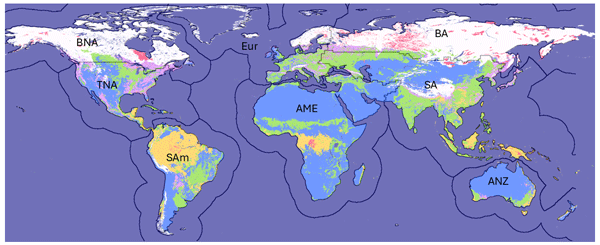
Cynthia H. Whaley, Tim Butler, Jose A. Adame, Rupal Ambulkar, Steve R. Arnold, Rebecca R. Buchholz, Benjamin Gaubert, Douglas S. Hamilton, Min Huang, Hayley Hung, Johannes W. Kaiser, Jacek W. Kaminski, Christoph Knote, Gerbrand Koren, Jean-Luc Kouassi, Meiyun Lin, Tianjia Liu, Jianmin Ma, Kasemsan Manomaiphiboon, Elisa Bergas Masso, Jessica L. McCarty, Mariano Mertens, Mark Parrington, Helene Peiro, Pallavi Saxena, Saurabh Sonwani, Vanisa Surapipith, Damaris Y. T. Tan, Wenfu Tang, Veerachai Tanpipat, Kostas Tsigaridis, Christine Wiedinmyer, Oliver Wild, Yuanyu Xie, and Paquita Zuidema
Geosci. Model Dev., 18, 3265–3309, https://doi.org/10.5194/gmd-18-3265-2025, https://doi.org/10.5194/gmd-18-3265-2025, 2025
Short summary
Short summary
The multi-model experiment design of the HTAP3 Fires project takes a multi-pollutant approach to improving our understanding of transboundary transport of wildland fire and agricultural burning emissions and their impacts. The experiments are designed with the goal of answering science policy questions related to fires. The options for the multi-model approach, including inputs, outputs, and model setup, are discussed, and the official recommendations for the project are presented.
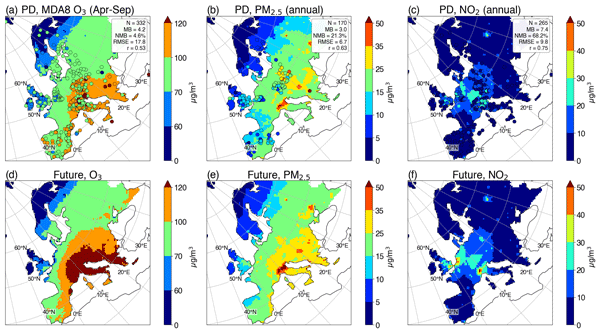
Ruth M. Doherty, Zhenze Liu, Massimo Vieno, Oliver Wild, Fiona M. O'Connor, Steven T. Turnock, Christina M. Hood, Jenny R. Stocker, Mathew R. Heal, Dwayne E. Heard, Emma G. Sands, David J. Carruthers, and Lisa K. Whalley
Atmos. Chem. Phys., 26, 10115–10147, https://doi.org/10.5194/acp-26-10115-2026, https://doi.org/10.5194/acp-26-10115-2026, 2026
Short summary
Short summary
We use innovative coupled modelling to quantify how natural emissions, chemistry, deposition and transport influence climate change responses of air pollutants from continental to urban scales across Europe. We highlight uncertainties in climate-sensitive biogenic emissions as key to future projections of ozone and fine particulate matter. High resolution modelling is essential for evaluating the benefits and trade-offs of climate change for achieving WHO air quality targets and guidelines.
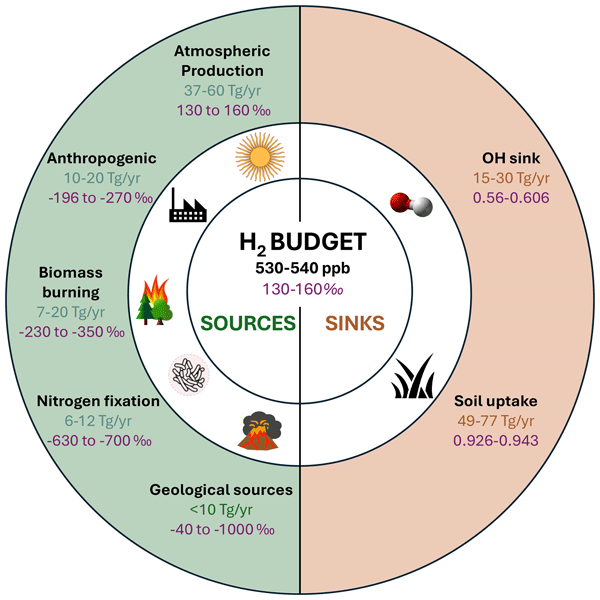
Srinath Krishnan, Ragnhild Bieltvedt Skeie, Øivind Hodnebrog, Gunnar Myhre, Maria Sand, Marit Sandstad, Hannah Bryant, Didier A. Hauglustaine, Fabien Paulot, Michael Prather, and David Stevenson
Atmos. Chem. Phys., 26, 9509–9539, https://doi.org/10.5194/acp-26-9509-2026, https://doi.org/10.5194/acp-26-9509-2026, 2026
Short summary
Short summary
Hydrogen (H2) is an indirect greenhouse gas that can affect climate through chemical reactions in the atmosphere. To better understand this impact, it is important to constrain the sources and sinks of hydrogen. Using a suite of three-dimensional and one-dimensional models, we find that atmospheric production of hydrogen is 37–60 Tg/yr and that the geological source of H2 is much smaller than suggested. More field and isotopic measurements are needed to improve these estimates.
Tianhui Zhou, Massimo A. Bollasina, and David S. Stevenson
EGUsphere, https://doi.org/10.5194/egusphere-2026-3416, https://doi.org/10.5194/egusphere-2026-3416, 2026
Short summary
Short summary
Future drought risk will be shaped not only by greenhouse-gas-driven warming, but also by changes in air-pollution-related emissions. We examine how reducing non-methane short-lived climate forcers affects future droughts characteristics. The Sahel, Middle East, and Central Asia face substantially worsened drought conditions. Our findings show that air-pollution mitigation can substantially increase future drought risk and population exposure in vulnerable regions.
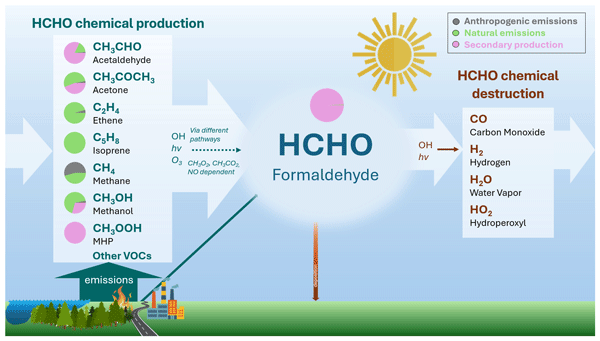
Gunnar Myhre, Øivind Hodnebrog, Srinath Krishnan, Maria Sand, Marit Sandstad, Ragnhild B. Skeie, Lieven Clarisse, Bruno Franco, Dylan B. Millet, Kelley C. Wells, Alexander Archibald, Hannah N. Bryant, Alex T. Chaudhri, David S. Stevenson, Didier Hauglustaine, Michael Prather, J. Christopher Kaiser, Dirk J. L. Olivie, Michael Schulz, Oliver Wild, Ye Wang, Thérèse Salameh, Jason E. Williams, Philippe Le Sager, Fabien Paulot, Kostas Tsigaridis, and Haley E. Plaas
Geosci. Model Dev., 19, 2577–2591, https://doi.org/10.5194/gmd-19-2577-2026, https://doi.org/10.5194/gmd-19-2577-2026, 2026
Short summary
Short summary
Volatile organic compounds (VOCs) affect air quality and climate, but their behavior in the atmosphere is still uncertain. We launched a global research effort to compare how different models represent these compounds and to improve their accuracy. By analyzing model results alongside observations and satellite data, we aim to better understand the atmospheric composition of these compounds.
Chang Su, Massimo Bollasina, James Weber, and David Stevenson
EGUsphere, https://doi.org/10.5194/egusphere-2026-836, https://doi.org/10.5194/egusphere-2026-836, 2026
Short summary
Short summary
Hot weather can strongly increase surface ozone, a harmful air pollutant, but the reasons differ between urban and rural areas. We studied a large city and a nearby rural region in eastern China using air quality observations and simplified chemistry modelling. We found that heat-driven plant emissions dominate ozone increases in the city, while chemical nitrogen cycling is key in the rural area. Our results help identify heat-resilient air pollution control strategies under climate change.
Jize Jiang, David S. Stevenson, Aimable Uwizeye, Giuseppe Tempio, Alessandra Falcucci, Flavia Casu, and Mark A. Sutton
Geosci. Model Dev., 18, 5051–5099, https://doi.org/10.5194/gmd-18-5051-2025, https://doi.org/10.5194/gmd-18-5051-2025, 2025
Short summary
Short summary
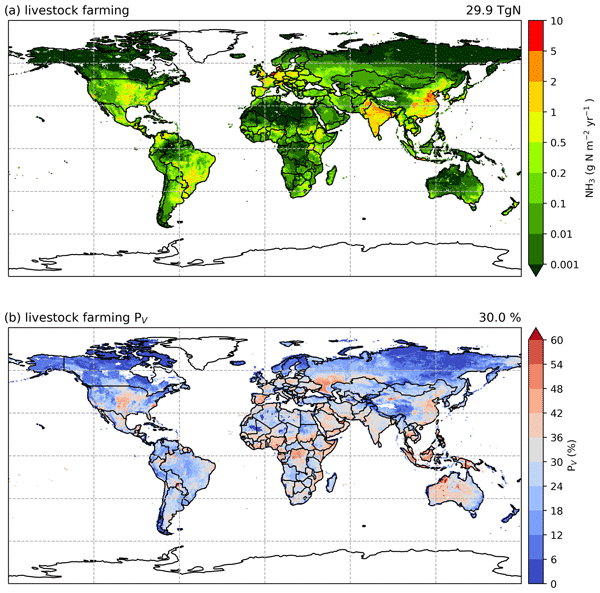
A special model called AMmonia–CLIMate (AMCLIM) has been developed to understand and calculate NH3 emissions from livestock farming. It is estimated that about 30 % of excreted N from livestock is lost due to NH3 emissions from housing, manure management and land application of manure. High NH3 volatilization often occurs in hot regions, while poor management practices also result in significant N losses through NH3 emissions.
Nicholas Cowan, Toby Roberts, Mark Hanlon, Aurelia Bezanger, Galina Toteva, Alex Tweedie, Karen Yeung, Ajinkya Deshpande, Peter Levy, Ute Skiba, Eiko Nemitz, and Julia Drewer
Biogeosciences, 22, 3449–3461, https://doi.org/10.5194/bg-22-3449-2025, https://doi.org/10.5194/bg-22-3449-2025, 2025
Short summary
Short summary
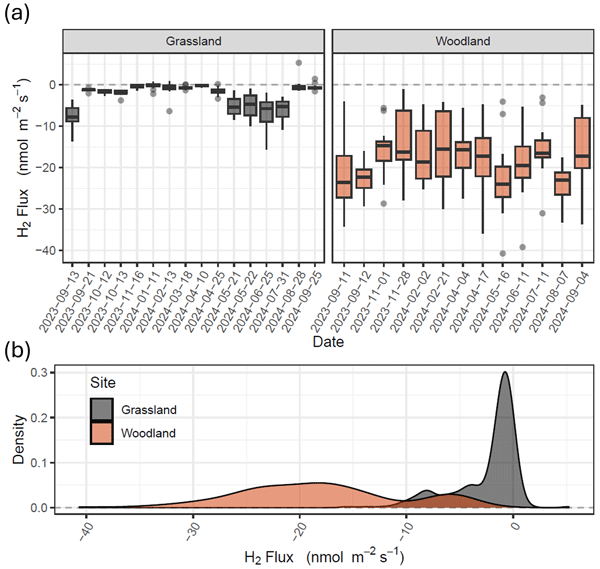
We measured soil hydrogen (H2) fluxes from two field sites, a managed grassland and a planted deciduous woodland, with flux measurements of H2 covering full seasonal cycles. We estimate annual H2 uptake of −3.1 ± 0.1 and −12.0 ± 0.4 kg H2 ha−1 yr−1 for the grassland and woodland sites, respectively. Soil moisture was found to be the primary driver of H2 uptake, with the silt/clay content of the soils providing a physical barrier which limited H2 uptake.
Alexander K. Tardito Chaudhri and David S. Stevenson
Atmos. Chem. Phys., 25, 7369–7385, https://doi.org/10.5194/acp-25-7369-2025, https://doi.org/10.5194/acp-25-7369-2025, 2025
Short summary
Short summary
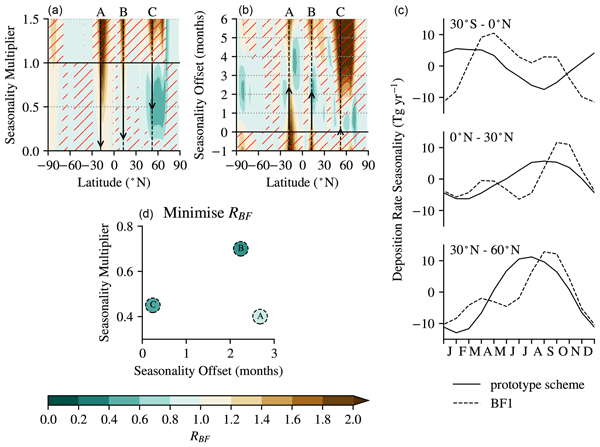
There remains a large uncertainty in the global warming potential of atmospheric hydrogen due to poor constraints on its soil deposition and, therefore, its lifetime. A new analysis of the latitudinal variation in the observed seasonality of hydrogen is used to constrain its surface fluxes. This is complemented with a simple latitude–height model where surface fluxes are adjusted from a prototype deposition scheme.
Cynthia H. Whaley, Tim Butler, Jose A. Adame, Rupal Ambulkar, Steve R. Arnold, Rebecca R. Buchholz, Benjamin Gaubert, Douglas S. Hamilton, Min Huang, Hayley Hung, Johannes W. Kaiser, Jacek W. Kaminski, Christoph Knote, Gerbrand Koren, Jean-Luc Kouassi, Meiyun Lin, Tianjia Liu, Jianmin Ma, Kasemsan Manomaiphiboon, Elisa Bergas Masso, Jessica L. McCarty, Mariano Mertens, Mark Parrington, Helene Peiro, Pallavi Saxena, Saurabh Sonwani, Vanisa Surapipith, Damaris Y. T. Tan, Wenfu Tang, Veerachai Tanpipat, Kostas Tsigaridis, Christine Wiedinmyer, Oliver Wild, Yuanyu Xie, and Paquita Zuidema
Geosci. Model Dev., 18, 3265–3309, https://doi.org/10.5194/gmd-18-3265-2025, https://doi.org/10.5194/gmd-18-3265-2025, 2025
Short summary
Short summary
The multi-model experiment design of the HTAP3 Fires project takes a multi-pollutant approach to improving our understanding of transboundary transport of wildland fire and agricultural burning emissions and their impacts. The experiments are designed with the goal of answering science policy questions related to fires. The options for the multi-model approach, including inputs, outputs, and model setup, are discussed, and the official recommendations for the project are presented.
Alok K. Pandey, David S. Stevenson, Alcide Zhao, Richard J. Pope, Ryan Hossaini, Krishan Kumar, and Martyn P. Chipperfield
Atmos. Chem. Phys., 25, 4785–4802, https://doi.org/10.5194/acp-25-4785-2025, https://doi.org/10.5194/acp-25-4785-2025, 2025
Short summary
Short summary
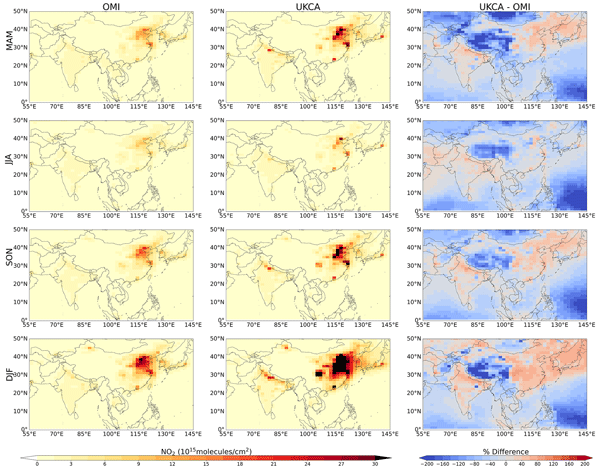
Nitrogen dioxide is an air pollutant largely controlled by human activity that affects ozone, methane, and aerosols. Satellite instruments can quantify column NO2 and, by carefully matching the time and location of measurements, enable evaluation of model simulations. NO2 over south and east Asia is assessed, showing that the model captures not only many features of the measurements, but also important differences that suggest model deficiencies in representing several aspects of the atmospheric chemistry of NO2.
Jize Jiang, David S. Stevenson, and Mark A. Sutton
Geosci. Model Dev., 17, 8181–8222, https://doi.org/10.5194/gmd-17-8181-2024, https://doi.org/10.5194/gmd-17-8181-2024, 2024
Short summary
Short summary
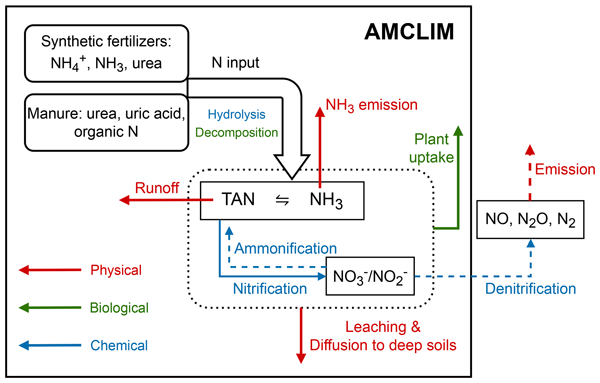
A special model called AMmonia–CLIMate (AMCLIM) has been developed to understand and calculate NH3 emissions from fertilizer use and also taking into account how the environment influences these NH3 emissions. It is estimated that about 17 % of applied N in fertilizers was lost due to NH3 emissions. Hot and dry conditions and regions with high-pH soils can expect higher NH3 emissions.
Yao Ge, Sverre Solberg, Mathew R. Heal, Stefan Reimann, Willem van Caspel, Bryan Hellack, Thérèse Salameh, and David Simpson
Atmos. Chem. Phys., 24, 7699–7729, https://doi.org/10.5194/acp-24-7699-2024, https://doi.org/10.5194/acp-24-7699-2024, 2024
Short summary
Short summary
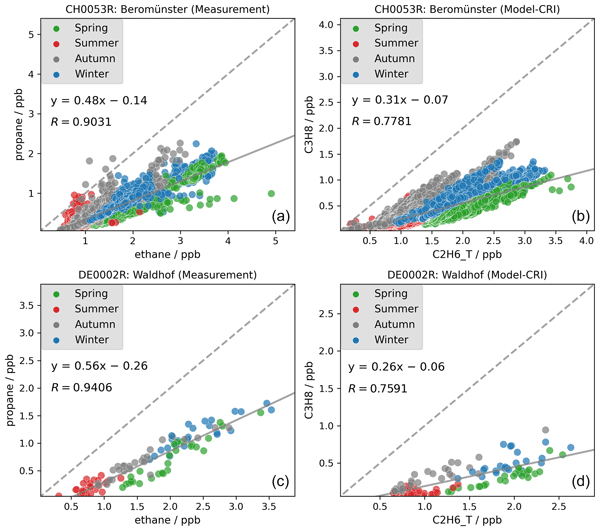
Atmospheric volatile organic compounds (VOCs) constitute many species, acting as precursors to ozone and aerosol. Given the uncertainties in VOC emissions, lack of evaluation studies, and recent changes in emissions, this work adapts the EMEP MSC-W to evaluate emission inventories in Europe. We focus on the varying agreement between modelled and measured VOCs across different species and underscore potential inaccuracies in total and sector-specific emission estimates.
Lily Gouldsbrough, Ryan Hossaini, Emma Eastoe, Paul J. Young, and Massimo Vieno
Atmos. Chem. Phys., 24, 3163–3196, https://doi.org/10.5194/acp-24-3163-2024, https://doi.org/10.5194/acp-24-3163-2024, 2024
Short summary
Short summary
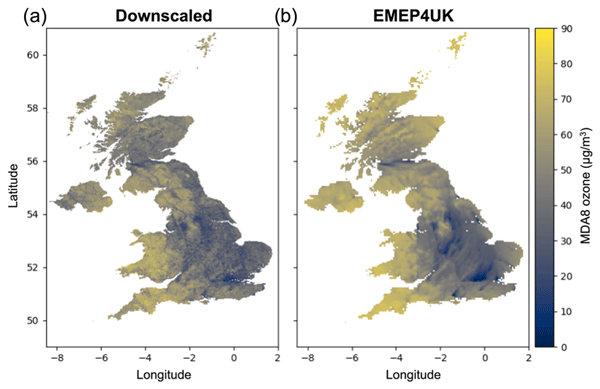
High-resolution spatial fields of surface ozone are used to understand spikes in ozone concentration and predict their impact on public health. Such fields are routinely output from complex mathematical models for atmospheric conditions. These outputs are on a coarse spatial resolution and the highest concentrations tend to be biased. Using a novel data-driven machine learning methodology, we show how such output can be corrected to produce fields with both lower bias and higher resolution.
Prerita Agarwal, David S. Stevenson, and Mathew R. Heal
Atmos. Chem. Phys., 24, 2239–2266, https://doi.org/10.5194/acp-24-2239-2024, https://doi.org/10.5194/acp-24-2239-2024, 2024
Short summary
Short summary
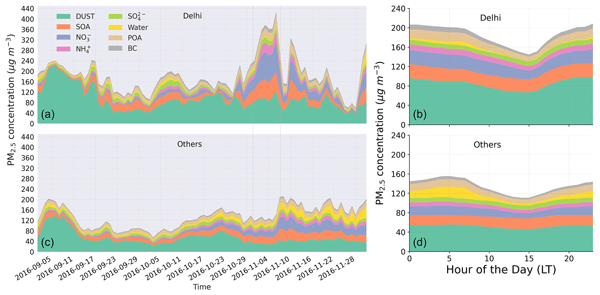
Air pollution levels across northern India are amongst some of the worst in the world, with episodic and hazardous haze events. Here, the ability of the WRF-Chem model to predict air quality over northern India is assessed against several datasets. Whilst surface wind speed and particle pollution peaks are over- and underestimated, respectively, meteorology and aerosol trends are adequately captured, and we conclude it is suitable for investigating severe particle pollution events.
Willem E. van Caspel, David Simpson, Jan Eiof Jonson, Anna M. K. Benedictow, Yao Ge, Alcide di Sarra, Giandomenico Pace, Massimo Vieno, Hannah L. Walker, and Mathew R. Heal
Geosci. Model Dev., 16, 7433–7459, https://doi.org/10.5194/gmd-16-7433-2023, https://doi.org/10.5194/gmd-16-7433-2023, 2023
Short summary
Short summary
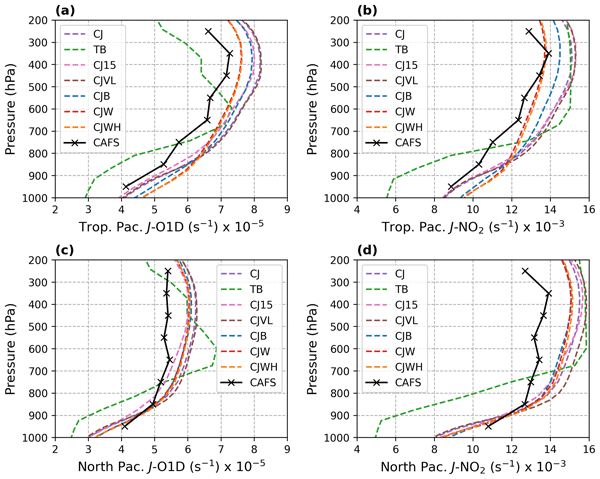
Radiation coming from the sun is essential to atmospheric chemistry, driving the breakup, or photodissociation, of atmospheric molecules. This in turn affects the chemical composition and reactivity of the atmosphere. The representation of photodissociation effects is therefore essential in atmospheric chemistry modeling. One such model is the EMEP MSC-W model, for which a new way of calculating the photodissociation rates is tested and evaluated in this paper.
Gemma Purser, Mathew R. Heal, Edward J. Carnell, Stephen Bathgate, Julia Drewer, James I. L. Morison, and Massimo Vieno
Atmos. Chem. Phys., 23, 13713–13733, https://doi.org/10.5194/acp-23-13713-2023, https://doi.org/10.5194/acp-23-13713-2023, 2023
Short summary
Short summary
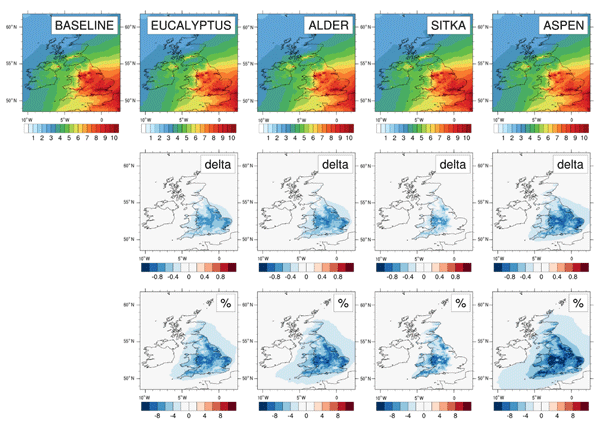
Forest expansion is a ″net-zero“ pathway, but change in land cover alters air quality in many ways. This study combines tree planting suitability data with UK measured emissions of biogenic volatile organic compounds to simulate spatial and temporal changes in atmospheric composition for planting scenarios of four species. Decreases in fine particulate matter are relatively larger than increases in ozone, which may indicate a net benefit of tree planting on human health aspects of air quality.
Yao Ge, Massimo Vieno, David S. Stevenson, Peter Wind, and Mathew R. Heal
Atmos. Chem. Phys., 23, 6083–6112, https://doi.org/10.5194/acp-23-6083-2023, https://doi.org/10.5194/acp-23-6083-2023, 2023
Short summary
Short summary
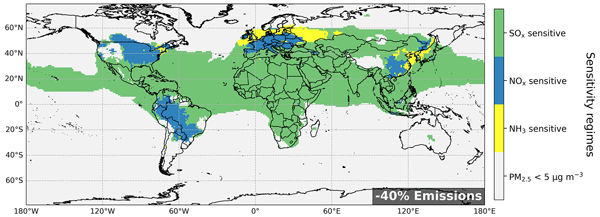
The sensitivity of fine particles and reactive N and S species to reductions in precursor emissions is investigated using the EMEP MSC-W (European Monitoring and Evaluation Programme Meteorological Synthesizing Centre – West) atmospheric chemistry transport model. This study reveals that the individual emissions reduction has multiple and geographically varying co-benefits and small disbenefits on different species, demonstrating the importance of prioritizing regional emissions controls.
Samuel J. Cliff, Will Drysdale, James D. Lee, Carole Helfter, Eiko Nemitz, Stefan Metzger, and Janet F. Barlow
Atmos. Chem. Phys., 23, 2315–2330, https://doi.org/10.5194/acp-23-2315-2023, https://doi.org/10.5194/acp-23-2315-2023, 2023
Short summary
Short summary
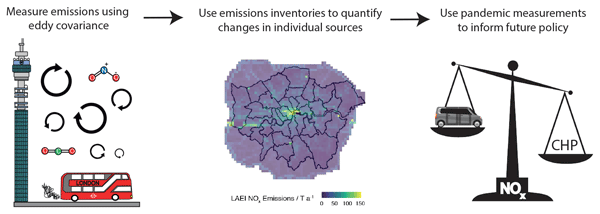
Emissions of nitrogen oxides (NOx) to the atmosphere are an ongoing air quality issue. This study directly measures emissions of NOx and carbon dioxide from a tall tower in central London during the coronavirus pandemic. It was found that transport NOx emissions had reduced by >73 % since 2017 as a result of air quality policy and reduced congestion during coronavirus restrictions. During this period, central London was thought to be dominated by point-source heat and power generation emissions.
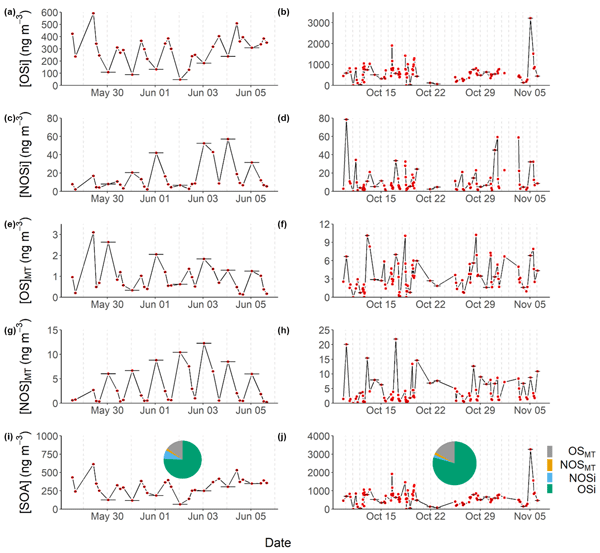
Daniel J. Bryant, Beth S. Nelson, Stefan J. Swift, Sri Hapsari Budisulistiorini, Will S. Drysdale, Adam R. Vaughan, Mike J. Newland, James R. Hopkins, James M. Cash, Ben Langford, Eiko Nemitz, W. Joe F. Acton, C. Nicholas Hewitt, Tuhin Mandal, Bhola R. Gurjar, Shivani, Ranu Gadi, James D. Lee, Andrew R. Rickard, and Jacqueline F. Hamilton
Atmos. Chem. Phys., 23, 61–83, https://doi.org/10.5194/acp-23-61-2023, https://doi.org/10.5194/acp-23-61-2023, 2023
Short summary
Short summary
This paper investigates the sources of isoprene and monoterpene compounds and their particulate-phase oxidation products in Delhi, India. This was done to improve our understanding of the sources, concentrations, and fate of volatile emissions in megacities. By studying the chemical composition of offline filter samples, we report that a significant share of the oxidised organic aerosol in Delhi is from isoprene and monoterpenes. This has implications for human health and policy development.

Pooja V. Pawar, Sachin D. Ghude, Gaurav Govardhan, Prodip Acharja, Rachana Kulkarni, Rajesh Kumar, Baerbel Sinha, Vinayak Sinha, Chinmay Jena, Preeti Gunwani, Tapan Kumar Adhya, Eiko Nemitz, and Mark A. Sutton
Atmos. Chem. Phys., 23, 41–59, https://doi.org/10.5194/acp-23-41-2023, https://doi.org/10.5194/acp-23-41-2023, 2023
Short summary
Short summary
In this study, for the first time in South Asia we compare simulated ammonia, ammonium, and total ammonia using the WRF-Chem model and MARGA measurements during winter in the Indo-Gangetic Plain region. Since observations show HCl promotes the fraction of high chlorides in Delhi, we added HCl / Cl emissions to the model. We conducted three sensitivity experiments with changes in HCl emissions, and improvements are reported in accurately simulating ammonia, ammonium, and total ammonia.
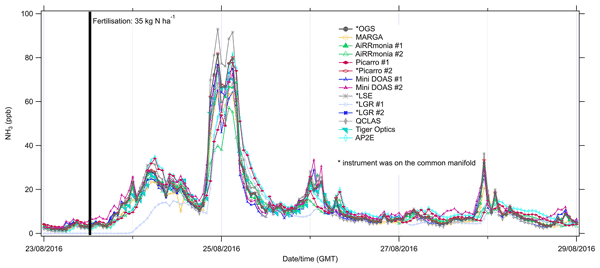
Marsailidh M. Twigg, Augustinus J. C. Berkhout, Nicholas Cowan, Sabine Crunaire, Enrico Dammers, Volker Ebert, Vincent Gaudion, Marty Haaima, Christoph Häni, Lewis John, Matthew R. Jones, Bjorn Kamps, John Kentisbeer, Thomas Kupper, Sarah R. Leeson, Daiana Leuenberger, Nils O. B. Lüttschwager, Ulla Makkonen, Nicholas A. Martin, David Missler, Duncan Mounsor, Albrecht Neftel, Chad Nelson, Eiko Nemitz, Rutger Oudwater, Celine Pascale, Jean-Eudes Petit, Andrea Pogany, Nathalie Redon, Jörg Sintermann, Amy Stephens, Mark A. Sutton, Yuk S. Tang, Rens Zijlmans, Christine F. Braban, and Bernhard Niederhauser
Atmos. Meas. Tech., 15, 6755–6787, https://doi.org/10.5194/amt-15-6755-2022, https://doi.org/10.5194/amt-15-6755-2022, 2022
Short summary
Short summary
Ammonia (NH3) gas in the atmosphere impacts the environment, human health, and, indirectly, climate. Historic NH3 monitoring was labour intensive, and the instruments were complicated. Over the last decade, there has been a rapid technology development, including “plug-and-play” instruments. This study is an extensive field comparison of the currently available technologies and provides evidence that for routine monitoring, standard operating protocols are required for datasets to be comparable.
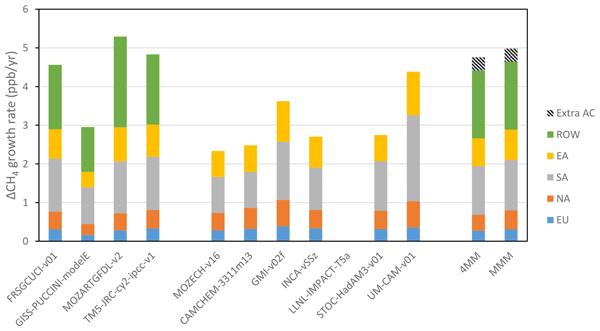
David S. Stevenson, Richard G. Derwent, Oliver Wild, and William J. Collins
Atmos. Chem. Phys., 22, 14243–14252, https://doi.org/10.5194/acp-22-14243-2022, https://doi.org/10.5194/acp-22-14243-2022, 2022
Short summary
Short summary
Atmospheric methane’s growth rate rose by 50 % in 2020 relative to 2019. Lower nitrogen oxide (NOx) emissions tend to increase methane’s atmospheric residence time; lower carbon monoxide (CO) and non-methane volatile organic compound (NMVOC) emissions decrease its lifetime. Combining model sensitivities with emission changes, we find that COVID-19 lockdown emission reductions can explain over half the observed increases in methane in 2020.

Will S. Drysdale, Adam R. Vaughan, Freya A. Squires, Sam J. Cliff, Stefan Metzger, David Durden, Natchaya Pingintha-Durden, Carole Helfter, Eiko Nemitz, C. Sue B. Grimmond, Janet Barlow, Sean Beevers, Gregor Stewart, David Dajnak, Ruth M. Purvis, and James D. Lee
Atmos. Chem. Phys., 22, 9413–9433, https://doi.org/10.5194/acp-22-9413-2022, https://doi.org/10.5194/acp-22-9413-2022, 2022
Short summary
Short summary
Measurements of NOx emissions are important for a good understanding of air quality. While there are many direct measurements of NOx concentration, there are very few measurements of its emission. Measurements of emissions provide constraints on emissions inventories and air quality models. This article presents measurements of NOx emission from the BT Tower in central London in 2017 and compares them with inventories, finding that they underestimate by a factor of ∼1.48.
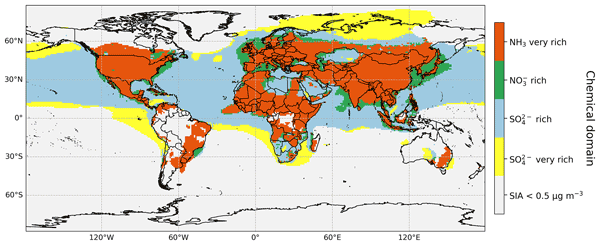
Yao Ge, Massimo Vieno, David S. Stevenson, Peter Wind, and Mathew R. Heal
Atmos. Chem. Phys., 22, 8343–8368, https://doi.org/10.5194/acp-22-8343-2022, https://doi.org/10.5194/acp-22-8343-2022, 2022
Short summary
Short summary
Reactive N and S gases and aerosols are critical determinants of air quality. We report a comprehensive analysis of the concentrations, wet and dry deposition, fluxes, and lifetimes of these species globally as well as for 10 world regions. We used the EMEP MSC-W model coupled with WRF meteorology and 2015 global emissions. Our work demonstrates the substantial regional variation in these quantities and the need for modelling to simulate atmospheric responses to precursor emissions.
Fanlei Meng, Yibo Zhang, Jiahui Kang, Mathew R. Heal, Stefan Reis, Mengru Wang, Lei Liu, Kai Wang, Shaocai Yu, Pengfei Li, Jing Wei, Yong Hou, Ying Zhang, Xuejun Liu, Zhenling Cui, Wen Xu, and Fusuo Zhang
Atmos. Chem. Phys., 22, 6291–6308, https://doi.org/10.5194/acp-22-6291-2022, https://doi.org/10.5194/acp-22-6291-2022, 2022
Short summary
Short summary
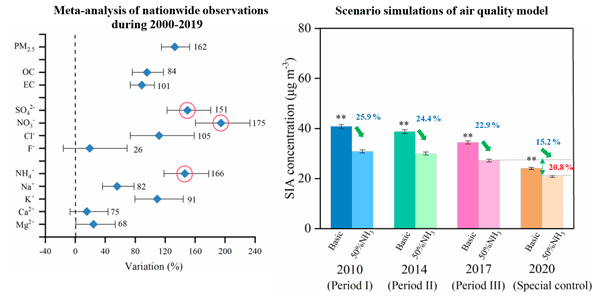
PM2.5 pollution is a pressing environmental issue threatening human health and food security globally. We combined a meta-analysis of nationwide measurements and air quality modeling to identify efficiency gains by striking a balance between controlling NH3 and acid gas emissions. Persistent secondary inorganic aerosol pollution in China is limited by acid gas emissions, while an additional control on NH3 emissions would become more important as reductions in SO2 and NOx emissions progress.

Yao Ge, Mathew R. Heal, David S. Stevenson, Peter Wind, and Massimo Vieno
Geosci. Model Dev., 14, 7021–7046, https://doi.org/10.5194/gmd-14-7021-2021, https://doi.org/10.5194/gmd-14-7021-2021, 2021
Short summary
Short summary
This study reports the first evaluation of the global EMEP MSC-W ACTM driven by WRF meteorology, with a focus on surface concentrations and wet deposition of reactive N and S species. The model–measurement comparison is conducted both spatially and temporally, covering 10 monitoring networks worldwide. The statistics from the comprehensive evaluations presented in this study support the application of this model framework for global analysis of the budgets and fluxes of reactive N and SIA.

Mark F. Lunt, Alistair J. Manning, Grant Allen, Tim Arnold, Stéphane J.-B. Bauguitte, Hartmut Boesch, Anita L. Ganesan, Aoife Grant, Carole Helfter, Eiko Nemitz, Simon J. O'Doherty, Paul I. Palmer, Joseph R. Pitt, Chris Rennick, Daniel Say, Kieran M. Stanley, Ann R. Stavert, Dickon Young, and Matt Rigby
Atmos. Chem. Phys., 21, 16257–16276, https://doi.org/10.5194/acp-21-16257-2021, https://doi.org/10.5194/acp-21-16257-2021, 2021
Short summary
Short summary
We present an evaluation of the UK's methane emissions between 2013 and 2020 using a network of tall tower measurement sites. We find emissions that are consistent in both magnitude and trend with the UK's reported emissions, with a declining trend driven by a decrease in emissions from England. The impact of various components of the modelling set-up on these findings are explored through a number of sensitivity studies.
Cited articles
Abdalmogith, S. S. and Harrison, R. M.: The use of trajectory cluster analysis to examine the long-range transport of secondary inorganic aerosol in the UK, Atmos. Environ., 39, 6686–6695, https://doi.org/10.1016/j.atmosenv.2005.07.059, 2005. a
Ahern, A. T., Robinson, E. S., Tkacik, D. S., Saleh, R., Hatch, L. E., Barsanti, K. C., Stockwell, C. E., Yokelson, R. J., Presto, A. A., Robinson, A. L., Sullivan, R. C., and Donahue, N. M.: Production of Secondary Organic Aerosol During Aging of Biomass Burning Smoke From Fresh Fuels and Its Relationship to VOC Precursors, J. Geophys. Res.-Atmos., 124, 3583–3606, https://doi.org/10.1029/2018JD029068, 2019. a, b
Albertson, K., Aylen, J., Cavan, G., and McMorrow, J.: Climate change and the future occurrence of moorland wildfires in the Peak District of the UK, Climate Research, 45, 105–118, https://doi.org/10.3354/cr00926, 2010. a
Arnell, N. W., Freeman, A., and Gazzard, R.: The effect of climate change on indicators of fire danger in the UK, Environ. Res. Lett., 16, 044027, https://doi.org/10.1088/1748-9326/abd9f2, 2021. a
Bergström, R., Denier van der Gon, H. A. C., Prévôt, A. S. H., Yttri, K. E., and Simpson, D.: Modelling of organic aerosols over Europe (2002–2007) using a volatility basis set (VBS) framework: application of different assumptions regarding the formation of secondary organic aerosol, Atmos. Chem. Phys., 12, 8499–8527, https://doi.org/10.5194/acp-12-8499-2012, 2012. a
Bergström, R., Hayman, G. D., Jenkin, M. E., and Simpson, D.: Update and comparison of atmospheric chemistry mechanisms for the EMEP MSC-W model system-EmChem19a, EmChem19X, CRIv2R5Em, CB6r2Em, and MCMv3.3Em, Norwegian Meteorological Institute, https://emep.int/publ/reports/2022/MSCW_technical_1_2022.pdf (last access: 1 September 2025), 2022. a
Binkowski, F. S. and Shankar, U.: The Regional Particulate Matter Model: 1. Model description and preliminary results, J. Geophys. Res.-Atmos., 100, 26191–26209, https://doi.org/10.1029/95JD02093, 1995. a
Bondur, V. G., Mokhov, I. I., Voronova, O. S., and Sitnov, S. A.: Satellite Monitoring of Siberian Wildfires and Their Effects: Features of 2019 Anomalies and Trends of 20-Year Changes, Dokl. Earth Sci., 492, 370–375, https://doi.org/10.1134/S1028334X20050049, 2020. a
Cho, Y., Kim, H., Park, R. J., and Kim, S.-W.: Unprecedented East Siberian wildfires intensify Arctic snow darkening through enhanced poleward transport of black carbon, Sci. Total Environ., 961, 178423, https://doi.org/10.1016/j.scitotenv.2025.178423, 2025. a
Copernicus: Did 2019 really bring us an unusual number of wildfires?, https://atmosphere.copernicus.eu/did-2019-really-bring-us-unusual-number-wildfires (last access: 11 August 2025), 2019. a
Davey, S. M. and Sarre, A.: Editorial: the 2019/20 Black Summer bushfires, Aust. Forestry, 83, 47–51, https://doi.org/10.1080/00049158.2020.1769899, 2020. a
Bowman, D. M., Kolden, C. A., Abatzoglou, J. T., Johnston, F. H., van der Werf, G. R., and Flannigan, M.: Vegetation fires in the Anthropocene, Nature Reviews Earth & Environment, 1, 500–515, https://doi.org/10.1038/s43017-020-0085-3, 2020. a
Burton, C., Ciavarella, A., Kelley, D. I., Hartley, A. J., McCarthy, M., New, S., Betts, R. A., and Robertson, E.: Very high fire danger in UK in 2022 at least 6 times more likely due to human-caused climate change, Environ. Res. Lett., 20, 044003, https://doi.org/10.1088/1748-9326/adb764, 2025. a
Carnell, E., Tomlinson, S., and Reis, S.: UK gridded population at 1 km resolution for 2021 based on Census 2021/2022 and Land Cover Map 2021, NERC EDS Environmental Information Data Centre [data set], https://doi.org/10.5285/7beefde9-c520-4ddf-897a-0167e8918595, 2025. a, b, c
CEIP: EMEP Centre on Emission Inventories and Projections, https://www.ceip.at/ (last access: 24 November 2021), 2021. a
Charron, A., Degrendele, C., Laongsri, B., and Harrison, R. M.: Receptor modelling of secondary and carbonaceous particulate matter at a southern UK site, Atmos. Chem. Phys., 13, 1879–1894, https://doi.org/10.5194/acp-13-1879-2013, 2013. a
Ciais, P., Wattenbach, M., Vuichard, N., Smith, P., Piao, S. L., Don, A., Luyssaert, S., Janssens, I. A., Bondeau, A., Dechow, R., Leip, A., Smith, P., Beer, C., van der Werf, G. R., Gervois, S., Van Oost, K., Tomelleri, E., Freibauer, A., Schulze, E. D., and CARBOEUROPE Synthesis Team: The European carbon balance. Part 2: croplands, Glob. Change Biol., 16, 1409–1428, https://doi.org/10.1111/j.1365-2486.2009.02055.x, 2010. a
Cottle, P., Strawbridge, K., and McKendry, I.: Long-range transport of Siberian wildfire smoke to British Columbia: Lidar observations and air quality impacts, Atmos. Environ., 90, 71–77, https://doi.org/10.1016/j.atmosenv.2014.03.005, 2014. a
Crippa, M., Guizzardi, D., Butler, T., Keating, T., Wu, R., Kaminski, J., Kuenen, J., Kurokawa, J., Chatani, S., Morikawa, T., Pouliot, G., Racine, J., Moran, M. D., Klimont, Z., Manseau, P. M., Mashayekhi, R., Henderson, B. H., Smith, S. J., Suchyta, H., Muntean, M., Solazzo, E., Banja, M., Schaaf, E., Pagani, F., Woo, J.-H., Kim, J., Monforti-Ferrario, F., Pisoni, E., Zhang, J., Niemi, D., Sassi, M., Ansari, T., and Foley, K.: The HTAP_v3 emission mosaic: merging regional and global monthly emissions (2000–2018) to support air quality modelling and policies, Earth Syst. Sci. Data, 15, 2667–2694, https://doi.org/10.5194/essd-15-2667-2023, 2023. a
Cunningham, C. X., Williamson, G. J., and Bowman, D. M.: Increasing frequency and intensity of the most extreme wildfires on Earth, Nature Ecology & Evolution, 8, 1420–1425, https://doi.org/10.1038/s41559-024-02452-2, 2024. a, b
Department of Environmental Science at Aarhus University and the Irish EPA: National mapping of GHG and non-GHG emissions sources (MapEIre), https://projects.au.dk/mapeire (last access: 7 October 2021), 2021. a
Diapouli, E., Popovicheva, O., Kistler, M., Vratolis, S., Persiantseva, N., Timofeev, M., Kasper-Giebl, A., and Eleftheriadis, K.: Physicochemical characterization of aged biomass burning aerosol after long-range transport to Greece from large scale wildfires in Russia and surrounding regions, Summer 2010, Atmos. Environ., 96, 393–404, https://doi.org/10.1016/j.atmosenv.2014.07.055, 2014. a
Donahue, N. M., Robinson, A. L., Stanier, C. O., and Pandis, S. N.: Coupled Partitioning, Dilution, and Chemical Aging of Semivolatile Organics, Environ. Sci. Technol., 40, 2635–2643, https://doi.org/10.1021/es052297c, 2006. a
Fagerli, H., Tsyro, S., Simpson, D., Nyíri, Á., Wind, P., Gauss, M., Benedictow, A., Klein, H., Valdebenito, A., Mu, Q., Waersted, E. G., Gliß, J., Brenna, H., Mortier, A., Griesfeller, J., Aas, W., Hjellbrekke, A., Solberg, S., Tørseth, K., Yttri, K. E., Mareckova, K., Matthews, B., Schindlbacher, S., Ullrich, B., Wankmüller, R., Scheuschner, T., and Kuenen, J. J. P.: Transboundary particulate matter, photo-oxidants, acidifying and eutrophying components, EMEP Status Report 1/2021, Norwegian Meteorological Institute, https://emep.int/publ/reports/2021/EMEP_Status_Report_1_2021.pdf (last access: 1 September 2025), 2021. a, b
Fagerli, H., Benedictow, A., van Caspel, W., Gauss, M., Ge, Y., Jonson, J. E., Klein, H., Nyíri, Á., Simpson, D., Tsyro, S., Aas, W., Valdebenito, Á., Wind, P., Hjellbrekke, A., Solberg, S., Tørseth, K., Yttri K. E., Emep, Y., Matthews, B., Schindlbacher, S., Ullrich, B., Wankmüller, R., Klimont, Z., Scheuschner, T., Kuenen, J. J. P., and Wegener, R.: Transboundary particulate matter, photo-oxidants, acidifying and eutrophying components, EMEP Status Report 1/2023, Norwegian Meteorological Institute, https://emep.int/publ/reports/2023/EMEP_Status_Report_1_2023.pdf (last access: 1 September 2025), 2023. a
Fagerli, H., Benedictow, A., Blake, L., van Caspel, W., Denby, B. R., Gauss, M., Jonson, J. E., Klein, H., Lange, G. F., Mousing, E. A., Nyíri, Á., Olivié, D., Segers, A., Simpson, D., Tsyro, S., Valdebenito, A., Wind, P., Aas, W., Fiebig, M., Hjellbrekke, A., Solberg, S., Tørseth, K., Yttri, K. E., Redeyoff, O., Matthews, B., Schindlbacher, S., Ullrich, B., Wankmüller, R., Scheuschner, T., Kuenen, J. P., Guevara, M., Jaffrezo, J.-L., Dominutti, P., Uzu, G., Conil, S., Favez, O., and Močnik, G.: Convention on Long-range Transboundary Air Pollution Co-operative programme for monitoring and evaluation of the lang-range transmission of air pollutants in Europe, EMEP Status Report 1/2024, Norwegian Meteorological Institute, https://emep.int/publ/reports/2024/EMEP_Status_Report_1_2024.pdf (last access: 1 September 2025), 2024. a
Fernandez-Anez, N., Krasovskiy, A., Müller, M., Vacik, H., Baetens, J., Hukić, E., Solomun, M. K., Atanassova, I., Glushkova, M., Bogunović, I., Fajković, H., Djuma, H., Boustras, G., Adámek, M., Devetter, M., Hrabalikova, M., Huska, D., Barroso, P. M., Vaverková, M. D., Zumr, D., Jõgiste, K., Metslaid, M., Koster, K., Köster, E., Pumpanen, J., Ribeiro-Kumara, C., Prima, S. D., Pastor, A., Rumpel, C., Seeger, M., Daliakopoulos, I., Daskalakou, E., Koutroulis, A., Papadopoulou, M. P., Stampoulidis, K., Xanthopoulos, G., Aszalós, R., Balázs, D., Kertész, M., Valkó, O., Finger, D. C., Thorsteinsson, T., Till, J., Bajocco, S., Gelsomino, A., Amodio, A. M., Novara, A., Salvati, L., Telesca, L., Ursino, N., Jansons, A., Kitenberga, M., Stivrins, N., Brazaitis, G., Marozas, V., Cojocaru, O., Gumeniuc, I., Sfecla, V., Imeson, A., Veraverbeke, S., Mikalsen, R. F., Koda, E., Osinski, P., Castro, A. C. M., Nunes, J. P., Oom, D., Vieira, D., Rusu, T., Bojović, S., Djordjevic, D., Popovic, Z., Protic, M., Sakan, S., Glasa, J., Kacikova, D., Lichner, L., Majlingova, A., Vido, J., Ferk, M., Tičar, J., Zorn, M., Zupanc, V., Hinojosa, M. B., Knicker, H., Lucas-Borja, M. E., Pausas, J., Prat-Guitart, N., Ubeda, X., Vilar, L., Destouni, G., Ghajarnia, N., Kalantari, Z., Seifollahi-Aghmiuni, S., Dindaroglu, T., Yakupoglu, T., Smith, T., Doerr, S., and Cerda, A.: Current Wildland Fire Patterns and Challenges in Europe: A Synthesis of National Perspectives, Air Soil Water Res., 14, 1–19, https://doi.org/10.1177/11786221211028185, 2021. a
Field, R. D., Luo, M., Bauer, S. E., Hickman, J. E., Elsaesser, G. S., Mezuman, K., van Lier-Walqui, M., Tsigaridis, K., and Wu, J.: Estimating the Impact of a 2017 Smoke Plume on Surface Climate Over Northern Canada With a Climate Model, Satellite Retrievals, and Weather Forecasts, J. Geophys. Res.-Atmos., 129, e2023JD039396, https://doi.org/10.1029/2023JD039396, 2024. a
Font, A., F. de Brito, J., Riffault, V., Conil, S., Jaffrezo, J.-L., and Bourin, A.: Calculations of the conversion factor from organic carbon to organic matter for aerosol mass balance, Atmos. Pollut. Res., 15, 102301, https://doi.org/10.1016/j.apr.2024.102301, 2024. a
Garcia, A., Santa-Helena, E., Falco, A. D., de Paula Ribeiro, J., Gioda, A., and Gioda, C. R.: Toxicological Effects of Fine Particulate Matter (PM2.5): Health Risks and Associated Systemic Injuries – Systematic Review, Water Air Soil Poll., 234, 346, https://doi.org/10.1007/s11270-023-06278-9, 2023. a
Garroussi, S. E., Giuseppe, F. D., Barnard, C., and Wetterhall, F.: Europe faces up to tenfold increase in extreme fires in a warming climate, npj Climate and Atmospheric Science, 7, https://doi.org/10.1038/s41612-024-00575-8, 2024. a
Ge, Y., Heal, M. R., Stevenson, D. S., Wind, P., and Vieno, M.: Evaluation of global EMEP MSC-W (rv4.34) WRF (v3.9.1.1) model surface concentrations and wet deposition of reactive N and S with measurements, Geosci. Model Dev., 14, 7021–7046, https://doi.org/10.5194/gmd-14-7021-2021, 2021. a, b
Giglio, L., Randerson, J. T., and van der Werf, G. R.: Analysis of daily, monthly, and annual burned area using the fourth-generation global fire emissions database (GFED4), J. Geophys. Res.-Biogeo., 118, 317–328, https://doi.org/10.1002/jgrg.20042, 2013. a, b
Graham, A. M., Pope, R. J., Pringle, K. P., Arnold, S., Chipperfield, M. P., Conibear, L. A., Butt, E. W., Kiely, L., Knote, C., and McQuaid, J. B.: Impact on air quality and health due to the Saddleworth Moor fire in northern England, Environ. Res. Lett., 15, 074018, https://doi.org/10.1088/1748-9326/ab8496, 2020. a
Harper, A. R., Doerr, S. H., Santin, C., Froyd, C. A., and Sinnadurai, P.: Prescribed fire and its impacts on ecosystem services in the UK, Sci. Total Environ., 624, 691–703, https://doi.org/10.1016/j.scitotenv.2017.12.161, 2018. a
He, Y., Zhao, B., Wang, S., Valorso, R., Chang, X., Yin, D., Feng, B., Camredon, M., Aumont, B., Dearden, A., Jathar, S. H., Shrivastava, M., Jiang, Z., Cappa, C. D., Yee, L. D., Seinfeld, J. H., Hao, J., and Donahue, N. M.: Formation of secondary organic aerosol from wildfire emissions enhanced by long-time ageing, Nat. Geosci., 17, 124–129, https://doi.org/10.1038/s41561-023-01355-4, 2024. a, b
Hessburg, P. F., Prichard, S. J., Hagmann, R. K., Povak, N. A., and Lake, F. K.: Wildfire and climate change adaptation of western North American forests: a case for intentional management, Ecol. Appl., 31, e02432, https://doi.org/10.1002/eap.2432, 2021. a
Hodshire, A. L., Akherati, A., Alvarado, M. J., Brown-Steiner, B., Jathar, S. H., Jimenez, J. L., Kreidenweis, S. M., Lonsdale, C. R., Onasch, T. B., Ortega, A. M., and Pierce, J. R.: Aging Effects on Biomass Burning Aerosol Mass and Composition: A Critical Review of Field and Laboratory Studies, Environ. Sci. Technol., 53, 10007–10022, https://doi.org/10.1021/acs.est.9b02588, 2019. a, b
HTAP: HTAPv3 mosaic, https://edgar.jrc.ec.europa.eu/dataset_htap_v3 (last access: 3 December 2024), 2024. a
Jiang, Y., Lu, Z., Liu, X., Qian, Y., Zhang, K., Wang, Y., and Yang, X.-Q.: Impacts of global open-fire aerosols on direct radiative, cloud and surface-albedo effects simulated with CAM5, Atmos. Chem. Phys., 16, 14805–14824, https://doi.org/10.5194/acp-16-14805-2016, 2016. a
Jones, M. W., Kelley, D. I., Burton, C. A., Di Giuseppe, F., Barbosa, M. L. F., Brambleby, E., Hartley, A. J., Lombardi, A., Mataveli, G., McNorton, J. R., Spuler, F. R., Wessel, J. B., Abatzoglou, J. T., Anderson, L. O., Andela, N., Archibald, S., Armenteras, D., Burke, E., Carmenta, R., Chuvieco, E., Clarke, H., Doerr, S. H., Fernandes, P. M., Giglio, L., Hamilton, D. S., Hantson, S., Harris, S., Jain, P., Kolden, C. A., Kurvits, T., Lampe, S., Meier, S., New, S., Parrington, M., Perron, M. M. G., Qu, Y., Ribeiro, N. S., Saharjo, B. H., San-Miguel-Ayanz, J., Shuman, J. K., Tanpipat, V., van der Werf, G. R., Veraverbeke, S., and Xanthopoulos, G.: State of Wildfires 2023–2024, Earth Syst. Sci. Data, 16, 3601–3685, https://doi.org/10.5194/essd-16-3601-2024, 2024a. a
Jones, M. W., Veraverbeke, S., Andela, N., Doerr, S. H., Kolden, C., Mataveli, G., Pettinari, M. L., Quéré, C. L., Rosan, T. M., van der Werf, G. R., van Wees, D., and Abatzoglou, J. T.: Global rise in forest fire emissions linked to climate change in the extratropics, Science, 386, eadl5889, https://doi.org/10.1126/science.adl5889, 2024b. a, b
Kaiser, J. W., Heil, A., Andreae, M. O., Benedetti, A., Chubarova, N., Jones, L., Morcrette, J.-J., Razinger, M., Schultz, M. G., Suttie, M., and van der Werf, G. R.: Biomass burning emissions estimated with a global fire assimilation system based on observed fire radiative power, Biogeosciences, 9, 527–554, https://doi.org/10.5194/bg-9-527-2012, 2012. a
Kelley, D. I., Burton, C., Di Giuseppe, F., Jones, M. W., Barbosa, M. L. F., Brambleby, E., McNorton, J. R., Liu, Z., Bradley, A. S. I., Blackford, K., Burke, E., Ciavarella, A., Di Tomaso, E., Eden, J., Ferreira, I. J. M., Fiedler, L., Hartley, A. J., Keeping, T. R., Lampe, S., Lombardi, A., Mataveli, G., Qu, Y., Silva, P. S., Spuler, F. R., Steinmann, C. B., Torres-Vázquez, M. Á., Veiga, R., van Wees, D., Wessel, J. B., Wright, E., Bilbao, B., Bourbonnais, M., Gao, C., Di Bella, C. M., Dintwe, K., Donovan, V. M., Harris, S., Kukavskaya, E. A., N'Dri, A. B., Santín, C., Selaya, G., Sjöström, J., Abatzoglou, J. T., Andela, N., Carmenta, R., Chuvieco, E., Giglio, L., Hamilton, D. S., Hantson, S., Meier, S., Parrington, M., Sadegh, M., San-Miguel-Ayanz, J., Sedano, F., Turco, M., van der Werf, G. R., Veraverbeke, S., Anderson, L. O., Clarke, H., Fernandes, P. M., and Kolden, C. A.: State of Wildfires 2024–2025, Earth Syst. Sci. Data, 17, 5377–5488, https://doi.org/10.5194/essd-17-5377-2025, 2025. a
Kelly, L. T., Giljohann, K. M., Duane, A., Aquilué, N., Archibald, S., Batllori, E., Bennett, A. F., Buckland, S. T., Canelles, Q., Clarke, M. F., Fortin, M.-J., Hermoso, V., Herrando, S., Keane, R. E., Lake, F. K., McCarthy, M. A., Morán-Ordóñez, A., Parr, C. L., Pausas, J. G., Penman, T. D., Regos, A., Rumpff, L., Santos, J. L., Smith, A. L., Syphard, A. D., Tingley, M. W., and Brotons, L.: Fire and biodiversity in the Anthropocene, Science, 370, eabb0355, https://doi.org/10.1126/science.abb0355, 2020. a
Keywood, M., Kanakidou, M., Stohl, A., Dentener, F., Grassi, G., Meyer, C. P., Torseth, K., Edwards, D., Thompson, A. M., Lohmann, U., and Burrows, J.: Fire in the Air: Biomass Burning Impacts in a Changing Climate, Crit. Rev. Env. Sci. Tech., 43, 40–83, https://doi.org/10.1080/10643389.2011.604248, 2013. a
Lasslop, G., Coppola, A. I., Voulgarakis, A., Yue, C., and Veraverbeke, S.: Influence of Fire on the Carbon Cycle and Climate, Current Climate Change Reports, 5, 112–123, https://doi.org/10.1007/s40641-019-00128-9, 2019. a
Lim, C. Y., Hagan, D. H., Coggon, M. M., Koss, A. R., Sekimoto, K., de Gouw, J., Warneke, C., Cappa, C. D., and Kroll, J. H.: Secondary organic aerosol formation from the laboratory oxidation of biomass burning emissions, Atmos. Chem. Phys., 19, 12797–12809, https://doi.org/10.5194/acp-19-12797-2019, 2019. a, b
Lin, C., Heal, M. R., Vieno, M., MacKenzie, I. A., Armstrong, B. G., Butland, B. K., Milojevic, A., Chalabi, Z., Atkinson, R. W., Stevenson, D. S., Doherty, R. M., and Wilkinson, P.: Spatiotemporal evaluation of EMEP4UK-WRF v4.3 atmospheric chemistry transport simulations of health-related metrics for NO2, O3, PM10, and PM2.5 for 2001–2010, Geosci. Model Dev., 10, 1767–1787, https://doi.org/10.5194/gmd-10-1767-2017, 2017. a
Liška, T., Heal, M. R., Lin, C., Vieno, M., Carnell, E. J., Tomlinson, S. J., Loh, M., and Reis, S.: The effect of workplace mobility on air pollution exposure inequality – a case study in the Central Belt of Scotland, Environ. Res.: Health, 2, 025006, https://doi.org/10.1088/2752-5309/ad3840, 2024. a
Macintyre, H. L., Mitsakou, C., Vieno, M., Heal, M. R., Heaviside, C., and Exley, K. S.: Impacts of emissions policies on future UK mortality burdens associated with air pollution, Environ. Int., 174, 107862, https://doi.org/10.1016/j.envint.2023.107862, 2023a. a
Macintyre, H. L., Mitsakou, C., Vieno, M., Heal, M. R., Heaviside, C., and Exley, K. S.: Future impacts of O3 on respiratory hospital admission in the UK from current emissions policies, Environ. Int., 178, 108046, https://doi.org/10.1016/j.envint.2023.108046, 2023b. a
Marvin, M. R., Palmer, P. I., Yao, F., Latif, M. T., and Khan, M. F.: Uncertainties from biomass burning aerosols in air quality models obscure public health impacts in Southeast Asia, Atmos. Chem. Phys., 24, 3699–3715, https://doi.org/10.5194/acp-24-3699-2024, 2024. a
Masoom, A., Kazadzis, S., Modini, R. L., Gysel-Beer, M., Gröbner, J., Coen, M. C., Navas-Guzman, F., Kouremeti, N., Brem, B. T., Nowak, N. K., Martucci, G., Hervo, M., and Erb, S.: Long range transport of Canadian Wildfire smoke to Europe in Fall 2023: aerosol properties and spectral features of smoke particles, EGUsphere [preprint], https://doi.org/10.5194/egusphere-2025-2755, 2025. a
Mazzeo, A., Burrow, M., Quinn, A., Marais, E. A., Singh, A., Ng'ang'a, D., Gatari, M. J., and Pope, F. D.: Evaluation of the WRF and CHIMERE models for the simulation of PM2.5 in large East African urban conurbations, Atmos. Chem. Phys., 22, 10677–10701, https://doi.org/10.5194/acp-22-10677-2022, 2022. a
Menut, L., Bessagnet, B., Khvorostyanov, D., Beekmann, M., Blond, N., Colette, A., Coll, I., Curci, G., Foret, G., Hodzic, A., Mailler, S., Meleux, F., Monge, J.-L., Pison, I., Siour, G., Turquety, S., Valari, M., Vautard, R., and Vivanco, M. G.: CHIMERE 2013: a model for regional atmospheric composition modelling, Geosci. Model Dev., 6, 981–1028, https://doi.org/10.5194/gmd-6-981-2013, 2013. a
Moura, L. C., Scariot, A. O., Schmidt, I. B., Beatty, R., and Russell-Smith, J.: The legacy of colonial fire management policies on traditional livelihoods and ecological sustainability in savannas: Impacts, consequences, new directions, J. Environ. Manage., 232, 600–606, https://doi.org/10.1016/j.jenvman.2018.11.057, 2019. a
NAEI: Data, https://naei.beis.gov.uk/data/ (last access: 7 October 2021), 2021. a
Nemitz, E., Vieno, M., Carnell, E., Fitch, A., Steadman, C., Cryle, P., Holland, M., Morton, R. D., Hall, J., Mills, G., Hayes, F., Dickie, I., Carruthers, D., Fowler, D., Reis, S., and Jones, L.: Potential and limitation of air pollution mitigation by vegetation and uncertainties of deposition-based evaluations, Philos. T. Roy. Soc. A, 378, 20190320, https://doi.org/10.1098/rsta.2019.0320, 2020. a
Ots, R., Young, D. E., Vieno, M., Xu, L., Dunmore, R. E., Allan, J. D., Coe, H., Williams, L. R., Herndon, S. C., Ng, N. L., Hamilton, J. F., Bergström, R., Di Marco, C., Nemitz, E., Mackenzie, I. A., Kuenen, J. J. P., Green, D. C., Reis, S., and Heal, M. R.: Simulating secondary organic aerosol from missing diesel-related intermediate-volatility organic compound emissions during the Clean Air for London (ClearfLo) campaign, Atmos. Chem. Phys., 16, 6453–6473, https://doi.org/10.5194/acp-16-6453-2016, 2016. a, b
Perry, M. C., Vanvyve, E., Betts, R. A., and Palin, E. J.: Past and future trends in fire weather for the UK, Nat. Hazards Earth Syst. Sci., 22, 559–575, https://doi.org/10.5194/nhess-22-559-2022, 2022. a, b
Purser, G., Heal, M. R., Carnell, E. J., Bathgate, S., Drewer, J., Morison, J. I. L., and Vieno, M.: Simulating impacts on UK air quality from net-zero forest planting scenarios, Atmos. Chem. Phys., 23, 13713–13733, https://doi.org/10.5194/acp-23-13713-2023, 2023. a
Reis, S., Liška, T., Vieno, M., Carnell, E. J., Beck, R., Clemens, T., Dragosits, U., Tomlinson, S. J., Leaver, D., and Heal, M. R.: The influence of residential and workday population mobility on exposure to air pollution in the UK, Environ. Int., 121, 803–813, https://doi.org/10.1016/j.envint.2018.10.005, 2018. a
Saha, S., Moorthi, S., Pan, H.-L., Wu, X., Wang, J., Nadiga, S., Tripp, P., Kistler, R., Woollen, J., Behringer, D., Liu, H., Stokes, D., Grumbine, R., Gayno, G., Wang, J., Hou, Y.-T., ya Chuang, H., Juang, H.-M. H., Sela, J., Iredell, M., Treadon, R., Kleist, D., Delst, P. V., Keyser, D., Derber, J., Ek, M., Meng, J., Wei, H., Yang, R., Lord, S., van den Dool, H., Kumar, A., Wang, W., Long, C., Chelliah, M., Xue, Y., Huang, B., Schemm, J.-K., Ebisuzaki, W., Lin, R., Xie, P., Chen, M., Zhou, S., Higgins, W., Zou, C.-Z., Liu, Q., Chen, Y., Han, Y., Cucurull, L., Reynolds, R. W., Rutledge, G., and Goldberg, M.: The NCEP Climate Forecast System Reanalysis, B. Am. Meteorol. Soc., 91, 1015–1058, https://doi.org/10.1175/2010BAMS3001.1, 2010. a
Seinfeld, J. H. and Pandis, S. N.: Atmospheric Chemistry and Physics: From Air Pollution to Climate Change, JohnWiley & Sons, Hoboken, New Jersey, 3rd edn., ISBN 9781119221166, 2016. a
Seydi, S. T., Abatzoglou, J. T., Jones, M. W., Kolden, C. A., Filippelli, G., Hurteau, M. D., AghaKouchak, A., Luce, C. H., Miao, C., and Sadegh, M.: Increasing global human exposure to wildland fires despite declining burned area, Science, 389, 826–829, https://doi.org/10.1126/science.adu6408, 2025. a
Simpson, D., Benedictow, A., Berge, H., Bergström, R., Emberson, L. D., Fagerli, H., Flechard, C. R., Hayman, G. D., Gauss, M., Jonson, J. E., Jenkin, M. E., Nyíri, A., Richter, C., Semeena, V. S., Tsyro, S., Tuovinen, J.-P., Valdebenito, Á., and Wind, P.: The EMEP MSC-W chemical transport model – technical description, Atmos. Chem. Phys., 12, 7825–7865, https://doi.org/10.5194/acp-12-7825-2012, 2012. a, b, c, d, e, f, g
Skamarock, W. C., Klemp, J. B., Dudhia, J., Gill, D. O., Liu, Z., Berner, J., Wang, W., Powers, J. G., Duda, M. G., Barker, D. M., and Huang, X.-Y.: A Description of the Advanced Research WRF Model Version 4, NCAR Tech. Note NCAR/TN-556+STR, https://doi.org/10.5065/1dfh-6p97, 2019. a
Stelson, A. and Seinfeld, J.: Relative humidity and temperature dependence of the ammonium nitrate dissociation constant, Atmos. Environ., 16, 983–992, https://doi.org/10.1016/0004-6981(82)90184-6, 1982. a, b
Tan, D. Y. T., Heal, M. R., Stevenson, D. S., Reis, S., Vieno, M., and Nemitz, E.: Model output for the results in Tan, D. Y. T., Heal, M. R., Stevenson, D. S., Reis, S., Vieno, M., and Nemitz, E.: Long-range impacts of biomass burning on PM2.5: a case study of the UK with a globally nested model. Atmos. Chem. Phys. (DOI: 10.5194/egusphere-2025-5524), Version v1, Zenodo [data set], https://doi.org/10.5281/zenodo.17382060, 2025a. a
The International GEOS-Chem User Community: Geos-Chem, https://geoschem.github.io/ (last access: 1 September 2025), 2025. a
Twigg, M. M., Di Marco, C. F., Leeson, S., van Dijk, N., Jones, M. R., Leith, I. D., Morrison, E., Coyle, M., Proost, R., Peeters, A. N. M., Lemon, E., Frelink, T., Braban, C. F., Nemitz, E., and Cape, J. N.: Water soluble aerosols and gases at a UK background site – Part 1: Controls of PM2.5 and PM10 aerosol composition, Atmos. Chem. Phys., 15, 8131–8145, https://doi.org/10.5194/acp-15-8131-2015, 2015. a
UCAR/NCAR/ACOM: Fire Inventory from NCAR version 2 Fire Emission, https://doi.org/10.5065/XNPA-AF09, 2023. a
Vakkari, V., Kerminen, V.-M., Beukes, J. P., Tiitta, P., van Zyl, P. G., Josipovic, M., Venter, A. D., Jaars, K., Worsnop, D. R., Kulmala, M., and Laakso, L.: Rapid changes in biomass burning aerosols by atmospheric oxidation, Geophys. Res. Lett., 41, 2644–2651, https://doi.org/10.1002/2014GL059396, 2014. a, b
Vaughan, G., Draude, A. P., Ricketts, H. M. A., Schultz, D. M., Adam, M., Sugier, J., and Wareing, D. P.: Transport of Canadian forest fire smoke over the UK as observed by lidar, Atmos. Chem. Phys., 18, 11375–11388, https://doi.org/10.5194/acp-18-11375-2018, 2018. a
Vieno, M., Dore, A. J., Stevenson, D. S., Doherty, R., Heal, M. R., Reis, S., Hallsworth, S., Tarrason, L., Wind, P., Fowler, D., Simpson, D., and Sutton, M. A.: Modelling surface ozone during the 2003 heat-wave in the UK, Atmos. Chem. Phys., 10, 7963–7978, https://doi.org/10.5194/acp-10-7963-2010, 2010. a
ieno, M., Heal, M. R., Hallsworth, S., Famulari, D., Doherty, R. M., Dore, A. J., Tang, Y. S., Braban, C. F., Leaver, D., Sutton, M. A., and Reis, S.: The role of long-range transport and domestic emissions in determining atmospheric secondary inorganic particle concentrations across the UK, Atmos. Chem. Phys., 14, 8435–8447, https://doi.org/10.5194/acp-14-8435-2014, 2014. a, b, c
Vieno, M., Heal, M. R., Twigg, M. M., MacKenzie, I. A., Braban, C. F., Lingard, J. J. N., Ritchie, S., Beck, R. C., Móring, A., Ots, R., Di Marco, C. F., Nemitz, E., Sutton, M. A., and Reis, S.: The UK particulate matter air pollution episode of March–April 2014: more than Saharan dust, Environ. Res. Lett., 11, 044004, https://doi.org/10.1088/1748-9326/11/4/044004, 2016a. a, b, c
Vieno, M., Heal, M. R., Williams, M. L., Carnell, E. J., Nemitz, E., Stedman, J. R., and Reis, S.: The sensitivities of emissions reductions for the mitigation of UK PM2.5, Atmos. Chem. Phys., 16, 265–276, https://doi.org/10.5194/acp-16-265-2016, 2016b. a, b
Voulgarakis, A. and Field, R. D.: Fire Influences on Atmospheric Composition, Air Quality and Climate, Current Pollution Reports, 1, 70–81, https://doi.org/10.1007/s40726-015-0007-z, 2015. a
Whaley, C. H., Butler, T., Adame, J. A., Ambulkar, R., Arnold, S. R., Buchholz, R. R., Gaubert, B., Hamilton, D. S., Huang, M., Hung, H., Kaiser, J. W., Kaminski, J. W., Knote, C., Koren, G., Kouassi, J.-L., Lin, M., Liu, T., Ma, J., Manomaiphiboon, K., Bergas Masso, E., McCarty, J. L., Mertens, M., Parrington, M., Peiro, H., Saxena, P., Sonwani, S., Surapipith, V., Tan, D. Y. T., Tang, W., Tanpipat, V., Tsigaridis, K., Wiedinmyer, C., Wild, O., Xie, Y., and Zuidema, P.: HTAP3 Fires: towards a multi-model, multi-pollutant study of fire impacts, Geosci. Model Dev., 18, 3265–3309, https://doi.org/10.5194/gmd-18-3265-2025, 2025. a, b
Whaley, P., Nieuwenhuijsen, M., and Burns, J. (Eds.): Update of the WHO Global Air Quality Guidelines: Systematic Reviews, Environ. Int., https://www.sciencedirect.com/special-issue/10MTC4W8FXJ (last access: 1 September 2025), 2022. a
Wiedinmyer, C., Akagi, S. K., Yokelson, R. J., Emmons, L. K., Al-Saadi, J. A., Orlando, J. J., and Soja, A. J.: The Fire INventory from NCAR (FINN): a high resolution global model to estimate the emissions from open burning, Geosci. Model Dev., 4, 625–641, https://doi.org/10.5194/gmd-4-625-2011, 2011. a
Wiedinmyer, C., Kimura, Y., McDonald-Buller, E. C., Emmons, L. K., Buchholz, R. R., Tang, W., Seto, K., Joseph, M. B., Barsanti, K. C., Carlton, A. G., and Yokelson, R.: The Fire Inventory from NCAR version 2.5: an updated global fire emissions model for climate and chemistry applications, Geosci. Model Dev., 16, 3873–3891, https://doi.org/10.5194/gmd-16-3873-2023, 2023. a, b, c, d, e, f
Witham, C. and Manning, A.: Impacts of Russian biomass burning on UK air quality, Atmos. Environ., 41, 8075–8090, https://doi.org/10.1016/j.atmosenv.2007.06.058, 2007. a, b
Xie, Y., Lin, M., Decharme, B., Delire, C., 705 Horowitz, L. W., Lawrence, D. M., Li, F., and Séférian, R.: Tripling of western US particulate pollution from wildfires in a warming climate, P. Natl. Acad. Sci. USA, 119, e2111372119, https://doi.org/10.1073/pnas.2111372119, 2022. a
Xu, R., Ye, T., Huang, W., Yue, X., Morawska, L., Abramson, M. J., Chen, G., Yu, P., Liu, Y., Yang, Z., Zhang, Y., Wu, Y., Yu, W., Wen, B., Zhang, Y., Hales, S., Lavigne, E., Saldiva, P. H., Coelho, M. S., Matus, P., Roye, D., Klompmaker, J., Mistry, M., Breitner, S., Zeka, A., Raz, R., Tong, S., Johnston, F. H., Schwartz, J., Gasparrini, A., Guo, Y., and Li, S.: Global, regional, and national mortality burden attributable to air pollution from landscape fires: a health impact assessment study, The Lancet, 404, 2447–2459, https://doi.org/10.1016/S0140-6736(24)02251-7, 2024. a, b
Zhang, Q., Wang, Y., Xiao, Q., Geng, G., Davis, S. J., Liu, X., Yang, J., Liu, J., Huang, W., He, C., Luo, B., Martin, R. V., Brauer, M., Randerson, J. T., and He, K.: Long-range PM2.5 pollution and health impacts from the 2023 Canadian wildfires, Nature, 645, 672–678, https://doi.org/10.1038/s41586-025-09482-1, 2025. a, b, c
Zhang, Y., Beggs, P. J., McGushin, A., Bambrick, H., Trueck, S., Hanigan, I. C., Morgan, G. G., Berry, H. L., Linnenluecke, M. K., Johnston, F. H., Capon, A. G., and Watts, N.: The 2020 special report of the MJA–Lancet Countdown on health and climate change: lessons learnt from Australia's “Black Summer”, Med. J. Australia, 213, 490–492.e10, https://doi.org/10.5694/mja2.50869, 2020. a
Short summary
Our focus is the cumulative influence of biomass burning (BB) on PM2.5 concentrations in a country far-removed from major BB sources. We find that ~10% of UK annual mean PM2.5 is conditional on BB emissions, 97% and 73% from BB outside the UK and outside Europe. The majority of the long-range component is secondary, of which much of the inorganic is mediated through local anthropogenic emissions. The relative contribution of BB in such locations is an increasing challenge for PM2.5 targets.
Our focus is the cumulative influence of biomass burning (BB) on PM2.5 concentrations in a...


Altmetrics
Final-revised paper
Preprint