
Articles | Volume 26, issue 21
https://doi.org/10.5194/acp-26-15683-2026
© Author(s) 2026. This work is distributed under
the Creative Commons Attribution 4.0 License.
the Creative Commons Attribution 4.0 License.
https://doi.org/10.5194/acp-26-15683-2026
© Author(s) 2026. This work is distributed under
the Creative Commons Attribution 4.0 License.
the Creative Commons Attribution 4.0 License.
Research article
| 
09 Nov 2026
Research article |
| 09 Nov 2026
| 09 Nov 2026
Tropospheric oxidation chemistry and methane growth: a process-based attribution of OH variability (2003–2022)

Atmospheric Chemistry Observations & Modeling Laboratory (ACOM), NSF National Center for Atmospheric Research (NSF NCAR), Boulder, CO, USA
Mohammad Amin Mirrezaei
CORRESPONDING AUTHOR
Department of Hydrology and Atmospheric Sciences, University of Arizona, AZ, USA
Rafael P. Fernandez
School of Natural Sciences, National University of Cuyo (FCEN-UNCuyo), Mendoza, Argentina
Institute for Interdisciplinary Science, National Research Council (ICB-CONICET), Mendoza, Argentina
Ivan Ortega
Atmospheric Chemistry Observations & Modeling Laboratory (ACOM), NSF National Center for Atmospheric Research (NSF NCAR), Boulder, CO, USA
Louisa Emmons
Atmospheric Chemistry Observations & Modeling Laboratory (ACOM), NSF National Center for Atmospheric Research (NSF NCAR), Boulder, CO, USA
John Orlando
Atmospheric Chemistry Observations & Modeling Laboratory (ACOM), NSF National Center for Atmospheric Research (NSF NCAR), Boulder, CO, USA
Youmi Oh
NOAA Global Monitoring Laboratory, Boulder, CO, USA
Cooperative Institute for Research in Environmental Sciences, University of Colorado Boulder, Boulder, CO, USA
Lori Bruhwiler
NOAA Global Monitoring Laboratory, Boulder, CO, USA
Shuo Chen
Department of Earth, Atmospheric, and Planetary Sciences, Purdue University, West Lafayette, IN, USA
Gabrielle Pétron
NOAA Global Monitoring Laboratory, Boulder, CO, USA
Cooperative Institute for Research in Environmental Sciences, University of Colorado Boulder, Boulder, CO, USA
NOAA Global Monitoring Laboratory, Boulder, CO, USA
Cooperative Institute for Research in Environmental Sciences, University of Colorado Boulder, Boulder, CO, USA
Claire Granier
Cooperative Institute for Research in Environmental Sciences, University of Colorado Boulder, Boulder, CO, USA
NOAA Chemical Sciences Laboratory, Boulder, CO, USA
Laboratoire d’Aérologie, CNRS, Université de Toulouse, Toulouse, France
Nicolas Zilbermann
Observatoire Midi-Pyrénées, Toulouse, France
Idir Bouarar
Max-Planck Institute for Meteorology, Hamburg, Germany
Guy P. Brasseur
Atmospheric Chemistry Observations & Modeling Laboratory (ACOM), NSF National Center for Atmospheric Research (NSF NCAR), Boulder, CO, USA
Max-Planck Institute for Meteorology, Hamburg, Germany
Chuan Feng
Department of Atmospheric Sciences, Texas A&M University, College Station, Texas, USA
Yangyang Xu
Department of Atmospheric Sciences, Texas A&M University, College Station, Texas, USA
Alfonso Saiz-Lopez
Department of Atmospheric Chemistry and Climate, Institute of Physical Chemistry Blas Cabrera, CSIC, Madrid, Spain
Carlos A. Cuevas
Department of Atmospheric Chemistry and Climate, Institute of Physical Chemistry Blas Cabrera, CSIC, Madrid, Spain
Avelino F. Arellano Jr.
Department of Hydrology and Atmospheric Sciences, University of Arizona, AZ, USA
Related authors
You Yi, William J. Randel, Laura L. Pan, Yi Liu, Shuangxi Fang, Zhaonan Cai, Teresa Campos, and Benjamin Gaubert
EGUsphere, https://doi.org/10.5194/egusphere-2026-2644, https://doi.org/10.5194/egusphere-2026-2644, 2026
Short summary
Short summary
Methane is a potent greenhouse gas, but how it reaches the upper atmosphere is not well known. Using satellite data, we show that the Asian summer monsoon plays a key role in transporting methane from the lower atmosphere to the upper atmosphere, where it affects both Earth's radiation and the amount of water vapor. Our findings reveal that a regional weather system can influence the global distribution of methane, helping scientists better predict future climate change.
John McKinnon, Chayan Roychoudhury, Avelino Arellano Jr., and Benjamin Gaubert
Atmos. Meas. Tech., 19, 2529–2554, https://doi.org/10.5194/amt-19-2529-2026, https://doi.org/10.5194/amt-19-2529-2026, 2026
Short summary
Short summary
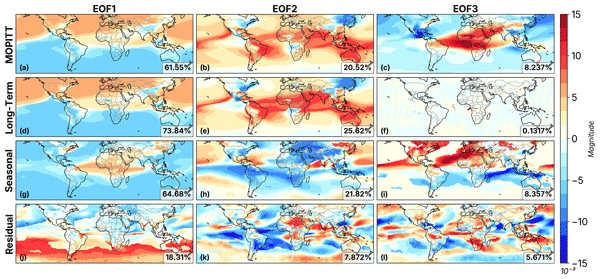
We use a statistical method called Empirical Orthogonal Function (EOF) analysis to analyze complex data, focusing on its strengths and limitations. This method is widely used in climate research, but its use in atmospheric chemistry is relatively new. While EOF analysis can be powerful, it may not be suitable for datasets that do not follow specific statistical assumptions. Our research provides recommendations to improve how we use this technique in analyzing atmospheric chemistry data.
Cynthia H. Whaley, Tim Butler, Jose A. Adame, Rupal Ambulkar, Steve R. Arnold, Rebecca R. Buchholz, Benjamin Gaubert, Douglas S. Hamilton, Min Huang, Hayley Hung, Johannes W. Kaiser, Jacek W. Kaminski, Christoph Knote, Gerbrand Koren, Jean-Luc Kouassi, Meiyun Lin, Tianjia Liu, Jianmin Ma, Kasemsan Manomaiphiboon, Elisa Bergas Masso, Jessica L. McCarty, Mariano Mertens, Mark Parrington, Helene Peiro, Pallavi Saxena, Saurabh Sonwani, Vanisa Surapipith, Damaris Y. T. Tan, Wenfu Tang, Veerachai Tanpipat, Kostas Tsigaridis, Christine Wiedinmyer, Oliver Wild, Yuanyu Xie, and Paquita Zuidema
Geosci. Model Dev., 18, 3265–3309, https://doi.org/10.5194/gmd-18-3265-2025, https://doi.org/10.5194/gmd-18-3265-2025, 2025
Short summary
Short summary
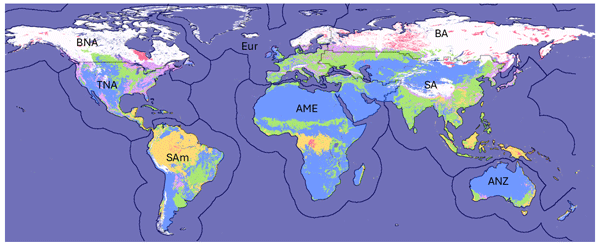
The multi-model experiment design of the HTAP3 Fires project takes a multi-pollutant approach to improving our understanding of transboundary transport of wildland fire and agricultural burning emissions and their impacts. The experiments are designed with the goal of answering science policy questions related to fires. The options for the multi-model approach, including inputs, outputs, and model setup, are discussed, and the official recommendations for the project are presented.
Rajesh Kumar, Piyush Bhardwaj, Cenlin He, Jennifer Boehnert, Forrest Lacey, Stefano Alessandrini, Kevin Sampson, Matthew Casali, Scott Swerdlin, Olga Wilhelmi, Gabriele G. Pfister, Benjamin Gaubert, and Helen Worden
Earth Syst. Sci. Data, 17, 1807–1834, https://doi.org/10.5194/essd-17-1807-2025, https://doi.org/10.5194/essd-17-1807-2025, 2025
Short summary
Short summary
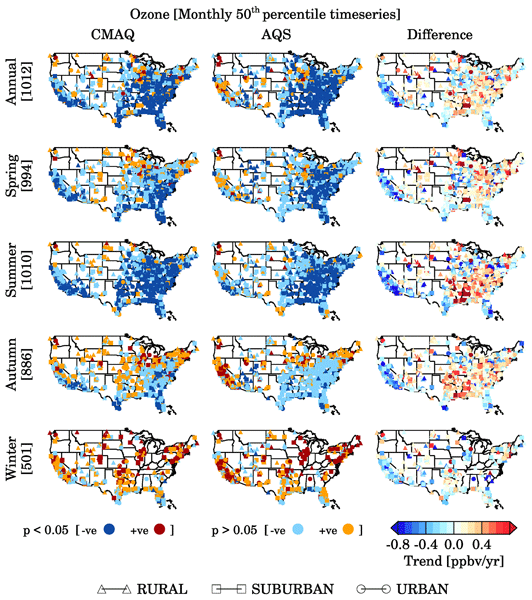
We have created a 14-year hourly air quality dataset at 12 km resolution by combining satellite observations of atmospheric composition with air quality models over the contiguous United States (CONUS). The dataset has been found to reproduce key observed features of air quality over the CONUS. To enable easy visualization and interpretation of county-level air quality measures and trends by stakeholders, an ArcGIS air quality dashboard has also been developed.
Lucien Froidevaux, Douglas E. Kinnison, Benjamin Gaubert, Michael J. Schwartz, Nathaniel J. Livesey, William G. Read, Charles G. Bardeen, Jerry R. Ziemke, and Ryan A. Fuller
Atmos. Chem. Phys., 25, 597–624, https://doi.org/10.5194/acp-25-597-2025, https://doi.org/10.5194/acp-25-597-2025, 2025
Short summary
Short summary
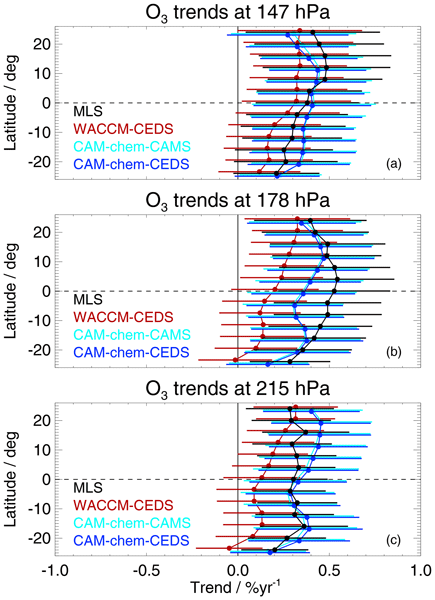
We compare observed changes in ozone (O3) and carbon monoxide (CO) in the tropical upper troposphere (10–15 km altitude) for 2005–2020 to predictions from model simulations that track the evolution of natural and industrial emissions transported to this region. An increasing trend in measured upper-tropospheric O3 is well matched by model trends. We find that changes in modeled industrial CO surface emissions lead to better model agreement with observed slight decreases in upper-tropospheric CO.
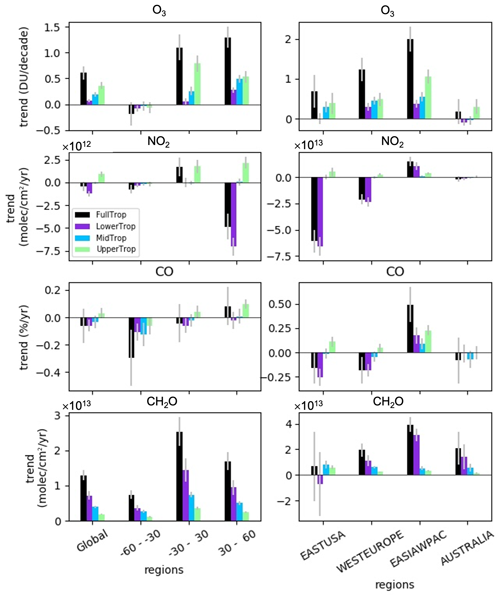
Yasin Elshorbany, Jerald R. Ziemke, Sarah Strode, Hervé Petetin, Kazuyuki Miyazaki, Isabelle De Smedt, Kenneth Pickering, Rodrigo J. Seguel, Helen Worden, Tamara Emmerichs, Domenico Taraborrelli, Maria Cazorla, Suvarna Fadnavis, Rebecca R. Buchholz, Benjamin Gaubert, Néstor Y. Rojas, Thiago Nogueira, Thérèse Salameh, and Min Huang
Atmos. Chem. Phys., 24, 12225–12257, https://doi.org/10.5194/acp-24-12225-2024, https://doi.org/10.5194/acp-24-12225-2024, 2024
Short summary
Short summary
We investigated tropospheric ozone spatial variability and trends from 2005 to 2019 and related those to ozone precursors on global and regional scales. We also investigate the spatiotemporal characteristics of the ozone formation regime in relation to ozone chemical sources and sinks. Our analysis is based on remote sensing products of the tropospheric column of ozone and its precursors, nitrogen dioxide, formaldehyde, and total column CO, as well as ozonesonde data and model simulations.
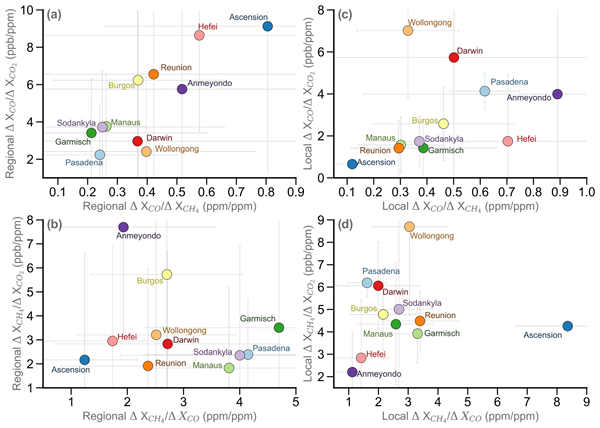
Kavitha Mottungan, Chayan Roychoudhury, Vanessa Brocchi, Benjamin Gaubert, Wenfu Tang, Mohammad Amin Mirrezaei, John McKinnon, Yafang Guo, David W. T. Griffith, Dietrich G. Feist, Isamu Morino, Mahesh K. Sha, Manvendra K. Dubey, Martine De Mazière, Nicholas M. Deutscher, Paul O. Wennberg, Ralf Sussmann, Rigel Kivi, Tae-Young Goo, Voltaire A. Velazco, Wei Wang, and Avelino F. Arellano Jr.
Atmos. Meas. Tech., 17, 5861–5885, https://doi.org/10.5194/amt-17-5861-2024, https://doi.org/10.5194/amt-17-5861-2024, 2024
Short summary
Short summary
A combination of data analysis techniques is introduced to separate local and regional influences on observed levels of carbon dioxide, carbon monoxide, and methane from an established ground-based remote sensing network. We take advantage of the covariations in these trace gases to identify the dominant type of sources driving these levels. Applying these methods in conjunction with existing approaches to other datasets can better address uncertainties in identifying sources and sinks.
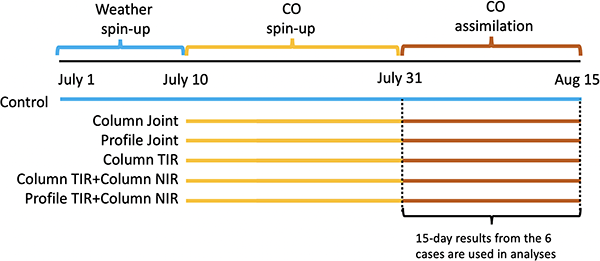
Wenfu Tang, Benjamin Gaubert, Louisa Emmons, Daniel Ziskin, Debbie Mao, David Edwards, Avelino Arellano, Kevin Raeder, Jeffrey Anderson, and Helen Worden
Atmos. Meas. Tech., 17, 1941–1963, https://doi.org/10.5194/amt-17-1941-2024, https://doi.org/10.5194/amt-17-1941-2024, 2024
Short summary
Short summary
We assimilate different MOPITT CO products to understand the impact of (1) assimilating multispectral and joint retrievals versus single spectral products, (2) assimilating satellite profile products versus column products, and (3) assimilating multispectral and joint retrievals versus assimilating individual products separately.
Adrien Deroubaix, Marco Vountas, Benjamin Gaubert, Maria Dolores Andrés Hernández, Stephan Borrmann, Guy Brasseur, Bruna Holanda, Yugo Kanaya, Katharina Kaiser, Flora Kluge, Ovid Oktavian Krüger, Inga Labuhn, Michael Lichtenstern, Klaus Pfeilsticker, Mira Pöhlker, Hans Schlager, Johannes Schneider, Guillaume Siour, Basudev Swain, Paolo Tuccella, Kameswara S. Vinjamuri, Mihalis Vrekoussis, Benjamin Weyland, and John P. Burrows
EGUsphere, https://doi.org/10.5194/egusphere-2024-516, https://doi.org/10.5194/egusphere-2024-516, 2024
Preprint archived
Short summary
Short summary
This study assesses atmospheric composition using air quality models during aircraft campaigns in Europe and Asia, focusing on carbonaceous aerosols and trace gases. While carbon monoxide is well modeled, other pollutants have moderate to weak agreement with observations. Wind speed modeling is reliable for identifying pollution plumes, where models tend to overestimate concentrations. This highlights challenges in accurately modeling aerosol and trace gas composition, particularly in cities.
Adrien Deroubaix, Marco Vountas, Benjamin Gaubert, Maria Dolores Andrés Hernández, Stephan Borrmann, Guy Brasseur, Bruna Holanda, Yugo Kanaya, Katharina Kaiser, Flora Kluge, Ovid Oktavian Krüger, Inga Labuhn, Michael Lichtenstern, Klaus Pfeilsticker, Mira Pöhlker, Hans Schlager, Johannes Schneider, Guillaume Siour, Basudev Swain, Paolo Tuccella, Kameswara S. Vinjamuri, Mihalis Vrekoussis, Benjamin Weyland, and John P. Burrows
EGUsphere, https://doi.org/10.5194/egusphere-2024-521, https://doi.org/10.5194/egusphere-2024-521, 2024
Preprint archived
Short summary
Short summary
This study explores the proportional relationships between carbonaceous aerosols (black and organic carbon) and trace gases using airborne measurements from two campaigns in Europe and East Asia. Differences between regions were found, but air quality models struggled to reproduce them accurately. We show that these proportional relationships can help to constrain models and can be used to infer aerosol concentrations from satellite observations of trace gases, especially in urban areas.
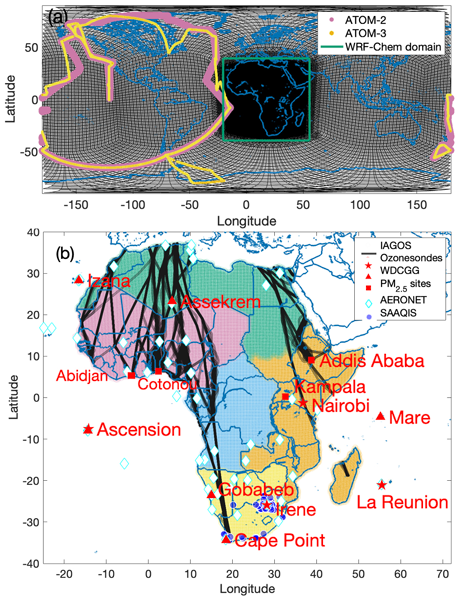
Wenfu Tang, Louisa K. Emmons, Helen M. Worden, Rajesh Kumar, Cenlin He, Benjamin Gaubert, Zhonghua Zheng, Simone Tilmes, Rebecca R. Buchholz, Sara-Eva Martinez-Alonso, Claire Granier, Antonin Soulie, Kathryn McKain, Bruce C. Daube, Jeff Peischl, Chelsea Thompson, and Pieternel Levelt
Geosci. Model Dev., 16, 6001–6028, https://doi.org/10.5194/gmd-16-6001-2023, https://doi.org/10.5194/gmd-16-6001-2023, 2023
Short summary
Short summary
The new MUSICAv0 model enables the study of atmospheric chemistry across all relevant scales. We develop a MUSICAv0 grid for Africa. We evaluate MUSICAv0 with observations and compare it with a previously used model – WRF-Chem. Overall, the performance of MUSICAv0 is comparable to WRF-Chem. Based on model–satellite discrepancies, we find that future field campaigns in an eastern African region (30°E–45°E, 5°S–5°N) could substantially improve the predictive skill of air quality models.
Chloe A. Brashear, Maarten M. J. W. van Herpen, Sergey Gromov, Berend van de Kraats, Carina van der Veen, Xietiancheng Yu, Matthew S. Johnson, Helder Timas, Sönke Zaehle, Armin Jordan, Heiko Moossen, Africa Barreto, Natalia Pratts, Isabel Baños, Jesús Arrieta, Dickon Young, Peter Sealy, Hella van Asperen, Simonetta Montaguti, Peter Sperlich, Rowena Moss, Sylvia Nichol, Stephen Matthew Platt, Ove Hermansen, Cathrine Lund Myhre, Gabrielle Petron, Andy Crotwell, Isaac Vimont, and Thomas Röckmann
EGUsphere, https://doi.org/10.5194/egusphere-2026-5618, https://doi.org/10.5194/egusphere-2026-5618, 2026
This preprint is open for discussion and under review for Atmospheric Chemistry and Physics (ACP).
Short summary
Short summary
This study evaluates trends in atmospheric CO between 1995–2025 and uses the isotopic composition of CO to constrain emission shifts during this time. We find that CO from fossil fuel combustion has reduced dramatically in the Northern Hemisphere during winter, linked to global air quality regulations. Conversely, a small background rise in CO is driven by increasing atmospheric CH4 and recent extreme wildfire seasons have caused large peaks in CO, counteracting reductions from fossil emissions.
Rafael P. Fernandez, Carlos A. Cuevas, Julián Villamayor, Aryeh Feinberg, Douglas E. Kinnison, Francis Vitt, Adriana Bossolasco, Javier A. Barrera, Amelia Reynoso, Orlando G. Tomazzeli, Qinyi Li, and Alfonso Saiz-Lopez
Geosci. Model Dev., 19, 9325–9376, https://doi.org/10.5194/gmd-19-9325-2026, https://doi.org/10.5194/gmd-19-9325-2026, 2026
Short summary
Short summary
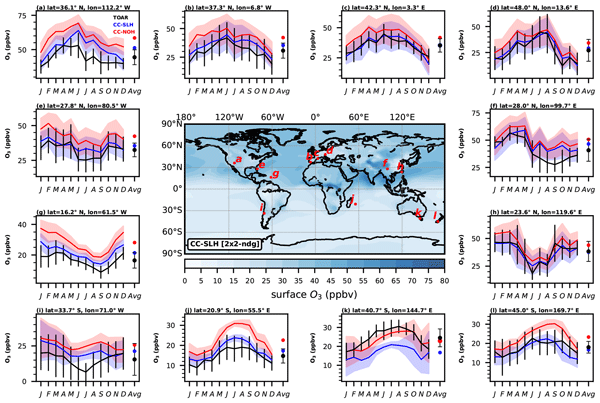
In this work we summarize 15 years of research and developments of short-lived halogens (SLH) using the Community Earth System Model (CESM) and present a complete description of the implementation and capabilities achieved with the latest version v2. The CESM2-SLH release includes specific namelist options, input files and technical notes detailing the most important SLH updates that must be considered for the different model configurations and resolutions.
Shrutika Wagh, Luana S. Basso, Ayan F. Fleischmann, João Henrique Fernandes Amaral, John Melack, Jost Larvic, David Walter, Stijn Hantson, Julia Marshall, Chris Wilson, Youmi Oh, Lori Bruhwiler, John B. Miller, Corinne Vigouroux, Christian Rödenbeck, and Santiago Botía
EGUsphere, https://doi.org/10.5194/egusphere-2026-5245, https://doi.org/10.5194/egusphere-2026-5245, 2026
This preprint is open for discussion and under review for Atmospheric Chemistry and Physics (ACP).
Short summary
Short summary
We estimated methane emissions from the Amazon, Orinoco, and Paraná river basins using the Jena CarboScope global inversion system. We included Amazon measurements to evaluate their effect on the results. Adding them led to a large adjustment in estimated wetland emissions and strongly influenced the Amazon estimate. Without these measurements, the Amazon estimate increased by about 75 %. Our findings highlight the need to maintain and expand measurements across tropical South America.
Fenjuan Wang, Shamil Maksyutov, Rajesh Janardanan, Dmitry A. Belikov, Prabir K. Patra, Ruosi Liang, Yuzhong Zhang, Ge Ren, Hong Lin, Nicole Montenegro, Antoine Berchet, Marielle Saunois, Adrien Martinez, Sara Hyvärinen, Aki Tsuruta, Samuel Takele Kenea, Miao Liang, Xin Lan, Yukio Terao, M. Kawser Ahmed, Manish Naja, Akihiko Ito, Isamu Morino, Yukio Yoshida, Yu Someya, Tazu Saeki, and Tsuneo Matsunaga
Earth Syst. Sci. Data Discuss., https://doi.org/10.5194/essd-2026-420, https://doi.org/10.5194/essd-2026-420, 2026
Preprint under review for ESSD
Short summary
Short summary
Methane is a potent greenhouse gas driving climate change, yet Asian emissions remain highly uncertain. We conducted the first Methane Inversion inter-Comparison for Asia (MICA) combining seven models to estimate methane across Asia from 2010 to 2021 using satellite and ground data. We found that emissions are generally lower than prior inventories, though some countries underreport. This study provides a comprehensive, transparent dataset to quantify regional methane budgets across Asia.
Clara M. Nussbaumer, Colette L. Heald, Teresa Campos, Eric A. Kort, Paul B. Krummel, Ray L. Langenfelds, Monica Madronich, Kathryn McKain, Gabrielle Pétron, Ann Stavert, and Steven C. Wofsy
EGUsphere, https://doi.org/10.5194/egusphere-2026-5476, https://doi.org/10.5194/egusphere-2026-5476, 2026
Short summary
Short summary
Changes in emissions and climate increasingly impact the remote Southern Hemisphere and we know little about the consequences for the atmospheric composition. We investigate if rapid increases in the greenhouse gas methane since 2008 have led to increases in carbon monoxide. A global model confirms this hypothesis and shows that enhanced emissions from plants and rising temperatures also contribute to the trend. Observations are inconsistent and highlight the need for more accurate measurements.
Julia Lee-Taylor, William P. L. Carter, Bernard Aumont, John J. Orlando, Zhizhao Wang, Marie Camredon, Richard Valorso, and Kelley C. Barsanti
EGUsphere, https://doi.org/10.5194/egusphere-2026-4908, https://doi.org/10.5194/egusphere-2026-4908, 2026
Short summary
Short summary
Air quality models require representation of gas-phase compounds and their products. While these model mechanisms are typically small, one compound can form millions of products. Small mechanisms can be derived by hand, but generation of complete mechanisms must be automated. The two most common automated generators for atmospheric chemical mechanisms are compared here for the first time. The comparison highlights underlying differences and implications for predictions of atmospheric chemistry.
Megan Robertson, Chayan Roychoudhury, Keming Pan, Mohammad Amin Mirrezaei, Armin Sorooshian, and Avelino Arellano
EGUsphere, https://doi.org/10.5194/egusphere-2026-3397, https://doi.org/10.5194/egusphere-2026-3397, 2026
Short summary
Short summary
Ground level ozone is a hazardous air pollutant, but its drivers can appear different depending on the measurement method. We investigated Tucson, Arizona by inter-comparing satellite and ground-based air quality tools and weather data. This multi-platform approach shows that ozone and its precursors vary by time of day, season, and measurement perspective. The results showcase how semi-arid urban atmospheres are influenced by sunlight, emissions, vegetation, and vertical mixing.
Kane Stone, Candice Chen, Susan Solomon, Luke M. Western, Paul B. Krummel, Gabrielle Pétron, Jens Mühle, and Simon O'Doherty
Atmos. Chem. Phys., 26, 10241–10253, https://doi.org/10.5194/acp-26-10241-2026, https://doi.org/10.5194/acp-26-10241-2026, 2026
Short summary
Short summary
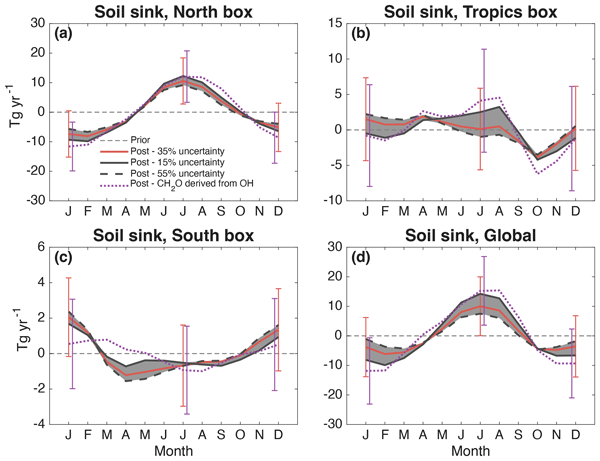
There is growing interest in hydrogens impact on atmospheric chemistry and climate. Here, the seasonality of hydrogen oxidation and loss to microbial activity in soils are investigated using information from the hydrofluorocarbon, HFC-152a. A large seasonal range of the soil sink, over twice that of hydroxyl loss, is seen in the Northern latitudes peaking in the late summer, while the Southern latitudes show a much lower range. This will be useful for validating model hydrogen cycles.
Emeline Tapin, Antoine Berchet, Adrien Martinez, Malika Menoud, Joël Thanwerdas, Xin Lan, Edward Malina, Daniele Gasbarra, and Marielle Saunois
Earth Syst. Sci. Data, 18, 4793–4832, https://doi.org/10.5194/essd-18-4793-2026, https://doi.org/10.5194/essd-18-4793-2026, 2026
Short summary
Short summary
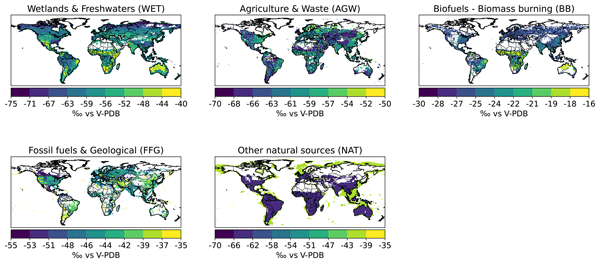
We present global δ¹³C-CH₄ source signature maps (1998–2022) at 1°×1° resolution for five emission sectors and 11 sub-sectors, with quantified uncertainties. Sensitivity experiments with an atmospheric transport model assess how uncertainties in emissions, isotopic signatures, OH sinks, and kinetic isotope effects influence atmospheric δ¹³C-CH₄ and CH₄, providing guidance for isotopic inversions.
Irina Petropavlovskikh, Martine De Mazière, Anne M. Thompson, Jeannette D. Wild, James W. Hannigan, Henry B. Selkirk, Reem A. Hannun, Wolfgang Steinbrecht, Jean-Christopher Lambert, Roeland Van Malderen, Elizabeth Asher, Raul R. Cordero, Sophie Godin-Beekmann, Daan Hubert, Sergey Khaykin, Karin Kreher, Thierry Leblanc, Emmanuel Mahieu, Eliane Maillard Barras, Glen McConville, Gerald Nedoluha, Ivan Ortega, Alberto Redondas Marrero, Gunther Seckmeyer, Ryan M. Stauffer, Sarah A. Strode, Kim Strong, Takafumi Sugita, Michel Van Roozendael, Voltaire Velazco, Corinne Vigouroux, and Bärbel Vogel
Atmos. Chem. Phys., 26, 8637–8675, https://doi.org/10.5194/acp-26-8637-2026, https://doi.org/10.5194/acp-26-8637-2026, 2026
Short summary
Short summary
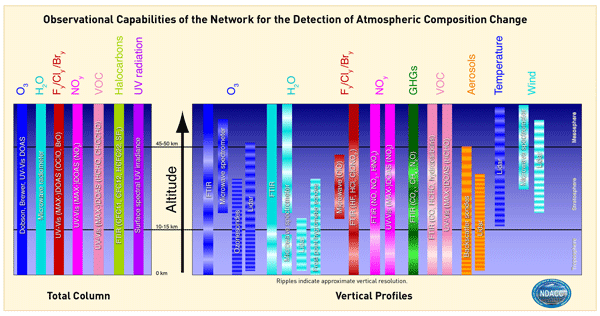
This introduction to the special issue "Achievements and perspectives of the Network for the Detection of Atmospheric Composition Change after 35 years of operation” provides an overview of important research findings achieved under the NDACC objectives. The future of NDACC is discussed in the light of the evolution of the scientific questions, evolving collaborations with partners and Cooperating Networks, and the current landscape of gaps in satellite and ground-based observations.
Beatriz Herrera, Enrico Dammers, Martine De Maziere, Omaira Garcia, Michel Grutter, James W. Hannigan, Dylan B. A. Jones, Nicholas Jones, Emmanuel Mahieu, Maria Makarova, Kazuyuki Miyazaki, Isamu Morino, Isao Murata, Ivan Ortega, Mathias Palm, Anatoly Poverovskii, Takashi Sekiya, Dan Smale, Hannah Sill, Wolfgang Stremme, Ralf Sussmann, Geoffrey Toon, Corinne Vigouroux, Wei Wang, Tyler Wizenberg, and Kimberly Strong
EGUsphere, https://doi.org/10.5194/egusphere-2026-3138, https://doi.org/10.5194/egusphere-2026-3138, 2026
Short summary
Short summary
This work investigates how atmospheric ammonia changes over time using long-term observations and simulations at locations around the world. While its main sources are related to agriculture, wildfires, vehicles, and volcanoes also contribute. The results show that ammonia levels vary strongly during the day and across seasons, and are rising at most locations. These findings improve our understanding of air pollution and its impacts.
Duseong S. Jo, John J. Orlando, Rebecca H. Schwantes, Louisa K. Emmons, Rebecca S. Hornbrook, Eric C. Apel, Alan J. Hills, Kirk Ullmann, L. Gregory Huey, Claire Granier, Chelsea R. Thompson, and Jeff Peischl
EGUsphere, https://doi.org/10.5194/egusphere-2026-1868, https://doi.org/10.5194/egusphere-2026-1868, 2026
Short summary
Short summary
C4-C6 alkane hydrocarbons are important precursors of air pollution, but most global atmospheric chemistry models represent them using a single lumped surrogate compound, limiting detailed simulation of their oxidation products. We developed a new chemical mechanism that explicitly treats individual C4-C6 alkane species in a global model. This explicit treatment substantially changes the simulated budgets of key oxygenated compounds such as methyl ethyl ketone.
You Yi, William J. Randel, Laura L. Pan, Yi Liu, Shuangxi Fang, Zhaonan Cai, Teresa Campos, and Benjamin Gaubert
EGUsphere, https://doi.org/10.5194/egusphere-2026-2644, https://doi.org/10.5194/egusphere-2026-2644, 2026
Short summary
Short summary
Methane is a potent greenhouse gas, but how it reaches the upper atmosphere is not well known. Using satellite data, we show that the Asian summer monsoon plays a key role in transporting methane from the lower atmosphere to the upper atmosphere, where it affects both Earth's radiation and the amount of water vapor. Our findings reveal that a regional weather system can influence the global distribution of methane, helping scientists better predict future climate change.
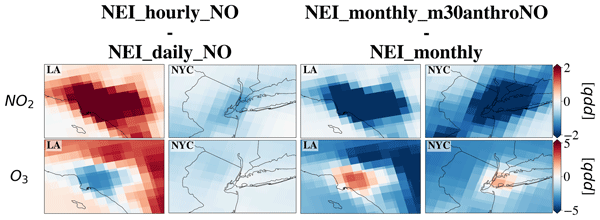
Madankui Tao, Arlene M. Fiore, Louisa K. Emmons, Jeffery R. Scott, Gabriele G. Pfister, Duseong S. Jo, and Wenfu Tang
Atmos. Chem. Phys., 26, 6683–6702, https://doi.org/10.5194/acp-26-6683-2026, https://doi.org/10.5194/acp-26-6683-2026, 2026
Short summary
Short summary
Global models often rely on highly simplified emissions patterns that lack real-world hourly variations. Our study finds that representing their changes throughout the day substantially changes predicted air pollution levels. The impact can be large, comparable to a uniform 30 % reduction in total emissions, and varies significantly by region, especially between the eastern and western US and between urban and rural areas.
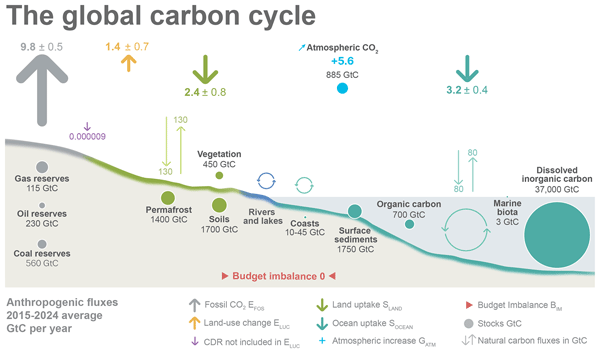
Pierre Friedlingstein, Michael O'Sullivan, Matthew W. Jones, Robbie M. Andrew, Dorothee C. E. Bakker, Judith Hauck, Peter Landschützer, Corinne Le Quéré, Hongmei Li, Ingrid T. Luijkx, Glen P. Peters, Wouter Peters, Julia Pongratz, Clemens Schwingshackl, Stephen Sitch, Josep G. Canadell, Philippe Ciais, Kjetil Aas, Simone R. Alin, Peter Anthoni, Leticia Barbero, Nicholas R. Bates, Nicolas Bellouin, Alice Benoit-Cattin, Carla F. Berghoff, Raffaele Bernardello, Laurent Bopp, Ida Bagus Mandhara Brasika, Matthew A. Chamberlain, Naveen Chandra, Frédéric Chevallier, Louise P. Chini, Nathan O. Collier, Thomas H. Colligan, Margot Cronin, Laique M. Djeutchouang, Xinyu Dou, Matt P. Enright, Kazutaka Enyo, Michael Erb, Wiley Evans, Richard A. Feely, Liang Feng, Daniel J. Ford, Adrianna Foster, Filippa Fransner, Thomas Gasser, Marion Gehlen, Thanos Gkritzalis, Jefferson Goncalves De Souza, Giacomo Grassi, Luke Gregor, Nicolas Gruber, Bertrand Guenet, Özgür Gürses, Kirsty Harrington, Ian Harris, Jens Heinke, George C. Hurtt, Yosuke Iida, Tatiana Ilyina, Akihiko Ito, Andrew R. Jacobson, Atul K. Jain, Tereza Jarníková, Annika Jersild, Fei Jiang, Steve D. Jones, Etsushi Kato, Ralph F. Keeling, Kees Klein Goldewijk, Jürgen Knauer, Yawen Kong, Jan Ivar Korsbakken, Charles Koven, Taro Kunimitsu, Xin Lan, Junjie Liu, Zhiqiang Liu, Zhu Liu, Claire Lo Monaco, Lei Ma, Gregg Marland, Patrick C. McGuire, Galen A. McKinley, Joe R. Melton, Natalie Monacci, Erwan Monier, Eric J. Morgan, David R. Munro, Jens D. Müller, Shin-Ichiro Nakaoka, Lorna R. Nayagam, Yosuke Niwa, Tobias Nutzel, Are Olsen, Abdirahman M. Omar, Naiqing Pan, Sudhanshu Pandey, Denis Pierrot, Zhangcai Qin, Pierre Regnier, Gregor Rehder, Laure Resplandy, Alizée Roobaert, Thais M. Rosan, Christian Rödenbeck, Jörg Schwinger, Ingunn Skjelvan, T. Luke Smallman, Victoria Spada, Mohanan G. Sreeush, Qing Sun, Adrienne J. Sutton, Colm Sweeney, Didier Swingedouw, Roland Séférian, Shintaro Takao, Hiroaki Tatebe, Hanqin Tian, Xiangjun Tian, Bronte Tilbrook, Hiroyuki Tsujino, Francesco Tubiello, Erik van Ooijen, Guido R. van der Werf, Sebastiaan J. van de Velde, Anthony P. Walker, Rik Wanninkhof, Xiaojuan Yang, Wenping Yuan, Xu Yue, and Jiye Zeng
Earth Syst. Sci. Data, 18, 3211–3288, https://doi.org/10.5194/essd-18-3211-2026, https://doi.org/10.5194/essd-18-3211-2026, 2026
Short summary
Short summary
The Global Carbon Budget 2025 describes the methodology, main results, and datasets used to quantify the anthropogenic emissions of carbon dioxide (CO2) and their partitioning among the atmosphere, land ecosystems, and the ocean over the historical period (1750–2025). These living datasets are updated every year to provide the highest transparency and traceability in the reporting of CO2, the key driver of climate change.
Jinkyul Choi, Kazuyuki Miyazaki, Takashi Sekiya, Jinhyeok Yu, Shin-Ya Ogino, Henk Eskes, Pieter Rijdijk, Ryan Bennett, Anke Roiger, Leon Knez, Glenn S. Diskin, Jason A. Miech, Joshua P. DiGangi, Yonghoon Choi, Alessandro Franchin, Changmin Cho, Eric C. Apel, Louisa K. Emmons, Nattamon Maneenoi, Jason M. St. Clair, Reem A. Hannun, Glenn M. Wolfe, Erin Delaria, Abby Sebol, Donald R. Blake, Monica Crippa, Rachel M. Hoesly, Steven J. Smith, Jung-Hun Woo, Le Kuai, and Ronald Macatangay
EGUsphere, https://doi.org/10.5194/egusphere-2026-2380, https://doi.org/10.5194/egusphere-2026-2380, 2026
Short summary
Short summary
Asia produces half of the world's air pollution, yet emission estimates from different sources disagree widely. We assimilated satellite observations of six pollutant species to correct both concentrations and emissions. Aircraft measurements from a 2024 NASA campaign across four Asian countries confirmed the improvements. Our results reveal underreported emissions in some countries, overestimated vegetation emissions, unresolved fire estimates, and weather control on cross-border pollution.
Zhizhao Wang, William P. L. Carter, Julia Lee-Taylor, John Orlando, Qing Ye, Richard Valorso, Marie Camredon, Bernard Aumont, and Kelley Barsanti
EGUsphere, https://doi.org/10.5194/egusphere-2026-1921, https://doi.org/10.5194/egusphere-2026-1921, 2026
Short summary
Short summary
Comprehensive chemical mechanisms that describe how pollutants react in the atmosphere can include millions of reactions and are too complex for practical models. This study presents a framework that can reduce them to tens or hundreds of reactions while preserving key behavior and accuracy. This enables the use of detailed chemistry in large simulations, improving studies of air quality and how atmospheric processes are represented in models.
John McKinnon, Chayan Roychoudhury, Avelino Arellano Jr., and Benjamin Gaubert
Atmos. Meas. Tech., 19, 2529–2554, https://doi.org/10.5194/amt-19-2529-2026, https://doi.org/10.5194/amt-19-2529-2026, 2026
Short summary
Short summary
We use a statistical method called Empirical Orthogonal Function (EOF) analysis to analyze complex data, focusing on its strengths and limitations. This method is widely used in climate research, but its use in atmospheric chemistry is relatively new. While EOF analysis can be powerful, it may not be suitable for datasets that do not follow specific statistical assumptions. Our research provides recommendations to improve how we use this technique in analyzing atmospheric chemistry data.
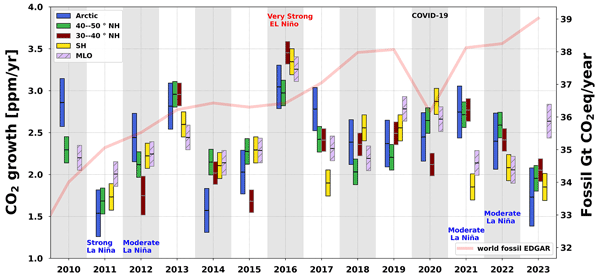
Nasrin Mostafavi Pak, Jonas Hachmeister, Markus Rettinger, Matthias Buschmann, Nicholas M. Deutscher, David W. T. Griffith, Laura T. Iraci, Xin Lan, Erin McGee, Isamu Morino, Dave Pollard, Coleen M. Roehl, Kimberly Strong, Rigel Kivi, and Paul Wennberg
Biogeosciences, 23, 1477–1495, https://doi.org/10.5194/bg-23-1477-2026, https://doi.org/10.5194/bg-23-1477-2026, 2026
Short summary
Short summary
We studied how carbon dioxide (CO2) levels change each year using long-term measurements from twelve sites worldwide. Average growth rates from 2010 to 2024 were about 2.4 ppm/year, with notable year-to-year and regional differences. Natural climate patterns influenced these changes, while temporary shifts in human emissions, such as during COVID‑19, had modest local effects. Monitoring CO2 growth across regions helps track emissions and assess mitigation efforts.
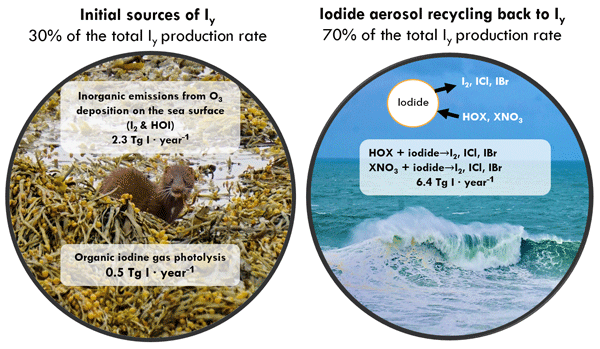
Allison R. Moon, Leyang Liu, Xuan Wang, Yuk-Chun Chan, Alyson Fritzmann, Ryan Pound, Amy Lees, Lewis Marden, Mat Evans, Lucy J. Carpenter, Jochen Stutz, Joel A. Thornton, Gordon Novak, Andrew Rollins, Gregory P. Schill, Xu-Cheng He, Henning Finkenzeller, Mago Reza, Rainer Volkamer, Kelvin H. Bates, Alfonso Saiz-Lopez, Anoop S. Mahajan, and Becky Alexander
Atmos. Chem. Phys., 26, 2353–2389, https://doi.org/10.5194/acp-26-2353-2026, https://doi.org/10.5194/acp-26-2353-2026, 2026
Short summary
Short summary
Global chemical transport models previously treated aerosols as a sink for reactive iodine (Iy); however, aerosol iodide is also a source of Iy via heterogeneous reactions involving hypohalous acids and halogen nitrates. We implemented this chemistry into GEOS-Chem, in addition to explicitly representing three aerosol iodine types: soluble organic iodine (SOI), iodide, and iodate. We found that aerosol recycling of iodide to form Iy is more than twice as fast as the other Iy sources combined.
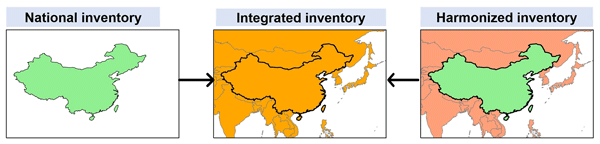
Yijuan Zhang, Guy Brasseur, Maria Kanakidou, Claire Granier, Nikos Daskalakis, Alexandros Panagiotis Poulidis, Kun Qu, and Mihalis Vrekoussis
Geosci. Model Dev., 19, 217–237, https://doi.org/10.5194/gmd-19-217-2026, https://doi.org/10.5194/gmd-19-217-2026, 2026
Short summary
Short summary
A new inventory of anthropogenic emissions, the China INtegrated Emission Inventory (CINEI), was developed in this study to better represent emission sectors, chemical speciation and spatiotemporal variations in China. Compared to simulations driven by global inventories, CINEI demonstrated better numerical modeling performance in ozone and its precursors (nitrogen dioxide and carbon monoxide). This study provides valuable insights for designing ozone mitigation strategies.
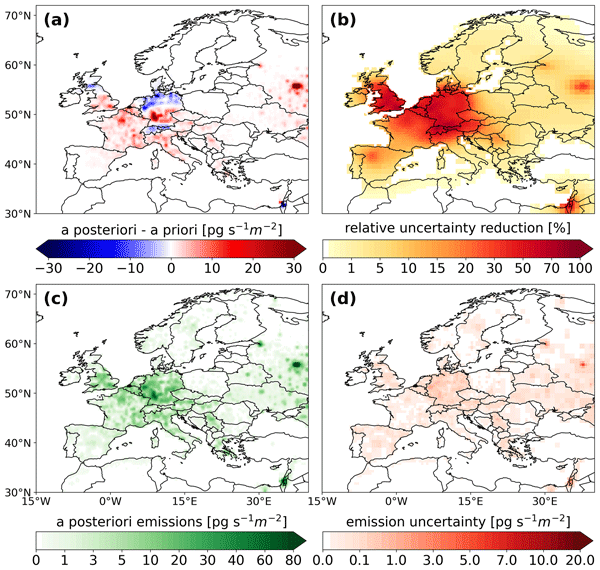
Martin Vojta, Andreas Plach, Rona L. Thompson, Pallav Purohit, Kieran Stanley, Simon O'Doherty, Dickon Young, Joe Pitt, Jgor Arduini, Xin Lan, and Andreas Stohl
Atmos. Chem. Phys., 25, 15197–15243, https://doi.org/10.5194/acp-25-15197-2025, https://doi.org/10.5194/acp-25-15197-2025, 2025
Short summary
Short summary
We determine European emissions of the highly potent greenhouse gas sulfur hexafluoride from 2005 to 2021 – focusing on high-emitting countries and the aggregated EU-27 emissions. Emissions declined in most regions, likely due to EU F-gas regulations. However, our results reveal that most studied countries underestimate their emissions in their national reports. Our sensitivity tests highlight the importance of dense observational networks for reliable inversion-based emission estimates.

Ran Sun, Tao Ye, Yiqing Liu, Weihang Liu, and Shuo Chen
Earth Syst. Dynam., 16, 1971–1988, https://doi.org/10.5194/esd-16-1971-2025, https://doi.org/10.5194/esd-16-1971-2025, 2025
Short summary
Short summary
Climate change is intensifying extreme weather threats to rice. Using data from 1981 to 2018, we found that hot-dry events are rising over time with different patterns across regions, while cold-rain events also threaten crops. Heat was the main driver of hot-dry events, and cold and rain together drove cold-rain events. Both reduced harvests, especially during flowering and grain filling stage. Our findings show that growth stage and location matter for protecting rice in a changing climate.
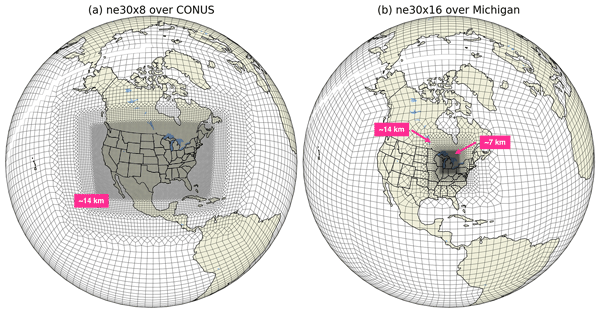
Noribeth Mariscal, Louisa K. Emmons, Duseong S. Jo, Ying Xiong, Laura M. Judd, Scott J. Janz, Jiajue Chai, and Yaoxian Huang
Geosci. Model Dev., 18, 6737–6765, https://doi.org/10.5194/gmd-18-6737-2025, https://doi.org/10.5194/gmd-18-6737-2025, 2025
Short summary
Short summary
The distribution of ozone (O3) and its precursors (NOx, VOCs) is explored using the chemistry–climate model MUSICAv0 and evaluated using measurements from the Michigan–Ontario Ozone Source Experiment. A custom grid of ~7 km was created over Michigan. A sector-based diurnal cycle for anthropogenic nitric oxide was included in the model. This work shows that grid resolution plays a more important role in relation to O3 precursors and that the diurnal cycle significantly impacts nighttime O3 formation.
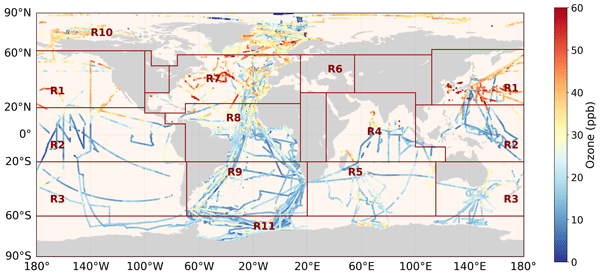
Yugo Kanaya, Roberto Sommariva, Alfonso Saiz-Lopez, Andrea Mazzeo, Theodore K. Koenig, Kaori Kawana, James E. Johnson, Aurélie Colomb, Pierre Tulet, Suzie Molloy, Ian E. Galbally, Rainer Volkamer, Anoop Mahajan, John W. Halfacre, Paul B. Shepson, Julia Schmale, Hélène Angot, Byron Blomquist, Matthew D. Shupe, Detlev Helmig, Junsu Gil, Meehye Lee, Sean C. Coburn, Ivan Ortega, Gao Chen, James Lee, Kenneth C. Aikin, David D. Parrish, John S. Holloway, Thomas B. Ryerson, Ilana B. Pollack, Eric J. Williams, Brian M. Lerner, Andrew J. Weinheimer, Teresa Campos, Frank M. Flocke, J. Ryan Spackman, Ilann Bourgeois, Jeff Peischl, Chelsea R. Thompson, Ralf M. Staebler, Amir A. Aliabadi, Wanmin Gong, Roeland Van Malderen, Anne M. Thompson, Ryan M. Stauffer, Debra E. Kollonige, Juan Carlos Gómez Martin, Masatomo Fujiwara, Katie Read, Matthew Rowlinson, Keiichi Sato, Junichi Kurokawa, Yoko Iwamoto, Fumikazu Taketani, Hisahiro Takashima, Mónica Navarro-Comas, Marios Panagi, and Martin G. Schultz
Earth Syst. Sci. Data, 17, 4901–4932, https://doi.org/10.5194/essd-17-4901-2025, https://doi.org/10.5194/essd-17-4901-2025, 2025
Short summary
Short summary
The first comprehensive dataset of tropospheric ozone over oceans/polar regions is presented, including 77 ship/buoy and 48 aircraft campaign observations (1977–2022, 0–5000 m altitude), supplemented by ozonesonde and surface data. Air masses isolated from land for 72+ hours are systematically selected as essentially oceanic. Among the 11 global regions, they show daytime decreases of 11–16 % in the tropics, while near-zero depletions are rare, unlike in the Arctic, implying different mechanisms.
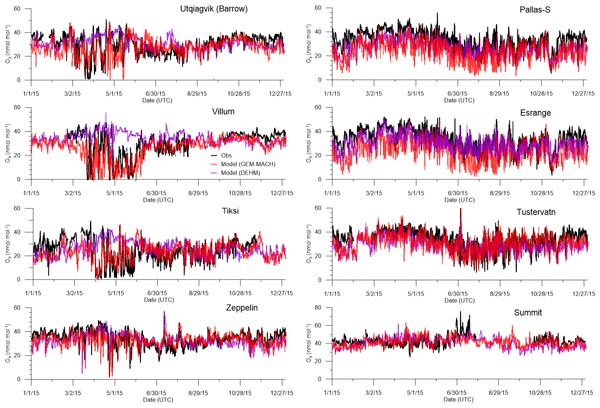
Wanmin Gong, Stephen R. Beagley, Kenjiro Toyota, Henrik Skov, Jesper Heile Christensen, Alex Lupu, Diane Pendlebury, Junhua Zhang, Ulas Im, Yugo Kanaya, Alfonso Saiz-Lopez, Roberto Sommariva, Peter Effertz, John W. Halfacre, Nis Jepsen, Rigel Kivi, Theodore K. Koenig, Katrin Müller, Claus Nordstrøm, Irina Petropavlovskikh, Paul B. Shepson, William R. Simpson, Sverre Solberg, Ralf M. Staebler, David W. Tarasick, Roeland Van Malderen, and Mika Vestenius
Atmos. Chem. Phys., 25, 8355–8405, https://doi.org/10.5194/acp-25-8355-2025, https://doi.org/10.5194/acp-25-8355-2025, 2025
Short summary
Short summary
This study showed that the springtime O3 depletion plays a critical role in driving the surface O3 seasonal cycle in the central Arctic. The O3 depletion events, while occurring most notably within the lowest few hundred metres above the Arctic Ocean, can induce a 5–7 % loss in the pan-Arctic tropospheric O3 burden during springtime. The study also found enhancements in O3 and NOy (mostly peroxyacetyl nitrate) concentrations in the Arctic due to northern boreal wildfires, particularly at higher altitudes.
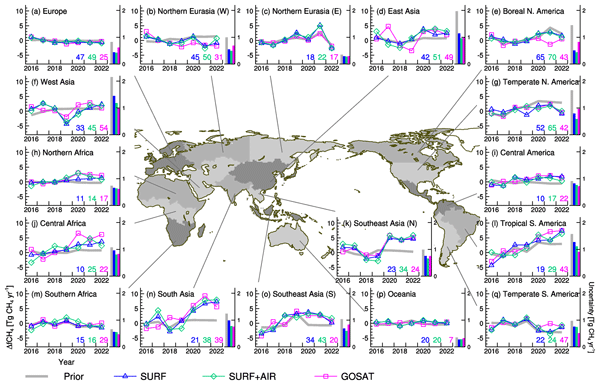
Yosuke Niwa, Yasunori Tohjima, Yukio Terao, Tazu Saeki, Akihiko Ito, Taku Umezawa, Kyohei Yamada, Motoki Sasakawa, Toshinobu Machida, Shin-Ichiro Nakaoka, Hideki Nara, Hiroshi Tanimoto, Hitoshi Mukai, Yukio Yoshida, Shinji Morimoto, Shinya Takatsuji, Kazuhiro Tsuboi, Yousuke Sawa, Hidekazu Matsueda, Kentaro Ishijima, Ryo Fujita, Daisuke Goto, Xin Lan, Kenneth Schuldt, Michal Heliasz, Tobias Biermann, Lukasz Chmura, Jarsolaw Necki, Irène Xueref-Remy, and Damiano Sferlazzo
Atmos. Chem. Phys., 25, 6757–6785, https://doi.org/10.5194/acp-25-6757-2025, https://doi.org/10.5194/acp-25-6757-2025, 2025
Short summary
Short summary
This study estimated regional and sectoral emission contributions to the unprecedented surge of atmospheric methane for 2020–2022. The methane is the second most important greenhouse gas, and its emissions reduction is urgently required to mitigate global warming. Numerical modeling-based estimates with three different sets of atmospheric observations consistently suggested large contributions of biogenic emissions from South Asia and Southeast Asia to the surge of atmospheric methane.
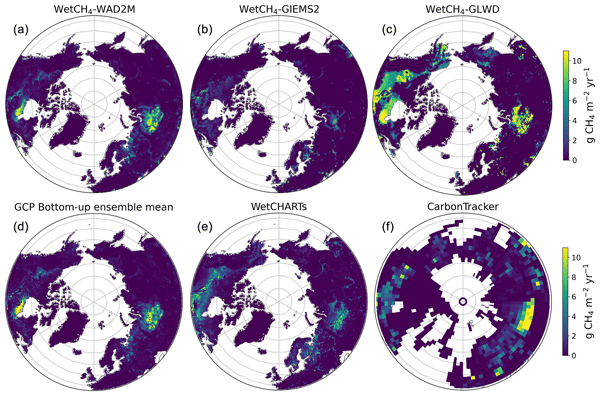
Qing Ying, Benjamin Poulter, Jennifer D. Watts, Kyle A. Arndt, Anna-Maria Virkkala, Lori Bruhwiler, Youmi Oh, Brendan M. Rogers, Susan M. Natali, Hilary Sullivan, Amanda Armstrong, Eric J. Ward, Luke D. Schiferl, Clayton D. Elder, Olli Peltola, Annett Bartsch, Ankur R. Desai, Eugénie Euskirchen, Mathias Göckede, Bernhard Lehner, Mats B. Nilsson, Matthias Peichl, Oliver Sonnentag, Eeva-Stiina Tuittila, Torsten Sachs, Aram Kalhori, Masahito Ueyama, and Zhen Zhang
Earth Syst. Sci. Data, 17, 2507–2534, https://doi.org/10.5194/essd-17-2507-2025, https://doi.org/10.5194/essd-17-2507-2025, 2025
Short summary
Short summary
We present daily methane (CH4) fluxes of northern wetlands at 10 km resolution during 2016–2022 (WetCH4) derived from a novel machine learning framework. We estimated an average annual CH4 emission of 22.8 ± 2.4 Tg CH4 yr−1 (15.7–51.6 Tg CH4 yr−1). Emissions were intensified in 2016, 2020, and 2022, with the largest interannual variation coming from Western Siberia. Continued, all-season tower observations and improved soil moisture products are needed for future improvement of CH4 upscaling.
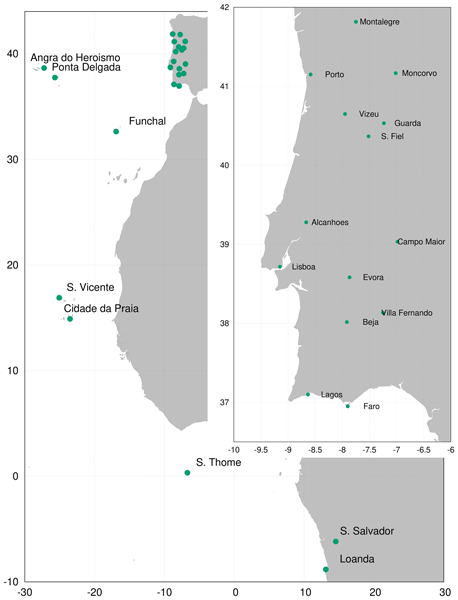
Juan A. Añel, Juan-Carlos Antuña-Marrero, Antonio Cid Samamed, Celia Pérez-Souto, Laura de la Torre, Maria Antonia Valente, Yuri Brugnara, Alfonso Saiz-Lopez, and Luis Gimeno
Earth Syst. Sci. Data, 17, 2437–2446, https://doi.org/10.5194/essd-17-2437-2025, https://doi.org/10.5194/essd-17-2437-2025, 2025
Short summary
Short summary
Ozone (discovered in 1837) was first measured in 1847 using paper strips that reacted with ozone, providing an indication of its concentration based on colour changes. Here, we present the data, covering over 60 years of daily observations conducted along the eastern Atlantic coast, spanning from the tropics to the northern extratropics.
Yafang Guo, Mohammad Amin Mirrezaei, Armin Sorooshian, and Avelino F. Arellano
Atmos. Chem. Phys., 25, 5591–5616, https://doi.org/10.5194/acp-25-5591-2025, https://doi.org/10.5194/acp-25-5591-2025, 2025
Short summary
Short summary
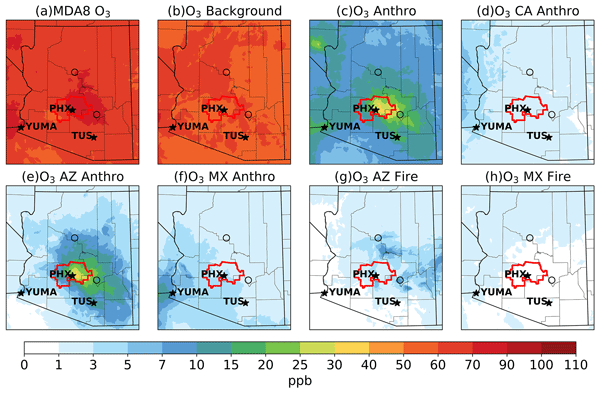
We assess the contributions of fire and anthropogenic emissions to O3 levels in Phoenix, Arizona, during a period of intense heat and drought conditions. We find that fire exacerbates O3 pollution and that interactions between weather, climate, and air chemistry are important to consider. This has implications for activities related to formulating emission reduction strategies in areas that are currently understudied yet becoming relevant due to reports of increasing global aridity.
Cynthia H. Whaley, Tim Butler, Jose A. Adame, Rupal Ambulkar, Steve R. Arnold, Rebecca R. Buchholz, Benjamin Gaubert, Douglas S. Hamilton, Min Huang, Hayley Hung, Johannes W. Kaiser, Jacek W. Kaminski, Christoph Knote, Gerbrand Koren, Jean-Luc Kouassi, Meiyun Lin, Tianjia Liu, Jianmin Ma, Kasemsan Manomaiphiboon, Elisa Bergas Masso, Jessica L. McCarty, Mariano Mertens, Mark Parrington, Helene Peiro, Pallavi Saxena, Saurabh Sonwani, Vanisa Surapipith, Damaris Y. T. Tan, Wenfu Tang, Veerachai Tanpipat, Kostas Tsigaridis, Christine Wiedinmyer, Oliver Wild, Yuanyu Xie, and Paquita Zuidema
Geosci. Model Dev., 18, 3265–3309, https://doi.org/10.5194/gmd-18-3265-2025, https://doi.org/10.5194/gmd-18-3265-2025, 2025
Short summary
Short summary
The multi-model experiment design of the HTAP3 Fires project takes a multi-pollutant approach to improving our understanding of transboundary transport of wildland fire and agricultural burning emissions and their impacts. The experiments are designed with the goal of answering science policy questions related to fires. The options for the multi-model approach, including inputs, outputs, and model setup, are discussed, and the official recommendations for the project are presented.
Ivan Ortega, James W. Hannigan, Bianca C. Baier, Kathryn McKain, and Dan Smale
Atmos. Meas. Tech., 18, 2353–2371, https://doi.org/10.5194/amt-18-2353-2025, https://doi.org/10.5194/amt-18-2353-2025, 2025
Short summary
Short summary
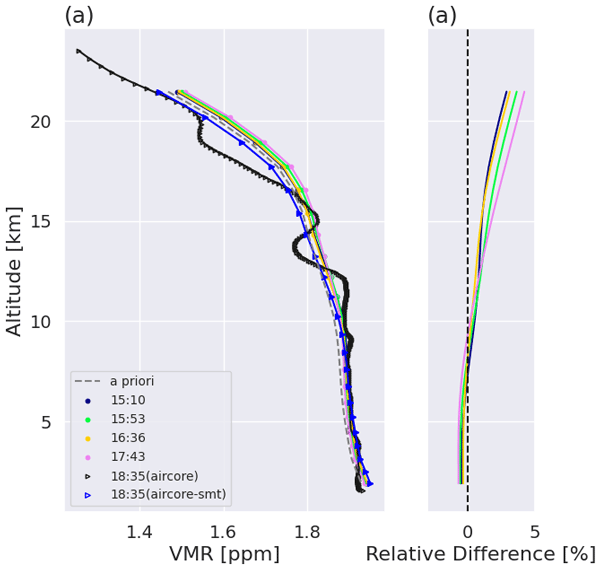
This study evaluates retrieval strategies for CH4 and N2O using high-resolution FTIR observations from Boulder, Colorado. By comparing results with independent AirCore and aircraft in situ measurements, the analysis validates retrieval accuracy and quantifies uncertainties. The findings highlight the benefits of updated spectroscopy and improved a priori profiles and highlight consistent agreement with in situ data.
Marielle Saunois, Adrien Martinez, Benjamin Poulter, Zhen Zhang, Peter A. Raymond, Pierre Regnier, Josep G. Canadell, Robert B. Jackson, Prabir K. Patra, Philippe Bousquet, Philippe Ciais, Edward J. Dlugokencky, Xin Lan, George H. Allen, David Bastviken, David J. Beerling, Dmitry A. Belikov, Donald R. Blake, Simona Castaldi, Monica Crippa, Bridget R. Deemer, Fraser Dennison, Giuseppe Etiope, Nicola Gedney, Lena Höglund-Isaksson, Meredith A. Holgerson, Peter O. Hopcroft, Gustaf Hugelius, Akihiko Ito, Atul K. Jain, Rajesh Janardanan, Matthew S. Johnson, Thomas Kleinen, Paul B. Krummel, Ronny Lauerwald, Tingting Li, Xiangyu Liu, Kyle C. McDonald, Joe R. Melton, Jens Mühle, Jurek Müller, Fabiola Murguia-Flores, Yosuke Niwa, Sergio Noce, Shufen Pan, Robert J. Parker, Changhui Peng, Michel Ramonet, William J. Riley, Gerard Rocher-Ros, Judith A. Rosentreter, Motoki Sasakawa, Arjo Segers, Steven J. Smith, Emily H. Stanley, Joël Thanwerdas, Hanqin Tian, Aki Tsuruta, Francesco N. Tubiello, Thomas S. Weber, Guido R. van der Werf, Douglas E. J. Worthy, Yi Xi, Yukio Yoshida, Wenxin Zhang, Bo Zheng, Qing Zhu, Qiuan Zhu, and Qianlai Zhuang
Earth Syst. Sci. Data, 17, 1873–1958, https://doi.org/10.5194/essd-17-1873-2025, https://doi.org/10.5194/essd-17-1873-2025, 2025
Short summary
Short summary
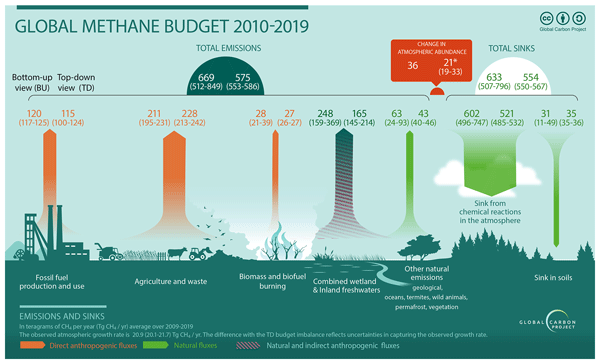
Methane (CH4) is the second most important human-influenced greenhouse gas in terms of climate forcing after carbon dioxide (CO2). A consortium of multi-disciplinary scientists synthesise and update the budget of the sources and sinks of CH4. This edition benefits from important progress in estimating emissions from lakes and ponds, reservoirs, and streams and rivers. For the 2010s decade, global CH4 emissions are estimated at 575 Tg CH4 yr-1, including ~65 % from anthropogenic sources.
Rajesh Kumar, Piyush Bhardwaj, Cenlin He, Jennifer Boehnert, Forrest Lacey, Stefano Alessandrini, Kevin Sampson, Matthew Casali, Scott Swerdlin, Olga Wilhelmi, Gabriele G. Pfister, Benjamin Gaubert, and Helen Worden
Earth Syst. Sci. Data, 17, 1807–1834, https://doi.org/10.5194/essd-17-1807-2025, https://doi.org/10.5194/essd-17-1807-2025, 2025
Short summary
Short summary
We have created a 14-year hourly air quality dataset at 12 km resolution by combining satellite observations of atmospheric composition with air quality models over the contiguous United States (CONUS). The dataset has been found to reproduce key observed features of air quality over the CONUS. To enable easy visualization and interpretation of county-level air quality measures and trends by stakeholders, an ArcGIS air quality dashboard has also been developed.
Ngoc Thi Nhu Do, Kengo Sudo, Akihiko Ito, Louisa K. Emmons, Vaishali Naik, Kostas Tsigaridis, Øyvind Seland, Gerd A. Folberth, and Douglas I. Kelley
Geosci. Model Dev., 18, 2079–2109, https://doi.org/10.5194/gmd-18-2079-2025, https://doi.org/10.5194/gmd-18-2079-2025, 2025
Short summary
Short summary
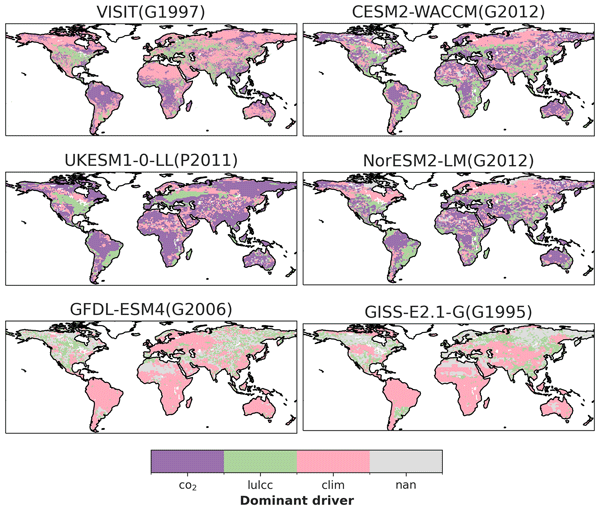
Understanding historical isoprene emission changes is important for predicting future climate, but trends and their controlling factors remain uncertain. This study shows that long-term isoprene trends vary among Earth system models mainly due to partially incorporating CO2 effects and land cover changes rather than to climate. Future models that refine these factors’ effects on isoprene emissions, along with long-term observations, are essential for better understanding plant–climate interactions.
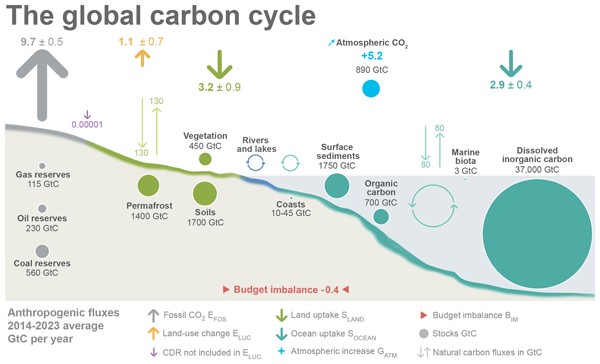
Pierre Friedlingstein, Michael O'Sullivan, Matthew W. Jones, Robbie M. Andrew, Judith Hauck, Peter Landschützer, Corinne Le Quéré, Hongmei Li, Ingrid T. Luijkx, Are Olsen, Glen P. Peters, Wouter Peters, Julia Pongratz, Clemens Schwingshackl, Stephen Sitch, Josep G. Canadell, Philippe Ciais, Robert B. Jackson, Simone R. Alin, Almut Arneth, Vivek Arora, Nicholas R. Bates, Meike Becker, Nicolas Bellouin, Carla F. Berghoff, Henry C. Bittig, Laurent Bopp, Patricia Cadule, Katie Campbell, Matthew A. Chamberlain, Naveen Chandra, Frédéric Chevallier, Louise P. Chini, Thomas Colligan, Jeanne Decayeux, Laique M. Djeutchouang, Xinyu Dou, Carolina Duran Rojas, Kazutaka Enyo, Wiley Evans, Amanda R. Fay, Richard A. Feely, Daniel J. Ford, Adrianna Foster, Thomas Gasser, Marion Gehlen, Thanos Gkritzalis, Giacomo Grassi, Luke Gregor, Nicolas Gruber, Özgür Gürses, Ian Harris, Matthew Hefner, Jens Heinke, George C. Hurtt, Yosuke Iida, Tatiana Ilyina, Andrew R. Jacobson, Atul K. Jain, Tereza Jarníková, Annika Jersild, Fei Jiang, Zhe Jin, Etsushi Kato, Ralph F. Keeling, Kees Klein Goldewijk, Jürgen Knauer, Jan Ivar Korsbakken, Xin Lan, Siv K. Lauvset, Nathalie Lefèvre, Zhu Liu, Junjie Liu, Lei Ma, Shamil Maksyutov, Gregg Marland, Nicolas Mayot, Patrick C. McGuire, Nicolas Metzl, Natalie M. Monacci, Eric J. Morgan, Shin-Ichiro Nakaoka, Craig Neill, Yosuke Niwa, Tobias Nützel, Lea Olivier, Tsuneo Ono, Paul I. Palmer, Denis Pierrot, Zhangcai Qin, Laure Resplandy, Alizée Roobaert, Thais M. Rosan, Christian Rödenbeck, Jörg Schwinger, T. Luke Smallman, Stephen M. Smith, Reinel Sospedra-Alfonso, Tobias Steinhoff, Qing Sun, Adrienne J. Sutton, Roland Séférian, Shintaro Takao, Hiroaki Tatebe, Hanqin Tian, Bronte Tilbrook, Olivier Torres, Etienne Tourigny, Hiroyuki Tsujino, Francesco Tubiello, Guido van der Werf, Rik Wanninkhof, Xuhui Wang, Dongxu Yang, Xiaojuan Yang, Zhen Yu, Wenping Yuan, Xu Yue, Sönke Zaehle, Ning Zeng, and Jiye Zeng
Earth Syst. Sci. Data, 17, 965–1039, https://doi.org/10.5194/essd-17-965-2025, https://doi.org/10.5194/essd-17-965-2025, 2025
Short summary
Short summary
The Global Carbon Budget 2024 describes the methodology, main results, and datasets used to quantify the anthropogenic emissions of carbon dioxide (CO2) and their partitioning among the atmosphere, land ecosystems, and the ocean over the historical period (1750–2024). These living datasets are updated every year to provide the highest transparency and traceability in the reporting of CO2, the key driver of climate change.
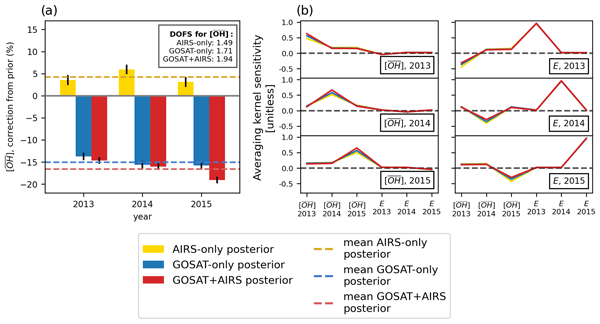
Elise Penn, Daniel J. Jacob, Zichong Chen, James D. East, Melissa P. Sulprizio, Lori Bruhwiler, Joannes D. Maasakkers, Hannah Nesser, Zhen Qu, Yuzhong Zhang, and John Worden
Atmos. Chem. Phys., 25, 2947–2965, https://doi.org/10.5194/acp-25-2947-2025, https://doi.org/10.5194/acp-25-2947-2025, 2025
Short summary
Short summary
The hydroxyl radical (OH) destroys many air pollutants, including methane. Global-mean OH cannot be directly measured, and thus it is inferred with the methyl chloroform (MCF) proxy. MCF is decreasing, and a replacement is needed. We use satellite observations of methane in two spectral ranges as a proxy for OH. We find shortwave infrared observations can characterize yearly OH and its seasonality but not the latitudinal distribution. Thermal infrared observations add little information.
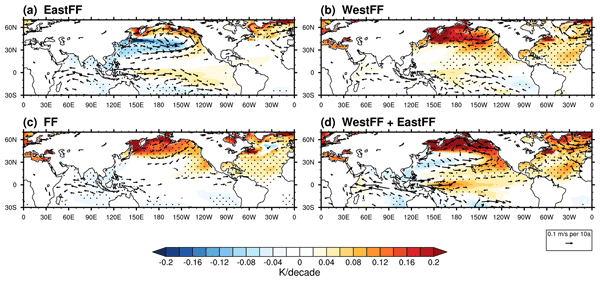
Chenrui Diao, Yangyang Xu, Aixue Hu, and Zhili Wang
Atmos. Chem. Phys., 25, 2167–2180, https://doi.org/10.5194/acp-25-2167-2025, https://doi.org/10.5194/acp-25-2167-2025, 2025
Short summary
Short summary
Industrial aerosol increases in Asia and reductions in North America and Europe in 1980–2020 influenced climate changes over the Pacific Ocean differently. Asian aerosols caused El Niño-like temperature patterns and slightly weakened the natural variation in the North Pacific, while reduced emissions of western countries led to extensive warming in middle–high latitudes of the North Pacific. Human impacts on the Pacific climate may change when emission reduction occurs over Asia in the future.
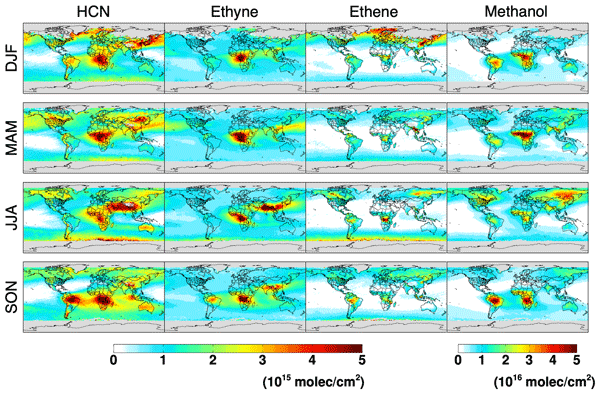
Kelley C. Wells, Dylan B. Millet, Jared F. Brewer, Vivienne H. Payne, Karen E. Cady-Pereira, Rick Pernak, Susan Kulawik, Corinne Vigouroux, Nicholas Jones, Emmanuel Mahieu, Maria Makarova, Tomoo Nagahama, Ivan Ortega, Mathias Palm, Kimberly Strong, Matthias Schneider, Dan Smale, Ralf Sussmann, and Minqiang Zhou
Atmos. Meas. Tech., 18, 695–716, https://doi.org/10.5194/amt-18-695-2025, https://doi.org/10.5194/amt-18-695-2025, 2025
Short summary
Short summary
Atmospheric volatile organic compounds (VOCs) affect both air quality and climate. Satellite measurements can help us to assess and predict their global impacts. We present new decadal (2012–2023) measurements of four key VOCs – methanol, ethene, ethyne, and hydrogen cyanide (HCN) – from the Cross-track Infrared Sounder. The measurements reflect emissions from major forests, wildfires, and industry and provide new information to advance understanding of these sources and their changes over time.
Lucien Froidevaux, Douglas E. Kinnison, Benjamin Gaubert, Michael J. Schwartz, Nathaniel J. Livesey, William G. Read, Charles G. Bardeen, Jerry R. Ziemke, and Ryan A. Fuller
Atmos. Chem. Phys., 25, 597–624, https://doi.org/10.5194/acp-25-597-2025, https://doi.org/10.5194/acp-25-597-2025, 2025
Short summary
Short summary
We compare observed changes in ozone (O3) and carbon monoxide (CO) in the tropical upper troposphere (10–15 km altitude) for 2005–2020 to predictions from model simulations that track the evolution of natural and industrial emissions transported to this region. An increasing trend in measured upper-tropospheric O3 is well matched by model trends. We find that changes in modeled industrial CO surface emissions lead to better model agreement with observed slight decreases in upper-tropospheric CO.
William P. L. Carter, Jia Jiang, John J. Orlando, and Kelley C. Barsanti
Atmos. Chem. Phys., 25, 199–242, https://doi.org/10.5194/acp-25-199-2025, https://doi.org/10.5194/acp-25-199-2025, 2025
Short summary
Short summary
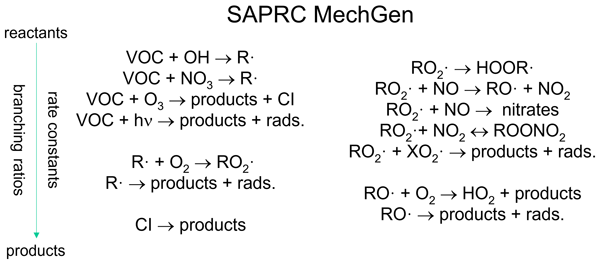
This paper describes the scientific basis for gas-phase atmospheric chemical mechanisms derived using the SAPRC mechanism generation system, MechGen. It can derive mechanisms for most organic compounds with C, H, O, or N atoms, including initial reactions of organics with OH, O3, NO3, and O3P or by photolysis, as well as the reactions of the various types of intermediates that are formed. The paper includes a description of areas of uncertainty where additional research and updates are needed.
Christopher Lawrence, Mary Barth, John Orlando, Paul Casson, Richard Brandt, Daniel Kelting, Elizabeth Yerger, and Sara Lance
Atmos. Chem. Phys., 24, 13693–13713, https://doi.org/10.5194/acp-24-13693-2024, https://doi.org/10.5194/acp-24-13693-2024, 2024
Short summary
Short summary
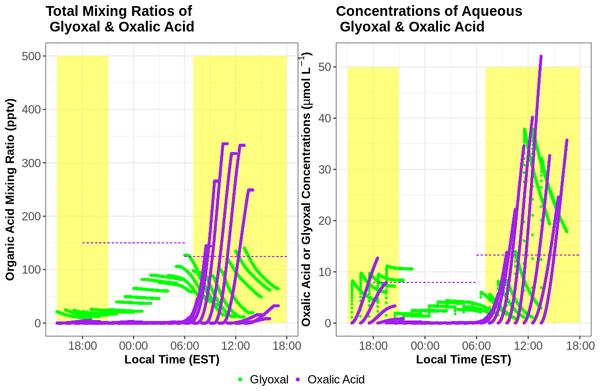
This work uses chemical transport and box modeling to study the gas- and aqueous-phase production of organic acid concentrations measured in cloud water at the summit of Whiteface Mountain on 1 July 2018. Isoprene was the major source of formic, acetic, and oxalic acid. Gas-phase chemistry greatly underestimated formic and acetic acid, indicating missing sources, while cloud chemistry was a key source of oxalic acid. More studies of organic acids are required to better constrain their sources.
Jerome D. Fast, Adam C. Varble, Fan Mei, Mikhail Pekour, Jason Tomlinson, Alla Zelenyuk, Art J. Sedlacek III, Maria Zawadowicz, and Louisa Emmons
Atmos. Chem. Phys., 24, 13477–13502, https://doi.org/10.5194/acp-24-13477-2024, https://doi.org/10.5194/acp-24-13477-2024, 2024
Short summary
Short summary
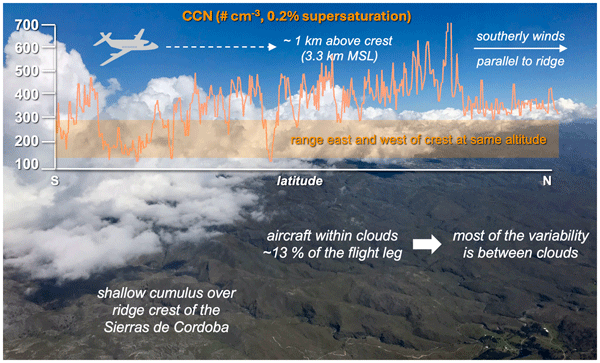
Aerosol property measurements recently collected on the ground and by a research aircraft in central Argentina during the Cloud, Aerosol, and Complex Terrain Interactions (CACTI) campaign exhibit large spatial and temporal variability. These measurements coupled with coincident meteorological information provide a valuable data set needed to evaluate and improve model predictions of aerosols in a traditionally data-sparse region of South America.
Robin Björklund, Corinne Vigouroux, Peter Effertz, Omaira E. García, Alex Geddes, James Hannigan, Koji Miyagawa, Michael Kotkamp, Bavo Langerock, Gerald Nedoluha, Ivan Ortega, Irina Petropavlovskikh, Deniz Poyraz, Richard Querel, John Robinson, Hisako Shiona, Dan Smale, Penny Smale, Roeland Van Malderen, and Martine De Mazière
Atmos. Meas. Tech., 17, 6819–6849, https://doi.org/10.5194/amt-17-6819-2024, https://doi.org/10.5194/amt-17-6819-2024, 2024
Short summary
Short summary
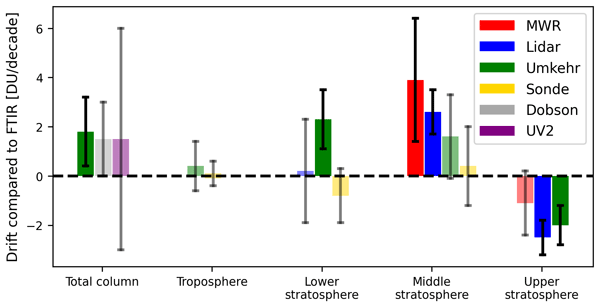
Different ground-based ozone measurements from the last 2 decades at Lauder are compared to each other. We want to know why different trends have been observed in the stratosphere. Also, the quality and relevance of tropospheric datasets need to be evaluated. While remaining drifts are still present, our study explains roughly half of the differences in observed trends in previous studies and shows the necessity for continuous review and improvement of the measurements.
Barbara Ervens, Andrew Rickard, Bernard Aumont, William P. L. Carter, Max McGillen, Abdelwahid Mellouki, John Orlando, Bénédicte Picquet-Varrault, Paul Seakins, William R. Stockwell, Luc Vereecken, and Timothy J. Wallington
Atmos. Chem. Phys., 24, 13317–13339, https://doi.org/10.5194/acp-24-13317-2024, https://doi.org/10.5194/acp-24-13317-2024, 2024
Short summary
Short summary
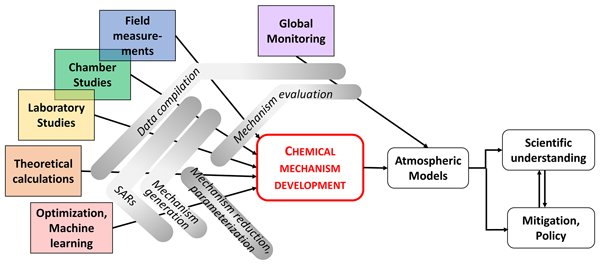
Chemical mechanisms describe the chemical processes in atmospheric models that are used to describe the changes in the atmospheric composition. Therefore, accurate chemical mechanisms are necessary to predict the evolution of air pollution and climate change. The article describes all steps that are needed to build chemical mechanisms and discusses the advances and needs of experimental and theoretical research activities needed to build reliable chemical mechanisms.
Martin Vojta, Andreas Plach, Saurabh Annadate, Sunyoung Park, Gawon Lee, Pallav Purohit, Florian Lindl, Xin Lan, Jens Mühle, Rona L. Thompson, and Andreas Stohl
Atmos. Chem. Phys., 24, 12465–12493, https://doi.org/10.5194/acp-24-12465-2024, https://doi.org/10.5194/acp-24-12465-2024, 2024
Short summary
Short summary
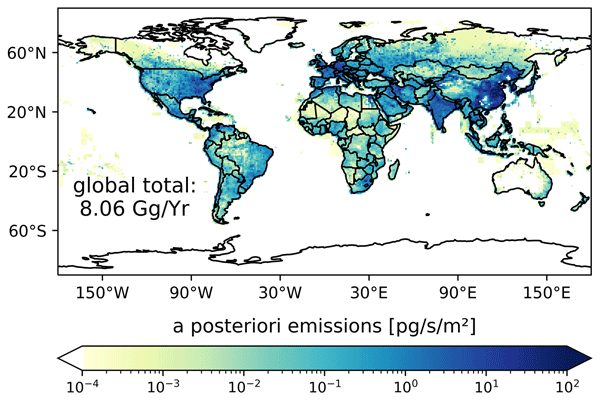
We constrain the global emissions of the very potent greenhouse gas sulfur hexafluoride (SF6) between 2005 and 2021. We show that SF6 emissions are decreasing in the USA and in the EU, while they are substantially growing in China, leading overall to an increasing global emission trend. The national reports for the USA, EU, and China all underestimated their SF6 emissions. However, stringent mitigation measures can successfully reduce SF6 emissions, as can be seen in the EU emission trend.
Yasin Elshorbany, Jerald R. Ziemke, Sarah Strode, Hervé Petetin, Kazuyuki Miyazaki, Isabelle De Smedt, Kenneth Pickering, Rodrigo J. Seguel, Helen Worden, Tamara Emmerichs, Domenico Taraborrelli, Maria Cazorla, Suvarna Fadnavis, Rebecca R. Buchholz, Benjamin Gaubert, Néstor Y. Rojas, Thiago Nogueira, Thérèse Salameh, and Min Huang
Atmos. Chem. Phys., 24, 12225–12257, https://doi.org/10.5194/acp-24-12225-2024, https://doi.org/10.5194/acp-24-12225-2024, 2024
Short summary
Short summary
We investigated tropospheric ozone spatial variability and trends from 2005 to 2019 and related those to ozone precursors on global and regional scales. We also investigate the spatiotemporal characteristics of the ozone formation regime in relation to ozone chemical sources and sinks. Our analysis is based on remote sensing products of the tropospheric column of ozone and its precursors, nitrogen dioxide, formaldehyde, and total column CO, as well as ozonesonde data and model simulations.
Jorge E. Pachón, Mariel A. Opazo, Pablo Lichtig, Nicolas Huneeus, Idir Bouarar, Guy Brasseur, Cathy W. Y. Li, Johannes Flemming, Laurent Menut, Camilo Menares, Laura Gallardo, Michael Gauss, Mikhail Sofiev, Rostislav Kouznetsov, Julia Palamarchuk, Andreas Uppstu, Laura Dawidowski, Nestor Y. Rojas, María de Fátima Andrade, Mario E. Gavidia-Calderón, Alejandro H. Delgado Peralta, and Daniel Schuch
Geosci. Model Dev., 17, 7467–7512, https://doi.org/10.5194/gmd-17-7467-2024, https://doi.org/10.5194/gmd-17-7467-2024, 2024
Short summary
Short summary
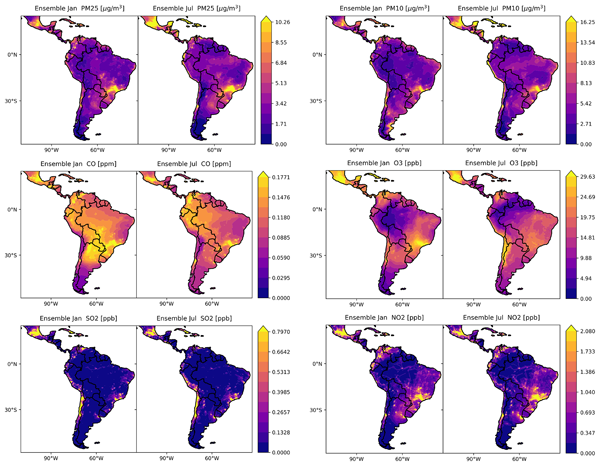
Latin America (LAC) has some of the most populated urban areas in the world, with high levels of air pollution. Air quality management in LAC has been traditionally focused on surveillance and building emission inventories. This study performed the first intercomparison and model evaluation in LAC, with interesting and insightful findings for the region. A multiscale modeling ensemble chain was assembled as a first step towards an air quality forecasting system.
Kavitha Mottungan, Chayan Roychoudhury, Vanessa Brocchi, Benjamin Gaubert, Wenfu Tang, Mohammad Amin Mirrezaei, John McKinnon, Yafang Guo, David W. T. Griffith, Dietrich G. Feist, Isamu Morino, Mahesh K. Sha, Manvendra K. Dubey, Martine De Mazière, Nicholas M. Deutscher, Paul O. Wennberg, Ralf Sussmann, Rigel Kivi, Tae-Young Goo, Voltaire A. Velazco, Wei Wang, and Avelino F. Arellano Jr.
Atmos. Meas. Tech., 17, 5861–5885, https://doi.org/10.5194/amt-17-5861-2024, https://doi.org/10.5194/amt-17-5861-2024, 2024
Short summary
Short summary
A combination of data analysis techniques is introduced to separate local and regional influences on observed levels of carbon dioxide, carbon monoxide, and methane from an established ground-based remote sensing network. We take advantage of the covariations in these trace gases to identify the dominant type of sources driving these levels. Applying these methods in conjunction with existing approaches to other datasets can better address uncertainties in identifying sources and sinks.
Cynthia D. Nevison, Qing Liang, Paul A. Newman, Britton B. Stephens, Geoff Dutton, Xin Lan, Roisin Commane, Yenny Gonzalez, and Eric Kort
Atmos. Chem. Phys., 24, 10513–10529, https://doi.org/10.5194/acp-24-10513-2024, https://doi.org/10.5194/acp-24-10513-2024, 2024
Short summary
Short summary
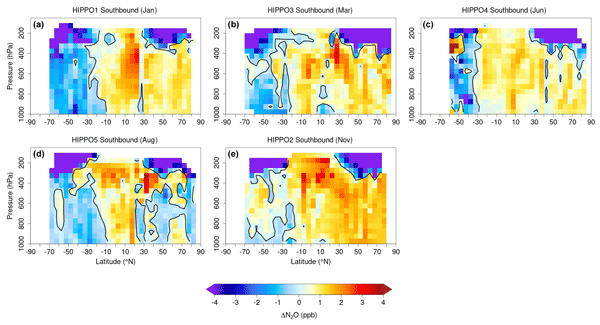
This study examines the drivers of interannual variability in tropospheric N2O. New insights are obtained from aircraft data and a chemistry–climate model that explicitly simulates stratospheric N2O. The stratosphere is found to be the dominant driver of N2O variability in the Northern Hemisphere, while both the stratosphere and El Niño cycles are important in the Southern Hemisphere. These results are consistent with known atmospheric dynamics and differences between the hemispheres.
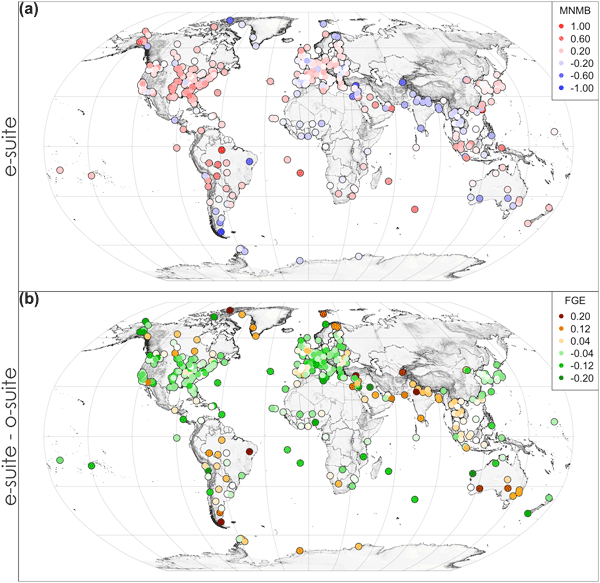
Henk Eskes, Athanasios Tsikerdekis, Melanie Ades, Mihai Alexe, Anna Carlin Benedictow, Yasmine Bennouna, Lewis Blake, Idir Bouarar, Simon Chabrillat, Richard Engelen, Quentin Errera, Johannes Flemming, Sebastien Garrigues, Jan Griesfeller, Vincent Huijnen, Luka Ilić, Antje Inness, John Kapsomenakis, Zak Kipling, Bavo Langerock, Augustin Mortier, Mark Parrington, Isabelle Pison, Mikko Pitkänen, Samuel Remy, Andreas Richter, Anja Schoenhardt, Michael Schulz, Valerie Thouret, Thorsten Warneke, Christos Zerefos, and Vincent-Henri Peuch
Atmos. Chem. Phys., 24, 9475–9514, https://doi.org/10.5194/acp-24-9475-2024, https://doi.org/10.5194/acp-24-9475-2024, 2024
Short summary
Short summary
The Copernicus Atmosphere Monitoring Service (CAMS) provides global analyses and forecasts of aerosols and trace gases in the atmosphere. On 27 June 2023 a major upgrade, Cy48R1, became operational. Comparisons with in situ, surface remote sensing, aircraft, and balloon and satellite observations show that the new CAMS system is a significant improvement. The results quantify the skill of CAMS to forecast impactful events, such as wildfires, dust storms and air pollution peaks.
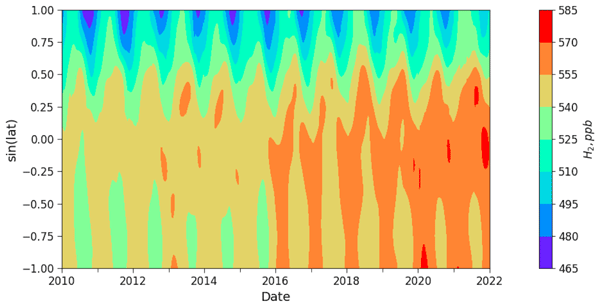
Gabrielle Pétron, Andrew M. Crotwell, John Mund, Molly Crotwell, Thomas Mefford, Kirk Thoning, Bradley Hall, Duane Kitzis, Monica Madronich, Eric Moglia, Donald Neff, Sonja Wolter, Armin Jordan, Paul Krummel, Ray Langenfelds, and John Patterson
Atmos. Meas. Tech., 17, 4803–4823, https://doi.org/10.5194/amt-17-4803-2024, https://doi.org/10.5194/amt-17-4803-2024, 2024
Short summary
Short summary
Hydrogen (H2) is a gas in trace amounts in the Earth’s atmosphere with indirect impacts on climate and air quality. Renewed interest in H2 as a low- or zero-carbon source of energy may lead to increased production, uses, and supply chain emissions. NOAA measurements of weekly air samples collected between 2009 and 2021 at over 50 sites in mostly remote locations are now available, and they complement other datasets to study the H2 global budget.
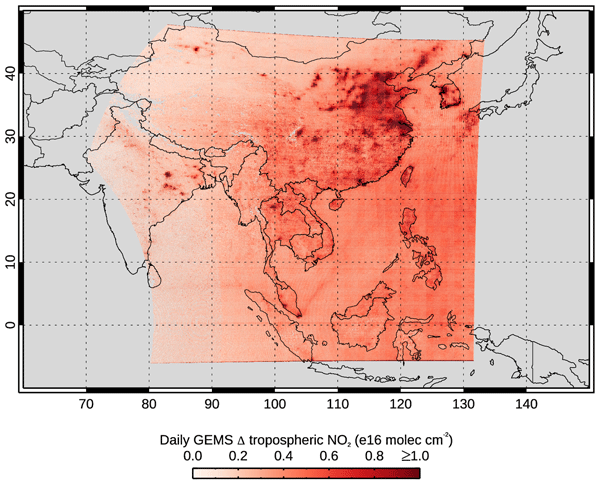
David P. Edwards, Sara Martínez-Alonso, Duseong S. Jo, Ivan Ortega, Louisa K. Emmons, John J. Orlando, Helen M. Worden, Jhoon Kim, Hanlim Lee, Junsung Park, and Hyunkee Hong
Atmos. Chem. Phys., 24, 8943–8961, https://doi.org/10.5194/acp-24-8943-2024, https://doi.org/10.5194/acp-24-8943-2024, 2024
Short summary
Short summary
Until recently, satellite observations of atmospheric pollutants at any location could only be obtained once a day. New geostationary satellites stare at a region of the Earth to make hourly measurements, and the Geostationary Environment Monitoring Spectrometer is the first looking at Asia. These data and model simulations show how the change seen for one important pollutant that determines air quality depends on a combination of pollution emissions, atmospheric chemistry, and meteorology.
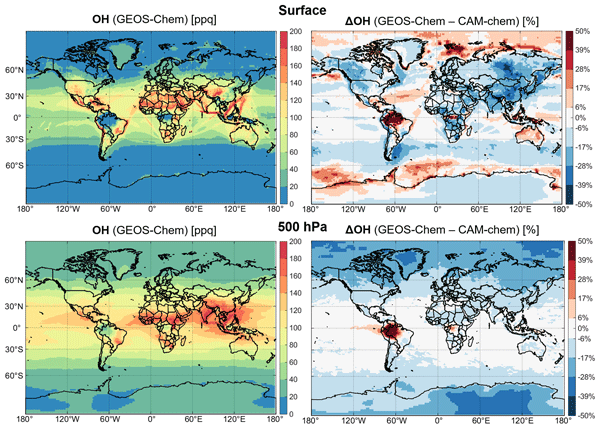
Haipeng Lin, Louisa K. Emmons, Elizabeth W. Lundgren, Laura Hyesung Yang, Xu Feng, Ruijun Dang, Shixian Zhai, Yunxiao Tang, Makoto M. Kelp, Nadia K. Colombi, Sebastian D. Eastham, Thibaud M. Fritz, and Daniel J. Jacob
Atmos. Chem. Phys., 24, 8607–8624, https://doi.org/10.5194/acp-24-8607-2024, https://doi.org/10.5194/acp-24-8607-2024, 2024
Short summary
Short summary
Tropospheric ozone is a major air pollutant, a greenhouse gas, and a major indicator of model skill. Global atmospheric chemistry models show large differences in simulations of tropospheric ozone, but isolating sources of differences is complicated by different model environments. By implementing the GEOS-Chem model side by side to CAM-chem within a common Earth system model, we identify and evaluate specific differences between the two models and their impacts on key chemical species.

Hanqin Tian, Naiqing Pan, Rona L. Thompson, Josep G. Canadell, Parvadha Suntharalingam, Pierre Regnier, Eric A. Davidson, Michael Prather, Philippe Ciais, Marilena Muntean, Shufen Pan, Wilfried Winiwarter, Sönke Zaehle, Feng Zhou, Robert B. Jackson, Hermann W. Bange, Sarah Berthet, Zihao Bian, Daniele Bianchi, Alexander F. Bouwman, Erik T. Buitenhuis, Geoffrey Dutton, Minpeng Hu, Akihiko Ito, Atul K. Jain, Aurich Jeltsch-Thömmes, Fortunat Joos, Sian Kou-Giesbrecht, Paul B. Krummel, Xin Lan, Angela Landolfi, Ronny Lauerwald, Ya Li, Chaoqun Lu, Taylor Maavara, Manfredi Manizza, Dylan B. Millet, Jens Mühle, Prabir K. Patra, Glen P. Peters, Xiaoyu Qin, Peter Raymond, Laure Resplandy, Judith A. Rosentreter, Hao Shi, Qing Sun, Daniele Tonina, Francesco N. Tubiello, Guido R. van der Werf, Nicolas Vuichard, Junjie Wang, Kelley C. Wells, Luke M. Western, Chris Wilson, Jia Yang, Yuanzhi Yao, Yongfa You, and Qing Zhu
Earth Syst. Sci. Data, 16, 2543–2604, https://doi.org/10.5194/essd-16-2543-2024, https://doi.org/10.5194/essd-16-2543-2024, 2024
Short summary
Short summary
Atmospheric concentrations of nitrous oxide (N2O), a greenhouse gas 273 times more potent than carbon dioxide, have increased by 25 % since the preindustrial period, with the highest observed growth rate in 2020 and 2021. This rapid growth rate has primarily been due to a 40 % increase in anthropogenic emissions since 1980. Observed atmospheric N2O concentrations in recent years have exceeded the worst-case climate scenario, underscoring the importance of reducing anthropogenic N2O emissions.
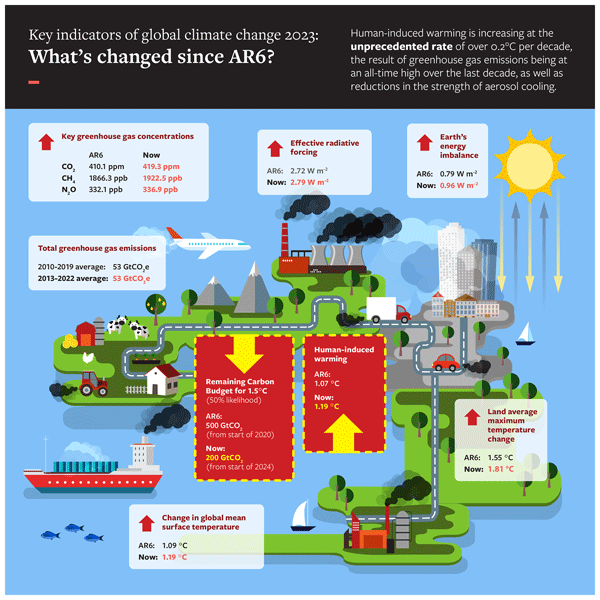
Piers M. Forster, Chris Smith, Tristram Walsh, William F. Lamb, Robin Lamboll, Bradley Hall, Mathias Hauser, Aurélien Ribes, Debbie Rosen, Nathan P. Gillett, Matthew D. Palmer, Joeri Rogelj, Karina von Schuckmann, Blair Trewin, Myles Allen, Robbie Andrew, Richard A. Betts, Alex Borger, Tim Boyer, Jiddu A. Broersma, Carlo Buontempo, Samantha Burgess, Chiara Cagnazzo, Lijing Cheng, Pierre Friedlingstein, Andrew Gettelman, Johannes Gütschow, Masayoshi Ishii, Stuart Jenkins, Xin Lan, Colin Morice, Jens Mühle, Christopher Kadow, John Kennedy, Rachel E. Killick, Paul B. Krummel, Jan C. Minx, Gunnar Myhre, Vaishali Naik, Glen P. Peters, Anna Pirani, Julia Pongratz, Carl-Friedrich Schleussner, Sonia I. Seneviratne, Sophie Szopa, Peter Thorne, Mahesh V. M. Kovilakam, Elisa Majamäki, Jukka-Pekka Jalkanen, Margreet van Marle, Rachel M. Hoesly, Robert Rohde, Dominik Schumacher, Guido van der Werf, Russell Vose, Kirsten Zickfeld, Xuebin Zhang, Valérie Masson-Delmotte, and Panmao Zhai
Earth Syst. Sci. Data, 16, 2625–2658, https://doi.org/10.5194/essd-16-2625-2024, https://doi.org/10.5194/essd-16-2625-2024, 2024
Short summary
Short summary
This paper tracks some key indicators of global warming through time, from 1850 through to the end of 2023. It is designed to give an authoritative estimate of global warming to date and its causes. We find that in 2023, global warming reached 1.3 °C and is increasing at over 0.2 °C per decade. This is caused by all-time-high greenhouse gas emissions.
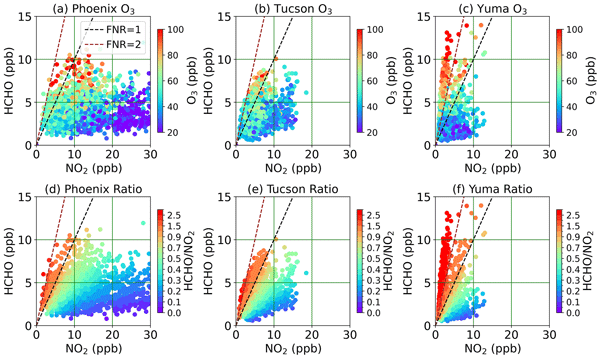
Yafang Guo, Chayan Roychoudhury, Mohammad Amin Mirrezaei, Rajesh Kumar, Armin Sorooshian, and Avelino F. Arellano
Geosci. Model Dev., 17, 4331–4353, https://doi.org/10.5194/gmd-17-4331-2024, https://doi.org/10.5194/gmd-17-4331-2024, 2024
Short summary
Short summary
This research focuses on surface ozone (O3) pollution in Arizona, a historically air-quality-challenged arid and semi-arid region in the US. The unique characteristics of this kind of region, e.g., intense heat, minimal moisture, and persistent desert shrubs, play a vital role in comprehending O3 exceedances. Using the WRF-Chem model, we analyzed O3 levels in the pre-monsoon month, revealing the model's skill in capturing diurnal and MDA8 O3 levels.
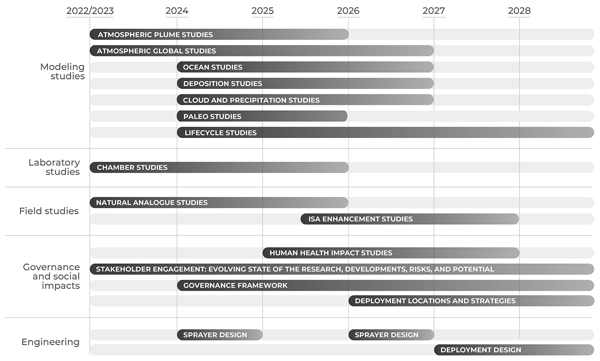
Katrine A. Gorham, Sam Abernethy, Tyler R. Jones, Peter Hess, Natalie M. Mahowald, Daphne Meidan, Matthew S. Johnson, Maarten M. J. W. van Herpen, Yangyang Xu, Alfonso Saiz-Lopez, Thomas Röckmann, Chloe A. Brashear, Erika Reinhardt, and David Mann
Atmos. Chem. Phys., 24, 5659–5670, https://doi.org/10.5194/acp-24-5659-2024, https://doi.org/10.5194/acp-24-5659-2024, 2024
Short summary
Short summary
Rapid reduction in atmospheric methane is needed to slow the rate of global warming. Reducing anthropogenic methane emissions is a top priority. However, atmospheric methane is also impacted by rising natural emissions and changing sinks. Studies of possible atmospheric methane removal approaches, such as iron salt aerosols to increase the chlorine radical sink, benefit from a roadmapped approach to understand if there may be viable and socially acceptable ways to decrease future risk.

Heesung Chong, Gonzalo González Abad, Caroline R. Nowlan, Christopher Chan Miller, Alfonso Saiz-Lopez, Rafael P. Fernandez, Hyeong-Ahn Kwon, Zolal Ayazpour, Huiqun Wang, Amir H. Souri, Xiong Liu, Kelly Chance, Ewan O'Sullivan, Jhoon Kim, Ja-Ho Koo, William R. Simpson, François Hendrick, Richard Querel, Glen Jaross, Colin Seftor, and Raid M. Suleiman
Atmos. Meas. Tech., 17, 2873–2916, https://doi.org/10.5194/amt-17-2873-2024, https://doi.org/10.5194/amt-17-2873-2024, 2024
Short summary
Short summary
We present a new bromine monoxide (BrO) product derived using radiances measured from OMPS-NM on board the Suomi-NPP satellite. This product provides nearly a decade of global stratospheric and tropospheric column retrievals, a feature that is currently rare in publicly accessible datasets. Both stratospheric and tropospheric columns from OMPS-NM demonstrate robust performance, exhibiting good agreement with ground-based observations collected at three stations (Lauder, Utqiagvik, and Harestua).
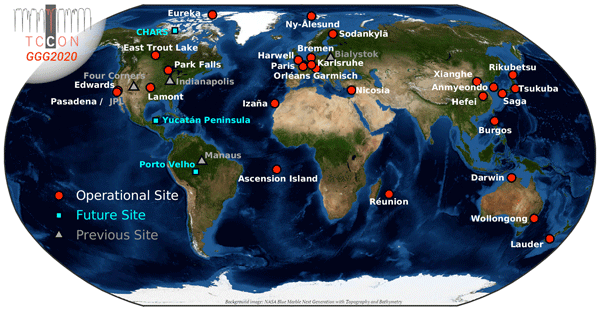
Joshua L. Laughner, Geoffrey C. Toon, Joseph Mendonca, Christof Petri, Sébastien Roche, Debra Wunch, Jean-Francois Blavier, David W. T. Griffith, Pauli Heikkinen, Ralph F. Keeling, Matthäus Kiel, Rigel Kivi, Coleen M. Roehl, Britton B. Stephens, Bianca C. Baier, Huilin Chen, Yonghoon Choi, Nicholas M. Deutscher, Joshua P. DiGangi, Jochen Gross, Benedikt Herkommer, Pascal Jeseck, Thomas Laemmel, Xin Lan, Erin McGee, Kathryn McKain, John Miller, Isamu Morino, Justus Notholt, Hirofumi Ohyama, David F. Pollard, Markus Rettinger, Haris Riris, Constantina Rousogenous, Mahesh Kumar Sha, Kei Shiomi, Kimberly Strong, Ralf Sussmann, Yao Té, Voltaire A. Velazco, Steven C. Wofsy, Minqiang Zhou, and Paul O. Wennberg
Earth Syst. Sci. Data, 16, 2197–2260, https://doi.org/10.5194/essd-16-2197-2024, https://doi.org/10.5194/essd-16-2197-2024, 2024
Short summary
Short summary
This paper describes a new version, called GGG2020, of a data set containing column-integrated observations of greenhouse and related gases (including CO2, CH4, CO, and N2O) made by ground stations located around the world. Compared to the previous version (GGG2014), improvements have been made toward site-to-site consistency. This data set plays a key role in validating space-based greenhouse gas observations and in understanding the carbon cycle.
Ran Sun, Tao Ye, Yiqing Liu, Weihang Liu, and Shuo Chen
Earth Syst. Dynam. Discuss., https://doi.org/10.5194/esd-2024-8, https://doi.org/10.5194/esd-2024-8, 2024
Manuscript not accepted for further review
Short summary
Short summary
We found increasing trend of compound hot-dry events for single-rice but decreasing trend of compound chilling-rainy events for late-rice. We also found that the occurrence and duration of concurrent CEs were negatively correlated with local temperature-moisture coupling. Temperature was the dominant factor influencing the change of compound hot-dry events. While for the change in compound chilling-rainy events, the effect of temperature is only slightly larger than that of moisture.
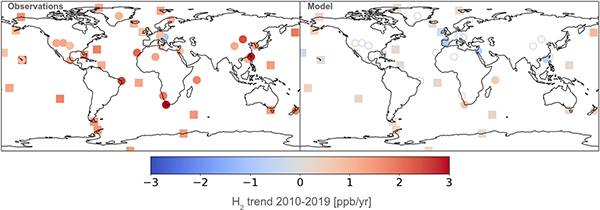
Fabien Paulot, Gabrielle Pétron, Andrew M. Crotwell, and Matteo B. Bertagni
Atmos. Chem. Phys., 24, 4217–4229, https://doi.org/10.5194/acp-24-4217-2024, https://doi.org/10.5194/acp-24-4217-2024, 2024
Short summary
Short summary
New data from the National Oceanic and Atmospheric Administration show that hydrogen (H2) concentrations increased from 2010 to 2019, which is consistent with the simulated increase in H2 photochemical production (mainly from methane). But this cannot be reconciled with the expected decrease (increase) in H2 anthropogenic emissions (soil deposition) in the same period. This shows gaps in our knowledge of the H2 biogeochemical cycle that must be resolved to quantify the impact of higher H2 usage.
Wenfu Tang, Benjamin Gaubert, Louisa Emmons, Daniel Ziskin, Debbie Mao, David Edwards, Avelino Arellano, Kevin Raeder, Jeffrey Anderson, and Helen Worden
Atmos. Meas. Tech., 17, 1941–1963, https://doi.org/10.5194/amt-17-1941-2024, https://doi.org/10.5194/amt-17-1941-2024, 2024
Short summary
Short summary
We assimilate different MOPITT CO products to understand the impact of (1) assimilating multispectral and joint retrievals versus single spectral products, (2) assimilating satellite profile products versus column products, and (3) assimilating multispectral and joint retrievals versus assimilating individual products separately.
Adrien Deroubaix, Marco Vountas, Benjamin Gaubert, Maria Dolores Andrés Hernández, Stephan Borrmann, Guy Brasseur, Bruna Holanda, Yugo Kanaya, Katharina Kaiser, Flora Kluge, Ovid Oktavian Krüger, Inga Labuhn, Michael Lichtenstern, Klaus Pfeilsticker, Mira Pöhlker, Hans Schlager, Johannes Schneider, Guillaume Siour, Basudev Swain, Paolo Tuccella, Kameswara S. Vinjamuri, Mihalis Vrekoussis, Benjamin Weyland, and John P. Burrows
EGUsphere, https://doi.org/10.5194/egusphere-2024-516, https://doi.org/10.5194/egusphere-2024-516, 2024
Preprint archived
Short summary
Short summary
This study assesses atmospheric composition using air quality models during aircraft campaigns in Europe and Asia, focusing on carbonaceous aerosols and trace gases. While carbon monoxide is well modeled, other pollutants have moderate to weak agreement with observations. Wind speed modeling is reliable for identifying pollution plumes, where models tend to overestimate concentrations. This highlights challenges in accurately modeling aerosol and trace gas composition, particularly in cities.
Adrien Deroubaix, Marco Vountas, Benjamin Gaubert, Maria Dolores Andrés Hernández, Stephan Borrmann, Guy Brasseur, Bruna Holanda, Yugo Kanaya, Katharina Kaiser, Flora Kluge, Ovid Oktavian Krüger, Inga Labuhn, Michael Lichtenstern, Klaus Pfeilsticker, Mira Pöhlker, Hans Schlager, Johannes Schneider, Guillaume Siour, Basudev Swain, Paolo Tuccella, Kameswara S. Vinjamuri, Mihalis Vrekoussis, Benjamin Weyland, and John P. Burrows
EGUsphere, https://doi.org/10.5194/egusphere-2024-521, https://doi.org/10.5194/egusphere-2024-521, 2024
Preprint archived
Short summary
Short summary
This study explores the proportional relationships between carbonaceous aerosols (black and organic carbon) and trace gases using airborne measurements from two campaigns in Europe and East Asia. Differences between regions were found, but air quality models struggled to reproduce them accurately. We show that these proportional relationships can help to constrain models and can be used to infer aerosol concentrations from satellite observations of trace gases, especially in urban areas.
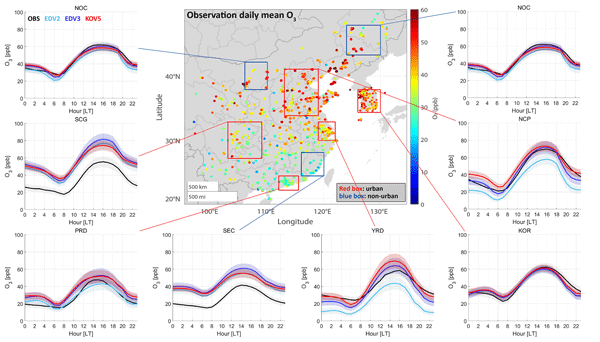
Kyoung-Min Kim, Si-Wan Kim, Seunghwan Seo, Donald R. Blake, Seogju Cho, James H. Crawford, Louisa K. Emmons, Alan Fried, Jay R. Herman, Jinkyu Hong, Jinsang Jung, Gabriele G. Pfister, Andrew J. Weinheimer, Jung-Hun Woo, and Qiang Zhang
Geosci. Model Dev., 17, 1931–1955, https://doi.org/10.5194/gmd-17-1931-2024, https://doi.org/10.5194/gmd-17-1931-2024, 2024
Short summary
Short summary
Three emission inventories were evaluated for East Asia using data acquired during a field campaign in 2016. The inventories successfully reproduced the daily variations of ozone and nitrogen dioxide. However, the spatial distributions of model ozone did not fully agree with the observations. Additionally, all simulations underestimated carbon monoxide and volatile organic compound (VOC) levels. Increasing VOC emissions over South Korea resulted in improved ozone simulations.
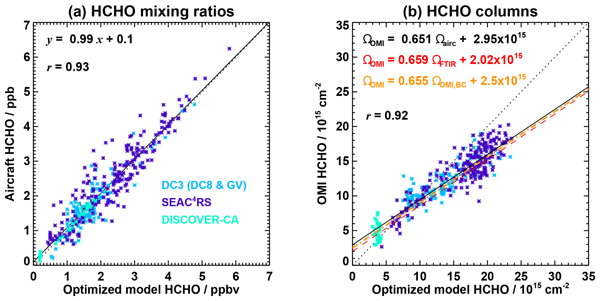
Jean-François Müller, Trissevgeni Stavrakou, Glenn-Michael Oomen, Beata Opacka, Isabelle De Smedt, Alex Guenther, Corinne Vigouroux, Bavo Langerock, Carlos Augusto Bauer Aquino, Michel Grutter, James Hannigan, Frank Hase, Rigel Kivi, Erik Lutsch, Emmanuel Mahieu, Maria Makarova, Jean-Marc Metzger, Isamu Morino, Isao Murata, Tomoo Nagahama, Justus Notholt, Ivan Ortega, Mathias Palm, Amelie Röhling, Wolfgang Stremme, Kimberly Strong, Ralf Sussmann, Yao Té, and Alan Fried
Atmos. Chem. Phys., 24, 2207–2237, https://doi.org/10.5194/acp-24-2207-2024, https://doi.org/10.5194/acp-24-2207-2024, 2024
Short summary
Short summary
Formaldehyde observations from satellites can be used to constrain the emissions of volatile organic compounds, but those observations have biases. Using an atmospheric model, aircraft and ground-based remote sensing data, we quantify these biases, propose a correction to the data, and assess the consequence of this correction for the evaluation of emissions.
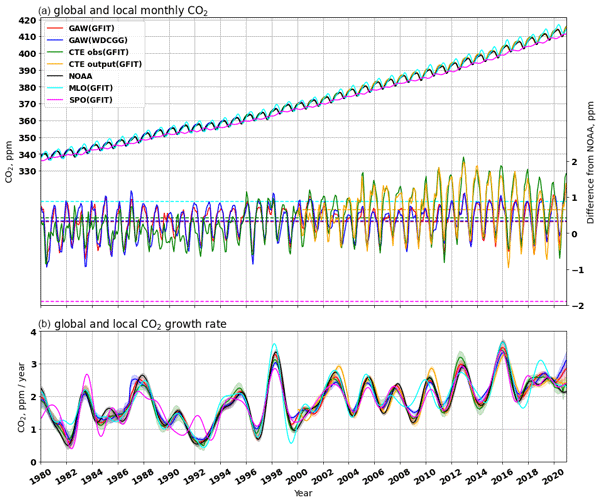
Zhendong Wu, Alex Vermeulen, Yousuke Sawa, Ute Karstens, Wouter Peters, Remco de Kok, Xin Lan, Yasuyuki Nagai, Akinori Ogi, and Oksana Tarasova
Atmos. Chem. Phys., 24, 1249–1264, https://doi.org/10.5194/acp-24-1249-2024, https://doi.org/10.5194/acp-24-1249-2024, 2024
Short summary
Short summary
This study focuses on exploring the differences in calculating global surface CO2 and its growth rate, considering the impact of analysis methodologies and site selection. Our study reveals that the current global CO2 network has a good capacity to represent global surface CO2 and its growth rate, as well as trends in atmospheric CO2 mass changes. However, small differences exist in different analyses due to the impact of methodology and site selection.
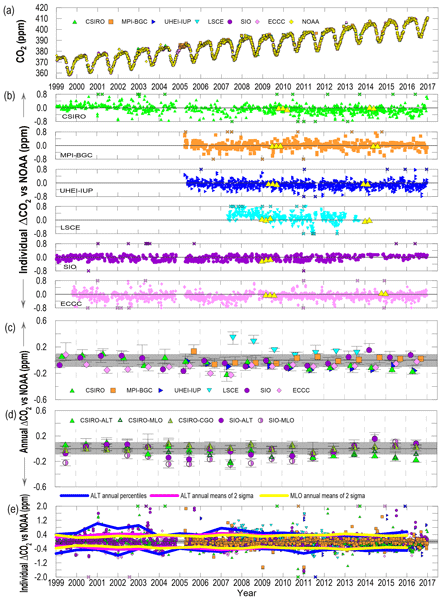
Douglas E. J. Worthy, Michele K. Rauh, Lin Huang, Felix R. Vogel, Alina Chivulescu, Kenneth A. Masarie, Ray L. Langenfelds, Paul B. Krummel, Colin E. Allison, Andrew M. Crotwell, Monica Madronich, Gabrielle Pétron, Ingeborg Levin, Samuel Hammer, Sylvia Michel, Michel Ramonet, Martina Schmidt, Armin Jordan, Heiko Moossen, Michael Rothe, Ralph Keeling, and Eric J. Morgan
Atmos. Meas. Tech., 16, 5909–5935, https://doi.org/10.5194/amt-16-5909-2023, https://doi.org/10.5194/amt-16-5909-2023, 2023
Short summary
Short summary
Network compatibility is important for inferring greenhouse gas fluxes at global or regional scales. This study is the first assessment of the measurement agreement among seven individual programs within the World Meteorological Organization community. It compares co-located flask air measurements at the Alert Observatory in Canada over a 17-year period. The results provide stronger confidence in the uncertainty estimation while using those datasets in various data interpretation applications.
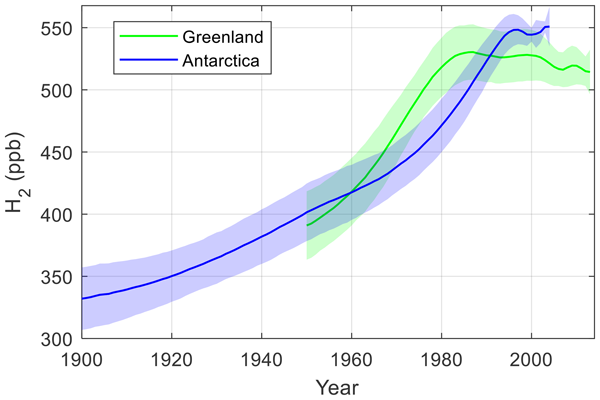
John D. Patterson, Murat Aydin, Andrew M. Crotwell, Gabrielle Pétron, Jeffery P. Severinghaus, Paul B. Krummel, Ray L. Langenfelds, Vasilii V. Petrenko, and Eric S. Saltzman
Clim. Past, 19, 2535–2550, https://doi.org/10.5194/cp-19-2535-2023, https://doi.org/10.5194/cp-19-2535-2023, 2023
Short summary
Short summary
Atmospheric levels of molecular hydrogen (H2) can impact climate and air quality. Constraining past changes to atmospheric H2 is useful for understanding how H2 cycles through the Earth system and predicting the impacts of increasing anthropogenic emissions under the
hydrogen economy. Here, we use the aging air found in the polar snowpack to reconstruct H2 levels over the past 100 years. We find that H2 levels increased by 30 % over Greenland and 60 % over Antarctica during the 20th century.
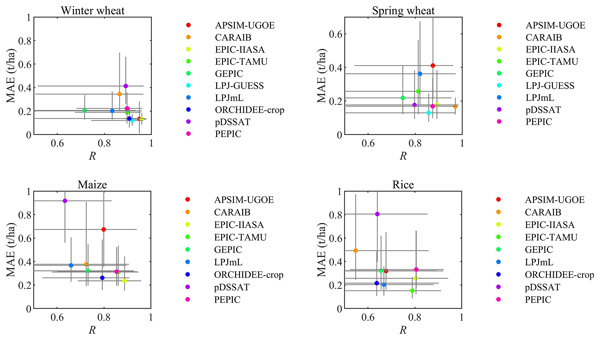
Weihang Liu, Tao Ye, Christoph Müller, Jonas Jägermeyr, James A. Franke, Haynes Stephens, and Shuo Chen
Geosci. Model Dev., 16, 7203–7221, https://doi.org/10.5194/gmd-16-7203-2023, https://doi.org/10.5194/gmd-16-7203-2023, 2023
Short summary
Short summary
We develop a machine-learning-based crop model emulator with the inputs and outputs of multiple global gridded crop model ensemble simulations to capture the year-to-year variation of crop yield under future climate change. The emulator can reproduce the year-to-year variation of simulated yield given by the crop models under CO2, temperature, water, and nitrogen perturbations. Developing this emulator can provide a tool to project future climate change impact in a simple way.
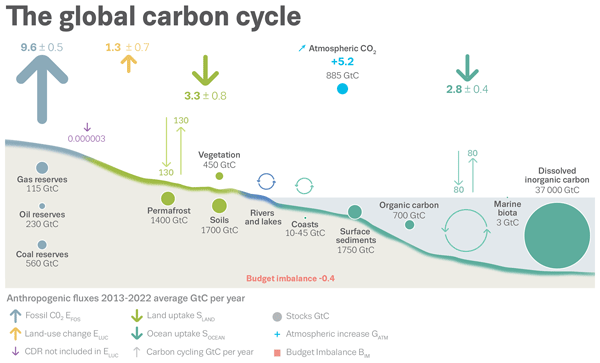
Pierre Friedlingstein, Michael O'Sullivan, Matthew W. Jones, Robbie M. Andrew, Dorothee C. E. Bakker, Judith Hauck, Peter Landschützer, Corinne Le Quéré, Ingrid T. Luijkx, Glen P. Peters, Wouter Peters, Julia Pongratz, Clemens Schwingshackl, Stephen Sitch, Josep G. Canadell, Philippe Ciais, Robert B. Jackson, Simone R. Alin, Peter Anthoni, Leticia Barbero, Nicholas R. Bates, Meike Becker, Nicolas Bellouin, Bertrand Decharme, Laurent Bopp, Ida Bagus Mandhara Brasika, Patricia Cadule, Matthew A. Chamberlain, Naveen Chandra, Thi-Tuyet-Trang Chau, Frédéric Chevallier, Louise P. Chini, Margot Cronin, Xinyu Dou, Kazutaka Enyo, Wiley Evans, Stefanie Falk, Richard A. Feely, Liang Feng, Daniel J. Ford, Thomas Gasser, Josefine Ghattas, Thanos Gkritzalis, Giacomo Grassi, Luke Gregor, Nicolas Gruber, Özgür Gürses, Ian Harris, Matthew Hefner, Jens Heinke, Richard A. Houghton, George C. Hurtt, Yosuke Iida, Tatiana Ilyina, Andrew R. Jacobson, Atul Jain, Tereza Jarníková, Annika Jersild, Fei Jiang, Zhe Jin, Fortunat Joos, Etsushi Kato, Ralph F. Keeling, Daniel Kennedy, Kees Klein Goldewijk, Jürgen Knauer, Jan Ivar Korsbakken, Arne Körtzinger, Xin Lan, Nathalie Lefèvre, Hongmei Li, Junjie Liu, Zhiqiang Liu, Lei Ma, Greg Marland, Nicolas Mayot, Patrick C. McGuire, Galen A. McKinley, Gesa Meyer, Eric J. Morgan, David R. Munro, Shin-Ichiro Nakaoka, Yosuke Niwa, Kevin M. O'Brien, Are Olsen, Abdirahman M. Omar, Tsuneo Ono, Melf Paulsen, Denis Pierrot, Katie Pocock, Benjamin Poulter, Carter M. Powis, Gregor Rehder, Laure Resplandy, Eddy Robertson, Christian Rödenbeck, Thais M. Rosan, Jörg Schwinger, Roland Séférian, T. Luke Smallman, Stephen M. Smith, Reinel Sospedra-Alfonso, Qing Sun, Adrienne J. Sutton, Colm Sweeney, Shintaro Takao, Pieter P. Tans, Hanqin Tian, Bronte Tilbrook, Hiroyuki Tsujino, Francesco Tubiello, Guido R. van der Werf, Erik van Ooijen, Rik Wanninkhof, Michio Watanabe, Cathy Wimart-Rousseau, Dongxu Yang, Xiaojuan Yang, Wenping Yuan, Xu Yue, Sönke Zaehle, Jiye Zeng, and Bo Zheng
Earth Syst. Sci. Data, 15, 5301–5369, https://doi.org/10.5194/essd-15-5301-2023, https://doi.org/10.5194/essd-15-5301-2023, 2023
Short summary
Short summary
The Global Carbon Budget 2023 describes the methodology, main results, and data sets used to quantify the anthropogenic emissions of carbon dioxide (CO2) and their partitioning among the atmosphere, land ecosystems, and the ocean over the historical period (1750–2023). These living datasets are updated every year to provide the highest transparency and traceability in the reporting of CO2, the key driver of climate change.
Wenfu Tang, Louisa K. Emmons, Helen M. Worden, Rajesh Kumar, Cenlin He, Benjamin Gaubert, Zhonghua Zheng, Simone Tilmes, Rebecca R. Buchholz, Sara-Eva Martinez-Alonso, Claire Granier, Antonin Soulie, Kathryn McKain, Bruce C. Daube, Jeff Peischl, Chelsea Thompson, and Pieternel Levelt
Geosci. Model Dev., 16, 6001–6028, https://doi.org/10.5194/gmd-16-6001-2023, https://doi.org/10.5194/gmd-16-6001-2023, 2023
Short summary
Short summary
The new MUSICAv0 model enables the study of atmospheric chemistry across all relevant scales. We develop a MUSICAv0 grid for Africa. We evaluate MUSICAv0 with observations and compare it with a previously used model – WRF-Chem. Overall, the performance of MUSICAv0 is comparable to WRF-Chem. Based on model–satellite discrepancies, we find that future field campaigns in an eastern African region (30°E–45°E, 5°S–5°N) could substantially improve the predictive skill of air quality models.
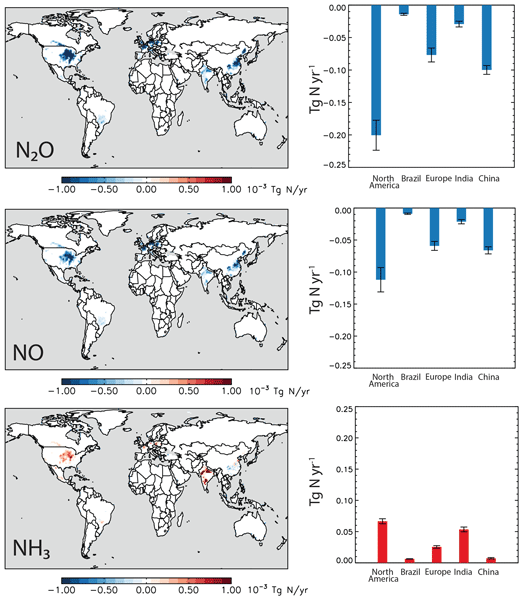
Maria Val Martin, Elena Blanc-Betes, Ka Ming Fung, Euripides P. Kantzas, Ilsa B. Kantola, Isabella Chiaravalloti, Lyla L. Taylor, Louisa K. Emmons, William R. Wieder, Noah J. Planavsky, Michael D. Masters, Evan H. DeLucia, Amos P. K. Tai, and David J. Beerling
Geosci. Model Dev., 16, 5783–5801, https://doi.org/10.5194/gmd-16-5783-2023, https://doi.org/10.5194/gmd-16-5783-2023, 2023
Short summary
Short summary
Enhanced rock weathering (ERW) is a CO2 removal strategy that involves applying crushed rocks (e.g., basalt) to agricultural soils. However, unintended processes within the N cycle due to soil pH changes may affect the climate benefits of C sequestration. ERW could drive changes in soil emissions of non-CO2 GHGs (N2O) and trace gases (NO and NH3) that may affect air quality. We present a new improved N cycling scheme for the land model (CLM5) to evaluate ERW effects on soil gas N emissions.
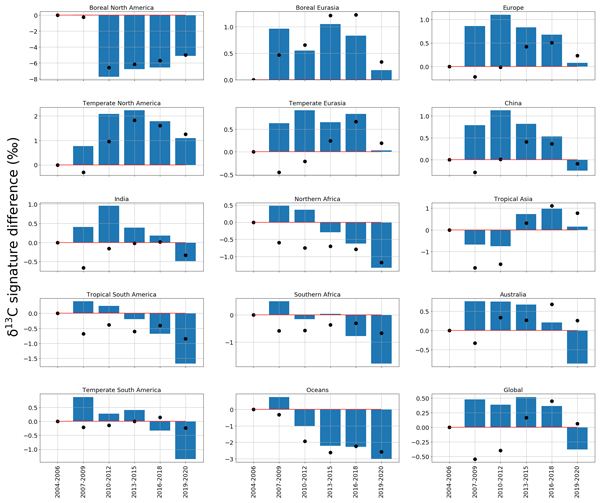
Alice Drinkwater, Paul I. Palmer, Liang Feng, Tim Arnold, Xin Lan, Sylvia E. Michel, Robert Parker, and Hartmut Boesch
Atmos. Chem. Phys., 23, 8429–8452, https://doi.org/10.5194/acp-23-8429-2023, https://doi.org/10.5194/acp-23-8429-2023, 2023
Short summary
Short summary
Changes in atmospheric methane over the last few decades are largely unexplained. Previous studies have proposed different hypotheses to explain short-term changes in atmospheric methane. We interpret observed changes in atmospheric methane and stable isotope source signatures (2004–2020). We argue that changes over this period are part of a large-scale shift from high-northern-latitude thermogenic energy emissions to tropical biogenic emissions, particularly from North Africa and South America.
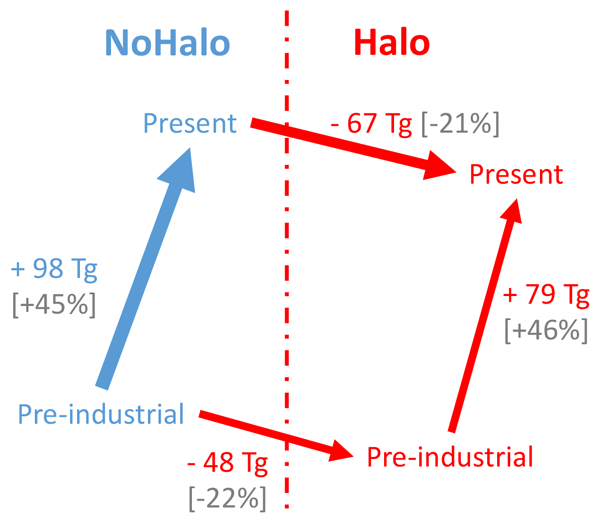
Cyril Caram, Sophie Szopa, Anne Cozic, Slimane Bekki, Carlos A. Cuevas, and Alfonso Saiz-Lopez
Geosci. Model Dev., 16, 4041–4062, https://doi.org/10.5194/gmd-16-4041-2023, https://doi.org/10.5194/gmd-16-4041-2023, 2023
Short summary
Short summary
We studied the role of halogenated compounds (containing chlorine, bromine and iodine), emitted by natural processes (mainly above the oceans), in the chemistry of the lower layers of the atmosphere. We introduced this relatively new chemistry in a three-dimensional climate–chemistry model and looked at how this chemistry will disrupt the ozone. We showed that the concentration of ozone decreases by 22 % worldwide and that of the atmospheric detergent, OH, by 8 %.
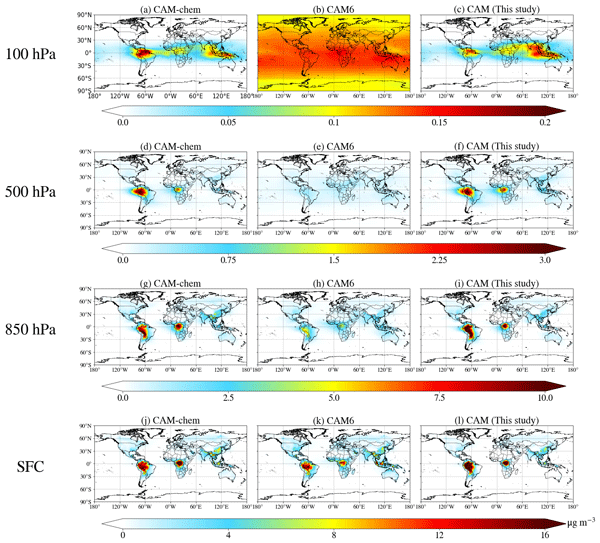
Duseong S. Jo, Simone Tilmes, Louisa K. Emmons, Siyuan Wang, and Francis Vitt
Geosci. Model Dev., 16, 3893–3906, https://doi.org/10.5194/gmd-16-3893-2023, https://doi.org/10.5194/gmd-16-3893-2023, 2023
Short summary
Short summary
A new simple secondary organic aerosol (SOA) scheme has been developed for the Community Atmosphere Model (CAM) based on the complex SOA scheme in CAM with detailed chemistry (CAM-chem). The CAM with the new SOA scheme shows better agreements with CAM-chem in terms of aerosol concentrations and radiative fluxes, which ensures more consistent results between different compsets in the Community Earth System Model. The new SOA scheme also has technical advantages for future developments.
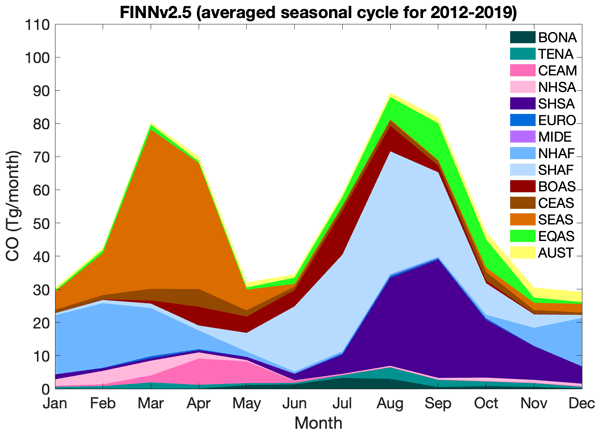
Christine Wiedinmyer, Yosuke Kimura, Elena C. McDonald-Buller, Louisa K. Emmons, Rebecca R. Buchholz, Wenfu Tang, Keenan Seto, Maxwell B. Joseph, Kelley C. Barsanti, Annmarie G. Carlton, and Robert Yokelson
Geosci. Model Dev., 16, 3873–3891, https://doi.org/10.5194/gmd-16-3873-2023, https://doi.org/10.5194/gmd-16-3873-2023, 2023
Short summary
Short summary
The Fire INventory from NCAR (FINN) provides daily global estimates of emissions from open fires based on satellite detections of hot spots. This version has been updated to apply MODIS and VIIRS satellite fire detection and better represents both large and small fires. FINNv2.5 generates more emissions than FINNv1 and is in general agreement with other fire emissions inventories. The new estimates are consistent with satellite observations, but uncertainties remain regionally and by pollutant.
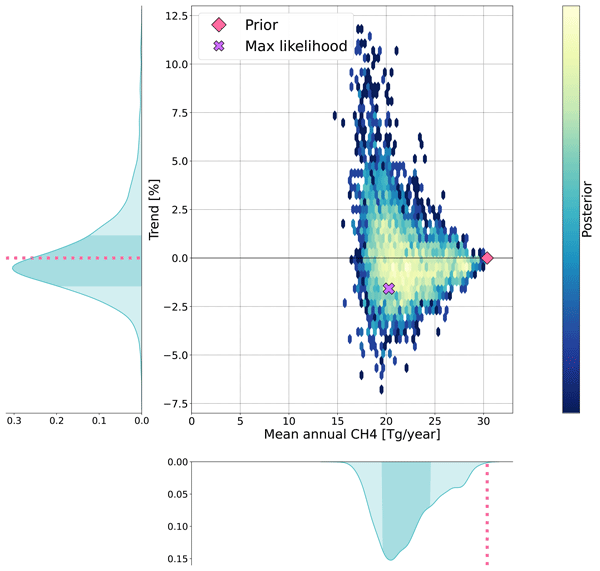
Sophie Wittig, Antoine Berchet, Isabelle Pison, Marielle Saunois, Joël Thanwerdas, Adrien Martinez, Jean-Daniel Paris, Toshinobu Machida, Motoki Sasakawa, Douglas E. J. Worthy, Xin Lan, Rona L. Thompson, Espen Sollum, and Mikhail Arshinov
Atmos. Chem. Phys., 23, 6457–6485, https://doi.org/10.5194/acp-23-6457-2023, https://doi.org/10.5194/acp-23-6457-2023, 2023
Short summary
Short summary
Here, an inverse modelling approach is applied to estimate CH4 sources and sinks in the Arctic from 2008 to 2019. We study the magnitude, seasonal patterns and trends from different sources during recent years. We also assess how the current observation network helps to constrain fluxes. We find that constraints are only significant for North America and, to a lesser extent, West Siberia, where the observation network is relatively dense. We find no clear trend over the period of inversion.
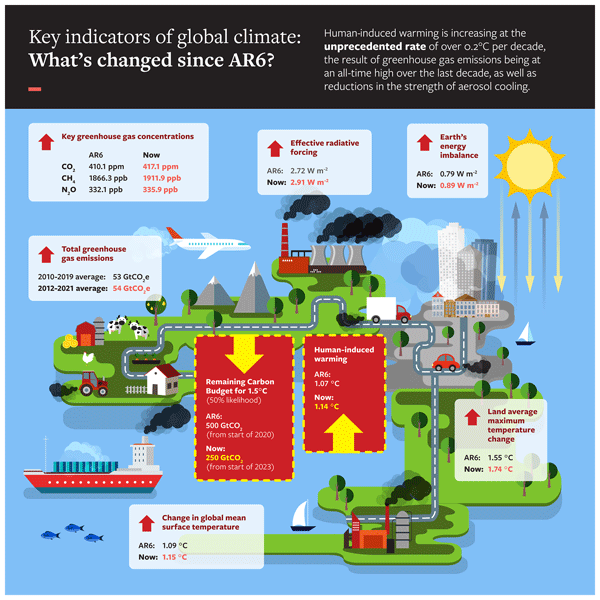
Piers M. Forster, Christopher J. Smith, Tristram Walsh, William F. Lamb, Robin Lamboll, Mathias Hauser, Aurélien Ribes, Debbie Rosen, Nathan Gillett, Matthew D. Palmer, Joeri Rogelj, Karina von Schuckmann, Sonia I. Seneviratne, Blair Trewin, Xuebin Zhang, Myles Allen, Robbie Andrew, Arlene Birt, Alex Borger, Tim Boyer, Jiddu A. Broersma, Lijing Cheng, Frank Dentener, Pierre Friedlingstein, José M. Gutiérrez, Johannes Gütschow, Bradley Hall, Masayoshi Ishii, Stuart Jenkins, Xin Lan, June-Yi Lee, Colin Morice, Christopher Kadow, John Kennedy, Rachel Killick, Jan C. Minx, Vaishali Naik, Glen P. Peters, Anna Pirani, Julia Pongratz, Carl-Friedrich Schleussner, Sophie Szopa, Peter Thorne, Robert Rohde, Maisa Rojas Corradi, Dominik Schumacher, Russell Vose, Kirsten Zickfeld, Valérie Masson-Delmotte, and Panmao Zhai
Earth Syst. Sci. Data, 15, 2295–2327, https://doi.org/10.5194/essd-15-2295-2023, https://doi.org/10.5194/essd-15-2295-2023, 2023
Short summary
Short summary
This is a critical decade for climate action, but there is no annual tracking of the level of human-induced warming. We build on the Intergovernmental Panel on Climate Change assessment reports that are authoritative but published infrequently to create a set of key global climate indicators that can be tracked through time. Our hope is that this becomes an important annual publication that policymakers, media, scientists and the public can refer to.
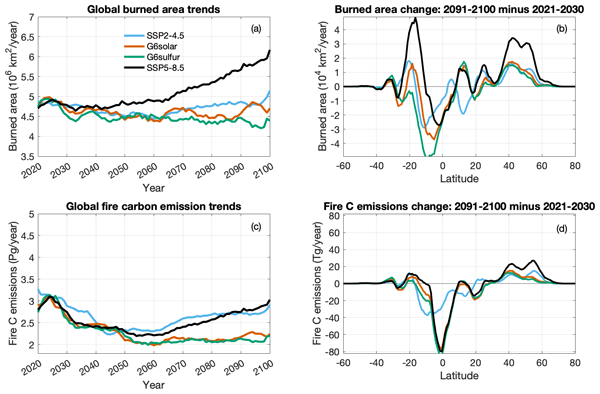
Wenfu Tang, Simone Tilmes, David M. Lawrence, Fang Li, Cenlin He, Louisa K. Emmons, Rebecca R. Buchholz, and Lili Xia
Atmos. Chem. Phys., 23, 5467–5486, https://doi.org/10.5194/acp-23-5467-2023, https://doi.org/10.5194/acp-23-5467-2023, 2023
Short summary
Short summary
Globally, total wildfire burned area is projected to increase over the 21st century under scenarios without geoengineering and decrease under the two geoengineering scenarios. Geoengineering reduces fire by decreasing surface temperature and wind speed and increasing relative humidity and soil water. However, geoengineering also yields reductions in precipitation, which offset some of the fire reduction.
Manon Rocco, Erin Dunne, Alexia Saint-Macary, Maija Peltola, Theresa Barthelmeß, Neill Barr, Karl Safi, Andrew Marriner, Stacy Deppeler, James Harnwell, Anja Engel, Aurélie Colomb, Alfonso Saiz-Lopez, Mike Harvey, Cliff S. Law, and Karine Sellegri
EGUsphere, https://doi.org/10.5194/egusphere-2023-516, https://doi.org/10.5194/egusphere-2023-516, 2023
Preprint archived
Short summary
Short summary
During the Sea2cloud campaign in the Southern Pacific Ocean, we measured air-sea emissions from phytopankton of two key atmospheric compounds: DMS and MeSH. These compounds are well-known to play a great role in atmospheric chemistry and climate. We see in this paper that these compounds are most emited by the nanophytoplankton population. We provide here parameters for climate models to predict future trends of the emissions of these compounds and their roles and impacts on the global warming.
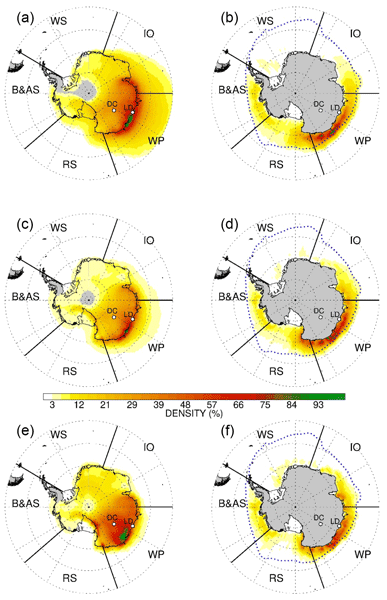
François Burgay, Rafael Pedro Fernández, Delia Segato, Clara Turetta, Christopher S. Blaszczak-Boxe, Rachael H. Rhodes, Claudio Scarchilli, Virginia Ciardini, Carlo Barbante, Alfonso Saiz-Lopez, and Andrea Spolaor
The Cryosphere, 17, 391–405, https://doi.org/10.5194/tc-17-391-2023, https://doi.org/10.5194/tc-17-391-2023, 2023
Short summary
Short summary
The paper presents the first ice-core record of bromine (Br) in the Antarctic plateau. By the observation of the ice core and the application of atmospheric chemical models, we investigate the behaviour of bromine after its deposition into the snowpack, with interest in the effect of UV radiation change connected to the formation of the ozone hole, the role of volcanic deposition, and the possible use of Br to reconstruct past sea ice changes from ice core collect in the inner Antarctic plateau.
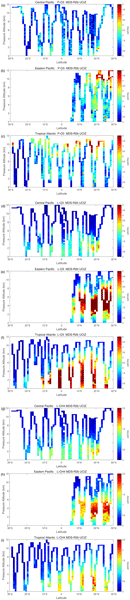
Hao Guo, Clare M. Flynn, Michael J. Prather, Sarah A. Strode, Stephen D. Steenrod, Louisa Emmons, Forrest Lacey, Jean-Francois Lamarque, Arlene M. Fiore, Gus Correa, Lee T. Murray, Glenn M. Wolfe, Jason M. St. Clair, Michelle Kim, John Crounse, Glenn Diskin, Joshua DiGangi, Bruce C. Daube, Roisin Commane, Kathryn McKain, Jeff Peischl, Thomas B. Ryerson, Chelsea Thompson, Thomas F. Hanisco, Donald Blake, Nicola J. Blake, Eric C. Apel, Rebecca S. Hornbrook, James W. Elkins, Eric J. Hintsa, Fred L. Moore, and Steven C. Wofsy
Atmos. Chem. Phys., 23, 99–117, https://doi.org/10.5194/acp-23-99-2023, https://doi.org/10.5194/acp-23-99-2023, 2023
Short summary
Short summary
We have prepared a unique and unusual result from the recent ATom aircraft mission: a measurement-based derivation of the production and loss rates of ozone and methane over the ocean basins. These are the key products of chemistry models used in assessments but have thus far lacked observational metrics. It also shows the scales of variability of atmospheric chemical rates and provides a major challenge to the atmospheric models.
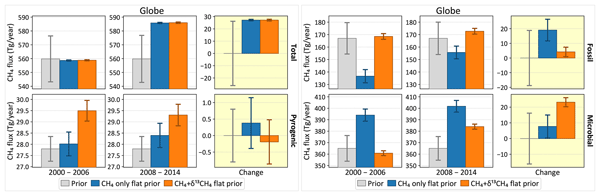
Sourish Basu, Xin Lan, Edward Dlugokencky, Sylvia Michel, Stefan Schwietzke, John B. Miller, Lori Bruhwiler, Youmi Oh, Pieter P. Tans, Francesco Apadula, Luciana V. Gatti, Armin Jordan, Jaroslaw Necki, Motoki Sasakawa, Shinji Morimoto, Tatiana Di Iorio, Haeyoung Lee, Jgor Arduini, and Giovanni Manca
Atmos. Chem. Phys., 22, 15351–15377, https://doi.org/10.5194/acp-22-15351-2022, https://doi.org/10.5194/acp-22-15351-2022, 2022
Short summary
Short summary
Atmospheric methane (CH4) has been growing steadily since 2007 for reasons that are not well understood. Here we determine sources of methane using a technique informed by atmospheric measurements of CH4 and its isotopologue 13CH4. Measurements of 13CH4 provide for better separation of microbial, fossil, and fire sources of methane than CH4 measurements alone. Compared to previous assessments such as the Global Carbon Project, we find a larger microbial contribution to the post-2007 increase.
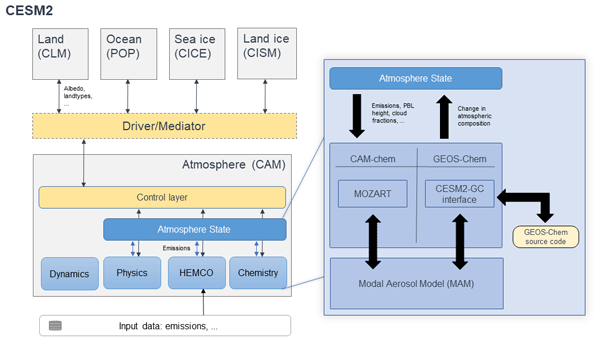
Thibaud M. Fritz, Sebastian D. Eastham, Louisa K. Emmons, Haipeng Lin, Elizabeth W. Lundgren, Steve Goldhaber, Steven R. H. Barrett, and Daniel J. Jacob
Geosci. Model Dev., 15, 8669–8704, https://doi.org/10.5194/gmd-15-8669-2022, https://doi.org/10.5194/gmd-15-8669-2022, 2022
Short summary
Short summary
We bring the state-of-the-science chemistry module GEOS-Chem into the Community Earth System Model (CESM). We show that some known differences between results from GEOS-Chem and CESM's CAM-chem chemistry module may be due to the configuration of model meteorology rather than inherent differences in the model chemistry. This is a significant step towards a truly modular Earth system model and allows two strong but currently separate research communities to benefit from each other's advances.
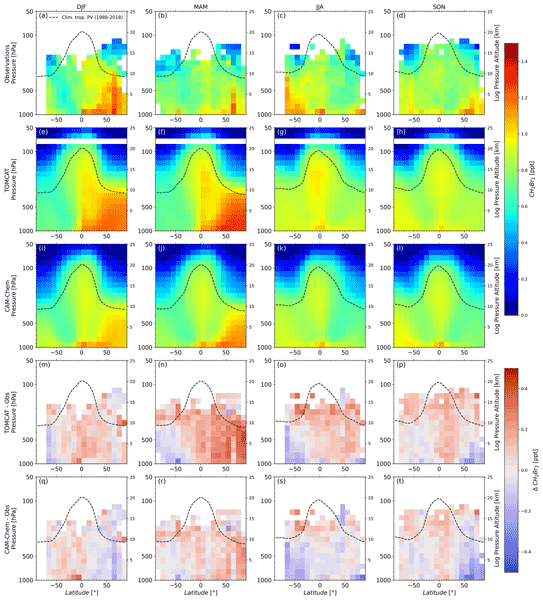
Markus Jesswein, Rafael P. Fernandez, Lucas Berná, Alfonso Saiz-Lopez, Jens-Uwe Grooß, Ryan Hossaini, Eric C. Apel, Rebecca S. Hornbrook, Elliot L. Atlas, Donald R. Blake, Stephen Montzka, Timo Keber, Tanja Schuck, Thomas Wagenhäuser, and Andreas Engel
Atmos. Chem. Phys., 22, 15049–15070, https://doi.org/10.5194/acp-22-15049-2022, https://doi.org/10.5194/acp-22-15049-2022, 2022
Short summary
Short summary
This study presents the global and seasonal distribution of the two major brominated short-lived substances CH2Br2 and CHBr3 in the upper troposphere and lower stratosphere based on observations from several aircraft campaigns. They show similar seasonality for both hemispheres, except in the respective hemispheric autumn lower stratosphere. A comparison with the TOMCAT and CAM-Chem models shows good agreement in the annual mean but larger differences in the seasonal consideration.
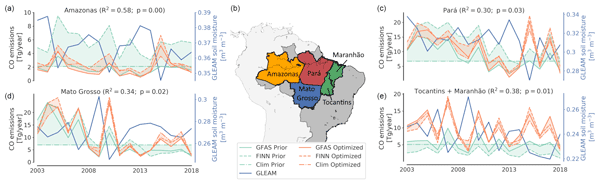
Stijn Naus, Lucas G. Domingues, Maarten Krol, Ingrid T. Luijkx, Luciana V. Gatti, John B. Miller, Emanuel Gloor, Sourish Basu, Caio Correia, Gerbrand Koren, Helen M. Worden, Johannes Flemming, Gabrielle Pétron, and Wouter Peters
Atmos. Chem. Phys., 22, 14735–14750, https://doi.org/10.5194/acp-22-14735-2022, https://doi.org/10.5194/acp-22-14735-2022, 2022
Short summary
Short summary
We assimilate MOPITT CO satellite data in the TM5-4D-Var inverse modelling framework to estimate Amazon fire CO emissions for 2003–2018. We show that fire emissions have decreased over the analysis period, coincident with a decrease in deforestation rates. However, interannual variations in fire emissions are large, and they correlate strongly with soil moisture. Our results reveal an important role for robust, top-down fire CO emissions in quantifying and attributing Amazon fire intensity.

Longlei Li, Natalie M. Mahowald, Jasper F. Kok, Xiaohong Liu, Mingxuan Wu, Danny M. Leung, Douglas S. Hamilton, Louisa K. Emmons, Yue Huang, Neil Sexton, Jun Meng, and Jessica Wan
Geosci. Model Dev., 15, 8181–8219, https://doi.org/10.5194/gmd-15-8181-2022, https://doi.org/10.5194/gmd-15-8181-2022, 2022
Short summary
Short summary
This study advances mineral dust parameterizations in the Community Atmospheric Model (CAM; version 6.1). Efforts include 1) incorporating a more physically based dust emission scheme; 2) updating the dry deposition scheme; and 3) revising the gravitational settling velocity to account for dust asphericity. Substantial improvements achieved with these updates can help accurately quantify dust–climate interactions using CAM, such as the dust-radiation and dust–cloud interactions.
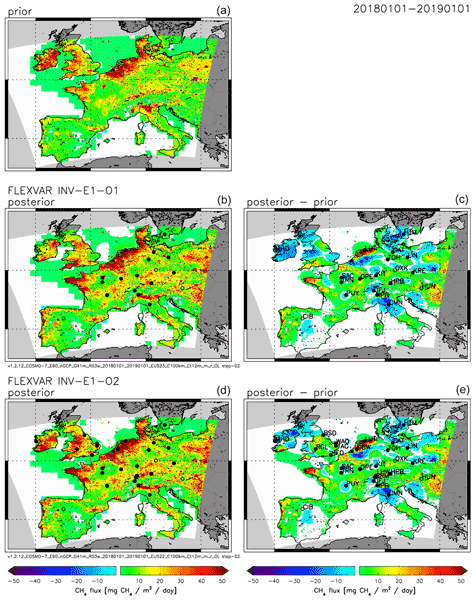
Peter Bergamaschi, Arjo Segers, Dominik Brunner, Jean-Matthieu Haussaire, Stephan Henne, Michel Ramonet, Tim Arnold, Tobias Biermann, Huilin Chen, Sebastien Conil, Marc Delmotte, Grant Forster, Arnoud Frumau, Dagmar Kubistin, Xin Lan, Markus Leuenberger, Matthias Lindauer, Morgan Lopez, Giovanni Manca, Jennifer Müller-Williams, Simon O'Doherty, Bert Scheeren, Martin Steinbacher, Pamela Trisolino, Gabriela Vítková, and Camille Yver Kwok
Atmos. Chem. Phys., 22, 13243–13268, https://doi.org/10.5194/acp-22-13243-2022, https://doi.org/10.5194/acp-22-13243-2022, 2022
Short summary
Short summary
We present a novel high-resolution inverse modelling system, "FLEXVAR", and its application for the inverse modelling of European CH4 emissions in 2018. The new system combines a high spatial resolution of 7 km x 7 km with a variational data assimilation technique, which allows CH4 emissions to be optimized from individual model grid cells. The high resolution allows the observations to be better reproduced, while the derived emissions show overall good consistency with two existing models.
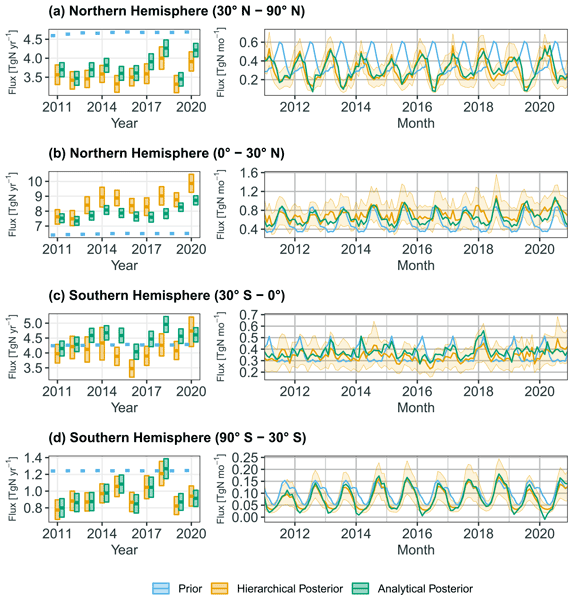
Angharad C. Stell, Michael Bertolacci, Andrew Zammit-Mangion, Matthew Rigby, Paul J. Fraser, Christina M. Harth, Paul B. Krummel, Xin Lan, Manfredi Manizza, Jens Mühle, Simon O'Doherty, Ronald G. Prinn, Ray F. Weiss, Dickon Young, and Anita L. Ganesan
Atmos. Chem. Phys., 22, 12945–12960, https://doi.org/10.5194/acp-22-12945-2022, https://doi.org/10.5194/acp-22-12945-2022, 2022
Short summary
Short summary
Nitrous oxide is a potent greenhouse gas and ozone-depleting substance, whose atmospheric abundance has risen throughout the contemporary record. In this work, we carry out the first global hierarchical Bayesian inversion to solve for nitrous oxide emissions. We derive increasing global nitrous oxide emissions over 2011–2020, which are mainly driven by emissions between 0° and 30°N, with the highest emissions recorded in 2020.
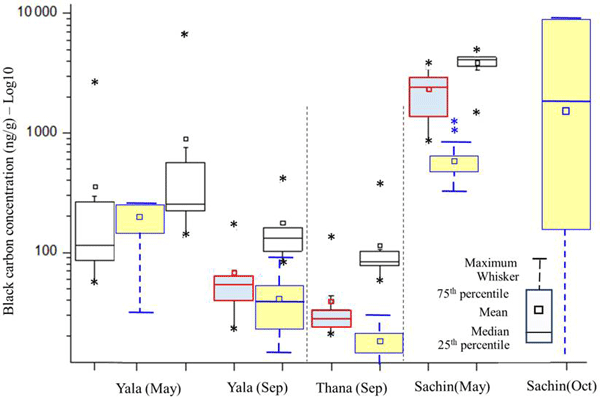
Chaman Gul, Shichang Kang, Siva Praveen Puppala, Xiaokang Wu, Cenlin He, Yangyang Xu, Inka Koch, Sher Muhammad, Rajesh Kumar, and Getachew Dubache
Atmos. Chem. Phys., 22, 8725–8737, https://doi.org/10.5194/acp-22-8725-2022, https://doi.org/10.5194/acp-22-8725-2022, 2022
Short summary
Short summary
This work aims to understand concentrations, spatial variability, and potential source regions of light-absorbing impurities (black carbon aerosols, dust particles, and organic carbon) in the surface snow of central and western Himalayan glaciers and their impact on snow albedo and radiative forcing.
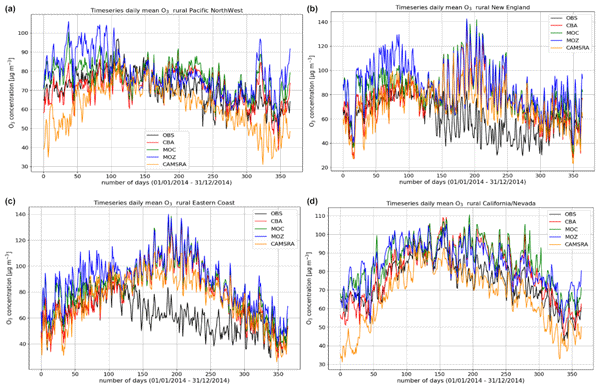
Jason E. Williams, Vincent Huijnen, Idir Bouarar, Mehdi Meziane, Timo Schreurs, Sophie Pelletier, Virginie Marécal, Beatrice Josse, and Johannes Flemming
Geosci. Model Dev., 15, 4657–4687, https://doi.org/10.5194/gmd-15-4657-2022, https://doi.org/10.5194/gmd-15-4657-2022, 2022
Short summary
Short summary
The global CAMS air quality model is used for providing tropospheric ozone information to end users. This paper updates the chemical mechanism employed (CBA) and compares it against two other mechanisms (MOCAGE, MOZART) and a multi-decadal dataset based on a previous version of CBA. We perform extensive validation for the US using multiple surface and aircraft datasets, providing an assessment of biases and the extent of correlation across different seasons during 2014.
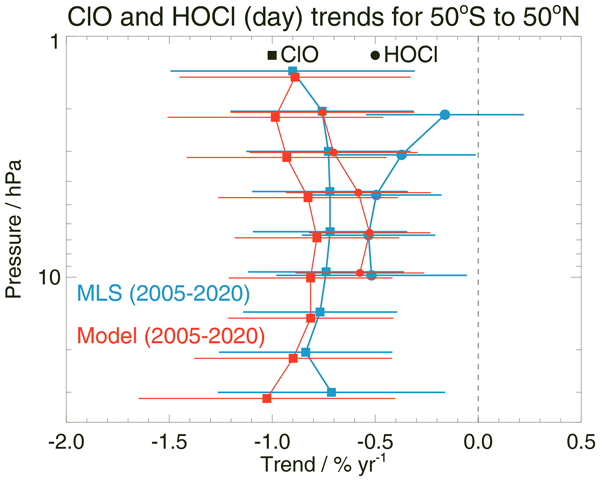
Lucien Froidevaux, Douglas E. Kinnison, Michelle L. Santee, Luis F. Millán, Nathaniel J. Livesey, William G. Read, Charles G. Bardeen, John J. Orlando, and Ryan A. Fuller
Atmos. Chem. Phys., 22, 4779–4799, https://doi.org/10.5194/acp-22-4779-2022, https://doi.org/10.5194/acp-22-4779-2022, 2022
Short summary
Short summary
We analyze satellite-derived distributions of chlorine monoxide (ClO) and hypochlorous acid (HOCl) in the upper atmosphere. For 2005–2020, from 50°S to 50°N and over ~30 to 45 km, ClO and HOCl decreased by −0.7 % and −0.4 % per year, respectively. A detailed model of chemistry and dynamics agrees with the results. These decreases confirm the effectiveness of the 1987 Montreal Protocol, which limited emissions of chlorine- and bromine-containing source gases, in order to protect the ozone layer.

Hisahiro Takashima, Yugo Kanaya, Saki Kato, Martina M. Friedrich, Michel Van Roozendael, Fumikazu Taketani, Takuma Miyakawa, Yuichi Komazaki, Carlos A. Cuevas, Alfonso Saiz-Lopez, and Takashi Sekiya
Atmos. Chem. Phys., 22, 4005–4018, https://doi.org/10.5194/acp-22-4005-2022, https://doi.org/10.5194/acp-22-4005-2022, 2022
Short summary
Short summary
We have undertaken atmospheric iodine monoxide (IO) observations in the global marine boundary layer with a wide latitudinal coverage and sea surface temperature (SST) range. We conclude that atmospheric iodine is abundant over the Western Pacific warm pool, appearing as an iodine fountain, where ozone (O3) minima occur. Our study also found negative correlations between IO and O3 concentrations over IO maxima, which requires reconsideration of the initiation process of halogen activation.
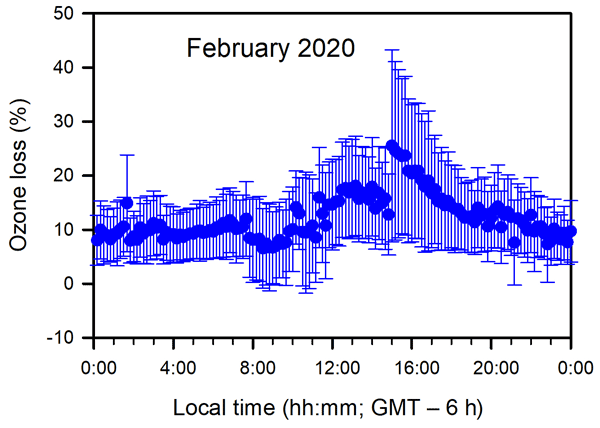
Zhiyuan Gao, Nicolas-Xavier Geilfus, Alfonso Saiz-Lopez, and Feiyue Wang
Atmos. Chem. Phys., 22, 1811–1824, https://doi.org/10.5194/acp-22-1811-2022, https://doi.org/10.5194/acp-22-1811-2022, 2022
Short summary
Short summary
Every spring in the Arctic, a series of photochemical events occur over the ice-covered ocean, known as bromine explosion events, ozone depletion events, and mercury depletion events. Here we report the re-creation of these events at an outdoor sea ice facility in Winnipeg, Canada, far away from the Arctic. The success provides a new platform with new opportunities to uncover fundamental mechanisms of these Arctic springtime phenomena and how they may change in a changing climate.

Chenrui Diao, Yangyang Xu, and Shang-Ping Xie
Atmos. Chem. Phys., 21, 18499–18518, https://doi.org/10.5194/acp-21-18499-2021, https://doi.org/10.5194/acp-21-18499-2021, 2021
Short summary
Short summary
Anthropogenic aerosol (AA) emission has shown a zonal redistribution since the 1980s, with a decline in the Western Hemisphere (WH) high latitudes and an increase in the Eastern Hemisphere (EH) low latitudes. This study compares the role of zonally asymmetric forcings affecting the climate. The WH aerosol reduction dominates the poleward shift of the Hadley cell and the North Pacific warming, while the EH AA forcing is largely confined to the emission domain and induces local cooling responses.
Cited articles
Akimoto, H. and Tanimoto, H.: Rethinking of the adverse effects of NOx-control on the reduction of methane and tropospheric ozone – Challenges toward a denitrified society, Atmos. Enviro., 277, 119033, https://doi.org/10.1016/j.atmosenv.2022.119033, 2022. a
Allen, R. J., Horowitz, L. W., Naik, V., Oshima, N., O’Connor, F. M., Turnock, S., Shim, S., Le Sager, P., van Noije, T., Tsigaridis, K., Bauer, S. E., Sentman, L. T., John, J. G., Broderick, C., Deushi, M., Folberth, G. A., Fujimori, S., and Collins, W. J.: Significant climate benefits from near-term climate forcer mitigation in spite of aerosol reductions, Environ. Res. Lett., https://doi.org/10.1088/1748-9326/abe06b, 2021. a
Anderson, D. C., Duncan, B. N., Fiore, A. M., Baublitz, C. B., Follette-Cook, M. B., Nicely, J. M., and Wolfe, G. M.: Spatial and temporal variability in the hydroxyl (OH) radical: understanding the role of large-scale climate features and their influence on OH through its dynamical and photochemical drivers, Atmos. Chem. Phys., 21, 6481–6508, https://doi.org/10.5194/acp-21-6481-2021, 2021. a, b
Anderson, D. C., Follette-Cook, M. B., Strode, S. A., Nicely, J. M., Liu, J., Ivatt, P. D., and Duncan, B. N.: A machine learning methodology for the generation of a parameterization of the hydroxyl radical, Geosci. Model Dev., 15, 6341–6358, https://doi.org/10.5194/gmd-15-6341-2022, 2022. a
Archibald, A. T., Petit, A. S., Percival, C. J., Harvey, J. N., and Shallcross, D. E.: On the importance of the reaction between OH and RO2 radicals, Atmos. Sci. Lett., 10, 102–108, https://doi.org/10.1002/asl.216, 2009. a
Assaf, E., Sheps, L., Whalley, L., Heard, D., Tomas, A., Schoemaecker, C., and Fittschen, C.: The Reaction between CH3O2 and OH Radicals: Product Yields and Atmospheric Implications, Environ. Sci. Technol., 51, 2170–2177, https://doi.org/10.1021/acs.est.6b06265, 2017. a, b
Balasus, N., Jacob, D. J., Lorente, A., Maasakkers, J. D., Parker, R. J., Boesch, H., Chen, Z., Kelp, M. M., Nesser, H., and Varon, D. J.: A blended TROPOMI+GOSAT satellite data product for atmospheric methane using machine learning to correct retrieval biases, Atmos. Meas. Tech., 16, 3787–3807, https://doi.org/10.5194/amt-16-3787-2023, 2023. a, b
Balasus, N., Jacob, D. J., Bloom, A. A., East, J. D., Estrada, L. A., Hancock, S. E., He, M., Mooring, T. A., Turner, A. J., and Worden, J. R.: 2019–2024 trends in African livestock and wetland emissions as contributors to the global methane rise, Atmos. Chem. Phys., 26, 4601–4617, https://doi.org/10.5194/acp-26-4601-2026, 2026. a
Basu, S., Lan, X., Dlugokencky, E., Michel, S., Schwietzke, S., Miller, J. B., Bruhwiler, L., Oh, Y., Tans, P. P., Apadula, F., Gatti, L. V., Jordan, A., Necki, J., Sasakawa, M., Morimoto, S., Di Iorio, T., Lee, H., Arduini, J., and Manca, G.: Estimating emissions of methane consistent with atmospheric measurements of methane and δ13C of methane, Atmos. Chem. Phys., 22, 15351–15377, https://doi.org/10.5194/acp-22-15351-2022, 2022. a
Bates, K. H., Jacob, D. J., Wang, S., Hornbrook, R. S., Apel, E. C., Kim, M. J., Millet, D. B., Wells, K. C., Chen, X., Brewer, J. F., Ray, E. A., Commane, R., Diskin, G. S., and Wofsy, S. C.: The Global Budget of Atmospheric Methanol: New Constraints on Secondary, Oceanic, and Terrestrial Sources, J. Geophys. Res.-Atmos., 126, https://doi.org/10.1029/2020jd033439, 2021. a, b
Belikov, D. A., Patra, P. K., and Saitoh, N.: Hydroxyl Interannual Variability Impacts Estimation of Regional Methane Emissions, J. Geophys. Res.-Atmos. 131, https://doi.org/10.1029/2025jd044457, 2026. a
Borsdorff, T., Aan de Brugh, J., Hu, H., Aben, I., Hasekamp, O., and Landgraf, J.: Measuring Carbon Monoxide With TROPOMI: First Results and a Comparison With ECMWF‐IFS Analysis Data, Geophys. Res. Lett., 45, 2826–2832, https://doi.org/10.1002/2018gl077045, 2018. a
Bossolasco, A., Faragó, E. P., Schoemaecker, C., and Fittschen, C.: Rate constant of the reaction between CH3O2 and OH radicals, Chem. Phys. Lett., 593, 7–13, https://doi.org/10.1016/j.cplett.2013.12.052, 2014. a
Bossolasco, A., Fernandez, R. P., Li, Q., Mahajan, A. S., Villamayor, J., Barrera, J. A., Heard, D. E., Cuevas, C. A., Caram, C., Szopa, S., and Saiz-Lopez, A.: Key role of short-lived halogens on global atmospheric oxidation during historical periods, Environ. Sci. Atmos., https://doi.org/10.1039/d4ea00141a, 2025. a, b, c
Bouarar, I., Gaubert, B., Brasseur, G. P., Steinbrecht, W., Doumbia, T., Tilmes, S., Liu, Y., Stavrakou, T., Deroubaix, A., Darras, S., Granier, C., Lacey, F., Müller, J.-F., Shi, X., Elguindi, N., and Wang, T.: Ozone Anomalies in the Free Troposphere During the COVID-19 Pandemic, Geophys. Res. Lett., 48, https://doi.org/10.1029/2021gl094204, 2021. a
Bouarar, I., Granier, C., Denier van der Gon, H., Doumbia, T., Guevara, M., Jalkanen, J.-P., Kuenen, J., Majamäki, E., Zilbermann, N., and Brasseur, G.: Refining the CAMS Global Anthropogenic Emissions Inventory with Regional Datasets: Advances in the Mosaic Approach and Remaining Uncertainties, EGU General Assembly 2026, Vienna, Austria, 3–8 May 2026, EGU26-9863, https://doi.org/10.5194/egusphere-egu26-9863, 2026. a
Brasseur, G. P. and Gaubert, B.: The atmospheric oxidizing capacity and the methane budget, Natl. Sci. Rev., 12, https://doi.org/10.1093/nsr/nwaf347, 2025. a
Brune, W. H., Miller, D. O., Thames, A. B., Allen, H. M., Apel, E. C., Blake, D. R., Bui, T. P., Commane, R., Crounse, J. D., Daube, B. C., Diskin, G. S., DiGangi, J. P., Elkins, J. W., Hall, S. R., Hanisco, T. F., Hannun, R. A., Hintsa, E. J., Hornbrook, R. S., Kim, M. J., McKain, K., Moore, F. L., Neuman, J. A., Nicely, J. M., Peischl, J., Ryerson, T. B., Clair, J. M. S., Sweeney, C., Teng, A. P., Thompson, C., Ullmann, K., Veres, P. R., Wennberg, P. O., and Wolfe, G. M.: Exploring Oxidation in the Remote Free Troposphere: Insights From Atmospheric Tomography (ATom), J. Geophys. Res.-Atmos., 125, https://doi.org/10.1029/2019jd031685, 2020. a
Bryant, H. and Stevenson, D.: The influence of hydrogen on carbon monoxide in the troposphere, Weather, 79, 190–195, https://doi.org/10.1002/wea.4567, 2024. a
Chandra, N., Patra, P. K., Fujita, R., Höglund-Isaksson, L., Umezawa, T., Goto, D., Morimoto, S., Vaughn, B. H., and Röckmann, T.: Methane emissions decreased in fossil fuel exploitation and sustainably increased in microbial source sectors during 1990–2020, Commun. Earth Environ., 5, https://doi.org/10.1038/s43247-024-01286-x, 2024. a
Choi, J., Henze, D. K., Wells, K. C., and Millet, D. B.: Joint Inversion of Satellite‐Based Isoprene and Formaldehyde Observations to Constrain Emissions of Nonmethane Volatile Organic Compounds, J. Geophys. Res.-Atmos., 130, https://doi.org/10.1029/2024jd042070, 2025. a
Chua, G., Naik, V., and Horowitz, L. W.: Exploring the drivers of tropospheric hydroxyl radical trends in the Geophysical Fluid Dynamics Laboratory AM4.1 atmospheric chemistry–climate model, Atmos. Chem. Phys., 23, 4955–4975, https://doi.org/10.5194/acp-23-4955-2023, 2023. a
Chua, G., Naik, V., Paulot, F., Feng, J., and Horowitz, L. W.: Impact of Future Methane Emission Trajectories on Atmospheric Composition and Climate in a Future Hydrogen Economy, Earth’s Future, 13, https://doi.org/10.1029/2025ef006254, 2025. a
Ciais, P., Zhu, Y., Cai, Y., Lan, X., Michel, S. E., Zheng, B., Zhao, Y., Hauglustaine, D. A., Lin, X., Zhang, Y., Sun, S., Tian, X., Zhao, M., Wang, Y., Chang, J., Dou, X., Liu, Z., Andrew, R., Quinn, C. A., Poulter, B., Ouyang, Z., Yuan, W., Yuan, K., Zhu, Q., Li, F., Pan, N., Tian, H., Yu, X., Rocher-Ros, G., Johnson, M. S., Li, M., Li, M., Feng, D., Raymond, P., Yang, X., Canadell, J. G., Jackson, R. B., Yu, X., Li, Y., Saunois, M., Bousquet, P., and Peng, S.: Why methane surged in the atmosphere during the early 2020s, Science, 391, https://doi.org/10.1126/science.adx8262, 2026. a, b
Computational and Information Systems Laboratory: Derecho: HPE Cray EX Cluster, https://doi.org/10.5065/QX9A-PG09, 2023. a
Copernicus Sentinel-5P: TROPOMI Level 2 Carbon Monoxide products, Version 02, European Space Agency [data set], https://doi.org/10.5270/S5P-bj3nry0, 2021. a
Crawford, J. H., Ahn, J.-Y., Al-Saadi, J., Chang, L., Emmons, L. K., Kim, J., Lee, G., Park, J.-H., Park, R. J., Woo, J. H., Song, C.-K., Hong, J.-H., Hong, Y.-D., Lefer, B. L., Lee, M., Lee, T., Kim, S., Min, K.-E., Yum, S. S., Shin, H. J., Kim, Y.-W., Choi, J.-S., Park, J.-S., Szykman, J. J., Long, R. W., Jordan, C. E., Simpson, I. J., Fried, A., Dibb, J. E., Cho, S., and Kim, Y. P.: The Korea-United States Air Quality (KORUS-AQ) field study, Elementa, 9, https://doi.org/10.1525/elementa.2020.00163, 2021. a
Crutzen, P. J. and Zimmermann, P. H.: The changing photochemistry of the troposphere, Tellus B, 43, 136, https://doi.org/10.3402/tellusb.v43i4.15403, 1991. a
Danabasoglu, G., Lamarque, J.-F., Bacmeister, J., Bailey, D. A., DuVivier, A. K., Edwards, J., Emmons, L. K., Fasullo, J., Garcia, R., Gettelman, A., Hannay, C., Holland, M. M., Large, W. G., Lauritzen, P. H., Lawrence, D. M., Lenaerts, J. T. M., Lindsay, K., Lipscomb, W. H., Mills, M. J., Neale, R., Oleson, K. W., Otto-Bliesner, B., Phillips, A. S., Sacks, W., Tilmes, S., Kampenhout, L., Vertenstein, M., Bertini, A., Dennis, J., Deser, C., Fischer, C., Fox-Kemper, B., Kay, J. E., Kinnison, D., Kushner, P. J., Larson, V. E., Long, M. C., Mickelson, S., Moore, J. K., Nienhouse, E., Polvani, L., Rasch, P. J., and Strand, W. G.: The Community Earth System Model Version 2 (CESM2), J. Adv. Model Earth Sy., 12, https://doi.org/10.1029/2019ms001916, 2020. a, b
Dang, R., Jacob, D. J., He, M., Clifton, O. E., Li, K., and Liao, H.: Lightning Source of Nitrogen Oxides (NOx) Inferred From Geostationary Satellites: Global Implications for Oxidant Chemistry, Geophys. Res. Lett., 53, https://doi.org/10.1029/2026gl124557, 2026. a, b
Davis, N. A., Callaghan, P., Simpson, I. R., and Tilmes, S.: Specified dynamics scheme impacts on wave-mean flow dynamics, convection, and tracer transport in CESM2 (WACCM6), Atmos. Chem. Phys., 22, 197–214, https://doi.org/10.5194/acp-22-197-2022, 2022. a
Dean, J. F., Middelburg, J. J., Röckmann, T., Aerts, R., Blauw, L. G., Egger, M., Jetten, M. S. M., de Jong, A. E. E., Meisel, O. H., Rasigraf, O., Slomp, C. P., in’t Zandt, M. H., and Dolman, A. J.: Methane Feedbacks to the Global Climate System in a Warmer World, Rev. Geophys., 56, 207–250, https://doi.org/10.1002/2017rg000559, 2018. a
Deeter, M., Francis, G., Gille, J., Mao, D., Martínez-Alonso, S., Worden, H., Ziskin, D., Drummond, J., Commane, R., Diskin, G., and McKain, K.: The MOPITT Version 9 CO product: sampling enhancements and validation, Atmos. Meas. Tech., 15, 2325–2344, https://doi.org/10.5194/amt-15-2325-2022, 2022. a
De Mazière, M., Thompson, A. M., Kurylo, M. J., Wild, J. D., Bernhard, G., Blumenstock, T., Braathen, G. O., Hannigan, J. W., Lambert, J.-C., Leblanc, T., McGee, T. J., Nedoluha, G., Petropavlovskikh, I., Seckmeyer, G., Simon, P. C., Steinbrecht, W., and Strahan, S. E.: The Network for the Detection of Atmospheric Composition Change (NDACC): history, status and perspectives, Atmos. Chem. Phys., 18, 4935–4964, https://doi.org/10.5194/acp-18-4935-2018, 2018. a
Dlugokencky, E. J., Bruhwiler, L., White, J. W. C., Emmons, L. K., Novelli, P. C., Montzka, S. A., Masarie, K. A., Lang, P. M., Crotwell, A. M., Miller, J. B., and Gatti, L. V.: Observational constraints on recent increases in the atmospheric CH4 burden, Geophys. Res. Lett., 36, https://doi.org/10.1029/2009gl039780, 2009. a
Drummond, J. R., Zou, J., Nichitiu, F., Kar, J., Deschambaut, R., and Hackett, J.: A review of 9-year performance and operation of the MOPITT instrument, Ad. Space Res., 45, 760–774, https://doi.org/10.1016/j.asr.2009.11.019, 2010. a
Duncan, B. N., Bey, I., Chin, M., Mickley, L. J., Fairlie, T. D., Martin, R. V., and Matsueda, H.: Indonesian wildfires of 1997: Impact on tropospheric chemistry, J. Geophys. Res.-Atmos., 108, https://doi.org/10.1029/2002jd003195, 2003. a
Duncan, B. N., Anderson, D. C., Fiore, A. M., Joiner, J., Krotkov, N. A., Li, C., Millet, D. B., Nicely, J. M., Oman, L. D., St. Clair, J. M., Shutter, J. D., Souri, A. H., Strode, S. A., Weir, B., Wolfe, G. M., Worden, H. M., and Zhu, Q.: Opinion: Beyond global means – novel space-based approaches to indirectly constrain the concentrations of and trends and variations in the tropospheric hydroxyl radical (OH), Atmos. Chem. Phys., 24, 13001–13023, https://doi.org/10.5194/acp-24-13001-2024, 2024. a
Emmons, L. K., Schwantes, R. H., Orlando, J. J., Tyndall, G., Kinnison, D., Lamarque, J.-F., Marsh, D., Mills, M. J., Tilmes, S., Bardeen, C., Buchholz, R. R., Conley, A., Gettelman, A., Garcia, R., Simpson, I., Blake, D. R., Meinardi, S., and Pétron, G.: The Chemistry Mechanism in the Community Earth System Model Version 2 (CESM2), J. Adv. Model. Earth Sy., 12, https://doi.org/10.1029/2019ms001882, 2020. a
Feng, L., Smith, S. J., Braun, C., Crippa, M., Gidden, M. J., Hoesly, R., Klimont, Z., van Marle, M., van den Berg, M., and van der Werf, G. R.: The generation of gridded emissions data for CMIP6, Geosci. Model Dev., 13, 461–482, https://doi.org/10.5194/gmd-13-461-2020, 2020. a
Feng, L., Palmer, P. I., Wang, H., Parker, R., Boesch, H., Biraud, S. C., Chmura, Ł., Gloor, E., Haszpra, L., Kozlova, E., Nisbet, E. G., Noe, S. M., Röckmann, T., Ferreira de Souza, R. A., and Steinbacher, M.: Atmospheric methane growth rates, 2018-2024, driven mainly by emission changes but atmospheric photochemistry is important, EGUsphere [preprint], https://doi.org/10.5194/egusphere-2026-2662, 2026. a
Fernandez, R. P., Cuevas, C. A., Villamayor, J., Feinberg, A., Kinnison, D. E., Vitt, F., Bossolasco, A., Barrera, J. A., Reynoso, A., Tomazzeli, O. G., Li, Q., and Saiz-Lopez, A.: Short-lived halogen sources and chemistry in the Community Earth System Model v2 (CESM2-SLH), Geosci. Model Dev., 19, 9325–9376, https://doi.org/10.5194/gmd-19-9325-2026, 2026. a, b
Fiore, A. M., Jacob, D. J., Field, B. D., Streets, D. G., Fernandes, S. D., and Jang, C.: Linking ozone pollution and climate change: The case for controlling methane, Geophys. Res. Lett., 29, https://doi.org/10.1029/2002gl015601, 2002. a
Fiore, A. M., Horowitz, L. W., Dlugokencky, E. J., and West, J. J.: Impact of meteorology and emissions on methane trends, 1990–2004, Geophys. Res. Lett., 33, https://doi.org/10.1029/2006gl026199, 2006. a
Fiore, A. M., Hancock, S. E., Lamarque, J.-F., Correa, G. P., Chang, K.-L., Ru, M., Cooper, O., Gaudel, A., Polvani, L. M., Sauvage, B., and Ziemke, J. R.: Understanding recent tropospheric ozone trends in the context of large internal variability: a new perspective from chemistry-climate model ensembles, Environ. Res. Clim., 1, 025008, https://doi.org/10.1088/2752-5295/ac9cc2, 2022. a
Folberth, G. A., Staniaszek, Z., Archibald, A. T., Gedney, N., Griffiths, P. T., Jones, C. D., O'Connor, F. M., Parker, R. J., Sellar, A. A., and Wiltshire, A.: Description and Evaluation of an Emission-Driven and Fully Coupled Methane Cycle in UKESM1, J. Adv. Model. Earth Sy., 14, https://doi.org/10.1029/2021ms002982, 2022. a
Folberth, G. A., Jones, C. D., O’Connor, F. M., Gedney, N., Griffiths, P. T., and Wiltshire, A. J.: Drivers of persistent changes in the global methane cycle under aggressive mitigation action, npj Clim. Atmos. Sci., 8, https://doi.org/10.1038/s41612-024-00867-z, 2025. a
Froidevaux, L., Kinnison, D. E., Gaubert, B., Schwartz, M. J., Livesey, N. J., Read, W. G., Bardeen, C. G., Ziemke, J. R., and Fuller, R. A.: Tropical upper-tropospheric trends in ozone and carbon monoxide (2005–2020): observational and model results, Atmos. Chem. Phys., 25, 597–624, https://doi.org/10.5194/acp-25-597-2025, 2025. a
Fuchs, H., Stainsby, A., Berg, F., Dubus, R., Färber, M., Hofzumahaus, A., Holland, F., Bates, K. H., Brown, S. S., Coggon, M. M., Diskin, G. S., Gkatzelis, G. I., Jernigan, C. M., Peischl, J., Robinson, M. A., Rollins, A. W., Schafer, N. B., Schwantes, R. H., Stockwell, C. E., Veres, P. R., Warneke, C., Waxman, E. M., Xu, L., Zuraski, K., Wahner, A., and Novelli, A.: Advances in an OH reactivity instrument for airborne field measurements, Atmos. Meas. Tech., 18, 881–895, https://doi.org/10.5194/amt-18-881-2025, 2025. a
Gaubert, B.: Posterior CO emissions, Zenodo [data set], https://doi.org/10.5281/ZENODO.13889018, 2024. a
Gaubert, B., Arellano, A. F., Barré, J., Worden, H. M., Emmons, L. K., Tilmes, S., Buchholz, R. R., Vitt, F., Raeder, K., Collins, N., Anderson, J. L., Wiedinmyer, C., Alonso, S. M., Edwards, D. P., Andreae, M. O., Hannigan, J. W., Petri, C., Strong, K., and Jones, N.: Toward a chemical reanalysis in a coupled chemistry-climate model: An evaluation of MOPITT CO assimilation and its impact on tropospheric composition, J. Geophys. Res.-Atmos., 121, 7310–7343, https://doi.org/10.1002/2016jd024863, 2016. a, b
Gaubert, B., Worden, H. M., Arellano, A. F. J., Emmons, L. K., Tilmes, S., Barré, J., Alonso, S. M., Vitt, F., Anderson, J. L., Alkemade, F., Houweling, S., and Edwards, D. P.: Chemical Feedback From Decreasing Carbon Monoxide Emissions, Geophys. Res. Lett., 44, 9985–9995, https://doi.org/10.1002/2017gl074987, 2017. a, b, c, d
Gaubert, B., Stephens, B. B., Basu, S., Chevallier, F., Deng, F., Kort, E. A., Patra, P. K., Peters, W., Rödenbeck, C., Saeki, T., Schimel, D., Van der Laan-Luijkx, I., Wofsy, S., and Yin, Y.: Global atmospheric CO2 inverse models converging on neutral tropical land exchange, but disagreeing on fossil fuel and atmospheric growth rate, Biogeosciences, 16, 117–134, https://doi.org/10.5194/bg-16-117-2019, 2019. a
Gaubert, B., Emmons, L. K., Raeder, K., Tilmes, S., Miyazaki, K., Arellano Jr., A. F., Elguindi, N., Granier, C., Tang, W., Barré, J., Worden, H. M., Buchholz, R. R., Edwards, D. P., Franke, P., Anderson, J. L., Saunois, M., Schroeder, J., Woo, J.-H., Simpson, I. J., Blake, D. R., Meinardi, S., Wennberg, P. O., Crounse, J., Teng, A., Kim, M., Dickerson, R. R., He, H., Ren, X., Pusede, S. E., and Diskin, G. S.: Correcting model biases of CO in East Asia: impact on oxidant distributions during KORUS-AQ, Atmos. Chem. Phys., 20, 14617–14647, https://doi.org/10.5194/acp-20-14617-2020, 2020. a
Gaubert, B., Bouarar, I., Doumbia, T., Liu, Y., Stavrakou, T., Deroubaix, A., Darras, S., Elguindi, N., Granier, C., Lacey, F., Müller, J.-F., Shi, X., Tilmes, S., Wang, T., and Brasseur, G. P.: Global Changes in Secondary Atmospheric Pollutants During the 2020 COVID-19 Pandemic, J. Geophys. Res.-Atmos., 126, https://doi.org/10.1029/2020jd034213, 2021. a
Gaubert, B., Anderson, J. L., Trudeau, M., Smith, N., McKain, K., Pétron, G., Raeder, K., Arellano, A. F., Granier, C., Emmons, L. K., Ortega, I., Hannigan, J. W., Tang, W., Worden, H. M., Ziskin, D., and Edwards, D. P.: Nonlinear and Non‐Gaussian Ensemble Assimilation of MOPITT CO, J. Geophys. Res.-Atmos., 129, https://doi.org/10.1029/2023jd040647, 2024. a, b, c, d
Gelaro, R., McCarty, W., Suárez, M. J., Todling, R., Molod, A., Takacs, L., Randles, C. A., Darmenov, A., Bosilovich, M. G., Reichle, R., Wargan, K., Coy, L., Cullather, R., Draper, C., Akella, S., Buchard, V., Conaty, A., da Silva, A. M., Gu, W., Kim, G.-K., Koster, R., Lucchesi, R., Merkova, D., Nielsen, J. E., Partyka, G., Pawson, S., Putman, W., Rienecker, M., Schubert, S. D., Sienkiewicz, M., and Zhao, B.: The Modern-Era Retrospective Analysis for Research and Applications Version 2 (MERRA-2), J. Climate, 30, 5419–5454, https://doi.org/10.1175/jcli-d-16-0758.1, 2017. a, b
Gettelman, A., Mills, M. J., Kinnison, D. E., Garcia, R. R., Smith, A. K., Marsh, D. R., Tilmes, S., Vitt, F., Bardeen, C. G., McInerny, J., Liu, H.-L., Solomon, S. C., Polvani, L. M., Emmons, L. K., Lamarque, J.-F., Richter, J. H., Glanville, A. S., Bacmeister, J. T., Phillips, A. S., Neale, R. B., Simpson, I. R., DuVivier, A. K., Hodzic, A., and Randel, W. J.: The Whole Atmosphere Community Climate Model Version 6 (WACCM6), J. Geophys. Res.-Atmos., 124, 12380–12403, https://doi.org/10.1029/2019jd030943, 2019. a
Granier, C., Li, C. W. Y., Dellaert, S., Denier van der Gon, H., Doumbia, T., Guevara, M., Jalkanen, J.-P., Kuenen, J., Liousse, C., Majamaki, E., Merly, H., Schoenmakers, E., and Zilbermann, N.: Trends in emissions of atmospheric constituents at the global scale: evaluation and improvements using regional inventories, EGU General Assembly 2025, Vienna, Austria, 27 Apr–2 May 2025, EGU25-7386, https://doi.org/10.5194/egusphere-egu25-7386, 2025. a
Griffiths, P. T., Murray, L. T., Zeng, G., Shin, Y. M., Abraham, N. L., Archibald, A. T., Deushi, M., Emmons, L. K., Galbally, I. E., Hassler, B., Horowitz, L. W., Keeble, J., Liu, J., Moeini, O., Naik, V., O'Connor, F. M., Oshima, N., Tarasick, D., Tilmes, S., Turnock, S. T., Wild, O., Young, P. J., and Zanis, P.: Tropospheric ozone in CMIP6 simulations, Atmos. Chem. Phys., 21, 4187–4218, https://doi.org/10.5194/acp-21-4187-2021, 2021. a
Guenther, A. B., Jiang, X., Heald, C. L., Sakulyanontvittaya, T., Duhl, T., Emmons, L. K., and Wang, X.: The Model of Emissions of Gases and Aerosols from Nature version 2.1 (MEGAN2.1): an extended and updated framework for modeling biogenic emissions, Geosci. Model Dev., 5, 1471–1492, https://doi.org/10.5194/gmd-5-1471-2012, 2012. a
Hancock, S. E., Jacob, D. J., Chen, Z., Nesser, H., Davitt, A., Varon, D. J., Sulprizio, M. P., Balasus, N., Estrada, L. A., Cazorla, M., Dawidowski, L., Diez, S., East, J. D., Penn, E., Randles, C. A., Worden, J., Aben, I., Parker, R. J., and Maasakkers, J. D.: Satellite quantification of methane emissions from South American countries: a high-resolution inversion of TROPOMI and GOSAT observations, Atmos. Chem. Phys., 25, 797–817, https://doi.org/10.5194/acp-25-797-2025, 2025. a
He, J., Naik, V., and Horowitz, L. W.: Hydroxyl Radical (OH) Response to Meteorological Forcing and Implication for the Methane Budget, Geophys. Res. Lett., 48, https://doi.org/10.1029/2021gl094140, 2021. a, b
He, M., Jacob, D. J., Estrada, L. A., Varon, D. J., Sulprizio, M., Balasus, N., East, J. D., Penn, E., Pendergrass, D. C., Chen, Z., Mooring, T. A., Maasakkers, J. D., Brodrick, P. G., Frankenberg, C., Bowman, K. W., and Bruhwiler, L.: Attributing 2019–2024 methane growth using TROPOMI satellite observations, Sci. Adv., 12, https://doi.org/10.1126/sciadv.adz9007, 2026. a
Hersbach, H., Bell, B., Berrisford, P., Hirahara, S., Horányi, A., Muñoz‐Sabater, J., Nicolas, J., Peubey, C., Radu, R., Schepers, D., Simmons, A., Soci, C., Abdalla, S., Abellan, X., Balsamo, G., Bechtold, P., Biavati, G., Bidlot, J., Bonavita, M., De Chiara, G., Dahlgren, P., Dee, D., Diamantakis, M., Dragani, R., Flemming, J., Forbes, R., Fuentes, M., Geer, A., Haimberger, L., Healy, S., Hogan, R. J., Hólm, E., Janisková, M., Keeley, S., Laloyaux, P., Lopez, P., Lupu, C., Radnoti, G., de Rosnay, P., Rozum, I., Vamborg, F., Villaume, S., and Thépaut, J.: The ERA5 global reanalysis, Q. J. Roy. Meteor. Soc., 146, 1999–2049, https://doi.org/10.1002/qj.3803, 2020. a, b
Hodson, E. L., Poulter, B., Zimmermann, N. E., Prigent, C., and Kaplan, J. O.: The El Niño-Southern Oscillation and wetland methane interannual variability, Geophys. Res. Lett., 38, https://doi.org/10.1029/2011gl046861, 2011. a
Hoesly, R., Smith, S., Ahsan, H., Prime, N., O'Rourke, P., Crippa, M., Klimont, Z., Guizzardi, D., Feng, L., Harkins, C., Brian, M., and Wang, S.: CEDS v_2025_04_18 Gridded Emissions Data 0.5 degree, Zenodo [data set], https://doi.org/10.5281/ZENODO.15127477, 2025. a
Hoesly, R. M., Smith, S. J., Feng, L., Klimont, Z., Janssens-Maenhout, G., Pitkanen, T., Seibert, J. J., Vu, L., Andres, R. J., Bolt, R. M., Bond, T. C., Dawidowski, L., Kholod, N., Kurokawa, J.-I., Li, M., Liu, L., Lu, Z., Moura, M. C. P., O'Rourke, P. R., and Zhang, Q.: Historical (1750–2014) anthropogenic emissions of reactive gases and aerosols from the Community Emissions Data System (CEDS), Geosci. Model Dev., 11, 369–408, https://doi.org/10.5194/gmd-11-369-2018, 2018. a
Holmes, C. D., Prather, M. J., Søvde, O. A., and Myhre, G.: Future methane, hydroxyl, and their uncertainties: key climate and emission parameters for future predictions, Atmos. Chem. Phys., 13, 285–302, https://doi.org/10.5194/acp-13-285-2013, 2013. a
Huijnen, V., Williams, J., van Weele, M., van Noije, T., Krol, M., Dentener, F., Segers, A., Houweling, S., Peters, W., de Laat, J., Boersma, F., Bergamaschi, P., van Velthoven, P., Le Sager, P., Eskes, H., Alkemade, F., Scheele, R., Nédélec, P., and Pätz, H.-W.: The global chemistry transport model TM5: description and evaluation of the tropospheric chemistry version 3.0, Geosci. Model Dev., 3, 445–473, https://doi.org/10.5194/gmd-3-445-2010, 2010. a
Inness, A., Aben, I., Ades, M., Borsdorff, T., Flemming, J., Jones, L., Landgraf, J., Langerock, B., Nedelec, P., Parrington, M., and Ribas, R.: Assimilation of S5P/TROPOMI carbon monoxide data with the global CAMS near-real-time system, Atmos. Chem. Phys., 22, 14355–14376, https://doi.org/10.5194/acp-22-14355-2022, 2022. a
Jacob, D. J., Varon, D. J., Cusworth, D. H., Dennison, P. E., Frankenberg, C., Gautam, R., Guanter, L., Kelley, J., McKeever, J., Ott, L. E., Poulter, B., Qu, Z., Thorpe, A. K., Worden, J. R., and Duren, R. M.: Quantifying methane emissions from the global scale down to point sources using satellite observations of atmospheric methane, Atmos. Chem. Phys., 22, 9617–9646, https://doi.org/10.5194/acp-22-9617-2022, 2022. a
Kuze, A., Suto, H., Nakajima, M., and Hamazaki, T.: Thermal and near infrared sensor for carbon observation Fourier-transform spectrometer on the Greenhouse Gases Observing Satellite for greenhouse gases monitoring, Appl. Optics, 48, 6716, https://doi.org/10.1364/ao.48.006716, 2009. a
Lan, X., Basu, S., Schwietzke, S., Bruhwiler, L. M. P., Dlugokencky, E. J., Michel, S. E., Sherwood, O. A., Tans, P. P., Thoning, K., Etiope, G., Zhuang, Q., Liu, L., Oh, Y., Miller, J. B., Pétron, G., Vaughn, B. H., and Crippa, M.: Improved Constraints on Global Methane Emissions and Sinks Using δ13C‐CH4, Global Biogeochem. Cy., 35, https://doi.org/10.1029/2021gb007000, 2021a. a
Lan, X., Nisbet, E. G., Dlugokencky, E. J., and Michel, S. E.: What do we know about the global methane budget? Results from four decades of atmospheric CH4 observations and the way forward, Philos. T. Roy. Soc. A, 379, 20200440, https://doi.org/10.1098/rsta.2020.0440, 2021b. a
Lan, X., Tans, P., Thoning, K., and NOAA Global Monitoring Laboratory: NOAA Greenhouse Gas Marine Boundary Layer Reference – CH4, https://doi.org/10.15138/TJPQ-0D69, 2024. a, b
Lawrence, M. G., Jöckel, P., and von Kuhlmann, R.: What does the global mean OH concentration tell us?, Atmos. Chem. Phys., 1, 37–49, https://doi.org/10.5194/acp-1-37-2001, 2001. a
Lelieveld, J., Crutzen, P. J., and Dentener, F. J.: Changing concentration, lifetime and climate forcing of atmospheric methane, Tellus B, 50, 128, https://doi.org/10.3402/tellusb.v50i2.16030, 1998. a
Lelieveld, J., Peters, W., Dentener, F. J., and Krol, M. C.: Stability of tropospheric hydroxyl chemistry, J. Geophys. Res.-Atmos., 107, https://doi.org/10.1029/2002jd002272, 2002. a
Lelieveld, J., Gromov, S., Pozzer, A., and Taraborrelli, D.: Global tropospheric hydroxyl distribution, budget and reactivity, Atmos. Chem. Phys., 16, 12477–12493, https://doi.org/10.5194/acp-16-12477-2016, 2016. a, b, c, d
Levy, H.: Normal Atmosphere: Large Radical and Formaldehyde Concentrations Predicted, Science, 173, 141–143, https://doi.org/10.1126/science.173.3992.141, 1971. a
Li, H., Ciais, P., Kumar, P., Hauglustaine, D. A., Chevallier, F., Broquet, G., Millet, D. B., Wells, K. C., Lian, J., and Zheng, B.: Global biogenic isoprene emissions 2013–2020 inferred from satellite isoprene observations, Earth Syst. Sci. Data, 17, 7035–7054, https://doi.org/10.5194/essd-17-7035-2025, 2025. a, b
Libonati, R., Pereira, J. M. C., Da Camara, C. C., Peres, L. F., Oom, D., Rodrigues, J. A., Santos, F. L. M., Trigo, R. M., Gouveia, C. M. P., Machado-Silva, F., Enrich-Prast, A., and Silva, J. M. N.: Twenty-first century droughts have not increasingly exacerbated fire season severity in the Brazilian Amazon, Sci. Rep., 11, https://doi.org/10.1038/s41598-021-82158-8, 2021. a
Lichtig, P., Gaubert, B., Emmons, L. K., Jo, D. S., Callaghan, P., Ibarra‐Espinosa, S., Dawidowski, L., Brasseur, G. P., and Pfister, G.: Multiscale CO Budget Estimates Across South America: Quantifying Local Sources and Long Range Transport, J. Geophys. Res.-Atmos., 129, https://doi.org/10.1029/2023jd040434, 2024. a
Liu, G., Shen, L., Ciais, P., Lin, X., Hauglustaine, D., Lan, X., Turner, A. J., Xi, Y., Zhu, Y., and Peng, S.: Trends in the seasonal amplitude of atmospheric methane, Nature, 641, 660–665, https://doi.org/10.1038/s41586-025-08900-8, 2025. a
Liu, M., Song, Y., Matsui, H., Shang, F., Kang, L., Cai, X., Zhang, H., and Zhu, T.: Enhanced atmospheric oxidation toward carbon neutrality reduces methane’s climate forcing, Nat. Commun., 15, https://doi.org/10.1038/s41467-024-47436-9, 2024. a
Liu, R., Zhang, G., Liu, M., Peng, S., van der A, R., van Weele, M., Schneising, O., Yang, J., Wu, Y., Huijnen, V., Buchwitz, M., Fan, C., Zhao, Z., Zuo, X., Dong, J., and Xiao, X.: Unveiling cascading lag effects of wetland methane emissions: Evidence from Lake Chad in Africa, Sci. Adv., 12, https://doi.org/10.1126/sciadv.adx9866, 2026. a
Logan, J. A., Prather, M. J., Wofsy, S. C., and McElroy, M. B.: Tropospheric chemistry: A global perspective, J. Geophys. Res.-Oceans, 86, 7210–7254, https://doi.org/10.1029/jc086ic08p07210, 1981. a
Lorente, A., Borsdorff, T., Butz, A., Hasekamp, O., aan de Brugh, J., Schneider, A., Wu, L., Hase, F., Kivi, R., Wunch, D., Pollard, D. F., Shiomi, K., Deutscher, N. M., Velazco, V. A., Roehl, C. M., Wennberg, P. O., Warneke, T., and Landgraf, J.: Methane retrieved from TROPOMI: improvement of the data product and validation of the first 2 years of measurements, Atmos. Meas. Tech., 14, 665–684, https://doi.org/10.5194/amt-14-665-2021, 2021. a
Martínez-Alonso, S., Deeter, M., Worden, H., Borsdorff, T., Aben, I., Commane, R., Daube, B., Francis, G., George, M., Landgraf, J., Mao, D., McKain, K., and Wofsy, S.: 1.5 years of TROPOMI CO measurements: comparisons to MOPITT and ATom, Atmos. Meas. Tech., 13, 4841–4864, https://doi.org/10.5194/amt-13-4841-2020, 2020. a
Masarie, K. A. and Tans, P. P.: Extension and integration of atmospheric carbon dioxide data into a globally consistent measurement record, J. Geophys. Res., 100, 11593, https://doi.org/10.1029/95jd00859, 1995. a
McKain, K. and Sweeney, C.: ATom: CO2 CH4 and CO Measurements from Picarro 2016–2018, https://doi.org/10.3334/ORNLDAAC/1732, 2021. a
Meinshausen, M., Vogel, E., Nauels, A., Lorbacher, K., Meinshausen, N., Etheridge, D. M., Fraser, P. J., Montzka, S. A., Rayner, P. J., Trudinger, C. M., Krummel, P. B., Beyerle, U., Canadell, J. G., Daniel, J. S., Enting, I. G., Law, R. M., Lunder, C. R., O'Doherty, S., Prinn, R. G., Reimann, S., Rubino, M., Velders, G. J. M., Vollmer, M. K., Wang, R. H. J., and Weiss, R.: Historical greenhouse gas concentrations for climate modelling (CMIP6), Geosci. Model Dev., 10, 2057–2116, https://doi.org/10.5194/gmd-10-2057-2017, 2017. a
Michel, S. E., Lan, X., Miller, J., Tans, P., Clark, J. R., Schaefer, H., Sperlich, P., Brailsford, G., Morimoto, S., Moossen, H., and Li, J.: Rapid shift in methane carbon isotopes suggests microbial emissions drove record high atmospheric methane growth in 2020–2022, P. Natl. Acad. Sci. USA, 121, https://doi.org/10.1073/pnas.2411212121, 2024. a
Mirrezaei, M. A., Gaubert, B., Arellano, A. F., Fernandez, R. P., Ortega, I., Emmons, L. K., Kinnison, D., Roozitalab, B., McKain, K., Bruhwiler, L., Oh, Y., Saiz‐Lopez, A., Cuevas, C. A., Feng, C., Xu, Y., and Brasseur, G. P.: Toward Realistic Prognostic Modeling of the Methane Chemical Loss, J. Geophys. Res.-Atmos., 131, https://doi.org/10.1029/2025jd045079, 2026a. a, b, c, d
Mirrezaei, M. A., Tang, W., Gaubert, B., Guo, Y., Emmons, L. K., Sorooshian, A., and Arellano, A. F.: Multiscale Modeling of Ozone Formation and Chemical Regimes in Arizona during the North American Monsoon, ACS ES&T Air, https://doi.org/10.1021/acsestair.6c00170, 2026b. a
Miyazaki, K., Sekiya, T., Fu, D., Bowman, K. W., Kulawik, S. S., Sudo, K., Walker, T., Kanaya, Y., Takigawa, M., Ogochi, K., Eskes, H., Boersma, K. F., Thompson, A. M., Gaubert, B., Barre, J., and Emmons, L. K.: Balance of Emission and Dynamical Controls on Ozone During the Korea-United States Air Quality Campaign From Multiconstituent Satellite Data Assimilation, J. Geophys. Res.-Atmos., 124, 387–413, https://doi.org/10.1029/2018jd028912, 2019. a
Miyazaki, K., Bowman, K., Sekiya, T., Takigawa, M., Neu, J. L., Sudo, K., Osterman, G., and Eskes, H.: Global tropospheric ozone responses to reduced NOx emissions linked to the COVID-19 worldwide lockdowns, Sci. Adv., 7, https://doi.org/10.1126/sciadv.abf7460, 2021. a
Montzka, S. A., Krol, M., Dlugokencky, E., Hall, B., Jöckel, P., and Lelieveld, J.: Small Interannual Variability of Global Atmospheric Hydroxyl, Science, 331, 67–69, https://doi.org/10.1126/science.1197640, 2011. a, b
Morgenstern, O., Moss, R., Manning, M., Zeng, G., Schaefer, H., Usoskin, I., Turnbull, J., Brailsford, G., Nichol, S., and Bromley, T.: Radiocarbon monoxide indicates increasing atmospheric oxidizing capacity, Nat. Commun., 16, https://doi.org/10.1038/s41467-024-55603-1, 2025. a
Müller, J.-F., Liu, Z., Nguyen, V. S., Stavrakou, T., Harvey, J. N., and Peeters, J.: The reaction of methyl peroxy and hydroxyl radicals as a major source of atmospheric methanol, Nat. Commun., 7, https://doi.org/10.1038/ncomms13213, 2016. a
Murray, L. T., Logan, J. A., and Jacob, D. J.: Interannual variability in tropical tropospheric ozone and OH: The role of lightning, J. Geophys. Res.-Atmos., 118, https://doi.org/10.1002/jgrd.50857, 2013. a, b
Murray, L. T., Fiore, A. M., Shindell, D. T., Naik, V., and Horowitz, L. W.: Large uncertainties in global hydroxyl projections tied to fate of reactive nitrogen and carbon, P. Natl. Acad. Sci. USA, 118, https://doi.org/10.1073/pnas.2115204118, 2021. a
Naik, V., Voulgarakis, A., Fiore, A. M., Horowitz, L. W., Lamarque, J.-F., Lin, M., Prather, M. J., Young, P. J., Bergmann, D., Cameron-Smith, P. J., Cionni, I., Collins, W. J., Dalsøren, S. B., Doherty, R., Eyring, V., Faluvegi, G., Folberth, G. A., Josse, B., Lee, Y. H., MacKenzie, I. A., Nagashima, T., van Noije, T. P. C., Plummer, D. A., Righi, M., Rumbold, S. T., Skeie, R., Shindell, D. T., Stevenson, D. S., Strode, S., Sudo, K., Szopa, S., and Zeng, G.: Preindustrial to present-day changes in tropospheric hydroxyl radical and methane lifetime from the Atmospheric Chemistry and Climate Model Intercomparison Project (ACCMIP), Atmos. Chem. Phys., 13, 5277–5298, https://doi.org/10.5194/acp-13-5277-2013, 2013. a, b
Naus, S., Montzka, S. A., Pandey, S., Basu, S., Dlugokencky, E. J., and Krol, M.: Constraints and biases in a tropospheric two-box model of OH, Atmos. Chem. Phys., 19, 407–424, https://doi.org/10.5194/acp-19-407-2019, 2019. a
Nicely, J. M., Canty, T. P., Manyin, M., Oman, L. D., Salawitch, R. J., Steenrod, S. D., Strahan, S. E., and Strode, S. A.: Changes in Global Tropospheric OH Expected as a Result of Climate Change Over the Last Several Decades, J. Geophys. Res.-Atmos., 123, https://doi.org/10.1029/2018jd028388, 2018. a, b
Nisbet, E. G. and Manning, M. R.: What is causing the methane surge?, Science, 391, 556–557, https://doi.org/10.1126/science.aee6226, 2026. a
Nisbet, E. G., Manning, M. R., Dlugokencky, E. J., Fisher, R. E., Lowry, D., Michel, S. E., Myhre, C. L., Platt, S. M., Allen, G., Bousquet, P., Brownlow, R., Cain, M., France, J. L., Hermansen, O., Hossaini, R., Jones, A. E., Levin, I., Manning, A. C., Myhre, G., Pyle, J. A., Vaughn, B. H., Warwick, N. J., and White, J. W. C.: Very Strong Atmospheric Methane Growth in the 4 Years 2014–2017: Implications for the Paris Agreement, Global Biogeochem. Cy., 33, 318–342, https://doi.org/10.1029/2018gb006009, 2019. a
Nisbet, E. G., Manning, M. R., Dlugokencky, E. J., Michel, S. E., Lan, X., Röckmann, T., Denier van der Gon, H. A. C., Schmitt, J., Palmer, P. I., Dyonisius, M. N., Oh, Y., Fisher, R. E., Lowry, D., France, J. L., White, J. W. C., Brailsford, G., and Bromley, T.: Atmospheric Methane: Comparison Between Methane’s Record in 2006–2022 and During Glacial Terminations, Global Biogeochem. Cy., 37, https://doi.org/10.1029/2023gb007875, 2023. a, b
Oh, Y., Zhuang, Q., Welp, L. R., Liu, L., Lan, X., Basu, S., Dlugokencky, E. J., Bruhwiler, L., Miller, J. B., Michel, S. E., Schwietzke, S., Tans, P., Ciais, P., and Chanton, J. P.: Improved global wetland carbon isotopic signatures support post-2006 microbial methane emission increase, Commun. Earth Environ., 3, https://doi.org/10.1038/s43247-022-00488-5, 2022. a
Oh, Y., Bruhwiler, L., Lan, X., Schuldt, K., Basu, S., Thoning, K., Michel, S. E., Clark, R., Miller, J. B., Andrews, A., Aalto, T., Andrade, M., Aoki, S., Apadula, F., Arduini, J., Arnold, S., Baier, B., Bäni, L., Bartyzel, J., Bentz, G., Biermann, T., Biraud, S. C., Blanc, P.-E., Boenisch, H., Brailsford, G., Brand, W. A., Brunner, D., Bui, T. P. V., Bulk, P. V. D., Burban, B., Calzolari, F., Chang, C. S., Chen, H., Chmura, L., Choi, Y., Clair, J. M. S., Climadat, S., Coletta, J. D., Colomb, A., Condori, L., Conen, F., Conil, S., Couret, C., Crippa, M., Cristofanelli, P., Cuevas, E., Curcoll, R., Daube, B., Davis, K. J., Dean-Day, J. M., Delmotte, M., Desai, A., DiGangi, E., Diskin, G. S., DiGangi, J. P., Elsasser, M., Emmenegger, L., Esenzhanova, G., Etiope, G., Fischer, M. L., Forster, G., Frumau, A., Fuente-Lastra, M., Fujita, R., Galkowski, M., Gatti, L. V., Gehrlein, T., Gerbig, C., Gheusi, F., Gloor, E., Goto, D., Hammer, S., Hanisco, T. F., Haszpra, L., Hatakka, J., Heimann, M., Heliasz, M., Heltai, D., Henne, S., Hensen, A., Hermans, C., Hermansen, O., Hoheisel, A., Holst, J., Iorio, T. D., Iraci, L. T., Ivakhov, V., Jaffe, D. A., Jordan, A., Joubert, W., Kang, H.-Y., Karion, A., Kazan, V., Keeling, R. F., Keronen, P., Kers, B., Kim, J., Klausen, J., Kneuer, T., Ko, M.-Y., Kolari, P., Kominkova, K., Kort, E., Kozlova, E., Krummel, P. B., Kubistin, D., Kulawik, S. S., Kumps, N., Labuschagne, C., Langenfelds, R. L., Lanza, A., Larmanou, E., Laurent, O., Laurila, T., Lauvaux, T., Lavric, J., Lee, C.-H., Lee, S., Lee, H., Lee, J., Lehner, I., Lehtinen, K., Leppert, R., Leskinen, A., Leuenberger, M., Levin, I., Levula, J., Lindauer, M., Löfvenius, M. O., Loh, Z. M., Lopez, M., Lowry, D., Lueker, T. J., Lunder, C. R., Machida, T., Mammarella, I., Manca, G., Manning, A., Marek, M. V., Marklund, P., Marrero, J. E., Martin, M. Y., Martin, D., Martins, G. A., Matsueda, H., Mazière, M. D., McKain, K., Meinhardt, F., Menoud, M., Metzger, J.-M., Mihalopoulos, N., Miles, N. L., Miller, C. E., Mölder, M., Monteiro, V., Montzka, S., Moore, F., Moossen, H., Moreno, C., Morgan, E., Morgui, J.-A., Morimoto, S., Müller-Williams, J., Mutuku, M., Myhre, C. L., Necki, J., Nichol, S., Nisbet, E., Niwa, Y., Njiru, D. M., Noe, S. M., Obersteiner, F., ODoherty, S., Paramonova, N., Parworth, C. L., Peltola, O., Philippon, C., Piacentino, S., Pichon, J. M., Pickers, P., Pitt, J., Pittman, J., Plass-Dülmer, C., Platt, S. M., Popa, M. E., Pouter, B., Prinzivalli, S., Ramonet, M., Randerson, J., Richardson, S. J., Ries, L., Rigouleau, L.-J., Rivas, P. P., Röckmann, T., Rothe, M., Ryoo, J.-M., Santoni, G., Sarra, A. G. d., Sasakawa, M., Scheeren, B., Schmidt, M., Schuck, T., Schumacher, M., Seifert, T., Sha, M. K., Shepson, P., Sherwood, O., Shin, D., Sloop, C. D., Smale, D., Smith, P. D., Sørensen, L. L., Souza, R. A. F. d., Spain, G., Stanley, K. M., Steger, D., Steinbacher, M., Stephens, B., Sweeney, C., Taipale, R., Takatsuji, S., Thoning, K., Timas, H., Torres, G., Trisolino, P., Turnbull, J., Uhse, K., Umezawa, T., Veen, C. V. D., Vermeulen, A., Viner, B., Vitkova, G., Vries, M. d., Watson, A., Weiss, R., Werf, G. V. D., Weyrauch, D., Wofsy, S. C., Worsey, J., Worthy, D., Xueref-Remy, I., Yates, E. L., Young, D., Yver-Kwok, C., Zaehle, S., Zahn, A., Zazzeri, G., Zellweger, C., Zhang, Z., and Zimnoch, M.: CarbonTracker CH4 2025, https://doi.org/10.25925/HXKS-V755, 2025. a, b, c, d
Oh, Y., Bruhwiler, L., Lan, X., Halder, S., Riddell-Young, B., Basu, S., Miller, J. B., Michel, S., Schuldt, K., Andrews, A., Biraud, S., Chmura, L., lorio, T. D., Guerette, E.-A., Kozlova, E., Liu, L., Montaguti, S., Morimoto, S., Steinbacher, M., Umezawa, T., Xueref-Remy, I., and Zazzeri, G.: Isotopic constraints in methane inversions reveal larger trends in wetland emissions with improved linkage to terrestrial water storage, Nat. Commun., https://doi.org/10.1038/s41467-026-74777-4, 2026. a
Ortega, I., Gaubert, B., Hannigan, J. W., Brasseur, G., Worden, H. M., Blumenstock, T., Fu, H., Hase, F., Jeseck, P., Jones, N., Liu, C., Mahieu, E., Morino, I., Murata, I., Notholt, J., Palm, M., Röhling, A., Té, Y., Strong, K., Sun, Y., and Yamanouchi, S.: Anomalies of O3 CO C2H2 H2CO and C2H6 detected with multiple ground-based Fourier-transform infrared spectrometers and assessed with model simulation in 2020: COVID-19 lockdowns versus natural variability, Elem. Sci. Anth., 11, https://doi.org/10.1525/elementa.2023.00015, 2023. a
Ortega, I., Hannigan, J. W., Baier, B. C., McKain, K., and Smale, D.: Advancing CH4 and N2O retrieval strategies for NDACC/IRWG FTIR observations with the support of airborne in situ measurements, Atmos. Meas. Tech., 18, 2353–2371, https://doi.org/10.5194/amt-18-2353-2025, 2025. a
Pan, L. L., Atlas, E. L., Honomichl, S. B., Smith, W. P., Kinnison, D. E., Solomon, S., Santee, M. L., Saiz-Lopez, A., Laube, J. C., Wang, B., Ueyama, R., Bresch, J. F., Hornbrook, R. S., Apel, E. C., Hills, A. J., Treadaway, V., Smith, K., Schauffler, S., Donnelly, S., Hendershot, R., Lueb, R., Campos, T., Viciani, S., D’Amato, F., Bianchini, G., Barucci, M., Podolske, J. R., Iraci, L. T., Gurganus, C., Bui, P., Dean-Day, J. M., Millán, L., Ryoo, J.-M., Barletta, B., Koo, J.-H., Kim, J., Liang, Q., Randel, W. J., Thornberry, T., and Newman, P. A.: East Asian summer monsoon delivers large abundances of very short-lived organic chlorine substances to the lower stratosphere, P. Natl. Acad. Sci. USA, 121, https://doi.org/10.1073/pnas.2318716121, 2024. a
Park, M., Worden, H. M., Kinnison, D. E., Gaubert, B., Tilmes, S., Emmons, L. K., Santee, M. L., Froidevaux, L., and Boone, C. D.: Fate of Pollution Emitted During the 2015 Indonesian Fire Season, J. Geophys. Res.-Atmos., 126, https://doi.org/10.1029/2020jd033474, 2021. a
Parker, R. J. and Boesch, H.: University of Leicester GOSAT Proxy XCH4 v9.0, Centre for Environmental Data Analysis [data set], https://doi.org/10.5285/18EF8247F52A4CB6A14013F8235CC1EB, 2020. a, b
Parker, R. J., Webb, A., Boesch, H., Somkuti, P., Barrio Guillo, R., Di Noia, A., Kalaitzi, N., Anand, J. S., Bergamaschi, P., Chevallier, F., Palmer, P. I., Feng, L., Deutscher, N. M., Feist, D. G., Griffith, D. W. T., Hase, F., Kivi, R., Morino, I., Notholt, J., Oh, Y.-S., Ohyama, H., Petri, C., Pollard, D. F., Roehl, C., Sha, M. K., Shiomi, K., Strong, K., Sussmann, R., Té, Y., Velazco, V. A., Warneke, T., Wennberg, P. O., and Wunch, D.: A decade of GOSAT Proxy satellite CH4 observations, Earth Syst. Sci. Data, 12, 3383–3412, https://doi.org/10.5194/essd-12-3383-2020, 2020. a
Patra, P. K., Houweling, S., Krol, M., Bousquet, P., Belikov, D., Bergmann, D., Bian, H., Cameron-Smith, P., Chipperfield, M. P., Corbin, K., Fortems-Cheiney, A., Fraser, A., Gloor, E., Hess, P., Ito, A., Kawa, S. R., Law, R. M., Loh, Z., Maksyutov, S., Meng, L., Palmer, P. I., Prinn, R. G., Rigby, M., Saito, R., and Wilson, C.: TransCom model simulations of CH4 and related species: linking transport, surface flux and chemical loss with CH4 variability in the troposphere and lower stratosphere, Atmos. Chem. Phys., 11, 12813–12837, https://doi.org/10.5194/acp-11-12813-2011, 2011. a, b
Patra, P. K., Krol, M. C., Prinn, R. G., Takigawa, M., Mühle, J., Montzka, S. A., Lal, S., Yamashita, Y., Naus, S., Chandra, N., Weiss, R. F., Krummel, P. B., Fraser, P. J., O'Doherty, S., and Elkins, J. W.: Methyl Chloroform Continues to Constrain the Hydroxyl (OH) Variability in the Troposphere, J. Geophys. Res.-Atmos., 126, https://doi.org/10.1029/2020jd033862, 2021. a, b, c
Peng, S., Lin, X., Thompson, R. L., Xi, Y., Liu, G., Hauglustaine, D., Lan, X., Poulter, B., Ramonet, M., Saunois, M., Yin, Y., Zhang, Z., Zheng, B., and Ciais, P.: Wetland emission and atmospheric sink changes explain methane growth in 2020, Nature, 612, 477–482, https://doi.org/10.1038/s41586-022-05447-w, 2022. a, b
Penn, E., Jacob, D. J., Chen, Z., East, J. D., Sulprizio, M. P., Bruhwiler, L., Maasakkers, J. D., Nesser, H., Qu, Z., Zhang, Y., and Worden, J.: What can we learn about tropospheric OH from satellite observations of methane?, Atmos. Chem. Phys., 25, 2947–2965, https://doi.org/10.5194/acp-25-2947-2025, 2025. a
Pickering, K. E., Allen, D. J., and Huntrieser, H.: The Role of Lightning in Atmospheric Chemistry, J. Geophys. Res.-Atmos., 131, https://doi.org/10.1029/2026jd046484, 2026. a, b
Prather, M. J., Ehhalt, D., Etheridge, D., Derwent, R., Fraser, P., Hauglustaine, D., Jackels, C., Johns, T., Lal, S., Law, K., Low, J., Mahowald, N., Prinn, R., Pauline, J., Rasmussen, R., Schwarzkopf, M. D., and Stern, D.: Atmospheric Chemistry and Greenhouse Gases, in: Climate Change 2001: The Scientific Basis. Contribution of Working Group I to the Third Assessment Report of the Intergovernmental Panel on Climate Change, edited by: Houghton, J. T., Ding, Y., Griggs, D. J., Noguer, M., van der Linden, P. J., Dai, X., Maskell, K., and Johnson, C. A., pp. 239–287, Cambridge University Press, Cambridge, United Kingdom and New York, NY, USA, https://ipcc.ch (last access: 4 November 2026), 2001. a
Prather, M. J., Holmes, C. D., and Hsu, J.: Reactive greenhouse gas scenarios: Systematic exploration of uncertainties and the role of atmospheric chemistry, Geophys. Res. Lett., 39, https://doi.org/10.1029/2012gl051440, 2012. a, b
Price, P., Bottorff, B., Jenkins, J., Brune, W. H., and Stevens, P. S.: Re-assessing hydroxyl radical chemistry in the atmosphere: Instrument interferences may explain previous measurement discrepancies, Commun. Earth Environ., 6, https://doi.org/10.1038/s43247-025-02308-y, 2025. a
Prinn, R. G., Huang, J., Weiss, R. F., Cunnold, D. M., Fraser, P. J., Simmonds, P. G., McCulloch, A., Harth, C., Salameh, P., O’Doherty, S., Wang, R. H. J., Porter, L., and Miller, B. R.: Evidence for Substantial Variations of Atmospheric Hydroxyl Radicals in the Past Two Decades, Science, 292, 1882–1888, https://doi.org/10.1126/science.1058673, 2001. a, b
Prinn, R. G., Huang, J., Weiss, R. F., Cunnold, D. M., Fraser, P. J., Simmonds, P. G., McCulloch, A., Harth, C., Reimann, S., Salameh, P., O’Doherty, S., Wang, R. H. J., Porter, L. W., Miller, B. R., and Krummel, P. B.: Evidence for variability of atmospheric hydroxyl radicals over the past quarter century, Geophys. Res. Lett., 32, https://doi.org/10.1029/2004gl022228, 2005. a
Qu, Z., Jacob, D. J., Zhang, Y., Shen, L., Varon, D. J., Lu, X., Scarpelli, T., Bloom, A., Worden, J., and Parker, R. J.: Attribution of the 2020 surge in atmospheric methane by inverse analysis of GOSAT observations, Enviro. Res. Lett., 17, 094003, https://doi.org/10.1088/1748-9326/ac8754, 2022. a, b, c, d
Qu, Z., Jacob, D. J., Bloom, A. A., Worden, J. R., Parker, R. J., and Boesch, H.: Inverse modeling of 2010–2022 satellite observations shows that inundation of the wet tropics drove the 2020–2022 methane surge, P. Natl. Acad. Sci. USA, 121, https://doi.org/10.1073/pnas.2402730121, 2024. a
Randerson, J., van der Werf, G., Giglio, L., Collatz, G., and Kasibhatla, P.: Global Fire Emissions Database, Version 4.1 (GFEDv4), ORNL Distributed Active Archive Center [data set], https://doi.org/10.3334/ORNLDAAC/1293, 2015. a
Richter, J. H., Joseph, E., Arcodia, M. C., Berner, J., Demuth, J. L., Falloon, P., Romine, G. S., Cohen, J. T., Gonzalez-Cruz, J., El Gharamti, M., Hoppe, B., Kumar, S., Mariotti, A., Mishra, D., Pegion, K., Pu, Z., Quagraine, K. A., Quagraine, K. T., Roychoudhury, C., Ryan, J., Stone, Z., Das, D., Gaubert, B., Kapnick, S., and Zarzycki, C.: Earth System Predictability Across Time Scales for a Resilient Society: A Research Community Perspective, B. Am. Meteorol. Soc., https://doi.org/10.1175/bams-d-24-0155.1, 2026. a
Riddell-Young, B., Michel, S. E., Lan, X., Tans, P., Röckmann, T., Dasgupta, B., Oh, Y., Bruhwiler, L. M. P., Fujita, R., Umezawa, T., Morimoto, S., and Miller, J. B.: Microbial driver of 2006–2023 CH4 growth indicated by trends in atmospheric δD–CH4 and δ13C–CH4, P. Natl. Acad. Sci. USA, 122, https://doi.org/10.1073/pnas.2516543122, 2025. a, b
Rigby, M., Prinn, R. G., Fraser, P. J., Simmonds, P. G., Langenfelds, R. L., Huang, J., Cunnold, D. M., Steele, L. P., Krummel, P. B., Weiss, R. F., O'Doherty, S., Salameh, P. K., Wang, H. J., Harth, C. M., Mühle, J., and Porter, L. W.: Renewed growth of atmospheric methane, Geophys. Res. Lett., 35, https://doi.org/10.1029/2008gl036037, 2008. a
Rigby, M., Montzka, S. A., Prinn, R. G., White, J. W. C., Young, D., O'Doherty, S., Lunt, M. F., Ganesan, A. L., Manning, A. J., Simmonds, P. G., Salameh, P. K., Harth, C. M., Mühle, J., Weiss, R. F., Fraser, P. J., Steele, L. P., Krummel, P. B., McCulloch, A., and Park, S.: Role of atmospheric oxidation in recent methane growth, P. Natl. Acad. Sci. USA, 114, 5373–5377, https://doi.org/10.1073/pnas.1616426114, 2017. a
Saiz-Lopez, A., Mahajan, A. S., Abbatt, J., Bobrowski, N., Brown, S. S., Burrows, J. P., Carpenter, L. J., Chipperfield, M. P., Cuevas, C. A., Fernandez, R. P., Hossaini, R., Kinnison, D. E., Lamarque, J.-F., Finlayson-Pitts, B. J., Plane, J. M. C., Platt, U., Pratt, K. A., Ravishankara, A. R., Salawitch, R. J., Saltzman, E. S., Simpson, W. R., Solomon, S., Thornton, J. A., and Wang, T.: The influence of short-lived halogens on atmospheric chemistry and climate, Nature, 648, 289–299, https://doi.org/10.1038/s41586-025-09753-x, 2025. a
Santoni, G. W., Daube, B. C., Kort, E. A., Jiménez, R., Park, S., Pittman, J. V., Gottlieb, E., Xiang, B., Zahniser, M. S., Nelson, D. D., McManus, J. B., Peischl, J., Ryerson, T. B., Holloway, J. S., Andrews, A. E., Sweeney, C., Hall, B., Hintsa, E. J., Moore, F. L., Elkins, J. W., Hurst, D. F., Stephens, B. B., Bent, J., and Wofsy, S. C.: Evaluation of the airborne quantum cascade laser spectrometer (QCLS) measurements of the carbon and greenhouse gas suite – CO2, CH4, N2O, and CO – during the CalNex and HIPPO campaigns, Atmos. Meas. Tech., 7, 1509–1526, https://doi.org/10.5194/amt-7-1509-2014, 2014. a
Saunois, M., Martinez, A., Poulter, B., Zhang, Z., Raymond, P. A., Regnier, P., Canadell, J. G., Jackson, R. B., Patra, P. K., Bousquet, P., Ciais, P., Dlugokencky, E. J., Lan, X., Allen, G. H., Bastviken, D., Beerling, D. J., Belikov, D. A., Blake, D. R., Castaldi, S., Crippa, M., Deemer, B. R., Dennison, F., Etiope, G., Gedney, N., Höglund-Isaksson, L., Holgerson, M. A., Hopcroft, P. O., Hugelius, G., Ito, A., Jain, A. K., Janardanan, R., Johnson, M. S., Kleinen, T., Krummel, P. B., Lauerwald, R., Li, T., Liu, X., McDonald, K. C., Melton, J. R., Mühle, J., Müller, J., Murguia-Flores, F., Niwa, Y., Noce, S., Pan, S., Parker, R. J., Peng, C., Ramonet, M., Riley, W. J., Rocher-Ros, G., Rosentreter, J. A., Sasakawa, M., Segers, A., Smith, S. J., Stanley, E. H., Thanwerdas, J., Tian, H., Tsuruta, A., Tubiello, F. N., Weber, T. S., van der Werf, G. R., Worthy, D. E. J., Xi, Y., Yoshida, Y., Zhang, W., Zheng, B., Zhu, Q., Zhu, Q., and Zhuang, Q.: Global Methane Budget 2000–2020, Earth Syst. Sci. Data, 17, 1873–1958, https://doi.org/10.5194/essd-17-1873-2025, 2025. a, b, c, d, e, f, g, h
Schwantes, R. H., Emmons, L. K., Orlando, J. J., Barth, M. C., Tyndall, G. S., Hall, S. R., Ullmann, K., St. Clair, J. M., Blake, D. R., Wisthaler, A., and Bui, T. P. V.: Comprehensive isoprene and terpene gas-phase chemistry improves simulated surface ozone in the southeastern US, Atmos. Chem. Phys., 20, 3739–3776, https://doi.org/10.5194/acp-20-3739-2020, 2020. a
Sfendla, Y., Stavrakou, T., Müller, J.-F., Oomen, G.-M., Opacka, B., Danckaert, T., De Smedt, I., and Lerot, C.: Global VOC emissions quantified from inversion of TROPOMI spaceborne formaldehyde and glyoxal data, Atmos. Chem. Phys., 26, 733–767, https://doi.org/10.5194/acp-26-733-2026, 2026. a
Shindell, D. T., Faluvegi, G., Bell, N., and Schmidt, G. A.: An emissions‐based view of climate forcing by methane and tropospheric ozone, Geophys. Res. Lett., 32, https://doi.org/10.1029/2004gl021900, 2005. a, b
Shindell, D. T., Sadavarte, P., Aben, I., Bredariol, T. D. O., Dreyfus, G., Höglund-Isaksson, L., Poulter, B., Saunois, M., Schmidt, G. A., Szopa, S., Rentz, K., Parsons, L., Qu, Z., Faluvegi, G., and Maasakkers, J. D.: The methane imperative, Front. Science, 2, https://doi.org/10.3389/fsci.2024.1349770, 2024. a
Shutter, J. D., Millet, D. B., Wells, K. C., Payne, V. H., Nowlan, C. R., and Abad, G. G.: Interannual changes in atmospheric oxidation over forests determined from space, Sci. Adv., 10, https://doi.org/10.1126/sciadv.adn1115, 2024. a, b
Sindelarova, K., Markova, J., Simpson, D., Huszar, P., Karlicky, J., Darras, S., and Granier, C.: High-resolution biogenic global emission inventory for the time period 2000–2019 for air quality modelling, Earth Syst. Sci. Data, 14, 251–270, https://doi.org/10.5194/essd-14-251-2022, 2022. a, b
Skeie, R. B., Hodnebrog, O., and Myhre, G.: Trends in atmospheric methane concentrations since 1990 were driven and modified by anthropogenic emissions, Commun. Earth Environ., 4, https://doi.org/10.1038/s43247-023-00969-1, 2023. a
Soulie, A., Granier, C., Darras, S., Zilbermann, N., Doumbia, T., Guevara, M., Jalkanen, J.-P., Keita, S., Liousse, C., Crippa, M., Guizzardi, D., Hoesly, R., and Smith, S. J.: Global anthropogenic emissions (CAMS-GLOB-ANT) for the Copernicus Atmosphere Monitoring Service simulations of air quality forecasts and reanalyses, Earth Syst. Sci. Data, 16, 2261–2279, https://doi.org/10.5194/essd-16-2261-2024, 2024. a
Souri, A. H., Duncan, B. N., Strode, S. A., Anderson, D. C., Manyin, M. E., Liu, J., Oman, L. D., Zhang, Z., and Weir, B.: Enhancing long-term trend simulation of the global tropospheric hydroxyl (TOH) and its drivers from 2005 to 2019: a synergistic integration of model simulations and satellite observations, Atmos. Chem. Phys., 24, 8677–8701, https://doi.org/10.5194/acp-24-8677-2024, 2024. a
Spivakovsky, C. M., Logan, J. A., Montzka, S. A., Balkanski, Y. J., Foreman-Fowler, M., Jones, D. B. A., Horowitz, L. W., Fusco, A. C., Brenninkmeijer, C. A. M., Prather, M. J., Wofsy, S. C., and McElroy, M. B.: Three-dimensional climatological distribution of tropospheric OH: Update and evaluation, J. Geophys. Res.-Atmos., 105, 8931–8980, https://doi.org/10.1029/1999jd901006, 2000. a, b, c
Staniaszek, Z., Griffiths, P. T., Folberth, G. A., O'Connor, F. M., Abraham, N. L., and Archibald, A. T.: The role of future anthropogenic methane emissions in air quality and climate, npj Clim. Atmos. Sci., 5, https://doi.org/10.1038/s41612-022-00247-5, 2022. a, b
Stevenson, D. S., Zhao, A., Naik, V., O'Connor, F. M., Tilmes, S., Zeng, G., Murray, L. T., Collins, W. J., Griffiths, P. T., Shim, S., Horowitz, L. W., Sentman, L. T., and Emmons, L.: Trends in global tropospheric hydroxyl radical and methane lifetime since 1850 from AerChemMIP, Atmos. Chem. Phys., 20, 12905–12920, https://doi.org/10.5194/acp-20-12905-2020, 2020. a, b
Stevenson, D. S., Derwent, R. G., Wild, O., and Collins, W. J.: COVID-19 lockdown emission reductions have the potential to explain over half of the coincident increase in global atmospheric methane, Atmos. Chem. Phys., 22, 14243–14252, https://doi.org/10.5194/acp-22-14243-2022, 2022. a, b
Strode, S., Duncan, B., Anderson, D., Oman, L. D., Orbe, C., Deushi, M., Jöckel, P., and Manyin, M.: The Predictive Power of Combining Chemical and Dynamical Variables for Explaining the OH Distribution and Spatiotemporal Variability, J. Geophys. Res.-Atmos., 131, https://doi.org/10.1029/2025jd044363, 2026. a
Szopa, S., Naik, V., Adhikary, B., Artaxo, P., Berntsen, T., Collins, W., Fuzzi, S., Gallardo, L., Kiendler-Scharr, A., Klimont, Z., Liao, H., Unger, N., and Zanis, P.: Short-Lived Climate Forcers, chap. Contribution of Working Group I to the Sixth Assessment Report of the Intergovernmental Panel on Climate Change, Contribution of Working Group I to the Sixth Assessment Report of the Intergovernmental Panel on Climate Change, Cambridge University Press, 817–922, https://doi.org/10.1017/9781009157896.008, 2021. a, b
Tan, Z., Ma, X., Lu, K., Li, X., Zhu, Q., Rohrer, F., Novelli, A., Fuchs, H., Wahner, A., Whalley, L., Heard, D., Brown, S., Zhang, X., and Zhang, Y.: Governing atmospheric oxidation capacity is the key to synergistic air quality and climate gains, One Earth, 9, 101569, https://doi.org/10.1016/j.oneear.2025.101569, 2026. a, b
Tang, Z., Yang, P., Miyazaki, K., Worden, J., Worden, H., Henze, D. K., Jones, D. B. A., and Jiang, Z.: Global CO emissions and drivers of atmospheric CO trends constrained by MOPITT satellite measurements, Atmos. Chem. Phys., 26, 5531–5551, https://doi.org/10.5194/acp-26-5531-2026, 2026. a, b, c
Thompson, A. M.: The Oxidizing Capacity of the Earth's Atmosphere: Probable Past and Future Changes, Science, 256, 1157–1165, https://doi.org/10.1126/science.256.5060.1157, 1992. a
Thompson, C. R., Wofsy, S. C., Prather, M. J., Newman, P. A., Hanisco, T. F., Ryerson, T. B., Fahey, D. W., Apel, E. C., Brock, C. A., Brune, W. H., Froyd, K., Katich, J. M., Nicely, J. M., Peischl, J., Ray, E., Veres, P. R., Wang, S., Allen, H. M., Asher, E., Bian, H., Blake, D., Bourgeois, I., Budney, J., Bui, T. P., Butler, A., Campuzano-Jost, P., Chang, C., Chin, M., Commane, R., Correa, G., Crounse, J. D., Daube, B., Dibb, J. E., DiGangi, J. P., Diskin, G. S., Dollner, M., Elkins, J. W., Fiore, A. M., Flynn, C. M., Guo, H., Hall, S. R., Hannun, R. A., Hills, A., Hintsa, E. J., Hodzic, A., Hornbrook, R. S., Huey, L. G., Jimenez, J. L., Keeling, R. F., Kim, M. J., Kupc, A., Lacey, F., Lait, L. R., Lamarque, J.-F., Liu, J., McKain, K., Meinardi, S., Miller, D. O., Montzka, S. A., Moore, F. L., Morgan, E. J., Murphy, D. M., Murray, L. T., Nault, B. A., Neuman, J. A., Nguyen, L., Gonzalez, Y., Rollins, A., Rosenlof, K., Sargent, M., Schill, G., Schwarz, J. P., Clair, J. M. S., Steenrod, S. D., Stephens, B. B., Strahan, S. E., Strode, S. A., Sweeney, C., Thames, A. B., Ullmann, K., Wagner, N., Weber, R., Weinzierl, B., Wennberg, P. O., Williamson, C. J., Wolfe, G. M., and Zeng, L.: The NASA Atmospheric Tomography (ATom) Mission: Imaging the Chemistry of the Global Atmosphere, B. Am. Meteorol. Soc., 103, E761–E790, https://doi.org/10.1175/bams-d-20-0315.1, 2022. a
Thompson, R. L., Nisbet, E. G., Pisso, I., Stohl, A., Blake, D., Dlugokencky, E. J., Helmig, D., and White, J. W. C.: Variability in Atmospheric Methane From Fossil Fuel and Microbial Sources Over the Last Three Decades, Geophys. Res. Lett., 45, https://doi.org/10.1029/2018gl078127, 2018. a
Thompson, R. L., Montzka, S. A., Vollmer, M. K., Arduini, J., Crotwell, M., Krummel, P. B., Lunder, C., Mühle, J., O'Doherty, S., Prinn, R. G., Reimann, S., Vimont, I., Wang, H., Weiss, R. F., and Young, D.: Estimation of the atmospheric hydroxyl radical oxidative capacity using multiple hydrofluorocarbons (HFCs), Atmos. Chem. Phys., 24, 1415–1427, https://doi.org/10.5194/acp-24-1415-2024, 2024. a
Travis, K. R., Heald, C. L., Allen, H. M., Apel, E. C., Arnold, S. R., Blake, D. R., Brune, W. H., Chen, X., Commane, R., Crounse, J. D., Daube, B. C., Diskin, G. S., Elkins, J. W., Evans, M. J., Hall, S. R., Hintsa, E. J., Hornbrook, R. S., Kasibhatla, P. S., Kim, M. J., Luo, G., McKain, K., Millet, D. B., Moore, F. L., Peischl, J., Ryerson, T. B., Sherwen, T., Thames, A. B., Ullmann, K., Wang, X., Wennberg, P. O., Wolfe, G. M., and Yu, F.: Constraining remote oxidation capacity with ATom observations, Atmos. Chem. Phys., 20, 7753–7781, https://doi.org/10.5194/acp-20-7753-2020, 2020. a
Turner, A. J., Frankenberg, C., Wennberg, P. O., and Jacob, D. J.: Ambiguity in the causes for decadal trends in atmospheric methane and hydroxyl, P. Natl. Acad. Sci. USA, 114, 5367–5372, https://doi.org/10.1073/pnas.1616020114, 2017. a
Turner, A. J., Fung, I., Naik, V., Horowitz, L. W., and Cohen, R. C.: Modulation of hydroxyl variability by ENSO in the absence of external forcing, P. Natl. Acad. Sci. USA, 115, 8931–8936, https://doi.org/10.1073/pnas.1807532115, 2018. a, b
Turner, A. J., Frankenberg, C., and Kort, E. A.: Interpreting contemporary trends in atmospheric methane, P. Natl. Acad. Sci. USA, 116, 2805–2813, https://doi.org/10.1073/pnas.1814297116, 2019. a
Turnock, S. T., Allen, R. J., Andrews, M., Bauer, S. E., Deushi, M., Emmons, L., Good, P., Horowitz, L., John, J. G., Michou, M., Nabat, P., Naik, V., Neubauer, D., O'Connor, F. M., Olivié, D., Oshima, N., Schulz, M., Sellar, A., Shim, S., Takemura, T., Tilmes, S., Tsigaridis, K., Wu, T., and Zhang, J.: Historical and future changes in air pollutants from CMIP6 models, Atmos. Chem. Phys., 20, 14547–14579, https://doi.org/10.5194/acp-20-14547-2020, 2020. a
van Marle, M. and van der Werf, G.: input4MIPs.CMIP7.DRES.DRES-CMIP-BB4CMIP7-2-0, https://doi.org/10.25981/ESGF.INPUT4MIPS.CMIP7/2524040, 2025. a
van Marle, M. J. E., Kloster, S., Magi, B. I., Marlon, J. R., Daniau, A.-L., Field, R. D., Arneth, A., Forrest, M., Hantson, S., Kehrwald, N. M., Knorr, W., Lasslop, G., Li, F., Mangeon, S., Yue, C., Kaiser, J. W., and van der Werf, G. R.: Historic global biomass burning emissions for CMIP6 (BB4CMIP) based on merging satellite observations with proxies and fire models (1750–2015), Geosci. Model Dev., 10, 3329–3357, https://doi.org/10.5194/gmd-10-3329-2017, 2017. a
Veefkind, J., Aben, I., McMullan, K., Förster, H., de Vries, J., Otter, G., Claas, J., Eskes, H., de Haan, J., Kleipool, Q., van Weele, M., Hasekamp, O., Hoogeveen, R., Landgraf, J., Snel, R., Tol, P., Ingmann, P., Voors, R., Kruizinga, B., Vink, R., Visser, H., and Levelt, P.: TROPOMI on the ESA Sentinel-5 Precursor: A GMES mission for global observations of the atmospheric composition for climate air quality and ozone layer applications, Remote Sens. Environ., 120, 70–83, https://doi.org/10.1016/j.rse.2011.09.027, 2012. a
Wang, Y. and Jacob, D. J.: Anthropogenic forcing on tropospheric ozone and OH since preindustrial times, J. Geophys. Res.-Atmos., 103, 31123–31135, https://doi.org/10.1029/1998jd100004, 1998. a
Wells, K. C., Millet, D. B., Payne, V. H., Deventer, M. J., Bates, K. H., de Gouw, J. A., Graus, M., Warneke, C., Wisthaler, A., and Fuentes, J. D.: Satellite isoprene retrievals constrain emissions and atmospheric oxidation, Nature, 585, 225–233, https://doi.org/10.1038/s41586-020-2664-3, 2020. a
Wiedinmyer, C., Kimura, Y., McDonald-Buller, E. C., Emmons, L. K., Buchholz, R. R., Tang, W., Seto, K., Joseph, M. B., Barsanti, K. C., Carlton, A. G., and Yokelson, R.: The Fire Inventory from NCAR version 2.5: an updated global fire emissions model for climate and chemistry applications, Geosci. Model Dev., 16, 3873–3891, https://doi.org/10.5194/gmd-16-3873-2023, 2023. a, b
Wild, O. and Ryan, E. M.: Quantifying and addressing the uncertainties in tropospheric ozone and OH in a global chemistry transport model, Atmos. Chem. Phys., 26, 2255–2273, https://doi.org/10.5194/acp-26-2255-2026, 2026. a
Wofsy, S. C.: HIAPER Pole-to-Pole Observations (HIPPO): fine-grained global-scale measurements of climatically important atmospheric gases and aerosols, Philos. T. Roy. Soc. A, 369, 2073–2086, https://doi.org/10.1098/rsta.2010.0313, 2011. a
Wolter, K. and Timlin, M. S.: El Niño/Southern Oscillation behaviour since 1871 as diagnosed in an extended multivariate ENSO index (MEI.ext), Int. J. Climatol., 31, 1074–1087, https://doi.org/10.1002/joc.2336, 2011. a
Worden, H. M., Deeter, M. N., Edwards, D. P., Gille, J. C., Drummond, J. R., and Nédélec, P.: Observations of near-surface carbon monoxide from space using MOPITT multispectral retrievals, J. Geophys. Res., 115, https://doi.org/10.1029/2010jd014242, 2010. a
Worden, J. R., Pandey, S., Zhang, Y., Cusworth, D. H., Qu, Z., Bloom, A. A., Ma, S., Maasakkers, J. D., Byrne, B., Duren, R., Crisp, D., Gordon, D., and Jacob, D. J.: Verifying Methane Inventories and Trends With Atmospheric Methane Data, AGU Adv., 4, https://doi.org/10.1029/2023av000871, 2023. a
Xiao, H., Song, C., Li, S., Lu, X., Liang, M., Xia, X., and Yuan, W.: Global Wetland Methane Emissions From 2001 to 2020: Magnitude, Dynamics and Controls, Earth’s Future, 12, https://doi.org/10.1029/2024ef004794, 2024. a
Yan, C., Kocevska, S., and Krasnoperov, L. N.: Kinetics of the Reaction of CH3O2 Radicals with OH Studied over the 292–526 K Temperature Range, J. Phys. Chem. A, 120, 6111–6121, https://doi.org/10.1021/acs.jpca.6b04213, 2016. a
Yang, L. H., Jacob, D. J., Lin, H., Dang, R., Bates, K. H., East, J. D., Travis, K. R., Pendergrass, D. C., and Murray, L. T.: Assessment of Hydrogen’s Climate Impact Is Affected by Model OH Biases, Geophys. Res. Lett., 52, https://doi.org/10.1029/2024gl112445, 2025. a
Yin, Y., Ciais, P., Chevallier, F., van der Werf, G. R., Fanin, T., Broquet, G., Boesch, H., Cozic, A., Hauglustaine, D., Szopa, S., and Wang, Y.: Variability of fire carbon emissions in equatorial Asia and its nonlinear sensitivity to El Niño, Geophys. Res. Lett., 43, https://doi.org/10.1002/2016gl070971, 2016. a
Yin, Y., Chevallier, F., Ciais, P., Bousquet, P., Saunois, M., Zheng, B., Worden, J., Bloom, A. A., Parker, R. J., Jacob, D. J., Dlugokencky, E. J., and Frankenberg, C.: Accelerating methane growth rate from 2010 to 2017: leading contributions from the tropics and East Asia, Atmos. Chem. Phys., 21, 12631–12647, https://doi.org/10.5194/acp-21-12631-2021, 2021. a, b
Yoon, J. Y. S., Wells, K. C., Millet, D. B., Frankenberg, C., Sanghavi, S., Swann, A. L. S., Thornton, J. A., and Turner, A. J.: Inferring drivers of tropical isoprene: competing effects of emissions and chemistry, Atmos. Chem. Phys., 26, 4509–4529, https://doi.org/10.5194/acp-26-4509-2026, 2026. a
Yu, X., Fiore, A. M., Santer, B. D., Correa, G. P., Lamarque, J.-F., Ziemke, J. R., Eastham, S. D., and Zhu, Q.: Anthropogenic Fingerprint Detectable in Upper Tropospheric Ozone Trends Retrieved from Satellite, Environ. Sci. Technol., 58, 14306–14317, https://doi.org/10.1021/acs.est.4c01289, 2024. a
Yu, X., Canadell, J. G., Henze, D. K., Patra, P. K., Saunois, M., Cen, X., Lan, X., Riddell-Young, B., Röckmann, T., and Jackson, R. B.: Incorporating methane isotopologues alters tropical and subtropical methane emission estimates, Nat. Commun., 17, https://doi.org/10.1038/s41467-026-72668-2, 2026. a, b
Zhang, Y., Cooper, O. R., Gaudel, A., Thompson, A. M., Nédélec, P., Ogino, S.-Y., and West, J. J.: Tropospheric ozone change from 1980 to 2010 dominated by equatorward redistribution of emissions, Nat. Geosci., 9, 875–879, https://doi.org/10.1038/ngeo2827, 2016. a
Zhang, Z., Poulter, B., Feldman, A. F., Ying, Q., Ciais, P., Peng, S., and Li, X.: Recent intensification of wetland methane feedback, Nat. Clim. Change, 13, 430–433, https://doi.org/10.1038/s41558-023-01629-0, 2023. a
Zhao, Y., Saunois, M., Bousquet, P., Lin, X., Berchet, A., Hegglin, M. I., Canadell, J. G., Jackson, R. B., Hauglustaine, D. A., Szopa, S., Stavert, A. R., Abraham, N. L., Archibald, A. T., Bekki, S., Deushi, M., Jöckel, P., Josse, B., Kinnison, D., Kirner, O., Marécal, V., O'Connor, F. M., Plummer, D. A., Revell, L. E., Rozanov, E., Stenke, A., Strode, S., Tilmes, S., Dlugokencky, E. J., and Zheng, B.: Inter-model comparison of global hydroxyl radical (OH) distributions and their impact on atmospheric methane over the 2000–2016 period, Atmos. Chem. Phys., 19, 13701–13723, https://doi.org/10.5194/acp-19-13701-2019, 2019. a
Zhao, Y., Saunois, M., Bousquet, P., Lin, X., Berchet, A., Hegglin, M. I., Canadell, J. G., Jackson, R. B., Deushi, M., Jöckel, P., Kinnison, D., Kirner, O., Strode, S., Tilmes, S., Dlugokencky, E. J., and Zheng, B.: On the role of trend and variability in the hydroxyl radical (OH) in the global methane budget, Atmos. Chem. Phys., 20, 13011–13022, https://doi.org/10.5194/acp-20-13011-2020, 2020. a
Zhao, Y., Zheng, B., Saunois, M., Ciais, P., Hegglin, M. I., Lu, S., Li, Y., and Bousquet, P.: Air pollution modulates trends and variability of the global methane budget, Nature, 642, 369–375, https://doi.org/10.1038/s41586-025-09004-z, 2025. a
Zheng, B., Chevallier, F., Yin, Y., Ciais, P., Fortems-Cheiney, A., Deeter, M. N., Parker, R. J., Wang, Y., Worden, H. M., and Zhao, Y.: Global atmospheric carbon monoxide budget 2000–2017 inferred from multi-species atmospheric inversions, Earth Syst. Sci. Data, 11, 1411–1436, https://doi.org/10.5194/essd-11-1411-2019, 2019. a, b
Zhu, Q., Peng, C., Ciais, P., Jiang, H., Liu, J., Bousquet, P., Li, S., Chang, J., Fang, X., Zhou, X., Chen, H., Liu, S., Lin, G., Gong, P., Wang, M., Wang, H., Xiang, W., and Chen, J.: Interannual variation in methane emissions from tropical wetlands triggered by repeated El Niño Southern Oscillation, Glob. Change Biol., 23, 4706–4716, https://doi.org/10.1111/gcb.13726, 2017. a
Zhu, Q., Neumann, N., Fiore, A. M., Pincus, R., Guan, J., Milly, G., Singer, C. E., Medeiros, B., and Giani, P.: Uncertain Natural Emissions Dampen the Increase in Tropospheric Hydroxyl Radical (OH) With Idealized Surface Warming, J. Adv. Model. Earth Sy., 18, https://doi.org/10.1029/2025ms005248, 2026. a
Short summary
Atmospheric methane levels have been rising in ways scientists struggle to explain. Much of the uncertainty lies in a chemical that removes methane from the air. Using a detailed model of the Earth, we found that chemistry plays an important role in the fate of methane in the atmosphere, even small variations need to be included to track methane accurately.
Atmospheric methane levels have been rising in ways scientists struggle to explain. Much of the...


Altmetrics
Final-revised paper
Preprint