
Articles | Volume 26, issue 20
https://doi.org/10.5194/acp-26-15003-2026
© Author(s) 2026. This work is distributed under
the Creative Commons Attribution 4.0 License.
the Creative Commons Attribution 4.0 License.
https://doi.org/10.5194/acp-26-15003-2026
© Author(s) 2026. This work is distributed under
the Creative Commons Attribution 4.0 License.
the Creative Commons Attribution 4.0 License.
Research article
| 
26 Oct 2026
Research article |
| 26 Oct 2026
| 26 Oct 2026
Classification and quantification of low-visibility events using deep learning over eastern China
Yuting Liang
School of Earth Sciences, Zhejiang University, Hangzhou, China
Shitong Zhao
School of Earth Sciences, Zhejiang University, Hangzhou, China

School of Earth Sciences, Zhejiang University, Hangzhou, China
Changhao Wu
School of Earth Sciences, Zhejiang University, Hangzhou, China
Yunnan University, Kunming, China
Yunnan International Joint Laboratory of Monsoon and Extreme Climate Disasters, Kunming, China
Li Yi
Ocean University of China, Qingdao, China
Xingcan Jia
Institute of Urban Meteorology (IUM), Chinese Meteorological Administration, Beijing, China
Honghui Xu
National Field Observation and Research Station (Zhejiang Lin'an) for Atmospheric Composition Background, Zhejiang Institute of Meteorological Sciences, Hangzhou, China
Jiankan Wang
Zhoushan Putuo District Meteorological Bureau, Zhoushan, China
Related authors
No articles found.
Shuo Ding, Dantong Liu, Jian Wu, Kang Hu, and Honghui Xu
EGUsphere, https://doi.org/10.5194/egusphere-2026-5302, https://doi.org/10.5194/egusphere-2026-5302, 2026
This preprint is open for discussion and under review for Atmospheric Chemistry and Physics (ACP).
Short summary
Short summary
Using year-long BC observations from a regional-background environment in eastern China, we show that apparent near-weekly BC variability reflects recurring synoptic accumulation and ventilation states rather than a fixed weekly emission cycle. The results link 3–10 day BC variability to transport-state persistence and highlight the importance of atmospheric dynamics in interpreting aerosol variability.
Hua Zhang, Shuxiao Wang, Xi Zhao, Zhijun Wu, Yan Yin, Siyu Chen, Dantong Liu, Jingchuan Chen, Hui Jiang, Jiewen Shen, Da Gao, Dejia Yin, Yicong He, Zeqi Li, Shengyue Li, Zhaoxin Dong, Manish Shrivastava, Jonathan H. Jiang, Muyan Peng, and Bin Zhao
Atmos. Chem. Phys., 26, 12329–12354, https://doi.org/10.5194/acp-26-12329-2026, https://doi.org/10.5194/acp-26-12329-2026, 2026
Short summary
Short summary
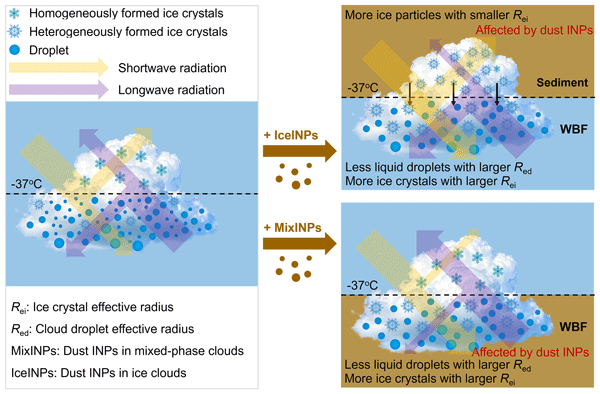
Mineral dust can initiate ice formation in clouds, affecting cloud properties and regional climate. Using an improved model, we examined their contrasting impacts in mixed-phase and ice clouds over East Asia. In mixed-phase clouds, dust promotes liquid-to-ice conversion and reduces cloud reflectivity, causing moderate warming, whereas in ice clouds, it greatly enhances ice formation and leads to stronger warming. This study advances understanding of aerosol–cloud–climate interactions.
Yuyan Long, Delong Zhao, Yun Zhang, Dantong Liu, Jing Duan, and Mengyu Huang
EGUsphere, https://doi.org/10.5194/egusphere-2026-4431, https://doi.org/10.5194/egusphere-2026-4431, 2026
Short summary
Short summary
Convective clouds exhibited high ice concentrations over the Tibetan Plateau. We use aircraft data to study extra ice formation. Multiple natural processes generate extra ice across a wider range than traditional theories suggest. The presence of supercooled droplets is essential, but their size, rather than their number alone, determines whether multiplication begins. Temperature and the amounts of other cloud particles control ice enhancement intensity.
Jiayao Yu, Shuyu Zhao, Weiwei Liu, Chong Wei, Honghui Xu, Lihua Wang, Gang Yang, Weiwei Sun, and Tian Feng
EGUsphere, https://doi.org/10.5194/egusphere-2026-2606, https://doi.org/10.5194/egusphere-2026-2606, 2026
Short summary
Short summary
We improve WRF-VPRM for CO2 exchange in China's agricultural regions by replacing the single cropland category with rice, wheat, and maize modules. Using high-resolution daily crop maps and growth data, the model captures distinct photosynthetic traits and schedules. Validated against satellite and ground-based measurements, it agrees well with provincial grain yields, enabling accurate quantification of diverse agricultural impacts on regional carbon budgets.
Jun Wang, Honghui Xu, Wei Xiao, Yuting Pang, Ning Hu, Jiaping Xu, Yibo Liu, Lingbing Bu, Chang Cao, Zhonghao Yang, Tianhao Wang, Lei Jia, Jinhui Wu, Mi Zhang, and Xuhui Lee
Atmos. Chem. Phys., 26, 8169–8184, https://doi.org/10.5194/acp-26-8169-2026, https://doi.org/10.5194/acp-26-8169-2026, 2026
Short summary
Short summary
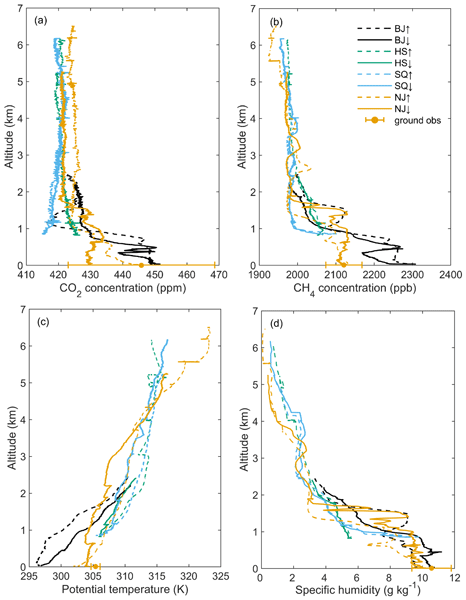
We focused on CO2 and CH4 characteristics in urban atmospheric boundary layer (ABL). Results showed that CO2 and CH4 in the ABL were consistently higher than those in the free atmosphere. The inversion jump values of CO2 and CH4 over Beijing were both larger than those over Nanjing. Based on CH4 : CO2, we found that inventory might have overlooked the energy transition occurring in cities, while also demonstrating that one-dimensional slab model is inadequate for urban greenhouse gas budgets.
Yi Zhang, Weiqi Xu, Yan Li, Guohua Zhang, Dantong Liu, Ye Kuang, Yu Zhang, Wei Zhou, Xiaocong Peng, Bojiang Su, Weihong Huang, Zijun Zhang, Liu Yang, Yangzhou Wu, Siyuan Li, Shitong Zhao, Lanzhong Liu, Xiaole Pan, Zifa Wang, Xinhui Bi, Mikael Ehn, Douglas R. Worsnop, and Yele Sun
Atmos. Chem. Phys., 26, 5617–5634, https://doi.org/10.5194/acp-26-5617-2026, https://doi.org/10.5194/acp-26-5617-2026, 2026
Short summary
Short summary
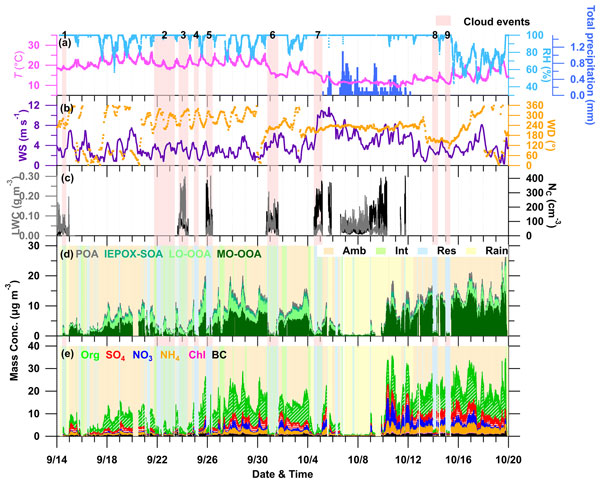
This study explores how clouds influence the chemical composition of air particles through field research at a high-altitude station in southeastern China across different seasons. We found that different cloud types cause varying degrees of chemical changes in these particles. These findings enhance our understanding of the impact of clouds on air quality and contribute to improving climate models.
Chenjie Yu, Paola Formenti, Joel F. de Brito, Astrid Bauville, Antonin Bergé, Hichem Bouzidi, Mathieu Cazaunau, Manuela Cirtog, Claudia Di Biagio, Ludovico Di Antonio, Cécile Gaimoz, Franck Maisonneuve, Pascal Zapf, Tobias Seubert, Simone T. Andersen, Patrick Dewald, Gunther N. T. E. Türk, John N. Crowley, Alexandre Kukui, Chaoyang Xue, Cyrielle Denjean, Olivier Garrouste, Jean-Claude Etienne, Huihui Wu, James D. Allan, Dantong Liu, Yangzhou Wu, Christopher Cantrell, and Vincent Michoud
Atmos. Chem. Phys., 26, 5313–5332, https://doi.org/10.5194/acp-26-5313-2026, https://doi.org/10.5194/acp-26-5313-2026, 2026
Short summary
Short summary
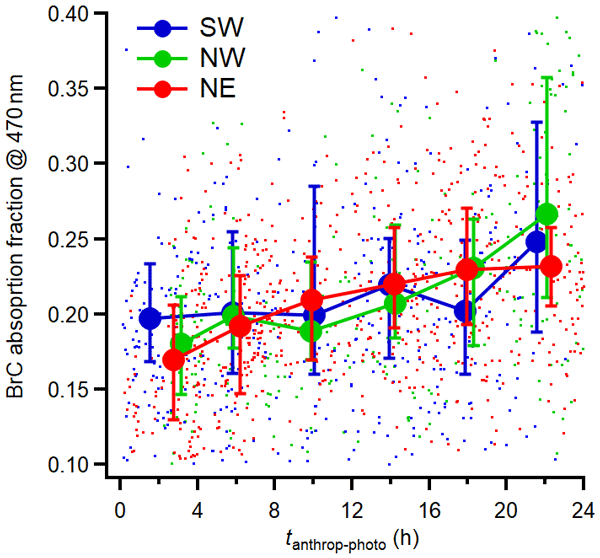
We presented a field measurement in a Paris suburban forest region to characterise the impacts of photochemical aging process on aerosol physical chemical properties. Photochemical production of organic aerosols increased forest fine particle mass and significantly enhanced absorption of short-wavelength sunlight. This study highlights the critical need to incorporate light absorbing carbonaceous particles formation mechanisms into models to accurately simulate their direct radiative impacts.
Ju Li, Jingjiang Zhang, Mengxin Bai, Jie Su, Qingchun Li, and Xingcan Jia
Atmos. Chem. Phys., 25, 8683–8700, https://doi.org/10.5194/acp-25-8683-2025, https://doi.org/10.5194/acp-25-8683-2025, 2025
Short summary
Short summary
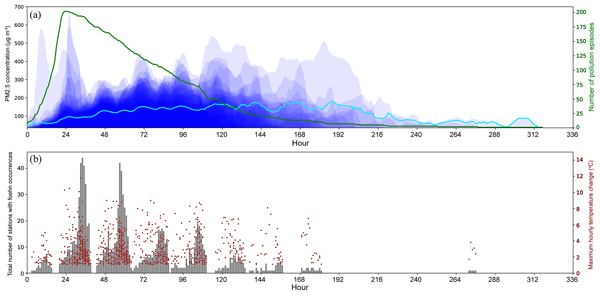
This research examines foehn events in Beijing using weather station data from 2015 to 2020. We found an average of 56.5 foehn days annually, primarily in winter. These winds can raise temperatures significantly and are associated with air pollution levels. Strong foehn winds tend to reduce pollution, while weaker winds may increase it. Our study highlights the impact of foehn events on air quality, providing valuable insights for urban planning and environmental management.
Kang Hu, Hong Liao, Dantong Liu, Jianbing Jin, Lei Chen, Siyuan Li, Yangzhou Wu, Changhao Wu, Shitong Zhao, Xiaotong Jiang, Ping Tian, Kai Bi, Ye Wang, and Delong Zhao
Geosci. Model Dev., 18, 3623–3634, https://doi.org/10.5194/gmd-18-3623-2025, https://doi.org/10.5194/gmd-18-3623-2025, 2025
Short summary
Short summary
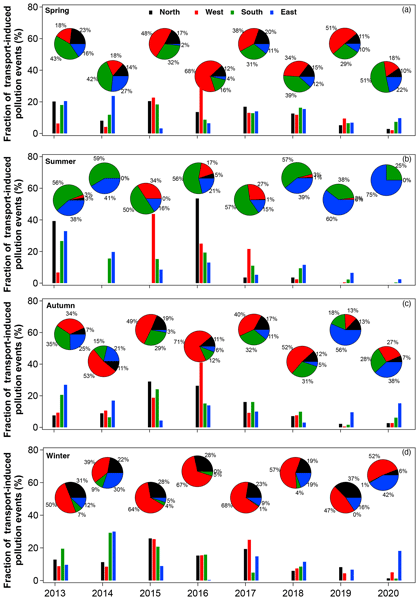
This study combines machine learning with concentration-weighted trajectory analysis to quantify regional transport PM2.5. From 2013–2020, local emissions dominated Beijing's pollution events. The Air Pollution Prevention and Control Action Plan reduced regional transport pollution, but the eastern region showed the smallest decrease. Beijing should prioritize local emission reduction while considering the east region's contributions in future strategies.
Quan Liu, Xiaojing Shen, Junying Sun, Yangmei Zhang, Bing Qi, Qianli Ma, Lujie Han, Honghui Xu, Xinyao Hu, Jiayuan Lu, Shuo Liu, Aoyuan Yu, Linlin Liang, Qian Gao, Hong Wang, Huizheng Che, and Xiaoye Zhang
Atmos. Chem. Phys., 25, 3253–3267, https://doi.org/10.5194/acp-25-3253-2025, https://doi.org/10.5194/acp-25-3253-2025, 2025
Short summary
Short summary
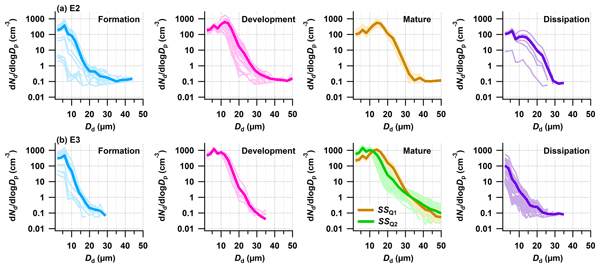
Through simultaneous measurements of aerosol particles and fog droplets, the evolution of droplets size distribution during the eight observed fog events was investigated. The results showed that the concentration and size distribution of pre-fog aerosol had significant impacts on fog microphysical characteristics. The extinction of fog interstitial particles played an important role in visibility degradation for light fogs, especially in polluted regions.
Yuanmou Du, Dantong Liu, Delong Zhao, Mengyu Huang, Ping Tian, Dian Wen, Wei Xiao, Wei Zhou, Hui He, Baiwan Pan, Dongfei Zuo, Xiange Liu, Yingying Jing, Rong Zhang, Jiujiang Sheng, Fei Wang, Yu Huang, Yunbo Chen, and Deping Ding
Atmos. Chem. Phys., 24, 13429–13444, https://doi.org/10.5194/acp-24-13429-2024, https://doi.org/10.5194/acp-24-13429-2024, 2024
Short summary
Short summary
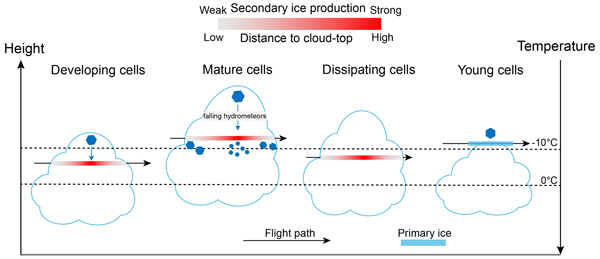
By conducting in situ measurements, we investigated ice production processes in stratiform clouds with embedded convection over the North China Plain. The results show that the ice number concentration is strongly related to the distance to the cloud top, and the level with a larger distance to the cloud top has more graupel falling from upper levels, which promotes collision and coalescence between graupel and droplets and enhances secondary ice production.
Ping Tian, Dantong Liu, Kang Hu, Yangzhou Wu, Mengyu Huang, Hui He, Jiujiang Sheng, Chenjie Yu, Dawei Hu, and Deping Ding
Atmos. Chem. Phys., 24, 5149–5164, https://doi.org/10.5194/acp-24-5149-2024, https://doi.org/10.5194/acp-24-5149-2024, 2024
Short summary
Short summary
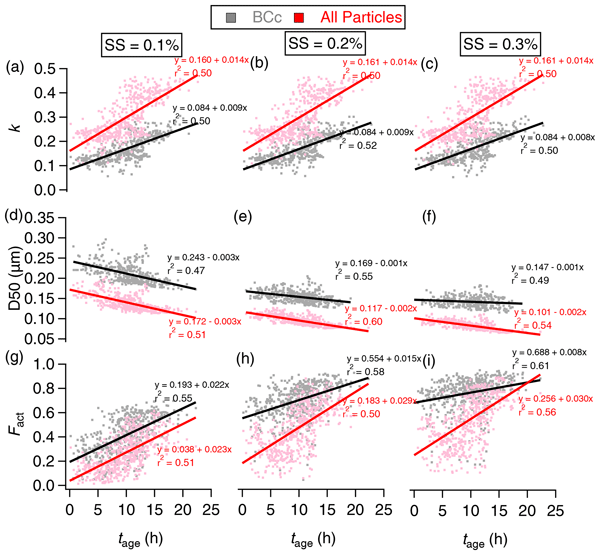
The results provide direct evidence of efficient droplet activation of black carbon (BC). The cloud condensation nuclei (CCN) activation fraction of BC was higher than for all particles, suggesting higher CCN activity of BC, even though its hygroscopicity is lower. Our research reveals that the evolution of BC's hygroscopicity and its CCN activation properties through atmospheric aging can be effectively characterized by the photochemical age.
Zhiheng Liao, Meng Gao, Jinqiang Zhang, Jiaren Sun, Jiannong Quan, Xingcan Jia, Yubing Pan, and Shaojia Fan
Atmos. Chem. Phys., 24, 3541–3557, https://doi.org/10.5194/acp-24-3541-2024, https://doi.org/10.5194/acp-24-3541-2024, 2024
Short summary
Short summary
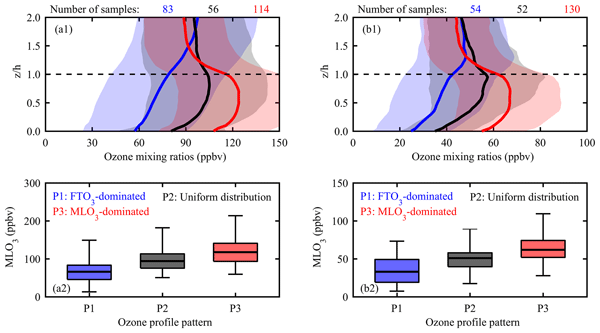
This study collected 1897 ozonesondes from two Chinese megacities (Beijing and Hong Kong) in 2000–2022 to investigate the climatological vertical heterogeneity of lower-tropospheric ozone distribution with a mixing-layer-height-referenced (h-referenced) vertical coordinate system. This vertical coordinate system highlighted O3 stratification features existing at the mixing layer–free troposphere interface and provided a better understanding of O3 pollution in urban regions.
Zhiheng Liao, Jinqiang Zhang, Yubin Pan, Xingcan Jia, Pengkun Ma, Qianqian Wang, Zhigang Cheng, Lindong Dai, and Jiannong Quan
EGUsphere, https://doi.org/10.5194/egusphere-2023-1393, https://doi.org/10.5194/egusphere-2023-1393, 2023
Preprint withdrawn
Short summary
Short summary
This study presents the first systematic assessment of observationally constrained UTLS O3 variability over the Northeast Asia region in the framework of upper-level circulation pattern classification. The results indicate that lower-stratospheric O3 exhibits a far stronger sensitivity to upper-level circulation patterns when compared with upper-tropospheric O3. The progression of the East Asian Trough plays a critical role in determining the location and intensity of O3 enhancements.
Jiaxin Li, Kunpeng Zang, Yi Lin, Yuanyuan Chen, Shuo Liu, Shanshan Qiu, Kai Jiang, Xuemei Qing, Haoyu Xiong, Haixiang Hong, Shuangxi Fang, Honghui Xu, and Yujun Jiang
Atmos. Meas. Tech., 16, 4757–4768, https://doi.org/10.5194/amt-16-4757-2023, https://doi.org/10.5194/amt-16-4757-2023, 2023
Short summary
Short summary
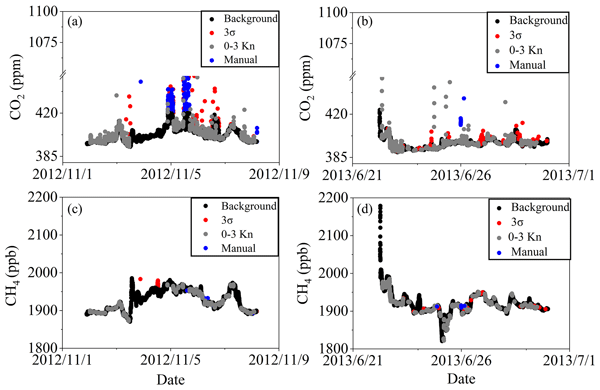
Based on observed data of CO2 and CH4 and meteorological parameters over the Yellow Sea in November 2012 and June 2013, a data process and quality control method was optimized and established to filter the data influenced by multiple factors. Spatial and seasonal variations in CO2 and CH4 mixing ratios were mainly controlled by the East Asian Monsoon, while the influence of air–sea exchange was slight.
Naifu Shao, Chunsong Lu, Xingcan Jia, Yuan Wang, Yubin Li, Yan Yin, Bin Zhu, Tianliang Zhao, Duanyang Liu, Shengjie Niu, Shuxian Fan, Shuqi Yan, and Jingjing Lv
Atmos. Chem. Phys., 23, 9873–9890, https://doi.org/10.5194/acp-23-9873-2023, https://doi.org/10.5194/acp-23-9873-2023, 2023
Short summary
Short summary
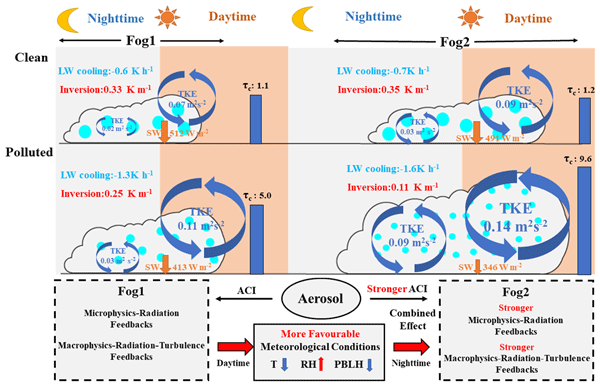
Fog is an important meteorological phenomenon that affects visibility. Aerosols and the planetary boundary layer (PBL) play critical roles in the fog life cycle. In this study, aerosol-induced changes in fog properties become more remarkable in the second fog (Fog2) than in the first fog (Fog1). The reason is that aerosol–cloud interaction (ACI) delays Fog1 dissipation, leading to the PBL meteorological conditions being more conducive to Fog2 formation and to stronger ACI in Fog2.
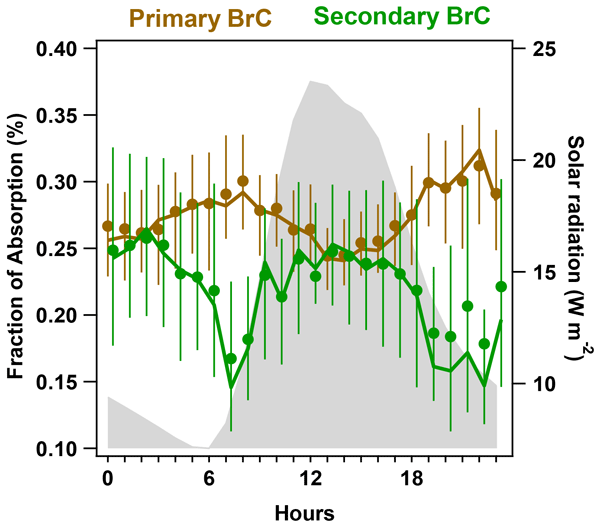
Qian Li, Dantong Liu, Xiaotong Jiang, Ping Tian, Yangzhou Wu, Siyuan Li, Kang Hu, Quan Liu, Mengyu Huang, Ruijie Li, Kai Bi, Shaofei Kong, Deping Ding, and Chenjie Yu
Atmos. Chem. Phys., 23, 9439–9453, https://doi.org/10.5194/acp-23-9439-2023, https://doi.org/10.5194/acp-23-9439-2023, 2023
Short summary
Short summary
By attributing the shortwave absorption from black carbon, primary organic aerosol and secondary organic aerosol in a suburban environment, we firstly observed that the photochemically produced nitrogen-containing secondary organic aerosol may contribute to the enhancement of brown carbon absorption, partly compensating for some bleaching effect on the absorption of primary organic aerosol, hereby exerting radiative impacts.
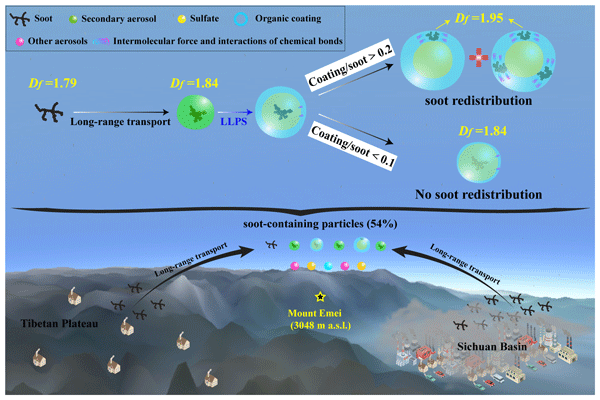
Qi Yuan, Yuanyuan Wang, Yixin Chen, Siyao Yue, Jian Zhang, Yinxiao Zhang, Liang Xu, Wei Hu, Dantong Liu, Pingqing Fu, Huiwang Gao, and Weijun Li
Atmos. Chem. Phys., 23, 9385–9399, https://doi.org/10.5194/acp-23-9385-2023, https://doi.org/10.5194/acp-23-9385-2023, 2023
Short summary
Short summary
This study for the first time found large amounts of liquid–liquid phase separation particles with soot redistributing in organic coatings instead of sulfate cores in the eastern Tibetan Plateau atmosphere. The particle size and the ratio of the organic matter coating thickness to soot size are two of the major possible factors that likely affect the soot redistribution process. The soot redistribution process promoted the morphological compaction of soot particles.
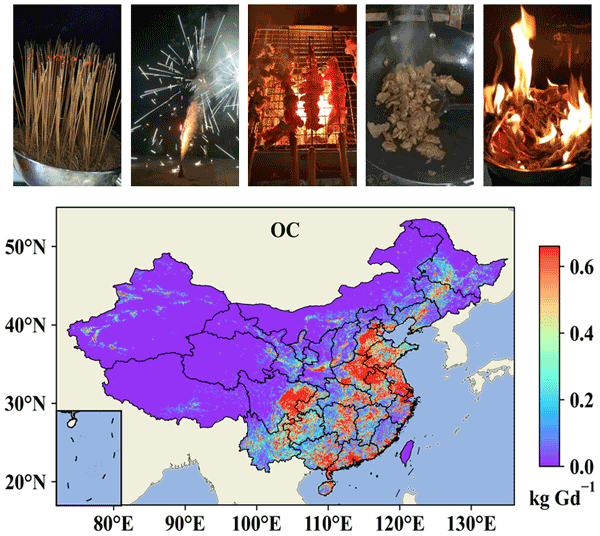
Yi Cheng, Shaofei Kong, Liquan Yao, Huang Zheng, Jian Wu, Qin Yan, Shurui Zheng, Yao Hu, Zhenzhen Niu, Yingying Yan, Zhenxing Shen, Guofeng Shen, Dantong Liu, Shuxiao Wang, and Shihua Qi
Earth Syst. Sci. Data, 14, 4757–4775, https://doi.org/10.5194/essd-14-4757-2022, https://doi.org/10.5194/essd-14-4757-2022, 2022
Short summary
Short summary
This work establishes the first emission inventory of carbonaceous aerosols from cooking, fireworks, sacrificial incense, joss paper burning, and barbecue, using multi-source datasets and tested emission factors. These emissions were concentrated in specific periods and areas. Positive and negative correlations between income and emissions were revealed in urban and rural regions. The dataset will be helpful for improving modeling studies and modifying corresponding emission control policies.
Li Yi and King-Fai Li
Atmos. Chem. Phys. Discuss., https://doi.org/10.5194/acp-2022-593, https://doi.org/10.5194/acp-2022-593, 2022
Preprint withdrawn
Short summary
Short summary
Thorough understanding of the climatology of marine fog is highly relevant to marine traffic safety under global change. The definition of marine fog frequency commonly used in previous research has ignored the fact that marine fog itself impacts the cruising speeds of the ships due to human’s decisions on safety, which lead to a sampling bias in fog conditions and hence the apparent frequency of the marine fog occurrences, especially in coastal regions with heavy marine traffic.
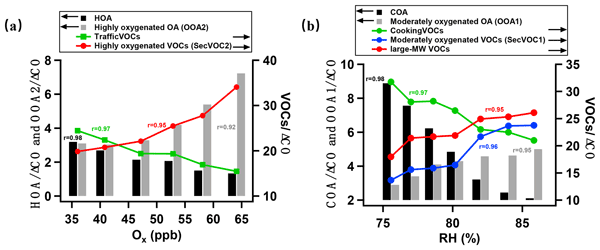
Siyuan Li, Dantong Liu, Shaofei Kong, Yangzhou Wu, Kang Hu, Huang Zheng, Yi Cheng, Shurui Zheng, Xiaotong Jiang, Shuo Ding, Dawei Hu, Quan Liu, Ping Tian, Delong Zhao, and Jiujiang Sheng
Atmos. Chem. Phys., 22, 6937–6951, https://doi.org/10.5194/acp-22-6937-2022, https://doi.org/10.5194/acp-22-6937-2022, 2022
Short summary
Short summary
The understanding of secondary organic aerosols is hindered by the aerosol–gas evolution by different oxidation mechanisms. By concurrently measuring detailed mass spectra of aerosol and gas phases in a megacity online, we identified the primary and secondary source sectors and investigated the transformation between gas and aerosol phases influenced by photooxidation and moisture. The results will help us to understand the respective evolution of major sources in a typical urban environment.
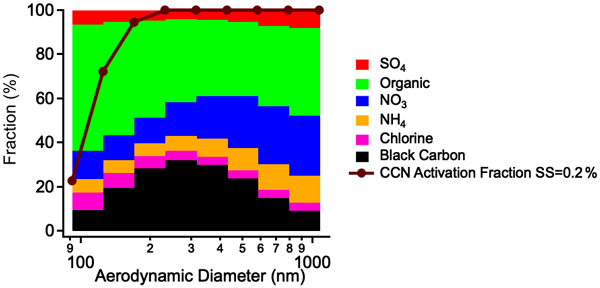
Chenjie Yu, Dantong Liu, Kang Hu, Ping Tian, Yangzhou Wu, Delong Zhao, Huihui Wu, Dawei Hu, Wenbo Guo, Qiang Li, Mengyu Huang, Deping Ding, and James D. Allan
Atmos. Chem. Phys., 22, 4375–4391, https://doi.org/10.5194/acp-22-4375-2022, https://doi.org/10.5194/acp-22-4375-2022, 2022
Short summary
Short summary
In this study, we applied a new technique to investigate the aerosol properties on both a mass and number basis and CCN abilities in Beijing suburban regions. The size-resolved aerosol chemical compositions and CCN activation measurement enable a detailed analysis of BC-containing particle hygroscopicity and its size-dependent contribution to the CCN activation. The results presented in this study will affect future models and human health studies.
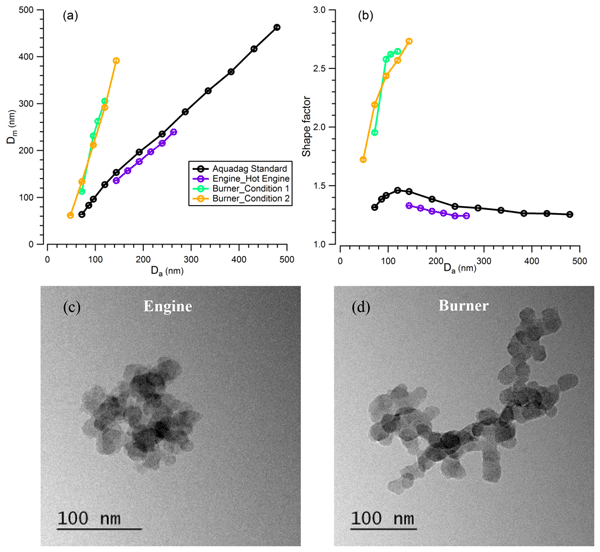
Dawei Hu, M. Rami Alfarra, Kate Szpek, Justin M. Langridge, Michael I. Cotterell, Claire Belcher, Ian Rule, Zixia Liu, Chenjie Yu, Yunqi Shao, Aristeidis Voliotis, Mao Du, Brett Smith, Greg Smallwood, Prem Lobo, Dantong Liu, Jim M. Haywood, Hugh Coe, and James D. Allan
Atmos. Chem. Phys., 21, 16161–16182, https://doi.org/10.5194/acp-21-16161-2021, https://doi.org/10.5194/acp-21-16161-2021, 2021
Short summary
Short summary
Here, we developed new techniques for investigating these properties in the laboratory and applied these to BC and BrC from different sources, including diesel exhaust, inverted propane flame and wood combustion. These have allowed us to quantify the changes in shape and chemical composition of different soots according to source and variables such as the moisture content of wood.
Cited articles
Anthis, A. I. and Cracknell, A. P.: Use of satellite images for fog detection (AVHRR) and forecast of fog dissipation (METEOSAT) over lowland thessalia, hellas, Int. J. Remote Sens., 20, 1107–1124, https://doi.org/10.1080/014311699212876, 1999.
Cermak, J. and Bendix, J.: A novel approach to fog/low stratus detection using meteosat 8 data, Atmos. Res., 87, 279–292, https://doi.org/10.1016/j.atmosres.2007.11.009, 2008.
Copernicus Climate Change Service: ERA5 hourly data on single levels from 1940 to present, Copernicus Climate Change Service (C3S) Climate Data Store (CDS) [data set], https://doi.org/10.24381/cds.adbb2d47, 2023.
Ellrod, G. P.: Advances in the detection and analysis of fog at night using GOES multispectral infrared imagery, Weather Forecast., 10, 606–619, https://doi.org/10.1175/1520-0434(1995)010<0606:AITDAA>2.0.CO;2, 1995.
Eyre, J. R., Brownscombe, J. L., and Allam, R. J.: Detection of fog at night using advanced very high resolution radiometer (AVHRR) imagery, Meteorol. Mag., 113, 266–271, 1984.
Gultepe, I., Pagowski, M., and Reid, J.: A Satellite-Based Fog Detection Scheme Using Screen Air Temperature, Weather Forecast., 22, 444–456, https://doi.org/10.1175/WAF1011.1, 2007a.
Gultepe, I., Tardif, R., Michaelides, S. C., Cermak, J., Bott, A., Bendix, J., Müller, M. D., Pagowski, M., Hansen, B., Ellrod, G., Jacobs, W., Toth, G., and Cober, S. G.: Fog research: A review of past achievements and future perspectives, Pure Appl. Geophys., 164, 1121–1159, https://doi.org/10.1007/s00024-007-0211-x, 2007b.
Gultepe, I., Zhou, B., Milbrandt, J., Bott, A., Li, Y., Heymsfield, A. J., Ferrier, B., Ware, R., Pavolonis, M., Kuhn, T., Gurka, J., Liu, P., and Cermak, J.: A review on ice fog measurements and modeling, Atmos. Res., 151, 2–19, https://doi.org/10.1016/j.atmosres.2014.04.014, 2015.
Gultepe, I., Sharman, R., Williams, P. D., Zhou, B., Ellrod, G., Minnis, P., Trier, S., Griffin, S., Yum, Seong. S., Gharabaghi, B., Feltz, W., Temimi, M., Pu, Z., Storer, L. N., Kneringer, P., Weston, M. J., Chuang, H., Thobois, L., Dimri, A. P., Dietz, S. J., França, G. B., Almeida, M. V., and Neto, F. L. A.: A Review of High Impact Weather for Aviation Meteorology, Pure Appl. Geophys., 176, 1869–1921, https://doi.org/10.1007/s00024-019-02168-6, 2019.
Hersbach, H., Bell, B., Berrisford, P., Hirahara, S., Horányi, A., Muñoz-Sabater, J., Nicolas, J., Peubey, C., Radu, R., Schepers, D., Simmons, A., Soci, C., Abdalla, S., Abellan, X., Balsamo, G., Bechtold, P., Biavati, G., Bidlot, J., Bonavita, M., Chiara, G. D., Dahlgren, P., Dee, D., Diamantakis, M., Dragani, R., Flemming, J., Forbes, R., Fuentes, M., Geer, A., Haimberger, L., Healy, S., Hogan, R. J., Hólm, E., Janisková, M., Keeley, S., Laloyaux, P., Lopez, P., Lupu, C., Radnoti, G., Rosnay, P. de, Rozum, I., Vamborg, F., Villaume, S., and Thépaut, J.-N.: The ERA5 global reanalysis, Q. J. Roy. Meteor. Soc., 146, 1999–2049, https://doi.org/10.1002/qj.3803, 2020.
Hu, J., Shen, L., and Sun, G.: Squeeze-and-excitation networks, Proceedings of the IEEE Conference on Computer Vision and Pattern Recognition, 7132–7141, https://doi.org/10.1109/CVPR.2018.00745, 2018.
Huang, Y., Wu, M., Guo, J., Zhang, C., and Xu, M.: A Correlation Context-Driven Method for Sea Fog Detection in Meteorological Satellite Imagery, IEEE Geosci. Remote S., 19, 1–5, https://doi.org/10.1109/LGRS.2021.3095731, 2022.
Hunt, G. E.: Radiative properties of terrestrial clouds at visible and infra-red thermal window wavelengths, Q. J. Roy. Meteor. Soc., 99, 346–369, https://doi.org/10.1002/qj.49709942013, 1973.
Hutchison, K. D., Iisager, B. D., Kopp, T. J., and Jackson, J. M.: Distinguishing aerosols from clouds in global, multispectral satellite data with automated cloud classification algorithms, J. Atmos. Ocean. Tech., 25, 501–518, https://doi.org/10.1175/2007JTECHA1004.1, 2008.
Ioffe, S. and Szegedy, C.: Batch normalization: accelerating deep network training by reducing internal covariate shift, in: Proceedings of the 32nd International Conference on Machine Learning, Proceedings of Machine Learning Research, 37, 448–456, https://proceedings.mlr.press/v37/ioffe15.html (last access: 21 October 2026), 2015.
Israël, H. and Kasten, F.: KOSCHMIEDERs Theorie der horizontalen Sichtweite, in: Die Sichtweite im Nebel und die Möglichkeiten ihrer künstlichen Beeinflussung, VS Verlag für Sozialwissenschaften, Wiesbaden, 7–10, https://doi.org/10.1007/978-3-663-04661-5_2, 1959.
Jeon, H.-K., Kim, S., Edwin, J., and Yang, C.-S.: Sea Fog Identification from GOCI Images Using CNN Transfer Learning Models, Electronics, 9, 311, https://doi.org/10.3390/electronics9020311, 2020.
Jia, X., Lu, C., Liao, Z., Tian, P., Wang, Y., Wang, F., Yang, S., Dou, Y., Liu, X., and Liu, Y.: Comprehensive Analysis of the Relative Dispersion of Droplet-Size Distributions and Their Relationships to Key Physical Fog Processes Under Different Aerosol Conditions and Evolutionary Stages, Adv. Atmos. Sci., 43, 861–873, https://doi.org/10.1007/s00376-025-4228-9, 2026.
Koračin, D., Dorman, C. E., Lewis, J. M., Hudson, J. G., Wilcox, E. M., and Torregrosa, A.: Marine fog: a review, Atmos. Res., 143, 142–175, https://doi.org/10.1016/j.atmosres.2013.12.012, 2014.
Krizhevsky, A., Sutskever, I., and Hinton, G. E.: ImageNet classification with deep convolutional neural networks, Adv. Neur. In., 25, 1097–1105, 2012.
Lee, T. F., Turk, F. J., and Richardson, K.: Stratus and fog products using GOES-8–9 3.9-µm data, Weather Forecast., 12, 664–677, https://doi.org/10.1175/1520-0434(1997)012<0664:SAFPUG>2.0.CO;2, 1997.
Li, Z., Guo, J., Ding, A., Liao, H., Liu, J., Sun, Y., Wang, T., Xue, H., Zhang, H., and Zhu, B.: Aerosol and boundary-layer interactions and impact on air quality, Natl. Sci. Rev., 4, 810–833, https://doi.org/10.1093/nsr/nwx117, 2017.
Lin, T.-Y., Goyal, P., Girshick, R., He, K., and Dollar, P.: Focal loss for dense object detection, Proceedings of the IEEE International Conference on Computer Vision, 2999–3007, https://doi.org/10.1109/ICCV.2017.324, 2017.
Liu, Y. and Daum, P. H.: Indirect warming effect from dispersion forcing, Nature, 419, 580–581, https://doi.org/10.1038/419580a, 2002.
Lyu, R., Wang, Y., Peng, Y., Gao, W., Yang, H., Tan, X., He, Q., Cheng, T., and Zhang, R.: Long-term variation characteristics and influencing factors of low-visibility events on the coast of China, Atmos. Res., 257, 105583, https://doi.org/10.1016/j.atmosres.2021.105583, 2021.
Ma, N., Zhao, C., Chen, J., Xu, W., Yan, P., and Zhou, X.: A novel method for distinguishing fog and haze based on PM2.5, visibility, and relative humidity, Sci. China Earth Sci., 57, 2156–2164, https://doi.org/10.1007/s11430-014-4885-5, 2014.
Mason, J.: The Physics of Radiation Fog, J. Meteorol. Soc. Jpn. Ser. II, 60, 486–499, https://doi.org/10.2151/jmsj1965.60.1_486, 1982.
Mazoyer, M., Burnet, F., Denjean, C., Roberts, G. C., Haeffelin, M., Dupont, J.-C., and Elias, T.: Experimental study of the aerosol impact on fog microphysics, Atmos. Chem. Phys., 19, 4323–4344, https://doi.org/10.5194/acp-19-4323-2019, 2019.
Miller, M. R., Raftis, J. B., Langrish, J. P., McLean, S. G., Samutrtai, P., Connell, S. P., Wilson, S., Vesey, A. T., Fokkens, P. H. B., Boere, A. J. F., Krystek, P., Campbell, C. J., Hadoke, P. W. F., Donaldson, K., Cassee, F. R., Newby, D. E., Duffin, R., and Mills, N. L.: Inhaled Nanoparticles Accumulate at Sites of Vascular Disease, ACS Nano, 11, 4542–4552, https://doi.org/10.1021/acsnano.6b08551, 2017.
Milletari, F., Navab, N., and Ahmadi, S.-A.: V-net: fully convolutional neural networks for volumetric medical image segmentation, in: 2016 Fourth International Conference on 3D Vision (3DV), 2016 Fourth International Conference on 3D Vision (3DV), 565–571, https://doi.org/10.1109/3DV.2016.79, 2016.
Ministry of Environmental Protection of the People's Republic of China and General Administration of Quality Supervision, Inspection and Quarantine of the People's Republic of China: Ambient air quality standards (GB 3095-2012), China Environmental Science Press, Beijing, China, https://www.mee.gov.cn/ywgz/fgbz/bz/bzwb/dqhjbh/dqhjzlbz/201203/t20120302_224165.shtml (last access: 21 October 2026), 2012.
Niu, F., Li, Z., Li, C., Lee, K.-H., and Wang, M.: Increase of wintertime fog in China: Potential impacts of weakening of the Eastern Asian monsoon circulation and increasing aerosol loading, J. Geophys. Res.-Atmos., 115, https://doi.org/10.1029/2009JD013484, 2010.
Pauli, E., Andersen, H., Bendix, J., Cermak, J., and Egli, S.: Determinants of fog and low stratus occurrence in continental central europe – a quantitative satellite-based evaluation, J. Hydrol., 591, 125451, https://doi.org/10.1016/j.jhydrol.2020.125451, 2020.
Peng, J., Hu, M., Shang, D., Wu, Z., Du, Z., Tan, T., Wang, Y., Zhang, F., and Zhang, R.: Explosive Secondary Aerosol Formation during Severe Haze in the North China Plain, Environ. Sci. Technol., 55, 2189–2207, https://doi.org/10.1021/acs.est.0c07204, 2021.
Pope III, C. A. and Dockery, D. W.: Health Effects of Fine Particulate Air Pollution: Lines that Connect, J. Air Waste Manage., 56, 709–742, https://doi.org/10.1080/10473289.2006.10464485, 2006.
Roach, W. T., Brown, R., Caughey, S. J., Garland, J. A., and Readings, C. J.: The physics of radiation fog: I – a field study, Q. J. Roy. Meteor. Soc., 102, 313–333, https://doi.org/10.1002/qj.49710243204, 1976.
Shin, D. and Kim, J.-H.: A New Application of Unsupervised Learning to Nighttime Sea Fog Detection, Asia Pac. J. Atmos. Sci., 54, 527–544, https://doi.org/10.1007/s13143-018-0050-y, 2018.
Sun, Y., Jiang, Q., Xu, Y., Ma, Y., Zhang, Y., Liu, X., Li, W., Wang, F., Li, J., Wang, P., and Li, Z.: Aerosol characterization over the North China Plain: Haze life cycle and biomass burning impacts in summer, J. Geophys. Res.-Atmos., 121, 2508–2521, https://doi.org/10.1002/2015JD024261, 2016.
Twomey, S.: The Influence of Pollution on the Shortwave Albedo of Clouds, J. Atmos. Sci., 34, 1149–1152, https://doi.org/10.1175/1520-0469(1977)034<1149:TIOPOT>2.0.CO;2, 1977.
Wagh, S., Krishnamurthy, R., Wainwright, C., Wang, S., Dorman, C. E., Fernando, H. J. S., and Gultepe, I.: Study of Stratus-Lowering Marine-Fog Events Observed During C-FOG, Bound.-Lay. Meteorol., 181, 317–344, https://doi.org/10.1007/s10546-021-00670-w, 2021.
Wang, J., Wang, G., Wu, C., Li, J., Cao, C., Li, J., Xie, Y., Ge, S., Chen, J., Zeng, L., Zhu, T., Zhang, R., and Kawamura, K.: Enhanced aqueous-phase formation of secondary organic aerosols due to the regional biomass burning over North China Plain, Environ. Pollut., 256, 113401, https://doi.org/10.1016/j.envpol.2019.113401, 2020.
Wang, Q., Yamaguchi, R. T., Kalogiros, J. A., Daniels, Z., Alappattu, D. P., Jonsson, H., Alvarenga, O., Olson, A., Wauer, B. J., Ortiz-Suslow, D. G., and Fernando, H. J.: Microphysics and Optical Attenuation in Fog: Observations from Two Coastal Sites, Bound.-Lay. Meteorol., 181, 267–292, https://doi.org/10.1007/s10546-021-00675-5, 2021.
Wei, J., Li, Z., Pinker, R. T., Wang, J., Sun, L., Xue, W., Li, R., and Cribb, M.: Himawari-8-derived diurnal variations in ground-level PM2.5 pollution across China using the fast space-time Light Gradient Boosting Machine (LightGBM), Atmos. Chem. Phys., 21, 7863–7880, https://doi.org/10.5194/acp-21-7863-2021, 2021.
Woo, S., Park, J., Lee, J.-Y., and Kweon, I. S.: CBAM: convolutional block attention module, Proceedings of the European Conference on Computer Vision (ECCV), 3–19, https://doi.org/10.1007/978-3-030-01234-2_1, 2018.
World Meteorological Organization (WMO): Guide to Instruments and Methods of Observation (WMO-No. 8), https://community.wmo.int/site/knowledge-hub/programmes-and-initiatives/instruments-and-methods-of-observation-programme-imop/guide-instruments-and-methods-of-observation-wmo-no-8-0 (last access: 10 June 2026), 2025.
Wu, D., Lu, B., Zhang, T., and Yan, F.: A method of detecting sea fogs using CALIOP data and its application to improve MODIS-based sea fog detection, J. Quant. Spectrosc. Ra., 153, 88–94, https://doi.org/10.1016/j.jqsrt.2014.09.021, 2015.
Wu, J., Bei, N., Hu, B., Liu, S., Zhou, M., Wang, Q., Li, X., Liu, L., Feng, T., Liu, Z., Wang, Y., Cao, J., Tie, X., Wang, J., Molina, L. T., and Li, G.: Aerosol–radiation feedback deteriorates the wintertime haze in the North China Plain, Atmos. Chem. Phys., 19, 8703–8719, https://doi.org/10.5194/acp-19-8703-2019, 2019.
Wu, Y., Liu, Q., Liu, D., Tian, P., Xu, W., Wang, J., Hu, K., Li, S., Jiang, X., Wang, F., Huang, M., Ding, D., Yu, C., and Hu, D.: Enhanced formation of nitrogenous organic aerosols and brown carbon after aging in the planetary boundary layer, npj Clim. Atmos. Sci., 7, 179, https://doi.org/10.1038/s41612-024-00726-x, 2024.
Xu, M., Chen, K., Guo, H., Huang, Y., Wu, M., Shi, Z., Zhang, C., and Guo, J.: MFogHub: bridging multi-regional and multi-satellite data for global marine fog detection and forecasting, in: 2025 IEEE/CVF Conference on Computer Vision and Pattern Recognition (CVPR), 12637–12646, https://doi.org/10.1109/CVPR52734.2025.01179, 2025.
Yang, J., Zhang, Z., Wei, C., Lu, F., and Guo, Q.: Introducing the new generation of chinese geostationary weather satellites, fengyun-4, B. Am. Meteorol. Soc., 98, 1637–1658, https://doi.org/10.1175/BAMS-D-16-0065.1, 2017.
Zhang, Q., Streets, D. G., Carmichael, G. R., He, K. B., Huo, H., Kannari, A., Klimont, Z., Park, I. S., Reddy, S., Fu, J. S., Chen, D., Duan, L., Lei, Y., Wang, L. T., and Yao, Z. L.: Asian emissions in 2006 for the NASA INTEX-B mission, Atmos. Chem. Phys., 9, 5131–5153, https://doi.org/10.5194/acp-9-5131-2009, 2009.
Zhang, R. H., Li, Q., and Zhang, R.: Meteorological conditions for the persistent severe fog and haze event over eastern China in January 2013, Sci. China Earth Sci., 57, 26–35, https://doi.org/10.1007/s11430-013-4774-3, 2014.
Zhang, S. and Yi, L.: A comprehensive dynamic threshold algorithm for daytime sea fog retrieval over the chinese adjacent seas, Pure Appl. Geophys., 170, 1931–1944, https://doi.org/10.1007/s00024-013-0641-6, 2013.
Zhang, X. Y., Wang, Y. Q., Niu, T., Zhang, X. C., Gong, S. L., Zhang, Y. M., and Sun, J. Y.: Atmospheric aerosol compositions in China: spatial/temporal variability, chemical signature, regional haze distribution and comparisons with global aerosols, Atmos. Chem. Phys., 12, 779–799, https://doi.org/10.5194/acp-12-779-2012, 2012.
Zhong, J., Zhang, X., Dong, Y., Wang, Y., Liu, C., Wang, J., Zhang, Y., and Che, H.: Feedback effects of boundary-layer meteorological factors on cumulative explosive growth of PM2.5 during winter heavy pollution episodes in Beijing from 2013 to 2016, Atmos. Chem. Phys., 18, 247–258, https://doi.org/10.5194/acp-18-247-2018, 2018.
Short summary
We identified and quantified low-visibility events over land and sea in eastern China using satellite, weather and pollution data. Our model distinguishes polluted fog from clean fog. Model tests show that a 20% cut in fine particle pollution reduces winter polluted fog area by 43%, but population exposure by only 15%, as the most polluted areas are also densely populated. These findings guide air-quality policies to improve visibility, protect health and support transport safety.
We identified and quantified low-visibility events over land and sea in eastern China using...


Altmetrics
Final-revised paper
Preprint