
Articles | Volume 26, issue 18
https://doi.org/10.5194/acp-26-13581-2026
© Author(s) 2026. This work is distributed under
the Creative Commons Attribution 4.0 License.
the Creative Commons Attribution 4.0 License.
https://doi.org/10.5194/acp-26-13581-2026
© Author(s) 2026. This work is distributed under
the Creative Commons Attribution 4.0 License.
the Creative Commons Attribution 4.0 License.
Research article
| 
29 Sep 2026
Research article |
| 29 Sep 2026
| 29 Sep 2026
Impacts of South Asian aerosol inflow over Mount Qomolangma on downstream cloud–precipitation processes through a long-range ice-crystal “seeding” effect
Xiangde Xu
State Key Laboratory of Severe Weather Meteorological Science and Technology, Chinese Academy of Meteorological Sciences, Beijing 100081, China

State Key Laboratory of Severe Weather Meteorological Science and Technology, Chinese Academy of Meteorological Sciences, Beijing 100081, China
Tianliang Zhao
CORRESPONDING AUTHOR
Key Laboratory for Aerosol-Cloud-Precipitation of China Meteorological Administration, Nanjing University of Information Science and Technology, Nanjing 210044, Jiangsu Province, China
Changjun Yang
Key Laboratory of Radiometric Calibration and Validation for Environmental Satellites, National Satellite Meteorological Center (National Centre for Space Weather), China Meteorological Administration, Beijing 100081, China
Kai Meng
Hebei Key Laboratory of Meteorology and Modern Economy, Hebei Provincial Institute of Meteorological Sciences, Shijiazhuang 050021, China
Chong Wu
State Key Laboratory of Severe Weather Meteorological Science and Technology, Chinese Academy of Meteorological Sciences, Beijing 100081, China
Na Dong
State Key Laboratory of Severe Weather Meteorological Science and Technology, Chinese Academy of Meteorological Sciences, Beijing 100081, China
Department of Atmospheric and Oceanic Sciences & Institute of Atmospheric Sciences, Fudan University, Shanghai 200438, China
Yueqing Li
Heavy Rain and Drought-Flood Disaster in Plateau and Basin Key Laboratory of Sichuan Province, Chengdu Institute of Plateau Meteorology, China Meteorological Administration, Chengdu 610072, China
Shunjiu Wang
Heavy Rain and Drought-Flood Disaster in Plateau and Basin Key Laboratory of Sichuan Province, Chengdu Institute of Plateau Meteorology, China Meteorological Administration, Chengdu 610072, China
Wenqing Liu
Key Laboratory of Environment Optics and Technology, Anhui Institute of Optics and Fine Mechanics, Chinese Academy of Sciences, Hefei 230031, China
Tianshu Zhang
Key Laboratory of Environment Optics and Technology, Anhui Institute of Optics and Fine Mechanics, Chinese Academy of Sciences, Hefei 230031, China
Ga Zhuo
Mêdog National Climate Observatory, Mêdog 860700, China
Shengjun Zhang
State Key Laboratory of Severe Weather Meteorological Science and Technology, Chinese Academy of Meteorological Sciences, Beijing 100081, China
State Key Laboratory of Severe Weather Meteorological Science and Technology, Chinese Academy of Meteorological Sciences, Beijing 100081, China
Chunsong Lu
Key Laboratory for Aerosol-Cloud-Precipitation of China Meteorological Administration, Nanjing University of Information Science and Technology, Nanjing 210044, Jiangsu Province, China
Jinghua Chen
Key Laboratory for Aerosol-Cloud-Precipitation of China Meteorological Administration, Nanjing University of Information Science and Technology, Nanjing 210044, Jiangsu Province, China
Kai Yang
Key Laboratory for Aerosol-Cloud-Precipitation of China Meteorological Administration, Nanjing University of Information Science and Technology, Nanjing 210044, Jiangsu Province, China
Jianming Xu
Shanghai Meteorological Center, Shanghai Meteorological Service, Shanghai 200030, China
Related authors
Guicai Ning, Jiayi Xing, Tianliang Zhao, Shigong Wang, Yuanjian Yang, and Xiangde Xu
EGUsphere, https://doi.org/10.5194/egusphere-2026-5585, https://doi.org/10.5194/egusphere-2026-5585, 2026
This preprint is open for discussion and under review for Atmospheric Chemistry and Physics (ACP).
Short summary
Short summary
Local atmospheric circulations are frequent and diverse over plateau-basin regions, yet their vertical structures remain unclear. Here, we develop and apply a physical-constrained framework to identify terrain-driven circulations over the Tibetan Plateau-Sichuan Basin and quantify their intensity, spatial extent, and central height. Three typical local circulations including one-cell, two-cell, and three-cell circulations are detected, which become more frequent while spatial extent shrinks.
Kai Yang, Jinghua Chen, Tianliang Zhao, Xiangde Xu, Chunsong Lu, Shizuo Fu, Yuehan Luo, Qingjian Yang, Ziqian Liu, Zhikuan Li, Lin Wu, and Yuxiang Jin
EGUsphere, https://doi.org/10.5194/egusphere-2026-869, https://doi.org/10.5194/egusphere-2026-869, 2026
Short summary
Short summary
The Tibetan Plateau has little available moisture and energy, so convection is hard to develop. Large-eddy simulations indicates the lake promotes low-level moistening and lowers the barrier to convective initiation, produces shallow clouds and week rain. Mountain alone force lifting, yet the lack of moisture limits terrain-driven precipitation. Lake-mountain coupling is key: the mountain lifts lake-supplied moisture but can also block moisture transport, reshaping precipitation patterns.
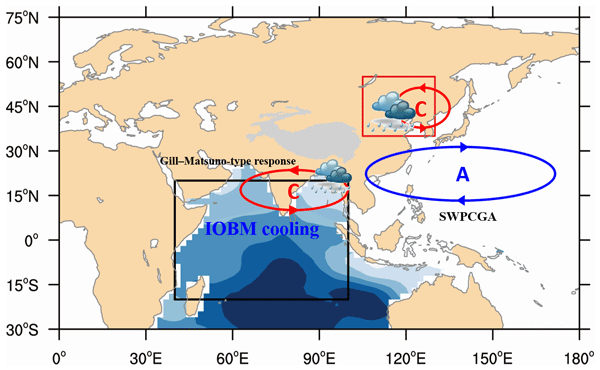
Jing Wang, Yanju Liu, Fei Cheng, Chengyu Song, Qiaoping Li, Yihui Ding, and Xiangde Xu
Atmos. Chem. Phys., 24, 5099–5115, https://doi.org/10.5194/acp-24-5099-2024, https://doi.org/10.5194/acp-24-5099-2024, 2024
Short summary
Short summary
Based on long-term observational, reanalysis, and numerical model simulation datasets from 1901 through 2014, this study shows that precipitation over the East Asian monsoon boundary zone featured prominent interdecadal changes, with dry summers during the periods preceding 1927, 1939–1945, 1968–1982, and 1998–2010 and wet summers during 1928–1938, 1946–1967, and 2011 onwards. The Indian Ocean basin mode is an important oceanic modulator responsible for its interdecadal variations.
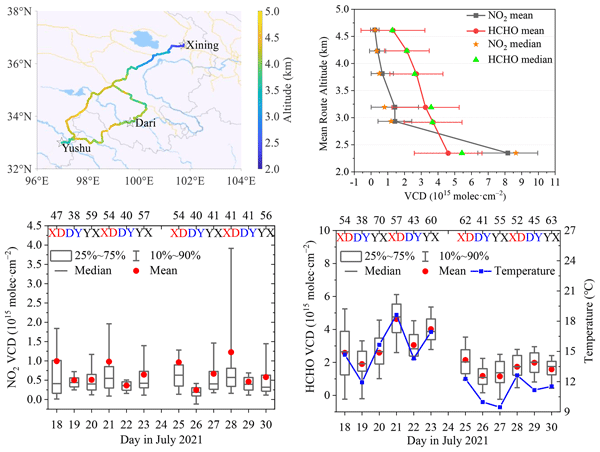
Siyang Cheng, Xinghong Cheng, Jianzhong Ma, Xiangde Xu, Wenqian Zhang, Jinguang Lv, Gang Bai, Bing Chen, Siying Ma, Steffen Ziegler, Sebastian Donner, and Thomas Wagner
Atmos. Chem. Phys., 23, 3655–3677, https://doi.org/10.5194/acp-23-3655-2023, https://doi.org/10.5194/acp-23-3655-2023, 2023
Short summary
Short summary
We made mobile MAX-DOAS measurements in the background atmosphere over the Tibetan Plateau in summer 2021. We retrieved the tropospheric NO2 and HCHO vertical column densities (VCDs) along extended driving routes and found a decreasing trend of the VCDs with altitude. Elevated NO2 VCDs along the driving routes could be attributed to enhanced traffic emissions from the towns crossed. The spatio-temporal distribution of the HCHO VCDs correlated strongly with the surface temperature.
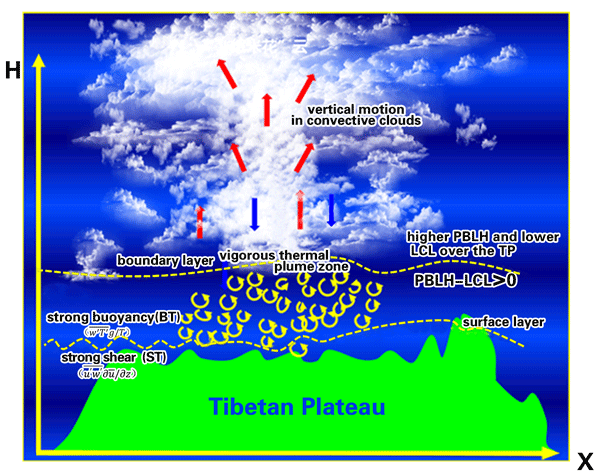
Xiangde Xu, Yi Tang, Yinjun Wang, Hongshen Zhang, Ruixia Liu, and Mingyu Zhou
Atmos. Chem. Phys., 23, 3299–3309, https://doi.org/10.5194/acp-23-3299-2023, https://doi.org/10.5194/acp-23-3299-2023, 2023
Short summary
Short summary
The vertical motion over the Tibetan Plateau (TP) is associated with the anomalous convective activities. The diurnal variations and formation mechanisms of low clouds over the TP, Rocky Mountains and low-elevation regions are analyzed. We further discuss whether there exists a
high-efficiencytriggering mechanism for convection over the TP and whether there is an association among low air density and strong turbulence and ubiquitous popcorn-like cumulus clouds.
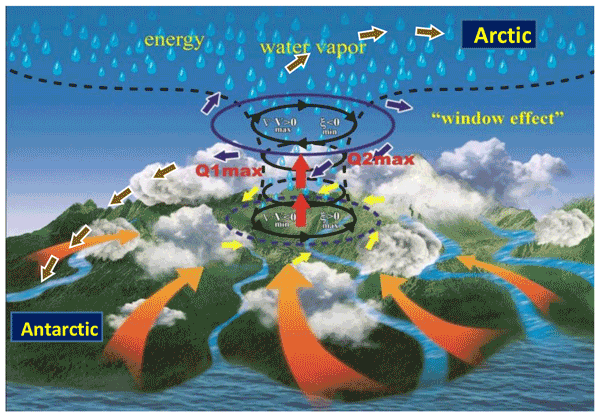
Xiangde Xu, Chan Sun, Deliang Chen, Tianliang Zhao, Jianjun Xu, Shengjun Zhang, Juan Li, Bin Chen, Yang Zhao, Hongxiong Xu, Lili Dong, Xiaoyun Sun, and Yan Zhu
Atmos. Chem. Phys., 22, 1149–1157, https://doi.org/10.5194/acp-22-1149-2022, https://doi.org/10.5194/acp-22-1149-2022, 2022
Short summary
Short summary
A vertical transport window of tropospheric vapor exists on the Tibetan Plateau (TP). The TP's thermal forcing drives the vertical transport
windowof vapor in the troposphere. The effects of the TP's vertical transport window of vapor are of importance in global climate change.
Guicai Ning, Jiayi Xing, Tianliang Zhao, Shigong Wang, Yuanjian Yang, and Xiangde Xu
EGUsphere, https://doi.org/10.5194/egusphere-2026-5585, https://doi.org/10.5194/egusphere-2026-5585, 2026
This preprint is open for discussion and under review for Atmospheric Chemistry and Physics (ACP).
Short summary
Short summary
Local atmospheric circulations are frequent and diverse over plateau-basin regions, yet their vertical structures remain unclear. Here, we develop and apply a physical-constrained framework to identify terrain-driven circulations over the Tibetan Plateau-Sichuan Basin and quantify their intensity, spatial extent, and central height. Three typical local circulations including one-cell, two-cell, and three-cell circulations are detected, which become more frequent while spatial extent shrinks.
Yongqing Bai, Wen Lu, Tian Zhan, Xiao Yun Sun, Tianliang Zhao, Lijuan Shen, Guicai Ning, Zewen Lin, Kai Meng, and Wuke Wang
EGUsphere, https://doi.org/10.5194/egusphere-2026-4625, https://doi.org/10.5194/egusphere-2026-4625, 2026
This preprint is open for discussion and under review for Atmospheric Chemistry and Physics (ACP).
Short summary
Short summary
The Twain-Hu Basin in central China has extreme heat and severe ozone, yet few combined events. We show that basin O₃ is driven by synoptic transport from upwind sources rather than local heat, with the O₃ peak shifting to September, decoupling ozone from temperature. This pattern may be common in multi-source receptor basins.
Xuewei Hou, Ryan Hossaini, Oliver Wild, Andrea Mazzeo, Richard J. Pope, Ye Wang, Siyuan Wang, Yuanhong Zhao, James Lee, Bin Zhu, Tianliang Zhao, and Alok K. Pandey
Atmos. Chem. Phys., 26, 13767–13793, https://doi.org/10.5194/acp-26-13767-2026, https://doi.org/10.5194/acp-26-13767-2026, 2026
Short summary
Short summary
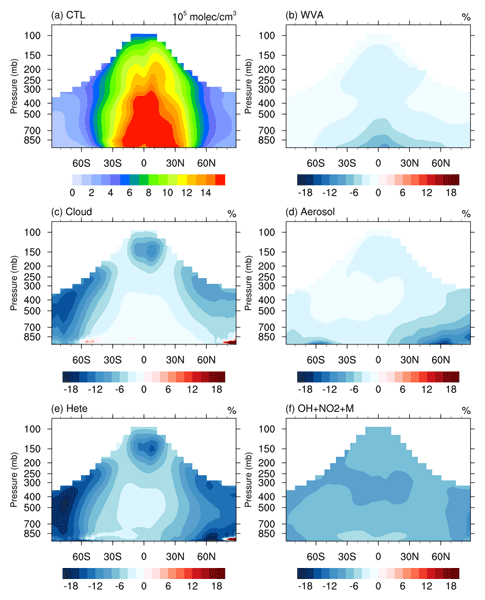
The atmosphere’s ability to remove pollutants and greenhouse gases is largely controlled by the hydroxyl radical, but the causes of its long-term changes remain uncertain. Using a global atmospheric model, we quantified the effects of emissions, weather, and key chemical processes on hydroxyl radical levels between 2000 and 2017. Our findings improve understanding of atmospheric self-cleansing and help reduce uncertainties in future climate assessments.
Wen Jiang, Yangruixue Chen, Jiafeng Zheng, Chong Wu, Yanyu Gao, Jiatong Liu, and Juan Zhou
EGUsphere, https://doi.org/10.5194/egusphere-2026-5422, https://doi.org/10.5194/egusphere-2026-5422, 2026
This preprint is open for discussion and under review for Natural Hazards and Earth System Sciences (NHESS).
Short summary
Short summary
Organized convective systems can bring heavy rain to South China. Four years of radar data identified 72 systems unrelated to tropical cyclones during the post-flood rainy season. Most formed over southern Guangxi or the Pearl River Delta. Southern Guangxi systems occurred mainly from midnight to morning under strong moist winds, whereas Pearl River Delta systems peaked in the afternoon and were linked to daytime heating. These results may help forecast where and when heavy rain develops.
Yulin Wang, Yichen Lu, Honglei Wang, Chunsong Lu, Sihan Liu, Yang Yang, Zirui Liu, Yan Yin, Deyu Liu, Yue Chen, and Tianliang Zhao
EGUsphere, https://doi.org/10.5194/egusphere-2026-5114, https://doi.org/10.5194/egusphere-2026-5114, 2026
This preprint is open for discussion and under review for Atmospheric Chemistry and Physics (ACP).
Short summary
Short summary
Cloud water shapes rain and climate, and droplets can stay liquid even below freezing, but differences between warm and supercooled clouds remain unclear. We analysed aircraft observations and used machine learning to identify the controls. The cold clouds were deeper but held less water. Wind was the main control in both, while temperature mattered mainly through its interaction with wind rather than on its own. This should help improve weather and climate models.
Ling Yang, Jinyan Xu, Mingliang Xu, Pengbo Wu, Tianyi Chen, Jia Li, Chong Wu, and Chao Chen
EGUsphere, https://doi.org/10.5194/egusphere-2026-3965, https://doi.org/10.5194/egusphere-2026-3965, 2026
Short summary
Short summary
X-band phased-array weather radar (XPAR) suffers differential reflectivity biases from changing beam directions and poor antenna isolation. This study develops a refined differential reflectivity correction algorithm (RC-ZDR). Combining S-band polarimetric radar (SPOL) data and electromagnetic simulation, the algorithm eliminates radar errors. Squall line tests validate its capability to improve XPAR data quality and support phased-array radar operational quality control.
Yiqi Chen, Le Cao, Xiaochun Zhu, Yan Xia, Tianqi Zhang, Xiuli Lei, Mengke Wang, Liqiang Xu, and Tianliang Zhao
EGUsphere, https://doi.org/10.5194/egusphere-2026-3196, https://doi.org/10.5194/egusphere-2026-3196, 2026
This preprint is open for discussion and under review for Atmospheric Chemistry and Physics (ACP).
Short summary
Short summary
We investigate the spatiotemporal distribution of springtime tropopause folds over the Arctic during 2000–2023 using ERA5 reanalysis data and a three-dimensional tropopause fold labeling algorithm. The study combines pan-Arctic spatial statistics with station-based analyses at Alert, Barrow, Villum, and Zeppelin, providing a climatological characterization of Arctic tropopause fold occurrence, depth dependence, seasonal evolution, and associated upper-tropospheric dynamical background.
Jianzhong Ma, Bin Chen, Qianshan He, Xiaolu Yan, Gaili Wang, Siyang Cheng, Benedikt Steil, Christoph Brühl, Holger Tost, Michael Höpfner, Andrea Pozzer, and Jos Lelieveld
Atmos. Chem. Phys., 26, 8125–8144, https://doi.org/10.5194/acp-26-8125-2026, https://doi.org/10.5194/acp-26-8125-2026, 2026
Short summary
Short summary
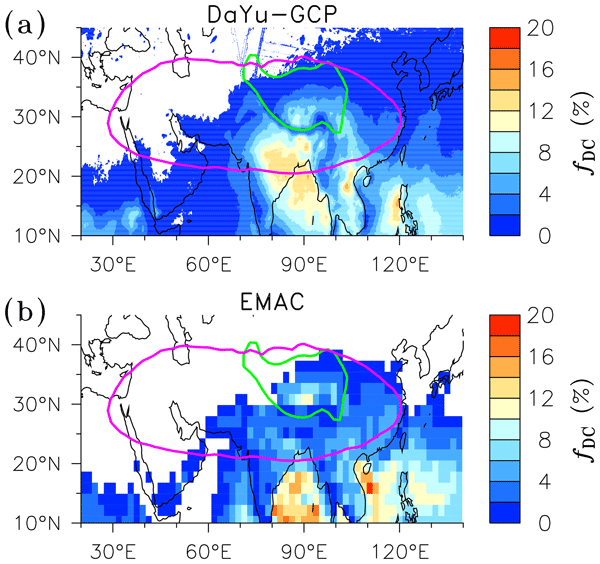
We use a global atmospheric chemistry and climate model to study the efficiency and effectiveness of the deep convective transport of CO, NH3 and SO2 from the planetary boundary layer into the Asian summer monsoon anticyclone. We find that in contrast to CO and NH3, the SO2 enhancements within the anticyclone are very weak. The wet scavenging over South Asia is more effective for SO2 than NH3 at reducing their amounts reaching the Tibetan Plateau and the Asian summer monsoon anticyclone.
Zihan Wang, Yishu Bian, Fuwang Zhang, Honglei Wang, Wen Lin, Jun Hu, Tianliang Zhao, Lijian Shen, and Zuxin Xie
Atmos. Chem. Phys., 26, 7539–7554, https://doi.org/10.5194/acp-26-7539-2026, https://doi.org/10.5194/acp-26-7539-2026, 2026
Short summary
Short summary
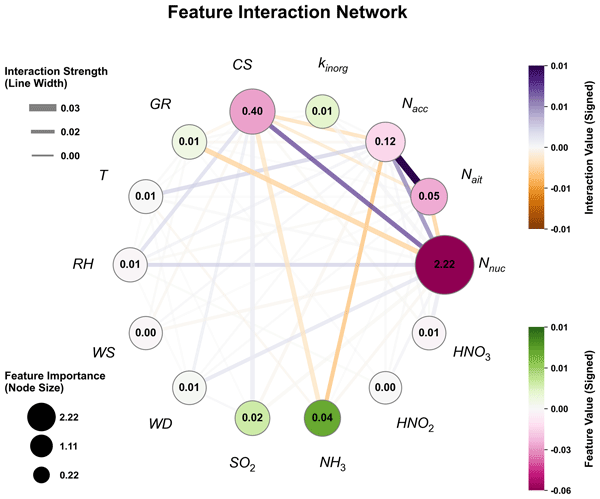
We investigated how new air particles form in cities and affect clouds. Our year-long study revealed a key seasonal pattern: while particle formation events are most frequent in spring, they are surprisingly inefficient at creating the seeds for clouds due to high pollution. In contrast, the cleaner summer air, despite having fewer events, allows the new particles to grow larger and much more effectively enhance potential cloud formation.
Qidi Li, Yuhan Luo, Xin Yang, Bianca Zilker, Andreas Richter, Ke Dou, Haijin Zhou, Kai Zhan, Fuqi Si, and Wenqing Liu
Atmos. Chem. Phys., 26, 6165–6196, https://doi.org/10.5194/acp-26-6165-2026, https://doi.org/10.5194/acp-26-6165-2026, 2026
Short summary
Short summary
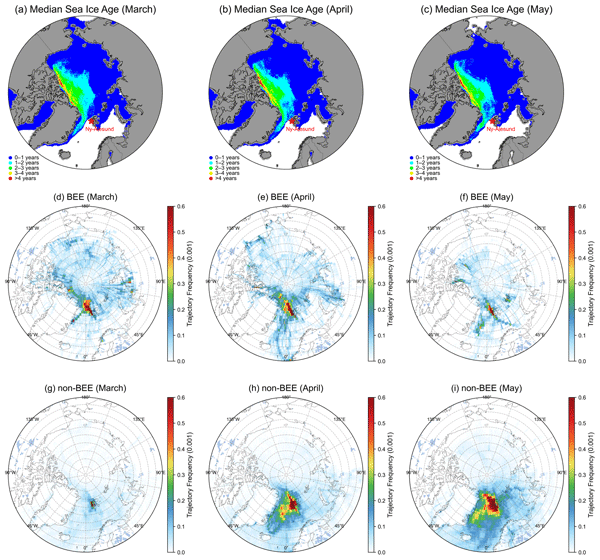
We investigated why reactive bromine increases in the Arctic atmosphere during spring. Using observations in Ny-Ålesund and modeling. We found that BrO increases are strongly linked to airborne particles and bromine emissions from snow over sea ice. Both snow over first-year and multi-year sea ice contribute comparably. These processes are enhanced by strong winds and drive depletion of surface ozone and mercury.
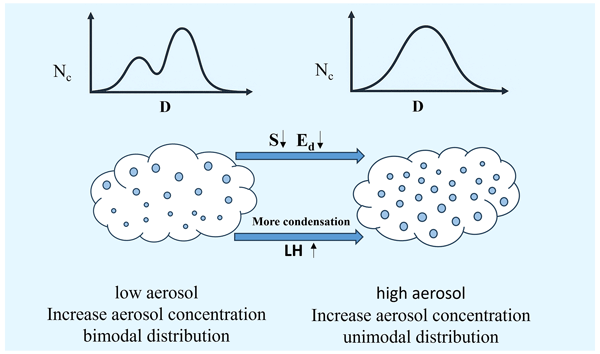
Deyu Liu, Yue Chen, Sihan Liu, Honglei Wang, Jingyi Chen, Yang Yang, Zihan Wang, Kun Cui, and Tianliang Zhao
Atmos. Chem. Phys., 26, 5781–5797, https://doi.org/10.5194/acp-26-5781-2026, https://doi.org/10.5194/acp-26-5781-2026, 2026
Short summary
Short summary
Cloud droplets are vital for rainfall and climate, and tiny airborne particles called aerosols can change their size and number. Using airplane observations over Hebei and simulations, we found that aerosols strongly affect droplet vertical distribution. Under high aerosols, lower droplets are larger and more numerous; under low aerosols, upper droplets are larger. These changes affect cloud development, precipitation, and atmospheric energy.
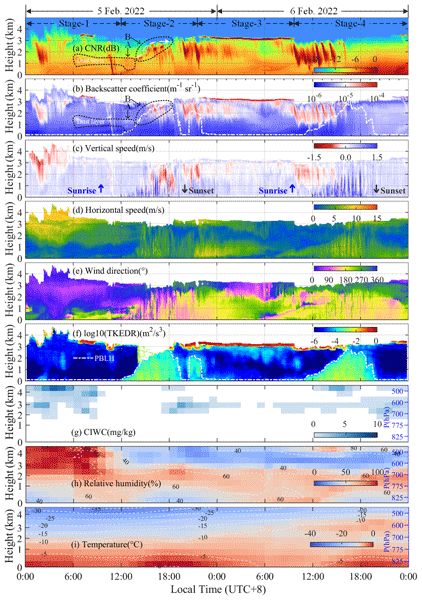
Lian Su, Haiyun Xia, Chunsong Lu, Jinlong Yuan, Kenan Wu, Tianwen Wei, Xiaofei Wang, Qing He, Mohamed Elshora, Xi Luo, and Xinyang Li
Atmos. Meas. Tech., 19, 2657–2668, https://doi.org/10.5194/amt-19-2657-2026, https://doi.org/10.5194/amt-19-2657-2026, 2026
Short summary
Short summary
1. The formation of ice crystal clouds catalyzed by dust aerosols were observed by coherent Doppler wind lidar in the Taklimakan Desert. 2. The wind provides a dynamic basis for the formation of ice crystal clouds and plays an important role in the decomposition process. 3. The special basin topography, turbulence and downdrafts keep the base height of the ice crystal clouds at around 3 km.
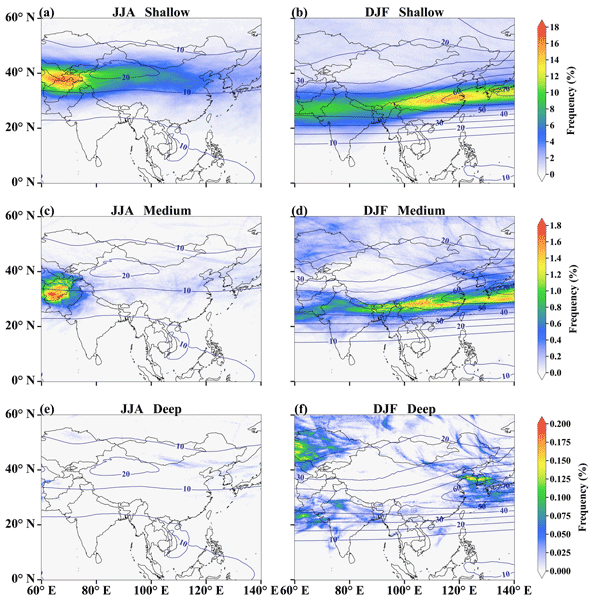
Yujia Yang, Le Cao, Liqiang Xu, Mengke Wang, Qingjian Yang, Yuqing Zhang, Tianqi Zhang, Xiuli Lei, Jiangpeng Miao, and Tianliang Zhao
Earth Syst. Sci. Data, 18, 2689–2702, https://doi.org/10.5194/essd-18-2689-2026, https://doi.org/10.5194/essd-18-2689-2026, 2026
Short summary
Short summary
This study provides a high-resolution (0.25°, hourly) tropopause folding dataset for China (2014–2023) using ERA5 (ECMWF Reanalysis version 5) reanalysis data and a three-dimensional labeling method. It fills a critical data gap, enabling detailed spatiotemporal analysis of tropopause folding events. This validated resource provides a solid foundation for investigating stratosphere-troposphere transport and its impacts on near-surface air quality and extreme weather.
Kai Yang, Jinghua Chen, Tianliang Zhao, Xiangde Xu, Chunsong Lu, Shizuo Fu, Yuehan Luo, Qingjian Yang, Ziqian Liu, Zhikuan Li, Lin Wu, and Yuxiang Jin
EGUsphere, https://doi.org/10.5194/egusphere-2026-869, https://doi.org/10.5194/egusphere-2026-869, 2026
Short summary
Short summary
The Tibetan Plateau has little available moisture and energy, so convection is hard to develop. Large-eddy simulations indicates the lake promotes low-level moistening and lowers the barrier to convective initiation, produces shallow clouds and week rain. Mountain alone force lifting, yet the lack of moisture limits terrain-driven precipitation. Lake-mountain coupling is key: the mountain lifts lake-supplied moisture but can also block moisture transport, reshaping precipitation patterns.
Chengxiang Guo, Tongzhu Yu, Yixin Yang, Huaqiao Gui, Zhe Ji, Jian Wang, Jianguo Liu, and Wenqing Liu
EGUsphere, https://doi.org/10.5194/egusphere-2026-565, https://doi.org/10.5194/egusphere-2026-565, 2026
Preprint archived
Short summary
Short summary
Accurately measuring ultrafine particle number concentration (PN) from motor vehicle emissions is essential for the prevention and control of atmospheric particulate pollution. The latest Euro 7 emission regulations have lowered the particle size detection threshold from 23 to 10 nm and introduced updated standards for exhaust gas pretreatment and particle counting devices.
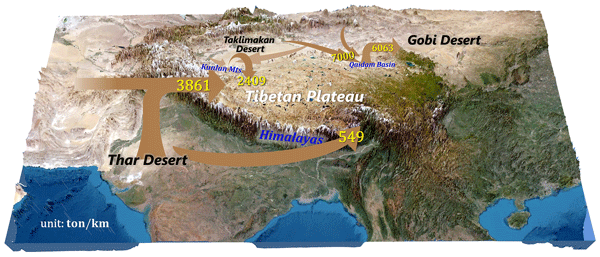
Xiaofeng Xu, Zixu Xiong, Jianming Gong, Huilin Zhang, Tianliang Zhao, and Qing He
Atmos. Chem. Phys., 26, 2721–2740, https://doi.org/10.5194/acp-26-2721-2026, https://doi.org/10.5194/acp-26-2721-2026, 2026
Short summary
Short summary
Dust has an important impact on the climate in East Asia. This study comprehensively utilized ground-based and satellite observation data to analyze the spatio-temporal variations of dust in the Tibetan Plateau and its surrounding areas, as well as the diurnal variation characteristics of regional dust transport. This study has deepened the understanding of the variation patterns of dust around the Tibetan Plateau.
Xueying Liu, Yeqi Huang, Yao Chen, Xin Feng, Jiading Li, Yang Xu, Yi Chen, Dasa Gu, Hao Sun, Zhi Ning, Jianzhen Yu, Wing Sze Chow, Changqing Lin, Yan Xiang, Tianshu Zhang, Claire Granier, Guy Brasseur, Zhe Wang, and Jimmy C. H. Fung
Atmos. Chem. Phys., 25, 17629–17649, https://doi.org/10.5194/acp-25-17629-2025, https://doi.org/10.5194/acp-25-17629-2025, 2025
Short summary
Short summary
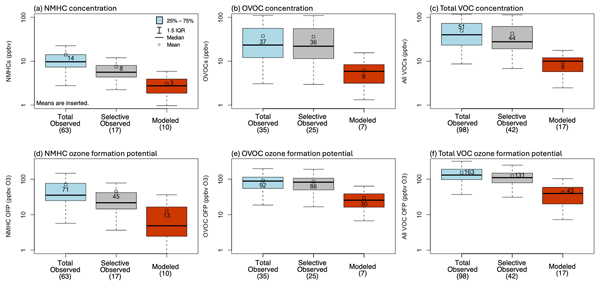
Volatile organic compounds (VOCs) affect ozone formation and air quality. However, our understanding is limited due to insufficient measurements, especially for oxygenated VOCs. This study combines land, ship, and satellite data in Hong Kong, showing that oxygenated VOCs make up a significant portion of total VOCs. Despite their importance, many are underestimated in current models. These findings highlight the need to improve VOC representation in models to enhance air quality management.
Junhui Zhang, Yuying Wang, Jialu Xu, Xiaofan Zuo, Chunsong Lu, Bin Zhu, Yuanjian Yang, Xing Yan, and Yele Sun
Atmos. Chem. Phys., 25, 17413–17428, https://doi.org/10.5194/acp-25-17413-2025, https://doi.org/10.5194/acp-25-17413-2025, 2025
Short summary
Short summary
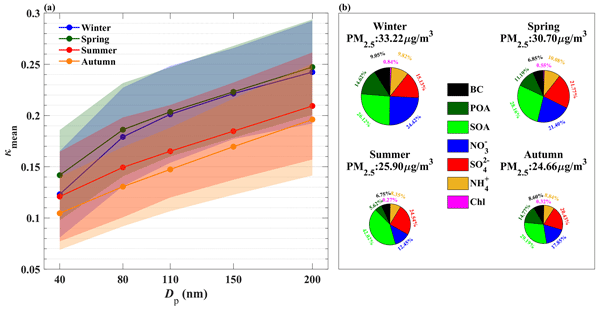
We conducted a year-long study in Nanjing to understand how tiny airborne particles take up water, which affects air quality and climate. We found that particle water uptake varies by season and size, with lower values in summer due to more organic materials. Local pollution mainly influences smaller particles, while larger ones are shaped by air mass transport. These findings help improve climate models and support better air pollution control in fast-growing cities.
Zhuozhi Shu, Fumo Yang, Guangming Shi, Yuqing Zhang, Yongjie Huang, Xinning Yu, Baiwan Pan, and Tianliang Zhao
Atmos. Chem. Phys., 25, 15437–15451, https://doi.org/10.5194/acp-25-15437-2025, https://doi.org/10.5194/acp-25-15437-2025, 2025
Short summary
Short summary
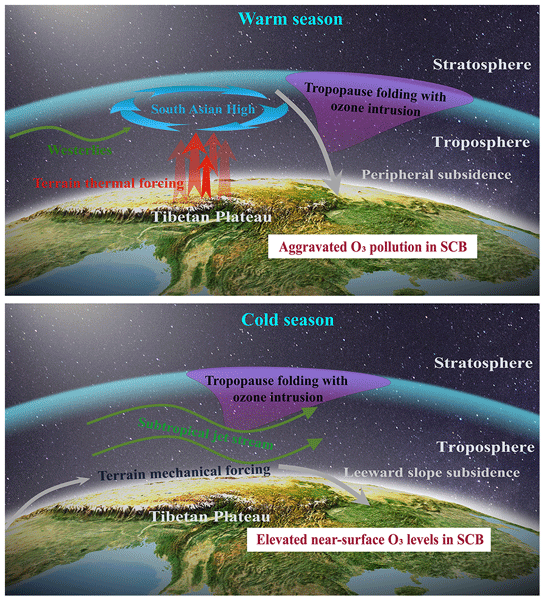
We targeted four stratospheric intrusion episodes to investigate the impacts of cross-layer transport of stratospheric O3 on the near-surface environmental atmosphere over Sichuan Basin and uncover multi-scale atmospheric circulation coupling mechanisms with the seasonally discrepant terrain effects of Tibetan Plateau. Results provided the critical insights into understanding of regional O3 pollution genesis with the exceptional natural sources contribution derived from the stratosphere.
Xiaochun Zhu, Le Cao, Xin Yang, Simeng Li, Jiandong Wang, and Tianliang Zhao
Atmos. Chem. Phys., 25, 12159–12176, https://doi.org/10.5194/acp-25-12159-2025, https://doi.org/10.5194/acp-25-12159-2025, 2025
Short summary
Short summary
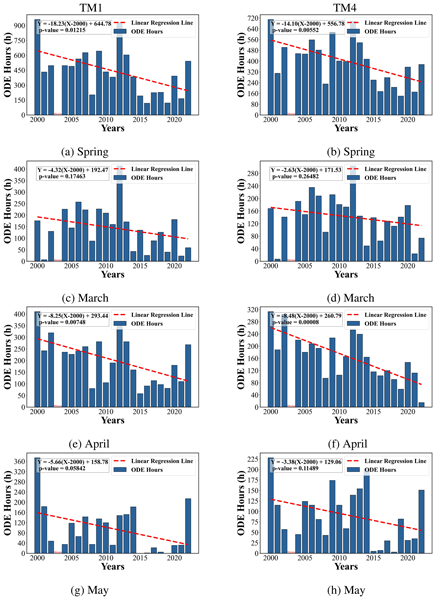
We applied various criteria to identify springtime ozone depletion events (ODEs) at Utqiaġvik, Arctic, and investigated the influence of using different criteria on conclusions regarding the characteristics of ODEs. We found that criteria using fixed thresholds or monthly average-based thresholds were more suitable for identifying ODEs than the others. Applying a threshold that varies with the monthly average or stricter fixed thresholds also indicated a more significant reduction in ODE occurrences.
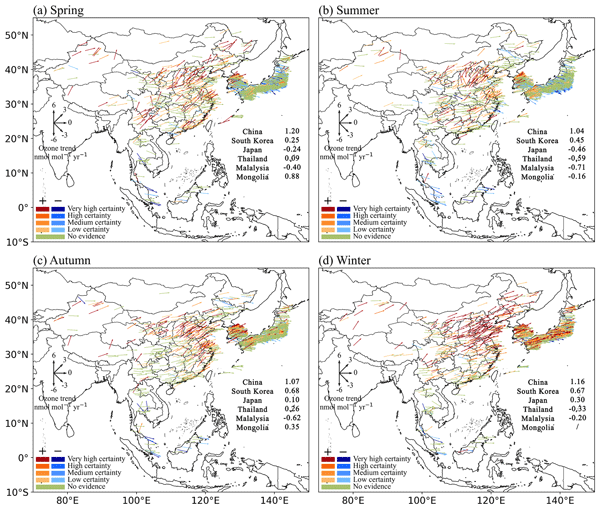
Ke Li, Rong Tan, Wenhao Qiao, Taegyung Lee, Yufen Wang, Danyuting Zhang, Minglong Tang, Wenqing Zhao, Yixuan Gu, Shaojia Fan, Jinqiang Zhang, Xiaopu Lyu, Likun Xue, Jianming Xu, Zhiqiang Ma, Mohd Talib Latif, Teerachai Amnuaylojaroen, Junsu Gil, Mee-Hye Lee, Juseon Bak, Joowan Kim, Hong Liao, Yugo Kanaya, Xiao Lu, Tatsuya Nagashima, and Ja-Ho Koo
Atmos. Chem. Phys., 25, 11575–11596, https://doi.org/10.5194/acp-25-11575-2025, https://doi.org/10.5194/acp-25-11575-2025, 2025
Short summary
Short summary
East Asia and Southeast Asia have been identified as a global hot spot, with the fastest ozone increase. This paper presents the most comprehensive observational review of ozone distributions and evolution over East Asia and Southeast Asia across different spatiotemporal scales in the past two decades, which will have important implications for assessing ozone impacts on public health and crop yields and for developing future ozone control strategies.
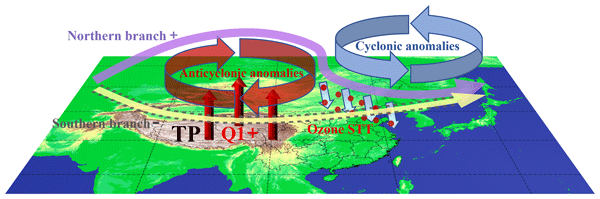
Qingjian Yang, Tianliang Zhao, Yongqing Bai, Kai Meng, Yuehan Luo, Zhijie Tian, Xiaoyun Sun, Weikang Fu, Kai Yang, and Jun Hu
Atmos. Chem. Phys., 25, 8029–8042, https://doi.org/10.5194/acp-25-8029-2025, https://doi.org/10.5194/acp-25-8029-2025, 2025
Short summary
Short summary
This study reveals a unique driver of the Tibetan Plateau (TP) thermal forcing of the interannual variations in stratosphere-to-troposphere transport (STT) of ozone with diverse structures. Anomalous strong TP thermal forcing induces anticyclonic anomalies in the upper troposphere over the TP, which strengthens and attenuates the northern and southern branches of the westerly jet, intensifying (weakening) the westerly trough for more (fewer) tropopause folds of ozone STT over the East Asian region.
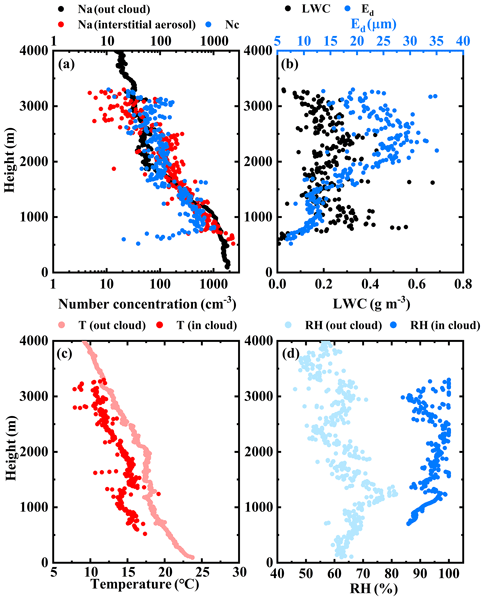
Sihan Liu, Honglei Wang, Delong Zhao, Wei Zhou, Yuanmou Du, Zhengguo Zhang, Peng Cheng, Tianliang Zhao, Yue Ke, Zihao Wu, and Mengyu Huang
Atmos. Chem. Phys., 25, 4151–4165, https://doi.org/10.5194/acp-25-4151-2025, https://doi.org/10.5194/acp-25-4151-2025, 2025
Short summary
Short summary
To understand the effect of aerosols on the vertical distribution of stratocumulus microphysical quantities in southwest China, the daily variation characteristics and formation mechanism of the vertical profiles of stratocumulus microphysical characteristics in this region were described using the data of nine cloud-crossing aircraft observations over Guangxi from 10 October to 3 November 2020.
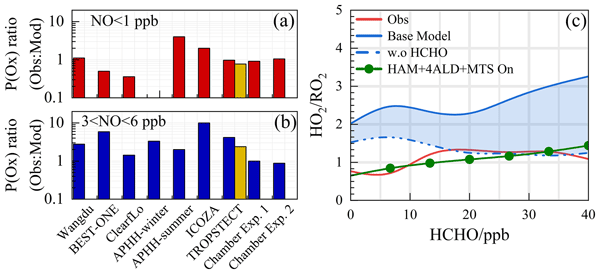
Renzhi Hu, Guoxian Zhang, Haotian Cai, Jingyi Guo, Keding Lu, Xin Li, Shengrong Lou, Zhaofeng Tan, Changjin Hu, Pinhua Xie, and Wenqing Liu
Atmos. Chem. Phys., 25, 3011–3028, https://doi.org/10.5194/acp-25-3011-2025, https://doi.org/10.5194/acp-25-3011-2025, 2025
Short summary
Short summary
A full suite of radical measurements (OH, HO2, RO2, and kOH) was established to accurately elucidate the limitations of oxidation in a chemically complex atmosphere. Sensitivity tests revealed that the incorporation of complex processes enabled a balance in both radical concentrations and coordinate ratios, effectively addressing the deficiency in the ozone generation mechanism. The full-chain radical detection bridged the gap between the photochemistry and the intensive oxidation level.
Yongqing Bai, Tianliang Zhao, Kai Meng, Yue Zhou, Jie Xiong, Xiaoyun Sun, Lijuan Shen, Yanyu Yue, Yan Zhu, Weiyang Hu, and Jingyan Yao
Atmos. Chem. Phys., 25, 1273–1287, https://doi.org/10.5194/acp-25-1273-2025, https://doi.org/10.5194/acp-25-1273-2025, 2025
Short summary
Short summary
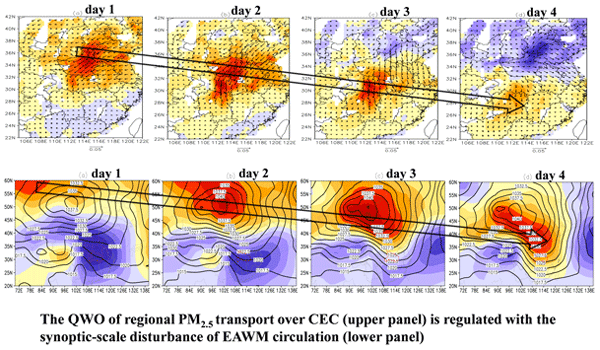
We proposed a composite statistical method to identify the quasi-weekly oscillation (QWO) of regional PM2.5 transport over China in winter from 2015 to 2019. The QWO of regional PM2.5 transport is constrained by synoptic-scale disturbances of the East Asian winter monsoon circulation with the periodic activities of the Siberian high, providing a new insight into the understanding of regional pollutant transport with meteorological drivers in atmospheric environment changes.

Guangqiang Fan, Yibin Fu, Juntao Huo, Yan Xiang, Tianshu Zhang, Wenqing Liu, and Zhi Ning
Atmos. Meas. Tech., 18, 443–453, https://doi.org/10.5194/amt-18-443-2025, https://doi.org/10.5194/amt-18-443-2025, 2025
Short summary
Short summary
Our research introduces a differential absorption lidar system for monitoring tropospheric ozone, utilizing a single CO2 Raman cell. This technology enables the acquisition of high-resolution vertical ozone profiles from 0.3 to 4 km, essential for understanding air quality and climate impacts.
Xiaodan Ma, Jianping Huang, Michaela I. Hegglin, Patrick Jöckel, and Tianliang Zhao
Atmos. Chem. Phys., 25, 943–958, https://doi.org/10.5194/acp-25-943-2025, https://doi.org/10.5194/acp-25-943-2025, 2025
Short summary
Short summary
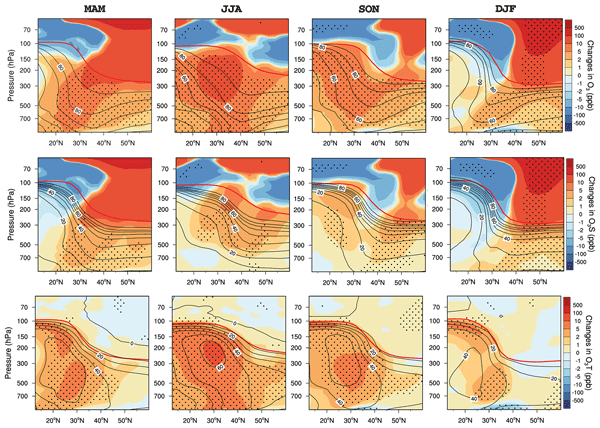
Our research explored changes in ozone levels in the northwest Pacific region over 30 years, revealing a significant increase in the middle-to-upper troposphere, especially during spring and summer. This rise is influenced by both stratospheric and tropospheric sources, which affect climate and air quality in East Asia. This work underscores the need for continued study to understand underlying mechanisms.
Kai Meng, Tianliang Zhao, Yongqing Bai, Ming Wu, Le Cao, Xuewei Hou, Yuehan Luo, and Yongcheng Jiang
Atmos. Chem. Phys., 24, 12623–12642, https://doi.org/10.5194/acp-24-12623-2024, https://doi.org/10.5194/acp-24-12623-2024, 2024
Short summary
Short summary
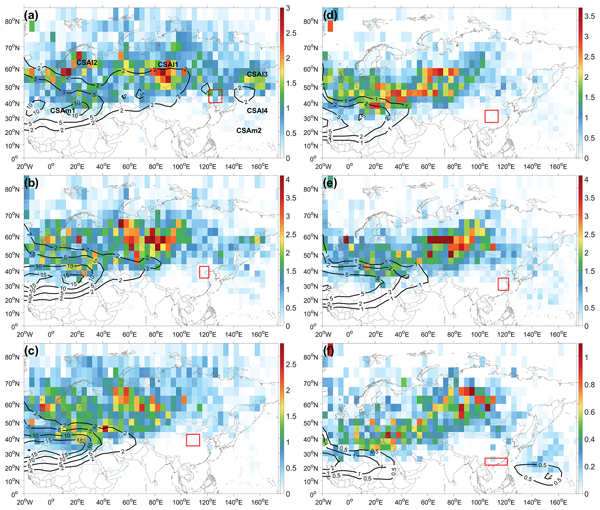
We studied the impact of stratospheric intrusions (SIs) on tropospheric and near-surface ozone in Central and Eastern China from a stratospheric source tracing perspective. SIs contribute the most in the eastern plains, with a contribution exceeding 15 %, and have a small contribution to the west and south. Western Siberia and Mongolia are the most critical source areas for indirect and direct SIs, with the Rossby wave and northeast cold vortex being important driving circulation systems.
Lian Su, Chunsong Lu, Jinlong Yuan, Xiaofei Wang, Qing He, and Haiyun Xia
Atmos. Chem. Phys., 24, 10947–10963, https://doi.org/10.5194/acp-24-10947-2024, https://doi.org/10.5194/acp-24-10947-2024, 2024
Short summary
Short summary
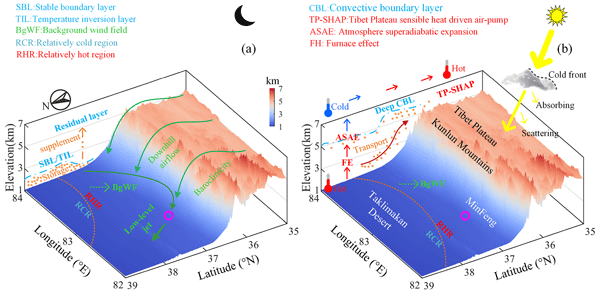
The cold downhill airflow of the Tibetan Plateau leading to the low-level jet weakens the height and intensity of the inversion layer, which reduces the energy demand for the broken inversion layer. The low-level jet causes dust aerosols to accumulate near the ground. The material conditions for the development of the desert atmospheric boundary layer can be quickly transformed into thermal conditions.
Naveed Ahmad, Changqing Lin, Alexis K. H. Lau, Jhoon Kim, Tianshu Zhang, Fangqun Yu, Chengcai Li, Ying Li, Jimmy C. H. Fung, and Xiang Qian Lao
Atmos. Chem. Phys., 24, 9645–9665, https://doi.org/10.5194/acp-24-9645-2024, https://doi.org/10.5194/acp-24-9645-2024, 2024
Short summary
Short summary
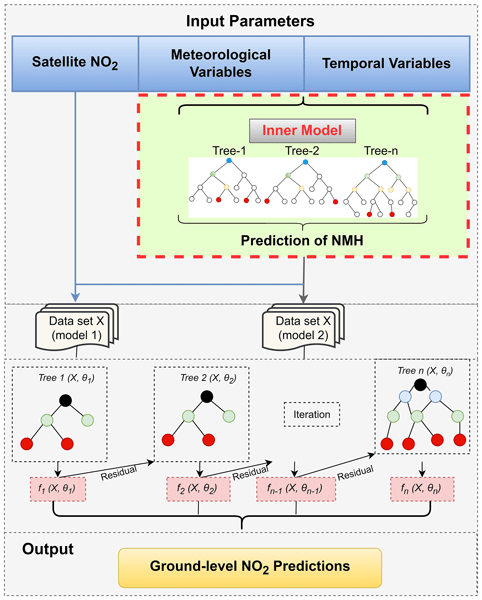
This study developed a nested machine learning model to convert the GEMS NO2 column measurements into ground-level concentrations across China. The model directly incorporates the NO2 mixing height (NMH) into the methodological framework. The study underscores the importance of considering NMH when estimating ground-level NO2 from satellite column measurements and highlights the significant advantages of new-generation geostationary satellites in air quality monitoring.
Yuehan Luo, Tianliang Zhao, Kai Meng, Jun Hu, Qingjian Yang, Yongqing Bai, Kai Yang, Weikang Fu, Chenghao Tan, Yifan Zhang, Yanzhe Zhang, and Zhikuan Li
Atmos. Chem. Phys., 24, 7013–7026, https://doi.org/10.5194/acp-24-7013-2024, https://doi.org/10.5194/acp-24-7013-2024, 2024
Short summary
Short summary
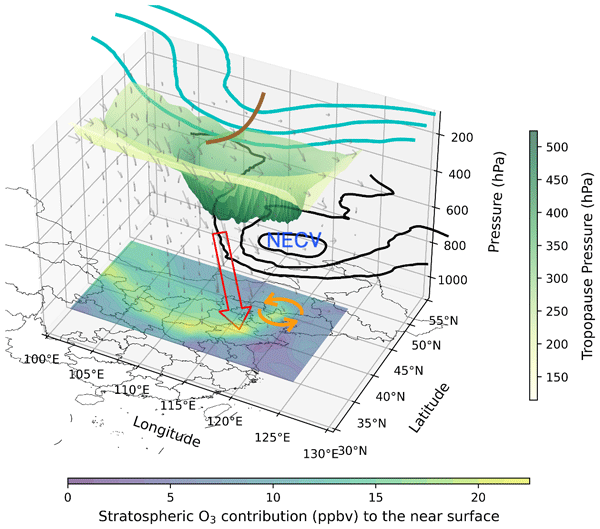
We reveal a significant mechanism of stratospheric O3 intrusion (SI) into the atmospheric environment induced by an extratropical cyclone system. This system facilitates the downward transport of stratospheric O3 to the near-surface layer by vertical coupling, involving the upper westerly trough, the middle northeast cold vortex, and the lower extratropical cyclone in the troposphere. On average, stratospheric O3 contributed 26.77 % to near-surface O3 levels over the North China Plain.
Jing Wang, Yanju Liu, Fei Cheng, Chengyu Song, Qiaoping Li, Yihui Ding, and Xiangde Xu
Atmos. Chem. Phys., 24, 5099–5115, https://doi.org/10.5194/acp-24-5099-2024, https://doi.org/10.5194/acp-24-5099-2024, 2024
Short summary
Short summary
Based on long-term observational, reanalysis, and numerical model simulation datasets from 1901 through 2014, this study shows that precipitation over the East Asian monsoon boundary zone featured prominent interdecadal changes, with dry summers during the periods preceding 1927, 1939–1945, 1968–1982, and 1998–2010 and wet summers during 1928–1938, 1946–1967, and 2011 onwards. The Indian Ocean basin mode is an important oceanic modulator responsible for its interdecadal variations.
Guoxian Zhang, Renzhi Hu, Pinhua Xie, Changjin Hu, Xiaoyan Liu, Liujun Zhong, Haotian Cai, Bo Zhu, Shiyong Xia, Xiaofeng Huang, Xin Li, and Wenqing Liu
Atmos. Chem. Phys., 24, 1825–1839, https://doi.org/10.5194/acp-24-1825-2024, https://doi.org/10.5194/acp-24-1825-2024, 2024
Short summary
Short summary
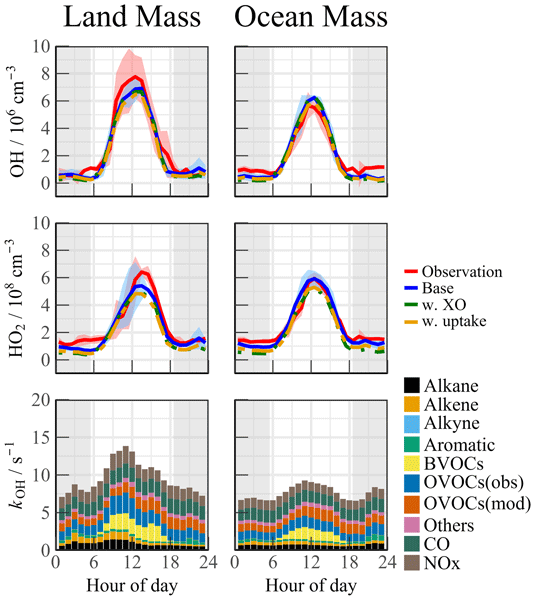
Comprehensive observation of HOx radicals was conducted at a coastal site in the Pearl River Delta. Radical chemistry was influenced by different air masses in a time-dependent way. Land mass promotes a more active photochemical process, with daily averages of 7.1 × 10⁶ and 5.2 × 108 cm−3 for OH and HO2 respectively. The rapid oxidation process was accompanied by a higher diurnal HONO concentration, which influences the ozone-sensitive system and eventually magnifies the background ozone.
Naifu Shao, Chunsong Lu, Xingcan Jia, Yuan Wang, Yubin Li, Yan Yin, Bin Zhu, Tianliang Zhao, Duanyang Liu, Shengjie Niu, Shuxian Fan, Shuqi Yan, and Jingjing Lv
Atmos. Chem. Phys., 23, 9873–9890, https://doi.org/10.5194/acp-23-9873-2023, https://doi.org/10.5194/acp-23-9873-2023, 2023
Short summary
Short summary
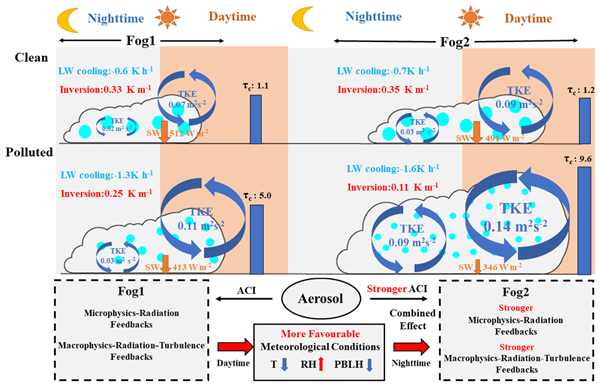
Fog is an important meteorological phenomenon that affects visibility. Aerosols and the planetary boundary layer (PBL) play critical roles in the fog life cycle. In this study, aerosol-induced changes in fog properties become more remarkable in the second fog (Fog2) than in the first fog (Fog1). The reason is that aerosol–cloud interaction (ACI) delays Fog1 dissipation, leading to the PBL meteorological conditions being more conducive to Fog2 formation and to stronger ACI in Fog2.
Siyang Cheng, Xinghong Cheng, Jianzhong Ma, Xiangde Xu, Wenqian Zhang, Jinguang Lv, Gang Bai, Bing Chen, Siying Ma, Steffen Ziegler, Sebastian Donner, and Thomas Wagner
Atmos. Chem. Phys., 23, 3655–3677, https://doi.org/10.5194/acp-23-3655-2023, https://doi.org/10.5194/acp-23-3655-2023, 2023
Short summary
Short summary
We made mobile MAX-DOAS measurements in the background atmosphere over the Tibetan Plateau in summer 2021. We retrieved the tropospheric NO2 and HCHO vertical column densities (VCDs) along extended driving routes and found a decreasing trend of the VCDs with altitude. Elevated NO2 VCDs along the driving routes could be attributed to enhanced traffic emissions from the towns crossed. The spatio-temporal distribution of the HCHO VCDs correlated strongly with the surface temperature.
Xiangde Xu, Yi Tang, Yinjun Wang, Hongshen Zhang, Ruixia Liu, and Mingyu Zhou
Atmos. Chem. Phys., 23, 3299–3309, https://doi.org/10.5194/acp-23-3299-2023, https://doi.org/10.5194/acp-23-3299-2023, 2023
Short summary
Short summary
The vertical motion over the Tibetan Plateau (TP) is associated with the anomalous convective activities. The diurnal variations and formation mechanisms of low clouds over the TP, Rocky Mountains and low-elevation regions are analyzed. We further discuss whether there exists a
high-efficiencytriggering mechanism for convection over the TP and whether there is an association among low air density and strong turbulence and ubiquitous popcorn-like cumulus clouds.
Changqin Yin, Jianming Xu, Wei Gao, Liang Pan, Yixuan Gu, Qingyan Fu, and Fan Yang
Atmos. Chem. Phys., 23, 1329–1343, https://doi.org/10.5194/acp-23-1329-2023, https://doi.org/10.5194/acp-23-1329-2023, 2023
Short summary
Short summary
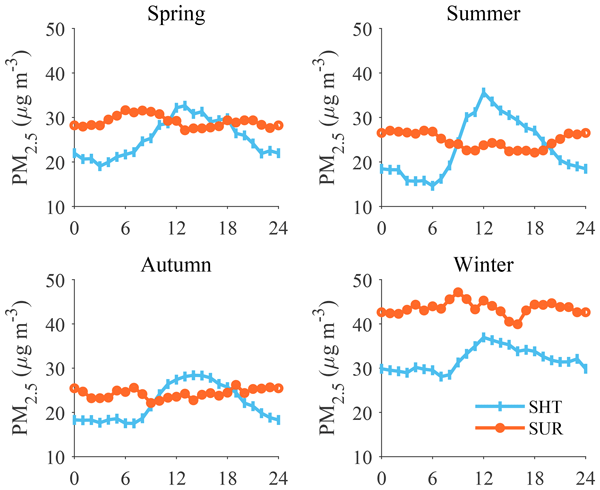
The particle matter (PM2.5) at the top of the 632 m high Shanghai Tower was found to be higher than the surface from June to October due to unexpected larger PM2.5 levels during early to middle afternoon at Shanghai Tower. We suppose the significant chemical production of secondary species existed in the mid-upper planetary boundary layer. We found a high nitrate concentration at the tower site for both daytime and nighttime in winter, implying efficient gas-phase and heterogeneous formation.
Qidi Li, Yuhan Luo, Yuanyuan Qian, Chen Pan, Ke Dou, Xuewei Hou, Fuqi Si, and Wenqing Liu
Atmos. Chem. Phys. Discuss., https://doi.org/10.5194/acp-2022-859, https://doi.org/10.5194/acp-2022-859, 2023
Revised manuscript not accepted
Short summary
Short summary
We found that all instruments recorded severe ozone depletion from March 18 to April 18, 2020. The effect of the polar vortex on ozone depletion in the stratosphere was clear. Additionally, the SD-WACCM model results indicated that both ClO and BrO concentrations peaked in late March. Before chlorine activation began, bromine mainly existed as HOBr; however, after chlorine activation, bromine mainly existed in the form of BrCl.
Wentao Zhang, Xiangjun Shi, and Chunsong Lu
Geosci. Model Dev., 15, 7751–7766, https://doi.org/10.5194/gmd-15-7751-2022, https://doi.org/10.5194/gmd-15-7751-2022, 2022
Short summary
Short summary
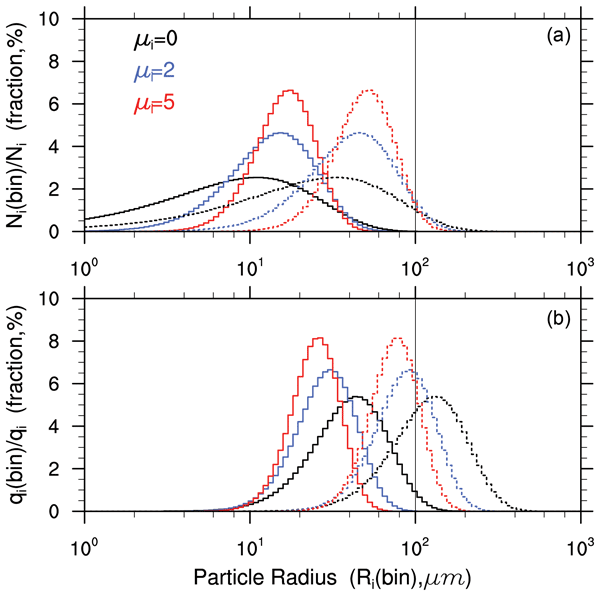
The two-moment bulk cloud microphysics scheme used in CAM6 was modified to consider the impacts of the ice-crystal size distribution shape parameter (μi). After that, how the μi impacts cloud microphysical processes and then climate simulations is clearly illustrated by offline tests and CAM6 model experiments. Our results and findings are useful for the further development of μi-related parameterizations.
Chenglong Zhou, Yuzhi Liu, Qingzhe Zhu, Qing He, Tianliang Zhao, Fan Yang, Wen Huo, Xinghua Yang, and Ali Mamtimin
Atmos. Chem. Phys., 22, 5195–5207, https://doi.org/10.5194/acp-22-5195-2022, https://doi.org/10.5194/acp-22-5195-2022, 2022
Short summary
Short summary
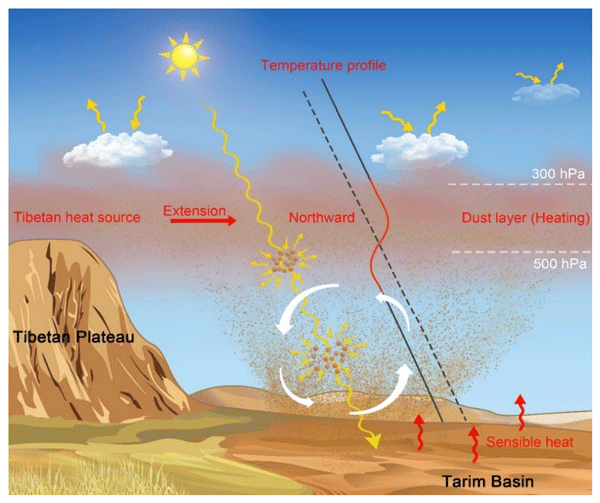
Based on the radiosonde observations, an anomalously warm layer is measured at altitudes between 500 and 300 hPa over the Tarim Basin (TB) with an average intensity of 2.53 and 1.39 K in the spring and summer, respectively. The heat contributions of dust to this anomalously warm atmospheric layer in spring and summer were 13.77 and 10.25 %, respectively. Topographically, the TB is adjacent to the Tibetan Plateau; we propose the concept of the Tibetan heat source’s northward extension.
Xiaoyun Sun, Tianliang Zhao, Yongqing Bai, Shaofei Kong, Huang Zheng, Weiyang Hu, Xiaodan Ma, and Jie Xiong
Atmos. Chem. Phys., 22, 3579–3593, https://doi.org/10.5194/acp-22-3579-2022, https://doi.org/10.5194/acp-22-3579-2022, 2022
Short summary
Short summary
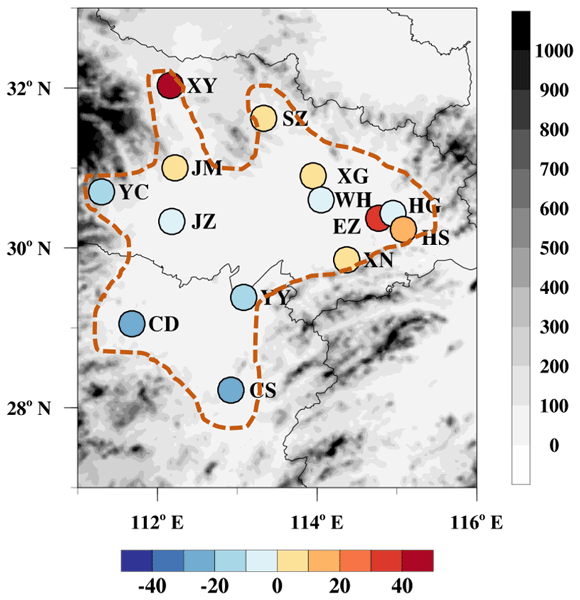
This study revealed the impact of anthropogenic emissions and meteorological conditions on PM2.5 decline in the regional transport of air pollutants over a receptor region in central China. The meteorological drivers led to upwind accelerating and downward offsetting of the effects of emission reductions over the receptor region in regional PM2.5 transport, and the contribution of gaseous precursor emissions to PM2.5 pollution was enhanced with reduced anthropogenic emissions in recent years.
Xiangde Xu, Chan Sun, Deliang Chen, Tianliang Zhao, Jianjun Xu, Shengjun Zhang, Juan Li, Bin Chen, Yang Zhao, Hongxiong Xu, Lili Dong, Xiaoyun Sun, and Yan Zhu
Atmos. Chem. Phys., 22, 1149–1157, https://doi.org/10.5194/acp-22-1149-2022, https://doi.org/10.5194/acp-22-1149-2022, 2022
Short summary
Short summary
A vertical transport window of tropospheric vapor exists on the Tibetan Plateau (TP). The TP's thermal forcing drives the vertical transport
windowof vapor in the troposphere. The effects of the TP's vertical transport window of vapor are of importance in global climate change.
Cited articles
Adhikari, P. and Mejia, J. F.: Influence of aerosols on clouds, precipitation and freezing level height over the foothills of the Himalayas during the Indian summer monsoon, Clim. Dynam., 57, 395–413, https://doi.org/10.1007/s00382-021-05710-2, 2021.
Bergeron, T.: On the physics of cloud and precipitation, in: Proceedings of the Fifth Assembly of the International Union of Geodesy and Geophysics, Lisbon, Portugal, IUGG, 156–178, 1935.
Cong, Z. Y., Kawamura, K., Kang, S. C., and Fu, P. Q.: Penetration of biomass-burning emissions from South Asia through the Himalayas: new insights from atmospheric organic acids, Sci. Rep., 5, 9580, https://doi.org/10.1038/srep09580, 2015.
de Leeuw, G., Sogacheva, L., Rodriguez, E., Kourtidis, K., Georgoulias, A. K., Alexandri, G., Amiridis, V., Proestakis, E., Marinou, E., Xue, Y., and van der A, R.: Two decades of satellite observations of AOD over mainland China using ATSR-2, AATSR and MODIS/Terra: data set evaluation and large-scale patterns, Atmos. Chem. Phys., 18, 1573–1592, https://doi.org/10.5194/acp-18-1573-2018, 2018.
Fan, J. W., Rosenfeld, D., Zhang, Y. W., Giangrande, S. E., Li, Z. Q., Machado, L. A. T., Martin, S. T., Yang, Y., Wang, J., Artaxo, P., Barbosa, H. M. J., Braga, R. C., Comstock, J. M., Feng, Z., Gao, W. H., Gomes, H. B., Mei, F., Pöhlker, C., Pöhlker, M. L., Pöschl, U., and de Souza, R. A. F.: Substantial convection and precipitation enhancements by ultrafine aerosol particles, Science, 359, 411–418, https://doi.org/10.1126/science.aan8461, 2018.
Fernald, F. G.: Analysis of atmospheric lidar observations: some comments, Appl. Opt., 23, 652–653, https://doi.org/10.1364/AO.23.000652, 1984.
Findeisen, W.: Die Kolloidmeterorologischem Vorgange der Niedershlagsbildung, Meteorol. Z., 55, 121–133, 1938.
Garrett, T. J. and Zhao, C. F.: Increased Arctic cloud longwave emissivity associated with pollution from mid-latitudes, Nature, 440, 787–789, https://doi.org/10.1038/nature04636, 2006.
Giorgi, F., Bi, X. Q., and Qian, Y.: Direct radiative forcing and regional climatic effects of anthropogenic aerosols over East Asia: a regional coupled climate-chemistry/aerosol model study, J. Geophys. Res., 107, 4439, https://doi.org/10.1029/2001JD001066, 2002.
Guo, J. P., Deng, M. J., Lee, S. S., Wang, F., Li, Z. Q., Zhai, P. M., Liu, H., Lv, W. T., Yao, W., and Li, X. W.: Delaying precipitation and lightning by air pollution over the Pearl River Delta. Part I: observational analyses, J. Geophys. Res.-Atmos., 121, 6472–6488, https://doi.org/10.1002/2015JD023257, 2016.
He, H., Gao, Q., Liu, X. E., Zhou, W., and Jia, X. C.: Numerical simulation of the structural characteristics and precipitation mechanism of stratiform clouds with embedded convections, Chin. J. Atmos. Sci., 39, 315–328, https://doi.org/10.3878/j.issn.1006-9895.1404.14102, 2015.
Heymsfield, A. J., Schmitt, C., Chen, C.-C.-J., Bansemer, A., Gettelman, A., Field, P. R., and Liu, C. T.: Contributions of the liquid and ice phases to global surface precipitation: observations and global climate modeling, J. Atmos. Sci., 77, 2629–2648, https://doi.org/10.1175/JAS-D-19-0352.1, 2020.
Hindman, E. E. and Upadhyay, B. P.: Air pollution transport in the Himalayas of Nepal and Tibet during the 1995–1996 dry season, Atmos. Environ., 36, 727–739, https://doi.org/10.1016/S1352-2310(01)00495-2, 2002.
Hosler, C. L., Jensen, D. C., and Goldshlak, L.: On the aggregation of ice crystals to form snow, J. Atmos. Sci., 14, 415–420, https://doi.org/10.1175/1520-0469(1957)014<0415:OTAOIC>2.0.CO;2, 1957.
Hua, S., Liu, Y. Z., Luo, R., Shao, T. B., and Zhu, Q. Z.: Inconsistent aerosol indirect effects on water clouds and ice clouds over the Tibetan Plateau, Int. J. Climatol., 40, 3832–3848, https://doi.org/10.1002/joc.6430, 2020.
Huang, J. P., Minnis, P., Yi, Y. H., Tang, Q., Wang, X., Hu, Y. X., Liu, Z. Y., Ayers, K., Trepte, C., and Winker, D.: Summer dust aerosols detected from CALIPSO over the Tibetan Plateau, Geophys. Res. Lett., 34, L18805, https://doi.org/10.1029/2007GL029938, 2007.
Intergovernmental Panel on Climate Change (IPCC): Climate Change 2021 – The Physical Science Basis: Working Group I Contribution to the Sixth Assessment Report of the Intergovernmental Panel on Climate Change (1st edn.), Cambridge University Press, https://doi.org/10.1017/9781009157896, 2023.
Jiang, J., Zhou, T. J., Qian, Y., Li, C., Song, F. F., Li, H. M., Chen, X. L., Zhang, W. X., and Chen, Z. M.: Precipitation regime changes in High Mountain Asia driven by cleaner air, Nature, 623, 544–549, https://doi.org/10.1038/s41586-023-06619-y, 2023.
Kang, S. C., Zhang, Q. G., Qian, Y., Ji, Z. M., Li, C. L., Cong, Z. Y., Zhang, Y. L., Guo, J. M., Du, W. T., Huang, J., You, Q. L., Panday, A. K., Rupakheti, M., Chen, D. L., Gustafsson, Ö., Thiemens, M. H., and Qin, D. H.: Linking atmospheric pollution to cryospheric change in the Third Pole region: current progress and future prospects, Natl. Sci. Rev., 6, 796–809, https://doi.org/10.1093/nsr/nwz031, 2019.
Khain, A., Rosenfeld, D., and Pokrovsky, A. A.: Aerosol impact on the dynamics and microphysics of deep convective clouds, Q. J. Roy. Meteor. Soc., 131, 2639–2663, https://doi.org/10.1256/qj.04.62, 2005.
Lau, K. M., Ramanathan, V., Wu, G. X., Li, Z., Tsay, S. C., Hsu, C., Sikka, R., Holben, B., Lu, D., Tartari, G., Chin, M., Koudelova, P., Chen, H., Ma, Y., Huang, J., Taniguchi, K., and Zhang, R.: The joint aerosol-monsoon experiment: a new challenge for monsoon climate research, Bull. Am. Meteorol. Soc., 89, 369–383, https://doi.org/10.1175/BAMS-89-3-369, 2008.
Lawrence, M. G.: Asia under a high-level brown cloud, Nat. Geosci., 4, 352–353, https://doi.org/10.1038/ngeo1166, 2011.
Levin, Z. and Cotton, W. R.: Aerosol Pollution Impact on Precipitation: A Scientific Review, Springer, https://doi.org/10.1007/978-1-4020-8690-8, 2009.
Levy, R. C., Mattoo, S., Munchak, L. A., Remer, L. A., Sayer, A. M., Patadia, F., and Hsu, N. C.: The Collection 6 MODIS aerosol products over land and ocean, Atmos. Meas. Tech., 6, 2989–3034, https://doi.org/10.5194/amt-6-2989-2013, 2013.
Li, X. F., Kang, S. C., Sprenger, M., Zhang, Y. L., He, X. B., Zhang, G. S., Tripathee, L., Li, C. L., and Cao, J. J.: Black carbon and mineral dust on two glaciers on the central Tibetan Plateau: sources and implications, J. Glaciol., 66, 1–11, https://doi.org/10.1017/jog.2019.100, 2020.
Liu, X. D., Xie, X. N., Yin, Z. Y., Liu, C. H., and Gettelman, A.: A modeling study of the effects of aerosols on clouds and precipitation over East Asia, Theor. Appl. Climatol., 106, 343–354, https://doi.org/10.1007/s00704-011-0436-6, 2011.
Liu, Y., Sato, Y., Jia, R., Xie, Y., Huang, J., and Nakajima, T.: Modeling study on the transport of summer dust and anthropogenic aerosols over the Tibetan Plateau, Atmos. Chem. Phys., 15, 12581–12594, https://doi.org/10.5194/acp-15-12581-2015, 2015.
Liu, Y. Z., Hua, S., Jia, R., and Huang, J. P.: Effect of aerosols on the ice cloud properties over the Tibetan Plateau, J. Geophys. Res.-Atmos., 124, 9594–9608, https://doi.org/10.1029/2019JD030463, 2019.
Liu, Y. Z., Li, Y. H., Huang, J. P., Zhu, Q. Z., and Wang, S. S.: Attribution of the Tibetan Plateau to northern drought, Natl. Sci. Rev., 7, 489–492, https://doi.org/10.1093/nsr/nwz191, 2020a.
Liu, Y. Z., Shao, T. B., Hua, S., Zhu, Q. Z., and Luo, R.: Association of anthropogenic aerosols with subtropical drought in East Asia, Int. J. Climatol., 40, 3500–3513, https://doi.org/10.1002/joc.6410, 2020b.
Liu, Y. Z., Huang, J. P., Wang, T. H., Li, J. M., Yan, H. R., and He, Y. L.: Aerosol-cloud interactions over the Tibetan Plateau: an overview, Earth Sci. Rev., 234, 104216, https://doi.org/10.1016/j.earscirev.2022.104216, 2022.
Liu, Z. Y. and Sugimoto, N.: Simulation study for cloud detection with space lidars by use of analog detection photomultiplier tubes, Appl. Opt., 41, 1750–1759, https://doi.org/10.1364/AO.41.001750, 2002.
Lohmann, U. and Feichter, J.: Global indirect aerosol effects: a review, Atmos. Chem. Phys., 5, 715–737, https://doi.org/10.5194/acp-5-715-2005, 2005.
Luo, M., Liu, Y. Z., Zhu, Q. Z., Tang, Y. H., and Alam, K.: Role and mechanisms of black carbon affecting water vapor transport to Tibet, Remote Sens., 12, 231, https://doi.org/10.3390/rs12020231, 2020.
Ma, Y. M., Xie, Z. P., Ma, W. Q., Han, C. B., Sun, F. L., Sun, G. H., Liu, L., Lai, Y., Wang, B. B., Liu, X., Zhao, W. Q., Ma, W. Y., Wang, F. F., Sun, L. J., Ma, B., Han, Y. Z., Wang, Z. Y., and Xi, Z. H.: QOMS: a comprehensive observation station for climate change research on the top of Earth, Bull. Am. Meteorol. Soc., 104, E563–E584, https://doi.org/10.1175/BAMS-D-22-0084.1, 2023.
Menon, S., Hansen, J., Nazarenko, L., and Luo, Y.: Climate effects of black carbon aerosols in China and India, Science, 297, 2250–2253, https://doi.org/10.1126/science.1075159, 2002.
Miao, Q. J., Xu, X. D., and Zhang X. J.: Characteristics of teleconnection wave train for circulation pattern of flood/drought in the middle and lower reaches of yangtze river and sea surface temperature over equatorial eastern pacific, Acta Meteorol. Sin., 60, 688–697, https://doi.org/10.11676/qxxb2002.082, 2002 (in Chinese).
Ming, J., Xiao, C. D., Du, Z. C., and Yang, X. G.: An overview of black carbon deposition in High Asia glaciers and its impacts on radiation balance, Adv. Water Resour., 55, 80–87, https://doi.org/10.1016/j.advwatres.2012.05.015, 2013.
Murray, B. J., O'Sullivan, D., Atkinson, J. D., and Webb, M. E.: Ice nucleation by particles immersed in supercooled cloud droplets, Chem. Soc. Rev., 41, 6519–6554, https://doi.org/10.1039/c2cs35200a, 2012.
Penner, J. E., Hegg, D., and Leaitch, R.: Unraveling the role of aerosols in climate change, Environ. Sci. Technol., 35, 332A–340A, https://doi.org/10.1021/es0124414, 2001.
Purdy, J. C., Austin, G. L., Seed, A. W., and Cluckie, I. D.: Radar evidence of orographic enhancement due to the seeder feeder mechanism, Meteorol. Appl., 12, 199–206, https://doi.org/10.1017/S1350482705001672, 2005.
Qian, Y., Gong, D. Y., Fan, J. W., Leung, L. R., Bennartz, R., Chen, D. L., and Wang, W. G.: Heavy pollution suppresses light rain in China: observations and modeling, J. Geophys. Res., 114, D00K02, https://doi.org/10.1029/2008JD011575, 2009.
Ramanathan, V., Chung, C., Kim, D., Bettge, T., Buja, L., Kiehl, J. T., Washington, W. M., Fu, Q., Sikka, D. R., and Wild, M.: Atmospheric brown clouds: Impacts on South Asian climate and hydrological cycle, Proc. Natl. Acad. Sci. USA, 102, 5326–5333, https://doi.org/10.1073/pnas.0500656102, 2005.
Ramelli, F., Henneberger, J., David, R. O., Bühl, J., Radenz, M., Seifert, P., Wieder, J., Lauber, A., Pasquier, J. T., Engelmann, R., Mignani, C., Hervo, M., and Lohmann, U.: Microphysical investigation of the seeder and feeder region of an Alpine mixed-phase cloud, Atmos. Chem. Phys., 21, 6681–6706, https://doi.org/10.5194/acp-21-6681-2021, 2021.
Rosenfeld, D.: Aerosols, clouds, and climate, Science, 312, 1323–1324, https://doi.org/10.1126/science.1128972, 2006.
Rosenfeld, D., Sherwood, S., Wood, R., and Donner, L.: Climate effects of aerosol-cloud interactions, Science, 343, 379–380, https://doi.org/10.1126/science.1247490, 2014.
Sayer, A. M., Munchak, L. A., Hsu, N. C., Levy, R. C., Bettenhausen, C., and Jeong, M.-J.: MODIS collection 6 aerosol products: comparison between aqua's e-deep blue, dark target, and “merged” data sets, and usage recommendations, J. Geophys. Res.-Atmos., 119, 13965–13989, https://doi.org/10.1002/2014JD022453, 2014.
Stohl, A., Forster, C., Frank, A., Seibert, P., and Wotawa, G.: Technical note: The Lagrangian particle dispersion model FLEXPART version 6.2, Atmos. Chem. Phys., 5, 2461–2474, https://doi.org/10.5194/acp-5-2461-2005, 2005.
Twomey, S.: The influence of pollution on the shortwave albedo of clouds, J. Atmos. Sci., 34, 1149–1152, https://doi.org/10.1175/1520-0469(1977)034<1149:tiopot>2.0.co;2, 1977.
Twomey, S. A., Piepgrass, M., and Wolfe, T. L.: An assessment of the impact of pollution on global cloud albedo, Tellus B, 36, 356–366, https://doi.org/10.3402/tellusb.v36i5.14916, 1984.
Wan, B. C., Gao, Z. Q., Chen, F., and Lu, C. G.: Impact of Tibetan Plateau surface heating on persistent extreme precipitation events in southeastern China, Mon. Weather Rev., 145, 3485–3505, https://doi.org/10.1175/MWR-D-17-0061.1, 2017.
Wang, C., Wu, C., and Li, L. P.: Data quality analysis and control method of X-band dual polarization radar, Plateau Meteorology, 38, 636–649, https://doi.org/10.7522/j.issn.1000-0534.2018.00096, 2019.
Wang, T. H., Chen, Y. X., Gan, Z. W., Han, Y., Li, J. M., and Huang, J. P.: Assessment of dominating aerosol properties and their long-term trend in the Pan-Third Pole region: a study with 10-year multi-sensor measurements, Atmos. Environ., 239, 117738, https://doi.org/10.1016/j.atmosenv.2020.117738, 2020.
Wegener, A.: Thermodynamik der Atmosphäre, J. A. Barth, Leipzig, 331 pp., https://doi.org/10.1038/090031a0, 1911.
Xiang, Y., Lv, L. H., Chai, W. X., Zhang, T. S., Liu, J. G., and Liu, W. Q.: Using Lidar technology to assess regional air pollution and improve estimates of PM2.5 transport in the North China Plain, Environ. Res. Lett., 15, 094071, https://doi.org/10.1088/1748-9326/ab9cfd, 2012.
Xiang, Y., Lv, L. H., Chai, W. X., Zhang, T. S., Liu, J. G., and Liu, W. Q.: Using Lidar technology to assess regional air pollution and improve estimates of PM2.5 transport in the North China Plain, Environ. Res. Lett., 15, 094071, https://doi.org/10.1088/1748-9326/ab9cfd, 2020.
Xiang, Y., Zhang, T. S., Liu, J. G., Wan, X., Loewen, M., Chen, X. T., Kang, S. C., Fu, Y. B., Lv, L. H., Liu, W. Q., and Cong, Z. Y.: Vertical profile of aerosols in the Himalayas revealed by lidar: new insights into their seasonal/diurnal patterns, sources, and transport, Environ. Pollut., 285, 117686, https://doi.org/10.1016/j.envpol.2021.117686, 2021.
Xiao, Y. J., Wang, B., Chen, X. H., Cao, J. W., and Yang, X. M.: Differential Phase Data Quality Control of Mobile X-Band Dual-Polarimetric Doppler Weather Radar, Plateau Meteorology, 31, 223–230, 2012.
Xu, X. D. and Chen, L. S.: Advances of the Study on Tibetan Plateau Experiment of Atmospheric Sciences, J. Appl. Meteor. Sci., 17, 756–772, 2006 (in Chinese).
Xu, X. D., Zhou, M. Y., Chen, J. Y., Bian, L. G., Zhang, G. Z., Liu, H. Z., Li, S. M., Zhang, H. S., Zhao, Y. J., Dorje, S., and Wang, J. Z.: A comprehensive physical image of land-air dynamic and thermal structure on the Tibetan plateau, Sci. China Ser. D, 31, 428–440, https://doi.org/10.1360/02yd9060, 2001.
Xu, X. D., Tao, S. Y., Wang, J. Z., Chen, L. S., Zhou, L., and Wang, X. R.: The relationship between water vapor transport features of Tibetan plateau-monsoon “large triangle” affecting region and drought-flood abnormality of China, Acta Meteorol. Sin., 60, 257–266, https://doi.org/10.11676/qxxb2002.032, 2002.
Xu, X. D., Cai, W. Y., Zhao, T. L., Zhang, H., Guo, X. L., Liu, W. Q., Zhang, T. S., Zhao, R. Z., Wu, C., Li, Y. Q., Wang, L., Yan, P., and Yang, C. J.: Understanding clouds and precipitation over the Mount Qomolangma: how does the aerosol activation effect exist?, Sci. Bull., 70, 3649–3658, https://doi.org/10.1016/j.scib.2025.09.031, 2025.
Ying, T., Li, J., Jiang, Z. J., Liu, G. Y., Zhang, Z. Y., Zhang, L., Dong, Y. M., and Zhao, C. F.: Increased aerosol scattering contributes to the recent monsoon rainfall decrease over the Gangetic Plain, Sci. Bull., 68, 2629–2638, https://doi.org/10.1016/j.scib.2023.08.052, 2023.
Zhang, H., Wang, Z. L., and Zhao, S. Y.: Atmospheric aerosol and its climate effect, in: 1st edn., China Meteorological Press, Beijing, ISBN 978-7-5029-6676-8, 2017 (in Chinese).
Zhao, C. F., Yang, Y. K., Fan, H., Huang, J. P., Fu, Y. F., Zhang, X. Y., Kang, S. C., Cong, Z. Y., Letu, H., and Menenti, M.: Aerosol characteristics and impacts on weather and climate over the Tibetan Plateau, Natl. Sci. Rev., 7, 492–495, https://doi.org/10.1093/nsr/nwz184, 2020.
Zhao, C. F., Sun, Y., Yang, J., Li, J. F., Zhou, Y., Yang, Y. K., Fan, H., and Zhao, X.: Observational evidence and mechanisms of aerosol effects on precipitation, Sci. Bull., 69, 1569–1580, https://doi.org/10.1016/j.scib.2024.03.014, 2024.
Zhao, C. F., Li, J. F., and Yang, Y. K.: A short review of microphysical effects of aerosols on clouds and precipitation, Chin. J. Atmos. Sci., 49, 949–963, https://doi.org/10.3878/j.issn.1006-9895.2503.25015, 2025.
Zhou, X., Bei, N., Liu, H., Cao, J., Xing, L., Lei, W., Molina, L. T., and Li, G.: Aerosol effects on the development of cumulus clouds over the Tibetan Plateau, Atmos. Chem. Phys., 17, 7423–7434, https://doi.org/10.5194/acp-17-7423-2017, 2017.
Zhu, S. Z., Qian, L., Ma, X. Q., Qiu, Y. J., Yang, J., He, X., Li, J. J., Zhu, L., Gong, J., and Lu, C. S.: Impact of Aerosols on the Macrophysical and Microphysical Characteristics of Ice-Phase and Mixed-Phase Clouds over the Tibetan Plateau, Remote Sens., 16, 1781, https://doi.org/10.3390/rs16101781, 2024.
Zhuo, G., Xu, X. D., and Chen, L. S.: Instability of eastward movement and development of convective cloud clusters over Tibetan Plateau, J. Appl. Meteor. Sci., 13, 447–456, 2002 (in Chinese).
Short summary
Using satellite and comprehensive ground-based observations, we identify pronounced ice-cloud activation associated with transported exogenous aerosols. Under different large-scale atmospheric circulation regimes, ice-phase cloud activated over Mount Qomolangma (MQ) can be efficiently transported downstream through distinct pathways, exerting a pronounced ice crystal seeding effect on cloud–precipitation conversion.
Using satellite and comprehensive ground-based observations, we identify pronounced ice-cloud...


Altmetrics
Final-revised paper
Preprint