
Articles | Volume 26, issue 12
https://doi.org/10.5194/acp-26-8981-2026
© Author(s) 2026. This work is distributed under
the Creative Commons Attribution 4.0 License.
the Creative Commons Attribution 4.0 License.
https://doi.org/10.5194/acp-26-8981-2026
© Author(s) 2026. This work is distributed under
the Creative Commons Attribution 4.0 License.
the Creative Commons Attribution 4.0 License.
Research article
| 
25 Jun 2026
Research article |
| 25 Jun 2026
| 25 Jun 2026
Cross-hemispheric transport of the Hunga aerosol plume: in situ evidence and radiative effects from the northern hemisphere

Forschungszentrum Jülich GmbH, Institute of Climate and Energy Systems – Stratosphere (ICE-4), Jülich, Germany
Gwenaël Berthet
Laboratoire de Physique et Chimie de l'Environnement et de l'Espace, CNRS/Université d'Orléans, UMR 7328, Orléans, France
Pasquale Sellitto
Univ. Paris-Est Créteil and Université de Paris Cité, CNRS, Laboratoire Interuniversitaire des Systèmes Atmosphériques, Institut Pierre Simon Laplace, Créteil, France
Istituto Nazionale di Geofisica e Vulcanologia, Osservatorio Etneo, Catania, Italy
Irene Bartolome Garcia
Institute for Atmospheric Physics, Johannes Gutenberg University Mainz, Mainz, Germany
Forschungszentrum Jülich GmbH, Institute of Climate and Energy Systems – Stratosphere (ICE-4), Jülich, Germany
Emmanuel Briaud
Laboratoire de Physique et Chimie de l'Environnement et de l'Espace, CNRS/Université d'Orléans, UMR 7328, Orléans, France
Rubel Chandra Das
National Institute of Aerospace, Hampton, USA
Stéphane Chevrier
Laboratoire de Physique et Chimie de l'Environnement et de l'Espace, CNRS/Université d'Orléans, UMR 7328, Orléans, France
Nicolas Dumelié
GSMA, UMR CNRS 7331, Université de Reims Champagne-Ardenne, Reims, France
Lilian Joly
GSMA, UMR CNRS 7331, Université de Reims Champagne-Ardenne, Reims, France
Thomas Lecas
Laboratoire de Physique et Chimie de l'Environnement et de l'Espace, CNRS/Université d'Orléans, UMR 7328, Orléans, France
Pauline Marbach
Forschungszentrum Jülich GmbH, Institute of Climate and Energy Systems – Stratosphere (ICE-4), Jülich, Germany
Felix Ploeger
Forschungszentrum Jülich GmbH, Institute of Climate and Energy Systems – Stratosphere (ICE-4), Jülich, Germany
Institute for Atmospheric and Environmental Research, University of Wuppertal, Wuppertal, Germany
Jean-Baptiste Renard
Laboratoire de Physique et Chimie de l'Environnement et de l'Espace, CNRS/Université d'Orléans, UMR 7328, Orléans, France
Jean-Paul Vernier
National Institute of Aerospace, Hampton, USA
GSMA, UMR CNRS 7331, Université de Reims Champagne-Ardenne, Reims, France
NASA-Langley Research Center, Hampton (VA), USA
Frank G. Wienhold
Federal Institute of Technology (ETHZ), Zurich, Switzerland
Michaela I. Hegglin
Forschungszentrum Jülich GmbH, Institute of Climate and Energy Systems – Stratosphere (ICE-4), Jülich, Germany
Institute for Atmospheric and Environmental Research, University of Wuppertal, Wuppertal, Germany
Department of Meteorology, University of Reading, Reading, UK
Related authors
Nelson Bègue, Alexandre Baron, Gisèle Krysztofiak, Gwenaël Berthet, Corinna Kloss, Fabrice Jégou, Sergey Khaykin, Marion Ranaivombola, Tristan Millet, Thierry Portafaix, Valentin Duflot, Philippe Keckhut, Hélène Vérèmes, Guillaume Payen, Mahesh Kumar Sha, Pierre-François Coheur, Cathy Clerbaux, Michaël Sicard, Tetsu Sakai, Richard Querel, Ben Liley, Dan Smale, Isamu Morino, Osamu Uchino, Tomohiro Nagai, Penny Smale, John Robinson, and Hassan Bencherif
Atmos. Chem. Phys., 24, 8031–8048, https://doi.org/10.5194/acp-24-8031-2024, https://doi.org/10.5194/acp-24-8031-2024, 2024
Short summary
Short summary
During the 2020 austral summer, the pristine atmosphere of the southwest Indian Ocean basin experienced significant perturbations. Numerical models indicated that the lower-stratospheric aerosol content was influenced by the intense and persistent stratospheric aerosol layer generated during the 2019–2020 extreme Australian bushfire events. Ground-based observations at Réunion confirmed the simultaneous presence of African and Australian aerosol layers.
Paul Konopka, Mengchu Tao, Marc von Hobe, Lars Hoffmann, Corinna Kloss, Fabrizio Ravegnani, C. Michael Volk, Valentin Lauther, Andreas Zahn, Peter Hoor, and Felix Ploeger
Geosci. Model Dev., 15, 7471–7487, https://doi.org/10.5194/gmd-15-7471-2022, https://doi.org/10.5194/gmd-15-7471-2022, 2022
Short summary
Short summary
Pure trajectory-based transport models driven by meteorology derived from reanalysis products (ERA5) take into account only the resolved, advective part of transport. That means neither mixing processes nor unresolved subgrid-scale advective processes like convection are included. The Chemical Lagrangian Model of the Stratosphere (CLaMS) includes these processes. We show that isentropic mixing dominates unresolved transport. The second most important transport process is unresolved convection.
Pasquale Sellitto, Redha Belhadji, Corinna Kloss, and Bernard Legras
Atmos. Chem. Phys., 22, 9299–9311, https://doi.org/10.5194/acp-22-9299-2022, https://doi.org/10.5194/acp-22-9299-2022, 2022
Short summary
Short summary
As a consequence of extreme heat and drought, record-breaking wildfires ravaged south-eastern Australia during the fire season in 2019–2020. Fires injected a smoke plume very high up to the stratosphere, which dispersed quite quickly to the whole Southern Hemisphere and interacted with solar radiation, reflecting and absorbing part of it – thus producing impacts on the climate system. Here we estimate this impact on radiation and we study how it depends on the properties and ageing of the plume.
Pasquale Sellitto, Mona Kosary, Michael Höpfner, Bernd Funke, Alex Hoffmann, Jörn Ungermann, Quentin Errera, Simone Tilmes, and Björn-Martin Sinnhuber
Atmos. Meas. Tech., 19, 6379–6393, https://doi.org/10.5194/amt-19-6379-2026, https://doi.org/10.5194/amt-19-6379-2026, 2026
Short summary
Short summary
To counterbalance human-caused global warming, highly controversial geoengineering techniques, based on stratospheric aerosol injection (SAI), have been proposed as a complement to climate change mitigation. Possible unilateral SAI deployments or tests are a risk. We show that existing satellite instruments do not have the capability to detect unilateral SAI experiments and we propose a future satellite technique, infrared limb emission sounding, that can provide this missing capability.
Sean M. Davis, William T. Ball, Yue Jia, Gabriel Chiodo, Justin A. Alsing, James Keeble, Hideharu Akiyoshi, Carlo Arosio, Ewa M. Bednarz, Andreas Chrysanthou, Melanie Coldewey-Egbers, Robert Damadeo, Sandip Dhomse, Mohamadou A. Diallo, Simone Dietmuller, Roland Eichinger, Stacey Frith, Birgit Hassler, Michaela I. Hegglin, Daan Hubert, Patrick Jöckel, Béatrice Josse, Natalya Kramarova, Diego Loyola, Eliane Maillard Barras, Marion Marchand, Olaf Morgenstern, David Plummer, Robert W. Portmann, Karen H. Rosenlof, Alexei Rozanov, Viktoria F. Sofieva, Johannes Staehelin, Timofei Sukhodolov, Kleareti Tourpali, Ronald J. Van der A, H. J. Ray Wang, Krzysztof Wargan, Shingo Watanabe, Mark Weber, Jeannette D. Wild, Yousuke Yamashita, and Jerry Ziemke
Atmos. Chem. Phys., 26, 13817–13843, https://doi.org/10.5194/acp-26-13817-2026, https://doi.org/10.5194/acp-26-13817-2026, 2026
Short summary
Short summary
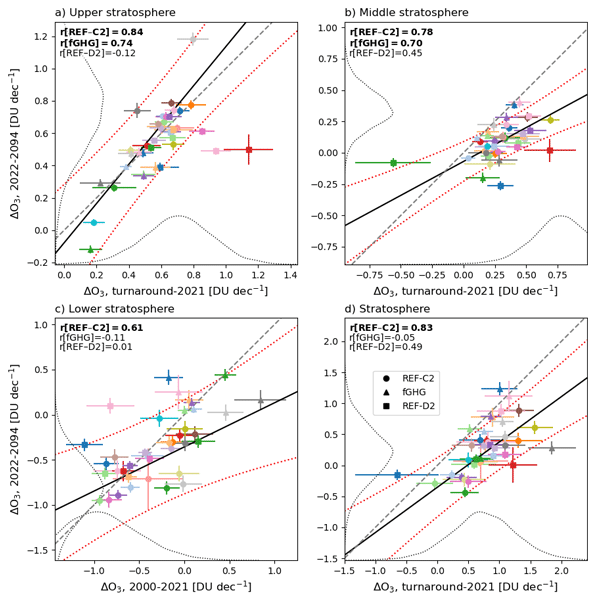
This study investigates tropical ozone changes in models and satellite observations to determine how well they agree and whether observations can constrain model projections. At some levels, satellite records disagree significantly on the magnitude of ozone changes. While early and late 21st century trends are correlated across models, suggesting a potential emergent constraint, the spread in observations means they are unable to provide guidance on the credibility of model projections.
Mélanie Ghysels, Luca Palchetti, Silvia Viciani, Claudio Belotti, Marco Barucci, Gwenaël Berthet, Elizabeth Asher, Emrys Hall, Alex Fritz, Armin Afchine, Christian Rolf, Thomas Kuhn, Chris Stopford, Alain Hauchecorne, Nadir Amarouche, Georges Durry, Jean-Christophe Samake, Lars E. Kalnajs, Terry Deshler, Samuele Del Bianco, and Paolo Pettinari
Earth Syst. Sci. Data Discuss., https://doi.org/10.5194/essd-2026-557, https://doi.org/10.5194/essd-2026-557, 2026
Preprint under review for ESSD
Short summary
Short summary
ATMOSFER, a CNES-supported 2024 balloon campaign in Kiruna, Sweden, prepared ESA’s FORUM mission by measuring far-infrared radiation, water vapor, clouds and aerosols in the UTLS. FIRMOS-B (balloon borne demonstrator of FORUM) showed excellent performance, while hygrometers agreed closely. The campaign observed cirrus clouds, ice crystals and stratospheric aerosol layers linked to wildfire and tropical air masses, improving climate observations and FORUM validation.
Florian Voet, Felix Ploeger, Johannes C. Laube, Laura N. Saunders, Patrick E. Sheese, Attahir Mainika, Peter Preusse, Jens-Uwe Grooß, Kaley A. Walker, Susann Tegtmeier, and Michaela Imelda Hegglin
EGUsphere, https://doi.org/10.5194/egusphere-2026-4647, https://doi.org/10.5194/egusphere-2026-4647, 2026
This preprint is open for discussion and under review for Atmospheric Chemistry and Physics (ACP).
Short summary
Short summary
We developed a better way to estimate how long air remains in the upper atmosphere, because satellite estimates can be too noisy to show long-term changes. Using measurements of several gases from a satellite, we found that combining them cuts uncertainty by about half and gives estimates with about 0.3 years of average uncertainty. Results for 2004–2021 show older air in the Northern Hemisphere and younger air in the tropics and Southern Hemisphere, suggesting slower circulation in the north.
Simone Brunamonti, Yann Poltera, Gonzague Romanens, Alex Weitnauer, Philipp Scheidegger, Adrianos Filinis, Alistair Bell, Giovanni Martucci, Frank Gunther Wienhold, Thomas Peter, Peter Oelsner, Ruud Dirksen, Alexander Haefele, Lukas Emmenegger, Gunter Stober, and Béla Tuzson
EGUsphere, https://doi.org/10.5194/egusphere-2026-4762, https://doi.org/10.5194/egusphere-2026-4762, 2026
Short summary
Short summary
Accurate measurements of the concentration of water vapor in the upper atmosphere are essential for reliable climate predictions. We investigated the performance of a new lightweight (less than 4 kg) hygrometer, based on laser absorption spectroscopy, in a series of atmospheric test flights using weather balloons, reaching up to 35 km altitude. The results demonstrate the high accuracy and suitability of this technique for applications in long-term climate monitoring and atmospheric research.
Mona Kosary, Pasquale Sellitto, Michael Höpfner, Bernd Funke, Alex Hoffmann, Jörn Ungermann, Quentin Errera, Simone Tilmes, and Björn-Martin Sinnhuber
EGUsphere, https://doi.org/10.5194/egusphere-2026-4654, https://doi.org/10.5194/egusphere-2026-4654, 2026
Short summary
Short summary
We investigated whether future satellites could track changes in the ozone layer if reflective particles were deliberately added high in the atmosphere to cool the planet. Using climate model simulations, we created virtual satellite measurements and compared them with the original data. The method captured the key changes, especially stronger ozone loss and delayed recovery over Antarctica, while showing low artificial distortion. This suggests such satellites could provide important oversight.
Wolfgang Woiwode, Bärbel Vogel, Valentin Lauther, Jens-Uwe Grooß, Jeremy Harrison, Sören Johansson, Jörn Ungermann, Peter Braesicke, Markus Dick, Andreas Engel, Felix Friedl-Vallon, Norbert Glatthor, Thomas Gulde, Michael Höpfner, Markus Jesswein, Jan Kaumanns, Timo Keber, Anne Kleinert, Erik Kretschmer, Guido Maucher, Tom Neubert, Hans Nordmeyer, Christof Piesch, Felix Plöger, Peter Preusse, Markus Retzlaff, Sebastian Rhode, Heinz Rongen, Georg Schardt, Tanja Schuck, Björn-Martin Sinnhuber, Johannes Strobel, Franziska Trinkl, Ronja Van Luijt, Stefan Versick, C. Michael Volk, Gerald Wetzel, Peter Hoor, and Martin Riese
EGUsphere, https://doi.org/10.5194/egusphere-2026-3271, https://doi.org/10.5194/egusphere-2026-3271, 2026
Short summary
Short summary
Filaments of CH2Cl2-rich air are revealed by airborne infrared limb-imaging observations in late summer 2023 above the North Pacific, Canada and Alaska and traced back to the Asian Summer Monsoon region. Involving new spectroscopic data, high CH2Cl2 levels were retrieved in the troposphere and moderate enhancements also in air masses with characteristics of the lowermost stratosphere. Mesoscale filaments are shown to transport substantial amounts of CH2Cl2 across the North Pacific.
Arlett Díaz-Zurita, Simone Brunamonti, Alexander Haefele, Martine Collaud Coen, Giovanni Martucci, Benjamin Tobias Brem, Martin Gysel-Beer, Hassan Lyamani, Gloria Titos, Daniel Pérez-Ramírez, Christoph Hüglin, Lucas Alados-Arboledas, Alejandro Keller, Frank Gunther Wienhold, Maxime Hervo, and Francisco Navas-Guzmán
EGUsphere, https://doi.org/10.5194/egusphere-2026-4361, https://doi.org/10.5194/egusphere-2026-4361, 2026
Short summary
Short summary
This study provides a unique framework for assessing aerosol hygroscopicity by combining Raman lidar observations with vertically resolved in situ measurements from the balloon-borne Compact Backscatter Aerosol Detector coupled with Vaisala RS41 radiosondes and ground-based tandem nephelometers. The three approaches showed good agreement. Raman lidar identified more than 200 hygroscopic aerosol layers, constituting one of the largest datasets available for statistical investigations.
Yann Poltera, Beiping Luo, Frank G. Wienhold, and Thomas Peter
Atmos. Meas. Tech., 19, 5091–5134, https://doi.org/10.5194/amt-19-5091-2026, https://doi.org/10.5194/amt-19-5091-2026, 2026
Short summary
Short summary
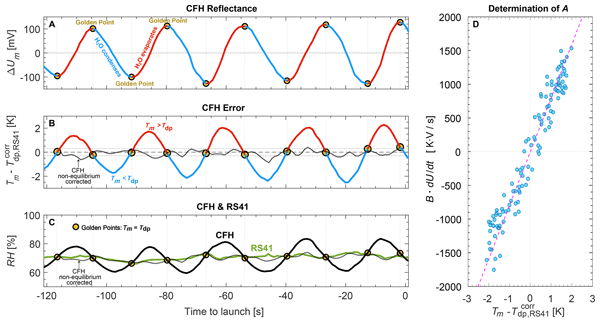
Chilled mirror hygrometers are the most accurate instruments for measuring water vapor in the upper troposphere and lower stratosphere. The “Golden Points” and nonequilibrium correction are a new post-processing technique for these instruments, which can correct frost point data using mirror reflectance information to achieve unprecedented accuracy of better than 4 % in the H2O mixing ratio, even under rapidly changing humidity conditions, from the ground to the middle stratosphere.
Jan Kaumanns, Florian Voet, Felix Ploeger, Peter Preuße, Jörn Ungermann, and Michaela Imelda Hegglin
EGUsphere, https://doi.org/10.5194/egusphere-2026-4183, https://doi.org/10.5194/egusphere-2026-4183, 2026
Short summary
Short summary
Age-of-Air (AoA) denotes the time an air parcel has spent inside the stratosphere and is an important diagnostic quantity for the Brewer Dobson Circulation (BDC). We present a novel approach using neural networks to accurately and robustly derive AoA from inert chemical species with considerable measurement noise even far beyond the training domain. We also present an alternative view of AoA by using autoencoders to derive a model-independent proxy quantity for it and validate its robustness.
Oleh Kachula, Bärbel Vogel, Gebhard Günther, Rolf Müller, and Felix Ploeger
EGUsphere, https://doi.org/10.5194/egusphere-2026-3509, https://doi.org/10.5194/egusphere-2026-3509, 2026
This preprint is open for discussion and under review for Atmospheric Chemistry and Physics (ACP).
Short summary
Short summary
Locating the boundary of the Asian summer monsoon anticyclone (ASMA) in the upper atmosphere is important for understanding how this system distributes pollutants. We show that while different methodologies generally agree on the boundary's location and shape, certain methods are preferred under specific conditions. These findings will be of broad interest to researchers studying large-scale atmospheric circulations in upper atmosphere.
Fatih Ekinci, Oliver Eppers, Oliver Appel, Felix Ploeger, Antonis Dragoneas, Sergej Molleker, Philipp Brauner, Hans-Christoph Lachnitt, Franziska Weyland, Linda Ort, Nicolas Emig, Hans-Christian Clemen, Laura Tomsche, Martin Ebert, Peter Hoor, Bärbel Vogel, Yafang Cheng, Johannes Schneider, Stephan Borrmann, and Franziska Köllner
Atmos. Chem. Phys., 26, 10399–10421, https://doi.org/10.5194/acp-26-10399-2026, https://doi.org/10.5194/acp-26-10399-2026, 2026
Short summary
Short summary
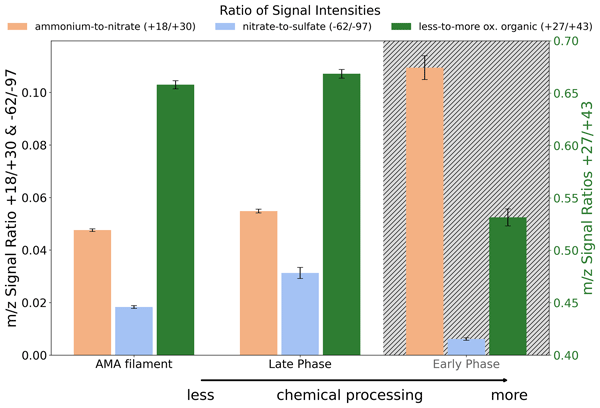
This study shows that aerosol transported from the Asian summer monsoon region can substantially alter the background composition of the extratropical lower stratosphere. Aircraft-based measurements and model simulations reveal a strong increase of ammonium nitrate aerosol from summer to autumn 2023 caused by transport of young air masses from South and East Asia. These particles can persist for months and undergo chemical aging.
Rubel Chandra Das, Jean-Paul Vernier, Amit Kumar Pandit, David A. Peterson, Michael D. Fromm, George Kablick, Nicolas Dumelie, Lilian Joly, and James Flaten
EGUsphere, https://doi.org/10.5194/egusphere-2026-3536, https://doi.org/10.5194/egusphere-2026-3536, 2026
Short summary
Short summary
Fire-driven storm clouds can lift wildfire smoke high into the atmosphere, where it can travel far from the fire. We studied North American events from 2013 to 2023 using transport calculations and satellite observations. Smoke pathways depend on fire location, season, and injection height: Canadian events often travel toward the Atlantic and Europe, while United States events more often affect lower-latitude regions. These results can aid air quality, climate, aviation, and field planning.
Jan Kaumanns, Jörn Ungermann, Bärbel Vogel, Sören Johansson, Erik Kretschmer, Felix Plöger, Peter Preuße, Wolfgang Woiwode, and Martin Riese
Atmos. Chem. Phys., 26, 9083–9111, https://doi.org/10.5194/acp-26-9083-2026, https://doi.org/10.5194/acp-26-9083-2026, 2026
Short summary
Short summary
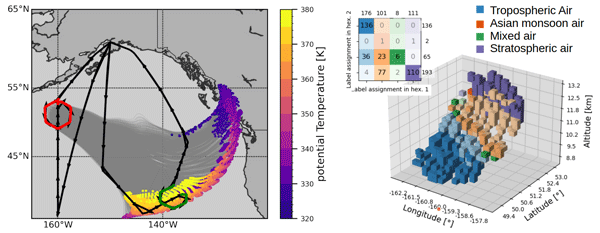
During the PHILEAS aircraft campaign a self-matching experiment was conducted to study the mixing of Asian Summer monsoon air into the upper troposphere – lower stratosphere. We present the first 3-D tomographic observations of this mixing for multiple trace gas species. We use advanced clustering to identify the types of air and their transport pathways, particularly into the stratosphere. Simulations of surface-origin tracers link several of these air types to different source regions.
Jean-Paul Vernier, Nicolas Dumelie, Amit Kumar Pandit, Gwenael Berthet, Lilian Joly, Giovanni de Souza, Eduardo Landulfo, Demilson Quintao, Bruno Biazon, Ravi Kiran, Vankat Ratnam, James Flaten, Rubel Das, David Paraiseau, Frank Wienhold, and Yaowei Li
EGUsphere, https://doi.org/10.5194/egusphere-2026-3280, https://doi.org/10.5194/egusphere-2026-3280, 2026
Short summary
Short summary
Stratospheric aerosols, from volcanoes, wildfires, pollution, and space debris, impact climate and atmospheric chemistry. A new lightweight, 500g particle counter – measures aerosol sizes (0.3–10 µm) with high accuracy. Validated against leading instruments, it has tracked volcanic plumes and smoke globally since 2018. Now used in the BalNeO network, its data is publicly available for research.
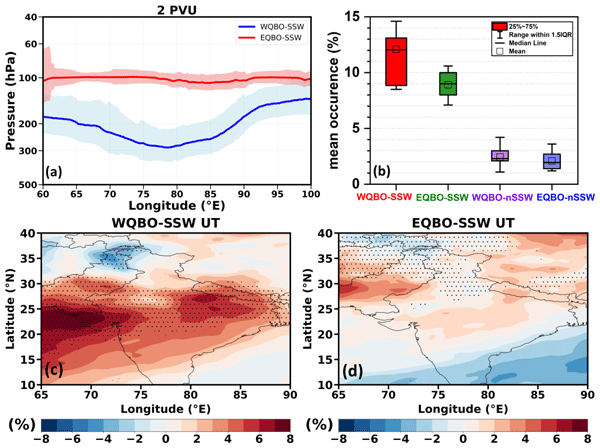
Shubhajyoti Roy, Satheesh P. R. Chandran, Suvarna Fadnavis, Vijay Sagar, Michaela I. Hegglin, Rolf Müller, and Prashant Chavan
Atmos. Chem. Phys., 26, 7047–7059, https://doi.org/10.5194/acp-26-7047-2026, https://doi.org/10.5194/acp-26-7047-2026, 2026
Short summary
Short summary
We show that stratospheric ozone intrusions associated with sudden stratospheric warming events occurring concurrent with the westerly phase of the Quasi-biennial oscillation enhance ozone in the upper troposphere and lower stratosphere over South Asia. The ozone enhancement increases ozone radiative forcing by 0.09±0.05 W m-2 over South Asia. This increase in ozone radiative forcing potentially exacerbates regional climate warming.
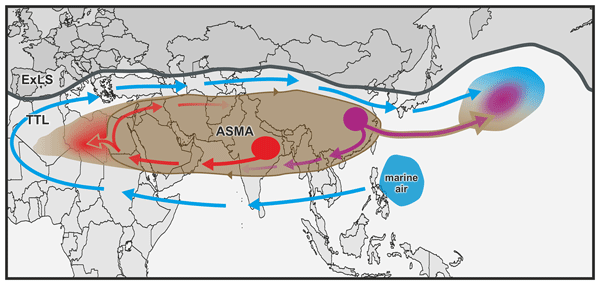
Bärbel Vogel, Valentin Lauther, Franziska Köllner, Fatih Ekinci, Christian Rolf, Johannes Strobel, Ronja van Luijt, C. Michael Volk, Stephan Borrmann, Antonis Dragoneas, Oliver Eppers, Sergej Molleker, Peter Hoor, Linda Ort, Franziska Weyland, Andreas Zahn, Jan Clemens, Gebhard Günther, Oleh Kachula, Rolf Müller, Felix Ploeger, and Martin Riese
Atmos. Chem. Phys., 26, 6283–6319, https://doi.org/10.5194/acp-26-6283-2026, https://doi.org/10.5194/acp-26-6283-2026, 2026
Short summary
Short summary
This work highlights the impact of the Asian summer monsoon on the chemical composition of the upper troposphere and lower stratosphere. Measurements of trace gases and aerosol particles uplifted by the Asian summer monsoon to higher altitudes are sparse. Here, we had the opportunity to use a whole suite of different measured trace gases and the chemical composition of aerosols, in combination with simulations, to better understand the complex transport and mixing processes in this region.
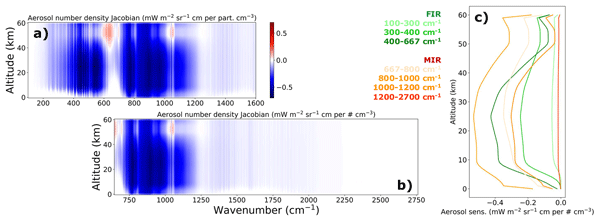
Pasquale Sellitto, Maxim Eremenko, Paola Formenti, Perla Alalam, Michael Höpfner, and Claudia Di Biagio
Atmos. Meas. Tech., 19, 2751–2762, https://doi.org/10.5194/amt-19-2751-2026, https://doi.org/10.5194/amt-19-2751-2026, 2026
Short summary
Short summary
The Far-infrared Outgoing Radiation Understanding and Monitoring (FORUM) mission will bring the first satellite instrument capable of observing the Earth's far infrared (FIR) spectra with a high spectral resolution. FORUM will crucially contribute to water vapour, clouds and surface observations. We found that FORUM will provide also a significant sensitivity to dust aerosol, especially in cases of large burdens of mid-to-long-range transported plumes of dust in the free and upper troposphere.
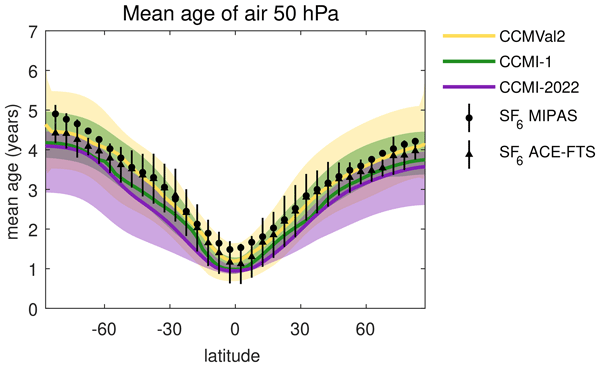
Marta Abalos, Thomas Birner, Andreas Chrysanthou, Sean Davis, Alvaro de la Cámara, Sandip Dhomse, Hella Garny, Michaela I. Hegglin, Daan Hubert, Oksana Ivaniha, James Keeble, Marianna Linz, Daniele Minganti, Jessica Neu, David Plummer, Laura Saunders, Kasturi Shah, Gabriele Stiller, Kleareti Tourpali, Darryn Waugh, Nathan Luke Abraham, Hideharu Akiyoshi, Martyn P. Chipperfield, Patrick Jöckel, Béatrice Josse, Marion Marchand, Patrick Martineau, Olaf Morgenstern, Timofei Sukhodolov, Shingo Watanabe, and Yousuke Yamashita
Atmos. Chem. Phys., 26, 5249–5291, https://doi.org/10.5194/acp-26-5249-2026, https://doi.org/10.5194/acp-26-5249-2026, 2026
Short summary
Short summary
Accurate representation of stratospheric transport in Chemistry-Climate Models is essential for reliable climate projections. This study evaluates three generations of models using observational data and reanalyses, identifying persistent biases and their potential causes. Some biases persist or even worsen in newer models. These findings highlight key limitations and inform efforts to improve models and advance understanding through process-based studies and enhanced observations.
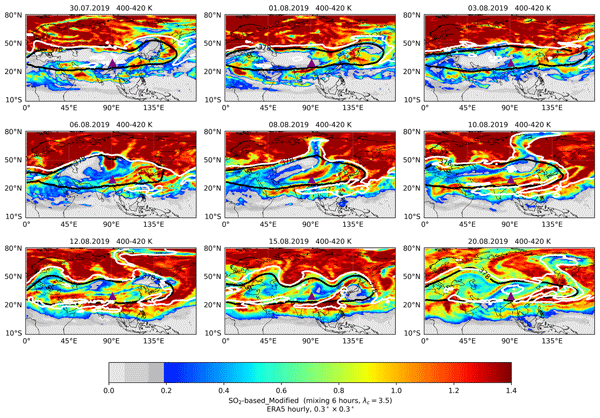
Zhen Yang, Bärbel Vogel, Felix Plöger, Zhixuan Bai, Dan Li, Sabine Griessbach, Lars Hoffmann, Frank G. Wienhold, Elizabeth Asher, Alexandre A. Baron, Katie R. Smith, Troy Thornberry, Jianchun Bian, and Michaela I. Hegglin
Atmos. Chem. Phys., 26, 4749–4769, https://doi.org/10.5194/acp-26-4749-2026, https://doi.org/10.5194/acp-26-4749-2026, 2026
Short summary
Short summary
Balloon measurements over Lhasa, China, combined with satellite guided modelling, tracked aerosol from the 2019 Raikoke eruption through the Asian summer monsoon anticyclone. We find two altitude dependent routes into the anticyclone. It partly blocks transport but also allows entry and mixing, explaining the gradual weakening of the layers. Balloon measurements over Boulder, United States, outside the anticyclone, provide an independent check outside the region.

Clair Duchamp, Bernard Legras, Aurélien Podglajen, Pasquale Sellitto, Adam E. Bourassa, Alexei Rozanov, Ghassan Taha, and Daniel J. Zawada
Atmos. Meas. Tech., 19, 1675–1696, https://doi.org/10.5194/amt-19-1675-2026, https://doi.org/10.5194/amt-19-1675-2026, 2026
Short summary
Short summary
We analyzed the stratospheric aerosol plume from the 2022 Hunga eruption using satellite lidar data. We implemented a method to retrieve some aerosol properties, as standard products failed in this case. We found very high optical depth values in the days following the eruption, which decreased rapidly but remained elevated for months. Our results are broadly validated, though some satellite products underestimate the values due, in part, to the unusual aerosol size distribution in the plume.
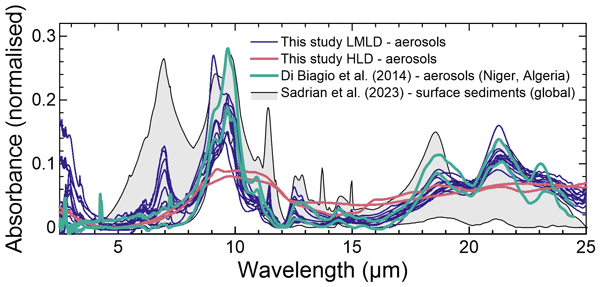
Claudia Di Biagio, Elisa Bru, Avila Orta, Servanne Chevaillier, Clarissa Baldo, Antonin Bergé, Mathieu Cazaunau, Sandra Lafon, Sophie Nowak, Edouard Pangui, Meinrat O. Andreae, Pavla Dagsson-Waldhauserova, Kebonyethata Dintwe, Konrad Kandler, James S. King, Amelie Chaput, Gregory S. Okin, Stuart Piketh, Thuraya Saeed, David Seibert, Zongbo Shi, Earle Williams, Pasquale Sellitto, and Paola Formenti
Atmos. Chem. Phys., 26, 1079–1091, https://doi.org/10.5194/acp-26-1079-2026, https://doi.org/10.5194/acp-26-1079-2026, 2026
Short summary
Short summary
Spectroscopy measurements show that the absorbance of dust in the far-infrared up to 25 µm is comparable in intensity to that in the mid-infrared (3–15 µm) suggesting possible relevance for its direct radiative effect. Absorption signatures differ between Icelandic and low/mid-latitude dust due to differences in mineralogical composition. Spectral differences could be used to characterise the mineralogy and trace the origin of airborne dust based on infrared remote sensing observations.
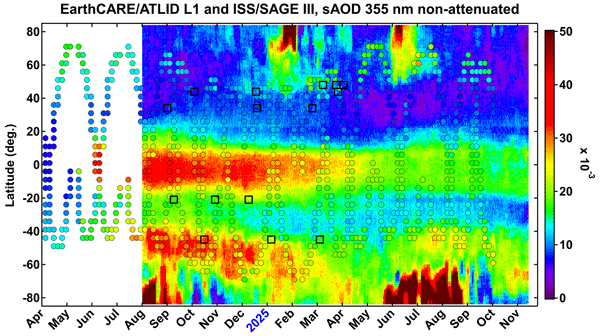
Sergey Khaykin, Michaël Sicard, Thierry Leblanc, Tetsu Sakai, Nickolay Balugin, Gwenaël Berthet, Stëphane Chevrier, Fernando Chouza, Artem Feofilov, Dominique Gantois, Sophie Godin-Beekmann, Arezki Haddouche, Yoshitaka Jin, Isamu Morino, Nicolas Kadygrov, Thomas Lecas, Ben Liley, Richard Querel, Ghasssan Taha, and Vladimir Yushkov
Atmos. Chem. Phys., 26, 607–622, https://doi.org/10.5194/acp-26-607-2026, https://doi.org/10.5194/acp-26-607-2026, 2026
Short summary
Short summary
In April 2024, the Ruang volcano in Indonesia sent large amounts of gas and particles high into the atmosphere, which then spread worldwide. Using the new European EarthCARE satellite and its advanced laser instrument ATLID (Atmospheric LIDar), together with ground and balloon observations, we tracked how these particles doubled levels in the tropics and spread into both hemispheres. The study shows ATLID’s power to reveal how eruptions can affect climate, clouds, and ozone for more than a year.

Liliana Guidetti, Erika Brattich, Simone Ceccherini, Michaela I. Hegglin, Piera Raspollini, Cecilia Tirelli, Nicola Zoppetti, and Ugo Cortesi
Atmos. Meas. Tech., 19, 167–184, https://doi.org/10.5194/amt-19-167-2026, https://doi.org/10.5194/amt-19-167-2026, 2026
Short summary
Short summary
The Complete Data Fusion algorithm is applied to observations from the Michelson Interferometer for Passive Atmospheric Sounding and the Infrared Atmospheric Sounding Interferometer to generate and validate a new ozone dataset against ozone soundings across multiple latitudes. The fusion propagates stratospheric limb information into the troposphere. The dataset shows increased information content and lower uncertainty, improving the study of stratosphere–troposphere ozone intrusions.
Hazel Vernier, Demilson Quintao, Bruno Biazon, Eduardo Landulfo, Giovanni Souza, Amanda Santos, Fabio Lopes, Alex Mendes, José da Matta, Pinheiro Damaris, Benoit Grosslin, Maria Paulete, Maria de Fátima Andrade, Neeraj Rastogi, Akhil Raj, Hongyu Liu, Mahesh Kovilakam, Suvarna Fadnavis, Frank Wienhold, Mathieu Colombier, Chris Boone, Gwenael Berthet, Nicolas Dumelie, Lilian Joly, and Jean-Paul Vernier
EGUsphere, https://doi.org/10.5194/egusphere-2025-6226, https://doi.org/10.5194/egusphere-2025-6226, 2026
Preprint archived
Short summary
Short summary
This paper shows unique balloon measurements from Brazil within the Hunga volcanic plume eight months after the eruption. The chemical analysis of samples collected reveal new insights on volcanic aerosol composition and suggest the presence of marine aerosols.

Patrick Konjari, Christian Rolf, Martina Krämer, Armin Afchine, Nicole Spelten, Irene Bartolome Garcia, Annette Miltenberger, Nicolas Emig, Philipp Joppe, Johannes Schneider, Yun Li, Andreas Petzold, Heiko Bozem, and Peter Hoor
Atmos. Chem. Phys., 25, 18031–18050, https://doi.org/10.5194/acp-25-18031-2025, https://doi.org/10.5194/acp-25-18031-2025, 2025
Short summary
Short summary
We investigated how a powerful storm over southern Sweden in June 2024 transported ice particles and moist air into the normally dry stratosphere. We observed unusually high water vapor and ice levels up to 1.5 kilometers above the tropopause. Although the extra water vapor lasted only a few days to weeks, it shows how such storms can temporarily alter the upper atmosphere’s composition.

Paul Konopka, Felix Ploeger, Francesco D'Amato, Teresa Campos, Marc von Hobe, Shawn B. Honomichl, Peter Hoor, Laura L. Pan, Michelle L. Santee, Silvia Viciani, Kaley A. Walker, and Michaela I. Hegglin
Atmos. Chem. Phys., 25, 17973–17996, https://doi.org/10.5194/acp-25-17973-2025, https://doi.org/10.5194/acp-25-17973-2025, 2025
Short summary
Short summary
We present an improved version of the Chemical Lagrangian Model of the Stratosphere (CLaMS-3.0), which better represents transport from the lower atmosphere to the upper troposphere and lower stratosphere. By refining grid resolution and improving convection representation, the model more accurately simulates carbon monoxide transport. Comparisons with satellite and in situ observations highlight its ability to capture seasonal variations and improve our understanding of atmospheric transport.
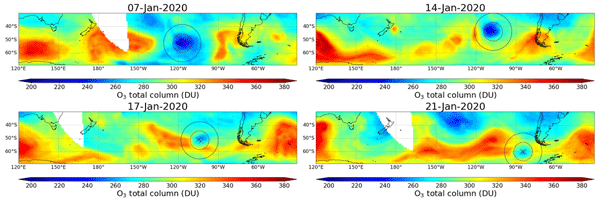
Redha Belhadji, Pasquale Sellitto, Maxim Eremenko, Silvia Bucci, Tran M. Nguyet, Martin Schwell, and Bernard Legras
Atmos. Meas. Tech., 18, 7465–7476, https://doi.org/10.5194/amt-18-7465-2025, https://doi.org/10.5194/amt-18-7465-2025, 2025
Short summary
Short summary
The 2019–2020 Australian wildfires triggered massive Pyro-cumulonimbus clouds, injecting smoke aerosols into the stratosphere and forming a self-sustaining vortex that reached 35 km altitude. This vortex created a transient ozone mini-hole. Using satellite and ground-based observations, we tracked a 30–40 % initial ozone depletion, which decayed to ~7 % within a month. These findings highlight the impact of extreme wildfires on stratospheric dynamics and ozone composition.
Louis Jaffeux, Marie Lothon, Fleur Couvreux, Dominique Bouniol, Grégoire Cayez, Lilian Joly, Jérémie Burgalat, Cyrille De Saint Leger, Hubert Bellec, Olivier Henry, Dyaa Chbib, Tetyana Jiang, and Sandrine Bony
Earth Syst. Sci. Data Discuss., https://doi.org/10.5194/essd-2025-586, https://doi.org/10.5194/essd-2025-586, 2025
Revised manuscript accepted for ESSD
Short summary
Short summary
A new dataset from the MAESTRO airborne campaign over the tropical Atlantic near Cabo Verde offers detailed turbulence measurements of temperature, moisture, and wind. The data was processed exploiting exceptional instrumental redundancy to provide best quality turbulence statistics and ensure their reliability. This resource can benefit weather and climate models by providing a clearer picture of how turbulence below clouds influences their formation and organization.
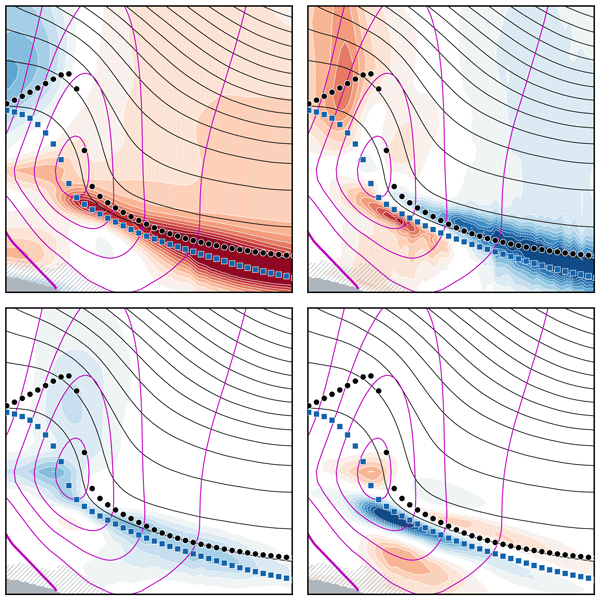
Frederik Harzer, Hella Garny, Felix Ploeger, J. Moritz Menken, and Thomas Birner
Atmos. Chem. Phys., 25, 14909–14921, https://doi.org/10.5194/acp-25-14909-2025, https://doi.org/10.5194/acp-25-14909-2025, 2025
Short summary
Short summary
We study ozone transport in the extratropical lowermost stratosphere using potential temperature as vertical coordinate, thereby distinguishing adiabatic and diabatic processes. We find that on top of known dominant transport processes (quasi-horizontal mixing, slow diabatic descent) vertical mixing plays an important role near the tropopause. Our findings are relevant for understanding ozone's role in climate including its imprint on tropospheric ozone via stratosphere-troposphere air exchange.
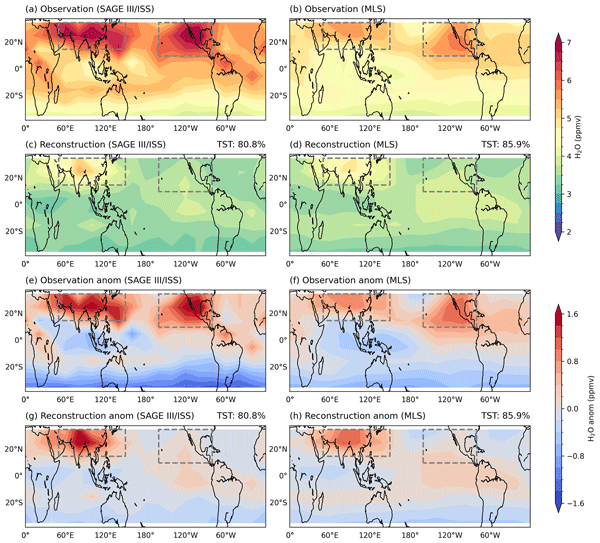
Hongyue Wang, Mijeong Park, Mengchu Tao, Cristina Peña-Ortiz, Nuria P. Plaza-Martin, Felix Ploeger, and Paul Konopka
Atmos. Chem. Phys., 25, 14703–14718, https://doi.org/10.5194/acp-25-14703-2025, https://doi.org/10.5194/acp-25-14703-2025, 2025
Short summary
Short summary
We investigate how water vapor in the upper atmosphere gains moisture during the Asian and North American monsoons using a simplified modeling approach. Our results show that the Asian monsoon is mainly controlled by large-scale temperature, whereas the North American monsoon may be more influenced by convective moistening. These differences point to distinct mechanisms shaping moisture transport in the two monsoon systems.
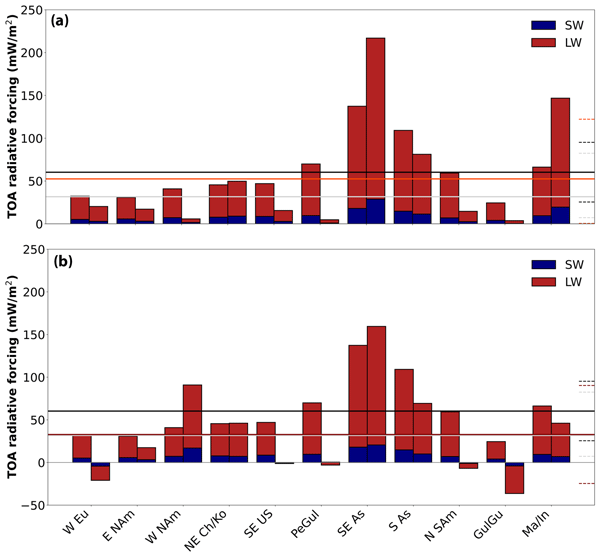
Pasquale Sellitto, Audrey Gaudel, and Bastien Sauvage
Atmos. Chem. Phys., 25, 13299–13309, https://doi.org/10.5194/acp-25-13299-2025, https://doi.org/10.5194/acp-25-13299-2025, 2025
Short summary
Short summary
Tropospheric ozone is a potent greenhouse gas: its anthropogenic levels rise contributes to climate change. We evaluate tropospheric ozone trends and climate impacts with aircraft data and a radiative model, comparing a baseline period (1994–2004) to different recent time periods (2011–2016 to 2020-2023). Tropospheric ozone levels increasing trends progressively stopped and even decreased in the upper troposphere. Correspondingly, the decadal ozone radiative forcing is progressively decreasing.
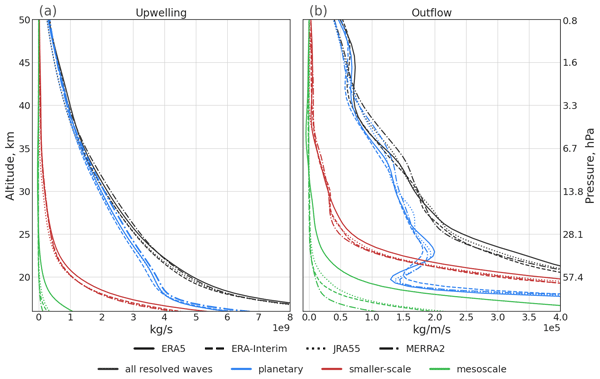
Rasul Baikhadzhaev, Felix Ploeger, Peter Preusse, Manfred Ern, and Thomas Birner
Atmos. Chem. Phys., 25, 12753–12777, https://doi.org/10.5194/acp-25-12753-2025, https://doi.org/10.5194/acp-25-12753-2025, 2025
Short summary
Short summary
Across four reanalyses, the shallow branch of the stratospheric overturning circulation was found to be driven by planetary waves 1 to 3, and the deep branch of the circulation was found to be driven by smaller-scale waves (wave 4 and higher). However, the height of the level separating the branches is dependent on the reanalysis considered. Thus, using the appropriate separation levels in model inter-comparisons could reduce the spread between models regarding climatology and trends in the circulation.
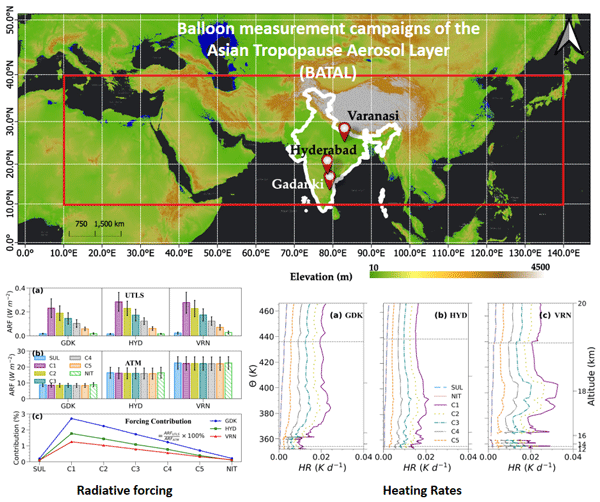
Vadassery Neelamana Santhosh, Bomidi Lakshmi Madhavan, Sivan Thankamani Akhil Raj, Madineni Venkat Ratnam, Jean-Paul Vernier, and Frank Gunther Wienhold
Atmos. Chem. Phys., 25, 8255–8270, https://doi.org/10.5194/acp-25-8255-2025, https://doi.org/10.5194/acp-25-8255-2025, 2025
Short summary
Short summary
Our study examines a lesser-known atmospheric feature, the Asian Tropopause Aerosol Layer, located high above the Earth. We investigated how different aerosols, such as sulfates, nitrates, and pollutants, influence the exchange of heat between the atmosphere and its surroundings. The results show that these particles can alter temperature patterns, especially during the Asian summer monsoon. This research improves our understanding of how human activities may affect regional climate.
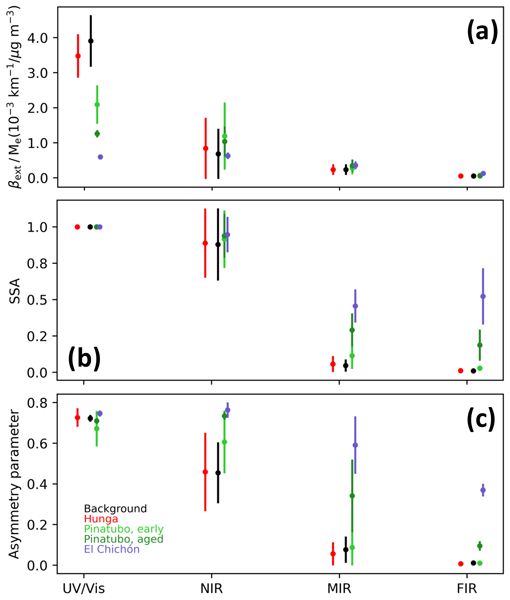
Pasquale Sellitto, Redha Belhadji, Bernard Legras, Aurélien Podglajen, and Clair Duchamp
Atmos. Chem. Phys., 25, 6353–6364, https://doi.org/10.5194/acp-25-6353-2025, https://doi.org/10.5194/acp-25-6353-2025, 2025
Short summary
Short summary
The Hunga Tonga–Hunga Ha’apai volcano erupted on 15 January 2022, producing the largest stratospheric aerosol perturbation of the last 30 years. Stratospheric volcanic aerosols usually produce a transient climate cooling; these impacts depend on volcanic aerosol composition/size, due to size-dependent interactions with solar/terrestrial radiation. We demonstrate that the Hunga Tonga–Hunga Ha’apai stratospheric aerosols have a larger cooling potential per unit mass than the past climate-relevant El Chichón (1984) and Pinatubo (1991) eruptions.
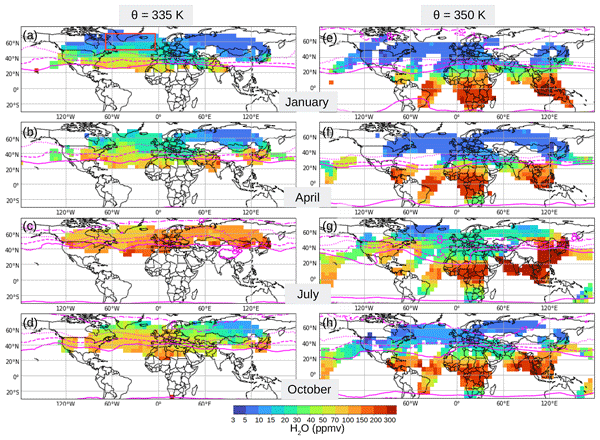
Patrick Konjari, Christian Rolf, Michaela I. Hegglin, Susanne Rohs, Yun Li, Andreas Zahn, Harald Bönisch, Philippe Nedelec, Martina Krämer, and Andreas Petzold
Atmos. Chem. Phys., 25, 4269–4289, https://doi.org/10.5194/acp-25-4269-2025, https://doi.org/10.5194/acp-25-4269-2025, 2025
Short summary
Short summary
This study introduces a new method to derive adjusted water vapor (H2O) climatologies for the upper tropopshere and lower statosphere (UT/LS) using data from 60 000 flights under the IAGOS program. Biases in the IAGOS water vapour dataset are adjusted, based on the more accurate IAGOS-CARIBIC data. The resulting highly resolved H2O climatologies will contribute to a better understanding of the H2O variability in the UT/LS and its connection to various transport and mixing processes.
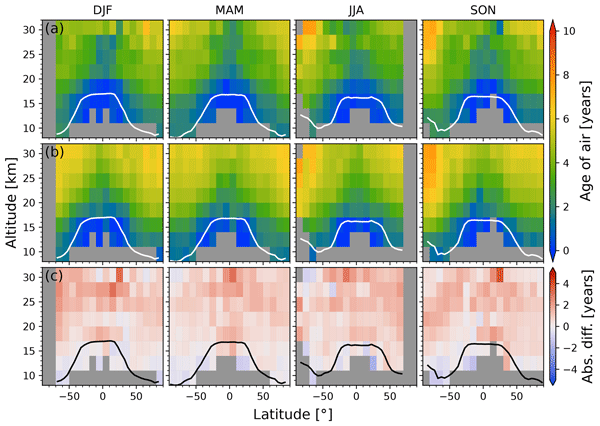
Laura N. Saunders, Kaley A. Walker, Gabriele P. Stiller, Thomas von Clarmann, Florian Haenel, Hella Garny, Harald Bönisch, Chris D. Boone, Ariana E. Castillo, Andreas Engel, Johannes C. Laube, Marianna Linz, Felix Ploeger, David A. Plummer, Eric A. Ray, and Patrick E. Sheese
Atmos. Chem. Phys., 25, 4185–4209, https://doi.org/10.5194/acp-25-4185-2025, https://doi.org/10.5194/acp-25-4185-2025, 2025
Short summary
Short summary
We present a 17-year stratospheric age-of-air dataset derived from ACE-FTS satellite measurements of sulfur hexafluoride. This is the longest continuous, global, and vertically resolved age of air time series available to date. In this paper, we show that this dataset agrees well with age-of-air datasets based on measurements from other instruments. We also present trends in the midlatitude lower stratosphere that indicate changes in the global circulation that are predicted by climate models.
Hazel Vernier, Demilson Quintão, Bruno Biazon, Eduardo Landulfo, Giovanni Souza, V. Amanda Santos, J. S. Fabio Lopes, C. P. Alex Mendes, A. S. José da Matta, K. Pinheiro Damaris, Benoit Grosslin, P. M. P. Maria Jorge, Maria de Fátima Andrade, Neeraj Rastogi, Akhil Raj, Hongyu Liu, Mahesh Kovilakam, Suvarna Fadnavis, Frank G. Wienhold, Mathieu Colombier, D. Chris Boone, Gwenael Berthet, Nicolas Dumelie, Lilian Joly, and Jean-Paul Vernier
EGUsphere, https://doi.org/10.5194/egusphere-2025-924, https://doi.org/10.5194/egusphere-2025-924, 2025
Preprint withdrawn
Short summary
Short summary
The eruption of Hunga Tonga-Hunga Ha'apai injected large amounts of water vapor and sea salt into the stratosphere, altering traditional views of volcanic aerosols. Using balloon-borne samplers, we collected aerosol samples and found high levels of sea salt and calcium, suggesting sulfate depletion due to gypsum formation. These findings highlight the need to consider sea salt in climate models to better predict volcanic impacts on the atmosphere and climate.
Marion Ranaivombola, Nelson Bègue, Lucas Vaz Peres, Farahnaz Fazel-Rastgar, Venkataraman Sivakumar, Gisèle Krysztofiak, Gwenaël Berthet, Fabrice Jegou, Stuart Piketh, and Hassan Bencherif
Atmos. Chem. Phys., 25, 3519–3540, https://doi.org/10.5194/acp-25-3519-2025, https://doi.org/10.5194/acp-25-3519-2025, 2025
Short summary
Short summary
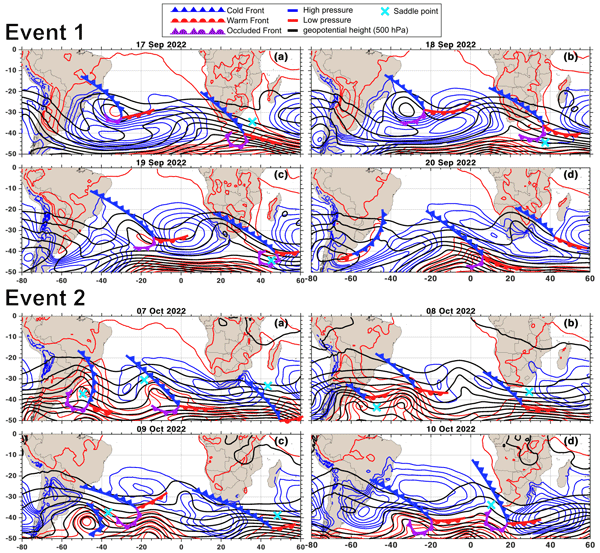
From September to October 2022, the Biomass Burning Aerosol Campaign (BiBAC) in Kruger National Park revealed a significant aerosol loading linked to biomass burning activity, with southeastward transport over southern Africa and the southwestern Indian Ocean (SWIO) basin. The study revealed a predominance of biomass burning aerosols and two distinct transport mechanisms of aerosol plumes and CO, underscoring the importance of east-coast observations in understanding atmospheric dynamics.
Florian Voet, Felix Ploeger, Johannes Laube, Peter Preusse, Paul Konopka, Jens-Uwe Grooß, Jörn Ungermann, Björn-Martin Sinnhuber, Michael Höpfner, Bernd Funke, Gerald Wetzel, Sören Johansson, Gabriele Stiller, Eric Ray, and Michaela I. Hegglin
Atmos. Chem. Phys., 25, 3541–3565, https://doi.org/10.5194/acp-25-3541-2025, https://doi.org/10.5194/acp-25-3541-2025, 2025
Short summary
Short summary
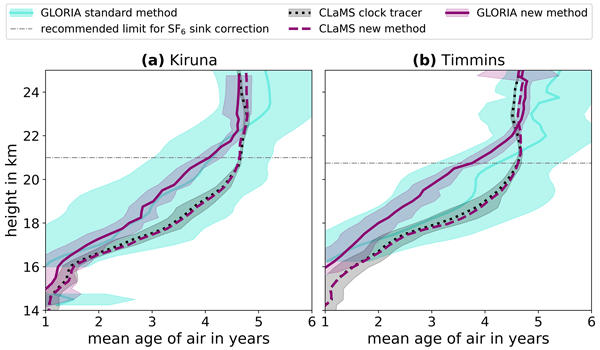
This study refines estimates of the stratospheric “age of air”, a measure of how long air circulates in the stratosphere. By analyzing correlations between trace gases measurable by satellites, the research introduces a method that reduces uncertainties and detects small-scale atmospheric features. This improved understanding of stratospheric circulation is crucial for better climate models and predictions, enhancing our ability to assess the impacts of climate change on the atmosphere.
Ziming Wang, Luca Bugliaro, Klaus Gierens, Michaela I. Hegglin, Susanne Rohs, Andreas Petzold, Stefan Kaufmann, and Christiane Voigt
Atmos. Chem. Phys., 25, 2845–2861, https://doi.org/10.5194/acp-25-2845-2025, https://doi.org/10.5194/acp-25-2845-2025, 2025
Short summary
Short summary
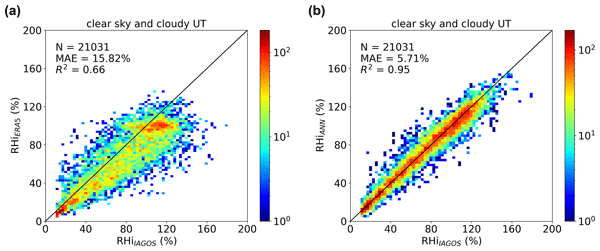
Upper-tropospheric relative humidity bias in the ERA5 weather model is corrected by 10 % by an artificial neural network using aircraft in-service humidity data and thermodynamic and dynamical variables. The improved skills of the weather model will advance cirrus research, weather forecasts, and measures for contrail reduction.
Dioumacor Faye, Felipe M. de Andrade, Roberto Suárez-Moreno, Dahirou Wane, Michaela I. Hegglin, Abdou L. Dieng, François Kaly, Redouane Lguensat, and Amadou T. Gaye
EGUsphere, https://doi.org/10.5194/egusphere-2024-4040, https://doi.org/10.5194/egusphere-2024-4040, 2025
Preprint archived
Short summary
Short summary
This study evaluates machine learning (ML) methods to improve subseasonal-to-seasonal (S2S) rainfall forecasts in Senegal during the West African monsoon. Using high-resolution precipitation data and atmospheric-oceanic reanalysis, we show that ML models like ridge regression outperform traditional climate models. These methods enhance prediction accuracy and efficiency, offering valuable tools for climate risk management and water resource planning.
Prashant Chavan, Suvarna Fadnavis, Anton Laakso, Jean-Paul Vernier, Simone Tilmes, and Rolf Müller
EGUsphere, https://doi.org/10.5194/egusphere-2024-3825, https://doi.org/10.5194/egusphere-2024-3825, 2025
Preprint archived
Short summary
Short summary
Our simulations with volcanoes, when compared without volcanoes, show that volcanic aerosol precursors enter the tropical stratosphere, propagating upward and enhancing sulphate aerosol and heating. This stratospheric heating caused by the volcanoes reduces the amplitude of the QBO and disrupts its phases. Since QBO also modulates tropical convection and weather, we suggest including volcanic emissions and the QBO in the weather prediction model for a better forecast.
Kimberlee Dubé, Susann Tegtmeier, Felix Ploeger, and Kaley A. Walker
Atmos. Chem. Phys., 25, 1433–1447, https://doi.org/10.5194/acp-25-1433-2025, https://doi.org/10.5194/acp-25-1433-2025, 2025
Short summary
Short summary
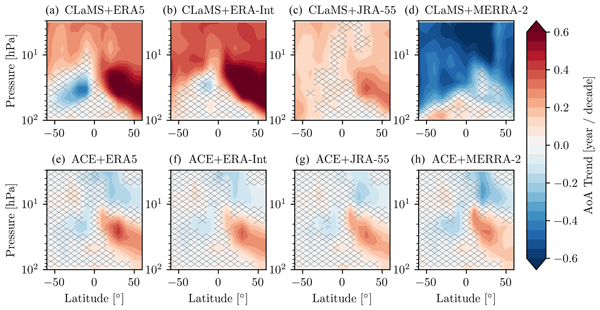
The transport rate of air in the stratosphere has changed in response to human emissions of greenhouse gases and ozone-depleting substances. This transport rate can be approximated using measurements of long-lived trace gases. We use observations and model results to derive anomalies and trends in the mean rate of stratospheric air transport. We find that air in the Northern Hemisphere aged by up to 0.3 years per decade relative to air in the Southern Hemisphere over 2004–2017.
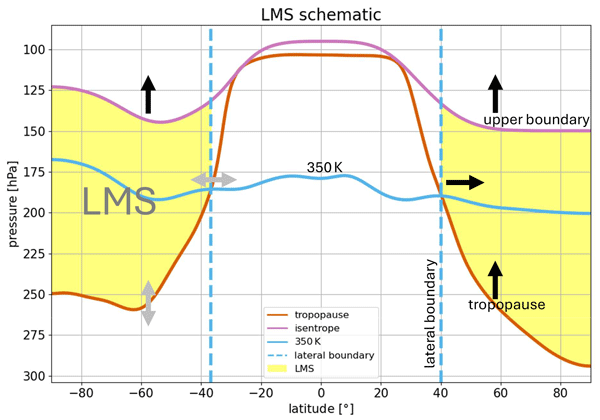
Franziska Weyland, Peter Hoor, Daniel Kunkel, Thomas Birner, Felix Plöger, and Katharina Turhal
Atmos. Chem. Phys., 25, 1227–1252, https://doi.org/10.5194/acp-25-1227-2025, https://doi.org/10.5194/acp-25-1227-2025, 2025
Short summary
Short summary
The lowermost stratosphere (LMS) plays an important role in the Earth's climate, containing strong gradients of ozone and water vapor. Our results indicate that the thermodynamic structure of the LMS was changing between 1979–2019 in response to anthropogenic climate change and the recovery of stratospheric ozone, also indicating large-scale circulation changes. We find that both the upper and the lower LMS boundaries show an (upward) trend, which has implications for the LMS mass.
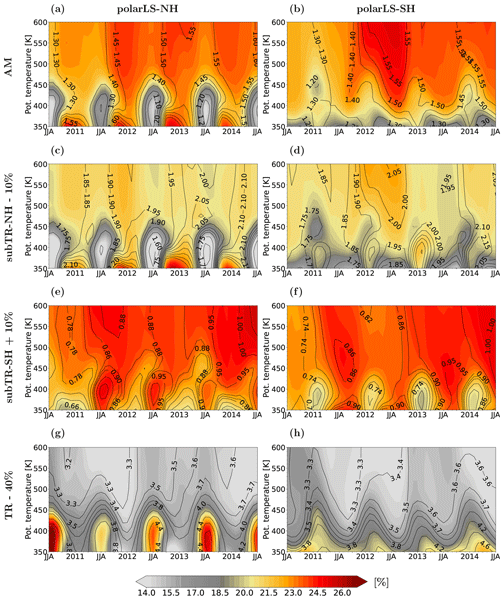
Xiaolu Yan, Paul Konopka, Felix Ploeger, and Aurélien Podglajen
Atmos. Chem. Phys., 25, 1289–1305, https://doi.org/10.5194/acp-25-1289-2025, https://doi.org/10.5194/acp-25-1289-2025, 2025
Short summary
Short summary
Our study finds that the air mass fractions (AMFs) from the Asian boundary layer (ABL) to the polar regions are about 1.5 times larger than those from the same latitude band in the Southern Hemisphere. The transport of AMFs from the ABL to the polar vortex primarily occurs above 20 km and over timescales exceeding 2 years. Our analysis reveals a strong correlation between the polar pollutants and the AMFs from the ABL. About 20 % of SF6 in the polar stratosphere originates from the ABL.
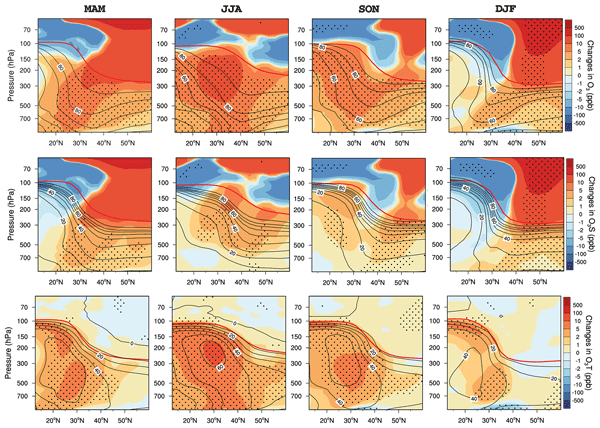
Xiaodan Ma, Jianping Huang, Michaela I. Hegglin, Patrick Jöckel, and Tianliang Zhao
Atmos. Chem. Phys., 25, 943–958, https://doi.org/10.5194/acp-25-943-2025, https://doi.org/10.5194/acp-25-943-2025, 2025
Short summary
Short summary
Our research explored changes in ozone levels in the northwest Pacific region over 30 years, revealing a significant increase in the middle-to-upper troposphere, especially during spring and summer. This rise is influenced by both stratospheric and tropospheric sources, which affect climate and air quality in East Asia. This work underscores the need for continued study to understand underlying mechanisms.
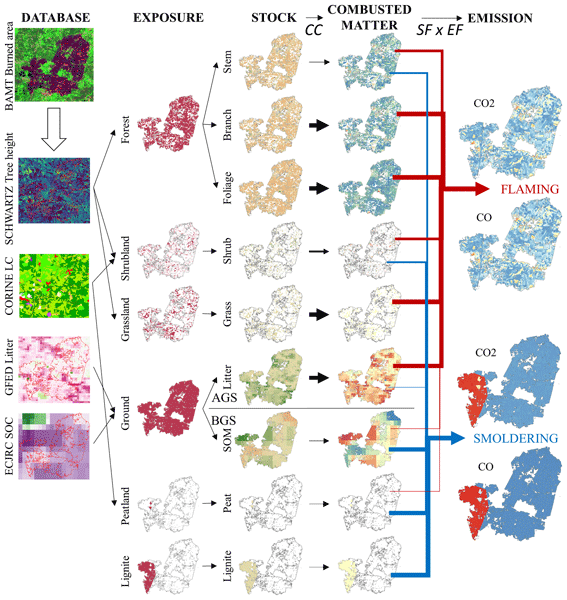
Lilian Vallet, Charbel Abdallah, Thomas Lauvaux, Lilian Joly, Michel Ramonet, Philippe Ciais, Morgan Lopez, Irène Xueref-Remy, and Florent Mouillot
Biogeosciences, 22, 213–242, https://doi.org/10.5194/bg-22-213-2025, https://doi.org/10.5194/bg-22-213-2025, 2025
Short summary
Short summary
The 2022 fire season had a huge impact on European temperate forest, with several large fires exhibiting prolonged soil combustion reported. We analyzed CO and CO2 concentration recorded at nearby atmospheric towers, revealing intense smoldering combustion. We refined a fire emission model to incorporate this process. We estimated 7.95 Mteq CO2 fire emission, twice the global estimate. Fires contributed to 1.97 % of France's annual carbon footprint, reducing forest carbon sink by 30 % this year.
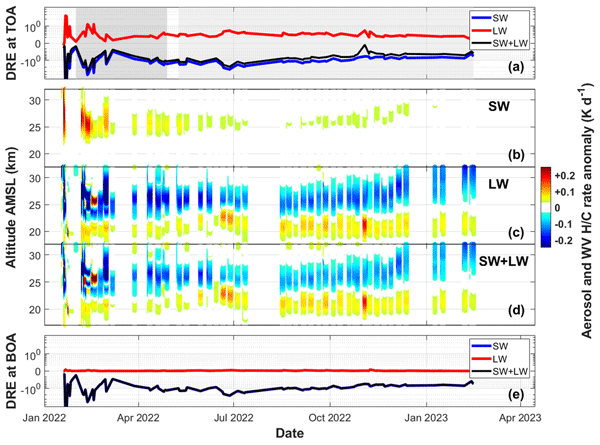
Michaël Sicard, Alexandre Baron, Marion Ranaivombola, Dominique Gantois, Tristan Millet, Pasquale Sellitto, Nelson Bègue, Hassan Bencherif, Guillaume Payen, Nicolas Marquestaut, and Valentin Duflot
Atmos. Chem. Phys., 25, 367–381, https://doi.org/10.5194/acp-25-367-2025, https://doi.org/10.5194/acp-25-367-2025, 2025
Short summary
Short summary
This study quantifies the radiative impact over Réunion Island (21° S, 55° E) of the aerosols and water vapor injected into the stratosphere by the Hunga volcano in the South Pacific. The overall aerosol and water vapor impact on the Earth’s radiation budget for the whole period is negative (cooling, -0.82 ± 0.35 W m-2) and dominated by the aerosols. At the Earth’s surface, aerosols are the main drivers and produce a negative (cooling, -1.04 ± 0.36 W m-2) radiative impact.
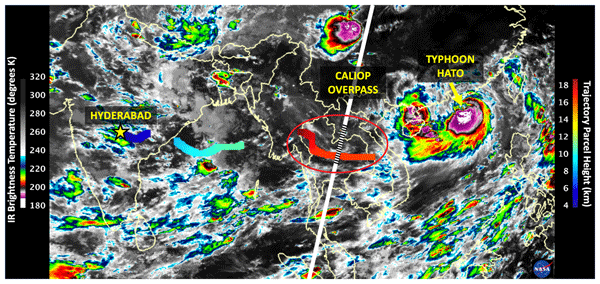
Amit Kumar Pandit, Jean-Paul Vernier, Thomas Duncan Fairlie, Kristopher M. Bedka, Melody A. Avery, Harish Gadhavi, Madineni Venkat Ratnam, Sanjeev Dwivedi, Kasimahanthi Amar Jyothi, Frank G. Wienhold, Holger Vömel, Hongyu Liu, Bo Zhang, Buduru Suneel Kumar, Tra Dinh, and Achuthan Jayaraman
Atmos. Chem. Phys., 24, 14209–14238, https://doi.org/10.5194/acp-24-14209-2024, https://doi.org/10.5194/acp-24-14209-2024, 2024
Short summary
Short summary
This study investigates the formation mechanism of a tropopause cirrus cloud layer observed at extremely cold temperatures over Hyderabad in India during the 2017 Asian summer monsoon using balloon-borne sensors. Ice crystals smaller than 50 µm were found in this optically thin cirrus cloud layer. Combined analysis of back trajectories, satellite, and model data revealed that the formation of this layer was influenced by waves and stratospheric hydration induced by typhoon Hato.

Katharina Turhal, Felix Plöger, Jan Clemens, Thomas Birner, Franziska Weyland, Paul Konopka, and Peter Hoor
Atmos. Chem. Phys., 24, 13653–13679, https://doi.org/10.5194/acp-24-13653-2024, https://doi.org/10.5194/acp-24-13653-2024, 2024
Short summary
Short summary
The tropopause separates the troposphere, where many greenhouse gases originate, from the stratosphere. This study examines a tropopause defined by potential vorticity – an analogue for angular momentum that changes sharply in the subtropics, creating a transport barrier. Between 1980 and 2017, this tropopause shifted poleward at lower altitudes and equatorward above, suggesting height-dependent changes in atmospheric circulation that may affect greenhouse gas distribution and global warming.
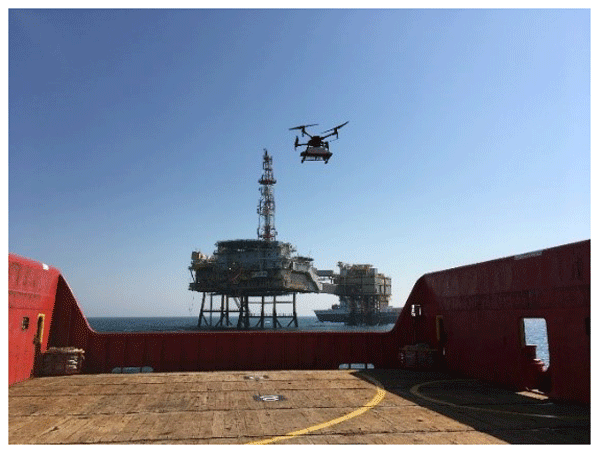
Jean-Louis Bonne, Ludovic Donnat, Grégory Albora, Jérémie Burgalat, Nicolas Chauvin, Delphine Combaz, Julien Cousin, Thomas Decarpenterie, Olivier Duclaux, Nicolas Dumelié, Nicolas Galas, Catherine Juery, Florian Parent, Florent Pineau, Abel Maunoury, Olivier Ventre, Marie-France Bénassy, and Lilian Joly
Atmos. Meas. Tech., 17, 4471–4491, https://doi.org/10.5194/amt-17-4471-2024, https://doi.org/10.5194/amt-17-4471-2024, 2024
Short summary
Short summary
We present a top-down approach to quantify CO2 and CH4 emissions at the scale of an industrial site, based on a mass balance model relying on atmospheric concentrations measurements from a new sensor embarked on board uncrewed aircraft vehicles (UAVs). We present a laboratory characterization of our sensor and a field validation of our quantification method, together with field application to the monitoring of two real-world offshore oil and gas platforms.
Nelson Bègue, Alexandre Baron, Gisèle Krysztofiak, Gwenaël Berthet, Corinna Kloss, Fabrice Jégou, Sergey Khaykin, Marion Ranaivombola, Tristan Millet, Thierry Portafaix, Valentin Duflot, Philippe Keckhut, Hélène Vérèmes, Guillaume Payen, Mahesh Kumar Sha, Pierre-François Coheur, Cathy Clerbaux, Michaël Sicard, Tetsu Sakai, Richard Querel, Ben Liley, Dan Smale, Isamu Morino, Osamu Uchino, Tomohiro Nagai, Penny Smale, John Robinson, and Hassan Bencherif
Atmos. Chem. Phys., 24, 8031–8048, https://doi.org/10.5194/acp-24-8031-2024, https://doi.org/10.5194/acp-24-8031-2024, 2024
Short summary
Short summary
During the 2020 austral summer, the pristine atmosphere of the southwest Indian Ocean basin experienced significant perturbations. Numerical models indicated that the lower-stratospheric aerosol content was influenced by the intense and persistent stratospheric aerosol layer generated during the 2019–2020 extreme Australian bushfire events. Ground-based observations at Réunion confirmed the simultaneous presence of African and Australian aerosol layers.
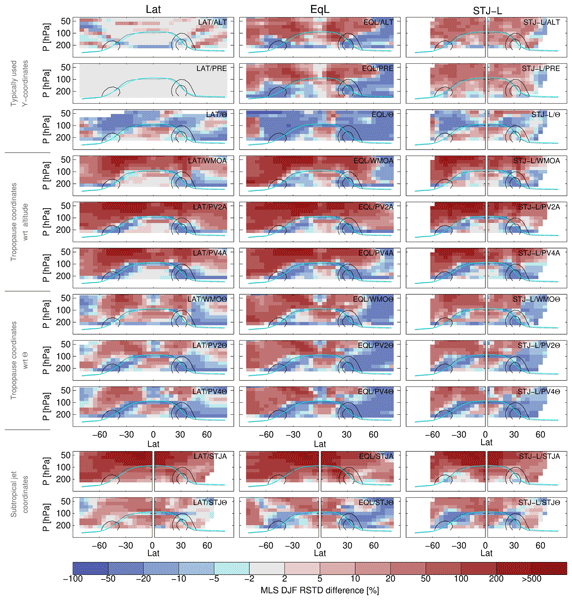
Luis F. Millán, Peter Hoor, Michaela I. Hegglin, Gloria L. Manney, Harald Boenisch, Paul Jeffery, Daniel Kunkel, Irina Petropavlovskikh, Hao Ye, Thierry Leblanc, and Kaley Walker
Atmos. Chem. Phys., 24, 7927–7959, https://doi.org/10.5194/acp-24-7927-2024, https://doi.org/10.5194/acp-24-7927-2024, 2024
Short summary
Short summary
In the Observed Composition Trends And Variability in the UTLS (OCTAV-UTLS) Stratosphere-troposphere Processes And their Role in Climate (SPARC) activity, we have mapped multiplatform ozone datasets into coordinate systems to systematically evaluate the influence of these coordinates on binned climatological variability. This effort unifies the work of studies that focused on individual coordinate system variability. Our goal was to create the most comprehensive assessment of this topic.
Hengheng Zhang, Christian Rolf, Ralf Tillmann, Christian Wesolek, Frank Gunther Wienhold, Thomas Leisner, and Harald Saathoff
Aerosol Research, 2, 135–151, https://doi.org/10.5194/ar-2-135-2024, https://doi.org/10.5194/ar-2-135-2024, 2024
Short summary
Short summary
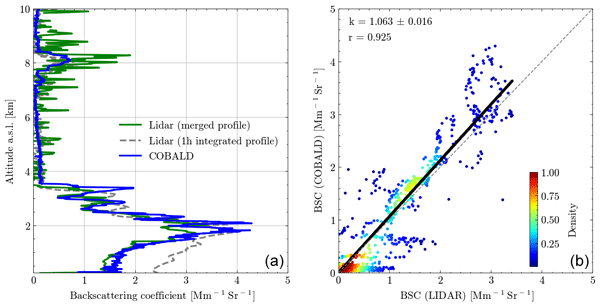
Our study employs advanced tools, including scanning lidar, balloons, and UAVs, to explore aerosol particles in the atmosphere. The scanning lidar offers distinctive near-ground-level insights, enriching our comprehension of aerosol distribution from ground level to the free troposphere. This research provides valuable data for comparing remote sensing and in situ aerosol measurements, advancing our understanding of aerosol impacts on radiative transfer, clouds, and air quality.
Fuzhen Shen, Michaela I. Hegglin, and Yue Yuan
Atmos. Chem. Phys., 24, 6539–6553, https://doi.org/10.5194/acp-24-6539-2024, https://doi.org/10.5194/acp-24-6539-2024, 2024
Short summary
Short summary
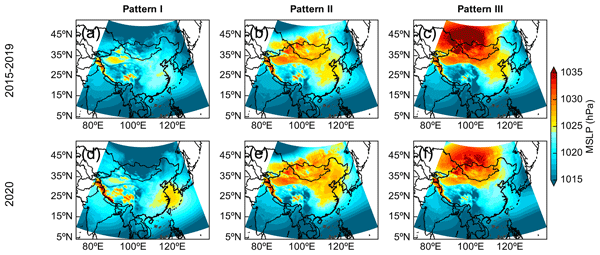
We attempt to use a novel structural self-organising map and machine learning models to identify a weather system and quantify the importance of each meteorological factor in driving the unexpected PM2.5 and O3 changes under the specific weather system during the COVID-19 lockdown in China. The result highlights that temperature under the double-centre high-pressure system plays the most crucial role in abnormal events.
Jean-Paul Vernier, Thomas J. Aubry, Claudia Timmreck, Anja Schmidt, Lieven Clarisse, Fred Prata, Nicolas Theys, Andrew T. Prata, Graham Mann, Hyundeok Choi, Simon Carn, Richard Rigby, Susan C. Loughlin, and John A. Stevenson
Atmos. Chem. Phys., 24, 5765–5782, https://doi.org/10.5194/acp-24-5765-2024, https://doi.org/10.5194/acp-24-5765-2024, 2024
Short summary
Short summary
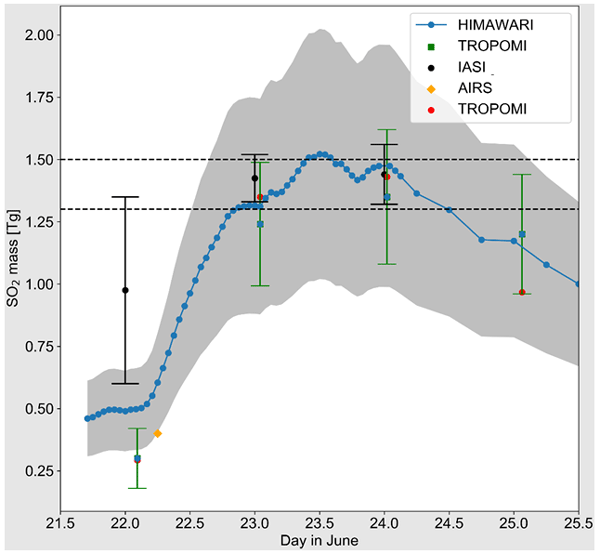
The 2019 Raikoke eruption (Kamchatka, Russia) generated one of the largest emissions of particles and gases into the stratosphere since the 1991 Mt. Pinatubo eruption. The Volcano Response (VolRes) initiative, an international effort, provided a platform for the community to share information about this eruption and assess its climate impact. The eruption led to a minor global surface cooling of 0.02 °C in 2020 which is negligible relative to warming induced by human greenhouse gas emissions.
Cristina Peña-Ortiz, Nuria Pilar Plaza, David Gallego, and Felix Ploeger
Atmos. Chem. Phys., 24, 5457–5478, https://doi.org/10.5194/acp-24-5457-2024, https://doi.org/10.5194/acp-24-5457-2024, 2024
Short summary
Short summary
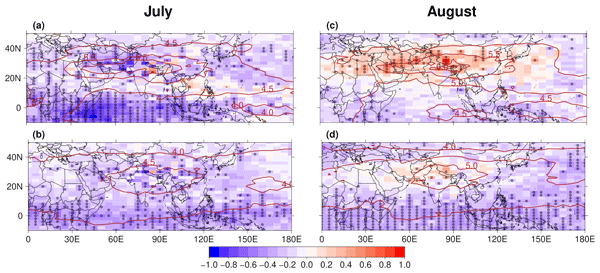
Although water vapour (H2O) in the lower stratosphere is only a few molecules among 1 million air molecules, atmospheric radiative forcing and surface temperature are sensitive to changes in its concentration. Monsoon regions play a key role in H2O transport and its concentration in the lower stratosphere. We show how the quasi-biennial oscillation (QBO) has a major impact on H2O over the Asian monsoon during August through changes in temperature caused by QBO modulation of tropical clouds.
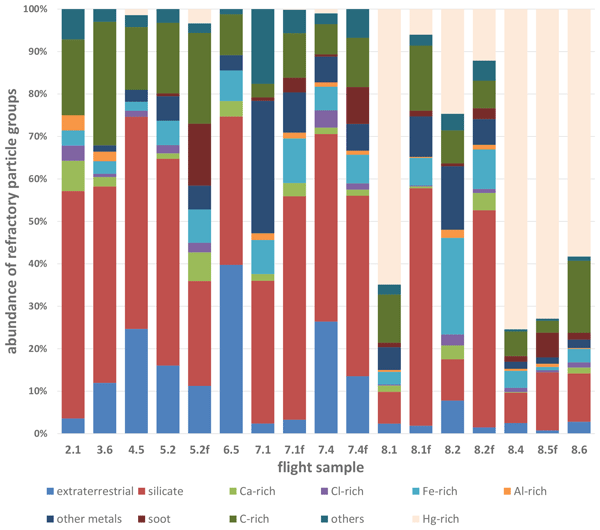
Martin Ebert, Ralf Weigel, Stephan Weinbruch, Lisa Schneider, Konrad Kandler, Stefan Lauterbach, Franziska Köllner, Felix Plöger, Gebhard Günther, Bärbel Vogel, and Stephan Borrmann
Atmos. Chem. Phys., 24, 4771–4788, https://doi.org/10.5194/acp-24-4771-2024, https://doi.org/10.5194/acp-24-4771-2024, 2024
Short summary
Short summary
Particles were collected during the flight campaign StratoClim 2017 within the Asian tropopause aerosol layer (ATAL). Refractory particles from seven different flights were characterized by scanning and transmission electron microscopy (SEM, TEM). The most abundant refractory particles are silicates and non-volatile organics. The most important sources are combustion processes at the ground and the agitation of soil material. During one flight, small cinnabar particles (HgS) were also detected.
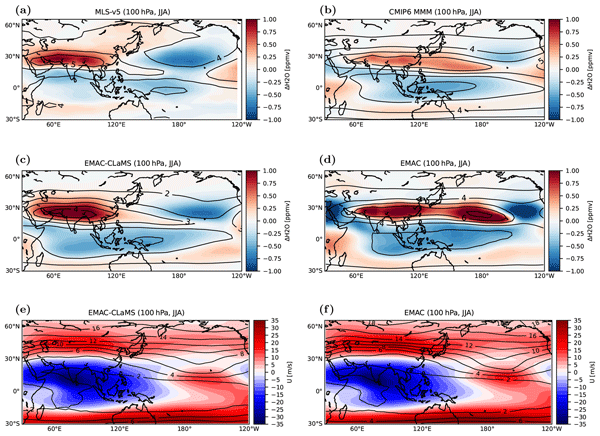
Felix Ploeger, Thomas Birner, Edward Charlesworth, Paul Konopka, and Rolf Müller
Atmos. Chem. Phys., 24, 2033–2043, https://doi.org/10.5194/acp-24-2033-2024, https://doi.org/10.5194/acp-24-2033-2024, 2024
Short summary
Short summary
We present a novel mechanism of how regional anomalies in water vapour concentrations in the upper troposphere and lower stratosphere impact regional atmospheric circulation systems. These impacts include a displaced upper-level Asian monsoon circulation and strengthened prevailing westerlies in the Pacific region. Current climate models have biases in simulating these regional water vapour anomalies and circulation impacts, but the biases can be avoided by improving the model transport.
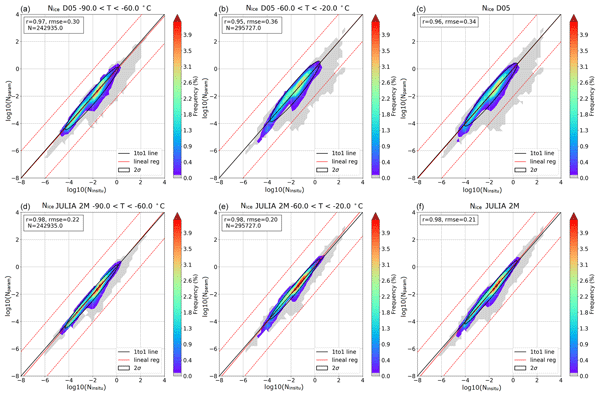
Irene Bartolomé García, Odran Sourdeval, Reinhold Spang, and Martina Krämer
Atmos. Chem. Phys., 24, 1699–1716, https://doi.org/10.5194/acp-24-1699-2024, https://doi.org/10.5194/acp-24-1699-2024, 2024
Short summary
Short summary
How many ice crystals of each size are in a cloud is a key parameter for the retrieval of cloud properties. The distribution of ice crystals is obtained from in situ measurements and used to create parameterizations that can be used when analyzing the remote-sensing data. Current parameterizations are based on data sets that do not include reliable measurements of small crystals, but in our study we use a data set that includes very small ice crystals to improve these parameterizations.
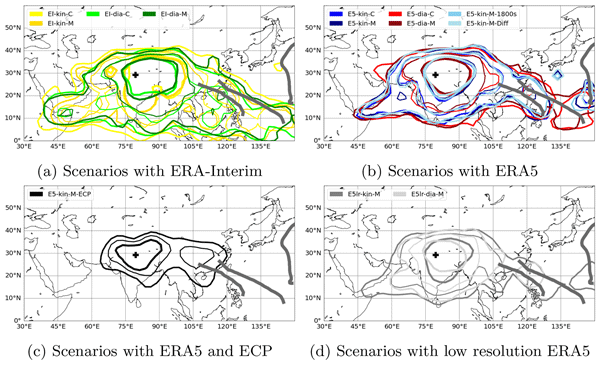
Jan Clemens, Bärbel Vogel, Lars Hoffmann, Sabine Griessbach, Nicole Thomas, Suvarna Fadnavis, Rolf Müller, Thomas Peter, and Felix Ploeger
Atmos. Chem. Phys., 24, 763–787, https://doi.org/10.5194/acp-24-763-2024, https://doi.org/10.5194/acp-24-763-2024, 2024
Short summary
Short summary
The source regions of the Asian tropopause aerosol layer (ATAL) are debated. We use balloon-borne measurements of the layer above Nainital (India) in August 2016 and atmospheric transport models to find ATAL source regions. Most air originated from the Tibetan plateau. However, the measured ATAL was stronger when more air originated from the Indo-Gangetic Plain and weaker when more air originated from the Pacific. Hence, the results indicate important anthropogenic contributions to the ATAL.
Bärbel Vogel, C. Michael Volk, Johannes Wintel, Valentin Lauther, Jan Clemens, Jens-Uwe Grooß, Gebhard Günther, Lars Hoffmann, Johannes C. Laube, Rolf Müller, Felix Ploeger, and Fred Stroh
Atmos. Chem. Phys., 24, 317–343, https://doi.org/10.5194/acp-24-317-2024, https://doi.org/10.5194/acp-24-317-2024, 2024
Short summary
Short summary
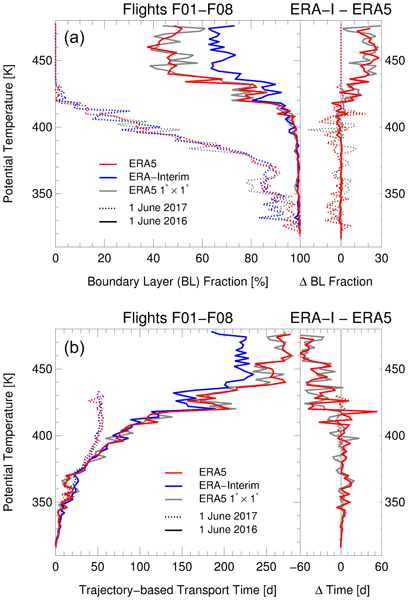
Over the Indian subcontinent, polluted air is rapidly uplifted to higher altitudes during the Asian monsoon season. We present an assessment of vertical transport in this region using different wind data provided by the European Centre for Medium-Range Weather Forecasts (ECMWF), as well as high-resolution aircraft measurements. In general, our findings confirm that the newest ECMWF reanalysis product, ERA5, yields a better representation of transport compared to the predecessor, ERA-Interim.
Pasquale Sellitto, Redha Belhadji, Juan Cuesta, Aurélien Podglajen, and Bernard Legras
Atmos. Chem. Phys., 23, 15523–15535, https://doi.org/10.5194/acp-23-15523-2023, https://doi.org/10.5194/acp-23-15523-2023, 2023
Short summary
Short summary
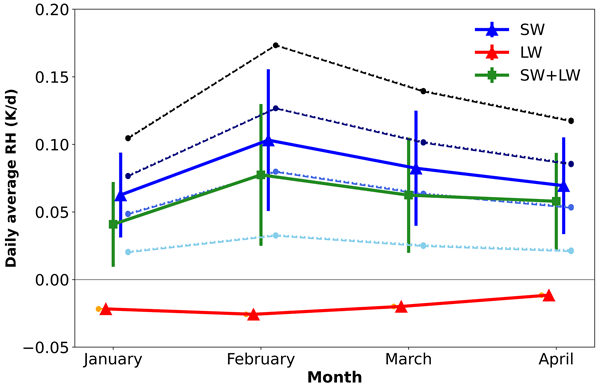
Record-breaking wildfires ravaged south-eastern Australia during the fire season 2019–2020. These fires injected a smoke plume in the stratosphere, which dispersed over the whole Southern Hemisphere and interacted with solar and terrestrial radiation. A number of detached smoke bubbles were also observed emanating from this plume and ascending quickly to over 35 km altitude. Here we study how absorption of radiation generated ascending motion of both the the hemispheric plume and the vortices.
Yaowei Li, Corey Pedersen, John Dykema, Jean-Paul Vernier, Sandro Vattioni, Amit Kumar Pandit, Andrea Stenke, Elizabeth Asher, Troy Thornberry, Michael A. Todt, Thao Paul Bui, Jonathan Dean-Day, and Frank N. Keutsch
Atmos. Chem. Phys., 23, 15351–15364, https://doi.org/10.5194/acp-23-15351-2023, https://doi.org/10.5194/acp-23-15351-2023, 2023
Short summary
Short summary
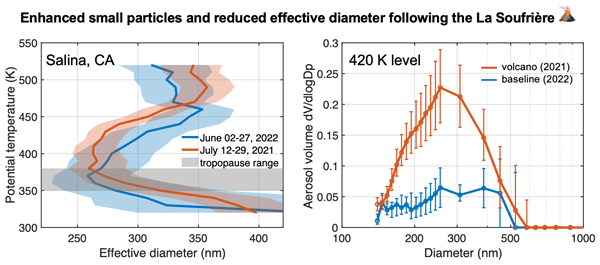
In 2021, the eruption of La Soufrière released sulfur dioxide into the stratosphere, resulting in a spread of volcanic aerosol over the Northern Hemisphere. We conducted extensive aircraft and balloon-borne measurements after that, revealing enhanced particle concentration and altered size distribution due to the eruption. The eruption's impact on ozone depletion was minimal, contributing ~0.6 %, and its global radiative forcing effect was modest, mainly affecting tropical and midlatitude areas.
Paul Konopka, Christian Rolf, Marc von Hobe, Sergey M. Khaykin, Benjamin Clouser, Elisabeth Moyer, Fabrizio Ravegnani, Francesco D'Amato, Silvia Viciani, Nicole Spelten, Armin Afchine, Martina Krämer, Fred Stroh, and Felix Ploeger
Atmos. Chem. Phys., 23, 12935–12947, https://doi.org/10.5194/acp-23-12935-2023, https://doi.org/10.5194/acp-23-12935-2023, 2023
Short summary
Short summary
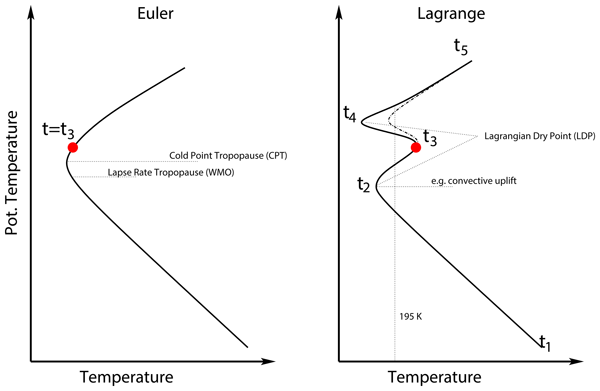
We studied water vapor in a critical region of the atmosphere, the Asian summer monsoon anticyclone, using rare in situ observations. Our study shows that extremely high water vapor values observed in the stratosphere within the Asian monsoon anticyclone still undergo significant freeze-drying and that water vapor concentrations set by the Lagrangian dry point are a better proxy for the stratospheric water vapor budget than rare observations of enhanced water mixing ratios.
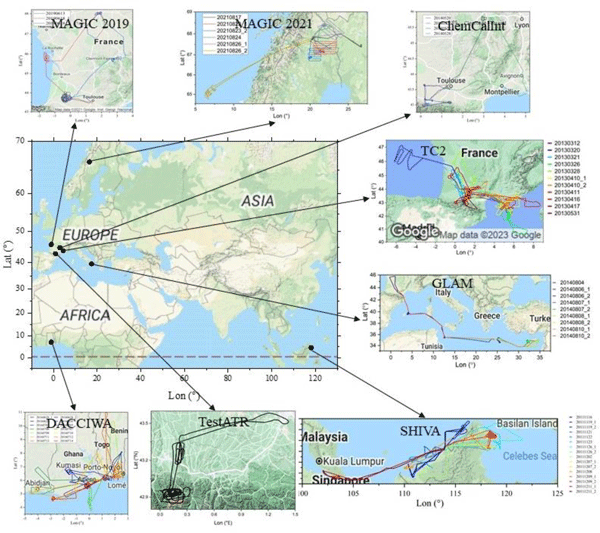
Chaoyang Xue, Gisèle Krysztofiak, Vanessa Brocchi, Stéphane Chevrier, Michel Chartier, Patrick Jacquet, Claude Robert, and Valéry Catoire
Earth Syst. Sci. Data, 15, 4553–4569, https://doi.org/10.5194/essd-15-4553-2023, https://doi.org/10.5194/essd-15-4553-2023, 2023
Short summary
Short summary
To understand tropospheric air pollution at regional and global scales, an infrared laser spectrometer called SPIRIT was used on aircraft to rapidly and accurately measure carbon monoxide (CO), an important indicator of air pollution, during the last decade. Measurements were taken for more than 200 flight hours over three continents. Levels of CO are mapped with 3D trajectories for each flight. Additionally, this can be used to validate model performance and satellite measurements.
Frederik Harzer, Hella Garny, Felix Ploeger, Harald Bönisch, Peter Hoor, and Thomas Birner
Atmos. Chem. Phys., 23, 10661–10675, https://doi.org/10.5194/acp-23-10661-2023, https://doi.org/10.5194/acp-23-10661-2023, 2023
Short summary
Short summary
We study the statistical relation between year-by-year fluctuations in winter-mean ozone and the strength of the stratospheric polar vortex. In the latitude–pressure plane, regression analysis shows that anomalously weak polar vortex years are associated with three pronounced local ozone maxima over the polar cap relative to the winter climatology. These response maxima primarily reflect the non-trivial combination of different ozone transport processes with varying relative contributions.
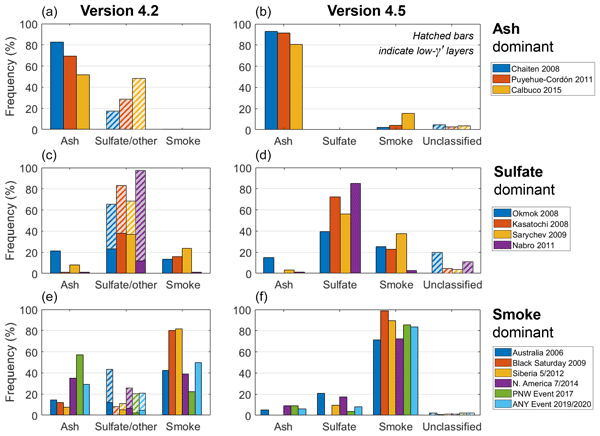
Jason L. Tackett, Jayanta Kar, Mark A. Vaughan, Brian J. Getzewich, Man-Hae Kim, Jean-Paul Vernier, Ali H. Omar, Brian E. Magill, Michael C. Pitts, and David M. Winker
Atmos. Meas. Tech., 16, 745–768, https://doi.org/10.5194/amt-16-745-2023, https://doi.org/10.5194/amt-16-745-2023, 2023
Short summary
Short summary
The accurate identification of aerosol types in the stratosphere is important to characterize their impacts on the Earth climate system. The space-borne lidar on board CALIPSO is well-posed to identify aerosols in the stratosphere from volcanic eruptions and major wildfire events. This paper describes improvements implemented in the version 4.5 CALIPSO data release to more accurately discriminate between volcanic ash, sulfate, and smoke within the stratosphere.
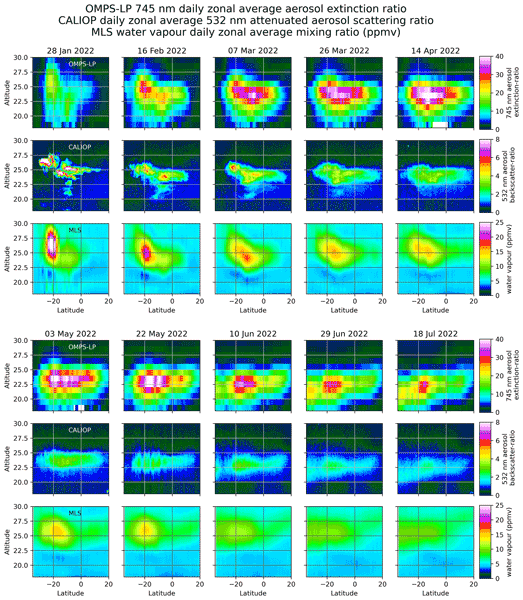
Bernard Legras, Clair Duchamp, Pasquale Sellitto, Aurélien Podglajen, Elisa Carboni, Richard Siddans, Jens-Uwe Grooß, Sergey Khaykin, and Felix Ploeger
Atmos. Chem. Phys., 22, 14957–14970, https://doi.org/10.5194/acp-22-14957-2022, https://doi.org/10.5194/acp-22-14957-2022, 2022
Short summary
Short summary
The long-duration atmospheric impact of the Tonga eruption in January 2022 is a plume of water and sulfate aerosols in the stratosphere that persisted for more than 6 months. We study this evolution using several satellite instruments and analyse the unusual behaviour of this plume as sulfates and water first moved down rapidly and then separated into two layers. We also report the self-organization in compact and long-lived patches.
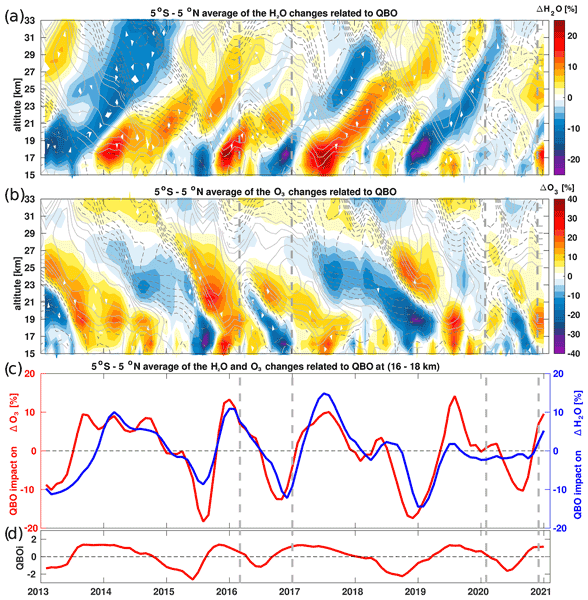
Mohamadou A. Diallo, Felix Ploeger, Michaela I. Hegglin, Manfred Ern, Jens-Uwe Grooß, Sergey Khaykin, and Martin Riese
Atmos. Chem. Phys., 22, 14303–14321, https://doi.org/10.5194/acp-22-14303-2022, https://doi.org/10.5194/acp-22-14303-2022, 2022
Short summary
Short summary
The quasi-biennial oacillation disruption events in both 2016 and 2020 decreased lower-stratospheric water vapour and ozone. Differences in the strength and depth of the anomalous lower-stratospheric circulation and ozone are due to differences in tropical upwelling and cold-point temperature induced by lower-stratospheric planetary and gravity wave breaking. The differences in water vapour are due to higher cold-point temperature in 2020 induced by Australian wildfire.

Mathieu Lachatre, Sylvain Mailler, Laurent Menut, Arineh Cholakian, Pasquale Sellitto, Guillaume Siour, Henda Guermazi, Giuseppe Salerno, and Salvatore Giammanco
Atmos. Chem. Phys., 22, 13861–13879, https://doi.org/10.5194/acp-22-13861-2022, https://doi.org/10.5194/acp-22-13861-2022, 2022
Short summary
Short summary
In this study, we have evaluated the predominance of various pathways of volcanic SO2 conversion to sulfates in the upper troposphere. We show that the main conversion pathway was gaseous oxidation by OH, although the liquid pathways were expected to be predominant. These results are interesting with respect to a better understanding of sulfate formation in the middle and upper troposphere and are an important component to help evaluate particulate matter radiative forcing.
Paul Konopka, Mengchu Tao, Marc von Hobe, Lars Hoffmann, Corinna Kloss, Fabrizio Ravegnani, C. Michael Volk, Valentin Lauther, Andreas Zahn, Peter Hoor, and Felix Ploeger
Geosci. Model Dev., 15, 7471–7487, https://doi.org/10.5194/gmd-15-7471-2022, https://doi.org/10.5194/gmd-15-7471-2022, 2022
Short summary
Short summary
Pure trajectory-based transport models driven by meteorology derived from reanalysis products (ERA5) take into account only the resolved, advective part of transport. That means neither mixing processes nor unresolved subgrid-scale advective processes like convection are included. The Chemical Lagrangian Model of the Stratosphere (CLaMS) includes these processes. We show that isentropic mixing dominates unresolved transport. The second most important transport process is unresolved convection.
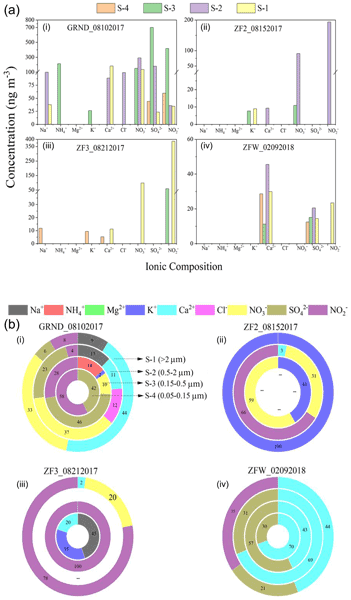
Hazel Vernier, Neeraj Rastogi, Hongyu Liu, Amit Kumar Pandit, Kris Bedka, Anil Patel, Madineni Venkat Ratnam, Buduru Suneel Kumar, Bo Zhang, Harish Gadhavi, Frank Wienhold, Gwenael Berthet, and Jean-Paul Vernier
Atmos. Chem. Phys., 22, 12675–12694, https://doi.org/10.5194/acp-22-12675-2022, https://doi.org/10.5194/acp-22-12675-2022, 2022
Short summary
Short summary
The chemical composition of the stratospheric aerosols collected aboard high-altitude balloons above the summer Asian monsoon reveals the presence of nitrate/nitrite. Using numerical simulations and satellite observations, we found that pollution as well as lightning could explain some of our observations.

Varaha Ravi Kiran, Madineni Venkat Ratnam, Masatomo Fujiwara, Herman Russchenberg, Frank G. Wienhold, Bomidi Lakshmi Madhavan, Mekalathur Roja Raman, Renju Nandan, Sivan Thankamani Akhil Raj, Alladi Hemanth Kumar, and Saginela Ravindra Babu
Atmos. Meas. Tech., 15, 4709–4734, https://doi.org/10.5194/amt-15-4709-2022, https://doi.org/10.5194/amt-15-4709-2022, 2022
Short summary
Short summary
We proposed and conducted the multi-instrumental BACIS (Balloon-borne Aerosol–Cloud Interaction Studies) field campaigns using balloon-borne in situ measurements and ground-based and space-borne remote sensing instruments. Aerosol-cloud interaction is quantified for liquid clouds by segregating aerosol and cloud information in a balloon profile. Overall, the observational approach proposed here demonstrated its capability for understanding the aerosol–cloud interaction process.
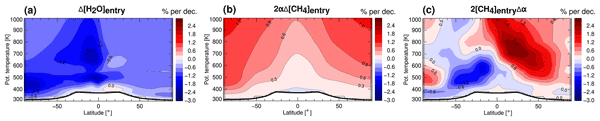
Liubov Poshyvailo-Strube, Rolf Müller, Stephan Fueglistaler, Michaela I. Hegglin, Johannes C. Laube, C. Michael Volk, and Felix Ploeger
Atmos. Chem. Phys., 22, 9895–9914, https://doi.org/10.5194/acp-22-9895-2022, https://doi.org/10.5194/acp-22-9895-2022, 2022
Short summary
Short summary
Brewer–Dobson circulation (BDC) controls the composition of the stratosphere, which in turn affects radiation and climate. As the BDC cannot be measured directly, it is necessary to infer its strength and trends indirectly. In this study, we test in the
model worlddifferent methods for estimating the mean age of air trends based on a combination of stratospheric water vapour and methane data. We also provide simple practical advice of a more reliable estimation of the mean age of air trends.
Pasquale Sellitto, Redha Belhadji, Corinna Kloss, and Bernard Legras
Atmos. Chem. Phys., 22, 9299–9311, https://doi.org/10.5194/acp-22-9299-2022, https://doi.org/10.5194/acp-22-9299-2022, 2022
Short summary
Short summary
As a consequence of extreme heat and drought, record-breaking wildfires ravaged south-eastern Australia during the fire season in 2019–2020. Fires injected a smoke plume very high up to the stratosphere, which dispersed quite quickly to the whole Southern Hemisphere and interacted with solar radiation, reflecting and absorbing part of it – thus producing impacts on the climate system. Here we estimate this impact on radiation and we study how it depends on the properties and ageing of the plume.
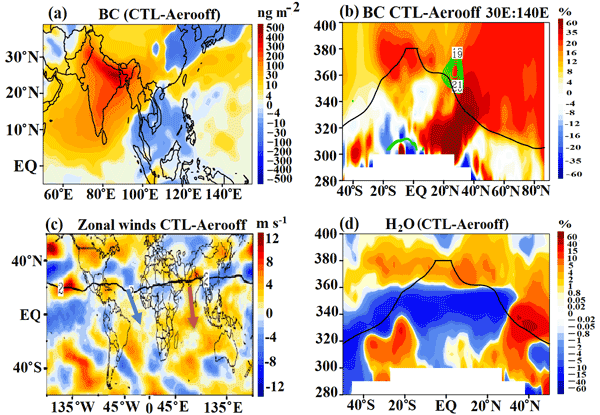
Suvarna Fadnavis, Prashant Chavan, Akash Joshi, Sunil M. Sonbawne, Asutosh Acharya, Panuganti C. S. Devara, Alexandru Rap, Felix Ploeger, and Rolf Müller
Atmos. Chem. Phys., 22, 7179–7191, https://doi.org/10.5194/acp-22-7179-2022, https://doi.org/10.5194/acp-22-7179-2022, 2022
Short summary
Short summary
We show that large amounts of anthropogenic aerosols are transported from South Asia to the northern Indian Ocean. These aerosols are then lifted into the UTLS by the ascending branch of the Hadley circulation. They are further transported to the Southern Hemisphere and downward via westerly ducts over the tropical Atlantic and Pacific. These aerosols increase tropospheric heating, resulting in an increase in water vapor, which is then transported to the UTLS.
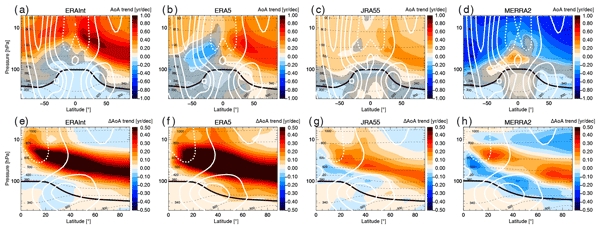
Felix Ploeger and Hella Garny
Atmos. Chem. Phys., 22, 5559–5576, https://doi.org/10.5194/acp-22-5559-2022, https://doi.org/10.5194/acp-22-5559-2022, 2022
Short summary
Short summary
We investigate hemispheric asymmetries in stratospheric circulation changes in the last 2 decades in model simulations and atmospheric observations. We find that observed trace gas changes can be explained by a structural circulation change related to a deepening circulation in the Northern Hemisphere relative to the Southern Hemisphere. As this asymmetric signal is small compared to internal variability observed circulation trends over the recent past are not in contradiction to climate models.
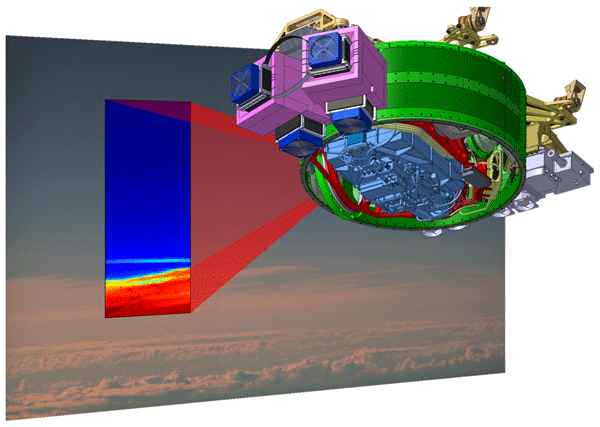
Jörn Ungermann, Anne Kleinert, Guido Maucher, Irene Bartolomé, Felix Friedl-Vallon, Sören Johansson, Lukas Krasauskas, and Tom Neubert
Atmos. Meas. Tech., 15, 2503–2530, https://doi.org/10.5194/amt-15-2503-2022, https://doi.org/10.5194/amt-15-2503-2022, 2022
Short summary
Short summary
GLORIA is a 2-D infrared imaging spectrometer operated on two high-flying research aircraft. This paper details our instrument calibration and characterization efforts, which in particular leverage in-flight data almost exclusively and often exploit the novel 2-D nature of the measurements. We show that the instrument surpasses the original instrument specifications and conclude by analyzing how the derived errors affect temperature and ozone retrievals, two of our main derived quantities.
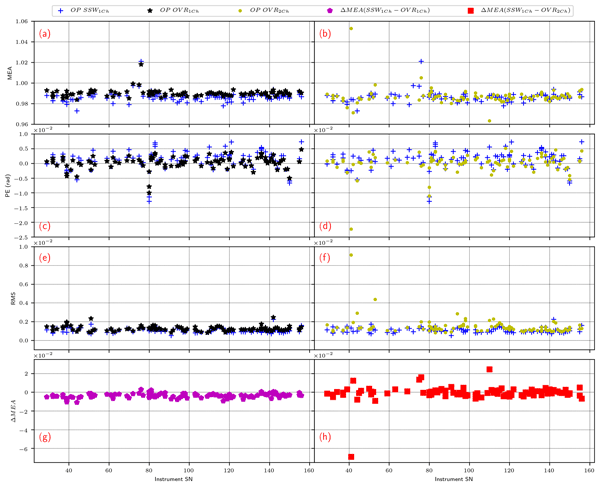
Carlos Alberti, Frank Hase, Matthias Frey, Darko Dubravica, Thomas Blumenstock, Angelika Dehn, Paolo Castracane, Gregor Surawicz, Roland Harig, Bianca C. Baier, Caroline Bès, Jianrong Bi, Hartmut Boesch, André Butz, Zhaonan Cai, Jia Chen, Sean M. Crowell, Nicholas M. Deutscher, Dragos Ene, Jonathan E. Franklin, Omaira García, David Griffith, Bruno Grouiez, Michel Grutter, Abdelhamid Hamdouni, Sander Houweling, Neil Humpage, Nicole Jacobs, Sujong Jeong, Lilian Joly, Nicholas B. Jones, Denis Jouglet, Rigel Kivi, Ralph Kleinschek, Morgan Lopez, Diogo J. Medeiros, Isamu Morino, Nasrin Mostafavipak, Astrid Müller, Hirofumi Ohyama, Paul I. Palmer, Mahesh Pathakoti, David F. Pollard, Uwe Raffalski, Michel Ramonet, Robbie Ramsay, Mahesh Kumar Sha, Kei Shiomi, William Simpson, Wolfgang Stremme, Youwen Sun, Hiroshi Tanimoto, Yao Té, Gizaw Mengistu Tsidu, Voltaire A. Velazco, Felix Vogel, Masataka Watanabe, Chong Wei, Debra Wunch, Marcia Yamasoe, Lu Zhang, and Johannes Orphal
Atmos. Meas. Tech., 15, 2433–2463, https://doi.org/10.5194/amt-15-2433-2022, https://doi.org/10.5194/amt-15-2433-2022, 2022
Short summary
Short summary
Space-borne greenhouse gas missions require ground-based validation networks capable of providing fiducial reference measurements. Here, considerable refinements of the calibration procedures for the COllaborative Carbon Column Observing Network (COCCON) are presented. Laboratory and solar side-by-side procedures for the characterization of the spectrometers have been refined and extended. Revised calibration factors for XCO2, XCO and XCH4 are provided, incorporating 47 new spectrometers.
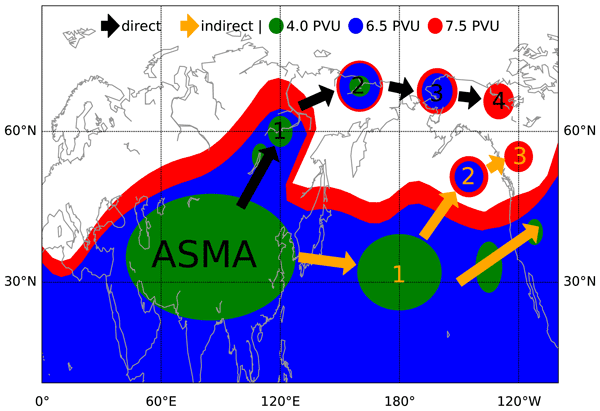
Jan Clemens, Felix Ploeger, Paul Konopka, Raphael Portmann, Michael Sprenger, and Heini Wernli
Atmos. Chem. Phys., 22, 3841–3860, https://doi.org/10.5194/acp-22-3841-2022, https://doi.org/10.5194/acp-22-3841-2022, 2022
Short summary
Short summary
Highly polluted air flows from the surface to higher levels of the atmosphere during the Asian summer monsoon. At high levels, the air is trapped within eddies. Here, we study how air masses can leave the eddy within its cutoff, how they distribute, and how their chemical composition changes. We found evidence for transport from the eddy to higher latitudes over the North Pacific and even Alaska. During transport, trace gas concentrations within cutoffs changed gradually, showing steady mixing.
Cited articles
Anderson, G., Clough, S., Kneizys, F., and Shettle, E.: AFGL Atmospheric Constituent Profiles (0.120 km), AFGL Environmental Research Papers, 1–46, https://apps.dtic.mil/dtic/tr/fulltext/u2/a175173.pdf (last access: 28 May 2026), 1986. a
Andersson, S. M., Martinsson, B. G., Vernier, J.-P., Friberg, J., Brenninkmeijer, C. A. M., Hermann, M., van Velthoven, P. F. J., and Zahn, A.: Significant radiative impact of volcanic aerosol in the lowermost stratosphere, Nat. Commun., 6, 7692, https://doi.org/10.1038/ncomms8692, 2015. a
Asher, E., Todt, M., Rosenlof, K., Thornberry, T., Gao, R.-S., Taha, G., Walter, P., Alvarez, S., Flynn, J., Davis, S. M., Evan, S., Brioude, J., Metzger, J.-M., Hurst, D. F., Hall, E., and Xiong, K.: Unexpectedly rapid aerosol formation in the Hunga Tonga plume, P. Natl. Acad. Sci. USA, 120, e2219547120, https://doi.org/10.1073/pnas.2219547120, 2023. a
Berthet, G.: POPS and LOAC v1.5 profiles for concentration and extinction – Hunga Tonga volcanic plume in the midlatitude Northern Hemisphere, Zenodo [data set], https://doi.org/10.5281/zenodo.15296481, 2025. a
Bian, J., Li, D., Bai, Z., Xu, J., Li, Q., Wang, H., Vömel, H., Wienhold, F. G., and Peter, T.: First detection of aerosols of the Hunga Tonga eruption in the Northern Hemisphere stratospheric westerlies, Sci. Bull., 68, 574–577, https://doi.org/10.1016/j.scib.2023.03.002, 2023. a
Boichu, M., Grandin, R., Blarel, L., Torres, B., Derimian, Y., Goloub, P., Brogniez, C., Chiapello, I., Dubovik, O., Mathurin, T., Pascal, N., Patou, M., and Riedi, J.: Growth and Global Persistence of Stratospheric Sulfate Aerosols From the 2022 Hunga Tonga–Hunga Ha'apai Volcanic Eruption, Journal Geophys. Res.-Atmos., 128, e2023JD039010, https://doi.org/10.1029/2023JD039010, 2023. a
Brabec, M., Wienhold, F. G., Luo, B. P., Vömel, H., Immler, F., Steiner, P., Hausammann, E., Weers, U., and Peter, T.: Particle backscatter and relative humidity measured across cirrus clouds and comparison with microphysical cirrus modelling, Atmos. Chem. Phys., 12, 9135–9148, https://doi.org/10.5194/acp-12-9135-2012, 2012. a
Brock, C. A., Froyd, K. D., Dollner, M., Williamson, C. J., Schill, G., Murphy, D. M., Wagner, N. J., Kupc, A., Jimenez, J. L., Campuzano-Jost, P., Nault, B. A., Schroder, J. C., Day, D. A., Price, D. J., Weinzierl, B., Schwarz, J. P., Katich, J. M., Wang, S., Zeng, L., Weber, R., Dibb, J., Scheuer, E., Diskin, G. S., DiGangi, J. P., Bui, T., Dean-Day, J. M., Thompson, C. R., Peischl, J., Ryerson, T. B., Bourgeois, I., Daube, B. C., Commane, R., and Wofsy, S. C.: Ambient aerosol properties in the remote atmosphere from global-scale in situ measurements, Atmos. Chem. Phys., 21, 15023–15063, https://doi.org/10.5194/acp-21-15023-2021, 2021. a
Bruckert, J., Hirsch, L., Horváth, Á., Kahn, R. A., Kölling, T., Muser, L. O., Timmreck, C., Vogel, H., Wallis, S., and Hoshyaripour, G. A.: Dispersion and Aging of Volcanic Aerosols After the La Soufrière Eruption in April 2021, J. Geophys. Res.-Atmos., 128, e2022JD037694, https://doi.org/10.1029/2022JD037694, 2023. a
Carn, S. A., Krotkov, N. A., Fisher, B. L., and Li, C.: Out of the blue: Volcanic SO2 emissions during the 2021–2022 eruptions of Hunga Tonga–Hunga Ha'apai (Tonga), Frontiers in Earth Science, 10, https://doi.org/10.3389/feart.2022.976962, 2022. a, b
Carr, J. L., Horváth, Á., Wu, D. L., and Friberg, M. D.: Stereo Plume Height and Motion Retrievals for the Record-Setting Hunga Tonga-Hunga Ha'apai Eruption of 15 January 2022, Geophys. Res. Lett., 49, e2022GL098131, https://doi.org/10.1029/2022GL098131, 2022. a
Dahlback, A. and Stamnes, K.: A new spherical model for computing the radiation field available for photolysis and heating at twilight, Planetary and Space Science, 39, 671–683, https://doi.org/10.1016/0032-0633(91)90061-E, 1991. a
Deng, C., Li, Y., Yan, C., Wu, J., Cai, R., Wang, D., Liu, Y., Kangasluoma, J., Kerminen, V.-M., Kulmala, M., and Jiang, J.: Measurement report: Size distributions of urban aerosols down to 1 nm from long-term measurements, Atmos. Chem. Phys., 22, 13569–13580, https://doi.org/10.5194/acp-22-13569-2022, 2022. a
Duchamp, C., Wrana, F., Legras, B., Sellitto, P., Belhadji, R., and von Savigny, C.: Observation of the Aerosol Plume From the 2022 Hunga Tonga–Hunga Ha'apai Eruption With SAGE III/ISS, Geophys. Res. Lett., 50, e2023GL105076, https://doi.org/10.1029/2023GL105076, 2023. a, b, c
Dumelié, N., Vernier, J.-P., Berthet, G., Vernier, H., Renard, J.-B., Rastogi, N., Wienhold, F., Combaz, D., Angot, M., Burgalat, J., Parent, F., Chauvin, N., Albora, G., Dagaut, P., Benoit, R., Kovilakam, M., Crevoisier, C., and Joly, L.: Toward Rapid Balloon Experiments for Sudden Aerosol Injection in the Stratosphere (REAS) by Volcanic Eruptions and Wildfires, B. Am. Meteorol. Soc., 105, E105–E120, https://doi.org/10.1175/BAMS-D-22-0086.1, 2024. a
Fairlie, T. D., Vernier, J.-P., Natarajan, M., and Bedka, K. M.: Dispersion of the Nabro volcanic plume and its relation to the Asian summer monsoon, Atmos. Chem. Phys., 14, 7045–7057, https://doi.org/10.5194/acp-14-7045-2014, 2014. a
Grant, W. B., Browell, E. V., Fishman, J., Brackett, V. G., Veiga, R. E., Nganga, D., Minga, A., Cros, B., Butler, C. F., Fenn, M. A., Long, C. S., and Stowe, L. L.: Aerosol-associated changes in tropical stratospheric ozone following the eruption of Mount Pinatubo, J. Geophys. Res.-Atmos., 99, 8197–8211, https://doi.org/10.1029/93JD03314, 1994. a
Guo, S., Bluth, G. J. S., Rose, W. I., Watson, I. M., and Prata, A. J.: Re-evaluation of SO2 release of the 15 June 1991 Pinatubo eruption using ultraviolet and infrared satellite sensors, Geochem. Geophy. Geosy., 5, https://doi.org/10.1029/2003GC000654, 2004. a
Haynes, P. and Shuckburgh, E.: Effective diffusivity as a diagnostic of atmospheric transport: 1. Stratosphere, J. Geophys. Res.-Atmos., 105, 22777–22794, https://doi.org/10.1029/2000JD900093, 2000. a
He, Y.: Comment on “Cross-Hemispheric Transport of the Hunga Aerosol Plume: In Situ Evidence and Radiative Effects from the Northern Hemisphere” by Kloss et al., EGUsphere [preprint], 2025, https://doi.org/10.5194/egusphere-2025-2091-CC1, 2025. a
Hegglin, M. I. and Shepherd, T. G.: O3-N2O correlations from the Atmospheric Chemistry Experiment: Revisiting a diagnostic of transport and chemistry in the stratosphere, J. Geophys. Res.-Atmos., 112, https://doi.org/10.1029/2006JD008281, 2007. a
Hersbach, H., Bell, B., Berrisford, P., Hirahara, S., Horányi, A., Muñoz-Sabater, J., Nicolas, J., Peubey, C., Radu, R., Schepers, D., Simmons, A., Soci, C., Abdalla, S., Abellan, X., Balsamo, G., Bechtold, P., Biavati, G., Bidlot, J., Bonavita, M., De Chiara, G., Dahlgren, P., Dee, D., Diamantakis, M., Dragani, R., Flemming, J., Forbes, R., Fuentes, M., Geer, A., Haimberger, L., Healy, S., Hogan, R. J., Hólm, E., Janisková, M., Keeley, S., Laloyaux, P., Lopez, P., Lupu, C., Radnoti, G., de Rosnay, P., Rozum, I., Vamborg, F., Villaume, S., and Thépaut, J.-N.: The ERA5 global reanalysis, Q. J. Roy. Meteor. Soc., 146, 1999–2049, https://doi.org/10.1002/qj.3803, 2020. a
Homeyer, C. R. and Bowman, K. P.: Rossby Wave Breaking and Transport between the Tropics and Extratropics above the Subtropical Jet, J. Atmos. Sci., 70, 607–626, https://doi.org/10.1175/JAS-D-12-0198.1, 2013. a
Jaross, G., Bhartia, P. K., Chen, G., Kowitt, M., Haken, M., Chen, Z., Xu, P., Warner, J., and Kelly, T.: OMPS Limb Profiler instrument performance assessment, J. Geophys. Res.-Atmos., 119, 4399–4412, https://doi.org/10.1002/2013JD020482, 2014. a
Jülich Supercomputing Centre: JUWELS Cluster and Booster: Exascale Pathfinder with Modular Supercomputing Architecture at Juelich Supercomputing Centre, Journal of Large-Scale Research Facilities, 7, A183, https://doi.org/10.17815/jlsrf-7-183, 2021. a
Khaykin, K., Podglajen, A., Ploeger, F., Grooß, J.-U., Tence, F., Bekki, S., Khlopenkov, K., Bedka, K., Rieger, L., Baron, A., Godin-Beekmann, S., Legras, B., Sellitto, P., Sakai, T., Barnes, J., Uchino, O., Morino, I., Nagai, T., Wing, R., Baumgarten, G., Gerding, M., Duflot, V., Payen, G., Jumelet, J., and Ravetta, F.: Global perturbation of stratospheric water and aerosol burden by Hunga eruption, Communications Earth & Environment, 3, 316, https://doi.org/10.1038/s43247-022-00652-x, 2022. a, b
Kloss, C.: Time series of OMPS aerosol extinction at 21–22 km, Zenodo [video], https://doi.org/10.5281/zenodo.15343728, 2025. a, b
Kloss, C., Berthet, G., Sellitto, P., Ploeger, F., Bucci, S., Khaykin, S., Jégou, F., Taha, G., Thomason, L. W., Barret, B., Le Flochmoen, E., von Hobe, M., Bossolasco, A., Bègue, N., and Legras, B.: Transport of the 2017 Canadian wildfire plume to the tropics via the Asian monsoon circulation, Atmos. Chem. Phys., 19, 13547–13567, https://doi.org/10.5194/acp-19-13547-2019, 2019. a
Kloss, C., Sellitto, P., Renard, J.-B., Baron, A., Bègue, N., Legras, B., Berthet, G., Briaud, E., Carboni, E., Duchamp, C., Duflot, V., Jacquet, P., Marquestaut, N., Metzger, J.-M., Payen, G., Ranaivombola, M., Roberts, T., Siddans, R., and Jégou, F.: Aerosol Characterization of the Stratospheric Plume From the Volcanic Eruption at Hunga Tonga 15 January 2022, Geophys. Res. Lett., 49, e2022GL099394, https://doi.org/10.1029/2022GL099394, 2022. a
Knepp, T. N., Kovilakam, M., Thomason, L., and Miller, S. J.: Characterization of stratospheric particle size distribution uncertainties using SAGE II and SAGE III/ISS extinction spectra, Atmos. Meas. Tech., 17, 2025–2054, https://doi.org/10.5194/amt-17-2025-2024, 2024. a, b
Kurucz, R. L.: Synthetic Infrared Spectra, Infrared Solar Phys., 154, 523–531, https://doi.org/10.1007/978-94-011-1926-9_62, 1994. a
Legras, B., Duchamp, C., Sellitto, P., Podglajen, A., Carboni, E., Siddans, R., Grooß, J.-U., Khaykin, S., and Ploeger, F.: The evolution and dynamics of the Hunga Tonga–Hunga Ha'apai sulfate aerosol plume in the stratosphere, Atmos. Chem. Phys., 22, 14957–14970, https://doi.org/10.5194/acp-22-14957-2022, 2022. a, b, c
Li, Y., Pedersen, C., Dykema, J., Vernier, J.-P., Vattioni, S., Pandit, A. K., Stenke, A., Asher, E., Thornberry, T., Todt, M. A., Bui, T. P., Dean-Day, J., and Keutsch, F. N.: In situ measurements of perturbations to stratospheric aerosol and modeled ozone and radiative impacts following the 2021 La Soufrière eruption, Atmos. Chem. Phys., 23, 15351–15364, https://doi.org/10.5194/acp-23-15351-2023, 2023. a
Mayer, B. and Kylling, A.: Technical note: The libRadtran software package for radiative transfer calculations - description and examples of use, Atmos. Chem. Phys., 5, 1855–1877, https://doi.org/10.5194/acp-5-1855-2005, 2005. a
McKenna, D. S., Grooß, J.-U., Günther, G., Konopka, P., Müller, R., Carver, G., and Sasano, Y.: A new Chemical Lagrangian Model of the Stratosphere (CLaMS) 2. Formulation of chemistry scheme and initialization, J. Geophys. Res.-Atmos., 107, ACH 4-1–ACH 4-14, https://doi.org/10.1029/2000JD000113, 2002a. a
McKenna, D. S., Konopka, P., Grooß, J.-U., Günther, G., Müller, R., Spang, R., Offermann, D., and Orsolini, Y.: A new Chemical Lagrangian Model of the Stratosphere (CLaMS) 1. Formulation of advection and mixing, J. Geophys. Res.-Atmos., 107, ACH 15-1–ACH 15-15, https://doi.org/10.1029/2000JD000114, 2002b. a
Millán, L., Santee, M. L., Lambert, A., Livesey, N. J., Werner, F., Schwartz, M. J., Pumphrey, H. C., Manney, G. L., Wang, Y., Su, H., Wu, L., Read, W. G., and Froidevaux, L.: The Hunga Tonga-Hunga Ha'apai Hydration of the Stratosphere, Geophys. Res. Lett., 49, e2022GL099381, https://doi.org/10.1029/2022GL099381, 2022. a
Müller, R. and the CLaMS team: Chemical Lagrangian Model of the Stratosphere (CLaMS) code repository, FZ Jülich [code], https://jugit.fz-juelich.de/clams/CLaMS, last access: 4 January 2024. a
Pierluissi, J. H. and Peng, G. S.: New molecular transmission band models for LOWTRAN, Optical Engineering, 24, https://doi.org/10.1117/12.7973523, 1985. a
Ploeger, F., Diallo, M., Charlesworth, E., Konopka, P., Legras, B., Laube, J. C., Grooß, J.-U., Günther, G., Engel, A., and Riese, M.: The stratospheric Brewer–Dobson circulation inferred from age of air in the ERA5 reanalysis, Atmos. Chem. Phys., 21, 8393–8412, https://doi.org/10.5194/acp-21-8393-2021, 2021. a
Plumb, R. A.: Stratospheric Transport, J. Meteorol. Soc. Jpn. Ser. II, 80, 793–809, https://doi.org/10.2151/jmsj.80.793, 2002. a
Pommrich, R., Müller, R., Grooß, J.-U., Konopka, P., Ploeger, F., Vogel, B., Tao, M., Hoppe, C. M., Günther, G., Spelten, N., Hoffmann, L., Pumphrey, H.-C., Viciani, S., D'Amato, F., Volk, C. M., Hoor, P., Schlager, H., and Riese, M.: Tropical troposphere to stratosphere transport of carbon monoxide and long-lived trace species in the Chemical Lagrangian Model of the Stratosphere (CLaMS), Geosci. Model Dev., 7, 2895–2916, https://doi.org/10.5194/gmd-7-2895-2014, 2014. a
Proud, S. R., Prata, A. T., and Schmauß, S.: The January 2022 eruption of Hunga Tonga-Hunga Ha'apai volcano reached the mesosphere, Science, 378, 554–557, https://doi.org/10.1126/science.abo4076, 2022. a
Renard, J.-B., Dulac, F., Berthet, G., Lurton, T., Vignelles, D., Jégou, F., Tonnelier, T., Jeannot, M., Couté, B., Akiki, R., Verdier, N., Mallet, M., Gensdarmes, F., Charpentier, P., Mesmin, S., Duverger, V., Dupont, J.-C., Elias, T., Crenn, V., Sciare, J., Zieger, P., Salter, M., Roberts, T., Giacomoni, J., Gobbi, M., Hamonou, E., Olafsson, H., Dagsson-Waldhauserova, P., Camy-Peyret, C., Mazel, C., Décamps, T., Piringer, M., Surcin, J., and Daugeron, D.: LOAC: a small aerosol optical counter/sizer for ground-based and balloon measurements of the size distribution and nature of atmospheric particles – Part 1: Principle of measurements and instrument evaluation, Atmos. Meas. Tech., 9, 1721–1742, https://doi.org/10.5194/amt-9-1721-2016, 2016. a, b
Ricchiazzi, P., Yang, S., Gautier, C., and Sowle, D.: SBDART: A Research and Teaching Software Tool for Plane-Parallel Radiative Transfer in the Earth's Atmosphere, B. Am. Meteorol. Soc., 79, 2101–2114, https://doi.org/10.1175/1520-0477(1998)079<2101:SARATS>2.0.CO;2, 1998. a
Rosenlof, K. H., Tuck, A. F., Kelly, K. K., Russell III, J. M., and McCormick, M. P.: Hemispheric asymmetries in water vapor and inferences about transport in the lower stratosphere, J. Geophys. Res.-Atmos., 102, 13213–13234, https://doi.org/10.1029/97JD00873, 1997. a
SAGE SCIENCE TEAM: SAGE III/ISS L2 Monthly Solar Event Species Profiles (NetCDF) V006, NASA Langley Atmospheric Science Data Center Distributed Active Archive Center [data set], https://doi.org/10.5067/ISS/SAGEIII/SOLAR_NETCDF4_L2-V6.0, 2026. a
Schoeberl, M. R., Wang, Y., Ueyama, R., Taha, G., Jensen, E., and Yu, W.: Analysis and Impact of the Hunga Tonga-Hunga Ha'apai Stratospheric Water Vapor Plume, Geophys. Res. Lett., 49, e2022GL100248, https://doi.org/10.1029/2022GL100248, 2022. a
Schoeberl, M. R., Wang, Y., Taha, G., Zawada, D. J., Ueyama, R., and Dessler, A.: Evolution of the Climate Forcing During the Two Years After the Hunga Tonga-Hunga Ha'apai Eruption, J. Geophys. Res.-Atmos., 129, e2024JD041296, https://doi.org/10.1029/2024JD041296, 2024. a
Sellitto, P., Podglajen, A., Belhadji, R., Boichu, M., Carboni, E., Cuesta, J., Duchamp, C., Kloss, C., Siddans, R., Bègue, N., Blarel, L., Jégou, F., Khaykin, S., Renard, J.-B., and Legras, B.: Significant radiative impact of volcanic aerosol in the lowermost stratosphere, Communications Earth & Environment, 3, 288, https://doi.org/10.1038/s43247-022-00618-z, 2022. a, b, c, d
Sellitto, P., Siddans, R., Belhadji, R., Carboni, E., Legras, B., Podglajen, A., Duchamp, C., and Kerridge, B.: Observing the SO2 and Sulfate Aerosol Plumes From the 2022 Hunga Eruption With the Infrared Atmospheric Sounding Interferometer (IASI), Geophys. Res. Lett., 51, e2023GL105565, https://doi.org/10.1029/2023GL105565, 2024. a, b, c, d, e, f
Sellitto, P., Belhadji, R., Legras, B., Podglajen, A., and Duchamp, C.: The optical properties of the stratospheric aerosol layer perturbation of the Hunga Tonga–Hunga Ha'apai volcano eruption of 15 January 2022, Atmos. Chem. Phys., 25, 6353–6364, https://doi.org/10.5194/acp-25-6353-2025, 2025. a, b
Shepherd, T. G.: The middle atmosphere, J. Atmos. Sol.-Terr. Phy., 62, 1587–1601, https://doi.org/10.1016/S1364-6826(00)00114-0, 2000. a
Shikwambana, L., Sivakumar, V., and Xongo, K.: Tracking the Transport of SO2 and Sulphate Aerosols from the Tonga Volcanic Eruption to South Africa, Atmosphere, 14, https://doi.org/10.3390/atmos14101556, 2023. a
Sicard, M., Baron, A., Ranaivombola, M., Gantois, D., Millet, T., Sellitto, P., Bègue, N., Bencherif, H., Payen, G., Marquestaut, N., and Duflot, V.: Radiative impact of the Hunga stratospheric volcanic plume: role of aerosols and water vapor over Réunion Island (21° S, 55° E), Atmos. Chem. Phys., 25, 367–381, https://doi.org/10.5194/acp-25-367-2025, 2025. a
Taha, G.: OMPS-NPP L2 LP Aerosol Extinction Vertical Profile swath daily 3slit V2, Goddard Earth Sciences Data and Information Services Center (GES DISC) [data set], https://doi.org/10.5067/CX2B9NW6FI27, 2020. a
Taha, G., Loughman, R., Zhu, T., Thomason, L., Kar, J., Rieger, L., and Bourassa, A.: OMPS LP Version 2.0 multi-wavelength aerosol extinction coefficient retrieval algorithm, Atmos. Meas. Tech., 14, 1015–1036, https://doi.org/10.5194/amt-14-1015-2021, 2021. a
Taha, G., Loughman, R., Colarco, P. R., Zhu, T., Thomason, L. W., and Jaross, G.: Tracking the 2022 Hunga Tonga-Hunga Ha'apai Aerosol Cloud in the Upper and Middle Stratosphere Using Space-Based Observations, Geophys. Res. Lett., 49, e2022GL100091, https://doi.org/10.1029/2022GL100091, 2022. a, b, c, d
Taylor, I. A., Grainger, R. G., Prata, A. T., Proud, S. R., Mather, T. A., and Pyle, D. M.: A satellite chronology of plumes from the April 2021 eruption of La Soufrière, St Vincent, Atmos. Chem. Phys., 23, 15209–15234, https://doi.org/10.5194/acp-23-15209-2023, 2023. a
Todt, M. A., Asher, E., Hall, E., Cullis, P., Jordan, A., Xiong, K., Hurst, D. F., and Thornberry, T.: Baseline Balloon Stratospheric Aerosol Profiles (B2SAP) – Systematic Measurements of Aerosol Number Density and Size, J. Geophys. Res.-Atmos., 128, e2022JD038041, https://doi.org/10.1029/2022JD038041, 2023. a
Trepte, C. R. and Hitchman, M. H.: Tropical stratospheric circulation deduced from satellite aerosol data, Nature, 355, 626–628, https://doi.org/10.1038/355626a0, 1992. a
Vernier, H., Quintão, D., Biazon, B., Landulfo, E., Souza, G., Santos, V. A., Lopes, J. S. F., Mendes, C. P. A., Matta, A. S. J. D., Damaris, K. P., Grosslin, B., Jorge, P. M. P. M., Andrade, M. D. F., Rastogi, N., Raj, A., Liu, H., Kovilakam, M., Fadnavis, S., Wienhold, F. G., Colombier, M., Boone, D. C., Berthet, G., Dumelie, N., Joly, L., and Vernier, J.-P.: Balloon Observations Suggesting Sea Salt Injection into the Stratosphere from Hunga Tonga-Hunga Ha'apai, EGUsphere [preprint], https://doi.org/10.5194/egusphere-2025-924, 2025. a
Vernier, J.-P.: COBALD/POPC DATA FRANCE 2022, Figshare [data set], https://doi.org/10.6084/m9.figshare.28887050.v1, 2025. a
Vernier, J. P., Pommereau, J. P., Garnier, A., Pelon, J., Larsen, N., Nielsen, J., Christensen, T., Cairo, F., Thomason, L. W., Leblanc, T., and McDermid, I. S.: Tropical stratospheric aerosol layer from CALIPSO lidar observations, J. Geophys. Res.-Atmos., 114, https://doi.org/10.1029/2009JD011946, 2009. a
Vernier, J.-P., Fairlie, T. D., Natarajan, M., Wienhold, F. G., Bian, J., Martinsson, B. G., Crumeyrolle, S., Thomason, L. W., and Bedka, K. M.: Increase in upper tropospheric and lower stratospheric aerosol levels and its potential connection with Asian pollution, J. Geophys. Res.-Atmos., 120, 1608–1619, https://doi.org/10.1002/2014JD022372, 2015. a
Zhu, Y., Bardeen, C. G., Tilmes, S., Mills, M. J., Wang, X., Harvey, V. L., Taha, G., Kinnison, D., Portmann, R. W., Yu, P., Rosenlof, K. H., Avery, M., Kloss, C., Li, C., Glanville, A. S., Millán, L., Deshler, T., Krotkov, N., and Toon, O. B.: Perturbations in stratospheric aerosol evolution due to the water-rich plume of the 2022 Hunga-Tonga eruption, Communications Earth & Environment, 3, 248, https://doi.org/10.1038/s43247-022-00580-w, 2022. a
Short summary
In October 2022, we detected volcanic particles in the stratosphere over France, linked to the January 2022 Hunga eruption in the South Pacific. Found between 17 and 23 km altitude, they were traced back to the tropics using trajectory simulations and satellite data. Their optical properties matched those in the Southern Hemisphere. The particles spread across the Northern Hemisphere, reflecting sunlight and slightly cooling the surface – a small but non-negligible effect.
In October 2022, we detected volcanic particles in the stratosphere over France, linked to the...


Altmetrics
Final-revised paper
Preprint