
Articles | Volume 26, issue 2
https://doi.org/10.5194/acp-26-869-2026
© Author(s) 2026. This work is distributed under
the Creative Commons Attribution 4.0 License.
the Creative Commons Attribution 4.0 License.
https://doi.org/10.5194/acp-26-869-2026
© Author(s) 2026. This work is distributed under
the Creative Commons Attribution 4.0 License.
the Creative Commons Attribution 4.0 License.
Measurement report
| 
20 Jan 2026
Measurement report |
| 20 Jan 2026
| 20 Jan 2026
Measurement report: 30 years of BTEX monitoring at a suburban site in Switzerland supported by additional urban VOC observations
Zoé Le Bras
Empa, Laboratory for Air Pollution/Environmental Technology, Ueberlandstrasse 129, 8600 Dübendorf, Switzerland
Pascal Rubli
Empa, Laboratory for Air Pollution/Environmental Technology, Ueberlandstrasse 129, 8600 Dübendorf, Switzerland
Christoph Hueglin
Empa, Laboratory for Air Pollution/Environmental Technology, Ueberlandstrasse 129, 8600 Dübendorf, Switzerland

Empa, Laboratory for Air Pollution/Environmental Technology, Ueberlandstrasse 129, 8600 Dübendorf, Switzerland
Related authors
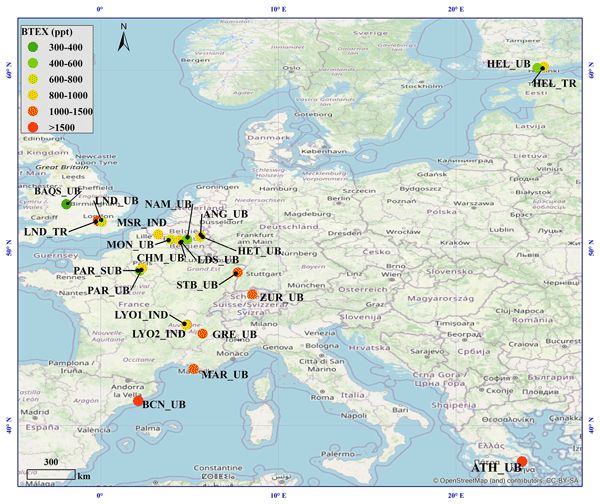
Xiansheng Liu, Xun Zhang, Marvin Dufresne, Tao Wang, Lijie Wu, Rosa Lara, Roger Seco, Marta Monge, Ana Maria Yáñez-Serrano, Marie Gohy, Paul Petit, Audrey Chevalier, Marie-Pierre Vagnot, Yann Fortier, Alexia Baudic, Véronique Ghersi, Grégory Gille, Ludovic Lanzi, Valérie Gros, Leïla Simon, Heidi Héllen, Stefan Reimann, Zoé Le Bras, Michelle Jessy Müller, David Beddows, Siqi Hou, Zongbo Shi, Roy M. Harrison, William Bloss, James Dernie, Stéphane Sauvage, Philip K. Hopke, Xiaoli Duan, Taicheng An, Alastair C. Lewis, James R. Hopkins, Eleni Liakakou, Nikolaos Mihalopoulos, Xiaohu Zhang, Andrés Alastuey, Xavier Querol, and Thérèse Salameh
Atmos. Chem. Phys., 25, 625–638, https://doi.org/10.5194/acp-25-625-2025, https://doi.org/10.5194/acp-25-625-2025, 2025
Short summary
Short summary
This study examines BTEX (benzene, toluene, ethylbenzene, xylenes) pollution in urban areas across seven European countries. Analyzing data from 22 monitoring sites, we found traffic and industrial activities significantly impact BTEX levels, with peaks during rush hours. The risk from BTEX exposure remains moderate, especially in high-traffic and industrial zones, highlighting the need for targeted air quality management to protect public health and improve urban air quality.
Md Atiur Rahman, Ralf Kaegi, and Christoph Hueglin
EGUsphere, https://doi.org/10.5194/egusphere-2026-5039, https://doi.org/10.5194/egusphere-2026-5039, 2026
This preprint is open for discussion and under review for Atmospheric Measurement Techniques (AMT).
Short summary
Short summary
Tire wear particles (TWP) are environmental pollutants of growing concern. We developed an analytical method for TWP because no standardized reference method is currently available and there is a clear need for robust and reliable techniques to quantify tire wear particles in environmental samples. The proposed method is based on pyrolysis gas chromatography-mass spectrometry (Py-GC-MS) and uses multiple pyrolysis products that are characteristic of the main rubber polymers used in tires.
Jesse Juhani Soininen, Kukka-Maaria Kohonen, Stavros Stagakis, Ara Cho, Betty Molinier, Pascal Rubli, Rainer Hilland, Natascha Kljun, and Leena Järvi
EGUsphere, https://doi.org/10.5194/egusphere-2026-4603, https://doi.org/10.5194/egusphere-2026-4603, 2026
This preprint is open for discussion and under review for Atmospheric Chemistry and Physics (ACP).
Short summary
Short summary
Carbonyl sulfide is increasingly used to estimate how much carbon dioxide plants absorb from the atmosphere, but this is difficult in cities because human activities also emit this gas. We measured its exchange between the atmosphere and the urban area of Zurich and found that vegetation remained the main sink, while emissions from human activities reduced this uptake in densely built areas. These results improve the interpretation of urban carbon exchange.
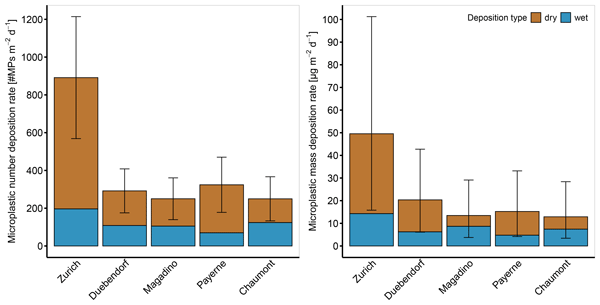
Narain M. Ashta, Guillaume Crosset-Perrotin, Angélique Moraz, Matthias Philipp, Thomas D. Bucheli, Ralf Kaegi, and Christoph Hueglin
Atmos. Chem. Phys., 26, 11803–11815, https://doi.org/10.5194/acp-26-11803-2026, https://doi.org/10.5194/acp-26-11803-2026, 2026
Short summary
Short summary
Microplastics are environmental contaminants of concern that are also present in air. Using an infrared-based device, we measured the amount of microplastics deposited from air to different parts of Switzerland over a one-year period. We found microplastics everywhere, with levels in the city being more than twice as high as those in suburban, rural and mountainous places. We also found that air is an important transporter of microplastics that contaminates agricultural land and water bodies.
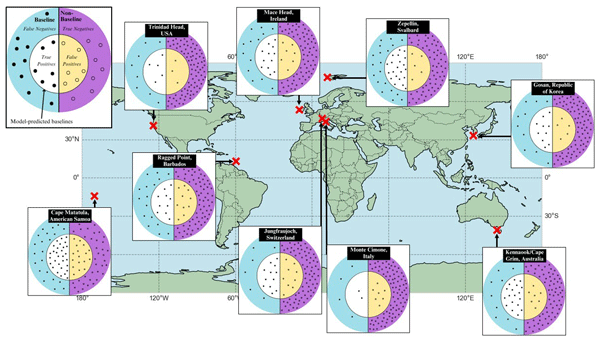
Kirstin Gerrand, Elena Fillola, Alistair J. Manning, Jgor Arduini, Paul B. Krummel, Chris R. Lunder, Jens Mühle, Simon O'Doherty, Sunyoung Park, Ronald G. Prinn, Stefan Reimann, Dickon Young, and Matthew Rigby
Atmos. Meas. Tech., 19, 5387–5400, https://doi.org/10.5194/amt-19-5387-2026, https://doi.org/10.5194/amt-19-5387-2026, 2026
Short summary
Short summary
To analyse long-term trends in atmospheric trace gas concentrations, it is important to identify data points minimally affected by local pollution sources or air masses carried from other latitudes or altitudes. Traditional methods for detecting these “baselines” are computationally expensive or lack a basis in physical principles. This paper introduces a machine-learning method that uses meteorological data and offers significantly lower computational costs compared to physics-based techniques.
Arlett Díaz-Zurita, Simone Brunamonti, Alexander Haefele, Martine Collaud Coen, Giovanni Martucci, Benjamin Tobias Brem, Martin Gysel-Beer, Hassan Lyamani, Gloria Titos, Daniel Pérez-Ramírez, Christoph Hüglin, Lucas Alados-Arboledas, Alejandro Keller, Frank Gunther Wienhold, Maxime Hervo, and Francisco Navas-Guzmán
EGUsphere, https://doi.org/10.5194/egusphere-2026-4361, https://doi.org/10.5194/egusphere-2026-4361, 2026
Short summary
Short summary
This study provides a unique framework for assessing aerosol hygroscopicity by combining Raman lidar observations with vertically resolved in situ measurements from the balloon-borne Compact Backscatter Aerosol Detector coupled with Vaisala RS41 radiosondes and ground-based tandem nephelometers. The three approaches showed good agreement. Raman lidar identified more than 200 hygroscopic aerosol layers, constituting one of the largest datasets available for statistical investigations.
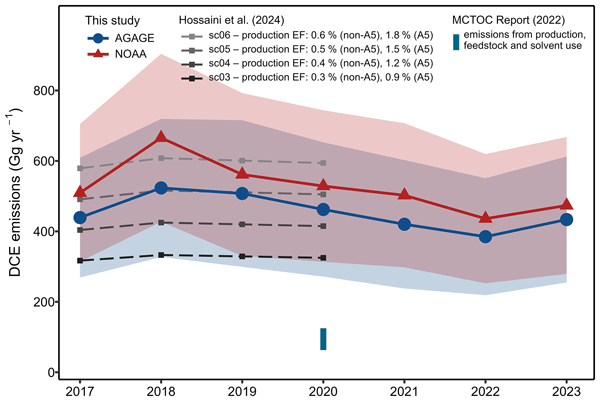
Joseph R. Pitt, Dominique Rust, Anita Ganesan, Luke M. Western, Martin K. Vollmer, Jens Mühle, Tobias Bühlmann, Christina M. Harth, Stephen A. Montzka, Brad D. Hall, Isaac J. Vimont, Alistair J. Manning, Alison L. Redington, Stephan Henne, Daniela B. Melo, Saurabh Annadate, Lionel Constantin, Brendan M. Murphy, Matthew Rigby, Dickon Young, Simon O'Doherty, Angelina Wenger, Chris R. Lunder, Ove Hermansen, Thomas Wagenhäuser, Andreas Engel, Jgor Arduini, Michela Maione, Jaegeun Yun, Blagoj Mitrevski, Paul B. Krummel, Paul J. Fraser, Jooil Kim, Ray H. J. Wang, Tae Siek Rhee, Peter K. Salameh, T. Gerard Spain, Stefan Reimann, Ronald G. Prinn, Ray F. Weiss, and Kieran M. Stanley
Atmos. Chem. Phys., 26, 10167–10195, https://doi.org/10.5194/acp-26-10167-2026, https://doi.org/10.5194/acp-26-10167-2026, 2026
Short summary
Short summary
1,2‑Dichloroethane (DCE) can contribute to the depletion of the stratospheric ozone layer. Whether DCE reaches the stratosphere depends on where and when it is emitted. We present the ongoing measurements of DCE from the Advanced Global Atmospheric Gases Experiment (AGAGE) and National Oceanic and Atmospheric Administration (NOAA) global monitoring networks. For the period 2017–2023, our modelled average global emissions based on these observations align with another study, while regional estimates differ. This suggests remaining uncertainty in the geographical distribution of emissions.
Julian Weng, Yufang Hao, Benjamin T. Brem, Tianqu Cui, Peeyush Khare, Lubna Dada, Kaspar R. Daellenbach, Sophie Darfeuil, Gaëlle Uzu, Jean-Luc Jaffrezo, Martin Steinbacher, Stefan Reimann, Thaleia Gkraikou, Konstantina Oikonomou, Jean Sciare, Martine Collaud Coen, Claudia Mohr, Andre S. H. Prévôt, Martin Gysel-Beer, Imad El Haddad, and Patrik Winiger
EGUsphere, https://doi.org/10.5194/egusphere-2026-3660, https://doi.org/10.5194/egusphere-2026-3660, 2026
Short summary
Short summary
Long-term observations at the Jungfraujoch High Altitude Research Station show that, alongside air mass transport, sustained oxidative processing shaped by atmospheric water vapor plays a central role in driving aerosol loading and composition. Combining detailed aerosol chemical characterization with process-level insights, we provide important observational benchmarks for improving atmospheric model performance in the remote free troposphere, where uncertainties remain particularly high.
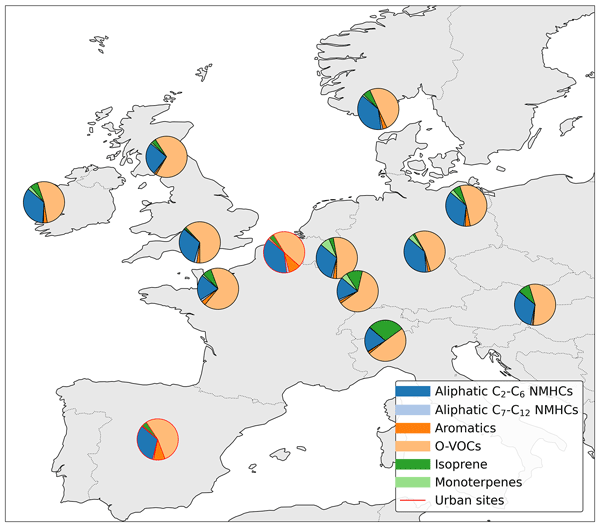
Wenche Aas, Thérèse Salameh, Robert Wegener, Heidi Hellén, Jean-Luc Jaffrezo, Pontus Roldin, Elisabeth Alonso-Blanco, Andres Alastuey, Crist Amelynck, Jgor Arduini, Benjamin Bergmans, Marie Bertrand, Agnes Borbon, Efstratios Bourtsoukidis, Laetitia Bouvier, David Butterfield, Iris Buxbaum, Darius Ceburnis, Anja Claude, Augustin Colette, Aurélie Colomb, Sophie Darfeuil, James Dernie, Maximilien Desservettaz, Elías Díaz-Ramiro, Marvin Dufresne, René Dubus, Mario Duval, Marie Dury, Anna Font, Kirsten N. Fossum, Evelyn Freney, Gotzon Gangoiti, Yao Ge, Maria Carmen Gomez, Francisco J. Gómez-Moreno, Marie Gohy, Valérie Gros, Paul Hamer, Bryan Hellack, Hartmut Herrmann, Robert Holla, Adéla Holubová, Niels R. Jensen, Tuija Jokinen, Matthew Jones, Uwe Käfer, Lukas Kesper, Dieter Klemp, Dagmar Kubistin, Angela Marinoni, Martina Mazzini, Vy Ngoc Thuy Dinh, Jurgita Ovadnevaite, Tuukka Petäjä, Miguel Portillo-Estrada, Jitka Přívozníková, Jean-Philippe Putaud, Stefan Reimann, Laura Renzi, Veronique Riffault, Stuart Ritchie, Chris Robins, Begoña Artíñano Rodríguez de Torres, Laurent Poulain, Julian Rüdiger, Agnieszka Sanocka, Estibaliz Saez de Camara Oleaga, Niels Schoon, Roger Seco, Ivan Simmons, Leïla Simon, David Simpson, Sverre Solberg, Emmanuel Tison, August Thomasson, Svetlana Tsyro, Marsailidh Twigg, Toni Tykkä, Bert Verreyken, Ågot Watne, Katie Williams, Ana Maria Yáñez-Serrano, Karen Yeung, Ilona Ylivinkka, and Karl Espen Yttri
Atmos. Chem. Phys., 26, 8717–8751, https://doi.org/10.5194/acp-26-8717-2026, https://doi.org/10.5194/acp-26-8717-2026, 2026
Short summary
Short summary
A one-week intensive measurement campaign during the 2022 European heatwave included monitoring of ozone, volatile organic compounds, aerosol chemical composition, and organic tracers to investigate air pollution sources. Results showed that emissions from vegetation and human activities contributed to peaks in ozone and secondary organic aerosol particles. Differences between measurements and model simulations underline the need for better characterization of sources and formation pathways.
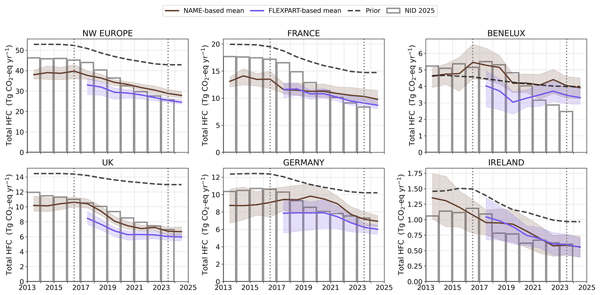
Hélène De Longueville, Daniela B. Melo, Alison L. Redington, Alice Ramsden, Alexandre Danjou, Peter Andrews, Joseph Pitt, Brendan Murphy, Lionel Constantin, Kieran M. Stanley, Simon O'Doherty, Angelina Wenger, Dickon Young, Andreas Engel, Tanja Schuck, Katharina Meixner, Thomas Wagenhaeuser, Fides Gad, Martin K. Vollmer, Stefan Reimann, Michela Maoine, Jgor Arduini, Chris Lunder, Norbert Schmidtbauer, László Haszpra, Mihály Molnár, Arnoud Frumau, Cedric Couret, Matthew Rigby, Stephan Henne, Alistair Manning, and Anita L. Ganesan
Atmos. Chem. Phys., 26, 7647–7675, https://doi.org/10.5194/acp-26-7647-2026, https://doi.org/10.5194/acp-26-7647-2026, 2026
Short summary
Short summary
This study estimates emissions of hydrofluorocarbons, potent greenhouse gases, in north-western Europe using atmospheric observations and atmospheric modelling. The estimates are compared with nationally reported emissions submitted to the United Nations. Overall, our results are consistent with reported values, although differences are found for some gases and countries. The findings indicate that emissions in north-western Europe are declining, reflecting the effects of climate regulations.
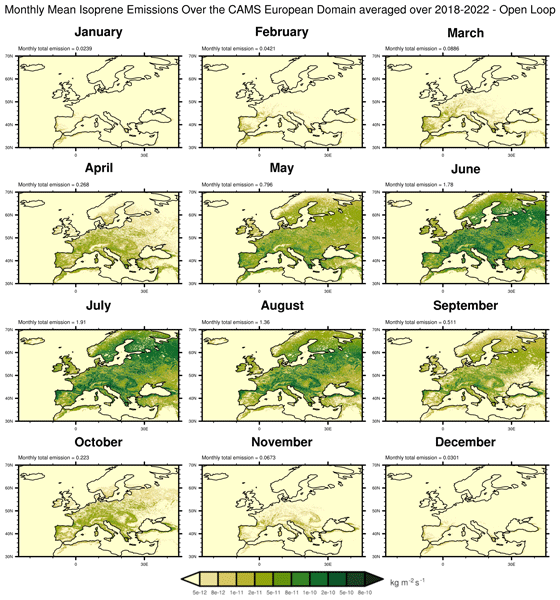
Paul D. Hamer, Miha Markelj, Oscar Rojas-Munoz, Bertrand Bonan, Jean-Christophe Calvet, Virginie Marécal, Alex Guenther, Heidi Trimmel, Islen Vallejo, Sabine Eckhardt, Gabriela Sousa Santos, Katerina Sindelarova, David Simpson, Norbert Schmidbauer, Heidi Hellén, Pascal Rubli, Stefan Reimann, Anja Claude, Dagmar Kubistin, Julie Cozic, James Dernie, and Leonor Tarrasón
Earth Syst. Sci. Data, 18, 3635–3669, https://doi.org/10.5194/essd-18-3635-2026, https://doi.org/10.5194/essd-18-3635-2026, 2026
Short summary
Short summary
Plants release gases like isoprene that can form ozone and affect air quality. Using models and satellite data, we mapped the emissions of isoprene from plants across Europe and found that droughts can reduce leaf growth, leading to lower emissions. This shows that to understand and predict air quality, we must also understand how drought impacts vegetation. Our findings highlight the value of linking extreme weather, plant health, and pollution in models of the Earth system as a whole.
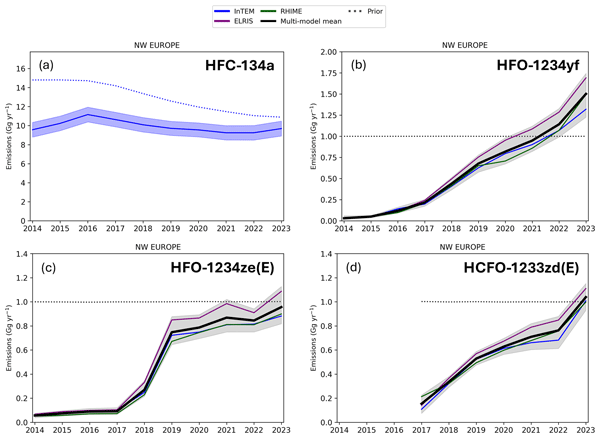
Martin K. Vollmer, Joseph R. Pitt, Dickon Young, Stephan Henne, Blagoj Mitrevski, Jens Mühle, Anita Ganesan, Jgor Arduini, Alistair J. Manning, Thomas Wagenhäuser, Alison L. Redington, Daniela B. Melo, Brendan Murphy, Ray Gluckmann, Kieran M. Stanley, Paul B. Krummel, Chris R. Lunder, Jaegeun Yun, Dominique Rust, Angelina Wenger, Myriam Guillevic, Jooil Kim, Ray H. J. Wang, Tae Siek Rhee, Lionel Constantin, Arnoud Frumau, Christina M. Harth, Peter K. Salameh, Ove Hermansen, Matthew Rigby, Luke M. Western, Andreas Engel, Simon O'Doherty, Sunyoung Park, Michela Maione, Paul J. Fraser, Ronald G. Prinn, Ray F. Weiss, and Stefan Reimann
Atmos. Chem. Phys., 26, 6993–7012, https://doi.org/10.5194/acp-26-6993-2026, https://doi.org/10.5194/acp-26-6993-2026, 2026
Short summary
Short summary
Halogenated olefins (HFOs) are newly emerging compounds in the atmosphere. They are in reach of the definition of PFAS (Per- and polyfluoroalkyl substances) and some decay to the eternal chemical trifluoroacetate (TFA). We provide atmospheric measurements of three HFOs from the large Advanced Global Atmospheric Gases Experiment (AGAGE) network and estimate emissions for Northwest Europe for the first time. We find a quasi-ubiquitous presence in the atmosphere and rapidly increasing emissions.
Clara M. Nussbaumer, Colette L. Heald, Amanda M. Häne, and Christoph Hüglin
Atmos. Chem. Phys., 26, 5355–5373, https://doi.org/10.5194/acp-26-5355-2026, https://doi.org/10.5194/acp-26-5355-2026, 2026
Short summary
Short summary
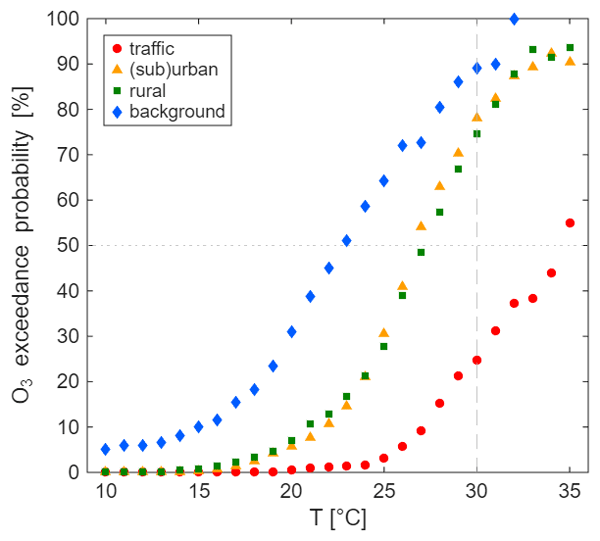
Ground-level ozone is harmful to human health. While precursors to ozone were strongly reduced over the past decades, unhealthy levels of ozone are still frequently reported in Switzerland. In this study, we investigate changes in ozone and its relationship with temperature over time. We find that precursor reductions have positively affected ozone in remote locations, while ozone is increasing close to busy roads. High ozone is often associated with hot summer days.
Enrico Mancinelli, Saurabh Annadate, Paolo Cristofanelli, Umberto Giostra, Michela Maione, Stefan Reimann, and Jgor Arduini
Atmos. Chem. Phys., 26, 4105–4129, https://doi.org/10.5194/acp-26-4105-2026, https://doi.org/10.5194/acp-26-4105-2026, 2026
Short summary
Short summary
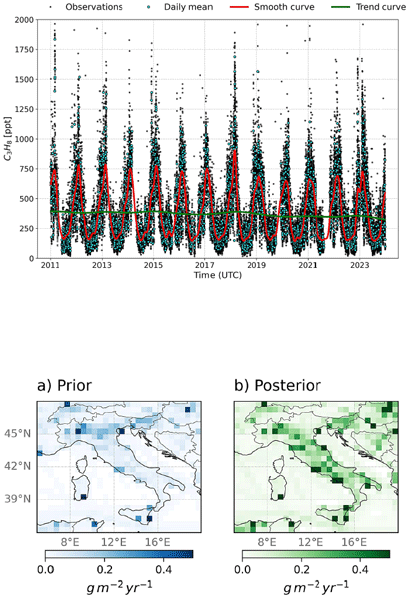
Propane is the second most abundant non-methane hydrocarbon in the atmosphere and is mainly emitted by anthropogenic activities. Despite playing a significant role in atmospheric chemistry, propane emission sources are poorly defined. Analysis of high-frequency long-term measurements at the GAW-WMO (Global Atmosphere Watch-World Meteorological Organization) station of Monte Cimone Italy make some improvements in identifications of different contributions at the regional scale.
Luce Creman, Stuart K. Grange, Pascal Rubli, Andrea Fischer, Dominik Brunner, Christoph Hueglin, Lukas Emmenegger, and Leonie Bernet
Atmos. Meas. Tech., 19, 1441–1463, https://doi.org/10.5194/amt-19-1441-2026, https://doi.org/10.5194/amt-19-1441-2026, 2026
Short summary
Short summary
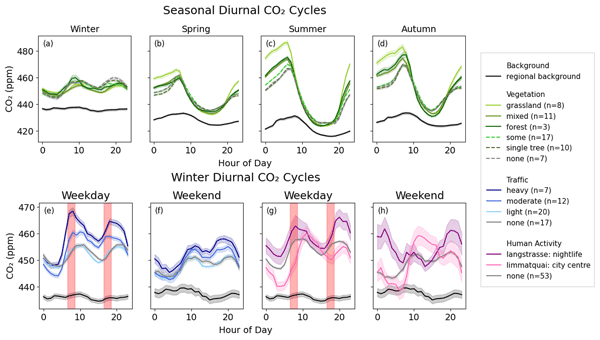
ZiCOS-L is a network of low-cost sensors in Zurich (Switzerland) to monitor carbon dioxide (CO2) concentrations. After correcting for drift and checking the sensor performance, we found that local factors like traffic, public events and vegetation affect CO2 levels. Even though the sensors have higher uncertainties than other sensors, the lower cost allows for a denser network with detailed insights into CO2 levels across the city, helping cities track emissions and support climate action plans.
Patrick Aigner, Jia Chen, Felix Böhm, Mali Chariot, Lukas Emmenegger, Lars Frölich, Stuart Grange, Daniel Kühbacher, Klaus Kürzinger, Olivier Laurent, Moritz Makowski, Pascal Rubli, Adrian Schmitt, and Adrian Wenzel
Atmos. Meas. Tech., 19, 745–773, https://doi.org/10.5194/amt-19-745-2026, https://doi.org/10.5194/amt-19-745-2026, 2026
Short summary
Short summary
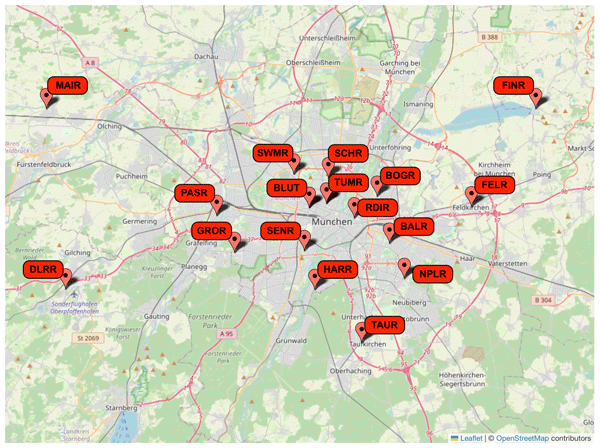
Dense urban CO2 monitoring is challenging due to cost and operational constraints. We developed a mid-cost sensor network for Munich, deployed on 17 rooftops. Temperature-stabilized enclosures and automated 2-point calibration ensured reliable performance, assessed by side-by-side comparison with a Picarro reference. In 1.5 years, the network collected 90 million measurements and resolved urban-rural gradients and seasonal diurnal patterns, capturing spatial CO2 variability at city scale.
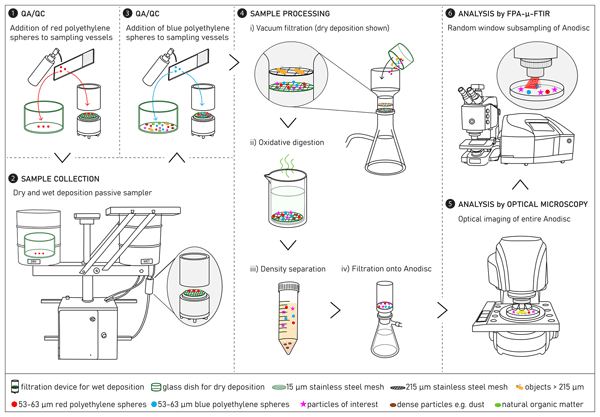
Narain M. Ashta, Guillaume Crosset-Perrotin, Angélique Moraz, Josua Stoffel, Ueli Schilt, Eric Ceglie, David Schoenenberger, Matthias Philipp, Thomas D. Bucheli, Ralf Kaegi, and Christoph Hueglin
Atmos. Meas. Tech., 19, 371–388, https://doi.org/10.5194/amt-19-371-2026, https://doi.org/10.5194/amt-19-371-2026, 2026
Short summary
Short summary
Microplastics are environmental contaminants of global concern. In this study, we developed a method for measuring the amount of microplastics in atmospheric samples. In doing so, we introduced a new way to collect rain/snow samples and a custom software that helps with the analysis of microplastics. We then assessed the precision of our method and tested it on real samples. Our work may be useful for researchers seeking to measure microplastics in environmental samples.
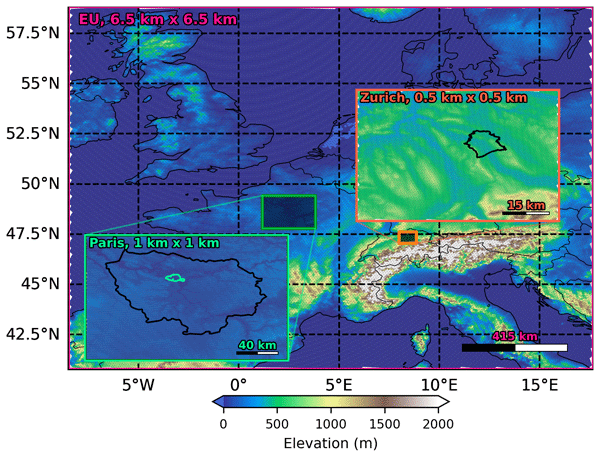
Nikolai Ponomarev, Michael Steiner, Erik Koene, Pascal Rubli, Stuart Grange, Lionel Constantin, Michel Ramonet, Leslie David, Arash Hamzehloo, Lukas Emmenegger, and Dominik Brunner
Atmos. Chem. Phys., 26, 547–570, https://doi.org/10.5194/acp-26-547-2026, https://doi.org/10.5194/acp-26-547-2026, 2026
Short summary
Short summary
Urban inversions are gaining increasing attention, as cities are major contributors to anthropogenic emissions, making accurate emission estimates at this scale essential for supporting climate action plans and verifying reported emission reductions. We estimated carbon dioxide emissions in Zurich and Paris over one year by combining atmospheric observations with mesoscale model simulations. Our study shows how factors like city size, terrain, and measurement methods affect emission estimates.
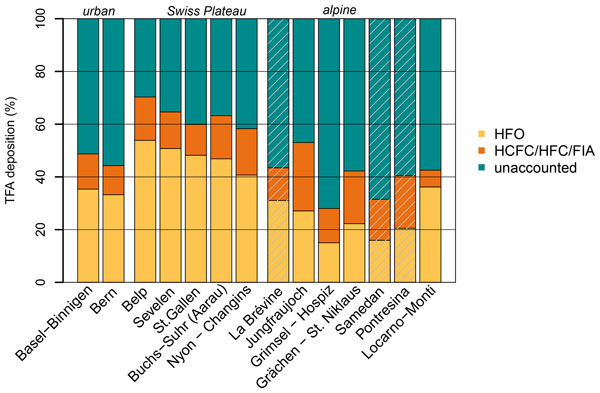
Stephan Henne, Florian R. Storck, Henry Wöhrnschimmel, Markus Leuenberger, Martin K. Vollmer, and Stefan Reimann
Atmos. Chem. Phys., 25, 18157–18186, https://doi.org/10.5194/acp-25-18157-2025, https://doi.org/10.5194/acp-25-18157-2025, 2025
Short summary
Short summary
We observed the persistent, man-made trifluoroacetate (TFA) in precipitation and surface waters. Atmospheric simulations attributed TFA to precursor gases in the atmosphere. Although recently increasing concentrations could be followed, gaps in the budget indicate limited understanding of the atmospheric degradation of widely used fluorocarbons. Without additional regulation, environmental TFA concentrations are expected to rise strongly, necessitating continued monitoring and risk assessment.
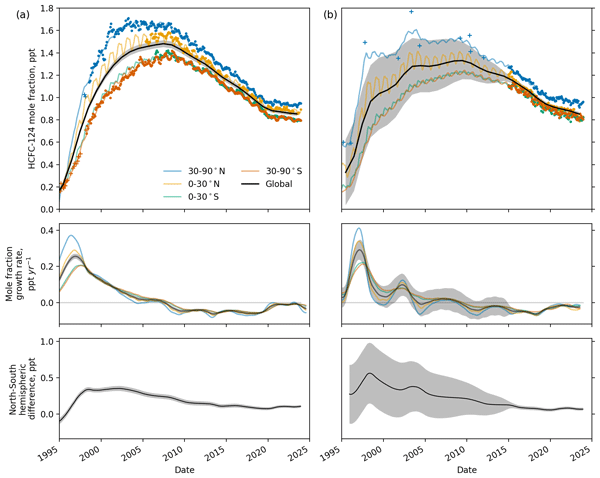
Luke M. Western, Stephen Bourguet, Molly Crotwell, Lei Hu, Paul B. Krummel, Hélène De Longueville, Alistair J. Manning, Jens Mühle, Dominique Rust, Isaac Vimont, Martin K. Vollmer, Minde An, Jgor Arduini, Andreas Engel, Paul J. Fraser, Anita L. Ganesan, Christina M. Harth, Chris Lunder, Michela Maione, Stephen A. Montzka, David Nance, Simon O'Doherty, Sunyoung Park, Stefan Reimann, Peter K. Salameh, Roland Schmidt, Kieran M. Stanley, Thomas Wagenhäuser, Dickon Young, Matt Rigby, Ronald G. Prinn, and Ray F. Weiss
Atmos. Chem. Phys., 25, 17761–17778, https://doi.org/10.5194/acp-25-17761-2025, https://doi.org/10.5194/acp-25-17761-2025, 2025
Short summary
Short summary
We used atmospheric measurements to estimate emissions of two hydrochlorofluorocarbon (HCFC) gases, called HCFC-123 and HCFC-124, that harm the ozone layer. Despite international regulation to stop their production, their emissions have not fallen. This may be linked to how they are used to make other chemicals. Our findings show that some banned substances are still reaching the atmosphere, likely through leaks during chemical production, which could slow the recovery of the ozone layer.
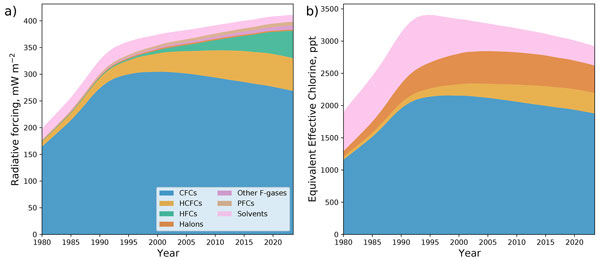
Luke M. Western, Matthew Rigby, Jens Mühle, Paul B. Krummel, Chris R. Lunder, Simon O'Doherty, Stefan Reimann, Martin K. Vollmer, Dickon Young, Ben Adam, Paul J. Fraser, Anita L. Ganesan, Christina M. Harth, Ove Hermansen, Jooil Kim, Ray L. Langenfelds, Zoë M. Loh, Blagoj Mitrevski, Joseph R. Pitt, Peter K. Salameh, Roland Schmidt, Kieran Stanley, Ann R. Stavert, Hsiang-Jui Wang, Ray F. Weiss, and Ronald G. Prinn
Earth Syst. Sci. Data, 17, 6557–6582, https://doi.org/10.5194/essd-17-6557-2025, https://doi.org/10.5194/essd-17-6557-2025, 2025
Short summary
Short summary
We used global measurements and an atmospheric model to estimate how emissions and abundances of 42 chemically and radiatively important trace gases have changed over time. These gases affect the Earth's radiative balance and the ozone layer. Our data sets help track progress in reducing emissions of these gases to the atmosphere. This work supports international efforts to protect the environment by providing clear, long-term, consistent data on how these gases are changing in the atmosphere.
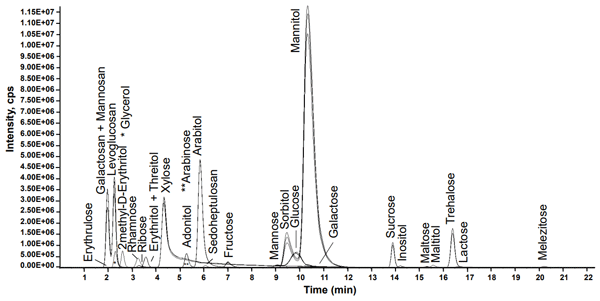
Pauline Bros, Sophie Darfeuil, Véronique Jacob, Rhabira Elazzouzi, Dielleza Tusha, Tristan Rousseau, Julian Weng, Patrik Winiger, Imad El Haddad, Christoph Hueglin, Gaëlle Uzu, and Jean-Luc Jaffrezo
Atmos. Meas. Tech., 18, 6315–6327, https://doi.org/10.5194/amt-18-6315-2025, https://doi.org/10.5194/amt-18-6315-2025, 2025
Short summary
Short summary
We present and validate an ultra-high-performance liquid chromatography tandem mass spectrometry method for the quantification of 21 sugars in atmospheric particulate matter. The method is fast, sensitive, and suitable for low-mass samples. Its application to a 6-year dataset from the Jungfraujoch site highlights its potential for source identification and understanding of biogenic and biomass burning tracers.
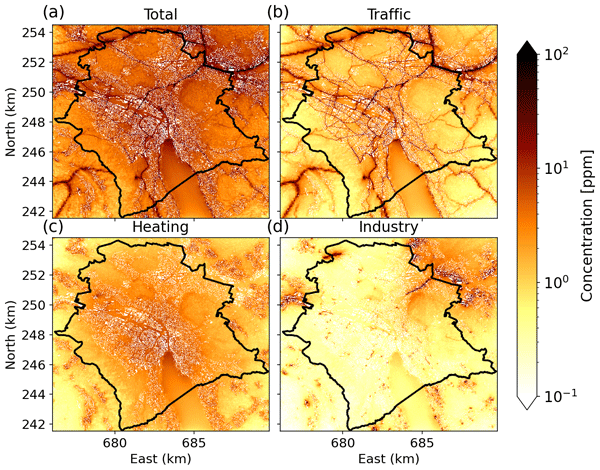
Dominik Brunner, Ivo Suter, Leonie Bernet, Lionel Constantin, Stuart K. Grange, Pascal Rubli, Junwei Li, Jia Chen, Alessandro Bigi, and Lukas Emmenegger
Atmos. Chem. Phys., 25, 14387–14410, https://doi.org/10.5194/acp-25-14387-2025, https://doi.org/10.5194/acp-25-14387-2025, 2025
Short summary
Short summary
To support the city of Zurich in tracking its path to net-zero greenhouse gas emissions planned to be reached by 2040, a CO2 emission monitoring system was established. The system combines a dense network of CO2 sensors with a high-resolution atmospheric transport model GRAMM/GRAL. This study presents the setup of the model together with its numerous inputs and evaluates its performance in comparison with observations from the CO2 sensor network.
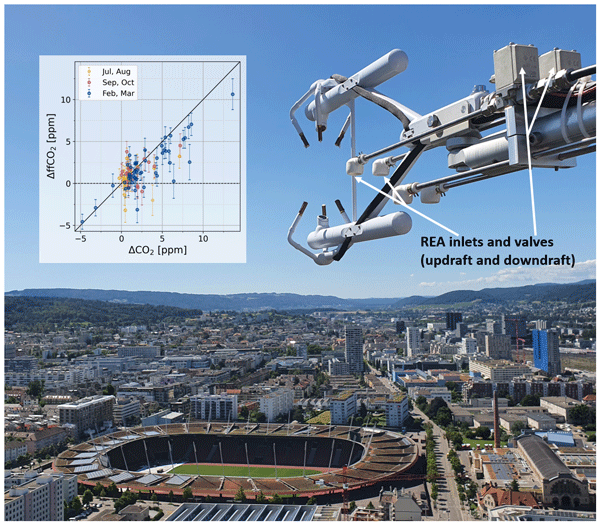
Ann-Kristin Kunz, Lars Borchardt, Andreas Christen, Julian Della Coletta, Markus Eritt, Xochilt Gutiérrez, Josh Hashemi, Rainer Hilland, Armin Jordan, Richard Kneißl, Virgile Legendre, Ingeborg Levin, Susanne Preunkert, Pascal Rubli, Stavros Stagakis, and Samuel Hammer
Atmos. Meas. Tech., 18, 5349–5373, https://doi.org/10.5194/amt-18-5349-2025, https://doi.org/10.5194/amt-18-5349-2025, 2025
Short summary
Short summary
We present, to our knowledge, the first relaxed eddy accumulation system explicitly tailored to a radiocarbon (14C)-based partitioning of fossil and non-fossil urban CO2 fluxes. Laboratory tests and in-depth quality and performance checks prove that the system meets the technical requirements. A pilot application on a tall tower in the city of Zurich, Switzerland, demonstrates the ability to separate fossil and non-fossil CO2 components within the typical precision of 14C measurements.
Lubna Dada, Benjamin T. Brem, Lidia-Marta Amarandi-Netedu, Martine Collaud Coen, Nikolaos Evangeliou, Christoph Hueglin, Nora Nowak, Robin Modini, Martin Steinbacher, and Martin Gysel-Beer
Aerosol Research, 3, 315–336, https://doi.org/10.5194/ar-3-315-2025, https://doi.org/10.5194/ar-3-315-2025, 2025
Short summary
Short summary
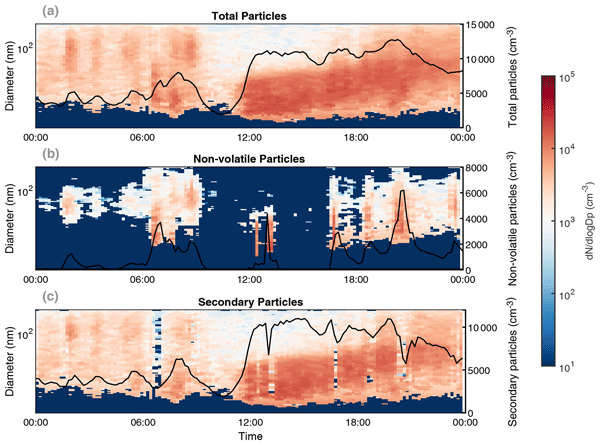
We investigated the sources of ultrafine particles (UFPs) in Payerne, Switzerland, highlighting the significant role of secondary processes in elevating UFP concentrations to levels comparable to urban areas. As the first study in rural midland Switzerland to analyze new particle formation events and secondary contributions, it offers key insights for air quality regulation and the role of agriculture in Switzerland and central Europe.
Natalie M. Mahowald, Longlei Li, Julius Vira, Marje Prank, Douglas S. Hamilton, Hitoshi Matsui, Ron L. Miller, P. Louis Lu, Ezgi Akyuz, Daphne Meidan, Peter Hess, Heikki Lihavainen, Christine Wiedinmyer, Jenny Hand, Maria Grazia Alaimo, Célia Alves, Andres Alastuey, Paulo Artaxo, Africa Barreto, Francisco Barraza, Silvia Becagli, Giulia Calzolai, Shankararaman Chellam, Ying Chen, Patrick Chuang, David D. Cohen, Cristina Colombi, Evangelia Diapouli, Gaetano Dongarra, Konstantinos Eleftheriadis, Johann Engelbrecht, Corinne Galy-Lacaux, Cassandra Gaston, Dario Gomez, Yenny González Ramos, Roy M. Harrison, Chris Heyes, Barak Herut, Philip Hopke, Christoph Hüglin, Maria Kanakidou, Zsofia Kertesz, Zbigniew Klimont, Katriina Kyllönen, Fabrice Lambert, Xiaohong Liu, Remi Losno, Franco Lucarelli, Willy Maenhaut, Beatrice Marticorena, Randall V. Martin, Nikolaos Mihalopoulos, Yasser Morera-Gómez, Adina Paytan, Joseph Prospero, Sergio Rodríguez, Patricia Smichowski, Daniela Varrica, Brenna Walsh, Crystal L. Weagle, and Xi Zhao
Atmos. Chem. Phys., 25, 4665–4702, https://doi.org/10.5194/acp-25-4665-2025, https://doi.org/10.5194/acp-25-4665-2025, 2025
Short summary
Short summary
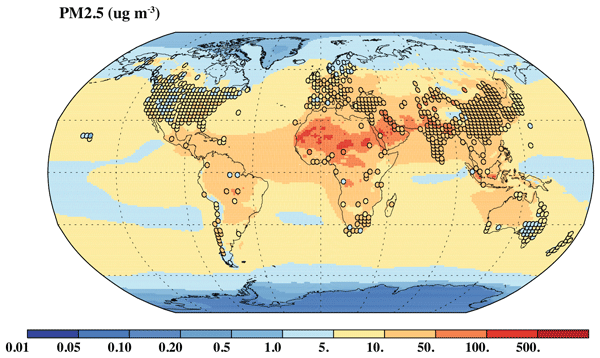
Aerosol particles are an important part of the Earth system, but their concentrations are spatially and temporally heterogeneous, as well as being variable in size and composition. Here, we present a new compilation of PM2.5 and PM10 aerosol observations, focusing on the spatial variability across different observational stations, including composition, and demonstrate a method for comparing the data sets to model output.
Stuart K. Grange, Pascal Rubli, Andrea Fischer, Dominik Brunner, Christoph Hueglin, and Lukas Emmenegger
Atmos. Chem. Phys., 25, 2781–2806, https://doi.org/10.5194/acp-25-2781-2025, https://doi.org/10.5194/acp-25-2781-2025, 2025
Short summary
Short summary
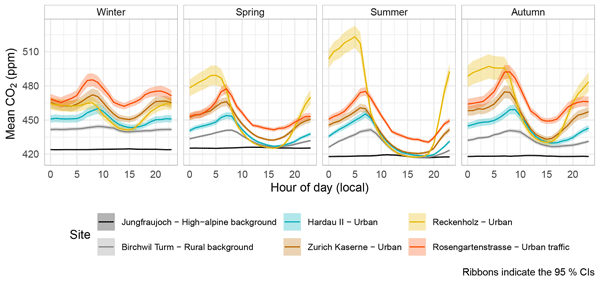
Carbon dioxide (CO2) is a very important atmospheric pollutant, and to better understand the gas's source and sink dynamics, a mid-cost sensor network hosting 26 sites was deployed in and around Zurich, Switzerland. The sensor measurement performance was quantified, and natural and anthropogenic CO2 emission sources were explored with a focus on what drives high CO2 levels. The observations will be used further by others to validate what is thought to be known about CO2 emissions in the region.
Hector Navarro-Barboza, Jordi Rovira, Vincenzo Obiso, Andrea Pozzer, Marta Via, Andres Alastuey, Xavier Querol, Noemi Perez, Marjan Savadkoohi, Gang Chen, Jesus Yus-Díez, Matic Ivancic, Martin Rigler, Konstantinos Eleftheriadis, Stergios Vratolis, Olga Zografou, Maria Gini, Benjamin Chazeau, Nicolas Marchand, Andre S. H. Prevot, Kaspar Dallenbach, Mikael Ehn, Krista Luoma, Tuukka Petäjä, Anna Tobler, Jaroslaw Necki, Minna Aurela, Hilkka Timonen, Jarkko Niemi, Olivier Favez, Jean-Eudes Petit, Jean-Philippe Putaud, Christoph Hueglin, Nicolas Pascal, Aurélien Chauvigné, Sébastien Conil, Marco Pandolfi, and Oriol Jorba
Atmos. Chem. Phys., 25, 2667–2694, https://doi.org/10.5194/acp-25-2667-2025, https://doi.org/10.5194/acp-25-2667-2025, 2025
Short summary
Short summary
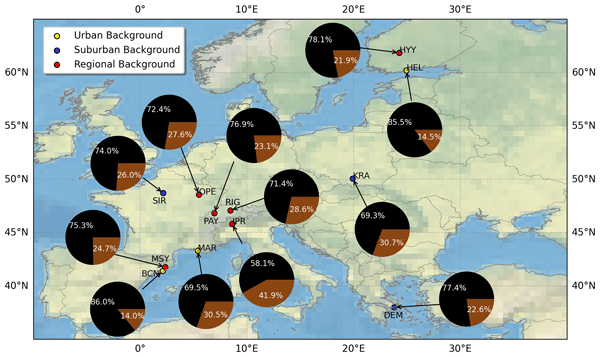
Brown carbon (BrC) absorbs ultraviolet (UV) and visible light, influencing climate. This study explores BrC's imaginary refractive index (k) using data from 12 European sites. Residential emissions are a major organic aerosol (OA) source in winter, while secondary organic aerosol (SOA) dominates in summer. Source-specific k values were derived, improving model accuracy. The findings highlight BrC's climate impact and emphasize source-specific constraints in atmospheric models.
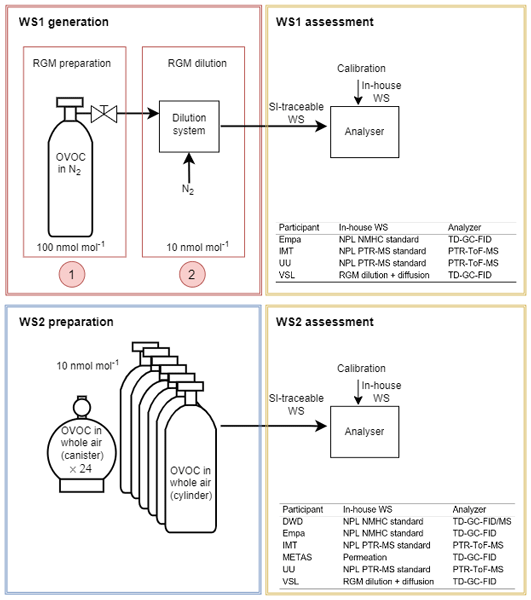
Maitane Iturrate-Garcia, Thérèse Salameh, Paul Schlauri, Annarita Baldan, Martin K. Vollmer, Evdokia Stratigou, Sebastien Dusanter, Jianrong Li, Stefan Persijn, Anja Claude, Rupert Holzinger, Christophe Sutour, Tatiana Macé, Yasin Elshorbany, Andreas Ackermann, Céline Pascale, and Stefan Reimann
Atmos. Meas. Tech., 18, 371–403, https://doi.org/10.5194/amt-18-371-2025, https://doi.org/10.5194/amt-18-371-2025, 2025
Short summary
Short summary
Accurate and comparable measurements of oxygenated organic compounds (OVOCs) are crucial in assessing tropospheric ozone burdens and trends. However, the monitoring of many OVOCs remains challenging because of their low atmospheric abundance and lack of stable and traceable calibration standards. This paper describes the calibration standards developed for OVOCs at a low amount of substance fractions (<100 nmol mol-1) to transfer traceability of the International System of Units to the field.
Xiansheng Liu, Xun Zhang, Marvin Dufresne, Tao Wang, Lijie Wu, Rosa Lara, Roger Seco, Marta Monge, Ana Maria Yáñez-Serrano, Marie Gohy, Paul Petit, Audrey Chevalier, Marie-Pierre Vagnot, Yann Fortier, Alexia Baudic, Véronique Ghersi, Grégory Gille, Ludovic Lanzi, Valérie Gros, Leïla Simon, Heidi Héllen, Stefan Reimann, Zoé Le Bras, Michelle Jessy Müller, David Beddows, Siqi Hou, Zongbo Shi, Roy M. Harrison, William Bloss, James Dernie, Stéphane Sauvage, Philip K. Hopke, Xiaoli Duan, Taicheng An, Alastair C. Lewis, James R. Hopkins, Eleni Liakakou, Nikolaos Mihalopoulos, Xiaohu Zhang, Andrés Alastuey, Xavier Querol, and Thérèse Salameh
Atmos. Chem. Phys., 25, 625–638, https://doi.org/10.5194/acp-25-625-2025, https://doi.org/10.5194/acp-25-625-2025, 2025
Short summary
Short summary
This study examines BTEX (benzene, toluene, ethylbenzene, xylenes) pollution in urban areas across seven European countries. Analyzing data from 22 monitoring sites, we found traffic and industrial activities significantly impact BTEX levels, with peaks during rush hours. The risk from BTEX exposure remains moderate, especially in high-traffic and industrial zones, highlighting the need for targeted air quality management to protect public health and improve urban air quality.
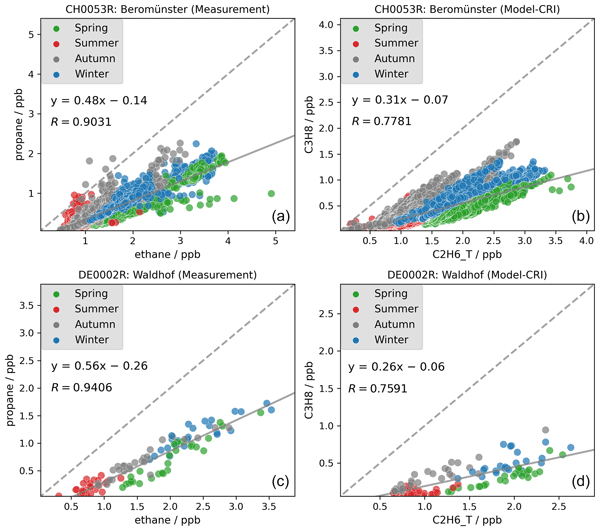
Yao Ge, Sverre Solberg, Mathew R. Heal, Stefan Reimann, Willem van Caspel, Bryan Hellack, Thérèse Salameh, and David Simpson
Atmos. Chem. Phys., 24, 7699–7729, https://doi.org/10.5194/acp-24-7699-2024, https://doi.org/10.5194/acp-24-7699-2024, 2024
Short summary
Short summary
Atmospheric volatile organic compounds (VOCs) constitute many species, acting as precursors to ozone and aerosol. Given the uncertainties in VOC emissions, lack of evaluation studies, and recent changes in emissions, this work adapts the EMEP MSC-W to evaluate emission inventories in Europe. We focus on the varying agreement between modelled and measured VOCs across different species and underscore potential inaccuracies in total and sector-specific emission estimates.
Natalie M. Mahowald, Longlei Li, Julius Vira, Marje Prank, Douglas S. Hamilton, Hitoshi Matsui, Ron L. Miller, Louis Lu, Ezgi Akyuz, Daphne Meidan, Peter Hess, Heikki Lihavainen, Christine Wiedinmyer, Jenny Hand, Maria Grazia Alaimo, Célia Alves, Andres Alastuey, Paulo Artaxo, Africa Barreto, Francisco Barraza, Silvia Becagli, Giulia Calzolai, Shankarararman Chellam, Ying Chen, Patrick Chuang, David D. Cohen, Cristina Colombi, Evangelia Diapouli, Gaetano Dongarra, Konstantinos Eleftheriadis, Corinne Galy-Lacaux, Cassandra Gaston, Dario Gomez, Yenny González Ramos, Hannele Hakola, Roy M. Harrison, Chris Heyes, Barak Herut, Philip Hopke, Christoph Hüglin, Maria Kanakidou, Zsofia Kertesz, Zbiginiw Klimont, Katriina Kyllönen, Fabrice Lambert, Xiaohong Liu, Remi Losno, Franco Lucarelli, Willy Maenhaut, Beatrice Marticorena, Randall V. Martin, Nikolaos Mihalopoulos, Yasser Morera-Gomez, Adina Paytan, Joseph Prospero, Sergio Rodríguez, Patricia Smichowski, Daniela Varrica, Brenna Walsh, Crystal Weagle, and Xi Zhao
Earth Syst. Sci. Data Discuss., https://doi.org/10.5194/essd-2024-1, https://doi.org/10.5194/essd-2024-1, 2024
Preprint withdrawn
Short summary
Short summary
Aerosol particles can interact with incoming solar radiation and outgoing long wave radiation, change cloud properties, affect photochemistry, impact surface air quality, and when deposited impact surface albedo of snow and ice, and modulate carbon dioxide uptake by the land and ocean. Here we present a new compilation of aerosol observations including composition, a methodology for comparing the datasets to model output, and show the implications of these results using one model.
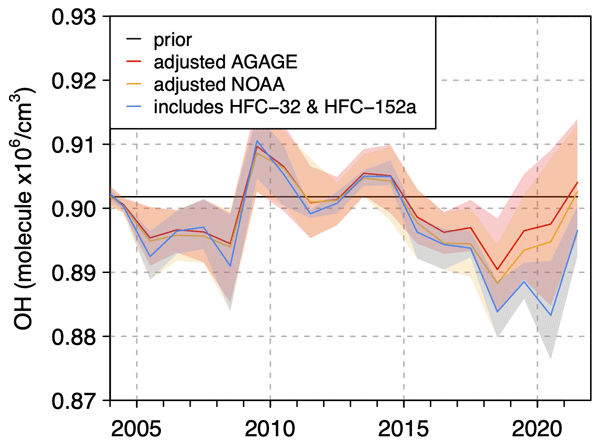
Rona L. Thompson, Stephen A. Montzka, Martin K. Vollmer, Jgor Arduini, Molly Crotwell, Paul B. Krummel, Chris Lunder, Jens Mühle, Simon O'Doherty, Ronald G. Prinn, Stefan Reimann, Isaac Vimont, Hsiang Wang, Ray F. Weiss, and Dickon Young
Atmos. Chem. Phys., 24, 1415–1427, https://doi.org/10.5194/acp-24-1415-2024, https://doi.org/10.5194/acp-24-1415-2024, 2024
Short summary
Short summary
The hydroxyl radical determines the atmospheric lifetimes of numerous species including methane. Since OH is very short-lived, it is not possible to directly measure its concentration on scales relevant for understanding its effect on other species. Here, OH is inferred by looking at changes in hydrofluorocarbons (HFCs). We find that OH levels have been fairly stable over our study period (2004 to 2021), suggesting that OH is not the main driver of the recent increase in atmospheric methane.
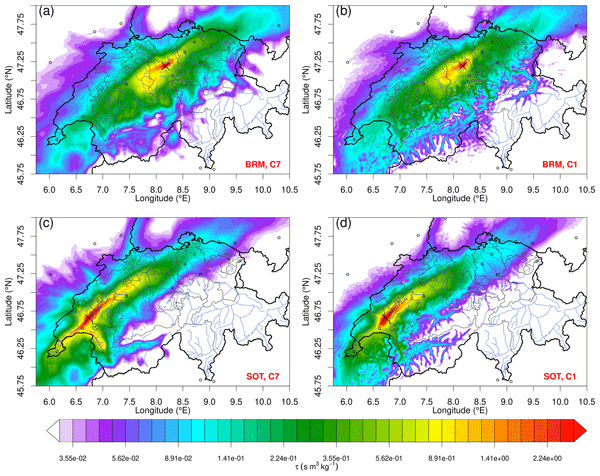
Ioannis Katharopoulos, Dominique Rust, Martin K. Vollmer, Dominik Brunner, Stefan Reimann, Simon J. O'Doherty, Dickon Young, Kieran M. Stanley, Tanja Schuck, Jgor Arduini, Lukas Emmenegger, and Stephan Henne
Atmos. Chem. Phys., 23, 14159–14186, https://doi.org/10.5194/acp-23-14159-2023, https://doi.org/10.5194/acp-23-14159-2023, 2023
Short summary
Short summary
The effectiveness of climate change mitigation needs to be scrutinized by monitoring greenhouse gas (GHG) emissions. Countries report their emissions to the UN in a bottom-up manner. By combining atmospheric observations and transport models someone can independently validate emission estimates in a top-down fashion. We report Swiss emissions of synthetic GHGs based on kilometer-scale transport and inverse modeling, highlighting the role of appropriate resolution in complex terrain.
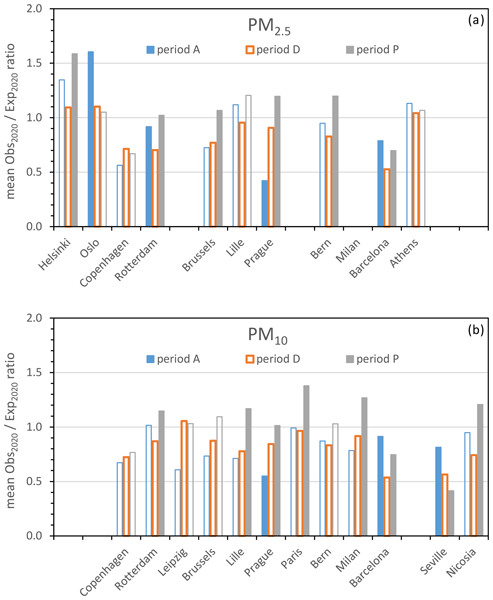
Jean-Philippe Putaud, Enrico Pisoni, Alexander Mangold, Christoph Hueglin, Jean Sciare, Michael Pikridas, Chrysanthos Savvides, Jakub Ondracek, Saliou Mbengue, Alfred Wiedensohler, Kay Weinhold, Maik Merkel, Laurent Poulain, Dominik van Pinxteren, Hartmut Herrmann, Andreas Massling, Claus Nordstroem, Andrés Alastuey, Cristina Reche, Noemí Pérez, Sonia Castillo, Mar Sorribas, Jose Antonio Adame, Tuukka Petaja, Katrianne Lehtipalo, Jarkko Niemi, Véronique Riffault, Joel F. de Brito, Augustin Colette, Olivier Favez, Jean-Eudes Petit, Valérie Gros, Maria I. Gini, Stergios Vratolis, Konstantinos Eleftheriadis, Evangelia Diapouli, Hugo Denier van der Gon, Karl Espen Yttri, and Wenche Aas
Atmos. Chem. Phys., 23, 10145–10161, https://doi.org/10.5194/acp-23-10145-2023, https://doi.org/10.5194/acp-23-10145-2023, 2023
Short summary
Short summary
Many European people are still exposed to levels of air pollution that can affect their health. COVID-19 lockdowns in 2020 were used to assess the impact of the reduction in human mobility on air pollution across Europe by comparing measurement data with values that would be expected if no lockdown had occurred. We show that lockdown measures did not lead to consistent decreases in the concentrations of fine particulate matter suspended in the air, and we investigate why.
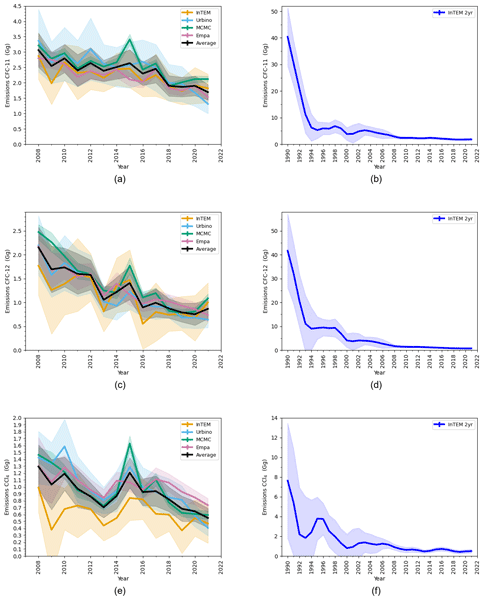
Alison L. Redington, Alistair J. Manning, Stephan Henne, Francesco Graziosi, Luke M. Western, Jgor Arduini, Anita L. Ganesan, Christina M. Harth, Michela Maione, Jens Mühle, Simon O'Doherty, Joseph Pitt, Stefan Reimann, Matthew Rigby, Peter K. Salameh, Peter G. Simmonds, T. Gerard Spain, Kieran Stanley, Martin K. Vollmer, Ray F. Weiss, and Dickon Young
Atmos. Chem. Phys., 23, 7383–7398, https://doi.org/10.5194/acp-23-7383-2023, https://doi.org/10.5194/acp-23-7383-2023, 2023
Short summary
Short summary
Chlorofluorocarbons (CFCs) were used in Europe pre-1990, damaging the stratospheric ozone layer. Legislation has controlled production and use, and global emissions have decreased sharply. The global rate of decline in CFC-11 recently slowed and was partly attributed to illegal emission in eastern China. This study concludes that emissions of CFC-11 in western Europe have not contributed to the unexplained part of the global increase in CFC-11 observed in the last decade.
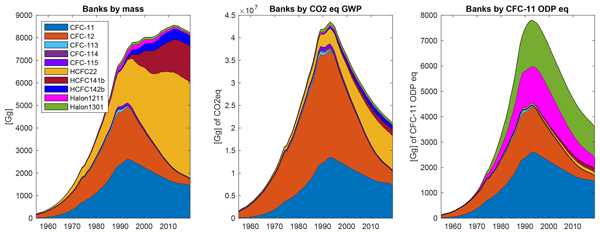
Megan Jeramaz Lickley, John S. Daniel, Eric L. Fleming, Stefan Reimann, and Susan Solomon
Atmos. Chem. Phys., 22, 11125–11136, https://doi.org/10.5194/acp-22-11125-2022, https://doi.org/10.5194/acp-22-11125-2022, 2022
Short summary
Short summary
Halocarbons contained in equipment continue to be emitted after production has ceased. These
banksmust be carefully accounted for in evaluating compliance with the Montreal Protocol. We extend a Bayesian model to the suite of regulated chemicals subject to banking. We find that banks are substantially larger than previous estimates, and we identify banks by chemical and equipment type whose future emissions will contribute to global warming and delay ozone-hole recovery if left unrecovered.
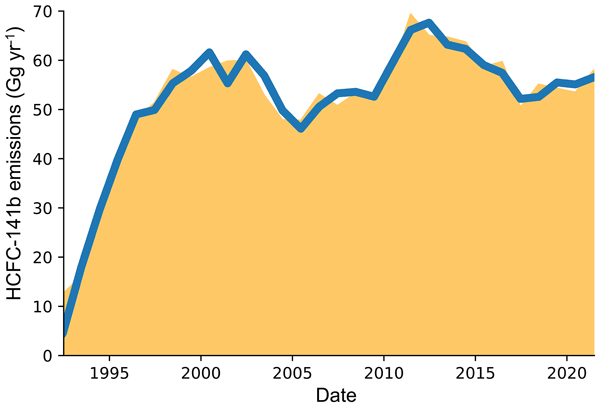
Luke M. Western, Alison L. Redington, Alistair J. Manning, Cathy M. Trudinger, Lei Hu, Stephan Henne, Xuekun Fang, Lambert J. M. Kuijpers, Christina Theodoridi, David S. Godwin, Jgor Arduini, Bronwyn Dunse, Andreas Engel, Paul J. Fraser, Christina M. Harth, Paul B. Krummel, Michela Maione, Jens Mühle, Simon O'Doherty, Hyeri Park, Sunyoung Park, Stefan Reimann, Peter K. Salameh, Daniel Say, Roland Schmidt, Tanja Schuck, Carolina Siso, Kieran M. Stanley, Isaac Vimont, Martin K. Vollmer, Dickon Young, Ronald G. Prinn, Ray F. Weiss, Stephen A. Montzka, and Matthew Rigby
Atmos. Chem. Phys., 22, 9601–9616, https://doi.org/10.5194/acp-22-9601-2022, https://doi.org/10.5194/acp-22-9601-2022, 2022
Short summary
Short summary
The production of ozone-destroying gases is being phased out. Even though production of one of the main ozone-depleting gases, called HCFC-141b, has been declining for many years, the amount that is being released to the atmosphere has been increasing since 2017. We do not know for sure why this is. A possible explanation is that HCFC-141b that was used to make insulating foams many years ago is only now escaping to the atmosphere, or a large part of its production is not being reported.
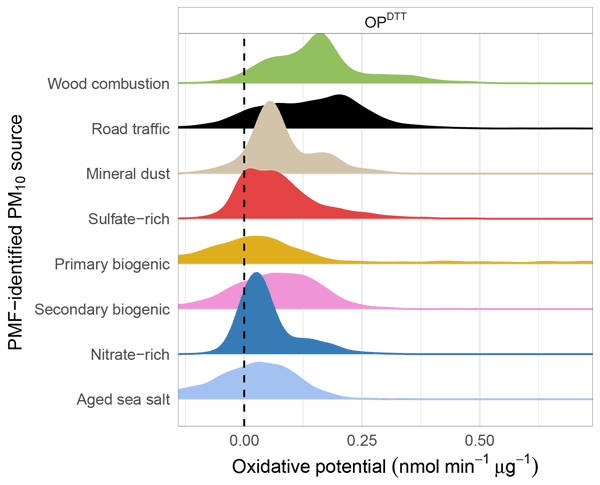
Stuart K. Grange, Gaëlle Uzu, Samuël Weber, Jean-Luc Jaffrezo, and Christoph Hueglin
Atmos. Chem. Phys., 22, 7029–7050, https://doi.org/10.5194/acp-22-7029-2022, https://doi.org/10.5194/acp-22-7029-2022, 2022
Short summary
Short summary
Oxidative potential (OP), a biologically relevant metric for particulate matter (PM), was linked to PM10 and PM2.5 sources and constituents across Switzerland between 2018 and 2019. Wood burning and non-exhaust traffic emissions were identified as key processes that led to enhanced OP. Therefore, the make-up of the PM mix was very important for OP. The results highlight the importance of the management of wood burning and non-exhaust emissions to reduce OP, and presumably biological harm.
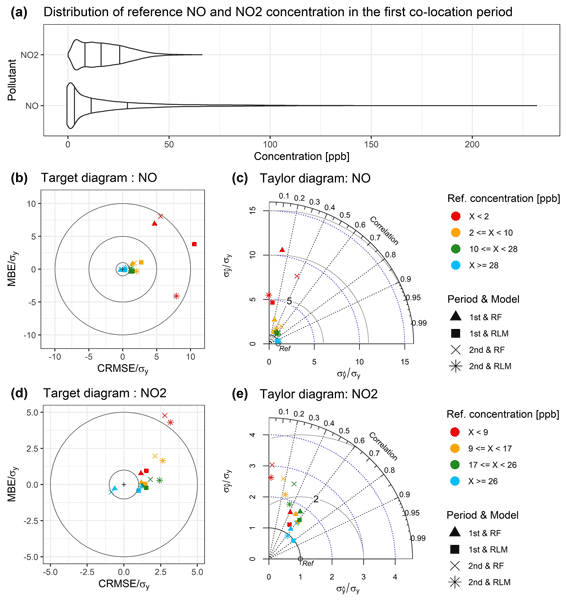
Horim Kim, Michael Müller, Stephan Henne, and Christoph Hüglin
Atmos. Meas. Tech., 15, 2979–2992, https://doi.org/10.5194/amt-15-2979-2022, https://doi.org/10.5194/amt-15-2979-2022, 2022
Short summary
Short summary
In this study, the performance of electrochemical sensors for NO and NO2 for measuring air quality was determined over a longer operating period. The performance of NO sensors remained reliable for more than 18 months. However, the NO2 sensors showed decreasing performance over time. During deployment, we found that the NO2 sensors can distinguish general pollution levels, but they proved unsuitable for accurate measurements due to significant biases.
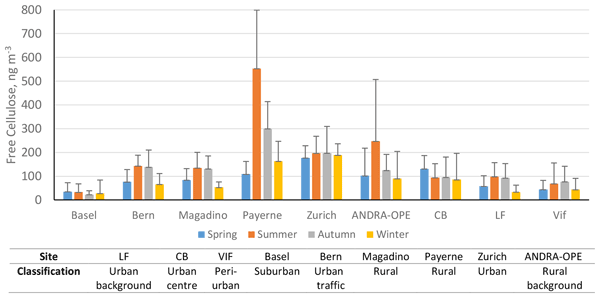
Adam Brighty, Véronique Jacob, Gaëlle Uzu, Lucille Borlaza, Sébastien Conil, Christoph Hueglin, Stuart K. Grange, Olivier Favez, Cécile Trébuchon, and Jean-Luc Jaffrezo
Atmos. Chem. Phys., 22, 6021–6043, https://doi.org/10.5194/acp-22-6021-2022, https://doi.org/10.5194/acp-22-6021-2022, 2022
Short summary
Short summary
With an revised analytical method and long-term sampling strategy, we have been able to elucidate much more information about atmospheric plant debris, a poorly understood class of particulate matter. We found weaker seasonal patterns at urban locations compared to rural locations and significant interannual variability in concentrations between previous years and 2020, during the COVID-19 pandemic. This suggests a possible man-made influence on plant debris concentration and source strength.
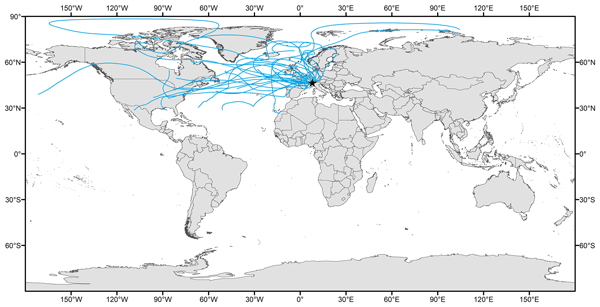
Franz Conen, Annika Einbock, Claudia Mignani, and Christoph Hüglin
Atmos. Chem. Phys., 22, 3433–3444, https://doi.org/10.5194/acp-22-3433-2022, https://doi.org/10.5194/acp-22-3433-2022, 2022
Short summary
Short summary
Above western Europe, ice typically starts to form in clouds a few kilometres above the ground if suitable aerosol particles are present. In air masses typical for that altitude, we found that such particles most likely originate from bacteria and fungi living on plants. Occasional Saharan dust intrusions seem to contribute little to the number concentration of particles able to freeze cloud droplets between 0°C and −15°C.
Dominique Rust, Ioannis Katharopoulos, Martin K. Vollmer, Stephan Henne, Simon O'Doherty, Daniel Say, Lukas Emmenegger, Renato Zenobi, and Stefan Reimann
Atmos. Chem. Phys., 22, 2447–2466, https://doi.org/10.5194/acp-22-2447-2022, https://doi.org/10.5194/acp-22-2447-2022, 2022
Short summary
Short summary
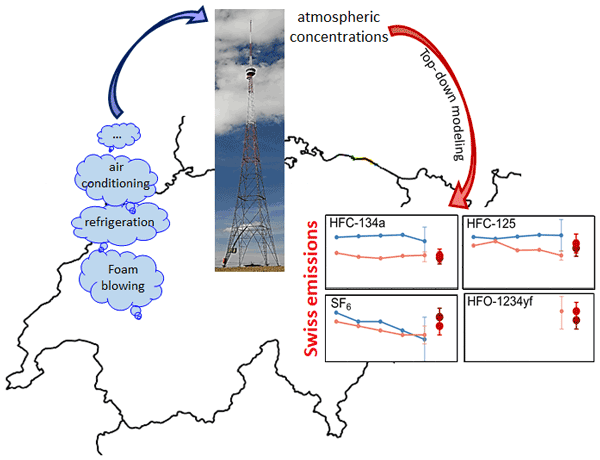
Artificial halocarbons contribute to ozone layer depletion and to global warming. We measured the atmospheric concentrations of halocarbons at the Beromünster tower, modelled the Swiss emissions, and compared the results to the internationally reported Swiss emissions inventory. For most of the halocarbons, we found good agreement, whereas one refrigerant might be overestimated in the inventory. In addition, we present first emission estimates of the newest types of halocarbons.
Cited articles
Ait-Helal, W., Beeldens, A., Boonen, E., Borbon, A., Boréave, A., Cazaunau, M., Chen, H., Daële, V., Dupart, Y., Gaimoz, C., Gallus, M., George, C., Grand, N., Grosselin, B., Herrmann, H., Ifang, S., Kurtenbach, R., Maille, M., Marjanovic, I., Mellouki, A., Miet, K., Mothes, F., Poulain, L., Rabe, R., Zapf, P., Kleffmann, J., and Doussin, J.-F.: On-road measurements of NMVOCs and NOx : Determination of light-duty vehicles emission factors from tunnel studies in Brussels city center, Atmospheric Environment, 122, 799–807, https://doi.org/10.1016/j.atmosenv.2015.09.066, 2015. a
Althouse, R., Huff, J., Tomatis, L., and Wilbourn, J.: An evaluation of chemicals and industrial processes associated with cancer in humans based on human and animal data: IARC Monographs Volumes 1 to 20, Cancer Research, 40, 1–12, 1980. a
Atkinson, R.: Atmospheric chemistry of VOCs and NOx, Atmospheric Environment, 34, 2063–2101, https://doi.org/10.1016/s1352-2310(99)00460-4, 2000. a
Ballesta, P. P., Field, R. A., Connolly, R., Cao, N., Baeza Caracena, A., and De Saeger, E.: Population exposure to benzene: One day cross-sections in six European cities, Atmospheric Environment, 40, 3355–3366, https://doi.org/10.1016/j.atmosenv.2006.01.053, 2006. a
Baudic, A., Gros, V., Sauvage, S., Locoge, N., Sanchez, O., Sarda-Estève, R., Kalogridis, C., Petit, J.-E., Bonnaire, N., Baisnée, D., Favez, O., Albinet, A., Sciare, J., and Bonsang, B.: Seasonal variability and source apportionment of volatile organic compounds (VOCs) in the Paris megacity (France), Atmospheric Chemistry and Physics, 16, 11961–11989, https://doi.org/10.5194/acp-16-11961-2016, 2016. a
Bayerisches Landesamt für Umwelt: Messwertarchiv Luft – Immissionsmessungen, licensed under Creative Commons Attribution 4.0 International (CC BY 4.0), https://www.lfu.bayern.de/luft/immissionsmessungen/messwertarchiv/index.htm (last access: 24 November 2025), 2025. a
Borbon, A., Locoge, N., Veillerot, M., J, G., and Guillermo, R.: Characterisation of NMHCs in a French urban atmosphere: Overview of the main sources, The Science of The Total Environment, 292, 177–191, https://doi.org/10.1016/s0048-9697(01)01106-8, 2002. a
Borbon, A., Salameh, T., Sauvage, S., and Afif, C.: Light oxygenated volatile organic compound concentrations in an Eastern Mediterranean urban atmosphere rivalling those in megacities, Environmental Pollution, 350, 123797, https://doi.org/10.1016/j.envpol.2024.123797, 2024. a, b
Calvert, J. G., Atkinson, R., Becker, K. H., Kamens, R. M., Seinfeld, J. H., Wallington, T. H., and Yarwood, G.: The mechanisms of atmospheric oxidation of the aromatic hydrocarbons, Oxford University Press, https://doi.org/10.1093/oso/9780195146288.001.0001, 2002. a
Carter, W. P.: Updated maximum incremental reactivity scale and hydrocarbon bin reactivities for regulatory applications, California Air Resources Board Contract, 339, https://ww2.arb.ca.gov/sites/default/files/barcu/regact/2009/mir2009/mir10.pdf (last access: 16 January 2026), 2009. a
Carter, W. P. L.: A Detailed Mechanism for the Gas-Phase Atmospheric Reactions of Organic Compounds, Atmospheric Environment, 24A, 481–518, 1990. a
Caselli, M., de Gennaro, G., Marzocca, A., Trizio, L., and Tutino, M.: Assessment of the impact of the vehicular traffic on BTEX concentration in ring roads in urban areas of Bari (Italy), Chemosphere, 81, 306–311, https://doi.org/10.1016/j.chemosphere.2010.07.033, 2010. a
Defra: UK Air Quality Archive, © Crown 2025 copyright Defra, Licensed under the Open Government Licence (OGL), https://uk-air.defra.gov.uk/ (last access: December 2025), 2025. a
Demirel, G., Özden, O., Dóğeroğlu, T., and Gaga, E.: Personal exposure of primary school children to BTEX, NO2 and ozone in Eskişehir, Turkey: Relationship with indoor/outdoor concentrations and risk assessment, Science of The Total Environment, 473–474, 537–548, https://doi.org/10.1016/j.scitotenv.2013.12.034, 2014. a
Derwent, R., Davies, T., Delaney, M., Dollard, G., Field, R., Dumitrean, P., Nason, P., Jones, B., and Pepler, S.: Analysis and interpretation of the continuous hourly monitoring data for 26 C2–C8 hydrocarbons at 12 United Kingdom sites during 1996, Atmospheric Environment, 34, 297–312, https://doi.org/10.1016/s1352-2310(99)00203-4, 2000. a, b
Edwards, P. M., Brown, S. S., Roberts, J. M., Ahmadov, R., Banta, R. M., deGouw, J. A., Dubé, W. P., Field, R. A., Flynn, J. H., Gilman, J. B., Graus, M., Helmig, D., Koss, A., Langford, A. O., Lefer, B. L., Lerner, B. M., Li, R., Li, S.-M., McKeen, S. A., Murphy, S. M., Parrish, D. D., Senff, C. J., Soltis, J., Stutz, J., Sweeney, C., Thompson, C. R., Trainer, M. K., Tsai, C., Veres, P. R., Washenfelder, R. A., Warneke, C., Wild, R. J., Young, C. J., Yuan, B., and Zamora, R.: High winter ozone pollution from carbonyl photolysis in an oil and gas basin, Nature, 514, 351–354, https://doi.org/10.1038/nature13767, 2014. a
Gaeggeler, K., Prevot, A. S., Dommen, J., Legreid, G., Reimann, S., and Baltensperger, U.: Residential wood burning in an Alpine valley as a source for oxygenated volatile organic compounds, hydrocarbons and organic acids, Atmospheric Environment, 42, 8278–8287, https://doi.org/10.1016/j.atmosenv.2008.07.038, 2008. a
Gu, S., Guenther, A., and Faiola, C.: Effects of Anthropogenic and Biogenic Volatile Organic Compounds on Los Angeles Air Quality, Environmental Science & Technology, 55, 12191–12201, https://doi.org/10.1021/acs.est.1c01481, 2021. a
Heeb, N. V., Forss, A.-M., Bach, C., Reimann, S., Herzog, A., and Jäckle, H. W.: A comparison of benzene, toluene and C2-benzenes mixing ratios in automotive exhaust and in the suburban atmosphere during the introduction of catalytic converter technology to the Swiss Car Fleet, Atmospheric Environment, 34, 3103–3116, https://doi.org/10.1016/s1352-2310(99)00446-x, 2000. a
Karl, T., Striednig, M., Graus, M., Hammerle, A., and Wohlfahrt, G.: Urban flux measurements reveal a large pool of oxygenated volatile organic compound emissions, Proceedings of the National Academy of Sciences, 115, 1186–1191, https://doi.org/10.1073/pnas.1714715115, 2018. a
Kavouras, I. G. and Zielinska, B.: The Effects of Fuel Evaporation and Biomass Burning on Toluene Concentrations in an Urban Area, Water, Air, & Soil Pollution, 223, 5931–5940, https://doi.org/10.1007/s11270-012-1329-8, 2012. a
Keymeulen, R.: Benzene, toluene, ethyl benzene and xylenes in ambient air and Pinus sylvestris L. needles: a comparative study between Belgium, Hungary and Latvia, Atmospheric Environment, 35, 6327–6335, https://doi.org/10.1016/s1352-2310(01)00424-1, 2001. a
Lanz, V. A., Hueglin, C., Buchmann, B., Hill, M., Locher, R., Staehelin, J., and Reimann, S.: Receptor modeling of C2–C7 hydrocarbon sources at an urban background site in Zurich, Switzerland: changes between 1993–1994 and 2005–2006, Atmospheric Chemistry and Physics, 8, 2313–2332, https://doi.org/10.5194/acp-8-2313-2008, 2008. a, b, c, d
Le Bras, Z. and Reimann, S.: Measurement report: 30 years of monitoring aromatic hydrocarbons (BTEX) at a suburban site in Europe, Zenodo [data set], https://doi.org/10.5281/zenodo.17062801, 2025. a
Legreid, G., Lööv, J. B., Staehelin, J., Hueglin, C., Hill, M., Buchmann, B., Prevot, A. S., and Reimann, S.: Oxygenated volatile organic compounds (OVOCs) at an urban background site in Zürich (Europe): Seasonal variation and source allocation, Atmospheric Environment, 41, 8409–8423, https://doi.org/10.1016/j.atmosenv.2007.07.026, 2007. a, b
Li, Z., Zhao, B., Yin, D., Wang, S., Qiao, X., Jiang, J., Li, Y., Shen, J., He, Y., Chang, X., Li, X., Liu, Y., Li, Y., Liu, C., Qi, X., Chen, L., Chi, X., Jiang, Y., Li, Y., Wu, J., Nie, W., and Ding, A.: Modeling the Formation of Organic Compounds across Full Volatility Ranges and Their Contribution to Nanoparticle Growth in a Polluted Atmosphere, Environmental Science & Technology, 58, 1223–1235, https://doi.org/10.1021/acs.est.3c06708, 2023. a
Lippmann, M.: Health effects of tropospheric ozone, Environmental Science & Technology, 25, 1954–1962, 1991. a
Liu, X., Zhang, X., Dufresne, M., Wang, T., Wu, L., Lara, R., Seco, R., Monge, M., Yáñez-Serrano, A. M., Gohy, M., Petit, P., Chevalier, A., Vagnot, M.-P., Fortier, Y., Baudic, A., Ghersi, V., Gille, G., Lanzi, L., Gros, V., Simon, L., Héllen, H., Reimann, S., Le Bras, Z., Müller, M. J., Beddows, D., Hou, S., Shi, Z., Harrison, R. M., Bloss, W., Dernie, J., Sauvage, S., Hopke, P. K., Duan, X., An, T., Lewis, A. C., Hopkins, J. R., Liakakou, E., Mihalopoulos, N., Zhang, X., Alastuey, A., Querol, X., and Salameh, T.: Measurement report: Exploring the variations in ambient BTEX in urban Europe and their environmental health implications, Atmospheric Chemistry and Physics, 25, 625–638, https://doi.org/10.5194/acp-25-625-2025, 2025. a, b
Ma, X., Liu, G., and Chen, J.: PTR-QMS observation of OVOCs in an urban suburb of Guangzhou: Seasonal characterization, source apportionment and regional transport, Atmospheric Environment, 362, 121589, https://doi.org/10.1016/j.atmosenv.2025.121589, 2025. a
Molteni, U., Bianchi, F., Klein, F., El Haddad, I., Frege, C., Rossi, M. J., Dommen, J., and Baltensperger, U.: Formation of highly oxygenated organic molecules from aromatic compounds, Atmospheric Chemistry and Physics, 18, 1909–1921, https://doi.org/10.5194/acp-18-1909-2018, 2018. a
Monod, A., Sive, B. C., Avino, P., Chen, T., Blake, D. R., and Sherwood Rowland, F.: Monoaromatic compounds in ambient air of various cities: a focus on correlations between the xylenes and ethylbenzene, Atmospheric Environment, 35, 135–149, https://doi.org/10.1016/s1352-2310(00)00274-0, 2001. a, b
Qi, L., Chen, M., Stefenelli, G., Pospisilova, V., Tong, Y., Bertrand, A., Hueglin, C., Ge, X., Baltensperger, U., Prévôt, A. S. H., and Slowik, J. G.: Organic aerosol source apportionment in Zurich using an extractive electrospray ionization time-of-flight mass spectrometer (EESI-TOF-MS) – Part 2: Biomass burning influences in winter, Atmospheric Chemistry and Physics, 19, 8037–8062, https://doi.org/10.5194/acp-19-8037-2019, 2019. a
Schnatter, R.: Petroleum worker studies and benzene risk assessment, Journal of Toxicology and Environmental Health, Part A, 61, 433–437, https://doi.org/10.1080/00984100050166451, 2000. a
Sternberg, J. C., Gallaway, W. S., and Jones, D. T. L.: Chapter XVIII: The Mechanism of Response of Flame Ionization Detectors, in: Gas Chromatography: Third International Symposium Held Under the Auspices of the Analysis Instrumentation Division of the Instrument Society of America, edited by: Brenner, N., Callen, J. E., and Weiss, M. D., 231–267, Academic Press, New York and London, ISBN 9780121316501, 1962. a
Swiss Confederation: Luftreinhalte-Verordnung (Ordinance on Air Pollution Control (OAPC; SR 814.318.142.1), https://www.fedlex.admin.ch/eli/cc/1986/208_208_208/en (last access: October 2023), 1986. a
Swiss Confederation: Ordinance on the Reduction of Risks Associated with Particularly Dangerous Substances; SR 814.81, https://www.fedlex.admin.ch/eli/cc/2005/478/en (last access: October 2023), 2005. a
Short summary
Since 1994, harmful air pollutants called BTEX (benzene, toluene, ethylbenzene and xylene) have declined by up to 89 % in the suburban area of Zurich thanks to the introduction of various air quality directives in Switzerland and in Europe. Although their contribution to ozone formation became less abundant, they still significantly contribute to the formation of airborne particles. While this study shows clear improvements in air quality, it also highlights the need for further efforts.
Since 1994, harmful air pollutants called BTEX (benzene, toluene, ethylbenzene and xylene) have...


Altmetrics
Final-revised paper
Preprint