
Articles | Volume 26, issue 12
https://doi.org/10.5194/acp-26-8407-2026
© Author(s) 2026. This work is distributed under
the Creative Commons Attribution 4.0 License.
the Creative Commons Attribution 4.0 License.
https://doi.org/10.5194/acp-26-8407-2026
© Author(s) 2026. This work is distributed under
the Creative Commons Attribution 4.0 License.
the Creative Commons Attribution 4.0 License.
Research article
| 
17 Jun 2026
Research article |
| 17 Jun 2026
| 17 Jun 2026
Impact of northward tropical cyclones on ozone in Southeastern China
Shanshan Ouyang
College of Environment and Climate, Institute for Environmental and Climate Research, Jinan University, Guangzhou, 511443, China
Guangdong Provincial Key Laboratory of Regional Numerical Weather Prediction, Guangzhou Institute of Tropical and Marine Meteorology of China Meteorological Administration, GBA Academy of Meteorological Research, Guangzhou, 510640, China
Tao Deng
CORRESPONDING AUTHOR

Guangdong Provincial Key Laboratory of Regional Numerical Weather Prediction, Guangzhou Institute of Tropical and Marine Meteorology of China Meteorological Administration, GBA Academy of Meteorological Research, Guangzhou, 510640, China
Jingyang Chen
Guangdong Ecological Meteorological Centre, Guangzhou 510640, China
College of Environment and Climate, Institute for Environmental and Climate Research, Jinan University, Guangzhou, 511443, China
Guangdong-Hongkong-Macau Joint Laboratory of Collaborative Innovation for Environmental Quality, Jinan University, Guangzhou, 511443, China
Xiaoyang Chen
Guangdong Provincial Key Laboratory of Regional Numerical Weather Prediction, Guangzhou Institute of Tropical and Marine Meteorology of China Meteorological Administration, GBA Academy of Meteorological Research, Guangzhou, 510640, China
Jinnan Yuan
Guangdong Provincial Key Laboratory of Regional Numerical Weather Prediction, Guangzhou Institute of Tropical and Marine Meteorology of China Meteorological Administration, GBA Academy of Meteorological Research, Guangzhou, 510640, China
Yanyan Huang
Guangdong Provincial Key Laboratory of Regional Numerical Weather Prediction, Guangzhou Institute of Tropical and Marine Meteorology of China Meteorological Administration, GBA Academy of Meteorological Research, Guangzhou, 510640, China
Shaw Chen Liu
CORRESPONDING AUTHOR
College of Environment and Climate, Institute for Environmental and Climate Research, Jinan University, Guangzhou, 511443, China
Guangdong Provincial Key Laboratory of Regional Numerical Weather Prediction, Guangzhou Institute of Tropical and Marine Meteorology of China Meteorological Administration, GBA Academy of Meteorological Research, Guangzhou, 510640, China
Related authors
No articles found.
Hengjia Ou, Mingfu Cai, Haichao Wang, Xue Ni, Shixin Mai, Qibin Sun, Baoling Liang, Kunpeng Chen, Tao Deng, Sun Jiaren, Shengzhen Zhou, and Jun Zhao
EGUsphere, https://doi.org/10.5194/egusphere-2026-4265, https://doi.org/10.5194/egusphere-2026-4265, 2026
Short summary
Short summary
This study investigates how tropical cyclones transport anthropogenic pollutants into the marine atmosphere, substantially increasing organic aerosol and enhancing secondary aerosol formation. These changes reduced bulk aerosol hygroscopicity despite enhanced organic aerosol hygroscopicity, weakening cloud condensation nuclei activity. However, higher aerosol number concentrations produced more and smaller cloud droplets, enhancing cloud reflectivity and suppressing warm-rain formation.
Zhenying Ye, Run Liu, Tingting Hu, Guoxin Chen, and Min Wu
EGUsphere, https://doi.org/10.5194/egusphere-2026-2846, https://doi.org/10.5194/egusphere-2026-2846, 2026
Short summary
Short summary
Surface ozone pollution in China keeps rising despite cleaner primary emissions. We used national observations from 2015 to 2024 and machine learning to separate weather effects from longer-term changes. Ozone increased in both warm and cold seasons, and recent unfavorable weather further worsened pollution, suggesting that future control plans should consider seasonal and regional differences.
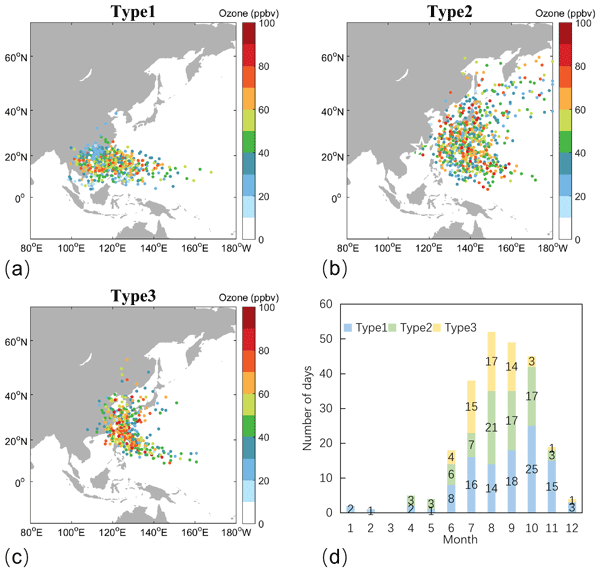
Xi Chen, Xiaoyang Chen, Long Wang, Shucheng Chang, Minhui Li, Chong Shen, Chenghao Liao, Yongbo Zhang, Mei Li, and Xuemei Wang
Atmos. Chem. Phys., 26, 879–897, https://doi.org/10.5194/acp-26-879-2026, https://doi.org/10.5194/acp-26-879-2026, 2026
Short summary
Short summary
Typhoons moving north near China create ozone pollution in Guangdong by combining strong sunlight with stagnant air. These tyhoons also push ozone-rich air from high altitudes down to ground level. When multiple north-moving typhoons occur back-to-back, they cause widespread and long-lasting ozone pollution. Vertical air currents during these events can contribute up to 16 % of boundary layer ozone.
Yike Wang, Yueming Cheng, Boru Mai, Tie Dai, Xuejiao Deng, Tao Deng, Xiaoli Zhao, Yiwei Diao, Feng Xia, Miao Liang, Ying Li, and Yixiao Zhu
EGUsphere, https://doi.org/10.5194/egusphere-2025-6272, https://doi.org/10.5194/egusphere-2025-6272, 2025
Preprint archived
Short summary
Short summary
We developed a carbon assimilation system to construct a near-real-time 4-km anthropogenic inventory in the Pearl River Delta. We analyze spatiotemporal emission distributions, compare the inversion inventories against statistical emissions, and elucidate their relationship with ambient CO2 concentrations. The results of this study provide a robust scientific basis for advancing the dynamic updating and quantitative evaluation of anthropogenic emissions across meso- to microscale domains.
Yinbao Jin, Heng Huang, Jian Liu, Yiming Liu, Xiaoyang Chen, Yongqiang Chen, Licheng Li, and Qi Fan
Earth Syst. Sci. Data Discuss., https://doi.org/10.5194/essd-2025-515, https://doi.org/10.5194/essd-2025-515, 2025
Revised manuscript not accepted
Short summary
Short summary
Fires in Southeast and East Asia release large amounts of smoke that harm air quality, weather, and climate. Existing datasets often miss night-time burning and how smoke rises in the atmosphere. We created an open dataset for 2023 that records fire emissions every hour in three dimensions at high resolution. By combining satellite data and machine learning, it improves understanding of when and where smoke is released and supports better forecasts and policy decisions.
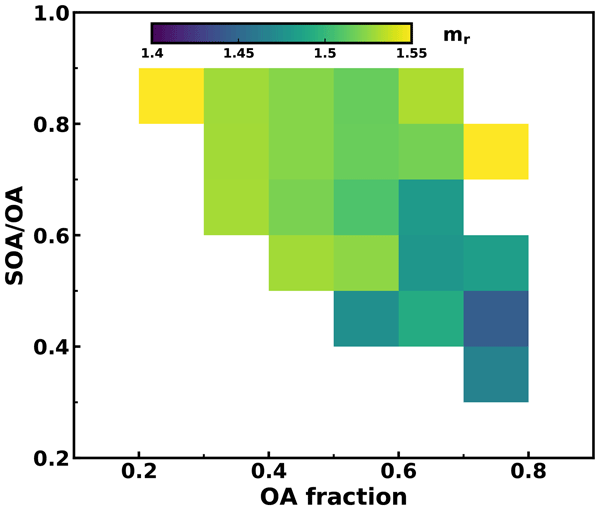
Junlin Shen, Ye Kuang, Li Liu, Fengling Yuan, Biao Luo, Hongqing Qiao, Miaomiao Zhai, Gang Zhao, Hanbing Xu, Fei Li, Yu Zou, Tao Deng, and Xuejiao Deng
Atmos. Chem. Phys., 25, 11233–11246, https://doi.org/10.5194/acp-25-11233-2025, https://doi.org/10.5194/acp-25-11233-2025, 2025
Short summary
Short summary
This study provides direct observational evidence that secondary organic aerosol formation enhances the aerosol scattering refractive index and has substantially higher real refractive indices than primary organic aerosols in humid southern China, challenging current model assumptions and offering recommended values that might improve the accuracy of aerosol radiative effect simulations.

Liangbin Wu, Cheng Wu, Tao Deng, Dui Wu, Mei Li, Yong Jie Li, and Zhen Zhou
Atmos. Meas. Tech., 17, 2917–2936, https://doi.org/10.5194/amt-17-2917-2024, https://doi.org/10.5194/amt-17-2917-2024, 2024
Short summary
Short summary
Field comparison of dual-spot (AE33) and single-spot (AE31) Aethalometers by full-year collocated measurements suggests that site-specific correction factors are needed to ensure the long-term data continuity for AE31-to-AE33 transition in black carbon monitoring networks; babs agrees well between AE33 and AE31, with slight variations by wavelength (slope: 0.87–1.04; R2: 0.95–0.97). A ~ 20 % difference in secondary brown carbon light absorption was found between AE33 and AE31.
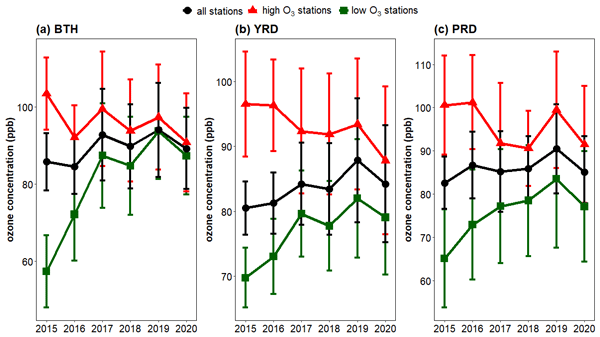
Tingting Hu, Yu Lin, Run Liu, Yuepeng Xu, Shanshan Ouyang, Boguang Wang, Yuanhang Zhang, and Shaw Chen Liu
Atmos. Chem. Phys., 24, 1607–1626, https://doi.org/10.5194/acp-24-1607-2024, https://doi.org/10.5194/acp-24-1607-2024, 2024
Short summary
Short summary
We hypothesize that the cause of the worsening O3 trends in the Beijing–Tianjin–Hebei region, the Yangtze River Delta, and Pearl River Delta from 2015 to 2020 is attributable to the increased occurrence of meteorological conditions of high solar radiation and a positive temperature anomaly under the influence of West Pacific subtropical high, tropical cyclones, and mid–high-latitude wave activities.
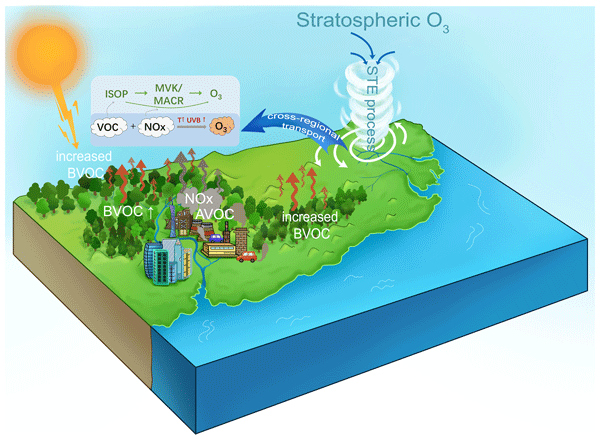
Nan Wang, Hongyue Wang, Xin Huang, Xi Chen, Yu Zou, Tao Deng, Tingyuan Li, Xiaopu Lyu, and Fumo Yang
Atmos. Chem. Phys., 24, 1559–1570, https://doi.org/10.5194/acp-24-1559-2024, https://doi.org/10.5194/acp-24-1559-2024, 2024
Short summary
Short summary
This study explores the influence of extreme-weather-induced natural processes on ozone pollution, which is often overlooked. By analyzing meteorological factors, natural emissions, chemistry pathways and atmospheric transport, we discovered that these natural processes could substantially exacerbate ozone pollution. The findings contribute to a deeper understanding of ozone pollution and offer valuable insights for controlling ozone pollution in the context of global warming.
Yinbao Jin, Yiming Liu, Xiao Lu, Xiaoyang Chen, Ao Shen, Haofan Wang, Yinping Cui, Yifei Xu, Siting Li, Jian Liu, Ming Zhang, Yingying Ma, and Qi Fan
Atmos. Chem. Phys., 24, 367–395, https://doi.org/10.5194/acp-24-367-2024, https://doi.org/10.5194/acp-24-367-2024, 2024
Short summary
Short summary
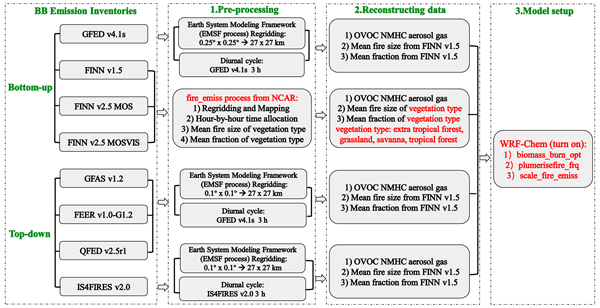
This study aims to address these issues by evaluating eight independent biomass burning (BB) emission inventories (GFED, FINN1.5, FINN2.5 MOS, FINN2.5 MOSVIS, GFAS, FEER, QFED, and IS4FIRES) using the WRF-Chem model and analyzing their impact on aerosol optical properties (AOPs) and direct radiative forcing (DRF) during wildfire events in peninsular Southeast Asia (PSEA) that occurred in March 2019.
Guowen He, Cheng He, Haofan Wang, Xiao Lu, Chenglei Pei, Xiaonuan Qiu, Chenxi Liu, Yiming Wang, Nanxi Liu, Jinpu Zhang, Lei Lei, Yiming Liu, Haichao Wang, Tao Deng, Qi Fan, and Shaojia Fan
Atmos. Chem. Phys., 23, 13107–13124, https://doi.org/10.5194/acp-23-13107-2023, https://doi.org/10.5194/acp-23-13107-2023, 2023
Short summary
Short summary
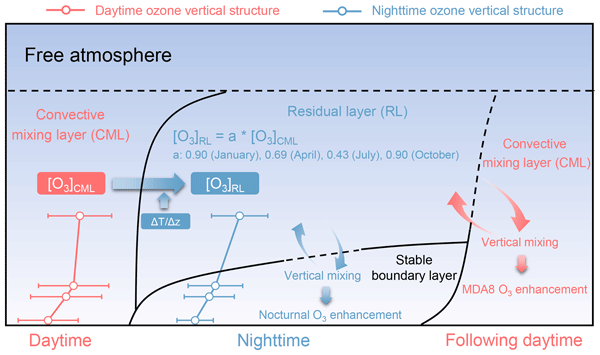
We analyze nighttime ozone in the lower boundary layer (up to 500 m) from the 2017–2019 measurements at the Canton Tower and the WRF-CMAQ model. We identify a strong ability of the residual layer to store daytime ozone in the convective mixing layer, investigate the chemical and meteorological factors controlling nighttime ozone in the residual layer, and quantify the contribution of nighttime ozone in the residual layer to both the nighttime and the following day’s surface ozone air quality.
Fei Li, Biao Luo, Miaomiao Zhai, Li Liu, Gang Zhao, Hanbing Xu, Tao Deng, Xuejiao Deng, Haobo Tan, Ye Kuang, and Jun Zhao
Atmos. Chem. Phys., 23, 6545–6558, https://doi.org/10.5194/acp-23-6545-2023, https://doi.org/10.5194/acp-23-6545-2023, 2023
Short summary
Short summary
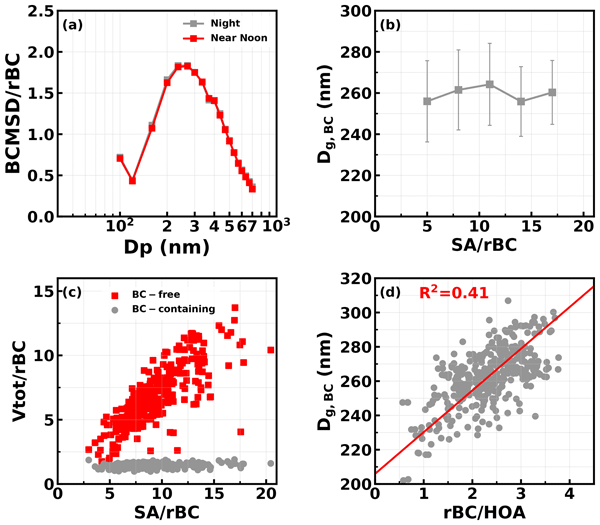
A field campaign was conducted to study black carbon (BC) mass size distributions and mixing states connected to traffic emissions using a system that combines a differential mobility analyzer and single-particle soot photometer. Results showed that the black carbon content of traffic emissions has a considerable influence on both BC mass size distributions and mixing states, which has crucial implications for accurately representing BC from various sources in regional and climate models.
Tingting Hu, Yu Lin, Run Liu, Yuepeng Xu, Boguang Wang, Yuanhang Zhang, and Shaw Chen Liu
Atmos. Chem. Phys. Discuss., https://doi.org/10.5194/acp-2022-781, https://doi.org/10.5194/acp-2022-781, 2023
Revised manuscript not accepted
Short summary
Short summary
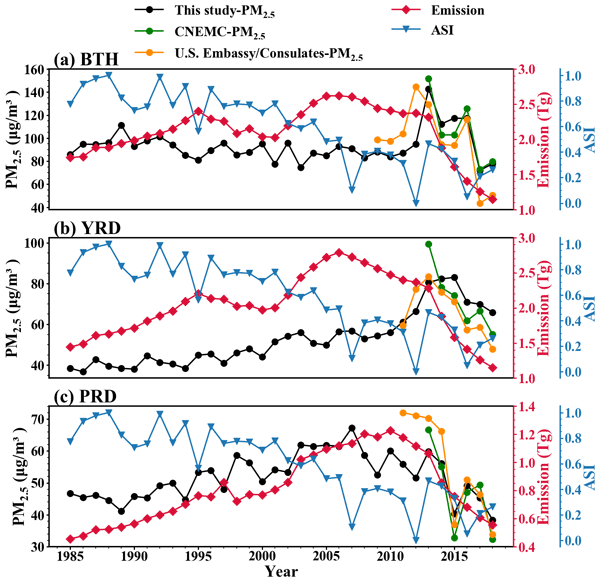
We hypothesize that the cause of the worsening O3 trends in the Beijing-Tianjin-Hebei region, the Yangtze River Delta, and the Pearl River Delta from 2015 to 2020 is attributable to the increased occurrence of meteorological conditions of high solar radiation and positive temperature anomaly under the influence of West Pacific Subtropical High, tropical cyclones as well as mid-high latitude wave activities.
Yanxing Wu, Run Liu, Yanzi Li, Junjie Dong, Zhijiong Huang, Junyu Zheng, and Shaw Chen Liu
Atmos. Chem. Phys., 22, 11945–11955, https://doi.org/10.5194/acp-22-11945-2022, https://doi.org/10.5194/acp-22-11945-2022, 2022
Short summary
Short summary
Multiple linear regression (MLR) analyses often interpret the correlation coefficient (r2) as the contribution of an independent variable to the dependent variable. Since a good correlation does not imply a causal relationship, we propose that r2 should be interpreted as the maximum possible contribution. Moreover, MLR results are sensitive to the length of time analyzed; long-term analysis gives a more accurate assessment because of its additional constraints.
Shanshan Ouyang, Tao Deng, Run Liu, Jingyang Chen, Guowen He, Jeremy Cheuk-Hin Leung, Nan Wang, and Shaw Chen Liu
Atmos. Chem. Phys., 22, 10751–10767, https://doi.org/10.5194/acp-22-10751-2022, https://doi.org/10.5194/acp-22-10751-2022, 2022
Short summary
Short summary
A record-breaking severe O3 pollution episode occurred under the influence of a Pacific subtropical high followed by Typhoon Mitag in the Pearl River Delta (PRD) in early Autumn 2019. Through WRF-CMAQ model simulations, we propose that the enhanced photochemical production of O3 during the episode is a major cause of the most severe O3 pollution year since the official O3 observation started in the PRD in 2006.

Kaixiang Song, Run Liu, Yu Wang, Tao Liu, Liyan Wei, Yanxing Wu, Junyu Zheng, Boguang Wang, and Shaw Chen Liu
Atmos. Chem. Phys., 22, 8403–8416, https://doi.org/10.5194/acp-22-8403-2022, https://doi.org/10.5194/acp-22-8403-2022, 2022
Short summary
Short summary
We developed an observation-based method to investigate the sensitivity of ozone formation to precursors during two elevated ozone episodes observed at 77 stations in Guangdong, China. We found approximately 67 % of the station days exhibit ozone formation sensitivity to NOx, 20 % of the station days are in the transitional regime sensitive to both NOx and volatile organic compounds (VOCs), and only 13 % of the station days are sensitive to VOCs.
Mingfu Cai, Shan Huang, Baoling Liang, Qibin Sun, Li Liu, Bin Yuan, Min Shao, Weiwei Hu, Wei Chen, Qicong Song, Wei Li, Yuwen Peng, Zelong Wang, Duohong Chen, Haobo Tan, Hanbin Xu, Fei Li, Xuejiao Deng, Tao Deng, Jiaren Sun, and Jun Zhao
Atmos. Chem. Phys., 22, 8117–8136, https://doi.org/10.5194/acp-22-8117-2022, https://doi.org/10.5194/acp-22-8117-2022, 2022
Short summary
Short summary
This study investigated the size dependence and diurnal variation in organic aerosol hygroscopicity, volatility, and cloud condensation nuclei (CCN) activity. We found that the physical properties of OA could vary in a large range at different particle sizes and affected the number concentration of CCN (NCCN) at all supersaturations. Our results highlight the importance of evaluating the atmospheric evolution processes of OA at different size ranges and their impact on climate effects.
Li Liu, Ye Kuang, Miaomiao Zhai, Biao Xue, Yao He, Jun Tao, Biao Luo, Wanyun Xu, Jiangchuan Tao, Changqin Yin, Fei Li, Hanbing Xu, Tao Deng, Xuejiao Deng, Haobo Tan, and Min Shao
Atmos. Chem. Phys., 22, 7713–7726, https://doi.org/10.5194/acp-22-7713-2022, https://doi.org/10.5194/acp-22-7713-2022, 2022
Short summary
Short summary
Using simultaneous measurements of a humidified nephelometer system and an aerosol chemical speciation monitor in winter in Guangzhou, the strongest scattering ability of more oxidized oxygenated organic aerosol (MOOA) among aerosol components considering their dry-state scattering ability and water uptake ability was revealed, leading to large impacts of MOOA on visibility degradation. This has important implications for visibility improvement in China and aerosol radiative effect simulation.
Cited articles
Cao, X., Wu, R., Jiang, X., Dai, Y., Wang, P., Lin, C., Deng, D., Sun, Y., Wu, L., Chen, S., Wang, Y., and Xiao, X.: Future changes in tropical cyclone tracks over the western North Pacific under climate change, npj Climate and Atmospheric Science, 8, 148, https://doi.org/10.1038/s41612-025-01036-6, 2025.
Chen, Z., Liu, J., Cheng, X., Yang, M., and Wang, H.: Positive and negative influences of typhoons on tropospheric ozone over southern China, Atmos. Chem. Phys., 21, 16911–16923, https://doi.org/10.5194/acp-21-16911-2021, 2021.
Chen, Z., Liu, J., Qie, X., Cheng, X., Shen, Y., Yang, M., Jiang, R., and Liu, X.: Transport of substantial stratospheric ozone to the surface by a dying typhoon and shallow convection, Atmos. Chem. Phys., 22, 8221–8240, https://doi.org/10.5194/acp-22-8221-2022, 2022.
Deng, T., Wang, T., Wang, S., Zou, Y., Yin, C., Li, F., Liu, L., Wang, N., Song, L., Wu, C., and Wu, D.: Impact of typhoon periphery on high ozone and high aerosol pollution in the Pearl River Delta region, Sci. Total Environ., 668, 617–630, https://doi.org/10.1016/j.scitotenv.2019.02.450, 2019.
Ding, H., Kong, L., You, Y., Mao, J., Chen, W., Chen, D., Chang, M., and Wang, X.: Effects of tropical cyclones with different tracks on ozone pollution over the Pearl River Delta region, Atmos. Res., 286, https://doi.org/10.1016/j.atmosres.2023.106680, 2023.
Dong, W., Lin, Y., Wright, J. S., Xie, Y., Xu, F., Yang, K., Li, X., Tian, L., Zhao, X., and Cao, D.: Connections Between a Late Summer Snowstorm Over the Southwestern Tibetan Plateau and a Concurrent Indian Monsoon Low-Pressure System, J. Geophys. Res.-Atmos., 123, 13676–13691, https://doi.org/10.1029/2018jd029710, 2018.
Feng, L., Ma, D., Xie, M., and Xi, M. J. R. S.: Review on the Application of Remote Sensing Data and Machine Learning to the Estimation of Anthropogenic Heat Emissions, Remote Sens.-Basel, 17, 200, https://doi.org/10.3390/rs17020200, 2025.
Grulke, N. E. and Heath, R. L.: Ozone effects on plants in natural ecosystems, Plant Biol., 22, 12–37, https://doi.org/10.1111/plb.12971, 2020.
He, G., Deng, T., Wu, D., Wu, C., Huang, X., Li, Z., Yin, C., Zou, Y., Song, L., Ouyang, S., Tao, L., and Zhang, X.: Characteristics of boundary layer ozone and its effect on surface ozone concentration in Shenzhen, China: A case study, Sci. Total Environ., 791, https://doi.org/10.1016/j.scitotenv.2021.148044, 2021.
Hu, T., Lin, Y., Liu, R., Xu, Y., Ouyang, S., Wang, B., Zhang, Y., and Liu, S. C.: What caused large ozone variabilities in three megacity clusters in eastern China during 2015–2020?, Atmos. Chem. Phys., 24, 1607–1626, https://doi.org/10.5194/acp-24-1607-2024, 2024.
Hu, W., Liu, R., Chen, Z., Ouyang, S., Hu, T., Wang, Y., Cui, Z., Jiang, B., Chen, D., and Liu, S. C.: Processes conducive to high ozone formation in Pearl River Delta in the presence of Pacific tropical cyclones, Atmos. Environ., 307, https://doi.org/10.1016/j.atmosenv.2023.119859, 2023.
Huang, T., Yang, Y., O'Connor, E. J., Lolli, S., Haywood, J., Osborne, M., Cheng, J. C.-H., Guo, J., and Yim, S. H.-L.: Influence of a weak typhoon on the vertical distribution of air pollution in Hong Kong: A perspective from a Doppler LiDAR network, Environ. Pollut., 276, https://doi.org/10.1016/j.envpol.2021.116534, 2021.
Huang, Y., Xue, J., Feng, Y., Chen, Z., Zhang, C., Li, M., and Li, J.: An initialization scheme using forecast vortexes and its application in simulation of typhoons Linfa and Chan-hom in 2015, Journal of Tropical Meteorology, 34, 598–609, https://doi.org/10.16032/j.issn.1004-4965.2018.05.003, 2018 (in Chinese).
Jacob, D. J. and Winner, D. A.: Effect of climate change on air quality, Atmos. Environ., 43, 51–63, https://doi.org/10.1016/j.atmosenv.2008.09.051, 2009.
Kou, W., Gao, Y., Zhang, S., Cai, W., Geng, G., Davis, S., Wang, H., Guo, X., Cheng, W., Zeng, X., Mingchen, M., Wang, H., Wang, Q., Yao, X., Gao, H., and Wu, L.: High downward surface solar radiation conducive to ozone pollution more frequent under global warming, Sci. Bull., 68, https://doi.org/10.1016/j.scib.2023.01.022, 2023.
Kurihara, Y., Bender, M. A., and Ross, R. J.: An Initialization Scheme of Hurricane Models by Vortex Specification, Mon. Weather Rev., 121, 2030–2045, https://doi.org/10.1175/1520-0493(1993)121<2030:AISOHM>2.0.CO;2, 1993.
Kurihara, Y., Bender, M. A., Tuleya, R. E., and Ross, R. J.: Improvements in the GFDL Hurricane Prediction System, Mon. Weather Rev., 123, 2791–2801, https://doi.org/10.1175/1520-0493(1995)123<2791:IITGHP>2.0.CO;2, 1995.
Lam, Y. F., Cheung, H. M., and Ying, C. C.: Impact of tropical cyclone track change on regional air quality, Sci. Total Environ., 610, 1347–1355, https://doi.org/10.1016/j.scitotenv.2017.08.100, 2018.
Li, L., Cao, J., and Hao, Y.: Spatial and species-specific responses of biogenic volatile organic compound (BVOC) emissions to elevated ozone from 2014–2020 in China, Sci. Total Environ., 868, https://doi.org/10.1016/j.scitotenv.2023.161636, 2023a.
Li, T., Wu, N., Chen, J., Chan, P. W., Tang, J., and Wang, N.: Vertical exchange and cross-regional transport of lower-tropospheric ozone over Hong Kong, Atmos. Res., 292, 106877, https://doi.org/10.1016/j.atmosres.2023.106877, 2023b.
Li, Y., Zhao, X., Deng, X., and Gao, J.: The impact of peripheral circulation characteristics of typhoon on sustained ozone episodes over the Pearl River Delta region, China, Atmos. Chem. Phys., 22, 3861–3873, https://doi.org/10.5194/acp-22-3861-2022, 2022.
Lin, H., Ding, K., Huang, X., Lou, S., Xue, L., Wang, Z., Ma, Y., and Ding, A.: Impacts of Northward Typhoons on Autumn Haze Pollution Over North China Plain, J. Geophys. Res.-Atmos., 129, e2023JD040465, https://doi.org/10.1029/2023JD040465, 2024.
Liu, B., Li, Y., Wang, L., Zhang, L., Qiao, F., Nan, P., Ji, D., Hu, B., Xia, Z., and Lou, Z.: Evaluating the effects of meteorology and emission changes on ozone in different regions over China based on machine learning, Atmos. Pollut. Res., 102354, https://doi.org/10.1016/j.apr.2024.102354, 2024.
Liu, C., He, C., Wang, Y., He, G., Liu, N., Miao, S., Wang, H., Lu, X., and Fan, S.: Characteristics and mechanism of a persistent ozone pollution event in Pearl River Delta induced by typhoon and subtropical high, Atmos. Environ., 310, 119964, https://doi.org/10.1016/j.atmosenv.2023.119964, 2023a.
Liu, N., He, G., Wang, H., He, C., Wang, H., Liu, C., Wang, Y., Wang, H., Li, L., Lu, X., and Fan, S.: Rising frequency of ozone-favorable synoptic weather patterns contributes to 2015–2022 ozone increase in Guangzhou, J. Environ. Sci., 148, 502–514, https://doi.org/10.1016/j.jes.2023.09.024, 2025.
Liu, Y., Liang, P., and Sun, Y.: Chapter 5 – Characteristics of the Western Pacific Subtropical High and Summer Rainfall Anomalies, The Asian Summer Monsoon, 85–95, https://doi.org/10.1016/B978-0-12-815881-4.00005-6, 2019.
Liu, Y., Geng, G., Cheng, J., Liu, Y., Xiao, Q., Liu, L., Shi, Q., Tong, D., He, K., and Zhang, Q.: Drivers of Increasing Ozone during the Two Phases of Clean Air Actions in China 2013–2020, Environ. Sci. Technol., 57, 24, 8954–8964, https://doi.org/10.1021/acs.est.3c00054, 2023b.
Lu, X., Zhang, L., and Shen, L.: Meteorology and Climate Influences on Tropospheric Ozone: a Review of Natural Sources, Chemistry, and Transport Patterns, Current Pollution Reports, 5, 238–260, https://doi.org/10.1007/s40726-019-00118-3, 2019.
Lu, X., Yu, H., Ying, M., Zhao, B., Zhang, S., Lin, L., Bai, L., and Wan, R.: Western North Pacific Tropical Cyclone Database Created by the China Meteorological Administration, Adv. Atmos. Sci., 38, 690–699, https://doi.org/10.1007/s00376-020-0211-7, 2021.
Nie, X., Tan, H., Cai, R. and Gao, X.: Projection of the tropical cyclones landing in China in the future based on regional climate model, Climate Change Research, 19, 23–37, https://doi.org/10.12006/j.issn.1673-1719.2022.064, 2023 (in Chinese).
Ouyang, S., Deng, T., Liu, R., Chen, J., He, G., Leung, J. C.-H., Wang, N., and Liu, S. C.: Impact of a subtropical high and a typhoon on a severe ozone pollution episode in the Pearl River Delta, China, Atmos. Chem. Phys., 22, 10751–10767, https://doi.org/10.5194/acp-22-10751-2022, 2022.
Ouyang, S., Deng, T., Li, C., Chen, J., He, G., Zhang, X., Wang, Q., Zhang, Z., and Rao, G.: Impact of tropical cyclone intensity evolution under different tracks on ozone in the Pearl River Delta, China, Atmos. Res., 337, 108972, https://doi.org/10.1016/j.atmosres.2026.108972, 2026.
Pandey, R. S.: Role of Position of Pacific Subtropical High in Deciding Path of Tropical Storms, Atmosphere, 16, 322, https://doi.org/10.3390/atmos16030322, 2025.
Professional Committee of Ozone Pollution Control of Chinese Society for Environmental Sciences: The Bluebook: Prevention and Control of Ozone Pollution in China (2023), Science Press, Beijing, China, ISBN 978-7-03-078184-0, 2024 (in Chinese).
Qu, K., Wang, X., Yan, Y., Shen, J., Xiao, T., Dong, H., Zeng, L., and Zhang, Y.: A comparative study to reveal the influence of typhoons on the transport, production and accumulation of O3 in the Pearl River Delta, China, Atmos. Chem. Phys., 21, 11593–11612, https://doi.org/10.5194/acp-21-11593-2021, 2021.
Shu, L., Xie, M., Wang, T., Gao, D., Chen, P., Han, Y., Li, S., Zhuang, B., and Li, M.: Integrated studies of a regional ozone pollution synthetically affected by subtropical high and typhoon system in the Yangtze River Delta region, China, Atmos. Chem. Phys., 16, 15801–15819, https://doi.org/10.5194/acp-16-15801-2016, 2016.
Sun, Y., Zhong, Z., Yi, L., Li, T., Chen, M., Wan, H., Wang, Y., and Zhong, K.: Dependence of the relationship between the tropical cyclone track and western Pacific subtropical high intensity on initial storm size: A numerical investigation, J. Geophys. Res.-Atmos., 120, 11451–11467, https://doi.org/10.1002/2015JD023716, 2015.
Tang, J., Xu, X., Zhang, S., Xu, H., and Cai, W.: Response of remote water vapor transport to large topographic effects and the multi-scale system during the “7.20” rainstorm event in Henan Province, China, Front. Earth Sci., 11, https://doi.org/10.3389/feart.2023.1106990, 2023.
Trainer, M., Parrish, D. D., Goldan, P. D., Roberts, J., and Fehsenfeld, F. C.: Review of observation-based analysis of the regional factors influencing ozone concentrations, Atmos. Environ., 34, 2045–2061, https://doi.org/10.1016/S1352-2310(99)00459-8, 2000.
Wang, J., Wang, P., Tian, C., Gao, M., Cheng, T., and Mei, W.: Consecutive Northward Super Typhoons Induced Extreme Ozone Pollution Events in Eastern China, Npj Climate and Atmospheric Science, 7, https://doi.org/10.1038/s41612-024-00786-z, 2024a.
Wang, N., Huang, X., Xu, J., Wang, T., Tan, Z.-M., and Ding, A.: Typhoon-boosted biogenic emission aggravates cross-regional ozone pollution in China, Science Advances, 8, https://doi.org/10.1126/sciadv.abl6166, 2022.
Wang, N., Wang, H., Huang, X., Chen, X., Zou, Y., Deng, T., Li, T., Lyu, X., and Yang, F.: Extreme weather exacerbates ozone pollution in the Pearl River Delta, China: role of natural processes, Atmos. Chem. Phys., 24, 1559–1570, https://doi.org/10.5194/acp-24-1559-2024, 2024b.
Wu, L., Zhao, H., Wang, C., Cao, J., and Liang, J.: Understanding of the Effect of Climate Change on Tropical Cyclone Intensity: A Review, Adv. Atmos. Sci., 39, 205–221, https://doi.org/10.1007/s00376-021-1026-x, 2022.
Wu, Q., Wang, X., and Tao, L.: Interannual and interdecadal impact of Western North Pacific Subtropical High on tropical cyclone activity, Clim. Dynam., 54, 2237–2248, https://doi.org/10.1007/s00382-019-05110-7, 2020a.
Wu, Z., Zhang, J., Chen, J., Pang, B., Xia, Y., and Chen, F.: The study on the method of conditional typhoon vortex relocation for GRAPES regional ensemble prediction, Acta Meteorol. Sin., 78, 163–176, https://doi.org/10.11676/qxxb2020.027, 2020b (in Chinese).
Xi, M., Luo, Y., Li, Y., Ma, D., Feng, L., Zhang, S., Chen, S., and Xie, M.: Comprehensive analysis of prevailing weather patterns and high-impact typhoon tracks to reveal where and how tropical cyclone affects regional ozone pollution in the Yangtze River Delta region, China, Atmos. Environ., 361, 121498, https://doi.org/10.1016/j.atmosenv.2025.121498, 2025a.
Xi, M., Xie, M., Gao, D., Ma, D., Luo, Y., Feng, L., Chen, S., and Zhang, S.: The impact of tropical cyclones on regional ozone pollution and its future trend in the Yangtze River Delta of China, Atmos. Chem. Phys., 25, 14573–14590, https://doi.org/10.5194/acp-25-14573-2025, 2025b.
Xie, M., Liao, J., Wang, T., Zhu, K., Zhuang, B., Han, Y., Li, M., and Li, S.: Modeling of the anthropogenic heat flux and its effect on regional meteorology and air quality over the Yangtze River Delta region, China, Atmos. Chem. Phys., 16, 6071–6089, https://doi.org/10.5194/acp-16-6071-2016, 2016.
Xu, D., Zhang, B., Zeng, Q., Feng, Y., Zhang, Y., and Dai, G.: A typhoon initialization scheme based on incremental analysis updates technology, Acta Meteorol. Sin., 77, 1053–1061, https://doi.org/10.11676/qxxb2019.060, 2019 (in Chinese).
Xu, J., Zhou, D., Gao, J., Huang, X., Xue, L., Huo, J., Fu, Q., and Ding, A.: Biogenic emissions-related ozone enhancement in two major city clusters during a typical typhoon process, Appl. Geochem., 152, https://doi.org/10.1016/j.apgeochem.2023.105634, 2023.
Xu, J., Zhang, Z., Zhao, X., and Zhang, J.: Synthetically impacts of the topography and typhoon periphery on the atmospheric boundary layer structure and special regional pollution pattern of O3 in North China Plain, Atmos. Environ., 330, https://doi.org/10.1016/j.atmosenv.2024.120566, 2024a.
Xu, J., Zhao, P., Chan, J. C. L., Shi, M., Yang, C., Zhao, S., Xu, Y., Chen, J., Du, L., Wu, J., Ye, J., Xing, R., Wang, H., and Lu, L.: Increasing tropical cyclone intensity in the western North Pacific partly driven by warming Tibetan Plateau, Nat. Commun., 15, 310, https://doi.org/10.1038/s41467-023-44403-8, 2024b.
Ying, M., Zhang, W., Yu, H., Lu, X., Feng, J., Fan, Y., Zhu, Y., and Chen, D.: An Overview of the China Meteorological Administration Tropical Cyclone Database, J. Atmos. Ocean. Tech., 31, 287–301, https://doi.org/10.1175/jtech-d-12-00119.1, 2014.
Zhan, C. and Xie, M.: Exploring the link between ozone pollution and stratospheric intrusion under the influence of tropical cyclone Ampil, Sci. Total Environ., 828, https://doi.org/10.1016/j.scitotenv.2022.154261, 2022.
Zhan, C., Xie, M., Huang, C., Liu, J., Wang, T., Xu, M., Ma, C., Yu, J., Jiao, Y., Li, M., Li, S., Zhuang, B., Zhao, M., and Nie, D.: Ozone affected by a succession of four landfall typhoons in the Yangtze River Delta, China: major processes and health impacts, Atmos. Chem. Phys., 20, 13781–13799, https://doi.org/10.5194/acp-20-13781-2020, 2020.
Zhan, Y., Xie, M., Zhao, W., Wang, T., Gao, D., Chen, P., Tian, J., Zhu, K., Li, S., Zhuang, B., Li, M., Luo, Y., and Zhao, R.: Quantifying the seasonal variations in and regional transport of PM2.5 in the Yangtze River Delta region, China: characteristics, sources, and health risks, Atmos. Chem. Phys., 23, 9837–9852, https://doi.org/10.5194/acp-23-9837-2023, 2023.
Zhao, D., Lin, Y., Li, Y., and Gao, X.: An Extreme Heat Event Induced by Typhoon Lekima (2019) and Its Contributing Factors, J. Geophys. Res.-Atmos., 126, https://doi.org/10.1029/2021jd034760, 2021.
Zheng, J., Zheng, Z., Yu, Y., and Zhong, L.: Temporal, spatial characteristics and uncertainty of biogenic VOC emissions in the Pearl River Delta region, China, Atmos. Environ., 44, 1960–1969, https://doi.org/10.1016/j.atmosenv.2010.03.001, 2010.
Short summary
Northward tropical cyclones (TCs) reaching typhoon (TY) intensity, especially within 120–130°E and 20–30°N, elevate ozone concentration in southeastern China through fewer clouds, stronger solar radiation, lower relative humidity, and more stagnant air, while ozone remains high but declines slightly when TC intensity exceeds TY. Numerical simulations with TC intensity sensitivity experiments reveal that the dynamical and radiative effects of these TCs can increase ozone by over 10 ppb.
Northward tropical cyclones (TCs) reaching typhoon (TY) intensity, especially within 120–130°E...


Altmetrics
Final-revised paper
Preprint