
Articles | Volume 26, issue 11
https://doi.org/10.5194/acp-26-8341-2026
© Author(s) 2026. This work is distributed under
the Creative Commons Attribution 4.0 License.
the Creative Commons Attribution 4.0 License.
https://doi.org/10.5194/acp-26-8341-2026
© Author(s) 2026. This work is distributed under
the Creative Commons Attribution 4.0 License.
the Creative Commons Attribution 4.0 License.
Research article
| 
16 Jun 2026
Research article |
| 16 Jun 2026
| 16 Jun 2026
Marine-derived water-soluble organic nitrogen in coastal air: influence of ocean productivity on atmospheric nitrogen cycling
Jiao Tang
College of Marine Sciences, South China Agricultural University, Guangzhou 510642, China
State Key Laboratory of Advanced Environmental Technology, Guangzhou Institute of Geochemistry, Chinese Academy of Sciences, Guangzhou 510640, China
Shujie Hu
CORRESPONDING AUTHOR

Chongqing Institute of Green and Intelligent Technology, Chinese Academy of Sciences, Chongqing 400714, China
Xiao Wang
School of Resources and Environment, Henan Polytechnic University, Jiaozuo 454003, China
Jiaqi Wang
School of Electrical and Information Engineering, Zhengzhou University, Zhengzhou 450001, China
Shaojun Lv
State Key Laboratory of Advanced Environmental Technology, Guangzhou Institute of Geochemistry, Chinese Academy of Sciences, Guangzhou 510640, China
Xiaofei Geng
State Key Laboratory of Advanced Environmental Technology, Guangzhou Institute of Geochemistry, Chinese Academy of Sciences, Guangzhou 510640, China
Guangcai Zhong
State Key Laboratory of Advanced Environmental Technology, Guangzhou Institute of Geochemistry, Chinese Academy of Sciences, Guangzhou 510640, China
Yangzhi Mo
State Key Laboratory of Advanced Environmental Technology, Guangzhou Institute of Geochemistry, Chinese Academy of Sciences, Guangzhou 510640, China
Surat Bualert
Faculty of Environment, Kasetsart University, Bangkok 10900, Thailand
State Key Laboratory of Advanced Environmental Technology, Guangzhou Institute of Geochemistry, Chinese Academy of Sciences, Guangzhou 510640, China
Shizhen Zhao
CORRESPONDING AUTHOR
State Key Laboratory of Advanced Environmental Technology, Guangzhou Institute of Geochemistry, Chinese Academy of Sciences, Guangzhou 510640, China
Gan Zhang
State Key Laboratory of Advanced Environmental Technology, Guangzhou Institute of Geochemistry, Chinese Academy of Sciences, Guangzhou 510640, China
Related authors
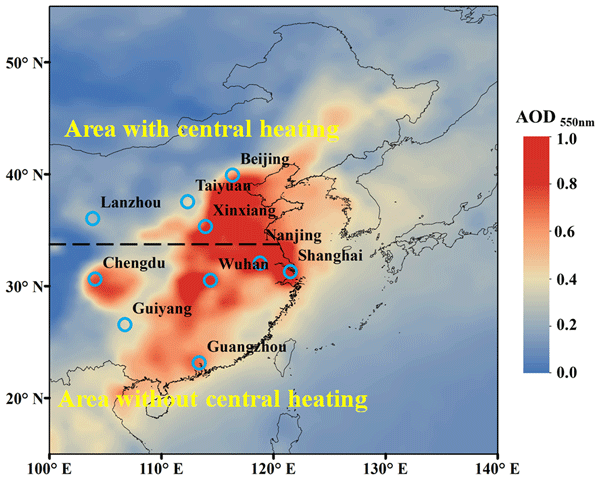
Yangzhi Mo, Jun Li, Guangcai Zhong, Sanyuan Zhu, Shizhen Zhao, Jiao Tang, Hongxing Jiang, Zhineng Cheng, Chongguo Tian, Yingjun Chen, and Gan Zhang
Atmos. Chem. Phys., 24, 7755–7772, https://doi.org/10.5194/acp-24-7755-2024, https://doi.org/10.5194/acp-24-7755-2024, 2024
Short summary
Short summary
In this study, we found that biomass burning (31.0 %) and coal combustion (31.1 %) were the dominant sources of water-insoluble organic carbon in China, with coal combustion sources exhibiting the strongest light-absorbing capacity. Additionally, we propose a light-absorbing carbonaceous continuum, revealing that components enriched with fossil sources tend to have stronger light-absorbing capacity, higher aromaticity, higher molecular weights, and greater recalcitrance in the atmosphere.
Jiao Tang, Jun Li, Shizhen Zhao, Guangcai Zhong, Yangzhi Mo, Hongxing Jiang, Bin Jiang, Yingjun Chen, Jianhui Tang, Chongguo Tian, Zheng Zong, Jabir Hussain Syed, Jianzhong Song, and Gan Zhang
EGUsphere, https://doi.org/10.5194/egusphere-2023-403, https://doi.org/10.5194/egusphere-2023-403, 2023
Preprint archived
Short summary
Short summary
This study provides a comprehensive molecular identification of atmospheric common fluorescent components and deciphers their related formation pathways. The fluorescent components varied in molecular composition, and a dominant oxidation pathway for the formation of humic-like fluorescent components was suggested, notwithstanding their different precursor types. Our findings are expected to be helpful to further studies using the EEM-PARAFAC as a tool to study atmospheric BrC.
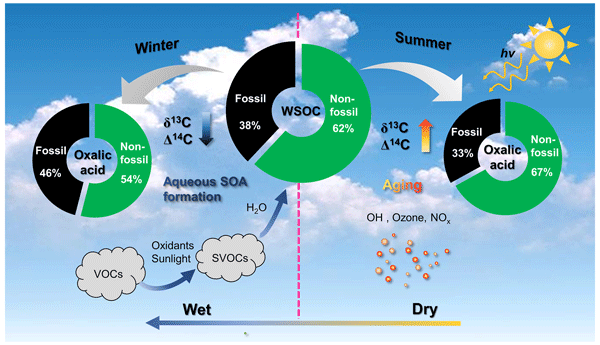
Buqing Xu, Jiao Tang, Tiangang Tang, Shizhen Zhao, Guangcai Zhong, Sanyuan Zhu, Jun Li, and Gan Zhang
Atmos. Chem. Phys., 23, 1565–1578, https://doi.org/10.5194/acp-23-1565-2023, https://doi.org/10.5194/acp-23-1565-2023, 2023
Short summary
Short summary
We analyzed compound-specific dual-carbon isotope signatures (Δ14C and δ13C) of dominant secondary organic aerosol (SOA) tracer molecules (i.e., oxalic acid) to investigate the fates of SOAs in the atmosphere at five emission hotspots in China. The results indicated that SOA carbon sources and chemical processes producing SOAs vary spatially and seasonally, and these variations need to be included in Chinese climate projection models and air quality management practices.
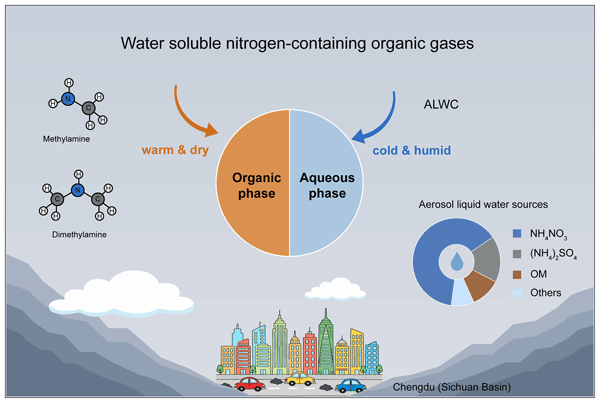
Kaitao Chen, Zheng Li, Rui Li, Luyao Chen, Rongjie Li, Binyu Xiao, Shaojun Lv, Can Wu, Rui Li, Junke Zhang, and Gehui Wang
Atmos. Chem. Phys., 26, 14329–14343, https://doi.org/10.5194/acp-26-14329-2026, https://doi.org/10.5194/acp-26-14329-2026, 2026
Short summary
Short summary
During winter haze in Chengdu, water-soluble organic nitrogen compounds shift from gas to particles, with concentrations more than doubling. The main driver is particle water content, not acidity or temperature. As particles absorb water, they take up these compounds, fueling aerosol growth. This study reveals how nitrogen-rich organic aerosols form in humid air, aiding pollution control strategies.
Caiqing Yan, Haibiao Chen, Buqing Xu, Gan Zhang, Bin Jiang, Qinglong Fu, Ruiyu Li, Xuehua Zhou, and Mei Zheng
EGUsphere, https://doi.org/10.5194/egusphere-2026-5498, https://doi.org/10.5194/egusphere-2026-5498, 2026
This preprint is open for discussion and under review for Atmospheric Chemistry and Physics (ACP).
Short summary
Short summary
Relative humidity (RH) affects brown carbon (BrC) light absorption and radiative forcing, but this relationship is still unclear. Using field observations across wide RH and pollution ranges with molecular-level measurements, this study shows that RH non-linearly affects water-soluble BrC absorption, with magnitude varying by pollution level. Molecular analysis reveals the mechanisms, improving understanding of BrC radiative effects and aiding humidity-dependent absorption in climate models.
Xiaocong Peng, Wei Song, Guohua Zhang, Qinhao Lin, Jianlin Cheng, Yang Li, Xinru Huang, Baoyi Chen, Jianzhong Song, Yingjun Chen, Gan Zhang, Ping’an Peng, Xinming Wang, and Xinhui Bi
EGUsphere, https://doi.org/10.5194/egusphere-2026-5314, https://doi.org/10.5194/egusphere-2026-5314, 2026
This preprint is open for discussion and under review for Atmospheric Chemistry and Physics (ACP).
Short summary
Short summary
Burning biomass releases black carbon (BC), but its precursors are unclear. We burned two fuels at three temperatures, measuring particles, gases, and BC. Furans, oxygenated aromatics, single-ring aromatics, and polycyclic aromatic hydrocarbons correlated with BC in the particle phase. Higher temperatures boosted BC—not by producing more precursors, but by converting them efficiently. Different fuels also produced distinct molecular fingerprints. These explain why BC emissions vary so much.
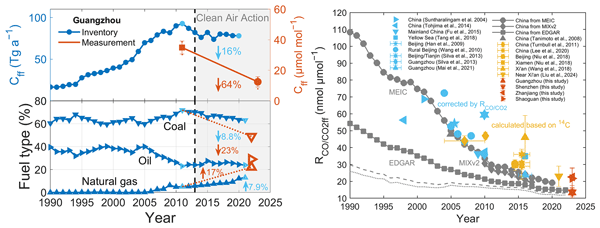
Pingyang Li, Boji Lin, Zhineng Cheng, Jing Li, Jun Li, Duohong Chen, Tao Zhang, Run Lin, Sanyuan Zhu, Jun Liu, Yujun Lin, Shizhen Zhao, Guangcai Zhong, Zhenchuan Niu, Ping Ding, and Gan Zhang
Atmos. Chem. Phys., 26, 5085–5122, https://doi.org/10.5194/acp-26-5085-2026, https://doi.org/10.5194/acp-26-5085-2026, 2026
Short summary
Short summary
Our study indicates fossil fuel CO2 (CO2ff) reductions in Chinese megacities via atmospheric Δ(14CO2) and δ(13CO2) measurements, driven by coal-to-gas transitions and combustion efficiency improvement. The 24-year record show steeper declined urban RCO/CO2ff ratios than inventory estimates, implying underestimation of efficiency improvements and CO reductions. Integrating top-down observations with inventories is critical to track policy-driven emission shifts and optimize co-benefit strategies.
Tao Cao, Cuncun Xu, Hao Chen, Jianzhong Song, Jun Li, Haiyan Song, Bin Jiang, Yin Zhong, and Ping'an Peng
Atmos. Chem. Phys., 25, 11597–11610, https://doi.org/10.5194/acp-25-11597-2025, https://doi.org/10.5194/acp-25-11597-2025, 2025
Short summary
Short summary
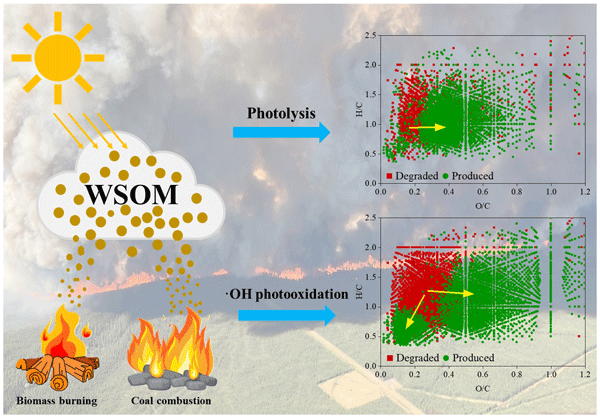
This study investigated the evolution of biomass and water-soluble organic matter (WSOM) derived from coal combustion during an aqueous photochemical process. The results indicate that photochemical aging induces distinct changes in the optical and molecular properties of WSOM. More pronounced alterations were observed during OH photooxidation than direct photolysis. Our results also demonstrate that atmospheric photooxidation may represent a significant source of black-carbon-like substances.
Pingyang Li, Boji Lin, Zhihua Zhou, Jing Li, Zhineng Cheng, Jun Li, Sanyuan Zhu, Shizhen Zhao, Guangcai Zhong, and Gan Zhang
EGUsphere, https://doi.org/10.5194/egusphere-2025-3882, https://doi.org/10.5194/egusphere-2025-3882, 2025
Short summary
Short summary
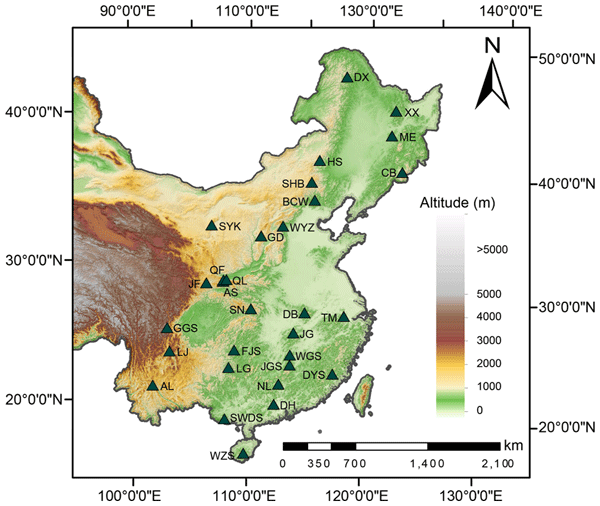
Urban areas exhibit high carbon footprints yet significant mitigation potential, requiring precise quantification of CO2 sources for effective carbon budgeting. While previous studies focused predominantly on fossil fuel CO2, biogenic CO2 (CO2bio) dynamics remain less understood. Here we show that Δ14CO2 tracers – combined with multi-source data – enable partitioning of CO2bio into three components and identification of their seasonal drivers, advancing our understanding of urban carbon budgets.
Yuying Wu, Yuhan Wang, Wenzheng Yang, Jie Zhang, Yanhong Wu, Jun Li, Gan Zhang, and Haijian Bing
Earth Syst. Sci. Data, 17, 4779–4797, https://doi.org/10.5194/essd-17-4779-2025, https://doi.org/10.5194/essd-17-4779-2025, 2025
Short summary
Short summary
We developed a large, open-access dataset of mountain soil chemistry in China, based on over 1,300 samples from 166 sites across diverse climates and vegetation types. The dataset includes concentrations of 24 elements and key environmental variables like temperature, rainfall, and soil properties. This dataset offers a valuable resource for studying mountain ecosystems, supporting Earth system modeling, and predicting how soils respond to environmental change.
Yangzhi Mo, Jun Li, Guangcai Zhong, Sanyuan Zhu, Shizhen Zhao, Jiao Tang, Hongxing Jiang, Zhineng Cheng, Chongguo Tian, Yingjun Chen, and Gan Zhang
Atmos. Chem. Phys., 24, 7755–7772, https://doi.org/10.5194/acp-24-7755-2024, https://doi.org/10.5194/acp-24-7755-2024, 2024
Short summary
Short summary
In this study, we found that biomass burning (31.0 %) and coal combustion (31.1 %) were the dominant sources of water-insoluble organic carbon in China, with coal combustion sources exhibiting the strongest light-absorbing capacity. Additionally, we propose a light-absorbing carbonaceous continuum, revealing that components enriched with fossil sources tend to have stronger light-absorbing capacity, higher aromaticity, higher molecular weights, and greater recalcitrance in the atmosphere.
Wenwen Ma, Rong Sun, Xiaoping Wang, Zheng Zong, Shizhen Zhao, Zeyu Sun, Chongguo Tian, Jianhui Tang, Song Cui, Jun Li, and Gan Zhang
Atmos. Chem. Phys., 24, 1509–1523, https://doi.org/10.5194/acp-24-1509-2024, https://doi.org/10.5194/acp-24-1509-2024, 2024
Short summary
Short summary
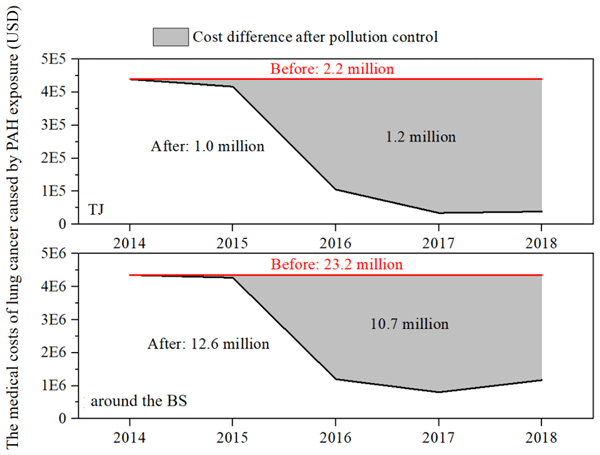
This is the first report of long-term atmospheric PAH monitoring around the Bohai Sea. The results showed that the concentrations of PAHs in the atmosphere around the Bohai Sea decreased from June 2014 to May 2019, especially the concentrations of highly toxic PAHs. This indicates that the contributions from PAH sources changed to a certain extent in different areas, and it also led to reductions in the related health risk and medical costs following pollution prevention and control.
Zeyu Sun, Zheng Zong, Yang Tan, Chongguo Tian, Zeyu Liu, Fan Zhang, Rong Sun, Yingjun Chen, Jun Li, and Gan Zhang
Atmos. Chem. Phys., 23, 12851–12865, https://doi.org/10.5194/acp-23-12851-2023, https://doi.org/10.5194/acp-23-12851-2023, 2023
Short summary
Short summary
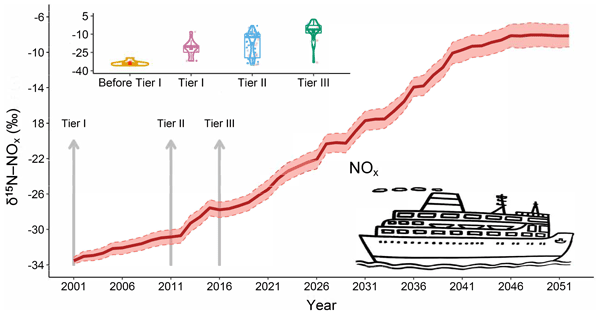
This is the first report of ship-emitted nitrogen stable isotope composition (δ15N) of nitrogen oxides (NOx). The results showed that δ15N–NOx from ships was −18.5 ± 10.9 ‰ and increased monotonically with tightening emission regulations. The selective catalytic reduction system was the most vital factor. The temporal variation in δ15N–NOx was evaluated and can be used to select suitable δ15N–NOx for a more accurate assessment of the contribution of ship-emitted exhaust to atmospheric NOx.
Xiangyun Zhang, Jun Li, Sanyuan Zhu, Junwen Liu, Ping Ding, Shutao Gao, Chongguo Tian, Yingjun Chen, Ping'an Peng, and Gan Zhang
Atmos. Chem. Phys., 23, 7495–7502, https://doi.org/10.5194/acp-23-7495-2023, https://doi.org/10.5194/acp-23-7495-2023, 2023
Short summary
Short summary
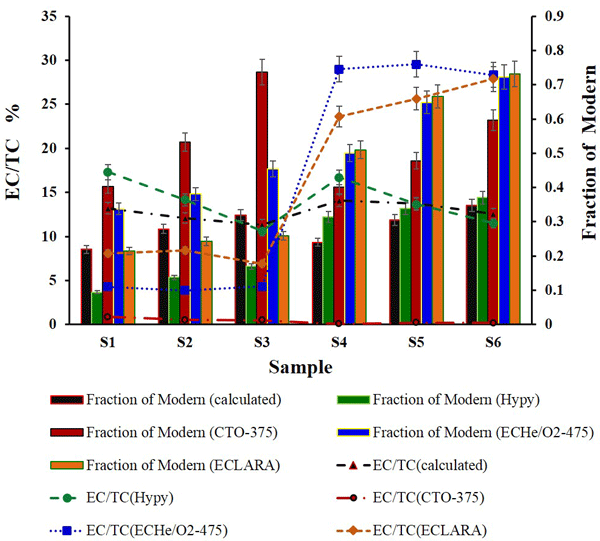
The results show that 14C elemental carbon (EC) was not only related to the isolation method but also to the types and proportions of the biomass sources in the sample. The hydropyrolysis (Hypy) method, which can be used to isolate a highly stable portion of ECHypy and avoid charring, is a more effective and stable approach for the matrix-independent 14C quantification of EC in aerosols, and the 13C–ECHypy and non-fossil ECHypy values of SRM1649b were –24.9 ‰ and 11 %, respectively.
Tingting Li, Jun Li, Zeyu Sun, Hongxing Jiang, Chongguo Tian, and Gan Zhang
Atmos. Chem. Phys., 23, 6395–6407, https://doi.org/10.5194/acp-23-6395-2023, https://doi.org/10.5194/acp-23-6395-2023, 2023
Short summary
Short summary
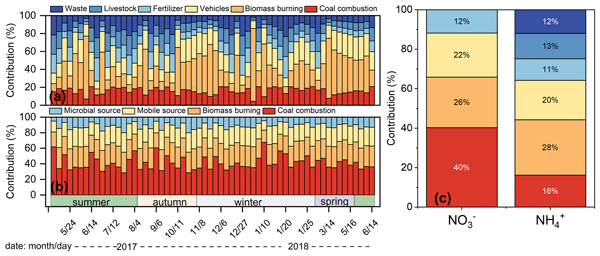
N-NH4+ and N-NO3- were vital components in nitrogenous aerosols and contributed 69 % to total nitrogen in PM2.5. Coal combustion was still the most important source of urban atmospheric NO3-. However, the non-agriculture sources play an increasingly important role in NH4+ emissions.
Jiao Tang, Jun Li, Shizhen Zhao, Guangcai Zhong, Yangzhi Mo, Hongxing Jiang, Bin Jiang, Yingjun Chen, Jianhui Tang, Chongguo Tian, Zheng Zong, Jabir Hussain Syed, Jianzhong Song, and Gan Zhang
EGUsphere, https://doi.org/10.5194/egusphere-2023-403, https://doi.org/10.5194/egusphere-2023-403, 2023
Preprint archived
Short summary
Short summary
This study provides a comprehensive molecular identification of atmospheric common fluorescent components and deciphers their related formation pathways. The fluorescent components varied in molecular composition, and a dominant oxidation pathway for the formation of humic-like fluorescent components was suggested, notwithstanding their different precursor types. Our findings are expected to be helpful to further studies using the EEM-PARAFAC as a tool to study atmospheric BrC.
Tao Cao, Meiju Li, Cuncun Xu, Jianzhong Song, Xingjun Fan, Jun Li, Wanglu Jia, and Ping'an Peng
Atmos. Chem. Phys., 23, 2613–2625, https://doi.org/10.5194/acp-23-2613-2023, https://doi.org/10.5194/acp-23-2613-2023, 2023
Short summary
Short summary
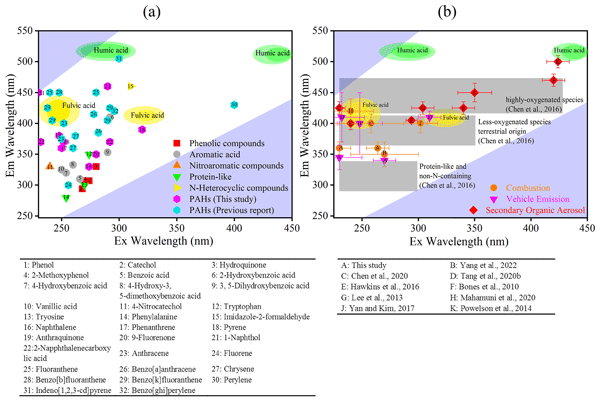
This work comprehensively investigated the fluorescence data of light-absorbing organic compounds, water-soluble organic matter in different types of aerosol samples, soil dust, and fulvic and humic acids using an excitation–emission matrix (EEM) method and parallel factor modeling. The results revealed which light-absorbing species can be detected by EEM and also provided important information for identifying the chemical composition and possible sources of these species in atmospheric samples.
Buqing Xu, Jiao Tang, Tiangang Tang, Shizhen Zhao, Guangcai Zhong, Sanyuan Zhu, Jun Li, and Gan Zhang
Atmos. Chem. Phys., 23, 1565–1578, https://doi.org/10.5194/acp-23-1565-2023, https://doi.org/10.5194/acp-23-1565-2023, 2023
Short summary
Short summary
We analyzed compound-specific dual-carbon isotope signatures (Δ14C and δ13C) of dominant secondary organic aerosol (SOA) tracer molecules (i.e., oxalic acid) to investigate the fates of SOAs in the atmosphere at five emission hotspots in China. The results indicated that SOA carbon sources and chemical processes producing SOAs vary spatially and seasonally, and these variations need to be included in Chinese climate projection models and air quality management practices.
Chunlin Zou, Tao Cao, Meiju Li, Jianzhong Song, Bin Jiang, Wanglu Jia, Jun Li, Xiang Ding, Zhiqiang Yu, Gan Zhang, and Ping'an Peng
Atmos. Chem. Phys., 23, 963–979, https://doi.org/10.5194/acp-23-963-2023, https://doi.org/10.5194/acp-23-963-2023, 2023
Short summary
Short summary
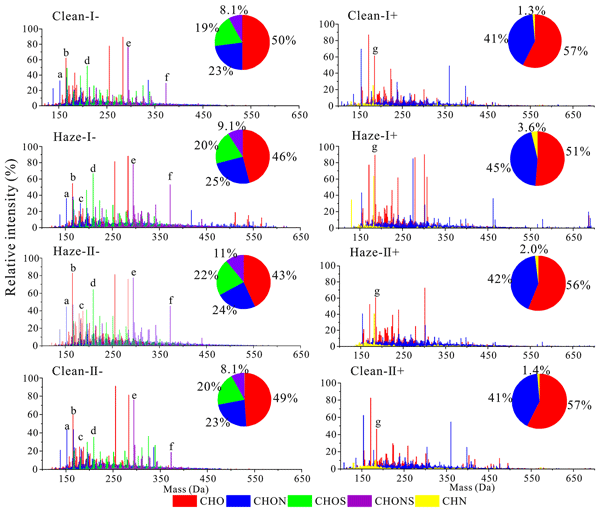
In this study, PM2.5 samples were obtained during a winter haze event in Guangzhou, China, and light absorption and molecular composition of humic-like substances (HULIS) were investigated by UV–Vis spectrophotometry and ultrahigh-resolution mass spectrometry. The findings obtained present some differences from the results reported in other regions of China and significantly enhanced our understanding of HULIS evolution during haze bloom-decay processes in the subtropic region of southern China.
Hongxing Jiang, Jun Li, Jiao Tang, Min Cui, Shizhen Zhao, Yangzhi Mo, Chongguo Tian, Xiangyun Zhang, Bin Jiang, Yuhong Liao, Yingjun Chen, and Gan Zhang
Atmos. Chem. Phys., 22, 6919–6935, https://doi.org/10.5194/acp-22-6919-2022, https://doi.org/10.5194/acp-22-6919-2022, 2022
Short summary
Short summary
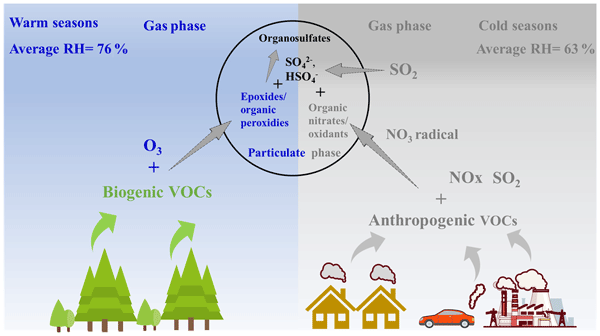
We conducted field observation employing Fourier transform ion cyclotron resonance mass spectrometry to characterize the molecular composition and major formation pathways or sources of organosulfur compounds in Guangzhou, where is heavily influenced by biogenic–anthropogenic interactions and has high relative humidity and temperature. We suggested that heterogeneous reactions such as SO2 uptake and heterogeneous oxidations are important to the molecular variations of organosulfur compounds.
Cited articles
Altieri, K. E., Hastings, M. G., Peters, A. J., and Sigman, D. M.: Molecular characterization of water soluble organic nitrogen in marine rainwater by ultra-high resolution electrospray ionization mass spectrometry, Atmos. Chem. Phys., 12, 3557–3571, https://doi.org/10.5194/acp-12-3557-2012, 2012.
Altieri, K. E., Fawcett, S. E., Peters, A. J., Sigman, D. M., and Hastings, M. G.: Marine biogenic source of atmospheric organic nitrogen in the subtropical North Atlantic, P. Natl. Acad. Sci. USA, 113, 925–930, https://doi.org/10.1073/pnas.1516847113, 2016.
Buchanan, P. J., Aumont, O., Bopp, L., Mahaffey, C., and Tagliabue, A.: Impact of intensifying nitrogen limitation on ocean net primary production is fingerprinted by nitrogen isotopes, Nat. Commun., 12, 6214, https://doi.org/10.1038/s41467-021-26552-w, 2021.
Cape, J. N., Cornell, S. E., Jickells, T. D., and Nemitz, E.: Organic nitrogen in the atmosphere – Where does it come from? A review of sources and methods, Atmos. Res., 102, 30–48, https://doi.org/10.1016/j.atmosres.2011.07.009, 2011.
Chen, H.-Y. and Chen, L.-D.: Occurrence of water soluble organic nitrogen in aerosols at a coastal area, J. Atmos. Chem., 65, 49–71, https://doi.org/10.1007/s10874-010-9181-y, 2010.
Cornell, S., Mace, K., Coeppicus, S., Duce, R., Huebert, B., Jickells, T., and Zhuang, L. Z.: Organic nitrogen in Hawaiian rain and aerosol, J. Geophys. Res.-Atmos., 106, 7973–7983, https://doi.org/10.1029/2000jd900655, 2001.
Facchini, M. C., Decesari, S., Rinaldi, M., Carbone, C., Finessi, E., Mircea, M., Fuzzi, S., Moretti, F., Tagliavini, E., Ceburnis, D., and O'Dowd, C. D.: Important Source of Marine Secondary Organic Aerosol from Biogenic Amines, Environ. Sci. Technol., 42, 9116–9121, https://doi.org/10.1021/es8018385, 2008.
Gantt, B., Meskhidze, N., Facchini, M. C., Rinaldi, M., Ceburnis, D., and O'Dowd, C. D.: Wind speed dependent size-resolved parameterization for the organic mass fraction of sea spray aerosol, Atmos. Chem. Phys., 11, 8777–8790, https://doi.org/10.5194/acp-11-8777-2011, 2011.
Geng, X., Mo, Y., Li, J., Zhong, G., Tang, J., Jiang, H., Ding, X., Malik, R. N., and Zhang, G.: Source apportionment of water-soluble brown carbon in aerosols over the northern South China Sea: Influence from land outflow, SOA formation and marine emission, Atmos. Environ., 229, 117484, https://doi.org/10.1016/j.atmosenv.2020.117484, 2020.
He, Q., Li, C., Siemens, K., Morales, A. C., Hettiyadura, A. P. S., Laskin, A., and Rudich, Y.: Optical Properties of Secondary Organic Aerosol Produced by Photooxidation of Naphthalene under NOx Condition, Environ. Sci. Technol., 56, 4816–4827, https://doi.org/10.1021/acs.est.1c07328, 2022.
Ho, K. F., Ho, S. S. H., Huang, R.-J., Liu, S. X., Cao, J.-J., Zhang, T., Chuang, H.-C., Chan, C. S., Hu, D., and Tian, L.: Characteristics of water-soluble organic nitrogen in fine particulate matter in the continental area of China, Atmos. Environ., 106, 252–261, https://doi.org/10.1016/j.atmosenv.2015.02.010, 2015.
Ho, S. S. H., Li, L., Qu, L., Cao, J., Lui, K. H., Niu, X., Lee, S.-C., and Ho, K. F.: Seasonal behavior of water-soluble organic nitrogen in fine particulate matter (PM2.5) at urban coastal environments in Hong Kong, Air Qual. Atmos. Hlth., 12, 389–399, https://doi.org/10.1007/s11869-018-0654-5, 2019.
Ito, A., Lin, G., and Penner, J. E.: Reconciling modeled and observed atmospheric deposition of soluble organic nitrogen at coastal locations, Global Biogeochem. Cy., 28, 617–630, https://doi.org/10.1002/2013GB004721, 2014.
Jickells, T., Baker, A. R., Cape, J. N., Cornell, S. E., and Nemitz, E.: The cycling of organic nitrogen through the atmosphere, Philos. T. Roy. Soc. B, 368, https://doi.org/10.1098/rstb.2013.0115, 2013.
Kanakidou, M., Duce, R. A., Prospero, J. M., Baker, A. R., Benitez-Nelson, C., Dentener, F. J., Hunter, K. A., Liss, P. S., Mahowald, N., Okin, G. S., Sarin, M., Tsigaridis, K., Uematsu, M., Zamora, L. M., and Zhu, T.: Atmospheric fluxes of organic N and P to the global ocean, Global Biogeochem. Cy., 26, https://doi.org/10.1029/2011gb004277, 2012.
Kunwar, B. and Kawamura, K.: One-year observations of carbonaceous and nitrogenous components and major ions in the aerosols from subtropical Okinawa Island, an outflow region of Asian dusts, Atmos. Chem. Phys., 14, 1819–1836, https://doi.org/10.5194/acp-14-1819-2014, 2014.
Leung, C. W., Wang, X., and Hu, D.: Characteristics and source apportionment of water-soluble organic nitrogen (WSON) in PM2.5 in Hong Kong: With focus on amines, urea, and nitroaromatic compounds, J. Hazard. Mater., 469, 133899, https://doi.org/10.1016/j.jhazmat.2024.133899, 2024.
Li, J. J., Wang, G. H., Cao, J. J., Wang, X. M., and Zhang, R. J.: Observation of biogenic secondary organic aerosols in the atmosphere of a mountain site in central China: temperature and relative humidity effects, Atmos. Chem. Phys., 13, 11535–11549, https://doi.org/10.5194/acp-13-11535-2013, 2013.
Li, R., Cui, L., Zhao, Y., Fu, H., Li, Q., Zhang, L., and Chen, J.: Size-segregated water-soluble N-bearing species in the land-sea boundary zone of East China, Atmos. Environ., 218, 116990, https://doi.org/10.1016/j.atmosenv.2019.116990, 2019.
Li, Y., Fu, T.-M., Yu, J. Z., Yu, X., Chen, Q., Miao, R., Zhou, Y., Zhang, A., Ye, J., Yang, X., Tao, S., Liu, H., and Yao, W.: Dissecting the contributions of organic nitrogen aerosols to global atmospheric nitrogen deposition and implications for ecosystems, Natl. Sci. Rev., 10, https://doi.org/10.1093/nsr/nwad244, 2023.
Liu, Q., Liu, Y., Zhao, Q., Zhang, T., and Schauer, J. J.: Increases in the formation of water soluble organic nitrogen during Asian dust storm episodes, Atmos. Res., 253, 105486, https://doi.org/10.1016/j.atmosres.2021.105486, 2021.
Liu, X., Wang, H., Wang, F., Lv, S., Wu, C., Zhao, Y., Zhang, S., Liu, S., Xu, X., Lei, Y., and Wang, G.: Secondary Formation of Atmospheric Brown Carbon in China Haze: Implication for an Enhancing Role of Ammonia, Environ. Sci. Technol., 57, 11163–11172, https://doi.org/10.1021/acs.est.3c03948, 2023.
Luo, L., Kao, S.-J., Bao, H., Xiao, H., Xiao, H., Yao, X., Gao, H., Li, J., and Lu, Y.: Sources of reactive nitrogen in marine aerosol over the Northwest Pacific Ocean in spring, Atmos. Chem. Phys., 18, 6207–6222, https://doi.org/10.5194/acp-18-6207-2018, 2018.
Mace, K. A., Duce, R. A., and Tindale, N. W.: Organic nitrogen in rain and aerosol at Cape Grim, Tasmania, Australia, J. Geophys. Res.-Atmos., 108, https://doi.org/10.1029/2002JD003051, 2003.
Matsumoto, K. and Yamato, K.: Uncertainties in the measurements of water-soluble organic nitrogen in the aerosol, Atmos. Environ., 144, 220–225, https://doi.org/10.1016/j.atmosenv.2016.08.061, 2016.
Matsumoto, K., Yamamoto, Y., Kobayashi, H., Kaneyasu, N., and Nakano, T.: Water-soluble organic nitrogen in the ambient aerosols and its contribution to the dry deposition of fixed nitrogen species in Japan, Atmos. Environ., 95, 334–343, https://doi.org/10.1016/j.atmosenv.2014.06.037, 2014.
Matsumoto, K., Sakata, K., and Watanabe, Y.: Water-soluble and water-insoluble organic nitrogen in the dry and wet deposition, Atmos. Environ., 218, https://doi.org/10.1016/j.atmosenv.2019.117022, 2019a.
Matsumoto, K., Watanabe, Y., Horiuchi, K., and Nakano, T.: Simultaneous measurement of the water-soluble organic nitrogen in the gas phase and aerosols at a forested site in Japan, Atmos. Environ., 200, 312–318, https://doi.org/10.1016/j.atmosenv.2018.12.011, 2019b.
Matsumoto, K., Kobayashi, H., Hara, K., Ishino, S., and Hayashi, M.: Water-soluble organic nitrogen in fine aerosols over the Southern Ocean, Atmos. Environ., 287, https://doi.org/10.1016/j.atmosenv.2022.119287, 2022.
Miyazaki, Y., Kawamura, K., Jung, J., Furutani, H., and Uematsu, M.: Latitudinal distributions of organic nitrogen and organic carbon in marine aerosols over the western North Pacific, Atmos. Chem. Phys., 11, 3037–3049, https://doi.org/10.5194/acp-11-3037-2011, 2011.
Miyazaki, Y., Fu, P., Ono, K., Tachibana, E., and Kawamura, K.: Seasonal cycles of water-soluble organic nitrogen aerosols in a deciduous broadleaf forest in northern Japan, J. Geophys. Res.-Atmos., 119, 1440–1454, https://doi.org/10.1002/2013jd020713, 2014.
Nehir, M. and Koçak, M.: Atmospheric water-soluble organic nitrogen (WSON) in the eastern Mediterranean: origin and ramifications regarding marine productivity, Atmos. Chem. Phys., 18, 3603–3618, https://doi.org/10.5194/acp-18-3603-2018, 2018.
Norris, G., Duvall, R., Brown, S., and Bai, S.: EPA Positive Matrix Factorization (PMF) 5.0 Fundamentals and User Guide, EPA/600/R-14/108, U.S. Environmental Protection Agency Office of Research and Development, Washington, DC, 2014.
O'Dowd, C., Ceburnis, D., Ovadnevaite, J., Bialek, J., Stengel, D. B., Zacharias, M., Nitschke, U., Connan, S., Rinaldi, M., Fuzzi, S., Decesari, S., Cristina Facchini, M., Marullo, S., Santoleri, R., Dell'Anno, A., Corinaldesi, C., Tangherlini, M., and Danovaro, R.: Connecting marine productivity to sea-spray via nanoscale biological processes: Phytoplankton Dance or Death Disco?, Sci. Rep.-UK, 5, 14883, https://doi.org/10.1038/srep14883, 2015.
O'Dowd, C. D., Facchini, M. C., Cavalli, F., Ceburnis, D., Mircea, M., Decesari, S., Fuzzi, S., Yoon, Y. J., and Putaud, J.-P.: Biogenically driven organic contribution to marine aerosol, Nature, 431, 676–680, https://doi.org/10.1038/nature02959, 2004.
Park, K.-T., Lee, K., Kim, T.-W., Yoon, Y. J., Jang, E.-H., Jang, S., Lee, B.-Y., and Hermansen, O.: Atmospheric DMS in the Arctic Ocean and Its Relation to Phytoplankton Biomass, Global Biogeochem. Cy., 32, 351–359, https://doi.org/10.1002/2017GB005805, 2018.
Pavuluri, C. M., Kawamura, K., and Fu, P. Q.: Atmospheric chemistry of nitrogenous aerosols in northeastern Asia: biological sources and secondary formation, Atmos. Chem. Phys., 15, 9883–9896, https://doi.org/10.5194/acp-15-9883-2015, 2015.
Prather, K. A., Bertram, T. H., Grassian, V. H., Deane, G. B., Stokes, M. D., DeMott, P. J., Aluwihare, L. I., Palenik, B. P., Azam, F., Seinfeld, J. H., Moffet, R. C., Molina, M. J., Cappa, C. D., Geiger, F. M., Roberts, G. C., Russell, L. M., Ault, A. P., Baltrusaitis, J., Collins, D. B., Corrigan, C. E., Cuadra-Rodriguez, L. A., Ebben, C. J., Forestieri, S. D., Guasco, T. L., Hersey, S. P., Kim, M. J., Lambert, W. F., Modini, R. L., Mui, W., Pedler, B. E., Ruppel, M. J., Ryder, O. S., Schoepp, N. G., Sullivan, R. C., and Zhao, D.: Bringing the ocean into the laboratory to probe the chemical complexity of sea spray aerosol, P. Natl. Acad. Sci. USA, 110, 7550–7555, https://doi.org/10.1073/pnas.1300262110, 2013.
Pryor, S. C. and Sørensen, L. L.: Nitric Acid–Sea Salt Reactions: Implications for Nitrogen Deposition to Water Surfaces, J. Appl. Meteorol., 39, 725–731, https://doi.org/10.1175/1520-0450-39.5.725, 2000.
Quinn, P. K., Bates, T. S., Schulz, K. S., Coffman, D. J., Frossard, A. A., Russell, L. M., Keene, W. C., and Kieber, D. J.: Contribution of sea surface carbon pool to organic matter enrichment in sea spray aerosol, Nat. Geosci., 7, 228–232, https://doi.org/10.1038/ngeo2092, 2014.
Rinaldi, M., Fuzzi, S., Decesari, S., Marullo, S., Santoleri, R., Provenzale, A., von Hardenberg, J., Ceburnis, D., Vaishya, A., O'Dowd, C. D., and Facchini, M. C.: Is chlorophyll a the best surrogate for organic matter enrichment in submicron primary marine aerosol?, J. Geophys. Res.-Atmos., 118, 4964–4973, https://doi.org/10.1002/jgrd.50417, 2013.
Savoie, D. L., Arimoto, R., Keene, W. C., Prospero, J. M., Duce, R. A., and Galloway, J. N.: Marine biogenic and anthropogenic contributions to non-sea-salt sulfate in the marine boundary layer over the North Atlantic Ocean, J. Geophys. Res.-Atmos., 107, 4356, https://doi.org/10.1029/2001JD000970, 2002.
Schiffer, J. M., Mael, L. E., Prather, K. A., Amaro, R. E., and Grassian, V. H.: Sea Spray Aerosol: Where Marine Biology Meets Atmospheric Chemistry, ACS Central Sci., 4, 1617–1623, https://doi.org/10.1021/acscentsci.8b00674, 2018.
Sciare, J., Favez, O., Sarda-Estève, R., Oikonomou, K., Cachier, H., and Kazan, V.: Long-term observations of carbonaceous aerosols in the Austral Ocean atmosphere: Evidence of a biogenic marine organic source, J. Geophys. Res.-Atmos., 114, https://doi.org/10.1029/2009JD011998, 2009.
Shi, J., Gao, H., Qi, J., Zhang, J., and Yao, X.: Sources, compositions, and distributions of water-soluble organic nitrogen in aerosols over the China Sea, J. Geophys. Res.-Atmos., 115, https://doi.org/10.1029/2009JD013238, 2010.
Sun, Y. L., Zhang, Q., Schwab, J. J., Chen, W. N., Bae, M. S., Lin, Y. C., Hung, H. M., and Demerjian, K. L.: A case study of aerosol processing and evolution in summer in New York City, Atmos. Chem. Phys., 11, 12737–12750, https://doi.org/10.5194/acp-11-12737-2011, 2011.
Tang, J., Wang, J., Zhong, G., Jiang, H., Mo, Y., Zhang, B., Geng, X., Chen, Y., Tang, J., Tian, C., Bualert, S., Li, J., and Zhang, G.: Measurement report: Long-emission-wavelength chromophores dominate the light absorption of brown carbon in aerosols over Bangkok: impact from biomass burning, Atmos. Chem. Phys., 21, 11337–11352, https://doi.org/10.5194/acp-21-11337-2021, 2021.
Tang, J., Xu, B., Zhao, S., Li, J., Tian, L., Geng, X., Jiang, H., Mo, Y., Zhong, G., Jiang, B., Chen, Y., Tang, J., and Zhang, G.: Long-Emission-Wavelength Humic-Like Component (L-HULIS) as a Secondary Source Tracer of Brown Carbon in the Atmosphere, J. Geophys. Res.-Atmos., 129, e2023JD040144, https://doi.org/10.1029/2023JD040144, 2024.
Tang, J.: For ACP, OSF, https://doi.org/10.17605/OSF.IO/YMJ3F, 2026.
Tian, M., Li, H., Wang, G., Fu, M., Qin, X., Lu, D., Liu, C., Zhu, Y., Luo, X., Deng, C., Abdullaev, S. F., and Huang, K.: Seasonal source identification and formation processes of marine particulate water soluble organic nitrogen over an offshore island in the East China Sea, Sci. Total Environ., 863, 160895, https://doi.org/10.1016/j.scitotenv.2022.160895, 2023.
Tripathee, L., Kang, S., Chen, P., Bhattarai, H., Guo, J., Shrestha, K. L., Sharma, C. M., Sharma Ghimire, P., and Huang, J.: Water-soluble organic and inorganic nitrogen in ambient aerosols over the Himalayan middle hills: Seasonality, sources, and transport pathways, Atmos. Res., 250, 105376, https://doi.org/10.1016/j.atmosres.2020.105376, 2021.
Tsagkaraki, M., Theodosi, C., Grivas, G., Vargiakaki, E., Sciare, J., Savvides, C., and Mihalopoulos, N.: Spatiotemporal variability and sources of aerosol water-soluble organic nitrogen (WSON), in the Eastern Mediterranean, Atmos. Environ., 246, 118144, https://doi.org/10.1016/j.atmosenv.2020.118144, 2021.
Violaki, K., Sciare, J., Williams, J., Baker, A. R., Martino, M., and Mihalopoulos, N.: Atmospheric water-soluble organic nitrogen (WSON) over marine environments: a global perspective, Biogeosciences, 12, 3131–3140, https://doi.org/10.5194/bg-12-3131-2015, 2015.
Wang, G. H., Cheng, C. L., Huang, Y., Tao, J., Ren, Y. Q., Wu, F., Meng, J. J., Li, J. J., Cheng, Y. T., Cao, J. J., Liu, S. X., Zhang, T., Zhang, R., and Chen, Y. B.: Evolution of aerosol chemistry in Xi'an, inland China, during the dust storm period of 2013 – Part 1: Sources, chemical forms and formation mechanisms of nitrate and sulfate, Atmos. Chem. Phys., 14, 11571–11585, https://doi.org/10.5194/acp-14-11571-2014, 2014.
Wang, J., Jiang, H., Jiang, H., Mo, Y., Geng, X., Li, J., Mao, S., Bualert, S., Ma, S., Li, J., and Zhang, G.: Source apportionment of water-soluble oxidative potential in ambient total suspended particulate from Bangkok: Biomass burning versus fossil fuel combustion, Atmos. Environ., 235, 117624, https://doi.org/10.1016/j.atmosenv.2020.117624, 2020.
Xie, M., Chen, X., Hays, M. D., Lewandowski, M., Offenberg, J., Kleindienst, T. E., and Holder, A. L.: Light Absorption of Secondary Organic Aerosol: Composition and Contribution of Nitroaromatic Compounds, Environ. Sci. Technol., 51, 11607–11616, https://doi.org/10.1021/acs.est.7b03263, 2017.
Xing, J., Song, J., Yuan, H., Wang, Q., Li, X., Li, N., Duan, L., and Qu, B.: Water-soluble nitrogen and phosphorus in aerosols and dry deposition in Jiaozhou Bay, North China: Deposition velocities, origins and biogeochemical implications, Atmos. Res., 207, 90–99, https://doi.org/10.1016/j.atmosres.2018.03.001, 2018.
Xu, Y., Miyazaki, Y., Tachibana, E., Sato, K., Ramasamy, S., Mochizuki, T., Sadanaga, Y., Nakashima, Y., Sakamoto, Y., Matsuda, K., and Kajii, Y.: Aerosol Liquid Water Promotes the Formation of Water-Soluble Organic Nitrogen in Submicrometer Aerosols in a Suburban Forest, Environ. Sci. Technol., 54, 1406–1414, https://doi.org/10.1021/acs.est.9b05849, 2020.
Yu, X., Yu, Q., Zhu, M., Tang, M., Li, S., Yang, W., Zhang, Y., Deng, W., Li, G., Yu, Y., Huang, Z., Song, W., Ding, X., Hu, Q., Li, J., Bi, X., and Wang, X.: Water Soluble Organic Nitrogen (WSON) in Ambient Fine Particles Over a Megacity in South China: Spatiotemporal Variations and Source Apportionment, J. Geophys. Res.-Atmos., 122, 13045–13060, https://doi.org/10.1002/2017JD027327, 2017.
Yu, X., Pan, Y., Song, W., Li, S., Li, D., Zhu, M., Zhou, H., Zhang, Y., Li, D., Yu, J., Wang, X., and Wang, X.: Wet and Dry Nitrogen Depositions in the Pearl River Delta, South China: Observations at Three Typical Sites With an Emphasis on Water-Soluble Organic Nitrogen, J. Geophys. Res.-Atmos., 125, https://doi.org/10.1029/2019jd030983, 2020.
Zamora, L. M., Prospero, J. M., and Hansell, D. A.: Organic nitrogen in aerosols and precipitation at Barbados and Miami: Implications regarding sources, transport and deposition to the western subtropical North Atlantic, J. Geophys. Res.-Atmos., 116, https://doi.org/10.1029/2011JD015660, 2011.
Zhao, Y., Bao, Z., Long, X., Liu, Y., Han, Y., Meng, L., Zeng, X., Li, L., Qi, X., Li, Z., Peng, C., Zhang, L., Chen, M., Zhai, C., and Chen, Y.: Evolution of secondary organic aerosol under extremely high humidity conditions in urban areas of southwestern China: Formation and scavenging, Atmos. Res., 327, 108318, https://doi.org/10.1016/j.atmosres.2025.108318, 2026.
Zhou, S., Chen, Y., Paytan, A., Li, H., Wang, F., Zhu, Y., Yang, T., Zhang, Y., and Zhang, R.: Non-Marine Sources Contribute to Aerosol Methanesulfonate Over Coastal Seas, J. Geophys. Res.-Atmos., 126, e2021JD034960, https://doi.org/10.1029/2021JD034960, 2021.
Zhou, S., Chen, Y., Wang, F., Bao, Y., Ding, X., and Xu, Z.: Assessing the Intensity of Marine Biogenic Influence on the Lower Atmosphere: An Insight into the Distribution of Marine Biogenic Aerosols over the Eastern China Seas, Environ. Sci. Technol., 57, 12741–12751, https://doi.org/10.1021/acs.est.3c04382, 2023.
Short summary
Water-soluble organic nitrogen (WSON) in coastal aerosols is critical for atmospheric chemistry and climate processes. This Bangkok study found sea-spray aerosol (SSA) is an important contributor to coastal aerosol WSON under marine air, its contribution surging from 3.8 % (continental) to 34 %. SSA-associated WSON strongly correlated (r=0.96) with trajectory-based air-mass exposure to chlorophyll-a, which is consistent with marine-biogenic enhancement.
Water-soluble organic nitrogen (WSON) in coastal aerosols is critical for atmospheric chemistry...


Altmetrics
Final-revised paper
Preprint