
Articles | Volume 26, issue 8
https://doi.org/10.5194/acp-26-5237-2026
© Author(s) 2026. This work is distributed under
the Creative Commons Attribution 4.0 License.
the Creative Commons Attribution 4.0 License.
https://doi.org/10.5194/acp-26-5237-2026
© Author(s) 2026. This work is distributed under
the Creative Commons Attribution 4.0 License.
the Creative Commons Attribution 4.0 License.
Research article
| 
21 Apr 2026
Research article |
| 21 Apr 2026
| 21 Apr 2026
A detailed comparison of the Dutch emission inventory with satellite-derived NOx emissions

National Institute for Public Health and the Environment (RIVM), Bilthoven, the Netherlands
Ronald J. van der A
Royal Netherlands Meteorological Institute (KNMI), De Bilt, the Netherlands
Jieying Ding
Royal Netherlands Meteorological Institute (KNMI), De Bilt, the Netherlands
Jeroen Kuenen
Department of Air and Emissions Research, TNO, Utrecht, the Netherlands
Margreet C. van Zanten
National Institute for Public Health and the Environment (RIVM), Bilthoven, the Netherlands
Meteorology and Air Quality Section, Wageningen University, Wageningen, the Netherlands
Related authors
No articles found.
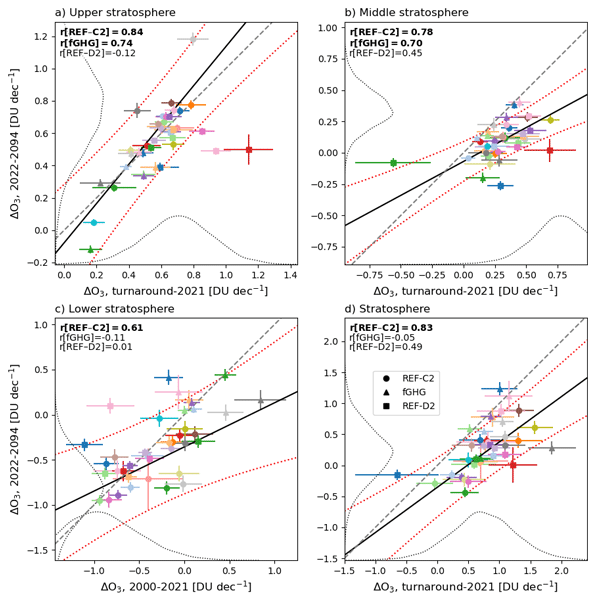
Sean M. Davis, William T. Ball, Yue Jia, Gabriel Chiodo, Justin A. Alsing, James Keeble, Hideharu Akiyoshi, Carlo Arosio, Ewa M. Bednarz, Andreas Chrysanthou, Melanie Coldewey-Egbers, Robert Damadeo, Sandip Dhomse, Mohamadou A. Diallo, Simone Dietmuller, Roland Eichinger, Stacey Frith, Birgit Hassler, Michaela I. Hegglin, Daan Hubert, Patrick Jöckel, Béatrice Josse, Natalya Kramarova, Diego Loyola, Eliane Maillard Barras, Marion Marchand, Olaf Morgenstern, David Plummer, Robert W. Portmann, Karen H. Rosenlof, Alexei Rozanov, Viktoria F. Sofieva, Johannes Staehelin, Timofei Sukhodolov, Kleareti Tourpali, Ronald J. Van der A, H. J. Ray Wang, Krzysztof Wargan, Shingo Watanabe, Mark Weber, Jeannette D. Wild, Yousuke Yamashita, and Jerry Ziemke
Atmos. Chem. Phys., 26, 13817–13843, https://doi.org/10.5194/acp-26-13817-2026, https://doi.org/10.5194/acp-26-13817-2026, 2026
Short summary
Short summary
This study investigates tropical ozone changes in models and satellite observations to determine how well they agree and whether observations can constrain model projections. At some levels, satellite records disagree significantly on the magnitude of ozone changes. While early and late 21st century trends are correlated across models, suggesting a potential emergent constraint, the spread in observations means they are unable to provide guidance on the credibility of model projections.
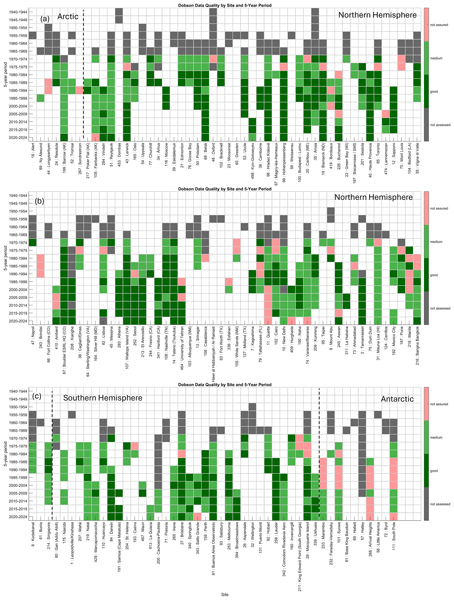
Xiaoyi Zhao, Vitali Fioletov, Irina Petropavlovskikh, Voltaire Velazco, Alberto Redondas, Anna Solomatnikova, Corinne Vigouroux, Kimberly Strong, Michel Van Roozendael, Andrea Pazmino, Thomas F. Hanisco, Alexander Cede, Martin Tiefengraber, Gordon Labow, Masatomo Fujiwara, Ronald van der A, Debora Griffin, Chris McLinden, Tom Kralidis, Wolfgang Steinbrecht, and Sum Chi Lee
Atmos. Chem. Phys., 26, 13693–13720, https://doi.org/10.5194/acp-26-13693-2026, https://doi.org/10.5194/acp-26-13693-2026, 2026
Short summary
Short summary
Total column ozone (TCO) records from six ground-based networks are compiled and evaluated using multiple satellites and reanalysis data. Station performance (1940–2024) is assessed using harmonized metrics. Ground-based annual means agree within ±2 %, while pre-satellite reanalyses show larger biases (up to −5 %). The resulting quality-assessed dataset supports trend analysis and satellite validation.
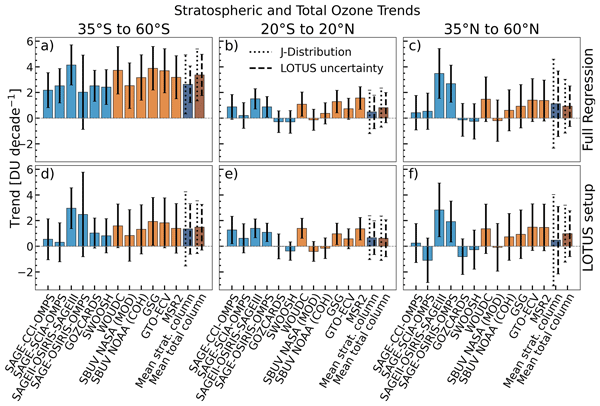
Brian Auffarth, Mark Weber, Alexei Rozanov, Carlo Arosio, John P. Burrows, Melanie Coldewey-Egbers, Sean M. Davis, Doug Degenstein, Kimberlee Dubé, Stacey M. Frith, Lucien Froidevaux, Diego Loyola, Vitali E. Fioletov, Viktoria Sofieva, Ronald van der A, and Jeannette D. Wild
Atmos. Chem. Phys., 26, 13359–13386, https://doi.org/10.5194/acp-26-13359-2026, https://doi.org/10.5194/acp-26-13359-2026, 2026
Short summary
Short summary
This study examines the trends of stratospheric and total ozone between 2000 and 2024, using long-term satellite datasets. Our results show positive trends in the upper stratosphere and a strong ozone recovery in the Southern Hemisphere, while changes in lower altitudes remain mostly small. The total and stratospheric trends show very similar results, indicating that tropospheric ozone contributes little to total column changes, while the stratospheric column is the dominant driver.
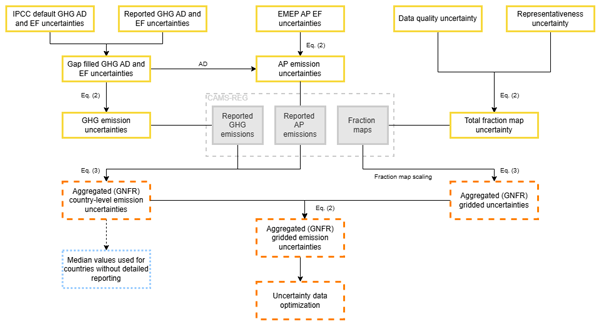
Ingrid Super, David Mathas, Bastiaan Jonkheid, Arjo Segers, and Jeroen Kuenen
Earth Syst. Sci. Data, 18, 6119–6137, https://doi.org/10.5194/essd-18-6119-2026, https://doi.org/10.5194/essd-18-6119-2026, 2026
Short summary
Short summary
We present an emission uncertainty estimate to support atmospheric monitoring of greenhouse gas and air pollutant emissions using observations. We find significant uncertainties in country-total emissions and in the spatial distribution of emissions, largely dependent on the pollutant considered. A dataset is provided that lists emission uncertainties for a state-of-the-art European emission inventory.
Yaqiu Zhao, Ronald J. van der A, Jieying Ding, Xiaojuan Lin, and Qianqian Zhang
EGUsphere, https://doi.org/10.5194/egusphere-2026-3440, https://doi.org/10.5194/egusphere-2026-3440, 2026
Short summary
Short summary
To quantify soil nitrogen oxide (NOx) emissions, we develop a satellite-based method to derive land-use-specific soil NOx emissions. We apply it to eastern China and generate a regional emission inventory. We identify the optimal emission temperatures not included in conventional models. Global inventories likely underestimate China's forest soil NOx emissions. These results reduce uncertainty in soil NOx estimation and improve understanding of biogenic emissions under climate change.
Tilman Leo Hohenberger, Marya el Malki, Antoon Visschedijk, Marc Guevara, Martin Otto Paul Ramacher, Alessandro Marongiu, Guido Giuseppe Lanzani, Giuseppe Fossati, Anu Kousa, Eleni Athanasopoulou, Anastasia Kakouri, and Jeroen Kuenen
Earth Syst. Sci. Data, 18, 3959–3978, https://doi.org/10.5194/essd-18-3959-2026, https://doi.org/10.5194/essd-18-3959-2026, 2026
Short summary
Short summary
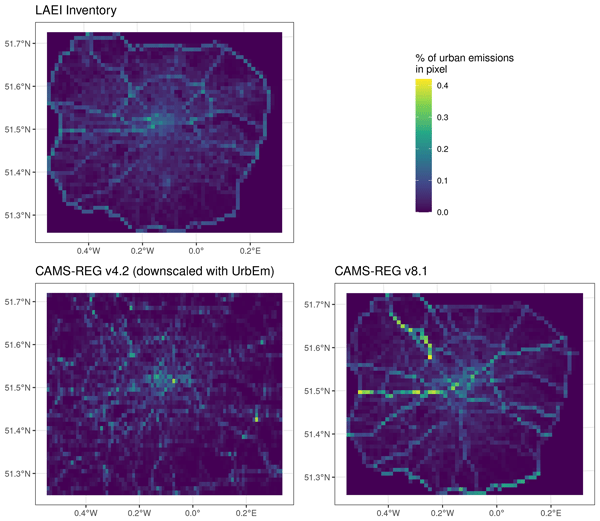
Spatial road transport emission data is fundamental for challenges of air pollution and climate change. In the existing European CAMS-REG (Copernicus Atmosphere Service-regional) inventory, several improvement opportunities exist, especially an underestimation in urban centers of ~35 %. We calculate emissions by combining gap-filled road information and emission factors, for the first time giving detailed emissions for most roads in Europe. With this, our dataset is much closer in line with independently combined city inventories.
Yutao Chen, Ronald J. van der A, Jieying Ding, Henk Eskes, Felipe Cifuentes, and Pieternel F. Levelt
Atmos. Meas. Tech., 19, 2737–2750, https://doi.org/10.5194/amt-19-2737-2026, https://doi.org/10.5194/amt-19-2737-2026, 2026
Short summary
Short summary
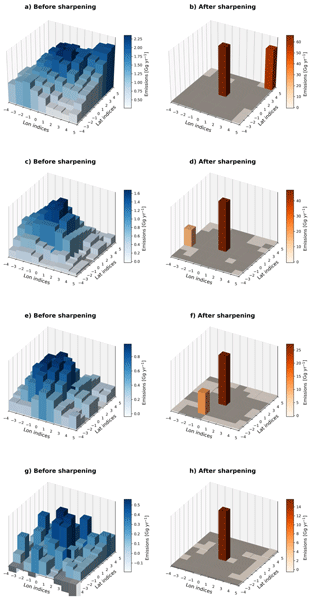
The SO2 gridded point emissions calculated from satellite measurements appear spread out around the source. This is inherent to the inversion method and the resolution of the satellite measurements. We made a new sharpening algorithm to reverse the spreading and make the emission signal clearer. With this method, the effective resolution is improved. Known sources can be located more precisely, and new ones can be found from space. The same approach also works for other gases like NOx.
Diego Guizzardi, Monica Crippa, Tim Butler, Terry Keating, Rosa Wu, Jacek Kaminski, Jeroen Kuenen, Junichi Kurokawa, Satoru Chatani, Tazuko Morikawa, George Pouliot, Jacinthe Racine, Michael D. Moran, Zbigniew Klimont, Patrick M. Manseau, Rabab Mashayekhi, Barron H. Henderson, Steven J. Smith, Rachel Hoesly, Marilena Muntean, Manjola Banja, Edwin Schaaf, Federico Pagani, Jung-Hun Woo, Jinseok Kim, Enrico Pisoni, Junhua Zhang, David Niemi, Mourad Sassi, Annie Duhamel, Tabish Ansari, Kristen Foley, Guannan Geng, Yifei Chen, and Qiang Zhang
Earth Syst. Sci. Data, 17, 5915–5950, https://doi.org/10.5194/essd-17-5915-2025, https://doi.org/10.5194/essd-17-5915-2025, 2025
Short summary
Short summary
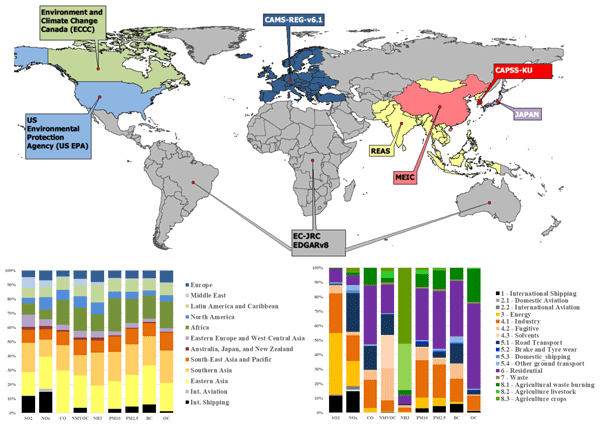
The global air pollution emission mosaic HTAP_v3.2 is the state-of-the-art inventory to address the evolution of a set of policy-relevant pollutants over the past 2 decades. The mosaic is made harmonising and blending seven regional inventories, gapfilled with the most recent release of the Emissions Database for Global Atmospheric Research. By incorporating the best available local information, the HTAP_v3.2 emission mosaic can be used for policy-relevant studies at regional and global level.
Marc Guevara, Augustin Colette, Antoine Guion, Valentin Petiot, Mario Adani, Joaquim Arteta, Anna Benedictow, Robert Bergström, Andrea Bolignano, Paula Camps, Ana C. Carvalho, Jesper Heile Christensen, Florian Couvidat, Ilaria D'Elia, Hugo Denier van der Gon, Gaël Descombes, John Douros, Hilde Fagerli, Yalda Fatahi, Elmar Friese, Lise Frohn, Michael Gauss, Camilla Geels, Risto Hänninen, Kaj Hansen, Oriol Jorba, Jacek W. Kaminski, Rostislav Kouznetsov, Richard Kranenburg, Jeroen Kuenen, Victor Lannuque, Frédérik Meleux, Agnes Nyíri, Yuliia Palamarchuk, Carlos Pérez García-Pando, Lennard Robertson, Felicita Russo, Arjo Segers, Mikhail Sofiev, Joanna Struzewska, Renske Timmermans, Andreas Uppstu, Alvaro Valdebenito, and Zhuyun Ye
Atmos. Chem. Phys., 25, 13245–13278, https://doi.org/10.5194/acp-25-13245-2025, https://doi.org/10.5194/acp-25-13245-2025, 2025
Short summary
Short summary
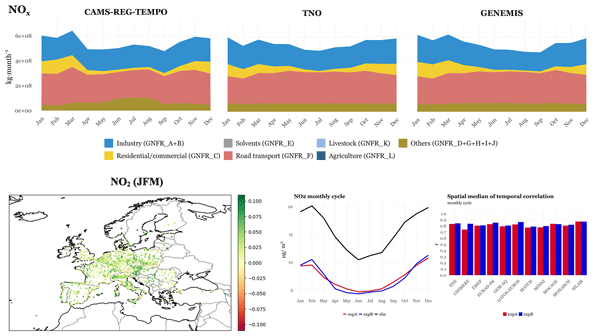
Air quality models require hourly emissions to accurately represent dispersion and physico-chemical processes in the atmosphere. Since emission inventories are typically provided at the annual level, emissions are downscaled to a refined temporal resolution using temporal profiles. This study quantifies the impact of using new anthropogenic temporal profiles on the performance of an European air quality multi-model ensemble. Overall, the findings indicate an improvement of the modelling results.
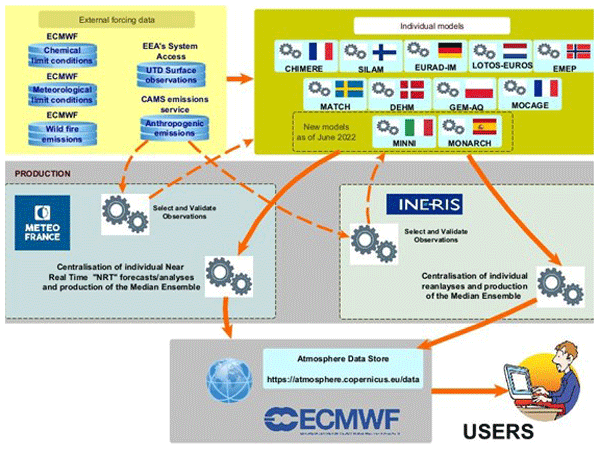
Augustin Colette, Gaëlle Collin, François Besson, Etienne Blot, Vincent Guidard, Frédérik Meleux, Adrien Royer, Valentin Petiot, Claire Miller, Oihana Fermond, Alizé Jeant, Mario Adani, Joaquim Arteta, Anna Benedictow, Robert Bergström, Dene Bowdalo, Jorgen Brandt, Gino Briganti, Ana C. Carvalho, Jesper Heile Christensen, Florian Couvidat, Ilaria D'Elia, Massimo D'Isidoro, Hugo Denier van der Gon, Gaël Descombes, Enza Di Tomaso, John Douros, Jeronimo Escribano, Henk Eskes, Hilde Fagerli, Yalda Fatahi, Johannes Flemming, Elmar Friese, Lise Frohn, Michael Gauss, Camilla Geels, Guido Guarnieri, Marc Guevara, Antoine Guion, Jonathan Guth, Risto Hänninen, Kaj Hansen, Ulas Im, Ruud Janssen, Marine Jeoffrion, Mathieu Joly, Luke Jones, Oriol Jorba, Evgeni Kadantsev, Michael Kahnert, Jacek W. Kaminski, Rostislav Kouznetsov, Richard Kranenburg, Jeroen Kuenen, Anne Caroline Lange, Joachim Langner, Victor Lannuque, Francesca Macchia, Astrid Manders, Mihaela Mircea, Agnes Nyiri, Miriam Olid, Carlos Pérez García-Pando, Yuliia Palamarchuk, Antonio Piersanti, Blandine Raux, Miha Razinger, Lennard Robertson, Arjo Segers, Martijn Schaap, Pilvi Siljamo, David Simpson, Mikhail Sofiev, Anders Stangel, Joanna Struzewska, Carles Tena, Renske Timmermans, Thanos Tsikerdekis, Svetlana Tsyro, Svyatoslav Tyuryakov, Anthony Ung, Andreas Uppstu, Alvaro Valdebenito, Peter van Velthoven, Lina Vitali, Zhuyun Ye, Vincent-Henri Peuch, and Laurence Rouïl
Geosci. Model Dev., 18, 6835–6883, https://doi.org/10.5194/gmd-18-6835-2025, https://doi.org/10.5194/gmd-18-6835-2025, 2025
Short summary
Short summary
The Copernicus Atmosphere Monitoring Service – Regional Production delivers daily forecasts, analyses, and reanalyses of air quality in Europe. The service relies on a distributed modelling production by 11 leading European modelling teams following stringent requirements with an operational design that has no equivalent in the world. All the products are free, open, and quality-assured and disseminated with a high level of reliability.
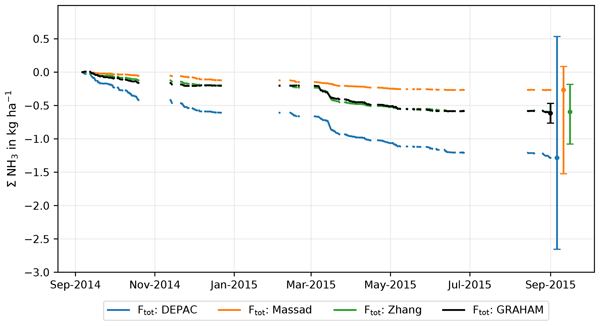
Tycho Jongenelen, Margreet van Zanten, Enrico Dammers, Roy Wichink Kruit, Arjan Hensen, Leon Geers, and Jan Willem Erisman
Atmos. Chem. Phys., 25, 4943–4963, https://doi.org/10.5194/acp-25-4943-2025, https://doi.org/10.5194/acp-25-4943-2025, 2025
Short summary
Short summary
This article compares three ammonia (NH3) deposition models in a dune ecosystem and investigates the uncertainty of these models. The Zhang model aligned best with the measurements, whereas the DEPAC (DEPosition of Acidifying Compounds) and Massad models overestimated and underestimated the NH3 deposition respectively. The study found that NH3 exchange with wet plant leaves was an important but uncertain process. It offers recommendations to improve future models and suggests measurements to lower the existing uncertainty.
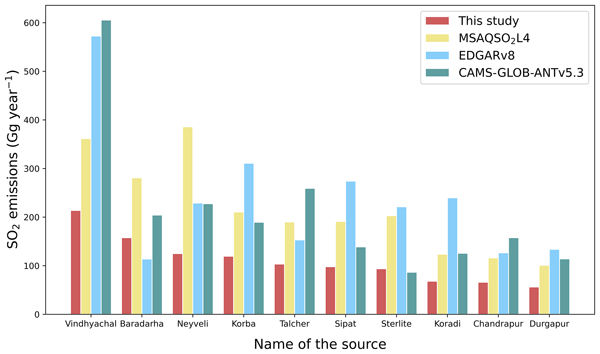
Yutao Chen, Ronald J. van der A, Jieying Ding, Henk Eskes, Jason E. Williams, Nicolas Theys, Athanasios Tsikerdekis, and Pieternel F. Levelt
Atmos. Chem. Phys., 25, 1851–1868, https://doi.org/10.5194/acp-25-1851-2025, https://doi.org/10.5194/acp-25-1851-2025, 2025
Short summary
Short summary
There is a lack of local SO2 top-down emission inventories in India. With the improvement in the divergence method and the derivation of SO2 local lifetime, gridded SO2 emissions over a large area can be estimated efficiently. This method can be applied to any region in the world to derive SO2 emissions. Especially for regions with high latitudes, our methodology has the potential to significantly improve the top-down derivation of SO2 emissions.
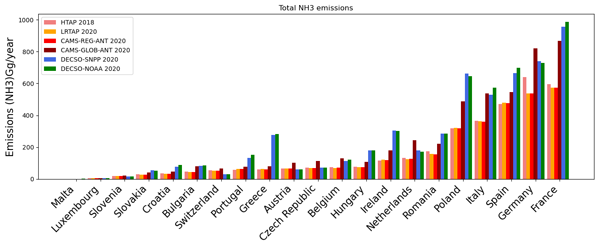
Jieying Ding, Ronald van der A, Henk Eskes, Enrico Dammers, Mark Shephard, Roy Wichink Kruit, Marc Guevara, and Leonor Tarrason
Atmos. Chem. Phys., 24, 10583–10599, https://doi.org/10.5194/acp-24-10583-2024, https://doi.org/10.5194/acp-24-10583-2024, 2024
Short summary
Short summary
Here we applied the existing Daily Emissions Constrained by Satellite Observations (DECSO) inversion algorithm to NH3 observations from the CrIS satellite instrument to estimate NH3 emissions. As NH3 in the atmosphere is influenced by NOx, we implemented DECSO to estimate NOx and NH3 emissions simultaneously. The emissions are derived over Europe for 2020 at a spatial resolution of 0.2° using daily observations from CrIS and TROPOMI. Results are compared to bottom-up emission inventories.
Mengyao Liu, Ronald van der A, Michiel van Weele, Lotte Bryan, Henk Eskes, Pepijn Veefkind, Yongxue Liu, Xiaojuan Lin, Jos de Laat, and Jieying Ding
Atmos. Meas. Tech., 17, 5261–5277, https://doi.org/10.5194/amt-17-5261-2024, https://doi.org/10.5194/amt-17-5261-2024, 2024
Short summary
Short summary
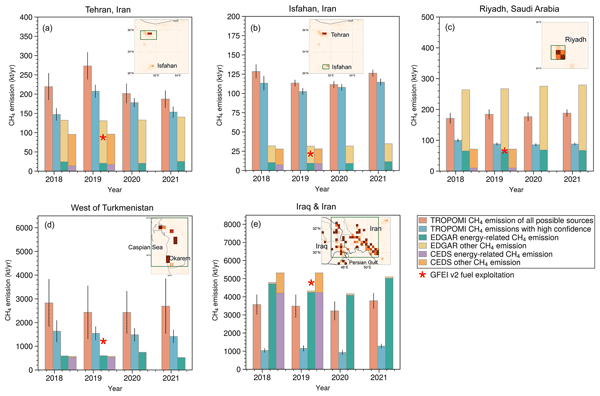
A new divergence method was developed and applied to estimate methane emissions from TROPOMI observations over the Middle East, where it is typically challenging for a satellite to measure methane due to its complicated orography and surface albedo. Our results show the potential of TROPOMI to quantify methane emissions from various sources rather than big emitters from space after objectively excluding the artifacts in the retrieval.
Ronald J. van der A, Jieying Ding, and Henk Eskes
Atmos. Chem. Phys., 24, 7523–7534, https://doi.org/10.5194/acp-24-7523-2024, https://doi.org/10.5194/acp-24-7523-2024, 2024
Short summary
Short summary
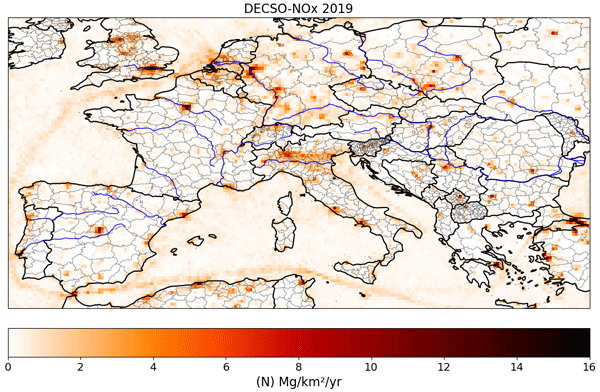
Using observations of the Sentinel-5P satellite and the latest version of the inversion algorithm DECSO, anthropogenic NOx emissions are derived for Europe for the years 2019–2022 with a spatial resolution of 0.2°. The results are compared with European emissions of the Copernicus Atmosphere Monitoring Service.
Philippe Thunis, Jeroen Kuenen, Enrico Pisoni, Bertrand Bessagnet, Manjola Banja, Lech Gawuc, Karol Szymankiewicz, Diego Guizardi, Monica Crippa, Susana Lopez-Aparicio, Marc Guevara, Alexander De Meij, Sabine Schindlbacher, and Alain Clappier
Geosci. Model Dev., 17, 3631–3643, https://doi.org/10.5194/gmd-17-3631-2024, https://doi.org/10.5194/gmd-17-3631-2024, 2024
Short summary
Short summary
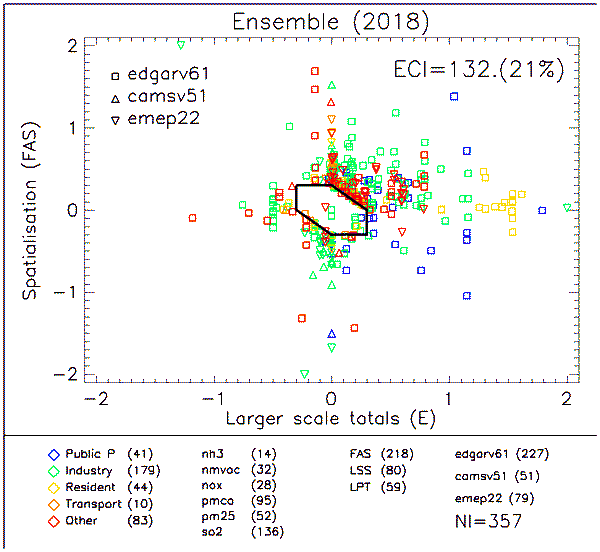
An ensemble emission inventory is created with the aim of monitoring the status and progress made with the development of EU-wide inventories. This emission ensemble serves as a common benchmark for the screening and allows for the comparison of more than two inventories at a time. Because the emission “truth” is unknown, the approach does not tell which inventory is the closest to reality, but it identifies inconsistencies that require special attention.
Adrianus de Laat, Jos van Geffen, Piet Stammes, Ronald van der A, Henk Eskes, and J. Pepijn Veefkind
Atmos. Chem. Phys., 24, 4511–4535, https://doi.org/10.5194/acp-24-4511-2024, https://doi.org/10.5194/acp-24-4511-2024, 2024
Short summary
Short summary
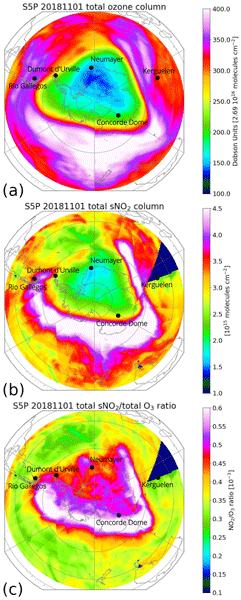
Removal of stratospheric nitrogen oxides is crucial for the formation of the ozone hole. TROPOMI satellite measurements of nitrogen dioxide reveal the presence of a not dissimilar "nitrogen hole" that largely coincides with the ozone hole. Three very distinct regimes were identified: inside and outside the ozone hole and the transition zone in between. Our results introduce a valuable and innovative application highly relevant for Antarctic ozone hole and ozone layer recovery.
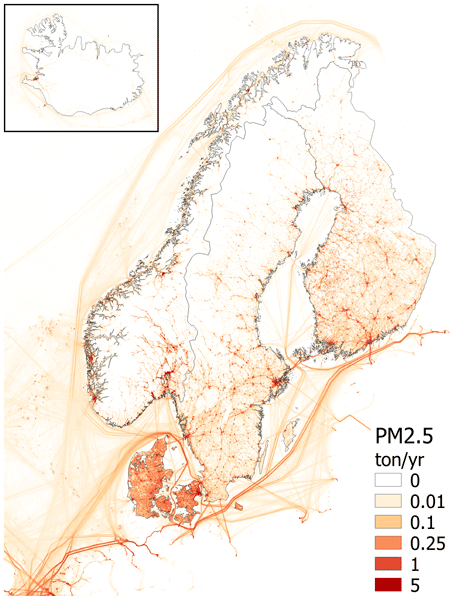
Ville-Veikko Paunu, Niko Karvosenoja, David Segersson, Susana López-Aparicio, Ole-Kenneth Nielsen, Marlene Schmidt Plejdrup, Throstur Thorsteinsson, Dam Thanh Vo, Jeroen Kuenen, Hugo Denier van der Gon, Jukka-Pekka Jalkanen, Jørgen Brandt, and Camilla Geels
Earth Syst. Sci. Data, 16, 1453–1474, https://doi.org/10.5194/essd-16-1453-2024, https://doi.org/10.5194/essd-16-1453-2024, 2024
Short summary
Short summary
Air pollution is an important cause of adverse health effects, even in Nordic countries. To assess their health impacts, emission inventories with high spatial resolution are needed. We studied how national data and methods for the spatial distribution of the emissions compare to a European level inventory. For road transport the methods are well established, but for machinery and off-road emissions the current recommendations for the spatial distribution of these emissions should be improved.
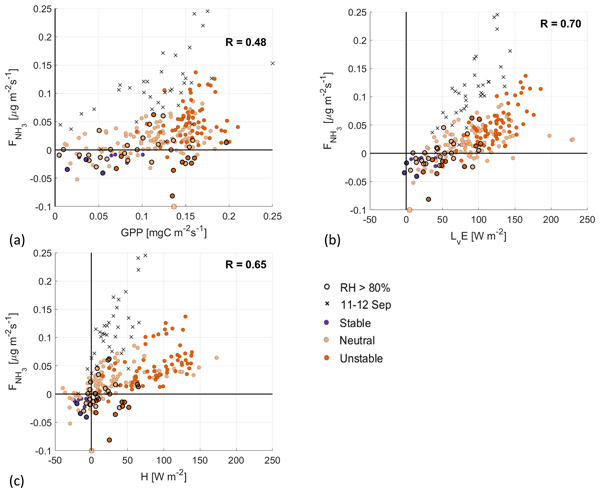
Ruben B. Schulte, Jordi Vilà-Guerau de Arellano, Susanna Rutledge-Jonker, Shelley van der Graaf, Jun Zhang, and Margreet C. van Zanten
Biogeosciences, 21, 557–574, https://doi.org/10.5194/bg-21-557-2024, https://doi.org/10.5194/bg-21-557-2024, 2024
Short summary
Short summary
We analyzed measurements with the aim of finding relations between the surface atmosphere exchange of NH3 and the CO2 uptake and transpiration by vegetation. We found a high correlation of daytime NH3 emissions with both latent heat flux and photosynthetically active radiation. Very few simultaneous measurements of NH3, CO2 fluxes and meteorological variables exist at sub-diurnal timescales. This study paves the way to finding more robust relations between the NH3 exchange flux and CO2 uptake.
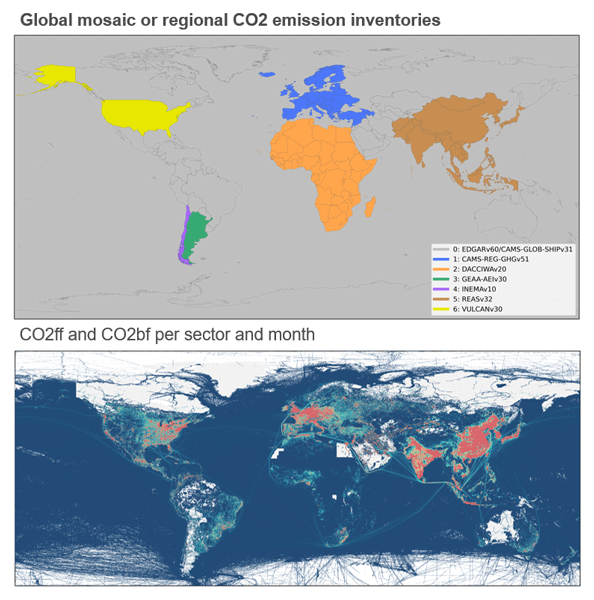
Ruben Urraca, Greet Janssens-Maenhout, Nicolás Álamos, Lucas Berna-Peña, Monica Crippa, Sabine Darras, Stijn Dellaert, Hugo Denier van der Gon, Mark Dowell, Nadine Gobron, Claire Granier, Giacomo Grassi, Marc Guevara, Diego Guizzardi, Kevin Gurney, Nicolás Huneeus, Sekou Keita, Jeroen Kuenen, Ana Lopez-Noreña, Enrique Puliafito, Geoffrey Roest, Simone Rossi, Antonin Soulie, and Antoon Visschedijk
Earth Syst. Sci. Data, 16, 501–523, https://doi.org/10.5194/essd-16-501-2024, https://doi.org/10.5194/essd-16-501-2024, 2024
Short summary
Short summary
CoCO2-MOSAIC 1.0 is a global mosaic of regional bottom-up inventories providing gridded (0.1×0.1) monthly emissions of anthropogenic CO2. Regional inventories include country-specific information and finer spatial resolution than global inventories. CoCO2-MOSAIC provides harmonized access to these datasets and can be considered as a regionally accepted reference to assess the quality of global inventories, as done in the current paper.
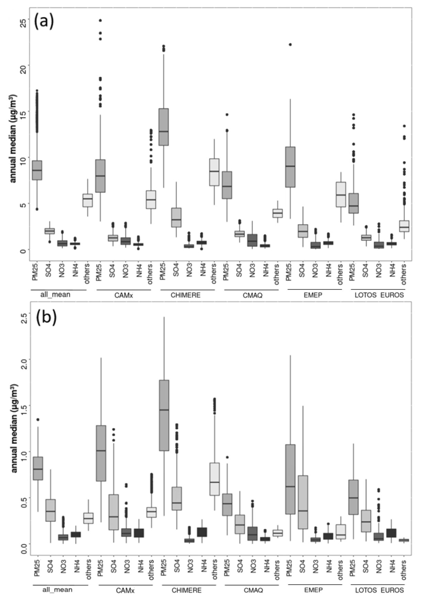
Lea Fink, Matthias Karl, Volker Matthias, Sonia Oppo, Richard Kranenburg, Jeroen Kuenen, Sara Jutterström, Jana Moldanova, Elisa Majamäki, and Jukka-Pekka Jalkanen
Atmos. Chem. Phys., 23, 10163–10189, https://doi.org/10.5194/acp-23-10163-2023, https://doi.org/10.5194/acp-23-10163-2023, 2023
Short summary
Short summary
The Mediterranean Sea is a heavily trafficked shipping area, and air quality monitoring stations in numerous cities along the Mediterranean coast have detected high levels of air pollutants originating from shipping emissions. The current study investigates how existing restrictions on shipping-related emissions to the atmosphere ensure compliance with legislation. Focus was laid on fine particles and particle species, which were simulated with five different chemical transport models.
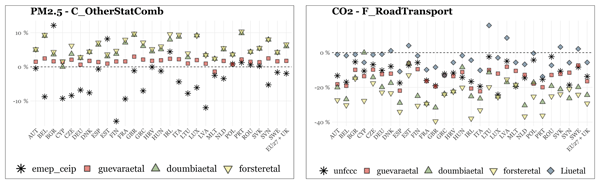
Marc Guevara, Hervé Petetin, Oriol Jorba, Hugo Denier van der Gon, Jeroen Kuenen, Ingrid Super, Claire Granier, Thierno Doumbia, Philippe Ciais, Zhu Liu, Robin D. Lamboll, Sabine Schindlbacher, Bradley Matthews, and Carlos Pérez García-Pando
Atmos. Chem. Phys., 23, 8081–8101, https://doi.org/10.5194/acp-23-8081-2023, https://doi.org/10.5194/acp-23-8081-2023, 2023
Short summary
Short summary
This study provides an intercomparison of European 2020 emission changes derived from official inventories, which are reported by countries under the framework of several international conventions and directives, and non-official near-real-time estimates, the use of which has significantly grown since the COVID-19 outbreak. The results of the work are used to produce recommendations on how best to approach and make use of near-real-time emissions for modelling and monitoring applications.
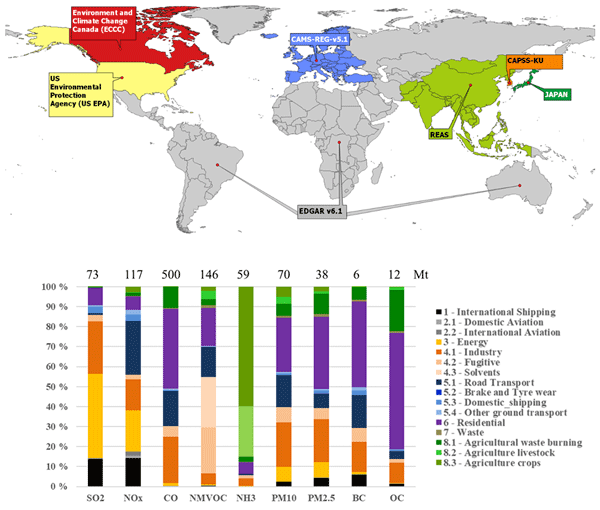
Monica Crippa, Diego Guizzardi, Tim Butler, Terry Keating, Rosa Wu, Jacek Kaminski, Jeroen Kuenen, Junichi Kurokawa, Satoru Chatani, Tazuko Morikawa, George Pouliot, Jacinthe Racine, Michael D. Moran, Zbigniew Klimont, Patrick M. Manseau, Rabab Mashayekhi, Barron H. Henderson, Steven J. Smith, Harrison Suchyta, Marilena Muntean, Efisio Solazzo, Manjola Banja, Edwin Schaaf, Federico Pagani, Jung-Hun Woo, Jinseok Kim, Fabio Monforti-Ferrario, Enrico Pisoni, Junhua Zhang, David Niemi, Mourad Sassi, Tabish Ansari, and Kristen Foley
Earth Syst. Sci. Data, 15, 2667–2694, https://doi.org/10.5194/essd-15-2667-2023, https://doi.org/10.5194/essd-15-2667-2023, 2023
Short summary
Short summary
This study responds to the global and regional atmospheric modelling community's need for a mosaic of air pollutant emissions with global coverage, long time series, spatially distributed data at a high time resolution, and a high sectoral resolution in order to enhance the understanding of transboundary air pollution. The mosaic approach to integrating official regional emission inventories with a global inventory based on a consistent methodology ensures policy-relevant results.
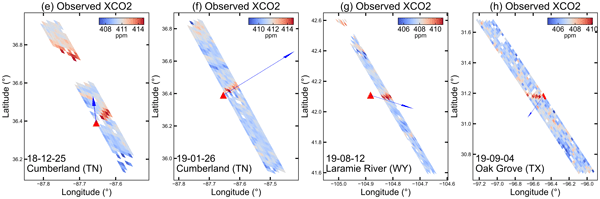
Xiaojuan Lin, Ronald van der A, Jos de Laat, Henk Eskes, Frédéric Chevallier, Philippe Ciais, Zhu Deng, Yuanhao Geng, Xuanren Song, Xiliang Ni, Da Huo, Xinyu Dou, and Zhu Liu
Atmos. Chem. Phys., 23, 6599–6611, https://doi.org/10.5194/acp-23-6599-2023, https://doi.org/10.5194/acp-23-6599-2023, 2023
Short summary
Short summary
Satellite observations provide evidence for CO2 emission signals from isolated power plants. We use these satellite observations to quantify emissions. We found that for power plants with multiple observations, the correlation of estimated and reported emissions is significantly improved compared to a single observation case. This demonstrates that accurate estimation of power plant emissions can be achieved by monitoring from future satellite missions with more frequent observations.
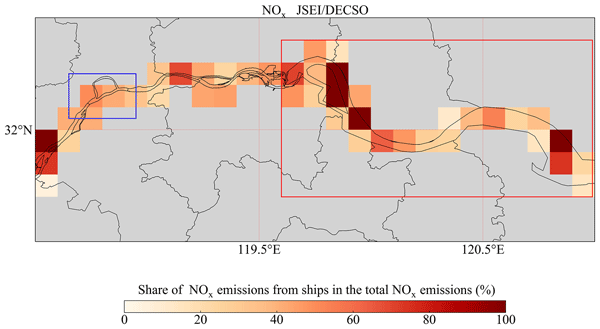
Xiumei Zhang, Ronald van der A, Jieying Ding, Xin Zhang, and Yan Yin
Atmos. Chem. Phys., 23, 5587–5604, https://doi.org/10.5194/acp-23-5587-2023, https://doi.org/10.5194/acp-23-5587-2023, 2023
Short summary
Short summary
We compiled a ship emission inventory based on automatic identification system (AIS) signals in the Jiangsu section of the Yangtze River. This ship emission inventory was compared with Chinese bottom-up inventories and the satellite-derived emissions from TROPOMI. The result shows a consistent spatial distribution, with riverine cities having high NOx emissions. Inland ship emissions of NOx are shown to contribute at least 40 % to air pollution along the river.
Lea Fink, Matthias Karl, Volker Matthias, Sonia Oppo, Richard Kranenburg, Jeroen Kuenen, Jana Moldanova, Sara Jutterström, Jukka-Pekka Jalkanen, and Elisa Majamäki
Atmos. Chem. Phys., 23, 1825–1862, https://doi.org/10.5194/acp-23-1825-2023, https://doi.org/10.5194/acp-23-1825-2023, 2023
Short summary
Short summary
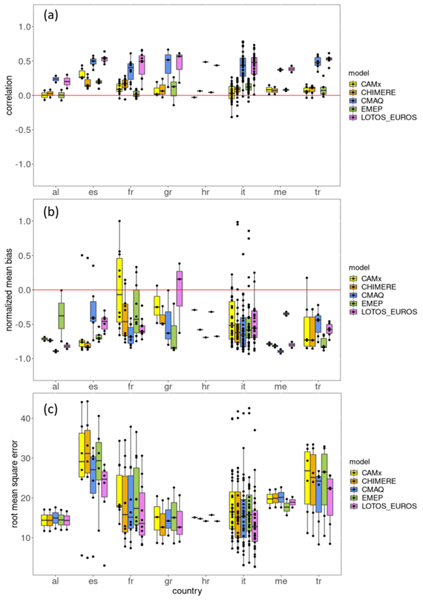
Potential ship impact on air pollution in the Mediterranean Sea was simulated with five chemistry transport models. An evaluation of the results for NO2 and O3 air concentrations and dry deposition is presented. Emission data, modeled year and domain were the same. Model run outputs were compared to measurements from background stations. We focused on comparing model outputs regarding the concentration of regulatory pollutants and the relative ship impact on total air pollution concentrations.
Daan Swart, Jun Zhang, Shelley van der Graaf, Susanna Rutledge-Jonker, Arjan Hensen, Stijn Berkhout, Pascal Wintjen, René van der Hoff, Marty Haaima, Arnoud Frumau, Pim van den Bulk, Ruben Schulte, Margreet van Zanten, and Thomas van Goethem
Atmos. Meas. Tech., 16, 529–546, https://doi.org/10.5194/amt-16-529-2023, https://doi.org/10.5194/amt-16-529-2023, 2023
Short summary
Short summary
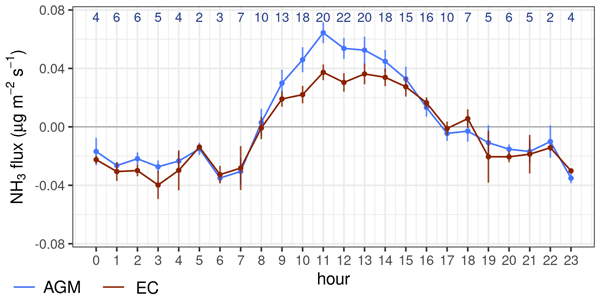
During a 5-week comparison campaign, we tested two set-ups to measure half hourly ammonia fluxes. The eddy covariance and flux gradient systems showed very similar results when the upwind terrain was both homogeneous and free of obstacles. We discuss the technical performance and practical limitations of both systems. Measurements from these instruments can facilitate the study of processes behind ammonia deposition, an important contributor to eutrophication and acidificationin natural areas.
Hanqing Kang, Bin Zhu, Gerrit de Leeuw, Bu Yu, Ronald J. van der A, and Wen Lu
Atmos. Chem. Phys., 22, 10623–10634, https://doi.org/10.5194/acp-22-10623-2022, https://doi.org/10.5194/acp-22-10623-2022, 2022
Short summary
Short summary
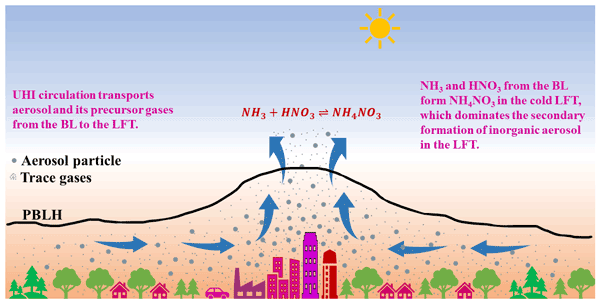
This study quantified the contribution of each urban-induced meteorological effect (temperature, humidity, and circulation) to aerosol concentration. We found that the urban heat island (UHI) circulation dominates the UHI effects on aerosol. The UHI circulation transports aerosol and its precursor gases from the warmer lower boundary layer to the colder lower free troposphere and promotes the secondary formation of ammonium nitrate aerosol in the cold atmosphere.
Philippe Thunis, Alain Clappier, Enrico Pisoni, Bertrand Bessagnet, Jeroen Kuenen, Marc Guevara, and Susana Lopez-Aparicio
Geosci. Model Dev., 15, 5271–5286, https://doi.org/10.5194/gmd-15-5271-2022, https://doi.org/10.5194/gmd-15-5271-2022, 2022
Short summary
Short summary
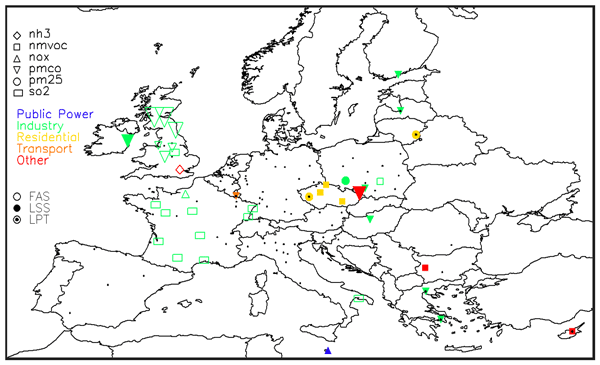
In this work, we propose a screening method to improve the quality of emission inventories, which are responsible for large uncertainties in air-quality modeling. The first step of screening consists of keeping only emission contributions that are relevant enough. In a second step, the method identifies large differences that provide evidence of methodological divergence or errors. We used the approach to compare two versions of the CAMS-REG European-scale inventory over 150 European cities.
Ruben B. Schulte, Margreet C. van Zanten, Bart J. H. van Stratum, and Jordi Vilà-Guerau de Arellano
Atmos. Chem. Phys., 22, 8241–8257, https://doi.org/10.5194/acp-22-8241-2022, https://doi.org/10.5194/acp-22-8241-2022, 2022
Short summary
Short summary
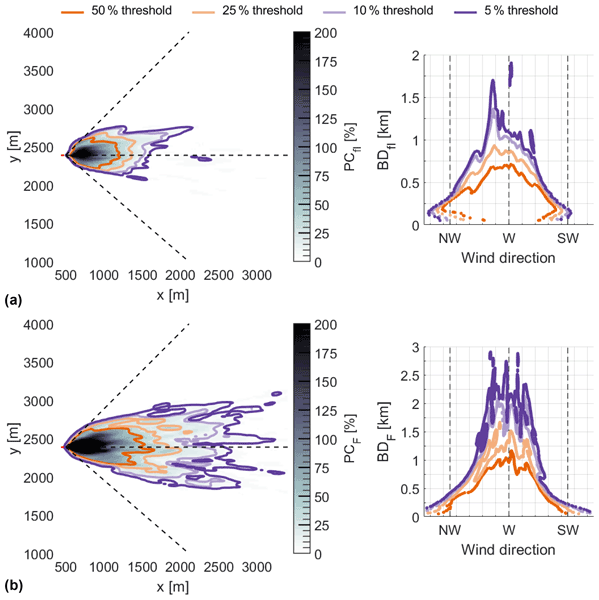
We present a fine-scale simulation framework, utilizing large-eddy simulations, to assess NH3 measurements influenced by boundary-layer dynamics and turbulent dispersion of a nearby emission source. The minimum required distance from an emission source differs for concentration and flux measurements, from 0.5–3.0 km and 0.75–4.5 km, respectively. The simulation framework presented here proves to be a powerful and versatile tool for future NH3 research at high spatio-temporal resolutions.
Marc Guevara, Hervé Petetin, Oriol Jorba, Hugo Denier van der Gon, Jeroen Kuenen, Ingrid Super, Jukka-Pekka Jalkanen, Elisa Majamäki, Lasse Johansson, Vincent-Henri Peuch, and Carlos Pérez García-Pando
Earth Syst. Sci. Data, 14, 2521–2552, https://doi.org/10.5194/essd-14-2521-2022, https://doi.org/10.5194/essd-14-2521-2022, 2022
Short summary
Short summary
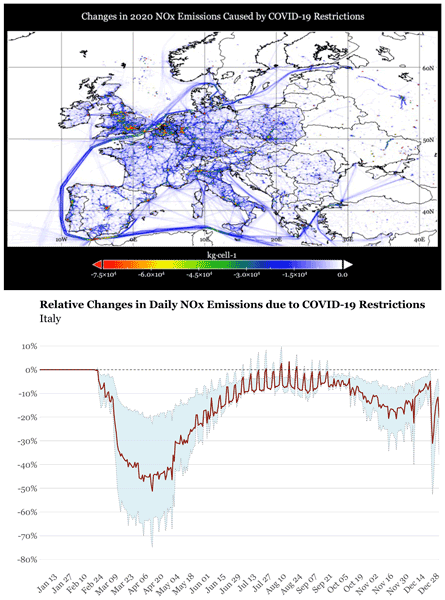
To control the spread of the COVID-19 disease, European governments implemented mobility restriction measures that resulted in an unprecedented drop in anthropogenic emissions. This work presents a dataset of emission adjustment factors that allows quantifying changes in 2020 European primary emissions per country and pollutant sector at the daily scale. The resulting dataset can be used as input in modelling studies aiming at quantifying the impact of COVID-19 on air quality levels.
Xin Zhang, Yan Yin, Ronald van der A, Henk Eskes, Jos van Geffen, Yunyao Li, Xiang Kuang, Jeff L. Lapierre, Kui Chen, Zhongxiu Zhen, Jianlin Hu, Chuan He, Jinghua Chen, Rulin Shi, Jun Zhang, Xingrong Ye, and Hao Chen
Atmos. Chem. Phys., 22, 5925–5942, https://doi.org/10.5194/acp-22-5925-2022, https://doi.org/10.5194/acp-22-5925-2022, 2022
Short summary
Short summary
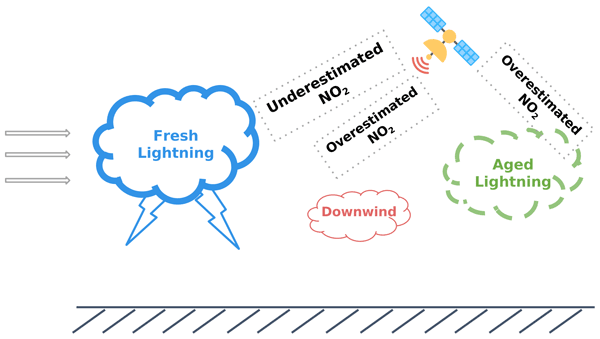
The importance of convection to the ozone and nitrogen oxides (NOx) produced from lightning has long been an open question. We utilize the high-resolution chemistry model with ozonesondes and space observations to discuss the effects of convection over southeastern China, where few studies have been conducted. Our results show the transport and chemistry contributions for various storms and demonstrate the ability of TROPOMI to estimate the lightning NOx production over small-scale convection.
Jeroen Kuenen, Stijn Dellaert, Antoon Visschedijk, Jukka-Pekka Jalkanen, Ingrid Super, and Hugo Denier van der Gon
Earth Syst. Sci. Data, 14, 491–515, https://doi.org/10.5194/essd-14-491-2022, https://doi.org/10.5194/essd-14-491-2022, 2022
Short summary
Short summary
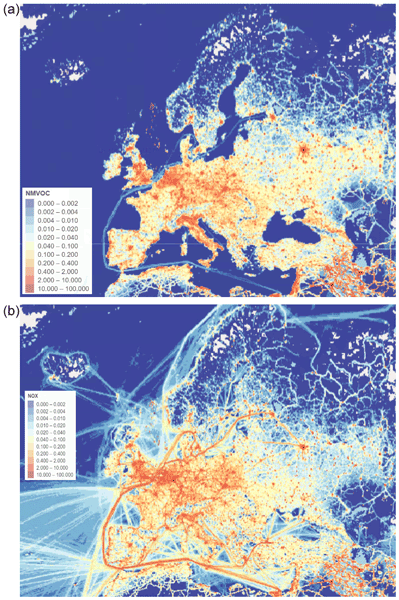
This paper presents an 18-year time series for anthropogenic emissions for the main air pollutants in Europe, distinguishing 15 main source categories. It provides a complete overview of emissions to air and is designed to support air quality modelling. The data build where possible on official country total emissions used in the policy processes, but where necessary alternative data were used. The emission data are spatially distributed at high resolution (~ 6 km x 6 km) in a consistent way.
Margarita Choulga, Greet Janssens-Maenhout, Ingrid Super, Efisio Solazzo, Anna Agusti-Panareda, Gianpaolo Balsamo, Nicolas Bousserez, Monica Crippa, Hugo Denier van der Gon, Richard Engelen, Diego Guizzardi, Jeroen Kuenen, Joe McNorton, Gabriel Oreggioni, and Antoon Visschedijk
Earth Syst. Sci. Data, 13, 5311–5335, https://doi.org/10.5194/essd-13-5311-2021, https://doi.org/10.5194/essd-13-5311-2021, 2021
Short summary
Short summary
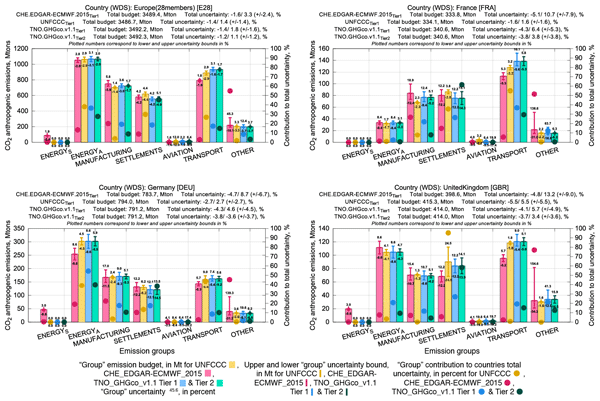
People worry that growing man-made carbon dioxide (CO2) concentrations lead to climate change. Global models, use of observations, and datasets can help us better understand behaviour of CO2. Here a tool to compute uncertainty in man-made CO2 sources per country per year and month is presented. An example of all sources separated into seven groups (intensive and average energy, industry, humans, ground and air transport, others) is presented. Results will be used to predict CO2 concentrations.
Cited articles
Baston, D.: exactextractr: Fast Extraction from Raster Datasets using Polygons, https://isciences.gitlab.io/exactextractr/ (last access: 1 December 2025), 2025.
Beirle, S., Boersma, K. F., Platt, U., Lawrence, M. G., and Wagner, T.: Megacity emissions and lifetimes of nitrogen oxides probed from space, Science, 333, 1737–1739, https://doi.org/10.1126/science.1207824, 2011.
Beirle, S., Borger, C., Jost, A., and Wagner, T.: Improved catalog of NOx point source emissions (version 2), Earth Syst. Sci. Data, 15, 3051–3073, https://doi.org/10.5194/essd-15-3051-2023, 2023.
Bieser, J., Aulinger, A., Matthias, V., Quante, M., and Denier van der Gon, H. A.: Vertical emission profiles for Europe based on plume rise calculations, Environ. Pollut., 159, 2935–2946, https://doi.org/10.1016/j.envpol.2011.04.030, 2011.
Brown, P., Cardenas, L., Vento, S. D., Karagianni, E., MacCarthy, J., Mullen, P., Gorji, S., Richmond, B., Thistlethwaite, G., Thomson, A., Wakeling, D., and Willis, D.: UK Greenhouse Gas Inventory, 1990 to 2023, Ricardo, https://unfccc.int/sites/default/files/resource/NID_90-23.pdf (last access: 19 March 2026), 2025.
Crippa, M., Guizzardi, D., Butler, T., Keating, T., Wu, R., Kaminski, J., Kuenen, J., Kurokawa, J., Chatani, S., Morikawa, T., Pouliot, G., Racine, J., Moran, M. D., Klimont, Z., Manseau, P. M., Mashayekhi, R., Henderson, B. H., Smith, S. J., Suchyta, H., Muntean, M., Solazzo, E., Banja, M., Schaaf, E., Pagani, F., Woo, J.-H., Kim, J., Monforti-Ferrario, F., Pisoni, E., Zhang, J., Niemi, D., Sassi, M., Ansari, T., and Foley, K.: The HTAP_v3 emission mosaic: merging regional and global monthly emissions (2000–2018) to support air quality modelling and policies, Earth Syst. Sci. Data, 15, 2667–2694, https://doi.org/10.5194/essd-15-2667-2023, 2023.
Dammers, E., Tokaya, J., Timmermans, R., Schaap, M., and Coenen, P.: Satellite-based Emission Verification, Umweltbundesamt, https://www.umweltbundesamt.de/en/publikationen/satellite-based-emission-verification (last access: 19 March 2026), 2023.
Ding, J., van der A, R. J., Eskes, H. J., Mijling, B., Stavrakou, T., van Geffen, J. H. G. M., and Veefkind, J. P.: NOx Emissions Reduction and Rebound in China Due to the COVID-19 Crisis, Geophys. Res. Lett., 47, https://doi.org/10.1029/2020gl089912, 2020.
Ding, J., van der A, R., Eskes, H., Dammers, E., Shephard, M., Wichink Kruit, R., Guevara, M., and Tarrason, L.: Ammonia emission estimates using CrIS satellite observations over Europe, Atmos. Chem. Phys., 24, 10583–10599, https://doi.org/10.5194/acp-24-10583-2024, 2024.
EEA: Air pollution in Europe: 2024 reporting status under the National Emission reduction Commitments Directive, European Environment Agency, https://doi.org/10.2800/019282, 2024a.
EEA: European Union emission inventory report 1990–2022 – Under the UNECE Convention on Long-range Transboundary Air Pollution (Air Convention), European Environment Agency, https://doi.org/10.2800/2893, 2024b.
FOEN: Switzerland's Greenhouse Gas Inventory 1990–2023: National Inventory Document and reporting tables (CRT), Federal Office for the Environment, https://www.bafu.admin.ch/dam/en/sd-web/rMTT3CcvG0fJ/National_Inventory_Document.pdf (last access: 19 March 2026), 2025.
Guevara, M., Jorba, O., Tena, C., Denier van der Gon, H., Kuenen, J., Elguindi, N., Darras, S., Granier, C., and Pérez García-Pando, C.: Copernicus Atmosphere Monitoring Service TEMPOral profiles (CAMS-TEMPO): global and European emission temporal profile maps for atmospheric chemistry modelling, Earth Syst. Sci. Data, 13, 367–404, https://doi.org/10.5194/essd-13-367-2021, 2021.
Hijmans, R. J.: terra: Spatial Data Analysis, GitHub [code], https://github.com/rspatial/terra (last access: 1 December 2025), 2025.
Honig, E., Montfoort, J. A., Dröge, R., van Mil, S. E. H., Guis, B., Baas, K., van Huet, B., and van Hunnik, O. R.: Methodology for the calculation of emissions to air from the sectors Energy, Industry and Waste, RIVM, https://doi.org/10.21945/RIVM-2025-0002, 2025.
Hoogerbrugge, R., Braam, M., Siteur, K., Jacobs, C., Hazelhorst, S., Stefess, G., v. d. Swaluw, E., Kruit, R. W., Wesseling, J., and v. Pul, A.: Uncertainty in the determined nitrogen deposition in the Netherlands Status report 2023, RIVM, https://doi.org/10.21945/RIVM-2022-0085, 2023.
Kuenen, J., Dellaert, S., Visschedijk, A., Jalkanen, J. P., Super, I., and van der Gon, H. D.: CAMS-REG-v4: a state-of-the-art high-resolution European emission inventory for air quality modelling, Earth Syst. Sci. Data, 14, 491–515, https://doi.org/10.5194/essd-14-491-2022, 2022.
Li, M., McDonald, B. C., McKeen, S. A., Eskes, H., Levelt, P., Francoeur, C., Hark Gouw, J. A., and Frost, G. J.: Assessment of Updated Fuel-Based Emissions Inventories Over the Contiguous United States Using TROPOMI NO2 Retrievals, J. Geophys. Rese.-Atmos., 126, https://doi.org/10.1029/2021jd035484, 2021.
Lin, X., van der A, R., de Laat, J., Huijnen, V., Mijling, B., Ding, J., Eskes, H., Douros, J., Liu, M., Zhang, X., and Liu, Z.: European Soil NOx Emissions Derived From Satellite NO2 Observations, J. Geophys. Res.-Atmos., 129, https://doi.org/10.1029/2024jd041492, 2024.
Ma, S., Liu, F., Xing, J., Baek, B. H., Wang, C. T., Li, Y., Zhang, Y., Tong, D., and Woo, J. H.: Timely Updates of Anthropogenic Emission With Satellite and Ground Observations: Comparison of Multiple Top-Down Methods Against Bottom-Up National Emission Inventories, J. Geophys. Res.-Atmos., 130, https://doi.org/10.1029/2025jd044157, 2025.
Menut, L., Bessagnet, B., Briant, R., Cholakian, A., Couvidat, F., Mailler, S., Pennel, R., Siour, G., Tuccella, P., Turquety, S., and Valari, M.: The CHIMERE v2020r1 online chemistry-transport model, Geosci. Model Dev., 14, 6781–6811, https://doi.org/10.5194/gmd-14-6781-2021, 2021.
Mijling, B. and van der A, R. J.: Using daily satellite observations to estimate emissions of short-lived air pollutants on a mesoscopic scale, J. Geophys. Rese.-Atmos., 117, https://doi.org/10.1029/2012jd017817, 2012.
Miyazaki, K., Eskes, H. J., and Sudo, K.: Global NOx emission estimates derived from an assimilation of OMI tropospheric NO2 columns, Atmos. Chem. Phys., 12, 2263–2288,https://doi.org/10.5194/acp-12-2263-2012, 2012.
Olivier, J., Guizzardi, D., Schaaf, E., Solazzo, E., Crippa, M., Vignati, E., Banja, M., Muntean, M., Grassi, G., Monforti-Ferrario, F., and Rossi, S.: GHG emissions of all world – 2021 report, Publications Office of the European Union, https://doi.org/10.2760/173513, 2021.
PDOK: Dataset: Bestuurlijke Gebieden, https://www.pdok.nl/introductie/-/article/bestuurlijke-gebieden (last access: 1 May 2024), 2024.
Rijsdijk, P., Eskes, H., Dingemans, A., Boersma, K. F., Sekiya, T., Miyazaki, K., and Houweling, S.: Quantifying uncertainties in satellite NO2 superobservations for data assimilation and model evaluation, Geosci. Model Dev., 18, 483–509, https://doi.org/10.5194/gmd-18-483-2025, 2025.
RWS: Weggegevens – maximumsnelheden en rijbanen (WEGGEG), https://inspire-geoportal.ec.europa.eu/srv/api/records/abaf1e22-55aa-4a11-a855-7ac963e4a82b (last access: 29 May 2024), 2024.
Soulie, A., Granier, C., Darras, S., Zilbermann, N., Doumbia, T., Guevara, M., Jalkanen, J.-P., Keita, S., Liousse, C., Crippa, M., Guizzardi, D., Hoesly, R., and Smith, S. J.: Global anthropogenic emissions (CAMS-GLOB-ANT) for the Copernicus Atmosphere Monitoring Service simulations of air quality forecasts and reanalyses, Earth Syst. Sci. Data, 16, 2261–2279, https://doi.org/10.5194/essd-16-2261-2024, 2024.
Staats, N., Bolech, M., Dellaert, S. N. C., Dröge, R., van Eijk, E., Honig, E., van Huet , B., van Huijstee, J., van Mil, S. E. H., te Molder, R. A. B., Plomp, A. J., Wever, D., Witt, H., van Zanten, M. C., and van der Zee, T.: Informative Inventory Report 2025 Emissions of transboundary pollutants in the Netherlands 1990–2023, RIVM, https://doi.org/10.21945/RIVM-2025-0007, 2025.
Stavrakou, T., Müller, J. F., Boersma, K. F., De Smedt, I., and van der A, R. J.: Assessing the distribution and growth rates of NOx emission sources by inverting a 10-year record of NO2 satellite columns, Geophys. Res. Lett., 35, https://doi.org/10.1029/2008gl033521, 2008.
UBA: German Informative Inventory Report 2025 (IIR 2025), Umweltbundesamt, https://iir.umweltbundesamt.de/2025/ (last access: 19 March 2026), 2025.
van der A, R. J., Ding, J., and Eskes, H.: Monitoring European anthropogenic NOx emissions from space, Atmos. Chem. Phys., 24, 7523–7534, https://doi.org/10.5194/acp-24-7523-2024, 2024.
van der Zee, T. C., Bleeker, A., van Bruggen, C., Bussink, W., van Dooren, H. J. C., Groenestein, C. M., Huijsmans, J. F. M., Kros, H., van der Most, M., Oltmer, K., Ros, M., Schulte-Uebbing, L., and Velthof, G. L.: Methodology for the calculation of emissions from agriculture, RIVM, https://doi.org/10.21945/RIVM-2025-0003, 2025.
van Geffen, J., Eskes, H., Compernolle, S., Pinardi, G., Verhoelst, T., Lambert, J.-C., Sneep, M., ter Linden, M., Ludewig, A., Boersma, K. F., and Veefkind, J. P.: Sentinel-5P TROPOMI NO2 retrieval: impact of version v2.2 improvements and comparisons with OMI and ground-based data, Atmos. Meas. Tech., 15, 2037–2060, https://doi.org/10.5194/amt-15-2037-2022, 2022.
Visschedijk, A., Meesters, J. A. J., Nijkamp, M. M., Koch, W. W. R., Jansen, B. I., and Dröge, R.: Methodology for the calculation of emissions from product usage by consumers, construction and services, RIVM, https://doi.org/10.21945/RIVM-2025-0004, 2025.
Witt, H., Molder, R. t., and v. Zanten, M. C.: Luchtvaartemissies boven Nederlands grondgebied boven 3.000 voet, RIVM, https://doi.org/10.21945/RIVM-KN-2024-0012 2024.
Witt, H., Geilenkirchen, G., Bolech, M., Dellaert, S., van Eijk, E., Geertjes, K., and Kosterman, M.: Methodology for the calculation of emissions from the transport sector, RIVM, https://doi.org/10.21945/RIVM-2025-0006, 2025.
Witt, H., van der A, R. J., Ding, J., Kuenen, J., and van Zanten, M. C.: Scripts and Data for the article “A detailed comparison of the Dutch emission inventory with satellite-derived NOx emissions”, Zenodo [data set], https://doi.org/10.5281/zenodo.19368235, 2026.
Short summary
We present a detailed comparison of NOx emissions from the Dutch national emission inventory with completely independent emission data derived from satellite observations with the DECSO algorithm. We find good agreement in overall emission levels, regional emissions, and the 5-year emission trend. Our results demonstrate the robustness of the national inventory and the satellite-derived emissions and might serve as a use-case for the adoption of similar methods in other countries.
We present a detailed comparison of NOx emissions from the Dutch national emission inventory...


Altmetrics
Final-revised paper
Preprint