Articles | Volume 26, issue 7
https://doi.org/10.5194/acp-26-4841-2026
© Author(s) 2026. This work is distributed under
the Creative Commons Attribution 4.0 License.

https://doi.org/10.5194/acp-26-4841-2026
© Author(s) 2026. This work is distributed under
the Creative Commons Attribution 4.0 License.
Tropospheric low ozone and its diurnal cycle over the Western Pacific warm pool from solar absorption FTIR observations
Xiaoyu Sun
Institute of Environmental Physics, University of Bremen, Otto-Hahn-Allee 1, 28359 Bremen, Germany
Mathias Palm
Institute of Environmental Physics, University of Bremen, Otto-Hahn-Allee 1, 28359 Bremen, Germany
Katrin Müller
Alfred Wegener Institute, Helmholtz Centre for Polar and Marine Research, 14473 Potsdam, Germany
Denghui Ji
CORRESPONDING AUTHOR
Institute of Environmental Physics, University of Bremen, Otto-Hahn-Allee 1, 28359 Bremen, Germany
Sharon Patris
Coral Reef Research Foundation, 96940 Koror, Palau
Justus Notholt
Institute of Environmental Physics, University of Bremen, Otto-Hahn-Allee 1, 28359 Bremen, Germany
Related authors
Denghui Ji, Xiaoyu Sun, Christoph Ritter, and Justus Notholt
Atmos. Meas. Tech., 19, 421–436, https://doi.org/10.5194/amt-19-421-2026, https://doi.org/10.5194/amt-19-421-2026, 2026
Short summary
Short summary
We have developed a new method that uses machine learning to analyse aerosols by combining different instruments measuring at different wavelengths. This method can identify the composition of these aerosols faster and more accurately. We tested it using ground-based data. Our results show that this method can help monitor air quality and better understand the impact of aerosols on the climate.
Denghui Ji, Christoph Ritter, Xiaoyu Sun, Manuel Moser, Christiane Voigt, Mathias Palm, and Justus Notholt
Atmos. Chem. Phys., 25, 13037–13052, https://doi.org/10.5194/acp-25-13037-2025, https://doi.org/10.5194/acp-25-13037-2025, 2025
Short summary
Short summary
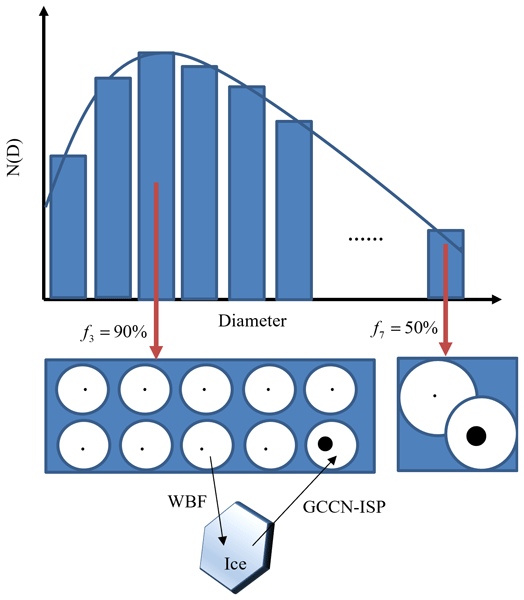
We discovered a process where large aerosols help small water droplets in Arctic clouds grow, even when conditions normally favor ice. Unlike the traditional view, this process may explain how liquid and ice can coexist in cold clouds. Based on theory and aircraft data, our findings provide new insight into the microphysics of mixed-phase clouds, which could improve understanding of how Arctic clouds affect climate.
Xiaoyu Sun, Katrin Müller, Mathias Palm, Christoph Ritter, Denghui Ji, Tim Balthasar Röpke, and Justus Notholt
Atmos. Chem. Phys., 25, 6881–6902, https://doi.org/10.5194/acp-25-6881-2025, https://doi.org/10.5194/acp-25-6881-2025, 2025
Short summary
Short summary
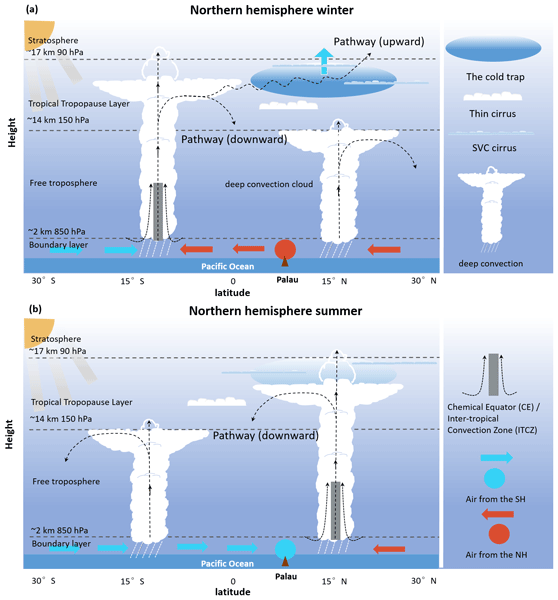
We studied how air moves from the lower atmosphere to the stratosphere over the tropical western Pacific. Using observations and air tracking, we found that, in winter, air ascends and cold temperatures freeze water out, drying it before it enters the stratosphere. In summer, air tends to sink after cloud formation. This process affects water vapor amounts in the stratosphere, influencing the greenhouse effect and climate.
Denghui Ji, Mathias Palm, Matthias Buschmann, Kerstin Ebell, Marion Maturilli, Xiaoyu Sun, and Justus Notholt
Atmos. Chem. Phys., 25, 3889–3904, https://doi.org/10.5194/acp-25-3889-2025, https://doi.org/10.5194/acp-25-3889-2025, 2025
Short summary
Short summary
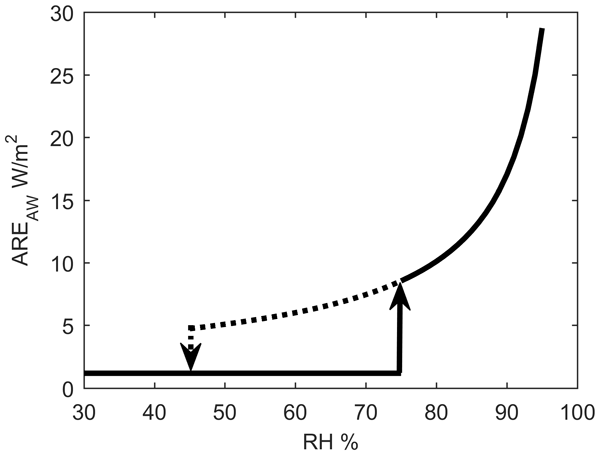
Our study explores how certain aerosols, like sea salt, affect infrared heat radiation in the Arctic, potentially speeding up warming. We used advanced technology to measure aerosol composition and found that these particles grow with humidity, significantly increasing their heat-trapping effect in the infrared region, especially in winter. Our findings suggest these aerosols could be a key factor in Arctic warming, emphasizing the importance of understanding aerosols for climate prediction.
Xiaoyu Sun, Mathias Palm, Katrin Müller, Jonas Hachmeister, and Justus Notholt
Atmos. Chem. Phys., 23, 7075–7090, https://doi.org/10.5194/acp-23-7075-2023, https://doi.org/10.5194/acp-23-7075-2023, 2023
Short summary
Short summary
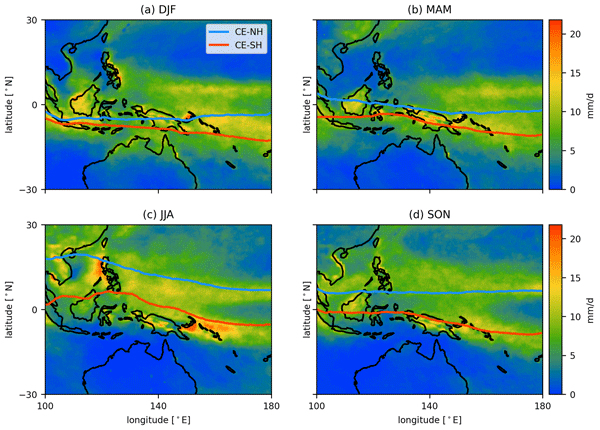
The tropical western Pacific (TWP) is an active interhemispheric transport region contributing significantly to the global climate. A method to determine the chemical equator was developed by model simulations of a virtual passive tracer to analyze transport in the tropics, with a focus on the TWP region. We compare the chemical equator with tropical rain belts and wind fields and obtain a vertical pattern of interhemispheric transport processes which shows tilt structure in certain seasons.
Denghui Ji, Mathias Palm, Christoph Ritter, Philipp Richter, Xiaoyu Sun, Matthias Buschmann, and Justus Notholt
Atmos. Meas. Tech., 16, 1865–1879, https://doi.org/10.5194/amt-16-1865-2023, https://doi.org/10.5194/amt-16-1865-2023, 2023
Short summary
Short summary
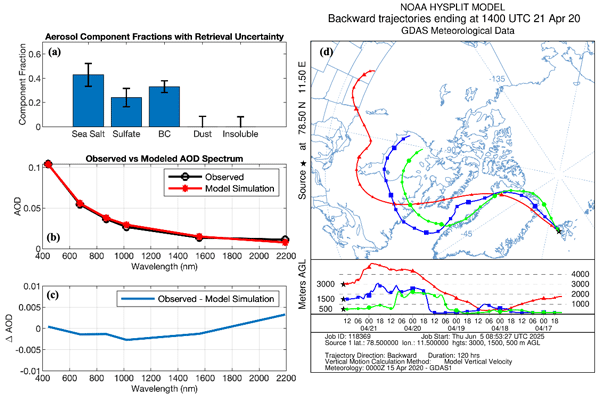
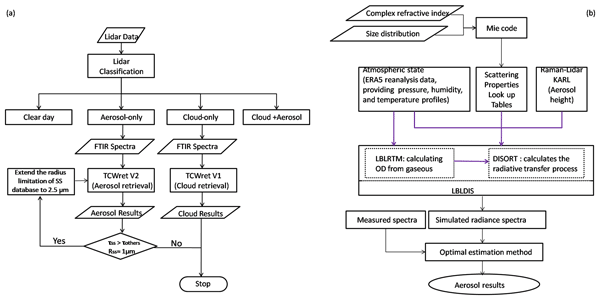
To measuring aerosol components, a Fourier transform infrared spectrometer (FTIS) and a lidar are operated in Ny-Ålesund, Spitsbergen (78° N, 11° E). Using the FTIS, a retrieval algorithm is developed for dust, sea salt, black carbon, and sulfate. The distribution of aerosols or clouds is provided by lidar and used as an indicator for aerosol or cloud retrieval with the FTS. Thus, a two-instrument joint-observation scheme is designed and is used on the data measured from 2019 to the present.
Constantina Rousogenous, Christof Petri, Pierre-Yves Quéhé, Thomas Laemmel, Joshua L. Laughner, Maximilien Desservettaz, Michael Pikridas, Michel Ramonet, Efstratios Bourtsoukidis, Matthias Buschmann, Justus Notholt, Thorsten Warneke, Jean-Daniel Paris, Jean Sciare, and Mihalis Vrekoussis
Atmos. Meas. Tech., 19, 565–581, https://doi.org/10.5194/amt-19-565-2026, https://doi.org/10.5194/amt-19-565-2026, 2026
Short summary
Short summary
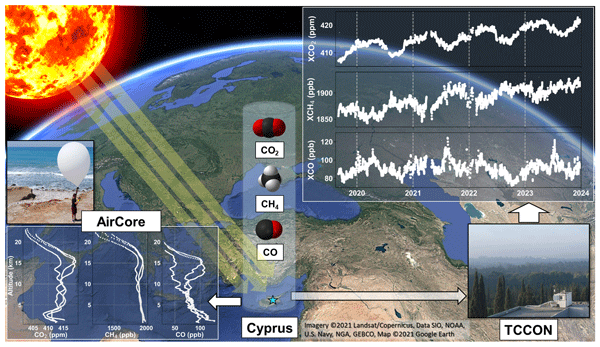
The Eastern Mediterranean and Middle East is a greenhouse gas emission hotspot but lacks atmospheric monitoring. Our study introduces the first Total Carbon Column Observing Network site in this region, in Cyprus, providing high-precision columnar measurement of key greenhouse gases. This new dataset enhances global climate monitoring efforts, supports the validation of satellites, will help assess regional emission trends, filling a critical observational gap in this climate-sensitive region.
Denghui Ji, Xiaoyu Sun, Christoph Ritter, and Justus Notholt
Atmos. Meas. Tech., 19, 421–436, https://doi.org/10.5194/amt-19-421-2026, https://doi.org/10.5194/amt-19-421-2026, 2026
Short summary
Short summary
We have developed a new method that uses machine learning to analyse aerosols by combining different instruments measuring at different wavelengths. This method can identify the composition of these aerosols faster and more accurately. We tested it using ground-based data. Our results show that this method can help monitor air quality and better understand the impact of aerosols on the climate.
Anne M. Thompson, Ryan M. Stauffer, Debra E. Kollonige, Jerald R. Ziemke, Bryan J. Johnson, Gary A. Morris, Patrick Cullis, María Cazorla, Jorge Andres Diaz, Ankie Piters, Igor Nedeljkovic, Truus Warsodikromo, Francisco Raimundo Silva, E. Thomas Northam, Patrick Benjamin, Thumeka Mkololo, Tshidi Machinini, Christian Félix, Gonzague Romanens, Syprose Nyadida, Jérôme Brioude, Stéphanie Evan, Jean-Marc Metzger, Ambun Dindang, Yuzaimi B. Mahat, Mohan Kumar Sammathuria, Norazura Binti Zakaria, Ninong Komala, Shin-Ya Ogino, Nguyen Thi Quyen, Francis S. Mani, Miriama Vuiyasawa, David Nardini, Matthew Martinsen, Darryl T. Kuniyuki, Katrin Müller, Pawel Wolff, and Bastien Sauvage
Atmos. Chem. Phys., 25, 18475–18507, https://doi.org/10.5194/acp-25-18475-2025, https://doi.org/10.5194/acp-25-18475-2025, 2025
Short summary
Short summary
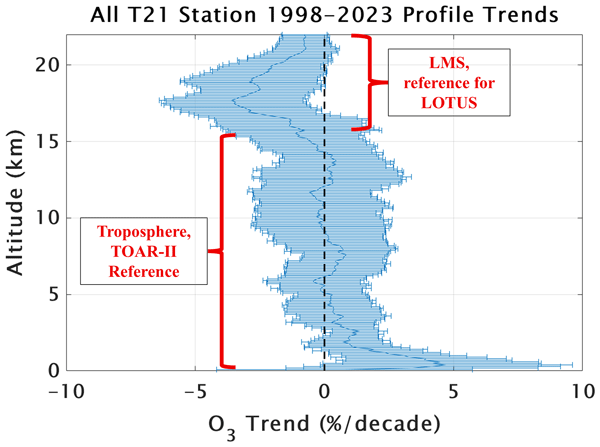
Ozone profile trends from SHADOZ sondes and IAGOS aircraft show that ozone in the tropical free troposphere (FT) is not growing fast except over equatorial SE Asia. This agrees with HEGIFTOM (Van Malderen et al., 2025), Stauffer et al. (2024) and Gaudel et al. (2024) TOAR-II papers. Other findings are as follows: (1) our trends are independent of method (QR, MLR) and (2) sample number (SN) (i.e., SHADOZ sampling is sufficient), and (3) all ground-based trends constitute the gold standard for satellite-derived trends.
Jonas Hachmeister, Debra Wunch, Erin McGee, Kimberly Strong, Rigel Kivi, Justus Notholt, Thorsten Warneke, and Matthias Buschmann
Atmos. Meas. Tech., 18, 7105–7128, https://doi.org/10.5194/amt-18-7105-2025, https://doi.org/10.5194/amt-18-7105-2025, 2025
Short summary
Short summary
Methane measurements from the Total Carbon Column Observing Network (TCCON) are important for climate research, especially in the Arctic, where few measurements are available. We show that during early spring systematic errors are present in these data that are correlated to the presence of the polar vortex. These errors occur due to the usage of wrong methane prior shapes in the retrieval and can be alleviated by modifying the prior shape accordingly.
Denghui Ji, Christoph Ritter, Xiaoyu Sun, Manuel Moser, Christiane Voigt, Mathias Palm, and Justus Notholt
Atmos. Chem. Phys., 25, 13037–13052, https://doi.org/10.5194/acp-25-13037-2025, https://doi.org/10.5194/acp-25-13037-2025, 2025
Short summary
Short summary
We discovered a process where large aerosols help small water droplets in Arctic clouds grow, even when conditions normally favor ice. Unlike the traditional view, this process may explain how liquid and ice can coexist in cold clouds. Based on theory and aircraft data, our findings provide new insight into the microphysics of mixed-phase clouds, which could improve understanding of how Arctic clouds affect climate.
Roeland Van Malderen, Zhou Zang, Kai-Lan Chang, Robin Björklund, Owen R. Cooper, Jane Liu, Eliane Maillard Barras, Corinne Vigouroux, Irina Petropavlovskikh, Thierry Leblanc, Valérie Thouret, Pawel Wolff, Peter Effertz, Audrey Gaudel, David W. Tarasick, Herman G. J. Smit, Anne M. Thompson, Ryan M. Stauffer, Debra E. Kollonige, Deniz Poyraz, Gérard Ancellet, Marie-Renée De Backer, Matthias M. Frey, James W. Hannigan, José L. Hernandez, Bryan J. Johnson, Nicholas Jones, Rigel Kivi, Emmanuel Mahieu, Isamu Morino, Glen McConville, Katrin Müller, Isao Murata, Justus Notholt, Ankie Piters, Maxime Prignon, Richard Querel, Vincenzo Rizi, Dan Smale, Wolfgang Steinbrecht, Kimberly Strong, and Ralf Sussmann
Atmos. Chem. Phys., 25, 9905–9935, https://doi.org/10.5194/acp-25-9905-2025, https://doi.org/10.5194/acp-25-9905-2025, 2025
Short summary
Short summary
Tropospheric ozone is an important greenhouse gas and an air pollutant whose distribution and time variability are mainly governed by anthropogenic emissions and dynamics. In this paper, we assess regional trends of tropospheric ozone column amounts, based on two different approaches of merging or synthesizing ground-based observations and their trends within specific regions. Our findings clearly demonstrate regional trend differences but also consistently higher pre-COVID than post-COVID trends.
Lukas Heizmann, Mathias Palm, Justus Notholt, and Matthias Buschmann
EGUsphere, https://doi.org/10.5194/egusphere-2025-3691, https://doi.org/10.5194/egusphere-2025-3691, 2025
Short summary
Short summary
Fourier transform infrared emission spectroscopy measures the infrared radiation originating from the thermal emission of the atmosphere. The measured interferograms are transformed into spectra via Fourier transformation. The established method for calibration is strictly speaking only valid for infinitely long interferograms. We quantify the errors caused by this idealization in a case study and find that they are generally below 0.05 % in spectral regions that are of interest for retrievals.
Wanmin Gong, Stephen R. Beagley, Kenjiro Toyota, Henrik Skov, Jesper Heile Christensen, Alex Lupu, Diane Pendlebury, Junhua Zhang, Ulas Im, Yugo Kanaya, Alfonso Saiz-Lopez, Roberto Sommariva, Peter Effertz, John W. Halfacre, Nis Jepsen, Rigel Kivi, Theodore K. Koenig, Katrin Müller, Claus Nordstrøm, Irina Petropavlovskikh, Paul B. Shepson, William R. Simpson, Sverre Solberg, Ralf M. Staebler, David W. Tarasick, Roeland Van Malderen, and Mika Vestenius
Atmos. Chem. Phys., 25, 8355–8405, https://doi.org/10.5194/acp-25-8355-2025, https://doi.org/10.5194/acp-25-8355-2025, 2025
Short summary
Short summary
This study showed that the springtime O3 depletion plays a critical role in driving the surface O3 seasonal cycle in the central Arctic. The O3 depletion events, while occurring most notably within the lowest few hundred metres above the Arctic Ocean, can induce a 5–7 % loss in the pan-Arctic tropospheric O3 burden during springtime. The study also found enhancements in O3 and NOy (mostly peroxyacetyl nitrate) concentrations in the Arctic due to northern boreal wildfires, particularly at higher altitudes.
Roeland Van Malderen, Anne M. Thompson, Debra E. Kollonige, Ryan M. Stauffer, Herman G. J. Smit, Eliane Maillard Barras, Corinne Vigouroux, Irina Petropavlovskikh, Thierry Leblanc, Valérie Thouret, Pawel Wolff, Peter Effertz, David W. Tarasick, Deniz Poyraz, Gérard Ancellet, Marie-Renée De Backer, Stéphanie Evan, Victoria Flood, Matthias M. Frey, James W. Hannigan, José L. Hernandez, Marco Iarlori, Bryan J. Johnson, Nicholas Jones, Rigel Kivi, Emmanuel Mahieu, Glen McConville, Katrin Müller, Tomoo Nagahama, Justus Notholt, Ankie Piters, Natalia Prats, Richard Querel, Dan Smale, Wolfgang Steinbrecht, Kimberly Strong, and Ralf Sussmann
Atmos. Chem. Phys., 25, 7187–7225, https://doi.org/10.5194/acp-25-7187-2025, https://doi.org/10.5194/acp-25-7187-2025, 2025
Short summary
Short summary
Tropospheric ozone is an important greenhouse gas and is an air pollutant. The time variability of tropospheric ozone is mainly driven by anthropogenic emissions. In this paper, we study the distribution and time variability of ozone from harmonized ground-based observations from five different measurement techniques. Our findings provide clear standard references for atmospheric models and evolving tropospheric ozone satellite data for the 2000–2022 period.
Xiaoyu Sun, Katrin Müller, Mathias Palm, Christoph Ritter, Denghui Ji, Tim Balthasar Röpke, and Justus Notholt
Atmos. Chem. Phys., 25, 6881–6902, https://doi.org/10.5194/acp-25-6881-2025, https://doi.org/10.5194/acp-25-6881-2025, 2025
Short summary
Short summary
We studied how air moves from the lower atmosphere to the stratosphere over the tropical western Pacific. Using observations and air tracking, we found that, in winter, air ascends and cold temperatures freeze water out, drying it before it enters the stratosphere. In summer, air tends to sink after cloud formation. This process affects water vapor amounts in the stratosphere, influencing the greenhouse effect and climate.
Denghui Ji, Mathias Palm, Matthias Buschmann, Kerstin Ebell, Marion Maturilli, Xiaoyu Sun, and Justus Notholt
Atmos. Chem. Phys., 25, 3889–3904, https://doi.org/10.5194/acp-25-3889-2025, https://doi.org/10.5194/acp-25-3889-2025, 2025
Short summary
Short summary
Our study explores how certain aerosols, like sea salt, affect infrared heat radiation in the Arctic, potentially speeding up warming. We used advanced technology to measure aerosol composition and found that these particles grow with humidity, significantly increasing their heat-trapping effect in the infrared region, especially in winter. Our findings suggest these aerosols could be a key factor in Arctic warming, emphasizing the importance of understanding aerosols for climate prediction.
Frank Hase, Paolo Castracane, Angelika Dehn, Omaira Elena García, David W. T. Griffith, Lukas Heizmann, Nicholas B. Jones, Tomi Karppinen, Rigel Kivi, Martine de Mazière, Justus Notholt, and Mahesh Kumar Sha
Atmos. Meas. Tech., 18, 1257–1267, https://doi.org/10.5194/amt-18-1257-2025, https://doi.org/10.5194/amt-18-1257-2025, 2025
Short summary
Short summary
The primary measurement result delivered by a Fourier transform spectrometer is an interferogram, and the spectrum required for further analysis needs to be calculated from the interferogram by Fourier analysis. The paper deals with technical aspects of this process and shows how the reconstruction of the spectrum can be optimized.
Jamal Makkor, Mathias Palm, Matthias Buschmann, Emmanuel Mahieu, Martyn P. Chipperfield, and Justus Notholt
Atmos. Meas. Tech., 18, 1105–1114, https://doi.org/10.5194/amt-18-1105-2025, https://doi.org/10.5194/amt-18-1105-2025, 2025
Short summary
Short summary
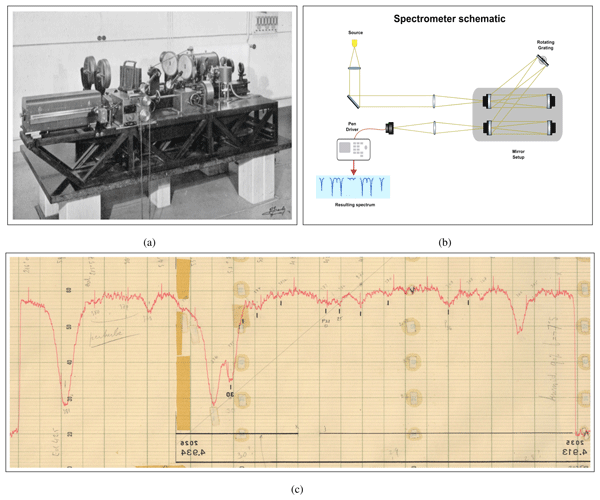
During the years 1950 and 1951, Marcel Migeotte took regular solar measurements in the form of paper rolls at the Jungfraujoch site. These historical spectra proved to be valuable for atmospheric research and needed to be saved for posterity. Therefore, a digitization method which used image-processing techniques was developed to extract them from the historical paper rolls. This allowed them to be saved in a machine-readable format that is easily accessible to the scientific community.
Hella van Asperen, Thorsten Warneke, Alessandro Carioca de Araújo, Bruce Forsberg, Sávio José Filgueiras Ferreira, Thomas Röckmann, Carina van der Veen, Sipko Bulthuis, Leonardo Ramos de Oliveira, Thiago de Lima Xavier, Jailson da Mata, Marta de Oliveira Sá, Paulo Ricardo Teixeira, Julie Andrews de França e Silva, Susan Trumbore, and Justus Notholt
Biogeosciences, 21, 3183–3199, https://doi.org/10.5194/bg-21-3183-2024, https://doi.org/10.5194/bg-21-3183-2024, 2024
Short summary
Short summary
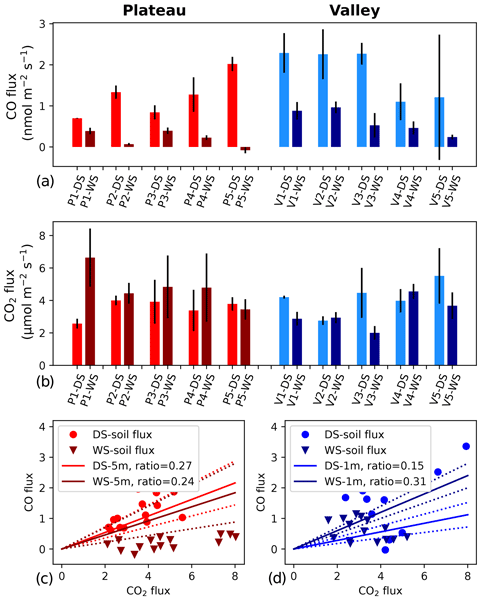
Carbon monoxide (CO) is regarded as an important indirect greenhouse gas. Soils can emit and take up CO, but, until now, uncertainty remains as to which process dominates in tropical rainforests. We present the first soil CO flux measurements from a tropical rainforest. Based on our observations, we report that tropical rainforest soils are a net source of CO. In addition, we show that valley streams and inundated areas are likely additional hot spots of CO in the ecosystem.
Joshua L. Laughner, Geoffrey C. Toon, Joseph Mendonca, Christof Petri, Sébastien Roche, Debra Wunch, Jean-Francois Blavier, David W. T. Griffith, Pauli Heikkinen, Ralph F. Keeling, Matthäus Kiel, Rigel Kivi, Coleen M. Roehl, Britton B. Stephens, Bianca C. Baier, Huilin Chen, Yonghoon Choi, Nicholas M. Deutscher, Joshua P. DiGangi, Jochen Gross, Benedikt Herkommer, Pascal Jeseck, Thomas Laemmel, Xin Lan, Erin McGee, Kathryn McKain, John Miller, Isamu Morino, Justus Notholt, Hirofumi Ohyama, David F. Pollard, Markus Rettinger, Haris Riris, Constantina Rousogenous, Mahesh Kumar Sha, Kei Shiomi, Kimberly Strong, Ralf Sussmann, Yao Té, Voltaire A. Velazco, Steven C. Wofsy, Minqiang Zhou, and Paul O. Wennberg
Earth Syst. Sci. Data, 16, 2197–2260, https://doi.org/10.5194/essd-16-2197-2024, https://doi.org/10.5194/essd-16-2197-2024, 2024
Short summary
Short summary
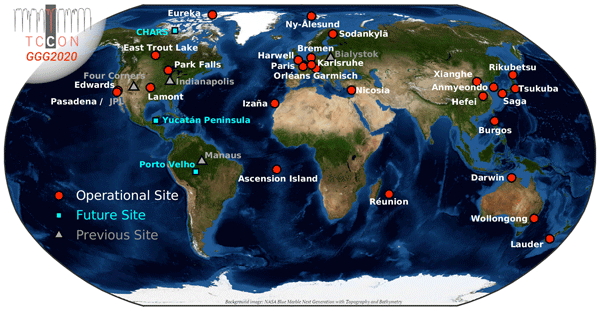
This paper describes a new version, called GGG2020, of a data set containing column-integrated observations of greenhouse and related gases (including CO2, CH4, CO, and N2O) made by ground stations located around the world. Compared to the previous version (GGG2014), improvements have been made toward site-to-site consistency. This data set plays a key role in validating space-based greenhouse gas observations and in understanding the carbon cycle.
Katrin Müller, Peter von der Gathen, and Markus Rex
Atmos. Chem. Phys., 24, 4693–4716, https://doi.org/10.5194/acp-24-4693-2024, https://doi.org/10.5194/acp-24-4693-2024, 2024
Short summary
Short summary
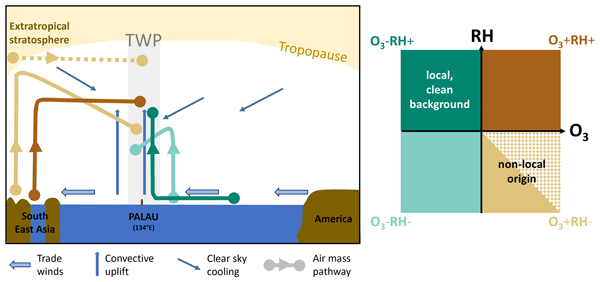
The transport history of tropospheric air masses above the tropical western Pacific is studied by local ozone and relative humidity profile measurements from Palau. A prominent anti-correlation between both tracers separates air masses of different origin and genesis. Back trajectories confirm a local convective origin of the year-round humid ozone-poor background. Anomalously dry ozone-rich air is generated in tropical Asia by pollution and dehydrated during transport via radiative cooling.
Alexandra Klemme, Thorsten Warneke, Heinrich Bovensmann, Matthias Weigelt, Jürgen Müller, Tim Rixen, Justus Notholt, and Claus Lämmerzahl
Hydrol. Earth Syst. Sci., 28, 1527–1538, https://doi.org/10.5194/hess-28-1527-2024, https://doi.org/10.5194/hess-28-1527-2024, 2024
Short summary
Short summary
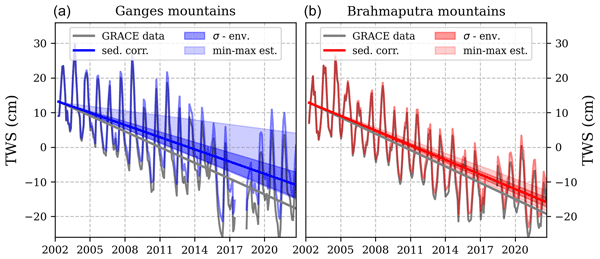
Satellite data help estimate groundwater depletion, but earlier assessments missed mass loss from river sediment. In the Ganges–Brahmaputra–Meghna (GBM) river system, sediment accounts for 4 % of the depletion. Correcting for sediment in the GBM mountains reduces estimated depletion by 14 %. It's important to note that the Himalayas' uplift may offset some sediment-induced mass loss. This understanding is vital for accurate water storage trend assessments and sustainable groundwater management.
Jean-François Müller, Trissevgeni Stavrakou, Glenn-Michael Oomen, Beata Opacka, Isabelle De Smedt, Alex Guenther, Corinne Vigouroux, Bavo Langerock, Carlos Augusto Bauer Aquino, Michel Grutter, James Hannigan, Frank Hase, Rigel Kivi, Erik Lutsch, Emmanuel Mahieu, Maria Makarova, Jean-Marc Metzger, Isamu Morino, Isao Murata, Tomoo Nagahama, Justus Notholt, Ivan Ortega, Mathias Palm, Amelie Röhling, Wolfgang Stremme, Kimberly Strong, Ralf Sussmann, Yao Té, and Alan Fried
Atmos. Chem. Phys., 24, 2207–2237, https://doi.org/10.5194/acp-24-2207-2024, https://doi.org/10.5194/acp-24-2207-2024, 2024
Short summary
Short summary
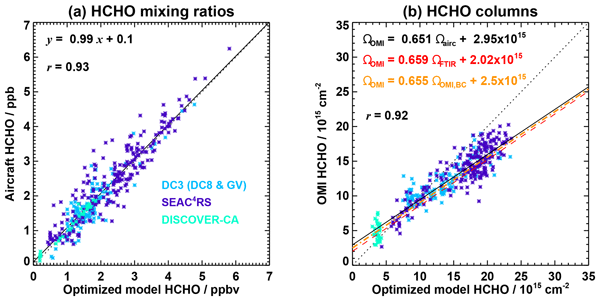
Formaldehyde observations from satellites can be used to constrain the emissions of volatile organic compounds, but those observations have biases. Using an atmospheric model, aircraft and ground-based remote sensing data, we quantify these biases, propose a correction to the data, and assess the consequence of this correction for the evaluation of emissions.
Katrin Müller, Jordis S. Tradowsky, Peter von der Gathen, Christoph Ritter, Sharon Patris, Justus Notholt, and Markus Rex
Atmos. Chem. Phys., 24, 2169–2193, https://doi.org/10.5194/acp-24-2169-2024, https://doi.org/10.5194/acp-24-2169-2024, 2024
Short summary
Short summary
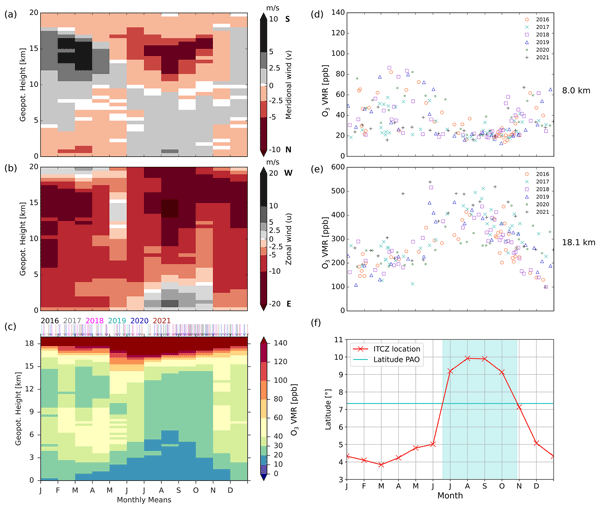
The Palau Atmospheric Observatory is introduced as an ideal site to detect changes in atmospheric composition and dynamics above the remote tropical western Pacific. We focus on the ozone sounding program from 2016–2021, including El Niño 2016. The year-round high convective activity is reflected in dominant low tropospheric ozone and high relative humidity. Their seasonal distributions are unique compared to other tropical sites and are modulated by the Intertropical Convergence Zone.
Victoria A. Flood, Kimberly Strong, Cynthia H. Whaley, Kaley A. Walker, Thomas Blumenstock, James W. Hannigan, Johan Mellqvist, Justus Notholt, Mathias Palm, Amelie N. Röhling, Stephen Arnold, Stephen Beagley, Rong-You Chien, Jesper Christensen, Makoto Deushi, Srdjan Dobricic, Xinyi Dong, Joshua S. Fu, Michael Gauss, Wanmin Gong, Joakim Langner, Kathy S. Law, Louis Marelle, Tatsuo Onishi, Naga Oshima, David A. Plummer, Luca Pozzoli, Jean-Christophe Raut, Manu A. Thomas, Svetlana Tsyro, and Steven Turnock
Atmos. Chem. Phys., 24, 1079–1118, https://doi.org/10.5194/acp-24-1079-2024, https://doi.org/10.5194/acp-24-1079-2024, 2024
Short summary
Short summary
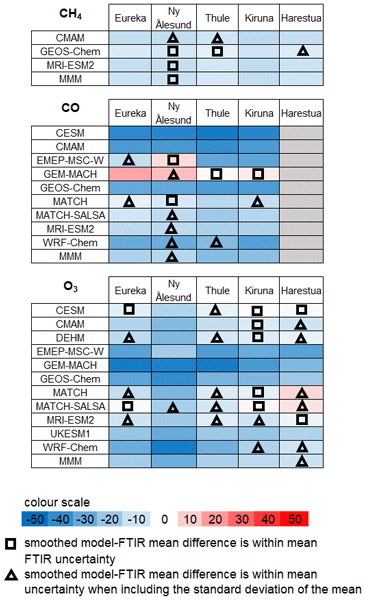
It is important to understand the composition of the Arctic atmosphere and how it is changing. Atmospheric models provide simulations that can inform policy. This study examines simulations of CH4, CO, and O3 by 11 models. Model performance is assessed by comparing results matched in space and time to measurements from five high-latitude ground-based infrared spectrometers. This work finds that models generally underpredict the concentrations of these gases in the Arctic troposphere.
Jonas Hachmeister, Oliver Schneising, Michael Buchwitz, John P. Burrows, Justus Notholt, and Matthias Buschmann
Atmos. Chem. Phys., 24, 577–595, https://doi.org/10.5194/acp-24-577-2024, https://doi.org/10.5194/acp-24-577-2024, 2024
Short summary
Short summary
We quantified changes in atmospheric methane concentrations using satellite data and a dynamic linear model approach. We calculated global annual methane increases for the years 2019–2022, which are in good agreement with other sources. For zonal methane growth rates, we identified strong inter-hemispheric differences in 2019 and 2022. For 2022, we could attribute decreases in the global growth rate to the Northern Hemisphere, possibly related to a reduction in anthropogenic emissions.
Minqiang Zhou, Bavo Langerock, Mahesh Kumar Sha, Christian Hermans, Nicolas Kumps, Rigel Kivi, Pauli Heikkinen, Christof Petri, Justus Notholt, Huilin Chen, and Martine De Mazière
Atmos. Meas. Tech., 16, 5593–5608, https://doi.org/10.5194/amt-16-5593-2023, https://doi.org/10.5194/amt-16-5593-2023, 2023
Short summary
Short summary
Atmospheric N2O and CH4 columns are successfully retrieved from low-resolution FTIR spectra recorded by a Bruker VERTEX 70. The 1-year measurements at Sodankylä show that the N2O total columns retrieved from 125HR and VERTEX 70 spectra are −0.3 ± 0.7 % with an R value of 0.93. The relative differences between the CH4 total columns retrieved from the 125HR and VERTEX spectra are 0.0 ± 0.8 % with an R value of 0.87. Such a technique can help to fill the gap in NDACC N2O and CH4 measurements.
Rafaella Chiarella, Matthias Buschmann, Joshua Laughner, Isamu Morino, Justus Notholt, Christof Petri, Geoffrey Toon, Voltaire A. Velazco, and Thorsten Warneke
Atmos. Meas. Tech., 16, 3987–4007, https://doi.org/10.5194/amt-16-3987-2023, https://doi.org/10.5194/amt-16-3987-2023, 2023
Short summary
Short summary
The goal is to establish a window and strategy for xCO2 retrieval from ground-based Fourier transform spectrometers for NDACC. In the study we describe the spectroscopy of the region, the locations and instruments used, and the methods of calculating the retrieved xCO2. We performed tests to assess the sensitivity to diverse factors and sources of errors while comparing the retrieval to a well-established xCO2 retrieval from TCCON.
Xiaoyu Sun, Mathias Palm, Katrin Müller, Jonas Hachmeister, and Justus Notholt
Atmos. Chem. Phys., 23, 7075–7090, https://doi.org/10.5194/acp-23-7075-2023, https://doi.org/10.5194/acp-23-7075-2023, 2023
Short summary
Short summary
The tropical western Pacific (TWP) is an active interhemispheric transport region contributing significantly to the global climate. A method to determine the chemical equator was developed by model simulations of a virtual passive tracer to analyze transport in the tropics, with a focus on the TWP region. We compare the chemical equator with tropical rain belts and wind fields and obtain a vertical pattern of interhemispheric transport processes which shows tilt structure in certain seasons.
Yifan Guan, Gretchen Keppel-Aleks, Scott C. Doney, Christof Petri, Dave Pollard, Debra Wunch, Frank Hase, Hirofumi Ohyama, Isamu Morino, Justus Notholt, Kei Shiomi, Kim Strong, Rigel Kivi, Matthias Buschmann, Nicholas Deutscher, Paul Wennberg, Ralf Sussmann, Voltaire A. Velazco, and Yao Té
Atmos. Chem. Phys., 23, 5355–5372, https://doi.org/10.5194/acp-23-5355-2023, https://doi.org/10.5194/acp-23-5355-2023, 2023
Short summary
Short summary
We characterize spatial–temporal patterns of interannual variability (IAV) in atmospheric CO2 based on NASA’s Orbiting Carbon Observatory-2 (OCO-2). CO2 variation is strongly impacted by climate events, with higher anomalies during El Nino years. We show high correlation in IAV between space-based and ground-based CO2 from long-term sites. Because OCO-2 has near-global coverage, our paper provides a roadmap to study IAV where in situ observation is sparse, such as open oceans and remote lands.
Antonio G. Bruno, Jeremy J. Harrison, Martyn P. Chipperfield, David P. Moore, Richard J. Pope, Christopher Wilson, Emmanuel Mahieu, and Justus Notholt
Atmos. Chem. Phys., 23, 4849–4861, https://doi.org/10.5194/acp-23-4849-2023, https://doi.org/10.5194/acp-23-4849-2023, 2023
Short summary
Short summary
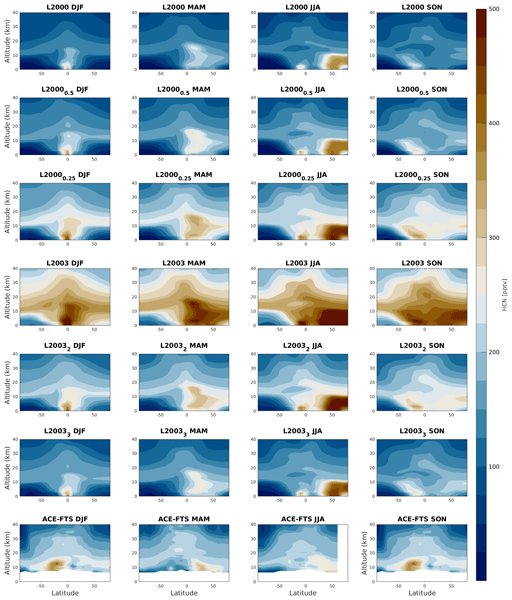
A 3-D chemical transport model, TOMCAT; satellite data; and ground-based observations have been used to investigate hydrogen cyanide (HCN) variability. We found that the oxidation by O(1D) drives the HCN loss in the middle stratosphere and the currently JPL-recommended OH reaction rate overestimates HCN atmospheric loss. We also evaluated two different ocean uptake schemes. We found them to be unrealistic, and we need to scale these schemes to obtain good agreement with HCN observations.
Denghui Ji, Mathias Palm, Christoph Ritter, Philipp Richter, Xiaoyu Sun, Matthias Buschmann, and Justus Notholt
Atmos. Meas. Tech., 16, 1865–1879, https://doi.org/10.5194/amt-16-1865-2023, https://doi.org/10.5194/amt-16-1865-2023, 2023
Short summary
Short summary
To measuring aerosol components, a Fourier transform infrared spectrometer (FTIS) and a lidar are operated in Ny-Ålesund, Spitsbergen (78° N, 11° E). Using the FTIS, a retrieval algorithm is developed for dust, sea salt, black carbon, and sulfate. The distribution of aerosols or clouds is provided by lidar and used as an indicator for aerosol or cloud retrieval with the FTS. Thus, a two-instrument joint-observation scheme is designed and is used on the data measured from 2019 to the present.
Brendan Byrne, David F. Baker, Sourish Basu, Michael Bertolacci, Kevin W. Bowman, Dustin Carroll, Abhishek Chatterjee, Frédéric Chevallier, Philippe Ciais, Noel Cressie, David Crisp, Sean Crowell, Feng Deng, Zhu Deng, Nicholas M. Deutscher, Manvendra K. Dubey, Sha Feng, Omaira E. García, David W. T. Griffith, Benedikt Herkommer, Lei Hu, Andrew R. Jacobson, Rajesh Janardanan, Sujong Jeong, Matthew S. Johnson, Dylan B. A. Jones, Rigel Kivi, Junjie Liu, Zhiqiang Liu, Shamil Maksyutov, John B. Miller, Scot M. Miller, Isamu Morino, Justus Notholt, Tomohiro Oda, Christopher W. O'Dell, Young-Suk Oh, Hirofumi Ohyama, Prabir K. Patra, Hélène Peiro, Christof Petri, Sajeev Philip, David F. Pollard, Benjamin Poulter, Marine Remaud, Andrew Schuh, Mahesh K. Sha, Kei Shiomi, Kimberly Strong, Colm Sweeney, Yao Té, Hanqin Tian, Voltaire A. Velazco, Mihalis Vrekoussis, Thorsten Warneke, John R. Worden, Debra Wunch, Yuanzhi Yao, Jeongmin Yun, Andrew Zammit-Mangion, and Ning Zeng
Earth Syst. Sci. Data, 15, 963–1004, https://doi.org/10.5194/essd-15-963-2023, https://doi.org/10.5194/essd-15-963-2023, 2023
Short summary
Short summary
Changes in the carbon stocks of terrestrial ecosystems result in emissions and removals of CO2. These can be driven by anthropogenic activities (e.g., deforestation), natural processes (e.g., fires) or in response to rising CO2 (e.g., CO2 fertilization). This paper describes a dataset of CO2 emissions and removals derived from atmospheric CO2 observations. This pilot dataset informs current capabilities and future developments towards top-down monitoring and verification systems.
Hao Yin, Youwen Sun, Justus Notholt, Mathias Palm, Chunxiang Ye, and Cheng Liu
Atmos. Chem. Phys., 22, 14401–14419, https://doi.org/10.5194/acp-22-14401-2022, https://doi.org/10.5194/acp-22-14401-2022, 2022
Short summary
Short summary
Improved knowledge of the chemistry and drivers of surface ozone over the Qinghai-Tibet Plateau (QTP) is significant for regulatory and control purposes in this high-altitude region in the Himalayas. Our study investigates the processes and drivers of surface ozone anomalies by using machine-learning model-based meteorological normalization methods between 2015 and 2020 in urban areas over the QTP. This study can provide valuable implication for ozone mitigation over the QTP.
Youwen Sun, Hao Yin, Wei Wang, Changgong Shan, Justus Notholt, Mathias Palm, Ke Liu, Zhenyi Chen, and Cheng Liu
Atmos. Meas. Tech., 15, 4819–4834, https://doi.org/10.5194/amt-15-4819-2022, https://doi.org/10.5194/amt-15-4819-2022, 2022
Short summary
Short summary
This study summarizes an overview of the status and perspective of GHG monitoring in China. This study not only improves our understanding with respect to the status, advances, and challenges of GHG monitoring in China but also presents an outlook for further improving GHG monitoring capacity in China.
Jonas Hachmeister, Oliver Schneising, Michael Buchwitz, Alba Lorente, Tobias Borsdorff, John P. Burrows, Justus Notholt, and Matthias Buschmann
Atmos. Meas. Tech., 15, 4063–4074, https://doi.org/10.5194/amt-15-4063-2022, https://doi.org/10.5194/amt-15-4063-2022, 2022
Short summary
Short summary
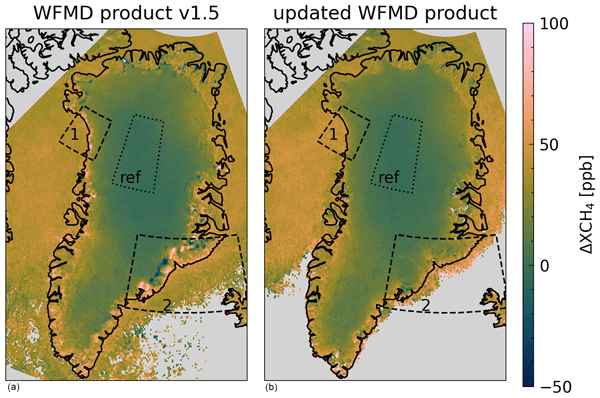
Sentinel-5P trace gas retrievals rely on elevation data in their calculations. Outdated or inaccurate data can lead to significant errors in e.g. dry-air mole fractions of methane (XCH4). We show that the use of inadequate elevation data leads to strong XCH4 anomalies in Greenland. Similar problems can be expected for other regions with inaccurate elevation data. However, we expect these to be more localized. We show that updating elevation data used in the retrieval solves this issue.
Philipp Richter, Mathias Palm, Christine Weinzierl, Hannes Griesche, Penny M. Rowe, and Justus Notholt
Earth Syst. Sci. Data, 14, 2767–2784, https://doi.org/10.5194/essd-14-2767-2022, https://doi.org/10.5194/essd-14-2767-2022, 2022
Short summary
Short summary
We present a dataset of cloud optical depths, effective radii and water paths from optically thin clouds observed in the Arctic around Svalbard. The data have been retrieved from infrared spectral radiance measured using a Fourier-transform infrared (FTIR) spectrometer. Besides a description of the measurements and retrieval technique, the data are put into context with results of corresponding measurements from microwave radiometer, lidar and cloud radar.
Alexandra Klemme, Tim Rixen, Denise Müller-Dum, Moritz Müller, Justus Notholt, and Thorsten Warneke
Biogeosciences, 19, 2855–2880, https://doi.org/10.5194/bg-19-2855-2022, https://doi.org/10.5194/bg-19-2855-2022, 2022
Short summary
Short summary
Tropical peat-draining rivers contain high amounts of carbon. Surprisingly, measured carbon dioxide (CO2) emissions from those rivers are comparatively moderate. We compiled data from 10 Southeast Asian rivers and found that CO2 production within these rivers is hampered by low water pH, providing a natural threshold for CO2 emissions. Furthermore, we find that enhanced carbonate input, e.g. caused by human activities, suspends this natural threshold and causes increased CO2 emissions.
Stefan Noël, Maximilian Reuter, Michael Buchwitz, Jakob Borchardt, Michael Hilker, Oliver Schneising, Heinrich Bovensmann, John P. Burrows, Antonio Di Noia, Robert J. Parker, Hiroshi Suto, Yukio Yoshida, Matthias Buschmann, Nicholas M. Deutscher, Dietrich G. Feist, David W. T. Griffith, Frank Hase, Rigel Kivi, Cheng Liu, Isamu Morino, Justus Notholt, Young-Suk Oh, Hirofumi Ohyama, Christof Petri, David F. Pollard, Markus Rettinger, Coleen Roehl, Constantina Rousogenous, Mahesh Kumar Sha, Kei Shiomi, Kimberly Strong, Ralf Sussmann, Yao Té, Voltaire A. Velazco, Mihalis Vrekoussis, and Thorsten Warneke
Atmos. Meas. Tech., 15, 3401–3437, https://doi.org/10.5194/amt-15-3401-2022, https://doi.org/10.5194/amt-15-3401-2022, 2022
Short summary
Short summary
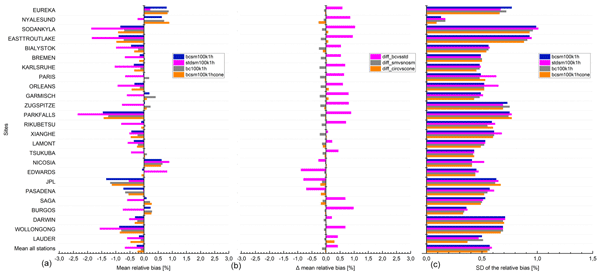
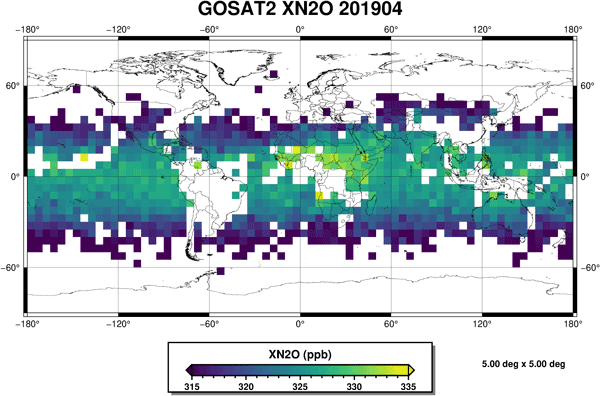
We present a new version (v3) of the GOSAT and GOSAT-2 FOCAL products.
In addition to an increased number of XCO2 data, v3 also includes products for XCH4 (full-physics and proxy), XH2O and the relative ratio of HDO to H2O (δD). For GOSAT-2, we also present first XCO and XN2O results. All FOCAL data products show reasonable spatial distribution and temporal variations and agree well with TCCON. Global XN2O maps show a gradient from the tropics to higher latitudes on the order of 15 ppb.
Hao Yin, Youwen Sun, Justus Notholt, Mathias Palm, and Cheng Liu
Atmos. Chem. Phys., 22, 4167–4185, https://doi.org/10.5194/acp-22-4167-2022, https://doi.org/10.5194/acp-22-4167-2022, 2022
Short summary
Short summary
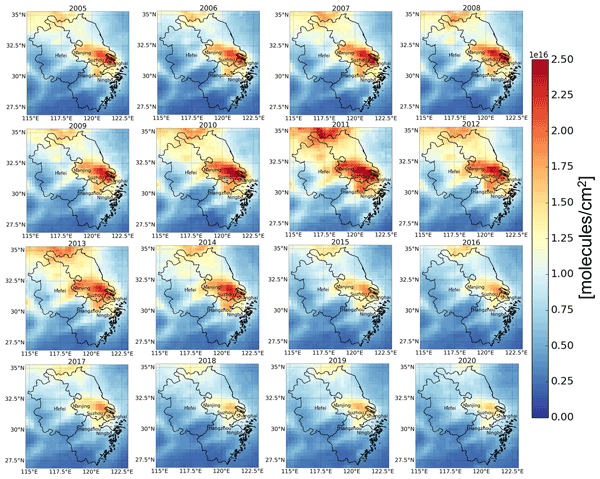
In this study, we quantity the long-term variabilities and the underlying drivers of NO2 from 2005 to 2020 over the Yangtze River Delta (YRD), one of the most densely populated and highly industrialized city clusters in China. We reveal the significant effect of the Action Plan on the Prevention and Control of Air Pollution since 2013 adopted by the Chinese government to reduce NOx pollution. Our study can improve the understanding of pollution control measures on a regional scale.
Thomas E. Taylor, Christopher W. O'Dell, David Crisp, Akhiko Kuze, Hannakaisa Lindqvist, Paul O. Wennberg, Abhishek Chatterjee, Michael Gunson, Annmarie Eldering, Brendan Fisher, Matthäus Kiel, Robert R. Nelson, Aronne Merrelli, Greg Osterman, Frédéric Chevallier, Paul I. Palmer, Liang Feng, Nicholas M. Deutscher, Manvendra K. Dubey, Dietrich G. Feist, Omaira E. García, David W. T. Griffith, Frank Hase, Laura T. Iraci, Rigel Kivi, Cheng Liu, Martine De Mazière, Isamu Morino, Justus Notholt, Young-Suk Oh, Hirofumi Ohyama, David F. Pollard, Markus Rettinger, Matthias Schneider, Coleen M. Roehl, Mahesh Kumar Sha, Kei Shiomi, Kimberly Strong, Ralf Sussmann, Yao Té, Voltaire A. Velazco, Mihalis Vrekoussis, Thorsten Warneke, and Debra Wunch
Earth Syst. Sci. Data, 14, 325–360, https://doi.org/10.5194/essd-14-325-2022, https://doi.org/10.5194/essd-14-325-2022, 2022
Short summary
Short summary
We provide an analysis of an 11-year record of atmospheric carbon dioxide (CO2) concentrations derived using an optimal estimation retrieval algorithm on measurements made by the GOSAT satellite. The new product (version 9) shows improvement over the previous version (v7.3) as evaluated against independent estimates of CO2 from ground-based sensors and atmospheric inversion systems. We also compare the new GOSAT CO2 values to collocated estimates from NASA's Orbiting Carbon Observatory-2.
Youwen Sun, Hao Yin, Xiao Lu, Justus Notholt, Mathias Palm, Cheng Liu, Yuan Tian, and Bo Zheng
Atmos. Chem. Phys., 21, 18589–18608, https://doi.org/10.5194/acp-21-18589-2021, https://doi.org/10.5194/acp-21-18589-2021, 2021
Short summary
Short summary
This study uses high-resolution nested-grid GEOS-Chem simulation, the eXtreme Gradient Boosting (XGBoost) machine learning method, and the exposure–response relationship to determine the drivers and evaluate the health risks of the unexpected surface O3 enhancements over the Sichuan Basin in 2020. These unexpected O3 enhancements were induced by meteorological anomalies and caused dramatically high health risks.
Joseph Mendonca, Ray Nassar, Christopher W. O'Dell, Rigel Kivi, Isamu Morino, Justus Notholt, Christof Petri, Kimberly Strong, and Debra Wunch
Atmos. Meas. Tech., 14, 7511–7524, https://doi.org/10.5194/amt-14-7511-2021, https://doi.org/10.5194/amt-14-7511-2021, 2021
Short summary
Short summary
Machine learning has become an important tool for pattern recognition in many applications. In this study, we used a neural network to improve the data quality of OCO-2 measurements made at northern high latitudes. The neural network was trained and used as a binary classifier to filter out bad OCO-2 measurements in order to increase the accuracy and precision of OCO-2 XCO2 measurements in the Boreal and Arctic regions.
Nicole Jacobs, William R. Simpson, Kelly A. Graham, Christopher Holmes, Frank Hase, Thomas Blumenstock, Qiansi Tu, Matthias Frey, Manvendra K. Dubey, Harrison A. Parker, Debra Wunch, Rigel Kivi, Pauli Heikkinen, Justus Notholt, Christof Petri, and Thorsten Warneke
Atmos. Chem. Phys., 21, 16661–16687, https://doi.org/10.5194/acp-21-16661-2021, https://doi.org/10.5194/acp-21-16661-2021, 2021
Short summary
Short summary
Spatial patterns of carbon dioxide seasonal cycle amplitude and summer drawdown timing derived from the OCO-2 satellite over northern high latitudes agree well with corresponding estimates from two models. The Asian boreal forest is anomalous with the largest amplitude and earliest seasonal drawdown. Modeled land contact tracers suggest that accumulated CO2 exchanges during atmospheric transport play a major role in shaping carbon dioxide seasonality in northern high-latitude regions.
Mahesh Kumar Sha, Bavo Langerock, Jean-François L. Blavier, Thomas Blumenstock, Tobias Borsdorff, Matthias Buschmann, Angelika Dehn, Martine De Mazière, Nicholas M. Deutscher, Dietrich G. Feist, Omaira E. García, David W. T. Griffith, Michel Grutter, James W. Hannigan, Frank Hase, Pauli Heikkinen, Christian Hermans, Laura T. Iraci, Pascal Jeseck, Nicholas Jones, Rigel Kivi, Nicolas Kumps, Jochen Landgraf, Alba Lorente, Emmanuel Mahieu, Maria V. Makarova, Johan Mellqvist, Jean-Marc Metzger, Isamu Morino, Tomoo Nagahama, Justus Notholt, Hirofumi Ohyama, Ivan Ortega, Mathias Palm, Christof Petri, David F. Pollard, Markus Rettinger, John Robinson, Sébastien Roche, Coleen M. Roehl, Amelie N. Röhling, Constantina Rousogenous, Matthias Schneider, Kei Shiomi, Dan Smale, Wolfgang Stremme, Kimberly Strong, Ralf Sussmann, Yao Té, Osamu Uchino, Voltaire A. Velazco, Corinne Vigouroux, Mihalis Vrekoussis, Pucai Wang, Thorsten Warneke, Tyler Wizenberg, Debra Wunch, Shoma Yamanouchi, Yang Yang, and Minqiang Zhou
Atmos. Meas. Tech., 14, 6249–6304, https://doi.org/10.5194/amt-14-6249-2021, https://doi.org/10.5194/amt-14-6249-2021, 2021
Short summary
Short summary
This paper presents, for the first time, Sentinel-5 Precursor methane and carbon monoxide validation results covering a period from November 2017 to September 2020. For this study, we used global TCCON and NDACC-IRWG network data covering a wide range of atmospheric and surface conditions across different terrains. We also show the influence of a priori alignment, smoothing uncertainties and the sensitivity of the validation results towards the application of advanced co-location criteria.
Youwen Sun, Hao Yin, Cheng Liu, Emmanuel Mahieu, Justus Notholt, Yao Té, Xiao Lu, Mathias Palm, Wei Wang, Changgong Shan, Qihou Hu, Min Qin, Yuan Tian, and Bo Zheng
Atmos. Chem. Phys., 21, 11759–11779, https://doi.org/10.5194/acp-21-11759-2021, https://doi.org/10.5194/acp-21-11759-2021, 2021
Short summary
Short summary
The variability, sources, and transport of ethane (C2H6) over eastern China from 2015 to 2020 were studied using ground-based Fourier transform infrared (FTIR) spectroscopy and GEOS-Chem simulations. C2H6 variability is driven by both meteorological and emission factors. The reduction in C2H6 in recent years over eastern China points to air quality improvement in China.
Ilya Stanevich, Dylan B. A. Jones, Kimberly Strong, Martin Keller, Daven K. Henze, Robert J. Parker, Hartmut Boesch, Debra Wunch, Justus Notholt, Christof Petri, Thorsten Warneke, Ralf Sussmann, Matthias Schneider, Frank Hase, Rigel Kivi, Nicholas M. Deutscher, Voltaire A. Velazco, Kaley A. Walker, and Feng Deng
Atmos. Chem. Phys., 21, 9545–9572, https://doi.org/10.5194/acp-21-9545-2021, https://doi.org/10.5194/acp-21-9545-2021, 2021
Short summary
Short summary
We explore the utility of a weak-constraint (WC) four-dimensional variational (4D-Var) data assimilation scheme for mitigating systematic errors in methane simulation in the GEOS-Chem model. We use data from the Greenhouse Gases Observing Satellite (GOSAT) and show that, compared to the traditional 4D-Var approach, the WC scheme improves the agreement between the model and independent observations. We find that the WC corrections to the model provide insight into the source of the errors.
Matthieu Dogniaux, Cyril Crevoisier, Raymond Armante, Virginie Capelle, Thibault Delahaye, Vincent Cassé, Martine De Mazière, Nicholas M. Deutscher, Dietrich G. Feist, Omaira E. Garcia, David W. T. Griffith, Frank Hase, Laura T. Iraci, Rigel Kivi, Isamu Morino, Justus Notholt, David F. Pollard, Coleen M. Roehl, Kei Shiomi, Kimberly Strong, Yao Té, Voltaire A. Velazco, and Thorsten Warneke
Atmos. Meas. Tech., 14, 4689–4706, https://doi.org/10.5194/amt-14-4689-2021, https://doi.org/10.5194/amt-14-4689-2021, 2021
Short summary
Short summary
We present the Adaptable 4A Inversion (5AI), an implementation of the optimal estimation (OE) algorithm, relying on the Automatized Atmospheric Absorption Atlas (4A/OP) radiative transfer model, that enables the retrieval of greenhouse gas atmospheric weighted columns from infrared measurements. It is tested on a sample of Orbiting Carbon Observatory-2 observations, and its results satisfactorily compare to several reference products, thus showing the reliability of 5AI OE implementation.
Youwen Sun, Hao Yin, Yuan Cheng, Qianggong Zhang, Bo Zheng, Justus Notholt, Xiao Lu, Cheng Liu, Yuan Tian, and Jianguo Liu
Atmos. Chem. Phys., 21, 9201–9222, https://doi.org/10.5194/acp-21-9201-2021, https://doi.org/10.5194/acp-21-9201-2021, 2021
Short summary
Short summary
We quantified the variability, source, and transport of urban CO over the Himalayas and Tibetan Plateau (HTP) by using measurement, model simulation, and the analysis of meteorological fields. Urban CO over the HTP is dominated by anthropogenic and biomass burning emissions from local, South Asia and East Asia, and oxidation sources. The decreasing trends in surface CO since 2015 in most cities over the HTP are attributed to the reduction in local and transported CO emissions in recent years.
Stefan Noël, Maximilian Reuter, Michael Buchwitz, Jakob Borchardt, Michael Hilker, Heinrich Bovensmann, John P. Burrows, Antonio Di Noia, Hiroshi Suto, Yukio Yoshida, Matthias Buschmann, Nicholas M. Deutscher, Dietrich G. Feist, David W. T. Griffith, Frank Hase, Rigel Kivi, Isamu Morino, Justus Notholt, Hirofumi Ohyama, Christof Petri, James R. Podolske, David F. Pollard, Mahesh Kumar Sha, Kei Shiomi, Ralf Sussmann, Yao Té, Voltaire A. Velazco, and Thorsten Warneke
Atmos. Meas. Tech., 14, 3837–3869, https://doi.org/10.5194/amt-14-3837-2021, https://doi.org/10.5194/amt-14-3837-2021, 2021
Short summary
Short summary
We present the first GOSAT and GOSAT-2 XCO2 data derived with the FOCAL retrieval algorithm. Comparisons of the GOSAT-FOCAL product with other data reveal long-term agreement within about 1 ppm over 1 decade, differences in seasonal variations of about 0.5 ppm, and a mean regional bias to ground-based TCCON data of 0.56 ppm with a mean scatter of 1.89 ppm. GOSAT-2-FOCAL data are preliminary only, but first comparisons show that they compare well with the GOSAT-FOCAL results and TCCON.
Holger Winkler, Takayoshi Yamada, Yasuko Kasai, Uwe Berger, and Justus Notholt
Atmos. Chem. Phys., 21, 7579–7596, https://doi.org/10.5194/acp-21-7579-2021, https://doi.org/10.5194/acp-21-7579-2021, 2021
Short summary
Short summary
Sprites are electrical discharges above thunderstorms. We performed model simulations of the chemical processes in sprites to compare them with measurements of chemical perturbations above sprite-producing thunderstorms.
Youwen Sun, Hao Yin, Cheng Liu, Lin Zhang, Yuan Cheng, Mathias Palm, Justus Notholt, Xiao Lu, Corinne Vigouroux, Bo Zheng, Wei Wang, Nicholas Jones, Changong Shan, Min Qin, Yuan Tian, Qihou Hu, Fanhao Meng, and Jianguo Liu
Atmos. Chem. Phys., 21, 6365–6387, https://doi.org/10.5194/acp-21-6365-2021, https://doi.org/10.5194/acp-21-6365-2021, 2021
Short summary
Short summary
This study mapped the drivers of HCHO variability from 2015 to 2019 over eastern China. Hydroxyl (OH) radical production rates from HCHO photolysis were evaluated. The relative contributions of emitted and photochemical sources to the observed HCHO abundance were analyzed. Contributions of various emission sources and geographical regions to the observed HCHO summertime enhancements were determined.
Hella van Asperen, João Rafael Alves-Oliveira, Thorsten Warneke, Bruce Forsberg, Alessandro Carioca de Araújo, and Justus Notholt
Biogeosciences, 18, 2609–2625, https://doi.org/10.5194/bg-18-2609-2021, https://doi.org/10.5194/bg-18-2609-2021, 2021
Short summary
Short summary
Termites are insects that are highly abundant in tropical ecosystems. It is known that termites emit CH4, an important greenhouse gas, but their absolute emission remains uncertain. In the Amazon rainforest, we measured CH4 emissions from termite nests and groups of termites. In addition, we tested a fast and non-destructive field method to estimate termite nest colony size. We found that termites play a significant role in an ecosystem's CH4 budget and probably emit more than currently assumed.
Cited articles
Ainsworth, E. A.: Understanding and improving global crop response to ozone pollution, Plant J., 90, 886–897, https://doi.org/10.1111/tpj.13298, 2017. a
Amador, J. A. and Arce-Fernández, D.: WWLLN hot and cold-spots of lightning activity and their relation to climate in an extended central America region (2012–2020), Atmosphere-Basel, 13, 76, https://doi.org/10.3390/atmos13010076, 2022. a
Anderson, D. C., Pickering, K. E., Huey, L. G., Bradshaw, J. D., Crawford, J. H., Blake, D. R., Atlas, E. L., Ravetta, A. R., Avery, M. A., Campos, T. L., Weinheimer, A. J., Sachse, G. W., Sandholm, S. T., Sachse, G. W., Talbot, R. W., Wennberg, P. O., Crawford, J. H., Wennberg, P. O., and Prather, M. J.: A pervasive role for biomass burning in tropical high ozone/low water structures, Nat. Commun., 7, 10267, https://doi.org/10.1038/ncomms10267, 2016. a
Bernier, C., Wang, Y., Estes, M., Lei, R., Jia, B., Wang, S., and Sun, J.: Clustering surface ozone diurnal cycles to understand the impact of circulation patterns in Houston, TX, J. Geophys. Res.-Atmos., 124, 13457–13474, https://doi.org/10.1029/2019JD031725, 2019. a
Bey, I., Jacob, D. J., Yantosca, R. M., Logan, J. A., Field, B. D., Fiore, A. M., Li, Q., Liu, H. Y., Mickley, L. J., and Schultz, M. G.: Global modeling of tropospheric chemistry with assimilated meteorology: model description and evaluation, J. Geophys. Res., 106, 23073–23095, https://doi.org/10.1029/2001JD000807, 2001. a
Boersma, K. F., Eskes, H., Richter, A., De Smedt, I., Lorente, A., Beirle, S., Van Geffen, J., Peters, E., Van Roozendael, M., and Wagner, T.: QA4ECV NO2 tropospheric and stratospheric vertical column data from GOME-2A (Version 1.1), KNMI [data set], https://doi.org/10.21944/qa4ecv-no2-gome2a-v1.1, 2017a. a, b
Boersma, K. F., Eskes, H., Richter, A., De Smedt, I., Lorente, A., Beirle, S., Van Geffen, J., Peters, E., Van Roozendael, M., and Wagner, T.: QA4ECV NO2 tropospheric and stratospheric vertical column data from SCIAMACHY (Version 1.1), KNMI [data set], https://doi.org/10.21944/qa4ecv-no2-scia-v1.1, 2017b. a, b
Boersma, K. F., Eskes, H., Richter, A., De Smedt, I., Lorente, A., Beirle, S., Van Geffen, J., Peters, E., Van Roozendael, M., and Wagner, T.: QA4ECV NO2 tropospheric and stratospheric vertical column data from OMI (Version 1.1), KNMI [data set], https://doi.org/10.21944/qa4ecv-no2-omi-v1.1, 2017c. a, b
Boersma, K. F., Eskes, H. J., Richter, A., De Smedt, I., Lorente, A., Beirle, S., van Geffen, J. H. G. M., Zara, M., Peters, E., Van Roozendael, M., Wagner, T., Maasakkers, J. D., van der A, R. J., Nightingale, J., De Rudder, A., Irie, H., Pinardi, G., Lambert, J.-C., and Compernolle, S. C.: Improving algorithms and uncertainty estimates for satellite NO2 retrievals: results from the quality assurance for the essential climate variables (QA4ECV) project, Atmos. Meas. Tech., 11, 6651–6678, https://doi.org/10.5194/amt-11-6651-2018, 2018. a
Braga, R. C., Rosenfeld, D., Krüger, O. O., Ervens, B., Holanda, B. A., Wendisch, M., Krisna, T., Pöschl, U., Andreae, M. O., Voigt, C., and Pöhlker, M. L.: Linear relationship between effective radius and precipitation water content near the top of convective clouds: measurement results from ACRIDICON–CHUVA campaign, Atmos. Chem. Phys., 21, 14079–14088, https://doi.org/10.5194/acp-21-14079-2021, 2021. a
Caram, C., Szopa, S., Cozic, A., Bekki, S., Cuevas, C. A., and Saiz-Lopez, A.: Sensitivity of tropospheric ozone to halogen chemistry in the chemistry–climate model LMDZ-INCA vNMHC, Geosci. Model Dev., 16, 4041–4062, https://doi.org/10.5194/gmd-16-4041-2023, 2023. a
Cecil, D. J., Buechler, D. E., and Blakeslee, R. J.: Gridded lightning climatology from TRMM-LIS and OTD: dataset description, Atmos. Res., 135–136, 404–414, https://doi.org/10.1016/j.atmosres.2012.06.028, 2014. a
Chen, J., Xu, J., Wu, Z., Meng, X., Yu, Y., Ginoux, P., DeMott, P. J., Xu, R., Zhai, L., Yan, Y., Zhao, C., Li, S.-M., Zhu, T., and Hu, M.: Decreased dust particles amplify the cloud cooling effect by regulating cloud ice formation over the Tibetan Plateau, Science Advances, 10, eado0885, https://doi.org/10.1126/sciadv.ado0885, 2024a. a
Chen, Z., Liu, R., Wu, S., Xu, J., Wu, Y., and Qi, S.: Diurnal variation characteristics and meteorological causes of autumn ozone in the Pearl River Delta, China, Sci. Total Environ., 908, 168469, https://doi.org/10.1016/j.scitotenv.2023.168469, 2024b. a
Christian, H. J., Blakeslee, R. J., Boccippio, D. J., Boeck, W. L., Buechler, D. E., Driscoll, K. T., Goodman, S. J., Hall, J. M., Koshak, W. J., Mach, D. M., and Stewart, M. F.: Global frequency and distribution of lightning as observed from space by the Optical Transient Detector, J. Geophys. Res.-Atmos., 108, ACL 4-1–ACL 4-15, https://doi.org/10.1029/2002JD002347, 2003. a
Christiansen, A., Mickley, L. J., Liu, J., Oman, L. D., and Hu, L.: Multidecadal increases in global tropospheric ozone derived from ozonesonde and surface site observations: can models reproduce ozone trends?, Atmos. Chem. Phys., 22, 14751–14782, https://doi.org/10.5194/acp-22-14751-2022, 2022. a
Crawford, J. H., Davis, D. D., Chen, G., Bradshaw, J., Sandholm, S., Kondo, Y., Merrill, J., Liu, S., Browell, E., Gregory, G., Anderson, B., Sachse, G., Barrick, J., Blake, D., Talbot, R., and Pueschel, R.: Implications of large scale shifts in tropospheric NOx levels in the remote tropical Pacific, J. Geophys. Res.-Atmos., 102, 28447–28468, https://doi.org/10.1029/97JD00011, 1997. a, b
De Smedt, I., Yu, H., Richter, A., Beirle, S., Eskes, H., Boersma, K. F., Van Roozendael, M., Van Geffen, J., Wagner, T., Lorente, A., and Peters, E.: QA4ECV HCHO tropospheric column data from OMI, Royal Belgian Institute for Space Aeronomy [data set], https://doi.org/10.18758/71021031, 2017. a
De Smedt, I., Theys, N., Yu, H., Danckaert, T., Lerot, C., Compernolle, S., Van Roozendael, M., Richter, A., Hilboll, A., Peters, E., Pedergnana, M., Loyola, D., Beirle, S., Wagner, T., Eskes, H., van Geffen, J., Boersma, K. F., and Veefkind, P.: Algorithm theoretical baseline for formaldehyde retrievals from S5P TROPOMI and from the QA4ECV project, Atmos. Meas. Tech., 11, 2395–2426, https://doi.org/10.5194/amt-11-2395-2018, 2018. a
Fueglistaler, S. A., Dessler, A. E., Dunkerton, T. J., Folkins, I., Fu, Q., and Mote, P. W.: Tropical tropopause layer, Rev. Geophys., 47, RG1004, https://doi.org/10.1029/2008RG000267, 2009. a, b
Gao, R., Rosenlof, K. H., Fahey, D. W., Wennberg, P. O., Hintsa, E. J., and Hanisco, T. F.: OH in the tropical upper troposphere and its relationships to solar radiation and reactive nitrogen, J. Atmos. Chem., 71, 55–64, https://doi.org/10.1007/s10874-014-9280-2, 2014. a
Gordon, I., Rothman, L., Hargreaves, R., Hashemi, R., Karlovets, E., Skinner, F., Conway, E., Hill, C., Kochanov, R., Tan, Y., Wcisło, P., Finenko, A., Nelson, K., Bernath, P., Birk, M., Boudon, V., Campargue, A., Chance, K., Coustenis, A., Drouin, B., Flaud, J., Gamache, R., Hodges, J., Jacquemart, D., Mlawer, E., Nikitin, A., Perevalov, V., Rotger, M., Tennyson, J., Toon, G., Tran, H., Tyuterev, V., Adkins, E., Baker, A., Barbe, A., Canè, E., Császár, A., Dudaryonok, A., Egorov, O., Fleisher, A., Fleurbaey, H., Foltynowicz, A., Furtenbacher, T., Harrison, J., Hartmann, J., Horneman, V., Huang, X., Karman, T., Karns, J., Kassi, S., Kleiner, I., Kofman, V., Kwabia–Tchana, F., Lavrentieva, N., Lee, T., Long, D., Lukashevskaya, A., Lyulin, O., Makhnev, V., Matt, W., Massie, S., Melosso, M., Mikhailenko, S., Mondelain, D., Müller, H., Naumenko, O., Perrin, A., Polyansky, O., Raddaoui, E., Raston, P., Reed, Z., Rey, M., Richard, C., Tóbiás, R., Sadiek, I., Schwenke, D., Starikova, E., Sung, K., Tamassia, F., Tashkun, S., Vander Auwera, J., Vasilenko, I., Vigasin, A., Villanueva, G., Vispoel, B., Wagner, G., Yachmenev, A., and Yurchenko, S.: The HITRAN2020 molecular spectroscopic database, J. Quant. Spectrosc. Ra., 277, 107949, https://doi.org/10.1016/j.jqsrt.2021.107949, 2022. a
Han, Y., Luo, H., Wu, Y., Zhang, Y., and Dong, W.: Cloud ice fraction governs lightning rate at a global scale, Communications Earth and Environment, 2, https://doi.org/10.1038/s43247-021-00233-4, 2021. a
He, G., He, C., Wang, H., Lu, X., Pei, C., Qiu, X., Liu, C., Wang, Y., Liu, N., Zhang, J., Lei, L., Liu, Y., Wang, H., Deng, T., Fan, Q., and Fan, S.: Nighttime ozone in the lower boundary layer: insights from 3-year tower-based measurements in South China and regional air quality modeling, Atmos. Chem. Phys., 23, 13107–13124, https://doi.org/10.5194/acp-23-13107-2023, 2023. a
Holton, J. R. and Gettelman, A.: Horizontal transport and the dehydration of the stratosphere, Geophys. Res. Lett., 28, 951–954, https://doi.org/10.1029/2000GL012061, 2001. a
Hu, L., Jacob, D. J., Liu, X., Zhang, Y., Zhang, L., Kim, P. S., Sulprizio, M. P., and Yantosca, R. M.: Global budget of tropospheric ozone: evaluating recent model advances with satellite (OMI), aircraft (IAGOS), and ozonesonde observations, Atmos. Environ., 167, 323–334, https://doi.org/10.1016/j.atmosenv.2017.08.036, 2017. a, b
Huang, S., Yang, J., Li, J., Chen, Q., Zhang, Q., and Guo, F.: Impact of secondary ice production on thunderstorm electrification under different aerosol conditions, Atmos. Chem. Phys., 25, 1831–1850, https://doi.org/10.5194/acp-25-1831-2025, 2025. a
Hutchins, M. L., Holzworth, R. H., Brundell, J. B., and Rodger, C. J.: Relative detection efficiency of the World Wide Lightning Location Network, Radio Sci., 47, https://doi.org/10.1029/2012RS005049, 2012. a
Ji, D., Ritter, C., Sun, X., Moser, M., Voigt, C., Palm, M., and Notholt, J.: Giant Cloud Condensation Nuclei enhanced Ice Sublimation Process: a potential mechanism in mixed-phase clouds, Atmos. Chem. Phys., 25, 13037–13052, https://doi.org/10.5194/acp-25-13037-2025, 2025. a
Kanamitsu, M.: Description of the NMC global data assimilation and forecast system, Weather Forecast., 4, 335–342, https://doi.org/10.1175/1520-0434(1989)004<0335:DOTNGD>2.0.CO;2, 1989. a
Kaplan, J. O. and Lau, K. H.-K.: The WGLC global gridded lightning climatology and time series, Earth Syst. Sci. Data, 13, 3219–3237, https://doi.org/10.5194/essd-13-3219-2021, 2021. a
Kaplan, J. O. and Lau, K. H.-K.: World Wide Lightning Location Network (WWLLN) Global Lightning Climatology (WGLC) and time series, 2022 update, Earth Syst. Sci. Data, 14, 5665–5670, https://doi.org/10.5194/essd-14-5665-2022, 2022. a
Keller, C. A., Long, M. S., Yantosca, R. M., Da Silva, A. M., Pawson, S., and Jacob, D. J.: HEMCO v1.0: a versatile, ESMF-compliant component for calculating emissions in atmospheric models, Geosci. Model Dev., 7, 1409–1417, https://doi.org/10.5194/gmd-7-1409-2014, 2014. a
King, M. D., Platnick, S., Menzel, W. P., Ackerman, S. A., and Hubanks, P. A.: Spatial and temporal distribution of clouds observed by MODIS onboard the Terra and Aqua satellites, IEEE T. Geosci. Remote, 51, 3826–3852, https://doi.org/10.1109/TGRS.2012.2227333, 2013. a
Kley, D., Crutzen, P. J., Smit, H. G. J., Vömel, H., Oltmans, S. J., Grassl, H., and Ramanathan, V.: Observations of near-zero ozone concentrations over the convective Pacific: effects on air chemistry, Science, 274, 230–233, https://doi.org/10.1126/science.274.5285.230, 1996. a
Kley, D., Smit, H. G. J., Vömel, H., Grassl, H., Ramanathan, V., Crutzen, P. J., Williams, S., Meywerk, J., and Oltmans, S. J.: Tropospheric water-vapour and ozone cross-sections in a zonal plane over the central equatorial Pacific Ocean, Q. J. Roy. Meteor. Soc., 123, 2009–2040, https://doi.org/10.1002/qj.49712354312, 1997. a
LATMOS: Monthly IASI/Metop-B ULB-LATMOS carbon monoxide (CO) Climate Data Record (CDR) L3 products (total column gridded data), https://iasi.aeris-data.fr/ (last access: 15 September 2025) (generated with FORLI v20151001 from EUMETSAT IASI Level 2 CO CDR Release 1. See also: Clerbaux et al., J. Quant. Spectrosc. Ra., 113, 1391–1408, 2012), 2013. a, b
Levy, H.: Normal atmosphere: large radical and formaldehyde concentrations predicted, Science, 173, 141–143, https://doi.org/10.1126/science.173.3992.141, 1971. a, b
Li, D., Vogel, B., Müller, R., Bian, J., Günther, G., Ploeger, F., Li, Q., Zhang, J., Bai, Z., Vömel, H., and Riese, M.: Dehydration and low ozone in the tropopause layer over the Asian monsoon caused by tropical cyclones: Lagrangian transport calculations using ERA-Interim and ERA5 reanalysis data, Atmos. Chem. Phys., 20, 4133–4152, https://doi.org/10.5194/acp-20-4133-2020, 2020. a
Lin, H., Jacob, D. J., Lundgren, E. W., Sulprizio, M. P., Keller, C. A., Fritz, T. M., Eastham, S. D., Emmons, L. K., Campbell, P. C., Baker, B., Saylor, R. D., and Montuoro, R.: Harmonized Emissions Component (HEMCO) 3.0 as a versatile emissions component for atmospheric models: application in the GEOS-Chem, NASA GEOS, WRF-GC, CESM2, NOAA GEFS-Aerosol, and NOAA UFS models, Geosci. Model Dev., 14, 5487–5506, https://doi.org/10.5194/gmd-14-5487-2021, 2021. a, b
Liu, S. C., McFarland, M., Lasslo, J., Heikes, B. G., and McConnell, J. C.: Tropospheric NOx and O3 budgets in the Equatorial Pacific, J. Geophys. Res.-Oceans, 88, 1360–1368, https://doi.org/10.1029/JC088iC02p01360, 1983. a, b, c, d
Mills, G., Sharps, K., Simpson, D., Pleijel, H., Broberg, M., Uddling, J., Harmens, H., Hayes, F., Danielsson, H., Gerosa, G., Harmens, H., Kobayashi, K., Saxena, P., Paoletti, E., Sinha, V., and Xu, X.: Tropospheric Ozone Assessment Report: present-day tropospheric ozone distribution and trends relevant to vegetation, Elementa: Science of the Anthropocene, 6, 47, https://doi.org/10.1525/elementa.302, 2018. a
Monks, P. S.: A review of the observations and origins of the spring ozone maximum, Atmos. Environ., 34, 3545–3561, https://doi.org/10.1016/S1352-2310(00)00129-1, 2000. a
Müller, K., Tradowsky, J. S., von der Gathen, P., Ritter, C., Patris, S., Notholt, J., and Rex, M.: Measurement report: The Palau Atmospheric Observatory and its ozonesonde record – continuous monitoring of tropospheric composition and dynamics in the tropical western Pacific, Atmos. Chem. Phys., 24, 2169–2193, https://doi.org/10.5194/acp-24-2169-2024, 2024a. a, b, c, d
Müller, K., Graeser, J., Patris, S., Beninga, I., Ruhe, W., Ucharm, G., Tradowsky, J., Rüther, L., and Röpke, T.: Ozone sonde and radio sonde data record Palau Atmospheric Observatory 2016–2024 [Data set], Zenodo [datea set], https://doi.org/10.5281/zenodo.19383947, 2026. a
Myhre, G., Shindell, D., Bréon, F.-M., Collins, W., Fuglestvedt, J., Huang, J., Koch, D., Lamarque, J.-F., Lee, D., Mendoza, B., Nakajima, T., Robock, A., Stephens, G., Takemura, T., and Zhang, H.: Anthropogenic and natural radiative forcing, in: Climate Change 2013: The Physical Science Basis. Contribution of Working Group I to the Fifth Assessment Report of the Intergovernmental Panel on Climate Change, edited by: Stocker, T. F., Qin, D., Plattner, G.-K., Tignor, M., Allen, S. K., Boschung, J., Nauels, A., Xia, Y., Bex, V., and Midgley, P. M., Cambridge University Press, Cambridge, UK and New York, NY, USA, https://doi.org/10.1017/CBO9781107415324.018, 659–740, 2013. a
Navarro, E. A., Portí, J. A., Salinas, A., Toledo-Redondo, S., Segura-García, J., Castilla, A., Montagud-Camps, V., and Albert, I.: The World Wide Lightning Location Network (WWLLN) over Spain, Nat. Hazards Earth Syst. Sci., 24, 3925–3943, https://doi.org/10.5194/nhess-24-3925-2024, 2024. a
NCAR – National Center for Atmospheric Research: SFIT4 Retrieval Code, https://github.com/NCAR/sfit-core-code (last access: 22 June 2025), 2025. a
Newton, R., Vaughan, G., Hintsa, E., Filus, M. T., Pan, L. L., Honomichl, S., Atlas, E., Andrews, S. J., and Carpenter, L. J.: Observations of ozone-poor air in the tropical tropopause layer, Atmos. Chem. Phys., 18, 5157–5171, https://doi.org/10.5194/acp-18-5157-2018, 2018. a
Nussbaumer, C. M., Tadic, I., Dienhart, D., Wang, N., Edtbauer, A., Ernle, L., Williams, J., Obersteiner, F., Gutiérrez-Álvarez, I., Harder, H., Lelieveld, J., and Fischer, H.: Measurement report: In situ observations of deep convection without lightning during the tropical cyclone Florence 2018, Atmos. Chem. Phys., 21, 7933–7945, https://doi.org/10.5194/acp-21-7933-2021, 2021. a
Nussbaumer, C. M., Kohl, M., Pozzer, A., Tadic, I., Rohloff, R., Marno, D., Harder, H., Ziereis, H., Zahn, A., Obersteiner, F., Hofzumahaus, A., Fuchs, H., Künstler, C., Brune, W. H., Ryerson, T. B., Peischl, J., Thompson, C. R., Bourgeois, I., Lelieveld, J., and Fischer, H.: Ozone formation sensitivity to precursors and lightning in the tropical troposphere based on airborne observations, J. Geophys. Res.-Atmos., 129, e2024JD041168, https://doi.org/10.1029/2024JD041168, 2024. a, b, c
Nussbaumer, C. M., Pozzer, A., Hewson, M., Ort, L., Krumm, B., Byron, J., Williams, J. D., Joppe, P., Obersteiner, F., Zahn, A., Lelieveld, J., and Fischer, H.: Low tropospheric ozone over the Indo Pacific warm pool related to non electrified convection, Geophys. Res. Lett., 52, e2024GL112788, https://doi.org/10.1029/2024GL112788, 2025. a, b, c
Oltmans, S. J. and Levy, H.: Surface ozone measurements from a global network, Atmos. Environ., 28, 9–24, https://doi.org/10.1016/1352-2310(94)90019-1, 1994. a
Oltmans, S. J., Lefohn, A. S., Shadwick, D., Harris, J. M., Scheel, H. E., Galbally, I., Tarasick, D. W., Johnson, B. J., Brunke, E.-G., Claude, H., Zeng, G., Nichol, S., Schmidlin, F., Davies, J., Cuevas, E., Redondas, A., Naoe, H., Nakano, T., and Kawasato, T.: Recent tropospheric ozone changes – a pattern dominated by slow or no growth, Atmos. Environ., 67, 331–351, https://doi.org/10.1016/j.atmosenv.2012.10.057, 2013. a
Ou Yang, C.-F., Lin, N.-H., Sheu, G.-R., Lee, C.-T., and Wang, J.-L.: Seasonal and diurnal variations of ozone at a high-altitude mountain baseline station in East Asia, Atmos. Environ., 46, 279–288, https://doi.org/10.1016/j.atmosenv.2011.09.060, 2012. a, b
Palm, M., v. Savigny, C., Warneke, T., Velazco, V., Notholt, J., Künzi, K., Burrows, J., and Schrems, O.: Intercomparison of O3 profiles observed by SCIAMACHY and ground based microwave instruments, Atmos. Chem. Phys., 5, 2091–2098, https://doi.org/10.5194/acp-5-2091-2005, 2005. a
Petetin, H., Thouret, V., Athier, G., Blot, R., Boulanger, D., Cousin, J.-M., Gaudel, A., Nédélec, P., and Cooper, O. R.: Diurnal cycle of ozone throughout the troposphere over Frankfurt as measured by MOZAIC-IAGOS commercial aircraft, Elementa: Science of the Anthropocene, 4, 1–17, https://doi.org/10.12952/journal.elementa.000129, 2016. a, b, c, d, e, f
Platnick, S., Meyer, K. G., Hubanks, P., Holz, R., Ackerman, S. A., and Heidinger, A. K.: MODIS/Aqua Cloud Properties Daily L3 Global 1Deg CMG (CLDPROP_D3_MODIS_Aqua), LAADS DAAC [data set], https://doi.org/10.5067/MODIS/MYD08_D3.061, 2019. a, b
Platnick, S., Meyer, K., Wind, G., Holz, R. E., Amarasinghe, N., Hubanks, P. A., Marchant, B., Dutcher, S., and Veglio, P.: The NASA MODIS-VIIRS continuity cloud optical properties products, Remote Sens.-Basel, 13, 2, https://doi.org/10.3390/rs13010002, 2021. a
Prather, M. J. and Zhu, X.: Lifetimes and timescales of tropospheric ozone, Elementa: Science of the Anthropocene, 12, 112, https://doi.org/10.1525/elementa.2023.00112, 2024. a
Rex, M., Wohltmann, I., Ridder, T., Lehmann, R., Rosenlof, K., Wennberg, P., Weisenstein, D., Notholt, J., Krüger, K., Mohr, V., and Tegtmeier, S.: A tropical West Pacific OH minimum and implications for stratospheric composition, Atmos. Chem. Phys., 14, 4827–4841, https://doi.org/10.5194/acp-14-4827-2014, 2014. a, b, c, d
Ridder, T., Gerbig, C., Notholt, J., Rex, M., Schrems, O., Warneke, T., and Zhang, L.: Ship-borne FTIR measurements of CO and O3 in the Western Pacific from 43° N to 35° S: an evaluation of the sources, Atmos. Chem. Phys., 12, 815–828, https://doi.org/10.5194/acp-12-815-2012, 2012. a, b
Rodgers, C.: Inverse Methods for Atmospheric Sounding: Theory and Practice, World Scientific, https://doi.org/10.1142/3171, 2000. a, b
Rodgers, C. D. and Connor, B. J.: Intercomparison of remote sounding instruments, J. Geophys. Res.-Atmos., 108, https://doi.org/10.1029/2002JD002299, 2003. a
Rudlosky, S. D. and Shea, D. T.: Evaluating WWLLN performance relative to TRMM/LIS, Geophys. Res. Lett., 40, 4006–4011, https://doi.org/10.1002/grl.50428, 2013. a
Schneider, M., Hase, F., Blumenstock, T., Redondas, A., and Cuevas, E.: Quality assessment of O3 profiles measured by a state-of-the-art ground-based FTIR observing system, Atmos. Chem. Phys., 8, 5579–5588, https://doi.org/10.5194/acp-8-5579-2008, 2008. a, b, c
Schumann, U. and Huntrieser, H.: The global lightning-induced nitrogen oxides source, Atmos. Chem. Phys., 7, 3823–3907, https://doi.org/10.5194/acp-7-3823-2007, 2007. a, b
Singh, H. B., Gregory, G. L., Anderson, B., Browell, E., Sachse, G. W., Davis, D. D., Crawford, J., Bradshaw, J. D., Talbot, R., Blake, D. R., Thornton, D., Newell, R., and Merrill, J.: Low ozone in the marine boundary layer of the tropical Pacific Ocean: photochemical loss, chlorine atoms, and entrainment, J. Geophys. Res.-Atmos., 101, 1907–1917, https://doi.org/10.1029/95JD01028, 1996. a
Stein, A. F., Draxler, R. R., Rolph, G. D., Stunder, B. J. B., Cohen, M. D., and Ngan, F.: NOAA's HYSPLIT atmospheric transport and dispersion modeling system, B. Am. Meteorol. Soc., 96, 2059–2077, https://doi.org/10.1175/BAMS-D-14-00110.1, 2015. a
Strode, S. A., Oman, L. D., Strahan, S. E., Kort, E. A., Duncan, B. N., Fang, X., Worden, J. R., and Newman, P. A.: Global changes in the diurnal cycle of surface ozone, Atmos. Environ., 199, 323–333, https://doi.org/10.1016/j.atmosenv.2018.11.028, 2019. a, b
Sun, X.: Palau FTIR tropospheric ozone column (0.2–10.2 km), Sep–Oct 2022 (v1.0), Zenodo [code], https://doi.org/10.5281/zenodo.17456752, 2025. a
Sun, X., Palm, M., Müller, K., Hachmeister, J., and Notholt, J.: Determination of the chemical equator from GEOS-Chem model simulation: a focus on the tropical western Pacific region, Atmos. Chem. Phys., 23, 7075–7090, https://doi.org/10.5194/acp-23-7075-2023, 2023. a
Sun, X., Ritter, C., Müller, K., Palm, M., Ji, D., Ruhe, W., Beninga, I., Patris, S., and Notholt, J.: Properties of cirrus cloud observed over Koror, Palau (7.3°N, 134.5°E), in tropical western Pacific region, Remote Sens.-Basel, 16, 1448, https://doi.org/10.3390/rs16081448, 2024. a
Sun, X., Müller, K., Palm, M., Ritter, C., Ji, D., Röpke, T. B., and Notholt, J.: Evidence of tropospheric uplift into the stratosphere via the tropical western Pacific cold trap, Atmos. Chem. Phys., 25, 6881–6902, https://doi.org/10.5194/acp-25-6881-2025, 2025. a, b, c
The International GEOS-Chem User Community: geoschem/GCClassic: GEOS-Chem 13.4.0, Zenodo [code], https://doi.org/10.5281/zenodo.6511970, 2022. a, b
Vigouroux, C., De Mazière, M., Demoulin, P., Servais, C., Hase, F., Blumenstock, T., Kramer, I., Schneider, M., Mellqvist, J., Strandberg, A., Velazco, V., Notholt, J., Sussmann, R., Stremme, W., Rockmann, A., Gardiner, T., Coleman, M., and Woods, P.: Evaluation of tropospheric and stratospheric ozone trends over Western Europe from ground-based FTIR network observations, Atmos. Chem. Phys., 8, 6865–6886, https://doi.org/10.5194/acp-8-6865-2008, 2008. a
Vigouroux, C., Blumenstock, T., Coffey, M., Errera, Q., García, O., Jones, N. B., Hannigan, J. W., Hase, F., Liley, B., Mahieu, E., Mellqvist, J., Notholt, J., Palm, M., Persson, G., Schneider, M., Servais, C., Smale, D., Thölix, L., and De Mazière, M.: Trends of ozone total columns and vertical distribution from FTIR observations at eight NDACC stations around the globe, Atmos. Chem. Phys., 15, 2915–2933, https://doi.org/10.5194/acp-15-2915-2015, 2015. a
Villamayor, J., Iglesias-Suárez, F., Cuevas, C. A., Fernández, R. P., Li, Q., Ábalos, M., Hossaini, R., Chipperfield, M. P., Kinnison, D. E., Tilmes, S., Lamarque, J., and Saiz López, A.: Very short lived halogens amplify ozone depletion trends in the tropical lower stratosphere, Nat. Clim. Change, 13, 554–560, https://doi.org/10.1038/s41558-023-01671-y, 2023. a
Virts, K. S., Wallace, J. M., Hutchins, M. L., and Holzworth, R. H.: Highlights of a new ground-based, hourly global lightning climatology, B. Am. Meteorol. Soc., 94, 1381–1391, https://doi.org/10.1175/BAMS-D-12-00082.1, 2013. a, b
von Clarmann, T.: Smoothing error pitfalls, Atmos. Meas. Tech., 7, 3023–3034, https://doi.org/10.5194/amt-7-3023-2014, 2014. a
WMO – World Meteorological Organization: Scientific Assessment of Ozone Depletion: 2022, Tech. rep., GAW Report No. 278, WMO, Geneva, 509 pp., https://library.wmo.int/viewer/58360/#page=1&viewer=picture&o=bookmarks&n=0&q= (last access: 10 April 2026), 2022. a
World Health Organization: WHO global air quality guidelines: particulate matter (PM2.5 and PM10), ozone, nitrogen dioxide, sulfur dioxide and carbon monoxide, Tech. rep., World Health Organization, Geneva, https://www.who.int/publications/i/item/9789240034228 (last access: 10 April 2026), 2021. a
Xia, N., Du, E., Guo, Z., and de Vries, W.: The diurnal cycle of summer tropospheric ozone concentrations across Chinese cities: spatial patterns and main drivers, Environ. Pollut., 286, 117547, https://doi.org/10.1016/j.envpol.2021.117547, 2021. a
Yin, X., Kang, S., de Foy, B., Cong, Z., Luo, J., Zhang, L., Ma, Y., Zhang, G., Rupakheti, D., and Zhang, Q.: Surface ozone at Nam Co in the inland Tibetan Plateau: variation, synthesis comparison and regional representativeness, Atmos. Chem. Phys., 17, 11293–11311, https://doi.org/10.5194/acp-17-11293-2017, 2017. a
Yuan, T., Remer, L. A., Pickering, K. E., and Yu, H.: Observational evidence of aerosol enhancement of lightning activity and convective invigoration, Geophys. Res. Lett., 38, L04701, https://doi.org/10.1029/2010GL046052, 2011. a
Ziemke, J. R., Chandra, S., Duncan, B. N., Froidevaux, L., Bhartia, P. K., Levelt, P. F., and Waters, J. W.: Tropospheric ozone determined from Aura OMI and MLS: evaluation of measurements and comparison with the Global Modeling Initiative's Chemical Transport Model, J. Geophys. Res.-Atmos., 111, https://doi.org/10.1029/2006JD007089, 2006. a, b
Short summary
Near-surface ozone over the tropical Pacific is among the lowest on Earth. This study provides rare observations from this key region. Using sunlight measurements with an infrared spectrometer in Palau, we found that ozone rises in the morning and falls after noon. This daily rhythm and very low levels show how clean ocean air and weak thunderstorms shape atmospheric chemistry and affect Earth's climate.
Near-surface ozone over the tropical Pacific is among the lowest on Earth. This study provides...
Altmetrics
Final-revised paper
Preprint