
Articles | Volume 26, issue 6
https://doi.org/10.5194/acp-26-4067-2026
© Author(s) 2026. This work is distributed under
the Creative Commons Attribution 4.0 License.
the Creative Commons Attribution 4.0 License.
https://doi.org/10.5194/acp-26-4067-2026
© Author(s) 2026. This work is distributed under
the Creative Commons Attribution 4.0 License.
the Creative Commons Attribution 4.0 License.
Research article
| 
24 Mar 2026
Research article |
| 24 Mar 2026
| 24 Mar 2026
Drop clustering and drop size correlations from holographic imagery suggest cloud droplet spectral broadening via entrainment-mixing
John J. D'Alessandro
CORRESPONDING AUTHOR

Department of Atmospheric Sciences, University of Washington, Seattle, WA, USA
currently at: Laboratoire d'Optique Atmosphérique, Université de Lille, Lille, Halle du Nord, France
Robert Wood
Department of Atmospheric Sciences, University of Washington, Seattle, WA, USA
Peter N. Blossey
Department of Atmospheric Sciences, University of Washington, Seattle, WA, USA
Related authors
No articles found.
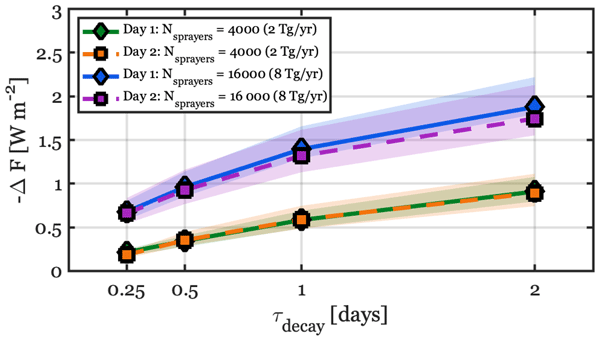
Lucas A. McMichael, Ehsan Erfani, Robert Wood, and Knut von Salzen
Atmos. Chem. Phys., 26, 14111–14132, https://doi.org/10.5194/acp-26-14111-2026, https://doi.org/10.5194/acp-26-14111-2026, 2026
Short summary
Short summary
This study explores how aerosol plumes spread in marine clouds and how that affects cloud brightening. Changes in turbulence strongly affect plume spreading rates, but have little effect on the overall brightening in the cases studied. The main uncertainties are aerosol lifetime and how clouds adjust to the aerosols. Climate models often assume that plumes spread instantly, and we find that this may overestimate cooling in some cases.
Michael S. Diamond, Andrew S. Ackerman, Alejandro Baró Pérez, Ann M. Fridlind, Ehsan Erfani, Caspar Jungbacker, Hyunho Lee, David Painemal, Frida A.-M. Bender, Annica M. L. Ekman, Franziska Glassmeier, Graham Feingold, Fredrik Jansson, David A. Johnson, Matthias Schwarz, Robert Wood, Takanobu Yamaguchi, Jianhao Zhang, Xiaoli Zhou, and Paquita Zuidema
EGUsphere, https://doi.org/10.5194/egusphere-2026-5350, https://doi.org/10.5194/egusphere-2026-5350, 2026
This preprint is open for discussion and under review for Atmospheric Chemistry and Physics (ACP).
Short summary
Short summary
We compare how cloud resolving models represent an important cloud transition over the subtropical oceans. Clouds can either break up by deepening and drying out or by raining and forming an open cell pattern. Compared to observations, the clouds deepen a bit too much and get too polluted when smoke is present. In clean conditions, some models drizzle and break up into open cells while others barely rain; the model spread stems from different rain amounts for similar clouds.
Haruki Hirasawa, Knut von Salzen, Matthew Henry, Josh Smith, Frida A.-M. Bender, Cindy Wang, Sarah Doherty, Robert Wood, Philip J. Rasch, and James Haywood
EGUsphere, https://doi.org/10.5194/egusphere-2026-5460, https://doi.org/10.5194/egusphere-2026-5460, 2026
This preprint is open for discussion and under review for Atmospheric Chemistry and Physics (ACP).
Short summary
Short summary
Marine cloud brightening (MCB) is a solar climate intervention proposal to spray sea salt aerosol (SSA) to increase sunlight reflection by low marine clouds. Earth System Models (ESMs) are our main tool for studying potential MCB climate impacts, but there is a large range across ESMs in the MCB sunlight reflection. Comparing MCB in ten ESMs, we find that much of this range is from the size of the SSA and cloud droplet formation from the SSA, both relatively well understood processes.
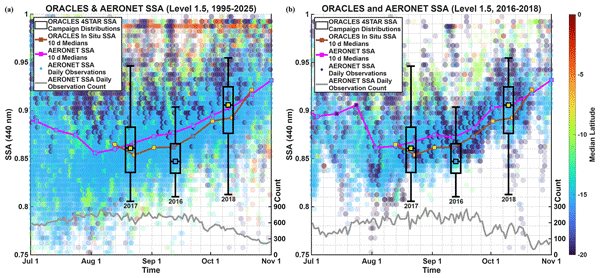
Logan T. Mitchell, Connor J. Flynn, Kristina Pistone, Samuel E. LeBlanc, K. Sebastian Schmidt, Hong Chen, Paquita Zuidema, Robert Wood, and Jens Redemann
Atmos. Chem. Phys., 26, 13083–13102, https://doi.org/10.5194/acp-26-13083-2026, https://doi.org/10.5194/acp-26-13083-2026, 2026
Short summary
Short summary
During 2016–2018, NASA conducted an airborne field campaign over the Southeast Atlantic Ocean to study biomass burning aerosols emitted from Southern African fires. We have found that aerosol absorption decreases over the course of the emission season, which is due to a compositional change within black carbon as the source fires shift southeastward, rather than an increase in brown carbon. This aerosol brightening is also noted within a 30-year aerosol climatology from ground-based stations.
Sylwester Arabas, Agnieszka Żaba, Daria Klimaszewska, Emma C. Ware, Clare E. Singer, Manhal Alhilali, Jason Barr, Daniel G. Partridge, Shin-ichiro Shima, and Robert Wood
EGUsphere, https://doi.org/10.5194/egusphere-2026-3906, https://doi.org/10.5194/egusphere-2026-3906, 2026
This preprint is open for discussion and under review for Geoscientific Model Development (GMD).
Short summary
Short summary
The paper focuses on the use of Python and its package ecosystem for modeling the dynamics of atmospheric aerosol and cloud droplets. We highlight that concise code and high-level abstractions (incl. programmatic expression of physical units) can be used without performance tradeoffs. The paper features two cloud-microphysics classics: an adiabatic parcel model and a Monte-Carlo coagulation solver. The presented code constitutes a single Jupyter notebook that can be executed "in the cloud".
Katherine Mifsud, Jason Barr, Robert Wood, Yonghoon Choi, Ewan Crosbie, Glenn S. Diskin, Joshua P. DiGangi, Richard H. Moore, Claire Robinson, Michael A. Shook, Armin Sorooshian, Christiane Voigt, and Luke Ziemba
EGUsphere, https://doi.org/10.5194/egusphere-2026-3027, https://doi.org/10.5194/egusphere-2026-3027, 2026
Short summary
Short summary
Salt particles from the ocean can help marine clouds precipitate more quickly, but their role is not fully understood. Using aircraft observations over the northwest Atlantic Ocean and computer simulations, we studied how these particles affect warm rain formation. We found that clouds containing more large sea salt particles, even at relatively low amounts, produce more rain. These results improve understanding of how sea salt aerosols influence clouds, rainfall, and climate.
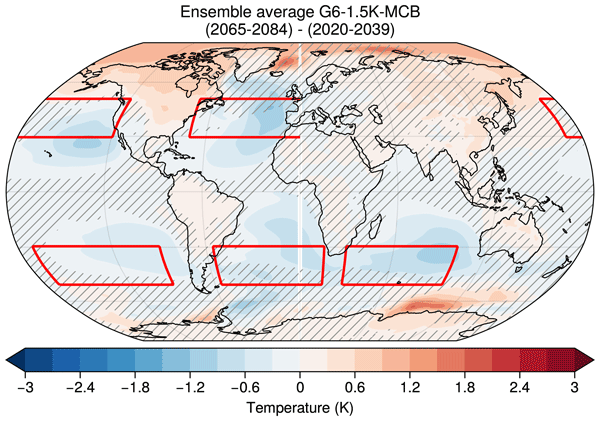
Haruki Hirasawa, Matthew Henry, Philip J. Rasch, Robert Wood, Sarah J. Doherty, James Haywood, Alex Wong, Jean-Francois Lamarque, Ezra Brody, and Hailong Wang
Geosci. Model Dev., 19, 3257–3283, https://doi.org/10.5194/gmd-19-3257-2026, https://doi.org/10.5194/gmd-19-3257-2026, 2026
Short summary
Short summary
Marine cloud brightening (MCB) is a proposal to emit sea salt aerosols to make clouds more reflective and cool the climate. Here, we use three climate models to study a hypothetical future where MCB is used to maintain temperatures near 2020–2039 conditions. The simulation results indicate that using MCB in midlatitude ocean regions can keep the climate close to present day conditions. This reduces many of the negative impacts shown in previous studies, informing future modeling efforts.
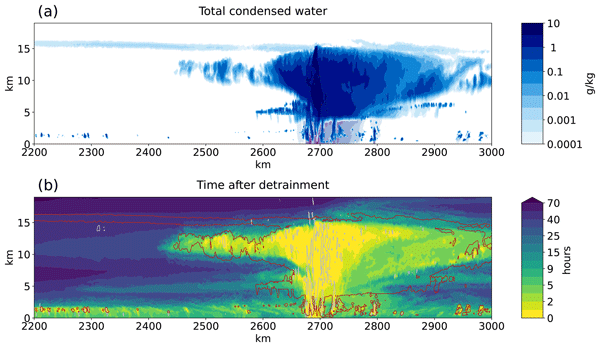
Blaž Gasparini, Rachel Atlas, Aiko Voigt, Martina Krämer, and Peter N. Blossey
Atmos. Chem. Phys., 25, 9957–9979, https://doi.org/10.5194/acp-25-9957-2025, https://doi.org/10.5194/acp-25-9957-2025, 2025
Short summary
Short summary
The evolution of tropical cirrus clouds is poorly understood, which contributes to large uncertainties in climate projections. To address this issue, we use novel tracers in a cloud-resolving model to track the life cycle of cirrus clouds. This approach provides insights into cloud formation, ice crystal evolution, and radiative effects of cirrus clouds. Additionally, we improve the model's cloud microphysics using a simple, computationally efficient approach that can be applied to other models.
Ehsan Erfani, Robert Wood, Peter Blossey, Sarah J. Doherty, and Ryan Eastman
Atmos. Chem. Phys., 25, 8743–8768, https://doi.org/10.5194/acp-25-8743-2025, https://doi.org/10.5194/acp-25-8743-2025, 2025
Short summary
Short summary
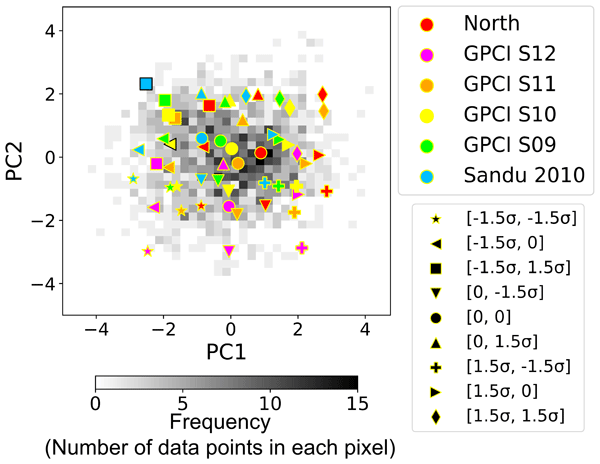
In this study, we explore how marine clouds interact with aerosols. We introduce a novel approach to identify a reduced number of representative cases from a wide array of observed environmental conditions prevalent in the Northeast Pacific. We create over 2200 trajectories from observations and use cloud-resolving simulations to investigate how marine low clouds evolve in two different cases. It is shown that aerosols can delay cloud breakup, but their impact depends on precipitation.
Je-Yun Chun, Robert Wood, Peter N. Blossey, and Sarah J. Doherty
Atmos. Chem. Phys., 25, 5251–5271, https://doi.org/10.5194/acp-25-5251-2025, https://doi.org/10.5194/acp-25-5251-2025, 2025
Short summary
Short summary
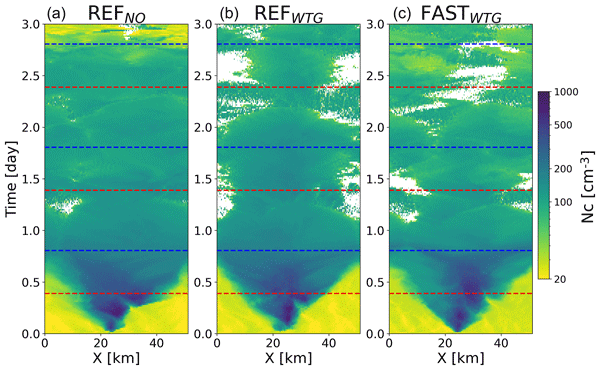
This study explores how aerosols affect clouds transitioning from stratocumulus to cumulus along trade winds under varying atmospheric conditions. We found that aerosols typically reduce precipitation and raise cloud height, but their impact changes when subsidence changes by aerosol enhancement are considered. Our findings indicate that the cooling effect of aerosols might be overestimated if these atmospheric changes are not accounted for.
Chris J. Wright, Joel A. Thornton, Lyatt Jaeglé, Yang Cao, Yannian Zhu, Jihu Liu, Randall Jones II, Robert Holzworth, Daniel Rosenfeld, Robert Wood, Peter Blossey, and Daehyun Kim
Atmos. Chem. Phys., 25, 2937–2946, https://doi.org/10.5194/acp-25-2937-2025, https://doi.org/10.5194/acp-25-2937-2025, 2025
Short summary
Short summary
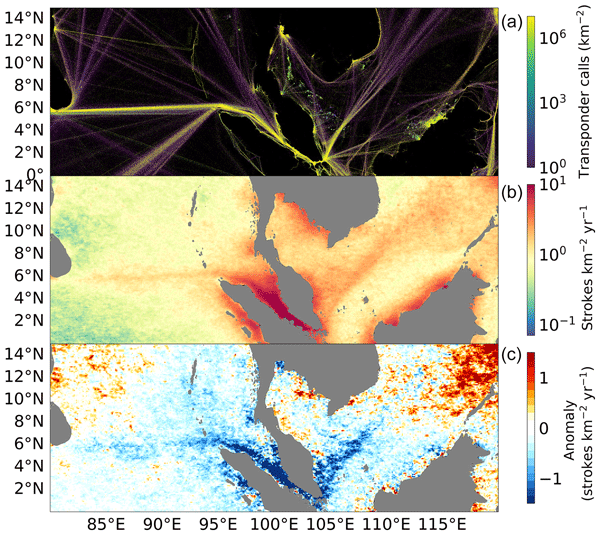
Aerosol particles influence clouds, which exert a large forcing on solar radiation and freshwater. To better understand the mechanisms by which aerosol influences thunderstorms, we look at the two busiest shipping lanes in the world, where recent regulations have reduced sulfur emissions by nearly an order of magnitude. We find that the reduction in emissions has been accompanied by a dramatic decrease in both lightning and the number of droplets in clouds over the shipping lanes.
Philip J. Rasch, Haruki Hirasawa, Mingxuan Wu, Sarah J. Doherty, Robert Wood, Hailong Wang, Andy Jones, James Haywood, and Hansi Singh
Geosci. Model Dev., 17, 7963–7994, https://doi.org/10.5194/gmd-17-7963-2024, https://doi.org/10.5194/gmd-17-7963-2024, 2024
Short summary
Short summary
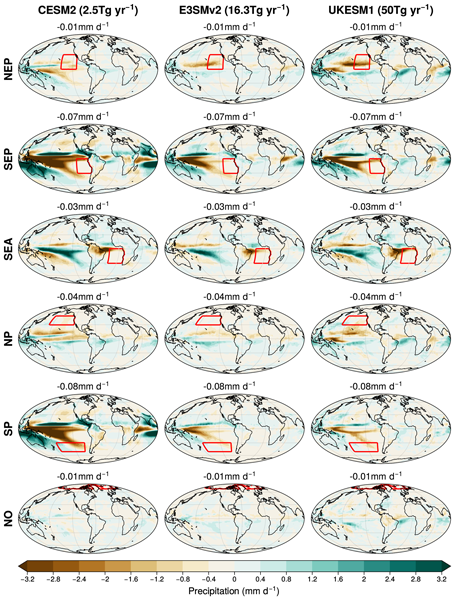
We introduce a protocol to compare computer climate simulations to better understand a proposed strategy intended to counter warming and climate impacts from greenhouse gas increases. This slightly changes clouds in six ocean regions to reflect more sunlight and cool the Earth. Example changes in clouds and climate are shown for three climate models. Cloud changes differ between the models, but precipitation and surface temperature changes are similar when their cooling effects are made similar.
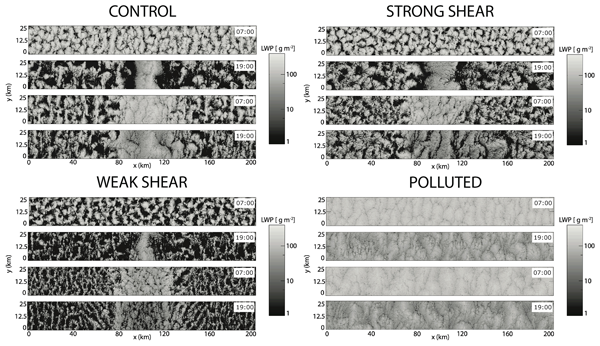
Lucas A. McMichael, Michael J. Schmidt, Robert Wood, Peter N. Blossey, and Lekha Patel
Geosci. Model Dev., 17, 7867–7888, https://doi.org/10.5194/gmd-17-7867-2024, https://doi.org/10.5194/gmd-17-7867-2024, 2024
Short summary
Short summary
Marine cloud brightening (MCB) is a climate intervention technique to potentially cool the climate. Climate models used to gauge regional climate impacts associated with MCB often assume large areas of the ocean are uniformly perturbed. However, a more realistic representation of MCB application would require information about how an injected particle plume spreads. This work aims to develop such a plume-spreading model.
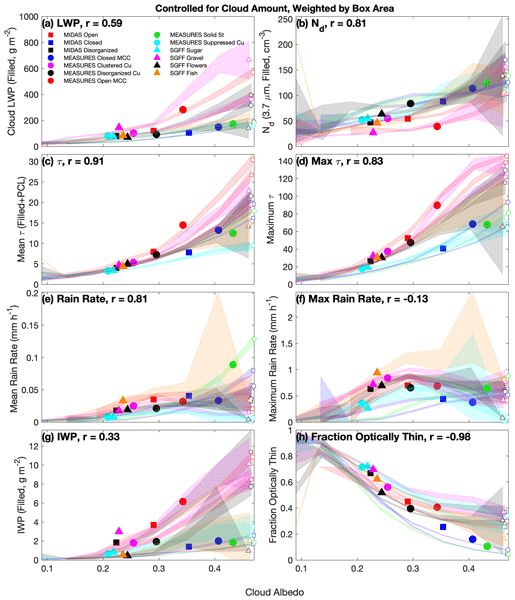
Ryan Eastman, Isabel L. McCoy, Hauke Schulz, and Robert Wood
Atmos. Chem. Phys., 24, 6613–6634, https://doi.org/10.5194/acp-24-6613-2024, https://doi.org/10.5194/acp-24-6613-2024, 2024
Short summary
Short summary
Cloud types are determined using machine learning image classifiers applied to satellite imagery for 1 year in the North Atlantic. This survey of these cloud types shows that the climate impact of a cloud scene is, in part, a function of cloud type. Each type displays a different mix of thick and thin cloud cover, with the fraction of thin cloud cover having the strongest impact on the clouds' radiative effect. Future studies must account for differing properties and processes among cloud types.
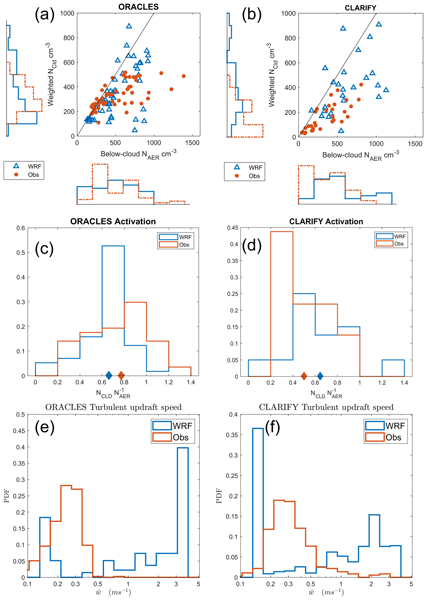
Calvin Howes, Pablo E. Saide, Hugh Coe, Amie Dobracki, Steffen Freitag, Jim M. Haywood, Steven G. Howell, Siddhant Gupta, Janek Uin, Mary Kacarab, Chongai Kuang, L. Ruby Leung, Athanasios Nenes, Greg M. McFarquhar, James Podolske, Jens Redemann, Arthur J. Sedlacek, Kenneth L. Thornhill, Jenny P. S. Wong, Robert Wood, Huihui Wu, Yang Zhang, Jianhao Zhang, and Paquita Zuidema
Atmos. Chem. Phys., 23, 13911–13940, https://doi.org/10.5194/acp-23-13911-2023, https://doi.org/10.5194/acp-23-13911-2023, 2023
Short summary
Short summary
To better understand smoke properties and its interactions with clouds, we compare the WRF-CAM5 model with observations from ORACLES, CLARIFY, and LASIC field campaigns in the southeastern Atlantic in August 2017. The model transports and mixes smoke well but does not fully capture some important processes. These include smoke chemical and physical aging over 4–12 days, smoke removal by rain, sulfate particle formation, aerosol activation into cloud droplets, and boundary layer turbulence.
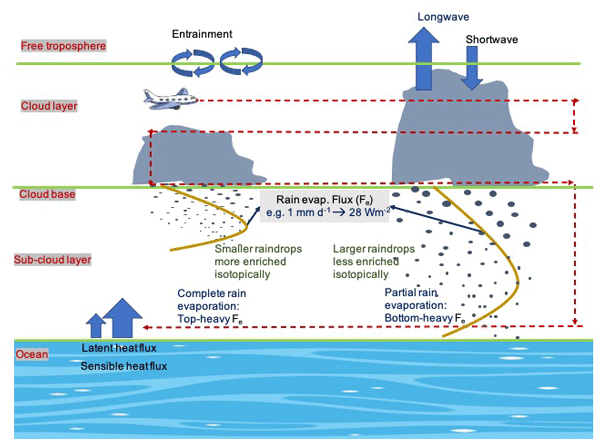
Mampi Sarkar, Adriana Bailey, Peter Blossey, Simon P. de Szoeke, David Noone, Estefanía Quiñones Meléndez, Mason D. Leandro, and Patrick Y. Chuang
Atmos. Chem. Phys., 23, 12671–12690, https://doi.org/10.5194/acp-23-12671-2023, https://doi.org/10.5194/acp-23-12671-2023, 2023
Short summary
Short summary
We study rain evaporation characteristics below shallow cumulus clouds over the North Atlantic Ocean by pairing isotope observations with a microphysical model. The modeled fraction of rain mass that evaporates below the cloud strongly depends on the raindrop size and distribution width. Moreover, the higher the rain mass fraction evaporated, the greater the change in deuterium excess. In this way, rain evaporation could be studied independently using only isotope and microphysical observations.

Amie Dobracki, Paquita Zuidema, Steven G. Howell, Pablo Saide, Steffen Freitag, Allison C. Aiken, Sharon P. Burton, Arthur J. Sedlacek III, Jens Redemann, and Robert Wood
Atmos. Chem. Phys., 23, 4775–4799, https://doi.org/10.5194/acp-23-4775-2023, https://doi.org/10.5194/acp-23-4775-2023, 2023
Short summary
Short summary
Southern Africa produces approximately one-third of the world’s carbon from fires. The thick smoke layer can flow westward, interacting with the southeastern Atlantic cloud deck. The net radiative impact can alter regional circulation patterns, impacting rainfall over Africa. We find that the smoke is highly absorbing of sunlight, mostly because it contains more black carbon than smoke over the Northern Hemisphere.
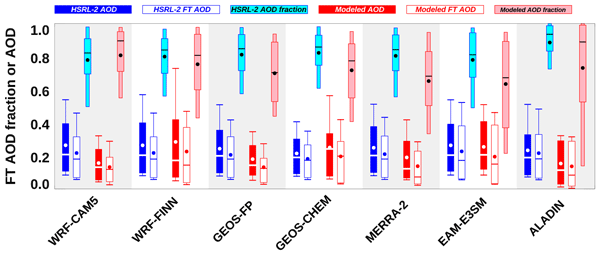
Ian Chang, Lan Gao, Connor J. Flynn, Yohei Shinozuka, Sarah J. Doherty, Michael S. Diamond, Karla M. Longo, Gonzalo A. Ferrada, Gregory R. Carmichael, Patricia Castellanos, Arlindo M. da Silva, Pablo E. Saide, Calvin Howes, Zhixin Xue, Marc Mallet, Ravi Govindaraju, Qiaoqiao Wang, Yafang Cheng, Yan Feng, Sharon P. Burton, Richard A. Ferrare, Samuel E. LeBlanc, Meloë S. Kacenelenbogen, Kristina Pistone, Michal Segal-Rozenhaimer, Kerry G. Meyer, Ju-Mee Ryoo, Leonhard Pfister, Adeyemi A. Adebiyi, Robert Wood, Paquita Zuidema, Sundar A. Christopher, and Jens Redemann
Atmos. Chem. Phys., 23, 4283–4309, https://doi.org/10.5194/acp-23-4283-2023, https://doi.org/10.5194/acp-23-4283-2023, 2023
Short summary
Short summary
Abundant aerosols are present above low-level liquid clouds over the southeastern Atlantic during late austral spring. The model simulation differences in the proportion of aerosol residing in the planetary boundary layer and in the free troposphere can greatly affect the regional aerosol radiative effects. This study examines the aerosol loading and fractional aerosol loading in the free troposphere among various models and evaluates them against measurements from the NASA ORACLES campaign.

Francesca Gallo, Janek Uin, Kevin J. Sanchez, Richard H. Moore, Jian Wang, Robert Wood, Fan Mei, Connor Flynn, Stephen Springston, Eduardo B. Azevedo, Chongai Kuang, and Allison C. Aiken
Atmos. Chem. Phys., 23, 4221–4246, https://doi.org/10.5194/acp-23-4221-2023, https://doi.org/10.5194/acp-23-4221-2023, 2023
Short summary
Short summary
This study provides a summary statistic of multiday aerosol plume transport event influences on aerosol physical properties and the cloud condensation nuclei budget at the U.S. Department of Energy Atmospheric Radiation Measurement Facility in the eastern North Atlantic (ENA). An algorithm that integrates aerosol properties is developed and applied to identify multiday aerosol transport events. The influence of the aerosol plumes on aerosol populations at the ENA is successively assessed.
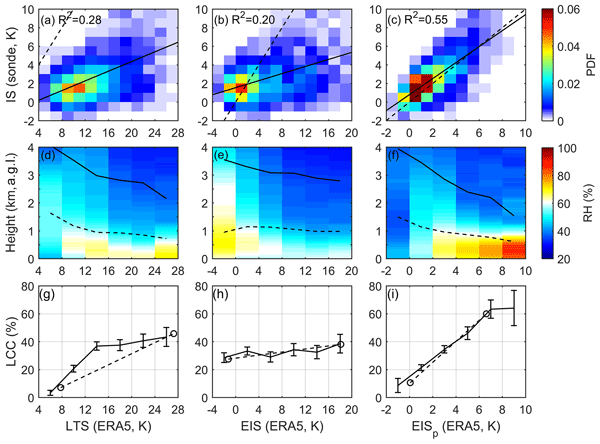
Zhenquan Wang, Jian Yuan, Robert Wood, Yifan Chen, and Tiancheng Tong
Atmos. Chem. Phys., 23, 3247–3266, https://doi.org/10.5194/acp-23-3247-2023, https://doi.org/10.5194/acp-23-3247-2023, 2023
Short summary
Short summary
This study develops a novel profile-based algorithm based on the ERA5 to estimate the inversion strength in the planetary boundary layer better than the previous inversion index, which is a key low-cloud-controlling factor. This improved measure is more effective at representing the meteorological influence on low-cloud variations. It can better constrain the meteorological influence on low clouds to better isolate cloud responses to aerosols or to estimate low cloud feedbacks in climate models.
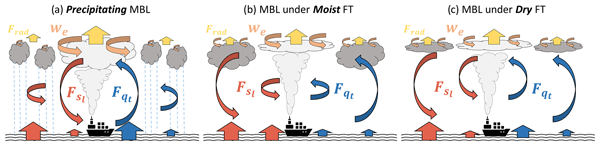
Je-Yun Chun, Robert Wood, Peter Blossey, and Sarah J. Doherty
Atmos. Chem. Phys., 23, 1345–1368, https://doi.org/10.5194/acp-23-1345-2023, https://doi.org/10.5194/acp-23-1345-2023, 2023
Short summary
Short summary
We investigate the impact of injected aerosol on subtropical low marine clouds under a variety of meteorological conditions using high-resolution model simulations. This study illustrates processes perturbed by aerosol injections and their impact on cloud properties (e.g., cloud number concentration, thickness, and cover). We show that those responses are highly sensitive to background meteorological conditions, such as precipitation, and background cloud properties.
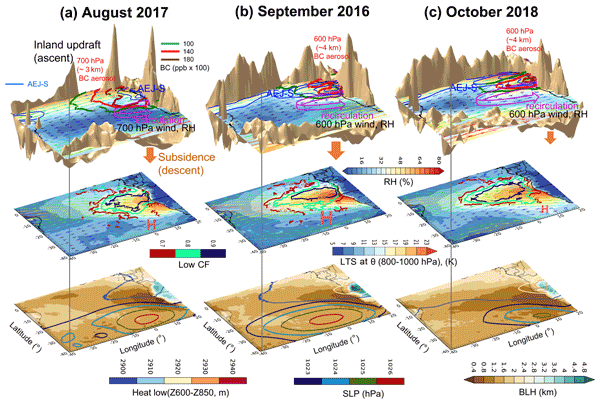
Ju-Mee Ryoo, Leonhard Pfister, Rei Ueyama, Paquita Zuidema, Robert Wood, Ian Chang, and Jens Redemann
Atmos. Chem. Phys., 22, 14209–14241, https://doi.org/10.5194/acp-22-14209-2022, https://doi.org/10.5194/acp-22-14209-2022, 2022
Short summary
Short summary
The variability in the meteorological fields during each deployment is highly modulated at a daily to synoptic timescale. This paper, along with part 1, the climatological overview paper, provides a meteorological context for interpreting the airborne measurements gathered during the three ORACLES deployments. This study supports related studies focusing on the detailed investigation of the processes controlling stratocumulus decks, aerosol lifting, transport, and their interactions.
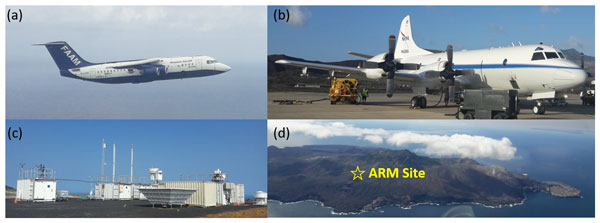
Paul A. Barrett, Steven J. Abel, Hugh Coe, Ian Crawford, Amie Dobracki, James Haywood, Steve Howell, Anthony Jones, Justin Langridge, Greg M. McFarquhar, Graeme J. Nott, Hannah Price, Jens Redemann, Yohei Shinozuka, Kate Szpek, Jonathan W. Taylor, Robert Wood, Huihui Wu, Paquita Zuidema, Stéphane Bauguitte, Ryan Bennett, Keith Bower, Hong Chen, Sabrina Cochrane, Michael Cotterell, Nicholas Davies, David Delene, Connor Flynn, Andrew Freedman, Steffen Freitag, Siddhant Gupta, David Noone, Timothy B. Onasch, James Podolske, Michael R. Poellot, Sebastian Schmidt, Stephen Springston, Arthur J. Sedlacek III, Jamie Trembath, Alan Vance, Maria A. Zawadowicz, and Jianhao Zhang
Atmos. Meas. Tech., 15, 6329–6371, https://doi.org/10.5194/amt-15-6329-2022, https://doi.org/10.5194/amt-15-6329-2022, 2022
Short summary
Short summary
To better understand weather and climate, it is vital to go into the field and collect observations. Often measurements take place in isolation, but here we compared data from two aircraft and one ground-based site. This was done in order to understand how well measurements made on one platform compared to those made on another. Whilst this is easy to do in a controlled laboratory setting, it is more challenging in the real world, and so these comparisons are as valuable as they are rare.
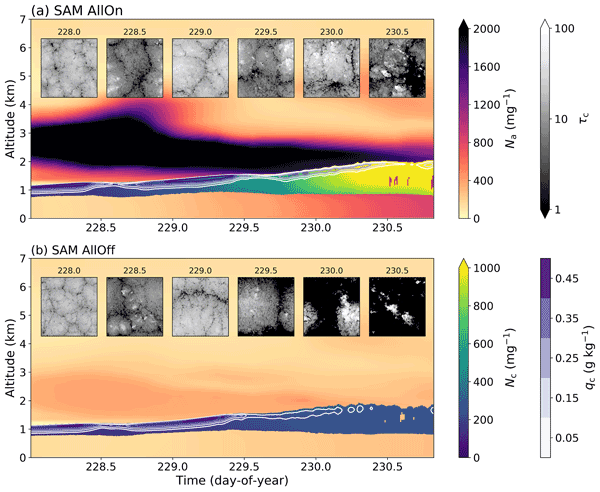
Michael S. Diamond, Pablo E. Saide, Paquita Zuidema, Andrew S. Ackerman, Sarah J. Doherty, Ann M. Fridlind, Hamish Gordon, Calvin Howes, Jan Kazil, Takanobu Yamaguchi, Jianhao Zhang, Graham Feingold, and Robert Wood
Atmos. Chem. Phys., 22, 12113–12151, https://doi.org/10.5194/acp-22-12113-2022, https://doi.org/10.5194/acp-22-12113-2022, 2022
Short summary
Short summary
Smoke from southern Africa blankets the southeast Atlantic from June-October, overlying a major transition region between overcast and scattered clouds. The smoke affects Earth's radiation budget by absorbing sunlight and changing cloud properties. We investigate these effects in regional climate and large eddy simulation models based on international field campaigns. We find that large-scale circulation changes more strongly affect cloud transitions than smoke microphysical effects in our case.
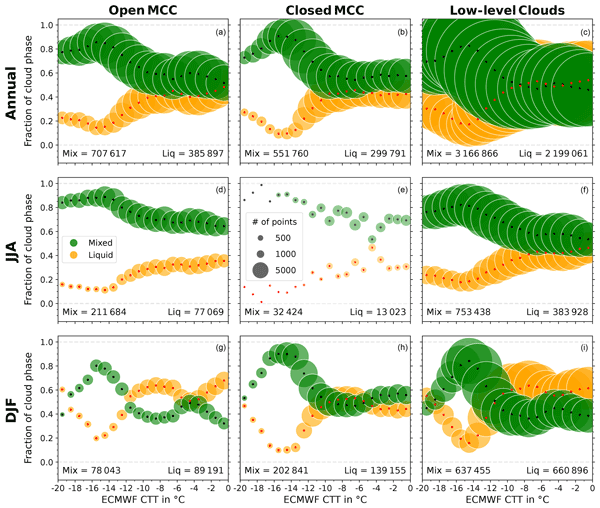
Jessica Danker, Odran Sourdeval, Isabel L. McCoy, Robert Wood, and Anna Possner
Atmos. Chem. Phys., 22, 10247–10265, https://doi.org/10.5194/acp-22-10247-2022, https://doi.org/10.5194/acp-22-10247-2022, 2022
Short summary
Short summary
Using spaceborne lidar-radar retrievals, we show that seasonal changes in cloud phase outweigh changes in cloud-phase statistics across cloud morphologies at given cloud-top temperatures. These results show that cloud morphology does not seem to pose a primary constraint on cloud-phase statistics in the Southern Ocean. Meanwhile, larger changes in in-cloud albedo across cloud morphologies are observed in supercooled liquid rather than mixed-phase stratocumuli.

Matthew W. Christensen, Andrew Gettelman, Jan Cermak, Guy Dagan, Michael Diamond, Alyson Douglas, Graham Feingold, Franziska Glassmeier, Tom Goren, Daniel P. Grosvenor, Edward Gryspeerdt, Ralph Kahn, Zhanqing Li, Po-Lun Ma, Florent Malavelle, Isabel L. McCoy, Daniel T. McCoy, Greg McFarquhar, Johannes Mülmenstädt, Sandip Pal, Anna Possner, Adam Povey, Johannes Quaas, Daniel Rosenfeld, Anja Schmidt, Roland Schrödner, Armin Sorooshian, Philip Stier, Velle Toll, Duncan Watson-Parris, Robert Wood, Mingxi Yang, and Tianle Yuan
Atmos. Chem. Phys., 22, 641–674, https://doi.org/10.5194/acp-22-641-2022, https://doi.org/10.5194/acp-22-641-2022, 2022
Short summary
Short summary
Trace gases and aerosols (tiny airborne particles) are released from a variety of point sources around the globe. Examples include volcanoes, industrial chimneys, forest fires, and ship stacks. These sources provide opportunistic experiments with which to quantify the role of aerosols in modifying cloud properties. We review the current state of understanding on the influence of aerosol on climate built from the wide range of natural and anthropogenic laboratories investigated in recent decades.
Amie Dobracki, Paquita Zuidema, Steve Howell, Pablo Saide, Steffen Freitag, Allison C. Aiken, Sharon P. Burton, Arthur J. Sedlacek III, Jens Redemann, and Robert Wood
Atmos. Chem. Phys. Discuss., https://doi.org/10.5194/acp-2021-1081, https://doi.org/10.5194/acp-2021-1081, 2022
Preprint withdrawn
Short summary
Short summary
The global maximum of shortwave-absorbing aerosol above cloud occurs above the southeast Atlantic, where the biomass-burning aerosol provides a distinct aerosol radiative warming of regional climate. The smoke aerosols are unusually highly absorbing of sunlight. This study seeks to understand the cause. We conclude the aerosol is already strongly absorbing at the fire emission source, but that chemical aging, through encouraging a net loss of organic aerosol, also contributes.
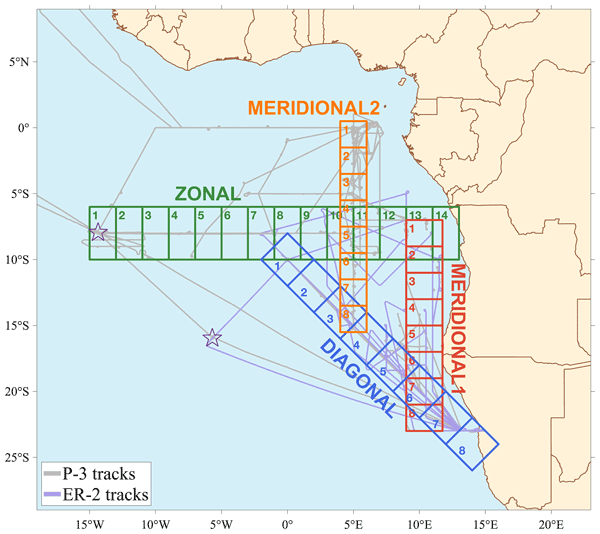
Sarah J. Doherty, Pablo E. Saide, Paquita Zuidema, Yohei Shinozuka, Gonzalo A. Ferrada, Hamish Gordon, Marc Mallet, Kerry Meyer, David Painemal, Steven G. Howell, Steffen Freitag, Amie Dobracki, James R. Podolske, Sharon P. Burton, Richard A. Ferrare, Calvin Howes, Pierre Nabat, Gregory R. Carmichael, Arlindo da Silva, Kristina Pistone, Ian Chang, Lan Gao, Robert Wood, and Jens Redemann
Atmos. Chem. Phys., 22, 1–46, https://doi.org/10.5194/acp-22-1-2022, https://doi.org/10.5194/acp-22-1-2022, 2022
Short summary
Short summary
Between July and October, biomass burning smoke is advected over the southeastern Atlantic Ocean, leading to climate forcing. Model calculations of forcing by this plume vary significantly in both magnitude and sign. This paper compares aerosol and cloud properties observed during three NASA ORACLES field campaigns to the same in four models. It quantifies modeled biases in properties key to aerosol direct radiative forcing and evaluates how these biases propagate to biases in forcing.
Ju-Mee Ryoo, Leonhard Pfister, Rei Ueyama, Paquita Zuidema, Robert Wood, Ian Chang, and Jens Redemann
Atmos. Chem. Phys., 21, 16689–16707, https://doi.org/10.5194/acp-21-16689-2021, https://doi.org/10.5194/acp-21-16689-2021, 2021
Short summary
Short summary
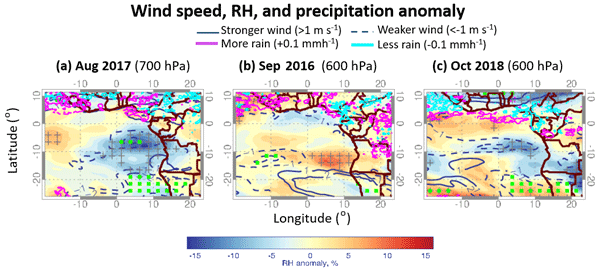
Part 1 of the meteorological overview paper highlights the anomalous meteorological characteristics during the ORACLES deployment compared to the climatological mean at monthly timescales. The upper-level wave disturbance and the associated anomalous circulation explain the weakening of AEJ-S through the reduction of the strength of the heat low over the land during August 2017. This may also help explain the anomalously low aerosol optical depth observed in the August 2017 ORACLES deployment.
Rachel Atlas, Johannes Mohrmann, Joseph Finlon, Jeremy Lu, Ian Hsiao, Robert Wood, and Minghui Diao
Atmos. Meas. Tech., 14, 7079–7101, https://doi.org/10.5194/amt-14-7079-2021, https://doi.org/10.5194/amt-14-7079-2021, 2021
Short summary
Short summary
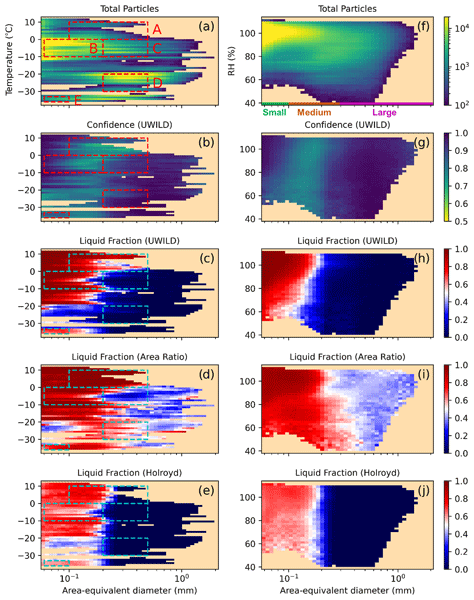
Many clouds with temperatures between 0 °C and −40 °C contain both liquid and ice particles, and the ratio of liquid to ice particles influences how the clouds interact with radiation and moderate Earth's climate. We use a machine learning method called random forest to classify images of individual cloud particles as either liquid or ice. We apply our algorithm to images captured by aircraft within clouds overlying the Southern Ocean, and we find that it outperforms two existing algorithms.
Cited articles
Albrecht, B., Ghate, V., Mohrmann, J., Wood, R., Zuidema, P., Bretherton, C., Schwartz, C., Eloranta, E., Glienke, S., Donaher, S., Sarkar, M., McGibbon, J., Nugent, A. D., Shaw, R. A., Fugal, J., Minnis, P., Paliknoda, R., Lussier, L., Jensen, J., Vivekanandan, J., Ellis, S., Tsai, P., Rilling, R., Haggerty, J., Campos, T., Stell, M., Reeves, M., Beaton, S., Allison, J., Stossmeister, G., Hall, S., and Schmidt, S.: Cloud system evolution in the trades (CSET) following the evolution of boundary layer cloud systems with the NSF-NCAR GV, Bull. Am. Meteorol. Soc., 100, 93–121, https://doi.org/10.1175/BAMS-D-17-0180.1, 2019.
Baker, B. and Lawson, R. P.: Analysis of tools used to quantify droplet clustering in clouds, J. Atmos. Sci., 67, 3355–3367, https://doi.org/10.1175/2010JAS3409.1, 2010.
Baker, B. A.: Turbulent entrainment and mixing in clouds: a new observational approach, J. Atmos. Sci., 49, 387–404, https://doi.org/10.1175/1520-0469(1992)049<0387:TEAMIC>2.0.CO;2, 1992.
Baker, M. B., Corbin, R. G., and Latham, J.: The influence of entrainment on the evolution of cloud droplet spectra: I. A model of inhomogeneous mixing, Q. J. R. Meteorol. Soc., 106, 581–598, https://doi.org/10.1002/qj.49710644914, 1980.
Bateson, C. P. and Aliseda, A.: Wind tunnel measurements of the preferential concentration of inertial droplets in homogeneous isotropic turbulence, Exp. Fluids, 52, 1373–1387, https://doi.org/10.1007/s00348-011-1252-6, 2012.
Beals, M. J., Fugal, J. P., Shaw, R. A., Lu, J., Spuler, S. M., and Stith, J. L.: Holographic measurements of inhomogeneous cloud mixing at the centimeter scale, Science, 350, 87–90, https://doi.org/10.1126/science.aab0751, 2015.
Blyth, A. M., Lasher-Trapp, S. G., Cooper, W. A., Knight, C. A., and Latham, J.: The Role of Giant and Ultragiant Nuclei in the Formation of Early Radar Echoes in Warm Cumulus Clouds, J. Atmos. Sci., 60, 2557–2572, https://doi.org/10.1175/1520-0469(2003)060<2557:TROGAU>2.0.CO;2, 2003.
Bodenschatz, E., Malinowski, S. P., Shaw, R. A., and Stratmann, F.: Can We Understand Clouds Without Turbulence?, Science, 327, 970–971, https://doi.org/10.1126/science.1185138, 2010.
Bretherton, C. S., McCoy, I. L., Mohrmann, J., Wood, R., Ghate, V., Gettelman, A., Bardeen, C. G., Albrecht, B. A., and Zuidema, P.: Cloud, Aerosol, and Boundary Layer Structure across the Northeast Pacific Stratocumulus–Cumulus Transition as Observed during CSET, Mon. Weather Rev., 147, 2083–2103, https://doi.org/10.1175/MWR-D-18-0281.1, 2019.
Çelik, F. and Marwitz, J. D.: Droplet Spectra Broadening by Ripening Process, Part I: Roles of Curvature and Salinity of Cloud Droplets, J. Atmos. Sci., 56, 3091–3105, https://doi.org/10.1175/1520-0469(1999)056<3091:DSBBRP>2.0.CO;2, 1999.
Chandrakar, K. K., Morrison, H., Grabowski, W. W., and Lawson, R. P.: Are turbulence effects on droplet collision–coalescence a key to understanding observed rain formation in clouds?, Proc. Natl. Acad. Sci. USA, 121, e2319664121, https://doi.org/10.1073/pnas.2319664121, 2024.
Dalessandro, J.: HOLODEC processed data (following D'Alessandro et al., 2026), in: Journal of Atmospheric Chemistry and Physics, Zenodo [data set], https://doi.org/10.5281/zenodo.18894825, 2026.
Dodson, D. S. and Small Griswold, J. D.: Droplet inhomogeneity in shallow cumuli: the effects of in-cloud location and aerosol number concentration, Atmos. Chem. Phys., 19, 7297–7317, https://doi.org/10.5194/acp-19-7297-2019, 2019.
Dodson, D. S. and Small Griswold, J. D.: Analyzing cloud droplet spatial tendencies on the millimetre and centimetre scales in stratocumulus clouds, Q. J. R. Meteorol. Soc., 148, 1208–1222, https://doi.org/10.1002/qj.4255, 2022.
Dziekan, P. and Pawlowska, H.: Stochastic coalescence in Lagrangian cloud microphysics, Atmos. Chem. Phys., 17, 13509–13520, https://doi.org/10.5194/acp-17-13509-2017, 2017.
Dziekan, P., Jensen, J. B., Grabowski, W. W., and Pawlowska, H.: Impact of Giant Sea Salt Aerosol Particles on Precipitation in Marine Cumuli and Stratocumuli: Lagrangian Cloud Model Simulations, J. Atmos. Sci., 78, 4127–4142, https://doi.org/10.1175/JAS-D-21-0041.1, 2021.
Fugal, J. P. and Shaw, R. A.: Cloud particle size distributions measured with an airborne digital in-line holographic instrument, Atmos. Meas. Tech., 2, 259–271, https://doi.org/10.5194/amt-2-259-2009, 2009.
Glienke, S., Kostinski, A., Fugal, J., Shaw, R. A., Borrmann, S., and Stith, J.: Cloud droplets to drizzle: Contribution of transition drops to microphysical and optical properties of marine stratocumulus clouds, Geophys. Res. Lett., 44, 8002–8010, https://doi.org/10.1002/2017GL074430, 2017.
Glienke, S., Kostinski, A. B., Shaw, R. A., Larsen, M. L., Fugal, J. P., Schlenczek, O., and Borrmann, S.: Holographic Observations of Centimeter-Scale Nonuniformities within Marine Stratocumulus Clouds, J. Atmos. Sci., 77, 499–512, https://doi.org/10.1175/JAS-D-19-0164.1, 2020.
Grabowski, W. W. and Wang, L.-P.: Growth of Cloud Droplets in a Turbulent Environment, Annu. Rev. Fluid Mech., 45, 293–324, https://doi.org/10.1146/annurev-fluid-011212-140750, 2013.
Hoffmann, F., Yamaguchi, T., and Feingold, G.: Inhomogeneous Mixing in Lagrangian Cloud Models: Effects on the Production of Precipitation Embryos, J. Atmos. Sci., 76, 113–133, https://doi.org/10.1175/JAS-D-18-0087.1, 2019.
Hudson, J. G. and Frisbie, P. R.: Cloud condensation nuclei near marine stratus, J. Geophys. Res., 96, 20795–20808, https://doi.org/10.1029/91jd02212, 1991.
Jonas, P. R.: Turbulence and cloud microphysics, Atmos. Res., 40, 283–306, https://doi.org/10.1016/0169-8095(95)00035-6, 1996.
Kostinski, A. B. and Jameson, A. R.: On the Spatial Distribution of Cloud Particles, J. Atmos. Sci., 57, 901–915, https://doi.org/10.1175/1520-0469(2000)057<0901:OTSDOC>2.0.CO;2, 2000.
Kostinski, A. B. and Shaw, R. A.: Scale-dependent droplet clustering in turbulent clouds, J. Fluid Mech., 434, 389–398, https://doi.org/10.1017/S0022112001004001, 2001.
La, I., Yum, S. S., Yeom, J. M., and Shaw, R. A.: Influence of Entrainment on Centimeter-Scale Cloud Microphysics in Marine Stratocumulus Clouds Observed during CSET, J. Atmos. Sci., 79, 2935–2948, https://doi.org/10.1175/JAS-D-22-0005.1, 2022.
Lamb, D. and Verlinde, J.: Physics and chemistry of clouds, Cambridge University Press, 1–584 pp., https://doi.org/10.1017/CBO9780511976377, 2011.
Larsen, M. L. and Shaw, R. A.: A method for computing the three-dimensional radial distribution function of cloud particles from holographic images, Atmos. Meas. Tech., 11, 4261–4272, https://doi.org/10.5194/amt-11-4261-2018, 2018.
Larsen, M. L., Shaw, R. A., Kostinski, A. B., and Glienke, S.: Fine-Scale Droplet Clustering in Atmospheric Clouds: 3D Radial Distribution Function from Airborne Digital Holography, Phys. Rev. Lett., 121, 204501, https://doi.org/10.1103/PhysRevLett.121.204501, 2018.
Lasher-Trapp, S. G., Cooper, W. A., and Blyth, A. M.: Broadening of droplet size distributions from entrainment and mixing in a cumulus cloud, Q. J. R. Meteorol. Soc., 131, 195–220, https://doi.org/10.1256/qj.03.199, 2005.
Lu, C.-S., Liu, Y.-G., Niu, S.-J., and Xue, Y.-Q.: Broadening of cloud droplet size distributions and warm rain initiation associated with turbulence: an overview, Atmos. Ocean. Sci. Lett., 11, 123–135, https://doi.org/10.1080/16742834.2018.1410057, 2018.
Madival, D. G.: A model study of the effect of clustering on the last stage of drizzle formation, Q. J. R. Meteorol. Soc., 145, 3790–3800, https://doi.org/10.1002/qj.3659, 2019.
Marshak, A., Knyazikhin, Y., Larsen, M. L., and Wiscombe, W. J.: Small-Scale Drop-Size Variability: Empirical Models for Drop-Size-Dependent Clustering in Clouds, J. Atmos. Sci., 62, 551–558, https://doi.org/10.1175/JAS-3371.1, 2005.
Pinsky, M. B. and Khain, A. P.: Effects of in-cloud nucleation and turbulence on droplet spectrum formation in cumulus clouds, Q. J. R. Meteorol. Soc., 128, 501–533, https://doi.org/10.1256/003590002321042072, 2002.
Pruppacher, H. R. and Klett, J. D.: Microphysics of Clouds and Precipitation, Springer, the Netherlands, https://doi.org/10.1007/978-0-306-48100-0, 1996.
Rauber, R. M., Stevens, B., Ochs, H. T., Knight, C., Albrecht, B. A., Blyth, A. M., Fairall, C. W., Jensen, J. B., Lasher-Trapp, S. G., Mayol-Bracero, O. L., Vali, G., Anderson, J. R., Baker, B. A., Bandy, A. R., Burnet, E., Brenguier, J.-L., Brewer, W. A., Brown, P. R. A., Chuang, R., Cotton, W. R., Girolamo, L. D., Geerts, B., Gerber, H., Göke, S., Gomes, L., Heikes, B. G., Hudson, J. G., Kollias, P., Lawson, R. R., Krueger, S. K., Lenschow, D. H., Nuijens, L., O'Sullivan, D. W., Rilling, R. A., Rogers, D. C., Siebesma, A. P., Snodgrass, E., Stith, J. L., Thornton, D. C., Tucker, S., Twohy, C. H., and Zuidema, P.: Rain in Shallow Cumulus Over the Ocean: The RICO Campaign, BAMS, 88, 1912–1928, https://doi.org/10.1175/BAMS-88-12-1912, 2007.
Rogers, R. R. and Yau, M. K.: A Short Course in Cloud Physics, Elsevier, https://doi.org/10.1016/S0140-1963(18)31698-7, 1996.
Saunders, P. M.: Some Characteristics of Tropical Marine Showers, J. Atmos. Sci., 22, 167–175, https://doi.org/10.1175/1520-0469(1965)022<0167:SCOTMS>2.0.CO;2, 1965.
Schwartz, M. C., Ghate, V. P., Albrecht, B. A., Zuidema, P., Cadeddu, M. P., Vivekanandan, J., Ellis, S. M., Tsai, P., Eloranta, E. W., Mohrmann, J., Wood, R., and Bretherton, C. S.: Merged Cloud and Precipitation Dataset from the HIAPER GV for the Cloud System Evolution in the Trades (CSET) Campaign, https://doi.org/10.1175/JTECH-D-18-0111.1, 2019.
Shaw, R. A., Reade, W. C., Collins, L. R., and Verlinde, J.: Preferential concentration of cloud droplets by turbulence: Effects on the early evolution of cumulus cloud droplet spectra, J. Atmos. Sci., 55, 1965–1976, https://doi.org/10.1175/1520-0469(1998)055<1965:PCOCDB>2.0.CO;2, 1998.
Shaw, R. A., Kostinski, A. B., and Larsen, M. L.: Towards quantifying droplet clustering in clouds, Q. J. R. Meteorol. Soc., 128, 1043–1057, https://doi.org/10.1256/003590002320373193, 2002.
Siebert, H. and Shaw, R. A.: Supersaturation Fluctuations during the Early Stage of Cumulus Formation, J. Atmos. Sci., 74, 975–988, https://doi.org/10.1175/JAS-D-16-0115.1, 2017.
Small, J. D. and Chuang, P. Y.: New observations of precipitation initiation in warm cumulus clouds, J. Atmos. Sci., 65, 2972–2982, https://doi.org/10.1175/2008JAS2600.1, 2008.
Taraniuk, I., Kostinski, A. B., and Rudich, Y.: Enrichment of surface-active compounds in coalescing cloud drops, Geophys. Res. Lett., 35, https://doi.org/10.1029/2008GL034973, 2008.
Thiede, B., Larsen, M., Nordsiek, F., Schlenczek, O., Bodenschatz, E., and Bagheri, G.: Highly Localised Droplet Clustering in Shallow Cumulus Clouds, arXiv:2502.19272 [physics.ao-ph], https://doi.org/10.48550/arXiv.2502.19272, 2025.
Wood, R., Irons, S., and Jonas, P. R.: How Important Is the Spectral Ripening Effect in Stratiform Boundary Layer Clouds? Studies Using Simple Trajectory Analysis, J. Atmos. Sci., 59, 2681–2693, https://doi.org/10.1175/1520-0469(2002)059<2681:HIITSR>2.0.CO;2, 2002.
Wood, R., O, K.-T., Bretherton, C. S., Mohrmann, J., Albrecht, B. A., Zuidema, P., Ghate, V., Schwartz, C., Eloranta, E., Glienke, S., Shaw, R. A., Fugal, J., and Minnis, P.: Ultraclean Layers and Optically Thin Clouds in the Stratocumulus-to-Cumulus Transition, Part I: Observations, J. Atmos. Sci., 75, 1631–1652, https://doi.org/10.1175/JAS-D-17-0213.1, 2018.
Woodcock, A. H.: Salt Nuclei in Marine Air as a Function of Altitude and Wind Force, J. Atmos. Sci., 10, 362–371, https://doi.org/10.1175/1520-0469(1953)010<0366:SNIMAA>2.0.CO;2, 1953.
Yang, W., Kostinski, A. B., and Shaw, R. A.: Depth-of-focus reduction for digital in-line holography of particle fields, Opt. Lett., 30, 1303–1305, https://doi.org/10.1364/OL.30.001303, 2005.
Zeng, X.: Modeling the Effect of Radiation on Warm Rain Initiation, J. Geophys. Res. Atmos., 123, 6896–6906, https://doi.org/10.1029/2018JD028354, 2018.
Zondlo, M. A., Paige, M. E., Massick, S. M., and Silver, J. A.: Vertical cavity laser hygrometer for the National Science Foundation Gulfstream-V aircraft, J. Geophys. Res., 115, D20309, https://doi.org/10.1029/2010JD014445, 2010.
Short summary
Many theories speculate drop clustering is an important facet of precipitation initiation. This study evaluates the relationship between drop size and drop clustering surrounding the individual drops. Large drops are generally isolated from neighboring drops, particularly in subsaturated environments. Samples capturing this trend also have the broadest drop size distributions and largest drops, suggesting the importance of entrainment-mixing to precipitation initiation.
Many theories speculate drop clustering is an important facet of precipitation initiation. This...


Altmetrics
Final-revised paper
Preprint