
Articles | Volume 26, issue 4
https://doi.org/10.5194/acp-26-3049-2026
© Author(s) 2026. This work is distributed under
the Creative Commons Attribution 4.0 License.
the Creative Commons Attribution 4.0 License.
https://doi.org/10.5194/acp-26-3049-2026
© Author(s) 2026. This work is distributed under
the Creative Commons Attribution 4.0 License.
the Creative Commons Attribution 4.0 License.
Research article
| 
27 Feb 2026
Research article |
| 27 Feb 2026
| 27 Feb 2026
Occurrence of seeding multi-layer clouds in the Arctic from ground-based observations
Peggy Achtert
CORRESPONDING AUTHOR

Leipzig Institute for Meteorology, Leipzig University, Leipzig, Germany
Meteorological Observatory Hohenpeißenberg, German Weather Service, Hohenpeißenberg, Germany
Torsten Seelig
Leipzig Institute for Meteorology, Leipzig University, Leipzig, Germany
Gabriella Wallentin
Karlsruhe Institute of Technology, Karlsruhe, Germany
Luisa Ickes
Department of Space, Earth and Environment, Chalmers, Gothenburg, Sweden
Matthew D. Shupe
Cooperative Institute for Research in Environmental Sciences, University of Colorado, Boulder, CO, USA
National Oceanic and Atmospheric Administration, Physical Sciences Laboratory, Boulder, CO, USA
Corinna Hoose
Karlsruhe Institute of Technology, Karlsruhe, Germany
Matthias Tesche
Leipzig Institute for Meteorology, Leipzig University, Leipzig, Germany
Related authors
Olaf N. E. Tuinder, Andy W. Delcloo, and Peggy Achtert
Atmos. Meas. Tech., 19, 2855–2880, https://doi.org/10.5194/amt-19-2855-2026, https://doi.org/10.5194/amt-19-2855-2026, 2026
Short summary
Short summary
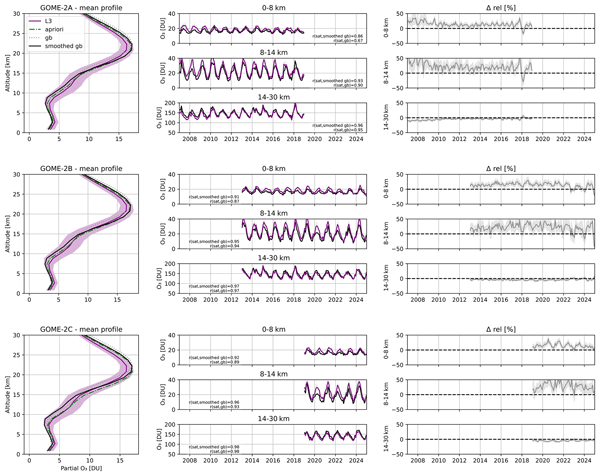
This paper presents the AC SAF (Atmospheric Composition Satellite Application Facility) gridded global GOME-2 (Global Ozone Monitoring Experiment) ozone profile data record. It covers the period 2007–2024 and consists of ozone partial columns on a 0.25 × 0.25 degree grid with 40 layers, with the associated averaging kernels and a priori. The ozone data record is validated against balloon sounding, lidar, FTIR (Fourier transform infrared) and microwave radiometers. The results demonstrate a high level of consistency across the GOME-2 instruments, underscoring their reliability for long-term ozone monitoring.
Gabriella Wallentin, Luisa Ickes, Peggy Achtert, Matthias Tesche, and Corinna Hoose
Atmos. Chem. Phys., 26, 3069–3089, https://doi.org/10.5194/acp-26-3069-2026, https://doi.org/10.5194/acp-26-3069-2026, 2026
Short summary
Short summary
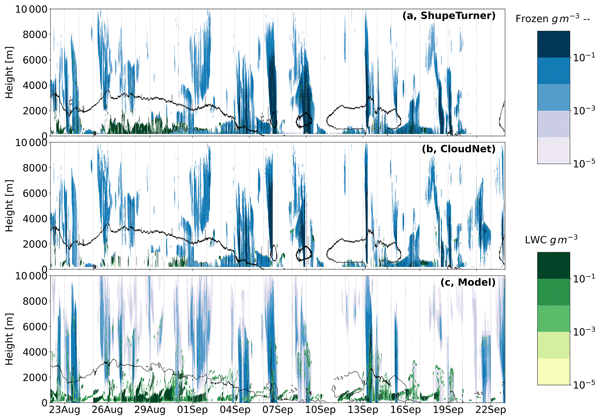
Multilayer clouds are cloud systems with two or more vertically stacked cloud layers. Using a weather prediction model, we simulate clouds in the Arctic during a month. The model is evaluated against observations collected during the ship campaign MOSAiC (Multidisciplinary Drifting Observatory for the Study of Arctic Climate). We find that multilayer clouds frequently occur in the region, in fact, they dominate the cloud occurrence. The study highlights the importance of representing these clouds in simulations over the Arctic.
Gabriella Wallentin, Annika Oertel, Luisa Ickes, Peggy Achtert, Matthias Tesche, and Corinna Hoose
Atmos. Chem. Phys., 25, 6607–6631, https://doi.org/10.5194/acp-25-6607-2025, https://doi.org/10.5194/acp-25-6607-2025, 2025
Short summary
Short summary
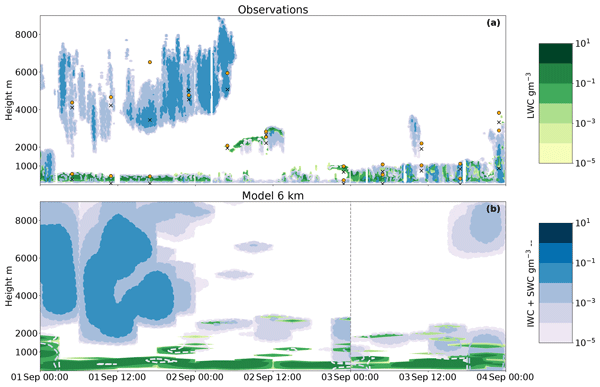
Multilayer clouds are common in the Arctic but remain underrepresented. We use an atmospheric model to simulate multilayer cloud cases from the Arctic expedition MOSAiC 2019/2020. We find that it is complex to accurately model these cloud layers due to the lack of correct temperature profiles. The model also struggles to capture the observed cloud phase and the relative concentration of cloud droplets and cloud ice. We constrain our model to measured aerosols to mitigate this issue.
Fani Alexandri, Felix Müller, Goutam Choudhury, Peggy Achtert, Torsten Seelig, and Matthias Tesche
Atmos. Meas. Tech., 17, 1739–1757, https://doi.org/10.5194/amt-17-1739-2024, https://doi.org/10.5194/amt-17-1739-2024, 2024
Short summary
Short summary
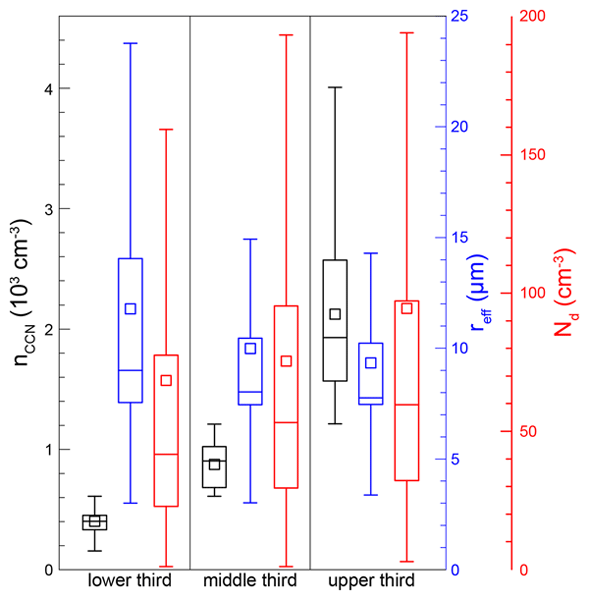
We present a novel method for studying aerosol–cloud interactions. It combines cloud-relevant aerosol concentrations from polar-orbiting lidar observations with the development of individual clouds from geostationary observations. Application to 1 year of data gives first results on the impact of aerosols on the concentration and size of cloud droplets and on cloud phase in the regime of heterogeneous ice formation. The method could enable the systematic investigation of warm and cold clouds.
Gillian Young McCusker, Jutta Vüllers, Peggy Achtert, Paul Field, Jonathan J. Day, Richard Forbes, Ruth Price, Ewan O'Connor, Michael Tjernström, John Prytherch, Ryan Neely III, and Ian M. Brooks
Atmos. Chem. Phys., 23, 4819–4847, https://doi.org/10.5194/acp-23-4819-2023, https://doi.org/10.5194/acp-23-4819-2023, 2023
Short summary
Short summary
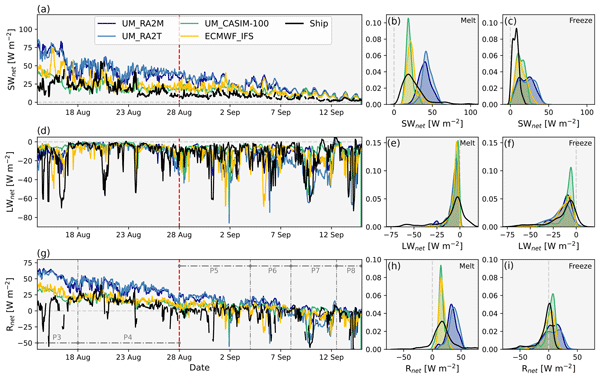
In this study, we show that recent versions of two atmospheric models – the Unified Model and Integrated Forecasting System – overestimate Arctic cloud fraction within the lower troposphere by comparison with recent remote-sensing measurements made during the Arctic Ocean 2018 expedition. The overabundance of cloud is interlinked with the modelled thermodynamic structure, with strong negative temperature biases coincident with these overestimated cloud layers.
Lloyd Villanueva, Hans W. Chen, Gabriella Wallentin, and Luisa Ickes
EGUsphere, https://doi.org/10.5194/egusphere-2026-6039, https://doi.org/10.5194/egusphere-2026-6039, 2026
This preprint is open for discussion and under review for Atmospheric Chemistry and Physics (ACP).
Short summary
Short summary
In the Arctic winter, clouds act like a blanket that slows the loss of heat from the ground. Clouds often stack in layers, but the cause is not well known. Using weather balloon and radar data from Svalbard, we found that warm, moist air from the south brings stacked clouds twice as often as cold northern air. In cold air, stacked clouds keep the ground warmer than single clouds, but in warm air layering makes no clear difference. This could help climate models represent Arctic clouds better.
Pradeep K. Aggarwal, Courtney Schumacher, Frederick J. Longstaffe, Aaron Funk, and Matthew D. Shupe
Atmos. Chem. Phys., 26, 13661–13692, https://doi.org/10.5194/acp-26-13661-2026, https://doi.org/10.5194/acp-26-13661-2026, 2026
Short summary
Short summary
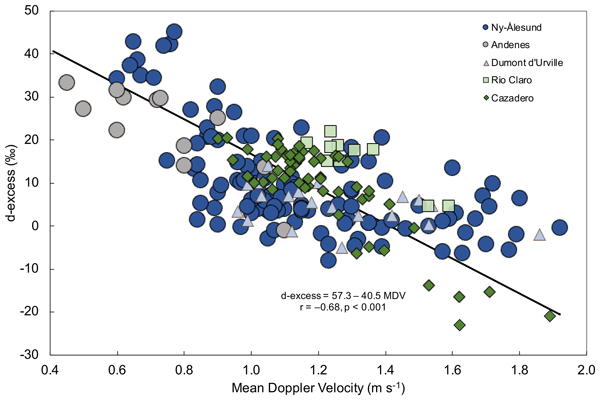
We show that in mixed-phase clouds, ice forming by riming, that is, freezing of supercooled liquid directly on ice particles, differs in its isotope composition than the liquid, contrary to the existing view in the literature. This isotopic change is the same for riming in tropical to polar precipitation. Our results provide a robust tool for cloud processes studies, for better understanding past climates from ice cores data, and for improving micro-physics schemes in climate models.
Timothy W. Juliano, Florian Tornow, Ann M. Fridlind, Andrew S. Ackerman, Gregory S. Elsaesser, Bart Geerts, Christian P. Lackner, David Painemal, Israel Silber, Mikhail Ovchinnikov, Gunilla Svensson, Michael Tjernström, Peng Wu, Alejandro Baró Pérez, Peter Bogenschutz, Dmitry Chechin, Kamal Kant Chandrakar, Jan Chylik, Andrey Debolskiy, Rostislav Fadeev, Anu Gupta, Luisa Ickes, Michail Karalis, Martin Köhler, Branko Kosović, Peter Kuma, Weiwei Li, Evgeny Mortikov, Hugh Morrison, Roel A. J. Neggers, Anna Possner, Tomi Raatikainen, Lea Raillard, Sami Romakkaniemi, Niklas Schnierstein, Shin-ichiro Shima, Nikita Silin, Mikhail Tolstykh, Étienne Vignon, Lulin Xue, Meng Zhang, and Xue Zheng
Atmos. Chem. Phys., 26, 13267–13302, https://doi.org/10.5194/acp-26-13267-2026, https://doi.org/10.5194/acp-26-13267-2026, 2026
Short summary
Short summary
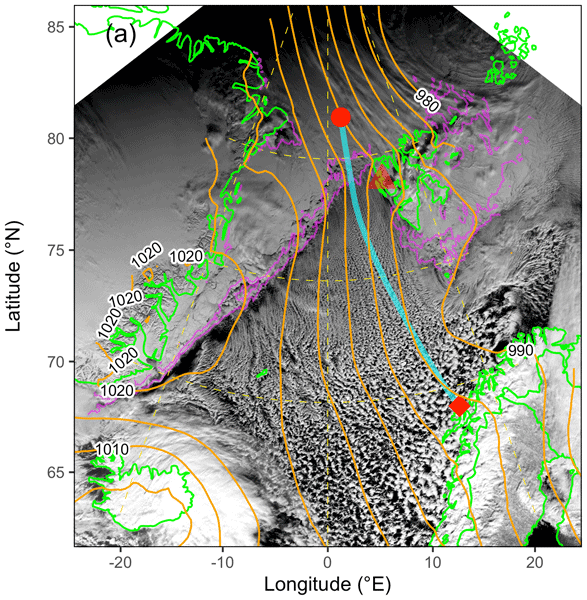
Models struggle to capture cloud and precipitation processes and their radiative effects in marine cold-air outbreaks. We use a quasi-Lagrangian framework to compare large-eddy simulation (LES) and single-column model (SCM) output with field and satellite observations. With fixed droplet and ice numbers, LES and SCM agree in liquid-only tests. In mixed-phase conditions, LES plausibly capture cloud thinning and breakup, while SCMs largely remain overcast and thereby miss cloud radiative effects.
Kara Hartig, John J. Cassano, Matthew D. Shupe, and Amy Solomon
Atmos. Chem. Phys., 26, 12689–12714, https://doi.org/10.5194/acp-26-12689-2026, https://doi.org/10.5194/acp-26-12689-2026, 2026
Short summary
Short summary
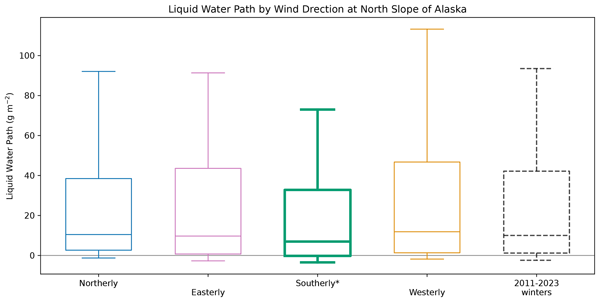
Liquid-containing Arctic clouds have a strong influence on surface temperature and sea ice extent in winter, but how weather conditions impact cloud cover remains a mystery. This study uses observations from northern Alaska to investigate this relationship. We find that, contrary to expectations, the amount of cloud liquid is remarkably insensitive to temperature, moisture, wind direction, and the large-scale atmospheric flow.
Miriam Simm, Tom Beucler, and Corinna Hoose
EGUsphere, https://doi.org/10.48550/arXiv.2606.20165, https://doi.org/10.48550/arXiv.2606.20165, 2026
This preprint is open for discussion and under review for Geoscientific Model Development (GMD).
Short summary
Short summary
During numerical weather prediction simulations, it is impractical to routinely save microphysical process rates due to storage constraints. We built PRecover, a machine learning-based method that recovers these process rates from ICON simulation output. Most instantaneous process rates are recovered accurately, and PRecover generalizes well, as shown in two case studies. This enables process-oriented studies of cloud microphysics even when the underlying process rates were not saved initially.
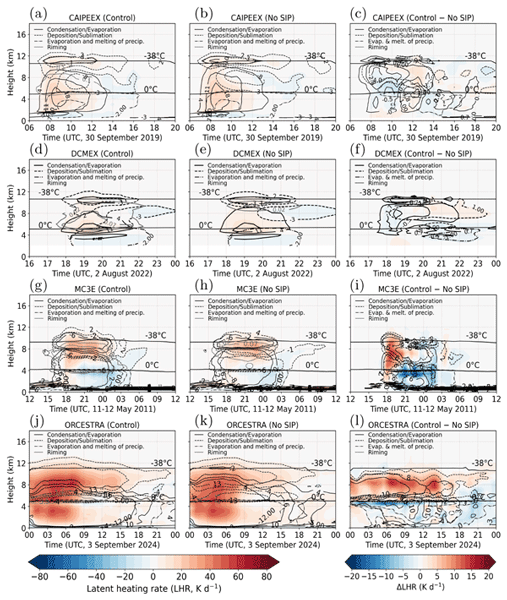
Deepak Waman, Julian Meusel, Behrooz Keshtgar, Gabriella Wallentin, Christian Barthlott, Sachin Patade, Sonali Shete, Thara Prabhakaran, Romain Fievet, Declan Finney, Alan Blyth, and Corinna Hoose
Atmos. Chem. Phys., 26, 11371–11407, https://doi.org/10.5194/acp-26-11371-2026, https://doi.org/10.5194/acp-26-11371-2026, 2026
Short summary
Short summary
We use a weather model with aircraft and satellite data to study ice multiplication in thunderstorms across India, Mexico, Oklahoma, and the tropical Atlantic. This process can create spurious ice particles in clouds, thereby increasing latent and radiative heating that strengthens stratiform ascents in storms and extends anvil-cloud lifetimes. These results improve our understanding of how small-scale ice processes influence large-scale storm behavior and rainfall patterns.
Gabriella Wallentin, Alexander Böhmländer, Ross Herbert, Heike Wex, Charlotte M. Beall, Pia Bogert, Zoé Brasseur, Jie Chen, Jessie M. Creamean, Paul J. DeMott, Oliver Eckermann, Kunfeng Gao, Xianda Gong, Silvia Henning, Naruki Hiranuma, Christina S. McCluskey, Christos Mitsios, Ottmar Möhler, Athanasios Nenes, Mark D. Tarn, Christian Tatzelt, Ping Tian, Yutaka Tobo, Franziska Vogel, André Welti, Elise Wilbourn, Jennifer Winstone, and Corinna Hoose
EGUsphere, https://doi.org/10.5194/egusphere-2026-4134, https://doi.org/10.5194/egusphere-2026-4134, 2026
This preprint is open for discussion and under review for Geoscientific Model Development (GMD).
Short summary
Short summary
Ice nucleating particles (INPs) are aerosols essential for cloud ice formation in the temperature range -38 °C and 0 °C. Due to measurement challenges, the availability of observations of INPs remains scarce. This study applies machine learning to predict a global INP distribution using aerosol mass concentration reanalysis and observed INPs. This manuscript demonstrates that even with limited measurements, the occurrence of INPs can be estimated, following the spatial pattern of key aerosols.
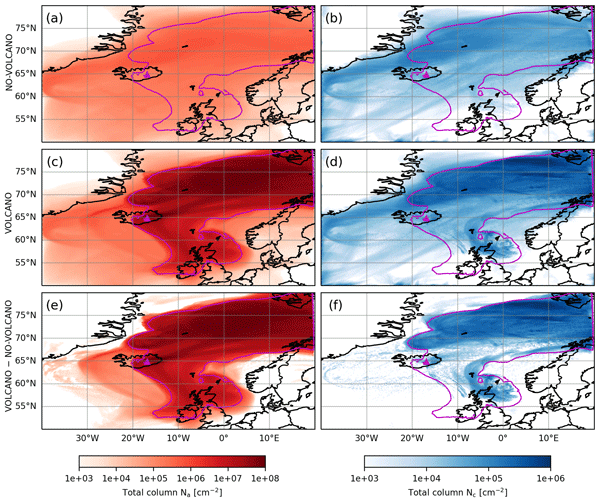
Fatemeh Zarei, Julia Bruckert, Gholam Ali Hoshyaripour, and Corinna Hoose
Atmos. Chem. Phys., 26, 9697–9719, https://doi.org/10.5194/acp-26-9697-2026, https://doi.org/10.5194/acp-26-9697-2026, 2026
Short summary
Short summary
Volcanic eruptions are a rich source of aerosol particles, such as sulfate and ash, that can impact cloud droplet and ice crystal formation. They lead to strong local perturbations of clouds. In this study, these processes were simulated with a numerical model. In two contrasting case studies of an Icelandic and a Caribbean volcano, the perturbations to processes involving liquid droplets and ice crystals are investigated.
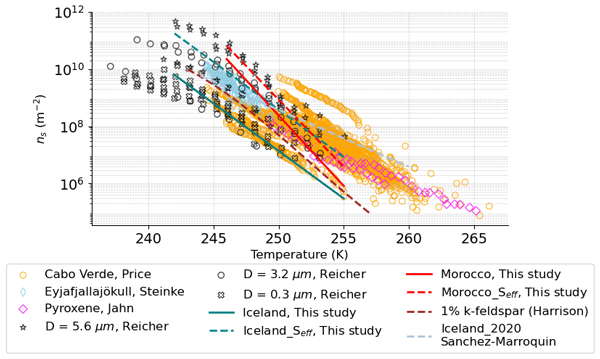
Sebastian Vergara-Palacio, Alexei Kiselev, Franziska Vogel, Adolfo González-Romero, Romy Fösig, Xavier Querol, Corinna Hoose, Nsikanabasi Silas Umo, Ottmar Möhler, Konrad Kandler, Carlos Pérez García-Pando, and Martina Klose
Atmos. Chem. Phys., 26, 9113–9147, https://doi.org/10.5194/acp-26-9113-2026, https://doi.org/10.5194/acp-26-9113-2026, 2026
Short summary
Short summary
Atmospheric mineral dust can help clouds form ice, changing cloud properties and affecting weather and climate. We tested dust from Morocco and Iceland in more than 300 controlled laboratory experiments. Icelandic samples were up to 100 times less able to promote ice formation than Moroccan samples, and showed mineral-composition dependence. The results show the role of larger dust particles in ice nucleation and their relationship with mineralogy and size for low- and high-latitude sources.
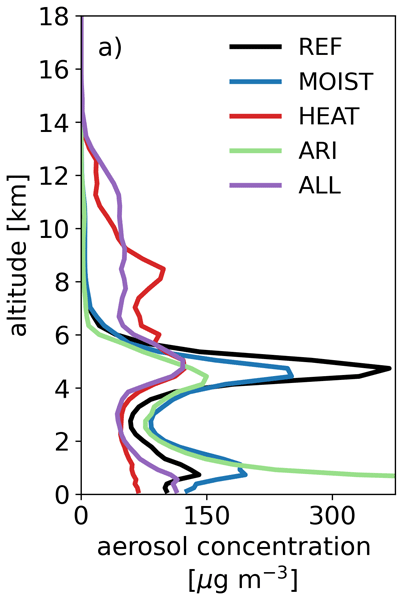
Lisa Janina Muth, Gholam Ali Hoshyaripour, Bernhard Vogel, Heike Vogel, and Corinna Hoose
Atmos. Chem. Phys., 26, 8505–8528, https://doi.org/10.5194/acp-26-8505-2026, https://doi.org/10.5194/acp-26-8505-2026, 2026
Short summary
Short summary
Wildfire plume injection height is key for atmospheric impact but hard to model. This study simulates the 2019/2020 Australian wildfires, testing fire-atmosphere feedbacks. Heat release increases plume rise; moisture has minor effects. Aerosol-radiation interaction lowers injection height initially, then lofts it. Only the combined simulation matches observed upper troposphere aerosol layers, especially during peak fire intensity.
Mahshad Soleimanpour, Torsten Seelig, Silke Groß, and Matthias Tesche
Atmos. Meas. Tech., 19, 3291–3308, https://doi.org/10.5194/amt-19-3291-2026, https://doi.org/10.5194/amt-19-3291-2026, 2026
Short summary
Short summary
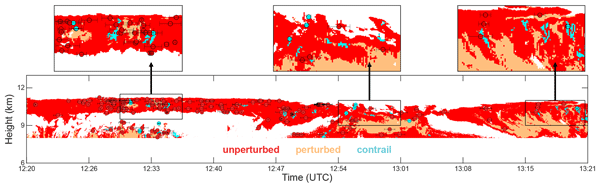
Aviation affects the climate not only through carbon dioxide emissions but also by producing contrails that can alter the properties of natural cirrus clouds and influence the Earth's energy balance. In this study, we used detailed airborne laser measurements to detect contrails forming inside these clouds. We developed an automated method to identify and measure them, showing where they occur and providing a reliable way to monitor their climate impact without requiring flight data.
Hannah C. Frostenberg, Jessie M. Creamean, Erik S. Thomson, Heather Guy, Roman Pohorsky, Camille Mavis, Ian M. Brooks, Nicolas Fauré, Lea Haberstock, Julia Kojoj, Sonja Murto, Julia Schmale, Michael Tjernström, Paul Zieger, and Luisa Ickes
EGUsphere, https://doi.org/10.5194/egusphere-2026-2403, https://doi.org/10.5194/egusphere-2026-2403, 2026
Short summary
Short summary
Arctic low clouds containing both droplets and ice crystals strongly impact sea ice and therefore require accurate modeling. Using a high-resolution atmospheric model, we found that particle and ice concentrations, alongside ice crystal shape, strongly dictate the simulated cloud. Therefore, these specific properties should be prioritized during future Arctic observational campaigns. Furthermore, atmospheric models must be able to represent a variety of ice crystal shapes.
Joseph Hung, Penny M. Rowe, Christopher J. Cox, Emily M. McCullough, Liam Kroll, Raia Ottenheimer, Matthew D. Shupe, Von P. Walden, and Kimberly Strong
EGUsphere, https://doi.org/10.5194/egusphere-2026-1906, https://doi.org/10.5194/egusphere-2026-1906, 2026
Short summary
Short summary
Climate models struggle to accurately represent polar regions largely due to challenges in modelling clouds. In this article, we sampled clouds at Arctic and Antarctic field sites, and found that Antarctic clouds generally featured lower temperatures, smaller liquid droplets, and are thinner because they have a higher proportion of ice than Arctic clouds. This knowledge improves our ability to monitor remote regions, and serves to improve our understanding of cloud processes.
Christian Barthlott, Beata Czajka, Christoph Gebhardt, and Corinna Hoose
Atmos. Chem. Phys., 26, 6061–6081, https://doi.org/10.5194/acp-26-6061-2026, https://doi.org/10.5194/acp-26-6061-2026, 2026
Short summary
Short summary
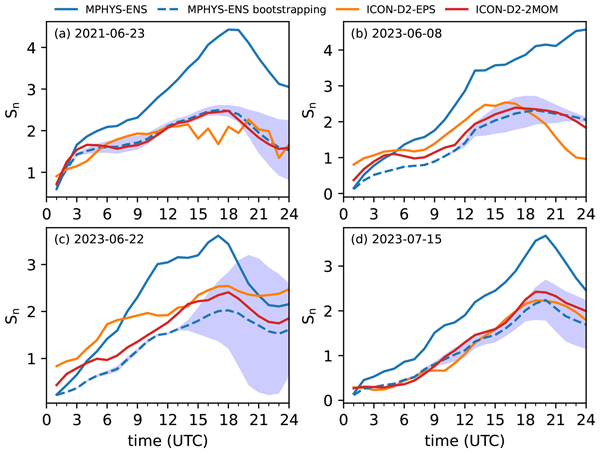
The study uses the ICOsahedral Non-hydrostatic (ICON) model to examine how microphysical uncertainties affect summertime convection in central Europe. A 108-member ensemble varying aerosol and cloud parameters showed strong differences in precipitation intensity and location but little impact on convection onset. Results highlight that cloud microphysics is a key source of forecast uncertainty in convective weather prediction.
Olaf N. E. Tuinder, Andy W. Delcloo, and Peggy Achtert
Atmos. Meas. Tech., 19, 2855–2880, https://doi.org/10.5194/amt-19-2855-2026, https://doi.org/10.5194/amt-19-2855-2026, 2026
Short summary
Short summary
This paper presents the AC SAF (Atmospheric Composition Satellite Application Facility) gridded global GOME-2 (Global Ozone Monitoring Experiment) ozone profile data record. It covers the period 2007–2024 and consists of ozone partial columns on a 0.25 × 0.25 degree grid with 40 layers, with the associated averaging kernels and a priori. The ozone data record is validated against balloon sounding, lidar, FTIR (Fourier transform infrared) and microwave radiometers. The results demonstrate a high level of consistency across the GOME-2 instruments, underscoring their reliability for long-term ozone monitoring.
Anne Sledd, Michael R. Gallagher, Matthew D. Shupe, Christopher J. Cox, Robert Hawley, Michael S. Town, Heather Guy, Hans-Peter Marshall, Ryan R. Neely III, Claire Pettersen, Von P. Walden, Catherine Hebson, Andrew Martin, Erik Olson, and Derek Pickell
EGUsphere, https://doi.org/10.5194/egusphere-2026-1842, https://doi.org/10.5194/egusphere-2026-1842, 2026
Short summary
Short summary
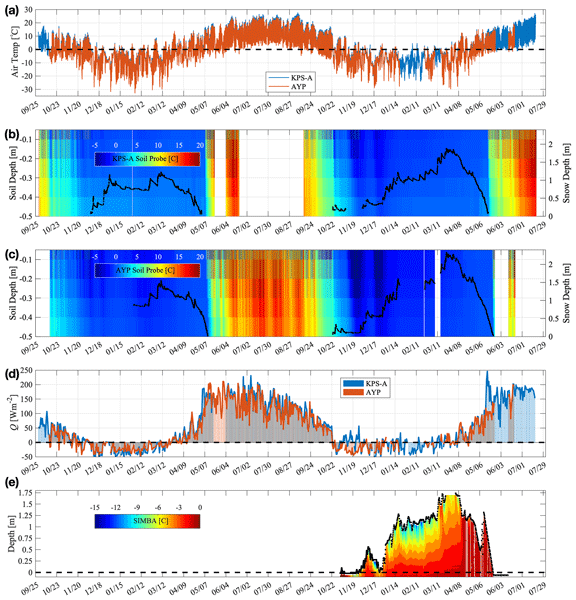
Understanding energetic processes at the surface is important for understanding how the Greenland ice sheet melts. However, most temperature observations of firn are insufficient for studying energetic processes near the surface where melt happens. In this work we present new ground observations of high-resolution temperature profiles in the top meter of firn near the southwest coast of Greenland. Using these observations we characterize how temperature and energy vary during the melt season.
Jean Lac, Hélène Chepfer, Matthew D. Shupe, and Hannes Griesche
Atmos. Chem. Phys., 26, 4189–4213, https://doi.org/10.5194/acp-26-4189-2026, https://doi.org/10.5194/acp-26-4189-2026, 2026
Short summary
Short summary
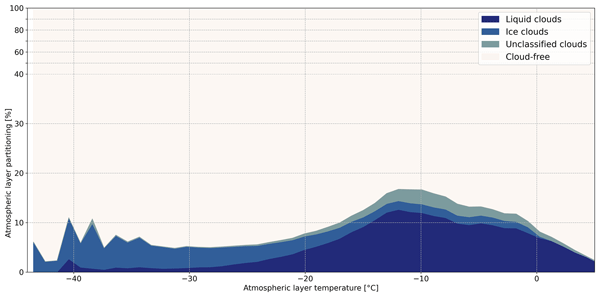
Satellite observations show that Arctic spring experiences a rapid increase in liquid-containing clouds over sea ice. Our study shows that this transition is mostly driven by warmer temperatures in early spring than in late spring, favoring more liquid clouds formation, rather than a limited moisture source in early spring. It suggests that, in the future, this transition is likely to occur earlier in spring considering the rapid Arctic warming.
Gholam Ali Hoshyaripour, Andreas Baer, Sascha Bierbauer, Julia Bruckert, Dominik Brunner, Jochen Förstner, Arash Hamzehloo, Valentin Hanft, Corina Keller, Martina Klose, Pankaj Kumar, Patrick Ludwig, Enrico Metzner, Lisa Muth, Andreas Pauling, Nikolas Porz, Maryam Ramezani Ziarani, Thomas Reddmann, Luca Reißig, Roland Ruhnke, Khompat Satitkovitchai, Axel Seifert, Miriam Sinnhuber, Michael Steiner, Stefan Versick, Heike Vogel, Michael Weimer, Sven Werchner, and Corinna Hoose
Geosci. Model Dev., 19, 1645–1681, https://doi.org/10.5194/gmd-19-1645-2026, https://doi.org/10.5194/gmd-19-1645-2026, 2026
Short summary
Short summary
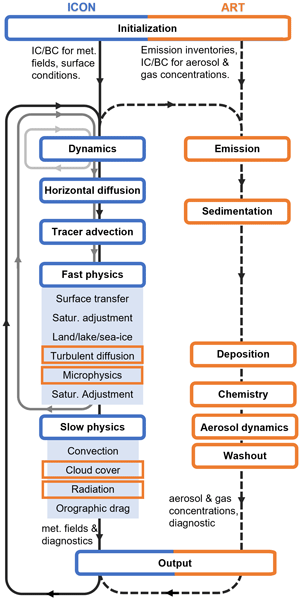
This paper presents recent advances in ICON-ART, a modeling system that simulates atmospheric composition – such as gases and particles – and their interactions with weather and climate. By integrating updated chemistry, emissions, and aerosol processes, ICON-ART enables detailed, scale-spanning simulations. It supports both scientific research and operational forecasts, contributing to improved air quality, weather and climate predictions.
Gabriella Wallentin, Luisa Ickes, Peggy Achtert, Matthias Tesche, and Corinna Hoose
Atmos. Chem. Phys., 26, 3069–3089, https://doi.org/10.5194/acp-26-3069-2026, https://doi.org/10.5194/acp-26-3069-2026, 2026
Short summary
Short summary
Multilayer clouds are cloud systems with two or more vertically stacked cloud layers. Using a weather prediction model, we simulate clouds in the Arctic during a month. The model is evaluated against observations collected during the ship campaign MOSAiC (Multidisciplinary Drifting Observatory for the Study of Arctic Climate). We find that multilayer clouds frequently occur in the region, in fact, they dominate the cloud occurrence. The study highlights the importance of representing these clouds in simulations over the Arctic.
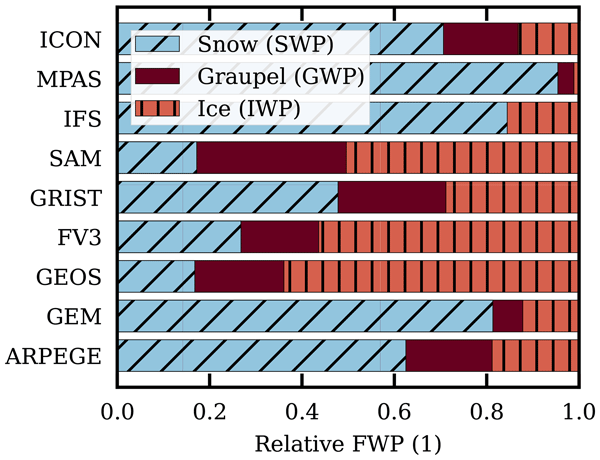
Patrick Eriksson, Alejandro Baró Pérez, Nils Müller, Hanna Hallborn, Eleanor May, Manfred Brath, Stefan A. Buehler, and Luisa Ickes
Atmos. Chem. Phys., 26, 2741–2768, https://doi.org/10.5194/acp-26-2741-2026, https://doi.org/10.5194/acp-26-2741-2026, 2026
Short summary
Short summary
Our study shows that accurately representing atmospheric ice mass remains a major challenge. We compared climate models to satellite data, finding that conventional models consistently underestimate the amount of ice. While new, higher-resolution models perform better, both models and observations still have significant discrepancies. These shortcomings limit our confidence in cloud-related climate feedbacks, which are critical for our predictions of the future climate.
Yichen Jia, Hendrik Andersen, David Neubauer, Ulrike Lohmann, Corinna Hoose, and Jan Cermak
EGUsphere, https://doi.org/10.5194/egusphere-2026-569, https://doi.org/10.5194/egusphere-2026-569, 2026
Short summary
Short summary
Understanding how ocean clouds respond to air pollution is important for climate projections. Using artificial intelligence and a climate model, we show that some model settings produce very high cloud cover, leaving little room for further cloud growth as pollution increases. This “headroom effect” can make cloud responses appear weak. Our results highlight the need to consider existing cloud conditions when interpreting how cloud cover responds to the environment.
Timothy W. Juliano, Florian Tornow, Ann M. Fridlind, Andrew S. Ackerman, Gregory S. Elsaesser, Bart Geerts, Christian P. Lackner, David Painemal, Israel Silber, Mikhail Ovchinnikov, Gunilla Svensson, Michael Tjernström, Peng Wu, Alejandro Baró Pérez, Peter Bogenschutz, Dmitry Chechin, Kamal Kant Chandrakar, Jan Chylik, Andrey Debolskiy, Rostislav Fadeev, Anu Gupta, Luisa Ickes, Michail Karalis, Martin Köhler, Branko Kosović, Peter Kuma, Weiwei Li, Evgeny Mortikov, Hugh Morrison, Roel A. J. Neggers, Anna Possner, Tomi Raatikainen, Sami Romakkaniemi, Niklas Schnierstein, Shin-ichiro Shima, Nikita Silin, Mikhail Tolstykh, Lulin Xue, Meng Zhang, and Xue Zheng
EGUsphere, https://doi.org/10.5194/egusphere-2025-6217, https://doi.org/10.5194/egusphere-2025-6217, 2026
Preprint archived
Short summary
Short summary
Models struggle to capture cloud and precipitation processes and their radiative effects in marine cold-air outbreaks. We use a quasi-Lagrangian framework to compare large-eddy simulation (LES) and single-column model (SCM) output with field and satellite observations. With fixed droplet and ice numbers, LES and SCM agree in liquid-only tests. In mixed-phase conditions, LES plausibly capture cloud thinning and breakup, while SCMs largely remain overcast and thereby miss cloud radiative effects.
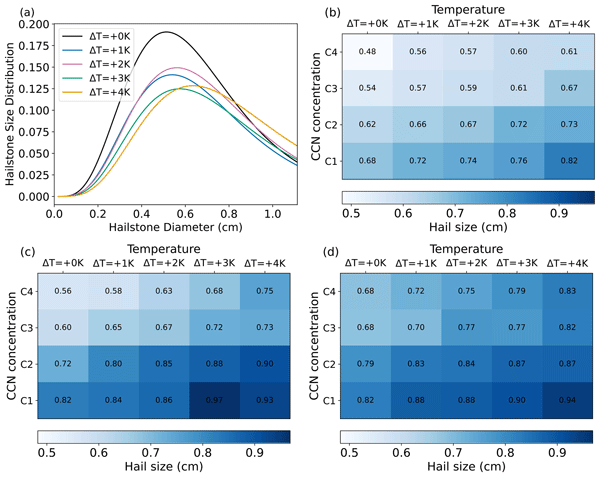
Lina Lucas, Christian Barthlott, Corinna Hoose, and Peter Knippertz
Atmos. Chem. Phys., 25, 18527–18548, https://doi.org/10.5194/acp-25-18527-2025, https://doi.org/10.5194/acp-25-18527-2025, 2025
Short summary
Short summary
We studied how climate change and cleaner air could affect severe storms in Germany. Using high-resolution weather simulations of past supercell storms under warmer and less polluted conditions, we found that storms may become more intense, with heavier rainfall and larger hailstones. These changes suggest an increased risk of damage in the future. Our findings help improve understanding of how extreme storms may evolve in a changing climate.
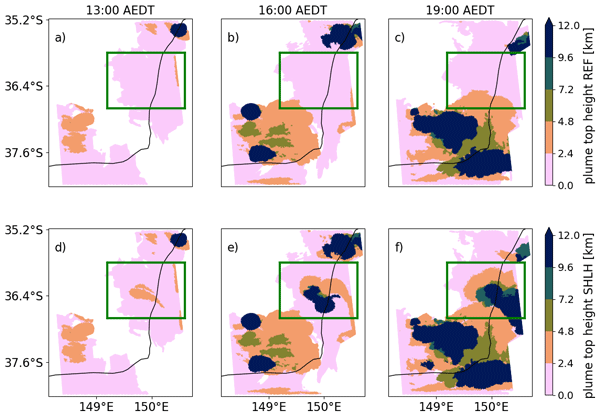
Lisa Janina Muth, Sascha Bierbauer, Corinna Hoose, Bernhard Vogel, Heike Vogel, and Gholam Ali Hoshyaripour
Atmos. Chem. Phys., 25, 16027–16040, https://doi.org/10.5194/acp-25-16027-2025, https://doi.org/10.5194/acp-25-16027-2025, 2025
Short summary
Short summary
In our study, we explore how intense wildfires create thunderstorm-like clouds that can affect weather and climate globally. Using simulations with high resolution, we found that fire heat and moisture help form these clouds, lifting particles high into the atmosphere. This process is crucial for understanding how fires affect the environment. Despite some differences from observational data, our findings match well over time, showing the importance of fire-induced heat in cloud formation.
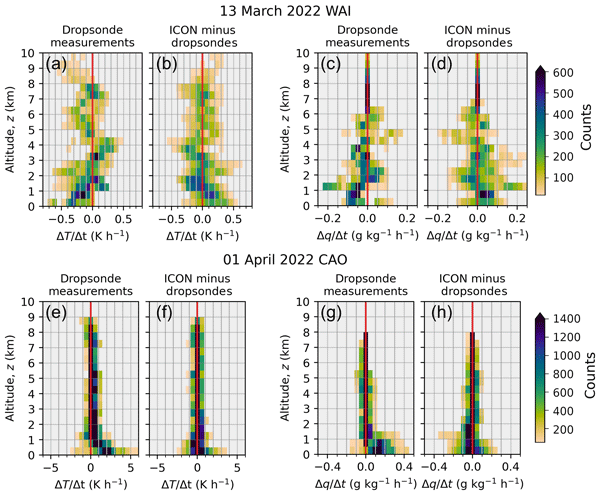
Manfred Wendisch, Benjamin Kirbus, Davide Ori, Matthew D. Shupe, Susanne Crewell, Harald Sodemann, and Vera Schemann
Atmos. Chem. Phys., 25, 15047–15076, https://doi.org/10.5194/acp-25-15047-2025, https://doi.org/10.5194/acp-25-15047-2025, 2025
Short summary
Short summary
Aircraft observations of air parcels moving into and out of the Arctic are reported. From the data, heating and cooling as well as drying and moistening of the air masses along their way into and out of the Arctic could be measured for the first time. These data are used to evaluate if weather prediction models are able to accurately represent these air mass transformations. This work helps to model the future Arctic climate changes, which may have an impact for mid-latitude weather as well.
Yun He, Goutam Choudhury, Matthias Tesche, Albert Ansmann, Fan Yi, Detlef Müller, and Zhenping Yin
Atmos. Meas. Tech., 18, 5669–5685, https://doi.org/10.5194/amt-18-5669-2025, https://doi.org/10.5194/amt-18-5669-2025, 2025
Short summary
Short summary
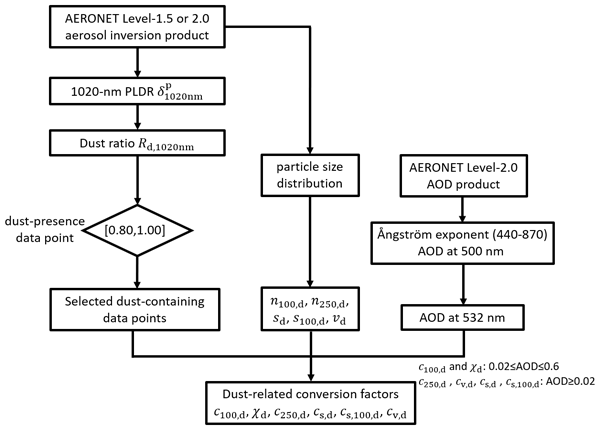
We present a global dataset of POlarization LIdar PHOtometer Networking (POLIPHON) dust conversion factors at 532 nm obtained using Aerosol RObotic NETwork (AERONET) observations at 137 sites for ice-nucleating particle (INP) and 123 sites for cloud condensation nucleation (CCN) calculations. We also conduct a comparison of dust CCN concentration profiles derived using both POLIPHON and the independent Optical Modelling of the CALIPSO Aerosol Microphysics (OMCAM) retrieval.
Lexie Goldberger, Maxwell Levin, Carlandra Harris, Andrew Geiss, Matthew D. Shupe, and Damao Zhang
Atmos. Meas. Tech., 18, 5393–5414, https://doi.org/10.5194/amt-18-5393-2025, https://doi.org/10.5194/amt-18-5393-2025, 2025
Short summary
Short summary
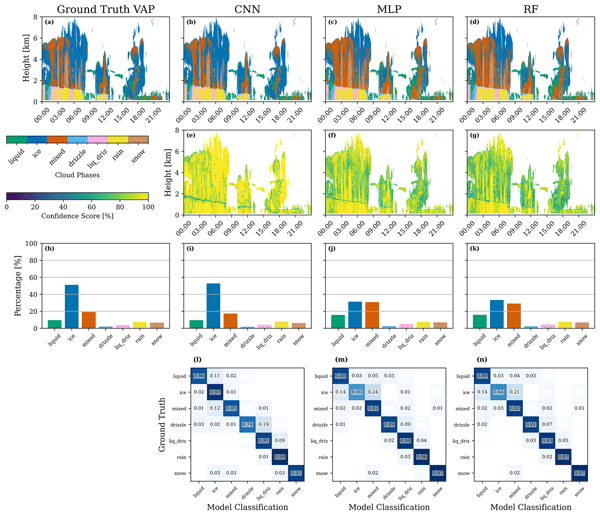
This study leverages machine learning models to classify cloud thermodynamic phases using multi-sensor remote sensing data collected at the Department of Energy Atmospheric Radiation Measurement North Slope of Alaska observatory. We evaluate model performance, feature importance, and application of the model to another observatory and quantify how the models respond to instrument outages.
Yugo Kanaya, Roberto Sommariva, Alfonso Saiz-Lopez, Andrea Mazzeo, Theodore K. Koenig, Kaori Kawana, James E. Johnson, Aurélie Colomb, Pierre Tulet, Suzie Molloy, Ian E. Galbally, Rainer Volkamer, Anoop Mahajan, John W. Halfacre, Paul B. Shepson, Julia Schmale, Hélène Angot, Byron Blomquist, Matthew D. Shupe, Detlev Helmig, Junsu Gil, Meehye Lee, Sean C. Coburn, Ivan Ortega, Gao Chen, James Lee, Kenneth C. Aikin, David D. Parrish, John S. Holloway, Thomas B. Ryerson, Ilana B. Pollack, Eric J. Williams, Brian M. Lerner, Andrew J. Weinheimer, Teresa Campos, Frank M. Flocke, J. Ryan Spackman, Ilann Bourgeois, Jeff Peischl, Chelsea R. Thompson, Ralf M. Staebler, Amir A. Aliabadi, Wanmin Gong, Roeland Van Malderen, Anne M. Thompson, Ryan M. Stauffer, Debra E. Kollonige, Juan Carlos Gómez Martin, Masatomo Fujiwara, Katie Read, Matthew Rowlinson, Keiichi Sato, Junichi Kurokawa, Yoko Iwamoto, Fumikazu Taketani, Hisahiro Takashima, Mónica Navarro-Comas, Marios Panagi, and Martin G. Schultz
Earth Syst. Sci. Data, 17, 4901–4932, https://doi.org/10.5194/essd-17-4901-2025, https://doi.org/10.5194/essd-17-4901-2025, 2025
Short summary
Short summary
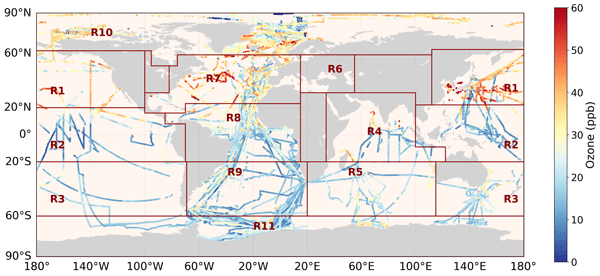
The first comprehensive dataset of tropospheric ozone over oceans/polar regions is presented, including 77 ship/buoy and 48 aircraft campaign observations (1977–2022, 0–5000 m altitude), supplemented by ozonesonde and surface data. Air masses isolated from land for 72+ hours are systematically selected as essentially oceanic. Among the 11 global regions, they show daytime decreases of 11–16 % in the tropics, while near-zero depletions are rare, unlike in the Arctic, implying different mechanisms.
Gabriella Wallentin, Annika Oertel, Luisa Ickes, Peggy Achtert, Matthias Tesche, and Corinna Hoose
Atmos. Chem. Phys., 25, 6607–6631, https://doi.org/10.5194/acp-25-6607-2025, https://doi.org/10.5194/acp-25-6607-2025, 2025
Short summary
Short summary
Multilayer clouds are common in the Arctic but remain underrepresented. We use an atmospheric model to simulate multilayer cloud cases from the Arctic expedition MOSAiC 2019/2020. We find that it is complex to accurately model these cloud layers due to the lack of correct temperature profiles. The model also struggles to capture the observed cloud phase and the relative concentration of cloud droplets and cloud ice. We constrain our model to measured aerosols to mitigate this issue.
Christopher J. Cox, Janet M. Intrieri, Brian J. Butterworth, Gijs de Boer, Michael R. Gallagher, Jonathan Hamilton, Erik Hulm, Tilden Meyers, Sara M. Morris, Jackson Osborn, P. Ola G. Persson, Benjamin Schmatz, Matthew D. Shupe, and James M. Wilczak
Earth Syst. Sci. Data, 17, 1481–1499, https://doi.org/10.5194/essd-17-1481-2025, https://doi.org/10.5194/essd-17-1481-2025, 2025
Short summary
Short summary
Snow is an essential water resource in the intermountain western United States, and predictions are made using models. We made observations to validate, constrain, and develop the models. The data are from the Study of Precipitation, the Lower Atmosphere and Surface for Hydrometeorology (SPLASH) campaign in Colorado's East River valley, 2021–2023. The measurements include meteorology and variables that quantify energy transfer between the atmosphere and surface. The data are available publicly.
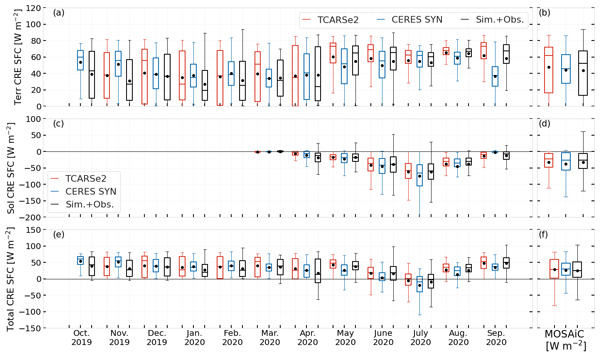
Carola Barrientos-Velasco, Christopher J. Cox, Hartwig Deneke, J. Brant Dodson, Anja Hünerbein, Matthew D. Shupe, Patrick C. Taylor, and Andreas Macke
Atmos. Chem. Phys., 25, 3929–3960, https://doi.org/10.5194/acp-25-3929-2025, https://doi.org/10.5194/acp-25-3929-2025, 2025
Short summary
Short summary
Understanding how clouds affect the climate, especially in the Arctic, is crucial. This study used data from the largest polar expedition in history, MOSAiC, and the CERES satellite to analyse the impact of clouds on radiation. Simulations showed accurate results, aligning with observations. Over the year, clouds caused the atmospheric surface system to lose 5.2 W m−² of radiative energy to space, while the surface gained 25 W m−² and the atmosphere cooled by 30.2 W m−².
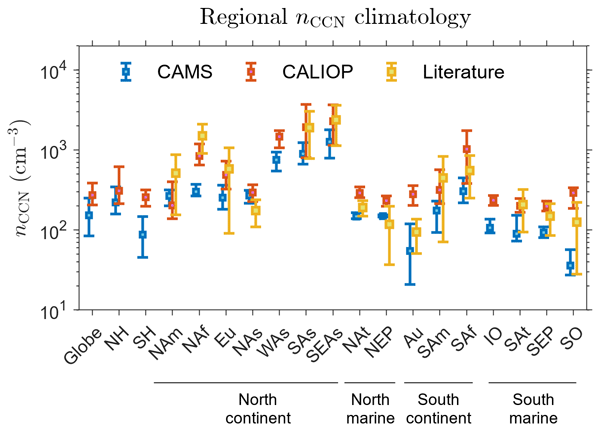
Goutam Choudhury, Karoline Block, Mahnoosh Haghighatnasab, Johannes Quaas, Tom Goren, and Matthias Tesche
Atmos. Chem. Phys., 25, 3841–3856, https://doi.org/10.5194/acp-25-3841-2025, https://doi.org/10.5194/acp-25-3841-2025, 2025
Short summary
Short summary
Aerosol particles in the atmosphere increase cloud reflectivity, thereby cooling the Earth. Accurate global measurements of these particles are crucial for estimating this cooling effect. This study compares and harmonizes two newly developed global aerosol datasets, offering insights for their future use and refinement. We identify pristine oceans as a significant source of uncertainty in the datasets and, therefore, in quantifying the role of aerosols in Earth's climate.
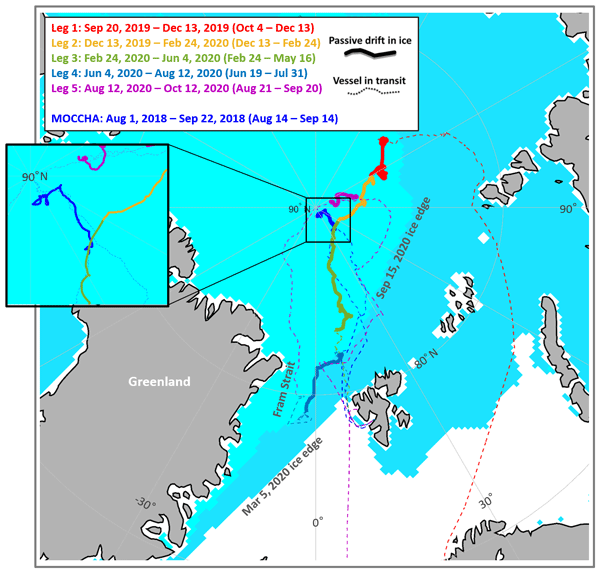
Benjamin Heutte, Nora Bergner, Hélène Angot, Jakob B. Pernov, Lubna Dada, Jessica A. Mirrielees, Ivo Beck, Andrea Baccarini, Matthew Boyer, Jessie M. Creamean, Kaspar R. Daellenbach, Imad El Haddad, Markus M. Frey, Silvia Henning, Tiia Laurila, Vaios Moschos, Tuukka Petäjä, Kerri A. Pratt, Lauriane L. J. Quéléver, Matthew D. Shupe, Paul Zieger, Tuija Jokinen, and Julia Schmale
Atmos. Chem. Phys., 25, 2207–2241, https://doi.org/10.5194/acp-25-2207-2025, https://doi.org/10.5194/acp-25-2207-2025, 2025
Short summary
Short summary
Limited aerosol measurements in the central Arctic hinder our understanding of aerosol–climate interactions in the region. Our year-long observations of aerosol physicochemical properties during the MOSAiC expedition reveal strong seasonal variations in aerosol chemical composition, where the short-term variability is heavily affected by storms in the Arctic. Local wind-generated particles are shown to be an important source of cloud seeds, especially in autumn.
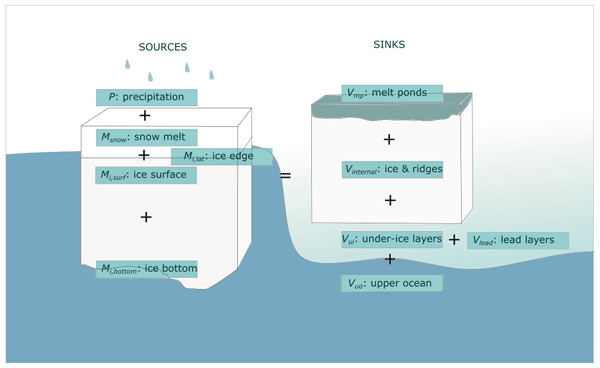
Madison M. Smith, Niels Fuchs, Evgenii Salganik, Donald K. Perovich, Ian Raphael, Mats A. Granskog, Kirstin Schulz, Matthew D. Shupe, and Melinda Webster
The Cryosphere, 19, 619–644, https://doi.org/10.5194/tc-19-619-2025, https://doi.org/10.5194/tc-19-619-2025, 2025
Short summary
Short summary
The fate of freshwater from Arctic sea ice and snowmelt impacts interactions of the atmosphere, sea ice, and ocean. We complete a comprehensive analysis of datasets from a 2020 central Arctic field campaign to understand the drivers of the sea ice freshwater budget and the fate of this water. Over half of the freshwater comes from surface melt, and a majority fraction is incorporated into the ocean. Results suggest that the representation of melt ponds is a key area for future development.
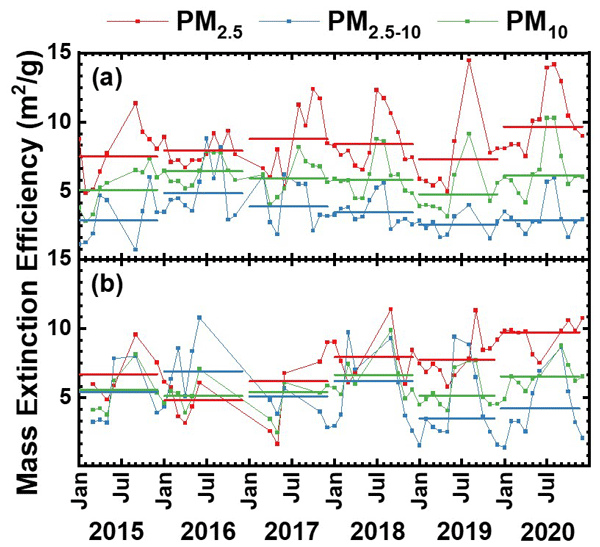
Sohee Joo, Juseon Shin, Matthias Tesche, Naghmeh Dehkhoda, Taegyeong Kim, and Youngmin Noh
Atmos. Chem. Phys., 25, 1023–1036, https://doi.org/10.5194/acp-25-1023-2025, https://doi.org/10.5194/acp-25-1023-2025, 2025
Short summary
Short summary
In our study, we investigated why, in northeast Asia, visibility has not improved even though air pollution levels have decreased. By examining trends in Seoul and Ulsan, we found that the particles in the air are getting smaller, which scatters light more effectively and reduces how far we can see. Our findings suggest that changes in particle properties adversely affected public perception of air quality improvement even though the PM2.5 mass concentration is continuously decreasing.
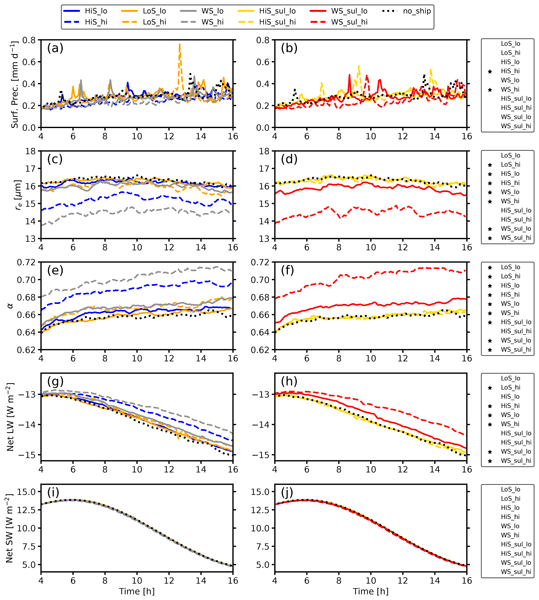
Luís Filipe Escusa dos Santos, Hannah C. Frostenberg, Alejandro Baró Pérez, Annica M. L. Ekman, Luisa Ickes, and Erik S. Thomson
Atmos. Chem. Phys., 25, 119–142, https://doi.org/10.5194/acp-25-119-2025, https://doi.org/10.5194/acp-25-119-2025, 2025
Short summary
Short summary
The Arctic is experiencing enhanced surface warming. The observed decline in Arctic sea-ice extent is projected to lead to an increase in Arctic shipping activity, which may lead to further climatic feedbacks. Using an atmospheric model and results from marine engine experiments that focused on fuel sulfur content reduction and exhaust wet scrubbing, we investigate how ship exhaust particles influence the properties of Arctic clouds. Implications for radiative surface processes are discussed.
Johanna Tjernström, Michael Gallagher, Jareth Holt, Gunilla Svensson, Matthew D. Shupe, Jonathan J. Day, Lara Ferrighi, Siri Jodha Khalsa, Leslie M. Hartten, Ewan O'Connor, Zen Mariani, and Øystein Godøy
EGUsphere, https://doi.org/10.5194/egusphere-2024-2088, https://doi.org/10.5194/egusphere-2024-2088, 2024
Preprint archived
Short summary
Short summary
The value of numerical weather predictions can be enhanced in several ways, one is to improve the representations of small-scale processes in models. To understand what needs to be improved, the model results need to be evaluated. Following standardized principles, a file format has been defined to be as similar as possible for both observational and model data. Python packages and toolkits are presented as a community resource in the production of the files and evaluation analysis.
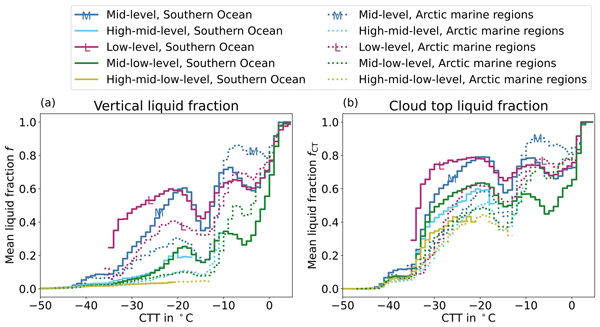
Barbara Dietel, Odran Sourdeval, and Corinna Hoose
Atmos. Chem. Phys., 24, 7359–7383, https://doi.org/10.5194/acp-24-7359-2024, https://doi.org/10.5194/acp-24-7359-2024, 2024
Short summary
Short summary
Uncertainty with respect to cloud phases over the Southern Ocean and Arctic marine regions leads to large uncertainties in the radiation budget of weather and climate models. This study investigates the phases of low-base and mid-base clouds using satellite-based remote sensing data. A comprehensive analysis of the correlation of cloud phase with various parameters, such as temperature, aerosols, sea ice, vertical and horizontal cloud extent, and cloud radiative effect, is presented.
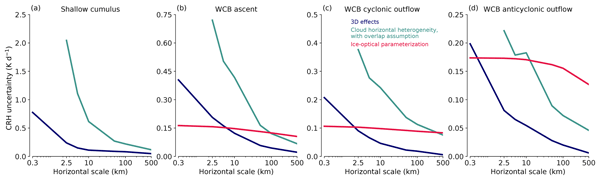
Behrooz Keshtgar, Aiko Voigt, Bernhard Mayer, and Corinna Hoose
Atmos. Chem. Phys., 24, 4751–4769, https://doi.org/10.5194/acp-24-4751-2024, https://doi.org/10.5194/acp-24-4751-2024, 2024
Short summary
Short summary
Cloud-radiative heating (CRH) affects extratropical cyclones but is uncertain in weather and climate models. We provide a framework to quantify uncertainties in CRH within an extratropical cyclone due to four factors and show that the parameterization of ice optical properties contributes significantly to uncertainty in CRH. We also argue that ice optical properties, by affecting CRH on spatial scales of 100 km, are relevant for the large-scale dynamics of extratropical cyclones.
Fani Alexandri, Felix Müller, Goutam Choudhury, Peggy Achtert, Torsten Seelig, and Matthias Tesche
Atmos. Meas. Tech., 17, 1739–1757, https://doi.org/10.5194/amt-17-1739-2024, https://doi.org/10.5194/amt-17-1739-2024, 2024
Short summary
Short summary
We present a novel method for studying aerosol–cloud interactions. It combines cloud-relevant aerosol concentrations from polar-orbiting lidar observations with the development of individual clouds from geostationary observations. Application to 1 year of data gives first results on the impact of aerosols on the concentration and size of cloud droplets and on cloud phase in the regime of heterogeneous ice formation. The method could enable the systematic investigation of warm and cold clouds.
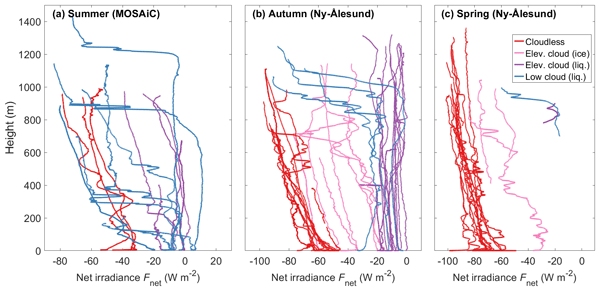
Michael Lonardi, Elisa F. Akansu, André Ehrlich, Mauro Mazzola, Christian Pilz, Matthew D. Shupe, Holger Siebert, and Manfred Wendisch
Atmos. Chem. Phys., 24, 1961–1978, https://doi.org/10.5194/acp-24-1961-2024, https://doi.org/10.5194/acp-24-1961-2024, 2024
Short summary
Short summary
Profiles of thermal-infrared irradiance were measured at two Arctic sites. The presence or lack of clouds influences the vertical structure of these observations. In particular, the cloud top region is a source of radiative energy that can promote cooling and mixing in the cloud layer. Simulations are used to further characterize how the amount of water in the cloud modifies this forcing. A case study additionally showcases the evolution of the radiation profiles in a dynamic atmosphere.
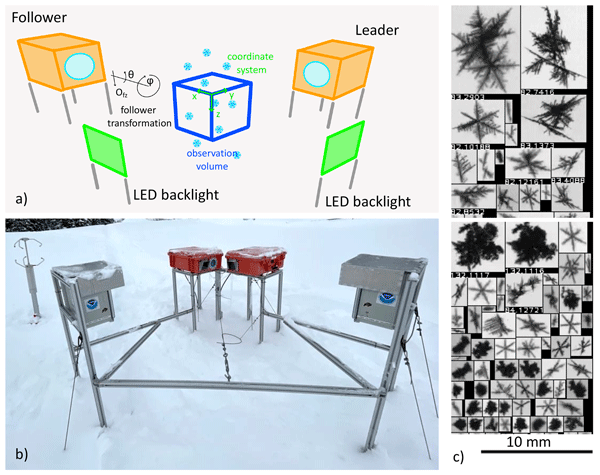
Maximilian Maahn, Dmitri Moisseev, Isabelle Steinke, Nina Maherndl, and Matthew D. Shupe
Atmos. Meas. Tech., 17, 899–919, https://doi.org/10.5194/amt-17-899-2024, https://doi.org/10.5194/amt-17-899-2024, 2024
Short summary
Short summary
The open-source Video In Situ Snowfall Sensor (VISSS) is a novel instrument for characterizing particle shape, size, and sedimentation velocity in snowfall. It combines a large observation volume with relatively high resolution and a design that limits wind perturbations. The open-source nature of the VISSS hardware and software invites the community to contribute to the development of the instrument, which has many potential applications in atmospheric science and beyond.
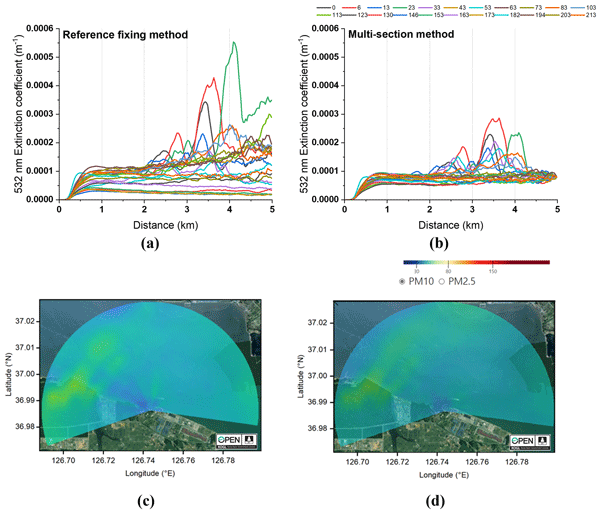
Juseon Shin, Gahyeong Kim, Dukhyeon Kim, Matthias Tesche, Gahyeon Park, and Youngmin Noh
Atmos. Meas. Tech., 17, 397–406, https://doi.org/10.5194/amt-17-397-2024, https://doi.org/10.5194/amt-17-397-2024, 2024
Short summary
Short summary
We introduce the multi-section method, a novel approach for stable extinction coefficient retrievals in horizontally scanning aerosol lidar measurements, in this study. Our method effectively removes signal–noise-induced irregular peaks and derives a reference extinction coefficient, αref, from multiple scans, resulting in a strong correlation (>0.74) with PM2.5 mass concentrations. Case studies demonstrate its utility in retrieving spatio-temporal aerosol distributions and PM2.5 concentrations.
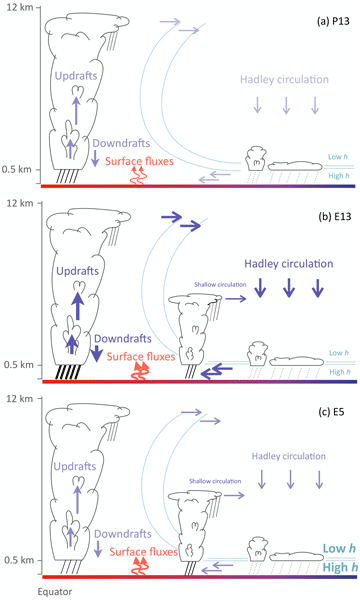
Hyunju Jung, Peter Knippertz, Yvonne Ruckstuhl, Robert Redl, Tijana Janjic, and Corinna Hoose
Weather Clim. Dynam., 4, 1111–1134, https://doi.org/10.5194/wcd-4-1111-2023, https://doi.org/10.5194/wcd-4-1111-2023, 2023
Short summary
Short summary
A narrow rainfall belt in the tropics is an important feature for large-scale circulations and the global water cycle. The accurate simulation of this rainfall feature has been a long-standing problem, with the reasons behind that unclear. We present a novel diagnostic tool that allows us to disentangle processes important for rainfall, which changes due to modifications in model. Using our diagnostic tool, one can potentially identify sources of uncertainty in weather and climate models.
Cunbo Han, Corinna Hoose, Martin Stengel, Quentin Coopman, and Andrew Barrett
Atmos. Chem. Phys., 23, 14077–14095, https://doi.org/10.5194/acp-23-14077-2023, https://doi.org/10.5194/acp-23-14077-2023, 2023
Short summary
Short summary
Cloud phase has been found to significantly impact cloud thermodynamics and Earth’s radiation budget, and various factors influence it. This study investigates the sensitivity of the cloud-phase distribution to the ice-nucleating particle concentration and thermodynamics. Multiple simulation experiments were performed using the ICON model at the convection-permitting resolution of 1.2 km. Simulation results were compared to two different retrieval products based on SEVIRI measurements.
Hannah C. Frostenberg, André Welti, Mikael Luhr, Julien Savre, Erik S. Thomson, and Luisa Ickes
Atmos. Chem. Phys., 23, 10883–10900, https://doi.org/10.5194/acp-23-10883-2023, https://doi.org/10.5194/acp-23-10883-2023, 2023
Short summary
Short summary
Observations show that ice-nucleating particle concentrations (INPCs) have a large variety and follow lognormal distributions for a given temperature. We introduce a new immersion freezing parameterization that applies this lognormal behavior. INPCs are drawn randomly from a temperature-dependent lognormal distribution. We then show that the ice content of the modeled Arctic stratocumulus cloud is highly sensitive to the probability of drawing large INPCs.
Olivia Linke, Johannes Quaas, Finja Baumer, Sebastian Becker, Jan Chylik, Sandro Dahlke, André Ehrlich, Dörthe Handorf, Christoph Jacobi, Heike Kalesse-Los, Luca Lelli, Sina Mehrdad, Roel A. J. Neggers, Johannes Riebold, Pablo Saavedra Garfias, Niklas Schnierstein, Matthew D. Shupe, Chris Smith, Gunnar Spreen, Baptiste Verneuil, Kameswara S. Vinjamuri, Marco Vountas, and Manfred Wendisch
Atmos. Chem. Phys., 23, 9963–9992, https://doi.org/10.5194/acp-23-9963-2023, https://doi.org/10.5194/acp-23-9963-2023, 2023
Short summary
Short summary
Lapse rate feedback (LRF) is a major driver of the Arctic amplification (AA) of climate change. It arises because the warming is stronger at the surface than aloft. Several processes can affect the LRF in the Arctic, such as the omnipresent temperature inversion. Here, we compare multimodel climate simulations to Arctic-based observations from a large research consortium to broaden our understanding of these processes, find synergy among them, and constrain the Arctic LRF and AA.
Manfred Wendisch, Johannes Stapf, Sebastian Becker, André Ehrlich, Evelyn Jäkel, Marcus Klingebiel, Christof Lüpkes, Michael Schäfer, and Matthew D. Shupe
Atmos. Chem. Phys., 23, 9647–9667, https://doi.org/10.5194/acp-23-9647-2023, https://doi.org/10.5194/acp-23-9647-2023, 2023
Short summary
Short summary
Atmospheric radiation measurements have been conducted during two field campaigns using research aircraft. The data are analyzed to see if the near-surface air in the Arctic is warmed or cooled if warm–humid air masses from the south enter the Arctic or cold–dry air moves from the north from the Arctic to mid-latitude areas. It is important to study these processes and to check if climate models represent them well. Otherwise it is not possible to reliably forecast the future Arctic climate.

Goutam Choudhury and Matthias Tesche
Earth Syst. Sci. Data, 15, 3747–3760, https://doi.org/10.5194/essd-15-3747-2023, https://doi.org/10.5194/essd-15-3747-2023, 2023
Short summary
Short summary
Aerosols in the atmosphere that can form liquid cloud droplets are called cloud condensation nuclei (CCN). Accurate measurements of CCN, especially CCN of anthropogenic origin, are necessary to quantify the effect of anthropogenic aerosols on the present-day as well as future climate. In this paper, we describe a novel global 3D CCN data set calculated from satellite measurements. We also discuss the potential applications of the data in the context of aerosol–cloud interactions.
Shijie Peng, Qinghua Yang, Matthew D. Shupe, Xingya Xi, Bo Han, Dake Chen, Sandro Dahlke, and Changwei Liu
Atmos. Chem. Phys., 23, 8683–8703, https://doi.org/10.5194/acp-23-8683-2023, https://doi.org/10.5194/acp-23-8683-2023, 2023
Short summary
Short summary
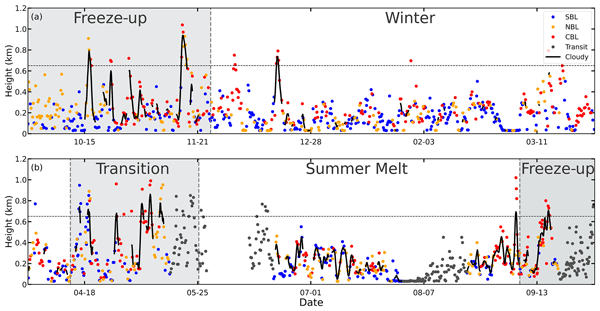
Due to a lack of observations, the structure of the Arctic atmospheric boundary layer (ABL) remains to be further explored. By analyzing a year-round radiosonde dataset collected over the Arctic sea-ice surface, we found the annual cycle of the ABL height (ABLH) is primarily controlled by the evolution of ABL thermal structure, and the surface conditions also show a high correlation with ABLH variation. In addition, the Arctic ABLH is found to be decreased in summer compared with 20 years ago.
Annika Oertel, Annette K. Miltenberger, Christian M. Grams, and Corinna Hoose
Atmos. Chem. Phys., 23, 8553–8581, https://doi.org/10.5194/acp-23-8553-2023, https://doi.org/10.5194/acp-23-8553-2023, 2023
Short summary
Short summary
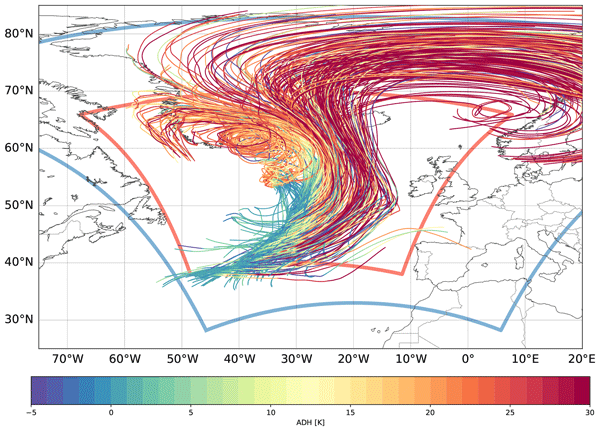
Warm conveyor belts (WCBs) are cloud- and precipitation-producing airstreams in extratropical cyclones that are important for the large-scale flow and cloud radiative forcing. We analyze cloud formation processes during WCB ascent in a two-moment microphysics scheme. Quantification of individual diabatic heating rates shows the importance of condensation, vapor deposition, rain evaporation, melting, and cloud-top radiative cooling for total heating and WCB-related potential vorticity structure.
Kameswara S. Vinjamuri, Marco Vountas, Luca Lelli, Martin Stengel, Matthew D. Shupe, Kerstin Ebell, and John P. Burrows
Atmos. Meas. Tech., 16, 2903–2918, https://doi.org/10.5194/amt-16-2903-2023, https://doi.org/10.5194/amt-16-2903-2023, 2023
Short summary
Short summary
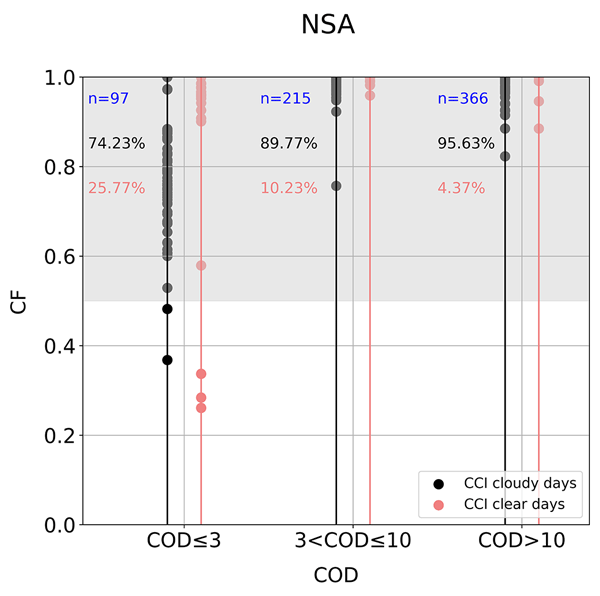
Clouds play an important role in Arctic amplification. Cloud data from ground-based sites are valuable but cannot represent the whole Arctic. Therefore the use of satellite products is a measure to cover the entire Arctic. However, the quality of such cloud measurements from space is not well known. The paper discusses the differences and commonalities between satellite and ground-based measurements. We conclude that the satellite dataset, with a few exceptions, can be used in the Arctic.

Ulrike Egerer, John J. Cassano, Matthew D. Shupe, Gijs de Boer, Dale Lawrence, Abhiram Doddi, Holger Siebert, Gina Jozef, Radiance Calmer, Jonathan Hamilton, Christian Pilz, and Michael Lonardi
Atmos. Meas. Tech., 16, 2297–2317, https://doi.org/10.5194/amt-16-2297-2023, https://doi.org/10.5194/amt-16-2297-2023, 2023
Short summary
Short summary
This paper describes how measurements from a small uncrewed aircraft system can be used to estimate the vertical turbulent heat energy exchange between different layers in the atmosphere. This is particularly important for the atmosphere in the Arctic, as turbulent exchange in this region is often suppressed but is still important to understand how the atmosphere interacts with sea ice. We present three case studies from the MOSAiC field campaign in Arctic sea ice in 2020.
Gillian Young McCusker, Jutta Vüllers, Peggy Achtert, Paul Field, Jonathan J. Day, Richard Forbes, Ruth Price, Ewan O'Connor, Michael Tjernström, John Prytherch, Ryan Neely III, and Ian M. Brooks
Atmos. Chem. Phys., 23, 4819–4847, https://doi.org/10.5194/acp-23-4819-2023, https://doi.org/10.5194/acp-23-4819-2023, 2023
Short summary
Short summary
In this study, we show that recent versions of two atmospheric models – the Unified Model and Integrated Forecasting System – overestimate Arctic cloud fraction within the lower troposphere by comparison with recent remote-sensing measurements made during the Arctic Ocean 2018 expedition. The overabundance of cloud is interlinked with the modelled thermodynamic structure, with strong negative temperature biases coincident with these overestimated cloud layers.
Felix Pithan, Marylou Athanase, Sandro Dahlke, Antonio Sánchez-Benítez, Matthew D. Shupe, Anne Sledd, Jan Streffing, Gunilla Svensson, and Thomas Jung
Geosci. Model Dev., 16, 1857–1873, https://doi.org/10.5194/gmd-16-1857-2023, https://doi.org/10.5194/gmd-16-1857-2023, 2023
Short summary
Short summary
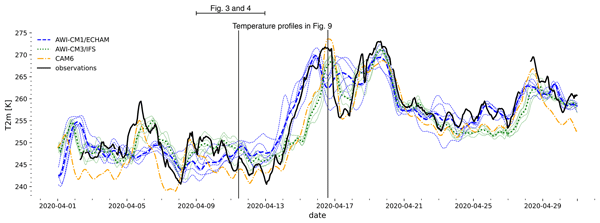
Evaluating climate models usually requires long observational time series, but we present a method that also works for short field campaigns. We compare climate model output to observations from the MOSAiC expedition in the central Arctic Ocean. All models show how the arrival of a warm air mass warms the Arctic in April 2020, but two models do not show the response of snow temperature to the diurnal cycle. One model has too little liquid water and too much ice in clouds during cold days.
Julia Thomas, Andrew Barrett, and Corinna Hoose
Atmos. Chem. Phys., 23, 1987–2002, https://doi.org/10.5194/acp-23-1987-2023, https://doi.org/10.5194/acp-23-1987-2023, 2023
Short summary
Short summary
We study the sensitivity of rain formation processes during a heavy-rainfall event over mountains to changes in temperature and pollution. Total rainfall increases by 2 % K−1, and a 6 % K−1 increase is found at the highest altitudes, caused by a mixed-phase seeder–feeder mechanism (frozen cloud particles melt and grow further as they fall through a liquid cloud layer). In a cleaner atmosphere this process is enhanced. Thus the risk of severe rainfall in mountains may increase in the future.
Behrooz Keshtgar, Aiko Voigt, Corinna Hoose, Michael Riemer, and Bernhard Mayer
Weather Clim. Dynam., 4, 115–132, https://doi.org/10.5194/wcd-4-115-2023, https://doi.org/10.5194/wcd-4-115-2023, 2023
Short summary
Short summary
Forecasting extratropical cyclones is challenging due to many physical factors influencing their behavior. One such factor is the impact of heating and cooling of the atmosphere by the interaction between clouds and radiation. In this study, we show that cloud-radiative heating (CRH) increases the intensity of an idealized cyclone and affects its predictability. We find that CRH affects the cyclone mostly via increasing latent heat release and subsequent changes in the synoptic circulation.
Peter Bräuer and Matthias Tesche
Geosci. Model Dev., 15, 7557–7572, https://doi.org/10.5194/gmd-15-7557-2022, https://doi.org/10.5194/gmd-15-7557-2022, 2022
Short summary
Short summary
This paper presents a tool for (i) finding temporally and spatially resolved intersections between two- or three-dimensional geographical tracks (trajectories) and (ii) extracting of data in the vicinity of intersections to achieve the optimal combination of various data sets.
Océane Hames, Mahdi Jafari, David Nicholas Wagner, Ian Raphael, David Clemens-Sewall, Chris Polashenski, Matthew D. Shupe, Martin Schneebeli, and Michael Lehning
Geosci. Model Dev., 15, 6429–6449, https://doi.org/10.5194/gmd-15-6429-2022, https://doi.org/10.5194/gmd-15-6429-2022, 2022
Short summary
Short summary
This paper presents an Eulerian–Lagrangian snow transport model implemented in the fluid dynamics software OpenFOAM, which we call snowBedFoam 1.0. We apply this model to reproduce snow deposition on a piece of ridged Arctic sea ice, which was produced during the MOSAiC expedition through scan measurements. The model appears to successfully reproduce the enhanced snow accumulation and deposition patterns, although some quantitative uncertainties were shown.
Matthias Tesche and Vincent Noel
Atmos. Meas. Tech., 15, 4225–4240, https://doi.org/10.5194/amt-15-4225-2022, https://doi.org/10.5194/amt-15-4225-2022, 2022
Short summary
Short summary
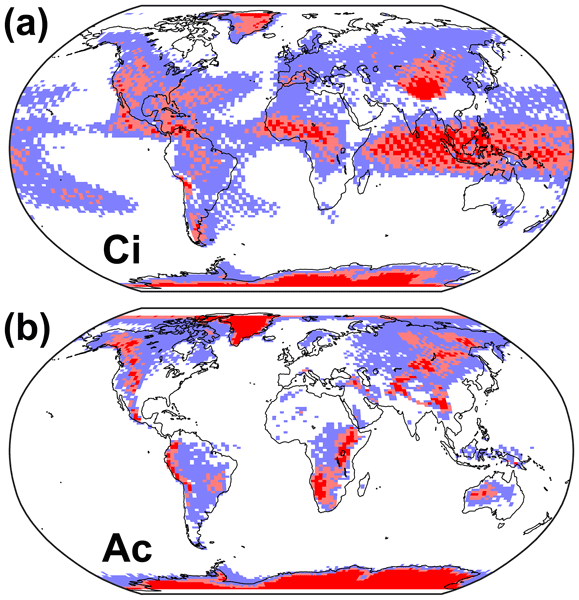
Mid-level and high clouds can be considered natural laboratories for studying cloud glaciation in the atmosphere. While they can be conveniently observed from ground with lidar, such measurements require a clear line of sight between the instrument and the target cloud. Here, observations of clouds with two spaceborne lidars are used to assess where ground-based lidar measurements of mid- and upper-level clouds are least affected by the light-attenuating effect of low-level clouds.
Assia Arouf, Hélène Chepfer, Thibault Vaillant de Guélis, Marjolaine Chiriaco, Matthew D. Shupe, Rodrigo Guzman, Artem Feofilov, Patrick Raberanto, Tristan S. L'Ecuyer, Seiji Kato, and Michael R. Gallagher
Atmos. Meas. Tech., 15, 3893–3923, https://doi.org/10.5194/amt-15-3893-2022, https://doi.org/10.5194/amt-15-3893-2022, 2022
Short summary
Short summary
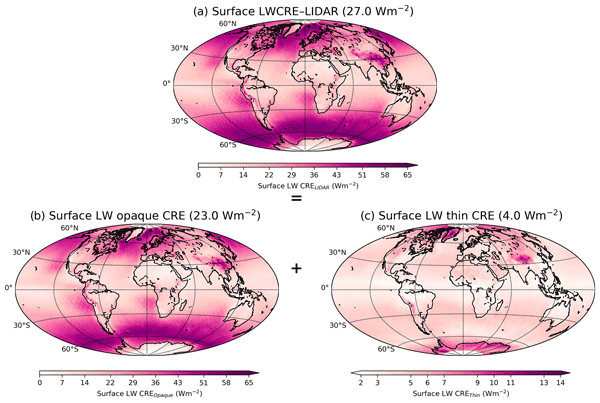
We proposed new estimates of the surface longwave (LW) cloud radiative effect (CRE) derived from observations collected by a space-based lidar on board the CALIPSO satellite and radiative transfer computations. Our estimate appropriately captures the surface LW CRE annual variability over bright polar surfaces, and it provides a dataset more than 13 years long.
David N. Wagner, Matthew D. Shupe, Christopher Cox, Ola G. Persson, Taneil Uttal, Markus M. Frey, Amélie Kirchgaessner, Martin Schneebeli, Matthias Jaggi, Amy R. Macfarlane, Polona Itkin, Stefanie Arndt, Stefan Hendricks, Daniela Krampe, Marcel Nicolaus, Robert Ricker, Julia Regnery, Nikolai Kolabutin, Egor Shimanshuck, Marc Oggier, Ian Raphael, Julienne Stroeve, and Michael Lehning
The Cryosphere, 16, 2373–2402, https://doi.org/10.5194/tc-16-2373-2022, https://doi.org/10.5194/tc-16-2373-2022, 2022
Short summary
Short summary
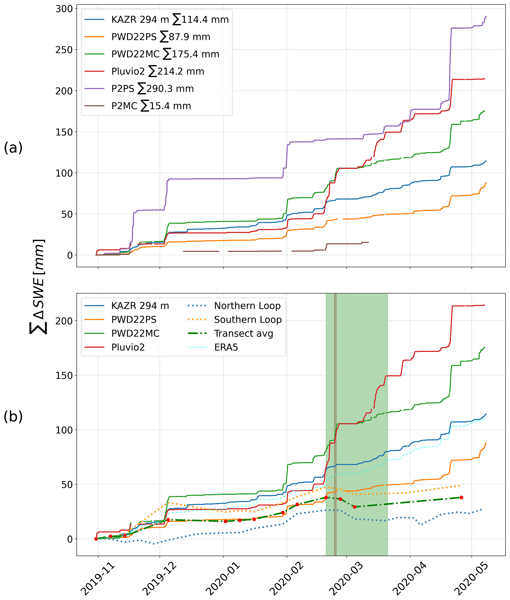
Based on measurements of the snow cover over sea ice and atmospheric measurements, we estimate snowfall and snow accumulation for the MOSAiC ice floe, between November 2019 and May 2020. For this period, we estimate 98–114 mm of precipitation. We suggest that about 34 mm of snow water equivalent accumulated until the end of April 2020 and that at least about 50 % of the precipitated snow was eroded or sublimated. Further, we suggest explanations for potential snowfall overestimation.
Goutam Choudhury, Albert Ansmann, and Matthias Tesche
Atmos. Chem. Phys., 22, 7143–7161, https://doi.org/10.5194/acp-22-7143-2022, https://doi.org/10.5194/acp-22-7143-2022, 2022
Short summary
Short summary
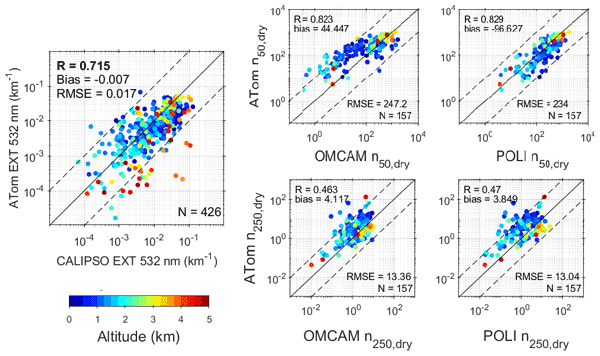
Lidars provide height-resolved type-specific aerosol properties and are key in studying vertically collocated aerosols and clouds. In this study, we compare the aerosol number concentrations derived from spaceborne lidar with the in situ flight measurements. Our results show a reasonable agreement between both datasets. Such an agreement has not been achieved yet. It shows the potential of spaceborne lidar in studying aerosol–cloud interactions, which is needed to improve our climate forecasts.
Juseon Shin, Juhyeon Sim, Naghmeh Dehkhoda, Sohee Joo, Taekyung Kim, Gahyung Kim, Detlef Müller, Matthias Tesche, Sungkyun Shin, Dongho Shin, and Youngmin Noh
Atmos. Chem. Phys. Discuss., https://doi.org/10.5194/acp-2022-219, https://doi.org/10.5194/acp-2022-219, 2022
Preprint withdrawn
Short summary
Short summary
We analyzed long-term AERONET sun/sky radiometer for 6 continentals to verify the trend of aerosol physical properties depending on sources (dust or pollution) and size (fine or coarse mode). We identified the trend of classified aerosol optical depth (AOD) and size change over 9 years. Especially, we find out aerosol properties causing AOD variations are different from regions and fine aerosol particle in most regions has become smaller using MK-test for trend analysis.

Julia Bruckert, Gholam Ali Hoshyaripour, Ákos Horváth, Lukas O. Muser, Fred J. Prata, Corinna Hoose, and Bernhard Vogel
Atmos. Chem. Phys., 22, 3535–3552, https://doi.org/10.5194/acp-22-3535-2022, https://doi.org/10.5194/acp-22-3535-2022, 2022
Short summary
Short summary
Volcanic emissions endanger aviation and public health and also influence weather and climate. Forecasting the volcanic-plume dispersion is therefore a critical yet sophisticated task. Here, we show that explicit treatment of volcanic-plume dynamics and eruption source parameters significantly improves volcanic-plume dispersion forecasts. We further demonstrate the lofting of the SO2 due to a heating of volcanic particles by sunlight with major implications for volcanic aerosol research.

Goutam Choudhury and Matthias Tesche
Atmos. Meas. Tech., 15, 639–654, https://doi.org/10.5194/amt-15-639-2022, https://doi.org/10.5194/amt-15-639-2022, 2022
Short summary
Short summary
Aerosols are tiny particles suspended in the atmosphere. A fraction of these particles can form clouds and are called cloud condensation nuclei (CCN). Measurements of such aerosol particles are necessary to study the aerosol–cloud interactions and reduce the uncertainty in our future climate predictions. We present a novel methodology to estimate global 3D CCN concentrations from the CALIPSO satellite measurements. The final data set will be used to study the aerosol–cloud interactions.
Michael R. Gallagher, Matthew D. Shupe, Hélène Chepfer, and Tristan L'Ecuyer
The Cryosphere, 16, 435–450, https://doi.org/10.5194/tc-16-435-2022, https://doi.org/10.5194/tc-16-435-2022, 2022
Short summary
Short summary
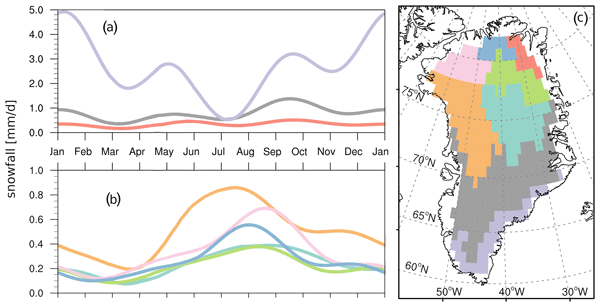
By using direct observations of snowfall and mass changes, the variability of daily snowfall mass input to the Greenland ice sheet is quantified for the first time. With new methods we conclude that cyclones west of Greenland in summer contribute the most snowfall, with 1.66 Gt per occurrence. These cyclones are contextualized in the broader Greenland climate, and snowfall is validated against mass changes to verify the results. Snowfall and mass change observations are shown to agree well.
Heather Guy, Ian M. Brooks, Ken S. Carslaw, Benjamin J. Murray, Von P. Walden, Matthew D. Shupe, Claire Pettersen, David D. Turner, Christopher J. Cox, William D. Neff, Ralf Bennartz, and Ryan R. Neely III
Atmos. Chem. Phys., 21, 15351–15374, https://doi.org/10.5194/acp-21-15351-2021, https://doi.org/10.5194/acp-21-15351-2021, 2021
Short summary
Short summary
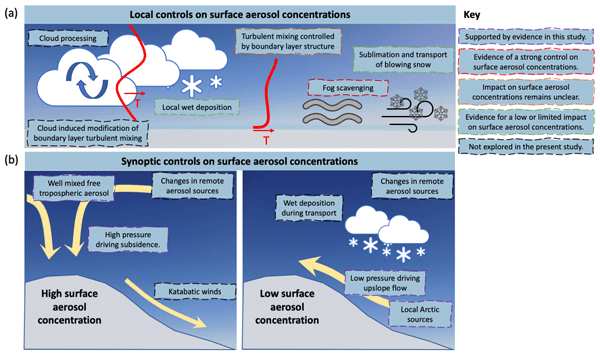
We present the first full year of surface aerosol number concentration measurements from the central Greenland Ice Sheet. Aerosol concentrations here have a distinct seasonal cycle from those at lower-altitude Arctic sites, which is driven by large-scale atmospheric circulation. Our results can be used to help understand the role aerosols might play in Greenland surface melt through the modification of cloud properties. This is crucial in a rapidly changing region where observations are sparse.
Cited articles
Achtert, P. and Tesche, M.: Occurrence of seeding multi-layer clouds in the Arctic from ground-based observations, Zenodo [data set], https://doi.org/10.5281/zenodo.17304695, 2025. a
Achtert, P., O'Connor, E. J., Brooks, I. M., Sotiropoulou, G., Shupe, M. D., Pospichal, B., Brooks, B. J., and Tjernström, M.: Properties of Arctic liquid and mixed-phase clouds from shipborne Cloudnet observations during ACSE 2014, Atmos. Chem. Phys., 20, 14983–15002, https://doi.org/10.5194/acp-20-14983-2020, 2020. a, b, c, d, e, f, g
Atmospheric Radiation Measurement (ARM) user facility: Balloon-Borne Sounding System (SONDEWNPN), 2011-01-01 to 2022-12-31, North Slope Alaska (NSA) Barrow, Alaska, supplement to NSA C1 for sonde launches, compiled by Keeler, E., Burk, K., and Kyrouac, J., ARM Data Center, https://doi.org/10.5439/1595321, 2025. a
Avramov, A. and Harrington, J. Y: Influence of parameterized ice habit on simulated mixed phase Arctic clouds, J. Geophys. Res., 115, https://doi.org/10.1029/2009JD012108, 2010. a, b
Barrett, A. I., Hogan, R. J., and Forbes, R.: Why are mixed-phase altocumulus clouds poorly predicted by large-scale models? Part 1. Physical processes, J. Geophys. Res.-Atmos., 122, 9903–9926, https://doi.org/10.1002/2016JD026321, 2017a. a
Barrett, A. I., Hogan, R. J., and Forbes, R. M.: Why are mixed-phase altocumulus clouds poorly predicted by large-scale models? Part 2. Vertical resolution sensitivity and parameterization, J. Geophys. Res.-Atmos., 122, 9927–9944, https://doi.org/10.1002/2016JD026322, 2017b. a
Barrientos-Velasco, C., Cox, C. J., Deneke, H., Dodson, J. B., Hünerbein, A., Shupe, M. D., Taylor, P. C., and Macke, A.: Estimation of the radiation budget during MOSAiC based on ground-based and satellite remote sensing observations, Atmos. Chem. Phys., 25, 3929–3960, https://doi.org/10.5194/acp-25-3929-2025, 2025. a, b, c, d
Bulatovic, I., Savre, J., Tjernström, M., Leck, C., and Ekman, A. M. L.: Large-eddy simulation of a two-layer boundary-layer cloud system from the Arctic Ocean 2018 expedition, Atmos. Chem. Phys., 23, 7033–7055, https://doi.org/10.5194/acp-23-7033-2023, 2023. a, b
Cesana, G., Kay, J. E., Chepfer, H., English, J. M., and de Boer, G.: Ubiquitous low-level liquid-containing Arctic clouds: New observations and climate model constraints from CALIPSO-GOCCP, Geophys. Res. Lett., 39, L20804, https://doi.org/10.1029/2012GL053385, 2012. a
Chellini, G., Gierens, R., Ebell, K., Kiszler, T., Krobot, P., Myagkov, A., Schemann, V., and Kneifel, S.: Low-level mixed-phase clouds at the high Arctic site of Ny-Ålesund: a comprehensive long-term dataset of remote sensing observations, Earth Syst. Sci. Data, 15, 5427–5448, https://doi.org/10.5194/essd-15-5427-2023, 2023. a, b
Dong, X., Xi, B., Crosby, K., Long, C. N., Stone, R. S., and Shupe, M. D.: A 10 year climatology of Arctic cloud fraction and radiative forcing at Barrow, Alaska, J. Geophys. Res., 115, D17212, https://doi.org/10.1029/2009JD013489, 2010. a, b, c
Engelmann, R., Ansmann, A., Ohneiser, K., Griesche, H., Radenz, M., Hofer, J., Althausen, D., Dahlke, S., Maturilli, M., Veselovskii, I., Jimenez, C., Wiesen, R., Baars, H., Bühl, J., Gebauer, H., Haarig, M., Seifert, P., Wandinger, U., and Macke, A.: Wildfire smoke, Arctic haze, and aerosol effects on mixed-phase and cirrus clouds over the North Pole region during MOSAiC: an introduction, Atmos. Chem. Phys., 21, 13397–13423, https://doi.org/10.5194/acp-21-13397-2021, 2021. a
Engelmann, R., Althausen, D., Baars, H., Griesche, H., Hofer, J., Radenz, M., and Seifert, P.: Custom collection of categorize, classification, ice water content, lidar, and liquid water content data from RV Polarstern between 11 Oct 2019 and 1 Oct 2020, ACTRIS Cloud remote sensing data centre unit (CLU) [data set], https://hdl.handle.net/21.12132/2.7159000f643348a6 (last access: 4 February 2026), 2023. a, b
Field, P. R., Lawson, R. P., Brown, P. R. A., Lloyd, G., Westbrook, C., Moisseev, D., Miltenberger, A., Nenes, A., Blyth, A., Choularton, T., Connolly, P., Buehl, J., Crosier, J., Cui, Z., Dearden, C., DeMott, P., Flossmann, A., Heymsfield, A., Huang, Y., Kalesse, H., Kanji, Z. A., Korolev, A., Kirchgaessner, A., Lasher-Trapp, S., Leisner, T., McFarquhar, G., Phillips, V., Stith, J., and Sullivan, S.: Secondary Ice Production: Current State of the Science and Recommendations for the Future, Meteor. Monogr., 58, 7.1–7.20, https://doi.org/10.1175/AMSMONOGRAPHS-D-16-0014.1, 2017. a
Gayet, J.-F., Treffeisen, R., Helbig, A., Bareiss, J., Matsuki, A., Herber, A., and A. Schwarzenboeck, A.: On the onset of the ice phase in boundary layer Arctic clouds, J. Geophys. Res., 114, D19201, https://doi.org/10.1029/2008JD011348, 2009. a
Griesche, H. J., Barrientos-Velasco, C., Deneke, H., Hünerbein, A., Seifert, P., and Macke, A.: Low-level Arctic clouds: a blind zone in our knowledge of the radiation budget, Atmos. Chem. Phys., 24, 597–612, https://doi.org/10.5194/acp-24-597-2024, 2024a. a
Griesche, H. J., Seifert, P., Engelmann, R., Radenz, M., Hofer, J., Althausen, D., Barrientos-Velasco, C., Baars, H., and Macke, A.: Cloud micro- and macrophysical properties from ground-based remote sensing during the MOSAiC drift experiment, Sci. Data, 11, https://doi.org/10.1038/s41597-024-03325-w, 2024b. a
Harrington, J. Y., Reisin, T., Cotton, W. R., and Kreidenweis, S. M.: Cloud resolving simulations of Arctic stratus: Part II: Transition-season clouds, Atmos. Res., 51, 45–75, https://doi.org/10.1016/S0169-8095(98)00098-2, 1999. a
Herman, G. and Goody, R.: Formation and persistence of summertime Arctic stratus clouds, J. Atmos. Sci., 33, https://doi.org/10.1175/1520-0469(1976)033<1537:FAPOSA>2.0.CO;2, 1976. a
Ickes, L.: SEE-GEO/Classification_algorithm_of_multilayer_clouds: v1_Achtert_et_al_2026 (v1_Achtert_et_al_2026), Zenodo [code], https://doi.org/10.5281/zenodo.18757319, 2026. a
Illingworth, A. J., Hogan, R. J., O'Connor, E. J., Bouniol, D., Brooks, M. E., Delanoé, J., Donovan, D. P., Eastment, J. D., Gaussiat, N., Goddard, J. W. F., Haeffelin, M., Baltink, H. K., Krasnov, O. A., Pelon, J., Piriou, J.-M., Protat, A., Russchenberg, H. W. J., Seifert, A., Tompkins, A. M., van Zadelhoff, G.-J., Vinit, F., Willén, U., Wilson, D. R., and Wrench, C. L.: Cloudnet, B. Am. Meteorol. Soc., 88, 883–898, https://doi.org/10.1175/BAMS-88-6-883, 2007. a, b
Intrieri, J. M., Shupe, M. D., Uttal, T., and McCarty, B. J.: An annual cycle of Arctic cloud characteristics observed by radar and lidar at SHEBA, J. Geophys. Res.-Oceans, 107, 8030, https://doi.org/10.1029/2000JC000423, 2002. a, b
Johnson, K., Giangrande, S., and Toto, T.: Active Remote Sensing of CLouds (ARSCL) product using Ka-band ARM Zenith Radars (ARSCLKAZR1KOLLIAS), 2011-01-01 to 2022-12-31, North Slope Alaska (NSA) Central Facility, Barrow, Alaska, Atmospheric Radiation Measurement (ARM) user facility, https://doi.org/10.5439/1393437, 2025. a
Korolev, A., McFarquhar, G., Field, P. R., Franklin, C., Lawson, P., Wang, Z., Williams, E., Abel, S. J., Axisa, D., Borrmann, S., Crosier, J., Fugal, J., Krämer, M., Lohmann, U., Schlenczek, O., Schnaiter, M., and M. Wendisch, M.: Mixed-Phase Clouds: Progress and Challenges, Meteor. Monogr., 58, 5.1–5.50, https://doi.org/10.1175/AMSMONOGRAPHS-D-17-0001.1, 2017. a, b
Leck, C., Matrai, P., Perttu, A.-M., and Gårdfeldt, K.: Expedition report: SWEDARTIC Arctic Ocean 2018, Polarforskningssekretariatet, ISBN 978-91-519-3671-0, 2020. a
L'Ecuyer, T. S., Hang, Y., Matus, A. V., and Wang, Z.: Reassessing the Effect of Cloud Type on Earth's Energy Balance in the Age of Active Spaceborne Observations. Part I: Top of Atmosphere and Surface, J. Climate, 32, 6197–6217, https://doi.org/10.1175/JCLI-D-18-0753.1, 2019. a, b
Liu, Y., Key, J. R., Ackerman, S. A., Mace, G. G., and Zhang, Q.: Arctic cloud macrophysical characteristics from CloudSat and CALIPSO, Remote Sens. Environ., 124, 159–173, https://doi.org/10.1016/j.rse.2012.05.006, 2012. a
Luo, Y., Xu, K.-M., Morrison, H., McFarquhar, G. M., Wang, Z., and Zhang, G.: Multi-layer arctic mixed-phase clouds simulated by a cloud-resolving model: Comparison with ARM observations and sensitivity experiments, J. Geophys. Res., 113, D12208, https://doi.org/10.1029/2007JD009563, 2008. a, b, c
Maturilli, M., Sommer, M., Holdridge, D. J., Dahlke, S., Graeser, J., Sommerfeld, A., Jaiser, R., Deckelmann, H., and Schulz, A.: MOSAiC radiosonde data (level 3), PANGAEA [data set], https://doi.org/10.1594/PANGAEA.943870, 2022. a
Mauritsen, T., Sedlar, J., Tjernström, M., Leck, C., Martin, M., Shupe, M., Sjogren, S., Sierau, B., Persson, P. O. G., Brooks, I. M., and Swietlicki, E.: An Arctic CCN-limited cloud-aerosol regime, Atmos. Chem. Phys., 11, 165–173, https://doi.org/10.5194/acp-11-165-2011, 2011. a, b
McCusker, G. Y., Vüllers, J., Achtert, P., Field, P., Day, J. J., Forbes, R., Price, R., O'Connor, E., Tjernström, M., Prytherch, J., Neely III, R., and Brooks, I. M.: Evaluating Arctic clouds modelled with the Unified Model and Integrated Forecasting System, Atmos. Chem. Phys., 23, 4819–4847, https://doi.org/10.5194/acp-23-4819-2023, 2023. a, b
Mioche, G., Jourdan, O., Ceccaldi, M., and Delanoë, J.: Variability of mixed-phase clouds in the Arctic with a focus on the Svalbard region: a study based on spaceborne active remote sensing, Atmos. Chem. Phys., 15, 2445–2461, https://doi.org/10.5194/acp-15-2445-2015, 2015. a, b
Morrison, H., McCoy, R. B., Klein, S. A., Xie, S., Luo, Y., Avramov, A., Chen, M., Cole, J. N. S., Falk, M., Foster, M. J., Del Genio, A. D., Harrington, J. Y., Hoose, C., Khairoutdinov, M. F., Larson, V. E., Liu, X., McFarquhar, G. M., Poellot, M. R., von Salzen, K., Shipway, B. J., Shupe, M. D., Sud, Y. C., Turner, D. D., Veron, D. E., Walker, G. K., Wang, Z., Wolf, A. B., Xu, K.-M., Yang, F., and Zhang, G.: Intercomparison of model simulations of mixed-phase clouds observed during the ARM Mixed-Phase Arctic Cloud Experiment. II: Multilayer cloud, Q. J. Roy. Meteor. Soc., 135, 1003–1019, https://doi.org/10.1002/qj.415, 2009. a, b
Morrison, H., De Boer, G., Feingold, G., Harrington, J., Shupe, M. D., and Sulia, K.: Resilience of persistent Arctic mixed-phase clouds, Nat. Geosci., 5, 11–17, https://doi.org/10.1038/ngeo1332, 2012. a, b, c, d
Nomokonova, T., Ebell, K., Löhnert, U., Maturilli, M., Ritter, C., and O'Connor, E.: Statistics on clouds and their relation to thermodynamic conditions at Ny-Ålesund using ground-based sensor synergy, Atmos. Chem. Phys., 19, 4105–4126, https://doi.org/10.5194/acp-19-4105-2019, 2019. a, b, c
Nygård, T., Valkonen, T., and Vihma, T.: Characteristics of Arctic low-tropospheric humidity inversions based on radio soundings, Atmos. Chem. Phys., 14, 1959–1971, https://doi.org/10.5194/acp-14-1959-2014, 2014. a
Ovchinnikov, M., Ackerman, A. S., Avramov, A., Cheng, A., Fan, J., Fridlind, A. M., Ghan, S., Harrington, J., Hoose, C., Korolov, A., McFarquhar. G. M., Morrison, H., Paukert, M., Savre, J., Shipway, B. J., Shupe, M. D., Solomon, A., and Sulia, K.: Intercomparison of large-eddy simulations of Arctic mixed-phase clouds: Importance of ice size distribution assumptions, J. Adv. Model. Earth Sy., 6, 223–248, https://doi.org/10.1002/2013MS000282, 2014. a
Oue, M., Galletti, M., Verlinde, J., Ryzhkov, A., and Lu, Y.: Use of X-Band Differential Reflectivity Measurements to Study Shallow Arctic Mixed-Phase Clouds, J. Appl. Meteorol. Clim., 55, 403–424, https://doi.org/10.1175/JAMC-D-15-0168.1, 2016. a
Rangno, A. L. and Hobbs, P. V.: Ice particles in stratiform clouds in the Arctic and possible mechanisms for the production of high ice concentrations, J. Geophys. Res., 106, 15065–15075, https://doi.org/10.1029/2000JD900286, 2001. a
Rinke, A., Cassano, J. J., Cassano, E. N., Jaiser, R., and Handorf, D.: Meteorological conditions during the MOSAiC expedition: Normal or anomalous?, Elem. Sci. Anth., 9, https://doi.org/10.1525/elementa.2021.00023, 2021. a, b
Schemann, V. and Ebell, K.: Simulation of mixed-phase clouds with the ICON large-eddy model in the complex Arctic environment around Ny-Ålesund, Atmos. Chem. Phys., 20, 475–485, https://doi.org/10.5194/acp-20-475-2020, 2020. a
Schirmacher, I., Kollias, P., Lamer, K., Mech, M., Pfitzenmaier, L., Wendisch, M., and Crewell, S.: Assessing Arctic low-level clouds and precipitation from above – a radar perspective, Atmos. Meas. Tech., 16, 4081–4100, https://doi.org/10.5194/amt-16-4081-2023, 2023. a
Shupe, M. D.: Clouds at Arctic Atmospheric Observatories. Part II: Thermodynamic Phase Characteristics, J. Appl. Meteorol. Clim., 50, 645–661, https://doi.org/10.1175/2010JAMC2468.1, 2011. a, b, c, d
Shupe, M. D., Uttal, T., Matrosov, S. Y., and Frisch, A. S.: Cloud water contents and hydrometeor sizes during the FIRE-Arctic Clouds Experiment, J. Geophys. Res., 106, 15015–15028, https://doi.org/10.1029/2000JD900476, 2001. a
Shupe, M. D., Uttal, T., and Matrosov, S. Y.: Arctic cloud microphysics retrievals from surface-based remote sensors at SHEBA, J. Appl. Meteorol., 44, 1544–1562, https://doi.org/10.1175/JAM2297.1, 2005. a
Shupe, M. D., Matrosov, S. Y., and Uttal, T.: Arctic mixed-phase cloud properties derived from surface-based sensors at SHEBA, J. Atmos. Sci., 63, 697–711, https://doi.org/10.1175/JAS3659.1, 2006. a
Shupe, M. D., Kollias, P., Persson, P. O. G., and McFarquhar, G. M.: Vertical Motions in Arctic Mixed-Phase Stratiform Clouds, J. Atmos. Sci., 65, 1304–1322, https://doi.org/10.1175/2007JAS2479.1, 2008. a
Shupe, M. D., Walden, V. P., Eloranta, E., Uttal, T., Campbell, J. R., Starkweather, S. M., and Shiobara, M.: Clouds at Arctic Atmospheric Observatories. Part I: Occurrence and Macrophysical Properties, J. Appl. Meteorol. Clim., 50, 626–644, https://doi.org/10.1175/2010JAMC2467.1, 2011. a, b, c, d, e
Shupe, M. D., Persson, P. O. G., Brooks, I. M., Tjernström, M., Sedlar, J., Mauritsen, T., Sjogren, S., and Leck, C.: Cloud and boundary layer interactions over the Arctic sea ice in late summer, Atmos. Chem. Phys., 13, 9379–9399, https://doi.org/10.5194/acp-13-9379-2013, 2013. a
Shupe, M. D., Turner, D. D., Zwink, A., Thieman, M. M., Mlawer, E. J., and Shippert, T.: Deriving Arctic Cloud Microphysics at Barrow, Alaska: Algorithms, Results, and Radiative Closure, J. Appl. Meteorol. Clim, 54, 1675–1689, https://doi.org/10.1175/JAMC-D-15-0054.1, 2015. a, b, c, d
Shupe, M. D., Rex, M., Blomquist, B., Persson, P. O. G., Schmale, J., Uttal, T., Althausen, D., Angot, H., Archer, S., Bariteau, L., Beck, I., Bilberry, J., Bucci, S., Buck, C., Boyer, M., Brasseur, Z., Brooks, I. M., Calmer, R., Cassano, J., Castro, V., Chu, D., Costa, D., Cox, C. J., Creamean, J., Crewell, S., Dahlke, S., Damm, E., de Boer, G., Deckelmann, H., Dethloff, K., Dütsch, M., Ebell, K., Ehrlich, A., Ellis, J., Engelmann, R., Fong, A. A., Frey, M. M., Gallagher, M. R., Ganzeveld, L., Gradinger, R., Graeser, J., Greenamyer, V., Griesche, H., Griffiths, S., Hamilton, J., Heinemann, G., Helmig, D., Herber, A., Heuzé, C., Hofer, J., Houchens, T., Howard, D., Inoue, J., Jacobi, H.-W., Jaiser, R., Jokinen, T., Jourdan, O., Jozef, G., King, W., Kirchgaessner, A., Klingebiel, M., Krassovski, M., Krumpen, T., Lampert, A., Landing, W., Laurila, T., Lawrence, D., Lonardi, M., Loose, B., Lüpkes, C., Maahn, M., Macke, A., Maslowski, W., Marsay, C., Maturilli, M., Mech, M., Morris, S., Moser, M., Nicolaus, M., Ortega, P., Osborn, J., Pätzold, F., Perovich, D. K., Petäjä, T., Pilz, C., Pirazzini, R., Posman, K., Powers, H., Pratt, K. A., Preußer, A., Quéléver, L., Radenz, M., Rabe, B., Rinke, A., Sachs, T., Schulz, A., Siebert, H., Silva, T., Solomon, A., Sommerfeld, A., Spreen, G., Stephens, M., Stohl, A., Svensson, G., Uin, J., Viegas, J., Voigt, C., von der Gathen, P., Wehner, B., Welker, J. M., Wendisch, M., Werner, M., Xie, Z. Q., and Yue, F.: Overview of the MOSAiC expedition: Atmosphere, Elem. Sci. Anth., 10, https://doi.org/10.1525/elementa.2021.00060, 2022. a, b, c, d, e, f
Silber, I. and Shupe, M. D.: Insights on sources and formation mechanisms of liquid-bearing clouds over MOSAiC examined from a Lagrangian framework, Elem. Sci. Anth., 10, https://doi.org/10.1525/elementa.2021.000071, 2021. a, b, c
Silber, I., Fridlind, A. M., Verlinde, J., Russell, L. M., and Ackerman, A. S.: Nonturbulent liquid-bearing polar clouds: Observed frequency of occurrence and simulated sensitivity to gravity waves, Geophys. Res. Lett., 47, https://doi.org/10.1029/2020GL087099, 2020. a
Silber, I., Fridlind, A. M., Verlinde, J., Ackerman, A. S., Cesana, G. V., and Knopf, D. A.: The prevalence of precipitation from polar supercooled clouds, Atmos. Chem. Phys., 21, 3949–3971, https://doi.org/10.5194/acp-21-3949-2021, 2021. a, b
Smith, W. S. and Kao, C.-Y. J.: Numerical simulations of observed Arctic stratus clouds using a second-order turbulence closure model, J. Appl. Meteorol., 35, 47–59, https://www.jstor.org/stable/26187946 (last access: 4 February 2026), 1996. a
Sotiropoulou, G., Tjernström, M., Sedlar, J., Achtert, P., Brooks, B. J., Brooks, I. M., Persson, P. O. G., Prytherch, J., Salisbury, D. J., Shupe, M. D., and Johnston, P. E.: Atmospheric Conditions during the Arctic Clouds in Summer Experiment (ACSE): Contrasting Open Water and Sea Ice Surfaces during Melt and Freeze-Up Seasons, J. Climate, 29, 8721–8744, 2016. a
Sotiropoulou, G., Sullivan, S., Savre, J., Lloyd, G., Lachlan-Cope, T., Ekman, A. M. L., and Nenes, A.: The impact of secondary ice production on Arctic stratocumulus, Atmos. Chem. Phys., 20, 1301–1316, https://doi.org/10.5194/acp-20-1301-2020, 2020. a, b
Tjernström, M., Svensson, G., Magnusson, L., Brooks, I. M., Prytherch, J., Vüllers, J., and Young, G.: Central Arctic weather forecasting: Confronting the ECMWF IFS with observations from the Arctic Ocean 2018 expedition, Q. J. Roy. Meteor. Soc., 147, 1278–1299, https://doi.org/10.1002/qj.3971, 2020. a
Verlinde, J., Rambukkange, M. P., Clothiaux, E. E., McFarquhar, G. M., and Eloranta, E. W.: Arctic multilayered, mixed-phase cloud processes revealed in millimeter-wave cloud radar Doppler spectra, J. Geophys. Res.-Atmos., 118, 13199–13213, https://doi.org/10.1002/2013JD020183, 2013. a
Vinjamuri, K. S., Vountas, M., Lelli, L., Stengel, M., Shupe, M. D., Ebell, K., and Burrows, J. P.: Validation of the Cloud_CCI (Cloud Climate Change Initiative) cloud products in the Arctic, Atmos. Meas. Tech., 16, 2903–2918, https://doi.org/10.5194/amt-16-2903-2023, 2023. a
Wallentin, G., Oertel, A., Ickes, L., Achtert, P., Tesche, M., and Hoose, C.: Sensitivities of simulated mixed-phase Arctic multilayer clouds to primary and secondary ice processes, Atmos. Chem. Phys., 25, 6607–6631, https://doi.org/10.5194/acp-25-6607-2025, 2025. a, b, c, d
Wallentin, G., Ickes, L., Achtert, P., Tesche, M., and Hoose, C.: The prevalence of Arctic multilayer clouds and their observed and modelled characteristics, Atmos. Chem. Phys., 26, 3069–3089, 2026, https://doi.org/10.5194/acp-26-3069-2026, 2026. a
Wendisch, M., Macke, A., Ehrlich, A., Lüpkes, C., Mech, M., Chechin, D., Dethloff, K., Velasco, C. B., Bozem, H., Brückner, M., Clemen, H.-C., Crewell, S., Donth, T., Dupuy, R., Ebell, K., Egerer, U., Engelmann, R., Engler, C., Eppers, O., Gehrmann, M., Gong, X., Gottschalk, M., Gourbeyre, C., Griesche, H., Hartmann, J., Hartmann, M., Heinold, B., Herber, A., Herrmann, H., Heygster, G., Hoor, P., Jafariserajehlou, S., Jäkel, E., Järvinen, E., Jourdan, O., Kästner, U., Kecorius, S., Knudsen, E. M., Köllner, F., Kretzschmar, J., Lelli, L., Leroy, D., Maturilli, M., Mei, L., Mertes, S., Mioche, G., Neuber, R., Nicolaus, M., Nomokonova, T., Notholt, J., Palm, M., van Pinxteren, M., Quaas, J., Richter, P., Ruiz-Donoso, E., Schäfer, M., Schmieder, K., Schnaiter, M., Schneider, J., Schwarzenböck, A., Seifert, P., Shupe, M. D., Siebert, H., Spreen, G., Stapf, J., Stratmann, F., Vogl, T., Welti, A., Wex, H., Wiedensohler, A., Zanatta, M., and Zeppenfeld, S.: The Arctic Cloud Puzzle: Using ACLOUD/PASCAL Multiplatform Observations to Unravel the Role of Clouds and Aerosol Particles in Arctic Amplification, B. Am. Meteorol. Soc., 100, 841–871, https://doi.org/10.1175/BAMS-D-18-0072.1, 2019. a, b
Wendisch, M., Brückner, M., Crewell, S., Ehrlich, A., Notholt, J., Lüpkes, C., Macke, A., Burrows, J. P., Rinke, A., Quaas, J., Maturilli, M., Schemann, V., Shupe, M. D., Akansu, E. F., Barrientos-Velasco, C., Bärfuss, K., Blechschmidt, A.-M., Block, K., Bougoudis, I., Bozem, H., Böckmann, C., Bracher, A., Bresson, H., Bretschneider, L., Buschmann, M., Chechin, D. G., Chylik, J., Dahlke, S., Deneke, H., Dethloff, K., Donth, T., Dorn, W., Dupuy, R., Ebell, K., Egerer, U., Engelmann, R., Eppers, O., Gerdes, R., Gierens, R., Gorodetskaya, I. V., Gottschalk, M., Griesche, H., Gryanik, V. M., Handorf, D., Harm-Altstädter, B., Hartmann, J., Hartmann, M., Heinold, B., Herber, A., Herrmann, H., Heygster, G., Höschel, I., Hofmann, Z., Hölemann, J., Hünerbein, A., Jafariserajehlou, S., Jäkel, E., Jacobi, C., Janout, M., Jansen, F., Jourdan, O., Jurányi, Z., Kalesse-Los, H., Kanzow, T., Käthner, R., Kliesch, L. L., Klingebiel, M., Knudsen, E. M., Kovács, T., Körtke, W., Krampe, D., Kretzschmar, J., Kreyling, D., Kulla, B., Kunkel, D., Lampert, A., Lauer, M., Lelli, L., von Lerber, A., Linke, O., Löhnert, U., Lonardi, M., Losa, S. N., Losch, M., Maahn, M., Mech, M., Mei, L., Mertes, S., Metzner, E., Mewes, D., Michaelis, J., Mioche, G., Moser, M., Nakoudi, K., Neggers, R., Neuber, R., Nomokonova, T., Oelker, J., Papakonstantinou-Presvelou, I., Pätzold, F., Pefanis, V., Pohl, C., van Pinxteren, M., Radovan, A., Rhein, M., Rex, M., Richter, A., Risse, N., Ritter, C., Rostosky, P., Rozanov, V. V., Donoso, E. R., Saavedra-Garfias, P., Salzmann, M., Schacht, J., Schäfer, M., Schneider, J., Schnierstein, N., Seifert, P., Seo, S., Siebert, H., Soppa, M. A., Spreen, G., Stachlewska, I. S., Stapf, J., Stratmann, F., Tegen, I., Viceto, C., Voigt, C., Vountas, M., Walbröl, A., Walter, M., Wehner, B., Wex, H., Willmes, S., Zanatta, M., and Zeppenfeld, S.: Atmospheric and Surface Processes, and Feedback Mechanisms Determining Arctic Amplification: A Review of First Results and Prospects of the (AC)3 Project, B. Am. Meteorol. Soc., 104, E208–E242, https://doi.org/10.1175/bams-d-21-0218.1, 2022. a
Young, G., Lachlan-Cope, T., O'Shea, S. J., Dearden, C., Listowski, C., Bower, K. N., Choularton, T. W., and Gallagher, M. W.: Radiative effects of secondary ice enhancement in coastal Antarctic clouds, Geophys. Res. Lett., 46, 2312–2321, https://doi.org/10.1029/2018GL080551, 2019. a
Short summary
We quantify the occurrence of single- and multi-layer clouds in the Arctic based on combining soundings with cloud-radar observations. We also assess the rate of ice-crystal seeding in multi-layer cloud systems as this is an important initiator of glaciation in super-cooled liquid cloud layers. We find an abundance of multi-layer clouds in the Arctic with seeding in about half to two thirds of cases in which the gap between upper and lower layers ranges between 100 and 1000 m.
We quantify the occurrence of single- and multi-layer clouds in the Arctic based on combining...


Altmetrics
Final-revised paper
Preprint