
Articles | Volume 26, issue 3
https://doi.org/10.5194/acp-26-1735-2026
© Author(s) 2026. This work is distributed under
the Creative Commons Attribution 4.0 License.
the Creative Commons Attribution 4.0 License.
https://doi.org/10.5194/acp-26-1735-2026
© Author(s) 2026. This work is distributed under
the Creative Commons Attribution 4.0 License.
the Creative Commons Attribution 4.0 License.
Research article
| 
03 Feb 2026
Research article |
| 03 Feb 2026
| 03 Feb 2026
Cloud droplet number enhancement from co-condensing NH3, HNO3, and organic vapours: boreal case study

Institute for Atmospheric and Climate Science, ETH Zurich, 8092, Zurich, Switzerland
School of Geosciences, The University of Edinburgh, Edinburgh, UK
Beiping Luo
Institute for Atmospheric and Climate Science, ETH Zurich, 8092, Zurich, Switzerland
Judith Kleinheins
Institute for Atmospheric and Climate Science, ETH Zurich, 8092, Zurich, Switzerland
Gang I. Chen
MRC Centre for Environment and Health, Environmental Research Group, Imperial College London, UK
Liine Heikkinen
Department of Environmental Science (ACES), Stockholm University, Stockholm, Sweden
Bolin Centre for Climate Research, Stockholm University, Stockholm, Sweden
Claudia Marcolli
CORRESPONDING AUTHOR
Institute for Atmospheric and Climate Science, ETH Zurich, 8092, Zurich, Switzerland
Related authors
Sara Aisyah Syafira, Aristeidis Voliotis, Dawei Hu, Osayomwanbor Oghama, Huihui Wu, Yunqi Shao, Rhianna Evans, Jie Chen, Yu Wang, Peter Gallimore, James Allan, Hugh Coe, and Gordon McFiggans
EGUsphere, https://doi.org/10.5194/egusphere-2026-4932, https://doi.org/10.5194/egusphere-2026-4932, 2026
This preprint is open for discussion and under review for Atmospheric Measurement Techniques (AMT).
Short summary
Short summary
This current work describes a biomass burning (BB) aerosol facility at the University of Manchester that provides a repeatable, flexible system and platform for mechanistic and multiparameter investigation of fresh and aged BB aerosol. The characteristics, as well as those capabilities of the facility across fuel types and combustions were demonstrated here.
Sara Aisyah Syafira, Dawei Hu, Aristeidis Voliotis, Huihui Wu, Osayomwanbor Ebenezer Oghama, Yunqi Shao, Sri Hapsari Budisulistiorini, Yu Wang, Michael Flynn, Peter James Gallimore, Hugh Coe, James Allan, and Gordon McFiggans
EGUsphere, https://doi.org/10.5194/egusphere-2026-2723, https://doi.org/10.5194/egusphere-2026-2723, 2026
Short summary
Short summary
The variability in hygroscopicity of biomass-burning aerosol particles, both fresh and aged, was measured using three methods across different fuel types and burn phases. Several inter-method discrepancy factors were tested. Substantial discrepancies remained after applying improvements that mitigated the tested factors: size-related factors and organic hygroscopicity assumption factor, highlighting the need for regime-aware κ parameterizations in atmospheric and climate models.
Yunqi Shao, Aristeidis Voliotis, Mao Du, Yu Wang, Thomas J. Bannan, Jacqueline F. Hamilton, M. Rami Alfarra, and Gordon McFiggans
Aerosol Research, 3, 619–636, https://doi.org/10.5194/ar-3-619-2025, https://doi.org/10.5194/ar-3-619-2025, 2025
Short summary
Short summary
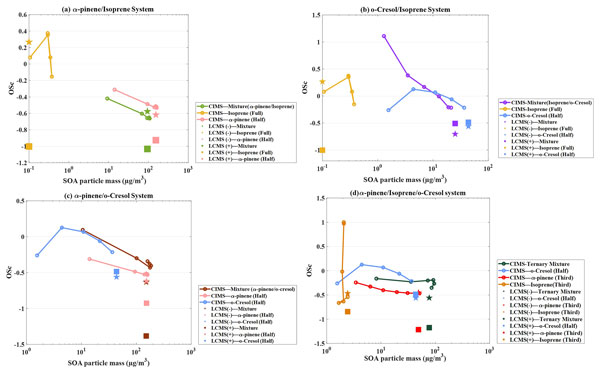
This study analysed the average carbon oxidation state (OSc) during secondary organic aerosol formation from mixed volatile organic compounds (VOCs) using three mass spectrometry techniques. Notable discrepancies in OSc were observed across the techniques, with FIGAERO-CIMS reporting higher values. The results also show that OSc in mixed-VOC systems is influenced not only by products from individual precursors but also by accretion products formed through interactions between VOC products.
Aristeidis Voliotis, Mao Du, Yu Wang, Yunqi Shao, M. Rami Alfarra, Thomas J. Bannan, Dawei Hu, Kelly L. Pereira, Jaqueline F. Hamilton, Mattias Hallquist, Thomas F. Mentel, and Gordon McFiggans
Atmos. Chem. Phys., 22, 14147–14175, https://doi.org/10.5194/acp-22-14147-2022, https://doi.org/10.5194/acp-22-14147-2022, 2022
Short summary
Short summary
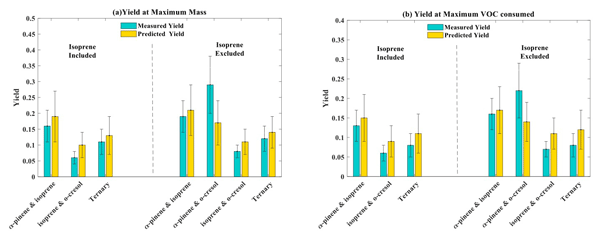
Mixing experiments are crucial and highly beneficial for our understanding of atmospheric chemical interactions. However, interpretation quickly becomes complex, and both the experimental design and evaluation need to be scrutinised carefully. Advanced online and offline compositional measurements can reveal substantial additional information to aid in the interpretation of yield data, including components uniquely found in mixtures and property changes in SOA formed from mixtures of VOCs.
Aristeidis Voliotis, Mao Du, Yu Wang, Yunqi Shao, Thomas J. Bannan, Michael Flynn, Spyros N. Pandis, Carl J. Percival, M. Rami Alfarra, and Gordon McFiggans
Atmos. Chem. Phys., 22, 13677–13693, https://doi.org/10.5194/acp-22-13677-2022, https://doi.org/10.5194/acp-22-13677-2022, 2022
Short summary
Short summary
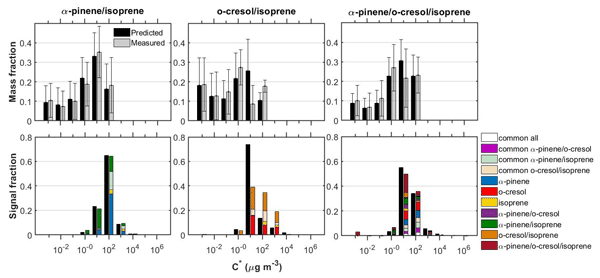
The addition of a low-yield precursor to the reactive mixture of aVOC and bVOC can increase or decrease the SOA volatility that is system-dependent. Therefore, the SOA volatility of the mixtures cannot always be predicted based on the additivity. In complex mixtures the formation of lower-volatility products likely outweighs the formation of products with higher volatility. The unique products of each mixture contribute significantly to the signal, suggesting interactions can be important.

Yunqi Shao, Aristeidis Voliotis, Mao Du, Yu Wang, Kelly Pereira, Jacqueline Hamilton, M. Rami Alfarra, and Gordon McFiggans
Atmos. Chem. Phys., 22, 9799–9826, https://doi.org/10.5194/acp-22-9799-2022, https://doi.org/10.5194/acp-22-9799-2022, 2022
Short summary
Short summary
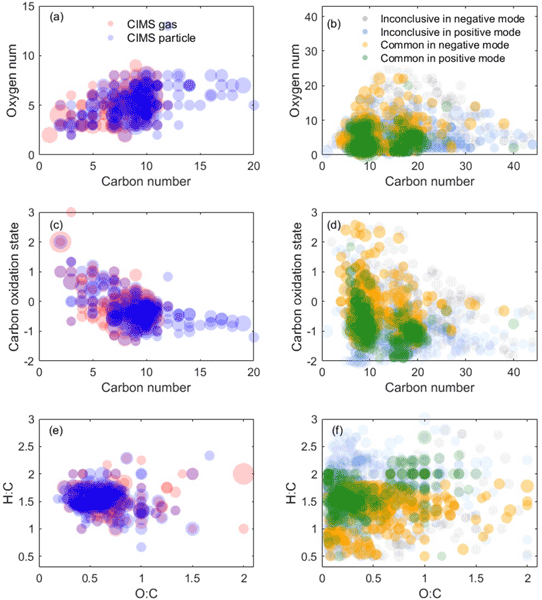
This study explored the chemical properties of secondary organic aerosol (SOA) that formed from photo-oxidation of single and mixed biogenic and anthropogenic precursors. We showed that SOA chemical properties in a mixed vapour system are mainly affected by the
higher-yield precursor's oxidation products and products from
cross-product formation. This study also identifies potential tracer compounds in a mixed vapour system that might be used in SOA source attribution in future ambient studies.
Mao Du, Aristeidis Voliotis, Yunqi Shao, Yu Wang, Thomas J. Bannan, Kelly L. Pereira, Jacqueline F. Hamilton, Carl J. Percival, M. Rami Alfarra, and Gordon McFiggans
Atmos. Meas. Tech., 15, 4385–4406, https://doi.org/10.5194/amt-15-4385-2022, https://doi.org/10.5194/amt-15-4385-2022, 2022
Short summary
Short summary
Atmospheric chemistry plays a key role in the understanding of aerosol formation and air pollution. We designed chamber experiments for the characterization of secondary organic aerosol (SOA) from a biogenic precursor with inorganic seed. Our results highlight the advantages of a combination of online FIGAERO-CIMS and offline LC-Orbitrap MS analytical techniques to characterize the chemical composition of SOA in chamber studies.
Yu Wang, Aristeidis Voliotis, Dawei Hu, Yunqi Shao, Mao Du, Ying Chen, Judith Kleinheins, Claudia Marcolli, M. Rami Alfarra, and Gordon McFiggans
Atmos. Chem. Phys., 22, 4149–4166, https://doi.org/10.5194/acp-22-4149-2022, https://doi.org/10.5194/acp-22-4149-2022, 2022
Short summary
Short summary
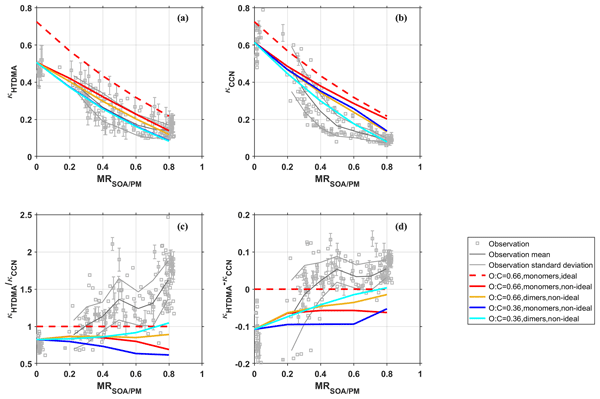
Aerosol water uptake plays a key role in atmospheric physicochemical processes. We designed chamber experiments on aerosol water uptake of secondary organic aerosol (SOA) from mixed biogenic and anthropogenic precursors with inorganic seed. Our results highlight this chemical composition influences the reconciliation of the sub- and super-saturated water uptake, providing laboratory evidence for understanding the chemical controls of water uptake of the multi-component aerosol.
Yunqi Shao, Yu Wang, Mao Du, Aristeidis Voliotis, M. Rami Alfarra, Simon P. O'Meara, S. Fiona Turner, and Gordon McFiggans
Atmos. Meas. Tech., 15, 539–559, https://doi.org/10.5194/amt-15-539-2022, https://doi.org/10.5194/amt-15-539-2022, 2022
Short summary
Short summary
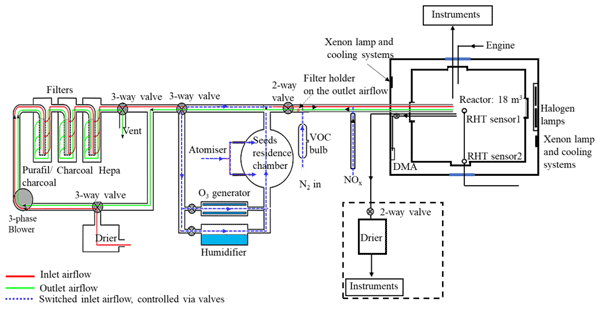
A comprehensive description and characterisation of the Manchester Aerosol Chamber (MAC) was conducted. The MAC has good temperature and relative humidity homogeneity, fast mixing times, and comparable losses of gases and particles with other chambers. The MAC's bespoke control system allows improved duty cycles and repeatable experiments. Moreover, the effect of contamination on performance was also investigated. It is highly recommended to regularly track the chamber's performance.
Liine Heikkinen, Rahul Ranjan, Sini Talvinen, Niels Behr, Sara M. Blichner, Maura Dewey, Lauri R. Ahonen, Mikael Ehn, Annica M. L. Ekman, Radovan Krejci, Tuukka Petäjä, Peter Tunved, and Ilona Riipinen
EGUsphere, https://doi.org/10.5194/egusphere-2026-5082, https://doi.org/10.5194/egusphere-2026-5082, 2026
This preprint is open for discussion and under review for Atmospheric Chemistry and Physics (ACP).
Short summary
Short summary
The impacts of clouds on atmospheric particulate matter (PM) composition are not well understood. Here, we use a new method to infer these interactions as particle number size distributions with bimodal shapes serve as markers of chemical cloud processing. Using concurrent PM composition data from a boreal forest in Finland, we find cloud chemistry to enrich PM in sulfate, but no enhanced formation of organics was observed, despite the abundance of precursors emitted by the forest.
Jenna DeVivo, Alexandria Stinchfield, Nirvan Bhattacharyya, Mitch Alton, Mingyi Wang, Siegfried Schobesberger, Liqing Hao, Mitchell Rogers, Alexander Vogel, Imad Zgheib, Natalie Burton, Clara Lietzke, Douglas M. Russell, Eva Sommer, Drew Gentner, Liine Heikkinen, Rainer Volkamer, Jasper Kirkby, Felipe Lopez-Hilfiker, Douglas Worsnop, Manjula Canagaratna, and Neil M. Donahue
EGUsphere, https://doi.org/10.5194/egusphere-2026-4542, https://doi.org/10.5194/egusphere-2026-4542, 2026
This preprint is open for discussion and under review for Atmospheric Chemistry and Physics (ACP).
Short summary
Short summary
The vapors driving atmospheric new particle formation are uncertain, in part because of instrumental limitations at small particle sizes. This study presents a novel coupling of a temperature-programmed desorption inlet with a bipolar mass spectrometer that has multiple types of chemical ionization used to study acid-base reactions controlling particulate evaporation.This method measures more components in atmospheric aerosol and separates reactive pathways contributing to early particle growth.
Sara Aisyah Syafira, Aristeidis Voliotis, Dawei Hu, Osayomwanbor Oghama, Huihui Wu, Yunqi Shao, Rhianna Evans, Jie Chen, Yu Wang, Peter Gallimore, James Allan, Hugh Coe, and Gordon McFiggans
EGUsphere, https://doi.org/10.5194/egusphere-2026-4932, https://doi.org/10.5194/egusphere-2026-4932, 2026
This preprint is open for discussion and under review for Atmospheric Measurement Techniques (AMT).
Short summary
Short summary
This current work describes a biomass burning (BB) aerosol facility at the University of Manchester that provides a repeatable, flexible system and platform for mechanistic and multiparameter investigation of fresh and aged BB aerosol. The characteristics, as well as those capabilities of the facility across fuel types and combustions were demonstrated here.
Sara M. Blichner, Theodore Khadir, Sini Talvinen, Paulo Artaxo, Liine Heikkinen, Harri Kokkola, Radovan Krejci, Muhammed Irfan, Twan van Noije, Tuukka Petäjä, Christopher Pöhlker, Øyvind Seland, Carl Svenhag, Antti Vartiainen, and Ilona Riipinen
Atmos. Chem. Phys., 26, 11281–11307, https://doi.org/10.5194/acp-26-11281-2026, https://doi.org/10.5194/acp-26-11281-2026, 2026
Short summary
Short summary
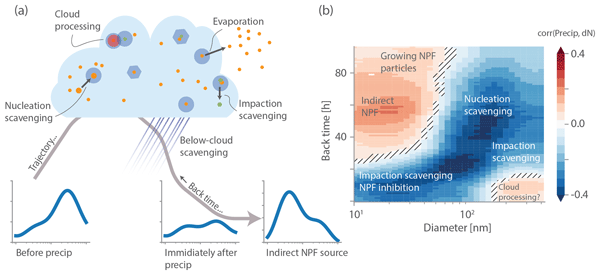
This study looks at how well climate models capture the impact of rain on particles that help form cloud droplets. Using data from three measurement stations and applying both a correlation analysis and a machine learning approach, we found that models often miss how new particles form after rain and struggle in cold environments. This matters because these particles influence cloud formation and climate.
Yann Poltera, Beiping Luo, Frank G. Wienhold, and Thomas Peter
Atmos. Meas. Tech., 19, 5091–5134, https://doi.org/10.5194/amt-19-5091-2026, https://doi.org/10.5194/amt-19-5091-2026, 2026
Short summary
Short summary
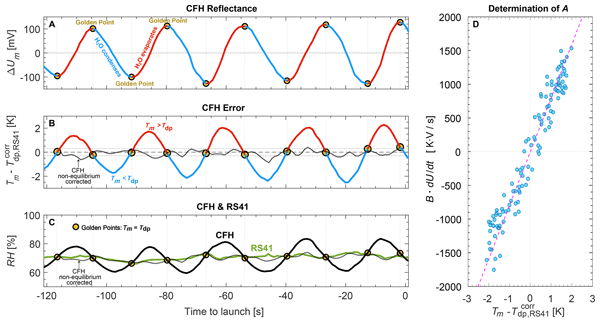
Chilled mirror hygrometers are the most accurate instruments for measuring water vapor in the upper troposphere and lower stratosphere. The “Golden Points” and nonequilibrium correction are a new post-processing technique for these instruments, which can correct frost point data using mirror reflectance information to achieve unprecedented accuracy of better than 4 % in the H2O mixing ratio, even under rapidly changing humidity conditions, from the ground to the middle stratosphere.
Ashmi Mishra, Steven Lelieveld, Matteo Krüger, Steven J. Campbell, Deepchandra Srivastava, Grazia Maria Lanzafame, Sophie Tomaz, Olivier Favez, Nicolas Bonnaire, Franco Lucarelli, Laurent Y. Alleman, Gaëlle Uzu, Jean-Luc Jaffrezo, Gang I. Chen, David C. Green, Max Priestman, Anja H. Tremper, Alexandre Barth, Markus Kalberer, Benjamin A. Musa Bandowe, Gerhard Lammel, Ulrich Pöschl, Pourya Shahpoury, Alexandre Albinet, and Thomas Berkemeier
Atmos. Chem. Phys., 26, 10605–10627, https://doi.org/10.5194/acp-26-10605-2026, https://doi.org/10.5194/acp-26-10605-2026, 2026
Short summary
Short summary
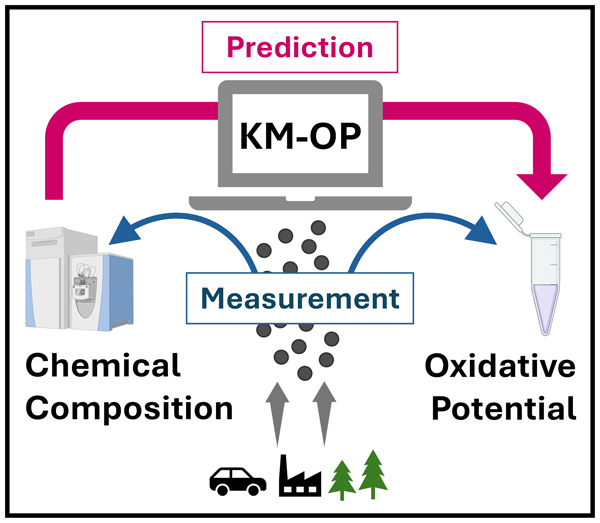
In this study, we develop and apply a kinetic model that estimates oxidative potential (OP) based on particulate matter (PM) composition. The model consolidates a large set of laboratory data from different OP assays in the presence of organic molecules, metals, and quinones. We applied the model to field data of PM composition and OP and found good agreement across three sites. The model analysis indicates that OP is mainly driven by organic molecules and copper.
Sara Aisyah Syafira, Dawei Hu, Aristeidis Voliotis, Huihui Wu, Osayomwanbor Ebenezer Oghama, Yunqi Shao, Sri Hapsari Budisulistiorini, Yu Wang, Michael Flynn, Peter James Gallimore, Hugh Coe, James Allan, and Gordon McFiggans
EGUsphere, https://doi.org/10.5194/egusphere-2026-2723, https://doi.org/10.5194/egusphere-2026-2723, 2026
Short summary
Short summary
The variability in hygroscopicity of biomass-burning aerosol particles, both fresh and aged, was measured using three methods across different fuel types and burn phases. Several inter-method discrepancy factors were tested. Substantial discrepancies remained after applying improvements that mitigated the tested factors: size-related factors and organic hygroscopicity assumption factor, highlighting the need for regime-aware κ parameterizations in atmospheric and climate models.
Hao Ding, Almuth Neuberger, Rahul Ranjan, Fredrik Mattsson, Liine Heikkinen, Karam Mansour, Stefano Decesari, Claudia Mohr, Alejandro Baró Pérez, Nazario Mastroianni, Paul Zieger, Ilona Riipinen, and Annica M. L. Ekman
Atmos. Chem. Phys., 26, 9721–9739, https://doi.org/10.5194/acp-26-9721-2026, https://doi.org/10.5194/acp-26-9721-2026, 2026
Short summary
Short summary
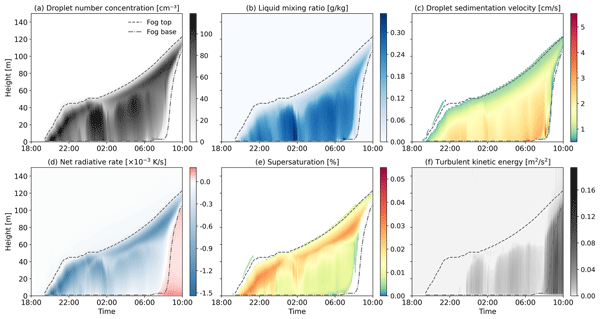
Fog poses numerous risks to society, yet it remains challenging to forecast. We use detailed numerical simulations based on fog observations in the Po Valley, Italy, to demonstrate that high concentrations of aerosol particles, as in polluted air, lead to an increase in droplet number, prolonged fog duration, and reduced visibility. The simulations also show the importance of accurately representing haze particles and the shape of the droplet size distribution for improved fog prediction.
Jian Xu, Junteng Wu, Mayur Gajanan Sapkal, Jim Grisillon, Shravan Deshmukh, Brice Temime Roussel, Julien Kammer, Nicolas Brun, Fabien Robert-Peillard, Beiping Luo, Judith Kleinheins, Silvia Henning, Bénédicte Picquet-Varrault, Edouard Pangui, Mathieu Cazaunau, Zamin A. Kanji, Claudia Marcolli, and Anne Monod
Aerosol Research Discuss., https://doi.org/10.5194/ar-2026-14, https://doi.org/10.5194/ar-2026-14, 2026
Preprint under review for AR
Short summary
Short summary
The study aimed to mimic the atmospheric behaviour of a semi-volatile organic compound in the presence of fine particles and at various relative humidities. The objective was to determine the influence of organic matter on humid particle growth. These results are essential for improving our understanding of cloud formation.
Karin Stegelius, Pauline Thompson, Pia Karbiener, Piotr Markuszewski, Andre S. H. Prevot, Sachchida N. Tripathi, Claudia Mohr, Liine Heikkinen, Krishnakant Budhavant, and Sophie L. Haslett
EGUsphere, https://doi.org/10.5194/egusphere-2026-914, https://doi.org/10.5194/egusphere-2026-914, 2026
Short summary
Short summary
High-time-resolution observations in the Maldives indicate that submicron aerosol over the northern Indian Ocean is primarily composed of inorganic sulfate and highly oxidised organic matter, indicative of aged continental outflow. The consistent composition across various air mass origins, alongside identification of sulfur-containing organics, underscores the influence of long-range transport and sulfate-driven secondary chemistry on regional aerosol characteristics and their climate impacts.
Nadia Shardt, Florin N. Isenrich, Julia Nette, Christopher Dreimol, Ning Ma, Zamin A. Kanji, Andrew J. deMello, and Claudia Marcolli
Atmos. Chem. Phys., 25, 17997–18014, https://doi.org/10.5194/acp-25-17997-2025, https://doi.org/10.5194/acp-25-17997-2025, 2025
Short summary
Short summary
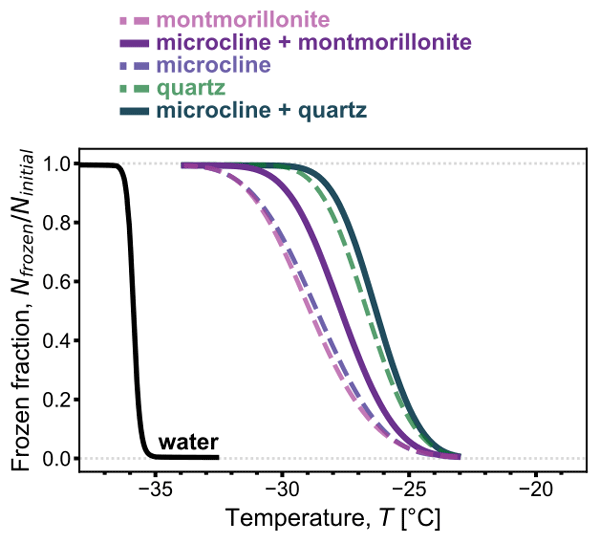
In the atmosphere, minerals suspended in cloud droplets promote the formation of ice. We investigated ice formation in the presence of pure and binary mixtures of common minerals using a microfluidic device. The mineral with the best ability to initiate ice formation alone (that is, at the highest temperature) typically determined when ice formed in the binary mixture.
Yunqi Shao, Aristeidis Voliotis, Mao Du, Yu Wang, Thomas J. Bannan, Jacqueline F. Hamilton, M. Rami Alfarra, and Gordon McFiggans
Aerosol Research, 3, 619–636, https://doi.org/10.5194/ar-3-619-2025, https://doi.org/10.5194/ar-3-619-2025, 2025
Short summary
Short summary
This study analysed the average carbon oxidation state (OSc) during secondary organic aerosol formation from mixed volatile organic compounds (VOCs) using three mass spectrometry techniques. Notable discrepancies in OSc were observed across the techniques, with FIGAERO-CIMS reporting higher values. The results also show that OSc in mixed-VOC systems is influenced not only by products from individual precursors but also by accretion products formed through interactions between VOC products.
Rahul Ranjan, Maura Dewey, Liine Heikkinen, Lauri R. Ahonen, Krista Luoma, Paul Bowen, Tuukka Petäjä, Annica M. L. Ekman, Daniel G. Partridge, and Ilona Riipinen
Atmos. Chem. Phys., 25, 17275–17300, https://doi.org/10.5194/acp-25-17275-2025, https://doi.org/10.5194/acp-25-17275-2025, 2025
Short summary
Short summary
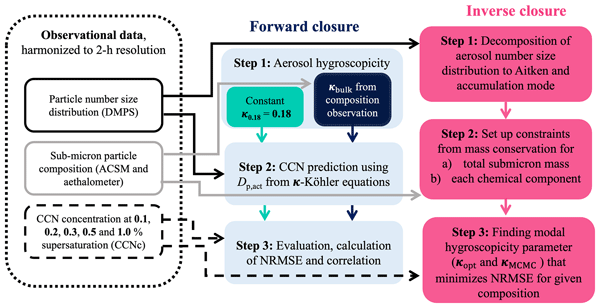
We use multi-year measurements of cloud condensation nuclei (CCN) at a boreal forest site to inversely infer size-resolved aerosol chemical composition. We find that inorganic species are more enriched in the larger end (accumulation mode) of the sub-micron aerosol population while organics often dominate the smaller end (Aitken mode). Our approach demonstrates the potential of long-term CCN measurements to infer size-resolved chemical composition of sub-micron aerosol.
Gang I. Chen, Anja H. Tremper, Max Priestman, Anna Font, and David C. Green
Atmos. Chem. Phys., 25, 14825–14838, https://doi.org/10.5194/acp-25-14825-2025, https://doi.org/10.5194/acp-25-14825-2025, 2025
Short summary
Short summary
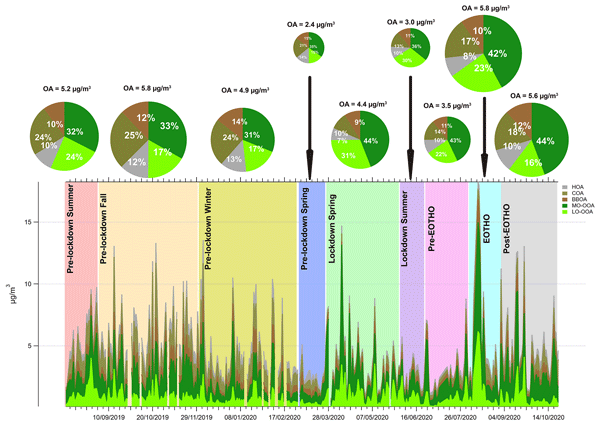
This study quantified the impact of the COVID lockdown and the Eat Out To Help Out (EOTHO) on the sources/compositions of aerosols. The lockdown significantly reduced the primary emission sources. This study confirmed the important presence of cooking emissions from commercial kitchens in Central London by detecting the enhancement caused by the EOTHO policy after the lockdown. Biomass burning organic aerosol co-emitted with cooking activities from either the fuels or food ingredients used.
Ilona Ylivinkka, Helmi-Marja Keskinen, Lauri R. Ahonen, Liine Heikkinen, Pasi P. Aalto, Tuomo Nieminen, Katrianne Lehtipalo, Krista Luoma, Sujai Banerji, Juho Aalto, Janne Levula, Jutta Kesti, Ekaterina Ezhova, Markku Kulmala, and Tuukka Petäjä
Aerosol Research, 3, 503–520, https://doi.org/10.5194/ar-3-503-2025, https://doi.org/10.5194/ar-3-503-2025, 2025
Short summary
Short summary
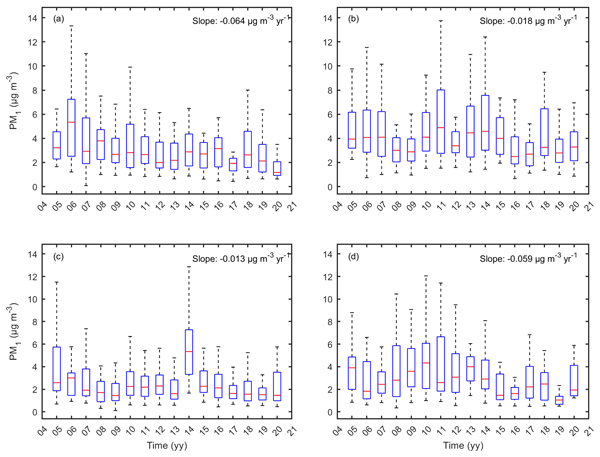
Three different particulate matter (PM) measurement techniques were compared in Finland, showing good correlation (R about 0.8). Although the measured PM concentrations were low, decreasing trends were observed in all seasons. The decrease followed the trends observed in concentrations of anthropogenic pollutants, resulting from the EU legislation to improve air quality. The highest PM concentrations were measured in summer, indicating the dominance of organic compounds to the PM mass.

Andrin Jörimann, Timofei Sukhodolov, Beiping Luo, Gabriel Chiodo, Graham Mann, and Thomas Peter
Geosci. Model Dev., 18, 6023–6041, https://doi.org/10.5194/gmd-18-6023-2025, https://doi.org/10.5194/gmd-18-6023-2025, 2025
Short summary
Short summary
Aerosol particles in the stratosphere affect our climate. Climate models therefore need an accurate description of their properties and evolution. Satellites measure how strongly aerosol particles extinguish light passing through the stratosphere. We describe a method to use such aerosol extinction data to retrieve the number and sizes of the aerosol particles and calculate their optical effects. The resulting data sets for models are validated against ground-based and balloon observations.
Fredrik Mattsson, Almuth Neuberger, Liine Heikkinen, Yvette Gramlich, Marco Paglione, Matteo Rinaldi, Stefano Decesari, Paul Zieger, Ilona Riipinen, and Claudia Mohr
Atmos. Chem. Phys., 25, 7973–7989, https://doi.org/10.5194/acp-25-7973-2025, https://doi.org/10.5194/acp-25-7973-2025, 2025
Short summary
Short summary
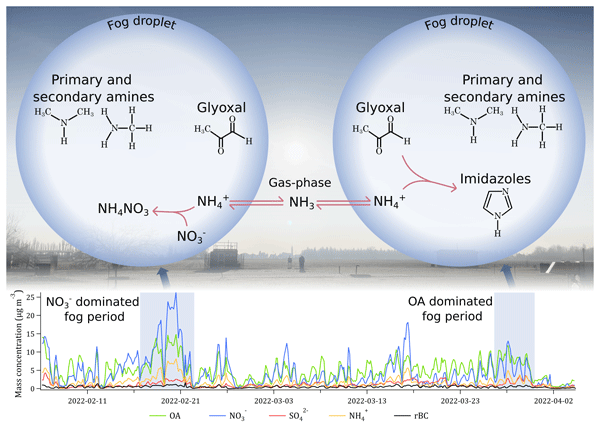
This study investigated aerosol–cloud interactions, focusing on organic nitrogen (ON) formation in the aqueous phase. Measurements were conducted in wintertime in the Po Valley, Italy, using aerosol mass spectrometry. The fog was enriched in more hygroscopic inorganic compounds and ON, containing, e.g., imidazoles. The formation of imidazole by aerosol–fog interactions could be confirmed for the first time in atmospheric observations. Findings highlight the role of fog in nitrogen aerosol formation.
Anna J. Miller, Christopher Fuchs, Fabiola Ramelli, Huiying Zhang, Nadja Omanovic, Robert Spirig, Claudia Marcolli, Zamin A. Kanji, Ulrike Lohmann, and Jan Henneberger
Atmos. Chem. Phys., 25, 5387–5407, https://doi.org/10.5194/acp-25-5387-2025, https://doi.org/10.5194/acp-25-5387-2025, 2025
Short summary
Short summary
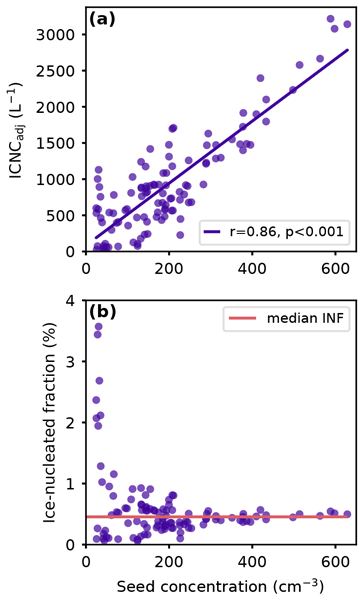
We analyzed the ability of silver iodide particles (a commonly used cloud-seeding agent) to form ice crystals in naturally occurring liquid clouds at −5 to −8 °C and found that only ≈ 0.1 %−1 % of particles nucleate ice, with a negative dependence on temperature. By contextualizing our results with previous laboratory studies, we help to bridge the gap between laboratory and field experiments, which also helps to inform future cloud-seeding projects.
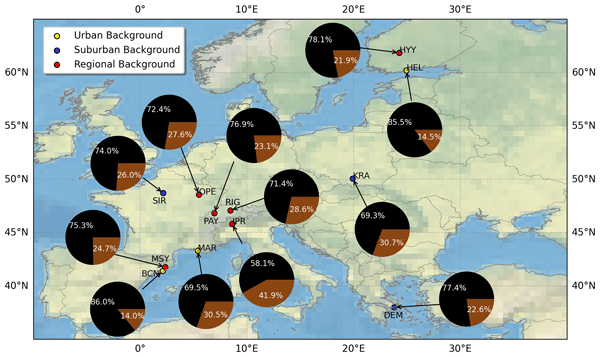
Hector Navarro-Barboza, Jordi Rovira, Vincenzo Obiso, Andrea Pozzer, Marta Via, Andres Alastuey, Xavier Querol, Noemi Perez, Marjan Savadkoohi, Gang Chen, Jesus Yus-Díez, Matic Ivancic, Martin Rigler, Konstantinos Eleftheriadis, Stergios Vratolis, Olga Zografou, Maria Gini, Benjamin Chazeau, Nicolas Marchand, Andre S. H. Prevot, Kaspar Dallenbach, Mikael Ehn, Krista Luoma, Tuukka Petäjä, Anna Tobler, Jaroslaw Necki, Minna Aurela, Hilkka Timonen, Jarkko Niemi, Olivier Favez, Jean-Eudes Petit, Jean-Philippe Putaud, Christoph Hueglin, Nicolas Pascal, Aurélien Chauvigné, Sébastien Conil, Marco Pandolfi, and Oriol Jorba
Atmos. Chem. Phys., 25, 2667–2694, https://doi.org/10.5194/acp-25-2667-2025, https://doi.org/10.5194/acp-25-2667-2025, 2025
Short summary
Short summary
Brown carbon (BrC) absorbs ultraviolet (UV) and visible light, influencing climate. This study explores BrC's imaginary refractive index (k) using data from 12 European sites. Residential emissions are a major organic aerosol (OA) source in winter, while secondary organic aerosol (SOA) dominates in summer. Source-specific k values were derived, improving model accuracy. The findings highlight BrC's climate impact and emphasize source-specific constraints in atmospheric models.
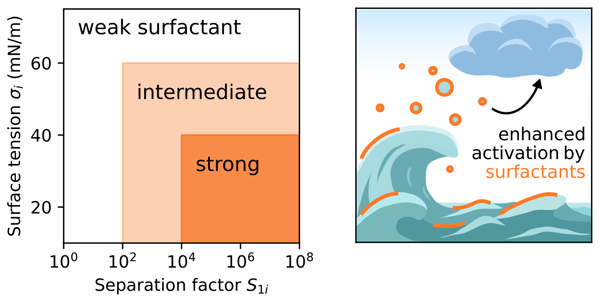
Judith Kleinheins, Nadia Shardt, Ulrike Lohmann, and Claudia Marcolli
Atmos. Chem. Phys., 25, 881–903, https://doi.org/10.5194/acp-25-881-2025, https://doi.org/10.5194/acp-25-881-2025, 2025
Short summary
Short summary
We model the cloud condensation nuclei (CCN) activation of sea spray aerosol particles with classical Köhler theory and with a new model approach that takes surface tension lowering into account. We categorize organic compounds into weak, intermediate, and strong surfactants, and we outline for which composition surface tension lowering is important. The results suggest that surface tension lowering allows sea spray aerosol particles in the Aitken mode to be a source of CCN in marine updraughts.
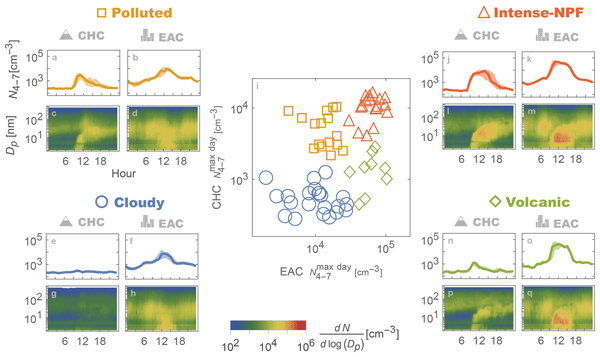
Diego Aliaga, Victoria A. Sinclair, Radovan Krejci, Marcos Andrade, Paulo Artaxo, Luis Blacutt, Runlong Cai, Samara Carbone, Yvette Gramlich, Liine Heikkinen, Dominic Heslin-Rees, Wei Huang, Veli-Matti Kerminen, Alkuin Maximilian Koenig, Markku Kulmala, Paolo Laj, Valeria Mardoñez-Balderrama, Claudia Mohr, Isabel Moreno, Pauli Paasonen, Wiebke Scholz, Karine Sellegri, Laura Ticona, Gaëlle Uzu, Fernando Velarde, Alfred Wiedensohler, Doug Worsnop, Cheng Wu, Chen Xuemeng, Qiaozhi Zha, and Federico Bianchi
Aerosol Research, 3, 15–44, https://doi.org/10.5194/ar-3-15-2025, https://doi.org/10.5194/ar-3-15-2025, 2025
Short summary
Short summary
This study examines new particle formation (NPF) in the Bolivian Andes at Chacaltaya mountain (CHC) and the urban El Alto–La Paz area (EAC). Days are clustered into four categories based on NPF intensity. Differences in particle size, precursor gases, and pollution levels are found. High NPF intensities increased Aitken mode particle concentrations at both sites, while volcanic influence selectively diminished NPF intensity at CHC but not EAC. This study highlights NPF dynamics in the Andes.
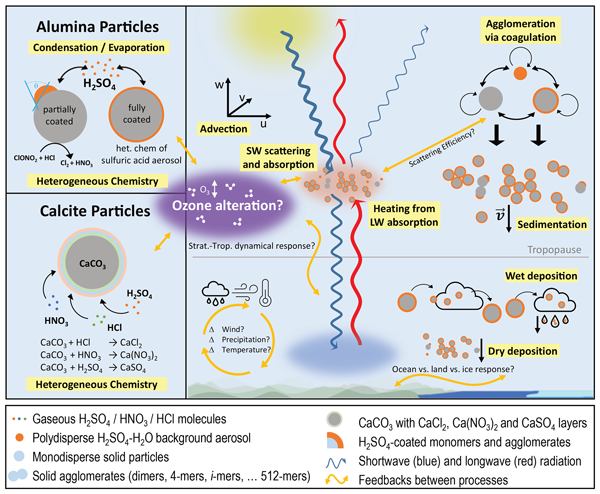
Sandro Vattioni, Rahel Weber, Aryeh Feinberg, Andrea Stenke, John A. Dykema, Beiping Luo, Georgios A. Kelesidis, Christian A. Bruun, Timofei Sukhodolov, Frank N. Keutsch, Thomas Peter, and Gabriel Chiodo
Geosci. Model Dev., 17, 7767–7793, https://doi.org/10.5194/gmd-17-7767-2024, https://doi.org/10.5194/gmd-17-7767-2024, 2024
Short summary
Short summary
We quantified impacts and efficiency of stratospheric solar climate intervention via solid particle injection. Microphysical interactions of solid particles with the sulfur cycle were interactively coupled to the heterogeneous chemistry scheme and the radiative transfer code of an aerosol–chemistry–climate model. Compared to injection of SO2 we only find a stronger cooling efficiency for solid particles when normalizing to the aerosol load but not when normalizing to the injection rate.
Sandro Vattioni, Andrea Stenke, Beiping Luo, Gabriel Chiodo, Timofei Sukhodolov, Elia Wunderlin, and Thomas Peter
Geosci. Model Dev., 17, 4181–4197, https://doi.org/10.5194/gmd-17-4181-2024, https://doi.org/10.5194/gmd-17-4181-2024, 2024
Short summary
Short summary
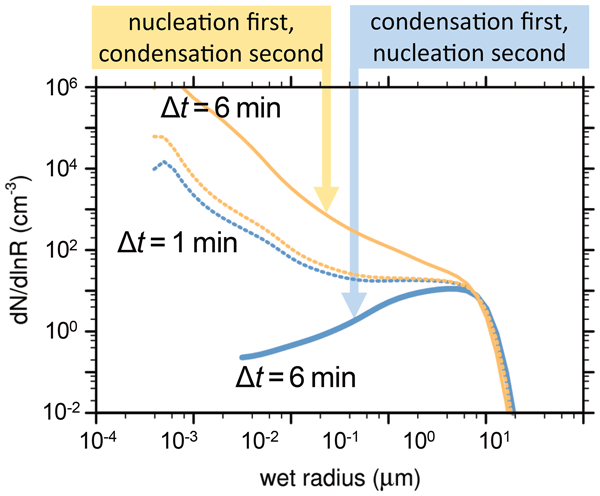
We investigate the sensitivity of aerosol size distributions in the presence of strong SO2 injections for climate interventions or after volcanic eruptions to the call sequence and frequency of the routines for nucleation and condensation in sectional aerosol models with operator splitting. Using the aerosol–chemistry–climate model SOCOL-AERv2, we show that the radiative and chemical outputs are sensitive to these settings at high H2SO4 supersaturations and how to obtain reliable results.
Liine Heikkinen, Daniel G. Partridge, Sara Blichner, Wei Huang, Rahul Ranjan, Paul Bowen, Emanuele Tovazzi, Tuukka Petäjä, Claudia Mohr, and Ilona Riipinen
Atmos. Chem. Phys., 24, 5117–5147, https://doi.org/10.5194/acp-24-5117-2024, https://doi.org/10.5194/acp-24-5117-2024, 2024
Short summary
Short summary
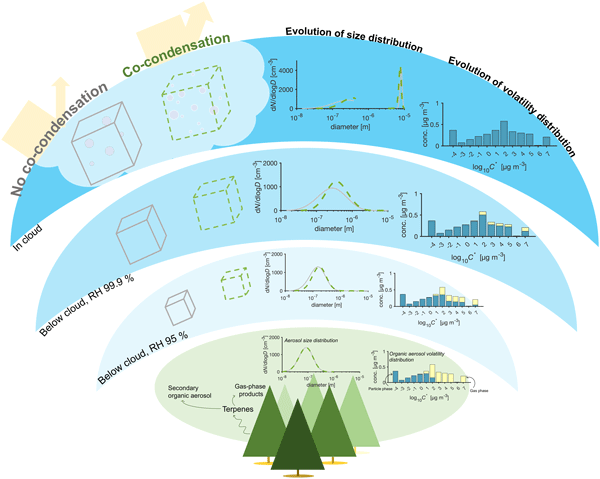
The organic vapor condensation with water vapor (co-condensation) in rising air below clouds is modeled in this work over the boreal forest because the forest air is rich in organic vapors. We show that the number of cloud droplets can increase by 20 % if considering co-condensation. The enhancements are even larger if the air contains many small, naturally produced aerosol particles. Such conditions are most frequently met in spring in the boreal forest.
Arto Heitto, Cheng Wu, Diego Aliaga, Luis Blacutt, Xuemeng Chen, Yvette Gramlich, Liine Heikkinen, Wei Huang, Radovan Krejci, Paolo Laj, Isabel Moreno, Karine Sellegri, Fernando Velarde, Kay Weinhold, Alfred Wiedensohler, Qiaozhi Zha, Federico Bianchi, Marcos Andrade, Kari E. J. Lehtinen, Claudia Mohr, and Taina Yli-Juuti
Atmos. Chem. Phys., 24, 1315–1328, https://doi.org/10.5194/acp-24-1315-2024, https://doi.org/10.5194/acp-24-1315-2024, 2024
Short summary
Short summary
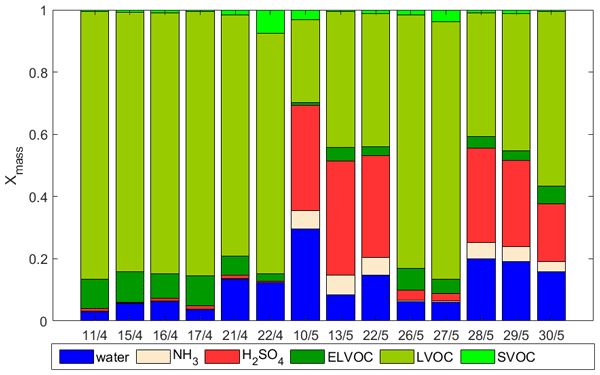
Particle growth at the Chacaltaya station in Bolivia was simulated based on measured vapor concentrations and ambient conditions. Major contributors to the simulated growth were low-volatility organic compounds (LVOCs). Also, sulfuric acid had major role when volcanic activity was occurring in the area. This study provides insight on nanoparticle growth at this high-altitude Southern Hemispheric site and hence contributes to building knowledge of early growth of atmospheric particles.
Samira Atabakhsh, Laurent Poulain, Gang Chen, Francesco Canonaco, André S. H. Prévôt, Mira Pöhlker, Alfred Wiedensohler, and Hartmut Herrmann
Atmos. Chem. Phys., 23, 6963–6988, https://doi.org/10.5194/acp-23-6963-2023, https://doi.org/10.5194/acp-23-6963-2023, 2023
Short summary
Short summary
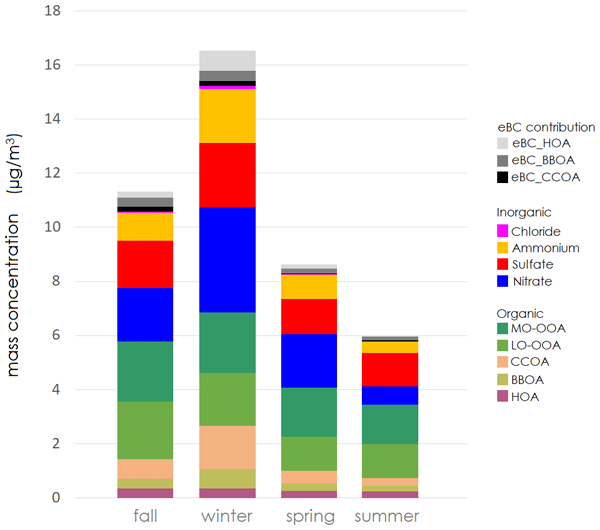
The study focuses on the aerosol chemical variations found in the rural-background station of Melpitz based on ACSM and MAAP measurements. Source apportionment on both organic aerosol (OA) and black carbon (eBC) was performed, and source seasonality was also linked to air mass trajectories. Overall, three anthropogenic sources were identified in OA and eBC plus two additional aged OA. Our results demonstrate the influence of transported coal-combustion-related OA even during summer time.
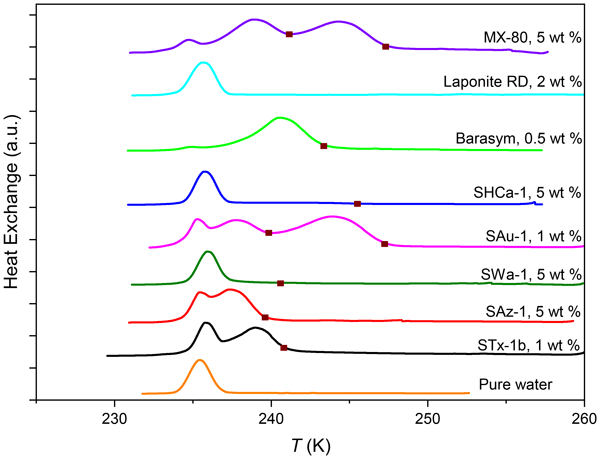
Anand Kumar, Kristian Klumpp, Chen Barak, Giora Rytwo, Michael Plötze, Thomas Peter, and Claudia Marcolli
Atmos. Chem. Phys., 23, 4881–4902, https://doi.org/10.5194/acp-23-4881-2023, https://doi.org/10.5194/acp-23-4881-2023, 2023
Short summary
Short summary
Smectites are a major class of clay minerals that are ice nucleation (IN) active. They form platelets that swell or even delaminate in water by intercalation of water between their layers. We hypothesize that at least three smectite layers need to be stacked together to host a critical ice embryo on clay mineral edges and that the larger the surface edge area is, the higher the freezing temperature. Edge sites on such clay particles play a crucial role in imparting IN ability to such particles.

Qiaozhi Zha, Wei Huang, Diego Aliaga, Otso Peräkylä, Liine Heikkinen, Alkuin Maximilian Koenig, Cheng Wu, Joonas Enroth, Yvette Gramlich, Jing Cai, Samara Carbone, Armin Hansel, Tuukka Petäjä, Markku Kulmala, Douglas Worsnop, Victoria Sinclair, Radovan Krejci, Marcos Andrade, Claudia Mohr, and Federico Bianchi
Atmos. Chem. Phys., 23, 4559–4576, https://doi.org/10.5194/acp-23-4559-2023, https://doi.org/10.5194/acp-23-4559-2023, 2023
Short summary
Short summary
We investigate the chemical composition of atmospheric cluster ions from January to May 2018 at the high-altitude research station Chacaltaya (5240 m a.s.l.) in the Bolivian Andes. With state-of-the-art mass spectrometers and air mass history analysis, the measured cluster ions exhibited distinct diurnal and seasonal patterns, some of which contributed to new particle formation. Our study will improve the understanding of atmospheric ions and their role in high-altitude new particle formation.
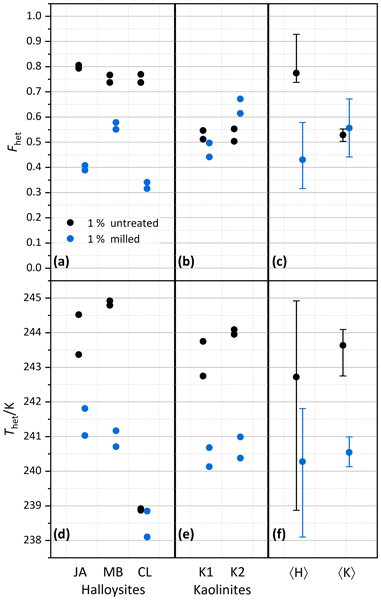
Kristian Klumpp, Claudia Marcolli, Ana Alonso-Hellweg, Christopher H. Dreimol, and Thomas Peter
Atmos. Chem. Phys., 23, 1579–1598, https://doi.org/10.5194/acp-23-1579-2023, https://doi.org/10.5194/acp-23-1579-2023, 2023
Short summary
Short summary
The prerequisites of a particle surface for efficient ice nucleation are still poorly understood. This study compares the ice nucleation activity of two chemically identical but morphologically different minerals (kaolinite and halloysite). We observe, on average, not only higher ice nucleation activities for halloysite than kaolinite but also higher diversity between individual samples. We identify the particle edges as being the most likely site for ice nucleation.
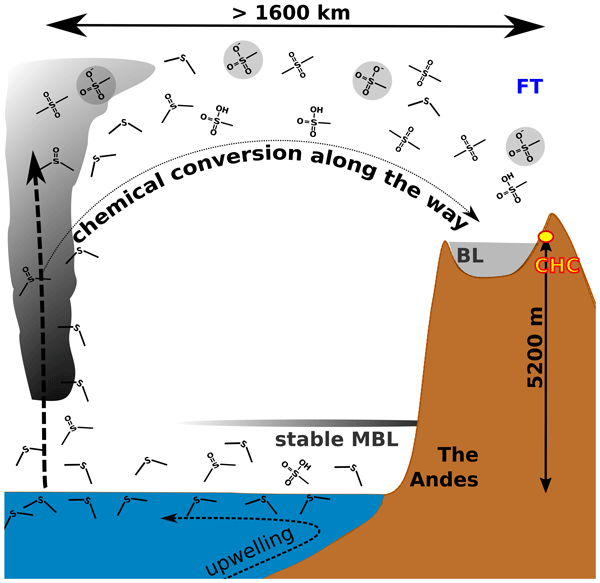
Wiebke Scholz, Jiali Shen, Diego Aliaga, Cheng Wu, Samara Carbone, Isabel Moreno, Qiaozhi Zha, Wei Huang, Liine Heikkinen, Jean Luc Jaffrezo, Gaelle Uzu, Eva Partoll, Markus Leiminger, Fernando Velarde, Paolo Laj, Patrick Ginot, Paolo Artaxo, Alfred Wiedensohler, Markku Kulmala, Claudia Mohr, Marcos Andrade, Victoria Sinclair, Federico Bianchi, and Armin Hansel
Atmos. Chem. Phys., 23, 895–920, https://doi.org/10.5194/acp-23-895-2023, https://doi.org/10.5194/acp-23-895-2023, 2023
Short summary
Short summary
Dimethyl sulfide (DMS), emitted from the ocean, is the most abundant biogenic sulfur emission into the atmosphere. OH radicals, among others, can oxidize DMS to sulfuric and methanesulfonic acid, which are relevant for aerosol formation. We quantified DMS and nearly all DMS oxidation products with novel mass spectrometric instruments for gas and particle phase at the high mountain station Chacaltaya (5240 m a.s.l.) in the Bolivian Andes in free tropospheric air after long-range transport.

Nikou Hamzehpour, Claudia Marcolli, Kristian Klumpp, Debora Thöny, and Thomas Peter
Atmos. Chem. Phys., 22, 14931–14956, https://doi.org/10.5194/acp-22-14931-2022, https://doi.org/10.5194/acp-22-14931-2022, 2022
Short summary
Short summary
Dust aerosols from dried lakebeds contain mineral particles, as well as soluble salts and (bio-)organic compounds. Here, we investigate ice nucleation (IN) activity of dust samples from Lake Urmia playa, Iran. We find high IN activity of the untreated samples that decreases after organic matter removal but increases after removing soluble salts and carbonates, evidencing inhibiting effects of soluble salts and carbonates on the IN activity of organic matter and minerals, especially microcline.
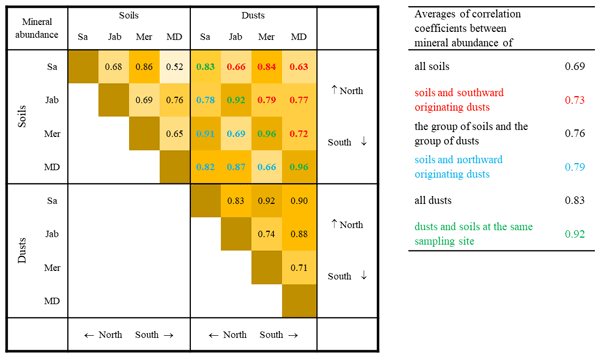
Nikou Hamzehpour, Claudia Marcolli, Sara Pashai, Kristian Klumpp, and Thomas Peter
Atmos. Chem. Phys., 22, 14905–14930, https://doi.org/10.5194/acp-22-14905-2022, https://doi.org/10.5194/acp-22-14905-2022, 2022
Short summary
Short summary
Playa surfaces in Iran that emerged through Lake Urmia (LU) desiccation have become a relevant dust source of regional relevance. Here, we identify highly erodible LU playa surfaces and determine their physicochemical properties and mineralogical composition and perform emulsion-freezing experiments with them. We find high ice nucleation activities (up to 250 K) that correlate positively with organic matter and clay content and negatively with pH, salinity, K-feldspars, and quartz.
Aristeidis Voliotis, Mao Du, Yu Wang, Yunqi Shao, M. Rami Alfarra, Thomas J. Bannan, Dawei Hu, Kelly L. Pereira, Jaqueline F. Hamilton, Mattias Hallquist, Thomas F. Mentel, and Gordon McFiggans
Atmos. Chem. Phys., 22, 14147–14175, https://doi.org/10.5194/acp-22-14147-2022, https://doi.org/10.5194/acp-22-14147-2022, 2022
Short summary
Short summary
Mixing experiments are crucial and highly beneficial for our understanding of atmospheric chemical interactions. However, interpretation quickly becomes complex, and both the experimental design and evaluation need to be scrutinised carefully. Advanced online and offline compositional measurements can reveal substantial additional information to aid in the interpretation of yield data, including components uniquely found in mixtures and property changes in SOA formed from mixtures of VOCs.
Aristeidis Voliotis, Mao Du, Yu Wang, Yunqi Shao, Thomas J. Bannan, Michael Flynn, Spyros N. Pandis, Carl J. Percival, M. Rami Alfarra, and Gordon McFiggans
Atmos. Chem. Phys., 22, 13677–13693, https://doi.org/10.5194/acp-22-13677-2022, https://doi.org/10.5194/acp-22-13677-2022, 2022
Short summary
Short summary
The addition of a low-yield precursor to the reactive mixture of aVOC and bVOC can increase or decrease the SOA volatility that is system-dependent. Therefore, the SOA volatility of the mixtures cannot always be predicted based on the additivity. In complex mixtures the formation of lower-volatility products likely outweighs the formation of products with higher volatility. The unique products of each mixture contribute significantly to the signal, suggesting interactions can be important.
Marta Via, Gang Chen, Francesco Canonaco, Kaspar R. Daellenbach, Benjamin Chazeau, Hasna Chebaicheb, Jianhui Jiang, Hannes Keernik, Chunshui Lin, Nicolas Marchand, Cristina Marin, Colin O'Dowd, Jurgita Ovadnevaite, Jean-Eudes Petit, Michael Pikridas, Véronique Riffault, Jean Sciare, Jay G. Slowik, Leïla Simon, Jeni Vasilescu, Yunjiang Zhang, Olivier Favez, André S. H. Prévôt, Andrés Alastuey, and María Cruz Minguillón
Atmos. Meas. Tech., 15, 5479–5495, https://doi.org/10.5194/amt-15-5479-2022, https://doi.org/10.5194/amt-15-5479-2022, 2022
Short summary
Short summary
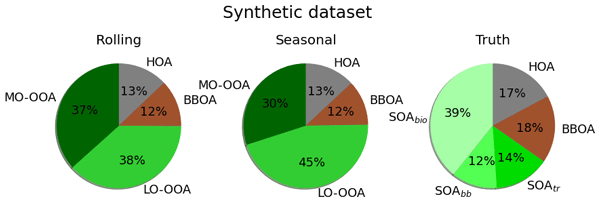
This work presents the differences resulting from two techniques (rolling and seasonal) of the positive matrix factorisation model that can be run for organic aerosol source apportionment. The current state of the art suggests that the rolling technique is more accurate, but no proof of its effectiveness has been provided yet. This paper tackles this issue in the context of a synthetic dataset and a multi-site real-world comparison.
Florin N. Isenrich, Nadia Shardt, Michael Rösch, Julia Nette, Stavros Stavrakis, Claudia Marcolli, Zamin A. Kanji, Andrew J. deMello, and Ulrike Lohmann
Atmos. Meas. Tech., 15, 5367–5381, https://doi.org/10.5194/amt-15-5367-2022, https://doi.org/10.5194/amt-15-5367-2022, 2022
Short summary
Short summary
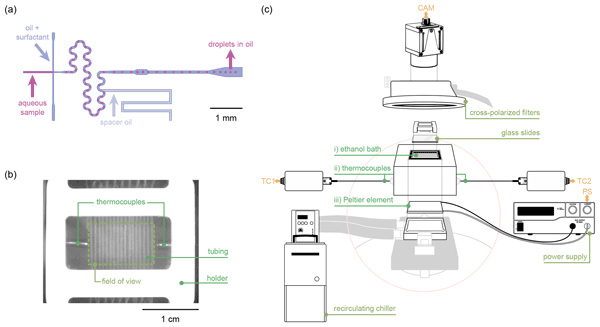
Ice nucleation in the atmosphere influences cloud properties and lifetimes. Microfluidic instruments have recently been used to investigate ice nucleation, but these instruments are typically made out of a polymer that contributes to droplet instability over extended timescales and relatively high temperature uncertainty. To address these drawbacks, we develop and validate a new microfluidic instrument that uses fluoropolymer tubing to extend droplet stability and improve temperature accuracy.
Sini Isokääntä, Paul Kim, Santtu Mikkonen, Thomas Kühn, Harri Kokkola, Taina Yli-Juuti, Liine Heikkinen, Krista Luoma, Tuukka Petäjä, Zak Kipling, Daniel Partridge, and Annele Virtanen
Atmos. Chem. Phys., 22, 11823–11843, https://doi.org/10.5194/acp-22-11823-2022, https://doi.org/10.5194/acp-22-11823-2022, 2022
Short summary
Short summary
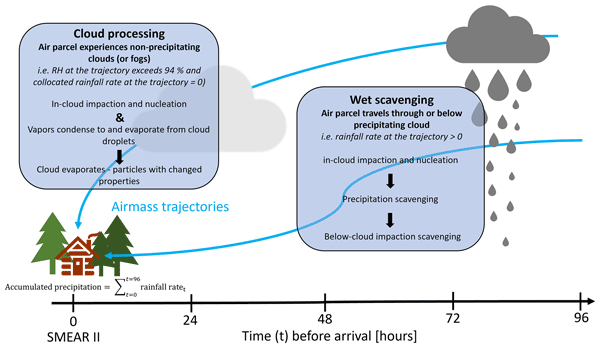
This research employs air mass history analysis and observations to study how clouds and precipitation affect atmospheric aerosols during transport to a boreal forest site. The mass concentrations of studied chemical species showed exponential decrease as a function of accumulated rain along the air mass route. Our analysis revealed in-cloud sulfate formation, while no major changes in organic mass were seen. Most of the in-cloud-formed sulfate could be assigned to particle sizes above 200 nm.
Olga Zografou, Maria Gini, Manousos I. Manousakas, Gang Chen, Athina C. Kalogridis, Evangelia Diapouli, Athina Pappa, and Konstantinos Eleftheriadis
Atmos. Meas. Tech., 15, 4675–4692, https://doi.org/10.5194/amt-15-4675-2022, https://doi.org/10.5194/amt-15-4675-2022, 2022
Short summary
Short summary
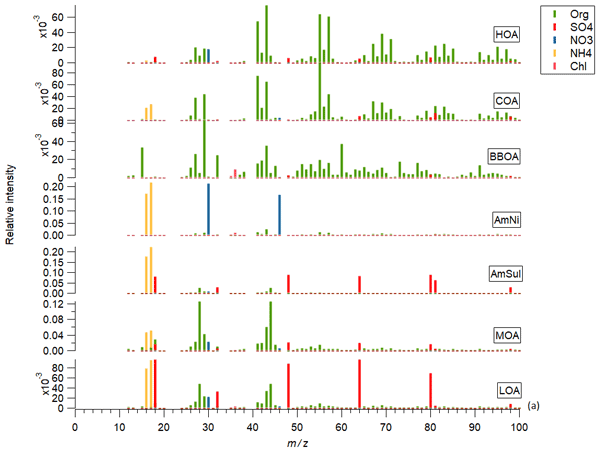
A yearlong ToF-ACSM dataset was used to characterize ambient aerosols over a suburban Athenian site, and innovative software for source apportionment was implemented in order to distinguish the sources of the total non-refractory species of PM1. A comparison between the methodology of combined organic and inorganic PMF analysis and the conventional organic PMF took place.
Yunqi Shao, Aristeidis Voliotis, Mao Du, Yu Wang, Kelly Pereira, Jacqueline Hamilton, M. Rami Alfarra, and Gordon McFiggans
Atmos. Chem. Phys., 22, 9799–9826, https://doi.org/10.5194/acp-22-9799-2022, https://doi.org/10.5194/acp-22-9799-2022, 2022
Short summary
Short summary
This study explored the chemical properties of secondary organic aerosol (SOA) that formed from photo-oxidation of single and mixed biogenic and anthropogenic precursors. We showed that SOA chemical properties in a mixed vapour system are mainly affected by the
higher-yield precursor's oxidation products and products from
cross-product formation. This study also identifies potential tracer compounds in a mixed vapour system that might be used in SOA source attribution in future ambient studies.
Mao Du, Aristeidis Voliotis, Yunqi Shao, Yu Wang, Thomas J. Bannan, Kelly L. Pereira, Jacqueline F. Hamilton, Carl J. Percival, M. Rami Alfarra, and Gordon McFiggans
Atmos. Meas. Tech., 15, 4385–4406, https://doi.org/10.5194/amt-15-4385-2022, https://doi.org/10.5194/amt-15-4385-2022, 2022
Short summary
Short summary
Atmospheric chemistry plays a key role in the understanding of aerosol formation and air pollution. We designed chamber experiments for the characterization of secondary organic aerosol (SOA) from a biogenic precursor with inorganic seed. Our results highlight the advantages of a combination of online FIGAERO-CIMS and offline LC-Orbitrap MS analytical techniques to characterize the chemical composition of SOA in chamber studies.
Yu Wang, Aristeidis Voliotis, Dawei Hu, Yunqi Shao, Mao Du, Ying Chen, Judith Kleinheins, Claudia Marcolli, M. Rami Alfarra, and Gordon McFiggans
Atmos. Chem. Phys., 22, 4149–4166, https://doi.org/10.5194/acp-22-4149-2022, https://doi.org/10.5194/acp-22-4149-2022, 2022
Short summary
Short summary
Aerosol water uptake plays a key role in atmospheric physicochemical processes. We designed chamber experiments on aerosol water uptake of secondary organic aerosol (SOA) from mixed biogenic and anthropogenic precursors with inorganic seed. Our results highlight this chemical composition influences the reconciliation of the sub- and super-saturated water uptake, providing laboratory evidence for understanding the chemical controls of water uptake of the multi-component aerosol.
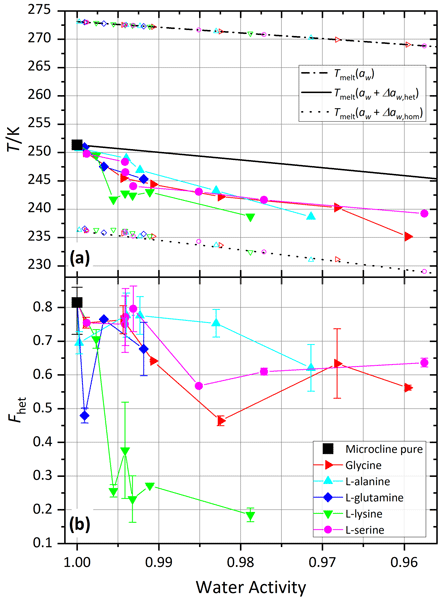
Kristian Klumpp, Claudia Marcolli, and Thomas Peter
Atmos. Chem. Phys., 22, 3655–3673, https://doi.org/10.5194/acp-22-3655-2022, https://doi.org/10.5194/acp-22-3655-2022, 2022
Short summary
Short summary
Surface interactions with solutes can significantly alter the ice nucleation activity of mineral dust. Past studies revealed the sensitivity of microcline, one of the most ice-active types of dust in the atmosphere, to inorganic solutes. This study focuses on the interaction of microcline with bio-organic substances and the resulting effects on its ice nucleation activity. We observe strongly hampered ice nucleation activity due to the presence of carboxylic and amino acids but not for polyols.
Yunqi Shao, Yu Wang, Mao Du, Aristeidis Voliotis, M. Rami Alfarra, Simon P. O'Meara, S. Fiona Turner, and Gordon McFiggans
Atmos. Meas. Tech., 15, 539–559, https://doi.org/10.5194/amt-15-539-2022, https://doi.org/10.5194/amt-15-539-2022, 2022
Short summary
Short summary
A comprehensive description and characterisation of the Manchester Aerosol Chamber (MAC) was conducted. The MAC has good temperature and relative humidity homogeneity, fast mixing times, and comparable losses of gases and particles with other chambers. The MAC's bespoke control system allows improved duty cycles and repeatable experiments. Moreover, the effect of contamination on performance was also investigated. It is highly recommended to regularly track the chamber's performance.
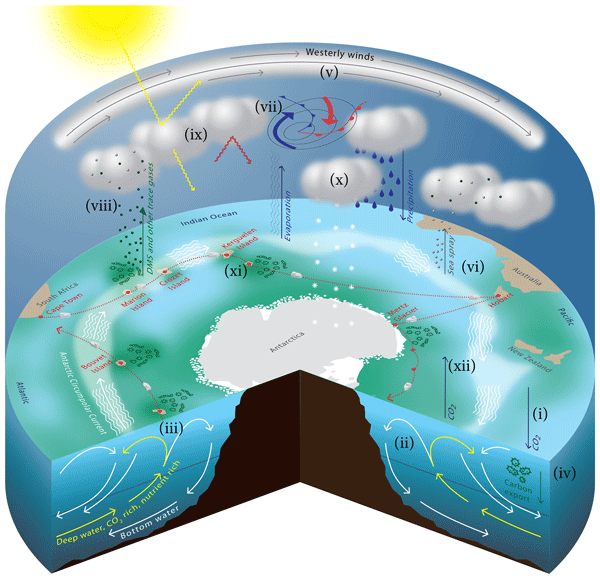
Sebastian Landwehr, Michele Volpi, F. Alexander Haumann, Charlotte M. Robinson, Iris Thurnherr, Valerio Ferracci, Andrea Baccarini, Jenny Thomas, Irina Gorodetskaya, Christian Tatzelt, Silvia Henning, Rob L. Modini, Heather J. Forrer, Yajuan Lin, Nicolas Cassar, Rafel Simó, Christel Hassler, Alireza Moallemi, Sarah E. Fawcett, Neil Harris, Ruth Airs, Marzieh H. Derkani, Alberto Alberello, Alessandro Toffoli, Gang Chen, Pablo Rodríguez-Ros, Marina Zamanillo, Pau Cortés-Greus, Lei Xue, Conor G. Bolas, Katherine C. Leonard, Fernando Perez-Cruz, David Walton, and Julia Schmale
Earth Syst. Dynam., 12, 1295–1369, https://doi.org/10.5194/esd-12-1295-2021, https://doi.org/10.5194/esd-12-1295-2021, 2021
Short summary
Short summary
The Antarctic Circumnavigation Expedition surveyed a large number of variables describing the dynamic state of ocean and atmosphere, freshwater cycle, atmospheric chemistry, ocean biogeochemistry, and microbiology in the Southern Ocean. To reduce the dimensionality of the dataset, we apply a sparse principal component analysis and identify temporal patterns from diurnal to seasonal cycles, as well as geographical gradients and
hotspotsof interaction. Code and data are open access.
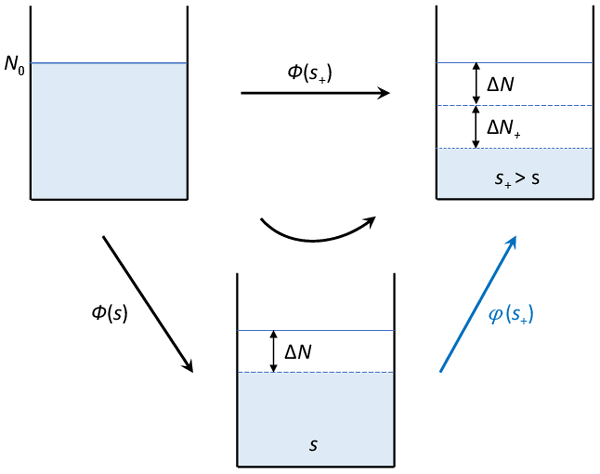
Bernd Kärcher and Claudia Marcolli
Atmos. Chem. Phys., 21, 15213–15220, https://doi.org/10.5194/acp-21-15213-2021, https://doi.org/10.5194/acp-21-15213-2021, 2021
Short summary
Short summary
Aerosol–cloud interactions play an important role in climate change. Simulations of the competition between homogeneous solution droplet freezing and heterogeneous ice nucleation can be compromised by the misapplication of ice-active particle fractions frequently derived from laboratory measurements or parametrizations. Our study frames the problem and establishes a solution that is easy to implement in cloud models.
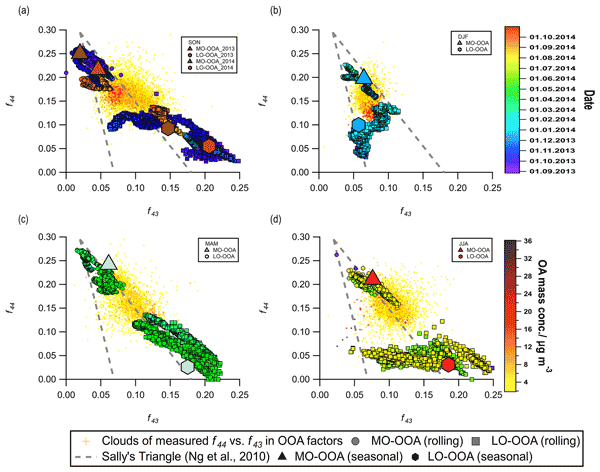
Gang Chen, Yulia Sosedova, Francesco Canonaco, Roman Fröhlich, Anna Tobler, Athanasia Vlachou, Kaspar R. Daellenbach, Carlo Bozzetti, Christoph Hueglin, Peter Graf, Urs Baltensperger, Jay G. Slowik, Imad El Haddad, and André S. H. Prévôt
Atmos. Chem. Phys., 21, 15081–15101, https://doi.org/10.5194/acp-21-15081-2021, https://doi.org/10.5194/acp-21-15081-2021, 2021
Short summary
Short summary
A novel, advanced source apportionment technique was applied to a dataset measured in Magadino. Rolling positive matrix factorisation (PMF) allows for retrieving more realistic, time-dependent, and detailed information on organic aerosol sources. The strength of the rolling PMF mechanism is highlighted by comparing it with results derived from conventional seasonal PMF. Overall, this comprehensive interpretation of aerosol chemical speciation monitor data could be a role model for similar work.
Anna K. Tobler, Alicja Skiba, Francesco Canonaco, Griša Močnik, Pragati Rai, Gang Chen, Jakub Bartyzel, Miroslaw Zimnoch, Katarzyna Styszko, Jaroslaw Nęcki, Markus Furger, Kazimierz Różański, Urs Baltensperger, Jay G. Slowik, and Andre S. H. Prevot
Atmos. Chem. Phys., 21, 14893–14906, https://doi.org/10.5194/acp-21-14893-2021, https://doi.org/10.5194/acp-21-14893-2021, 2021
Short summary
Short summary
Kraków is among the cities with the highest particulate matter levels within Europe. We conducted long-term and highly time-resolved measurements of the chemical composition of submicron particlulate matter (PM1). Combined with advanced source apportionment techniques, which allow for time-dependent factor profiles, our results elucidate that traffic and residential heating (biomass burning and coal combustion) as well as oxygenated organic aerosol are the key PM sources in Kraków.
Cited articles
Aalto, P., Hämeri, K., Becker, E. D. O., Weber, R., Salm, J., Mäkelä, J. M., Hoell, C., O'Dowd, C. D., Karlsson, H., Hansson, H.-C., Väkevä, M., Koponen, I. K., Buzorius, G., and Kulmala, M.: Physical characterization of aerosol particles during nucleation events, Tellus B, 53, 344–358, https://doi.org/10.1034/j.1600-0889.2001.530403.x, 2001.
Barley, M., Topping, D. O., Jenkin, M. E., and McFiggans, G.: Sensitivities of the absorptive partitioning model of secondary organic aerosol formation to the inclusion of water, Atmospheric Chemistry and Physics, 9, 2919–2932, https://doi.org/10.5194/acp-9-2919-2009, 2009.
Brabec, M., Wienhold, F. G., Luo, B. P., Vömel, H., Immler, F., Steiner, P., Hausammann, E., Weers, U., and Peter, T.: Particle backscatter and relative humidity measured across cirrus clouds and comparison with microphysical cirrus modelling, Atmospheric Chemistry and Physics, 12, 9135–9148, https://doi.org/10.5194/acp-12-9135-2012, 2012.
Cappa, C. D. and Jimenez, J. L.: Quantitative estimates of the volatility of ambient organic aerosol, Atmospheric Chemistry and Physics, 10, 5409–5424, https://doi.org/10.5194/acp-10-5409-2010, 2010.
Carslaw, K. S., Clegg, S. L., and Brimblecombe, P.: A Thermodynamic Model of the System HCl-HNO3-H2SO4-H2O, Including Solubilities of HBr, from <200 to 328 K, The Journal of Physical Chemistry, 99, 11557–11574, https://doi.org/10.1021/j100029a039, 1995.
Chen, G., Canonaco, F., Tobler, A., Aas, W., Alastuey, A., Allan, J., Atabakhsh, S., Aurela, M., Baltensperger, U., Bougiatioti, A., De Brito, J. F., Ceburnis, D., Chazeau, B., Chebaicheb, H., Daellenbach, K. R., Ehn, M., El Haddad, I., Eleftheriadis, K., Favez, O., Flentje, H., Font, A., Fossum, K., Freney, E., Gini, M., Green, D. C., Heikkinen, L., Herrmann, H., Kalogridis, A.-C., Keernik, H., Lhotka, R., Lin, C., Lunder, C., Maasikmets, M., Manousakas, M. I., Marchand, N., Marin, C., Marmureanu, L., Mihalopoulos, N., Močnik, G., Nęcki, J., O'Dowd, C., Ovadnevaite, J., Peter, T., Petit, J.-E., Pikridas, M., Matthew Platt, S., Pokorná, P., Poulain, L., Priestman, M., Riffault, V., Rinaldi, M., Różański, K., Schwarz, J., Sciare, J., Simon, L., Skiba, A., Slowik, J. G., Sosedova, Y., Stavroulas, I., Styszko, K., Teinemaa, E., Timonen, H., Tremper, A., Vasilescu, J., Via, M., Vodička, P., Wiedensohler, A., Zografou, O., Cruz Minguillón, M., and Prévôt, A. S. H.: European aerosol phenomenology – 8: Harmonised source apportionment of organic aerosol using 22 Year-long ACSM/AMS datasets, Environment International, 166, 107325, https://doi.org/10.1016/j.envint.2022.107325, 2022.
Ciarelli, G., El Haddad, I., Bruns, E., Aksoyoglu, S., Möhler, O., Baltensperger, U., and Prévôt, A. S. H.: Constraining a hybrid volatility basis-set model for aging of wood-burning emissions using smog chamber experiments: a box-model study based on the VBS scheme of the CAMx model (v5.40), Geoscientific Model Development, 10, 2303–2320, https://doi.org/10.5194/gmd-10-2303-2017, 2017.
Clegg, S. L., Brimblecombe, P., and Wexler, A. S.: Thermodynamic Model of the System H+-NH4+-SO42–NO3–H2O at Tropospheric Temperatures, The Journal of Physical Chemistry A, 102, 2137–2154, https://doi.org/10.1021/jp973042r, 1998.
Donahue, N. M., Robinson, A. L., Stanier, C. O., and Pandis, S. N.: Coupled Partitioning, Dilution, and Chemical Aging of Semivolatile Organics, Environmental Science & Technology, 40, 2635–2643, https://doi.org/10.1021/es052297c, 2006.
Drinovec, L., Močnik, G., Zotter, P., Prévôt, A. S. H., Ruckstuhl, C., Coz, E., Rupakheti, M., Sciare, J., Müller, T., Wiedensohler, A., and Hansen, A. D. A.: The ”dual-spot” Aethalometer: an improved measurement of aerosol black carbon with real-time loading compensation, Atmospheric Measurement Techniques, 8, 1965–1979, https://doi.org/10.5194/amt-8-1965-2015, 2015.
Duplissy, J., Gysel, M., Sjogren, S., Meyer, N., Good, N., Kammermann, L., Michaud, V., Weigel, R., Martins dos Santos, S., Gruening, C., Villani, P., Laj, P., Sellegri, K., Metzger, A., McFiggans, G. B., Wehrle, G., Richter, R., Dommen, J., Ristovski, Z., Baltensperger, U., and Weingartner, E.: Intercomparison study of six HTDMAs: results and recommendations, Atmospheric Measurement Techniques, 2, 363–378, https://doi.org/10.5194/amt-2-363-2009, 2009.
Forster, P., Storelvmo, T., Armour, K., Collins, W., Dufresne, J.-L., Frame, D., Lunt, D. J., Mauritsen, T., Palmer, M. D., Watanabe, M., Wild, M., and Zhang, H.: The Earth's Energy Budget, Climate Feedbacks, and Climate Sensitivity, in: Climate Change 2021: The Physical Science Basis. Contribution of Working Group I to the Sixth Assessment Report of the Intergovernmental Panel on Climate Change in, edited by: Masson-Delmotte, V., Zhai, P., Pirani, A., Connors, S. L., Péan, C., Berger, S., Caud, N., Chen, Y., Goldfarb, L., Gomis, M. I., Huang, M., Leitzell, K., Lonnoy, E., Matthews, J. B. R., Maycock, T. K., Waterfield, T., Yelekçi, O., Yu, R., and Zhou, B.: Cambridge University Press, Cambridge, United Kingdom and New York, NY, USA, 923–1054, https://doi.org/10.1017/9781009157896.009, 2021.
Freud, E., Rosenfeld, D., and Kulkarni, J. R.: Resolving both entrainment-mixing and number of activated CCN in deep convective clouds, Atmospheric Chemistry and Physics, 11, 12887–12900, https://doi.org/10.5194/acp-11-12887-2011, 2011.
Gkatzelis, G. I., Papanastasiou, D. K., Karydis, V. A., Hohaus, T., Liu, Y., Schmitt, S. H., Schlag, P., Fuchs, H., Novelli, A., Chen, Q., Cheng, X., Broch, S., Dong, H., Holland, F., Li, X., Liu, Y., Ma, X., Reimer, D., Rohrer, F., Shao, M., Tan, Z., Taraborrelli, D., Tillmann, R., Wang, H., Wang, Y., Wu, Y., Wu, Z., Zeng, L., Zheng, J., Hu, M., Lu, K., Hofzumahaus, A., Zhang, Y., Wahner, A., and Kiendler-Scharr, A.: Uptake of Water-soluble Gas-phase Oxidation Products Drives Organic Particulate Pollution in Beijing, Geophysical Research Letters, 48, e2020GL091351, https://doi.org/10.1029/2020GL091351, 2021.
Gunthe, S. S., Liu, P., Panda, U., Raj, S. S., Sharma, A., Darbyshire, E., Reyes-Villegas, E., Allan, J., Chen, Y., Wang, X., Song, S., Pöhlker, M. L., Shi, L., Wang, Y., Kommula, S. M., Liu, T., Ravikrishna, R., McFiggans, G., Mickley, L. J., Martin, S. T., Pöschl, U., Andreae, M. O., and Coe, H.: Enhanced aerosol particle growth sustained by high continental chlorine emission in India, Nature Geoscience, 14, 77–84, https://doi.org/10.1038/s41561-020-00677-x, 2021.
Hari, P., Nikinmaa, E., Pohja, T., Siivola, E., Bäck, J., Vesala, T., and Kulmala, M.: Station for Measuring Ecosystem-Atmosphere Relations: SMEAR, in: Physical and Physiological Forest Ecology, edited by: Hari, P., Heliövaara, K., and Kulmala, L., Springer Netherlands, Dordrecht, 471–487, https://doi.org/10.1007/978-94-007-5603-8_9, 2013.
Heikkinen, L., Äijälä, M., Riva, M., Luoma, K., Dällenbach, K., Aalto, J., Aalto, P., Aliaga, D., Aurela, M., Keskinen, H., Makkonen, U., Rantala, P., Kulmala, M., Petäjä, T., Worsnop, D., and Ehn, M.: Long-term sub-micrometer aerosol chemical composition in the boreal forest: inter- and intra-annual variability, Atmospheric Chemistry and Physics, 20, 3151–3180, https://doi.org/10.5194/acp-20-3151-2020, 2020.
Heikkinen, L., Partridge, D. G., Blichner, S., Huang, W., Ranjan, R., Bowen, P., Tovazzi, E., Petäjä, T., Mohr, C., and Riipinen, I.: Cloud response to co-condensation of water and organic vapors over the boreal forest, Atmospheric Chemistry and Physics, 24, 5117–5147, https://doi.org/10.5194/acp-24-5117-2024, 2024.
Hu, D., Topping, D., and McFiggans, G.: Measured particle water uptake enhanced by co-condensing vapours, Atmospheric Chemistry and Physics, 18, 14925–14937, https://doi.org/10.5194/acp-18-14925-2018, 2018.
Kienast-Sjögren, E., Miltenberger, A. K., Luo, B. P., and Peter, T.: Sensitivities of Lagrangian modelling of mid-latitude cirrus clouds to trajectory data quality, Atmospheric Chemistry and Physics, 15, 7429–7447, https://doi.org/10.5194/acp-15-7429-2015, 2015.
Köhler, H.: The Nucleus in and the Growth of Hygroscopic Droplets., Transactions of the Faraday Society, 32, 1152–1161, 1936.
Koo, B., Knipping, E., and Yarwood, G.: 1.5-Dimensional volatility basis set approach for modeling organic aerosol in CAMx and CMAQ, Atmospheric Environment, 95, 158–164, https://doi.org/10.1016/j.atmosenv.2014.06.031, 2014.
Kulmala, M., Laaksonen, A., Korhonen, P., Vesala, T., Ahonen, T., and Barrett, J. C.: The effect of atmospheric nitric acid vapor on cloud condensation nucleus activation, Journal of Geophysical Research: Atmospheres, 98, 22949–22958, https://doi.org/10.1029/93JD02070, 1993.
Laaksonen, A., Korhonen, P., Kulmala, M., and Charlson, R. J.: Modification of the Köhler equation to include soluble trace gases and slightly soluble substances, J. Atmos. Sci. 55, 853–862, https://doi.org/10.1175/1520-0469(1998)055<0853:MOTKHE>2.0.CO;2, 1998.
Lane, T. E., Donahue, N. M., and Pandis, S. N.: Simulating secondary organic aerosol formation using the volatility basis-set approach in a chemical transport model, Atmospheric Environment, 42, 7439–7451, https://doi.org/10.1016/j.atmosenv.2008.06.026, 2008.
L'Ecuyer, T. S., Hang, Y., Matus, A. V., and Wang, Z.: American Meteorological Society Reassessing the Effect of Cloud Type on Earth’s Energy Balance in the Age of Active Spaceborne Observations. Part I, J. Climate, 32, 6197–6217, https://doi.org/10.1175/JCLI-D-18-0753.1, 2019.
Lopez-Hilfiker, F. D., Mohr, C., Ehn, M., Rubach, F., Kleist, E., Wildt, J., Mentel, Th. F., Lutz, A., Hallquist, M., Worsnop, D., and Thornton, J. A.: A novel method for online analysis of gas and particle composition: description and evaluation of a Filter Inlet for Gases and AEROsols (FIGAERO), Atmospheric Measurement Techniques, 7, 983–1001, https://doi.org/10.5194/amt-7-983-2014, 2014.
Luo, B., Carslaw, K. S., Peter, T., and Clegg, S. L.: vapour pressures of H2SO4/HNO3/HCl/HBr/H2O solutions to low stratospheric temperatures, Geophysical Research Letters, 22, 247–250, https://doi.org/10.1029/94GL02988, 1995.
Luo, B., Schaub, A., Glas, I., Klein, L. K., David, S. C., Bluvshtein, N., Violaki, K., Motos, G., Pohl, M. O., Hugentobler, W., Nenes, A., Krieger, U. K., Stertz, S., Peter, T., and Kohn, T.: Expiratory Aerosol pH: The Overlooked Driver of Airborne Virus Inactivation, Environmental Science & Technology, 57, 486–497, https://doi.org/10.1021/acs.est.2c05777, 2023.
Luo, B. P., Voigt, C., Fueglistaler, S., and Peter, T.: Extreme NAT supersaturations in mountain wave ice PSCs: A clue to NAT formation, Journal of Geophysical Research: Atmospheres, 108, https://doi.org/10.1029/2002JD003104, 2003a.
Luo, B. P., Peter, T., Fueglistaler, S., Wernli, H., Wirth, M., Kiemle, C., Flentje, H., Yushkov, V. A., Khattatov, V., Rudakov, V., Thomas, A., Borrmann, S., Toci, G., Mazzinghi, P., Beuermann, J., Schiller, C., Cairo, F., Di Donfrancesco, G., Adriani, A., Volk, C. M., Strom, J., Noone, K., Mitev, V., MacKenzie, R. A., Carslaw, K. S., Trautmann, T., Santacesaria, V., and Stefanutti, L.: Dehydration potential of ultrathin clouds at the tropical tropopause, Geophysical Research Letters, 30, https://doi.org/10.1029/2002GL016737, 2003b.
Luo, B. P., Peter, Th., Wernli, H., Fueglistaler, S., Wirth, M., Kiemle, C., Flentje, H., Yushkov, V. A., Khattatov, V., Rudakov, V., Thomas, A., Borrmann, S., Toci, G., Mazzinghi, P., Beuermann, J., Schiller, C., Cairo, F., Di Don-Francesco, G., Adriani, A., Volk, C. M., Strom, J., Noone, K., Mitev, V., MacKenzie, R. A., Carslaw, K. S., Trautmann, T., Santacesaria, V., and Stefanutti, L.: Ultrathin Tropical Tropopause Clouds (UTTCs): II. Stabilization mechanisms, Atmospheric Chemistry and Physics, 3, 1093–1100, https://doi.org/10.5194/acp-3-1093-2003, 2003c.
Makkonen, R., Romakkaniemi, S., Kokkola, H., Stier, P., Räisänen, P., Rast, S., Feichter, J., Kulmala, M., and Laaksonen, A.: Brightening of the global cloud field by nitric acid and the associated radiative forcing, Atmospheric Chemistry and Physics, 12, 7625–7633, https://doi.org/10.5194/acp-12-7625-2012, 2012.
Makkonen, U.: Measurement of Inorganic Ions and Their Precursors Gases in Ambient Air In Finland, Department of Chemistry, University of Helsinki, Helsinki, Finland, 132 pp., http://hdl.handle.net/10138/135611 (last access: March 2023), 2014.
Morales, R., Nenes, A., Jonsson, H., Flagan, R. C., and Seinfeld, J. H.: Evaluation of an entraining droplet activation parameterization using in situ cloud data, J. Geophys. Res., 116, D15205, https://doi.org/10.1029/2010JD015324, 2011.
Murphy, D. M. and Koop, T.: Review of the vapour pressures of ice and supercooled water for atmospheric applications, Quarterly Journal of the Royal Meteorological Society, 131, 1539–1565, https://doi.org/10.1256/qj.04.94, 2005.
Myhre, G., Shindell, D., Bréon, F.-M., Collins, W., Fuglestvedt, J., Huang, J., D. Koch, J.-F. Lamarque, D. Lee, B. Mendoza, T. Nakajima, A. Robock, G. Stephens, T. Takemura, and Zhang, H.: in: Anthropogenic and Natural Radiative Forcing. Climate Change 2013 – The Physical Science Basis: Working Group I Contribution to the Fifth Assessment Report of the Intergovernmental Panel on Climate Change, edited by: Stocker, T. F., Qin, D., Plattner, G.-K., Tignor, M., Allen, S. K., Boschung, J., Nauels, A., Xia, Y., Bex, V., and Midgley, P. M., Cambridge University Press, Cambridge, 659–740, https://doi.org/10.1017/CBO9781107415324.018, 2013.
Ng, N. L., Herndon, S. C., Trimborn, A., Canagaratna, M. R., Croteau, P. L., Onasch, T. B., Sueper, D., Worsnop, D. R., Zhang, Q., Sun, Y. L., and Jayne, J. T.: An Aerosol Chemical Speciation Monitor (ACSM) for Routine Monitoring of the Composition and Mass Concentrations of Ambient Aerosol, Aerosol Science and Technology, 45, 780–794, https://doi.org/10.1080/02786826.2011.560211, 2011.
Oh, D., Noh, Y., and Hoffmann, F.: Paths from aerosol particles to activation and cloud droplets in shallow cumulus clouds: The roles of entrainment and supersaturation fluctuations, J. Geophys. Res. Atmos., 128, e2022JD038450, https://doi.org/10.1029/2022JD038450, 2023.
Pankow, J. F.: An absorption model of gas/particle partitioning of organic compounds in the atmosphere, Atmospheric Environment, 28, 185–188, https://doi.org/10.1016/1352-2310(94)90093-0, 1994.
Peng, Y., Wang, H., Gao, Y., Jing, S., Zhu, S., Huang, D., Hao, P., Lou, S., Cheng, T., Huang, C., and Zhang, X.: Real-time measurement of phase partitioning of organic compounds using a proton-transfer-reaction time-of-flight mass spectrometer coupled to a CHARON inlet, Atmospheric Measurement Techniques, 16, 15–28, https://doi.org/10.5194/amt-16-15-2023, 2023.
Petters, M. D. and Kreidenweis, S. M.: A single parameter representation of hygroscopic growth and cloud condensation nucleus activity, Atmospheric Chemistry and Physics, 7, 1961–1971, https://doi.org/10.5194/acp-7-1961-2007, 2007.
Pruppacher, H. R. and Klett, J. D.: Microphysics of clouds and precipitation, Kluwer Academic Publishers New York, ISBN 978-0-7923-4211-3, 1997.
Pruppacher, H. R. and Klett, J. D.: Microstructure of Atmospheric Clouds and Precipitation, in: Microphysics of Clouds and Precipitation, edited by: Pruppacher, H. R. and Klett, J. D., Springer Netherlands, Dordrecht, 10–73, 10.1007/978-0-306-48100-0_2, 2010.
Roberts, G. C. and Nenes, A.: A Continuous-Flow Streamwise Thermal-Gradient CCN Chamber for Atmospheric Measurements, Aerosol Science and Technology, 39, 206–221, https://doi.org/10.1080/027868290913988, 2005.
Romakkaniemi, S., Kokkola, H., and Laaksonen, A.: Parameterization of the nitric acid effect on CCN activation, Atmospheric Chemistry and Physics, 5, 879–885, https://doi.org/10.5194/acp-5-879-2005, 2005.
Rudolf, R., Majerowicz, A., Kulmala, M., Vesala, T., Viisanen, Y., and Wagner, P. E.: Kinetics of particle growthin supersaturated binary vapor mixtures, Journal of Aerosol Science, 22, S51–S54, https://doi.org/10.1016/S0021-8502(05)80032-1, 1991.
Rudolf, R., Vrtala, A., Kulmala, M., Vesala, T., Viisanen, Y., and Wagner, P. E.: Experimental study of sticking probabilities for condensation of nitric acid – water vapor mixtures, Journal of Aerosol Science, 32, 913–932, https://doi.org/10.1016/S0021-8502(00)00117-8, 2001.
Setyan, A., Zhang, Q., Merkel, M., Knighton, W. B., Sun, Y., Song, C., Shilling, J. E., Onasch, T. B., Herndon, S. C., Worsnop, D. R., Fast, J. D., Zaveri, R. A., Berg, L. K., Wiedensohler, A., Flowers, B. A., Dubey, M. K., and Subramanian, R.: Characterization of submicron particles influenced by mixed biogenic and anthropogenic emissions using high-resolution aerosol mass spectrometry: results from CARES, Atmospheric Chemistry and Physics, 12, 8131–8156, https://doi.org/10.5194/acp-12-8131-2012, 2012.
Stirnweis, L., Marcolli, C., Dommen, J., Barmet, P., Frege, C., Platt, S. M., Bruns, E. A., Krapf, M., Slowik, J. G., Wolf, R., Prévôt, A. S. H., Baltensperger, U., and El-Haddad, I.: Assessing the influence of NOx concentrations and relative humidity on secondary organic aerosol yields from α-pinene photo-oxidation through smog chamber experiments and modelling calculations, Atmospheric Chemistry and Physics, 17, 5035–5061, https://doi.org/10.5194/acp-17-5035-2017, 2017.
Stolzenburg, D., Wang, M., Schervish, M., and Donahue, N. M.: Tutorial: Dynamic organic growth modeling with a volatility basis set, J. Aerosol Sci., 166, 106063, https://doi.org/10.1016/j.jaerosci.2022.106063, 2022.
Sun, Y. L., Zhang, Q., Schwab, J. J., Yang, T., Ng, N. L., and Demerjian, K. L.: Factor analysis of combined organic and inorganic aerosol mass spectra from high resolution aerosol mass spectrometer measurements, Atmospheric Chemistry and Physics, 12, 8537–8551, https://doi.org/10.5194/acp-12-8537-2012, 2012.
Topping, D., Connolly, P., and McFiggans, G.: Cloud droplet number enhanced by co-condensation of organic vapours, Nature Geoscience, 6, 443, https://doi.org/10.1038/ngeo1809, 2013.
Topping, D. O. and McFiggans, G.: Tight coupling of particle size, number and composition in atmospheric cloud droplet activation, Atmospheric Chemistry and Physics, 12, 3253–3260, https://doi.org/10.5194/acp-12-3253-2012, 2012.
Tsimpidi, A. P., Karydis, V. A., Zavala, M., Lei, W., Molina, L., Ulbrich, I. M., Jimenez, J. L., and Pandis, S. N.: Evaluation of the volatility basis-set approach for the simulation of organic aerosol formation in the Mexico City metropolitan area, Atmospheric Chemistry and Physics, 10, 525–546, https://doi.org/10.5194/acp-10-525-2010, 2010.
Voliotis, A., Du, M., Wang, Y., Shao, Y., Alfarra, M. R., Bannan, T. J., Hu, D., Pereira, K. L., Hamilton, J. F., Hallquist, M., Mentel, T. F., and McFiggans, G.: Chamber investigation of the formation and transformation of secondary organic aerosol in mixtures of biogenic and anthropogenic volatile organic compounds, Atmospheric Chemistry and Physics, 22, 14147–14175, https://doi.org/10.5194/acp-22-14147-2022, 2022.
Wang, Y. and Chen, Y.: Significant Climate Impact of Highly Hygroscopic Atmospheric Aerosols in Delhi, India, Geophysical Research Letters, 46, 5535–5545, https://doi.org/10.1029/2019gl082339, 2019.
Wang, Y., Chen, Y., Wu, Z., Shang, D., Bian, Y., Du, Z., Schmitt, S. H., Su, R., Gkatzelis, G. I., Schlag, P., Hohaus, T., Voliotis, A., Lu, K., Zeng, L., Zhao, C., Alfarra, M. R., McFiggans, G., Wiedensohler, A., Kiendler-Scharr, A., Zhang, Y., and Hu, M.: Mutual promotion between aerosol particle liquid water and particulate nitrate enhancement leads to severe nitrate-dominated particulate matter pollution and low visibility, Atmospheric Chemistry and Physics, 20, 2161–2175, https://doi.org/10.5194/acp-20-2161-2020, 2020.
Xu, J., Zhang, Q., Shi, J., Ge, X., Xie, C., Wang, J., Kang, S., Zhang, R., and Wang, Y.: Chemical characteristics of submicron particles at the central Tibetan Plateau: insights from aerosol mass spectrometry, Atmospheric Chemistry and Physics, 18, 427–443, https://doi.org/10.5194/acp-18-427-2018, 2018.
Yang, F., Kollias, P., Shaw, R. A., and Vogelmann, A. M.: Cloud droplet size distribution broadening during diffusional growth: ripening amplified by deactivation and reactivation, Atmospheric Chemistry and Physics, 18, 7313–7328, https://doi.org/10.5194/acp-18-7313-2018, 2018.
Zhu, Q., Cao, L.-M., Tang, M.-X., Huang, X.-F., Saikawa, E., and He, L.-Y.: Characterization of Organic Aerosol at a Rural Site in the North China Plain Region: Sources, Volatility and Organonitrates, Advances in Atmospheric Sciences, 38, 1115–1127, https://doi.org/10.1007/s00376-020-0127-2, 2021.
Zuend, A. and Seinfeld, J. H.: Modeling the gas-particle partitioning of secondary organic aerosol: the importance of liquid-liquid phase separation, Atmospheric Chemistry and Physics, 12, 3857–3882, https://doi.org/10.5194/acp-12-3857-2012, 2012.
Zuend, A. and Seinfeld, J. H.: A practical method for the calculation of liquid–liquid equilibria in multicomponent organic–water–electrolyte systems using physicochemical constraints, Fluid Phase Equilibria, 337, 201–213, https://doi.org/10.1016/j.fluid.2012.09.034, 2013.
Zuend, A., Marcolli, C., Luo, B. P., and Peter, T.: A thermodynamic model of mixed organic-inorganic aerosols to predict activity coefficients, Atmospheric Chemistry and Physics, 8, 4559–4593, https://doi.org/10.5194/acp-8-4559-2008, 2008.
Zuend, A., Marcolli, C., Booth, A. M., Lienhard, D. M., Soonsin, V., Krieger, U. K., Topping, D. O., McFiggans, G., Peter, T., and Seinfeld, J. H.: New and extended parameterization of the thermodynamic model AIOMFAC: calculation of activity coefficients for organic-inorganic mixtures containing carboxyl, hydroxyl, carbonyl, ether, ester, alkenyl, alkyl, and aromatic functional groups, Atmospheric Chemistry and Physics, 11, 9155–9206, https://doi.org/10.5194/acp-11-9155-2011, 2011.
Short summary
Ubiquitous semi-volatile compounds can co-condense on aerosol particles with water vapour when relative humidity increases. Simulations of cloud formation at a boreal forest site with a cloud parcel model that accounts for non-ideal organic–inorganic interactions yield an enhancement of cloud droplet number concentration from co-condensing NH3, HNO3, and organics up to 44%, with strong sensitivities to volatility distributions, aerosol size distribution, and updraft velocity.
Ubiquitous semi-volatile compounds can co-condense on aerosol particles with water vapour when...


Altmetrics
Final-revised paper
Preprint