
Articles | Volume 26, issue 22
https://doi.org/10.5194/acp-26-16545-2026
© Author(s) 2026. This work is distributed under
the Creative Commons Attribution 4.0 License.
the Creative Commons Attribution 4.0 License.
https://doi.org/10.5194/acp-26-16545-2026
© Author(s) 2026. This work is distributed under
the Creative Commons Attribution 4.0 License.
the Creative Commons Attribution 4.0 License.
Research article
| 
20 Nov 2026
Research article |
| 20 Nov 2026
| 20 Nov 2026
Saharan dust transport and boundary layer entrainment over western Europe: multi-instrument observations and convection-permitting model evaluation

Institute of Meteorology and Climate Research, Karlsruhe Institute of Technology, Eggenstein-Leopoldshafen, Karlsruhe, Germany
Gholam Ali Hoshyaripour
Institute of Meteorology and Climate Research, Karlsruhe Institute of Technology, Eggenstein-Leopoldshafen, Karlsruhe, Germany
Heike Vogel
Institute of Meteorology and Climate Research, Karlsruhe Institute of Technology, Eggenstein-Leopoldshafen, Karlsruhe, Germany
retired
Frank Wagner
Deutscher Wetterdienst (DWD), Frankfurter Str. 135, 63067 Offenbach am Main, Germany
Thomas Leisner
Institute of Meteorology and Climate Research, Karlsruhe Institute of Technology, Eggenstein-Leopoldshafen, Karlsruhe, Germany
Jochen Förstner
Deutscher Wetterdienst (DWD), Frankfurter Str. 135, 63067 Offenbach am Main, Germany
Prabhakar Shrestha
Deutscher Wetterdienst (DWD), Frankfurter Str. 135, 63067 Offenbach am Main, Germany
Institute of Meteorology and Climate Research, Karlsruhe Institute of Technology, Eggenstein-Leopoldshafen, Karlsruhe, Germany
Related authors
Yanxia Li, Hengheng Zhang, Xuefeng Shi, Yaowei Li, Sophie Abou-Rizk, Jessica B. Smith, Zhaojin An, Adrian Wenzel, Junwei Song, Thomas Leisner, Frank Keutsch, Jia Chen, and Harald Saathoff
EGUsphere, https://doi.org/10.5194/egusphere-2026-2195, https://doi.org/10.5194/egusphere-2026-2195, 2026
Short summary
Short summary
Urban ultrafine particles (<100 nm) sources and growth mechanisms remain poorly constrained. Measurements in a Munich street canyon reveal that UFP number concentrations peak at night due to traffic and cooking emissions trapped under a shallow boundary layer. Particle growth is instead driven by condensation of organic vapours with strong seasonal shifts: biogenic and barbeque charcoal biomass-burning compounds dominate in summer, while combustion-related organics control winter growth.
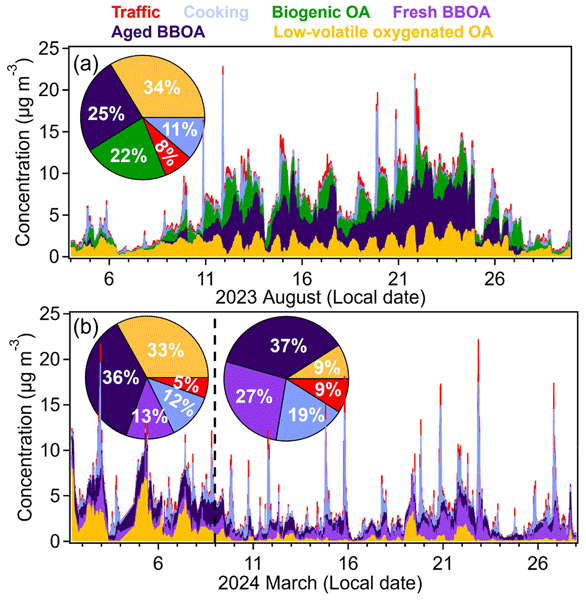
Yanxia Li, Hengheng Zhang, Xuefeng Shi, Yaowei Li, Sophie Abou-Rizk, Jessica B. Smith, Zhaojin An, Adrian Wenzel, Junwei Song, Thomas Leisner, Frank Keutsch, Jia Chen, and Harald Saathoff
Atmos. Chem. Phys., 26, 5813–5837, https://doi.org/10.5194/acp-26-5813-2026, https://doi.org/10.5194/acp-26-5813-2026, 2026
Short summary
Short summary
We analyzed Munich air samples across seasons to identify pollution sources. Traffic contributes less to particles than expected, while biomass burning dominates year-round. Summer barbecuing and winter heating release significant pollution. Monoterpene emissions from plants produce particles at night. Effective air quality improvement requires year-round strategies targeting biomass burning, not just vehicles. Understanding each city's pollution patterns is essential for public health.
Feng Jiang, Harald Saathoff, Uzoamaka Ezenobi, Junwei Song, Hengheng Zhang, Linyu Gao, and Thomas Leisner
Atmos. Chem. Phys., 25, 1917–1930, https://doi.org/10.5194/acp-25-1917-2025, https://doi.org/10.5194/acp-25-1917-2025, 2025
Short summary
Short summary
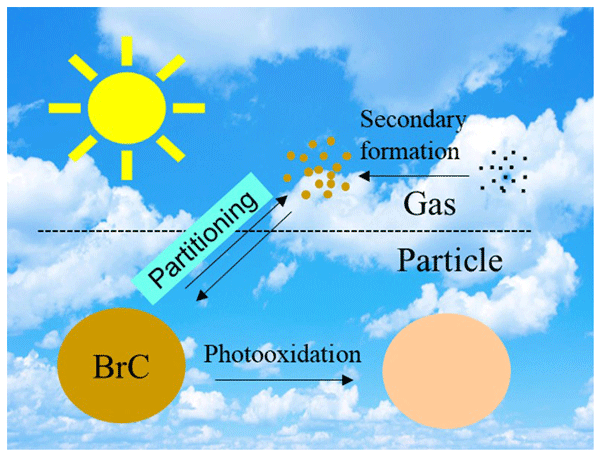
The chemical composition of brown carbon in the particle and gas phase was determined by mass spectrometry. BrC in the gas phase was mainly controlled by secondary formation and particle-to-gas partitioning. BrC in the particle phase was mainly from secondary formation. This work helps to get a better understanding of diurnal variations and the sources of brown carbon aerosol at a rural location in central Europe.
Hengheng Zhang, Wei Huang, Xiaoli Shen, Ramakrishna Ramisetty, Junwei Song, Olga Kiseleva, Christopher Claus Holst, Basit Khan, Thomas Leisner, and Harald Saathoff
Atmos. Chem. Phys., 24, 10617–10637, https://doi.org/10.5194/acp-24-10617-2024, https://doi.org/10.5194/acp-24-10617-2024, 2024
Short summary
Short summary
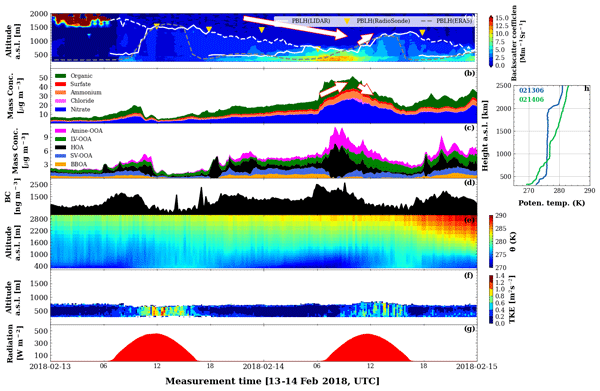
Our study unravels how stagnant winter conditions elevate aerosol levels in Stuttgart. Cloud cover at night plays a pivotal role, impacting morning air quality. Validating a key model, our findings aid accurate air quality predictions, crucial for effective pollution mitigation in urban areas.
Junwei Song, Harald Saathoff, Feng Jiang, Linyu Gao, Hengheng Zhang, and Thomas Leisner
Atmos. Chem. Phys., 24, 6699–6717, https://doi.org/10.5194/acp-24-6699-2024, https://doi.org/10.5194/acp-24-6699-2024, 2024
Short summary
Short summary
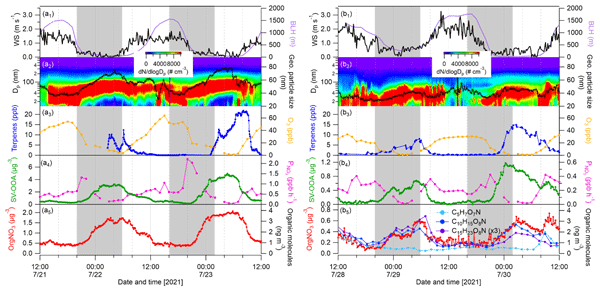
This study presents concurrent online measurements of organic gas and particles (VOCs and OA) at a forested site in summer. Both VOCs and OA were largely contributed by oxygenated organic compounds. Semi-volatile oxygenated OA and organic nitrate formed from monoterpenes and sesquiterpenes contributed significantly to nighttime particle growth. The results help us to understand the causes of nighttime particle growth regularly observed in summer in central European rural forested environments.
Hengheng Zhang, Christian Rolf, Ralf Tillmann, Christian Wesolek, Frank Gunther Wienhold, Thomas Leisner, and Harald Saathoff
Aerosol Research, 2, 135–151, https://doi.org/10.5194/ar-2-135-2024, https://doi.org/10.5194/ar-2-135-2024, 2024
Short summary
Short summary
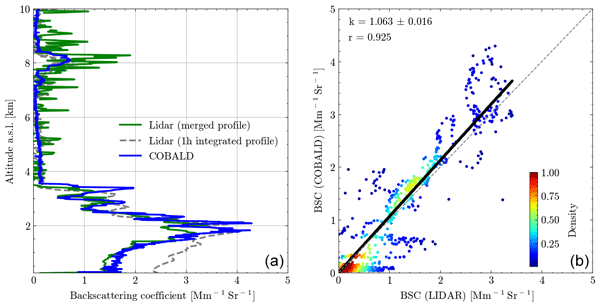
Our study employs advanced tools, including scanning lidar, balloons, and UAVs, to explore aerosol particles in the atmosphere. The scanning lidar offers distinctive near-ground-level insights, enriching our comprehension of aerosol distribution from ground level to the free troposphere. This research provides valuable data for comparing remote sensing and in situ aerosol measurements, advancing our understanding of aerosol impacts on radiative transfer, clouds, and air quality.
Marije van den Born, Hengjia Ou, Jan Mulder, Jinglan Fu, Harald Saathoff, and Ulrike Dusek
Aerosol Research, 4, 577–587, https://doi.org/10.5194/ar-4-577-2026, https://doi.org/10.5194/ar-4-577-2026, 2026
Short summary
Short summary
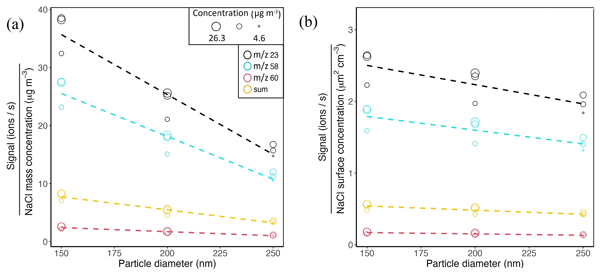
Sea spray aerosol plays an important role in climate and atmospheric chemistry, yet sea salt is rarely quantified by online mass spectrometers due to its refractory nature. This study shows that a capture vaporizer time-of-flight aerosol chemical speciation monitor can detect sea salt aerosol using Na and NaCl fragments. Laboratory and field results demonstrate robust real-time measurements of NaCl surface area, while accurate mass concentrations require particle size information.
McKenna Stanford, Alice Keinert, Ann Fridlind, Alexei Kiselev, Daniel Knopf, Andrew Ackerman, Thomas Leisner, and Paul Lawson
EGUsphere, https://doi.org/10.5194/egusphere-2026-4713, https://doi.org/10.5194/egusphere-2026-4713, 2026
Short summary
Short summary
Clouds containing a mixture of liquid and ice are poorly simulated because ice crystals multiply via poorly understood mechanisms. This study uses laboratory experiments to represent ice multiplication from freezing drops and evaluates that representation in high-resolution simulations against aircraft observations. Ice fragment production increases ice crystal numbers but is modulated by the evolution of raindrops prior to freezing, with direct implications for weather and climate models.
Feng Jiang, Jun Zhang, David M. Bell, Kun Li, Nadine Borduas-Dedekind, Andre S. H. Prevot, Hongbiao Cui, Harald Saathoff, and Thomas Leisner
Atmos. Chem. Phys., 26, 11733–11746, https://doi.org/10.5194/acp-26-11733-2026, https://doi.org/10.5194/acp-26-11733-2026, 2026
Short summary
Short summary
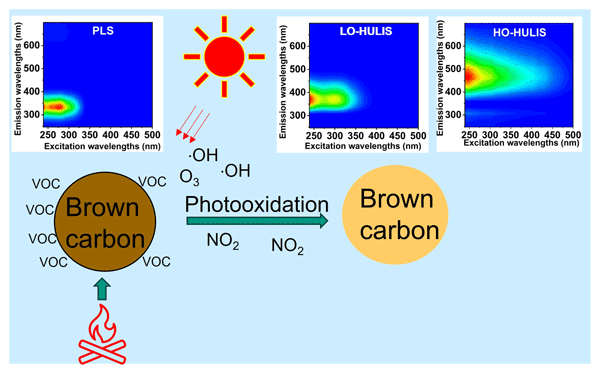
We studied chemical compositions and chromophores of brown carbon aerosol from combustion emission before and after photooxidation using an oxidative flow reactor. The chromophore and chemical composition of brown carbon were determined by excitation-emission spectroscopy and mass spectrometry. This work helps to get a better understanding of evolution process of the chromophores from primary combustion emissions during the real atmospheric transportation.
Hiram Meza-Landero, Julia Bruckert, Ronny Petrik, Pascal Simon, Elena Mikheeva, Heike Vogel, Volker Matthias, Johannes Bieser, and Martin Otto Paul Ramacher
Geosci. Model Dev., 19, 6587–6626, https://doi.org/10.5194/gmd-19-6587-2026, https://doi.org/10.5194/gmd-19-6587-2026, 2026
Short summary
Short summary
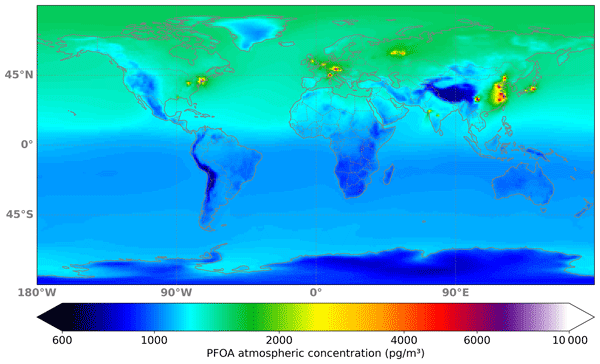
To understand how persistent hazardous industrial chemicals travel through the air and are deposited back on Earth's surface, we created a new computer model that combines meteorology and chemistry in clouds and clean air. Using the most recent global emissions data, this model represents the trajectory and changes of these chemicals, matching patterns in many areas and overlooking others. The work seeks to improve global monitoring and modeling of hazardous chemicals.
Fatemeh Zarei, Julia Bruckert, Gholam Ali Hoshyaripour, and Corinna Hoose
Atmos. Chem. Phys., 26, 9697–9719, https://doi.org/10.5194/acp-26-9697-2026, https://doi.org/10.5194/acp-26-9697-2026, 2026
Short summary
Short summary
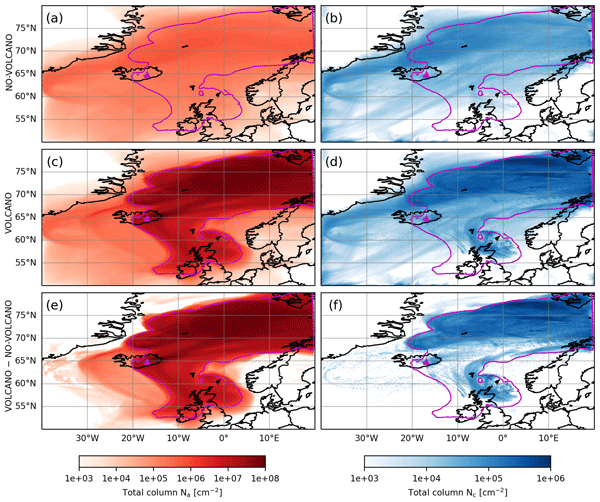
Volcanic eruptions are a rich source of aerosol particles, such as sulfate and ash, that can impact cloud droplet and ice crystal formation. They lead to strong local perturbations of clouds. In this study, these processes were simulated with a numerical model. In two contrasting case studies of an Icelandic and a Caribbean volcano, the perturbations to processes involving liquid droplets and ice crystals are investigated.
Hendrik Fuchs, Niklas Illmann, Amalia Muñoz, Mila Ródenas, Bénédicte Picquet-Varrault, M. Rami Alfarra, Cecilia Arsene, Iustinian G. Bejan, David M. Bell, Merete Bilde, Alexander Böhmländer, Mixtli Campos-Pineda, Mathieu Cazaunau, Patrice Coll, Véronique Daële, Claudia Di Biagio, Michael Flynn, Paola Formenti, Hartmut Herrmann, Kristina Höhler, Thorsten Hohaus, Matthew S. Johnson, Eija Juurola, Niku Kivekäs, Jan Kaiser, Christos Kaltsonoudis, Paolo Laj, Dario Massabò, Federico Mazzei, Gordon McFiggans, Max R. McGillen, Abdelwahid Mellouki, Peter Mettke, Ottmar Möhler, Falk Mothes, Dennis Niedermeier, Anna Novelli, Romeo I. Olariu, Spyros N. Pandis, Iulia Patroescu-Klotz, Rosa Maria Petracca Altieri, Paolo Prati, Claudiu Roman, Albert A. Ruth, Harald Saathoff, Silvio Schmalfuß, Frank Stratmann, Virginia Vernocchi, Aristeidis Voliotis, Jens Voigtländer, Annele Virtanen, Andreas Wahner, Robert Wagner, John Wenger, Sören Zorn, Peter Wiesen, and Jean-Francois Doussin
Atmos. Meas. Tech., 19, 4165–4199, https://doi.org/10.5194/amt-19-4165-2026, https://doi.org/10.5194/amt-19-4165-2026, 2026
Short summary
Short summary
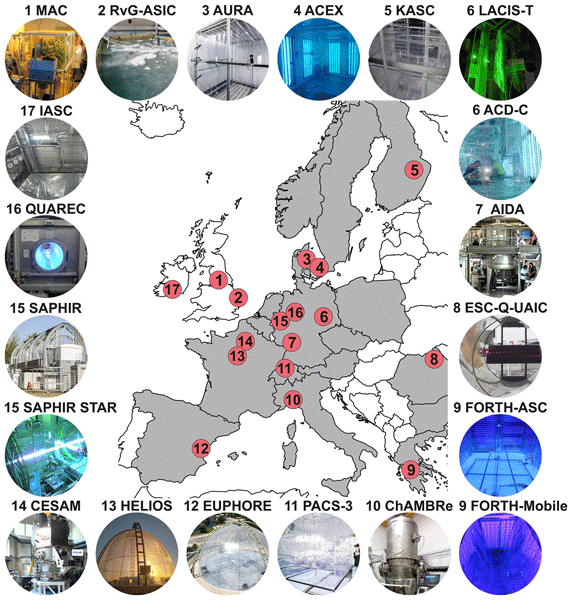
Atmospheric simulation chambers enable experiments to be conducted under controlled conditions, improving our understanding of, and ability to predict, changes in the composition of the atmosphere. This is important for assessing air quality and its effects on human health, climate, the environment, and the economy. This paper describes the chambers of the European ACTRIS research infrastructure and discusses topics and directions that can be addressed in future chamber experiments.
Linyu Gao, Stella E. I. Manavi, Claudia Mohr, Junwei Song, Cheng Wu, Thomas Leisner, Spyros N. Pandis, and Harald Saathoff
Atmos. Chem. Phys., 26, 8875–8892, https://doi.org/10.5194/acp-26-8875-2026, https://doi.org/10.5194/acp-26-8875-2026, 2026
Short summary
Short summary
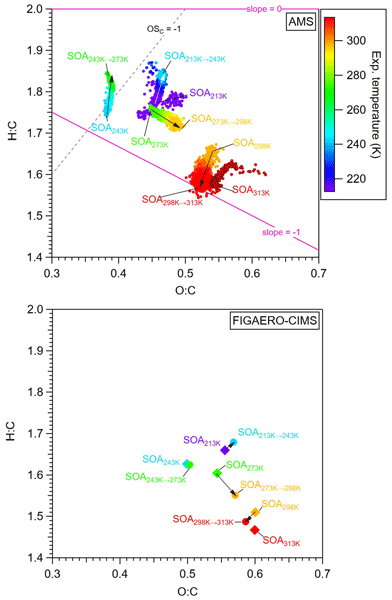
We investigate how temperature (213–313K) affects secondary organic aerosol (SOA) particles derived from isoprene and α-pinene mixtures. Isoprene's suppression on α-pinene dimer formation varied with temperatures. Particles formed at higher temperatures are more oxidized yet more volatile than those formed at lower temperatures and then warmed. This work highlights the need to consider both temperature and biogenic vapor interaction to accurately describe SOA formation, aging, and global burden.
N'Datchoh Evelyne Touré, Peter Knippertz, Andreas H. Fink, Marlon Maranan, Julia Bruckert, Gholamali Hoshyaripour, Jasmin Haupt, and Arona Diedhiou
EGUsphere, https://doi.org/10.5194/egusphere-2026-3128, https://doi.org/10.5194/egusphere-2026-3128, 2026
Short summary
Short summary
Rapid urbanization in Africa drives increasing air pollution. Once released, pollutants can travel long distances and impact remote areas. Here, we investigate the dispersion of pollutants from cities along the West African Guinean Coast by the land-sea breeze (LSB) circulation during the dry season using idealized tracer experiments with a weather prediction model. The experiments quantify the typical inland penetration of pollutants and show a transport to the Atlantic Ocean aloft.
Lisa Janina Muth, Gholam Ali Hoshyaripour, Bernhard Vogel, Heike Vogel, and Corinna Hoose
Atmos. Chem. Phys., 26, 8505–8528, https://doi.org/10.5194/acp-26-8505-2026, https://doi.org/10.5194/acp-26-8505-2026, 2026
Short summary
Short summary
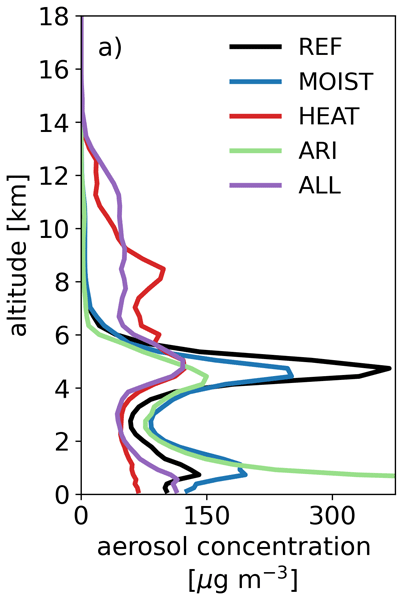
Wildfire plume injection height is key for atmospheric impact but hard to model. This study simulates the 2019/2020 Australian wildfires, testing fire-atmosphere feedbacks. Heat release increases plume rise; moisture has minor effects. Aerosol-radiation interaction lowers injection height initially, then lofts it. Only the combined simulation matches observed upper troposphere aerosol layers, especially during peak fire intensity.
Yanxia Li, Hengheng Zhang, Xuefeng Shi, Yaowei Li, Sophie Abou-Rizk, Jessica B. Smith, Zhaojin An, Adrian Wenzel, Junwei Song, Thomas Leisner, Frank Keutsch, Jia Chen, and Harald Saathoff
EGUsphere, https://doi.org/10.5194/egusphere-2026-2195, https://doi.org/10.5194/egusphere-2026-2195, 2026
Short summary
Short summary
Urban ultrafine particles (<100 nm) sources and growth mechanisms remain poorly constrained. Measurements in a Munich street canyon reveal that UFP number concentrations peak at night due to traffic and cooking emissions trapped under a shallow boundary layer. Particle growth is instead driven by condensation of organic vapours with strong seasonal shifts: biogenic and barbeque charcoal biomass-burning compounds dominate in summer, while combustion-related organics control winter growth.
Yanxia Li, Hengheng Zhang, Xuefeng Shi, Yaowei Li, Sophie Abou-Rizk, Jessica B. Smith, Zhaojin An, Adrian Wenzel, Junwei Song, Thomas Leisner, Frank Keutsch, Jia Chen, and Harald Saathoff
Atmos. Chem. Phys., 26, 5813–5837, https://doi.org/10.5194/acp-26-5813-2026, https://doi.org/10.5194/acp-26-5813-2026, 2026
Short summary
Short summary
We analyzed Munich air samples across seasons to identify pollution sources. Traffic contributes less to particles than expected, while biomass burning dominates year-round. Summer barbecuing and winter heating release significant pollution. Monoterpene emissions from plants produce particles at night. Effective air quality improvement requires year-round strategies targeting biomass burning, not just vehicles. Understanding each city's pollution patterns is essential for public health.
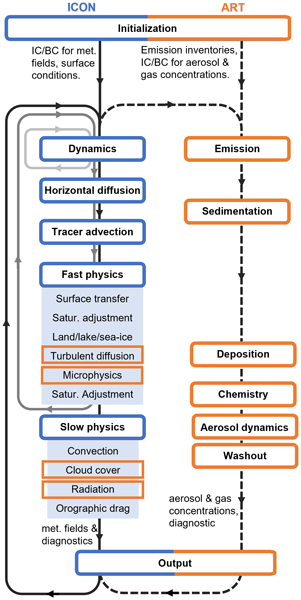
Gholam Ali Hoshyaripour, Andreas Baer, Sascha Bierbauer, Julia Bruckert, Dominik Brunner, Jochen Förstner, Arash Hamzehloo, Valentin Hanft, Corina Keller, Martina Klose, Pankaj Kumar, Patrick Ludwig, Enrico Metzner, Lisa Muth, Andreas Pauling, Nikolas Porz, Maryam Ramezani Ziarani, Thomas Reddmann, Luca Reißig, Roland Ruhnke, Khompat Satitkovitchai, Axel Seifert, Miriam Sinnhuber, Michael Steiner, Stefan Versick, Heike Vogel, Michael Weimer, Sven Werchner, and Corinna Hoose
Geosci. Model Dev., 19, 1645–1681, https://doi.org/10.5194/gmd-19-1645-2026, https://doi.org/10.5194/gmd-19-1645-2026, 2026
Short summary
Short summary
This paper presents recent advances in ICON-ART, a modeling system that simulates atmospheric composition – such as gases and particles – and their interactions with weather and climate. By integrating updated chemistry, emissions, and aerosol processes, ICON-ART enables detailed, scale-spanning simulations. It supports both scientific research and operational forecasts, contributing to improved air quality, weather and climate predictions.
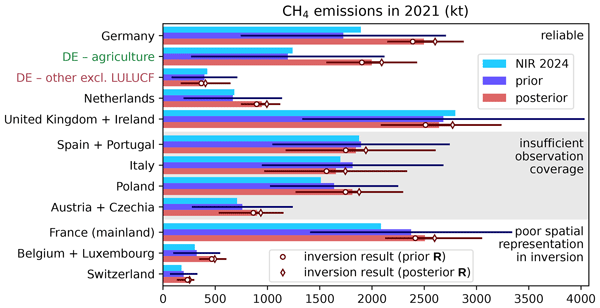
Valentin Bruch, Thomas Rösch, Diego Jiménez de la Cuesta Otero, Beatrice Ellerhoff, Buhalqem Mamtimin, Niklas Becker, Anne-Marlene Blechschmidt, Jochen Förstner, and Andrea K. Kaiser-Weiss
Atmos. Chem. Phys., 25, 17187–17204, https://doi.org/10.5194/acp-25-17187-2025, https://doi.org/10.5194/acp-25-17187-2025, 2025
Short summary
Short summary
Estimating emissions of greenhouse gases such as methane for individual countries is fundamental for climate mitigation policies. We use a numerical weather model to simulate how methane emissions are transported to observation sites. Based on the observations, we estimate the emissions in Central Europe in 2021. For Germany and the Benelux, we find higher emissions than expected from the national emission reporting. We provide sector-specific estimates to support national emission reporting.
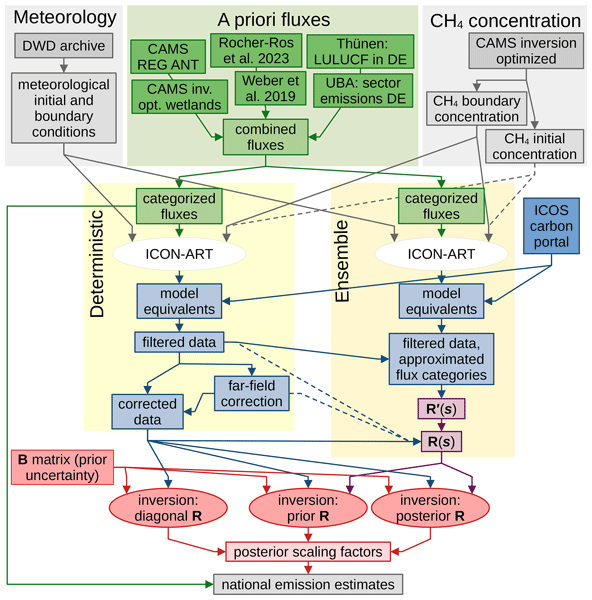
Valentin Bruch, Thomas Rösch, Diego Jiménez de la Cuesta Otero, Beatrice Ellerhoff, Buhalqem Mamtimin, Niklas Becker, Anne-Marlene Blechschmidt, Jochen Förstner, and Andrea K. Kaiser-Weiss
Atmos. Chem. Phys., 25, 17159–17185, https://doi.org/10.5194/acp-25-17159-2025, https://doi.org/10.5194/acp-25-17159-2025, 2025
Short summary
Short summary
Estimating emissions of greenhouse gases such as methane for individual countries is fundamental for climate mitigation policies. Numerical models can simulate how such emissions are transported to observation sites. Based on the observations, one can estimate the emissions. We describe how operational numerical weather prediction can help determine the model uncertainties and thereby improve the emission estimates. We test our system using simulated observations.
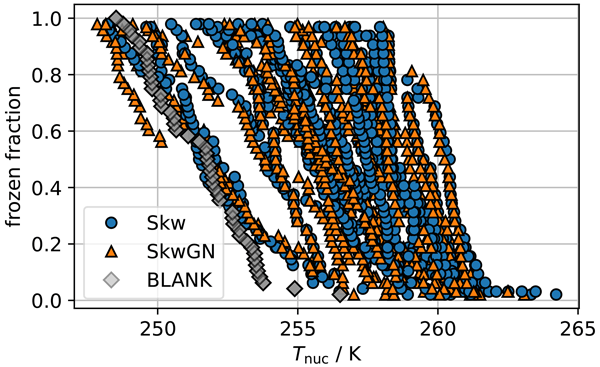
Alexander Böhmländer, Larissa Lacher, Kristina Höhler, David Brus, Konstantinos-Matthaios Doulgeris, Jessica Girdwood, Thomas Leisner, and Ottmar Möhler
Earth Syst. Sci. Data, 17, 6157–6164, https://doi.org/10.5194/essd-17-6157-2025, https://doi.org/10.5194/essd-17-6157-2025, 2025
Short summary
Short summary
Clouds play a key role in weather and climate. Pure liquid water droplets are liquid until about −35 °C without the presence of a small subset of aerosols, ice-nucleating particles (INPs). These INPs lead to primary ice formation and therefore impact the phase of clouds. The dataset described herein provides INP concentration measurements at two altitudes. Connecting this data to synoptic conditions and ambient data might provide a better understanding of INPs in Finnish Lapland.
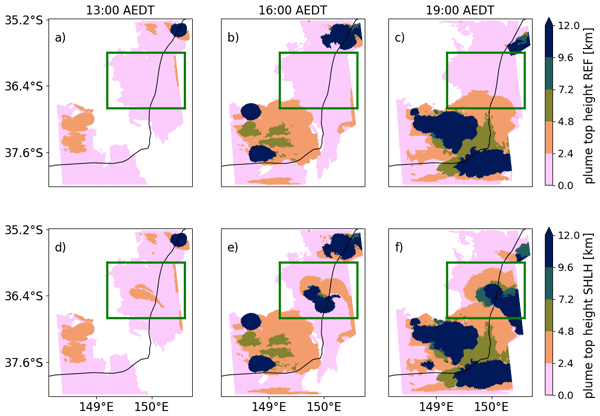
Lisa Janina Muth, Sascha Bierbauer, Corinna Hoose, Bernhard Vogel, Heike Vogel, and Gholam Ali Hoshyaripour
Atmos. Chem. Phys., 25, 16027–16040, https://doi.org/10.5194/acp-25-16027-2025, https://doi.org/10.5194/acp-25-16027-2025, 2025
Short summary
Short summary
In our study, we explore how intense wildfires create thunderstorm-like clouds that can affect weather and climate globally. Using simulations with high resolution, we found that fire heat and moisture help form these clouds, lifting particles high into the atmosphere. This process is crucial for understanding how fires affect the environment. Despite some differences from observational data, our findings match well over time, showing the importance of fire-induced heat in cloud formation.
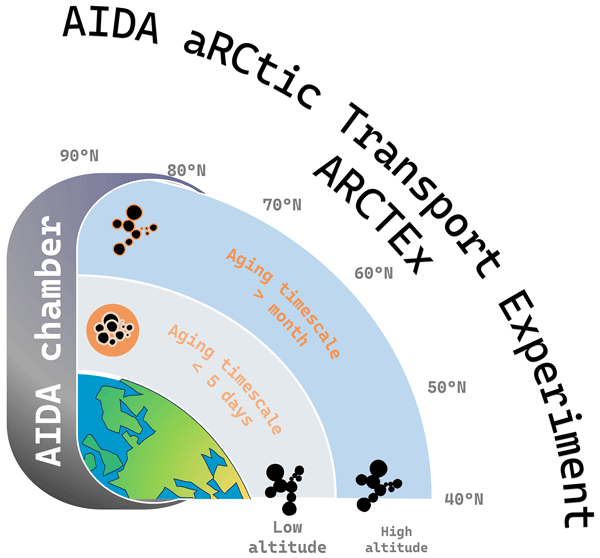
Marco Zanatta, Pia Bogert, Patrick Ginot, Yiwei Gong, Gholam Ali Hoshyaripour, Yaqiong Hu, Feng Jiang, Paolo Laj, Yanxia Li, Claudia Linke, Ottmar Möhler, Harald Saathoff, Martin Schnaiter, Nsikanabasi Silas Umo, Franziska Vogel, and Robert Wagner
Aerosol Research, 3, 477–502, https://doi.org/10.5194/ar-3-477-2025, https://doi.org/10.5194/ar-3-477-2025, 2025
Short summary
Short summary
Back carbon is an atmospheric pollutant from combustion and contributes to the Arctic warming. However, its properties change as it travels through the atmosphere, affecting its impact. We recreated Arctic transport conditions in a laboratory to study how black carbon evolves over time. Our findings show that temperature and altitude strongly influence its transformation, providing key insights for improving climate models and understanding Arctic pollution.
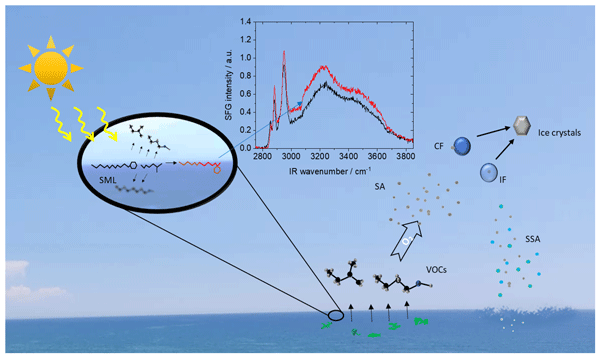
Ahmed Abdelmonem, Dana Glikman, Yiwei Gong, Björn Braunschweig, Harald Saathoff, Johannes Lützenkirchen, and Mohammed H. Fawey
Atmos. Chem. Phys., 25, 13019–13035, https://doi.org/10.5194/acp-25-13019-2025, https://doi.org/10.5194/acp-25-13019-2025, 2025
Short summary
Short summary
This study examines how environmental factors (sunlight, pH, salinity, and surface chemistry) affect air–water interface reactions. Using a surface-specific technique, sum-frequency generation (SFG) spectroscopy, we found that compounds like 4-benzoylbenzoic acid (4-BBA) not only act as photosensitizers but also generate new surface-active products under UV light. These reactions have implications for oceans, lakes, and clouds, providing crucial insights for modeling natural processes.
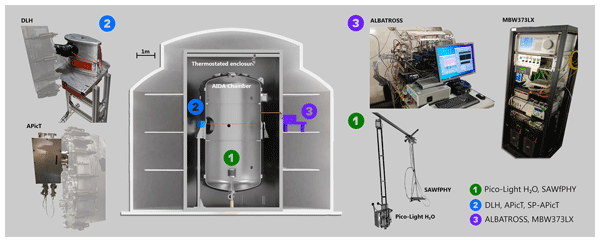
Simone Brunamonti, Harald Saathoff, Albert Hertzog, Glenn Diskin, Masatomo Fujiwara, Karen Rosenlof, Ottmar Möhler, Béla Tuzson, Lukas Emmenegger, Nadir Amarouche, Georges Durry, Fabien Frérot, Jean-Christophe Samake, Claire Cenac, Julio Lopez, Paul Monnier, and Mélanie Ghysels
Atmos. Meas. Tech., 18, 5321–5348, https://doi.org/10.5194/amt-18-5321-2025, https://doi.org/10.5194/amt-18-5321-2025, 2025
Short summary
Short summary
Water vapor is a strong greenhouse gas, and accurate measurements of its concentration in the upper atmosphere (~8–25 km altitude) are crucial for reliable climate predictions. We investigated the performance of four airborne hygrometers, deployed on aircraft or stratospheric balloon platforms and based on different techniques, in a climate simulation chamber. The results demonstrate the high accuracy and reliability of the involved sensors for atmospheric monitoring and research applications.
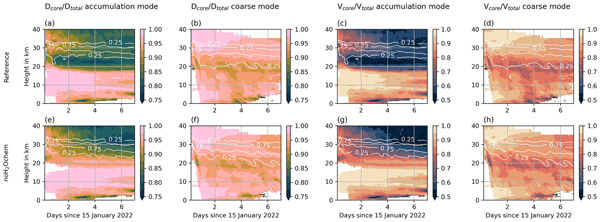
Julia Bruckert, Simran Chopra, Richard Siddans, Charlotte Wedler, and Gholam Ali Hoshyaripour
Atmos. Chem. Phys., 25, 9859–9884, https://doi.org/10.5194/acp-25-9859-2025, https://doi.org/10.5194/acp-25-9859-2025, 2025
Short summary
Short summary
The 2022 Hunga eruption emitted about 150 Tg of water vapor into the stratosphere. Here, we show that the water vapor injection not only accelerates SO2 oxidation and sulfate production but also increases the aging of ash (coating of ash by sulfate). Our study shows that aerosol aging alone does not explain the rapid loss of ash after the Hunga eruption as observed by satellite instruments. However, some ash might be masked in the observation due to the strong coating.
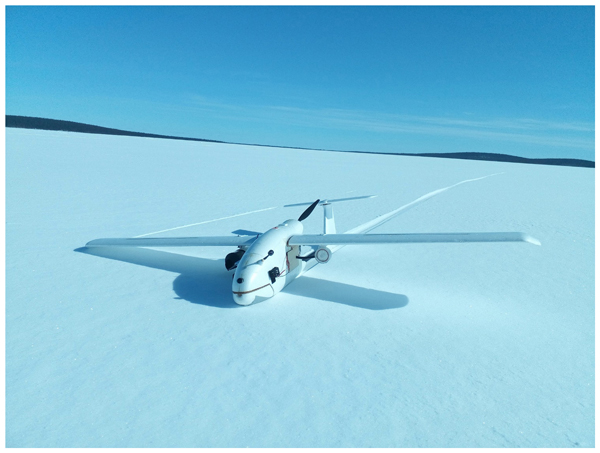
Alexander Böhmländer, Larissa Lacher, David Brus, Konstantinos-Matthaios Doulgeris, Zoé Brasseur, Matthew Boyer, Joel Kuula, Thomas Leisner, and Ottmar Möhler
Atmos. Meas. Tech., 18, 3959–3971, https://doi.org/10.5194/amt-18-3959-2025, https://doi.org/10.5194/amt-18-3959-2025, 2025
Short summary
Short summary
Clouds and aerosol are important for weather and climate. Typically, pure water cloud droplets stay liquid until around −35 °C, unless they come into contact with ice-nucleating particles (INPs). INPs are a rare subset of aerosol particles. Using uncrewed aerial vehicles (UAVs), it is possible to collect aerosol particles and analyse their ice-nucleating ability. This study describes the test and validation of a sampling set-up that can be used to collect aerosol particles onto a filter.
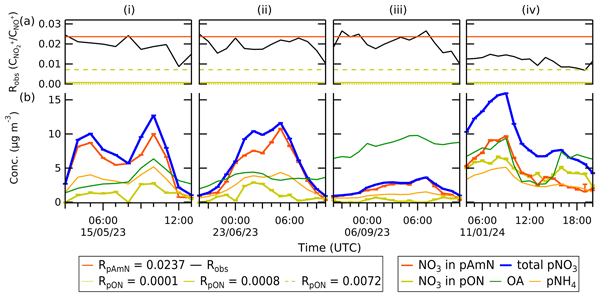
Farhan R. Nursanto, Douglas A. Day, Roy Meinen, Rupert Holzinger, Harald Saathoff, Jinglan Fu, Jan Mulder, Ulrike Dusek, and Juliane L. Fry
Atmos. Meas. Tech., 18, 3051–3072, https://doi.org/10.5194/amt-18-3051-2025, https://doi.org/10.5194/amt-18-3051-2025, 2025
Short summary
Short summary
It is of increasing importance to monitor nitrate pollution that can harm ecosystems. However, commonly used aerosol monitoring equipment cannot distinguish inorganic from organic forms of nitrate, which may have different consequences for the environment. We describe a method to differentiate types of nitrates that can be applied to ambient monitoring to improve understanding of its formation and impact.
Feng Jiang, Harald Saathoff, Uzoamaka Ezenobi, Junwei Song, Hengheng Zhang, Linyu Gao, and Thomas Leisner
Atmos. Chem. Phys., 25, 1917–1930, https://doi.org/10.5194/acp-25-1917-2025, https://doi.org/10.5194/acp-25-1917-2025, 2025
Short summary
Short summary
The chemical composition of brown carbon in the particle and gas phase was determined by mass spectrometry. BrC in the gas phase was mainly controlled by secondary formation and particle-to-gas partitioning. BrC in the particle phase was mainly from secondary formation. This work helps to get a better understanding of diurnal variations and the sources of brown carbon aerosol at a rural location in central Europe.
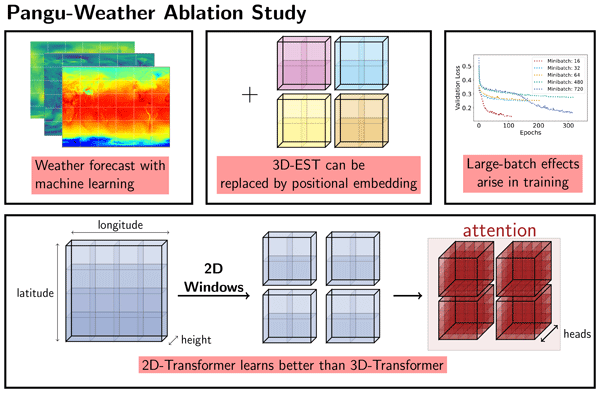
Deifilia To, Julian Quinting, Gholam Ali Hoshyaripour, Markus Götz, Achim Streit, and Charlotte Debus
Geosci. Model Dev., 17, 8873–8884, https://doi.org/10.5194/gmd-17-8873-2024, https://doi.org/10.5194/gmd-17-8873-2024, 2024
Short summary
Short summary
Pangu-Weather is a breakthrough machine learning model in medium-range weather forecasting that considers 3D atmospheric information. We show that using a simpler 2D framework improves robustness, speeds up training, and reduces computational needs by 20 %–30 %. We introduce a training procedure that varies the importance of atmospheric variables over time to speed up training convergence. Decreasing computational demand increases the accessibility of training and working with the model.
Junwei Song, Georgios I. Gkatzelis, Ralf Tillmann, Nicolas Brüggemann, Thomas Leisner, and Harald Saathoff
Atmos. Chem. Phys., 24, 13199–13217, https://doi.org/10.5194/acp-24-13199-2024, https://doi.org/10.5194/acp-24-13199-2024, 2024
Short summary
Short summary
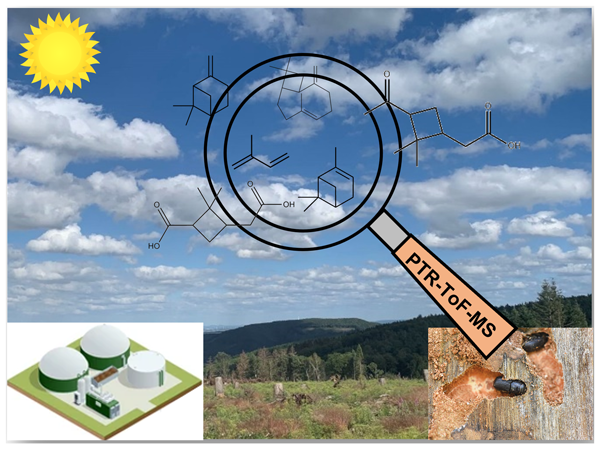
Biogenic volatile organic compounds (BVOCs) and organic aerosol (OA) particles were measured online in a stressed spruce-dominated forest. OA was mainly attributed to the monoterpene oxidation products. The mixing ratios of BVOCs were higher than the values previously measured in other temperate forests. The results demonstrate that BVOCs are influenced not only by meteorology and biogenic emissions but also by local anthropogenic emissions and subsequent chemical transformation processes.
Xiaoli Shen, David M. Bell, Hugh Coe, Naruki Hiranuma, Fabian Mahrt, Nicholas A. Marsden, Claudia Mohr, Daniel M. Murphy, Harald Saathoff, Johannes Schneider, Jacqueline Wilson, Maria A. Zawadowicz, Alla Zelenyuk, Paul J. DeMott, Ottmar Möhler, and Daniel J. Cziczo
Atmos. Chem. Phys., 24, 10869–10891, https://doi.org/10.5194/acp-24-10869-2024, https://doi.org/10.5194/acp-24-10869-2024, 2024
Short summary
Short summary
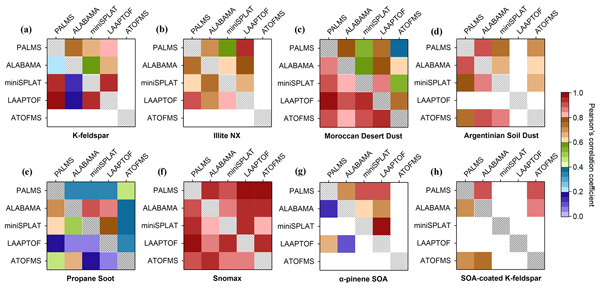
Single-particle mass spectrometry (SPMS) is commonly used to measure the chemical composition and mixing state of aerosol particles. Intercomparison of SPMS instruments was conducted. All instruments reported similar size ranges and common spectral features. The instrument-specific detection efficiency was found to be more dependent on particle size than type. All differentiated secondary organic aerosol, soot, and soil dust but had difficulties differentiating among minerals and dusts.
Hengheng Zhang, Wei Huang, Xiaoli Shen, Ramakrishna Ramisetty, Junwei Song, Olga Kiseleva, Christopher Claus Holst, Basit Khan, Thomas Leisner, and Harald Saathoff
Atmos. Chem. Phys., 24, 10617–10637, https://doi.org/10.5194/acp-24-10617-2024, https://doi.org/10.5194/acp-24-10617-2024, 2024
Short summary
Short summary
Our study unravels how stagnant winter conditions elevate aerosol levels in Stuttgart. Cloud cover at night plays a pivotal role, impacting morning air quality. Validating a key model, our findings aid accurate air quality predictions, crucial for effective pollution mitigation in urban areas.
Junwei Song, Harald Saathoff, Feng Jiang, Linyu Gao, Hengheng Zhang, and Thomas Leisner
Atmos. Chem. Phys., 24, 6699–6717, https://doi.org/10.5194/acp-24-6699-2024, https://doi.org/10.5194/acp-24-6699-2024, 2024
Short summary
Short summary
This study presents concurrent online measurements of organic gas and particles (VOCs and OA) at a forested site in summer. Both VOCs and OA were largely contributed by oxygenated organic compounds. Semi-volatile oxygenated OA and organic nitrate formed from monoterpenes and sesquiterpenes contributed significantly to nighttime particle growth. The results help us to understand the causes of nighttime particle growth regularly observed in summer in central European rural forested environments.
Hengheng Zhang, Christian Rolf, Ralf Tillmann, Christian Wesolek, Frank Gunther Wienhold, Thomas Leisner, and Harald Saathoff
Aerosol Research, 2, 135–151, https://doi.org/10.5194/ar-2-135-2024, https://doi.org/10.5194/ar-2-135-2024, 2024
Short summary
Short summary
Our study employs advanced tools, including scanning lidar, balloons, and UAVs, to explore aerosol particles in the atmosphere. The scanning lidar offers distinctive near-ground-level insights, enriching our comprehension of aerosol distribution from ground level to the free troposphere. This research provides valuable data for comparing remote sensing and in situ aerosol measurements, advancing our understanding of aerosol impacts on radiative transfer, clouds, and air quality.
Johanna S. Seidel, Alexei A. Kiselev, Alice Keinert, Frank Stratmann, Thomas Leisner, and Susan Hartmann
Atmos. Chem. Phys., 24, 5247–5263, https://doi.org/10.5194/acp-24-5247-2024, https://doi.org/10.5194/acp-24-5247-2024, 2024
Short summary
Short summary
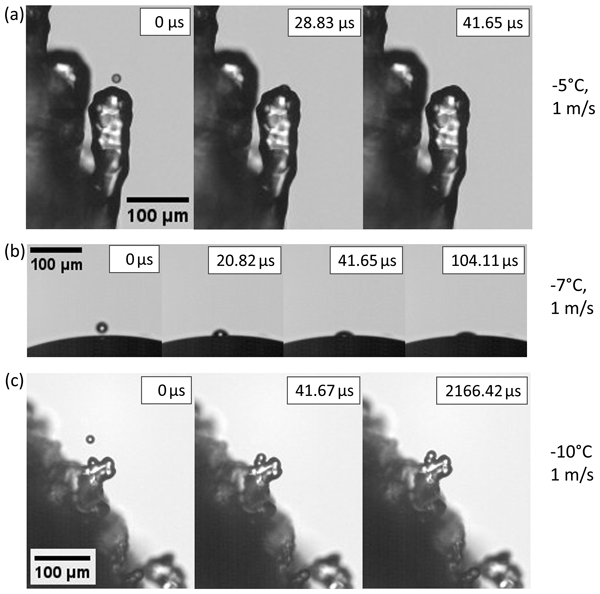
Clouds often contain several thousand times more ice crystals than aerosol particles catalyzing ice formation. This phenomenon, commonly known as ice multiplication, is often explained by secondary ice formation due to the collisions between falling ice particles and droplets. In this study, we mimic this riming process. Contrary to earlier experiments, we found no efficient ice multiplication, which fundamentally questions the importance of the rime-splintering mechanism.
Feng Jiang, Kyla Siemens, Claudia Linke, Yanxia Li, Yiwei Gong, Thomas Leisner, Alexander Laskin, and Harald Saathoff
Atmos. Chem. Phys., 24, 2639–2649, https://doi.org/10.5194/acp-24-2639-2024, https://doi.org/10.5194/acp-24-2639-2024, 2024
Short summary
Short summary
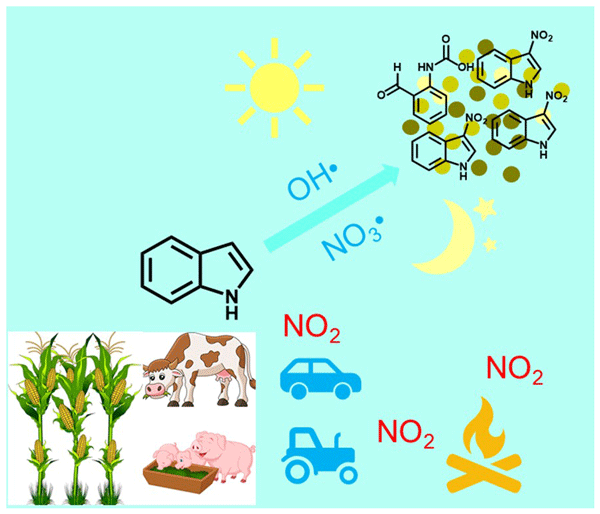
We investigated the optical properties, chemical composition, and formation mechanisms of secondary organic aerosol (SOA) and brown carbon (BrC) from the oxidation of indole with and without NO2 in the Aerosol Interaction and Dynamics in the Atmosphere (AIDA) simulation chamber. This work is one of the very few to link the optical properties and chemical composition of indole SOA with and without NO2 by simulation chamber experiments.
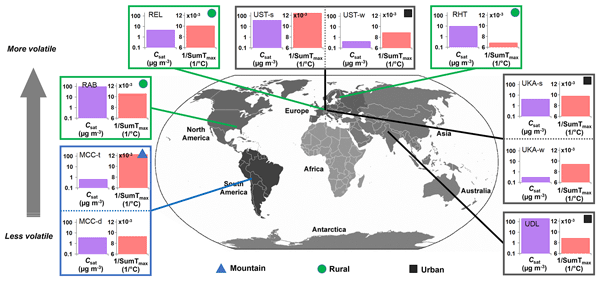
Wei Huang, Cheng Wu, Linyu Gao, Yvette Gramlich, Sophie L. Haslett, Joel Thornton, Felipe D. Lopez-Hilfiker, Ben H. Lee, Junwei Song, Harald Saathoff, Xiaoli Shen, Ramakrishna Ramisetty, Sachchida N. Tripathi, Dilip Ganguly, Feng Jiang, Magdalena Vallon, Siegfried Schobesberger, Taina Yli-Juuti, and Claudia Mohr
Atmos. Chem. Phys., 24, 2607–2624, https://doi.org/10.5194/acp-24-2607-2024, https://doi.org/10.5194/acp-24-2607-2024, 2024
Short summary
Short summary
We present distinct molecular composition and volatility of oxygenated organic aerosol particles in different rural, urban, and mountain environments. We do a comprehensive investigation of the relationship between the chemical composition and volatility of oxygenated organic aerosol particles across different systems and environments. This study provides implications for volatility descriptions of oxygenated organic aerosol particles in different model frameworks.
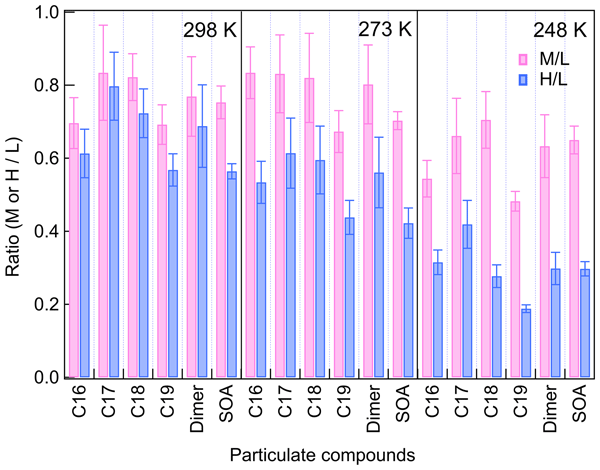
Yiwei Gong, Feng Jiang, Yanxia Li, Thomas Leisner, and Harald Saathoff
Atmos. Chem. Phys., 24, 167–184, https://doi.org/10.5194/acp-24-167-2024, https://doi.org/10.5194/acp-24-167-2024, 2024
Short summary
Short summary
This study investigates the role of the important atmospheric reactive intermediates in the formation of dimers and aerosol in monoterpene ozonolysis at different temperatures. Through conducting a series of chamber experiments and utilizing chemical kinetic and aerosol dynamic models, the SOA formation processes are better described, especially for colder regions. The results can be used to improve the chemical mechanism modeling of monoterpenes and SOA parameterization in transport models.
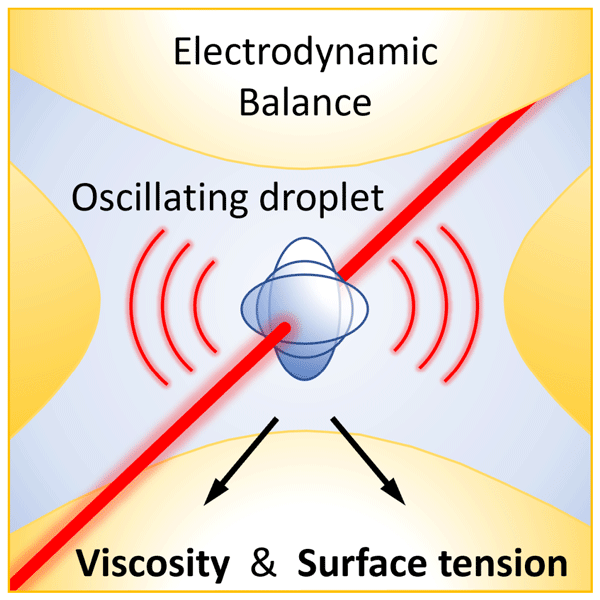
Mohit Singh, Stephanie Helen Jones, Alexei Kiselev, Denis Duft, and Thomas Leisner
Atmos. Meas. Tech., 16, 5205–5215, https://doi.org/10.5194/amt-16-5205-2023, https://doi.org/10.5194/amt-16-5205-2023, 2023
Short summary
Short summary
We introduce a novel method for simultaneous measurement of the viscosity and surface tension of metastable liquids. Our approach is based on the phase analysis of excited shape oscillations in levitated droplets. It is applicable to a wide range of atmospheric conditions and can monitor changes in real time. The technique holds great promise for investigating the effect of atmospheric processing on the viscosity and surface tension of solution droplets in equilibrium with water vapour.
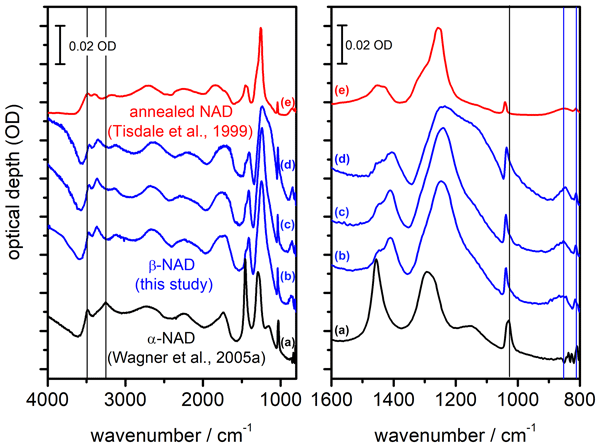
Robert Wagner, Alexander D. James, Victoria L. Frankland, Ottmar Möhler, Benjamin J. Murray, John M. C. Plane, Harald Saathoff, Ralf Weigel, and Martin Schnaiter
Atmos. Chem. Phys., 23, 6789–6811, https://doi.org/10.5194/acp-23-6789-2023, https://doi.org/10.5194/acp-23-6789-2023, 2023
Short summary
Short summary
Polar stratospheric clouds (PSCs) play an important role in the depletion of stratospheric ozone. They can consist of different chemical species, including crystalline nitric acid hydrates. We found that mineral dust or meteoric ablation material can efficiently catalyse the formation of a specific phase of nitric acid dihydrate crystals. We determined predominant particle shapes and infrared optical properties of these crystals, which are important inputs for remote sensing detection of PSCs.
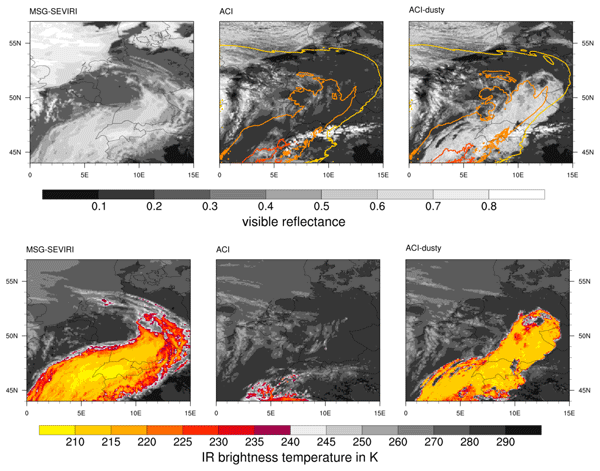
Axel Seifert, Vanessa Bachmann, Florian Filipitsch, Jochen Förstner, Christian M. Grams, Gholam Ali Hoshyaripour, Julian Quinting, Anika Rohde, Heike Vogel, Annette Wagner, and Bernhard Vogel
Atmos. Chem. Phys., 23, 6409–6430, https://doi.org/10.5194/acp-23-6409-2023, https://doi.org/10.5194/acp-23-6409-2023, 2023
Short summary
Short summary
We investigate how mineral dust can lead to the formation of cirrus clouds. Dusty cirrus clouds lead to a reduction in solar radiation at the surface and, hence, a reduced photovoltaic power generation. Current weather prediction systems are not able to predict this interaction between mineral dust and cirrus clouds. We have developed a new physical description of the formation of dusty cirrus clouds. Overall we can show a considerable improvement in the forecast quality of clouds and radiation.
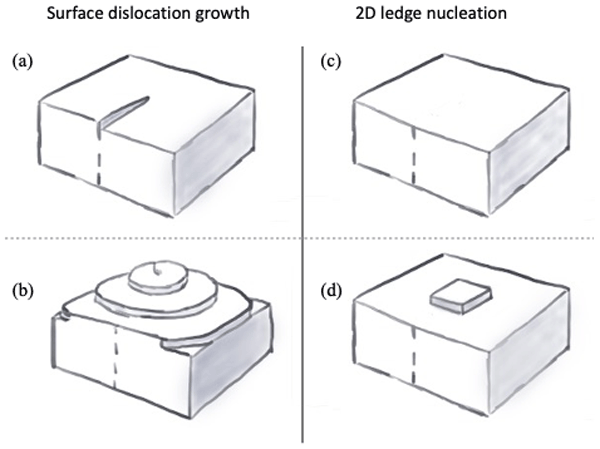
Kara D. Lamb, Jerry Y. Harrington, Benjamin W. Clouser, Elisabeth J. Moyer, Laszlo Sarkozy, Volker Ebert, Ottmar Möhler, and Harald Saathoff
Atmos. Chem. Phys., 23, 6043–6064, https://doi.org/10.5194/acp-23-6043-2023, https://doi.org/10.5194/acp-23-6043-2023, 2023
Short summary
Short summary
This study investigates how ice grows directly from vapor in cirrus clouds by comparing observations of populations of ice crystals growing in a cloud chamber against models developed in the context of single-crystal laboratory studies. We demonstrate that previous discrepancies between different experimental measurements do not necessarily point to different physical interpretations but are rather due to assumptions that were made in terms of how experiments were modeled in previous studies.
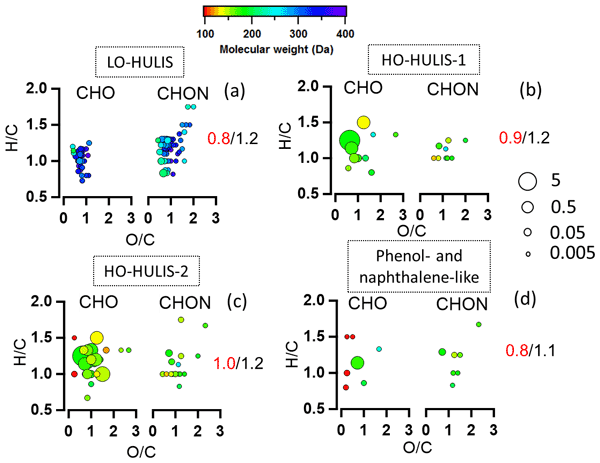
Feng Jiang, Junwei Song, Jonas Bauer, Linyu Gao, Magdalena Vallon, Reiner Gebhardt, Thomas Leisner, Stefan Norra, and Harald Saathoff
Atmos. Chem. Phys., 22, 14971–14986, https://doi.org/10.5194/acp-22-14971-2022, https://doi.org/10.5194/acp-22-14971-2022, 2022
Short summary
Short summary
We studied brown carbon aerosol during typical summer and winter periods in downtown Karlsruhe in southwestern Germany. The chromophore and chemical composition of brown carbon was determined by excitation–emission spectroscopy and mass spectrometry. The chromophore types and sources were substantially different in winter and summer. Humic-like chromophores of different degrees of oxidation dominated and were associated with molecules of different molecular weight and nitrogen content.
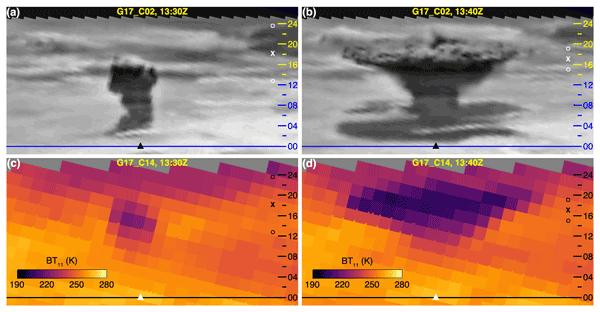
Ákos Horváth, James L. Carr, Dong L. Wu, Julia Bruckert, Gholam Ali Hoshyaripour, and Stefan A. Buehler
Atmos. Chem. Phys., 22, 12311–12330, https://doi.org/10.5194/acp-22-12311-2022, https://doi.org/10.5194/acp-22-12311-2022, 2022
Short summary
Short summary
We estimate plume heights for the April 2021 La Soufrière daytime eruptions using GOES-17 near-limb side views and GOES-16–MODIS stereo views. These geometric heights are then compared with brightness-temperature-based radiometric height estimates to characterize the biases of the latter. We also show that the side view method can be applied to infrared imagery and thus nighttime eruptions, albeit with larger uncertainty.

Natalia E. Chubarova, Heike Vogel, Elizaveta E. Androsova, Alexander A. Kirsanov, Olga B. Popovicheva, Bernhard Vogel, and Gdaliy S. Rivin
Atmos. Chem. Phys., 22, 10443–10466, https://doi.org/10.5194/acp-22-10443-2022, https://doi.org/10.5194/acp-22-10443-2022, 2022
Short summary
Short summary
Effects of urban aerosol pollution in Moscow were analyzed using the COSMO-ART chemical transport model and intensive measurement campaigns. We show that urban aerosol comprises about 15–20% of columnar aerosol content, consisting mainly of fine aerosol mode. The black carbon (BC) fraction is about 5 %, depending on particle dispersion intensity (IPD). The BC fraction low value explains weak absorbing properties of the Moscow atmosphere. IPD also defines the daily cycle of urban aerosol species.

Fritz Waitz, Martin Schnaiter, Thomas Leisner, and Emma Järvinen
Atmos. Chem. Phys., 22, 7087–7103, https://doi.org/10.5194/acp-22-7087-2022, https://doi.org/10.5194/acp-22-7087-2022, 2022
Short summary
Short summary
Riming, i.e., the accretion of small droplets on the surface of ice particles via collision, is one of the major uncertainties in model prediction of mixed-phase clouds. We discuss the occurrence (up to 50% of particles) and aging of rimed ice particles and show correlations of the occurrence and the degree of riming with ambient meteorological parameters using data gathered by the Particle Habit Imaging and Polar Scattering (PHIPS) probe during three airborne in situ field campaigns.
Linyu Gao, Junwei Song, Claudia Mohr, Wei Huang, Magdalena Vallon, Feng Jiang, Thomas Leisner, and Harald Saathoff
Atmos. Chem. Phys., 22, 6001–6020, https://doi.org/10.5194/acp-22-6001-2022, https://doi.org/10.5194/acp-22-6001-2022, 2022
Short summary
Short summary
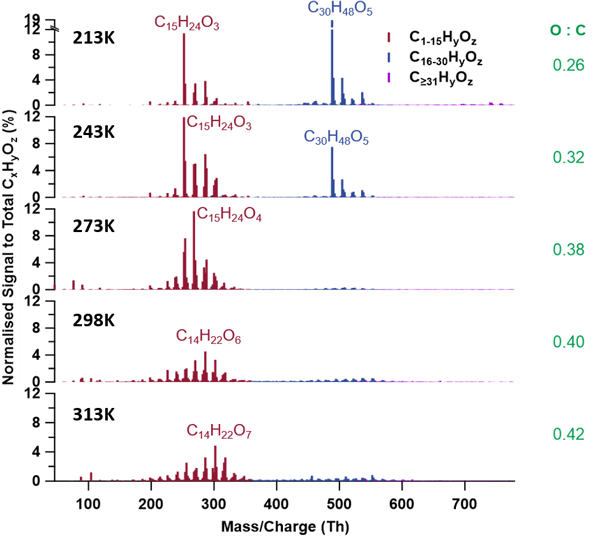
We study secondary organic aerosol (SOA) from β-caryophyllene (BCP) ozonolysis with and without nitrogen oxides over 213–313 K in the simulation chamber. The yields and the rate constants were determined at 243–313 K. Chemical compositions varied at different temperatures, indicating a strong impact on the BCP ozonolysis pathways. This work helps to better understand the SOA from BCP ozonolysis for conditions representative of the real atmosphere from the boundary layer to the upper troposphere.
Magdalena Vallon, Linyu Gao, Feng Jiang, Bianca Krumm, Jens Nadolny, Junwei Song, Thomas Leisner, and Harald Saathoff
Atmos. Meas. Tech., 15, 1795–1810, https://doi.org/10.5194/amt-15-1795-2022, https://doi.org/10.5194/amt-15-1795-2022, 2022
Short summary
Short summary
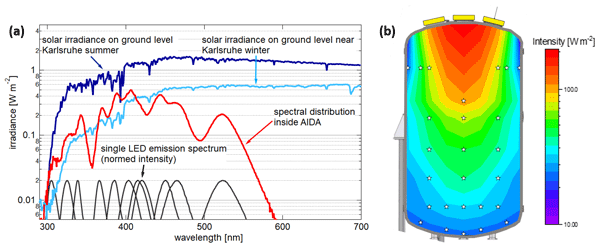
A LED-based light source has been constructed for the AIDA simulation chamber at the Karlsruhe Institute of Technology. It allows aerosol formation and ageing studies under atmospherically relevant illumination intensities and spectral characteristics at temperatures from –90 °C to 30 °C with the possibility of changing the photon flux and irradiation spectrum at any point. The first results of photolysis experiments with 2,3-pentanedione, iron oxalate and a brown carbon component are shown.

Julia Bruckert, Gholam Ali Hoshyaripour, Ákos Horváth, Lukas O. Muser, Fred J. Prata, Corinna Hoose, and Bernhard Vogel
Atmos. Chem. Phys., 22, 3535–3552, https://doi.org/10.5194/acp-22-3535-2022, https://doi.org/10.5194/acp-22-3535-2022, 2022
Short summary
Short summary
Volcanic emissions endanger aviation and public health and also influence weather and climate. Forecasting the volcanic-plume dispersion is therefore a critical yet sophisticated task. Here, we show that explicit treatment of volcanic-plume dynamics and eruption source parameters significantly improves volcanic-plume dispersion forecasts. We further demonstrate the lofting of the SO2 due to a heating of volcanic particles by sunlight with major implications for volcanic aerosol research.
Lucía Caudillo, Birte Rörup, Martin Heinritzi, Guillaume Marie, Mario Simon, Andrea C. Wagner, Tatjana Müller, Manuel Granzin, Antonio Amorim, Farnoush Ataei, Rima Baalbaki, Barbara Bertozzi, Zoé Brasseur, Randall Chiu, Biwu Chu, Lubna Dada, Jonathan Duplissy, Henning Finkenzeller, Loïc Gonzalez Carracedo, Xu-Cheng He, Victoria Hofbauer, Weimeng Kong, Houssni Lamkaddam, Chuan P. Lee, Brandon Lopez, Naser G. A. Mahfouz, Vladimir Makhmutov, Hanna E. Manninen, Ruby Marten, Dario Massabò, Roy L. Mauldin, Bernhard Mentler, Ugo Molteni, Antti Onnela, Joschka Pfeifer, Maxim Philippov, Ana A. Piedehierro, Meredith Schervish, Wiebke Scholz, Benjamin Schulze, Jiali Shen, Dominik Stolzenburg, Yuri Stozhkov, Mihnea Surdu, Christian Tauber, Yee Jun Tham, Ping Tian, António Tomé, Steffen Vogt, Mingyi Wang, Dongyu S. Wang, Stefan K. Weber, André Welti, Wang Yonghong, Wu Yusheng, Marcel Zauner-Wieczorek, Urs Baltensperger, Imad El Haddad, Richard C. Flagan, Armin Hansel, Kristina Höhler, Jasper Kirkby, Markku Kulmala, Katrianne Lehtipalo, Ottmar Möhler, Harald Saathoff, Rainer Volkamer, Paul M. Winkler, Neil M. Donahue, Andreas Kürten, and Joachim Curtius
Atmos. Chem. Phys., 21, 17099–17114, https://doi.org/10.5194/acp-21-17099-2021, https://doi.org/10.5194/acp-21-17099-2021, 2021
Short summary
Short summary
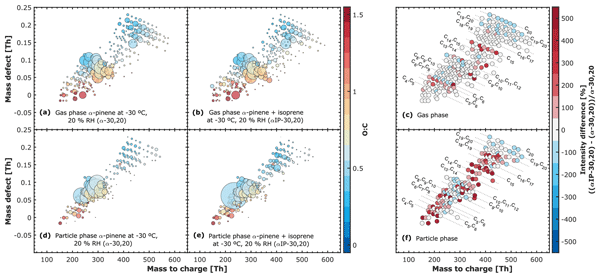
We performed experiments in the CLOUD chamber at CERN at low temperatures to simulate new particle formation in the upper free troposphere (at −30 ºC and −50 ºC). We measured the particle and gas phase and found that most of the compounds present in the gas phase are detected as well in the particle phase. The major compounds in the particles are C8–10 and C18–20. Specifically, we showed that C5 and C15 compounds are detected in a mixed system with isoprene and α-pinene at −30 ºC, 20 % RH.
Larissa Lacher, Hans-Christian Clemen, Xiaoli Shen, Stephan Mertes, Martin Gysel-Beer, Alireza Moallemi, Martin Steinbacher, Stephan Henne, Harald Saathoff, Ottmar Möhler, Kristina Höhler, Thea Schiebel, Daniel Weber, Jann Schrod, Johannes Schneider, and Zamin A. Kanji
Atmos. Chem. Phys., 21, 16925–16953, https://doi.org/10.5194/acp-21-16925-2021, https://doi.org/10.5194/acp-21-16925-2021, 2021
Short summary
Short summary
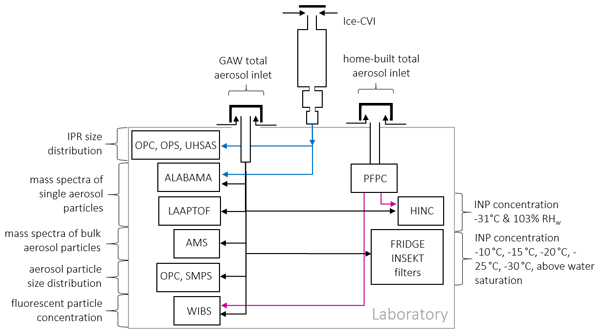
We investigate ice-nucleating particle properties at Jungfraujoch during the 2017 joint INUIT/CLACE field campaign, to improve the knowledge about those rare particles in a cloud-relevant environment. By quantifying ice-nucleating particles in parallel to single-particle mass spectrometry measurements, we find that mineral dust and aged sea spray particles are potential candidates for ice-nucleating particles. Our findings are supported by ice residual analysis and source region modeling.
Cited articles
Adebiyi, A. A. and Kok, J. F.: Climate models miss most of the coarse dust in the atmosphere, Science Advances, 6, eaaz9507, https://doi.org/10.1126/sciadv.aaz9507, 2020. a
Ansmann, A., Bösenberg, J., Chaikovsky, A., Comerón, A., Eckhardt, S., Eixmann, R., Freudenthaler, V., Ginoux, P., Komguem, L., Linné, H., Márquez, M. Ã. L., Matthias, V., Mattis, I., Mitev, V., Müller, D., Music, S., Nickovic, S., Pelon, J., Sauvage, L., Sobolewsky, P., Srivastava, M. K., Stohl, A., Torres, O., Vaughan, G., Wandinger, U., and Wiegner, M.: Long-range transport of Saharan dust to northern Europe: The 11–16 October 2001 outbreak observed with EARLINET, J. Geophys. Res.-Atmos., 108, https://doi.org/10.1029/2003JD003757, 2003. a, b
Avdikos, G.: Powerful Raman Lidar systems for atmospheric analysis and high-energy physics experiments, EPJ Web Conf., 89, 04003, https://doi.org/10.1051/epjconf/20158904003, 2015. a
Barnaba, F. and Gobbi, G. P.: Aerosol seasonal variability over the Mediterranean region and relative impact of maritime, continental and Saharan dust particles over the basin from MODIS data in the year 2001, Atmos. Chem. Phys., 4, 2367–2391, https://doi.org/10.5194/acp-4-2367-2004, 2004. a
Benincasa, F.: Forecast comparison – WMO SDS-WAS, https://dust.aemet.es/products/daily-dust-products (last access: 5 November 2026)., 2023. a
Cao, C., Zheng, S., and Singh, R. P.: Characteristics of aerosol optical properties and meteorological parameters during three major dust events (2005–2010) over Beijing, China, Atmos. Res., 150, 129–142, https://doi.org/10.1016/j.atmosres.2014.07.022, 2014. a, b
Chapman, E. G., Gustafson Jr., W. I., Easter, R. C., Barnard, J. C., Ghan, S. J., Pekour, M. S., and Fast, J. D.: Coupling aerosol-cloud-radiative processes in the WRF-Chem model: Investigating the radiative impact of elevated point sources, Atmos. Chem. Phys., 9, 945–964, https://doi.org/10.5194/acp-9-945-2009, 2009. a
Chouza, F., Reitebuch, O., Benedetti, A., and Weinzierl, B.: Saharan dust long-range transport across the Atlantic studied by an airborne Doppler wind lidar and the MACC model, Atmos. Chem. Phys., 16, 11581–11600, https://doi.org/10.5194/acp-16-11581-2016, 2016. a
Conceição, R., Silva, H. G., Mirão, J., Gostein, M., Fialho, L., Narvarte, L., and Collares-Pereira, M.: Saharan dust transport to Europe and its impact on photovoltaic performance: A case study of soiling in Portugal, Sol. Energy, 160, 94–102, https://doi.org/10.1016/j.solener.2017.11.059, 2018. a
Diop, D., Niang, D. N., Drame, M. S., and Ba, A.: Dust Source, Vertical Profile and Climate Impact by RegCM3 Regional Climate Model over West Africa during 2006, Atmospheric and Climate Sciences, 10, 206–219, https://doi.org/10.4236/acs.2020.102011, 2020. a
Dubovik, O. and King, M. D.: A flexible inversion algorithm for retrieval of aerosol optical properties from Sun and sky radiance measurements, J. Geophys. Res.-Atmos., 105, 20673–20696, https://doi.org/10.1029/2000JD900282, 2000. a, b
Freudenthaler, V.: About the effects of polarising optics on lidar signals and the Δ90 calibration, Atmos. Meas. Tech., 9, 4181–4255, https://doi.org/10.5194/amt-9-4181-2016, 2016. a
Freudenthaler, V., Esselborn, M., Wiegner, M., Heese, B., Tesche, M., Ansmann, A., Müller, D., Althausen, D., Wirth, M., Fix, A., Ehret, G., Knippertz, P., Toledano, C., Gasteiger, J., Garhammer, M., and Seefeldner, M.: Depolarization ratio profiling at several wavelengths in pure Saharan dust during SAMUM 2006, Tellus B, 61, 165–179, https://doi.org/10.1111/j.1600-0889.2008.00396.x, 2009. a, b
Gasteiger, J., Wiegner, M., Groß, S., Freudenthaler, V., Toledano, C., Tesche, M., and Kandler, K.: Modelling lidar-relevant optical properties of complex mineral dust aerosols, Tellus B, 63, 725–741, https://doi.org/10.1111/j.1600-0889.2011.00559.x, 2011. a
Giles, D. M., Sinyuk, A., Sorokin, M. G., Schafer, J. S., Smirnov, A., Slutsker, I., Eck, T. F., Holben, B. N., Lewis, J. R., Campbell, J. R., Welton, E. J., Korkin, S. V., and Lyapustin, A. I.: Advancements in the Aerosol Robotic Network (AERONET) Version 3 database – automated near-real-time quality control algorithm with improved cloud screening for Sun photometer aerosol optical depth (AOD) measurements, Atmos. Meas. Tech., 12, 169–209, https://doi.org/10.5194/amt-12-169-2019, 2019. a, b
Groß, S., Tesche, M., Freudenthaler, V., Toledano, C., Wiegner, M., Ansmann, A., Althausen, D., and Seefeldner, M.: Characterization of Saharan dust, marine aerosols and mixtures of biomass-burning aerosols and dust by means of multi-wavelength depolarization and Raman lidar measurements during SAMUM 2, Tellus B, 63, 706–724, https://doi.org/10.1111/j.1600-0889.2011.00556.x, 2011. a
Guerzoni, S. and Chester, R. (Eds.): The Impact of Desert Dust Across the Mediterranean, vol. 11, Environmental Science and Technology Library, Springer Netherlands, Dordrecht, ISBN 978-90-481-4764-9 978-94-017-3354-0, https://doi.org/10.1007/978-94-017-3354-0, 1996. a
Haarig, M., Ansmann, A., Gasteiger, J., Kandler, K., Althausen, D., Baars, H., Radenz, M., and Farrell, D. A.: Dry versus wet marine particle optical properties: RH dependence of depolarization ratio, backscatter, and extinction from multiwavelength lidar measurements during SALTRACE, Atmos. Chem. Phys., 17, 14199–14217, https://doi.org/10.5194/acp-17-14199-2017, 2017. a
Haarig, M., Ansmann, A., Engelmann, R., Baars, H., Toledano, C., Torres, B., Althausen, D., Radenz, M., and Wandinger, U.: First triple-wavelength lidar observations of depolarization and extinction-to-backscatter ratios of Saharan dust, Atmos. Chem. Phys., 22, 355–369, https://doi.org/10.5194/acp-22-355-2022, 2022. a
Hermes, K., Quinting, J., Grams, C. M., Hoose, C., and Hoshyaripour, G. A.: Impact of Saharan dust outbreaks on short-range weather forecast errors in Europe, Q. J. Roy. Meteor. Soc., 150, 1704–1723, https://doi.org/10.1002/qj.4666, 2024. a
Holben, B. N., Eck, T. F., Slutsker, I., Tanré, D., Buis, J. P., Setzer, A., Vermote, E., Reagan, J. A., Kaufman, Y. J., Nakajima, T., Lavenu, F., Jankowiak, I., and Smirnov, A.: AERONET – A federated instrument network and data archive for aerosol characterization, Remote Sens. Environ., 66, 1–16, https://doi.org/10.1016/S0034-4257(98)00031-5, 1998. a
Hoshyaripour, G. A., Bachmann, V., Förstner, J., Steiner, A., Vogel, H., Wagner, F., Walter, C., and Vogel, B.: Effects of Particle Nonsphericity on Dust Optical Properties in a Forecast System: Implications for Model-Observation Comparison, J. Geophys. Res.-Atmos., 124, 7164–7178, https://doi.org/10.1029/2018JD030228, 2019. a, b, c, d, e
Hoshyaripour, G. A., Baer, A., Bierbauer, S., Bruckert, J., Brunner, D., Förstner, J., Hamzehloo, A., Hanft, V., Keller, C., Klose, M., Kumar, P., Ludwig, P., Metzner, E., Muth, L., Pauling, A., Porz, N., Ramezani Ziarani, M., Reddmann, T., Reißig, L., Ruhnke, R., Satitkovitchai, K., Seifert, A., Sinnhuber, M., Steiner, M., Versick, S., Vogel, H., Weimer, M., Werchner, S., and Hoose, C.: The atmospheric composition component of the ICON modeling framework: ICON-ART version 2025.10, Geosci. Model Dev., 19, 1645–1681, https://doi.org/10.5194/gmd-19-1645-2026, 2026. a, b, c, d
Jiang, F., Saathoff, H., Ezenobi, U., Song, J., Zhang, H., Gao, L., and Leisner, T.: Measurement report: Brown carbon aerosol in rural Germany – sources, chemistry, and diurnal variations, Atmos. Chem. Phys., 25, 1917–1930, https://doi.org/10.5194/acp-25-1917-2025, 2025. a
Jöckel, P., Tost, H., Pozzer, A., Brühl, C., Buchholz, J., Ganzeveld, L., Hoor, P., Kerkweg, A., Lawrence, M. G., Sander, R., Steil, B., Stiller, G., Tanarhte, M., Taraborrelli, D., van Aardenne, J., and Lelieveld, J.: The atmospheric chemistry general circulation model ECHAM5/MESSy1: consistent simulation of ozone from the surface to the mesosphere, Atmos. Chem. Phys., 6, 5067–5104, https://doi.org/10.5194/acp-6-5067-2006, 2006. a
Jöckel, P., Kerkweg, A., Pozzer, A., Sander, R., Tost, H., Riede, H., Baumgaertner, A., Gromov, S., and Kern, B.: Development cycle 2 of the Modular Earth Submodel System (MESSy2), Geosci. Model Dev., 3, 717–752, https://doi.org/10.5194/gmd-3-717-2010, 2010. a
Kandler, K., Benker, N., Bundke, U., Cuevas, E., Ebert, M., Knippertz, P., Rodríguez, S., Schütz, L., and Weinbruch, S.: Chemical composition and complex refractive index of Saharan Mineral Dust at Izaña, Tenerife (Spain) derived by electron microscopy, Atmos. Environ., 41, 8058–8074, https://doi.org/10.1016/j.atmosenv.2007.06.047, 2007. a
Kanngießer, F. and Fiedler, S.: Intercomparison case study of data-driven reconstructions of a cloud-obscured Saharan dust plume in Europe, Sci. Rep., 16, 17165, https://doi.org/10.1038/s41598-026-55422-y, 2026. a
Kim, D., Chin, M., Yu, H., Eck, T. F., Sinyuk, A., Smirnov, A., and Holben, B. N.: Dust optical properties over North Africa and Arabian Peninsula derived from the AERONET dataset, Atmos. Chem. Phys., 11, 10733–10741, https://doi.org/10.5194/acp-11-10733-2011, 2011. a
Kunz, A., Pan, L. L., Konopka, P., Kinnison, D. E., and Tilmes, S.: Chemical and dynamical discontinuity at the extratropical tropopause based on START08 and WACCM analyses, J. Geophys. Res.-Atmos., 116, https://doi.org/10.1029/2011JD016686, 2011. a
Kunz, M., Abbas, S. S., Bauckholt, M., Böhmländer, A., Feuerle, T., Gasch, P., Glaser, C., Groß, J., Hajnsek, I., Handwerker, J., Hase, F., Khordakova, D., Knippertz, P., Kohler, M., Lange, D., Latt, M., Laube, J., Martin, L., Mauder, M., Möhler, O., Mohr, S., Reitter, R. W., Rettenmeier, A., Rolf, C., Saathoff, H., Schrön, M., Schütze, C., Spahr, S., Späth, F., Vogel, F., Völksch, I., Weber, U., Wieser, A., Wilhelm, J., Zhang, H., and Dietrich, P.: Swabian MOSES 2021: An interdisciplinary field campaign for investigating convective storms and their event chains, Front. Earth Sci., 10, https://doi.org/10.3389/feart.2022.999593, 2022. a, b, c
Liu, Z., Omar, A., Vaughan, M., Hair, J., Kittaka, C., Hu, Y., Powell, K., Trepte, C., Winker, D., Hostetler, C., Ferrare, R., and Pierce, R.: CALIPSO lidar observations of the optical properties of Saharan dust: A case study of long-range transport, J. Geophys. Res.-Atmos., 113, https://doi.org/10.1029/2007JD008878, 2008. a
Mallet, M., Tulet, P., Serça, D., Solmon, F., Dubovik, O., Pelon, J., Pont, V., and Thouron, O.: Impact of dust aerosols on the radiative budget, surface heat fluxes, heating rate profiles and convective activity over West Africa during March 2006, Atmos. Chem. Phys., 9, 7143–7160, https://doi.org/10.5194/acp-9-7143-2009, 2009. a
Max Planck Institute for Meteorology, German Meteorological Service, German Climate Computing Centre, Karlsruhe Institute of Technology, and Center for Climate Systems Modeling: ICON 2026.04 Release (Version 2026.04), Zenodo [code], https://doi.org/10.5281/zenodo.20762965, 2026. a
Merdji, A. B., Lu, C., Xu, X., and Mhawish, A.: Long-term three-dimensional distribution and transport of Saharan dust: Observation from CALIPSO, MODIS, and reanalysis data, Atmos. Res., 286, 106658, https://doi.org/10.1016/j.atmosres.2023.106658, 2023. a
Middleton, N. J. and Goudie, A. S.: Saharan dust: sources and trajectories, T. I. Brit. Geogr., 26, 165–181, https://doi.org/10.1111/1475-5661.00013, 2001. a
Misra, A., Tripathi, S. N., Kaul, D. S., and Welton, E. J.: Study of MPLNET-Derived Aerosol Climatology over Kanpur, India, and Validation of CALIPSO Level 2 Version 3 Backscatter and Extinction Products, J. Atmos. Ocean. Tech., 29, 1285–1294, https://doi.org/10.1175/JTECH-D-11-00162.1, 2012. a
Molinaroli, E., Guerzoni, S., and Rampazzo, G.: Contribution of Saharan dust to the Central Mediterranean Basin, in: Processes Controlling the Composition of Clastic Sediments, edited by: Johnsson, M. J. and Basu, A., vol. 284, Geological Society of America, ISBN 978-0-8137-2284-9, https://doi.org/10.1130/SPE284-p303, 1993. a
Mona, L., Papagiannopoulos, N., Basart, S., Baldasano, J., Binietoglou, I., Cornacchia, C., and Pappalardo, G.: EARLINET dust observations vs. BSC-DREAM8b modeled profiles: 12-year-long systematic comparison at Potenza, Italy, Atmos. Chem. Phys., 14, 8781–8793, https://doi.org/10.5194/acp-14-8781-2014, 2014. a
Müller, D., Weinzierl, B., Petzold, A., Kandler, K., Ansmann, A., Müller, T., Tesche, M., Freudenthaler, V., Esselborn, M., Heese, B., Althausen, D., Schladitz, A., Otto, S., and Knippertz, P.: Mineral dust observed with AERONET Sun photometer, Raman lidar, and in situ instruments during SAMUM 2006: Shape-independent particle properties, J. Geophys. Res.-Atmos., 115, https://doi.org/10.1029/2009JD012520, 2010. a
Müller, D., Lee, K.-H., Gasteiger, J., Tesche, M., Weinzierl, B., Kandler, K., Müller, T., Toledano, C., Otto, S., Althausen, D., and Ansmann, A.: Comparison of optical and microphysical properties of pure Saharan mineral dust observed with AERONET Sun photometer, Raman lidar, and in situ instruments during SAMUM 2006, J. Geophys. Res.-Atmos., 117, https://doi.org/10.1029/2011JD016825, 2012. a
Pozzoli, L., Bey, I., Rast, S., Schultz, M. G., Stier, P., and Feichter, J.: Trace gas and aerosol interactions in the fully coupled model of aerosol-chemistry-climate ECHAM5-HAMMOZ: 1. Model description and insights from the spring 2001 TRACE-P experiment, J. Geophys. Res.-Atmos., 113, https://doi.org/10.1029/2007JD009007, 2008a. a
Pozzoli, L., Bey, I., Rast, S., Schultz, M. G., Stier, P., and Feichter, J.: Trace gas and aerosol interactions in the fully coupled model of aerosol-chemistry-climate ECHAM5-HAMMOZ: 2. Impact of heterogeneous chemistry on the global aerosol distributions, J. Geophys. Res.-Atmos., 113, https://doi.org/10.1029/2007JD009008, 2008b. a
Ratcliffe, N. G., Ryder, C. L., Bellouin, N., Jones, A., Johnson, B., Woodward, S., Wieland, L.-M., Gasteiger, J., and Weinzierl, B.: New processes to counteract sedimentation of coarse dust particles are required for climate models to agree with aircraft observations, EGUsphere [preprint], https://doi.org/10.5194/egusphere-2025-5143, 2025. a, b
Rieger, D., Bangert, M., Bischoff-Gauss, I., Förstner, J., Lundgren, K., Reinert, D., Schröter, J., Vogel, H., Zängl, G., Ruhnke, R., and Vogel, B.: ICON–ART 1.0 – a new online-coupled model system from the global to regional scale, Geosci. Model Dev., 8, 1659–1676, https://doi.org/10.5194/gmd-8-1659-2015, 2015. a
Rieger, D., Steiner, A., Bachmann, V., Gasch, P., Förstner, J., Deetz, K., Vogel, B., and Vogel, H.: Impact of the 4 April 2014 Saharan dust outbreak on the photovoltaic power generation in Germany, Atmos. Chem. Phys., 17, 13391–13415, https://doi.org/10.5194/acp-17-13391-2017, 2017a. a
Rieger, D., Steiner, A., Bachmann, V., Gasch, P., Förstner, J., Deetz, K., Vogel, B., and Vogel, H.: Impact of the 4 April 2014 Saharan dust outbreak on the photovoltaic power generation in Germany, Atmos. Chem. Phys., 17, 13391–13415, https://doi.org/10.5194/acp-17-13391-2017, 2017b. a
Roeckner, E., Brokopf, R., Esch, M., Giorgetta, M., Hagemann, S., Kornblueh, L., Manzini, E., Schlese, U., and Schulzweida, U.: Sensitivity of Simulated Climate to Horizontal and Vertical Resolution in the ECHAM5 Atmosphere Model, J. Climate, 19, 3771–3791, https://doi.org/10.1175/JCLI3824.1, 2006. a
Rostási, Ã., Topa, B. A., Gresina, F., Weiszburg, T. G., Gelencsér, A., and Varga, G.: Saharan Dust Deposition in Central Europe in 2016 – A Representative Year of the Increased North African Dust Removal Over the Last Decade, Front. Earth Sci., 10, https://doi.org/10.3389/feart.2022.869902, 2022. a
Saidou Chaibou, A. A., Ma, X., and Sha, T.: Dust radiative forcing and its impact on surface energy budget over West Africa, Sci. Rep., 10, 12236, https://doi.org/10.1038/s41598-020-69223-4, 2020. a
Schuster, G. L., Vaughan, M., MacDonnell, D., Su, W., Winker, D., Dubovik, O., Lapyonok, T., and Trepte, C.: Comparison of CALIPSO aerosol optical depth retrievals to AERONET measurements, and a climatology for the lidar ratio of dust, Atmos. Chem. Phys., 12, 7431–7452, https://doi.org/10.5194/acp-12-7431-2012, 2012. a, b
Seifert, A., Bachmann, V., Filipitsch, F., Förstner, J., Grams, C. M., Hoshyaripour, G. A., Quinting, J., Rohde, A., Vogel, H., Wagner, A., and Vogel, B.: Aerosol–cloud–radiation interaction during Saharan dust episodes: the dusty cirrus puzzle, Atmos. Chem. Phys., 23, 6409–6430, https://doi.org/10.5194/acp-23-6409-2023, 2023. a
Sinyuk, A., Holben, B. N., Eck, T. F., Giles, D. M., Slutsker, I., Korkin, S., Schafer, J. S., Smirnov, A., Sorokin, M., and Lyapustin, A.: The AERONET Version 3 aerosol retrieval algorithm, associated uncertainties and comparisons to Version 2, Atmos. Meas. Tech., 13, 3375–3411, https://doi.org/10.5194/amt-13-3375-2020, 2020. a
Smith, K., Garcia, R., Marsh, D., and Richter, H.: WACCM simulations of the mean circulation and trace species transport in the winter mesosphere, J. Geophys. Res.-Atmos., https://doi.org/10.1029/2011JD016083, 2011. a
Song, Q., Zhang, Z., Yu, H., Kok, J. F., Di Biagio, C., Albani, S., Zheng, J., and Ding, J.: Size-resolved dust direct radiative effect efficiency derived from satellite observations, Atmos. Chem. Phys., 22, 13115–13135, https://doi.org/10.5194/acp-22-13115-2022, 2022. a
Sugimoto, N., Nishizawa, T., Shimizu, A., and Jin, Y.: The Asian Dust and Aerosol Lidar Observation Network (AD-Net), in: Light, Energy and the Environment (2016), paper EW2A.1, EW2A.1, Optica Publishing Group, https://doi.org/10.1364/EE.2016.EW2A.1, 2016. a
Tanaka, T. Y., Kurosaki, Y., Chiba, M., Matsumura, T., Nagai, T., Yamazaki, A., Uchiyama, A., Tsunematsu, N., and Kai, K.: Possible transcontinental dust transport from North Africa and the Middle East to East Asia, Atmos. Environ., 39, 3901–3909, https://doi.org/10.1016/j.atmosenv.2005.03.034, 2005. a
Tesche, M., Ansmann, A., Müller, D., Althausen, D., Engelmann, R., Freudenthaler, V., and Groß, S.: Vertically resolved separation of dust and smoke over Cape Verde using multiwavelength Raman and polarization lidars during Saharan Mineral Dust Experiment 2008, J. Geophys. Res.-Atmos., 114, https://doi.org/10.1029/2009JD011862, 2009a. a
Tesche, M., Ansmann, A., Müller, D., Althausen, D., Engelmann, R., Freudenthaler, V., and Groß, S.: Vertically resolved separation of dust and smoke over Cape Verde using multiwavelength Raman and polarization lidars during Saharan Mineral Dust Experiment 2008, J. Geophys. Res.-Atmos., 114, https://doi.org/10.1029/2009JD011862, 2009b. a
Varga, G.: Changing nature of Saharan dust deposition in the Carpathian Basin (Central Europe): 40 years of identified North African dust events (1979–2018), Environ. Int., 139, 105712, https://doi.org/10.1016/j.envint.2020.105712, 2020. a
Vermeulen, A., Devaux, C., and Herman, M.: Retrieval of the scattering and microphysical properties of aerosols from ground-based optical measurements including polarization. I. Method, Appl. Opt., 39, 6207–6220, https://doi.org/10.1364/AO.39.006207, 2000. a
Vogel, B., Hoose, C., Vogel, H., and Kottmeier, C.: A model of dust transport applied to the Dead Sea Area, Meteorol. Z., 611–624, https://doi.org/10.1127/0941-2948/2006/0168, 2006. a
Vogel, H., Förstner, J., Vogel, B., Hanisch, T., Mühr, B., Schättler, U., and Schad, T.: Time-lagged ensemble simulations of the dispersion of the Eyjafjallajökull plume over Europe with COSMO-ART, Atmos. Chem. Phys., 14, 7837–7845, https://doi.org/10.5194/acp-14-7837-2014, 2014. a
Weimer, M., Schröter, J., Eckstein, J., Deetz, K., Neumaier, M., Fischbeck, G., Hu, L., Millet, D. B., Rieger, D., Vogel, H., Vogel, B., Reddmann, T., Kirner, O., Ruhnke, R., and Braesicke, P.: An emission module for ICON-ART 2.0: implementation and simulations of acetone, Geosci. Model Dev., 10, 2471–2494, https://doi.org/10.5194/gmd-10-2471-2017, 2017. a
Wu, M., Liu, X., Yu, H., Wang, H., Shi, Y., Yang, K., Darmenov, A., Wu, C., Wang, Z., Luo, T., Feng, Y., and Ke, Z.: Understanding processes that control dust spatial distributions with global climate models and satellite observations, Atmos. Chem. Phys., 20, 13835–13855, https://doi.org/10.5194/acp-20-13835-2020, 2020. a
Zhang, H., Wagner, F., Saathoff, H., Vogel, H., Hoshyaripour, G., Bachmann, V., Förstner, J., and Leisner, T.: Comparison of Scanning LiDAR with Other Remote Sensing Measurements and Transport Model Predictions for a Saharan Dust Case, Remote Sensing, 14, 1693, https://doi.org/10.3390/rs14071693, 2022. a, b, c, d, e, f, g
Zhang, H., Hoshyaripour, G. A., Vogel, H., Wagner, F., Leisner, T., Förstner, J., Shrestha, P., and Saathoff, H.: Dataset: Saharan dust transport and boundary layer entrainment over Western Europe: multi-instrument observations and convection-permitting model evaluation, Karlsruhe Institute of Technology [data set], https://doi.org/10.35097/6hm7pus0e79ztvub, 2026. a
Zo, I.-S. and Shin, S.-K.: A Short Note on the Potential of Utilization of Spectral AERONET-Derived Depolarization Ratios for Aerosol Classification, Atmosphere, 10, https://doi.org/10.3390/atmos10030143, 2019. a
Zängl, G., Reinert, D., Rípodas, P., and Baldauf, M.: The ICON (ICOsahedral Non-hydrostatic) modelling framework of DWD and MPI-M: Description of the non-hydrostatic dynamical core, Q. J. Roy. Meteor. Soc., 141, 563–579, https://doi.org/10.1002/qj.2378, 2015. a
Short summary
Dust from the Sahara affects clouds, sunlight, air quality, and weather forecasts in Europe. We combined ground instruments, satellites, and computer simulations to study four dust events over southwestern Germany. The simulations captured when the dust arrived and where its layers formed. Detailed simulations worked best with frequently updated weather information, but they still lost too many large dust particles. Better treatment of these particles should improve future forecasts.
Dust from the Sahara affects clouds, sunlight, air quality, and weather forecasts in Europe. We...


Altmetrics
Final-revised paper
Preprint