Articles | Volume 26, issue 2
https://doi.org/10.5194/acp-26-1605-2026
© Author(s) 2026. This work is distributed under
the Creative Commons Attribution 4.0 License.

https://doi.org/10.5194/acp-26-1605-2026
© Author(s) 2026. This work is distributed under
the Creative Commons Attribution 4.0 License.
Persistent high PM pollution in the Eastern Mediterranean and Middle East: insights from long-term observations and source apportionment in Cyprus
Elie Bimenyimana

CORRESPONDING AUTHOR
Climate and Atmosphere Research Centre (CARE-C), The Cyprus Institute, Nicosia, Cyprus
Jean Sciare
Climate and Atmosphere Research Centre (CARE-C), The Cyprus Institute, Nicosia, Cyprus
Michael Pikridas
Climate and Atmosphere Research Centre (CARE-C), The Cyprus Institute, Nicosia, Cyprus
Konstantina Oikonomou
Climate and Atmosphere Research Centre (CARE-C), The Cyprus Institute, Nicosia, Cyprus
Minas Iakovides
Climate and Atmosphere Research Centre (CARE-C), The Cyprus Institute, Nicosia, Cyprus
Emily Vasiliadou
Department of Labour Inspection, Ministry of Labour and Social Insurance, Nicosia, Cyprus
Chrysanthos Savvides
Department of Labour Inspection, Ministry of Labour and Social Insurance, Nicosia, Cyprus
Nikos Mihalopoulos
CORRESPONDING AUTHOR
Climate and Atmosphere Research Centre (CARE-C), The Cyprus Institute, Nicosia, Cyprus
National Observatory of Athens, Athens, Greece
Related authors
Aliki Christodoulou, Iasonas Stavroulas, Mihalis Vrekoussis, Maximillien Desservettaz, Michael Pikridas, Elie Bimenyimana, Jonilda Kushta, Matic Ivančič, Martin Rigler, Philippe Goloub, Konstantina Oikonomou, Roland Sarda-Estève, Chrysanthos Savvides, Charbel Afif, Nikos Mihalopoulos, Stéphane Sauvage, and Jean Sciare
Atmos. Chem. Phys., 23, 6431–6456, https://doi.org/10.5194/acp-23-6431-2023, https://doi.org/10.5194/acp-23-6431-2023, 2023
Short summary
Short summary
Our study presents, for the first time, a detailed source identification of aerosols at an urban background site in Cyprus (eastern Mediterranean), a region strongly impacted by climate change and air pollution. Here, we identify an unexpected high contribution of long-range transported pollution from fossil fuel sources in the Middle East, highlighting an urgent need to further characterize these fast-growing emissions and their impacts on regional atmospheric composition, climate, and health.
Rima Baalbaki, Michael Pikridas, Tuija Jokinen, Tiia Laurila, Lubna Dada, Spyros Bezantakos, Lauri Ahonen, Kimmo Neitola, Anne Maisser, Elie Bimenyimana, Aliki Christodoulou, Florin Unga, Chrysanthos Savvides, Katrianne Lehtipalo, Juha Kangasluoma, George Biskos, Tuukka Petäjä, Veli-Matti Kerminen, Jean Sciare, and Markku Kulmala
Atmos. Chem. Phys., 21, 9223–9251, https://doi.org/10.5194/acp-21-9223-2021, https://doi.org/10.5194/acp-21-9223-2021, 2021
Short summary
Short summary
This study investigates new particle formation (NPF) in the less represented region of the Mediterranean basin using 1-year measurements of aerosol particles down to ~ 1 nm in diameter. We report a high frequency of NPF and give examples of interesting NPF features. We quantify the strength of NPF events by calculating formation rates and growth rates. We further unveil the atmospheric conditions and variables considered important for the intra-monthly and inter-monthly occurrence of NPF.
Siqing Xu, Yves Balkanski, Philippe Ciais, and Jean Sciare
EGUsphere, https://doi.org/10.5194/egusphere-2026-1070, https://doi.org/10.5194/egusphere-2026-1070, 2026
This preprint is open for discussion and under review for Atmospheric Chemistry and Physics (ACP).
Short summary
Short summary
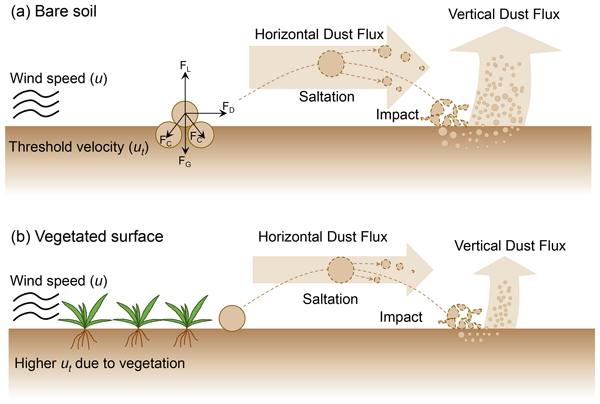
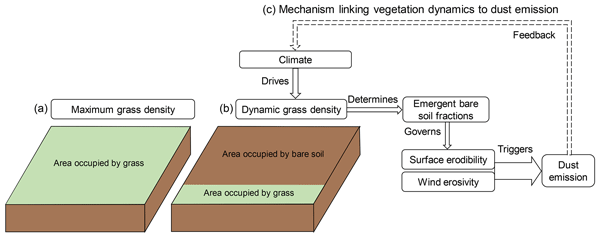
Uncertainty in dust emission estimates stems from simplified surface parameterizations. We incorporate dynamic vegetation cover into the dust emission scheme of an Earth System Model. Including vegetation reduces global dust emissions by 23 % and redistributes regional contributions by suppressing emissions in grass-covered dryland, improving agreement with observations of the global dust cycle. This work establishes a framework for advancing the representation of land–atmosphere feedbacks.
Anchal Garg, Maximilien Desservettaz, Aliki Christodoulou, Theodoros Christoudias, Vijay Punjaji Kanawade, Chrysanthos Savvides, Mihalis Vrekoussis, Shahid Naqui, Tuija Jokinen, Joseph Byron, Jonathan Williams, Nikos Mihalopoulos, Eleni Liakakou, Jean Sciare, and Efstratios Bourtsoukidis
Atmos. Chem. Phys., 26, 2597–2622, https://doi.org/10.5194/acp-26-2597-2026, https://doi.org/10.5194/acp-26-2597-2026, 2026
Short summary
Short summary
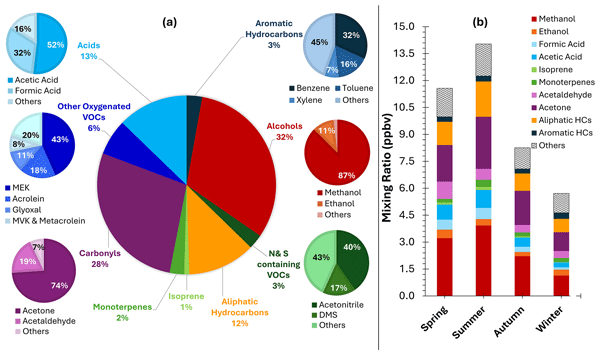
This study reports multi-year (2022–2024) measurements of 76 volatile organic compounds (VOCs) at a rural site in Cyprus. Oxygenated VOCs were the most abundant and showed strong daytime increases due to sunlight-driven chemistry. Air-mass analysis showed that transport from Middle East strongly influenced aromatic VOC levels. Climate–chemistry modeling underestimated most VOCs, highlighting gaps in current emission and chemical processes.
Alkistis Papetta, Maria Kezoudi, Holger Baars, Athina Floutsi, Eleni Drakaki, Konrad Kandler, Sudharaj Aryasree, Elena Louca, Theodoros Christoudias, Eleni Marinou, Chris Stopford, Troy Thornberry, Vassilis Amiridis, Jean Sciare, and Franco Marenco
Atmos. Chem. Phys., 26, 2055–2082, https://doi.org/10.5194/acp-26-2055-2026, https://doi.org/10.5194/acp-26-2055-2026, 2026
Short summary
Short summary
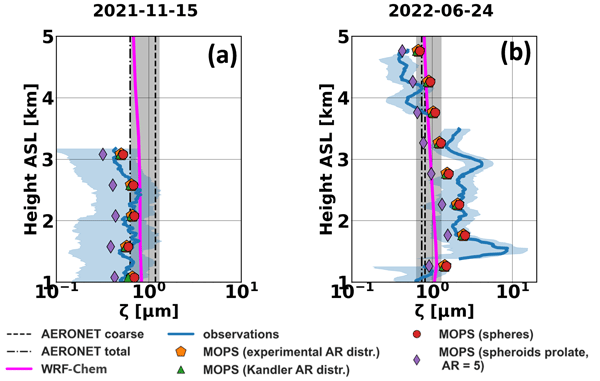
Dust in the atmosphere affects air quality, weather, and climate, but measuring it is challenging. We used drones and ground-based instruments to study how dust particles interact with light and relate this to their mass. Current methods often underestimate large dust particles, leading to errors in dust quantity. Our results show that regional differences in dust must be considered to improve climate models and satellite observations.
Constantina Rousogenous, Christof Petri, Pierre-Yves Quéhé, Thomas Laemmel, Joshua L. Laughner, Maximilien Desservettaz, Michael Pikridas, Michel Ramonet, Efstratios Bourtsoukidis, Matthias Buschmann, Justus Notholt, Thorsten Warneke, Jean-Daniel Paris, Jean Sciare, and Mihalis Vrekoussis
Atmos. Meas. Tech., 19, 565–581, https://doi.org/10.5194/amt-19-565-2026, https://doi.org/10.5194/amt-19-565-2026, 2026
Short summary
Short summary
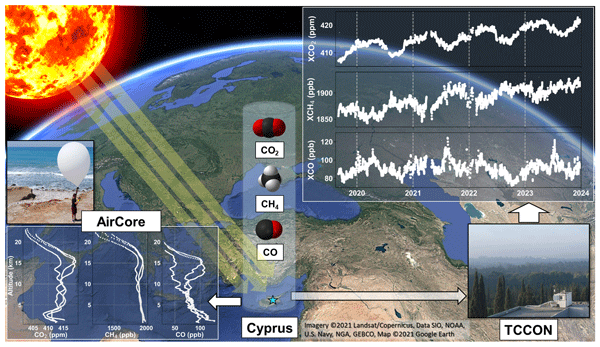
The Eastern Mediterranean and Middle East is a greenhouse gas emission hotspot but lacks atmospheric monitoring. Our study introduces the first Total Carbon Column Observing Network site in this region, in Cyprus, providing high-precision columnar measurement of key greenhouse gases. This new dataset enhances global climate monitoring efforts, supports the validation of satellites, will help assess regional emission trends, filling a critical observational gap in this climate-sensitive region.
Stefanos Papagiannis, Manousos I. Manousakas, Dimitrios F. Anagnostopoulos, Michael Pipkridas, Rima Baalbaki, Jean Sciare, Niall O'Sullivan, Stig Hellebust, John Wenger, Kirsten N. Fossum, Jurgita Ovadnevaite, Anja Tremper, David Green, Konstantinos Eleftheriadis, and Evangelia Diapouli
EGUsphere, https://doi.org/10.5194/egusphere-2025-5977, https://doi.org/10.5194/egusphere-2025-5977, 2026
This preprint is open for discussion and under review for Atmospheric Measurement Techniques (AMT).
Short summary
Short summary
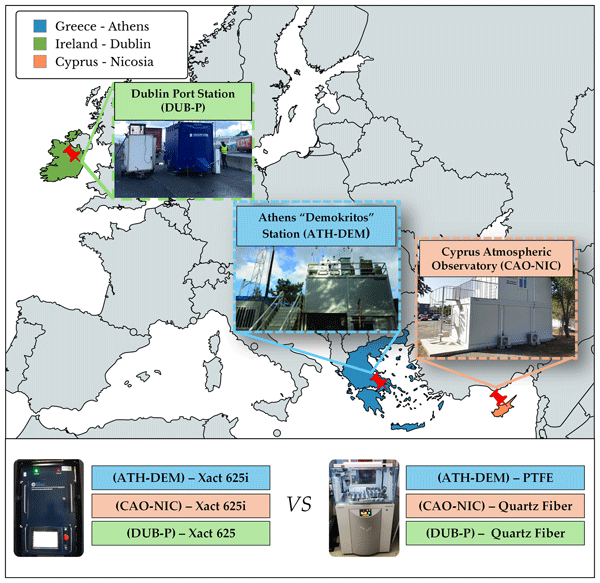
This study compared continuous and benchtop XRF elemental monitors across three European cities to validate air quality measurement consistency. PTFE filters yield strong agreement, but common quartz filters introduce systematic deviations, especially for light elements, due to attenuation effects. We provide practical methodologies to harmonize data from diverse filter types and instruments, which is essential for pollution source tracking and reliable data sharing across monitoring networks.
Roubina Papaconstantinou, Spyros Bezantakos, Michael Pikridas, Moreno Parolin, Melina Stylianou, Chrysanthos Savvides, Jean Sciare, and George Biskos
Atmos. Meas. Tech., 19, 63–78, https://doi.org/10.5194/amt-19-63-2026, https://doi.org/10.5194/amt-19-63-2026, 2026
Short summary
Short summary
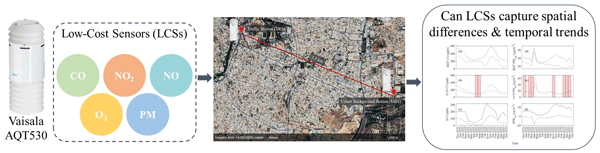
We evaluate the ability of the Vaisala AQT530 (Air Quality Transmitter) monitors, comprising of low-cost sensors, to detect spatial and temporal differences. Collocated with reference instruments over 19 months in Nicosia, results showed that CO and PM (particulate matter) sensors captured daily, hourly, and monthly spatial trends. NO2, NO, and O3 sensors were less reliable due to environmental effects. Still, all sensors tracked monthly temporal variations at the same location, with PM2.5 showing the strongest agreement with reference data.
Siqing Xu, Sebastiaan Luyssaert, Yves Balkanski, Philippe Ciais, Nicolas Viovy, Liang Wan, and Jean Sciare
Geosci. Model Dev., 19, 1–25, https://doi.org/10.5194/gmd-19-1-2026, https://doi.org/10.5194/gmd-19-1-2026, 2026
Short summary
Short summary
Prescribing a fixed grassland density in the ORCHIDEE model limits its ability to capture grassland dynamics, leading to unrealistic mortality, especially in semi-arid grasslands. We proposed a dynamic density approach where a positive density-precipitation relationship emerges. This method improves spatial pattern, significantly reduces mortality, sustains productivity, and raises the aridity threshold above which frequent mortality events occur in grasslands.
Andreas Eleftheriou, Petros Mouzourides, Panayiotis Kouis, Nikos Kalivitis, Itzhak Katra, Emily Vasiliadou, Chrysanthos Savvides, Panayiotis Yiallouros, and Marina K.-A. Neophytou
Nat. Hazards Earth Syst. Sci., 25, 4961–4982, https://doi.org/10.5194/nhess-25-4961-2025, https://doi.org/10.5194/nhess-25-4961-2025, 2025
Short summary
Short summary
Desert dust storms are a significant environmental concern in the Eastern Mediterranean. This study compared eleven forecasting models to see how well they predict dust levels in the atmosphere. By checking their results against in-situ and satellite measurements, we found that some models work better than others, but none are perfect. These findings can help improve forecasting systems, making them more reliable and useful for protecting public health and preparing for extreme dust events.
Anna Maria Neroladaki, Maria Tsagkaraki, Kyriaki Papoutsidaki, Kalliopi Tavernaraki, Filothei Boufidou, Pavlos Zarmpas, Irini Tsiodra, Eleni Liakakou, Aikaterini Bougiatioti, Giorgos Kouvarakis, Nikos Kalivitis, Christos Kaltsonoudis, Athanasios Karagioras, Dimitrios Balis, Konstantinos Michailidis, Konstantinos Kourtidis, Stelios Myriokefalitakis, Nikos Hatzianastassiou, Spyros N. Pandis, Athanasios Nenes, Nikolaos Mihalopoulos, and Maria Kanakidou
Atmos. Chem. Phys., 25, 17953–17971, https://doi.org/10.5194/acp-25-17953-2025, https://doi.org/10.5194/acp-25-17953-2025, 2025
Short summary
Short summary
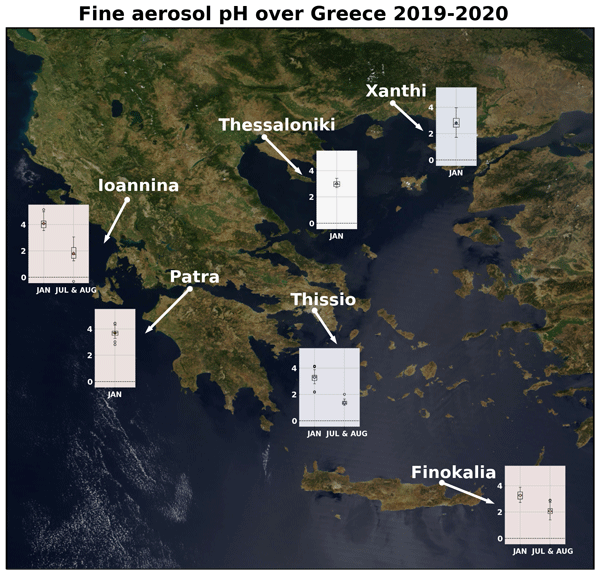
Aerosol acidity affects aerosol composition and properties, and therefore climate, human health and ecosystems. We use summer and winter fine aerosol observations at 6 sites across Greece, and a thermodynamic model to calculate the spatial and seasonal variability of aerosol acidity. Aerosols were acidic to moderately acidic and more acidic during summer than winter. The importance of organics for aerosol acidity was small. Depending on location different factors controlled aerosol acidity.
Aino Ovaska, Elio Rauth, Daniel Holmberg, Paulo Artaxo, John Backman, Benjamin Bergmans, Don Collins, Marco Aurélio Franco, Shahzad Gani, Roy M. Harrison, Rakesh K. Hooda, Tareq Hussein, Antti-Pekka Hyvärinen, Kerneels Jaars, Adam Kristensson, Markku Kulmala, Lauri Laakso, Ari Laaksonen, Nikolaos Mihalopoulos, Colin O'Dowd, Jakub Ondracek, Tuukka Petäjä, Kristina Plauškaitė, Mira Pöhlker, Ximeng Qi, Peter Tunved, Ville Vakkari, Alfred Wiedensohler, Kai Puolamäki, Tuomo Nieminen, Veli-Matti Kerminen, Victoria A. Sinclair, and Pauli Paasonen
Aerosol Research, 3, 589–618, https://doi.org/10.5194/ar-3-589-2025, https://doi.org/10.5194/ar-3-589-2025, 2025
Short summary
Short summary
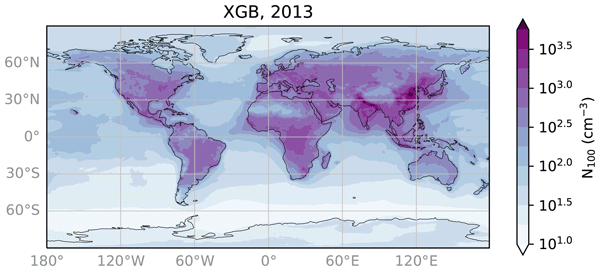
We trained machine learning models to estimate the number of aerosol particles large enough to form clouds and generated daily estimates for the entire globe. The models performed well in many continental regions but struggled in remote and marine areas. Still, this approach offers a way to quantify these particles in areas that lack direct measurements, helping us understand their influence on clouds and climate on a global scale.
Maria Kezoudi, Alkistis Papetta, Konrad Kandler, Claire L. Ryder, Andreas Leonidou, Christos Keleshis, Chris Stopford, Troy Thornberry, Rodanthi-Elisavet Mamouri, Jean Sciare, and Franco Marenco
EGUsphere, https://doi.org/10.5194/egusphere-2025-5234, https://doi.org/10.5194/egusphere-2025-5234, 2025
Short summary
Short summary
This study demonstrates a cost-efficient methodology using Uncrewed Aerial Systems for quantitative characterization of airborne dust. It enables high-resolution vertical profiling of microphysical and compositional properties of dust layers from the Middle East and North Africa over Cyprus, improving understanding of regional dust transport, source-dependent variability, and impacts on air quality, radiation, and climate.
Alexandra P. Tsimpidi, Susanne M. C. Scholz, Alexandros Milousis, Nikolaos Mihalopoulos, and Vlassis A. Karydis
Atmos. Chem. Phys., 25, 10183–10213, https://doi.org/10.5194/acp-25-10183-2025, https://doi.org/10.5194/acp-25-10183-2025, 2025
Short summary
Short summary
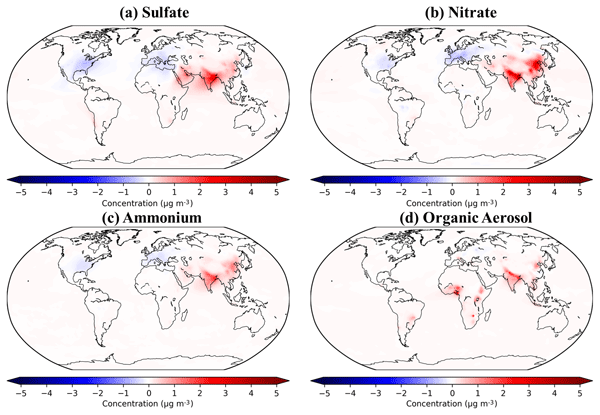
This study examines global changes in air pollution from 2000 to 2020, focusing on fine aerosols that impact climate and health. Using models and global data, it finds that organic aerosols dominate in many regions, especially with wildfires or natural emissions. Pollution from sulfate and nitrate has decreased in Europe and North America due to regulations, while trends in Asia are more complex. The findings improve understanding and support policies for cleaner air and healthier environments.
Anthony Rey-Pommier, Alexandre Héraud, Frédéric Chevallier, Philippe Ciais, Theodoros Christoudias, Jonilda Kushta, and Jean Sciare
Earth Syst. Sci. Data, 17, 3329–3351, https://doi.org/10.5194/essd-17-3329-2025, https://doi.org/10.5194/essd-17-3329-2025, 2025
Short summary
Short summary
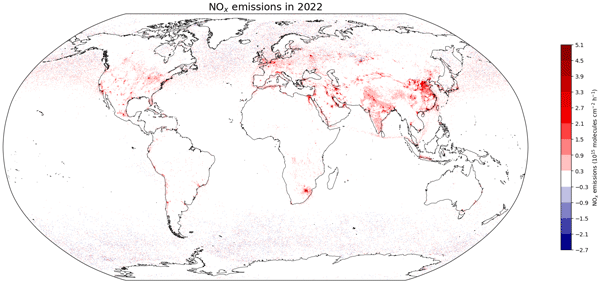
In this study, we estimate emissions of nitrogen oxides (NOx) in 2022 at high resolution at the global scale, using satellite observations. We provide maps of the emissions and identify several types of sources. Our results are similar to the EDGAR emission inventory. However, differences are found in countries with lower observation densities and lower emissions.
Natalie M. Mahowald, Longlei Li, Julius Vira, Marje Prank, Douglas S. Hamilton, Hitoshi Matsui, Ron L. Miller, P. Louis Lu, Ezgi Akyuz, Daphne Meidan, Peter Hess, Heikki Lihavainen, Christine Wiedinmyer, Jenny Hand, Maria Grazia Alaimo, Célia Alves, Andres Alastuey, Paulo Artaxo, Africa Barreto, Francisco Barraza, Silvia Becagli, Giulia Calzolai, Shankararaman Chellam, Ying Chen, Patrick Chuang, David D. Cohen, Cristina Colombi, Evangelia Diapouli, Gaetano Dongarra, Konstantinos Eleftheriadis, Johann Engelbrecht, Corinne Galy-Lacaux, Cassandra Gaston, Dario Gomez, Yenny González Ramos, Roy M. Harrison, Chris Heyes, Barak Herut, Philip Hopke, Christoph Hüglin, Maria Kanakidou, Zsofia Kertesz, Zbigniew Klimont, Katriina Kyllönen, Fabrice Lambert, Xiaohong Liu, Remi Losno, Franco Lucarelli, Willy Maenhaut, Beatrice Marticorena, Randall V. Martin, Nikolaos Mihalopoulos, Yasser Morera-Gómez, Adina Paytan, Joseph Prospero, Sergio Rodríguez, Patricia Smichowski, Daniela Varrica, Brenna Walsh, Crystal L. Weagle, and Xi Zhao
Atmos. Chem. Phys., 25, 4665–4702, https://doi.org/10.5194/acp-25-4665-2025, https://doi.org/10.5194/acp-25-4665-2025, 2025
Short summary
Short summary
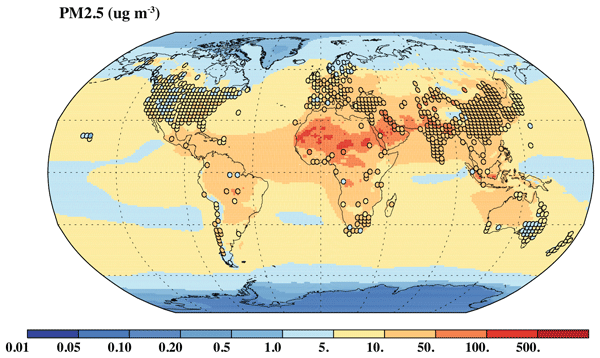
Aerosol particles are an important part of the Earth system, but their concentrations are spatially and temporally heterogeneous, as well as being variable in size and composition. Here, we present a new compilation of PM2.5 and PM10 aerosol observations, focusing on the spatial variability across different observational stations, including composition, and demonstrate a method for comparing the data sets to model output.
Neha Deot, Vijay P. Kanawade, Alkistis Papetta, Rima Baalbaki, Michael Pikridas, Franco Marenco, Markku Kulmala, Jean Sciare, Katrianne Lehtipalo, and Tuija Jokinen
Aerosol Research, 3, 139–154, https://doi.org/10.5194/ar-3-139-2025, https://doi.org/10.5194/ar-3-139-2025, 2025
Short summary
Short summary
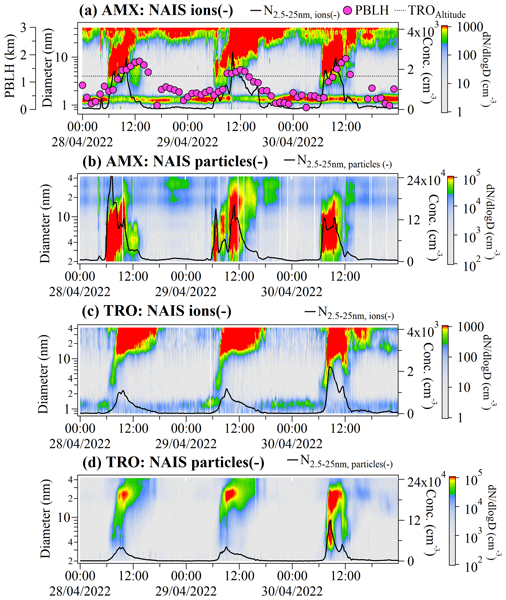
We studied how nanoparticles form in the atmosphere at two different altitudes in Cyprus, focusing on how meteorology impacts this process. Using data from two sites, we found that air from lower regions carries particles up to higher areas, affecting air quality and potentially climate. Our findings help improve understanding of how particles form and grow in the air, which is important for predicting changes in climate and air pollution in the future.
Xiansheng Liu, Xun Zhang, Marvin Dufresne, Tao Wang, Lijie Wu, Rosa Lara, Roger Seco, Marta Monge, Ana Maria Yáñez-Serrano, Marie Gohy, Paul Petit, Audrey Chevalier, Marie-Pierre Vagnot, Yann Fortier, Alexia Baudic, Véronique Ghersi, Grégory Gille, Ludovic Lanzi, Valérie Gros, Leïla Simon, Heidi Héllen, Stefan Reimann, Zoé Le Bras, Michelle Jessy Müller, David Beddows, Siqi Hou, Zongbo Shi, Roy M. Harrison, William Bloss, James Dernie, Stéphane Sauvage, Philip K. Hopke, Xiaoli Duan, Taicheng An, Alastair C. Lewis, James R. Hopkins, Eleni Liakakou, Nikolaos Mihalopoulos, Xiaohu Zhang, Andrés Alastuey, Xavier Querol, and Thérèse Salameh
Atmos. Chem. Phys., 25, 625–638, https://doi.org/10.5194/acp-25-625-2025, https://doi.org/10.5194/acp-25-625-2025, 2025
Short summary
Short summary
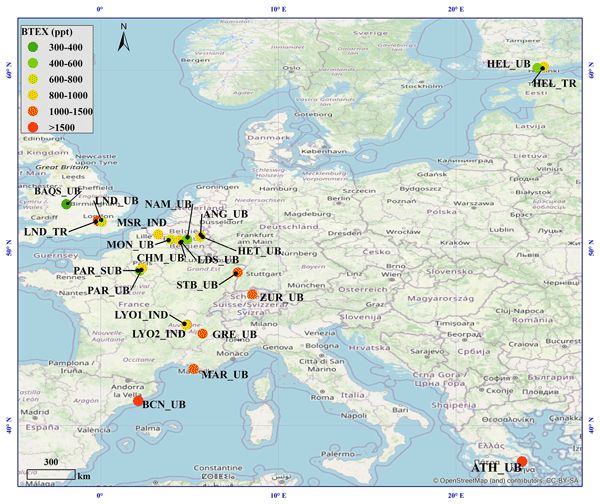
This study examines BTEX (benzene, toluene, ethylbenzene, xylenes) pollution in urban areas across seven European countries. Analyzing data from 22 monitoring sites, we found traffic and industrial activities significantly impact BTEX levels, with peaks during rush hours. The risk from BTEX exposure remains moderate, especially in high-traffic and industrial zones, highlighting the need for targeted air quality management to protect public health and improve urban air quality.
Pamela A. Dominutti, Jean-Luc Jaffrezo, Anouk Marsal, Takoua Mhadhbi, Rhabira Elazzouzi, Camille Rak, Fabrizia Cavalli, Jean-Philippe Putaud, Aikaterini Bougiatioti, Nikolaos Mihalopoulos, Despina Paraskevopoulou, Ian Mudway, Athanasios Nenes, Kaspar R. Daellenbach, Catherine Banach, Steven J. Campbell, Hana Cigánková, Daniele Contini, Greg Evans, Maria Georgopoulou, Manuella Ghanem, Drew A. Glencross, Maria Rachele Guascito, Hartmut Herrmann, Saima Iram, Maja Jovanović, Milena Jovašević-Stojanović, Markus Kalberer, Ingeborg M. Kooter, Suzanne E. Paulson, Anil Patel, Esperanza Perdrix, Maria Chiara Pietrogrande, Pavel Mikuška, Jean-Jacques Sauvain, Katerina Seitanidi, Pourya Shahpoury, Eduardo J. d. S. Souza, Sarah Steimer, Svetlana Stevanovic, Guillaume Suarez, P. S. Ganesh Subramanian, Battist Utinger, Marloes F. van Os, Vishal Verma, Xing Wang, Rodney J. Weber, Yuhan Yang, Xavier Querol, Gerard Hoek, Roy M. Harrison, and Gaëlle Uzu
Atmos. Meas. Tech., 18, 177–195, https://doi.org/10.5194/amt-18-177-2025, https://doi.org/10.5194/amt-18-177-2025, 2025
Short summary
Short summary
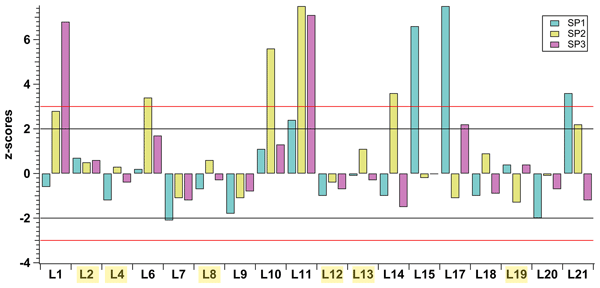
In this work, 20 labs worldwide collaborated to evaluate the measurement of air pollution's oxidative potential (OP), a key indicator of its harmful effects. The study aimed to identify disparities in the widely used OP dithiothreitol assay and assess the consistency of OP among labs using the same protocol. The results showed that half of the labs achieved acceptable results. However, variability was also found, highlighting the need for standardisation in OP procedures.
Stelios Myriokefalitakis, Matthias Karl, Kim A. Weiss, Dimitris Karagiannis, Eleni Athanasopoulou, Anastasia Kakouri, Aikaterini Bougiatioti, Eleni Liakakou, Iasonas Stavroulas, Georgios Papangelis, Georgios Grivas, Despina Paraskevopoulou, Orestis Speyer, Nikolaos Mihalopoulos, and Evangelos Gerasopoulos
Atmos. Chem. Phys., 24, 7815–7835, https://doi.org/10.5194/acp-24-7815-2024, https://doi.org/10.5194/acp-24-7815-2024, 2024
Short summary
Short summary
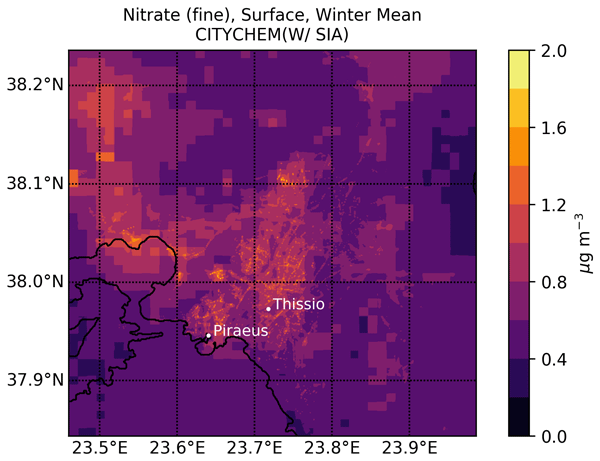
A state-of-the-art thermodynamic model has been coupled with the city-scale chemistry transport model EPISODE–CityChem to investigate the equilibrium between the inorganic gas and aerosol phases over the greater Athens area, Greece. The simulations indicate that the formation of nitrates in an urban environment is significantly affected by local nitrogen oxide emissions, as well as ambient temperature, relative humidity, photochemical activity, and the presence of non-volatile cations.
Alkistis Papetta, Franco Marenco, Maria Kezoudi, Rodanthi-Elisavet Mamouri, Argyro Nisantzi, Holger Baars, Ioana Elisabeta Popovici, Philippe Goloub, Stéphane Victori, and Jean Sciare
Atmos. Meas. Tech., 17, 1721–1738, https://doi.org/10.5194/amt-17-1721-2024, https://doi.org/10.5194/amt-17-1721-2024, 2024
Short summary
Short summary
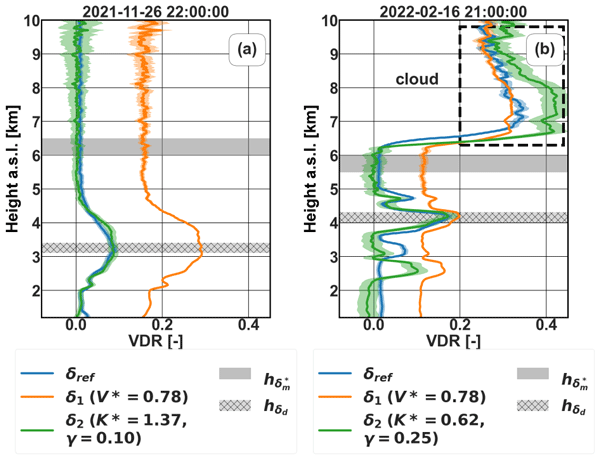
We propose a method to determine depolarization parameters using observations from a reference instrument at a nearby location, needed for systems where a priori knowledge of cross-talk parameters is not available. It uses three-parameter equations to compare VDR between two co-located lidars at dust and molecular layers. It can be applied retrospectively to existing data acquired during campaigns. Its application to Cimel CE376 corrected VDR bias at high- and low-depolarizing layers.
Yunsong Liu, Jean-Daniel Paris, Gregoire Broquet, Violeta Bescós Roy, Tania Meixus Fernandez, Rasmus Andersen, Andrés Russu Berlanga, Emil Christensen, Yann Courtois, Sebastian Dominok, Corentin Dussenne, Travis Eckert, Andrew Finlayson, Aurora Fernández de la Fuente, Catlin Gunn, Ram Hashmonay, Juliano Grigoleto Hayashi, Jonathan Helmore, Soeren Honsel, Fabrizio Innocenti, Matti Irjala, Torgrim Log, Cristina Lopez, Francisco Cortés Martínez, Jonathan Martinez, Adrien Massardier, Helle Gottschalk Nygaard, Paula Agregan Reboredo, Elodie Rousset, Axel Scherello, Matthias Ulbricht, Damien Weidmann, Oliver Williams, Nigel Yarrow, Murès Zarea, Robert Ziegler, Jean Sciare, Mihalis Vrekoussis, and Philippe Bousquet
Atmos. Meas. Tech., 17, 1633–1649, https://doi.org/10.5194/amt-17-1633-2024, https://doi.org/10.5194/amt-17-1633-2024, 2024
Short summary
Short summary
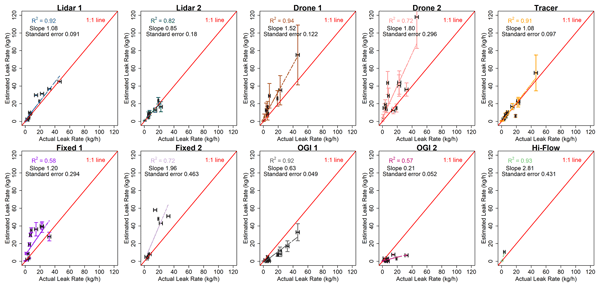
We investigated the performance of 10 methane emission quantification techniques in a blind controlled-release experiment at an inerted natural gas compressor station. We reported their respective strengths, weaknesses, and potential complementarity depending on the emission rates and atmospheric conditions. Additionally, we assess the dependence of emission quantification performance on key parameters such as wind speed, deployment constraints, and measurement duration.
Natalie M. Mahowald, Longlei Li, Julius Vira, Marje Prank, Douglas S. Hamilton, Hitoshi Matsui, Ron L. Miller, Louis Lu, Ezgi Akyuz, Daphne Meidan, Peter Hess, Heikki Lihavainen, Christine Wiedinmyer, Jenny Hand, Maria Grazia Alaimo, Célia Alves, Andres Alastuey, Paulo Artaxo, Africa Barreto, Francisco Barraza, Silvia Becagli, Giulia Calzolai, Shankarararman Chellam, Ying Chen, Patrick Chuang, David D. Cohen, Cristina Colombi, Evangelia Diapouli, Gaetano Dongarra, Konstantinos Eleftheriadis, Corinne Galy-Lacaux, Cassandra Gaston, Dario Gomez, Yenny González Ramos, Hannele Hakola, Roy M. Harrison, Chris Heyes, Barak Herut, Philip Hopke, Christoph Hüglin, Maria Kanakidou, Zsofia Kertesz, Zbiginiw Klimont, Katriina Kyllönen, Fabrice Lambert, Xiaohong Liu, Remi Losno, Franco Lucarelli, Willy Maenhaut, Beatrice Marticorena, Randall V. Martin, Nikolaos Mihalopoulos, Yasser Morera-Gomez, Adina Paytan, Joseph Prospero, Sergio Rodríguez, Patricia Smichowski, Daniela Varrica, Brenna Walsh, Crystal Weagle, and Xi Zhao
Earth Syst. Sci. Data Discuss., https://doi.org/10.5194/essd-2024-1, https://doi.org/10.5194/essd-2024-1, 2024
Preprint withdrawn
Short summary
Short summary
Aerosol particles can interact with incoming solar radiation and outgoing long wave radiation, change cloud properties, affect photochemistry, impact surface air quality, and when deposited impact surface albedo of snow and ice, and modulate carbon dioxide uptake by the land and ocean. Here we present a new compilation of aerosol observations including composition, a methodology for comparing the datasets to model output, and show the implications of these results using one model.
Nansi Fakhri, Robin Stevens, Arnold Downey, Konstantina Oikonomou, Jean Sciare, Charbel Afif, and Patrick L. Hayes
Atmos. Chem. Phys., 24, 1193–1212, https://doi.org/10.5194/acp-24-1193-2024, https://doi.org/10.5194/acp-24-1193-2024, 2024
Short summary
Short summary
We investigated the chemical composition of atmospheric fine particles, their emission sources, and the potential human health risk associated with trace elements in particles for an urban site in Montréal over a 3-month period (August–November). This study represents the first time that such extensive composition measurements were included in an urban source apportionment study in Canada, and it provides greater resolution of fine-particle sources than has been previously achieved in Canada.
Andreas Aktypis, Christos Kaltsonoudis, David Patoulias, Panayiotis Kalkavouras, Angeliki Matrali, Christina N. Vasilakopoulou, Evangelia Kostenidou, Kalliopi Florou, Nikos Kalivitis, Aikaterini Bougiatioti, Konstantinos Eleftheriadis, Stergios Vratolis, Maria I. Gini, Athanasios Kouras, Constantini Samara, Mihalis Lazaridis, Sofia-Eirini Chatoutsidou, Nikolaos Mihalopoulos, and Spyros N. Pandis
Atmos. Chem. Phys., 24, 65–84, https://doi.org/10.5194/acp-24-65-2024, https://doi.org/10.5194/acp-24-65-2024, 2024
Short summary
Short summary
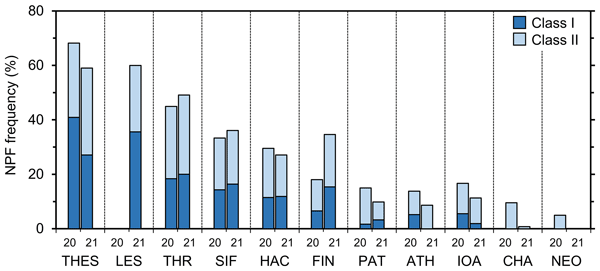
Extensive continuous particle number size distribution measurements took place during two summers (2020 and 2021) at 11 sites in Greece for the investigation of the frequency and the spatial extent of new particle formation. The frequency during summer varied from close to zero in southwestern Greece to more than 60 % in the northern, central, and eastern regions. The spatial variability can be explained by the proximity of the sites to coal-fired power plants and agricultural areas.
Jean-Philippe Putaud, Enrico Pisoni, Alexander Mangold, Christoph Hueglin, Jean Sciare, Michael Pikridas, Chrysanthos Savvides, Jakub Ondracek, Saliou Mbengue, Alfred Wiedensohler, Kay Weinhold, Maik Merkel, Laurent Poulain, Dominik van Pinxteren, Hartmut Herrmann, Andreas Massling, Claus Nordstroem, Andrés Alastuey, Cristina Reche, Noemí Pérez, Sonia Castillo, Mar Sorribas, Jose Antonio Adame, Tuukka Petaja, Katrianne Lehtipalo, Jarkko Niemi, Véronique Riffault, Joel F. de Brito, Augustin Colette, Olivier Favez, Jean-Eudes Petit, Valérie Gros, Maria I. Gini, Stergios Vratolis, Konstantinos Eleftheriadis, Evangelia Diapouli, Hugo Denier van der Gon, Karl Espen Yttri, and Wenche Aas
Atmos. Chem. Phys., 23, 10145–10161, https://doi.org/10.5194/acp-23-10145-2023, https://doi.org/10.5194/acp-23-10145-2023, 2023
Short summary
Short summary
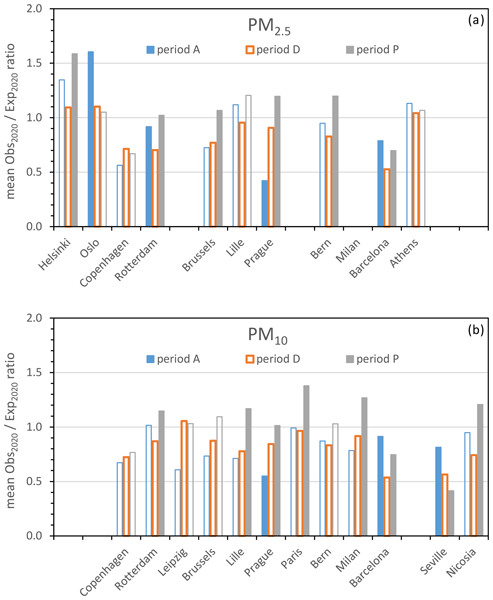
Many European people are still exposed to levels of air pollution that can affect their health. COVID-19 lockdowns in 2020 were used to assess the impact of the reduction in human mobility on air pollution across Europe by comparing measurement data with values that would be expected if no lockdown had occurred. We show that lockdown measures did not lead to consistent decreases in the concentrations of fine particulate matter suspended in the air, and we investigate why.
Akriti Masoom, Ilias Fountoulakis, Stelios Kazadzis, Ioannis-Panagiotis Raptis, Anna Kampouri, Basil E. Psiloglou, Dimitra Kouklaki, Kyriakoula Papachristopoulou, Eleni Marinou, Stavros Solomos, Anna Gialitaki, Dimitra Founda, Vasileios Salamalikis, Dimitris Kaskaoutis, Natalia Kouremeti, Nikolaos Mihalopoulos, Vassilis Amiridis, Andreas Kazantzidis, Alexandros Papayannis, Christos S. Zerefos, and Kostas Eleftheratos
Atmos. Chem. Phys., 23, 8487–8514, https://doi.org/10.5194/acp-23-8487-2023, https://doi.org/10.5194/acp-23-8487-2023, 2023
Short summary
Short summary
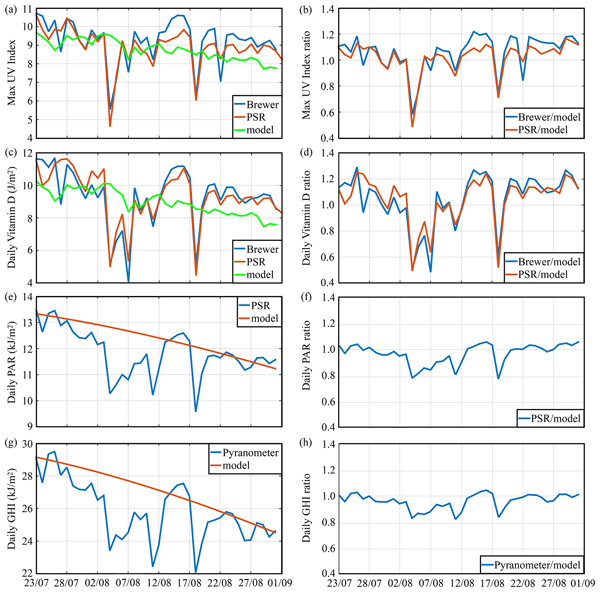
We analyse the spatial and temporal aerosol spectral optical properties during the extreme wildfires of August 2021 in Greece and assess their effects on air quality and solar radiation quantities related to health, agriculture, and energy. Different aerosol conditions are identified (pure smoke, pure dust, dust–smoke together); the largest impact on solar radiation quantities is found for cases with mixed dust–smoke aerosols. Such situations are expected to occur more frequently in the future.
Roubina Papaconstantinou, Marios Demosthenous, Spyros Bezantakos, Neoclis Hadjigeorgiou, Marinos Costi, Melina Stylianou, Elli Symeou, Chrysanthos Savvides, and George Biskos
Atmos. Meas. Tech., 16, 3313–3329, https://doi.org/10.5194/amt-16-3313-2023, https://doi.org/10.5194/amt-16-3313-2023, 2023
Short summary
Short summary
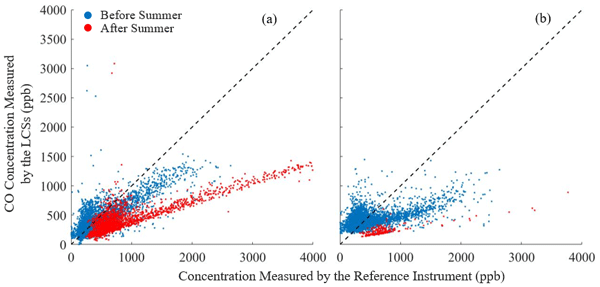
In this paper, we investigate the performance of low-cost electrochemical gas sensors. We carried out yearlong measurements at a traffic air quality monitoring station, where the low-cost sensors were collocated with reference instruments and exposed to highly variable environmental conditions with extremely high temperatures and low relative humidity (RH). Sensors provide measurements that exhibit increasing errors and decreasing correlations as temperature increases and RH decreases.
Aliki Christodoulou, Iasonas Stavroulas, Mihalis Vrekoussis, Maximillien Desservettaz, Michael Pikridas, Elie Bimenyimana, Jonilda Kushta, Matic Ivančič, Martin Rigler, Philippe Goloub, Konstantina Oikonomou, Roland Sarda-Estève, Chrysanthos Savvides, Charbel Afif, Nikos Mihalopoulos, Stéphane Sauvage, and Jean Sciare
Atmos. Chem. Phys., 23, 6431–6456, https://doi.org/10.5194/acp-23-6431-2023, https://doi.org/10.5194/acp-23-6431-2023, 2023
Short summary
Short summary
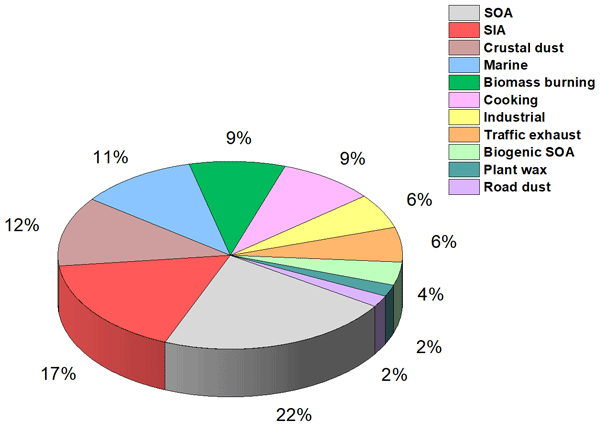
Our study presents, for the first time, a detailed source identification of aerosols at an urban background site in Cyprus (eastern Mediterranean), a region strongly impacted by climate change and air pollution. Here, we identify an unexpected high contribution of long-range transported pollution from fossil fuel sources in the Middle East, highlighting an urgent need to further characterize these fast-growing emissions and their impacts on regional atmospheric composition, climate, and health.
Christina N. Vasilakopoulou, Kalliopi Florou, Christos Kaltsonoudis, Iasonas Stavroulas, Nikolaos Mihalopoulos, and Spyros N. Pandis
Atmos. Meas. Tech., 16, 2837–2850, https://doi.org/10.5194/amt-16-2837-2023, https://doi.org/10.5194/amt-16-2837-2023, 2023
Short summary
Short summary
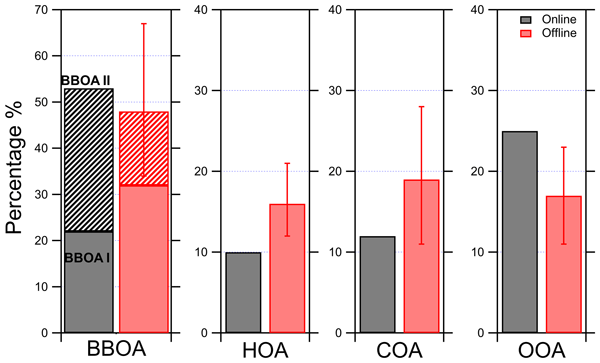
The offline aerosol mass spectrometry technique is a useful tool for the source apportionment of organic aerosol in areas and periods during which an aerosol mass spectrometer is not available. In this work, an improved offline technique was developed and evaluated in an effort to capture most of the partially soluble and insoluble organic aerosol material, reducing the uncertainty of the corresponding source apportionment significantly.
Pantelis Kiriakidis, Antonis Gkikas, Georgios Papangelis, Theodoros Christoudias, Jonilda Kushta, Emmanouil Proestakis, Anna Kampouri, Eleni Marinou, Eleni Drakaki, Angela Benedetti, Michael Rennie, Christian Retscher, Anne Grete Straume, Alexandru Dandocsi, Jean Sciare, and Vasilis Amiridis
Atmos. Chem. Phys., 23, 4391–4417, https://doi.org/10.5194/acp-23-4391-2023, https://doi.org/10.5194/acp-23-4391-2023, 2023
Short summary
Short summary
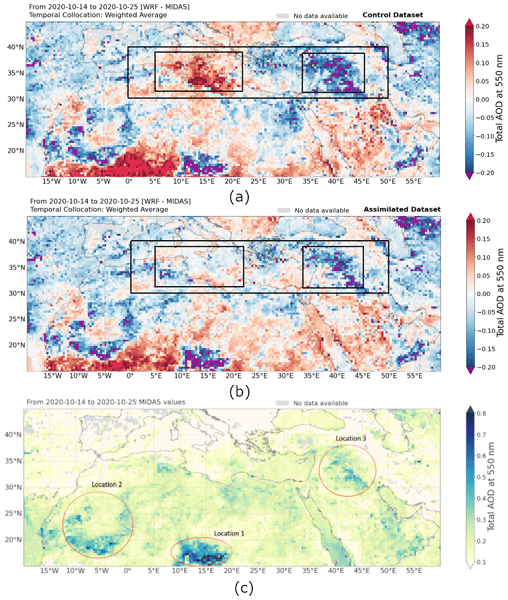
With the launch of the Aeolus satellite, higher-accuracy wind products became available. This research was carried out to validate the assimilated wind products by testing their effect on the WRF-Chem model predictive ability of dust processes. This was carried out for the eastern Mediterranean and Middle East region for two 2-month periods in autumn and spring 2020. The use of the assimilated products improved the dust forecasts of the autumn season (both quantitatively and qualitatively).
Christina Vasilakopoulou, Iasonas Stavroulas, Nikolaos Mihalopoulos, and Spyros N. Pandis
Atmos. Meas. Tech., 15, 6419–6431, https://doi.org/10.5194/amt-15-6419-2022, https://doi.org/10.5194/amt-15-6419-2022, 2022
Short summary
Short summary
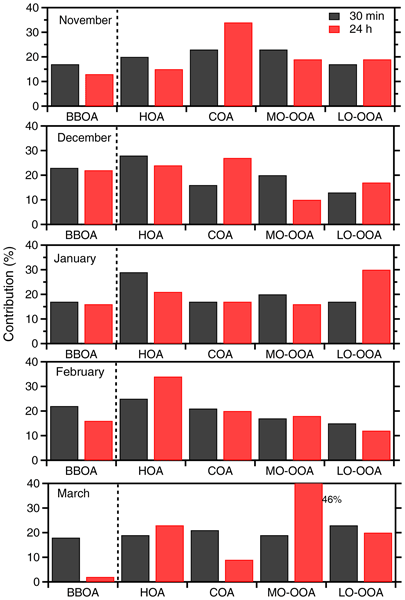
Offline aerosol mass spectrometer (AMS) measurements can provide valuable information about ambient organic aerosols when online AMS measurements are not available. In this study, we examine whether and how the low time resolution (usually 24 h) of the offline technique affects source apportionment results. We concluded that use of the daily averages resulted in estimated average contributions that were within 8 % of the total OA compared with the high-resolution analysis.
Ville Leinonen, Harri Kokkola, Taina Yli-Juuti, Tero Mielonen, Thomas Kühn, Tuomo Nieminen, Simo Heikkinen, Tuuli Miinalainen, Tommi Bergman, Ken Carslaw, Stefano Decesari, Markus Fiebig, Tareq Hussein, Niku Kivekäs, Radovan Krejci, Markku Kulmala, Ari Leskinen, Andreas Massling, Nikos Mihalopoulos, Jane P. Mulcahy, Steffen M. Noe, Twan van Noije, Fiona M. O'Connor, Colin O'Dowd, Dirk Olivie, Jakob B. Pernov, Tuukka Petäjä, Øyvind Seland, Michael Schulz, Catherine E. Scott, Henrik Skov, Erik Swietlicki, Thomas Tuch, Alfred Wiedensohler, Annele Virtanen, and Santtu Mikkonen
Atmos. Chem. Phys., 22, 12873–12905, https://doi.org/10.5194/acp-22-12873-2022, https://doi.org/10.5194/acp-22-12873-2022, 2022
Short summary
Short summary
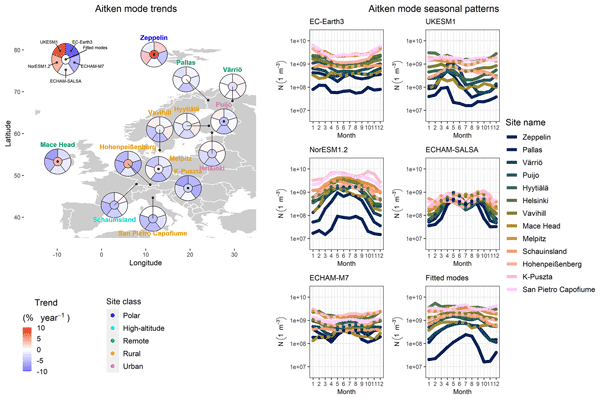
We provide the first extensive comparison of detailed aerosol size distribution trends between in situ observations from Europe and five different earth system models. We investigated aerosol modes (nucleation, Aitken, and accumulation) separately and were able to show the differences between measured and modeled trends and especially their seasonal patterns. The differences in model results are likely due to complex effects of several processes instead of certain specific model features.
Charlotte M. Beall, Thomas C. J. Hill, Paul J. DeMott, Tobias Köneman, Michael Pikridas, Frank Drewnick, Hartwig Harder, Christopher Pöhlker, Jos Lelieveld, Bettina Weber, Minas Iakovides, Roman Prokeš, Jean Sciare, Meinrat O. Andreae, M. Dale Stokes, and Kimberly A. Prather
Atmos. Chem. Phys., 22, 12607–12627, https://doi.org/10.5194/acp-22-12607-2022, https://doi.org/10.5194/acp-22-12607-2022, 2022
Short summary
Short summary
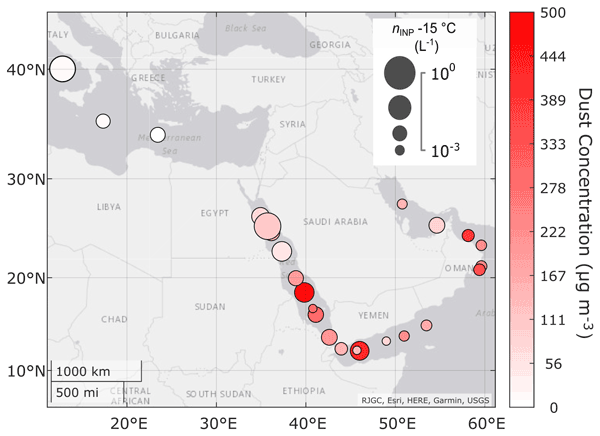
Ice-nucleating particles (INPs) are rare aerosols that can trigger ice formation in clouds and affect climate-relevant cloud properties such as phase, reflectivity and lifetime. Dust is the dominant INP source, yet few measurements have been reported near major dust sources. We report INP observations within hundreds of kilometers of the biggest dust source regions globally: the Sahara and the Arabian Peninsula. Results show that at temperatures > −15 °C, INPs are dominated by organics.
Marta Via, Gang Chen, Francesco Canonaco, Kaspar R. Daellenbach, Benjamin Chazeau, Hasna Chebaicheb, Jianhui Jiang, Hannes Keernik, Chunshui Lin, Nicolas Marchand, Cristina Marin, Colin O'Dowd, Jurgita Ovadnevaite, Jean-Eudes Petit, Michael Pikridas, Véronique Riffault, Jean Sciare, Jay G. Slowik, Leïla Simon, Jeni Vasilescu, Yunjiang Zhang, Olivier Favez, André S. H. Prévôt, Andrés Alastuey, and María Cruz Minguillón
Atmos. Meas. Tech., 15, 5479–5495, https://doi.org/10.5194/amt-15-5479-2022, https://doi.org/10.5194/amt-15-5479-2022, 2022
Short summary
Short summary
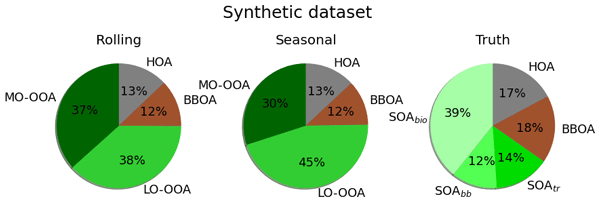
This work presents the differences resulting from two techniques (rolling and seasonal) of the positive matrix factorisation model that can be run for organic aerosol source apportionment. The current state of the art suggests that the rolling technique is more accurate, but no proof of its effectiveness has been provided yet. This paper tackles this issue in the context of a synthetic dataset and a multi-site real-world comparison.
Anthony Rey-Pommier, Frédéric Chevallier, Philippe Ciais, Grégoire Broquet, Theodoros Christoudias, Jonilda Kushta, Didier Hauglustaine, and Jean Sciare
Atmos. Chem. Phys., 22, 11505–11527, https://doi.org/10.5194/acp-22-11505-2022, https://doi.org/10.5194/acp-22-11505-2022, 2022
Short summary
Short summary
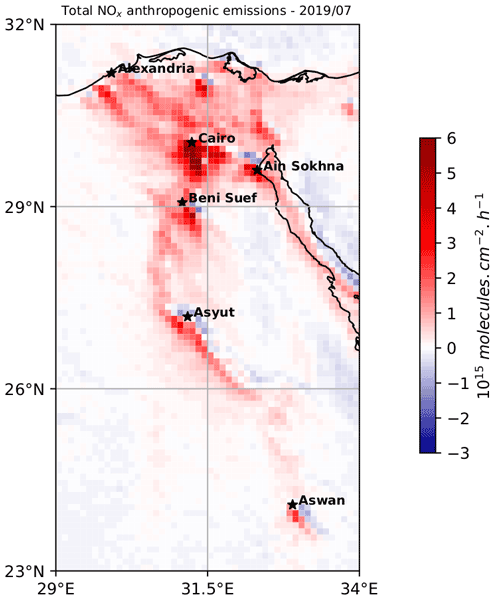
Emission inventories for air pollutants can be uncertain in developing countries. In order to overcome these uncertainties, we model nitrogen oxide emissions in Egypt using satellite retrievals. We detect a weekly cycle reflecting Egyptian social norms, an annual cycle consistent with electricity consumption and an activity drop due to the COVID-19 pandemic. However, discrepancies with inventories remain high, illustrating the needs for additional data to improve the potential of our method.
Yunsong Liu, Jean-Daniel Paris, Mihalis Vrekoussis, Panayiota Antoniou, Christos Constantinides, Maximilien Desservettaz, Christos Keleshis, Olivier Laurent, Andreas Leonidou, Carole Philippon, Panagiotis Vouterakos, Pierre-Yves Quéhé, Philippe Bousquet, and Jean Sciare
Atmos. Meas. Tech., 15, 4431–4442, https://doi.org/10.5194/amt-15-4431-2022, https://doi.org/10.5194/amt-15-4431-2022, 2022
Short summary
Short summary
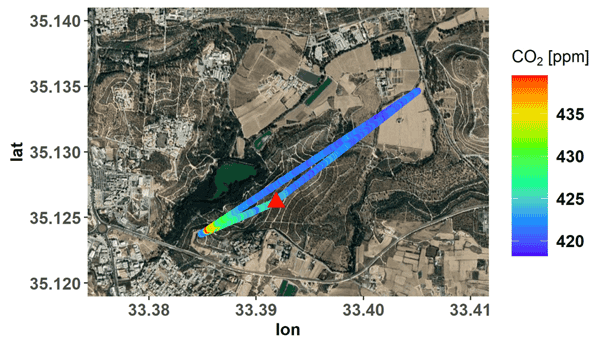
This paper details laboratory-based and field developments of a cost-effective and compacted UAV CO2 sensor system to address the challenge of measuring CO2 with sufficient precision and acquisition frequency. We assess its performance extensively through laboratory and field tests and provide a case study in an urban area (Nicosia, Cyprus). We therefore expect that this portable system will be widely used for measuring CO2 emission and distribution in natural or urban environments.
Marco Wietzoreck, Marios Kyprianou, Benjamin A. Musa Bandowe, Siddika Celik, John N. Crowley, Frank Drewnick, Philipp Eger, Nils Friedrich, Minas Iakovides, Petr Kukučka, Jan Kuta, Barbora Nežiková, Petra Pokorná, Petra Přibylová, Roman Prokeš, Roland Rohloff, Ivan Tadic, Sebastian Tauer, Jake Wilson, Hartwig Harder, Jos Lelieveld, Ulrich Pöschl, Euripides G. Stephanou, and Gerhard Lammel
Atmos. Chem. Phys., 22, 8739–8766, https://doi.org/10.5194/acp-22-8739-2022, https://doi.org/10.5194/acp-22-8739-2022, 2022
Short summary
Short summary
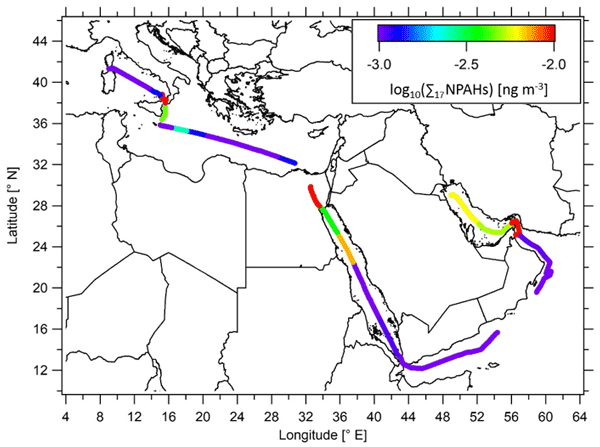
A unique dataset of concentrations and sources of polycyclic aromatic hydrocarbons (PAHs) and their alkylated, oxygenated and nitrated derivatives, in total 74 individual species, in the marine atmosphere is presented. Exposure to these substances poses a major health risk. We found very low concentrations over the Arabian Sea, while both local and long-range-transported pollution caused elevated levels over the Mediterranean Sea and the Arabian Gulf.
Karine Sartelet, Youngseob Kim, Florian Couvidat, Maik Merkel, Tuukka Petäjä, Jean Sciare, and Alfred Wiedensohler
Atmos. Chem. Phys., 22, 8579–8596, https://doi.org/10.5194/acp-22-8579-2022, https://doi.org/10.5194/acp-22-8579-2022, 2022
Short summary
Short summary
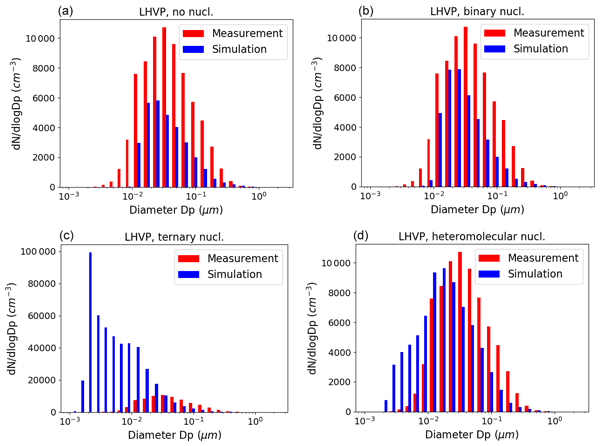
A methodology is defined to estimate number emissions from an inventory providing mass emissions. Number concentrations are simulated over Greater Paris using different nucleation parameterisations (binary, ternary involving sulfuric acid and ammonia, and heteromolecular involving sulfuric acid and extremely low-volatility organics, ELVOCs). The comparisons show that ternary nucleation may not be a dominant process for new particle formation in cities, but they stress the role of ELVOCs.
George K. Georgiou, Theodoros Christoudias, Yiannis Proestos, Jonilda Kushta, Michael Pikridas, Jean Sciare, Chrysanthos Savvides, and Jos Lelieveld
Geosci. Model Dev., 15, 4129–4146, https://doi.org/10.5194/gmd-15-4129-2022, https://doi.org/10.5194/gmd-15-4129-2022, 2022
Short summary
Short summary
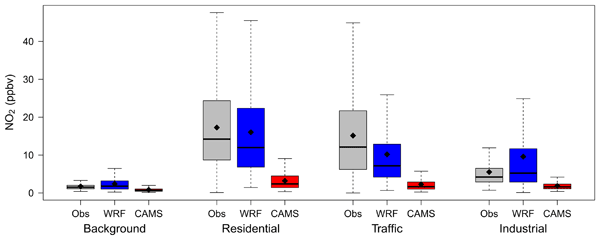
We evaluate the skill of the WRF-Chem model to perform high-resolution air quality forecasts (including ozone, nitrogen dioxide, and fine particulate matter) over the Eastern Mediterranean, during winter and summer. We compare the forecast output to observational data from background and urban locations and the forecast output from CAMS. WRF-Chem was found to forecast the concentrations and diurnal profiles of gas-phase pollutants in urban areas with higher accuracy.
Kai Tang, Beatriz Sánchez-Parra, Petya Yordanova, Jörn Wehking, Anna T. Backes, Daniel A. Pickersgill, Stefanie Maier, Jean Sciare, Ulrich Pöschl, Bettina Weber, and Janine Fröhlich-Nowoisky
Biogeosciences, 19, 71–91, https://doi.org/10.5194/bg-19-71-2022, https://doi.org/10.5194/bg-19-71-2022, 2022
Short summary
Short summary
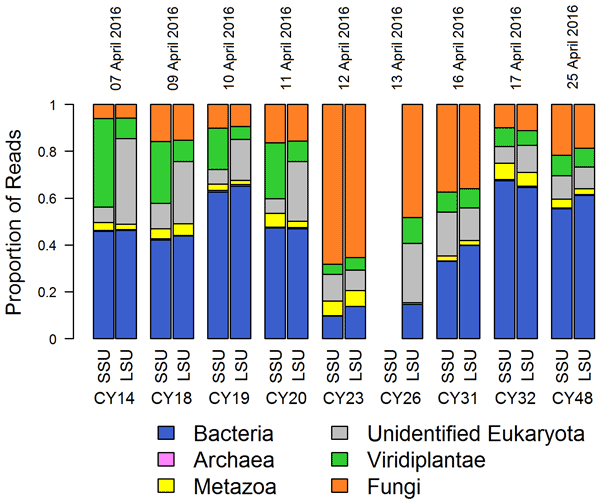
Metagenomic sequencing and freezing experiments of aerosol samples collected on Cyprus revealed rain-related short-term changes of bioaerosol and ice nuclei composition. Filtration experiments showed a rain-related enhancement of biological ice nuclei > 5 µm and < 0.1 µm. The observed effects of rainfall on the composition of atmospheric bioaerosols and ice nuclei may influence the hydrological cycle as well as the health effects of air particulate matter (pathogens, allergens).
Irini Tsiodra, Georgios Grivas, Kalliopi Tavernaraki, Aikaterini Bougiatioti, Maria Apostolaki, Despina Paraskevopoulou, Alexandra Gogou, Constantine Parinos, Konstantina Oikonomou, Maria Tsagkaraki, Pavlos Zarmpas, Athanasios Nenes, and Nikolaos Mihalopoulos
Atmos. Chem. Phys., 21, 17865–17883, https://doi.org/10.5194/acp-21-17865-2021, https://doi.org/10.5194/acp-21-17865-2021, 2021
Short summary
Short summary
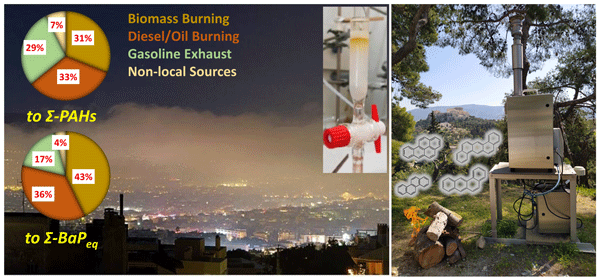
We analyze observations from year-long measurements at Athens, Greece. Nighttime wintertime PAH levels are 4 times higher than daytime, and wintertime values are 15 times higher than summertime. Biomass burning aerosol during wintertime pollution events is responsible for these significant wintertime enhancements and accounts for 43 % of the population exposure to PAH carcinogenic risk. Biomass burning poses additional health risks beyond those associated with the high PM levels that develop.
Clémence Rose, Martine Collaud Coen, Elisabeth Andrews, Yong Lin, Isaline Bossert, Cathrine Lund Myhre, Thomas Tuch, Alfred Wiedensohler, Markus Fiebig, Pasi Aalto, Andrés Alastuey, Elisabeth Alonso-Blanco, Marcos Andrade, Begoña Artíñano, Todor Arsov, Urs Baltensperger, Susanne Bastian, Olaf Bath, Johan Paul Beukes, Benjamin T. Brem, Nicolas Bukowiecki, Juan Andrés Casquero-Vera, Sébastien Conil, Konstantinos Eleftheriadis, Olivier Favez, Harald Flentje, Maria I. Gini, Francisco Javier Gómez-Moreno, Martin Gysel-Beer, Anna Gannet Hallar, Ivo Kalapov, Nikos Kalivitis, Anne Kasper-Giebl, Melita Keywood, Jeong Eun Kim, Sang-Woo Kim, Adam Kristensson, Markku Kulmala, Heikki Lihavainen, Neng-Huei Lin, Hassan Lyamani, Angela Marinoni, Sebastiao Martins Dos Santos, Olga L. Mayol-Bracero, Frank Meinhardt, Maik Merkel, Jean-Marc Metzger, Nikolaos Mihalopoulos, Jakub Ondracek, Marco Pandolfi, Noemi Pérez, Tuukka Petäjä, Jean-Eudes Petit, David Picard, Jean-Marc Pichon, Veronique Pont, Jean-Philippe Putaud, Fabienne Reisen, Karine Sellegri, Sangeeta Sharma, Gerhard Schauer, Patrick Sheridan, James Patrick Sherman, Andreas Schwerin, Ralf Sohmer, Mar Sorribas, Junying Sun, Pierre Tulet, Ville Vakkari, Pieter Gideon van Zyl, Fernando Velarde, Paolo Villani, Stergios Vratolis, Zdenek Wagner, Sheng-Hsiang Wang, Kay Weinhold, Rolf Weller, Margarita Yela, Vladimir Zdimal, and Paolo Laj
Atmos. Chem. Phys., 21, 17185–17223, https://doi.org/10.5194/acp-21-17185-2021, https://doi.org/10.5194/acp-21-17185-2021, 2021
Short summary
Short summary
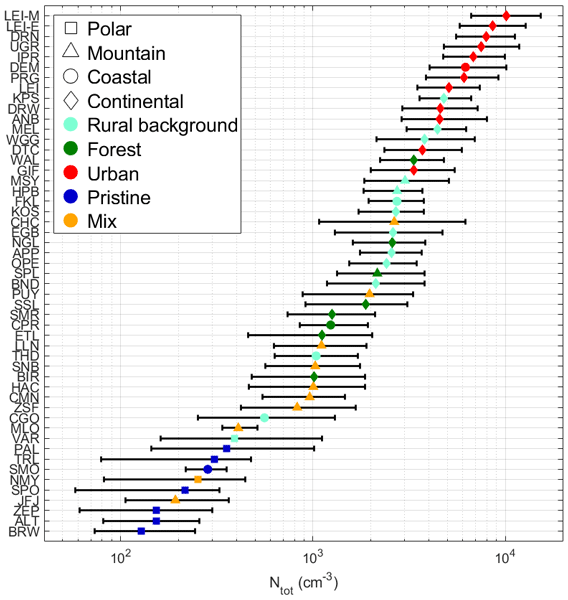
Aerosol particles are a complex component of the atmospheric system the effects of which are among the most uncertain in climate change projections. Using data collected at 62 stations, this study provides the most up-to-date picture of the spatial distribution of particle number concentration and size distribution worldwide, with the aim of contributing to better representation of aerosols and their interactions with clouds in models and, therefore, better evaluation of their impact on climate.
Jean-Eudes Petit, Jean-Charles Dupont, Olivier Favez, Valérie Gros, Yunjiang Zhang, Jean Sciare, Leila Simon, François Truong, Nicolas Bonnaire, Tanguy Amodeo, Robert Vautard, and Martial Haeffelin
Atmos. Chem. Phys., 21, 17167–17183, https://doi.org/10.5194/acp-21-17167-2021, https://doi.org/10.5194/acp-21-17167-2021, 2021
Short summary
Short summary
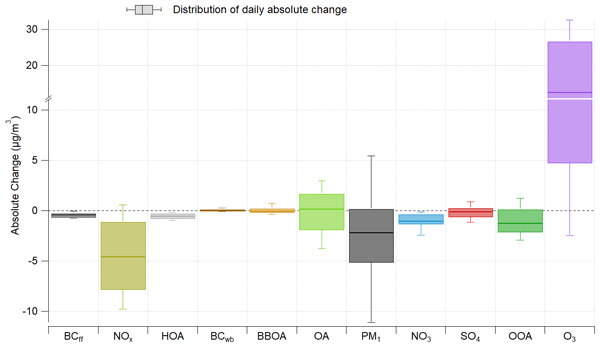
The COVID-19 outbreak led to lockdowns at national scales in spring 2020. Large cuts in emissions occurred, but the quantitative assessment of their role from observations is hindered by weather and interannual variability. That is why we developed an innovative methodology in order to best characterize the impact of lockdown on atmospheric chemistry. We find that a local decrease in traffic-related pollutants triggered a decrease of secondary aerosols and an increase in ozone.
Dimitrios Bousiotis, Francis D. Pope, David C. S. Beddows, Manuel Dall'Osto, Andreas Massling, Jakob Klenø Nøjgaard, Claus Nordstrøm, Jarkko V. Niemi, Harri Portin, Tuukka Petäjä, Noemi Perez, Andrés Alastuey, Xavier Querol, Giorgos Kouvarakis, Nikos Mihalopoulos, Stergios Vratolis, Konstantinos Eleftheriadis, Alfred Wiedensohler, Kay Weinhold, Maik Merkel, Thomas Tuch, and Roy M. Harrison
Atmos. Chem. Phys., 21, 11905–11925, https://doi.org/10.5194/acp-21-11905-2021, https://doi.org/10.5194/acp-21-11905-2021, 2021
Short summary
Short summary
Formation of new particles is a key process in the atmosphere. New particle formation events arising from nucleation of gaseous precursors have been analysed in extensive datasets from 13 sites in five European countries in terms of frequency, nucleation rate, and particle growth rate, with several common features and many differences identified. Although nucleation frequencies are lower at roadside sites, nucleation rates and particle growth rates are typically higher.
Rima Baalbaki, Michael Pikridas, Tuija Jokinen, Tiia Laurila, Lubna Dada, Spyros Bezantakos, Lauri Ahonen, Kimmo Neitola, Anne Maisser, Elie Bimenyimana, Aliki Christodoulou, Florin Unga, Chrysanthos Savvides, Katrianne Lehtipalo, Juha Kangasluoma, George Biskos, Tuukka Petäjä, Veli-Matti Kerminen, Jean Sciare, and Markku Kulmala
Atmos. Chem. Phys., 21, 9223–9251, https://doi.org/10.5194/acp-21-9223-2021, https://doi.org/10.5194/acp-21-9223-2021, 2021
Short summary
Short summary
This study investigates new particle formation (NPF) in the less represented region of the Mediterranean basin using 1-year measurements of aerosol particles down to ~ 1 nm in diameter. We report a high frequency of NPF and give examples of interesting NPF features. We quantify the strength of NPF events by calculating formation rates and growth rates. We further unveil the atmospheric conditions and variables considered important for the intra-monthly and inter-monthly occurrence of NPF.
Vincent Michoud, Elise Hallemans, Laura Chiappini, Eva Leoz-Garziandia, Aurélie Colomb, Sébastien Dusanter, Isabelle Fronval, François Gheusi, Jean-Luc Jaffrezo, Thierry Léonardis, Nadine Locoge, Nicolas Marchand, Stéphane Sauvage, Jean Sciare, and Jean-François Doussin
Atmos. Chem. Phys., 21, 8067–8088, https://doi.org/10.5194/acp-21-8067-2021, https://doi.org/10.5194/acp-21-8067-2021, 2021
Short summary
Short summary
A multiphasic molecular characterization of oxygenated compounds has been carried out during the ChArMEx field campaign using offline analysis. It leads to the identification of 97 different compounds in the gas and aerosol phases and reveals the important contribution of organic acids to organic aerosol. In addition, comparison between experimental and theoretical partitioning coefficients revealed in most cases a large underestimation by the theory reaching 1 to 7 orders of magnitude.
Andrea Cuesta-Mosquera, Griša Močnik, Luka Drinovec, Thomas Müller, Sascha Pfeifer, María Cruz Minguillón, Björn Briel, Paul Buckley, Vadimas Dudoitis, Javier Fernández-García, María Fernández-Amado, Joel Ferreira De Brito, Veronique Riffault, Harald Flentje, Eimear Heffernan, Nikolaos Kalivitis, Athina-Cerise Kalogridis, Hannes Keernik, Luminita Marmureanu, Krista Luoma, Angela Marinoni, Michael Pikridas, Gerhard Schauer, Norbert Serfozo, Henri Servomaa, Gloria Titos, Jesús Yus-Díez, Natalia Zioła, and Alfred Wiedensohler
Atmos. Meas. Tech., 14, 3195–3216, https://doi.org/10.5194/amt-14-3195-2021, https://doi.org/10.5194/amt-14-3195-2021, 2021
Short summary
Short summary
Measurements of black carbon must be conducted with instruments operating in quality-checked and assured conditions to generate reliable and comparable data. Here, 23 Aethalometers monitoring black carbon mass concentrations in European networks were characterized and intercompared. The influence of different aerosol sources, maintenance activities, and the filter material on the instrumental variabilities were investigated. Good agreement and in general low deviations were seen.
Cited articles
Aas, W., Mortier, A., Bowersox, V., Cherian, R., Faluvegi, G., Fagerli, H., Hand, J., Klimont, Z., Galy-Lacaux, C., and Lehmann, C. M. B.: Global and regional trends of atmospheric sulfur, Sci. Rep., 9, 953, https://doi.org/10.1038/s41598-018-37304-0, 2019.
Aas, W., Fagerli, H., Alastuey, A., Cavalli, F., Degorska, A., Feigenspan, S., Brenna, H., Gliß, J., Heinesen, D., and Hueglin, C.: Trends in air pollution in Europe, 2000–2019, Aerosol Air Qual. Res., 24, 230237, https://doi.org/10.4209/aaqr.230237, 2024.
Achilleos, S., Mouzourides, P., Kalivitis, N., Katra, I., Kloog, I., Kouis, P., Middleton, N., Mihalopoulos, N., Neophytou, M., Panayiotou, A., Papatheodorou, S., Savvides, C., Tymvios, F., Vasiliadou, E., Yiallouros, P., and Koutrakis, P.: Spatio-temporal variability of desert dust storms in Eastern Mediterranean (Crete, Cyprus, Israel) between 2006 and 2017 using a uniform methodology, Sci. Total Environ., 714, 136693, https://doi.org/10.1016/J.SCITOTENV.2020.136693, 2020.
Alastuey, A., Querol, X., Aas, W., Lucarelli, F., Pérez, N., Moreno, T., Cavalli, F., Areskoug, H., Balan, V., Catrambone, M., Ceburnis, D., Cerro, J. C., Conil, S., Gevorgyan, L., Hueglin, C., Imre, K., Jaffrezo, J.-L., Leeson, S. R., Mihalopoulos, N., Mitosinkova, M., O'Dowd, C. D., Pey, J., Putaud, J.-P., Riffault, V., Ripoll, A., Sciare, J., Sellegri, K., Spindler, G., and Yttri, K. E.: Geochemistry of PM10 over Europe during the EMEP intensive measurement periods in summer 2012 and winter 2013, Atmos. Chem. Phys., 16, 6107–6129, https://doi.org/10.5194/acp-16-6107-2016, 2016.
Amato, F., Nava, S., Lucarelli, F., Querol, X., Alastuey, A., Baldasano, J. M., and Pandolfi, M.: A comprehensive assessment of PM emissions from paved roads: Real-world Emission Factors and intense street cleaning trials, Sci. Total Environ., 408, 4309–4318, https://doi.org/10.1016/J.SCITOTENV.2010.06.008, 2010.
Amato, F., Alastuey, A., Karanasiou, A., Lucarelli, F., Nava, S., Calzolai, G., Severi, M., Becagli, S., Gianelle, V. L., Colombi, C., Alves, C., Custódio, D., Nunes, T., Cerqueira, M., Pio, C., Eleftheriadis, K., Diapouli, E., Reche, C., Minguillón, M. C., Manousakas, M.-I., Maggos, T., Vratolis, S., Harrison, R. M., and Querol, X.: AIRUSE-LIFE+: a harmonized PM speciation and source apportionment in five southern European cities, Atmos. Chem. Phys., 16, 3289–3309, https://doi.org/10.5194/acp-16-3289-2016, 2016.
Bimenyimana, E.: Persistent high PM pollution in the Eastern Mediterranean and Middle East: Insights from long-term observations and source apportionment in Cyprus, Zenodo [data set], https://doi.org/10.5281/zenodo.18305165, 2026.
Bimenyimana, E., Pikridas, M., Oikonomou, K., Iakovides, M., Christodoulou, A., Sciare, J., and Mihalopoulos, N.: Fine aerosol sources at an urban background site in the eastern Mediterranean (Nicosia; Cyprus): Insights from offline versus online source apportionment comparison for carbonaceous aerosols, Sci. Total Environ., 164741, https://doi.org/10.1016/j.scitotenv.2023.164741, 2023.
Bimenyimana, E., Sciare, J., Oikonomou, K., Iakovides, M., Pikridas, M., Vasiliadou, E., Savvides, C., and Mihalopoulos, N.: Cross-validation of methods for quantifying the contribution of local (urban) and regional sources to PM2.5 pollution: application in the Eastern Mediterranean (Cyprus), Atmos. Environ., 120975, https://doi.org/10.1016/j.atmosenv.2024.120975, 2025.
Bimenyimana, E., Sciare, J., Pikridas, M., Oikonomou, K., Iakovides, M., Vasiliadou, E., Savvides, C., and Mihalopoulos, N.: Persistent high PM pollution in the Eastern Mediterranean and Middle East: Insights from long-term observations and source apportionment in Cyprus, Zenodo [data set], https://doi.org/10.5281/zenodo.18305165, 2026.
Belis, C. A., Karagulian, F., Larsen, B. R., and Hopke, P. K.: Critical review and meta-analysis of ambient particulate matter source apportionment using receptor models in Europe, Atmos. Environ., 69, 94–108, https://doi.org/10.1016/j.atmosenv.2012.11.009, 2013.
Borlaza, L. J., Weber, S., Marsal, A., Uzu, G., Jacob, V., Besombes, J.-L., Chatain, M., Conil, S., and Jaffrezo, J.-L.: Nine-year trends of PM10 sources and oxidative potential in a rural background site in France, Atmos. Chem. Phys., 22, 8701–8723, https://doi.org/10.5194/acp-22-8701-2022, 2022.
Cavalli, F., Viana, M., Yttri, K. E., Genberg, J., and Putaud, J.-P.: Toward a standardised thermal-optical protocol for measuring atmospheric organic and elemental carbon: the EUSAAR protocol, Atmos. Meas. Tech., 3, 79–89, https://doi.org/10.5194/amt-3-79-2010, 2010.
Celo, V., Dabek-Zlotorzynska, E., and McCurdy, M.: Chemical Characterization of Exhaust Emissions from Selected Canadian Marine Vessels: The Case of Trace Metals and Lanthanoids, Environ. Sci. Technol., 49, 5220–5226, https://doi.org/10.1021/acs.est.5b00127, 2015.
Chow, J. C., Lowenthal, D. H., Chen, L. W. A., Wang, X., and Watson, J. G.: Mass reconstruction methods for PM2.5: a review, Air Qual. Atmos. Heal., 8, 243–263, https://doi.org/10.1007/s11869-015-0338-3, 2015.
Christodoulou, A., Stavroulas, I., Vrekoussis, M., Desservettaz, M., Pikridas, M., Bimenyimana, E., Kushta, J., Ivančič, M., Rigler, M., Goloub, P., Oikonomou, K., Sarda-Estève, R., Savvides, C., Afif, C., Mihalopoulos, N., Sauvage, S., and Sciare, J.: Ambient carbonaceous aerosol levels in Cyprus and the role of pollution transport from the Middle East, Atmos. Chem. Phys., 23, 6431–6456, https://doi.org/10.5194/acp-23-6431-2023, 2023.
Clemente, Á., Yubero, E., Galindo, N., Crespo, J., Nicolás, J. F., Santacatalina, M., and Carratalá, A.: Quantification of the impact of port activities on PM10 levels at the port-city boundary of a mediterranean city, J. Environ. Manage., 281, 111842, https://doi.org/10.1016/j.jenvman.2020.111842, 2021.
Conte, M., Merico, E., Cesari, D., Dinoi, A., Grasso, F. M., Donateo, A., Guascito, M. R., and Contini, D.: Long-term characterisation of African dust advection in south-eastern Italy: Influence on fine and coarse particle concentrations, size distributions, and carbon content, Atmos. Res., 233, 104690, https://doi.org/10.1016/j.atmosres.2019.104690, 2020.
Diapouli, E., Manousakas, M. I., Vratolis, S., Vasilatou, V., Pateraki, S., Bairachtari, K. A., Querol, X., Amato, F., Alastuey, A., Karanasiou, A. A., Lucarelli, F., Nava, S., Calzolai, G., Gianelle, V. L., Colombi, C., Alves, C., Custódio, D., Pio, C., Spyrou, C., Kallos, G. B., and Eleftheriadis, K.: AIRUSE-LIFE +: estimation of natural source contributions to urban ambient air PM10 and PM2.5 concentrations in southern Europe – implications to compliance with limit values, Atmos. Chem. Phys., 17, 3673–3685, https://doi.org/10.5194/acp-17-3673-2017, 2017a.
Diapouli, E., Manousakas, M., Vratolis, S., Vasilatou, V., Maggos, T., Saraga, D., Grigoratos, T., Argyropoulos, G., Voutsa, D., and Samara, C.: Evolution of air pollution source contributions over one decade, derived by PM10 and PM2.5 source apportionment in two metropolitan urban areas in Greece, Atmos. Environ., 164, 416–430, 2017b.
EEA: Air quality in Europe – 2020 report, 162 pp., https://doi.org/10.2800/786656, 2020.
EEA: European Union emission inventory report 1990–2021 – Under the UNECE Convention on Long – range Transboundary Air Pollution (Air Convention), https://doi.org/10.2800/68478, 2023a.
EEA: Türkiye: Air pollution country fact sheet 2023, https://www.eea.europa.eu/en/analysis/maps-and-charts/turkiye-air-pollution-country-2023-country-fact-sheets (last access: 28 January 2026), 2023b.
EN 12341: Ambient air – Standard gravimetric measurement method for the determination of the PM10 or PM2.5 mass concentration of suspended particulate matter, https://standards.iteh.ai/catalog/standards/sist/5d138eac-4d44-4419-a069-eb23d01a9b0c/sist-en-12341-2014 (last access: 28 January 2026), 2014.
EU: Directive (EU) 2024/2881 of the European Parliament and of the Council of 23 October 2024 on ambient air quality and cleaner air for Europe, Off. J. Eur. Union, http://data.europa.eu/eli/dir/2024/2881/oj (last access: 28 January 2026), 2024.
European Commission: Directive 2008/50/EC of the European Parliament and of the Council of 21 May 2008 on ambient air quality and cleaner air for Europe, Off. J. Eur. Union, 152, 1–44, 2008.
Fadel, M., Courcot, D., Seigneur, M., Kfoury, A., Oikonomou, K., Sciare, J., Ledoux, F., and Afif, C.: Identification and apportionment of local and long-range sources of PM2.5 in two East-Mediterranean sites, Atmos. Pollut. Res., 14, https://doi.org/10.1016/j.apr.2022.101622, 2023.
Font, A., Ciupek, K., Butterfield, D., and Fuller, G. W.: Long-term trends in particulate matter from wood burning in the United Kingdom: Dependence on weather and social factors, Environ. Pollut., 314, 120105, https://doi.org/10.1016/j.envpol.2022.120105, 2022.
Fourtziou, L., Liakakou, E., Stavroulas, I., Theodosi, C., Zarmpas, P., Psiloglou, B., Sciare, J., Maggos, T., Bairachtari, K., Bougiatioti, A., Gerasopoulos, E., Sarda-Estève, R., Bonnaire, N., and Mihalopoulos, N.: Multi-tracer approach to characterize domestic wood burning in Athens (Greece) during wintertime, Atmos. Environ., 148, 89–101, 2017.
Giannossa, L. C., Cesari, D., Merico, E., Dinoi, A., Mangone, A., Guascito, M. R., and Contini, D.: Inter-annual variability of source contributions to PM10, PM2.5, and oxidative potential in an urban background site in the central mediterranean, J. Environ. Manage., 319, 115752, https://doi.org/10.1016/j.jenvman.2022.115752, 2022.
Gilbert, R. O.: Statistical methods for environmental pollution monitoring, John Wiley & Sons, ISBN 978-0-471-28878-7, 1987.
Gratsea, M., Liakakou, E., Mihalopoulos, N., Adamopoulos, A., Tsilibari, E., and Gerasopoulos, E.: The combined effect of reduced fossil fuel consumption and increasing biomass combustion on Athens' air quality, as inferred from long term CO measurements, Sci. Total Environ., 592, 115–123, https://doi.org/10.1016/j.scitotenv.2017.03.045, 2017.
Iakovides, M., Iakovides, G., and Stephanou, E. G.: Atmospheric particle-bound polycyclic aromatic hydrocarbons, n-alkanes, hopanes, steranes and trace metals: PM2.5 source identification, individual and cumulative multi-pathway lifetime cancer risk assessment in the urban environment, Sci. Total Environ., 752, 141834, https://doi.org/10.1016/J.SCITOTENV.2020.141834, 2021.
In't Veld, M., Alastuey, A., Pandolfi, M., Amato, F., Perez, N., Reche, C., Via, M., Minguillon, M. C., Escudero, M., and Querol, X.: Compositional changes of PM2.5 in NE Spain during 2009–2018: A trend analysis of the chemical composition and source apportionment, Sci. Total Environ., 795, 148728, https://doi.org/10.1016/j.scitotenv.2021.148728, 2021.
IPCC: Climate Change 2021: The Physical Science Basis. Contribution of Working Group I to the Sixth Assessment Report of the Intergovernmental Panel on Climate Change, https://doi.org/10.1017/9781009157896, 2021.
Kanakidou, M., Mihalopoulos, N., Kindap, T., Im, U., Vrekoussis, M., Gerasopoulos, E., Dermitzaki, E., Unal, A., Koçak, M., Markakis, K., Melas, D., Kouvarakis, G., Youssef, A. F., Richter, A., Hatzianastassiou, N., Hilboll, A., Ebojie, F., Wittrock, F., von Savigny, C., Burrows, J. P., Ladstaetter-Weissenmayer, A., and Moubasher, H.: Megacities as hot spots of air pollution in the East Mediterranean, Atmos. Environ., 1223–1235, https://doi.org/10.1016/j.atmosenv.2010.11.048, 2011.
Kaskaoutis, D. G., Liakakou, E., Grivas, G., Gerasopoulos, E., Mihalopoulos, N., Alastuey, A., Dulac, F., Dumka, U. C., Pandolfi, M., and Pikridas, M.: Interannual variability and long-term trends of aerosols above the Mediterranean, in: Atmospheric Chemistry in the Mediterranean Region: Volume 1-Background Information and Pollutant Distribution, Springer, 357–390, https://doi.org/10.1007/978-3-031-12741-0_11, 2023.
Lelieveld, J., Berresheim, H., Borrmann, S., Crutzen, P. J., Dentener, F. J., Fischer, H., Feichter, J., Flatau, P. J., Heland, J., Holzinger, R., Korrmann, R., Lawrence, M. G., Levin, Z., Markowicz, K. M., Mihalopoulos, N., Minikin, A., Ramanathan, V., De Reus, M., Roelofs, G. J., Scheeren, H. A., Sciare, J., Schlager, H., Schultz, M., Siegmund, P., Steil, B., Stephanou, E. G., Stier, P., Traub, M., Warneke, C., Williams, J., and Ziereis, H.: Global air pollution crossroads over the Mediterranean, Science, 298, 794–799, https://doi.org/10.1126/science.1075457, 2002.
Lelieveld, J., Hadjinicolaou, P., Kostopoulou, E., Giannakopoulos, C., Pozzer, A., Tanarhte, M., and Tyrlis, E.: Model projected heat extremes and air pollution in the eastern Mediterranean and Middle East in the twenty-first century, Reg. Environ. Chang., 14, 1937–1949, https://doi.org/10.1007/s10113-013-0444-4, 2014.
Lelieveld, J., Klingmüller, K., Pozzer, A., Burnett, R. T., Haines, A., and Ramanathan, V.: Effects of fossil fuel and total anthropogenic emission removal on public health and climate, Proc. Natl. Acad. Sci., 116, 7192–7197, 2019.
Lenschow, P., Abraham, H.-J., Kutzner, K., Lutz, M., Preuß, J.-D., and Reichenbächer, W.: Some ideas about the sources of PM10, Atmos. Environ., 35, S23–S33, 2001.
Li, J., Chen, B., de la Campa, A. M. S., Alastuey, A., Querol, X., and de la Rosa, J. D.: 2005–2014 trends of PM10 source contributions in an industrialized area of southern Spain, Environ. Pollut., 236, 570–579, 2018.
Logothetis, S.-A., Salamalikis, V., Gkikas, A., Kazadzis, S., Amiridis, V., and Kazantzidis, A.: 15-year variability of desert dust optical depth on global and regional scales, Atmos. Chem. Phys., 21, 16499–16529, https://doi.org/10.5194/acp-21-16499-2021, 2021.
Malm, W. C., Sisler, J. F., Huffman, D., Eldred, R. A., and Cahill, T. A.: Spatial and seasonal trends in particle concentration and optical extinction in the United States, J. Geophys. Res. Atmos., 99, 1347–1370, 1994.
Manousakas, M., Diapouli, E., Belis, C. A., Vasilatou, V., Gini, M., Lucarelli, F., Querol, X., and Eleftheriadis, K.: Quantitative assessment of the variability in chemical profiles from source apportionment analysis of PM10 and PM2.5 at different sites within a large metropolitan area, Environ. Res., 192, 110257, https://doi.org/10.1016/j.envres.2020.110257, 2021.
Marinou, E., Amiridis, V., Binietoglou, I., Tsikerdekis, A., Solomos, S., Proestakis, E., Konsta, D., Papagiannopoulos, N., Tsekeri, A., Vlastou, G., Zanis, P., Balis, D., Wandinger, U., and Ansmann, A.: Three-dimensional evolution of Saharan dust transport towards Europe based on a 9-year EARLINET-optimized CALIPSO dataset, Atmos. Chem. Phys., 17, 5893–5919, https://doi.org/10.5194/acp-17-5893-2017, 2017.
Merico, E., Cesari, D., Dinoi, A., Gambaro, A., Barbaro, E., Guascito, M. R., Giannossa, L. C., Mangone, A., and Contini, D.: Inter-comparison of carbon content in PM10 and PM2.5 measured with two thermo-optical protocols on samples collected in a Mediterranean site, Environ. Sci. Pollut. Res., 26, 29334–29350, 2019.
Merico, E., Cesari, D., Dinoi, A., Potì, S., Pennetta, A., Bloise, E., and Contini, D.: Long-term analysis of carbonaceous fractions of particulate at a Central Mediterranean site in Italy, Atmos. Pollut. Res., 102668, https://doi.org/10.1016/j.apr.2025.102668, 2025.
Myhre, G., Samset, B. H., Schulz, M., Balkanski, Y., Bauer, S., Berntsen, T. K., Bian, H., Bellouin, N., Chin, M., Diehl, T., Easter, R. C., Feichter, J., Ghan, S. J., Hauglustaine, D., Iversen, T., Kinne, S., Kirkevåg, A., Lamarque, J.-F., Lin, G., Liu, X., Lund, M. T., Luo, G., Ma, X., van Noije, T., Penner, J. E., Rasch, P. J., Ruiz, A., Seland, Ø., Skeie, R. B., Stier, P., Takemura, T., Tsigaridis, K., Wang, P., Wang, Z., Xu, L., Yu, H., Yu, F., Yoon, J.-H., Zhang, K., Zhang, H., and Zhou, C.: Radiative forcing of the direct aerosol effect from AeroCom Phase II simulations, Atmos. Chem. Phys., 13, 1853–1877, https://doi.org/10.5194/acp-13-1853-2013, 2013.
Ngoc Thuy Dinh, V., Jaffrezo, J.-L., Dominutti, P. A., Elazzouzi, R., Darfeuil, S., Voiron, C., Marsal, A., Socquet, S., Mary, G., Cozic, J., Coulaud, C., Durif, M., Favez, O., and Uzu, G.: Decadal trends (2013–2023) in PM10 sources and oxidative potential at a European urban supersite (Grenoble, France), Atmos. Chem. Phys., 26, 247–268, https://doi.org/10.5194/acp-26-247-2026, 2026.
Osipov, S., Chowdhury, S., Crowley, J. N., Tadic, I., Drewnick, F., Borrmann, S., Eger, P., Fachinger, F., Fischer, H., Predybaylo, E., Fnais, M., Harder, H., Pikridas, M., Vouterakos, P., Pozzer, A., Sciare, J., Ukhov, A., Stenchikov, G. L., Williams, J., and Lelieveld, J.: Severe atmospheric pollution in the Middle East is attributable to anthropogenic sources, Commun. Earth Environ., 3, 203, https://doi.org/10.1038/s43247-022-00514-6, 2022.
Paatero, P. and Tapper, U.: Positive matrix factorization: A non-negative factor model with optimal utilization of error estimates of data values, Environmetrics, 5, 111–126, https://doi.org/10.1002/ENV.3170050203, 1994.
Pandolfi, M., Alastuey, A., Pérez, N., Reche, C., Castro, I., Shatalov, V., and Querol, X.: Trends analysis of PM source contributions and chemical tracers in NE Spain during 2004–2014: a multi-exponential approach, Atmos. Chem. Phys., 16, 11787–11805, https://doi.org/10.5194/acp-16-11787-2016, 2016.
Pandolfi, M., Mooibroek, D., Hopke, P., van Pinxteren, D., Querol, X., Herrmann, H., Alastuey, A., Favez, O., Hüglin, C., Perdrix, E., Riffault, V., Sauvage, S., van der Swaluw, E., Tarasova, O., and Colette, A.: Long-range and local air pollution: what can we learn from chemical speciation of particulate matter at paired sites?, Atmos. Chem. Phys., 20, 409–429, https://doi.org/10.5194/acp-20-409-2020, 2020.
Paraskevopoulou, D., Liakakou, E., Gerasopoulos, E., and Mihalopoulos, N.: Sources of atmospheric aerosol from long-term measurements (5 years) of chemical composition in Athens, Greece, Sci. Total Environ., 527–528, 165–178, https://doi.org/10.1016/j.scitotenv.2015.04.022, 2015.
Paris, J.-D., Riandet, A., Bourtsoukidis, E., Delmotte, M., Berchet, A., Williams, J., Ernle, L., Tadic, I., Harder, H., and Lelieveld, J.: Shipborne measurements of methane and carbon dioxide in the Middle East and Mediterranean areas and the contribution from oil and gas emissions, Atmos. Chem. Phys., 21, 12443–12462, https://doi.org/10.5194/acp-21-12443-2021, 2021.
Pérez-Vizcaíno, P., de la Campa, A. M. S., Sánchez-Rodas, D., Alastuey, A., Querol, X., and de la Rosa, J. D.: PM10 chemical fingerprints and source assessment guiding air quality improvements by 2030 in Andalusia, southern Spain, Environ. Pollut., 127347, https://doi.org/10.1016/j.envpol.2025.127347, 2025.
Pey, J., Querol, X., Alastuey, A., Forastiere, F., and Stafoggia, M.: African dust outbreaks over the Mediterranean Basin during 2001–2011: PM10 concentrations, phenomenology and trends, and its relation with synoptic and mesoscale meteorology, Atmos. Chem. Phys., 13, 1395–1410, https://doi.org/10.5194/acp-13-1395-2013, 2013.
Pikridas, M., Bougiatioti, A., Hildebrandt, L., Engelhart, G. J., Kostenidou, E., Mohr, C., Prévôt, A. S. H., Kouvarakis, G., Zarmpas, P., Burkhart, J. F., Lee, B.-H., Psichoudaki, M., Mihalopoulos, N., Pilinis, C., Stohl, A., Baltensperger, U., Kulmala, M., and Pandis, S. N.: The Finokalia Aerosol Measurement Experiment – 2008 (FAME-08): an overview, Atmos. Chem. Phys., 10, 6793–6806, https://doi.org/10.5194/acp-10-6793-2010, 2010.
Pikridas, M., Vrekoussis, M., Sciare, J., Kleanthous, S., Vasiliadou, E., Kizas, C., Savvides, C., and Mihalopoulos, N.: Spatial and temporal (short and long-term) variability of submicron, fine and sub-10 µm particulate matter (PM1, PM2.5, PM10) in Cyprus, Atmos. Environ., 191, 79–93, https://doi.org/10.1016/j.atmosenv.2018.07.048, 2018.
Polissar, A. V, Hopke, P. K., Paatero, P., Malm, W. C., and Sisler, J. F.: Atmospheric aerosol over Alaska: 2. Elemental composition and sources, J. Geophys. Res. Atmos., 103, 19045–19057, 1998.
Poulter, B., Freeborn, P. H., Jolly, W. M., and Varner, J. M.: COVID-19 lockdowns drive decline in active fires in southeastern United States, Proc. Natl. Acad. Sci., 118, e2105666118, https://doi.org/10.1073/pnas.2105666118, 2021.
Putaud, J.-P., Van Dingenen, R., Alastuey, A., Bauer, H., Birmili, W., Cyrys, J., Flentje, H., Fuzzi, S., Gehrig, R., and Hansson, H.-C.: A European aerosol phenomenology–3: Physical and chemical characteristics of particulate matter from 60 rural, urban, and kerbside sites across Europe, Atmos. Environ., 44, 1308–1320, 2010.
Putaud, J.-P., Pisoni, E., Mangold, A., Hueglin, C., Sciare, J., Pikridas, M., Savvides, C., Ondracek, J., Mbengue, S., Wiedensohler, A., Weinhold, K., Merkel, M., Poulain, L., van Pinxteren, D., Herrmann, H., Massling, A., Nordstroem, C., Alastuey, A., Reche, C., Pérez, N., Castillo, S., Sorribas, M., Adame, J. A., Petaja, T., Lehtipalo, K., Niemi, J., Riffault, V., de Brito, J. F., Colette, A., Favez, O., Petit, J.-E., Gros, V., Gini, M. I., Vratolis, S., Eleftheriadis, K., Diapouli, E., Denier van der Gon, H., Yttri, K. E., and Aas, W.: Impact of 2020 COVID-19 lockdowns on particulate air pollution across Europe, Atmos. Chem. Phys., 23, 10145–10161, https://doi.org/10.5194/acp-23-10145-2023, 2023.
Puxbaum, H., Caseiro, A., Sánchez-Ochoa, A., Kasper-Giebl, A., Claeys, M., Gelencsér, A., Legrand, M., Preunkert, S., and Pio, C.: Levoglucosan levels at background sites in Europe for assessing the impact of biomass combustion on the European aerosol background, J. Geophys. Res. Atmos., 112, https://doi.org/10.1029/2006JD008114, 2007.
Querol, X., Alastuey, A., Pey, J., Cusack, M., Pérez, N., Mihalopoulos, N., Theodosi, C., Gerasopoulos, E., Kubilay, N., and Koçak, M.: Variability in regional background aerosols within the Mediterranean, Atmos. Chem. Phys., 9, 4575–4591, https://doi.org/10.5194/acp-9-4575-2009, 2009.
Querol, X., Alastuey, A., Pandolfi, M., Reche, C., Pérez, N., Minguillón, M. C., Moreno, T., Viana, M., Escudero, M., Orio, A., Pallarés, M., and Reina, F.: 2001–2012 trends on air quality in Spain, Sci. Total Environ., 490, 957–969, https://doi.org/10.1016/j.scitotenv.2014.05.074, 2014.
Saraga, D., Maggos, T., Degrendele, C., Klánová, J., Horvat, M., Kocman, D., Kanduč, T., Garcia Dos Santos, S., Franco, R., Gómez, P. M., Manousakas, M., Bairachtari, K., Eleftheriadis, K., Kermenidou, M., Karakitsios, S., Gotti, A., and Sarigiannis, D.: Multi-city comparative PM2.5 source apportionment for fifteen sites in Europe: The ICARUS project, Sci. Total Environ., 751, 141855, https://doi.org/10.1016/J.SCITOTENV.2020.141855, 2021.
Savadkoohi, M., Pandolfi, M., Reche, C., Niemi, J. V, Mooibroek, D., Titos, G., Green, D. C., Tremper, A. H., Hueglin, C., and Liakakou, E.: The variability of mass concentrations and source apportionment analysis of equivalent black carbon across urban Europe, Environ. Int., 178, 108081, https://doi.org/10.1016/j.envint.2023.108081, 2023.
Sciare, J., Oikonomou, K., Cachier, H., Mihalopoulos, N., Andreae, M. O., Maenhaut, W., and Sarda-Estève, R.: Aerosol mass closure and reconstruction of the light scattering coefficient over the Eastern Mediterranean Sea during the MINOS campaign, Atmos. Chem. Phys., 5, 2253–2265, https://doi.org/10.5194/acp-5-2253-2005, 2005.
Sciare, J., Oikonomou, K., Favez, O., Liakakou, E., Markaki, Z., Cachier, H., and Mihalopoulos, N.: Long-term measurements of carbonaceous aerosols in the Eastern Mediterranean: Evidence of long-range transport of biomass burning, Atmos. Chem. Phys., 8, 5551–5563, https://doi.org/10.5194/acp-8-5551-2008, 2008.
Seinfeld, J. H. and Pandis, S. N.: Atmospheric chemistry and physics: from air pollution to climate change, John Wiley & Sons, ISBN 978-1-118-94740-1, 2016.
Shaheen, A., Wu, R., Yousefi, R., Wang, F., Ge, Q., Kaskaoutis, D. G., Wang, J., Alpert, P., and Munawar, I.: Spatio-temporal changes of spring-summer dust AOD over the Eastern Mediterranean and the Middle East: Reversal of dust trends and associated meteorological effects, Atmos. Res., 281, 106509, https://doi.org/10.1016/j.atmosres.2022.106509, 2023.
Sofiev, M., Winebrake, J. J., Johansson, L., Carr, E. W., Prank, M., Soares, J., Vira, J., Kouznetsov, R., Jalkanen, J.-P., and Corbett, J. J.: Cleaner fuels for ships provide public health benefits with climate tradeoffs, Nat. Commun., 9, 406, https://doi.org/10.1038/s41467-017-02774-9, 2018.
Stohl, A., Eckhardt, S., Forster, C., James, P., Spichtinger, N., and Seibert, P.: A replacement for simple back trajectory calculations in the interpretation of atmospheric trace substance measurements, Atmos. Environ., 36, 4635–4648, 2002.
Stohl, A., Forster, C., Frank, A., Seibert, P., and Wotawa, G.: Technical note: The Lagrangian particle dispersion model FLEXPART version 6.2, Atmos. Chem. Phys., 5, 2461–2474, https://doi.org/10.5194/acp-5-2461-2005, 2005.
Tobarra, D., Yubero, E., and Carratalá, A.: Trends of anthropogenic sources in a Southeastern Mediterranean coastal site over five years, Atmos. Environ., 121279, https://doi.org/10.1016/j.atmosenv.2025.121279, 2025.
Tsagkaraki, M., Theodosi, C., Grivas, G., Vargiakaki, E., Sciare, J., Savvides, C., and Mihalopoulos, N.: Spatiotemporal variability and sources of aerosol water-soluble organic nitrogen (WSON), in the Eastern Mediterranean, Atmos. Environ., 246, 118144, https://doi.org/10.1016/j.atmosenv.2020.118144, 2021.
Turpin, B. J. and Lim, H. J.: Species contributions to pm2.5 mass concentrations: Revisiting common assumptions for estimating organic mass, Aerosol Sci. Technol., 35, 602–610, https://doi.org/10.1080/02786820119445, 2001.
Ukhov, A., Mostamandi, S., da Silva, A., Flemming, J., Alshehri, Y., Shevchenko, I., and Stenchikov, G.: Assessment of natural and anthropogenic aerosol air pollution in the Middle East using MERRA-2, CAMS data assimilation products, and high-resolution WRF-Chem model simulations, Atmos. Chem. Phys., 20, 9281–9310, https://doi.org/10.5194/acp-20-9281-2020, 2020.
UNECE: Protocol to Abate Acidification, Eutrophication and Ground-level Ozone (Gothenburg Protocol) to the Convention on Long-range Transboundary Air Pollution, https://doi.org/10.18356/870f4207-en, 1999.
Urdiales-Flores, D., Zittis, G., Hadjinicolaou, P., Osipov, S., Klingmüller, K., Mihalopoulos, N., Kanakidou, M., Economou, T., and Lelieveld, J.: Drivers of accelerated warming in Mediterranean climate-type regions, npj Clim. Atmos. Sci., 6, 97, https://doi.org/10.1038/s41612-023-00423-1, 2023.
Van Roy, W., Van Roozendael, B., Vigin, L., Van Nieuwenhove, A., Scheldeman, K., Merveille, J.-B., Weigelt, A., Mellqvist, J., Van Vliet, J., and van Dinther, D.: International maritime regulation decreases sulfur dioxide but increases nitrogen oxide emissions in the North and Baltic Sea, Commun. Earth Environ., 4, 391, https://doi.org/10.1038/s43247-023-01050-7, 2023.
Vardar, S., Demirel, B., and Onay, T. T.: Impacts of coal-fired power plants for energy generation on environment and future implications of energy policy for Turkey, Environ. Sci. Pollut. Res., 29, 40302–40318, https://doi.org/10.1007/s11356-022-19786-8, 2022.
Viana, M., Kuhlbusch, T. A. J., Querol, X., Alastuey, A., Harrison, R. M., Hopke, P. K., Winiwarter, W., Vallius, M., Szidat, S., Prévôt, A. S. H., Hueglin, C., Bloemen, H., Wåhlin, P., Vecchi, R., Miranda, A. I., Kasper-Giebl, A., Maenhaut, W., and Hitzenberger, R.: Source apportionment of particulate matter in Europe: a review of methods and results, J. Aerosol Sci., 39, 827–849, https://doi.org/10.1016/j.jaerosci.2008.05.007, 2008.
Vrekoussis, M., Richter, A., Hilboll, A., Burrows, J. P., Gerasopoulos, E., Lelieveld, J., Barrie, L., Zerefos, C., and Mihalopoulos, N.: Economic crisis detected from space: Air quality observations over Athens/Greece, Geophys. Res. Lett., 40, 458–463, 2013.
Vrekoussis, M., Pikridas, M., Rousogenous, C., Christodoulou, A., Desservettaz, M., Sciare, J., Richter, A., Bougoudis, I., Savvides, C., and Papadopoulos, C.: Local and regional air pollution characteristics in Cyprus: A long-term trace gases observations analysis, Sci. Total Environ., 845, 157315, https://doi.org/10.1016/J.SCITOTENV.2022.157315, 2022.
Xie, Y. and Berkowitz, C. M.: The use of positive matrix factorization with conditional probability functions in air quality studies: An application to hydrocarbon emissions in Houston, Texas, Atmos. Environ., 40, 3070–3091, https://doi.org/10.1016/j.atmosenv.2005.12.065, 2006.
Zhou, L., Hallquist, Å. M., Hallquist, M., Salvador, C. M., Gaita, S. M., Sjödin, Å., Jerksjö, M., Salberg, H., Wängberg, I., Mellqvist, J., Liu, Q., Lee, B. P., and Chan, C. K.: A transition of atmospheric emissions of particles and gases from on-road heavy-duty trucks, Atmos. Chem. Phys., 20, 1701–1722, https://doi.org/10.5194/acp-20-1701-2020, 2020.
Zittis, G., Almazroui, M., Alpert, P., Ciais, P., Cramer, W., Dahdal, Y., Fnais, M., Francis, D., Hadjinicolaou, P., and Howari, F.: Climate change and weather extremes in the Eastern Mediterranean and Middle East, Rev. Geophys., 60, e2021RG000762, https://doi.org/10.1029/2021RG000762, 2022.
Short summary
Long-term (2015–2023) source apportionment analysis reveals that reduction in PM10 concentration levels from traffic in Cypriot cities is completely offset by the concomitant increase of uncontrolled PM from local sources (road dust resuspension, and domestic wood burning), along with rising Middle East PM from fossil fuel emissions. This poses a major challenge for Cyprus to comply with the stricter PM10 limits set by the new EU air quality directive.
Long-term (2015–2023) source apportionment analysis reveals that reduction in PM10 concentration...
Altmetrics
Final-revised paper
Preprint