
Articles | Volume 26, issue 20
https://doi.org/10.5194/acp-26-14793-2026
© Author(s) 2026. This work is distributed under
the Creative Commons Attribution 4.0 License.
the Creative Commons Attribution 4.0 License.
Special issue:
https://doi.org/10.5194/acp-26-14793-2026
© Author(s) 2026. This work is distributed under
the Creative Commons Attribution 4.0 License.
the Creative Commons Attribution 4.0 License.
Research article
| 
21 Oct 2026
Research article |
| 21 Oct 2026
| 21 Oct 2026
Assessing the consistency of XCO2 products from DQ-1 ACDL and passive satellites using a unified comparison framework
Yike Wang
Hubei Key Laboratory of Quantitative Remote Sensing of Land and Atmosphere, School of Remote Sensing and Information Engineering, Wuhan University, Wuhan 430079, China
Ge Han
CORRESPONDING AUTHOR

Hubei Key Laboratory of Quantitative Remote Sensing of Land and Atmosphere, School of Remote Sensing and Information Engineering, Wuhan University, Wuhan 430079, China
Perception and Effectiveness Assessment for Carbon-neutrality Efforts, Engineering Research Center of Ministry of Education, Institute for Carbon Neutrality, Wuhan University, Wuhan, China
Hongyuan Zhang
State Key Laboratory of Information Engineering in Surveying, Mapping and Remote Sensing, Wuhan University, Luoyu Road No.129, Wuhan 430079, China
Yiyang Huang
Hubei Key Laboratory of Quantitative Remote Sensing of Land and Atmosphere, School of Remote Sensing and Information Engineering, Wuhan University, Wuhan 430079, China
Kangjie Zhou
Hubei Key Laboratory of Quantitative Remote Sensing of Land and Atmosphere, School of Remote Sensing and Information Engineering, Wuhan University, Wuhan 430079, China
Wei Gong
Electronic Information School, Wuhan University, Wuhan, China
Wuhan Institute of Quantum Technology, Wuhan, China
Related authors
No articles found.
Huayi Wang, Ge Han, and Zhipeng Pei
Int. Arch. Photogramm. Remote Sens. Spatial Inf. Sci., XLIX-B3-2026, 1471–1476, https://doi.org/10.5194/isprs-archives-XLIX-B3-2026-1471-2026, https://doi.org/10.5194/isprs-archives-XLIX-B3-2026-1471-2026, 2026
Jinchun Yi, Yiyang Huang, Ge Han, Hongyuan Zhang, Zhipeng Pei, Haotian Luo, Yichi Zhang, Tianqi Shi, Siwei Li, and Wei Gong
Atmos. Chem. Phys., 26, 8475–8504, https://doi.org/10.5194/acp-26-8475-2026, https://doi.org/10.5194/acp-26-8475-2026, 2026
Short summary
Short summary
This study presents a new way to estimate human-caused carbon dioxide emissions from cities using satellite observations. It combines measurements of nitrogen dioxide and carbon dioxide to better track emissions from urban areas. By applying this approach to several major cities with different environments, the study shows that combining multiple satellite observations can reduce uncertainty and provide more reliable city-level emission estimates.
Zhe Tong, Boming Liu, Xin Ma, Jianping Guo, Haowei Zhang, Haoyu Dong, Ge Han, Yingying Ma, and Wei Gong
Earth Syst. Sci. Data Discuss., https://doi.org/10.5194/essd-2026-73, https://doi.org/10.5194/essd-2026-73, 2026
Revised manuscript accepted for ESSD
Short summary
Short summary
Near-surface wind is crucial for weather and wind energy studies. This work uses physically constrained machine learning combined with satellite wind observations to generate a wind speed profile dataset within the global atmospheric boundary layer. The dataset accurately depicts the spatial distribution and variation of global wind speeds with improved accuracy, finer vertical detail, and reduced data gaps, supporting boundary-layer meteorology, climate studies, and wind energy applications.
Wanqin Zhong, Xin Ma, Yingxu Wu, Chenglong Li, Tianqi Shi, Wei Gong, and Di Qi
Earth Syst. Sci. Data, 17, 7169–7201, https://doi.org/10.5194/essd-17-7169-2025, https://doi.org/10.5194/essd-17-7169-2025, 2025
Short summary
Short summary
This work addresses a critical observational gap in the Southern Ocean — one of the most important regions for carbon uptake — by integrating comprehensive Argo float observations with historical ship-based measurements. Our findings demonstrate the feasibility of using machine learning models to integrate observations, and support in-depth analyses of carbon transport and storage mechanisms. This can foster broader utilization of Argo floats data in ocean carbon research.
Jinchun Yi, Yiyang Huang, Zhipeng Pei, and Ge Han
Atmos. Chem. Phys., 25, 13687–13710, https://doi.org/10.5194/acp-25-13687-2025, https://doi.org/10.5194/acp-25-13687-2025, 2025
Short summary
Short summary
The inventory overestimated emissions in Beijing and Riyadh by 10–20 % and underestimated emissions in Cairo by 10–30 %. The biosphere flux has a 20–40 % impact on emissions in Beijing during certain periods. Moreover, using night-time and day-time biosphere flux data separately can improve the simulation accuracy of the same orbit by 20–70 % compared to using daily average data.
Boming Liu, Xin Ma, Jianping Guo, Renqiang Wen, Hui Li, Shikuan Jin, Yingying Ma, Xiaoran Guo, and Wei Gong
Atmos. Chem. Phys., 24, 4047–4063, https://doi.org/10.5194/acp-24-4047-2024, https://doi.org/10.5194/acp-24-4047-2024, 2024
Short summary
Short summary
Accurate wind profile estimation, especially for the lowest few hundred meters of the atmosphere, is of great significance for the weather, climate, and renewable energy sector. We propose a novel method that combines the power-law method with the random forest algorithm to extend wind profiles beyond the surface layer. Compared with the traditional algorithm, this method has better stability and spatial applicability and can be used to obtain the wind profiles on different land cover types.
Shikuan Jin, Yingying Ma, Zhongwei Huang, Jianping Huang, Wei Gong, Boming Liu, Weiyan Wang, Ruonan Fan, and Hui Li
Atmos. Chem. Phys., 23, 8187–8210, https://doi.org/10.5194/acp-23-8187-2023, https://doi.org/10.5194/acp-23-8187-2023, 2023
Short summary
Short summary
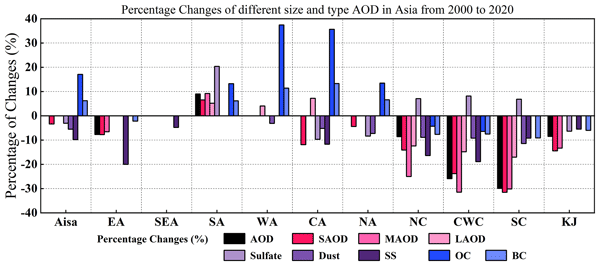
To better understand the Asian aerosol environment, we studied distributions and trends of aerosol with different sizes and types. Over the past 2 decades, dust, sulfate, and sea salt aerosol decreased by 5.51 %, 3.07 %, and 9.80 %, whereas organic carbon and black carbon aerosol increased by 17.09 % and 6.23 %, respectively. The increase in carbonaceous aerosols was a feature of Asia. An exception is found in East Asia, where the carbonaceous aerosols reduced, owing largely to China's efforts.
Boming Liu, Xin Ma, Jianping Guo, Hui Li, Shikuan Jin, Yingying Ma, and Wei Gong
Atmos. Chem. Phys., 23, 3181–3193, https://doi.org/10.5194/acp-23-3181-2023, https://doi.org/10.5194/acp-23-3181-2023, 2023
Short summary
Short summary
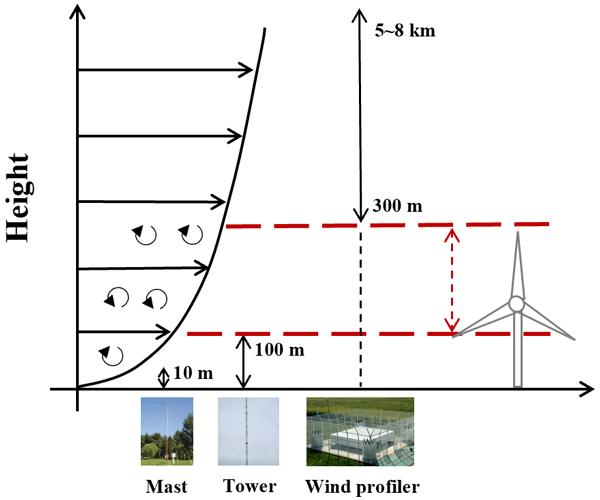
Wind energy is one of the most essential clean and renewable forms of energy in today’s world. However, the traditional power law method generally estimates the hub-height wind speed by assuming a constant exponent between surface and hub-height wind speeds. This inevitably leads to significant uncertainties in estimating the wind speed profile. To minimize the uncertainties, we here use a machine learning algorithm known as random forest to estimate the wind speed at hub height.

Tianqi Shi, Zeyu Han, Ge Han, Xin Ma, Huilin Chen, Truls Andersen, Huiqin Mao, Cuihong Chen, Haowei Zhang, and Wei Gong
Atmos. Chem. Phys., 22, 13881–13896, https://doi.org/10.5194/acp-22-13881-2022, https://doi.org/10.5194/acp-22-13881-2022, 2022
Short summary
Short summary
CH4 works as the second-most important greenhouse gas, its reported emission inventories being far less than CO2. In this study, we developed a self-adjusted model to estimate the CH4 emission rate from strong point sources by the UAV-based AirCore system. This model would reduce the uncertainty in CH4 emission rate quantification accrued by errors in measurements of wind and concentration. Actual measurements on Pniówek coal demonstrate the high accuracy and stability of our developed model.
Shikuan Jin, Yingying Ma, Cheng Chen, Oleg Dubovik, Jin Hong, Boming Liu, and Wei Gong
Atmos. Meas. Tech., 15, 4323–4337, https://doi.org/10.5194/amt-15-4323-2022, https://doi.org/10.5194/amt-15-4323-2022, 2022
Short summary
Short summary
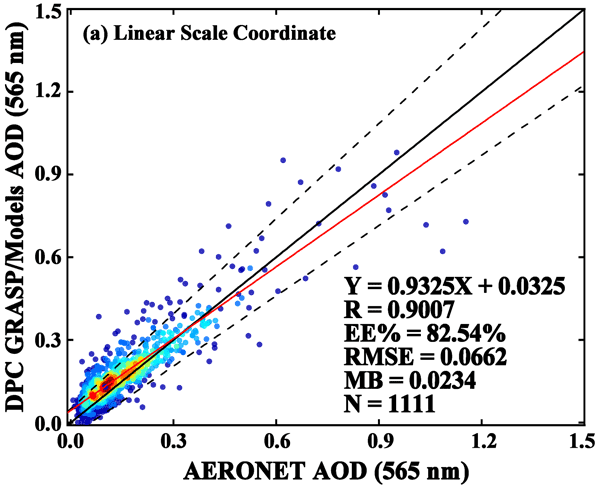
Aerosol parameter retrievals have always been a research focus. In this study, we used an advanced aerosol algorithms (GRASP, developed by Oleg Dubovik) to test the ability of DPC/Gaofen-5 (the first polarized multi-angle payload developed in China) images to obtain aerosol parameters. The results show that DPC/GRASP achieves good results (R > 0.9). This research will contribute to the development of hardware and algorithms for aerosols
Haowei Zhang, Boming Liu, Xin Ma, Ge Han, Qinglin Yang, Yichi Zhang, Tianqi Shi, Jianye Yuan, Wanqi Zhong, Yanran Peng, Jingjing Xu, and Wei Gong
Earth Syst. Sci. Data Discuss., https://doi.org/10.5194/essd-2022-215, https://doi.org/10.5194/essd-2022-215, 2022
Preprint withdrawn
Short summary
Short summary
Obtaining highly accurate and high-resolution spatiotemporal maps of carbon dioxide concentration distributions is crucial for promoting the study of the carbon cycle, and carbon emissions assessed by top-down theory. The official discrete satellite data provided by Gosat-2, OCO-2, and OCO-3 have data voids and relatively low efficiency. Here, we present carbon dioxide cover dataset, an innovative methodology to obtain XCO2 maps of high spatiotemporal resolution by using satellite data.
X. Xia, Z. Zhu, T. Zhang, G. Wei, and Y. Ji
Int. Arch. Photogramm. Remote Sens. Spatial Inf. Sci., XLIII-B3-2022, 545–550, https://doi.org/10.5194/isprs-archives-XLIII-B3-2022-545-2022, https://doi.org/10.5194/isprs-archives-XLIII-B3-2022-545-2022, 2022
Boming Liu, Jianping Guo, Wei Gong, Yong Zhang, Lijuan Shi, Yingying Ma, Jian Li, Xiaoran Guo, Ad Stoffelen, Gerrit de Leeuw, and Xiaofeng Xu
Atmos. Meas. Tech. Discuss., https://doi.org/10.5194/amt-2022-26, https://doi.org/10.5194/amt-2022-26, 2022
Publication in AMT not foreseen
Short summary
Short summary
Aeolus is the first satellite mission to directly observe wind profile information on a global scale. However, Aeolus wind products over China were thus far not evaluated by in-situ comparison. This work is the comparison of wind speed on a large scale between the Aeolus, ERA5 and RS , shedding important light on the data application of Aeolus wind products.

Yingying Ma, Yang Zhu, Boming Liu, Hui Li, Shikuan Jin, Yiqun Zhang, Ruonan Fan, and Wei Gong
Atmos. Chem. Phys., 21, 17003–17016, https://doi.org/10.5194/acp-21-17003-2021, https://doi.org/10.5194/acp-21-17003-2021, 2021
Short summary
Short summary
The vertical distribution of the aerosol extinction coefficient (EC) measured by lidar systems has been used to retrieve the profile of particle matter with a diameter of less than 2.5 μm (PM2.5). However, the traditional linear model cannot consider the influence of multiple meteorological variables sufficiently, which then causes low inversion accuracy. In this study, the machine learning algorithms which can input multiple features are used to solve this constraint.
Cited articles
Abshire, J., Riris, H., Allan, G., Weaver, C., Mao, J., Sun, X., Hasselbrack, W., Kawa, S. R., and Biraud, S.: Pulsed airborne lidar measurements of atmospheric CO2 column absorption, Tellus B, 62, 770, https://doi.org/10.1111/j.1600-0889.2010.00502.x, 2010.
Abshire, J., Ramanathan, A., Riris, H., Mao, J., Allan, G., Hasselbrack, W., Weaver, C., and Browell, E.: Airborne Measurements of CO2 Column Concentration and Range Using a Pulsed Direct-Detection IPDA Lidar, Remote Sens.-Basel, 6, 443–469, https://doi.org/10.3390/rs6010443, 2014.
Amediek, A., Ehret, G., Fix, A., Wirth, M., Büdenbender, C., Quatrevalet, M., Kiemle, C., and Gerbig, C.: CHARM-F – a new airborne integrated-path differential-absorption lidar for carbon dioxide and methane observations: measurement performance and quantification of strong point source emissions, Appl. Optics, 56, 5182, https://doi.org/10.1364/ao.56.005182, 2017.
Basu, S., Baker, D. F., Chevallier, F., Patra, P. K., Liu, J., and Miller, J. B.: The impact of transport model differences on CO2 surface flux estimates from OCO-2 retrievals of column average CO2, Atmos. Chem. Phys., 18, 7189–7215, https://doi.org/10.5194/acp-18-7189-2018, 2018.
Bu, J. O., Goo, T. Y., Oh, Y. S., and Velazco, V. A.: TCCON data from Anmeyondo (KR), Release GGG2020.R0 (R0), Caltech Data [data set], https://doi.org/10.14291/TCCON.GGG2020.ANMEYONDO01.R0, 2026.
Buchwitz, M., de Beek, R., Burrows, J. P., Bovensmann, H., Warneke, T., Notholt, J., Meirink, J. F., Goede, A. P. H., Bergamaschi, P., Körner, S., Heimann, M., and Schulz, A.: Atmospheric methane and carbon dioxide from SCIAMACHY satellite data: initial comparison with chemistry and transport models, Atmos. Chem. Phys., 5, 941–962, https://doi.org/10.5194/acp-5-941-2005, 2005.
Buchwitz, M., Reuter, M., Schneising, O., Hewson, W., Detmers, R. G., Boesch, H., Hasekamp, O. P., Aben, I., Bovensmann, H., Burrows, J. P., Butz, A., Chevallier, F., Dils, B., Frankenberg, C., Heymann, J., Lichtenberg, G., De Mazière, M., Notholt, J., Parker, R., Warneke, T., Zehner, C., Griffith, D. W. T., Deutscher, N. M., Kuze, A., Suto, H., and Wunch, D.: Global satellite observations of column-averaged carbon dioxide and methane: The GHG-CCI XCO2 and XCH4 CRDP3 data set, Remote Sens. Environ., 203, 276–295, https://doi.org/10.1016/j.rse.2016.12.027, 2017.
Buschmann, M., Petri, C., Palm, M., Warneke, T., and Notholt, J.: TCCON data from Ny-Ålesund, Svalbard (NO), Release GGG2020.R0 (R0), Caltech Data [data set], https://doi.org/10.14291/TCCON.GGG2020.NYALESUND01.R0, 2022.
Chevallier, F., Engelen, R. J., and Peylin, P.: The contribution of AIRS data to the estimation of CO2 sources and sinks, Geophys. Res. Lett., 32, 2005GL024229, https://doi.org/10.1029/2005gl024229, 2005.
Chevallier, F., Ciais, P., Conway, T. J., Aalto, T., Anderson, B. E., Bousquet, P., Brunke, E. G., Ciattaglia, L., Esaki, Y., Fröhlich, M., Gomez, A., Gomez-Pelaez, A. J., Haszpra, L., Krummel, P. B., Langenfelds, R. L., Leuenberger, M., Machida, T., Maignan, F., Matsueda, H., Morguí, J. A., Mukai, H., Nakazawa, T., Peylin, P., Ramonet, M., Rivier, L., Sawa, Y., Schmidt, M., Steele, L. P., Vay, S. A., Vermeulen, A. T., Wofsy, S., and Worthy, D.: CO2 surface fluxes at grid point scale estimated from a global 21 year reanalysis of atmospheric measurements, J. Geophys. Res.-Atmos., 115, 2010JD013887, https://doi.org/10.1029/2010jd013887, 2010.
Copernicus Atmosphere Monitoring Service: CAMS global inversion-optimised greenhouse gas fluxes and concentrations, Copernicus Atmosphere Monitoring Service (CAMS) Atmosphere Data Store [data set], https://doi.org/10.24381/ed2851d2, 2020.
Copernicus Climate Change Service: ERA5 hourly data on single levels from 1940 to present, Copernicus Climate Change Service (C3S) Climate Data Store (CDS) [data set], https://doi.org/10.24381/cds.adbb2d47, 2023.
Crisp, D., Pollock, H. R., Rosenberg, R., Chapsky, L., Lee, R. A. M., Oyafuso, F. A., Frankenberg, C., O'Dell, C. W., Bruegge, C. J., Doran, G. B., Eldering, A., Fisher, B. M., Fu, D., Gunson, M. R., Mandrake, L., Osterman, G. B., Schwandner, F. M., Sun, K., Taylor, T. E., Wennberg, P. O., and Wunch, D.: The on-orbit performance of the Orbiting Carbon Observatory-2 (OCO-2) instrument and its radiometrically calibrated products, Atmos. Meas. Tech., 10, 59–81, https://doi.org/10.5194/amt-10-59-2017, 2017.
Crowell, S. M. R., Randolph Kawa, S., Browell, E. V., Hammerling, D. M., Moore, B., Schaefer, K., and Doney, S. C.: On the Ability of Space-Based Passive and Active Remote Sensing Observations of CO2 to Detect Flux Perturbations to the Carbon Cycle, J. Geophys. Res.-Atmos., 123, 1460–1477, https://doi.org/10.1002/2017jd027836, 2018.
Deutscher, N. M., Griffith, D. W. T., Paton-Walsh, C., Jones, N. B., Velazco, V. A., Wilson, S. R., Macatangay, R. C., Kettlewell, G. C., Buchholz, R. R., Riggenbach, M. O., Bukosa, B., John, S. S., Walker, B. T., and Nawaz, H.: TCCON data from Wollongong (AU), Release GGG2020.R0 (R0), Caltech Data [data set], https://doi.org/10.14291/TCCON.GGG2020.WOLLONGONG01.R0, 2023a.
Deutscher, N. M., Griffith, D. W. T., Paton-Walsh, C., Velazco, V. A., Wennberg, P. O., Blavier, J. F., Washenfelder, R. A., Yavin, Y., Keppel-Aleks, G., Toon, G. C., Jones, N. B., Kettlewell, G. C., Connor, B. J., Macatangay, R. C., Wunch, D., Roehl, C., and Bryant, G. W.: TCCON data from Darwin (AU), Release GGG2020.R0 (R0), Caltech Data [data set], https://doi.org/10.14291/TCCON.GGG2020.DARWIN01.R0, 2023b.
Eldering, A., O'Dell, C. W., Wennberg, P. O., Crisp, D., Gunson, M. R., Viatte, C., Avis, C., Braverman, A., Castano, R., Chang, A., Chapsky, L., Cheng, C., Connor, B., Dang, L., Doran, G., Fisher, B., Frankenberg, C., Fu, D., Granat, R., Hobbs, J., Lee, R. A. M., Mandrake, L., McDuffie, J., Miller, C. E., Myers, V., Natraj, V., O'Brien, D., Osterman, G. B., Oyafuso, F., Payne, V. H., Pollock, H. R., Polonsky, I., Roehl, C. M., Rosenberg, R., Schwandner, F., Smyth, M., Tang, V., Taylor, T. E., To, C., Wunch, D., and Yoshimizu, J.: The Orbiting Carbon Observatory-2: first 18 months of science data products, Atmos. Meas. Tech., 10, 549–563, https://doi.org/10.5194/amt-10-549-2017, 2017.
Fang, J., Chen, B., Zhang, H., Dilawar, A., Guo, M., Liu, C., Liu, S. a., Gemechu, T. M., and Zhang, X.: Global Evaluation and Intercomparison of XCO2 Retrievals from GOSAT, OCO-2, and TANSAT with TCCON, Remote Sens.-Basel, 15, 5073, https://doi.org/10.3390/rs15205073, 2023.
García, O. E., Schneider, M., Herkommer, B., Gross, J., Hase, F., Blumenstock, T., and Sepúlveda, E.: TCCON data from Izana (ES), Release GGG2020.R1 (R1), Caltech Data [data set], https://doi.org/10.14291/TCCON.GGG2020.IZANA01.R1, 2022.
Han, G., Ma, X., Liang, A., Zhang, T., Zhao, Y., Zhang, M., and Gong, W.: Performance Evaluation for China's Planned CO2-IPDA, Remote Sens.-Basel, 9, 768, https://doi.org/10.3390/rs9080768, 2017.
Han, G., Xu, H., Gong, W., Liu, J., Du, J., Ma, X., and Liang, A.: Feasibility Study on Measuring Atmospheric CO2 in Urban Areas Using Spaceborne CO2-IPDA LIDAR, Remote Sens.-Basel, 10, 985, https://doi.org/10.3390/rs10070985, 2018.
Han, G., Huang, Y., Shi, T., Zhang, H., Li, S., Zhang, H., Chen, W., Liu, J., and Gong, W.: Quantifying CO2 emissions of power plants with Aerosols and Carbon Dioxide Lidar onboard DQ-1, Remote Sens. Environ., 313, 114368, https://doi.org/10.1016/j.rse.2024.114368, 2024.
Han, G., Zhang, H., Huang, Y., Chen, W., Mao, H., Zhang, X., Ma, X., Li, S., Zhang, H., Liu, J., Mao, F., and Gong, W.: First global XCO2 observations from spaceborne lidar: methodology and initial result, Remote Sens. Environ., 330, 114954, https://doi.org/10.1016/j.rse.2025.114954, 2025.
Han, G., Wang, H., Pei, Z., Mao, H., Ying, J., Li, S., Ma, X., Liu, B., Mao, F., and Gong, W.: Quantifying facility-scale CO2 emissions using spaceborne hyperspectral imageries, Remote Sens. Environ., 342, 115478, https://doi.org/10.1016/j.rse.2026.115478, 2026.
Hase, F., Herkommer, B., Groß, J., Blumenstock, T., Kiel, M., and Dohe, S.: TCCON data from Karlsruhe (DE), Release GGG2020.R2 (R2), Caltech Data [data set], https://doi.org/10.14291/TCCON.GGG2020.KARLSRUHE01.R2, 2024.
Hersbach, H., Bell, B., Berrisford, P., Hirahara, S., Horányi, A., Muñoz-Sabater, J., Nicolas, J., Peubey, C., Radu, R., Schepers, D., Simmons, A., Soci, C., Abdalla, S., Abellan, X., Balsamo, G., Bechtold, P., Biavati, G., Bidlot, J., Bonavita, M., De Chiara, G., Dahlgren, P., Dee, D., Diamantakis, M., Dragani, R., Flemming, J., Forbes, R., Fuentes, M., Geer, A., Haimberger, L., Healy, S., Hogan, R. J., Hólm, E., Janisková, M., Keeley, S., Laloyaux, P., Lopez, P., Lupu, C., Radnoti, G., de Rosnay, P., Rozum, I., Vamborg, F., Villaume, S., and Thépaut, J.-N.: The ERA5 global reanalysis, Q. J. Roy. Meteor. Soc., 146, 1999–2049, https://doi.org/10.1002/qj.3803, 2020.
Iraci, L. T., Podolske, J. R., Roehl, C., Wennberg, P. O., Blavier, J. F., Allen, N., Wunch, D., and Osterman, G. B.: TCCON data from Edwards (US), Release GGG2020.R0 (R0), Caltech Data [data set], https://doi.org/10.14291/TCCON.GGG2020.EDWARDS01.R0, 2022.
Ji, M., Xu, Y., Zhang, Y., Mo, Y., Zhu, S., Wang, W., Zhou, M., Morino, I., Ohyama, H., Shiomi, K., and Oh, Y.-S.: Validation of Remotely Sensed XCO2 Products With TCCON Observations in East Asia, IEEE J-STARS, 17, 7159–7169, https://doi.org/10.1109/jstars.2024.3378229, 2024.
Keppel-Aleks, G., Wennberg, P. O., O'Dell, C. W., and Wunch, D.: Towards constraints on fossil fuel emissions from total column carbon dioxide, Atmos. Chem. Phys., 13, 4349–4357, https://doi.org/10.5194/acp-13-4349-2013, 2013.
Kivi, R., Heikkinen, P., and Kyrö, E.: TCCON data from Sodankylä (FI), Release GGG2020.R1 (R1), Caltech Data [data set], https://doi.org/10.14291/TCCON.GGG2020.SODANKYLA01.R1, 2026.
Kong, Y., Chen, B., and Measho, S.: Spatio-Temporal Consistency Evaluation of XCO2 Retrievals from GOSAT and OCO-2 Based on TCCON and Model Data for Joint Utilization in Carbon Cycle Research, Atmosphere, 10, 354, https://doi.org/10.3390/atmos10070354, 2019.
Kulawik, S., Wunch, D., O'Dell, C., Frankenberg, C., Reuter, M., Oda, T., Chevallier, F., Sherlock, V., Buchwitz, M., Osterman, G., Miller, C. E., Wennberg, P. O., Griffith, D., Morino, I., Dubey, M. K., Deutscher, N. M., Notholt, J., Hase, F., Warneke, T., Sussmann, R., Robinson, J., Strong, K., Schneider, M., De Mazière, M., Shiomi, K., Feist, D. G., Iraci, L. T., and Wolf, J.: Consistent evaluation of ACOS-GOSAT, BESD-SCIAMACHY, CarbonTracker, and MACC through comparisons to TCCON, Atmos. Meas. Tech., 9, 683–709, https://doi.org/10.5194/amt-9-683-2016, 2016.
Kuze, A., Suto, H., Nakajima, M., and Hamazaki, T.: Thermal and near infrared sensor for carbon observation Fourier-transform spectrometer on the Greenhouse Gases Observing Satellite for greenhouse gases monitoring, Appl. Optics, 48, 6716, https://doi.org/10.1364/ao.48.006716, 2009.
Kuze, A., Suto, H., Shiomi, K., Kawakami, S., Tanaka, M., Ueda, Y., Deguchi, A., Yoshida, J., Yamamoto, Y., Kataoka, F., Taylor, T. E., and Buijs, H. L.: Update on GOSAT TANSO-FTS performance, operations, and data products after more than 6 years in space, Atmos. Meas. Tech., 9, 2445–2461, https://doi.org/10.5194/amt-9-2445-2016, 2016.
Liang, A., Gong, W., Han, G., and Xiang, C.: Comparison of Satellite-Observed XCO2 from GOSAT, OCO-2, and Ground-Based TCCON, Remote Sens.-Basel, 9, 1033, https://doi.org/10.3390/rs9101033, 2017.
Liu, C., Wang, W., Sun, Y., and Shan, C.: TCCON data from Hefei (PRC), Release GGG2020.R1 (R1), Caltech Data [data set], https://doi.org/10.14291/TCCON.GGG2020.HEFEI01.R1, 2023.
Mao, J., Ramanathan, A., Abshire, J. B., Kawa, S. R., Riris, H., Allan, G. R., Rodriguez, M., Hasselbrack, W. E., Sun, X., Numata, K., Chen, J., Choi, Y., and Yang, M. Y. M.: Measurement of atmospheric CO2 column concentrations to cloud tops with a pulsed multi-wavelength airborne lidar, Atmos. Meas. Tech., 11, 127–140, https://doi.org/10.5194/amt-11-127-2018, 2018.
Morino, I., Ohyama, H., Hori, A., and Ikegami, H.: TCCON data from Rikubetsu (JP), Release GGG2020.R0 (R0), Caltech Data [data set], https://doi.org/10.14291/TCCON.GGG2020.RIKUBETSU01.R0, 2022a.
Morino, I., Velazco, V. A., Hori, A., Uchino, O., and Griffith, D. W. T.: TCCON data from Burgos, Ilocos Norte (PH), Release GGG2020.R0 (R0), Caltech Data [data set], https://doi.org/10.14291/TCCON.GGG2020.BURGOS01.R0, 2022b.
Nelson, R. R., Eldering, A., Crisp, D., Merrelli, A. J., and O'Dell, C. W.: Retrieved wind speed from the Orbiting Carbon Observatory-2, Atmos. Meas. Tech., 13, 6889–6899, https://doi.org/10.5194/amt-13-6889-2020, 2020.
NIES GOSAT-2 Project: Release Note: GOSAT-2 TANSO-FTS-2 SWIR L2 Column-averaged Dry-air Mole Fraction Product, Product version 02.20, National Institute for Environmental Studies, https://prdct.gosat-2.nies.go.jp/documents/pdf/ReleaseNote_FTS-2_L2_SWFP_ver0220_en_02.pdf (last access: 7 September 2026), 2026a.
NIES GOSAT-2 Project: Release Note: GOSAT-2 TANSO-FTS-2 SWIR L2 Column-averaged Dry-air Mole Fraction Product, Product version 02.21, National Institute for Environmental Studies, https://prdct.gosat-2.nies.go.jp/documents/pdf/ReleaseNote_FTS-2_L2_SWFP_ver0221_en_02.pdf (last access: 7 September 2026), 2026b.
Noël, S., Reuter, M., Buchwitz, M., Borchardt, J., Hilker, M., Bovensmann, H., Burrows, J. P., Di Noia, A., Suto, H., Yoshida, Y., Buschmann, M., Deutscher, N. M., Feist, D. G., Griffith, D. W. T., Hase, F., Kivi, R., Morino, I., Notholt, J., Ohyama, H., Petri, C., Podolske, J. R., Pollard, D. F., Sha, M. K., Shiomi, K., Sussmann, R., Té, Y., Velazco, V. A., and Warneke, T.: XCO2 retrieval for GOSAT and GOSAT-2 based on the FOCAL algorithm, Atmos. Meas. Tech., 14, 3837–3869, https://doi.org/10.5194/amt-14-3837-2021, 2021.
Noël, S., Reuter, M., Buchwitz, M., Borchardt, J., Hilker, M., Schneising, O., Bovensmann, H., Burrows, J. P., Di Noia, A., Parker, R. J., Suto, H., Yoshida, Y., Buschmann, M., Deutscher, N. M., Feist, D. G., Griffith, D. W. T., Hase, F., Kivi, R., Liu, C., Morino, I., Notholt, J., Oh, Y.-S., Ohyama, H., Petri, C., Pollard, D. F., Rettinger, M., Roehl, C., Rousogenous, C., Sha, M. K., Shiomi, K., Strong, K., Sussmann, R., Té, Y., Velazco, V. A., Vrekoussis, M., and Warneke, T.: Retrieval of greenhouse gases from GOSAT and GOSAT-2 using the FOCAL algorithm, Atmos. Meas. Tech., 15, 3401–3437, https://doi.org/10.5194/amt-15-3401-2022, 2022.
Notholt, J., Petri, C., Warneke, T., and Buschmann, M.: TCCON data from Bremen (DE), Release GGG2020.R1 (R1), Caltech Data [data set], https://doi.org/10.14291/TCCON.GGG2020.BREMEN01.R1, 2026.
OCO-2/OCO-3 Science Team, Payne, V., and Chatterjee, A.: OCO-2 Level 2 bias-corrected XCO2 and other select fields from the full-physics retrieval aggregated as daily files, Retrospective processing V11.2r (OCO2_L2_Lite_FP), Goddard Earth Sciences Data and Information Services Center (GES DISC) [data set], https://doi.org/10.5067/70K2B2W8MNGY, 2024a.
OCO-2/OCO-3 Science Team, Payne, V., and Chatterjee, A.: OCO-3 Level 2 bias-corrected XCO2 and other select fields from the full-physics retrieval aggregated as daily files, Retrospective processing V11r (OCO3_L2_Lite_FP), Goddard Earth Sciences Data and Information Services Center (GES DISC) [data set], https://doi.org/10.5067/8U0VGVQC7HZG, 2024b.
O'Dell, C. W., Eldering, A., Wennberg, P. O., Crisp, D., Gunson, M. R., Fisher, B., Frankenberg, C., Kiel, M., Lindqvist, H., Mandrake, L., Merrelli, A., Natraj, V., Nelson, R. R., Osterman, G. B., Payne, V. H., Taylor, T. E., Wunch, D., Drouin, B. J., Oyafuso, F., Chang, A., McDuffie, J., Smyth, M., Baker, D. F., Basu, S., Chevallier, F., Crowell, S. M. R., Feng, L., Palmer, P. I., Dubey, M., García, O. E., Griffith, D. W. T., Hase, F., Iraci, L. T., Kivi, R., Morino, I., Notholt, J., Ohyama, H., Petri, C., Roehl, C. M., Sha, M. K., Strong, K., Sussmann, R., Te, Y., Uchino, O., and Velazco, V. A.: Improved retrievals of carbon dioxide from Orbiting Carbon Observatory-2 with the version 8 ACOS algorithm, Atmos. Meas. Tech., 11, 6539–6576, https://doi.org/10.5194/amt-11-6539-2018, 2018.
Petri, C., Vrekoussis, M., Rousogenous, C., Warneke, T., Sciare, J., and Notholt, J.: TCCON data from Nicosia (CY), Release GGG2020.R1 (R1), Caltech Data [data set], https://doi.org/10.14291/TCCON.GGG2020.NICOSIA01.R1, 2024.
Pollard, D. F., Robinson, J., and Shiona, H.: TCCON data from Lauder (NZ), Release GGG2020.R0 (R0), Caltech Data [data set], https://doi.org/10.14291/TCCON.GGG2020.LAUDER03.R0, 2022.
Shi, T., Han, G., Ma, X., Pei, Z., Chen, W., Liu, J., Zhang, X., Li, S., and Gong, W.: Quantifying strong point sources emissions of CO2 using spaceborne LiDAR: Method development and potential analysis, Energ Convers. Manage., 292, 117346, https://doi.org/10.1016/j.enconman.2023.117346, 2023.
Shiomi, K., Kawakami, S., Ohyama, H., Arai, K., Okumura, H., Ikegami, H., and Usami, M.: TCCON data from Saga (JP), Release GGG2020.R0 (R0), Caltech Data [data set], https://doi.org/10.14291/TCCON.GGG2020.SAGA01.R0, 2022.
Sussmann, R., Rettinger, M., and Mostafavi Pak, N.: TCCON data from Garmisch (DE), Release GGG2020.R1 (R1), Caltech Data [data set], https://doi.org/10.14291/TCCON.GGG2020.GARMISCH01.R1, 2025.
Suto, H., Kataoka, F., Kikuchi, N., Knuteson, R. O., Butz, A., Haun, M., Buijs, H., Shiomi, K., Imai, H., and Kuze, A.: Thermal and near-infrared sensor for carbon observation Fourier transform spectrometer-2 (TANSO-FTS-2) on the Greenhouse gases Observing SATellite-2 (GOSAT-2) during its first year in orbit, Atmos. Meas. Tech., 14, 2013–2039, https://doi.org/10.5194/amt-14-2013-2021, 2021.
Taylor, T. E., O'Dell, C. W., Baker, D., Bruegge, C., Chang, A., Chapsky, L., Chatterjee, A., Cheng, C., Chevallier, F., Crisp, D., Dang, L., Drouin, B., Eldering, A., Feng, L., Fisher, B., Fu, D., Gunson, M., Haemmerle, V., Keller, G. R., Kiel, M., Kuai, L., Kurosu, T., Lambert, A., Laughner, J., Lee, R., Liu, J., Mandrake, L., Marchetti, Y., McGarragh, G., Merrelli, A., Nelson, R. R., Osterman, G., Oyafuso, F., Palmer, P. I., Payne, V. H., Rosenberg, R., Somkuti, P., Spiers, G., To, C., Weir, B., Wennberg, P. O., Yu, S., and Zong, J.: Evaluating the consistency between OCO-2 and OCO-3 XCO2 estimates derived from the NASA ACOS version 10 retrieval algorithm, Atmos. Meas. Tech., 16, 3173–3209, https://doi.org/10.5194/amt-16-3173-2023, 2023.
Té, Y., Jeseck, P., and Janssen, C.: TCCON data from Paris (FR), Release GGG2020.R0 (R0), Caltech Data [data set], https://doi.org/10.14291/TCCON.GGG2020.PARIS01.R0, 2022.
Vermote, E.: MODIS/Aqua Surface Reflectance Daily L3 Global 0.05Deg CMG V061, NASA Land Processes Distributed Active Archive Center [data set], https://doi.org/10.5067/MODIS/MYD09CMG.061, 2021.
Vermote, E. F. and Kotchenova, S.: Atmospheric correction for the monitoring of land surfaces, J. Geophys. Res.-Atmos., 113, 2007JD009662, https://doi.org/10.1029/2007jd009662, 2008.
Vermote, E. F., El Saleous, N. Z., and Justice, C. O.: Atmospheric correction of MODIS data in the visible to middle infrared: first results, Remote Sens. Environ., 83, 97–111, https://doi.org/10.1016/s0034-4257(02)00089-5, 2002.
Vermote, E. F., El Saleous, N., Justice, C. O., Kaufman, Y. J., Privette, J. L., Remer, L., Roger, J. C., and Tanré, D.: Atmospheric correction of visible to middle-infrared EOS-MODIS data over land surfaces: Background, operational algorithm and validation, J. Geophys. Res.-Atmos., 102, 17131–17141, https://doi.org/10.1029/97jd00201, 1997.
Wang, J. S., Kawa, S. R., Eluszkiewicz, J., Baker, D. F., Mountain, M., Henderson, J., Nehrkorn, T., and Zaccheo, T. S.: A regional CO2 observing system simulation experiment for the ASCENDS satellite mission, Atmos. Chem. Phys., 14, 12897–12914, https://doi.org/10.5194/acp-14-12897-2014, 2014.
Warneke, T., Petri, C., Notholt, J., and Buschmann, M.: TCCON data from Orléans (FR), Release GGG2020.R1 (R1), Caltech Data [data set], https://doi.org/10.14291/TCCON.GGG2020.ORLEANS01.R1, 2024.
Weidmann, D., Brownsword, R., and Doniki, S.: TCCON data from Harwell, Oxfordshire (UK), Release GGG2020.R0 (R0), Caltech Data [data set], https://doi.org/10.14291/TCCON.GGG2020.HARWELL01.R0, 2023.
Wennberg, P. O., Roehl, C. M., Wunch, D., Blavier, J. F., Toon, G. C., Allen, N. T., Treffers, R., and Laughner, J.: TCCON data from Caltech (US), Release GGG2020.R0 (R0), Caltech Data [data set], https://doi.org/10.14291/TCCON.GGG2020.PASADENA01.R0, 2022a.
Wennberg, P. O., Roehl, C. M., Wunch, D., Toon, G. C., Blavier, J. F., Washenfelder, R., Keppel-Aleks, G., and Allen, N. T.: TCCON data from Park Falls (US), Release GGG2020.R1 (R1), Caltech Data [data set], https://doi.org/10.14291/TCCON.GGG2020.PARKFALLS01.R1, 2022b.
Wennberg, P. O., Wunch, D., Roehl, C. M., Blavier, J. F., Toon, G. C., and Allen, N. T.: TCCON data from Lamont (US), Release GGG2020.R1 (R1), Caltech Data [data set], https://doi.org/10.14291/TCCON.GGG2020.LAMONT01.R1, 2025.
Wunch, D., Toon, G. C., Wennberg, P. O., Wofsy, S. C., Stephens, B. B., Fischer, M. L., Uchino, O., Abshire, J. B., Bernath, P., Biraud, S. C., Blavier, J.-F. L., Boone, C., Bowman, K. P., Browell, E. V., Campos, T., Connor, B. J., Daube, B. C., Deutscher, N. M., Diao, M., Elkins, J. W., Gerbig, C., Gottlieb, E., Griffith, D. W. T., Hurst, D. F., Jiménez, R., Keppel-Aleks, G., Kort, E. A., Macatangay, R., Machida, T., Matsueda, H., Moore, F., Morino, I., Park, S., Robinson, J., Roehl, C. M., Sawa, Y., Sherlock, V., Sweeney, C., Tanaka, T., and Zondlo, M. A.: Calibration of the Total Carbon Column Observing Network using aircraft profile data, Atmos. Meas. Tech., 3, 1351–1362, https://doi.org/10.5194/amt-3-1351-2010, 2010.
Wunch, D., Toon, G. C., Blavier, J.-F. L., Washenfelder, R. A., Notholt, J., Connor, B. J., Griffith, D. W. T., Sherlock, V., and Wennberg, P. O.: The Total Carbon Column Observing Network, Philos. T. Roy. Soc. A, 369, 2087–2112, https://doi.org/10.1098/rsta.2010.0240, 2011.
Wunch, D., Mendonca, J., Colebatch, O., Allen, N. T., Blavier, J. F., Kunz, K., Roche, S., Hedelius, J., Neufeld, G., Springett, S., Worthy, D., Kessler, R., and Strong, K.: TCCON data from East Trout Lake, SK (CA), Release GGG2020.R0 (R0), Caltech Data [data set], https://doi.org/10.14291/TCCON.GGG2020.EASTTROUT LAKE01.R0, 2022a.
Wunch, D., Wennberg, P. O., Griffith, D. W. T., Deutscher, N. M., Feist, D. G., Notholt, J., and Laughner, J. L.: 2020 TCCON Data Release, CaltechDATA [data set], https://doi.org/10.14291/TCCON.GGG2020, 2022b.
Yang, D., Boesch, H., Liu, Y., Somkuti, P., Cai, Z., Chen, X., Di Noia, A., Lin, C., Lu, N., Lyu, D., Parker, R. J., Tian, L., Wang, M., Webb, A., Yao, L., Yin, Z., Zheng, Y., Deutscher, N. M., Griffith, D. W. T., Hase, F., Kivi, R., Morino, I., Notholt, J., Ohyama, H., Pollard, D. F., Shiomi, K., Sussmann, R., Té, Y., Velazco, V. A., Warneke, T., and Wunch, D.: Toward High Precision XCO2 Retrievals From TanSat Observations: Retrieval Improvement and Validation Against TCCON Measurements, J. Geophys. Res.-Atmos., 125, e2020JD032794, https://doi.org/10.1029/2020jd032794, 2020.
Yang, H., Li, T., Wu, J., and Zhang, L.: Inter-comparison and evaluation of global satellite XCO2 products, Geo-spatial Information Science, 28, 131–144, https://doi.org/10.1080/10095020.2023.2252017, 2025.
Yi, J., Huang, Y., Pei, Z., and Han, G.: Urban Area Observing System (UAOS) simulation experiment using DQ-1 total column concentration observations, Atmos. Chem. Phys., 25, 13687–13710, https://doi.org/10.5194/acp-25-13687-2025, 2025.
Yi, J., Huang, Y., Han, G., Zhang, H., Pei, Z., Luo, H., Zhang, Y., Shi, T., Li, S., and Gong, W.: Active and passive satellite observations coupled with carbon–nitrogen synergy for urban fossil fuel CO2 emissions monitoring, Atmos. Chem. Phys., 26, 8475–8504, https://doi.org/10.5194/acp-26-8475-2026, 2026.
Yoshida, Y., Kikuchi, N., Morino, I., Uchino, O., Oshchepkov, S., Bril, A., Saeki, T., Schutgens, N., Toon, G. C., Wunch, D., Roehl, C. M., Wennberg, P. O., Griffith, D. W. T., Deutscher, N. M., Warneke, T., Notholt, J., Robinson, J., Sherlock, V., Connor, B., Rettinger, M., Sussmann, R., Ahonen, P., Heikkinen, P., Kyrö, E., Mendonca, J., Strong, K., Hase, F., Dohe, S., and Yokota, T.: Improvement of the retrieval algorithm for GOSAT SWIR XCO2 and XCH4 and their validation using TCCON data, Atmos. Meas. Tech., 6, 1533–1547, https://doi.org/10.5194/amt-6-1533-2013, 2013.
Yoshida, Y., Someya, Y., Ohyama, H., Morino, I., Matsunaga, T., Deutscher, N. M., Griffith, D. W. T., Hase, F., Iraci, L. T., Kivi, R., Notholt, J., Pollard, D. F., Té, Y., Velazco, V. A., and Wunch, D.: Quality Evaluation of the Column-Averaged Dry Air Mole Fractions of Carbon Dioxide and Methane Observed by GOSAT and GOSAT-2, SOLA, 19, 173–184, https://doi.org/10.2151/sola.2023-023, 2023.
Zhang, H., Han, G., Chen, W., Pei, Z., Liu, B., Liu, J., Zhang, T., Li, S., and Gong, W.: Validation Method for Spaceborne IPDA LIDAR XCO2 Products via TCCON, IEEE J-STARS, 17, 16984–16992, https://doi.org/10.1109/jstars.2024.3418028, 2024.
Zhang, X., Yang, H., Bu, L., Fan, Z., Xiao, W., Chen, B., Zhang, L., Liu, S., Wang, Z., Liu, J., Chen, W., and Lee, X.: Estimation of diurnal emissions of CO2 from thermal power plants using spaceborne integrated path differential absorption (IPDA) lidar, Atmos. Chem. Phys., 25, 6725–6740, https://doi.org/10.5194/acp-25-6725-2025, 2025.
Zhang, Y., Han, G., Huang, Y., Wang, H., Zhang, H., Pei, Z., Pu, Y., Luo, H., Yi, J., Shi, T., Li, S., and Gong, W.: Attributing GHG emissions to individual facilities using multi-temporal hyperspectral images: Methodology and applications, ISPRS Journal of Photogrammetry and Remote Sensing, 232, 937–956, https://doi.org/10.1016/j.isprsjprs.2026.01.014, 2026.
Zhou, M., Wang, P., Kumps, N., Hermans, C., and Nan, W.: TCCON data from Xianghe, China, Release GGG2020.R0 (R0), Caltech Data [data set], https://doi.org/10.14291/TCCON.GGG2020.XIANGHE01.R0, 2022.
Short summary
This study establishes a unified framework to assess the consistency of DQ-1 (Da Qi-1) ACDL (Aerosol and Carbon Dioxide Lidar) XCO2 with passive satellite products while considering sampling and column-definition differences. DQ-1 agrees well with TCCON (Total Carbon Column Observing Network) and shows consistent spatial patterns with OCO-2, OCO-3 (Orbiting Carbon Observatory), GOSAT, and GOSAT-2 (Greenhouse gases Observing SATellite) over selected regions. It provides complementary XCO2 observations where passive measurements are limited, including nighttime and high latitudes, supporting future joint carbon monitoring and inversion studies.
This study establishes a unified framework to assess the consistency of DQ-1 (Da Qi-1) ACDL...


Special issue
Altmetrics
Final-revised paper
Preprint