
Articles | Volume 26, issue 16
https://doi.org/10.5194/acp-26-11909-2026
© Author(s) 2026. This work is distributed under
the Creative Commons Attribution 4.0 License.
the Creative Commons Attribution 4.0 License.
https://doi.org/10.5194/acp-26-11909-2026
© Author(s) 2026. This work is distributed under
the Creative Commons Attribution 4.0 License.
the Creative Commons Attribution 4.0 License.
Measurement report
| 
21 Aug 2026
Measurement report |
| 21 Aug 2026
| 21 Aug 2026
Measurement report: Development of a portable peroxy radical measurement system and application for diagnosing local ozone formation and transport
Rujia Tang
School of Atmospheric Sciences, Sun Yat-sen University, Southern Marine Science and Engineering Guangdong Laboratory (Zhuhai), Zhuhai, 519082, China
Guangdong Provincial Observation and Research Station for Climate Environment and Air Quality Change in the Pearl River Estuary, Key Laboratory of Tropical Atmosphere-Ocean System, Ministry of Education, Zhuhai, 519082, China
Zelong Zheng
School of Atmospheric Sciences, Sun Yat-sen University, Southern Marine Science and Engineering Guangdong Laboratory (Zhuhai), Zhuhai, 519082, China
Guangdong Provincial Observation and Research Station for Climate Environment and Air Quality Change in the Pearl River Estuary, Key Laboratory of Tropical Atmosphere-Ocean System, Ministry of Education, Zhuhai, 519082, China
Yiming Wang
School of Atmospheric Sciences, Sun Yat-sen University, Southern Marine Science and Engineering Guangdong Laboratory (Zhuhai), Zhuhai, 519082, China
Guangdong Provincial Observation and Research Station for Climate Environment and Air Quality Change in the Pearl River Estuary, Key Laboratory of Tropical Atmosphere-Ocean System, Ministry of Education, Zhuhai, 519082, China
Hongxia Liu
School of Atmospheric Sciences, Sun Yat-sen University, Southern Marine Science and Engineering Guangdong Laboratory (Zhuhai), Zhuhai, 519082, China
Guangdong Provincial Observation and Research Station for Climate Environment and Air Quality Change in the Pearl River Estuary, Key Laboratory of Tropical Atmosphere-Ocean System, Ministry of Education, Zhuhai, 519082, China

School of Atmospheric Sciences, Sun Yat-sen University, Southern Marine Science and Engineering Guangdong Laboratory (Zhuhai), Zhuhai, 519082, China
Guangdong Provincial Observation and Research Station for Climate Environment and Air Quality Change in the Pearl River Estuary, Key Laboratory of Tropical Atmosphere-Ocean System, Ministry of Education, Zhuhai, 519082, China
Haichao Wang
School of Atmospheric Sciences, Sun Yat-sen University, Southern Marine Science and Engineering Guangdong Laboratory (Zhuhai), Zhuhai, 519082, China
Guangdong Provincial Observation and Research Station for Climate Environment and Air Quality Change in the Pearl River Estuary, Key Laboratory of Tropical Atmosphere-Ocean System, Ministry of Education, Zhuhai, 519082, China
Related authors
No articles found.
Hengjia Ou, Mingfu Cai, Haichao Wang, Xue Ni, Shixin Mai, Qibin Sun, Baoling Liang, Kunpeng Chen, Tao Deng, Sun Jiaren, Shengzhen Zhou, and Jun Zhao
EGUsphere, https://doi.org/10.5194/egusphere-2026-4265, https://doi.org/10.5194/egusphere-2026-4265, 2026
Short summary
Short summary
This study investigates how tropical cyclones transport anthropogenic pollutants into the marine atmosphere, substantially increasing organic aerosol and enhancing secondary aerosol formation. These changes reduced bulk aerosol hygroscopicity despite enhanced organic aerosol hygroscopicity, weakening cloud condensation nuclei activity. However, higher aerosol number concentrations produced more and smaller cloud droplets, enhancing cloud reflectivity and suppressing warm-rain formation.
Weichao Huang, Sihang Wang, Peng Cheng, Bingna Chen, Bin Yuan, Pengfei Yu, Haichao Wang, Nan Ma, Mei Li, and Keding Lu
Atmos. Chem. Phys., 25, 15403–15414, https://doi.org/10.5194/acp-25-15403-2025, https://doi.org/10.5194/acp-25-15403-2025, 2025
Short summary
Short summary
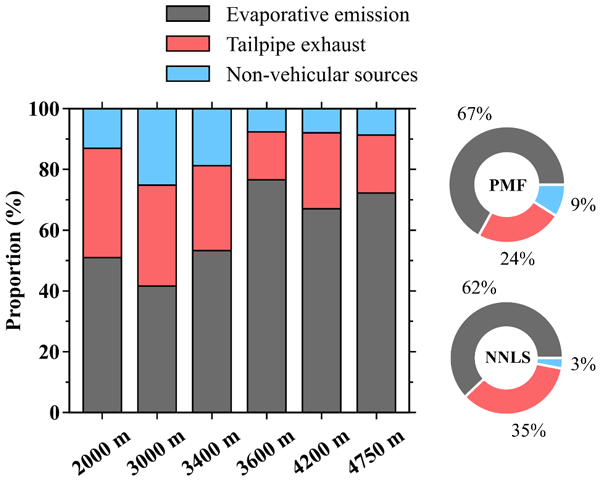
We studied vehicle emissions from ten 3000-meter tunnels on the Tibetan Plateau. Emissions of volatile organic compounds (VOCs) increase with elevation due to the evaporation of fuel oil from low pressure, unlike at lower elevations where tailpipe is predominant. This suggests that specific emission control measures are needed. This research aims to understand emissions at high altitudes and to guide cleaner transport.
Gaojie Chen, Xiaolong Fan, Haichao Wang, Yee Jun Tham, Ziyi Lin, Xiaoting Ji, Lingling Xu, Baoye Hu, and Jinsheng Chen
Atmos. Chem. Phys., 25, 7815–7828, https://doi.org/10.5194/acp-25-7815-2025, https://doi.org/10.5194/acp-25-7815-2025, 2025
Short summary
Short summary
Our study revealed that the nighttime heterogeneous dinitrogen pentoxide (N2O5) uptake process was the major contributor of nitryl chloride (ClNO2) sources, while nitrate photolysis may promote the elevation of daytime ClNO2 concentrations. The rates of alkane oxidation by chlorine (Cl) radical in the early morning exceeded those by OH radical, significantly promoted the formation of ROx and ozone (O3), and further enhanced the atmospheric oxidation capacity levels.
Jiayin Li, Tianyu Zhai, Xiaorui Chen, Haichao Wang, Shuyang Xie, Shiyi Chen, Chunmeng Li, Yuanjun Gong, Huabin Dong, and Keding Lu
Atmos. Chem. Phys., 25, 6395–6406, https://doi.org/10.5194/acp-25-6395-2025, https://doi.org/10.5194/acp-25-6395-2025, 2025
Short summary
Short summary
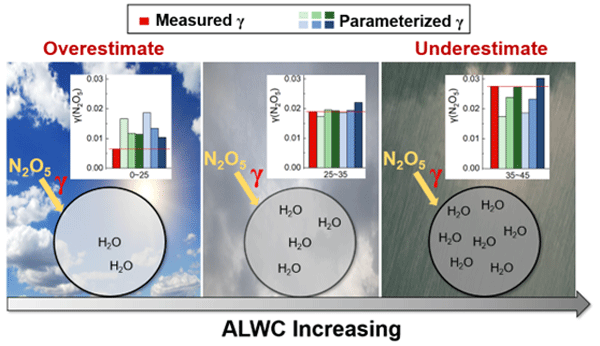
We directly measured the dinitrogen pentoxide (N2O5) uptake coefficient using an aerosol flow tube, which critically impacts the NOx fate and particulate nitrate formation in a typical highland city, Kunming, in China. We found that the performance of current γ (N2O5) parameterizations showed deviations with the varying aerosol liquid water content (ALWC). Such differences would lead to biased estimation of particulate nitrate production potential. We give suggestions for future research directions.

Chunmeng Li, Xiaorui Chen, Haichao Wang, Tianyu Zhai, Xuefei Ma, Xinping Yang, Shiyi Chen, Min Zhou, Shengrong Lou, Xin Li, Limin Zeng, and Keding Lu
Atmos. Chem. Phys., 25, 3905–3918, https://doi.org/10.5194/acp-25-3905-2025, https://doi.org/10.5194/acp-25-3905-2025, 2025
Short summary
Short summary
This study reports an observation of organic nitrate (including total peroxy nitrates and total alkyl nitrates) in Shanghai, China, during the summer of 2021, by homemade thermal dissociation cavity-enhanced absorption spectroscopy (TD-CEAS; Atmos. Meas. Tech., 14, 4033–4051, 2021). The distribution of organic nitrates and their effects on local ozone production are analyzed based on field observations in conjunction with model simulations.
Hengjia Ou, Mingfu Cai, Yongyun Zhang, Xue Ni, Baoling Liang, Qibin Sun, Shixin Mai, Cuizhi Sun, Shengzhen Zhou, Haichao Wang, Jiaren Sun, and Jun Zhao
Atmos. Chem. Phys., 25, 2495–2513, https://doi.org/10.5194/acp-25-2495-2025, https://doi.org/10.5194/acp-25-2495-2025, 2025
Short summary
Short summary
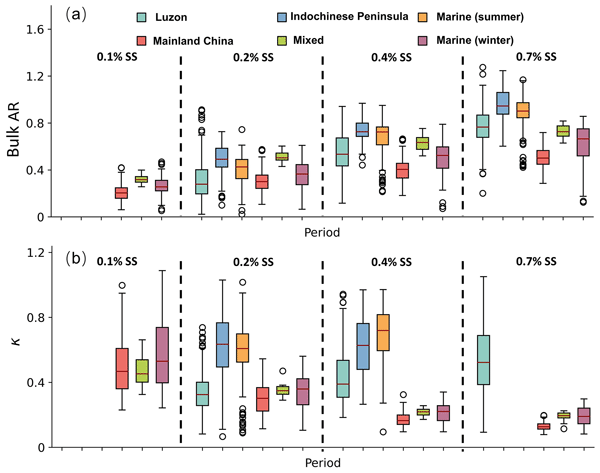
Two shipborne observations in the South China Sea (SCS) in summer and winter 2021 were conducted. Our study found aerosol hygroscopicity is higher in the SCS in summer than winter, with significant influences from various terrestrial air masses. Aerosol size distribution had a stronger effect on activation ratio than aerosol hygroscopicity in summer and vice versa in winter. Our study provides valuable information to enhance our understanding of cloud condensation nuclei activities in the SCS.
Siting Li, Yiming Liu, Yuqi Zhu, Yinbao Jin, Yingying Hong, Ao Shen, Yifei Xu, Haofan Wang, Haichao Wang, Xiao Lu, Shaojia Fan, and Qi Fan
Atmos. Chem. Phys., 24, 11521–11544, https://doi.org/10.5194/acp-24-11521-2024, https://doi.org/10.5194/acp-24-11521-2024, 2024
Short summary
Short summary
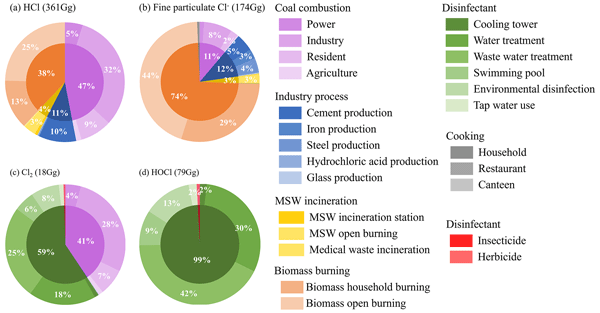
This study establishes an inventory of anthropogenic chlorine emissions in China in 2019 with expanded species (HCl, Cl-, Cl2, HOCl) and sources (41 specific sources). The inventory is validated by a modeling study against the observations. This study enhances the understanding of anthropogenic chlorine emissions in the atmosphere, identifies key sources, and provides scientific support for pollution control and climate change.
Yiming Wang, Haolin Wang, Yujie Qin, Xinqi Xu, Guowen He, Nanxi Liu, Shengjie Miao, Xiao Lu, Haichao Wang, and Shaojia Fan
Atmos. Chem. Phys., 24, 2267–2285, https://doi.org/10.5194/acp-24-2267-2024, https://doi.org/10.5194/acp-24-2267-2024, 2024
Short summary
Short summary
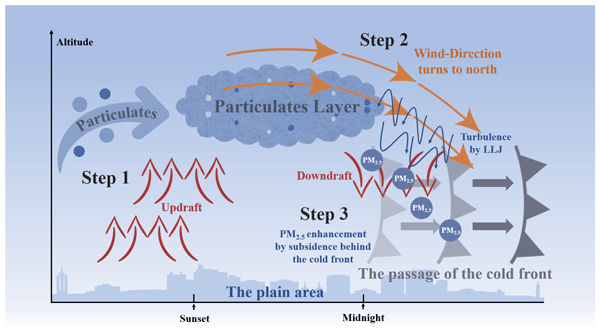
We conducted a vertical measurement of winter PM2.5 using a mobile multi-lidar system in four cities. Combined with the surface PM2.5 data, the ERA5 reanalysis data, and GEOS-Chem simulations during Dec 2018–Feb 2019, we found that transport nocturnal PM2.5 enhancement by subsidence (T-NPES) events widely occurred with high frequencies in plains regions in eastern China but happened less often in basin regions like Xi’an and Chengdu. We propose a conceptual model of the T-NPES events.
Jie Wang, Haichao Wang, Yee Jun Tham, Lili Ming, Zelong Zheng, Guizhen Fang, Cuizhi Sun, Zhenhao Ling, Jun Zhao, and Shaojia Fan
Atmos. Chem. Phys., 24, 977–992, https://doi.org/10.5194/acp-24-977-2024, https://doi.org/10.5194/acp-24-977-2024, 2024
Short summary
Short summary
Many works report NO3 chemistry in inland regions while less target marine regions. We measured N2O5 and related species on a typical island and found intensive nighttime chemistry and rapid NO3 loss. NO contributed significantly to NO3 loss despite its sub-ppbv level, suggesting nocturnal NO3 reactions would be largely enhanced once free from NO emissions in the open ocean. This highlights the strong influences of urban outflow on downward marine areas in terms of nighttime chemistry.
Can Ye, Keding Lu, Xuefei Ma, Wanyi Qiu, Shule Li, Xinping Yang, Chaoyang Xue, Tianyu Zhai, Yuhan Liu, Xuan Li, Yang Li, Haichao Wang, Zhaofeng Tan, Xiaorui Chen, Huabin Dong, Limin Zeng, Min Hu, and Yuanhang Zhang
Atmos. Chem. Phys., 23, 15455–15472, https://doi.org/10.5194/acp-23-15455-2023, https://doi.org/10.5194/acp-23-15455-2023, 2023
Short summary
Short summary
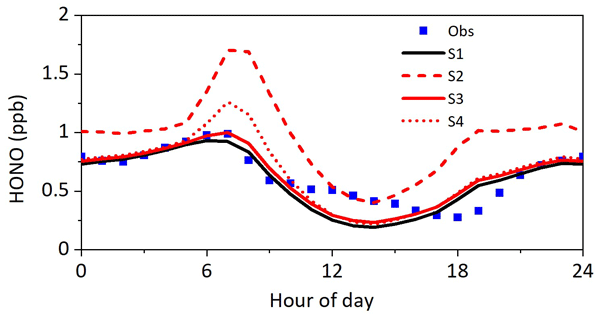
In this study, combining comprehensive field measurements and a box model, we found NO2 conversion on the ground surface was the most important source for HONO production among the proposed heterogeneous and gas-phase HONO sources. In addition, HONO was found to evidently enhance O3 production and aggravate O3 pollution in summer in China. Our study improved our understanding of the relative importance of different HONO sources and the crucial role of HONO in O3 formation in polluted areas.
Guowen He, Cheng He, Haofan Wang, Xiao Lu, Chenglei Pei, Xiaonuan Qiu, Chenxi Liu, Yiming Wang, Nanxi Liu, Jinpu Zhang, Lei Lei, Yiming Liu, Haichao Wang, Tao Deng, Qi Fan, and Shaojia Fan
Atmos. Chem. Phys., 23, 13107–13124, https://doi.org/10.5194/acp-23-13107-2023, https://doi.org/10.5194/acp-23-13107-2023, 2023
Short summary
Short summary
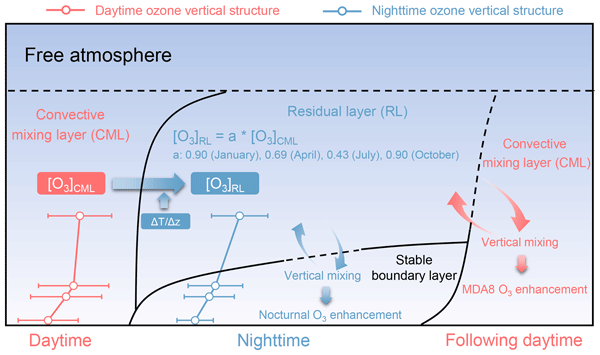
We analyze nighttime ozone in the lower boundary layer (up to 500 m) from the 2017–2019 measurements at the Canton Tower and the WRF-CMAQ model. We identify a strong ability of the residual layer to store daytime ozone in the convective mixing layer, investigate the chemical and meteorological factors controlling nighttime ozone in the residual layer, and quantify the contribution of nighttime ozone in the residual layer to both the nighttime and the following day’s surface ozone air quality.
Hejun Hu, Haichao Wang, Keding Lu, Jie Wang, Zelong Zheng, Xuezhen Xu, Tianyu Zhai, Xiaorui Chen, Xiao Lu, Wenxing Fu, Xin Li, Limin Zeng, Min Hu, Yuanhang Zhang, and Shaojia Fan
Atmos. Chem. Phys., 23, 8211–8223, https://doi.org/10.5194/acp-23-8211-2023, https://doi.org/10.5194/acp-23-8211-2023, 2023
Short summary
Short summary
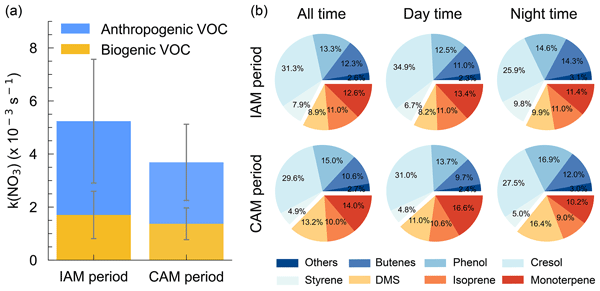
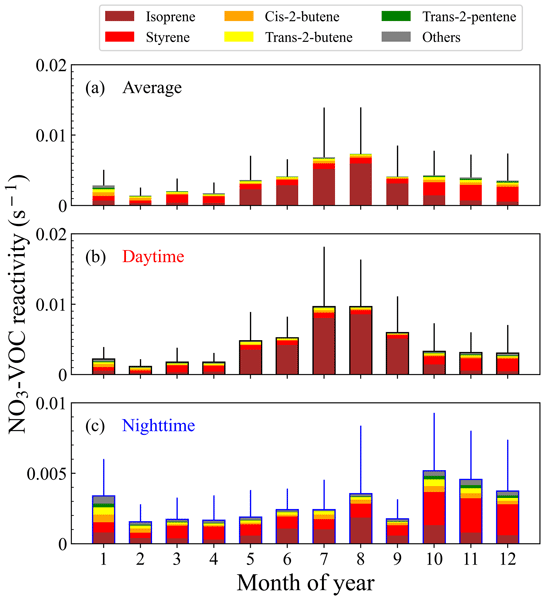
Nitrate radical chemistry is critical to the degradation of volatile organic compounds (VOCs) and secondary organic aerosol formation. This work investigated the level, seasonal variation, and trend of nitrate radical reactivity towards volatile organic compounds (kNO3) in Beijing. We show the key role of isoprene and styrene in regulating seasonal variation in kNO3 and rebuild a long-term record of kNO3 based on the reported VOC measurements.
Tianyu Zhai, Keding Lu, Haichao Wang, Shengrong Lou, Xiaorui Chen, Renzhi Hu, and Yuanhang Zhang
Atmos. Chem. Phys., 23, 2379–2391, https://doi.org/10.5194/acp-23-2379-2023, https://doi.org/10.5194/acp-23-2379-2023, 2023
Short summary
Short summary
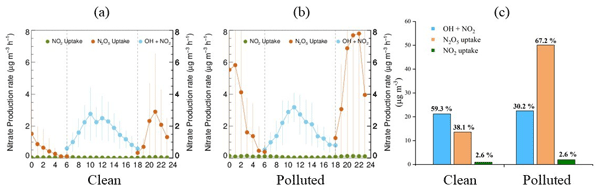
Particulate nitrate is a growing issue in air pollution. Based on comprehensive field measurement, we show heavy nitrate pollution in eastern China in summer. OH reacting with NO2 at daytime dominates nitrate formation on clean days, while N2O5 hydrolysis largely enhances and become comparable with that of OH reacting with O2 on polluted days (67.2 % and 30.2 %). Model simulation indicates that VOC : NOx = 2 : 1 is effective in mitigating the O3 and nitrate pollution coordinately.
Xiaorui Chen, Haichao Wang, Tianyu Zhai, Chunmeng Li, and Keding Lu
Atmos. Meas. Tech., 15, 7019–7037, https://doi.org/10.5194/amt-15-7019-2022, https://doi.org/10.5194/amt-15-7019-2022, 2022
Short summary
Short summary
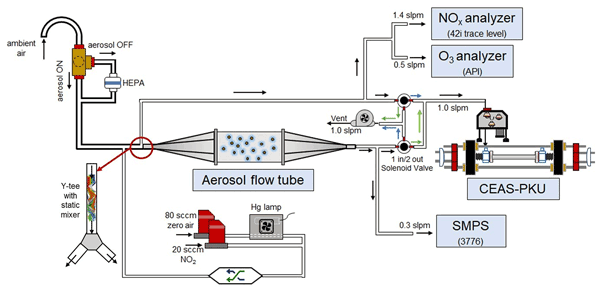
N2O5 is an important reservoir of atmospheric nitrogen, on whose interface reaction ambient particles can largely influence the fate of nitrogen oxides and air quality. In this study, we develop an approach to enable the reactions of N2O5 on ambient particles directly in a tube reactor, deriving the reaction rates with high accuracy by means of a chemistry model. Its successful application helps complement the data scarcity and to fill the knowledge gap between laboratory and field results.
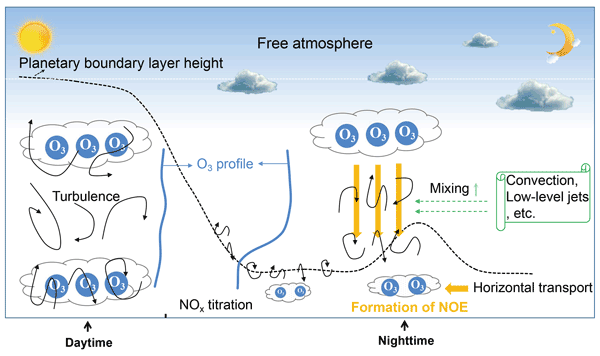
Cheng He, Xiao Lu, Haolin Wang, Haichao Wang, Yan Li, Guowen He, Yuanping He, Yurun Wang, Youlang Zhang, Yiming Liu, Qi Fan, and Shaojia Fan
Atmos. Chem. Phys., 22, 15243–15261, https://doi.org/10.5194/acp-22-15243-2022, https://doi.org/10.5194/acp-22-15243-2022, 2022
Short summary
Short summary
We report that nocturnal ozone enhancement (NOE) events are observed at a high annual frequency of 41 % over 800 sites in China in 2014–2019 (about 50 % higher than that over Europe or the US). High daytime ozone provides a rich ozone source in the nighttime residual layer, determining the overall high frequency of NOE events in China, and enhanced atmospheric mixing then triggers NOE events by allowing the ozone-rich air in the residual layer to be mixed into the nighttime boundary layer.
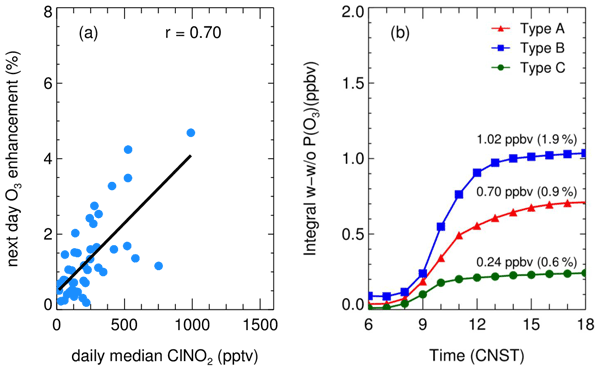
Haichao Wang, Bin Yuan, E Zheng, Xiaoxiao Zhang, Jie Wang, Keding Lu, Chenshuo Ye, Lei Yang, Shan Huang, Weiwei Hu, Suxia Yang, Yuwen Peng, Jipeng Qi, Sihang Wang, Xianjun He, Yubin Chen, Tiange Li, Wenjie Wang, Yibo Huangfu, Xiaobing Li, Mingfu Cai, Xuemei Wang, and Min Shao
Atmos. Chem. Phys., 22, 14837–14858, https://doi.org/10.5194/acp-22-14837-2022, https://doi.org/10.5194/acp-22-14837-2022, 2022
Short summary
Short summary
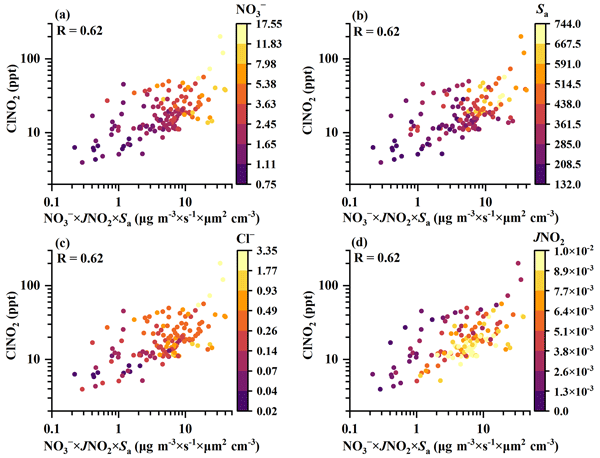
We present intensive field measurement of ClNO2 in the Pearl River Delta in 2019. Large variation in the level, formation, and atmospheric impacts of ClNO2 was found in different air masses. ClNO2 formation was limited by the particulate chloride (Cl−) and aerosol surface area. Our results reveal that Cl− originated from various anthropogenic emissions rather than sea sources and show minor contribution to the O3 pollution and photochemistry.
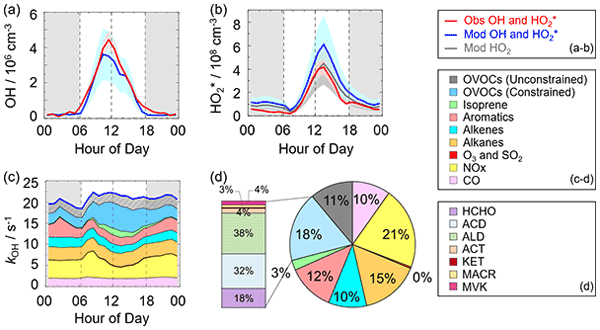
Xinping Yang, Keding Lu, Xuefei Ma, Yue Gao, Zhaofeng Tan, Haichao Wang, Xiaorui Chen, Xin Li, Xiaofeng Huang, Lingyan He, Mengxue Tang, Bo Zhu, Shiyi Chen, Huabin Dong, Limin Zeng, and Yuanhang Zhang
Atmos. Chem. Phys., 22, 12525–12542, https://doi.org/10.5194/acp-22-12525-2022, https://doi.org/10.5194/acp-22-12525-2022, 2022
Short summary
Short summary
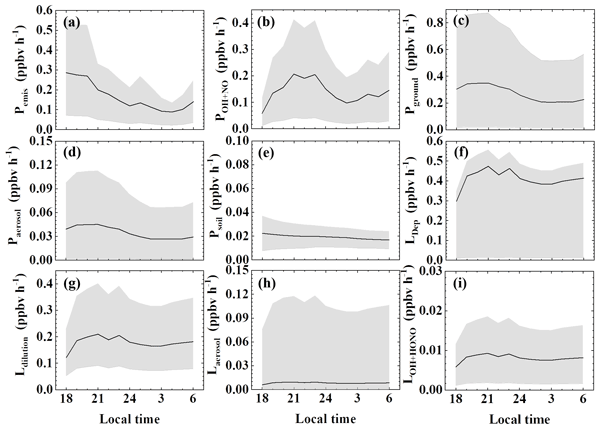
We present the OH and HO2 radical observations at the Shenzhen site (Pearl River Delta, China) in the autumn of 2018. The diurnal maxima were 4.5 × 106 cm−3 for OH and 4.2 × 108 cm−3 for HO2 (including an estimated interference of 23 %–28 % from RO2 radicals during the daytime). The OH underestimation was identified again, and it was attributable to the missing OH sources. HO2 heterogeneous uptake, ROx sources and sinks, and the atmospheric oxidation capacity were evaluated as well.
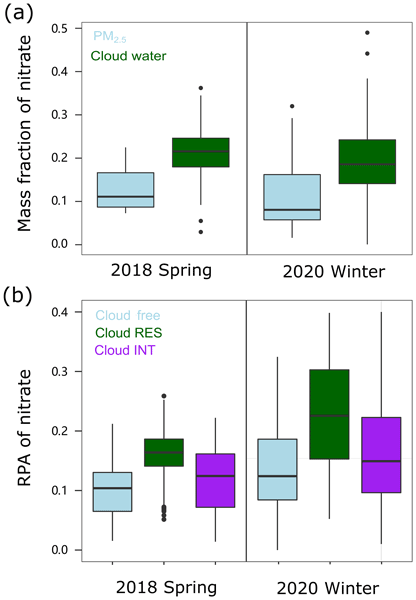
Guohua Zhang, Xiaodong Hu, Wei Sun, Yuxiang Yang, Ziyong Guo, Yuzhen Fu, Haichao Wang, Shengzhen Zhou, Lei Li, Mingjin Tang, Zongbo Shi, Duohong Chen, Xinhui Bi, and Xinming Wang
Atmos. Chem. Phys., 22, 9571–9582, https://doi.org/10.5194/acp-22-9571-2022, https://doi.org/10.5194/acp-22-9571-2022, 2022
Short summary
Short summary
We show a significant enhancement of nitrate mass fraction in cloud water and relative intensity of nitrate in the cloud residual particles and highlight that hydrolysis of N2O5 serves as the critical route for the in-cloud formation of nitrate, even during the daytime. Given that N2O5 hydrolysis acts as a major sink of NOx in the atmosphere, further model updates may improve our understanding about the processes contributing to nitrate production in cloud and the cycling of odd nitrogen.
Yihang Yu, Peng Cheng, Huirong Li, Wenda Yang, Baobin Han, Wei Song, Weiwei Hu, Xinming Wang, Bin Yuan, Min Shao, Zhijiong Huang, Zhen Li, Junyu Zheng, Haichao Wang, and Xiaofang Yu
Atmos. Chem. Phys., 22, 8951–8971, https://doi.org/10.5194/acp-22-8951-2022, https://doi.org/10.5194/acp-22-8951-2022, 2022
Short summary
Short summary
We have investigated the budget of HONO at an urban site in Guangzhou. Budget and comprehensive uncertainty analysis suggest that at such locations as ours, HONO direct emissions and NO + OH can become comparable or even surpass other HONO sources that typically receive greater attention and interest, such as the NO2 heterogeneous source and the unknown daytime photolytic source. Our findings emphasize the need to reduce the uncertainties of both conventional and novel HONO sources and sinks.
Xuefei Ma, Zhaofeng Tan, Keding Lu, Xinping Yang, Xiaorui Chen, Haichao Wang, Shiyi Chen, Xin Fang, Shule Li, Xin Li, Jingwei Liu, Ying Liu, Shengrong Lou, Wanyi Qiu, Hongli Wang, Limin Zeng, and Yuanhang Zhang
Atmos. Chem. Phys., 22, 7005–7028, https://doi.org/10.5194/acp-22-7005-2022, https://doi.org/10.5194/acp-22-7005-2022, 2022
Short summary
Short summary
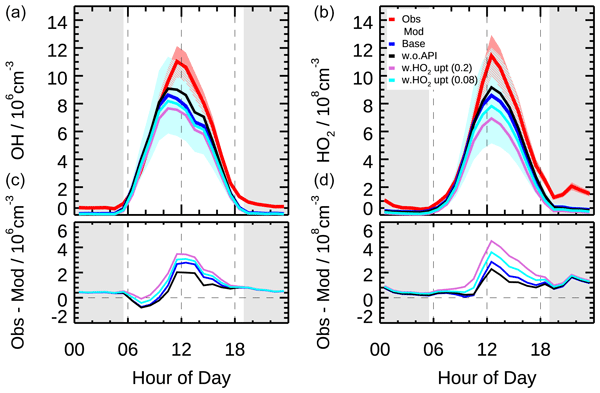
This paper presents the first OH and HO2 radical observations made in the Yangtze River Delta in China, and strong oxidation capacity is discovered based on direct measurements. The impacts of new OH regeneration mechanisms, monoterpene oxidation, and HO2 uptake processes are examined and discussed. The sources and the factors to sustain such strong oxidation are the key to understanding the ozone pollution formed in this area.
Suxia Yang, Bin Yuan, Yuwen Peng, Shan Huang, Wei Chen, Weiwei Hu, Chenglei Pei, Jun Zhou, David D. Parrish, Wenjie Wang, Xianjun He, Chunlei Cheng, Xiao-Bing Li, Xiaoyun Yang, Yu Song, Haichao Wang, Jipeng Qi, Baolin Wang, Chen Wang, Chaomin Wang, Zelong Wang, Tiange Li, E Zheng, Sihang Wang, Caihong Wu, Mingfu Cai, Chenshuo Ye, Wei Song, Peng Cheng, Duohong Chen, Xinming Wang, Zhanyi Zhang, Xuemei Wang, Junyu Zheng, and Min Shao
Atmos. Chem. Phys., 22, 4539–4556, https://doi.org/10.5194/acp-22-4539-2022, https://doi.org/10.5194/acp-22-4539-2022, 2022
Short summary
Short summary
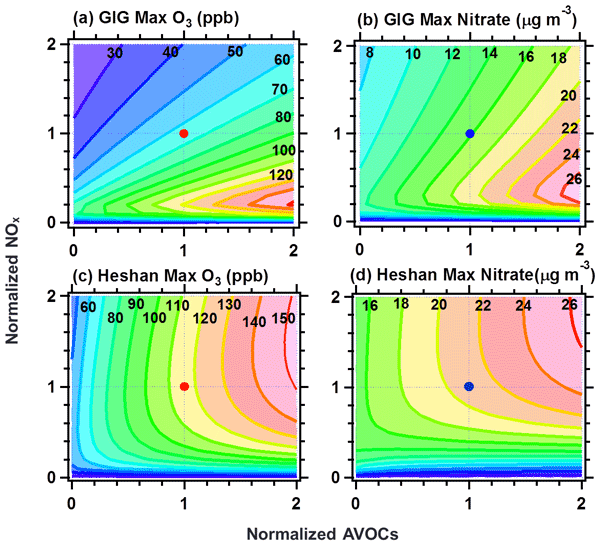
We use a model constrained using observations to study the formation of nitrate aerosol in and downwind of a representative megacity. We found different contributions of various chemical reactions to ground-level nitrate concentrations between urban and suburban regions. We also show that controlling VOC emissions are effective for decreasing nitrate formation in both urban and regional environments, although VOCs are not direct precursors of nitrate aerosol.

Xiaorui Chen, Haichao Wang, and Keding Lu
Atmos. Chem. Phys., 22, 3525–3533, https://doi.org/10.5194/acp-22-3525-2022, https://doi.org/10.5194/acp-22-3525-2022, 2022
Short summary
Short summary
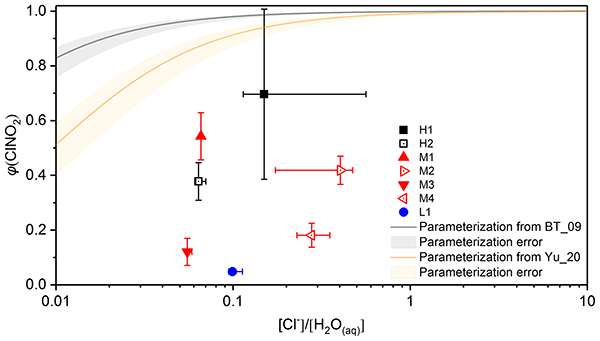
We use a complete set of simulations to evaluate whether equilibrium and steady state are appropriate for a chemical system involving several reactive nitrogen-containing species (NO2, NO3, and N2O5) under various conditions. A previously neglected bias for the coefficient applied for interpreting their effects is disclosed, and the relevant ambient factors are examined. We therefore provide a good solution to an accurate representation of nighttime chemistry in high-aerosol areas.
Haichao Wang, Chao Peng, Xuan Wang, Shengrong Lou, Keding Lu, Guicheng Gan, Xiaohong Jia, Xiaorui Chen, Jun Chen, Hongli Wang, Shaojia Fan, Xinming Wang, and Mingjin Tang
Atmos. Chem. Phys., 22, 1845–1859, https://doi.org/10.5194/acp-22-1845-2022, https://doi.org/10.5194/acp-22-1845-2022, 2022
Short summary
Short summary
Via combining laboratory and modeling work, we found that heterogeneous reaction of N2O5 with saline mineral dust aerosol could be an important source of tropospheric ClNO2 in inland regions.
Cited articles
Anderson, D. C., Pavelec, J., Daube, C., Herndon, S. C., Knighton, W. B., Lerner, B. M., Roscioli, J. R., Yacovitch, T. I., and Wood, E. C.: Characterization of ozone production in San Antonio, Texas, using measurements of total peroxy radicals, Atmos. Chem. Phys., 19, 2845–2860, https://doi.org/10.5194/acp-19-2845-2019, 2019.
Cantrell, C. A., Shetter, R. E., and Calvert, J.: Peroxy radical chemistry during FIELDVOC 1993 in brittany, france, Atmos. Environ., 30, 3947–3957, https://doi.org/10.1016/1352-2310(96)00136-7, 1996.
Chen, T., Zhang, P., Chu, B., Ma, Q., Ge, Y., Liu, J., and He, H.: Secondary organic aerosol formation from mixed volatile organic compounds: effect of RO2 chemistry and precursor concentration, npj Clim. Atmos. Sci., 5, 95–103, https://doi.org/10.1038/s41612-022-00321-y, 2022.
Chen, Y., Yang, C., Zhao, W., Fang, B., Xu, X., Gai, Y., Lin, X., Chen, W., and Zhang, W.: Ultra-sensitive measurement of peroxy radicals by chemical amplification broadband cavity-enhanced spectroscopy, Analyst, 141, 5870–5878, https://doi.org/10.1039/C6AN01038E, 2016.
Duncianu, M., Lahib, A., Tomas, A., Stevens, P. S., and Dusanter, S.: Characterization of a chemical amplifier for peroxy radical measurements in the atmosphere, Atmos. Environ., 222, 117106, https://doi.org/10.1016/j.atmosenv.2019.117106, 2020.
Edwards, G. D., Cantrell, C. A., Stephens, S., Hill, B., Goyea, O., Shetter, R. E., Mauldin, R. L., Kosciuch, E., Tanner, D. J., and Eisele, F. L.: Chemical ionization mass spectrometer instrument for the measurement of tropospheric HO2 and RO2, Anal. Chem., 75, 5317–5327, https://doi.org/10.1021/ac034402b, 2003.
Ehn, M., Thornton, J. A., Kleist, E., Sipilä, M., Junninen, H., Pullinen, I., Springer, M., Rubach, F., Tillmann, R., Lee, B., Lopez-Hilfiker, F., Andres, S., Acir, I.-H., Rissanen, M., Jokinen, T., Schobesberger, S., Kangasluoma, J., Kontkanen, J., Nieminen, T., Kurtén, T., Nielsen, L. B., Jørgensen, S., Kjaergaard, H. G., Canagaratna, M., Maso, M. D., Berndt, T., Petäjä, T., Wahner, A., Kerminen, V.-M., Kulmala, M., Worsnop, D. R., Wildt, J., and Mentel, T. F.: A large source of low-volatility secondary organic aerosol, Nature, 506, 476–479, https://doi.org/10.1038/nature13032, 2014.
Gao, Y., Lu, K., and Zhang, Y.: Review of technologies and their applications for the speciated detection of RO2 radicals, J. Environ. Sci., 123, 487–499, https://doi.org/10.1016/j.jes.2022.09.028, 2023.
George, M., Andrés Hernández, M. D., Nenakhov, V., Liu, Y., and Burrows, J. P.: Airborne measurement of peroxy radicals using chemical amplification coupled with cavity ring-down spectroscopy: the PeRCEAS instrument, Atmos. Meas. Tech., 13, 2577–2600, https://doi.org/10.5194/amt-13-2577-2020, 2020.
Green, T. J., Reeves, C. E., Brough, N., Edwards, G. D., Monks, P. S., and Penkett, S. A.: Airborne measurements of peroxy radicals using the PERCA technique, J. Environ. Monitor, 5, 75–83, https://doi.org/10.1039/b204493e, 2003.
Griffith, S. M., Hansen, R. F., Dusanter, S., Michoud, V., Gilman, J. B., Kuster, W. C., Veres, P. R., Graus, M., De Gouw, J. A., Roberts, J., Young, C., Washenfelder, R., Brown, S. S., Thalman, R., Waxman, E., Volkamer, R., Tsai, C., Stutz, J., Flynn, J. H., Grossberg, N., Lefer, B., Alvarez, S. L., Rappenglueck, B., Mielke, L. H., Osthoff, H. D., and Stevens, P. S.: Measurements of hydroxyl and hydroperoxy radicals during CalNex-LA: model comparisons and radical budgets, J. Geophys. Res.-Atmos., 121, 4211–4232, https://doi.org/10.1002/2015JD024358, 2016.
Hornbrook, R. S., Crawford, J. H., Edwards, G. D., Goyea, O., Mauldin III, R. L., Olson, J. S., and Cantrell, C. A.: Measurements of tropospheric HO2 and RO2 by oxygen dilution modulation and chemical ionization mass spectrometry, Atmos. Meas. Tech., 4, 735–756, https://doi.org/10.5194/amt-4-735-2011, 2011.
Horstjann, M., Andrés Hernández, M. D., Nenakhov, V., Chrobry, A., and Burrows, J. P.: Peroxy radical detection for airborne atmospheric measurements using absorption spectroscopy of NO2, Atmos. Meas. Tech., 7, 1245–1257, https://doi.org/10.5194/amt-7-1245-2014, 2014.
Kartal, D., Andrés-Hernández, M. D., Reichert, L., Schlager, H., and Burrows, J. P.: Technical Note: Characterisation of a DUALER instrument for the airborne measurement of peroxy radicals during AMMA 2006, Atmos. Chem. Phys., 10, 3047–3062, https://doi.org/10.5194/acp-10-3047-2010, 2010.
Liang, W., Yu, H., Xu, H., Wang, Z., Li, T., Feng, Y., Russell, A., and Shi, G.: Probing into ozone production through photochemistry of organic peroxyl radicals: implications for source control, J. Geophys. Res.-Atmos., 129, e2023JD040124, https://doi.org/10.1029/2023JD040124, 2024.
Liu, Y. and Zhang, J.: Atmospheric peroxy radical measurements using dual-channel chemical amplification cavity ringdown spectroscopy, Anal. Chem., 86, 5391–5398, https://doi.org/10.1021/ac5004689, 2014.
Liu, Y., Morales-Cueto, R., Hargrove, J., Medina, D., and Zhang, J.: Measurements of peroxy radicals using chemical amplification-cavity ringdown spectroscopy, Environ. Sci. Technol., 43, 7791–7796, https://doi.org/10.1021/es901146t, 2009.
Lou, S., Tan, Z., Gan, G., Chen, J., Wang, H., Gao, Y., Huang, D., Huang, C., Li, X., Song, R., Wang, H., Wang, M., Wang, Q., Wu, Y., and Huang, C.: Observation based study on atmospheric oxidation capacity in shanghai during late-autumn: contribution from nitryl chloride, Atmos. Environ., 271, 118902, https://doi.org/10.1016/j.atmosenv.2021.118902, 2022.
Lu, K. D., Rohrer, F., Holland, F., Fuchs, H., Bohn, B., Brauers, T., Chang, C. C., Häseler, R., Hu, M., Kita, K., Kondo, Y., Li, X., Lou, S. R., Nehr, S., Shao, M., Zeng, L. M., Wahner, A., Zhang, Y. H., and Hofzumahaus, A.: Observation and modelling of OH and HO2 concentrations in the Pearl River Delta 2006: a missing OH source in a VOC rich atmosphere, Atmos. Chem. Phys., 12, 1541–1569, https://doi.org/10.5194/acp-12-1541-2012, 2012.
Ma, X., Tan, Z., Lu, K., Yang, X., Liu, Y., Li, S., Li, X., Chen, S., Novelli, A., Cho, C., Zeng, L., Wahner, A., and Zhang, Y.: Winter photochemistry in beijing: observation and model simulation of OH and HO2 radicals at an urban site, Sci. Total Environ., 685, 85–95, https://doi.org/10.1016/j.scitotenv.2019.05.329, 2019.
Ma, X., Tan, Z., Lu, K., Yang, X., Chen, X., Wang, H., Chen, S., Fang, X., Li, S., Li, X., Liu, J., Liu, Y., Lou, S., Qiu, W., Wang, H., Zeng, L., and Zhang, Y.: OH and HO2 radical chemistry at a suburban site during the EXPLORE-YRD campaign in 2018, Atmos. Chem. Phys., 22, 7005–7028, https://doi.org/10.5194/acp-22-7005-2022, 2022.
Michoud, V., Kukui, A., Camredon, M., Colomb, A., Borbon, A., Miet, K., Aumont, B., Beekmann, M., Durand-Jolibois, R., Perrier, S., Zapf, P., Siour, G., Ait-Helal, W., Locoge, N., Sauvage, S., Afif, C., Gros, V., Furger, M., Ancellet, G., and Doussin, J. F.: Radical budget analysis in a suburban European site during the MEGAPOLI summer field campaign, Atmos. Chem. Phys., 12, 11951–11974, https://doi.org/10.5194/acp-12-11951-2012, 2012.
Mihelcic, D., Müsgen, P., and Ehhalt, D. H.: An improved method of measuring tropospheric NO2 and RO2 by matrix isolation and electron spin resonance, J. Atmos. Chem., 3, 341–361, https://doi.org/10.1007/BF00122523, 1985.
Mihelcic, D., Volz-Thomas, A., Pätz, H. W., Kley, D., and Mihelcic, M.: Numerical analysis of ESR spectra from atmospheric samples, J. Atmos. Chem., 11, 271–297, https://doi.org/10.1007/BF00118353, 1990.
Mihele, C. M., Mozurkewich, M., and Hastie, D. R.: Radical loss in a chain reaction of CO and NO in the presence of water: implications for the radical amplifier and atmospheric chemistry, Int. J. Chem. Kinet., 31, 145–152, https://doi.org/10.1002/(SICI)1097-4601(1999)31:2%3C145::AID-KIN7%3E3.0.CO;2-M, 1999.
Monks, P. S.: Gas-phase radical chemistry in the troposphere, Chem. Soc. Rev., 34, 376, https://doi.org/10.1039/b307982c, 2005.
Orlando, J. J. and Tyndall, G. S.: Laboratory studies of organic peroxy radical chemistry: an overview with emphasis on recent issues of atmospheric significance, Chem. Soc. Rev., 41, 6294, https://doi.org/10.1039/c2cs35166h, 2012.
Reichert, L., Andrés Hernández, M. D., Stöbener, D., Burkert, J., and Burrows, J. P.: Investigation of the effect of water complexes in the determination of peroxy radical ambient concentrations: implications for the atmosphere, J. Geophys. Res.-Atmos., 108, https://doi.org/10.1029/2002JD002152, 2003.
Situ, S., Guenther, A., Wang, X., Jiang, X., Turnipseed, A., Wu, Z., Bai, J., and Wang, X.: Impacts of seasonal and regional variability in biogenic VOC emissions on surface ozone in the Pearl River delta region, China, Atmos. Chem. Phys., 13, 11803–11817, https://doi.org/10.5194/acp-13-11803-2013, 2013.
Sommariva, R., Brown, S. S., Roberts, J. M., Brookes, D. M., Parker, A. E., Monks, P. S., Bates, T. S., Bon, D., de Gouw, J. A., Frost, G. J., Gilman, J. B., Goldan, P. D., Herndon, S. C., Kuster, W. C., Lerner, B. M., Osthoff, H. D., Tucker, S. C., Warneke, C., Williams, E. J., and Zahniser, M. S.: Ozone production in remote oceanic and industrial areas derived from ship based measurements of peroxy radicals during TexAQS 2006, Atmos. Chem. Phys., 11, 2471–2485, https://doi.org/10.5194/acp-11-2471-2011, 2011.
Stone, D., Evans, M. J., Commane, R., Ingham, T., Floquet, C. F. A., McQuaid, J. B., Brookes, D. M., Monks, P. S., Purvis, R., Hamilton, J. F., Hopkins, J., Lee, J., Lewis, A. C., Stewart, D., Murphy, J. G., Mills, G., Oram, D., Reeves, C. E., and Heard, D. E.: HOx observations over West Africa during AMMA: impact of isoprene and NOx, Atmos. Chem. Phys., 10, 9415–9429, https://doi.org/10.5194/acp-10-9415-2010, 2010.
Sun, J., Yu, X., Ling, Z., Fang, G., Ming, L., Zhao, J., Zou, S., Guan, H., Wang, H., Wang, X., Wang, Z., Gao, Y., Tham, Y. J., Guo, H., and Zhang, Y.: Roles of photochemical consumption of VOCs on regional background O3 concentration and atmospheric reactivity over the pearl river estuary, southern China, Sci. Total Environ., 928, 172321, https://doi.org/10.1016/j.scitotenv.2024.172321, 2024.
Tan, Z., Fuchs, H., Lu, K., Hofzumahaus, A., Bohn, B., Broch, S., Dong, H., Gomm, S., Häseler, R., He, L., Holland, F., Li, X., Liu, Y., Lu, S., Rohrer, F., Shao, M., Wang, B., Wang, M., Wu, Y., Zeng, L., Zhang, Y., Wahner, A., and Zhang, Y.: Radical chemistry at a rural site (Wangdu) in the North China Plain: observation and model calculations of OH, HO2 and RO2 radicals, Atmos. Chem. Phys., 17, 663–690, https://doi.org/10.5194/acp-17-663-2017, 2017.
Tan, Z., Lu, K., Dong, H., Hu, M., Li, X., Liu, Y., Lu, S., Shao, M., Su, R., Wang, H., Wu, Y., Wahner, A., and Zhang, Y.: Explicit diagnosis of the local ozone production rate and the ozone-NOx-VOC sensitivities, Sci. Bull., 63, 1067–1076, https://doi.org/10.1016/j.scib.2018.07.001, 2018a.
Tan, Z., Rohrer, F., Lu, K., Ma, X., Bohn, B., Broch, S., Dong, H., Fuchs, H., Gkatzelis, G. I., Hofzumahaus, A., Holland, F., Li, X., Liu, Y., Liu, Y., Novelli, A., Shao, M., Wang, H., Wu, Y., Zeng, L., Hu, M., Kiendler-Scharr, A., Wahner, A., and Zhang, Y.: Wintertime photochemistry in Beijing: observations of ROx radical concentrations in the North China Plain during the BEST-ONE campaign, Atmos. Chem. Phys., 18, 12391–12411, https://doi.org/10.5194/acp-18-12391-2018, 2018b.
Tan, Z., Lu, K., Hofzumahaus, A., Fuchs, H., Bohn, B., Holland, F., Liu, Y., Rohrer, F., Shao, M., Sun, K., Wu, Y., Zeng, L., Zhang, Y., Zou, Q., Kiendler-Scharr, A., Wahner, A., and Zhang, Y.: Experimental budgets of OH, HO2, and RO2 radicals and implications for ozone formation in the Pearl River Delta in China 2014, Atmos. Chem. Phys., 19, 7129–7150, https://doi.org/10.5194/acp-19-7129-2019, 2019.
Tan, Z., Ma, X., Lu, K., Jiang, M., Zou, Q., Wang, H., Zeng, L., and Zhang, Y.: Direct evidence of local photochemical production driven ozone episode in beijing: a case study, Sci. Total Environ., 800, 148868, https://doi.org/10.1016/j.scitotenv.2021.148868, 2021.
Tang, R., Zheng, Z., and Chen, X.: Measurement report: development of a portable peroxy radical measurement system, Zenodo, https://doi.org/10.5281/zenodo.18346203, 2026.
Thornton, J. A., Wooldridge, P. J., Cohen, R. C., Martinez, M., Harder, H., Brune, W. H., Williams, E. J., Roberts, J. M., Fehsenfeld, F. C., Hall, S. R., Shetter, R. E., Wert, B. P., and Fried, A.: Ozone production rates as a function of NOx abundances and HOx production rates in the nashville urban plume, J. Geophys. Res.-Atmos., 107, https://doi.org/10.1029/2001JD000932, 2002.
Wang, H., Liu, Y., Chen, X., Gao, Y., Qiu, W., Jing, S., Wang, Q., Lou, S., Edwards, P. M., Huang, C., and Lu, K.: Unexpected fast radical production emerges in cool seasons: implications for ozone pollution control, Natl. Sci. Open, 1, 20220013, https://doi.org/10.1360/nso/20220013, 2022.
Wang, H., Wang, H., Lu, X., Lu, K., Zhang, L., Tham, Y. J., Shi, Z., Aikin, K., Fan, S., Brown, S. S., and Zhang, Y.: Increased night-time oxidation over China despite widespread decrease across the globe, Nat. Geosci., 16, 217–223, https://doi.org/10.1038/s41561-022-01122-x, 2023a.
Wang, J., Zhang, Y., Zhao, W., Wu, Z., Luo, S., Zhang, H., Zhou, H., Song, W., Zhang, W., and Wang, X.: Observationally constrained modeling of peroxy radical during an ozone episode in the pearl river delta region, china, J. Geophys. Res.-Atmos., 128, e2022JD038279, https://doi.org/10.1029/2022JD038279, 2023b.
Wang, J., Zhang, Y., Xiao, S., Wu, Z., and Wang, X.: Ozone formation at a suburban site in the pearl river delta region, china: role of biogenic volatile organic compounds, Atmosphere-Basel, 14, 609–625, https://doi.org/10.3390/atmos14040609, 2023c.
Wei, N., Zhao, W., Yao, Y., Wang, H., Liu, Z., Xu, X., Rahman, M., Zhang, C., Fittschen, C., and Zhang, W.: Peroxy radical chemistry during ozone photochemical pollution season at a suburban site in the boundary of jiangsu–anhui–shandong–henan region, china, Sci. Total Environ., 904, 166355, https://doi.org/10.1016/j.scitotenv.2023.166355, 2023.
Whalley, L. K., Blitz, M. A., Desservettaz, M., Seakins, P. W., and Heard, D. E.: Reporting the sensitivity of laser-induced fluorescence instruments used for HO2 detection to an interference from RO2 radicals and introducing a novel approach that enables HO2 and certain RO2 types to be selectively measured, Atmos. Meas. Tech., 6, 3425–3440, https://doi.org/10.5194/amt-6-3425-2013, 2013.
Wolfe, G. M., Marvin, M. R., Roberts, S. J., Travis, K. R., and Liao, J.: The Framework for 0-D Atmospheric Modeling (F0AM) v3.1, Geosci. Model Dev., 9, 3309–3319, https://doi.org/10.5194/gmd-9-3309-2016, 2016.
Wood, E. C. and Charest, J. R.: Chemical amplification – cavity attenuated phase shift spectroscopy measurements of atmospheric peroxy radicals, Anal. Chem., 86, 10266–10273, https://doi.org/10.1021/ac502451m, 2014.
Wood, E. C., Deming, B. L., and Kundu, S.: Ethane-based chemical amplification measurement technique for atmospheric peroxy radicals, Environ. Sci. Tech. Let., 4, 15–19, https://doi.org/10.1021/acs.estlett.6b00438, 2017.
Yang, C., Zhao, W., Fang, B., Yu, H., Xu, X., Zhang, Y., Gai, Y., Zhang, W., Chen, W., and Fittschen, C.: Improved chemical amplification instrument by using a nafion dryer as an amplification reactor for quantifying atmospheric peroxy radicals under ambient conditions, Anal. Chem., 91, 776–779, https://doi.org/10.1021/acs.analchem.8b04907, 2019.
Yang, X., Lu, K., Ma, X., Gao, Y., Tan, Z., Wang, H., Chen, X., Li, X., Huang, X., He, L., Tang, M., Zhu, B., Chen, S., Dong, H., Zeng, L., and Zhang, Y.: Radical chemistry in the Pearl River Delta: observations and modeling of OH and HO2 radicals in Shenzhen in 2018, Atmos. Chem. Phys., 22, 12525–12542, https://doi.org/10.5194/acp-22-12525-2022, 2022.
Yu, H., Wei, N. N., Xu, X. Z., Liu, Q. Q., Yao, Y. C., Zhao, W. X., and Zhang, W. J.: Characteristics of Summer O3 Formation in the Western Suburbs of Hefei Based on Total Peroxy Radical Observations, Environm. Sci., 44, 1974–1984, https://doi.org/10.13227/j.hjkx.202206116, 2023 (in Chinese).
Zhang, G., Hu, R., Xie, P., Hu, C., Liu, X., Zhong, L., Cai, H., Zhu, B., Xia, S., Huang, X., Li, X., and Liu, W.: Intensive photochemical oxidation in the marine atmosphere: evidence from direct radical measurements, Atmos. Chem. Phys., 24, 1825–1839, https://doi.org/10.5194/acp-24-1825-2024, 2024.
Zheng, Z., Wang, H., Chen, X., Wang, J., Li, X., Lu, K., Yu, G.-H., Huang, X., and Fan, S.: A mini broadband cavity enhanced absorption spectrometer for nitrogen dioxide measurement on the unmanned aerial vehicle platform, Atmos. Environ., 321, 120361, https://doi.org/10.1016/j.atmosenv.2024.120361, 2024.
Zou, Z., Chen, T., Chen, Q., Sun, W., Han, S., Ren, Z., Li, X., Song, W., Ge, A., Wang, Q., Tian, X., Pei, C., Wang, X., Zhang, Y., and Wang, T.: Observation and modeling of atmospheric OH and
Short summary
This study developed a portable measurement system based on cavity-enhanced absorption spectroscopy, enabling highly sensitive online monitoring of total peroxy radicals in the atmosphere. The system is compact and was successfully deployed in a field campaign in Zhuhai during autumn. The results indicate that daytime ozone enhancement in this region was primarily driven by local photochemical production, while regional transport mainly played an export role.
This study developed a portable measurement system based on cavity-enhanced absorption...


Altmetrics
Final-revised paper
Preprint