
Articles | Volume 26, issue 12
https://doi.org/10.5194/acp-26-9037-2026
© Author(s) 2026. This work is distributed under
the Creative Commons Attribution 4.0 License.
the Creative Commons Attribution 4.0 License.
https://doi.org/10.5194/acp-26-9037-2026
© Author(s) 2026. This work is distributed under
the Creative Commons Attribution 4.0 License.
the Creative Commons Attribution 4.0 License.
Research article
| 
26 Jun 2026
Research article |
| 26 Jun 2026
| 26 Jun 2026
Residential burning is a potentially significant source of soluble iron to the ocean
State Key Laboratory of Advanced Environmental Technology and Guangdong Key Laboratory of Environmental Protection and Resources Utilization, Guangzhou Institute of Geochemistry, Chinese Academy of Sciences, Guangzhou, China
current address: School of Public Health, MOE Key Laboratory of Coal Environmental Pathogenicity and Prevention, Shanxi Medical University, Taiyuan, China
Haley E. Plaas
Marine, Earth, and Atmospheric Sciences, North Carolina State University, Raleigh, NC, USA
current address: Columbia University, Center for Climate Systems Research, New York, NY 10025, USA
current address: NASA Goddard Institute for Space Studies, New York, NY, USA
Yifan Zhang
State Key Laboratory of Advanced Environmental Technology and Guangdong Key Laboratory of Environmental Protection and Resources Utilization, Guangzhou Institute of Geochemistry, Chinese Academy of Sciences, Guangzhou, China
College of Earth and Planetary Sciences, University of Chinese Academy of Sciences, Beijing, China
Yizhu Chen
State Key Laboratory of Advanced Environmental Technology and Guangdong Key Laboratory of Environmental Protection and Resources Utilization, Guangzhou Institute of Geochemistry, Chinese Academy of Sciences, Guangzhou, China
College of Earth and Planetary Sciences, University of Chinese Academy of Sciences, Beijing, China
Tianyu Zhang
State Key Laboratory of Advanced Environmental Technology and Guangdong Key Laboratory of Environmental Protection and Resources Utilization, Guangzhou Institute of Geochemistry, Chinese Academy of Sciences, Guangzhou, China
College of Earth and Planetary Sciences, University of Chinese Academy of Sciences, Beijing, China
Yi Yang
Key Laboratory of Geographic Information Science of the Ministry of Education, School of Geographic Sciences, East China Normal University, Shanghai, China
Sagar Rathod
Department of Atmospheric, Oceanic, and Space Sciences, University of Wisconsin-Madison, Madison, WI, USA
Guohua Zhang
State Key Laboratory of Advanced Environmental Technology and Guangdong Key Laboratory of Environmental Protection and Resources Utilization, Guangzhou Institute of Geochemistry, Chinese Academy of Sciences, Guangzhou, China
Xinming Wang
State Key Laboratory of Advanced Environmental Technology and Guangdong Key Laboratory of Environmental Protection and Resources Utilization, Guangzhou Institute of Geochemistry, Chinese Academy of Sciences, Guangzhou, China

Marine, Earth, and Atmospheric Sciences, North Carolina State University, Raleigh, NC, USA
State Key Laboratory of Advanced Environmental Technology and Guangdong Key Laboratory of Environmental Protection and Resources Utilization, Guangzhou Institute of Geochemistry, Chinese Academy of Sciences, Guangzhou, China
Institute of Surface-Earth System Science, School of Earth System Science, Tianjin University, Tianjin, China
Related authors
Yifan Zhang, Guanhong Zhu, Rui Li, Mingyuan Liu, Yi Yang, Tianyu Zhang, Yizhu Chen, Jinlong Ma, Xinming Wang, and Mingjin Tang
Atmos. Chem. Phys., 26, 14073–14084, https://doi.org/10.5194/acp-26-14073-2026, https://doi.org/10.5194/acp-26-14073-2026, 2026
Short summary
Short summary
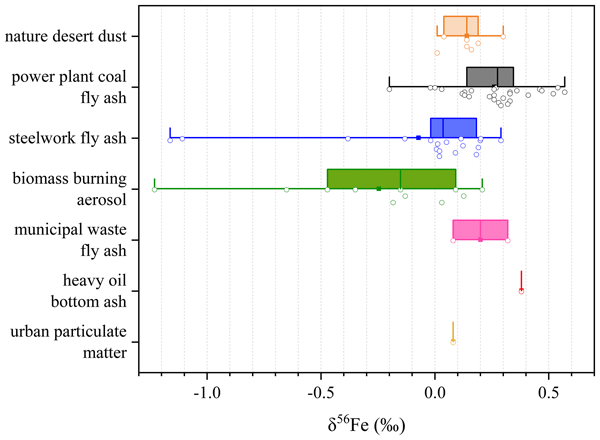
This work measured isotopic compositions for aerosol Fe from desert dust and several anthropogenic sources. We revealed large variability in the Fe isotopic endmember values both among and within different anthropogenic aerosols, and found that not all the anthropogenic aerosol Fe is isotopically lighter than natural dust Fe.
Mingjin Tang, Morgane M. G. Perron, Alex R. Baker, Rui Li, Andrew R. Bowie, Clifton S. Buck, Ashwini Kumar, Rachel Shelley, Simon J. Ussher, Robert Clough, Scott Meyerink, Prema P. Panda, Ashley T. Townsend, and Neil Wyatt
Atmos. Meas. Tech., 18, 6125–6141, https://doi.org/10.5194/amt-18-6125-2025, https://doi.org/10.5194/amt-18-6125-2025, 2025
Short summary
Short summary
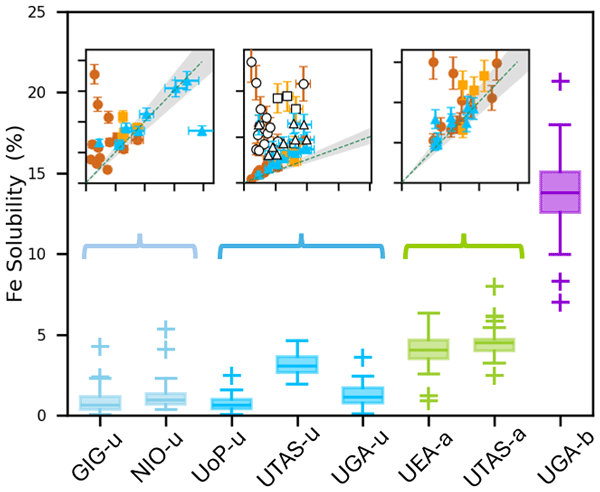
This work, initiated by the SCOR (Scientific Committee on Oceanic Research) Working Group 167, has examined eight leaching protocols commonly used in the literature, is the first large-scale international laboratory comparison for aerosol trace element leaching protocols.
Yifan Zhang, Rui Li, Zachary B. Bunnell, Yizhu Chen, Guanhong Zhu, Jinlong Ma, Guohua Zhang, Tim M. Conway, and Mingjin Tang
Atmos. Chem. Phys., 25, 11067–11086, https://doi.org/10.5194/acp-25-11067-2025, https://doi.org/10.5194/acp-25-11067-2025, 2025
Short summary
Short summary
The sources of aerosol Fe, especially soluble aerosol Fe, remain to be constrained. The stable isotope ratio of Fe has emerged as a potential tracer for discriminating and quantifying sources of aerosol Fe. In this review, we examine the state of the field for using Fe isotopes as an aerosol source tracer, and constraints on endmember signatures.
Min Li, Xinfeng Wang, Tianshuai Li, Yujia Wang, Yueru Jiang, Yujiao Zhu, Wei Nie, Rui Li, Jian Gao, Likun Xue, Qingzhu Zhang, and Wenxing Wang
Atmos. Chem. Phys., 25, 8407–8425, https://doi.org/10.5194/acp-25-8407-2025, https://doi.org/10.5194/acp-25-8407-2025, 2025
Short summary
Short summary
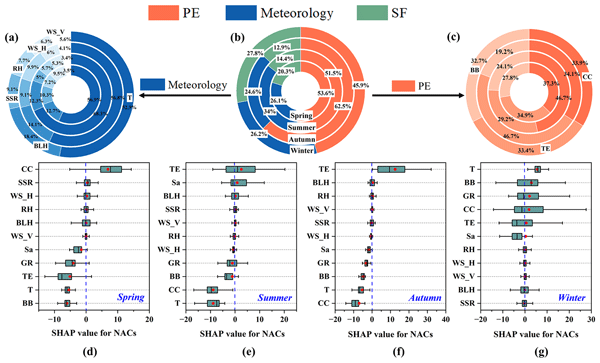
By integrating field measurements with an interpretable ensemble machine learning framework, we comprehensively identified key driving factors of nitro-aromatic compounds (NACs), demonstrated complex interrelationships, and quantified their contributions across different locations. This work provides a reliable modeling approach for recognizing causes of NAC pollution, enhances our understanding of variations of atmospheric NACs, and highlights the necessity of strengthening emission controls.
Rui Li, Prema Piyusha Panda, Yizhu Chen, Zhenming Zhu, Fu Wang, Yujiao Zhu, He Meng, Yan Ren, Ashwini Kumar, and Mingjin Tang
Atmos. Meas. Tech., 17, 3147–3156, https://doi.org/10.5194/amt-17-3147-2024, https://doi.org/10.5194/amt-17-3147-2024, 2024
Short summary
Short summary
We found that for ultrapure water batch leaching, the difference in specific experimental parameters, including agitation methods, filter pore size, and contact time, only led to a small and sometimes insignificant difference in determined aerosol trace element solubility. Furthermore, aerosol trace element solubility determined using four common ultrapure water leaching protocols showed good agreement.
Tim Butler, Tabish Ansari, Claudio A. Belis, Elisa Bergas-Masso, Willem van Caspel, Hilde Fagerli, Johannes Flemming, Marta Garcia Vivanco, Paul Griffiths, Douglas S. Hamilton, Coralina Hernandez Trujillo, Lena Höglund-Isaksson, Vincent Huijnen, Johannes W. Kaiser, Gerbrand Koren, Zbigniew Klimont, Florian Lindl, Aura Lupascu, Mariano Mertens, Martijn Schaap, Steven T. Turnock, Oliver Wild, Philipp Weiss, Jacek Kaminski, Rosa Wu, and Terry Keating
Geosci. Model Dev., 19, 10023–10049, https://doi.org/10.5194/gmd-19-10023-2026, https://doi.org/10.5194/gmd-19-10023-2026, 2026
Short summary
Short summary
Air pollution travels across continents, meaning emissions in one region can affect air quality far away. To better understand this, scientists from many groups are planning to run coordinated computer simulations of the atmosphere. By comparing results across models and emission scenarios, the planned study will show how pollution moves between regions and which sources matter most, helping governments design more effective air quality policies.
Haofan Ran, Yuting Lu, Yanli Zhang, and Xinming Wang
EGUsphere, https://doi.org/10.5194/egusphere-2026-5116, https://doi.org/10.5194/egusphere-2026-5116, 2026
This preprint is open for discussion and under review for Atmospheric Chemistry and Physics (ACP).
Short summary
Short summary
Plants release natural gases that affect air quality, but current pollution models use imprecise map data. Using high-resolution satellite imagery from 2000 to 2025, we tracked these emissions in China. We found that warming and landscape changes caused massive, previously hidden regional shifts, including doubled emissions near Beijing. This proves that detailed satellite data is essential to accurately forecast urban air pollution and guide effective tree-planting policies.
Yifan Zhang, Guanhong Zhu, Rui Li, Mingyuan Liu, Yi Yang, Tianyu Zhang, Yizhu Chen, Jinlong Ma, Xinming Wang, and Mingjin Tang
Atmos. Chem. Phys., 26, 14073–14084, https://doi.org/10.5194/acp-26-14073-2026, https://doi.org/10.5194/acp-26-14073-2026, 2026
Short summary
Short summary
This work measured isotopic compositions for aerosol Fe from desert dust and several anthropogenic sources. We revealed large variability in the Fe isotopic endmember values both among and within different anthropogenic aerosols, and found that not all the anthropogenic aerosol Fe is isotopically lighter than natural dust Fe.
Xiaocong Peng, Wei Song, Guohua Zhang, Qinhao Lin, Jianlin Cheng, Yang Li, Xinru Huang, Baoyi Chen, Jianzhong Song, Yingjun Chen, Gan Zhang, Ping’an Peng, Xinming Wang, and Xinhui Bi
EGUsphere, https://doi.org/10.5194/egusphere-2026-5314, https://doi.org/10.5194/egusphere-2026-5314, 2026
This preprint is open for discussion and under review for Atmospheric Chemistry and Physics (ACP).
Short summary
Short summary
Burning biomass releases black carbon (BC), but its precursors are unclear. We burned two fuels at three temperatures, measuring particles, gases, and BC. Furans, oxygenated aromatics, single-ring aromatics, and polycyclic aromatic hydrocarbons correlated with BC in the particle phase. Higher temperatures boosted BC—not by producing more precursors, but by converting them efficiently. Different fuels also produced distinct molecular fingerprints. These explain why BC emissions vary so much.
Shan Huang, Lina Wu, Yi Kuang, Yuan Liu, Weiwei Hu, Ye Kuang, Wei Li, Qicong Song, Yuwen Peng, Suxia Yang, Mingfu Cai, Duohong Chen, Dingli Yue, Wei Song, Bin Yuan, Xinming Wang, and Min Shao
EGUsphere, https://doi.org/10.5194/egusphere-2026-4552, https://doi.org/10.5194/egusphere-2026-4552, 2026
Short summary
Short summary
This study reports field measurements of particulate organonitrates in a mixed anthropogenic-biogenic subtropical atmosphere, revealing contrasting formation regimes between urban and rural sites. Daytime photochemistry and regional transport dominated urban organonitrates, while nighttime formation from anthropogenic precursors and refractory organic nitrate from biomass burning both contributed to rural organonitrates. Our findings improve understanding of organonitrate formation.
Natalie Mahowald, Hannah Liddy, Jennifer Marlon, Kostas Tsigaridis, Gisela Winckler, Douglas Hamilton, Jasper Kok, Michael Sigl, Jordan Abell, Adwoa Aboagye-Okyere, Joe Adabouk Amooli, Samuel Albani, Susanne Bauer, Emilie Beaudon, Hunter Brown, Nathan Chellman, Nicolás Cosentino, Nathalie Goodkin, Christopher Guiterman, Stijn Hantson, Chengfei He, Aviva Intveld, Jed Kaplan, Jeremy Klavans, Fabrice Lambert, Haobo Liu, Marie-France Loutre, Joe McConnell, Zachary McGraw, Keren Mezuman, Ron Miller, Nicholas O’Mara, Maria Rosabelle Ong, Gavin Schmidt, Richard Vachula, Lily Wu, and Bingqing Zhang
EGUsphere, https://doi.org/10.5194/egusphere-2026-4532, https://doi.org/10.5194/egusphere-2026-4532, 2026
Short summary
Short summary
Aerosols are poorly known in past climates, and yet it is very important to understand how aerosols are changing in different climates. In this paper we review available proxy data and modeling approaches to characterize aerosols in past climates. In addition, we propose future studies that can help improve our understanding.
Hua Fang, Hongling Xu, Jun Li, Qina Jia, Shutan Ma, Xuanxuan Duan, Bing Hong, Ting Wu, Fuliu Xu, and Xinming Wang
EGUsphere, https://doi.org/10.5194/egusphere-2026-4389, https://doi.org/10.5194/egusphere-2026-4389, 2026
Short summary
Short summary
We conducted four‑season field measurements of primary intermediate‑volatility organic compounds (IVOCs) at an urban site in the Yangtze River Delta, China. Measured IVOCs peaked in summer and reached a minimum in winter, driven by temperature‑dependent evaporative emissions and gas/particle partitioning. Our findings highlight that evaporative emissions are increasingly important for urban IVOC budgets under climate warming and should be considered in air quality models and control strategies.
Noah Liguori-Bills, Catherine E. Scott, Ken S. Carslaw, Natalie Kehrwald, Stijn Hantson, Susan Kaspari, Carlo Barbante, Elena Barbaro, Paolo Gabrielli, Roberta Zangrando, Lonnie G. Thompson, and Douglas S. Hamilton
EGUsphere, https://doi.org/10.5194/egusphere-2026-2728, https://doi.org/10.5194/egusphere-2026-2728, 2026
Short summary
Short summary
Ice cores preserve changes in landscape fires and human-caused combustion. In this study, we compared ice core data from every continent, except Oceania, to computer model simulations of fire. We found a large disagreement in the 1850 CE to 1980 CE black carbon ratio. After exploring changes in emissions, transport, and aerosol microphysical processes as potential reasons for this disagreement, our results suggested that fire emission input datasets for climate models are the primary cause.
Chantelle Burton, Francesca Di Giuseppe, Matthew W. Jones, Douglas I. Kelley, Maria L. F. Barbosa, Joe McNorton, Robert Potts, Carlota Segura-Garcia, John T. Abatzoglou, Iulian Alin Rosu, Niels Andela, Liana O. Anderson, Sally Archibald, Esther Brambleby, Emilio Chuvieco, Andy Ciavarella, Hamish Clarke, Francisco de la Barrera, Carlos M. Di Bella, Enza Di Tomaso, Kebonye Dintwe, Tim S. Doherty, Victoria M. Donovan, Jonathan M. Eden, Paulo M. Fernandes, Lukas Fiedler, Louis Giglio, Olivia Haas, Douglas Hamilton, Stijn Hantson, Sarah Harris, Andrew J. Hartley, Theodore R. Keeping, Crystal A. Kolden, Jean-Luc Kouassi, Elena Kukavskaya, Seppe Lampe, Zhongwei Liu, Guilherme Mataveli, Sarah Meier, Duarte Oom, Mark Parrington, Yuquan Qu, Victor Resco de Dios, Julien Ruffault, Mojtaba Sadegh, Cristina Santín, Fernando Sedano, Jacquelyn K. Shuman, Patrícia S. Silva, Fiona R. Spuler, Carmen B. Steinmann, Veerachai Tanpipat, Miguel Ángel Torres-Vazquez, Marco Turco, Guido R. van der Werf, Dave van Wees, Sander Veraverbeke, Jakob B. Wessel, and Bo Zheng
Earth Syst. Sci. Data Discuss., https://doi.org/10.5194/essd-2026-587, https://doi.org/10.5194/essd-2026-587, 2026
Revised manuscript accepted for ESSD
Short summary
Short summary
The third State of Wildfires report examines extreme wildfire events from 2025 to early 2026. It analyses key regional events in Midwestern Canadian Shield Forests, Northwest Iberia, and Chilean Temperate Forests and Matorral, assessing their impacts, drivers, and attributing them to climate change. Climate change greatly increased the likelihood of these fires, and without strong mitigation, such events will become more frequent.
Xiao Tian, Hongcheng Lu, Wei Song, Xue Yu, and Xinming Wang
Atmos. Meas. Tech., 19, 4797–4813, https://doi.org/10.5194/amt-19-4797-2026, https://doi.org/10.5194/amt-19-4797-2026, 2026
Short summary
Short summary
Organic nitrates influence ozone formation and fine particle pollution, yet measuring them in both gas and particle phases remains challenging. We developed an instrument using thermal dissociation with NO2 detector to quantify two organic nitrate classes in both phases. A correction-model corrects biases from nitrogen oxides. Field tests in Guangzhou showed continuous tracking of organic nitrate levels and phase distribution, a tool for studying reactive nitrogen in urban air.
Xiufeng Lian, Chenglei Pei, Wei Sun, Chen Lv, Kunlun Huang, Lei Lei, Bo Huang, Chunlei Cheng, Guohua Zhang, Xinhui Bi, Zhen Zhou, and Mei Li
EGUsphere, https://doi.org/10.5194/egusphere-2026-1853, https://doi.org/10.5194/egusphere-2026-1853, 2026
Short summary
Short summary
Fireworks release tiny particles that affect air quality. In Guangzhou, we tracked how barium particles from fireworks change in the air. Fireworks raised barium levels up to one thousand times above normal. These particles transformed through chemical reactions. Local policies cut pollution in restricted areas. Long-term health risks stay low, but short-term exposure can be much higher, which may concern children. Our findings help explain particle aging and guide air quality management.
Xiao Tian, Jianqiang Zeng, Yanli Zhang, Weihua Pang, Yuting Lu, Haofan Ran, Hao Guo, Zhaobin Mu, Wei Song, and Xinming Wang
Atmos. Chem. Phys., 26, 6213–6221, https://doi.org/10.5194/acp-26-6213-2026, https://doi.org/10.5194/acp-26-6213-2026, 2026
Short summary
Short summary
This study measured a statistically representative number of 2-month-old and 2-year-old eucalyptus trees using both leaf cuvettes and dynamic branch chambers. It demonstrated equivalent isoprene results between the two enclosure methods, yet contrasting emission magnitude and speciation among age groups. Current seedling- and adult-tree-mixed emission factor databases may thus misjudge ozone and secondary organic aerosol simulation, thus age-resolved data will improve air quality forecasts.
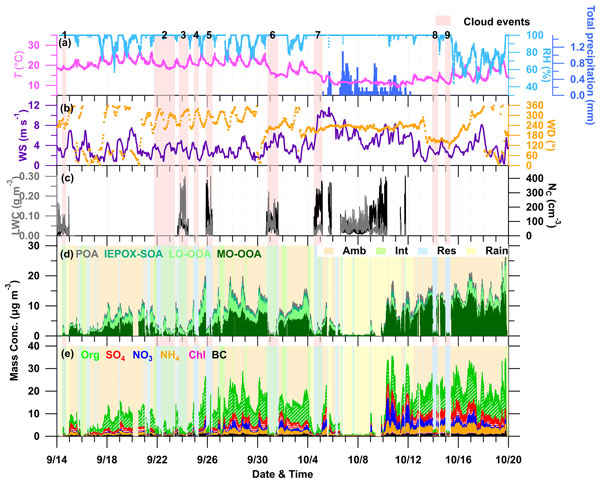
Yi Zhang, Weiqi Xu, Yan Li, Guohua Zhang, Dantong Liu, Ye Kuang, Yu Zhang, Wei Zhou, Xiaocong Peng, Bojiang Su, Weihong Huang, Zijun Zhang, Liu Yang, Yangzhou Wu, Siyuan Li, Shitong Zhao, Lanzhong Liu, Xiaole Pan, Zifa Wang, Xinhui Bi, Mikael Ehn, Douglas R. Worsnop, and Yele Sun
Atmos. Chem. Phys., 26, 5617–5634, https://doi.org/10.5194/acp-26-5617-2026, https://doi.org/10.5194/acp-26-5617-2026, 2026
Short summary
Short summary
This study explores how clouds influence the chemical composition of air particles through field research at a high-altitude station in southeastern China across different seasons. We found that different cloud types cause varying degrees of chemical changes in these particles. These findings enhance our understanding of the impact of clouds on air quality and contribute to improving climate models.
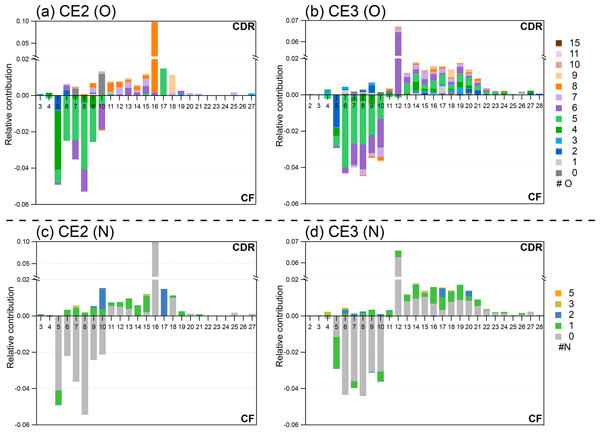
Yali Jin, Hao Luo, Siqi Tang, Shuhui Xue, Chengyu Nie, Xiaocong Peng, Yan Zheng, Weiqi Xu, Guohua Zhang, Xiaole Pan, Yele Sun, Qi Chen, Lanzhong Liu, and Defeng Zhao
Atmos. Chem. Phys., 26, 2813–2830, https://doi.org/10.5194/acp-26-2813-2026, https://doi.org/10.5194/acp-26-2813-2026, 2026
Short summary
Short summary
Cloud substantially changes the compositions organic aerosol. How cloud processing of organics occur on molecular level remains unclear. We found that compared with cloud free particles, organics in cloud contains more large molecules likely due to accretion reactions and has more nitrogen-containing compounds. We identify some new compounds formed in cloud. Such modifications of the organics in cloud can further change its physicochemical properties, and impact on climate and human health.
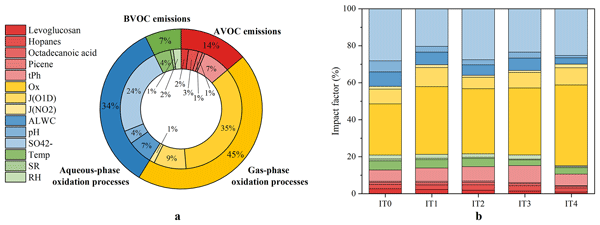
Yunfeng He, Xiang Ding, Quanfu He, Yuqing Zhang, Metin Baykara, Duohong Chen, Tao Zhang, Kong Yang, Junqi Wang, Qian Cheng, Hao Jiang, Zirui Wang, Ping Liu, Xinming Wang, and Michael Boy
Atmos. Chem. Phys., 26, 1093–1107, https://doi.org/10.5194/acp-26-1093-2026, https://doi.org/10.5194/acp-26-1093-2026, 2026
Short summary
Short summary
This study conducted long-term measurements of oxalic acid and molecular markers of primary anthropogenic emissions and secondary organic aerosols (SOA). We found that the reductions in anthropogenic precursors had limited impacts on SOA formation. The results highlight the increasing role of gas-phase oxidation under low-pollution conditions, emphasizing the need for effective ozone control strategies to mitigate SOA formation.
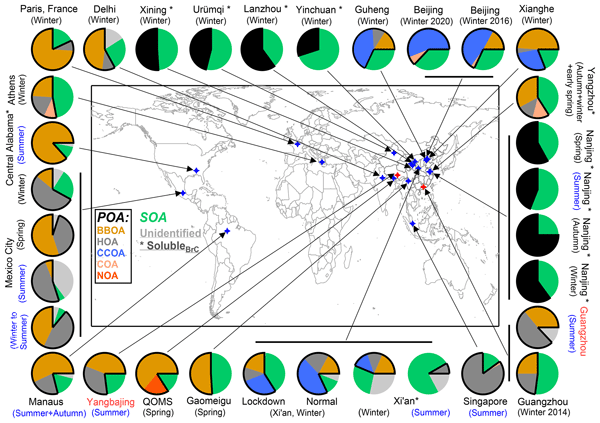
Wenhui Zhao, Weiwei Hu, Zhaoce Liu, Tianle Pan, Tingting Feng, Jun Wang, Yiyu Cai, Lin Liang, Shan Huang, Bin Yuan, Nan Ma, Min Shao, Guohua Zhang, Xinhui Bi, Xinming Wang, and Pengfei Yu
Atmos. Chem. Phys., 26, 135–154, https://doi.org/10.5194/acp-26-135-2026, https://doi.org/10.5194/acp-26-135-2026, 2026
Short summary
Short summary
Our study examined brown carbon – organic aerosols that absorb light – at the remote Tibet and urban Guangzhou. Field data showed Tibet’s brown carbon absorbs about 10 times less than Guangzhou’s, due to cleaner air. Yet, over 75 % of its light absorption still comes from primary emission, which causes over 98 % of its climate-warming effect in both places. This study advances understanding of brown carbon dynamics and its sources in diverse environments for global climate effects.
Tianyu Zhang, Yizhu Chen, Huanhuan Zhang, Lei Liu, Chengpeng Huang, Zhengyang Fang, Yifan Zhang, Fu Wang, Lan Luo, Guohua Zhang, Xinming Wang, and Mingjin Tang
Atmos. Chem. Phys., 25, 17091–17106, https://doi.org/10.5194/acp-25-17091-2025, https://doi.org/10.5194/acp-25-17091-2025, 2025
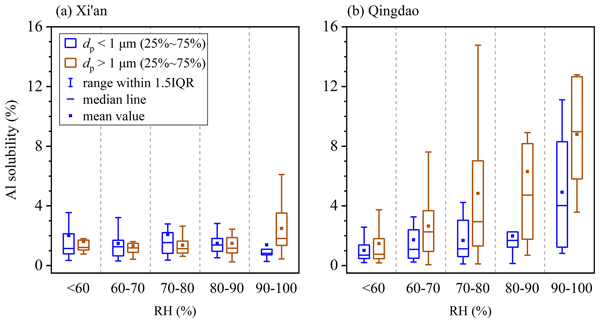
Short summary
Short summary
This work investigated seasonal variations of aerosol aluminium solubility for supermicron and submicron particles at two locations in northern China. We conclude that atmospheric chemical processing, in which aerosol liquid water and acidity play vital roles, dictates aerosol aluminium solubility.
Shengjun Xi, Yuhang Wang, Xiangyang Yuan, Zhaozhong Feng, Fanghe Zhao, Yanli Zhang, and Xinming Wang
Geosci. Model Dev., 18, 8627–8649, https://doi.org/10.5194/gmd-18-8627-2025, https://doi.org/10.5194/gmd-18-8627-2025, 2025
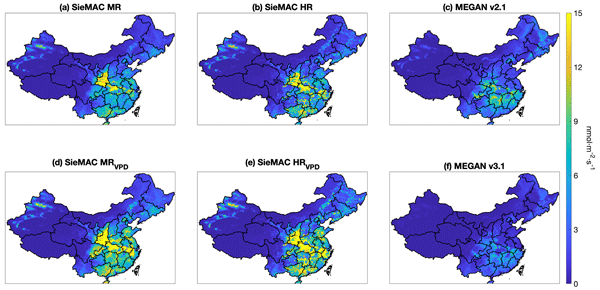
Short summary
Short summary
We developed the Speciated Isoprene Emission Model with Model of Emissions of Gases and Aerosols from Nature Algorithm for China to improve biogenic emission estimates using updated vegetation data and local measurements. The model predicts summer 2013 emissions of 10.92–11.37 teragrams of carbon. Validation shows our model performs better than the existing models, revealing underestimated isoprene impacts on ozone pollution in eastern China.
Mingjin Tang, Morgane M. G. Perron, Alex R. Baker, Rui Li, Andrew R. Bowie, Clifton S. Buck, Ashwini Kumar, Rachel Shelley, Simon J. Ussher, Robert Clough, Scott Meyerink, Prema P. Panda, Ashley T. Townsend, and Neil Wyatt
Atmos. Meas. Tech., 18, 6125–6141, https://doi.org/10.5194/amt-18-6125-2025, https://doi.org/10.5194/amt-18-6125-2025, 2025
Short summary
Short summary
This work, initiated by the SCOR (Scientific Committee on Oceanic Research) Working Group 167, has examined eight leaching protocols commonly used in the literature, is the first large-scale international laboratory comparison for aerosol trace element leaching protocols.
Yunfeng He, Xiang Ding, Quanfu He, Yuqing Zhang, Duohong Chen, Tao Zhang, Kong Yang, Junqi Wang, Qian Cheng, Hao Jiang, Zirui Wang, Ping Liu, Xinming Wang, and Michael Boy
Atmos. Chem. Phys., 25, 13729–13745, https://doi.org/10.5194/acp-25-13729-2025, https://doi.org/10.5194/acp-25-13729-2025, 2025
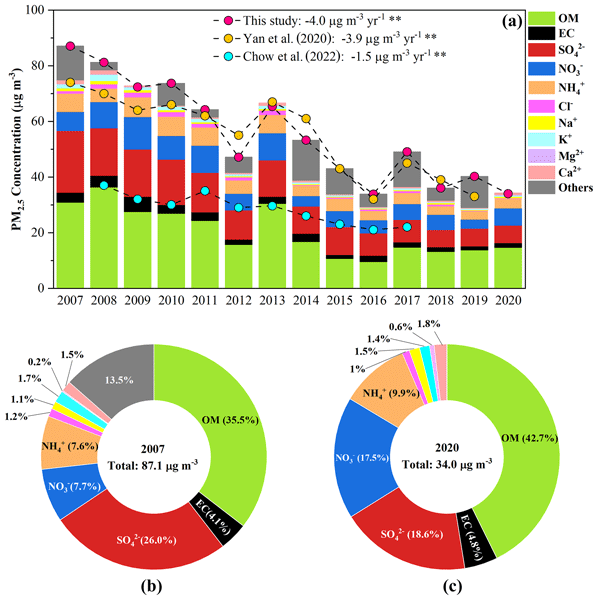
Short summary
Short summary
This study presented field measurements of PM2.5 and its chemical composition at a regional background site in the Pearl River Delta (PRD) from 2007 to 2020. As air quality improved, secondary species became more dominant. The changes in chemical composition led to the reductions in aerosol acidity, liquid water content and light extinction coefficient. Our results help to improve understanding of the secondary species formation under decreasing anthropogenic emissions.
Douglas I. Kelley, Chantelle Burton, Francesca Di Giuseppe, Matthew W. Jones, Maria L. F. Barbosa, Esther Brambleby, Joe R. McNorton, Zhongwei Liu, Anna S. I. Bradley, Katie Blackford, Eleanor Burke, Andrew Ciavarella, Enza Di Tomaso, Jonathan Eden, Igor José M. Ferreira, Lukas Fiedler, Andrew J. Hartley, Theodore R. Keeping, Seppe Lampe, Anna Lombardi, Guilherme Mataveli, Yuquan Qu, Patrícia S. Silva, Fiona R. Spuler, Carmen B. Steinmann, Miguel Ángel Torres-Vázquez, Renata Veiga, Dave van Wees, Jakob B. Wessel, Emily Wright, Bibiana Bilbao, Mathieu Bourbonnais, Cong Gao, Carlos M. Di Bella, Kebonye Dintwe, Victoria M. Donovan, Sarah Harris, Elena A. Kukavskaya, Aya Brigitte N'Dri, Cristina Santín, Galia Selaya, Johan Sjöström, John T. Abatzoglou, Niels Andela, Rachel Carmenta, Emilio Chuvieco, Louis Giglio, Douglas S. Hamilton, Stijn Hantson, Sarah Meier, Mark Parrington, Mojtaba Sadegh, Jesus San-Miguel-Ayanz, Fernando Sedano, Marco Turco, Guido R. van der Werf, Sander Veraverbeke, Liana O. Anderson, Hamish Clarke, Paulo M. Fernandes, and Crystal A. Kolden
Earth Syst. Sci. Data, 17, 5377–5488, https://doi.org/10.5194/essd-17-5377-2025, https://doi.org/10.5194/essd-17-5377-2025, 2025
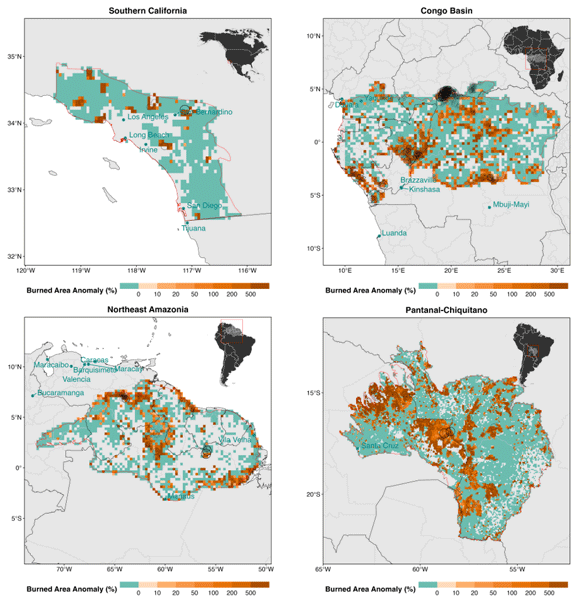
Short summary
Short summary
The second State of Wildfires report examines extreme wildfire events from 2024 to early 2025. It analyses key regional events in Southern California, Northeast Amazonia, Pantanal–Chiquitano, and the Congo Basin, assessing their drivers and predictability and attributing them to climate change and land use. Seasonal outlooks and decadal projections are provided. Climate change greatly increased the likelihood of these fires, and without strong mitigation, such events will become more frequent.
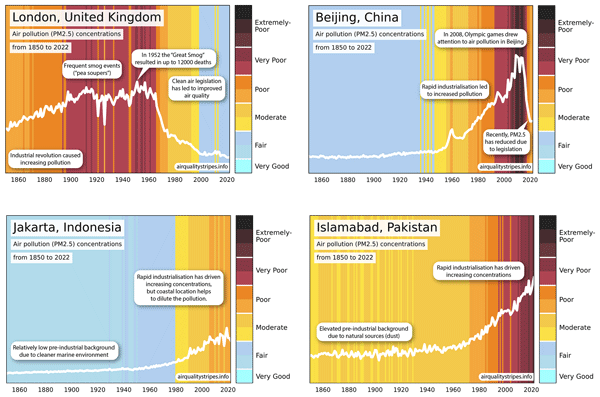
Kirsty J. Pringle, Richard Rigby, Steven T. Turnock, Carly L. Reddington, Meruyert Shayakhmetova, Malcolm Illingworth, Denis Barclay, Neil Chue Hong, Ed Hawkins, Douglas S. Hamilton, Ethan Brain, and James B. McQuaid
Geosci. Commun., 8, 229–236, https://doi.org/10.5194/gc-8-229-2025, https://doi.org/10.5194/gc-8-229-2025, 2025
Short summary
Short summary
The Air Quality Stripes images visualise historical changes in particulate matter air pollution in over 150 cities worldwide. The project celebrates significant improvements in air quality in regions like Europe, North America, and China while highlighting the urgent need for action in areas such as central Asia. Designed to raise awareness, the images aim to inspire discussions about the critical impact of air pollution and the global inequalities it causes.
Yifan Zhang, Rui Li, Zachary B. Bunnell, Yizhu Chen, Guanhong Zhu, Jinlong Ma, Guohua Zhang, Tim M. Conway, and Mingjin Tang
Atmos. Chem. Phys., 25, 11067–11086, https://doi.org/10.5194/acp-25-11067-2025, https://doi.org/10.5194/acp-25-11067-2025, 2025
Short summary
Short summary
The sources of aerosol Fe, especially soluble aerosol Fe, remain to be constrained. The stable isotope ratio of Fe has emerged as a potential tracer for discriminating and quantifying sources of aerosol Fe. In this review, we examine the state of the field for using Fe isotopes as an aerosol source tracer, and constraints on endmember signatures.
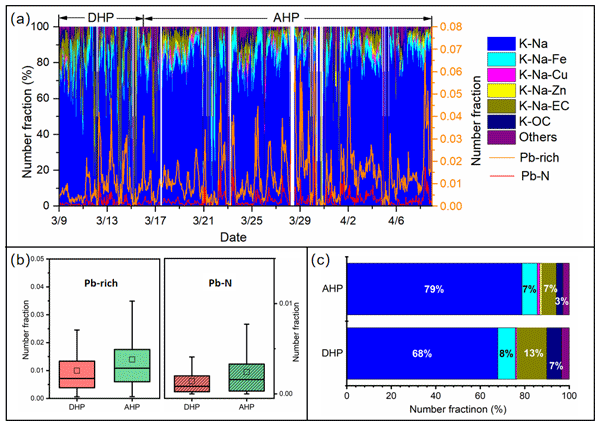
Xiufeng Lian, Yongjiang Xu, Fengxian Liu, Long Peng, Xiaodong Hu, Guigang Tang, Xu Dao, Hui Guo, Liwei Wang, Bo Huang, Chunlei Cheng, Lei Li, Guohua Zhang, Xinhui Bi, Xiaofei Wang, Zhen Zhou, and Mei Li
Atmos. Chem. Phys., 25, 8891–8905, https://doi.org/10.5194/acp-25-8891-2025, https://doi.org/10.5194/acp-25-8891-2025, 2025
Short summary
Short summary
In this study, we analyzed the mixing state and atmospheric chemical processes of Pb-rich single particles in Beijing. We focused on analyzing the differences in Pb-rich particles between the heating period and non-heating period, as well as the formation mechanism of lead nitrate after coal-to-gas conversion. Our results highlighted the improvement of Pb levels in the particulate as a result of coal-to-gas conversion.
Min Li, Xinfeng Wang, Tianshuai Li, Yujia Wang, Yueru Jiang, Yujiao Zhu, Wei Nie, Rui Li, Jian Gao, Likun Xue, Qingzhu Zhang, and Wenxing Wang
Atmos. Chem. Phys., 25, 8407–8425, https://doi.org/10.5194/acp-25-8407-2025, https://doi.org/10.5194/acp-25-8407-2025, 2025
Short summary
Short summary
By integrating field measurements with an interpretable ensemble machine learning framework, we comprehensively identified key driving factors of nitro-aromatic compounds (NACs), demonstrated complex interrelationships, and quantified their contributions across different locations. This work provides a reliable modeling approach for recognizing causes of NAC pollution, enhances our understanding of variations of atmospheric NACs, and highlights the necessity of strengthening emission controls.
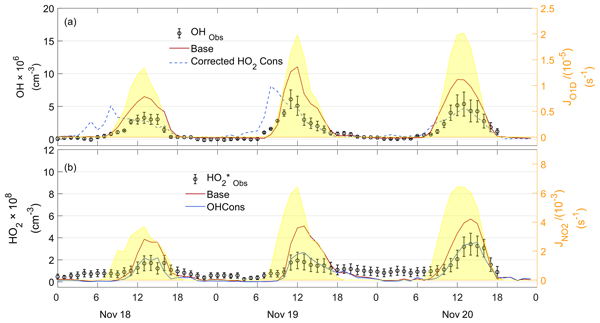
Zhouxing Zou, Tianshu Chen, Qianjie Chen, Weihang Sun, Shichun Han, Zhuoyue Ren, Xinyi Li, Wei Song, Aoqi Ge, Qi Wang, Xiao Tian, Chenglei Pei, Xinming Wang, Yanli Zhang, and Tao Wang
Atmos. Chem. Phys., 25, 8147–8161, https://doi.org/10.5194/acp-25-8147-2025, https://doi.org/10.5194/acp-25-8147-2025, 2025
Short summary
Short summary
We measured ambient OH and HO2* (HO2 and contribution from RO2, organic peroxyl radicals) concentrations at a subtropical rural site and compared our observations with model results. During warm periods, the model overestimated concentrations of OH and HO2, leading to overestimation of ozone and nitric acid production. Our findings highlight the need to better understand how OH and HO2 are formed and removed, which is important for accurate air quality and climate predictions.
Yue Sun, Yujiao Zhu, Hengde Liu, Lanxiadi Chen, Hongyong Li, Yujian Bi, Di Wu, Xiangkun Yin, Can Cui, Ping Liu, Yu Yang, Jisheng Zhang, Yanqiu Nie, Lanxin Zhang, Jiangshan Mu, Yuhong Liu, Zhaoxin Guo, Qinyi Li, Yuqiang Zhang, Xinfeng Wang, Mingjin Tang, Wenxing Wang, and Likun Xue
EGUsphere, https://doi.org/10.5194/egusphere-2025-2855, https://doi.org/10.5194/egusphere-2025-2855, 2025
Preprint archived
Short summary
Short summary
Rainwater samples collected at the summit of Mount Tai were analyzed for ice-nucleating particles (INPs). Our findings revealed that INP concentrations peaked in spring, driven predominantly by long-range transport of dust aerosols. Mineral dust contributed 43.6 % of annual INPs, with its contribution rising sharply to 71.7 % in spring. Satellite observations further revealed that the long-range transport of dust in spring promotes large-scale cloud formation over the NCP region.
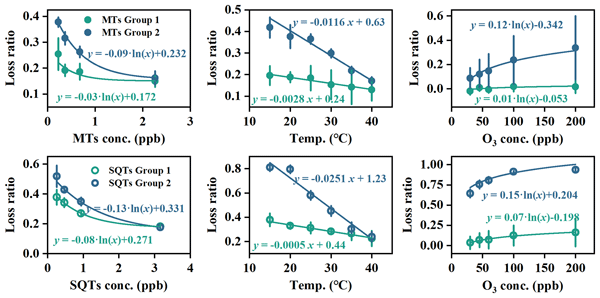
Jianqiang Zeng, Yanli Zhang, Haofan Ran, Weihua Pang, Hao Guo, Zhaobin Mu, Wei Song, and Xinming Wang
Atmos. Meas. Tech., 18, 1811–1821, https://doi.org/10.5194/amt-18-1811-2025, https://doi.org/10.5194/amt-18-1811-2025, 2025
Short summary
Short summary
This study revealed the existence of significant species-specific adsorptive and reactive losses of monoterpenes and sesquiterpenes in dynamic chambers. The deuterated α-pinene-d3 and β-caryophyllene-d2 were proven as effective surrogates in tracing these losses for some key monoterpenes and sesquiterpenes. The findings highlight the importance of selecting internal surrogates that closely match the adsorptive and reactive behaviors of target compounds for precise loss correction.
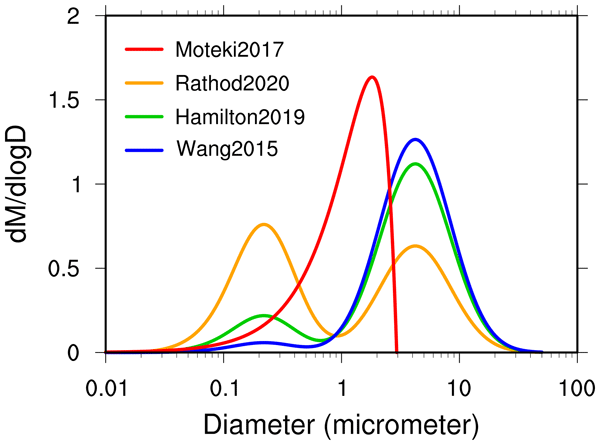
Mingxu Liu, Hitoshi Matsui, Douglas S. Hamilton, Sagar D. Rathod, Kara D. Lamb, and Natalie M. Mahowald
Atmos. Chem. Phys., 24, 13115–13127, https://doi.org/10.5194/acp-24-13115-2024, https://doi.org/10.5194/acp-24-13115-2024, 2024
Short summary
Short summary
Atmospheric aerosol deposition provides bioavailable iron to promote marine primary production, yet the estimates of its fluxes remain highly uncertain. This study, by performing global aerosol simulations, demonstrates that iron-containing particle size upon emission is a critical factor in regulating soluble iron input to open oceans. Further observational constraints on this are needed to reduce modeling uncertainties.
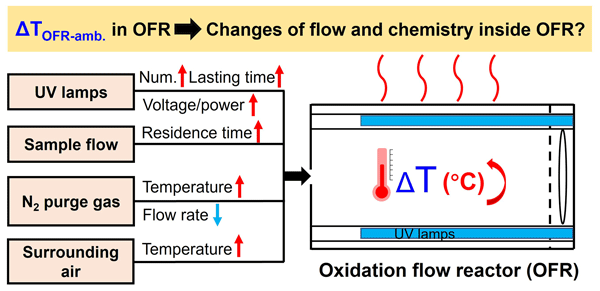
Tianle Pan, Andrew T. Lambe, Weiwei Hu, Yicong He, Minghao Hu, Huaishan Zhou, Xinming Wang, Qingqing Hu, Hui Chen, Yue Zhao, Yuanlong Huang, Doug R. Worsnop, Zhe Peng, Melissa A. Morris, Douglas A. Day, Pedro Campuzano-Jost, Jose-Luis Jimenez, and Shantanu H. Jathar
Atmos. Meas. Tech., 17, 4915–4939, https://doi.org/10.5194/amt-17-4915-2024, https://doi.org/10.5194/amt-17-4915-2024, 2024
Short summary
Short summary
This study systematically characterizes the temperature enhancement in the lamp-enclosed oxidation flow reactor (OFR). The enhancement varied multiple dimensional factors, emphasizing the complexity of temperature inside of OFR. The effects of temperature on the flow field and gas- or particle-phase reaction inside OFR were also evaluated with experiments and model simulations. Finally, multiple mitigation strategies were demonstrated to minimize this temperature increase.
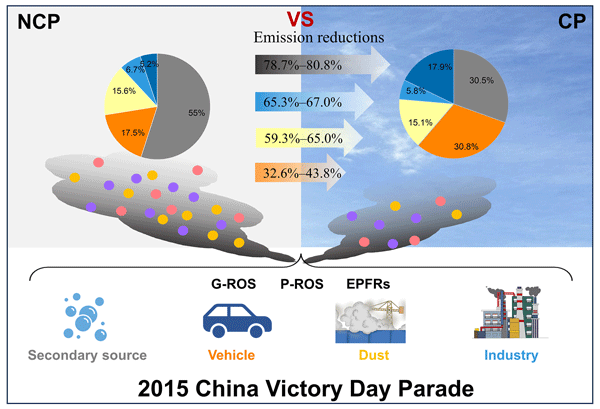
Yuanyuan Qin, Xinghua Zhang, Wei Huang, Juanjuan Qin, Xiaoyu Hu, Yuxuan Cao, Tianyi Zhao, Yang Zhang, Jihua Tan, Ziyin Zhang, Xinming Wang, and Zhenzhen Wang
Atmos. Chem. Phys., 24, 8737–8750, https://doi.org/10.5194/acp-24-8737-2024, https://doi.org/10.5194/acp-24-8737-2024, 2024
Short summary
Short summary
Environmental persistent free radicals (EPFRs) and reactive oxygen species (ROSs) play an active role in the atmosphere. Despite control measures having effectively reduced their emissions, reductions were less than in PM2.5. Emission control measures performed well in achieving Parade Blue, but reducing the impact of the atmosphere on human health remains challenging. Thus, there is a need to reassess emission control measures to better address the challenges posed by EPFRs and ROSs.
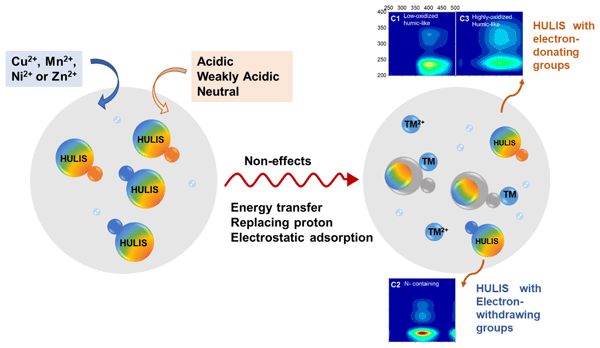
Juanjuan Qin, Leiming Zhang, Yuanyuan Qin, Shaoxuan Shi, Jingnan Li, Zhao Shu, Yuwei Gao, Ting Qi, Jihua Tan, and Xinming Wang
Atmos. Chem. Phys., 24, 7575–7589, https://doi.org/10.5194/acp-24-7575-2024, https://doi.org/10.5194/acp-24-7575-2024, 2024
Short summary
Short summary
The present research unveiled that acidity dominates while transition metal ions harmonize with the light absorption properties of humic-like substances (HULIS). Cu2+ has quenching effects on HULIS by complexation, hydrogen substitution, or electrostatic adsorption, with aromatic structures of HULIS. Such effects are less pronounced if from Mn2+, Ni2+, Zn2+, and Cu2+. Oxidized HULIS might contain electron-donating groups, whereas N-containing compounds might contain electron-withdrawing groups.
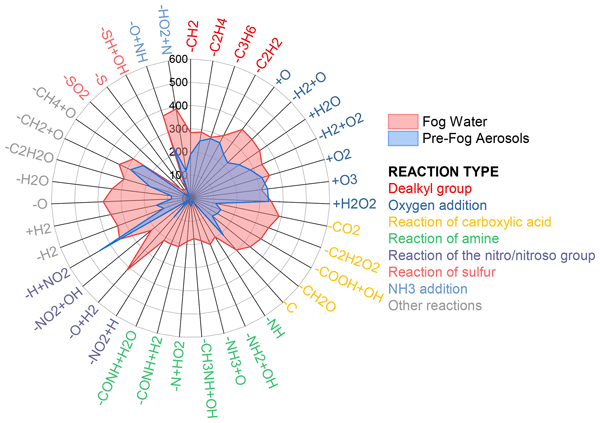
Wei Sun, Xiaodong Hu, Yuzhen Fu, Guohua Zhang, Yujiao Zhu, Xinfeng Wang, Caiqing Yan, Likun Xue, He Meng, Bin Jiang, Yuhong Liao, Xinming Wang, Ping'an Peng, and Xinhui Bi
Atmos. Chem. Phys., 24, 6987–6999, https://doi.org/10.5194/acp-24-6987-2024, https://doi.org/10.5194/acp-24-6987-2024, 2024
Short summary
Short summary
The formation pathways of nitrogen-containing compounds (NOCs) in the atmosphere remain unclear. We investigated the composition of aerosols and fog water by state-of-the-art mass spectrometry and compared the formation pathways of NOCs. We found that NOCs in aerosols were mainly formed through nitration reaction, while ammonia addition played a more important role in fog water. The results deepen our understanding of the processes of organic particulate pollution.
Rui Li, Prema Piyusha Panda, Yizhu Chen, Zhenming Zhu, Fu Wang, Yujiao Zhu, He Meng, Yan Ren, Ashwini Kumar, and Mingjin Tang
Atmos. Meas. Tech., 17, 3147–3156, https://doi.org/10.5194/amt-17-3147-2024, https://doi.org/10.5194/amt-17-3147-2024, 2024
Short summary
Short summary
We found that for ultrapure water batch leaching, the difference in specific experimental parameters, including agitation methods, filter pore size, and contact time, only led to a small and sometimes insignificant difference in determined aerosol trace element solubility. Furthermore, aerosol trace element solubility determined using four common ultrapure water leaching protocols showed good agreement.
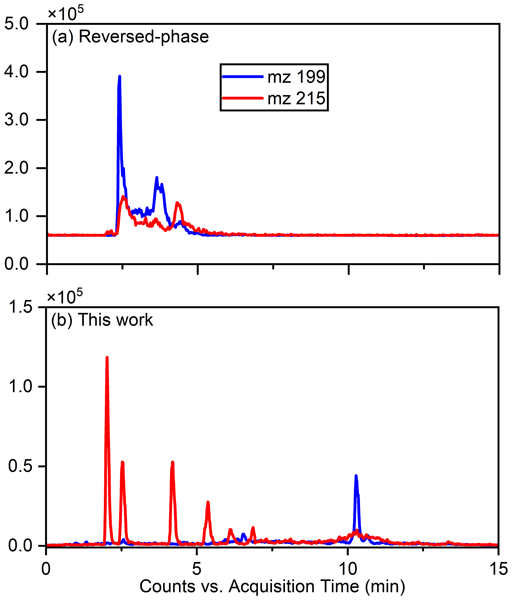
Ping Liu, Xiang Ding, Bo-Xuan Li, Yu-Qing Zhang, Daniel J. Bryant, and Xin-Ming Wang
Atmos. Meas. Tech., 17, 3067–3079, https://doi.org/10.5194/amt-17-3067-2024, https://doi.org/10.5194/amt-17-3067-2024, 2024
Short summary
Short summary
In this paper, we further optimize the measurement of atmospheric organosulfates by hydrophilic interaction liquid chromatography (HILIC), offering an improved method for quantifying and speciating atmospheric organosulfates. These efforts will contribute to a deeper understanding of secondary organic aerosol precursors, formation mechanisms, and the contribution of organosulfate to atmospheric aerosols, ultimately guiding research in the field of air pollution prevention and control.
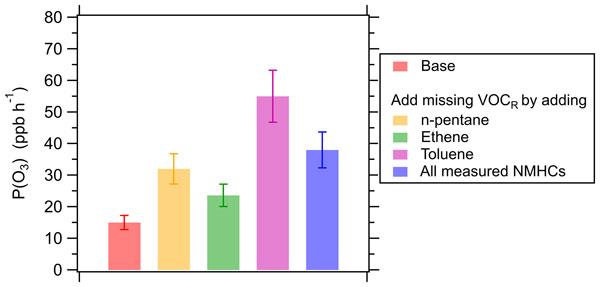
Wenjie Wang, Bin Yuan, Hang Su, Yafang Cheng, Jipeng Qi, Sihang Wang, Wei Song, Xinming Wang, Chaoyang Xue, Chaoqun Ma, Fengxia Bao, Hongli Wang, Shengrong Lou, and Min Shao
Atmos. Chem. Phys., 24, 4017–4027, https://doi.org/10.5194/acp-24-4017-2024, https://doi.org/10.5194/acp-24-4017-2024, 2024
Short summary
Short summary
This study investigates the important role of unmeasured volatile organic compounds (VOCs) in ozone formation. Based on results in a megacity of China, we show that unmeasured VOCs can contribute significantly to ozone fomation and also influence the determination of ozone control strategy. Our results show that these unmeasured VOCs are mainly from human sources.
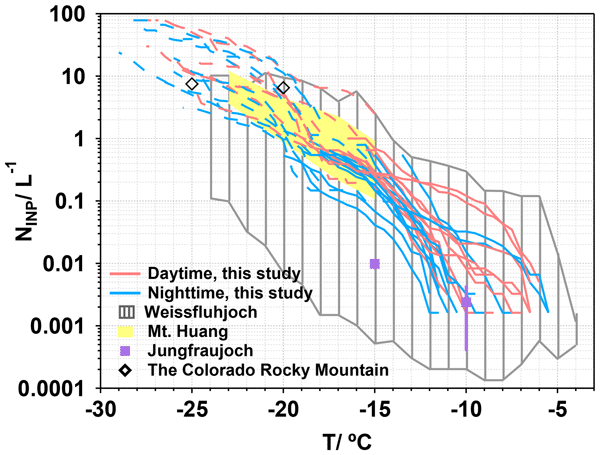
Yue Sun, Yujiao Zhu, Yanbin Qi, Lanxiadi Chen, Jiangshan Mu, Ye Shan, Yu Yang, Yanqiu Nie, Ping Liu, Can Cui, Ji Zhang, Mingxuan Liu, Lingli Zhang, Yufei Wang, Xinfeng Wang, Mingjin Tang, Wenxing Wang, and Likun Xue
Atmos. Chem. Phys., 24, 3241–3256, https://doi.org/10.5194/acp-24-3241-2024, https://doi.org/10.5194/acp-24-3241-2024, 2024
Short summary
Short summary
Field observations were conducted at the summit of Changbai Mountain in northeast Asia. The cumulative number concentration of ice-nucleating particles (INPs) varied from 1.6 × 10⁻³ to 78.3 L−1 over the temperature range of −5.5 to −29.0 ℃. Biological INPs (bio-INPs) accounted for the majority of INPs, and the proportion exceeded 90% above −13.0 ℃. Planetary boundary layer height, valley breezes, and long-distance transport of air mass influence the abundance of bio-INPs.
Hua Fang, Ting Wu, Shutan Ma, Qina Jia, Fengyu Zan, Juan Zhao, Jintao Zhang, Zhi Yang, Hongling Xu, Yuzhe Huang, and Xinming Wang
EGUsphere, https://doi.org/10.5194/egusphere-2023-2998, https://doi.org/10.5194/egusphere-2023-2998, 2024
Preprint archived
Short summary
Short summary
Using in situ VOC flux measurements, we reveal that the freshwater wetland is a potential source of atmospheric VOCs and that litter decomposition enhances net VOC emission. Ambient temperature is the key factor driving the seasonal variation of net VOC flux. Notably, the release or uptake of VOCs varies depending on chemical groups and is jointly controlled by biotic and abiotic processes.
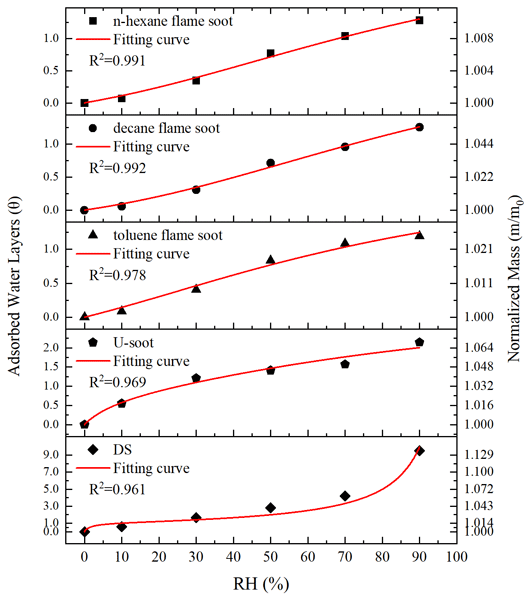
Zhanyu Su, Lanxiadi Chen, Yuan Liu, Peng Zhang, Tianzeng Chen, Biwu Chu, Mingjin Tang, Qingxin Ma, and Hong He
Atmos. Chem. Phys., 24, 993–1003, https://doi.org/10.5194/acp-24-993-2024, https://doi.org/10.5194/acp-24-993-2024, 2024
Short summary
Short summary
In this study, different soot particles were analyzed to better understand their behavior. It was discovered that water-soluble substances in soot facilitate water adsorption at low humidity while increasing the number of water layers at high humidity. Soot from organic fuels exhibits hygroscopicity influenced by organic carbon and microstructure. Additionally, the presence of sulfate ions due to the oxidation of SO2 enhances soot's hygroscopicity.
Morgane M. G. Perron, Susanne Fietz, Douglas S. Hamilton, Akinori Ito, Rachel U. Shelley, and Mingjin Tang
Atmos. Meas. Tech., 17, 165–166, https://doi.org/10.5194/amt-17-165-2024, https://doi.org/10.5194/amt-17-165-2024, 2024
Short summary
Short summary
The solubility of vital and toxic trace elements delivered by the atmosphere determines their potential to fertilise or limit ocean productivity. A poor understanding of aeolian trace element solubility and the absence of a standard method to define this parameter hinder accurate model representation of the impact of atmospheric deposition on ocean productivity in a changing climate. The inter-journal special issue aims at “Reducing Uncertainty in Soluble aerosol Trace Element Deposition”.
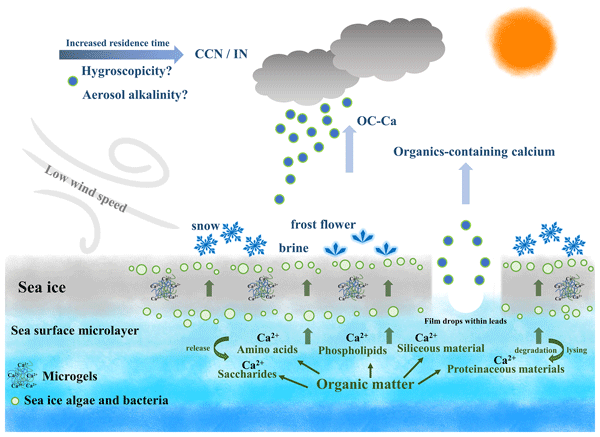
Bojiang Su, Xinhui Bi, Zhou Zhang, Yue Liang, Congbo Song, Tao Wang, Yaohao Hu, Lei Li, Zhen Zhou, Jinpei Yan, Xinming Wang, and Guohua Zhang
Atmos. Chem. Phys., 23, 10697–10711, https://doi.org/10.5194/acp-23-10697-2023, https://doi.org/10.5194/acp-23-10697-2023, 2023
Short summary
Short summary
During the R/V Xuelong cruise observation over the Ross Sea, Antarctica, the mass concentrations of water-soluble Ca2+ and the mass spectra of individual calcareous particles were measured. Our results indicated that lower temperature, lower wind speed, and the presence of sea ice may facilitate Ca2+ enrichment in sea spray aerosols and highlighted the potential contribution of organically complexed calcium to calcium enrichment, which is inaccurate based solely on water-soluble Ca2+ estimation.
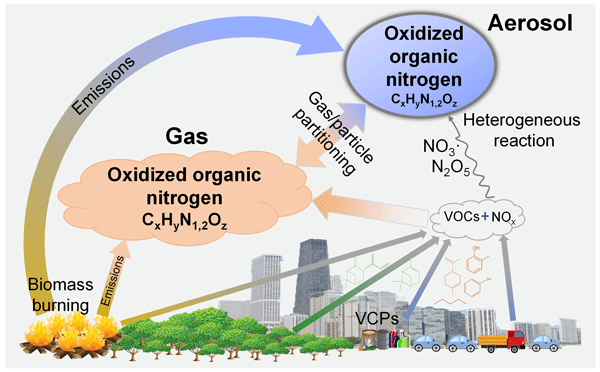
Yiyu Cai, Chenshuo Ye, Wei Chen, Weiwei Hu, Wei Song, Yuwen Peng, Shan Huang, Jipeng Qi, Sihang Wang, Chaomin Wang, Caihong Wu, Zelong Wang, Baolin Wang, Xiaofeng Huang, Lingyan He, Sasho Gligorovski, Bin Yuan, Min Shao, and Xinming Wang
Atmos. Chem. Phys., 23, 8855–8877, https://doi.org/10.5194/acp-23-8855-2023, https://doi.org/10.5194/acp-23-8855-2023, 2023
Short summary
Short summary
We studied the variability and molecular composition of ambient oxidized organic nitrogen (OON) in both gas and particle phases using a state-of-the-art online mass spectrometer in urban air. Biomass burning and secondary formation were found to be the two major sources of OON. Daytime nitrate radical chemistry for OON formation was more important than previously thought. Our results improved the understanding of the sources and molecular composition of OON in the polluted urban atmosphere.
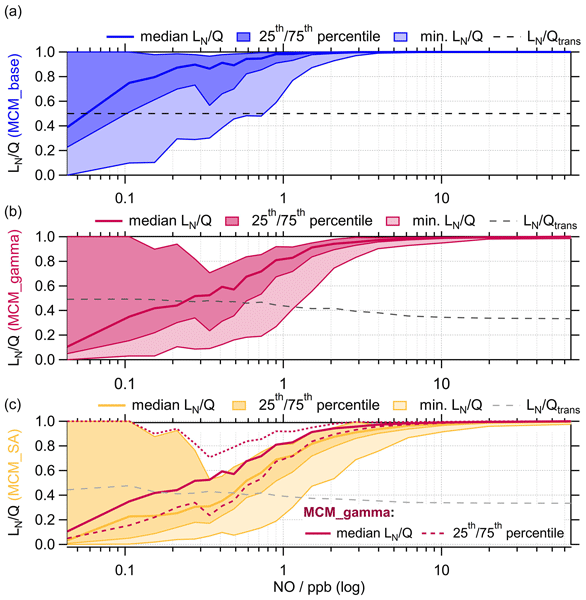
Joanna E. Dyson, Lisa K. Whalley, Eloise J. Slater, Robert Woodward-Massey, Chunxiang Ye, James D. Lee, Freya Squires, James R. Hopkins, Rachel E. Dunmore, Marvin Shaw, Jacqueline F. Hamilton, Alastair C. Lewis, Stephen D. Worrall, Asan Bacak, Archit Mehra, Thomas J. Bannan, Hugh Coe, Carl J. Percival, Bin Ouyang, C. Nicholas Hewitt, Roderic L. Jones, Leigh R. Crilley, Louisa J. Kramer, W. Joe F. Acton, William J. Bloss, Supattarachai Saksakulkrai, Jingsha Xu, Zongbo Shi, Roy M. Harrison, Simone Kotthaus, Sue Grimmond, Yele Sun, Weiqi Xu, Siyao Yue, Lianfang Wei, Pingqing Fu, Xinming Wang, Stephen R. Arnold, and Dwayne E. Heard
Atmos. Chem. Phys., 23, 5679–5697, https://doi.org/10.5194/acp-23-5679-2023, https://doi.org/10.5194/acp-23-5679-2023, 2023
Short summary
Short summary
The hydroxyl (OH) and closely coupled hydroperoxyl (HO2) radicals are vital for their role in the removal of atmospheric pollutants. In less polluted regions, atmospheric models over-predict HO2 concentrations. In this modelling study, the impact of heterogeneous uptake of HO2 onto aerosol surfaces on radical concentrations and the ozone production regime in Beijing in the summertime is investigated, and the implications for emissions policies across China are considered.
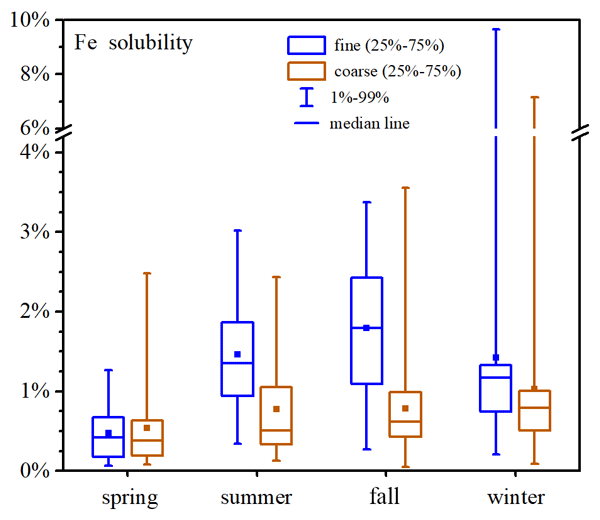
Huanhuan Zhang, Rui Li, Chengpeng Huang, Xiaofei Li, Shuwei Dong, Fu Wang, Tingting Li, Yizhu Chen, Guohua Zhang, Yan Ren, Qingcai Chen, Ru-jin Huang, Siyu Chen, Tao Xue, Xinming Wang, and Mingjin Tang
Atmos. Chem. Phys., 23, 3543–3559, https://doi.org/10.5194/acp-23-3543-2023, https://doi.org/10.5194/acp-23-3543-2023, 2023
Short summary
Short summary
This work investigated the seasonal variation of aerosol Fe solubility for coarse and fine particles in Xi’an, a megacity in northwestern China severely affected by anthropogenic emission and desert dust aerosol. In addition, we discussed in depth what controlled aerosol Fe solubility at different seasons for coarse and fine particles.
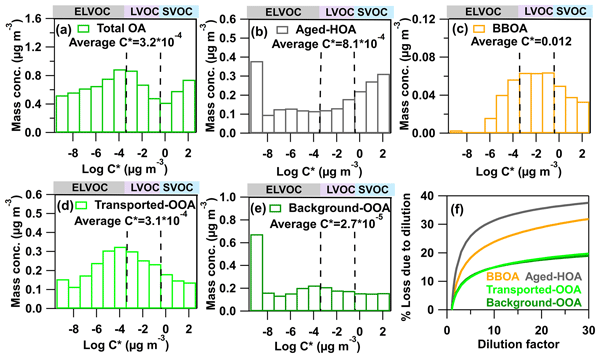
Tingting Feng, Yingkun Wang, Weiwei Hu, Ming Zhu, Wei Song, Wei Chen, Yanyan Sang, Zheng Fang, Wei Deng, Hua Fang, Xu Yu, Cheng Wu, Bin Yuan, Shan Huang, Min Shao, Xiaofeng Huang, Lingyan He, Young Ro Lee, Lewis Gregory Huey, Francesco Canonaco, Andre S. H. Prevot, and Xinming Wang
Atmos. Chem. Phys., 23, 611–636, https://doi.org/10.5194/acp-23-611-2023, https://doi.org/10.5194/acp-23-611-2023, 2023
Short summary
Short summary
To investigate the impact of aging processes on organic aerosols (OA), we conducted a comprehensive field study at a continental remote site using an on-line mass spectrometer. The results show that OA in the Chinese outflows were strongly influenced by upwind anthropogenic emissions. The aging processes can significantly decrease the OA volatility and result in a varied viscosity of OA under different circumstances, signifying the complex physiochemical properties of OA in aged plumes.

Longlei Li, Natalie M. Mahowald, Jasper F. Kok, Xiaohong Liu, Mingxuan Wu, Danny M. Leung, Douglas S. Hamilton, Louisa K. Emmons, Yue Huang, Neil Sexton, Jun Meng, and Jessica Wan
Geosci. Model Dev., 15, 8181–8219, https://doi.org/10.5194/gmd-15-8181-2022, https://doi.org/10.5194/gmd-15-8181-2022, 2022
Short summary
Short summary
This study advances mineral dust parameterizations in the Community Atmospheric Model (CAM; version 6.1). Efforts include 1) incorporating a more physically based dust emission scheme; 2) updating the dry deposition scheme; and 3) revising the gravitational settling velocity to account for dust asphericity. Substantial improvements achieved with these updates can help accurately quantify dust–climate interactions using CAM, such as the dust-radiation and dust–cloud interactions.
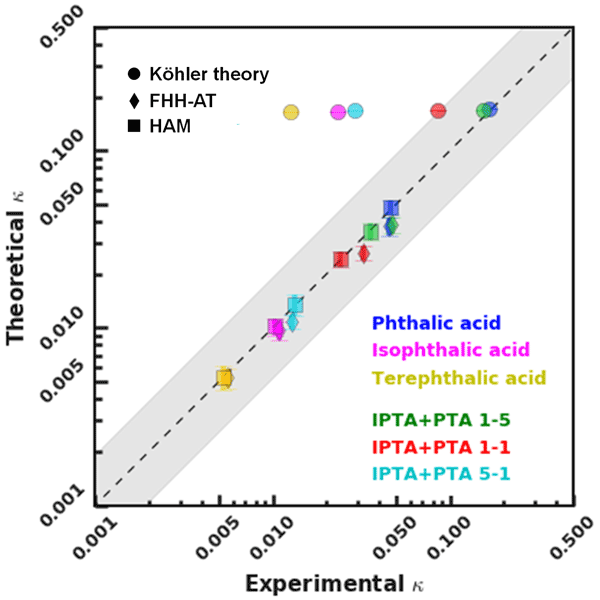
Kanishk Gohil, Chun-Ning Mao, Dewansh Rastogi, Chao Peng, Mingjin Tang, and Akua Asa-Awuku
Atmos. Chem. Phys., 22, 12769–12787, https://doi.org/10.5194/acp-22-12769-2022, https://doi.org/10.5194/acp-22-12769-2022, 2022
Short summary
Short summary
The Hybrid Activity Model (HAM) is a promising new droplet growth model that can be potentially used for the analysis of any type of atmospheric compound. HAM may potentially improve the representation of hygroscopicity of organic aerosols in large-scale global climate models (GCMs), hence reducing the uncertainties in the climate forcing due to the aerosol indirect effect.
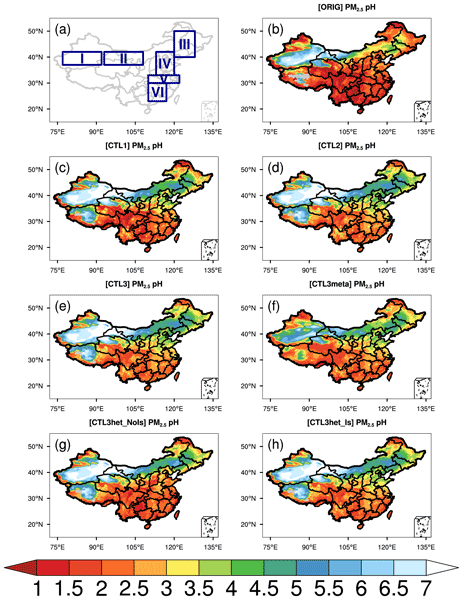
Xueyin Ruan, Chun Zhao, Rahul A. Zaveri, Pengzhen He, Xinming Wang, Jingyuan Shao, and Lei Geng
Geosci. Model Dev., 15, 6143–6164, https://doi.org/10.5194/gmd-15-6143-2022, https://doi.org/10.5194/gmd-15-6143-2022, 2022
Short summary
Short summary
Accurate prediction of aerosol pH in chemical transport models is essential to aerosol modeling. This study examines the performance of the Weather Research and Forecasting model coupled with Chemistry (WRF-Chem) on aerosol pH predictions and the sensitivities to emissions of nonvolatile cations and NH3, aerosol-phase state assumption, and heterogeneous sulfate production. Temporal evolution of aerosol pH during haze cycles in Beijing and the driving factors are also presented and discussed.
Guohua Zhang, Xiaodong Hu, Wei Sun, Yuxiang Yang, Ziyong Guo, Yuzhen Fu, Haichao Wang, Shengzhen Zhou, Lei Li, Mingjin Tang, Zongbo Shi, Duohong Chen, Xinhui Bi, and Xinming Wang
Atmos. Chem. Phys., 22, 9571–9582, https://doi.org/10.5194/acp-22-9571-2022, https://doi.org/10.5194/acp-22-9571-2022, 2022
Short summary
Short summary
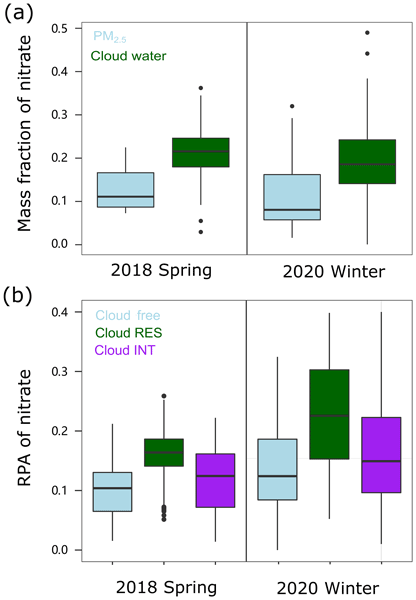
We show a significant enhancement of nitrate mass fraction in cloud water and relative intensity of nitrate in the cloud residual particles and highlight that hydrolysis of N2O5 serves as the critical route for the in-cloud formation of nitrate, even during the daytime. Given that N2O5 hydrolysis acts as a major sink of NOx in the atmosphere, further model updates may improve our understanding about the processes contributing to nitrate production in cloud and the cycling of odd nitrogen.
Xuan Li, Lei Li, Zeming Zhuo, Guohua Zhang, Xubing Du, Xue Li, Zhengxu Huang, Zhen Zhou, and Zhi Cheng
EGUsphere, https://doi.org/10.5194/egusphere-2022-598, https://doi.org/10.5194/egusphere-2022-598, 2022
Preprint archived
Short summary
Short summary
The particle size and chemical composition of bioaerosol were analyzed based on single particle aerosol mass spectrometer. Fungal aerosol of 10 μm was measured for the first time and the characteristic spectrum of bioaerosol was updated. The ion peak ratio method can distinguish bioaerosols from interferers by 97 %. The factors influencing the differentiation of bioaerosols are also discussed. Single particle mass spectrometry can be a new method for real-time identification of bioaerosols.
Yihang Yu, Peng Cheng, Huirong Li, Wenda Yang, Baobin Han, Wei Song, Weiwei Hu, Xinming Wang, Bin Yuan, Min Shao, Zhijiong Huang, Zhen Li, Junyu Zheng, Haichao Wang, and Xiaofang Yu
Atmos. Chem. Phys., 22, 8951–8971, https://doi.org/10.5194/acp-22-8951-2022, https://doi.org/10.5194/acp-22-8951-2022, 2022
Short summary
Short summary
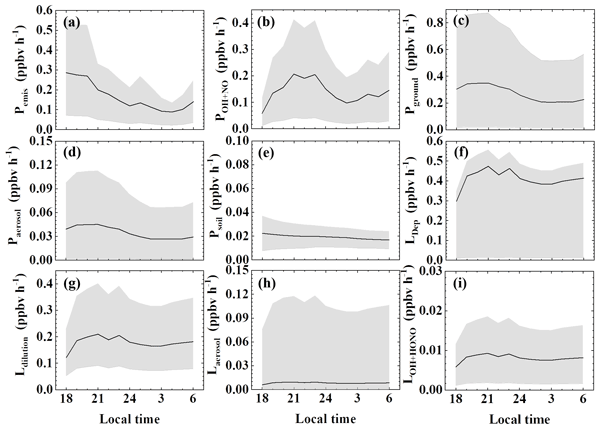
We have investigated the budget of HONO at an urban site in Guangzhou. Budget and comprehensive uncertainty analysis suggest that at such locations as ours, HONO direct emissions and NO + OH can become comparable or even surpass other HONO sources that typically receive greater attention and interest, such as the NO2 heterogeneous source and the unknown daytime photolytic source. Our findings emphasize the need to reduce the uncertainties of both conventional and novel HONO sources and sinks.
Lu Chen, Fang Zhang, Dongmei Zhang, Xinming Wang, Wei Song, Jieyao Liu, Jingye Ren, Sihui Jiang, Xue Li, and Zhanqing Li
Atmos. Chem. Phys., 22, 6773–6786, https://doi.org/10.5194/acp-22-6773-2022, https://doi.org/10.5194/acp-22-6773-2022, 2022
Short summary
Short summary
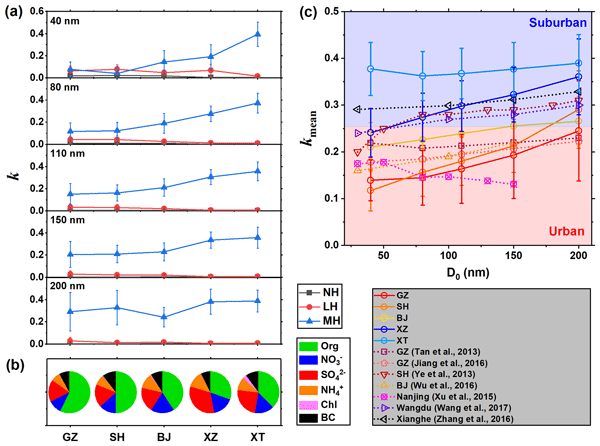
Aerosol hygroscopicity is critical when evaluating its effect on visibility and climate. Here, the size-resolved particle hygroscopicity at five sites in China is characterized using field measurements. We show the distinct behavior of hygroscopic particles during pollution evolution among the five sites. Moreover, different hygroscopic behavior during NPF events were also observed. The dataset is helpful for understanding the spatial variability in particle composition and formation mechanisms.
Ziyong Guo, Yuxiang Yang, Xiaodong Hu, Xiaocong Peng, Yuzhen Fu, Wei Sun, Guohua Zhang, Duohong Chen, Xinhui Bi, Xinming Wang, and Ping'an Peng
Atmos. Chem. Phys., 22, 4827–4839, https://doi.org/10.5194/acp-22-4827-2022, https://doi.org/10.5194/acp-22-4827-2022, 2022
Short summary
Short summary
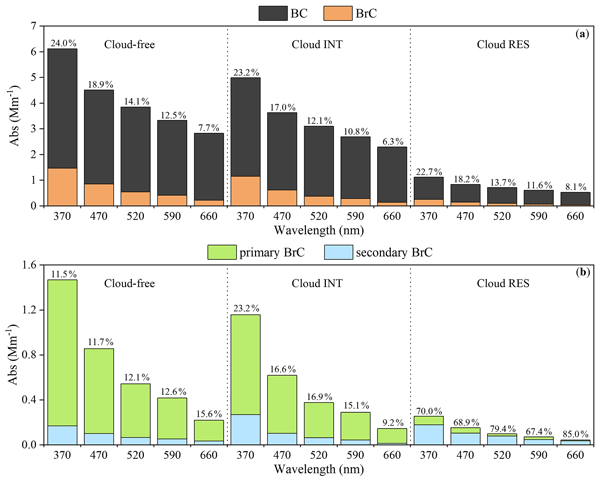
We show that in-cloud aqueous processing facilitates the formation of brown carbon (BrC), based on the simultaneous measurements of the light-absorption properties of the cloud residuals, cloud interstitial, and cloud-free particles. While extensive laboratory evidence indicated the formation of BrC in aqueous phase, our study represents the first attempt to show the possibility in real clouds, which would have potential implications in the atmospheric evolution and radiation forcing of BrC.
Suxia Yang, Bin Yuan, Yuwen Peng, Shan Huang, Wei Chen, Weiwei Hu, Chenglei Pei, Jun Zhou, David D. Parrish, Wenjie Wang, Xianjun He, Chunlei Cheng, Xiao-Bing Li, Xiaoyun Yang, Yu Song, Haichao Wang, Jipeng Qi, Baolin Wang, Chen Wang, Chaomin Wang, Zelong Wang, Tiange Li, E Zheng, Sihang Wang, Caihong Wu, Mingfu Cai, Chenshuo Ye, Wei Song, Peng Cheng, Duohong Chen, Xinming Wang, Zhanyi Zhang, Xuemei Wang, Junyu Zheng, and Min Shao
Atmos. Chem. Phys., 22, 4539–4556, https://doi.org/10.5194/acp-22-4539-2022, https://doi.org/10.5194/acp-22-4539-2022, 2022
Short summary
Short summary
We use a model constrained using observations to study the formation of nitrate aerosol in and downwind of a representative megacity. We found different contributions of various chemical reactions to ground-level nitrate concentrations between urban and suburban regions. We also show that controlling VOC emissions are effective for decreasing nitrate formation in both urban and regional environments, although VOCs are not direct precursors of nitrate aerosol.
Wenjie Wang, Bin Yuan, Yuwen Peng, Hang Su, Yafang Cheng, Suxia Yang, Caihong Wu, Jipeng Qi, Fengxia Bao, Yibo Huangfu, Chaomin Wang, Chenshuo Ye, Zelong Wang, Baolin Wang, Xinming Wang, Wei Song, Weiwei Hu, Peng Cheng, Manni Zhu, Junyu Zheng, and Min Shao
Atmos. Chem. Phys., 22, 4117–4128, https://doi.org/10.5194/acp-22-4117-2022, https://doi.org/10.5194/acp-22-4117-2022, 2022
Short summary
Short summary
From thorough measurements of numerous oxygenated volatile organic compounds, we show that their photodissociation can be important for radical production and ozone formation in the atmosphere. This effect was underestimated in previous studies, as measurements of them were lacking.
Haichao Wang, Chao Peng, Xuan Wang, Shengrong Lou, Keding Lu, Guicheng Gan, Xiaohong Jia, Xiaorui Chen, Jun Chen, Hongli Wang, Shaojia Fan, Xinming Wang, and Mingjin Tang
Atmos. Chem. Phys., 22, 1845–1859, https://doi.org/10.5194/acp-22-1845-2022, https://doi.org/10.5194/acp-22-1845-2022, 2022
Short summary
Short summary
Via combining laboratory and modeling work, we found that heterogeneous reaction of N2O5 with saline mineral dust aerosol could be an important source of tropospheric ClNO2 in inland regions.
Juanjuan Qin, Jihua Tan, Xueming Zhou, Yanrong Yang, Yuanyuan Qin, Xiaobo Wang, Shaoxuan Shi, Kang Xiao, and Xinming Wang
Atmos. Chem. Phys., 22, 465–479, https://doi.org/10.5194/acp-22-465-2022, https://doi.org/10.5194/acp-22-465-2022, 2022
Short summary
Short summary
Water-soluble organic compounds (WSOCs) play important roles in atmospheric particle formation, migration, and transformation processes. In this work, size-segregated atmospheric particles were collected in a rural area of Beijing, and 3D fluorescence spectroscopy was used to investigate the optical properties of WSOCs as a means of inferring information about their atmospheric sources. It was found that these data could efficiently reveal the secondary transformation processes of WSOCs.
Jianqiang Zeng, Yanli Zhang, Huina Zhang, Wei Song, Zhenfeng Wu, and Xinming Wang
Atmos. Meas. Tech., 15, 79–93, https://doi.org/10.5194/amt-15-79-2022, https://doi.org/10.5194/amt-15-79-2022, 2022
Short summary
Short summary
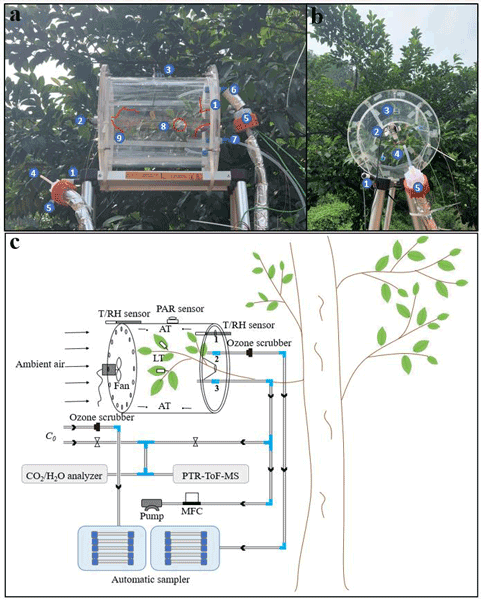
The emission of biogenic volatile organic compounds (BVOCs) from plant leaves is an essential part of biosphere–atmosphere interactions. Here we demonstrate how a dynamic chamber for measuring branch-scale BVOC emissions could be characterized both in the lab for adsorptive losses and in the field for ambient–enclosure environmental differences. The results also imply emission factors for terpenes might be underestimated if measured using dynamic chambers without certified transfer efficiencies.
Wei Sun, Yuzhen Fu, Guohua Zhang, Yuxiang Yang, Feng Jiang, Xiufeng Lian, Bin Jiang, Yuhong Liao, Xinhui Bi, Duohong Chen, Jianmin Chen, Xinming Wang, Jie Ou, Ping'an Peng, and Guoying Sheng
Atmos. Chem. Phys., 21, 16631–16644, https://doi.org/10.5194/acp-21-16631-2021, https://doi.org/10.5194/acp-21-16631-2021, 2021
Short summary
Short summary
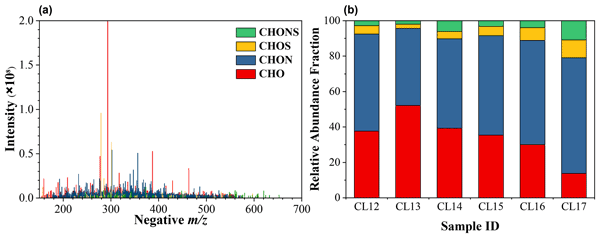
We sampled cloud water at a remote mountain site and investigated the molecular characteristics. CHON and CHO are dominant in cloud water. No statistical difference in the oxidation state is observed between cloud water and interstitial PM2.5. Most of the formulas are aliphatic and olefinic species. CHON, with aromatic structures and organosulfates, are abundant, especially in nighttime samples. The in-cloud and multi-phase dark reactions likely contribute significantly.
Cited articles
Ahmaruzzaman, M.: A review on the utilization of fly ash, Prog. Energ. Combust., 36, 327–363, https://doi.org/10.1016/j.pecs.2009.11.003, 2010.
Al-Abadleh, H. A., Kubicki, J. D., and Meskhidze, N.: A perspective on iron (Fe) in the atmosphere: air quality, climate, and the ocean, Environ. Sci.-Proc. Imp., 25, 151–164, https://doi.org/10.1039/D2EM00176D, 2023.
Alizadeh, M. and Momeni, M.: The effect of the scrap/DRI ratio on the specification of the EAF dust and its influence on mechanical properties of the concrete treated by its dust, Constr. Build. Mater., 112, 1041–1045, https://doi.org/10.1016/j.conbuildmat.2016.03.011, 2016.
Al-Negheimish, A. I., Al-Mutlaq, F. M., Fares, G., Alhozaimy, A. M., and Iqbal Khan, M.: Characterization of chemical accelerators for sustainable recycling of fresh electric-arc furnace dust in cement pastes, Adv. Powder Technol., 32, 3046–3062, https://doi.org/10.1016/j.apt.2021.06.019, 2021.
Alsheyab, M. A. T. and Khedaywi, T. S.: Analysis of the Effect of Temperature on the Resilient Modulus of Asphalt Concrete Mixed with Electric Arc Furnace Dust (EAFD), Water Air Soil Poll., 227, 80, https://doi.org/10.1007/s11270-016-2776-4, 2016.
Alves, C., Gonçalves, C., Fernandes, A. P., Tarelho, L., and Pio, C.: Fireplace and woodstove fine particle emissions from combustion of western Mediterranean wood types, Atmos. Res., 101, 692–700, https://doi.org/10.1016/j.atmosres.2011.04.015, 2011.
Andela, N., Morton, D. C., Giglio, L., Chen, Y., van der Werf, G. R., Kasibhatla, P. S., DeFries, R. S., Collatz, G. J., Hantson, S., Kloster, S., Bachelet, D., Forrest, M., Lasslop, G., Li, F., Mangeon, S., Melton, J. R., Yue, C., and Randerson, J. T.: A human-driven decline in global burned area, Science, 356, 1356–1362, https://doi.org/10.1126/science.aal4108, 2017.
Baker, A. R., Li, M., and Chance, R.: Trace Metal Fractional Solubility in Size-Segregated Aerosols From the Tropical Eastern Atlantic Ocean, Global Biogeochem. Cy., 34, e2019GB006510, https://doi.org/10.1029/2019GB006510, 2020.
Baldo, C., Ito, A., Krom, M. D., Li, W., Jones, T., Drake, N., Ignatyev, K., Davidson, N., and Shi, Z.: Iron from coal combustion particles dissolves much faster than mineral dust under simulated atmospheric acidic conditions, Atmos. Chem. Phys., 22, 6045–6066, https://doi.org/10.5194/acp-22-6045-2022, 2022.
Bali, K., Mishra, A. K., Singh, S., Chandra, S., and Lehahn, Y.: Impact of dust storm on phytoplankton bloom over the Arabian Sea: a case study during March 2012, Environmental Science and Pollution Research International, 26, 11940–11950, https://doi.org/10.1007/s11356-019-04602-7, 2019.
Bazzani, E., Lauritano, C., and Saggiomo, M.: Southern Ocean Iron Limitation of Primary Production between Past Knowledge and Future Projections, Journal of Marine Science and Engineering, 11, 272, https://doi.org/10.3390/jmse11020272, 2023.
Bergas-Massó, E., Gonçalves Ageitos, M., Myriokefalitakis, S., Miller, R. L., van Noije, T., Le Sager, P., Montané Pinto, G., and Pérez García-Pando, C.: Pre-Industrial, Present and Future Atmospheric Soluble Iron Deposition and the Role of Aerosol Acidity and Oxalate Under CMIP6 Emissions, Earths Future, 11, e2022EF003353, https://doi.org/10.1029/2022EF003353, 2023.
Bergas-Masso, E., Hamilton, D. S., Myriokefalitakis, S., Rathod, S., Gonçalves Ageitos, M., and Pérez García-Pando, C.: Future climate-driven fires may boost ocean productivity in the iron-limited North Atlantic, Nat. Clim. Change, 15, 784–792, https://doi.org/10.1038/s41558-025-02356-4, 2025.
Bhargava, S. K., Garg, A., and Subasinghe, N. D.: In situ high-temperature phase transformation studies on pyrite, Fuel, 88, 988–993, https://doi.org/10.1016/j.fuel.2008.12.005, 2009.
Blissett, R. S. and Rowson, N. A.: A review of the multi-component utilisation of coal fly ash, Fuel, 97, 1–23, https://doi.org/10.1016/j.fuel.2012.03.024, 2012.
Bond, T. C., Streets, D. G., Yarber, K. F., Nelson, S. M., Woo, J.-H., and Klimont, Z.: A technology-based global inventory of black and organic carbon emissions from combustion, J. Geophys. Res.-Atmos., 109, https://doi.org/10.1029/2003JD003697, 2004.
Bond, T. C., Bhardwaj, E., Dong, R., Jogani, R., Jung, S., Roden, C., Streets, D. G., and Trautmann, N. M.: Historical emissions of black and organic carbon aerosol from energy-related combustion, 1850–2000, Global Biogeochem. Cy., 21, https://doi.org/10.1029/2006GB002840, 2007.
Chen, H., Laskin, A., Baltrusaitis, J., Gorski, C. A., Scherer, M. M., and Grassian, V. H.: Coal Fly Ash as a Source of Iron in Atmospheric Dust, Environ. Sci. Technol., 46, 2112–2120, 2012.
Chen, Y., Wang, Z., Fang, Z., Huang, C., Xu, H., Zhang, H., Zhang, T., Wang, F., Luo, L., Shi, G., Wang, X., and Tang, M.: Dominant Contribution of Non-dust Primary Emissions and Secondary Processes to Dissolved Aerosol Iron, Environ. Sci. Technol., 58, 17355–17363, https://doi.org/10.1021/acs.est.4c05816, 2024.
Chuang, P. Y., Duvall, R. M., Shafer, M. M., and Schauer, J. J.: The origin of water soluble particulate iron in the Asian atmospheric outflow, Geophys. Res. Lett., 32, 4, https://doi.org/10.1029/2004gl021946, 2005.
Danabasoglu, G., Lamarque, J. F., Bacmeister, J., Bailey, D. A., DuVivier, A. K., Edwards, J., Emmons, L. K., Fasullo, J., Garcia, R., Gettelman, A., Hannay, C., Holland, M. M., Large, W. G., Lauritzen, P. H., Lawrence, D. M., Lenaerts, J. T. M., Lindsay, K., Lipscomb, W. H., Mills, M. J., Neale, R., Oleson, K. W., Otto-Bliesner, B., Phillips, A. S., Sacks, W., Tilmes, S., van Kampenhout, L., Vertenstein, M., Bertini, A., Dennis, J., Deser, C., Fischer, C., Fox-Kemper, B., Kay, J. E., Kinnison, D., Kushner, P. J., Larson, V. E., Long, M. C., Mickelson, S., Moore, J. K., Nienhouse, E., Polvani, L., Rasch, P. J., and Strand, W. G.: The Community Earth System Model Version 2 (CESM2), J. Adv. Model. Earth Sy., 12, e2019MS001916, https://doi.org/10.1029/2019MS001916, 2020.
Deng, J., Ma, X., Zhang, Y., Li, Y., and Zhu, W.: Effects of pyrite on the spontaneous combustion of coal, International Journal of Coal Science & Technology, 2, 306–311, https://doi.org/10.1007/s40789-015-0085-y, 2015.
Desboeufs, K., Formenti, P., Torres-Sánchez, R., Schepanski, K., Chaboureau, J.-P., Andersen, H., Cermak, J., Feuerstein, S., Laurent, B., Klopper, D., Namwoonde, A., Cazaunau, M., Chevaillier, S., Feron, A., Mirande-Bret, C., Triquet, S., and Piketh, S. J.: Fractional solubility of iron in mineral dust aerosols over coastal Namibia: a link to marine biogenic emissions?, Atmos. Chem. Phys., 24, 1525–1541, https://doi.org/10.5194/acp-24-1525-2024, 2024.
Desboeufs, K. V., Sofikitis, A., Losno, R., Colin, J. L., and Ausset, P.: Dissolution and solubility of trace metals from natural and anthropogenic aerosol particulate matter, Chemosphere, 58, 195–203, https://doi.org/10.1016/j.chemosphere.2004.02.025, 2005.
Dutta, B. K., Khanra, S., and Mallick, D.: Leaching of elements from coal fly ash: Assessment of its potential for use in filling abandoned coal mines, Fuel, 88, 1314–1323, 2009.
Elliott, H. E., Popendorf, K. J., Blades, E., Royer, H. M., Pollier, C. G. L., Oehlert, A. M., Kukkadapu, R., Ault, A., and Gaston, C. J.: Godzilla mineral dust and La Soufrière volcanic ash fallout immediately stimulate marine microbial phosphate uptake, Front. Mar. Sci., 10, 2023, https://doi.org/10.3389/fmars.2023.1308689, 2024.
Fu, H., Lin, J., Shang, G., Dong, W., Grassian, V. H., Carmichael, G. R., Li, Y., and Chen, J.: Solubility of Iron from Combustion Source Particles in Acidic Media Linked to Iron Speciation, Environ. Sci. Technol., 46, 11119–11127, 2012.
García-López, N., Ingabire, A. S., Bailis, R., Eriksson, A. C., Isaxon, C., and Boman, C.: Biomass cookstove emissions – a systematic review on aerosol and particle properties of relevance for health, climate, and the environment, Environ. Res. Lett., 20, 053002, https://doi.org/10.1088/1748-9326/adc615, 2025.
Goncalves, C., Alves, C., Evtyugina, M., Mirante, F., Pio, C., Caseiro, A., Schmidl, C., Bauer, H., and Carvalho, F.: Characterisation of PM10 emissions from woodstove combustion of common woods grown in Portugal, Atmos. Environ., 44, 4474–4480, https://doi.org/10.1016/j.atmosenv.2010.07.026, 2010.
Goodarzi, F.: Characteristics and composition of fly ash from Canadian coal-fired power plants, Fuel, 85, 1418–1427, https://doi.org/10.1016/j.fuel.2005.11.022, 2006.
Guieu, C., Al Azhar, M., Aumont, O., Mahowald, N., Levy, M., Ethé, C., and Lachkar, Z.: Major Impact of Dust Deposition on the Productivity of the Arabian Sea, Geophys. Res. Lett., 46, 6736–6744, https://doi.org/10.1029/2019GL082770, 2019.
Hamilton, D., Kasoar, M., Bergas-Massó, E., Dalmonech, D., Hantson, S., Lasslop, G., Voulgarakis, A., and Wells, C.: Global Warming Increases Fire Emissions but Resulting Aerosol Forcing is Uncertain, Nat. Geosci. [preprint], https://doi.org/10.21203/rs.3.rs-4567012/v1, 2024.
Hamilton, D. S. and Plaas, H. E.: Residential burning is a potentially significant source of soluble iron to the ocean, Zenodo [data set], https://doi.org/10.5281/zenodo.17903186, 2025.
Hamilton, D. S., Hantson, S., Scott, C. E., Kaplan, J. O., Pringle, K. J., Nieradzik, L. P., Rap, A., Folberth, G. A., Spracklen, D. V., and Carslaw, K. S.: Reassessment of pre-industrial fire emissions strongly affects anthropogenic aerosol forcing, Nat. Commun., 9, 3182, https://doi.org/10.1038/s41467-018-05592-9, 2018.
Hamilton, D. S., Scanza, R. A., Feng, Y., Guinness, J., Kok, J. F., Li, L., Liu, X., Rathod, S. D., Wan, J. S., Wu, M., and Mahowald, N. M.: Improved methodologies for Earth system modelling of atmospheric soluble iron and observation comparisons using the Mechanism of Intermediate complexity for Modelling Iron (MIMI v1.0), Geosci. Model Dev., 12, 3835–3862, https://doi.org/10.5194/gmd-12-3835-2019, 2019.
Hamilton, D. S., Scanza, R. A., Rathod, S. D., Bond, T. C., Kok, J. F., Li, L., Matsui, H., and Mahowald, N. M.: Recent (1980 to 2015) Trends and Variability in Daily-to-Interannual Soluble Iron Deposition from Dust, Fire, and Anthropogenic Sources, Geophys. Res. Lett., 47, e2020GL089688, https://doi.org/10.1029/2020GL089688, 2020a.
Hamilton, D. S., Moore, J. K., Arneth, A., Bond, T. C., Carslaw, K. S., Hantson, S., Ito, A., Kaplan, J. O., Lindsay, K., Nieradzik, L., Rathod, S. D., Scanza, R. A., and Mahowald, N. M.: Impact of Changes to the Atmospheric Soluble Iron Deposition Flux on Ocean Biogeochemical Cycles in the Anthropocene, Global Biogeochem. Cy., 34, e2019GB006448, https://doi.org/10.1029/2019GB006448, 2020b.
Hamilton, D. S., Perron, M. M. G., Bond, T. C., Bowie, A. R., Buchholz, R. R., Guieu, C., Ito, A., Maenhaut, W., Myriokefalitakis, S., Olgun, N., Rathod, S. D., Schepanski, K., Tagliabue, A., Wagner, R., and Mahowald, N. M.: Earth, Wind, Fire, and Pollution: Aerosol Nutrient Sources and Impacts on Ocean Biogeochemistry, Annu. Rev. Mar. Sci., 14, 303–330, https://doi.org/10.1146/annurev-marine-031921-013612, 2022.
Hamilton, D. S., Baker, A. R., Iwamoto, Y., Gassó, S., Bergas-Masso, E., Deutch, S., Dinasquet, J., Kondo, Y., Llort, J., Myriokefalitakis, S., Perron, M. M. G., Wegmann, A., and Yoon, J.-E.: An aerosol odyssey: Navigating nutrient flux changes to marine ecosystems, Elem. Sci. Anth., 11, 00037, https://doi.org/10.1525/elementa.2023.00037, 2023.
Hawco, N. J., Conway, T. M., Coesel, S. N., Barone, B., Seelen, E. A., Yang, S.-C., Bundy, R. M., Pinedo-Gonzalez, P., Bian, X., Sieber, M., Lanning, N. T., Fitzsimmons, J. N., Foreman, R. K., König, D., Groussman, M. J., Allen, J. G., Juranek, L. W., White, A. E., Karl, D. M., Armbrust, E. V., and John, S. G.: Anthropogenic iron alters the spring phytoplankton bloom in the North Pacific transition zone, P. Natl. Acad. Sci. USA, 122, e2418201122, https://doi.org/10.1073/pnas.2418201122, 2025.
Hedberg, E., Kristensson, A., Ohlsson, M., Johansson, C., Johansson, P.-Å., Swietlicki, E., Vesely, V., Wideqvist, U., and Westerholm, R.: Chemical and physical characterization of emissions from birch wood combustion in a wood stove, Atmos. Environ., 36, 4823–4837, https://doi.org/10.1016/S1352-2310(02)00417-X, 2002.
Hildemann, L. M., Markowski, G. R., and Cass, G. R.: Chemical composition of emissions from urban sources of fine organic aerosol, Environ. Sci. Technol., 25, 744–759, https://doi.org/10.1021/es00016a021, 1991.
Hoesly, R. M., Smith, S. J., Feng, L., Klimont, Z., Janssens-Maenhout, G., Pitkanen, T., Seibert, J. J., Vu, L., Andres, R. J., Bolt, R. M., Bond, T. C., Dawidowski, L., Kholod, N., Kurokawa, J.-I., Li, M., Liu, L., Lu, Z., Moura, M. C. P., O'Rourke, P. R., and Zhang, Q.: Historical (1750–2014) anthropogenic emissions of reactive gases and aerosols from the Community Emissions Data System (CEDS), Geosci. Model Dev., 11, 369–408, https://doi.org/10.5194/gmd-11-369-2018, 2018.
Hu, G., Dam-Johansen, K., Wedel, S., and Hansen, J. P.: Decomposition and oxidation of pyrite, Prog. Energ. Combust., 32, 295–314, https://doi.org/10.1016/j.pecs.2005.11.004, 2006.
Itahashi, S., Hattori, S., Ito, A., Sadanaga, Y., Yoshida, N., and Matsuki, A.: Role of Dust and Iron Solubility in Sulfate Formation during the Long-Range Transport in East Asia Evidenced by 17O-Excess Signatures, Environ. Sci. Technol., 56, 13634–13643, https://doi.org/10.1021/acs.est.2c03574, 2022.
Ito, A. and Miyakawa, T.: Aerosol Iron from Metal Production as a Secondary Source of Bioaccessible Iron, Environ. Sci. Technol., 57, 4091–4100, https://doi.org/10.1021/acs.est.2c06472, 2023.
Ito, A. and Shi, Z.: Delivery of anthropogenic bioavailable iron from mineral dust and combustion aerosols to the ocean, Atmos. Chem. Phys., 16, 85–99, https://doi.org/10.5194/acp-16-85-2016, 2016.
Ito, A., Lin, G., and Penner, J. E.: Radiative forcing by light-absorbing aerosols of pyrogenetic iron oxides, Sci. Rep., 8, 7347, https://doi.org/10.1038/s41598-018-25756-3, 2018.
Ito, A., Myriokefalitakis, S., Kanakidou, M., Mahowald, N. M., Scanza, R. A., Hamilton, D. S., Baker, A. R., Jickells, T., Sarin, M., Bikkina, S., Gao, Y., Shelley, R. U., Buck, C. S., Landing, W. M., Bowie, A. R., Perron, M. M. G., Guieu, C., Meskhidze, N., Johnson, M. S., Feng, Y., Kok, J. F., Nenes, A., and Duce, R. A.: Pyrogenic iron: The missing link to high iron solubility in aerosols, Sci. Adv., 5, 10, https://doi.org/10.1126/sciadv.aau7671, 2019.
Ito, A., Ye, Y., Baldo, C., and Shi, Z.: Ocean fertilization by pyrogenic aerosol iron, npj Clim. Atmos. Sci., 4, 30, https://doi.org/10.1038/s41612-021-00185-8, 2021.
Jahn, L. G., Jahl, L. G., Bland, G. D., Bowers, B. B., Monroe, L. W., and Sullivan, R. C.: Metallic and Crustal Elements in Biomass-Burning Aerosol and Ash: Prevalence, Significance, and Similarity to Soil Particles, ACS Earth Space Chem., 5, 136–148, https://doi.org/10.1021/acsearthspacechem.0c00191, 2021.
Jankowski, J., Ward, C. R., French, D., and Groves, S.: Mobility of trace elements from selected Australian fly ashes and its potential impact on aquatic ecosystems, Fuel, 85, 243–256, 2006.
Johnson, M. S. and Meskhidze, N.: Atmospheric dissolved iron deposition to the global oceans: effects of oxalate-promoted Fe dissolution, photochemical redox cycling, and dust mineralogy, Geosci. Model Dev., 6, 1137–1155, https://doi.org/10.5194/gmd-6-1137-2013, 2013.
Jones, M. W., Abatzoglou, J. T., Veraverbeke, S., Andela, N., Lasslop, G., Forkel, M., Smith, A. J. P., Burton, C., Betts, R. A., van der Werf, G. R., Sitch, S., Canadell, J. G., Santín, C., Kolden, C., Doerr, S. H., and Le Quéré, C.: Global and Regional Trends and Drivers of Fire Under Climate Change, Rev. Geophys., 60, e2020RG000726, https://doi.org/10.1029/2020RG000726, 2022.
Journet, E., Desboeufs, K. V., Caquineau, S., and Colin, J.-L.: Mineralogy as a critical factor of dust iron solubility, Geophys. Res. Lett., 35, https://doi.org/10.1029/2007gl031589, 2008.
Knorr, W., Jiang, L., and Arneth, A.: Climate, CO2 and human population impacts on global wildfire emissions, Biogeosciences, 13, 267–282, https://doi.org/10.5194/bg-13-267-2016, 2016.
Kok, J. F., Storelvmo, T., Karydis, V. A., Adebiyi, A. A., Mahowald, N. M., Evan, A. T., He, C., and Leung, D. M.: Mineral dust aerosol impacts on global climate and climate change, Nat. Rev. Earth Environ., 4, 71–86, https://doi.org/10.1038/s43017-022-00379-5, 2023.
Kurisu, M., Sakata, K., Uematsu, M., Ito, A., and Takahashi, Y.: Contribution of combustion Fe in marine aerosols over the northwestern Pacific estimated by Fe stable isotope ratios, Atmos. Chem. Phys., 21, 16027–16050, https://doi.org/10.5194/acp-21-16027-2021, 2021.
Kutchko, B. G. and Kim, A. G.: Fly ash characterization by SEM–EDS, Fuel, 85, 2537–2544, 2006.
Laforest, G. and Duchesne, J.: Stabilization of electric arc furnace dust by the use of cementitious materials: Ionic competition and long-term leachability, Cement Concrete Res., 36, 1628–1634, https://doi.org/10.1016/j.cemconres.2006.05.012, 2006.
Li, C., Liu, W., Jiao, F., Yang, C., Li, G., Liu, S., and Qin, W.: Separation and recovery of zinc, lead and iron from electric arc furnace dust by low temperature smelting, Sep. Purif. Technol., 312, 123355, https://doi.org/10.1016/j.seppur.2023.123355, 2023.
Li, F., Val Martin, M., Andreae, M. O., Arneth, A., Hantson, S., Kaiser, J. W., Lasslop, G., Yue, C., Bachelet, D., Forrest, M., Kluzek, E., Liu, X., Mangeon, S., Melton, J. R., Ward, D. S., Darmenov, A., Hickler, T., Ichoku, C., Magi, B. I., Sitch, S., van der Werf, G. R., Wiedinmyer, C., and Rabin, S. S.: Historical (1700–2012) global multi-model estimates of the fire emissions from the Fire Modeling Intercomparison Project (FireMIP), Atmos. Chem. Phys., 19, 12545–12567, https://doi.org/10.5194/acp-19-12545-2019, 2019.
Li, L., Mahowald, N. M., Kok, J. F., Liu, X., Wu, M., Leung, D. M., Hamilton, D. S., Emmons, L. K., Huang, Y., Sexton, N., Meng, J., and Wan, J.: Importance of different parameterization changes for the updated dust cycle modeling in the Community Atmosphere Model (version 6.1), Geosci. Model Dev., 15, 8181–8219, https://doi.org/10.5194/gmd-15-8181-2022, 2022a.
Li, R.: Volume mean diameters of fly ash and bottom ash samples, Zenodo [data set], https://doi.org/10.5281/zenodo.17766592, 2025.
Li, R., Zhang, H., Wang, F., He, Y., Huang, C., Luo, L., Dong, S., Jia, X., and Tang, M.: Mass fractions, solubility, speciation and isotopic compositions of iron in coal and municipal waste fly ash, Sci. Total Environ., 838, 155974, https://doi.org/10.1016/j.scitotenv.2022.155974, 2022b.
Li, R., Zhang, H., Wang, F., Ren, Y., Jia, S., Jiang, B., Jia, X., Tang, Y., and Tang, M.: Abundance and fractional solubility of phosphorus and trace metals in combustion ash and desert dust: Implications for bioavailability and reactivity, Sci. Total Environ., 816, 151495, https://doi.org/10.1016/j.scitotenv.2021.151495, 2022c.
Li, S., Zhang, B., Wu, D., Li, Z., Chu, S.-Q., Ding, X., Tang, X., Chen, J., and Li, Q.: Magnetic Particles Unintentionally Emitted from Anthropogenic Sources: Iron and Steel Plants, Environ. Sci. Technol. Lett., 8, 295–300, https://doi.org/10.1021/acs.estlett.1c00164, 2021.
Li, W., Xu, L., Liu, X., Zhang, J., Lin, Y., Yao, X., Gao, H., Zhang, D., Chen, J., Wang, W., Harrison, R. M., Zhang, X., Shao, L., Fu, P., Nenes, A., and Shi, Z.: Air pollution–aerosol interactions produce more bioavailable iron for ocean ecosystems, Sci. Adv., 3, e1601749, https://doi.org/10.1126/sciadv.1601749, 2017.
Li, Y., Wang, W., Han, Y., Liu, W., Wang, R., Zhang, R., Zhao, Z., Sheng, L., and Zhou, Y.: Impact of COVID-19 emission reduction on dust aerosols and marine chlorophyll-a concentration, Sci. Total Environ., 918, 170493, https://doi.org/10.1016/j.scitotenv.2024.170493, 2024.
Liu, C., Han, G., Hu, B., Geng, F., Liu, M., Dai, S., and Yang, Y.: Fast Screening of Coal Fly Ash with Potential for Rare Earth Element Recovery by Electron Paramagnetic Resonance Spectroscopy, Environ. Sci. Technol., 55, 16716–16722, https://doi.org/10.1021/acs.est.1c06658, 2021.
Liu, L., Li, W., Lin, Q., Wang, Y., Zhang, J., Zhu, Y., Yuan, Q., Zhou, S., Zhang, D., Baldo, C., and Shi, Z.: Size-dependent aerosol iron solubility in an urban atmosphere, npj Clim. Atmos. Sci., 5, 53, https://doi.org/10.1038/s41612-022-00277-z, 2022.
Liu, M., Matsui, H., Hamilton, D. S., Rathod, S. D., Lamb, K. D., and Mahowald, N. M.: Representation of iron aerosol size distributions of anthropogenic emissions is critical in evaluating atmospheric soluble iron input to the ocean, Atmos. Chem. Phys., 24, 13115–13127, https://doi.org/10.5194/acp-24-13115-2024, 2024.
Loaiza, A., Cifuentes, S., and Colorado, H. A.: Asphalt modified with superfine electric arc furnace steel dust (EAF dust) with high zinc oxide content, Constr. Build. Mater., 145, 538–547, https://doi.org/10.1016/j.conbuildmat.2017.04.050, 2017.
Longo, A. F., Feng, Y., Lai, B., Landing, W. M., Shelley, R. U., Nenes, A., Mihalopoulos, N., Violaki, K., and Ingall, E. D.: Influence of Atmospheric Processes on the Solubility and Composition of Iron in Saharan Dust, Environ. Sci. Technol., 50, 6912–6920, https://doi.org/10.1021/acs.est.6b02605, 2016.
López-García, P., Gelado-Caballero, M. D., Patey, M. D., and Hernández-Brito, J. J.: Atmospheric fluxes of soluble nutrients and Fe: More than three years of wet and dry deposition measurements at Gran Canaria (Canary Islands), Atmos. Environ., 246, 118090, https://doi.org/10.1016/j.atmosenv.2020.118090, 2021.
Luo, C., Mahowald, N., Bond, T., Chuang, P. Y., Artaxo, P., Siefert, R., Chen, Y., and Schauer, J.: Combustion iron distribution and deposition, Global Biogeochem. Cy., 22, https://doi.org/10.1029/2007GB002964, 2008.
Machado, J. G. M. S., Brehm, F. A., Moraes, C. A. M., Santos, C. A. d., Vilela, A. C. F., and Cunha, J. B. M. D.: Chemical, physical, structural and morphological characterization of the electric arc furnace dust, J. Hazard. Mater., 136, 953–960, https://doi.org/10.1016/j.jhazmat.2006.01.044, 2006.
Mahowald, N. M., Engelstaedter, S., Luo, C., Sealy, A., Artaxo, P., Benitez-Nelson, C., Bonnet, S., Chen, Y., Chuang, P. Y., Cohen, D. D., Dulac, F., Herut, B., Johansen, A. M., Kubilay, N., Losno, R., Maenhaut, W., Paytan, A., Prospero, J. M., Shank, L. M., and Siefert, R. L.: Atmospheric Iron Deposition: Global Distribution, Variability, and Human Perturbations, Annu. Rev. Mar. Sci., 1, 245–278, https://doi.org/10.1146/annurev.marine.010908.163727, 2009.
Mahowald, N. M., Kloster, S., Engelstaedter, S., Moore, J. K., Mukhopadhyay, S., McConnell, J. R., Albani, S., Doney, S. C., Bhattacharya, A., Curran, M. A. J., Flanner, M. G., Hoffman, F. M., Lawrence, D. M., Lindsay, K., Mayewski, P. A., Neff, J., Rothenberg, D., Thomas, E., Thornton, P. E., and Zender, C. S.: Observed 20th century desert dust variability: impact on climate and biogeochemistry, Atmos. Chem. Phys., 10, 10875–10893, https://doi.org/10.5194/acp-10-10875-2010, 2010.
Mahowald, N. M., Hamilton, D. S., Mackey, K. R. M., Moore, J. K., Baker, A. R., Scanza, R. A., and Zhang, Y.: Aerosol trace metal leaching and impacts on marine microorganisms, Nat. Commun., 9, 2614, https://doi.org/10.1038/s41467-018-04970-7, 2018.
Marafante, M., Bertinetti, S., Carena, L., Fabbri, D., Malandrino, M., Vione, D., and Berto, S.: Chemical characterization and speciation of the soluble fraction of Arctic PM10, Anal. Bioanal. Chem., 416, 1389–1398, https://doi.org/10.1007/s00216-024-05131-0, 2024.
Matsui, H., Mahowald, N. M., Moteki, N., Hamilton, D. S., Ohata, S., Yoshida, A., Koike, M., Scanza, R. A., and Flanner, M. G.: Anthropogenic combustion iron as a complex climate forcer, Nat. Commun., 9, 1593, https://doi.org/10.1038/s41467-018-03997-0, 2018.
McDaniel, M. F. M., Ingall, E. D., Morton, P. L., Castorina, E., Weber, R. J., Shelley, R. U., Landing, W. M., Longo, A. F., Feng, Y., and Lai, B.: Relationship between Atmospheric Aerosol Mineral Surface Area and Iron Solubility, ACS Earth Space Chem., 3, 2443–2451, https://doi.org/10.1021/acsearthspacechem.9b00152, 2019.
Meij, R.: Trace element behavior in coal-fired power plants, Fuel Process. Technol., 39, 199–217, https://doi.org/10.1016/0378-3820(94)90180-5, 1994.
Meskhidze, N., Chameides, W. L., and Nenes, A.: Dust and pollution: A recipe for enhanced ocean fertilization?, J. Geophys. Res.-Atmos., 110, https://doi.org/10.1029/2004JD005082, 2005.
Moore, C. M., Mills, M. M., Arrigo, K. R., Berman-Frank, I., Bopp, L., Boyd, P. W., Galbraith, E. D., Geider, R. J., Guieu, C., Jaccard, S. L., Jickells, T. D., La Roche, J., Lenton, T. M., Mahowald, N. M., Maranon, E., Marinov, I., Moore, J. K., Nakatsuka, T., Oschlies, A., Saito, M. A., Thingstad, T. F., Tsuda, A., and Ulloa, O.: Processes and patterns of oceanic nutrient limitation, Nat. Geosci., 6, 701–710, https://doi.org/10.1038/ngeo1765, 2013.
Moreno, N., Querol, X., Andrés, J. M., Stanton, K., Towler, M., Nugteren, H., Janssen-Jurkovicová, M., and Jones, R.: Physico-chemical characteristics of European pulverized coal combustion fly ashes, Fuel, 84, 1351–1363, 2005.
Myriokefalitakis, S., Ito, A., Kanakidou, M., Nenes, A., Krol, M. C., Mahowald, N. M., Scanza, R. A., Hamilton, D. S., Johnson, M. S., Meskhidze, N., Kok, J. F., Guieu, C., Baker, A. R., Jickells, T. D., Sarin, M. M., Bikkina, S., Shelley, R., Bowie, A., Perron, M. M. G., and Duce, R. A.: Reviews and syntheses: the GESAMP atmospheric iron deposition model intercomparison study, Biogeosciences, 15, 6659–6684, https://doi.org/10.5194/bg-15-6659-2018, 2018.
Nishioka, J. and Obata, H.: Dissolved iron distribution in the western and central subarctic Pacific: HNLC water formation and biogeochemical processes, Limnol. Oceanogr., 62, 2004–2022, https://doi.org/10.1002/lno.10548, 2017.
Oakes, M., Ingall, E. D., Lai, B., Shafer, M. M., Hays, M. D., Liu, Z. G., Russell, A. G., and Weber, R. J.: Iron Solubility Related to Particle Sulfur Content in Source Emission and Ambient Fine Particles, Environ. Sci. Technol., 46, 6637–6644, 2012.
Oliveira, C. M., Machado, C. M., Duarte, G. W., and Peterson, M.: Beneficiation of pyrite from coal mining, J. Clean. Prod., 139, 821–827, https://doi.org/10.1016/j.jclepro.2016.08.124, 2016.
Ooki, A., Nishioka, J., Ono, T., and Noriki, S.: Size dependence of iron solubility of Asian mineral dust particles, J. Geophys. Res.-Atmos., 114, https://doi.org/10.1029/2008JD010804, 2009.
Panda, P. P., Aswini, M. A., Bhatt, P., Srimuruganandam, B., Peketi, A., and Kumar, A.: Bioactive Trace Elements' Composition and Their Fractional Solubility in Aerosols from the Arabian Sea during the Southwest Monsoon, ACS Earth Space Chem., 6, 1969–1981, https://doi.org/10.1021/acsearthspacechem.2c00067, 2022.
Patil, R. S., Kumar, R., Menon, R., Shah, M. K., and Sethi, V.: Development of particulate matter speciation profiles for major sources in six cities in India, Atmos. Res., 132–133, 1–11, https://doi.org/10.1016/j.atmosres.2013.04.012, 2013.
Perron, M. M. G., Meyerink, S., Corkill, M., Strzelec, M., Proemse, B. C., Gault-Ringold, M., Sanz Rodriguez, E., Chase, Z., and Bowie, A. R.: Trace elements and nutrients in wildfire plumes to the southeast of Australia, Atmos. Res., 270, 106084, https://doi.org/10.1016/j.atmosres.2022.106084, 2022.
Perron, M. M. G., Fietz, S., Hamilton, D. S., Ito, A., Shelley, R. U., and Tang, M.: Preface to the inter-journal special issue “RUSTED: Reducing Uncertainty in Soluble aerosol Trace Element Deposition”, Atmos. Meas. Tech., 17, 165–166, https://doi.org/10.5194/amt-17-165-2024, 2024.
Ram, L. C., Tripathi, P. S. M., and Mishra, S. P.: Mössbauer spectroscopic studies on the transformations of iron-bearing minerals during combustion of coals: Correlation with fouling and slagging, Fuel Process. Technol., 42, 47–60, https://doi.org/10.1016/0378-3820(94)00111-6, 1995.
Rathod, S. D., Hamilton, D. S., Mahowald, N. M., Klimont, Z., Corbett, J. J., and Bond, T. C.: A Mineralogy-Based Anthropogenic Combustion-Iron Emission Inventory, J. Geophys. Res.-Atmos., 125, e2019JD032114, https://doi.org/10.1029/2019JD032114, 2020.
Rathod, S. D., Hamilton, D. S., Nino, L., Kreidenweis, S. M., Bian, Q., Mahowald, N. M., Alastuey, A., Querol, X., Paytan, A., Artaxo, P., Herut, B., Gaston, C., Prospero, J., Chellam, S., Hueglin, C., Varrica, D., Dongarra, G., Cohen, D. D., Smichowski, P., Gomez, D., Lambert, F., Barraza, F., Bergametti, G., Rodríguez, S., Gonzalez-Ramos, Y., Hand, J., Kyllönen, K., Hakola, H., Chuang, P., Hopke, P. K., Harrison, R. M., Martin, R. V., Walsh, B., Weagle, C., Maenhaut, W., Morera-Gómez, Y., Chen, Y.-C., Pierce, J. R., and Bond, T. C.: Constraining Present-Day Anthropogenic Total Iron Emissions Using Model and Observations, J. Geophys. Res.-Atmos., 129, e2023JD040332, https://doi.org/10.1029/2023JD040332, 2024.
Riahi, K., van Vuuren, D. P., Kriegler, E., Edmonds, J., O'Neill, B. C., Fujimori, S., Bauer, N., Calvin, K., Dellink, R., Fricko, O., Lutz, W., Popp, A., Cuaresma, J. C., Kc, S., Leimbach, M., Jiang, L., Kram, T., Rao, S., Emmerling, J., Ebi, K., Hasegawa, T., Havlik, P., Humpenöder, F., Da Silva, L. A., Smith, S., Stehfest, E., Bosetti, V., Eom, J., Gernaat, D., Masui, T., Rogelj, J., Strefler, J., Drouet, L., Krey, V., Luderer, G., Harmsen, M., Takahashi, K., Baumstark, L., Doelman, J. C., Kainuma, M., Klimont, Z., Marangoni, G., Lotze-Campen, H., Obersteiner, M., Tabeau, A., and Tavoni, M.: The Shared Socioeconomic Pathways and their energy, land use, and greenhouse gas emissions implications: An overview, Global Environ. Chang., 42, 153–168, https://doi.org/10.1016/j.gloenvcha.2016.05.009, 2017.
Ridley, D. A., Heald, C. L., Kok, J. F., and Zhao, C.: An observationally constrained estimate of global dust aerosol optical depth, Atmos. Chem. Phys., 16, 15097–15117, https://doi.org/10.5194/acp-16-15097-2016, 2016.
Rodríguez, S., Prospero, J. M., López-Darias, J., García-Alvarez, M.-I., Zuidema, P., Nava, S., Lucarelli, F., Gaston, C. J., Galindo, L., and Sosa, E.: Tracking the changes of iron solubility and air pollutants traces as African dust transits the Atlantic in the Saharan dust outbreaks, Atmos. Environ., 246, 118092, https://doi.org/10.1016/j.atmosenv.2020.118092, 2021.
Sakata, K., Kurisu, M., Takeichi, Y., Sakaguchi, A., Tanimoto, H., Tamenori, Y., Matsuki, A., and Takahashi, Y.: Iron (Fe) speciation in size-fractionated aerosol particles in the Pacific Ocean: The role of organic complexation of Fe with humic-like substances in controlling Fe solubility, Atmos. Chem. Phys., 22, 9461–9482, https://doi.org/10.5194/acp-22-9461-2022, 2022.
Scanza, R. A., Hamilton, D. S., Perez Garcia-Pando, C., Buck, C., Baker, A., and Mahowald, N. M.: Atmospheric processing of iron in mineral and combustion aerosols: development of an intermediate-complexity mechanism suitable for Earth system models, Atmos. Chem. Phys., 18, 14175–14196, https://doi.org/10.5194/acp-18-14175-2018, 2018.
Schmidl, C., Marr, I. L., Caseiro, A., Kotianová, P., Berner, A., Bauer, H., Kasper-Giebl, A., and Puxbaum, H.: Chemical characterisation of fine particle emissions from wood stove combustion of common woods growing in mid-European Alpine regions, Atmos. Environ., 42, 126–141, https://doi.org/10.1016/j.atmosenv.2007.09.028, 2008.
Schroth, A. W., Crusius, J., Sholkovitz, E. R., and Bostick, B. C.: Iron solubility driven by speciation in dust sources to the ocean, Nat. Geosci., 2, 337–340, https://doi.org/10.1038/ngeo501, 2009.
Seo, H. and Kim, G.: Anthropogenic Iron Invasion into the Ocean: Results from the East Sea (Japan Sea), Environ. Sci. Technol., 57, 10745–10753, https://doi.org/10.1021/acs.est.3c01084, 2023.
Shi, Z. B., Woodhouse, M. T., Carslaw, K. S., Krom, M. D., Mann, G. W., Baker, A. R., Savov, I., Fones, G. R., Brooks, B., Drake, N., Jickells, T. D., and Benning, L. G.: Minor effect of physical size sorting on iron solubility of transported mineral dust, Atmos. Chem. Phys., 11, 8459–8469, https://doi.org/10.5194/acp-11-8459-2011, 2011.
Silva, V. S., Silva, J. S., Costa, B. d. S., Labes, C., and Oliveira, R. M. P. B.: Preparation of glaze using electric-arc furnace dust as raw material, Journal of Materials Research and Technology, 8, 5504–5514, https://doi.org/10.1016/j.jmrt.2019.09.018, 2019.
Souza, C. A. C. D., Machado, A. T., Lima, L. R. P. D. A., and Cardoso, R. J. C.: Stabilization of electric-arc furnace dust in concrete, Mater. Res., 13, 513–519, 2010.
Srinivas, B., Sarin, M. M., and Kumar, A.: Impact of anthropogenic sources on aerosol iron solubility over the Bay of Bengal and the Arabian Sea, Biogeochemistry, 110, 257–268, 2012.
Stathopoulos, V. N., Papandreou, A., Kanellopoulou, D., and Stournaras, C. J.: Structural ceramics containing electric arc furnace dust, J. Hazard. Mater., 262, 91–99, https://doi.org/10.1016/j.jhazmat.2013.08.028, 2013.
Stoner, O., Lewis, J., Martínez, I. L., Gumy, S., Economou, T., and Adair-Rohani, H.: Household cooking fuel estimates at global and country level for 1990 to 2030, Nat. Commun., 12, 5793, https://doi.org/10.1038/s41467-021-26036-x, 2021.
Tagliabue, A., Aumont, O., and Bopp, L.: The impact of different external sources of iron on the global carbon cycle, Geophys. Res. Lett., 41, 920–926, https://doi.org/10.1002/2013GL059059, 2014.
Tagliabue, A., Bowie, A. R., Boyd, P. W., Buck, K. N., Johnson, K. S., and Saito, M. A.: The integral role of iron in ocean biogeochemistry, Nature, 543, 51–59, https://doi.org/10.1038/nature21058, 2017.
Tang, M., Perron, M. M. G., Baker, A. R., Li, R., Bowie, A. R., Buck, C. S., Kumar, A., Shelley, R., Ussher, S. J., Clough, R., Meyerink, S., Panda, P. P., Townsend, A. T., and Wyatt, N.: Measurement of soluble aerosol trace elements: inter-laboratory comparison of eight leaching protocols, Atmos. Meas. Tech., 18, 6125–6141, https://doi.org/10.5194/amt-18-6125-2025, 2025.
Taylor, S. R. and McLennan, S. M.: The geochemical evolution of the continental crust, Rev. Geophys., 33, 241–265, 1995.
Tegler, L. A., Sherry, A. M., Herckes, P., Romaniello, S. J., and Anbar, A. D.: Up in Smoke: Most Aerosolized Fe From Biomass Burning Does Not Derive From Foliage, Global Biogeochem. Cy., 37, e2023GB007796, https://doi.org/10.1029/2023GB007796, 2023.
Turnock, S. T., Allen, R. J., Andrews, M., Bauer, S. E., Deushi, M., Emmons, L., Good, P., Horowitz, L., John, J. G., Michou, M., Nabat, P., Naik, V., Neubauer, D., O'Connor, F. M., Olivié, D., Oshima, N., Schulz, M., Sellar, A., Shim, S., Takemura, T., Tilmes, S., Tsigaridis, K., Wu, T., and Zhang, J.: Historical and future changes in air pollutants from CMIP6 models, Atmos. Chem. Phys., 20, 14547–14579, https://doi.org/10.5194/acp-20-14547-2020, 2020.
van Marle, M. J. E., Kloster, S., Magi, B. I., Marlon, J. R., Daniau, A.-L., Field, R. D., Arneth, A., Forrest, M., Hantson, S., Kehrwald, N. M., Knorr, W., Lasslop, G., Li, F., Mangeon, S., Yue, C., Kaiser, J. W., and van der Werf, G. R.: Historic global biomass burning emissions for CMIP6 (BB4CMIP) based on merging satellite observations with proxies and fire models (1750–2015), Geosci. Model Dev., 10, 3329–3357, https://doi.org/10.5194/gmd-10-3329-2017, 2017.
Vieira, C. M. F., Sanchez, R., Monteiro, S. N., Lalla, N., and Quaranta, N.: Recycling of electric arc furnace dust into red ceramic, Journal of Materials Research and Technology, 2, 88–92, https://doi.org/10.1016/j.jmrt.2012.09.001, 2013.
Wang, R., Balkanski, Y., Boucher, O., Bopp, L., Chappell, A., Ciais, P., Hauglustaine, D., Peñuelas, J., and Tao, S.: Sources, transport and deposition of iron in the global atmosphere, Atmos. Chem. Phys., 15, 6247–6270, https://doi.org/10.5194/acp-15-6247-2015, 2015.
Ward, C. R.: Analysis, origin and significance of mineral matter in coal: An updated review, Int. J. Coal Geol., 165, 1–27, https://doi.org/10.1016/j.coal.2016.07.014, 2016.
Watson, J. G., Chow, J. C., and Houck, J. E.: PM2.5 chemical source profiles for vehicle exhaust, vegetative burning, geological material, and coal burning in Northwestern Colorado during 1995, Chemosphere, 43, 1141–1151, https://doi.org/10.1016/S0045-6535(00)00171-5, 2001.
Winton, V. H. L., Bowie, A. R., Curran, M. A., and Moy, A. D.: Enhanced Deposition of Atmospheric Soluble Iron by Intrusions of Marine Air Masses to East Antarctica, J. Geophys. Res.-Atmos., 127, e2022JD036586, https://doi.org/10.1029/2022JD036586, 2022.
Wu, C., Lin, Z., and Liu, X.: The global dust cycle and uncertainty in CMIP5 (Coupled Model Intercomparison Project phase 5) models, Atmos. Chem. Phys., 20, 10401–10425, https://doi.org/10.5194/acp-20-10401-2020, 2020.
Wu, D., Li, Q., Ding, X., Sun, J., Li, D., Fu, H., Teich, M., Ye, X., and Chen, J.: Primary Particulate Matter Emitted from Heavy Fuel and Diesel Oil Combustion in a Typical Container Ship: Characteristics and Toxicity, Environ. Sci. Technol., 52, 12943–12951, https://doi.org/10.1021/acs.est.8b04471, 2018.
Wu, H.-Y., Hsieh, C.-C., and Ho, T.-Y.: Trace metal dissolution kinetics of East Asian size-fractionated aerosols in seawater: The effect of a model siderophore, Mar. Chem., 254, 104277, https://doi.org/10.1016/j.marchem.2023.104277, 2023.
Xia, D. K. and Picklesi, C. A.: Microwave caustic leaching of electric arc furnace dust, Miner. Eng., 13, 79–94, https://doi.org/10.1016/S0892-6875(99)00151-X, 2000.
Ye, L., Peng, Z., Ye, Q., Wang, L., Augustine, R., Perez, M., Liu, Y., Liu, M., Tang, H., Rao, M., Li, G., and Jiang, T.: Toward environmentally friendly direct reduced iron production: A novel route of comprehensive utilization of blast furnace dust and electric arc furnace dust, Waste Management, 135, 389–396, https://doi.org/10.1016/j.wasman.2021.08.045, 2021.
Zhang, H., Wang, S., Hao, J., Wan, L., Jiang, J., Zhang, M., Mestl, H. E. S., Alnes, L. W. H., Aunan, K., and Mellouki, A. W.: Chemical and size characterization of particles emitted from the burning of coal and wood in rural households in Guizhou, China, Atmos. Environ., 51, 94–99, https://doi.org/10.1016/j.atmosenv.2012.01.042, 2012.
Zhang, H., Li, R., Dong, S., Wang, F., Zhu, Y., Meng, H., Huang, C., Ren, Y., Wang, X., Hu, X., Li, T., Peng, C., Zhang, G., Xue, L., Wang, X., and Tang, M.: Abundance and Fractional Solubility of Aerosol Iron During Winter at a Coastal City in Northern China: Similarities and Contrasts Between Fine and Coarse Particles, J. Geophys. Res.-Atmos., 127, e2021JD036070, https://doi.org/10.1029/2021JD036070, 2022.
Zhang, T., Liu, J., Xiang, Y., Liu, X., Zhang, J., Zhang, L., Ying, Q., Wang, Y., Wang, Y., Chen, S., Chai, F., and Zheng, M.: Quantifying anthropogenic emission of iron in marine aerosol in the Northwest Pacific with shipborne online measurements, Sci. Total Environ., 912, 169158, https://doi.org/10.1016/j.scitotenv.2023.169158, 2024.
Short summary
This work measured solubility of aerosol Fe from several distinct anthropogenic sources, updated aerosol Fe solubility parameterizations used in the Community Earth System model, and found that residential burning is a significant source of soluble aerosol Fe to the ocean.
This work measured solubility of aerosol Fe from several distinct anthropogenic sources, updated...


Altmetrics
Final-revised paper
Preprint