
Articles | Volume 26, issue 12
https://doi.org/10.5194/acp-26-8783-2026
© Author(s) 2026. This work is distributed under
the Creative Commons Attribution 4.0 License.
the Creative Commons Attribution 4.0 License.
https://doi.org/10.5194/acp-26-8783-2026
© Author(s) 2026. This work is distributed under
the Creative Commons Attribution 4.0 License.
the Creative Commons Attribution 4.0 License.
Research article
| 
24 Jun 2026
Research article |
| 24 Jun 2026
| 24 Jun 2026
Tropospheric ozone trends and drivers at a Southern Hemisphere background site in Chile

Center for Climate and Resilience Research (CR2, FONDAP 15110009), Santiago, Chile
Departamento de Geofísica, Facultad de Ciencias Físicas y Matemáticas, Universidad de Chile, Santiago, Chile
Charlie Opazo
Center for Climate and Resilience Research (CR2, FONDAP 15110009), Santiago, Chile
Departamento de Geofísica, Facultad de Ciencias Físicas y Matemáticas, Universidad de Chile, Santiago, Chile
Camilo Menares
Center for Climate and Resilience Research (CR2, FONDAP 15110009), Santiago, Chile
Departamento de Geofísica, Facultad de Ciencias Físicas y Matemáticas, Universidad de Chile, Santiago, Chile
Kevin Basoa
Center for Climate and Resilience Research (CR2, FONDAP 15110009), Santiago, Chile
Ministry of the Environment, Santiago, Chile
Lucas Castillo
Center for Climate and Resilience Research (CR2, FONDAP 15110009), Santiago, Chile
Departamento de Geofísica, Facultad de Ciencias Físicas y Matemáticas, Universidad de Chile, Santiago, Chile
Nikos Daskalakis
Laboratory for Modeling and Observation of the Earth System (LAMOS), Institute of Environmental Physics (IUP), University of Bremen, Bremen, Germany
Maria Kanakidou
Laboratory for Modeling and Observation of the Earth System (LAMOS), Institute of Environmental Physics (IUP), University of Bremen, Bremen, Germany
Environmental Chemical Processes Laboratory, Department of Chemistry, University of Crete, Heraklion, Greece
Center for the Study of Air Quality and Climate Change, Foundation for Research and Technology – Hellas, Patras, Greece
Carmen Vega
Dirección Meteorológica, Dirección de Aeronáutica Civil de Chile, Santiago, Chile
Nicolás Huneeus
Center for Climate and Resilience Research (CR2, FONDAP 15110009), Santiago, Chile
Departamento de Geofísica, Facultad de Ciencias Físicas y Matemáticas, Universidad de Chile, Santiago, Chile
Roberto Rondanelli
Center for Climate and Resilience Research (CR2, FONDAP 15110009), Santiago, Chile
Departamento de Geofísica, Facultad de Ciencias Físicas y Matemáticas, Universidad de Chile, Santiago, Chile
Rodrigo Seguel
Center for Climate and Resilience Research (CR2, FONDAP 15110009), Santiago, Chile
Departamento de Geofísica, Facultad de Ciencias Físicas y Matemáticas, Universidad de Chile, Santiago, Chile
now at: Faculty of Chemistry, Pontifical Catholic University, Santiago, Chile
Related authors
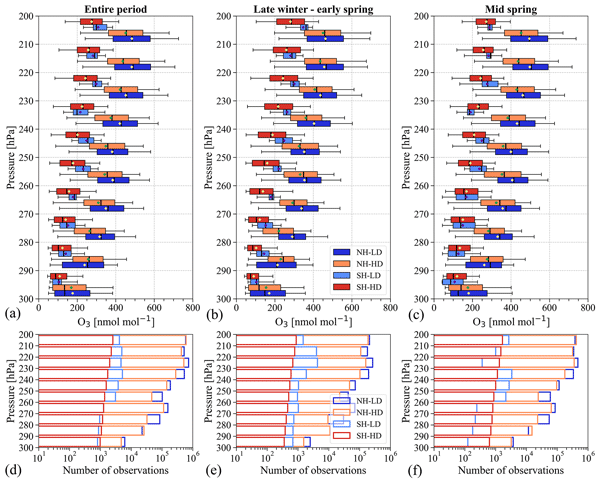
Rodrigo J. Seguel, Charlie Opazo, Yann Cohen, Owen R. Cooper, Laura Gallardo, Björn-Martin Sinnhuber, Florian Obersteiner, Andreas Zahn, Peter Hoor, Susanne Rohs, and Andreas Marsing
Atmos. Chem. Phys., 25, 8553–8573, https://doi.org/10.5194/acp-25-8553-2025, https://doi.org/10.5194/acp-25-8553-2025, 2025
Short summary
Short summary
We explored ozone differences between the Northern Hemisphere and Southern Hemispheres in the upper troposphere–lower stratosphere. We found lower ozone (with stratospheric origin) in the Southern Hemisphere, especially during years of severe ozone depletion. Sudden stratospheric warming events increased the ozone in each hemisphere, highlighting the relationship between stratospheric processes and ozone in the upper troposphere, where ozone is an important greenhouse gas.
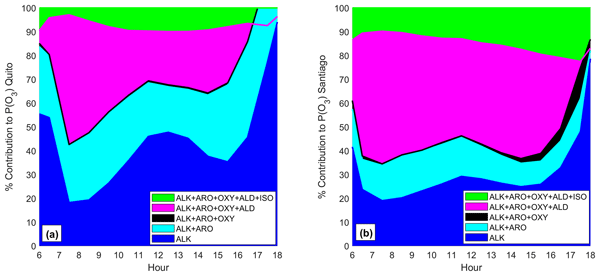
María Cazorla, Melissa Trujillo, Rodrigo Seguel, and Laura Gallardo
Atmos. Chem. Phys., 25, 7087–7109, https://doi.org/10.5194/acp-25-7087-2025, https://doi.org/10.5194/acp-25-7087-2025, 2025
Short summary
Short summary
The current climate and environmental crises impose the need to take actions in cities to curb ozone as a pollutant and a climate forcer. This endeavor is challenging in understudied regions. In this work we analyze how reducing levels of precursor chemicals would affect ozone formation in Quito, Ecuador, and Santiago, Chile.
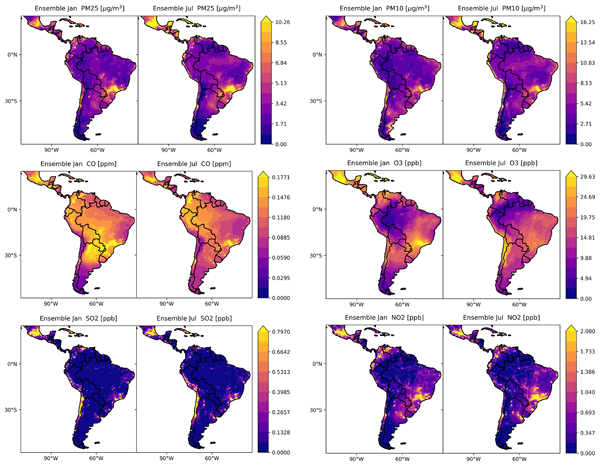
Jorge E. Pachón, Mariel A. Opazo, Pablo Lichtig, Nicolas Huneeus, Idir Bouarar, Guy Brasseur, Cathy W. Y. Li, Johannes Flemming, Laurent Menut, Camilo Menares, Laura Gallardo, Michael Gauss, Mikhail Sofiev, Rostislav Kouznetsov, Julia Palamarchuk, Andreas Uppstu, Laura Dawidowski, Nestor Y. Rojas, María de Fátima Andrade, Mario E. Gavidia-Calderón, Alejandro H. Delgado Peralta, and Daniel Schuch
Geosci. Model Dev., 17, 7467–7512, https://doi.org/10.5194/gmd-17-7467-2024, https://doi.org/10.5194/gmd-17-7467-2024, 2024
Short summary
Short summary
Latin America (LAC) has some of the most populated urban areas in the world, with high levels of air pollution. Air quality management in LAC has been traditionally focused on surveillance and building emission inventories. This study performed the first intercomparison and model evaluation in LAC, with interesting and insightful findings for the region. A multiscale modeling ensemble chain was assembled as a first step towards an air quality forecasting system.
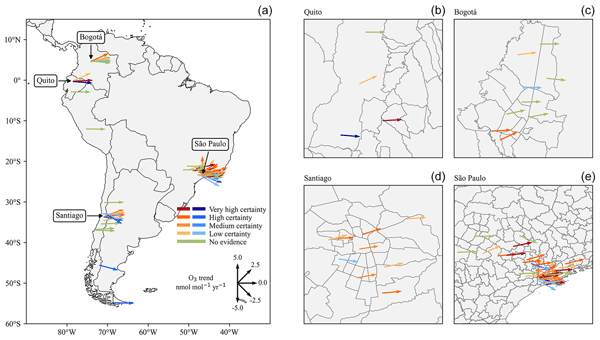
Rodrigo J. Seguel, Lucas Castillo, Charlie Opazo, Néstor Y. Rojas, Thiago Nogueira, María Cazorla, Mario Gavidia-Calderón, Laura Gallardo, René Garreaud, Tomás Carrasco-Escaff, and Yasin Elshorbany
Atmos. Chem. Phys., 24, 8225–8242, https://doi.org/10.5194/acp-24-8225-2024, https://doi.org/10.5194/acp-24-8225-2024, 2024
Short summary
Short summary
Trends of surface ozone were examined across South America. Our findings indicate that ozone trends in major South American cities either increase or remain steady, with no signs of decline. The upward trends can be attributed to chemical regimes that efficiently convert nitric oxide into nitrogen dioxide. Additionally, our results suggest a climate penalty for ozone driven by meteorological conditions that favor wildfire propagation in Chile and extensive heat waves in southern Brazil.
Rebecca M. Garland, Katye E. Altieri, Laura Dawidowski, Laura Gallardo, Aderiana Mbandi, Nestor Y. Rojas, and N'datchoh E. Touré
Atmos. Chem. Phys., 24, 5757–5764, https://doi.org/10.5194/acp-24-5757-2024, https://doi.org/10.5194/acp-24-5757-2024, 2024
Short summary
Short summary
This opinion piece focuses on two geographical areas in the Global South where the authors are based that are underrepresented in atmospheric science. This opinion provides context on common challenges and constraints, with suggestions on how the community can address these. The focus is on the strengths of atmospheric science research in these regions. It is these strengths, we believe, that highlight the critical role of Global South researchers in the future of atmospheric science research.
Nikos Daskalakis, Laura Gallardo, Maria Kanakidou, Johann Rasmus Nüß, Camilo Menares, Roberto Rondanelli, Anne M. Thompson, and Mihalis Vrekoussis
Atmos. Chem. Phys., 22, 4075–4099, https://doi.org/10.5194/acp-22-4075-2022, https://doi.org/10.5194/acp-22-4075-2022, 2022
Short summary
Short summary
Forest fires emit carbon monoxide (CO) that can be transported into the atmosphere far from the sources and reacts to produce ozone (O3) that affects climate, ecosystems and health. O3 is also produced in the stratosphere and can be transported downwards. Using a global numerical model, we found that forest fires can affect CO and O3 even in the South Pacific, the most pristine region of the global ocean, but transport from the stratosphere is a more important O3 source than fires in the region.
Mauricio Osses, Néstor Rojas, Cecilia Ibarra, Víctor Valdebenito, Ignacio Laengle, Nicolás Pantoja, Darío Osses, Kevin Basoa, Sebastián Tolvett, Nicolás Huneeus, Laura Gallardo, and Benjamín Gómez
Earth Syst. Sci. Data, 14, 1359–1376, https://doi.org/10.5194/essd-14-1359-2022, https://doi.org/10.5194/essd-14-1359-2022, 2022
Short summary
Short summary
This paper presents a detailed estimate of on-road vehicle emissions for Chile, between 1990–2020, and an analysis of emission trends for greenhouse gases and local pollutants. Data are disaggregated by type of vehicle and region at 0.01° × 0.01°. While the vehicle fleet grew 5-fold, CO2 emissions increased at a lower rate and local pollutants decreased. These trends can be explained by changes in improved vehicle technologies, better fuel quality and enforcement of emission standards.
Nikos Gialesakis, Friedemann Reum, Nikos Daskalakis, Ioanna Evangelou, Aikaterini Bougiatioti, Marios Mermigkas, Maria Gkini, Nikolaos Mihalopoulos, Dimitrios Balis, Konstantinos Eleftheriadis, Mihalis Vrekoussis, and Maria Kanakidou
EGUsphere, https://doi.org/10.5194/egusphere-2026-4307, https://doi.org/10.5194/egusphere-2026-4307, 2026
This preprint is open for discussion and under review for Atmospheric Chemistry and Physics (ACP).
Short summary
Short summary
We use ground-based CO2 measurements from urban background, regional background and high-altitude stations, together with satellite-derived column-averaged CO2 observations, in a regional atmospheric inversion modelling framework to optimize CO2 emissions over Greece. We demonstrate the capability of this framework to improve CO2 emission estimates, while noting that expanded observational coverage would be needed for strong emission constraints, especially near the major CO2 sources.
Santiago Parraguez Cerda, Johann Rasmus Nüß, Nikos Daskalakis, Arjo Segers, Oliver Schneising, Mihalis Vrekoussis, and Maria Kanakidou
EGUsphere, https://doi.org/10.5194/egusphere-2026-3458, https://doi.org/10.5194/egusphere-2026-3458, 2026
Short summary
Short summary
Our study presents a parametric method for adaptive observation weighting in global CH4 emission inversions, using the spatial and temporal distribution of satellite observations. The approach reduces grid-cell weight variability by ∼20 %, improving the balance of observational influence, especially in remote regions, without added computational cost, and easily applicable to multiple datasets. Global 2019 inversions with TMVar yield consistent posterior emissions and good agreement with TCCON.
Deniz Bozkurt, Charlie Opazo, Julio C. Marín, Kyle R. Clem, Benjamin Pohl, Victoire Buffet, Vincent Favier, Tomás Carrasco-Escaff, and Bradford S. Barrett
Earth Syst. Sci. Data, 18, 5399–5422, https://doi.org/10.5194/essd-18-5399-2026, https://doi.org/10.5194/essd-18-5399-2026, 2026
Short summary
Short summary
Atmospheric blocking near Antarctica drives long lasting circulation anomalies and extreme events, yet it remains poorly understood. We created a new public dataset for 1979 to 2024 using global reanalysis data and several detection methods applied in a consistent way. We found strong method dependent differences in how often, where, and how long blocking occurs, showing that no single approach captures all forms of Antarctic blocking.
Martin Vojta, Rakesh Subramanian, Nikos Gialesakis, Rona L. Thompson, Andreas Stohl, and Maria Kanakidou
EGUsphere, https://doi.org/10.5194/egusphere-2026-3792, https://doi.org/10.5194/egusphere-2026-3792, 2026
Short summary
Short summary
We estimate methane emissions in the Eastern Mediterranean and Middle East for 2020 using TROPOMI satellite observations and inverse modeling. We find robust downward corrections of emissions around the Persian Gulf compared to the EDGAR v8.0 inventory, broadly consistent with the recent EDGAR_2025_GHG update, highlighting how observation-based estimates and inventory refinements can jointly improve our understanding of regional methane emissions.
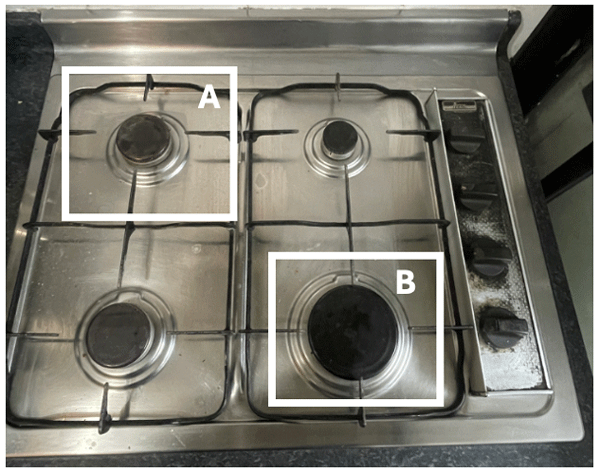
Ricardo Morales-Betancourt, Cristóbal J. Galbán-Malagón, Thalia Montejo-Barato, Estela Blanco, Paula Tapia-Pino, Rosario Vargas, Cynthia Cordova, Colin Finnegan, Abenezer Shankute, Nicolas Huneeus, J. Sebastian Hernandez-Suarez, Paola Valencia, Marcelo Mena-Carrasco, and Robert B. Jackson
Atmos. Chem. Phys., 26, 8355–8365, https://doi.org/10.5194/acp-26-8355-2026, https://doi.org/10.5194/acp-26-8355-2026, 2026
Short summary
Short summary
We measured measured CH₄, CO₂, CO, and NOx emissions from household gas stoves in Chile and Colombia. We found that emissions are much higher than official estimates, mainly due to small leaks and ignition. These hidden emissions contribute to climate change and air pollution. Our work shows the need for better measurement, reporting, and appliance standards to reduce environmental impacts from everyday cooking.
Nikos Kalivitis, Spyridon-Emmanouil Markoulakis, Panayiotis Kalkavouras, Veli-Matti Kerminen, Markku T. Kulmala, and Maria Kanakidou
Aerosol Research Discuss., https://doi.org/10.5194/ar-2026-16, https://doi.org/10.5194/ar-2026-16, 2026
Preprint under review for AR
Short summary
Short summary
Atmospheric new particle formation (NPF) is crucial for aerosol number concentration. Recent methodologies propose that “quiet” NPF (QNPF) events, which are not traditionally classified as NPF, can contribute significantly to aerosol number. This study presents three-years of observations of ion and particle size distributions at the Finokalia station in Eastern Mediterranean. It shows that QNPF events are frequent providing fundamentally new understanding of NPF processes in the region.
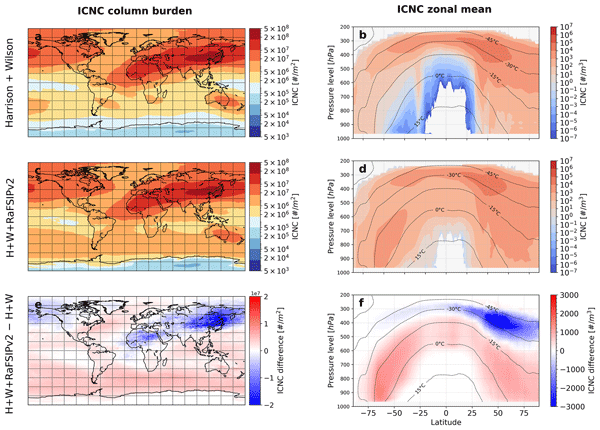
Montserrat Costa-Surós, María Gonçalves Ageitos, Marios Chatziparaschos, Paraskevi Georgakaki, Manu Anna Thomas, Gilbert Montané Pinto, Stelios Myriokefalitakis, Twan van Noije, Philippe Le Sager, Maria Kanakidou, Athanasios Nenes, and Carlos Pérez García-Pando
Atmos. Chem. Phys., 26, 2667–2690, https://doi.org/10.5194/acp-26-2667-2026, https://doi.org/10.5194/acp-26-2667-2026, 2026
Short summary
Short summary
Mixed-phase clouds play a key role in Earth’s climate but remain poorly represented in climate models. We improved their representation in the EC-Earth model by introducing an aerosol-sensitive scheme for ice formation and a machine-learning approach for secondary ice production. These advances produce more realistic cloud properties and radiative effects, highlighting that both processes are essential for reliable climate projections.
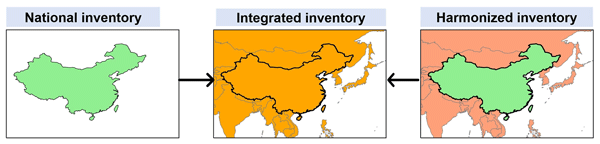
Yijuan Zhang, Guy Brasseur, Maria Kanakidou, Claire Granier, Nikos Daskalakis, Alexandros Panagiotis Poulidis, Kun Qu, and Mihalis Vrekoussis
Geosci. Model Dev., 19, 217–237, https://doi.org/10.5194/gmd-19-217-2026, https://doi.org/10.5194/gmd-19-217-2026, 2026
Short summary
Short summary
A new inventory of anthropogenic emissions, the China INtegrated Emission Inventory (CINEI), was developed in this study to better represent emission sectors, chemical speciation and spatiotemporal variations in China. Compared to simulations driven by global inventories, CINEI demonstrated better numerical modeling performance in ozone and its precursors (nitrogen dioxide and carbon monoxide). This study provides valuable insights for designing ozone mitigation strategies.
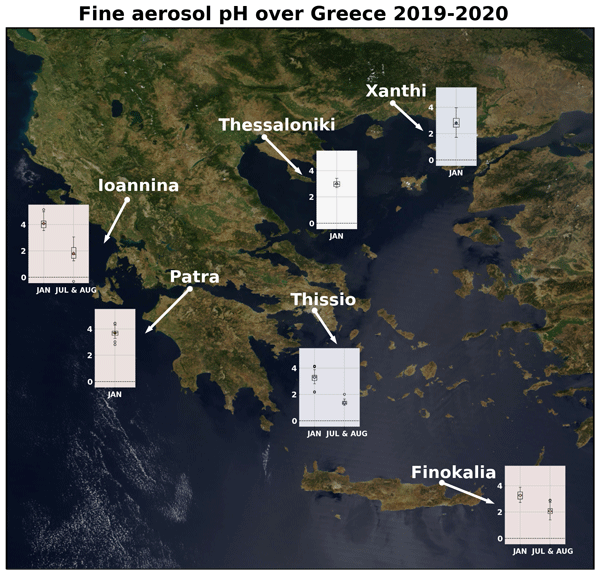
Anna Maria Neroladaki, Maria Tsagkaraki, Kyriaki Papoutsidaki, Kalliopi Tavernaraki, Filothei Boufidou, Pavlos Zarmpas, Irini Tsiodra, Eleni Liakakou, Aikaterini Bougiatioti, Giorgos Kouvarakis, Nikos Kalivitis, Christos Kaltsonoudis, Athanasios Karagioras, Dimitrios Balis, Konstantinos Michailidis, Konstantinos Kourtidis, Stelios Myriokefalitakis, Nikos Hatzianastassiou, Spyros N. Pandis, Athanasios Nenes, Nikolaos Mihalopoulos, and Maria Kanakidou
Atmos. Chem. Phys., 25, 17953–17971, https://doi.org/10.5194/acp-25-17953-2025, https://doi.org/10.5194/acp-25-17953-2025, 2025
Short summary
Short summary
Aerosol acidity affects aerosol composition and properties, and therefore climate, human health and ecosystems. We use summer and winter fine aerosol observations at 6 sites across Greece, and a thermodynamic model to calculate the spatial and seasonal variability of aerosol acidity. Aerosols were acidic to moderately acidic and more acidic during summer than winter. The importance of organics for aerosol acidity was small. Depending on location different factors controlled aerosol acidity.
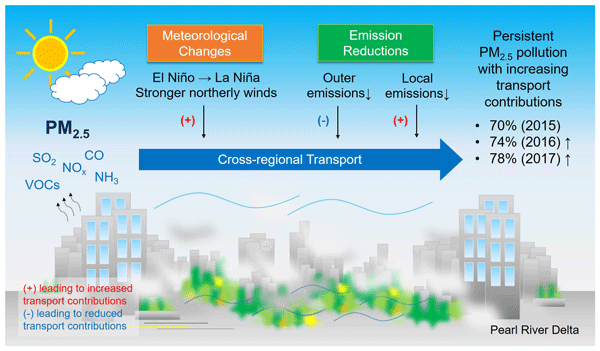
Kun Qu, Xuesong Wang, Yu Yan, Xipeng Jin, Ling-Yan He, Xiao-Feng Huang, Xuhui Cai, Jin Shen, Zimu Peng, Teng Xiao, Mihalis Vrekoussis, Maria Kanakidou, Guy P. Brasseur, Nikos Daskalakis, Limin Zeng, and Yuanhang Zhang
Atmos. Chem. Phys., 25, 16983–17007, https://doi.org/10.5194/acp-25-16983-2025, https://doi.org/10.5194/acp-25-16983-2025, 2025
Short summary
Short summary
Persistent cold-season PM2.5 pollution in a South China region during 2015–2017 was studied to assess the roles of drastic meteorological and emission changes. We found that meteorological variations, induced by a transition from El Niño to La Niña, were the main cause of persistent pollution, as stronger northerly winds enhanced pollutant transport into the region. In contrast, the effect of rapid emission reductions was limited. Recommendations for air quality improvement were also proposed.
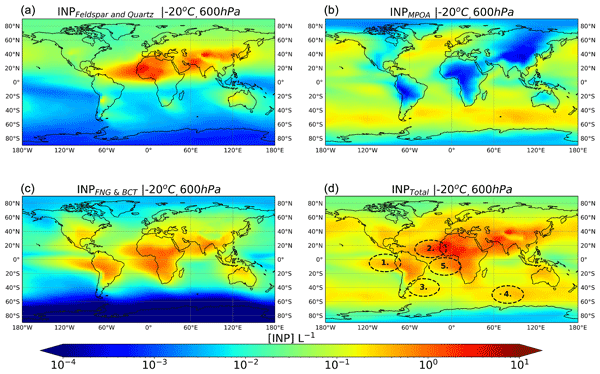
Marios Chatziparaschos, Stelios Myriokefalitakis, Nikos Kalivitis, Nikos Daskalakis, Athanasios Nenes, María Gonçalves Ageitos, Montserrat Costa-Surós, Carlos Pérez García-Pando, Mihalis Vrekoussis, and Maria Kanakidou
Atmos. Chem. Phys., 25, 9085–9111, https://doi.org/10.5194/acp-25-9085-2025, https://doi.org/10.5194/acp-25-9085-2025, 2025
Short summary
Short summary
We show distinct seasonal and geographical patterns in the contributions of mineral dust, marine aerosol, and terrestrial biological particles to ice-nucleating particle (INP) concentrations that lead to atmospheric ice formation, a major source of uncertainty in climate projections. Bioaerosols are the major source of INPs at high temperatures, while mineral dust influences the global INP population at lower temperatures. These particles can satisfactorily reproduce INPs in a climate model.
Rodrigo J. Seguel, Charlie Opazo, Yann Cohen, Owen R. Cooper, Laura Gallardo, Björn-Martin Sinnhuber, Florian Obersteiner, Andreas Zahn, Peter Hoor, Susanne Rohs, and Andreas Marsing
Atmos. Chem. Phys., 25, 8553–8573, https://doi.org/10.5194/acp-25-8553-2025, https://doi.org/10.5194/acp-25-8553-2025, 2025
Short summary
Short summary
We explored ozone differences between the Northern Hemisphere and Southern Hemispheres in the upper troposphere–lower stratosphere. We found lower ozone (with stratospheric origin) in the Southern Hemisphere, especially during years of severe ozone depletion. Sudden stratospheric warming events increased the ozone in each hemisphere, highlighting the relationship between stratospheric processes and ozone in the upper troposphere, where ozone is an important greenhouse gas.
María Cazorla, Melissa Trujillo, Rodrigo Seguel, and Laura Gallardo
Atmos. Chem. Phys., 25, 7087–7109, https://doi.org/10.5194/acp-25-7087-2025, https://doi.org/10.5194/acp-25-7087-2025, 2025
Short summary
Short summary
The current climate and environmental crises impose the need to take actions in cities to curb ozone as a pollutant and a climate forcer. This endeavor is challenging in understudied regions. In this work we analyze how reducing levels of precursor chemicals would affect ozone formation in Quito, Ecuador, and Santiago, Chile.

Johann Rasmus Nüß, Nikos Daskalakis, Fabian Günther Piwowarczyk, Angelos Gkouvousis, Oliver Schneising, Michael Buchwitz, Maria Kanakidou, Maarten C. Krol, and Mihalis Vrekoussis
Geosci. Model Dev., 18, 2861–2890, https://doi.org/10.5194/gmd-18-2861-2025, https://doi.org/10.5194/gmd-18-2861-2025, 2025
Short summary
Short summary
We estimate carbon monoxide emissions through inverse modeling, an approach where measurements of tracers in the atmosphere are fed to a model to calculate backwards in time (inverse) where the tracers came from. We introduce measurements from a new satellite instrument and show that, in most places globally, these on their own sufficiently constrain the emissions. This alleviates the need for additional datasets, which could shorten the delay for future carbon monoxide source estimates.
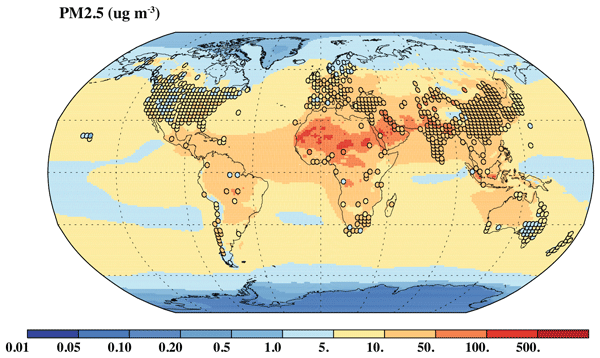
Natalie M. Mahowald, Longlei Li, Julius Vira, Marje Prank, Douglas S. Hamilton, Hitoshi Matsui, Ron L. Miller, P. Louis Lu, Ezgi Akyuz, Daphne Meidan, Peter Hess, Heikki Lihavainen, Christine Wiedinmyer, Jenny Hand, Maria Grazia Alaimo, Célia Alves, Andres Alastuey, Paulo Artaxo, Africa Barreto, Francisco Barraza, Silvia Becagli, Giulia Calzolai, Shankararaman Chellam, Ying Chen, Patrick Chuang, David D. Cohen, Cristina Colombi, Evangelia Diapouli, Gaetano Dongarra, Konstantinos Eleftheriadis, Johann Engelbrecht, Corinne Galy-Lacaux, Cassandra Gaston, Dario Gomez, Yenny González Ramos, Roy M. Harrison, Chris Heyes, Barak Herut, Philip Hopke, Christoph Hüglin, Maria Kanakidou, Zsofia Kertesz, Zbigniew Klimont, Katriina Kyllönen, Fabrice Lambert, Xiaohong Liu, Remi Losno, Franco Lucarelli, Willy Maenhaut, Beatrice Marticorena, Randall V. Martin, Nikolaos Mihalopoulos, Yasser Morera-Gómez, Adina Paytan, Joseph Prospero, Sergio Rodríguez, Patricia Smichowski, Daniela Varrica, Brenna Walsh, Crystal L. Weagle, and Xi Zhao
Atmos. Chem. Phys., 25, 4665–4702, https://doi.org/10.5194/acp-25-4665-2025, https://doi.org/10.5194/acp-25-4665-2025, 2025
Short summary
Short summary
Aerosol particles are an important part of the Earth system, but their concentrations are spatially and temporally heterogeneous, as well as being variable in size and composition. Here, we present a new compilation of PM2.5 and PM10 aerosol observations, focusing on the spatial variability across different observational stations, including composition, and demonstrate a method for comparing the data sets to model output.
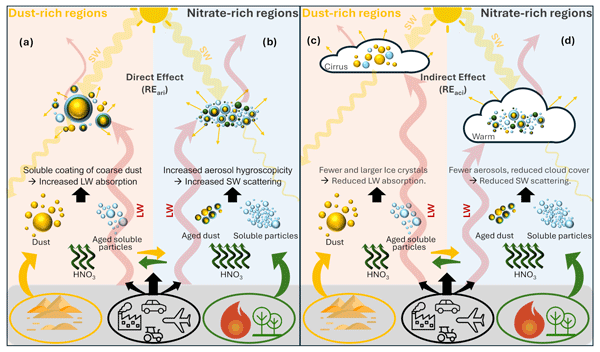
Alexandros Milousis, Klaus Klingmüller, Alexandra P. Tsimpidi, Jasper F. Kok, Maria Kanakidou, Athanasios Nenes, and Vlassis A. Karydis
Atmos. Chem. Phys., 25, 1333–1351, https://doi.org/10.5194/acp-25-1333-2025, https://doi.org/10.5194/acp-25-1333-2025, 2025
Short summary
Short summary
This study investigates the impact of dust on the global radiative effect of nitrate aerosols. The results indicate both positive and negative regional shortwave and longwave radiative effects due to aerosol–radiation interactions and cloud adjustments. The global average net REari and REaci of nitrate aerosols are −0.11 and +0.17 W m−2, respectively, mainly affecting the shortwave spectrum. Sensitivity simulations evaluated the influence of mineral dust composition and emissions on the results.
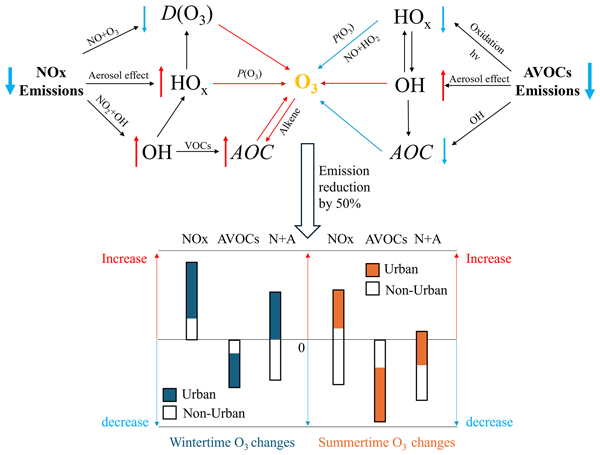
Jianing Dai, Guy P. Brasseur, Mihalis Vrekoussis, Maria Kanakidou, Kun Qu, Yijuan Zhang, Hongliang Zhang, and Tao Wang
Atmos. Chem. Phys., 24, 12943–12962, https://doi.org/10.5194/acp-24-12943-2024, https://doi.org/10.5194/acp-24-12943-2024, 2024
Short summary
Short summary
This paper employs a regional chemical transport model to quantify the sensitivity of air pollutants and photochemical parameters to specified emission reductions in China for representative winter and summer conditions. The study provides insights into further air quality control in China with reduced primary emissions.
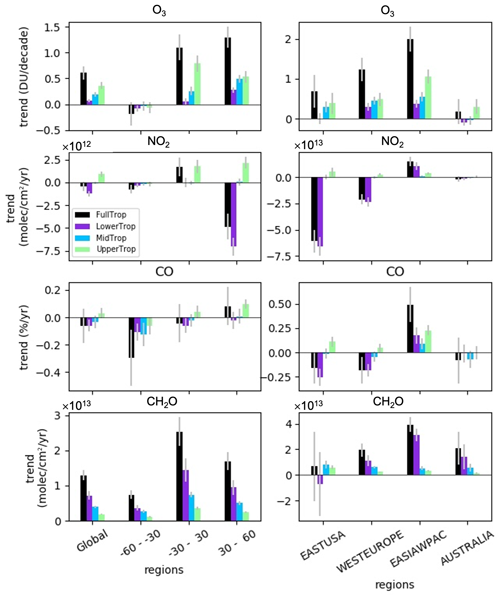
Yasin Elshorbany, Jerald R. Ziemke, Sarah Strode, Hervé Petetin, Kazuyuki Miyazaki, Isabelle De Smedt, Kenneth Pickering, Rodrigo J. Seguel, Helen Worden, Tamara Emmerichs, Domenico Taraborrelli, Maria Cazorla, Suvarna Fadnavis, Rebecca R. Buchholz, Benjamin Gaubert, Néstor Y. Rojas, Thiago Nogueira, Thérèse Salameh, and Min Huang
Atmos. Chem. Phys., 24, 12225–12257, https://doi.org/10.5194/acp-24-12225-2024, https://doi.org/10.5194/acp-24-12225-2024, 2024
Short summary
Short summary
We investigated tropospheric ozone spatial variability and trends from 2005 to 2019 and related those to ozone precursors on global and regional scales. We also investigate the spatiotemporal characteristics of the ozone formation regime in relation to ozone chemical sources and sinks. Our analysis is based on remote sensing products of the tropospheric column of ozone and its precursors, nitrogen dioxide, formaldehyde, and total column CO, as well as ozonesonde data and model simulations.
Jorge E. Pachón, Mariel A. Opazo, Pablo Lichtig, Nicolas Huneeus, Idir Bouarar, Guy Brasseur, Cathy W. Y. Li, Johannes Flemming, Laurent Menut, Camilo Menares, Laura Gallardo, Michael Gauss, Mikhail Sofiev, Rostislav Kouznetsov, Julia Palamarchuk, Andreas Uppstu, Laura Dawidowski, Nestor Y. Rojas, María de Fátima Andrade, Mario E. Gavidia-Calderón, Alejandro H. Delgado Peralta, and Daniel Schuch
Geosci. Model Dev., 17, 7467–7512, https://doi.org/10.5194/gmd-17-7467-2024, https://doi.org/10.5194/gmd-17-7467-2024, 2024
Short summary
Short summary
Latin America (LAC) has some of the most populated urban areas in the world, with high levels of air pollution. Air quality management in LAC has been traditionally focused on surveillance and building emission inventories. This study performed the first intercomparison and model evaluation in LAC, with interesting and insightful findings for the region. A multiscale modeling ensemble chain was assembled as a first step towards an air quality forecasting system.
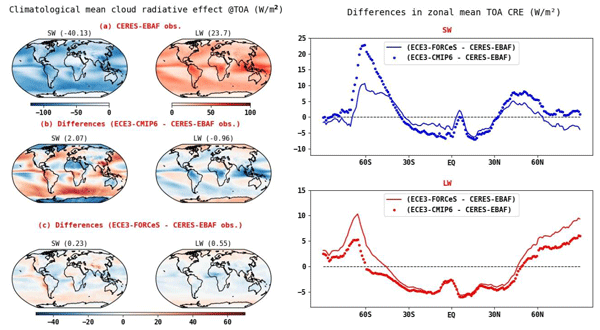
Manu Anna Thomas, Klaus Wyser, Shiyu Wang, Marios Chatziparaschos, Paraskevi Georgakaki, Montserrat Costa-Surós, Maria Gonçalves Ageitos, Maria Kanakidou, Carlos Pérez García-Pando, Athanasios Nenes, Twan van Noije, Philippe Le Sager, and Abhay Devasthale
Geosci. Model Dev., 17, 6903–6927, https://doi.org/10.5194/gmd-17-6903-2024, https://doi.org/10.5194/gmd-17-6903-2024, 2024
Short summary
Short summary
Aerosol–cloud interactions occur at a range of spatio-temporal scales. While evaluating recent developments in EC-Earth3-AerChem, this study aims to understand the extent to which the Twomey effect manifests itself at larger scales. We find a reduction in the warm bias over the Southern Ocean due to model improvements. While we see footprints of the Twomey effect at larger scales, the negative relationship between cloud droplet number and liquid water drives the shortwave radiative effect.
Rodrigo J. Seguel, Lucas Castillo, Charlie Opazo, Néstor Y. Rojas, Thiago Nogueira, María Cazorla, Mario Gavidia-Calderón, Laura Gallardo, René Garreaud, Tomás Carrasco-Escaff, and Yasin Elshorbany
Atmos. Chem. Phys., 24, 8225–8242, https://doi.org/10.5194/acp-24-8225-2024, https://doi.org/10.5194/acp-24-8225-2024, 2024
Short summary
Short summary
Trends of surface ozone were examined across South America. Our findings indicate that ozone trends in major South American cities either increase or remain steady, with no signs of decline. The upward trends can be attributed to chemical regimes that efficiently convert nitric oxide into nitrogen dioxide. Additionally, our results suggest a climate penalty for ozone driven by meteorological conditions that favor wildfire propagation in Chile and extensive heat waves in southern Brazil.
Rebecca M. Garland, Katye E. Altieri, Laura Dawidowski, Laura Gallardo, Aderiana Mbandi, Nestor Y. Rojas, and N'datchoh E. Touré
Atmos. Chem. Phys., 24, 5757–5764, https://doi.org/10.5194/acp-24-5757-2024, https://doi.org/10.5194/acp-24-5757-2024, 2024
Short summary
Short summary
This opinion piece focuses on two geographical areas in the Global South where the authors are based that are underrepresented in atmospheric science. This opinion provides context on common challenges and constraints, with suggestions on how the community can address these. The focus is on the strengths of atmospheric science research in these regions. It is these strengths, we believe, that highlight the critical role of Global South researchers in the future of atmospheric science research.
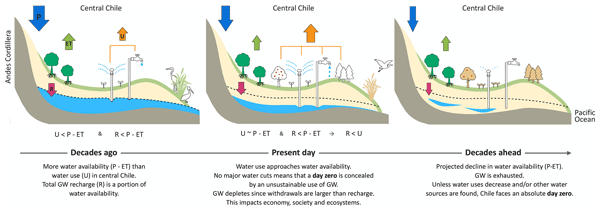
Camila Alvarez-Garreton, Juan Pablo Boisier, René Garreaud, Javier González, Roberto Rondanelli, Eugenia Gayó, and Mauricio Zambrano-Bigiarini
Hydrol. Earth Syst. Sci., 28, 1605–1616, https://doi.org/10.5194/hess-28-1605-2024, https://doi.org/10.5194/hess-28-1605-2024, 2024
Short summary
Short summary
This opinion paper reflects on the risks of overusing groundwater savings to supply permanent water use requirements. Using novel data recently developed for Chile, we reveal how groundwater is being overused, causing ecological and socioeconomic impacts and concealing a Day Zero
scenario. Our argument underscores the need for reformed water allocation rules and sustainable management, shifting from a perception of groundwater as an unlimited source to a finite and vital one.
Natalie M. Mahowald, Longlei Li, Julius Vira, Marje Prank, Douglas S. Hamilton, Hitoshi Matsui, Ron L. Miller, Louis Lu, Ezgi Akyuz, Daphne Meidan, Peter Hess, Heikki Lihavainen, Christine Wiedinmyer, Jenny Hand, Maria Grazia Alaimo, Célia Alves, Andres Alastuey, Paulo Artaxo, Africa Barreto, Francisco Barraza, Silvia Becagli, Giulia Calzolai, Shankarararman Chellam, Ying Chen, Patrick Chuang, David D. Cohen, Cristina Colombi, Evangelia Diapouli, Gaetano Dongarra, Konstantinos Eleftheriadis, Corinne Galy-Lacaux, Cassandra Gaston, Dario Gomez, Yenny González Ramos, Hannele Hakola, Roy M. Harrison, Chris Heyes, Barak Herut, Philip Hopke, Christoph Hüglin, Maria Kanakidou, Zsofia Kertesz, Zbiginiw Klimont, Katriina Kyllönen, Fabrice Lambert, Xiaohong Liu, Remi Losno, Franco Lucarelli, Willy Maenhaut, Beatrice Marticorena, Randall V. Martin, Nikolaos Mihalopoulos, Yasser Morera-Gomez, Adina Paytan, Joseph Prospero, Sergio Rodríguez, Patricia Smichowski, Daniela Varrica, Brenna Walsh, Crystal Weagle, and Xi Zhao
Earth Syst. Sci. Data Discuss., https://doi.org/10.5194/essd-2024-1, https://doi.org/10.5194/essd-2024-1, 2024
Preprint withdrawn
Short summary
Short summary
Aerosol particles can interact with incoming solar radiation and outgoing long wave radiation, change cloud properties, affect photochemistry, impact surface air quality, and when deposited impact surface albedo of snow and ice, and modulate carbon dioxide uptake by the land and ocean. Here we present a new compilation of aerosol observations including composition, a methodology for comparing the datasets to model output, and show the implications of these results using one model.
Ruben Urraca, Greet Janssens-Maenhout, Nicolás Álamos, Lucas Berna-Peña, Monica Crippa, Sabine Darras, Stijn Dellaert, Hugo Denier van der Gon, Mark Dowell, Nadine Gobron, Claire Granier, Giacomo Grassi, Marc Guevara, Diego Guizzardi, Kevin Gurney, Nicolás Huneeus, Sekou Keita, Jeroen Kuenen, Ana Lopez-Noreña, Enrique Puliafito, Geoffrey Roest, Simone Rossi, Antonin Soulie, and Antoon Visschedijk
Earth Syst. Sci. Data, 16, 501–523, https://doi.org/10.5194/essd-16-501-2024, https://doi.org/10.5194/essd-16-501-2024, 2024
Short summary
Short summary
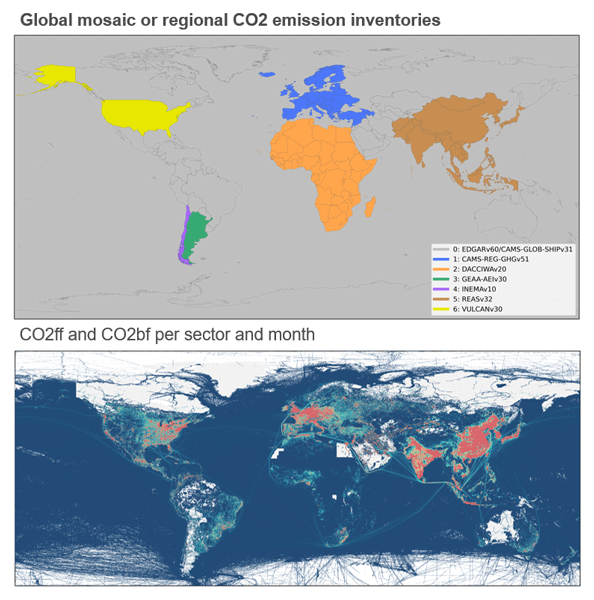
CoCO2-MOSAIC 1.0 is a global mosaic of regional bottom-up inventories providing gridded (0.1×0.1) monthly emissions of anthropogenic CO2. Regional inventories include country-specific information and finer spatial resolution than global inventories. CoCO2-MOSAIC provides harmonized access to these datasets and can be considered as a regionally accepted reference to assess the quality of global inventories, as done in the current paper.
Emma Nilsson, Carmen Paulina Vega, Dmitry Divine, Anja Eichler, Tonu Martma, Robert Mulvaney, Elisabeth Schlosser, Margit Schwikowski, and Elisabeth Isaksson
EGUsphere, https://doi.org/10.5194/egusphere-2023-3156, https://doi.org/10.5194/egusphere-2023-3156, 2024
Preprint withdrawn
Short summary
Short summary
To project future climate change it is necessary to understand paleoclimate including past sea ice conditions. We have investigated methane sulphonic acid (MSA) in Antarctic firn and ice cores to reconstruct sea ice extent (SIE) and found that the MSA – SIE as well as the MSA – phytoplankton biomass relationship varies across the different firn and ice cores. These inconsistencies in correlations across records suggest that MSA in Fimbul Ice Shelf cores does not reliably indicate regional SIE.
Jianing Dai, Guy P. Brasseur, Mihalis Vrekoussis, Maria Kanakidou, Kun Qu, Yijuan Zhang, Hongliang Zhang, and Tao Wang
Atmos. Chem. Phys., 23, 14127–14158, https://doi.org/10.5194/acp-23-14127-2023, https://doi.org/10.5194/acp-23-14127-2023, 2023
Short summary
Short summary
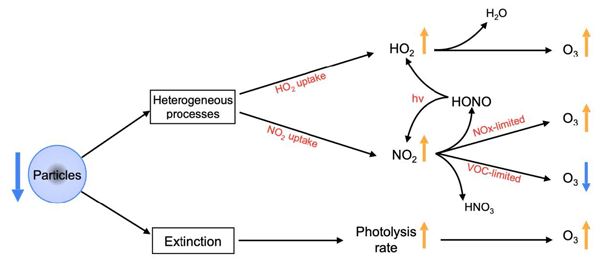
In this study, we used a regional chemical transport model to characterize the different parameters of atmospheric oxidative capacity in recent chemical environments in China. These parameters include the production and destruction rates of ozone and other oxidants, the ozone production efficiency, the OH reactivity, and the length of the reaction chain responsible for the formation of ozone and ROx. They are also affected by the aerosol burden in the atmosphere.
Thais Luarte, Victoria A. Gómez-Aburto, Ignacio Poblete-Castro, Eduardo Castro-Nallar, Nicolas Huneeus, Marco Molina-Montenegro, Claudia Egas, Germán Azcune, Andrés Pérez-Parada, Rainier Lohmann, Pernilla Bohlin-Nizzetto, Jordi Dachs, Susan Bengtson-Nash, Gustavo Chiang, Karla Pozo, and Cristóbal J. Galbán-Malagón
Atmos. Chem. Phys., 23, 8103–8118, https://doi.org/10.5194/acp-23-8103-2023, https://doi.org/10.5194/acp-23-8103-2023, 2023
Short summary
Short summary
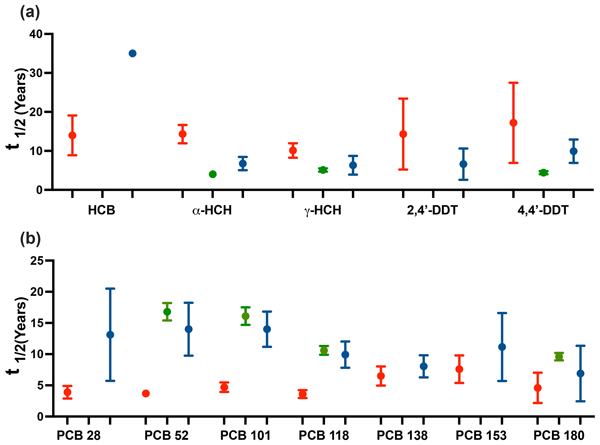
In the last 40 years, different research groups have reported on the atmospheric concentrations of persistent organic pollutants in Antarctica. In the present work, we make a compilation to understand the historical trends and estimate the atmospheric half-life of each compound. Of the compounds studied, HCB was the only one that showed no clear trend, while the rest of the studied compounds showed a significant decrease over time. This is consistent with results for polar and sub-polar zones.
Kun Qu, Xuesong Wang, Xuhui Cai, Yu Yan, Xipeng Jin, Mihalis Vrekoussis, Maria Kanakidou, Guy P. Brasseur, Jin Shen, Teng Xiao, Limin Zeng, and Yuanhang Zhang
Atmos. Chem. Phys., 23, 7653–7671, https://doi.org/10.5194/acp-23-7653-2023, https://doi.org/10.5194/acp-23-7653-2023, 2023
Short summary
Short summary
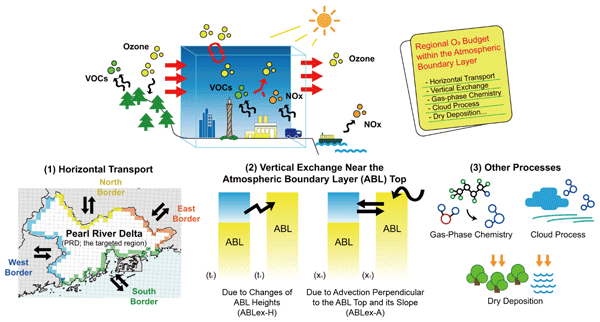
Basic understandings of ozone processes, especially transport and chemistry, are essential to support ozone pollution control, but studies often have different views on their relative importance. We developed a method to quantify their contributions in the ozone mass and concentration budgets based on the WRF-CMAQ model. Results in a polluted region highlight the differences between two budgets. For future studies, two budgets are both needed to fully understand the effects of ozone processes.
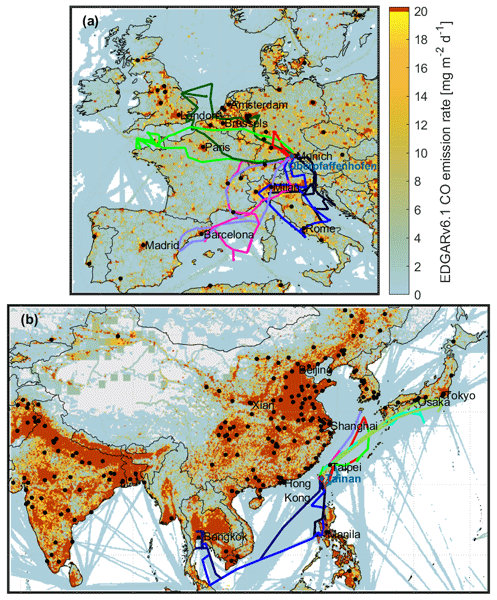
Eric Förster, Harald Bönisch, Marco Neumaier, Florian Obersteiner, Andreas Zahn, Andreas Hilboll, Anna B. Kalisz Hedegaard, Nikos Daskalakis, Alexandros Panagiotis Poulidis, Mihalis Vrekoussis, Michael Lichtenstern, and Peter Braesicke
Atmos. Chem. Phys., 23, 1893–1918, https://doi.org/10.5194/acp-23-1893-2023, https://doi.org/10.5194/acp-23-1893-2023, 2023
Short summary
Short summary
The airborne megacity campaign EMeRGe provided an unprecedented amount of trace gas measurements. We combine measured volatile organic compounds (VOCs) with trajectory-modelled emission uptakes to identify potential source regions of pollution. We also characterise the chemical fingerprints (e.g. biomass burning and anthropogenic signatures) of the probed air masses to corroborate the contributing source regions. Our approach is the first large-scale study of VOCs originating from megacities.
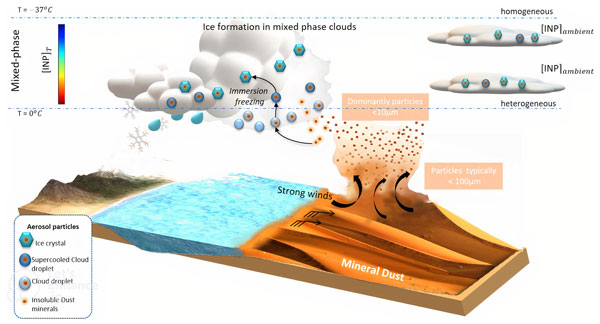
Marios Chatziparaschos, Nikos Daskalakis, Stelios Myriokefalitakis, Nikos Kalivitis, Athanasios Nenes, María Gonçalves Ageitos, Montserrat Costa-Surós, Carlos Pérez García-Pando, Medea Zanoli, Mihalis Vrekoussis, and Maria Kanakidou
Atmos. Chem. Phys., 23, 1785–1801, https://doi.org/10.5194/acp-23-1785-2023, https://doi.org/10.5194/acp-23-1785-2023, 2023
Short summary
Short summary
Ice formation is enabled by ice-nucleating particles (INP) at higher temperatures than homogeneous formation and can profoundly affect the properties of clouds. Our global model results show that K-feldspar is the most important contributor to INP concentrations globally, affecting mid-level mixed-phase clouds. However, quartz can significantly contribute and dominates the lowest and the highest altitudes of dust-derived INP, affecting mainly low-level and high-level mixed-phase clouds.

Rémy Lapere, Nicolás Huneeus, Sylvain Mailler, Laurent Menut, and Florian Couvidat
Atmos. Chem. Phys., 23, 1749–1768, https://doi.org/10.5194/acp-23-1749-2023, https://doi.org/10.5194/acp-23-1749-2023, 2023
Short summary
Short summary
Glaciers in the Andes of central Chile are shrinking rapidly in response to global warming. This melting is accelerated by the deposition of opaque particles onto snow and ice. In this work, model simulations quantify typical deposition rates of soot on glaciers in summer and winter months and show that the contribution of emissions from Santiago is not as high as anticipated. Additionally, the combination of regional- and local-scale meteorology explains the seasonality in deposition.
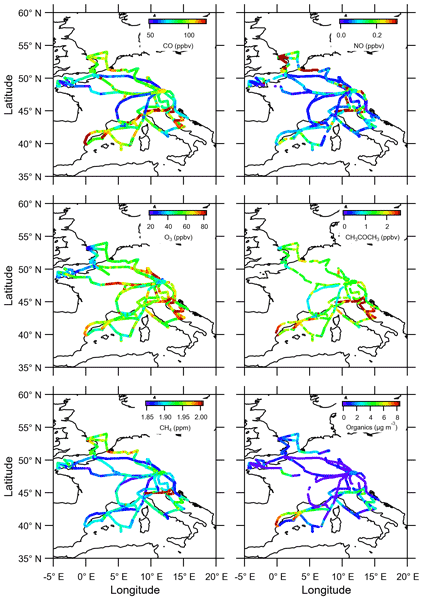
M. Dolores Andrés Hernández, Andreas Hilboll, Helmut Ziereis, Eric Förster, Ovid O. Krüger, Katharina Kaiser, Johannes Schneider, Francesca Barnaba, Mihalis Vrekoussis, Jörg Schmidt, Heidi Huntrieser, Anne-Marlene Blechschmidt, Midhun George, Vladyslav Nenakhov, Theresa Harlass, Bruna A. Holanda, Jennifer Wolf, Lisa Eirenschmalz, Marc Krebsbach, Mira L. Pöhlker, Anna B. Kalisz Hedegaard, Linlu Mei, Klaus Pfeilsticker, Yangzhuoran Liu, Ralf Koppmann, Hans Schlager, Birger Bohn, Ulrich Schumann, Andreas Richter, Benjamin Schreiner, Daniel Sauer, Robert Baumann, Mariano Mertens, Patrick Jöckel, Markus Kilian, Greta Stratmann, Christopher Pöhlker, Monica Campanelli, Marco Pandolfi, Michael Sicard, José L. Gómez-Amo, Manuel Pujadas, Katja Bigge, Flora Kluge, Anja Schwarz, Nikos Daskalakis, David Walter, Andreas Zahn, Ulrich Pöschl, Harald Bönisch, Stephan Borrmann, Ulrich Platt, and John P. Burrows
Atmos. Chem. Phys., 22, 5877–5924, https://doi.org/10.5194/acp-22-5877-2022, https://doi.org/10.5194/acp-22-5877-2022, 2022
Short summary
Short summary
EMeRGe provides a unique set of in situ and remote sensing airborne measurements of trace gases and aerosol particles along selected flight routes in the lower troposphere over Europe. The interpretation uses also complementary collocated ground-based and satellite measurements. The collected data help to improve the current understanding of the complex spatial distribution of trace gases and aerosol particles resulting from mixing, transport, and transformation of pollution plumes over Europe.
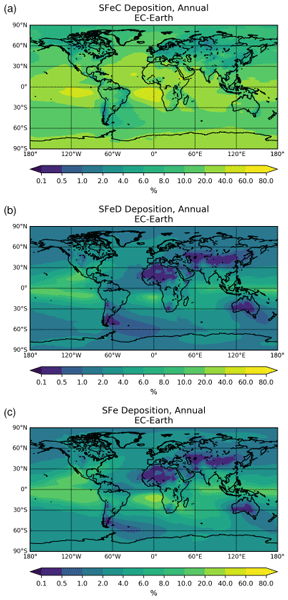
Stelios Myriokefalitakis, Elisa Bergas-Massó, María Gonçalves-Ageitos, Carlos Pérez García-Pando, Twan van Noije, Philippe Le Sager, Akinori Ito, Eleni Athanasopoulou, Athanasios Nenes, Maria Kanakidou, Maarten C. Krol, and Evangelos Gerasopoulos
Geosci. Model Dev., 15, 3079–3120, https://doi.org/10.5194/gmd-15-3079-2022, https://doi.org/10.5194/gmd-15-3079-2022, 2022
Short summary
Short summary
We here describe the implementation of atmospheric multiphase processes in the EC-Earth Earth system model. We provide global budgets of oxalate, sulfate, and iron-containing aerosols, along with an analysis of the links among atmospheric composition, aqueous-phase processes, and aerosol dissolution, supported by comparison to observations. This work is a first step towards an interactive calculation of the deposition of bioavailable atmospheric iron coupled to the model’s ocean component.
Nikos Daskalakis, Laura Gallardo, Maria Kanakidou, Johann Rasmus Nüß, Camilo Menares, Roberto Rondanelli, Anne M. Thompson, and Mihalis Vrekoussis
Atmos. Chem. Phys., 22, 4075–4099, https://doi.org/10.5194/acp-22-4075-2022, https://doi.org/10.5194/acp-22-4075-2022, 2022
Short summary
Short summary
Forest fires emit carbon monoxide (CO) that can be transported into the atmosphere far from the sources and reacts to produce ozone (O3) that affects climate, ecosystems and health. O3 is also produced in the stratosphere and can be transported downwards. Using a global numerical model, we found that forest fires can affect CO and O3 even in the South Pacific, the most pristine region of the global ocean, but transport from the stratosphere is a more important O3 source than fires in the region.
Mauricio Osses, Néstor Rojas, Cecilia Ibarra, Víctor Valdebenito, Ignacio Laengle, Nicolás Pantoja, Darío Osses, Kevin Basoa, Sebastián Tolvett, Nicolás Huneeus, Laura Gallardo, and Benjamín Gómez
Earth Syst. Sci. Data, 14, 1359–1376, https://doi.org/10.5194/essd-14-1359-2022, https://doi.org/10.5194/essd-14-1359-2022, 2022
Short summary
Short summary
This paper presents a detailed estimate of on-road vehicle emissions for Chile, between 1990–2020, and an analysis of emission trends for greenhouse gases and local pollutants. Data are disaggregated by type of vehicle and region at 0.01° × 0.01°. While the vehicle fleet grew 5-fold, CO2 emissions increased at a lower rate and local pollutants decreased. These trends can be explained by changes in improved vehicle technologies, better fuel quality and enforcement of emission standards.
Nicolás Álamos, Nicolás Huneeus, Mariel Opazo, Mauricio Osses, Sebastián Puja, Nicolás Pantoja, Hugo Denier van der Gon, Alejandra Schueftan, René Reyes, and Rubén Calvo
Earth Syst. Sci. Data, 14, 361–379, https://doi.org/10.5194/essd-14-361-2022, https://doi.org/10.5194/essd-14-361-2022, 2022
Short summary
Short summary
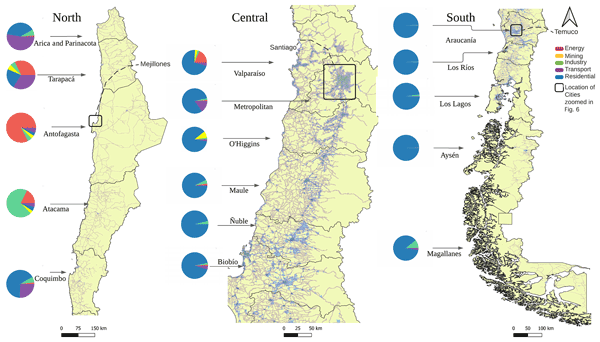
This study presents the first high-resolution national inventory of anthropogenic emissions for Chile (Inventario Nacional de Emisiones Antropogénicas, INEMA). Emissions for vehicular, industrial, energy, mining and residential sectors are estimated for the period 2015–2017 and spatially distributed onto a high-resolution grid (1 × 1 km). This inventory will support policies seeking to mitigate climate change and improve air quality by providing qualified scientific spatial emission information.
Paula Castesana, Melisa Diaz Resquin, Nicolás Huneeus, Enrique Puliafito, Sabine Darras, Darío Gómez, Claire Granier, Mauricio Osses Alvarado, Néstor Rojas, and Laura Dawidowski
Earth Syst. Sci. Data, 14, 271–293, https://doi.org/10.5194/essd-14-271-2022, https://doi.org/10.5194/essd-14-271-2022, 2022
Short summary
Short summary
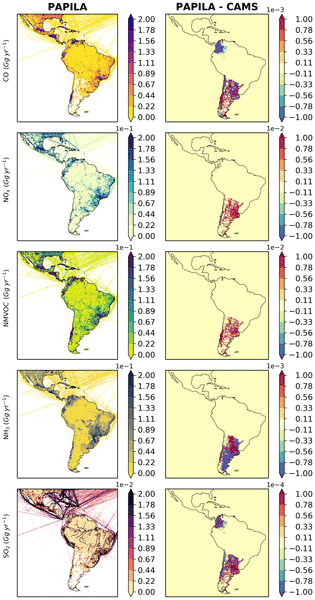
This work presents the results of the first joint effort of South American and European researchers to generate regional maps of emissions. The PAPILA dataset is a collection of annual emission inventories of reactive gases (CO, NOx, NMVOCs, NH3, and SO2) from anthropogenic sources in the region for the period 2014–2016. This was developed on the basis of the CAMS-GLOB-ANT v4.1 dataset, enriching it with derived data from locally available emission inventories for Argentina, Chile, and Colombia.
Cited articles
Ainsworth, E. A.: Understanding and improving global crop response to ozone pollution, Plant J., 90, 886–897, https://doi.org/10.1111/tpj.13298, 2017.
Akritidis, D., Pozzer, A., and Zanis, P.: On the impact of future climate change on tropopause folds and tropospheric ozone, Atmos. Chem. Phys., 19, 14387–14401, https://doi.org/10.5194/acp-19-14387-2019, 2019.
Anet, J. G., Steinbacher, M., Gallardo, L., Velásquez Álvarez, P. A., Emmenegger, L., and Buchmann, B.: Surface ozone in the Southern Hemisphere: 20 years of data from a site with a unique setting in El Tololo, Chile, Atmos. Chem. Phys., 17, 6477–6492, https://doi.org/10.5194/acp-17-6477-2017, 2017.
Archibald, A. T., Neu, J. L., Elshorbany, Y. F., Cooper, O. R., Young, P. J., Akiyoshi, H., Cox, R. A., Coyle, M., Derwent, R. G., Deushi, M., Finco, A., Frost, G. J., Galbally, I. E., Gerosa, G., Granier, C., Griffiths, P. T., Hossaini, R., Hu, L., Jöckel, P., Josse, B., Lin, M. Y., Mertens, M., Morgenstern, O., Naja, M., Naik, V., Oltmans, S., Plummer, D. A., Revell, L. E., Saiz-Lopez, A., Saxena, P., Shin, Y. M., Shahid, I., Shallcross, D., Tilmes, S., Trickl, T., Wallington, T. J., Wang, T., Worden, H. M., and Zeng, G.: Tropospheric ozone assessment report: A critical review of changes in the tropospheric ozone burden and budget from 1850 to 2100, Elementa, 8, https://doi.org/10.1525/elementa.2020.034, 2020.
Barnes, E. A., Fiore, A. M., and Horowitz, L. W.: Detection of trends in surface ozone in the presence of climate variability, J. Geophys. Res., 121, 6112–6129, https://doi.org/10.1002/2015JD024397, 2016.
Barrett, B. S., Fitzmaurice, S. J., and Pritchard, S. R.: Intraseasonal variability of surface ozone in Santiago, Chile: Modulation by phase of the Madden-Julian Oscillation (MJO), Atmos. Environ., 57, 55–62, https://doi.org/10.1016/j.atmosenv.2012.04.040, 2012.
Bourgeois, I., Peischl, J., Neuman, J. A., Brown, S. S., Thompson, C. R., Aikin, K. C., Allen, H. M., Angot, H., Apel, E. C., Baublitz, C. B., Brewer, J. F., Campuzano-Jost, P., Commane, R., Crounse, J. D., Daube, B. C., DiGangi, J. P., Diskin, G. S., Emmons, L. K., Fiore, A. M., Gkatzelis, G. I., Hills, A., Hornbrook, R. S., Huey, L. G., Jimenez, J. L., Kim, M., Lacey, F., McKain, K., Murray, L. T., Nault, B. A., Parrish, D. D., Ray, E., Sweeney, C., Tanner, D., Wofsy, S. C., and Ryerson, T. B.: Large contribution of biomass burning emissions to ozone throughout the global remote troposphere, P. Natl. Acad. Sci. USA, 118, https://doi.org/10.1073/pnas.2109628118, 2021.
Bozkurt, D., Rojas, M., Boisier, J. P., Rondanelli, R., Garreaud, R., and Gallardo, L.: Dynamical downscaling over the complex terrain of southwest South America: present climate conditions and added value analysis, Clim. Dyn., 53, 6745–6767, https://doi.org/10.1007/s00382-019-04959-y, 2019.
Cannon, A. J., Sobie, S. R., and Murdock, T. Q.: Bias Correction of GCM Precipitation by Quantile Mapping: How Well Do Methods Preserve Changes in Quantiles and Extremes?, J. Clim., 28, 6938–6959, https://doi.org/10.1175/JCLI-D-14-00754.1, 2015.
Capparelli, V., Franzke, C., Vecchio, A., Freeman, M. P., Watkins, N. W., and Carbone, V.: A spatiotemporal analysis of U.S. station temperature trends over the last century, J. Geophys. Res.-Atmos., 118, 7427–7434, https://doi.org/10.1002/jgrd.50551, 2013.
Carrasco-Escaff, T., Garreaud, R., Bozkurt, D., Jacques-Coper, M., and Pauchard, A.: The key role of extreme weather and climate change in the occurrence of exceptional fire seasons in south-central Chile, Weather Clim. Extrem., 45, 100716, https://doi.org/10.1016/j.wace.2024.100716, 2024.
Chang, K. L., Schultz, M. G., Lan, X., McClure-Begley, A., Petropavlovskikh, I., Xu, X., and Ziemke, J. R.: Trend detection of atmospheric time series: Incorporating appropriate uncertainty estimates and handling extreme events, Elem. Sci. Anth., 9, 00035, https://doi.org/10.1525/elementa.2021.00035, 2021.
Chang, K.-L., Schultz, M. G., Koren, G., and Selke, N.: Guidance note on best statistical practices for TOAR analyses, arXiv [preprint], https://doi.org/10.48550/arXiv.2304.14236, 2023.
Checa-Garcia, R., Hegglin, M. I., Kinnison, D., Plummer, D. A., and Shine, K. P.: Historical Tropospheric and Stratospheric Ozone Radiative Forcing Using the CMIP6 Database, Geophys. Res. Lett., 45, 3264–3273, https://doi.org/10.1002/2017GL076770, 2018.
Christiansen, A., Mickley, L. J., Liu, J., Oman, L. D., and Hu, L.: Multidecadal increases in global tropospheric ozone derived from ozonesonde and surface site observations: can models reproduce ozone trends?, Atmos. Chem. Phys., 22, 14751–14782, https://doi.org/10.5194/acp-22-14751-2022, 2022.
Clifton, O. E., Fiore, A. M., Massman, W. J., Baublitz, C. B., Coyle, M., Emberson, L., Fares, S., Farmer, D. K., Gentine, P., Gerosa, G., Guenther, A. B., Helmig, D., Lombardozzi, D. L., Munger, J. W., Patton, E. G., Pusede, S. E., Schwede, D. B., Silva, S. J., Sörgel, M., Steiner, A. L., and Tai, A. P. K.: Dry Deposition of Ozone Over Land: Processes, Measurement, and Modeling, Rev. Geophys., 58, https://doi.org/10.1029/2019RG000670, 2020.
Cooper, O. R., Parrish, D. D., Ziemke, J., Balashov, N. V., Cupeiro, M., Galbally, I. E., Gilge, S., Horowitz, L., Jensen, N. R., Lamarque, J. F., Naik, V., Oltmans, S. J., Schwab, J., Shindell, D. T., Thompson, A. M., Thouret, V., Wang, Y., and Zbinden, R. M.: Global distribution and trends of tropospheric ozone: An observation-based review, Elementa, 2, https://doi.org/10.12952/journal.elementa.000029, 2014.
Cooper, O. R., Schultz, M. G., Schroeder, S., Chang, K.-L., Gaudel, A., Benítez, G. C., Cuevas, E., Fröhlich, M., Galbally, I. E., Molloy, S., Kubistin, D., Lu, X., McClure-Begley, A., Nédélec, P., O'Brien, J., Oltmans, S. J., Petropavlovskikh, I., Ries, L., Senik, I., Sjöberg, K., Solberg, S., Spain, G. T., Spangl, W., Steinbacher, M., Tarasick, D., Thouret, V., and Xu, X.: Multi-decadal surface ozone trends at globally distributed remote locations, Elem. Sci. Anth., 8, 23, https://doi.org/10.1525/elementa.420, 2020.
Crutzen, P. J.: Tropospheric Ozone: An Overview, in: Tropospheric Ozone, Springer Netherlands, Dordrecht, 3–32, https://doi.org/10.1007/978-94-009-2913-5_1, 1988.
Crutzen, P. J., Lawrence, M. G., and Pöschl, U.: On the background photochemistry of tropospheric ozone, Tellus B, 51, 123, https://doi.org/10.3402/tellusb.v51i1.16264, 1999.
Cui, J., Sprenger, M., Staehelin, J., Siegrist, A., Kunz, M., Henne, S., and Steinbacher, M.: Impact of stratospheric intrusions and intercontinental transport on ozone at Jungfraujoch in 2005: comparison and validation of two Lagrangian approaches, Atmos. Chem. Phys., 9, 3371–3383, https://doi.org/10.5194/acp-9-3371-2009, 2009.
Daskalakis, N. and Kanakidou, M.: TM4-ECPL global Chemistry Transport Model with marked CO tracers, Zenodo [code], https://doi.org/10.5281/zenodo.6368301, 2022.
Daskalakis, N., Gallardo, L., Kanakidou, M., Nüß, J. R., Menares, C., Rondanelli, R., Thompson, A. M., and Vrekoussis, M.: Impact of biomass burning and stratospheric intrusions in the remote South Pacific Ocean troposphere, Atmos. Chem. Phys., 22, 4075–4099, https://doi.org/10.5194/acp-22-4075-2022, 2022.
East, J. D., Jacob, D. J., Balasus, N., Bloom, A. A., Bruhwiler, L., Chen, Z., Kaplan, J. O., Mickley, L. J., Mooring, T. A., Penn, E., Poulter, B., Sulprizio, M. P., Worden, J. R., Yantosca, R. M., and Zhang, Z.: Interpreting the Seasonality of Atmospheric Methane, Geophys. Res. Lett., 51, https://doi.org/10.1029/2024GL108494, 2024.
Fiore, A. M., West, J. J., Horowitz, L. W., Naik, V., and Schwarzkopf, M. D.: Characterizing the tropospheric ozone response to methane emission controls and the benefits to climate and air quality, J. Geophys. Res., 113, D08307, https://doi.org/10.1029/2007JD009162, 2008.
Fleming, Z. L., Doherty, R. M., Von Schneidemesser, E., Malley, C. S., Cooper, O. R., Pinto, J. P., Colette, A., Xu, X., Simpson, D., Schultz, M. G., Lefohn, A. S., Hamad, S., Moolla, R., Solberg, S., and Feng, Z.: Tropospheric Ozone Assessment Report: Present-day ozone distribution and trends relevant to human health, Elementa, 6, 12, https://doi.org/10.1525/elementa.273, 2018.
Forster, P., Storelvmo, T., Armour, K., Collins, W., Dufresne, J.-L., Frame, D., Lunt, D. J., Mauritsen, T., Palmer, M. D., Watanabe, M., Wild, M., and Zhang, H.: The Earth's Energy Budget, Climate Feedbacks and Climate Sensitivity, in: Climate Change 2021 – The Physical Science Basis, Cambridge University Press, 923–1054, https://doi.org/10.1017/9781009157896.009, 2021.
Franzke, C.: Nonlinear trends, long-range dependence, and climate noise properties of surface temperature, J. Clim., 25, 4172–4183, https://doi.org/10.1175/JCLI-D-11-00293.1, 2012.
Fu, B., Gasser, T., Li, B., Tao, S., Ciais, P., Piao, S., Balkanski, Y., Li, W., Yin, T., Han, L., Li, X., Han, Y., An, J., Peng, S., and Xu, J.: Short-lived climate forcers have long-term climate impacts via the carbon–climate feedback, Nat. Clim. Chang., 10, 851–855, https://doi.org/10.1038/s41558-020-0841-x, 2020.
Fuenzalida, H. A., Sánchez, R., and Garreaud, R. D.: A climatology of cutoff lows in the Southern Hemisphere, J. Geophys. Res.-Atmos., 110, 1–10, https://doi.org/10.1029/2005JD005934, 2005.
Gallardo, L., Carrasco, J., and Olivares, G.: An analysis of ozone measurements at Cerro Tololo (30° S, 70° W, 2200 m a.s.l.) in Chile, Tellus B, 52, 50–59, https://doi.org/10.3402/tellusb.v52i1.16081, 2000.
Gallardo, L., Henríquez, A., Thompson, A. M., Rondanelli, R., Carrasco, J., Orfanoz-Cheuquelaf, A., and Squez, P. V.: The first twenty years (1994–2014) of ozone soundings from Rapa Nui (27° S, 109° W, 51 m a.s.l.), Tellus B, 68, 29484, https://doi.org/10.3402/tellusb.v68.29484, 2016.
Garreaud, R. D., Vuille, M., Compagnucci, R., and Marengo, J.: Present-day South American climate, Palaeogeogr. Palaeoclimatol. Palaeoecol., 281, 180–195, https://doi.org/10.1016/j.palaeo.2007.10.032, 2009.
Garreaud, R. D., Boisier, J. P., Rondanelli, R., Montecinos, A., Sepúlveda, H. H., and Veloso-Aguila, D.: The Central Chile Mega Drought (2010–2018): A climate dynamics perspective, Int. J. Climatol., 40, 421–439, https://doi.org/10.1002/joc.6219, 2020.
Gaudel, A., Cooper, O. R., Ancellet, G., Barret, B., Boynard, A., Burrows, J. P., Clerbaux, C., Coheur, P.-F., Cuesta, J., Cuevas, E., Doniki, S., Dufour, G., Ebojie, F., Foret, G., Garcia, O., Granados-Muñoz, M. J., Hannigan, J. W., Hase, F., Hassler, B., Huang, G., Hurtmans, D., Jaffe, D., Jones, N., Kalabokas, P., Kerridge, B., Kulawik, S., Latter, B., Leblanc, T., Le Flochmoën, E., Lin, W., Liu, J., Liu, X., Mahieu, E., McClure-Begley, A., Neu, J. L., Osman, M., Palm, M., Petetin, H., Petropavlovskikh, I., Querel, R., Rahpoe, N., Rozanov, A., Schultz, M. G., Schwab, J., Siddans, R., Smale, D., Steinbacher, M., Tanimoto, H., Tarasick, D. W., Thouret, V., Thompson, A. M., Trickl, T., Weatherhead, E., Wespes, C., Worden, H. M., Vigouroux, C., Xu, X., Zeng, G., and Ziemke, J.: Tropospheric Ozone Assessment Report: Present-day distribution and trends of tropospheric ozone relevant to climate and global atmospheric chemistry model evaluation, Elem. Sci. Anth., 6, https://doi.org/10.1525/elementa.291, 2018.
González, M. E., Gómez-González, S., Lara, A., Garreaud, R., and Díaz-Hormazábal, I.: The 2010–2015 Megadrought and its influence on the fire regime in central and south-central Chile, Ecosphere, 9, https://doi.org/10.1002/ecs2.2300, 2018.
Gottschalck, J., Wheeler, M., Weickmann, K., Vitart, F., Savage, N., Lin, H., Hendon, H., Waliser, D., Sperber, K., Nakagawa, M., Prestrelo, C., Flatau, M., and Higgins, W.: A framework for assessing operational Madden-Julian oscillation forecasts: A clivar MJO working group project, B. Am. Meteorol. Soc., 91, 1247–1258, https://doi.org/10.1175/2010BAMS2816.1, 2010.
Griffiths, P. T., Murray, L. T., Zeng, G., Shin, Y. M., Abraham, N. L., Archibald, A. T., Deushi, M., Emmons, L. K., Galbally, I. E., Hassler, B., Horowitz, L. W., Keeble, J., Liu, J., Moeini, O., Naik, V., O'Connor, F. M., Oshima, N., Tarasick, D., Tilmes, S., Turnock, S. T., Wild, O., Young, P. J., and Zanis, P.: Tropospheric ozone in CMIP6 simulations, Atmos. Chem. Phys., 21, 4187–4218, https://doi.org/10.5194/acp-21-4187-2021, 2021.
Gulev, S. K., Thorne, P. W., Ahn, J., Dentener, F. J., Domingues, C. M., Gerland, S., Gong, D., Kaufman, D. S., Nnamchi, H. C., Quaas, J., Rivera, J. A., Sathyendranath, S., Smith, S. L., Trewin, B., von Schuckmann, K., and Vose, R. S.: Changing State of the Climate System, in: Climate Change 2021 – The Physical Science Basis, edited by: IPCC, Cambridge University Press, Cambridge, 287–422, https://doi.org/10.1017/9781009157896.004, 2023.
Hastie, T. and Tibshirani, R.: Generalized Additive Models, Stat. Sci., 1, https://doi.org/10.1214/ss/1177013604, 1986.
Hastie, T., Tibshirani, R., and Friedman, J.: Boosting and Additive Trees, in: The Elements of Statistical Learning, Springer Series in Statistics, Springer, New York, NY, https://doi.org/10.1007/b94608_10, 2009.
He, J., Naik, V., Horowitz, L. W., Dlugokencky, E., and Thoning, K.: Investigation of the global methane budget over 1980–2017 using GFDL-AM4.1, Atmos. Chem. Phys., 20, 805–827, https://doi.org/10.5194/acp-20-805-2020, 2020.
Hersbach, H., Bell, B., Berrisford, P., Hirahara, S., Horányi, A., Muñoz-Sabater, J., Nicolas, J., Peubey, C., Radu, R., Schepers, D., Simmons, A., Soci, C., Abdalla, S., Abellan, X., Balsamo, G., Bechtold, P., Biavati, G., Bidlot, J., Bonavita, M., De Chiara, G., Dahlgren, P., Dee, D., Diamantakis, M., Dragani, R., Flemming, J., Forbes, R., Fuentes, M., Geer, A., Haimberger, L., Healy, S., Hogan, R. J., Hólm, E., Janisková, M., Keeley, S., Laloyaux, P., Lopez, P., Lupu, C., Radnoti, G., de Rosnay, P., Rozum, I., Vamborg, F., Villaume, S., and Thépaut, J.: The ERA5 global reanalysis, Q. J. Roy. Meteor. Soc., 146, 1999–2049, https://doi.org/10.1002/qj.3803, 2020.
Hoesly, R. M., Smith, S. J., Feng, L., Klimont, Z., Janssens-Maenhout, G., Pitkanen, T., Seibert, J. J., Vu, L., Andres, R. J., Bolt, R. M., Bond, T. C., Dawidowski, L., Kholod, N., Kurokawa, J.-I., Li, M., Liu, L., Lu, Z., Moura, M. C. P., O'Rourke, P. R., and Zhang, Q.: Historical (1750–2014) anthropogenic emissions of reactive gases and aerosols from the Community Emissions Data System (CEDS), Geosci. Model Dev., 11, 369–408, https://doi.org/10.5194/gmd-11-369-2018, 2018.
Holton, J. R.: On the Global Exchange of Mass between the Stratosphere and Troposphere, J. Atmos. Sci., 392–395, https://doi.org/10.1175/1520-0469(1990)047<0392:OTGEOM>2.0.CO;2, 1990.
Hu, Y., Huang, H., and Zhou, C.: Widening and weakening of the Hadley circulation under global warming, Sci. Bull., 63, 640–644, https://doi.org/10.1016/j.scib.2018.04.020, 2018.
Inness, A., Benedetti, A., Flemming, J., Huijnen, V., Kaiser, J. W., Parrington, M., and Remy, S.: The ENSO signal in atmospheric composition fields: emission-driven versus dynamically induced changes, Atmos. Chem. Phys., 15, 9083–9097, https://doi.org/10.5194/acp-15-9083-2015, 2015.
Jacob, D. J. and Winner, D. A.: Effect of climate change on air quality, Atmos. Environ., 43, 51–63, https://doi.org/10.1016/j.atmosenv.2008.09.051, 2009.
Kalthoff, N., Bischoff-Gauß, I., Fiebig-Wittmaack, M., Fiedler, F., Thürauf, J., Novoa, E., Pizarro, C., Castillo, R., Gallardo, L., Rondanelli, R., and Kohler, M.: Mesoscale wind regimes in Chile at 30° S, J. Appl. Meteorol., 41, 953–970, https://doi.org/10.1175/1520-0450(2002)041<0953:MWRICA>2.0.CO;2, 2002.
Karset, I. H. H., Berntsen, T. K., Storelvmo, T., Alterskjær, K., Grini, A., Olivié, D., Kirkevåg, A., Seland, Ø., Iversen, T., and Schulz, M.: Strong impacts on aerosol indirect effects from historical oxidant changes, Atmos. Chem. Phys., 18, 7669–7690, https://doi.org/10.5194/acp-18-7669-2018, 2018.
Kovács, L.: Feature selection algorithms in generalized additive models under concurvity, Comput. Stat., 39, 461–493, https://doi.org/10.1007/s00180-022-01292-7, 2024.
Kuai, L., Bowman, K. W., Worden, H. M., Herman, R. L., and Kulawik, S. S.: Hydrological controls on the tropospheric ozone greenhouse gas effect, Elementa: Science of the Anthropocene, 5, https://doi.org/10.1525/elementa.208, 2017.
Kumar Mishra, A., Sen Gupta, G., Abha Singh, A., Bhushan Agrawal, S., and Tiwari, S.: Can fertilization OF CO2 heal the ozone-injured agroecosystems?, Atmos. Pollut. Res., 15, 102046, https://doi.org/10.1016/j.apr.2024.102046, 2024.
Lapere, R., Mailler, S., and Menut, L.: The 2017 Mega-Fires in Central Chile: Impacts on Regional Atmospheric Composition and Meteorology Assessed from Satellite Data and Chemistry-Transport Modeling, Atmosphere, 12, 344, https://doi.org/10.3390/atmos12030344, 2021.
Li, Y., Xia, Y., Xie, F., and Yan, Y.: Influence of stratosphere-troposphere exchange on long-term trends of surface ozone in CMIP6, Atmos. Res., 297, 107086, https://doi.org/10.1016/j.atmosres.2023.107086, 2024.
Lipovetsky, S. and Conklin, M.: Analysis of regression in game theory approach, Appl. Stoch. Models Bus. Ind., 17, 319–330, https://doi.org/10.1002/asmb.446, 2001.
Lu, X., Zhang, L., Zhao, Y., Jacob, D. J., Hu, Y., Hu, L., Gao, M., Liu, X., Petropavlovskikh, I., McClure-Begley, A., and Querel, R.: Surface and tropospheric ozone trends in the Southern Hemisphere since 1990: possible linkages to poleward expansion of the Hadley circulation, Sci. Bull., 64, 400–409, https://doi.org/10.1016/j.scib.2018.12.021, 2019.
Menares, C. and Gallardo, L.: Tololo GAM, Zenodo [code], https://doi.org/10.5281/zenodo.20738286, 2026.
Mills, G., Harmens, H., Wagg, S., Sharps, K., Hayes, F., Fowler, D., Sutton, M., and Davies, B.: Ozone impacts on vegetation in a nitrogen enriched and changing climate, Environ. Pollut., 208, 898–908, https://doi.org/10.1016/j.envpol.2015.09.038, 2016.
Molnar, C.: Interpretable Machine Learning. A Guide for Making Black Box Models Explainable, 3rd edn., 392 pp., ISBN 978-3911578035, https://christophm.github.io/interpretable-ml-book/, 2025.
Monks, P. S., Archibald, A. T., Colette, A., Cooper, O., Coyle, M., Derwent, R., Fowler, D., Granier, C., Law, K. S., Mills, G. E., Stevenson, D. S., Tarasova, O., Thouret, V., von Schneidemesser, E., Sommariva, R., Wild, O., and Williams, M. L.: Tropospheric ozone and its precursors from the urban to the global scale from air quality to short-lived climate forcer, Atmos. Chem. Phys., 15, 8889–8973, https://doi.org/10.5194/acp-15-8889-2015, 2015.
Muggeo, V. M. R.: Interval estimation for the breakpoint in segmented regression: a smoothed score-based approach, Aust. N. Z. J. Stat., 59, 311–322, https://doi.org/10.1111/anzs.12200, 2017.
Murray, L. T., Mickley, L. J., Kaplan, J. O., Sofen, E. D., Pfeiffer, M., and Alexander, B.: Factors controlling variability in the oxidative capacity of the troposphere since the Last Glacial Maximum, Atmos. Chem. Phys., 14, 3589–3622, https://doi.org/10.5194/acp-14-3589-2014, 2014.
Myhre, G., Shindell, D., Bréon, F.-M., Collins, W., Fuglestvedt, J., Huang, J., Koch, D., Lamarque, J.-F., Lee, D., Mendoza, B., Nakajima, T., Robock, A., Stephens, G., Takemura, T., and Zhang, H.: Anthropogenic and Natural Radiative Forcing, in: Climate Change 2013: The Physical Science Basis. Contribution of Working Group I to the Fifth Assessment Report of the Intergovernmental Panel on Climate Change, edited by: Stocker, T. F., Qin, D., Plattner, G.-K., Tignor, M., Allen, S. K., Boschung, J., Nauels, A., Xia, Y., Bex, V., and Midgley, P. M., Cambridge University Press, 659–740, https://doi.org/10.1017/CBO9781107415324.018, 2013.
Neu, J. L., Flury, T., Manney, G. L., Santee, M. L., Livesey, N. J., and Worden, J.: Tropospheric ozone variations governed by changes in stratospheric circulation, Nat. Geosci., 7, 340–344, https://doi.org/10.1038/ngeo2138, 2014.
Nisbet, E. G., Manning, M. R., Dlugokencky, E. J., Fisher, R. E., Lowry, D., Michel, S. E., Myhre, C. L., Platt, S. M., Allen, G., Bousquet, P., Brownlow, R., Cain, M., France, J. L., Hermansen, O., Hossaini, R., Jones, A. E., Levin, I., Manning, A. C., Myhre, G., Pyle, J. A., Vaughn, B. H., Warwick, N. J., and White, J. W. C.: Very Strong Atmospheric Methane Growth in the 4 Years 2014–2017: Implications for the Paris Agreement, Global Biogeochem. Cy., 33, 318–342, https://doi.org/10.1029/2018GB006009, 2019.
Nuvolone, D., Petri, D., and Voller, F.: The effects of ozone on human health, Environ. Sci. Pollut. R., 25, 8074–8088, https://doi.org/10.1007/s11356-017-9239-3, 2018.
Opazo, C. and Gallardo, L.: Tololo data 1995–2023, Zenodo [data set], https://doi.org/10.5281/zenodo.20737995, 2026.
Porter, W. C. and Heald, C. L.: The mechanisms and meteorological drivers of the summertime ozone–temperature relationship, Atmos. Chem. Phys., 19, 13367–13381, https://doi.org/10.5194/acp-19-13367-2019, 2019.
Pusede, S. E., Steiner, A. L., and Cohen, R. C.: Temperature and Recent Trends in the Chemistry of Continental Surface Ozone, Chem. Rev., 115, 3898–3918, https://doi.org/10.1021/cr5006815, 2015.
Rondanelli, R.: Cutoff Lows Over Southwestern South America, in: Oxford Research Encyclopedia of Climate Science, Oxford University Press, Oxford, https://doi.org/10.1093/acrefore/9780190228620.013.976, 2025.
Rondanelli, R., Gallardo, L., and Garreaud, R. D.: Rapid changes in ozone mixing ratios at Cerro Tololo (30°10′ S, 70°48′ W, 2200 m) in connection with cutoff lows and deep troughs, J. Geophys. Res.-Atmos., 107, ACL 6-1–ACL 6-15, https://doi.org/10.1029/2001JD001334, 2002.
Rowlinson, M. J., Rap, A., Arnold, S. R., Pope, R. J., Chipperfield, M. P., McNorton, J., Forster, P., Gordon, H., Pringle, K. J., Feng, W., Kerridge, B. J., Latter, B. L., and Siddans, R.: Impact of El Niño–Southern Oscillation on the interannual variability of methane and tropospheric ozone, Atmos. Chem. Phys., 19, 8669–8686, https://doi.org/10.5194/acp-19-8669-2019, 2019.
Schwertfeger, B. T., Lohmann, G., and Lipskoch, H.: Introduction of the BiasAdjustCXX command-line tool for the application of fast and efficient bias corrections in climatic research, SoftwareX, 22, https://doi.org/10.1016/j.softx.2023.101379, 2023.
Seguel, R. J., Morales S., R. G. E., and Leiva G., M. A.: Ozone weekend effect in Santiago, Chile, Environ. Pollut., 162, 72–79, https://doi.org/10.1016/j.envpol.2011.10.019, 2012.
Seguel, R. J., Castillo, L., Opazo, C., Rojas, N. Y., Nogueira, T., Cazorla, M., Gavidia-Calderón, M., Gallardo, L., Garreaud, R., Carrasco-Escaff, T., and Elshorbany, Y.: Changes in South American surface ozone trends: exploring the influences of precursors and extreme events, Atmos. Chem. Phys., 24, 8225–8242, https://doi.org/10.5194/acp-24-8225-2024, 2024.
Sekiya, T. and Sudo, K.: Role of meteorological variability in global tropospheric ozone during 1970–2008, J. Geophys. Res.-Atmos., 117, https://doi.org/10.1029/2012JD018054, 2012.
Skeie, R. B., Myhre, G., Hodnebrog, Ø., Cameron-Smith, P. J., Deushi, M., Hegglin, M. I., Horowitz, L. W., Kramer, R. J., Michou, M., Mills, M. J., Olivié, D. J. L., Connor, F. M. O., Paynter, D., Samset, B. H., Sellar, A., Shindell, D., Takemura, T., Tilmes, S., and Wu, T.: Historical total ozone radiative forcing derived from CMIP6 simulations, NPJ Clim. Atmos. Sci., 3, https://doi.org/10.1038/s41612-020-00131-0, 2020.
Škerlak, B., Sprenger, M., and Wernli, H.: A global climatology of stratosphere–troposphere exchange using the ERA-Interim data set from 1979 to 2011, Atmos. Chem. Phys., 14, 913–937, https://doi.org/10.5194/acp-14-913-2014, 2014.
Snyder, C. W., Mastrandrea, M. D., and Schneider, S. H.: The Complex Dyanmics of the Climate System: Constraints on our Knowledge, Policy Implications and the Necessity of Systems Thinking, in: Philosophy of complex systems, Elsevier, 467–505, https://doi.org/10.1016/B978-0-444-52076-0.50017-1, 2011.
Staehle, C., Rieder, H. E., Fiore, A. M., and Schnell, J. L.: Technical note: An assessment of the performance of statistical bias correction techniques for global chemistry–climate model surface ozone fields, Atmos. Chem. Phys., 24, 5953–5969, https://doi.org/10.5194/acp-24-5953-2024, 2024.
Szopa, S., Naik, V., Adhikary, B., Artaxo, P., Berntsen, T., Collins, W. D., Fuzzi, S., Gallardo, L., Kiendler-Scharr, A., Klimont, Z., Liao, H., Unger, N., and Zanis, P.: Short-Lived Climate Forcers. In Climate Change 2021: The Physical Science Basis.Contribution of Working Group I to the Sixth Assessment Report of the Intergovernmental Panel on Climate Change, edited by: Masson-Delmotte, V., Zhai, P., Pirani, A., Connors, S. L., Péan, C., Berger, S., Caud, N., Chen, Y., Goldfarb, L., Gomis, M. I., Huang, M., Leitzell, K., Lonnoy, E., Matthews, J. B. R., Maycock, T. K., Waterfield, T., Yelekçi, O., Yu, R., and Zhou, B., Cambridge University Press, Cambridge, United Kingdom and New York, NY, USA, 817–922, https://doi.org/10.1017/9781009157896.008, 2021.
Tarasick, D., Galbally, I. E., Cooper, O. R., Schultz, M. G., Ancellet, G., Leblanc, T., Wallington, T. J., Ziemke, J., Liu, X., Steinbacher, M., Staehelin, J., Vigouroux, C., Hannigan, J. W., García, O., Foret, G., Zanis, P., Weatherhead, E., Petropavlovskikh, I., Worden, H., Osman, M., Liu, J., Chang, K.-L., Gaudel, A., Lin, M., Granados-Muñoz, M., Thompson, A. M., Oltmans, S. J., Cuesta, J., Dufour, G., Thouret, V., Hassler, B., Trickl, T., and Neu, J. L.: Tropospheric Ozone Assessment Report: Tropospheric ozone from 1877 to 2016, observed levels, trends and uncertainties, Elem. Sci. Anth., 7, 39, https://doi.org/10.1525/elementa.376, 2019.
Thompson, A. M.: The oxidizing capacity of the Earth's atmosphere: Probable past and future changes, Science, 256, 1157–1165, https://doi.org/10.1126/science.256.5060.1157, 1992.
Thoning, K. W., Tans, P. P., and Komhyr, W. D.: Atmospheric carbon dioxide at Mauna Loa Observatory: 2. Analysis of the NOAA GMCC data, 1974–1985, J. Geophys. Res.-Atmos., 94, 8549–8565, https://doi.org/10.1029/JD094iD06p08549, 1989.
Turnock, S. T., Allen, R. J., Andrews, M., Bauer, S. E., Deushi, M., Emmons, L., Good, P., Horowitz, L., John, J. G., Michou, M., Nabat, P., Naik, V., Neubauer, D., O'Connor, F. M., Olivié, D., Oshima, N., Schulz, M., Sellar, A., Shim, S., Takemura, T., Tilmes, S., Tsigaridis, K., Wu, T., and Zhang, J.: Historical and future changes in air pollutants from CMIP6 models, Atmos. Chem. Phys., 20, 14547–14579, https://doi.org/10.5194/acp-20-14547-2020, 2020.
van Marle, M. J. E., Kloster, S., Magi, B. I., Marlon, J. R., Daniau, A.-L., Field, R. D., Arneth, A., Forrest, M., Hantson, S., Kehrwald, N. M., Knorr, W., Lasslop, G., Li, F., Mangeon, S., Yue, C., Kaiser, J. W., and van der Werf, G. R.: Historic global biomass burning emissions for CMIP6 (BB4CMIP) based on merging satellite observations with proxies and fire models (1750–2015), Geosci. Model Dev., 10, 3329–3357, https://doi.org/10.5194/gmd-10-3329-2017, 2017.
Wang, S., Foster, A., Lenz, E. A., Kessler, J. D., Stroeve, J. C., Anderson, L. O., Turetsky, M., Betts, R., Zou, S., and Liu, W.: Mechanisms and impacts of Earth system tipping elements, Rev. Geophys., 61, e2021RG000757, https://doi.org/10.1029/2021RG000757, 2023.
Weatherhead, E. C., Reinsel, G. C., Tiao, G. C., Meng, X. L., Choi, D., Cheang, W. K., Keller, T., DeLuisi, J., Wuebbles, D. J., Kerr, J. B., Miller, A. J., Oltmans, S. J., and Frederick, J. E.: Factors affecting the detection of trends: Statistical considerations and applications to environmental data, J. Geophys. Res.-Atmos., 103, 17149–17161, https://doi.org/10.1029/98JD00995, 1998.
Weber, T., Wiseman, N. A., and Kock, A.: Global ocean methane emissions dominated by shallow coastal waters, Nat. Commun., 10, 4584, https://doi.org/10.1038/s41467-019-12541-7, 2019.
West, J. J., Fiore, A. M., Naik, V., Horowitz, L. W., Schwarzkopf, M. D., and Mauzerall, D. L.: Ozone air quality and radiative forcing consequences of changes in ozone precursor emissions, Geophys. Res. Lett., 34, https://doi.org/10.1029/2006GL029173, 2007.
Wheeler, M. C. and Hendon, H. H.: An All-Season Real-Time Multivariate MJO Index: Development of an Index for Monitoring and Prediction, Mon. Weather Rev., 132, 1917–1932, https://doi.org/10.1175/1520-0493(2004)132<1917:AARMMI>2.0.CO;2, 2004.
Yeung, L. Y., Murray, Lee. T., Martinerie, P., Witrant, E., Hu, H., Banerjee, A., Orsi, A., and Chappellaz, J.: Isotopic constraint on the twentieth-century increase in tropospheric ozone, Nature, 570, 224–227, https://doi.org/10.1038/s41586-019-1277-1, 2019.
Young, P. J., Archibald, A. T., Bowman, K. W., Lamarque, J.-F., Naik, V., Stevenson, D. S., Tilmes, S., Voulgarakis, A., Wild, O., Bergmann, D., Cameron-Smith, P., Cionni, I., Collins, W. J., Dalsøren, S. B., Doherty, R. M., Eyring, V., Faluvegi, G., Horowitz, L. W., Josse, B., Lee, Y. H., MacKenzie, I. A., Nagashima, T., Plummer, D. A., Righi, M., Rumbold, S. T., Skeie, R. B., Shindell, D. T., Strode, S. A., Sudo, K., Szopa, S., and Zeng, G.: Pre-industrial to end 21st century projections of tropospheric ozone from the Atmospheric Chemistry and Climate Model Intercomparison Project (ACCMIP), Atmos. Chem. Phys., 13, 2063–2090, https://doi.org/10.5194/acp-13-2063-2013, 2013.
Young, P. J., Naik, V., Fiore, A. M., Gaudel, A., Guo, J., Lin, M. Y., Neu, J. L., Parrish, D. D., Rieder, H. E., Schnell, J. L., Tilmes, S., Wild, O., Zhang, L., Ziemke, J. R., Brandt, J., Delcloo, A., Doherty, R. M., Geels, C., Hegglin, M. I., Hu, L., Im, U., Kumar, R., Luhar, A., Murray, L., Plummer, D., Rodriguez, J., Saiz-Lopez, A., Schultz, M. G., Woodhouse, M. T., and Zeng, G.: Tropospheric Ozone Assessment Report: Assessment of global-scale model performance for global and regional ozone distributions, variability, and trends, Elem. Sci. Anth., 6, 10, https://doi.org/10.1525/elementa.265, 2018.
Zhang, Y., Cooper, O. R., Gaudel, A., Thompson, A. M., Nédélec, P., Ogino, S. Y., and West, J. J.: Tropospheric ozone change from 1980 to 2010 dominated by equatorward redistribution of emissions, Nat. Geosci., 9, 875–879, https://doi.org/10.1038/ngeo2827, 2016.
Zhang, Y., West, J. J., Emmons, L. K., Flemming, J., Jonson, J. E., Lund, M. T., Sekiya, T., Sudo, K., Gaudel, A., Chang, K., Nédélec, P., and Thouret, V.: Contributions of World Regions to the Global Tropospheric Ozone Burden Change From 1980 to 2010, Geophys. Res. Lett., 48, https://doi.org/10.1029/2020GL089184, 2021.
Short summary
We assert the role of methane and other drivers of change in explaining the growing tropospheric ozone (O3) trend at Tololo (30.17° S, 70.80° W, 2154 m a.s.l.), and we quantify the contributions of biomass burning and stratospheric and upper tropospheric O3, particularly during the late winter and spring. These findings enhance understanding of O3 variability in the Southern Hemisphere free troposphere and underscore the importance of sustained observations at Tololo amid climate change.
We assert the role of methane and other drivers of change in explaining the growing tropospheric...


Altmetrics
Final-revised paper
Preprint