
Articles | Volume 26, issue 2
https://doi.org/10.5194/acp-26-839-2026
© Author(s) 2026. This work is distributed under
the Creative Commons Attribution 4.0 License.
the Creative Commons Attribution 4.0 License.
https://doi.org/10.5194/acp-26-839-2026
© Author(s) 2026. This work is distributed under
the Creative Commons Attribution 4.0 License.
the Creative Commons Attribution 4.0 License.
Research article
| 
19 Jan 2026
Research article |
| 19 Jan 2026
| 19 Jan 2026
Emission factors and optical properties of black and brown carbon emitted at a mixed-conifer forest prescribed burn
James D. A. Butler
Department of Civil and Environmental Engineering, University of California, Berkeley, Berkeley, California 94720, USA
Energy Technologies Area, Lawrence Berkeley National Laboratory, Berkeley, California 94720, USA
Afsara Tasnia
Department of Chemical and Environmental Engineering, Center for Environmental Research and Technology, University of California, Riverside, Riverside, California 92507, USA
Deep Sengupta
Department of Environmental Science, Policy, and Management, University of California, Berkeley, Berkeley, California 94720, USA
Nathan Kreisberg
Aerosol Dynamics Inc., Berkeley, California 94720, USA
Kelley C. Barsanti
Department of Chemical and Environmental Engineering, Center for Environmental Research and Technology, University of California, Riverside, Riverside, California 92507, USA
Atmospheric Chemistry Observations and Modeling, U.S. National Science Foundation National Center for Atmospheric Research, Boulder, Colorado 80301, USA
Allen H. Goldstein
Department of Civil and Environmental Engineering, University of California, Berkeley, Berkeley, California 94720, USA
Department of Environmental Science, Policy, and Management, University of California, Berkeley, Berkeley, California 94720, USA
Chelsea V. Preble
Department of Civil and Environmental Engineering, University of California, Berkeley, Berkeley, California 94720, USA
Energy Technologies Area, Lawrence Berkeley National Laboratory, Berkeley, California 94720, USA
Rebecca A. Sugrue
Department of Civil and Environmental Engineering, University of California, Berkeley, Berkeley, California 94720, USA
Energy Technologies Area, Lawrence Berkeley National Laboratory, Berkeley, California 94720, USA
now at: Department of Medicine, University of California, San Francisco, San Francisco, California 94110, USA
Thomas W. Kirchstetter
CORRESPONDING AUTHOR

Department of Civil and Environmental Engineering, University of California, Berkeley, Berkeley, California 94720, USA
Energy Technologies Area, Lawrence Berkeley National Laboratory, Berkeley, California 94720, USA
Related authors
No articles found.
Julia Lee-Taylor, William P. L. Carter, Bernard Aumont, John J. Orlando, Zhizhao Wang, Marie Camredon, Richard Valorso, and Kelley C. Barsanti
EGUsphere, https://doi.org/10.5194/egusphere-2026-4908, https://doi.org/10.5194/egusphere-2026-4908, 2026
This preprint is open for discussion and under review for Atmospheric Chemistry and Physics (ACP).
Short summary
Short summary
Air quality models require representation of gas-phase compounds and their products. While these model mechanisms are typically small, one compound can form millions of products. Small mechanisms can be derived by hand, but generation of complete mechanisms must be automated. The two most common automated generators for atmospheric chemical mechanisms are compared here for the first time. The comparison highlights underlying differences and implications for predictions of atmospheric chemistry.
Lindsay D. Yee, Emily B. Franklin, Robin J. Weber, Jessica Zhao, Tiger Zhang, Stephanie Xu, Isaac Santillan, Fangyuan Li, Coty N. Jen, Haofei Zhang, Yutong Liang, Gabriel Isaacman Van-Wertz, Rebecca A. Wernis, John Offenberg, Michael Lewandowski, Taekyu Joo, Masayuki Takeuchi, Gamze Eris, Weiqi Xu, Nga L. Ng, Yuzhi Chen, John E. Shilling, Mary Alice Upshur, Ariana Gray Bé, Regan J. Thomson, Franz M. Geiger, and Allen H. Goldstein
Atmos. Meas. Tech., 19, 5027–5049, https://doi.org/10.5194/amt-19-5027-2026, https://doi.org/10.5194/amt-19-5027-2026, 2026
Short summary
Short summary
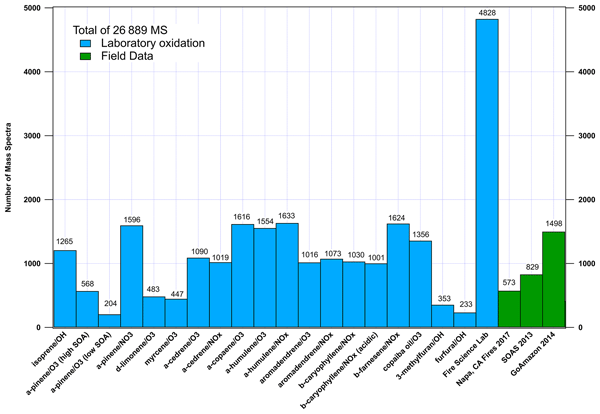
An open-access mass spectral database of identified and unidentified compounds in atmospheric and laboratory-generated organic aerosols is released to aid in future molecular discoveries in the environmental sciences. Identification of air pollution sources and origins is improved using the ~27,000 mass spectral records in the University of California Berkeley Goldstein Library of Organic Biogenic Environmental Spectra (UCB-GLOBES) database.
Erin F. Katz, Caleb M. Arata, Eva Y. Pfannerstill, Robert J. Weber, Haley Byrne, Michael J. Milazzo, Samuel J. Cliff, Joshua Apte, and Allen H. Goldstein
EGUsphere, https://doi.org/10.5194/egusphere-2026-4147, https://doi.org/10.5194/egusphere-2026-4147, 2026
Short summary
Short summary
Volatile organic compounds (VOCs) are precursors to urban air pollution. We measured VOC emissions in a major North American urban area and identified the dominant sources of four abundant compounds: ethanol, methanol, acetaldehyde, and acetone. Cooking and consumer products (e.g., solvents) were the primary sources, showing that these emissions play a larger role in urban air quality than previously thought.
Samuel J. Cliff, Michael R. Giordano, Haley McNamara Byrne, Robert J. Weber, Jude Z. Hebert, Kyle Huang, Allen H. Goldstein, and Joshua S. Apte
Atmos. Meas. Tech., 19, 4201–4217, https://doi.org/10.5194/amt-19-4201-2026, https://doi.org/10.5194/amt-19-4201-2026, 2026
Short summary
Short summary
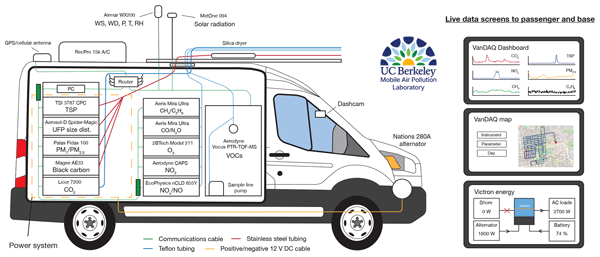
Air pollution concentrations have high spatial variability that is not captured by regulatory monitoring. We developed and evaluated a mobile laboratory to map hundreds of gas and particle phase pollutants at meter-level resolution with open hardware and software designs. This open-design will help researchers deploy similar tools to evaluate local air quality issues from a huge variety of sources.
Zhizhao Wang, William P. L. Carter, Julia Lee-Taylor, John Orlando, Qing Ye, Richard Valorso, Marie Camredon, Bernard Aumont, and Kelley Barsanti
EGUsphere, https://doi.org/10.5194/egusphere-2026-1921, https://doi.org/10.5194/egusphere-2026-1921, 2026
Short summary
Short summary
Comprehensive chemical mechanisms that describe how pollutants react in the atmosphere can include millions of reactions and are too complex for practical models. This study presents a framework that can reduce them to tens or hundreds of reactions while preserving key behavior and accuracy. This enables the use of detailed chemistry in large simulations, improving studies of air quality and how atmospheric processes are represented in models.
Melissa A. Ehrenfels, Benjamin C. Schulze, Andrew R. Jensen, Afsara Tasnia, Douglas A. Day, Pedro Campuzano-Jost, Anne V. Handschy, Melinda K. Schueneman, Seonsik Yun, Dongwook Kim, Donna Sueper, Havala O. T. Pye, Benjamin N. Murphy, T. Nash Skipper, Kelley C. Barsanti, Joost A. de Gouw, and Jose L. Jimenez
Aerosol Research Discuss., https://doi.org/10.5194/ar-2026-12, https://doi.org/10.5194/ar-2026-12, 2026
Revised manuscript accepted for AR
Short summary
Short summary
Los Angeles, CA suffers from poor air quality, partially due to secondary aerosol formation. The identity and sources of the most important gas phase precursors is a complex and unresolved issue. For the first time, we separated ambient gas-phase species by volatility, then measured their potential to form aerosols. We found that higher-volatility emissions are responsible for 2/3 of the aerosol formation, and lower volatility ones for 1/3. We evaluate two box models against our measurements.
William P. L. Carter, Jia Jiang, Zhizhao Wang, and Kelley C. Barsanti
Geosci. Model Dev., 18, 8461–8483, https://doi.org/10.5194/gmd-18-8461-2025, https://doi.org/10.5194/gmd-18-8461-2025, 2025
Short summary
Short summary
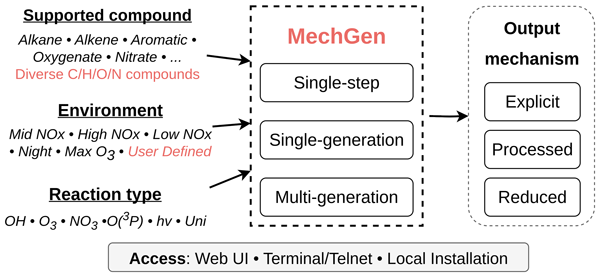
The SAPRC Atmospheric Chemical Mechanism Generation System (MechGen) generates explicit chemical reaction mechanisms for organic compounds. MechGen has been used for decades in the development of the widely used SAPRC mechanisms. This paper, detailing the software system, and a companion paper, detailing the chemical basis, represent the first complete documentation of MechGen. This paper includes examples and instructions for generating explicit and reduced mechanisms.
Erin F. Katz, Caleb M. Arata, Eva Y. Pfannerstill, Robert J. Weber, Darian Ng, Michael J. Milazzo, Haley Byrne, Hui Wang, Alex B. Guenther, Camilo Rey-Sanchez, Joshua Apte, Dennis D. Baldocchi, and Allen H. Goldstein
Atmos. Chem. Phys., 25, 15281–15299, https://doi.org/10.5194/acp-25-15281-2025, https://doi.org/10.5194/acp-25-15281-2025, 2025
Short summary
Short summary
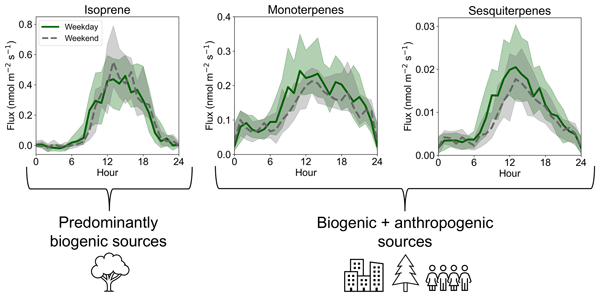
Terpenoids are organic gases that can originate from natural and human-caused sources, and their reactions in the atmosphere can cause air pollution. In this study, emissions of organic gases in an urban environment were measured. For some terpenoids, human-caused sources were responsible for about a quarter of the emissions, while others were predominantly from vegetation. This study contributes to a better understanding of urban emission sources and causes of air pollution.
William P. L. Carter, Jia Jiang, John J. Orlando, and Kelley C. Barsanti
Atmos. Chem. Phys., 25, 199–242, https://doi.org/10.5194/acp-25-199-2025, https://doi.org/10.5194/acp-25-199-2025, 2025
Short summary
Short summary
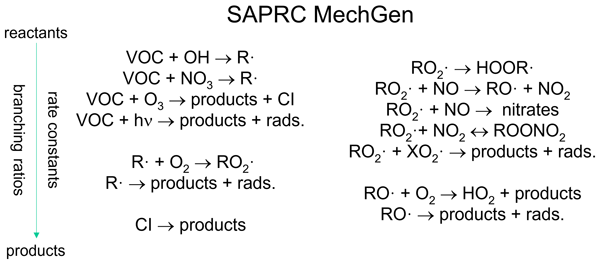
This paper describes the scientific basis for gas-phase atmospheric chemical mechanisms derived using the SAPRC mechanism generation system, MechGen. It can derive mechanisms for most organic compounds with C, H, O, or N atoms, including initial reactions of organics with OH, O3, NO3, and O3P or by photolysis, as well as the reactions of the various types of intermediates that are formed. The paper includes a description of areas of uncertainty where additional research and updates are needed.
Samiha Binte Shahid, Forrest G. Lacey, Christine Wiedinmyer, Robert J. Yokelson, and Kelley C. Barsanti
Geosci. Model Dev., 17, 7679–7711, https://doi.org/10.5194/gmd-17-7679-2024, https://doi.org/10.5194/gmd-17-7679-2024, 2024
Short summary
Short summary
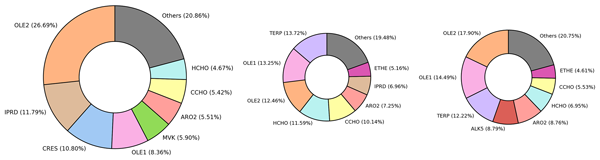
The Next-generation Emissions InVentory expansion of Akagi (NEIVA) v.1.0 is a comprehensive biomass burning emissions database that allows integration of new data and flexible querying. Data are stored in connected datasets, including recommended averages of ~1500 constituents for 14 globally relevant fire types. Individual compounds were mapped to common model species to allow better attribution of emissions in modeling studies that predict the effects of fires on air quality and climate.
Vignesh Vasudevan-Geetha, Lee Tiszenkel, Zhizhao Wang, Robin Russo, Daniel Bryant, Julia Lee-Taylor, Kelley Barsanti, and Shan-Hu Lee
EGUsphere, https://doi.org/10.5194/egusphere-2024-2454, https://doi.org/10.5194/egusphere-2024-2454, 2024
Preprint archived
Short summary
Short summary
Our laboratory experiments using two high-resolution mass spectrometers show that these OOMs can also form within the particle phase, in addition to gas-to-particle conversion processes. Our results demonstrate that particle-phase formation processes can contribute to the formation and growth of new particles in biogenic environments.
Qindan Zhu, Rebecca H. Schwantes, Matthew Coggon, Colin Harkins, Jordan Schnell, Jian He, Havala O. T. Pye, Meng Li, Barry Baker, Zachary Moon, Ravan Ahmadov, Eva Y. Pfannerstill, Bryan Place, Paul Wooldridge, Benjamin C. Schulze, Caleb Arata, Anthony Bucholtz, John H. Seinfeld, Carsten Warneke, Chelsea E. Stockwell, Lu Xu, Kristen Zuraski, Michael A. Robinson, J. Andrew Neuman, Patrick R. Veres, Jeff Peischl, Steven S. Brown, Allen H. Goldstein, Ronald C. Cohen, and Brian C. McDonald
Atmos. Chem. Phys., 24, 5265–5286, https://doi.org/10.5194/acp-24-5265-2024, https://doi.org/10.5194/acp-24-5265-2024, 2024
Short summary
Short summary
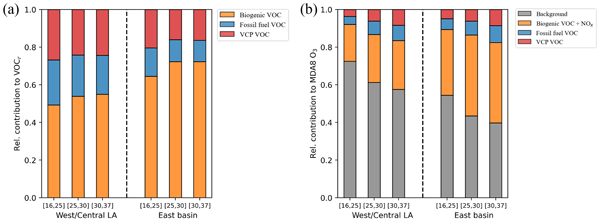
Volatile organic compounds (VOCs) fuel the production of air pollutants like ozone and particulate matter. The representation of VOC chemistry remains challenging due to its complexity in speciation and reactions. Here, we develop a chemical mechanism, RACM2B-VCP, that better represents VOC chemistry in urban areas such as Los Angeles. We also discuss the contribution of VOCs emitted from volatile chemical products and other anthropogenic sources to total VOC reactivity and O3.
Audrey J. Dang, Nathan M. Kreisberg, Tyler L. Cargill, Jhao-Hong Chen, Sydney Hornitschek, Remy Hutheesing, Jay R. Turner, and Brent J. Williams
Atmos. Meas. Tech., 17, 2067–2087, https://doi.org/10.5194/amt-17-2067-2024, https://doi.org/10.5194/amt-17-2067-2024, 2024
Short summary
Short summary
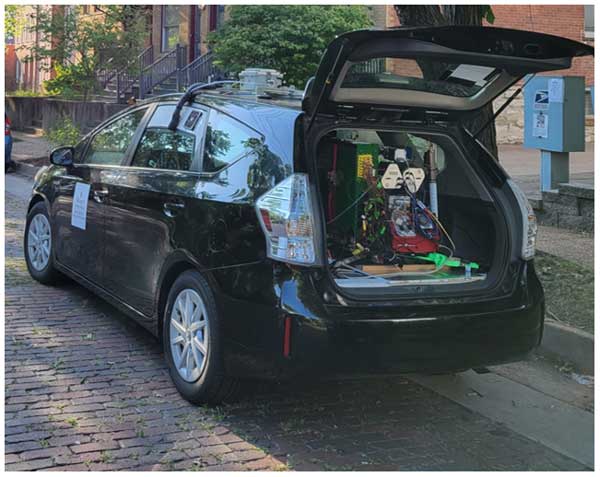
The Multichannel Organics In situ enviRonmental Analyzer (MOIRA) is a new instrument for measuring speciated volatile organic compounds (VOCs) in the air and has been developed for mapping concentrations from a hybrid car. MOIRA is characterized in the lab and pilot field studies of indoor air in a single-family residence and outdoor air during a mobile deployment. Future applications include indoor, outdoor, and lab measurements to grasp the impact of VOCs on air quality, health, and climate.
Matthew M. Coggon, Chelsea E. Stockwell, Megan S. Claflin, Eva Y. Pfannerstill, Lu Xu, Jessica B. Gilman, Julia Marcantonio, Cong Cao, Kelvin Bates, Georgios I. Gkatzelis, Aaron Lamplugh, Erin F. Katz, Caleb Arata, Eric C. Apel, Rebecca S. Hornbrook, Felix Piel, Francesca Majluf, Donald R. Blake, Armin Wisthaler, Manjula Canagaratna, Brian M. Lerner, Allen H. Goldstein, John E. Mak, and Carsten Warneke
Atmos. Meas. Tech., 17, 801–825, https://doi.org/10.5194/amt-17-801-2024, https://doi.org/10.5194/amt-17-801-2024, 2024
Short summary
Short summary
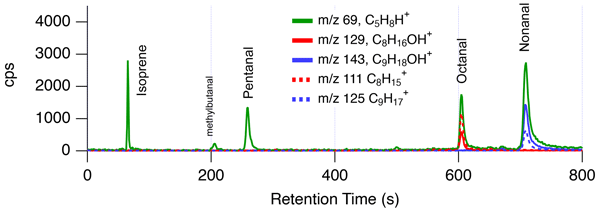
Mass spectrometry is a tool commonly used to measure air pollutants. This study evaluates measurement artifacts produced in the proton-transfer-reaction mass spectrometer. We provide methods to correct these biases and better measure compounds that degrade air quality.
Clara M. Nussbaumer, Bryan K. Place, Qindan Zhu, Eva Y. Pfannerstill, Paul Wooldridge, Benjamin C. Schulze, Caleb Arata, Ryan Ward, Anthony Bucholtz, John H. Seinfeld, Allen H. Goldstein, and Ronald C. Cohen
Atmos. Chem. Phys., 23, 13015–13028, https://doi.org/10.5194/acp-23-13015-2023, https://doi.org/10.5194/acp-23-13015-2023, 2023
Short summary
Short summary
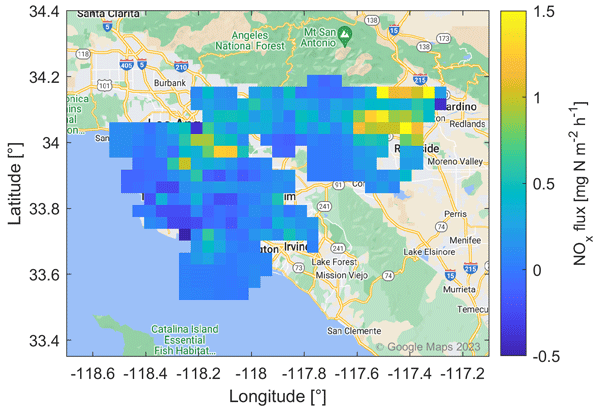
NOx is a precursor to hazardous tropospheric ozone and can be emitted from various anthropogenic sources. It is important to quantify NOx emissions in urban environments to improve the local air quality, which still remains a challenge, as sources are heterogeneous in space and time. In this study, we calculate NOx emissions over Los Angeles, based on aircraft measurements in June 2021, and compare them to a local emission inventory, which we find mostly overpredicts the measured values.
Eva Y. Pfannerstill, Caleb Arata, Qindan Zhu, Benjamin C. Schulze, Roy Woods, John H. Seinfeld, Anthony Bucholtz, Ronald C. Cohen, and Allen H. Goldstein
Atmos. Chem. Phys., 23, 12753–12780, https://doi.org/10.5194/acp-23-12753-2023, https://doi.org/10.5194/acp-23-12753-2023, 2023
Short summary
Short summary
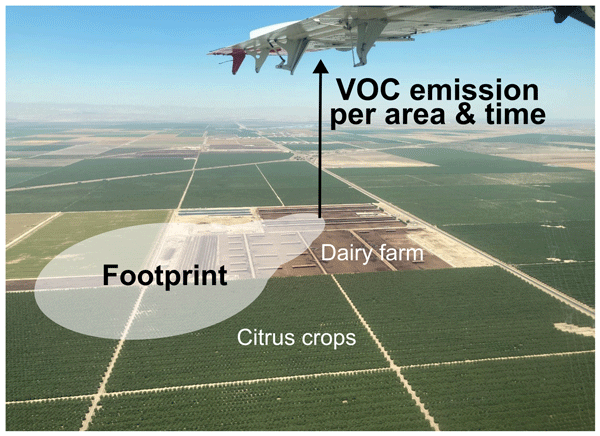
The San Joaquin Valley is an agricultural area with poor air quality. Organic gases drive the formation of hazardous air pollutants. Agricultural emissions of these gases are not well understood and have rarely been quantified at landscape scale. By combining aircraft-based emission measurements with land cover information, we found mis- or unrepresented emission sources. Our results help in understanding of pollution sources and in improving predictions of air quality in agricultural regions.
Yutong Liang, Rebecca A. Wernis, Kasper Kristensen, Nathan M. Kreisberg, Philip L. Croteau, Scott C. Herndon, Arthur W. H. Chan, Nga L. Ng, and Allen H. Goldstein
Atmos. Chem. Phys., 23, 12441–12454, https://doi.org/10.5194/acp-23-12441-2023, https://doi.org/10.5194/acp-23-12441-2023, 2023
Short summary
Short summary
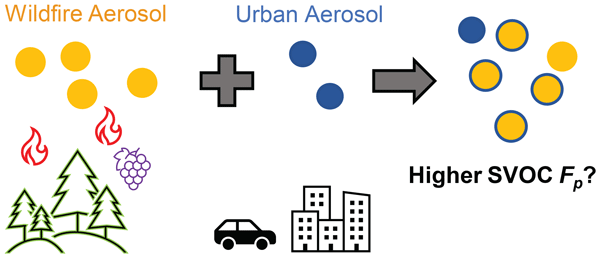
We measured the gas–particle partitioning behaviors of biomass burning markers and examined the effect of wildfire organic aerosol on the partitioning of semivolatile organic compounds. Most compounds measured are less volatile than model predictions. Wildfire aerosol enhanced the condensation of polar compounds and caused some nonpolar (e.g., polycyclic aromatic hydrocarbons) compounds to partition into the gas phase, thus affecting their lifetimes in the atmosphere and the mode of exposure.
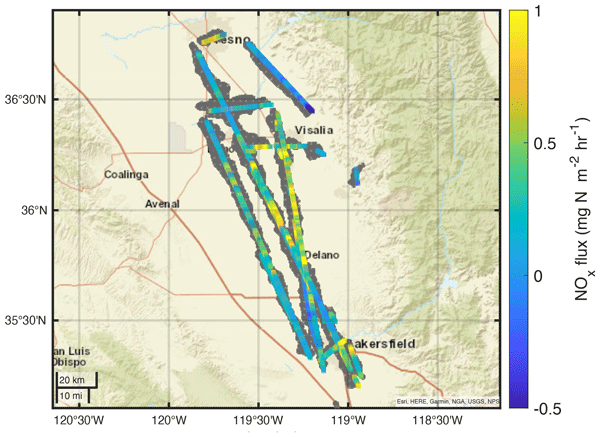
Qindan Zhu, Bryan Place, Eva Y. Pfannerstill, Sha Tong, Huanxin Zhang, Jun Wang, Clara M. Nussbaumer, Paul Wooldridge, Benjamin C. Schulze, Caleb Arata, Anthony Bucholtz, John H. Seinfeld, Allen H. Goldstein, and Ronald C. Cohen
Atmos. Chem. Phys., 23, 9669–9683, https://doi.org/10.5194/acp-23-9669-2023, https://doi.org/10.5194/acp-23-9669-2023, 2023
Short summary
Short summary
Nitrogen oxide (NOx) is a hazardous air pollutant, and it is the precursor of short-lived climate forcers like tropospheric ozone and aerosol particles. While NOx emissions from transportation has been strictly regulated, soil NOx emissions are overlooked. We use the airborne flux measurements to observe NOx emissions from highways and urban and cultivated soil land cover types. We show non-negligible soil NOx emissions, which are significantly underestimated in current model simulations.
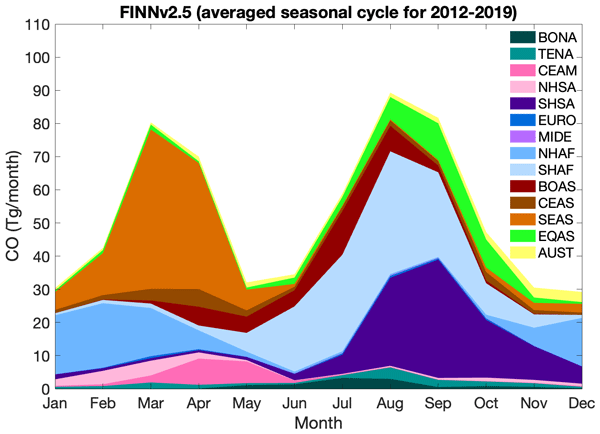
Christine Wiedinmyer, Yosuke Kimura, Elena C. McDonald-Buller, Louisa K. Emmons, Rebecca R. Buchholz, Wenfu Tang, Keenan Seto, Maxwell B. Joseph, Kelley C. Barsanti, Annmarie G. Carlton, and Robert Yokelson
Geosci. Model Dev., 16, 3873–3891, https://doi.org/10.5194/gmd-16-3873-2023, https://doi.org/10.5194/gmd-16-3873-2023, 2023
Short summary
Short summary
The Fire INventory from NCAR (FINN) provides daily global estimates of emissions from open fires based on satellite detections of hot spots. This version has been updated to apply MODIS and VIIRS satellite fire detection and better represents both large and small fires. FINNv2.5 generates more emissions than FINNv1 and is in general agreement with other fire emissions inventories. The new estimates are consistent with satellite observations, but uncertainties remain regionally and by pollutant.
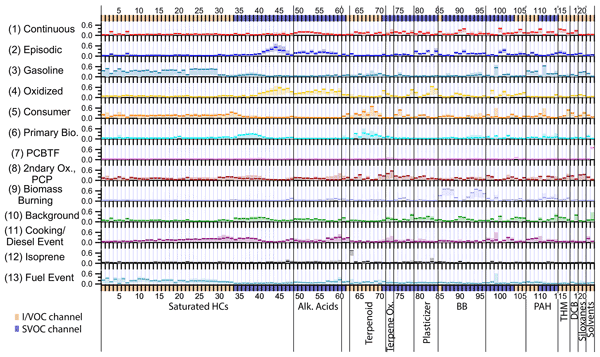
Rebecca A. Wernis, Nathan M. Kreisberg, Robert J. Weber, Greg T. Drozd, and Allen H. Goldstein
Atmos. Chem. Phys., 22, 14987–15019, https://doi.org/10.5194/acp-22-14987-2022, https://doi.org/10.5194/acp-22-14987-2022, 2022
Short summary
Short summary
We measured volatile and intermediate-volatility gases and semivolatile gas- and particle-phase compounds in the atmosphere during an 11 d period in a Bay Area suburb. We separated compounds based on variability in time to arrive at 13 distinct sources. Some compounds emitted from plants are found in greater quantities as fragrance compounds in consumer products. The wide volatility range of these measurements enables the construction of more complete source profiles.
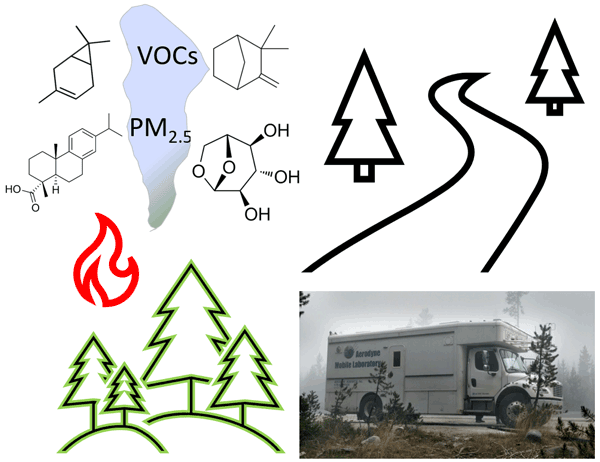
Yutong Liang, Christos Stamatis, Edward C. Fortner, Rebecca A. Wernis, Paul Van Rooy, Francesca Majluf, Tara I. Yacovitch, Conner Daube, Scott C. Herndon, Nathan M. Kreisberg, Kelley C. Barsanti, and Allen H. Goldstein
Atmos. Chem. Phys., 22, 9877–9893, https://doi.org/10.5194/acp-22-9877-2022, https://doi.org/10.5194/acp-22-9877-2022, 2022
Short summary
Short summary
This article reports the measurements of organic compounds emitted from western US wildfires. We identified and quantified 240 particle-phase compounds and 72 gas-phase compounds emitted in wildfire and related the emissions to the modified combustion efficiency. Higher emissions of diterpenoids and monoterpenes were observed, likely due to distillation from unburned heated vegetation. Our results can benefit future source apportionment and modeling studies as well as exposure assessments.

Emily B. Franklin, Lindsay D. Yee, Bernard Aumont, Robert J. Weber, Paul Grigas, and Allen H. Goldstein
Atmos. Meas. Tech., 15, 3779–3803, https://doi.org/10.5194/amt-15-3779-2022, https://doi.org/10.5194/amt-15-3779-2022, 2022
Short summary
Short summary
The composition of atmospheric aerosols are extremely complex, containing hundreds of thousands of estimated individual compounds. The majority of these compounds have never been catalogued in widely used databases, making them extremely difficult for atmospheric chemists to identify and analyze. In this work, we present Ch3MS-RF, a machine-learning-based model to enable characterization of complex mixtures and prediction of structure-specific properties of unidentifiable organic compounds.
Christos Stamatis and Kelley Claire Barsanti
Atmos. Meas. Tech., 15, 2591–2606, https://doi.org/10.5194/amt-15-2591-2022, https://doi.org/10.5194/amt-15-2591-2022, 2022
Short summary
Short summary
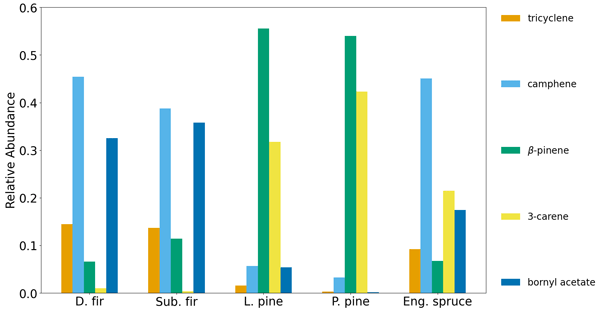
Building on the identification of hundreds of gas-phase chemicals in smoke samples from laboratory and field studies, an algorithm was developed that successfully identified chemical patterns that were consistent among types of trees and unique between types of trees that are common fuels in western coniferous forests. The algorithm is a promising approach for selecting chemical speciation profiles for air quality modeling using a highly reduced suite of measured compounds.

Andrew J. Lindsay, Daniel C. Anderson, Rebecca A. Wernis, Yutong Liang, Allen H. Goldstein, Scott C. Herndon, Joseph R. Roscioli, Christoph Dyroff, Ed C. Fortner, Philip L. Croteau, Francesca Majluf, Jordan E. Krechmer, Tara I. Yacovitch, Walter B. Knighton, and Ezra C. Wood
Atmos. Chem. Phys., 22, 4909–4928, https://doi.org/10.5194/acp-22-4909-2022, https://doi.org/10.5194/acp-22-4909-2022, 2022
Short summary
Short summary
Wildfire smoke dramatically impacts air quality and often has elevated concentrations of ozone. We present measurements of ozone and its precursors at a rural site periodically impacted by wildfire smoke. Measurements of total peroxy radicals, key ozone precursors that have been studied little within wildfires, compare well with chemical box model predictions. Our results indicate no serious issues with using current chemistry mechanisms to model chemistry in aged wildfire plumes.
Qi Li, Jia Jiang, Isaac K. Afreh, Kelley C. Barsanti, and David R. Cocker III
Atmos. Chem. Phys., 22, 3131–3147, https://doi.org/10.5194/acp-22-3131-2022, https://doi.org/10.5194/acp-22-3131-2022, 2022
Short summary
Short summary
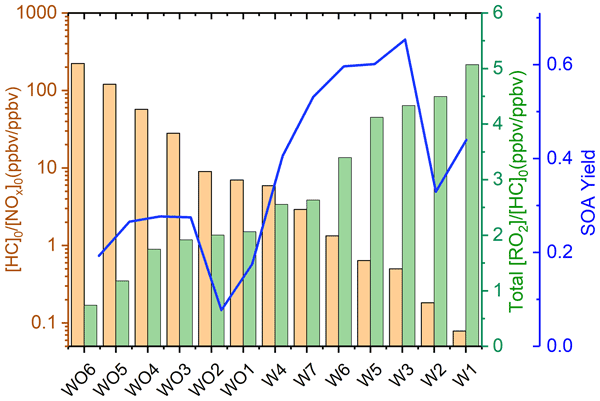
Chamber-derived secondary organic aerosol (SOA) yields from camphene are reported for the first time. The role of peroxy radicals (RO2) was investigated using chemically detailed box models. We observed higher SOA yields (up to 64 %) in the experiments with added NOx than without due to the formation of highly oxygenated organic molecules (HOMs) when
NOx is present. This work can improve the representation of camphene in air quality models and provide insights into other monoterpene studies.
Delaney B. Kilgour, Gordon A. Novak, Jon S. Sauer, Alexia N. Moore, Julie Dinasquet, Sarah Amiri, Emily B. Franklin, Kathryn Mayer, Margaux Winter, Clare K. Morris, Tyler Price, Francesca Malfatti, Daniel R. Crocker, Christopher Lee, Christopher D. Cappa, Allen H. Goldstein, Kimberly A. Prather, and Timothy H. Bertram
Atmos. Chem. Phys., 22, 1601–1613, https://doi.org/10.5194/acp-22-1601-2022, https://doi.org/10.5194/acp-22-1601-2022, 2022
Short summary
Short summary
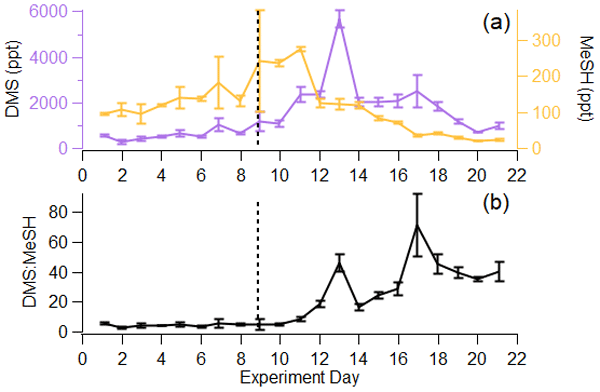
We report measurements of gas-phase volatile organosulfur molecules made during a mesocosm phytoplankton bloom experiment. Dimethyl sulfide (DMS), methanethiol (MeSH), and benzothiazole accounted for on average over 90 % of total gas-phase sulfur emissions. This work focuses on factors controlling the production and emission of DMS and MeSH and the role of non-DMS molecules (such as MeSH and benzothiazole) in secondary sulfate formation in coastal marine environments.
Zachary C. J. Decker, Michael A. Robinson, Kelley C. Barsanti, Ilann Bourgeois, Matthew M. Coggon, Joshua P. DiGangi, Glenn S. Diskin, Frank M. Flocke, Alessandro Franchin, Carley D. Fredrickson, Georgios I. Gkatzelis, Samuel R. Hall, Hannah Halliday, Christopher D. Holmes, L. Gregory Huey, Young Ro Lee, Jakob Lindaas, Ann M. Middlebrook, Denise D. Montzka, Richard Moore, J. Andrew Neuman, John B. Nowak, Brett B. Palm, Jeff Peischl, Felix Piel, Pamela S. Rickly, Andrew W. Rollins, Thomas B. Ryerson, Rebecca H. Schwantes, Kanako Sekimoto, Lee Thornhill, Joel A. Thornton, Geoffrey S. Tyndall, Kirk Ullmann, Paul Van Rooy, Patrick R. Veres, Carsten Warneke, Rebecca A. Washenfelder, Andrew J. Weinheimer, Elizabeth Wiggins, Edward Winstead, Armin Wisthaler, Caroline Womack, and Steven S. Brown
Atmos. Chem. Phys., 21, 16293–16317, https://doi.org/10.5194/acp-21-16293-2021, https://doi.org/10.5194/acp-21-16293-2021, 2021
Short summary
Short summary
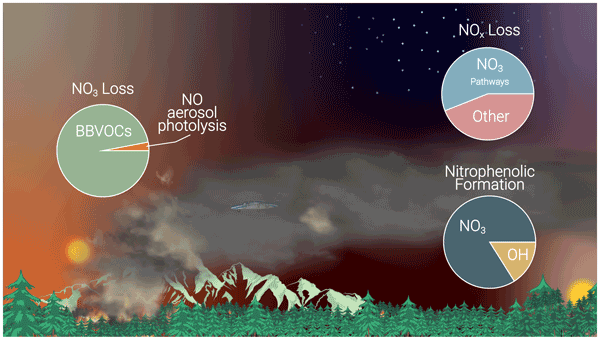
To understand air quality impacts from wildfires, we need an accurate picture of how wildfire smoke changes chemically both day and night as sunlight changes the chemistry of smoke. We present a chemical analysis of wildfire smoke as it changes from midday through the night. We use aircraft observations from the FIREX-AQ field campaign with a chemical box model. We find that even under sunlight typical
nighttimechemistry thrives and controls the fate of key smoke plume chemical processes.
Cited articles
Adachi, K., Dibb, J. E., Katich, J. M., Schwarz, J. P., Guo, H., Campuzano-Jost, P., Jimenez, J. L., Peischl, J., Holmes, C. D., and Crawford, J.: Occurrence, abundance, and formation of atmospheric tarballs from a wide range of wildfires in the western US, Atmos. Chem. Phys., 24, 10985–11004, https://doi.org/10.5194/acp-24-10985-2024, 2024.
Aerosol Magee Scientific: Aethalometer(R) – AE36s: Expand the fronteirs of aerosol Science with cutting-edge Black Carbon instrument, Aerosol Magee Scientific, Ljubljana, Slovenia, https://aerosolmageesci.com/webdocuments/AE36s_WP_March2024.pdf (last access: 29 December 2025), 2024.
Akagi, S. K., Yokelson, R. J., Wiedinmyer, C., Alvarado, M. J., Reid, J. S., Karl, T., Crounse, J. D., and Wennberg, P. O.: Emission factors for open and domestic biomass burning for use in atmospheric models, Atmos. Chem. Phys., 11, 4039–4072, https://doi.org/10.5194/acp-11-4039-2011, 2011.
Andreae, M. O.: Emission of trace gases and aerosols from biomass burning – an updated assessment, Atmos. Chem. Phys., 19, 8523–8546, https://doi.org/10.5194/acp-19-8523-2019, 2019.
Aurell, J. and Gullett, B. K.: Emission Factors from Aerial and Ground Measurements of Field and Laboratory Forest Burns in the Southeastern U. S.: PM2.5, Black and Brown Carbon, VOC, and PCDD/PCDF, Environ. Sci. Technol., 47, 8443–8452, https://doi.org/10.1021/es402101k, 2013.
Aurell, J., Gullett, B., Holder, A., Kiros, F., Mitchell, W., Watts, A., and Ottmar, R.: Wildland fire emission sampling at Fishlake National Forest, Utah using an unmanned aircraft system, Atmos. Environ., 247, 118193, https://doi.org/10.1016/j.atmosenv.2021.118193, 2021.
Bian, Q., Ford, B., Pierce, J. R., and Kreidenweis, S. M.: A Decadal Climatology of Chemical, Physical, and Optical Properties of Ambient Smoke in the Western and Southeastern United States, J. Geophys. Res.-Atmos., 125, e2019JD031372, https://doi.org/10.1029/2019JD031372, 2020.
Binte Shahid, S., Lacey, F. G., Wiedinmyer, C., Yokelson, R. J., and Barsanti, K. C.: NEIVAv1.0: Next-generation Emissions InVentory expansion of Akagi et al. (2011) version 1.0, Geosci. Model Dev., 17, 7679–7711, https://doi.org/10.5194/gmd-17-7679-2024, 2024.
Bond, T. C., Streets, D. G., Yarber, K. F., Nelson, S. M., Woo, J.-H., and Klimont, Z.: A technology-based global inventory of black and organic carbon emissions from combustion, J. Geophys. Res.-Atmos., 109, https://doi.org/10.1029/2003JD003697, 2004.
Bond, T. C., Doherty, S. J., Fahey, D. W., Forster, P. M., Berntsen, T., DeAngelo, B. J., Flanner, M. G., Ghan, S., Kärcher, B., Koch, D., Kinne, S., Kondo, Y., Quinn, P. K., Sarofim, M. C., Schultz, M. G., Schulz, M., Venkataraman, C., Zhang, H., Zhang, S., Bellouin, N., Guttikunda, S. K., Hopke, P. K., Jacobson, M. Z., Kaiser, J. W., Klimont, Z., Lohmann, U., Schwarz, J. P., Shindell, D., Storelvmo, T., Warren, S. G., and Zender, C. S.: Bounding the role of black carbon in the climate system: A scientific assessment, J. Geophys. Res.-Atmos., 118, 5380–5552, https://doi.org/10.1002/jgrd.50171, 2013.
Burling, I. R., Yokelson, R. J., Akagi, S. K., Urbanski, S. P., Wold, C. E., Griffith, D. W. T., Johnson, T. J., Reardon, J., and Weise, D. R.: Airborne and ground-based measurements of the trace gases and particles emitted by prescribed fires in the United States, Atmos. Chem. Phys., 11, 12197–12216, https://doi.org/10.5194/acp-11-12197-2011, 2011.
Butler, J.: rx-burn, Github Repository [code], https://github.com/BAAQMD-jbutler/rx-burn, last access: 29 December 2025.
Butler, J., Tasnia, A., Sengupta, D., Kreisberg, N., Barsanti, K., Goldstein, A., Preble, C., Sugrue, R., and Kirchstetter, T.: Datasets for Emission Factors and Optical Properties of Black and Brown Carbon Emitted at a Mixed-Conifer Prescribed Burn, Version v1, Zenodo [data set], https://doi.org/10.5281/zenodo.17604670, 2025.
California Air Resources Board: California's Black Carbon Emission Inventory – Technical Support Document, California Air Resources Board, Sacramento, CA, https://ww2.arb.ca.gov/sites/default/files/classic/cc/inventory/slcp/doc/bc_inventory_tsd_20160411.pdf (last access: 29 December 2025), 2016.
California Air Resources Board: Greenhouse Gas Emissions of Contemporary Wildfire, Prescribed Fire, and Forest Management Activities, California Air Resources Board, Sacramento, CA, https://ww2.arb.ca.gov/sites/default/files/classic/cc/inventory/pubs/ca_ghg_wildfire_forestmanagement.pdf (last access: 29 December 2025), 2020.
Caubel, J. J., Cados, T. E., and Kirchstetter, T. W.: A new black carbon sensor for dense air quality monitoring networks, Sensors, 18, 738, https://doi.org/10.3390/s18030738, 2018.
Cazorla, A., Bahadur, R., Suski, K. J., Cahill, J. F., Chand, D., Schmid, B., Ramanathan, V., and Prather, K. A.: Relating aerosol absorption due to soot, organic carbon, and dust to emission sources determined from in-situ chemical measurements, Atmos. Chem. Phys., 13, 9337–9350, https://doi.org/10.5194/acp-13-9337-2013, 2013.
Chakrabarty, R. K., Shetty, N. J., Thind, A. S., Beeler, P., Sumlin, B. J., Zhang, C., Liu, P., Idrobo, J. C., Adachi, K., Wagner, N. L., Schwarz, J. P., Ahern, A., Sedlacek, A. J., Lambe, A., Daube, C., Lyu, M., Liu, C., Herndon, S., Onasch, T. B., and Mishra, R.: Shortwave absorption by wildfire smoke dominated by dark brown carbon, Nat. Geosci., 16, 683–688, https://doi.org/10.1038/s41561-023-01237-9, 2023.
Chelluboyina, G. S., Kapoor, T. S., and Chakrabarty, R. K.: Dark brown carbon from wildfires: a potent snow radiative forcing agent?, npj Clim. Atmos. Sci., 7, 1–10, https://doi.org/10.1038/s41612-024-00738-7, 2024.
Chen, L.-W. A., Moosmüller, H., Arnott, W. P., Chow, J. C., Watson, J. G., Susott, R. A., Babbitt, R. E., Wold, C. E., Lincoln, E. N., and Hao, W. M.: Emissions from Laboratory Combustion of Wildland Fuels: Emission Factors and Source Profiles, Environ. Sci. Technol., 41, 4317–4325, https://doi.org/10.1021/es062364i, 2007.
Chow, J. C., Watson, J. G., Lowenthal, D. H., Antony Chen, L.-W., and Motallebi, N.: PM2.5 source profiles for black and organic carbon emission inventories, Atmos. Environ., 45, 5407–5414, https://doi.org/10.1016/j.atmosenv.2011.07.011, 2011.
Connolly, R., Marlier, M. E., Garcia-Gonzales, D. A., Wilkins, J., Su, J., Bekker, C., Jung, J., Bonilla, E., Burnett, R. T., Zhu, Y., and Jerrett, M.: Mortality attributable to PM2.5 from wildland fires in California from 2008 to 2018, Sci. Adv., 10, eadl1252, https://doi.org/10.1126/sciadv.adl1252, 2024.
Cruz Núñez, X., Villers Ruiz, L., and Gay García, C.: Black carbon and organic carbon emissions from wildfires in Mexico, Atmósfera, 27, 165–172, https://doi.org/10.1016/S0187-6236(14)71107-5, 2014.
Dong, Q., Meng, X., Gong, J., and Zhu, T.: A review of advances in black carbon exposure assessment and health effects, CSB, 69, 703–716, https://doi.org/10.1360/TB-2023-0409, 2023.
El Asmar, R., Li, Z., Tanner, D. J., Hu, Y., O'Neill, S., Huey, L. G., Odman, M. T., and Weber, R. J.: A multi-site passive approach to studying the emissions and evolution of smoke from prescribed fires, Atmos. Chem. Phys., 24, 12749–12773, https://doi.org/10.5194/acp-24-12749-2024, 2024.
Feng, Y., Ramanathan, V., and Kotamarthi, V. R.: Brown carbon: a significant atmospheric absorber of solar radiation?, Atmos. Chem. Phys., 13, 8607–8621, https://doi.org/10.5194/acp-13-8607-2013, 2013.
Grahame, T. J., Klemm, R., and Schlesinger, R. B.: Public health and components of particulate matter: The changing assessment of black carbon, JAPCA J. Air Waste Ma., 64, 620–660, https://doi.org/10.1080/10962247.2014.912692, 2014.
Hadley, O. L. and Kirchstetter, T. W.: Black-carbon reduction of snow albedo, Nat. Clim. Change, 2, 437–440, https://doi.org/10.1038/nclimate1433, 2012.
Harrison, R. M., Beddows, D. C. S., Jones, A. M., Calvo, A., Alves, C., and Pio, C.: An evaluation of some issues regarding the use of aethalometers to measure woodsmoke concentrations, Atmos. Environ., 80, 540–548, https://doi.org/10.1016/j.atmosenv.2013.08.026, 2013.
Hosseini, S., Urbanski, S. P., Dixit, P., Qi, L., Burling, I. R., Yokelson, R. J., Johnson, T. J., Shrivastava, M., Jung, H. S., Weise, D. R., Miller, J. W., and Cocker III, D. R.: Laboratory characterization of PM emissions from combustion of wildland biomass fuels, J. Geophys. Res.-Atmos., 118, 9914–9929, https://doi.org/10.1002/jgrd.50481, 2013.
Huang, J., Hopke, P. K., Choi, H.-D., Laing, J. R., Cui, H., Zananski, T. J., Chandrasekaran, S. R., Rattigan, O. V., and Holsen, T. M.: Mercury (Hg) emissions from domestic biomass combustion for space heating, Chemosphere, 84, 1694–1699, https://doi.org/10.1016/j.chemosphere.2011.04.078, 2011.
Ivančič, M., Gregorič, A., Lavrič, G., Alföldy, B., Ježek, I., Hasheminassab, S., Pakbin, P., Ahangar, F., Sowlat, M., Boddeker, S., and Rigler, M.: Two-year-long high-time-resolution apportionment of primary and secondary carbonaceous aerosols in the Los Angeles Basin using an advanced total carbon–black carbon (TC-BC(λ)) method, Sci. Total Environ., 848, 157606, https://doi.org/10.1016/j.scitotenv.2022.157606, 2022.
Janssen, N. A. H., Hoek, G., Simic-Lawson, M., Fischer, P., van Bree, L., ten Brink, H., Keuken, M., Atkinson, R. W., Anderson, H. R., Brunekreef, B., and Cassee, F. R.: Black carbon as an additional indicator of the adverse health effects of airborne particles compared with PM10 and PM2.5, Environ Health Perspect, 119, 1691–1699, https://doi.org/10.1289/ehp.1003369, 2011.
Kaspari, S., McKenzie Skiles, S., Delaney, I., Dixon, D., and Painter, T. H.: Accelerated glacier melt on Snow Dome, Mount Olympus, Washington, USA, due to deposition of black carbon and mineral dust from wildfire, J. Geophys. Res.-Atmos., 120, 2793–2807, https://doi.org/10.1002/2014JD022676, 2015.
Keane, R. E. and Lutes, D.: First-Order Fire Effects Model (FOFEM), in: Encyclopedia of Wildfires and Wildland-Urban Interface (WUI) Fires, edited by: Manzello, S. L., Springer International Publishing, Cham, 1–5, https://doi.org/10.1007/978-3-319-51727-8_74-1, 2018.
Kirchstetter, T. W. and Thatcher, T. L.: Contribution of organic carbon to wood smoke particulate matter absorption of solar radiation, Atmos. Chem. Phys., 12, 6067–6072, https://doi.org/10.5194/acp-12-6067-2012, 2012.
Kirchstetter, T. W., Novakov, T., and Hobbs, P. V.: Evidence that the spectral dependence of light absorption by aerosols is affected by organic carbon, J. Geophys. Res.-Atmos., 109, https://doi.org/10.1029/2004JD004999, 2004.
Larkin, N. K., Raffuse, S. M., Huang, S., Pavlovic, N., Lahm, P., and Rao, V.: The Comprehensive Fire Information Reconciled Emissions (CFIRE) inventory: Wildland fire emissions developed for the 2011 and 2014 U. S. National Emissions Inventory, JAPCA J. Air Waste Ma., 70, 1165–1185, https://doi.org/10.1080/10962247.2020.1802365, 2020.
BlueSky Modeling Framework: https://www.airfire.org/data/bluesky, last access: 12 November 2024.
Laskin, A., Laskin, J., and Nizkorodov, S. A.: Chemistry of Atmospheric Brown Carbon, Chem. Rev., 115, 4335–4382, https://doi.org/10.1021/cr5006167, 2015.
Levinson, R., Akbari, H., and Berdahl, P.: Measuring solar reflectance – Part I: Defining a metric that accurately predicts solar heat gain, Sol. Energy, 84, 1717–1744, https://doi.org/10.1016/j.solener.2010.04.018, 2010.
Li, J. and Li, Y.: Ozone deterioration over North China plain caused by light absorption of black carbon and organic carbon, Atmos. Environ., 313, 120048, https://doi.org/10.1016/j.atmosenv.2023.120048, 2023.
Liu, C., Chung, C. E., Yin, Y., and Schnaiter, M.: The absorption Ångström exponent of black carbon: from numerical aspects, Atmos. Chem. Phys., 18, 6259–6273, https://doi.org/10.5194/acp-18-6259-2018, 2018.
Lutes, D. C.: FOFEM 6.7 User Guide, United States Forest Service, 2020.
Maji, K. J., Li, Z., Vaidyanathan, A., Hu, Y., Stowell, J. D., Milando, C., Wellenius, G., Kinney, P. L., Russell, A. G., and Odman, M. T.: Estimated Impacts of Prescribed Fires on Air Quality and Premature Deaths in Georgia and Surrounding Areas in the US, 2015–2020, Environ. Sci. Technol., https://doi.org/10.1021/acs.est.4c00890, 2024.
Marsavin, A., Gageldonk, R. van, Bernays, N., May, N. W., Jaffe, D. A., and Fry, J. L.: Optical properties of biomass burning aerosol during the 2021 Oregon fire season: comparison between wild and prescribed fires, Environ. Sci.: Atmos., 3, 608–626, https://doi.org/10.1039/D2EA00118G, 2023.
May, A. A., McMeeking, G. R., Lee, T., Taylor, J. W., Craven, J. S., Burling, I., Sullivan, A. P., Akagi, S., Collett, J. L., Flynn, M., Coe, H., Urbanski, S. P., Seinfeld, J. H., Yokelson, R. J., and Kreidenweis, S. M.: Aerosol emissions from prescribed fires in the United States: A synthesis of laboratory and aircraft measurements, J. Geophys. Res.-Atmos., 119, 11826–11849, https://doi.org/10.1002/2014JD021848, 2014.
McMeeking, G. R., Kreidenweis, S. M., Baker, S., Carrico, C. M., Chow, J. C., Collett, J. L., Hao, W. M., Holden, A. S., Kirchstetter, T. W., Malm, W. C., Moosmüller, H., Sullivan, A. P., and Wold, C. E.: Emissions of trace gases and aerosols during the open combustion of biomass in the laboratory, J. Geophys. Res.-Atmos., 114, https://doi.org/10.1029/2009JD011836, 2009.
Miller, R. K., Field, C. B., and Mach, K. J.: Barriers and enablers for prescribed burns for wildfire management in California, Nat. Sustain, 3, 101–109, https://doi.org/10.1038/s41893-019-0451-7, 2020.
Mok, J., Krotkov, N. A., Arola, A., Torres, O., Jethva, H., Andrade, M., Labow, G., Eck, T. F., Li, Z., Dickerson, R. R., Stenchikov, G. L., Osipov, S., and Ren, X.: Impacts of brown carbon from biomass burning on surface UV and ozone photochemistry in the Amazon Basin, Sci. Rep.-UK, 6, 36940, https://doi.org/10.1038/srep36940, 2016.
Nelson Jr., R. M.: An evaluation of the carbon balance technique for estimating emission factors and fuel consumption in forest fires, Res. Pap. SE-231. Asheville, NC: U. S. Department of Agriculture, Forest Service, Southeastern Forest Experiment Station, 231, 9, https://doi.org/10.2737/SE-RP-231, 1982.
North, M., Collins, B., Safford, H., and Stephenson, N.: Montane Forests, in: Ecosystems of California, University of California Press, 553–578, ISBN 978-0-520-27880-6, 2016.
Ottmar, R. D.: Wildland fire emissions, carbon, and climate: Modeling fuel consumption, Forest Ecol. Manag., 317, 41–50, https://doi.org/10.1016/j.foreco.2013.06.010, 2014.
Selimovic, V., Yokelson, R. J., Warneke, C., Roberts, J. M., de Gouw, J., Reardon, J., and Griffith, D. W. T.: Aerosol optical properties and trace gas emissions by PAX and OP-FTIR for laboratory-simulated western US wildfires during FIREX, Atmos. Chem. Phys., 18, 2929–2948, https://doi.org/10.5194/acp-18-2929-2018, 2018.
Stampfer, O., Austin, E., Ganuelas, T., Fiander, T., Seto, E., and Karr, C. J.: Use of low-cost PM monitors and a multi-wavelength aethalometer to characterize PM2.5 in the Yakama Nation reservation, Atmos. Environ., 224, 117292, https://doi.org/10.1016/j.atmosenv.2020.117292, 2020.
Steel, Z. L., Foster, D., Coppoletta, M., Lydersen, J. M., Stephens, S. L., Paudel, A., Markwith, S. H., Merriam, K., and Collins, B. M.: Ecological resilience and vegetation transition in the face of two successive large wildfires, J. Ecol., 109, 3340–3355, https://doi.org/10.1111/1365-2745.13764, 2021.
Sugrue, R. A., Preble, C. V., Butler, J. D. A., Redon-Gabel, A. J., Marconi, P., Shetty, K. D., Hill, L. A. L., Amezcua-Smith, A. M., Lukanov, B. R., and Kirchstetter, T. W.: The value of adding black carbon to community monitoring of particulate matter, Atmos. Environ., 325, 120434, https://doi.org/10.1016/j.atmosenv.2024.120434, 2024.
Tasnia, A., Lara, G., Foster, D., Sengupta, D., Butler, J. D. A., Kirchstetter, T. W., York, R., Kreisberg, N. M., Goldstein, A. H., Battles, J. J., and Barsanti, K. C.: Comprehensive Fuel and Emissions Measurements Highlight Uncertainties in Smoke Production Using Predictive Modeling Tools, ACS EST Air, 2, 982–997, https://doi.org/10.1021/acsestair.4c00142, 2025.
Thomas, S. C. and Martin, A. R.: Carbon Content of Tree Tissues: A Synthesis, Forests, 3, 332–352, https://doi.org/10.3390/f3020332, 2012.
Urbanski, S.: Wildland fire emissions, carbon, and climate: Emission factors, Forest Ecol. Manag., 317, 51–60, https://doi.org/10.1016/j.foreco.2013.05.045, 2014.
Urbanski, S. P., Hao, W. M., and Baker, S.: Chapter 4 Chemical Composition of Wildland Fire Emissions, in: Developments in Environmental Science, edited by: Bytnerowicz, A., Arbaugh, M. J., Riebau, A. R., and Andersen, C., vol. 8, Elsevier, 79–107, https://doi.org/10.1016/S1474-8177(08)00004-1, 2008.
US Environmental Protection Agency: 2020 National Emissions Inventory Technical Support Document: Fires –Wild, Prescribed, and Agricultural Field Burning, US Environmental Protection Agency, Research Triangle Park, NC, https://www.epa.gov/air-emissions-inventories/2020-national-emissions-inventory-nei-technical-support-document-tsd (last access: 29 December 2025), 2023.
SPECIATE: https://www.epa.gov/air-emissions-modeling/speciate-0, last access: 16 January 2025.
Wagstaff, M., Henderson, S. B., McLean, K. E., and Brauer, M.: Development of methods for citizen scientist mapping of residential woodsmoke in small communities, J. Environ. Manage., 311, 114788, https://doi.org/10.1016/j.jenvman.2022.114788, 2022.
Wang, X., Heald, C. L., Sedlacek, A. J., de Sá, S. S., Martin, S. T., Alexander, M. L., Watson, T. B., Aiken, A. C., Springston, S. R., and Artaxo, P.: Deriving brown carbon from multiwavelength absorption measurements: method and application to AERONET and Aethalometer observations, Atmos. Chem. Phys., 16, 12733–12752, https://doi.org/10.5194/acp-16-12733-2016, 2016.
Wang, Y., Huang, J., Zananski, T. J., Hopke, P. K., and Holsen, T. M.: Impacts of the Canadian Forest Fires on Atmospheric Mercury and Carbonaceous Particles in Northern New York, Environ. Sci. Technol., 44, 8435–8440, https://doi.org/10.1021/es1024806, 2010.
Wang, Y., Hopke, P. K., Rattigan, O. V., Xia, X., Chalupa, D. C., and Utell, M. J.: Characterization of Residential Wood Combustion Particles Using the Two-Wavelength Aethalometer, Environ. Sci. Technol., 45, 7387–7393, https://doi.org/10.1021/es2013984, 2011a.
Wang, Y., Hopke, P. K., and Utell, M. J.: Urban-scale Spatial–temporal Variability of Black Carbon and Winter Residential Wood Combustion Particles, Aerosol Air Qual. Res., 11, 473–481, https://doi.org/10.4209/aaqr.2011.01.0005, 2011b.
Ward, D. E. and Radke, L. F.: Emissions Measurements from Vegetation Fires: A Comparative Evaluation of Methods and Results, in: Fire in the Environmentl: The Ecological, Atmospheric, and Climatic Importance of Vegetation Fires, John Wiley & Sons Ltd., 53–76, 1993.
Wiedinmyer, C., Quayle, B., Geron, C., Belote, A., McKenzie, D., Zhang, X., O'Neill, S., and Wynne, K. K.: Estimating emissions from fires in North America for air quality modeling, Atmos. Environ., 40, 3419–3432, https://doi.org/10.1016/j.atmosenv.2006.02.010, 2006.
Wu, X., Sverdrup, E., Mastrandrea, M. D., Wara, M. W., and Wager, S.: Low-intensity fires mitigate the risk of high-intensity wildfires in California's forests, Sci. Adv., 9, eadi4123, https://doi.org/10.1126/sciadv.adi4123, 2023.
Yang, S., Xu, B., Cao, J., Zender, C. S., and Wang, M.: Climate effect of black carbon aerosol in a Tibetan Plateau glacier, Atmos. Environ., 111, 71–78, https://doi.org/10.1016/j.atmosenv.2015.03.016, 2015.
Yokelson, R. J., Burling, I. R., Gilman, J. B., Warneke, C., Stockwell, C. E., de Gouw, J., Akagi, S. K., Urbanski, S. P., Veres, P., Roberts, J. M., Kuster, W. C., Reardon, J., Griffith, D. W. T., Johnson, T. J., Hosseini, S., Miller, J. W., Cocker III, D. R., Jung, H., and Weise, D. R.: Coupling field and laboratory measurements to estimate the emission factors of identified and unidentified trace gases for prescribed fires, Atmos. Chem. Phys., 13, 89–116, https://doi.org/10.5194/acp-13-89-2013, 2013.
Zeng, L., Dibb, J., Scheuer, E., Katich, J. M., Schwarz, J. P., Bourgeois, I., Peischl, J., Ryerson, T., Warneke, C., Perring, A. E., Diskin, G. S., DiGangi, J. P., Nowak, J. B., Moore, R. H., Wiggins, E. B., Pagonis, D., Guo, H., Campuzano-Jost, P., Jimenez, J. L., Xu, L., and Weber, R. J.: Characteristics and evolution of brown carbon in western United States wildfires, Atmos. Chem. Phys., 22, 8009–8036, https://doi.org/10.5194/acp-22-8009-2022, 2022.
Zhang, A., Wang, Y., Zhang, Y., Weber, R. J., Song, Y., Ke, Z., and Zou, Y.: Modeling the global radiative effect of brown carbon: a potentially larger heating source in the tropical free troposphere than black carbon, Atmos. Chem. Phys., 20, 1901–1920, https://doi.org/10.5194/acp-20-1901-2020, 2020.
Short summary
Prescribed burns are controlled fires used to prevent wildfires. Smoke emissions were measured to characterize emission factors and optical properties of black and brown soot particles. Brown particles were emitted at 7–14 times that of black particles and contributed 82 % of atmospheric absorption by particles for ultraviolet light and 23 % for total solar radiation. These findings will improve inventories and climate models for prescribed burns.
Prescribed burns are controlled fires used to prevent wildfires. Smoke emissions were measured...


Altmetrics
Final-revised paper
Preprint