
Articles | Volume 26, issue 11
https://doi.org/10.5194/acp-26-8225-2026
© Author(s) 2026. This work is distributed under
the Creative Commons Attribution 4.0 License.
the Creative Commons Attribution 4.0 License.
https://doi.org/10.5194/acp-26-8225-2026
© Author(s) 2026. This work is distributed under
the Creative Commons Attribution 4.0 License.
the Creative Commons Attribution 4.0 License.
Research article
| 
12 Jun 2026
Research article |
| 12 Jun 2026
| 12 Jun 2026
Correcting aerosol extinction coefficient vertical structure biases in GEOS-chem via a physics-informed transformer with physical mechanism diagnosis
Jiajun Xiong
Hubei Key Laboratory of Regional Ecology and Environmental Change, School of Geography and Information Engineering, China University of Geosciences, Wuhan, 430074, China
Yi Wang
CORRESPONDING AUTHOR

Hubei Key Laboratory of Regional Ecology and Environmental Change, School of Geography and Information Engineering, China University of Geosciences, Wuhan, 430074, China
Department of Chemical and Biochemical Engineering, The University of Iowa, Iowa City, IA 52242, USA
Center for Global and Regional Environmental Research, The University of Iowa, Iowa City, IA 52242, USA
Yanyu Wang
State Environmental Protection Key Laboratory of Formation and Prevention of Urban Air Pollution Complex, Shanghai Academy of Environmental Sciences, Shanghai 200233, China
Meng Zhou
Goddard Earth Sciences Technology and Research, University of Maryland, Baltimore County, MA 21250, USA
NASA/Goddard Space Flight Center, Global Modeling and Assimilation Office, Greenbelt, MD 20771, USA
Minghui Tao
Hubei Key Laboratory of Regional Ecology and Environmental Change, School of Geography and Information Engineering, China University of Geosciences, Wuhan, 430074, China
Wenhui Dong
Hubei Key Laboratory of Regional Ecology and Environmental Change, School of Geography and Information Engineering, China University of Geosciences, Wuhan, 430074, China
Jhoon Kim
Department of Atmospheric Sciences, Yonsei University, Seoul, 03722, South Korea
Lunche Wang
Hubei Key Laboratory of Regional Ecology and Environmental Change, School of Geography and Information Engineering, China University of Geosciences, Wuhan, 430074, China
Related authors
No articles found.
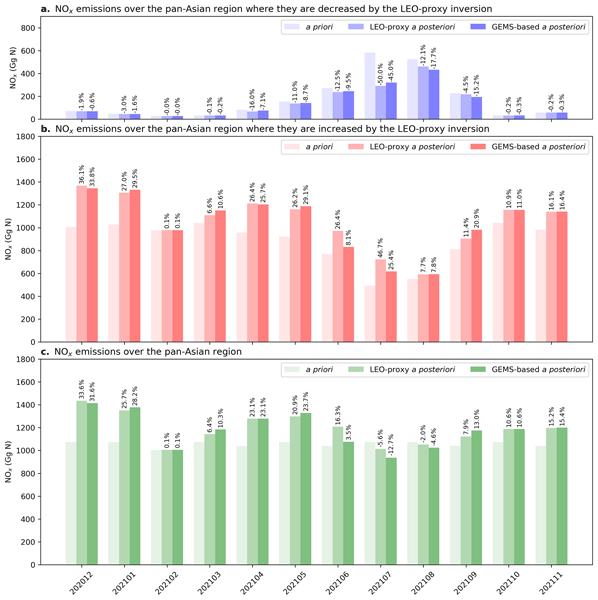
Fei Yao, Paul I. Palmer, Xiaolin Wang, Yi Wang, Gitaek T. Lee, Haolin Wang, Liang Feng, Daven K. Henze, and Rokjin J. Park
Atmos. Chem. Phys., 26, 12049–12066, https://doi.org/10.5194/acp-26-12049-2026, https://doi.org/10.5194/acp-26-12049-2026, 2026
Short summary
Short summary
The Geostationary Environment Monitoring Spectrometer (GEMS) provides hourly measurements of tropospheric NO2 during sunlight hours. We assess the added value of GEMS geostationary satellite observations of tropospheric NO2 to constrain monthly NOx emissions and subsequent air quality modelling over a full annual cycle across Asia. We observe a clear seasonal divide, with significant benefits outside summer while limited or even detrimental impacts during summer.
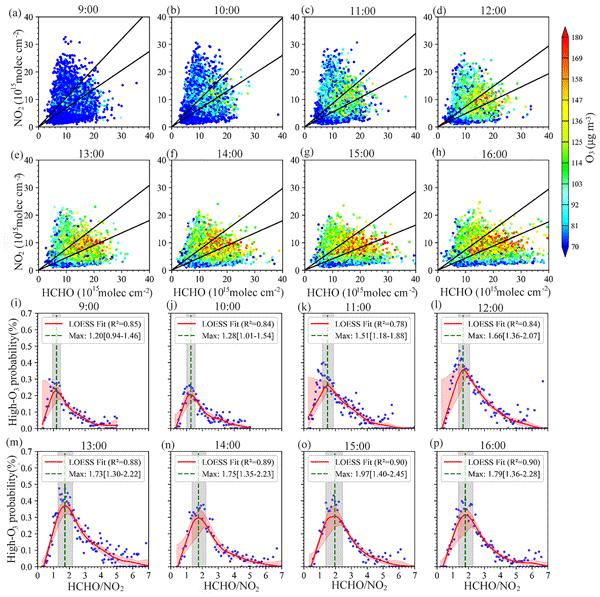
Cheng Huang, Junjie Wang, Yinbao Jin, Min Min, Qi Fan, and Jhoon Kim
Atmos. Chem. Phys., 26, 10221–10240, https://doi.org/10.5194/acp-26-10221-2026, https://doi.org/10.5194/acp-26-10221-2026, 2026
Short summary
Short summary
Ozone pollution is a growing issue in China, with levels increasing steadily from 2020 to 2024. This study uses satellite data to explore how different pollutants interact to form ozone. The results show that urban areas shift their pollution control strategies throughout the day. These findings suggest that targeting specific pollutants at different times could significantly improve air quality and help reduce harmful ozone pollution in China.
Siyu Liu, Lina Xu, Minghui Tao, Xincai Chang, Huang Zhang, Jianxin Ling, and Dandi Liao
ISPRS Ann. Photogramm. Remote Sens. Spatial Inf. Sci., XI-3-2026, 649–654, https://doi.org/10.5194/isprs-annals-XI-3-2026-649-2026, https://doi.org/10.5194/isprs-annals-XI-3-2026-649-2026, 2026
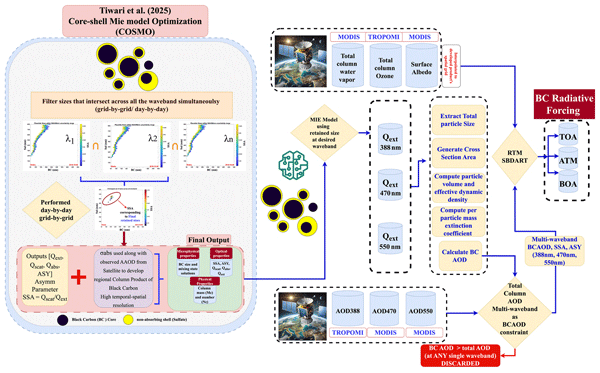
Pravash Tiwari, Jason Blake Cohen, Hongrui Gao, Lingxiao Lu, Jun Wang, Oleg Dubovik, and Kai Qin
Atmos. Chem. Phys., 26, 9149–9180, https://doi.org/10.5194/acp-26-9149-2026, https://doi.org/10.5194/acp-26-9149-2026, 2026
Short summary
Short summary
Black carbon's climate impact is highly uncertain because its radiative effect depends on particle size, mixing state, and column loading. This study combines satellite data, physics-based simulations, and machine learning to estimate black carbon forcing across contrasting regions. The same black carbon amount can warm or cool the atmosphere depending on local aerosol properties. The machine learning framework provides a fast, transferable tool for regional climate assessment.
Hongrui Gao, Qin He, Kai Qin, Jhoon Kim, Diego Loyola, Pravash Tiwari, Lingxiao Lu, and Jason Blake Cohen
Earth Syst. Sci. Data Discuss., https://doi.org/10.5194/essd-2026-443, https://doi.org/10.5194/essd-2026-443, 2026
Revised manuscript accepted for ESSD
Short summary
Short summary
There are always gaps in satellite records of air pollution because of factors such as clouds and operating conditions. We used a physics-aware deep learning method, producing a gapless 0.05° hourly dataset of tropospheric nitrogen dioxide over Asian pollution hotspots from 2019 to 2024. The dataset can capture sub-daily changes, revealing how traffic, industry, and clean-air policies shaped pollution, supporting health and environment studies.
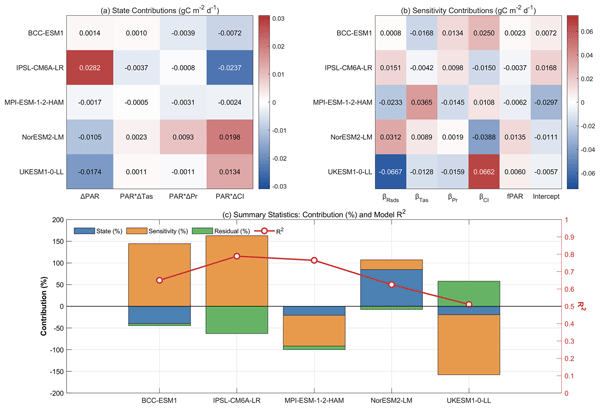
Zhaoyang Zhang, Meng Fan, Minghui Tao, Yunhui Tan, and Quan Wang
Geosci. Model Dev., 19, 5363–5379, https://doi.org/10.5194/gmd-19-5363-2026, https://doi.org/10.5194/gmd-19-5363-2026, 2026
Short summary
Short summary
In this paper, we examined the inter-model differences among five Earth System Models in simulating the impact of aerosols on plant productivity. All models showed that the impact of human-made aerosols on global plant productivity was negative, but with the divergence in the amount of reduction. We found that the divergence was mostly caused by the parameterization of model in simulating canopy photosynthesis, which determines how strongly plants react to changes in climatic factors.
Christopher R. Oxford, Haihui Zhu, Maya Mehrotra, Xuan Liu, Yuxuan Ren, Maya Arnott, Isaac Abionum Adimula, Taiye Benjamin Ajibolataiye, Clement Akoshile, Omar Amador-Munoz, Araya Asfaw, Rachel Ying-Wen Chang, Sagnik Dey, Ann M. Dillner, David J. Diner, Connor J. Flynn, Diana Francis, Paterne Gahungu, Rebecca M. Garland, Michel Grutter, Sina Hasheminassab, Fahad Imam, Jhoon Kim, Kristy Langerman, Pei-Chen Lee, Puji Lestari, Po-Hsiung Lin, S. Marcela Loria-Salazar, Tesfaye Mamo, Olga L. Mayol-Bracero, Mogesh Naidoo, Narendra Nelli, Sang Seo Park, Abdus Salam, Bighnaraj Sarangi, Trailokya Saud, Robyn Schofield, Yoav Schechner, Sachchida N. Tripathi, Emily K. West, Eli Windwer, Ming-Tsang Wu, Qiang Zhang, Michael Brauer, Yinon Rudich, Jay R. Turner, and Randall V. Martin
EGUsphere, https://doi.org/10.5194/egusphere-2026-3224, https://doi.org/10.5194/egusphere-2026-3224, 2026
Short summary
Short summary
A high-sensitivity balance, controlled temperature and relative humidity chamber, and filter samples collected around the world were used to develop a mass as a function of relative humidity relationship. We subsequently measured the chemical composition of these same samples. A relationship between the chemical composition and water mass was created and used to calculate aerosol water content showing how composition and water content varies worldwide.
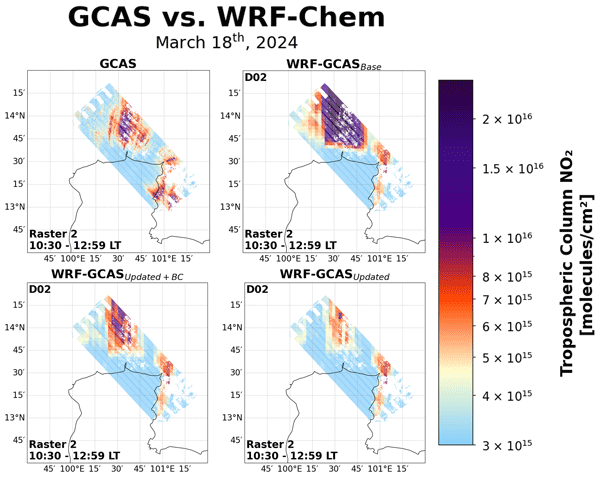
Julianna A. Christopoulos, Pablo E. Saide, Manas R. Mohanty, Nattamon Maneenoi, Jhoon Kim, Laura Judd, Katherine R. Travis, Savitri Garivait, Agapol Junpen, Kazuyuki Miyazaki, Jinkyul Choi, Takashi Sekiya, David Peterson, Theodore M. McHardy, Nicholas Gapp, Jason M. St. Clair, Erin Delaria, Glenn M. Wolfe, Abby Sebol, Alessandro Franchin, Changmin Cho, Morgan L. Silverman, and James H. Crawford
Atmos. Chem. Phys., 26, 8021–8050, https://doi.org/10.5194/acp-26-8021-2026, https://doi.org/10.5194/acp-26-8021-2026, 2026
Short summary
Short summary
Air quality in rapidly growing cities is difficult to model because emissions vary during the day and are often poorly constrained. We demonstrate a methodology for constraining urban emissions using hourly satellite observations combined with high-resolution air quality modeling in Bangkok. We find that emissions inventories likely overestimate nitrogen dioxide emissions, and that updated emissions improve agreement between the model and independent aircraft and ground-based observations.
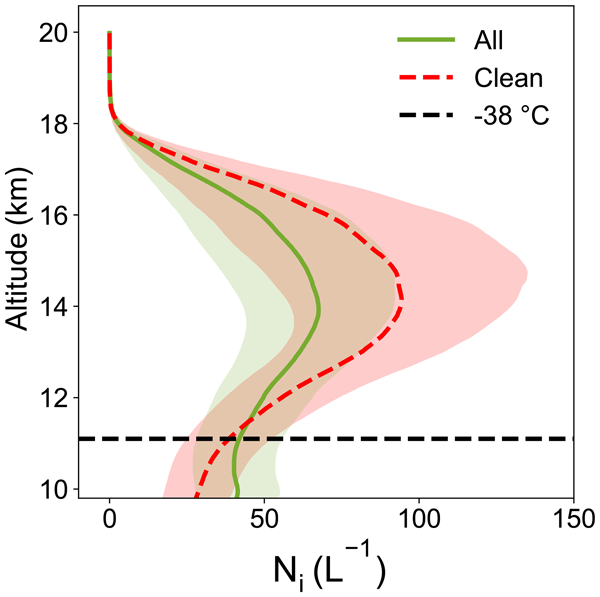
Kai Wang, Xiaocong Wang, Qianshan He, Hong Nie, Yanyu Wang, and Yonghang Chen
Atmos. Chem. Phys., 26, 7127–7139, https://doi.org/10.5194/acp-26-7127-2026, https://doi.org/10.5194/acp-26-7127-2026, 2026
Short summary
Short summary
We analyzed ten years of satellite data to study ice particle numbers in cirrus clouds over the Tibetan Plateau. The north has fewer particles than the south due to weaker convection and differences in dust and smoke. Ice particles form through freezing, producing a ‘V’ shaped profile, but weak upward winds in the north shift this peak lower. These findings help understand climate characteristics in the Plateau regions.
Shangyi Liu, Yingjun Zheng, Mengya Sheng, Lu Lee, Chengli Qi, Feng Lu, Bruno Franco, Lieven Clarisse, Cathy Clerbaux, Nicolas Theys, Jhoon Kim, and Zhao-Cheng Zeng
EGUsphere, https://doi.org/10.5194/egusphere-2026-1745, https://doi.org/10.5194/egusphere-2026-1745, 2026
Short summary
Short summary
Volcanic sulfur dioxide evolves rapidly after an eruption, which makes it challenging to monitor. Taking the 2024 Kanlaon eruption as a case study, we propose using a constellation of GEO and LEO satellites to track SO2 mass and layer height at high frequency. In particular, we present the first quantitative SO2 retrieval from a GEO hyperspectral infrared sounder (FY-4B/GIIRS). This research provides a vital blueprint for the future global monitoring of volcanic events.
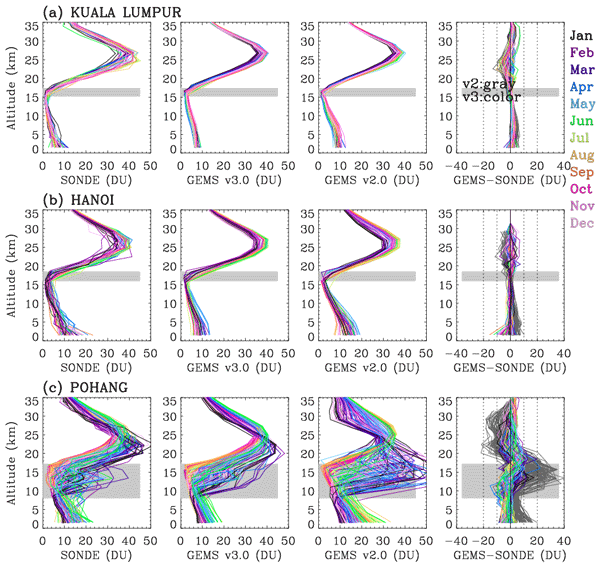
Juseon Bak, Arno Keppens, Daesung Choi, Sungjae Hong, Jae-Hwan Kim, Cheol-Hee Kim, Hyo-Jung Lee, Wonbae Jeon, Jhoon Kim, Ja-Ho Koo, Joowan Kim, Kanghyun Baek, Kai Yang, Xiong Liu, Gonzalo González Abad, Klaus-Peter Heue, Jean-Christopher Lambert, Yeonjin Jung, Hyunkee Hong, and Won-Jin Lee
Atmos. Meas. Tech., 19, 119–134, https://doi.org/10.5194/amt-19-119-2026, https://doi.org/10.5194/amt-19-119-2026, 2026
Short summary
Short summary
This study presents the first complete description of the operational version 3 ozone profile retrieval algorithm for the Geostationary Environment Monitoring Spectrometer (GEMS) and its performance characteristics. Improvements in radiometric and wavelength calibration reduce spectral fitting uncertainties and enhance agreement with ozonesonde profiles and Pandora total ozone measurements.
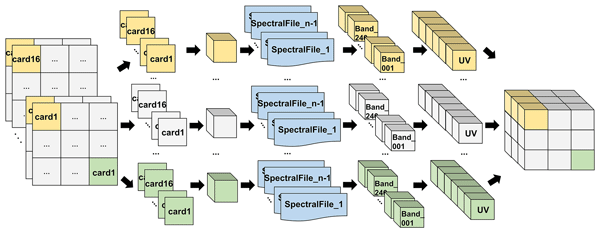
Qinghai Qi, Yuting Tan, Christian A. Gueymard, Martin Wild, Bo Hu, Wenmin Qin, Taowen Sun, Ming Zhang, and Lunche Wang
Earth Syst. Sci. Data, 17, 7271–7292, https://doi.org/10.5194/essd-17-7271-2025, https://doi.org/10.5194/essd-17-7271-2025, 2025
Short summary
Short summary
This research presents China's first long-term (1981–2023) hyperspectral ultraviolet radiation dataset with exceptional 0.5 nm spectral resolution. The spectral detail enables precise identification of UV absorption characteristics and atmospheric interactions previously obscured in conventional broadband measurements. These results provide new capabilities for monitoring ozone depletion, and optimizing solar energy systems across China's diverse climatic regions.
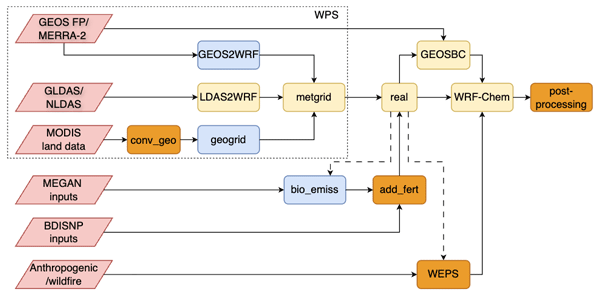
Huanxin Zhang, Jun Wang, Nathan Janechek, Cui Ge, Meng Zhou, Lorena Castro García, Tong Sha, Yanyu Wang, Weizhi Deng, Zhixin Xue, Chengzhe Li, Lakhima Chutia, Yi Wang, Sebastian Val, James L. McDuffie, Sina Hasheminassab, Scott E. Gluck, David J. Diner, Peter R. Colarco, Arlindo M. da Silva, and Jhoon Kim
Geosci. Model Dev., 18, 9061–9099, https://doi.org/10.5194/gmd-18-9061-2025, https://doi.org/10.5194/gmd-18-9061-2025, 2025
Short summary
Short summary
We present the development of the Unified Inputs (of initial and boundary conditions) for WRF (Weather Research and Forecasting)-Chem (UI-WRF-Chem) framework to support the Multi-Angle Imager for Aerosols (MAIA) satellite mission. Major updates include improving dust size distribution in the chemical boundary conditions, updating land surface properties using recent available satellite data and enhancing the representation of soil NOx emissions. We demonstrate subsequent model improvements over several of the MAIA target areas.
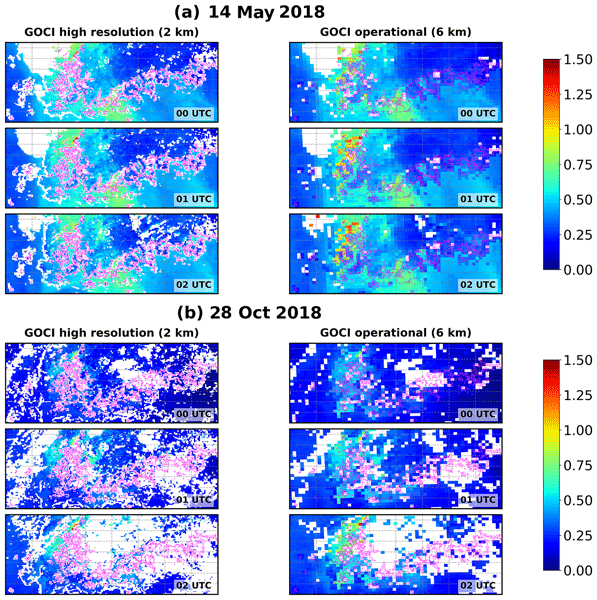
Jeewoo Lee, Jhoon Kim, Seoyoung Lee, Myungje Choi, Jaehwa Lee, Daniel J. Jacob, Su Keun Kuk, and Young-Je Park
Earth Syst. Sci. Data, 17, 5761–5782, https://doi.org/10.5194/essd-17-5761-2025, https://doi.org/10.5194/essd-17-5761-2025, 2025
Short summary
Short summary
Atmospheric aerosols adversely affect human health, with East Asia recognized as one of the most impacted regions. This study presents a long-term (2011–2021), high spatiotemporal resolution aerosol optical depth dataset retrieved from a geostationary satellite over East Asia. The high-resolution data capture subtle aerosol gradients and land-ocean boundaries, providing valuable input for various fields such as aerosol-cloud interaction, climate change, ocean optics, and air quality studies.
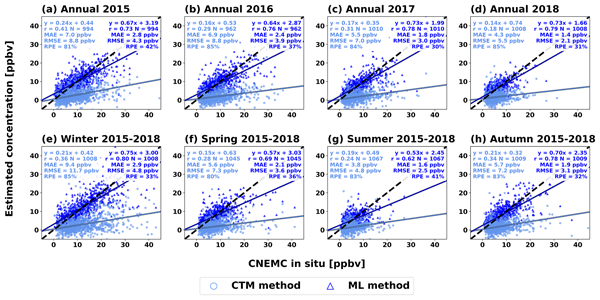
Zachary Watson, Can Li, Fei Liu, Sean W. Freeman, Huanxin Zhang, Jun Wang, and Shan-Hu Lee
Atmos. Chem. Phys., 25, 13527–13545, https://doi.org/10.5194/acp-25-13527-2025, https://doi.org/10.5194/acp-25-13527-2025, 2025
Short summary
Short summary
Air pollutants like sulfur dioxide impact human health and the environment. Our work estimated surface sulfur dioxide concentrations from satellite data over eastern China. One method used atmospheric models, and another method used machine learning. We found that compared to measurements from an air quality monitoring network, both methods accurately captured the locations of sulfur dioxide, but the machine learning method was generally much more accurate in the estimated concentrations.
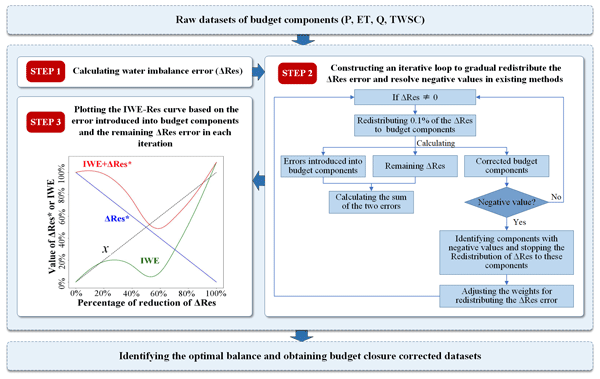
Zengliang Luo, Hanjia Fu, Quanxi Shao, Wenwen Dong, Xi Chen, Xiangyi Ding, Lunche Wang, Xihui Gu, Ranjan Sarukkalige, Heqing Huang, and Huan Li
Hydrol. Earth Syst. Sci., 29, 4607–4635, https://doi.org/10.5194/hess-29-4607-2025, https://doi.org/10.5194/hess-29-4607-2025, 2025
Short summary
Short summary
Existing correction methods may introduce large errors, and more seriously cause unrealistic negative values in P, ET and Q in up to 10 % of cases. A novel IWE-Res method is proposed to improve the accuracy and consistency of corrected satellite-based water budget component data. In most river basins (except cold regions), the best correction is achieved by adjusting 40 % to 90 % of the total water imbalance error.
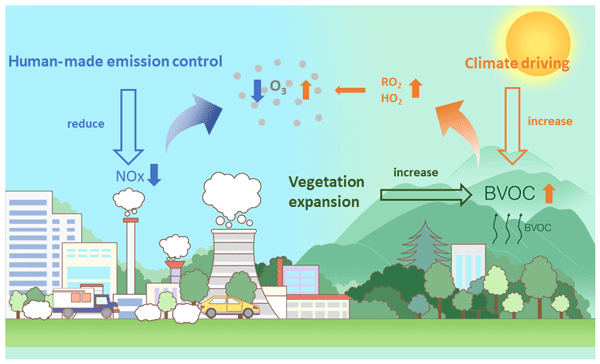
Nan Wang, Song Liu, Jiawei Xu, Yanyu Wang, Chun Li, Yuning Xie, Hua Lu, and Fumo Yang
Atmos. Chem. Phys., 25, 8859–8870, https://doi.org/10.5194/acp-25-8859-2025, https://doi.org/10.5194/acp-25-8859-2025, 2025
Short summary
Short summary
We found that climate warming and changes in vegetation have increased biogenic volatile organic compound emissions in the Pearl River Delta region. These increasing natural emissions, mainly due to climate warming, are weakening the benefits of reducing human-made emissions through control, leading to higher ozone levels. This work helps us understand how climate change influences air quality and provides important insights for improving pollution control strategies in the future.
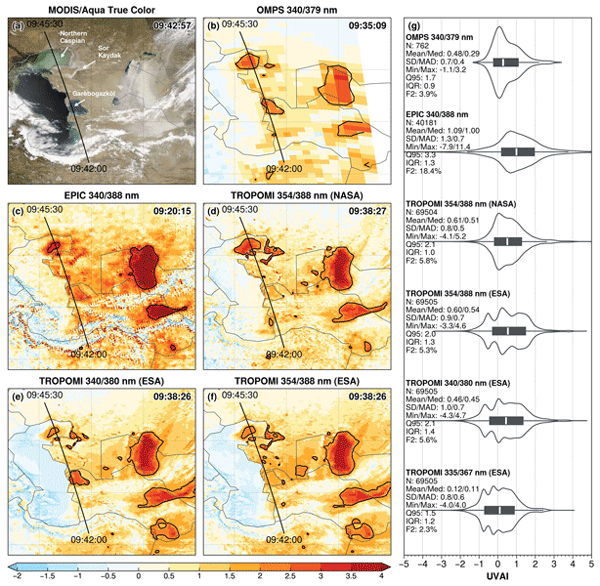
Xin Xi, Jun Wang, Zhendong Lu, Andrew M. Sayer, Jaehwa Lee, Robert C. Levy, Yujie Wang, Alexei Lyapustin, Hongqing Liu, Istvan Laszlo, Changwoo Ahn, Omar Torres, Sabur Abdullaev, James Limbacher, and Ralph A. Kahn
Atmos. Chem. Phys., 25, 7403–7429, https://doi.org/10.5194/acp-25-7403-2025, https://doi.org/10.5194/acp-25-7403-2025, 2025
Short summary
Short summary
The Aralkum Desert is challenging for aerosol retrieval due to its bright, heterogeneous, and dynamic surfaces and the lack of in situ constraints on aerosol properties. The performance and consistency of satellite algorithms in observing Aralkum-generated saline dust remain unknown. This study compares multisensor UVAI (ultraviolet aerosol index), AOD (aerosol optical depth), and ALH (aerosol layer height) products and reveals inconsistencies and potential biases over the Aral Sea basin.
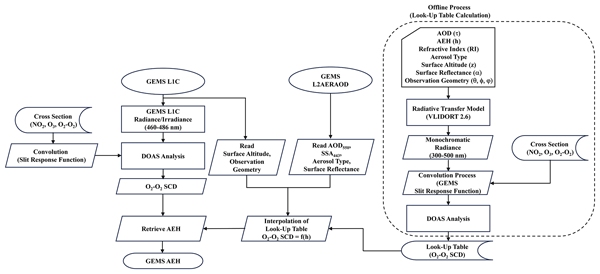
Sang Seo Park, Jhoon Kim, Yeseul Cho, Hanlim Lee, Junsung Park, Dong-Won Lee, Won-Jin Lee, and Deok-Rae Kim
Atmos. Meas. Tech., 18, 2241–2259, https://doi.org/10.5194/amt-18-2241-2025, https://doi.org/10.5194/amt-18-2241-2025, 2025
Short summary
Short summary
An operational aerosol effective height (AEH) retrieval algorithm for the Geostationary Environment Monitoring Spectrometer (GEMS) was developed that solely uses the O2–O2 absorption band considering aerosol and surface properties. AEH retrievals are only performed when aerosol optical depth is larger than 0.3. The retrieval results show significant estimations by comparing the aerosol height from the Cloud–Aerosol Lidar with Orthogonal Polarization and the Tropospheric Monitoring Instrument.
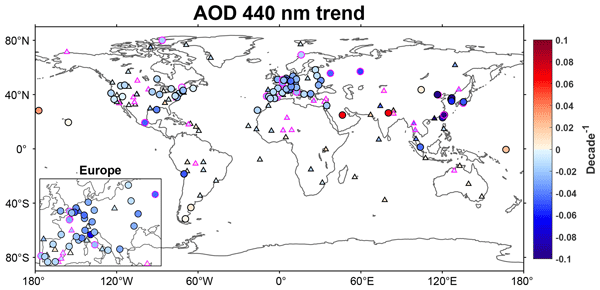
Zhenyu Zhang, Jing Li, Huizheng Che, Yueming Dong, Oleg Dubovik, Thomas Eck, Pawan Gupta, Brent Holben, Jhoon Kim, Elena Lind, Trailokya Saud, Sachchida Nand Tripathi, and Tong Ying
Atmos. Chem. Phys., 25, 4617–4637, https://doi.org/10.5194/acp-25-4617-2025, https://doi.org/10.5194/acp-25-4617-2025, 2025
Short summary
Short summary
We used ground-based remote sensing data from the Aerosol Robotic Network to examine long-term trends in aerosol characteristics. We found aerosol loadings generally decreased globally, and aerosols became more scattering. These changes are closely related to variations in aerosol compositions, such as decreased anthropogenic emissions over East Asia, Europe, and North America; increased anthropogenic sources over northern India; and increased dust activity over the Arabian Peninsula.
Yujin J. Oak, Daniel J. Jacob, Drew C. Pendergrass, Ruijun Dang, Nadia K. Colombi, Heesung Chong, Seoyoung Lee, Su Keun Kuk, and Jhoon Kim
Atmos. Chem. Phys., 25, 3233–3252, https://doi.org/10.5194/acp-25-3233-2025, https://doi.org/10.5194/acp-25-3233-2025, 2025
Short summary
Short summary
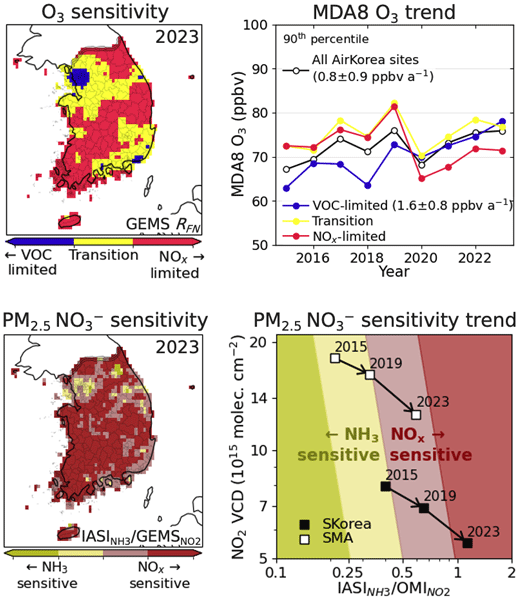
We analyze 2015–2023 air quality trends in South Korea using surface and satellite observations. Primary pollutants have decreased, consistent with emissions reductions. Surface O3 continues to increase and PM2.5 has decreased overall, but the nitrate component has not. O3 and PM2.5 nitrate depend on nonlinear responses from precursor emissions. Satellite data indicate a recent shift to NOx-sensitive O3 and nitrate formation, where further NOx reductions will benefit both O3 and PM2.5 pollution.
Chengxin Zhang, Xinhan Niu, Hongyu Wu, Zhipeng Ding, Ka Lok Chan, Jhoon Kim, Thomas Wagner, and Cheng Liu
Atmos. Chem. Phys., 25, 759–770, https://doi.org/10.5194/acp-25-759-2025, https://doi.org/10.5194/acp-25-759-2025, 2025
Short summary
Short summary
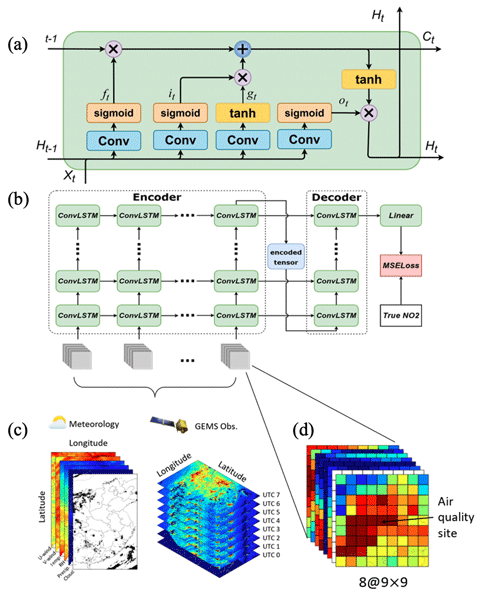
This research utilizes hourly air pollution observations from the world’s first geostationary satellite to develop a spatiotemporal neural network model for full-coverage surface NO2 pollution prediction over the next 24 hours, achieving outstanding forecasting performance and efficacy. These results highlight the profound impact of geostationary satellite observations in advancing air quality forecasting models, thereby contributing to future models for health exposure to air pollution.
Hyerim Kim, Xi Chen, Jun Wang, Zhendong Lu, Meng Zhou, Gregory R. Carmichael, Sang Seo Park, and Jhoon Kim
Atmos. Meas. Tech., 18, 327–349, https://doi.org/10.5194/amt-18-327-2025, https://doi.org/10.5194/amt-18-327-2025, 2025
Short summary
Short summary
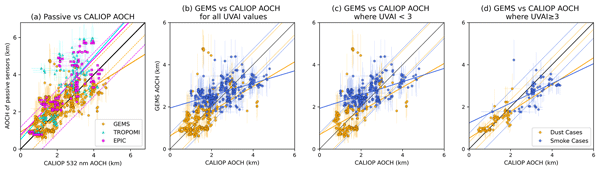
We compare passive aerosol layer height (ALH) retrievals from the Earth Polychromatic Imaging Camera (EPIC), TROPOspheric Monitoring Instrument (TROPOMI), and Geostationary Environment Monitoring Spectrometer (GEMS) with lidar. GEMS shows a lower correlation (R = 0.64) than EPIC and TROPOMI (R > 0.7) but with minimal bias (0.1 km vs. overestimated by ~0.8 km). GEMS performance is improved for an ultraviolet aerosol index ≥ 3. EPIC and GEMS ALH diurnal variation differs slightly.
Seunghwan Seo, Si-Wan Kim, Kyoung-Min Kim, Andreas Richter, Kezia Lange, John P. Burrows, Junsung Park, Hyunkee Hong, Hanlim Lee, Ukkyo Jeong, Jung-Hun Woo, and Jhoon Kim
Atmos. Meas. Tech., 18, 115–128, https://doi.org/10.5194/amt-18-115-2025, https://doi.org/10.5194/amt-18-115-2025, 2025
Short summary
Short summary
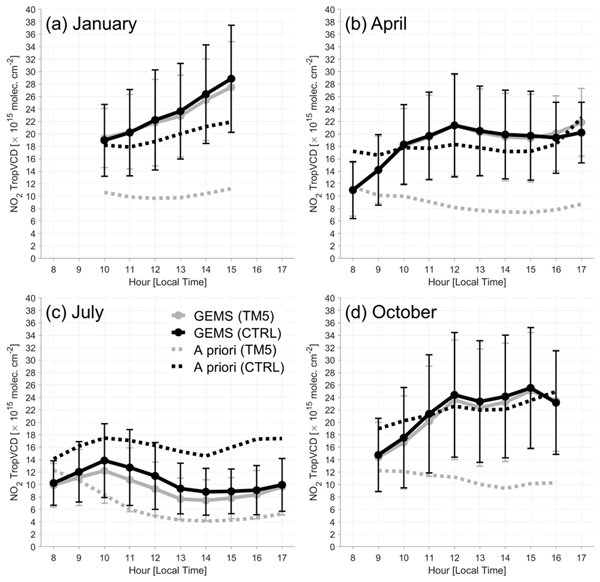
Over the Seoul metropolitan area, tropospheric NO2 vertical column densities from the Geostationary Environment Monitoring Spectrometer show distinct seasonal features. Also, varying a priori data have substantial impacts on the observed NO2 columns. The a priori data from different chemical transport models resulted in differences of up to −18.3 %. Notably, diurnal patterns of observed NO2 columns are similar for all datasets, although their a priori data exhibit contrasting diurnal patterns.
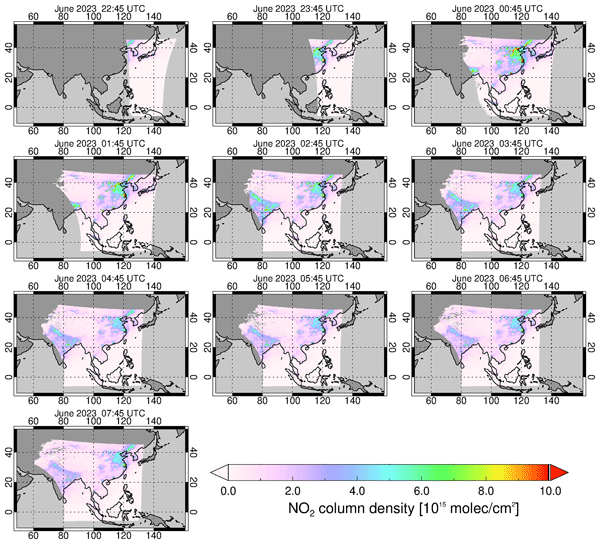
Sora Seo, Pieter Valks, Ronny Lutz, Klaus-Peter Heue, Pascal Hedelt, Víctor Molina García, Diego Loyola, Hanlim Lee, and Jhoon Kim
Atmos. Meas. Tech., 17, 6163–6191, https://doi.org/10.5194/amt-17-6163-2024, https://doi.org/10.5194/amt-17-6163-2024, 2024
Short summary
Short summary
In this study, we developed an advanced retrieval algorithm for tropospheric NO2 columns from geostationary satellite spectrometers and applied it to GEMS measurements. The DLR GEMS NO2 retrieval algorithm follows the heritage from previous and existing algorithms, but improved approaches are applied to reflect the specific features of geostationary satellites. The DLR GEMS NO2 retrievals demonstrate a good capability for monitoring diurnal variability with a high spatial resolution.
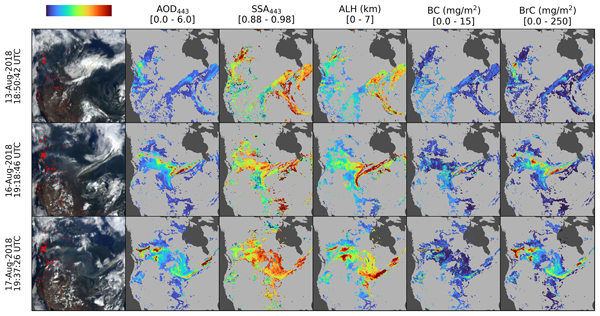
Myungje Choi, Alexei Lyapustin, Gregory L. Schuster, Sujung Go, Yujie Wang, Sergey Korkin, Ralph Kahn, Jeffrey S. Reid, Edward J. Hyer, Thomas F. Eck, Mian Chin, David J. Diner, Olga Kalashnikova, Oleg Dubovik, Jhoon Kim, and Hans Moosmüller
Atmos. Chem. Phys., 24, 10543–10565, https://doi.org/10.5194/acp-24-10543-2024, https://doi.org/10.5194/acp-24-10543-2024, 2024
Short summary
Short summary
This paper introduces a retrieval algorithm to estimate two key absorbing components in smoke (black carbon and brown carbon) using DSCOVR EPIC measurements. Our analysis reveals distinct smoke properties, including spectral absorption, layer height, and black carbon and brown carbon, over North America and central Africa. The retrieved smoke properties offer valuable observational constraints for modeling radiative forcing and informing health-related studies.
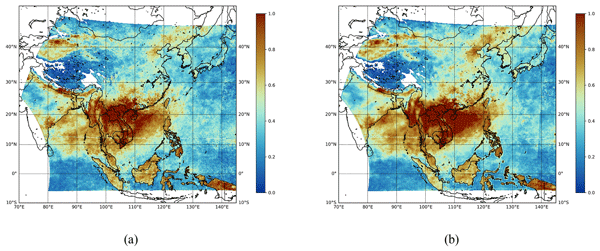
Sooyon Kim, Yeseul Cho, Hanjeong Ki, Seyoung Park, Dagun Oh, Seungjun Lee, Yeonghye Cho, Jhoon Kim, Wonjin Lee, Jaewoo Park, Ick Hoon Jin, and Sangwook Kang
Atmos. Meas. Tech., 17, 5221–5241, https://doi.org/10.5194/amt-17-5221-2024, https://doi.org/10.5194/amt-17-5221-2024, 2024
Short summary
Short summary
This paper describes new work that improves the processing of GEMS AOD data. First, we enhance the inverse-distance-weighting algorithm by incorporating quality flag information, assigning weights that are inversely proportional to the number of unreliable grids. Second, we leverage a spatiotemporal merging method to address both spatial and temporal variability. Finally, we estimate the mean field values for GEMS AOD data, enhancing our understanding of the impact of aerosols on climate change.
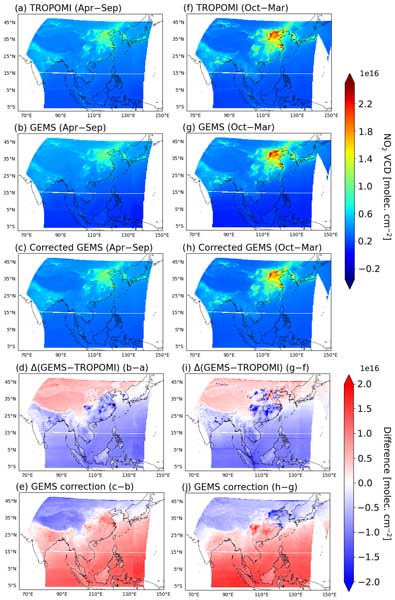
Yujin J. Oak, Daniel J. Jacob, Nicholas Balasus, Laura H. Yang, Heesung Chong, Junsung Park, Hanlim Lee, Gitaek T. Lee, Eunjo S. Ha, Rokjin J. Park, Hyeong-Ahn Kwon, and Jhoon Kim
Atmos. Meas. Tech., 17, 5147–5159, https://doi.org/10.5194/amt-17-5147-2024, https://doi.org/10.5194/amt-17-5147-2024, 2024
Short summary
Short summary
We present an improved NO2 product from GEMS by calibrating it to TROPOMI using machine learning and by reprocessing both satellite products to adopt common NO2 profiles. Our corrected GEMS product combines the high data density of GEMS with the accuracy of TROPOMI, supporting the combined use for analyses of East Asia air quality including emissions and chemistry. This method can be extended to other species and geostationary satellites including TEMPO and Sentinel-4.
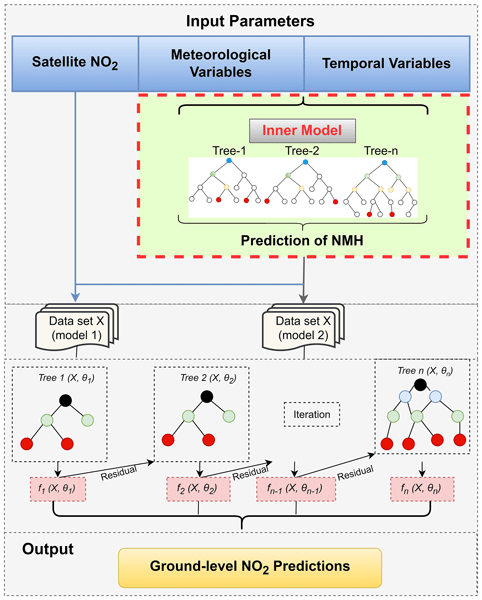
Naveed Ahmad, Changqing Lin, Alexis K. H. Lau, Jhoon Kim, Tianshu Zhang, Fangqun Yu, Chengcai Li, Ying Li, Jimmy C. H. Fung, and Xiang Qian Lao
Atmos. Chem. Phys., 24, 9645–9665, https://doi.org/10.5194/acp-24-9645-2024, https://doi.org/10.5194/acp-24-9645-2024, 2024
Short summary
Short summary
This study developed a nested machine learning model to convert the GEMS NO2 column measurements into ground-level concentrations across China. The model directly incorporates the NO2 mixing height (NMH) into the methodological framework. The study underscores the importance of considering NMH when estimating ground-level NO2 from satellite column measurements and highlights the significant advantages of new-generation geostationary satellites in air quality monitoring.
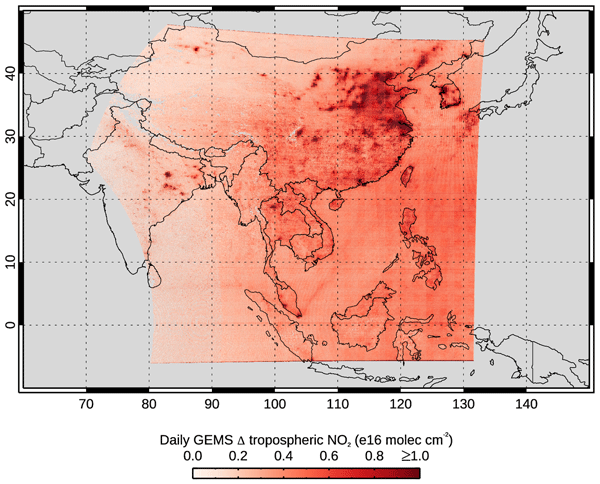
David P. Edwards, Sara Martínez-Alonso, Duseong S. Jo, Ivan Ortega, Louisa K. Emmons, John J. Orlando, Helen M. Worden, Jhoon Kim, Hanlim Lee, Junsung Park, and Hyunkee Hong
Atmos. Chem. Phys., 24, 8943–8961, https://doi.org/10.5194/acp-24-8943-2024, https://doi.org/10.5194/acp-24-8943-2024, 2024
Short summary
Short summary
Until recently, satellite observations of atmospheric pollutants at any location could only be obtained once a day. New geostationary satellites stare at a region of the Earth to make hourly measurements, and the Geostationary Environment Monitoring Spectrometer is the first looking at Asia. These data and model simulations show how the change seen for one important pollutant that determines air quality depends on a combination of pollution emissions, atmospheric chemistry, and meteorology.
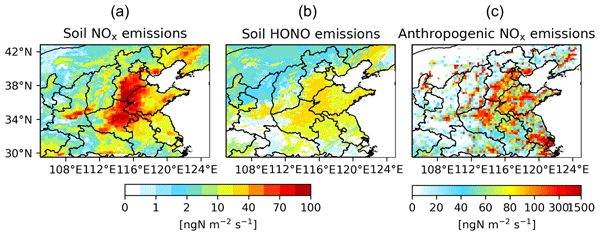
Tong Sha, Siyu Yang, Qingcai Chen, Liangqing Li, Xiaoyan Ma, Yan-Lin Zhang, Zhaozhong Feng, K. Folkert Boersma, and Jun Wang
Atmos. Chem. Phys., 24, 8441–8455, https://doi.org/10.5194/acp-24-8441-2024, https://doi.org/10.5194/acp-24-8441-2024, 2024
Short summary
Short summary
Using an updated soil reactive nitrogen emission scheme in the Unified Inputs for Weather Research and Forecasting coupled with Chemistry (UI-WRF-Chem) model, we investigate the role of soil NO and HONO (Nr) emissions in air quality and temperature in North China. Contributions of soil Nr emissions to O3 and secondary pollutants are revealed, exceeding effects of soil NOx or HONO emission. Soil Nr emissions play an important role in mitigating O3 pollution and addressing climate change.
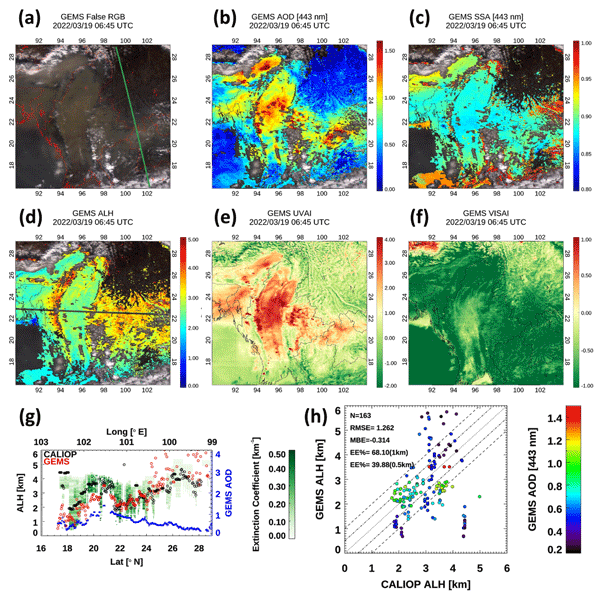
Yeseul Cho, Jhoon Kim, Sujung Go, Mijin Kim, Seoyoung Lee, Minseok Kim, Heesung Chong, Won-Jin Lee, Dong-Won Lee, Omar Torres, and Sang Seo Park
Atmos. Meas. Tech., 17, 4369–4390, https://doi.org/10.5194/amt-17-4369-2024, https://doi.org/10.5194/amt-17-4369-2024, 2024
Short summary
Short summary
Aerosol optical properties have been provided by the Geostationary Environment Monitoring Spectrometer (GEMS), the world’s first geostationary-Earth-orbit (GEO) satellite instrument designed for atmospheric environmental monitoring. This study describes improvements made to the GEMS aerosol retrieval algorithm (AERAOD) and presents its validation results. These enhancements aim to provide more accurate and reliable aerosol-monitoring results for Asia.
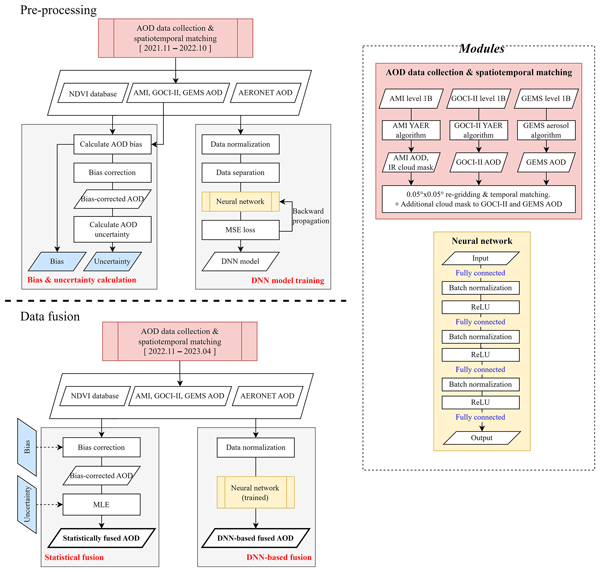
Minseok Kim, Jhoon Kim, Hyunkwang Lim, Seoyoung Lee, Yeseul Cho, Yun-Gon Lee, Sujung Go, and Kyunghwa Lee
Atmos. Meas. Tech., 17, 4317–4335, https://doi.org/10.5194/amt-17-4317-2024, https://doi.org/10.5194/amt-17-4317-2024, 2024
Short summary
Short summary
Information about aerosol loading in the atmosphere can be collected from various satellite instruments. Aerosol products from various satellite instruments have their own error characteristics. This study statistically merged aerosol optical depth datasets from multiple instruments aboard geostationary satellites considering uncertainties. Also, a deep neural network technique is adopted for aerosol data merging.
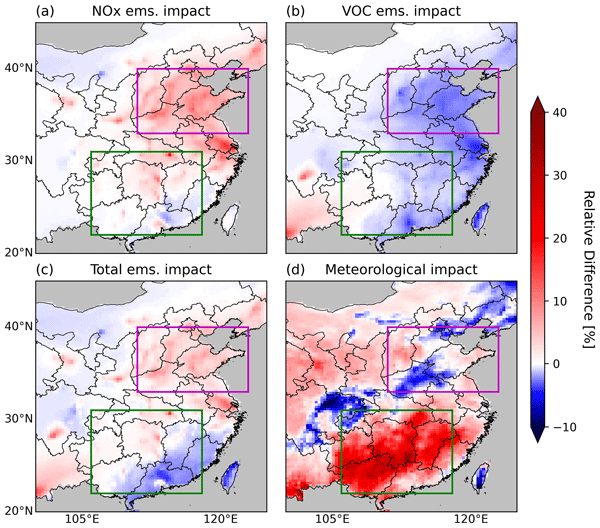
Zhendong Lu, Jun Wang, Yi Wang, Daven K. Henze, Xi Chen, Tong Sha, and Kang Sun
Atmos. Chem. Phys., 24, 7793–7813, https://doi.org/10.5194/acp-24-7793-2024, https://doi.org/10.5194/acp-24-7793-2024, 2024
Short summary
Short summary
In contrast with past work showing that the reduction of emissions was the dominant factor for the nationwide increase of surface O3 during the lockdown in China, this study finds that the variation in meteorology (temperature and other parameters) plays a more important role. This result is obtained through sensitivity simulations using a chemical transport model constrained by satellite (TROPOMI) data and calibrated with surface observations.
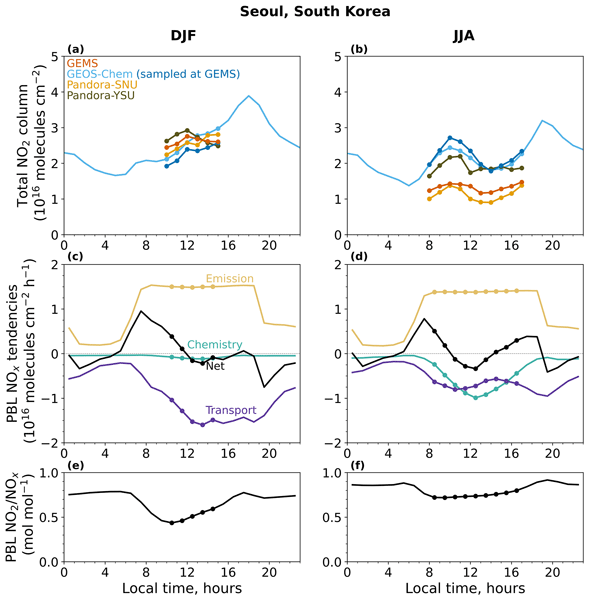
Laura Hyesung Yang, Daniel J. Jacob, Ruijun Dang, Yujin J. Oak, Haipeng Lin, Jhoon Kim, Shixian Zhai, Nadia K. Colombi, Drew C. Pendergrass, Ellie Beaudry, Viral Shah, Xu Feng, Robert M. Yantosca, Heesung Chong, Junsung Park, Hanlim Lee, Won-Jin Lee, Soontae Kim, Eunhye Kim, Katherine R. Travis, James H. Crawford, and Hong Liao
Atmos. Chem. Phys., 24, 7027–7039, https://doi.org/10.5194/acp-24-7027-2024, https://doi.org/10.5194/acp-24-7027-2024, 2024
Short summary
Short summary
The Geostationary Environment Monitoring Spectrometer (GEMS) provides hourly measurements of NO2. We use the chemical transport model to find how emissions, chemistry, and transport drive the changes in NO2 observed by GEMS at different times of the day. In winter, the chemistry plays a minor role, and high daytime emissions dominate the diurnal variation in NO2, balanced by transport. In summer, emissions, chemistry, and transport play an important role in shaping the diurnal variation in NO2.
Drew C. Pendergrass, Daniel J. Jacob, Yujin J. Oak, Jeewoo Lee, Minseok Kim, Jhoon Kim, Seoyoung Lee, Shixian Zhai, Hitoshi Irie, and Hong Liao
Earth Syst. Sci. Data Discuss., https://doi.org/10.5194/essd-2024-172, https://doi.org/10.5194/essd-2024-172, 2024
Preprint withdrawn
Short summary
Short summary
Fine particles suspended in the atmosphere are a major form of air pollution and an important public health burden. However, measurements of particulate matter are sparse in space and in places like East Asia monitors are established after regulatory policies to improve pollution have changed. In this paper, we use machine learning to fill in the gaps. We train an algorithm to predict pollution at the surface from the atmosphere’s opacity, then produce high resolution maps of data without gaps.

Heesung Chong, Gonzalo González Abad, Caroline R. Nowlan, Christopher Chan Miller, Alfonso Saiz-Lopez, Rafael P. Fernandez, Hyeong-Ahn Kwon, Zolal Ayazpour, Huiqun Wang, Amir H. Souri, Xiong Liu, Kelly Chance, Ewan O'Sullivan, Jhoon Kim, Ja-Ho Koo, William R. Simpson, François Hendrick, Richard Querel, Glen Jaross, Colin Seftor, and Raid M. Suleiman
Atmos. Meas. Tech., 17, 2873–2916, https://doi.org/10.5194/amt-17-2873-2024, https://doi.org/10.5194/amt-17-2873-2024, 2024
Short summary
Short summary
We present a new bromine monoxide (BrO) product derived using radiances measured from OMPS-NM on board the Suomi-NPP satellite. This product provides nearly a decade of global stratospheric and tropospheric column retrievals, a feature that is currently rare in publicly accessible datasets. Both stratospheric and tropospheric columns from OMPS-NM demonstrate robust performance, exhibiting good agreement with ground-based observations collected at three stations (Lauder, Utqiagvik, and Harestua).
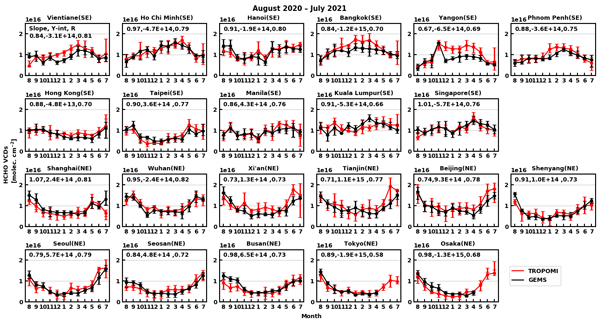
Gitaek T. Lee, Rokjin J. Park, Hyeong-Ahn Kwon, Eunjo S. Ha, Sieun D. Lee, Seunga Shin, Myoung-Hwan Ahn, Mina Kang, Yong-Sang Choi, Gyuyeon Kim, Dong-Won Lee, Deok-Rae Kim, Hyunkee Hong, Bavo Langerock, Corinne Vigouroux, Christophe Lerot, Francois Hendrick, Gaia Pinardi, Isabelle De Smedt, Michel Van Roozendael, Pucai Wang, Heesung Chong, Yeseul Cho, and Jhoon Kim
Atmos. Chem. Phys., 24, 4733–4749, https://doi.org/10.5194/acp-24-4733-2024, https://doi.org/10.5194/acp-24-4733-2024, 2024
Short summary
Short summary
This study evaluates the Geostationary Environment Monitoring Spectrometer (GEMS) HCHO product by comparing its vertical column densities (VCDs) with those of TROPOMI and ground-based observations. Based on some sensitivity tests, obtaining radiance references under clear-sky conditions significantly improves HCHO retrieval quality. GEMS HCHO VCDs captured seasonal and diurnal variations well during the first year of observation, showing consistency with TROPOMI and ground-based observations.
Hui Li, Xiaobo Wang, Shaoqiang Wang, Jinyuan Liu, Yuanyuan Liu, Zhenhai Liu, Shiliang Chen, Qinyi Wang, Tongtong Zhu, Lunche Wang, and Lizhe Wang
Earth Syst. Sci. Data, 16, 1689–1701, https://doi.org/10.5194/essd-16-1689-2024, https://doi.org/10.5194/essd-16-1689-2024, 2024
Short summary
Short summary
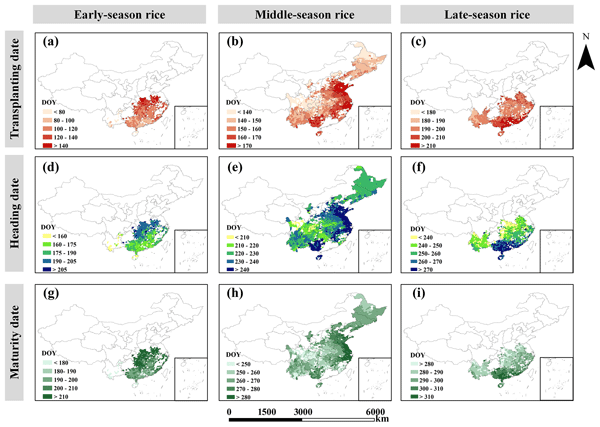
Utilizing satellite remote sensing data, we established a multi-season rice calendar dataset named ChinaRiceCalendar. It exhibits strong alignment with field observations collected by agricultural meteorological stations across China. ChinaRiceCalendar stands as a reliable dataset for investigating and optimizing the spatiotemporal dynamics of rice phenology in China, particularly in the context of climate and land use changes.
Bo-Ram Kim, Gyuyeon Kim, Minjeong Cho, Yong-Sang Choi, and Jhoon Kim
Atmos. Meas. Tech., 17, 453–470, https://doi.org/10.5194/amt-17-453-2024, https://doi.org/10.5194/amt-17-453-2024, 2024
Short summary
Short summary
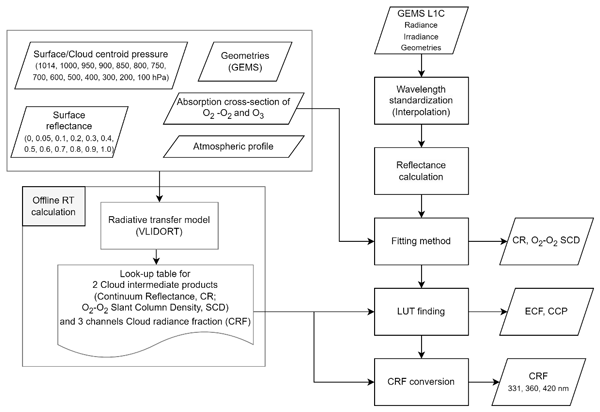
This study introduces the GEMS cloud algorithm and validates its results using data from GEMS and other environmental satellites. The GEMS algorithm is able to detect the lowest cloud heights among the four satellites, and its effective cloud fraction and cloud centroid pressure are well reflected in the retrieval results. The study highlights the algorithm's usefulness in correcting errors in trace gases caused by clouds in the East Asian region.
Haklim Choi, Xiong Liu, Ukkyo Jeong, Heesung Chong, Jhoon Kim, Myung Hwan Ahn, Dai Ho Ko, Dong-Won Lee, Kyung-Jung Moon, and Kwang-Mog Lee
Atmos. Meas. Tech., 17, 145–164, https://doi.org/10.5194/amt-17-145-2024, https://doi.org/10.5194/amt-17-145-2024, 2024
Short summary
Short summary
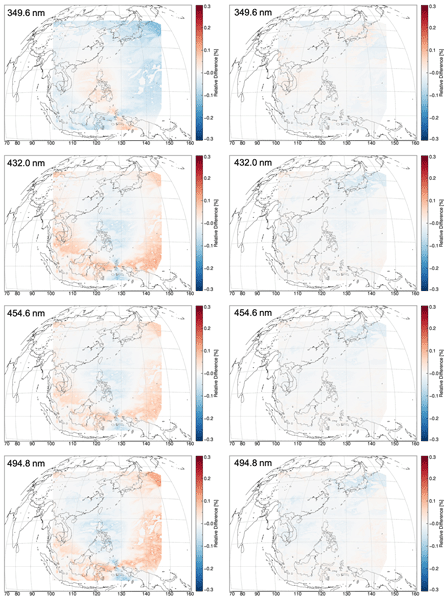
GEMS is the first geostationary satellite to measure the UV--Vis region, and this paper reports the polarization characteristics of GEMS and an algorithm. We develop a polarization correction algorithm optimized for GEMS based on a look-up-table approach that simultaneously considers the polarization of incoming light and polarization sensitivity characteristics of the instrument. Pre-launch polarization error was adjusted close to zero across the spectral range after polarization correction.
Yuhang Zhang, Jintai Lin, Jhoon Kim, Hanlim Lee, Junsung Park, Hyunkee Hong, Michel Van Roozendael, Francois Hendrick, Ting Wang, Pucai Wang, Qin He, Kai Qin, Yongjoo Choi, Yugo Kanaya, Jin Xu, Pinhua Xie, Xin Tian, Sanbao Zhang, Shanshan Wang, Siyang Cheng, Xinghong Cheng, Jianzhong Ma, Thomas Wagner, Robert Spurr, Lulu Chen, Hao Kong, and Mengyao Liu
Atmos. Meas. Tech., 16, 4643–4665, https://doi.org/10.5194/amt-16-4643-2023, https://doi.org/10.5194/amt-16-4643-2023, 2023
Short summary
Short summary
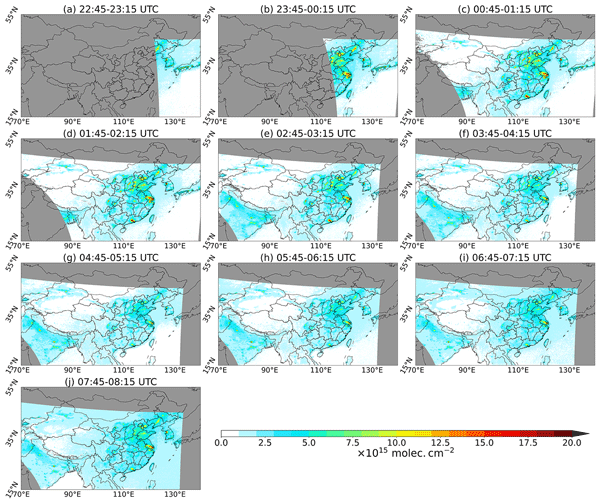
Our tropospheric NO2 vertical column density product with high spatiotemporal resolution is based on the Geostationary Environment Monitoring Spectrometer (GEMS) and named POMINO–GEMS. Strong hotspot signals and NO2 diurnal variations are clearly seen. Validations with multiple satellite products and ground-based, mobile car and surface measurements exhibit the overall great performance of the POMINO–GEMS product, indicating its capability for application in environmental studies.
Qindan Zhu, Bryan Place, Eva Y. Pfannerstill, Sha Tong, Huanxin Zhang, Jun Wang, Clara M. Nussbaumer, Paul Wooldridge, Benjamin C. Schulze, Caleb Arata, Anthony Bucholtz, John H. Seinfeld, Allen H. Goldstein, and Ronald C. Cohen
Atmos. Chem. Phys., 23, 9669–9683, https://doi.org/10.5194/acp-23-9669-2023, https://doi.org/10.5194/acp-23-9669-2023, 2023
Short summary
Short summary
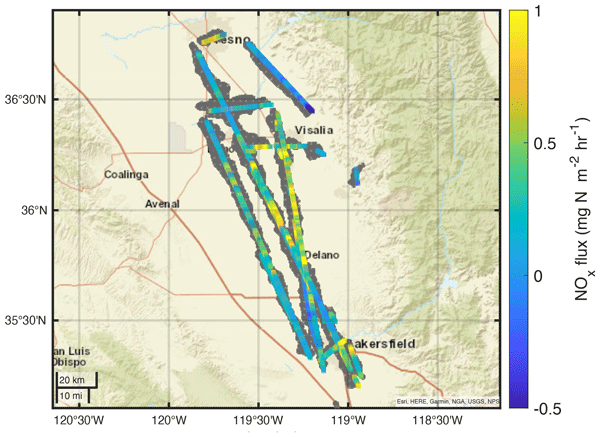
Nitrogen oxide (NOx) is a hazardous air pollutant, and it is the precursor of short-lived climate forcers like tropospheric ozone and aerosol particles. While NOx emissions from transportation has been strictly regulated, soil NOx emissions are overlooked. We use the airborne flux measurements to observe NOx emissions from highways and urban and cultivated soil land cover types. We show non-negligible soil NOx emissions, which are significantly underestimated in current model simulations.
Serin Kim, Daewon Kim, Hyunkee Hong, Lim-Seok Chang, Hanlim Lee, Deok-Rae Kim, Donghee Kim, Jeong-Ah Yu, Dongwon Lee, Ukkyo Jeong, Chang-Kuen Song, Sang-Woo Kim, Sang Seo Park, Jhoon Kim, Thomas F. Hanisco, Junsung Park, Wonei Choi, and Kwangyul Lee
Atmos. Meas. Tech., 16, 3959–3972, https://doi.org/10.5194/amt-16-3959-2023, https://doi.org/10.5194/amt-16-3959-2023, 2023
Short summary
Short summary
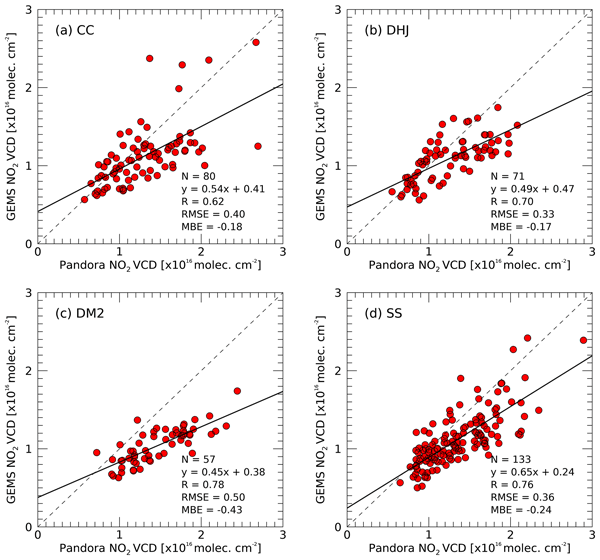
A first evaluation of the Geostationary Environmental Monitoring Spectrometer (GEMS) NO2 was carried out via comparison with the NO2 data obtained from the ground-based Pandora direct-sun measurements at four sites in Seosan, Republic of Korea. Comparisons between GEMS NO2 and Pandora NO2 were performed according to GEMS cloud fraction. GEMS NO2 showed good agreement with that of Pandora NO2 under less cloudy conditions.
Jincheol Park, Jia Jung, Yunsoo Choi, Hyunkwang Lim, Minseok Kim, Kyunghwa Lee, Yun Gon Lee, and Jhoon Kim
Atmos. Meas. Tech., 16, 3039–3057, https://doi.org/10.5194/amt-16-3039-2023, https://doi.org/10.5194/amt-16-3039-2023, 2023
Short summary
Short summary
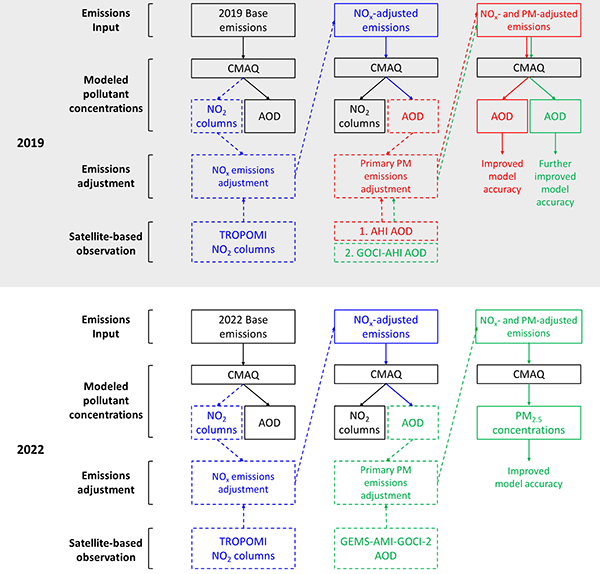
In response to the recent release of new geostationary platform-derived observational data generated by the Geostationary Environment Monitoring Spectrometer (GEMS) and its sister instruments, this study utilized the GEMS data fusion product and its proxy data in adjusting aerosol precursor emissions over East Asia. The use of spatiotemporally more complete observation references in updating the emissions resulted in more promising model performances in estimating aerosol loadings in East Asia.
Ruijun Dang, Daniel J. Jacob, Viral Shah, Sebastian D. Eastham, Thibaud M. Fritz, Loretta J. Mickley, Tianjia Liu, Yi Wang, and Jun Wang
Atmos. Chem. Phys., 23, 6271–6284, https://doi.org/10.5194/acp-23-6271-2023, https://doi.org/10.5194/acp-23-6271-2023, 2023
Short summary
Short summary
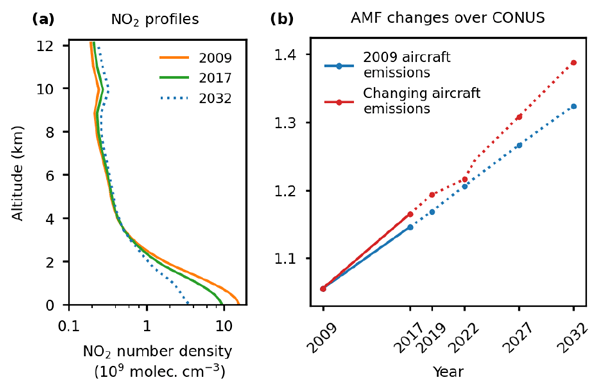
We use the GEOS-Chem model to better understand the magnitude and trend in free tropospheric NO2 over the contiguous US. Model underestimate of background NO2 is largely corrected by considering aerosol nitrate photolysis. Increase in aircraft emissions affects satellite retrievals by altering the NO2 shape factor, and this effect is expected to increase in future. We show the importance of properly accounting for the free tropospheric background in interpreting NO2 observations from space.
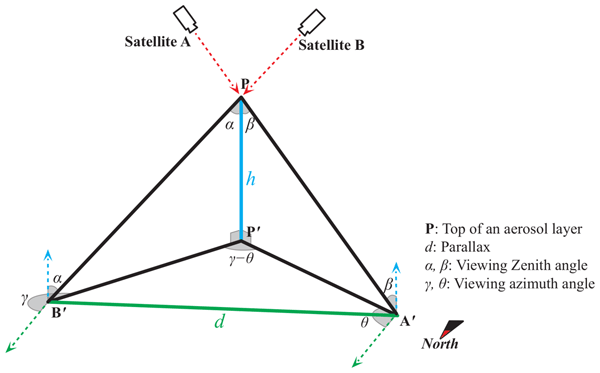
Minseok Kim, Jhoon Kim, Hyunkwang Lim, Seoyoung Lee, Yeseul Cho, Huidong Yeo, and Sang-Woo Kim
Atmos. Meas. Tech., 16, 2673–2690, https://doi.org/10.5194/amt-16-2673-2023, https://doi.org/10.5194/amt-16-2673-2023, 2023
Short summary
Short summary
Aerosol height information is important when seeking an understanding of the vertical structure of the aerosol layer and long-range transport. In this study, a geometrical aerosol top height (ATH) retrieval using a parallax of two geostationary satellites is investigated. With sufficient longitudinal separation between the two satellites, a decent ATH product could be retrieved.
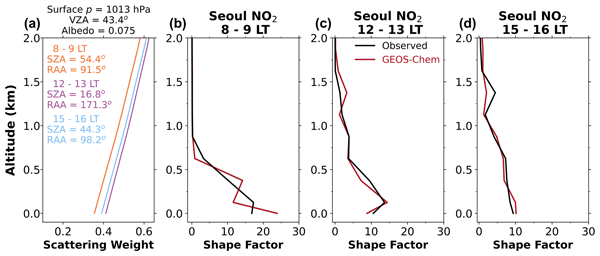
Laura Hyesung Yang, Daniel J. Jacob, Nadia K. Colombi, Shixian Zhai, Kelvin H. Bates, Viral Shah, Ellie Beaudry, Robert M. Yantosca, Haipeng Lin, Jared F. Brewer, Heesung Chong, Katherine R. Travis, James H. Crawford, Lok N. Lamsal, Ja-Ho Koo, and Jhoon Kim
Atmos. Chem. Phys., 23, 2465–2481, https://doi.org/10.5194/acp-23-2465-2023, https://doi.org/10.5194/acp-23-2465-2023, 2023
Short summary
Short summary
A geostationary satellite can now provide hourly NO2 vertical columns, and obtaining the NO2 vertical columns from space relies on NO2 vertical distribution from the chemical transport model (CTM). In this work, we update the CTM to better represent the chemistry environment so that the CTM can accurately provide NO2 vertical distribution. We also find that the changes in NO2 vertical distribution driven by a change in mixing depth play an important role in the NO2 column's diurnal variation.

Jing Wei, Zhanqing Li, Jun Wang, Can Li, Pawan Gupta, and Maureen Cribb
Atmos. Chem. Phys., 23, 1511–1532, https://doi.org/10.5194/acp-23-1511-2023, https://doi.org/10.5194/acp-23-1511-2023, 2023
Short summary
Short summary
This study estimated the daily seamless 10 km ambient gaseous pollutants (NO2, SO2, and CO) across China using machine learning with extensive input variables measured on monitors, satellites, and models. Our dataset yields a high data quality via cross-validation at varying spatiotemporal scales and outperforms most previous related studies, making it most helpful to future (especially short-term) air pollution and environmental health-related studies.
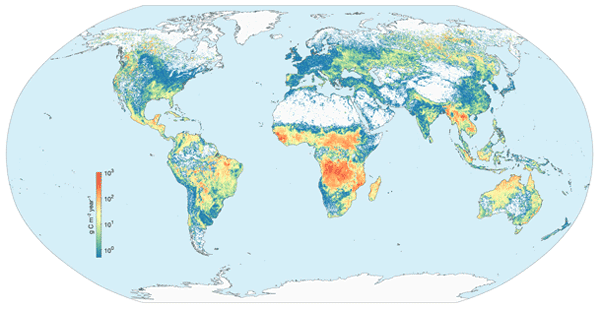
Gonzalo A. Ferrada, Meng Zhou, Jun Wang, Alexei Lyapustin, Yujie Wang, Saulo R. Freitas, and Gregory R. Carmichael
Geosci. Model Dev., 15, 8085–8109, https://doi.org/10.5194/gmd-15-8085-2022, https://doi.org/10.5194/gmd-15-8085-2022, 2022
Short summary
Short summary
The smoke from fires is composed of different compounds that interact with the atmosphere and can create poor air-quality episodes. Here, we present a new fire inventory based on satellite observations from the Visible Infrared Imaging Radiometer Suite (VIIRS). We named this inventory the VIIRS-based Fire Emission Inventory (VFEI). Advantages of VFEI are its high resolution (~500 m) and that it provides information for many species. VFEI is publicly available and has provided data since 2012.
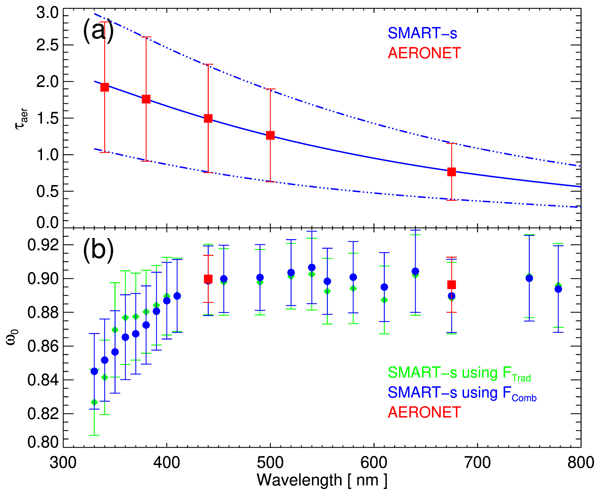
Ukkyo Jeong, Si-Chee Tsay, N. Christina Hsu, David M. Giles, John W. Cooper, Jaehwa Lee, Robert J. Swap, Brent N. Holben, James J. Butler, Sheng-Hsiang Wang, Somporn Chantara, Hyunkee Hong, Donghee Kim, and Jhoon Kim
Atmos. Chem. Phys., 22, 11957–11986, https://doi.org/10.5194/acp-22-11957-2022, https://doi.org/10.5194/acp-22-11957-2022, 2022
Short summary
Short summary
Ultraviolet (UV) measurements from satellite and ground are important for deriving information on several atmospheric trace and aerosol characteristics. Simultaneous retrievals of aerosol and trace gases in this study suggest that water uptake by aerosols is one of the important phenomena affecting aerosol properties over northern Thailand, which is important for regional air quality and climate. Obtained aerosol properties covering the UV are also important for various satellite algorithms.
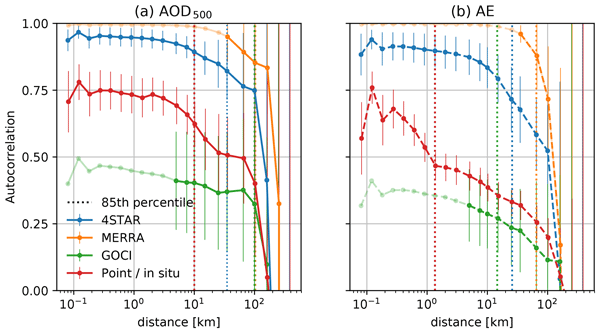
Samuel E. LeBlanc, Michal Segal-Rozenhaimer, Jens Redemann, Connor Flynn, Roy R. Johnson, Stephen E. Dunagan, Robert Dahlgren, Jhoon Kim, Myungje Choi, Arlindo da Silva, Patricia Castellanos, Qian Tan, Luke Ziemba, Kenneth Lee Thornhill, and Meloë Kacenelenbogen
Atmos. Chem. Phys., 22, 11275–11304, https://doi.org/10.5194/acp-22-11275-2022, https://doi.org/10.5194/acp-22-11275-2022, 2022
Short summary
Short summary
Airborne observations of atmospheric particles and pollution over Korea during a field campaign in May–June 2016 showed that the smallest atmospheric particles are present in the lowest 2 km of the atmosphere. The aerosol size is more spatially variable than optical thickness. We show this with remote sensing (4STAR), in situ (LARGE) observations, satellite measurements (GOCI), and modeled properties (MERRA-2), and it is contrary to the current understanding.

Drew C. Pendergrass, Shixian Zhai, Jhoon Kim, Ja-Ho Koo, Seoyoung Lee, Minah Bae, Soontae Kim, Hong Liao, and Daniel J. Jacob
Atmos. Meas. Tech., 15, 1075–1091, https://doi.org/10.5194/amt-15-1075-2022, https://doi.org/10.5194/amt-15-1075-2022, 2022
Short summary
Short summary
This paper uses a machine learning algorithm to infer high-resolution maps of particulate air quality in eastern China, Japan, and the Korean peninsula, using data from a geostationary satellite along with meteorology. We then perform an extensive evaluation of this inferred air quality and use it to diagnose trends in the region. We hope this paper and the associated data will be valuable to other scientists interested in epidemiology, air quality, remote sensing, and machine learning.
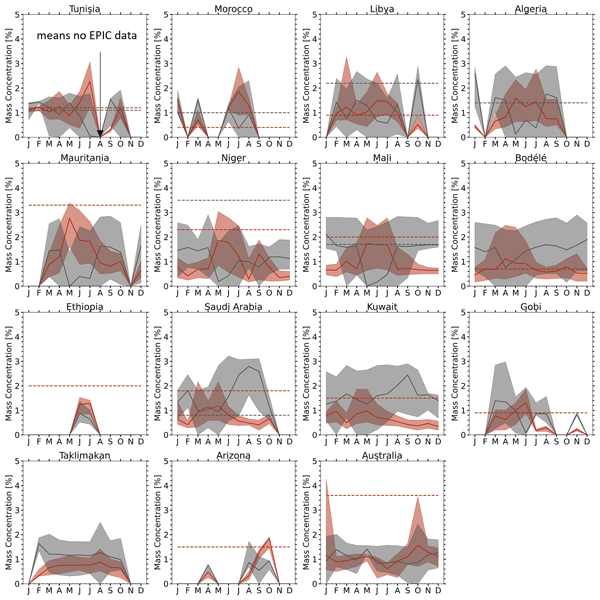
Sujung Go, Alexei Lyapustin, Gregory L. Schuster, Myungje Choi, Paul Ginoux, Mian Chin, Olga Kalashnikova, Oleg Dubovik, Jhoon Kim, Arlindo da Silva, Brent Holben, and Jeffrey S. Reid
Atmos. Chem. Phys., 22, 1395–1423, https://doi.org/10.5194/acp-22-1395-2022, https://doi.org/10.5194/acp-22-1395-2022, 2022
Short summary
Short summary
This paper presents a retrieval algorithm of iron-oxide species (hematite, goethite) content in the atmosphere from DSCOVR EPIC observations. Our results display variations within the published range of hematite and goethite over the main dust-source regions but show significant seasonal and spatial variability. This implies a single-viewing satellite instrument with UV–visible channels may provide essential information on shortwave dust direct radiative effects for climate modeling.
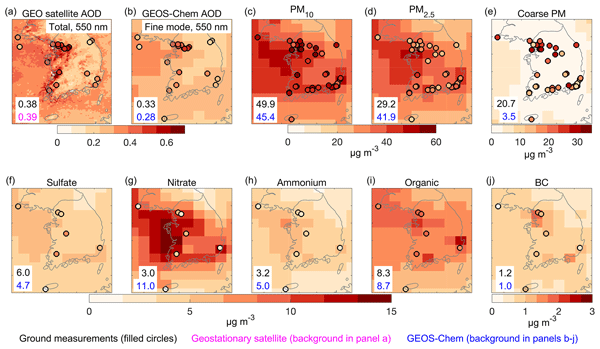
Shixian Zhai, Daniel J. Jacob, Jared F. Brewer, Ke Li, Jonathan M. Moch, Jhoon Kim, Seoyoung Lee, Hyunkwang Lim, Hyun Chul Lee, Su Keun Kuk, Rokjin J. Park, Jaein I. Jeong, Xuan Wang, Pengfei Liu, Gan Luo, Fangqun Yu, Jun Meng, Randall V. Martin, Katherine R. Travis, Johnathan W. Hair, Bruce E. Anderson, Jack E. Dibb, Jose L. Jimenez, Pedro Campuzano-Jost, Benjamin A. Nault, Jung-Hun Woo, Younha Kim, Qiang Zhang, and Hong Liao
Atmos. Chem. Phys., 21, 16775–16791, https://doi.org/10.5194/acp-21-16775-2021, https://doi.org/10.5194/acp-21-16775-2021, 2021
Short summary
Short summary
Geostationary satellite aerosol optical depth (AOD) has tremendous potential for monitoring surface fine particulate matter (PM2.5). Our study explored the physical relationship between AOD and PM2.5 by integrating data from surface networks, aircraft, and satellites with the GEOS-Chem chemical transport model. We quantitatively showed that accurate simulation of aerosol size distributions, boundary layer depths, relative humidity, coarse particles, and diurnal variations in PM2.5 are essential.
Cited articles
An, Z., Huang, R. J., Zhang, R., Tie, X., Li, G., Cao, J., Zhou, W., Shi, Z., Han, Y., Gu, Z., and Ji, Y.: Severe haze in northern China: A synergy of anthropogenic emissions and atmospheric processes, Proc. Natl. Acad. Sci. USA, 116, 8657–8666, https://doi.org/10.1073/pnas.1900125116, 2019.
Benedetti, A., Reid, J. S., Knippertz, P., Marsham, J. H., Di Giuseppe, F., Rémy, S., Basart, S., Boucher, O., Brooks, I. M., Menut, L., Mona, L., Laj, P., Pappalardo, G., Wiedensohler, A., Baklanov, A., Brooks, M., Colarco, P. R., Cuevas, E., da Silva, A., Escribano, J., Flemming, J., Huneeus, N., Jorba, O., Kazadzis, S., Kinne, S., Popp, T., Quinn, P. K., Sekiyama, T. T., Tanaka, T., and Terradellas, E.: Status and future of numerical atmospheric aerosol prediction with a focus on data requirements, Atmos. Chem. Phys., 18, 10615–10643, https://doi.org/10.5194/acp-18-10615-2018, 2018.
Bey, I., Jacob, D. J., Yantosca, R. M., Logan, J. A., Field, B. D., Fiore, A. M., Li, Q. B., Liu, H. G. Y., Mickley, L. J., and Schultz, M. G.: Global modeling of tropospheric chemistry with assimilated meteorology: Model description and evaluation, J. Geophys. Res.-Atmos., 106, 23073–23095, https://doi.org/10.1029/2001jd000807, 2001.
Bian, H., Froyd, K., Murphy, D. M., Dibb, J., Darmenov, A., Chin, M., Colarco, P. R., da Silva, A., Kucsera, T. L., Schill, G., Yu, H., Bui, P., Dollner, M., Weinzierl, B., and Smirnov, A.: Observationally constrained analysis of sea salt aerosol in the marine atmosphere, Atmos. Chem. Phys., 19, 10773–10785, https://doi.org/10.5194/acp-19-10773-2019, 2019.
Bocquet, M., Pires, C. A., and Wu, L.: Beyond Gaussian Statistical Modeling in Geophysical Data Assimilation, Mon. Weather Rev., 138, 2997–3023, https://doi.org/10.1175/2010mwr3164.1, 2010.
Bond, T. C., Doherty, S. J., Fahey, D. W., Forster, P. M., Berntsen, T., DeAngelo, B. J., Flanner, M. G., Ghan, S., Kärcher, B., Koch, D., Kinne, S., Kondo, Y., Quinn, P. K., Sarofim, M. C., Schultz, M. G., Schulz, M., Venkataraman, C., Zhang, H., Zhang, S., Bellouin, N., Guttikunda, S. K., Hopke, P. K., Jacobson, M. Z., Kaiser, J. W., Klimont, Z., Lohmann, U., Schwarz, J. P., Shindell, D., Storelvmo, T., Warren, S. G., and Zender, C. S.: Bounding the role of black carbon in the climate system: A scientific assessment, J. Geophys. Res.-Atmos., 118, 5380–5552, https://doi.org/10.1002/jgrd.50171, 2013.
Burgos, M. A., Andrews, E., Titos, G., Benedetti, A., Bian, H., Buchard, V., Curci, G., Kipling, Z., Kirkevåg, A., Kokkola, H., Laakso, A., Letertre-Danczak, J., Lund, M. T., Matsui, H., Myhre, G., Randles, C., Schulz, M., van Noije, T., Zhang, K., Alados-Arboledas, L., Baltensperger, U., Jefferson, A., Sherman, J., Sun, J., Weingartner, E., and Zieger, P.: A global model–measurement evaluation of particle light scattering coefficients at elevated relative humidity, Atmos. Chem. Phys., 20, 10231–10258, https://doi.org/10.5194/acp-20-10231-2020, 2020.
Che, H., Qi, B., Zhao, H., Xia, X., Eck, T. F., Goloub, P., Dubovik, O., Estelles, V., Cuevas-Agulló, E., Blarel, L., Wu, Y., Zhu, J., Du, R., Wang, Y., Wang, H., Gui, K., Yu, J., Zheng, Y., Sun, T., Chen, Q., Shi, G., and Zhang, X.: Aerosol optical properties and direct radiative forcing based on measurements from the China Aerosol Remote Sensing Network (CARSNET) in eastern China, Atmos. Chem. Phys., 18, 405–425, https://doi.org/10.5194/acp-18-405-2018, 2018.
Chen, B., Song, Z., Pan, F., and Huang, Y.: Obtaining vertical distribution of PM2.5 from CALIOP data and machine learning algorithms, Sci. Total Environ., 805, 150338, https://doi.org/10.1016/j.scitotenv.2021.150338, 2022a.
Chen, J., Jiang, Z., Li, R., Liao, C., Miyazaki, K., and Jones, D. B. A.: Large discrepancy between observed and modeled wintertime tropospheric NO2 variabilities due to COVID-19 controls in China, Environ. Res. Lett., 17, https://doi.org/10.1088/1748-9326/ac4ec0, 2022b.
Chen, X., Wang, J., Xu, X. G., and Zhou, M.: Dust Aerosol Optical Centroid Height (AOCH) Over Bright Surface: First Retrieval From TROPOMI Oxygen A and B Absorption Bands, IEEE Geosci. Remote Sensing Lett., 22, https://doi.org/10.1109/lgrs.2025.3601046, 2025.
Chimot, J., Veefkind, J. P., Vlemmix, T., and Levelt, P. F.: Spatial distribution analysis of the OMI aerosol layer height: a pixel-by-pixel comparison to CALIOP observations, Atmos. Meas. Tech., 11, 2257–2277, https://doi.org/10.5194/amt-11-2257-2018, 2018.
Chinnam, N., Dey, S., Tripathi, S. N., and Sharma, M.: Dust events in Kanpur, northern India: Chemical evidence for source and implications to radiative forcing, Geophys. Res. Lett., 33, https://doi.org/10.1029/2005gl025278, 2006.
Choi, M., Park, J., Sung, M., and Ying, Q.: Long-Range Transport of Secondary Inorganic Aerosol from China to South Korea, Environ. Sci. Technol. Lett., 11, 1233–1238, https://doi.org/10.1021/acs.estlett.4c00852, 2024.
Christensen, M. W., Jones, W. K., and Stier, P.: Aerosols enhance cloud lifetime and brightness along the stratus-to-cumulus transition, Proc. Natl. Acad. Sci. USA, 117, 17591–17598, https://doi.org/10.1073/pnas.1921231117, 2020.
Colarco, P. R., Kahn, R. A., Remer, L. A., and Levy, R. C.: Impact of satellite viewing-swath width on global and regional aerosol optical thickness statistics and trends, Atmos. Meas. Tech., 7, 2313–2335, https://doi.org/10.5194/amt-7-2313-2014, 2014.
Crawford, J. H., Ahn, J. Y., Al-Saadi, J., Chang, L., Emmons, L. K., Kim, J., Lee, G., Park, J. H., Park, R. J., Woo, J. H., Song, C. K., Hong, J. H., Hong, Y. D., Lefer, B. L., Lee, M., Lee, T., Kim, S., Min, K. E., Yum, S. S., Shin, H. J., Kim, Y. W., Choi, J. S., Park, J. S., Szykman, J. J., Long, R. W., Jordan, C. E., Simpson, I. J., Fried, A., Dibb, J. E., Cho, S., and Kim, Y. P.: The Korea-United States Air Quality (KORUS-AQ) field study, Elem. Sci. Anth., 9, https://doi.org/10.1525/elementa.2020.00163, 2021.
Daoud, N., Eltahan, M., and Elhennawi, A.: Aerosol Optical Depth Forecast over Global Dust Belt Based on LSTM, CNN-LSTM, CONV-LSTM and FFT Algorithms, 19th International Conference on Smart Technologies (IEEE EUROCON), Lviv, Ukraine, 6–8 July 2021, WOS:000728121700034, 186–191, https://doi.org/10.1109/eurocon52738.2021.9535571, 2021.
Diner, D. J., Boland, S. W., Brauer, M., Bruegge, C., Burke, K. A., Chipman, R., Di Girolamo, L., Garay, M. J., Hasheminassab, S., Hyer, E., Jerrett, M., Jovanovic, V., Kalashnikova, O. V., Liu, Y., Lyapustin, A. I., Martin, R. V., Nastan, A., Ostro, B. D., Ritz, B., Schwartz, J., Wang, J., and Xu, F.: Advances in multiangle satellite remote sensing of speciated airborne particulate matter and association with adverse health effects: from MISR to MAIA, J. Appl. Remote Sens, 12, https://doi.org/10.1117/1.Jrs.12.042603, 2018.
Ding, A. J., Wang, T., Xue, L. K., Gao, J., Stohl, A., Lei, H. C., Jin, D. Z., Ren, Y., Wang, X. Z., Wei, X. L., Qi, Y. B., Liu, J., and Zhang, X. Q.: Transport of north China air pollution by midlatitude cyclones: Case study of aircraft measurements in summer 2007, J. Geophys. Res.-Atmos., 114, D08304, https://doi.org/10.1029/2009jd012339, 2009.
Ding, S., Wang, J., and Xu, X.: Polarimetric remote sensing in oxygen A and B bands: sensitivity study and information content analysis for vertical profile of aerosols, Atmos. Meas. Tech., 9, 2077–2092, https://doi.org/10.5194/amt-9-2077-2016, 2016.
Dong, W., Tao, M., Xu, X., Wang, J., Wang, Y., Wang, L., Song, Y., Fan, M., and Chen, L.: Satellite Aerosol Retrieval From Multiangle Polarimetric Measurements: Information Content and Uncertainty Analysis, IEEE Trans. Geosci. Remote Sens., 61, 1–13, https://doi.org/10.1109/tgrs.2023.3264554, 2023.
Du, Q., Zhao, C., Zhang, M., Dong, X., Chen, Y., Liu, Z., Hu, Z., Zhang, Q., Li, Y., Yuan, R., and Miao, S.: Modeling diurnal variation of surface PM2.5 concentrations over East China with WRF-Chem: impacts from boundary-layer mixing and anthropogenic emission, Atmos. Chem. Phys., 20, 2839–2863, https://doi.org/10.5194/acp-20-2839-2020, 2020.
Dubovik, O., Herman, M., Holdak, A., Lapyonok, T., Tanré, D., Deuzé, J. L., Ducos, F., Sinyuk, A., and Lopatin, A.: Statistically optimized inversion algorithm for enhanced retrieval of aerosol properties from spectral multi-angle polarimetric satellite observations, Atmos. Meas. Tech., 4, 975–1018, https://doi.org/10.5194/amt-4-975-2011, 2011.
Eastham, S. D. and Jacob, D. J.: Limits on the ability of global Eulerian models to resolve intercontinental transport of chemical plumes, Atmos. Chem. Phys., 17, 2543–2553, https://doi.org/10.5194/acp-17-2543-2017, 2017.
Fan, Y., Sun, L., Wang, Z., Pang, S., and Wei, J.: Unveiling diurnal aerosol layer height variability from space using deep learning, ISPRS. J. Photogramm. Remote. Sens., 229, 211–222, https://doi.org/10.1016/j.isprsjprs.2025.08.021, 2025.
Ge, C., Wang, J., and Reid, J. S.: Mesoscale modeling of smoke transport over the Southeast Asian Maritime Continent: coupling of smoke direct radiative effect below and above the low-level clouds, Atmos. Chem. Phys., 14, 159–174, https://doi.org/10.5194/acp-14-159-2014, 2014.
Geer, A. J.: Learning earth system models from observations: machine learning or data assimilation?, Philos. Trans. R. Soc. A Math. Phys. Eng., 379, https://doi.org/10.1098/rsta.2020.0089, 2021.
Gelaro, R., McCarty, W., Suárez, M. J., Todling, R., Molod, A., Takacs, L., Randles, C. A., Darmenov, A., Bosilovich, M. G., Reichle, R., Wargan, K., Coy, L., Cullather, R., Draper, C., Akella, S., Buchard, V., Conaty, A., da Silva, A. M., Gu, W., Kim, G. K., Koster, R., Lucchesi, R., Merkova, D., Nielsen, J. E., Partyka, G., Pawson, S., Putman, W., Rienecker, M., Schubert, S. D., Sienkiewicz, M., and Zhao, B.: The Modern-Era Retrospective Analysis for Research and Applications, Version 2 (MERRA-2), J. Climate, 30, 5419–5454, https://doi.org/10.1175/jcli-d-16-0758.1, 2017.
Getzewich, B. J., Vaughan, M. A., Hunt, W. H., Avery, M. A., Powell, K. A., Tackett, J. L., Winker, D. M., Kar, J., Lee, K.-P., and Toth, T. D.: CALIPSO lidar calibration at 532 nm: version 4 daytime algorithm, Atmos. Meas. Tech., 11, 6309–6326, https://doi.org/10.5194/amt-11-6309-2018, 2018.
Giglio, L., Randerson, J. T., and van der Werf, G. R.: Analysis of daily, monthly, and annual burned area using the fourth-generation global fire emissions database (GFED4), J. Geophys. Res.-Biogeosci., 118, 317–328, https://doi.org/10.1002/jgrg.20042, 2013.
Giles, D. M., Sinyuk, A., Sorokin, M. G., Schafer, J. S., Smirnov, A., Slutsker, I., Eck, T. F., Holben, B. N., Lewis, J. R., Campbell, J. R., Welton, E. J., Korkin, S. V., and Lyapustin, A. I.: Advancements in the Aerosol Robotic Network (AERONET) Version 3 database – automated near-real-time quality control algorithm with improved cloud screening for Sun photometer aerosol optical depth (AOD) measurements, Atmos. Meas. Tech., 12, 169–209, https://doi.org/10.5194/amt-12-169-2019, 2019.
Goldstein, A. H., Koven, C. D., Heald, C. L., and Fung, I. Y.: Biogenic carbon and anthropogenic pollutants combine to form a cooling haze over the southeastern United States, Proc. Natl. Acad. Sci. USA, 106, 8835–8840, https://doi.org/10.1073/pnas.0904128106, 2009.
Grythe, H., Ström, J., Krejci, R., Quinn, P., and Stohl, A.: A review of sea-spray aerosol source functions using a large global set of sea salt aerosol concentration measurements, Atmos. Chem. Phys., 14, 1277–1297, https://doi.org/10.5194/acp-14-1277-2014, 2014.
Guenther, A. B., Jiang, X., Heald, C. L., Sakulyanontvittaya, T., Duhl, T., Emmons, L. K., and Wang, X.: The Model of Emissions of Gases and Aerosols from Nature version 2.1 (MEGAN2.1): an extended and updated framework for modeling biogenic emissions, Geosci. Model Dev., 5, 1471–1492, https://doi.org/10.5194/gmd-5-1471-2012, 2012.
Guo, J., He, J., Liu, H., Miao, Y., Liu, H., and Zhai, P.: Impact of various emission control schemes on air quality using WRF-Chem during APEC China 2014, Atmos. Environ., 140, 311–319, https://doi.org/10.1016/j.atmosenv.2016.05.046, 2016.
Handschuh, J., Erbertseder, T., Schaap, M., and Baier, F.: Estimating PM2.5 surface concentrations from AOD: A combination of SLSTR and MODIS, Remote. Sens. Appl., 26, https://doi.org/10.1016/j.rsase.2022.100716, 2022.
Henze, D. K., Hakami, A., and Seinfeld, J. H.: Development of the adjoint of GEOS-Chem, Atmos. Chem. Phys., 7, 2413–2433, https://doi.org/10.5194/acp-7-2413-2007, 2007.
Henze, D. K., Seinfeld, J. H., and Shindell, D. T.: Inverse modeling and mapping US air quality influences of inorganic PM2.5 precursor emissions using the adjoint of GEOS-Chem, Atmos. Chem. Phys., 9, 5877–5903, https://doi.org/10.5194/acp-9-5877-2009, 2009.
Hoesly, R. M., Smith, S. J., Feng, L., Klimont, Z., Janssens-Maenhout, G., Pitkanen, T., Seibert, J. J., Vu, L., Andres, R. J., Bolt, R. M., Bond, T. C., Dawidowski, L., Kholod, N., Kurokawa, J.-I., Li, M., Liu, L., Lu, Z., Moura, M. C. P., O'Rourke, P. R., and Zhang, Q.: Historical (1750–2014) anthropogenic emissions of reactive gases and aerosols from the Community Emissions Data System (CEDS), Geosci. Model Dev., 11, 369–408, https://doi.org/10.5194/gmd-11-369-2018, 2018.
Holben, B. N., Eck, T. F., Slutsker, I., Tanre, D., Buis, J. P., Setzer, A., Vermote, E., Reagan, J. A., Kaufman, Y. J., Nakajima, T., Lavenu, F., Jankowiak, I., and Smirnov, A.: AERONET – A federated instrument network and data archive for aerosol characterization, Remote Sens. Environ., 66, 1–16, https://doi.org/10.1016/s0034-4257(98)00031-5, 1998.
Holtslag, A. A. M., Svensson, G., Baas, P., Basu, S., Beare, B., Beljaars, A. C. M., Bosveld, F. C., Cuxart, J., Lindvall, J., Steeneveld, G. J., Tjernström, M., and Van De Wiel, B. J. H.: Stable Atmospheric Boundary Layers and Diurnal Cycles: Challenges for Weather and Climate Models, Bull. Am. Meteorol. Soc., 94, 1691–1706, https://doi.org/10.1175/bams-d-11-00187.1, 2013.
Hong, Y. and Di Girolamo, L.: An Overview of Aerosol Properties in Clear and Cloudy Sky Based on CALIPSO Observations, Earth Space Sci., 9, https://doi.org/10.1029/2022ea002287, 2022.
Hu, X. F., Waller, L. A., Lyapustin, A., Wang, Y. J., Al-Hamdan, M. Z., Crosson, W. L., Estes, M. G., Estes, S. M., Quattrochi, D. A., Puttaswamy, S. J., and Liu, Y.: Estimating ground-level PM2.5 concentrations in the Southeastern United States using MAIAC AOD retrievals and a two-stage model, Remote Sens. Environ., 140, 220–232, https://doi.org/10.1016/j.rse.2013.08.032, 2014.
Huang, J., Loría-Salazar, S. M., Deng, M., Lee, J., and Holmes, H. A.: Assessment of smoke plume height products derived from multisource satellite observations using lidar-derived height metrics for wildfires in the western US, Atmos. Chem. Phys., 24, 3673–3698, https://doi.org/10.5194/acp-24-3673-2024, 2024.
Huang, L., Jiang, J. H., Tackett, J. L., Su, H., and Fu, R.: Seasonal and diurnal variations of aerosol extinction profile and type distribution from CALIPSO 5 year observations, J. Geophys. Res.-Atmos., 118, 4572–4596, https://doi.org/10.1002/jgrd.50407, 2013.
Hunt, W. H., Winker, D. M., Vaughan, M. A., Powell, K. A., Lucker, P. L., and Weimer, C.: CALIPSO Lidar Description and Performance Assessment, J. Atmos. Ocean. Technol., 26, 1214–1228, https://doi.org/10.1175/2009jtecha1223.1, 2009.
Ichoku, C., Chu, D. A., Mattoo, S., Kaufman, Y. J., Remer, L. A., Tanré, D., Slutsker, I., and Holben, B. N.: A spatio-temporal approach for global validation and analysis of MODIS aerosol products, Geophys. Res. Lett., 29, https://doi.org/10.1029/2001gl013206, 2002.
Jiang, X., Wang, Y., Wang, L., Tao, M., Wang, J., Zhou, M., Bai, X., and Gui, L.: Characteristics of Daytime-And-Nighttime AOD Differences Over China: A Perspective From CALIOP Satellite Observations and GEOS-Chem Model Simulations, J. Geophys. Res.-Atmos., 129, https://doi.org/10.1029/2023jd039158, 2024.
Kahn, R. A., Gaitley, B. J., Martonchik, J. V., Diner, D. J., Crean, K. A., and Holben, B.: Multiangle Imaging Spectroradiometer (MISR) global aerosol optical depth validation based on 2 years of coincident Aerosol Robotic Network (AERONET) observations, J. Geophys. Res.-Atmos., 110, D10S04, https://doi.org/10.1029/2004jd004706, 2005.
Kaufman, Y. J., Tanré, D., and Boucher, O.: A satellite view of aerosols in the climate system, Nature, 419, 215–223, https://doi.org/10.1038/nature01091, 2002.
Kim, H., Chen, X., Wang, J., Lu, Z., Zhou, M., Carmichael, G. R., Park, S. S., and Kim, J.: Aerosol layer height (ALH) retrievals from oxygen absorption bands: intercomparison and validation among different satellite platforms, GEMS, EPIC, and TROPOMI, Atmos. Meas. Tech., 18, 327–349, https://doi.org/10.5194/amt-18-327-2025, 2025.
Kim, H., Park, R. J., Hong, S. Y., Park, D. H., Kim, S. W., Oak, Y. J., Feng, X., Lin, H., and Fu, T. M.: A mixed layer height parameterization in a 3-D chemical transport model: Implications for gas and aerosol simulations, Sci. Total Environ., 955, 176838, https://doi.org/10.1016/j.scitotenv.2024.176838, 2024.
Kim, K.-Y.: Diurnal and seasonal variation of planetary boundary layer height over East Asia and its climatic change as seen in the ERA-5 reanalysis data, SN Appl. Sci., 4, https://doi.org/10.1007/s42452-021-04918-5, 2022.
Kim, M.-H., Omar, A. H., Tackett, J. L., Vaughan, M. A., Winker, D. M., Trepte, C. R., Hu, Y., Liu, Z., Poole, L. R., Pitts, M. C., Kar, J., and Magill, B. E.: The CALIPSO version 4 automated aerosol classification and lidar ratio selection algorithm, Atmos. Meas. Tech., 11, 6107–6135, https://doi.org/10.5194/amt-11-6107-2018, 2018.
Kim, P. S., Jacob, D. J., Fisher, J. A., Travis, K., Yu, K., Zhu, L., Yantosca, R. M., Sulprizio, M. P., Jimenez, J. L., Campuzano-Jost, P., Froyd, K. D., Liao, J., Hair, J. W., Fenn, M. A., Butler, C. F., Wagner, N. L., Gordon, T. D., Welti, A., Wennberg, P. O., Crounse, J. D., St. Clair, J. M., Teng, A. P., Millet, D. B., Schwarz, J. P., Markovic, M. Z., and Perring, A. E.: Sources, seasonality, and trends of southeast US aerosol: an integrated analysis of surface, aircraft, and satellite observations with the GEOS-Chem chemical transport model, Atmos. Chem. Phys., 15, 10411–10433, https://doi.org/10.5194/acp-15-10411-2015, 2015.
Koch, D. and Del Genio, A. D.: Black carbon semi-direct effects on cloud cover: review and synthesis, Atmos. Chem. Phys., 10, 7685–7696, https://doi.org/10.5194/acp-10-7685-2010, 2010.
Koffi, B., Schulz, M., Bréon, F. M., Griesfeller, J., Winker, D., Balkanski, Y., Bauer, S., Berntsen, T., Chin, M., Collins, W. D., Dentener, F., Diehl, T., Easter, R., Ghan, S., Ginoux, P., Gong, S., Horowitz, L. W., Iversen, T., Kirkevåg, A., Koch, D., Krol, M., Myhre, G., Stier, P., and Takemura, T.: Application of the CALIOP layer product to evaluate the vertical distribution of aerosols estimated by global models: AeroCom phase I results, J. Geophys. Res.-Atmos., 117, https://doi.org/10.1029/2011jd016858, 2012a.
Koffi, B., Schulz, M., Bréon, F. M., Griesfeller, J., Winker, D., Balkanski, Y., Bauer, S., Berntsen, T., Chin, M. A., Collins, W. D., Dentener, F., Diehl, T., Easter, R., Ghan, S., Ginoux, P., Gong, S. L., Horowitz, L. W., Iversen, T., Kirkevåg, A., Koch, D., Krol, M., Myhre, G., Stier, P., and Takemura, T.: Application of the CALIOP layer product to evaluate the vertical distribution of aerosols estimated by global models: AeroCom phase I results, J. Geophys. Res.-Atmos., 117, https://doi.org/10.1029/2011jd016858, 2012b.
Koffi, B., Schulz, M., Breon, F. M., Dentener, F., Steensen, B. M., Griesfeller, J., Winker, D., Balkanski, Y., Bauer, S. E., Bellouin, N., Berntsen, T., Bian, H., Chin, M., Diehl, T., Easter, R., Ghan, S., Hauglustaine, D. A., Iversen, T., Kirkevag, A., Liu, X., Lohmann, U., Myhre, G., Rasch, P., Seland, O., Skeie, R. B., Steenrod, S. D., Stier, P., Tackett, J., Takemura, T., Tsigaridis, K., Vuolo, M. R., Yoon, J., and Zhang, K.: Evaluation of the aerosol vertical distribution in global aerosol models through comparison against CALIOP measurements: AeroCom phase II results, J. Geophys. Res.-Atmos., 121, 7254–7283, https://doi.org/10.1002/2015JD024639, 2016.
Li, T. W., Shen, H. F., Yuan, Q. Q., Zhang, X. C., and Zhang, L. P.: Estimating Ground-Level PM2.5 by Fusing Satellite and Station Observations: A Geo-Intelligent Deep Learning Approach, Geophys. Res. Lett., 44, 11985–11993, https://doi.org/10.1002/2017gl075710, 2017.
Li, X. N., Cheng, X., Wu, W. J., Wang, Q. H., Tong, Z. Y., Zhang, X. Q., Deng, D. H., and Li, Y. H.: Forecasting of bioaerosol concentration by a Back Propagation neural network model, Sci. Total Environ., 698, https://doi.org/10.1016/j.scitotenv.2019.134315, 2020.
Liang, M., Han, Z., Li, J., Sun, Y., Liang, L., and Li, Y.: Radiative effects and feedbacks of anthropogenic aerosols on boundary layer meteorology and fine particulate matter during the COVID-19 lockdown over China, Sci. Total Environ., 862, 160767, https://doi.org/10.1016/j.scitotenv.2022.160767, 2023.
Lin, J. T. and McElroy, M. B.: Impacts of boundary layer mixing on pollutant vertical profiles in the lower troposphere: Implications to satellite remote sensing, Atmos. Environ., 44, 1726–1739, https://doi.org/10.1016/j.atmosenv.2010.02.009, 2010.
Liu, J., Zheng, Y., Li, Z., Flynn, C., and Cribb, M.: Seasonal variations of aerosol optical properties, vertical distribution and associated radiative effects in the Yangtze Delta region of China, J. Geophys. Res.-Atmos., 117, https://doi.org/10.1029/2011jd016490, 2012.
Lu, Q., Liu, C., Zhao, D. L., Zeng, C., Li, J., Lu, C. S., Wang, J. D., and Zhu, B.: Atmospheric heating rate due to black carbon aerosols: Uncertainties and impact factors, Atmos. Res., 240, https://doi.org/10.1016/j.atmosres.2020.104891, 2020.
Lu, Z., Wang, J., Chen, X., Xu, X., Zhou, M., Fu, D., and Jiang, J. H.: First Retrieval of Aerosol Vertical Profile With Passive Remote Sensing: Part 1. Development of Algorithm Theoretical Basis, J. Geophys. Res.-Atmos., 130, https://doi.org/10.1029/2025jd044332, 2025a.
Lu, Z. D., Wang, J., Chen, X., Xu, X. G., Zhou, M., Fu, D. J., and Jiang, J. H.: First Retrieval of Aerosol Vertical Profile With Passive Remote Sensing: Part 1. Development of Algorithm Theoretical Basis, J. Geophys. Res.-Atmos., 130, https://doi.org/10.1029/2025jd044332, 2025b.
Lundberg, S. M. and Lee, S. I.: A Unified Approach to Interpreting Model Predictions, 31st Annual Conference on Neural Information Processing Systems (NIPS), Long Beach, CA, 4–9 December 2017, WOS:000452649404081, 2017.
Lv, B., Hu, Y., Chang, H. H., Russell, A. G., and Bai, Y.: Improving the Accuracy of Daily PM2.5 Distributions Derived from the Fusion of Ground-Level Measurements with Aerosol Optical Depth Observations, a Case Study in North China, Environ. Sci. Technol., 50, 4752–4759, https://doi.org/10.1021/acs.est.5b05940, 2016.
McDuffie, E. E., Smith, S. J., O'Rourke, P., Tibrewal, K., Venkataraman, C., Marais, E. A., Zheng, B., Crippa, M., Brauer, M., and Martin, R. V.: A global anthropogenic emission inventory of atmospheric pollutants from sector- and fuel-specific sources (1970–2017): an application of the Community Emissions Data System (CEDS), Earth Syst. Sci. Data, 12, 3413–3442, https://doi.org/10.5194/essd-12-3413-2020, 2020.
Mehta, S. K., Ananthavel, A., Velu, V., Prabhakaran, T., Pandithurai, G., and Rao, D. N.: Characteristics of elevated aerosol layer over the Indian east coast, Kattankulathur (12.82° N, 80.04° E): A northeast monsoon region, Sci. Total Environ., 886, https://doi.org/10.1016/j.scitotenv.2023.163917, 2023.
Mercado, L. M., Bellouin, N., Sitch, S., Boucher, O., Huntingford, C., Wild, M., and Cox, P. M.: Impact of changes in diffuse radiation on the global land carbon sink, Nature, 458, 1014–U1087, https://doi.org/10.1038/nature07949, 2009.
Miao, S. G., Chen, F., Lemone, M. A., Tewari, M., Li, Q. C., and Wang, Y. C.: An Observational and Modeling Study of Characteristics of Urban Heat Island and Boundary Layer Structures in Beijing, J. Appl. Meteorol. Climatol., 48, 484–501, https://doi.org/10.1175/2008jamc1909.1, 2009.
Misra, A., Gaur, A., Bhattu, D., Ghosh, S., Dwivedi, A. K., Dalai, R., Paul, D., Gupta, T., Tare, V., Mishra, S. K., Singh, S., and Tripathi, S. N.: An overview of the physico-chemical characteristics of dust at Kanpur in the central Indo-Gangetic basin, Atmos. Environ., 97, 386–396, https://doi.org/10.1016/j.atmosenv.2014.08.043, 2014.
Munroe, D. K., Wolfinbarger, S. R., Calder, C. A., Shi, T., Xiao, N., Lam, C. Q., and Li, D.: The relationships between biomass burning, land-cover/-use change, and the distribution of carbonaceous aerosols in mainland Southeast Asia: a review and synthesis, J. Land Use Sci., 3, 161–183, https://doi.org/10.1080/17474230802332241, 2008.
Murphy, D. M., Froyd, K. D., Bian, H., Brock, C. A., Dibb, J. E., DiGangi, J. P., Diskin, G., Dollner, M., Kupc, A., Scheuer, E. M., Schill, G. P., Weinzierl, B., Williamson, C. J., and Yu, P.: The distribution of sea-salt aerosol in the global troposphere, Atmos. Chem. Phys., 19, 4093–4104, https://doi.org/10.5194/acp-19-4093-2019, 2019.
Myhre, G., Samset, B. H., Schulz, M., Balkanski, Y., Bauer, S., Berntsen, T. K., Bian, H., Bellouin, N., Chin, M., Diehl, T., Easter, R. C., Feichter, J., Ghan, S. J., Hauglustaine, D., Iversen, T., Kinne, S., Kirkevåg, A., Lamarque, J.-F., Lin, G., Liu, X., Lund, M. T., Luo, G., Ma, X., van Noije, T., Penner, J. E., Rasch, P. J., Ruiz, A., Seland, Ø., Skeie, R. B., Stier, P., Takemura, T., Tsigaridis, K., Wang, P., Wang, Z., Xu, L., Yu, H., Yu, F., Yoon, J.-H., Zhang, K., Zhang, H., and Zhou, C.: Radiative forcing of the direct aerosol effect from AeroCom Phase II simulations, Atmos. Chem. Phys., 13, 1853–1877, https://doi.org/10.5194/acp-13-1853-2013, 2013.
Nanda, S., Veefkind, J. P., de Graaf, M., Sneep, M., Stammes, P., de Haan, J. F., Sanders, A. F. J., Apituley, A., Tuinder, O., and Levelt, P. F.: A weighted least squares approach to retrieve aerosol layer height over bright surfaces applied to GOME-2 measurements of the oxygen A band for forest fire cases over Europe, Atmos. Meas. Tech., 11, 3263–3280, https://doi.org/10.5194/amt-11-3263-2018, 2018.
Nanda, S., de Graaf, M., Veefkind, J. P., Sneep, M., ter Linden, M., Sun, J., and Levelt, P. F.: A first comparison of TROPOMI aerosol layer height (ALH) to CALIOP data, Atmos. Meas. Tech., 13, 3043–3059, https://doi.org/10.5194/amt-13-3043-2020, 2020.
Nguyen, D.-L., Czech, H., Pieber, S. M., Schnelle-Kreis, J., Steinbacher, M., Orasche, J., Henne, S., Popovicheva, O. B., Abbaszade, G., Engling, G., Bukowiecki, N., Nguyen, N.-A., Nguyen, X.-A., and Zimmermann, R.: Carbonaceous aerosol composition in air masses influenced by large-scale biomass burning: a case study in northwestern Vietnam, Atmos. Chem. Phys., 21, 8293–8312, https://doi.org/10.5194/acp-21-8293-2021, 2021.
Pashayi, M., Satari, M., and Momeni Shahraki, M.: Multi-layer retrieval of aerosol optical depth in the troposphere using SEVIRI data: a case study of the European continent, Atmos. Meas. Tech., 18, 1415–1439, https://doi.org/10.5194/amt-18-1415-2025, 2025.
Paugam, R., Wooster, M., Freitas, S., and Val Martin, M.: A review of approaches to estimate wildfire plume injection height within large-scale atmospheric chemical transport models, Atmos. Chem. Phys., 16, 907–925, https://doi.org/10.5194/acp-16-907-2016, 2016.
Rastigejev, Y., Park, R., Brenner, M. P., and Jacob, D. J.: Resolving intercontinental pollution plumes in global models of atmospheric transport, J. Geophys. Res.-Atmos., 115, https://doi.org/10.1029/2009jd012568, 2010.
Reichstein, M., Camps-Valls, G., Stevens, B., Jung, M., Denzler, J., Carvalhais, N., and Prabhat: Deep learning and process understanding for data-driven Earth system science, Nature, 566, 195–204, https://doi.org/10.1038/s41586-019-0912-1, 2019.
Samset, B. H., Myhre, G., Schulz, M., Balkanski, Y., Bauer, S., Berntsen, T. K., Bian, H., Bellouin, N., Diehl, T., Easter, R. C., Ghan, S. J., Iversen, T., Kinne, S., Kirkevåg, A., Lamarque, J.-F., Lin, G., Liu, X., Penner, J. E., Seland, Ø., Skeie, R. B., Stier, P., Takemura, T., Tsigaridis, K., and Zhang, K.: Black carbon vertical profiles strongly affect its radiative forcing uncertainty, Atmos. Chem. Phys., 13, 2423–2434, https://doi.org/10.5194/acp-13-2423-2013, 2013.
Sanders, A. F. J., de Haan, J. F., Sneep, M., Apituley, A., Stammes, P., Vieitez, M. O., Tilstra, L. G., Tuinder, O. N. E., Koning, C. E., and Veefkind, J. P.: Evaluation of the operational Aerosol Layer Height retrieval algorithm for Sentinel-5 Precursor: application to O2 A band observations from GOME-2A, Atmos. Meas. Tech., 8, 4947–4977, https://doi.org/10.5194/amt-8-4947-2015, 2015.
Sekiyama, T. T., Tanaka, T. Y., Shimizu, A., and Miyoshi, T.: Data assimilation of CALIPSO aerosol observations, Atmos. Chem. Phys., 10, 39–49, https://doi.org/10.5194/acp-10-39-2010, 2010.
Shao, Y. P., Wyrwoll, K. H., Chappell, A., Huang, J. P., Lin, Z. H., McTainsh, G. H., Mikami, M., Tanaka, T. Y., Wang, X. L., and Yoon, S.: Dust cycle: An emerging core theme in Earth system science, Aeolian Res., 2, 181–204, https://doi.org/10.1016/j.aeolia.2011.02.001, 2011.
Shi, S. S., Zhu, B., Lu, W., Yan, S. Q., Fang, C. W., Liu, X. H., Liu, D. Y., and Liu, C.: Estimation of radiative forcing and heating rate based on vertical observation of black carbon in Nanjing, China, Sci. Total Environ., 756, https://doi.org/10.1016/j.scitotenv.2020.144135, 2021.
Shrikumar, A., Greenside, P., and Kundaje, A.: Learning Important Features Through Propagating Activation Differences, 34th International Conference on Machine Learning, Sydney, AUSTRALIA, 6–11 August 2017, WOS:000683309503025, 2017.
Singh, R. P., Dey, S., Tripathi, S. N., Tare, V., and Holben, B.: Variability of aerosol parameters over Kanpur, northern India, J. Geophys. Res.-Atmos., 109, https://doi.org/10.1029/2004jd004966, 2004.
Song, X. W., Wu, D., Jin, L. N., Xu, Y. Y., Chen, X., and Li, Q.: Aerosol Toxicokinetics: A Framework for Unraveling Toxicological Dynamics from Air to the Body, Environ. Sci. Technol., 59, 6379–6386, https://doi.org/10.1021/acs.est.5c00751, 2025.
Stier, P., Seinfeld, J. H., Kinne, S., and Boucher, O.: Aerosol absorption and radiative forcing, Atmos. Chem. Phys., 7, 5237–5261, https://doi.org/10.5194/acp-7-5237-2007, 2007.
Tsay, S.-C., Hsu, N. C., Lau, W. K. M., Li, C., Gabriel, P. M., Ji, Q., Holben, B. N., Judd Welton, E., Nguyen, A. X., Janjai, S., Lin, N.-H., Reid, J. S., Boonjawat, J., Howell, S. G., Huebert, B. J., Fu, J. S., Hansell, R. A., Sayer, A. M., Gautam, R., Wang, S.-H., Goodloe, C. S., Miko, L. R., Shu, P. K., Loftus, A. M., Huang, J., Kim, J. Y., Jeong, M.-J., and Pantina, P.: From BASE-ASIA toward 7-SEAS: A satellite-surface perspective of boreal spring biomass-burning aerosols and clouds in Southeast Asia, Atmos. Environ., 78, 20–34, https://doi.org/10.1016/j.atmosenv.2012.12.013, 2013.
Uno, I., Eguchi, K., Yumimoto, K., Takemura, T., Shimizu, A., Uematsu, M., Liu, Z. Y., Wang, Z. F., Hara, Y., and Sugimoto, N.: Asian dust transported one full circuit around the globe, Nat. Geosci., 2, 557–560, https://doi.org/10.1038/ngeo583, 2009.
Val Martin, M., Heald, C. L., Ford, B., Prenni, A. J., and Wiedinmyer, C.: A decadal satellite analysis of the origins and impacts of smoke in Colorado, Atmos. Chem. Phys., 13, 7429–7439, https://doi.org/10.5194/acp-13-7429-2013, 2013.
Vaswani, A., Shazeer, N., Parmar, N., Uszkoreit, J., Jones, L., Gomez, A. N., Kaiser, L., and Polosukhin, I.: Attention Is All You Need, 31st Annual Conference on Neural Information Processing Systems (NIPS), Long Beach, CA, 4–9 December 2017, WOS:000452649406008, 2017.
Vernier, J. P., Thomason, L. W., Pommereau, J. P., Bourassa, A., Pelon, J., Garnier, A., Hauchecorne, A., Blanot, L., Trepte, C., Degenstein, D., and Vargas, F.: Major influence of tropical volcanic eruptions on the stratospheric aerosol layer during the last decade, Geophys. Res. Lett., 38, https://doi.org/10.1029/2011gl047563, 2011.
Wang, J., Park, S., Zeng, J., Ge, C., Yang, K., Carn, S., Krotkov, N., and Omar, A. H.: Modeling of 2008 Kasatochi volcanic sulfate direct radiative forcing: assimilation of OMI SO2 plume height data and comparison with MODIS and CALIOP observations, Atmos. Chem. Phys., 13, 1895–1912, https://doi.org/10.5194/acp-13-1895-2013, 2013.
Wang, L., Lyu, B., and Bai, Y.: Global aerosol vertical structure analysis by clustering gridded CALIOP aerosol profiles with fuzzy k-means, Sci. Total Environ., 761, 144076, https://doi.org/10.1016/j.scitotenv.2020.144076, 2021a.
Wang, Q., Zhou, C., Zhuge, X. Y., Liu, C., Weng, F. Z., and Wang, M. H.: Retrieval of cloud properties from thermal infrared radiometry using convolutional neural network, Remote Sens. Environ., 278, https://doi.org/10.1016/j.rse.2022.113079, 2022.
Wang, Q. Q., Jacob, D. J., Spackman, J. R., Perring, A. E., Schwarz, J. P., Moteki, N., Marais, E. A., Ge, C., Wang, J., and Barrett, S. R. H.: Global budget and radiative forcing of black carbon aerosol: Constraints from pole-to-pole (HIPPO) observations across the Pacific, J. Geophys. Res.-Atmos., 119, 195–206, https://doi.org/10.1002/2013jd020824, 2014.
Wang, Y., Wang, J., Xu, X., Henze, D. K., Qu, Z., and Yang, K.: Inverse modeling of SO2 and NOx emissions over China using multisensor satellite data – Part 1: Formulation and sensitivity analysis, Atmos. Chem. Phys., 20, 6631–6650, https://doi.org/10.5194/acp-20-6631-2020, 2020a.
Wang, Y., Wang, J., Zhou, M., Henze, D. K., Ge, C., and Wang, W.: Inverse modeling of SO2 and NOx emissions over China using multisensor satellite data – Part 2: Downscaling techniques for air quality analysis and forecasts, Atmos. Chem. Phys., 20, 6651–6670, https://doi.org/10.5194/acp-20-6651-2020, 2020b.
Wang, Y., Bagya Ramesh, C., Giangrande, S. E., Fast, J., Gong, X., Zhang, J., Tolga Odabasi, A., Oliveira, M. V. B., Matthews, A., Mei, F., Shilling, J. E., Tomlinson, J., Wang, D., and Wang, J.: Examining the vertical heterogeneity of aerosols over the Southern Great Plains, Atmos. Chem. Phys., 23, 15671–15691, https://doi.org/10.5194/acp-23-15671-2023, 2023.
Wang, Y. L., Huang, R., Song, S. J., Huang, Z. Y., and Huang, G.: Not All Images are Worth 16×16 Words: Dynamic Transformers for Efficient Image Recognition, 35th Annual Conference on Neural Information Processing Systems (NeurIPS), null, ELECTR NETWORK, 6–14 December 2021, WOS:000922928400032, 2021b.
Wei, J., Li, Z., Guo, J., Sun, L., Huang, W., Xue, W., Fan, T., and Cribb, M.: Satellite-Derived 1-km-Resolution PM1 Concentrations from 2014 to 2018 across China, Environ. Sci. Technol., 53, 13265–13274, https://doi.org/10.1021/acs.est.9b03258, 2019.
Weinzierl, B., Ansmann, A., Prospero, J. M., Althausen, D., Benker, N., Chouza, F., Dollner, M., Farrell, D., Fomba, W. K., Freudenthaler, V., Gasteiger, J., Gross, S., Haarig, M., Heinold, B., Kandler, K., Kristensen, T. B., Mayol-Bracero, O. L., Müller, T., Reitebuch, O., Sauer, D., Schäfler, A., Schepanski, K., Spanu, A., Tegen, I., Toledano, C., and Walser, A.: The Saharan Aerosol Long-Range Transport and Aerosol–Cloud-Interaction Experiment: Overview and Selected Highlights, Bull. Am. Meteorol. Soc., 98, 1427–1451, https://doi.org/10.1175/bams-d-15-00142.1, 2017.
Wilcox, E. M.: Direct and semi-direct radiative forcing of smoke aerosols over clouds, Atmos. Chem. Phys., 12, 139–149, https://doi.org/10.5194/acp-12-139-2012, 2012.
Winker, D. M., Tackett, J. L., Getzewich, B. J., Liu, Z., Vaughan, M. A., and Rogers, R. R.: The global 3-D distribution of tropospheric aerosols as characterized by CALIOP, Atmos. Chem. Phys., 13, 3345–3361, https://doi.org/10.5194/acp-13-3345-2013, 2013.
Winker, D. M., Vaughan, M. A., Omar, A., Hu, Y. X., Powell, K. A., Liu, Z. Y., Hunt, W. H., and Young, S. A.: Overview of the CALIPSO Mission and CALIOP Data Processing Algorithms, J. Atmos. Ocean. Technol., 26, 2310–2323, https://doi.org/10.1175/2009jtecha1281.1, 2009.
Winker, D. M., Pelon, J., Coakley, J. A., Ackerman, S. A., Charlson, R. J., Colarco, P. R., Flamant, P., Fu, Q., Hoff, R. M., Kittaka, C., Kubar, T. L., Le Treut, H., McCormick, M. P., Mégie, G., Poole, L., Powell, K., Trepte, C., Vaughan, M. A., and Wielicki, B. A.: The CALIPSO Mission: A Global 3D View of Aerosols and Clouds, Bull. Am. Meteorol. Soc., 91, 1211–1229, https://doi.org/10.1175/2010bams3009.1, 2010.
Xing, J., Zheng, S. X., Li, S. W., Huang, L., Wang, X. C., Wang, S. X., Liu, C., Jang, C., Zhu, Y., Zhang, J., Bian, J., Liu, T. Y., Hao, J. M., and Kelly, J. T.: Mimicking atmospheric photochemical modeling with a deep neural network, Atmos. Res., 265, https://doi.org/10.1016/j.atmosres.2021.105919, 2022.
Xiong, J., Wang, Y., Tao, M., Dong, W., Zhou, L., and Wang, L.: Vertical structure of the aerosols in the troposphere over the North China Plain: An analysis based on observations and simulations from 2007 to 2022, Atmos. Res., https://doi.org/10.1016/j.atmosres.2025.108348, 2026.
Xu, Y., Ramanathan, V., and Washington, W. M.: Observed high-altitude warming and snow cover retreat over Tibet and the Himalayas enhanced by black carbon aerosols, Atmos. Chem. Phys., 16, 1303–1315, https://doi.org/10.5194/acp-16-1303-2016, 2016.
Yang, J., Zang, L., Mao, F., Zhang, Y., Xu, W., Liu, F., and Liu, T.: Optimizing MERRA-2 aerosol extinction coefficient by fusing CALIPSO and SAGE observations with machine learning, Atmos. Environ., 363, https://doi.org/10.1016/j.atmosenv.2025.121619, 2025.
Yorks, J. E., Wang, J., McGill, M. J., Follette-Cook, M., Nowottnick, E. P., Reid, J. S., Colarco, P. R., Zhang, J., Kalashnikova, O., Yu, H., Marenco, F., Santanello, J. A., Weckwerth, T. M., Li, Z., Campbell, J. R., Yang, P., Diao, M., Noel, V., Meyer, K. G., Carr, J. L., Garay, M., Christian, K., Bennedetti, A., Ring, A. M., Crawford, A., Pavolonis, M. J., Aquila, V., Kim, J., and Kondragunta, S.: A SmallSat Concept to Resolve Diurnal and Vertical Variations of Aerosols, Clouds, and Boundary Layer Height, Bull. Am. Meteorol. Soc., 104, E815–E836, https://doi.org/10.1175/bams-d-21-0179.1, 2023.
Zarzycki, C. M. and Bond, T. C.: How much can the vertical distribution of black carbon affect its global direct radiative forcing?, Geophys. Res. Lett., 37, https://doi.org/10.1029/2010gl044555, 2010.
Zeng, Y., Wang, M., Zhao, C., Chen, S., Liu, Z., Huang, X., and Gao, Y.: WRF-Chem v3.9 simulations of the East Asian dust storm in May 2017: modeling sensitivities to dust emission and dry deposition schemes, Geosci. Model Dev., 13, 2125–2147, https://doi.org/10.5194/gmd-13-2125-2020, 2020.
Zhai, S., Jacob, D. J., Brewer, J. F., Li, K., Moch, J. M., Kim, J., Lee, S., Lim, H., Lee, H. C., Kuk, S. K., Park, R. J., Jeong, J. I., Wang, X., Liu, P., Luo, G., Yu, F., Meng, J., Martin, R. V., Travis, K. R., Hair, J. W., Anderson, B. E., Dibb, J. E., Jimenez, J. L., Campuzano-Jost, P., Nault, B. A., Woo, J.-H., Kim, Y., Zhang, Q., and Liao, H.: Relating geostationary satellite measurements of aerosol optical depth (AOD) over East Asia to fine particulate matter (PM2.5): insights from the KORUS-AQ aircraft campaign and GEOS-Chem model simulations, Atmos. Chem. Phys., 21, 16775–16791, https://doi.org/10.5194/acp-21-16775-2021, 2021.
Zhang, J. L., Campbell, J. R., Reid, J. S., Westphal, D. L., Baker, N. L., Campbell, W. F., and Hyer, E. J.: Evaluating the impact of assimilating CALIOP-derived aerosol extinction profiles on a global mass transport model, Geophys. Res. Lett., 38, https://doi.org/10.1029/2011gl047737, 2011.
Zhao, B., Wang, Y., Gu, Y., Liou, K.-N., Jiang, J. H., Fan, J., Liu, X., Huang, L., and Yung, Y. L.: Ice nucleation by aerosols from anthropogenic pollution, Nat. Geosci., 12, 602–607, https://doi.org/10.1038/s41561-019-0389-4, 2019.
Zhen, Y., Yang, X., Tang, H., Shi, H., and Liu, Z.: CALIPSO-based aerosol extinction profile estimation from MODIS and MERRA-2 data using a hybrid model of Transformer and CNN, Sci. Total Environ., 954, https://doi.org/10.1016/j.scitotenv.2024.176423, 2024.
Zhu, H., Martin, R. V., van Donkelaar, A., Hammer, M. S., Li, C., Meng, J., Oxford, C. R., Liu, X., Li, Y., Zhang, D., Singh, I., and Lyapustin, A.: Importance of aerosol composition and aerosol vertical profiles in global spatial variation in the relationship between PM2.5 and aerosol optical depth, Atmos. Chem. Phys., 24, 11565–11584, https://doi.org/10.5194/acp-24-11565-2024, 2024.
Short summary
Atmospheric models struggle to accurately map suspended particles at different altitudes. We developed an artificial intelligence tool using multiple data sources to correct these errors, generating precise three-dimensional maps. This approach successfully reduces biases across Asia and North America. Beyond simply correcting data, our tool helps scientists pinpoint physical flaws in existing models, directly guiding improvements for future climate and air quality research.
Atmospheric models struggle to accurately map suspended particles at different altitudes. We...


Altmetrics
Final-revised paper
Preprint