
Articles | Volume 26, issue 10
https://doi.org/10.5194/acp-26-7607-2026
© Author(s) 2026. This work is distributed under
the Creative Commons Attribution 4.0 License.
the Creative Commons Attribution 4.0 License.
https://doi.org/10.5194/acp-26-7607-2026
© Author(s) 2026. This work is distributed under
the Creative Commons Attribution 4.0 License.
the Creative Commons Attribution 4.0 License.
Research article
| Highlight paper
| 
29 May 2026
Research article | Highlight paper |
| 29 May 2026
| 29 May 2026
Stratospheric gravity waves in three high-resolution models and AIRS satellite observations

University of Bath, Bath, UK
Haruka Okui
University of Bath, Bath, UK
Department of Earth and Planetary Science, the University of Tokyo, Tokyo, Japan
Joan Alexander
Northwest Research Associates, Boulder, CO, USA
Manfred Ern
Institute of Climate and Energy Systems: Stratosphere (ICE-4), Forschungszentrum Jülich, Jülich, Germany
Neil P. Hindley
University of Bath, Bath, UK
Lars Hoffmann
Jülich Supercomputing Centre, Forschungszentrum Jülich, Jülich, Germany
Laura Holt
Northwest Research Associates, Boulder, CO, USA
Annelize van Niekerk
European Centre for Medium-Range Weather Forecasts, Reading, UK
Riwal Plougonven
Laboratoire de Meteorologie Dynamique / IPSL, Ecole Polytechnique, Institut Polytechnique de Paris, CNRS, Palaiseau, France
Inna Polichtchouk
European Centre for Medium-Range Weather Forecasts, Reading, UK
Claudia C. Stephan
Leibniz Institute of Atmospheric Physics at the University of Rostock, Kühlungsborn, Germany
Martina Bramberger
NSF National Centre for Atmospheric Research, Boulder, CO, USA
Milena Corcos
Northwest Research Associates, Boulder, CO, USA
William Putnam
NASA Goddard Space Flight Center, Greenbelt, MD, USA
Christopher Kruse
Research Aviation Facility, Earth Observing Laboratory, NSF National Center for Atmospheric Research, Boulder, CO, USA
Corwin J. Wright
University of Bath, Bath, UK
Related authors
Corwin J. Wright, Phoebe E. Noble, Timothy P. Banyard, Sarah J. Freeman, and Paul D. Williams
Atmos. Chem. Phys., 25, 18267–18290, https://doi.org/10.5194/acp-25-18267-2025, https://doi.org/10.5194/acp-25-18267-2025, 2025
Short summary
Short summary
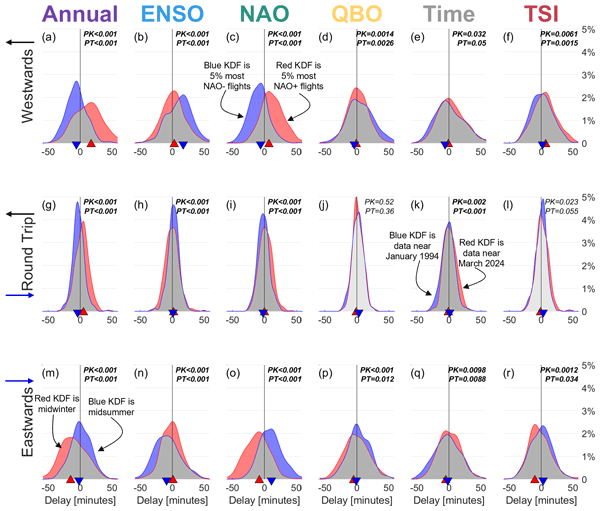
We use measured transatlantic flight times since 1994 from the IAGOS (In-Service Aircraft for a Global
Observing System) program to assess the impact of the North Atlantic Oscillation, El Nino-Southern Oscillation, Quasi-Biennial Oscillation and solar cycle. We show that they drive changes to one-way flight times of over an hour and to round-trip flight times by several minutes per flight. They thus cause variability in total CO2 emissions of 10s of kT/month and financial cost of millions of US dollars/month over the full transatlantic fleet.
Observing System) program to assess the impact of the North Atlantic Oscillation, El Nino-Southern Oscillation, Quasi-Biennial Oscillation and solar cycle. We show that they drive changes to one-way flight times of over an hour and to round-trip flight times by several minutes per flight. They thus cause variability in total CO2 emissions of 10s of kT/month and financial cost of millions of US dollars/month over the full transatlantic fleet.
Peter G. Berthelemy, Corwin J. Wright, Neil P. Hindley, Phoebe E. Noble, and Lars Hoffmann
Atmos. Chem. Phys., 25, 17595–17611, https://doi.org/10.5194/acp-25-17595-2025, https://doi.org/10.5194/acp-25-17595-2025, 2025
Short summary
Short summary
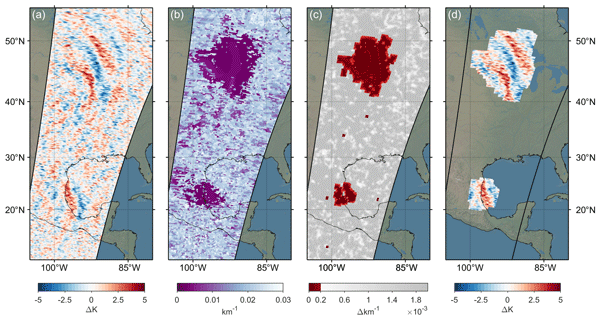
Atmospheric gravity waves are one of the key mechanisms for moving energy upwards through the atmosphere. We use temperature data to see them from a satellite, and here have made a new method to automatically detect them. This works by seeing if points next to each other are from the same wave. This is useful for creating larger gravity wave datasets without noise, which can then be used by climate forecasters to improve their understanding of the atmosphere.
Phoebe Noble, Neil Hindley, Corwin Wright, Chihoko Cullens, Scott England, Nicholas Pedatella, Nicholas Mitchell, and Tracy Moffat-Griffin
Atmos. Chem. Phys. Discuss., https://doi.org/10.5194/acp-2022-150, https://doi.org/10.5194/acp-2022-150, 2022
Revised manuscript not accepted
Short summary
Short summary
We use long term radar data and the WACCM-X model to study the impact of dynamical phenomena, including the 11-year solar cycle, ENSO, QBO and SAM, on Antarctic mesospheric winds. We find that in summer, the zonal wind (both observationally and in the model) is strongly correlated with the solar cycle. We also see important differences in the results from the other processes. In addition we find important and large biases in the winter model zonal winds relative to the observations.
Robert Reichert, Pierre-Dominique Pautet, and Martina Bramberger
EGUsphere, https://doi.org/10.5194/egusphere-2026-5053, https://doi.org/10.5194/egusphere-2026-5053, 2026
This preprint is open for discussion and under review for Atmospheric Measurement Techniques (AMT).
Short summary
Short summary
Atmospheric waves rarely occur alone, making it difficult to identify and track individual signals. We developed WAVEGUISE, a method that separates complex observations into distinct wave packets while retaining weaker features. Tests on one-, two-, and three-dimensional data show that it can recover overlapping waves and describe how their properties change in space and time. This enables clearer case studies and more robust statistics of wave behavior and interactions.
Giovanni Biagioli, Alexis Aubel, Riwal Plougonven, and Sandrine Bony
EGUsphere, https://doi.org/10.5194/egusphere-2026-4254, https://doi.org/10.5194/egusphere-2026-4254, 2026
Short summary
Short summary
Atmospheric waves produce many effects, such as regularly spaced clouds. One such event was sampled by a research aircraft in a recent campaign, as part of a larger wave collection spanning 500 km. The wave left a clear imprint on wind and temperature measurements. We characterize the waves and explain their surprising extent and persistence: the environment created a waveguide from 5–10 km altitude. We then build an easy-to-calculate metric aggregating factors conducive to waveguide emergence.
Camille Le Coz, Alexis Tantet, Rémi Flamary, and Riwal Plougonven
Geosci. Model Dev., 19, 8167–8189, https://doi.org/10.5194/gmd-19-8167-2026, https://doi.org/10.5194/gmd-19-8167-2026, 2026
Short summary
Short summary
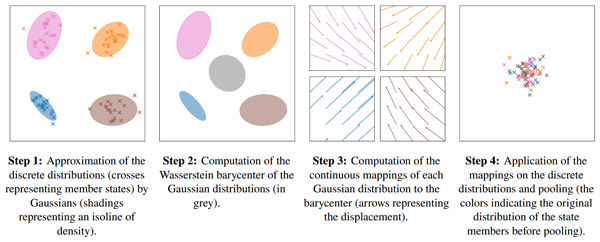
We explore an alternative framework for constructing multi-model ensembles by formulating ensemble combination as a barycenter problem. We compare the L2 barycenter (equivalent to pooling) with the Wasserstein barycenter (more precisely its Gaussian approximation). Both have the same ensemble mean but differ in how they represent forecasts uncertainty. In terms of Continuous Ranked Probability Score, the Wasserstein barycenter outperforms more often while performing similarly on average.
Milena Corcos, Bernd Kärcher, Thomas Lesigne, Aurélien Podglajen, and Eric J. Jensen
EGUsphere, https://doi.org/10.5194/egusphere-2026-3112, https://doi.org/10.5194/egusphere-2026-3112, 2026
Short summary
Short summary
Thin ice clouds near the boundary between the troposphere and stratosphere affect Earth's climate by influencing radiation and the transport of water into the upper atmosphere. Using a model constrained by cloud observations, we investigated why some clouds disappear within hours while others persist much longer. We show that their lifetime depends on both rapid fluctuations and slower temperature changes. Long-lived clouds are rare but may have a disproportionate influence on climate.
Zuzana Procházková, Erfan Mahmoudi, Ray Chew, Stamen Dolaptchiev, Claudia Christine Stephan, Georg Sebastian Völker, and Ulrich Achatz
Atmos. Chem. Phys., 26, 9541–9558, https://doi.org/10.5194/acp-26-9541-2026, https://doi.org/10.5194/acp-26-9541-2026, 2026
Short summary
Short summary
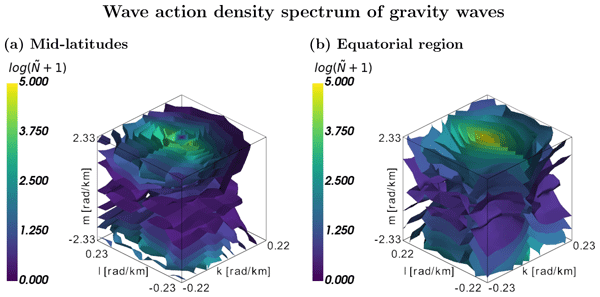
The study analyzes gravity waves in a high-resolution simulation. A unique methodology is applied to compute three-dimensional gravity wave spectra while keeping the data on the original triangular model grid and using linear wave theory. The results show the structure of gravity waves that would remain unresolved by a model with lower horizontal resolution. It is shown that the spectra can be highly simplified, which can help constructing precise but efficient gravity wave parametrisation.
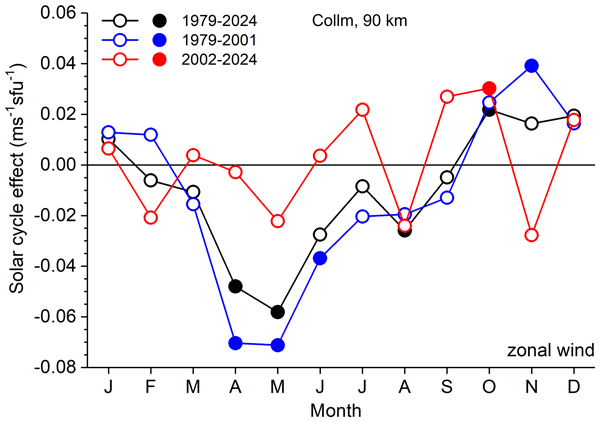
Christoph Jacobi, Ales Kuchar, Manfred Ern, Toralf Renkwitz, Ralph Latteck, and Jorge L. Chau
Adv. Radio Sci., 24, 15–28, https://doi.org/10.5194/ars-24-15-2026, https://doi.org/10.5194/ars-24-15-2026, 2026
Short summary
Short summary
Analyses of more than four decades (1979–2024) of mean horizontal winds in the mesopause region at about 90 km altitude show long-term trends and an influence of the 11-year solar cycle. After the 1990s, both linear trends and the solar cycle effect change and strongly weaken, indicating a change in dynamics or solar forcing. Gravity wave proxies also show a solar cycle effect, which decreases after the 1990s.
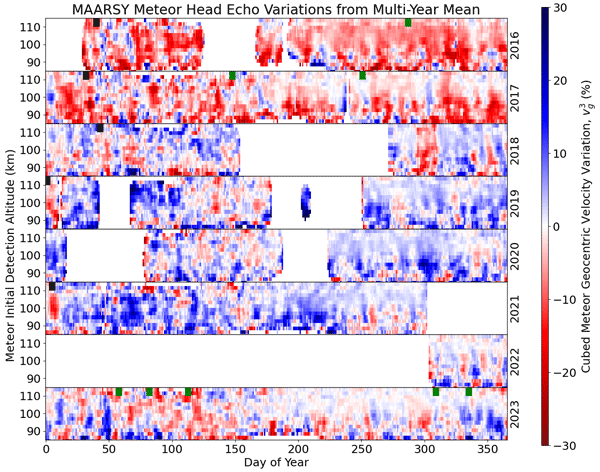
Devin Huyghebaert, Juha Vierinen, Björn Gustavsson, Ralph Latteck, Toralf Renkwitz, Marius Zecha, Claudia C. Stephan, J. Federico Conte, Daniel Kastinen, Johan Kero, and Jorge L. Chau
Atmos. Meas. Tech., 19, 4277–4292, https://doi.org/10.5194/amt-19-4277-2026, https://doi.org/10.5194/amt-19-4277-2026, 2026
Short summary
Short summary
The phenomena of meteors occurs at altitudes of 60–120 km and can be used to measure the neutral atmosphere. We use a large high power radar system in Norway (Middle Atmosphere Alomar Radar System (MAARSY)) to measure the meteors and determine changes to the atmospheric density between the years of 2016–2023 at altitudes of 85–115 km. The same time period between years are compared, minimizing changes to the measurements due to factors other than the atmosphere.
Andreas Dörnbrack, Andreas Giez, Christian Mallaun, and Claudia Christine Stephan
EGUsphere, https://doi.org/10.5194/egusphere-2026-2628, https://doi.org/10.5194/egusphere-2026-2628, 2026
Short summary
Short summary
Upper-tropospheric turbulence over the Atlantic intertropical convergence zone is quantified from in situ measurements onboard the German research aircraft HALO, with a focus on whether the anticipated subsidence in the doldrums leads to reduced turbulence.
Yen-Sen Lu, Lars Hoffmann, Xue Wu, Corwin J. Wright, and Neil P. Hindley
EGUsphere, https://doi.org/10.5194/egusphere-2026-1469, https://doi.org/10.5194/egusphere-2026-1469, 2026
Preprint archived
Short summary
Short summary
We studied how computer models represent atmospheric waves triggered by intense tropical cyclones. We used a real typhoon as a case study to test how different mathematical descriptions of the atmospheric model affect these wave patterns. We found that small changes in model settings significantly impact the predicted waves in the upper atmosphere. This research helps scientists choose better model configurations to improve weather forecasts and our understanding of atmospheric science.
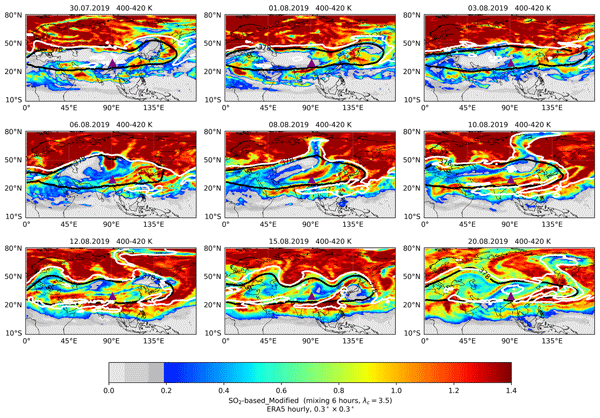
Zhen Yang, Bärbel Vogel, Felix Plöger, Zhixuan Bai, Dan Li, Sabine Griessbach, Lars Hoffmann, Frank G. Wienhold, Elizabeth Asher, Alexandre A. Baron, Katie R. Smith, Troy Thornberry, Jianchun Bian, and Michaela I. Hegglin
Atmos. Chem. Phys., 26, 4749–4769, https://doi.org/10.5194/acp-26-4749-2026, https://doi.org/10.5194/acp-26-4749-2026, 2026
Short summary
Short summary
Balloon measurements over Lhasa, China, combined with satellite guided modelling, tracked aerosol from the 2019 Raikoke eruption through the Asian summer monsoon anticyclone. We find two altitude dependent routes into the anticyclone. It partly blocks transport but also allows entry and mixing, explaining the gradual weakening of the layers. Balloon measurements over Boulder, United States, outside the anticyclone, provide an independent check outside the region.
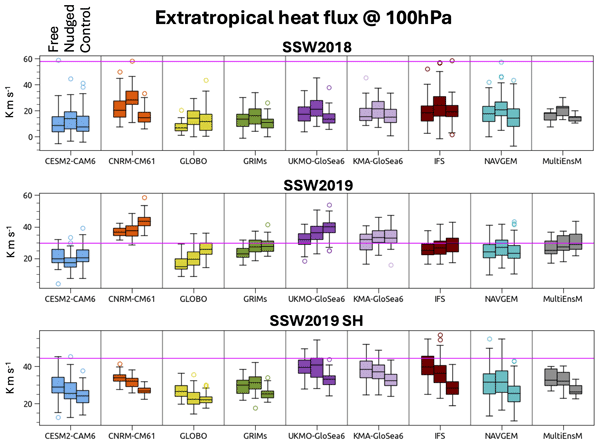
Blanca Ayarzagüena, Amy H. Butler, Peter Hitchcock, Chaim I. Garfinkel, Zac D. Lawrence, Wuhan Ning, Philip Rupp, Zheng Wu, Hilla Afargan-Gerstman, Natalia Calvo, Alvaro de la Cámara, Martin Jucker, Gerbrand Koren, Daniel De Maeseneire, Gloria L. Manney, Marisol Osman, Masakazu Taguchi, Cory Barton, Dong-Chan Hong, Yu-Kyung Hyun, Hera Kim, Jeff Knight, Piero Malguzzi, Daniele Mastrangelo, Jiyoung Oh, Inna Polichtchouk, Jadwiga H. Richter, Isla R. Simpson, Seok-Woo Son, Damien Specq, and Tim Stockdale
Weather Clim. Dynam., 7, 411–437, https://doi.org/10.5194/wcd-7-411-2026, https://doi.org/10.5194/wcd-7-411-2026, 2026
Short summary
Short summary
Sudden Stratospheric Warmings (SSWs) are known to follow a sustained wave dissipation in the stratosphere, which depends on both the tropospheric and stratospheric states. However, the relative role of each state is still unclear. Using a new set of subseasonal to seasonal forecasts, we show that the stratospheric state does not drastically affect the precursors of three recent SSWs, but modulates the stratospheric wave activity, with impacts depending on SSW features.
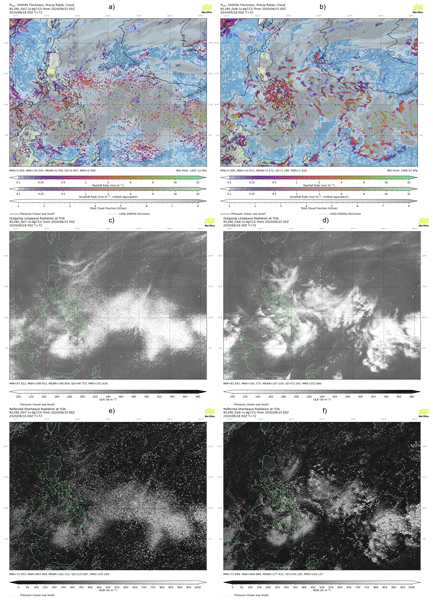
Martin Willett, Melissa Brooks, Andrew Bushell, Paul Earnshaw, Samantha Smith, Lorenzo Tomassini, Martin Best, Ian Boutle, Jennifer Brooke, John M. Edwards, Andrew D. Elvidge, Kalli Furtado, Catherine Hardacre, Andrew J. Hartley, Alan J. Hewitt, Ben Johnson, Adrian Lock, Andy Malcolm, Jane Mulcahy, Eike Müller, Ian A. Renfrew, Heather Rumbold, Gabriel G. Rooney, Alistair Sellar, Masashi Ujiie, Annelize van Niekerk, Andy Wiltshire, and Michael Whitall
Geosci. Model Dev., 19, 1473–1517, https://doi.org/10.5194/gmd-19-1473-2026, https://doi.org/10.5194/gmd-19-1473-2026, 2026
Short summary
Short summary
Global Atmosphere (GA) configurations of the Unified Model (UM) and Global Land (GL) configurations of Joint UK Land Environment Simulator (JULES) are developed for use in any global atmospheric modelling application. We describe a recent iteration of these configurations, GA8GL9, which includes improvements to the representation of convection and other physical processes. GA8GL9 is used for operational weather prediction in the UK and forms the basis for the next GA and GL configuration.
Arun Jo Mathew, Sebastian Rhode, Manfred Ern, Maniyatt Pramitha, and Peter Preusse
Atmos. Meas. Tech., 19, 949–964, https://doi.org/10.5194/amt-19-949-2026, https://doi.org/10.5194/amt-19-949-2026, 2026
Short summary
Short summary
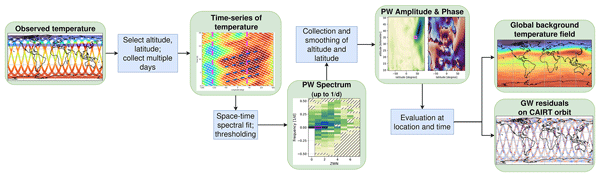
The atmosphere hosts a multitude of waves, among which Atmospheric Gravity wave separation from satellite measurements requires removal of global scale waves and tides. The present study describes the open access software GLOFI (GLObal wave FIt) which uses the 2D spectral decomposition to perform this removal. It is validated on simulated temperature observations synthesised for ESA (European Space Agency) Earth Explorer 11 candidate CAIRT (Changing-Atmosphere Infra-Red Tomography Explorer).
Pierre Cadiou, Riwal Plougonven, Aurélien Podglajen, Albert Hertzog, and Alexandra Mac Farlane
Atmos. Chem. Phys., 26, 1665–1684, https://doi.org/10.5194/acp-26-1665-2026, https://doi.org/10.5194/acp-26-1665-2026, 2026
Short summary
Short summary
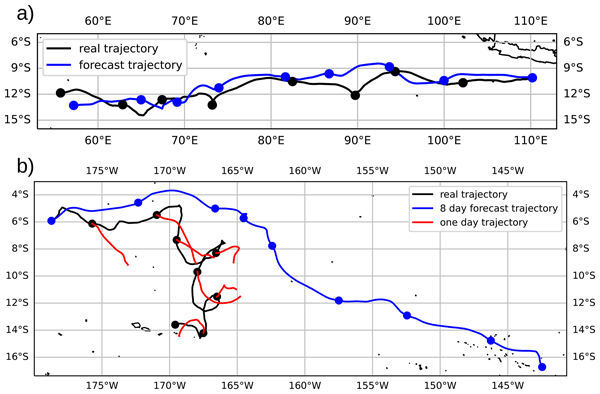
Winds in the Equatorial region remain difficult to model. We take advantage of long-duration balloon campaigns from 2019 and 2021 to assess errors in winds between 18 and 20 km in a weather forecast model. Large errors persist: one third of the time, the error is larger than 3.5 m per second. This has implications for research studies that calculate air mass trajectories in this transition region between the troposphere and the stratosphere.
Corwin J. Wright, Phoebe E. Noble, Timothy P. Banyard, Sarah J. Freeman, and Paul D. Williams
Atmos. Chem. Phys., 25, 18267–18290, https://doi.org/10.5194/acp-25-18267-2025, https://doi.org/10.5194/acp-25-18267-2025, 2025
Short summary
Short summary
We use measured transatlantic flight times since 1994 from the IAGOS (In-Service Aircraft for a Global
Observing System) program to assess the impact of the North Atlantic Oscillation, El Nino-Southern Oscillation, Quasi-Biennial Oscillation and solar cycle. We show that they drive changes to one-way flight times of over an hour and to round-trip flight times by several minutes per flight. They thus cause variability in total CO2 emissions of 10s of kT/month and financial cost of millions of US dollars/month over the full transatlantic fleet.
Observing System) program to assess the impact of the North Atlantic Oscillation, El Nino-Southern Oscillation, Quasi-Biennial Oscillation and solar cycle. We show that they drive changes to one-way flight times of over an hour and to round-trip flight times by several minutes per flight. They thus cause variability in total CO2 emissions of 10s of kT/month and financial cost of millions of US dollars/month over the full transatlantic fleet.
Peter G. Berthelemy, Corwin J. Wright, Neil P. Hindley, Phoebe E. Noble, and Lars Hoffmann
Atmos. Chem. Phys., 25, 17595–17611, https://doi.org/10.5194/acp-25-17595-2025, https://doi.org/10.5194/acp-25-17595-2025, 2025
Short summary
Short summary
Atmospheric gravity waves are one of the key mechanisms for moving energy upwards through the atmosphere. We use temperature data to see them from a satellite, and here have made a new method to automatically detect them. This works by seeing if points next to each other are from the same wave. This is useful for creating larger gravity wave datasets without noise, which can then be used by climate forecasters to improve their understanding of the atmosphere.
Arno Keppens, Daan Hubert, José Granville, Oindrila Nath, Jean-Christopher Lambert, Catherine Wespes, Pierre-François Coheur, Cathy Clerbaux, Anne Boynard, Richard Siddans, Barry Latter, Brian Kerridge, Serena Di Pede, Pepijn Veefkind, Juan Cuesta, Gaelle Dufour, Klaus-Peter Heue, Melanie Coldewey-Egbers, Diego Loyola, Andrea Orfanoz-Cheuquelaf, Swathi Maratt Satheesan, Kai-Uwe Eichmann, Alexei Rozanov, Viktoria F. Sofieva, Jerald R. Ziemke, Antje Inness, Roeland Van Malderen, and Lars Hoffmann
Atmos. Meas. Tech., 18, 6893–6916, https://doi.org/10.5194/amt-18-6893-2025, https://doi.org/10.5194/amt-18-6893-2025, 2025
Short summary
Short summary
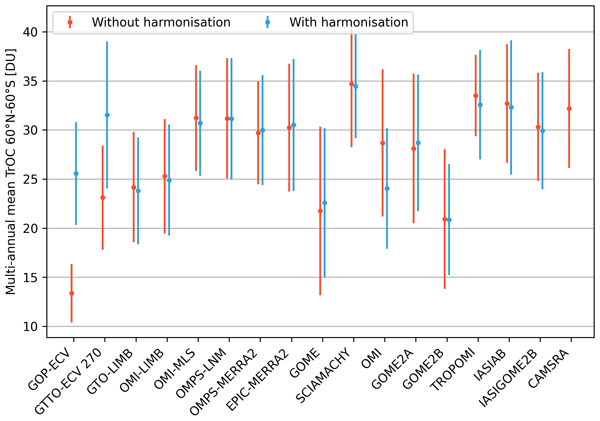
The first Tropospheric Ozone Assessment Report (TOAR) encountered discrepancies between several satellite sensors’ estimates of the distribution and change of ozone in the free troposphere. Therefore, contributing to the second TOAR, we harmonise as much as possible the observational perspective of sixteen tropospheric ozone products from satellites. This only partially accounts for the observed discrepancies, with a reduction of 10–40 % of the inter-product dispersion upon harmonisation.
Marwa Almowafy, Corwin J. Wright, and Neil P. Hindley
Atmos. Meas. Tech., 18, 6393–6416, https://doi.org/10.5194/amt-18-6393-2025, https://doi.org/10.5194/amt-18-6393-2025, 2025
Short summary
Short summary
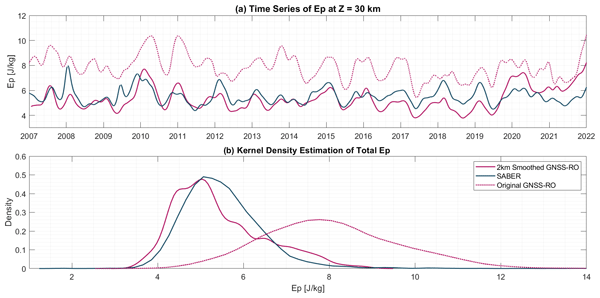
Gravity waves (GW) influence atmospheric dynamics. One key effect is on the zonal winds in the tropics stratosphere, which drive the quasi-biennial oscillation (QBO). Satellite observations are used to study gravity waves, but each satellite is constrained by its observational limits. This study investigates how GW–QBO interactions are observed by two satellites, SABER and GNSS-RO, and examines the potential for GNSS-RO to extend the GW climatology that is carried out by SABER for 23 years.
Mathieu Ratynski, Sergey Khaykin, Alain Hauchecorne, M. Joan Alexander, Alexis Mariaccia, Philippe Keckhut, and Antoine Mangin
Atmos. Chem. Phys., 25, 13769–13798, https://doi.org/10.5194/acp-25-13769-2025, https://doi.org/10.5194/acp-25-13769-2025, 2025
Short summary
Short summary
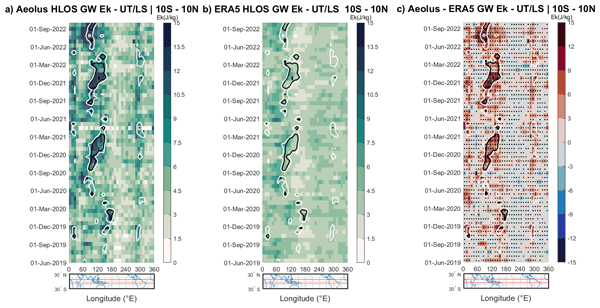
This study investigates how tropical convection generates gravity waves, which play a key role in transporting energy across the atmosphere. By combining Aeolus satellite data with ERA5 reanalysis data and radio occultation measurements, we identified significant wave activity overlooked by ERA5, particularly over the Indian Ocean. Aeolus fills major gaps in wind data, offering a clearer picture of wave dynamics and challenging assumptions about their behavior, thereby improving climate models.
Rasul Baikhadzhaev, Felix Ploeger, Peter Preusse, Manfred Ern, and Thomas Birner
Atmos. Chem. Phys., 25, 12753–12777, https://doi.org/10.5194/acp-25-12753-2025, https://doi.org/10.5194/acp-25-12753-2025, 2025
Short summary
Short summary
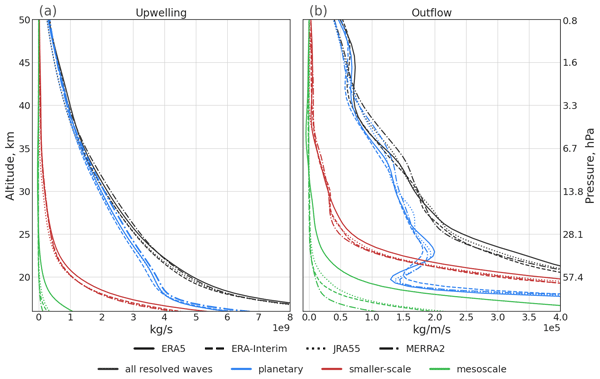
Across four reanalyses, the shallow branch of the stratospheric overturning circulation was found to be driven by planetary waves 1 to 3, and the deep branch of the circulation was found to be driven by smaller-scale waves (wave 4 and higher). However, the height of the level separating the branches is dependent on the reanalysis considered. Thus, using the appropriate separation levels in model inter-comparisons could reduce the spread between models regarding climatology and trends in the circulation.
Ales Kuchar, Gunter Stober, Dimitry Pokhotelov, Huixin Liu, Han-Li Liu, Manfred Ern, Damian Murphy, Diego Janches, Tracy Moffat-Griffin, Nicholas Mitchell, and Christoph Jacobi
EGUsphere, https://doi.org/10.5194/egusphere-2025-2827, https://doi.org/10.5194/egusphere-2025-2827, 2025
Short summary
Short summary
We studied how the healing of the Antarctic ozone layer is affecting winds high above the South Pole. Using ground-based radar, satellite data, and computer models, we found that winds in the upper atmosphere have become stronger over the past two decades. These changes appear to be linked to shifts in the lower atmosphere caused by ozone recovery. Our results show that human efforts to repair the ozone layer are also influencing climate patterns far above Earth’s surface.
Farahnaz Khosrawi and Lars Hoffmann
EGUsphere, https://doi.org/10.5194/egusphere-2025-3147, https://doi.org/10.5194/egusphere-2025-3147, 2025
Preprint archived
Short summary
Short summary
Computer performance has increased immensely in recent years, but the ability to store data has only increased slightly. This presents scientists with major challenges. Many compression methods have been developed in recent years with which data can be stored either lossless or lossy. Here we test three of these methods: two lossy compression methods and one lossless compressor. Our study shows that compression is a valuable tool to cope with the high demand of disk space from these data sets.
Markus Kunze, Christoph Zülicke, Tarique A. Siddiqui, Claudia C. Stephan, Yosuke Yamazaki, Claudia Stolle, Sebastian Borchert, and Hauke Schmidt
Geosci. Model Dev., 18, 3359–3385, https://doi.org/10.5194/gmd-18-3359-2025, https://doi.org/10.5194/gmd-18-3359-2025, 2025
Short summary
Short summary
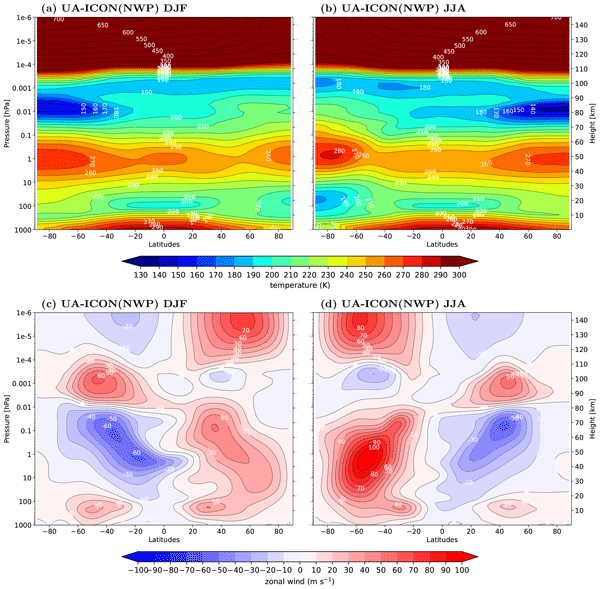
We present the Icosahedral Nonhydrostatic (ICON) general circulation model with an upper-atmospheric extension with the physics package for numerical weather prediction (UA-ICON(NWP)). We optimized the parameters for the gravity wave parameterizations and achieved realistic modeling of the thermal and dynamic states of the mesopause regions. UA-ICON(NWP) now shows a realistic frequency of major sudden stratospheric warmings and well-represented solar tides in temperature.
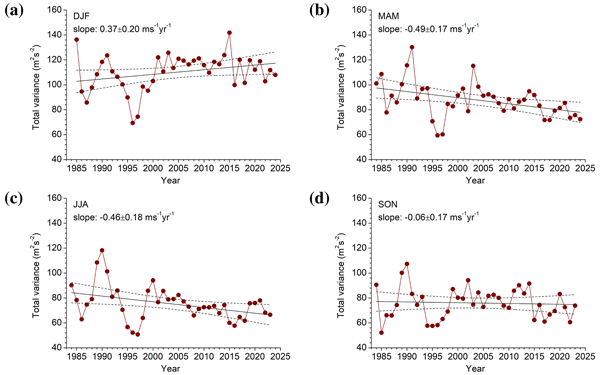
Christoph Jacobi, Khalil Karami, Ales Kuchar, Manfred Ern, Toralf Renkwitz, Ralph Latteck, and Jorge L. Chau
Adv. Radio Sci., 23, 21–31, https://doi.org/10.5194/ars-23-21-2025, https://doi.org/10.5194/ars-23-21-2025, 2025
Short summary
Short summary
Half-hourly mean winds have been obtained using ground-based low-frequency and very high frequency radio observations of the mesopause region at Collm, Germany, since 1984. Long-term changes of wind variances, which are proxies for short-period atmospheric gravity waves, have been analysed. Gravity wave amplitudes increase with time in winter, but mainly decrease in summer. The trends are consistent with mean wind changes according to wave theory.
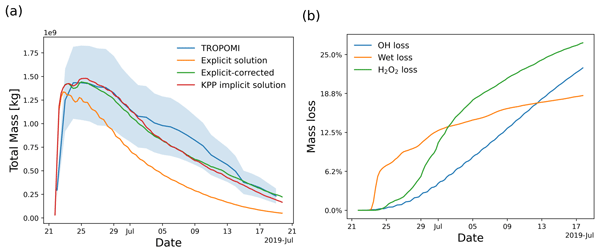
Mingzhao Liu, Lars Hoffmann, Jens-Uwe Grooß, Zhongyin Cai, Sabine Grießbach, and Yi Heng
Atmos. Chem. Phys., 25, 4403–4418, https://doi.org/10.5194/acp-25-4403-2025, https://doi.org/10.5194/acp-25-4403-2025, 2025
Short summary
Short summary
We studied the transport and chemical decomposition of volcanic SO2, focusing on the 2019 Raikoke event. By comparing two different chemistry modeling schemes, we found that including complex chemical reactions leads to a more accurate prediction of how long SO2 stays in the atmosphere. This research helps improve our understanding of volcanic pollution and its impact on air quality and climate, providing better tools for scientists to track and predict the movement of these pollutants.
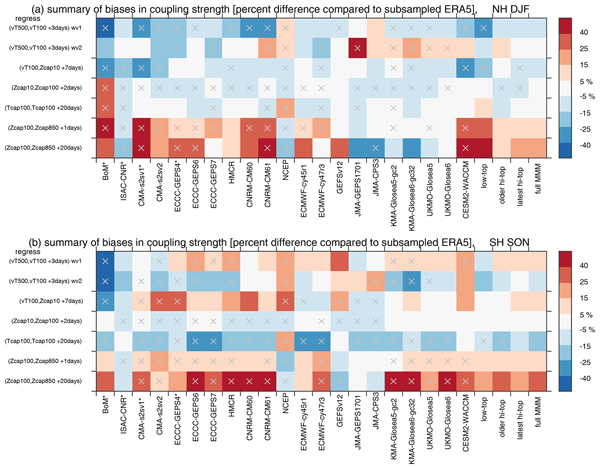
Chaim I. Garfinkel, Zachary D. Lawrence, Amy H. Butler, Etienne Dunn-Sigouin, Irene Erner, Alexey Y. Karpechko, Gerbrand Koren, Marta Abalos, Blanca Ayarzagüena, David Barriopedro, Natalia Calvo, Alvaro de la Cámara, Andrew Charlton-Perez, Judah Cohen, Daniela I. V. Domeisen, Javier García-Serrano, Neil P. Hindley, Martin Jucker, Hera Kim, Robert W. Lee, Simon H. Lee, Marisol Osman, Froila M. Palmeiro, Inna Polichtchouk, Jian Rao, Jadwiga H. Richter, Chen Schwartz, Seok-Woo Son, Masakazu Taguchi, Nicholas L. Tyrrell, Corwin J. Wright, and Rachel W.-Y. Wu
Weather Clim. Dynam., 6, 171–195, https://doi.org/10.5194/wcd-6-171-2025, https://doi.org/10.5194/wcd-6-171-2025, 2025
Short summary
Short summary
Variability in the extratropical stratosphere and troposphere is coupled, and because of the longer timescales characteristic of the stratosphere, this allows for a window of opportunity for surface prediction. This paper assesses whether models used for operational prediction capture these coupling processes accurately. We find that most processes are too weak; however downward coupling from the lower stratosphere to the near surface is too strong.
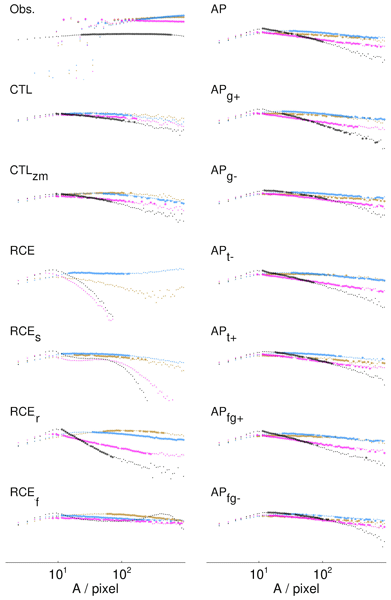
Claudia Christine Stephan and Bjorn Stevens
Atmos. Chem. Phys., 25, 1209–1226, https://doi.org/10.5194/acp-25-1209-2025, https://doi.org/10.5194/acp-25-1209-2025, 2025
Short summary
Short summary
Tropical precipitation cluster area and intensity distributions follow power laws, but the physical processes responsible for this behavior remain unknown. We analyze global simulations that realistically represent precipitation processes. We consider Earth-like planets as well as virtual planets to realize different types of large-scale dynamics. Our finding is that power laws in Earth’s precipitation cluster statistics stem from the robust power laws in Earth’s atmospheric wind field.
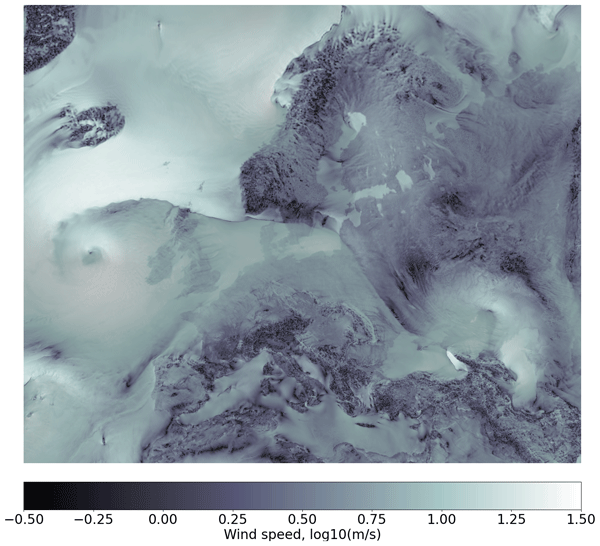
Thomas Rackow, Xabier Pedruzo-Bagazgoitia, Tobias Becker, Sebastian Milinski, Irina Sandu, Razvan Aguridan, Peter Bechtold, Sebastian Beyer, Jean Bidlot, Souhail Boussetta, Willem Deconinck, Michail Diamantakis, Peter Dueben, Emanuel Dutra, Richard Forbes, Rohit Ghosh, Helge F. Goessling, Ioan Hadade, Jan Hegewald, Thomas Jung, Sarah Keeley, Lukas Kluft, Nikolay Koldunov, Aleksei Koldunov, Tobias Kölling, Josh Kousal, Christian Kühnlein, Pedro Maciel, Kristian Mogensen, Tiago Quintino, Inna Polichtchouk, Balthasar Reuter, Domokos Sármány, Patrick Scholz, Dmitry Sidorenko, Jan Streffing, Birgit Sützl, Daisuke Takasuka, Steffen Tietsche, Mirco Valentini, Benoît Vannière, Nils Wedi, Lorenzo Zampieri, and Florian Ziemen
Geosci. Model Dev., 18, 33–69, https://doi.org/10.5194/gmd-18-33-2025, https://doi.org/10.5194/gmd-18-33-2025, 2025
Short summary
Short summary
Detailed global climate model simulations have been created based on a numerical weather prediction model, offering more accurate spatial detail down to the scale of individual cities ("kilometre-scale") and a better understanding of climate phenomena such as atmospheric storms, whirls in the ocean, and cracks in sea ice. The new model aims to provide globally consistent information on local climate change with greater precision, benefiting environmental planning and local impact modelling.
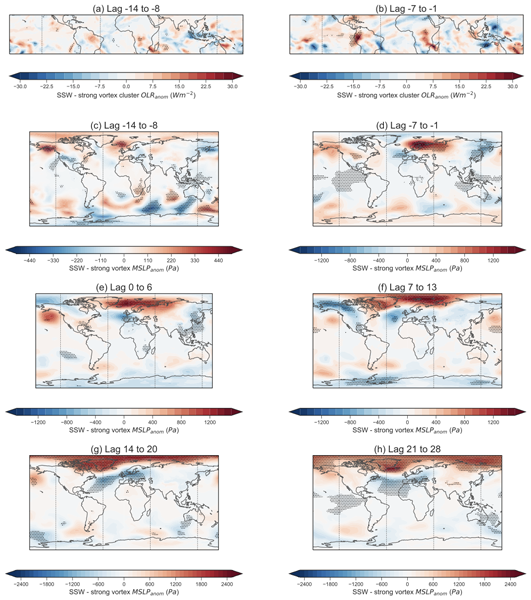
Rachel W.-Y. Wu, Gabriel Chiodo, Inna Polichtchouk, and Daniela I. V. Domeisen
Atmos. Chem. Phys., 24, 12259–12275, https://doi.org/10.5194/acp-24-12259-2024, https://doi.org/10.5194/acp-24-12259-2024, 2024
Short summary
Short summary
Strong variations in the strength of the stratospheric polar vortex can profoundly affect surface weather extremes; therefore, accurately predicting the stratosphere can improve surface weather forecasts. The research reveals how uncertainty in the stratosphere is linked to the troposphere. The findings suggest that refining models to better represent the identified sources and impact regions in the troposphere is likely to improve the prediction of the stratosphere and its surface impacts.
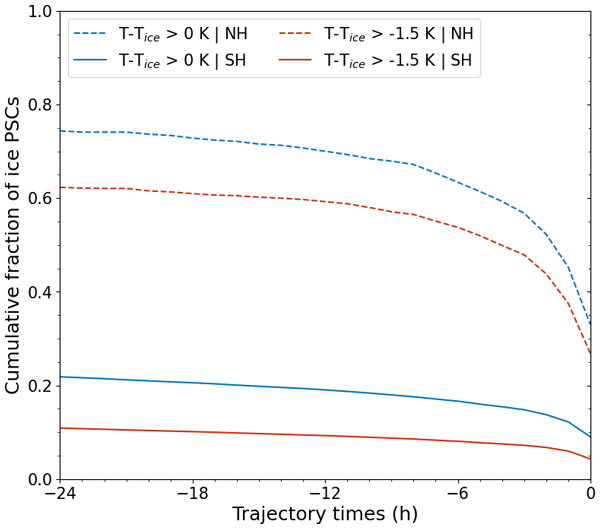
Ling Zou, Reinhold Spang, Sabine Griessbach, Lars Hoffmann, Farahnaz Khosrawi, Rolf Müller, and Ines Tritscher
Atmos. Chem. Phys., 24, 11759–11774, https://doi.org/10.5194/acp-24-11759-2024, https://doi.org/10.5194/acp-24-11759-2024, 2024
Short summary
Short summary
This study provided estimates of the occurrence of ice polar stratospheric clouds (PSCs) observed by the Michelson Interferometer for Passive Atmospheric Sounding (MIPAS) and their connection with temperatures above the frost point (Tice) using a Lagrangian model derived from ERA5. We found that ice PSCs above Tice with temperature fluctuations along the backward trajectory are 33 % in the Arctic and 9 % in the Antarctic. This quantitative assessment enhances our understanding of ice PSCs.
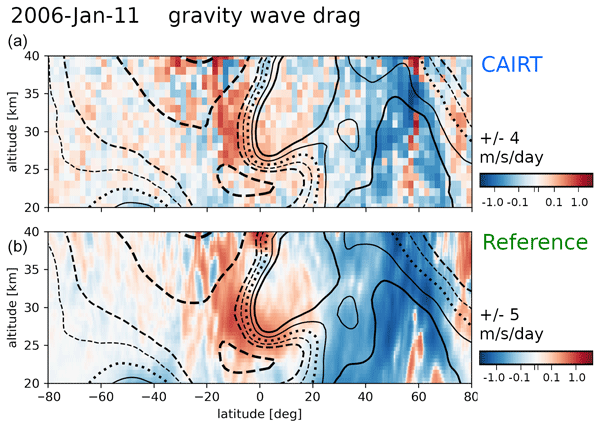
Sebastian Rhode, Peter Preusse, Jörn Ungermann, Inna Polichtchouk, Kaoru Sato, Shingo Watanabe, Manfred Ern, Karlheinz Nogai, Björn-Martin Sinnhuber, and Martin Riese
Atmos. Meas. Tech., 17, 5785–5819, https://doi.org/10.5194/amt-17-5785-2024, https://doi.org/10.5194/amt-17-5785-2024, 2024
Short summary
Short summary
We investigate the capabilities of a proposed satellite mission, CAIRT, for observing gravity waves throughout the middle atmosphere and present the necessary methodology for in-depth wave analysis. Our findings suggest that such a satellite mission is highly capable of resolving individual wave parameters and could give new insights into the role of gravity waves in general atmospheric circulation and atmospheric processes.
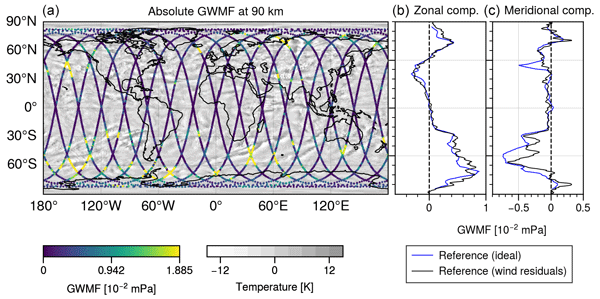
Björn Linder, Peter Preusse, Qiuyu Chen, Ole Martin Christensen, Lukas Krasauskas, Linda Megner, Manfred Ern, and Jörg Gumbel
Atmos. Meas. Tech., 17, 3829–3841, https://doi.org/10.5194/amt-17-3829-2024, https://doi.org/10.5194/amt-17-3829-2024, 2024
Short summary
Short summary
The Swedish research satellite MATS (Mesospheric Airglow/Aerosol Tomography and Spectroscopy) is designed to study atmospheric waves in the mesosphere and lower thermosphere. These waves perturb the temperature field, and thus, by observing three-dimensional temperature fluctuations, their properties can be quantified. This pre-study uses synthetic MATS data generated from a general circulation model to investigate how well wave properties can be retrieved.
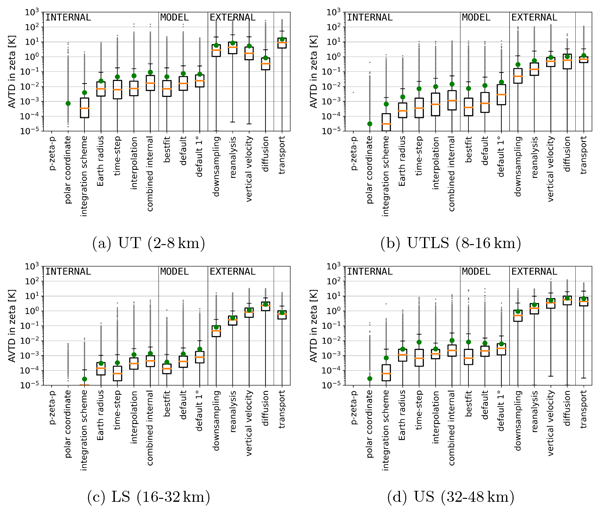
Jan Clemens, Lars Hoffmann, Bärbel Vogel, Sabine Grießbach, and Nicole Thomas
Geosci. Model Dev., 17, 4467–4493, https://doi.org/10.5194/gmd-17-4467-2024, https://doi.org/10.5194/gmd-17-4467-2024, 2024
Short summary
Short summary
Lagrangian transport models simulate the transport of air masses in the atmosphere. For example, one model (CLaMS) is well suited to calculating transport as it uses a special coordinate system and special vertical wind. However, it only runs inefficiently on modern supercomputers. Hence, we have implemented the benefits of CLaMS into a new model (MPTRAC), which is already highly efficient on modern supercomputers. Finally, in extensive tests, we showed that CLaMS and MPTRAC agree very well.
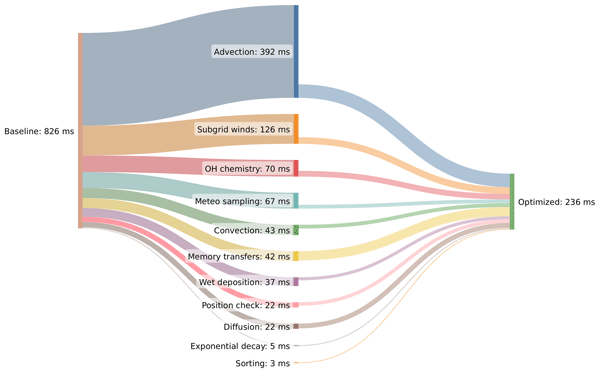
Lars Hoffmann, Kaveh Haghighi Mood, Andreas Herten, Markus Hrywniak, Jiri Kraus, Jan Clemens, and Mingzhao Liu
Geosci. Model Dev., 17, 4077–4094, https://doi.org/10.5194/gmd-17-4077-2024, https://doi.org/10.5194/gmd-17-4077-2024, 2024
Short summary
Short summary
Lagrangian particle dispersion models are key for studying atmospheric transport but can be computationally intensive. To speed up simulations, the MPTRAC model was ported to graphics processing units (GPUs). Performance optimization of data structures and memory alignment resulted in runtime improvements of up to 75 % on NVIDIA A100 GPUs for ERA5-based simulations with 100 million particles. These optimizations make the MPTRAC model well suited for future high-performance computing systems.
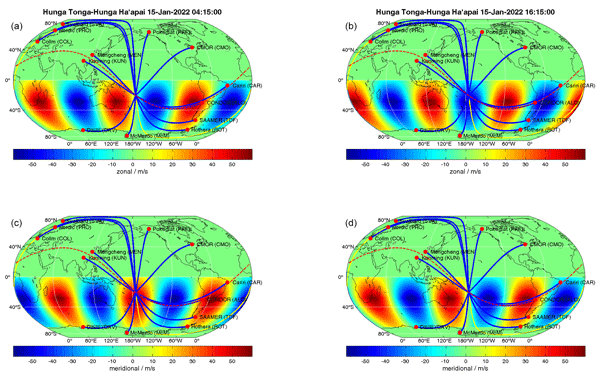
Gunter Stober, Sharon L. Vadas, Erich Becker, Alan Liu, Alexander Kozlovsky, Diego Janches, Zishun Qiao, Witali Krochin, Guochun Shi, Wen Yi, Jie Zeng, Peter Brown, Denis Vida, Neil Hindley, Christoph Jacobi, Damian Murphy, Ricardo Buriti, Vania Andrioli, Paulo Batista, John Marino, Scott Palo, Denise Thorsen, Masaki Tsutsumi, Njål Gulbrandsen, Satonori Nozawa, Mark Lester, Kathrin Baumgarten, Johan Kero, Evgenia Belova, Nicholas Mitchell, Tracy Moffat-Griffin, and Na Li
Atmos. Chem. Phys., 24, 4851–4873, https://doi.org/10.5194/acp-24-4851-2024, https://doi.org/10.5194/acp-24-4851-2024, 2024
Short summary
Short summary
On 15 January 2022, the Hunga Tonga-Hunga Ha‘apai volcano exploded in a vigorous eruption, causing many atmospheric phenomena reaching from the surface up to space. In this study, we investigate how the mesospheric winds were affected by the volcanogenic gravity waves and estimated their propagation direction and speed. The interplay between model and observations permits us to gain new insights into the vertical coupling through atmospheric gravity waves.
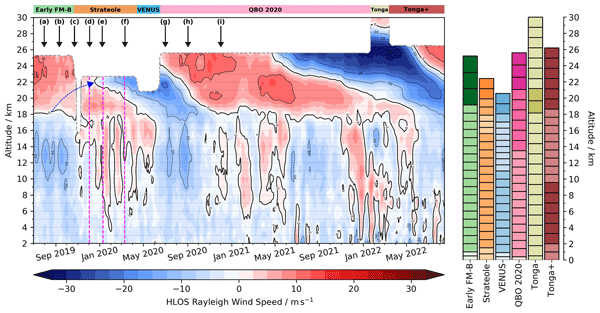
Timothy P. Banyard, Corwin J. Wright, Scott M. Osprey, Neil P. Hindley, Gemma Halloran, Lawrence Coy, Paul A. Newman, Neal Butchart, Martina Bramberger, and M. Joan Alexander
Atmos. Chem. Phys., 24, 2465–2490, https://doi.org/10.5194/acp-24-2465-2024, https://doi.org/10.5194/acp-24-2465-2024, 2024
Short summary
Short summary
In 2019/2020, the tropical stratospheric wind phenomenon known as the quasi-biennial oscillation (QBO) was disrupted for only the second time in the historical record. This was poorly forecasted, and we want to understand why. We used measurements from the first Doppler wind lidar in space, Aeolus, to observe the disruption in an unprecedented way. Our results reveal important differences between Aeolus and the ERA5 reanalysis that affect the timing of the disruption's onset and its evolution.
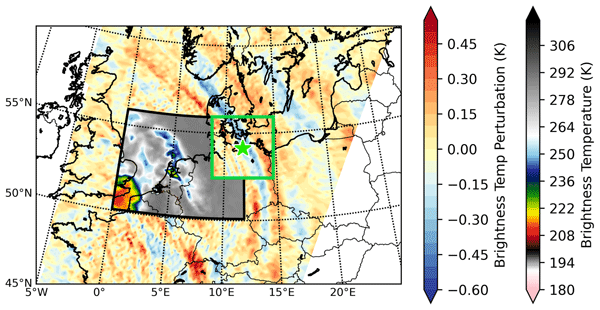
Eframir Franco-Diaz, Michael Gerding, Laura Holt, Irina Strelnikova, Robin Wing, Gerd Baumgarten, and Franz-Josef Lübken
Atmos. Chem. Phys., 24, 1543–1558, https://doi.org/10.5194/acp-24-1543-2024, https://doi.org/10.5194/acp-24-1543-2024, 2024
Short summary
Short summary
We use satellite, lidar, and ECMWF data to study storm-related waves that propagate above Kühlungsborn, Germany, during summer. Although these events occur in roughly half of the years of the satellite data we analyzed, we focus our study on two case study years (2014 and 2015). These events could contribute significantly to middle atmospheric circulation and are not accounted for in weather and climate models.
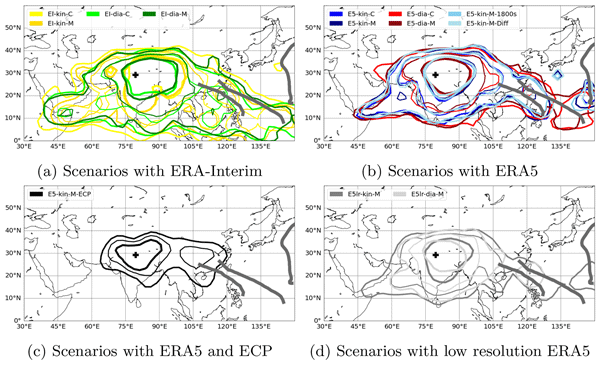
Jan Clemens, Bärbel Vogel, Lars Hoffmann, Sabine Griessbach, Nicole Thomas, Suvarna Fadnavis, Rolf Müller, Thomas Peter, and Felix Ploeger
Atmos. Chem. Phys., 24, 763–787, https://doi.org/10.5194/acp-24-763-2024, https://doi.org/10.5194/acp-24-763-2024, 2024
Short summary
Short summary
The source regions of the Asian tropopause aerosol layer (ATAL) are debated. We use balloon-borne measurements of the layer above Nainital (India) in August 2016 and atmospheric transport models to find ATAL source regions. Most air originated from the Tibetan plateau. However, the measured ATAL was stronger when more air originated from the Indo-Gangetic Plain and weaker when more air originated from the Pacific. Hence, the results indicate important anthropogenic contributions to the ATAL.
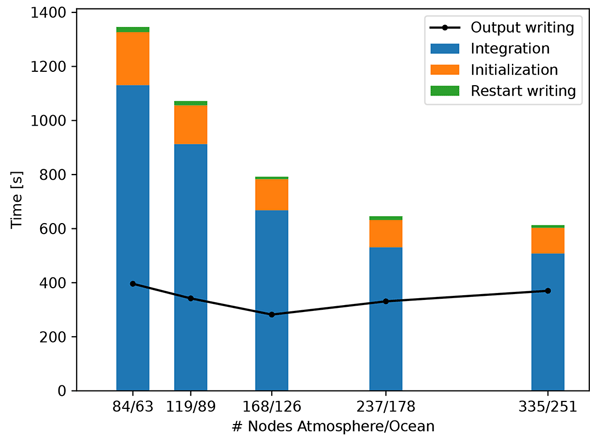
Abhiraj Bishnoi, Olaf Stein, Catrin I. Meyer, René Redler, Norbert Eicker, Helmuth Haak, Lars Hoffmann, Daniel Klocke, Luis Kornblueh, and Estela Suarez
Geosci. Model Dev., 17, 261–273, https://doi.org/10.5194/gmd-17-261-2024, https://doi.org/10.5194/gmd-17-261-2024, 2024
Short summary
Short summary
We enabled the weather and climate model ICON to run in a high-resolution coupled atmosphere–ocean setup on the JUWELS supercomputer, where the ocean and the model I/O runs on the CPU Cluster, while the atmosphere is running simultaneously on GPUs. Compared to a simulation performed on CPUs only, our approach reduces energy consumption by 45 % with comparable runtimes. The experiments serve as preparation for efficient computing of kilometer-scale climate models on future supercomputing systems.
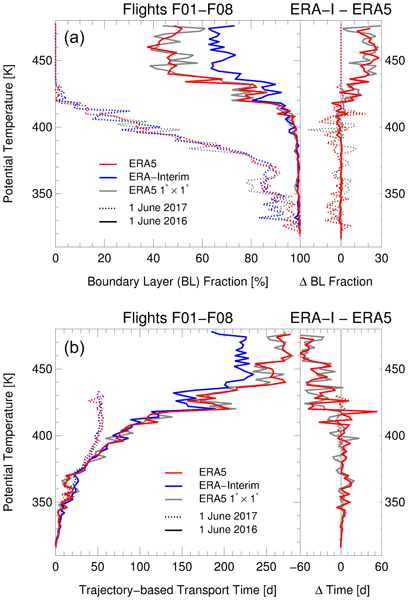
Bärbel Vogel, C. Michael Volk, Johannes Wintel, Valentin Lauther, Jan Clemens, Jens-Uwe Grooß, Gebhard Günther, Lars Hoffmann, Johannes C. Laube, Rolf Müller, Felix Ploeger, and Fred Stroh
Atmos. Chem. Phys., 24, 317–343, https://doi.org/10.5194/acp-24-317-2024, https://doi.org/10.5194/acp-24-317-2024, 2024
Short summary
Short summary
Over the Indian subcontinent, polluted air is rapidly uplifted to higher altitudes during the Asian monsoon season. We present an assessment of vertical transport in this region using different wind data provided by the European Centre for Medium-Range Weather Forecasts (ECMWF), as well as high-resolution aircraft measurements. In general, our findings confirm that the newest ECMWF reanalysis product, ERA5, yields a better representation of transport compared to the predecessor, ERA-Interim.
Xue Wu, Lars Hoffmann, Corwin J. Wright, Neil P. Hindley, M. Joan Alexander, Silvio Kalisch, Xin Wang, Bing Chen, Yinan Wang, and Daren Lyu
EGUsphere, https://doi.org/10.5194/egusphere-2023-3008, https://doi.org/10.5194/egusphere-2023-3008, 2024
Preprint archived
Short summary
Short summary
This study identified a noteworthy time-lagged correlation between hurricane intensity and stratospheric gravity wave intensities during hurricane intensification. Meanwhile, the study reveals distinct frequencies, horizontal wavelengths, and vertical wavelengths in the inner core region during hurricane intensification, offering essential insights for monitoring hurricane intensity via satellite observations of stratospheric gravity waves.
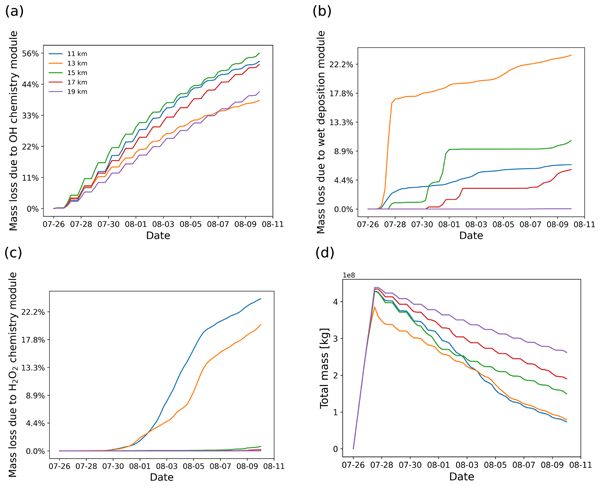
Mingzhao Liu, Lars Hoffmann, Sabine Griessbach, Zhongyin Cai, Yi Heng, and Xue Wu
Geosci. Model Dev., 16, 5197–5217, https://doi.org/10.5194/gmd-16-5197-2023, https://doi.org/10.5194/gmd-16-5197-2023, 2023
Short summary
Short summary
We introduce new and revised chemistry and physics modules in the Massive-Parallel Trajectory Calculations (MPTRAC) Lagrangian transport model aiming to improve the representation of volcanic SO2 transport and depletion. We test these modules in a case study of the Ambae eruption in July 2018 in which the SO2 plume underwent wet removal and convection. The lifetime of SO2 shows highly variable and complex dependencies on the atmospheric conditions at different release heights.
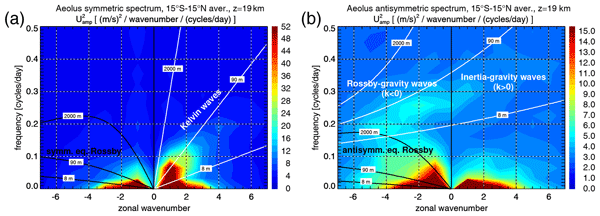
Manfred Ern, Mohamadou A. Diallo, Dina Khordakova, Isabell Krisch, Peter Preusse, Oliver Reitebuch, Jörn Ungermann, and Martin Riese
Atmos. Chem. Phys., 23, 9549–9583, https://doi.org/10.5194/acp-23-9549-2023, https://doi.org/10.5194/acp-23-9549-2023, 2023
Short summary
Short summary
Quasi-biennial oscillation (QBO) of the stratospheric tropical winds is an important mode of climate variability but is not well reproduced in free-running climate models. We use the novel global wind observations by the Aeolus satellite and radiosondes to show that the QBO is captured well in three modern reanalyses (ERA-5, JRA-55, and MERRA-2). Good agreement is also found also between Aeolus and reanalyses for large-scale tropical wave modes in the upper troposphere and lower stratosphere.
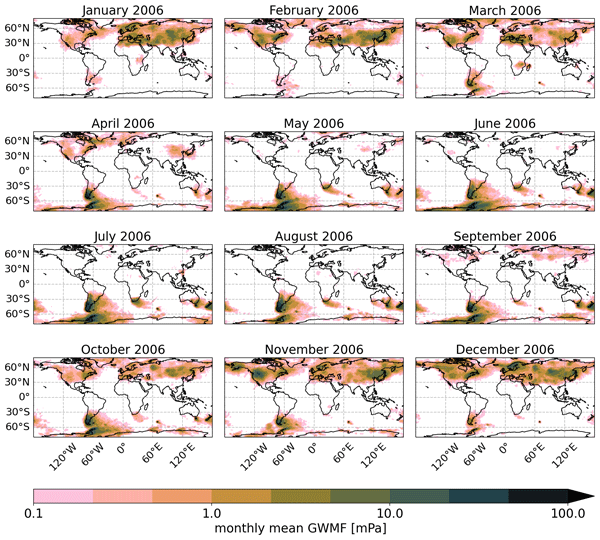
Sebastian Rhode, Peter Preusse, Manfred Ern, Jörn Ungermann, Lukas Krasauskas, Julio Bacmeister, and Martin Riese
Atmos. Chem. Phys., 23, 7901–7934, https://doi.org/10.5194/acp-23-7901-2023, https://doi.org/10.5194/acp-23-7901-2023, 2023
Short summary
Short summary
Gravity waves (GWs) transport energy vertically and horizontally within the atmosphere and thereby affect wind speeds far from their sources. Here, we present a model that identifies orographic GW sources and predicts the pathways of the excited GWs through the atmosphere for a better understanding of horizontal GW propagation. We use this model to explain physical patterns in satellite observations (e.g., low GW activity above the Himalaya) and predict seasonal patterns of GW propagation.
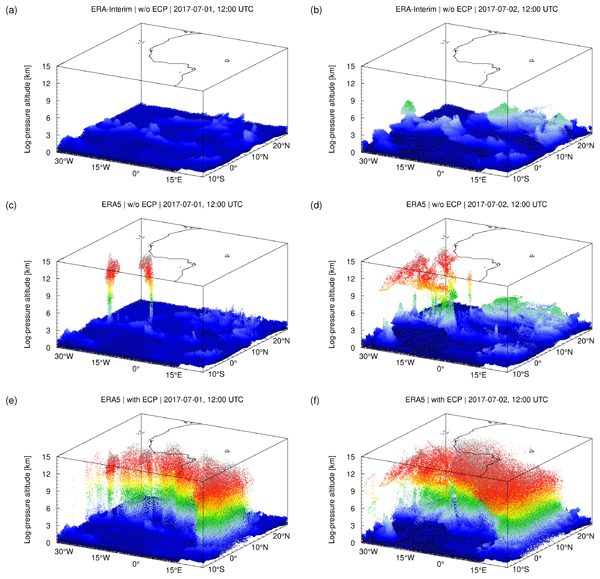
Lars Hoffmann, Paul Konopka, Jan Clemens, and Bärbel Vogel
Atmos. Chem. Phys., 23, 7589–7609, https://doi.org/10.5194/acp-23-7589-2023, https://doi.org/10.5194/acp-23-7589-2023, 2023
Short summary
Short summary
Atmospheric convection plays a key role in tracer transport in the troposphere. Global meteorological forecasts and reanalyses typically have a coarse spatiotemporal resolution that does not adequately resolve the dynamics, transport, and mixing of air associated with storm systems or deep convection. We discuss the application of the extreme convection parameterization in a Lagrangian transport model to improve simulations of tracer transport from the boundary layer into the free troposphere.
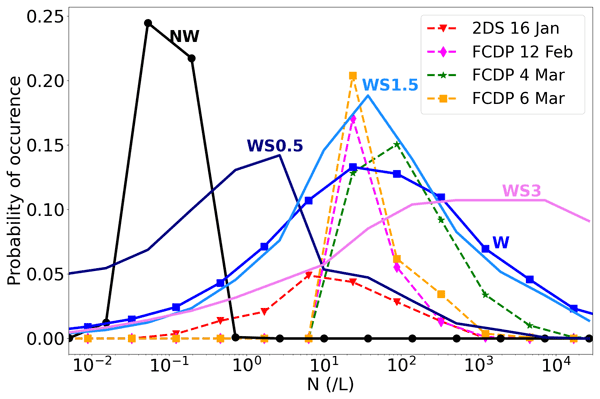
Milena Corcos, Albert Hertzog, Riwal Plougonven, and Aurélien Podglajen
Atmos. Chem. Phys., 23, 6923–6939, https://doi.org/10.5194/acp-23-6923-2023, https://doi.org/10.5194/acp-23-6923-2023, 2023
Short summary
Short summary
The role of gravity waves on tropical cirrus clouds and air-parcel dehydration was studied using the combination of Lagrangian observations of temperature fluctuations from superpressure balloons and a 1.5D model. The inclusion of the gravity waves to a reference simulation of a slow ascent around the cold-point tropopause drastically increases ice-crystal density, cloud fraction, and air-parcel dehydration, and it produces a crystal size distribution that agrees better with observations.
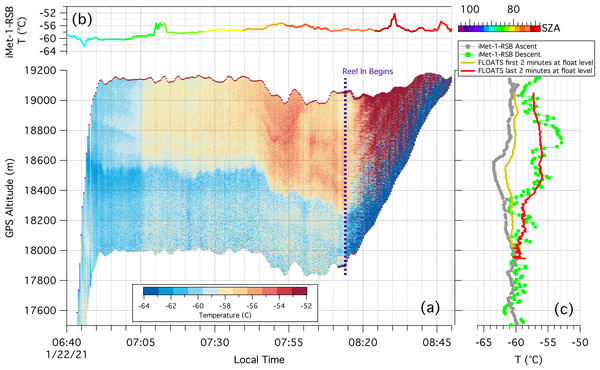
J. Douglas Goetz, Lars E. Kalnajs, Terry Deshler, Sean M. Davis, Martina Bramberger, and M. Joan Alexander
Atmos. Meas. Tech., 16, 791–807, https://doi.org/10.5194/amt-16-791-2023, https://doi.org/10.5194/amt-16-791-2023, 2023
Short summary
Short summary
An instrument for in situ continuous 2 km vertical profiles of temperature below high-altitude balloons was developed for high-temporal-resolution measurements within the upper troposphere and lower stratosphere using fiber-optic distributed temperature sensing. The mechanical, electrical, and temperature calibration systems were validated from a short mid-latitude constant-altitude balloon flight within the lower stratosphere. The instrument observed small-scale and inertial gravity waves.
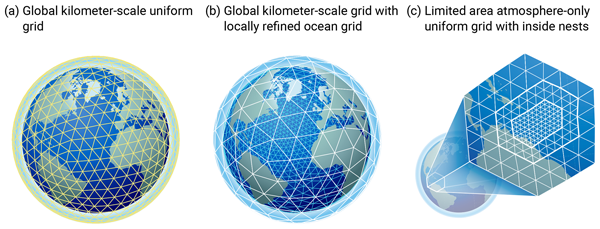
Cathy Hohenegger, Peter Korn, Leonidas Linardakis, René Redler, Reiner Schnur, Panagiotis Adamidis, Jiawei Bao, Swantje Bastin, Milad Behravesh, Martin Bergemann, Joachim Biercamp, Hendryk Bockelmann, Renate Brokopf, Nils Brüggemann, Lucas Casaroli, Fatemeh Chegini, George Datseris, Monika Esch, Geet George, Marco Giorgetta, Oliver Gutjahr, Helmuth Haak, Moritz Hanke, Tatiana Ilyina, Thomas Jahns, Johann Jungclaus, Marcel Kern, Daniel Klocke, Lukas Kluft, Tobias Kölling, Luis Kornblueh, Sergey Kosukhin, Clarissa Kroll, Junhong Lee, Thorsten Mauritsen, Carolin Mehlmann, Theresa Mieslinger, Ann Kristin Naumann, Laura Paccini, Angel Peinado, Divya Sri Praturi, Dian Putrasahan, Sebastian Rast, Thomas Riddick, Niklas Roeber, Hauke Schmidt, Uwe Schulzweida, Florian Schütte, Hans Segura, Radomyra Shevchenko, Vikram Singh, Mia Specht, Claudia Christine Stephan, Jin-Song von Storch, Raphaela Vogel, Christian Wengel, Marius Winkler, Florian Ziemen, Jochem Marotzke, and Bjorn Stevens
Geosci. Model Dev., 16, 779–811, https://doi.org/10.5194/gmd-16-779-2023, https://doi.org/10.5194/gmd-16-779-2023, 2023
Short summary
Short summary
Models of the Earth system used to understand climate and predict its change typically employ a grid spacing of about 100 km. Yet, many atmospheric and oceanic processes occur on much smaller scales. In this study, we present a new model configuration designed for the simulation of the components of the Earth system and their interactions at kilometer and smaller scales, allowing an explicit representation of the main drivers of the flow of energy and matter by solving the underlying equations.
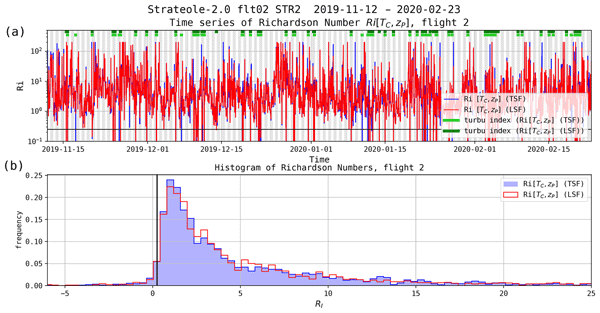
Richard Wilson, Clara Pitois, Aurélien Podglajen, Albert Hertzog, Milena Corcos, and Riwal Plougonven
Atmos. Meas. Tech., 16, 311–330, https://doi.org/10.5194/amt-16-311-2023, https://doi.org/10.5194/amt-16-311-2023, 2023
Short summary
Short summary
Strateole-2 is an French–US initiative designed to study atmospheric events in the tropical upper troposphere–lower stratosphere. In this work, data from several superpressure balloons, capable of staying aloft at an altitude of 18–20 km for over 3 months, were used. The present article describes methods to detect the occurrence of atmospheric turbulence – one efficient process impacting the properties of the atmosphere composition via stirring and mixing.
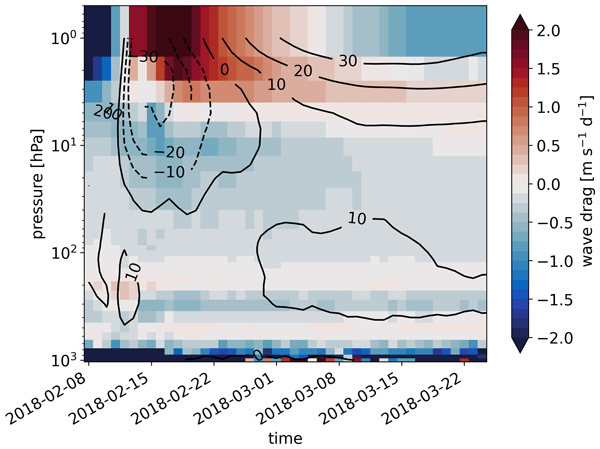
Wolfgang Wicker, Inna Polichtchouk, and Daniela I. V. Domeisen
Weather Clim. Dynam., 4, 81–93, https://doi.org/10.5194/wcd-4-81-2023, https://doi.org/10.5194/wcd-4-81-2023, 2023
Short summary
Short summary
Sudden stratospheric warmings are extreme weather events where the winter polar stratosphere warms by about 25 K. An improved representation of small-scale gravity waves in sub-seasonal prediction models can reduce forecast errors since their impact on the large-scale circulation is predictable multiple weeks ahead. After a sudden stratospheric warming, vertically propagating gravity waves break at a lower altitude than usual, which strengthens the long-lasting positive temperature anomalies.
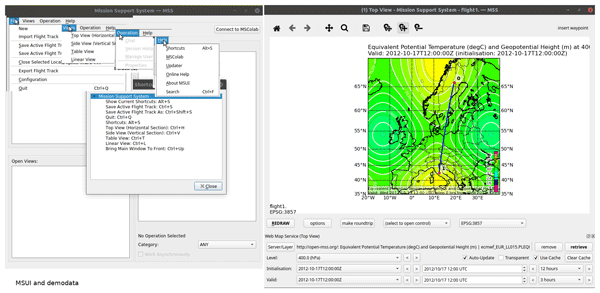
Reimar Bauer, Jens-Uwe Grooß, Jörn Ungermann, May Bär, Markus Geldenhuys, and Lars Hoffmann
Geosci. Model Dev., 15, 8983–8997, https://doi.org/10.5194/gmd-15-8983-2022, https://doi.org/10.5194/gmd-15-8983-2022, 2022
Short summary
Short summary
The Mission Support System (MSS) is an open source software package that has been used for planning flight tracks of scientific aircraft in multiple measurement campaigns during the last decade. Here, we describe the MSS software and its use during the SouthTRAC measurement campaign in 2019. As an example for how the MSS software is used in conjunction with many datasets, we describe the planning of a single flight probing orographic gravity waves propagating up into the lower mesosphere.
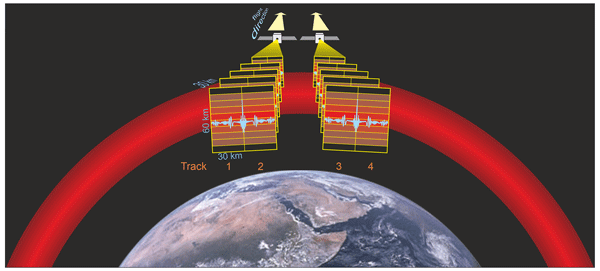
Qiuyu Chen, Konstantin Ntokas, Björn Linder, Lukas Krasauskas, Manfred Ern, Peter Preusse, Jörn Ungermann, Erich Becker, Martin Kaufmann, and Martin Riese
Atmos. Meas. Tech., 15, 7071–7103, https://doi.org/10.5194/amt-15-7071-2022, https://doi.org/10.5194/amt-15-7071-2022, 2022
Short summary
Short summary
Observations of phase speed and direction spectra as well as zonal mean net gravity wave momentum flux are required to understand how gravity waves reach the mesosphere–lower thermosphere and how they there interact with background flow. To this end we propose flying two CubeSats, each deploying a spatial heterodyne spectrometer for limb observation of the airglow. End-to-end simulations demonstrate that individual gravity waves are retrieved faithfully for the expected instrument performance.
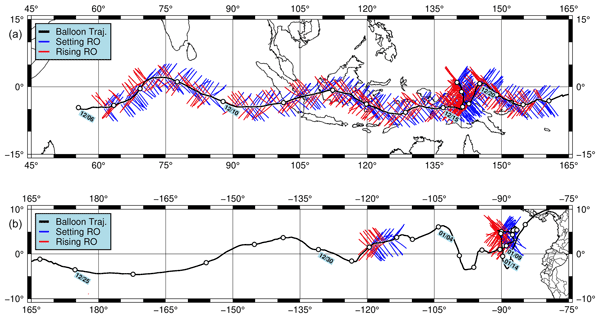
Bing Cao, Jennifer S. Haase, Michael J. Murphy, M. Joan Alexander, Martina Bramberger, and Albert Hertzog
Atmos. Chem. Phys., 22, 15379–15402, https://doi.org/10.5194/acp-22-15379-2022, https://doi.org/10.5194/acp-22-15379-2022, 2022
Short summary
Short summary
Atmospheric waves that carry momentum from tropospheric weather systems into the equatorial stratosphere modify the winds there. The Strateole-2 2019 campaign launched long-duration stratospheric superpressure balloons to measure these equatorial waves. We deployed a GPS receiver on one of the balloons to measure atmospheric temperature profiles beneath the balloon. Temperature variations in the retrieved profiles show planetary-scale waves with a 20 d period and 3–4 d period waves.
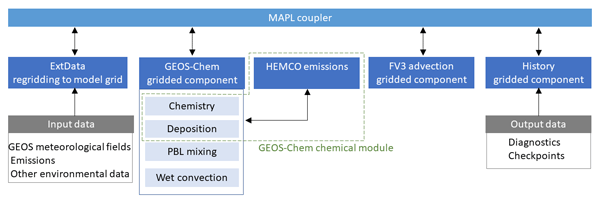
Randall V. Martin, Sebastian D. Eastham, Liam Bindle, Elizabeth W. Lundgren, Thomas L. Clune, Christoph A. Keller, William Downs, Dandan Zhang, Robert A. Lucchesi, Melissa P. Sulprizio, Robert M. Yantosca, Yanshun Li, Lucas Estrada, William M. Putman, Benjamin M. Auer, Atanas L. Trayanov, Steven Pawson, and Daniel J. Jacob
Geosci. Model Dev., 15, 8731–8748, https://doi.org/10.5194/gmd-15-8731-2022, https://doi.org/10.5194/gmd-15-8731-2022, 2022
Short summary
Short summary
Atmospheric chemistry models must be able to operate both online as components of Earth system models and offline as standalone models. The widely used GEOS-Chem model operates both online and offline, but the classic offline version is not suitable for massively parallel simulations. We describe a new generation of the offline high-performance GEOS-Chem (GCHP) that enables high-resolution simulations on thousands of cores, including on the cloud, with improved access, performance, and accuracy.
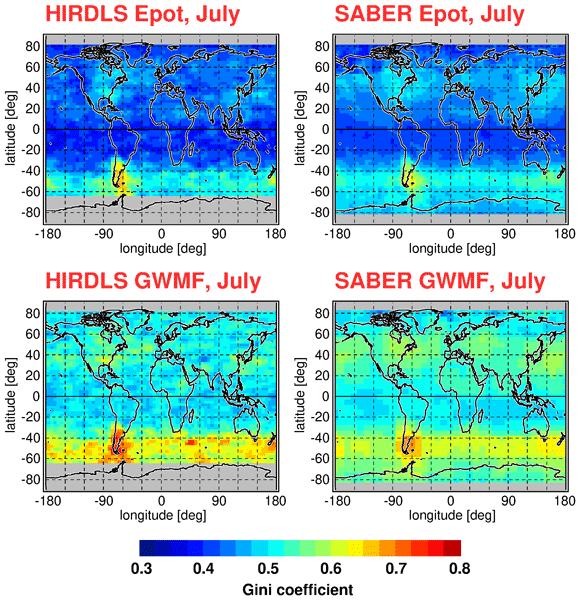
Manfred Ern, Peter Preusse, and Martin Riese
Atmos. Chem. Phys., 22, 15093–15133, https://doi.org/10.5194/acp-22-15093-2022, https://doi.org/10.5194/acp-22-15093-2022, 2022
Short summary
Short summary
Based on data from the HIRDLS and SABER infrared limb sounding satellite instruments, we investigate the intermittency of global distributions of gravity wave (GW) potential energies and GW momentum fluxes in the stratosphere and mesosphere using probability distribution functions (PDFs) and Gini coefficients. We compare GW intermittency in different regions, seasons, and altitudes. These results can help to improve GW parameterizations and the distributions of GWs resolved in models.
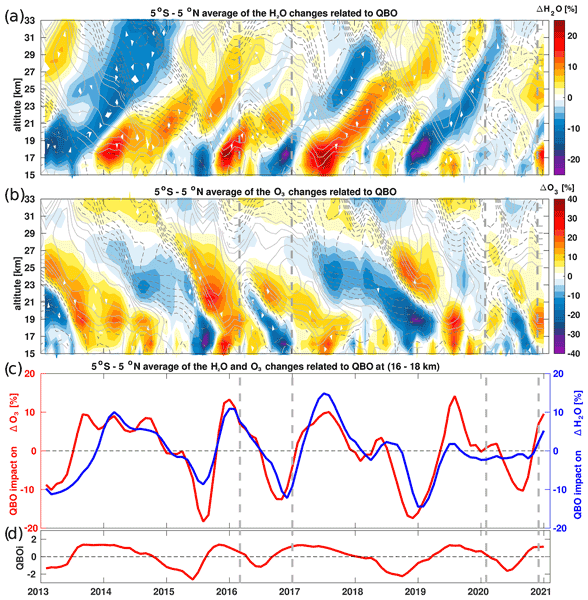
Mohamadou A. Diallo, Felix Ploeger, Michaela I. Hegglin, Manfred Ern, Jens-Uwe Grooß, Sergey Khaykin, and Martin Riese
Atmos. Chem. Phys., 22, 14303–14321, https://doi.org/10.5194/acp-22-14303-2022, https://doi.org/10.5194/acp-22-14303-2022, 2022
Short summary
Short summary
The quasi-biennial oacillation disruption events in both 2016 and 2020 decreased lower-stratospheric water vapour and ozone. Differences in the strength and depth of the anomalous lower-stratospheric circulation and ozone are due to differences in tropical upwelling and cold-point temperature induced by lower-stratospheric planetary and gravity wave breaking. The differences in water vapour are due to higher cold-point temperature in 2020 induced by Australian wildfire.
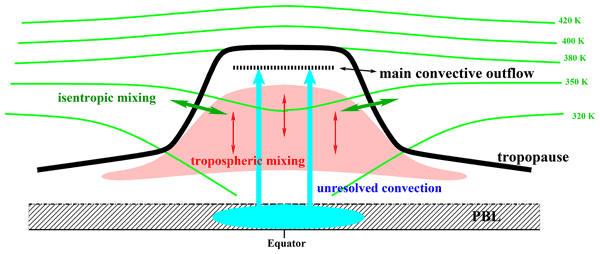
Paul Konopka, Mengchu Tao, Marc von Hobe, Lars Hoffmann, Corinna Kloss, Fabrizio Ravegnani, C. Michael Volk, Valentin Lauther, Andreas Zahn, Peter Hoor, and Felix Ploeger
Geosci. Model Dev., 15, 7471–7487, https://doi.org/10.5194/gmd-15-7471-2022, https://doi.org/10.5194/gmd-15-7471-2022, 2022
Short summary
Short summary
Pure trajectory-based transport models driven by meteorology derived from reanalysis products (ERA5) take into account only the resolved, advective part of transport. That means neither mixing processes nor unresolved subgrid-scale advective processes like convection are included. The Chemical Lagrangian Model of the Stratosphere (CLaMS) includes these processes. We show that isentropic mixing dominates unresolved transport. The second most important transport process is unresolved convection.
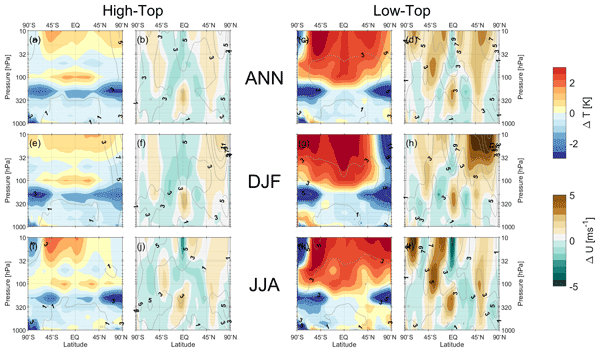
Zachary D. Lawrence, Marta Abalos, Blanca Ayarzagüena, David Barriopedro, Amy H. Butler, Natalia Calvo, Alvaro de la Cámara, Andrew Charlton-Perez, Daniela I. V. Domeisen, Etienne Dunn-Sigouin, Javier García-Serrano, Chaim I. Garfinkel, Neil P. Hindley, Liwei Jia, Martin Jucker, Alexey Y. Karpechko, Hera Kim, Andrea L. Lang, Simon H. Lee, Pu Lin, Marisol Osman, Froila M. Palmeiro, Judith Perlwitz, Inna Polichtchouk, Jadwiga H. Richter, Chen Schwartz, Seok-Woo Son, Irene Erner, Masakazu Taguchi, Nicholas L. Tyrrell, Corwin J. Wright, and Rachel W.-Y. Wu
Weather Clim. Dynam., 3, 977–1001, https://doi.org/10.5194/wcd-3-977-2022, https://doi.org/10.5194/wcd-3-977-2022, 2022
Short summary
Short summary
Forecast models that are used to predict weather often struggle to represent the Earth’s stratosphere. This may impact their ability to predict surface weather weeks in advance, on subseasonal-to-seasonal (S2S) timescales. We use data from many S2S forecast systems to characterize and compare the stratospheric biases present in such forecast models. These models have many similar stratospheric biases, but they tend to be worse in systems with low model tops located within the stratosphere.
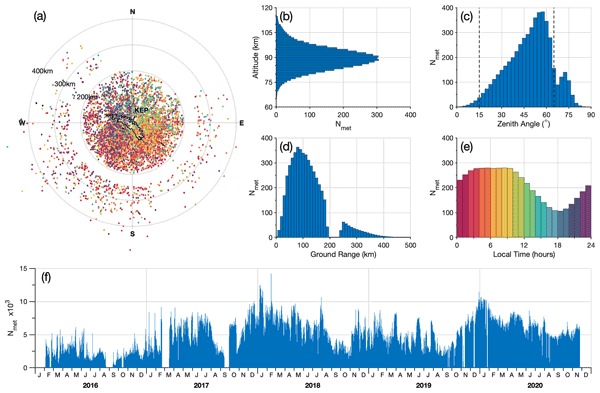
Neil P. Hindley, Nicholas J. Mitchell, Neil Cobbett, Anne K. Smith, Dave C. Fritts, Diego Janches, Corwin J. Wright, and Tracy Moffat-Griffin
Atmos. Chem. Phys., 22, 9435–9459, https://doi.org/10.5194/acp-22-9435-2022, https://doi.org/10.5194/acp-22-9435-2022, 2022
Short summary
Short summary
We present observations of winds in the mesosphere and lower thermosphere (MLT) from a recently installed meteor radar on the remote island of South Georgia (54° S, 36° W). We characterise mean winds, tides, planetary waves, and gravity waves in the MLT at this location and compare our measured winds with a leading climate model. We find that the observed wintertime winds are unexpectedly reversed from model predictions, probably because of missing impacts of secondary gravity waves in the model.
Cameron Bertossa, Peter Hitchcock, Arthur DeGaetano, and Riwal Plougonven
EGUsphere, https://doi.org/10.5194/egusphere-2022-601, https://doi.org/10.5194/egusphere-2022-601, 2022
Preprint archived
Short summary
Short summary
This work has identified characteristic spatial and temporal scales for non-Gaussian outbreaks in forecasts, specifically, bimodality. Methodology is introduced which allows one to connect meteorological phenomena to bimodal outbreaks. Large-scale circulation interacting with local processes is uncovered as a frequent ingredient to such outbreaks. These insights not only provide a deeper understanding of the dynamical processes involved, but also have drastic implications for forecast skill.
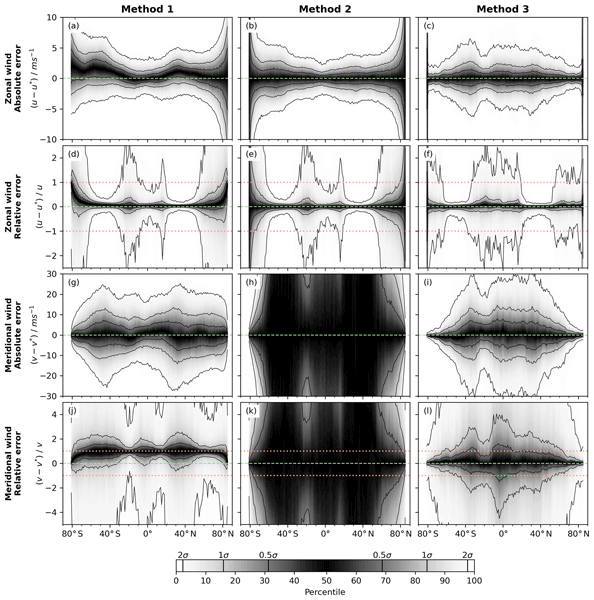
Isabell Krisch, Neil P. Hindley, Oliver Reitebuch, and Corwin J. Wright
Atmos. Meas. Tech., 15, 3465–3479, https://doi.org/10.5194/amt-15-3465-2022, https://doi.org/10.5194/amt-15-3465-2022, 2022
Short summary
Short summary
The Aeolus satellite measures global height resolved profiles of wind along a certain line-of-sight. However, for atmospheric dynamics research, wind measurements along the three cardinal axes are most useful. This paper presents methods to convert the measurements into zonal and meridional wind components. By combining the measurements during ascending and descending orbits, we achieve good derivation of zonal wind (equatorward of 80° latitude) and meridional wind (poleward of 70° latitude).
Zhongyin Cai, Sabine Griessbach, and Lars Hoffmann
Atmos. Chem. Phys., 22, 6787–6809, https://doi.org/10.5194/acp-22-6787-2022, https://doi.org/10.5194/acp-22-6787-2022, 2022
Short summary
Short summary
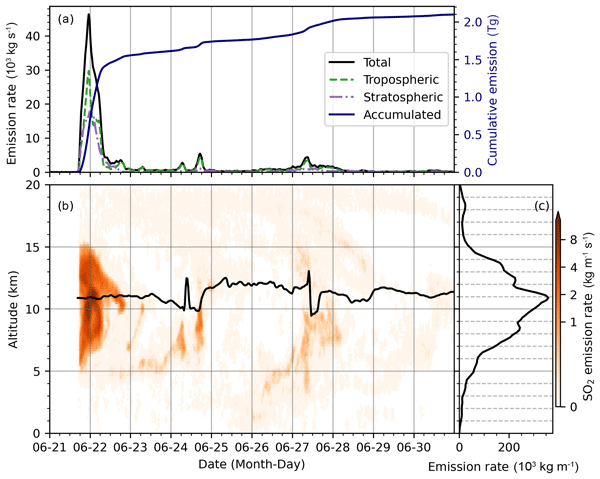
Using AIRS and TROPOMI sulfur dioxide retrievals and the Lagrangian transport model MPTRAC, we present an improved reconstruction of injection parameters of the 2019 Raikoke eruption. Reconstructions agree well between using AIRS nighttime and TROPOMI daytime retrievals, showing the potential of our approach to create a long-term volcanic sulfur dioxide inventory from nearly 20 years of AIRS retrievals.
Ling Zou, Sabine Griessbach, Lars Hoffmann, and Reinhold Spang
Atmos. Chem. Phys., 22, 6677–6702, https://doi.org/10.5194/acp-22-6677-2022, https://doi.org/10.5194/acp-22-6677-2022, 2022
Short summary
Short summary
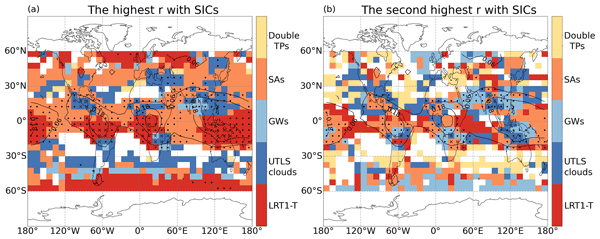
Ice clouds in the stratosphere (SICs) greatly affect the water vapor balance and radiation budget in the upper troposphere and lower stratosphere (UTLS). We quantified the global SICs and analyzed their relationships with tropopause temperature, double tropopauses, UTLS clouds, gravity waves, and stratospheric aerosols. The correlations between SICs and all abovementioned processes indicate that the occurrence of and variability in SICs are spatiotemporally dependent on different processes.
Phoebe Noble, Neil Hindley, Corwin Wright, Chihoko Cullens, Scott England, Nicholas Pedatella, Nicholas Mitchell, and Tracy Moffat-Griffin
Atmos. Chem. Phys. Discuss., https://doi.org/10.5194/acp-2022-150, https://doi.org/10.5194/acp-2022-150, 2022
Revised manuscript not accepted
Short summary
Short summary
We use long term radar data and the WACCM-X model to study the impact of dynamical phenomena, including the 11-year solar cycle, ENSO, QBO and SAM, on Antarctic mesospheric winds. We find that in summer, the zonal wind (both observationally and in the model) is strongly correlated with the solar cycle. We also see important differences in the results from the other processes. In addition we find important and large biases in the winter model zonal winds relative to the observations.
Lars Hoffmann, Paul F. Baumeister, Zhongyin Cai, Jan Clemens, Sabine Griessbach, Gebhard Günther, Yi Heng, Mingzhao Liu, Kaveh Haghighi Mood, Olaf Stein, Nicole Thomas, Bärbel Vogel, Xue Wu, and Ling Zou
Geosci. Model Dev., 15, 2731–2762, https://doi.org/10.5194/gmd-15-2731-2022, https://doi.org/10.5194/gmd-15-2731-2022, 2022
Short summary
Short summary
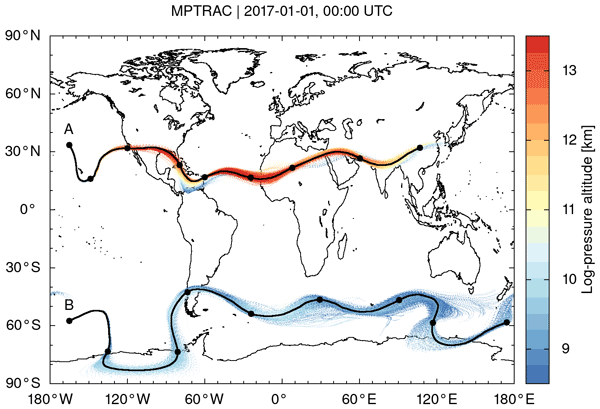
We describe the new version (2.2) of the Lagrangian transport model MPTRAC, which has been ported for application on GPUs. The model was verified by comparing kinematic trajectories and synthetic tracer simulations for the free troposphere and stratosphere from GPUs and CPUs. Benchmarking showed a speed-up of a factor of 16 of GPU-enabled simulations compared to CPU-only runs, indicating the great potential of applying GPUs for Lagrangian transport simulations on upcoming HPC systems.

Beatriz M. Monge-Sanz, Alessio Bozzo, Nicholas Byrne, Martyn P. Chipperfield, Michail Diamantakis, Johannes Flemming, Lesley J. Gray, Robin J. Hogan, Luke Jones, Linus Magnusson, Inna Polichtchouk, Theodore G. Shepherd, Nils Wedi, and Antje Weisheimer
Atmos. Chem. Phys., 22, 4277–4302, https://doi.org/10.5194/acp-22-4277-2022, https://doi.org/10.5194/acp-22-4277-2022, 2022
Short summary
Short summary
The stratosphere is emerging as one of the keys to improve tropospheric weather and climate predictions. This study provides evidence of the role the stratospheric ozone layer plays in improving weather predictions at different timescales. Using a new ozone modelling approach suitable for high-resolution global models that provide operational forecasts from days to seasons, we find significant improvements in stratospheric meteorological fields and stratosphere–troposphere coupling.
Lars Hoffmann and Reinhold Spang
Atmos. Chem. Phys., 22, 4019–4046, https://doi.org/10.5194/acp-22-4019-2022, https://doi.org/10.5194/acp-22-4019-2022, 2022
Short summary
Short summary
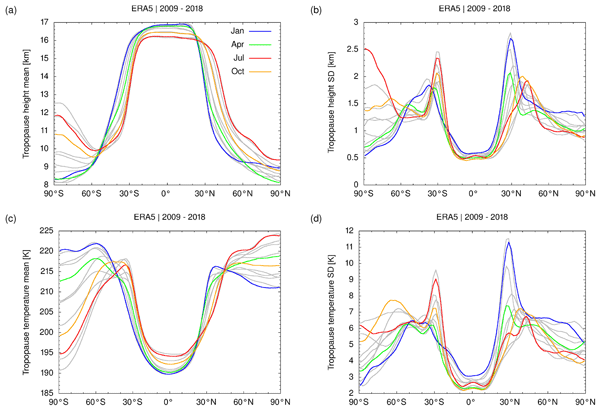
We present an intercomparison of 2009–2018 lapse rate tropopause characteristics as derived from ECMWF's ERA5 and ERA-Interim reanalyses. Large-scale features are similar, but ERA5 shows notably larger variability, which we mainly attribute to UTLS temperature fluctuations due to gravity waves being better resolved by ECMWF's IFS forecast model. Following evaluation with radiosondes and GPS data, we conclude ERA5 will be a more suitable asset for tropopause-related studies in future work.

Paul F. Baumeister and Lars Hoffmann
Geosci. Model Dev., 15, 1855–1874, https://doi.org/10.5194/gmd-15-1855-2022, https://doi.org/10.5194/gmd-15-1855-2022, 2022
Short summary
Short summary
The efficiency of the numerical simulation of radiative transport is shown on modern server-class graphics cards (GPUs). The low-cost prefactor on GPUs compared to general-purpose processors (CPUs) enables future large retrieval campaigns for multi-channel data from infrared sounders aboard low-orbit satellites. The validated research software JURASSIC is available in the public domain.
Cornelia Strube, Peter Preusse, Manfred Ern, and Martin Riese
Atmos. Chem. Phys., 21, 18641–18668, https://doi.org/10.5194/acp-21-18641-2021, https://doi.org/10.5194/acp-21-18641-2021, 2021
Short summary
Short summary
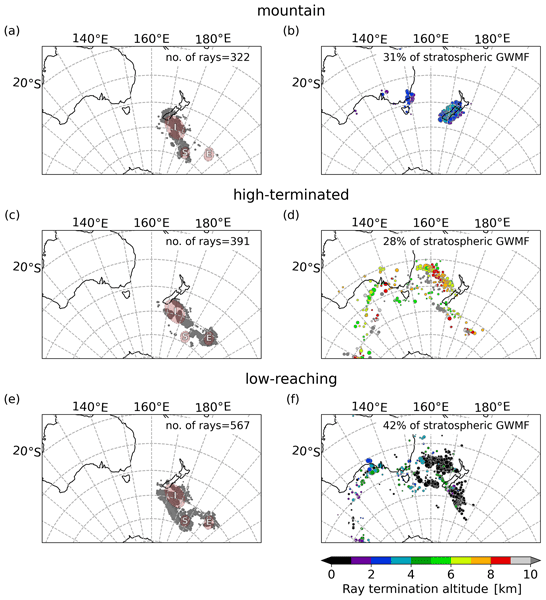
High gravity wave (GW) momentum fluxes in the lower stratospheric southern polar vortex around 60° S are still poorly understood. Few GW sources are found at these latitudes. We present a ray tracing case study on waves resolved in high-resolution global model temperatures southeast of New Zealand. We show that lateral propagation of more than 1000 km takes place below 20 km altitude, and a variety of orographic and non-orographic sources located north of 50° S generate the wave field.
Corwin J. Wright, Richard J. Hall, Timothy P. Banyard, Neil P. Hindley, Isabell Krisch, Daniel M. Mitchell, and William J. M. Seviour
Weather Clim. Dynam., 2, 1283–1301, https://doi.org/10.5194/wcd-2-1283-2021, https://doi.org/10.5194/wcd-2-1283-2021, 2021
Short summary
Short summary
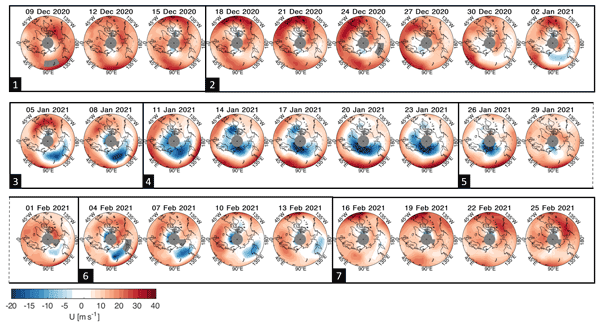
Major sudden stratospheric warmings (SSWs) are some of the most dramatic events in the atmosphere and are believed to help cause extreme winter weather events such as the 2018 Beast from the East in Europe and North America. Here, we use unique data from the European Space Agency's new Aeolus satellite to make the first-ever measurements at a global scale of wind changes due to an SSW in the lower part of the atmosphere to help us understand how SSWs affect the atmosphere and surface weather.

Cameron Bertossa, Peter Hitchcock, Arthur DeGaetano, and Riwal Plougonven
Weather Clim. Dynam., 2, 1209–1224, https://doi.org/10.5194/wcd-2-1209-2021, https://doi.org/10.5194/wcd-2-1209-2021, 2021
Short summary
Short summary
While the assumption of Gaussianity leads to many simplifications, ensemble forecasts often exhibit non-Gaussian distributions. This work has systematically identified the presence of a specific case of
non-Gaussianity, bimodality. It has been found that bimodality occurs in a large portion of global 2 m temperature forecasts. This has drastic implications on forecast skill as the minimum probability in a bimodal distribution often lies at the maximum probability of a Gaussian distribution.
John P. McCormack, V. Lynn Harvey, Cora E. Randall, Nicholas Pedatella, Dai Koshin, Kaoru Sato, Lawrence Coy, Shingo Watanabe, Fabrizio Sassi, and Laura A. Holt
Atmos. Chem. Phys., 21, 17577–17605, https://doi.org/10.5194/acp-21-17577-2021, https://doi.org/10.5194/acp-21-17577-2021, 2021
Short summary
Short summary
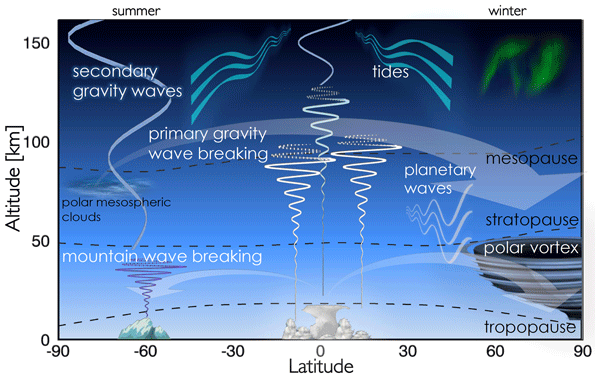
In order to have confidence in atmospheric predictions, it is important to know how well different numerical model simulations of the Earth’s atmosphere agree with one another. This work compares four different data assimilation models that extend to or beyond the mesosphere. Results shown here demonstrate that while the models are in close agreement below ~50 km, large differences arise at higher altitudes in the mesosphere and lower thermosphere that will need to be reconciled in the future.
Cited articles
Achatz, U., Alexander, M. J., Becker, E., Chun, H.-Y., Dörnbrack, A., Holt, L., Plougonven, R., Polichtchouk, I., Sato, K., Sheshadri, A., Stephan, C. C., van Niekerk, A., and Wright, C. J.: Atmospheric gravity waves: processes and parameterization, J. Atmos. Sci., 81, 237–262, https://doi.org/10.1175/JAS-D-23-0210.1, 2024. a, b
Adler, R. F., Gu, G., Sapiano, M., Wang, J.-J., and Huffman, G. J.: Global precipitation: means, variations and trends during the satellite era (1979–2014), Surv. Geophys., 38, 679–699, https://doi.org/10.1007/s10712-017-9416-4, 2017. a
Alexander, M. J.: Interpretations of observed climatological patterns in stratospheric gravity wave variance, J. Geophys. Res.-Atmos., 103, 8627–8640, https://doi.org/10.1029/97jd03325, 1998. a
Alexander, M. J. and Barnet, C.: Using satellite observations to constrain parameterizations of gravity wave effects for global models, J. Atmos. Sci., 64, 1652–1665, https://doi.org/10.1175/JAS3897.1, 2007. a, b
Alexander, M. J., Eckermann, S. D., Broutman, D., and Ma, J.: Momentum flux estimates for South Georgia Island mountain waves in the stratosphere observed via satellite, Geophy. Res. Lett., 36, L12816, https://doi.org/10.1029/2009GL038587, 2009. a, b, c, d
Alexander, M. J., Geller, M., McLandress, C., Polavarapu, S., Preusse, P., Sassi, F., Sato, K., Eckermann, S., Ern, M., Hertzog, A., Kawatani, Y., Pulido, M., Shaw, T. A., Sigmond, M., Vincent, R., and Watanabe, S.: Recent developments in gravity-wave effects in climate models and the global distribution of gravity-wave momentum flux from observations and models, Q. J. Roy. Meteor. Soc., 136, 1103–1124, https://doi.org/10.1002/qj.637, 2010. a, b, c
Andrews, D. G., Taylor, F. W., and McIntyre, M. E.: The influence of atmospheric waves on the general circulation of the middle atmosphere, Philos. T. Roy. Soc. A, 323, 693–705, https://doi.org/10.1098/rsta.1987.0115, 1987. a
Aumann, H., Chahine, M., Gautier, C., Goldberg, M., Kalnay, E., McMillin, L., Revercomb, H., Rosenkranz, P., Smith, W., Staelin, D., Strow, L., and Susskind, J.: AIRS/AMSU/HSB on the Aqua mission: design, science objectives, data products, and processing systems, IEEE T. Geosci. Remote, 41, 253–264, https://doi.org/10.1109/TGRS.2002.808356, 2003. a
Butchart, N.: The stratosphere: a review of the dynamics and variability, Weather Clim. Dynam., 3, 1237–1272, https://doi.org/10.5194/wcd-3-1237-2022, 2022. a
Chahine, M. T., Pagano, T. S., Aumann, H. H., Atlas, R., Barnet, C., Bblaisdell, J., Chen, L., Divakarla, M., Fetzer, E. J., Goldberg, M., Gautier, C., Granger, S., Hannon, S., Irion, F. W., Kakar, R., Kalnay, E., Lambrigtsen, B. H., Lee, S.-y., Le Marshall, J., Mcmillan, W. W., Mcmillin, L., Olsen, E. T., Revercomb, H., Rosenkranz, P., Smith, W. L., Staelin, D., Strow, L. L., Susskind, J., Tobin, D., Wolf, W., and Zhou, L.: AIRS: improving weather forecasting and providing new data on greenhouse gases, B. Am. Meteorol. Soc., 87, 911–926, https://doi.org/10.1175/BAMS-87-7-911, 2006. a
Copernicus Climate Change Service: ERA5 hourly data on pressure levels from 1940 to present, Copernicus Climate Change Service (C3S) Climate Data Store (CDS) [data set], https://doi.org/10.24381/cds.bd0915c6, 2022. a
Corcos, M., Hertzog, A., Plougonven, R., and Podglajen, A.: Observation of gravity waves at the tropical tropopause using superpressure balloons, J. Geophys. Res.-Atmos., 126, e2021JD035165, https://doi.org/10.1029/2021JD035165Digital Object Identifier (DOI) 2021. a
Ehard, B., Kaifler, B., Dörnbrack, A., Preusse, P., Eckermann, S. D., Bramberger, M., Gisinger, S., Kaifler, N., Liley, B., Wagner, J., and Rapp, M.: Horizontal propagation of large-amplitude mountain waves into the polar night jet, J. Geophys. Res.-Atmos., 122, 1423–1436, https://doi.org/10.1002/2016JD025621, 2017. a
Ern, M. and Preusse, P.: Gravity wave momentum flux spectra observed from satellite in the summertime subtropics: implications for global modeling, Geophys. Res. Lett., 39, https://doi.org/10.1029/2012gl052659, 2012. a
Ern, M., Preusse, P., Alexander, M. J., and Warner, C. D.: Absolute values of gravity wave momentum flux derived from satellite data, J. Geophys. Res., 109, D20103, https://doi.org/10.1029/2004JD004752, 2004. a
Ern, M., Hoffmann, L., and Preusse, P.: Directional gravity wave momentum fluxes in the stratosphere derived from high-resolution AIRS temperature data, Geophy. Res. Lett., 44, 475–485, https://doi.org/10.1002/2016GL072007, 2017. a
Ern, M., Trinh, Q. T., Preusse, P., Gille, J. C., Mlynczak, M. G., Russell III, J. M., and Riese, M.: GRACILE: a comprehensive climatology of atmospheric gravity wave parameters based on satellite limb soundings, Earth Syst. Sci. Data, 10, 857–892, https://doi.org/10.5194/essd-10-857-2018, 2018. a, b, c
Garcia, R. R. and Boville, B. A.: Downward control of the mean meridional circulation and temperature distribution of the polar winter stratosphere, J. Atmos. Sci., 51, 2238–2245, https://doi.org/10.1175/1520-0469(1994)051<2238:COTMMC>2.0.CO;2 1994. a
Garny, H.: Intrinsic Predictability From the Troposphere to the Mesosphere/Lower Thermosphere (MLT), J. Geophys. Res.-Atmos., 130, e2025JD043363, https://doi.org/10.1029/2025JD043363, 2025. a
Geller, M., Alexander, M. J., Love, P., Bacmeister, J., Ern, M., Hertzog, A., Manzini, E., Preusse, P., Sato, K., Scaife, A., and Zhou, T.: A comparison between gravity wave momentum fluxes in observations and climate models, J. Climate, 26, 6383–6405, https://doi.org/10.1175/JCLI-D-12-00545.1, 2013. a, b, c, d
Goldberg, M., Qu, Y., McMillin, L., Wolf, W., Zhou, L., and Divakarla, M.: AIRS near-real-time products and algorithms in support of operational numerical weather prediction, IEEE T. Geosci. Remote, 41, 379–389, https://doi.org/10.1109/TGRS.2002.808307, 2003. a
Gong, J., Yue, J., and Wu, D. L.: Global survey of concentric gravity waves in AIRS images and ECMWF analysis, J. Geophys. Res., 120, 2210–2228, https://doi.org/10.1002/2014JD022527, 2015. a, b
Hendon, H. H. and Woodberry, K.: The diurnal cycle of tropical convection, J. Geophys. Res.-Atmos., 98, 16623–16637, 1993. a
Hersbach, H., Bell, B., Berrisford, P., Hirahara, S., Horányi, A., Muñoz-Sabater, J., Nicolas, J., Peubey, C., Radu, R., Schepers, D., Simmons, A., Soci, C., Abdalla, S., Abellan, X., Balsamo, G., Bechtold, P., Biavati, G., Bidlot, J., Bonavita, M., De Chiara, G., Dahlgren, P., Dee, D., Diamantakis, M., Dragani, R., Flemming, J., Forbes, R., Fuentes, M., Geer, A., Haimberger, L., Healy, S., Hogan, R. J., Hólm, E., Janisková, M., Keeley, S., Laloyaux, P., Lopez, P., Lupu, C., Radnoti, G., de Rosnay, P., Rozum, I., Vamborg, F., Villaume, S., and Thépaut, J.-N.: The ERA5 global reanalysis, Q. J. Roy. Meteor. Soc., 146, 1999–2049, https://doi.org/10.1002/qj.3803, 2020. a
Hindley, N. P., Wright, C. J., Smith, N. D., and Mitchell, N. J.: The southern stratospheric gravity wave hot spot: individual waves and their momentum fluxes measured by COSMIC GPS-RO, Atmos. Chem. Phys., 15, 7797–7818, https://doi.org/10.5194/acp-15-7797-2015, 2015. a, b
Hindley, N. P., Smith, N. D., Wright, C. J., Rees, D. A. S., and Mitchell, N. J.: A two-dimensional Stockwell transform for gravity wave analysis of AIRS measurements, Atmos. Meas. Tech., 9, 2545–2565, https://doi.org/10.5194/amt-9-2545-2016, 2016. a
Hindley, N. P., Wright, C. J., Smith, N. D., Hoffmann, L., Holt, L. A., Alexander, M. J., Moffat-Griffin, T., and Mitchell, N. J.: Gravity waves in the winter stratosphere over the Southern Ocean: high-resolution satellite observations and 3-D spectral analysis, Atmos. Chem. Phys., 19, 15377–15414, https://doi.org/10.5194/acp-19-15377-2019, 2019. a, b, c, d
Hindley, N. P., Wright, C. J., Hoffmann, L., Moffat-Griffin, T., and Mitchell, N. J.: An 18-year climatology of directional stratospheric gravity wave momentum flux from 3-D satellite observations, Geophys. Res. Lett., 47, e2020GL089557, https://doi.org/10.1029/2020gl089557, 2020. a, b, c, d, e, f, g, h
Hindley, N. P., Wright, C. J., Gadian, A. M., Hoffmann, L., Hughes, J. K., Jackson, D. R., King, J. C., Mitchell, N. J., Moffat-Griffin, T., Moss, A. C., Vosper, S. B., and Ross, A. N.: Stratospheric gravity waves over the mountainous island of South Georgia: testing a high-resolution dynamical model with 3-D satellite observations and radiosondes, Atmos. Chem. Phys., 21, 7695–7722, https://doi.org/10.5194/acp-21-7695-2021, 2021. a, b
Hoffmann, L.: AIRS/Aqua Observations of Gravity Waves, Jülich DATA [data set], https://doi.org/10.26165/JUELICH-DATA/LQAAJA, 2021. a
Hoffmann, L., Xue, X., and Alexander, M. J.: A global view of stratospheric gravity wave hotspots located with Atmospheric Infrared Sounder observations, J. Geophys. Res., 118, 416–434, https://doi.org/10.1029/2012JD018658, 2013. a, b
Hoffmann, L., Alexander, M. J., Clerbaux, C., Grimsdell, A. W., Meyer, C. I., Rößler, T., and Tournier, B.: Intercomparison of stratospheric gravity wave observations with AIRS and IASI, Atmos. Meas. Tech., 7, 4517–4537, https://doi.org/10.5194/amt-7-4517-2014, 2014. a, b, c
IFS Documentation: Chapter 5, IFS Documentation CY49R1 – Part IV: Physical Processes – ecmwf.int, https://www.ecmwf.int/en/elibrary/81626-ifs-documentation-cy 49rl-part-iv-physical-processes (last access: 19 September 2025), 2024. a
Krisch, I., Preusse, P., Ungermann, J., Dörnbrack, A., Eckermann, S. D., Ern, M., Friedl-Vallon, F., Kaufmann, M., Oelhaf, H., Rapp, M., Strube, C., and Riese, M.: First tomographic observations of gravity waves by the infrared limb imager GLORIA, Atmos. Chem. Phys., 17, 14937–14953, https://doi.org/10.5194/acp-17-14937-2017, 2017. a, b
Kruse, C. G., Alexander, M. J., Hoffmann, L., van Niekerk, A., Polichtchouk, I., Bacmeister, J. T., Holt, L., Plougonven, R., Šácha, P., Wright, C., Sato, K., Shibuya, R., Gisinger, S., Ern, M., Meyer, C. I., and Stein, O.: Observed and modeled mountain waves from the surface to the mesosphere near the Drake Passage, J. Atmos. Sci., 79, 909–932, https://doi.org/10.1175/JAS-D-21-0252.1, 2022. a, b
Lear, E. J., Wright, C. J., Hindley, N. P., Polichtchouk, I., and Hoffmann, L.: Comparing gravity waves in a kilometre-scale run of the IFS to AIRS satellite observations and ERA5, J. Geophys. Res.-Atmos., 129, e2023JD040097, https://doi.org/10.1029/2023JD040097, 2024. a, b, c, d
Malardel, S. and Wedi, N. P.: How does subgrid-scale parametrization influence nonlinear spectral energy fluxes in global NWP models?, J. Geophys. Res.-Atmos., 121, 5395–5410, https://doi.org/10.1002/2015JD023970, 2016. a
McFarlane, N. A.: The effect of orographically excited gravity wave drag on the general circulation of the lower stratosphere and troposphere, J. Atmos. Sci., 44, 1775–1800, https://doi.org/10.1175/1520-0469(1987)044<1775:TEOOEG>2.0.CO;2, 1987. a
Moffat-Griffin, T., Colwell, S. R., Wright, C. J., Hindley, N. P., and Mitchell, N. J.: Radiosonde observations of a wintertime meridional convergence of gravity waves around 60°S in the lower stratosphere, Geophys. Res. Lett., 47, e2020GL089740, https://doi.org/10.1029/2020GL089740, 2020. a
Noble, P. E., Rhode, S., Hindley, N. P., Berthelemy, P., Moffat-Griffin, T., Preusse, P., Hoffmann, L., and Wright, C. J.: Exploring sources of gravity waves in the southern winter stratosphere using 3-D satellite observations and backward ray-tracing, J. Geophys. Res.-Atmos., 129, e2024JD041294, https://doi.org/10.1029/2024JD041294, 2024. a, b
Okui, H., Wright, C. J., Hindley, N. P., Lear, E. J., and Sato, K.: A comparison of stratospheric gravity waves in a high-resolution general circulation model with 3-D satellite observations, J. Geophys. Res.-Atmos., 128, e2023JD038795, https://doi.org/10.1029/2023JD038795, 2023. a, b, c
Okui, H., Wright, C. J., Berthelemy, P., Hindley, N. P., Hoffmann, L., and Barnes, A.: A convolutional neural network for the detection of gravity waves in satellite observations and numerical simulations, Geophy. Res. Lett., https://doi.org/10.22541/essoar.174139211.11836477/v1, 2025. a, b, c, d, e, f, g, h, i, j
Plougonven, R., Jewtoukoff, V., de la Cámara, A., Lott, F., and Hertzog, A.: On the relation between gravity waves and wind speed in the lower stratosphere over the Southern Ocean, J. Atmos. Sci., 74, 1075–1093, https://doi.org/10.1175/JAS-D-16-0096.1, 2017. a, b
Plougonven, R., de la Cámara, A., Hertzog, A., and Lott, F.: How does knowledge of atmospheric gravity waves guide their parameterizations?, Q. J. Roy. Meteor. Soc., 146, 1529–1543, https://doi.org/10.1002/qj.3732, 2020. a
Polichtchouk, I., Wedi, N., and Kim, Y.-H.: Resolved gravity waves in the tropical stratosphere: impact of horizontal resolution and deep convection parametrization, Q. J. Roy. Meteor. Soc., 148, 233–251, https://doi.org/10.1002/qj.4202, 2022. a, b
Preusse, P., Ern, M., Bechtold, P., Eckermann, S. D., Kalisch, S., Trinh, Q. T., and Riese, M.: Characteristics of gravity waves resolved by ECMWF, Atmos. Chem. Phys., 14, 10483–10508, https://doi.org/10.5194/acp-14-10483-2014, 2014. a, b, c
Putman, W. M. and Lin, S.-J.: Finite-volume transport on various cubed-sphere grids, J. Comput. Phys., 227, 55–78, 2007. a
Sato, K., Tateno, S., Watanabe, S., and Kawatani, Y.: Gravity wave characteristics in the Southern Hemisphere revealed by a high-resolution middle-atmosphere general circulation model, J. Atmos. Sci., 69, 1378–1396, https://doi.org/10.1175/JAS-D-11-0101.1, 2011. a
Sato, K., Tateno, S., Watanabe, S., and Kawatani, Y.: Gravity wave characteristics in the Southern Hemisphere revealed by a high-resolution middle-atmosphere general circulation model, J. Atmos. Sci., 69, 1378–1396, https://doi.org/10.1175/JAS-D-11-0101.1, 2012. a
Skamarock, W. C.: Evaluating mesoscale NWP models using kinetic energy spectra, Mon. Weather Rev., 132, 3019–3032, https://doi.org/10.1175/MWR2830.1, 2004. a
Stephan, C. C., Strube, C., Klocke, D., Ern, M., Hoffmann, L., Preusse, P., and Schmidt, H.: Gravity waves in global high-resolution simulations with explicit and parameterized convection, J. Geophys. Res.-Atmos., 124, 4446–4459, https://doi.org/10.1029/2018JD030073, 2019. a, b, c, d
Stevens, B., Satoh, M., Auger, L., Biercamp, J., Bretherton, C. S., Chen, X., Düben, P., Judt, F., Khairoutdinov, M., Klocke, D., Kodama, C., Kornblueh, L., Lin, S.-J., Neumann, P., Putman, W. M., Röber, N., Shibuya, R., Vanniere, B., Vidale, P. L., Wedi, N., and Zhou, L.: DYAMOND: the dynamics of the atmospheric general circulation modeled on non-hydrostatic domains, Progress in Earth and Planetary Science, 6, https://doi.org/10.1186/s40645-019-0304-z, 2019. a, b, c
Wright, C. J. and Hindley, N. P.: How well do stratospheric reanalyses reproduce high-resolution satellite temperature measurements?, Atmos. Chem. Phys., 18, 13703–13731, https://doi.org/10.5194/acp-18-13703-2018, 2018. a, b, c, d
Wright, C. J., Hindley, N. P., and Mitchell, N. J.: Combining AIRS and MLS observations for three-dimensional gravity wave measurement, Geophy. Res. Lett., 43, 884–893, https://doi.org/10.1002/2015GL067233, 2016a. a, b
Wright, C. J., Hindley, N. P., Moss, A. C., and Mitchell, N. J.: Multi-instrument gravity-wave measurements over Tierra del Fuego and the Drake Passage – Part 1: Potential energies and vertical wavelengths from AIRS, COSMIC, HIRDLS, MLS-Aura, SAAMER, SABER and radiosondes, Atmos. Meas. Tech., 9, 877–908, https://doi.org/10.5194/amt-9-877-2016, 2016b. a, b
Wright, C. J., Hindley, N. P., Hoffmann, L., Alexander, M. J., and Mitchell, N. J.: Exploring gravity wave characteristics in 3-D using a novel S-transform technique: AIRS/Aqua measurements over the Southern Andes and Drake Passage, Atmos. Chem. Phys., 17, 8553–8575, https://doi.org/10.5194/acp-17-8553-2017, 2017. a, b, c, d, e, f
Wright, C. J., Hindley, N. P., Alexander, M. J., Holt, L. A., and Hoffmann, L.: Using vertical phase differences to better resolve 3D gravity wave structure, Atmos. Meas. Tech., 14, 5873–5886, https://doi.org/10.5194/amt-14-5873-2021, 2021. a, b, c
Zängl, G., Reinert, D., Rípodas, P., and Baldauf, M.: The ICON (ICOsahedral Non-hydrostatic) modelling framework of DWD and MPI-M: description of the non-hydrostatic dynamical core, Q. J. Roy. Meteor. Soc., 141, 563–579, 2015. a
Editorial statement
Global atmospheric models have now become sufficiently high resolution to resolve explicitly even quite small atmospheric gravity waves. These waves transport energy and momentum from the lower to the middle/upper atmosphere, and play a fundamental role in driving large-scale atmospheric circulation. This paper compares three high-resolution models (horizontal resolution less than 5 km) with observations made by the AIRS satellite. Although there are significant areas of agreement, models continue to underestimate amplitudes and overestimate gravity wave occurrence. In particular, there is major room for improvement in the modelling of convective gravity waves.
Global atmospheric models have now become sufficiently high resolution to resolve explicitly...
Short summary
Gravity waves are small-scale processes that drive the circulation in the middle and upper atmosphere. In this work, we assess 3 new high-resolution (3-5km horizontal resolution) models against satellite data. Generally, models capture the spatial patterns and represent stratospheric northern hemisphere mountain generated waves well. However, they still underestimate amplitudes globally and struggle with the representation of southern hemispheric convective waves.
Gravity waves are small-scale processes that drive the circulation in the middle and upper...


Altmetrics
Final-revised paper
Preprint