
Articles | Volume 26, issue 8
https://doi.org/10.5194/acp-26-5407-2026
© Author(s) 2026. This work is distributed under
the Creative Commons Attribution 4.0 License.
the Creative Commons Attribution 4.0 License.
https://doi.org/10.5194/acp-26-5407-2026
© Author(s) 2026. This work is distributed under
the Creative Commons Attribution 4.0 License.
the Creative Commons Attribution 4.0 License.
Research article
| 
22 Apr 2026
Research article |
| 22 Apr 2026
| 22 Apr 2026
The impact of aerosol-ice nuclei-cloud interactions on a typical spring dust-precipitation event in China
Jian Zhang
Key Laboratory for Aerosol-Cloud-Precipitation of China Meteorological Administration, Nanjing University of Information Science & Technology, Nanjing, Jiangsu, China
Institute of Atmospheric Composition and Environmental Meteorology & Key Laboratory of Atmospheric Chemistry of CMA, Chinese Academy of Meteorological Sciences, Beijing, China
Chunhong Zhou
CORRESPONDING AUTHOR

Institute of Atmospheric Composition and Environmental Meteorology & Key Laboratory of Atmospheric Chemistry of CMA, Chinese Academy of Meteorological Sciences, Beijing, China
Xiaoyu Shen
Institute of Atmospheric Composition and Environmental Meteorology & Key Laboratory of Atmospheric Chemistry of CMA, Chinese Academy of Meteorological Sciences, Beijing, China
Key Laboratory of Urban Air Particulate Pollution Prevention and Control of the Ministry of Ecology and Environment, College of Environmental Science and Engineering, Nankai University, Tianjin, China
Hong Wang
Institute of Atmospheric Composition and Environmental Meteorology & Key Laboratory of Atmospheric Chemistry of CMA, Chinese Academy of Meteorological Sciences, Beijing, China
State Key Laboratory of Severe Weather, Chinese Academy of Meteorological Sciences, Beijing, China
Sunling Gong
Institute of Atmospheric Composition and Environmental Meteorology & Key Laboratory of Atmospheric Chemistry of CMA, Chinese Academy of Meteorological Sciences, Beijing, China
State Key Laboratory of Severe Weather, Chinese Academy of Meteorological Sciences, Beijing, China
National Observation and Research Station of Coastal Ecological Environments in Macao, Macao Environmental Research Institute, Macau University of Science and Technology, Macao, China
Research Institute for Pollution and Carbon Mitigation Assessment, Tianfu Yongxing Laboratory, Chengdu, Sichuan, China
Xiaoye Zhang
CORRESPONDING AUTHOR
Laboratory of Climate Change Mitigation and Carbon Neutrality, Henan University, Zhengzhou, Henan, China
Related authors
No articles found.
Piers M. Forster, Tristram Walsh, Chris Smith, William F. Lamb, Robin Lamboll, Christophe Cassou, Mathias Hauser, Zeke Hausfather, June-Yi Lee, Matthew D. Palmer, Karina von Schuckmann, Aimée B. A. Slangen, Sophie Szopa, Blair Trewin, Jeongeun Yun, Nathan P. Gillett, Stuart Jenkins, H. Damon Matthews, Krishnan Raghavan, Aurélien Ribes, Joeri Rogelj, Debbie Rosen, Xuebin Zhang, Myles Allen, Robbie M. Andrew, Chris Atkinson, Richard A. Betts, Antonio Bombelli, Samantha N. Burgess, Lijing Cheng, Helen E. Claxton, Pierre Friedlingstein, Thomas L. Frölicher, Catia M. Domingues, Thomas Gasser, Catherine H. Gregory, Rachel M. Hoesly, Daniel Huppmann, Masayoshi Ishii, Christopher Kadow, Alexia Karwat, John Kennedy, Rachel E. Killick, Mahesh V. M. Kovilakam, Paul B. Krummel, Xin Lan, Jean-François Lamarque, Aurélien Liné, Belén Martín-Míguez, Didier P. Monselesan, Colin Morice, Jens Mühle, Pino Mussak, Glen P. Peters, Anna Pirani, Julia Pongratz, Matthew Rigby, Robert Rohde, Abhishek Savita, Sonia I. Seneviratne, Steven J. Smith, Ghassan Taha, Caterina Tassone, Peter Thorne, Christopher Wells, Luke M. Western, Guido R. van der Werf, Susan E. Wijffels, Marco Zecchetto, Junting Zhong, Xiao-Ye Zhang, Valérie Masson-Delmotte, and Panmao Zhai
Earth Syst. Sci. Data, 18, 3889–3933, https://doi.org/10.5194/essd-18-3889-2026, https://doi.org/10.5194/essd-18-3889-2026, 2026
Short summary
Short summary
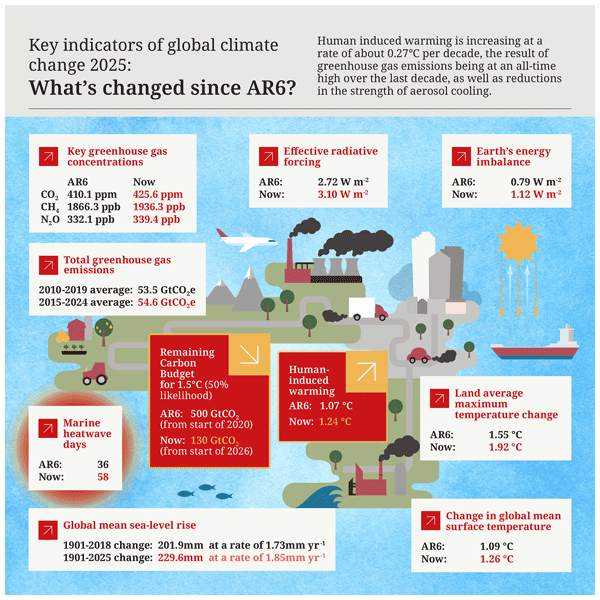
We give our annual update of key climate indicators. Our work quantifies the human contribution to global warming and the pace of climate change. This represents a large effort by the international community akin to an Intergovernmental Panel on Climate Change (IPCC) report.
Chao Wang, Yongzhu Liu, Wei Han, Deying Wang, Xueshun Shen, and Xiaoye Zhang
EGUsphere, https://doi.org/10.5194/egusphere-2026-1485, https://doi.org/10.5194/egusphere-2026-1485, 2026
This preprint is open for discussion and under review for Geoscientific Model Development (GMD).
Short summary
Short summary
We assessed the performance of a newly developed assimilation system. Using real observations of black carbon aerosol over China for nearly three months, we found that incorporating these measurements greatly improved the accuracy of air pollution analyses and forecasts, especially during severe pollution episodes. The system also helped correct near-surface temperature biases in heavily polluted areas.
Xinyao Hu, Aoyuan Yu, Xiaojing Shen, Jiayuan Lu, Yangmei Zhang, Quan Liu, Lei Liu, Linlin Liang, Hongfei Tong, Qianli Ma, Shuxian Zhang, Bing Qi, Rongguang Du, Huizheng Che, Xiaoye Zhang, and Junying Sun
EGUsphere, https://doi.org/10.5194/egusphere-2025-3796, https://doi.org/10.5194/egusphere-2025-3796, 2025
Preprint archived
Short summary
Short summary
Simultaneous measurements of aerosol hygroscopicity and volatility were performed using Volatility-Hygroscopicity Tandem Differential Mobility Analyzer in Beijing. The results reveal that hygroscopicity and volatility of accumulated mode particles are significantly influenced by dust. The size dependences of hygroscopicity and volatility during dust period were different from that before dust period. During dust period, the particles at 300 nm were hydrophobic and less volatile.
Wenjie Zhang, Hong Wang, Xiaoye Zhang, Yue Peng, Zhaodong Liu, Deying Wang, Da Zhang, Chen Han, Yang Zhao, Junting Zhong, Wenxing Jia, Huiqiong Ning, and Huizheng Che
Atmos. Chem. Phys., 25, 9005–9030, https://doi.org/10.5194/acp-25-9005-2025, https://doi.org/10.5194/acp-25-9005-2025, 2025
Short summary
Short summary
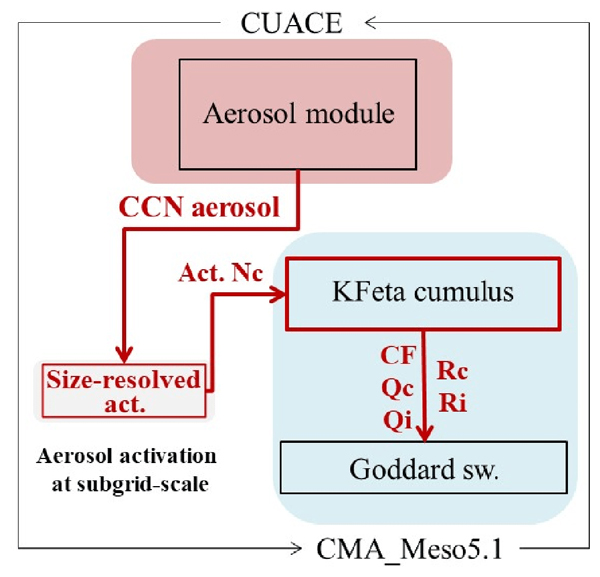
This study achieves quantifiable subgrid-scale aerosol–cloud interaction in an atmospheric chemistry system, with better performance in terms of meteorology prediction, and further finds that subgrid-scale actual aerosol can somewhat improve overestimated cumulative precipitation during a typical heavy rainfall event, which helps us better understand the impact of subgrid-scale aerosol–cloud interaction on weather forecasts.
Yongzhu Liu, Xiaoye Zhang, Wei Han, Chao Wang, Wenxing Jia, Deying Wang, Zhaorong Zhuang, and Xueshun Shen
Geosci. Model Dev., 18, 4855–4876, https://doi.org/10.5194/gmd-18-4855-2025, https://doi.org/10.5194/gmd-18-4855-2025, 2025
Short summary
Short summary
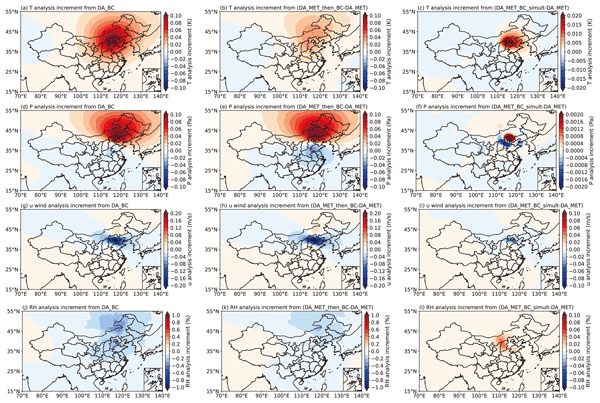
In order to investigate the feedbacks of chemical data assimilation on meteorological forecasts, we developed a strongly coupled aerosol–meteorology four-dimensional variational (4D-Var) assimilation system, CMA-GFS-AERO 4D-Var, based on the framework of the incremental analysis scheme of the China Meteorological Administration Global Forecasting System (CMA-GFS) operational global numerical weather model. The results show that assimilating BC (black carbon) observations can generate analysis increments not only for BC but also for atmospheric variables.
Xiaojing Shen, Quan Liu, Junying Sun, Wanlin Kong, Qianli Ma, Bing Qi, Lujie Han, Yangmei Zhang, Linlin Liang, Lei Liu, Shuo Liu, Xinyao Hu, Jiayuan Lu, Aoyuan Yu, Huizheng Che, and Xiaoye Zhang
Atmos. Chem. Phys., 25, 5711–5725, https://doi.org/10.5194/acp-25-5711-2025, https://doi.org/10.5194/acp-25-5711-2025, 2025
Short summary
Short summary
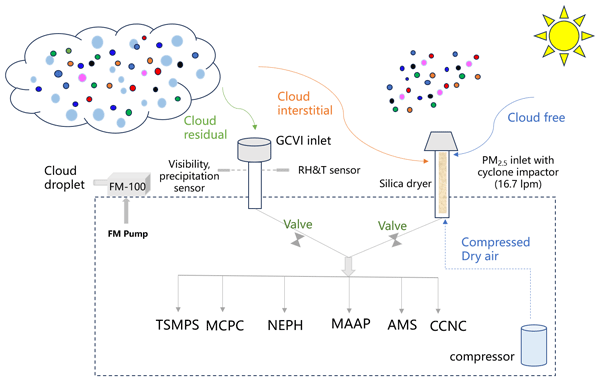
In this work, an automatic switched inlet system was developed and employed to investigate the aerosols and cloud droplets at a mountain site with frequent cloud processes. It showed different characteristics of cloud residual and interstitial particles. Stronger particle hygroscopicity reduced liquid water content and smaller cloud droplet diameters. This investigation contributes to understanding aerosol–cloud interactions by assessing the impact of aerosol particles on cloud microphysics.
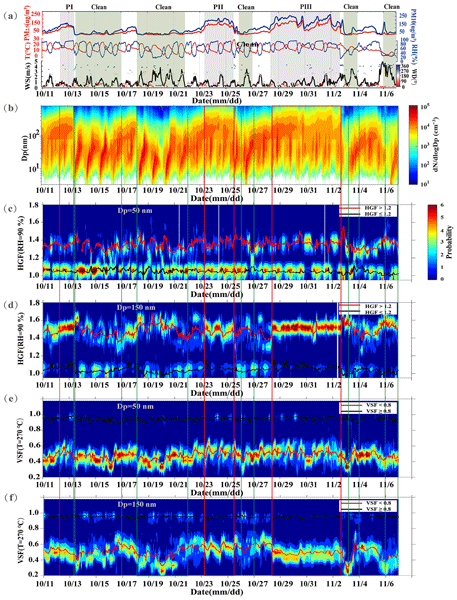
Aoyuan Yu, Xiaojing Shen, Qianli Ma, Jiayuan Lu, Xinyao Hu, Yangmei Zhang, Quan Liu, Linlin Liang, Lei Liu, Shuo Liu, Hongfei Tong, Huizheng Che, Xiaoye Zhang, and Junying Sun
Atmos. Chem. Phys., 25, 3389–3412, https://doi.org/10.5194/acp-25-3389-2025, https://doi.org/10.5194/acp-25-3389-2025, 2025
Short summary
Short summary
In this work, we utilized a volatility hygroscopicity tandem differential mobility analyzer (VH-TDMA) to investigate, for the first time, the hygroscopicity and volatility of submicron aerosols, as well as their hygroscopicity after heating, in urban Beijing during the autumn of 2023. We analyzed the size-resolved characteristics of hygroscopicity and volatility, the relationship between hygroscopic and volatile properties, and the hygroscopicity of heated submicron aerosols.
Quan Liu, Xiaojing Shen, Junying Sun, Yangmei Zhang, Bing Qi, Qianli Ma, Lujie Han, Honghui Xu, Xinyao Hu, Jiayuan Lu, Shuo Liu, Aoyuan Yu, Linlin Liang, Qian Gao, Hong Wang, Huizheng Che, and Xiaoye Zhang
Atmos. Chem. Phys., 25, 3253–3267, https://doi.org/10.5194/acp-25-3253-2025, https://doi.org/10.5194/acp-25-3253-2025, 2025
Short summary
Short summary
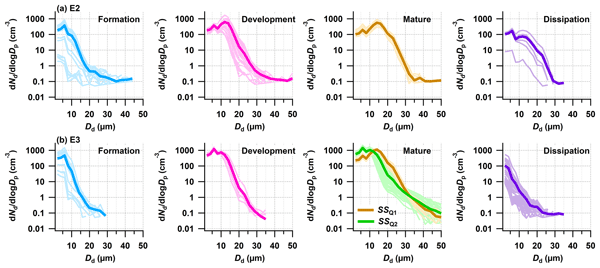
Through simultaneous measurements of aerosol particles and fog droplets, the evolution of droplets size distribution during the eight observed fog events was investigated. The results showed that the concentration and size distribution of pre-fog aerosol had significant impacts on fog microphysical characteristics. The extinction of fog interstitial particles played an important role in visibility degradation for light fogs, especially in polluted regions.
Xuan Wang, Lei Bi, Hong Wang, Yaqiang Wang, Wei Han, Xueshun Shen, and Xiaoye Zhang
Geosci. Model Dev., 18, 117–139, https://doi.org/10.5194/gmd-18-117-2025, https://doi.org/10.5194/gmd-18-117-2025, 2025
Short summary
Short summary
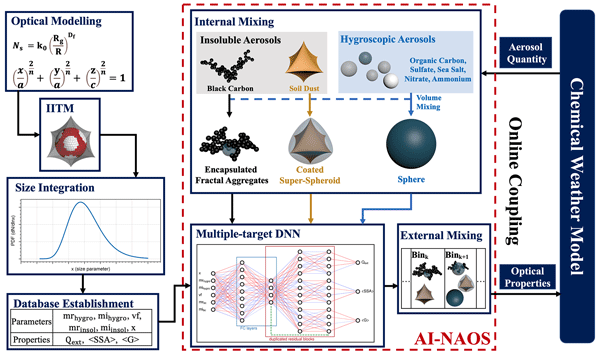
The Artificial-Intelligence-based Nonspherical Aerosol Optical Scheme (AI-NAOS) was developed to improve the estimation of the aerosol direct radiation effect and was coupled online with a chemical weather model. The AI-NAOS scheme considers black carbon as fractal aggregates and soil dust as super-spheroids, encapsulated with hygroscopic aerosols. Real-case simulations emphasize the necessity of accurately representing nonspherical and inhomogeneous aerosols in chemical weather models.
Wenxing Jia, Xiaoye Zhang, Hong Wang, Yaqiang Wang, Deying Wang, Junting Zhong, Wenjie Zhang, Lei Zhang, Lifeng Guo, Yadong Lei, Jizhi Wang, Yuanqin Yang, and Yi Lin
Geosci. Model Dev., 16, 6833–6856, https://doi.org/10.5194/gmd-16-6833-2023, https://doi.org/10.5194/gmd-16-6833-2023, 2023
Short summary
Short summary
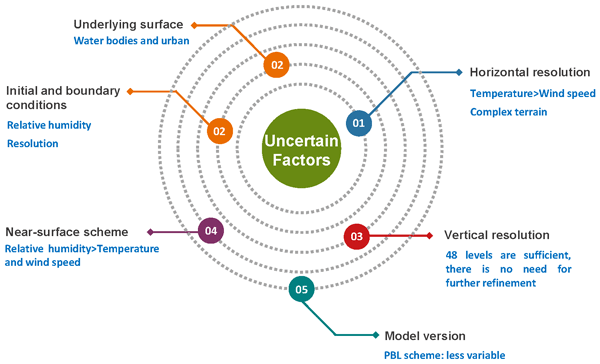
In addition to the dominant role of the PBL scheme on the results of the meteorological field, many factors in the model are influenced by large uncertainties. This study focuses on the uncertainties that influence numerical simulation results (including horizontal resolution, vertical resolution, near-surface scheme, initial and boundary conditions, underlying surface update, and update of model version), hoping to provide a reference for scholars conducting research on the model.
Wenxing Jia, Xiaoye Zhang, Hong Wang, Yaqiang Wang, Deying Wang, Junting Zhong, Wenjie Zhang, Lei Zhang, Lifeng Guo, Yadong Lei, Jizhi Wang, Yuanqin Yang, and Yi Lin
Geosci. Model Dev., 16, 6635–6670, https://doi.org/10.5194/gmd-16-6635-2023, https://doi.org/10.5194/gmd-16-6635-2023, 2023
Short summary
Short summary
Most current studies on planetary boundary layer (PBL) parameterization schemes are relatively fragmented and lack systematic in-depth analysis and discussion. In this study, we comprehensively evaluate the performance capability of the PBL scheme in five typical regions of China in different seasons from the mechanism of the scheme and the effects of PBL schemes on the near-surface meteorological parameters, vertical structures of the PBL, PBL height, and turbulent diffusion.
Yue Peng, Hong Wang, Xiaoye Zhang, Zhaodong Liu, Wenjie Zhang, Siting Li, Chen Han, and Huizheng Che
Atmos. Chem. Phys., 23, 8325–8339, https://doi.org/10.5194/acp-23-8325-2023, https://doi.org/10.5194/acp-23-8325-2023, 2023
Short summary
Short summary
This study demonstrates a strong link between local circulation, aerosol–radiation interaction (ARI), and haze pollution. Under the weak weather-scale systems, the typical local circulation driven by mountainous topography is the main cause of pollutant distribution in the Beijing–Tianjin–Hebei region, and the ARI mechanism amplifies this influence of local circulation on pollutants, making haze pollution aggravated by the superposition of both.
Siting Li, Ping Wang, Hong Wang, Yue Peng, Zhaodong Liu, Wenjie Zhang, Hongli Liu, Yaqiang Wang, Huizheng Che, and Xiaoye Zhang
Geosci. Model Dev., 16, 4171–4191, https://doi.org/10.5194/gmd-16-4171-2023, https://doi.org/10.5194/gmd-16-4171-2023, 2023
Short summary
Short summary
Optimizing the initial state of atmospheric chemistry model input is one of the most essential methods to improve forecast accuracy. Considering the large computational load of the model, we introduce an ensemble optimal interpolation scheme (EnOI) for operational use and efficient updating of the initial fields of chemical components. The results suggest that EnOI provides a practical and cost-effective technique for improving the accuracy of chemical weather numerical forecasts.
Xiaojing Shen, Junying Sun, Huizheng Che, Yangmei Zhang, Chunhong Zhou, Ke Gui, Wanyun Xu, Quan Liu, Junting Zhong, Can Xia, Xinyao Hu, Sinan Zhang, Jialing Wang, Shuo Liu, Jiayuan Lu, Aoyuan Yu, and Xiaoye Zhang
Atmos. Chem. Phys., 23, 8241–8257, https://doi.org/10.5194/acp-23-8241-2023, https://doi.org/10.5194/acp-23-8241-2023, 2023
Short summary
Short summary
New particle formation (NPF) events occur when the dust episodes' fade is analysed based on long-term measurement of particle number size distribution. Analysis shows that the observed formation and growth rates are approximately 50 % of and 30 % lower than those of other NPF events. As a consequence of the uptake of precursor gases on mineral dust, the physical and chemical properties of submicron particles, as well as the ability to be cloud condensation nuclei, can be changed.
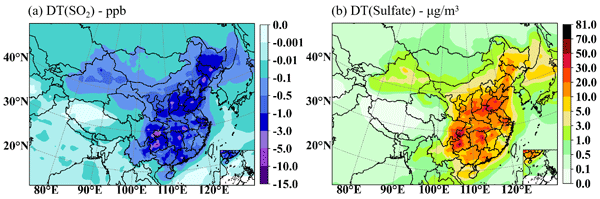
Jianyan Lu, Sunling Gong, Jian Zhang, Jianmin Chen, Lei Zhang, and Chunhong Zhou
Atmos. Chem. Phys., 23, 8021–8037, https://doi.org/10.5194/acp-23-8021-2023, https://doi.org/10.5194/acp-23-8021-2023, 2023
Short summary
Short summary
WRF/CUACE was used to assess the cloud chemistry contribution in China. Firstly, the CUACE cloud chemistry scheme was found to reproduce well the cloud processing and consumption of H2O2, O3, and SO2, as well as the increase of sulfate. Secondly, during cloud availability in December under a heavy pollution episode, sulfate production increased 60–95 % and SO2 was reduced by over 80 %. This study provides a way to analyze the phenomenon of overestimation of SO2 in many chemical transport models.
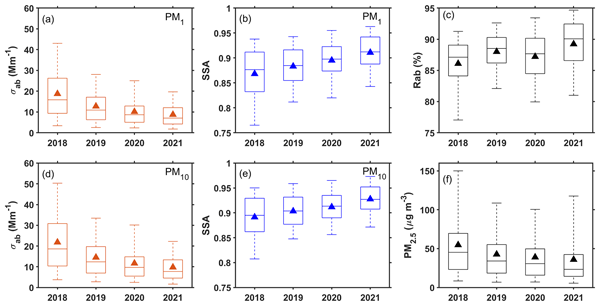
Xinyao Hu, Junying Sun, Can Xia, Xiaojing Shen, Yangmei Zhang, Quan Liu, Zhaodong Liu, Sinan Zhang, Jialing Wang, Aoyuan Yu, Jiayuan Lu, Shuo Liu, and Xiaoye Zhang
Atmos. Chem. Phys., 23, 5517–5531, https://doi.org/10.5194/acp-23-5517-2023, https://doi.org/10.5194/acp-23-5517-2023, 2023
Short summary
Short summary
The simultaneous measurements under dry conditions of aerosol optical properties were conducted at three wavelengths for PM1 and PM10 in urban Beijing from 2018 to 2021. Considerable reductions in aerosol absorption coefficient and increased single scattering albedo demonstrated that absorbing aerosols were more effectively controlled than scattering aerosols due to pollution control measures. The aerosol radiative effect and the transport's impact on aerosol optical properties were analysed.
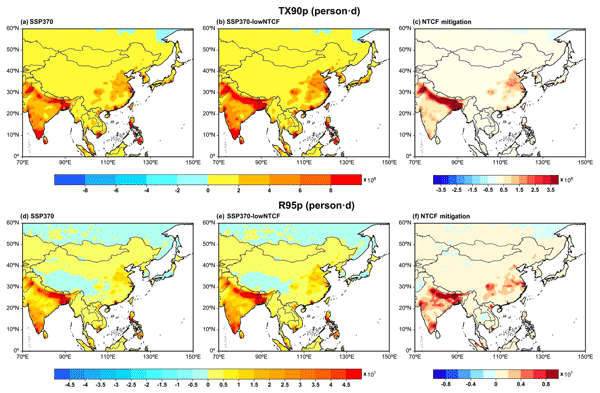
Yingfang Li, Zhili Wang, Yadong Lei, Huizheng Che, and Xiaoye Zhang
Atmos. Chem. Phys., 23, 2499–2523, https://doi.org/10.5194/acp-23-2499-2023, https://doi.org/10.5194/acp-23-2499-2023, 2023
Short summary
Short summary
Since few studies have assessed the impacts of future combined reductions in aerosols, ozone, and their precursors on future climate change, we use models with an interactive representation of tropospheric aerosols and atmospheric chemistry schemes to quantify the impact of their reductions on the Asian climate. Our results suggest that their reductions will exacerbate the warming effect caused by greenhouse gases, increasing future climate extremes and associated population exposure risk.
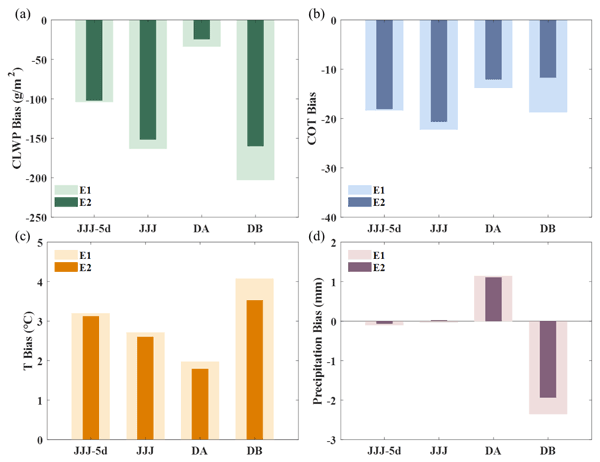
Wenjie Zhang, Hong Wang, Xiaoye Zhang, Liping Huang, Yue Peng, Zhaodong Liu, Xiao Zhang, and Huizheng Che
Atmos. Chem. Phys., 22, 15207–15221, https://doi.org/10.5194/acp-22-15207-2022, https://doi.org/10.5194/acp-22-15207-2022, 2022
Short summary
Short summary
Aerosol–cloud interaction (ACI) is first implemented in the atmospheric chemistry system GRAPES_Meso5.1/CUACE. ACI can improve the simulated cloud, temperature, and precipitation under haze pollution conditions in Jing-Jin-Ji in China. This paper demonstrates the critical role of ACI in current numerical weather prediction over the severely polluted region.
Jian-yan Lu, Sunling Gong, Chun-hong Zhou, Jian Zhang, Jian-min Chen, and Lei Zhang
Atmos. Chem. Phys. Discuss., https://doi.org/10.5194/acp-2022-716, https://doi.org/10.5194/acp-2022-716, 2022
Revised manuscript not accepted
Short summary
Short summary
A regional online chemical weather model WRF/ CUACE was used to assess the contributions of cloud chemistry to the SO2 and sulfate levels in typical regions in China. The cloud chemistry scheme in CUACE was evaluated, and well reproduces the cloud chemistry processes. During cloud availability in a heavy pollution episode, the sulfate production increases 40–80 % and SO2 reduces over 80 %. This study provides a way to analyze the over-estimate phenomenon of SO2 in many chemical transport models.
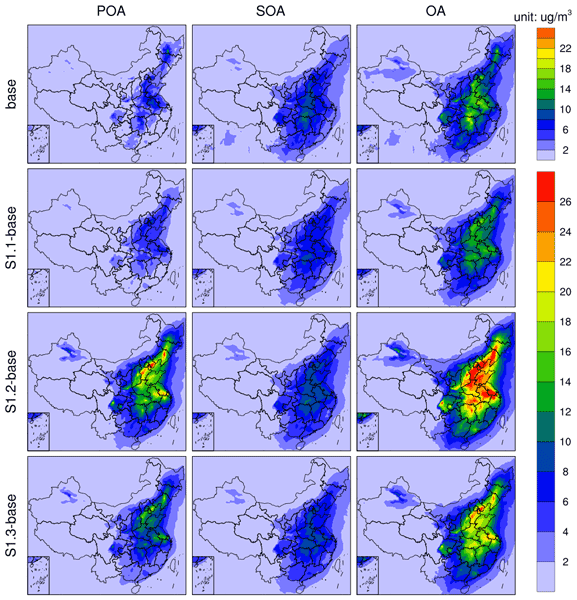
Mengying Li, Shaocai Yu, Xue Chen, Zhen Li, Yibo Zhang, Zhe Song, Weiping Liu, Pengfei Li, Xiaoye Zhang, Meigen Zhang, Yele Sun, Zirui Liu, Caiping Sun, Jingkun Jiang, Shuxiao Wang, Benjamin N. Murphy, Kiran Alapaty, Rohit Mathur, Daniel Rosenfeld, and John H. Seinfeld
Atmos. Chem. Phys., 22, 11845–11866, https://doi.org/10.5194/acp-22-11845-2022, https://doi.org/10.5194/acp-22-11845-2022, 2022
Short summary
Short summary
This study constructed an emission inventory of condensable particulate matter (CPM) in China with a focus on organic aerosols (OAs), based on collected CPM emission information. The results show that OA emissions are enhanced twofold for the years 2014 and 2017 after the inclusion of CPM in the new inventory. Sensitivity cases demonstrated the significant contributions of CPM emissions from stationary combustion and mobile sources to primary, secondary, and total OA concentrations.
Lei Li, Yevgeny Derimian, Cheng Chen, Xindan Zhang, Huizheng Che, Gregory L. Schuster, David Fuertes, Pavel Litvinov, Tatyana Lapyonok, Anton Lopatin, Christian Matar, Fabrice Ducos, Yana Karol, Benjamin Torres, Ke Gui, Yu Zheng, Yuanxin Liang, Yadong Lei, Jibiao Zhu, Lei Zhang, Junting Zhong, Xiaoye Zhang, and Oleg Dubovik
Earth Syst. Sci. Data, 14, 3439–3469, https://doi.org/10.5194/essd-14-3439-2022, https://doi.org/10.5194/essd-14-3439-2022, 2022
Short summary
Short summary
A climatology of aerosol composition concentration derived from POLDER-3 observations using GRASP/Component is presented. The conceptual specifics of the GRASP/Component approach are in the direct retrieval of aerosol speciation without intermediate retrievals of aerosol optical characteristics. The dataset of satellite-derived components represents scarce but imperative information for validation and potential adjustment of chemical transport models.
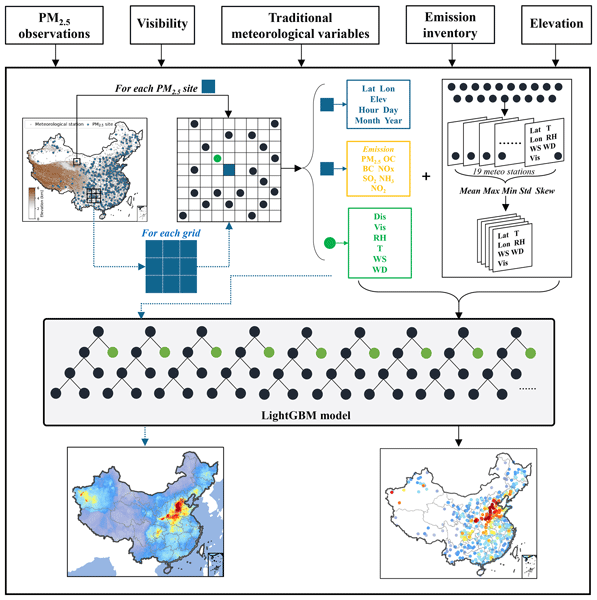
Junting Zhong, Xiaoye Zhang, Ke Gui, Jie Liao, Ye Fei, Lipeng Jiang, Lifeng Guo, Liangke Liu, Huizheng Che, Yaqiang Wang, Deying Wang, and Zijiang Zhou
Earth Syst. Sci. Data, 14, 3197–3211, https://doi.org/10.5194/essd-14-3197-2022, https://doi.org/10.5194/essd-14-3197-2022, 2022
Short summary
Short summary
Historical long-term PM2.5 records with high temporal resolution are essential but lacking for research and environmental management. Here, we reconstruct site-based and gridded PM2.5 datasets at 6-hour intervals from 1960 to 2020 that combine visibility, meteorological data, and emissions based on a machine learning model with extracted spatial features. These two PM2.5 datasets will lay the foundation of research studies associated with air pollution, climate change, and aerosol reanalysis.

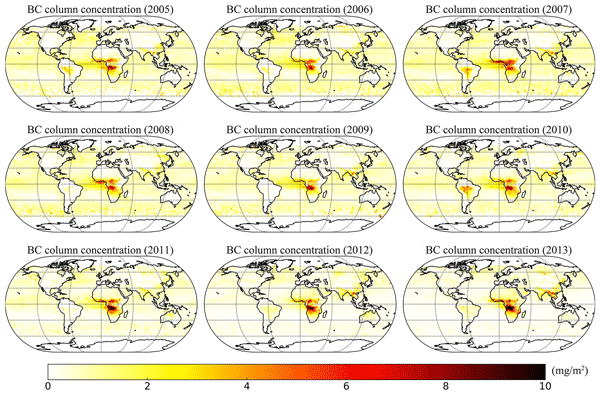
Haochi Che, Michal Segal-Rozenhaimer, Lu Zhang, Caroline Dang, Paquita Zuidema, Arthur J. Sedlacek III, Xiaoye Zhang, and Connor Flynn
Atmos. Chem. Phys., 22, 8767–8785, https://doi.org/10.5194/acp-22-8767-2022, https://doi.org/10.5194/acp-22-8767-2022, 2022
Short summary
Short summary
A 17-month in situ study on Ascension Island found low single-scattering albedo and strong absorption enhancement of the marine boundary layer aerosols during biomass burnings on the African continent, along with apparent patterns of regular monthly variability. We further discuss the characteristics and drivers behind these changes and find that biomass burning conditions in Africa may be the main factor influencing the optical properties of marine boundary aerosols.
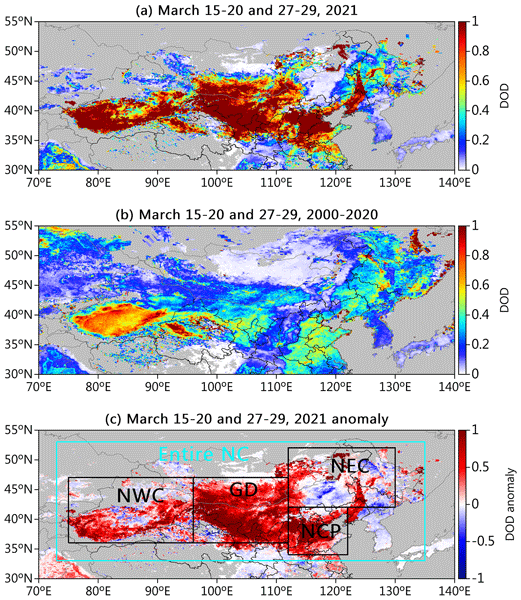
Ke Gui, Wenrui Yao, Huizheng Che, Linchang An, Yu Zheng, Lei Li, Hujia Zhao, Lei Zhang, Junting Zhong, Yaqiang Wang, and Xiaoye Zhang
Atmos. Chem. Phys., 22, 7905–7932, https://doi.org/10.5194/acp-22-7905-2022, https://doi.org/10.5194/acp-22-7905-2022, 2022
Short summary
Short summary
This study investigates the aerosol optical and radiative properties and meteorological drivers during two mega SDS events over Northern China in March 2021. The MODIS-retrieved DOD data registered these two events as the most intense episode in the same period in history over the past 20 years. These two extreme SDS events were associated with both atmospheric circulation extremes and local meteorological anomalies that favor enhanced dust emissions in the Gobi Desert.
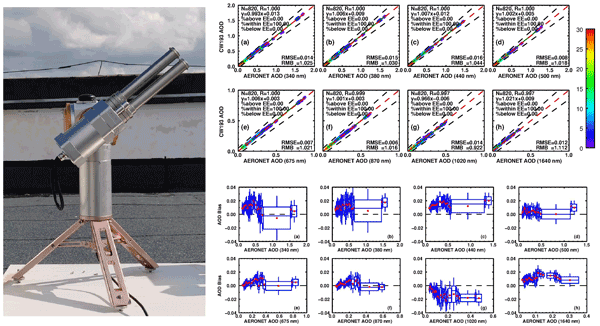
Yu Zheng, Huizheng Che, Yupeng Wang, Xiangao Xia, Xiuqing Hu, Xiaochun Zhang, Jun Zhu, Jibiao Zhu, Hujia Zhao, Lei Li, Ke Gui, and Xiaoye Zhang
Atmos. Meas. Tech., 15, 2139–2158, https://doi.org/10.5194/amt-15-2139-2022, https://doi.org/10.5194/amt-15-2139-2022, 2022
Short summary
Short summary
Ground-based observations of aerosols and aerosol data verification is important for satellite and climate model modification. Here we present an evaluation of aerosol microphysical, optical and radiative properties measured using a multiwavelength photometer with a highly integrated design and smart control performance. The validation of this product is discussed in detail using AERONET as a reference. This work contributes to reducing AOD uncertainties in China and combating climate change.
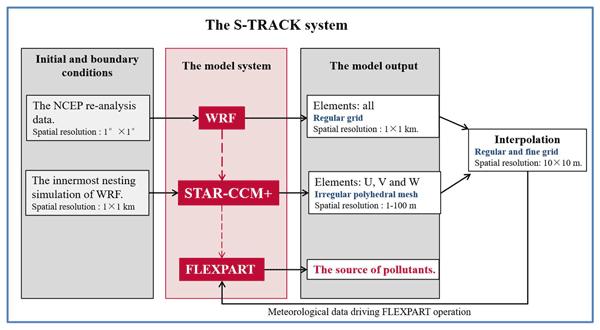
Huan Zhang, Sunling Gong, Lei Zhang, Jingwei Ni, Jianjun He, Yaqiang Wang, Xu Wang, Lixin Shi, Jingyue Mo, Huabing Ke, and Shuhua Lu
Atmos. Chem. Phys., 22, 2221–2236, https://doi.org/10.5194/acp-22-2221-2022, https://doi.org/10.5194/acp-22-2221-2022, 2022
Short summary
Short summary
This study established a multi-model simulation system for street-level circulation and pollutant tracking and applied to real building scenarios and atmospheric conditions. Results showed that for a particular site the potential contribution ratio varies with the height of the site, with a peak not at the ground but at a certain height. This work is of significance for urban planning and improvement of urban air quality.
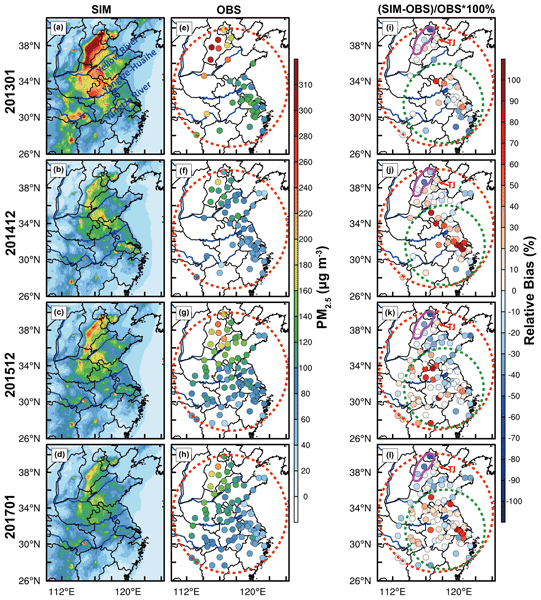
Wenxing Jia and Xiaoye Zhang
Atmos. Chem. Phys., 21, 16827–16841, https://doi.org/10.5194/acp-21-16827-2021, https://doi.org/10.5194/acp-21-16827-2021, 2021
Short summary
Short summary
Heavy aerosol pollution incidents have attracted much attention since 2013, but the temporal and spatial limitations of observations and the inaccuracy of simulation are a stumbling block to assessing pollution mechanisms. The correct simulation of boundary layer mixing process of pollutant is a challenge for mesoscale numerical models. We add the turbulent diffusion term of aerosol to the WRF-Chem model to prove the impact of turbulent diffusion on pollutant concentration.
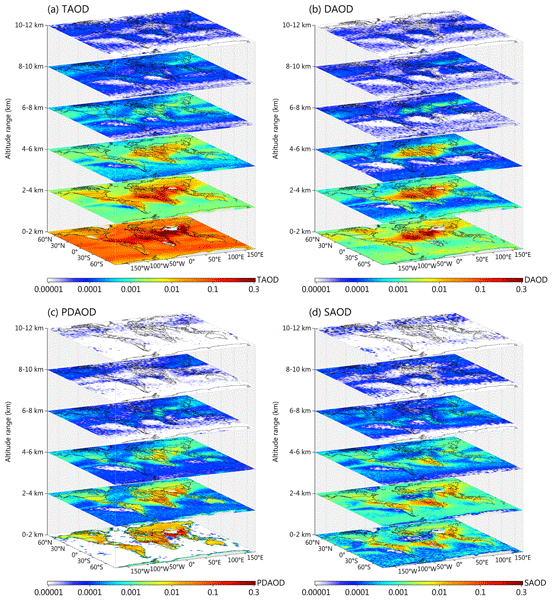
Ke Gui, Huizheng Che, Yu Zheng, Hujia Zhao, Wenrui Yao, Lei Li, Lei Zhang, Hong Wang, Yaqiang Wang, and Xiaoye Zhang
Atmos. Chem. Phys., 21, 15309–15336, https://doi.org/10.5194/acp-21-15309-2021, https://doi.org/10.5194/acp-21-15309-2021, 2021
Short summary
Short summary
This study utilized the globally gridded aerosol extinction data from CALIOP during 2007–2019 to investigate the 3D climatology, trends, and meteorological drivers of tropospheric type-dependent aerosols. Results revealed that the planetary boundary layer (PBL) and the free troposphere contribute 62.08 % and 37.92 %, respectively, of the global tropospheric TAOD. Trends in
CALIOP-derived aerosol loading, in particular those partitioned in the PBL, can be explained to a large extent by meteorology.
Cited articles
Albrecht, B. A.: Aerosols, Cloud Microphysics, and Fractional Cloudiness, Science, 245, 1227–1230, https://doi.org/10.1126/science.245.4923.1227, 1989.
Alfaro, S. and Gomes, L.: Modeling mineral aerosol production by wind erosion: Emission intensities and aerosol size distributions in source areas, J. Geophys. Res., 106, 18075–18084, https://doi.org/10.1029/2000JD900339, 2001.
Andreae, M. O. and Crutzen, P. J.: Atmospheric Aerosols: Biogeochemical Sources and Role in Atmospheric Chemistry, Science, 276, 1052–1058, https://doi.org/10.1126/science.276.5315.1052,1997.
Bi, K., McMeeking, G. R., Ding, D. P., Levin, E. J. T., DeMott, P. J., Zhao, D. L., Wang, F., Liu, Q., Tian, P., Ma, X. C., Chen, Y. B., Huang, M. Y., Zhang, H. L., Gordon, T. D., and Chen, P.: Measurements of Ice Nucleating Particles in Beijing, China, J. Geophys. Res.-Atmos., 124, 8065–8075, https://doi.org/10.1029/2019JD030609, 2019.
Boose, Y., Welti, A., Atkinson, J., Ramelli, F., Danielczok, A., Bingemer, H. G., Plötze, M., Sierau, B., Kanji, Z. A., and Lohmann, U.: Heterogeneous ice nucleation on dust particles sourced from nine deserts worldwide – Part 1: Immersion freezing, Atmos. Chem. Phys., 16, 15075–15095, https://doi.org/10.5194/acp-16-15075-2016, 2016.
Cantrell, W., Bunker, K., Niehaus, J., China, S., Woodward, X., Kostinski, A., and Mazzoleni, C.: Ice nucleation in the contact mode: Temperature and size dependence for selected dusts, AIP Conference Proceedings, 1527, 926, https://doi.org/10.1063/1.4803423, 2013.
Che, Y., Zhang, J., Zhao, C., Fang, W., Xue, W., Yang, W., Ji, D., Dang, J., Duan, J., Sun, J., Shen, X., and Zhou, X.: A study on the characteristics of ice nucleating particles concentration and aerosols and their relationship in spring in Beijing, Atmos. Res., 247, 105196, https://doi.org/10.1016/j.atmosres.2020.105196, 2021.
Chen, D., Xue, J., Yang, X., Zhang, H., Shen, X., Hu, J., Wang, Y., Ji, L., and Chen, J.: New generation of multi-scale NWP system (GRAPES): General scientific design, Chinese Sci. Bull., 53, 3433–3445, https://doi.org/10.1007/s11434-008-0494-z, 2008.
Chen, J., Wu, Z., Chen, J., Reicher, N., Fang, X., Rudich, Y., and Hu, M.: Size-resolved atmospheric ice-nucleating particles during East Asian dust events, Atmos. Chem. Phys., 21, 3491–3506, https://doi.org/10.5194/acp-21-3491-2021, 2021.
Chen, J., Wu, Z., Meng, X., Zhang, C., Chen, J., Qiu, Y., Chen, L., Fang, X., Wang, Y., Zhang, Y., Chen, S., Gao, J., Li, W., and Hu, M.: Observational evidence for the non-suppression effect of atmospheric chemical modification on the ice nucleation activity of East Asian dust, Sci. Total Environ., 861, 160708, https://doi.org/10.1016/j.scitotenv.2022.160708, 2023.
Chen, Q., Yin, Y., Jiang, H., Chu, Z., Xue, L., Shi, R., Zhang, X., and Chen, J.: The Roles of Mineral Dust as Cloud Condensation Nuclei and Ice Nuclei During the Evolution of a Hail Storm, J. Geophys. Res.-Atmos., 124, https://doi.org/10.1029/2019JD031403, 2019.
DeMott, P. J., Prenni, A. J., Liu, X., Kreidenweis, S. M., Petters, M. D., Twohy, C. H., Richardson, M. S., Eidhammer, T., and Rogers, D. C.: Predicting global atmospheric ice nuclei distributions and their impacts on climate, P. Natl. Acad. Sci. USA, 107, 11217–11222, https://doi.org/10.1073/pnas.0910818107, 2010.
DeMott, P. J., Prenni, A. J., McMeeking, G. R., Sullivan, R. C., Petters, M. D., Tobo, Y., Niemand, M., Möhler, O., Snider, J. R., Wang, Z., and Kreidenweis, S. M.: Integrating laboratory and field data to quantify the immersion freezing ice nucleation activity of mineral dust particles, Atmos. Chem. Phys., 15, 393–409, https://doi.org/10.5194/acp-15-393-2015, 2015.
Eastwood, M. L., Cremel, S., Gehrke, C., Girard, E., and Bertram, A. K.: Ice nucleation on mineral dust particles: Onset conditions, nucleation rates and contact angles, J. Geophys. Res.-Atmos., 113, https://doi.org/10.1029/2008JD010639, 2008.
Fan, J., Leung, L. R., DeMott, P. J., Comstock, J. M., Singh, B., Rosenfeld, D., Tomlinson, J. M., White, A., Prather, K. A., Minnis, P., Ayers, J. K., and Min, Q.: Aerosol impacts on California winter clouds and precipitation during CalWater 2011: local pollution versus long-range transported dust, Atmos. Chem. Phys., 14, 81–101, https://doi.org/10.5194/acp-14-81-2014, 2014.
Feng, Q., Niu, S., Hou, T., Fan, X., Shen, D., and Yang, J.: Aircraft – Based Observation of the Physical Characteristics of Snowfall Cloud in Shanxi Province, Chinese J. Atmos. Sci., 45, 1146–1160, https://doi.org/10.3878/j.issn.1006-9895.2106.21004, 2021 (in Chinese).
Filonchyk, M., Yan, H., Shareef, T. M. E., and Yang, S.: Aerosol contamination survey during dust storm process in Northwestern China using ground, satellite observations and atmospheric modeling data, Theor. Appl. Climatol., 135, 119–133, https://doi.org/10.1007/s00704-017-2362-8, 2019.
Gao, Q., Guo, X., He, H., Liu, X., Huang, M., and Ma, X.: Numerical Simulation Study on the Microphysical Characteristics of Stratiform Clouds with Embedded Convections in Northern China based on Aircraft Measurements, Chinese J. Atmos. Sci., 44, 899–912, https://doi.org/10.3878/j.issn.1006-9895.1908.19114, 2020 (in Chinese).
Gibbons, M., Min, Q., and Fan, J.: Investigating the impacts of Saharan dust on tropical deep convection using spectral bin microphysics, Atmos. Chem. Phys., 18, 12161–12184, https://doi.org/10.5194/acp-18-12161-2018, 2018.
Gong, S. L. and Zhang, X. Y.: CUACE/Dust – an integrated system of observation and modeling systems for operational dust forecasting in Asia, Atmos. Chem. Phys., 8, 2333–2340, https://doi.org/10.5194/acp-8-2333-2008, 2008.
Gong, S. L., Zhang, X. Y., Zhao, T. L., McKendry, I. G., Jaffe, D. A., and Lu, N. M.: Characterization of soil dust aerosol in China and its transport and distribution during 2001 ACE-Asia: 2. Model simulation and validation, J. Geophys. Res.-Atmos., 108, https://doi.org/10.1029/2002JD002633, 2003.
Haarig, M., Ansmann, A., Walser, A., Baars, H., Urbanneck, C., Weinzierl, B., Schöberl, M., Dollner, M., Mamouri, R., and Althausen, D.: Estimation of dust related ice nucleating particles in the atmosphere: Comparison of profiling and in-situ measurements, E3S Web Conf., 99, 04002, https://doi.org/10.1051/e3sconf/20199904002, 2019.
Harmoko, I. W., Zainuri, M., Wirasatriya, A., and Supari, S.: Evaluating The Accuracy of Gridded Climate Datasets for Precipitation, Surface Air Temperature, and Sea Surface Temperature in Central Java, Indonesia, Indonesian J. Appl. Phys., 15, 464–476, https://doi.org/10.13057/ijap.v15i2.104276, 2025.
He, C., Yin, Y., Huang, Y., Kuang, X., Cui, Y., Chen, K., Jiang, H., Kiselev, A., Möhler, O., and Schrod, J.: The Vertical Distribution of Ice-Nucleating Particles over the North China Plain: A Case of Cold Front Passage, Remote Sens., 15, 4989, https://doi.org/10.3390/rs15204989, 2023.
He, Y., Zhang, Y., Liu, F., Yin, Z., Yi, Y., Zhan, Y., and Yi, F.: Retrievals of dust-related particle mass and ice-nucleating particle concentration profiles with ground-based polarization lidar and sun photometer over a megacity in central China, Atmos. Meas. Tech., 14, 5939–5954, https://doi.org/10.5194/amt-14-5939-2021, 2021.
Herbert, R. J., Murray, B. J., Dobbie, S. J., and Koop, T.: Sensitivity of liquid clouds to homogenous freezing parameterizations, Geophys. Res. Lett., 42, 1599–1605, https://doi.org/10.1002/2014GL062729, 2015.
Hiranuma, N., Augustin-Bauditz, S., Bingemer, H., Budke, C., Curtius, J., Danielczok, A., Diehl, K., Dreischmeier, K., Ebert, M., Frank, F., Hoffmann, N., Kandler, K., Kiselev, A., Koop, T., Leisner, T., Möhler, O., Nillius, B., Peckhaus, A., Rose, D., Weinbruch, S., Wex, H., Boose, Y., DeMott, P. J., Hader, J. D., Hill, T. C. J., Kanji, Z. A., Kulkarni, G., Levin, E. J. T., McCluskey, C. S., Murakami, M., Murray, B. J., Niedermeier, D., Petters, M. D., O'Sullivan, D., Saito, A., Schill, G. P., Tajiri, T., Tolbert, M. A., Welti, A., Whale, T. F., Wright, T. P., and Yamashita, K.: A comprehensive laboratory study on the immersion freezing behavior of illite NX particles: a comparison of 17 ice nucleation measurement techniques, Atmos. Chem. Phys., 15, 2489–2518, https://doi.org/10.5194/acp-15-2489-2015, 2015.
Hong, S.-Y., Dudhia, J., and Chen, S.-H.: A Revised Approach to Ice Microphysical Processes for the Bulk Parameterization of Clouds and Precipitation, Mon. Weather Rev., 132, 103–120, https://doi.org/10.1175/1520-0493(2004)132<0103:ARATIM>2.0.CO;2, 2004.
Hu, Y., Tian, P., Huang, M., Bi, K., Schneider, J., Umo, N. S., Ullmerich, N., Höhler, K., Jing, X., Xue, H., Ding, D., Liu, Y., Leisner, T., and Möhler, O.: Characteristics of ice-nucleating particles in Beijing during spring: A comparison study of measurements between the suburban and a nearby mountain area, Atmos. Environ., 293, 119451, https://doi.org/10.1016/j.atmosenv.2022.119451, 2023.
Igel, A. L., Igel, M. R., and van den Heever, S. C.: Make It a Double? Sobering Results from Simulations Using Single-Moment Microphysics Schemes, J. Atmos. Sci., 72, 910–925, https://doi.org/10.1175/JAS-D-14-0107.1, 2015.
Ilotoviz, E., Khain, A. P., Benmoshe, N., Phillips, V. T. J., and Ryzhkov, A. V.: Effect of Aerosols on Freezing Drops, Hail, and Precipitation in a Midlatitude Storm, J. Atmos. Sci., 73, 109–144, https://doi.org/10.1175/JAS-D-14-0155.1, 2016.
Jiang, H., Yin, Y., Su, H., Shan, Y., and Gao, R.: The characteristics of atmospheric ice nuclei measured at the top of Huangshan (the Yellow Mountains) in Southeast China using a newly built static vacuum water vapor diffusion chamber, Atmos. Res., 153, 200–208, https://doi.org/10.1016/j.atmosres.2014.08.015, 2015.
Jiang, H., Yin, Y., Wang, X., Gao, R., Yuan, L., Chen, K., and Shan, Y.: The measurement and parameterization of ice nucleating particles in different backgrounds of China, Atmos. Res., 181, 72–80, https://doi.org/10.1016/j.atmosres.2016.06.013, 2016.
Kang, J.-Y., Yoon, S., Shao, Y., and Kim, S.-W.: Comparison of vertical dust flux by implementing three dust emission schemes in WRF/Chem, J. Geophys. Res., 116, https://doi.org/10.1029/2010JD014649, 2011.
Kang, Y., Jin, S., Peng, X., Yang, X., Shang, K., and Wang, S.: Comparative Analysis of Single-Moment and Double-Moment Microphysics Schemes in WRF on the Torrential Rainfall Event in North China During 1921 July, 2016, Plateau Meteorology, 37, 481–494, 2018.
Kanji, Z. A., Ladino, L. A., Wex, H., Boose, Y., Burkert-Kohn, M., Cziczo, D. J., and Krämer, M.: Overview of Ice Nucleating Particles, Meteorological Monographs, 58, 1.1–1.33, https://doi.org/10.1175/AMSMONOGRAPHS-D-16-0006.1, 2017.
Kaufman, Y. J., Tanré, D., and Boucher, O.: A satellite view of aerosols in the climate system, Nature, 419, 215–223, https://doi.org/10.1038/nature01091, 2002.
Khain, A., Ovtchinnikov, M., Pinsky, M., Pokrovsky, A., and Krugliak, H.: Notes on the state-of-the-art numerical modeling of cloud microphysics, Atmos. Res., 55, 159–224, https://doi.org/10.1016/S0169-8095(00)00064-8, 2000.
Knopf, D. A. and Alpert, P. A.: Atmospheric ice nucleation, Nat. Rev. Phys., 5, 203–217, https://doi.org/10.1038/s42254-023-00570-7, 2023.
Kumar, V. A., Pandithurai, G., Kulkarni, G., Hazra, A., Patil, S. S., Dudhambe, S. D., Patil, R. D., Chen, J.-P., and Niranjan, K.: Atmospheric ice nuclei concentration measurements over a high altitude-station in the Western Ghats, India, Atmos. Res., 235, 104795, https://doi.org/10.1016/j.atmosres.2019.104795, 2020.
Lee, S. S., Kim, B.-G., Yum, S. S., Seo, K.-H., Jung, C.-H., Um, J. S., Li, Z., Hong, J., Chang, K.-H., and Jeong, J.-Y.: Effects of aerosol on evaporation, freezing and precipitation in a multiple cloud system, Clim. Dynam., 48, 1069–1087, https://doi.org/10.1007/s00382-016-3128-1, 2017.
Li, J., Liu, W., Castarède, D., Gu, W., Li, L., Ohigashi, T., Zhang, G., Tang, M., Thomson, E. S., Hallquist, M., Wang, S., and Kong, X.: Hygroscopicity and Ice Nucleation Properties of Dust/Salt Mixtures Originating from the Source of East Asian Dust Storms, Front. Environ. Sci., 10, https://doi.org/10.3389/fenvs.2022.897127, 2022.
Li, M., Zhang, Q., Kurokawa, J.-I., Woo, J.-H., He, K., Lu, Z., Ohara, T., Song, Y., Streets, D. G., Carmichael, G. R., Cheng, Y., Hong, C., Huo, H., Jiang, X., Kang, S., Liu, F., Su, H., and Zheng, B.: MIX: a mosaic Asian anthropogenic emission inventory under the international collaboration framework of the MICS-Asia and HTAP, Atmos. Chem. Phys., 17, 935–963, https://doi.org/10.5194/acp-17-935-2017, 2017.
Liu, H., Yu, Y., Xia, D., Zhao, S., Ma, X., and Dong, L.: Analysis of the relationship between dust aerosol and precipitation in spring over East Asia using EOF and SVD methods, Sci. Total Environ., 908, 168437, https://doi.org/10.1016/j.scitotenv.2023.168437, 2024.
Marticorena, B. and Bergametti, G.: Modeling the atmospheric dust cycle: 1. Design of a soil-derived dust emission scheme, J. Geophys. Res.-Atmos., 100, 16415–16430, https://doi.org/10.1029/95JD00690, 1995.
Mascioli, N. R., Evan, A. T., and Ralph, F. M.: Influence of Dust on Precipitation During Landfalling Atmospheric Rivers in an Idealized Framework, J. Geophys. Res.-Atmos., 126, e2021JD034813, https://doi.org/10.1029/2021JD034813, 2021.
Molthan, A. L. and Colle, B. A.: Comparisons of Single- and Double-Moment Microphysics Schemes in the Simulation of a Synoptic-Scale Snowfall Event, Mon. Weather Rev., 140, 2982–3002, https://doi.org/10.1175/MWR-D-11-00292.1, 2012.
Naeger, A. R.: Impact of dust aerosols on precipitation associated with atmospheric rivers using WRF-Chem simulations, Result. Phys., 10, 217–221, https://doi.org/10.1016/j.rinp.2018.05.027, 2018.
Nenes, A., Murray, B., and Bougiatioti, A.: Mineral Dust and its Microphysical Interactions with Clouds, Mineral Dust: A Key Player in the Earth System, 287–325, https://doi.org/10.1007/978-94-017-8978-3_12, 2014.
Niehaus, J., Becker, J. G., Kostinski, A., and Cantrell, W.: Laboratory Measurements of Contact Freezing by Dust and Bacteria at Temperatures of Mixed-Phase Clouds, J. Atmos. Sci., 71, 3659–3667, https://doi.org/10.1175/JAS-D-14-0022.1, 2014.
Pan, X., Uno, I., Wang, Z., Nishizawa, T., Sugimoto, N., Yamamoto, S., Kobayashi, H., Sun, Y., Fu, P., Tang, X., and Wang, Z.: Real-time observational evidence of changing Asian dust morphology with the mixing of heavy anthropogenic pollution, Sci. Rep., 7, 335, https://doi.org/10.1038/s41598-017-00444-w, 2017.
Park, S.-Y. and Lim, K.-S. S.: Implementation of Prognostic Cloud Ice Number Concentrations for the Weather Research and Forecasting (WRF) Double-Moment 6-Class (WDM6) Microphysics Scheme, J. Adv. Model. Earth Syst., 15, e2022MS003009, https://doi.org/10.1029/2022MS003009, 2023.
Patnaude, R. J., McCluskey, C. S., Roberts, G. C., DeMott, P. J., Hill, T. C. J., McFarquhar, G. M., Kollias, P., Ranjbar, K., Wolde, M., and Kreidenweis, S. M.: Characteristics of Ice Nucleating Particles From the Long-Range Transport of Saharan Dust, Geophys. Res. Lett., 52, e2024GL113365, https://doi.org/10.1029/2024GL113365, 2025.
Possner, A., Ekman, A. M. L., and Lohmann, U.: Cloud response and feedback processes in stratiform mixed-phase clouds perturbed by ship exhaust, Geophys. Res. Lett., 44, 1964–1972, https://doi.org/10.1002/2016GL071358, 2017.
Pu, Z. and Lin, C.: Evaluation of double-moment representation of ice hydrometeors in bulk microphysical parameterization: comparison between WRF numerical simulations and UND-Citation data during MC3E, Geosci. Lett., 2, 11, https://doi.org/10.1186/s40562-015-0028-x, 2015.
Shao, Y., Ishizuka, M., Mikami, M., and Leys, J. F.: Parameterization of size-resolved dust emission and validation with measurements, J. Geophys. Res.-Atmospheres, 116, https://doi.org/10.1029/2010JD014527, 2011.
Shen, X., Shi, Y., Wang, H., Zhang, M., and Han, J.: Comparison of two double-moment cloud microphysics schemes in the GRAPES_Meso model on simulating a cold cloud process, Torrential Rain Disaster., 41, 336–347, https://doi.org/10.3969/j.issn.1004-9045.2022.03.010, 2022.
Shen, X., Mei, H., Wang, W., and Huang, W.: Numerical Simulation of Ice-Phase Processes Using a Double-Moment Microphysical Scheme and a Sensitivity Test of Ice Nuclei Concentration, Chinese J. Atmos. Sci., 39, 83–99, https://doi.org/10.3878/j.issn.1006-9895.1405.13310, 2024.
Stevens, R. G., Loewe, K., Dearden, C., Dimitrelos, A., Possner, A., Eirund, G. K., Raatikainen, T., Hill, A. A., Shipway, B. J., Wilkinson, J., Romakkaniemi, S., Tonttila, J., Laaksonen, A., Korhonen, H., Connolly, P., Lohmann, U., Hoose, C., Ekman, A. M. L., Carslaw, K. S., and Field, P. R.: A model intercomparison of CCN-limited tenuous clouds in the high Arctic, Atmos. Chem. Phys., 18, 11041–11071, https://doi.org/10.5194/acp-18-11041-2018, 2018.
Stier, P., van den Heever, S. C., Christensen, M. W., Gryspeerdt, E., Dagan, G., Saleeby, S. M., Bollasina, M., Donner, L., Emanuel, K., Ekman, A. M. L., Feingold, G., Field, P., Forster, P., Haywood, J., Kahn, R., Koren, I., Kummerow, C., L'Ecuyer, T., Lohmann, U., Ming, Y., Myhre, G., Quaas, J., Rosenfeld, D., Samset, B., Seifert, A., Stephens, G., and Tao, W.-K.: Multifaceted aerosol effects on precipitation, Nat. Geosci., 17, 719–732, https://doi.org/10.1038/s41561-024-01482-6, 2024.
Stith, J. L., Ramanathan, V., Cooper, W. A., Roberts, G. C., DeMott, P. J., Carmichael, G., Hatch, C. D., Adhikary, B., Twohy, C. H., Rogers, D. C., Baumgardner, D., Prenni, A. J., Campos, T., Gao, R., Anderson, J., and Feng, Y.: An overview of aircraft observations from the Pacific Dust Experiment campaign, J. Geophys. Res.-Atmos., 114, https://doi.org/10.1029/2008JD010924, 2009.
Su, L. and Fung, J. C. H.: Investigating the role of dust in ice nucleation within clouds and further effects on the regional weather system over East Asia – Part 1: model development and validation, Atmos. Chem. Phys., 18, 8707–8725, https://doi.org/10.5194/acp-18-8707-2018, 2018a.
Su, L. and Fung, J. C. H.: Investigating the role of dust in ice nucleation within clouds and further effects on the regional weather system over East Asia – Part 2: modification of the weather system, Atmos. Chem. Phys., 18, 11529–11545, https://doi.org/10.5194/acp-18-11529-2018, 2018b.
Tobo, Y., Adachi, K., DeMott, P. J., Hill, T. C. J., Hamilton, D. S., Mahowald, N. M., Nagatsuka, N., Ohata, S., Uetake, J., Kondo, Y., and Koike, M.: Glacially sourced dust as a potentially significant source of ice nucleating particles, Nat. Geosci., 12, 253–258, https://doi.org/10.1038/s41561-019-0314-x, 2019.
Tobo, Y., Uetake, J., Matsui, H., Moteki, N., Uji, Y., Iwamoto, Y., Miura, K., and Misumi, R.: Seasonal Trends of Atmospheric Ice Nucleating Particles Over Tokyo, J. Geophys. Res.-Atmos., 125, e2020JD033658, https://doi.org/10.1029/2020JD033658, 2020.
Trochkine, D., Iwasaka, Y., Matsuki, A., Yamada, M., Kim, Y.-S., Nagatani, T., Zhang, D., Shi, G.-Y., and Shen, Z.: Mineral aerosol particles collected in Dunhuang, China, and their comparison with chemically modified particles collected over Japan, J. Geophys. Res.-Atmos., 108, https://doi.org/10.1029/2002JD003268, 2003.
Um, J., McFarquhar, G. M., Stith, J. L., Jung, C. H., Lee, S. S., Lee, J. Y., Shin, Y., Lee, Y. G., Yang, Y. I., Yum, S. S., Kim, B.-G., Cha, J. W., and Ko, A.-R.: Microphysical characteristics of frozen droplet aggregates from deep convective clouds, Atmos. Chem. Phys., 18, 16915–16930, https://doi.org/10.5194/acp-18-16915-2018, 2018.
Wang, H., Gong, S. L., Zhang, H. L., Chen, Y., Shen, X. S., Chen, D. H., Xue, J. S., Shen, Y. F., and Jin, W. Z.: A new-generation sand and dust storm forecasting system GRAPES_CUACE/Dust: Model development, verification and numerical simulation, Chinese Sci. Bull., https://doi.org/10.1007/s11434-009-0481-z, 2010.
Wang, H., Zhang, X. Y., Wang, P., Peng, Y., Zhang, W. J., Liu, Z. D., Han, C., Li, S. T., Wang, Y. Q., Che, H. Z., Huang, L. P., Liu, H. L., Zhang, L., Zhou, C. H., Ma, Z. S., Chen, F. F., Ma, X., Wu, X. J., Zhang, B. H., and Shen, X. S.: Chemistry-Weather Interacted Model System GRAPES_Meso5.1/CUACE CW V1.0: Development, Evaluation and Application in Better Haze/Fog Prediction in China, J. Adv. Model. Earth Syst., 14, e2022MS003222, https://doi.org/10.1029/2022MS003222, 2022.
Wang, J., Wang, T., Yasheng, D., Wang, X., Lei, Y., Li, X., Wang, Z., and Shi, B.: Modulations of dust aerosols on precipitation: Evidence from a typical heavy sandstorm event, Atmos. Res., 304, 107411, https://doi.org/10.1016/j.atmosres.2024.107411, 2024.
Wang, W., Sheng, L., Jin, H., and Han, Y.: Dust aerosol effects on cirrus and altocumulus clouds in Northwest China, J. Meteorol. Res., 29, 793–805, https://doi.org/10.1007/s13351-015-4116-9, 2015.
Wang, Y. and Yan, Z.: Effect of Different Verification Schemes on Precipitation Verification and Assessment Conclusion, Meteorol. Month., 33, 53–61, https://doi.org/10.3969/j.issn.1000-0526.2007.12.008, 2007.
Wang, Y., Kong, R., Cai, M., Zhou, Y., Song, C., Liu, S., Li, Q., Chen, H., and Zhao, C.: High small ice concentration in stratiform clouds over Eastern China based on aircraft observations: Habit properties and potential roles of secondary ice production, Atmos. Res., 281, 106495, https://doi.org/10.1016/j.atmosres.2022.106495, 2023.
Xu, G. Q., Chen, D. H., Xue, J. S., Sun, J., and Wang, S. Y.: The program structure designing and optimizing tests of GRAPES physics, Chinese Sci. Bull., 53, 7, https://doi.org/10.1007/s11434-008-0418-y, 2008.
Yang, J., Hu, X., Lei, H., Duan, Y., Lv, F., and Zhao, L.: Airborne Observations of Microphysical Characteristics of Stratiform Cloud Over Eastern Side of Taihang Mountains, Chinese J. Atmos. Sci., 45, 88–106, 2021.
Yang, L., Yin, Y., Yang, S., Jiang, H., Xiao, H., Chen, Q., Su, H., and Chen, C.: Measurement and Analysis of Atmospheric Ice Nuclei in Nanjing, CJAS, 37, 579–594, https://doi.org/10.3878/j.issn.1006-9895.2012.11242, 2013.
Zhang, M., Yu, H., Guo, J., Shen, X., Su, Y., Xue, H., and Dou, B.: Assessment on Unsystematic Errors of GRAPES_GFS 2.0, J. Appl. Meteorol. Sci., 30, 332–344, 2019.
Zhang, W., Wang, H., Zhang, X., Huang, L., Peng, Y., Liu, Z., Zhang, X., and Che, H.: Aerosol–cloud interaction in the atmospheric chemistry model GRAPES_Meso5.1/CUACE and its impacts on mesoscale numerical weather prediction under haze pollution conditions in Jing–Jin–Ji in China, Atmos. Chem. Phys., 22, 15207–15221, https://doi.org/10.5194/acp-22-15207-2022, 2022.
Zhang, Z. and Shen, X.: On the development of the GRAPES – A new generation of the national operational NWP system in China, Chinese Sci. Bull., 53, 4, https://doi.org/10.1007/s11434-008-0462-7, 2008.
Zhao, X., Lin, Y., Luo, Y., Qian, Q., Liu, X., Liu, X., and Colle, B. A.: A Double-Moment SBU-YLIN Cloud Microphysics Scheme and Its Impact on a Squall Line Simulation, J. Adv. Model. Earth Syst., 13, e2021MS002545, https://doi.org/10.1029/2021MS002545, 2021.
Zhou, C., Gong, S., Zhang, X., Liu, H., Xue, M., Cao, G., An, X., Che, H., Zhang, Y., and Niu, T.: Towards the improvements of simulating the chemical and optical properties of Chinese aerosols using an online coupled model – CUACE/Aero, Tellus B, 64, 18965, https://doi.org/10.3402/tellusb.v64i0.18965, 2012.
Zhou, C., Zhang, X., Gong, S., Wang, Y., and Xue, M.: Improving aerosol interaction with clouds and precipitation in a regional chemical weather modeling system, Atmos. Chem. Phys., 16, 145–160, https://doi.org/10.5194/acp-16-145-2016, 2016.
Zhou, C., Gui, H., Hu, J., Ke, H., Wang, Y., and Zhang, X.: Detection of New Dust Sources in Central/East Asia and Their Impact on Simulations of a Severe Sand and Dust Storm, J. Geophys. Res.-Atmos., 124, 10232–10247, https://doi.org/10.1029/2019JD030753, 2019.
Zhou, C., Rao, X., Sheng, L., Zhang, J., Lu, Lin, J., Hu, J., Zhang, B., and Xu, R.: Application of Scale-adaptive Dust Emission Scheme to CMA-CUACE/Dust, J. Appl. Meteor. Sci., 35, 400–413, https://doi.org/10.11898/1001-7313.20240402, 2024.
Zhou, C. H., Gong, S. L., Zhang, X. Y., Wang, Y. Q., Niu, T., Liu, H. L., Zhao, T. L., Yang, Y. Q., and Hou, Q.: Development and evaluation of an operational SDS forecasting system for East Asia: CUACE/Dust, Atmos. Chem. Phys., 8, 787–798, https://doi.org/10.5194/acp-8-787-2008, 2008.
Zhu, H., Li, R., Yang, S., Zhao, C., Jiang, Z., and Huang, C.: The impacts of dust aerosol and convective available potential energy on precipitation vertical structure in southeastern China as seen from multisource observations, Atmos. Chem. Phys., 23, 2421–2437, https://doi.org/10.5194/acp-23-2421-2023, 2023.
Short summary
To investigate the impact of ice nuclei (IN) activated by dust aerosols on precipitation over China, a new mechanism for online aerosol activation of IN has been embedded in the Global/Regional Assimilation and Prediction System-China Meteorological Administration Unified Atmospheric Chemistry Environment, which is used to examine the effects of these processes during a typical dust-affected precipitation event in East Asia.
To investigate the impact of ice nuclei (IN) activated by dust aerosols on precipitation over...


Altmetrics
Final-revised paper
Preprint