
Articles | Volume 26, issue 22
https://doi.org/10.5194/acp-26-16309-2026
© Author(s) 2026. This work is distributed under
the Creative Commons Attribution 4.0 License.
the Creative Commons Attribution 4.0 License.
https://doi.org/10.5194/acp-26-16309-2026
© Author(s) 2026. This work is distributed under
the Creative Commons Attribution 4.0 License.
the Creative Commons Attribution 4.0 License.
Research article
| 
17 Nov 2026
Research article |
| 17 Nov 2026
| 17 Nov 2026
Isolating the influence of aerosols on Arctic cloud radiative effects during a polluted warm air mass intrusion
Ruth Price
CORRESPONDING AUTHOR

Univ. Grenoble Alpes, CNRS, INRAE, IRD, Grenoble INP, IGE, 38000 Grenoble, France
Louis Marelle
LATMOS/IPSL, Sorbonne Université, UVSQ, CNRS, Paris, France
Lucas Bastien
Univ. Grenoble Alpes, CNRS, INRAE, IRD, Grenoble INP, IGE, 38000 Grenoble, France
Rémy Lapere
LATMOS/IPSL, Sorbonne Université, UVSQ, CNRS, Paris, France
Hélène Angot
Univ. Grenoble Alpes, CNRS, INRAE, IRD, Grenoble INP, IGE, 38000 Grenoble, France
Benjamin Heutte
Extreme Environments Research Laboratory, École Polytechnique fédérale de Lausanne, Sion, 1951, Switzerland
Julia Schmale
Extreme Environments Research Laboratory, École Polytechnique fédérale de Lausanne, Sion, 1951, Switzerland
Jean-Christophe Raut
LATMOS/IPSL, Sorbonne Université, UVSQ, CNRS, Paris, France
Jennie L. Thomas
CORRESPONDING AUTHOR
Univ. Grenoble Alpes, CNRS, INRAE, IRD, Grenoble INP, IGE, 38000 Grenoble, France
Related authors
Louis Marelle, Rémy Lapere, Anderson Da Silva, Lucas Bastien, Ruth Price, and Jennie L. Thomas
EGUsphere, https://doi.org/10.5194/egusphere-2026-4112, https://doi.org/10.5194/egusphere-2026-4112, 2026
Short summary
Short summary
Airborne mineral dust particles influence the climate, but their sources near the poles are poorly understood. We create a new description of dust sources for numerical atmospheric models, and show that it dramatically improves the representation of atmospheric concentrations and deposition to the surface in the Arctic. Finally, we show that these sources have the potential to influence the Arctic energy budget, and that the new model can be used to investigate these impacts in detail.
Nicolaj Hansen, Andrew Orr, Xun Zou, Fredrik Boberg, Thomas J. Bracegirdle, Ella Gilbert, Peter L. Langen, Matthew A. Lazzara, Ruth Mottram, Tony Phillips, Ruth Price, Sebastian B. Simonsen, and Stuart Webster
The Cryosphere, 18, 2897–2916, https://doi.org/10.5194/tc-18-2897-2024, https://doi.org/10.5194/tc-18-2897-2024, 2024
Short summary
Short summary
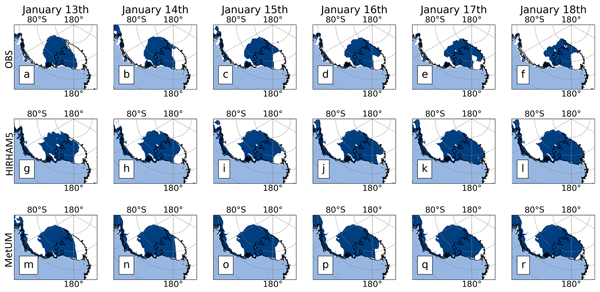
We investigated a melt event over the Ross Ice Shelf. We use regional climate models and a firn model to simulate the melt and compare the results with satellite data. We find that the firn model aligned well with observed melt days in certain parts of the ice shelf. The firn model had challenges accurately simulating the melt extent in the western sector. We identified potential reasons for these discrepancies, pointing to limitations in the models related to representing the cloud properties.
Gillian Young McCusker, Jutta Vüllers, Peggy Achtert, Paul Field, Jonathan J. Day, Richard Forbes, Ruth Price, Ewan O'Connor, Michael Tjernström, John Prytherch, Ryan Neely III, and Ian M. Brooks
Atmos. Chem. Phys., 23, 4819–4847, https://doi.org/10.5194/acp-23-4819-2023, https://doi.org/10.5194/acp-23-4819-2023, 2023
Short summary
Short summary
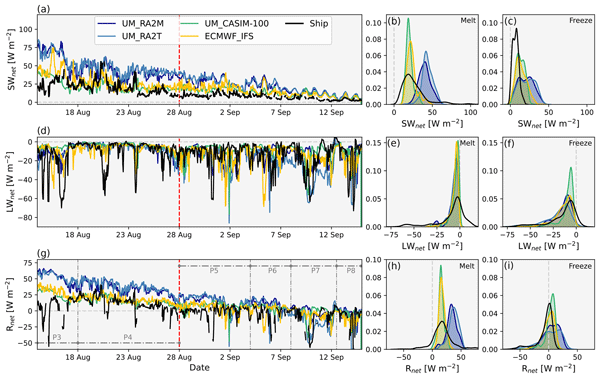
In this study, we show that recent versions of two atmospheric models – the Unified Model and Integrated Forecasting System – overestimate Arctic cloud fraction within the lower troposphere by comparison with recent remote-sensing measurements made during the Arctic Ocean 2018 expedition. The overabundance of cloud is interlinked with the modelled thermodynamic structure, with strong negative temperature biases coincident with these overestimated cloud layers.
Ruth Price, Andrea Baccarini, Julia Schmale, Paul Zieger, Ian M. Brooks, Paul Field, and Ken S. Carslaw
Atmos. Chem. Phys., 23, 2927–2961, https://doi.org/10.5194/acp-23-2927-2023, https://doi.org/10.5194/acp-23-2927-2023, 2023
Short summary
Short summary
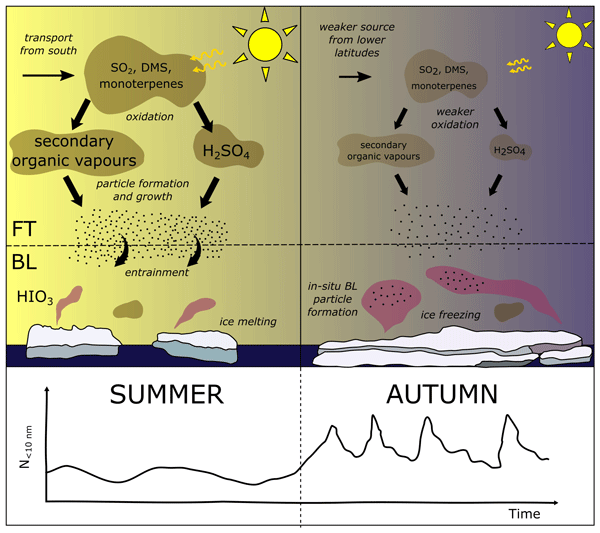
Arctic clouds can control how much energy is absorbed by the surface or reflected back to space. Using a computer model of the atmosphere we investigated the formation of atmospheric particles that allow cloud droplets to form. We found that particles formed aloft are transported to the lowest part of the Arctic atmosphere and that this is a key source of particles. Our results have implications for the way Arctic clouds will behave in the future as climate change continues to impact the region.
Laura Sereni, Elodie Salmon, Simon Bowring, Bertrand Guenet, Erfan Jahangir, Ronny Lauerwald, Dingwu Liu, Haicheng Zhang, and Hélène Angot
EGUsphere, https://doi.org/10.5194/egusphere-2026-5859, https://doi.org/10.5194/egusphere-2026-5859, 2026
This preprint is open for discussion and under review for Geoscientific Model Development (GMD).
Short summary
Short summary
Mercury (Hg) is a toxic global pollutant whose terrestrial cycling is strongly influenced by vegetation, soils, and environmental changes. We present ORCHIDEE-Hg v1.0, a global mechanistic model of the terrestrial Hg cycle simulating atmospheric Hg deposition inputs, vegetation uptake, soil storage, dissolved Hg dynamics, and soil re-emissions. Evaluation against observations shows that the model successfully reproduces Hg concentrations, stocks, and fluxes across key terrestrial compartments.
Hannah Carolin Frostenberg, Jessie Creamean, Erik Schurch Thomson, Heather Guy, Roman Pohorsky, Camille Mavis, Ian Morley Brooks, Nicolas Fauré, Lea Haberstock, Julia Kojoj, Sonja Murto, Julia Schmale, Michael Tjernström, Paul Zieger, and Luisa Ickes
Atmos. Chem. Phys., 26, 15495–15521, https://doi.org/10.5194/acp-26-15495-2026, https://doi.org/10.5194/acp-26-15495-2026, 2026
Short summary
Short summary
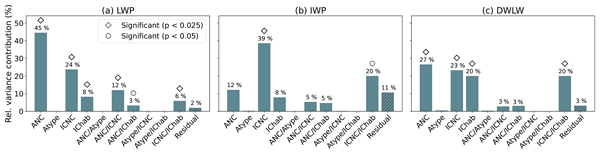
Arctic low clouds containing both droplets and ice crystals strongly impact sea ice and therefore require accurate modeling. Using a high-resolution atmospheric model, we found that particle and ice concentrations, alongside ice crystal shape, strongly dictate the simulated cloud. Therefore, these specific properties should be prioritized during future Arctic observational campaigns. Furthermore, atmospheric models must be able to represent a variety of ice crystal shapes.
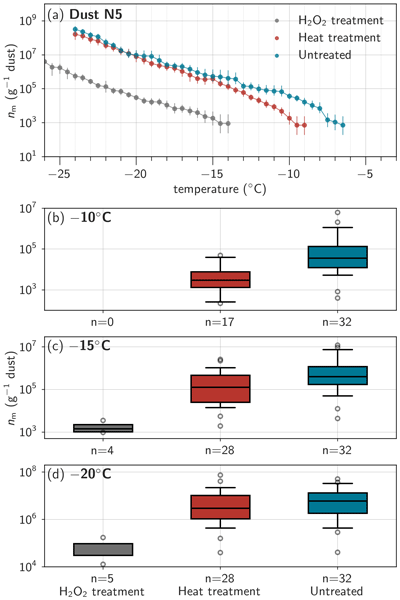
Nora Bergner, Grace Marsh, Kevin Barry, Larissa Lacher, Alexander Böhmländer, Joanna Alden, Carina Ahlqvist, Ianina Altshuler, Lisa Bröder, Daniel Farinotti, Lionel Favre, Coline Guillosson, Benjamin Heutte, Kristina Höhler, Roman Pohorsky, Julian Weng, and Julia Schmale
Atmos. Chem. Phys., 26, 10557–10585, https://doi.org/10.5194/acp-26-10557-2026, https://doi.org/10.5194/acp-26-10557-2026, 2026
Short summary
Short summary
Dust from Greenlandic glacial outwash plains can form ice in clouds, a process relevant for climate. Its ice-nucleating activity varies strongly and is largely controlled by small amounts of biological material. During summer, the influence on atmospheric ice-nucleating particles is mostly local. Lower activity compared to other high-latitude dust sources highlights the need to account for regional differences in Arctic dust.
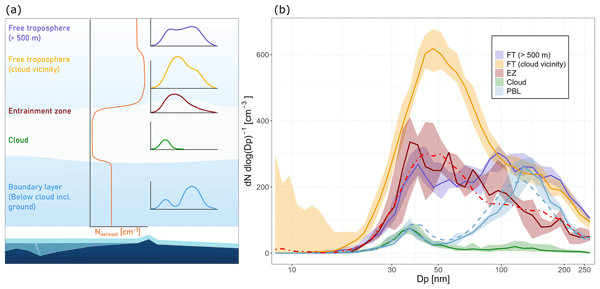
Roman Pohorsky, Heather Guy, Ian Morley Brooks, Lea Haberstock, Nicolas Fauré, Paul Zieger, Julia Kojoj, Sonja Murto, Radiance Calmer, Benjamin Heutte, Michael Lonardi, Erik Schurch Thomson, Michael Tjernström, Jessie Creamean, Athanasios Nenes, and Julia Schmale
Atmos. Chem. Phys., 26, 10331–10353, https://doi.org/10.5194/acp-26-10331-2026, https://doi.org/10.5194/acp-26-10331-2026, 2026
Short summary
Short summary
This study presents tethered-balloon observations above Arctic sea ice showing that enhanced aerosol concentrations above low-level clouds are commonly observed. A closure analysis demonstrates that entrainment of these aerosols is required to reproduce observed cloud droplet numbers. Simulations indicate that neglecting this source can bias longwave radiative forcing, highlighting the need for vertical aerosol observations and improved model representation of aerosol entrainment at cloud top.
Louis Marelle, Rémy Lapere, Anderson Da Silva, Lucas Bastien, Ruth Price, and Jennie L. Thomas
EGUsphere, https://doi.org/10.5194/egusphere-2026-4112, https://doi.org/10.5194/egusphere-2026-4112, 2026
Short summary
Short summary
Airborne mineral dust particles influence the climate, but their sources near the poles are poorly understood. We create a new description of dust sources for numerical atmospheric models, and show that it dramatically improves the representation of atmospheric concentrations and deposition to the surface in the Arctic. Finally, we show that these sources have the potential to influence the Arctic energy budget, and that the new model can be used to investigate these impacts in detail.
Kouji Adachi, Nora Bergner, Joanna Alden, Julia Schmale, Sho Ohata, and Yutaka Tobo
EGUsphere, https://doi.org/10.5194/egusphere-2026-3518, https://doi.org/10.5194/egusphere-2026-3518, 2026
Short summary
Short summary
We analyzed aerosol samples collected in southern Greenland within plumes from the Canadian wildfires in 2023 at the individual particle scale. The results show that the wildfire plume samples contained organic material embedding numerous small soot particles and potassium sulfate. In contrast, the background samples were rich in sea salt and sulfate. These findings enhance our understanding of the optical properties and aging processes of wildfire aerosols in the Arctic.
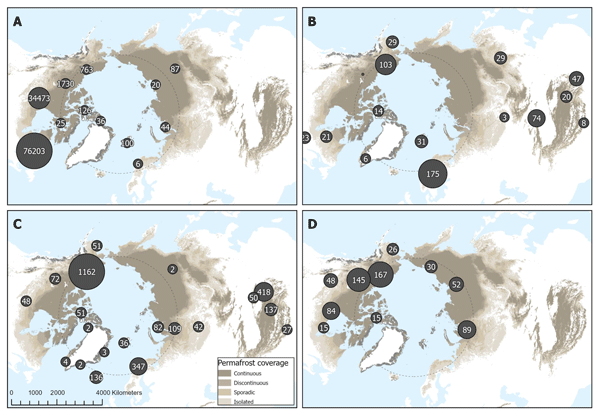
Christine L. Olson, Kevin Schaefer, Alyssa Azaroff, Hélène Angot, Sasiri Bandara, Thomas A. Douglas, Bo Elberling, Maria Florencia Fahnestock, Xinbin Feng, Charlotte Haugk, Gustaf Hugelius, Erfan Jahangir, Sofi Jonsson, Shichang Kang, Adam Kirkwood, Jennifer Korosi, Igor Lehnherr, Artem Lim, Rinat Manasypov, Dmitriy Moskovchenko, Mina Nasr, Daniel Obrist, David Olefeldt, Connor Olson, Oleg Pokrovsky, Laura Sereni, Sarah Shakil, M. Isabel Smith, Jens Søndergaard, Jeroen Sonke, Kasia Staniszewska, Jens Strauss, Kyra St. Pierre, Lauren Thompson, Andrey Yurtaev, Yanxu Zhang, and Scott Zolkos
Earth Syst. Sci. Data, 18, 4509–4522, https://doi.org/10.5194/essd-18-4509-2026, https://doi.org/10.5194/essd-18-4509-2026, 2026
Short summary
Short summary
Permafrost regions store large amounts of mercury, a toxic pollutant that can be released as the ground warms. We combined thousands of measurements from soils, plants, water, and lake sediments into one open database to better understand where mercury is stored and how it moves. The results show clear differences among environments and reveal major data gaps, helping improve future research, monitoring, and decision-making.
Aymeric Dziduch, Antoine Baudoux, Guillaume Mioche, Antoine Canzi, Benjamin Doiteau, Manuel Moser, Emma Järvinen, Étienne Vignon, Jean-Christophe Raut, Régis Dupuy, Christophe Gourbeyre, Jean-Luc Baray, Marie Monier, Frédéric Szczap, Guillaume Penide, Julien Delanoë, Odran Sourdeval, Alfons Schwarzenboeck, Stephan Mertes, Franz Martin Schnaiter, Christiane Voigt, Mario Mech, Susanne Crewell, Andreas Herber, Christof Lüpkes, André Ehrlich, Manfred Wendisch, and Olivier Jourdan
EGUsphere, https://doi.org/10.5194/egusphere-2026-3265, https://doi.org/10.5194/egusphere-2026-3265, 2026
Short summary
Short summary
This study examines the microphysical properties and ice crystal habits of low-level Arctic mixed-phase clouds around Svalbard. Using airborne in situ observations from four campaigns, we show that cloud microphysical structure and ice crystal habits are influenced by weather conditions and surface type. These results provide quantitative observations to better understand low-level Arctic clouds, their ice formation processes, and their influence on the Arctic atmosphere and climate system.
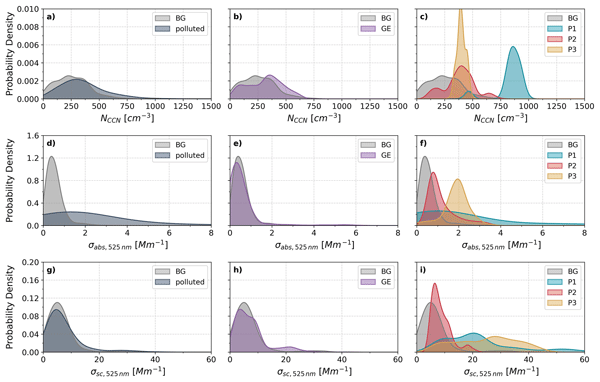
Joanna Alden, Nora Bergner, Benjamin Heutte, Lionel Favre, Mihnea Surdu, Julian Weng, Marta Augugliaro, Patrik Winiger, Berkay Dönmez, Roman Pohorsky, Radiance Calmer, Carmelle Chatterjee, Kalliopi Violaki, Athanasios Nenes, Luke Gregor, Silvia Henning, and Julia Schmale
Atmos. Chem. Phys., 26, 7165–7191, https://doi.org/10.5194/acp-26-7165-2026, https://doi.org/10.5194/acp-26-7165-2026, 2026
Short summary
Short summary
We studied sources, vertical dispersion and properties of aerosols in a Greenlandic fjord system and identified four main types: marine background, local anthropogenic, growth events, biomass burning (BB). Anthropogenic emissions increased absorption coefficients, BB significantly increased the cloud condensation number concentrations, growth events were very similar to background with regards to scattering coefficients. Aerosol properties and origins were distinct throughout the boundary layer.
Yaël Le Gars, Jean-Christophe Raut, and Louis Marelle
EGUsphere, https://doi.org/10.5194/egusphere-2026-2516, https://doi.org/10.5194/egusphere-2026-2516, 2026
Short summary
Short summary
A comprehensive set of observations from the N-ICE2015 campagin is used to evaluate the WRF regional model and identify sources of cloud-related surface radiation biases. The model underestimates cloud frequency and opacity during spring transition period and simulates overly reflective clouds in summer. Improving sea ice representation reduces summer sunlight errors. Clouds decoupled from the surface are associated with the largest biases and tend to be overestimated.
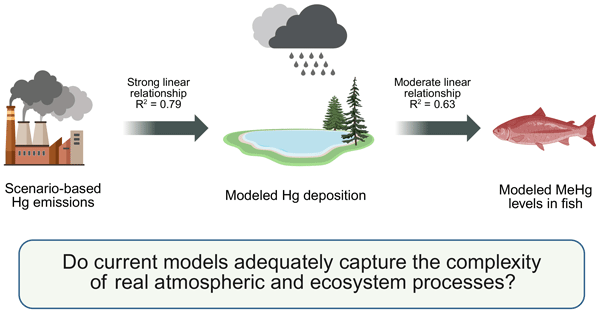
Henna Gull, Ju Hyeon Lee, Hoin Lee, Hélène Angot, and Sae Yun Kwon
Biogeosciences, 23, 3387–3406, https://doi.org/10.5194/bg-23-3387-2026, https://doi.org/10.5194/bg-23-3387-2026, 2026
Short summary
Short summary
Mercury is a global concern that builds up in fish. To understand how future pollution cuts may reduce these levels, we compared published modeling studies. While models predict mercury will decline as pollution decreases, they often overlook mercury already stored in the environment. As a result, recovery may be slower than expected. This work highlights gaps in current tools and supports efforts to improve global pollution control policies.
Julia Schmale, Roman Pohorsky, Yolanda Temel, Michael Lonardi, Joanna Alden, Radiance Calmer, Evan Thomas, Andrea Baccarini, Nora Bergner, Berkay Dönmez, Lionel Favre, Henrik Helmig, Benjamin Heutte, Marie Lou Hirschy, Romain Phan, Orpheas Solidakis, Aleksandrina Streltsova, Mihnea Surdu, and Arthur Tabary
Earth Syst. Sci. Data Discuss., https://doi.org/10.5194/essd-2026-146, https://doi.org/10.5194/essd-2026-146, 2026
Revised manuscript under review for ESSD
Short summary
Short summary
We present a new database of aerosol, trace gas and atmospheric boundary layer thermodynamic data from the Arctic, Antarctica and European mountains. The article describes how data are processed from raw to final, provides user guidance and example analyses. The presented data fill a critical gap in availability of essential climate variables and are useful for model evaluation and satellite cal/val. They also provide unique insights into sparsely observed regions.
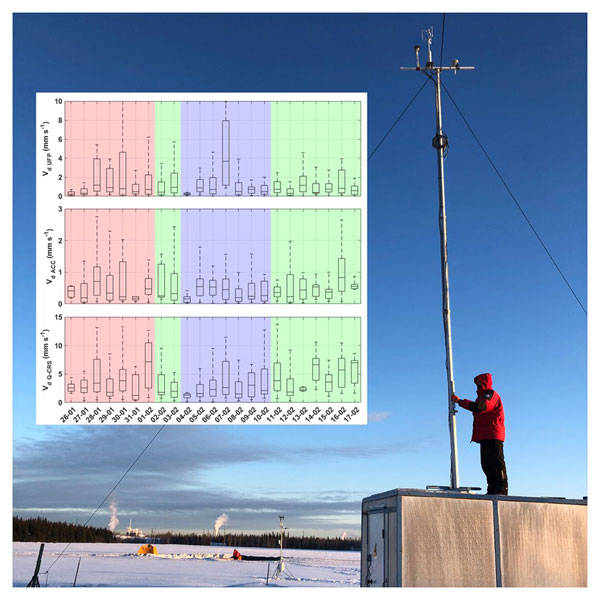
Antonio Donateo, Gianluca Pappaccogli, Federico Scoto, Maurizio Busetto, Francesca L. Lovisco, Natalie Brett, Douglas Keller, Brice Barret, Elsa Dieudonné, Roman Pohorsky, Andrea Baccarini, Slimane Bekki, Jean-Christophe Raut, Julia Schmale, Kathy S. Law, Steve R. Arnold, Javier G. Fochesatto, William R. Simpson, and Stefano Decesari
Atmos. Chem. Phys., 25, 18129–18156, https://doi.org/10.5194/acp-25-18129-2025, https://doi.org/10.5194/acp-25-18129-2025, 2025
Short summary
Short summary
A study in Fairbanks, Alaska, measured winter aerosol fluxes on snow. Both emission and deposition occurred, with larger particles settling faster. Weather influenced dispersion and deposition, while wind-driven turbulence enhanced deposition despite stable conditions. Results show aerosol accumulation in snow impacts pollution and snowmelt. Findings help improve aerosol models and pollution studies in cold cities.
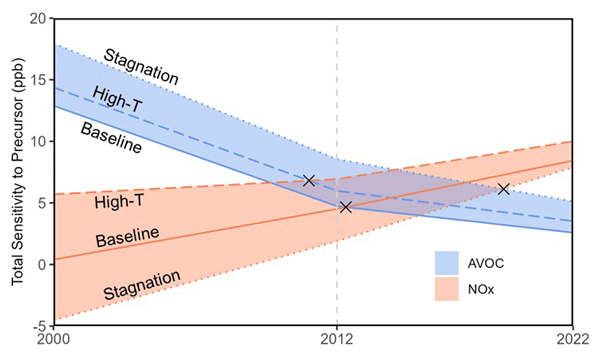
Yuhan Wang, Lucas A. J. Bastien, Yuan Wang, Ling Jin, and Robert A. Harley
Atmos. Chem. Phys., 25, 17651–17665, https://doi.org/10.5194/acp-25-17651-2025, https://doi.org/10.5194/acp-25-17651-2025, 2025
Short summary
Short summary
Climate change is making heatwaves and stagnant weather more frequent, which can worsen air pollution. We studied how these extreme conditions affect the sources of summer ozone in California's Central Valley. Using a state-of-the-art modeling tool, we found that weather changes can greatly shift which, where, and when to reduce emissions for the largest air quality benefits. Our results highlight the need to account for extreme weather in designing effective air quality strategies.
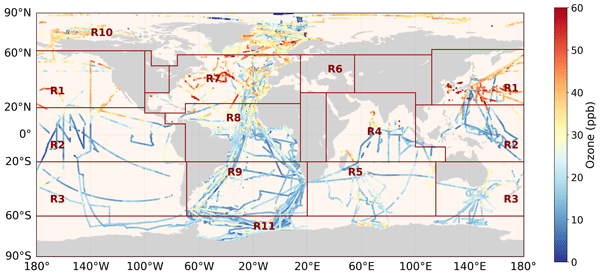
Yugo Kanaya, Roberto Sommariva, Alfonso Saiz-Lopez, Andrea Mazzeo, Theodore K. Koenig, Kaori Kawana, James E. Johnson, Aurélie Colomb, Pierre Tulet, Suzie Molloy, Ian E. Galbally, Rainer Volkamer, Anoop Mahajan, John W. Halfacre, Paul B. Shepson, Julia Schmale, Hélène Angot, Byron Blomquist, Matthew D. Shupe, Detlev Helmig, Junsu Gil, Meehye Lee, Sean C. Coburn, Ivan Ortega, Gao Chen, James Lee, Kenneth C. Aikin, David D. Parrish, John S. Holloway, Thomas B. Ryerson, Ilana B. Pollack, Eric J. Williams, Brian M. Lerner, Andrew J. Weinheimer, Teresa Campos, Frank M. Flocke, J. Ryan Spackman, Ilann Bourgeois, Jeff Peischl, Chelsea R. Thompson, Ralf M. Staebler, Amir A. Aliabadi, Wanmin Gong, Roeland Van Malderen, Anne M. Thompson, Ryan M. Stauffer, Debra E. Kollonige, Juan Carlos Gómez Martin, Masatomo Fujiwara, Katie Read, Matthew Rowlinson, Keiichi Sato, Junichi Kurokawa, Yoko Iwamoto, Fumikazu Taketani, Hisahiro Takashima, Mónica Navarro-Comas, Marios Panagi, and Martin G. Schultz
Earth Syst. Sci. Data, 17, 4901–4932, https://doi.org/10.5194/essd-17-4901-2025, https://doi.org/10.5194/essd-17-4901-2025, 2025
Short summary
Short summary
The first comprehensive dataset of tropospheric ozone over oceans/polar regions is presented, including 77 ship/buoy and 48 aircraft campaign observations (1977–2022, 0–5000 m altitude), supplemented by ozonesonde and surface data. Air masses isolated from land for 72+ hours are systematically selected as essentially oceanic. Among the 11 global regions, they show daytime decreases of 11–16 % in the tropics, while near-zero depletions are rare, unlike in the Arctic, implying different mechanisms.
Koketso M. Molepo, Johannes Bieser, Alkuin M. Koenig, Ian M. Hedgecock, Ralf Ebinghaus, Aurélien Dommergue, Olivier Magand, Hélène Angot, Oleg Travnikov, Lynwill Martin, Casper Labuschagne, Katie Read, and Yann Bertrand
Atmos. Chem. Phys., 25, 9645–9668, https://doi.org/10.5194/acp-25-9645-2025, https://doi.org/10.5194/acp-25-9645-2025, 2025
Short summary
Short summary
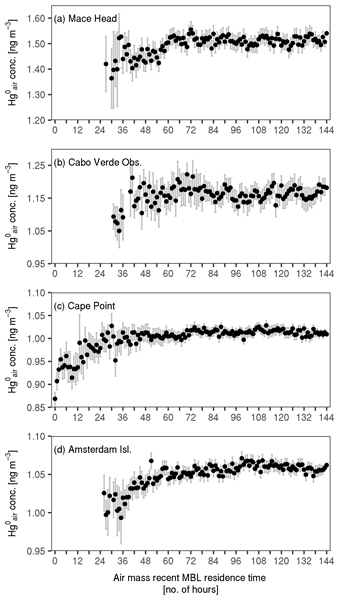
Mercury exchange between the ocean and atmosphere is poorly understood due to limited in situ data. Here, using atmospheric mercury observations from ground-based monitoring stations along with air mass trajectories, we found that atmospheric Hg levels increase with air mass ocean exposure time, matching predictions for ocean Hg emissions. This finding indicates that ocean emissions directly influence atmospheric Hg levels and enables us to estimate these emissions on a global scale.
Tuomas Naakka, Daniel Köhler, Kalle Nordling, Petri Räisänen, Marianne Tronstad Lund, Risto Makkonen, Joonas Merikanto, Bjørn H. Samset, Victoria A. Sinclair, Jennie L. Thomas, and Annica M. L. Ekman
Atmos. Chem. Phys., 25, 8127–8145, https://doi.org/10.5194/acp-25-8127-2025, https://doi.org/10.5194/acp-25-8127-2025, 2025
Short summary
Short summary
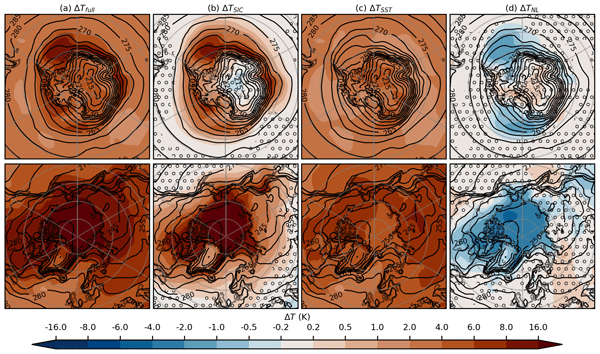
The effects of warmer sea surface temperatures and decreasing sea ice cover on polar climates have been studied using four climate models with identical prescribed changes in sea surface temperatures and sea ice cover. The models predict similar changes in air temperature and precipitation in the polar regions in a warmer climate with less sea ice. However, the models disagree on how the atmospheric circulation, i.e. the large-scale winds, will change with warmer temperatures and less sea ice.
Jakob Boyd Pernov, William H. Aeberhard, Michele Volpi, Eliza Harris, Benjamin Hohermuth, Sakiko Ishino, Ragnhild B. Skeie, Stephan Henne, Ulas Im, Patricia K. Quinn, Lucia M. Upchurch, and Julia Schmale
Atmos. Chem. Phys., 25, 6497–6537, https://doi.org/10.5194/acp-25-6497-2025, https://doi.org/10.5194/acp-25-6497-2025, 2025
Short summary
Short summary
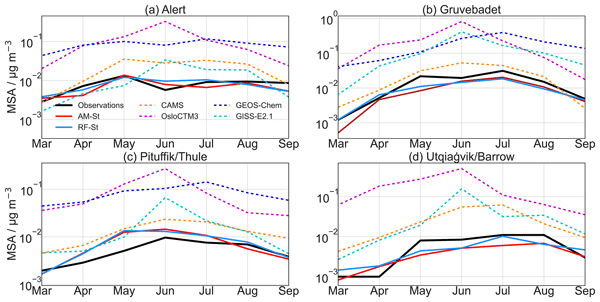
Particulate methanesulfonic acid (MSAp) is vital for the Arctic climate system. Numerical models struggle to reproduce the MSAp seasonal cycle. We evaluate three numerical models and one reanalysis product’s ability to simulate MSAp. We develop data-driven models for MSAp at four Arctic stations. The data-driven models outperform the numerical models and reanalysis product and identified precursor source-, chemical-processing-, and removal-related features as being important for modeling MSAp.
Anderson Da Silva, Louis Marelle, Jean-Christophe Raut, Yvette Gramlich, Karolina Siegel, Sophie L. Haslett, Claudia Mohr, and Jennie L. Thomas
Atmos. Chem. Phys., 25, 5331–5354, https://doi.org/10.5194/acp-25-5331-2025, https://doi.org/10.5194/acp-25-5331-2025, 2025
Short summary
Short summary
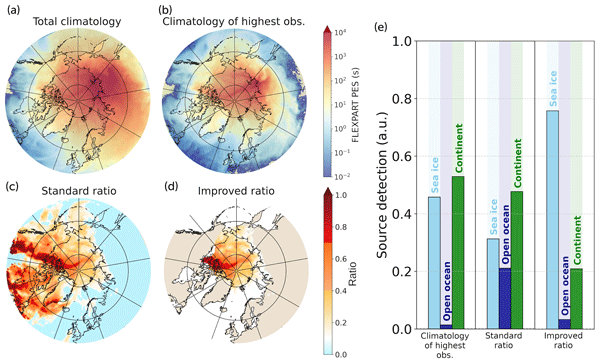
Particle sources in polar climates are unclear, affecting climate representation in models. This study introduces an evaluated method for tracking particles with backward modeling. Tests on simulated particles allowed us to show that traditional detection methods often misidentify sources. An improved method that accurately traces the origins of aerosol particles in the Arctic is presented. The study recommends using this enhanced method for better source identification of atmospheric species.
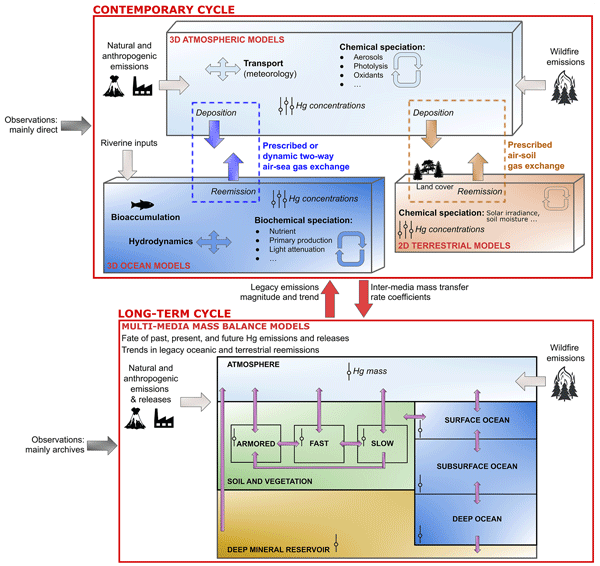
Ashu Dastoor, Hélène Angot, Johannes Bieser, Flora Brocza, Brock Edwards, Aryeh Feinberg, Xinbin Feng, Benjamin Geyman, Charikleia Gournia, Yipeng He, Ian M. Hedgecock, Ilia Ilyin, Jane Kirk, Che-Jen Lin, Igor Lehnherr, Robert Mason, David McLagan, Marilena Muntean, Peter Rafaj, Eric M. Roy, Andrei Ryjkov, Noelle E. Selin, Francesco De Simone, Anne L. Soerensen, Frits Steenhuisen, Oleg Travnikov, Shuxiao Wang, Xun Wang, Simon Wilson, Rosa Wu, Qingru Wu, Yanxu Zhang, Jun Zhou, Wei Zhu, and Scott Zolkos
Geosci. Model Dev., 18, 2747–2860, https://doi.org/10.5194/gmd-18-2747-2025, https://doi.org/10.5194/gmd-18-2747-2025, 2025
Short summary
Short summary
This paper introduces the Multi-Compartment Mercury (Hg) Modeling and Analysis Project (MCHgMAP) aimed at informing the effectiveness evaluations of two multilateral environmental agreements: the Minamata Convention on Mercury and the Convention on Long-Range Transboundary Air Pollution. The experimental design exploits a variety of models (atmospheric, land, oceanic ,and multimedia mass balance models) to assess the short- and long-term influences of anthropogenic Hg releases into the environment.
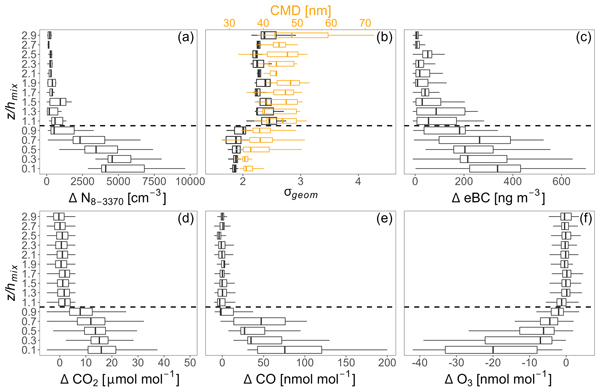
Roman Pohorsky, Andrea Baccarini, Natalie Brett, Brice Barret, Slimane Bekki, Gianluca Pappaccogli, Elsa Dieudonné, Brice Temime-Roussel, Barbara D'Anna, Meeta Cesler-Maloney, Antonio Donateo, Stefano Decesari, Kathy S. Law, William R. Simpson, Javier Fochesatto, Steve R. Arnold, and Julia Schmale
Atmos. Chem. Phys., 25, 3687–3715, https://doi.org/10.5194/acp-25-3687-2025, https://doi.org/10.5194/acp-25-3687-2025, 2025
Short summary
Short summary
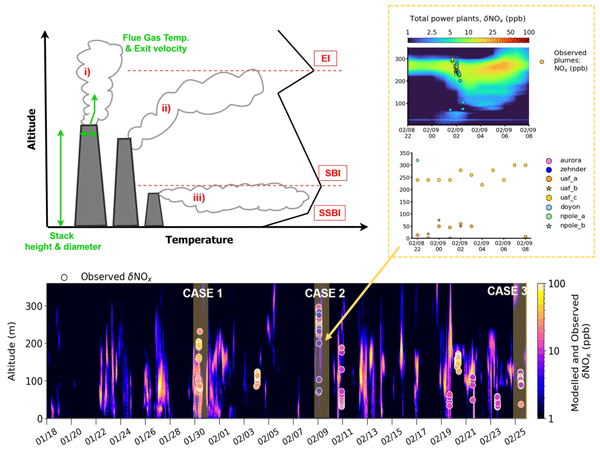
This study presents an analysis of vertical measurements of pollution in an Alaskan city during winter. It investigates the relationship between the atmospheric structure and the layering of aerosols and trace gases. Results indicate an overall very shallow surface mixing layer. The height of this layer is strongly influenced by a local shallow wind. The study also provides information on the pollution chemical composition at different altitudes, including pollution signatures from power plants.
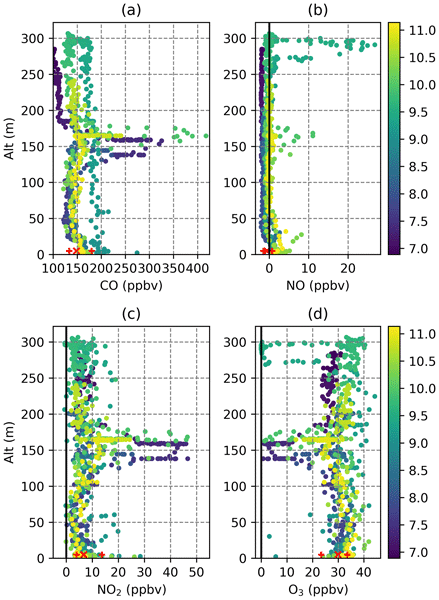
Brice Barret, Patrice Medina, Natalie Brett, Roman Pohorsky, Kathy S. Law, Slimane Bekki, Gilberto J. Fochesatto, Julia Schmale, Steve R. Arnold, Andrea Baccarini, Maurizio Busetto, Meeta Cesler-Maloney, Barbara D'Anna, Stefano Decesari, Jingqiu Mao, Gianluca Pappaccogli, Joel Savarino, Federico Scoto, and William R. Simpson
Atmos. Meas. Tech., 18, 1163–1184, https://doi.org/10.5194/amt-18-1163-2025, https://doi.org/10.5194/amt-18-1163-2025, 2025
Short summary
Short summary
The Fairbanks area experiences severe pollution episodes in winter because of enhanced emissions of pollutants trapped near the surface by strong temperature inversions. Low-cost sensors were deployed on board a car and a tethered balloon to measure the concentrations of gaseous pollutants (CO, O3, and NOx) in Fairbanks during winter 2022. Data calibration with reference measurements and machine learning methods enabled us to document pollution at the surface and power plant plumes aloft.
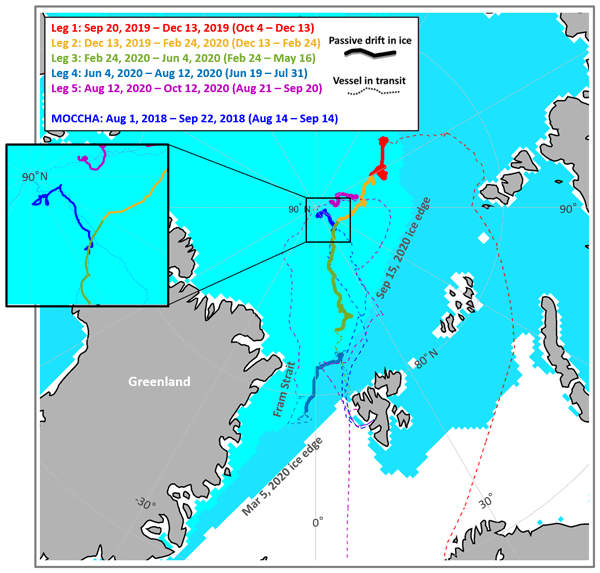
Benjamin Heutte, Nora Bergner, Hélène Angot, Jakob B. Pernov, Lubna Dada, Jessica A. Mirrielees, Ivo Beck, Andrea Baccarini, Matthew Boyer, Jessie M. Creamean, Kaspar R. Daellenbach, Imad El Haddad, Markus M. Frey, Silvia Henning, Tiia Laurila, Vaios Moschos, Tuukka Petäjä, Kerri A. Pratt, Lauriane L. J. Quéléver, Matthew D. Shupe, Paul Zieger, Tuija Jokinen, and Julia Schmale
Atmos. Chem. Phys., 25, 2207–2241, https://doi.org/10.5194/acp-25-2207-2025, https://doi.org/10.5194/acp-25-2207-2025, 2025
Short summary
Short summary
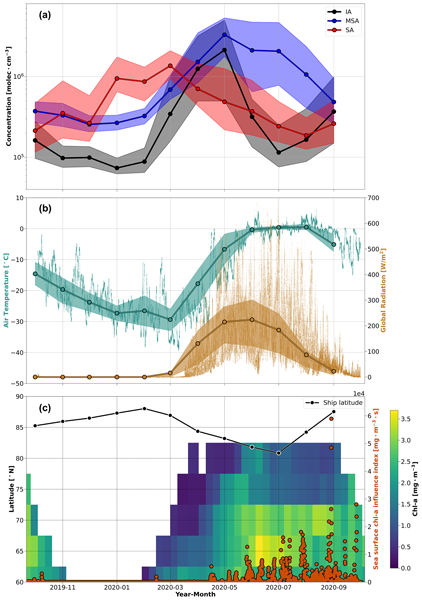
Limited aerosol measurements in the central Arctic hinder our understanding of aerosol–climate interactions in the region. Our year-long observations of aerosol physicochemical properties during the MOSAiC expedition reveal strong seasonal variations in aerosol chemical composition, where the short-term variability is heavily affected by storms in the Arctic. Local wind-generated particles are shown to be an important source of cloud seeds, especially in autumn.
Natalie Brett, Kathy S. Law, Steve R. Arnold, Javier G. Fochesatto, Jean-Christophe Raut, Tatsuo Onishi, Robert Gilliam, Kathleen Fahey, Deanna Huff, George Pouliot, Brice Barret, Elsa Dieudonné, Roman Pohorsky, Julia Schmale, Andrea Baccarini, Slimane Bekki, Gianluca Pappaccogli, Federico Scoto, Stefano Decesari, Antonio Donateo, Meeta Cesler-Maloney, William Simpson, Patrice Medina, Barbara D'Anna, Brice Temime-Roussel, Joel Savarino, Sarah Albertin, Jingqiu Mao, Becky Alexander, Allison Moon, Peter F. DeCarlo, Vanessa Selimovic, Robert Yokelson, and Ellis S. Robinson
Atmos. Chem. Phys., 25, 1063–1104, https://doi.org/10.5194/acp-25-1063-2025, https://doi.org/10.5194/acp-25-1063-2025, 2025
Short summary
Short summary
Processes influencing dispersion of local anthropogenic pollution in Arctic wintertime are investigated with Lagrangian dispersion modelling. Simulated power plant plume rise that considers temperature inversion layers improves results compared to observations (interior Alaska). Modelled surface concentrations are improved by representation of vertical mixing and emission estimates. Large increases in diesel vehicle emissions at temperatures reaching −35°C are required to reproduce observed NOx.
Léo Clauzel, Sandrine Anquetin, Christophe Lavaysse, Gilles Bergametti, Christel Bouet, Guillaume Siour, Rémy Lapere, Béatrice Marticorena, and Jennie Thomas
Atmos. Chem. Phys., 25, 997–1021, https://doi.org/10.5194/acp-25-997-2025, https://doi.org/10.5194/acp-25-997-2025, 2025
Short summary
Short summary
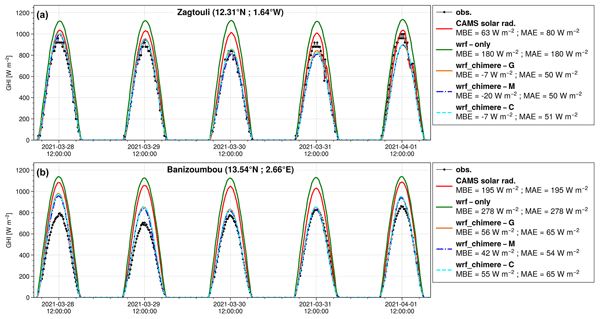
Solar energy production in West Africa is set to rise and needs accurate solar radiation estimates which are affected by desert dust. This work analyses a March 2021 dust event using a modelling strategy incorporating desert dust. Results show that considering desert dust cuts errors in solar radiation estimates by 75 % and reduces surface solar radiation by 18 %. This highlights the importance of incorporating dust aerosols into solar forecasting for better accuracy.
Matthew Boyer, Diego Aliaga, Lauriane L. J. Quéléver, Silvia Bucci, Hélène Angot, Lubna Dada, Benjamin Heutte, Lisa Beck, Marina Duetsch, Andreas Stohl, Ivo Beck, Tiia Laurila, Nina Sarnela, Roseline C. Thakur, Branka Miljevic, Markku Kulmala, Tuukka Petäjä, Mikko Sipilä, Julia Schmale, and Tuija Jokinen
Atmos. Chem. Phys., 24, 12595–12621, https://doi.org/10.5194/acp-24-12595-2024, https://doi.org/10.5194/acp-24-12595-2024, 2024
Short summary
Short summary
We analyze the seasonal cycle and sources of gases that are relevant for the formation of aerosol particles in the central Arctic. Since theses gases can form new particles, they can influence Arctic climate. We show that the sources of these gases are associated with changes in the Arctic environment during the year, especially with respect to sea ice. Therefore, the concentration of these gases will likely change in the future as the Arctic continues to warm.
Rémy Lapere, Louis Marelle, Pierre Rampal, Laurent Brodeau, Christian Melsheimer, Gunnar Spreen, and Jennie L. Thomas
Atmos. Chem. Phys., 24, 12107–12132, https://doi.org/10.5194/acp-24-12107-2024, https://doi.org/10.5194/acp-24-12107-2024, 2024
Short summary
Short summary
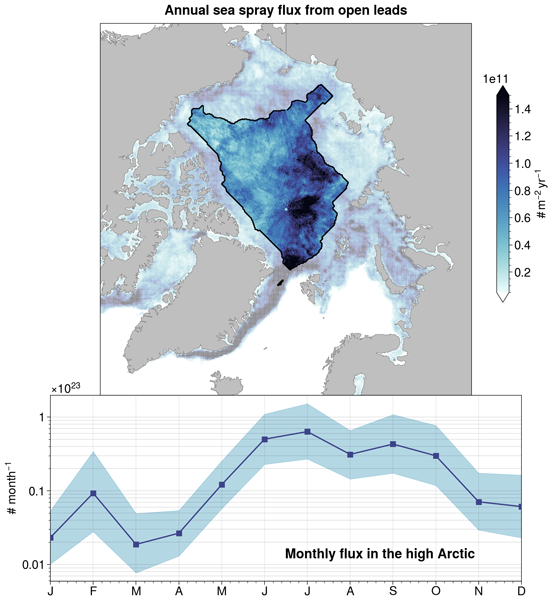
Elongated open-water areas in sea ice, called leads, can release marine aerosols into the atmosphere. In the Arctic, this source of atmospheric particles could play an important role for climate. However, the amount, seasonality and spatial distribution of such emissions are all mostly unknown. Here, we propose a first parameterization for sea spray aerosols emitted through leads in sea ice and quantify their impact on aerosol populations in the high Arctic.
Nicolaj Hansen, Andrew Orr, Xun Zou, Fredrik Boberg, Thomas J. Bracegirdle, Ella Gilbert, Peter L. Langen, Matthew A. Lazzara, Ruth Mottram, Tony Phillips, Ruth Price, Sebastian B. Simonsen, and Stuart Webster
The Cryosphere, 18, 2897–2916, https://doi.org/10.5194/tc-18-2897-2024, https://doi.org/10.5194/tc-18-2897-2024, 2024
Short summary
Short summary
We investigated a melt event over the Ross Ice Shelf. We use regional climate models and a firn model to simulate the melt and compare the results with satellite data. We find that the firn model aligned well with observed melt days in certain parts of the ice shelf. The firn model had challenges accurately simulating the melt extent in the western sector. We identified potential reasons for these discrepancies, pointing to limitations in the models related to representing the cloud properties.
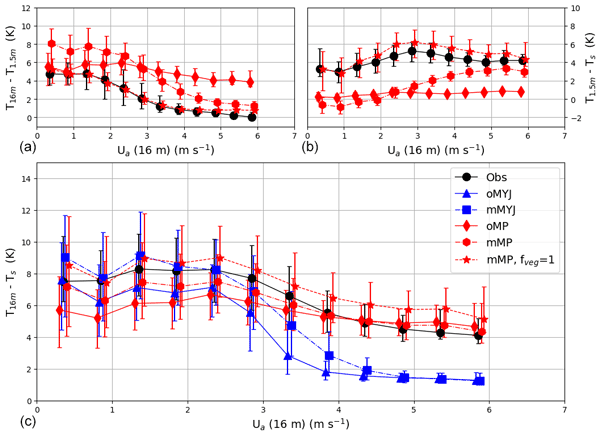
Julia Maillard, Jean-Christophe Raut, and François Ravetta
Geosci. Model Dev., 17, 3303–3320, https://doi.org/10.5194/gmd-17-3303-2024, https://doi.org/10.5194/gmd-17-3303-2024, 2024
Short summary
Short summary
Atmospheric models struggle to reproduce the strong temperature inversions in the vicinity of the surface over forested areas in the Arctic winter. In this paper, we develop modified simplified versions of surface layer schemes widely used by the community. Our modifications are used to correct the fact that original schemes place strong limits on the turbulent collapse, leading to a lower surface temperature gradient at low wind speeds. Modified versions show a better performance.
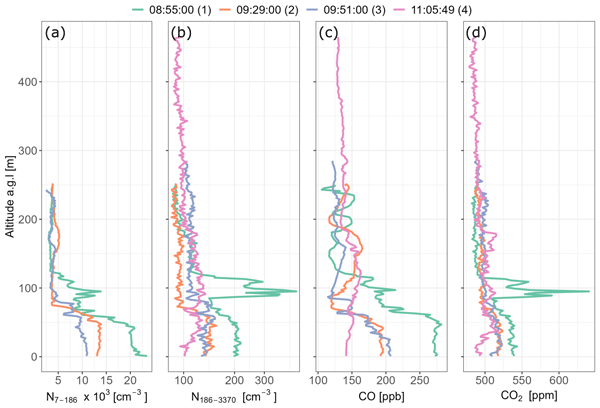
Roman Pohorsky, Andrea Baccarini, Julie Tolu, Lenny H. E. Winkel, and Julia Schmale
Atmos. Meas. Tech., 17, 731–754, https://doi.org/10.5194/amt-17-731-2024, https://doi.org/10.5194/amt-17-731-2024, 2024
Short summary
Short summary
This manuscript presents a new tethered-balloon-based platform for in situ vertical measurements of aerosols and trace gases in the lower atmosphere of polar and alpine regions. The system can host various instrumental setups to target different research questions and features new instruments, in particular a miniaturized scanning electrical mobility spectrometer, deployed for the first time in a tethered balloon.
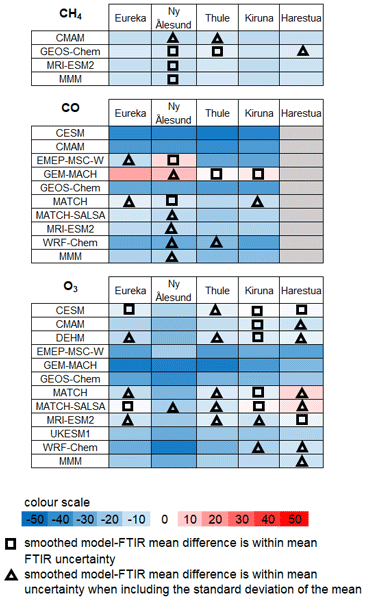
Victoria A. Flood, Kimberly Strong, Cynthia H. Whaley, Kaley A. Walker, Thomas Blumenstock, James W. Hannigan, Johan Mellqvist, Justus Notholt, Mathias Palm, Amelie N. Röhling, Stephen Arnold, Stephen Beagley, Rong-You Chien, Jesper Christensen, Makoto Deushi, Srdjan Dobricic, Xinyi Dong, Joshua S. Fu, Michael Gauss, Wanmin Gong, Joakim Langner, Kathy S. Law, Louis Marelle, Tatsuo Onishi, Naga Oshima, David A. Plummer, Luca Pozzoli, Jean-Christophe Raut, Manu A. Thomas, Svetlana Tsyro, and Steven Turnock
Atmos. Chem. Phys., 24, 1079–1118, https://doi.org/10.5194/acp-24-1079-2024, https://doi.org/10.5194/acp-24-1079-2024, 2024
Short summary
Short summary
It is important to understand the composition of the Arctic atmosphere and how it is changing. Atmospheric models provide simulations that can inform policy. This study examines simulations of CH4, CO, and O3 by 11 models. Model performance is assessed by comparing results matched in space and time to measurements from five high-latitude ground-based infrared spectrometers. This work finds that models generally underpredict the concentrations of these gases in the Arctic troposphere.
Meeta Cesler-Maloney, William Simpson, Jonas Kuhn, Jochen Stutz, Jennie Thomas, Tjarda Roberts, Deanna Huff, and Sol Cooperdock
EGUsphere, https://doi.org/10.5194/egusphere-2023-3082, https://doi.org/10.5194/egusphere-2023-3082, 2024
Preprint archived
Short summary
Short summary
We used a one-dimensional model to simulate how pollution in Fairbanks, Alaska, accumulates in shallow layers near the ground when temperature inversions are present. We find pollution accumulates in a 20 m to 50 m thick layer. The model agrees with observations of SO2 pollution using only home heating emissions sources, which shows that ground-based sources dominate sulfur pollution in downtown Fairbanks. Air residence times in downtown are only a few hours, limiting chemical transformations.
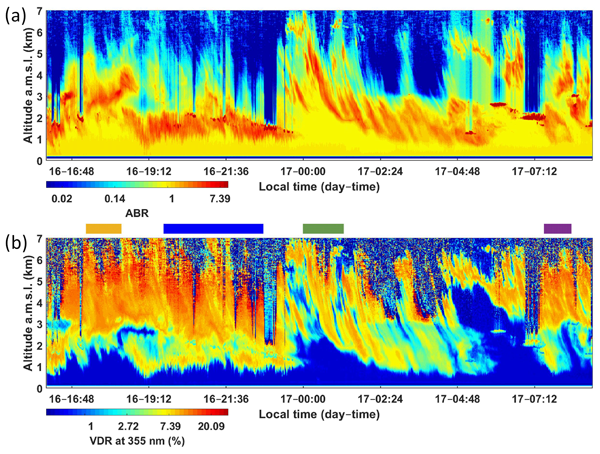
Patrick Chazette and Jean-Christophe Raut
Atmos. Meas. Tech., 16, 5847–5861, https://doi.org/10.5194/amt-16-5847-2023, https://doi.org/10.5194/amt-16-5847-2023, 2023
Short summary
Short summary
The vertical profiles of the effective radii of ice crystals and ice water content in Arctic semi-transparent stratiform clouds were assessed using quantitative ground-based lidar measurements. The field campaign was part of the Pollution in the ARCtic System (PARCS) project which took place from 13 to 26 May 2016 in Hammerfest (70° 39′ 48″ N, 23° 41′ 00″ E). We show that under certain cloud conditions, lidar measurement combined with a dedicated algorithmic approach is an efficient tool.
Laurent Menut, Arineh Cholakian, Guillaume Siour, Rémy Lapere, Romain Pennel, Sylvain Mailler, and Bertrand Bessagnet
Atmos. Chem. Phys., 23, 7281–7296, https://doi.org/10.5194/acp-23-7281-2023, https://doi.org/10.5194/acp-23-7281-2023, 2023
Short summary
Short summary
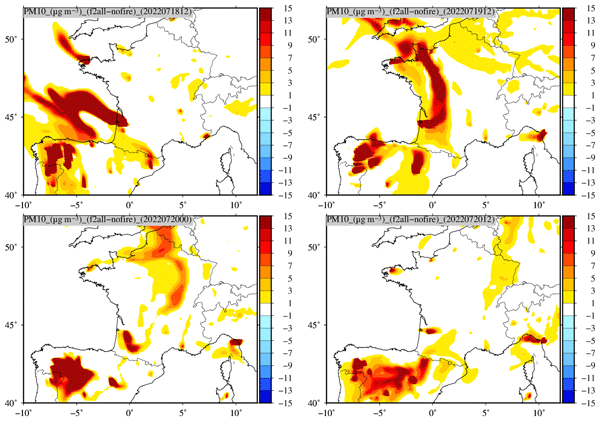
This study is about the wildfires occurring in France during the summer 2022. We study the forest fires that took place in the Landes during the summer of 2022. We show the direct impact of these fires on the air quality, especially downstream of the smoke plume towards the Paris region. We quantify the impact of these fires on the pollutants peak concentrations and the possible exceedance of thresholds.
Eleftherios Ioannidis, Kathy S. Law, Jean-Christophe Raut, Louis Marelle, Tatsuo Onishi, Rachel M. Kirpes, Lucia M. Upchurch, Thomas Tuch, Alfred Wiedensohler, Andreas Massling, Henrik Skov, Patricia K. Quinn, and Kerri A. Pratt
Atmos. Chem. Phys., 23, 5641–5678, https://doi.org/10.5194/acp-23-5641-2023, https://doi.org/10.5194/acp-23-5641-2023, 2023
Short summary
Short summary
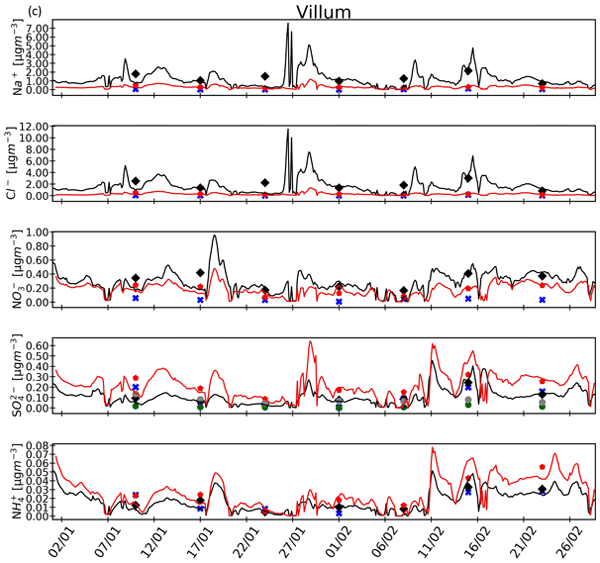
Remote and local anthropogenic emissions contribute to wintertime Arctic haze, with enhanced aerosol concentrations, but natural sources, which also contribute, are less well studied. Here, modelled wintertime sea-spray aerosols are improved in WRF-Chem over the wider Arctic by including updated wind speed and temperature-dependent treatments. As a result, anthropogenic nitrate aerosols are also improved. Open leads are confirmed to be the main source of sea-spray aerosols over northern Alaska.
Gillian Young McCusker, Jutta Vüllers, Peggy Achtert, Paul Field, Jonathan J. Day, Richard Forbes, Ruth Price, Ewan O'Connor, Michael Tjernström, John Prytherch, Ryan Neely III, and Ian M. Brooks
Atmos. Chem. Phys., 23, 4819–4847, https://doi.org/10.5194/acp-23-4819-2023, https://doi.org/10.5194/acp-23-4819-2023, 2023
Short summary
Short summary
In this study, we show that recent versions of two atmospheric models – the Unified Model and Integrated Forecasting System – overestimate Arctic cloud fraction within the lower troposphere by comparison with recent remote-sensing measurements made during the Arctic Ocean 2018 expedition. The overabundance of cloud is interlinked with the modelled thermodynamic structure, with strong negative temperature biases coincident with these overestimated cloud layers.
Ruth Price, Andrea Baccarini, Julia Schmale, Paul Zieger, Ian M. Brooks, Paul Field, and Ken S. Carslaw
Atmos. Chem. Phys., 23, 2927–2961, https://doi.org/10.5194/acp-23-2927-2023, https://doi.org/10.5194/acp-23-2927-2023, 2023
Short summary
Short summary
Arctic clouds can control how much energy is absorbed by the surface or reflected back to space. Using a computer model of the atmosphere we investigated the formation of atmospheric particles that allow cloud droplets to form. We found that particles formed aloft are transported to the lowest part of the Arctic atmosphere and that this is a key source of particles. Our results have implications for the way Arctic clouds will behave in the future as climate change continues to impact the region.
Cynthia H. Whaley, Kathy S. Law, Jens Liengaard Hjorth, Henrik Skov, Stephen R. Arnold, Joakim Langner, Jakob Boyd Pernov, Garance Bergeron, Ilann Bourgeois, Jesper H. Christensen, Rong-You Chien, Makoto Deushi, Xinyi Dong, Peter Effertz, Gregory Faluvegi, Mark Flanner, Joshua S. Fu, Michael Gauss, Greg Huey, Ulas Im, Rigel Kivi, Louis Marelle, Tatsuo Onishi, Naga Oshima, Irina Petropavlovskikh, Jeff Peischl, David A. Plummer, Luca Pozzoli, Jean-Christophe Raut, Tom Ryerson, Ragnhild Skeie, Sverre Solberg, Manu A. Thomas, Chelsea Thompson, Kostas Tsigaridis, Svetlana Tsyro, Steven T. Turnock, Knut von Salzen, and David W. Tarasick
Atmos. Chem. Phys., 23, 637–661, https://doi.org/10.5194/acp-23-637-2023, https://doi.org/10.5194/acp-23-637-2023, 2023
Short summary
Short summary
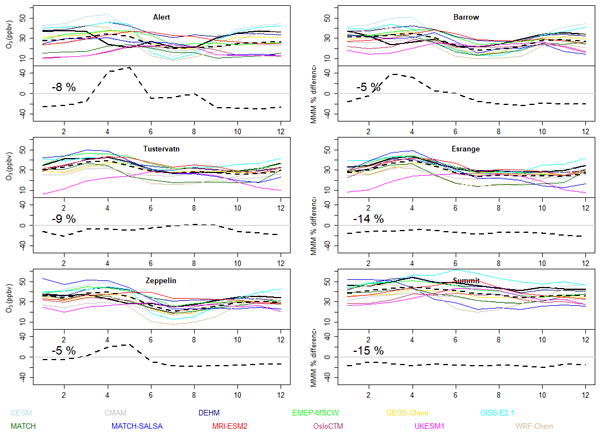
This study summarizes recent research on ozone in the Arctic, a sensitive and rapidly warming region. We find that the seasonal cycles of near-surface atmospheric ozone are variable depending on whether they are near the coast, inland, or at high altitude. Several global model simulations were evaluated, and we found that because models lack some of the ozone chemistry that is important for the coastal Arctic locations, they do not accurately simulate ozone there.
Matthew Boyer, Diego Aliaga, Jakob Boyd Pernov, Hélène Angot, Lauriane L. J. Quéléver, Lubna Dada, Benjamin Heutte, Manuel Dall'Osto, David C. S. Beddows, Zoé Brasseur, Ivo Beck, Silvia Bucci, Marina Duetsch, Andreas Stohl, Tiia Laurila, Eija Asmi, Andreas Massling, Daniel Charles Thomas, Jakob Klenø Nøjgaard, Tak Chan, Sangeeta Sharma, Peter Tunved, Radovan Krejci, Hans Christen Hansson, Federico Bianchi, Katrianne Lehtipalo, Alfred Wiedensohler, Kay Weinhold, Markku Kulmala, Tuukka Petäjä, Mikko Sipilä, Julia Schmale, and Tuija Jokinen
Atmos. Chem. Phys., 23, 389–415, https://doi.org/10.5194/acp-23-389-2023, https://doi.org/10.5194/acp-23-389-2023, 2023
Short summary
Short summary
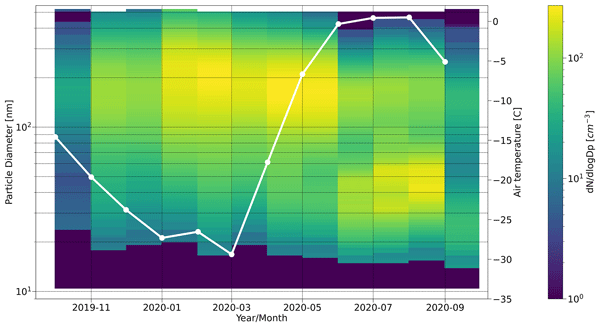
The Arctic is a unique environment that is warming faster than other locations on Earth. We evaluate measurements of aerosol particles, which can influence climate, over the central Arctic Ocean for a full year and compare the data to land-based measurement stations across the Arctic. Our measurements show that the central Arctic has similarities to but also distinct differences from the stations further south. We note that this may change as the Arctic warms and sea ice continues to decline.
William F. Swanson, Chris D. Holmes, William R. Simpson, Kaitlyn Confer, Louis Marelle, Jennie L. Thomas, Lyatt Jaeglé, Becky Alexander, Shuting Zhai, Qianjie Chen, Xuan Wang, and Tomás Sherwen
Atmos. Chem. Phys., 22, 14467–14488, https://doi.org/10.5194/acp-22-14467-2022, https://doi.org/10.5194/acp-22-14467-2022, 2022
Short summary
Short summary
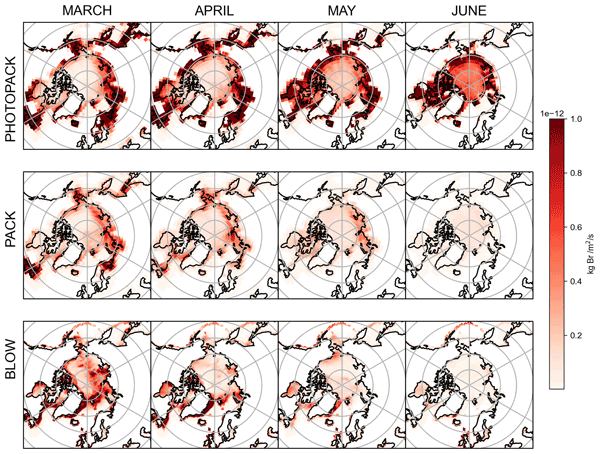
Radical bromine molecules are seen at higher concentrations during the Arctic spring. We use the global model GEOS-Chem to test whether snowpack and wind-blown snow sources can explain high bromine concentrations. We run this model for the entire year of 2015 and compare results to observations of bromine from floating platforms on the Arctic Ocean and at Utqiaġvik. We find that the model performs best when both sources are enabled but may overestimate bromine production in summer and fall.
Christian Tatzelt, Silvia Henning, André Welti, Andrea Baccarini, Markus Hartmann, Martin Gysel-Beer, Manuela van Pinxteren, Robin L. Modini, Julia Schmale, and Frank Stratmann
Atmos. Chem. Phys., 22, 9721–9745, https://doi.org/10.5194/acp-22-9721-2022, https://doi.org/10.5194/acp-22-9721-2022, 2022
Short summary
Short summary
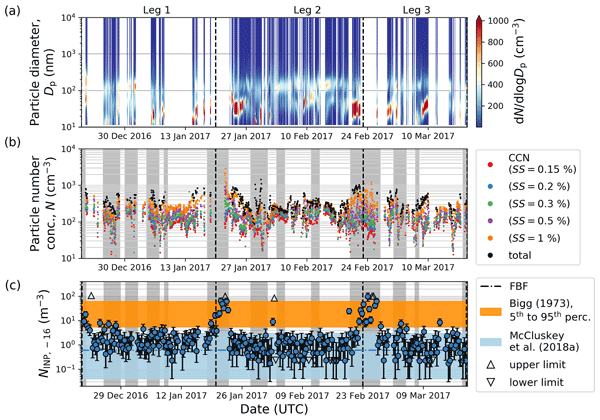
We present the abundance and origin of cloud-relevant aerosol particles in the preindustral-like conditions of the Southern Ocean (SO) during austral summer. Cloud condensation nuclei (CCN) and ice-nucleating particles (INP) were measured during a circum-Antarctic scientific cruise with in situ instrumentation and offline filter measurements, respectively. Transport processes were found to play an equally important role as local sources for both the CCN and INP population of the SO.
Ivo Beck, Hélène Angot, Andrea Baccarini, Lubna Dada, Lauriane Quéléver, Tuija Jokinen, Tiia Laurila, Markus Lampimäki, Nicolas Bukowiecki, Matthew Boyer, Xianda Gong, Martin Gysel-Beer, Tuukka Petäjä, Jian Wang, and Julia Schmale
Atmos. Meas. Tech., 15, 4195–4224, https://doi.org/10.5194/amt-15-4195-2022, https://doi.org/10.5194/amt-15-4195-2022, 2022
Short summary
Short summary
We present the pollution detection algorithm (PDA), a new method to identify local primary pollution in remote atmospheric aerosol and trace gas time series. The PDA identifies periods of contaminated data and relies only on the target dataset itself; i.e., it is independent of ancillary data such as meteorological variables. The parameters of all pollution identification steps are adjustable so that the PDA can be tuned to different locations and situations. It is available as open-access code.
Cynthia H. Whaley, Rashed Mahmood, Knut von Salzen, Barbara Winter, Sabine Eckhardt, Stephen Arnold, Stephen Beagley, Silvia Becagli, Rong-You Chien, Jesper Christensen, Sujay Manish Damani, Xinyi Dong, Konstantinos Eleftheriadis, Nikolaos Evangeliou, Gregory Faluvegi, Mark Flanner, Joshua S. Fu, Michael Gauss, Fabio Giardi, Wanmin Gong, Jens Liengaard Hjorth, Lin Huang, Ulas Im, Yugo Kanaya, Srinath Krishnan, Zbigniew Klimont, Thomas Kühn, Joakim Langner, Kathy S. Law, Louis Marelle, Andreas Massling, Dirk Olivié, Tatsuo Onishi, Naga Oshima, Yiran Peng, David A. Plummer, Olga Popovicheva, Luca Pozzoli, Jean-Christophe Raut, Maria Sand, Laura N. Saunders, Julia Schmale, Sangeeta Sharma, Ragnhild Bieltvedt Skeie, Henrik Skov, Fumikazu Taketani, Manu A. Thomas, Rita Traversi, Kostas Tsigaridis, Svetlana Tsyro, Steven Turnock, Vito Vitale, Kaley A. Walker, Minqi Wang, Duncan Watson-Parris, and Tahya Weiss-Gibbons
Atmos. Chem. Phys., 22, 5775–5828, https://doi.org/10.5194/acp-22-5775-2022, https://doi.org/10.5194/acp-22-5775-2022, 2022
Short summary
Short summary
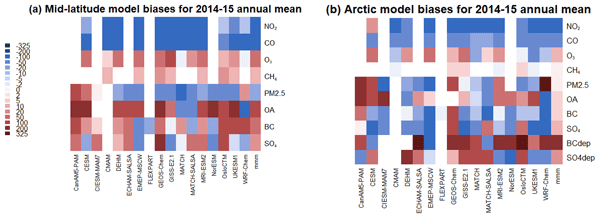
Air pollutants, like ozone and soot, play a role in both global warming and air quality. Atmospheric models are often used to provide information to policy makers about current and future conditions under different emissions scenarios. In order to have confidence in those simulations, in this study we compare simulated air pollution from 18 state-of-the-art atmospheric models to measured air pollution in order to assess how well the models perform.
Julia Schmale, Sangeeta Sharma, Stefano Decesari, Jakob Pernov, Andreas Massling, Hans-Christen Hansson, Knut von Salzen, Henrik Skov, Elisabeth Andrews, Patricia K. Quinn, Lucia M. Upchurch, Konstantinos Eleftheriadis, Rita Traversi, Stefania Gilardoni, Mauro Mazzola, James Laing, and Philip Hopke
Atmos. Chem. Phys., 22, 3067–3096, https://doi.org/10.5194/acp-22-3067-2022, https://doi.org/10.5194/acp-22-3067-2022, 2022
Short summary
Short summary
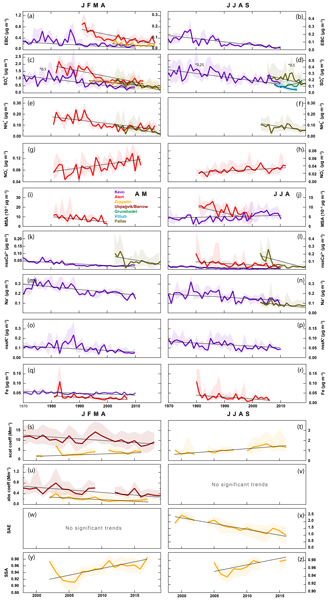
Long-term data sets of Arctic aerosol properties from 10 stations across the Arctic provide evidence that anthropogenic influence on the Arctic atmospheric chemical composition has declined in winter, a season which is typically dominated by mid-latitude emissions. The number of significant trends in summer is smaller than in winter, and overall the pattern is ambiguous with some significant positive and negative trends. This reflects the mixed influence of natural and anthropogenic emissions.
Sebastian Landwehr, Michele Volpi, F. Alexander Haumann, Charlotte M. Robinson, Iris Thurnherr, Valerio Ferracci, Andrea Baccarini, Jenny Thomas, Irina Gorodetskaya, Christian Tatzelt, Silvia Henning, Rob L. Modini, Heather J. Forrer, Yajuan Lin, Nicolas Cassar, Rafel Simó, Christel Hassler, Alireza Moallemi, Sarah E. Fawcett, Neil Harris, Ruth Airs, Marzieh H. Derkani, Alberto Alberello, Alessandro Toffoli, Gang Chen, Pablo Rodríguez-Ros, Marina Zamanillo, Pau Cortés-Greus, Lei Xue, Conor G. Bolas, Katherine C. Leonard, Fernando Perez-Cruz, David Walton, and Julia Schmale
Earth Syst. Dynam., 12, 1295–1369, https://doi.org/10.5194/esd-12-1295-2021, https://doi.org/10.5194/esd-12-1295-2021, 2021
Short summary
Short summary
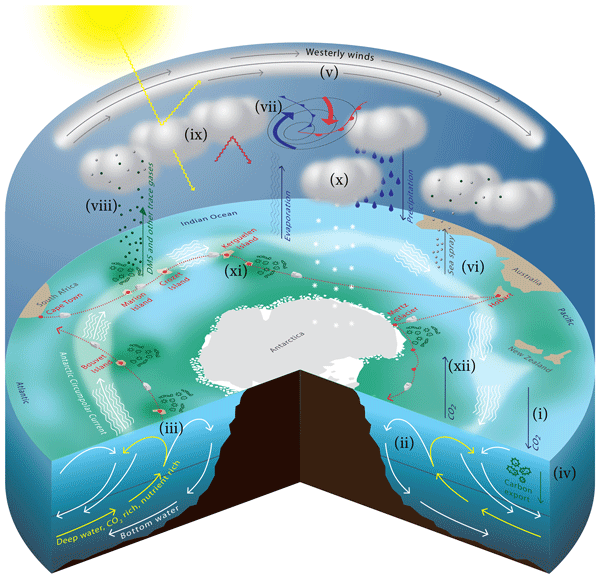
The Antarctic Circumnavigation Expedition surveyed a large number of variables describing the dynamic state of ocean and atmosphere, freshwater cycle, atmospheric chemistry, ocean biogeochemistry, and microbiology in the Southern Ocean. To reduce the dimensionality of the dataset, we apply a sparse principal component analysis and identify temporal patterns from diurnal to seasonal cycles, as well as geographical gradients and
hotspotsof interaction. Code and data are open access.
Cited articles
Ahmed, S., Thomas, J. L., Angot, H., Dommergue, A., Archer, S. D., Bariteau, L., Beck, I., Benavent, N., Blechschmidt, A.-M., Blomquist, B., Boyer, M., Christensen, J. H., Dahlke, S., Dastoor, A., Helmig, D., Howard, D., Jacobi, H.-W., Jokinen, T., Lapere, R., Laurila, T., Quéléver, L. L. J., Richter, A., Ryjkov, A., Mahajan, A. S., Marelle, L., Pfaffhuber, K. A., Posman, K., Rinke, A., Saiz-Lopez, A., Schmale, J., Skov, H., Steffen, A., Stupple, G., Stutz, J., Travnikov, O., and Zilker, B.: Modelling the coupled mercury-halogen-ozone cycle in the central Arctic during spring, Elementa: Science of the Anthropocene, 11, 00129, https://doi.org/10.1525/elementa.2022.00129, 2023. a
Angot, H., Réveillet, M., Dada, L., Jacobi, H.-W., Archer, S. D., Bariteau, L., Barten, J. G. M., Beck, I., Bergner, N., Blomquist, B., Bourgeois, I., Boyer, M., Bucci, S., Creamean, J., Barry, K., Cox, C. J., Dahlke, S., Duetsch, M., Dumont, M., Ganzeveld, L. N., Helmig, D., Heutte, B., Howard, D., Jokinen, T., Laurila, T., Macfarlane, A. R., Pernov, J. B., Persson, P. O. G., Posman, K. M., Quéléver, L., Shupe, M. D., Stohl, A., and Schmale, J.: Influence of warm and moist air intrusions on black carbon deposition and snowmelt in the central Arctic, Elementa: Science of the Anthropocene, 14, 00124, https://doi.org/10.1525/elementa.2025.00124, 2026. a, b, c
Beck, I., Angot, H., Baccarini, A., Dada, L., Quéléver, L., Jokinen, T., Laurila, T., Lampimäki, M., Bukowiecki, N., Boyer, M., Gong, X., Gysel-Beer, M., Petäjä, T., Wang, J., and Schmale, J.: Automated identification of local contamination in remote atmospheric composition time series, Atmos. Meas. Tech., 15, 4195–4224, https://doi.org/10.5194/amt-15-4195-2022, 2022. a
Buchholz, R. R., Emmons, L. K., Tilmes, S., and The CESM2 Development Team: CESM2.1/CAM-chem Instantaneous Output for Boundary Conditions, UCAR, https://doi.org/10.5065/NMP7-EP60, 2019. a, b, c
Dada, L., Angot, H., Beck, I., Baccarini, A., Quéléver, L. L. J., Boyer, M., Laurila, T., Brasseur, Z., Jozef, G., de Boer, G., Shupe, M. D., Henning, S., Bucci, S., Dütsch, M., Stohl, A., Petäjä, T., Daellenbach, K. R., Jokinen, T., and Schmale, J.: A central arctic extreme aerosol event triggered by a warm air-mass intrusion, Nat. Commun., 13, 5290, https://doi.org/10.1038/s41467-022-32872-2, 2022. a, b, c, d, e, f
Garrett, T. J. and Zhao, C.: Increased Arctic cloud longwave emissivity associated with pollution from mid-latitudes, Nature, 440, 787–789, https://doi.org/10.1038/nature04636, 2006. a
Granier, C., Darras, S., Denier van der Gon, H., Doubalova, J., Elguindi, N., Galle, B., Gauss, M., Guevara, M., Jalkanen, J.-P., Kuenen, J., Liousse, C., Quack, B., Simpson, D., and Sindelarova, K.: The Copernicus Atmosphere Monitoring Service global and regional emissions (April 2019 version), Copernicus Atmosphere Monitoring Service (CAMS) report [data set], https://doi.org/10.24380/d0bn-kx16, 2019. a
Grell, G. A. and Dévényi, D.: A generalized approach to parameterizing convection combining ensemble and data assimilation techniques, Geophys. Res. Lett., 29, 38–1–38–4, https://doi.org/10.1029/2002GL015311, 2002. a
Heutte, B., Beck, I., Quéléver, L., Jokinen, T., Laurila, T., Dada, L., and Schmale, J.: Equivalent black carbon concentration in 10 minutes time resolution, measured in the Swiss container during MOSAiC 2019/2020, PANGAEA [data set], https://doi.org/10.1594/PANGAEA.952251, 2022. a
Heutte, B., Dada, L., Angot, H., Daellenbach, K. R., El Haddad, I., Beck, I., Quéléver, L., Jokinen, T., Laurila, T., and Schmale, J.: Bulk size-resolved chemical composition and mass concentration of non-refractory submicron aerosols measured in the Swiss container during MOSAiC 2019/2020, PANGAEA [data set], https://doi.org/10.1594/PANGAEA.961009, 2023. a, b, c
Heutte, B., Bergner, N., Angot, H., Pernov, J. B., Dada, L., Mirrielees, J. A., Beck, I., Baccarini, A., Boyer, M., Creamean, J. M., Daellenbach, K. R., El Haddad, I., Frey, M. M., Henning, S., Laurila, T., Moschos, V., Petäjä, T., Pratt, K. A., Quéléver, L. L. J., Shupe, M. D., Zieger, P., Jokinen, T., and Schmale, J.: Observations of high-time-resolution and size-resolved aerosol chemical composition and microphysics in the central Arctic: implications for climate-relevant particle properties, Atmos. Chem. Phys., 25, 2207–2241, https://doi.org/10.5194/acp-25-2207-2025, 2025. a
Hersbach, H., Bell, B., Berrisford, P., Biavati, G., Horányi, A., Muñoz Sabater, J., Nicolas, J., Peubey, C., Radu, R., Rozum, I., Schepers, D., Simmons, A., Soci, C., Dee, D., and Thépaut, J.-N.: ERA5 hourly data on pressure levels from 1940 to present, Copernicus Climate Change Service (C3S) Climate Data Store (CDS) [data set], https://doi.org/10.24381/cds.bd0915c6, 2023a. a
Hersbach, H., Bell, B., Berrisford, P., Biavati, G., Horányi, A., Muñoz Sabater, J., Nicolas, J., Peubey, C., Radu, R., Rozum, I., Schepers, D., Simmons, A., Soci, C., Dee, D., and Thépaut, J.-N.: ERA5 hourly data on single levels from 1940 to present, Copernicus Climate Change Service (C3S) Climate Data Store (CDS) [data set], https://doi.org/10.24381/cds.adbb2d47, 2023b. a
Hulswar, S., Simó, R., Galí, M., Bell, T. G., Lana, A., Inamdar, S., Halloran, P. R., Manville, G., and Mahajan, A. S.: Third revision of the global surface seawater dimethyl sulfide climatology (DMS-Rev3), Earth Syst. Sci. Data, 14, 2963–2987, https://doi.org/10.5194/essd-14-2963-2022, 2022. a, b
Iacono, M. J., Delamere, J. S., Mlawer, E. J., Shephard, M. W., Clough, S. A., and Collins, W. D.: Radiative forcing by long-lived greenhouse gases: Calculations with the AER radiative transfer models, J. Geophys. Res.-Atmos., 113, https://doi.org/10.1029/2008JD009944, 2008. a
Inness, A., Ades, M., Agustí-Panareda, A., Barré, J., Benedictow, A., Blechschmidt, A.-M., Dominguez, J. J., Engelen, R., Eskes, H., Flemming, J., Huijnen, V., Jones, L., Kipling, Z., Massart, S., Parrington, M., Peuch, V.-H., Razinger, M., Remy, S., Schulz, M., and Suttie, M.: The CAMS reanalysis of atmospheric composition, Atmos. Chem. Phys., 19, 3515–3556, https://doi.org/10.5194/acp-19-3515-2019, 2019. a, b, c
Ioannidis, E., Law, K. S., Raut, J.-C., Marelle, L., Onishi, T., Kirpes, R. M., Upchurch, L. M., Tuch, T., Wiedensohler, A., Massling, A., Skov, H., Quinn, P. K., and Pratt, K. A.: Modelling wintertime sea-spray aerosols under Arctic haze conditions, Atmos. Chem. Phys., 23, 5641–5678, https://doi.org/10.5194/acp-23-5641-2023, 2023. a, b
Jia, H., Quaas, J., Kroese, W., van Diedenhoven, B., Gryspeerdt, E., Böhm, C., Block, K., and Hasekamp, O.: Optimal choice of proxy for cloud condensation nuclei reduces uncertainty in aerosol-cloud-climate forcing, Sci. Adv., 12, https://doi.org/10.1126/sciadv.aea4828, 2026. a
Jozef, G., Klingel, R., Cassano, J. J., Maronga, B., Boer, G. d., Dahlke, S., and Cox, C. J.: Lower atmospheric properties relating to temperature, wind, stability, moisture, and surface radiation budget over the central Arctic sea ice during MOSAiC, PANGAEA [data set], https://doi.org/10.1594/PANGAEA.957760, 2023. a, b
Kapsch, M.-L., Graversen, R. G., and Tjernström, M.: Springtime atmospheric energy transport and the control of Arctic summer sea-ice extent, Nat. Clim. Change, 3, 744–748, https://doi.org/10.1038/nclimate1884, 2013. a
Kirbus, B., Tiedeck, S., Camplani, A., Chylik, J., Crewell, S., Dahlke, S., Ebell, K., Gorodetskaya, I., Griesche, H., Handorf, D., Höschel, I., Lauer, M., Neggers, R., Rückert, J., Shupe, M. D., Spreen, G., Walbröl, A., Wendisch, M., and Rinke, A.: Surface impacts and associated mechanisms of a moisture intrusion into the Arctic observed in mid-April 2020 during MOSAiC, Front. Earth Sci., 11, https://doi.org/10.3389/feart.2023.1147848, 2023. a, b, c, d
Lapere, R., Marelle, L., Rampal, P., Brodeau, L., Melsheimer, C., Spreen, G., and Thomas, J. L.: Modeling the contribution of leads to sea spray aerosol in the high Arctic, Atmos. Chem. Phys., 24, 12107–12132, https://doi.org/10.5194/acp-24-12107-2024, 2024a. a
Lapere, R., Thomas, J. L., Favier, V., Angot, H., Asplund, J., Ekman, A. M. L., Marelle, L., Raut, J.-C., Da Silva, A., Wille, J. D., and Zieger, P.: Polar Aerosol Atmospheric Rivers: Detection, Characteristics, and Potential Applications, J. Geophys. Res.-Atmos., 129, https://doi.org/10.1029/2023JD039606, 2024b. a
Lapere, R., Haddon, A., Price, R., Marelle, L., Monahan, A. H., Steiner, N. S., Raut, J.-C., Bastien, L., and Thomas, J. L.: Oceanic DMS strongly affects aerosols and clouds in the Arctic, Geophys. Res. Lett., 53, e2026GL121724, https://doi.org/10.1029/2026GL121724, 2025. a
Marelle, L., Raut, J.-C., Law, K. S., Berg, L. K., Fast, J. D., Easter, R. C., Shrivastava, M., and Thomas, J. L.: Improvements to the WRF-Chem 3.5.1 model for quasi-hemispheric simulations of aerosols and ozone in the Arctic, Geosci. Model Dev., 10, 3661–3677, https://doi.org/10.5194/gmd-10-3661-2017, 2017. a
Marelle, L., Thomas, J. L., Ahmed, S., Tuite, K., Stutz, J., Dommergue, A., Simpson, W. R., Frey, M. M., and Baladima, F.: Implementation and Impacts of Surface and Blowing Snow Sources of Arctic Bromine Activation Within WRF-Chem 4.1.1, J. Adv. Model. Earth Sy., 13, https://doi.org/10.1029/2020MS002391, 2021. a
Marelle, L., Myhre, G., Thomas, J. L., and Raut, J.-C.: Aerosol Background Concentrations Influence Aerosol-Cloud Interactions as Much as the Choice of Aerosol-Cloud Parameterization, Geophys. Res. Lett., 52, https://doi.org/10.1029/2024GL111780, 2025. a, b, c
Marelle, L., Lapere, R., Price, R., Bastien, L., and Jennie, T.: WRF-Chem-Polar/WRF-Chem-Polar, (Version price_warm_air_arctic), Zenodo [code], https://doi.org/10.5281/zenodo.19736986, 2026. a
Morrison, H., Thompson, G., and Tatarskii, V.: Impact of Cloud Microphysics on the Development of Trailing Stratiform Precipitation in a Simulated Squall Line: Comparison of One- and Two-Moment Schemes, Mon. Weather Rev., 137, 991–1007, https://doi.org/10.1175/2008MWR2556.1, 2009. a
Mortin, J., Svensson, G., Graversen, R. G., Kapsch, M.-L., Stroeve, J. C., and Boisvert, L. N.: Melt onset over Arctic sea ice controlled by atmospheric moisture transport, Geophys. Res. Lett., 43, 6636–6642, https://doi.org/10.1002/2016GL069330, 2016. a
Nakanishi, M. and Niino, H.: Development of an Improved Turbulence Closure Model for the Atmospheric Boundary Layer, J. Meteorol. Soc. Jpn., 87, 895–912, https://doi.org/10.2151/jmsj.87.895, 2009. a, b
Nixdorf, U., Dethloff, K., Rex, M., Shupe, M., Sommerfeld, A., Perovich, D. K., Nicolaus, M., Heuzé, C., Rabe, B., Loose, B., Damm, E., Gradinger, R., Fong, A., Maslowski, W., Rinke, A., Kwok, R., Spreen, G., Wendisch, M., Herber, A., …, and Boetius, A.: MOSAiC Extended Acknowledgement, Zenodo, https://doi.org/10.5281/zenodo.5541624, 2021. a
Pithan, F., Svensson, G., Caballero, R., Chechin, D., Cronin, T. W., Ekman, A. M. L., Neggers, R., Shupe, M. D., Solomon, A., Tjernström, M., and Wendisch, M.: Role of air-mass transformations in exchange between the Arctic and mid-latitudes, Nat. Geosci., 11, 805–812, https://doi.org/10.1038/s41561-018-0234-1, 2018. a, b
Price, R.: Code to reproduce figures for “Isolating the effect of aerosols on Arctic cloud radiative effects during a polluted warm air mass intrusion” (Version v1.0), Zenodo [code], https://doi.org/10.5281/zenodo.19568552, 2026a. a
Price, R.: Data to reproduce figures for “Isolating the effect of aerosols on Arctic cloud radiative effects during a polluted warm air mass intrusion”, Zenodo [data set], https://doi.org/10.5281/zenodo.19564870, 2026b. a
Rantanen, M., Karpechko, A. Y., Lipponen, A., Nordling, K., Hyvärinen, O., Ruosteenoja, K., Vihma, T., and Laaksonen, A.: The Arctic has warmed nearly four times faster than the globe since 1979, Commun. Earth Environ., 3, 168, https://doi.org/10.1038/s43247-022-00498-3, 2022. a
Shupe, M. D., Rex, M., Blomquist, B., Persson, P. O. G., Schmale, J., Uttal, T., Althausen, D., Angot, H., Archer, S., Bariteau, L., Beck, I., Bilberry, J., Bucci, S., Buck, C., Boyer, M., Brasseur, Z., Brooks, I. M., Calmer, R., Cassano, J., Castro, V., Chu, D., Costa, D., Cox, C. J., Creamean, J., Crewell, S., Dahlke, S., Damm, E., de Boer, G., Deckelmann, H., Dethloff, K., Dütsch, M., Ebell, K., Ehrlich, A., Ellis, J., Engelmann, R., Fong, A. A., Frey, M. M., Gallagher, M. R., Ganzeveld, L., Gradinger, R., Graeser, J., Greenamyer, V., Griesche, H., Griffiths, S., Hamilton, J., Heinemann, G., Helmig, D., Herber, A., Heuzé, C., Hofer, J., Houchens, T., Howard, D., Inoue, J., Jacobi, H.-W., Jaiser, R., Jokinen, T., Jourdan, O., Jozef, G., King, W., Kirchgaessner, A., Klingebiel, M., Krassovski, M., Krumpen, T., Lampert, A., Landing, W., Laurila, T., Lawrence, D., Lonardi, M., Loose, B., Lüpkes, C., Maahn, M., Macke, A., Maslowski, W., Marsay, C., Maturilli, M., Mech, M., Morris, S., Moser, M., Nicolaus, M., Ortega, P., Osborn, J., Pätzold, F., Perovich, D. K., Petäjä, T., Pilz, C., Pirazzini, R., Posman, K., Powers, H., Pratt, K. A., Preußer, A., Quéléver, L., Radenz, M., Rabe, B., Rinke, A., Sachs, T., Schulz, A., Siebert, H., Silva, T., Solomon, A., Sommerfeld, A., Spreen, G., Stephens, M., Stohl, A., Svensson, G., Uin, J., Viegas, J., Voigt, C., von der Gathen, P., Wehner, B., Welker, J. M., Wendisch, M., Werner, M., Xie, Z., and Yue, F.: Overview of the MOSAiC expedition: Atmosphere, Elementa: Science of the Anthropocene, 10, 00060, https://doi.org/10.1525/elementa.2021.00060, 2022. a
Skiles, S. M., Flanner, M., Cook, J. M., Dumont, M., and Painter, T. H.: Radiative forcing by light-absorbing particles in snow, Nat. Clim. Change, 8, 964–971, https://doi.org/10.1038/s41558-018-0296-5, 2018. a
Solomon, A., Shupe, M. D., and Miller, N. B.: Cloud–Atmospheric Boundary Layer–Surface Interactions on the Greenland Ice Sheet during the July 2012 Extreme Melt Event, J. Climate, 30, https://doi.org/10.1175/JCLI-D-16-0071.1, 2017. a
Stuecker, M. F., Bitz, C. M., Armour, K. C., Proistosescu, C., Kang, S. M., Xie, S.-P., Kim, D., McGregor, S., Zhang, W., Zhao, S., Cai, W., Dong, Y., and Jin, F.-F.: Polar amplification dominated by local forcing and feedbacks, Nat. Clim. Change, 8, 1076–1081, https://doi.org/10.1038/s41558-018-0339-y, 2018. a
Tewari, M., Wang, W., Dudhia, J., LeMone, M., Mitchell, K., Ek, M., Gayno, G., Wegiel, J., and Cuenca, R.: Implementation and verification of the united NOAH land surface model in the WRF model, 11–15, https://ams.confex.com/ams/84Annual/techprogram/paper_69061.htm (last access: 10 November 2026), 2016. a
Thomas, J. L., Polashenski, C. M., Soja, A. J., Marelle, L., Casey, K. A., Choi, H. D., Raut, J.-C., Wiedinmyer, C., Emmons, L. K., Fast, J. D., Pelon, J., Law, K. S., Flanner, M. G., and Dibb, J. E.: Quantifying black carbon deposition over the Greenland ice sheet from forest fires in Canada, Geophys. Res. Lett., 44, 7965–7974, https://doi.org/10.1002/2017GL073701, 2017. a
Thompson, G. and Eidhammer, T.: A Study of Aerosol Impacts on Clouds and Precipitation Development in a Large Winter Cyclone, J. Atmos. Sci., 71, 3636–3658, https://doi.org/10.1175/JAS-D-13-0305.1, 2014. a, b
Tørseth, K., Aas, W., Breivik, K., Fjæraa, A. M., Fiebig, M., Hjellbrekke, A. G., Lund Myhre, C., Solberg, S., and Yttri, K. E.: Introduction to the European Monitoring and Evaluation Programme (EMEP) and observed atmospheric composition change during 1972–2009, Atmos. Chem. Phys., 12, 5447–5481, https://doi.org/10.5194/acp-12-5447-2012, 2012. a
Whaley, C. H., Mahmood, R., von Salzen, K., Winter, B., Eckhardt, S., Arnold, S., Beagley, S., Becagli, S., Chien, R.-Y., Christensen, J., Damani, S. M., Dong, X., Eleftheriadis, K., Evangeliou, N., Faluvegi, G., Flanner, M., Fu, J. S., Gauss, M., Giardi, F., Gong, W., Hjorth, J. L., Huang, L., Im, U., Kanaya, Y., Krishnan, S., Klimont, Z., Kühn, T., Langner, J., Law, K. S., Marelle, L., Massling, A., Olivié, D., Onishi, T., Oshima, N., Peng, Y., Plummer, D. A., Popovicheva, O., Pozzoli, L., Raut, J.-C., Sand, M., Saunders, L. N., Schmale, J., Sharma, S., Skeie, R. B., Skov, H., Taketani, F., Thomas, M. A., Traversi, R., Tsigaridis, K., Tsyro, S., Turnock, S., Vitale, V., Walker, K. A., Wang, M., Watson-Parris, D., and Weiss-Gibbons, T.: Model evaluation of short-lived climate forcers for the Arctic Monitoring and Assessment Programme: a multi-species, multi-model study, Atmos. Chem. Phys., 22, 5775–5828, https://doi.org/10.5194/acp-22-5775-2022, 2022. a
Wiedinmyer, C., Akagi, S. K., Yokelson, R. J., Emmons, L. K., Al-Saadi, J. A., Orlando, J. J., and Soja, A. J.: The Fire INventory from NCAR (FINN): a high resolution global model to estimate the emissions from open burning, Geosci. Model Dev., 4, 625–641, https://doi.org/10.5194/gmd-4-625-2011, 2011. a, b
Woods, B., Boisvert, L., Parker, C., Valkonen, E., Taylor, P., Webster, M., and Linscott, G.: Understanding the Climatology and Characteristics of Arctic Moisture Intrusions, J. Geophys. Res.-Atmos., 131, https://doi.org/10.1029/2025JD044159, 2026. a
Zhang, C., Tung, W.-W., and Cleveland, W. S.: Climatology and decadal changes of Arctic atmospheric rivers based on ERA5 and MERRA-2, Environ. Res.-Climate, 2, 035005, https://doi.org/10.1088/2752-5295/acdf0f, 2023. a, b
Short summary
Arctic warm air intrusions are extreme events that have dramatic effects on the lower atmosphere and cause surface warming. We used a computer model to simulate a polluted warm air intrusion, isolating the effect of pollution on clouds to understand the net effect on surface warming. We found the net effect on surface warming depends on the underlying surface (ocean vs sea ice), showing the effect of extreme Arctic pollution events can strongly depend on the season and background Arctic climate.
Arctic warm air intrusions are extreme events that have dramatic effects on the lower atmosphere...


Altmetrics
Final-revised paper
Preprint