
Articles | Volume 26, issue 21
https://doi.org/10.5194/acp-26-15813-2026
© Author(s) 2026. This work is distributed under
the Creative Commons Attribution 4.0 License.
the Creative Commons Attribution 4.0 License.
https://doi.org/10.5194/acp-26-15813-2026
© Author(s) 2026. This work is distributed under
the Creative Commons Attribution 4.0 License.
the Creative Commons Attribution 4.0 License.
Research article
| 
10 Nov 2026
Research article |
| 10 Nov 2026
| 10 Nov 2026
Revisiting the parameterization of ice nucleation of dust particles under mixed-phase cloud conditions from laboratory measurements

Institute for Atmospheric and Climate Science, ETH Zürich, Zurich, 8092, Switzerland
Institute for Atmospheric and Climate Science, ETH Zürich, Zurich, 8092, Switzerland
Related authors
Liwen Wang, Jiaoshi Zhang, Jie Chen, Xiaoyu Xu, Yuhan Cheng, Shuling Chen, Yuzhong Zhang, Zeen Zhu, Yang Wang, and Xianda Gong
EGUsphere, https://doi.org/10.5194/egusphere-2026-6243, https://doi.org/10.5194/egusphere-2026-6243, 2026
This preprint is open for discussion and under review for Atmospheric Chemistry and Physics (ACP).
Short summary
Short summary
Low clouds over the ocean help cool Earth, but their formation remains uncertain. Using aircraft and ground measurements, we found that weak mixing can prevent particles near the surface from reaching clouds. Larger particles mainly control cloud droplet numbers in summer, while smaller particles become more important in cleaner winter air. These findings can improve how clouds are represented in climate models and help assess proposals to brighten marine clouds to cool the planet.
Sara Aisyah Syafira, Aristeidis Voliotis, Dawei Hu, Osayomwanbor Oghama, Huihui Wu, Yunqi Shao, Rhianna Evans, Jie Chen, Yu Wang, Peter Gallimore, James Allan, Hugh Coe, and Gordon McFiggans
EGUsphere, https://doi.org/10.5194/egusphere-2026-4932, https://doi.org/10.5194/egusphere-2026-4932, 2026
This preprint is open for discussion and under review for Atmospheric Measurement Techniques (AMT).
Short summary
Short summary
This current work describes a biomass burning (BB) aerosol facility at the University of Manchester that provides a repeatable, flexible system and platform for mechanistic and multiparameter investigation of fresh and aged BB aerosol. The characteristics, as well as those capabilities of the facility across fuel types and combustions were demonstrated here.
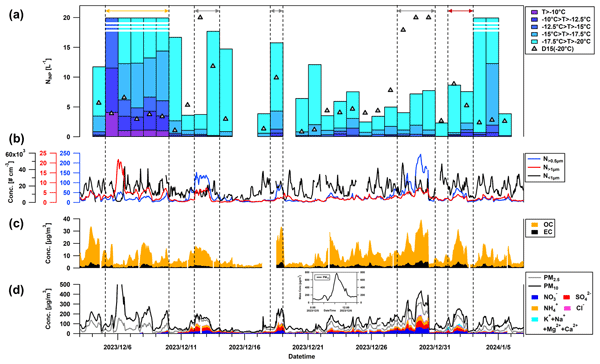
Jiawei Yang, Jingchuan Chen, Jie Chen, Zeyu Feng, Wenxu Fang, Yanting Qiu, Junrui Wang, Ruiqi Man, Taomou Zong, Yuechen Liu, Zhijun Wu, Ning Tang, and Min Hu
Atmos. Chem. Phys., 26, 11771–11784, https://doi.org/10.5194/acp-26-11771-2026, https://doi.org/10.5194/acp-26-11771-2026, 2026
Short summary
Short summary
In clouds containing liquid water and ice (about 0 to −38 °C), ice-nucleating particles act as tiny “seeds” that help supercooled water freeze. We studied these particles in winter air in Taiyuan, an industrial city in northern China. The strongest increases occurred during a desert dust intrusion, while haze and pollution showed weak links to fine-particle pollution sources. This suggests urban freezing particles can be strongly affected by transported dust, not pollution intensity alone.
Gabriella Wallentin, Alexander Böhmländer, Ross Herbert, Heike Wex, Charlotte M. Beall, Pia Bogert, Zoé Brasseur, Jie Chen, Jessie M. Creamean, Paul J. DeMott, Oliver Eckermann, Kunfeng Gao, Xianda Gong, Silvia Henning, Naruki Hiranuma, Christina S. McCluskey, Christos Mitsios, Ottmar Möhler, Athanasios Nenes, Mark D. Tarn, Christian Tatzelt, Ping Tian, Yutaka Tobo, Franziska Vogel, André Welti, Elise Wilbourn, Jennifer Winstone, and Corinna Hoose
EGUsphere, https://doi.org/10.5194/egusphere-2026-4134, https://doi.org/10.5194/egusphere-2026-4134, 2026
This preprint is open for discussion and under review for Atmospheric Measurement Techniques (AMT).
Short summary
Short summary
Ice nucleating particles (INPs) are aerosols essential for cloud ice formation in the temperature range -38 °C and 0 °C. Due to measurement challenges, the availability of observations of INPs remains scarce. This study applies machine learning to predict a global INP distribution using aerosol mass concentration reanalysis and observed INPs. This manuscript demonstrates that even with limited measurements, the occurrence of INPs can be estimated, following the spatial pattern of key aerosols.
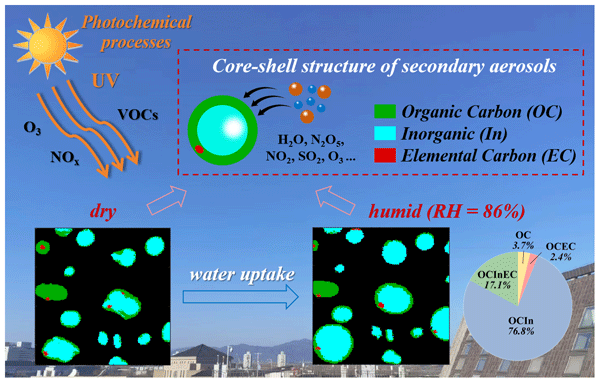
Ruiqi Man, Yishu Zhu, Zhijun Wu, Peter Aaron Alpert, Bingbing Wang, Jing Dou, Jie Chen, Yan Zheng, Yanli Ge, Qi Chen, Shiyi Chen, Xiangrui Kong, Markus Ammann, and Min Hu
Atmos. Chem. Phys., 26, 349–363, https://doi.org/10.5194/acp-26-349-2026, https://doi.org/10.5194/acp-26-349-2026, 2026
Short summary
Short summary
The particle chemical morphology is important to atmospheric multiphase and heterogeneous chemistry. This work directly observed the core-shell structure and water uptake behavior of individual submicron aerosol particles at an urban site and elucidated the potential impact on particle reactive uptake and heterogeneous reactions.
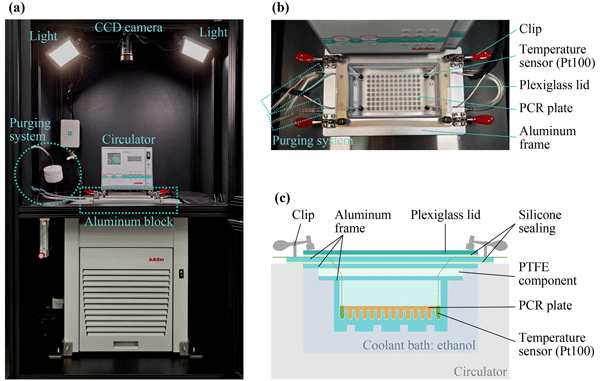
Kaiqi Wang, Kai Bi, Shuling Chen, Markus Hartmann, Zhijun Wu, Jiyu Gao, Xiaoyu Xu, Yuhan Cheng, Mengyu Huang, Yunbo Chen, Huiwen Xue, Bingbing Wang, Yaqiong Hu, Xiongying Zhang, Xincheng Ma, Ruijie Li, Ping Tian, Ottmar Möhler, Heike Wex, Frank Stratmann, Jie Chen, and Xianda Gong
Atmos. Meas. Tech., 18, 5823–5840, https://doi.org/10.5194/amt-18-5823-2025, https://doi.org/10.5194/amt-18-5823-2025, 2025
Short summary
Short summary
Understanding how ice forms in clouds is crucial for predicting weather and climate; however, accurately measuring the ice-nucleating particles that trigger ice formation remains challenging. We developed an advanced instrument called the Freezing Ice Nucleation Detection Analyzer. By refining temperature control, automating freezing detection, and rigorously testing, we demonstrated that this instrument can reliably measure immersion mode ice-nucleating particles across diverse conditions.
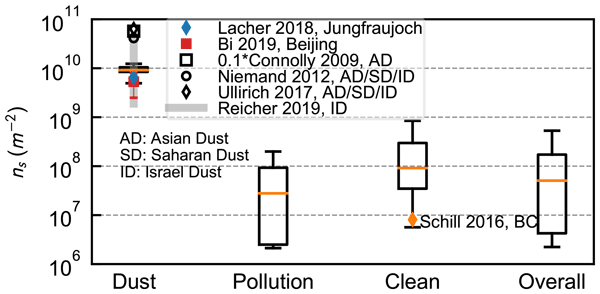
Cuiqi Zhang, Zhijun Wu, Jingchuan Chen, Jie Chen, Lizi Tang, Wenfei Zhu, Xiangyu Pei, Shiyi Chen, Ping Tian, Song Guo, Limin Zeng, Min Hu, and Zamin A. Kanji
Atmos. Chem. Phys., 22, 7539–7556, https://doi.org/10.5194/acp-22-7539-2022, https://doi.org/10.5194/acp-22-7539-2022, 2022
Short summary
Short summary
The immersion ice nucleation effectiveness of aerosols from multiple sources in the urban environment remains elusive. In this study, we demonstrate that the immersion ice-nucleating particle (INP) concentration increased dramatically during a dust event in an urban atmosphere. Pollutant aerosols, including inorganic salts formed through secondary transformation (SIA) and black carbon (BC), might not act as effective INPs under mixed-phase cloud conditions.
Liwen Wang, Jiaoshi Zhang, Jie Chen, Xiaoyu Xu, Yuhan Cheng, Shuling Chen, Yuzhong Zhang, Zeen Zhu, Yang Wang, and Xianda Gong
EGUsphere, https://doi.org/10.5194/egusphere-2026-6243, https://doi.org/10.5194/egusphere-2026-6243, 2026
This preprint is open for discussion and under review for Atmospheric Chemistry and Physics (ACP).
Short summary
Short summary
Low clouds over the ocean help cool Earth, but their formation remains uncertain. Using aircraft and ground measurements, we found that weak mixing can prevent particles near the surface from reaching clouds. Larger particles mainly control cloud droplet numbers in summer, while smaller particles become more important in cleaner winter air. These findings can improve how clouds are represented in climate models and help assess proposals to brighten marine clouds to cool the planet.
Cuiqi Zhang, Xiaoli Shen, Justin Jacquot, Larissa Lacher, Selvakumar Vishnupriya, Benjamin T. Brem, Robin L. Modini, Nora Nowak, Michael Sprenger, Martin Steinbacher, Stephan Henne, Martine Collaud Coen, Franz Conen, Kristina Höhler, Ottmar Möhler, Martin Gysel-Beer, Daniel J. Cziczo, and Zamin A. Kanji
EGUsphere, https://doi.org/10.5194/egusphere-2026-5645, https://doi.org/10.5194/egusphere-2026-5645, 2026
This preprint is open for discussion and under review for Atmospheric Chemistry and Physics (ACP).
Short summary
Short summary
Clouds play a key role in weather and climate, but the particles that trigger cloud ice formation are difficult to identify directly. By simulating clouds in a cloud chamber and particle measurements at a mountain station, we found that mineral dust was the main trigger of cloud ice formation. Dust from local construction and transported from higher atmospheric layers both contributed. The study shows that both human activities and atmospheric processes can influence cloud formation.
Luis A. Ladino, Karin Ardon-Dryer, Diana L. Pereira, Ulrike Proske, Zyanya Ramirez-Diaz, Antonia Velicu, and Zamin A. Kanji
Geosci. Commun., 9, 415–436, https://doi.org/10.5194/gc-9-415-2026, https://doi.org/10.5194/gc-9-415-2026, 2026
Short summary
Short summary
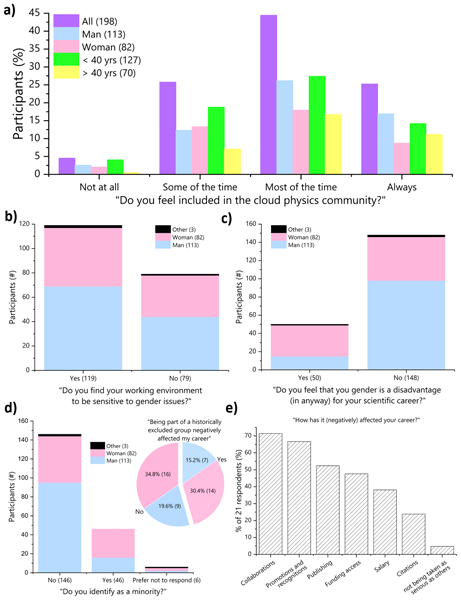
A survey and literature metadata analysis from the cloud physics community are used to investigate the state of diversity, equity and inclusion in the cloud physics community. We show the evolution of gender contributions to cloud physics and the inclusion of tropics-based scientists. The publication analysis reveals the rate of men and women dropping out of the field is not different, however, gender balance was better achieved when women led publications compared to men.
Sara Aisyah Syafira, Aristeidis Voliotis, Dawei Hu, Osayomwanbor Oghama, Huihui Wu, Yunqi Shao, Rhianna Evans, Jie Chen, Yu Wang, Peter Gallimore, James Allan, Hugh Coe, and Gordon McFiggans
EGUsphere, https://doi.org/10.5194/egusphere-2026-4932, https://doi.org/10.5194/egusphere-2026-4932, 2026
This preprint is open for discussion and under review for Atmospheric Measurement Techniques (AMT).
Short summary
Short summary
This current work describes a biomass burning (BB) aerosol facility at the University of Manchester that provides a repeatable, flexible system and platform for mechanistic and multiparameter investigation of fresh and aged BB aerosol. The characteristics, as well as those capabilities of the facility across fuel types and combustions were demonstrated here.
Jiawei Yang, Jingchuan Chen, Jie Chen, Zeyu Feng, Wenxu Fang, Yanting Qiu, Junrui Wang, Ruiqi Man, Taomou Zong, Yuechen Liu, Zhijun Wu, Ning Tang, and Min Hu
Atmos. Chem. Phys., 26, 11771–11784, https://doi.org/10.5194/acp-26-11771-2026, https://doi.org/10.5194/acp-26-11771-2026, 2026
Short summary
Short summary
In clouds containing liquid water and ice (about 0 to −38 °C), ice-nucleating particles act as tiny “seeds” that help supercooled water freeze. We studied these particles in winter air in Taiyuan, an industrial city in northern China. The strongest increases occurred during a desert dust intrusion, while haze and pollution showed weak links to fine-particle pollution sources. This suggests urban freezing particles can be strongly affected by transported dust, not pollution intensity alone.
Lea Haberstock, Darrel Baumgardner, Dagen D. Hughes, Julie Legrand, Almuth Neuberger, Cuiqi Zhang, Zamin A. Kanji, Christian Maier, Ilona Riipinen, Radovan Krejci, and Paul Zieger
EGUsphere, https://doi.org/10.5194/egusphere-2026-3790, https://doi.org/10.5194/egusphere-2026-3790, 2026
This preprint is open for discussion and under review for Atmospheric Measurement Techniques (AMT).
Short summary
Short summary
Here, we present the characterization and first application of a new cloud spectrometer, the Ground-based Fog and Aerosol Spectrometer (GFAS). Besides particle number concentration and size, the GFAS also provides an indicator of particle morphology and composition. We present a new calibration routine and first laboratory and field measurements. Using the GFAS, we can show that cloud droplets are optically different compared to pure water droplets.
Konstantinos Matthaios Doulgeris, David Brus, Christian Maier, Naděžda Zikova, Kajal Julaha, Cuiqi Zhang, Zamin A. Kanji, Ville Kaikkonen, Harri Juttula, Eero Molkoselkä, Anssi Makynen, Mika Komppula, Sergej Sel, and Elke Ludewig
EGUsphere, https://doi.org/10.5194/egusphere-2026-3898, https://doi.org/10.5194/egusphere-2026-3898, 2026
Short summary
Short summary
Clouds are important for weather and climate, but measuring their cloud water droplets accurately is difficult. We compared seven instruments during a field campaign at a high mountain observatory under natural cloud conditions. We found that the way instruments are installed can strongly influence the measurements. Our results provide practical guidance for improving cloud observations and support more consistent measurements across the European ACTRIS research infrastructure.
Guangyu Li, André Welti, Iris Thurnherr, Ulrike Lohmann, and Zamin A. Kanji
Atmos. Chem. Phys., 26, 10835–10859, https://doi.org/10.5194/acp-26-10835-2026, https://doi.org/10.5194/acp-26-10835-2026, 2026
Short summary
Short summary
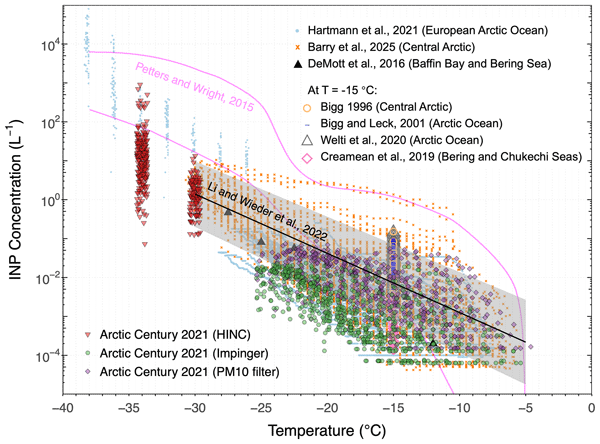
This study presents ship-based measurements of summertime ice-nucleating particles (INPs) over the data-scarce Eurasian-Arctic Seas. We found that INPs are driven by both local and regional sources, with the highest levels observed near land and over ice-free waters. This study is highlighted for improving the understanding of INP abundance, sources, and their role in cloud processes in the rapidly warming Arctic.
Gabriella Wallentin, Alexander Böhmländer, Ross Herbert, Heike Wex, Charlotte M. Beall, Pia Bogert, Zoé Brasseur, Jie Chen, Jessie M. Creamean, Paul J. DeMott, Oliver Eckermann, Kunfeng Gao, Xianda Gong, Silvia Henning, Naruki Hiranuma, Christina S. McCluskey, Christos Mitsios, Ottmar Möhler, Athanasios Nenes, Mark D. Tarn, Christian Tatzelt, Ping Tian, Yutaka Tobo, Franziska Vogel, André Welti, Elise Wilbourn, Jennifer Winstone, and Corinna Hoose
EGUsphere, https://doi.org/10.5194/egusphere-2026-4134, https://doi.org/10.5194/egusphere-2026-4134, 2026
This preprint is open for discussion and under review for Atmospheric Chemistry and Physics (ACP).
Short summary
Short summary
Ice nucleating particles (INPs) are aerosols essential for cloud ice formation in the temperature range -38 °C and 0 °C. Due to measurement challenges, the availability of observations of INPs remains scarce. This study applies machine learning to predict a global INP distribution using aerosol mass concentration reanalysis and observed INPs. This manuscript demonstrates that even with limited measurements, the occurrence of INPs can be estimated, following the spatial pattern of key aerosols.
Kunfeng Gao, Romanos Foskinis, Marilena Gidarakou, Kalliopi Violaki, Guangyu Li, Benjamin Tobias Brem, Sophie Erb, Bernard Clot, Marie-José Graber, Branko Sikoparjja, Predrag Matavulj, Dusan Licina, Cuiqi Zhang, Benoît Crouzy, Alexandros Papayannis, Zamin A. Kanji, and Athanasios Nenes
EGUsphere, https://doi.org/10.5194/egusphere-2026-2699, https://doi.org/10.5194/egusphere-2026-2699, 2026
Short summary
Short summary
This study identified bioaerosols (>85%) as the dominant source for ice nucleating particles in mixed-phase clouds at a semi-rural site in central Europe, using a combination of in-situ, remote sensing and airmass modelling analysis. We developed a bioaerosol-aware ice nucleating particle parameterization that outperformed existing dust-only schemes across multiple field datasets. These findings improve representation of bioaerosol–cloud interactions and reduce uncertainty in climate feedback.
Jian Xu, Junteng Wu, Mayur Gajanan Sapkal, Jim Grisillon, Shravan Deshmukh, Brice Temime Roussel, Julien Kammer, Nicolas Brun, Fabien Robert-Peillard, Beiping Luo, Judith Kleinheins, Silvia Henning, Bénédicte Picquet-Varrault, Edouard Pangui, Mathieu Cazaunau, Zamin A. Kanji, Claudia Marcolli, and Anne Monod
Aerosol Research Discuss., https://doi.org/10.5194/ar-2026-14, https://doi.org/10.5194/ar-2026-14, 2026
Revised manuscript under review for AR
Short summary
Short summary
The study aimed to mimic the atmospheric behaviour of a semi-volatile organic compound in the presence of fine particles and at various relative humidities. The objective was to determine the influence of organic matter on humid particle growth. These results are essential for improving our understanding of cloud formation.
Marilena Gidarakou, Alexandros Papayannis, Kunfeng Gao, Panagiotis Gidarakos, Benoît Crouzy, Romanos Foskinis, Sophie Erb, Benjamin T. Brem, Cuiqi Zhang, Gian Lieberherr, Martine Collaud Coen, Branko Sikoparija, Zamin A. Kanji, Bernard Clot, Bertrand Calpini, Eugenia Giagka, and Athanasios Nenes
Atmos. Chem. Phys., 26, 923–945, https://doi.org/10.5194/acp-26-923-2026, https://doi.org/10.5194/acp-26-923-2026, 2026
Short summary
Short summary
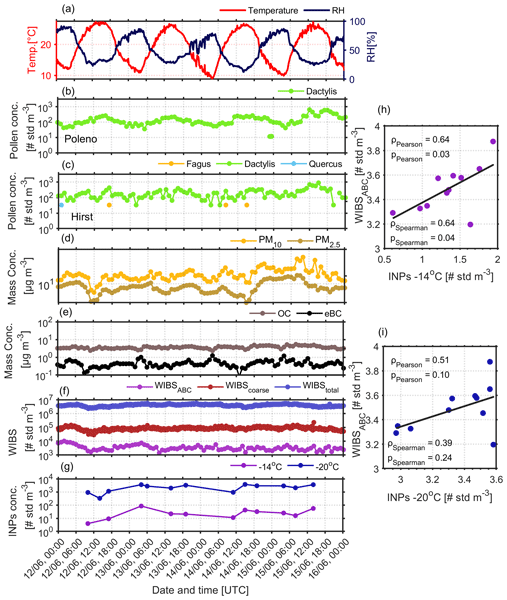
Vertical profiles of pollen and biomass burning particles were obtained at a semi-rural site at the MeteoSwiss station near Payerne (Switzerland) using a novel multi-channel elastic-fluorescence lidar system combined with in situ measurements during the spring 2023 wildfires and pollination season during the PERICLES (PayernE lidaR and Insitu detection of fluorescent bioaerosol and dust partiCLES and their cloud impacts) campaign.
Ruiqi Man, Yishu Zhu, Zhijun Wu, Peter Aaron Alpert, Bingbing Wang, Jing Dou, Jie Chen, Yan Zheng, Yanli Ge, Qi Chen, Shiyi Chen, Xiangrui Kong, Markus Ammann, and Min Hu
Atmos. Chem. Phys., 26, 349–363, https://doi.org/10.5194/acp-26-349-2026, https://doi.org/10.5194/acp-26-349-2026, 2026
Short summary
Short summary
The particle chemical morphology is important to atmospheric multiphase and heterogeneous chemistry. This work directly observed the core-shell structure and water uptake behavior of individual submicron aerosol particles at an urban site and elucidated the potential impact on particle reactive uptake and heterogeneous reactions.
Mattia Righi, Baptiste Testa, Christof G. Beer, Johannes Hendricks, and Zamin A. Kanji
Atmos. Chem. Phys., 25, 18341–18353, https://doi.org/10.5194/acp-25-18341-2025, https://doi.org/10.5194/acp-25-18341-2025, 2025
Short summary
Short summary
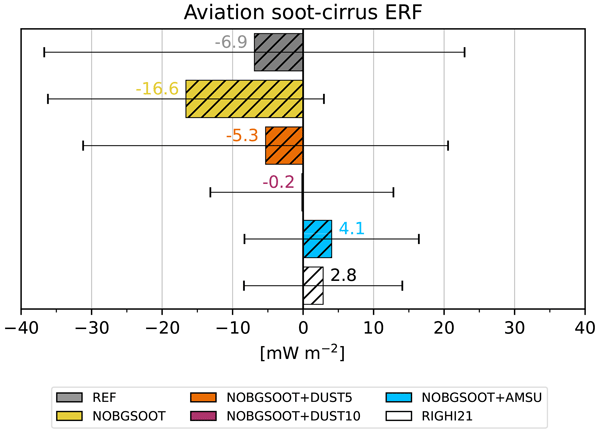
The effective radiative forcing due to the effect of aviation soot on natural cirrus clouds is likely very small, thus confirming most previous studies, but for the first time with the support of laboratory measurements specifically targeting aviation soot and its ice nucleation ability.
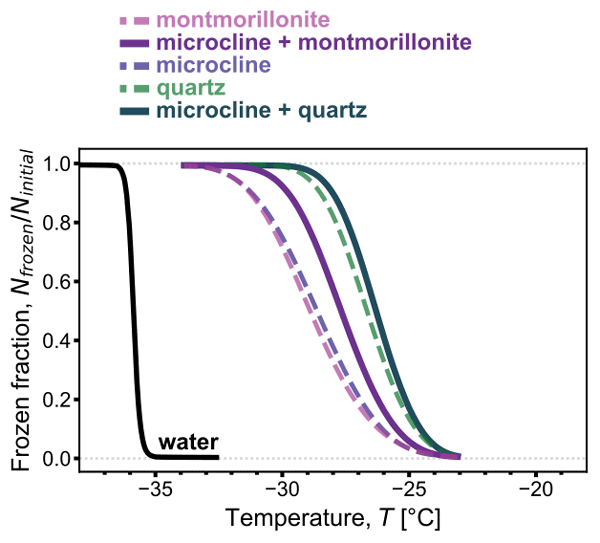
Nadia Shardt, Florin N. Isenrich, Julia Nette, Christopher Dreimol, Ning Ma, Zamin A. Kanji, Andrew J. deMello, and Claudia Marcolli
Atmos. Chem. Phys., 25, 17997–18014, https://doi.org/10.5194/acp-25-17997-2025, https://doi.org/10.5194/acp-25-17997-2025, 2025
Short summary
Short summary
In the atmosphere, minerals suspended in cloud droplets promote the formation of ice. We investigated ice formation in the presence of pure and binary mixtures of common minerals using a microfluidic device. The mineral with the best ability to initiate ice formation alone (that is, at the highest temperature) typically determined when ice formed in the binary mixture.
Kaiqi Wang, Kai Bi, Shuling Chen, Markus Hartmann, Zhijun Wu, Jiyu Gao, Xiaoyu Xu, Yuhan Cheng, Mengyu Huang, Yunbo Chen, Huiwen Xue, Bingbing Wang, Yaqiong Hu, Xiongying Zhang, Xincheng Ma, Ruijie Li, Ping Tian, Ottmar Möhler, Heike Wex, Frank Stratmann, Jie Chen, and Xianda Gong
Atmos. Meas. Tech., 18, 5823–5840, https://doi.org/10.5194/amt-18-5823-2025, https://doi.org/10.5194/amt-18-5823-2025, 2025
Short summary
Short summary
Understanding how ice forms in clouds is crucial for predicting weather and climate; however, accurately measuring the ice-nucleating particles that trigger ice formation remains challenging. We developed an advanced instrument called the Freezing Ice Nucleation Detection Analyzer. By refining temperature control, automating freezing detection, and rigorously testing, we demonstrated that this instrument can reliably measure immersion mode ice-nucleating particles across diverse conditions.
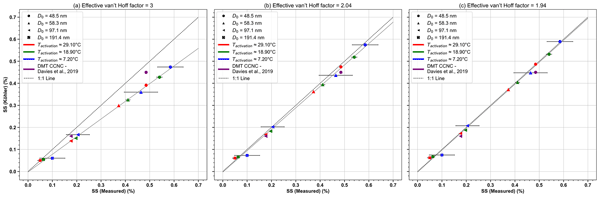
Mayur G. Sapkal, Michael Rösch, and Zamin A. Kanji
Atmos. Meas. Tech., 18, 5649–5667, https://doi.org/10.5194/amt-18-5649-2025, https://doi.org/10.5194/amt-18-5649-2025, 2025
Short summary
Short summary
The newly developed Horizontal Cloud Condensation Nuclei Counter (HCCNC) is capable of generating supersaturation as low as 0.05 % at temperatures as low as 4 °C, allowing for the investigation of CCN activity of ammonium sulfate particles up to 200 nm diameter and ambient aerosol of larger diameter. The HCCNC could be used for low-temperature experiments where gas-phase partitioning into or out of the aerosol phase for semi-volatile compounds is relevant for CCN activity.
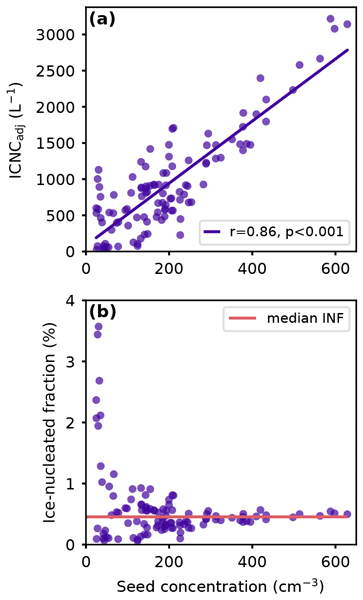
Anna J. Miller, Christopher Fuchs, Fabiola Ramelli, Huiying Zhang, Nadja Omanovic, Robert Spirig, Claudia Marcolli, Zamin A. Kanji, Ulrike Lohmann, and Jan Henneberger
Atmos. Chem. Phys., 25, 5387–5407, https://doi.org/10.5194/acp-25-5387-2025, https://doi.org/10.5194/acp-25-5387-2025, 2025
Short summary
Short summary
We analyzed the ability of silver iodide particles (a commonly used cloud-seeding agent) to form ice crystals in naturally occurring liquid clouds at −5 to −8 °C and found that only ≈ 0.1 %−1 % of particles nucleate ice, with a negative dependence on temperature. By contextualizing our results with previous laboratory studies, we help to bridge the gap between laboratory and field experiments, which also helps to inform future cloud-seeding projects.
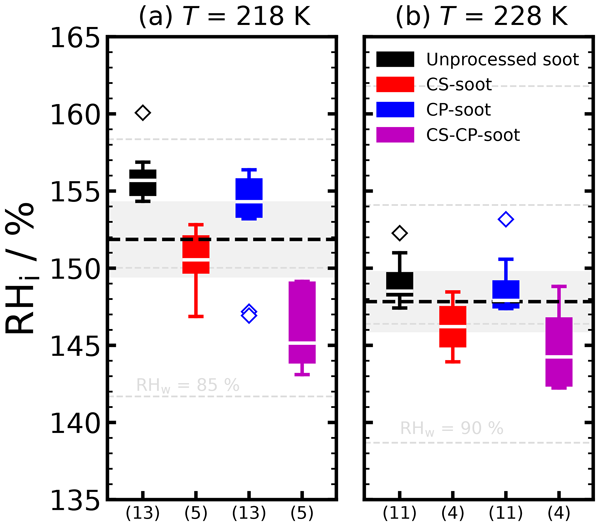
Baptiste Testa, Lukas Durdina, Jacinta Edebeli, Curdin Spirig, and Zamin A. Kanji
Atmos. Chem. Phys., 24, 10409–10424, https://doi.org/10.5194/acp-24-10409-2024, https://doi.org/10.5194/acp-24-10409-2024, 2024
Short summary
Short summary
Aviation soot residuals released from contrails can become compacted upon sublimation of the ice crystals, generating new voids in the aggregates where ice nucleation can occur. Here we show that contrail-processed soot is highly compact but that it remains unable to form ice at a relative humidity different from that required for the formation of background cirrus from the more ubiquitous aqueous solution droplets, suggesting that it will not perturb cirrus cloud formation via ice nucleation.
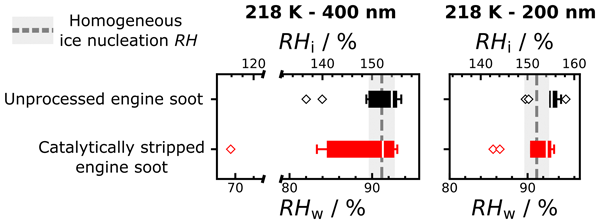
Baptiste Testa, Lukas Durdina, Peter A. Alpert, Fabian Mahrt, Christopher H. Dreimol, Jacinta Edebeli, Curdin Spirig, Zachary C. J. Decker, Julien Anet, and Zamin A. Kanji
Atmos. Chem. Phys., 24, 4537–4567, https://doi.org/10.5194/acp-24-4537-2024, https://doi.org/10.5194/acp-24-4537-2024, 2024
Short summary
Short summary
Laboratory experiments on the ice nucleation of real commercial aviation soot particles are investigated for their cirrus cloud formation potential. Our results show that aircraft-emitted soot in the upper troposphere will be poor ice-nucleating particles. Measuring the soot particle morphology and modifying their mixing state allow us to elucidate why these particles are ineffective at forming ice, in contrast to previously used soot surrogates.
Anna J. Miller, Fabiola Ramelli, Christopher Fuchs, Nadja Omanovic, Robert Spirig, Huiying Zhang, Ulrike Lohmann, Zamin A. Kanji, and Jan Henneberger
Atmos. Meas. Tech., 17, 601–625, https://doi.org/10.5194/amt-17-601-2024, https://doi.org/10.5194/amt-17-601-2024, 2024
Short summary
Short summary
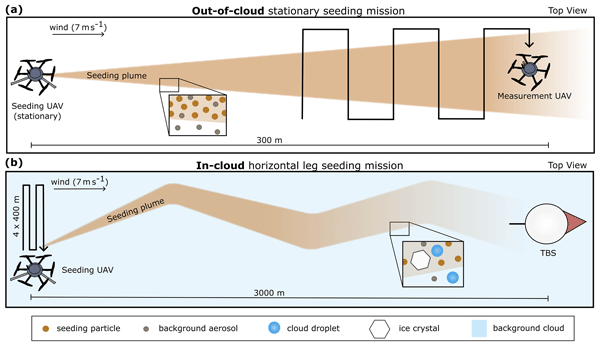
We present a method for aerosol and cloud research using two uncrewed aerial vehicles (UAVs). The UAVs have a propeller heating mechanism that allows flights in icing conditions, which has so far been a limitation for cloud research with UAVs. One UAV burns seeding flares, producing a plume of particles that causes ice formation in supercooled clouds. The second UAV measures aerosol size distributions and is used for measuring the seeding plume or for characterizing the boundary layer.
Guangyu Li, Elise K. Wilbourn, Zezhen Cheng, Jörg Wieder, Allison Fagerson, Jan Henneberger, Ghislain Motos, Rita Traversi, Sarah D. Brooks, Mauro Mazzola, Swarup China, Athanasios Nenes, Ulrike Lohmann, Naruki Hiranuma, and Zamin A. Kanji
Atmos. Chem. Phys., 23, 10489–10516, https://doi.org/10.5194/acp-23-10489-2023, https://doi.org/10.5194/acp-23-10489-2023, 2023
Short summary
Short summary
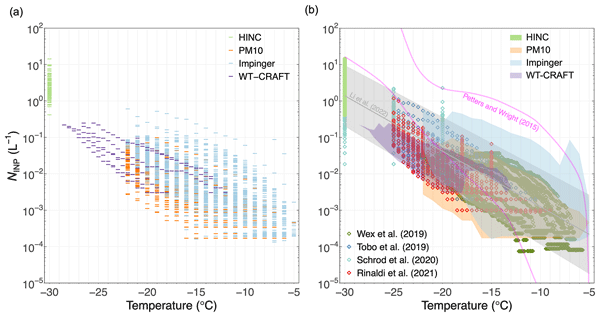
In this work, we present results from an Arctic field campaign (NASCENT) in Ny-Ålesund, Svalbard, on the abundance, variability, physicochemical properties, and potential sources of ice-nucleating particles (INPs) relevant for mixed-phase cloud formation. This work improves the data coverage of Arctic INPs and aerosol properties, allowing for the validation of models predicting cloud microphysical and radiative properties of mixed-phase clouds in the rapidly warming Arctic.
Dimitri Castarède, Zoé Brasseur, Yusheng Wu, Zamin A. Kanji, Markus Hartmann, Lauri Ahonen, Merete Bilde, Markku Kulmala, Tuukka Petäjä, Jan B. C. Pettersson, Berko Sierau, Olaf Stetzer, Frank Stratmann, Birgitta Svenningsson, Erik Swietlicki, Quynh Thu Nguyen, Jonathan Duplissy, and Erik S. Thomson
Atmos. Meas. Tech., 16, 3881–3899, https://doi.org/10.5194/amt-16-3881-2023, https://doi.org/10.5194/amt-16-3881-2023, 2023
Short summary
Short summary
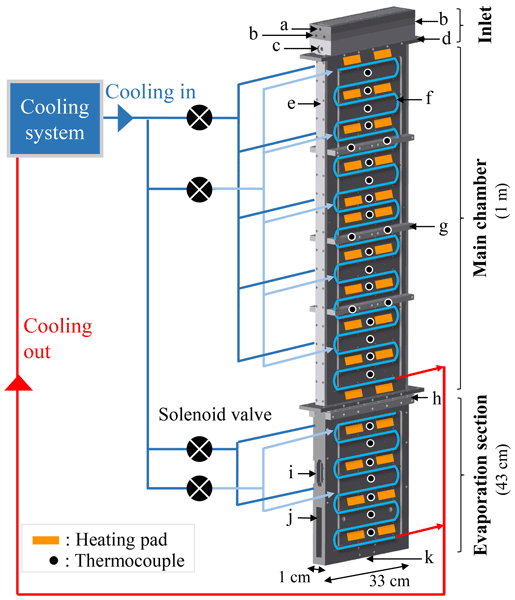
Clouds play a key role in Earth’s climate by influencing the surface energy budget. Certain types of atmospheric aerosols, called ice-nucleating particles (INPs), induce the formation of ice in clouds and, thus, often initiate precipitation formation. The Portable Ice Nucleation Chamber 2 (PINCii) is a new instrument developed to study ice formation and to conduct ambient measurements of INPs, allowing us to investigate the sources and properties of the atmospheric aerosols that can act as INPs.

Fabian Mahrt, Carolin Rösch, Kunfeng Gao, Christopher H. Dreimol, Maria A. Zawadowicz, and Zamin A. Kanji
Atmos. Chem. Phys., 23, 1285–1308, https://doi.org/10.5194/acp-23-1285-2023, https://doi.org/10.5194/acp-23-1285-2023, 2023
Short summary
Short summary
Major aerosol types emitted by biomass burning include soot, ash, and charcoal particles. Here, we investigated the ice nucleation activity of 400 nm size-selected particles of two different pyrolyis-derived charcoal types in the mixed phase and cirrus cloud regime. We find that ice nucleation is constrained to cirrus cloud conditions, takes place via pore condensation and freezing, and is largely governed by the particle porosity and mineral content.
Guangyu Li, Jörg Wieder, Julie T. Pasquier, Jan Henneberger, and Zamin A. Kanji
Atmos. Chem. Phys., 22, 14441–14454, https://doi.org/10.5194/acp-22-14441-2022, https://doi.org/10.5194/acp-22-14441-2022, 2022
Short summary
Short summary
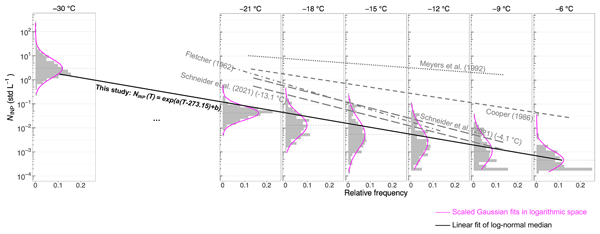
The concentration of ice-nucleating particles (INPs) is atmospherically relevant for primary ice formation in clouds. In this work, from 12 weeks of field measurement data in the Arctic, we developed a new parameterization to predict INP concentrations applicable for pristine background conditions based only on temperature. The INP parameterization could improve the cloud microphysical representation in climate models, aiding in Arctic climate predictions.
Florin N. Isenrich, Nadia Shardt, Michael Rösch, Julia Nette, Stavros Stavrakis, Claudia Marcolli, Zamin A. Kanji, Andrew J. deMello, and Ulrike Lohmann
Atmos. Meas. Tech., 15, 5367–5381, https://doi.org/10.5194/amt-15-5367-2022, https://doi.org/10.5194/amt-15-5367-2022, 2022
Short summary
Short summary
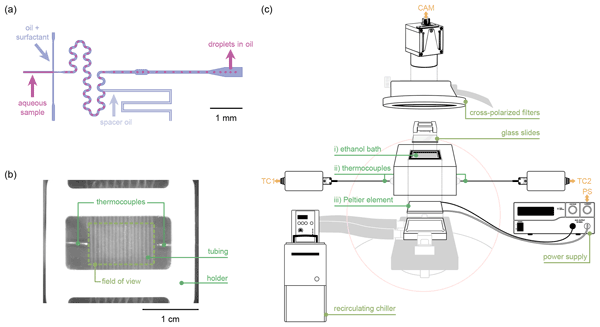
Ice nucleation in the atmosphere influences cloud properties and lifetimes. Microfluidic instruments have recently been used to investigate ice nucleation, but these instruments are typically made out of a polymer that contributes to droplet instability over extended timescales and relatively high temperature uncertainty. To address these drawbacks, we develop and validate a new microfluidic instrument that uses fluoropolymer tubing to extend droplet stability and improve temperature accuracy.

Jörg Wieder, Nikola Ihn, Claudia Mignani, Moritz Haarig, Johannes Bühl, Patric Seifert, Ronny Engelmann, Fabiola Ramelli, Zamin A. Kanji, Ulrike Lohmann, and Jan Henneberger
Atmos. Chem. Phys., 22, 9767–9797, https://doi.org/10.5194/acp-22-9767-2022, https://doi.org/10.5194/acp-22-9767-2022, 2022
Short summary
Short summary
Ice formation and its evolution in mixed-phase clouds are still uncertain. We evaluate the lidar retrieval of ice-nucleating particle concentration in dust-dominated and continental air masses over the Swiss Alps with in situ observations. A calibration factor to improve the retrieval from continental air masses is proposed. Ice multiplication factors are obtained with a new method utilizing remote sensing. Our results indicate that secondary ice production occurs at temperatures down to −30 °C.
Cuiqi Zhang, Zhijun Wu, Jingchuan Chen, Jie Chen, Lizi Tang, Wenfei Zhu, Xiangyu Pei, Shiyi Chen, Ping Tian, Song Guo, Limin Zeng, Min Hu, and Zamin A. Kanji
Atmos. Chem. Phys., 22, 7539–7556, https://doi.org/10.5194/acp-22-7539-2022, https://doi.org/10.5194/acp-22-7539-2022, 2022
Short summary
Short summary
The immersion ice nucleation effectiveness of aerosols from multiple sources in the urban environment remains elusive. In this study, we demonstrate that the immersion ice-nucleating particle (INP) concentration increased dramatically during a dust event in an urban atmosphere. Pollutant aerosols, including inorganic salts formed through secondary transformation (SIA) and black carbon (BC), might not act as effective INPs under mixed-phase cloud conditions.
Cyril Brunner, Benjamin T. Brem, Martine Collaud Coen, Franz Conen, Martin Steinbacher, Martin Gysel-Beer, and Zamin A. Kanji
Atmos. Chem. Phys., 22, 7557–7573, https://doi.org/10.5194/acp-22-7557-2022, https://doi.org/10.5194/acp-22-7557-2022, 2022
Short summary
Short summary
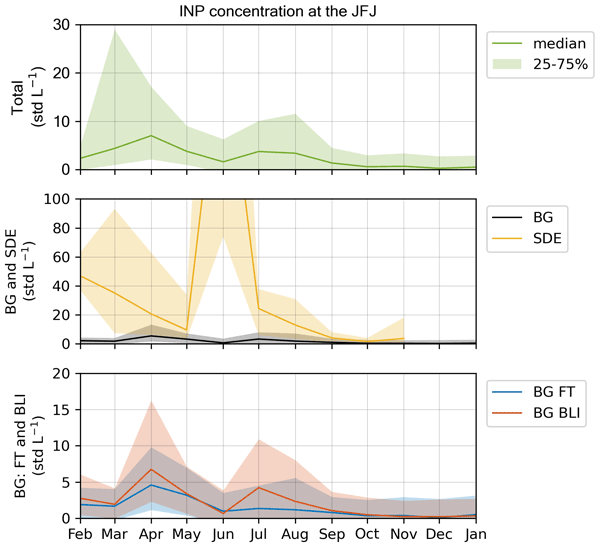
Microscopic particles called ice-nucleating particles (INPs) are essential for ice crystals to form in clouds. INPs are a tiny proportion of atmospheric aerosol, and their abundance is poorly constrained. We study how the concentration of INPs changes diurnally and seasonally at a mountaintop station in central Europe. Unsurprisingly, a diurnal cycle is only found when considering air masses that have had lower-altitude ground contact. The highest INP concentrations occur in spring.
Kunfeng Gao, Chong-Wen Zhou, Eszter J. Barthazy Meier, and Zamin A. Kanji
Atmos. Chem. Phys., 22, 5331–5364, https://doi.org/10.5194/acp-22-5331-2022, https://doi.org/10.5194/acp-22-5331-2022, 2022
Short summary
Short summary
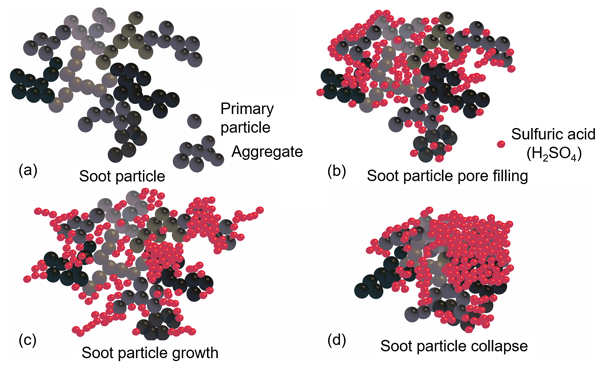
Incomplete combustion of fossil fuel produces carbonaceous particles called soot. These particles can affect cloud formation by acting as centres for droplet or ice formation. The atmospheric residence time of soot particles is of the order of days to weeks, which can result in them becoming coated by various trace species in the atmosphere such as acids. In this study, we quantify the cirrus cloud-forming ability of soot particles coated with the atmospherically ubiquitous sulfuric acid.
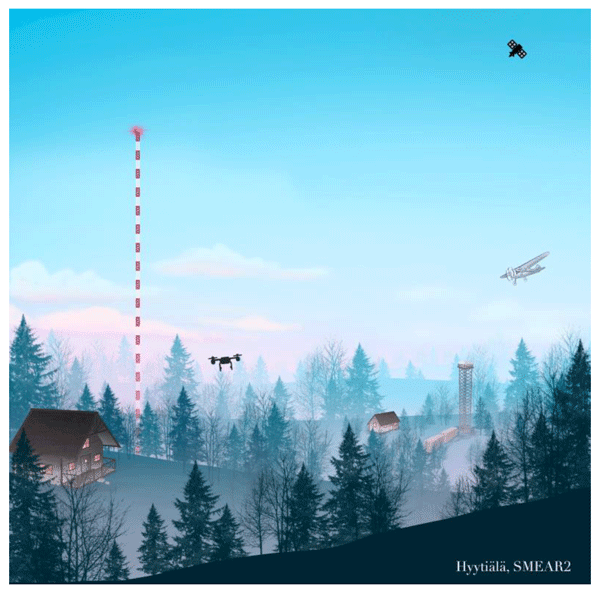
Zoé Brasseur, Dimitri Castarède, Erik S. Thomson, Michael P. Adams, Saskia Drossaart van Dusseldorp, Paavo Heikkilä, Kimmo Korhonen, Janne Lampilahti, Mikhail Paramonov, Julia Schneider, Franziska Vogel, Yusheng Wu, Jonathan P. D. Abbatt, Nina S. Atanasova, Dennis H. Bamford, Barbara Bertozzi, Matthew Boyer, David Brus, Martin I. Daily, Romy Fösig, Ellen Gute, Alexander D. Harrison, Paula Hietala, Kristina Höhler, Zamin A. Kanji, Jorma Keskinen, Larissa Lacher, Markus Lampimäki, Janne Levula, Antti Manninen, Jens Nadolny, Maija Peltola, Grace C. E. Porter, Pyry Poutanen, Ulrike Proske, Tobias Schorr, Nsikanabasi Silas Umo, János Stenszky, Annele Virtanen, Dmitri Moisseev, Markku Kulmala, Benjamin J. Murray, Tuukka Petäjä, Ottmar Möhler, and Jonathan Duplissy
Atmos. Chem. Phys., 22, 5117–5145, https://doi.org/10.5194/acp-22-5117-2022, https://doi.org/10.5194/acp-22-5117-2022, 2022
Short summary
Short summary
The present measurement report introduces the ice nucleation campaign organized in Hyytiälä, Finland, in 2018 (HyICE-2018). We provide an overview of the campaign settings, and we describe the measurement infrastructure and operating procedures used. In addition, we use results from ice nucleation instrument inter-comparison to show that the suite of these instruments deployed during the campaign reports consistent results.
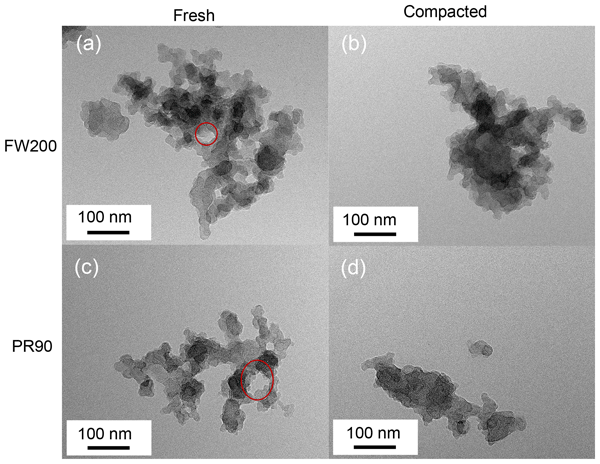
Kunfeng Gao, Franz Friebel, Chong-Wen Zhou, and Zamin A. Kanji
Atmos. Chem. Phys., 22, 4985–5016, https://doi.org/10.5194/acp-22-4985-2022, https://doi.org/10.5194/acp-22-4985-2022, 2022
Short summary
Short summary
Soot particles impact cloud formation and radiative properties in the upper atmosphere where aircraft emit carbonaceous particles. We use cloud chambers to mimic the upper atmosphere temperature and humidity to test the influence of the morphology of the soot particles on ice cloud formation. For particles larger than 200 nm, the compacted (densified) samples have a higher affinity for ice crystal formation in the cirrus regime than the fluffy (un-compacted) soot particles of the same sample.
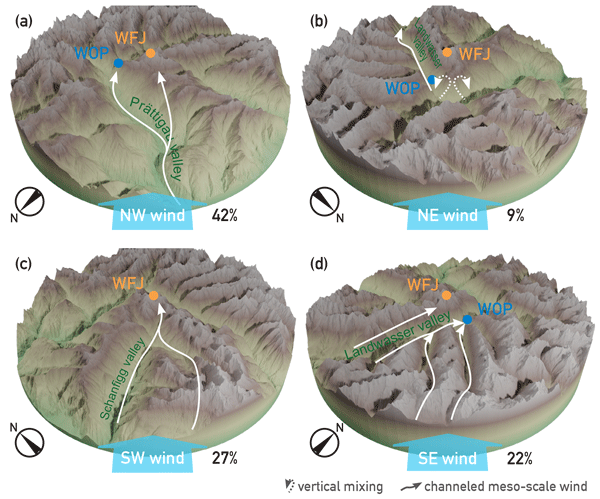
Jörg Wieder, Claudia Mignani, Mario Schär, Lucie Roth, Michael Sprenger, Jan Henneberger, Ulrike Lohmann, Cyril Brunner, and Zamin A. Kanji
Atmos. Chem. Phys., 22, 3111–3130, https://doi.org/10.5194/acp-22-3111-2022, https://doi.org/10.5194/acp-22-3111-2022, 2022
Short summary
Short summary
We investigate the variation in ice-nucleating particles (INPs) relevant for primary ice formation in mixed-phased clouds over the Alps based on simultaneous in situ observations at a mountaintop and a nearby high valley (1060 m height difference). In most cases, advection from the surrounding lower regions was responsible for changes in INP concentration, causing a diurnal cycle at the mountaintop. Our study underlines the importance of the planetary boundary layer as an INP reserve.
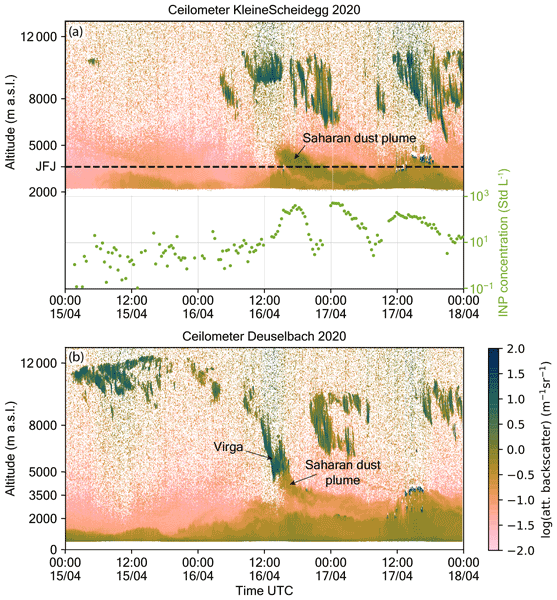
Cyril Brunner, Benjamin T. Brem, Martine Collaud Coen, Franz Conen, Maxime Hervo, Stephan Henne, Martin Steinbacher, Martin Gysel-Beer, and Zamin A. Kanji
Atmos. Chem. Phys., 21, 18029–18053, https://doi.org/10.5194/acp-21-18029-2021, https://doi.org/10.5194/acp-21-18029-2021, 2021
Short summary
Short summary
Special microscopic particles called ice-nucleating particles (INPs) are essential for ice crystals to form in the atmosphere. INPs are sparse and their atmospheric concentration and properties are not well understood. Mineral dust particles make up a significant fraction of INPs but how much remains unknown. Here, we address this knowledge gap by studying periods when mineral particles are present in large quantities at a mountaintop station in central Europe.
Larissa Lacher, Hans-Christian Clemen, Xiaoli Shen, Stephan Mertes, Martin Gysel-Beer, Alireza Moallemi, Martin Steinbacher, Stephan Henne, Harald Saathoff, Ottmar Möhler, Kristina Höhler, Thea Schiebel, Daniel Weber, Jann Schrod, Johannes Schneider, and Zamin A. Kanji
Atmos. Chem. Phys., 21, 16925–16953, https://doi.org/10.5194/acp-21-16925-2021, https://doi.org/10.5194/acp-21-16925-2021, 2021
Short summary
Short summary
We investigate ice-nucleating particle properties at Jungfraujoch during the 2017 joint INUIT/CLACE field campaign, to improve the knowledge about those rare particles in a cloud-relevant environment. By quantifying ice-nucleating particles in parallel to single-particle mass spectrometry measurements, we find that mineral dust and aged sea spray particles are potential candidates for ice-nucleating particles. Our findings are supported by ice residual analysis and source region modeling.
Cited articles
Abdelmonem, A., Backus, E. H. G., Hoffmann, N., Sánchez, M. A., Cyran, J. D., Kiselev, A., and Bonn, M.: Surface-charge-induced orientation of interfacial water suppresses heterogeneous ice nucleation on α-alumina (0001), Atmos. Chem. Phys., 17, 7827–7837, https://doi.org/10.5194/acp-17-7827-2017, 2017.
Ansmann, A., Tesche, M., Althausen, D., Müller, D., Seifert, P., Freudenthaler, V., Heese, B., Wiegner, M., Pisani, G., Knippertz, P., and Dubovik, O.: Influence of Saharan dust on cloud glaciation in southern Morocco during the Saharan Mineral Dust Experiment, J. Geophys. Res.-Atmos., 113, https://doi.org/10.1029/2007JD008785, 2008.
Atkinson, J. D., Murray, B. J., Woodhouse, M. T., Whale, T. F., Baustian, K. J., Carslaw, K. S., Dobbie, S., O'sullivan, D., and Malkin, T. L.: The importance of feldspar for ice nucleation by mineral dust in mixed-phase clouds, Nature, 498, 355, https://doi.org/10.1038/nature12278, 2013.
Augustin-Bauditz, S., Wex, H., Kanter, S., Ebert, M., Niedermeier, D., Stolz, F., Prager, A., and Stratmann, F.: The immersion mode ice nucleation behavior of mineral dusts: A comparison of different pure and surface modified dusts, Geophys. Res. Lett., 41, 7375–7382, https://doi.org/10.1002/2014GL061317, 2014.
Boose, Y., Welti, A., Atkinson, J., Ramelli, F., Danielczok, A., Bingemer, H. G., Plötze, M., Sierau, B., Kanji, Z. A., and Lohmann, U.: Heterogeneous ice nucleation on dust particles sourced from nine deserts worldwide – Part 1: Immersion freezing, Atmos. Chem. Phys., 16, 15075–15095, https://doi.org/10.5194/acp-16-15075-2016, 2016.
Broadley, S. L., Murray, B. J., Herbert, R. J., Atkinson, J. D., Dobbie, S., Malkin, T. L., Condliffe, E., and Neve, L.: Immersion mode heterogeneous ice nucleation by an illite rich powder representative of atmospheric mineral dust, Atmos. Chem. Phys., 12, 287–307, https://doi.org/10.5194/acp-12-287-2012, 2012.
Budke, C. and Koop, T.: BINARY: an optical freezing array for assessing temperature and time dependence of heterogeneous ice nucleation, Atmos. Meas. Tech., 8, 689–703, https://doi.org/10.5194/amt-8-689-2015, 2015.
Burrows, S. M., McCluskey, C. S., Cornwell, G., Steinke, I., Zhang, K., Zhao, B., Zawadowicz, M., Raman, A., Kulkarni, G., China, S., Zelenyuk, A., and DeMott, P. J.: Ice-Nucleating Particles That Impact Clouds and Climate: Observational and Modeling Research Needs, Rev. Geophys., 60, e2021RG000745, https://doi.org/10.1029/2021RG000745, 2022.
Chen, J. and Kanji, Z.: Revisiting the Parameterization of Ice Nucleation of Dust Particles under Mixed-Phase Cloud Conditions from Laboratory Measurements, ETH Zurich [data set], https://doi.org/10.3929/ethz-c-000806331, 2026.
Chen, J., Wu, Z., Gong, X., Qiu, Y., Chen, S., Zeng, L., and Hu, M.: Anthropogenic Dust as a Significant Source of Ice-Nucleating Particles in the Urban Environment, Earths Future, 12, e2023EF003738, https://doi.org/10.1029/2023EF003738, 2024.
Chen, J.-P., Hazra, A., and Levin, Z.: Parameterizing ice nucleation rates using contact angle and activation energy derived from laboratory data, Atmos. Chem. Phys., 8, 7431–7449, https://doi.org/10.5194/acp-8-7431-2008, 2008.
Chen, L., Worthy, S. E., Gu, W., Bertram, A. K., and Tang, M.: The Effects of Aminium and Ammonium Cations on the Ice Nucleation Activity of K-Feldspar, J. Geophys. Res.-Atmos., 128, e2023JD039971, https://doi.org/10.1029/2023JD039971, 2023a.
Chen, L., Peng, C., Chen, J., Chen, J., Gu, W., Jia, X., Wu, Z., Wang, Q., and Tang, M.: Effects of heterogeneous reaction with NO2 on ice nucleation activities of feldspar and Arizona Test Dust, J. Environ. Sci., 127, 210–221, https://doi.org/10.1016/j.jes.2022.04.034, 2023b.
de Boer, G., Morrison, H., Shupe, M. D., and Hildner, R.: Evidence of liquid dependent ice nucleation in high-latitude stratiform clouds from surface remote sensors, Geophys. Res. Lett., 38, https://doi.org/10.1029/2010GL046016, 2011.
DeMott, P. J., Prenni, A. J., Liu, X., Kreidenweis, S. M., Petters, M. D., Twohy, C. H., Richardson, M. S., Eidhammer, T., and Rogers, D. C.: Predicting global atmospheric ice nuclei distributions and their impacts on climate, P. Natl. Acad. Sci. USA., 107, 11217–11222, https://doi.org/10.1073/pnas.0910818107, 2010.
DeMott, P. J., Prenni, A. J., McMeeking, G. R., Sullivan, R. C., Petters, M. D., Tobo, Y., Niemand, M., Möhler, O., Snider, J. R., Wang, Z., and Kreidenweis, S. M.: Integrating laboratory and field data to quantify the immersion freezing ice nucleation activity of mineral dust particles, Atmos. Chem. Phys., 15, 393–409, https://doi.org/10.5194/acp-15-393-2015, 2015.
DeMott, P. J., Möhler, O., Cziczo, D. J., Hiranuma, N., Petters, M. D., Petters, S. S., Belosi, F., Bingemer, H. G., Brooks, S. D., Budke, C., Burkert-Kohn, M., Collier, K. N., Danielczok, A., Eppers, O., Felgitsch, L., Garimella, S., Grothe, H., Herenz, P., Hill, T. C. J., Höhler, K., Kanji, Z. A., Kiselev, A., Koop, T., Kristensen, T. B., Krüger, K., Kulkarni, G., Levin, E. J. T., Murray, B. J., Nicosia, A., O'Sullivan, D., Peckhaus, A., Polen, M. J., Price, H. C., Reicher, N., Rothenberg, D. A., Rudich, Y., Santachiara, G., Schiebel, T., Schrod, J., Seifried, T. M., Stratmann, F., Sullivan, R. C., Suski, K. J., Szakáll, M., Taylor, H. P., Ullrich, R., Vergara-Temprado, J., Wagner, R., Whale, T. F., Weber, D., Welti, A., Wilson, T. W., Wolf, M. J., and Zenker, J.: The Fifth International Workshop on Ice Nucleation phase 2 (FIN-02): laboratory intercomparison of ice nucleation measurements, Atmos. Meas. Tech., 11, 6231–6257, https://doi.org/10.5194/amt-11-6231-2018, 2018.
Emersic, C., Connolly, P. J., Boult, S., Campana, M., and Li, Z.: Investigating the discrepancy between wet-suspension- and dry-dispersion-derived ice nucleation efficiency of mineral particles, Atmos. Chem. Phys., 15, 11311–11326, https://doi.org/10.5194/acp-15-11311-2015, 2015.
Fahy, W. D., Maters, E. C., Giese Miranda, R., Adams, M. P., Jahn, L. G., Sullivan, R. C., and Murray, B. J.: Volcanic ash ice nucleation activity is variably reduced by aging in water and sulfuric acid: the effects of leaching, dissolution, and precipitation, Environ. Sci.-Atmos., 2, 85–99, https://doi.org/10.1039/D1EA00071C, 2022.
Harrison, A. D., Whale, T. F., Carpenter, M. A., Holden, M. A., Neve, L., O'Sullivan, D., Vergara Temprado, J., and Murray, B. J.: Not all feldspars are equal: a survey of ice nucleating properties across the feldspar group of minerals, Atmos. Chem. Phys., 16, 10927–10940, https://doi.org/10.5194/acp-16-10927-2016, 2016.
Harrison, A. D., Lever, K., Sanchez-Marroquin, A., Holden, M. A., Whale, T. F., Tarn, M. D., McQuaid, J. B., and Murray, B. J.: The ice-nucleating ability of quartz immersed in water and its atmospheric importance compared to K-feldspar, Atmos. Chem. Phys., 19, 11343–11361, https://doi.org/10.5194/acp-19-11343-2019, 2019.
Hiranuma, N., Augustin-Bauditz, S., Bingemer, H., Budke, C., Curtius, J., Danielczok, A., Diehl, K., Dreischmeier, K., Ebert, M., Frank, F., Hoffmann, N., Kandler, K., Kiselev, A., Koop, T., Leisner, T., Möhler, O., Nillius, B., Peckhaus, A., Rose, D., Weinbruch, S., Wex, H., Boose, Y., DeMott, P. J., Hader, J. D., Hill, T. C. J., Kanji, Z. A., Kulkarni, G., Levin, E. J. T., McCluskey, C. S., Murakami, M., Murray, B. J., Niedermeier, D., Petters, M. D., O'Sullivan, D., Saito, A., Schill, G. P., Tajiri, T., Tolbert, M. A., Welti, A., Whale, T. F., Wright, T. P., and Yamashita, K.: A comprehensive laboratory study on the immersion freezing behavior of illite NX particles: a comparison of 17 ice nucleation measurement techniques, Atmos. Chem. Phys., 15, 2489–2518, https://doi.org/10.5194/acp-15-2489-2015, 2015.
Hoose, C. and Möhler, O.: Heterogeneous ice nucleation on atmospheric aerosols: a review of results from laboratory experiments, Atmos. Chem. Phys., 12, 9817–9854, https://doi.org/10.5194/acp-12-9817-2012, 2012.
Huang, S., Hu, W., Chen, J., Wu, Z., Zhang, D., and Fu, P.: Overview of biological ice nucleating particles in the atmosphere, Environ. Int., 146, 106197, https://doi.org/10.1016/j.envint.2020.106197, 2021.
Huang, Z., Hu, W., Chen, J., Zhu, J., Wu, Z., Zhang, Y., and Fu, P.: Atmospheric aging effects on aerosol ice nucleation, Earth-Sci. Rev., 269, 105176, https://doi.org/10.1016/j.earscirev.2025.105176, 2025.
Kanji, Z. A., Welti, A., Chou, C., Stetzer, O., and Lohmann, U.: Laboratory studies of immersion and deposition mode ice nucleation of ozone aged mineral dust particles, Atmos. Chem. Phys., 13, 9097–9118, https://doi.org/10.5194/acp-13-9097-2013, 2013.
Kanji, Z. A., Ladino, L. A., Wex, H., Boose, Y., Burkert-Kohn, M., Cziczo, D. J., and Krämer, M.: Overview of Ice Nucleating Particles, Meteor. Mon., 58, 1.1–1.33, https://doi.org/10.1175/AMSMONOGRAPHS-D-16-0006.1, 2017.
Kanji, Z. A., Sullivan, R. C., Niemand, M., DeMott, P. J., Prenni, A. J., Chou, C., Saathoff, H., and Möhler, O.: Heterogeneous ice nucleation properties of natural desert dust particles coated with a surrogate of secondary organic aerosol, Atmos. Chem. Phys., 19, 5091–5110, https://doi.org/10.5194/acp-19-5091-2019, 2019.
Kiselev, A., Bachmann, F., Pedevilla, P., Cox, S. J., Michaelides, A., Gerthsen, D., and Leisner, T.: Active sites in heterogeneous ice nucleation—the example of K-rich feldspars, Science, 355, 367–371, https://doi.org/10.1126/science.aai8034, 2017.
Klumpp, K., Marcolli, C., and Peter, T.: The impact of (bio-)organic substances on the ice nucleation activity of the K-feldspar microcline in aqueous solutions, Atmos. Chem. Phys., 22, 3655–3673, https://doi.org/10.5194/acp-22-3655-2022, 2022.
Knopf, D. A. and Koop, T.: Heterogeneous nucleation of ice on surrogates of mineral dust, J. Geophys. Res.-Atmos., 111, https://doi.org/10.1029/2005JD006894, 2006.
Kulkarni, G., Sanders, C., Zhang, K., Liu, X., and Zhao, C.: Ice nucleation of bare and sulfuric acid-coated mineral dust particles and implication for cloud properties, J. Geophys. Res.-Atmos., 119, 9993–10011, https://doi.org/10.1002/2014JD021567, 2014.
Kumar, A., Marcolli, C., Luo, B., and Peter, T.: Ice nucleation activity of silicates and aluminosilicates in pure water and aqueous solutions – Part 1: The K-feldspar microcline, Atmos. Chem. Phys., 18, 7057–7079, https://doi.org/10.5194/acp-18-7057-2018, 2018.
Kumar, A., Marcolli, C., and Peter, T.: Ice nucleation activity of silicates and aluminosilicates in pure water and aqueous solutions – Part 2: Quartz and amorphous silica, Atmos. Chem. Phys., 19, 6035–6058, https://doi.org/10.5194/acp-19-6035-2019, 2019a.
Kumar, A., Marcolli, C., and Peter, T.: Ice nucleation activity of silicates and aluminosilicates in pure water and aqueous solutions – Part 3: Aluminosilicates, Atmos. Chem. Phys., 19, 6059–6084, https://doi.org/10.5194/acp-19-6059-2019, 2019b.
Marcolli, C., Gedamke, S., Peter, T., and Zobrist, B.: Efficiency of immersion mode ice nucleation on surrogates of mineral dust, Atmos. Chem. Phys., 7, 5081–5091, https://doi.org/10.5194/acp-7-5081-2007, 2007.
McGraw, Z., Storelvmo, T., Polvani, L. M., Hofer, S., Shaw, J. K., and Gettelman, A.: On the Links Between Ice Nucleation, Cloud Phase, and Climate Sensitivity in CESM2, Geophys. Res. Lett., 50, e2023GL105053, https://doi.org/10.1029/2023GL105053, 2023.
Mignani, C., Wieder, J., Sprenger, M. A., Kanji, Z. A., Henneberger, J., Alewell, C., and Conen, F.: Towards parameterising atmospheric concentrations of ice-nucleating particles active at moderate supercooling, Atmos. Chem. Phys., 21, 657–664, https://doi.org/10.5194/acp-21-657-2021, 2021.
Murray, B. J., Broadley, S. L., Wilson, T. W., Atkinson, J. D., and Wills, R. H.: Heterogeneous freezing of water droplets containing kaolinite particles, Atmos. Chem. Phys., 11, 4191–4207, https://doi.org/10.5194/acp-11-4191-2011, 2011.
Murray, B. J., O'Sullivan, D., Atkinson, J. D., and Webb, M. E.: Ice nucleation by particles immersed in supercooled cloud droplets, Chem. Soc. Rev., 41, 6519–6554, https://doi.org/10.1039/c2cs35200a, 2012.
Murray, B. J., Carslaw, K. S., and Field, P. R.: Opinion: Cloud-phase climate feedback and the importance of ice-nucleating particles, Atmos. Chem. Phys., 21, 665–679, https://doi.org/10.5194/acp-21-665-2021, 2021.
Niedermeier, D., Shaw, R. A., Hartmann, S., Wex, H., Clauss, T., Voigtländer, J., and Stratmann, F.: Heterogeneous ice nucleation: exploring the transition from stochastic to singular freezing behavior, Atmos. Chem. Phys., 11, 8767–8775, https://doi.org/10.5194/acp-11-8767-2011, 2011a.
Niedermeier, D., Hartmann, S., Clauss, T., Wex, H., Kiselev, A., Sullivan, R. C., DeMott, P. J., Petters, M. D., Reitz, P., Schneider, J., Mikhailov, E., Sierau, B., Stetzer, O., Reimann, B., Bundke, U., Shaw, R. A., Buchholz, A., Mentel, T. F., and Stratmann, F.: Experimental study of the role of physicochemical surface processing on the IN ability of mineral dust particles, Atmos. Chem. Phys., 11, 11131–11144, https://doi.org/10.5194/acp-11-11131-2011, 2011b.
Peckhaus, A., Kiselev, A., Hiron, T., Ebert, M., and Leisner, T.: A comparative study of K-rich and Na/Ca-rich feldspar ice-nucleating particles in a nanoliter droplet freezing assay, Atmos. Chem. Phys., 16, 11477–11496, https://doi.org/10.5194/acp-16-11477-2016, 2016.
Perkins, R. J., Gillette, S. M., Hill, T. C., and DeMott, P. J.: The labile nature of ice nucleation by Arizona Test Dust, ACS Earth Space Chem., 4, 133–141, https://doi.org/10.1021/acsearthspacechem.9b00304, 2019.
Price, H., Baustian, K., McQuaid, J., Blyth, A., Bower, K., Choularton, T., Cotton, R., Cui, Z., Field, P., and Gallagher, M.: Atmospheric ice-nucleating particles in the dusty tropical Atlantic, J. Geophys. Res.-Atmos., 123, 2175–2193, https://doi.org/10.1002/2017JD027560, 2018.
Reischel, M. T. and Vali, G.: Freezing nucleation in aqueous electrolytes, Tellus, 27, 414–427, https://doi.org/10.3402/tellusa.v27i4.9989, 1975.
Salam, A., Lohmann, U., and Lesins, G.: Ice nucleation of ammonia gas exposed montmorillonite mineral dust particles, Atmos. Chem. Phys., 7, 3923–3931, https://doi.org/10.5194/acp-7-3923-2007, 2007.
Salam, A., Lesins, G., and Lohmann, U.: Laboratory study of heterogeneous ice nucleation in deposition mode of montmorillonite mineral dust particles aged with ammonia, sulfur dioxide, and ozone at polluted atmospheric concentrations, Air Qual. Atmos. Hlth., 1, 135–142, https://doi.org/10.1007/s11869-008-0019-6, 2008.
Savre, J. and Ekman, A. M. L.: A theory-based parameterization for heterogeneous ice nucleation and implications for the simulation of ice processes in atmospheric models, J. Geophys. Res.-Atmos., 120, 4937–4961, https://doi.org/10.1002/2014JD023000, 2015.
Sullivan, R. C., Petters, M. D., DeMott, P. J., Kreidenweis, S. M., Wex, H., Niedermeier, D., Hartmann, S., Clauss, T., Stratmann, F., Reitz, P., Schneider, J., and Sierau, B.: Irreversible loss of ice nucleation active sites in mineral dust particles caused by sulphuric acid condensation, Atmos. Chem. Phys., 10, 11471–11487, https://doi.org/10.5194/acp-10-11471-2010, 2010.
Tobo, Y., DeMott, P. J., Raddatz, M., Niedermeier, D., Hartmann, S., Kreidenweis, S. M., Stratmann, F., and Wex, H.: Impacts of chemical reactivity on ice nucleation of kaolinite particles: A case study of levoglucosan and sulfuric acid, Geophys. Res. Lett., 39, https://doi.org/10.1029/2012GL053007, 2012.
Vali, G. and Snider, J. R.: Time-dependent freezing rate parcel model, Atmos. Chem. Phys., 15, 2071–2079, https://doi.org/10.5194/acp-15-2071-2015, 2015.
Vlasenko, A., Sjögren, S., Weingartner, E., Gäggeler, H. W., and Ammann, M.: Generation of Submicron Arizona Test Dust Aerosol: Chemical and Hygroscopic Properties, Aerosol Sci. Tech., 39, 452–460, https://doi.org/10.1080/027868290959870, 2005.
Welti, A., Lüönd, F., Kanji, Z. A., Stetzer, O., and Lohmann, U.: Time dependence of immersion freezing: an experimental study on size selected kaolinite particles, Atmos. Chem. Phys., 12, 9893–9907, https://doi.org/10.5194/acp-12-9893-2012, 2012.
Wex, H., DeMott, P. J., Tobo, Y., Hartmann, S., Rösch, M., Clauss, T., Tomsche, L., Niedermeier, D., and Stratmann, F.: Kaolinite particles as ice nuclei: learning from the use of different kaolinite samples and different coatings, Atmos. Chem. Phys., 14, 5529–5546, https://doi.org/10.5194/acp-14-5529-2014, 2014.
Whale, T. F.: Disordering effect of the ammonium cation accounts for anomalous enhancement of heterogeneous ice nucleation, J. Chem, Phys., 156, https://doi.org/10.1063/5.0084635, 2022.
Whale, T. F., Holden, M. A., Kulak, A. N., Kim, Y. Y., Meldrum, F. C., Christenson, H. K., and Murray, B. J.: The role of phase separation and related topography in the exceptional ice-nucleating ability of alkali feldspars, Phys. Chem. Chem. Phys., 19, 31186–31193, https://doi.org/10.1039/c7cp04898j, 2017.
Whale, T. F., Holden, M. A., Wilson, Theodore W., O'Sullivan, D., and Murray, B. J.: The enhancement and suppression of immersion mode heterogeneous ice-nucleation by solutes, Chem. Sci., 9, 4142–4151, https://doi.org/10.1039/C7SC05421A, 2018.
Wright, T. P. and Petters, M. D.: The role of time in heterogeneous freezing nucleation, J. Geophys. Res.-Atmos., 118, 3731–3743, https://doi.org/10.1002/jgrd.50365, 2013.
Zolles, T., Burkart, J., Häusler, T., Pummer, B., Hitzenberger, R., and Grothe, H.: Identification of ice nucleation active sites on feldspar dust particles, J. Chem. Phy. A, 119, 2692–2700, https://doi.org/10.1021/jp509839x, 2015.
Short summary
Desert dust particles act as important seeds that enable cloud droplets to freeze. However, their ice formation ability is highly variable and difficult to represent in climate models. By analyzing previously published data, we found that both the measurement methods used and the way dust ages strongly influence its ice forming behavior. We developed new parameterizations that account for these effects, which are expected to improve the prediction of how dust impacts cloud formation and climate.
Desert dust particles act as important seeds that enable cloud droplets to freeze. However,...


Altmetrics
Final-revised paper
Preprint