
Articles | Volume 26, issue 21
https://doi.org/10.5194/acp-26-15333-2026
© Author(s) 2026. This work is distributed under
the Creative Commons Attribution 4.0 License.
the Creative Commons Attribution 4.0 License.
https://doi.org/10.5194/acp-26-15333-2026
© Author(s) 2026. This work is distributed under
the Creative Commons Attribution 4.0 License.
the Creative Commons Attribution 4.0 License.
Research article
| 
30 Oct 2026
Research article |
| 30 Oct 2026
| 30 Oct 2026
Source-dependent organic aerosol hygroscopicity in eastern China: observational evidence for conditional enhancement under biomass-burning influence

State Key Laboratory of Atmospheric Environment and Extreme Meteorology, Institute of Atmospheric Physics, Chinese Academy of Sciences, Beijing 100029, China
Jiwei Li
School of Resources and Environmental Engineering, Shandong University of Technology, Zibo 255000, China
Zhisheng Zhang
South China Institute of Environmental Sciences, Ministry of Ecology and Environmental, Guangzhou 510655, China
Institute for Environmental and Climate Research, College of Environment and Climate, Jinan University, Guangzhou 511436, China
Yunjie Xia
Beijing Meteorological Observation Center, Beijing 100176, China
Liang Ran
State Key Laboratory of Atmospheric Environment and Extreme Meteorology, Institute of Atmospheric Physics, Chinese Academy of Sciences, Beijing 100029, China
State Key Laboratory of Atmospheric Environment and Extreme Meteorology, Institute of Atmospheric Physics, Chinese Academy of Sciences, Beijing 100029, China
Related authors
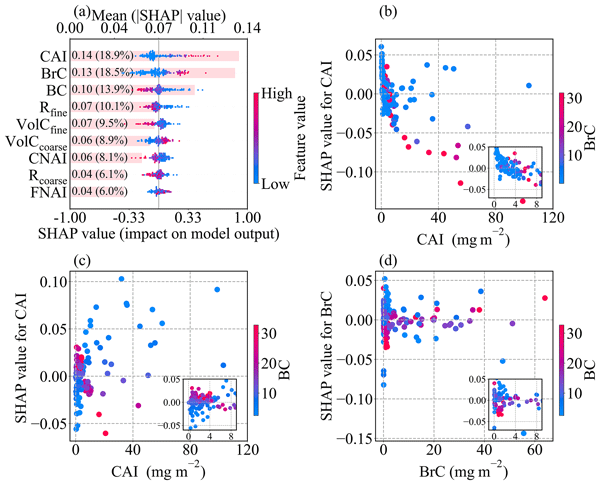
Wenfang Wang, Pengfei Tian, Shuhua Zeng, Yifei Zhang, Zeren Yu, Chen Cui, Yunfei Wu, Min Chen, and Lei Zhang
Atmos. Chem. Phys., 26, 6471–6487, https://doi.org/10.5194/acp-26-6471-2026, https://doi.org/10.5194/acp-26-6471-2026, 2026
Short summary
Short summary
We separated the roles of chemical composition and particle size in influencing absorption Ångström exponent (AAE) using ground and column measurements together with interpretable machine learning. We found that near surface AAE is influenced by higher fine mineral dust and inorganic ions fractions. Fine-mode effective radius has an influence close to black carbon on columnar AAE. Columnar AAE contributes to radiative forcing at the top of the atmosphere comparably to single scattering albedo.
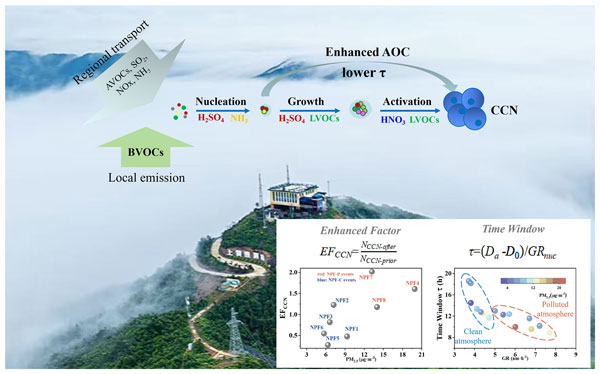
Weibin Zhu, Sai Shang, Jieqi Wang, Yunfei Wu, Zhaoze Deng, Liang Ran, Ye Kuang, Guiqian Tang, Xiangpeng Huang, Xiaole Pan, Lanzhong Liu, Weiqi Xu, Yele Sun, Bo Hu, Zifa Wang, and Zirui Liu
Atmos. Chem. Phys., 26, 1947–1965, https://doi.org/10.5194/acp-26-1947-2026, https://doi.org/10.5194/acp-26-1947-2026, 2026
Short summary
Short summary
NPF (new particle formation) is a key global CCN (cloud condensation nuclei) source, but its contribution at the polluted boundary-layer top remains unclear. Based on mountaintop observations in the Yangtze River Delta, we show that under polluted conditions, NPF at the boundary-layer top is enhanced and accelerates its conversion to CCN. Ammonia plays a key role, and a newly defined "Time Window" metric highlights the importance of oxidation-driven growth and regional transport in this process.
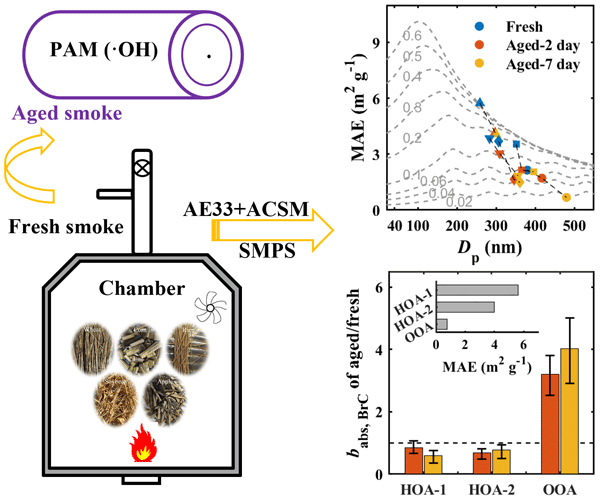
Zheng Yang, Qiaoqiao Wang, Qiyuan Wang, Nan Ma, Jie Tian, Yaqing Zhou, Ge Xu, Miao Gao, Xiaoxian Zhou, Yang Zhang, Weikang Ran, Ning Yang, Jiangchuan Tao, Juan Hong, Yunfei Wu, Junji Cao, Hang Su, and Yafang Cheng
Atmos. Chem. Phys., 25, 11051–11065, https://doi.org/10.5194/acp-25-11051-2025, https://doi.org/10.5194/acp-25-11051-2025, 2025
Short summary
Short summary
Our results demonstrate that the reduction in mass absorption efficiency from biomass burning is mainly driven by the decline in the imaginary part, with particle size playing a minor role. And light absorption of oxygenated brown carbon (BrC) increases significantly with aging, but hydrocarbon-like BrC decreases over time. These results emphasize the necessity to classify BrC into different groups based on their mass absorption efficiency and atmospheric behavior in climate models.
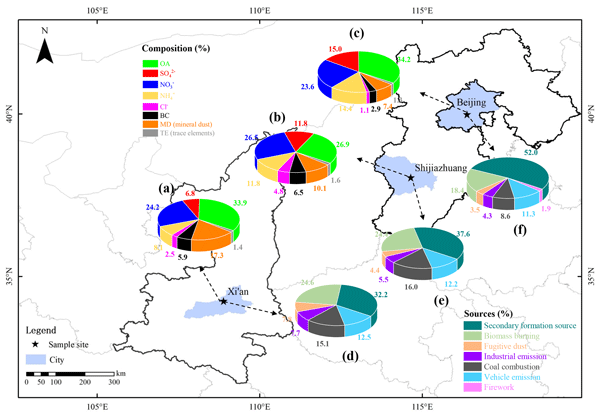
Yong Zhang, Jie Tian, Qiyuan Wang, Lu Qi, Manousos Ioannis Manousakas, Yuemei Han, Weikang Ran, Yele Sun, Huikun Liu, Renjian Zhang, Yunfei Wu, Tianqu Cui, Kaspar Rudolf Daellenbach, Jay Gates Slowik, André S. H. Prévôt, and Junji Cao
Atmos. Chem. Phys., 23, 9455–9471, https://doi.org/10.5194/acp-23-9455-2023, https://doi.org/10.5194/acp-23-9455-2023, 2023
Short summary
Short summary
PM2.5 pollution still frequently occurs in northern China during winter, and it is necessary to figure out the causes of air pollution based on intensive real-time measurement. The findings elaborate the chemical characteristics and source contributions of PM2.5 in three pilot cities, reveal potential formation mechanisms of secondary aerosols, and highlight the importance of controlling biomass burning and inhibiting generation of secondary aerosol for air quality improvement.
Haobin Zhong, Ru-Jin Huang, Chunshui Lin, Wei Xu, Jing Duan, Yifang Gu, Wei Huang, Haiyan Ni, Chongshu Zhu, Yan You, Yunfei Wu, Renjian Zhang, Jurgita Ovadnevaite, Darius Ceburnis, and Colin D. O'Dowd
Atmos. Chem. Phys., 22, 9513–9524, https://doi.org/10.5194/acp-22-9513-2022, https://doi.org/10.5194/acp-22-9513-2022, 2022
Short summary
Short summary
To investigate the physico-chemical properties of aerosol transported from major pollution regions in China, observations were conducted ~200 m above the ground at the junction location of the two key pollution areas. We found that the formation efficiency, oxidation state and production rate of secondary aerosol were different in the transport sectors from different pollution regions, and they were largely enhanced by the regional long-distance transport.
Liang Ran, Zhaoze Deng, Yunfei Wu, Jiwei Li, Zhixuan Bai, Ye Lu, Deqing Zhuoga, and Jianchun Bian
Atmos. Chem. Phys., 22, 6217–6229, https://doi.org/10.5194/acp-22-6217-2022, https://doi.org/10.5194/acp-22-6217-2022, 2022
Short summary
Short summary
The Tibetan Plateau (TP), the highest plateau in the world, plays a crucial role in regional and global climate. To examine the fingerprint left by human activities on the originally remote atmosphere, size distributions of particles from the ground to about 800 m were measured for the first time in summer 2020 in Lhasa, one of a few urbanized cities on TP. Potential sources of particles at different heights were explored. The contribution of emissions from religious activities was highlighted.
Hao Li, Xiaofei Qin, Jian Xu, Qianqian Gao, Kai Bi, Zhaoze Deng, Jianguo Liu, Haitao Zheng, Xiaoyu Ren, Xiaofei Wang, Congrui Deng, and Kan Huang
EGUsphere, https://doi.org/10.5194/egusphere-2026-4499, https://doi.org/10.5194/egusphere-2026-4499, 2026
Short summary
Short summary
Our results show that continental pollution and ocean emissions continuously mix, with chemical reactions producing new compounds. During polluted periods, nitrogen- and sulfur-containing molecules increased sharply. Notably, marine-derived signatures remained present even in winter, highlighting the ocean's persistent influence. This complexity affects how particles impact regional air quality, underscoring the need to consider both land and sea sources in environmental models.
Wenfang Wang, Pengfei Tian, Shuhua Zeng, Yifei Zhang, Zeren Yu, Chen Cui, Yunfei Wu, Min Chen, and Lei Zhang
Atmos. Chem. Phys., 26, 6471–6487, https://doi.org/10.5194/acp-26-6471-2026, https://doi.org/10.5194/acp-26-6471-2026, 2026
Short summary
Short summary
We separated the roles of chemical composition and particle size in influencing absorption Ångström exponent (AAE) using ground and column measurements together with interpretable machine learning. We found that near surface AAE is influenced by higher fine mineral dust and inorganic ions fractions. Fine-mode effective radius has an influence close to black carbon on columnar AAE. Columnar AAE contributes to radiative forcing at the top of the atmosphere comparably to single scattering albedo.
Weibin Zhu, Sai Shang, Jieqi Wang, Yunfei Wu, Zhaoze Deng, Liang Ran, Ye Kuang, Guiqian Tang, Xiangpeng Huang, Xiaole Pan, Lanzhong Liu, Weiqi Xu, Yele Sun, Bo Hu, Zifa Wang, and Zirui Liu
Atmos. Chem. Phys., 26, 1947–1965, https://doi.org/10.5194/acp-26-1947-2026, https://doi.org/10.5194/acp-26-1947-2026, 2026
Short summary
Short summary
NPF (new particle formation) is a key global CCN (cloud condensation nuclei) source, but its contribution at the polluted boundary-layer top remains unclear. Based on mountaintop observations in the Yangtze River Delta, we show that under polluted conditions, NPF at the boundary-layer top is enhanced and accelerates its conversion to CCN. Ammonia plays a key role, and a newly defined "Time Window" metric highlights the importance of oxidation-driven growth and regional transport in this process.
Jingnan Shi, Zhisheng Zhang, Li Li, Li Liu, Yaqing Zhou, Shuang Han, Shaobin Zhang, Minghua Liang, Linhong Xie, Weikang Ran, Shaowen Zhu, Hanbing Xu, Jiangchuan Tao, Alfred Wiedensohler, Qiaoqiao Wang, Qiyuan Wang, Nan Ma, and Juan Hong
Atmos. Chem. Phys., 26, 1–13, https://doi.org/10.5194/acp-26-1-2026, https://doi.org/10.5194/acp-26-1-2026, 2026
Short summary
Short summary
This study examines the aerosol hygroscopicity and mixing state at Huashan (2060 m), a key free tropospheric site in central China. We find that hygroscopicity depends on particle size, source-related changes, and moisture-driven processing, which distinguishes this region from other high-altitude regions and may provide key constraints for aerosol-cloud and regional climate models.
Zheng Yang, Qiaoqiao Wang, Qiyuan Wang, Nan Ma, Jie Tian, Yaqing Zhou, Ge Xu, Miao Gao, Xiaoxian Zhou, Yang Zhang, Weikang Ran, Ning Yang, Jiangchuan Tao, Juan Hong, Yunfei Wu, Junji Cao, Hang Su, and Yafang Cheng
Atmos. Chem. Phys., 25, 11051–11065, https://doi.org/10.5194/acp-25-11051-2025, https://doi.org/10.5194/acp-25-11051-2025, 2025
Short summary
Short summary
Our results demonstrate that the reduction in mass absorption efficiency from biomass burning is mainly driven by the decline in the imaginary part, with particle size playing a minor role. And light absorption of oxygenated brown carbon (BrC) increases significantly with aging, but hydrocarbon-like BrC decreases over time. These results emphasize the necessity to classify BrC into different groups based on their mass absorption efficiency and atmospheric behavior in climate models.
Yong Zhang, Jie Tian, Qiyuan Wang, Lu Qi, Manousos Ioannis Manousakas, Yuemei Han, Weikang Ran, Yele Sun, Huikun Liu, Renjian Zhang, Yunfei Wu, Tianqu Cui, Kaspar Rudolf Daellenbach, Jay Gates Slowik, André S. H. Prévôt, and Junji Cao
Atmos. Chem. Phys., 23, 9455–9471, https://doi.org/10.5194/acp-23-9455-2023, https://doi.org/10.5194/acp-23-9455-2023, 2023
Short summary
Short summary
PM2.5 pollution still frequently occurs in northern China during winter, and it is necessary to figure out the causes of air pollution based on intensive real-time measurement. The findings elaborate the chemical characteristics and source contributions of PM2.5 in three pilot cities, reveal potential formation mechanisms of secondary aerosols, and highlight the importance of controlling biomass burning and inhibiting generation of secondary aerosol for air quality improvement.
Yanqin Ren, Gehui Wang, Jie Wei, Jun Tao, Zhisheng Zhang, and Hong Li
Atmos. Chem. Phys., 23, 6835–6848, https://doi.org/10.5194/acp-23-6835-2023, https://doi.org/10.5194/acp-23-6835-2023, 2023
Short summary
Short summary
Nine quantified nitrated aromatic compounds (NACs) in PM2.5 were examined at the peak of Mt. Wuyi. They manifested a significant rise in overall abundance in the winter and autumn. The transport of contaminants had a significant impact on NACs. Under low-NOx conditions, the formation of NACs was comparatively sensitive to NO2, suggesting that NACs would become significant in the aerosol characteristics when nitrate concentrations decreased as a result of emission reduction measures.
Ling Huang, Hanqing Liu, Greg Yarwood, Gary Wilson, Jun Tao, Zhiwei Han, Dongsheng Ji, Yangjun Wang, and Li Li
EGUsphere, https://doi.org/10.5194/egusphere-2022-1502, https://doi.org/10.5194/egusphere-2022-1502, 2023
Preprint archived
Short summary
Short summary
Secondary organic aerosols are an important component of PM2.5, with contributions from anthropogenic, biogenic volatile organic compounds, semi- and intermediate volatility organic compounds. Policy makers need to know which SOA precursors are important. We investigated the role of different SOA precursors and SOA algorithms by applying two commonly used models, CAMx and CMAQ. Suggestions for SOA modelling and control are provided.
Haobin Zhong, Ru-Jin Huang, Chunshui Lin, Wei Xu, Jing Duan, Yifang Gu, Wei Huang, Haiyan Ni, Chongshu Zhu, Yan You, Yunfei Wu, Renjian Zhang, Jurgita Ovadnevaite, Darius Ceburnis, and Colin D. O'Dowd
Atmos. Chem. Phys., 22, 9513–9524, https://doi.org/10.5194/acp-22-9513-2022, https://doi.org/10.5194/acp-22-9513-2022, 2022
Short summary
Short summary
To investigate the physico-chemical properties of aerosol transported from major pollution regions in China, observations were conducted ~200 m above the ground at the junction location of the two key pollution areas. We found that the formation efficiency, oxidation state and production rate of secondary aerosol were different in the transport sectors from different pollution regions, and they were largely enhanced by the regional long-distance transport.
Li Liu, Ye Kuang, Miaomiao Zhai, Biao Xue, Yao He, Jun Tao, Biao Luo, Wanyun Xu, Jiangchuan Tao, Changqin Yin, Fei Li, Hanbing Xu, Tao Deng, Xuejiao Deng, Haobo Tan, and Min Shao
Atmos. Chem. Phys., 22, 7713–7726, https://doi.org/10.5194/acp-22-7713-2022, https://doi.org/10.5194/acp-22-7713-2022, 2022
Short summary
Short summary
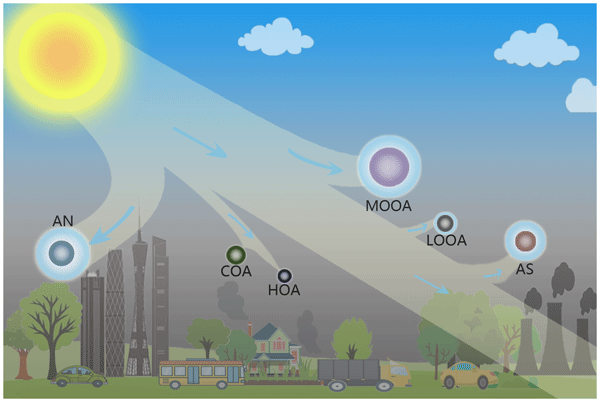
Using simultaneous measurements of a humidified nephelometer system and an aerosol chemical speciation monitor in winter in Guangzhou, the strongest scattering ability of more oxidized oxygenated organic aerosol (MOOA) among aerosol components considering their dry-state scattering ability and water uptake ability was revealed, leading to large impacts of MOOA on visibility degradation. This has important implications for visibility improvement in China and aerosol radiative effect simulation.

Xueli Liu, Liang Ran, Weili Lin, Xiaobin Xu, Zhiqiang Ma, Fan Dong, Di He, Liyan Zhou, Qingfeng Shi, and Yao Wang
Atmos. Chem. Phys., 22, 7071–7085, https://doi.org/10.5194/acp-22-7071-2022, https://doi.org/10.5194/acp-22-7071-2022, 2022
Short summary
Short summary
Significant decreases in annual mean NOx from 2011 to 2016 and SO2 from 2008 to 2016 confirm the effectiveness of relevant control measures on the reduction in NOx and SO2 emissions in the North China Plain (NCP). NOx at SDZ had a weaker influence than SO2 on the emission reduction in Beijing and other areas in the NCP. An increase in the number of motor vehicles and weak traffic restrictions have caused vehicle emissions of NOx, which indicates that NOx emission control should be strengthened.
Liang Ran, Zhaoze Deng, Yunfei Wu, Jiwei Li, Zhixuan Bai, Ye Lu, Deqing Zhuoga, and Jianchun Bian
Atmos. Chem. Phys., 22, 6217–6229, https://doi.org/10.5194/acp-22-6217-2022, https://doi.org/10.5194/acp-22-6217-2022, 2022
Short summary
Short summary
The Tibetan Plateau (TP), the highest plateau in the world, plays a crucial role in regional and global climate. To examine the fingerprint left by human activities on the originally remote atmosphere, size distributions of particles from the ground to about 800 m were measured for the first time in summer 2020 in Lhasa, one of a few urbanized cities on TP. Potential sources of particles at different heights were explored. The contribution of emissions from religious activities was highlighted.
Cited articles
Andreae, M. O. and Rosenfeld, D.: Aerosol–cloud–precipitation interactions. Part 1. The nature and sources of cloud-active aerosols, Earth-Sci. Rev., 89, 13–41, https://doi.org/10.1016/j.earscirev.2008.03.001, 2008.
Canonaco, F., Crippa, M., Slowik, J. G., Baltensperger, U., and Prévôt, A. S. H.: SoFi, an IGOR-based interface for the efficient use of the generalized multilinear engine (ME-2) for the source apportionment: ME-2 application to aerosol mass spectrometer data, Atmos. Meas. Tech., 6, 3649–3661, https://doi.org/10.5194/amt-6-3649-2013, 2013.
Carrico, C. M., Petters, M. D., Kreidenweis, S. M., Sullivan, A. P., McMeeking, G. R., Levin, E. J. T., Engling, G., Malm, W. C., and Collett Jr., J. L.: Water uptake and chemical composition of fresh aerosols generated in open burning of biomass, Atmos. Chem. Phys., 10, 5165–5178, https://doi.org/10.5194/acp-10-5165-2010, 2010.
Cerully, K. M., Bougiatioti, A., Hite Jr., J. R., Guo, H., Xu, L., Ng, N. L., Weber, R., and Nenes, A.: On the link between hygroscopicity, volatility, and oxidation state of ambient and water-soluble aerosols in the southeastern United States, Atmos. Chem. Phys., 15, 8679–8694, https://doi.org/10.5194/acp-15-8679-2015, 2015.
Chang, R. Y.-W., Slowik, J. G., Shantz, N. C., Vlasenko, A., Liggio, J., Sjostedt, S. J., Leaitch, W. R., and Abbatt, J. P. D.: The hygroscopicity parameter (κ) of ambient organic aerosol at a field site subject to biogenic and anthropogenic influences: relationship to degree of aerosol oxidation, Atmos. Chem. Phys., 10, 5047–5064, https://doi.org/10.5194/acp-10-5047-2010, 2010.
Chen, L.-W. A., Chow, J. C., Wang, X. L., Robles, J. A., Sumlin, B. J., Lowenthal, D. H., Zimmermann, R., and Watson, J. G.: Multi-wavelength optical measurement to enhance thermal/optical analysis for carbonaceous aerosol, Atmos. Meas. Tech., 8, 451–461, https://doi.org/10.5194/amt-8-451-2015, 2015.
Chen, Q., Miao, R. Q., Geng, G. N., Shrivastava, M., Dao, X., Xu, B. Y., Sun, J. Q., Zhang, X., Liu, M. Y., Tang, G. G., Tang, Q., Hu, H. W., Huang, R.-J., Wang, H., Zheng, Y., Qin, Y., Guo, S., Hu, M., and Zhu, T.: Widespread 2013-2020 decreases and reduction challenges of organic aerosol in China, Nat. Commun., 15, 4465, https://doi.org/10.1038/s41467-024-48902-0, 2024.
Dawson, K. W., Ferrare, R. A., Moore, R. H., Clayton, M. B., Thorsen, T. J., and Eloranta, E. W.: Ambient aerosol hygroscopic growth from combined Raman lidar and HSRL, J. Geophys. Res.-Atmos., 125, e2019JD031708, https://doi.org/10.1029/2019JD031708, 2020.
Dusek, U., Frank, G. P., Hildebrandt, L., Curtius, J., Schneider, J., Walter, S., Chand, D., Drewnick, F., Hings, S., Jung, D., Borrmann, S., and Andreae, M. O.: Size matters more than chemistry for cloud-nucleating ability of aerosol particles, Science, 312, 1375–1378, https://doi.org/10.1126/science.1125261, 2006.
Ervens, B., Turpin, B. J., and Weber, R. J.: Secondary organic aerosol formation in cloud droplets and aqueous particles (aqSOA): a review of laboratory, field and model studies, Atmos. Chem. Phys., 11, 11069–11102, https://doi.org/10.5194/acp-11-11069-2011, 2011.
Fan, J. W., Wang, Y., Rosenfeld, D., and Liu, X. H.: Review of aerosol-cloud interactions: mechanisms, significance, and challenges, J. Atmos. Sci., 73, 4221–4252, https://doi.org/10.1175/JAS-D-16-0037.1, 2016.
Garnett, J. C. M.: XII. Colours in metal glasses and in metallic films, Philos. T. R. Soc. A, 203, 385–420, https://doi.org/10.1098/rsta.1904.0024, 1904.
Gunthe, S. S., King, S. M., Rose, D., Chen, Q., Roldin, P., Farmer, D. K., Jimenez, J. L., Artaxo, P., Andreae, M. O., Martin, S. T., and Pöschl, U.: Cloud condensation nuclei in pristine tropical rainforest air of Amazonia: size-resolved measurements and modeling of atmospheric aerosol composition and CCN activity, Atmos. Chem. Phys., 9, 7551–7575, https://doi.org/10.5194/acp-9-7551-2009, 2009.
Gunthe, S. S., Liu, P. F., Panda, U., Raj, S. S., Sharma, A., Darbyshire, E., Reyes-Villegas, E., Allam, J., Chen, Y., Wang, X., Song, S. J., Pöhlker, M. L., Shi, L. H., Wang, Y., Kommula, S. M., Liu, T. J., Ravikrishna, R., McFiggans, G., Mickley, L. J., Martin, S. T., Pöschl, U., Andreae, M. O., and Coe, H: Enhanced aerosol particle growth sustained by high continental chlorine emission in India, Nat. Geosci., 14, 77–84, https://doi.org/10.1038/s41561-020-00677-x, 2021.
Gysel, M., Crosier, J., Topping, D. O., Whitehead, J. D., Bower, K. N., Cubison, M. J., Williams, P. I., Flynn, M. J., McFiggans, G. B., and Coe, H.: Closure study between chemical composition and hygroscopic growth of aerosol particles during TORCH2, Atmos. Chem. Phys., 7, 6131–6144, https://doi.org/10.5194/acp-7-6131-2007, 2007.
Hagen, D. E. and Alofs, D. J.: Linear inversion method to obtain aerosol size distributions from measurements with a differential mobility analyzer, Aerosol Sci. Technol., 2, 465–475, https://doi.org/10.1080/02786828308958650, 1983.
Hu, W. W., Day, D. A., Campuzano-Jost, P., Nault, B. A., Park, T., Lee, T., Croteau, P., Canagaratna, M. R., Jayne, J. T., Worsnop, D. R., and Jimenez, J. L.: Evaluation of the New Capture Vaporizer for Aerosol Mass Spectrometers (AMS): Elemental Composition and Source Apportionment of Organic Aerosols (OA), ACS Earth Space Chem., 2, 410–421, https://doi.org/10.1021/acsearthspacechem.8b00002, 2018.
Jimenez, J. L., Canagaratna, M. R., Donahue, N. M., Prevot, A. S. H., Zhang, Q., Kroll, J. H., DeCarlo, P. F., Allan, J. D., Coe, H., Ng, N. L., Aiken, A. C., Docherty, K. S., Ulbrich, I. M., Grieshop, A. P., Robinson, A. L., Duplissy, J., Smith, J. D., Wilson, K. R., Lanz, V. A., Hueglin, C., Sun, Y. L., Tian, J., Laaksonen, A., Raatikainen, T., Rautiainen, J., Vaattovaara, P., Ehn, M., Kulmala, M., Tomlinson, J. M., Collins, D. R., Cubison, M. J., Dunlea, E. J., Huffman, J. A., Onasch, T. B., Alfarra, M. R., Williams, P. I., Bower, K., Kondo, Y., Schneider, J., Drewnick, F., Borrmann, S., Weimer, S., Demerjian, K., Salcedo, D., Cottrell, L., Griffin, R., Takami, A., Miyoshi, T., Hatakeyama, S., Shimono, A., Sun, J. Y., Zhang, Y. M., Dzepina, K., Kimmel, J. R., Sueper, D., Jayne, J. T., Herndon, S. C., Trimborn, A. M., Williams, L. R., Wood, E. C., Middlebrook, A. M., Kolb, C. E., Baltensperger, U., and Worsnop, D. R.: Evolution of organic aerosols in the atmosphere, Science, 326, 1525–1529, https://doi.org/10.1126/science.1180353, 2009.
Kuang, Y., He, Y., Xu, W., Zhao, P., Cheng, Y., Zhao, G., Tao, J., Ma, N., Su, H., Zhang, Y., Sun, J., Cheng, P., Yang, W., Zhang, S., Wu, C., Sun, Y., and Zhao, C.: Distinct diurnal variation in organic aerosol hygroscopicity and its relationship with oxygenated organic aerosol, Atmos. Chem. Phys., 20, 865–880, https://doi.org/10.5194/acp-20-865-2020, 2020.
Kuang, Y., Huang, S., Xue, B., Luo, B., Song, Q., Chen, W., Hu, W., Li, W., Zhao, P., Cai, M., Peng, Y., Qi, J., Li, T., Wang, S., Chen, D., Yue, D., Yuan, B., and Shao, M.: Contrasting effects of secondary organic aerosol formations on organic aerosol hygroscopicity, Atmos. Chem. Phys., 21, 10375–10391, https://doi.org/10.5194/acp-21-10375-2021, 2021.
Kuwata, M., Zorn, S. R., and Martin, S. T.: Using elemental ratios to predict the density of organic material composed of carbon, hydrogen, and oxygen, Environ. Sci. Technol., 46, 787–794, https://doi.org/10.1021/es202525q, 2012.
Lambe, A. T., Onasch, T. B., Massoli, P., Croasdale, D. R., Wright, J. P., Ahern, A. T., Williams, L. R., Worsnop, D. R., Brune, W. H., and Davidovits, P.: Laboratory studies of the chemical composition and cloud condensation nuclei (CCN) activity of secondary organic aerosol (SOA) and oxidized primary organic aerosol (OPOA), Atmos. Chem. Phys., 11, 8913–8928, https://doi.org/10.5194/acp-11-8913-2011, 2011.
Li, W., Teng, X., Chen, X., Liu, L., Xu, L., Zhang, J., Wang, Y., Zhang, Y., and Shi, Z.: Organic coating reduces hygroscopic growth of phase-separated aerosol particles, Environ. Sci. Technol., 55, 16339–16346, https://doi.org/10.1021/acs.est.1c05901, 2021.
Li, Y., Lei, L., Sun, J. X., Gao, Y. Q., Wang, P., Wang, S. Y., Zhang, Z. L., Du, A. D., Li, Z. J., Wang, Z. F., Kim, J. Y., Kim, H., Zhang, H. L., and Sun, Y. L.: Significant reductions in secondary aerosols after the three-year action plan in Beijing summer, Environ. Sci. Technol., 57, 15945–15955, https://doi.org/10.1021/acs.est.3c02417, 2023.
Liu, J. Y., Zhang, F., Xu, W. Q., Sun, Y. L., Chen, L., Li, S. Z., Ren, J. Y., Hu, B., Wu, H., and Zhang, R. Y.: Hygroscopicity of organic aerosols linked to formation mechanisms, Geophys. Res. Lett., 48, e2020GL091683, https://doi.org/10.1029/2020GL091683, 2021.
Liu, P. F., Song, M. J., Zhao, T. N., Gunthe, S. S., Ham, S. H., He, Y. P., Qin, Y. M., Gong, Z. H., Amorim, J. C., Bertram, A. K., and Martin, S. T.: Resolving the mechanisms of hygroscopic growth and cloud condensation nuclei activity for organic particulate matter, Nat. Commun., 9, 4076, https://doi.org/10.1038/s41467-018-06622-2, 2018.
Mallet, M. D., Cravigan, L. T., Milic, A., Alroe, J., Ristovski, Z. D., Ward, J., Keywood, M., Williams, L. R., Selleck, P., and Miljevic, B.: Composition, size and cloud condensation nuclei activity of biomass burning aerosol from northern Australian savannah fires, Atmos. Chem. Phys., 17, 3605–3617, https://doi.org/10.5194/acp-17-3605-2017, 2017.
Martin, M., Tritscher, T., Jurányi, Z., Heringa, M. F., Sierau, B., Weingartner, E., Chirico, R., Gysel, M., Prévôt, A. S. H., Baltensperger, U., and Lohmann, U.: Hygroscopic properties of fresh and aged wood burning particles, J. Aerosol Sci., 56, 15–29, https://doi.org/10.1016/j.jaerosci.2012.08.006, 2013.
Müller, T., Laborde, M., Kassell, G., and Wiedensohler, A.: Design and performance of a three-wavelength LED-based total scatter and backscatter integrating nephelometer, Atmos. Meas. Tech., 4, 1291–1303, https://doi.org/10.5194/amt-4-1291-2011, 2011.
Petters, M. D. and Kreidenweis, S. M.: A single parameter representation of hygroscopic growth and cloud condensation nucleus activity, Atmos. Chem. Phys., 7, 1961–1971, https://doi.org/10.5194/acp-7-1961-2007, 2007.
Pöhlker, M. L., Pöhlker, C., Quaas, J., Mülmenstaedt, J., Pozzer, A., Andreae, M. O., Artaxo, P., Block, K., Coe, H., Ervens, B., Gallimore, P., Gaston, C. J., Gunthe, S. S., Henning, S., Herrmann, H., Krueger, O. O., Mcfiggans, G., Poulain, L., Raj, S. S., Reyes-Villegas, E., Royer, H. M., Walter, D., Wang, Y., and Pöschl, U.: Global organic and inorganic aerosol hygroscopicity and its effect on radiative forcing, Nat. Commun., 14, 6139, https://doi.org/10.1038/s41467-023-41695-8, 2023.
Ran, L., Deng, Z. Z., Wang, P. C., and Xia, X. A.: Black carbon and wavelength-dependent aerosol absorption in the North China Plain based on two-year aethalometer measurements, Atmos. Environ., 142, 132–144, https://doi.org/10.1016/j.atmosenv.2016.07.014, 2016.
Rosenfeld, D., Zhu, Y. N., Wang, M. H., Zheng, Y. T., Goren, T., and Yu, S. C.: Aerosol-driven droplet concentrations dominate coverage and water of oceanic low-level clouds, Science, 363, 599, https://doi.org/10.1126/science.aav0566, 2019.
Sandradewi, J., Prévôt, A. S. H., Szidat, S., Perron, N., Alfarra, M. R., Lanz, V. A., Weingartner, E., and Baltensperger, U.: Using aerosol light absorption measurements for the quantitative determination of wood burning and traffic emission contributions to particulate matter, Environ. Sci. Technol., 42, 3316–3323, https://doi.org/10.1021/es702253m, 2008.
Shi, R. F., Zhang, F., Shen, Y. M., Shen, J. S., Xu, B. Y., Kuang, B. Y., Xu, Z. N., Jin, L. L., Tang, Q., Tian, X. D., and Wang, Z. B.: Aerosol liquid water in PM2.5 and its roles in secondary aerosol formation at a regional site of Yangtze River Delta, J. Environ. Sci., 138, 684–696, https://doi.org/10.1016/j.jes.2023.04.030, 2024.
Stokes, R. H. and Robinson, R. A.: Interactions in aqueous nonelectrolyte solutions. I. Solute-solvent equilibria, J. Phys. Chem., 70, 2126–2131, https://doi.org/10.1021/j100879a010, 1966.
Wang, Y. and Chen, Y.: Significant climate impact of highly hygroscopic atmospheric aerosols in Delhi, India, Geophys. Res. Lett., 46, 5535–5545, https://doi.org/10.1029/2019GL082339, 2019.
Wu, Y.: Aerosol hygroscopicity observed at Huainan Site in East China, V1, Science Data Bank [data set], https://doi.org/10.57760/sciencedb.42983, 2026.
Wu, Y., Xia, Y., Huang, R., Deng, Z., Tian, P., Xia, X., and Zhang, R.: A study of the morphology and effective density of externally mixed black carbon aerosols in ambient air using a size-resolved single-particle soot photometer (SP2), Atmos. Meas. Tech., 12, 4347–4359, https://doi.org/10.5194/amt-12-4347-2019, 2019.
Wu, Z. J., Zheng, J., Shang, D. J., Du, Z. F., Wu, Y. S., Zeng, L. M., Wiedensohler, A., and Hu, M.: Particle hygroscopicity and its link to chemical composition in the urban atmosphere of Beijing, China, during summertime, Atmos. Chem. Phys., 16, 1123–1138, https://doi.org/10.5194/acp-16-1123-2016, 2016.
Yang, Y., Ren, L. L., Wu, M. X., Wang, H. L., Song, F. F., Leung, L. R., Hao, X., Li, J. D., Chen, L., Li, H. M., Zeng, L. Y., Zhou, Y., Wang, P. Y., Liao, H., Wang, J., and Zhou, Z.-Q.: Abrupt emissions reductions during COVID-19 contributed to record summer rainfall in China, Nat. Commun., 13, 959, https://doi.org/10.1038/s41467-022-28537-9, 2022.
Zhang, Y., Tang, L., Croteau, P. L., Favez, O., Sun, Y., Canagaratna, M. R., Wang, Z., Couvidat, F., Albinet, A., Zhang, H., Sciare, J., Prévôt, A. S. H., Jayne, J. T., and Worsnop, D. R.: Field characterization of the PM2.5 Aerosol Chemical Speciation Monitor: insights into the composition, sources, and processes of fine particles in eastern China, Atmos. Chem. Phys., 17, 14501–14517, https://doi.org/10.5194/acp-17-14501-2017, 2017.
Zhao, D. F., Buchholz, A., Kortner, B., Schlag, P., Rubach, F., Fuchs, H., Kiendler-Scharr, A., Tillmann, R., Wahner, A., Watne, Å. K., Hallquist, M., Flores, J. M., Rudich, Y., Kristensen, K., Hansen, A. M. K., Glasius, M., Kourtchev, I., Kalberer, M., and Mentel, Th. F.: Cloud condensation nuclei activity, droplet growth kinetics, and hygroscopicity of biogenic and anthropogenic secondary organic aerosol (SOA), Atmos. Chem. Phys., 16, 1105–1121, https://doi.org/10.5194/acp-16-1105-2016, 2016.
Zhao, G., Zhao, C., Kuang, Y., Tao, J., Tan, W., Bian, Y., Li, J., and Li, C.: Impact of aerosol hygroscopic growth on retrieving aerosol extinction coefficient profiles from elastic-backscatter lidar signals, Atmos. Chem. Phys., 17, 12133–12143, https://doi.org/10.5194/acp-17-12133-2017, 2017.
Zhao, P. S., Ge, S. S., Su, J., Ding, J., and Kuang, Y.: Relative humidity dependence of hygroscopicity parameter of ambient aerosols, J. Geophys. Res.-Atmos., 127, e2021JD035647, https://doi.org/10.1029/2021JD035647, 2022.
Zheng, B., Tong, D., Li, M., Liu, F., Hong, C., Geng, G., Li, H., Li, X., Peng, L., Qi, J., Yan, L., Zhang, Y., Zhao, H., Zheng, Y., He, K., and Zhang, Q.: Trends in China's anthropogenic emissions since 2010 as the consequence of clean air actions, Atmos. Chem. Phys., 18, 14095–14111, https://doi.org/10.5194/acp-18-14095-2018, 2018.
Short summary
Atmospheric particles affect climate by absorbing water and forming clouds, but how organic aerosols uptake water remains unclear. Our field measurements in rural eastern China show their hygroscopicity depends more on emission sources – especially biomass burning – than oxidation. Aging increases water uptake from biomass burning, but not from other sources. These results urge models to include source information for better climate predictions.
Atmospheric particles affect climate by absorbing water and forming clouds, but how organic...


Altmetrics
Final-revised paper
Preprint